OER Project based learning for
English in secundary school
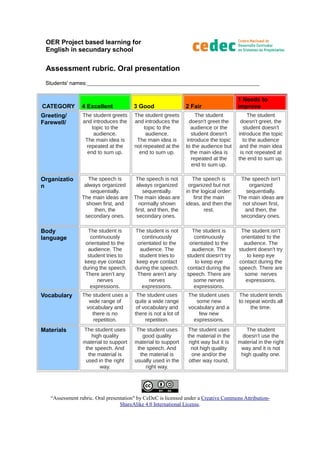
Assessment rubric. Oral presentation
Students' names:________________________________________________________________
CATEGORY 4 Excellent 3 Good 2 Fair
1 Needs to
improve
Greeting/
Farewell/
The student greets
and introduces the
topic to the
audience.
The main idea is
repeated at the
end to sum up.
The student greets
and introduces the
topic to the
audience.
The main idea is
not repeated at the
end to sum up.
The student
doesn't greet the
audience or the
student doesn't
introduce the topic
to the audience but
the main idea is
repeated at the
end to sum up.
The student
doesn't greet, the
student doesn't
introduce the topic
to the audience
and the main idea
is not repeated at
the end to sum up.
Organizatio
n
The speech is
always organized
sequentially.
The main ideas are
shown first, and
then, the
secondary ones.
The speech is not
always organized
sequentially.
The main ideas are
normally shown
first, and then, the
secondary ones.
The speech is
organized but not
in the logical order:
first the main
ideas, and then the
rest.
The speech isn't
organized
sequentially.
The main ideas are
not shown first,
and then, the
secondary ones.
Body
language
The student is
continuously
orientated to the
audience. The
student tries to
keep eye contact
during the speech.
There aren’t any
nerves
expressions.
The student is not
continuously
orientated to the
audience. The
student tries to
keep eye contact
during the speech.
There aren’t any
nerves
expressions.
The student is
continuously
orientated to the
audience. The
student doesn't try
to keep eye
contact during the
speech. There are
some nerves
expressions.
The student isn't
orientated to the
audience. The
student doesn't try
to keep eye
contact during the
speech. There are
some nerves
expressions.
Vocabulary The student uses a
wide range of
vocabulary and
there is no
repetition.
The student uses
quite a wide range
of vocabulary and
there is not a lot of
repetition.
The student uses
some new
vocabulary and a
few new
expressions.
The student tends
to repeat words all
the time.
Materials The student uses
high quality
material to support
the speech. And
the material is
used in the right
way.
The student uses
good quality
material to support
the speech. And
the material is
usually used in the
right way.
The student uses
the material in the
right way but it is
not high quality
one and/or the
other way round.
The student
doesn't use the
material in the right
way and it is not
high quality one.
“Assessment rubric. Oral presentation" by CeDeC is licensed under a Creative Commons Attribution-
ShareAlike 4.0 International License.
OER Project based learning for
English in secundary school
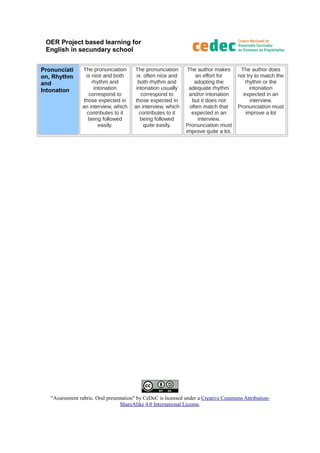
Pronunciati
on, Rhythm
and
Intonation
The pronunciation
is nice and both
rhythm and
intonation
correspond to
those expected in
an interview, which
contributes to it
being followed
easily.
The pronunciation
is often nice and
both rhythm and
intonation usually
correspond to
those expected in
an interview, which
contributes to it
being followed
quite easily.
The author makes
an effort for
adopting the
adequate rhythm
and/or intonation
but it does not
often match that
expected in an
interview.
Pronunciation must
improve quite a lot.
The author does
not try to match the
rhythm or the
intonation
expected in an
interview.
Pronunciation must
improve a lot
“Assessment rubric. Oral presentation" by CeDeC is licensed under a Creative Commons Attribution-
ShareAlike 4.0 International License.

Assesment rubric. Oral presentation

  • 1.
    OER Project basedlearning for English in secundary school Assessment rubric. Oral presentation Students' names:________________________________________________________________ CATEGORY 4 Excellent 3 Good 2 Fair 1 Needs to improve Greeting/ Farewell/ The student greets and introduces the topic to the audience. The main idea is repeated at the end to sum up. The student greets and introduces the topic to the audience. The main idea is not repeated at the end to sum up. The student doesn't greet the audience or the student doesn't introduce the topic to the audience but the main idea is repeated at the end to sum up. The student doesn't greet, the student doesn't introduce the topic to the audience and the main idea is not repeated at the end to sum up. Organizatio n The speech is always organized sequentially. The main ideas are shown first, and then, the secondary ones. The speech is not always organized sequentially. The main ideas are normally shown first, and then, the secondary ones. The speech is organized but not in the logical order: first the main ideas, and then the rest. The speech isn't organized sequentially. The main ideas are not shown first, and then, the secondary ones. Body language The student is continuously orientated to the audience. The student tries to keep eye contact during the speech. There aren’t any nerves expressions. The student is not continuously orientated to the audience. The student tries to keep eye contact during the speech. There aren’t any nerves expressions. The student is continuously orientated to the audience. The student doesn't try to keep eye contact during the speech. There are some nerves expressions. The student isn't orientated to the audience. The student doesn't try to keep eye contact during the speech. There are some nerves expressions. Vocabulary The student uses a wide range of vocabulary and there is no repetition. The student uses quite a wide range of vocabulary and there is not a lot of repetition. The student uses some new vocabulary and a few new expressions. The student tends to repeat words all the time. Materials The student uses high quality material to support the speech. And the material is used in the right way. The student uses good quality material to support the speech. And the material is usually used in the right way. The student uses the material in the right way but it is not high quality one and/or the other way round. The student doesn't use the material in the right way and it is not high quality one. “Assessment rubric. Oral presentation" by CeDeC is licensed under a Creative Commons Attribution- ShareAlike 4.0 International License.
  • 2.
    OER Project basedlearning for English in secundary school Pronunciati on, Rhythm and Intonation The pronunciation is nice and both rhythm and intonation correspond to those expected in an interview, which contributes to it being followed easily. The pronunciation is often nice and both rhythm and intonation usually correspond to those expected in an interview, which contributes to it being followed quite easily. The author makes an effort for adopting the adequate rhythm and/or intonation but it does not often match that expected in an interview. Pronunciation must improve quite a lot. The author does not try to match the rhythm or the intonation expected in an interview. Pronunciation must improve a lot “Assessment rubric. Oral presentation" by CeDeC is licensed under a Creative Commons Attribution- ShareAlike 4.0 International License.