CRYOPRESERVATION
SPERM BANKING
AND
ARTIFICIAL INSEMINATION
G. Karthikeyan
LS14108
2nd Year
M.Sc., Life Sciences
Bharathidasan University
INTRODUCTION
 Cryobiology derives from three greek words:
 Cryos- cold; Bios-Life; logos-course of study
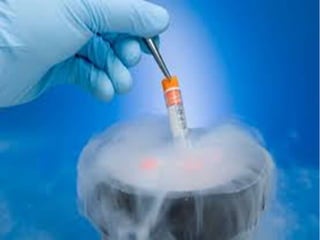
 It is defined as the process of arresting all
biological process and placing biological
material (cells, oocytes, embryos,
spermatozoa or tissue )into a suspended
state of animation at an ultra-low
temperature.
CRYOPRESERVATION
 First documented by Boyle (1663).
 First concept of sperm preservation by
Lazzaro spallanzini(1760).
 Most significant discovery was the use of
glycerol as cryoprotectant by Polge and
smith(1949)
PRINCIPLE
1. FREEZING
2. STORING
3. THAWING
CONT..
 The ability of glycerol to protect cells from freezing
injury was discovered accidentally.
 The subsequent development of cryopreservation
techniques has had a huge impact in many fields,
most notably in reproductive medicine.

 Freezing injury has been shown to have two
components, direct damage from the ice crystals
and secondary damage caused by the increase in
concentration of solutes as progressively more ice is
formed.
 Intracellular freezing is generally lethal but can be
avoided by sufficiently slow cooling, and under
usual conditions solute damage dominates.
WHY CRYOPRESERVATION?
 Availability and preservation of raw biological
materials are the major challenge in the
widespread use of assisted reproduction
technology in humans and livestock.
 For example, many artificial insemination
procedures rely on availability of cryopreserved
sperm.
 Similarly, cryopreserved oocytes and embryos are
CRYOPROTECTANTS
 A cryoprotective agent is a substance added to the
freezing medium to prevent the biological material
from freezing injures that is damage due to ice
formation
 In experimental biology, the conventional CPAs are
glycols and glycerol
Common cryoprotectants:
 DMSO-Dimethyl sulfoxide
 Ethylene glycol
 Glycerol
 The presence of cryoprotectants in the freezing solution is
necessary to prevent cell damage during freezing and
thawing of the samples
 Cryoprotectants are included in the solutions to freeze
the cells to lower the freezing point
CONT..
SPERM BANKING
 Sperm banking is the name for the
collection and storage of semen
 Semen is the fluid that contains sperm,
Sperm banking is also known as sperm
cryopreservation or semen storage
PURPOSE:
 The purpose of cryopreserving semen
(sperm banking) is to help ensure the
possibility of conception in the future
TWO TYPES :
 Short-term Semen Cryobanking
 Long-Term Semen Cryobanking
Short-term Semen Cryobanking
 Short-term semen cryobanking is the depositing, freezing
and storage of sperm at a sperm bank for less than one year
 Cryobanked sperm is then used in artificial insemination, in
vitro fertilization (IVF) and other fertility treatment
procedures
 Assisted reproductive technologies ,
(i.e., in vitro fertilization, gamete intrafallopian transfer, etc...)
Long-Term Semen
Cryopreservation
 Time-tested techniques enable semen
specimens and embryos to be frozen and
stored indefinitely in liquid nitrogen
 According to the donor’s specific wishes,
these specimens and embryos can later be
thawed and used in an attempt to
conceive through artificial insemination,
IVF or other fertility treatment techniques.
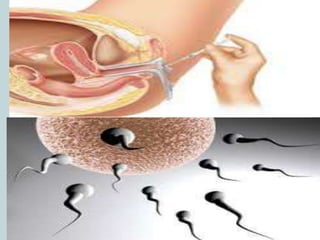
ARTIFICIAL INSEMINATION
 Artificial insemination is a fertility treatment
that delivers sperm to the female using a tube
to reach the cervix for intracervical
insemination (ICI) or the uterus for intrauterine
insemination (IUI)
 ICI and IUI are very quick and painless
procedures that can be attempted many
times without any injury to the receiving
Artificial Insemination Method
 The insemination procedure involves
injecting prepared sperm into the female
reproductive tract through the vagina
 Intra cervical insemination (depositing of
sperm into the cervical opening)
 Intra uterine insemination (depositing of
sperm into the uterus)
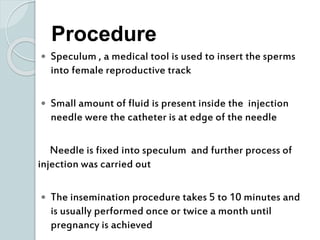
 Speculum , a medical tool is used to insert the sperms
into female reproductive track
 Small amount of fluid is present inside the injection
needle were the catheter is at edge of the needle
Needle is fixed into speculum and further process of
injection was carried out
 The insemination procedure takes 5 to 10 minutes and
is usually performed once or twice a month until
pregnancy is achieved
Procedure
REFERENCE
• Textbook of Animal Biotechnology
• Institute of Cancer Biology , United
Kingdom
Tq

Cryopreservation,sperm banking,artificial insemination

  • 1.
    CRYOPRESERVATION SPERM BANKING AND ARTIFICIAL INSEMINATION G.Karthikeyan LS14108 2nd Year M.Sc., Life Sciences Bharathidasan University
  • 2.
    INTRODUCTION  Cryobiology derivesfrom three greek words:  Cryos- cold; Bios-Life; logos-course of study  It is defined as the process of arresting all biological process and placing biological material (cells, oocytes, embryos, spermatozoa or tissue )into a suspended state of animation at an ultra-low temperature.
  • 4.
    CRYOPRESERVATION  First documentedby Boyle (1663).  First concept of sperm preservation by Lazzaro spallanzini(1760).  Most significant discovery was the use of glycerol as cryoprotectant by Polge and smith(1949)
  • 5.
  • 6.
    CONT..  The abilityof glycerol to protect cells from freezing injury was discovered accidentally.  The subsequent development of cryopreservation techniques has had a huge impact in many fields, most notably in reproductive medicine. 
  • 7.
     Freezing injuryhas been shown to have two components, direct damage from the ice crystals and secondary damage caused by the increase in concentration of solutes as progressively more ice is formed.  Intracellular freezing is generally lethal but can be avoided by sufficiently slow cooling, and under usual conditions solute damage dominates.
  • 8.
    WHY CRYOPRESERVATION?  Availabilityand preservation of raw biological materials are the major challenge in the widespread use of assisted reproduction technology in humans and livestock.  For example, many artificial insemination procedures rely on availability of cryopreserved sperm.  Similarly, cryopreserved oocytes and embryos are
  • 9.
    CRYOPROTECTANTS  A cryoprotectiveagent is a substance added to the freezing medium to prevent the biological material from freezing injures that is damage due to ice formation  In experimental biology, the conventional CPAs are glycols and glycerol Common cryoprotectants:  DMSO-Dimethyl sulfoxide  Ethylene glycol  Glycerol
  • 10.
     The presenceof cryoprotectants in the freezing solution is necessary to prevent cell damage during freezing and thawing of the samples  Cryoprotectants are included in the solutions to freeze the cells to lower the freezing point CONT..
  • 11.
    SPERM BANKING  Spermbanking is the name for the collection and storage of semen  Semen is the fluid that contains sperm, Sperm banking is also known as sperm cryopreservation or semen storage
  • 13.
    PURPOSE:  The purposeof cryopreserving semen (sperm banking) is to help ensure the possibility of conception in the future TWO TYPES :  Short-term Semen Cryobanking  Long-Term Semen Cryobanking
  • 14.
    Short-term Semen Cryobanking Short-term semen cryobanking is the depositing, freezing and storage of sperm at a sperm bank for less than one year  Cryobanked sperm is then used in artificial insemination, in vitro fertilization (IVF) and other fertility treatment procedures  Assisted reproductive technologies , (i.e., in vitro fertilization, gamete intrafallopian transfer, etc...)
  • 15.
    Long-Term Semen Cryopreservation  Time-testedtechniques enable semen specimens and embryos to be frozen and stored indefinitely in liquid nitrogen  According to the donor’s specific wishes, these specimens and embryos can later be thawed and used in an attempt to conceive through artificial insemination, IVF or other fertility treatment techniques.
  • 16.
    ARTIFICIAL INSEMINATION  Artificialinsemination is a fertility treatment that delivers sperm to the female using a tube to reach the cervix for intracervical insemination (ICI) or the uterus for intrauterine insemination (IUI)  ICI and IUI are very quick and painless procedures that can be attempted many times without any injury to the receiving
  • 18.
    Artificial Insemination Method The insemination procedure involves injecting prepared sperm into the female reproductive tract through the vagina  Intra cervical insemination (depositing of sperm into the cervical opening)  Intra uterine insemination (depositing of sperm into the uterus)
  • 20.
     Speculum ,a medical tool is used to insert the sperms into female reproductive track  Small amount of fluid is present inside the injection needle were the catheter is at edge of the needle Needle is fixed into speculum and further process of injection was carried out  The insemination procedure takes 5 to 10 minutes and is usually performed once or twice a month until pregnancy is achieved Procedure
  • 22.
    REFERENCE • Textbook ofAnimal Biotechnology • Institute of Cancer Biology , United Kingdom
  • 23.