MODULE9
FOCUS ON THE MEDIUM
MARSHALL MCLUHAN ON TECHNOLOGY


          Art 100
          Understanding Visual Culture
agenda

 defining “medium”
 brief introduction to McLuhan’s thought
 exploring an extended example
Every representation exists in a
physical form. plural media.
This physical form is a medium,
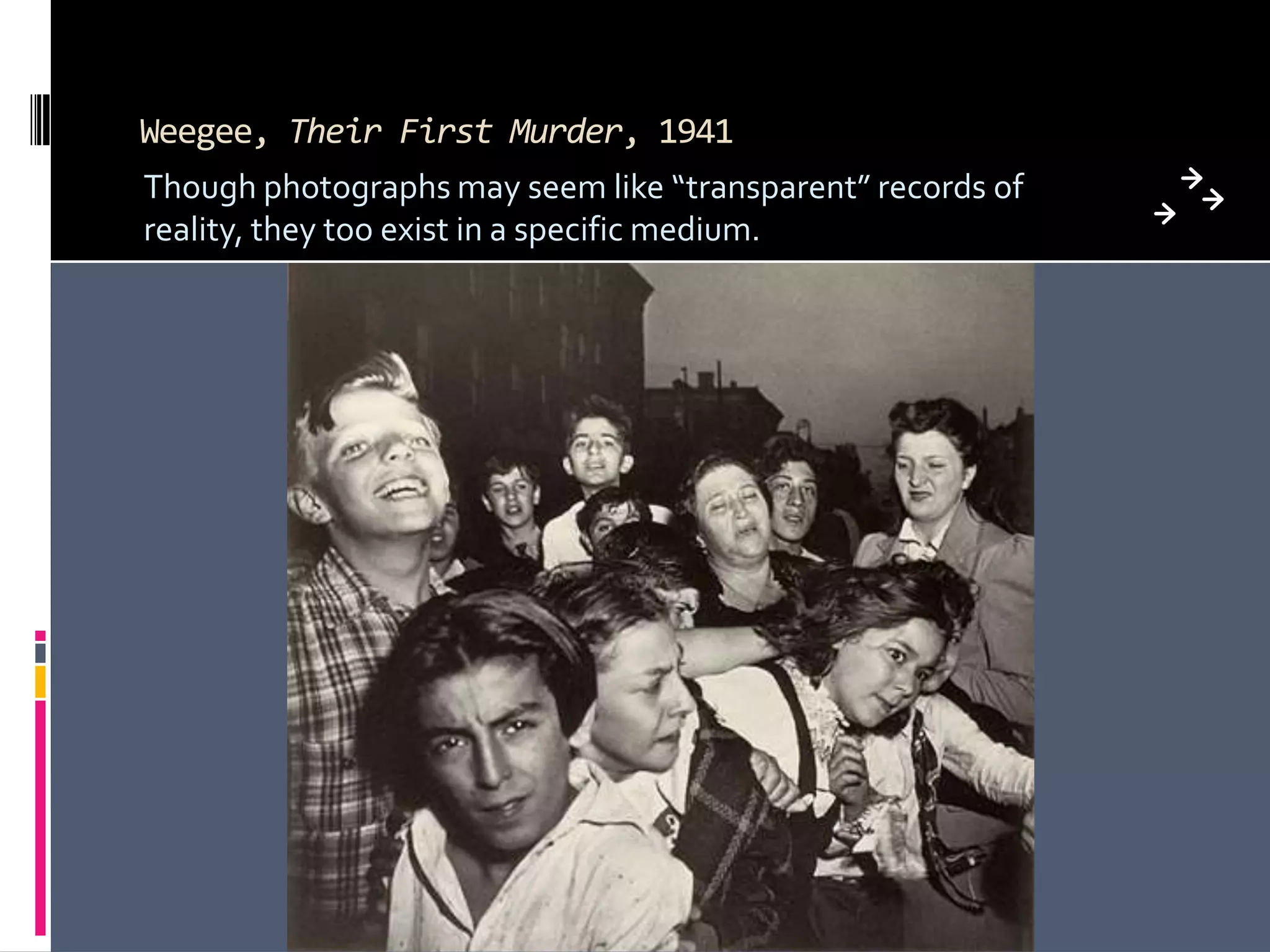
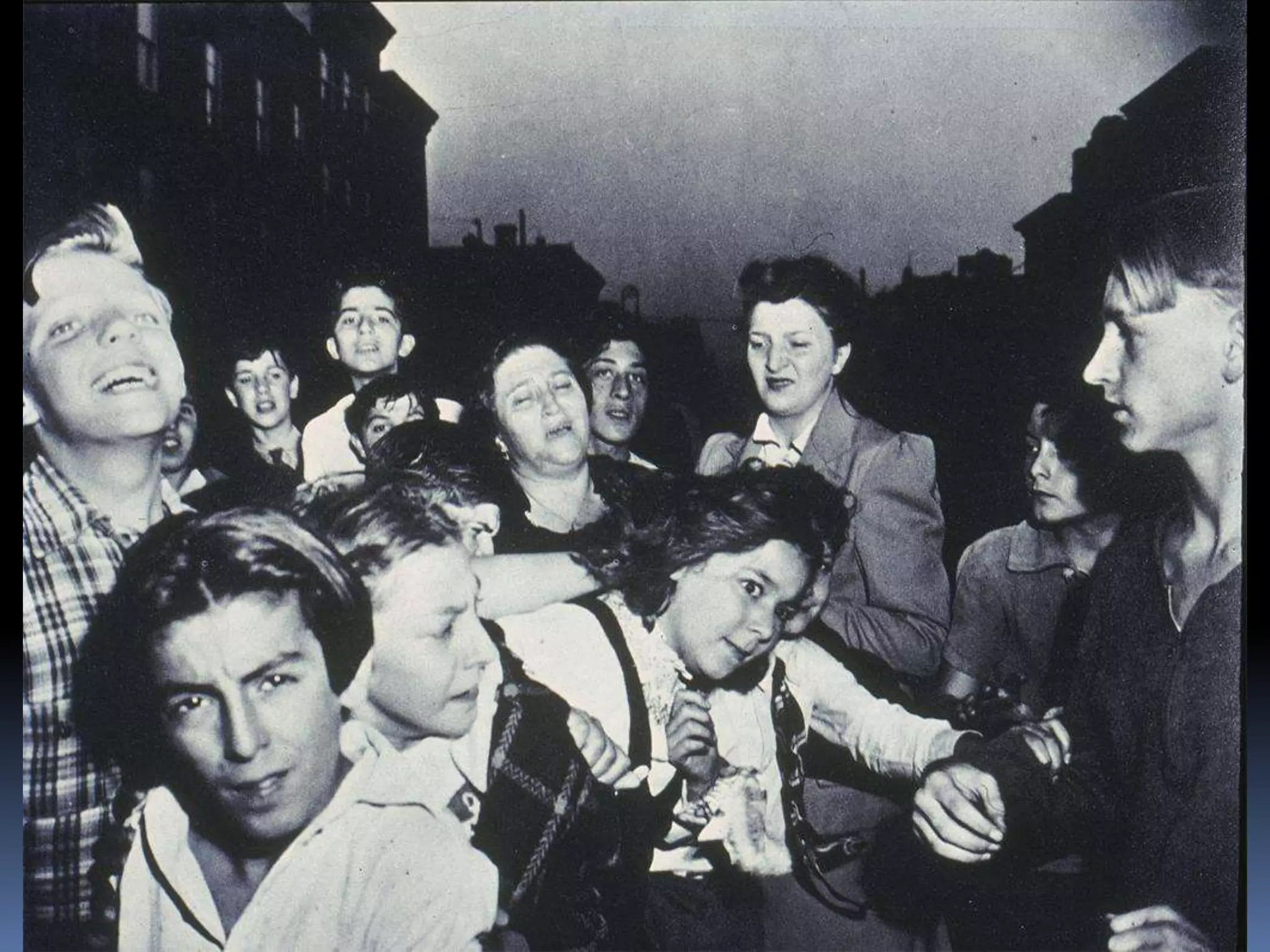
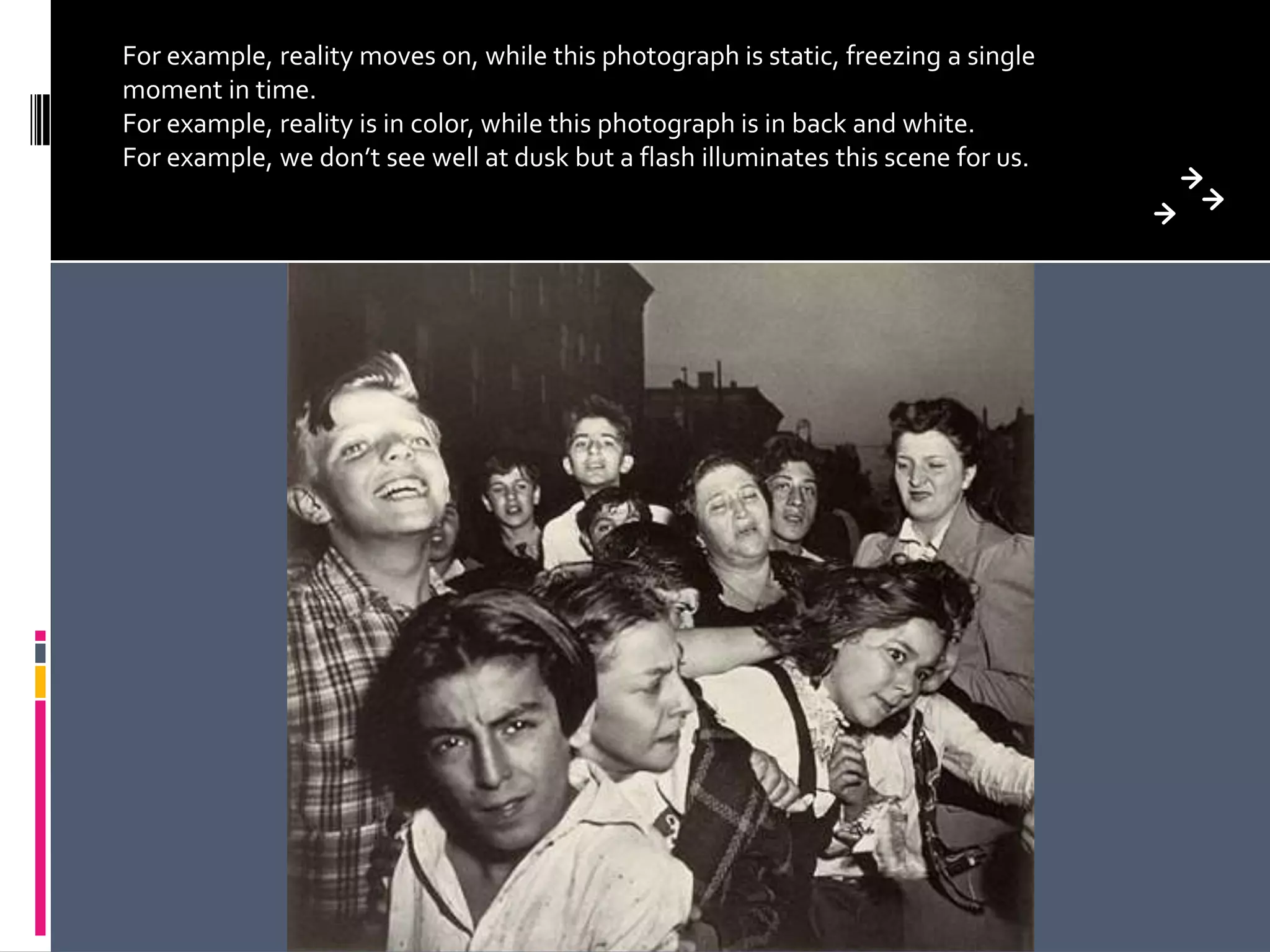
Weegee, Their First Murder, 1941
Though photographs may seem like “transparent” records of
reality, they too exist in a specific medium.
For example, reality moves on, while this photograph is static, freezing a single
moment in time.
For example, reality is in color, while this photograph is in back and white.
For example, we don’t see well at dusk but a flash illuminates this scene for us.
Definition: medium
A medium is something in the middle—in between us
and the depicted scene. As a physical presence with its
own special properties, we must consider it carefully.
Definition: media
The “media” is shorthand for the “mass media”—
print, radio, television, and internet as important
examples.
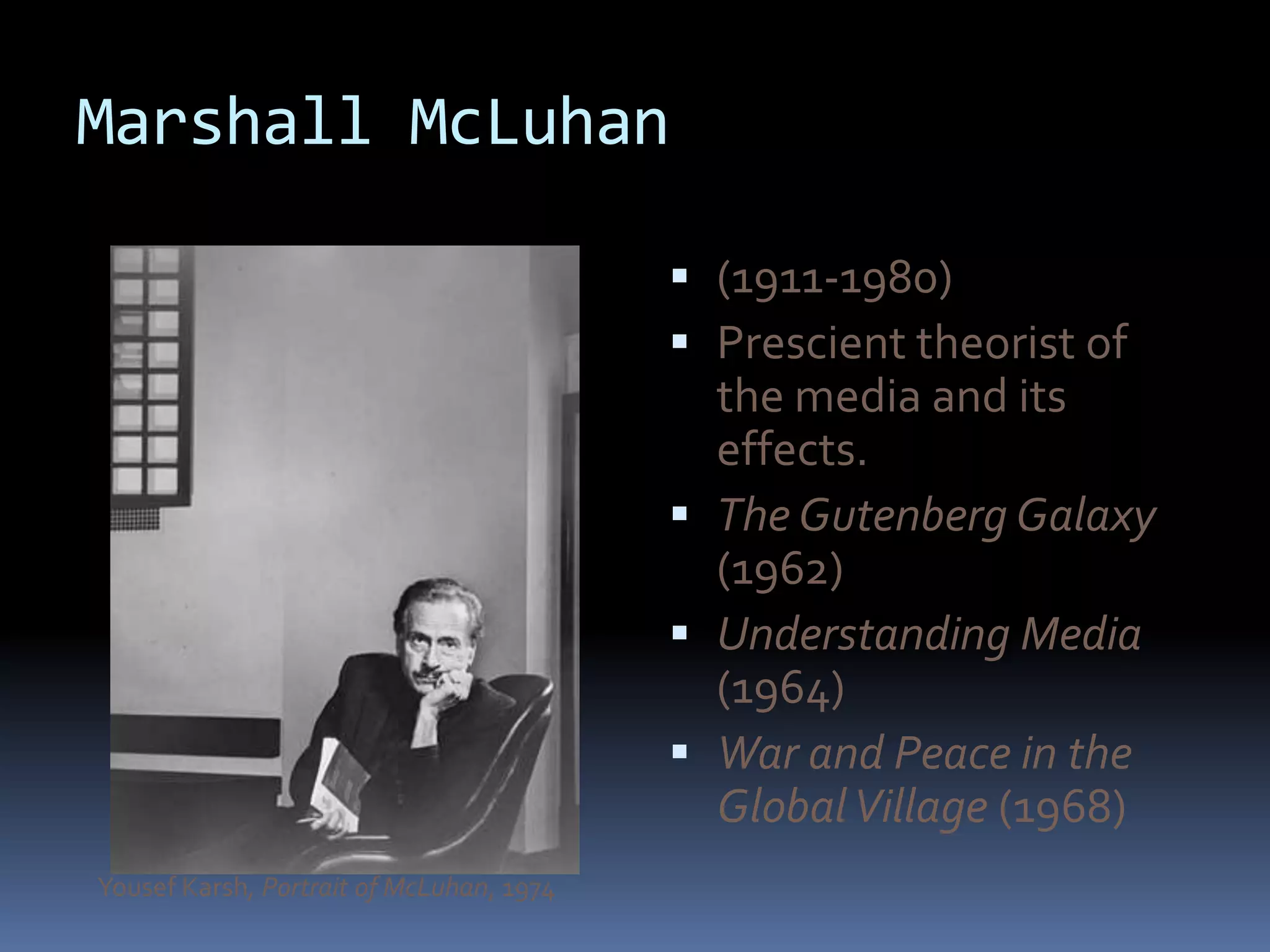
Marshall McLuhan

                                           (1911-1980)
                                           Prescient theorist of
                                            the media and its
                                            effects.
                                           The Gutenberg Galaxy
                                            (1962)
                                           Understanding Media
                                            (1964)
                                           War and Peace in the
                                            Global Village (1968)
Yousef Karsh, Portrait of McLuhan, 1974
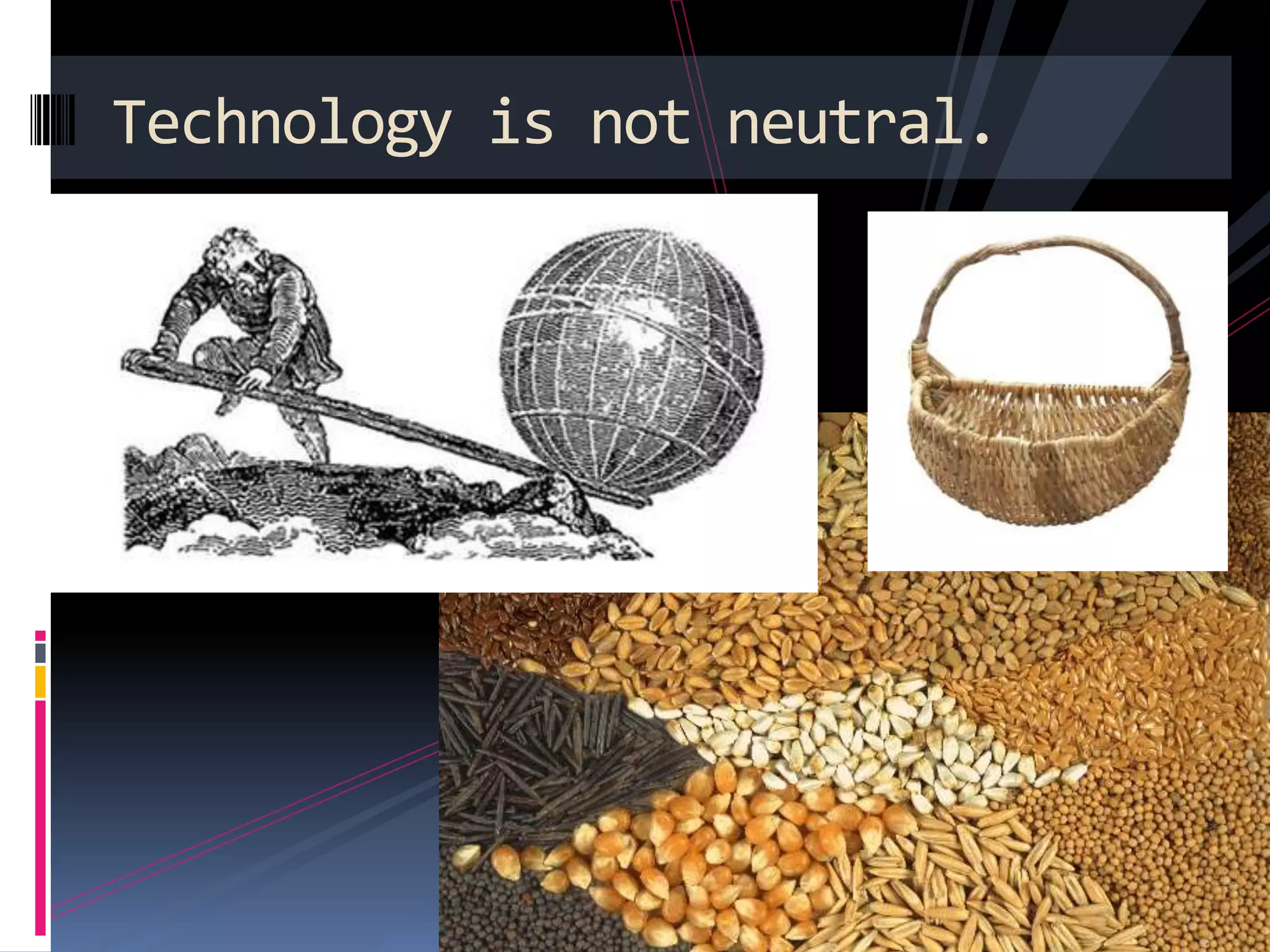
Technology is not neutral.


  Technology is transformative.
  McLuhan regards each new technology developed as an
  “extension of man”—a change in our human capabilities that
  significantly changes our sense of what it means to be human.
Technology is not neutral.
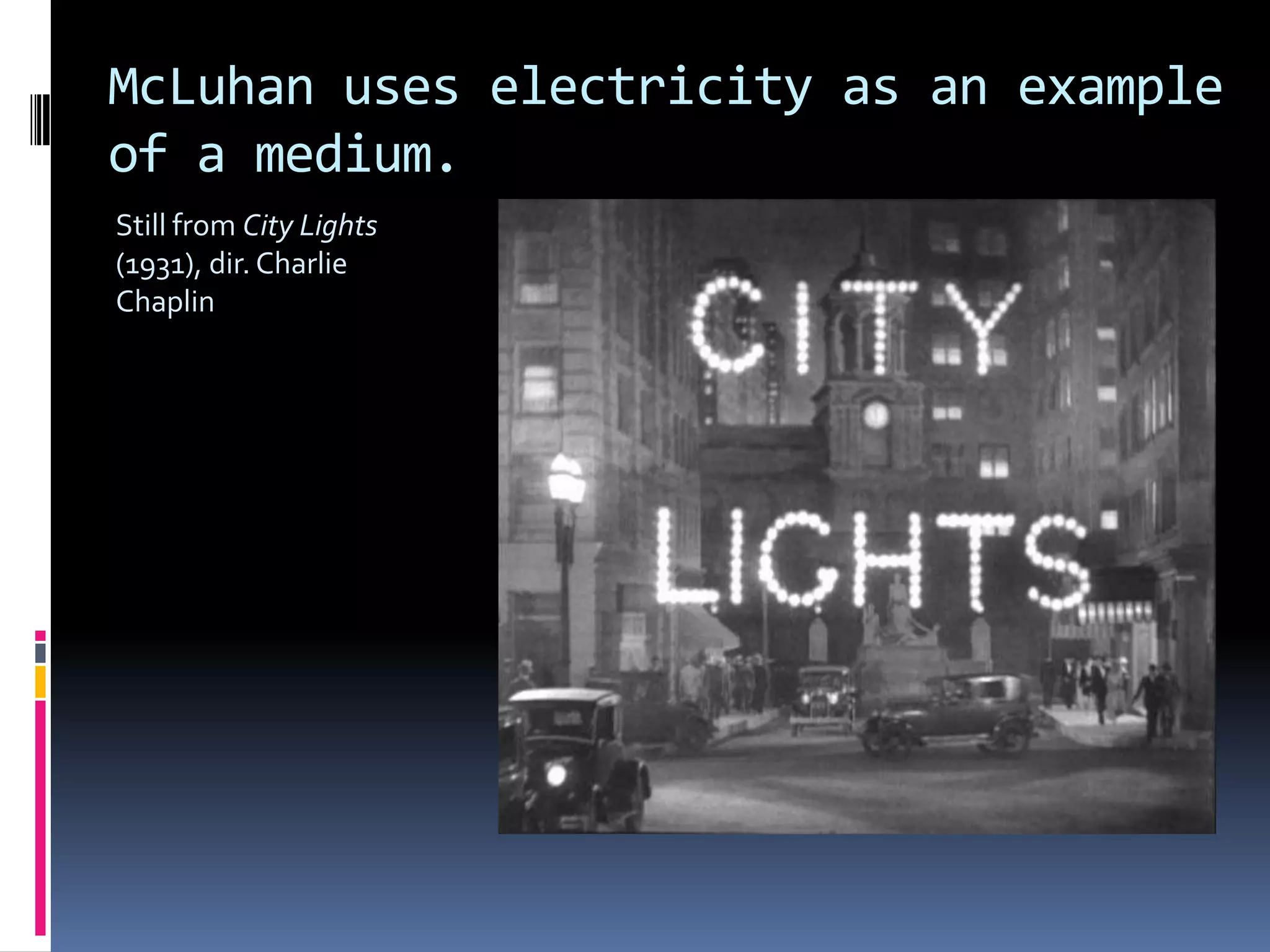
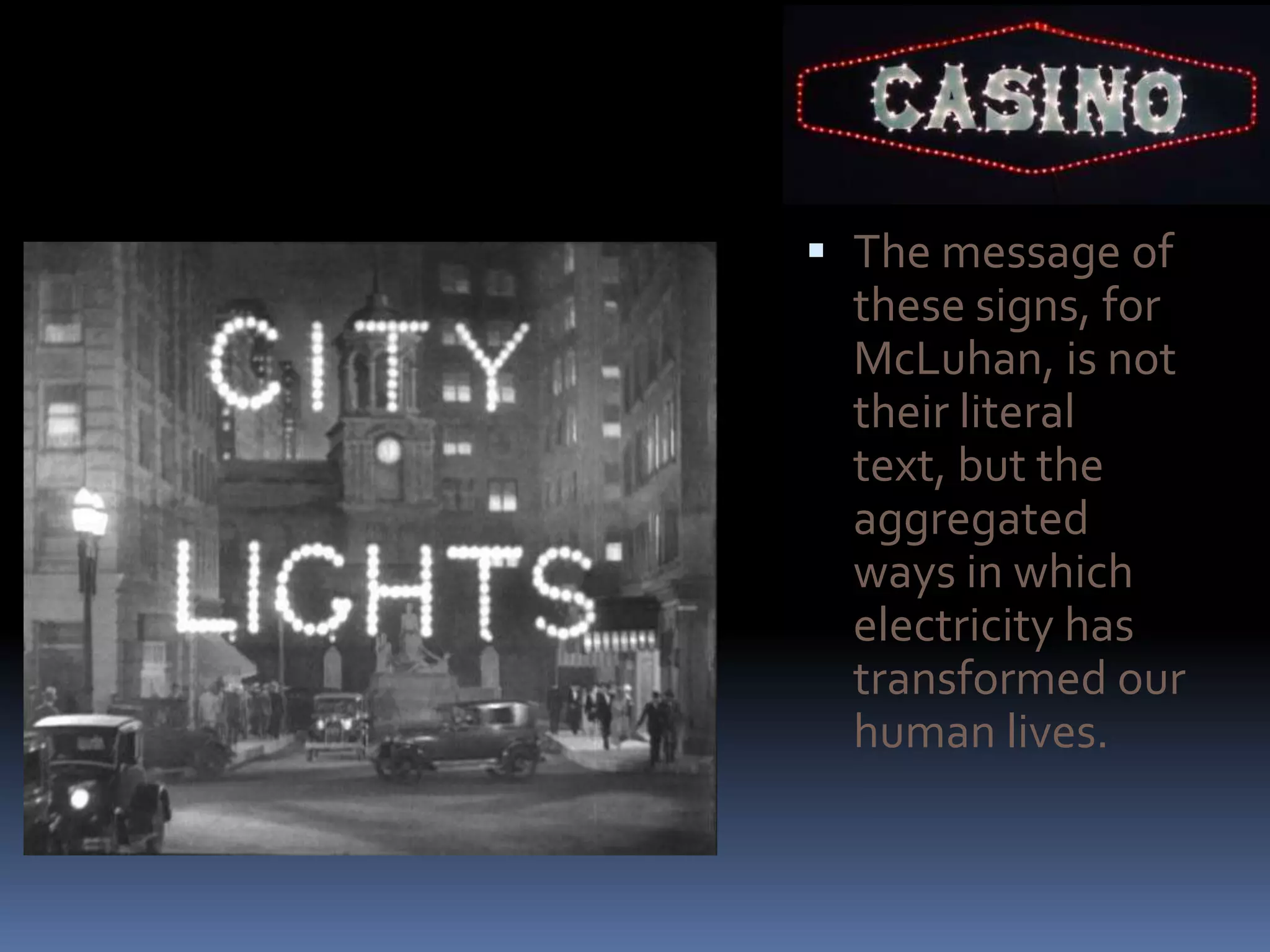
McLuhan uses electricity as an example
of a medium.
Still from City Lights
(1931), dir. Charlie
Chaplin
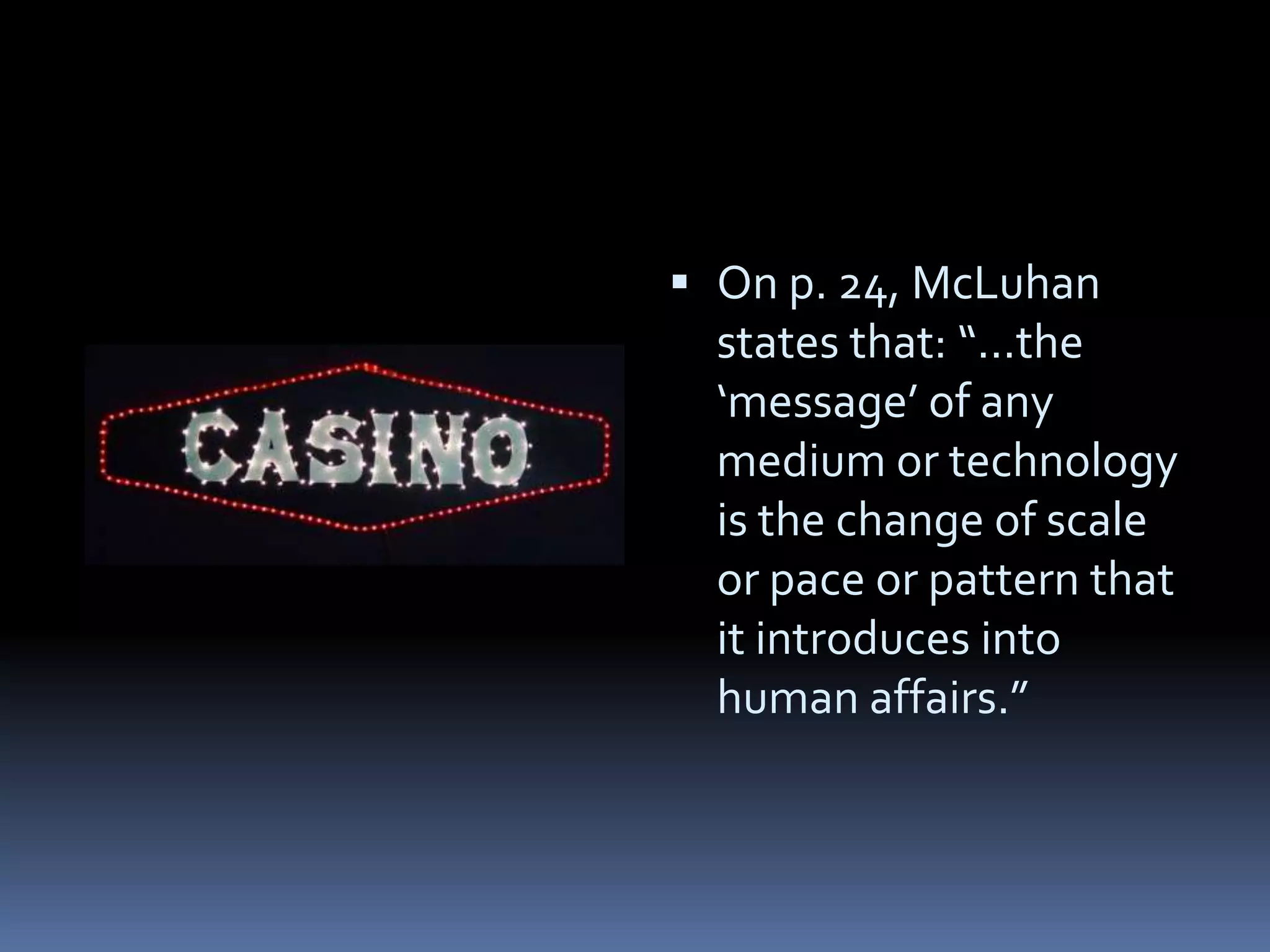
 On p. 24, McLuhan
  states that: “...the
  ‘message’ of any
  medium or technology
  is the change of scale
  or pace or pattern that
  it introduces into
  human affairs.”
 The message of
  these signs, for
  McLuhan, is not
  their literal
  text, but the
  aggregated
  ways in which
  electricity has
  transformed our
  human lives.
So, what is the “message” of
electricity? How has it
transformed human existence?
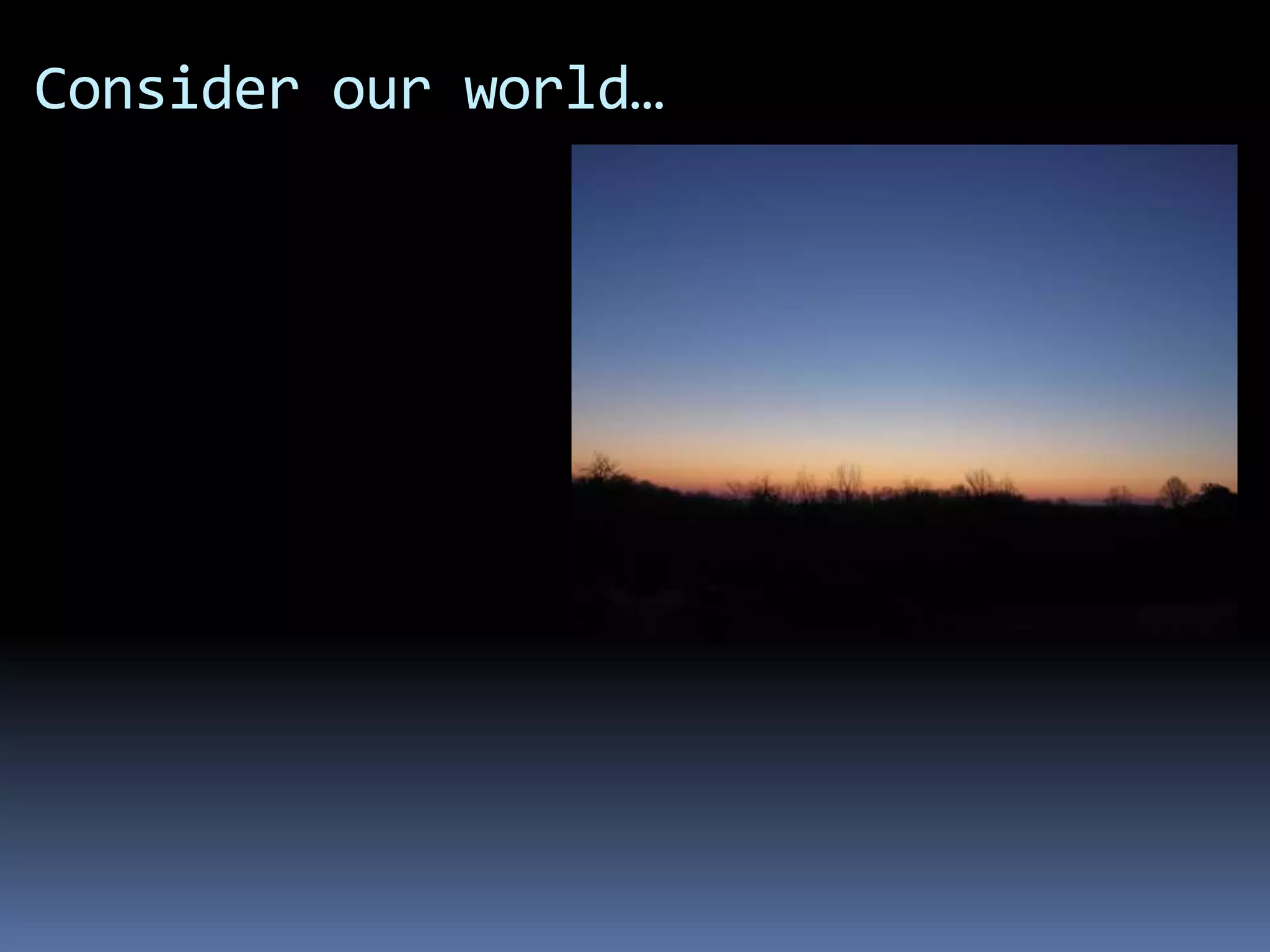
Consider our world…
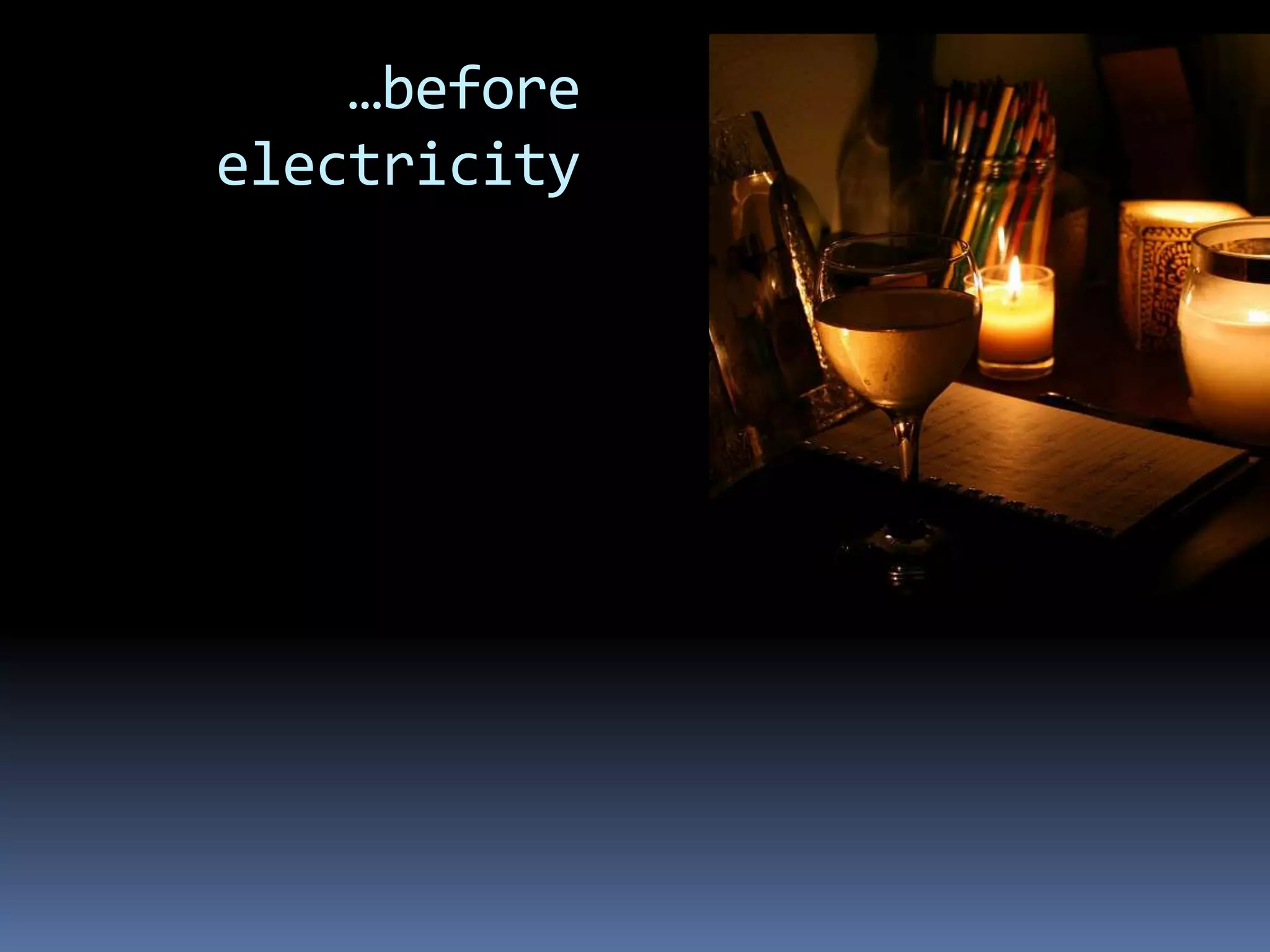
…before
electricity
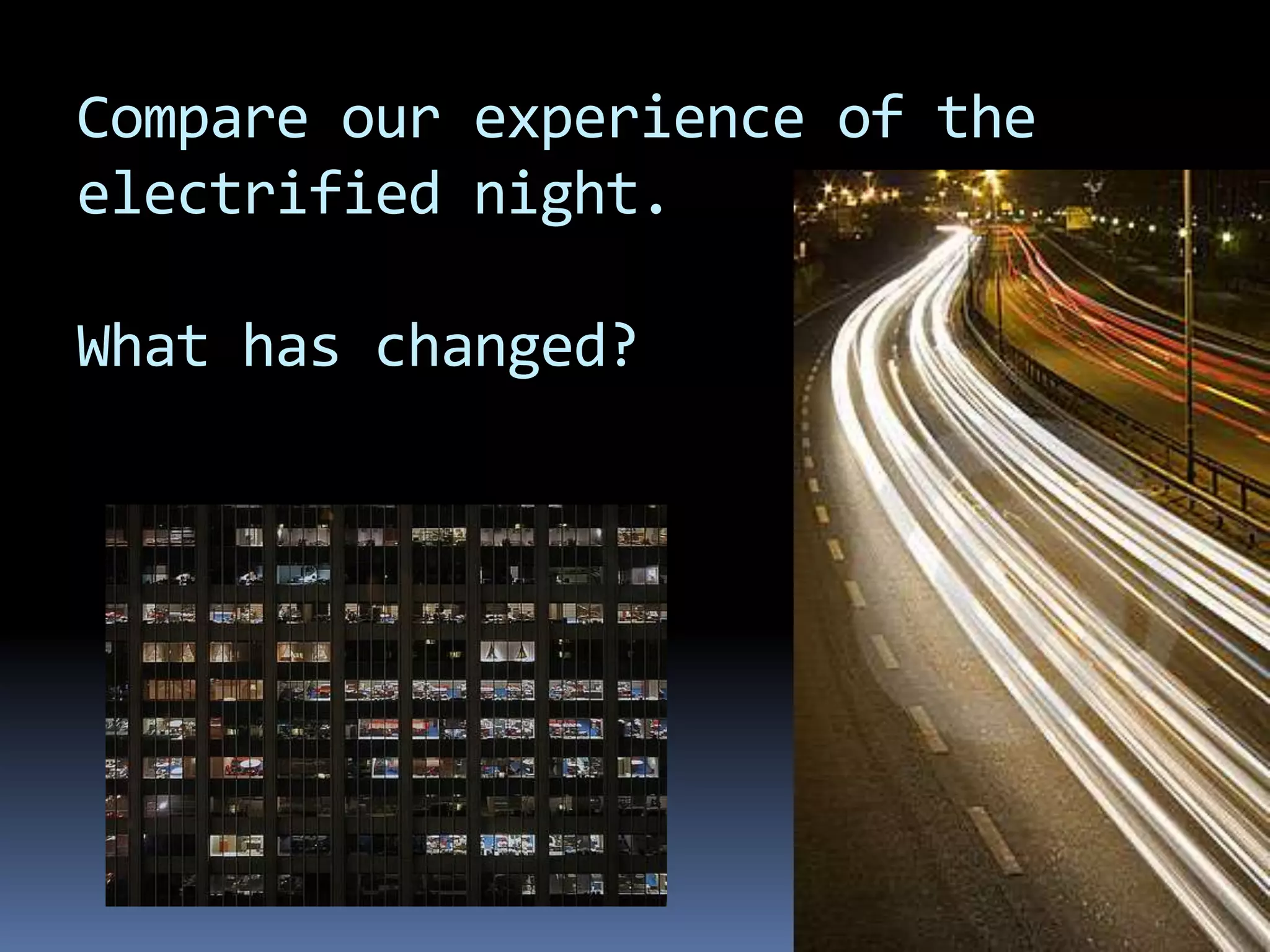
Compare our experience of the
electrified night.

What has changed?
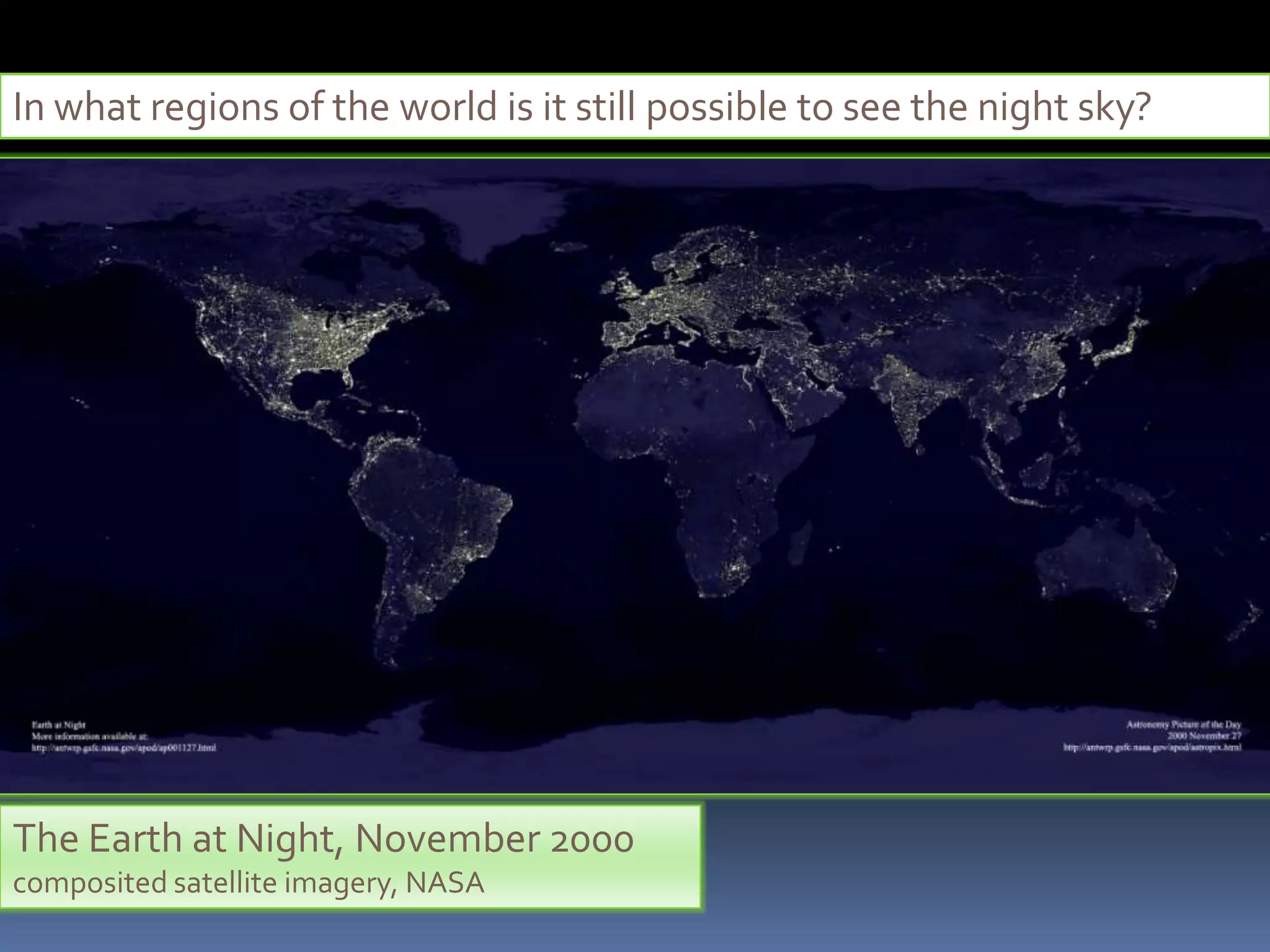
In what regions of the world is it still possible to see the night sky?


The Earth at Night, November 2000
composited satellite imagery, NASA
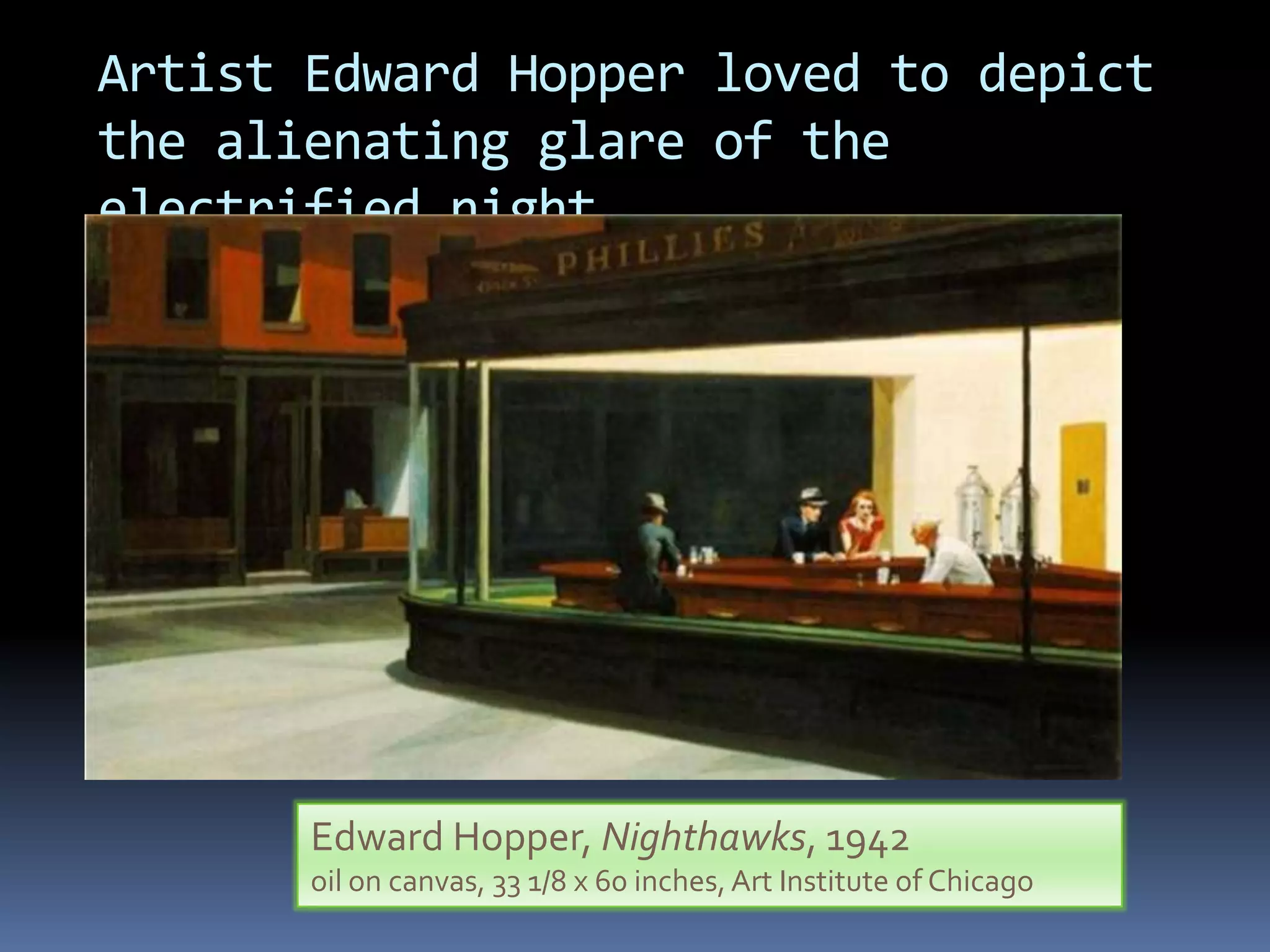
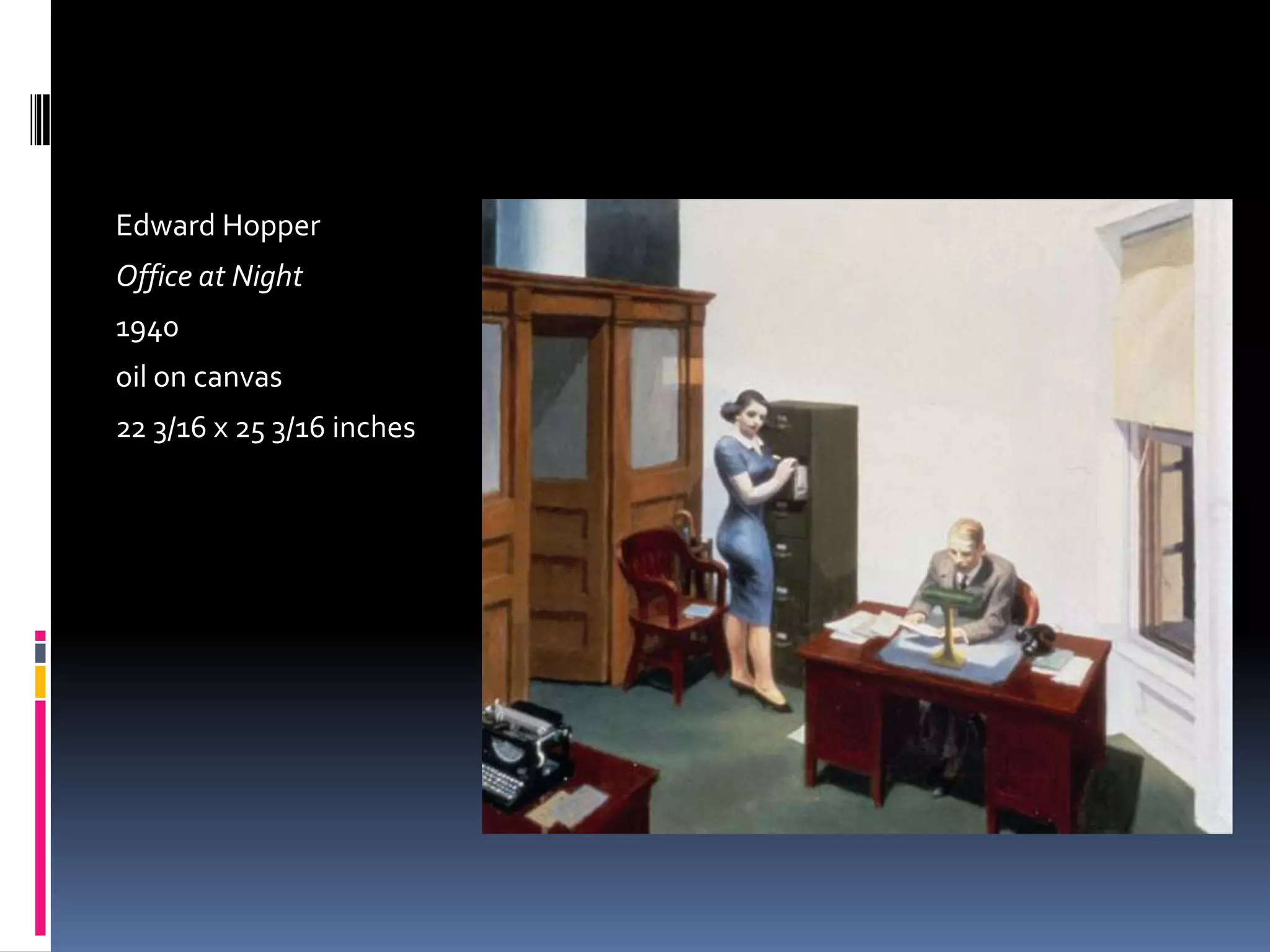
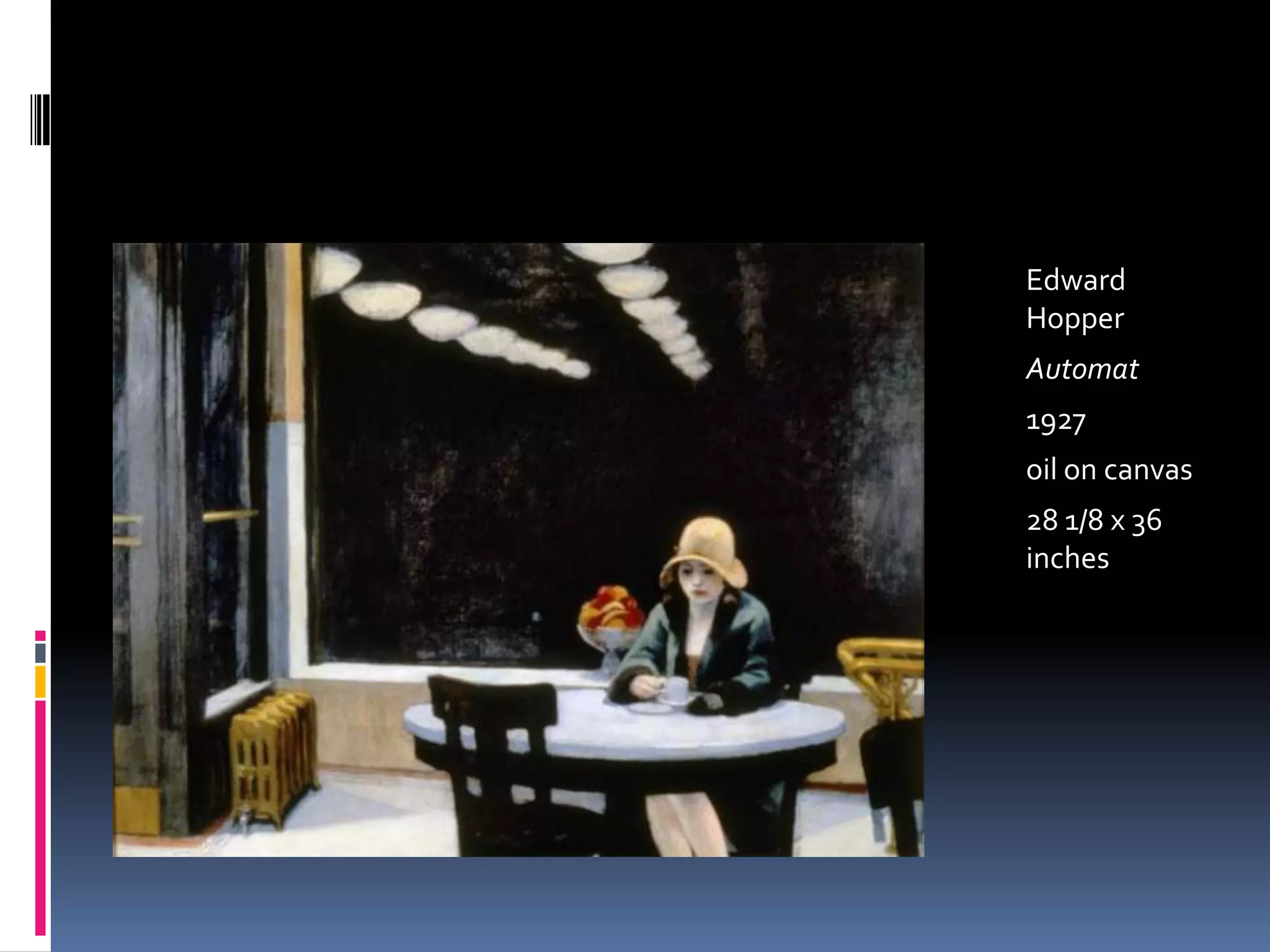
Artist Edward Hopper loved to depict
the alienating glare of the
electrified night.


       Edward Hopper, Nighthawks, 1942
       oil on canvas, 33 1/8 x 60 inches, Art Institute of Chicago
Edward Hopper
Office at Night
1940
oil on canvas
22 3/16 x 25 3/16 inches
Edward
Hopper
Automat
1927
oil on canvas
28 1/8 x 36
inches
p. 32


  “…the ‘content’ of a medium is like the juicy piece of meat carried
  by the burglar to distract the watchdog of the mind.”


  In other words, McLuhan urges us not to look through the
  medium as if it were transparent, look at the medium to see what
  it does and how it has changed us.
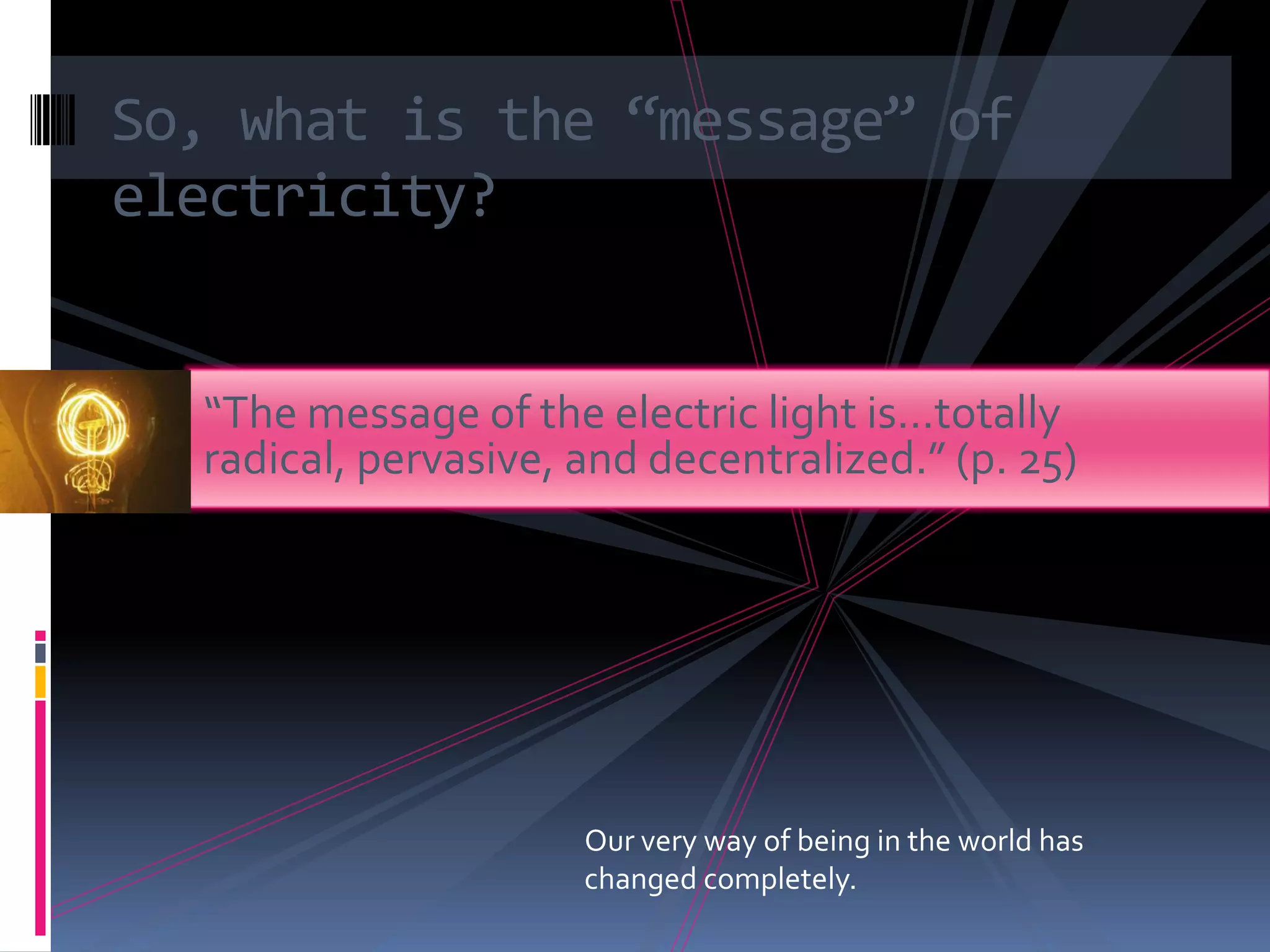
So, what is the “message” of
electricity?


  “The message of the electric light is…totally
  radical, pervasive, and decentralized.” (p. 25)


                      Our very way of being in the world has
                      changed completely.

Art100Su11Module09

  • 1.
    MODULE9 FOCUS ON THEMEDIUM MARSHALL MCLUHAN ON TECHNOLOGY Art 100 Understanding Visual Culture
  • 2.
    agenda  defining “medium” brief introduction to McLuhan’s thought  exploring an extended example
  • 3.
    Every representation existsin a physical form. plural media. This physical form is a medium,
  • 4.
    Weegee, Their FirstMurder, 1941 Though photographs may seem like “transparent” records of reality, they too exist in a specific medium.
  • 6.
    For example, realitymoves on, while this photograph is static, freezing a single moment in time. For example, reality is in color, while this photograph is in back and white. For example, we don’t see well at dusk but a flash illuminates this scene for us.
  • 7.
    Definition: medium A mediumis something in the middle—in between us and the depicted scene. As a physical presence with its own special properties, we must consider it carefully.
  • 8.
    Definition: media The “media”is shorthand for the “mass media”— print, radio, television, and internet as important examples.
  • 9.
    Marshall McLuhan  (1911-1980)  Prescient theorist of the media and its effects.  The Gutenberg Galaxy (1962)  Understanding Media (1964)  War and Peace in the Global Village (1968) Yousef Karsh, Portrait of McLuhan, 1974
  • 10.
    Technology is notneutral. Technology is transformative. McLuhan regards each new technology developed as an “extension of man”—a change in our human capabilities that significantly changes our sense of what it means to be human.
  • 11.
  • 12.
    McLuhan uses electricityas an example of a medium. Still from City Lights (1931), dir. Charlie Chaplin
  • 13.
     On p.24, McLuhan states that: “...the ‘message’ of any medium or technology is the change of scale or pace or pattern that it introduces into human affairs.”
  • 14.
     The messageof these signs, for McLuhan, is not their literal text, but the aggregated ways in which electricity has transformed our human lives.
  • 15.
    So, what isthe “message” of electricity? How has it transformed human existence?
  • 16.
  • 17.
  • 18.
    Compare our experienceof the electrified night. What has changed?
  • 19.
    In what regionsof the world is it still possible to see the night sky? The Earth at Night, November 2000 composited satellite imagery, NASA
  • 20.
    Artist Edward Hopperloved to depict the alienating glare of the electrified night. Edward Hopper, Nighthawks, 1942 oil on canvas, 33 1/8 x 60 inches, Art Institute of Chicago
  • 21.
    Edward Hopper Office atNight 1940 oil on canvas 22 3/16 x 25 3/16 inches
  • 22.
  • 23.
    p. 32 “…the ‘content’ of a medium is like the juicy piece of meat carried by the burglar to distract the watchdog of the mind.” In other words, McLuhan urges us not to look through the medium as if it were transparent, look at the medium to see what it does and how it has changed us.
  • 24.
    So, what isthe “message” of electricity? “The message of the electric light is…totally radical, pervasive, and decentralized.” (p. 25) Our very way of being in the world has changed completely.