Understanding Users 
Art Center Interactive Design 4 | Week 2 | Joy Liu
So… who exactly is going to 
use your product? 
and what do we need to know to understand them?
One of usability’s most hard-earned 
lessons is that ‘you are not the user’.
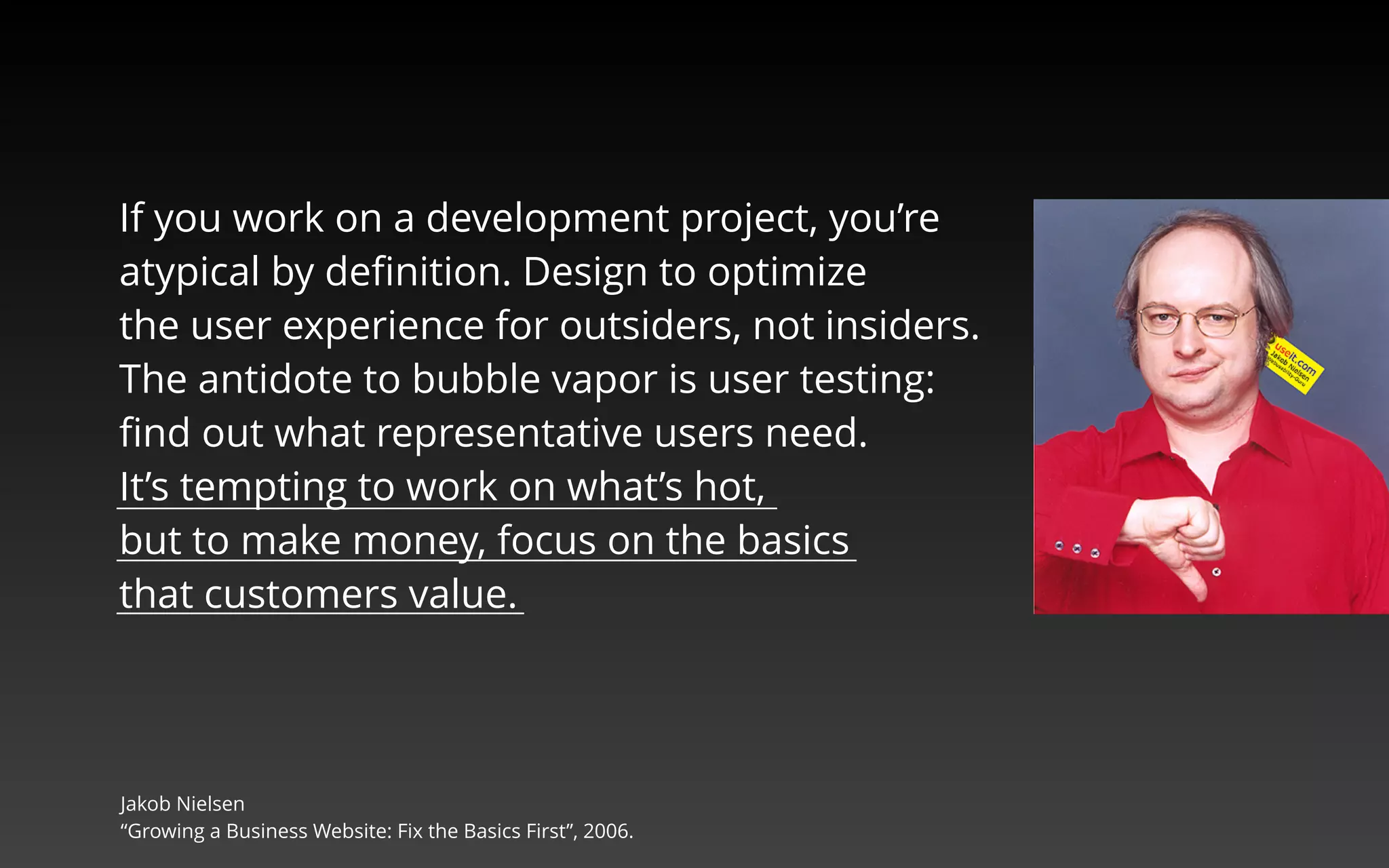
If you work on a development project, you’re 
atypical by definition. Design to optimize 
the user experience for outsiders, not insiders. 
The antidote to bubble vapor is user testing: 
find out what representative users need. 
It’s tempting to work on what’s hot, 
but to make money, focus on the basics 
that customers value. 
Jakob Nielsen, “Growing a Business Website: Fix the Basics First”, 2006.
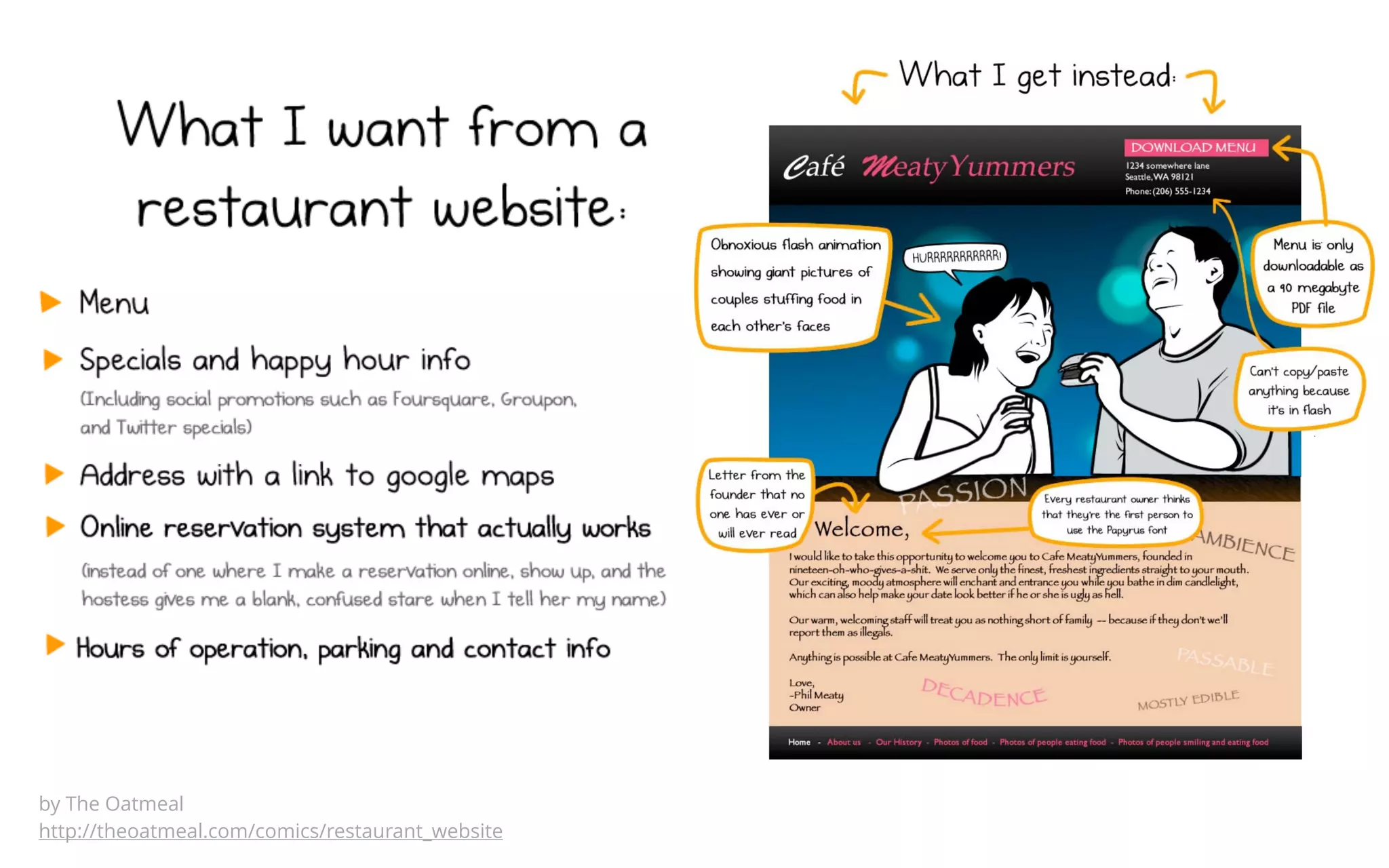
by The Oatmeal, http://theoatmeal.com/comics/restaurant_website
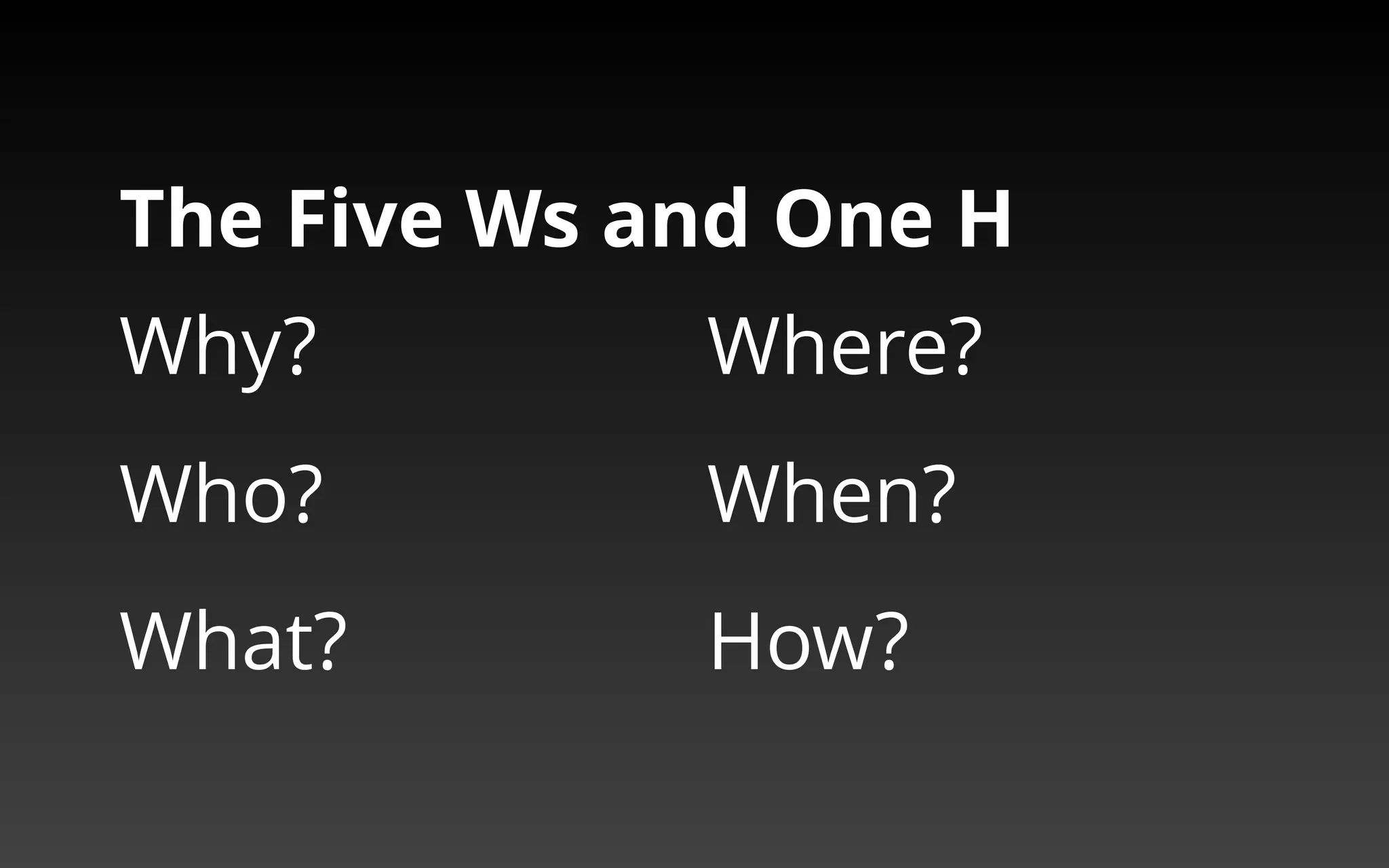
The Five Ws and One H 
Why? 
Who? 
What? 
Where? 
When? 
How?
Know your enemy 
& know yourself 
and you can fight a hundred battles without disaster. 
Sun Tzu 
“The Art of War”
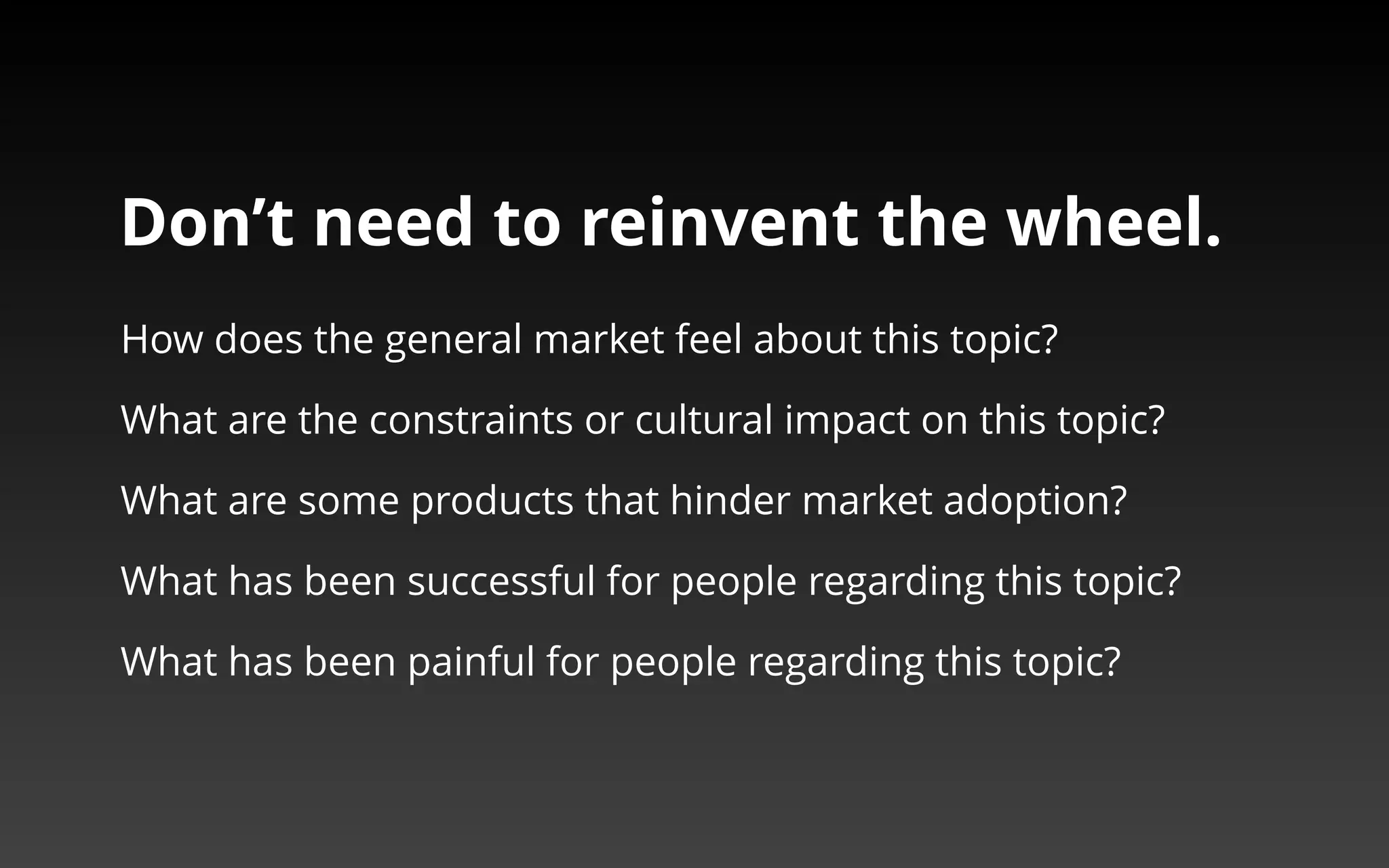
Don’t need to reinvent the wheel. 
‣ How does the general market feel about this topic? 
‣ What are the constraints or cultural impact on this topic? 
‣ What are some products that hinder market adoption? 
‣ What has been successful for people regarding this topic? 
‣ What has been painful for people regarding this topic?
Research Methods 
tools to help you determine users
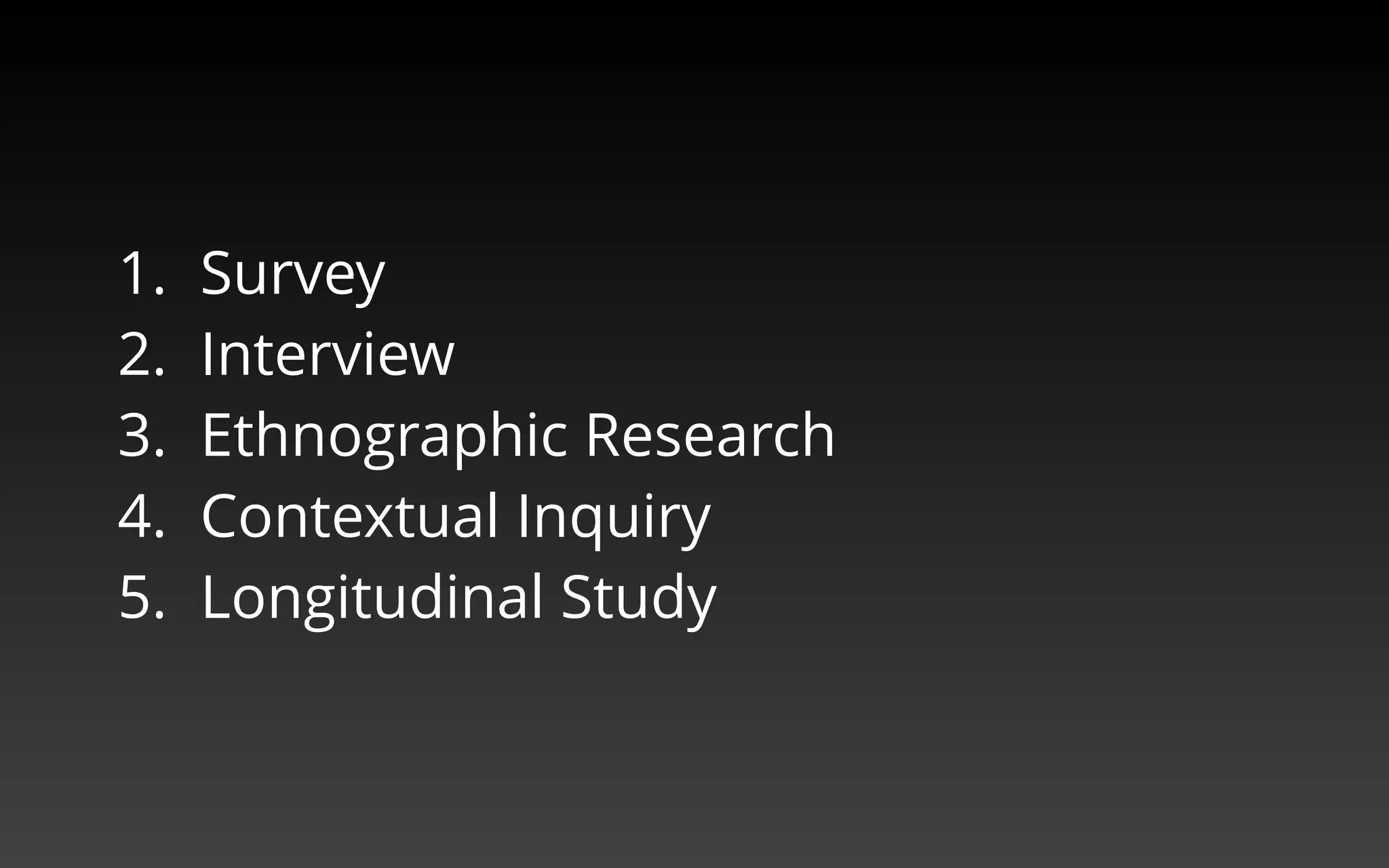
1. Survey 
2. Interview 
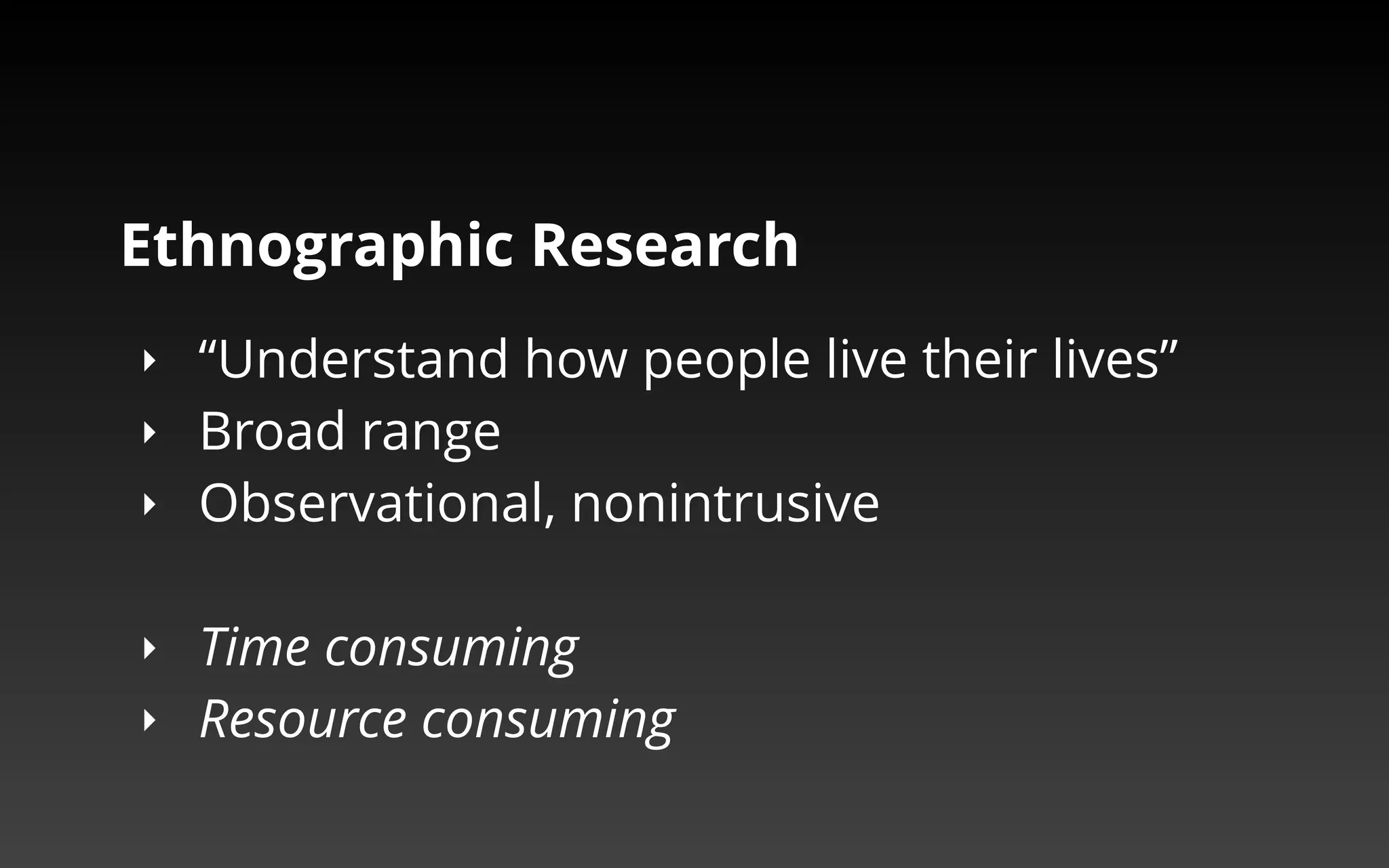
3. Ethnographic Research 
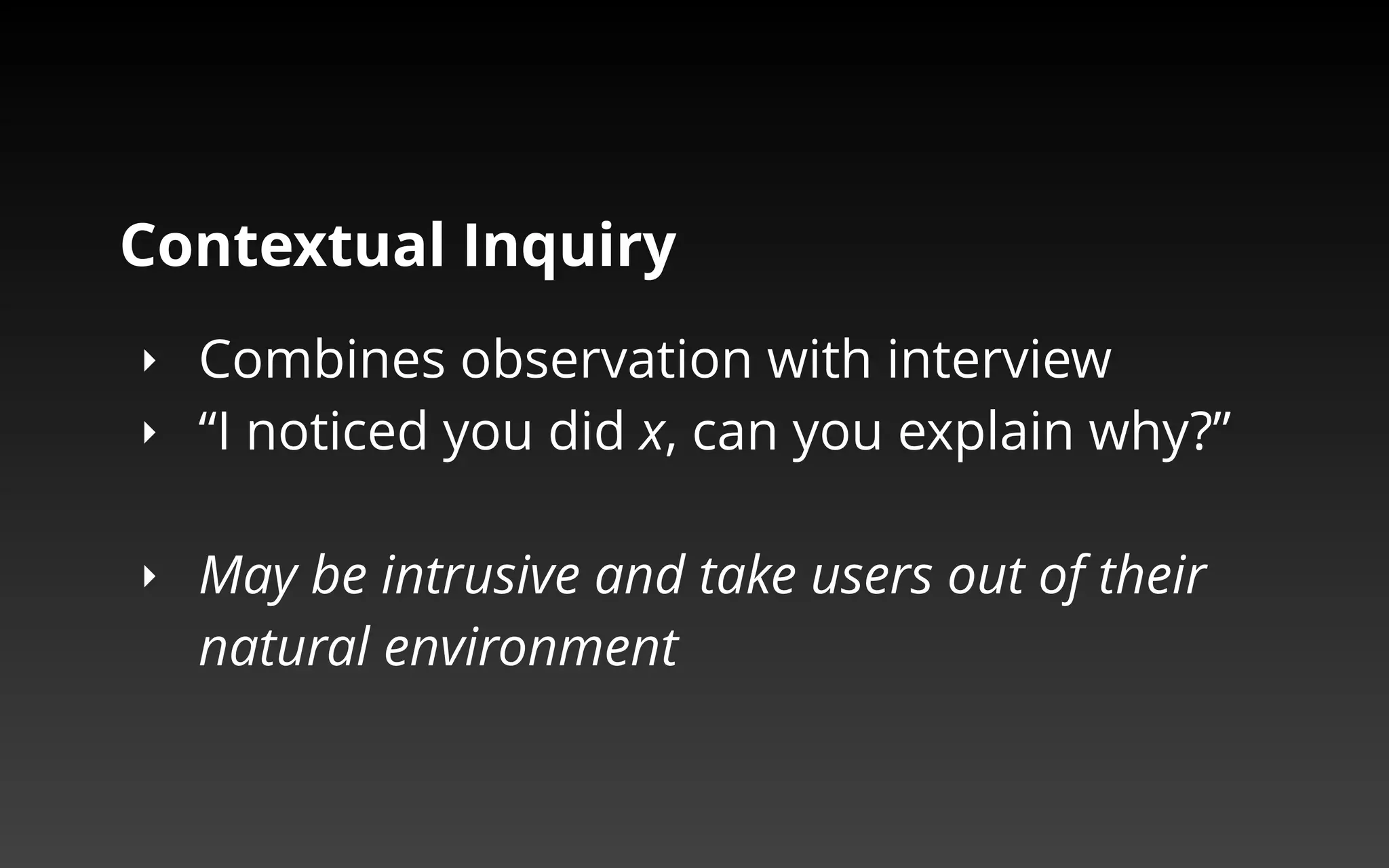
4. Contextual Inquiry 
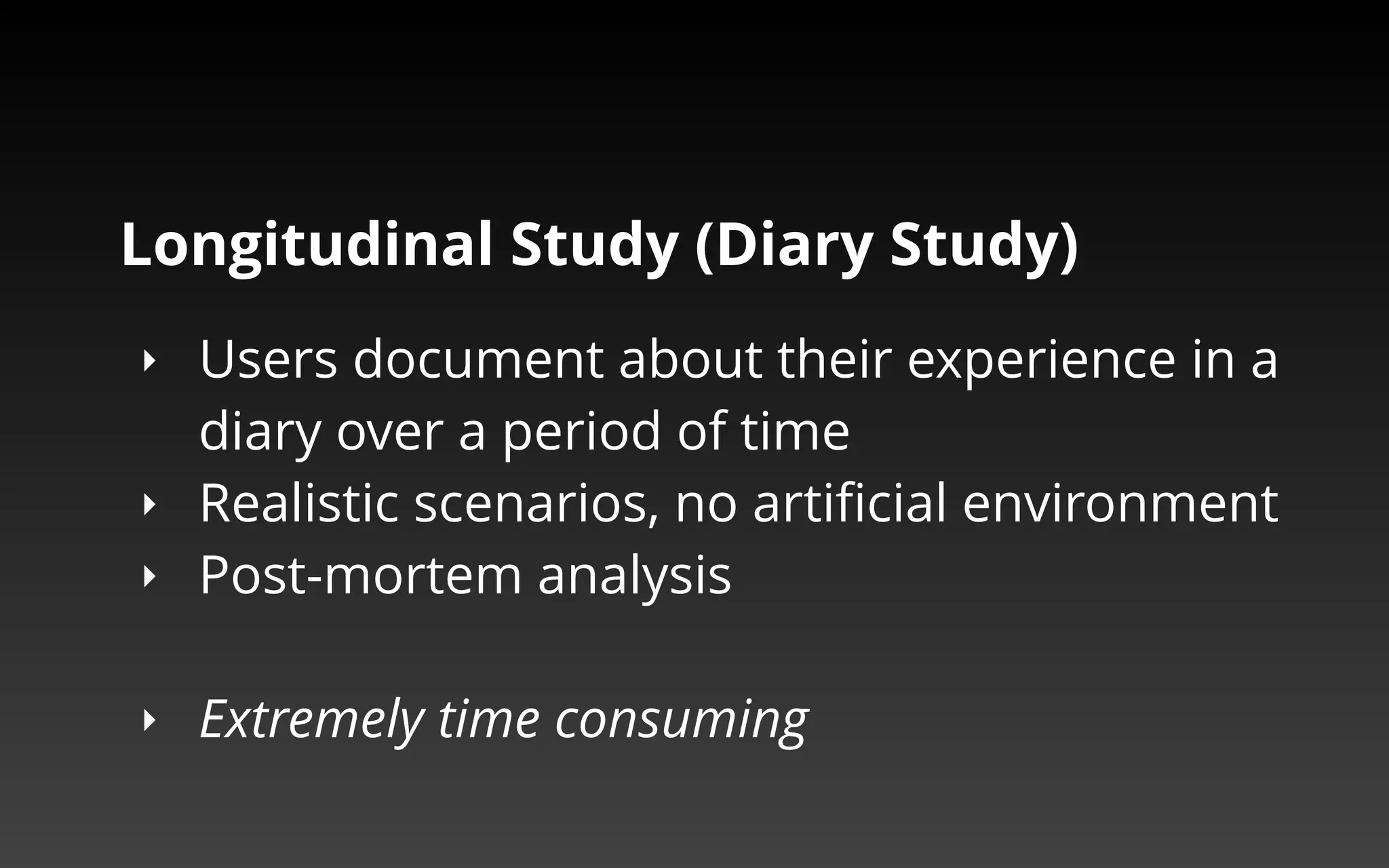
5. Longitudinal Study
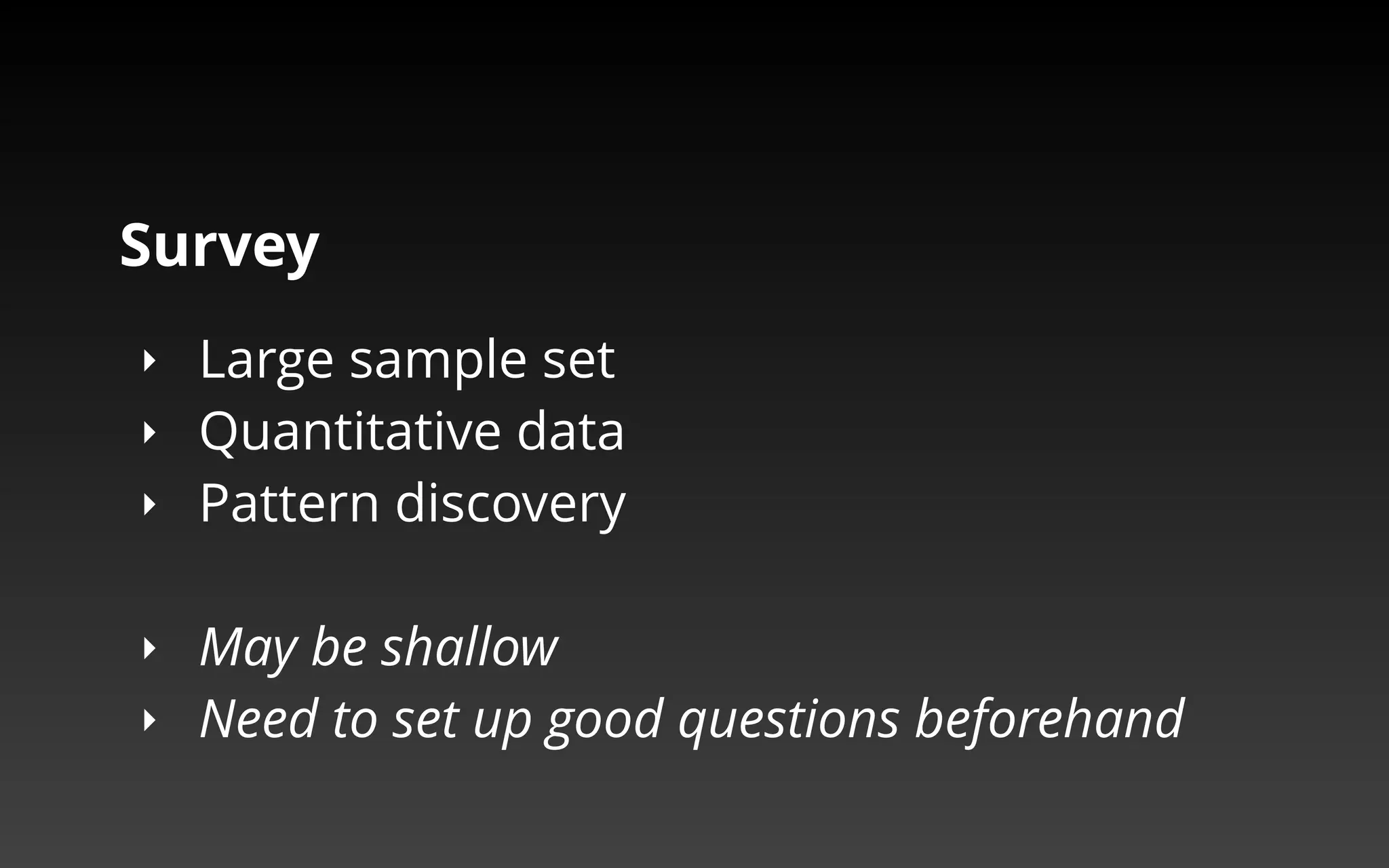
Survey 
‣ Large sample set 
‣ Quantitative data 
‣ Pattern discovery 
‣ May be shallow 
‣ Need to set up good questions beforehand
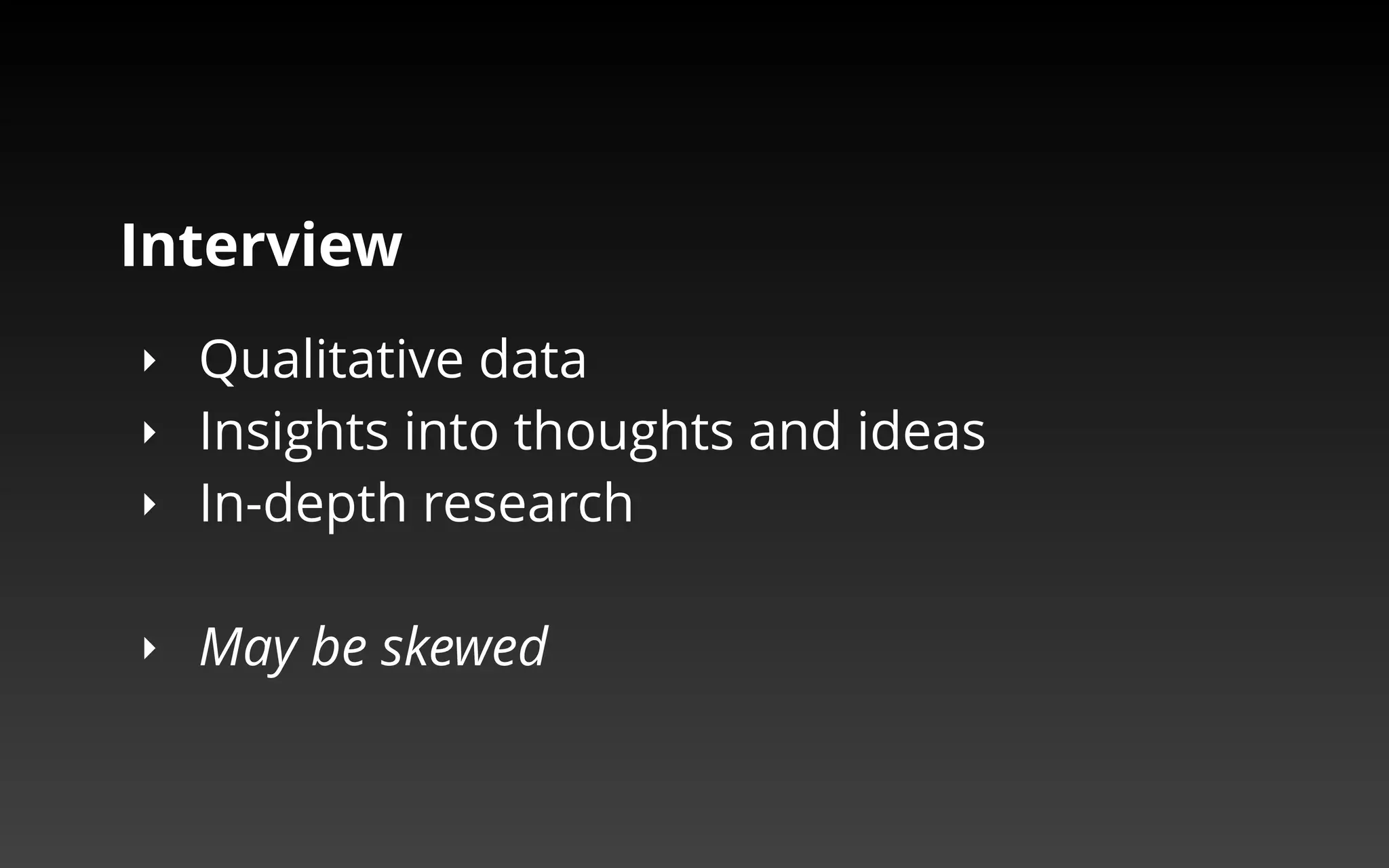
Interview 
‣ Qualitative data 
‣ Insights into thoughts and ideas 
‣ In-depth research 
‣ Participants may not be diverse enough 
‣ May be skewed
Ethnographic Research 
‣ “Understand how people live their lives” 
‣ Broad range 
‣ Observational, nonintrusive 
‣ Time consuming 
‣ Resource consuming
Contextual Inquiry 
‣ Combines observation with interview 
‣ “I noticed you did x, can you explain why?” 
‣ May be intrusive and take users out of their 
natural environment
Longitudinal Study (Diary Study) 
‣ Users document about their experience in a 
diary over a period of time 
‣ Realistic scenarios, no artificial environment 
‣ Post-mortem analysis 
‣ Extremely time consuming
“Interviewing isn’t the right approach for 
every problem. Because it favors depth 
over sample size, it’s not a source for 
statistically significant data.” 
Steve Portigal, Interviewing Users
Interviewing Users 
the art of asking questions
“Do you know anyone else 
I can speak to?”
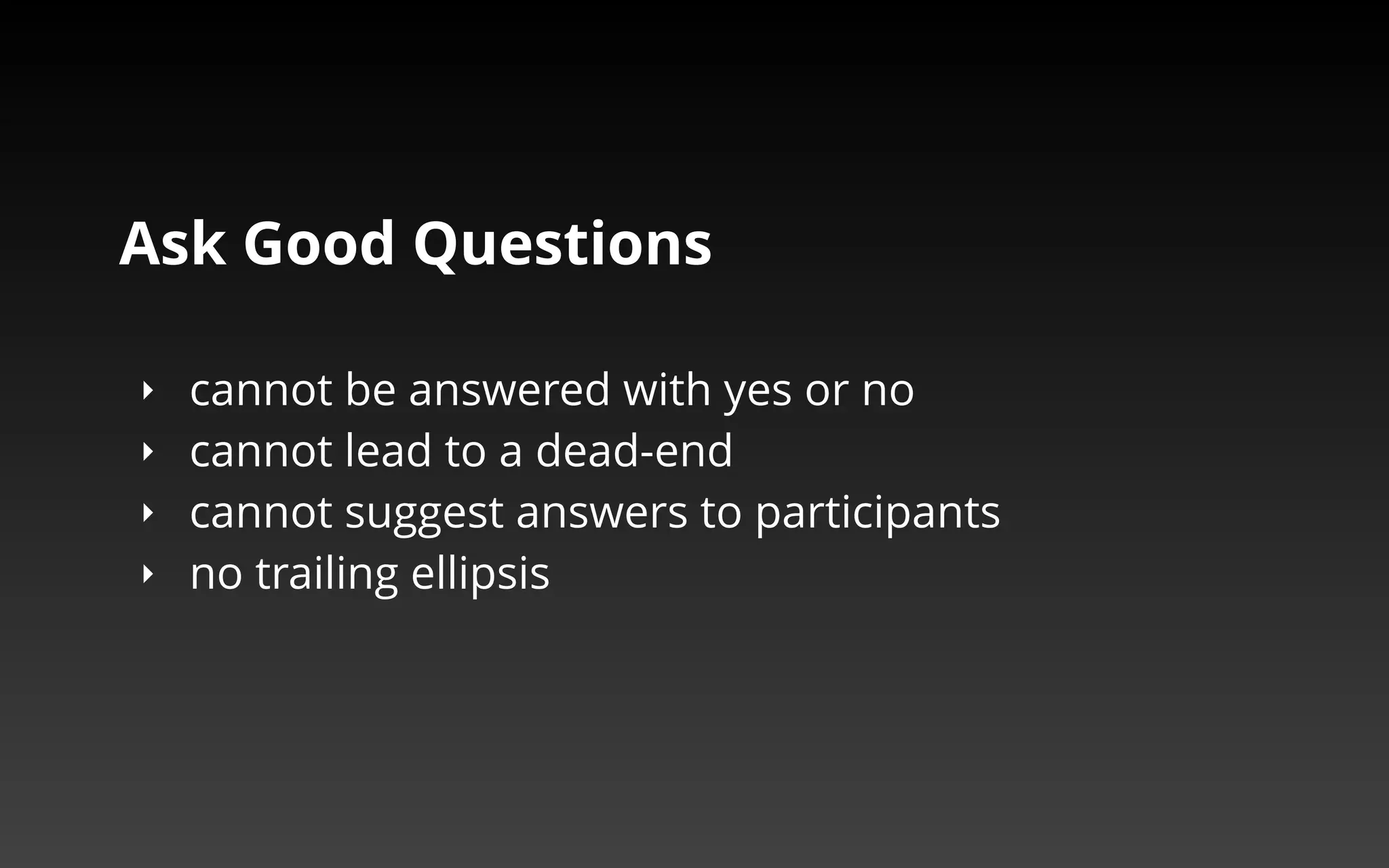
Ask Good Questions 
‣ cannot be answered with yes or no 
‣ cannot lead to a dead-end 
‣ cannot suggest answers to participants 
‣ no trailing ellipsis
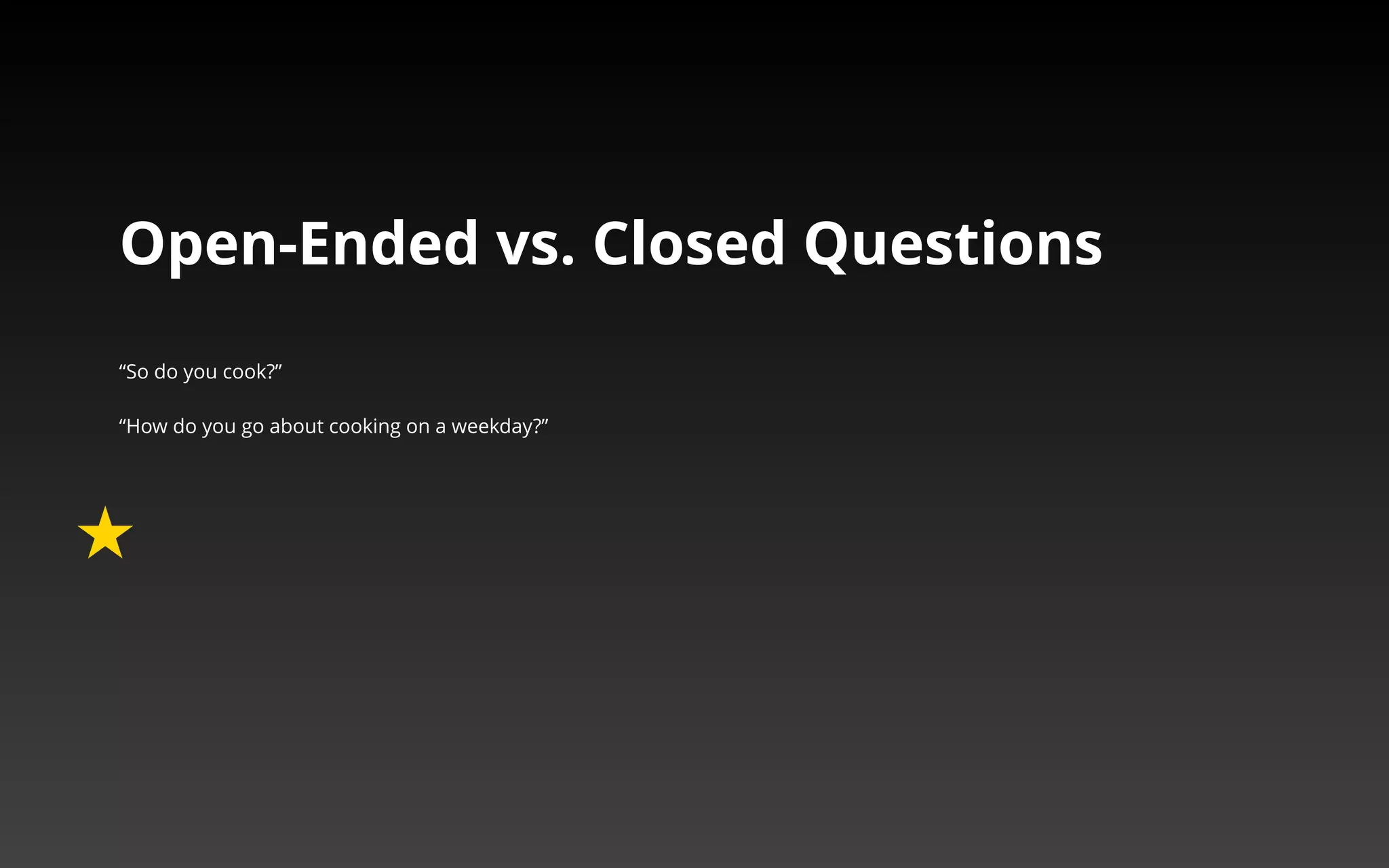
Open-Ended vs. Closed Questions 
“So do you cook?” 
“How do you go about cooking on a weekday?”
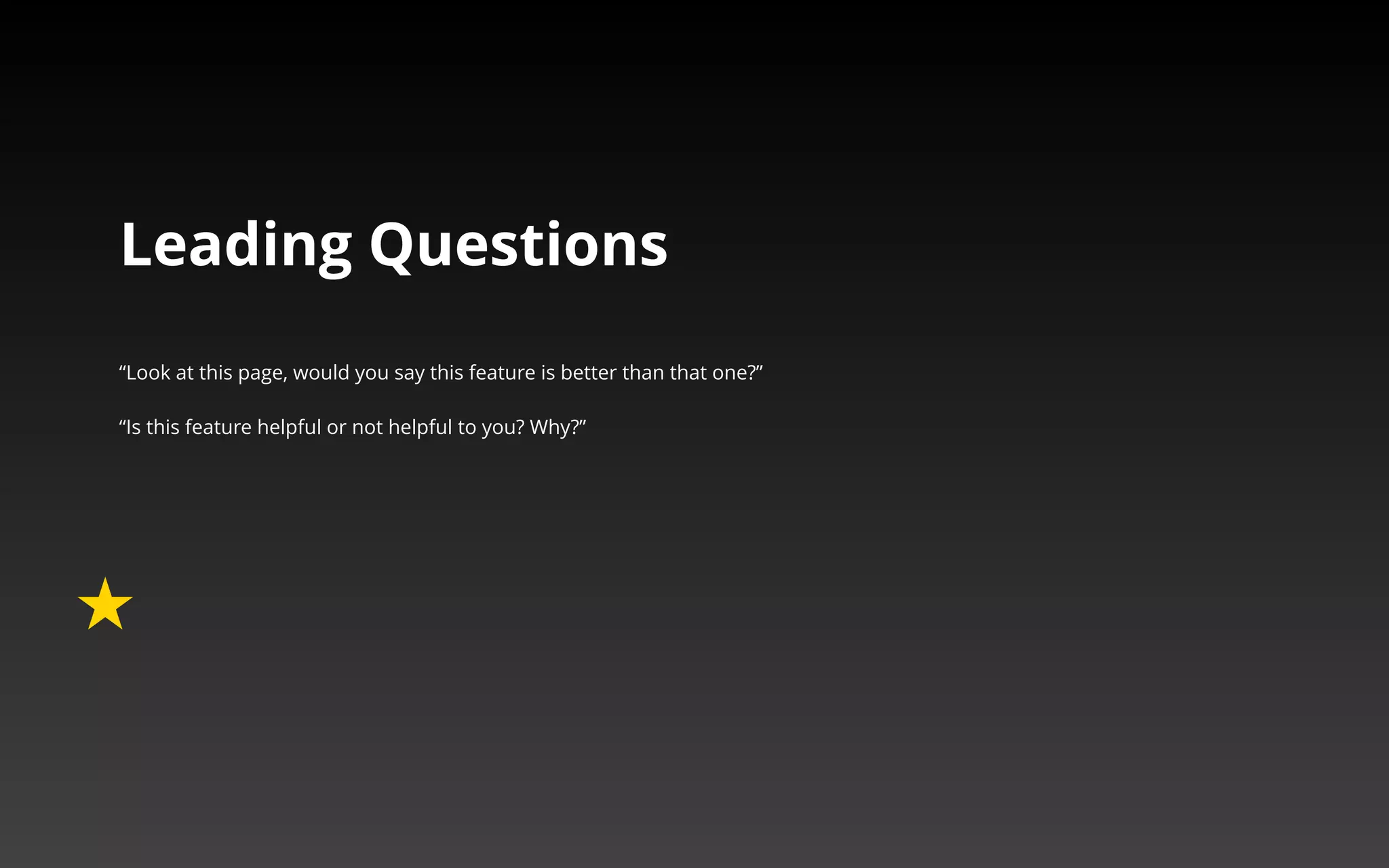
Leading Questions 
“Look at this page, would you say this feature is better than 
that one?” 
“Is this feature helpful or not helpful to you? Why?”
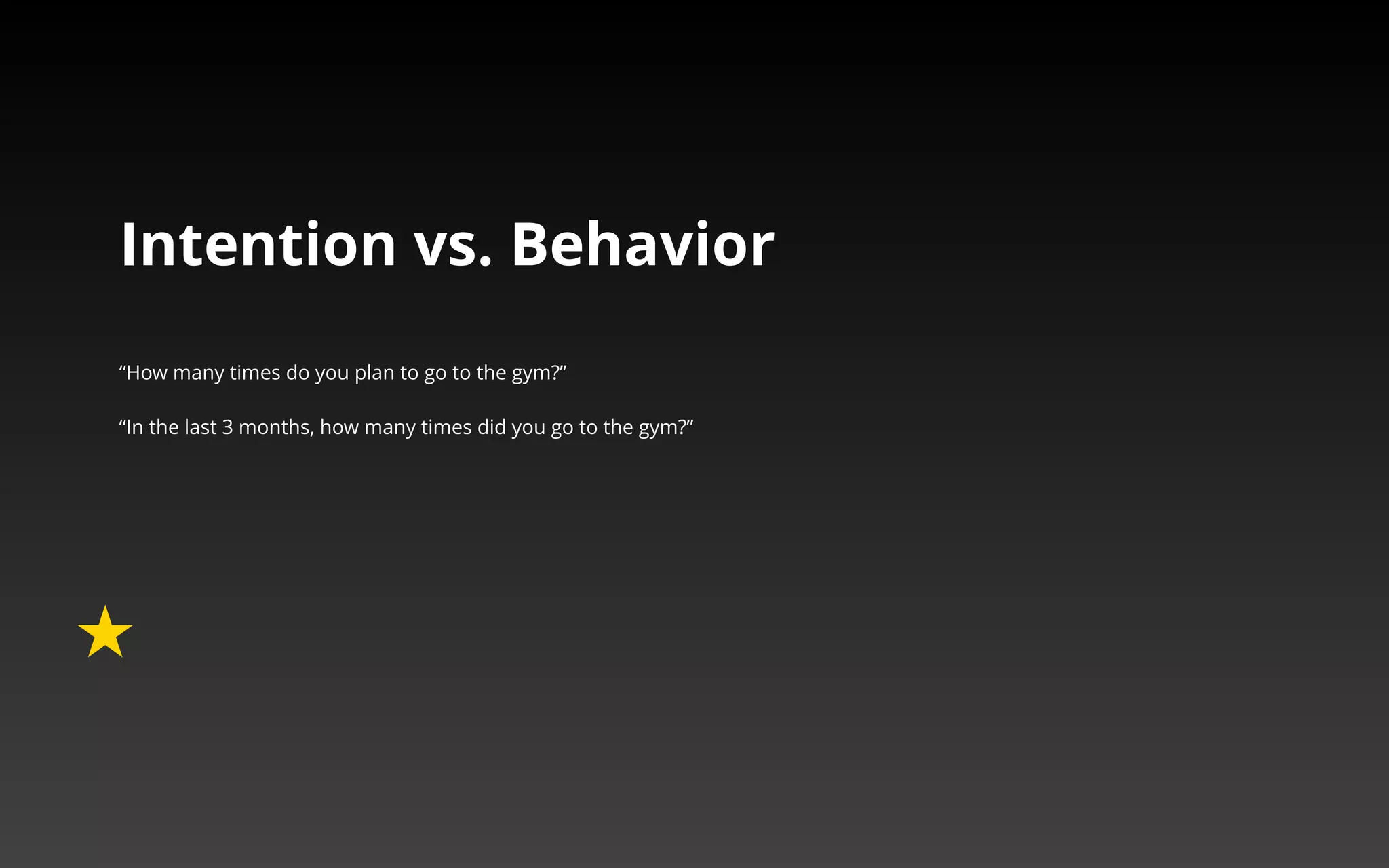
Intention vs. Behavior 
“How many times do you plan to go to the gym?” 
“In the last 3 months, how many times did you go to 
the gym?”
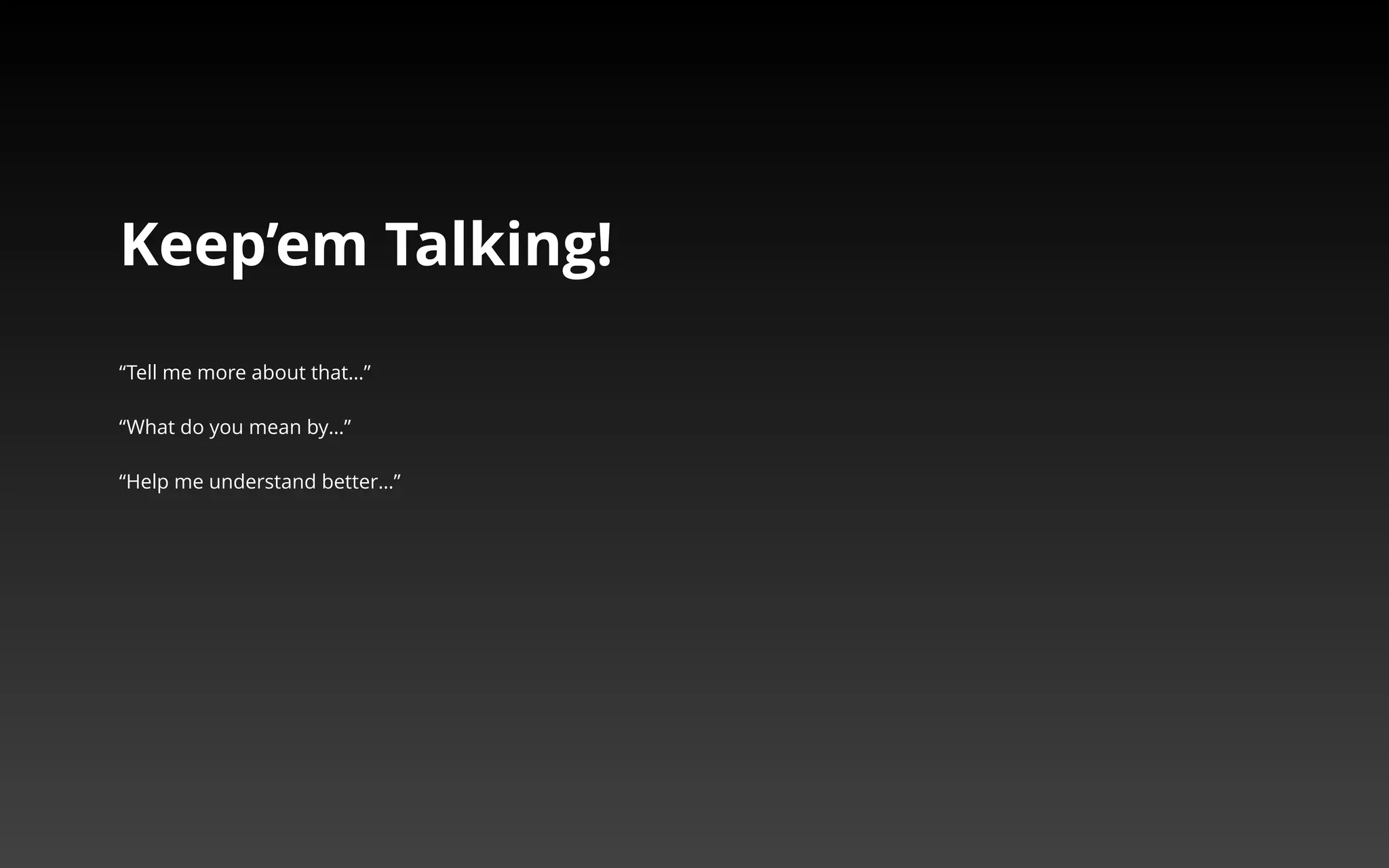
Keep’em Talking! 
“Tell me more about that…” 
“What do you mean by…” 
“Help me understand better…”
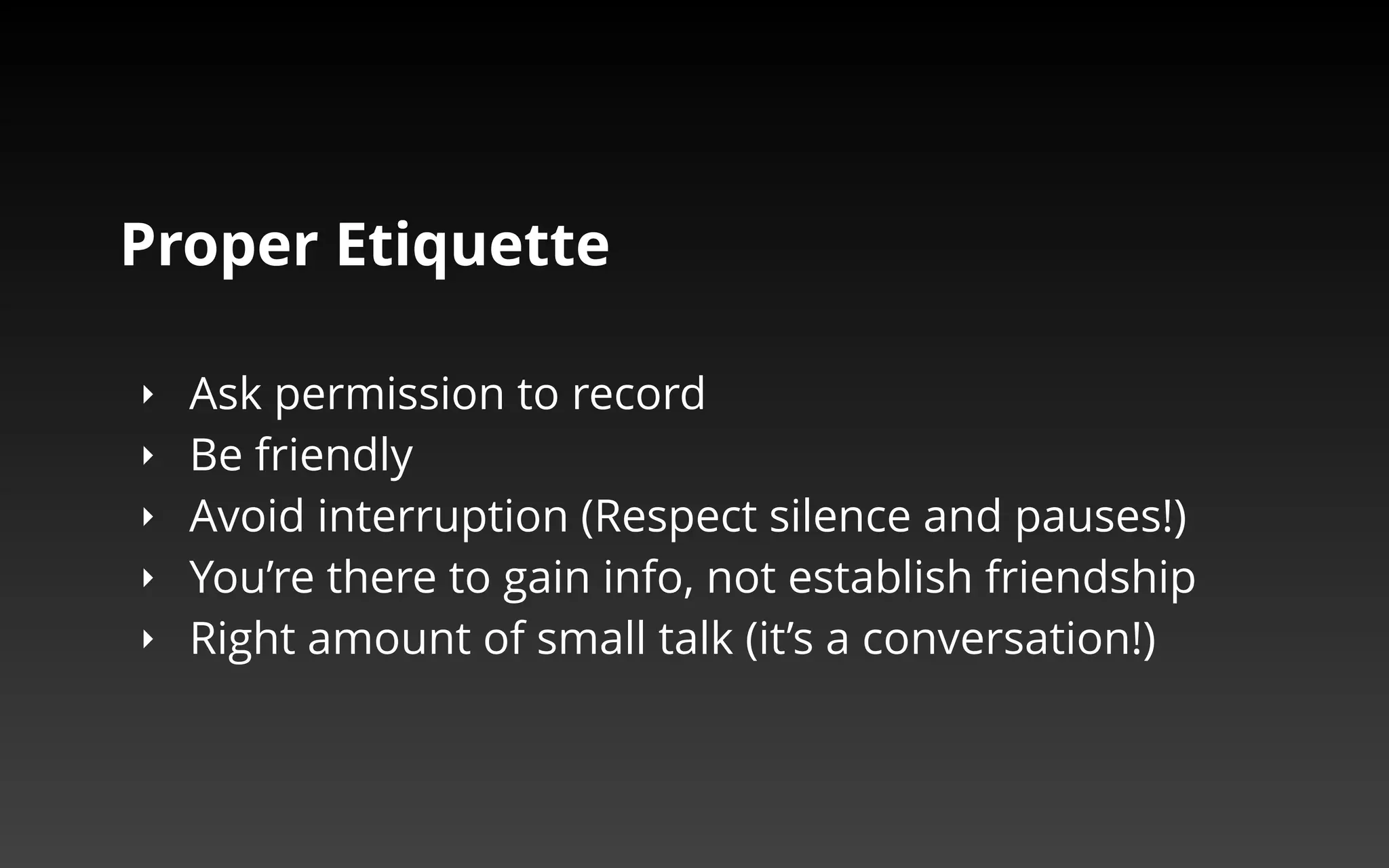
Proper Etiquette 
‣ Ask permission to record 
‣ Be friendly 
‣ Avoid interruption (Respect silence and pauses!) 
‣ You’re there to gain info, not establish friendship 
‣ Right amount of small talk (it’s a conversation!)
Personas 
externalize your characters
Fictional, archetypal users that lead to 
different collections of needs and behaviors, 
which help guide decisions. 
It allows the team to keep a vivid image of each user group.
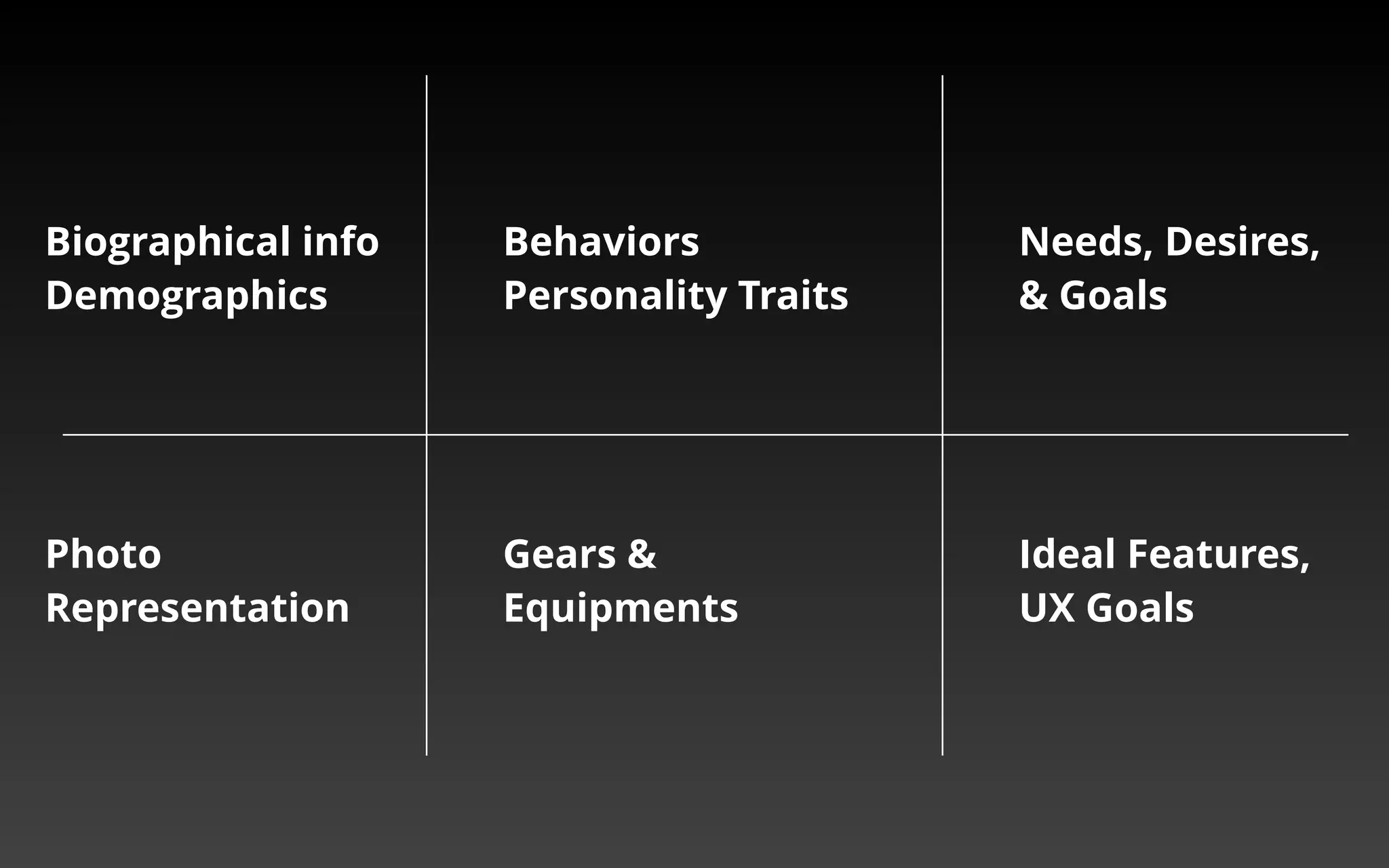
Biographical info 
Demographics 
Behaviors 
Personality Traits 
Needs, Desires, 
& Goals 
Ideal Features, 
UX Goals 
Gears & 
Equipments 
Photo 
Representation
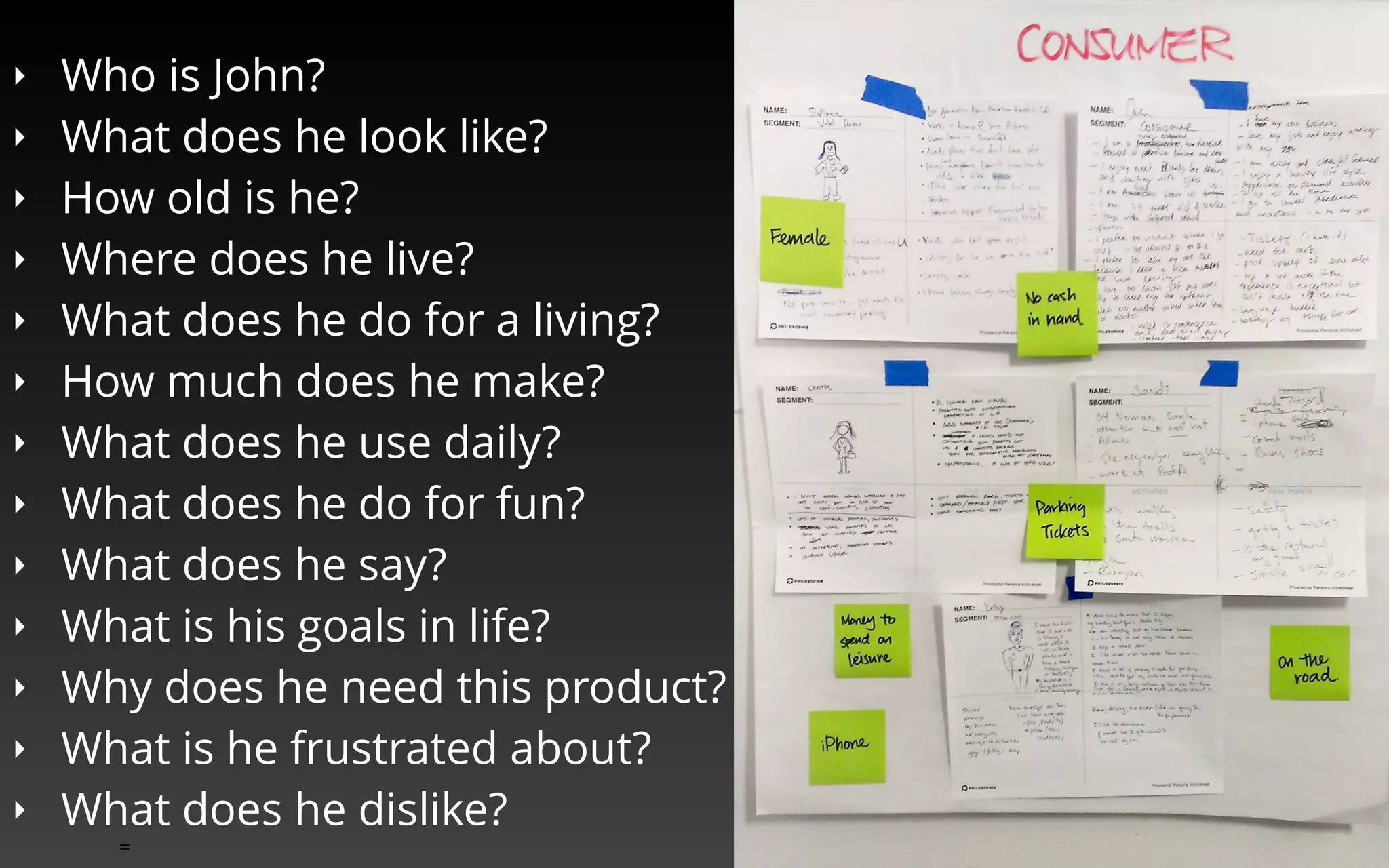
‣ Who is John? 
‣ What does he look like? 
‣ How old is he? 
‣ Where does he live? 
‣ What does he do for a living? 
‣ How much does he make? 
‣ What does he use daily? 
‣ What does he do for fun? 
‣ What does he say? 
‣ What is his goals in life? 
‣ Why does he need this product? 
‣ What is he frustrated about? 
‣ What does he dislike? 
=
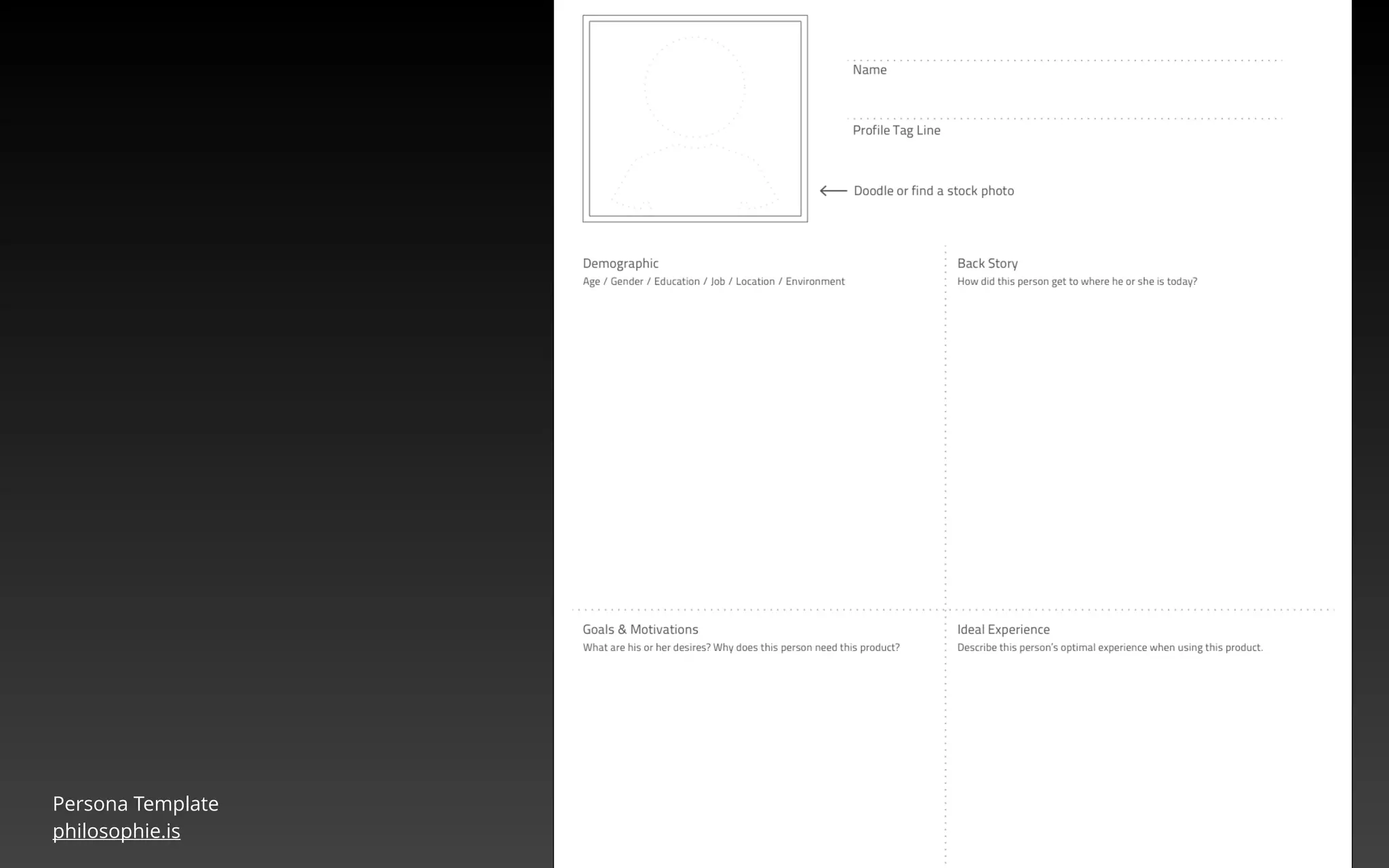
Persona Worksheet, philosophie.is
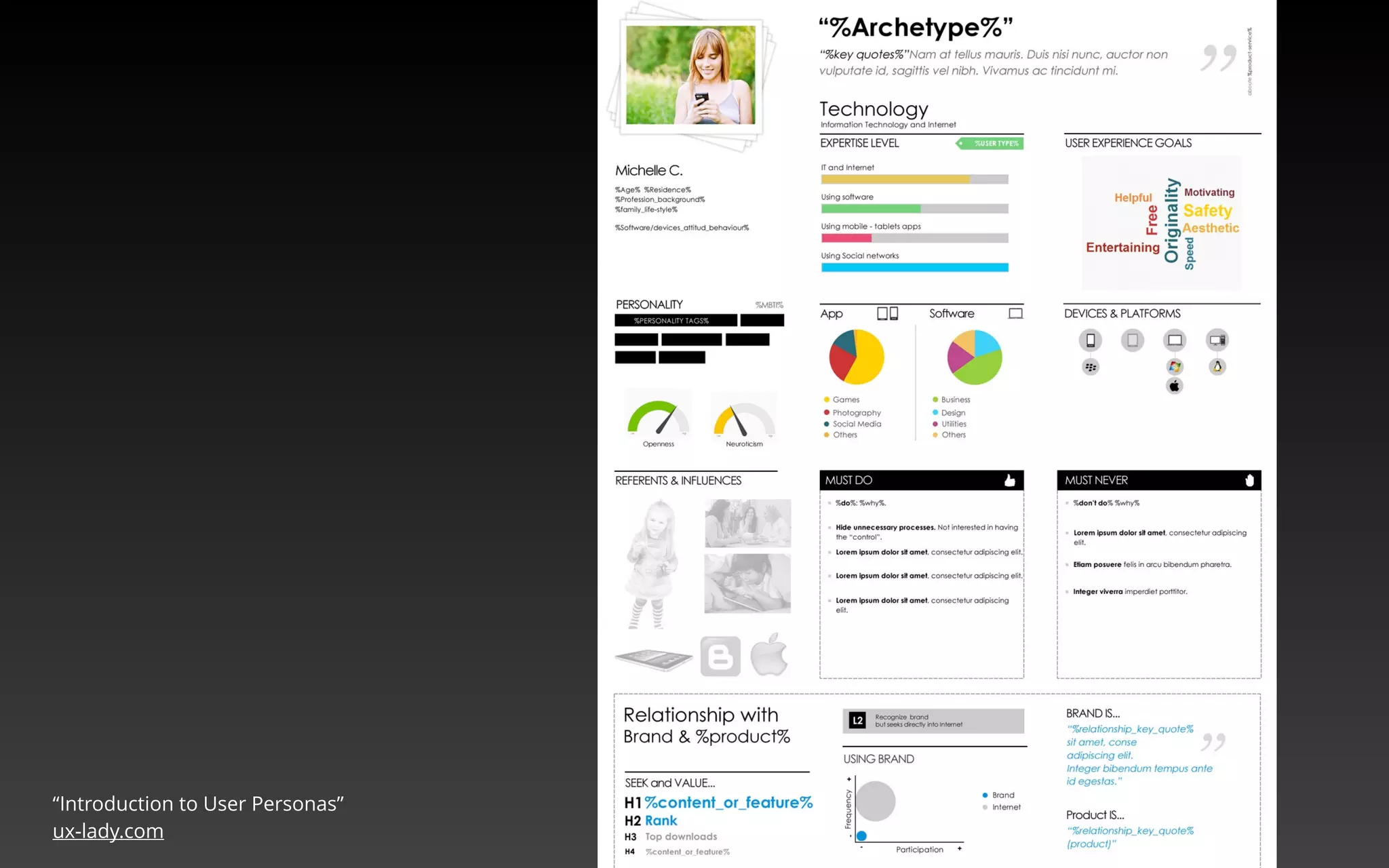
“Introduction to User Personas”, ux-lady.com
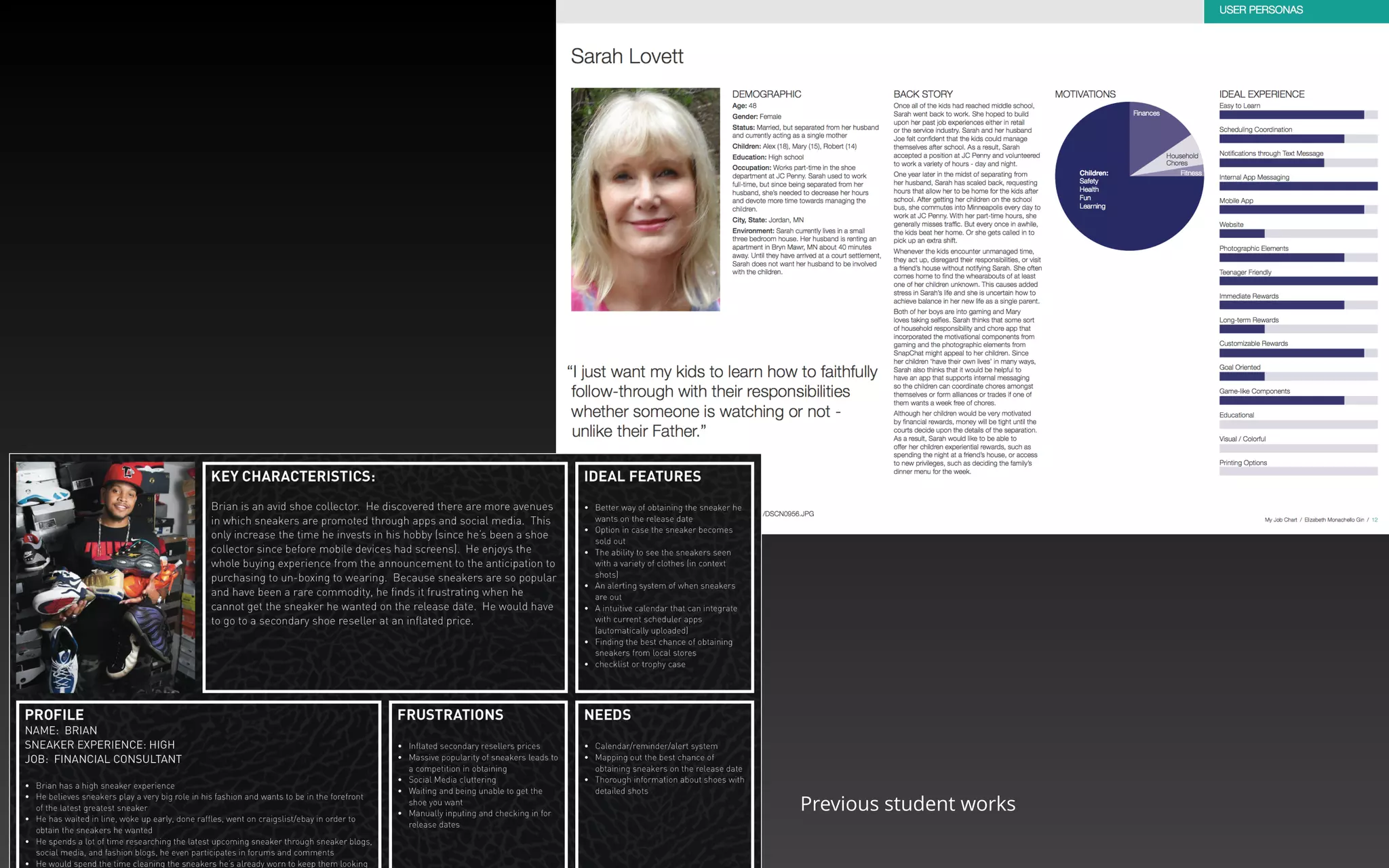
Persona Example - philosophie.com 
Previous student works
Resources & Reading 
‣http://www.usability.gov/how-to-and-tools/methods/personas.html 
‣http://www.ux-lady.com/diy-user-personas/ 
‣http://uxmag.com/articles/using-proto-personas-for-executive-alignment 
‣http://www.portigal.com/blog/from-sxsw-diving-deep-best-practices-for-interviewing- 
users/ 
‣http://www.uxmatters.com/mt/archives/2008/07/preparing-for-user-research- 
interviews-seven-things-to-remember.php 
‣http://www.slideshare.net/edanzico/user-interview-techniques

Art Center Interactive Design 4 - #2 Understanding Users

  • 1.
    Understanding Users ArtCenter Interactive Design 4 | Week 2 | Joy Liu
  • 2.
    So… who exactlyis going to use your product? and what do we need to know to understand them?
  • 3.
    One of usability’smost hard-earned lessons is that ‘you are not the user’.
  • 4.
    If you workon a development project, you’re atypical by definition. Design to optimize the user experience for outsiders, not insiders. The antidote to bubble vapor is user testing: find out what representative users need. It’s tempting to work on what’s hot, but to make money, focus on the basics that customers value. Jakob Nielsen, “Growing a Business Website: Fix the Basics First”, 2006.
  • 5.
    by The Oatmeal,http://theoatmeal.com/comics/restaurant_website
  • 6.
    The Five Wsand One H Why? Who? What? Where? When? How?
  • 7.
    Know your enemy & know yourself and you can fight a hundred battles without disaster. Sun Tzu “The Art of War”
  • 8.
    Don’t need toreinvent the wheel. ‣ How does the general market feel about this topic? ‣ What are the constraints or cultural impact on this topic? ‣ What are some products that hinder market adoption? ‣ What has been successful for people regarding this topic? ‣ What has been painful for people regarding this topic?
  • 9.
    Research Methods toolsto help you determine users
  • 10.
    1. Survey 2.Interview 3. Ethnographic Research 4. Contextual Inquiry 5. Longitudinal Study
  • 11.
    Survey ‣ Largesample set ‣ Quantitative data ‣ Pattern discovery ‣ May be shallow ‣ Need to set up good questions beforehand
  • 12.
    Interview ‣ Qualitativedata ‣ Insights into thoughts and ideas ‣ In-depth research ‣ Participants may not be diverse enough ‣ May be skewed
  • 13.
    Ethnographic Research ‣“Understand how people live their lives” ‣ Broad range ‣ Observational, nonintrusive ‣ Time consuming ‣ Resource consuming
  • 14.
    Contextual Inquiry ‣Combines observation with interview ‣ “I noticed you did x, can you explain why?” ‣ May be intrusive and take users out of their natural environment
  • 15.
    Longitudinal Study (DiaryStudy) ‣ Users document about their experience in a diary over a period of time ‣ Realistic scenarios, no artificial environment ‣ Post-mortem analysis ‣ Extremely time consuming
  • 16.
    “Interviewing isn’t theright approach for every problem. Because it favors depth over sample size, it’s not a source for statistically significant data.” Steve Portigal, Interviewing Users
  • 17.
    Interviewing Users theart of asking questions
  • 18.
    “Do you knowanyone else I can speak to?”
  • 19.
    Ask Good Questions ‣ cannot be answered with yes or no ‣ cannot lead to a dead-end ‣ cannot suggest answers to participants ‣ no trailing ellipsis
  • 20.
    Open-Ended vs. ClosedQuestions “So do you cook?” “How do you go about cooking on a weekday?”
  • 21.
    Leading Questions “Lookat this page, would you say this feature is better than that one?” “Is this feature helpful or not helpful to you? Why?”
  • 22.
    Intention vs. Behavior “How many times do you plan to go to the gym?” “In the last 3 months, how many times did you go to the gym?”
  • 23.
    Keep’em Talking! “Tellme more about that…” “What do you mean by…” “Help me understand better…”
  • 24.
    Proper Etiquette ‣Ask permission to record ‣ Be friendly ‣ Avoid interruption (Respect silence and pauses!) ‣ You’re there to gain info, not establish friendship ‣ Right amount of small talk (it’s a conversation!)
  • 25.
  • 26.
    Fictional, archetypal usersthat lead to different collections of needs and behaviors, which help guide decisions. It allows the team to keep a vivid image of each user group.
  • 27.
    Biographical info Demographics Behaviors Personality Traits Needs, Desires, & Goals Ideal Features, UX Goals Gears & Equipments Photo Representation
  • 28.
    ‣ Who isJohn? ‣ What does he look like? ‣ How old is he? ‣ Where does he live? ‣ What does he do for a living? ‣ How much does he make? ‣ What does he use daily? ‣ What does he do for fun? ‣ What does he say? ‣ What is his goals in life? ‣ Why does he need this product? ‣ What is he frustrated about? ‣ What does he dislike? =
  • 29.
  • 30.
  • 31.
    “Introduction to UserPersonas”, ux-lady.com
  • 32.
    Persona Example -philosophie.com Previous student works
  • 33.
    Resources & Reading ‣http://www.usability.gov/how-to-and-tools/methods/personas.html ‣http://www.ux-lady.com/diy-user-personas/ ‣http://uxmag.com/articles/using-proto-personas-for-executive-alignment ‣http://www.portigal.com/blog/from-sxsw-diving-deep-best-practices-for-interviewing- users/ ‣http://www.uxmatters.com/mt/archives/2008/07/preparing-for-user-research- interviews-seven-things-to-remember.php ‣http://www.slideshare.net/edanzico/user-interview-techniques