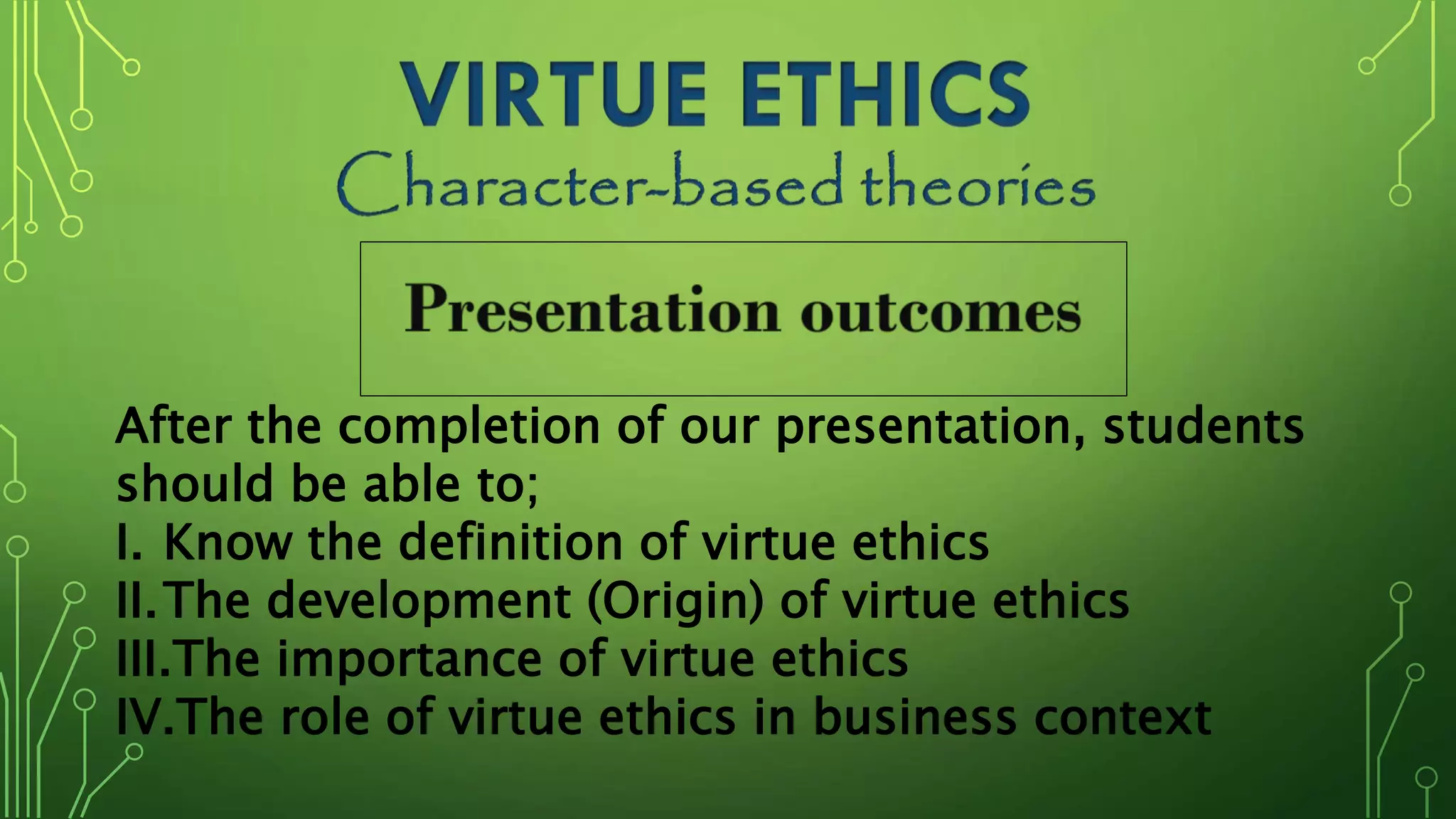
After the completion of our presentation, students
should be able to;
I. Know the definition of virtue ethics
II.The development (Origin) of virtue ethics
III.The importance of virtue ethics
IV.The role of virtue ethics in business context
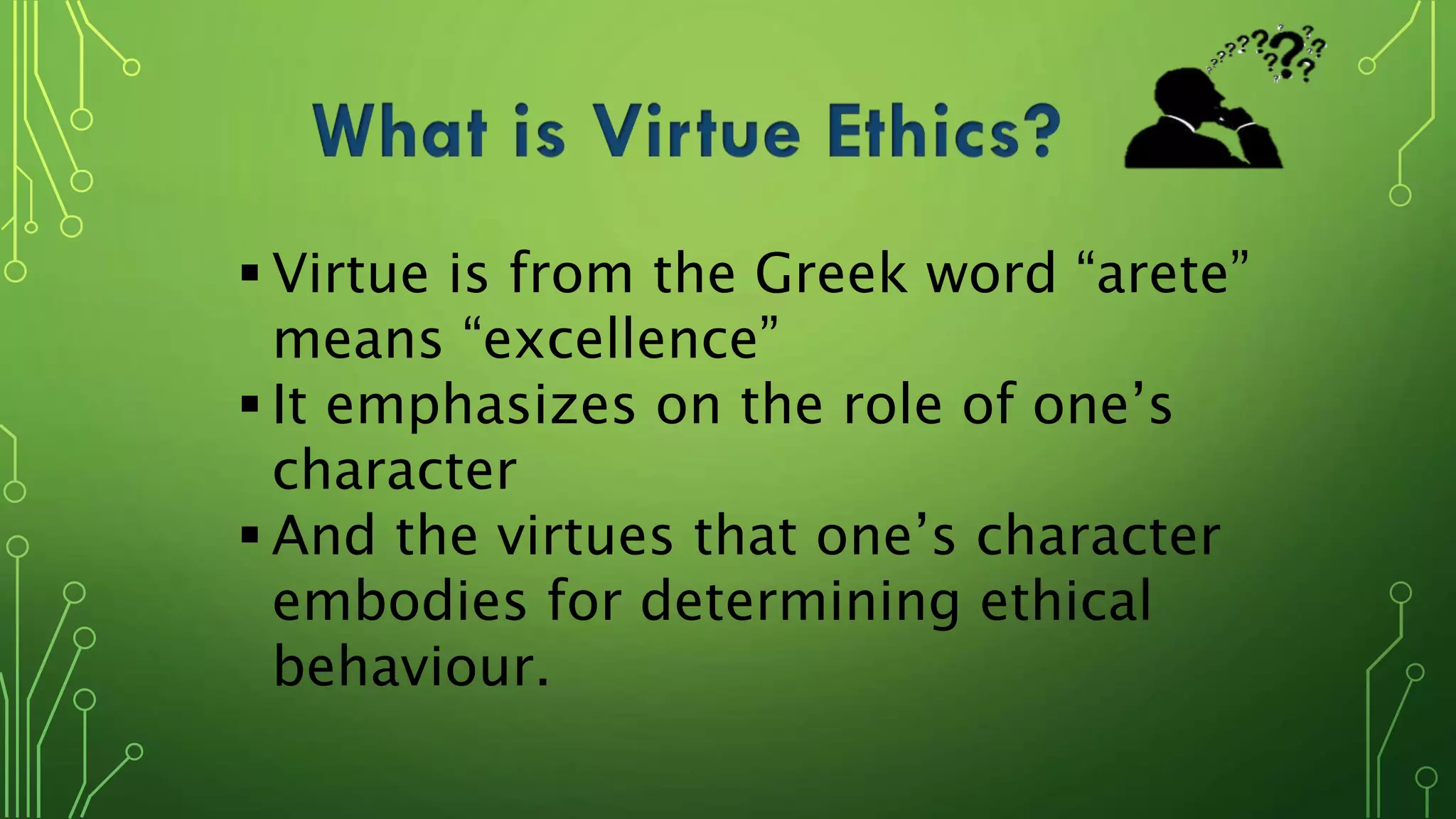
 Virtue is from the Greek word “arete”
means “excellence”
 It emphasizes on the role of one’s
character
 And the virtues that one’s character
embodies for determining ethical
behaviour.
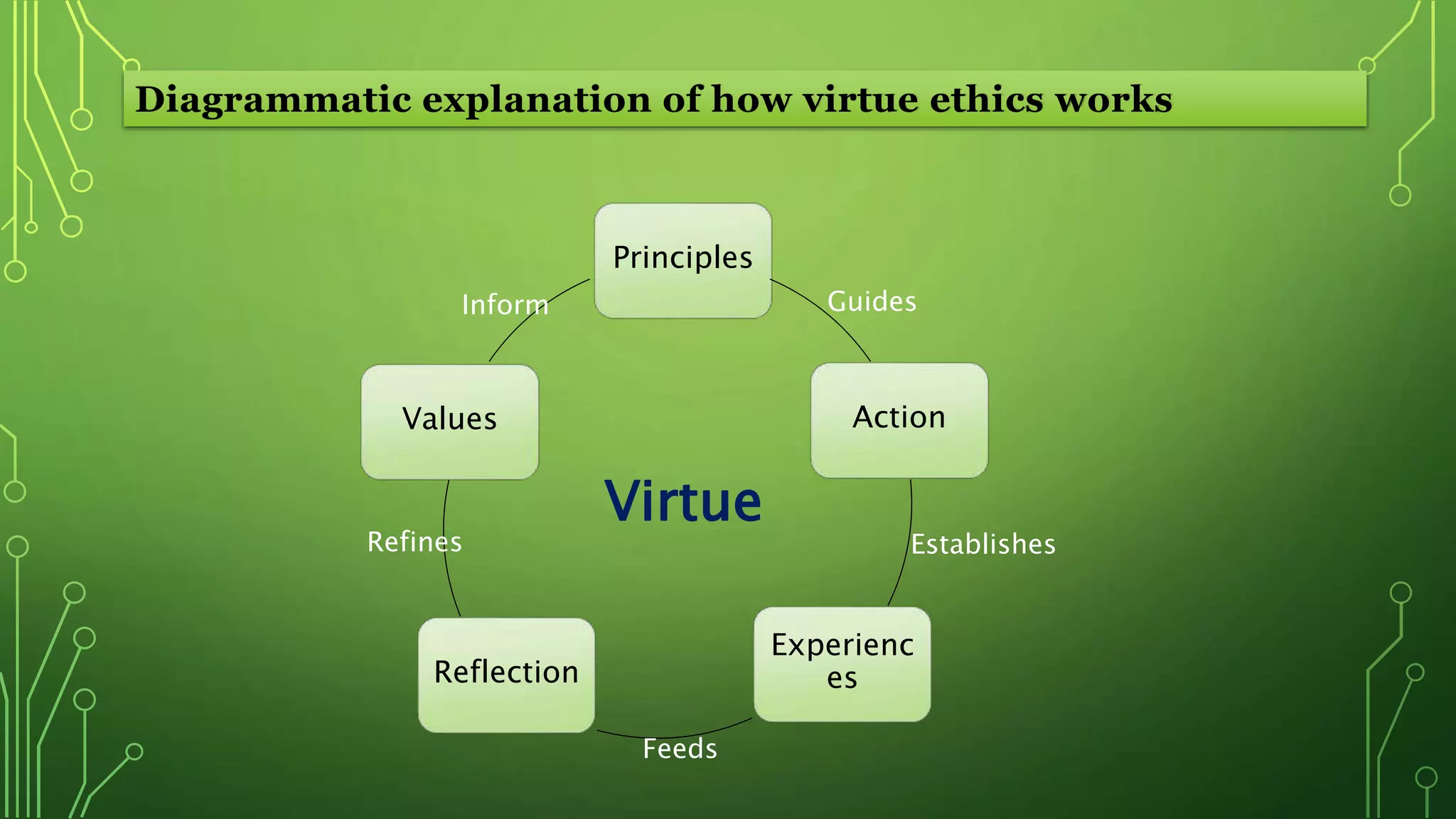
Diagrammatic explanation of how virtue ethics works
Principles
Action
Experienc
esReflection
Values
GuidesInform
Establishes
Feeds
Refines
Virtue
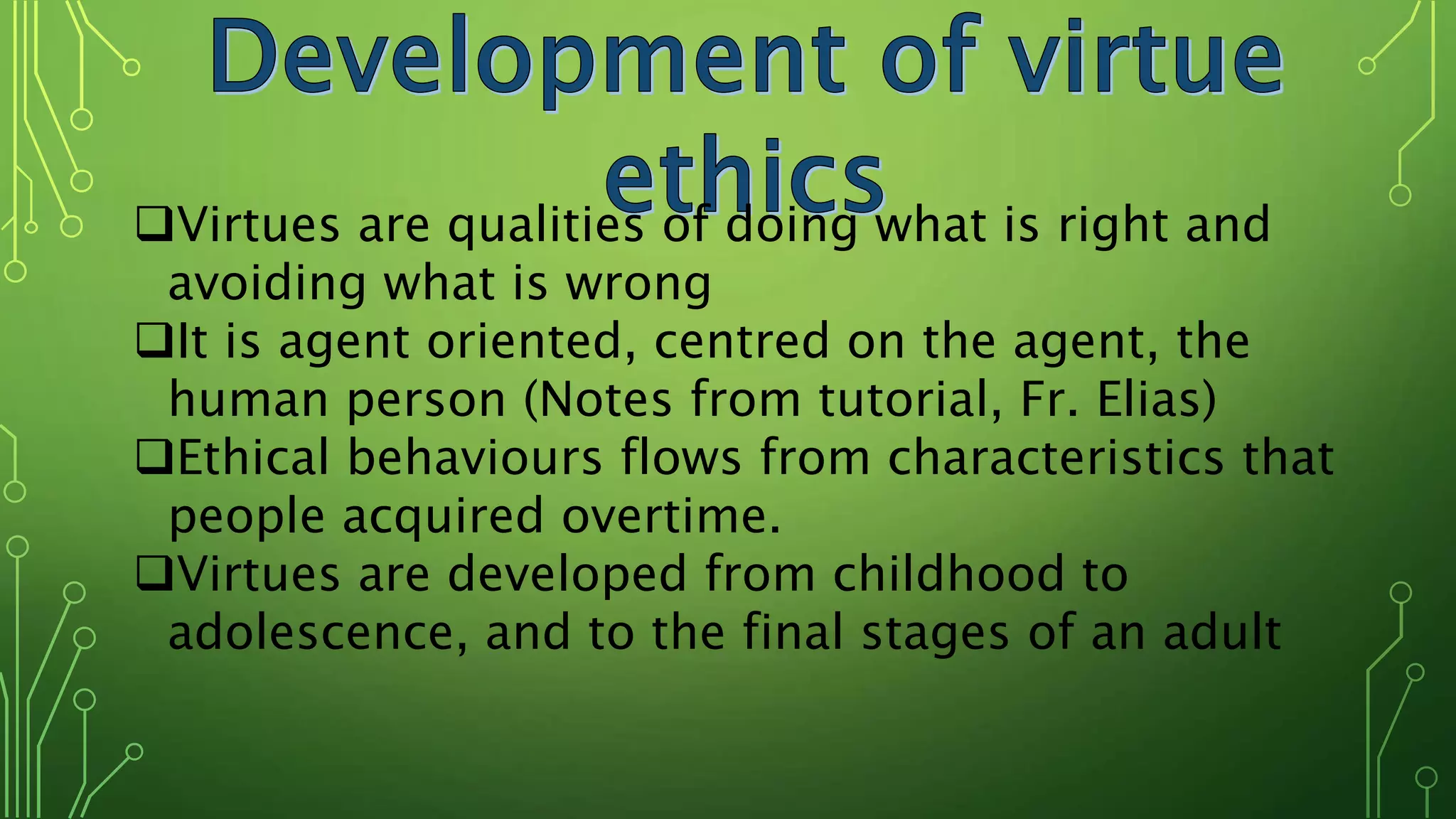
Virtues are qualities of doing what is right and
avoiding what is wrong
It is agent oriented, centred on the agent, the
human person (Notes from tutorial, Fr. Elias)
Ethical behaviours flows from characteristics that
people acquired overtime.
Virtues are developed from childhood to
adolescence, and to the final stages of an adult
 As individuals develop, their
interaction with people in
bigger communities expands.
 The person’s character and
behaviour changes. In choosing
what is right which in most
cases is difficult, the person
continues to develop virtues
habits.
 Thus, people will do the right
thing because, they have
developed virtuous habits. (
Review notes from tutorial, Fr.
Importance of virtue
ethicsThe importance of virtue ethics cannot be shown or
realized unless and until we understand the moral
rules. However, it’s not only through understanding,
we have to apply these moral values in real life
situations in order to become more ethical in decision
making. Furthermore, we will become more
familiarized with the four major moral values and
three theological virtues where all other virtues
flowed out from these seven ethical virtues.
The four major moral values
1. Prudence-is the practical wisdom in living life,
where it can be acquired through experience and
reflection.
2. Temperance –is the appropriateness in the use
of passions or desires. It is the quality of character
that is dependable because one’s desires have been
disciplined to respond to the truly good.
3. Fortitude –is the courage needed to overcome
obstacles when one grows.
4. Justice –is the fairness and equality in dealing
with others.
Theological virtues
1. Faith –is the given grace from God.
2. Hope –is the advantages of the human will
towards final union with God.
3. Love –is the experience and expression of
the strong desire for those persons or things in
which one takes a particulars joy or delight.
Role of virtue
ethics
in business context
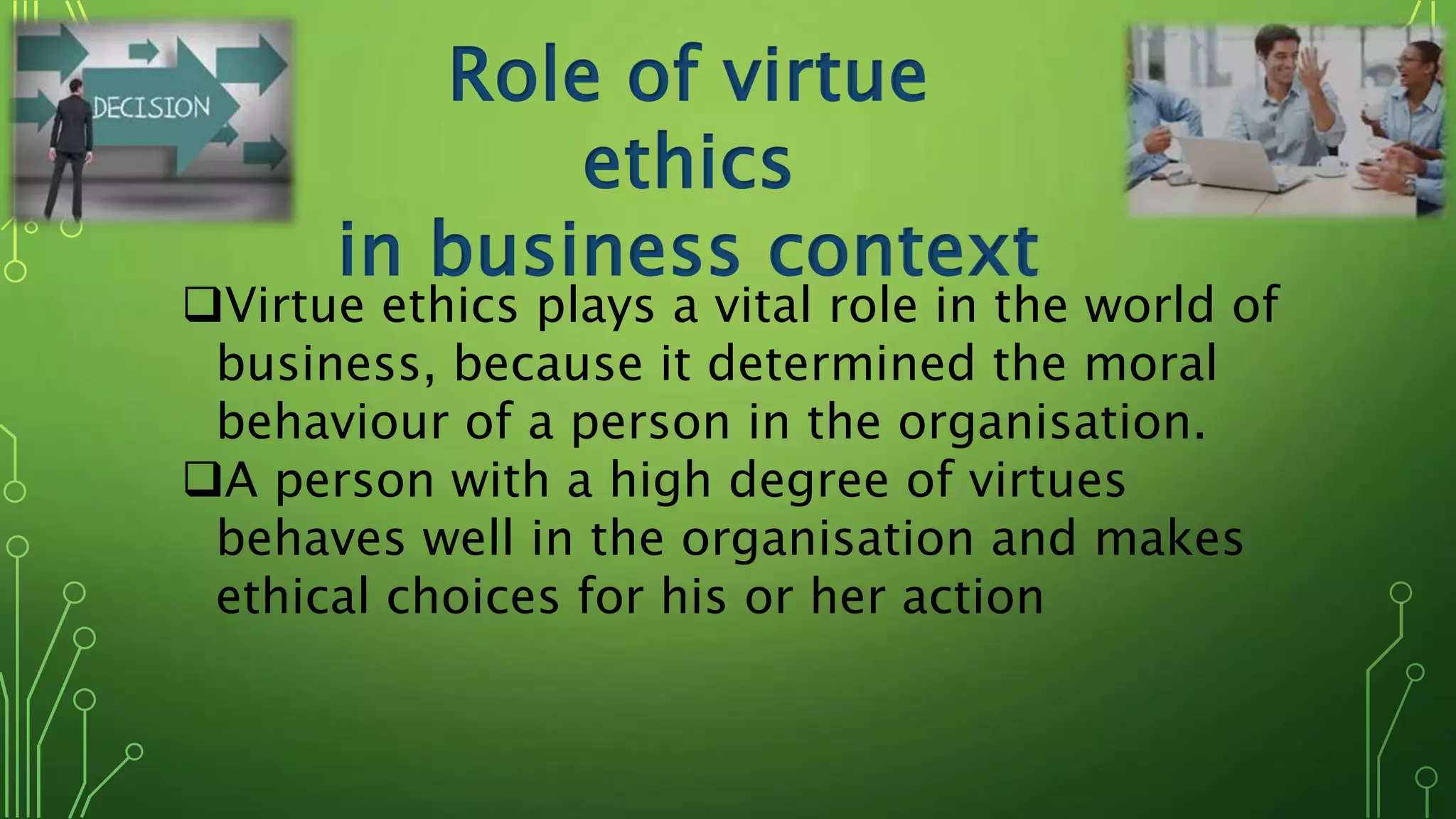
Virtue ethics plays a vital role in the world of
business, because it determined the moral
behaviour of a person in the organisation.
A person with a high degree of virtues
behaves well in the organisation and makes
ethical choices for his or her action
Principles of those virtues are; courage, wisdom,
temperance, fairness, integrity, and consistency.
Specifically those are moral virtues.
Possession of such virtues principles by a worker ( a
manager) in the organisation helps in achieving the
organisational goals. Thus, increases the tendency
of worker’s performance in terms of, decision
making, planning, organising and controlling
various resources in the organisation in an ethical
manner.
Summary
Virtue ethics is not like other ethics in the world
of ethics.
It is more than a ethics compare to other nature
of ethics, because it is grounded in the human
character.
It is concerned with the human character from
birth to death
In reality, it portray one’s character to be
recognize by others and gives the sense of reality.
As in business wise, it acts as a contributing
factors towards business success. That is, in
Virtue ethics powerpoint slide

Virtue ethics powerpoint slide

  • 1.
    After the completionof our presentation, students should be able to; I. Know the definition of virtue ethics II.The development (Origin) of virtue ethics III.The importance of virtue ethics IV.The role of virtue ethics in business context
  • 2.
     Virtue isfrom the Greek word “arete” means “excellence”  It emphasizes on the role of one’s character  And the virtues that one’s character embodies for determining ethical behaviour.
  • 3.
    Diagrammatic explanation ofhow virtue ethics works Principles Action Experienc esReflection Values GuidesInform Establishes Feeds Refines Virtue
  • 4.
    Virtues are qualitiesof doing what is right and avoiding what is wrong It is agent oriented, centred on the agent, the human person (Notes from tutorial, Fr. Elias) Ethical behaviours flows from characteristics that people acquired overtime. Virtues are developed from childhood to adolescence, and to the final stages of an adult
  • 5.
     As individualsdevelop, their interaction with people in bigger communities expands.  The person’s character and behaviour changes. In choosing what is right which in most cases is difficult, the person continues to develop virtues habits.  Thus, people will do the right thing because, they have developed virtuous habits. ( Review notes from tutorial, Fr.
  • 6.
    Importance of virtue ethicsTheimportance of virtue ethics cannot be shown or realized unless and until we understand the moral rules. However, it’s not only through understanding, we have to apply these moral values in real life situations in order to become more ethical in decision making. Furthermore, we will become more familiarized with the four major moral values and three theological virtues where all other virtues flowed out from these seven ethical virtues.
  • 7.
    The four majormoral values 1. Prudence-is the practical wisdom in living life, where it can be acquired through experience and reflection. 2. Temperance –is the appropriateness in the use of passions or desires. It is the quality of character that is dependable because one’s desires have been disciplined to respond to the truly good. 3. Fortitude –is the courage needed to overcome obstacles when one grows. 4. Justice –is the fairness and equality in dealing with others.
  • 8.
    Theological virtues 1. Faith–is the given grace from God. 2. Hope –is the advantages of the human will towards final union with God. 3. Love –is the experience and expression of the strong desire for those persons or things in which one takes a particulars joy or delight.
  • 9.
    Role of virtue ethics inbusiness context Virtue ethics plays a vital role in the world of business, because it determined the moral behaviour of a person in the organisation. A person with a high degree of virtues behaves well in the organisation and makes ethical choices for his or her action
  • 10.
    Principles of thosevirtues are; courage, wisdom, temperance, fairness, integrity, and consistency. Specifically those are moral virtues. Possession of such virtues principles by a worker ( a manager) in the organisation helps in achieving the organisational goals. Thus, increases the tendency of worker’s performance in terms of, decision making, planning, organising and controlling various resources in the organisation in an ethical manner.
  • 11.
    Summary Virtue ethics isnot like other ethics in the world of ethics. It is more than a ethics compare to other nature of ethics, because it is grounded in the human character. It is concerned with the human character from birth to death In reality, it portray one’s character to be recognize by others and gives the sense of reality. As in business wise, it acts as a contributing factors towards business success. That is, in