Areas of
Development
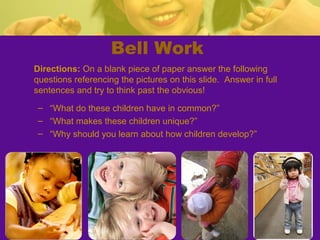
Bell Work
Directions: On a blank piece of paper answer the following
questions referencing the pictures on this slide. Answer in full
sentences and try to think past the obvious!
 – “What do these children have in common?”
 – “What makes these children unique?”
 – “Why should you learn about how children develop?”
What is Child Development?
• The study of how children master new skills
• Children go through the same stages of
  development at about the same time but
  each child is unique
What influences development?

• Heredity
  – Children inherit certain characteristics from
    parents
• Environment
  – Opportunities
  – Experiences
Activity
• Directions:
  – Use the booklet given to you and label the pages like the
    samples as follows (you will use both front and back sides of
    the pages starting with the cover)
      •   Cover – “Areas of Development” and your Name
      •   Page #1 – “Physical”
      •   Page #2 – “Gross Motor Skills”
      •   Page #3 – “Fine Motor Skills”
      •   Page #4 – “Mental/Intellectual”
      •   Page #5 – “Emotional”
      •   Page #6 – “Social”
  – Each page should have the header, definition, example, and
    a picture showing the area of development
      • Use the following slides to help you get this information
Areas of Development
•   Physical
•   Mental/Intellectual
•   Emotional
•   Social
Physical
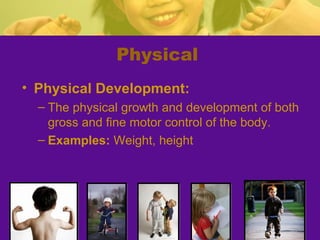
• Physical Development:
  – The physical growth and development of both
    gross and fine motor control of the body.
  – Examples: Weight, height
Physical
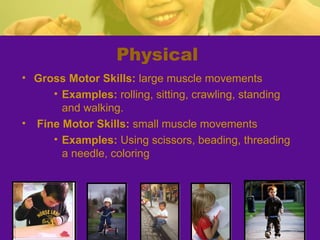
• Gross Motor Skills: large muscle movements
     • Examples: rolling, sitting, crawling, standing
       and walking.
• Fine Motor Skills: small muscle movements
     • Examples: Using scissors, beading, threading
       a needle, coloring
Mental/Intellectual
• Also known as “cognitive” development
• Information processing
  – Examples:
    • Remembering their address
    • Counting
    • Puts a puzzle together
• What could be other examples?
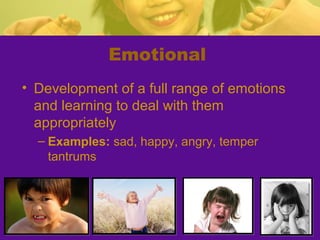
Emotional
• Development of a full range of emotions
  and learning to deal with them
  appropriately
  – Examples: sad, happy, angry, temper
    tantrums
Social
• Linked to emotional
• Incorporates public concerns in
  developing social policy
• Moral
  – Examples: what is right and
    wrong

Areas of development

  • 1.
  • 2.
    Bell Work Directions: Ona blank piece of paper answer the following questions referencing the pictures on this slide. Answer in full sentences and try to think past the obvious! – “What do these children have in common?” – “What makes these children unique?” – “Why should you learn about how children develop?”
  • 3.
    What is ChildDevelopment? • The study of how children master new skills • Children go through the same stages of development at about the same time but each child is unique
  • 4.
    What influences development? •Heredity – Children inherit certain characteristics from parents • Environment – Opportunities – Experiences
  • 5.
    Activity • Directions: – Use the booklet given to you and label the pages like the samples as follows (you will use both front and back sides of the pages starting with the cover) • Cover – “Areas of Development” and your Name • Page #1 – “Physical” • Page #2 – “Gross Motor Skills” • Page #3 – “Fine Motor Skills” • Page #4 – “Mental/Intellectual” • Page #5 – “Emotional” • Page #6 – “Social” – Each page should have the header, definition, example, and a picture showing the area of development • Use the following slides to help you get this information
  • 6.
    Areas of Development • Physical • Mental/Intellectual • Emotional • Social
  • 7.
    Physical • Physical Development: – The physical growth and development of both gross and fine motor control of the body. – Examples: Weight, height
  • 8.
    Physical • Gross MotorSkills: large muscle movements • Examples: rolling, sitting, crawling, standing and walking. • Fine Motor Skills: small muscle movements • Examples: Using scissors, beading, threading a needle, coloring
  • 9.
    Mental/Intellectual • Also knownas “cognitive” development • Information processing – Examples: • Remembering their address • Counting • Puts a puzzle together • What could be other examples?
  • 10.
    Emotional • Development ofa full range of emotions and learning to deal with them appropriately – Examples: sad, happy, angry, temper tantrums
  • 11.
    Social • Linked toemotional • Incorporates public concerns in developing social policy • Moral – Examples: what is right and wrong