










Are You Low on
Magnesium?
• Magnesium is the fourth most
abundant mineral in the human
body and it is necessary in over
300 reactions within the body.
• Proper magnesium ratios are
important for the body to
correctly use calcium in the
cells. Even a small deficiency can
lead to a dangerous calcium
imbalance.
• This manifests itself with
symptoms like heart trouble,
migraine headaches, muscle
cramps and premenstrual
cramping.
Where Has All the Magnesium Gone?
Modern farming processes tax the soil, depleting it of its
natural magnesium.
Other factors deplete the body of magnesium,
including:
• Consumption of caffeine
• Consumption of sugar
• Consumption of processed food
• Consumption of foods high in phytic acid
• Drugs like birth control pills, hypertension medicine,
diuretics, insulin, and certain antibiotics
What does Magnesium DO?
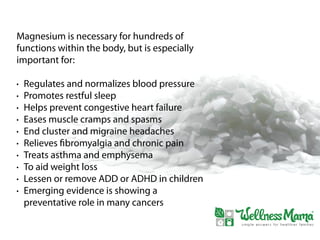
Magnesium is necessary for hundreds of
functions within the body, but is especially
important for:
• Regulates and normalizes blood pressure
• Promotes restful sleep
• Helps prevent congestive heart failure
• Eases muscle cramps and spasms
• End cluster and migraine headaches
• Relieves fibromyalgia and chronic pain
• Treats asthma and emphysema
• To aid weight loss
• Lessen or remove ADD or ADHD in children
• Emerging evidence is showing a
preventative role in many cancers
Are You Low on Magnesium?
Low magnesium levels are often
diagnosed by symptoms alone, and the
following symptoms can point to low
magnesium levels:
• Mental disturbances
• Inability to sleep or insomnia
• Sensitivity to noise
• Anxiety, depression or restlessness
• Infertility or PMS
• Heart“flutters”or palpitations
• Fatigue or unusual tiredness
• Coldness in extremities
• Fuzzy brain or difficulty concentrating
• Body odor
• Bad short term memory
• Constipation
• Frequent cavities or poor dental health
• Gut disorders
• Kidney stones
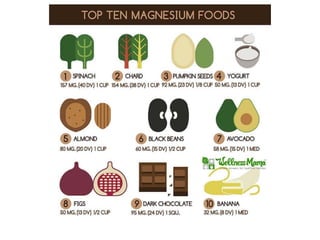
How do you Get Enough Magnesium?
• Leafy green vegetables,
sea vegetables, kelp,
and especially nettle are
good dietary sources of
magnesium
• The body absorbed
magnesium well
topically like in
magnesium oil
TO Learn more about Magnesium
Deficiency and how to Correct it,
Click Here.
Looking for More Wellness
Information and Inspiration?
https://www.facebook.com/WellnessMama
https://plus.google.com/+Wellnessmamapage
http://instagram.com/wellnessmama
http://pinterest.com/wellnessmama
http://twitter.com/wellnessmama
https://www.youtube.com/user/katiewellnessmama/

Are You Low On Magnesium?

  • 1.
    Are You Lowon Magnesium?
  • 2.
    • Magnesium isthe fourth most abundant mineral in the human body and it is necessary in over 300 reactions within the body. • Proper magnesium ratios are important for the body to correctly use calcium in the cells. Even a small deficiency can lead to a dangerous calcium imbalance. • This manifests itself with symptoms like heart trouble, migraine headaches, muscle cramps and premenstrual cramping.
  • 3.
    Where Has Allthe Magnesium Gone?
  • 4.
    Modern farming processestax the soil, depleting it of its natural magnesium. Other factors deplete the body of magnesium, including: • Consumption of caffeine • Consumption of sugar • Consumption of processed food • Consumption of foods high in phytic acid • Drugs like birth control pills, hypertension medicine, diuretics, insulin, and certain antibiotics
  • 5.
  • 6.
    Magnesium is necessaryfor hundreds of functions within the body, but is especially important for: • Regulates and normalizes blood pressure • Promotes restful sleep • Helps prevent congestive heart failure • Eases muscle cramps and spasms • End cluster and migraine headaches • Relieves fibromyalgia and chronic pain • Treats asthma and emphysema • To aid weight loss • Lessen or remove ADD or ADHD in children • Emerging evidence is showing a preventative role in many cancers
  • 7.
    Are You Lowon Magnesium?
  • 8.
    Low magnesium levelsare often diagnosed by symptoms alone, and the following symptoms can point to low magnesium levels: • Mental disturbances • Inability to sleep or insomnia • Sensitivity to noise • Anxiety, depression or restlessness • Infertility or PMS • Heart“flutters”or palpitations • Fatigue or unusual tiredness • Coldness in extremities • Fuzzy brain or difficulty concentrating • Body odor • Bad short term memory • Constipation • Frequent cavities or poor dental health • Gut disorders • Kidney stones
  • 9.
    How do youGet Enough Magnesium?
  • 10.
    • Leafy greenvegetables, sea vegetables, kelp, and especially nettle are good dietary sources of magnesium • The body absorbed magnesium well topically like in magnesium oil
  • 12.
    TO Learn moreabout Magnesium Deficiency and how to Correct it, Click Here.
  • 13.
    Looking for MoreWellness Information and Inspiration? https://www.facebook.com/WellnessMama https://plus.google.com/+Wellnessmamapage http://instagram.com/wellnessmama http://pinterest.com/wellnessmama http://twitter.com/wellnessmama https://www.youtube.com/user/katiewellnessmama/