WINE:
how to get the benefits
(without the downsides)
5379845 13 30
The fruit of the vine
is a natural choice to
accompany almost
any meal. There is
quite literally a wine
for every occasion.
Is Drinking red Wine Healthy?
• The short answer? Yes.

• You’ve probably seen the headlines
over the years about the heart
healthy benefits of red wine. 

• These heart benefits have been well-
studied. 

• Recent research has
uncovered many other benefits to
this age-old fermented drink as well.
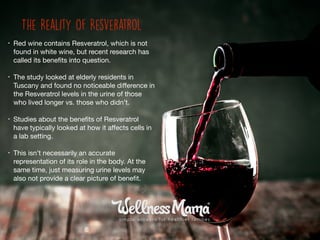
• Red wine contains Resveratrol, which is not
found in white wine, but recent research has
called its benefits into question. 

• The study looked at elderly residents in
Tuscany and found no noticeable difference in
the Resveratrol levels in the urine of those
who lived longer vs. those who didn’t.

• Studies about the benefits of Resveratrol
have typically looked at how it affects cells in
a lab setting. 

• This isn’t necessarily an accurate
representation of its role in the body. At the
same time, just measuring urine levels may
also not provide a clear picture of benefit.
The Reality of Resveratrol
• From all of the research I’ve read, I’m not sold on the benefits
of Resveratrol, as we’d essentially have to drink wine non-stop and
swim in it constantly to reach the concentrations used in lab
studies. 

• At the same time, it isn’t the only beneficial compound in wine, and
I think there are other benefits far beyond Resveratrol.

• These studies also show that no compound, no matter how
beneficial, can replace the importance of a healthy lifestyle. 

• Alcohol consumption should just be a small part of an overall
healthy lifestyle of a good diet, quality sleep and movement.
How much Red Wine is Good for your Health?
• It is important to note that all of the studies found the most
benefit from moderate consumption of wine.

• The Dietary Guidelines for Americans define moderate
consumption as one glass per day for women and up to two
glasses per day for men.
Benefits of Wine
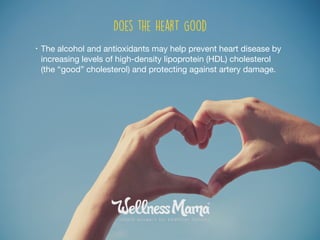
• The alcohol and antioxidants may help prevent heart disease by
increasing levels of high-density lipoprotein (HDL) cholesterol
(the “good” cholesterol) and protecting against artery damage.
Does the HearT Good
• A more recent study found an even more noticeable benefit to those who
drank regularly and exercised regularly. The benefit of the two combined
exceeded the benefit of either on its own.

• The participants drank moderate amounts of wine five days per week.
Moderate amount was defined as 2-3 glasses per day for men and 1-2
glasses per day for women.
Especially with Exercise
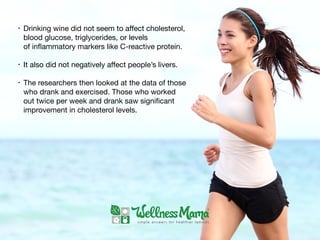
• Drinking wine did not seem to affect cholesterol,
blood glucose, triglycerides, or levels
of inflammatory markers like C-reactive protein. 

• It also did not negatively affect people’s livers.

• The researchers then looked at the data of those
who drank and exercised. Those who worked
out twice per week and drank saw significant
improvement in cholesterol levels.
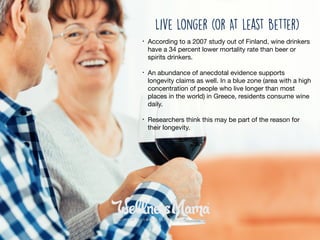
• According to a 2007 study out of Finland, wine drinkers
have a 34 percent lower mortality rate than beer or
spirits drinkers.

• An abundance of anecdotal evidence supports
longevity claims as well. In a blue zone (area with a high
concentration of people who live longer than most
places in the world) in Greece, residents consume wine
daily. 

• Researchers think this may be part of the reason for
their longevity.
Live Longer (or At least Better)
• A 2006 Columbia University
study found that brain function
declines more quickly in
nondrinkers than in moderate
drinkers.

• A Loyola University Medical
Center Study found that those
who drank red wine regularly had
a 23% lower risk of dementia.
a Better Brain
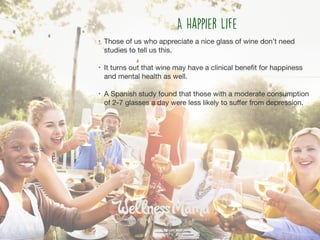
• Those of us who appreciate a nice glass of wine don’t need
studies to tell us this. 

• It turns out that wine may have a clinical benefit for happiness
and mental health as well.

• A Spanish study found that those with a moderate consumption
of 2-7 glasses a day were less likely to suffer from depression.
A Happier Life
• A study carried out at the University of
London found that procyanidins,
compounds commonly found in red
wine, keep the blood vessels healthy
and are one of the factors that
contribute towards longer life spans
enjoyed by the people in Sardinia and
the southwest of France.

• These same procyanidins may also
help improve the appearance of skin
and reduce wrinkles, though the
studies aren’t as definitive on this.
Age More Gracefully
Problems with Drinking Wine
• It turns out that the great majority of domestic wines are highly processed
and contain additives. 

• Also, if they aren’t organic, they practically all contain glyphosate as well.

• Those of us who experience headache, brain fog or other negative effects
from wine may just be reacting to the additives, not the beverage itself.
• Mega Purple and Ultra Red

• Sawdust

• Commercial Yeasts

• Sulphur

• Sugar

• Fining and Clarifying Agents

• Pesticides and Herbicides
Common Wines May Contain a Host of These Additives:
How to Avoid Additives
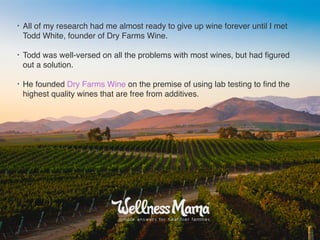
• All of my research had me almost ready to give up wine forever until I met
Todd White, founder of Dry Farms Wine.
• Todd was well-versed on all the problems with most wines, but had figured
out a solution.
• He founded Dry Farms Wine on the premise of using lab testing to find the
highest quality wines that are free from additives.
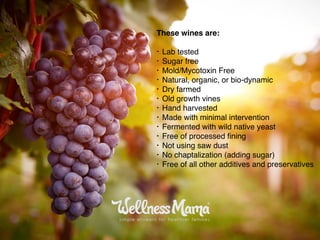
These wines are:
• Lab tested
• Sugar free
• Mold/Mycotoxin Free
• Natural, organic, or bio-dynamic
• Dry farmed
• Old growth vines
• Hand harvested
• Made with minimal intervention
• Fermented with wild native yeast
• Free of processed fining
• Not using saw dust
• No chaptalization (adding sugar)
• Free of all other additives and preservatives
Good WIne: The bottom Line
• Since the studies are not conclusive on the health benefits of wine, there
doesn’t seem to be be enough evidence to encourage non-drinkers to
start. 

• But for those of us who already enjoy this nectar of the gods, there are
some great benefits, especially from high quality wines.

• Because of my research, I now (almost exclusively) drink wines that are
free of common additives, sugars, and contaminants.
• If you want to try Dry Farms Wine,
click here to get a bottle for a penny
with your first order. 

• Then grab your wine key, some
good chocolate, and enjoy!
For more information about the
scientific benefits of wine, which types
are the best to drink, how to serve
wine properly, and more, Click here.
Looking for More Wellness
Information and Inspiration?
https://www.facebook.com/WellnessMama
https://plus.google.com/+Wellnessmamapage
http://instagram.com/wellnessmama
http://pinterest.com/wellnessmama
http://twitter.com/wellnessmama
https://www.youtube.com/user/katiewellnessmama/

Wine: How to Get the Benefits (without the Downsides)

  • 1.
    WINE: how to getthe benefits (without the downsides) 5379845 13 30
  • 2.
    The fruit ofthe vine is a natural choice to accompany almost any meal. There is quite literally a wine for every occasion.
  • 3.
    Is Drinking redWine Healthy?
  • 4.
    • The shortanswer? Yes. • You’ve probably seen the headlines over the years about the heart healthy benefits of red wine. • These heart benefits have been well- studied.  • Recent research has uncovered many other benefits to this age-old fermented drink as well.
  • 5.
    • Red winecontains Resveratrol, which is not found in white wine, but recent research has called its benefits into question. • The study looked at elderly residents in Tuscany and found no noticeable difference in the Resveratrol levels in the urine of those who lived longer vs. those who didn’t. • Studies about the benefits of Resveratrol have typically looked at how it affects cells in a lab setting.  • This isn’t necessarily an accurate representation of its role in the body. At the same time, just measuring urine levels may also not provide a clear picture of benefit. The Reality of Resveratrol
  • 6.
    • From allof the research I’ve read, I’m not sold on the benefits of Resveratrol, as we’d essentially have to drink wine non-stop and swim in it constantly to reach the concentrations used in lab studies. • At the same time, it isn’t the only beneficial compound in wine, and I think there are other benefits far beyond Resveratrol. • These studies also show that no compound, no matter how beneficial, can replace the importance of a healthy lifestyle. • Alcohol consumption should just be a small part of an overall healthy lifestyle of a good diet, quality sleep and movement.
  • 7.
    How much RedWine is Good for your Health?
  • 8.
    • It isimportant to note that all of the studies found the most benefit from moderate consumption of wine. • The Dietary Guidelines for Americans define moderate consumption as one glass per day for women and up to two glasses per day for men.
  • 9.
  • 10.
    • The alcoholand antioxidants may help prevent heart disease by increasing levels of high-density lipoprotein (HDL) cholesterol (the “good” cholesterol) and protecting against artery damage. Does the HearT Good
  • 11.
    • A morerecent study found an even more noticeable benefit to those who drank regularly and exercised regularly. The benefit of the two combined exceeded the benefit of either on its own. • The participants drank moderate amounts of wine five days per week. Moderate amount was defined as 2-3 glasses per day for men and 1-2 glasses per day for women. Especially with Exercise
  • 12.
    • Drinking winedid not seem to affect cholesterol, blood glucose, triglycerides, or levels of inflammatory markers like C-reactive protein. • It also did not negatively affect people’s livers. • The researchers then looked at the data of those who drank and exercised. Those who worked out twice per week and drank saw significant improvement in cholesterol levels.
  • 13.
    • According toa 2007 study out of Finland, wine drinkers have a 34 percent lower mortality rate than beer or spirits drinkers. • An abundance of anecdotal evidence supports longevity claims as well. In a blue zone (area with a high concentration of people who live longer than most places in the world) in Greece, residents consume wine daily. • Researchers think this may be part of the reason for their longevity. Live Longer (or At least Better)
  • 14.
    • A 2006 ColumbiaUniversity study found that brain function declines more quickly in nondrinkers than in moderate drinkers. • A Loyola University Medical Center Study found that those who drank red wine regularly had a 23% lower risk of dementia. a Better Brain
  • 15.
    • Those ofus who appreciate a nice glass of wine don’t need studies to tell us this. • It turns out that wine may have a clinical benefit for happiness and mental health as well. • A Spanish study found that those with a moderate consumption of 2-7 glasses a day were less likely to suffer from depression. A Happier Life
  • 16.
    • A studycarried out at the University of London found that procyanidins, compounds commonly found in red wine, keep the blood vessels healthy and are one of the factors that contribute towards longer life spans enjoyed by the people in Sardinia and the southwest of France. • These same procyanidins may also help improve the appearance of skin and reduce wrinkles, though the studies aren’t as definitive on this. Age More Gracefully
  • 17.
  • 18.
    • It turnsout that the great majority of domestic wines are highly processed and contain additives. • Also, if they aren’t organic, they practically all contain glyphosate as well. • Those of us who experience headache, brain fog or other negative effects from wine may just be reacting to the additives, not the beverage itself.
  • 19.
    • Mega Purpleand Ultra Red • Sawdust • Commercial Yeasts • Sulphur • Sugar • Fining and Clarifying Agents • Pesticides and Herbicides Common Wines May Contain a Host of These Additives:
  • 20.
    How to AvoidAdditives
  • 21.
    • All ofmy research had me almost ready to give up wine forever until I met Todd White, founder of Dry Farms Wine. • Todd was well-versed on all the problems with most wines, but had figured out a solution. • He founded Dry Farms Wine on the premise of using lab testing to find the highest quality wines that are free from additives.
  • 22.
    These wines are: •Lab tested • Sugar free • Mold/Mycotoxin Free • Natural, organic, or bio-dynamic • Dry farmed • Old growth vines • Hand harvested • Made with minimal intervention • Fermented with wild native yeast • Free of processed fining • Not using saw dust • No chaptalization (adding sugar) • Free of all other additives and preservatives
  • 23.
    Good WIne: Thebottom Line
  • 24.
    • Since thestudies are not conclusive on the health benefits of wine, there doesn’t seem to be be enough evidence to encourage non-drinkers to start. • But for those of us who already enjoy this nectar of the gods, there are some great benefits, especially from high quality wines. • Because of my research, I now (almost exclusively) drink wines that are free of common additives, sugars, and contaminants.
  • 25.
    • If youwant to try Dry Farms Wine, click here to get a bottle for a penny with your first order. • Then grab your wine key, some good chocolate, and enjoy!
  • 26.
    For more informationabout the scientific benefits of wine, which types are the best to drink, how to serve wine properly, and more, Click here.
  • 27.
    Looking for MoreWellness Information and Inspiration? https://www.facebook.com/WellnessMama https://plus.google.com/+Wellnessmamapage http://instagram.com/wellnessmama http://pinterest.com/wellnessmama http://twitter.com/wellnessmama https://www.youtube.com/user/katiewellnessmama/