Chapter 8:
                                    Developing an Effective
                                    Ethics Program


                                                Part Four:
                                                Implementing Business Ethics in
                                                a Global Economy


© 2013 Cengage Learning. All Rights Reserved.                                     1
Corporations as Moral Agents


                            Corporations increasingly are viewed as
                            moral agents accountable to stakeholders
                             Companies cannot think through ethical issues
                              like people do–laws and regulations are
                              necessary to provide formal structural
                              restraints and guidance on ethical issues
                                        Individuals have a responsibility as moral agents


© 2013 Cengage Learning. All Rights Reserved.                                                2
Root Causes of Misconduct


© 2013 Cengage Learning. All Rights Reserved.                         3
The Need for Organizational Ethics
                                           Programs

                            It can be nearly impossible to know all laws
                            related to ethics
                                        Becoming sensitized to ethical issues can help
                             Organizations can become bad barrels
                                        Opportunities for misconduct


                                       Understanding factors that influence ethical decision making
                                       can help companies encourage ethical behavior
                                       • Employees are not legal experts and need guidance


© 2013 Cengage Learning. All Rights Reserved.                                                         4
The Need for Corporate Ethics
                                                   Programs
                            Organizations should develop an
                            organizational ethics program by establishing,
                            communicating, and monitoring uniform
                            ethical values and legal requirements
                             A strong ethics program includes
                                               Written code of conduct
                                               Ethics officer to oversee the program
                                               Care in the delegation of authority
                                               Formal ethics training
                                               Auditing, monitoring, enforcement, and revision of
                                                program standards
© 2013 Cengage Learning. All Rights Reserved.                                                        5
An Effective Ethics Program


                            Misconduct leads to low employee trust
                            and high turnover
                             Ethics programs help employees to understand
                              organizational values and comply with policies
                              and codes of conduct
                                        Cannot assume that employees will know how to
                                         behave in an organization


© 2013 Cengage Learning. All Rights Reserved.                                            6
An Ethics Program Can Help Avoid
                                        Legal Problems
                            The FSGO encourages companies to assess
                            key risks and create programs to address
                            them
                             An ethics program can help a firm avoid civil
                              liability
                             The company bears the burden of proving that it
                              has an effective ethics program
                                       A program developed in the absence of
                                       misconduct will be more effective than one
                                       imposed as a reaction to scandal
© 2013 Cengage Learning. All Rights Reserved.                                       7
Minimum Requirements for Ethics and
                                               Compliance Programs


© 2013 Cengage Learning. All Rights Reserved.                                  8
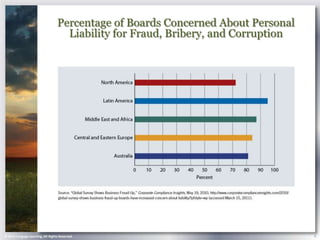
Percentage of Boards Concerned About Personal
                                    Liability for Fraud, Bribery, and Corruption


© 2013 Cengage Learning. All Rights Reserved.                                      9
Compliance Versus Values
                                                      Orientation
                             Compliance orientation
                                        Requires that employees identify with and commit
                                         to specified conduct
                                        Uses legal terms, statutes, and contracts to teach
                                         employees the rules and penalties for
                                         noncompliance
                             Values orientation
                                        Focuses more on abstract ideals, such as respect
                                         and responsibility
                                        Is most effective at creating ethical reasoning–
                                         employees learn to make values-based decisions

© 2013 Cengage Learning. All Rights Reserved.                                                 10
Codes of Conduct

                            Formal statements that describe what an
                            organization expects of its employees
                             Codes of ethics
                                        Most comprehensive
                                        General statements that serve as principles and the
                                         basis for the rules of conduct
                             Statement of values
                                        Serves the general public and addresses
                                         stakeholder interests

© 2013 Cengage Learning. All Rights Reserved.                                                  11
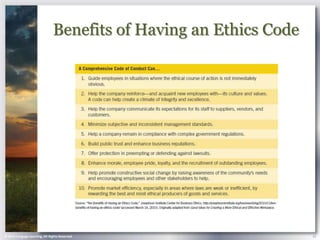
Benefits of Having an Ethics Code


© 2013 Cengage Learning. All Rights Reserved.                      12
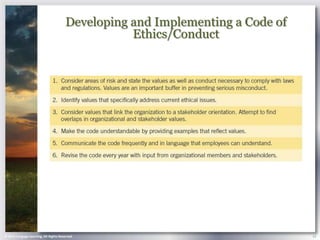
Developing and Implementing a Code of
                                                   Ethics/Conduct


© 2013 Cengage Learning. All Rights Reserved.                                   13
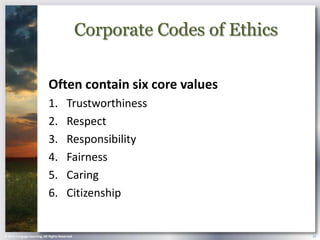
Corporate Codes of Ethics

                            Often contain six core values
                            1.          Trustworthiness
                            2.          Respect
                            3.          Responsibility
                            4.          Fairness
                            5.          Caring
                            6.          Citizenship


© 2013 Cengage Learning. All Rights Reserved.                               14
Ethics Officers

                            Are responsible for oversight of the
                            ethics/compliance program
                             Assess needs and risks
                             Develop and distribute the code
                             Conduct training programs for employees
                             Establish audits and control systems to ensure
                              government compliance
                             Review and modify the program to improve
                              effectiveness

© 2013 Cengage Learning. All Rights Reserved.                                  15
Ethics Training and
                                                 Communication
                            Must start with a theoretical foundation, code
                            of ethics, procedure for airing ethical concerns,
                            line and staff involvements, and executive
                            priorities on ethics
                             Ethics training can
                                        Educate employees about policies and
                                         expectations, laws and regulations, and general
                                         standards
                                        Make employees aware of resources, support
                                         systems, and personnel
                                        Empower employees
© 2013 Cengage Learning. All Rights Reserved.                                              16
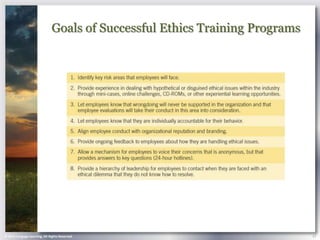
Goals of Successful Ethics Training Programs


© 2013 Cengage Learning. All Rights Reserved.                                17
Systems to Monitor and Enforce
                                           Ethical Standards
                            Employee input helps to monitor training
                            effectiveness
                             An effective ethics program uses many resources to
                              monitor ethical conduct and measure program
                              effectiveness
                                               Observing employees
                                               Internal audits
                                               Surveys
                                               Reporting systems
                                               Investigations
                                               Independent audits


                                       Employees do not report misconduct when they
                                       fear retaliation or think they will not make a
                                       difference
© 2013 Cengage Learning. All Rights Reserved.                                           18
Continuous Improvement
                            Implementation requires designing
                            activities to achieve organizational
                            objectives using available resources and
                            existing constraints
                             Translates a plan for action into operational
                              terms
                             Establishes a means for monitoring,
                              controlling, and improving the program
                                       Depends partly on how an organization structures
                                       resources and activities to achieve ethical objectives
© 2013 Cengage Learning. All Rights Reserved.                                                   19
Employees Reporting That Their Company
                                    Has a Comprehensive Ethics Program
                                      (According to Organizational Size)


© 2013 Cengage Learning. All Rights Reserved.                               20
Common Mistakes in
                                            Designing/Implementing an Ethics
                                                        Program
                             Not understanding the goals of the program
                             Not setting realistic and measurable program
                              objectives
                             Senior management’s failure to take ownership
                              of the program
                             Developing program materials that do not
                              address average employee needs
                             Designing a program without interactive
                              components

© 2013 Cengage Learning. All Rights Reserved.                                  21

ARC MGMT 374 Week 11 Presentation

  • 1.
    Chapter 8: Developing an Effective Ethics Program Part Four: Implementing Business Ethics in a Global Economy © 2013 Cengage Learning. All Rights Reserved. 1
  • 2.
    Corporations as MoralAgents Corporations increasingly are viewed as moral agents accountable to stakeholders  Companies cannot think through ethical issues like people do–laws and regulations are necessary to provide formal structural restraints and guidance on ethical issues  Individuals have a responsibility as moral agents © 2013 Cengage Learning. All Rights Reserved. 2
  • 3.
    Root Causes ofMisconduct © 2013 Cengage Learning. All Rights Reserved. 3
  • 4.
    The Need forOrganizational Ethics Programs It can be nearly impossible to know all laws related to ethics  Becoming sensitized to ethical issues can help  Organizations can become bad barrels  Opportunities for misconduct Understanding factors that influence ethical decision making can help companies encourage ethical behavior • Employees are not legal experts and need guidance © 2013 Cengage Learning. All Rights Reserved. 4
  • 5.
    The Need forCorporate Ethics Programs Organizations should develop an organizational ethics program by establishing, communicating, and monitoring uniform ethical values and legal requirements  A strong ethics program includes  Written code of conduct  Ethics officer to oversee the program  Care in the delegation of authority  Formal ethics training  Auditing, monitoring, enforcement, and revision of program standards © 2013 Cengage Learning. All Rights Reserved. 5
  • 6.
    An Effective EthicsProgram Misconduct leads to low employee trust and high turnover  Ethics programs help employees to understand organizational values and comply with policies and codes of conduct  Cannot assume that employees will know how to behave in an organization © 2013 Cengage Learning. All Rights Reserved. 6
  • 7.
    An Ethics ProgramCan Help Avoid Legal Problems The FSGO encourages companies to assess key risks and create programs to address them  An ethics program can help a firm avoid civil liability  The company bears the burden of proving that it has an effective ethics program A program developed in the absence of misconduct will be more effective than one imposed as a reaction to scandal © 2013 Cengage Learning. All Rights Reserved. 7
  • 8.
    Minimum Requirements forEthics and Compliance Programs © 2013 Cengage Learning. All Rights Reserved. 8
  • 9.
    Percentage of BoardsConcerned About Personal Liability for Fraud, Bribery, and Corruption © 2013 Cengage Learning. All Rights Reserved. 9
  • 10.
    Compliance Versus Values Orientation  Compliance orientation  Requires that employees identify with and commit to specified conduct  Uses legal terms, statutes, and contracts to teach employees the rules and penalties for noncompliance  Values orientation  Focuses more on abstract ideals, such as respect and responsibility  Is most effective at creating ethical reasoning– employees learn to make values-based decisions © 2013 Cengage Learning. All Rights Reserved. 10
  • 11.
    Codes of Conduct Formal statements that describe what an organization expects of its employees  Codes of ethics  Most comprehensive  General statements that serve as principles and the basis for the rules of conduct  Statement of values  Serves the general public and addresses stakeholder interests © 2013 Cengage Learning. All Rights Reserved. 11
  • 12.
    Benefits of Havingan Ethics Code © 2013 Cengage Learning. All Rights Reserved. 12
  • 13.
    Developing and Implementinga Code of Ethics/Conduct © 2013 Cengage Learning. All Rights Reserved. 13
  • 14.
    Corporate Codes ofEthics Often contain six core values 1. Trustworthiness 2. Respect 3. Responsibility 4. Fairness 5. Caring 6. Citizenship © 2013 Cengage Learning. All Rights Reserved. 14
  • 15.
    Ethics Officers Are responsible for oversight of the ethics/compliance program  Assess needs and risks  Develop and distribute the code  Conduct training programs for employees  Establish audits and control systems to ensure government compliance  Review and modify the program to improve effectiveness © 2013 Cengage Learning. All Rights Reserved. 15
  • 16.
    Ethics Training and Communication Must start with a theoretical foundation, code of ethics, procedure for airing ethical concerns, line and staff involvements, and executive priorities on ethics  Ethics training can  Educate employees about policies and expectations, laws and regulations, and general standards  Make employees aware of resources, support systems, and personnel  Empower employees © 2013 Cengage Learning. All Rights Reserved. 16
  • 17.
    Goals of SuccessfulEthics Training Programs © 2013 Cengage Learning. All Rights Reserved. 17
  • 18.
    Systems to Monitorand Enforce Ethical Standards Employee input helps to monitor training effectiveness  An effective ethics program uses many resources to monitor ethical conduct and measure program effectiveness  Observing employees  Internal audits  Surveys  Reporting systems  Investigations  Independent audits Employees do not report misconduct when they fear retaliation or think they will not make a difference © 2013 Cengage Learning. All Rights Reserved. 18
  • 19.
    Continuous Improvement Implementation requires designing activities to achieve organizational objectives using available resources and existing constraints  Translates a plan for action into operational terms  Establishes a means for monitoring, controlling, and improving the program Depends partly on how an organization structures resources and activities to achieve ethical objectives © 2013 Cengage Learning. All Rights Reserved. 19
  • 20.
    Employees Reporting ThatTheir Company Has a Comprehensive Ethics Program (According to Organizational Size) © 2013 Cengage Learning. All Rights Reserved. 20
  • 21.
    Common Mistakes in Designing/Implementing an Ethics Program  Not understanding the goals of the program  Not setting realistic and measurable program objectives  Senior management’s failure to take ownership of the program  Developing program materials that do not address average employee needs  Designing a program without interactive components © 2013 Cengage Learning. All Rights Reserved. 21