Organizational Factors: The
Role of Culture and
Relationships
C H A P T E R 7
Chapter Objectives
• To understand the concept of corporate culture
• To examine the influence of corporate culture on
business ethics
• To determine how leadership, power, and motivation
relate to ethical decision making in organizations
• To assess organizational structure and its
relationship to business ethics
• To explore how the work group influences ethical
decisions
• To discuss the relationship between individual and
group ethical decision making
Chapter Outline
• Defining Corporate Culture
• The Role of Corporate Culture in Ethical Decision
Making
• Leaders Influence Corporate Culture
• Motivating Ethical Behavior
• Organizational Structure and Business Ethics
• Group Dimensions of Corporate Structure and
Culture
• Variation in Employee Conduct
• Can People Control Their Own Actions
• Within a Corporate Culture?
Ethical Corporate Culture
• Corporate culture includes the behavioral patterns,
concepts, values, ceremonies, and formal procedure
that take place in the organization
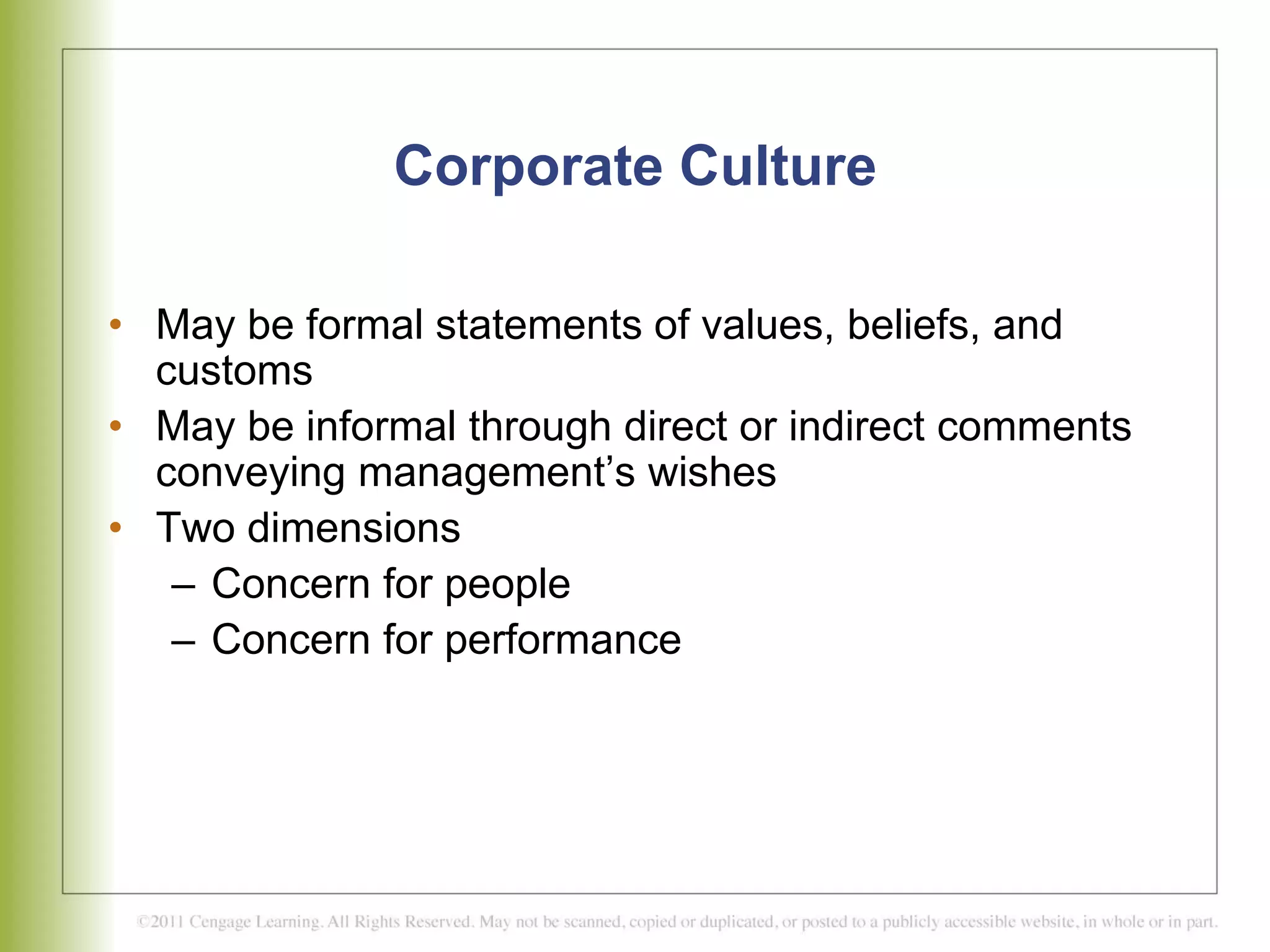
Corporate Culture
• May be formal statements of values, beliefs, and
customs
• May be informal through direct or indirect comments
conveying management’s wishes
• Two dimensions
– Concern for people
– Concern for performance
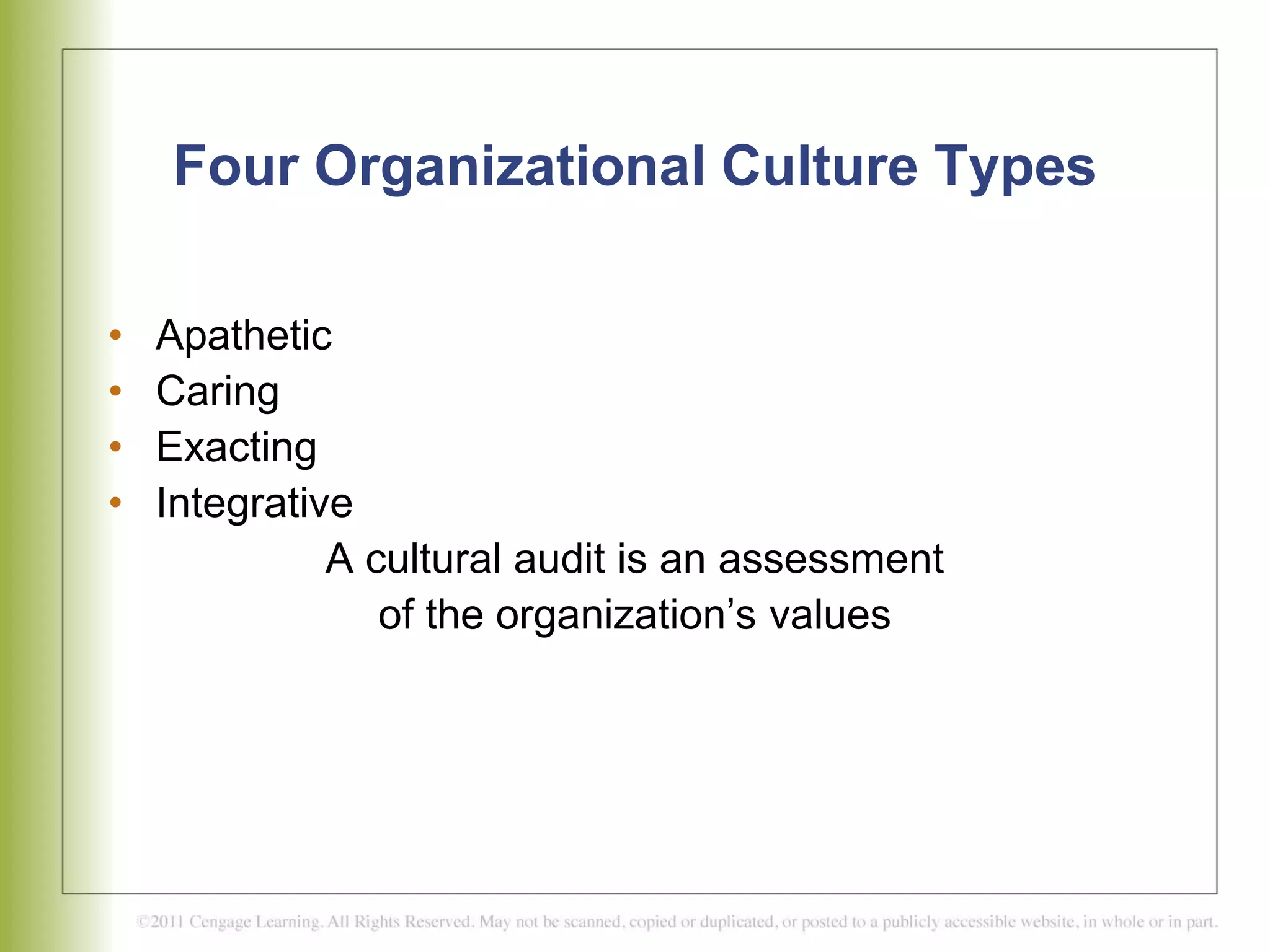
Four Organizational Culture Types
• Apathetic
• Caring
• Exacting
• Integrative
A cultural audit is an assessment
of the organization’s values
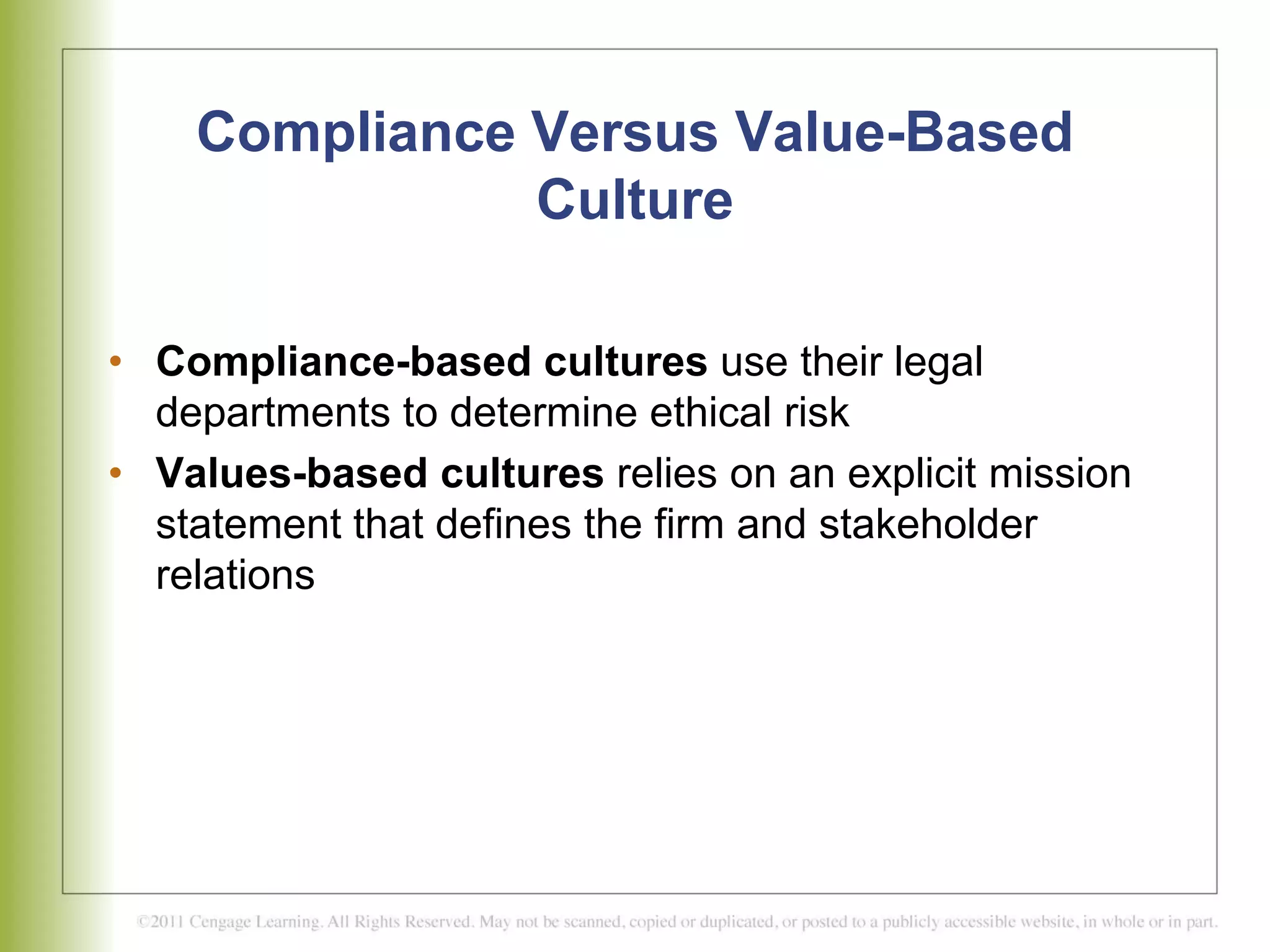
Compliance Versus Value-Based
Culture
• Compliance-based cultures use their legal
departments to determine ethical risk
• Values-based cultures relies on an explicit mission
statement that defines the firm and stakeholder
relations
Differential Association
• The idea that people learn ethical/unethical behavior
while interacting with others
Whistle Blowing
• Exposing an employer’s wrongdoing to outsiders
(external to the company)
Leaders Can Influence Corporate
Culture
• Five Power Bases
– Reward power: Offering something desirable to
influence behavior
– Coercive power: Penalizing negative behavior
– Legitimate power: Titles and positions of authority
– Expert power: Knowledge based
– Referent power: Exists when goals or objectives
are similar
Motivation
• A force within the individual that focuses behavior
toward achieving a goal
• An individual’s hierarchy of needs may influence
motivation and ethical behavior
• Needs or goals may change over time
Organizational Structure and Business
Ethics
• In a centralized organization, decision-making
authority is concentrated in the hands of top-level
managers
• In a decentralized organization, decision-making
authority is delegated as far down the chain of
command as possible
Groups in Corporate Structure and
Culture
• Formal groups
• Informal groups
• Group norms
Can People Control Their Own Actions
Within a Corporate Culture?
• Organizational ethical decisions often made by
committees and formal and informal groups
• Many decisions are beyond the influence of
individuals
• Individuals entering the business will need several
years of experience to understand how to resolve
ethical issues

Organization culture and ethics/ Organizational Factors: The Role of Culture and Relationships

  • 1.
    Organizational Factors: The Roleof Culture and Relationships C H A P T E R 7
  • 2.
    Chapter Objectives • Tounderstand the concept of corporate culture • To examine the influence of corporate culture on business ethics • To determine how leadership, power, and motivation relate to ethical decision making in organizations • To assess organizational structure and its relationship to business ethics • To explore how the work group influences ethical decisions • To discuss the relationship between individual and group ethical decision making
  • 3.
    Chapter Outline • DefiningCorporate Culture • The Role of Corporate Culture in Ethical Decision Making • Leaders Influence Corporate Culture • Motivating Ethical Behavior • Organizational Structure and Business Ethics • Group Dimensions of Corporate Structure and Culture • Variation in Employee Conduct • Can People Control Their Own Actions • Within a Corporate Culture?
  • 4.
    Ethical Corporate Culture •Corporate culture includes the behavioral patterns, concepts, values, ceremonies, and formal procedure that take place in the organization
  • 5.
    Corporate Culture • Maybe formal statements of values, beliefs, and customs • May be informal through direct or indirect comments conveying management’s wishes • Two dimensions – Concern for people – Concern for performance
  • 6.
    Four Organizational CultureTypes • Apathetic • Caring • Exacting • Integrative A cultural audit is an assessment of the organization’s values
  • 7.
    Compliance Versus Value-Based Culture •Compliance-based cultures use their legal departments to determine ethical risk • Values-based cultures relies on an explicit mission statement that defines the firm and stakeholder relations
  • 8.
    Differential Association • Theidea that people learn ethical/unethical behavior while interacting with others
  • 9.
    Whistle Blowing • Exposingan employer’s wrongdoing to outsiders (external to the company)
  • 10.
    Leaders Can InfluenceCorporate Culture • Five Power Bases – Reward power: Offering something desirable to influence behavior – Coercive power: Penalizing negative behavior – Legitimate power: Titles and positions of authority – Expert power: Knowledge based – Referent power: Exists when goals or objectives are similar
  • 11.
    Motivation • A forcewithin the individual that focuses behavior toward achieving a goal • An individual’s hierarchy of needs may influence motivation and ethical behavior • Needs or goals may change over time
  • 12.
    Organizational Structure andBusiness Ethics • In a centralized organization, decision-making authority is concentrated in the hands of top-level managers • In a decentralized organization, decision-making authority is delegated as far down the chain of command as possible
  • 13.
    Groups in CorporateStructure and Culture • Formal groups • Informal groups • Group norms
  • 14.
    Can People ControlTheir Own Actions Within a Corporate Culture? • Organizational ethical decisions often made by committees and formal and informal groups • Many decisions are beyond the influence of individuals • Individuals entering the business will need several years of experience to understand how to resolve ethical issues