Genetic intensification: Africa RISING science, innovations and technologies with
scaling potential from the Ethiopian Highlands
Negussie Tadesse(ICARDA), Kalpana Sharma(CIP), Frédéric Baudron(CIMMYT), Seid Ahmed(ICARDA), Yetsedaw Aynewa(ICARDA), Addisu Asfaw(ILRI), Temesgen Alene(ILRI),
Mohamed Ebrahim(ILRI) , Workneh Dubale(ILRI), Kindu Mekonnen (ILRI) and Peter Thorne(ILRI)
Key messages
• Genetic intensification ensures increased production with little or no
increase in the amount of land devoted to crop production
• Crop diversification ensures sustainable production and incomes
• Wheat Barley, food legumes and potato are key commodities in mixed
farming system
• Important for food, nutrition, feed and income generation
• Integration of potato with cereal-legume based farming improves soil
nutrients, plant health and productivity
We thank farmers and local partners in Africa RISING sites for their contributions to this
research. We also acknowledge the support of all donors which globally support the work of
the CGIAR centers and their partners through their contributions to the CGIAR system
Objectives and approach
Objectives:
• To identify high yielding, farmer and industry preferred varieties for
future scaling out
• To establish decentralized seed production and knowledge transfer system
• To identify innovative cropping systems combining with minimum
negative impacts on the environment
• To build the capacity of farmers and partners
Approaches :
• PVS-PPB was conducted in two Kebeles in each Africa RISING (AR) sites
Sinana,Maichew, Basonaworana and Lemo
• Male and female farmers participated in variety evaluations
• Mid-and End-season evaluation of the crops
Test crops:
 Cereals: bread & durum wheat; food & malt barley
 Food Legume: faba bean, lentil, field pea
 Potato
Key results
• 21 farmers preferred crop technologies (improved varieties and associated
practices) identified
• 308 tons of early generation seed of selected varieties multiplied by farmers
for technology scaling in phase II
• Improved post harvest management of Potato (DLS) and legumes
(PICs)demonstrated to participant farmers
•DLS is adopted by some farmers
• Capacity (knowledge) of farmers, extension workers and other stakeholders
(2200) on improved crop technologies developed (field day, on the job
training , theoretical and practical training sessions)
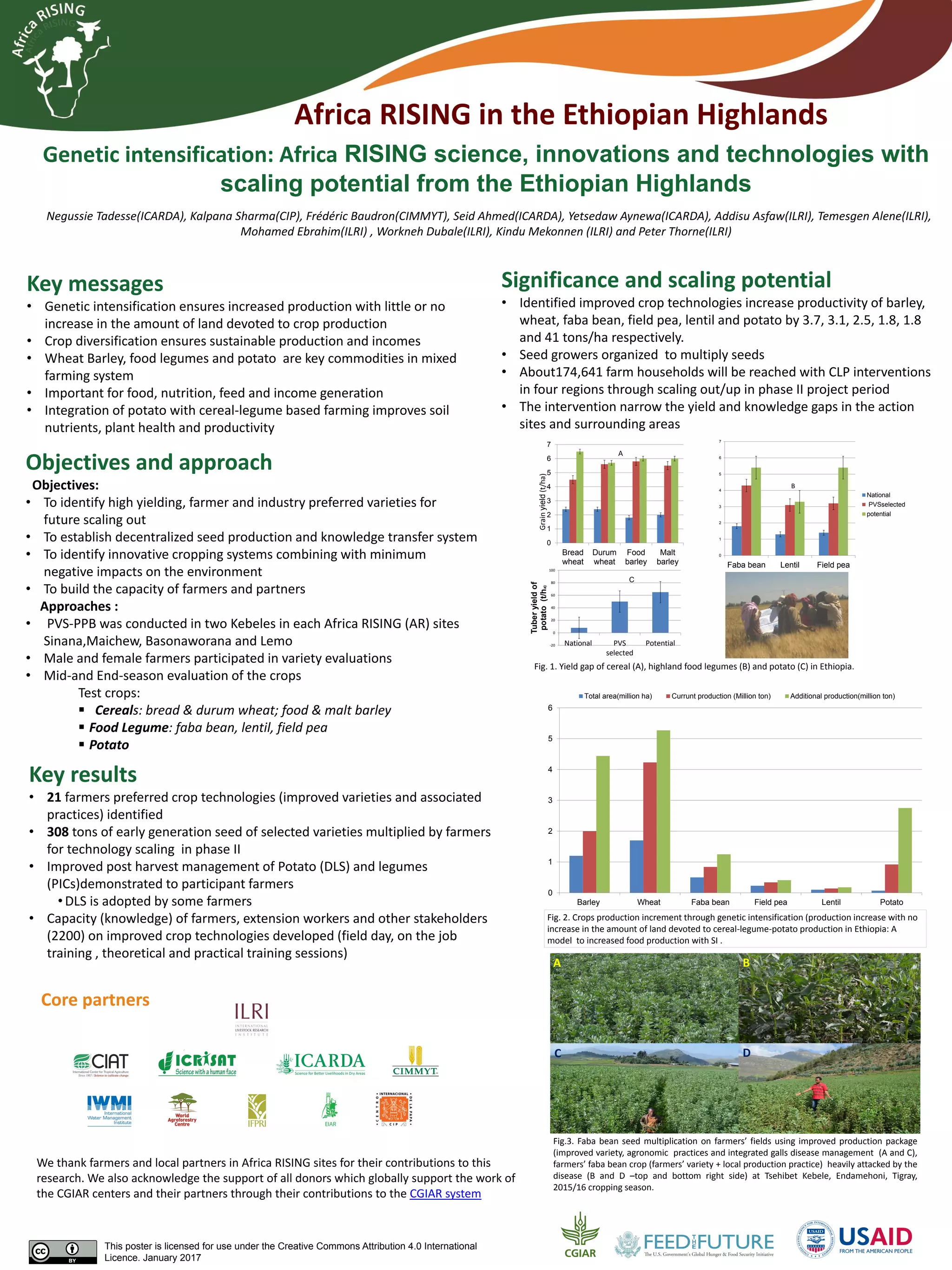
Fig.3. Faba bean seed multiplication on farmers’ fields using improved production package
(improved variety, agronomic practices and integrated galls disease management (A and C),
farmers’ faba bean crop (farmers’ variety + local production practice) heavily attacked by the
disease (B and D –top and bottom right side) at Tsehibet Kebele, Endamehoni, Tigray,
2015/16 cropping season.
A
DC
B
0
1
2
3
4
5
6
7
Bread
wheat
Durum
wheat
Food
barley
Malt
barley
Grainyield(t/ha)
0
1
2
3
4
5
6
Barley Wheat Faba bean Field pea Lentil Potato
Total area(million ha) Currunt production (Million ton) Additional production(million ton)
Fig. 2. Crops production increment through genetic intensification (production increase with no
increase in the amount of land devoted to cereal-legume-potato production in Ethiopia: A
model to increased food production with SI .
Fig. 1. Yield gap of cereal (A), highland food legumes (B) and potato (C) in Ethiopia.
A
B
0
1
2
3
4
5
6
7
Faba bean Lentil Field pea
National
PVSselected
potential
-20
0
20
40
60
80
100
National PVS
selected
Potential
Tuberyieldof
potato(t/ha)
C
Africa RISING in the Ethiopian Highlands
Significance and scaling potential
• Identified improved crop technologies increase productivity of barley,
wheat, faba bean, field pea, lentil and potato by 3.7, 3.1, 2.5, 1.8, 1.8
and 41 tons/ha respectively.
• Seed growers organized to multiply seeds
• About174,641 farm households will be reached with CLP interventions
in four regions through scaling out/up in phase II project period
• The intervention narrow the yield and knowledge gaps in the action
sites and surrounding areas
Core partners
This poster is licensed for use under the Creative Commons Attribution 4.0 International
Licence. January 2017

Genetic intensification: Africa RISING science, innovations and technologies with scaling potential from the Ethiopian Highlands

  • 1.
    Genetic intensification: AfricaRISING science, innovations and technologies with scaling potential from the Ethiopian Highlands Negussie Tadesse(ICARDA), Kalpana Sharma(CIP), Frédéric Baudron(CIMMYT), Seid Ahmed(ICARDA), Yetsedaw Aynewa(ICARDA), Addisu Asfaw(ILRI), Temesgen Alene(ILRI), Mohamed Ebrahim(ILRI) , Workneh Dubale(ILRI), Kindu Mekonnen (ILRI) and Peter Thorne(ILRI) Key messages • Genetic intensification ensures increased production with little or no increase in the amount of land devoted to crop production • Crop diversification ensures sustainable production and incomes • Wheat Barley, food legumes and potato are key commodities in mixed farming system • Important for food, nutrition, feed and income generation • Integration of potato with cereal-legume based farming improves soil nutrients, plant health and productivity We thank farmers and local partners in Africa RISING sites for their contributions to this research. We also acknowledge the support of all donors which globally support the work of the CGIAR centers and their partners through their contributions to the CGIAR system Objectives and approach Objectives: • To identify high yielding, farmer and industry preferred varieties for future scaling out • To establish decentralized seed production and knowledge transfer system • To identify innovative cropping systems combining with minimum negative impacts on the environment • To build the capacity of farmers and partners Approaches : • PVS-PPB was conducted in two Kebeles in each Africa RISING (AR) sites Sinana,Maichew, Basonaworana and Lemo • Male and female farmers participated in variety evaluations • Mid-and End-season evaluation of the crops Test crops:  Cereals: bread & durum wheat; food & malt barley  Food Legume: faba bean, lentil, field pea  Potato Key results • 21 farmers preferred crop technologies (improved varieties and associated practices) identified • 308 tons of early generation seed of selected varieties multiplied by farmers for technology scaling in phase II • Improved post harvest management of Potato (DLS) and legumes (PICs)demonstrated to participant farmers •DLS is adopted by some farmers • Capacity (knowledge) of farmers, extension workers and other stakeholders (2200) on improved crop technologies developed (field day, on the job training , theoretical and practical training sessions) Fig.3. Faba bean seed multiplication on farmers’ fields using improved production package (improved variety, agronomic practices and integrated galls disease management (A and C), farmers’ faba bean crop (farmers’ variety + local production practice) heavily attacked by the disease (B and D –top and bottom right side) at Tsehibet Kebele, Endamehoni, Tigray, 2015/16 cropping season. A DC B 0 1 2 3 4 5 6 7 Bread wheat Durum wheat Food barley Malt barley Grainyield(t/ha) 0 1 2 3 4 5 6 Barley Wheat Faba bean Field pea Lentil Potato Total area(million ha) Currunt production (Million ton) Additional production(million ton) Fig. 2. Crops production increment through genetic intensification (production increase with no increase in the amount of land devoted to cereal-legume-potato production in Ethiopia: A model to increased food production with SI . Fig. 1. Yield gap of cereal (A), highland food legumes (B) and potato (C) in Ethiopia. A B 0 1 2 3 4 5 6 7 Faba bean Lentil Field pea National PVSselected potential -20 0 20 40 60 80 100 National PVS selected Potential Tuberyieldof potato(t/ha) C Africa RISING in the Ethiopian Highlands Significance and scaling potential • Identified improved crop technologies increase productivity of barley, wheat, faba bean, field pea, lentil and potato by 3.7, 3.1, 2.5, 1.8, 1.8 and 41 tons/ha respectively. • Seed growers organized to multiply seeds • About174,641 farm households will be reached with CLP interventions in four regions through scaling out/up in phase II project period • The intervention narrow the yield and knowledge gaps in the action sites and surrounding areas Core partners This poster is licensed for use under the Creative Commons Attribution 4.0 International Licence. January 2017