Prepared By:
     Tribeni Gogoi
     Shreyash Patel
     Nimesh Soni
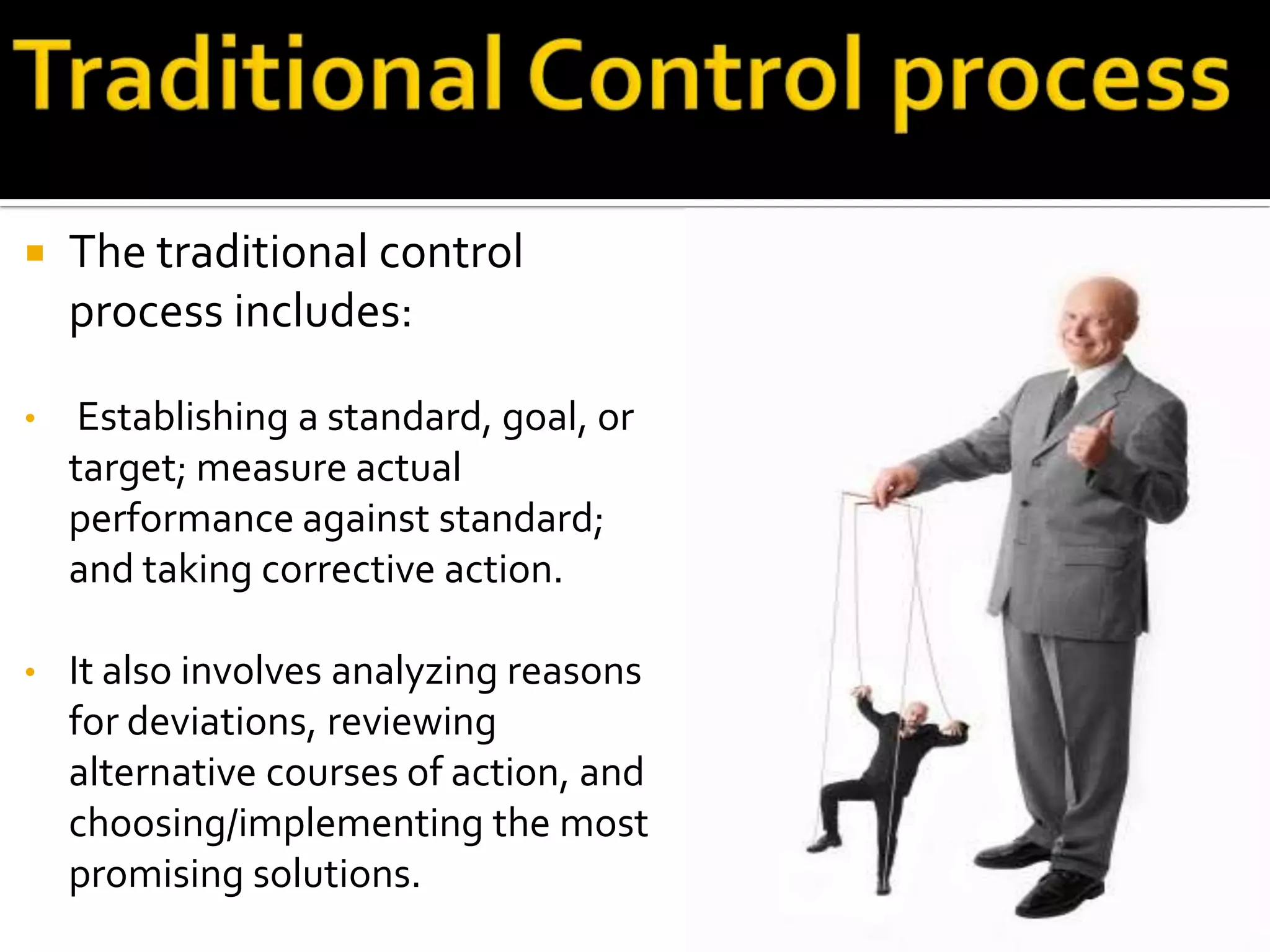
   The traditional control
    process includes:

•    Establishing a standard, goal, or
    target; measure actual
    performance against standard;
    and taking corrective action.

•   It also involves analyzing reasons
    for deviations, reviewing
    alternative courses of action, and
    choosing/implementing the most
    promising solutions.
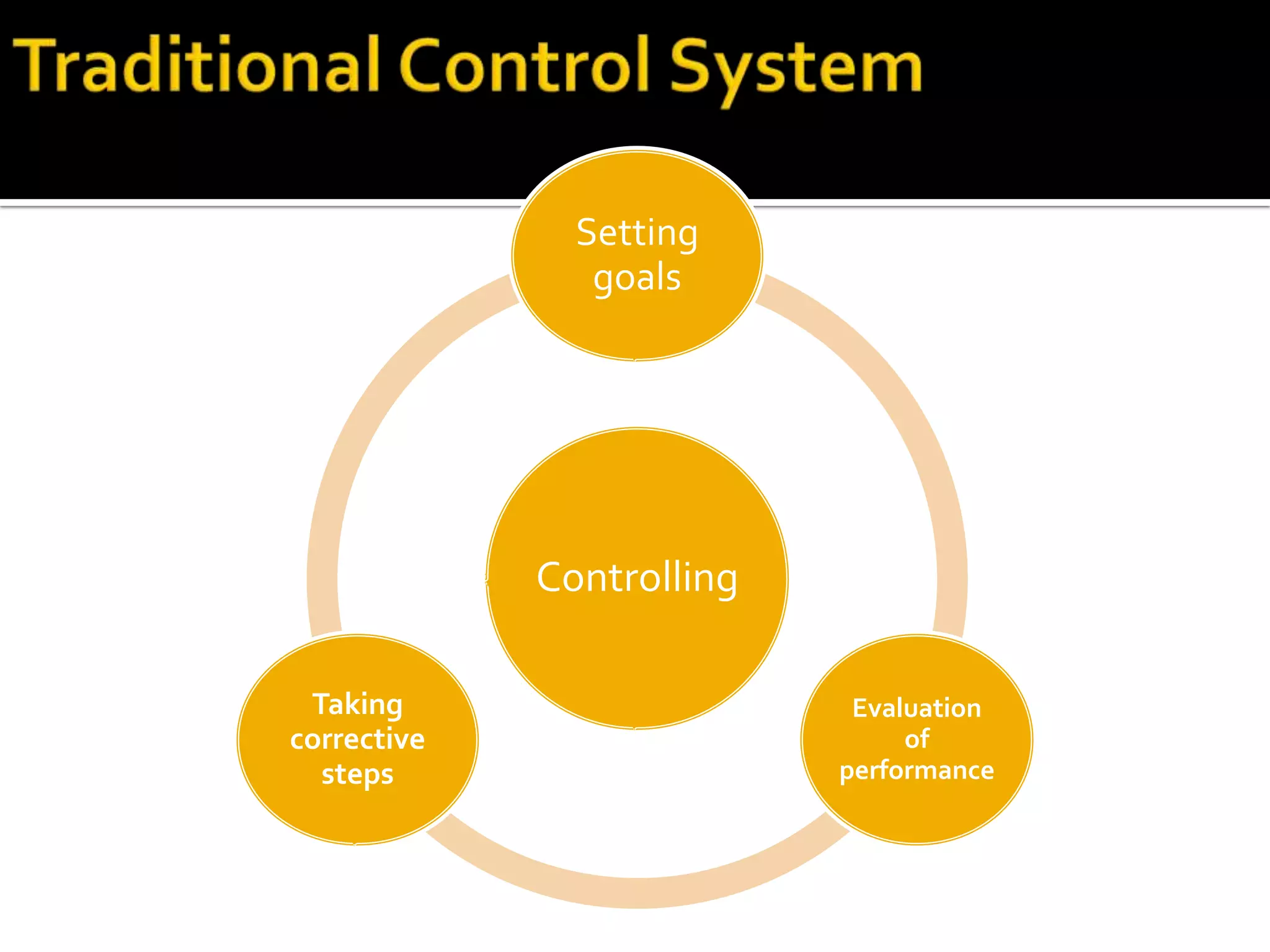
Setting
                goals


             Controlling

 Taking                     Evaluation
corrective                      of
  steps                    performance
 Traditional control systems involve
  setting standards and then monitoring
  performance.
 There are three types of traditional
  controls:
  Diagnostic controls
  Boundary controls, and
  Interactive controls.
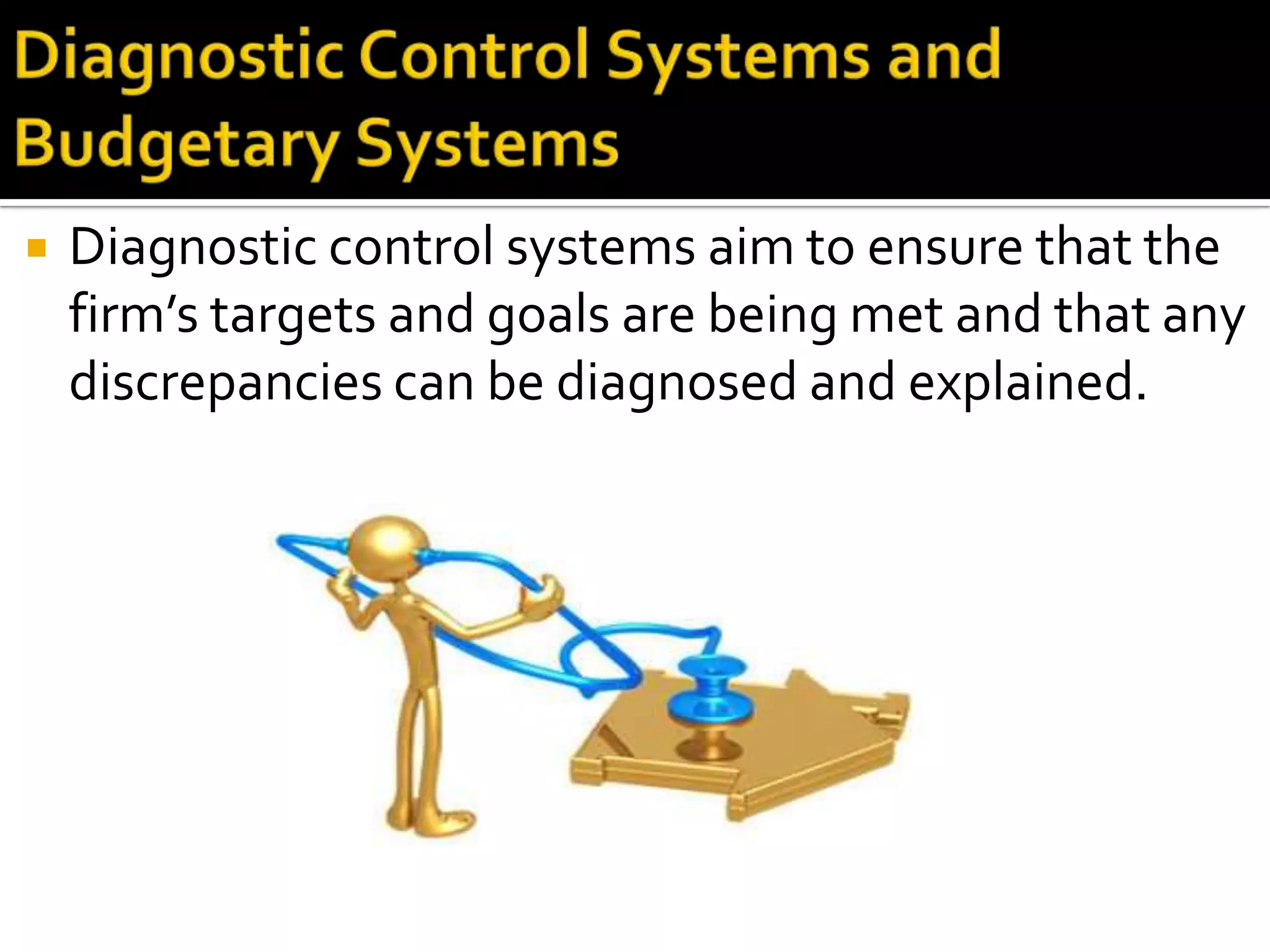
   Diagnostic control systems aim to ensure that the
    firm’s targets and goals are being met and that any
    discrepancies can be diagnosed and explained.
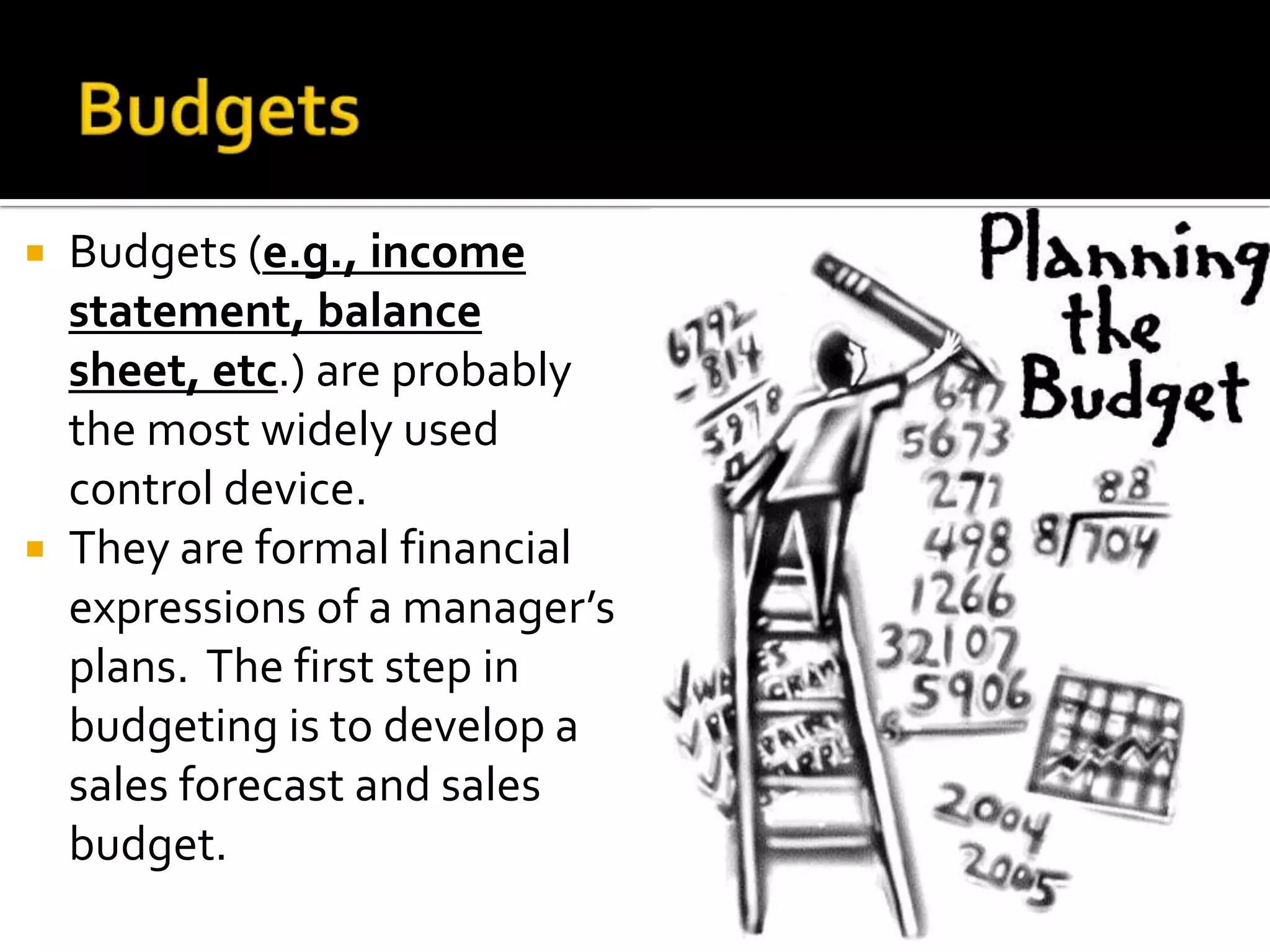
 Budgets (e.g., income
  statement, balance
  sheet, etc.) are probably
  the most widely used
  control device.
 They are formal financial
  expressions of a manager’s
  plans. The first step in
  budgeting is to develop a
  sales forecast and sales
  budget.
   Managers also use financial ratio analysis to
    monitor performance and maintain control.


   Financial ratios compare one financial measure on
    a financial statement to another. Analyzing these
    rations helps managers understand their firm’s
    performance.
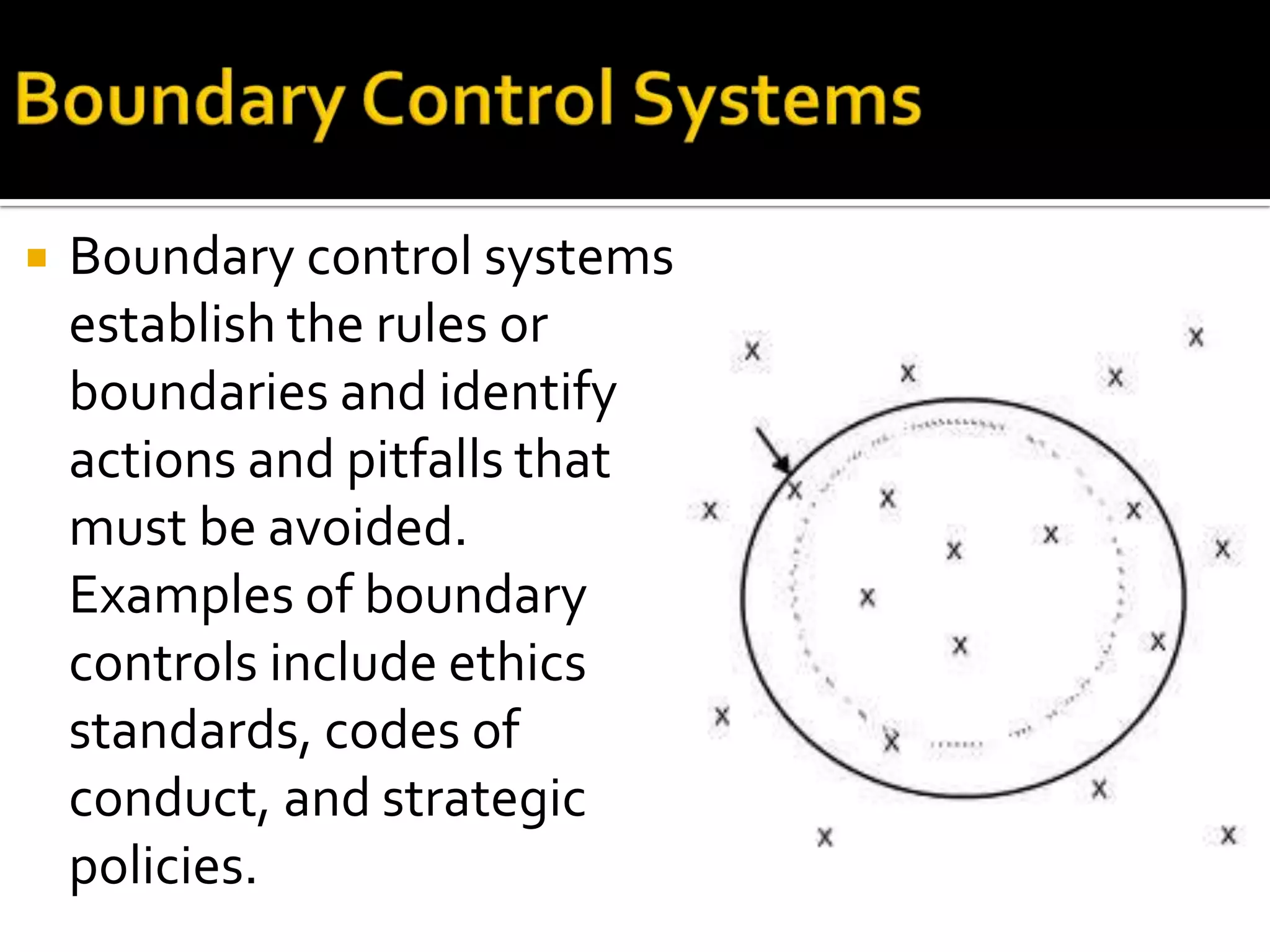
   Boundary control systems
    establish the rules or
    boundaries and identify
    actions and pitfalls that
    must be avoided.
    Examples of boundary
    controls include ethics
    standards, codes of
    conduct, and strategic
    policies.
   Interactive strategic control is a real-time, usually
    face-to-face method of monitoring both a
    strategy’s effectiveness and the underlying
    assumptions on which the strategy was built.

   This approach can be very useful for managing
    change because managers can get a better feel for
    the importance of information through face-to-
    face communication.
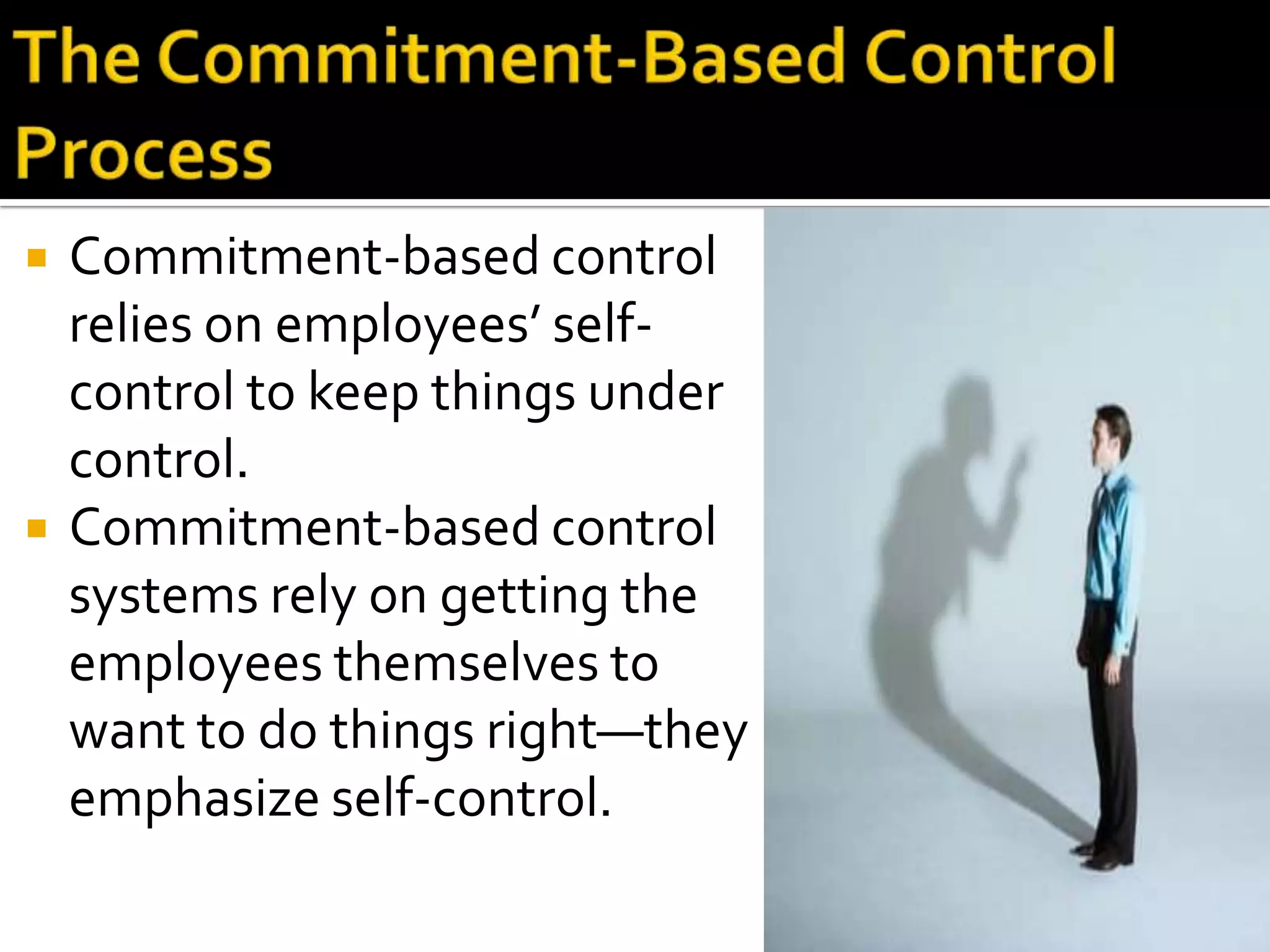
   Commitment-based control
    relies on employees’ self-
    control to keep things under
    control.
   Commitment-based control
    systems rely on getting the
    employees themselves to
    want to do things right—they
    emphasize self-control.
   Target Setting by Employees itself

   Self Discipline code generated by mutual
    understanding.
Approaches to controll

Approaches to controll

  • 1.
    Prepared By: Tribeni Gogoi Shreyash Patel Nimesh Soni
  • 2.
    The traditional control process includes: • Establishing a standard, goal, or target; measure actual performance against standard; and taking corrective action. • It also involves analyzing reasons for deviations, reviewing alternative courses of action, and choosing/implementing the most promising solutions.
  • 3.
    Setting goals Controlling Taking Evaluation corrective of steps performance
  • 4.
     Traditional controlsystems involve setting standards and then monitoring performance.  There are three types of traditional controls:  Diagnostic controls  Boundary controls, and  Interactive controls.
  • 5.
    Diagnostic control systems aim to ensure that the firm’s targets and goals are being met and that any discrepancies can be diagnosed and explained.
  • 6.
     Budgets (e.g.,income statement, balance sheet, etc.) are probably the most widely used control device.  They are formal financial expressions of a manager’s plans. The first step in budgeting is to develop a sales forecast and sales budget.
  • 7.
    Managers also use financial ratio analysis to monitor performance and maintain control.  Financial ratios compare one financial measure on a financial statement to another. Analyzing these rations helps managers understand their firm’s performance.
  • 8.
    Boundary control systems establish the rules or boundaries and identify actions and pitfalls that must be avoided. Examples of boundary controls include ethics standards, codes of conduct, and strategic policies.
  • 9.
    Interactive strategic control is a real-time, usually face-to-face method of monitoring both a strategy’s effectiveness and the underlying assumptions on which the strategy was built.  This approach can be very useful for managing change because managers can get a better feel for the importance of information through face-to- face communication.
  • 10.
    Commitment-based control relies on employees’ self- control to keep things under control.  Commitment-based control systems rely on getting the employees themselves to want to do things right—they emphasize self-control.
  • 11.
    Target Setting by Employees itself  Self Discipline code generated by mutual understanding.