
S.ESTHER SHILPA 
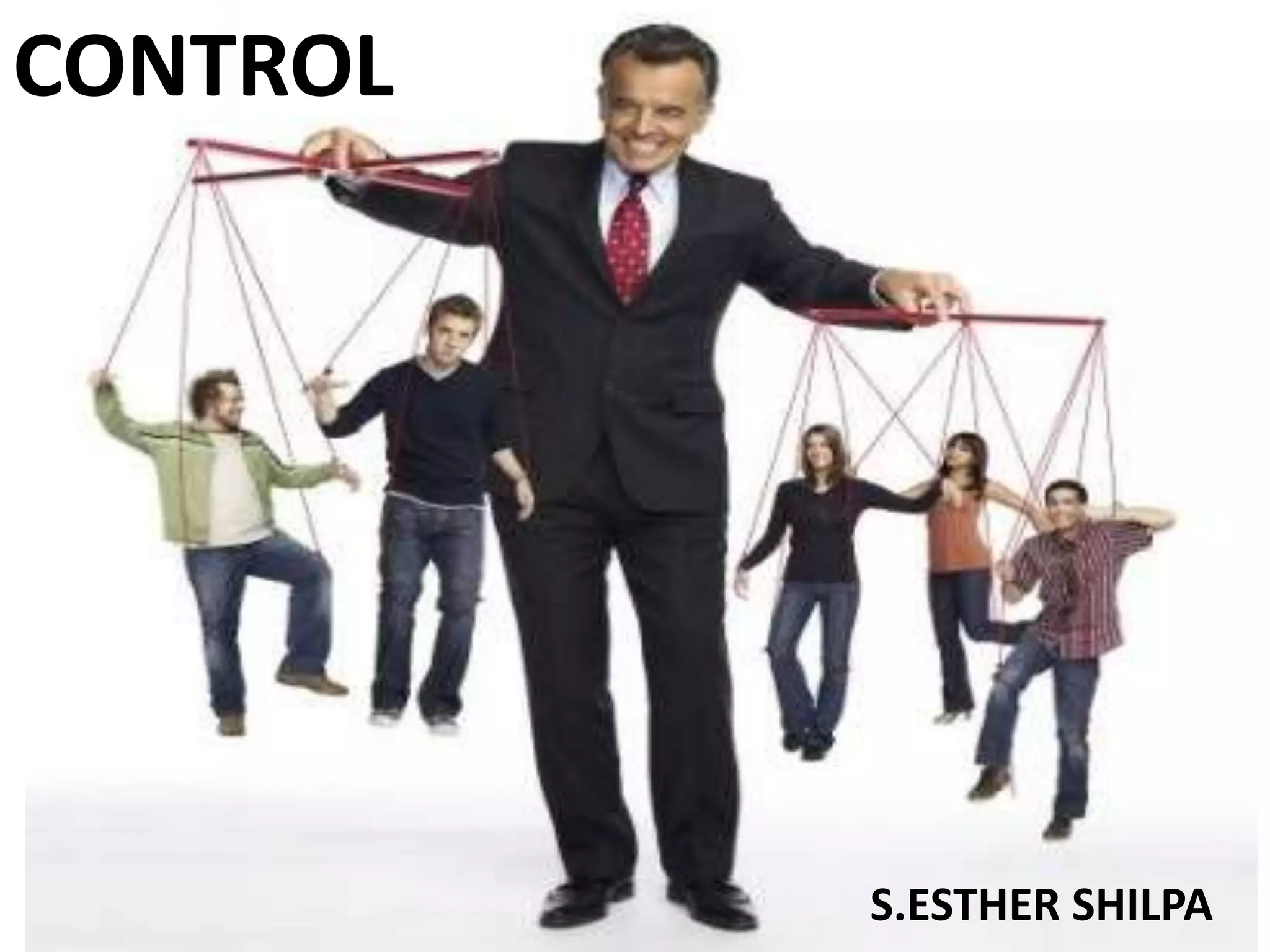
CONTROL
CONTROLLING 
“Controlling is measuring and correcting 
the activities of the subordinates to ensure 
that events conform to plans.” 
- H.KOONTZ & O’DONNELL
Importance 
• Helps in achieving the objectives 
• Efficient use of resources 
• Facilitates decision-making 
• Improves employee morale 
• Helps in achieving better coordination 
• Helps in better planning
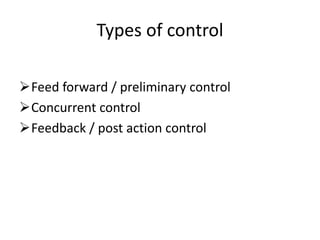
Types of control 
Feed forward / preliminary control 
Concurrent control 
Feedback / post action control
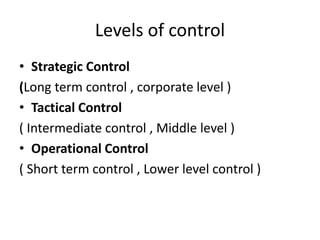
Levels of control 
• Strategic Control 
(Long term control , corporate level ) 
• Tactical Control 
( Intermediate control , Middle level ) 
• Operational Control 
( Short term control , Lower level control )
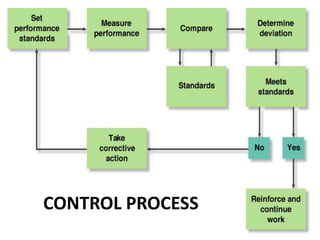
CONTROL PROCESS
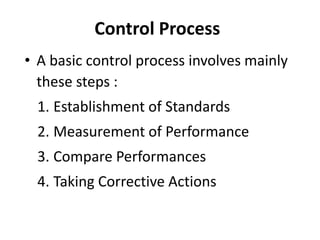
Control Process 
• A basic control process involves mainly 
these steps : 
1. Establishment of Standards 
2. Measurement of Performance 
3. Compare Performances 
4. Taking Corrective Actions
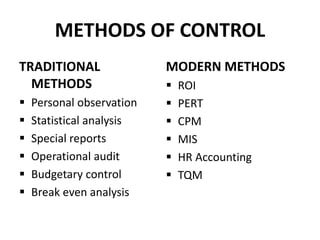
METHODS OF CONTROL 
TRADITIONAL 
METHODS 
 Personal observation 
 Statistical analysis 
 Special reports 
 Operational audit 
 Budgetary control 
 Break even analysis 
MODERN METHODS 
 ROI 
 PERT 
 CPM 
 MIS 
 HR Accounting 
 TQM
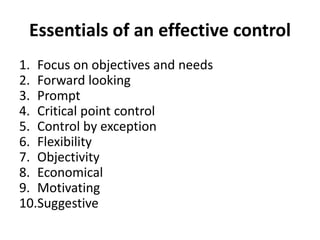
Essentials of an effective control 
1. Focus on objectives and needs 
2. Forward looking 
3. Prompt 
4. Critical point control 
5. Control by exception 
6. Flexibility 
7. Objectivity 
8. Economical 
9. Motivating 
10.Suggestive
THANK YOU

Control process

  • 1.
  • 2.
    CONTROLLING “Controlling ismeasuring and correcting the activities of the subordinates to ensure that events conform to plans.” - H.KOONTZ & O’DONNELL
  • 3.
    Importance • Helpsin achieving the objectives • Efficient use of resources • Facilitates decision-making • Improves employee morale • Helps in achieving better coordination • Helps in better planning
  • 4.
    Types of control Feed forward / preliminary control Concurrent control Feedback / post action control
  • 5.
    Levels of control • Strategic Control (Long term control , corporate level ) • Tactical Control ( Intermediate control , Middle level ) • Operational Control ( Short term control , Lower level control )
  • 6.
  • 7.
    Control Process •A basic control process involves mainly these steps : 1. Establishment of Standards 2. Measurement of Performance 3. Compare Performances 4. Taking Corrective Actions
  • 8.
    METHODS OF CONTROL TRADITIONAL METHODS  Personal observation  Statistical analysis  Special reports  Operational audit  Budgetary control  Break even analysis MODERN METHODS  ROI  PERT  CPM  MIS  HR Accounting  TQM
  • 9.
    Essentials of aneffective control 1. Focus on objectives and needs 2. Forward looking 3. Prompt 4. Critical point control 5. Control by exception 6. Flexibility 7. Objectivity 8. Economical 9. Motivating 10.Suggestive
  • 10.