APPROACH TO
MUSCLE WEAKNESS
By:-
AHMED GAMAL YASSIN
M.B.B.Ch
1
Introduction:
• Weakness as professional/ medical term refer to symptom arise from
something wrong in muscle.
• In this situation very important to differentiate between weakness &
other confusing symptoms which mimic weakness as said by patient,
as fatigue.
• Weakness as mentioned before indicate the wrong is in the muscle,
either due to pathology with in muscle (myopathy), or pathology in its
motor nervous supply. So power of muscle will be decreased
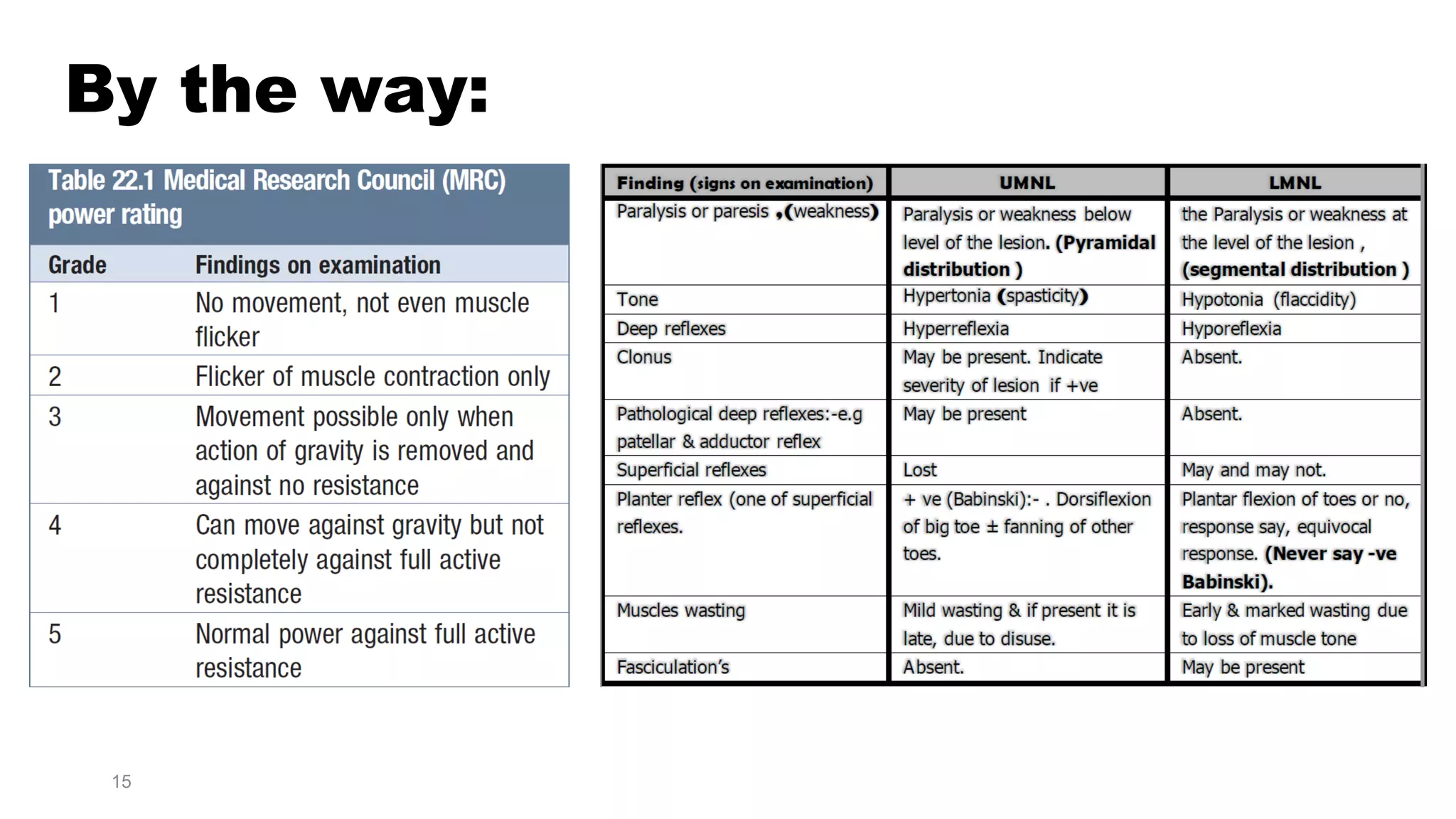
according to MRC power rating system. This we name it, objective
muscle weakness, neuromuscular weakness, true muscle weakness
or clinical muscle weakness (i.e: clinically detectable muscle
weakness).
2
• Fatigue is subjective term reported by patient as weakness-like
complain felt after exercise but actually muscle power is normal, i.e:
no pathology in muscle or in its nerve supply. So fatigue is non-
objective muscle weakness, non-neuromuscular weakness,
functional muscle weakness or false muscle weakness.
Motor Nerve Supply
True Muscle Weakness
Wrong neither in
muscle nor in its
nerve supply
Functional
Muscle
weakness
[Myopathy]Muscle
3
Why approach to weakness is very
important?
• Because stroke enter in differential diagnosis of weakness which
severe condition & current stroke management mandates urgent
evaluation of unilateral limb weakness.
4
Classification by Algorithm-wise
Approach:
❑First of all keep in your mind the following helping questions:
• Mode of Onset & Duration:
oAcute: vascular, toxic & metabolic.
oChronic: neoplastic, infective, inflammatory, endocrine, degenerative
diseases.
• Course:
oWorse at onset then get regress later on: neurogenic cause: vascular.
oProgressive: neurogenic cause: neoplasm, degenerative & infective diseases.
oEpisodic: neurogenic cause: vascular.
oActivity dependent: NMJ cause: MG & muscular cause: myopathies.
5
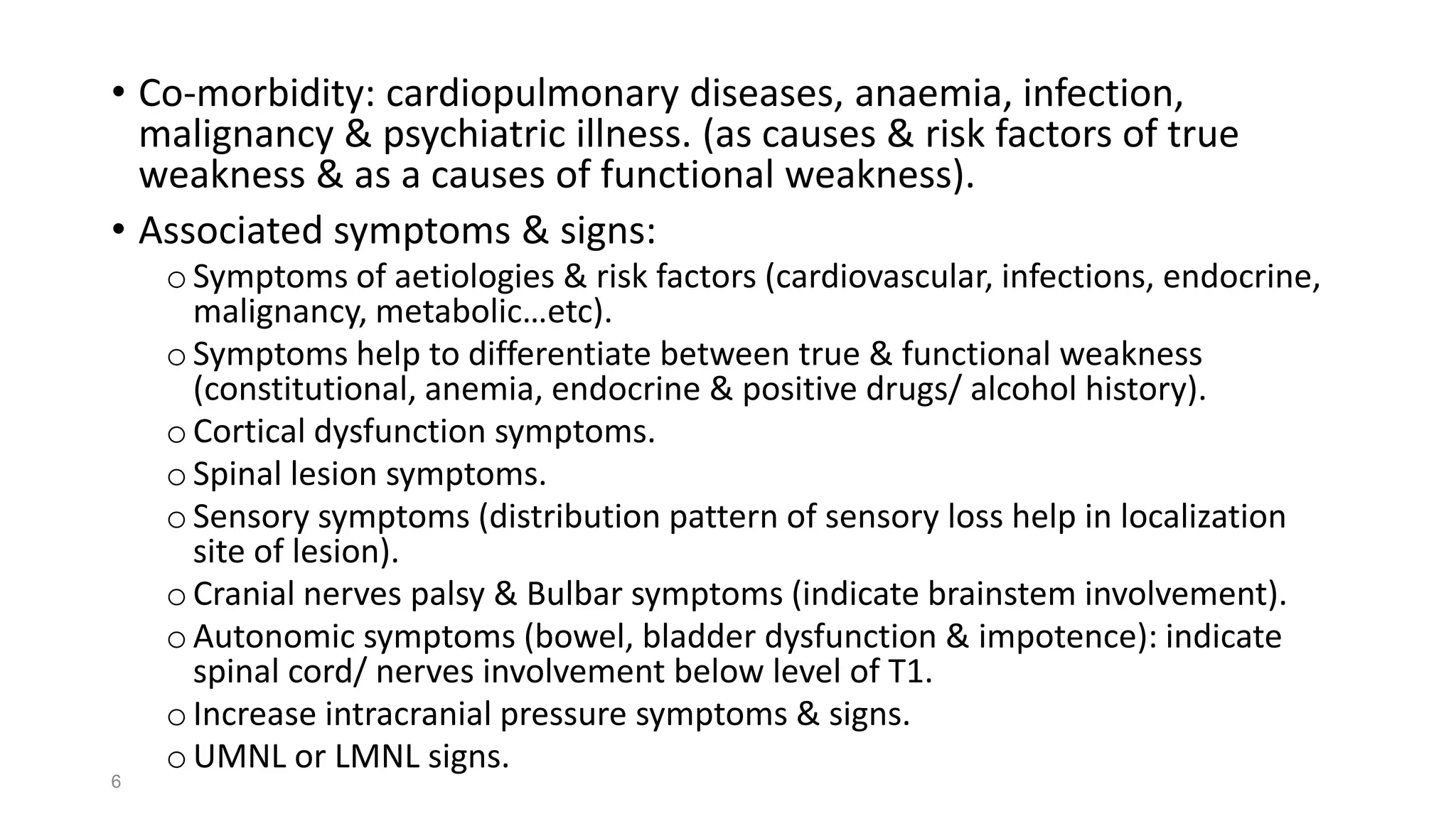
• Co-morbidity: cardiopulmonary diseases, anaemia, infection,
malignancy & psychiatric illness. (as causes & risk factors of true
weakness & as a causes of functional weakness).
• Associated symptoms & signs:
oSymptoms of aetiologies & risk factors (cardiovascular, infections, endocrine,
malignancy, metabolic…etc).
oSymptoms help to differentiate between true & functional weakness
(constitutional, anemia, endocrine & positive drugs/ alcohol history).
oCortical dysfunction symptoms.
oSpinal lesion symptoms.
oSensory symptoms (distribution pattern of sensory loss help in localization
site of lesion).
oCranial nerves palsy & Bulbar symptoms (indicate brainstem involvement).
oAutonomic symptoms (bowel, bladder dysfunction & impotence): indicate
spinal cord/ nerves involvement below level of T1.
oIncrease intracranial pressure symptoms & signs.
oUMNL or LMNL signs.
6
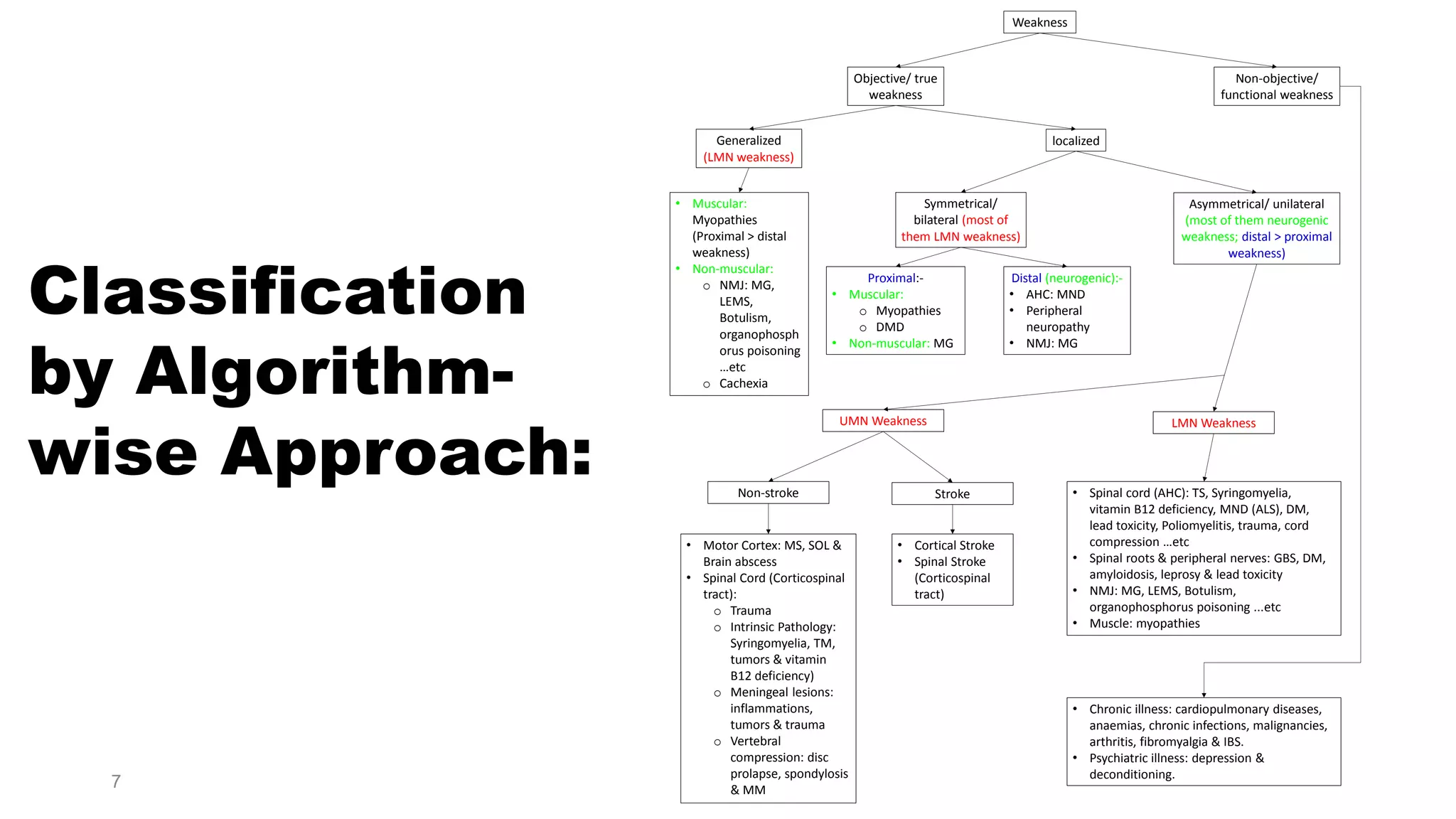
Classification
by Algorithm-
wise Approach:
Weakness
Objective/ true
weakness
Non-objective/
functional weakness
Generalized
(LMN weakness)
Symmetrical/
bilateral (most of
them LMN weakness)
Asymmetrical/ unilateral
(most of them neurogenic
weakness; distal > proximal
weakness)
localized
Proximal:-
• Muscular:
o Myopathies
o DMD
• Non-muscular: MG
Distal (neurogenic):-
• AHC: MND
• Peripheral
neuropathy
• NMJ: MG
• Muscular:
Myopathies
(Proximal > distal
weakness)
• Non-muscular:
o NMJ: MG,
LEMS,
Botulism,
organophosph
orus poisoning
…etc
o Cachexia
UMN Weakness LMN Weakness
Non-stroke
• Cortical Stroke
• Spinal Stroke
(Corticospinal
tract)
Stroke
• Motor Cortex: MS, SOL &
Brain abscess
• Spinal Cord (Corticospinal
tract):
o Trauma
o Intrinsic Pathology:
Syringomyelia, TM,
tumors & vitamin
B12 deficiency)
o Meningeal lesions:
inflammations,
tumors & trauma
o Vertebral
compression: disc
prolapse, spondylosis
& MM
• Spinal cord (AHC): TS, Syringomyelia,
vitamin B12 deficiency, MND (ALS), DM,
lead toxicity, Poliomyelitis, trauma, cord
compression …etc
• Spinal roots & peripheral nerves: GBS, DM,
amyloidosis, leprosy & lead toxicity
• NMJ: MG, LEMS, Botulism,
organophosphorus poisoning ...etc
• Muscle: myopathies
• Chronic illness: cardiopulmonary diseases,
anaemias, chronic infections, malignancies,
arthritis, fibromyalgia & IBS.
• Psychiatric illness: depression &
deconditioning.
7
Reviews:
Stroke:
•Most common cause of unilateral weakness.
•Patients typically present with sudden onset of the
complains.
•If persist < 3 hours , then it will resolve (TIA), while if
persist > 3 hours, then it will not resolve (true stroke).
•It can be cortical or spinal. Cortical is the common, so
“stroke” term alone usually refer to cortical one.
8
• Type of weakness in stroke is contralateral UMN hemiparesis/
hemiplegia.
• Usually associated with contralateral hemiparesthesia of all sensation
types, cortical dysfunction s/s, ibsilateral cranial nerves palsies
(suggesting brainstem involvement) producing what’s called crossed
hemiplegia or pseudobulbar palsy (UMN palsies of cranial nerves IX -
XII).
9
Space-occupying lesions (SOL):
•SOL, e.g. tumors, abscesses, chronic subdural
hematoma, can cause symptoms & signs mimicking
stroke but the onset is
typically more gradual
& progressive.
•There may be features
of raised ICP.
10
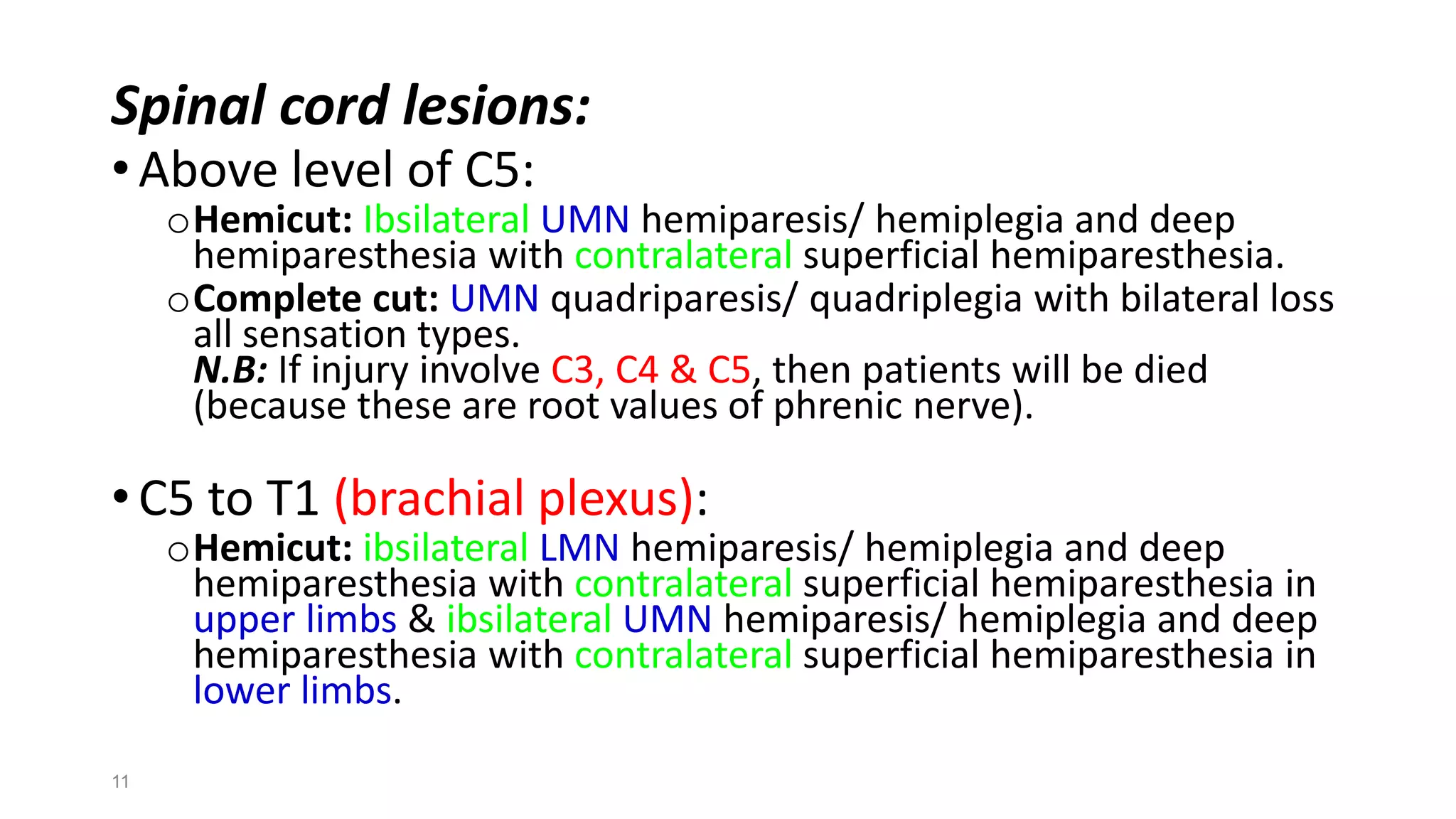
Spinal cord lesions:
•Above level of C5:
oHemicut: Ibsilateral UMN hemiparesis/ hemiplegia and deep
hemiparesthesia with contralateral superficial hemiparesthesia.
oComplete cut: UMN quadriparesis/ quadriplegia with bilateral loss
all sensation types.
N.B: If injury involve C3, C4 & C5, then patients will be died
(because these are root values of phrenic nerve).
•C5 to T1 (brachial plexus):
oHemicut: ibsilateral LMN hemiparesis/ hemiplegia and deep
hemiparesthesia with contralateral superficial hemiparesthesia in
upper limbs & ibsilateral UMN hemiparesis/ hemiplegia and deep
hemiparesthesia with contralateral superficial hemiparesthesia in
lower limbs.
11
o Complete Cut: bilateral LMN weakness with bilateral loss of all
sensation types in upper limbs & bilateral UMN weakness with
bilateral loss of all sensation types in lower limbs.
•T2 to L1:
oHemicut (Brown Sequard syndrome): ibsilateral UMN or LMN
monoparesis/ monoplegia in lower limb with ibsilateral deep
sensory loss & contralateral sensory loss take sensory level pattern
on trunk & autonomic dysfunction symptoms.
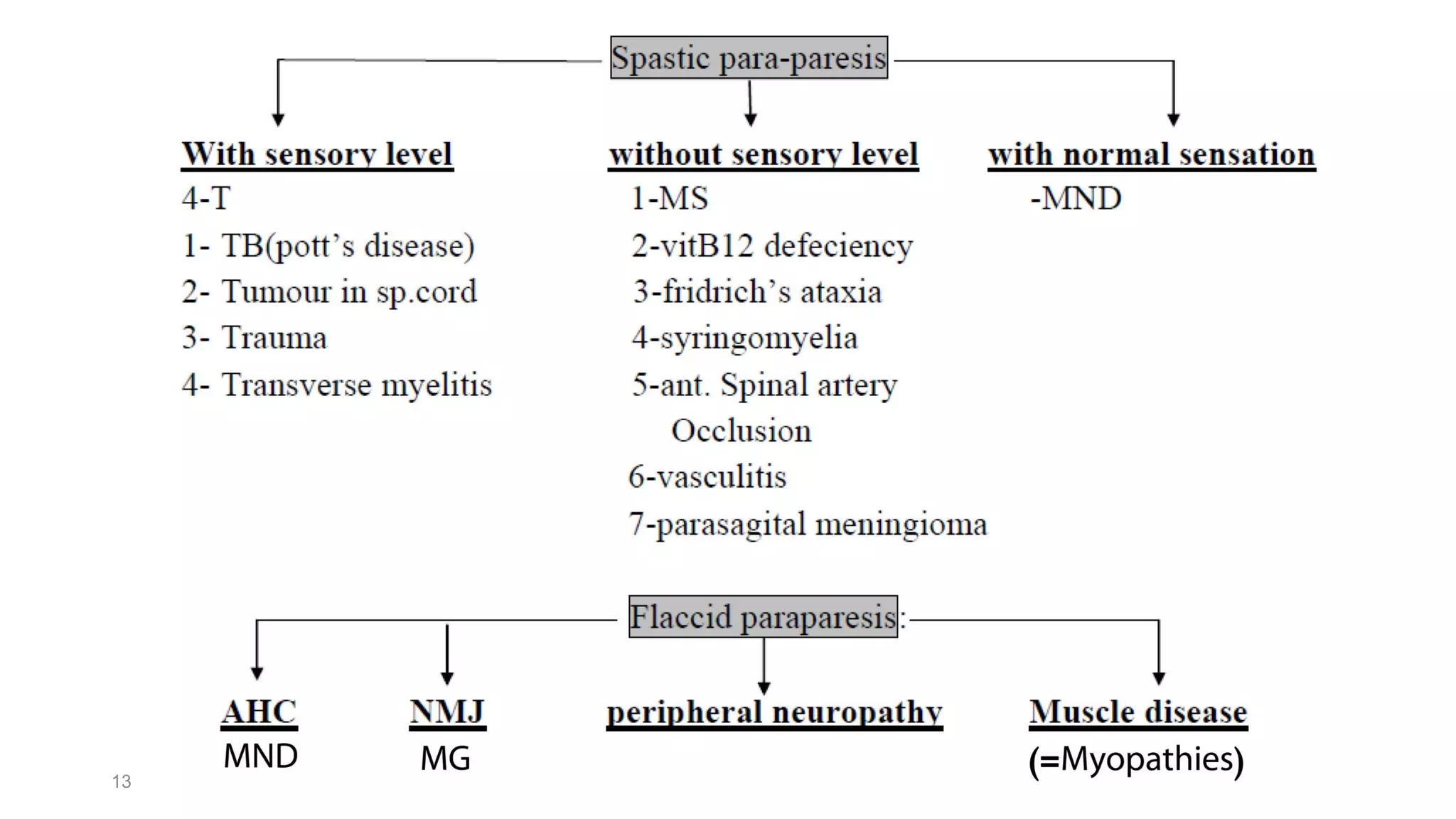
oComplete cut: UMN (spastic) paraparesis/ paraplegia or LMN
(flaccid) paraparesis/ paraplegia with or without sensory loss take
sensory level pattern on trunk & autonomic dysfunction
symptoms.
12
13
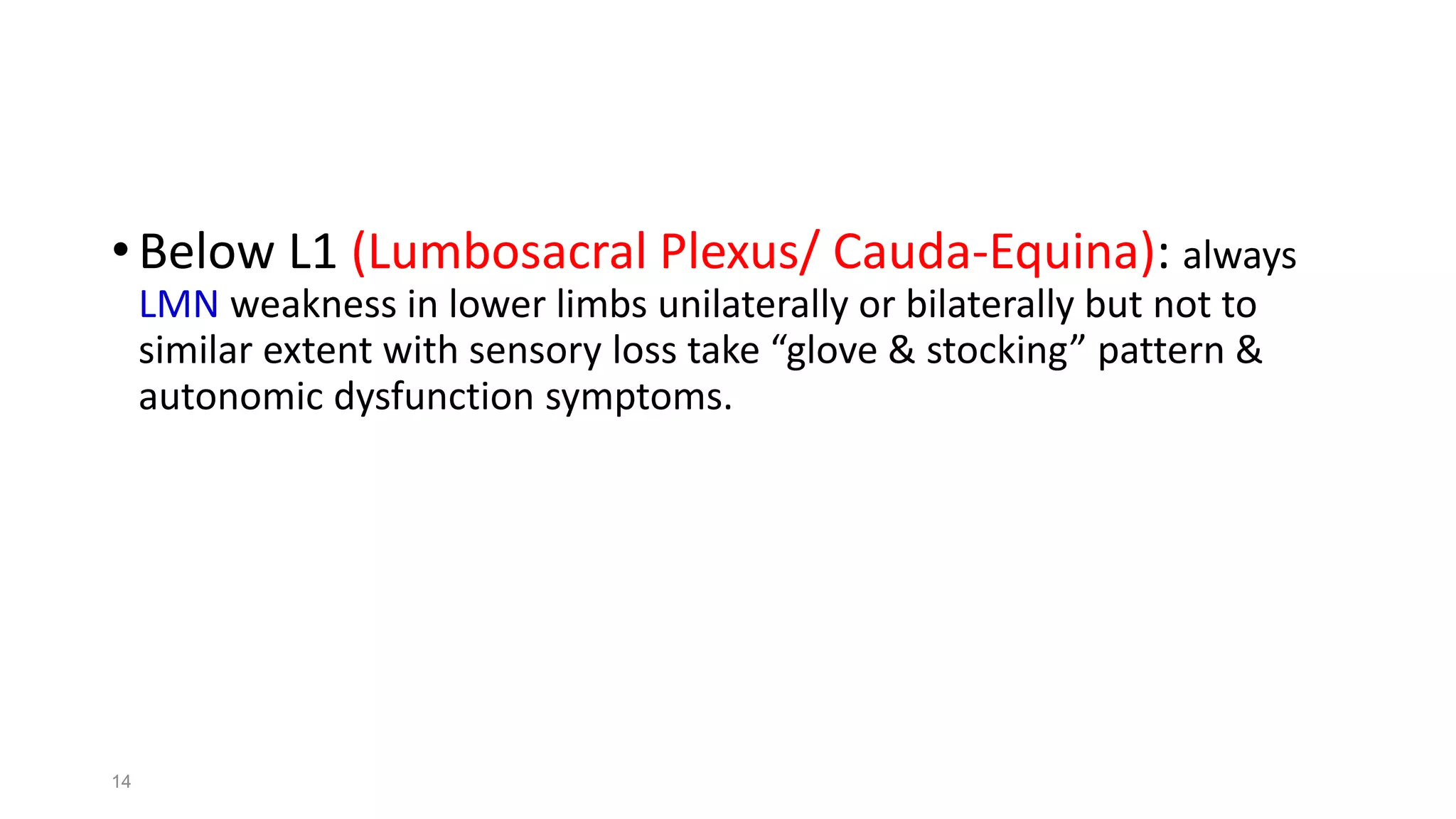
•Below L1 (Lumbosacral Plexus/ Cauda-Equina): always
LMN weakness in lower limbs unilaterally or bilaterally but not to
similar extent with sensory loss take “glove & stocking” pattern &
autonomic dysfunction symptoms.
14
By the way:
15
Multiple Sclerosis (MS):
•Idiopathic inflammatory demyelinating disease of white
matter of the brain and spinal cord.
•Common in women between 20 – 40 years.
•Usually monosymptomatic.
•Characterized by relapsing & remitting course.
•Presented with motor, ocular sensory, cerebellar,
autonomic or cranial nerves abnormalities. The ocular
abnormality is the most common one.
•Can presented with almost any pattern of UMN limb
weakness, though paraparesis secondary to TM is the
most typical.
16
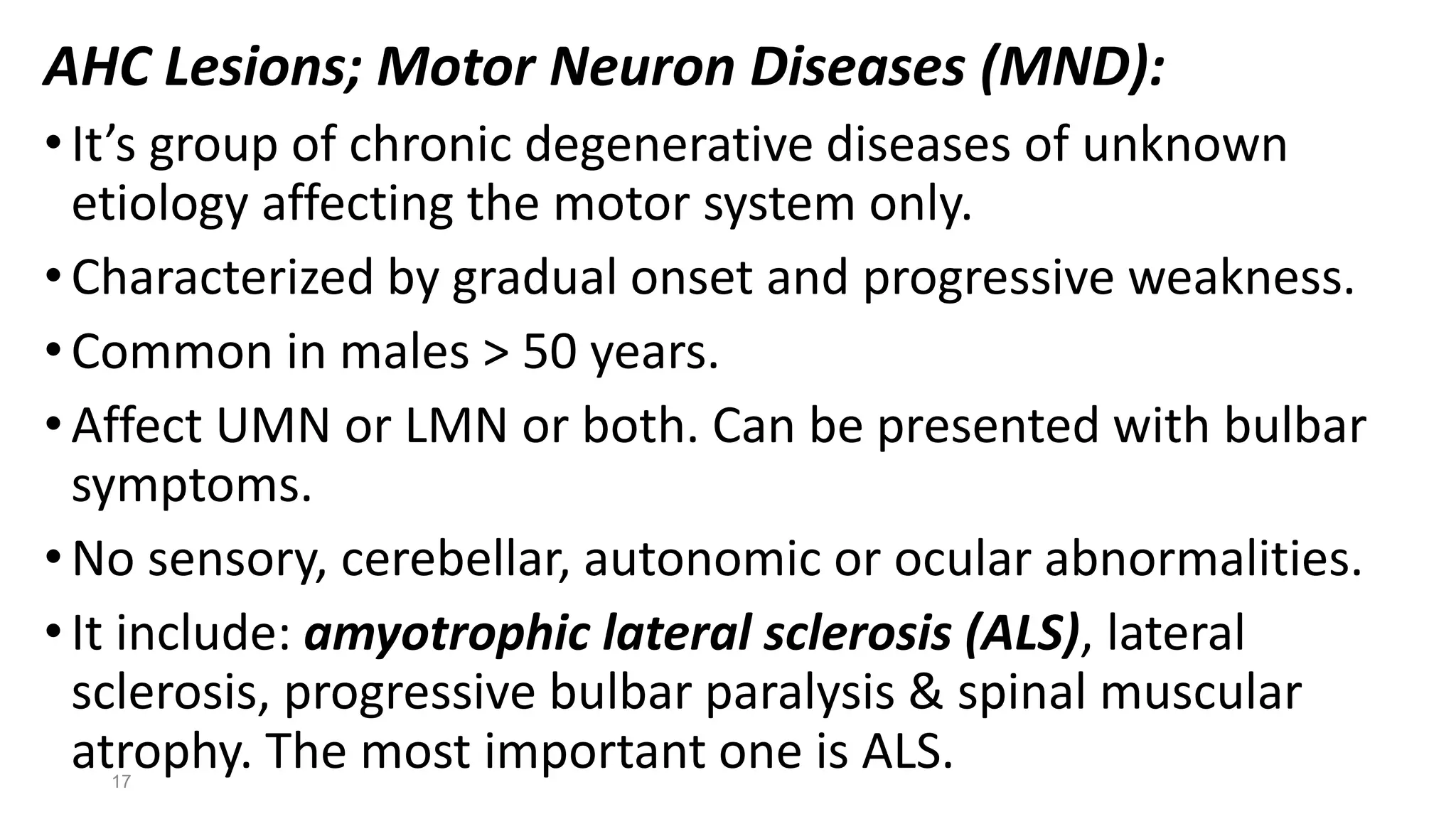
AHC Lesions; Motor Neuron Diseases (MND):
•It’s group of chronic degenerative diseases of unknown
etiology affecting the motor system only.
•Characterized by gradual onset and progressive weakness.
•Common in males > 50 years.
•Affect UMN or LMN or both. Can be presented with bulbar
symptoms.
•No sensory, cerebellar, autonomic or ocular abnormalities.
•It include: amyotrophic lateral sclerosis (ALS), lateral
sclerosis, progressive bulbar paralysis & spinal muscular
atrophy. The most important one is ALS.17
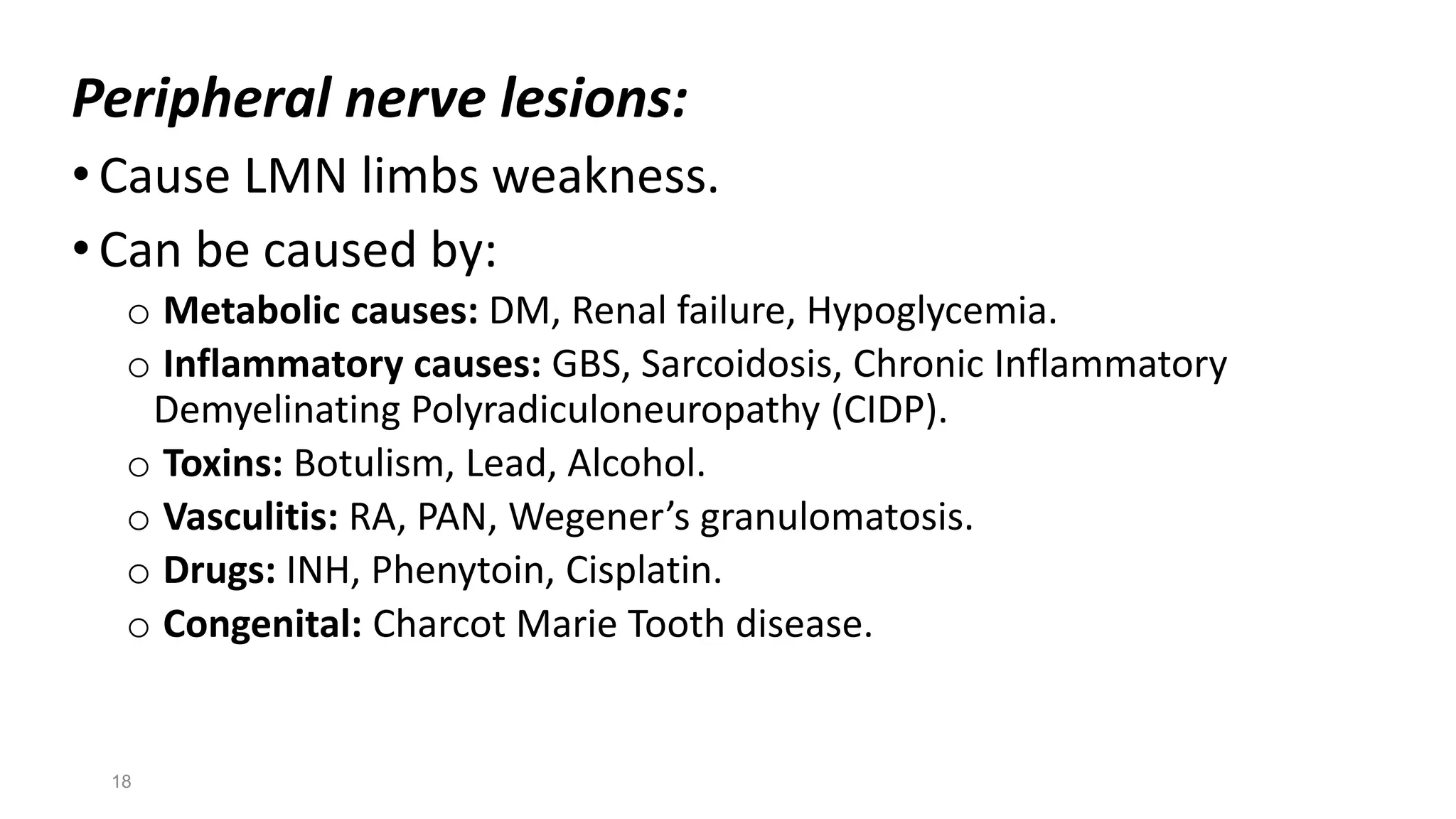
Peripheral nerve lesions:
•Cause LMN limbs weakness.
•Can be caused by:
o Metabolic causes: DM, Renal failure, Hypoglycemia.
o Inflammatory causes: GBS, Sarcoidosis, Chronic Inflammatory
Demyelinating Polyradiculoneuropathy (CIDP).
o Toxins: Botulism, Lead, Alcohol.
o Vasculitis: RA, PAN, Wegener’s granulomatosis.
o Drugs: INH, Phenytoin, Cisplatin.
o Congenital: Charcot Marie Tooth disease.
18
Guillain-barre Syndrome:
•It is acute ascending inflammatory
demyelinating polyneuropathy that is
autoimmune in nature.
•Can affect any age.
•Presentation is acute.
•H/O URTI, diarrhea, vaccination 2
weeks before the presentation.
•Symmetrical ascending weakness of
regressive course.
•Dyspnea is alarming sign.
19
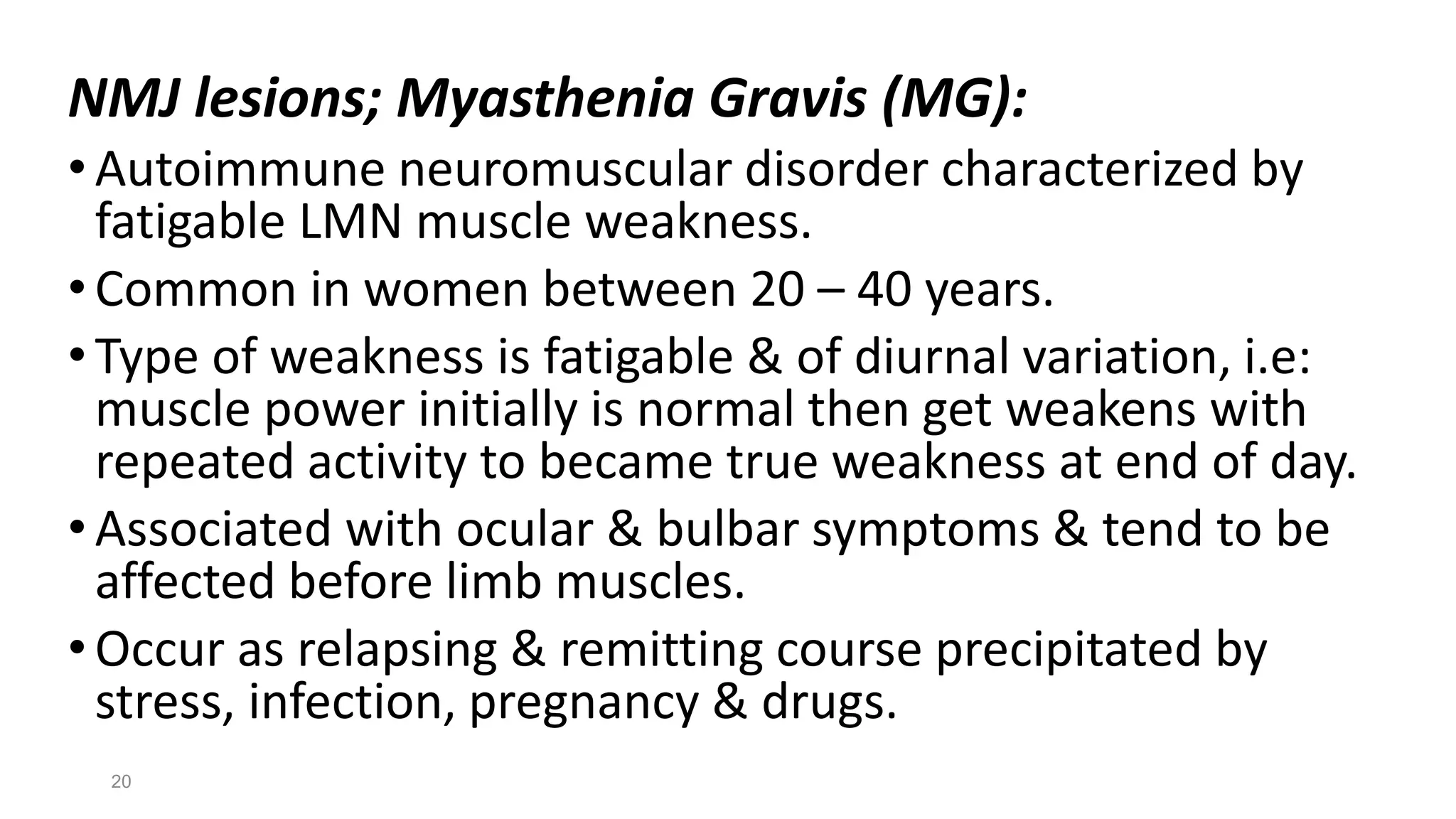
NMJ lesions; Myasthenia Gravis (MG):
• Autoimmune neuromuscular disorder characterized by
fatigable LMN muscle weakness.
• Common in women between 20 – 40 years.
• Type of weakness is fatigable & of diurnal variation, i.e:
muscle power initially is normal then get weakens with
repeated activity to became true weakness at end of day.
• Associated with ocular & bulbar symptoms & tend to be
affected before limb muscles.
• Occur as relapsing & remitting course precipitated by
stress, infection, pregnancy & drugs.
20
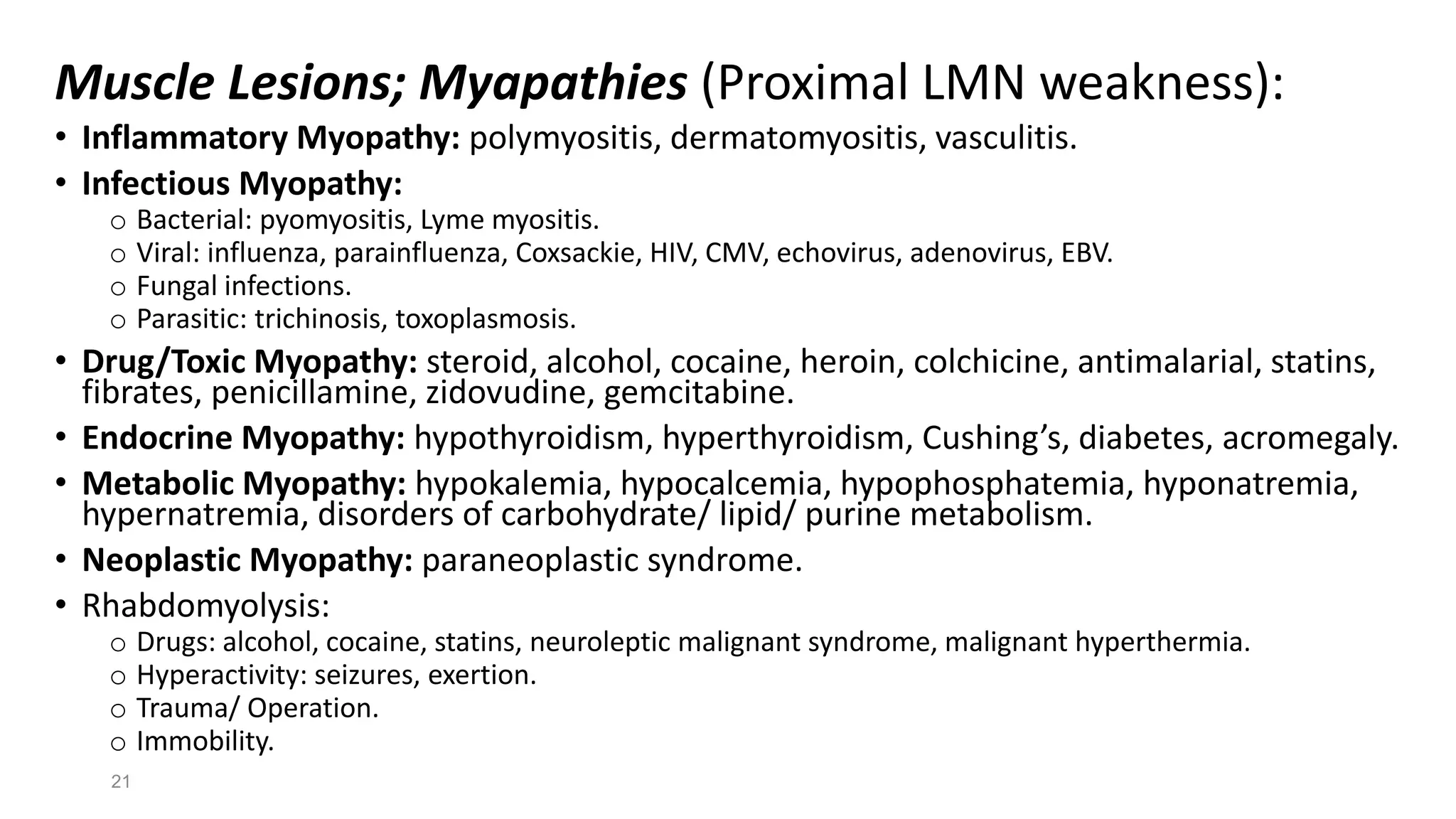
Muscle Lesions; Myapathies (Proximal LMN weakness):
• Inflammatory Myopathy: polymyositis, dermatomyositis, vasculitis.
• Infectious Myopathy:
o Bacterial: pyomyositis, Lyme myositis.
o Viral: influenza, parainfluenza, Coxsackie, HIV, CMV, echovirus, adenovirus, EBV.
o Fungal infections.
o Parasitic: trichinosis, toxoplasmosis.
• Drug/Toxic Myopathy: steroid, alcohol, cocaine, heroin, colchicine, antimalarial, statins,
fibrates, penicillamine, zidovudine, gemcitabine.
• Endocrine Myopathy: hypothyroidism, hyperthyroidism, Cushing’s, diabetes, acromegaly.
• Metabolic Myopathy: hypokalemia, hypocalcemia, hypophosphatemia, hyponatremia,
hypernatremia, disorders of carbohydrate/ lipid/ purine metabolism.
• Neoplastic Myopathy: paraneoplastic syndrome.
• Rhabdomyolysis:
o Drugs: alcohol, cocaine, statins, neuroleptic malignant syndrome, malignant hyperthermia.
o Hyperactivity: seizures, exertion.
o Trauma/ Operation.
o Immobility.
21
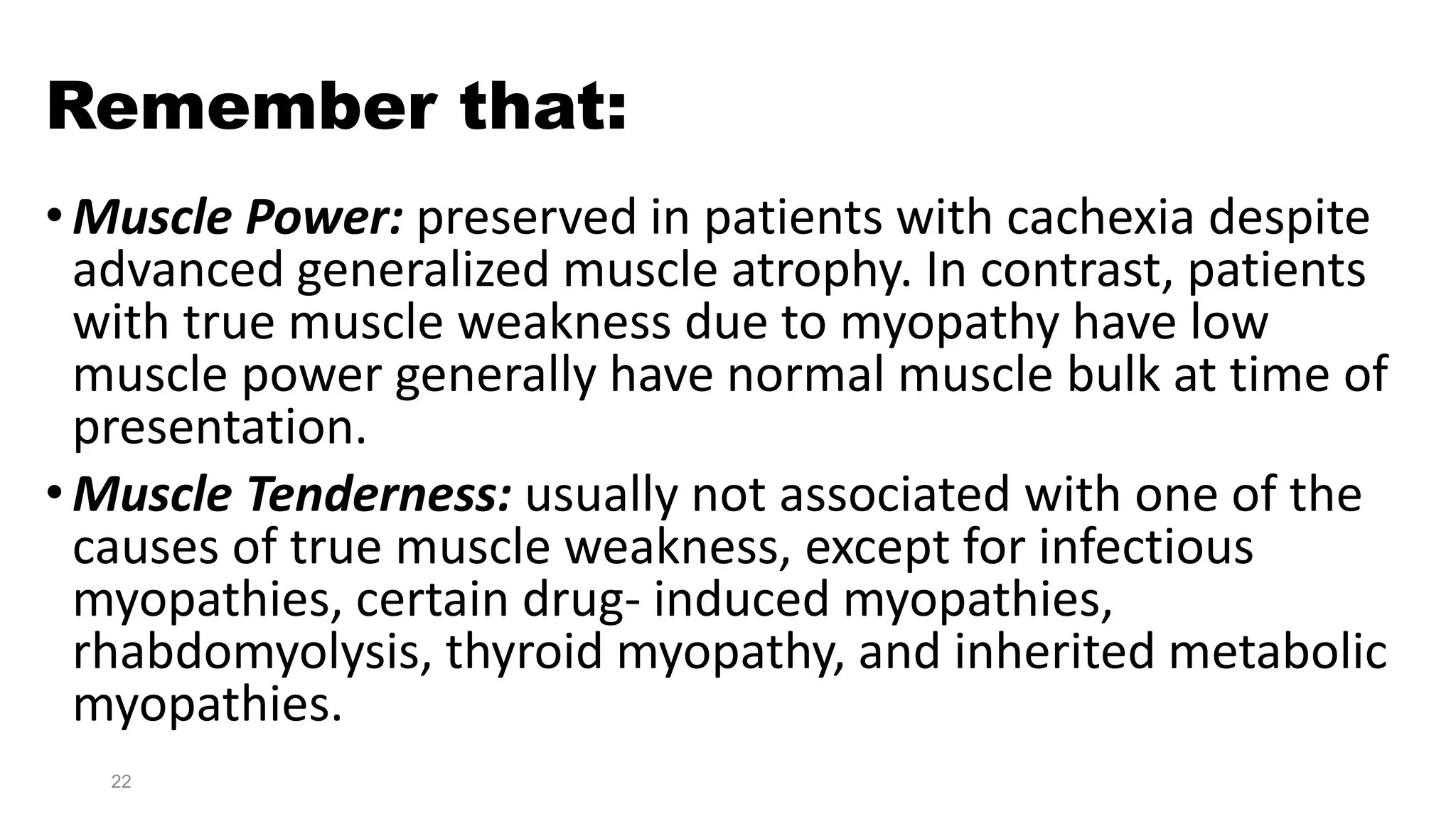
Remember that:
•Muscle Power: preserved in patients with cachexia despite
advanced generalized muscle atrophy. In contrast, patients
with true muscle weakness due to myopathy have low
muscle power generally have normal muscle bulk at time of
presentation.
•Muscle Tenderness: usually not associated with one of the
causes of true muscle weakness, except for infectious
myopathies, certain drug- induced myopathies,
rhabdomyolysis, thyroid myopathy, and inherited metabolic
myopathies.
22
Diagnosis By
Algorithm-
wise
Approach:
Patient complain of
weakness
Is the weakness, true?
Is the true weakness is
strictly unilateral?
Unilateral weakness
Do blood
sugar test
This mean cortical stroke
excluded by far extent &
lesion is in spinal cord
(paraparesis/ paraplegia)
Is the onset, sudden?
Is it associated with features of acute limb ischemia
(pain, cold, pale, mottled skin & absent pulse)?
Request vascular surgeon
consultation
Urgent Spine MRI
• Cord compression
• Intrinsic spinal cord pathology
(Syringomyelia, TM, glioma, abscess)
Immobilize patient
& do cervical spine
image if there is
h/o trauma
Severe back pain + sparing of
proprioception & vibration?
Request neurosurgeon or
oncologist consultation
Spinal infarction
Are there UMN signs?
Is it associated with sensory
level & sphincter disturbance?
Is there MRI evidence
of myelopathy?
• Cord compression
• Intrinsic spinal cord pathology
(Syringomyelia, TM, glioma, abscess)
• SCDD (plasma
vitamin B12)
• Post-radiotherapy
myelopathy (Hx)
• MND; ALS (Hx &
Ex)
Bilateral intracranial
lesions: cerebral emboli/
metz, venous stroke,
demyelination/ MS (Hx &
Ex and brain image)
This is mean LMN signs
Are there sensory s/s?
Peripheral neuropathy
(distal weakness):
GBS (Hx, Ex, NCS, LP,
vital capacity monitor)
Refer to neurologist
CIDP (Hx, Ex, NCS, FBS,
HIV test, urinary
porphyrin, serum
protein
electrophoresis)
Refer to neurologist
Bilateral radiculopathy
(Hx, Ex, spinal cord
image)
Refer to neurologist
Otherwise:
• Ask about drugs/ alcohol Hx, family Hx of
charcot’s disease, social Hx of lead exposure
…etc
• Request following Ix: FBC, BS, U,E&C, ESR, CRP,
Ca, RF, TFT
Is there muscle
fatigability (fatigable/
post-exercise weakness)?
Tendon reflexes?
MG (Hx, Ex,
tensilon test,
EMG, anti-Ach
receptor AB,
thoracic CT)
LEMS (anti-
voltage-gated
calcium
channels AB,
EMG, screen
underlying
malignancy)
Proximal
weakness?
Myopathies
Hx: bedridden patient, drugs/
alcohol hx, past medical hx, past
surgical hx, h/o trauma …etc
Ix: FBC, U,E&C, ESR, CRP, BS, Ca,
RF, TFT, CK, EMG
Muscle Tenderness
• Infective myopathy (FBC, ESR, PCT)
• Some drugs induced myopathy (statin)
• Myositis; polymyositis, dermatomyositis
(anti-synthetase AB)
Other myopathies
• Insist on considering peripheral neuropathy, MND, mononeuritis multiplex,
myopathies, generalized weakness secondary to acute illness, functional weakness.
• Refer to neurologist if no cause identified.
Yes
Functional weakness (fatigue)
No
Yes
Yes
No
Yes
No
Yes
Yes
No
Yes
No
YesNo
YesNo
No
No
Yes
AbsentNormal
Yes
No
No
Is there weight Loss?
Is there pallor?
AnemiasIs the fatigue constant?
MGDrugs/ alcohol Hx?
• Alcohol
• Cocaine abuse
• Chronic aspirin
ingestion
• Anxiety
• Depression
• Fibromyalgia
• Aldosteronism
Is there fever?
• TB
• SBE
• Collagen diseases
• Other infections
Neurologic findings?
Is there Polyuria?
• Hyperthyroidism
• DM
• DI
• Hyperparathyroidism
• CKD
• Electrical disturbances
• Neoplasm
• Malnutrition
• Addison’s disease
• Cirrhosis
• Malabsorption syndrome
• CHF
• Parkinson’s disease
• Muscular dystrophy
• MND (ALS)
• MS
• Neuropathies
YesNo
No Yes
NoYes
+ve -ve
Yes No
-ve
+ve
NoYes
Is the onset, sudden?
Is it
painful?
Ischemia (compare pulse &
capillary refilling between 2 limbs)
Refer to vascular surgeon
Fracture (Hx of trauma & do X-ray)
Refer to orthopedist
Compartment syndrome (CK level
in blood)
Is duration > 3 hours?
Stroke TIA
Are there seizure,
evidence of increased
ICP, cortical dysfunction
or CNS infection?
• SOL
• Meningoencephalitis
(fever, purpuric skin
rashes & meningeal
irritation signs)
• LP
• Neuroimage
Are there UMN signs?Is there contralateral sensory loss?Unilateral spinal cord lesionsMRI Spine
• Ipsilateral sensory loss: SOL, stroke, MS
• Normal sensation: MND
Is signs are referable to
single nerve root/ single
nerve?
Radiculopathy or mononeuropathy
• Insist on considering plexopathy, multi-root compression,
MND, stroke, migraine, functional weakness.
• Refer to neurologist if no cause identified.
Yes
No
Yes
Yes
No
Yes
No
YesYes
No
No
No
Yes
MRI Spine
Yes
No
No
Yes
No
Motor Cortex
Spinal Cord
Peripheral Nerves
NMJ
Muscle
Bilateral True Weakness
Unilateral True Weakness
Functional Weakness
23
Sources:
• Macleod's Clinical Diagnosis 2nd Ed (2013)
• Approach to Internal Medicine 4th Ed (2015)
• Algorithmic Diagnosis of Symptoms and Signs 4th Ed (2017)
• Toronto Notes 34th Ed (2018)
• Ain-Shams University Internal Medicine curriculum (2014)
• Decision Making in Medicine 3rd Ed (2010)
24
THANK
YOU
25

Approach to muscle weakness

  • 1.
  • 2.
    Introduction: • Weakness asprofessional/ medical term refer to symptom arise from something wrong in muscle. • In this situation very important to differentiate between weakness & other confusing symptoms which mimic weakness as said by patient, as fatigue. • Weakness as mentioned before indicate the wrong is in the muscle, either due to pathology with in muscle (myopathy), or pathology in its motor nervous supply. So power of muscle will be decreased according to MRC power rating system. This we name it, objective muscle weakness, neuromuscular weakness, true muscle weakness or clinical muscle weakness (i.e: clinically detectable muscle weakness). 2
  • 3.
    • Fatigue issubjective term reported by patient as weakness-like complain felt after exercise but actually muscle power is normal, i.e: no pathology in muscle or in its nerve supply. So fatigue is non- objective muscle weakness, non-neuromuscular weakness, functional muscle weakness or false muscle weakness. Motor Nerve Supply True Muscle Weakness Wrong neither in muscle nor in its nerve supply Functional Muscle weakness [Myopathy]Muscle 3
  • 4.
    Why approach toweakness is very important? • Because stroke enter in differential diagnosis of weakness which severe condition & current stroke management mandates urgent evaluation of unilateral limb weakness. 4
  • 5.
    Classification by Algorithm-wise Approach: ❑Firstof all keep in your mind the following helping questions: • Mode of Onset & Duration: oAcute: vascular, toxic & metabolic. oChronic: neoplastic, infective, inflammatory, endocrine, degenerative diseases. • Course: oWorse at onset then get regress later on: neurogenic cause: vascular. oProgressive: neurogenic cause: neoplasm, degenerative & infective diseases. oEpisodic: neurogenic cause: vascular. oActivity dependent: NMJ cause: MG & muscular cause: myopathies. 5
  • 6.
    • Co-morbidity: cardiopulmonarydiseases, anaemia, infection, malignancy & psychiatric illness. (as causes & risk factors of true weakness & as a causes of functional weakness). • Associated symptoms & signs: oSymptoms of aetiologies & risk factors (cardiovascular, infections, endocrine, malignancy, metabolic…etc). oSymptoms help to differentiate between true & functional weakness (constitutional, anemia, endocrine & positive drugs/ alcohol history). oCortical dysfunction symptoms. oSpinal lesion symptoms. oSensory symptoms (distribution pattern of sensory loss help in localization site of lesion). oCranial nerves palsy & Bulbar symptoms (indicate brainstem involvement). oAutonomic symptoms (bowel, bladder dysfunction & impotence): indicate spinal cord/ nerves involvement below level of T1. oIncrease intracranial pressure symptoms & signs. oUMNL or LMNL signs. 6
  • 7.
    Classification by Algorithm- wise Approach: Weakness Objective/true weakness Non-objective/ functional weakness Generalized (LMN weakness) Symmetrical/ bilateral (most of them LMN weakness) Asymmetrical/ unilateral (most of them neurogenic weakness; distal > proximal weakness) localized Proximal:- • Muscular: o Myopathies o DMD • Non-muscular: MG Distal (neurogenic):- • AHC: MND • Peripheral neuropathy • NMJ: MG • Muscular: Myopathies (Proximal > distal weakness) • Non-muscular: o NMJ: MG, LEMS, Botulism, organophosph orus poisoning …etc o Cachexia UMN Weakness LMN Weakness Non-stroke • Cortical Stroke • Spinal Stroke (Corticospinal tract) Stroke • Motor Cortex: MS, SOL & Brain abscess • Spinal Cord (Corticospinal tract): o Trauma o Intrinsic Pathology: Syringomyelia, TM, tumors & vitamin B12 deficiency) o Meningeal lesions: inflammations, tumors & trauma o Vertebral compression: disc prolapse, spondylosis & MM • Spinal cord (AHC): TS, Syringomyelia, vitamin B12 deficiency, MND (ALS), DM, lead toxicity, Poliomyelitis, trauma, cord compression …etc • Spinal roots & peripheral nerves: GBS, DM, amyloidosis, leprosy & lead toxicity • NMJ: MG, LEMS, Botulism, organophosphorus poisoning ...etc • Muscle: myopathies • Chronic illness: cardiopulmonary diseases, anaemias, chronic infections, malignancies, arthritis, fibromyalgia & IBS. • Psychiatric illness: depression & deconditioning. 7
  • 8.
    Reviews: Stroke: •Most common causeof unilateral weakness. •Patients typically present with sudden onset of the complains. •If persist < 3 hours , then it will resolve (TIA), while if persist > 3 hours, then it will not resolve (true stroke). •It can be cortical or spinal. Cortical is the common, so “stroke” term alone usually refer to cortical one. 8
  • 9.
    • Type ofweakness in stroke is contralateral UMN hemiparesis/ hemiplegia. • Usually associated with contralateral hemiparesthesia of all sensation types, cortical dysfunction s/s, ibsilateral cranial nerves palsies (suggesting brainstem involvement) producing what’s called crossed hemiplegia or pseudobulbar palsy (UMN palsies of cranial nerves IX - XII). 9
  • 10.
    Space-occupying lesions (SOL): •SOL,e.g. tumors, abscesses, chronic subdural hematoma, can cause symptoms & signs mimicking stroke but the onset is typically more gradual & progressive. •There may be features of raised ICP. 10
  • 11.
    Spinal cord lesions: •Abovelevel of C5: oHemicut: Ibsilateral UMN hemiparesis/ hemiplegia and deep hemiparesthesia with contralateral superficial hemiparesthesia. oComplete cut: UMN quadriparesis/ quadriplegia with bilateral loss all sensation types. N.B: If injury involve C3, C4 & C5, then patients will be died (because these are root values of phrenic nerve). •C5 to T1 (brachial plexus): oHemicut: ibsilateral LMN hemiparesis/ hemiplegia and deep hemiparesthesia with contralateral superficial hemiparesthesia in upper limbs & ibsilateral UMN hemiparesis/ hemiplegia and deep hemiparesthesia with contralateral superficial hemiparesthesia in lower limbs. 11
  • 12.
    o Complete Cut:bilateral LMN weakness with bilateral loss of all sensation types in upper limbs & bilateral UMN weakness with bilateral loss of all sensation types in lower limbs. •T2 to L1: oHemicut (Brown Sequard syndrome): ibsilateral UMN or LMN monoparesis/ monoplegia in lower limb with ibsilateral deep sensory loss & contralateral sensory loss take sensory level pattern on trunk & autonomic dysfunction symptoms. oComplete cut: UMN (spastic) paraparesis/ paraplegia or LMN (flaccid) paraparesis/ paraplegia with or without sensory loss take sensory level pattern on trunk & autonomic dysfunction symptoms. 12
  • 13.
  • 14.
    •Below L1 (LumbosacralPlexus/ Cauda-Equina): always LMN weakness in lower limbs unilaterally or bilaterally but not to similar extent with sensory loss take “glove & stocking” pattern & autonomic dysfunction symptoms. 14
  • 15.
  • 16.
    Multiple Sclerosis (MS): •Idiopathicinflammatory demyelinating disease of white matter of the brain and spinal cord. •Common in women between 20 – 40 years. •Usually monosymptomatic. •Characterized by relapsing & remitting course. •Presented with motor, ocular sensory, cerebellar, autonomic or cranial nerves abnormalities. The ocular abnormality is the most common one. •Can presented with almost any pattern of UMN limb weakness, though paraparesis secondary to TM is the most typical. 16
  • 17.
    AHC Lesions; MotorNeuron Diseases (MND): •It’s group of chronic degenerative diseases of unknown etiology affecting the motor system only. •Characterized by gradual onset and progressive weakness. •Common in males > 50 years. •Affect UMN or LMN or both. Can be presented with bulbar symptoms. •No sensory, cerebellar, autonomic or ocular abnormalities. •It include: amyotrophic lateral sclerosis (ALS), lateral sclerosis, progressive bulbar paralysis & spinal muscular atrophy. The most important one is ALS.17
  • 18.
    Peripheral nerve lesions: •CauseLMN limbs weakness. •Can be caused by: o Metabolic causes: DM, Renal failure, Hypoglycemia. o Inflammatory causes: GBS, Sarcoidosis, Chronic Inflammatory Demyelinating Polyradiculoneuropathy (CIDP). o Toxins: Botulism, Lead, Alcohol. o Vasculitis: RA, PAN, Wegener’s granulomatosis. o Drugs: INH, Phenytoin, Cisplatin. o Congenital: Charcot Marie Tooth disease. 18
  • 19.
    Guillain-barre Syndrome: •It isacute ascending inflammatory demyelinating polyneuropathy that is autoimmune in nature. •Can affect any age. •Presentation is acute. •H/O URTI, diarrhea, vaccination 2 weeks before the presentation. •Symmetrical ascending weakness of regressive course. •Dyspnea is alarming sign. 19
  • 20.
    NMJ lesions; MyastheniaGravis (MG): • Autoimmune neuromuscular disorder characterized by fatigable LMN muscle weakness. • Common in women between 20 – 40 years. • Type of weakness is fatigable & of diurnal variation, i.e: muscle power initially is normal then get weakens with repeated activity to became true weakness at end of day. • Associated with ocular & bulbar symptoms & tend to be affected before limb muscles. • Occur as relapsing & remitting course precipitated by stress, infection, pregnancy & drugs. 20
  • 21.
    Muscle Lesions; Myapathies(Proximal LMN weakness): • Inflammatory Myopathy: polymyositis, dermatomyositis, vasculitis. • Infectious Myopathy: o Bacterial: pyomyositis, Lyme myositis. o Viral: influenza, parainfluenza, Coxsackie, HIV, CMV, echovirus, adenovirus, EBV. o Fungal infections. o Parasitic: trichinosis, toxoplasmosis. • Drug/Toxic Myopathy: steroid, alcohol, cocaine, heroin, colchicine, antimalarial, statins, fibrates, penicillamine, zidovudine, gemcitabine. • Endocrine Myopathy: hypothyroidism, hyperthyroidism, Cushing’s, diabetes, acromegaly. • Metabolic Myopathy: hypokalemia, hypocalcemia, hypophosphatemia, hyponatremia, hypernatremia, disorders of carbohydrate/ lipid/ purine metabolism. • Neoplastic Myopathy: paraneoplastic syndrome. • Rhabdomyolysis: o Drugs: alcohol, cocaine, statins, neuroleptic malignant syndrome, malignant hyperthermia. o Hyperactivity: seizures, exertion. o Trauma/ Operation. o Immobility. 21
  • 22.
    Remember that: •Muscle Power:preserved in patients with cachexia despite advanced generalized muscle atrophy. In contrast, patients with true muscle weakness due to myopathy have low muscle power generally have normal muscle bulk at time of presentation. •Muscle Tenderness: usually not associated with one of the causes of true muscle weakness, except for infectious myopathies, certain drug- induced myopathies, rhabdomyolysis, thyroid myopathy, and inherited metabolic myopathies. 22
  • 23.
    Diagnosis By Algorithm- wise Approach: Patient complainof weakness Is the weakness, true? Is the true weakness is strictly unilateral? Unilateral weakness Do blood sugar test This mean cortical stroke excluded by far extent & lesion is in spinal cord (paraparesis/ paraplegia) Is the onset, sudden? Is it associated with features of acute limb ischemia (pain, cold, pale, mottled skin & absent pulse)? Request vascular surgeon consultation Urgent Spine MRI • Cord compression • Intrinsic spinal cord pathology (Syringomyelia, TM, glioma, abscess) Immobilize patient & do cervical spine image if there is h/o trauma Severe back pain + sparing of proprioception & vibration? Request neurosurgeon or oncologist consultation Spinal infarction Are there UMN signs? Is it associated with sensory level & sphincter disturbance? Is there MRI evidence of myelopathy? • Cord compression • Intrinsic spinal cord pathology (Syringomyelia, TM, glioma, abscess) • SCDD (plasma vitamin B12) • Post-radiotherapy myelopathy (Hx) • MND; ALS (Hx & Ex) Bilateral intracranial lesions: cerebral emboli/ metz, venous stroke, demyelination/ MS (Hx & Ex and brain image) This is mean LMN signs Are there sensory s/s? Peripheral neuropathy (distal weakness): GBS (Hx, Ex, NCS, LP, vital capacity monitor) Refer to neurologist CIDP (Hx, Ex, NCS, FBS, HIV test, urinary porphyrin, serum protein electrophoresis) Refer to neurologist Bilateral radiculopathy (Hx, Ex, spinal cord image) Refer to neurologist Otherwise: • Ask about drugs/ alcohol Hx, family Hx of charcot’s disease, social Hx of lead exposure …etc • Request following Ix: FBC, BS, U,E&C, ESR, CRP, Ca, RF, TFT Is there muscle fatigability (fatigable/ post-exercise weakness)? Tendon reflexes? MG (Hx, Ex, tensilon test, EMG, anti-Ach receptor AB, thoracic CT) LEMS (anti- voltage-gated calcium channels AB, EMG, screen underlying malignancy) Proximal weakness? Myopathies Hx: bedridden patient, drugs/ alcohol hx, past medical hx, past surgical hx, h/o trauma …etc Ix: FBC, U,E&C, ESR, CRP, BS, Ca, RF, TFT, CK, EMG Muscle Tenderness • Infective myopathy (FBC, ESR, PCT) • Some drugs induced myopathy (statin) • Myositis; polymyositis, dermatomyositis (anti-synthetase AB) Other myopathies • Insist on considering peripheral neuropathy, MND, mononeuritis multiplex, myopathies, generalized weakness secondary to acute illness, functional weakness. • Refer to neurologist if no cause identified. Yes Functional weakness (fatigue) No Yes Yes No Yes No Yes Yes No Yes No YesNo YesNo No No Yes AbsentNormal Yes No No Is there weight Loss? Is there pallor? AnemiasIs the fatigue constant? MGDrugs/ alcohol Hx? • Alcohol • Cocaine abuse • Chronic aspirin ingestion • Anxiety • Depression • Fibromyalgia • Aldosteronism Is there fever? • TB • SBE • Collagen diseases • Other infections Neurologic findings? Is there Polyuria? • Hyperthyroidism • DM • DI • Hyperparathyroidism • CKD • Electrical disturbances • Neoplasm • Malnutrition • Addison’s disease • Cirrhosis • Malabsorption syndrome • CHF • Parkinson’s disease • Muscular dystrophy • MND (ALS) • MS • Neuropathies YesNo No Yes NoYes +ve -ve Yes No -ve +ve NoYes Is the onset, sudden? Is it painful? Ischemia (compare pulse & capillary refilling between 2 limbs) Refer to vascular surgeon Fracture (Hx of trauma & do X-ray) Refer to orthopedist Compartment syndrome (CK level in blood) Is duration > 3 hours? Stroke TIA Are there seizure, evidence of increased ICP, cortical dysfunction or CNS infection? • SOL • Meningoencephalitis (fever, purpuric skin rashes & meningeal irritation signs) • LP • Neuroimage Are there UMN signs?Is there contralateral sensory loss?Unilateral spinal cord lesionsMRI Spine • Ipsilateral sensory loss: SOL, stroke, MS • Normal sensation: MND Is signs are referable to single nerve root/ single nerve? Radiculopathy or mononeuropathy • Insist on considering plexopathy, multi-root compression, MND, stroke, migraine, functional weakness. • Refer to neurologist if no cause identified. Yes No Yes Yes No Yes No YesYes No No No Yes MRI Spine Yes No No Yes No Motor Cortex Spinal Cord Peripheral Nerves NMJ Muscle Bilateral True Weakness Unilateral True Weakness Functional Weakness 23
  • 24.
    Sources: • Macleod's ClinicalDiagnosis 2nd Ed (2013) • Approach to Internal Medicine 4th Ed (2015) • Algorithmic Diagnosis of Symptoms and Signs 4th Ed (2017) • Toronto Notes 34th Ed (2018) • Ain-Shams University Internal Medicine curriculum (2014) • Decision Making in Medicine 3rd Ed (2010) 24
  • 25.