1

Computer Society of India (CSI) &
Software Process Improvement Network (SPIN), Pune Chapters

APPLYING LEAN TECHNIQUES IN
SOFTWARE
Archana Joshi
Sr. Manager - Cognizant
archana.p.joshi@gmail.com
http://in.linkedin.com/in/arcjoshi

March 2014
2

Agenda
a) What is Lean:
Lean Origins
Lean Philosophy
b) Lean Techniques:
Value Stream Mapping
Visual Controls
Dependency Structure Matrix
Poka Yoke
3

Have you heard this on Lean?
4

Lean Origins
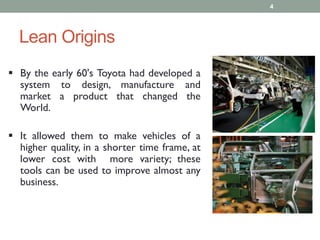
 By the early 60's Toyota had developed a
system to design, manufacture and
market a product that changed the
World.
 It allowed them to make vehicles of a
higher quality, in a shorter time frame, at
lower cost with more variety; these
tools can be used to improve almost any
business.
5

Lean Philosophy

Lean - A philosophy and a mindset to Remove Waste and
get More from Less

It aims at shortening turn around time, improving product
and service quality while cost is reduced to minimum
possible levels
6

Lean Elements
VALUE
MUDA
LEAN
Principles

MURA
MURI
7

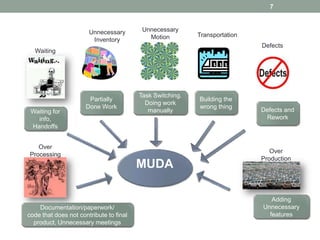
Unnecessary
Inventory

Unnecessary
Motion

Transportation
Defects

Waiting

Waiting for
info,
Handoffs

Partially
Done Work

Task Switching.
Doing work
manually

Over
Processing

MUDA

Documentation/paperwork/
code that does not contribute to final
product, Unnecessary meetings

Building the
wrong thing

Defects and
Rework

Over
Production

Adding
Unnecessary
features
8

Exercise 1 – Identify the types of waste
•
•
•
•

Groups of 5
One person is scribe, 4 are Product Owners
Scribe has to write all their names one after another
Only after each name is complete can it be considered as done

•
•
•
•
•

Round 1:
Each one to tell one letter in their name and move on to other person
Repeat until all letters and all names are done
Measure cycle time for each and total response time
Identify types of waste

•
•

Round 2:
Each one to tell one letter in their name, complete all letters in the name
and then move on to other person
• Repeat until all names are done
• Measure cycle time for each and total response time
9

Mura:
Variability/Inconsistency

MURA
Muri:
Physical Strain /
Over Burden

MURI
10

Lean Principles
Value

• Specific product that meets a customer’s needs
at a specific price and specific time

• Set of specific actions required to deliver value

Value Stream
• Parts “flow” through a Value Stream

Flow

Pull

Perfection

• Nothing is produced by the upstream provider
until the downstream customer signals a need

• The complete elimination of all waste, so that all
activities along a value stream add value to the
product
11

Lean Techniques
5S

DSM

Automate

Single Minute Exchange of Die

5 Whys

Takt time

Competency Maps

Go See Yourself (Gemba)

Pugh matrix

Poka Yoke

Work load levelling

Value Stream mapping

Jidoka

Visual Controls
12

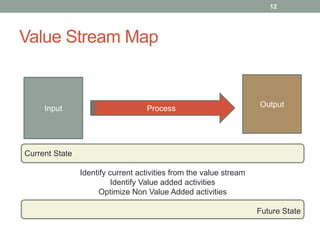
Value Stream Map

Input

Process

Output

Current State
Identify current activities from the value stream
Identify Value added activities
Optimize Non Value Added activities
Future State
13

Exercise 2 – Value Stream Map
Value: Bug to be fixed
VAT = 8

3
1

2

5
4

7
6

NVAT = 14
Efficiency = 8/(14+8) = 36%

9
8

10

11

13
12
14

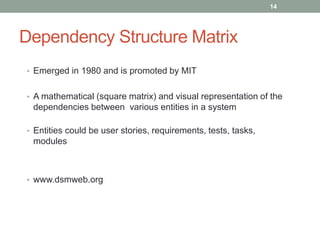
Dependency Structure Matrix
• Emerged in 1980 and is promoted by MIT
• A mathematical (square matrix) and visual representation of the

dependencies between various entities in a system
• Entities could be user stories, requirements, tests, tasks,

modules

• www.dsmweb.org
15

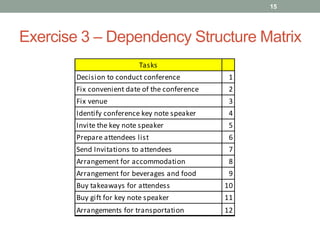
Exercise 3 – Dependency Structure Matrix
Tasks
Decision to conduct conference

1

Fix convenient date of the conference

2

Fix venue

3

Identify conference key note speaker

4

Invite the key note speaker

5

Prepare attendees list

6

Send Invitations to attendees

7

Arrangement for accommodation

8

Arrangement for beverages and food

9

Buy takeaways for attendess

10

Buy gift for key note speaker

11

Arrangements for transportation

12
16

Visual Controls
Track and
monitor

Improve
process flow
&
transparency

Surface
inherent
problems

Visual
Controls

Identify
potential risks

Reveal
Deviations
17

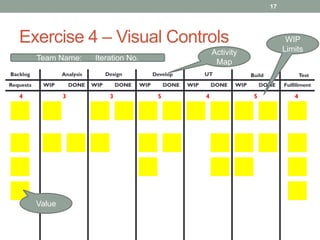
Exercise 4 – Visual Controls
Team Name:
Backlog
Requests

WIP

4

DONE

3

Value

Activity
Map

Iteration No.
Design

Analysis
WIP

DONE

3

WIP
Limits

UT

Develop
WIP

DONE

5

WIP

DONE

4

Build
WIP

DONE

5

Test
Fulfillment

4
18

Poka Yoke – Mistake Proofing
A poka-yoke is any mechanism in a lean manufacturing process that
helps an equipment operator avoid (yokeru) mistakes (poka).

Its purpose is to eliminate product defects by preventing, correcting, or
drawing attention to human errors as they occur

USB Cable

Laptop Charger
19

Exercise 5 – Poka Yoke
Sam is an UX designer for a data entry application for a Bank. As part of the UX
design he has got following requirements. He needs to design UI based on the
requirements. Can you help Sam with identifying Poka Yoke elements that he
can introduce in his UX design?
Requirements
1. User should be able to enter data in 1 minute
2. Data consists of Client Name, Client Phone Number and Bank Account
3. User should have access only to enter information but not edit existing
information
20

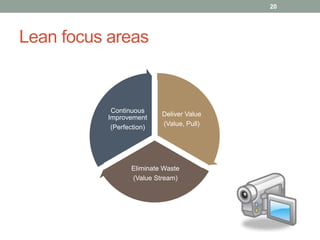
Lean focus areas

Continuous
Improvement
(Perfection)

Deliver Value
(Value, Pull)

Eliminate Waste
(Value Stream)
21

THANK YOU
Archana Joshi
archana.p.joshi@gmail.com
http://in.linkedin.com/in/arcjoshi

Applying lean techniques in software

  • 1.
    1 Computer Society ofIndia (CSI) & Software Process Improvement Network (SPIN), Pune Chapters APPLYING LEAN TECHNIQUES IN SOFTWARE Archana Joshi Sr. Manager - Cognizant archana.p.joshi@gmail.com http://in.linkedin.com/in/arcjoshi March 2014
  • 2.
    2 Agenda a) What isLean: Lean Origins Lean Philosophy b) Lean Techniques: Value Stream Mapping Visual Controls Dependency Structure Matrix Poka Yoke
  • 3.
    3 Have you heardthis on Lean?
  • 4.
    4 Lean Origins  Bythe early 60's Toyota had developed a system to design, manufacture and market a product that changed the World.  It allowed them to make vehicles of a higher quality, in a shorter time frame, at lower cost with more variety; these tools can be used to improve almost any business.
  • 5.
    5 Lean Philosophy Lean -A philosophy and a mindset to Remove Waste and get More from Less It aims at shortening turn around time, improving product and service quality while cost is reduced to minimum possible levels
  • 6.
  • 7.
    7 Unnecessary Inventory Unnecessary Motion Transportation Defects Waiting Waiting for info, Handoffs Partially Done Work TaskSwitching. Doing work manually Over Processing MUDA Documentation/paperwork/ code that does not contribute to final product, Unnecessary meetings Building the wrong thing Defects and Rework Over Production Adding Unnecessary features
  • 8.
    8 Exercise 1 –Identify the types of waste • • • • Groups of 5 One person is scribe, 4 are Product Owners Scribe has to write all their names one after another Only after each name is complete can it be considered as done • • • • • Round 1: Each one to tell one letter in their name and move on to other person Repeat until all letters and all names are done Measure cycle time for each and total response time Identify types of waste • • Round 2: Each one to tell one letter in their name, complete all letters in the name and then move on to other person • Repeat until all names are done • Measure cycle time for each and total response time
  • 9.
  • 10.
    10 Lean Principles Value • Specificproduct that meets a customer’s needs at a specific price and specific time • Set of specific actions required to deliver value Value Stream • Parts “flow” through a Value Stream Flow Pull Perfection • Nothing is produced by the upstream provider until the downstream customer signals a need • The complete elimination of all waste, so that all activities along a value stream add value to the product
  • 11.
    11 Lean Techniques 5S DSM Automate Single MinuteExchange of Die 5 Whys Takt time Competency Maps Go See Yourself (Gemba) Pugh matrix Poka Yoke Work load levelling Value Stream mapping Jidoka Visual Controls
  • 12.
    12 Value Stream Map Input Process Output CurrentState Identify current activities from the value stream Identify Value added activities Optimize Non Value Added activities Future State
  • 13.
    13 Exercise 2 –Value Stream Map Value: Bug to be fixed VAT = 8 3 1 2 5 4 7 6 NVAT = 14 Efficiency = 8/(14+8) = 36% 9 8 10 11 13 12
  • 14.
    14 Dependency Structure Matrix •Emerged in 1980 and is promoted by MIT • A mathematical (square matrix) and visual representation of the dependencies between various entities in a system • Entities could be user stories, requirements, tests, tasks, modules • www.dsmweb.org
  • 15.
    15 Exercise 3 –Dependency Structure Matrix Tasks Decision to conduct conference 1 Fix convenient date of the conference 2 Fix venue 3 Identify conference key note speaker 4 Invite the key note speaker 5 Prepare attendees list 6 Send Invitations to attendees 7 Arrangement for accommodation 8 Arrangement for beverages and food 9 Buy takeaways for attendess 10 Buy gift for key note speaker 11 Arrangements for transportation 12
  • 16.
    16 Visual Controls Track and monitor Improve processflow & transparency Surface inherent problems Visual Controls Identify potential risks Reveal Deviations
  • 17.
    17 Exercise 4 –Visual Controls Team Name: Backlog Requests WIP 4 DONE 3 Value Activity Map Iteration No. Design Analysis WIP DONE 3 WIP Limits UT Develop WIP DONE 5 WIP DONE 4 Build WIP DONE 5 Test Fulfillment 4
  • 18.
    18 Poka Yoke –Mistake Proofing A poka-yoke is any mechanism in a lean manufacturing process that helps an equipment operator avoid (yokeru) mistakes (poka). Its purpose is to eliminate product defects by preventing, correcting, or drawing attention to human errors as they occur USB Cable Laptop Charger
  • 19.
    19 Exercise 5 –Poka Yoke Sam is an UX designer for a data entry application for a Bank. As part of the UX design he has got following requirements. He needs to design UI based on the requirements. Can you help Sam with identifying Poka Yoke elements that he can introduce in his UX design? Requirements 1. User should be able to enter data in 1 minute 2. Data consists of Client Name, Client Phone Number and Bank Account 3. User should have access only to enter information but not edit existing information
  • 20.
    20 Lean focus areas Continuous Improvement (Perfection) DeliverValue (Value, Pull) Eliminate Waste (Value Stream)
  • 21.