A162_e
 Laser displacement sensors
 optoNCDT1401


 Laser sensors support cable banding
 Cables are often sheathed with different materials because
 they are exposed to many different loads. The sheathing
 with different banding materials is performed in a banding
 machine where optoNCDT sensors from Micro-Epsilon
 are installed. The cables can be banded with Kapton, Tef-
 lon, mica, polyester, copper or glass fibre yarn.
 The uninsulated wire is fed into the banding machine from
 one side. The banding units consist of a receiver for the
 banding material which is wound on a roll. The receiver is
 also called a bobbin. There is a case around the bobbin,
 also called head, which takes over the guidance of the
 tape. The wire runs in the centre of this unit. When the
 wire is moving through the machine, the bobbin and head
 are constantly rotating in order to band the wire with the
 inserted material. This is possible because the head and
 bobbin can rotate separately from each other and therefo-
 re achieve different tensile forces and angles.

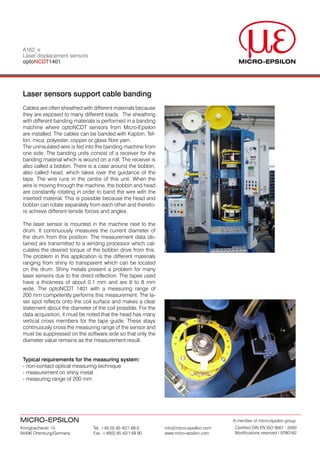
 The laser sensor is mounted in the machine next to the
 drum. It continuously measures the current diameter of
 the drum from this position. The measurement data ob-
 tained are transmitted to a winding processor which cal-
 culates the desired torque of the bobbin drive from this.
 The problem in this application is the different materials
 ranging from shiny to transparent which can be located
 on the drum. Shiny metals present a problem for many
 laser sensors due to the direct reflection. The tapes used
 have a thickness of about 0.1 mm and are 6 to 8 mm
 wide. The optoNCDT 1401 with a measuring range of
 200 mm competently performs this measurement. The la-
 ser spot reflects onto the coil surface and makes a clear
 statement about the diameter of the coil possible. For the
 data acquisition, it must be noted that the head has many
 vertical cross members for the tape guide. These stays
 continuously cross the measuring range of the sensor and
 must be suppressed on the software side so that only the
 diameter value remains as the measurement result.


 Typical requirements for the measuring system:
 - non-contact optical measuring technique
 - measurement on shiny metal
 - measuring range of 200 mm


MICRO-EPSILON					                                                   			                A member of micro-epsilon group
Königbacherstr. 15             Tel. +49 (0) 85 42/1 68-0      info@micro-epsillon.com   Certified DIN EN ISO 9001 : 2000
94496 Ortenburg/Germany        Fax +49(0) 85 42/1 69 90       www.micro-epsilon.com     Modifications reserved / 9780162

App162 en -cable-banding

  • 1.
    A162_e Laser displacementsensors optoNCDT1401 Laser sensors support cable banding Cables are often sheathed with different materials because they are exposed to many different loads. The sheathing with different banding materials is performed in a banding machine where optoNCDT sensors from Micro-Epsilon are installed. The cables can be banded with Kapton, Tef- lon, mica, polyester, copper or glass fibre yarn. The uninsulated wire is fed into the banding machine from one side. The banding units consist of a receiver for the banding material which is wound on a roll. The receiver is also called a bobbin. There is a case around the bobbin, also called head, which takes over the guidance of the tape. The wire runs in the centre of this unit. When the wire is moving through the machine, the bobbin and head are constantly rotating in order to band the wire with the inserted material. This is possible because the head and bobbin can rotate separately from each other and therefo- re achieve different tensile forces and angles. The laser sensor is mounted in the machine next to the drum. It continuously measures the current diameter of the drum from this position. The measurement data ob- tained are transmitted to a winding processor which cal- culates the desired torque of the bobbin drive from this. The problem in this application is the different materials ranging from shiny to transparent which can be located on the drum. Shiny metals present a problem for many laser sensors due to the direct reflection. The tapes used have a thickness of about 0.1 mm and are 6 to 8 mm wide. The optoNCDT 1401 with a measuring range of 200 mm competently performs this measurement. The la- ser spot reflects onto the coil surface and makes a clear statement about the diameter of the coil possible. For the data acquisition, it must be noted that the head has many vertical cross members for the tape guide. These stays continuously cross the measuring range of the sensor and must be suppressed on the software side so that only the diameter value remains as the measurement result. Typical requirements for the measuring system: - non-contact optical measuring technique - measurement on shiny metal - measuring range of 200 mm MICRO-EPSILON A member of micro-epsilon group Königbacherstr. 15 Tel. +49 (0) 85 42/1 68-0 info@micro-epsillon.com Certified DIN EN ISO 9001 : 2000 94496 Ortenburg/Germany Fax +49(0) 85 42/1 69 90 www.micro-epsilon.com Modifications reserved / 9780162