PDF EDITION
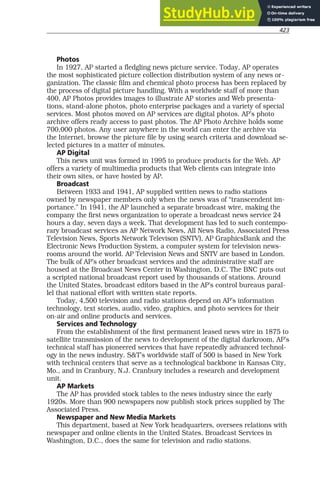
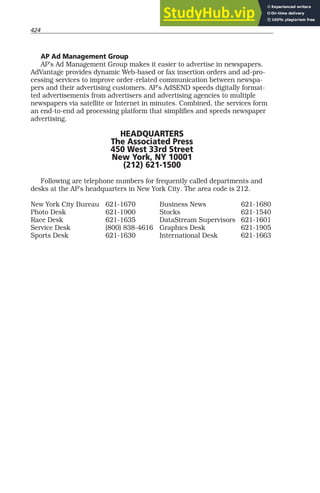
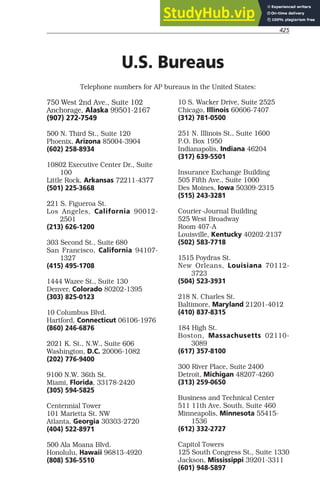
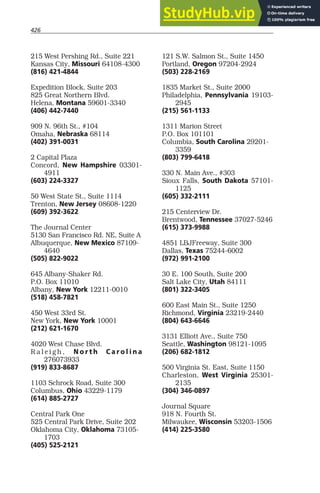
2006
The฀Associated฀Press฀retains฀all฀right,฀title฀and฀interest฀in฀and฀to฀the฀AP฀
material฀that฀follows,฀including฀copyright.฀This฀material฀may฀not฀be฀re-
sold,฀sublicensed฀or฀distributed฀without฀written฀permission.฀The฀AP฀Style-
book฀cannot฀be฀made฀available฀in฀any฀printed฀form฀to฀any฀other฀person,฀
third฀party฀or฀affiliate,฀or฀used฀for฀CD-ROM฀publishing,฀fax฀on฀demand,฀
audiotext,฀e-mail,฀or฀any฀other฀electronic฀delivery฀service฀or฀for฀any฀other฀
purpose฀than฀the฀posting฀of฀the฀AP฀Stylebook฀on฀your฀internal฀computer฀
system,฀without฀AP’s฀prior฀written฀approval.
Editor
Norm฀Goldstein
Stylebook
Search the Stylebook
Published by
THE ASSOCIATED PRESS
450 W. 33rd St.
New York, NY 10001
© 2006 by The Associated Press
All Rights Reserved
No part of this book may be reproduced in any form or by any means
without the prior written permission of the publisher, excepting brief
quotes used in connection with reviews written specifically for inclusion in
a magazine or newspaper.
Library of Congress Catalog Card Number: 91-070484
ISBN: 0-917360-50-8
Design and content management by Satchmo Publishing Inc.
Printed in the United States of America
Printed by Banta Book Group
Cover design by Christine Tash
First Edition, August 1977
41st Edition, 2006
CONTENTS
FOREWORD iv
BIBLIOGRAPHY vi
STYLEBOOK
An A to Z listing of guides to capitalization, abbreviation,
spelling, numerals and usage 3
Internet Search Tips 128
SPORTS GUIDELINES AND STYLE 277
BUSINESS GUIDELINES AND STYLE 300
A GUIDE TO PUNCTUATION 321
BRIEFING ON MEDIA LAW
An exploration of the key legal issues facing journalists
today, including access to government information,
confidential sources and newsgathering conduct,
defamation, privacy and copyright infringement. 334
PHOTO CAPTIONS 378
GRAPHICS 387
FILING THE WIRE
Coding Requirements 390
Keyword Slugline 393
FILING PRACTICES 395
Procedures for Handling Kills and Correctives 413
EDITING MARKS 420
ABOUT THE AP 421
U.S. Bureaus 425
AP PUBLICATIONS 427
Order Forms 430
FOREWORD
The first Associated Press Stylebook came out in 1953. It was a booklet
of 60 pages, “distilled from a thousand suggestions and ideas, a stack of
newspapers and a big dictionary.”
The slim, stapled booklet was called the “most definitive and inclusive
work ever undertaken by a group of newspapers.” Yet it proved to be just
the start of a work that is constantly in progress.
In 1977, the AP published a major revision of the original Stylebook,
the forerunner of today’s editions. Far more than just a collection of rules,
the book became part dictionary, part encyclopedia, part textbook — an
eclectic source of information for writers and editors of any publication.
Today, the 21st-century Associated Press has become the essential
global news network. And the AP Stylebook has become the essential tool
for anyone who cares about good writing.
The Stylebook is now available in a variety of electronic formats. It con-
tinues to add entries that reflect the language of our fast-changing world.
Truly, it is a tool now for wired editors as well as wire editors.
But just as the AP remains dedicated to its fundamental journalistic
principles, the AP Stylebook remains committed to its original concept: to
provide a uniform presentation of the printed word, to make a story writ-
ten anywhere understandable everywhere.
And it is still distilled from a thousand suggestions and ideas, and sev-
eral big desk and online dictionaries.
Our thanks and appreciation go to those who have helped enrich this
book by their questions and suggestions on style. Many entries reflect
contributions by the AP staff, the AP’s members and subscribers, journal-
ism teachers and students, and specialists in a host of fields. There have
also been countless contributions from everyday readers of the news, who
share with us a distinct pride in the clarity and precision of language.
TOM CURLEY
President and
Chief Executive Officer
WHAT’S NEW
In this edition of the AP Stylebook
-------------------------
New entries: accent marks; air bag; anniversary; census; Central Asia;
driver’s license; home schooling; hot spot; inbox; K-9; mecca; Myanmar;
retarded; Rhodes scholar; sergeant-at-arms; SEAL(s); Shiite; Taser; 20-
something; USA; Yahoo.
Changes and updates: AT&T Corp.; Chevron Corp.; disk; earthquakes;
gay; Hawaii; Royal Dutch Shell PLC; Shell Oil Co.; transgender; trans-
sexual; US Airways; Major College Basketball Conferences (Sports);
gymnastics (Sports); speedskating (Sports); Briefing on Media Law; Filing
Practices.
Deletions: blog; COBOL; FORTRAN; Metric Conversion Chart;
Venator Group; Woolworth’s.
BIBLIOGRAPHY
BIBLIOGRAPHY
BIBLIOGRAPHY — vii
BIBLIOGRAPHY
Following are reference books used in the preparation of The Associ-
ated Press Stylebook. They are the accepted reference sources for material
not covered by the Stylebook.
First reference for spelling, style, usage and foreign geographic
names:
Webster’s New World College Dictionary, Fourth Edition, Wiley, Hobo-
ken, N.J.
Second reference for spelling, style and usage:
Webster’s Third New International Dictionary, Merriam-Webster, Spring-
field, Mass.
Second reference for foreign geographic names:
National Geographic Atlas of the World, National Geographic Society,
Washington, D.C.
www.nationalgeographic.com/index.html
For aircraft names:
Jane’s All the World’s Aircraft; Jane’s Yearbooks, London, and Franklin
Watts Inc., New York.
For military ships:
Jane’s Fighting Ships; Jane’s Yearbooks, London, and Franklin Watts
Inc., New York.
For nonmilitary ships:
Lloyd’s Register of Shipping; Lloyd’s Register of Shipping Trust Corp.
Ltd., London.
For railroads:
Official Railway Guide — Freight Service, and Official Railway Guide
— Passenger Service, Travel Edition; Official Railway Guide, New York.
For federal government questions:
Official Congressional Directory; U.S. Government Printing Office,
Washington, D.C.
For foreign government questions:
Political Handbook of the World; CSA Publications, State University of
New York-Binghamton.
For the formal name of a business:
Standard & Poor’s Register of Corporations, Directors and Executives;
Standard & Poor’s Corp., New York.
viii — BIBLIOGRAPHY
For religion questions:
Handbook of Denominations in the United States; Abingdon Press,
Nashville, Tenn., and New York.
World Christian Encylopedia; Second Edition; Oxford University Press,
New York, N.Y.
Yearbook of American and Canadian Churches; Abingdon Press, Nash-
ville, Tenn., and New York, for the National Council of Churches of Christ
in the U.S.A., New York.
Other references consulted in the preparation of the AP Stylebook:
Bernstein, Theodore M. The Careful Writer: A Modern Guide to English
Usage. Atheneum, 1965.
Bernstein, Theodore M. More Language That Needs Watching. Channel
Press, 1962.
Bernstein, Theodore M. Watch Your Language. Atheneum, 1958.
Cappon, Rene J. The Word. The Associated Press, 1982; second edi-
tion, 1991.
Follett, Wilson (edited and completed by Jacques Barzun). Modern
American Usage. Hill & Wang, 1966.
Fowler, H.W. A Dictionary of Modern English Usage. Oxford University
Press, 1965.
The Chicago Manual of Style, 15th Edition. University of Chicago
Press, 2003.
Morris, William and Morris, Mary. Harper Dictionary of Contemporary
Usage. Harper & Row, 1975; second edition, 1985.
Newton, Harry, Newton’s Telecom Dictionary, 15th Edition. Miller Free-
man, Inc., 1999.
Shaw, Harry. Dictionary of Problem Words & Expressions. McGraw-Hill
Book Co., 1975.
Skillin, Marjorie E. and Gay, Robert M. Words into Type. Prentice-Hall
Inc., 1974.
Strunk, William Jr. and White, E.B. The Elements of Style, second edi-
tion. The Macmillan Co., 1972.
Also consulted were the stylebooks of the Boston Globe, Indianapolis
News, Kansas City Star, Los Angeles Times, Miami Herald, Milwaukee
Journal Sentinel, Newsday, New York Times, Wall Street Journal, Wilm-
ington (Del.) News-Journal, and the U.S. Government Printing Office.
STYLEBOOK
STYLEBOOK
airport Capitalize as part of a prop-
er name: La Guardia Airport, Newark
International Airport.
The first name of an individual and
the word international may be deleted
from a formal airport name while the
remainder is capitalized: John F. Ken-
nedy International Airport, Kennedy In-
ternational Airport, or Kennedy Airport.
Use whichever is appropriate in the
context.
Do not make up names, however.
There is no Boston Airport, for example.
The Boston airport (lowercase airport)
would be acceptable if for some reason
the proper name, Logan International
Airport, were not used.
airtight
air traffic controller (no hy-
phen.)
airways The system of routes that
the federal government has established
for airplane traffic.
See the airline, airlines entry for its
use in carriers’ names.
Alabama Abbrev.: Ala. See state
names.
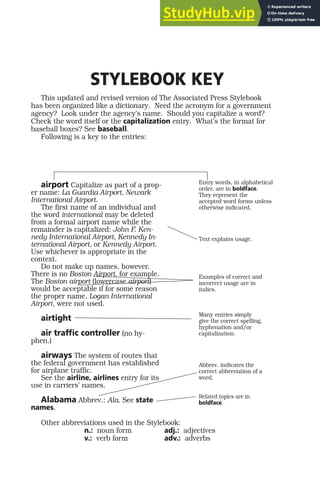
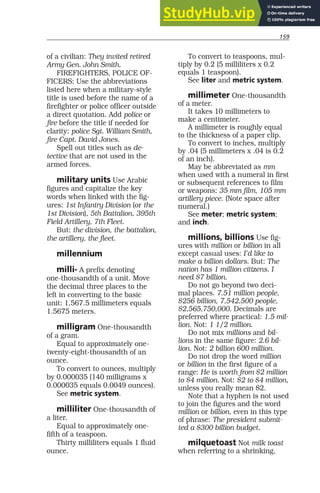
STYLEBOOK KEY
This updated and revised version of The Associated Press Stylebook
has been organized like a dictionary. Need the acronym for a government
agency? Look under the agency’s name. Should you capitalize a word?
Check the word itself or the capitalization entry. What’s the format for
baseball boxes? See baseball.
Following is a key to the entries:
Other abbreviations used in the Stylebook:
n.: noun form adj.: adjectives
v.: verb form adv.: adverbs
Entry words, in alphabetical
order, are in boldface.
They represent the
accepted word forms unless
otherwise indicated.
Text explains usage.
Examples of correct and
incorrect usage are in
italics.
Many entries simply
give the correct spelling,
hyphenation and/or
capitalization.
Abbrev. indicates the
correct abbreviation of a
word.
Related topics are in
boldface.
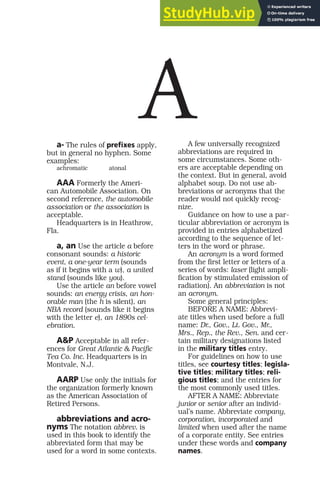
a- The rules of prefixes apply,
but in general no hyphen. Some
examples:
achromatic atonal
AAA Formerly the Ameri-
can Automobile Association. On
second reference, the automobile
association or the association is
acceptable.
Headquarters is in Heathrow,
Fla.
a, an Use the article a before
consonant sounds: a historic
event, a one-year term (sounds
as if it begins with a w), a united
stand (sounds like you).
Use the article an before vowel
sounds: an energy crisis, an hon-
orable man (the h is silent), an
NBA record (sounds like it begins
with the letter e), an 1890s cel-
ebration.
A&P Acceptable in all refer-
ences for Great Atlantic & Pacific
Tea Co. Inc. Headquarters is in
Montvale, N.J.
AARP Use only the initials for
the organization formerly known
as the American Association of
Retired Persons.
abbreviations and acro-
nyms The notation abbrev. is
used in this book to identify the
abbreviated form that may be
used for a word in some contexts.
A few universally recognized
abbreviations are required in
some circumstances. Some oth-
ers are acceptable depending on
the context. But in general, avoid
alphabet soup. Do not use ab-
breviations or acronyms that the
reader would not quickly recog-
nize.
Guidance on how to use a par-
ticular abbreviation or acronym is
provided in entries alphabetized
according to the sequence of let-
ters in the word or phrase.
An acronym is a word formed
from the first letter or letters of a
series of words: laser (light ampli-
fication by stimulated emission of
radiation). An abbreviation is not
an acronym.
Some general principles:
BEFORE A NAME: Abbrevi-
ate titles when used before a full
name: Dr., Gov., Lt. Gov., Mr.,
Mrs., Rep., the Rev., Sen. and cer-
tain military designations listed
in the military titles entry.
For guidelines on how to use
titles, see courtesy titles; legisla-
tive titles; military titles; reli-
gious titles; and the entries for
the most commonly used titles.
AFTER A NAME: Abbreviate
junior or senior after an individ-
ual’s name. Abbreviate company,
corporation, incorporated and
limited when used after the name
of a corporate entity. See entries
under these words and company
names.
A
4
In some cases, an academic
degree may be abbreviated after
an individual’s name. See aca-
demic degrees.
WITH DATES OR NUMERALS:
Use the abbreviations A.D., B.C.,
a.m., p.m., No., and abbreviate
certain months when used with
the day of the month.
Right: In 450 B.C.; at 9:30
a.m.; in room No. 6; on Sept. 16.
Wrong: Early this a.m. he
asked for the No. of your room.
The abbreviations are correct only
with figures.
Right: Early this morning he
asked for the number of your
room.
See months and individual
entries for these other terms:
IN NUMBERED ADDRESSES:
Abbreviate avenue, boulevard and
street in numbered addresses: He
lives on Pennsylvania Avenue. He
lives at 1600 Pennsylvania Ave.
See addresses.
STATES: The names of certain
states and the United States are
abbreviated with periods in some
circumstances.
See state names; datelines;
and individual entries.
ACCEPTABLE BUT NOT RE-
QUIRED: Some organizations and
government agencies are widely
recognized by their initials: CIA,
FBI, GOP.
If the entry for such an organi-
zation notes that an abbreviation
is acceptable in all references or
on second reference, that does
not mean that its use should be
automatic. Let the context deter-
mine, for example, whether to use
Federal Bureau of Investigation or
FBI.
See second reference.
AVOID AWKWARD CON-
STRUCTIONS: Do not follow an
organization’s full name with an
abbreviation or acronym in pa-
rentheses or set off by dashes.
If an abbreviation or acronym
would not be clear on second ref-
erence without this arrangement,
do not use it.
Names not commonly before
the public should not be reduced
to acronyms solely to save a few
words.
SPECIAL CASES: Many abbre-
viations are desirable in tabula-
tions and certain types of techni-
cal writing. See individual entries.
CAPS, PERIODS: Use capital
letters and periods according
to the listings in this book. For
words not in this book, use the
first-listed abbreviation in Web-
ster’s New World College Diction-
ary. Generally, omit periods in
acronyms unless the result would
spell an unrelated word. But use
periods in two-letter abbrevia-
tions: U.S., U.N., U.K., B.A., B.C.
(AP, a trademark, is an exception.
Also, no periods in GI and EU.)
Use all caps, but no periods,
in longer abbreviations and acro-
nyms when the individual letters
are pronounced: ABC, CIA, FBI.
Use only an initial cap and
then lowercase for acronyms
of more than six letters, unless
listed otherwise in this Stylebook
or Webster’s New World College
Dictionary.
ABC Acceptable in all refer-
ences for American Broadcasting
Cos. (the plural is part of the cor-
porate name).
Divisions are ABC News, ABC
Radio and ABC-TV.
ABCs
able-bodied
ABM, ABMs Acceptable in
all references for anti-ballistic
missile(s), but the term should be
5
defined in the story. (The hyphen
is an exception to Webster’s.)
Avoid the redundant phrase
ABM missiles.
A-bomb Use atomic bomb
unless a direct quotation is in-
volved.
See Hiroshima.
Aborigine Capitalize when
referring to Australian indigenous
people.
abortion Use anti-abortion
instead of pro-life and abortion
rights instead of pro-abortion
or pro-choice. Avoid abortionist,
which connotes a person who
performs clandestine abortions.
aboveboard
absent-minded
absent without leave
AWOL is acceptable on second
reference.
academic degrees If men-
tion of degrees is necessary to
establish someone’s credentials,
the preferred form is to avoid an
abbreviation and use instead a
phrase such as: John Jones, who
has a doctorate in psychology.
Use an apostrophe in bache-
lor’s degree, a master’s, etc., but
there is no possessive in Bachelor
of Arts or Master of Science.
Also: an associate degree (no
possessive).
Use such abbreviations as
B.A., M.A., LL.D. and Ph.D. only
when the need to identify many
individuals by degree on first ref-
erence would make the preferred
form cumbersome. Use these ab-
breviations only after a full name
— never after just a last name.
When used after a name, an
academic abbreviation is set off
by commas: John Snow, Ph.D.,
spoke.
Do not precede a name with
a courtesy title for an academic
degree and follow it with the ab-
breviation for the degree in the
same reference:
Wrong: Dr. Pam Jones, Ph.D.
Right: Dr. Pam Jones, a chem-
ist.
See doctor.
academic departments
Use lowercase except for words
that are proper nouns or adjec-
tives: the department of history,
the history department, the de-
partment of English, the English
department, or when department
is part of the official and formal
name: University of Connecticut
Department of Medicine.
academic titles Capitalize
and spell out formal titles such
as chancellor, chairman, etc.,
when they precede a name. Low-
ercase elsewhere.
Lowercase modifiers such as
department in department Chair-
man Jerome Wiesner.
See doctor and titles.
academy See military acad-
emies.
Academy Awards Present-
ed annually by the Academy of
Motion Picture Arts and Sciences.
Also known as the Oscars. (Both
Academy Awards and Oscars are
trademarks.)
Lowercase the academy and
the awards whenever they stand
alone.
accent marks Do not use
any diacritical marks on general
wires because they cause garble
in many newspaper computers.
6
accept, except Accept
means to receive.
Except means to exclude.
accommodate
accused A person is accused
of, not with, a crime.
To avoid any suggestion that
an individual is being judged be-
fore a trial, do not use a phrase
such as accused slayer John
Jones; use John Jones, accused of
the slaying.
For guidelines on related
words, see allege; arrest; and
indict.
Ace A trademark for a brand
of elastic bandage.
acknowledgment
acre Equal to 43,560 square
feet or 4,840 square yards. The
metric equivalent is 0.4 (two-
fifths) of a hectare or 4,047
square meters.
One square mile is 640 acres.
To convert to hectares, multi-
ply by 0.4 (5 acres x 0.4 equals 2
hectares).
See hectare.
acronyms See the abbrevia-
tions and acronyms entry.
act Capitalize when part of
the name for pending or imple-
mented legislation: the Taft-Hart-
ley Act.
acting Always lowercase, but
capitalize any formal title that
may follow before a name: acting
Mayor Peter Barry.
See titles.
act numbers Use Arabic fig-
ures and capitalize act: Act 1; Act
2, Scene 2. But: the first act, the
second act.
actor (man) actress (woman)
Actors’ Equity Asso-
ciation Headquarters is in New
York.
A.D. Acceptable in all refer-
ences for anno Domini: in the year
of the Lord.
Because the full phrase would
read in the year of the Lord 96,
the abbreviation A.D. goes before
the figure for the year: A.D. 96.
Do not write: The fourth cen-
tury A.D. The fourth century is
sufficient. If A.D. is not specified
with a year, the year is presumed
to be A.D.
See B.C.
addresses Use the abbrevia-
tions Ave., Blvd. and St. only with
a numbered address: 1600 Penn-
sylvania Ave. Spell them out and
capitalize when part of a formal
street name without a number:
Pennsylvania Avenue. Lowercase
and spell out when used alone or
with more than one street name:
Massachusetts and Pennsylvania
avenues.
All similar words (alley, drive,
road, terrace, etc.) always are
spelled out. Capitalize them when
part of a formal name without a
number; lowercase when used
alone or with two or more names.
Always use figures for an ad-
dress number: 9 Morningside
Circle.
Spell out and capitalize First
through Ninth when used as
street names; use figures with
two letters for 10th and above: 7
Fifth Ave., 100 21st St.
Abbreviate compass points
used to indicate directional ends
of a street or quadrants of a city
in a numbered address: 222 E.
42nd St., 562 W. 43rd St., 600 K
St. N.W. Do not abbreviate if the
number is omitted: East 42nd
7
Street, West 43rd Street, K Street
Northwest.
See highway designations.
Use periods in the abbrevia-
tion P.O. for P.O. Box numbers.
adjectives The abbreviation
adj. is used in this book to iden-
tify the spelling of the adjectival
forms of words that frequently are
misspelled.
The comma entry provides
guidance on punctuating a series
of adjectives.
The hyphen entry provides
guidance on handling compound
modifiers used before a noun.
ad-lib (n., v., adj.)
administration Lowercase:
the administration, the president’s
administration, the governor’s ad-
ministration, the Reagan adminis-
tration.
See the government, junta,
regime entry for distinctions that
apply in using these terms and
administration.
administrative law judge
This is the federal title for the po-
sition formerly known as hearing
examiner. Capitalize it when used
as a formal title before a name.
To avoid the long title, seek a
construction that sets the title off
by commas: The administrative
law judge, John Williams, dis-
agreed.
administrator Never abbre-
viate. Capitalize when used as a
formal title before a name.
See titles.
admiral See military titles.
admissible
admit, admitted These
words may in some contexts give
the erroneous connotation of
wrongdoing.
A person who acknowledges
that he is a recovering alcoholic,
for example, is not admitting it.
Said is usually sufficient.
ad nauseam
Adobe Acrobat A file reader
that decodes documents to the
portable document format.
adopt, approve, enact,
pass Amendments, ordinances,
resolutions and rules are adopted
or approved.
Bills are passed.
Laws are enacted.
Adrenalin A trademark for
the synthetic or chemically ex-
tracted forms of epinephrine, a
substance produced by the adre-
nal glands.
The nonproprietary terms
are epinephrine hydrochloride or
adrenaline.
Adventist See Seventh-day
Adventist Church.
adverbs The abbreviation
adv. is used in this book to iden-
tify the spelling of adverbial forms
of words frequently misspelled.
See the hyphen entry in the
Punctuation chapter for guide-
lines on when an adverb should
be followed by a hyphen in con-
structing a compound modifier.
adverse, averse Adverse
means unfavorable: He predicted
adverse weather.
Averse means reluctant, op-
posed: She is averse to change.
adviser Not advisor.
advisory
8
Aer Lingus The headquar-
ters of this airline is in Dublin,
Ireland.
Aeroflot The headquarters of
this airline is in Moscow.
Aeromexico Headquarters
is in Mexico City.
aesthetic
affect, effect Affect, as a
verb, means to influence: The
game will affect the standings.
Affect, as a noun, is best
avoided. It occasionally is used in
psychology to describe an emo-
tion, but there is no need for it in
everyday language.
Effect, as a verb, means to
cause: He will effect many chang-
es in the company.
Effect, as a noun, means re-
sult: The effect was overwhelm-
ing. He miscalculated the effect of
his actions. It was a law of little
effect.
Afghan (adj.) Afghani is the
Afghan unit of currency.
AFL-CIO Acceptable in all
references for the American Fed-
eration of Labor and Congress of
Industrial Organizations.
A-frame
African Of or pertaining to
Africa, or any of its peoples or
languages. Do not use the word
as a synonym for black or Negro.
In some countries of Africa,
colored is used to describe those
of mixed white and black ances-
try. In other societies colored is
considered a derogatory word.
Because of the ambigu-
ity, avoid the term in favor of
a phrase such as mixed racial
ancestry. If the word cannot be
avoided, place it in quotation
marks and provide its meaning.
See colored.
African-American The
preferred term is black. Use Afri-
can-American only in quotations
or the names of organizations or
if individuals describe themselves
so.
See black.
after- No hyphen after this
prefix when it is used to form a
noun:
aftereffect afterthought
Follow after with a hyphen
when it is used to form com-
pound modifiers:
after-dinner drink after-theater snack
afterward Not afterwards.
Agency for International
Development AID is accept-
able on second reference.
agenda A list. It takes sin-
gular verbs and pronouns: The
agenda has run its course.
The plural is agendas.
agent Lowercase unless it is
a formal title used before a name.
In the FBI, the formal title is
special agent. Use Special Agent
William Smith if appropriate in a
special context. Otherwise, make
it agent William Smith or FBI
agent William Smith.
See titles.
ages Always use figures for
people and animals (but not for
inanimates): The girl is 15 years
old; the law is eight years old.
When the context does not re-
quire years or years old, the fig-
ure is presumed to be years.
Use hyphens for ages ex-
pressed as adjectives before a
noun or as substitutes for a
noun.
9
Examples: A 5-year-old boy,
but the boy is 5 years old. The
boy, 7, has a sister, 10. The
woman, 26, has a daughter 2
months old. The race is for 3-year-
olds. The woman is in her 30s (no
apostrophe).
See also boy; girl; infant; and
youth.
See comma in punctuation
guidelines.
ages of history See the
historical periods and events
entry.
agnostic, atheist An agnos-
tic is a person who believes it is
impossible to know whether there
is a God.
An atheist is a person who be-
lieves there is no God.
aid, aide Aid is assistance.
An aide is a person who serves
as an assistant.
aide-de-camp, aides-de-
camp A military officer who
serves as assistant and confiden-
tial secretary to a superior.
AIDS Acceptable in all ref-
erences for acquired immune
deficiency syndrome, sometimes
called acquired immunodeficiency
syndrome.
AIDS is a disease that weakens
the immune system, gradually
destroying the body’s ability to
fight infections and certain can-
cers. It is caused by human im-
munodeficiency virus, or HIV. (HIV
virus is redundant.)
HIV is spread most often
through sexual contact; contami-
nated needles or syringes shared
by drug abusers; infected blood
or blood products; and from in-
fected women to their babies at
birth or through breast feeding.
Several types of tests are avail-
able for HIV. One is a blood test
that looks for antibodies the body
has made to defend against HIV.
Other tests look for parts of the
virus itself in blood. Those who
test positive are often described
as being HIV-positive.
People infected with the virus
do not have AIDS until they de-
velop serious symptoms. Many
remain infected but apparently
healthy for years.
ain’t A dialectical or nonstan-
dard contraction. Use it only in
quoted matter or special contexts.
air bag Two words.
air base Two words. Follow
the practice of the U.S. Air Force,
which uses air force base as part
of the proper name for its bases
in the United States and air base
for its installations abroad.
On second reference: the Air
Force base, the air base, or the
base.
Do not abbreviate, even in
datelines:
LACKLAND AIR FORCE BASE,
Texas (AP) —
Air Canada Headquarters is
in Montreal.
air-condition, air-condi-
tioned (v. and adj.) The nouns
are: air conditioner, air condition-
ing.
aircraft names Use a hy-
phen when changing from letters
to figures; no hyphen when add-
ing a letter after figures.
Some examples for aircraft
often in the news: B-1, BAC-111,
C-5A, DC-10, FH-227, F-15 Eagle,
F-16 Falcon, L-1011, MiG-21,
Tu-144, 727-100C, 747, 747B,
10
VC-10. Airbus A300 or A300 (no
hyphen) is an exception.
This hyphenation principle is
the one used most frequently by
manufacturers and users. Apply
it in all cases for consistency. For
other elements of a name, use the
form adopted by the manufac-
turer or user. If in doubt, consult
Jane’s All the World’s Aircraft.
NO QUOTES: Do not use
quotation marks for aircraft with
names: Air Force One, the Spirit of
St. Louis.
PLURALS: DC-10s, 747s. But:
747B’s. (As noted in plurals, the
apostrophe is used in forming the
plural of a single letter.)
SEQUENCE: Use Arabic fig-
ures to establish the sequence of
aircraft, spacecraft and missiles:
Apollo 10. Do not use hyphens.
aircraft terms Use engine,
not motor, for the units that pro-
pel aircraft: a twin-engine plane
(not twin engined).
Use jet plane or jetliner to de-
scribe only those aircraft driven
solely by jet engines. Use turbo-
prop to describe an aircraft on
which the jet engine is geared to a
propeller. Turboprops sometimes
are called propjets.
See the engine, motor entry.
airfare One word.
air force Capitalize when
referring to U.S. forces: the U.S.
Air Force, the Air Force, Air Force
regulations. Do not use the abbre-
viation USAF.
Congress established the
Army Air Forces (note the s) in
1941. Prior to that, the air arm
was known as the U.S. Army Air
Corps. The U.S. Air Force (no s)
was created as a separate service
in 1947.
Use lowercase for the forces of
other nations: the Israeli air force.
This approach has been ad-
opted for consistency, because
many foreign nations do not use
air force as the proper name.
See the military academies
and military titles entries.
air force base See air base.
Air Force One The Air Force
applies this name to any of its
aircraft the president of the Unit-
ed States may be using.
In ordinary usage, however,
Air Force One is the name of the
Air Force plane normally reserved
for the president’s use.
Air France Headquarters is
in Paris.
Air-India The hyphen is part
of the formal name.
Headquarters is in Mumbai,
India.
Air Jamaica Headquarters is
in Kingston, Jamaica.
airline, airlines Capitalize
airlines, air lines and airways
when used as part of a proper
airline name.
Major airlines are listed in this
book separately by name.
Companies that use airlines
include Alitalia, American, Conti-
nental, Hawaiian, Iberia, Japan,
Northwest, Southwest, and
United.
Companies that use airways
include British, JetBlue,Qantas
and US.
Companies that use none of
these include Aer Lingus, Aero-
mexico, Air Canada, Air France,
Air-India, Air Jamaica, and KLM.
On second reference, use just
the proper name (Delta), an ab-
11
breviation if applicable, or the air-
line. Use airlines when referring
to more than one line.
Do not use air line, air lines or
airways in generic references to
an airline.
airmail
airman See military titles.
Air National Guard
airport Capitalize as part of a
proper name: La Guardia Airport,
O’Hare International Airport.
The first name of an individual
and the word international may
be deleted from a formal airport
name while the remainder is capi-
talized: John F. Kennedy Interna-
tional Airport, Kennedy Interna-
tional Airport, or Kennedy Airport.
Use whichever is appropriate in
the context.
Do not make up names, how-
ever. There is no Boston Airport,
for example. The Boston airport
(lowercase airport) would be ac-
ceptable if for some reason the
proper name, Logan International
Airport, were not used.
airtight
air traffic controller (no
hyphen)
airways The system of routes
that the federal government has
established for airplane traffic.
See the airline, airlines entry
for its use in carriers’ names.
aka (no spacing is an excep-
tion to Webster’s)
Alabama Abbrev.: Ala. See
state names.
a la carte
a la king, a la mode
Alaska Do not abbreviate.
Largest land area of the 50 states.
See state names.
Alaska Standard Time The
time zone used in all of Alaska,
except the western Aleutian Is-
lands and St. Lawrence Island,
which are on Hawaii-Aleutian
Standard Time.
There is also an Alaska Day-
light Time.
See time zones.
Alberta A province of west-
ern Canada. Do not abbreviate.
See datelines.
albino, albinos
Alcoa Inc. Alcoa is accept-
able in all references to the
formerly named Aluminum Com-
pany of America.
Alcoa also is a city in Tennes-
see.
alcoholic Use recovering, not
reformed, in referring to those af-
flicted with the disease of alcohol-
ism.
alderman Do not abbreviate.
See legislative titles.
alert See weather terms.
align
Alitalia Airlines Headquar-
ters is in Rome.
Al-Jazeera
all- Use a hyphen:
all-around (not all-round) all-out
all-clear all-star
See all right and the all time,
all-time entries.
12
Allahu akbar The Arabic
phrase for “God is great.”
allege The word must be
used with great care.
Some guidelines:
—Avoid any suggestion that
the writer is making an allega-
tion.
—Specify the source of an al-
legation. In a criminal case, it
should be an arrest record, an
indictment or the statement of a
public official connected with the
case.
—Use alleged bribe or similar
phrase when necessary to make
it clear that an unproved action is
not being treated as fact. Be sure
that the source of the charge is
specified elsewhere in the story.
—Avoid redundant uses of al-
leged. It is proper to say: The dis-
trict attorney alleged that she took
a bribe. Or: The district attorney
accused her of taking a bribe. But
not: The district attorney accused
her of allegedly taking a bribe.
—Do not use alleged to de-
scribe an event that is known to
have occurred, when the dispute
is over who participated in it. Do
not say: He attended the alleged
meeting when what you mean is:
He allegedly attended the meeting.
—Do not use alleged as a rou-
tine qualifier. Instead, use a word
such as apparent, ostensible or
reputed.
For guidelines on related
words, see accused; arrest; and
indict.
Allegheny Mountains Or
simply: the Alleghenies.
alley Do not abbreviate. See
addresses.
allies, allied Capitalize al-
lies or allied only when referring
to the combination of the United
States and its Allies during World
War I or World War II: The Allies
defeated Germany. He was in the
Allied invasion of France.
allot, allotted, allotting
all right (adv.) Never alright.
Hyphenate only if used colloqui-
ally as a compound modifier: He
is an all-right guy.
all time, all-time An all-
time high, but the greatest runner
of all time.
Avoid the redundant phrase
all-time record.
allude, refer To allude to
something is to speak of it with-
out specifically mentioning it.
To refer is to mention it di-
rectly.
allusion, illusion Allusion
means an indirect reference: The
allusion was to his opponent’s
war record.
Illusion means an unreal or
false impression: The scenic direc-
tor created the illusion of choppy
seas.
alma mater
almost never Do not use
the phrase. Instead use seldom or
hardly ever.
al-Qaida International terror-
ist organization headed by Osama
bin Laden.
also-ran (n.)
altar, alter An altar is a
tablelike platform used in a reli-
gious service.
To alter is to change.
13
alumnus, alumni,
alumna, alumnae Use
alumnus (alumni in the plural)
when referring to a man who has
attended a school.
Use alumna (alumnae in the
plural) for similar references to a
woman.
Use alumni when referring to a
group of men and women.
Alzheimer’s disease This
is a progressive, irreversible neu-
rological disorder. Most victims
are older than 65, but Alzheimer’s
can strike in the 40s or 50s.
Symptoms include gradual
memory loss, impairment of judg-
ment, disorientation, personality
change, difficulty in learning and
loss of language skills.
No cure is known.
AM Acceptable in all refer-
ences to the amplitude modulation
system of radio transmission.
Amalgamated Transit
Union Use this full name on first
reference.
Headquarters is in Washing-
ton.
ambassador Use for both
men and women. Capitalize as a
formal title before a name.
See titles.
Amber Alert A procedure
for rapidly publicizing the disap-
pearance of a child.
amendments to the
Constitution Use First
Amendment, 10th Amendment,
etc.
Colloquial references to the
Fifth Amendment’s protection
against self-incrimination are
best avoided, but where appropri-
ate: He took the Fifth seven times.
American An acceptable
description for a citizen of the
United States.
American Airlines Head-
quarters is in Fort Worth, Texas.
American Baptist Asso-
ciation See Baptist churches.
American Baptist
Churches in the U.S.A. See
Baptist churches.
American Bar Associa-
tion ABA is acceptable on sec-
ond reference. Also: the bar asso-
ciation, the association.
Headquarters is in Chicago.
American Broadcasting
Cos. See ABC.
American Civil Liberties
Union ACLU is acceptable on
second reference.
Headquarters is in New York.
American Federation of
Government Employees Use
this full name on first reference
to prevent confusion with other
unions that represent govern-
ment workers.
Headquarters is in Washington.
American Federation
of Labor and Congress of
Industrial Organizations
AFL-CIO is acceptable in all refer-
ences.
Headquarters is in Washington.
American Federation of
Musicians Use this full name on
first reference.
The shortened form Musicians’
union is acceptable on second
reference.
Headquarters is in New York.
14
American Federation of
State, County and Munici-
pal Employees Use this full
name on first reference to prevent
confusion with other unions that
represent government workers.
Headquarters is in Washington.
American Federation of
Teachers Use this full name on
first reference to prevent confu-
sion with other unions that repre-
sent teachers.
Headquarters is in Washington.
American Federation of
Television and Radio Artists
AFTRA is acceptable on second
reference.
Headquarters is in New York.
American Hospital
Association AHA is acceptable
on second reference. Also:
the hospital association, the
association.
Headquarters is in Chicago.
Americanisms Words and
phrases that have become part of
the English language as spoken
in the United States are listed
with a star in Webster’s New
World College Dictionary.
Most Americanisms are ac-
ceptable in news stories, but let
the context be the guide.
See word selection.
American Legion Capitalize
also the Legion in second refer-
ence. Members are Legionnaires,
just as members of the Lions
Club are Lions.
Legion and Legionnaires are
capitalized because they are not
being used in their common noun
sense. A legion (lowercase) is a
large group of soldiers or, by deri-
vation, a large number of items:
His friends are legion. A legion-
naire (lowercase) is a member of
such a legion.
See the fraternal organiza-
tions and service clubs entry.
American Medical As-
sociation AMA is acceptable on
second reference. Also: the medi-
cal association, the association.
Headquarters is in Chicago.
American Newspaper
Publishers Association See
Newspaper Association of
America.
American Petroleum
Institute API is acceptable on
second reference.
Headquarters is in Washing-
ton.
American Postal Workers
Union This union represents
clerks and similar employees who
work inside post offices.
Use the full name on first ref-
erence to prevent confusion with
the National Association of Let-
ter Carriers. The shortened form
Postal Workers union is accept-
able on second reference.
Headquarters is in Washing-
ton.
American Press Institute
API is acceptable on second refer-
ence.
Headquarters is in Reston, Va.
American Society for
the Prevention of Cruelty
to Animals This organization
is limited to the five boroughs of
New York City and neighboring
Suffolk County in providing ani-
mal adoption services, although
it has offices elsewhere that offer
legal advice and other services to
other animal welfare organiza-
15
tions. ASPCA is acceptable on
second reference.
See Society for the Preven-
tion of Cruelty to Animals.
American Society of
Composers, Authors and
Publishers ASCAP is acceptable
on second reference.
Headquarters is in New York.
American Stock
Exchange In second reference:
the American Exchange, the Amex,
or the exchange.
American Telephone &
Telegraph Co. See AT&T Corp.
America West Headquarters
is in Tempe, Ariz.
Amex See American Stock
Exchange.
amid Not amidst.
amidships
ammunition See weapons.
amnesty See the entry that
reads pardon, parole, probation.
amok Not amuck.
among, between The
maxim that between introduces
two items and among introduces
more than two covers most ques-
tions about how to use these
words: The funds were divided
among Ford, Carter and McCar-
thy.
However, between is the cor-
rect word when expressing the
relationships of three or more
items considered one pair at a
time: Negotiations on a debate
format are under way between the
network and the Ford, Carter and
McCarthy committees.
As with all prepositions, any
pronouns that follow these words
must be in the objective case:
among us, between him and her,
between you and me.
ampersand (&) Use the
ampersand when it is part of a
company’s formal name or com-
position title: House & Garden,
Procter & Gamble, Wheeling &
Lake Erie Railway.
The ampersand should not
otherwise be used in place of and.
amplitude modulation
AM is acceptable in all references.
a.m., p.m. Lowercase, with
periods. Avoid the redundant 10
a.m. this morning.
Amtrak This acronym, drawn
from the words American travel
by track, may be used in all ref-
erences to the National Railroad
Passenger Corp. Do not use AM-
TRAK.
The corporation was estab-
lished by Congress in 1970 to
take over intercity passenger
operations from railroads that
wanted to drop passenger service.
Amtrak contracts with railroads
for the use of their tracks and of
certain other operating equipment
and crews.
Amtrak is subsidized in part
by federal funds appropriated
yearly by Congress and adminis-
tered through the Department of
Transportation.
Amtrak should not be con-
fused with Conrail (see separate
entry). However, the legislation
that established Conrail provided
for Amtrak to gradually take over
ownership of certain trackage in
the Boston-Washington corridor
and from Philadelphia to Harris-
burg, Pa.
16
Amtrak headquarters is in
Washington.
AMVETS Acceptable in all
references for American Veterans,
the organization formerly known
as American Veterans of World
War II, Korea, and Vietnam.
Headquarters is in Washing-
ton.
anchorman, anchorwom-
an (not anchor or co-anchor)
anemia, anemic
Anglican Communion
This is the name for the world-
wide association of the 22 sepa-
rate national Anglican churches.
Each national church is in-
dependent. A special position of
honor is accorded to the arch-
bishop of Canterbury, as the
pre-eminent officer in the original
Anglican body, the Church of
England.
The test of membership in the
Anglican Communion tradition-
ally has been whether a church
has been in communion with the
See of Canterbury. No legislative
or juridical ties exist, however.
BELIEFS: Anglicans believe
in the Trinity, the humanity and
divinity of Christ, the virginity of
Mary, salvation through Christ,
and everlasting heaven and hell.
A principal difference between
Roman Catholics and Anglicans
is still the dispute that led to the
formation of the Church of Eng-
land — refusal to acknowledge
that the pope, as bishop of Rome,
has ruling authority over other
bishops. See catholic, catholi-
cism.
ANGLICAN CHURCHES: Mem-
bers of the Anglican Communion,
in addition to the Church of Eng-
land, include the Scottish Episco-
pal Church, the Anglican Church
of Canada, and, in the United
States, the Protestant Episcopal
Church.
See Episcopal Church.
Anglo- Always capitalized. No
hyphen when the word that fol-
lows is in lowercase:
Anglomania Anglophobe
Anglophile
Use a hyphen when the word
that follows is capitalized:
Anglo-American Anglo-Indian
Anglo-Catholic Anglo-Saxon
angry At someone or with
someone.
animals Do not apply a
personal pronoun to an animal
unless its sex has been estab-
lished or the animal has a name:
The dog was scared; it barked.
Rover was scared; he barked. The
cat, which was scared, ran to its
basket. Susie the cat, who was
scared, ran to her basket. The bull
tosses his horns.
Capitalize the name of a spe-
cific animal, and use Roman
numerals to show sequence:
Bowser, Whirlaway II.
For breed names, follow the
spelling and capitalization in
Webster’s New World College Dic-
tionary. For breeds not listed in
the dictionary, capitalize words
derived from proper nouns; use
lowercase elsewhere: basset
hound, Boston terrier.
anniversary Avoid first anni-
versary, the redundant one-year
anniversary and terms such as
six-month anniversary (or other
time spans less than a year).
Similarly, avoid first annual.
anno Domini See A.D.
17
annual An event cannot be
described as annual until it has
been held in at least two succes-
sive years.
Do not use the term first an-
nual. Instead, note that sponsors
plan to hold an event annually.
annual meeting Lowercase
in all uses.
anoint
anonymous sources Use
anonymous attribution only when
essential and even then provide
the most specific possible iden-
tification of the source. Simply
quoting “a source,” unmodified, is
almost always prohibited.
Do not attribute information to
sources — anonymous or other-
wise — when it is obvious, com-
mon sense or well-known.
The basic guidelines for use of
anonymous sources:
The material must be informa-
tion and not opinion and it must
provide information of significant
value to the news report.
The information must not be
available except under the condi-
tions of anonymity imposed by
the source. In some cases, it may
be appropriate to say why the
source requested anonymity.
The source must be in a posi-
tion to have accurate information
and, to the best of the reporter’s
ability to determine, must be un-
derstood to be reliable.
Be sure to seek more than one
source for the story.
another Another is not a
synonym for additional; it refers
to an element that somehow
duplicates a previously stated
quantity.
Right: Ten people took the test;
another 10 refused.
Wrong: Ten people took the
test; another 20 refused.
Right: Ten people took the test;
20 others refused.
Antarctic, Antarctica,
Antarctic Ocean
ante- The rules in prefixes
apply, but in general, no hyphen.
Some examples:
antebellum antedate
anthems See composition
titles. Lowercase the term na-
tional anthem.
anti- Hyphenate all except the
following words, which have spe-
cific meanings of their own:
antibiotic antiparticle*
antibody antipasto
anticlimax antiperspirant
antidepressant antiphon
antidote antiphony
antifreeze antiseptic
antigen antiserum
antihistamine antithesis
antiknock antitoxin
antimatter antitrust
antimony antitussive
*And similar terms in physics
such as antiproton.
This approach has been
adopted in the interests
of readability and easily
remembered consistency.
Note these exceptions to Web-
ster’s New World:
anti-abortion anti-labor
anti-aircraft anti-social
anti-bias anti-war
anti-inflation
See Antichrist, anti-Christ.
Antichrist, anti-Christ
Antichrist is the proper name for
the individual the Bible says will
challenge Christ.
The adjective anti-Christ would
be applied to someone or some-
thing opposed to Christ.
18
anticipate, expect Antici-
pate means to expect and prepare
for something; expect does not in-
clude the notion of preparation:
They expect a record crowd.
They have anticipated it by adding
more seats to the auditorium.
Antiochian Orthodox
Christian Archdiocese of
North America Formed in
1975 by the merger of the Antio-
chian Orthodox Christian Arch-
diocese of New York and All North
America and the Archdiocese of
Toledo, Ohio, and Dependencies
in North America. It is under the
jurisdiction of the patriarch of
Antioch.
See Eastern Orthodox
churches.
anybody, any body, any-
one, any one One word for an
indefinite reference: Anyone can
do that.
Two words when the emphasis
is on singling out one element
of a group: Any one of them may
speak up.
AP Use in logotypes. Accept-
able on second reference for The
Associated Press.
Do not capitalize the when it
precedes AP.
See Associated Press.
apostolic delegate, papal
nuncio An apostolic delegate is a
Roman Catholic diplomat chosen
by the pope to be his envoy to the
church in a nation that does not
have formal diplomatic relations
with the Vatican.
A papal nuncio is the pope’s
envoy to a nation with which the
Vatican has diplomatic relations.
apostrophe (’) See entry in
Punctuation section.
Appalachia In the broadest
sense, the word applies to the en-
tire region along the Appalachian
Mountains, which extend from
Maine into northern Alabama.
In a sense that often suggests
economic depression and poverty,
the reference is to sections of
eastern Tennessee, eastern Ken-
tucky, southeastern Ohio and the
western portion of West Virginia.
The Appalachian Regional
Commission, established by
federal law in 1965, has a man-
date to foster development in
397 counties in 13 states — all
of West Virginia and parts of
Alabama, Georgia, Kentucky,
Maryland, Mississippi, New York,
North Carolina, Ohio, Pennsyl-
vania, South Carolina, Tennessee
and Virginia.
When the word Appalachia
is used, specify the extent of the
area in question.
Appalachian Mountains
Or simply: the Appalachians.
appeals court See U.S.
Court of Appeals.
apposition A decision on
whether to put commas around
a word, phrase or clause used in
apposition depends on whether it
is essential to the meaning of the
sentence (no commas) or not es-
sential (use commas).
See the essential phrases,
nonessential phrases entry for
examples.
approve See the entry that
reads adopt, approve, enact,
pass.
April See months.
April Fools’ Day
19
Aqua-Lung A trademark for
an underwater breathing appa-
ratus.
See scuba.
Arabic names In general,
use an English spelling that
approximates the way a name
sounds in Arabic.
If an individual has a preferred
spelling in English, use that. If
usage has established a particu-
lar spelling, use that.
Problems in transliteration
of Arabic names often are trace-
able to pronunciations that vary
from region to region. The g, for
example, is pronounced like the g
of go in North Africa, but like the j
of joy in the Arab Peninsula. Thus
it is Gamal in Egypt and Jamal in
nations on the peninsula. Follow
local practice in deciding which
letter to use.
Arabs commonly are known by
two names (Fuad Butros), or by
three (Ahmed Zaki Yamani). Fol-
low the individual’s preference on
first reference. On second refer-
ence, use only the final name in
the sequence.
The articles al- or el- may be
used or dropped depending on
the person’s preference or es-
tablished usage. Osama el-Baz,
el-Baz or Moammar Gadhafi, Gad-
hafi.
The Arabic word for son (ibn or
bin depending on personal prefer-
ence and the nation) is sometimes
part of a name (Rashid bin Hu-
maid). On second reference, use
only the final word in the name:
Humaid.
The word abu, meaning father
of, occasionally is used as a last
name (Abdul Mohsen Abu Maizer).
Capitalize and repeat it on second
reference: Abu Maizer.
The titles king, emir, sheik and
imam are used, but prince usu-
ally replaces emir. Some Arabs
are known only by the title and
a given name on first reference
(King Hussein). Others are known
by a complete name (Sheik Sabah
Salem Sabah). Follow the com-
mon usage on first reference. On
second reference, drop the title,
using only the given name if it
stood alone (Hussein) or the final
name in the sequence if more
than one was used on first refer-
ence (Sabah). Make an exception
to this procedure for second refer-
ence if an individual commonly is
known by some other one of the
names used on first reference.
The al, when found in front of
many newspaper names, means
the. It should be capitalized, as in
The New York Times, El Pais, Die
Welt.
Arabic numerals The nu-
merical figures 0, 1, 2, 3, 4, 5, 6,
7, 8, 9.
In general, use Arabic forms
unless denoting the sequence of
wars or establishing a personal
sequence for people or animals.
See Roman numerals.
Separate entries list more de-
tails and examples. For a full list,
see the numerals entry.
arbitrate, mediate Both
terms are used in reports about
labor negotiations, but they
should not be interchanged.
One who arbitrates hears evi-
dence from all people concerned,
then hands down a decision.
One who mediates listens to
arguments of both parties and
tries by the exercise of reason or
persuasion to bring them to an
agreement.
arch- No hyphen after this
prefix unless it precedes a capi-
talized word:
20
archbishop arch-Republican
archenemy archrival
archaeology
archbishop See Episcopal
Church; Roman Catholic Church;
and religious titles.
archbishop of
Canterbury In general,
lowercase archbishop unless it
is used before the name of the
individual who holds the office.
Capitalize Archbishop of Can-
terbury standing alone only when
it is used in a story that also re-
fers to members of Britain’s nobil-
ity. See the nobility entry for the
relevant guidelines.
archdiocese Capitalize as
part of a proper name: the Arch-
diocese of Chicago, the Chicago
Archdiocese. Lowercase when it
stands alone.
See the entry for the particular
denomination in question.
arctic (lowercase for adjec-
tive meaning frigid; capitalize for
region around the North Pole),
Arctic Circle, arctic fox, Arc-
tic Ocean
are A unit of surface measure
in the metric system, equal to
100 square meters.
An are is equal to approxi-
mately 1,076.4 square feet or
119.6 square yards.
See hectare and metric sys-
tem.
area codes See telephone
numbers.
Arizona Abbrev.: Ariz. See
state names.
Arkansas Abbrev.: Ark. See
state names.
Armenian Church of
America The term encompasses
two independent dioceses that
cooperate in some activities: the
Eastern Diocese of the Armenian
Church of America, for areas out-
side California, and the Western
Diocese of the Armenian Church
of America, which serves Califor-
nia.
See Eastern Orthodox
Churches.
Armistice Day It is now Vet-
erans Day.
army Capitalize when refer-
ring to U.S. forces: the U.S. Army,
the Army, Army regulations. Do
not use the abbreviation USA.
Use lowercase for the forces of
other nations: the French army.
This approach has been adopt-
ed for consistency, because many
foreign nations do not use army
as the proper name.
See military academies and
military titles.
arrest To avoid any sugges-
tion that someone is being judged
before a trial, do not use a phrase
such as arrested for killing. In-
stead, use arrested on a charge of
killing.
For guidelines on related
words, see accused; allege; and
indict.
arrive It requires the prepo-
sition at. Do not omit, as airline
dispatchers often do in: He will
arrive La Guardia.
artifact
artificial intelligence Ide-
ally, computers that think like
humans. Currently, computers
cannot apply experience, logic,
and prediction to problem-solv-
21
ing. They act only on instruc-
tions, either from the program or
from the user.
artillery See weapons.
artworks See composition
titles.
as See like, as.
ASCII An acronym for Ameri-
can Standard Code for Informa-
tion Interchange. A numeric code
used to represent the letters of
the Roman alphabet, numbers
and punctuation marks. Use of
the acronym on first reference is
acceptable if it is identified as a
code.
ashcan, ashtray
Ash Wednesday The first
day of Lent, 46 days before Eas-
ter.
See Easter and Lent.
Asian, Asiatic Use Asian or
Asians when referring to people.
Some Asians regard Asiatic as
offensive when applied to people.
Asian flu
Asian subcontinent In
popular usage the term applies
to Bangladesh, Bhutan, India,
Nepal, Pakistan, Sikkim and the
island nation of Sri Lanka (for-
merly Ceylon) at the southeastern
tip of India.
For definitions of the terms
that apply to other parts of Asia,
see Far East; Middle East; and
Southeast Asia.
as if The preferred form, but
as though is acceptable.
assassination Use the term
only if it involves the murder of a
politically important or prominent
individual by surprise attack.
assassination, date of A
prominent person is shot one day
and dies the next. Which day was
he assassinated? The day he was
attacked.
assassin, killer, murderer
An assassin is a politically moti-
vated killer.
A killer is anyone who kills
with a motive of any kind.
A murderer is one who is con-
victed of murder in a court of law.
See execute and the homi-
cide, murder, manslaughter
entry.
assault, battery Popularly,
assault almost always implies
physical contact and sudden, in-
tense violence.
Legally, however, assault
means simply to threaten vio-
lence, as in pointing a pistol at
an individual without firing it. As-
sault and battery is the legal term
when the victim was touched by
the assaulter or something the
assaulter put in motion.
assembly Capitalize when
part of the proper name for the
lower house of a legislature:
the California Assembly. Retain
capitalization if the state name
is dropped but the reference is
specific:
SACRAMENTO, Calif. (AP)
— The state Assembly ...
If a legislature is known as a
general assembly: the Missouri
General Assembly, the General
Assembly, the assembly. Legis-
lature also may be used as the
proper name, however. See legis-
lature.
22
Lowercase all plural uses: the
California and New York assem-
blies.
assemblyman, assembly-
woman Do not abbreviate. See
legislative titles.
assistant Do not abbreviate.
Capitalize only when part of a for-
mal title before a name: Assistant
Secretary of State George Ball.
Whenever practical, however, an
appositional construction should
be used: George Ball, assistant
secretary of state.
See titles.
associate Never abbreviate.
Apply the same capitalization
norms listed under assistant.
Associated Press, The The
newsgathering cooperative dating
from 1846.
Use The Associated Press on
first reference (the capitalized ar-
ticle is part of the formal name).
On second reference, AP or
the AP (no capital on the) may be
used.
The address is 450 West 33rd
Street, New York, NY 10001. The
telephone number is (212) 621-
1500.
The World Wide Web address
is www.ap.org.
The following are service
names used most frequently by
the AP.
DataFeature
DataSpeed
DataStream
GraphicsNet
Newsfeatures
NewsPhoto
NewsPower
Network News
PhotoColor
PhotoExpress
PhotoStream
SportsStats
See the AP entry.
Association Do not abbrevi-
ate. Capitalize as part of a proper
name: American Medical Associa-
tion.
asterisk Do not use the sym-
bol in standard AP wire transmis-
sions. It rarely translates and in
many cases cannot be seen by AP
computers or received by newspa-
per computers.
astronaut It is not a formal
title. Do not capitalize when used
before a name: astronaut John
Glenn.
AT&T Corp. The full name
of the business formerly known
as American Telephone & Tele-
graph Co. AT&T was acquired in
2005 by its former subsidiary,
SBC Communications Inc., which
renamed itself AT&T and is head-
quartered in San Antonio.
Atchison, Topeka & Santa
Fe Railway Now a part of Bur-
lington Northern Santa Fe Rail-
way.
atheist See the agnostic,
atheist entry.
athlete’s foot, athlete’s
heart
Atlanta The city in Georgia
stands alone in datelines.
Atlantic Ocean
Atlantic Richfield Co. Arco
is acceptable on second reference.
Headquarters is in Los
Angeles.
23
Atlantic Standard Time,
Atlantic Daylight Time Used
in the Maritime Provinces of Can-
ada and in Puerto Rico.
See time zones.
at large Usually two words
for an individual representing
more than a single district: con-
gressman at large, councilman at
large.
But it is ambassador-at-large
for an ambassador assigned to no
particular country.
ATM Acceptable in first refer-
ence for automated teller machine.
It should be spelled out some-
where in the story.
Do not use the redundant ATM
machine.
Atomic Age It began Dec. 2,
1942, at the University of Chicago
with the creation of the first self-
sustaining nuclear chain reac-
tion.
Atomic Energy Commis-
sion It no longer exists. See Nu-
clear Regulatory Commission.
attache It is not a formal
title. Always lowercase.
attorney general, attor-
neys general Never abbreviate.
Capitalize only when used as a
title before a name: Attorney Gen-
eral Alberto Gonzales.
See titles.
attorney, lawyer In com-
mon usage the words are inter-
changeable.
Technically, however, an attor-
ney is someone (usually, but not
necessarily, a lawyer) empowered
to act for another. Such an indi-
vidual occasionally is called an
attorney in fact.
A lawyer is a person admit-
ted to practice in a court system.
Such an individual occasionally is
called an attorney at law.
Do not abbreviate. Do not cap-
italize unless it is an officehold-
er’s title: defense attorney Perry
Mason, attorney Perry Mason, Dis-
trict Attorney Hamilton Burger.
See lawyer.
augur A transitive verb. Do
not follow it with the preposition
for: The tea leaves augur a time of
success.
August See months.
author A noun used for both
men and women. Do not use it as
a verb.
automaker, automakers
automatic See pistol and
weapons entries.
automobiles Capitalize
brand names: Buick, Ford,
Mustang, Accord, Toyota, Taurus,
Saturn. Lowercase generic terms:
Sunfire convertible, Windstar
minivan.
Auto Train Rail service that
carries passengers and their cars.
Owned and operated by Amtrak.
autoworker, autowork-
ers One word when used generi-
cally.
But Auto Worker when refer-
ring specifically to the member-
ship and the activities of the Unit-
ed Automobile, Aerospace and
Agricultural Implement Workers
of America.
autumn See seasons.
24
avenue Abbreviate only with
a numbered address. See ad-
dresses.
average, mean, median,
norm Average refers to the re-
sult obtained by dividing a sum
by the number of quantities
added together: The average of 7,
9, 17 is 33 divided by 3, or 11.
Mean, in its sense used in
arithmetic and statistics, is an
average and is determined by
adding the series of numbers and
dividing the sum by the number
of cases: The mean temperature of
five days with temperatures of 67,
62, 68, 69, 64 is 66.
Median is the middle number
of points in a series arranged in
order of size: The median grade in
the group of 50, 55, 85, 88, 92 is
85. The average is 74.
Norm implies a standard of
average performance for a given
group: The child was below the
norm for his age in reading com-
prehension.
average of The phrase takes
a plural verb in a construction
such as: An average of 100 new
jobs are created daily.
averse See adverse, averse.
Avianca The headquarters of
this airline is in Bogota, Colom-
bia.
aviator Use for both men
and women.
awards and decorations
Capitalize them: Bronze Star,
Medal of Honor, etc.
See Nobel Prize and Pulitzer
Prizes.
awe-struck
awhile, a while He plans to
stay awhile.
He plans to stay for a while.
AWOL Acceptable on sec-
ond reference for absent without
leave.
ax Not axe.
The verb forms: ax, axed,
axing.
Axis The alliance of Germany,
Italy and Japan during World War
II.
Baby Bells A collective de-
scription of the regional telephone
companies formed out of the
breakup of the Bell System of
AT&T. Avoid except in quotes.
baby boomer Lowercase, no
hyphen.
baby-sit, baby-sitting,
baby-sat, baby sitter
baccalaureate
Bachelor of Arts,
Bachelor of Science A
bachelor’s degree or bachelor’s is
acceptable in any reference.
See academic degrees for
guidelines on when the abbrevia-
tions B.A. or B.S. are acceptable.
backfire In wildfires, this
term is for a fire set along the
inner edge of a fireline to con-
sume the fuel in the fire’s path or
change its direction.
back up (v.) backup (n. and
adj.)
backward Not backwards.
backyard One word in all
uses.
bad, badly Bad should not
be used as an adverb. It does not
lose its status as an adjective,
however, in a sentence such as I
feel bad. Such a statement is the
idiomatic equivalent of I am in
bad health. An alternative, I feel
badly, could be interpreted as
meaning that your sense of touch
was bad.
See the good, well entry.
Bahai Faith A religion found-
ed by Baha’u’llah in Iran in the
1860s, it advocates recognition of
its messenger and a united world
society. Its Universal House of
Justice is based in Haifa, Israel,
with U.S. offices in Wilmette, Ill.
Members are Bahais.
Bahamas In datelines, give
the name of the city or town fol-
lowed by Bahamas:
NASSAU, Bahamas (AP) —
In stories, use Bahamas, the
Bahamas or the Bahama Islands
as the construction of a sentence
dictates.
Identify a specific island in the
text if relevant.
bail Bail is money or property
that will be forfeited to the court
if an accused individual fails to
appear for trial. It may be posted
as follows:
—The accused may deposit
with the court the full amount or
its equivalent in collateral such
as a deed to property.
—A friend or relative may
make such a deposit with the
court.
B
26
—The accused may pay a
professional bail bondsman a
percentage of the total figure. The
bondsman, in turn, guarantees
the court that it will receive from
him the full amount in the event
the individual fails to appear for
trial.
It is correct in all cases to say
that an accused posted bail or
posted a bail bond (the money
held by the court is a form of
bond). When a distinction is
desired, say that the individual
posted his own bail, that bail was
posted by a friend or relative, or
that bail was obtained through a
bondsman.
Bakelite A trademark for a
type of plastic resin.
baker’s dozen It means 13.
Bakery, Confectionery,
Tobacco Workers and Grain
Millers International Union
The shortened form Bakery Work-
ers union is acceptable in all ref-
erences.
Headquarters is in Washing-
ton.
balance of payments,
balance of trade The balance
of payments is the difference be-
tween the amount of money that
leaves a nation and the amount
that enters it during a period of
time.
The balance of payments is
determined by computing the
amount of money a nation and
its citizens send abroad for all
purposes — including goods and
services purchased, travel, loans,
foreign aid, etc. — and subtract-
ing from it the amount that for-
eign nations send into the nation
for similar purposes.
The balance of trade is the
difference between the monetary
value of the goods a nation im-
ports and the goods it exports.
An example illustrating the
difference between the two:
The United States and its
citizens might send $10 billion
abroad — $5 billion for goods,
$3 billion for loans and foreign
aid, $1 billion for services and
$1 billion for tourism and other
purposes.
Other nations might send $9
billion into the United States
— $6 billion for U.S. goods, $2
billion for services and $1 billion
for tourism and other purposes.
The United States would have
a balance-of-payments deficit of
$1 billion but a balance-of-trade
surplus of $1 billion.
ball carrier
ballclub, ballpark,
ballplayer, ballroom
ball point pen
baloney Foolish or exagger-
ated talk.
The sausage or luncheon meat
is bologna.
Baltimore The city in Mary-
land stands alone in datelines.
B’nai B’rith See the frater-
nal organizations and service
clubs entry.
Band-Aid A trademark for a
type of adhesive bandage.
Bank of America Corp.
Formed from the 1998 merger of
BankAmerica and NationsBank
and the 2004 merger with Fleet-
Boston Financial. Headquarters
is in Charlotte, N.C.
bankruptcy See entry in
Business Guidelines.
27
baptism See sacraments.
baptist, Baptist A person
who baptizes is a baptist (lower-
case).
A Baptist (uppercase) is a per-
son who is a member of the Prot-
estant denomination described in
the next entry.
Baptist churches It is in-
correct to apply the term church
to any Baptist unit except the
local church.
The largest of the more than
20 Baptist bodies in the United
States is the Southern Baptist
Convention. It has more than 12
million members, most of them
in the South, although it has
churches in 50 states.
The largest Northern body is
American Baptist Churches in
the U.S.A., with about 1.5 million
members.
Blacks predominate in three
other large Baptist bodies, the
National Baptist Convention of
America, the National Baptist
Convention U.S.A. Inc., and the
Progressive National Baptist Con-
vention Inc.
The roster of Baptist bodies in
the United States also includes
the Baptist General Conference,
the Conservative Baptist Asso-
ciation of America, the General
Association of Regular Baptist
Churches, the General Associa-
tion of General Baptists, and the
North American Baptist General
Conference.
The Baptist World Alliance, a
voluntary association of Baptist
bodies throughout the world,
organizes the Baptist World Con-
gress meetings generally held
every five years. Headquarters is
in Washington.
CLERGY: All members of the
Baptist clergy may be referred to
as ministers. Pastor applies if a
minister leads a congregation.
On first reference, use the
Rev. before the name of a man or
woman. On second reference, use
only the last name.
See religious titles.
See religious movements for
definitions of some descriptive
terms that often apply to Baptists
but are not limited to them.
barbecue Not barbeque or
Bar-B-Q.
barbiturate
barmaid
bar mitzvah The Jewish
religious ritual and family cel-
ebration that marks a boy’s 13th
birthday. Judaism regards the
age of 13 as the benchmark of
religious maturity. Bar mitzvah
translates as “one who is respon-
sible for the Commandments.”
Some congregations have in-
stituted the bas mitzvah or bat
mitzvah, a similar ceremony for
girls.
baron, baroness See
nobility.
barrel A standard barrel in
U.S. measure contains 31.5 gal-
lons.
A standard barrel in British
and Canadian measure contains
36 imperial gallons.
In international dealings with
crude oil, a standard barrel con-
tains 42 U.S. gallons or 35 impe-
rial gallons.
See the oil entry for guidelines
on computing the volume and
weight of petroleum products.
barrel, barreled,
barreling
28
barrel-chested,
barrelhouse Also: double-
barreled shotgun.
barrister See lawyer.
barroom
BASIC A computer program-
ming language. Acronym for
Beginners’ All-Purpose Symbolic
Instruction Code. Use of acronym
on first reference is acceptable if
it is identified as a programming
language.
battalion Capitalize when
used with a figure to form a
name: the 3rd Battalion, the 10th
Battalion.
battlefield Also: battlefront,
battleground, battleship. But
battle station.
Bavarian cream
bay Capitalize as an integral
part of a proper name: Hudson
Bay, San Francisco Bay.
Capitalize also San Francisco
Bay Area or the Bay Area as the
popular name for the nine-county
region that has San Francisco as
its focal point.
bazaar A fair. Bizarre means
unusual.
B.C. Acceptable in all refer-
ences to a calendar year in the
period before Christ.
Because the full phrase would
be in the year 43 before Christ,
the abbreviation B.C. is placed
after the figure for the year: 43
B.C.
See A.D.
because, since Use because
to denote a specific cause-effect
relationship: He went because he
was told.
Since is acceptable in a causal
sense when the first event in a se-
quence led logically to the second
but was not its direct cause: They
went to the game, since they had
been given the tickets.
before Christ See B.C.
Beijing The city in China
(formerly Peking) stands alone in
datelines.
Bell Labs The research and
development division of Lucent
Technologies. It was previously
called AT&T Bell Laboratories
after the breakup of the Bell sys-
tem in 1984 and was spun off
from AT&T in 1996 as part of the
formation of Lucent Technologies.
bellwether
benefit, benefited,
benefiting
Benelux Belgium, the Neth-
erlands and Luxembourg.
If Benelux is used, explain that
it is an inclusive word for these
three nations.
Ben-Gurion International
Airport Located at Lod, Israel,
about 10 miles south of Tel Aviv.
See airport.
Berlin Stands alone in date-
lines.
Berlin Wall On second refer-
ence, the wall.
Bermuda collar, Bermuda
grass, Bermuda shorts
beside, besides Beside
means at the side of.
Besides means in addition to.
29
besiege
best-seller Hyphenate in all
uses.
betting odds Use figures
and a hyphen: The odds were 5-4,
he won despite 3-2 odds against
him.
The word to seldom is nec-
essary, but when it appears it
should be hyphenated in all con-
structions: 3-to-2 odds, odds of
3-to-2, the odds were 3-to-2.
bettor A person who bets.
between See the among,
between entry.
bi- The rules in prefixes
apply, but in general, no hyphen.
Some examples:
bifocal bimonthly
bilateral bipartisan
bilingual
biannual, biennial Bian-
nual means twice a year and is
a synonym for the word semian-
nual.
Biennial means every two
years.
Bible Capitalize, without quo-
tation marks, when referring to
the Scriptures in the Old Testa-
ment or the New Testament. Cap-
italize also related terms such as
the Gospels, Gospel of St. Mark,
the Scriptures, the Holy Scriptures.
Lowercase biblical in all uses.
Lowercase bible as a nonreli-
gious term: My dictionary is my
bible.
Do not abbreviate individual
books of the Bible.
Old Testament is a Christian
designation; Hebrew Bible or
Jewish Bible is the appropriate
term for stories dealing with Ju-
daism alone.
The standard names and
order of Old Testament books as
they appear in Protestant Bibles
are: Genesis, Exodus, Leviticus,
Numbers, Deuteronomy, Joshua,
Judges, Ruth, 1 Samuel, 2 Samu-
el, 1 Kings, 2 Kings, 1 Chronicles,
2 Chronicles, Ezra, Nehemiah,
Esther, Job, Psalms, Proverbs,
Ecclesiastes, Song of Solomon,
Isaiah, Jeremiah, Lamentations,
Ezekiel, Daniel, Hosea, Joel,
Amos, Obadiah, Jonah, Micah,
Nahum, Habakkuk, Zephaniah,
Haggai, Zechariah, Malachi.
Jewish Bibles contain the
same 39 books, in different order.
Roman Catholic Bibles follow a
different order, usually use some
different names, and include the
seven Deuterocanonical books
(called the Apocrypha by Prot-
estants): Tobit, Judith, 1 Mac-
cabees, 2 Maccabees, Wisdom,
Sirach, Baruch.
The books of the New Testa-
ment, in order: Matthew, Mark,
Luke, John, Acts, Romans, 1
Corinthians, 2 Corinthians, Ga-
latians, Ephesians, Philippians,
Colossians, 1 Thessalonians, 2
Thessalonians, 1 Timothy, 2 Tim-
othy, Titus, Philemon, Hebrews,
James, 1 Peter, 2 Peter, 1 John, 2
John, 3 John, Jude, Revelation.
Citation listing the number
of chapter and verse(s) use this
form: Matthew 3:16, Luke 21:1-
13, 1 Peter 2:1.
Bible Belt Those sections
of the United States, especially
in the South and Middle West,
where fundamentalist religious
beliefs prevail. Use with care, be-
cause in certain contexts it can
give offense.
See religious movements.
bicycle
30
Big Board Acceptable on
second reference for the New York
Stock Exchange.
big brother One’s older
brother is a big brother. Big Broth-
er (capitalized) means under the
watchful eye of big government,
from George Orwell’s “1984.”
Capitalize also in reference
to members of Big Brothers Big
Sisters of America Inc. The or-
ganization has headquarters in
Philadelphia.
Big Three automakers A
phrase generally referring to Gen-
eral Motors, Ford and Chrysler (a
unit of DaimlerChrysler).
bigwig
billion A thousand million.
For forms, see the millions,
billions entry.
Bill of Rights The first 10
amendments to the Constitution.
bimonthly Means every
other month. Semimonthly means
twice a month.
bioterrorism
birthday Capitalize as part of
the name for a holiday: Washing-
ton’s Birthday. Lowercase in other
uses.
bishop See religious titles
and the entry for the denomina-
tion in question.
bit Acceptable in all refer-
ences as an acronym for binary
digit. Actual data take the form of
electrical impulses. These can be
thought of as either on or off or 1
and 0. The pulses are bits.
biweekly Means every other
week. Semiweekly means twice a
week.
bizarre Unusual. A fair is a
bazaar.
black Preferred usage for
those of the Negroid or black
race. (Use Negro only in names of
organizations or in quotations.)
Do not use colored as a synonym.
See the colored entry.
Black Muslims See
Muslim(s).
blackout, brownout A
blackout is a total power failure
over a large area or the conceal-
ing of lights that might be visible
to enemy raiders.
The term rolling blackout is
used by electric companies to
describe a situation in which
electric power to some sections
temporarily is cut off on a rotat-
ing basis to assure that voltage
will meet minimum standards in
other sections.
A brownout is a small, tem-
porary voltage reduction, usu-
ally from 2 percent to 8 percent,
implemented to conserve electric
power.
blast off (v.) blastoff (n.
and adj.)
Blessed Sacrament,
Blessed Virgin
blind See disabled, handi-
capped, impaired.
blizzard See weather terms.
bloc, block A bloc is a coali-
tion of people, groups or nations
with the same purpose or goal.
Block has more than a dozen
definitions, but a political alliance
is not one of them.
31
blond, blonde Use blond as
a noun for males and as an adjec-
tive for all applications: She has
blond hair.
Use blonde as a noun for fe-
males.
bloodbath One word, an ex-
ception to Webster’s.
bloodhound
Bloody Mary A drink made
of vodka and tomato juice. The
name is derived from the nick-
name for Mary I of England.
blue blood (n.) blue-
blooded (adj.)
blue chip stock Stock in a
company known for its long-es-
tablished record of making money
and paying dividends.
board Capitalize only when
an integral part of a proper name.
See capitalization.
board of aldermen See
city council.
board of directors, board
of trustees Always lowercase.
See the organizations and insti-
tutions entry.
board of supervisors See
city council.
boats, ships A boat is a wa-
tercraft of any size but generally
is used to indicate a small craft. A
ship is a large, seagoing vessel.
The word boat is used, how-
ever, in some words that apply to
large craft: ferryboat, PT boat.
Use it, not the pronoun she, in
references to boats and ships.
Use Arabic or Roman numer-
als in the names of boats and
ships: the Queen Elizabeth 2 or
QE2; Titan I, Titan II.
The reference for military
ships is Jane’s Fighting Ships; for
nonmilitary ships, Lloyd’s Regis-
ter of Shipping.
Boeing Co. Formerly Boeing
Aircraft Co.
Headquarters is in Chicago.
bologna The sausage. Balo-
ney is foolish or exaggerated talk.
bona fide
bonbon
bonds See loan terminology
in Business Guidelines section.
boo-boo
Books on Tape A trademark
for a brand of audiotapes. Use a
generic term such as audiotape
or audiocassette.
book titles See composi-
tion titles.
borscht
Bosnia-Herzegovina The
country has been divided into
a Bosnian Serb republic and a
Muslim-Croat federation since
1995. Both have wide autonomy
but share a common presidency,
parliament and government. In
datelines: SARAJEVO, Bosnia-
Herzegovina. The people are Bos-
nians.
Bosporus, the Not the Bos-
porus Strait.
Boston The city in Massa-
chusetts stands alone in date-
lines.
32
Boston brown bread,
Boston cream pie, Boston
terrier
boulevard Abbreviated only
with a numbered address. See
addresses.
bowlegged
box office (n.) box-office
(adj.)
boy Applicable until 18th
birthday is reached. Use man or
young man afterward.
boycott, embargo A boy-
cott is an organized refusal to buy
a particular product or service,
or to deal with a particular mer-
chant or group of merchants.
An embargo is a legal restric-
tion against trade. It usually
prohibits goods from entering or
leaving a country.
boyfriend, girlfriend
Boy Scouts The full name of
the national organization is Boy
Scouts of America. Headquarters
is in Irving, Texas.
Cub Scouting is for boys 8
through 10. Members are Cub
Scouts or Cubs.
Boy Scouting is for boys 11
through 17. Members are Boy
Scouts or Scouts.
Exploring is a separate pro-
gram open to boys and girls from
high school age through 20.
Members are Explorers, not Ex-
plorer Scouts. Members of units
that stress nautical programs are
Sea Explorers.
See Girl Scouts.
BP Amoco PLC Formerly
British Petroleum. BP is accept-
able on second reference.
Headquarters is in London.
bra Acceptable in all refer-
ences for brassiere.
brackets See entry in Punc-
tuation chapter.
Brahman, Brahmin Brah-
man applies to the priestly Hindu
caste and a breed of cattle.
Brahmin applies to aristocracy
in general: Boston Brahmin.
brand names When they are
used, capitalize them.
Brand names normally should
be used only if they are essential
to a story.
Sometimes, however, the use
of a brand name may not be es-
sential but is acceptable because
it lends an air of reality to a story:
He fished a Camel from his shirt
pocket may be preferable to the
less specific cigarette.
When a company sponsors an
event such as a tennis tourna-
ment, use the company’s name
for the event in first reference and
the generic term in subsequent
references.
Also use a separate paragraph
to provide the name of a sponsor
when the brand name is not part
of the formal title.
Brand name is a nonlegal term
for service mark or trademark.
See entries under those words.
brand-new (adj.)
break in (v.) break-in (n.
and adj.)
break up (v.) breakup (n.
and adj.)
bride, bridegroom,
bridesmaid Bride is appropri-
ate in wedding stories, but use
wife or spouse in other circum-
stances.
33
brigadier See military
titles.
Bright’s disease After Dr.
Richard Bright, the London phy-
sician who first diagnosed this
form of kidney disease.
Brill’s disease After Nathan
E. Brill, a U.S. physician. A form
of epidemic typhus fever in which
the disease recurs years after the
original infection.
Britain Acceptable in all ref-
erences for Great Britain, which
consists of England, Scotland and
Wales.
See United Kingdom.
British Airways Headquar-
ters is in Hounslow, England.
British, Briton(s) The peo-
ple of Great Britain: the English,
the Scottish, the Welsh. Brits is
slang.
British Broadcasting
Corp. BBC is acceptable in all
references within contexts such
as a television column. Other-
wise, do not use BBC until sec-
ond reference.
British Columbia The Ca-
nadian province bounded on the
west by the Pacific Ocean. Do not
abbreviate.
See datelines.
British Commonwealth
See Commonwealth, the.
British Petroleum See BP
Amoco PLC.
British thermal unit
The amount of heat required to
increase the temperature of a
pound of water 1 degree Fahren-
heit. Btu (the same for singular
and plural) is acceptable on sec-
ond reference.
British ton See ton.
British Virgin Islands
Use with a community name in
datelines on stories from these
islands. Do not abbreviate.
Specify an individual island in
the text if relevant.
See datelines.
broadcast The past tense
also is broadcast, not broad-
casted.
Broadway, off-Broadway,
off-off-Broadway When ap-
plied to stage productions, these
terms refer to distinctions made
by union contracts, not to loca-
tion of a theater.
Actors’ Equity Association and
unions representing craft work-
ers have one set of pay scales for
Broadway productions (generally
those in New York City theaters
of 300 or more seats) and a lower
scale for smaller theaters, classi-
fied as off-Broadway houses.
The term off-off-Broadway re-
fers to workshop productions that
may use Equity members for a
limited time at substandard pay.
Other unions maintain a hands-
off policy, agreeing with the Eq-
uity attitude that actors should
have an opportunity to whet their
talents in offbeat roles without
losing their Equity memberships.
broccoli
Bronze Age The age char-
acterized by the development of
bronze tools and weapons, from
3500 to 1000 B.C. Regarded as
coming between the Stone Age
and the Iron Age.
brother See Roman Catholic
Church.
34
Brotherhood of Locomo-
tive Engineers and Train-
men BLET is acceptable on sec-
ond reference.
Headquarters is in Cleveland.
brothers Abbreviate as
Bros. in formal company names:
Warner Bros.
For possessives: Warner Bros.’
profits.
brownout See the blackout,
brownout entry.
brunet, brunette Use bru-
net as a noun for males, and as
the adjective for both sexes.
Use brunette as a noun for
females.
brussels sprouts
Btu The same in singular and
plural. See British thermal unit.
Bubble Wrap A registered
trademark. Unless the trademark
name is important to the story,
use cushioning or packaging ma-
terial.
Budapest The capital of
Hungary. In datelines, follow it
with Hungary.
Buddha, Buddhism A
major religion founded in India
about 500 B.C. by Buddha. Bud-
dha, which means enlightened
one, was the name given to Sid-
dhartha Gautama by his follow-
ers.
Buddhism has about 325 mil-
lion followers, mostly in India,
Tibet, China, Japan, Korea and
Southeast Asia. About 2 mil-
lion practice Buddhism in North
America.
Buddhists believe that correct
thinking and self-denial will en-
able the soul to reach nirvana, a
state of release into ultimate en-
lightenment and peace. Until nir-
vana is reached, believers cannot
be freed from the cycle of death
and rebirth.
There are four major groups
within Buddhism.
—Hinayana or Theravada: Fol-
lowers stress monastic discipline
and attainment of nirvana by the
individual through meditation. It
is dominant among Buddhists in
Cambodia, Laos, Myanmar, Thai-
land and Sri Lanka.
—Mahayana: Followers lay
stress on idealism. The ideal life
is that of virtue and wisdom. The
sect is found mostly in Japan,
Korea and eastern China.
—Mantrayana: Major centers
for this group are in the Hima-
layas, Mongolia and Japan. It is
similar to Mahayana but also has
a structure of spiritual leaders
and disciples, believes in vari-
ous evil spirits and deities, uses
magic, and has secret rituals.
—Zen: Followers seek enlight-
enment through introspection
and intuition. The doctrines are
again similar to Mahayana and
like Mantrayana there is a loose
structure of leaders and disciples.
This group is found mostly in
Japan.
Bufferin A trademark for
buffered aspirin.
bug, tap A concealed listen-
ing device designed to pick up
sounds in a room, an automobile,
or such is a bug.
A tap is a device attached to a
telephone circuit to pick up con-
versations on the line.
building Never abbreviate.
Capitalize the proper names of
buildings, including the word
building if it is an integral part of
the proper name: the Empire State
Building.
35
build up (v.) buildup (n.
and adj.)
bull’s-eye
bullet See weapons.
bullfight, bullfighter,
bullfighting
bullpen One word, for the
place where baseball pitchers
warm up, and for a pen that
holds cattle.
bureau Capitalize when part
of the formal name for an orga-
nization or agency: the Bureau of
Labor Statistics.
Lowercase when used alone or
to designate a corporate subdivi-
sion: the Washington bureau of
The Associated Press.
Bureau of Alcohol, Tobac-
co, Firearms and Explosives
ATF is acceptable in subsequent
references to this agency of the
Department of Justice. (Note the
Explosives part of the name.)
burglary, larceny,
robbery, theft Legal definitions
of burglary vary, but in general
a burglary involves entering
a building (not necessarily by
breaking in) and remaining
unlawfully with the intention of
committing a crime.
Larceny is the legal term for
the wrongful taking of property.
Its nonlegal equivalents are steal-
ing or theft.
Robbery in the legal sense
involves the use of violence or
threat in committing larceny. In a
wider sense it means to plunder
or rifle, and may thus be used
even if a person was not present:
His house was robbed while he
was away.
Theft describes a larceny that
did not involve threat, violence or
plundering.
USAGE NOTE: You rob a per-
son, bank, house, etc., but you
steal the money or the jewels.
burqa The all-covering dress
worn by some Muslim women.
bus, buses Transportation
vehicles. The verb forms: bus,
bused, busing.
See buss, busses.
bushel A unit of dry measure
equal to 4 pecks or 32 dry quarts.
The metric equivalent is approxi-
mately 35.2 liters.
To convert to liters, multiply
by 35.2 (5 bushels x 35.2 equals
176 liters).
See liter.
business editor Capitalize
when used as a formal title before
a name. See titles.
business names See com-
pany names.
buss, busses Kisses. The
verb forms: buss, bussed, bus-
sing.
See bus, buses.
by- The rules in prefixes
apply, but in general, no hyphen.
Some examples:
byline byproduct
bypass bystreet
By-election is an exception.
See the next entry.
by-election A special elec-
tion held between regularly
scheduled elections. The term
most often is associated with spe-
cial elections to the British House
of Commons.
bylaw
36
bylines Use only if the re-
porter was in the datelined com-
munity to gather the information
reported.
Nicknames should not be used
unless they specifically are re-
quested by the writer.
byte A computer “word” made
up of bits. The most common size
byte contains eight bits, or binary
digits. Bytes are a measure of in-
formation storage.
cabinet Capitalize references
to a specific body of advisers
heading executive departments
for a president, king, governor,
etc.: The president-elect said he
has not made his Cabinet selec-
tions.
The capital letter distinguishes
the word from the common noun
meaning cupboard, which is
lowercase.
See department for a listing
of all the U.S. Cabinet depart-
ments.
cactus, cactuses
cadet See military acad-
emies.
Caesarean section
caliber The form: .38-caliber
pistol.
See weapons.
California Abbrev.: Calif. See
state names.
call letters Use all caps. Use
hyphens to separate the type of
station from the base call letters:
WBZ-AM, WBZ-FM, WBZ-TV.
Citizens band operators, since
1983, are not required to be
licensed by the Federal Commu-
nications Commission. Identifica-
tion of such stations, either by
the call sign previously assigned
or made up by the operator, com-
prised of the letter K, the oper-
ator’s initials and the operator’s
ZIP code, is optional.
Shortwave stations, which
operate with greater power than
citizens band stations and on dif-
ferent frequencies, typically mix
letters and figures: K2LRX.
See channel; citizens band;
radio station; and television
station.
call up (v.) call-up (n. and
adj.)
Cambodia Use this rather
than Kampuchea in datelines
since the country continues to
be known more widely by this
name. In the body of stories Kam-
puchea may be used as long as it
is identified as another name for
Cambodia.
Cameroon Not Camerouns
or Cameroun. See geographic
names.
campaign manager Do
not treat as a formal title. Always
lowercase.
See titles.
Camp Fire Boys and Girls
The full name of the national
organization formerly known as
Camp Fire, Inc. Founded in 1910
as Camp Fire Girls, the name was
changed to Camp Fire, Inc., in
1979, and again in 1993 to reflect
C
38
the inclusion of boys. Headquar-
ters is in Kansas City, Mo.
Both girls and boys are in-
cluded in all levels of the orga-
nization. Boys and girls in kin-
dergarten through second grades
are Starflights. Children in third
through fifth grades are Adven-
ture club members. Children in
sixth through eighth grades are
Discovery members. Youths in
ninth through 12th grades are
Horizon members.
Canada Montreal, Ottawa,
Quebec City and Toronto stand
alone in datelines. For all other
datelines, use the city name and
the name of the province or terri-
tory spelled out.
The 10 provinces of Canada
are Alberta, British Columbia,
Manitoba, New Brunswick,
Newfoundland and Labrador
(but usually known as just New-
foundland), Nova Scotia, Ontario,
Prince Edward Island, Quebec
and Saskatchewan.
The three territories are the
Yukon, the Northwest Territories,
and Nunavut (created April 1,
1999).
The provinces have substan-
tial autonomy from the federal
government.
The territories are adminis-
tered by the federal government,
although residents of the territo-
ries do elect their own legislators
and representatives to Parlia-
ment.
See datelines.
Canada goose Not Cana-
dian goose.
Canadian Broadcasting
Corp. CBC is acceptable in all
references within contexts such
as a television column. Other-
wise, do not use CBC until sec-
ond reference.
canal Capitalize as an inte-
gral part of a proper name: the
Suez Canal.
Canal Zone Do not abbrevi-
ate. No longer used except when
referring to the Panama Canal
area during the time it was con-
trolled by the United States, ex-
clusively or jointly with Panama,
1904-1999.
can’t hardly A double
negative is implied. Better is: can
hardly.
cancel, canceled,
canceling, cancellation
cannon, canon A cannon
is a weapon. See the weapons
entry.
A canon is a law or rule, par-
ticularly of a church.
cannot
cant The distinctive stock
words and phrases used by a par-
ticular sect or class.
See dialect.
cantor See Jewish congrega-
tions.
Canuck This reference to
a Canadian is sometimes con-
sidered a derogatory term. It
should be avoided except when in
quoted matter or in terms used
in Canada, such as references to
the hockey team, the Vancouver
Canucks.
canvas, canvass Canvas is
heavy cloth.
Canvass is a noun and a verb
denoting a survey.
cape Capitalize as part of a
proper name: Cape Cod, Cape
Hatteras. Lowercase when stand-
ing alone.
39
Although local practice may
call for capitalizing the Cape
when the rest of the name is
clearly understood, always use
the full name on first reference.
Cape Canaveral, Fla. For-
merly Cape Kennedy. See John F.
Kennedy Space Center.
capital The city where a seat
of government is located. Do not
capitalize.
When used in a financial
sense, capital describes money,
equipment or property used in a
business by a person or corpora-
tion.
capitalization In general,
avoid unnecessary capitals. Use
a capital letter only if you can
justify it by one of the principles
listed here.
Many words and phrases, in-
cluding special cases, are listed
separately in this book. Entries
that are capitalized without fur-
ther comment should be capital-
ized in all uses.
If there is no relevant listing
in this book for a particular word
or phrase, consult Webster’s New
World College Dictionary. Use
lowercase if the dictionary lists
it as an acceptable form for the
sense in which the word is being
used.
As used in this book, capitalize
means to use uppercase for the
first letter of a word. If additional
capital letters are needed, they
are called for by an example or a
phrase such as use all caps.
Some basic principles:
PROPER NOUNS: Capitalize
nouns that constitute the unique
identification for a specific per-
son, place, or thing: John, Mary,
America, Boston, England.
Some words, such as the ex-
amples just given, are always
proper nouns. Some common
nouns receive proper noun status
when they are used as the name
of a particular entity: General
Electric, Gulf Oil.
PROPER NAMES: Capitalize
common nouns such as party,
river, street and west when they
are an integral part of the full
name for a person, place or thing:
Democratic Party, Mississippi
River, Fleet Street, West Virginia.
Lowercase these common
nouns when they stand alone in
subsequent references: the party,
the river, the street.
Lowercase the common noun
elements of names in all plural
uses: the Democratic and Re-
publican parties, Main and State
streets, lakes Erie and Ontario.
Among entries that provide ad-
ditional guidelines are:
animals historical periods
brand names and events
building holidays and
committee holy days
congress legislature
datelines months
days of the week monuments
directions and nationalities
regions and races
family names nicknames
food organizations
foreign and institutions
governmental planets
bodies plants
foreign police
legislative department
bodies religious
geographic references
names seasons
governmental trademarks
bodies seasons
heavenly bodies unions
POPULAR NAMES: Some
places and events lack officially
designated proper names but
have popular names that are the
effective equivalent: the Combat
Zone (a section of downtown Bos-
ton), the Main Line (a group of
Philadelphia suburbs), the South
Side (of Chicago), the Badlands
40
(of North Dakota), the Street (the
financial community in the Wall
Street area of New York).
The principle applies also to
shortened versions of the proper
names of one-of-a-kind events:
the Series (for the World Series),
the Derby (for the Kentucky
Derby). This practice should not,
however, be interpreted as a li-
cense to ignore the general prac-
tice of lowercasing the common
noun elements of a name when
they stand alone.
DERIVATIVES: Capitalize
words that are derived from a
proper noun and still depend on
it for their meaning: American,
Christian, Christianity, English,
French, Marxism, Shakespearean.
Lowercase words that are
derived from a proper noun but
no longer depend on it for their
meaning: french fries, herculean,
manhattan cocktail, malaprop-
ism, pasteurize, quixotic, venetian
blind.
SENTENCES: Capitalize the
first word in a statement that
stands as a sentence. See sen-
tences and parentheses.
In poetry, capital letters are
used for the first words of some
phrases that would not be capi-
talized in prose. See poetry.
COMPOSITIONS: Capitalize
the principal words in the names
of books, movies, plays, poems,
operas, songs, radio and televi-
sion programs, works of art, etc.
See composition titles; maga-
zine names; and newspaper
names.
TITLES: Capitalize formal titles
when used immediately before
a name. Lowercase formal titles
when used alone or in construc-
tions that set them off from a
name by commas.
Use lowercase at all times for
terms that are job descriptions
rather than formal titles.
See academic titles; courtesy
titles; legislative titles; military
titles; nobility titles; religious
titles; and titles.
ABBREVIATIONS: Capital let-
ters apply in some cases. See the
abbreviations and acronyms
entry.
Capitol Capitalize U.S. Capi-
tol and the Capitol when referring
to the building in Washington:
The meeting was held on Capitol
Hill in the west wing of the Capi-
tol.
Follow the same practice when
referring to state capitols: The
Virginia Capitol is in Richmond.
Thomas Jefferson designed the
Capitol of Virginia.
captain See military titles
for military and police usage.
Lowercase and spell out in
such uses as team captain Carl
Yastrzemski.
carat, caret, karat The
weight of precious stones, espe-
cially diamonds, is expressed in
carats. A carat is equal to 200
milligrams or about 3 grains.
A caret is a writer’s and a
proofreader’s mark.
The proportion of pure gold
used with an alloy is expressed in
karats.
carbine See weapons.
cardinal See Roman Catho-
lic Church.
cardinal numbers See nu-
merals.
CARE Acceptable in all ref-
erences for Cooperative for As-
sistance and Relief Everywhere.
CARE USA is headquartered in
Atlanta; CARE International is
headquartered in Brussels, Bel-
gium.
41
carefree
caretaker
Caribbean See Western
Hemisphere.
carmaker, carmakers
car pool
carry-over (n. and adj.)
cash on delivery c.o.d. is
preferred in all references.
caster, castor Caster is a
roller.
Castor is the spelling for the
oil and the bean from which it is
derived.
catalog, cataloged, cata-
loger, cataloging, catalogist
Caterpillar A trademark for
a brand of crawler tractor.
Use lowercase for the worm-
like larva of various insects.
catholic, catholicism Use
Roman Catholic Church, Roman
Catholic or Roman Catholicism in
the first references to those who
believe that the pope, as bishop of
Rome, has the ultimate authority
in administering an earthly orga-
nization founded by Jesus Christ.
Most subsequent references
may be condensed to Catholic
Church, Catholic or Catholicism.
Roman Catholic should continue
to be used, however, if the context
requires a distinction between
Roman Catholics and members
of other denominations who often
describe themselves as Catholic.
They include some high church
Episcopalians (who often call
themselves Anglo-Catholics),
members of Eastern Orthodox
churches, and members of some
national Catholic churches that
have broken with Rome. Among
churches in this last category
are the Polish National Catholic
Church and the Lithuanian Na-
tional Catholic Church.
Lowercase catholic where used
in its generic sense of general or
universal, meanings derived from
a similar word in Greek.
Those who use Catholic in a
religious sense are indicating
their belief that they are members
of a universal church that Jesus
Christ left on Earth.
cats See animals.
CAT scan See CT scan.
cattle See animals.
Caucasian
cave in (v.) cave-in (n. and
adj.)
CB See citizens band radio.
CBS Acceptable in all refer-
ences for CBS Inc., the former Co-
lumbia Broadcasting System.
Divisions include CBS News,
CBS Radio and CBS-TV.
CD See compact disc entry.
CD-ROM Acronym for a com-
pact disc acting as a read-only
memory device.
CD-ROM disc is redundant.
cease-fire, cease-fires (n.
and adj.) The verb form is cease
fire.
celebrant, celebrator Re-
serve celebrant for someone who
conducts a religious rite: He was
the celebrant of the Mass.
Use celebrator for someone
having a good time: The celebra-
tors kept the party going until 3
a.m.
42
cellophane Formerly a
trademark, now a generic term.
cell phone Two words; an
exception to Webster’s.
Celsius Use this term rather
than centigrade for the tempera-
ture scale that is part of the met-
ric system.
The Celsius scale is named
for Anders Celsius, a Swedish
astronomer who designed it. In it,
zero represents the freezing point
of water, and 100 degrees is the
boiling point at sea level.
To convert to Fahrenheit, mul-
tiply a Celsius temperature by 9,
divide by 5 and add 32 (25 x 9
equals 225, divided by 5 equals
45, plus 32 equals 77 degrees
Fahrenheit).
When giving a Celsius tem-
perature, use these forms: 40
degrees Celsius or 40 C (note the
space and no period after the
capital C) if degrees and Celsius
are clear from the context.
See Fahrenheit and metric
system entries.
cement Cement is the pow-
der mixed with water and sand
or gravel to make concrete. The
proper term is concrete (not ce-
ment) pavement, blocks, drive-
ways, etc.
censer, censor, censure
A censer is a container in which
incense is burned.
To censor is to prohibit or re-
strict the use of something.
To censure is to condemn.
census Capitalize only in spe-
cific references to the U.S. Census
Bureau. Lowercase in other uses:
the census data was released
Tuesday.
Centers for Disease Con-
trol and Prevention The
centers, located in Atlanta, are
the U.S. Public Health Service’s
national agencies for control of
infectious and other prevent-
able diseases. It works with state
health departments to provide
specialized services that they are
unable to maintain on an every-
day basis.
The normal form for first refer-
ence is the national Centers for
Disease Control and Prevention.
CDC is acceptable on second ref-
erence and takes a singular verb.
On the Net:
www.cdc.gov
centi- A prefix denoting one-
hundredth of a unit. Move a deci-
mal point two places to the left
in converting to the basic unit:
155.6 centimeters equals 1.556
meters.
centigrade See Celsius.
centimeter One-hundredth
of a meter.
There are 10 millimeters in a
centimeter.
A centimeter is approximately
the width of a large paper clip.
To convert to inches, multiply
by 0.4 (5 centimeters x 0.4 equals
2 inches).
See meter; metric system;
and inch.
Central America See West-
ern Hemisphere.
Central Asia The region in-
cludes Kyrgyzstan, Kazakhstan,
Turkmenistan, Tajikistan, and
Uzbekistan.
Central Conference of
American Rabbis See Jewish
Congregations.
43
Central Intelligence
Agency CIA is acceptable in all
references.
The formal title for the indi-
vidual who heads the agency is
director of central intelligence. On
first reference: Director George
Tenet of the CIA, Director of Cen-
tral Intelligence George Tenet, or
CIA Director George Tenet.
Central Standard Time
(CST), Central Daylight
Time (CDT) See time zones.
cents Spell out the word
cents and lowercase, using nu-
merals for amounts less than a
dollar: 5 cents, 12 cents. Use the
$ sign and decimal system for
larger amounts: $1.01, $2.50.
Numerals alone, with or with-
out a decimal point as appropri-
ate, may be used in tabular mat-
ter.
century Lowercase, spelling
out numbers less than 10: the
first century, the 20th century.
For proper names, follow the
organization’s practice: 20th Cen-
tury Fox, Twentieth Century Fund,
Twentieth Century Limited.
Ceylon It is now Sri Lanka,
which should be used in datelines
and other references to the na-
tion.
The people may be referred
to as Ceylonese (n. or adj.) or
Sri Lankans. The language is
Sinhalese.
cha-cha
Chagas’ disease After
Charles Chagas, a Brazilian phy-
sician who identified the chronic
wasting disease caused by the
parasite that is carried by insects.
chain saw (two words)
chairman, chairwoman
Capitalize as a formal title be-
fore a name: company Chairman
Henry Ford, committee Chairwom-
an Margaret Chase Smith.
Do not capitalize as a casual,
temporary position: meeting chair-
man Robert Jones.
Do not use chairperson unless
it is an organization’s formal title
for an office.
See titles.
chamber of deputies See
foreign legislative bodies.
chancellor The translation
to English for the first minister in
the governments of Germany and
Austria. Capitalize when used be-
fore a name.
See the premier, prime minis-
ter entry and titles.
changeable
changeover
change up (v.) change-up
(n. and adj.)
channel Capitalize when
used with a figure; lowercase
elsewhere: She turned to Channel
3. No channel will broadcast the
game.
Also: the English Channel, but
the channel on second reference.
chapters Capitalize chapter
when used with a numeral in
reference to a section of a book or
legal code. Always use Arabic fig-
ures: Chapter 1, Chapter 20.
Lowercase when standing
alone.
character, reputation
Character refers to moral quali-
ties.
Reputation refers to the way a
person is regarded by others.
44
charismatic groups See
religious movements.
Charleston, Charlestown,
Charles Town Charleston is
the name of the capital of West
Virginia and a port city in South
Carolina.
Charlestown is a section of
Boston.
Charles Town is the name of a
small city in West Virginia.
chauffeur
chauvinism, chauvinist
The words mean unreasoning
devotion to one’s race, sex, coun-
try, etc., with contempt for other
races, sexes, countries, etc.
The terms come from Nicolas
Chauvin, a soldier of Napoleon I,
who was famous for his devotion
to the lost cause.
check up (v.) checkup (n.)
Chemical Mace A trade-
mark, usually shortened to Mace,
for a brand of tear gas that is
packaged in an aerosol canister
and temporarily stuns its victims.
chess In stories, the names
and pieces are spelled out, lower-
case: king, queen, bishop, pawn,
knight, rook, kingside, queenside,
white, black.
Use the algebraic notation in
providing tabular summaries.
In algebraic notation, the
“ranks” are the horizontal rows
of squares. The ranks take num-
bers, 1 to 8, beginning on white’s
side of the board.
The “files” are the vertical rows
of squares. They take letters, a
through h, beginning on white’s
left.
Thus, each square is identified
by its file letter and rank number.
In the starting position,
white’s queen knight stands on
b1, the queen on d1, the king on
e1; black’s queen knight stands
on b8, the queen on d8, the king
on e8, and so on.
Other features of the system
follow:
—DESIGNATION OF PIECES:
The major pieces are shown by
a capital letter: K for king, Q for
queen, R for rook, B for bishop
and N for knight. No symbol is
used for the pawn.
—MOVES BY PIECES: Shown
by the letter of the piece (except
for the pawn) and the destination
square. For instance, Bb5 means
the bishop moves to square b5.
—MOVES BY PAWNS: Pawn
moves are designated only by the
name of the destination square.
Thus, e4 means the pawn on the
e file moves to e4.
—CASTLING: It is written as
0-0 for the kingside and 0-0-0
for the queenside. Kingside is
the side of the board (right half
from white’s point of view, left
half from black’s), on which each
player’s king starts. The other
half is queenside.
—CAPTURES BY PIECES: A
capture is recorded using an x
after the letter for the captur-
ing piece. For instance, if white’s
bishop captures the black pawn
at the f6 square, it is written
Bxf6.
—CAPTURES BY PAWNS:
When a pawn captures a piece,
the players name the file the
pawn was on and the square
where it made the capture. If
white’s pawn on a g file captured
black’s pawn on f6 square, the
move would be gxf6. If black’s
pawn on an f file captured
white’s, it would be fxg5.
—CHECK: Use plus sign.
—AMBIGUITY: If more than
45
one piece of the same type can
move to a square, the rank num-
ber or file letter of the origination
square is added. Thus, if a rook
on d1 were to move to d4, but an-
other rook also could move there,
instead of Rd4 the move would be
given as R1d4. If there are black
knights on c6 and e6, and the
one on e6 moves to d4, the move
is given as Ned4.
The form, taken from a 1993
championship match:
Short Karpov
(White) (Black)
1. e4 c5
2. Nf3 d6
3. d4 cxd4
4. Nxd4 Nf6
5. Nc3 a6
6. Bc4 e6
7. Bb3 Nbd7
8. f4 Nc5
9. f5 Be7
10. Qf3 0-0
11. Be3 e5
12. Nde2 b5
13. Bd5 Rb8
14. b4 Ncd7
15. 0-0 Nxd5
16. Nxd5 Bb7
17. Nec3 Nf6
18. Rad1 Bxd5
19. Nxd5 Nxd5
20. Rxd5 Rc8
21. Qg4 f6
22. Rf3 Rxc2
23. Rh3 Rf7
24. Qh5 h6
25. Qg6 Kf8
26. Bxh6 gxh6
27. Rxh6 Qb6+
28. Rc5 Bd8
29. Rh8+ Ke7
30. Rh7 Rxh7
31. Qxh7+ Kf8
Draw agreed.
Chevron Corp. Created by
the merger of Chevron (formerly
Standard Oil Co. of California)
and Texaco in 2001. Headquar-
ters is in San Ramon, Calif.
(Name changed from Chevron-
Texaco in 2005.)
Chevy Not Chevie or Chevvy.
This nickname for the Chevrolet
should be used only in automo-
bile features or in quoted matter.
Chicago The city in Illinois
stands alone in datelines.
chief Capitalize as a formal
title before a name: She spoke
to police Chief Michael Codd. He
spoke to Chief Michael Codd of the
New York police.
Lowercase when it is not a
formal title: union chief Walter
Reuther.
See titles.
chief justice Capitalize only
as a formal title before a name:
Chief Justice William Rehnquist.
The officeholder is the chief jus-
tice of the United States, not of
the Supreme Court.
See judge.
child care Two words, no hy-
phen, in all cases. (An exception
to Webster’s.)
children In general, call chil-
dren 15 or younger by their first
name on second reference. Use
the last name, however, if the se-
riousness of the story calls for it,
as in a murder case, for example.
For ages 16 and 17, use judg-
ment, but generally go with the
surname unless it’s a light story.
Use the surname for those 18
and older.
Avoid kids as a universal syn-
onym, unless the tone of the story
dictates less formal usage.
Chile The nation.
chili, chilies The peppers.
chilly Moderately cold.
46
China When used alone, it re-
fers to the mainland nation. Use
it in datelines and other routine
references.
Use People’s Republic of China,
Communist China, mainland
China or Red China only in direct
quotations or when needed to
distinguish the mainland and its
government from Taiwan.
For datelines on stories from
the island of Taiwan, use the
name of a community and Tai-
wan. In the body of a story, use
Nationalist China or Taiwan for
references to the government
based on the island. Use the for-
mal name of the government, the
Republic of China, when required
for legal precision.
Chinaman A patronizing
term. Confine it to quoted matter.
Chinese names For most
Chinese place names and person-
al names, use the official Chinese
spelling system known as Pinyin:
Senior leader Deng Xiaoping, Bei-
jing, or Zhejiang province.
Note that the Chinese usu-
ally give the family name first
(Deng) followed by the given name
(Xiaoping). Second reference
should be the family name only:
Deng.
The Pinyin spelling system
eliminates the hyphen or apos-
trophe previously used in many
given names. Use the new spell-
ing for Mao Zedong and Zhou
Enlai, but keep the traditional
American spelling for such his-
torical figures as Sun Yat-sen and
Chiang Kai-shek.
If the new Pinyin spelling of a
proper noun is so radically dif-
ferent from the traditional Ameri-
can spelling that a reader might
be confused, provide the Pinyin
spelling followed by the tradi-
tional spelling in parentheses.
For example, the city of Fuzhou
(Foochow). Or use a descriptive
sentence: Fuzhou is the capital of
Fujian province, on China’s east-
ern coast.
Use the traditional American
spellings for these place names:
China, Inner Mongolia, Shanghai,
Tibet.
Follow local spellings in sto-
ries dealing with Hong Kong and
Taiwan.
Some Chinese have Western-
ized their names, putting their
given names or the initials for
them first: P.Y. Chen, Jack Wang.
In general, follow an individual’s
preferred spelling.
Normally Chinese women do
not take their husbands’ sur-
names. Use the courtesy titles
Mrs., Miss, or Ms. only when spe-
cifically requested.
chip An integrated computer
circuit.
chip-maker, chip-making
Hyphenate as adjectives (but two
words as nouns).
Christian Church (Dis-
ciples of Christ) The parenthe-
ses and the words they surround
are part of the formal name.
The body owes its origins to an
early 19th-century frontier move-
ment to unify Christians.
The Disciples, led by Alexan-
der Campbell in western Penn-
sylvania, and the Christians, led
by Barton W. Stone in Kentucky,
merged in 1832.
The local church is the basic
organizational unit.
National policies are developed
by the General Assembly, made
up of representatives chosen by
local churches and regional orga-
nizations.
47
The church lists 831,000
members.
All members of the clergy may
be referred to as ministers. Pastor
applies if a minister leads a con-
gregation.
On first reference, use the
Rev. before the name of a man or
woman. On second reference, use
only the last name.
See religious titles.
Christian Science Church
See Church of Christ, Scientist.
Christmas, Christmas
Day Dec. 25. The federal legal
holiday is observed on Friday if
Dec. 25 falls on a Saturday, on
Monday if it falls on a Sunday.
Never abbreviate Christmas to
Xmas or any other form.
church Capitalize as part of
the formal name of a building,
a congregation or a denomina-
tion; lowercase in other uses: St.
Mary’s Church, the Roman Catho-
lic Church, the Catholic and Epis-
copal churches, a Roman Catholic
church, a church.
Lowercase in phrases where
the church is used in an institu-
tional sense: She believes in the
separation of church and state.
The pope said the church opposes
abortion.
See religious titles and the
entry for the denomination in
question.
Churches of Christ Ap-
proximately 18,000 independent
congregations with a total U.S.
membership of more than 2 mil-
lion cooperate under this name.
They sponsor numerous educa-
tional activities, primarily radio
and television programs.
Each local church is au-
tonomous and operates under a
governing board of elders. The
minister is an evangelist, ad-
dressed by members as Brother.
The ministers do not use clergy
titles. Do not precede their names
by a title.
The churches do not regard
themselves as a denomination.
Rather, they stress a nondenomi-
national effort to preach what
they consider basic Bible teach-
ings. The churches also teach
that baptism is an essential part
of the salvation process.
See religious movements.
churchgoer
Church of Christ,
Scientist This denomination
was founded in 1879 by Mary
Baker Eddy. Her teachings are
contained in “Science and Health
with Key to the Scriptures,”
which, along with the Bible,
she ordained as the impersonal
pastor of the church.
The Mother Church in Boston
is the international headquar-
ters. Its government provides for
a board of directors, which trans-
acts the business of the Mother
Church.
A branch church, governed
by its own democratically chosen
board, is named First Church
of Christ, Scientist, or Second
Church, etc., according to the
order of its establishment in a
community.
The terms Christian Science
Church or Churches of Christ, Sci-
entist, are acceptable in all refer-
ences to the denomination.
The word Christian is used
because its teachings are based
on the word and works of Jesus
Christ. The word Science is used
to reflect the concept that the
laws of God are replicable and
can be proved in healing sickness
48
and sin.
The church is composed en-
tirely of lay members and does
not have clergy in the usual
sense. Both men and women may
serve as readers, practitioners, or
lecturers.
The preferred form for these
titles is to use a construction that
sets them off from a name with
commas. Capitalize them only
when used as a formal title im-
mediately before a name. Do not
continue use of the title in subse-
quent references.
The terms reverend and minis-
ter are not applicable. Do not use
the Rev. in any references.
See religious titles.
Church of England See
Anglican Communion.
Church of Jesus Christ
of Latter-day Saints, The
Note the capitalization and punc-
tuation of Latter-day. Mormon
church, LDS church or the Latter-
day Saints can be used, but the
official name is preferred in first
reference in a story dealing pri-
marily with church activities.
Members are referred to as
Latter-day Saints or Mormons, the
latter based on the church’s sa-
cred Book of Mormon.
The church is based on rev-
elations that Joseph Smith said
were brought to him in the 1820s
by heavenly messengers.
The headquarters in Salt Lake
City, Utah, lists membership at
5.2 million for the United States
and 11 million worldwide.
Church hierarchy is composed
of men known as general au-
thorities. Among them, the policy-
making body is the First Presi-
dency, made up of a president
and two or more counselors. It
has final authority in all spiritual
and worldly matters.
CLERGY: All worthy young
men over the age of 12 are mem-
bers of the priesthood. They can
be ordained elders after age 18,
usually after graduating from
high school and before serving as
missionaries. They may later be-
come high priests, or bishops.
The only formal titles are
president (for the head of the First
Presidency), bishop (for members
of the Presiding Bishopric and for
local bishops) and elder (for other
general authorities and church
missionaries). Capitalize these
formal titles before a name on
first reference; use only the last
name on second reference.
The terms minister or the Rev.
are not used.
See religious titles.
SPLINTER GROUPS: The term
Mormon is not properly applied
to the other Latter Day Saints
churches that resulted from the
split after Smith’s death.
The largest is the Community
of Christ, headquartered in Inde-
pendence, Mo., with 137,000 U.S.
members. From 1860 to 2001,
it was called the Reorganized
Church of Jesus Christ of Latter
Day Saints (note the lack of a hy-
phen and the capitalized Day).
CIA Acceptable in all referenc-
es for Central Intelligence Agency.
cigarette
Cincinnati The city in Ohio
stands alone in datelines.
CIO See AFL-CIO.
Citibank The former First
National City Bank. The parent
holding company is Citicorp of
New York.
49
cities and towns Capital-
ize them in all uses. See date-
lines for guidelines on when they
should be followed by a state or a
country name.
Capitalize official titles, in-
cluding separate political entities
such as East St. Louis, Ill., or
West Palm Beach, Fla.
The preferred form for the
section of a city is lowercase: the
west end, northern Los Angeles.
But capitalize widely recognized
names for the sections of a city:
South Side (Chicago), Lower East
Side (New York).
Spell out the names of cities
unless in direct quotes: A trip to
Los Angeles, but: “We’re going to
L.A.”
See city.
citizen, resident, subject,
national, native A citizen is
a person who has acquired the
full civil rights of a nation either
by birth or naturalization. Cities
and states in the United States do
not confer citizenship. To avoid
confusion, use resident, not citi-
zen, in referring to inhabitants of
states and cities.
Citizen is also acceptable for
those in the United Kingdom, or
other monarchies where the term
subject is often used.
National is applied to a person
residing away from the nation of
which he or she is a citizen, or to
a person under the protection of a
specified nation.
Native is the term denoting
that an individual was born in a
given location.
citizens band Without an
apostrophe after the s, based on
widespread practice.
CB is acceptable on second
reference.
The term describes a group of
radio frequencies set aside by the
Federal Communications Com-
mission for local use at low power
by individuals or businesses.
The Federal Communications
Commission no longer requires a
license to operate a CB station.
Identification of such stations,
either by the call sign previously
assigned or made up by the op-
erator, comprised of the letter
K, the operator’s initials and the
operator’s ZIP code, is optional.
city Capitalize city if part of
a proper name, an integral part
of an official name, or a regularly
used nickname: Kansas City,
New York City, Windy City, City of
Light, Fun City.
Lowercase elsewhere: a Texas
city; the city government; the city
Board of Education; and all city of
phrases: the city of Boston.
Capitalize when part of a for-
mal title before a name: City Man-
ager Francis McGrath. Lowercase
when not part of the formal title:
city Health Commissioner Frank
Smith.
See city council and govern-
mental bodies.
city commission See the
next entry.
city council Capitalize when
part of a proper name: the Boston
City Council.
Retain capitalization if the ref-
erence is to a specific council but
the context does not require the
city name:
BOSTON (AP) — The City Coun-
cil ...
Lowercase in other uses: the
council, the Boston and New York
city councils, a city council.
Use the proper name if the
body is not known as a city coun-
cil: the Miami City Commission,
the City Commission, the commis-
sion; the Louisville Board of Alder-
50
men, the Board of Aldermen, the
board.
Use city council in a generic
sense for plural references: the
Boston, Louisville and Miami city
councils.
city editor Capitalize as a
formal title before a name. See
titles.
city hall Capitalize with the
name of a city, or without the
name of a city if the reference is
specific: Boston City Hall, City
Hall.
Lowercase plural uses: the
Boston and New York city halls.
Lowercase generic uses, in-
cluding: You can’t fight city hall.
citywide
civil cases, criminal cases
A civil case is one in which an
individual, business or agency of
government seeks damages or re-
lief from another individual, busi-
ness or agency of government.
Civil actions generally involve a
charge that a contract has been
breached or that someone has
been wronged or injured.
A criminal case is one that
the state or the federal govern-
ment brings against an individual
charged with committing a crime.
Civil War
claptrap
clean up (v.) cleanup (n.
and adj.)
clear-cut (adj.)
clerical titles See religious
titles.
Cleveland The city in Ohio
stands alone in datelines.
clientele
cloak-and-dagger
Clorox A trademark for a
brand of bleach.
closed shop A closed shop
is an agreement between a union
and an employer that requires
workers to be members of a union
before they may be employed.
A union shop requires workers
to join a union within a specified
period after they are employed.
An agency shop requires that
the workers who do not want to
join the union pay the union a fee
instead of union dues.
A guild shop, a term often
used when the union is The
Newspaper Guild, is the same as
a union shop.
See the right-to-work entry
for an explanation of how some
states prohibit contracts that re-
quire workers to join unions.
close-up (n. and adj.)
cloture Not closure, for the
parliamentary procedure for clos-
ing debate.
Whenever practical, use a
phrase such as closing debate or
ending debate instead of the tech-
nical term.
CNN Acceptable in all refer-
ences for the Cable News Net-
work.
co- Retain the hyphen when
forming nouns, adjectives and
verbs that indicate occupation or
status:
co-author co-pilot
co-chairman co-respondent
(in a divorce suit)
co-defendant co-signer
co-host co-sponsor
co-owner co-star
51
co-partner co-worker
(Several are exceptions to Web-
ster’s New World in the interests
of consistency.)
Use no hyphen in other combi-
nations:
coed cooperate
coeducation cooperative
coequal coordinate
coexist coordination
coexistence
Cooperate, coordinate and
related words are exceptions to
the rule that a hyphen is used if
a prefix ends in a vowel and the
word that follows begins with the
same vowel.
Co. See company.
coast Lowercase when refer-
ring to the physical shoreline:
Atlantic coast, Pacific coast, east
coast.
Capitalize when referring to
regions of the United States lying
along such shorelines: the Atlan-
tic Coast states, a Gulf Coast city,
the West Coast, the East Coast.
Do not capitalize when refer-
ring to smaller regions: the Vir-
ginia coast.
Capitalize the Coast when
standing alone only if the refer-
ence is to the West Coast.
coastal waters See weath-
er terms.
Coast Guard Capitalize
when referring to this branch of
the U.S. armed forces, a part of
the Department of Homeland Se-
curity: the U.S. Coast Guard, the
Coast Guard, Coast Guard policy.
Do not use the abbreviation
USCG, except in quotes.
Use lowercase for similar forc-
es of other nations.
This approach has been adopt-
ed for consistency, because many
foreign nations do not use coast
guard as the proper name.
See military academies.
Coast Guardsman Note
spelling. Capitalize as a proper
noun when referring to an in-
dividual in a U.S. Coast Guard
unit: He is a Coast Guardsman.
Lowercase guardsman when it
stands alone.
See military titles.
coastline
coattails
Coca-Cola, Coke Trade-
marks for a brand of cola drink.
cocaine The slang term coke
should appear only in quoted
matter.
Crack is a refined cocaine in
crystalline rock form.
c.o.d. Acceptable in all refer-
ences for cash on delivery or col-
lect on delivery. (The use of low-
ercase is an exception to the first
listing in Webster’s New World.)
Cold War Capitalize when
referring specifically to the post-
World War II rivalry between the
United States and the former
Soviet Union. Use only in the his-
toric sense.
collective nouns Nouns
that denote a unit take singular
verbs and pronouns: class, com-
mittee, crowd, family, group, herd,
jury, orchestra, team.
Some usage examples: The
committee is meeting to set its
agenda. The jury reached its ver-
dict. A herd of cattle was sold.
PLURAL IN FORM: Some
words that are plural in form be-
come collective nouns and take
singular verbs when the group or
quantity is regarded as a unit.
52
Right: A thousand bushels is a
good yield. (A unit.)
Right: A thousand bushels
were created. (Individual items.)
Right: The data is sound. (A
unit.)
Right: The data have been
carefully collected. (Individual
items.)
collectors’ item
college Capitalize when part
of a proper name: Dartmouth Col-
lege.
See the organizations and in-
stitutions entry.
College of Cardinals See
Roman Catholic Church.
collide, collision Two ob-
jects must be in motion before
they can collide. An automobile
cannot collide with a utility pole,
for example.
colloquialisms The word
describes the informal use of a
language. It is not local or region-
al in nature, as dialect is.
Webster’s New World College
Dictionary identifies many words
as colloquial with the label Infor-
mal.
Many colloquial words and
phrases characteristic of informal
writing and conversation are ac-
ceptable in some contexts but out
of place in others. Examples in-
clude bum and phone.
Other colloquial words nor-
mally should be avoided because
they are substandard. Webster’s
New World College Dictionary
notes, for example, that ain’t is
informal, a “dialectal or nonstan-
dard usage,” although “widely
used informally by educated
speakers.” Many still consider
it illiterate and it should not
be used in news stories unless
needed to illustrate nonstandard
speech in writing.
See the dialect and word se-
lection entries.
colon See the entry in the
Punctuation chapter.
colonel See military titles.
colonial Capitalize Colonial
as a proper adjective in all refer-
ences to the Colonies. (See the
next entry.)
colonies Capitalize only for
the British dependencies that
declared their independence in
1776, now known as the United
States.
Colorado Abbrev.: Colo. See
state names.
colorblind
colored In some societies,
including the United States, the
word is considered derogatory
and should not be used.
In some countries of Africa,
it is used to denote individuals
of mixed racial ancestry. When-
ever the word is used, place it in
quotation marks and provide an
explanation of its meaning.
Columbia Broadcasting
System It no longer exists. See
CBS.
Columbus Day Oct. 12. The
federal legal holiday is the second
Monday in October.
combat, combated,
combating
comedian Use for both men
and women.
53
comma See entry in Punc-
tuation chapter.
commander See military
titles.
commander in chief Capi-
talize only if used as a formal title
before a name.
See titles.
commissioner Do not ab-
breviate. Capitalize when used as
a formal title.
See titles.
commitment
committee Do not abbrevi-
ate. Capitalize when part of a for-
mal name: the House Appropria-
tions Committee.
Do not capitalize committee in
shortened versions of long com-
mittee names: the Special Senate
Select Committee to Investigate
Improper Labor-Management Prac-
tices, for example, became the
rackets committee.
See subcommittee.
commodity When used in
a financial sense, the word de-
scribes the products of mining
and agriculture before they have
undergone extensive processing.
commonwealth A group of
people united by their common
interests.
See state.
Commonwealth of Inde-
pendent States Founded Dec.
8, 1991, the organization is made
up of 12 of the former republics
of the USSR, or Soviet Union.
Russia is the largest and rich-
est. Three other former republics
— Latvia, Lithuania and Estonia
— became independent nations
earlier in 1991. (The Soviet Union
was formally dissolved in Decem-
ber 1991. Its last leader, Mikhail
Gorbachev, resigned on Dec. 25,
1991.)
The republics (with adjective
form in parentheses):
Armenia (Armenian); Azer-
baijan (Azerbaijani); Belarus
(Belarusian); Georgia (Georgian);
Kazakhstan (Kazakh); Kyrgyzstan
(Kyrgyz); Moldova (Moldovan);
Russia (Russian); Tajikistan
(Tajik); Turkmenistan (Turkmen);
Ukraine (no the) (Ukrainian); Uz-
bekistan (Uzbek).
DATELINES: MOSCOW stands
alone. Follow all other datelines
with the name of the state. AL-
MATY, Kazakhstan.
Commonwealth, the For-
merly the British Commonwealth.
The members of this free associa-
tion of sovereign states recognize
the British sovereign as head of
the Commonwealth. Some also
recognize the sovereign as head of
their state; others do not.
The members are: Antigua and
Barbuda, Australia, Bahamas,
Bangladesh, Barbados, Belize,
Botswana, Brunei, Cameroon,
Canada, Cyprus, Dominica, Fiji,
Gambia, Ghana, Grenada, Guy-
ana, India, Jamaica, Kenya, Kiri-
bati, Lesotho, Malawi, Malaysia,
Maldives, Malta, Mauritius, Mo-
zambique, Namibia, Nauru, New
Zealand, Nigeria, Pakistan (sus-
pended after the 1999 military
coup; suspension lifted 2004),
Papua New Guinea, St. Kitts and
Nevis, St. Lucia, St. Vincent and
the Grenadines, Samoa, Sey-
chelles, Sierra Leone, Singapore,
Solomon Islands, South Africa,
Sri Lanka, Swaziland, Tanzania,
Tonga, Trinidad and Tobago, Tu-
valu, Uganda, United Kingdom,
Vanuatu and Zambia. (Zimbabwe
withdrew in 2003.)
54
Communicable Disease
Center The former name of the
Centers for Disease Control and
Prevention. See entry under that
name.
Communications Satel-
lite Corp. See Comsat Corp.
Communications Work-
ers of America The shortened
form Communications Workers
union is acceptable in all refer-
ences.
Headquarters is in Washing-
ton.
communism, communist
Lowercase, except in references
to specific organizations: the Com-
munist Party of Russia.
See the political parties and
philosophies entry.
commutation A legal term
for a change of sentence or pun-
ishment to one that is less severe.
See the pardon, parole, pro-
bations entry.
compact disc CD is accept-
able on later references.
company, companies
Use Co. or Cos. when a business
uses either word at the end of
its proper name: Ford Motor Co.,
American Broadcasting Cos.
If company or companies ap-
pears alone in second reference,
spell the word out.
The forms for possessives:
Ford Motor Co.’s profits, American
Broadcasting Cos.’ profits.
THEATRICAL: Spell out com-
pany in names of theatrical or-
ganizations: the Martha Graham
Dance Company.
company (military) Capi-
talize only when part of a name:
Company B. Do not abbreviate.
company names Consult
the company or Standard &
Poor’s Register of Corporations if
in doubt about a formal name. Do
not, however, use a comma before
Inc. or Ltd.
Generally, follow the spelling
and capitalization preferred by
the company: eBay. But capital-
ize the first letter if it begins a
sentence.
Do not use all capital let-
ter names unless the letters are
individually pronounced: BMW.
Others should be uppercase and
lowercase.
Do not use symbols such as
exclamation points, plus signs
or asterisks that form contrived
spellings that might distract or
confuse a reader. Use an am-
persand only if it is part of the
company’s formal name, but not
otherwise in place of “and.”
Use “the” lowercase unless it
is part of the company’s formal
name.
See the organizations and in-
stitutions entry.
compared to, compared
with Use compared to when the
intent is to assert, without the
need for elaboration, that two or
more items are similar: She com-
pared her work for women’s rights
to Susan B. Anthony’s campaign
for women’s suffrage.
Use compared with when jux-
taposing two or more items to
illustrate similarities and/or dif-
ferences: His time was 2:11:10,
compared with 2:14 for his closest
competitor.
compatible
complacent, complaisant
Complacent means self-satisfied.
Complaisant means eager to
please.
55
complementary, compli-
mentary The husband and wife
have complementary careers.
They received complimentary
tickets to the show.
complement, compli-
ment Complement is a noun and
a verb denoting completeness
or the process of supplement-
ing something: The ship has a
complement of 200 sailors and 20
officers. The tie complements his
suit.
Compliment is a noun or a
verb that denotes praise or the
expression of courtesy: The cap-
tain complimented the sailors. She
was flattered by the compliments
on her outfit.
compose, comprise, con-
stitute Compose means to create
or put together. It commonly is
used in both the active and pas-
sive voices: She composed a song.
The United States is composed of
50 states. The zoo is composed of
many animals.
Comprise means to contain,
to include all or embrace. It is
best used only in the active voice,
followed by a direct object: The
United States comprises 50 states.
The jury comprises five men and
seven women. The zoo comprises
many animals.
Constitute, in the sense of
form or make up, may be the
best word if neither compose nor
comprise seems to fit: Fifty states
constitute the United States. Five
men and seven women constitute
the jury. A collection of animals
can constitute a zoo.
Use include when what fol-
lows is only part of the total: The
price includes breakfast. The zoo
includes lions and tigers.
composition titles Apply
the guidelines listed here to book
titles, computer game titles,
movie titles, opera titles, play
titles, poem titles, album and
song titles, radio and television
program titles, and the titles of
lectures, speeches and works of
art.
The guidelines, followed by a
block of examples:
—Capitalize the principal
words, including prepositions and
conjunctions of four or more let-
ters.
—Capitalize an article — the,
a, an — or words of fewer than
four letters if it is the first or last
word in a title.
—Put quotation marks around
the names of all such works ex-
cept the Bible and books that are
primarily catalogs of reference
material. In addition to catalogs,
this category includes almanacs,
directories, dictionaries, ency-
clopedias, gazetteers, handbooks
and similar publications. Do not
use quotation marks around such
software titles as WordPerfect or
Windows.
—Translate a foreign title into
English unless a work is known
to the American public by its for-
eign name.
EXAMPLES: “The Star-Span-
gled Banner,” “The Rise and Fall
of the Third Reich,” “Gone With the
Wind,” “Of Mice and Men,” “For
Whom the Bell Tolls,” “Time After
Time,” the NBC-TV “Today” pro-
gram, the “CBS Evening News,”
“The Mary Tyler Moore Show.” See
television program names for fur-
ther guidelines and examples.
Reference works: Jane’s All the
World’s Aircraft; Encyclopaedia
Britannica; Webster’s New World
Dictionary of the American Lan-
guage, Second Edition.
56
Foreign works: Rousseau’s
“War,” not Rousseau’s “La
Guerre.” But: Leonardo da Vinci’s
“Mona Lisa,” Mozart’s “The Mar-
riage of Figaro” and “The Magic
Flute.” But: “Die Walkuere”
and “Gotterdammerung” from
Wagner’s “The Ring of the Nibelun-
gen.”
compound adjectives See
the hyphen entry in the Punctua-
tion chapter.
comptroller, controller
Comptroller generally is the accu-
rate word for government finan-
cial officers.
The U.S. comptroller of the
currency is an appointed official
in the Treasury Department who
is responsible for the chartering,
supervising and liquidation of
banks organized under the fed-
eral government’s National Bank
Act.
Controller generally is the
proper word for financial officers
of businesses and for other posi-
tions such as air traffic controller.
Capitalize comptroller and con-
troller when used as the formal
titles for financial officers. Use
lowercase for aircraft controller
and similar occupational applica-
tions of the word.
See titles.
Comsat Corp. Formerly
known as Communications Sat-
ellite Corp. Headquarters is in
Bethesda, Md.
conclave A private or secret
meeting. In the Roman Catholic
Church it describes the private
meeting of cardinals to elect a
pope.
concrete See cement.
Confederate States of
America The formal name of the
states that seceded during the
Civil War. The shortened form the
Confederacy is acceptable in all
references.
confess, confessed In
some contexts the words may be
erroneous.
See admit.
confirmation See sacra-
ments.
Congo In datelines:
KINSHASA, Democratic Repub-
lic of Congo (AP) —
BRAZZAVILLE, Republic of
Congo (AP) —
Use Congo or the Congo, as the
construction of a sentence dic-
tates, in second references.
Congress Capitalize U.S.
Congress and Congress when
referring to the U.S. Senate
and House of Representatives.
Although Congress sometimes
is used as a substitute for the
House, it properly is reserved for
reference to both the Senate and
House.
Capitalize Congress also if
referring to a foreign body that
uses the term, or its equivalent in
a foreign language, as part of its
formal name: the Argentine Con-
gress, the Congress.
See foreign legislative bod-
ies.
Lowercase when used as a
synonym for convention or in sec-
ond reference to an organization
that uses the word as part of its
formal name: the Congress of Ra-
cial Equality, the congress.
congressional Lowercase
unless part of a proper name:
congressional salaries, the Con-
gressional Quarterly, the Congres-
sional Record.
57
Congressional Directory
Use this as the reference source
for questions about the federal
government that are not covered
by this stylebook.
congressional districts
Use figures and capitalize district
when joined with a figure: the
1st Congressional District, the 1st
District.
Lowercase district whenever it
stands alone.
Congressional Record A
daily publication of the proceed-
ings of Congress including a com-
plete stenographic report of all
remarks and debates.
congressman,
congresswoman Use only in
reference to members of the U.S.
House of Representatives.
See legislative titles.
Congress of Racial Equal-
ity CORE is acceptable on second
reference.
Headquarters is in New York.
Connecticut Abbrev.: Conn.
See state names.
connote, denote Con-
note means to suggest or imply
something beyond the explicit
meaning: To some people, the
word marriage connotes too much
restriction.
Denote means to be explicit
about the meaning: The word de-
molish denotes destruction.
Conrail This acronym is ac-
ceptable in all references to Con-
solidated Rail Corp. (The corpora-
tion originally used ConRail, but
later changed to Conrail.)
A private, for-profit corpora-
tion, Conrail was set up by Con-
gress as a monopoly in 1976 to
reorganize and consolidate six
bankrupt Northeast freight rail-
roads — the Penn Central, the
Erie Lackawanna, Reading, Cen-
tral of New Jersey, Lehigh Valley,
and Lehigh & Hudson River.
Philadelphia-based Conrail
was sold to the public in 1987.
In 1999, CSX and Norfolk
Southern completed their acquisi-
tion of Conrail, splitting the assets
and sharing Conrail tracks and
facilities in Detroit, Philadelphia
and most of New Jersey. Norfolk
Southern acquired 58 percent of
Conrail and CSX 42 percent. Nor-
folk Southern, based in Norfolk,
Va., operates a 21,600-mile rail
system in 22 states, the District
of Columbia, and Ontario, Can-
ada. CSX, based in Richmond,
Va., formed a 22,300-mile system
serving 23 states, the District of
Columbia, and Montreal and On-
tario, Canada.
Do not confuse Conrail and
Amtrak (see separate entry).
consensus
conservative See the po-
litical parties and philosophies
entry.
Conservative Judaism See
Jewish congregations.
constable Capitalize when
used as a formal title before a
name.
See titles.
constitute See the compose,
comprise, constitute entry.
constitution Capitalize ref-
erences to the U.S. Constitution,
with or without the U.S. modifier:
The president said he supports the
Constitution.
58
When referring to constitu-
tions of other nations or of states,
capitalize only with the name of
a nation or a state: the French
Constitution, the Massachusetts
Constitution, the nation’s consti-
tution, the state constitution, the
constitution.
Lowercase in other uses: the
organization’s constitution.
Lowercase constitutional in all
uses.
consulate A consulate is the
residence of a consul in a foreign
city. It handles the commercial
affairs and personal needs of citi-
zens of the appointing country.
Capitalize with the name of a
nation; lowercase without it: the
French Consulate, the U.S. Con-
sulate, the consulate.
See embassy for the distinc-
tion between a consulate and an
embassy.
consul, consul general,
consuls general Capitalize
when used as a formal title before
a noun.
See titles.
consumer price index A
measurement of changes in the
retail prices of a constant market-
basket of goods and services. It is
computed by comparing the cost
of the marketbasket at a fixed
time with its cost at subsequent
or prior intervals.
Capitalize when referring to
the U.S. index, issued monthly by
the Bureau of Labor Statistics, an
agency of the Labor Department.
The U.S. Consumer Price Index
should not be referred to as a
cost-of-living index, because it
does not include the impact of
income taxes and Social Security
taxes on the cost of living, nor
does it reflect changes in buying
patterns that result from infla-
tion. It is, however, the basis for
computing cost-of-living raises in
many union contracts.
The preferred form for second
reference is the index. Confine CPI
to quoted material.
Consumer Product Safety
Commission
contagious
contemptible
continent The seven con-
tinents, in order of their land
size: Asia, Africa, North America,
South America, Europe, Antarc-
tica and Australia.
Capitalize the Continent and
Continental only when used as
synonyms for Europe or Europe-
an. Lowercase in other uses such
as: the continent of Europe, the
European continent, the African
and Asian continents.
Continental Airlines Use
this spelling of Airlines, which
Continental has adopted for its
public identity. Only its incorpo-
ration papers still read Air Lines.
Headquarters is in Houston.
Continental Divide The
ridge along the Rocky Mountains
that separates rivers flowing east
from those that flow west.
continental shelf, conti-
nental slope Lowercase. The
shelf is the part of a continent
that is submerged in relatively
shallow sea at gradually increas-
ing depths, generally up to about
600 feet below sea level.
The continental slope begins
at the point where the descent to
the ocean bottom becomes very
steep.
59
continual, continuous
Continual means a steady repeti-
tion, over and over again: The
merger has been the source of con-
tinual litigation.
Continuous means uninter-
rupted, steady, unbroken: All she
saw ahead of her was a continu-
ous stretch of desert.
Contra, Contras Uppercase
when used to describe former Ni-
caraguan rebel groups.
contractions Contractions
reflect informal speech and writ-
ing. Webster’s New World College
Dictionary includes many entries
for contractions: aren’t for are
not, for example.
Avoid excessive use of contrac-
tions. Contractions listed in the
dictionary are acceptable, how-
ever, in informal contexts where
they reflect the way a phrase
commonly appears in speech or
writing.
See colloquialisms; quota-
tions in the news; and word
selection.
contrasted to, contrasted
with Use contrasted to when the
intent is to assert, without the
need for elaboration, that two
items have opposite character-
istics: He contrasted the appear-
ance of the house today to its ram-
shackle look last year.
Use contrasted with when
juxtaposing two or more items
to illustrate similarities and/or
differences: He contrasted the Re-
publican platform with the Demo-
cratic platform.
control, controlled, con-
trolling
controller See the comptrol-
ler, controller entry.
controversial An overused
word; avoid it. A controversial
issue is redundant. See noncon-
troversial.
convention Capitalize as
part of the name for a specific
national or state political con-
vention: the Democratic National
Convention, the Republican State
Convention.
Lowercase in other uses: the
national convention, the state
convention, the convention, the
annual convention of the American
Medical Association.
convict (v.) Follow with
preposition of, not for: He was
convicted of murder.
convince, persuade You
may be convinced that something
or of something. You must be per-
suaded to do something.
Right: The robbers persuaded
him to open the vault.
Wrong: The robbers convinced
him to open the vault.
Right: The robbers convinced
him that it was the right thing to
do.
Wrong: The robbers persuaded
him that it was the right thing to
do.
cookie, cookies
cooperate, cooperative
But co-op as a short term of co-
operative, to distinguish it from
coop, a cage for animals.
Cooperative for As-
sistance and Relief Every-
where See CARE.
coordinate, coordination
cop Be careful in the use of
this colloquial term for police of-
60
ficer. It may be used in lighter
stories and in casual, informal
descriptions, but often is a derog-
atory term out of place in serious
police stories.
copter Acceptable shortening
of helicopter. But use it only as a
noun or adjective. It is not a verb.
copy editor Seldom a formal
title. See titles.
copyright (n., v. and adj.) A
copyright story.
Use copyrighted only as the
past tense of the verb: He copy-
righted the article.
See Copyright Guidelines in
Briefing on Media Law section.
co-respondent In a divorce
suit.
Corn Belt The region in the
north central Midwest where
much corn and corn-fed livestock
are raised. It extends from west-
ern Ohio to eastern Nebraska and
northeastern Kansas.
Corp. See corporation.
corporal See military titles.
corporate names See com-
pany names.
corporation An entity that
is treated as a person in the
eyes of the law. It is able to own
property, incur debts, sue and be
sued.
Abbreviate corporation as Corp.
when a company or government
agency uses the word at the end
of its name: Gulf Oil Corp., the
Federal Deposit Insurance Corp.
Spell out corporation when it
occurs elsewhere in a name: the
Corporation for Public Broadcast-
ing.
Spell out and lowercase corpo-
ration whenever it stands alone.
The form for possessives: Gulf
Oil Corp.’s profits.
corps Capitalize when used
with a word or a figure to form a
proper name: the Marine Corps,
the Signal Corps, the 9th Corps.
Capitalize when standing
alone only if it is a shortened ref-
erence to U.S. Marine Corps.
The possessive form is corps’
for both singular and plural: one
corps’ location, two corps’ assign-
ments.
corral, corralled,
corralling
correctional facility, cor-
rectional institution See the
prison, jail entry.
Corsica Use instead of France
in datelines on stories from com-
munities on this island.
Cortes The Spanish parlia-
ment. See foreign legislative
bodies.
cosmonaut The applicable
occupational term for astronauts
of the former Soviet Union. Al-
ways use lowercase.
See titles.
cost of living The amount
of money needed to pay taxes and
to buy the goods and services
deemed necessary to make up a
given standard of living, taking
into account changes that may
occur in tastes and buying pat-
terns.
The term often is treated in-
correctly as a synonym for the
U.S. Consumer Price Index, which
does not take taxes into account
and measures only price changes,
61
keeping the quantities constant
over time.
Hyphenate when used as a
compound modifier: The cost of
living went up, but he did not re-
ceive a cost-of-living raise.
See the consumer price index
and inflation entries.
Cotton Belt The region in
the South and Southwestern sec-
tions of the United States where
much cotton is grown.
council, councilor, coun-
cilman, councilwoman A de-
liberative body and those who are
members of it.
See the counsel entry and leg-
islative titles.
Council of Economic Ad-
visers A group of advisers who
help the U.S. president prepare
his annual economic report to
Congress and recommend eco-
nomic measures to him through-
out the year.
counsel, counseled, coun-
seling, counselor, counselor
at law To counsel is to advise. A
counselor is one who advises.
A counselor at law (no hyphens
for consistency with attorney at
law) is a lawyer. See lawyer.
count, countess See nobil-
ity.
counter- The rules in pre-
fixes apply, but in general, no
hyphen. Some examples:
counteract counterproposal
countercharge counterspy
counterfoil
countryside
county Capitalize when an
integral part of a proper name:
Dade County, Nassau County,
Suffolk County.
Capitalize the full names of
county governmental units: the
Dade County Commission, the
Orange County Department of So-
cial Services, the Suffolk County
Legislature.
Retain capitalization for the
name of a county body if the
proper noun is not needed in
the context; lowercase the word
county if it is used to distinguish
an agency from state or federal
counterparts: the Board of Super-
visors, the county Board of Super-
visors; the Department of Social
Services, the county Department
of Social Services. Lowercase the
board, the department, etc. when-
ever they stand alone.
Capitalize county if it is an
integral part of a specific body’s
name even without the proper
noun: the County Commission, the
County Legislature. Lowercase the
commission, the legislature, etc.
when not preceded by the word
county.
Capitalize as part of a for-
mal title before a name: County
Manager John Smith. Lowercase
when it is not part of the formal
title: county Health Commissioner
Frank Jones.
Avoid county of phrases where
possible, but when necessary,
always lowercase: the county of
Westchester.
Lowercase plural combina-
tions: Westchester and Rockland
counties.
Apply the same rules to simi-
lar terms such as parish.
See governmental bodies.
county court In some
states, it is not a court but the
administrative body of a county.
In most cases, the court is pre-
sided over by a county judge, who
is not a judge in the traditional
62
sense but the chief administrative
officer of the county.
The terms should be explained
if they are not clear in the con-
text.
Capitalize all references to a
specific county court, and capital-
ize county judge when used as a
formal title before a name. Do not
use judge alone before a name ex-
cept in direct quotations.
Examples:
SEVIERVILLE, Tenn. (AP) — A
reluctant County Court approved a
school budget today that calls for
a 10 percent tax increase for prop-
erty owners.
The county had been given
an ultimatum by the state: Ap-
prove the budget or shut down the
schools.
The chief administrative officer,
County Judge Ray Reagan, said ...
coup d’etat The word coup
usually is sufficient.
couple When used in the
sense of two people, the word
takes plural verbs and pronouns:
The couple were married Saturday
and left Sunday on their honey-
moon. They will return in two
weeks.
In the sense of a single unit,
use a singular verb: Each couple
was asked to give $10.
couple of The of is neces-
sary. Never use a couple tomatoes
or a similar phrase.
The phrase takes a plural verb
in constructions such as: A cou-
ple of tomatoes were stolen.
course numbers Use Arabic
numerals and capitalize the sub-
ject when used with a numeral:
History 6, Philosophy 209.
court decisions Use figures
and a hyphen: The Supreme Court
ruled 5-4, a 5-4 decision. The
word to is not needed, but use
hyphens if it appears in quoted
matter: “The court ruled 5-to-4, the
5-to-4 decision.”
court districts See court
names.
courtesy titles Refer to both
men and women by first and last
name: Susan Smith or Robert
Smith. Use the courtesy titles Mr.,
Miss, Ms. or Mrs. only in direct
quotations or in other special
situations:
—When it is necessary to
distinguish between two people
who use the same last name, as
in married couples or brothers
and sisters, use the first and last
name.
—When a woman specifically
requests it; for example, where
a woman prefers to be known as
Mrs. Susan Smith or Ms. Susan
Smith.
In cases where a person’s
gender is not clear from the first
name or from the story’s context,
indicate the gender by using he or
she in subsequent reference.
courthouse Capitalize with
the name of a jurisdiction: the
Cook County Courthouse, the U.S.
Courthouse. Lowercase in other
uses: the county courthouse, the
courthouse, the federal court-
house.
Court House (two words) is
used in the proper names of some
communities: Appomattox Court
House, Va.
court-martial, court-mar-
tialed, courts-martial
court names Capitalize the
full proper names of courts at all
levels.
Retain capitalization if U.S.
63
or a state name is dropped: the
U.S. Supreme Court, the Supreme
Court, the state Superior Court,
the Superior Court, Superior Court.
For courts identified by a nu-
meral: 2nd District Court, 8th U.S.
Circuit Court of Appeals.
For additional details on fed-
eral courts, see judicial branch
and separate listings under U.S.
and the court name.
See judge for guidelines on
titles before the names of judges.
Court of St. James’s Note
the ’s. The formal name for the
royal court of the British sover-
eign. Derived from St. James’s
Palace, the former scene of royal
receptions.
courtroom
cover up (v.) cover-up (n.
and adj.) He tried to cover up the
scandal. He was prosecuted for
the cover-up.
crack up (v.) crackup (n.
and adj.)
crawfish Not crayfish. An
exception to Webster’s New World
based on the dominant spelling in
Louisiana, where it is a popular
delicacy.
criminal cases See the civil
cases, criminal cases entry.
Crisco A trademark for a
brand of vegetable shortening.
crisis, crises
crisscross
criterion, criteria
cross-examine, cross-ex-
amination
cross-eye (n.) cross-eyed
(adj.)
crossfire (one word)
crossover (n. and adj.)
cross section (n.) cross-
section (v.)
CRT Abbreviation for cathode
ray tube. Do not use. Monitor or
display is preferred.
CT scan Computerized to-
mography, a method of making
multiple X-ray images of the body
or parts of the body and using
a computer to construct, from
those images, cross-sectional
views. (Formerly known as CAT
scan.)
Cub Scouts See Boy Scouts.
cuckoo clock
cup Equal to 8 fluid ounces.
The approximate metric equiva-
lents are 240 milliliters or 0.24 of
a liter.
To convert to liters, multiply
by 0.24 (14 cups x 0.24 = 3.36
liters, or 3,360 milliliters).
See liter.
cupful, cupfuls Not cupsful.
curate See religious titles.
cure-all
Curia See Roman Catholic
Church.
currency depreciation,
currency devaluation A na-
tion’s money depreciates when its
value falls in relation to the cur-
rency of other nations or in rela-
tion to its own prior value.
A nation’s money is devalued
64
when its value is reduced in rela-
tion to the currency of other na-
tions, either deliberately by the
government or through market
forces.
When a nation devalues its
currency, the goods it imports
tend to become more expensive.
Its exports tend to become less
expensive in other nations and
thus more competitive.
See devaluations.
curtain raiser
Customs Capitalize in U.S.
Immigration and Customs En-
forcement, a part of the Depart-
ment of Homeland Security.
Lowercase elsewhere: a cus-
toms official, a customs ruling, she
went through customs.
cut back (v.) cutback (n.
and adj.) He cut back spending.
The cutback will require frugality.
cut off (v.) cutoff (n. and
adj.) He cut off his son’s allow-
ance. The cutoff date for applica-
tions is Monday.
cyber-, cyberspace Cyber-
space is a term popularized by
William Gibson in the novel “Neu-
romancer” to refer to the digital
world of computer networks. It
has spawned numerous words
with cyber- prefixes, but try to
avoid most of these cutesy coin-
ages. When the combining form
is used, follow the general rule for
prefixes and do not use a hyphen
before a word starting with a con-
sonant: cybercafe.
cyclone See weather terms.
Cyclone A trademark for a
brand of chain-link fence.
cynic, skeptic A skeptic is a
doubter.
A cynic is a disbeliever.
czar Not tsar. It was a formal
title only for the ruler of Russia
and some other Slavic nations.
Lowercase in all other uses.
Dacron A trademark for a
brand of polyester fiber.
dad Uppercase only when the
noun substitutes for a name as a
term of address: Hi, Dad!
DaimlerChrysler AG Merg-
er of Chrysler Corp. and Daimler-
Benz AG.
Dual headquarters in Auburn
Hills, Mich., and Stuttgart, Ger-
many.
dalai lama The traditional
high priest of Lamaism, a form
of Buddhism practiced in Tibet
and Mongolia. Dalai lama is a
title rather than a name, but it
is all that is used when refer-
ring to the man. Capitalize Dalai
Lama in references to the holder
of the title, in keeping with the
principles outlined in the nobility
entry.
Dallas The city in Texas
stands alone in datelines.
Dalles, The A city in Oregon.
dam Capitalize when part of a
proper name: Hoover Dam.
damage, damages Damage
is destruction: Authorities said
damage from the storm would
total more than $1 billion.
Damages are awarded by a
court as compensation for injury,
loss, etc.: The woman received
$25,000 in damages.
dame See nobility.
damn it Use instead of dam-
mit, but like other profanity it
should be avoided unless there is
a compelling reason.
See the obscenities, profani-
ties, vulgarities entry.
dangling modifiers Avoid
modifiers that do not refer clearly
and logically to some word in the
sentence.
Dangling: Taking our seats, the
game started. (Taking does not
refer to the subject, game, nor to
any other word in the sentence.)
Correct: Taking our seats, we
watched the opening of the game.
(Taking refers to we, the subject
of the sentence.)
Danish pastry
Dardanelles, the Not the
Dardanelles Strait.
Dark Ages The period begin-
ning with the fall of Rome in 476
and ending about the 10th cen-
tury. The term is derived from the
idea that this period in Europe
was characterized by intellectual
stagnation, widespread ignorance
and poverty.
dark horse
D
66
dash See entry in the Punc-
tuation chapter.
data A plural noun, it nor-
mally takes plural verbs and pro-
nouns.
See the collective nouns
entry, however, for an example
of when data may take singular
verbs and pronouns.
databank
database One word, in keep-
ing with widespread usage. The
collection of all data used and
produced by a computer program.
data processing (n. and
adj.) Do not hyphenate the adjec-
tive.
date line Two words for the
imaginary line that separates one
day from another.
See the international date
line entry.
datelines Datelines on sto-
ries should contain a city name,
entirely in capital letters, followed
in most cases by the name of the
state, county or territory where
the city is located.
DOMESTIC DATELINES: A
list of domestic cities that stand
alone in datelines follows. The
norms that influenced the selec-
tion were the population of the
city, the population of its metro-
politan region, the frequency of
the city’s appearance in the news,
the uniqueness of its name, and
experience that has shown the
name to be almost synonymous
with the state or nation where it
is located.
No state with the following:
ATLANTA MILWAUKEE
BALTIMORE MINNEAPOLIS
BOSTON NEW ORLEANS
CHICAGO NEW YORK
CINCINNATI OKLAHOMA CITY
CLEVELAND PHILADELPHIA
DALLAS PHOENIX
DENVER PITTSBURGH
DETROIT ST. LOUIS
HONOLULU SALT LAKE CITY
HOUSTON SAN ANTONIO
INDIANAPOLIS SAN DIEGO
LAS VEGAS SAN FRANCISCO
LOS ANGELES SEATTLE
MIAMI WASHINGTON
Stories from all other U.S.
cities should have both the city
and state name in the dateline,
including KANSAS CITY, Mo., and
KANSAS CITY, Kan.
Spell out Alaska, Hawaii,
Idaho, Iowa, Maine, Ohio, Texas
and Utah. Abbreviate others as
listed in this book under the full
name of each state.
Use Hawaii on all cities out-
side Honolulu. Specify the island
in the text if needed.
Follow the same practice for
communities on islands within
the boundaries of other states:
EDGARTOWN, Mass., for exam-
ple, not EDGARTOWN, Martha’s
Vineyard.
REGIONAL CIRCUITS: On
state wires, additional cities in a
state or region may stand alone
if requested by the newspapers
served.
When this is done, provide a
list to all offices in the region, to
all newspapers affected and to
New York headquarters.
U.S. POSSESSIONS: Apply
the guidelines listed below in the
ISLAND NATIONS AND TERRITO-
RIES section and the OVERSEAS
TERRITORIES section.
FOREIGN CITIES: These for-
eign locations stand alone in
datelines:
BEIJING MEXICO CITY
BERLIN MONACO
67
DJIBOUTI MONTREAL
GENEVA MOSCOW
GIBRALTAR NEW DELHI
GUATEMALA CITY OTTAWA
HAVANA PARIS
HONG KONG QUEBEC CITY
JERUSALEM ROME
KUWAIT CITY SAN MARINO
LONDON SINGAPORE
LUXEMBOURG TOKYO
MACAU TORONTO
VATICAN CITY
In addition, use UNITED NA-
TIONS alone, without a N.Y.
designation, in stories from U.N.
headquarters.
CANADIAN DATELINES: Date-
lines on stories from Canadian
cities other than Montreal, Ot-
tawa, Quebec City and Toronto
should contain the name of the
city in capital letters followed by
the name of the province. Do not
abbreviate any province or terri-
tory name.
COMMONWEALTH OF INDE-
PENDENT STATES: For cities in
the former Soviet Union, datelines
include city and republic name:
ALMATY, Kazakhstan.
OTHER FOREIGN NATIONS:
Stories from other foreign cities
that do not stand alone in date-
lines should contain the name of
the country or territory (see the
next section) spelled out.
SPELLING AND CHOICE OF
NAMES: In most cases, the name
of the nation in a dateline is the
conventionally accepted short
form of its official name: Argen-
tina, for example, rather than
Republic of Argentina. (If in doubt,
look for an entry in this book. If
none is found, follow Webster’s
New World College Dictionary.)
Note these special cases:
—Instead of United Kingdom,
use England, Northern Ireland,
Scotland or Wales.
—For divided nations, use the
commonly accepted names based
on geographic distinctions: North
Korea, South Korea.
—Use an article only with El
Salvador. For all others, use just
a country name — Gambia, Neth-
erlands, Philippines, etc.
See geographic names for
guidelines on spelling the names
of foreign cities and nations not
listed here or in separate entries.
ISLAND NATIONS AND TER-
RITORIES: When reporting from
nations and territories that are
made up primarily of islands but
commonly are linked under one
name, use the city name and the
general name in the dateline.
Identify an individual island, if
needed, in the text:
Examples:
British Virgin Islands
Netherlands Antilles
Indonesia Philippines
OVERSEAS TERRITORIES:
Some overseas territories, colo-
nies and other areas that are not
independent nations commonly
have accepted separate identities
based on their geographic charac-
ter or special status under trea-
ties. In these cases, use the com-
monly accepted territory name
after a city name in a dateline.
Examples:
Bermuda Martinique
Corsica Puerto Rico
Faeroe Islands Sardinia
Greenland Sicily
Guadeloupe Sikkim
Guam Tibet
WITHIN STORIES: In citing
other cities within the body of a
story:
—No further information is
necessary if a city is in the same
state as the datelined city. Make
an exception only if confusion
would result.
—Follow the city name with
68
further identification in most
cases where it is not in the same
state or nation as the dateline
city. The additional identification
may be omitted, however, if no
confusion would result — there
is no need, for example, to refer
to Boston, Mass., in a story date-
lined NEW YORK.
—Provide a state or nation
identification for the city if the
story is undated. However, cities
that stand alone in datelines may
be used alone in undated stories
if no confusion would result.
dateline selection A date-
line should tell the reader that
the AP obtained the basic infor-
mation for the story in the date-
lined city.
Do not, for example, use a
Washington dateline on a story
written primarily from informa-
tion that a newspaper reported
under a Washington dateline. Use
the home city of the newspaper
instead.
This rule does not preclude
the use of a story with a dateline
different from the home city of a
newspaper if it is from the general
area served by the newspaper.
Use a foreign dateline only if
the basic information in a story
was obtained by a full- or part-
time correspondent physically
present in the datelined commu-
nity.
If a radio broadcast monitored
in another city was the source
of information, use the dateline
of the city where the monitoring
took place and mention the fact
in the story.
When a story has been as-
sembled from sources in widely
separated areas, use no dateline.
When a datelined story con-
tains supplementary information
obtained in another city, make
that point clear in the context. Do
not put parentheses around such
material, however, unless the cor-
respondent in the datelined com-
munity was cut off from incoming
communications. Note the follow-
ing examples:
—Material from another area
was available in the datelined
city:
LONDON (AP) — Prime Minister
Wilson submitted his resignation
today.
In Washington, a State Depart-
ment spokesman said the change
in government leadership would
have no effect on negotiations in-
volving the Common Market.
—Material from another area
was not available to the corre-
spondent in the dateline city be-
cause communications from the
outside world were cut off:
PHNOM PENH, Cambodia (AP)
— Khmer Rouge troops pushed
into Phnom Penh today, barely
hours after the United States ran
down the Stars and Stripes and
abandoned Cambodia to the Com-
munists.
(In Washington, the State De-
partment said Americans evacu-
ated in a mass airlift had arrived
safely aboard aircraft carriers and
at bases in Thailand.)
dates Always use Arabic fig-
ures, without st, nd, rd or th. See
months for examples and punc-
tuation guidelines.
daughter-in-law, daugh-
ters-in-law
Daughters of the Ameri-
can Revolution DAR is accept-
able on second reference.
Headquarters is in Washing-
ton.
daylight-saving time Not
69
savings. Note the hyphen.
When linking the term with
the name of a time zone, use only
the word daylight: Eastern Day-
light Time, Pacific Daylight Time,
etc.
Lowercase daylight-saving
time in all uses and daylight time
whenever it stands alone.
A federal law, administered by
the Transportation Department,
specifies that daylight time ap-
plies from 2 a.m. on the first Sun-
day of April until 2 a.m. on the
last Sunday of October in areas
that do not specifically exempt
themselves.
See time zones.
daylong
days of the week Capi-
talize them. Do not abbreviate,
except when needed in a tabular
format: Sun, Mon, Tue, Wed, Thu,
Fri, Sat (three letters, without
periods, to facilitate tabular com-
position).
See time element.
daytime
day to day, day-to-day
Hyphenate when used as a
compound modifier: They have
extended the contract on a day-to-
day basis.
D-Day June 6, 1944, the
day the Allies invaded Europe in
World War II.
DDT Preferred in all refer-
ences for the insecticide dichloro-
diphenyltrichloroethane.
de See foreign names entry.
deacon See the entry for the
individual’s denomination.
dead center
dead end (n.) dead-end
(adj.) She reached a dead end. He
has a dead-end job.
Dead Sea Scrolls
deaf See disabled, handi-
capped, impaired.
deaf-mute Avoid the term.
The preferred form is to say that
an individual cannot hear or
speak. A mute person may be
deaf or may be able to hear.
Do not use deaf and dumb.
dean Capitalize when used as
a formal title before a name: Dean
John Jones, Deans John Jones
and Susan Smith.
Lowercase in other uses: John
Jones, dean of the college; the
dean.
dean’s list Lowercase in all
uses: He is on the dean’s list. She
is a dean’s list student.
deathbed (n. and adj.)
decades Use Arabic figures
to indicate decades of history.
Use an apostrophe to indicate
numerals that are left out; show
plural by adding the letter s: the
1890s, the ’90s, the Gay ’90s, the
1920s, the mid-1930s.
See the historical periods and
events entry.
December See months.
deci- A prefix denoting one-
tenth of a unit. Move the decimal
point one place to the left in
converting to the basic unit: 15.5
decigrams = 1.55 grams.
decimal units Use a period
and numerals to indicate decimal
amounts. Decimalization should
70
not exceed two places in textual
material unless there are special
circumstances.
For amounts less than 1, use
the numeral zero before the deci-
mal point: 0.03.
See fractions.
Declaration of Indepen-
dence Lowercase the declaration
whenever it stands alone.
decorations See the awards
and decorations entry.
Deepfreeze A trademark for
a brand of home freezer.
If something is being post-
poned indefinitely, use two words:
The project is in the deep freeze.
deep-sea (adj.)
Deep South Capitalize both
words when referring to the re-
gion that consists of Alabama,
Georgia, Louisiana, Mississippi
and South Carolina.
deep water (n.) deep-
water (adj.) The creature swam
in deep water. The ship needs a
deep-water port.
defendant
defense Do not use it as a
verb.
defense attorney Always
lowercase, never abbreviate.
See attorney and titles.
defense spending Military
spending usually is the more pre-
cise term.
definitely Overused as a
vague intensifier. Avoid it.
degree-day See weather
terms.
degrees See academic de-
grees.
deity Lowercase. See gods
and religious references.
dek- (before a vowel), deka-
(before a consonant) A prefix
denoting 10 units of a measure.
Move the decimal point one place
to the right to convert to the basic
unit: 15.6 dekameters = 156 me-
ters.
Delaware Abbrev.: Del. Only
Rhode Island is smaller in area.
See state names.
delegate The formal title for
members of the lower houses of
some legislatures. Do not abbre-
viate. Capitalize only before their
names. See legislative titles.
Always lowercase in other
uses: convention delegate Richard
Henry Lee.
Delta Air Lines Headquar-
ters is in Atlanta.
demagogue, demagogu-
ery Not demagog.
democrat, democratic,
Democratic Party See the po-
litical parties and philosophies
entry.
Democratic Governors’
Association Note the apostro-
phe.
Democratic National
Committee On the second ref-
erence: the national committee,
the committee.
Similarly: Democratic State
Committee, Democratic County
Committee, Democratic City Com-
mittee, the state committee, the
city committee, the committee.
71
demolish, destroy Both
mean to do away with something
completely. Something cannot be
partially demolished or destroyed.
It is redundant to say totally de-
molished or totally destroyed.
denote See the connote, de-
note entry.
Denver The city in Colorado
stands alone in datelines.
depart Follow it with a prep-
osition: He will depart from La
Guardia. She will depart at 11:30
a.m.
Do not drop the preposition as
some airline dispatchers do.
Department of Agricul-
ture; Department of Com-
merce; Department of Defense;
Department of Education;
Department of Energy (DOE ac-
ceptable on second reference);
Department of Health and
Human Services (formerly the
Department of Health, Education
and Welfare); Department of
Homeland Security; Department
of Housing and Urban Develop-
ment (HUD acceptable on second
reference); Department of the
Interior; Department of Justice;
Department of Labor; Depart-
ment of State; Department of
Transportation (DOT acceptable
on second reference); Depart-
ment of the Treasury, Depart-
ment of Veterans Affairs (VA on
second reference).
If, as is common practice, the
title is flopped, drop the of and
retain the capitalization: the State
Department, the Treasury Depart-
ment.
Avoid acronyms when pos-
sible. A phrase such as the de-
partment is preferable on second
reference because it is more read-
able and avoids alphabet soup.
Lowercase department in plu-
ral uses, but capitalize the proper
name element: the departments of
Labor and Justice.
A shorthand reference to the
proper name element also is capi-
talized: Kissinger said, “State and
Justice must resolve their differ-
ences.” But: Henry Kissinger, the
secretary of state.
Lowercase the department
whenever it stands alone.
Do not abbreviate department
in any usage.
See academic departments.
dependent (n. and adj.) Not
dependant.
depreciation The reduction
in the value of capital goods due
to wear and tear or obsolescence.
Estimated depreciation may be
deducted from income each year
as one of the costs of doing busi-
ness.
depression Capitalize De-
pression and the Great Depression
when referring to the worldwide
economic hard times generally
regarded as having begun with
the stock market collapse of Oct.
28-29, 1929.
Lowercase in other uses: the
depression of the 1970s.
depths See dimensions.
deputy Capitalize as a formal
title before a name. See titles.
derogatory terms Do
not use derogatory terms such
as krauts (for Germans) or nig-
gers (for blacks) except in direct
quotes, and then only when their
use is an integral, essential part
of the story.
See the obscenities, profani-
ties, vulgarities entry and word
selection.
72
-designate Hyphenate:
chairman-designate. Capitalize
only the first word if used as a
formal title before a name.
See titles.
destroy See the demolish,
destroy entry.
detective Do not abbreviate.
Capitalize before a name only if it
is a formal rank: police Detective
Frank Serpico, private detective
Richard Diamond.
See titles.
detente
detention center See the
prison, jail entry.
Detroit The city in Michigan
stands alone in datelines.
devaluations Devalua-
tions occur when the value of a
country’s currency goes down in
its relation to another currency.
This may happen by government
decree, or through market forces.
Devaluations are expressed in
percentages, but the normal
method of figuring a percentage
change won’t work. Use the fol-
lowing rules:
Say currency A is quoted
in a set of units to currency B.
When currency A is devalued, 1)
take the new exchange rate and
subtract the old exchange rate,
2) divide the answer by the new
exchange rate and 3) multiply the
answer by 100 to get the percent-
age devaluation.
Example:
9.5 (new rate) minus 6.3 (old
rate) = 3.2
3.2 divided by 9.5 = 0.3368
0.3368 times 100 = 33.68421
(or 34 percent).
The ruble has been devalued
against the dollar by 34 percent.
devil But capitalize Satan.
DEW line See North Warn-
ing System.
Dexedrine A trademark for a
brand of appetite suppressant. It
also may be called dextroamphet-
amine sulfate.
dialect The form of language
peculiar to a region or a group,
usually in matters of pronuncia-
tion or syntax. Dialect should be
avoided, even in quoted matter,
unless it is clearly pertinent to a
story.
There are some words and
phrases in everyone’s vocabulary
that are typical of a particular
region or group. Quoting dialect,
unless used carefully, implies
substandard or illiterate usage.
When there is a compelling
reason to use dialect, words or
phrases are spelled phonetically,
and apostrophes show miss-
ing letters and sounds: “Din’t ya
yoosta live at Toidy-Toid Street
and Sekun’ Amya? Across from da
moom pitchers?”
See colloquialisms; quotes in
the news; and word selection.
dialogue (n.)
diarrhea
Dictaphone A trademark for
a brand of dictation recorder.
dictionaries For spelling,
style and usage questions not
covered in this stylebook, con-
sult Webster’s New World College
Dictionary, Fourth Edition, pub-
lished by Wiley.
Use the first spelling listed in
Webster’s New World unless a
specific exception is listed in this
book.
If Webster’s New World pro-
73
vides different spellings in sepa-
rate entries (tee shirt and T-shirt,
for example), use the spelling that
is followed by a full definition (T-
shirt).
If Webster’s New World pro-
vides definitions under two differ-
ent spellings for the same sense
of a word, either use is accept-
able. For example, although or
though.
If there is no listing in ei-
ther this book or Webster’s New
World, the backup dictionary is
Webster’s Third New International
Dictionary, published by Mer-
riam-Webster Inc.
Webster’s New World is also
the first reference for geographic
names not covered in this style-
book. See geographic names.
die-hard (n. and adj.)
Diet The Japanese parlia-
ment. See foreign legislative
bodies.
dietitian Not dietician.
different Takes the preposi-
tion from, not than.
differ from, differ with
To differ from means to be unlike.
To differ with means to dis-
agree.
dilemma It means more
than a problem. It implies a
choice between two unattractive
alternatives.
dimensions Use figures and
spell out inches, feet, yards, etc.,
to indicate depth, height, length
and width. Hyphenate adjectival
forms before nouns.
EXAMPLES: He is 5 feet 6
inches tall, the 5-foot-6-inch man,
the 5-foot man, the basketball
team signed a 7-footer.
The car is 17 feet long, 6 feet
wide and 5 feet high. The rug is 9
feet by 12 feet, the 9-by-12 rug.
The storm left 5 inches of
snow.
Use an apostrophe to indicate
feet and quote marks to indicate
inches (5’6”) only in very techni-
cal contexts.
Diners Club No apostrophe,
in keeping with the practice the
company has adopted for its pub-
lic identity. Only its incorporation
papers still read Diners’ Club.
Headquarters is in New York.
diocese Capitalize as part
of a proper name: the Diocese of
Rochester, the Rochester Diocese,
the diocese.
See Episcopal Church and
Roman Catholic Church.
directions and regions In
general, lowercase north, south,
northeast, northern, etc., when
they indicate compass direction;
capitalize these words when they
designate regions.
Some examples:
COMPASS DIRECTIONS: He
drove west. The cold front is mov-
ing east.
REGIONS: A storm system
that developed in the Midwest is
spreading eastward. It will bring
showers to the East Coast by
morning and to the entire North-
east by late in the day. High tem-
peratures will prevail throughout
the Western states.
The North was victorious. The
South will rise again. Settlers
from the East went to the West in
search of new lives. The customs
of the East are different from those
of the West. The Northeast de-
pends on the Midwest for its food
supply.
74
She has a Southern accent. He
is a Northerner. Asian nations are
opening doors to Western busi-
nessmen. The candidate devel-
oped a Southern strategy. She is a
Northern liberal.
The storm developed in the
South Pacific. European leaders
met to talk about supplies of oil
from Southeast Asia.
WITH NAMES OF NATIONS:
Lowercase unless they are part of
a proper name or are used to des-
ignate a politically divided nation:
northern France, eastern Canada,
the western United States.
But: Northern Ireland, South
Korea.
WITH STATES AND CITIES:
The preferred form is to lower-
case compass points only when
they describe a section of a state
or city: western Texas (not West
Texas), southern Atlanta.
But capitalize compass points:
—When part of a proper name:
North Dakota, West Virginia.
—When used in denoting
widely known sections: Southern
California, the South Side of Chi-
cago, the Lower East Side of New
York. If in doubt, use lowercase.
IN FORMING PROPER
NAMES: When combining with
another common noun to form
the name for a region or location:
the North Woods, the South Pole,
the Far East, the Middle East, the
West Coast (the entire region, not
the coastline itself — see coast),
the Eastern Shore (see separate
entry), the Western Hemisphere.
dis- The rules in prefixes
apply, but in general, no hyphen.
Some examples:
dismember disservice
dissemble dissuade
disabled, handicapped,
impaired In general do not
describe an individual as dis-
abled or handicapped unless it
is clearly pertinent to a story. If
such a description must be used,
make it clear what the handicap
is and how much the person’s
physical or mental performance
is affected.
Avoid such euphemisms as
mentally challenged and descrip-
tions that connote pity, such
as afflicted with or suffers from
multiple sclerosis. Rather, has
multiple sclerosis.
Some terms include:
cripple Often considered of-
fensive when used to describe a
person who is lame or disabled.
disabled A general term used
for a physical or cognitive condi-
tion that substantially limits one
or more of the major daily life
activities.
handicap It should be avoided
in describing a disability.
blind Describes a person with
complete loss of sight. For others
use terms such as visually im-
paired or person with low vision.
deaf Describes a person with
total hearing loss. For others use
partial hearing loss or partially
deaf. Avoid using deaf-mute. Do
not use deaf and dumb.
mute Describes a person who
physically cannot speak. Oth-
ers with speaking difficulties are
speech impaired.
wheelchair-user People use
wheelchairs for independent mo-
bility. Do not use confined to a
wheelchair, or wheelchair-bound.
If a wheelchair is needed, say
why.
disc, disk Use the disc spell-
ing for phonograph records and
related terms (disc jockey), opti-
cal and laser-based devices (la-
serdisc, videodisc) and for disc
brake. Use disk for computer-
related references: (floppy disk,
hard disk) and medical references
such as slipped disk.
75
disc jockey DJ is acceptable
on second reference in a column
or other special context. Use an-
nouncer in other contexts.
discreet, discrete Discreet
means prudent, circumspect: “I’m
afraid I was not very discreet,”
she wrote.
Discrete means detached,
separate: There are four discrete
sounds from a quadraphonic sys-
tem.
diseases Do not capitalize
arthritis, emphysema, leukemia,
migraine, pneumonia, etc.
When a disease is known by
the name of a person identified
with it, capitalize only the individ-
ual’s name: Alzheimer’s disease,
Parkinson’s disease, etc.
disinterested, uninterest-
ed Disinterested means impar-
tial, which is usually the better
word to convey the thought.
Uninterested means that some-
one lacks interest.
disk See disc, disk.
diskette A generic term that
means floppy disk. Not synony-
mous with disk.
dispel, dispelled, dispel-
ling
disposable personal in-
come The income that a person
retains after deductions for in-
come taxes, Social Security taxes,
property taxes and for other pay-
ments such as fines and penalties
to various levels of government.
Disposall A trademark for a
type of mechanical garbage dis-
poser.
dissociate Not disassociate.
distances Use figures for 10
and above, spell out one through
nine: He walked four miles.
district Always spell it out.
Use a figure and capitalize district
when forming a proper name: the
2nd District.
district attorney Do not
abbreviate. Capitalize when used
as a formal title before a name:
District Attorney Hamilton Burger.
Use DA (no periods) only in
quoted matter.
See titles.
district court See court
names and U.S. District Court.
District of Columbia Ab-
breviate as D.C. when the context
requires that it be used in con-
junction with Washington. Spell
out when used alone.
The district, rather than D.C.,
should be used in subsequent
references.
ditto marks They can be
made with quotation marks, but
their use in newspapers, even in
tabular material, is confusing.
Don’t use them.
dive, dived, diving Not
dove for the past tense.
divided nations See date-
lines and entries under the
names of these nations.
dividend See entry in Busi-
ness Guidelines.
division See the organiza-
tions and institutions entry;
military units; and political divi-
sions.
divorcee The fact that a
woman has been divorced should
76
be mentioned only if a similar
story about a man would mention
his marital status.
When the woman’s marital
status is relevant, it seldom be-
longs in the lead. Avoid stories
that begin: A 35-year-old divorcee
...
The preferred form is to say
in the body of the story that a
woman is divorced.
Dixie cup A trademark for a
paper drinking cup.
DNS Acronym for the domain
name system, an international
network of Internet domain serv-
ers, names and addresses.
doctor Use Dr. in first refer-
ence as a formal title before the
name of an individual who holds
a doctor of dental surgery, doctor
of medicine, doctor of osteopathy,
or doctor of podiatric medicine
degree: Dr. Jonas Salk.
The form Dr., or Drs., in a
plural construction, applies to
all first-reference uses before a
name, including direct quota-
tions.
If appropriate in the context,
Dr. also may be used on first
reference before the names of
individuals who hold other types
of doctoral degrees. However, be-
cause the public frequently iden-
tifies Dr. only with physicians,
care should be taken to assure
that the individual’s specialty is
stated in first or second refer-
ence. The only exception would
be a story in which the context
left no doubt that the person was
a dentist, psychologist, chemist,
historian, etc.
In some instances it also is
necessary to specify that an indi-
vidual identified as Dr. is a physi-
cian. One frequent case is a story
reporting on joint research by
physicians, biologists, etc.
Do not use Dr. before the
names of individuals who hold
only honorary doctorates.
Do not continue the use of Dr.
in subsequent references.
See academic degrees; cour-
tesy titles; and religious titles.
Doctors Without Borders
The group’s preference is the
French name, Medecins Sans
Frontieres.
dogs See animals.
dollars Always lowercase.
Use figures and the $ sign in
all except casual references or
amounts without a figure: The
book cost $4. Dad, please give me
a dollar. Dollars are flowing over-
seas.
For specified amounts, the
word takes a singular verb: He
said $500,000 is what they want.
For amounts of more than $1
million, use the $ and numer-
als up to two decimal places. Do
not link the numerals and the
word by a hyphen: It is worth
$4.35 million. It is worth exactly
$4,351,242. He proposed a $300
billion budget.
The form for amounts less
than $1 million: $4, $25, $500,
$1,000, $650,000.
See cents.
domain names The address
used to locate a particular Web
site or reach an e-mail system.
In e-mail addresses, it is the por-
tion to the right of the @ sign. It
includes a suffix defining the type
of entity, such as .com (for com-
merce, the most common suffix);
.net (primarily for the network
service providers); .org (organiza-
tions); .edu (reserved for educa-
77
tional institutions); .gov (reserved
for U.S. government); .mil (for
military); .int (reserved for orga-
nizations established by interna-
tional treaty); .arpa (reserved for
Internet infrastructure functions).
There are also country-code suf-
fixes (such as .fr for France, .us
for the United States).
Seven more domain suffixes
were approved in 2000: .info,
.biz, .name, .pro, .museum, .aero,
.coop.
domino, dominoes
door to door, door-to-
door Hyphenate when used as a
compound modifier: He is a door-
to-door salesman.
But: He went from door to door.
DOS An acronym for disk op-
erating system. Spell out.
dot-com As an informal
adjective describing companies
that do business mainly on the
Internet.
double-click
double-faced
doughnut Not donut.
Dow Jones & Co. The com-
pany publishes The Wall Street
Journal and Barron’s National
Business and Financial Weekly.
It also operates the Dow Jones
News Service.
For stock market watchers,
it provides the Dow Jones in-
dustrial average, the Dow Jones
transportation average, the Dow
Jones utility average, and the
Dow Jones composite average.
Headquarters is in New York.
-down Follow Webster’s New
World. Some examples, all nouns
and/or adjectives:
breakdown rundown
countdown sit-down
All are two words when used
as verbs.
down- The rules in prefixes
apply, but in general, no hyphen.
Some examples:
downgrade downtown
Down East Use only in refer-
ence to Maine.
downstate Lowercase un-
less part of a proper name: down-
state Illinois. But: the Downstate
Medical Center.
Down syndrome Not
Down’s, for the genetic, chromo-
somal disorder first reported in
1866 by Dr. J. Langdon Down.
Down Under Australia, New
Zealand and environs.
Dr. See doctor.
draft beer Not draught beer.
drama See composition
titles.
Dramamine A trademark
for a brand of motion sickness
remedy.
Drambuie A trademark for a
brand of Scottish liqueur.
dressing room
drive See addresses.
drive-in (n.)
driver’s license(s)
drop out (v.) dropout (n.)
drought
78
drowned, was drowned
If a person suffocates in water or
other fluid, the proper statement
is that the individual drowned. To
say that someone was drowned
implies that another person
caused the death by holding the
victim’s head under the water.
Dr Pepper A trademark (no
period after Dr) for a brand of soft
drink.
Headquarters is in Dallas.
Drug Enforcement
Administration DEA on
second reference.
drugs Because the word
drugs has come to be used as a
synonym for narcotics in recent
years, medicine is frequently the
better word to specify that an in-
dividual is taking medication.
drunk, drunken Drunk is
the spelling of the adjective used
after a form of the verb to be: He
was drunk.
Drunken is the spelling of the
adjective used before nouns: a
drunken driver, drunken driving.
drunkenness
DSL Acronym for digital sub-
scriber line, for high-speed access
to the Internet over a telephone
network.
duel A contest between two
people. Three people cannot duel.
duffel Not duffle.
duke, duchess See nobility.
Dumpster Trademark for a
large metal trash bin.
Use trash bin or trash con-
tainer instead.
Dunkirk Use this spelling
rather than Dunkerque, in keep-
ing with widespread practice.
du Pont, E.I. Note the spell-
ing of the name of the U.S. indus-
trialist born in France. Use du
Pont on second reference.
The company named after him
is E.I. du Pont de Nemours & Co.
of Wilmington, Del. Capitalize the
shortened form DuPont (no space,
capital P) in keeping with compa-
ny practice. The shortened form
is acceptable in all references.
See foreign names.
dust storm See weather
terms.
Dutch oven, Dutch treat,
Dutch uncle
DVD Acronym for digital video
disc (or digital versatile disc), sim-
ilar to CD-ROMs, but able to hold
more music, video or data.
The acronym is acceptable in
all references in most stories, but
spell out somewhere in a story in
which the context may not be fa-
miliar to readers.
dyed-in-the-wool (adj.)
dyeing, dying Dyeing refers
to changing colors.
Dying refers to death.
each Takes a singular verb.
each other, one another
Two people look at each other.
More than two look at one an-
other.
Either phrase may be used
when the number is indefinite:
We help each other. We help one
another.
earl, countess See nobility.
earmark
earth Generally lowercase;
capitalize when used as the
proper name of the planet. She is
down-to-earth. How does the pat-
tern apply to Mars, Jupiter, Earth,
the sun and the moon? The astro-
nauts returned to Earth. He hopes
to move heaven and earth.
See planets.
earthquakes Hundreds of
earthquakes occur each year.
Most are so small they cannot be
felt.
The best source for informa-
tion on major earthquakes is the
National Earthquake Information
Service operated by the U.S. Geo-
logical Survey in Golden, Colo.
On the Net:
www.usgs.gov
Earthquake magnitudes are
measures of earthquake size
calculated from ground motion
recorded on seismographs. The
Richter scale, named for Dr.
Charles F. Richter, is no longer
widely used.
Magnitudes are usually re-
ported simply as magnitude 6.7,
for example, without specifying
the scale being used. The various
scales differ only slightly from one
another.
In the first hours after a
quake, earthquake size should
be reported as a preliminary mag-
nitude of 6.7, for example. Early
estimates are often revised, and
it can be several days before seis-
mologists calculate a final figure.
Magnitudes are measured
on several different scales. The
most commonly used measure is
the moment magnitude, related
to the area of the fault on which
an earthquake occurs, and the
amount the ground slips.
The magnitude scale being
used should be specified only
when necessary. An example
would be when two centers are
reporting different magnitudes
because they are using different
scales.
With each scale, every increase
of one number, say from 5.5 to
6.5, means that the quake’s mag-
nitude is 10 times as great. Theo-
retically, there is no upper limit
to the scales.
A quake of magnitude 2.5 to
3 is the smallest generally felt by
people.
—Magnitude 4: The quake can
cause moderate damage.
—Magnitude 5: The quake can
E
80
cause considerable damage.
—Magnitude 6: The quake can
cause severe damage.
—Magnitude 7: A major earth-
quake, capable of widespread,
heavy damage.
—Magnitude 8: An earthquake
capable of tremendous damage.
NOTABLE QUAKES: Earth-
quakes noted for both their mag-
nitude and the amount of damage
they caused include:
—Shensi province of China,
January 1556: Killed 830,000
people, the largest number of
fatalities on record from an earth-
quake.
—Hopeh province of northern
China, July 28, 1976: Magnitude
7.5. A government document later
said 655,237 people were killed
and 779,000 injured. The fatality
total was second only to the toll
in the Shensi quake of 1556.
—Tokyo and Yokohama,
Japan, September 1923: Mag-
nitude later computed as 7.9.
The quake and subsequent fires
destroyed most of both cities, kill-
ing an estimated 200,000 people.
Until the China quake of 1976,
this was the highest fatality toll in
the 20th century.
—Indian Ocean quake Dec.
26, 2004, off Indonesia’s island
of Sumatra with a magnitude 9,
killed more than 162,000 people
in 11 countries in the ensuing
tsunami.
—South Asia quake, Oct. 8,
2005, with a magnitude of 7.6,
killed an estimated 87,000 people
in Pakistan and the part of Kash-
mir controlled by India.
—San Francisco, April 1906:
Moment magnitude later com-
puted as 7.8. The quake and sub-
sequent fire were blamed for an
estimated 700 deaths.
—Chile, May 1960: Magni-
tude 9.5, considered the largest
recorded quake. Killed 5,700
people.
—Alaska, March 1964: Magni-
tude 9.2. Killed 125 people, most
from the seismic sea wave that
followed.
—Guatemala, February 1976:
Magnitude 7.5. Authorities re-
ported more than 23,000 deaths.
—Mexico, Sept. 19, 1985: A
quake registered at 8.1 left 9,500
people dead.
—Kobe, Japan, Jan. 17, 1995:
A magnitude 6.9 quake killed
about 5,500 people in collapsed
buildings and fires.
OTHER TERMS: The word tem-
blor (not tremblor) is a synonym
for earthquake.
The word epicenter refers
to the point on Earth’s surface
above the underground center, or
focus, of an earthquake.
east, eastern See the direc-
tions and regions entry.
Easter In the computation
used by the Latin Rite of the
Roman Catholic Church and by
Protestant churches, it falls on
the first Sunday after the first
full moon that occurs on or after
March 21. If the full moon falls
on a Sunday, Easter is the next
Sunday.
Easter may fall, therefore,
between March 22 and April 25
inclusive.
Easter eggs A hidden “sur-
prise” in a program or on a Web
site, as an extra level of a com-
puter game or a message.
Eastern Europe No longer a
separate political unit, but can be
used in specific references to the
region. Use only in historic sense.
(Also Western Europe.)
81
Eastern Hemisphere The
half of the Earth made up pri-
marily of Africa, Asia, Australia
and Europe.
Eastern Orthodox church-
es The term applies to a group of
churches that have roots in the
earliest days of Christianity and
do not recognize papal authority
over their activities.
Churches in this tradition
were part of the undivided Chris-
tendom that existed until the
Great Schism of 1054. At that
time, many of the churches in
the western half of the old Roman
Empire accorded the bishop
of Rome supremacy over other
bishops. The result was a split
between eastern and western
churches.
The autonomous churches
that constitute Eastern Ortho-
doxy are organized along mostly
national lines. They recognize the
patriarch of Constantinople (mod-
ern-day Istanbul) as their leader.
He convenes councils, but his au-
thority is otherwise that of a “first
among equals.”
Eastern orthodox churches
today count about 200 million
members. They include the Greek
Orthodox Church and the Rus-
sian Orthodox Church.
In the United States, organi-
zational lines are based on the
national backgrounds of various
ethnic groups. The largest is the
Greek Orthodox Archdiocese of
America, with about 2 million
members. Next is the Orthodox
Church in America, with about
1 million members, including
people of Bulgarian, Romanian,
Russian and Syrian descent.
The churches have their own
disciplines on matters such as
married clergy — a married man
may be ordained, but a priest
may not marry after ordination.
Some of these churches call
the archbishop who leads them a
metropolitan; others use the term
patriarch. He normally heads the
principal archdiocese within a na-
tion. Working with him are other
archbishops, bishops, priests and
deacons.
Archbishops and bishops fre-
quently follow a monastic tradi-
tion in which they are known only
by a first name. When no last
name is used, repeat the title be-
fore the sole name in subsequent
references.
Some forms: Metropolitan The-
odosius, archbishop of Washing-
ton and metropolitan of America
and Canada. On second refer-
ence: Metropolitan Theodosius.
Archbishop may be replaced by
the Most Rev. on first reference.
Bishop may be replaced by the Rt.
Rev. on first reference.
Use the Rev. before the name
of a priest on first reference.
See religious titles.
Eastern Rite churches The
term applies to a group of Catho-
lic churches that are organized
along ethnic lines traceable to the
churches established during the
earliest days of Christianity.
These churches accept the
authority of the pope, but they
have considerable autonomy in
ritual and questions of discipline
such as married clergy — a mar-
ried man may be ordained, but
marriage is not permitted after
ordination.
Worldwide membership totals
more than 10 million.
Among the churches of the
Eastern Rite are the Antiochean-
Maronite, Armenian Catholic,
Byzantine-Byelorussian, Byzan-
tine-Russian, Byzantine-Ruthe-
nian, Byzantine-Ukrainian and
Chaldean Catholic.
See Roman Catholic Church.
82
Eastern Shore A region on
the east side of Chesapeake Bay,
including parts of Maryland and
Virginia.
Eastern Shore is not a syn-
onym for East Coast.
Eastern Standard Time
(EST), Eastern Daylight
Time (EDT) See time zones.
easygoing
ecology The study of the
relationship between organisms
and their surroundings. It is not
synonymous with environment.
Right: The laboratory is study-
ing the ecology of man and the
desert.
Wrong: Even so simple an un-
dertaking as maintaining a lawn
affects ecology. (Use environment
instead.)
Ecstasy Capitalize (no quote
marks) this and other synthetic
drug names.
Ecuadorean
editor Capitalize editor before
a name only when it is an official
corporate or organizational title.
Do not capitalize as a job descrip-
tion.
See titles.
editorial, news In refer-
ences to a newspaper, reserve
news for the news department,
its employees and news articles.
Reserve editorial for the depart-
ment that prepares the editorial
page, its employees and articles
that appear on the editorial page.
editor in chief Follow the
style of the publication, but in
general, no hyphen. Capitalize
when used as a formal title before
a name: Editor in Chief Horace
Greeley.
See titles.
eerie Not eery.
effect See the affect, effect
entry.
e.g. Meaning for example, it is
always followed by a comma.
Eglin Air Force Base, Fla.
Not Elgin.
either Use it to mean one or
the other, not both.
Right: She said to use either
door.
Wrong: There were lions on ei-
ther side of the door.
Right: There were lions on each
side of the door. There were lions
on both sides of the door.
either...or, neither...nor
The nouns that follow these
words do not constitute a com-
pound subject; they are alternate
subjects and require a verb that
agrees with the nearer subject:
Neither they nor he is going.
Neither he nor they are going.
El Al Israel Airlines. An El Al
airliner is acceptable in any refer-
ence.
Headquarters in Tel Aviv.
elder For its use in religious
contexts, see the entry for an
individual’s denomination.
elderly Use this word care-
fully and sparingly. Do not refer
to a person as elderly unless it is
clearly relevant to the story.
It is appropriate in generic
phrases that do not refer to spe-
cific individuals: concern for the
elderly, a home for the elderly,
etc.
83
If the intent is to show that an
individual’s faculties have dete-
riorated, cite a graphic example
and give attribution for it.
Apply the same principle to
terms such as senior citizen.
-elect Always hyphenate and
lowercase: President-elect Reagan.
Election Day The first Tues-
day after the first Monday in No-
vember.
election returns Use fig-
ures, with commas every three
digits starting at the right and
counting left. Use the word to (not
a hyphen) in separating differ-
ent totals listed together: Jimmy
Carter defeated Gerald Ford
40,827,292 to 39,146,157 in 1976
(this is the actual final figure).
Use the word votes if there is
any possibility that the figures
could be confused with a ratio:
Nixon defeated McGovern 16 votes
to 3 votes in Dixville Notch.
Do not attempt to create
adjectival forms such as the
40,827,292-39,146,157 vote.
See vote tabulations.
Electoral College But elec-
toral vote(s).
electrocardiogram EKG is
acceptable on second reference.
eleventh Spell out only in
the phrase the eleventh hour,
meaning at the last moment; oth-
erwise use the numeral.
ellipsis See entry in Punctua-
tion chapter.
El Salvador The use of the
article in the name of the nation
helps to distinguish it from its
capital, San Salvador.
Use Salvadoran(s) in refer-
ences to citizens of the nation.
e-mail Short form of electron-
ic mail. Many e-mail or Internet
addresses use symbols such as
the at symbol (@), or the tilde (~)
that cannot be transmitted cor-
rectly in some member comput-
ing systems. When needed, spell
them out and provide an explana-
tory editor’s note.
(Also e-book, e-commerce, e-
business.)
embargo See the boycott,
embargo entry.
embargo times See release
times.
embarrass, embarrassing,
embarrassed, embarrass-
ment
embassy An embassy is the
official office of an ambassador in
a foreign country and the office
that handles the political rela-
tions of one nation with another.
A consulate, the office of a con-
sul in a foreign city, handles the
commercial affairs and personal
needs of citizens of the appointing
country.
Capitalize with the name of a
nation; lowercase without it: the
French Embassy, the U.S. Embas-
sy, the embassy.
emcee, emceed,
emceeing A colloquial verb
and noun best avoided. A phrase
such as: He was the master of
ceremonies is preferred.
emeritus This word often is
added to formal titles to denote
that individuals who have retired
retain their rank or title.
When used, place emeritus
after the formal title, in keep-
ing with the general practice of
academic institutions: Professor
Emeritus Samuel Eliot Morison,
84
Dean Emeritus Courtney C.
Brown, Publisher Emeritus Bar-
nard L. Colby.
Or: Samuel Eliot Morison, pro-
fessor emeritus of history; Court-
ney C. Brown, dean emeritus of
the faculty of business; Barnard
L. Colby, publisher emeritus.
emigrate, immigrate One
who leaves a country emigrates
from it.
One who comes into a country
immigrates.
The same principle holds for
emigrant and immigrant.
Emmy, Emmys The an-
nual awards by the Academy of
Television Arts & Sciences (for
prime-time programming; based
in Los Angeles) and the National
Academy of Television Arts and
Sciences (for daytime, news and
sports; based in New York).
emoticon A typographical
cartoon or symbol generally used
to indicate mood or appearance,
as :-) and often looked at side-
ways. Also known as smileys.
Empirin A trademark for a
brand of aspirin compound.
employee Not employe.
empty-handed
enact See the adopt, ap-
prove, enact, pass entry.
encyclopedia But follow the
spelling of formal names: Encyclo-
paedia Britannica.
enforce But reinforce.
engine, motor An engine
develops its own power, usually
through internal combustion
or the pressure of air, steam or
water passing over vanes at-
tached to a wheel: an airplane en-
gine, an automobile engine, a jet
engine, a missile engine, a steam
engine, a turbine engine.
A motor receives power from
an outside source: an electric
motor, a hydraulic motor.
England London stands
alone in datelines. Use England
after the names of other English
communities in datelines.
See datelines and United
Kingdom.
English muffin, English
setter
enquire, enquiry The pre-
ferred words are inquire, inquiry.
enroll, enrolled,
enrolling
en route Always two words.
ensign See military titles.
ensure, insure Use ensure
to mean guarantee: Steps were
taken to ensure accuracy.
Use insure for references to
insurance: The policy insures his
life.
entitled Use it to mean a
right to do or have something. Do
not use it to mean titled.
Right: She was entitled to the
promotion.
Right: The book was titled
“Gone With the Wind.”
enumerations See exam-
ples in the dash and periods en-
tries in the Punctuation chapter.
envelop Other verb forms:
enveloping, enveloped. But: enve-
lope (n.)
85
environment See ecology.
Environmental Protec-
tion Agency EPA is acceptable
on second reference.
envoy Not a formal title.
Lowercase.
See titles.
epicenter The point on the
Earth’s surface above the un-
derground center, or focus, of an
earthquake.
See earthquakes.
epidemiology
Episcopal Church Accept-
able in all references for the Prot-
estant Episcopal Church in the
United States of America, the U.S.
national church that is a member
of the Anglican Communion.
The church is governed na-
tionally by two bodies — the per-
manent Executive Council and
the General Convention, which
meets every three years.
After the council, the principal
organizational units are, in de-
scending order of size, provinces,
dioceses or missionary districts,
local parishes and local missions.
The National Council is com-
posed of bishops, priests, lay-
men and laywomen. One bishop
is designated the leader and
holds the formal title of presiding
bishop.
The General Convention
has final authority in matters
of policy and doctrine. All acts
must pass both of its houses
— the House of Bishops and the
House of Deputies. The latter is
composed of an equal number
of clergy and lay delegates from
each diocese.
A province is composed of sev-
eral dioceses. Each has a provin-
cial synod made up of a house of
bishops and a house of deputies.
The synod’s primary duty is to
coordinate the work of the church
in its area.
Within a diocese, a bishop is
the principal official. He is helped
by the Diocesan Convention,
which consists of all the clergy in
the diocese and lay representa-
tives from each parish.
The parish or local church is
governed by a vestry, composed
of the pastor and lay members
elected by the congregation.
The clergy consists of bishops,
priests, deacons and brothers. A
priest who heads a parish is de-
scribed as a rector rather than a
pastor.
For first reference to bishops,
use Bishop before the individual’s
name: Bishop John M. Allin. An
acceptable alternative in referring
to U.S. bishops is the Rt. Rev. The
designation the Most Rev. is used
before the names of the archbish-
ops of Canterbury and York.
For first references, use the
Rev. before the name of a priest,
Deacon before the name of a dea-
con.
See Anglican Communion
and religious titles.
Episcopal, Episcopalian
Episcopal is the adjective form;
use Episcopalian only as a noun
referring to a member of the Epis-
copal Church: She is an Episco-
palian. But: She is an Episcopal
priest.
Capitalize Episcopal when re-
ferring to the Episcopal Church.
Use lowercase when the reference
is simply to a body governed by
bishops.
epoch See the historical pe-
riods and events entry.
86
equal An adjective without
comparative forms.
When people speak of a more
equal distribution of wealth, what
is meant is more equitable.
Equal Employment Op-
portunity Commission EEOC
is acceptable on second reference.
equal, equaled, equaling
equally as Do not use the
words together; one is sufficient.
Omit the equally shown here
in parentheses: She was (equally)
as wise as Marilyn.
Omit the as shown here in pa-
rentheses: She and Marilyn were
equally (as) liberal.
Equal Rights Amend-
ment ERA is acceptable on sec-
ond reference.
Ratification required approval
by three-fourths (38) of the 50
states by June 30, 1982. Ratifica-
tion failed when only 35 states
had approved the amendment by
the deadline. The original dead-
line was March 22, 1979, but was
extended by Congress.
The text:
Section 1. Equality of rights
under the law shall not be denied
or abridged by the United States
or by any state on account of sex.
Section 2. The Congress shall
have the power to enforce, by
appropriate legislation, the provi-
sions of this article.
Section 3. This amendment
shall take effect two years after
the date of ratification.
equal time Equal time ap-
plies to the Federal Communi-
cations Commission regulation
that requires a radio or television
station to provide a candidate for
political office with air time equal
to any time that an opponent
receives beyond the coverage of
news events.
equator Always lowercase.
equitable See equal.
ERA Acceptable in all refer-
ences to baseball’s earned run
average.
Acceptable on second refer-
ence for Equal Rights Amendment.
eras See the historical peri-
ods and events entry.
escalator Formerly a trade-
mark, now a generic term.
escalator clause A clause
in a contract providing for in-
creases or decreases in wages,
prices, etc., based on fluctuations
in the cost of living, production,
expenses, etc.
Eskimo, Eskimos Some,
especially in northern Canada,
use the term Inuit for these native
peoples of northern North Ameri-
ca. Follow the preference of those
involved in the story.
espresso The coffee is
espresso, not expresso.
essential clauses, nones-
sential clauses These terms
are used in this book instead of
restrictive clause and nonrestric-
tive clause to convey the distinc-
tion between the two in a more
easily remembered manner.
Both types of clauses provide
additional information about a
word or phrase in the sentence.
The difference between them is
that the essential clause cannot
be eliminated without changing
the meaning of the sentence — it
so restricts the meaning of the
87
word or phrase that its absence
would lead to a substantially dif-
ferent interpretation of what the
author meant.
The nonessential clause, how-
ever, can be eliminated without
altering the basic meaning of the
sentence — it does not restrict the
meaning so significantly that its
absence would radically alter the
author’s thought.
PUNCTUATION: An essential
clause must not be set off from
the rest of a sentence by commas.
A nonessential clause must be set
off by commas.
The presence or absence of
commas provides the reader with
critical information about the
writer’s intended meaning. Note
the following examples:
—Reporters who do not read
the Stylebook should not criticize
their editors. (The writer is saying
that only one class of reporters,
those who do not read the Style-
book, should not criticize their
editors. If the who ... Stylebook
phrase were deleted, the meaning
of the sentence would be changed
substantially.)
—Reporters, who do not read
the Stylebook, should not criticize
their editors. (The writer is say-
ing that all reporters should not
criticize their editors. If the who
... Stylebook phrase were de-
leted, this meaning would not be
changed.)
USE OF WHO, WHOM, THAT,
WHICH. See separate entries on
that (conjunction); that, which
(pronouns); who, whom.
That is the preferred pronoun
to introduce essential clauses
that refer to an inanimate object
or an animal without a name.
Which is the only acceptable pro-
noun to introduce a nonessential
clause that refers to an inanimate
object or an animal without a
name.
The pronoun which occasion-
ally may be substituted for that
in the introduction of an essential
clause that refers to an inani-
mate object or an animal without
a name. In general, this use of
which should appear only when
that is used as a conjunction to
introduce another clause in the
same sentence: He said Monday
that the part of the army which
suffered severe casualties needs
reinforcement.
See that (conjunction) for
guidelines on the use of that as a
conjunction.
essential phrases, nones-
sential phrases These terms
are used in this book instead of
restrictive phrase and nonrestric-
tive phrase to convey the distinc-
tion between the two in a more
easily remembered manner.
The underlying concept is the
one that also applies to clauses:
An essential phrase is a word
or group of words critical to the
reader’s understanding of what
the author had in mind.
A nonessential phrase provides
more information about some-
thing. Although the information
may be helpful to the reader’s
comprehension, the reader would
not be misled if the information
were not there.
PUNCTUATION: Do not set an
essential phrase off from the rest
of a sentence by commas:
We saw the award-winning
movie “One Flew Over the Cuck-
oo’s Nest.” (No comma, because
many movies have won awards,
and without the name of the
movie the reader would not know
which movie was meant.)
They ate dinner with their
daughter Julie. (Because they
have more than one daughter, the
inclusion of Julie’s name is criti-
cal if the reader is to know which
88
daughter is meant.)
Set off nonessential phrases
by commas:
We saw the 1975 winner in the
Academy Award competition for
best picture, “One Flew Over the
Cuckoo’s Nest.” (Only one movie
won the award. The name is in-
formative, but even without the
name no other movie could be
meant.)
They ate dinner with their
daughter Julie and her husband,
David. (Julie has only one hus-
band. If the phrase read and her
husband David, it would suggest
that she had more than one hus-
band.)
The company chairman, Henry
Ford II, spoke. (In the context,
only one person could be meant.)
Indian corn, or maize, was har-
vested. (Maize provides the reader
with the name of the corn, but
its absence would not change the
meaning of the sentence.)
DESCRIPTIVE WORDS: Do
not confuse punctuation rules
for nonessential clauses with
the correct punctuation when a
nonessential word is used as a
descriptive adjective. The distin-
guishing clue often is the lack of
an article or pronoun:
Right: Julie and husband Jeff
went shopping. Julie and her hus-
band, Jeff, went shopping.
Right: Company Chairman
Henry Ford II made the announce-
ment. The company chairman,
Henry Ford II, made the an-
nouncement.
Eurasian Of European and
Asian descent.
euro The common currency
of some of the European Union
members.
Austria, Belgium, Finland,
France, Germany, Ireland, Italy,
Luxembourg, Netherlands, Por-
tugal and Spain adopted the euro
as of Jan. 1, 1999; Greece offi-
cially joined them Jan. 1, 2001.
The Vatican also adopted the
euro as its official currency.
Euro bank notes and coins
went into circulation Jan. 1,
2002.
European Community See
European Union.
European Union EU (no
periods, the more common prac-
tice). The European Union, based
in Brussels, Belgium, was created
by the Treaty on European Union
signed in February 1992 and
took effect Nov. 1, 1993. It is an
outgrowth of the 1958 European
Economic Community, which
itself was formed out of the 1952
European Coal and Steel Commu-
nity. The six founding members
of the European Union are France,
Germany, Italy, Netherlands,
Belgium, and Luxembourg. Other
members are Denmark, Greece,
Ireland, Portugal, Spain and the
United Kingdom, with Austria,
Sweden and Finland joining as of
Jan. 1, 1995. Cyprus, Czech Re-
public, Estonia, Hungary, Latvia,
Lithuania, Malta, Poland, Slo-
venia, and Slovakia joined as of
May 1, 2004.
evangelical See religious
movements.
Evangelical Friends Alli-
ance See Quakers.
evangelism See religious
movements.
evangelist Capitalize only
in reference to the men credited
with writing the Gospels: The four
Evangelists were Matthew, Mark,
Luke and John.
In lowercase, it means a
89
preacher who makes a profession
of seeking conversions.
eve Capitalize when used
after the name of a holiday: New
Year’s Eve, Christmas Eve. But:
the eve of Christmas.
even-steven Not even-ste-
phen.
every day (adv.) everyday
(adj.) She goes to work every day.
He wears everyday shoes.
every one, everyone Two
words when it means each indi-
vidual item: Every one of the clues
was worthless.
One word when used as a
pronoun meaning all persons: Ev-
eryone wants his life to be happy.
(Note that everyone takes singu-
lar verbs and pronouns.)
ex- Use no hyphen for words
that use ex- in the sense of out of:
excommunicate expropriate
Hyphenate when using ex- in
the sense of former:
ex-convict ex-president
Do not capitalize ex- when at-
tached to a formal title before a
name: ex-President Nixon. The
prefix modifies the entire term:
ex-New York Gov. Mario Cuomo;
not New York ex-Gov.
Usually former is better.
exaggerate
Excedrin A trademark for a
brand of aspirin compound.
except See the accept, ex-
cept entry.
exclamation point See
entry in Punctuation chapter.
execute To execute a person
is to kill him in compliance with a
military order or judicial decision.
See the assassin, killer, mur-
derer entry and the homicide,
murder, manslaughter entry.
executive branch Always
lowercase.
executive director Capital-
ize before a name only if it is a
formal corporate or organizational
title.
See titles.
Executive Mansion Capi-
talize only in references to the
White House.
executor Use for both men
and women.
Not a formal title. Always low-
ercase.
See titles.
exorcise, exorcism Not
exorcize.
expel, expelled, expel-
ling
Explorers See Boy Scouts.
Export-Import Bank of
the United States Export-Im-
port Bank is acceptable in all ref-
erences; Ex-Im Bank is acceptable
on second reference.
Headquarters is in Washing-
ton.
extol, extolled, extolling
extra- Do not use a hyphen
when extra means outside of un-
less the prefix is followed by a
word beginning with a or a capi-
talized word:
extralegal extraterrestrial
extramarital extraterritorial
90
But:
extra-alimentary extra-Britannic
Follow extra- with a hyphen
when it is part of a compound
modifier describing a condition
beyond the usual size, extent or
degree:
extra-base hit extra-large book
extra-dry drink extra-mild taste
extrasensory perception
ESP is acceptable on second ref-
erence.
extreme unction See sacra-
ments.
Exxon Mobil Corp. Energy
corporation formed from the 1999
merger of Exxon and Mobil, both
formerly part of Standard Oil.
ExxonMobil is acceptable as a
subsequent reference to the of-
ficial corporate name.
Headquarters is in Irving,
Texas, with exploration, produc-
tion and chemical operations
based in Houston.
eye, eyed, eyeing
eyestrain
eye to eye, eye-to-eye
Hyphenate when used as a com-
pound modifier: an eye-to-eye
confrontation.
eyewitness
face to face When a story
says two people meet for discus-
sions, talks or debate, it is un-
necessary to say they met face to
face.
fact-finding (adj.)
Faeroe Islands Use in date-
lines after a community name in
stories from this group of Danish
islands in the northern Atlantic
Ocean between Iceland and the
Shetland Islands.
Fahrenheit The tempera-
ture scale commonly used in the
United States.
The scale is named for Gabriel
Daniel Fahrenheit, a German
physicist who designed it. In it,
the freezing point of water is 32
degrees and the boiling point is
212 degrees.
To convert to Celsius, subtract
32 from Fahrenheit figure, multi-
ply by 5 and divide by 9 (77 - 32
= 45, times 5 = 225, divided by 9
= 25 degrees Celsius.)
In cases that require mention
of the scale, use these forms: 86
degrees Fahrenheit or 86 F (note
the space and no period after the
F) if degrees and Fahrenheit are
clear from the context.
See Celsius and Kelvin.
For guidelines on when Cel-
sius temperatures should be
used, see metric system entry.
TEMPERATURE CONVER-
SIONS
Following is a temperature
conversion table. Celsius temper-
atures have been rounded to the
nearest whole number.
F C F C F C
-26 -32 19 -7 64 18
-24 -31 21 -6 66 19
-22 -30 23 -5 68 20
-20 -29 25 -4 70 21
-18 -28 27 -3 72 22
-17 -27 28 -2 73 23
-15 -26 30 -1 75 24
-13 -25 32 0 77 25
-11 -24 34 1 79 26
-9 -23 36 2 81 27
-8 -22 37 3 82 28
-6 -21 39 4 84 29
-4 -20 41 5 86 30
-2 -19 43 6 88 31
0 -18 45 7 90 32
1 -17 46 8 91 33
3 -16 48 9 93 34
5 -15 50 10 95 35
7 -14 52 11 97 36
9 -13 54 12 99 37
10 -12 55 13 100 38
12 -11 57 14 102 39
14 -10 59 15 104 40
16 -9 61 16 106 41
18 -8 63 17 108 42
fall See seasons.
fallout (n.)
false titles Often derived
from occupational titles or other
labels.
Always lowercase. See titles.
family names Capitalize
words denoting family relation-
ships only when they precede the
name of a person or when they
stand unmodified as a substitute
F
92
for a person’s name: I wrote to
Grandfather Smith. I wrote Mother
a letter. I wrote my mother a letter.
Fannie Mae See entry in
Business Guidelines.
Fannie May A trademark for
a brand of candy.
FAQ Acronym for frequently
asked questions, a format often
used to summarize information
on the Internet. Spell it out in
copy.
Far East The easternmost
portions of the continent of Asia:
China, Japan, North and South
Korea, Taiwan, Hong Kong and
the eastern portions of Russia.
Confine Far East to this re-
stricted sense. Use the Far East
and Southeast Asia when refer-
ring to a wider portion of eastern
Asia.
See the Asian subcontinent
and Southeast Asia entries.
far-flung (adj.)
farmworker
far-off (adj.)
far-ranging (adj.)
farsighted When used in a
medical sense, it means that a
person can see objects at a dis-
tance but has difficulty seeing
materials at close range.
farther, further Farther
refers to physical distance: He
walked farther into the woods.
Further refers to an extension
of time or degree: She will look
further into the mystery.
Far West For the U.S. re-
gion, generally west of the Rocky
Mountains.
fascism, fascist See the po-
litical parties and philosophies
entry.
Fatah A secular political
party and former guerrilla move-
ment founded by Yasser Arafat
that has dominated Palestinian
politics since the 1960s.
father Use the Rev. in first
reference before the names of
Episcopal, Orthodox and Roman
Catholic priests. Use Father be-
fore a name only in direct quota-
tions.
See religious titles.
Father’s Day The third Sun-
day in June.
father-in-law, fathers-in-
law
Father Time
fax (n.) or (v.) Acceptable as
short version of facsimile or fac-
simile machine in all uses.
faze, phase Faze means to
embarrass or disturb: The snub
did not faze her.
Phase denotes an aspect or
stage: They will phase in a new
system.
FBI Acceptable in all refer-
ences for Federal Bureau of Inves-
tigation.
feather bedding, feath-
erbedding Feather bedding is a
mattress stuffed with feathers.
Featherbedding is the practice
of requiring an employer to hire
more workers than needed to
handle a job.
features They are not ex-
empt from normal style rules. See
special contexts for guidelines
93
on some limited exceptions.
February See months.
federal Use a capital letter
for the architectural style and for
corporate or governmental bodies
that use the word as part of their
formal names: the Federal Trade
Commission. (See separate entries
for governmental agencies.)
Lowercase when used as an
adjective to distinguish something
from state, county, city, town or
private entities: federal assis-
tance, federal court, the federal
government, a federal judge.
Also: federal District Court (but
U.S. District Court is preferred)
and federal Judge Ann Aldrich
(but U.S. District Judge Ann Al-
drich is preferred).
Federal Aviation
Administration FAA is
acceptable on second reference.
Federal Bureau of
Investigation FBI is acceptable
in all references. To avoid
alphabet soup, however, use the
bureau in some references.
Federal Communications
Commission FCC is acceptable
on second reference.
federal court Always lower-
case.
The preferred form for first ref-
erence is to use the proper name
of the court. See entries under
U.S. and the court name.
Do not create nonexistent enti-
ties such as Manhattan Federal
Court. Instead, use a federal court
in Manhattan.
See judicial branch.
Federal Crop Insurance
Corp. Do not abbreviate.
Federal Deposit
Insurance Corp. FDIC is
acceptable on second reference.
Federal Emergency Man-
agement Agency FEMA is ac-
ceptable on second reference.
Federal Energy
Regulatory Commission
This agency replaced the Federal
Power Commission in 1977. It
regulates interstate natural gas
and electricity transactions.
FERC is acceptable on second
reference, but the agency or the
commission is preferred.
Federal Farm Credit
Board Do not abbreviate.
Federal Highway
Administration Reserve the
FHA abbreviation for the Federal
Housing Administration.
Federal Home Loan Bank
Board Do not abbreviate.
Federal Home Loan Mort-
gage Corp. See Freddie Mac
entry in Business section.
Federal Housing
Administration FHA is
acceptable on second reference.
federal legal holidays
See the holidays and holy days
entry.
Federal Mediation and
Conciliation Service Do not
abbreviate. Use the service on
second reference.
Federal National Mort-
gage Association See Fannie
Mae entry in Business section.
Federal Register This pub-
lication, issued every workday,
94
is the legal medium for recording
and communicating the rules and
regulations established by the
executive branch of the federal
government.
Individuals or corporations
cannot be held legally responsible
for compliance with a regulation
unless it has been published in
the Register.
In addition, executive agen-
cies are required to publish in
advance some types of proposed
regulations.
Federal Reserve System,
Federal Reserve Board On
second reference, use the Federal
Reserve, the Reserve, the Fed, the
system or the board.
Also: the Federal Reserve Bank
of New York (Boston, etc.), the
bank.
Federal Trade
Commission FTC is acceptable
on second reference.
FedEx Use this official brand
name for the Federal Express
delivery service company. The for-
mal name of the parent company
is FedEx Corp.
felony, misdemeanor A
felony is a serious crime. A misde-
meanor is a minor offense against
the law.
A fuller definition of what con-
stitutes a felony or misdemeanor
depends on the governmental ju-
risdiction involved.
At the federal level, a misde-
meanor is a crime that carries a
potential penalty of no more than
a year in jail. A felony is a crime
that carries a potential penalty of
more than a year in prison. Often,
however, a statute gives a judge
options such as imposing a fine
or probation in addition to or in-
stead of a jail or prison sentence.
A felon is a person who has
been convicted of a felony, re-
gardless of whether the individual
actually spends time in confine-
ment or is given probation or a
fine instead.
Convicted felon is redundant.
See the prison, jail entry.
Ferris wheel
ferryboat
fertility rate As calculated
by the federal government, it
is the number of live births per
1,000 females age 15 through 44
years.
fewer, less In general, use
fewer for individual items, less for
bulk or quantity.
Wrong: The trend is toward
more machines and less people.
(People in this sense refers to in-
dividuals.)
Wrong: She was fewer than
60 years old. (Years in this sense
refers to a period of time, not in-
dividual years.)
Right: Fewer than 10 appli-
cants called. (Individuals.)
Right: I had less than $50 in
my pocket. (An amount.) But: I
had fewer than 50 $1 bills in my
pocket. (Individual items.)
fiance (man) fiancee
(woman)
Fiberglas Note the single s. A
trademark for fiberglass or glass
fiber.
field house
figuratively, literally Figu-
ratively means in an analogous
sense, but not in the exact sense.
He bled them white.
Literally means in an exact
sense; do not use it figuratively.
95
Wrong: He literally bled them
white. (Unless the blood was
drained from their bodies.)
figure The symbol for a num-
ber: the figure 5.
See numerals.
filibuster To filibuster is to
make long speeches to obstruct
the passage of legislation.
A legislator who used such
methods also is a filibuster, not a
filibusterer.
Filipinos The people of the
Philippines.
film ratings See movie rat-
ings.
financial editor Capital-
ize only as a formal title before a
name.
See titles.
Finland A Nordic state, not
part of Scandinavia.
firearms See weapons.
fire department See the
governmental bodies entry for
the basic rules on capitalization.
See titles and military titles
for guidelines on titles.
firefighter, fireman The
preferred term to describe a per-
son who fights fire is firefighter.
One meaning of fireman is a
person who tends fires in a fur-
nace. Fireman is also an accept-
able synonym for firefighter.
firewall Software that moni-
tors incoming and outgoing Inter-
net traffic to your computer and
checks for suspicious patterns.
firm A business partnership
is correctly referred to as a firm.
He joined a law firm.
Do not use firm in references
to an incorporated business en-
tity. Use the company or the cor-
poration instead.
first degree, first-degree
Hyphenate when used as a com-
pound modifier: It was murder in
the first degree. He was convicted
of first-degree murder.
first family Always lower-
case.
first lady Not a formal title.
Do not capitalize, even when
used before the name of a chief of
state’s wife.
See titles.
first quarter, first-quar-
ter Hyphenate when used as a
compound modifier: He scored in
the first quarter. The team took the
lead on his first-quarter goal.
fiscal, monetary Fiscal ap-
plies to budgetary matters.
Monetary applies to money
supply.
fiscal year The 12-month
period that a corporation or gov-
ernmental body uses for book-
keeping purposes.
The federal government’s fiscal
year starts three months ahead of
the calendar year — fiscal 1987,
for example, ran from Oct. 1,
1986, to Sept. 30, 1987.
fitful It means restless, not a
condition of being fit.
fjord
flack, flak Flack is slang for
press agent.
Flak is a type of anti-aircraft
fire, hence figuratively a barrage
of criticism.
flagpole, flagship
96
flail, flay To flail is to swing
the arms widely.
To flay is, literally, to strip off
the skin by whipping. Figurative-
ly, to flay means to tongue-lash a
person.
flair, flare Flair is conspicu-
ous talent.
Flare is a verb meaning to
blaze with sudden, bright light or
to burst out in anger. It is also a
noun meaning a flame.
flak See the flack, flak entry.
flare up (v.) flare-up (n.)
See the flair, flare entry.
flash flood See weather
terms.
flaunt, flout To flaunt is to
make an ostentatious or defiant
display: She flaunted her intel-
ligence.
To flout is to show contempt
for: He flouts the law.
flautist The preferred word
is flutist.
fleet Use figures and capital-
ize fleet when forming a proper
name: the 6th Fleet.
Lowercase fleet whenever it
stands alone.
flier, flyer Flier is the pre-
ferred term for an aviator or a
handbill. Flyer is the proper name
of some trains and buses: The
Western Flyer.
flimflam, flimflammed
flip-flop
floods, flood stage See
weather terms.
floodwaters
floor leader Treat it as a job
description, lowercased, rather
than a formal title: Republican
floor leader John Smith.
Do not use when a formal title
such as majority leader, minority
leader or whip would be the accu-
rate description.
See the legislative titles and
titles entries.
floppy disk Use diskette.
Florida Abbrev.: Fla. See
state names.
Florida Keys A chain of
small islands extending south-
west from the southern tip of
mainland Florida.
Cities, or the islands them-
selves, are followed by Fla. in
datelines:
KEY WEST, Fla. (AP) —
flounder, founder A floun-
der is a fish; to flounder is to
move clumsily or jerkily, to flop
about: The fish floundered on
land.
To founder is to bog down, be-
come disabled or sink: The ship
floundered in the heavy seas for
hours, then foundered.
flout See the flaunt, flout
entry.
flowers See plants.
fluid ounce Equal to 1.8
cubic inches, two tablespoons or
six teaspoons. The metric equiva-
lent is approximately 30 millili-
ters.
To convert to milliliters, mul-
tiply by 30 (3 ounces x 30 equals
90 milliliters).
See liter.
fluorescent
97
flush To become red in the
face. See livid.
flutist The preferred term,
rather than flautist.
flyer See the flier, flyer
entry.
FM Acceptable in all referenc-
es for the frequency modulation
system of radio transmission.
f.o.b. Acceptable on first ref-
erence for free on board. The con-
cept should be explained, how-
ever, in contexts not addressed to
business-oriented audiences: The
seller agrees to put an item on
a truck, ship, etc., at no charge,
but the transportation costs must
be paid by the buyer.
-fold No hyphen:
twofold fourfold
folk singer, folk song
following The word usually
is a noun, verb or adjective: He
has a large following. He is follow-
ing his conscience. The following
statement was made.
Although Webster’s New World
records its use as a preposition,
the preferred word is after: He
spoke after dinner. Not: He spoke
following dinner.
follow-up (n. and adj.) Use
two words (no hyphen) in verb
form.
food Most food names are
lowercase: apples, cheese, peanut
butter.
Capitalize brand names and
trademarks: Roquefort cheese,
Tabasco sauce.
Most proper nouns or adjec-
tives are capitalized when they
occur in a food name: Boston
brown bread, Russian dressing,
Swiss cheese, Waldorf salad.
Lowercase is used, however,
when the food does not depend
on the proper noun or adjective
for its meaning: french fries, gra-
ham crackers, manhattan cocktail.
If a question arises, check the
separate entries in this book. If
there is no entry, follow Webster’s
New World. Use lowercase if the
dictionary lists it as an acceptable
form for the sense in which the
word is used.
The same principles apply to
foreign names for foods: mousse
de saumon (salmon mousse),
pomme de terre (literally, “apple of
the earth” — for potato), salade
Russe (Russian salad).
Food and Agriculture
Organization Not Agricultural.
FAO is acceptable on second ref-
erence to this U.N. agency.
Food and Drug Admin-
istration FDA is acceptable on
second reference.
foot The basic unit of length
in the measuring system that has
been used in the United States.
Its origin was a calculation that
this was the length of the average
human foot.
The metric equivalent is exact-
ly 30.48 centimeters, which may
be rounded to 30 centimeters for
most comparisons.
For most conversions to centi-
meters, it is adequate to multiply
30 (5 feet x 30 equals 150 centi-
meters). For more exact figures,
multiply by 30.48 (5 feet x 30.48
equals 152.4 centimeters).
To convert to meters, multiply
by .3 (5 feet x .3 equals 1.5 me-
ters).
See centimeter; meter; and
dimensions.
98
foot-and-mouth disease
Not hoof-and-mouth disease.
forbear, forebear To for-
bear is to avoid or shun.
A forebear is an ancestor.
forbid, forbade, forbid-
ding
forcible rape A redundancy
that usually should be avoided. It
may be used, however, in stories
dealing with both rape and statu-
tory rape, which does not neces-
sarily involve the use of force.
Ford Motor Co. Use Ford,
not FMC, on second reference.
Headquarters is in Dearborn,
Mich.
fore- The rules in prefixes
apply, but in general, no hyphen.
Some examples:
forebrain foregoing
forefather foretooth
There are three nautical ex-
ceptions, based on long-standing
practice:
fore-topgallant fore-topsail
fore-topmast
forecast Use forecast also for
the past tense, not forecasted.
See weather terms.
forego, forgo To forego
means to go before, as in foregone
conclusion.
To forgo means to abstain
from.
foreign governmental
bodies Capitalize the names of
the specific foreign governmental
agencies and departments, either
with the name of the nation or
without it if clear in the context:
French Foreign Ministry, the For-
eign Ministry.
Lowercase the ministry or
a similar term when standing
alone.
foreign legislative bod-
ies In general, capitalize the
proper name of a specific legisla-
tive body abroad: the Knesset,
the Diet. But lowercase if using
an English equivalent: Russia’s
parliament.
The most frequent names in
use are Congress, National As-
sembly and Parliament.
GENERIC USES: Lowercase
parliament or a similar term only
when used generically to describe
a body for which the foreign name
is being given: the Diet, Japan’s
parliament.
PLURALS: Lowercase parlia-
ment and similar terms in plural
constructions: the parliaments of
England and France, the English
and French parliaments.
INDIVIDUAL HOUSES: The
principle applies also to individ-
ual houses of the nation’s legis-
lature, just as Senate and House
are capitalized in the United
States:
ROME (AP) — New leaders
have taken control in the Chamber
of Deputies.
Lowercase assembly when
used as a shortened reference to
national assembly.
In many countries, national
assembly is the name of a uni-
cameral legislative body. In some,
such as France, it is the name for
the lower house of a legislative
body known by some other name
such as parliament.
foreign money Generally,
amounts of foreign money men-
tioned in news stories should
99
be converted to dollars. If it is
necessary to mention the foreign
amount, provide the dollar equiv-
alent in parentheses.
The basic monetary units of
nations are listed in Webster’s
New World College Dictionary
under “Monetary Units.” Use, as
appropriate, the official exchange
rates, which change from day to
day on the world’s markets.
foreign names For foreign
place names, use the primary
spelling in Webster’s New World
College Dictionary. If it has no
entry, follow the National Geo-
graphic Atlas of the World.
For personal names, follow
the individual’s preference for an
English spelling if it can be deter-
mined. Otherwise:
—Use the nearest phonetic
equivalent in English if one ex-
ists: Alexander Solzhenitsyn, for
example, rather than Aleksandr,
the spelling that would result
from a transliteration of the Rus-
sian letters into the English al-
phabet.
If a name has no close phonet-
ic equivalent in English, express
it with an English spelling that
approximates the sound in the
original language: Anwar Sadat.
In general, lowercase particles
such as de, der, la, le, and van,
von when part of a given name:
Charles de Gaulle, Baron Manfred
von Richthofen. But follow individ-
ual preferences, as in bin Laden,
or Dutch names such as Van
Gogh or Van der Graaf. Capitalize
the particles when the last names
start a sentence: De Gaulle spoke
to von Richthofen.
For additional guidelines, see
Arabic names; Chinese names;
Portuguese names; Russian
names; Spanish names.
foreign words Some foreign
words and abbreviations have
been accepted universally into the
English language: bon voyage;
versus, vs.; et cetera, etc. They
may be used without explanation
if they are clear in the context.
Many foreign words and their
abbreviations are not understood
universally, although they may be
used in special applications such
as medical or legal terminology. If
such a word or phrase is needed
in a story, place it in quotation
marks and provide an explana-
tion: “ad astra per aspera,” a
Latin phrase meaning “to the stars
through difficulty.”
foreman, forewoman Sel-
dom a formal title.
formal titles See titles.
former Always lowercase.
But retain capitalization for a for-
mal title used immediately before
a name: former President Nixon.
Formica A trademark for a
brand of laminated plastic.
Formosa See Taiwan.
Formosa Strait Not the
straits of Taiwan.
formula, formulas Use
figures in writing formulas, as il-
lustrated in the entries on metric
units.
forsake, forsook, for-
saken
fort Do not abbreviate, for cit-
ies or for military installations.
In datelines for cities:
FORT LAUDERDALE, Fla. (AP)
—
In datelines for military instal-
100
lations:
FORT BRAGG, N.C. (AP) —
fortnight The expression
two weeks is preferred.
fortuneteller,
fortunetelling
forty, forty-niner ’49er is
acceptable.
forward Not forwards.
foul, fowl Foul means offen-
sive, out of line.
A fowl is a bird, especially the
larger domestic birds used as
food: chickens, ducks, turkeys.
founder See the flounder,
founder entry.
Founding Fathers Capital-
ize when referring to the creators
of the U.S. Constitution.
four-flush (stud poker)
Four-H Club 4-H Club is pre-
ferred. Members are 4-H’ers.
four-star general
Fourth Estate Capitalize
when used as a collective name
for journalism and journalists.
The description is attributed to
Edmund Burke, who is reported
to have called the reporters’ gal-
lery in Parliament a “Fourth Es-
tate.”
The three estates of early
English society were the Lords
Spiritual (the clergy), the Lords
Temporal (the nobility) and the
Commons (the bourgeoisie).
Fourth of July, July
Fourth Also Independence Day.
The federal legal holiday is ob-
served on Friday if July 4 falls on
a Saturday, on Monday if it falls
on a Sunday.
4x4 Four-wheel drive is pre-
ferred, unless 4x4 is part of the
car model’s proper name.
fractions Spell out amounts
less than 1 in stories, using
hyphens between the words:
two-thirds, four-fifths, seven-six-
teenths, etc.
Use figures for precise
amounts larger than 1, convert-
ing to decimals whenever practi-
cal.
When using fractional charac-
ters, remember that most news-
paper type fonts can set only 1/8,
1/4, 3/8, 1/2, 5/8, 3/4 and 7/8
as one unit; for mixed numbers,
use 1 1/2, 2 5/8, etc. with a full
space between the whole number
and the fraction. Other fractions
require a hyphen and individual
figures, with a space between the
whole number and the fraction: 1
3-16, 2 1-3, 5 9-10.
In tabular material, use fig-
ures exclusively, converting to
decimals if the amounts involve
extensive use of fractions that
cannot be expressed as a single
character.
See percent.
fragment, fragmentary
Fragment describes a piece or
pieces broken from the whole:
She sang a fragment of the song.
Fragmentary describes dis-
connected and incomplete parts:
Early returns were fragmentary.
frame up (v.) frame-up (n.)
frankfurters They were first
called hot dogs in 1906 when a
cartoonist, T.A. “Tad” Dorgan,
showed a dachshund inside an
elongated bun.
fraternal organizations
and service clubs Capital-
ize the proper names: American
Legion, Lions Club, Independent
101
Order of Odd Fellows, Rotary
Club.
Capitalize also words describ-
ing membership: He is a Legion-
naire, a Lion, an Odd Fellow,
an Optimist and a Rotarian. See
American Legion for the ratio-
nale on Legionnaire.
Capitalize the formal titles of
officeholders when used before a
name.
See titles.
free-for-all (n. and adj.)
freelance (v. and adj.) The
noun: freelancer. (No hyphen is a
change in AP style.)
free on board See f.o.b.
freewheeling
Free World An imprecise
description. Use only in quoted
matter.
freeze-dry, freeze-dried,
freeze-drying
freezing drizzle, freezing
rain See weather terms.
French Canadian, French
Canadians Without a hyphen.
An exception to the normal prac-
tice in describing a dual ethnic
heritage.
French Foreign Legion Re-
tain capitalization if shortened to
the Foreign Legion.
Lowercase the legion and le-
gionnaires. Unlike the situation
with the American Legion, the
French Foreign Legion is a group
of active soldiers.
french fries See capitaliza-
tion and food.
frequency modulation FM
is acceptable in all references.
Friday See days of the
week.
Friends General Confer-
ence, Friends United Meet-
ing See Quakers.
Frigidaire A trademark for a
brand of refrigerator.
Frisbee A trademark for a
plastic disc thrown as a toy. Use
Frisbee disc for the trademarked
version and flying disc for other
generic versions.
front line (n.) front-line
(adj.)
front page (n.) front-page
(adj.)
front-runner
frost See weather terms.
fruits See food.
FTP File transfer protocol, a
common procedure for transfer-
ring files on the Internet. The
acronym is acceptable in second
reference.
fulfill, fulfilled, fulfilling
full- Hyphenate when used to
form compound modifiers:
full-dress full-page
full-fledged full-scale
full-length
See the listings that follow and
Webster’s New World College Dic-
tionary for the spelling of other
combinations.
full house (poker)
full time, full-time Hy-
phenate when used as a com-
pound modifier: He works full
time. She has a full-time job.
102
fulsome It means disgust-
ingly excessive. Do not use it to
mean lavish or profuse.
fundamentalist See reli-
gious movements.
fundraising, fundraiser
One word in all cases.
funnel cloud See weather
terms.
furlough
further See the farther, fur-
ther entry.
fuselage
fusillade
G The general audience rating.
See movie ratings.
gage, gauge A gage is a
security or a pledge.
A gauge is a measuring device.
Gauge is also a term used to
designate the size of shotguns.
See weapons.
gaiety
gale See weather terms.
gallon Equal to 128 fluid
ounces. The metric equivalent is
approximately 3.8 liters.
To convert to liters, multiply
by 3.8 (3 gallons x 3.8 = 11.4 li-
ters).
See imperial gallon; liter;
and metric system.
Gallup Poll Prepared by the
Gallup Organization, Princeton,
N.J.
Game Boy The video game
system from Nintendo. Also,
Game Boy Advance.
game plan
gamut, gantlet, gauntlet
A gamut is a scale of notes or any
complete range or extent.
A gantlet is a flogging ordeal,
literally or figuratively.
A gauntlet is a glove. To throw
down the gauntlet means to issue
a challenge. To take up the gaunt-
let means to accept a challenge.
gamy, gamier, gamiest
garnish, garnishee Gar-
nish means to adorn or decorate.
As a verb, garnishee (garnish-
eed, garnisheeing) means to at-
tach a debtor’s property or wages
to satisfy a debt. As a noun, it
identifies the individual whose
property was attached.
gauge See the gage, gauge
entry.
gay Used to describe men and
women attracted to the same sex,
though lesbian is the more com-
mon term for women. Preferred
over homosexual except in clinical
contexts or references to sexual
activity.
Include sexual orientation only
when it is pertinent to a story,
and avoid references to “sexual
preference” or to a gay or alterna-
tive “lifestyle.”
G-8 Use a hyphen in the ab-
breviated form for the Group of
Eight, made up of representatives
of the major industrial nations,
the United States, France, Rus-
sia, Great Britain, Germany,
Japan, Italy, and Canada. (The
G-7 or Group of Seven — all the
aforementioned except Russia
— deals with economic issues.)
G
104
general assembly See leg-
islature for its treatment as the
name of a state’s legislative body.
Capitalize when it is the for-
mal name for the ruling or con-
sultative body of an organization:
the General Assembly of the World
Council of Churches.
General Assembly (U.N.)
General Assembly may be used
on the first reference in a story
under a United Nations dateline.
Use U.N. General Assembly in
other first references, the General
Assembly or the assembly in sub-
sequent references.
general court Part of the of-
ficial proper name for the legisla-
tures in Massachusetts and New
Hampshire. Capitalize specific
references with or without the
state name: the Massachusetts
General Court, the General Court.
In keeping with the accepted
practice, however, Legislature
may be used instead and treated
as a proper name. See legisla-
ture.
Lowercase legislature in a ge-
neric use such as: The General
Court is the legislature in Massa-
chusetts.
General Electric Co. GE is
acceptable on second reference.
Headquarters is in Fairfield,
Conn.
general, general of the
air force, general of the
army See military titles.
general manager Capital-
ize only as a formal title before a
name.
See titles.
General Motors Corp. GM
is acceptable on second reference.
Headquarters is in Detroit.
General Services Admin-
istration GSA is acceptable on
second reference.
Geneva Conventions Note
the final s.
genie Not jinni.
gentile Generally, any per-
son not a Jew; often, specifically
a Christian. But to Mormons it is
anyone not a Mormon.
gentleman Do not use as a
synonym for man. See lady.
genus, species In scientific
or biological names, capitalize
the first, or generic, Latin name
for the class of plant or animal
and lowercase the species that
follows: Homo sapiens, Tyranno-
saurus rex.
geographic names The
basic guidelines:
DOMESTIC: Do not use the
postal abbreviations for state
names. For acceptable abbre-
viations, see entries in this book
under each state’s name. See
state names for rules on when
the abbreviations may be used.
Abbreviate Saint as St. (But
abbreviate Sault Sainte Marie as
Sault Ste. Marie.)
FOREIGN: The first source for
the spelling of all foreign place
names is Webster’s New World
College Dictionary as follows:
—Use the first-listed spelling if
an entry gives more than one.
—If the dictionary provides
different spellings in separate en-
tries, use the spelling that is fol-
lowed by a full description of the
location.
If the dictionary does not have
105
an entry, use the first-listed spell-
ing in the National Geographic
Atlas of the World.
On the Net:
www.nationalgeographic.com
NEW NAMES: Follow the
styles adopted by the United Na-
tions and the U.S. Board on Geo-
graphic Names on new cities, new
independent nations and nations
that change their names.
DATELINES: See the datelines
entry.
CAPITALIZATION: Capital-
ize common nouns when they
form an integral part of a proper
name, but lowercase them when
they stand alone: Pennsylvania
Avenue, the avenue; the Philippine
Islands, the islands; the Missis-
sippi River, the river.
Lowercase common nouns
that are not a part of a specific
name: the Pacific islands, the
Swiss mountains, Zhejiang prov-
ince.
For additional guidelines, see
addresses; capitalization; the di-
rections and regions entry; and
island.
Georgia Abbrev.: Ga. See
state names.
German measles Also
known as rubella.
Germany East Germany and
West Germany were reunited as
of Oct. 3, 1990. Berlin stands
alone in datelines.
getaway (n.)
get-together (n.)
ghetto, ghettos Do not use
indiscriminately as a synonym for
the sections of cities inhabited by
minorities or the poor. Ghetto has
a connotation that government
decree has forced people to live in
a certain area.
In most cases, section, district,
slum area or quarter is the more
accurate word. Sometimes a place
name alone has connotations that
make it best: Harlem, Watts.
gibe, jibe To gibe means to
taunt or sneer: They gibed him
about his mistakes.
Jibe means to shift direction
or, colloquially, to agree: They
jibed their ship across the wind.
Their stories didn’t jibe.
Gibraltar, Strait of Not
Straits. The entrance to the
Mediterranean from the Atlantic
Ocean. The British colony on the
peninsula that juts into the strait
stands alone in datelines as GI-
BRALTAR.
GIF Acronym for graphics
interchange format, a compres-
sion format for images. The acro-
nym is acceptable in copy, but it
should be explained somewhere
in the story. Use lowercase in a
file name.
giga- A prefix denoting 1 bil-
lion units of a measure. Move a
decimal point nine places to the
right, adding zeros if necessary,
to convert to the basic unit: 5.5
gigatons = 5,500,000,000 tons.
gigabyte A unit of storage
capacity in a computer system,
loosely equal to 1 billion bytes.
Abbrev.: GB.
GI, GIs Believed to have
originated as an abbreviation for
government issue supplies, it de-
scribes military personnel in gen-
eral, but normally is used for the
Army. (No periods is an exception
to the general rule for two-letter
106
abbreviations.)
Soldier is preferred unless the
story contains the term in quoted
matter or involves a subject such
as the GI Bill of Rights.
girl Applicable until 18th
birthday is reached. Use woman
or young woman afterward.
girlfriend, boyfriend
Girl Scouts The full name
of the national organization is
Girl Scouts of the United States of
America. Headquarters is in New
York.
Girls 6 through 8 are Brownie
Girl Scouts or Brownies. Girls 9
through 11 are Junior Girl Scouts
or Juniors. Girls 12 through 14
are Cadette Girl Scouts or Ca-
dettes. Girls 15 through 17 are
Senior Girl Scouts or Seniors.
See Boy Scouts.
glamour One of the few our
endings still used in American
writing. But the adjective is glam-
orous.
Global Positioning Sys-
tem If a descriptive word is used
following, use it in lowercase: The
Global Positioning System satel-
lite. Use GPS on second reference.
globe-trotter, globe-trot-
ting But the proper name of the
basketball team is the Harlem
Globetrotters.
GMT For Greenwich Mean
Time. See time zones.
gobbledygook
go-between (n.)
godchild, goddaughter
Also: godfather, godliness, god-
mother, godsend, godson, god-
speed. Always lowercase.
gods and goddesses Capi-
talize God in references to the
deity of all monotheistic religions.
Capitalize all noun references to
the deity: God the Father, Holy
Ghost, Holy Spirit, etc. Lowercase
personal pronouns: he, him, thee,
thou.
Lowercase gods and goddess-
es in references to the deities of
polytheistic religions.
Lowercase god, gods and god-
desses in references to false gods:
He made money his god.
See religious references.
go-go
goodbye Not goodby.
Good Conduct Medal
Good Friday The Friday be-
fore Easter.
good, well Good is an ad-
jective that means something is
as it should be or is better than
average.
When used as an adjective,
well means suitable, proper,
healthy. When used as an adverb,
well means in a satisfactory man-
ner or skillfully.
Good should not be used as an
adverb. It does not lose its status
as an adjective in a sentence such
as I feel good. Such a statement
is the idiomatic equivalent of I am
in good health. An alternative, I
feel well, could be interpreted as
meaning that your sense of touch
was good.
See the bad, badly entry and
well.
good will (n.) goodwill
(adj.)
Google A trademark for a
107
Web search engine.
GOP See Grand Old Party.
Gospel(s), gospel Capital-
ize when referring to any or all
of the first four books of the New
Testament: the Gospel of St. John,
the Gospels.
Lowercase in other references:
She is a famous gospel singer.
gourmand, gourmet A
gourmand is a person who likes
good food and tends to eat to ex-
cess; a glutton.
A gourmet is a person who
likes fine food and is an excellent
judge of food and drink.
government Always lower-
case, never abbreviate: the federal
government, the state government,
the U.S. government.
Government Account-
ability Office The Government
Accountability Office is a nonpar-
tisan congressional agency that
audits federal programs. (Former-
ly the General Accounting Office.)
GAO is acceptable on second
reference.
governmental bodies Fol-
low these guidelines:
FULL NAME: Capitalize the
full proper names of governmen-
tal agencies, departments, and
offices: The U.S. Department of
State, the Georgia Department of
Human Resources, the Boston City
Council, the Chicago Fire Depart-
ment.
WITHOUT JURISDICTION:
Retain capitalization in referring
to a specific body if the dateline
or context makes the name of the
nation, state, county, city, etc.
unnecessary: The Department of
State (in a story from Washing-
ton), the Department of Human
Resources or the state Department
of Human Resources (in a story
from Georgia), the City Council (in
a story from Boston), the Fire De-
partment or the city Fire Depart-
ment (in a story from Chicago).
Lowercase further condensa-
tions of the name: the depart-
ment, the council, etc.
For additional guidance see
assembly; city council; com-
mittee; congress; legislature;
house of representatives; sen-
ate; Supreme Court of the Unit-
ed States; and supreme courts
of the states.
FLIP-FLOPPED NAMES: Re-
tain capital names for the name
of a governmental body if its for-
mal name is flopped to delete the
word of: the State Department, the
Human Resources Department.
GENERIC EQUIVALENTS: If
a generic term has become the
equivalent of a proper name in
popular use, treat it as a proper
name: Walpole State Prison, for
example, even though the proper
name is the Massachusetts Cor-
rectional Institute-Walpole.
For additional examples, see
legislature; police department;
and the prison, jail entry.
PLURALS, NONSPECIFIC
REFERENCES: All words that are
capitalized when part of a proper
name should be lowercased when
they are used in the plural or do
not refer to a specific, existing
body. Some examples:
All states except Nebraska
have a state senate. The town
does not have a fire department.
The bill requires city councils
to provide matching funds. The
president will address the lower
houses of the New York and New
Jersey legislatures.
FOREIGN BODIES: The same
principles apply. See foreign
governmental bodies and for-
eign legislative bodies.
108
government, junta, re-
gime A government is an estab-
lished system of political adminis-
tration: the U.S. government.
A junta is a group or council
that often rules after a coup: A
military junta controls the nation.
A junta becomes a government
after it establishes a system of
political administration.
The word regime is a synonym
for political system: a democratic
regime, an authoritarian regime.
Do not use regime to mean gov-
ernment or junta. For example,
use the Franco government in
referring to the government of
Spain under Francisco Franco,
not Franco regime. But: The Fran-
co government was an authoritar-
ian regime.
An administration consists of
officials who make up the execu-
tive branch of a government: the
Reagan administration.
governor Capitalize and ab-
breviate as Gov. or Govs. when
used as a formal title before one
or more names in regular text.
Capitalize and spell out when
used as a formal title before one
or more names in direct quota-
tions.
Lowercase and spell out in all
other uses.
See the next entry and titles.
governor general, gov-
ernors general The formal
title for the British sovereign’s
representatives in Canada and
elsewhere.
Do not abbreviate in any use.
grade, grader Hyphenate
both the noun forms (first-grader,
second-grader, 10th-grader, etc.)
and the adjectival forms (a fourth-
grade pupil, a 12th-grade pupil).
graduate (v.) Graduate is
correctly used in the active voice:
She graduated from the university.
It is correct, but unnecessary,
to use the passive voice: He was
graduated from the university.
Do not, however, drop from:
John Adams graduated from Har-
vard. Not: John Adams graduated
Harvard.
graham, graham crack-
ers The crackers are made from
a finely ground whole-wheat flour
named for Sylvester Graham, a
U.S. dietary reformer.
grain The smallest unit in the
system of weights that has been
used in the United States. It origi-
nally was defined as the weight of
1 grain of wheat.
It takes 437.5 grains to make
an ounce. There are 7,000 grains
to a pound.
See ounce (weight) and
pound.
gram The basic unit of weight
in the metric system. It is the
weight of 1 cubic centimeter of
water at 4 degrees Celsius.
A gram is roughly equivalent
to the weight of a paper clip, or
approximately one-twenty-eighth
of an ounce.
To convert to ounces, multiply
by .035 (86 grams x .035 equals 3
ounces).
See metric system.
grammar
granddad, granddaugh-
ter Also: grandfather, grandmoth-
er, grandson.
grand jury Always lower-
case: a Los Angeles County grand
jury, the grand jury.
This style has been adopted
109
because, unlike the case with city
council and similar governmental
units, a jurisdiction frequently
has more than one grand jury
session.
Grand Old Party GOP is
acceptable as a synonym for Re-
publican Party without first spell-
ing out Grand Old Party.
grant-in-aid, grants-in-
aid
gray Not grey. But:
greyhound.
great- Hyphenate great-
grandfather, great-great-grand-
mother, etc.
Use great grandfather only if
the intended meaning is that the
grandfather was a great man.
Great Atlantic & Pacific
Tea Co. Inc. A&P is acceptable
in all references.
Headquarters is in Montvale,
N.J.
Great Britain It consists of
England, Scotland and Wales, but
not Northern Ireland.
Britain is acceptable in all ref-
erences.
See United Kingdom.
Great Depression See De-
pression.
greater Capitalize when
used to define a community and
its surrounding region: Greater
Boston.
Great Lakes The five, from
the largest to the smallest: Lake
Superior, Lake Huron, Lake Mich-
igan, Lake Erie, Lake Ontario.
Great Plains Capitalize
Great Plains or the Plains when
referring to the U.S. prairie lands
that extend from North Dakota
to Texas and from the Rocky
Mountains east toward the Mis-
sissippi River valley. Use northern
Plains, southwestern Plains, etc.,
when referring to a portion of the
region.
Greek Orthodox Archdio-
cese of America See Eastern
Orthodox churches.
Greek Orthodox Church
See Eastern Orthodox churches.
Green Berets See special
forces.
Green Revolution The
substantial increase in agricul-
tural yields that resulted from the
development of new varieties of
grains.
Greenwich Mean Time
(GMT) See time zones and me-
ridians.
gringo See the nationalities
and races entry.
grisly, grizzly Grisly is hor-
rifying, repugnant.
Grizzly means grayish or is a
short form for grizzly bear.
grits Ground hominy. The
word normally takes plural verbs
and pronouns: Grits are to coun-
try ham what Yorkshire pudding is
to roast beef.
gross domestic product
The sum of all goods and services
produced within U.S. borders,
it is calculated quarterly by the
Commerce Department.
Lowercase in all uses, but GDP
is acceptable in later references.
Groundhog Day Feb. 2.
110
groundskeeper
groundswell
ground zero
group Takes singular verbs
and pronouns: The group is re-
viewing its position.
grown-up (n. and adj.)
G-string
Guadalupe (Mexico)
Guadeloupe (West Indies)
Guam Use in datelines after
the name of a community. See
datelines.
guarantee Preferred to guar-
anty, except in proper names.
guard Usually a job descrip-
tion, not a formal title. See titles.
guardsman See National
Guard and Coast Guardsman.
Guatemala City Stands
alone in datelines.
gubernatorial
guerrilla Unorthodox sol-
diers and their tactics.
guest Do not use as a verb
except in quoted matter. (An
exception to a use recorded by
Webster’s New World.)
Guild, The See Newspaper
Guild, The.
Guinness World Records
The book is published by Guin-
ness World Records Ltd.
Gulf Coast Capitalize when
referring to the region of the
United States lying along the Gulf
of Mexico.
See coast.
Gulf Stream But the race-
track is Gulfstream Park.
gunbattle, gunboat, gun-
fight, gunfire, gunpoint,
gunpowder
gung-ho A colloquialism to
be used sparingly.
guns See weapons.
guru
Gypsy, Gypsies Capitalize
references to the nomadic Cauca-
soid people found throughout the
world. Also known as Roma.
Lowercase when used ge-
nerically to mean one who is con-
stantly on the move.
gypsy moth
habeas corpus A writ or-
dering a person in custody to be
brought before a court. It places
the burden of proof on those de-
taining the person to justify the
detention.
When habeas corpus is used
in a story, define it.
hacker In common usage,
the term has evolved to mean
one who uses computer skills to
unlawfully penetrate proprietary
computer systems.
Hades But lowercase hell.
Hague, The In datelines:
THE HAGUE, Netherlands (AP)
—
In text: The Hague.
half It is not necessary to use
the preposition of: half the time is
correct, but half of the time is not
wrong.
half- Follow Webster’s New
World College Dictionary. Hy-
phenate if not listed there.
Some frequently used words
without a hyphen:
halfback halftone
halfhearted halftrack
Also: halftime, in keeping with
widespread practice in sports
copy.
Some frequently used combi-
nations that are two words with-
out a hyphen:
half brother half size
half dollar half sole (n.)
half note half tide
Some frequently used combi-
nations that include a hyphen:
half-baked half-life
half-blood half-moon
half-cocked half-sole (v.)
half-hour half-truth
half-mast, half-staff
On ships and at naval stations
ashore, flags are flown at half-
mast.
Elsewhere ashore, flags are
flown at half-staff.
hallelujah
Halley’s comet After Ed-
mund Halley, an English astrono-
mer who predicted the comet’s
appearance once every 75 years.
It was last seen in 1985-86.
Halloween
halo, halos
hand-held
handicapped See disabled,
handicapped, impaired.
handmade
hand-picked
hands off, hands-off
Hyphenate when used as a
compound modifier: He kept his
H
112
hands off the matter. He follows a
hands-off policy.
hand to hand, hand-
to-hand, hand to mouth,
hand-to-mouth Hyphenate
when used as compound modi-
fiers: The cup was passed from
hand to hand. They live a hand-to-
mouth existence.
hangar, hanger A hangar is
a building.
A hanger is used for clothes.
hang, hanged, hung One
hangs a picture, a criminal or
oneself.
For past tense or the passive,
use hanged when referring to
executions or suicides, hung for
other actions.
hangover
hanky-panky
Hanukkah The Jewish Fes-
tival of Lights, an eight-day com-
memoration of rededication of the
Temple by the Maccabees after
their victory over the Syrians.
Usually occurs in December
but sometimes falls in late No-
vember.
harass, harassment
harelip Avoid. Cleft lip is pre-
ferred.
Harper’s Magazine Not to
be confused with Harper’s Ba-
zaar.
Harris Poll Prepared by Har-
ris Interactive of New York.
Havana The city in Cuba
stands alone in datelines.
Hawaii Do not abbreviate the
state name. Hawaiians are mem-
bers of an ethnic goup indigenous
to the Hawaiian Islands and are
also called Native Hawaiians. Use
Hawaii resident or islander for
anyone living in the state.
The state comprises 132 is-
lands about 2,400 miles south-
west of San Francisco. Collective-
ly, they are the Hawaiian Islands.
The largest island in land area
is Hawaii. Honolulu and Pearl
Harbor are on Oahu, where more
than 80 percent of the state’s
residents live.
Honolulu stands alone in date-
lines. Use Hawaii after all other
cities in datelines, specifying the
island in the text, if needed.
See datelines and state
names.
Hawaiian Airlines Head-
quarters is in Honolulu.
Hawaii Standard Time
The time zone used in Hawaii.
There is no daylight-saving time
in Hawaii.
H-bomb Use hydrogen bomb
unless a direct quotation is in-
volved.
headlong
head-on (adj., adv.)
headquarters May take a
singular or a plural verb.
Do not use headquarter as a
verb.
health care Two words.
hearing examiner See ad-
ministrative law judge.
hearsay
113
heaven
heavenly bodies Capital-
ize the proper names of planets,
stars, constellations, etc.: Mars,
Arcturus, the Big Dipper, Aries.
See earth.
For comets, capitalize only the
proper noun element of the name:
Halley’s comet.
Lowercase sun and moon, but
capitalize them if their Greek or
Latin names are used: Helios,
Luna.
Capitalize nouns and adjec-
tives derived from the proper
names of planets: Martian, Venu-
sian, but lowercase adjectives de-
rived from other heavenly bodies:
solar, lunar.
hect- (before a vowel), hecto-
(before a consonant) A prefix
denoting 100 units of a measure.
Move a decimal point two places
to the right, adding zeros if neces-
sary, to convert to the basic unit:
5.5 hectometers = 550 meters.
hectare A unit of surface
measure in the metric system
equal to 100 ares or 10,000
square meters.
A hectare is equal to 2.47
acres, 107,639.1 square feet or
11,959.9 square yards.
To convert to acres, multi-
ply by 2.47 (5 hectares x 2.47 =
12.35 acres).
See are and metric system.
he, him, his, thee, thou
Personal pronouns referring to
the deity are lowercase.
See deity.
heights See dimensions.
heliport
hell But capitalize Hades.
helter-skelter
hemisphere Capitalize
Northern Hemisphere, Western
Hemisphere, etc.
Lowercase hemisphere in other
uses: the Eastern and Western
hemispheres, the hemisphere.
hemorrhage
hemorrhoid
her Do not use this pronoun
in reference to nations or ships,
except in quoted matter.
Use it instead.
here The word is frequently
redundant, particularly in the
lead of a datelined story. Use only
if there is some specific need to
stress that the event being report-
ed took place in the community.
If the location must be
stressed in the body of the story,
repeat the name of the datelined
community, both for the reader’s
convenience and to avoid prob-
lems if the story is topped with a
different dateline.
Her Majesty Capitalize when
it appears in quotations or is ap-
propriate before a name as the
long form of a formal title.
For other purposes, use the
woman’s name or the queen.
See nobility.
heroin The narcotic, origi-
nally a trademark.
hertz This term, the same in
singular or plural, has been ad-
opted as the international unit of
frequency equal to one cycle per
second.
In contexts where it would not
be understood by most readers,
it should be followed by a paren-
114
thetical explanation: 15,400 hertz
(cycles per second).
Do not abbreviate.
hideaway
hi-fi
high-tech
highway designations
Use these forms, as appropriate
in the context, for highways iden-
tified by number: U.S. Highway 1,
U.S. Route 1, U.S. 1, state Route
34, Route 34, Interstate Highway
495, Interstate 495. On second
reference only for Interstate: I-
495.
When a letter is appended to
a number, capitalize it but do not
use a hyphen: Route 1A.
See addresses.
highway patrol Capitalize
if used in the formal name of a
police agency: the Kansas High-
way Patrol, the Highway Patrol.
Lowercase highway patrolman in
all uses.
See state police.
hike People take hikes
through the woods, but they in-
crease prices.
hillbilly Usually a derogatory
term for an Appalachian back-
woods or mountain person. Avoid
unless in direct quotes or special
context. Mountaineer is a sug-
gested alternative.
Hindu, Hinduism The
dominant religion of India. It has
about 811 million followers world-
wide, making it the world’s third
largest religion after Christianity
and Islam. There are more than
1 million followers in the United
States.
The basic teaching is that the
soul never dies, but is reborn
each time the body dies. The soul
may be reborn in either human
or animal form. The following rule
is that of karma and states that
no matter how small the action
or thought of an individual, it will
affect how the soul will be reborn
in the next generation. The cycle
of death and rebirth continues
until a soul reaches spiritual per-
fection. At that point the soul is
united in total enlightenment and
peace with the supreme being
and the cycle is ended.
There are a number of gods
and goddesses, all of whom are
different focuses of the one su-
preme being. The primary gods
are Brahma, Vishnu, called the
preserver, and Siva, the destroy-
er. Vishnu has had important
human incarnations as Krishna
and Rama. The primary goddess
is Devi, who is also known as
Durga, Kali, Sarasvati, Lakshimi
and other names. She represents
in her forms either motherhood
and good fortune or destruction.
There are thousands of other dei-
ties and saints which also may
receive prayers and offerings.
Hindus also believe that ani-
mals have souls and many are
worshiped as gods. There are
thousands of sects and organi-
zation runs from virtually none
to very strict depending on the
group. There is no formal clergy.
Hiroshima On Aug. 6, 1945,
this Japanese city and military
base were the targets of the
first atomic bomb dropped as a
weapon. The explosion had the
force of 20,000 tons (20 kilotons)
of TNT. It destroyed more than
four square miles and killed or in-
jured 140,000 people, according
to an official count taken between
August and December 1945. Hi-
roshima city officials say the toll
115
may be 220,000 if including those
who died after December 1945 of
non-acute injuries or radiation.
his, her Do not presume
maleness in constructing a sen-
tence, but use the pronoun his
when an indefinite antecedent
may be male or female: A reporter
attempts to protect his sources.
(Not his or her sources, but note
the use of the word reporter rath-
er than newsman.)
Frequently, however, the best
choice is a slight revision of the
sentence: Reporters attempt to
protect their sources.
His Majesty Capitalize when
it appears in quotations or is ap-
propriate before a name as the
long form of a formal title.
For other purposes, use the
man’s name or king.
See nobility.
Hispanic The preferred term
for those whose ethnic origin is
in a Spanish-speaking country.
Latino is acceptable for Hispanics
who prefer that term. (The femi-
nine form is Latina.) Use a more
specific identification when possi-
ble, such as Cuban, Puerto Rican
or Mexican-American or the name
of an indigenous group in a Latin
American country. Avoid Chicano
as a synonym for Mexican-Ameri-
can. Refer to people of Brazilian
and Portuguese origin as such,
not as Hispanic.
Hispaniola The island
shared by the Dominican Repub-
lic and Haiti.
See Western Hemisphere.
historical periods and
events Capitalize the names of
widely recognized epochs in an-
thropology, archaeology, geology
and history: the Bronze Age, the
Dark Ages, the Middle Ages, the
Pliocene Epoch.
Capitalize also widely recog-
nized popular names for the pe-
riods and events: the Atomic Age,
the Boston Tea Party, the Civil
War, the Exodus (of the Israelites
from Egypt), the Great Depression,
Prohibition.
Lowercase century: the 18th
century.
Capitalize only the proper
nouns or adjectives in general
descriptions of a period: ancient
Greece, classical Rome, the Victo-
rian era, the fall of Rome.
For additional guidance, see
separate entries in this book for
many epochs, events and histori-
cal periods. If this book has no
entry, follow the capitalization
in Webster’s New World College
Dictionary, using lowercase if the
dictionary lists it as an acceptable
form for the sense in which the
word is used.
historic, historical A his-
toric event is an important oc-
currence, one that stands out in
history.
Any occurrence in the past is a
historical event.
history Avoid the redundant
past history.
hit and run (v.) hit-and-
run (n. and adj.) The coach told
him to hit and run. He scored on a
hit-and-run. She was struck by a
hit-and-run driver.
hitchhike, hitchhiker
HIV See AIDS entry.
hocus-pocus
hodgepodge
Hodgkin’s disease After
116
Dr. Thomas Hodgkin, the English
physician who first described the
disease of the lymph nodes.
Non-Hodgkin’s lymphona
is the more common type and
spreads rapidly, especially among
older people and those with HIV
infections.
ho-hum
hold up (v.) holdup (n. and
adj.)
holidays and holy days
Capitalize them: New Year’s Eve,
New Year’s Day, Groundhog Day,
Easter, Hanukkah, etc.
The legal holidays in federal
law are New Year’s, Martin Luther
King Jr. Day, Washington’s Birth-
day, Memorial Day, Independence
Day, Labor Day, Columbus Day,
Veterans Day, Thanksgiving and
Christmas. See individual entries
for the official dates and when
they are observed if they fall on a
weekend.
The designation of a day as a
federal legal holiday means that
federal employees receive the day
off or are paid overtime if they
must work. Other requirements
that may apply to holidays gener-
ally are left to the states. Many
follow the federal lead in desig-
nating a holiday, but they are not
required to do so.
Holy Communion See sac-
raments.
Holy Father The preferred
form is to use the pope or the
pontiff, or to give the individual’s
name.
Use Holy Father in direct quo-
tations or special contexts where
a particular literary effect is de-
sired.
holy orders See sacra-
ments.
Holy See The headquarters
of the Roman Catholic Church in
Vatican City.
Holy Spirit Now preferred
over Holy Ghost in most usage.
Holy Week The week before
Easter.
homemade
home page (two words) The
“front” page of a particular Web
site.
home schooling, home-
schooled, home-schooler
hometown Use a comma to
set off an individual’s hometown
when it is placed in apposition
to a name, whether of is used or
not: Tim Johnson, of Vermillion,
S.D.; Mary Richards, Minneapolis.
homicide, murder, man-
slaughter Homicide is a legal
term for slaying or killing.
Murder is malicious, premedi-
tated homicide. Some states de-
fine certain homicides as murder
if the killing occurs in the course
of armed robbery, rape, etc.
Manslaughter is homicide
without malice or premeditation.
A person should not be de-
scribed as a murderer until con-
victed of the charge.
Unless authorities say pre-
meditation was obvious, do not
say that a victim was murdered
until someone has been convicted
in court. Instead, say that a vic-
tim was killed or slain.
See execute and the assassin,
killer, murderer entry.
117
Hong Kong Stands alone in
datelines.
Honolulu The city in Hawaii
stands alone in datelines. It is on
the island of Oahu.
See Hawaii.
honorary degrees All refer-
ences to honorary degrees should
specify that the degree was hon-
orary.
Do not use Dr. before the name
of an individual whose only doc-
torate is honorary.
honorary titles See nobil-
ity.
hoof-and-mouth disease
Use foot-and-mouth disease.
hooky Not hookey.
hopefully It means in a
hopeful manner. Do not use it
to mean it is hoped, let us or we
hope.
Right: It is hoped that we will
complete our work in June.
Right: We hope that we will
complete our work in June.
Wrong as a way to express
the thought in the previous two
sentences: Hopefully, we will com-
plete our work in June.
horsepower
horse races Capitalize their
formal names: Kentucky Derby,
Preakness, Belmont Stakes, etc.
horses’ names Capitalize.
See animals.
hotel Capitalize as part of the
proper name for a specific hotel:
the Waldorf-Astoria Hotel.
Lowercase when standing
alone or used in an indefinite
reference to one hotel in a chain:
The city has a Sheraton hotel.
hot line A direct telephone
line between government leaders,
especially the circuit linking the
United States and Russia, for use
in crisis situations.
Lowercase.
Hotshot Capitalize when
referring to the elite firefighting
crews or their members.
hot spot Two words, for de-
scriptions of the area where com-
puters can connect wirelessly, or
for global trouble spots, or areas
of intense heat in general.
household, housing unit
In the sense used by the Census
Bureau, a household is made up
of all occupants of a housing unit.
A household may contain more
than one family or may be used
by one person.
A housing unit, as defined by
the bureau, is a group of rooms
or single room occupied by people
who do not live and eat with any
other person in the structure. It
must have either direct access
from the outside or through a
common hall, or have a kitchen
or cooking equipment for the ex-
clusive use of the occupants.
House of Commons,
House of Lords The two hous-
es of the British Parliament.
On second reference: Com-
mons or the Commons, Lords or
the Lords.
house of delegates See
the next entry.
House of Representatives
Capitalize when referring to a
specific governmental body: the
118
U.S. House of Representatives, the
Massachusetts House of Repre-
sentatives.
Capitalize shortened refer-
ences that delete the words of
Representatives: the U.S. House,
the Massachusetts House.
Retain capitalization if U.S. or
the name of a state is dropped
but the reference is to a specific
body.
BOSTON (AP) — The House has
adjourned for the year.
Lowercase plural uses: the
Massachusetts and Rhode Island
houses.
Apply the same principle to
similar legislative bodies such as
the Virginia House of Delegates.
See the organizations and in-
stitutions entry for guidelines on
how to handle the term when it is
used by a nongovernmental body.
Houston The city in Texas
stands alone in datelines.
howitzer See weapons.
HTML For hypertext markup
language. (Lowercase in Web ad-
dresses.)
HTTP For hypertext transfer
protocol. (Lowercase in Web ad-
dresses.)
human, human being
Human is preferred, but either is
acceptable.
Humane Society of the
United States An animal pro-
tection agency headquartered in
Washington. It operates 10 re-
gional offices across the country,
but has no formal affiliation with
the many local organizations that
use the name Humane Society.
hurly-burly
hurricane Capitalize hur-
ricane when it is part of the name
that weather forecasters assign to
a storm: Hurricane Hazel.
But use it and its — not she,
her or hers or he, him or his — in
pronoun references.
And do not use the presence
of a woman’s name as an excuse
to attribute sexist images of wom-
en’s behavior to a storm. Avoid,
for example, such sentences as:
The fickle Hazel teased the Louisi-
ana coast.
See weather terms.
husband, widower Use
husband, not widower, in refer-
ring to the spouse of a woman
who dies.
hush-hush
Hyannis Port, Mass.
hydro- The rules in prefixes
apply, but in general, no hyphen.
Some examples:
hydroelectric hydrophobia
hyper- The rules in prefixes
apply, but in general, no hyphen.
Some examples:
hyperactive hypercritical
hyperlink A link from one
part of an Internet page to an-
other page, as a restaurant home
page with a link to its menu.
hypertext A system of link-
ing electronic documents.
hyphen See entry in Punc-
tuation chapter.
Iberia Airlines of Spain
An Iberia airliner is acceptable in
any reference.
Headquarters is in Madrid.
IBM Acceptable as first refer-
ence for International Business
Machines.
Headquarters is in Armonk,
N.Y.
ICBM, ICBMs Acceptable on
first reference for intercontinental
ballistic missile(s), but the term
should be defined in the body of
a story.
Avoid the redundant ICBM
missiles.
ice age Lowercase, because
it denotes not a single period but
any of a series of cold periods
marked by glaciation alternating
with periods of relative warmth.
Capitalize the proper nouns in
the names of individual ice ages,
such as the Wisconsin ice age.
The most recent series of ice
ages happened during the Pleis-
tocene epoch, which began about
1.6 million years ago. During that
time, glaciers sometimes cov-
ered much of North America and
northwestern Europe.
The present epoch, the Ho-
locene or Recent, began about
10,000 years ago, when the con-
tinental glaciers had retreated to
Antarctica and Greenland.
Icelandair Headquarters is
in Reykjavik, Iceland.
ice storm See weather
terms.
Idaho Do not abbreviate. See
state names.
i.e. Abbreviation for the Latin
id est or that is and is always fol-
lowed by a comma.
illegal Use illegal only to
mean a violation of the law. Be
especially careful in labor-man-
agement disputes, where one side
often calls an action by the other
side illegal. Usually it is a charge
that a contract or rule, not a law,
has been violated.
illegal immigrant Used to
describe those who have entered
the country illegally, it is the pre-
ferred term, rather than illegal
alien or undocumented worker.
Illinois Abbrev.: Ill. See state
names.
illusion See the allusion, il-
lusion entry.
imam Lowercase when de-
scribing the leader of a prayer
in a Muslim mosque. Capitalize
before a name when used as the
formal title for a Muslim leader or
ruler.
I
120
See religious titles.
immigrate See the emi-
grate, immigrate entry.
impassable, impassible,
impassive Impassable means
that passage is impossible: The
bridge was impassable.
Impassible and impassive de-
scribe lack of sensitivity to pain
or suffering. Webster’s New World
notes, however, that impassible
suggests an inability to be affect-
ed, while impassive implies only
that no reaction was noticeable:
She was impassive throughout the
ordeal.
impeachment The con-
stitutional process accusing an
elected official of a crime in an
attempt to remove the official
from office. Do not use as a syn-
onym for convicted or removed
from office.
impel, impelled,
impelling
imperial gallon The stan-
dard British gallon, equal to
277.42 cubic inches or about 1.2
U.S. gallons.
The metric equivalent is ap-
proximately 4.5 liters.
See liter.
imperial quart One-fourth
of an imperial gallon.
implausible
imply, infer Writers or
speakers imply in the words they
use.
A listener or reader infers
something from the words.
impostor Not imposter.
impromptu It means with-
out preparation or advance
thought.
in, into In indicates location:
He was in the room.
Into indicates motion: She
walked into the room.
-in Precede with a hyphen:
break-in walk-in
cave-in write-in
in- No hyphen when it means
not:
inaccurate insufferable
Often solid in other cases:
inbound infighting
indoor inpatient (n., adj.)
infield
A few combinations take a hy-
phen, however:
in-depth in-house
in-group in-law
Follow Webster’s New World
when in doubt.
“in” When employed to indi-
cate that something is in vogue,
use quotation marks only if fol-
lowed by a noun: It was the “in”
thing to do. Raccoon coats are in
again.
inasmuch as
Inauguration Day Capi-
talize only when referring to the
total collection of events that in-
clude inauguration of a U.S. pres-
ident; lowercase in other uses:
Inauguration Day is Jan. 20. The
inauguration day for the change
has not been set.
inbox
Inc. See incorporated.
inch Equal to one-twelfth of
a foot.
The metric equivalent is ex-
actly 2.54 centimeters.
To convert to centimeters,
multiply by 2.54 (6 inches x 2.54
equals 15.24 centimeters).
121
See centimeter; foot; and di-
mensions.
inches per second A rating
used for the speed of tape record-
ers.
The abbreviation ips (no peri-
ods) is acceptable on first refer-
ence in specialized contexts such
as a records column; otherwise
do not use ips until second refer-
ence.
include Use include to intro-
duce a series when the items that
follow are only part of the total:
The price includes breakfast. The
zoo includes lions and tigers.
Use comprise when the full list
of individual elements is given:
The zoo comprises 100 types of
animals, including lions and ti-
gers.
See the compose, comprise,
constitute entry.
incorporated Abbreviate
and capitalize as Inc. when used
as part of a corporate name. It
usually is not needed, but when
it is used, do not set off with
commas: J.C. Penney Co. Inc. an-
nounced ...
See company names.
incorporator Do not capital-
ize when used before a name.
See titles.
incredible, incredulous In-
credible means unbelievable.
Incredulous means skeptical.
incur, incurred, incurring
Independence Day July
Fourth or Fourth of July also are
acceptable.
The federal legal holiday is ob-
served on Friday if July 4 falls on
a Saturday, on Monday if it falls
on a Sunday.
index, indexes
Index of Leading Eco-
nomic Indicators A composite
of 10 economic measurements
that was developed to help fore-
cast likely shifts in the U.S. econ-
omy as a whole.
It is compiled by the Confer-
ence Board, a private business-
sponsored research group.
Indiana Abbrev.: Ind. See
state names.
Indianapolis The city in In-
diana stands alone in datelines.
Indian Ocean See oceans.
Indians American Indian is
the preferred term for those in the
United States. Where possible,
be precise and use the name of
the tribe: He is a Navajo commis-
sioner. Native American is accept-
able in quotations and names of
organizations.
In news stories about Ameri-
can Indians, such words as wam-
pum, warpath, powwow, tepee,
brave, squaw, etc., can be dispar-
aging and offensive. Be careful
and certain of their usage.
indict Use indict only in con-
nection with the legal process of
bringing charges against an indi-
vidual or corporation.
To avoid any suggestion that
someone is being judged before a
trial, do not use phrases such as
indicted for killing or indicted for
bribery. Instead, use indicted on
a charge of killing or indicted on a
bribery charge.
For guidelines on related
words, see the entries under ac-
cuse; allege; and arrest.
indiscreet, indiscrete In-
discreet means lacking prudence.
122
Its noun form is indiscretion.
Indiscrete means not sepa-
rated into distinct parts. Its noun
form is indiscreteness.
indiscriminate,
indiscriminately
indispensable
indo- Usually hyphenated
and capitalized:
Indo-Aryan Indo-Hittite
Indo-German Indo-Iranian
But: Indochina.
Indochina Formerly French
Indochina, now divided into Cam-
bodia, Laos and Vietnam.
Indochinese peninsula
Located here are the nations of
Cambodia, Laos, Myanmar, Thai-
land and Vietnam.
Indonesia Use after the
name of a community in datelines
on stories from this nation.
Specify an individual island, if
needed, in the text.
indoor (adj.) indoors (adv.)
He plays indoor tennis. He went
indoors.
infant Applicable to children
through 12 months old.
infantile paralysis The pre-
ferred term is polio.
inflation A sustained in-
crease in prices. The result is a
decrease in the purchasing power
of money.
There are two basic types of
inflation:
—Cost-push inflation occurs
when rising costs are the chief
reason for the increased prices.
—Demand-pull inflation occurs
when the amount of money avail-
able exceeds the amount of goods
and services available for sale.
infra- The rules in prefixes
apply, but in general, no hyphen.
Some examples:
infrared infrastructure
initials Use periods and no
space when an individual uses
initials instead of a first name:
H.L. Mencken.
This format has been adopted
to assure that in typesetting the
initials are set on the same line.
Do not give a name with a
single initial (J. Jones) unless it
is the individual’s preference or a
first name cannot be learned.
See middle initials.
injuries They are suffered,
not sustained or received.
in-law
Inner Light See Quakers.
innocent, not guilty In
court cases, plea situations and
trials, not guilty is preferable to
innocent, because it is more pre-
cise legally. (However, special care
must be taken to prevent omis-
sion of the word not.) When pos-
sible, say a defendant was acquit-
ted of criminal charges.
innocuous
innuendo
inoculate
input Do not use as a verb
in describing the introduction of
data into a computer.
inquire, inquiry Not en-
quire, enquiry.
insignia Same form for sin-
gular and plural.
123
insofar as
in spite of Despite means
the same thing and is shorter.
intelligence quotient IQ is
acceptable in all references.
inter- The rules in prefixes
apply, but in general, no hyphen.
Some examples:
inter-American interstate
interracial
intercontinental ballistic
missile See ICBM, ICBMs.
Internal Revenue Service
IRS is acceptable on second refer-
ence.
Capitalize also Internal Rev-
enue, but lowercase the revenue
service.
International Association
of Machinists and
Aerospace Workers The
shortened form Machinists union
is acceptable in all references.
Headquarters is in Washing-
ton.
International Bank
for Reconstruction and
Development World Bank is
acceptable in all references.
Headquarters is in Washing-
ton.
International
Brotherhood of Electrical
Workers Use the full name on
first reference to avoid confusion
with the United Electrical, Radio
and Machine Workers of America.
IBEW is acceptable on second
reference.
Headquarters is in Washing-
ton.
International Court of
Justice The principal judicial
organ of the United Nations, es-
tablished at The Hague in 1945.
The court is not open to indi-
viduals. It has jurisdiction over
all matters specifically provided
for either in the U.N. charter or in
treaties and conventions in force.
It also has jurisdiction over cases
referred to it by U.N. members
and by nonmembers such as
Switzerland that subscribe to the
court statute.
The court serves as the suc-
cessor to the Permanent Court
of International Justice of the
League of Nations, which also
was known as the World Court.
On second reference use in-
ternational court or world court in
lowercase. Do not abbreviate.
International Criminal
Police Organization Interpol is
acceptable in all references.
Headquarters is in Lyon,
France.
international date line
The imaginary line drawn north
and south through the Pacific
Ocean, largely along the 180th
meridian.
By international agreement,
when it is 12:01 a.m. Sunday just
west of the line, it is 12:01 a.m.
Saturday just east of it.
See time zones.
International Labor
Organization ILO is acceptable
on second reference.
Headquarters is in Geneva.
International Longshore
and Warehouse Union ILWU
is acceptable on second reference.
Headquarters is in San Fran-
cisco.
International Longshore-
men’s Association ILA is ac-
124
ceptable on second reference.
Headquarters is in New York.
International Monetary
Fund IMF is acceptable on sec-
ond reference.
Headquarters is in Washing-
ton.
International Telecom-
munications Satellite Orga-
nization ITSO is acceptable on
first reference, but the body of
the story should identify it as the
shortened form of the full name.
(The original name was In-
ternational Telecommunications
Satellite Consortium.)
Headquarters is in Washing-
ton.
Internet A decentralized,
worldwide network of computers
that can communicate with each
other. In later references, the Net
is acceptable.
Be acutely aware of the poten-
tial dangers of using information
from Internet and e-mail sources.
All such electronic information
— from computer disk data to
e-mail to material posted on the
Internet — falls into the “tangible
form” category that is subject to
copyright protection as well as
libel guidelines.
Use care, too, in copying
online jargon and abbreviated
forms, unless they are generally
understood.
Internet addresses include
e-mail addresses and Web site
designations. Follow the spelling
and capitalization of the Web site
owner. If an Internet address falls
at the end of a sentence, use a
period. (If an address breaks be-
tween lines, split it directly before
a slash or a dot that is part of
the address, without an inserted
hyphen.) Although in some cases
it may not be necessary, use the
http:// protocol at the start of
a Web address, as well as other
starts, such as ftp://.
When a story mentions a
specific Web site or Web service,
include the Internet address, the
URL, within the text. This is es-
sential information for the reader.
Add Internet addresses (URLs)
to the end of a story when they
provide additional information,
but aren’t specifically referred to
in a story.
An example:
PASADENA, Calif. (AP) — NASA
abandoned any real hope Tues-
day for the missing-in-action Mars
Polar Lander and promised to
investigate every aspect of the
failed mission and delay future
expeditions to the Red Planet if
necessary.
The last, best chance to make
radio contact with the spacecraft
yielded only silence early Tues-
day. A somber Richard Cook, the
spacecraft’s operations manager
at NASA’s Jet Propulsion Labo-
ratory, said the flight team had
“played its last ace.” ...
---
On the Net: NASA Mars site:
http://marslander.jpl.nasa.gov
UCLA site on experiments
aboard the mission: http://mars.
ucla.edu
Avoid URLs that are particu-
larly lengthy and complicated,
unless essential to guide the
reader to a particular document.
Some symbols in Internet ad-
dresses, such as the “at” sign,
the equal sign, the underscore,
and the tilde, result in garbles in
some newspaper computers. Spell
them out instead and provide an
explanatory note. (See Nontrans-
mitting Symbols in the Filing
Practices section.)
See separate listings for some
125
commonly used Internet, com-
puter and telecommunications
terms.
Interpol Acceptable in all ref-
erences for International Criminal
Police Organization.
infra- The rules in prefixes
apply, but in general, no hyphen.
Some examples:
infrared infrastructure
intranet A private network
inside a company or organization,
only for internal use. Lowercase.
IOU, IOUs
Iowa Do not abbreviate. See
state names.
IP address Internet Protocol
address, a numeric address given
to a computer connected to the
Internet.
ips See inches per second.
IQ Acceptable in all references
for intelligence quotient.
Iran The nation formerly
called Persia. It is not an Arab
country.
The people are Iranians, not
Persians or Irani.
The official language is Per-
sian, also known as Farsi.
Iraq The Arab nation coincid-
ing roughly with ancient Mesopo-
tamia.
Its people are Iraqis. The dia-
lect of Arabic is Iraqi.
Ireland Acceptable in most
references to the independent na-
tion known formally as the Irish
Republic.
Use Irish Republic when a dis-
tinction must be made between
this nation and Northern Ireland,
a part of the United Kingdom.
Irish coffee Brewed coffee
containing Irish whiskey, topped
with cream or whipped cream.
Irish Republican Army An
outlawed paramilitary group com-
mitted to overthrowing Northern
Ireland and its links with Britain.
Its formal name is Provisional
IRA. It was founded in 1969 with
the aim of abolishing Northern
Ireland as a predominantly Brit-
ish Protestant state. Its members
claim direct lineage to the old
IRA, which wrested the predomi-
nantly Catholic rest of Ireland
from British control following a
1919-21 rebellion.
IRA is acceptable, but Irish Re-
publican Army should be spelled
out somewhere in the story.
Sinn Fein (pronounced “shin
fane”) is a legal political party
that is linked with the IRA, but
not technically a wing of it.
Iron Curtain
irregardless A double nega-
tive. Regardless is correct.
Islam Followers are called
Muslims. Their holy book is the
Quran, which according to Is-
lamic belief was revealed by Allah
(God) to the Prophet Muhammad
in the seventh century in Mecca
and Medina. The place of worship
is a mosque. The weekly holy day,
the equivalent of the Christian
sabbath, is Friday.
It is the religion of more than
1 billion people in the world,
making it the world’s second larg-
est faith, after Christianity. Al-
though Arabic is the language of
the Quran and Muslim prayers,
not all Arabs are Muslims and
126
not all Muslims are Arabs. Most
of the world’s Muslims live in a
wide belt that stretches halfway
around the world: across West Af-
rica and North Africa, through the
Arab countries of the Middle East
and on to Turkey, Iran, Afghani-
stan, Pakistan and other Asian
countries, parts of the former
Soviet Union and western China,
to Indonesia and the southern
Philippines.
There are two major divisions
in Islam:
—Sunni The biggest single sect
in Islam, comprising about 85
percent of all Muslims. Nations
with Sunni majorities include
Egypt, Saudi Arabia and most
other Arab nations, as well as
non-Arab Turkey and Afghani-
stan. Most Palestinian Muslims
and most West African Muslims
are Sunnis.
The Saudis sometimes are
referred to as Wahhabi Muslims.
This is a subgroup within the
Sunni branch of Islam.
—Shiite The second-largest
sect, after the Sunni. Iran, home
of militant Islamic fundamental-
ism, is the only nation with an
overwhelming Shiite majority.
Iraq, Lebanon and Bahrain have
large Shiite communities, in pro-
portion to their overall popula-
tions.
(The schism between Sunni
and Shiite stems from the very
early days of Islam and argu-
ments over Muhammad’s suc-
cessors as caliph, the spiritual
and temporal leader of Muslims.
The Shiites wanted the caliphate
to descend through Ali, Muham-
mad’s son-in-law. Ali eventually
became the fourth caliph, but
he was murdered; Ali’s son al-
Hussein was massacred with his
fighters at Karbala, in what is
now Iraq. Shiites considered the
later caliphs to be usurpers. The
Sunnis no longer have a caliph.)
Titles for the clergy vary from
sect to sect and from country to
country, but these are the most
common:
Grand Mufti — The highest
authority in Quranic law and in-
terpretation, a title used mostly
by Sunnis.
Sheik — Used by most clergy-
men in the same manner that
the Rev. is used as a Christian
clerical title, especially common
among Sunnis. (Not all sheiks are
clergymen. Sheik can also be a
secular title of respect or nobility.)
Ayatollah — Used by Shiites,
especially in Iran, to denote se-
nior clergymen, such as Ayatollah
Ruhollah Khomeini.
Hojatoleslam — A rank below
ayatollah.
Mullah — Lower level clergy.
Imam — Used by some sects
as a title for the prayer leader at
a mosque. Among the Shiites, it
usually has a more exalted con-
notation.
The adjective is Islamic.
See Muslims and Nation of
Islam.
island Capitalize island or
islands as part of a proper name:
Prince Edward Island, the Hawai-
ian Islands.
Lowercase island and islands
when they stand alone or when
the reference is to the islands in a
given area: the Pacific islands.
Lowercase all island of con-
structions: the island of Nan-
tucket.
U.S. DATELINES: For com-
munities on islands within the
boundaries of the United States,
use the community name and the
state name:
EDGARTOWN, Mass. (AP) —
Honolulu stands alone, how-
127
ever.
DATELINES ABROAD: If an
island has an identity of its own
(Bermuda, Prince Edward Island,
Puerto Rico, Sardinia, Taiwan,
etc.) use the community name
and the island name:
HAMILTON, Bermuda (AP) —
Havana, Hong Kong, Macau
and Singapore stand alone, how-
ever.
If the island is part of a chain,
use the community name and the
name of the chain:
MANILA, Philippines (AP) —
Identify the name of the island
in the text if relevant: Manila is on
the island of Luzon.
For additional guidelines, see
datelines.
it Use this pronoun, rather
than she, in references to nations
and ships.
IT Acronym for information
technology; spell it out.
italic Type face cannot be
sent through AP computers. (It is
used in this book only to indicate
style examples and in using a
word as a word.)
See words as words.
it’s, its It’s is a contraction
for it is or it has: It’s up to you. It’s
been a long time.
Its is the possessive form of
the neuter pronoun: The company
lost its assets.
IUD Acceptable on second ref-
erence for intrauterine device.
Ivy League Brown Univer-
sity, Columbia University, Cornell
University, Dartmouth College,
Harvard University, Princeton
University, the University of
Pennsylvania and Yale University.
128
INTERNET
SEARCH
TIPS
Internet Search Tips
Imagine a library with more than a billion books, all scattered across
the floor in no discernible order — and no card catalog.
Welcome to the World Wide Web.
There are some very valuable items in the midst of this mess, but
they’re not always so easy to find. That’s what makes the Web one of the
most useful and one of the most frustrating weapons in the journalists’
research arsenal.
Picking the Right Search Engine
Guiding you through this clutter are two basic tools: search engines
and subject directories.
Search engines use a computer program (often called a spider, be-
cause it “crawls” across the Web) to compile databases of Web pages and
then index them by content. Metasearch engines are programs that can
search several of these indexes simultaneously.
Subject directories are organized collections of Web sites, generally
chosen by human editors, and organized into categories. General-interest
directories like Yahoo! try to cover the whole Web, while more specialized
subject directories like FindLaw limit themselves to particular topics.
It’s important to pick the right tool for the job. In general, search en-
gines provide more quantity and subject directories more quality in their
listings. Search engines are good for obscure topics or specific pieces of
information (for example, the text of the Americans with Disabilities Act).
Subject directories are good for giving you a broader overview (for exam-
ple, community programs geared to help the disabled).
Keep in mind, however, that both are limited. They cover only a frac-
tion of the Web, they’re often out of date, and they miss mounds of
information, particularly the contents of databases and PDF (portable
document format) files. A good search engine or subject directory may be
able to tell you that the FAA keeps records of all aviation accidents, but it
can’t tell you whether those records include a November 1997 crash near
Barrow, Alaska.
Formulating a Search
Once you’ve found your search tool, you need to compose a search
query. Choosing the right keywords is critical.
• Choose keywords as specific as possible. The surest way to produce
a useless search is to use overly general keywords, such as “budget” or
“nuclear energy.” Nouns make the best keywords.
• Look for uncommon words that identify your topic and your topic
only. Unusual proper or technical names are always good. Avoid ambigu-
ous words or words with dual meanings.
• Use several keywords at a time, or better yet, use phrases. Searching
for the phrase “time zone,” for example, is better than searching for the
129
words “time” and “zone” separately. For even better results, use two or
three different phrases.
• Don’t assume that everyone knows how to spell correctly. Use vari-
ant spellings and common misspellings (“enviroment,” for example), par-
ticularly when dealing with a difficult word or name. If available, use the
wildcard option to cover alternative spellings. Use synonyms, too. You
might find with “physician” what you didn’t find with “doctor.”
• Use logical operators like AND, OR and NOT. “Apples AND Oranges”
will find only sites that contain both words; “Apples OR Oranges” will find
sites that have either; and “Apples NOT Oranges” will find only sites that
do have apples but don’t have oranges. Syntax varies from search engine
to search engine, so check the help page if you’re not sure how to struc-
ture these queries.
Refining a Search
Your first search often won’t be your last. If you don’t find what you
need in the first 40 or so results, you need to refine your search and try
again.
To narrow your search, add another keyword or two, or turn a couple
of keywords into a phrase. Change an “OR” to an “AND.” Pick a specific
area of your topic rather than the topic itself. Pick the name of a main
player in the story — particularly if it’s an unusual name. Or, rather than
searching for what you want, try to think instead of who might have the
information, then search for that person or organization.
If your first effort, on the other hand, produces too few hits, widen
your search. Choose more common words. Drop a keyword or two.
Change an “AND” to an “OR.” Use more synonyms or variant spellings.
Advanced Searching
Take advantage of advanced search options.
Some sites allow a “proximity operator” such as NEAR, which will find
words close to each other, but not necessarily next to each other. Others
permit wildcards, which act like the blank square in Scrabble: for exam-
ple, ‘psych*’ will find psychology, psychoanalysis, and psychosomatic.
Most search engines allow you to restrict your search to specific do-
mains (such as “.gov” for government sites, for example), or to specific
elements of the page, such as photos, titles, or links.
Using Caution
Do not mistake the Web for an encyclopedia, and the search engine for
a table of contents. The Web is a sprawling databank that’s about one-
quarter wheat and three-quarters chaff. Any information you find should
be assessed with the same care that you use for everything else. In par-
ticular, check these points:
• Who is sponsoring the page? Is the author identifiable? You should
avoid anonymous pages just as you avoid anonymous sources.
• Is there contact information in case you want to follow up? One way
INTERNET
SEARCH
TIPS
130
INTERNET
SEARCH
TIPS
to check who owns a page is the Whois query at www.networksolutions.
com/cgi-bin/whois/whois.
• Is the domain type (.edu or .gov, for example) appropriate for the in-
formation provided? Web sites set up by professional groups are generally
more reliable than personal home pages.
• The source for the information on the page should be clearly stated,
whether original or borrowed. Is it a primary or secondary source? Can it
be checked somewhere else?
• Based on what you know, how accurate does the information seem?
If there’s something on the site that you know is incorrect, it’s likely there
are errors elsewhere.
• Are there any obvious signs of bias? One possible clue: The type of
sites that this site links to.
• Is the page current? If it hasn’t been updated lately, the information
may be outdated. Right-click on the page and choose “View Info”; that
often includes the date when the page was last modified.
Search Engine URLs
• yahoo.com
• altavista.com
• google.com
• askjeeves.com
• dogpile.com
Jacuzzi Trademark for a
brand of whirlpool products. Ge-
neric terms are whirlpool bath or
whirlpool spa.
jail Not interchangeable with
prison. See the prison, jail entry.
Jamaica rum Not Jamaican
rum.
Jane’s All the World’s Air-
craft, Jane’s Fighting Ships
The reference sources for ques-
tions about aircraft and military
ships not covered in this book.
The reference for nonmilitary
ships is Lloyd’s Register of Ship-
ping.
January See months.
Japan Airlines JAL is ac-
ceptable on second reference.
Headquarters is in Tokyo.
Japan Current A warm cur-
rent flowing from the Philippine
Sea east of Taiwan and northeast
past Japan.
jargon The special vocabu-
lary and idioms of a particular
class or occupational group.
In general, avoid jargon. When
it is appropriate in a special con-
text, include an explanation of
any words likely to be unfamiliar
to most readers.
See dialect and word selec-
tion.
Java A trademark of Sun Mi-
crosystems Inc. for a computer
programming language that can
be run across the Internet.
JavaScript A scripting lan-
guage, developed by Netscape, de-
signed to run inside Web pages.
Jaws of Life Trademark
name for the tool used to pry
open parts of a vehicle to free
those trapped inside.
Jaycees Members of the U.S.
Junior Chamber of Commerce, af-
filiated with the worldwide body,
Junior Chamber International.
See the fraternal organiza-
tions and service clubs and
Junior Chamber of Commerce
entries.
J.C. Penney Co. Inc. Head-
quarters is in Plano, Texas.
jeep, Jeep Lowercase the
military vehicle.
Capitalize if referring to the
rugged, four-wheel-drive civilian
vehicle so trademarked.
Jehovah’s Witnesses The
denomination was founded in
Pittsburgh in 1872 by Charles
Taze Russell, a former Congrega-
tionalist layman.
Witnesses do most of their
work through three legal corpora-
tions: the Watch Tower Bible and
Tract Society of Pennsylvania,
J
132
the Watchtower Bible and Tract
Society of New York Inc., and, in
England, the International Bible
Students Association. A govern-
ing body consisting largely of the
principal officers of the corpora-
tions oversees the denomination.
Worldwide membership is
listed at more than 6 million and
U.S. membership at 988,000.
Jehovah’s Witnesses believe
that they adhere to the oldest re-
ligion on Earth, the worship of Al-
mighty God revealed in the Bible
as Jehovah.
They regard civil authority as
necessary and obey it “as long as
its laws do not contradict God’s
law.” Witnesses refuse to bear
arms, salute the flag or partici-
pate in secular government.
They refuse blood transfusions
as being against the Bible, cit-
ing the section of Leviticus that
reads: “Whatsoever man ... eats
any manner of blood, I will cut
him off from among his people.”
There are no formal titles, but
there are three levels of ministry:
publishers (baptized members
who do evangelistic work), regular
pioneers, who devote greater time
to activities, and special pioneers
(full-time workers).
Jell-O A trademark for a
brand of gelatin dessert.
Jerusalem Stands alone in
datelines.
Jesus The central figure of
Christianity, he also may be
called Jesus Christ or Christ.
Personal pronouns referring to
him are lowercase.
JetBlue Airways Based in
New York.
jet, jetliner, jet plane See
aircraft terms.
Jet Ski A registered trade-
mark of Kawasaki for a type of
personal watercraft.
Jew Use for men and women.
Do not use Jewess.
Jewish congregations A
Jewish congregation is autono-
mous. No synods, assemblies or
hierarchies control the activities
of an individual synagogue.
In the United States, there are
three major expressions of Juda-
ism:
1. Orthodox Judaism. Most of
its congregations are represented
nationally by the Union of Or-
thodox Jewish Congregations of
America. Most of its rabbis are
members of the Rabbinical Coun-
cil of America.
2. Reform Judaism. Its na-
tional representatives are the
Union for Reform Judaism and
the Central Conference of Ameri-
can Rabbis.
3. Conservative Judaism. Its
national representatives are the
United Synagogue of Conservative
Judaism and the Rabbinical As-
sembly.
The American Jewish Year
Book estimates more than 13
million Jews worldwide and more
than 5 million U.S. Jews as of
2005. Conservative and Reform
are the largest branches of Juda-
ism, well exceeding the Orthodox
and the very small Reconstruc-
tionist branches.
Jews generally believe that
a divine kingdom will be estab-
lished on Earth, opening a mes-
sianic era that will be marked by
peace and bliss. They also believe
that they have a mandate from
God to work toward this kingdom.
The only formal titles in use
are rabbi, for the spiritual leader
of a congregation, and cantor,
for the individual who leads the
133
congregation in song. Capitalize
these titles before an individual’s
full name on first reference. On
second reference, use only the
last name.
See religious titles and Zion-
ism.
Jewish holy days See
separate listings for Hanukkah,
Passover, Purim, Rosh Hashana,
Shavuot, Sukkot and Yom Kip-
pur.
The High Holy Days are Rosh
Hashana and Yom Kippur. All
Jewish holy days and the Jewish
Sabbath start at sunset before
the day marked on most calen-
dars.
jibe See the gibe, jibe entry.
jihad Arabic noun used to
refer to the Islamic concept of the
struggle to do good. In particular
situations, that can include holy
war, the meaning extremist Mus-
lims commonly use.
job descriptions Always
lowercase. See titles.
John F. Kennedy Space
Center Located in Cape Ca-
naveral, Fla., it is the National
Aeronautics and Space Adminis-
tration’s principal launch site for
manned spacecraft.
Kennedy Space Center is ac-
ceptable in all references.
For datelines on launch sto-
ries:
CAPE CANAVERAL, Fla. (AP) —
See Lyndon B. Johnson Space
Center.
Johns Hopkins University
No apostrophes.
Joint Chiefs of Staff Also:
the Joint Chiefs. But lowercase
the chiefs or the chiefs of staff.
JPEG, JPG Acronyms for joint
photographic experts group, one of
two common types of image com-
pression mechanisms used on the
World Wide Web (along with GIF).
Jr. See the junior, senior
entry.
judge Capitalize before a
name when it is the formal title
for an individual who presides in
a court of law. Do not continue to
use the title in second reference.
Do not use court as part of the
title unless confusion would re-
sult without it:
—No court in the title: U.S.
District Judge James Robertson,
federal Judge James Robertson,
Judge James Robertson, U.S. Cir-
cuit Judge Homer Thornberry, ap-
pellate Judge John Blair.
—Court needed in the title:
Juvenile Court Judge John Jones,
Criminal Court Judge John Jones,
Superior Court Judge Robert Har-
rison, state Supreme Court Judge
William Cushing.
When the formal title chief
judge is relevant, put the court
name after the judge’s name:
Chief Judge John Sirica of the U.S.
District Court in Washington, D.C.;
Chief Judge Clement F. Hayn-
sworth Jr. of the 4th U.S. Circuit
Court of Appeals.
Do not pile up long court
names before the name of a
judge. Make it Judge John Smith
of Allegheny County Common
Pleas Court. Not: Allegheny Coun-
ty Common Pleas Court Judge
John Smith.
Lowercase judge as an occu-
pational designation in phrases
such as beauty contest judge Bert
Parks.
See administrative law
judge; court names; judicial
branch; justice; and magistrate.
134
judge advocate The plural:
judge advocates. Also: judge ad-
vocate general, judge advocates
general.
Capitalize as a formal title be-
fore a name.
See titles.
judgment Not judgement.
judicial branch Always low-
ercase.
The federal court system that
exists today as the outgrowth of
Article 3 of the Constitution is
composed of the Supreme Court
of the United States, the U.S.
Court of Appeals, U.S. District
Courts, and the U.S. Customs
Court. There are also four district
judges for U.S. territories.
U.S. bankruptcy and magis-
trate judges are fixed-term judges
serving in U.S. District Courts.
Magistrate judges are general-
ist judges who preside in cases
referred from U.S. district judges.
Bankruptcy judges are special-
ized judges whose authority is
restricted to bankruptcy issues.
The U.S. Tax Court and the
U.S. Court of Military Appeals are
not part of the judicial branch as
such.
For more detail on all federal
courts, see separate entries under
the names listed here.
Judicial Conference of
the United States This policy-
making body for the courts of
the judicial branch meets twice
a year. Its 27 members are the
chief justice of the United States,
the chief judges of the 12 regional
circuit courts of appeals, the chief
judge of the Federal Circuit Court
of Appeals, a district judge from
each of the regional circuits, and
the chief judge of the Court of In-
ternational Trade.
Day-to-day functions are han-
dled by the Administrative Office
of U.S. Courts.
jukebox
July See months.
jumbo jet Any very large jet
plane, including the Airbus A380,
Boeing 747, the DC-10, the L-
1011 and the C-5A.
June See months.
Junior Chamber of
Commerce A volunteer
organization of young men and
women involved in civic service
and leadership training.
Members are called Jaycees.
U.S. headquarters is in Tulsa,
Okla.; international headquarters
in Coral Gables, Fla.
See Jaycees.
junior, senior Abbreviate as
Jr. and Sr. only with full names
of persons or animals. Do not
precede by a comma: Joseph P.
Kennedy Jr.
The notation II or 2nd may be
used if it is the individual’s pref-
erence. Note, however, that II and
2nd are not necessarily the equiv-
alent of junior — they often are
used by a grandson or nephew.
If necessary to distinguish be-
tween father and son in second
reference, use the elder Smith or
the younger Smith.
See names.
junta See the government,
junta, regime entry.
jury The word takes singular
verbs and pronouns: The jury has
been sequestered until it reaches
a verdict.
Do not use awkward phrases
such as seven-man, five-woman
135
jury. Make it: a jury of seven men
and five women.
Do not capitalize: a U.S. Dis-
trict Court jury, a federal jury, a
Massachusetts Superior Court
jury, a Los Angeles County grand
jury.
See grand jury.
justice Capitalize before a
name when it is the formal title.
It is the formal title for members
of the U.S. Supreme Court and
for jurists on some state courts.
In such cases, do not use judge in
first or subsequent references.
See judge; Supreme Court of
the United States; and titles.
justice of the peace Capi-
talize as a formal title before a
name. Do not abbreviate.
See titles.
juvenile delinquent Juve-
niles may be declared delinquents
in many states for anti-social be-
havior or for breaking the law. In
some states, laws prohibit pub-
lishing or broadcasting the names
of juvenile delinquents.
Follow the local practice un-
less there is a compelling reason
to the contrary. Consult with the
National Desk if you believe such
an exception is warranted.
K Use K in references to
modem transmission speeds, in
keeping with standard usage: a
56K modem (no space after nu-
meral).
The abbreviation should not
be used to mean 1,000 or $1,000.
Kansas Abbrev.: Kan. See
state names.
Kansas City Use KANSAS
CITY, Kan., or KANSAS CITY, Mo.,
in datelines to avoid confusion
between the two.
karat See the carat, caret,
karat entry.
Kelvin scale A scale of tem-
perature based on, but different
from, the Celsius scale. It is used
primarily in science to record very
high and very low temperatures.
The Kelvin scale starts at zero
and indicates the total absence of
heat (absolute zero).
Zero on the Kelvin scale is
equal to minus 273.16 degrees
Celsius and minus 459.67 de-
grees Fahrenheit.
The freezing point of water is
273.16 kelvins. The boiling point
of water is 373.16 kelvins. (Note
temperatures on the Kelvin scale
are called kelvins, not degrees.
The symbol, a capital K, stands
alone with no degree symbol.)
To convert from Celsius to
Kelvin, add 273.16 to the Celsius
temperature.
See Celsius and Fahrenheit.
Kennedy Space Center
See John F. Kennedy Space Cen-
ter.
Kentucky Abbrev.: Ky. Legal-
ly a commonwealth, not a state.
See state and state names.
kerosene Formerly a trade-
mark, now a generic term.
ketchup Not catchup or cat-
sup.
keynote address Also: key-
note speech.
Keystone Kops
KGB Acceptable on first refer-
ence, but the story should con-
tain a phrase identifying it as the
former Russian secret police and
intelligence agency.
The initials stand for the Rus-
sian words meaning Committee
for State Security.
kibbutz An Israeli collective
settlement.
The plural is kibbutzim.
kidnap, kidnapped,
kidnapping, kidnapper
killer See the assassin, killer,
murderer entry.
K
137
kilo- A prefix denoting 1,000
units of a measure. Move a
decimal point three places to the
right, adding zeros if necessary,
to convert to the basic unit: 10.5
kilograms equals 10,500 grams.
kilobyte A unit of measure-
ment for digital data storage.
In the metric system, a kilobyte
is 1,000 bytes; in computer bi-
nary terms, it is 1,024 bytes.
Thus, 64KB means 64 times
1,024 bytes, or 65,536 bytes (not
64,000). Abbrev.: KB. (Similarly,
MB for megabytes, GB for giga-
bytes.) Note no space when used
with numerals: a 400KB file.
Use Kb in abbreviations for
kilobits and Kbps for kilobits per
second.
kilocycles The new term is
kilohertz.
kilogram The metric term for
1,000 grams.
A kilogram is equal to approxi-
mately 2.2 pounds or 35 ounces.
To convert to pounds, multiply
by 2.2 (9 kilograms x 2.2 equals
19.8 pounds).
See gram; metric system; and
pound.
kilohertz Equals 1,000 hertz
(1,000 cycles per second), replac-
ing kilocycles as the correct term
in applications such as broadcast
frequencies. Abbrev.: kHz.
kilometer The metric term
for 1,000 meters. (Abbrev.: km.)
A kilometer is equal to approx-
imately 3,281 feet, or five-eighths
(0.62) of a mile.
To convert to miles, multi-
ply by 0.62 (5 kilometers x 0.62
equals 3.1 miles).
See meter; metric system;
and miles.
kiloton, kilotonnage A
unit used to measure the power
of nuclear explosions. One kiloton
has the explosive force of 1,000
tons of TNT.
The atomic bomb dropped
Aug. 6, 1945, on Hiroshima,
Japan, in the first use of the
bomb as a weapon had an explo-
sive force of 20 kilotons.
A megaton has the force of a
million tons of TNT. A gigaton has
the force of a billion tons of TNT.
kilowatt-hour The amount
of electrical energy consumed
when 1,000 watts are used for
one hour.
The abbreviation kwh is ac-
ceptable on second reference.
kindergarten
king Capitalize only when
used before the name of royalty:
King George VI. Continue in sub-
sequent references that use the
king’s given name: King George,
not George.
Lowercase king when it stands
alone.
Capitalize in plural uses be-
fore names: Kings George and
Edward.
Lowercase in phrases such as
chess king Bobby Fischer.
See nobility and titles.
Kitty Litter A brand of ab-
sorbent material used in cat litter
boxes. Use a generic term such as
cat box filler.
Klan in America See Ku
Klux Klan.
Kleenex A trademark for a
brand of facial tissue.
KLM Royal Dutch Airlines
A KLM airliner is acceptable in
any reference.
138
Headquarters is in Amster-
dam, Netherlands.
Kmart No hyphen, no space,
lowercase m.
See Sears Holdings Corp.
Knesset The Israeli parlia-
ment. See foreign legislative
bodies.
knickknack
knight See nobility.
Knights of Columbus K. of
C. or the Knights may be used on
second reference.
See the fraternal organiza-
tions and service clubs entry.
K-9
knot A knot is 1 nautical mile
(6,076.10 feet) per hour. It is re-
dundant to say knots per hour.
To convert knots into approxi-
mate statute miles per hour, mul-
tiply knots by 1.15.
Always use figures: Winds
were at 7 to 9 knots; a 10-knot
wind.
See nautical mile.
know-how
Kodak A trademark for cam-
eras and other photographic
products made by Eastman
Kodak Co. of Rochester, N.Y.
Koran See Quran.
Korean names North Ko-
rean names are generally three
separate words, each starting
with a capital letter: Kim Il Sung.
South Korean names are three
words with the second two names
hyphenated and a lowercase let-
ter after the hyphen: Kim Young-
sam.
In all cases, the family name
comes first.
For South Korean place
names, use the revised Roman-
ized spellings introduced by the
government in 2000: Incheon (for-
merly Inchon), Busan (formerly
Pusan).
Korean War But lowercase
Korean conflict.
kosher Always lowercase.
kowtow
Kriss Kringle Not Kris.
kudos It means credit or
praise for an achievement.
The word is singular and takes
singular verbs.
Ku Klux Klan There are a
number of separate organizations
known as the Klan in America.
Some of them do not use the
full name Ku Klux Klan, but each
may be called that, and the KKK
initials may be used for any of
them on second reference.
The two largest Klan organiza-
tions are the National Knights of
the Ku Klux Klan, based at Stone
Mountain, Ga., and the United
Klans of America, based at Tusca-
loosa, Ala.
An Imperial Board, composed
of leaders from the various
groups, meets occasionally to co-
ordinate activities.
Kuomintang The Chinese
Nationalist political party. Do not
follow with the word party. Tang
means party.
Kuril Islands Use in date-
lines after a community name in
stories from these islands. Name
an individual island, if needed, in
the text.
139
Explain in the text that a
small portion of the archipelago
is claimed by Japan but most are
part of Russia.
Kuwait City This capital city
of Kuwait stands alone in date-
lines.
Kwanzaa A seven-day cel-
ebration, based on African festi-
vals, from Dec. 26 through Jan.
1. The name comes from the Swa-
hili for “first fruits.”
la See foreign names entry.
Labor Day The first Monday
in September.
Laborers’ International
Union of North America The
shortened form Laborers’ union is
acceptable in all references.
Headquarters is in Washing-
ton.
Labrador The mainland por-
tion of the Canadian province of
Newfoundland and Labrador.
Use Newfoundland in datelines
after the name of a community.
Specify in the text that it is in
Labrador.
Ladies’ Home Journal
lady Do not use as a syn-
onym for woman. Lady may be
used when it is a courtesy title or
when a specific reference to fine
manners is appropriate without
patronizing overtones.
See nobility.
lager (beer)
lake Capitalize as part of a
proper name: Lake Erie, Canan-
daigua Lake, the Finger Lakes.
Lowercase in plural uses:
lakes Erie and Ontario; Canandai-
gua and Seneca lakes.
lamebrain
lame duck (n.) lame-duck
(adj.)
LAN Acronym for local area
network, which links computers
within a geographically limited
area.
Land Rover No hyphen. A
trademark for a brand of all-ter-
rain vehicle.
languages Capitalize the
proper names of languages and
dialects: Aramaic, Cajun, English,
Gullah, Persian, Serbo-Croatian,
Yiddish.
lanolin Formerly a trade-
mark, now a generic term.
larceny See the burglary,
larceny, robbery, theft entry.
last Avoid the use of last as
a synonym for latest if it might
imply finality. The last time it
rained, I forgot my umbrella, is ac-
ceptable. But: The last announce-
ment was made at noon may leave
the reader wondering whether the
announcement was the final an-
nouncement, or whether others
are to follow.
The word last is not necessary
to convey the notion of most re-
cent when the name of a month
or day is used:
Preferred: It happened Wednes-
day. It happened in April. Correct,
L
but redundant: It happened last
Wednesday.
But: It happened last week. It
happened last month.
Lastex A trademark for a type
of elastic yarn.
Last Supper
Las Vegas The city in Nevada
stands alone in datelines. Do not
confuse with Las Vegas, N.M.
late Do not use it to describe
someone’s actions while alive.
Wrong: Only the late senator
opposed this bill. (The senator
was not dead at that time.)
latex A resin-based sub-
stance used in making elastic
materials and paints.
Latin America See Western
Hemisphere.
Latin Rite See Roman Cath-
olic Church.
latitude and longitude
Latitude, the distance north or
south of the equator, is desig-
nated by parallels. Longitude, the
distance east or west of Green-
wich, England, is designated by
meridians.
Use these forms to express
degrees of latitude and longitude:
New York City lies at 40 degrees
45 minutes north latitude and 74
degrees 0 minutes west longitude;
New York City lies south of the
41st parallel north and along the
74th meridian west.
Latter Day Saints, Latter-
day Saints See Church of Jesus
Christ of Latter-day Saints.
Laundromat A trademark
for a coin-operated laundry.
laws Capitalize legislative
acts but not bills: the Taft-Hartley
Act, the Kennedy bill.
lawsuit Civil lawsuit is re-
dundant.
lawyer A generic term for all
members of the bar.
An attorney is someone le-
gally appointed or empowered to
act for another, usually, but not
always, a lawyer. An attorney at
law is a lawyer.
A barrister is an English law-
yer who is specially trained and
appears exclusively as a trial
lawyer in higher courts. He is re-
tained by a solicitor, not directly
by the client. There is no equiva-
lent term in the United States.
Counselor, when used in a
legal sense, means a person who
conducts a case in court, usually,
but not always, a lawyer. A coun-
selor at law is a lawyer. Counsel
frequently is used collectively for
a group of counselors.
A solicitor in England is a law-
yer who performs legal services
for the public. A solicitor appears
in lower courts but does not have
the right to appear in higher
courts, which are reserved to bar-
risters.
A solicitor in the United States
is a lawyer employed by a govern-
mental body. Solicitor is generally
a job description, but in some
agencies it is a formal title.
Solicitor general is the formal
title for a chief law officer (where
there is no attorney general) or
for the chief assistant to the law
officer (when there is an attorney
general). Capitalize when used
before a name.
Do not use lawyer as a formal
title.
See the attorney, lawyer
entry and titles.
141 141
142
lay, lie The action word is
lay. It takes a direct object. Laid
is the form for its past tense and
its past participle. Its present
participle is laying.
Lie indicates a state of reclin-
ing along a horizontal plane. It
does not take a direct object. Its
past tense is lay. Its past parti-
ciple is lain. Its present participle
is lying.
When lie means to make an
untrue statement, the verb forms
are lie, lied, lying.
Some examples:
PRESENT OR FUTURE TENS-
ES:
Right: I will lay the book on the
table. The prosecutor tried to lay
the blame on him.
Wrong: He lays on the beach
all day. I will lay down.
Right: He lies on the beach all
day. I will lie down.
IN THE PAST TENSE:
Right: I laid the book on the
table. The prosecutor has laid the
blame on him.
Right: He lay on the beach all
day. He has lain on the beach all
day. I lay down. I have lain down.
WITH THE PRESENT PARTI-
CIPLE:
Right: I am laying the book on
the table. The prosecutor is laying
the blame on him.
Right: He is lying on the beach.
I am lying down.
Leaning Tower of Pisa
leatherneck Lowercase this
nickname for a member of the
U.S. Marine Corps. It is derived
from the leather lining that was
formerly part of the collar on the
Marine uniform.
lectern, podium, pulpit,
rostrum A speaker stands be-
hind a lectern, on a podium or
rostrum, or in the pulpit.
lecturer A formal title in the
Christian Science Church. An oc-
cupational description in other
uses.
lectures Capitalize and use
quotation marks for their formal
titles, as described in composi-
tion titles.
left hand (n.) left-handed
(adj.) left-hander (n.)
leftist, ultra-leftist In gen-
eral, avoid these terms in favor of
a more precise description of an
individual’s political philosophy.
As popularly used today, par-
ticularly abroad, leftist often ap-
plies to someone who is merely
liberal or believes in a form of
democratic socialism.
Ultra-leftist suggests an indi-
vidual who subscribes to a com-
munist view or one holding that
liberal or socialist change cannot
come within the present form of
government.
See radical and the rightist,
ultra-rightist entry.
left wing (n.) But: left-wing
(adj.), left-winger (n.).
legal holiday See the holi-
days and holy days entry.
legerdemain
legion, legionnaire See
American Legion and French
Foreign legion.
Legionnaires’ disease
The disease takes its name from
an outbreak at the Pennsylvania
American Legion convention held
at the Bellevue-Stratford Hotel in
Philadelphia in July 1976. Thirty-
four people died — 29 Legion-
naires or family members and five
other people who had been near
143
the hotel. The disease was diag-
nosed for the first time after 221
people contracted the illness in
Philadelphia.
The bacterium believed to be
responsible is found in soil and
grows in water, such as air-condi-
tioning ducts, storage tanks and
rivers.
legislative titles
FIRST REFERENCE FORM:
Use Rep., Reps., Sen. and Sens.
as formal titles before one or
more names in regular text. Spell
out and capitalize these titles
before one or more names in a di-
rect quotation. Spell out and low-
ercase representative and senator
in other uses.
Spell out other legislative titles
in all uses. Capitalize formal titles
such as assemblyman, assembly-
woman, city councilor, delegate,
etc., when they are used before a
name. Lowercase in other uses.
Add U.S. or state before a title
only if necessary to avoid confu-
sion: U.S. Sen. Nancy Kassebaum
spoke with state Sen. Hugh
Carter.
FIRST REFERENCE PRAC-
TICE: The use of a title such as
Rep. or Sen. in first reference is
normal in most stories. It is not
mandatory, however, provided an
individual’s title is given later in
the story.
Deletion of the title on first ref-
erence is frequently appropriate,
for example, when an individual
has become well known: Barry
Goldwater endorsed President
Ford today. The Arizona senator
said he believes the president de-
serves another term.
SECOND REFERENCE: Do
not use legislative titles before a
name on second reference unless
they are part of a direct quota-
tion.
CONGRESSMAN, CONGRESS-
WOMAN: Rep. and U.S. Rep. are
the preferred first-reference forms
when a formal title is used before
the name of a U.S. House mem-
ber. The words congressman or
congresswoman, in lowercase,
may be used in subsequent
references that do not use an
individual’s name, just as senator
is used in references to members
of the Senate.
Congressman and congress-
woman should appear as capital-
ized formal titles before a name
only in direct quotation.
ORGANIZATIONAL TITLES:
Capitalize titles for formal, orga-
nizational offices within a legis-
lative body when they are used
before a name: Speaker Thomas
P. O’Neill, Majority Leader Robert
C. Byrd, Minority Leader John J.
Rhodes, Democratic Whip James
C. Wright, Chairman John J.
Sparkman of the Senate Foreign
Relations Committee, President
Pro Tem John C. Stennis.
See party affiliation and
titles.
legislature Capitalize when
preceded by the name of a state:
the Kansas Legislature.
Retain capitalization when the
state name is dropped but the
reference is specifically to that
state’s legislature:
TOPEKA, Kan. (AP) — Both
houses of the Legislature ad-
journed today.
Capitalize legislature in subse-
quent specific references and in
such constructions as: the 100th
Legislature, the state Legislature.
Although the word legislature
is not part of the formal, proper
name for the lawmaking bod-
ies in many states, it commonly
is used that way and should be
treated as such in any story that
144
does not use the formal name.
If a given context or local prac-
tice calls for the use of a formal
name such as Missouri General
Assembly, retain the capital let-
ters if the name of the state can
be dropped, but lowercase the
word assembly if it stands alone.
Lowercase legislature if a story
uses it in a subsequent reference
to a body identified as a general
assembly.
Lowercase legislature when
used generically: No legislature
has approved the amendment.
Use legislature in lowercase for
all plural references: The Arkan-
sas and Colorado legislatures are
considering the amendment.
In 49 states the separate bod-
ies are a senate and a house or
assembly. The Nebraska Legisla-
ture is a unicameral body.
See assembly; general as-
sembly; governmental bodies;
house of representatives; and
senate.
Lent The period from Ash
Wednesday through Holy Sat-
urday, the day before Easter.
The 40-day Lenten period for
penance, suggested by Christ’s
40 days in the desert, does not
include the six Sundays between
Ash Wednesday and Easter.
See Easter for the method of
computing when Easter occurs.
lesbian See gay.
-less No hyphen before this
suffix:
childless waterless
tailless
less See the fewer, less entry.
let up (v.) letup (n. and adj.)
Levi’s A trademark for a
brand of jeans.
liaison
liberal, liberalism See the
political parties and philoso-
phies entry.
lie See the lay, lie entry.
lie in state Only people who
are entitled to a state funeral may
formally lie in state. In the United
States, this occurs in the rotunda
in the Capitol.
Those entitled to a state fu-
neral are a president, a former
president, a president-elect or
any other person designated by
the president.
Members of Congress may lie
in state, and a number have done
so. The decision is either house’s
to make, although the formal
process normally begins with a
request from the president.
Those entitled to an official
funeral, but not to lie in state, are
the vice president, the chief jus-
tice, Cabinet members and other
government officials when desig-
nated by the president.
lieutenant See military
titles.
lieutenant governor
Capitalize and abbreviate as Lt.
Gov. or Lt. Govs. when used as
a formal title before one or more
names in regular text. Capital-
ize and spell out when used as
a formal title before one or more
names in direct quotations.
Lowercase and spell out in all
other uses.
See titles.
Life Saver, Life Savers
Trademarks for a brand of roll
candy.
life-size
145
lifestyle
lifetime
lift off (v.) liftoff (n. and
adj.)
light, lighted, lighting Lit
is acceptable as the past tense
form.
lightning The electrical dis-
charge.
light-year The distance that
light travels in one year at the
rate of 186,282 miles per second.
It works out to about 5.88 trillion
miles (5,878,612,800,000 miles).
likable Not likeable.
-like Do not precede this suf-
fix by a hyphen unless the letter l
would be tripled or the main ele-
ment is a proper noun:
bill-like Norwalk-like
businesslike shell-like
like- Follow with a hyphen
when used as a prefix meaning
similar to:
like-minded like-natured
No hyphen in words that have
meanings of their own:
likelihood likewise
likeness
like, as Use like as a preposi-
tion to compare nouns and pro-
nouns. It requires an object: Jim
blocks like a pro.
The conjunction as is the cor-
rect word to introduce clauses:
Jim blocks the linebacker as he
should.
limousine
linage, lineage Linage is
the number of lines.
Lineage is ancestry or descent.
Lincoln’s Birthday Capital-
ize birthday in references to the
holiday.
Lincoln was born Feb. 12. His
birthday is not a federal legal
holiday.
line numbers Use figures
and lowercase the word line in
naming individual lines of a text:
line 1, line 9. But: the first line,
the 10th line.
Line of Control
linoleum Formerly a trade-
mark, now a generic term.
Linotype A trademark for a
brand of typesetting machine that
casts an entire line of type in one
bar or slug.
lion’s share The term comes
from an Aesop fable in which the
lion took all the spoils of a joint
hunt.
Use it to mean the whole of
something, or the best and big-
gest portion.
Do not use it to mean major-
ity.
liquefy
liter The basic unit of volume
in the metric system. It is de-
fined as the volume occupied by
1 kilogram of distilled water at 4
degrees Celsius. It works out to a
total of 1,000 cubic centimeters
(1 cubic decimeter).
It takes 1,000 milliliters to
make a liter.
A liter is equal to approxi-
mately 34 fluid ounces or 1.06
liquid quarts. A liter equals .91
of a dry quart. The metric system
makes no distinction between dry
volume and liquid volume.
To convert to liquid quarts,
146
multiply by 1.06 (4 liters x 1.06
equals 4.24 liquid quarts).
To convert to dry quarts, mul-
tiply by .91 (4 liters x .91 equals
3.64 dry quarts).
To convert to liquid gallons,
multiply by .26 (8 liters x .26
equals 2.08 gallons).
See gallon; kilogram; metric
system; quart (dry); and quart
(liquid).
literally See the figurative-
ly, literally entry.
literature See composition
titles.
Little League, Little
League Baseball The official
name of the worldwide youth
baseball and softball organization
and its affiliated local leagues.
livable Not liveable.
livid It is not a synonym for
fiery, bright, crimson, red or flam-
ing. If a person turns livid with
rage, his face becomes ashen or
pale. It can mean blue, bluish
gray, gray, dull white, dull purple
or grayish black.
Lloyds Bank International
Ltd. A prominent bank with
headquarters in London.
Lloyd’s of London A self-
regulating market of insurance.
Founded in Britain in 1680, it re-
lies on individual investors world-
wide, known as Names, along
with several hundred companies,
to provide the money for under-
writing insurance.
Lloyd’s Register of Ship-
ping The reference source for
questions about nonmilitary
ships not covered in this book.
It is published by Lloyd’s Reg-
ister of Shipping Trust Corp. Ltd.
in London.
local Avoid the irrelevant use
of the word.
Irrelevant: The injured were
taken to a local hospital.
Better: The injured were taken
to a hospital.
local of a union Always use
a figure and capitalize local when
giving the name of a union subdi-
vision: Local 222 of The Newspa-
per Guild.
Lowercase local standing alone
in plural uses: The local will vote
Tuesday. He spoke to locals 2, 4
and 10.
Lockheed Martin Corp.
(No hyphen.) Headquarters is in
Bethesda, Md.
lodges See the fraternal
organizations and service clubs
entry.
login, logon, logoff (n.)
But use as two words in verb
form: I log in to my computer.
London The city in England
stands alone in datelines.
long distance, long-
distance Always a hyphen in
reference to telephone calls: We
keep in touch by long-distance. He
called long-distance. She took the
long-distance call.
In other uses, hyphenate only
when used as a compound modi-
fier: She traveled a long distance.
She made a long-distance trip.
longitude See the latitude
and longitude entry.
longshoreman Capitalize
longshoreman only if the intended
meaning is that the individual
147
is a member of the International
Longshore and Warehouse Union
or the International Longshore-
men’s Association.
long term, long-term
Hyphenate when used as a com-
pound modifier: We will win in
the long term. He has a long-term
assignment.
long time, longtime They
have known each other a long
time. They are longtime partners.
long ton Also known as
a British ton. Equal to 2,240
pounds. See ton.
Lord’s Supper See sacra-
ments.
Los Angeles The city in Cal-
ifornia stands alone in datelines.
Confine L.A. to quoted matter.
LOT Polish Airlines Head-
quarters is in Warsaw, Poland.
Louisiana Abbrev.: La. See
state names.
Low Countries Belgium,
Luxembourg and Netherlands.
lowercase One word (n., v.,
adj.) when referring to the ab-
sence of capital letters. Originally
from printers’ practice.
LSD Acceptable in all refer-
ences for lysergic acid diethylam-
ide.
Lt. Gov. See lieutenant gov-
ernor.
Lucite A trademark for an
acrylic plastic.
Lufthansa German Air-
lines A Lufthansa airliner is ac-
ceptable in any reference.
Headquarters is in Cologne,
Germany.
Lutheran churches The
basic unit of government in Lu-
theran practice is the congrega-
tion. It normally is administered
by a council, headed either by
the senior pastor or a lay person
elected from the membership of
the council. The council custom-
arily consists of a congregation’s
clergy and elected lay people.
The three major Lutheran bod-
ies in the United States merged
on Jan. 1, 1988, into a new
organization, the Evangelical Lu-
theran Church in America, with
about 5.3 million members in
more than 11,000 congregations.
The Lutheran Church in
America was the largest and most
geographically spread of the three
and was formed in 1962 from a
merger of four bodies with Dan-
ish, Finnish, German and Swed-
ish backgrounds. It merged with
the American Lutheran Church, a
mostly Midwestern group formed
in 1960 through a merger of four
bodies with Danish, German and
Norwegian backgrounds, and the
relatively small west-central As-
sociation of Evangelical Lutheran
Churches.
The Lutheran Church-Mis-
souri Synod, founded in 1847,
has 2.6 million members and is a
separate and distinct body.
Lutheran teachings go back
to Martin Luther, a 16th-century
Roman Catholic priest whose
objections to elements of Roman
Catholic practice began the move-
ment known as the Protestant
Reformation.
Members of the clergy are
known as ministers. Pastor ap-
plies if a minister leads a congre-
gation.
148
On first reference, use the
Rev. before the name of a man or
woman. On second reference, use
only the last name.
See religious titles.
Luxembourg Stands alone
in datelines.
-ly Do not use a hyphen be-
tween adverbs ending in -ly and
adjectives they modify: an easily
remembered rule, a badly dam-
aged island, a fully informed
woman.
See the compound modifiers
section of the hyphen entry.
Lycra Unless referring to the
trademark fiber or fabric, use a
generic term such as spandex or
elastic or stretch fabric.
Lyndon B. Johnson Space
Center Formerly the Manned
Spacecraft Center. Located in
Houston, it is the National Aero-
nautics and Space Administra-
tion’s principal control and train-
ing center for manned spaceflight.
Johnson Space Center is ac-
ceptable in all references.
In datelines:
SPACE CENTER, Houston (AP) —
See John F. Kennedy Space
Center.
Macau Stands alone in date-
lines. (Spelling is an exception to
Webster’s New World.)
Mace A trademark, shortened
from Chemical Mace, for a brand
of tear gas that is packaged in an
aerosol canister and temporarily
stuns its victims.
machine gun (n.) But:
machine-gun (v. and adj.),
machine-gunner.
See weapons.
Mach number Named for
Ernst Mach, an Austrian physi-
cist, the figure represents the
ratio of the speed of an object to
the speed of sound in the sur-
rounding medium, such as air,
through which the object is mov-
ing.
A rule of thumb for speed of
sound is approximately 750 miles
per hour at sea level and ap-
proximately 660 miles per hour at
30,000 feet above sea level.
A body traveling at Mach 1
would be traveling at the speed of
sound. Mach 2 would equal twice
the speed of sound.
Mafia Lowercase as a syn-
onym for organized crime. (A cap
M can be used when referring to
the secret society of criminals.)
magazine names Capitalize
the initial letters of the name but
do not place it in quotes. Lower-
case magazine unless it is part
of the publication’s formal title:
Harper’s Magazine, Newsweek
magazine, Time magazine.
Check the masthead if in
doubt.
magistrate Capitalize when
used as a formal title before a
name. Use magistrate judge when
referring to the fixed-term judge
who presides in U.S. District
Court and handles cases referred
by U.S. district judges. See titles.
Magna Carta Not Magna
Charta. The charter the English
barons forced King John of Eng-
land to grant at Runnymede in
June 1215. It guaranteed certain
civil and political liberties.
Mailgram A trademark for
a telegram sent to a post office
near the recipient’s address and
delivered to the address by a let-
ter carrier.
mailman Letter carrier or
postal worker is preferable be-
cause many women hold this job.
Maine Do not abbreviate. See
state names.
mainland China See China.
major See military titles.
M
150
majority leader Capitalize
when used as a formal title before
a name: Majority Leader Bill Frist.
Lowercase elsewhere.
See legislative titles and
titles.
majority, plurality Major-
ity means more than half of an
amount.
Plurality means more than the
next highest number.
COMPUTING MAJORITY: To
describe how large a majority is,
take the figure that is more than
half and subtract everything else
from it: If 100,000 votes were cast
in an election and one candidate
received 60,000 while opponents
received 40,000, the winner
would have a majority of 20,000
votes.
COMPUTING PLURALITY:
To describe how large a plural-
ity is, take the highest number
and subtract from it the next
highest number: If, in the elec-
tion example above, the second-
place finisher had 25,000 votes,
the winner’s plurality would be
35,000 votes.
Suppose, however, that no
candidate in this example had a
majority. If the first-place finisher
had 40,000 votes and the sec-
ond-place finisher had 30,000,
for example, the leader’s plurality
would be 10,000 votes.
USAGE: When majority and
plurality are used alone, they take
singular verbs and pronouns: The
majority has made its decision.
If a plural word follows an
of construction, the decision on
whether to use a singular or plu-
ral verb depends on the sense of
the sentence: A majority of two
votes is not adequate to control
the committee. The majority of
the houses on the block were de-
stroyed.
make up (v.) makeup (n.,
adj.)
malarkey Not malarky.
Maldives Use this official
name with a community name
in a dateline. The body of the
story should note that the nation
frequently is called the Maldive
Islands.
Mallorca Use instead of
Spain in datelines on stories from
communities on this island.
manageable
manager Capitalize when
used as a formal title before a
name: General Manager Dick
O’Connell.
Do not capitalize in job de-
scriptions such as equipment
manager John Smith.
See titles.
managing editor Capitalize
when used as a formal title before
a name.
See titles.
Manitoba A province of cen-
tral Canada. Do not abbreviate.
See datelines.
man, mankind Either
may be used when both men
and women are involved and
no other term is convenient. In
these cases, do not use dupli-
cate phrases such as a man or a
woman or mankind and woman-
kind.
Frequently the best choice is
a substitute such as humanity, a
person or an individual.
See women.
151
manslaughter See the ho-
micide, murder, manslaughter
entry.
mantel, mantle A mantel is
a shelf. A mantle is a cloak.
Maoism (Maoist) The com-
munist philosophy and policies
of Mao Zedong. See the political
parties and philosophies entry.
March See months.
Mardi Gras Literally fat
Tuesday, the term describes a
day of merrymaking on the Tues-
day before Ash Wednesday.
In New Orleans and many
Roman Catholic countries, the
Tuesday celebration is preceded
by a week or more of parades and
parties.
marijuana Not marihuana.
Marines Capitalize when
referring to U.S. forces: the U.S.
Marines, the Marines, the Marine
Corps, Marine regulations. Do not
use the abbreviation USMC.
Capitalize Marine when refer-
ring to an individual in a Marine
Corps unit: He is a Marine.
Do not describe Marines as
soldiers, which is generally asso-
ciated with the Army. Use troops
if a generic term is needed.
Maritime Provinces The
Canadian provinces of Nova Sco-
tia, New Brunswick and Prince
Edward Island.
marketbasket,
marketplace
marquess, marchioness,
marquis, marquise See
nobility.
Marshall Islands Named for
John Marshall, a British explorer.
In datelines, give the name of
a city and Marshall Islands. List
the name of an individual island
in the text.
marshal, marshaled,
marshaling, Marshall
Marshal is the spelling for both
the verb and the noun: Marilyn
will marshal her forces. Erwin
Rommel was a field marshal.
Marshall is used in proper
names: George C. Marshall, John
Marshall, the Marshall Islands.
Martin Luther King Jr.
Day Federal holiday honoring
Martin Luther King Jr., who was
born Jan. 15, 1929, is on the
third Monday in January. It was
first celebrated in 1986.
Marxism (Marxist) The
system of thought developed by
Karl Marx and Friedrich Engels.
See the political parties and phi-
losophies entry.
Maryland Abbrev.: Md. See
state names.
Mason-Dixon Line The
boundary line between Penn-
sylvania and Maryland, gener-
ally regarded as separating the
North from the South. (Named for
18th-century surveyors Charles
Mason and Jeremiah Dixon, the
line later was extended to West
Virginia.)
Mass It is celebrated, not
said. Always capitalize when re-
ferring to the ceremony, but low-
ercase any preceding adjectives:
high Mass, low Mass, requiem
Mass.
In Eastern Orthodox churches
the correct term is Divine Liturgy.
See Roman Catholic Church.
152
Massachusetts Abbrev.:
Mass. Legally a commonwealth,
not a state.
See state and state names.
Master of Arts, Master
of Science A master’s degree or
a master’s is acceptable in any
reference.
See academic degrees.
matrimony See sacraments.
maturity In a financial
sense, the date on which a bond,
debenture or note must be re-
paid.
See loan terminology in
Business Guidelines.
May See months.
May Day, mayday May
Day is May 1, often observed as a
festive or political holiday.
Mayday is the international
distress signal, from the French
m’aider, meaning “help me.”
mayors’ conference See
U.S. Conference of Mayors.
MC For master of ceremonies,
but only in quoted matter. See
emcee.
M.D. A word such as physi-
cian or surgeon is preferred. (The
periods in the abbreviation are an
exception to Webster’s.)
See doctor and academic
titles.
meager
mean See the average,
mean, median, norm entry.
mecca Lowercase in the
metaphorical sense; capitalize the
city in Saudi Arabia.
Medal of Freedom It is
now the Presidential Medal of
Freedom. See entry under that
name.
Medal of Honor The
nation’s highest military honor,
awarded by Congress for risk of
life in combat beyond the call of
duty. Use Medal of Honor recipient
or a synonym, but not winner.
There is no Congressional
Medal of Honor.
medevac Acceptable abbre-
viation for medical evacuation,
especially in referring to aircraft
used to transport wounded mili-
tary personnel.
Medfly Mediterranean fruit
fly. The capital M is an exception
to Webster’s.
media In the sense of mass
communication, such as maga-
zines, newspapers, the news
services, radio and television, the
word is plural: The news media
are resisting attempts to limit their
freedom.
median See the average,
mean, median, norm entry.
mediate See the arbitrate,
mediate entry.
Medicaid A federal-state
program that helps pay for health
care for the needy, aged, blind
and disabled, and for low-income
families with children.
A state determines eligibility
and which health services are
covered. The federal government
reimburses a percentage of the
state’s expenditures.
Medicare The federal health
care insurance program for
153
people aged 65 and over, and for
the disabled. Eligibility is based
mainly on eligibility for Social
Security.
Medicare helps pay charges
for hospitalization, for stays
in skilled nursing facilities, for
physician’s charges and for some
associated health costs. There are
limitations on the length of stay
and type of care.
In Canada, Medicare refers to
the nation’s national health in-
surance program.
medicine See the drugs,
medicine entry.
medieval
mega- A prefix denoting 1
million units of a measure. Move
the decimal point six places to the
right, adding zeros if necessary,
to convert to the basic unit: 5.5
megatons = 5,500,000 tons.
megabyte A unit of storage
capacity in computer systems,
loosely 1 million bytes. Abbrev.:
MB.
megahertz A measure of
radio frequency or the speed of
a computer processor, equal to a
million hertz, or cycles per sec-
ond. Abbrev.: MHz.
melee
Melkite Church See East-
ern Rite churches.
memento, mementos
memo, memos
memorandum,
memorandums
Memorial Day Formerly
May 30. The federal legal holiday
is the last Monday in May.
menage a trois
menswear Not men’s wear.
Mercedes-Benz Note hy-
phen in this division of Daim-
lerChrysler.
merchant marine Lower-
case in referring to the ships of a
nation used in commerce. Capi-
talize only in references to the
organization the Merchant Marine
or the U.S. Merchant Marine
Academy. Members are merchant
mariners or merchant crewmen,
but not marines.
meridians Use numerals
and lowercase to identify the
imaginary locater lines that ring
the globe from north to south
through the poles. They are mea-
sured in units of 0 to 180 degrees
east and west of the prime merid-
ian, which runs through Green-
wich, England.
Examples: 33rd meridian (if lo-
cation east or west of Greenwich
is obvious), 1st meridian west,
100th meridian.
See the latitude and longi-
tude entry.
merry-go-round
messiah Capitalize in reli-
gious uses. Lowercase when used
generically to mean a liberator.
meter The basic unit of
length in the metric system.
It is equal to approximately
39.37 inches, which may be
rounded off to 39.5 inches in
most comparisons.
154
It takes 100 centimeters to
make a meter.
It takes 1,000 meters to make
a kilometer.
To convert to inches, multi-
ply by 39.37 (5 meters x 39.37 =
196.85 inches).
To convert to yards, multi-
ply by 1.1 (5 meters x 1.1 = 5.5
yards).
See inch; metric system; and
yards.
Methodist churches The
term Methodist originated as a
nickname applied to a group of
18th-century Oxford University
students known for their method-
ical application to Scripture study
and prayer.
The principal Methodist body
in the United States is the United
Methodist Church, which also
has some member conferences
outside the United States. It was
formed in 1968 by the merger
of the Methodist Church and
the Evangelical United Brethren
Church. It has about 10 million
members.
The government of the United
Methodist Church follows a
stratified pattern from the Gen-
eral Conference through several
intermediate conferences down to
the local congregation.
The General Conference,
which meets every four years, has
final authority in all matters. Its
members, half lay and half clergy,
are elected by the annual confer-
ences.
A Methodist bishop presides
over a “church area,” which may
embrace one or more annual con-
ferences. Bishops have extensive
administrative powers, including
the authority to place, transfer
and remove local church pastors,
usually in consultation with dis-
trict superintendents.
Districts in each conference
are responsible for promotion of
mission work, support of colleges,
hospitals and publications, and
examination of candidates for the
ministry.
Members of a congregation
form a charge conference. It
elects officers to a board that as-
sists the pastor.
Methodism in the United
States also includes three major
black denominations: the African
Methodist Episcopal Church, the
African Methodist Episcopal Zion
Church and the Christian Meth-
odist Episcopal Church.
Methodists believe in the Trin-
ity and the humanity and divinity
of Christ. There are two sacra-
ments, baptism and the Lord’s
Supper.
Ordained individuals are
known as bishops and ministers.
Pastor applies if a minister leads
a congregation.
For first references to bishops
use the word: Bishop W. Kenneth
Goodson of Richmond, Va.
For first reference to ministers,
use the Rev. before the name of a
man or woman. On second refer-
ence, use only the last name.
See religious titles.
metric system For U.S.
members, use metric terms only
in situations where they are uni-
versally accepted forms of mea-
surement (16 mm film) or where
the metric distance is an impor-
tant number in itself: He vowed
to walk 100 kilometers (62 miles)
in a week.
Normally, the equivalent
should be in parentheses after
the metric figure. A general state-
ment, however, such as A kilome-
ter equals about five-eighths of a
mile, would be acceptable to avoid
repeated use of parenthetical
155
equivalents in a story that uses
kilometers many times.
To avoid the need for long
strings of figures, prefixes are
added to the metric units to
denote fractional elements or
large multiples. The prefixes
are: pico- (one-trillionth), nano-
(one-billionth), micro- (one-mil-
lionth), milli- (one-thousandth),
centi- (one-hundredth), deci-
(one-tenth), deka- (10 units),
hecto- (100 units), kilo- (1,000
units), mega- (1 million units),
giga- (1 billion units), tera- (1 tril-
lion units). Entries for each prefix
show how to convert a unit pre-
ceded by the prefix to the basic
unit.
In addition, separate entries
for gram, meter, liter, Celsius
and other frequently used metric
units define them and give ex-
amples of how to convert them
to equivalents in the terminology
that has been used in the United
States.
Similarly, entries for pound,
inch, quart, Fahrenheit, etc., con-
tain examples of how to convert
these terms to metric forms.
On the Net:
http://www.megaconverter.
com/mega2.
ABBREVIATIONS: The ab-
breviation mm for millimeter is
acceptable in references to film
widths (8 mm film) and weapons
(a 105 mm cannon). (Note space
between numeral and abbrevia-
tion.)
The principal abbreviations,
for reference in the event they are
used by a source, are: g (gram),
kg (kilogram), t (metric ton), m
(meter), cm (centimeter), km (ki-
lometer), mm (millimeter), L (liter,
capital L to avoid confusion with
the figure 1) and mL (milliliter).
metric ton Equal to approxi-
mately 2,204.62 pounds. See ton.
Metro-Goldwyn-Mayer
Inc. MGM is acceptable in all ref-
erences.
Headquarters is in Santa Mon-
ica, Calif.
Mexico City The city in Mex-
ico stands alone in datelines.
Miami The city in Florida
stands alone in datelines.
Michigan Abbrev.: Mich. See
state names.
micro- A prefix denoting one-
millionth of a unit.
Move the decimal point six
places to the left in converting to
the basic unit: 2,999,888.5 mi-
croseconds = 2.9998885 seconds.
mid- No hyphen unless a
capitalized word follows:
mid-America midsemester
mid-Atlantic midterm
But use a hyphen when mid-
precedes a figure: mid-30s.
Middle Ages A.D. 476 to
approximately A.D. 1450.
Middle Atlantic States As
defined by the U.S. Census Bu-
reau, they are New Jersey, New
York and Pennsylvania.
Less formal references often
consider Delaware part of the
group.
See Northeast region.
middle class, middle-
class He is a member of the mid-
dle class. She has middle-class
values.
Middle East The term ap-
plies to southwest Asia west of
Pakistan and Afghanistan (Iran,
156
Iraq, Israel, Kuwait, Jordan,
Lebanon, Oman, Qatar, Saudi
Arabia, Syria, Turkey, United
Arab Emirates and Yemen), and
northeastern Africa (Egypt and
Sudan).
Popular usage once distin-
guished between the Near East
(the westerly nations in the list-
ing) and the Middle East (the
easterly nations), but the two
terms now overlap, with current
practice favoring Middle East for
both areas.
Use Middle East unless Near
East is used by a source in a
story.
Mideast is also acceptable, but
Middle East is preferred.
middle initials In general,
use them. They are an integral
part of a person’s name.
Particular care should be
taken to include middle initials in
stories where they help identify
a specific individual. Examples
include casualty lists and stories
naming the accused in a crime.
A middle initial may be
dropped if a person does not use
one or is publicly known without
it: Mickey Mantle (not Mickey C.),
the Rev. Billy Graham (not Billy
F.).
See names.
middleman
middle names Use them
only with people who are pub-
licly known that way (James Earl
Jones), or to prevent confusion
with people of the same name.
See middle initials; names.
Middle West Definitions
vary, but the term generally ap-
plies to the 12 states that the
U.S. Census Bureau includes in
the Midwest region. See Midwest
region entry.
The shortened form Midwest is
acceptable in all references.
The forms for adjectives are
Middle Western, Midwestern.
See the directions and re-
gions entry.
midnight Do not put a 12
in front of it. It is part of the day
that is ending, not the one that is
beginning.
midshipman See military
academies.
Midwest region As defined
by the U.S. Census Bureau, the
region (previously designated the
North Central region) is broken
into two divisions.
The East North Central states
are Indiana, Illinois, Michigan,
Ohio and Wisconsin.
The West North Central states
are Iowa, Kansas, Minnesota,
Missouri, Nebraska, North Da-
kota and South Dakota.
See Northeast region; South;
and West for the bureau’s other
regional breakdowns.
MiG The i in this designation
for a type of Russian fighter is
lowercase because it is the Rus-
sian word for and. The initials
are from the last names of the
designers, Arten Mikoyan and
Mikhail Gurevich.
The forms: MiG-19, MiG-21s.
See aircraft names.
mile Also called a statute
mile, it equals 5,280 feet.
The metric equivalent is ap-
proximately 1.6 kilometers.
To convert to kilometers, mul-
tiply by 1.6 (5 miles x 1.6 equals
8 kilometers).
See foot; kilometer; knot;
and nautical mile.
157
Use figures for amounts under
10 in dimensions, formulas and
speeds: The farm measures 5
miles by 4 miles. The car slowed
to 7 mph. The new model gets 4
miles more per gallon.
Spell out below 10 in distanc-
es: He drove four miles.
miles per gallon The ab-
breviation mpg is acceptable on
second reference.
miles per hour The abbre-
viation mph (no periods) is ac-
ceptable in all references.
military academies Capi-
talize U.S. Air Force Academy,
U.S. Coast Guard Academy, U.S.
Merchant Marine Academy, U.S.
Military Academy, U.S. Naval
Academy. Retain capitalization if
the U.S. is dropped: the Air Force
Academy, etc.
Lowercase academy whenever
it stands alone.
Cadet is the proper title
on first reference for men and
women enrolled at the Army, Air
Force, Coast Guard and Mer-
chant Marine academies. Mid-
shipman is the proper title for
men and women enrolled at the
Naval Academy.
Use the appropriate title on
first reference. On second refer-
ence, use only the last name.
military titles Capitalize
a military rank when used as a
formal title before an individual’s
name.
See the lists that follow to de-
termine whether the title should
be spelled out or abbreviated in
regular text. Spell out any title
used before a name in a direct
quotation.
On first reference, use the
appropriate title before the full
name of a member of the military.
In subsequent references, do
not continue using the title before
a name. Use only the last name.
Spell out and lowercase a title
when it is substituted for a name:
Gen. John J. Pershing arrived
today. An aide said the general
would review the troops.
In some cases, it may be nec-
essary to explain the significance
of a title: Army Sgt. Maj. John
Jones described the attack. Jones,
who holds the Army’s highest
rank for enlistees, said it was un-
provoked.
In addition to the ranks listed
on the next page, each service
has ratings such as machinist,
radarman, torpedoman, etc., that
are job descriptions. Do not use
any of these designations as a
title on first reference. If one is
used before a name in a subse-
quent reference, do not capitalize
or abbreviate it.
ABBREVIATIONS: The abbre-
viations, with the highest ranks
listed first:
MILITARY TITLES
Rank Usage before
a name
ARMY
Commissioned Officers
general Gen.
lieutenant general Lt. Gen.
major general Maj. Gen.
brigadier general Brig. Gen.
colonel Col.
lieutenant colonel Lt. Col.
major Maj.
captain Capt.
first lieutenant 1st Lt.
second lieutenant 2nd Lt.
Warrant Officers
chief warrant officer Chief Warrant
Officer
warrant officer Warrant Officer
158
Enlisted Personnel
sergeant major Sgt. Maj.
of the Army of the Army
command Command
sergeant major Sgt. Maj.
first sergeant 1st Sgt.
master sergeant Master Sgt.
sergeant first class Sgt. 1st Class
staff sergeant Staff Sgt.
sergeant Sgt.
corporal Cpl.
specialist Spc.
private first class Pfc.
private Pvt.
NAVY, COAST GUARD
Commissioned Officers
admiral Adm.
vice admiral Vice Adm.
rear admiral Rear Adm.
upper half
rear admiral Rear Adm.
lower half
captain Capt.
commander Cmdr.
lieutenant Lt. Cmdr.
commander
lieutenant Lt.
lieutenant junior Lt. j.g.
grade
ensign Ensign
Warrant Officers
chief warrant Chief Warrant
officer Officer
Enlisted Personnel
master chief Master Chief
petty officer Petty Officer of
of the Navy of the Navy
master chief Master Chief
petty officer Petty Officer
senior chief Senior Chief
petty officer Petty Officer
chief petty officer Chief Petty Officer
petty officer Petty Officer
first class 1st Class
petty officer Petty Officer
second class 2nd Class
petty officer Petty Officer
third class 3rd Class
seaman Seaman
seaman Seaman
apprentice Apprentice
seaman recruit Seaman Recruit
MARINE CORPS
Ranks and abbreviations for
commissioned officers are the
same as those in the Army. War-
rant officer ratings follow the
same system used in the Navy.
There are no specialist ratings.
Others
sergeant major Sgt. Maj.
of the Marine of the
Corps Marine Corps
sergeant major Sgt. Maj.
master gunnery Master Gunnery
sergeant Sgt.
first sergeant 1st Sgt.
master sergeant Master Sgt.
gunnery sergeant Gunnery Sgt.
staff sergeant Staff Sgt.
sergeant Sgt.
corporal Cpl.
lance corporal Lance Cpl.
private first class Pfc.
private Pvt.
AIR FORCE
Ranks and abbreviations for
commissioned officers are the
same as those in the Army.
Enlisted Designations
chief master Chief Master Sgt.
sergeant of the of the
Air Force Air Force
chief master Chief Master
sergeant Sgt.
senior master Senior Master
sergeant Sgt.
master sergeant Master Sgt.
technical sergeant Tech. Sgt.
staff sergeant Staff Sgt.
senior airman Senior Airman
airman first class Airman 1st Class
airman Airman
airman basic Airman
PLURALS: Add s to the prin-
cipal element in the title: Majs.
John Jones and Robert Smith;
Maj. Gens. John Jones and Robert
Smith; Spcs. John Jones and Rob-
ert Smith.
RETIRED OFFICERS: A mili-
tary rank may be used in first
reference before the name of an
officer who has retired if it is rel-
evant to a story. Do not, however,
use the military abbreviation Ret.
Instead, use retired just as for-
mer would be used before the title
159
of a civilian: They invited retired
Army Gen. John Smith.
FIREFIGHTERS, POLICE OF-
FICERS: Use the abbreviations
listed here when a military-style
title is used before the name of a
firefighter or police officer outside
a direct quotation. Add police or
fire before the title if needed for
clarity: police Sgt. William Smith,
fire Capt. David Jones.
Spell out titles such as de-
tective that are not used in the
armed forces.
military units Use Arabic
figures and capitalize the key
words when linked with the fig-
ures: 1st Infantry Division (or the
1st Division), 5th Battalion, 395th
Field Artillery, 7th Fleet.
But: the division, the battalion,
the artillery, the fleet.
millennium
milli- A prefix denoting
one-thousandth of a unit. Move
the decimal three places to the
left in converting to the basic
unit: 1,567.5 millimeters equals
1.5675 meters.
milligram One-thousandth
of a gram.
Equal to approximately one-
twenty-eight-thousandth of an
ounce.
To convert to ounces, multiply
by 0.000035 (140 milligrams x
0.000035 equals 0.0049 ounces).
See metric system.
milliliter One-thousandth of
a liter.
Equal to approximately one-
fifth of a teaspoon.
Thirty milliliters equals 1 fluid
ounce.
To convert to teaspoons, mul-
tiply by 0.2 (5 milliliters x 0.2
equals 1 teaspoon).
See liter and metric system.
millimeter One-thousandth
of a meter.
It takes 10 millimeters to
make a centimeter.
A millimeter is roughly equal
to the thickness of a paper clip.
To convert to inches, multiply
by .04 (5 millimeters x .04 is 0.2
of an inch).
May be abbreviated as mm
when used with a numeral in first
or subsequent references to film
or weapons: 35 mm film, 105 mm
artillery piece. (Note space after
numeral.)
See meter; metric system;
and inch.
millions, billions Use fig-
ures with million or billion in all
except casual uses: I’d like to
make a billion dollars. But: The
nation has 1 million citizens. I
need $7 billion.
Do not go beyond two deci-
mal places. 7.51 million people,
$256 billion, 7,542,500 people,
$2,565,750,000. Decimals are
preferred where practical: 1.5 mil-
lion. Not: 1 1/2 million.
Do not mix millions and bil-
lions in the same figure: 2.6 bil-
lion. Not: 2 billion 600 million.
Do not drop the word million
or billion in the first figure of a
range: He is worth from $2 million
to $4 million. Not: $2 to $4 million,
unless you really mean $2.
Note that a hyphen is not used
to join the figures and the word
million or billion, even in this type
of phrase: The president submit-
ted a $300 billion budget.
milquetoast Not milk toast
when referring to a shrinking,
160
apologetic person. Derived from
Caspar Milquetoast, a character
in a comic strip by Harold T. Web-
ster.
Milwaukee The city in Wis-
consin stands alone in datelines.
mimeograph Formerly a
trademark, now a generic term.
mini- The rules in prefixes
apply, but in general, no hyphen.
Some examples:
miniseries miniskirt
minivan
minister It is not a formal
title in most religions, with excep-
tions such as the Nation of Islam,
and is not capitalized. Where it is
a formal title, it should be capi-
talized before the name: Minister
John Jones.
See religious titles and the
entry for an individual’s denomi-
nation.
ministry See foreign gov-
ernmental bodies.
Minneapolis The city in
Minnesota stands alone in date-
lines.
Minnesota Abbrev.: Minn.
See state names.
Minnesota Mining and
Manufacturing See 3M entry.
minority leader Treat the
same as majority leader. See that
entry and legislative titles.
minuscule Not miniscule.
minus sign Use a hyphen,
not a dash, but use the word
minus if there is any danger of
confusion.
Use a word, not a minus sign,
to indicate temperatures below
zero: minus 10 or 5 below zero.
mips Acronym for million in-
structions per second. Spell out
on first reference.
MIRV, MIRVs Acceptable
on first reference for multiple in-
dependently targetable re-entry
vehicle(s).
Explain in the text that a MIRV
is an intercontinental ballistic
missile with several warheads,
each of which can be directed to a
different target.
misdemeanor See the felo-
ny, misdemeanor entry.
mishap A minor misfortune.
People are not killed in mishaps.
Miss See courtesy titles.
missile names Use Arabic
figures and capitalize the proper
name but not the word missile:
Pershing 2 missile.
See ABM; ICBM; MIRV; and
SAM.
Mississippi Abbrev.: Miss.
See state names.
Missouri Abbrev.: Mo. See
state names.
mix up (v.) mix-up (n. and
adj.)
Mobil Corp. See Exxon
Mobil.
mock-up (n.)
model numbers See serial
numbers.
modem Acceptable in all ref-
erences for the acronym formed
from modulator and demodulator.
161
mom Uppercase only when
the noun substitutes for a name
as a term of address: Hi, Mom!
Monaco After the Vatican,
the world’s smallest state.
The Monaco section stands
alone in datelines. The other
two sections, La Condamine and
Monte Carlo, are followed by Mo-
naco:
MONTE CARLO, Monaco (AP) —
Monday See days of the
week.
Monday morning
quarterback One who second-
guesses.
M-1, M-14 See weapons.
monetary See the fiscal,
monetary entry.
monetary units See cents;
dollars; and pounds.
moneymaker
monsignor See Roman
Catholic Church.
Montana Abbrev.: Mont. See
state names.
Montessori method After
Maria Montessori, a system of
training young children. It em-
phasizes training of the senses
and guidance to encourage self-
education.
monthlong
months Capitalize the names
of months in all uses. When a
month is used with a specific
date, abbreviate only Jan., Feb.,
Aug., Sept., Oct., Nov. and Dec.
Spell out when using alone, or
with a year alone.
When a phrase lists only a
month and a year, do not sepa-
rate the year with commas. When
a phrase refers to a month, day
and year, set off the year with
commas.
EXAMPLES: January 1972
was a cold month. Jan. 2 was
the coldest day of the month. His
birthday is May 8. Feb. 14, 1987,
was the target date. She testified
that it was Friday, Dec. 3, when
the accident occurred.
In tabular material, use these
three-letter forms without a peri-
od: Jan, Feb, Mar, Apr, May, Jun,
Jul, Aug, Sep, Oct, Nov, Dec.
See dates and years.
Montreal The city in Canada
stands alone in datelines.
monuments Capitalize the
popular names of monuments
and similar public attractions:
Lincoln Memorial, Statue of Liber-
ty, Washington Monument, Lean-
ing Tower of Pisa, etc.
moon Lowercase. See heav-
enly bodies.
mo-ped Hyphen is an excep-
tion to Webster’s.
mop up (v.) mop-up (n. and
adj.)
Moral Majority Not the
Moral Majority.
more than See over.
Mormon church Acceptable
in references to The Church of
Jesus Christ of Latter-day Saints,
but the official name is preferred
in first reference in a story deal-
ing primarily with church activi-
ties.
See the entry under the formal
name.
162
Moscow The city in Russia
stands alone in datelines.
Moslem(s) The preferred
term to describe adherents of
Islam is Muslim(s).
mosquito, mosquitoes
Mother’s Day The second
Sunday in May.
mother-in-law, mothers-
in-law
Mother Nature
motor See the engine,
motor entry.
mount Spell out in all uses,
including the names of communi-
ties and of mountains: Mount Cle-
mens, Mich.; Mount Everest.
mountains Capitalize as
part of a proper name: Appala-
chian Mountains, Ozark Moun-
tains, Rocky Mountains.
Or simply: the Appalachians,
the Ozarks, the Rockies.
Mountain Standard Time
(MST), Mountain Daylight
Time (MDT) See time zones.
Mountain States As de-
fined by the U.S. Census Bureau,
the eight are Arizona, Colorado,
Idaho, Montana, Nevada, New
Mexico, Utah and Wyoming.
movie ratings The ratings
used by the Motion Picture Asso-
ciation of America are:
G — General audiences. All
ages admitted.
PG — Parental guidance sug-
gested. Some material may not be
suitable for children.
PG-13 — Special parental
guidance strongly suggested for
children under 13. Some material
may be inappropriate for young
children.
R — Restricted. Under 17 re-
quires accompanying parent or
adult guardian.
NC-17 — No one under 17 ad-
mitted.
When the ratings are used in
news stories or reviews, use these
forms as appropriate: the movie
has an R rating, an R-rated movie,
the movie is R-rated.
movie titles See composi-
tion titles.
mph Acceptable in all refer-
ences for miles per hour or miles
an hour.
MP3 A popular audio com-
pression format on the Internet.
Mr., Mrs. See courtesy
titles.
Ms. This is the spelling and
punctuation for all uses of the
courtesy title, including direct
quotations.
There is no plural. If several
women who prefer Ms. must be
listed in a series, repeat Ms. be-
fore each name.
See courtesy titles for guide-
lines on when to use Ms.
Muhammad The prophet
and founder of the Islamic reli-
gion, Prophet Muhammad. Use
other spellings only if preferred
by a specific person for his own
name or in a title or the name of
an organization.
mujahedeen Lowercase
when using the Arabic for holy
warriors; uppercase if it is part of
the name of a group.
mullah An Islamic leader or
163
teacher, often a general title of re-
spect for a learned man.
multi- The rules in prefixes
apply, but in general, no hyphen.
Some examples:
multicolored multimillion
multilateral multimillionaire
murder See the homicide,
murder, manslaughter entry.
murderer See the assassin,
killer, murderer entry.
Murphy’s law The law is: If
something can go wrong, it will.
music Capitalize, but do not
use quotation marks, on descrip-
tive titles for orchestral works:
Bach’s Suite No. 1 for Orchestra;
Beethoven’s Serenade for Flute,
Violin and Viola. If the instrumen-
tation is not part of the title but is
added for explanatory purposes,
the names of the instruments
are lowercased: Mozart’s Sinfonia
Concertante in E flat major (the
common title) for violin and viola.
If in doubt, lowercase the names
of the instruments.
Use quotation marks for
nonmusical terms in a title:
Beethoven’s “Eroica” Symphony.
If the work has a special full title,
all of it is quoted: “Symphonie
Fantastique,” “Rhapsody in Blue.”
In subsequent references, low-
ercase symphony, concerto, etc.
musket See weapons.
Muslims The preferred term
to describe adherents of Islam.
A Black Muslim is a member
of a predominantly black Islamic
sect in the United States. Howev-
er, the term is considered deroga-
tory by members of the sect, who
call themselves Muslims.
Muzak A trademark for a
type of recorded background
music.
Myanmar Use this name for
the country and the language.
Use Myanmar people or Myanmar
for the inhabitants. (Formerly
Burma.)
n. See nouns.
naive
names In general, use last
names only on second reference.
When it is necessary to dis-
tinguish between two people
who use the same last name, as
in married couples or brothers
and sisters, use the first and last
name. (See courtesy titles.)
In stories involving young-
sters, generally refer to them by
first name on second reference
if they are 15 or younger and by
their surname at 18 and older.
However, use news judgment
and refer to children under 15
by their last name if the story is
a serious one involving, for ex-
ample, a major crime. With 16- or
17-year-olds, use the surname
unless it’s a light-hearted story.
nano- A prefix denoting one-
billionth of a unit. Move the deci-
mal point nine places to the left
in converting to the basic unit:
2,999,888,777.5 nanoseconds
equals 2.9998887775 seconds.
naphtha
narrow-minded
national See the citizen,
resident, subject, national, na-
tive entry.
National Aeronautics and
Space Administration NASA
is acceptable in all references.
national anthem Lower-
case. But: “The Star-Spangled
Banner.”
National Association
for the Advancement of
Colored People NAACP is
acceptable on first reference to
avoid a cumbersome lead, but
provide the full name in the body
of the story.
Headquarters is in Baltimore.
National Association of
Letter Carriers The shortened
form Letter Carriers union is ac-
ceptable in all references.
Headquarters is in Washing-
ton.
National Baptist
Convention of America See
Baptist churches.
National Baptist
Convention U.S.A. Inc. See
Baptist churches.
National Broadcasting
Co. See NBC.
national chairman Capital-
ize when used before the name
of the individual who heads a po-
litical party: Democratic National
Chairman Kenneth M. Curtis.
N
165
National Council of the
Churches of Christ in the
U.S.A. This interdenominational,
cooperative body includes most
major Protestant and Eastern
Orthodox denominations in the
United States.
The shortened form National
Council of Churches is acceptable
in all references.
Headquarters is in New York.
See World Council of
Churches.
National Education
Association NEA is acceptable
on second reference.
Headquarters is in Washing-
ton.
National FFA
Organization Formerly the
Future Farmers of America. FFA
is acceptable on second reference.
Headquarters is in Alexandria,
Va.
National Governors
Association Represents the
governors of the 50 states and
five territories.
Its office is in Washington.
National Guard Capitalize
when referring to U.S. or state-
level forces, or foreign forces
when that is the formal name:
the National Guard, the Guard,
the Iowa National Guard, Iowa’s
National Guard, National Guard
troops, the Iraqi National Guard.
When referring to an indi-
vidual in a National Guard unit,
use National Guardsman: He is a
National Guardsman.
Lowercase guardsman when it
stands alone.
See military titles.
National Hurricane
Center See weather terms.
National Institutes of
Health This agency within
the Department of Health and
Human Services is the principal
biomedical research arm of the
federal government.
Its agencies are: National Can-
cer Institute; National Center for
Research Resources; National Eye
Institute; National Human Ge-
nome Research Institute; Nation-
al Heart, Lung and Blood Insti-
tute; National Institute on Aging;
National Institute on Alcohol
Abuse and Alcoholism; National
Institute of Allergy and Infectious
Diseases; National Institute of
Arthritis and Musculoskeletal and
Skin Diseases; National Institute
of Child Health and Human De-
velopment; National Institute on
Drug Abuse; National Institute on
Deafness and Other Communica-
tion Disorders; National Institute
of Diabetes and Digestive and
Kidney Diseases; National Insti-
tute of Dental and Craniofacial
Research; National Institute of
Environmental Health Sciences;
National Institute of General Med-
ical Sciences; National Institute
of Mental Health; National Insti-
tute of Neurological Disorders
and Stroke; National Institute of
Nursing Research; National Li-
brary of Medicine; Office of Alter-
native Medicine; Office of Medical
Applications of Research; Office of
Research on Women’s Health; Na-
tional Institutes of Health Clini-
cal Center; Center for Scientific
Review; Center for Information
Technology.
All the agencies are in Bethes-
da, Md., except the National In-
stitute of Environmental Health
Sciences, which is in Research
Triangle Park, N.C.
nationalist Lowercase when
referring to a partisan of a coun-
166
try. Capitalize only when referring
to alignment with a political party
for which this is the proper name.
See the political parties and
philosophies entry.
Nationalist China See
China.
nationalities and races
Capitalize the proper names of
nationalities, peoples, races,
tribes, etc.: Arab, Arabic, African,
American, Caucasian, Cherokee,
Chinese (both singular and plu-
ral), Eskimo (plural Eskimos),
French Canadian, Gypsy (Gyp-
sies), Japanese (singular and
plural), Jew, Jewish, Latin, Negro
(Negroes), Nordic, Sioux, Swede,
etc.
Lowercase black (noun or ad-
jective), white, red, mulatto, etc.
See colored.
See race for guidelines on
when racial identification is perti-
nent in a story.
Lowercase derogatory terms
such as honky and nigger. Use
them only in direct quotes when
essential to the story and flag the
contents in an editor’s note.
National Labor Relations
Board NLRB is acceptable on
second reference.
National League of Cities
Its members are the governments
of cities with 30,000 or more resi-
dents, and some state and mu-
nicipal leagues.
It is separate from the U.S.
Conference of Mayors, whose
membership is limited to mayors
of cities with 30,000 or more resi-
dents. The organizations often en-
gage in joint projects, however.
The office is in Washington.
National Newspaper As-
sociation A newspaper asso-
ciation representing community
newspapers, their owners, pub-
lishers and editors. NNA is ac-
ceptable on second reference.
Headquarters is at the Mis-
souri School of Journalism, Co-
lumbia, Mo.
See www.nna.org
National Organization
for Women Not of. NOW is ac-
ceptable on second reference.
Headquarters is in Washing-
ton.
National Rifle Associa-
tion NRA is acceptable on sec-
ond reference.
Headquarters is in Washing-
ton.
National Weather Ser-
vice No longer the U.S. Weather
Bureau. The weather service
(lowercase) may be used in any
reference.
See weather terms.
Nation of Islam The nation-
alist religious movement traces
its origins in 1930 to W.D. Fard,
also known as Wali Fard, who
called for racial separation. Elijah
Muhammad took over the leader-
ship in 1934, holding the post
until his death in 1975. A son,
Warith (Wallace) Dean Muham-
mad, succeeded to the leader-
ship and pointed the movement
toward integration and traditional
Islam. Louis Farrakhan led a
militant faction into a separatist
movement in 1976.
The Nation of Islam does not
release membership figures,
but published estimates have
ranged from 10,000 to more than
20,000.
167
Use the title minister on first
reference to clergymen: Minister
Louis Farrakhan.
nationwide
native See the citizen, resi-
dent, subject, national, native
entry.
NATO Acceptable in all refer-
ences for the North Atlantic Treaty
Organization, but use it sparingly.
A phrase such as the alliance is
less burdensome to the reader.
Naugahyde A trademark for
a brand of simulated leather.
nautical mile It equals 1
minute of arc of a great circle or
6,076.11549 feet, or 1,852 me-
ters. To convert to approximate
statute miles (5,280 feet), multi-
ply the number of nautical miles
by 1.15.
See knot.
naval, navel Use naval in
copy pertaining to a navy.
A navel is a bellybutton.
A navel orange is a seedless
orange, so named because it has
a small depression, like a navel.
naval station Capitalize
only as part of a proper name:
Norfolk Naval Station.
navy Capitalize when refer-
ring to U.S. forces: the U.S. Navy,
the Navy, Navy policy. Do not use
the abbreviation USN.
Lowercase when referring to
the naval forces of other nations:
the British navy.
This approach has been ad-
opted for consistency, because
many foreign nations do not use
navy as the proper name.
See military academies and
military titles.
Nazi, Nazism Derived from
the German for the National So-
cialist German Workers’ Party,
the fascist political party founded
in 1919 and abolished in 1945.
Under Adolf Hitler, it seized con-
trol of Germany in 1933.
See the political parties and
philosophies entry.
NBC Acceptable in all refer-
ences to the National Broadcast-
ing Co.
Divisions are NBC News, NBC
Radio and NBC-TV.
NC-17 The movie rating that
denotes individuals under 17 are
not admitted. (Previously, an X
rating.)
NCR Corp. Formerly National
Cash Register Co.
Headquarters is in Dayton,
Ohio.
Near East There is no longer
a substantial distinction between
this term and Middle East.
See the Middle East entry.
nearsighted When used in a
medical sense, it means an indi-
vidual can see well at close range
but has difficulty seeing objects
at a distance.
Nebraska Abbrev.: Neb. See
state names.
negligee
neither...nor See the ei-
ther...or, neither...nor entry.
Netherlands In datelines,
give the name of the community
followed by Netherlands:
AMSTERDAM, Netherlands (AP)
—
In stories: the Netherlands or
Netherlands as the construction
of a sentence dictates.
168
Netherlands Antilles In
datelines, give the name of the
community followed by Nether-
lands Antilles. Do not abbreviate.
Identify an individual island, if
needed, in the text.
net income, net profit
See profit terminology in the
Business Guidelines and Style
section.
neutron weapon A small
warhead designed to be mounted
on a Lance missile or fired from
an 8-inch gun. It produces twice
the deadly radiation of older, tac-
tical nuclear warheads but less
than one-tenth as much explo-
sive power, heat and fallout. This
means the warhead can kill peo-
ple while causing little damage to
buildings and other structures.
It is not a bomb. It is a weapon
or a warhead.
If neutron bomb is used in a
direct quote, explain in a subse-
quent paragraph that the war-
head would be fired on a missile
or from artillery and not dropped,
like a bomb, from a plane.
The weapon officially is known
as an enhanced radiation weap-
on.
Nevada Abbrev.: Nev. See
state names.
New Brunswick One of the
three Maritime Provinces of Cana-
da. Do not abbreviate.
See datelines.
New England Connecti-
cut, Maine, Massachusetts, New
Hampshire, Rhode Island and
Vermont.
Newfoundland This Cana-
dian province, officially renamed
Newfoundland and Labrador in
2001, comprises the island of
Newfoundland and the mainland
section of Labrador. Do not ab-
breviate.
In datelines, use Newfound-
land after the names of all cities
and towns. Specify in the text
whether the community is on the
island or in Labrador.
See datelines.
New Hampshire Abbrev.:
N.H. See state names.
New Jersey Abbrev.: N.J.
See state names.
New Mexico Abbrev.: N.M.
See state names.
New Orleans The city in
Louisiana stands alone in date-
lines.
New South The era that
began in the South in the 1960s
with a thriving economy and the
election of state officials who
advocated the abolition of racial
segregation.
Old South applies to the South
before the Civil War.
Newspaper Associa-
tion of America Formerly the
American Newspaper Publishers
Association. NAA is acceptable in
second reference. Also the news-
paper association, the association.
Headquarters is in Vienna, Va.
Newspaper Guild, The
Formerly the American Newspa-
per Guild, it is a union for news-
paper and news service employ-
ees, generally those in the news
and business departments.
On second reference: the
Guild.
Headquarters is in Washing-
ton.
169
newspaper names Capital-
ize the in a newspaper’s name if
that is the way the publication
prefers to be known. Do not place
name in quotes.
Lowercase the before news-
paper names if a story mentions
several papers, some of which use
the as part of the name and some
of which do not.
Where location is needed but
is not part of the official name,
use parentheses: The Huntsville
(Ala.) Times.
Consult the International
Year Book published by Editor &
Publisher to determine whether
a two-name combination is hy-
phenated.
newsstand
New Testament See Bible.
New World The Western
Hemisphere.
New Year’s, New Year’s
Day, New Year’s Eve But:
What will the new year bring?
The federal legal holiday is ob-
served on Friday if Jan. 1 falls on
a Saturday, on Monday if it falls
on a Sunday.
New York Abbrev.: N.Y. Use
New York state when a distinction
must be made between state and
city. See state names.
New York City Use NEW
YORK in datelines, not the name
of an individual community or
borough such as Flushing or
Queens.
Identify the borough in the
body of the story if pertinent.
New York Stock
Exchange NYSE is acceptable
on second reference as an
adjective. Use the stock exchange
or the exchange for other second
references.
Capitalize the nickname Big
Board when used.
nicknames A nickname
should be used in place of a
person’s given name in news sto-
ries only when it is the way the
individual prefers to be known:
Jimmy Carter.
When a nickname is inserted
into the identification of an indi-
vidual, use quotation marks: Sen.
Henry M. “Scoop” Jackson. Also:
Jackson is known as “Scoop.”
In sports stories and sports
columns, commonly used nick-
names may be substituted for a
first name without the use of quo-
tation marks: Woody Hayes, Bear
Bryant, Catfish Hunter, Bubba
Smith, etc. But in sports stories
where the given name is used,
and in all news stories: Paul
“Bear” Bryant.
Capitalize without quotation
marks such terms as Sunshine
State, the Old Dominion, Motown,
the Magic City, Old Hickory, Old
Glory, Galloping Ghost.
See names.
nightclub
nighttime
9/11 Sept. 11 is the preferred
term to use in describing the ter-
rorist attacks in the United States
Sept. 11, 2001.
nitpicking
nitty-gritty
No. Use as the abbreviation
for number in conjunction with
a figure to indicate position or
rank: No. 1 man, No. 3 choice.
Do not use in street addresses,
with this exception: No. 10 Down-
170
ing St., the residence of Britain’s
prime minister.
Do not use in the names of
schools: Public School 19.
Nobel Prize, Nobel Prizes
The five established under terms
of the will of Alfred Nobel are:
Nobel Peace Prize, Nobel Prize
in chemistry, Nobel Prize in
literature, Nobel Prize in phys-
ics, Nobel Prize in physiology or
medicine. (Note the capitalization
styles.)
The Nobel Memorial Prize in
Economic Sciences (officially it is
the cumbersome Bank of Sweden
Prize in Economic Sciences in
Memory of Alfred Nobel) is not a
Nobel Prize in the same sense.
The Central Bank of Sweden es-
tablished it in 1968 as a memo-
rial to Alfred Nobel. References
to this prize should include the
word Memorial to help make this
distinction. Explain the status of
the prize in the story when ap-
propriate.
Nobel Prize award ceremonies
are held on Dec. 10, the anni-
versary of Alfred Nobel’s death in
1896. The award ceremony for
peace is in Oslo and the other
ceremonies are in Stockholm.
Capitalize prize in references
that do not mention the category:
He is a Nobel Prize winner. She is
a Nobel Prize-winning scientist.
Lowercase prize when not
linked with the word Nobel: The
peace prize was awarded Mon-
day.
nobility References to mem-
bers of the nobility in nations
that have a system of rank pres-
ent special problems because
nobles frequently are known by
their titles rather than their given
or family names. Their titles, in
effect, become their names.
The guidelines here relate to
Britain’s nobility. Adapt them as
appropriate to members of nobil-
ity in other nations.
Orders of rank among British
nobility begin with the royal fam-
ily. The term royalty is reserved
for the families of living and de-
ceased sovereigns.
Next, in descending order, are
dukes, marquesses (also called
marquises), earls, viscounts and
barons. Many hold inherited
titles; others have been raised to
the nobility by the sovereign for
their lifetimes. Occasionally the
sovereign raises an individual to
the nobility and makes the title
inheritable by the person’s heirs,
but the practice is increasingly
rare.
Sovereigns also confer honor-
ary titles, which do not make an
individual a member of the nobil-
ity. The principal designations,
in descending order, are baronet
and knight.
In general, the guidelines in
courtesy titles and titles apply.
However, honorary titles and
titles of nobility are capitalized
when they serve as an alternate
name.
Some guidelines and exam-
ples:
ROYALTY: Capitalize king,
queen, prince and princess when
they are used directly before one
or more names; lowercase when
they stand alone:
Queen Elizabeth II, Queen
Elizabeth II of the United Kingdom
of Great Britain and Northern Ire-
land, the queen. Kings George and
Edward. Queen Mother Elizabeth,
the queen mother.
Also capitalize a longer form of
the sovereign’s title when its use
is appropriate in a story or it is
being quoted: Her Majesty Queen
Elizabeth.
171
Use Prince or Princess before
the names of a sovereign’s chil-
dren: Princess Anne, the princess.
The male heir to the throne
normally is designated Prince
of Wales, and the title becomes,
in common usage, an alternate
name. Capitalize when used: The
queen invested her eldest son as
Prince of Wales. Prince Charles
is now the Prince of Wales. The
prince is a bachelor. Charles,
Prince of Wales, was married
today. His wife is known as the
Princess of Wales.
DUKE: The full title — Duke
of Wellington, for example — is
an alternate name, capitalized in
all uses. Lowercase duke when it
stands alone.
The designation Arthur, Duke
of Wellington, is appropriate in
some cases, but never Duke Ar-
thur or Lord Arthur.
The wife of a duke is a duch-
ess: the Duchess of Wellington,
the duchess, but never Duchess
Diana or Lady Diana.
A duke normally also has a
lesser title. It is commonly used
for his eldest son if he has one.
Use the courtesy titles Lord or
Lady before the first names of a
duke’s children.
Some examples:
Lady Jane Wellesley, only
daughter of the eighth Duke of
Wellington, has been linked ro-
mantically with Prince Charles,
heir to the British throne. The el-
dest of Lady Jane’s four brothers
is Arthur Charles, the Marquess
Douro. The Wellingtons, whose
family name is Wellesley, are not
of royal blood. However, they rank
among the nation’s most famous
aristocrats thanks to the first
duke, the victor at Waterloo.
MARQUESS, MARQUIS, EARL,
VISCOUNT, BARON: The full ti-
tles serve as alternate names and
should be capitalized. Frequently,
however, the holder of such a title
is identified as a lord: The Mar-
quess of Bath, for example, more
commonly is known as Lord Bath.
Use Lady before the name of
a woman married to a man who
holds one of these titles. The
wife of a marquess is a marchio-
ness, the wife of a marquis is a
marquise, the wife of an earl is
a countess (earl is the British
equivalent of count), the wife of a
viscount is a viscountess, the wife
of a baron is a baroness.
Use Lord or Lady before the
first names of the children of a
marquess.
Use Lady before the first name
of an earl’s daughter.
The Honorable often appears
before the names of sons of earls,
viscounts and barons who do not
have titles. Their names should
stand alone in news stories, how-
ever.
The Honorable also appears
frequently before the names of
unmarried daughters of viscounts
and barons. In news stories,
however, use a full name on first
reference, a last name preceded
by Miss on second.
Some examples:
Queen Elizabeth gave her sis-
ter’s husband, Antony Armstrong-
Jones, the title Earl of Snowdon.
Their son, David, is the Viscount
Linley. They also have a daughter,
Lady Sarah Armstrong-Jones.
Lord Snowdon, a photographer,
was known as Antony Armstrong-
Jones before he received his title.
BARONET, KNIGHT: Use Sir
before a name if appropriate in
the context; otherwise follow rou-
tine practice for names: Sir Har-
old Wilson on first reference, Sir
Harold (not Sir Wilson) on second.
Or: Prime Minister Harold Wilson
on first reference, Wilson on sec-
172
ond.
Do not use both an honorary
title and a title of authority such
as prime minister before a name.
Use Lady before the name of
the wife of a baronet or knight.
For a woman who has received
an honor in her own right, use
Dame before her name if it is
the way she is known or it is ap-
propriate in the context: Dame
Margot Fonteyn on first reference,
Dame Margot on second.
nobody
noisome, noisy Noisome
means offensive, noxious.
Noisy means clamorous.
nolo contendere The literal
meaning is, “I do not wish to con-
tend.” Terms such as no contest
or no-contest plea are acceptable
in all references.
When a defendant in a
criminal case enters this plea,
it means that he is not admit-
ting guilt but is stating that he
will offer no defense. The person
is then subject to being judged
guilty and punished as if he had
pleaded guilty or had been con-
victed. The principal difference is
that the defendant retains the op-
tion of denying the same charge
in another legal proceeding.
no man’s land
non- The rules of prefixes
apply, but in general no hyphen
when forming a compound that
does not have special meaning
and can be understood if not is
used before the base word. Use a
hyphen, however, before proper
nouns or in awkward combina-
tions, such as non-nuclear.
nonaligned nations A
political rather than economic or
geographic term used primarily
during the Cold War. Although
nonaligned nations do not belong
to Western or Eastern military al-
liances or blocs, they profess not
to be neutral, like Switzerland,
but activist alternatives.
Do not confuse nonaligned
with Third World, although some
Third World nations may belong
to the nonaligned group.
See the Third World entry.
noncontroversial All issues
are controversial. A noncontrover-
sial issue is impossible. A contro-
versial issue is redundant.
none It usually means no
single one. When used in this
sense, it always takes singular
verbs and pronouns: None of the
seats was in its right place.
Use a plural verb only if the
sense is no two or no amount:
None of the consultants agree on
the same approach. None of the
taxes have been paid.
nonrestrictive clauses See
essential clauses, nonessential
clauses.
noon Do not put a 12 in front
of it.
See midnight and times.
no one
norm See the average,
mean, median, norm entry.
North America See West-
ern Hemisphere.
North Atlantic Treaty
Organization NATO is accept-
able in all references, but use it
sparingly. A phrase such as the
alliance is less burdensome to the
reader.
173
North Carolina Abbrev.:
N.C. See state names.
North Dakota Abbrev.: N.D.
See state names.
Northeast region As de-
fined by the U.S. Census Bureau,
the nine-state region is broken
into two divisions — the New
England states and the Middle
Atlantic states.
Connecticut, Maine, Massa-
chusetts, New Hampshire, Rhode
Island and Vermont are the New
England states.
New Jersey, New York and
Pennsylvania are classified as the
Middle Atlantic states.
See Midwest region; South;
and West for the bureau’s other
regional breakdowns.
Northern Ireland Use
Northern Ireland after the names
of all communities in datelines.
See datelines and United
Kingdom.
north, northern,
northeast, northwest See the
directions and regions entry.
Northrop Grumman
Corp. Headquarters is in Los
Angeles.
North Slope The portion of
Alaska north of Brooks Range,
a string of mountains extending
across the northern part of the
state.
North Warning System
A system of long-range radar
stations along the 70th parallel
in North America. Previous sys-
tem, known as the Distant Early
Warning (DEW) line, was deacti-
vated in 1985.
Northwest Airlines Head-
quarters is in Eagan, Minn.
Northwest Territories A
territorial section of Canada. Do
not abbreviate. Use in datelines
after the names of all cities and
towns in the territory.
See Canada.
nouns The abbreviation n.
is used in this book to identify
the spelling of the noun forms of
words frequently misspelled.
Nova Scotia One of the
three Maritime Provinces of Cana-
da. Do not abbreviate.
See datelines.
November See months.
Novocain A trademark for a
drug used as a local anesthetic. It
also may be called procaine.
nowadays Not nowdays.
Nuclear Regulatory Com-
mission This commission has
taken over the regulatory func-
tions previously performed by the
Atomic Energy Commission.
NRC is acceptable on second
reference, but the agency or the
commission is preferred.
nuclear terminology In
reporting on nuclear energy, in-
clude the definitions of appropri-
ate terms, especially those related
to radiation.
core The part of a nuclear re-
actor that contains its fissionable
fuel. In a reactor core, atoms of
fuel, such as uranium, are split.
This releases energy in the form
of heat which, in turn, is used to
boil water for steam. The steam
powers a turbine, and the turbine
174
drives a generator to produce
electricity.
fission The splitting of the
nucleus of an atom, releasing
energy.
meltdown The worst possible
nuclear accident in which the re-
actor core overheats to such a de-
gree that the fuel melts. If the fuel
penetrates its protective housing,
radioactive materials will be re-
leased into the environment.
rad The standard unit of mea-
surement for absorbed radiation.
A millirad is a thousandth of a
rad. There is considerable debate
among scientists whether there is
any safe level of absorption.
radiation Invisible particles
or waves given off by radioactive
material, such as uranium. Ra-
diation can damage or kill body
cells, resulting in latent cancers,
genetic damage or death.
rem The standard unit of mea-
surement of absorbed radiation
in living tissue, adjusted for dif-
ferent kinds of radiation so that 1
rem of any radiation will produce
the same biological effect. A mil-
lirem is a thousandth of a rem.
A diagnostic chest X-ray in-
volves between 20 millirems and
30 millirems of radiation. Each
American, on average, receives
100 millirems to 200 millirems
of radiation a year from natu-
ral “background” sources, such
as cosmic rays, and man-made
sources, such as diagnostic X-
rays. There is considerable debate
among scientists over the safety
of repeated low doses of radiation.
roentgen The standard mea-
sure of X-ray exposure.
uranium A metallic, radio-
active element used as fuel in
nuclear reactors.
numerals A numeral is a
figure, letter, word or group of
words expressing a number.
Roman numerals use the let-
ters I, V, X, L, C, D and M. Use
Roman numerals for wars and
to show personal sequence for
animals and people: World War
II, Native Dancer II, King George
VI, Pope John XXIII. See Roman
numerals.
Arabic numerals use the fig-
ures 1, 2, 3, 4, 5, 6, 7, 8, 9 and 0.
Use Arabic forms unless Roman
numerals are specifically re-
quired. See Arabic numerals.
The figures 1, 2, 10, 101, etc.
and the corresponding words
— one, two, ten, one hundred one,
etc. — are called cardinal num-
bers. The term ordinal number
applies to 1st, 2nd, 10th, 101st,
first, second, tenth, one hundred
first, etc.
Follow these guidelines in
using numerals:
SENTENCE START: Spell out
a numeral at the beginning of a
sentence. If necessary, recast the
sentence. There is one exception
— a numeral that identifies a cal-
endar year.
Wrong: 993 freshmen entered
the college last year.
Right: Last year 993 freshmen
entered the college.
Right: 1976 was a very good
year.
CASUAL USES: Spell out ca-
sual expressions:
A thousand times no! Thanks
a million. He walked a quarter of
a mile.
PROPER NAMES: Use words
or numerals according to an orga-
nization’s practice: 3M, Twentieth
Century Fund, Big Ten.
175
FRACTIONS: See the fractions
entry.
DECIMALS: See the decimal
units entry.
FIGURES OR WORDS?
For ordinals:
—Spell out first through ninth
when they indicate sequence in
time or location: first base, the
First Amendment, he was first in
line. Starting with 10th use fig-
ures.
—Use 1st, 2nd, 3rd, 4th, etc.
when the sequence has been as-
signed in forming names. The
principal examples are geograph-
ic, military and political designa-
tions such as 1st Ward, 7th Fleet
and 1st Sgt. See examples in the
separate entries listed below.
For cardinal numbers, consult
the following separate entries:
act numbers latitude and
longitude
addresses mile
ages millions, billions
aircraft names monetary units
amendments to No.
the
Constitution
betting odds page numbers
century parallels
channel percent
chapters political divisions
congressional proportions
districts
course numbers ratios
court decisions recipes
court names room numbers
dates route numbers
decades scene numbers
decimal units serial numbers
dimensions sizes
district spacecraft
designations
earthquakes speeds
election returns telephone
fleet temperatures
formula times
fractions weights
handicaps (sports) years
highway designations
SOME PUNCTUATION AND
USAGE EXAMPLES:
—Act 1, Scene 2
—a 5-year-old girl
—DC-10 but 747B
—a 5-4 court decision
—2nd District Court
—the 1980s, the ’80s
—the House voted 230-205.
(Fewer than 1,000 votes.)
—Jimmy Carter defeated
Gerald Ford 40,827,292 to
39,146,157. (More than 1,000
votes.)
—Carter defeated Ford 10
votes to 2 votes in Little Junction.
(To avoid confusion with ratio.)
—5 cents, $1.05, $650,000,
$2.45 million
—No. 3 choice, but Public
School 3
—0.6 percent, 1 percent, 6.5
percent
—a pay increase of 12 percent
to 15 percent. Or: a pay increase
of between 12 percent and 15
percent
Also: from $12 million to $14
million
—a ratio of 2-to-1, a 2-1 ratio
—a 4-3 score
—(350) 262-4600
—minus 10, zero, 60 degrees
OTHER USES: For uses not
covered by these listings: Spell
out whole numbers below 10, use
figures for 10 and above. Typical
examples: They had three sons
and two daughters. They had a
fleet of 10 station wagons and two
buses.
IN A SERIES: Apply the ap-
propriate guidelines: They had 10
dogs, six cats and 97 hamsters.
They had four four-room houses,
10 three-room houses and 12 10-
room houses.
nuns See sister.
Nuremberg Use this spelling
for the city in Germany, instead
of Nuernberg, in keeping with
widespread practice.
nylon Not a trademark.
oasis, oases
obscenities, profanities,
vulgarities Do not use them
in stories unless they are part of
direct quotations and there is a
compelling reason for them.
Try to find a way to give the
reader a sense of what was said
without using the specific word
or phrase. If a profanity, obscen-
ity or vulgarity must be used, flag
the story at the top:
Eds: Note contents of 4th
graf.
Confine the offending lan-
guage, in quotation marks, to a
separate paragraph that can be
deleted easily by editors who do
not want to use it.
In reporting profanity that
normally would use the words
damn or god, lowercase god and
use the following forms: damn,
damn it, goddamn it. (Do not
change damn it to darn it.)
If a full quote that contains an
obscenity, profanity or vulgarity
cannot be dropped but there is no
compelling reason for the offen-
sive language, replace the letters
of the offensive word with hy-
phens, using only an initial letter.
When the subject matter of a
story may be considered offen-
sive, but the story does not con-
tain quoted profanity, obscenities
or vulgarities, flag the story at the
top:
Eds: Note contents.
For guidelines on racial or eth-
nic slurs, see the nationalities
and races entry.
Occidental Petroleum
Corp. Headquarters is in Los
Angeles.
Occident, Occidental Capi-
talize when referring to Europe,
the Western Hemisphere or an
inhabitant of these regions.
Occupational Safety and
Health Administration OSHA
is acceptable on second reference.
occupational titles They
are always lowercase. See titles.
occur, occurred, occur-
ring Also: occurrence.
ocean The five, from the larg-
est to the smallest: Pacific Ocean,
Atlantic Ocean, Indian Ocean,
Antarctic Ocean, Arctic Ocean.
Lowercase ocean standing
alone or in plural uses: the ocean,
the Atlantic and Pacific oceans.
oceangoing
October See months.
odd- Follow with a hyphen:
odd-looking odd-numbered
See betting odds.
O
177
oddsmaker
off-Broadway, off-off-
Broadway See the Broadway,
off-Broadway, off-off-Broadway
entry.
office Capitalize office when
it is part of an agency’s formal
name: Office of Management and
Budget.
Lowercase all other uses,
including phrases such as: the
office of the attorney general, the
U.S. attorney’s office.
See Oval Office.
officeholder
offline (No hyphen is an ex-
ception to Webster’s.)
off of The of is unnecessary:
He fell off the bed. Not: He fell off
of the bed.
off-, -off Follow Webster’s
New World College Dictionary.
Hyphenate if not listed there.
Some commonly used combi-
nations with a hyphen:
off-color off-white
off-peak send-off
Some combinations without a
hyphen:
cutoff offside
liftoff offstage
offhand playoff
offset standoff
offshore takeoff
Ohio Do not abbreviate. See
state names.
oil In shipping, oil and oil
products normally are measured
by the ton. For news stories,
convert these tonnage figures to
gallons.
There are 42 gallons to each
barrel of oil. The number of bar-
rels per ton varies, depending on
the type of oil product.
To convert tonnage to gallons:
—Determine the type of oil.
—Consult the table below to
find out how many barrels per
ton for that type of oil.
—Multiply the number of tons
by the number of barrels per ton.
Type Barrels Per Barrels Per Barrels Per
of Short Ton Metric Ton Long Ton
Product (2,000 lbs.) (2,204.6 lbs.) (2,240 lbs.)
crude oil, foreign 6.349 6.998 7.111
crude oil, domestic 6.770 7.463 7.582
gasoline and naphtha 7.721 8.511 8.648
kerosene 7.053 7.775 7.900
distillate fuel oil 6.580 7.253 7.369
residual fuel oil 6.041 6.660 6.766
lubricating oil 6.349 6.998 7.111
lubricating grease 6.665 7.346 7.464
wax 7.134 7.864 7.990
asphalt 5.540 6.106 6.205
coke 4.990 5.500 5.589
road oil 5.900 6.503 6.608
jelly and petrolatum 6.665 7.346 7.464
liquefied pet. gas 10.526 11.603 11.789
Gilsonite 5.515 6.080 6.177
OIL EQUIVALENCY TABLE
178
The result is the number of bar-
rels in the shipment.
—Multiply the number of bar-
rels by 42. The result is the num-
ber of gallons.
EXAMPLE: A tanker spills
20,000 metric tons of foreign
crude petroleum. The table shows
6.998 barrels of foreign crude pe-
troleum per metric ton. Multiply
6.998 x 20,000 equals 139,960
barrels. Multiply 139,960 x 42 is
5,878,320 gallons.
TABLE: The table on the previ-
ous page is based on figures sup-
plied by the American Petroleum
Institute.
OK, OK’d, OK’ing, OKs Do
not use okay.
Oklahoma Abbrev.: Okla.
See state names.
Oklahoma City Stands
alone in datelines.
Old City of Jerusalem The
walled part of the city.
Old South The South before
the Civil War. See New South.
Old Testament See Bible.
old-time, old-timer, old
times
Old West The American West
as it was being settled in the 19th
century.
Old World The Eastern
Hemisphere: Asia, Europe, Africa.
The term also may be an allusion
to European culture and cus-
toms.
Olympic Airways Head-
quarters is in Athens, Greece.
Olympics Capitalize all
references to the international
athletic contests: the Olympics,
the Winter Olympics, the Olympic
Games, an Olympic-size pool, but
lowercase the games when used
alone.
An Olympic-size pool is 50 me-
ters long by 25 meters wide.
on Do not use on before a
date or day of the week when its
absence would not lead to confu-
sion, except at the beginning of a
sentence: The meeting will be held
Monday. He will be inaugurated
Jan. 20. On Sept. 3, the committee
will meet to discuss the issue.
Use on to avoid an awkward
juxtaposition of a date and a
proper name: John met Mary
on Monday. He told Reagan
on Thursday that the bill was
doomed.
Use on also to avoid any sug-
gestion that a date is the object of
a transitive verb: The House killed
on Tuesday a bid to raise taxes.
The Senate postponed on Wednes-
day its consideration of a bill to
reduce import duties.
one- Hyphenate when used in
writing fractions:
one-half one-third
Use phrases such as a half
or a third if precision is not in-
tended.
See fractions.
one another See the each
other, one another entry.
one person, one vote The
adjective form: one-person, one-
vote. He supports the principle
of one person, one vote. The one-
man, one-vote rule.
Supreme Court rulings all use
the phrase one person, one vote,
not one man, one vote.
one-sided
179
one time, one-time He
did it one time. She is a one-time
friend.
online One word in all cases
for the computer connection
term.
Ontario This Canadian prov-
ince is the nation’s first in total
population and second to Quebec
in area. Do not abbreviate.
See datelines.
operas See composition
titles.
opinion polls See the polls
and surveys entry.
opossum The only North
American marsupial. No apostro-
phe is needed to indicate missing
letters in a phrase such as play-
ing possum.
oral, verbal, written Use
oral to refer to spoken words: He
gave an oral promise.
Use written to refer to words
committed to paper: We had a
written agreement.
Use verbal to compare words
with some other form of commu-
nication: His tears revealed the
sentiments that his poor verbal
skills could not express.
ordinal numbers See nu-
merals.
Oregon Abbrev.: Ore. See
state names.
Oreo A trademark for a brand
of chocolate sandwich cookie held
together by a white filling.
The use of the word by blacks
indicates belief that another black
is “black outside but white in-
side.”
Organization of
American States OAS is
acceptable on second reference.
Headquarters is in Washington.
Organization of Petro-
leum Exporting Countries
Use the full name for most first
references. OPEC may be used
on first reference in business-
oriented copy, but the body of
the story should identify it as the
shortened form of the name.
The 11 OPEC members: Alge-
ria, Indonesia, Iran, Iraq, Kuwait,
Libya, Nigeria, Qatar, Saudi Ara-
bia, United Arab Emirates, Ven-
ezuela.
Headquarters is in Vienna,
Austria.
organizations and
institutions Capitalize the
full names of organizations and
institutions: the American Medical
Association; First Presbyterian
Church; General Motors Corp.;
Harvard University, Harvard
University Medical School; the
Procrastinators Club; the Society
of Professional Journalists.
Retain capitalization if Co.,
Corp. or a similar word is deleted
from the full proper name: Gen-
eral Motors. See company; corpo-
ration; and incorporated.
SUBSIDIARIES: Capitalize the
names of major subdivisions: the
Pontiac Motor Division of General
Motors.
INTERNAL ELEMENTS: Use
lowercase for internal elements of
an organization when they have
names that are widely used ge-
neric terms: the board of directors
of General Motors, the board of
trustees of Columbia University,
the history department of Harvard
University, the sports department
of the Daily Citizen-Leader.
Capitalize internal elements
180
of an organization when they
have names that are not widely
used generic terms: the General
Assembly of the World Council of
Churches, the House of Delegates
of the American Medical Associa-
tion, the House of Bishops and
House of Deputies of the Episcopal
Church.
FLIP-FLOPPED NAMES: Re-
tain capital letters when com-
monly accepted practice flops a
name to delete the word of: Col-
lege of the Holy Cross, Holy Cross
College; Harvard School of Dental
Medicine, Harvard Dental School.
Do not, however, flop formal
names that are known to the
public with the word of: Massa-
chusetts Institute of Technology,
for example, not Massachusetts
Technology Institute.
ABBREVIATIONS AND ACRO-
NYMS: Some organizations and
institutions are widely recognized
by their abbreviations: Alcoa,
GOP, NAACP, NATO. For guide-
lines on when such abbreviations
may be used, see the individual
listings and the entries under ab-
breviations and acronyms and
second reference.
Orient, Oriental Capitalize
when referring to the Far East na-
tions of Asia and nearby islands.
Asian is the preferred term for an
inhabitant of these regions.
Also: Oriental rug, Oriental
cuisine.
Orlon A trademark for a form
of acrylic fiber similar to nylon.
orthodox Capitalize when
referring to membership in or the
activities of an Eastern Orthodox
church. See Eastern Orthodox
Churches.
Capitalize also in phrases
such as Orthodox Judaism or Or-
thodox Jew. See Jewish congre-
gations.
Do not describe a member of
an Eastern Orthodox church as a
Protestant. Use a phrase such as
Orthodox Christian instead.
Lowercase orthodox in nonre-
ligious uses: an orthodox proce-
dure.
Orthodox Church in
America See Eastern Orthodox
churches.
Oscar, Oscars See Academy
Awards.
Ottawa The capital of Cana-
da stands alone in datelines.
Ouija A trademark for a
board used in seances.
ounce (dry) Units of dry vol-
ume are not customarily carried
to this level.
See pint (dry).
ounce (liquid) See fluid
ounce.
ounce (weight) It is defined
as 437.5 grains.
The metric equivalent is ap-
proximately 28 grams.
To convert to grams, multi-
ply by 28 (5 ounces x 28 = 140
grams).
See grain and gram.
-out Follow Webster’s New
World. Hyphenate nouns and ad-
jectives not listed there.
Some frequently used words
(all nouns):
cop-out hide-out
fade-out pullout
fallout walkout
flameout washout
Two words for verbs:
fade out walk out
hide out wash out
pull out
181
out- Follow Webster’s New
World. Hyphenate if not listed
there.
Some frequently used words:
outargue outpost
outbox output
outdated outscore
outfield outstrip
outfox outtalk
outpatient (n., adj.)
Outer Banks The sandy is-
lands along the North Carolina
coast.
out of bounds But as a
modifier: out-of-bounds. The ball
went out of bounds. He took an
out-of-bounds pass.
out of court, out-of-court
They settled out of court. He ac-
cepted an out-of-court settlement.
Oval Office The White
House office of the president.
-over Follow Webster’s New
World Dictionary. Hyphenate if
not listed there.
Some frequently used words
(all are nouns, some also are
used as adjectives):
carry-over stopover
holdover walkover
takeover
Use two words when any of
these occurs as a verb.
See suffixes.
over It generally refers to
spatial relationships: The plane
flew over the city.
More than is preferred with
numerals: Their salaries went up
more than $20 a week.
over- Follow Webster’s New
World. A hyphen seldom is used.
Some frequently used words:
overbuy overrate
overexert override
See the overall entry.
overall A single word in
adjectival and adverbial use:
Overall, the Democrats succeeded.
Overall policy.
The word for the garment is
overalls.
owner Not a formal title. Al-
ways lowercase: Atlanta Braves
owner Ted Turner.
Oyez Not oyes. The cry of
court and public officials to com-
mand silence.
Ozark Mountains Or sim-
ply: the Ozarks.
Pablum A trademark for a
soft, bland food for infants.
In lowercase, pablum means
any over-simplified or bland writ-
ing or idea.
pacemaker Formerly a
trademark, now a generic term
for a device that electronically
helps a person’s heart maintain a
steady beat.
Pacific Ocean See ocean.
Pacific Standard Time
(PST), Pacific Daylight Time
(PDT) See time zones.
page numbers Use figures
and capitalize page when used
with a figure. When a letter is ap-
pended to the figure, capitalize it
but do not use a hyphen: Page 1,
Page 10, Page 20A.
One exception: It’s a Page One
story.
paintings See composition
titles.
palate, palette, pallet Pal-
ate is the roof of the mouth.
A palette is an artist’s paint
board.
A pallet is a bed.
Palestine Liberation Or-
ganization Not Palestinian. PLO
is acceptable in all references.
pan- Prefix meaning “all”
takes no hyphen when combined
with a common noun:
panchromatic pantheism
Most combinations with pan-
are proper nouns, however, and
both pan- and the proper name it
is combined with are capitalized:
Pan-African Pan-Asiatic
Pan-American
Panama City Use PANAMA
CITY, Fla., or PANAMA CITY, Pan-
ama, in datelines to avoid confu-
sion between the two.
pantsuit Not pants suit.
pantyhose
papal nuncio Do not con-
fuse with an apostolic delegate.
See the apostolic delegate,
papal nuncio entry.
Pap test (or smear) After
George Papanicolaou, the U.S.
anatomist who developed this test
for cervical and uterine cancer.
parallel, paralleled,
paralleling
parallels Use figures and
lowercase to identify the imagi-
nary locater lines that ring the
globe from east to west. They are
measured in units of 0 to 90 de-
grees north or south of the equa-
tor.
Examples: 4th parallel north,
P
183
89th parallel south, or, if location
north or south of the equator is
obvious: 19th parallel.
See the latitude and longi-
tude entry.
pardon, parole,
probation The terms often are
confused, but each has a specific
meaning. Do not use them
interchangeably.
A pardon forgives and releases
a person from further punish-
ment. It is granted by a chief of
state or a governor. By itself, it
does not expunge a record of con-
viction, if one exists, and it does
not by itself restore civil rights.
A general pardon, usually for
political offenses, is called am-
nesty.
Parole is the release of a pris-
oner before the sentence has
expired, on condition of good
behavior. It is granted by a pa-
role board, part of the executive
branch of government, and can
be revoked only by the board.
Probation is the suspension
of sentence for a person con-
victed, but not yet imprisoned,
on condition of good behavior. It
is imposed and revoked only by a
judge.
parentheses See the entry
in the Punctuation chapter.
parent-teacher associa-
tion PTA is acceptable in all ref-
erences. Capitalize when part of a
proper name: the Franklin School
Parent-Teacher Association or the
Parent-Teacher Association of the
Franklin School.
pari-mutuel
Paris The city in France
stands alone in datelines.
parish Capitalize as part of
the formal name for a church
congregation or a governmental
jurisdiction: St. John’s Parish, Jef-
ferson Parish.
Lowercase standing alone or in
plural combinations: the parish,
St. John’s and St. Mary’s par-
ishes, Jefferson and Plaquemines
parishes.
See county for additional
guidelines on governmental juris-
dictions.
parishioner Note spelling
for this member of a parish, an
administrative district of various
churches, particularly Roman
Catholic and Anglican churches.
Do not use for Judaism or non-
hierarchal Protestant denomina-
tions.
Parkinson’s disease After
James Parkinson, the English
physician who described this de-
generative disease of later life.
Parkinson’s law After C.
Northcote Parkinson, the British
economist who came to the satiri-
cal conclusion that work expands
to fill the time allotted to it.
parliament See foreign leg-
islative bodies.
parliamentary Lowercase
unless part of a proper name.
parole See the pardon, pa-
role, probation entry.
partial quotes See quota-
tion marks in the Punctuation
chapter.
particles See foreign names
entry.
part time, part-time Hy-
184
phenate when used as a com-
pound modifier: She works part
time. She has a part-time job.
party See the political par-
ties and philosophies entry.
party affiliation Let rel-
evance be the guide in determin-
ing whether to include a political
figure’s party affiliation in a story.
Party affiliation is pointless in
some stories, such as an account
of a governor accepting a button
from a poster child.
It will occur naturally in many
political stories.
For stories between these ex-
tremes, include party affiliation if
readers need it for understanding
or are likely to be curious about
what it is.
GENERAL FORMS: When
party designation is given, use
any of these approaches as logical
in constructing a story:
—Democratic Sen. Hubert Hum-
phrey of Minnesota said...
—Sen. Hubert Humphrey, D-
Minn., said...
—Sen. Hubert Humphrey also
spoke. The Minnesota Democrat
said...
—Rep. Morris Udall of Arizona
is seeking the Democratic presi-
dential nomination. Not: Rep. Mor-
ris Udall, D-Ariz., is seeking the
Democratic...
In stories about party meet-
ings, such as a report on the
Republican National Convention,
no specific reference to party af-
filiation is necessary unless an
individual is not a member of the
party in question.
SHORT-FORM PUNCTUA-
TION: Set short forms such as
D-Minn. off from a name by com-
mas, as illustrated above.
Use the abbreviations listed
in the entries for each state. (No
abbreviations for Alaska, Hawaii,
Idaho, Iowa, Maine, Ohio, Texas
and Utah.)
Use R- for Republicans, D- for
Democrats, and three-letter com-
binations for other affiliations:
Sen. James Buckley, R-Con-N.Y.,
spoke with Sen. Harry Byrd, D-
Ind-Va.
FORM FOR U.S. HOUSE
MEMBERS: The normal practice
for U.S. House members is to
identify them by party and state.
In contexts where state affiliation
is clear and home city is relevant,
such as a state election roundup,
identify representatives by party
and city: U.S. Reps. Thomas P.
O’Neill Jr., D-Cambridge, and
Margaret Heckler, R-Wellesley. If
this option is used, be consistent
throughout the story.
FORM FOR STATE LEGIS-
LATORS: Short-form listings
showing party and home city are
appropriate in state wire stories.
For trunk wire stories, the normal
practice is to say that the individ-
ual is a Republican or Democrat.
Use a short-form listing only if
the legislator’s home city is rel-
evant.
See legislative titles.
pass See the adopt, approve,
enact, pass entry.
passenger lists When pro-
viding a list of victims in a disas-
ter, arrange names alphabetically
according to last name, include
street addresses if available, and
use a paragraph for each name:
Jones, Joseph, 260 Town St.,
Sample, N.Y.
Williams, Susan, 780 Main St.,
Example, N.J.
passenger mile One pas-
senger carried one mile, or its
equivalent, such as two passen-
185
gers carried one-half mile.
passer-by, passers-by
Passover The weeklong Jew-
ish commemoration of the deliver-
ance of the ancient Hebrews from
slavery in Egypt. Occurs in March
or April.
pasteurize
pastor See religious titles
and the entry for the individual’s
denomination.
patriarch Lowercase when
describing someone of great age
and dignity.
Capitalize as a formal title
before a name in some religious
uses. See Eastern Orthodox
churches; religious titles; and
Roman Catholic Church.
patrolman, patrolwoman
Capitalize before a name only if
the word is a formal title. In some
cities, the formal title is police of-
ficer.
See titles.
patrol, patrolled,
patrolling
payload
PDA Personal digital assis-
tant.
PDF Portable document format,
a file format for the Adobe Acro-
bat Reader.
peacekeeping
peacemaker, peacemak-
ing
peace offering
peacetime
peacock It applies only to
the male. The female is a peahen.
Both are peafowl.
peasant Avoid the term,
which is often derogatory, in re-
ferring to farm laborers (except in
quotes or an organization name).
peck A unit of dry measure
equal to 8 dry quarts or one-
fourth of a bushel.
The metric equivalent is ap-
proximately 8.8 liters.
To convert to liters, multiply
by 8.8 (5 pecks x 8.8 = 44 liters).
See liter.
pedal, peddle When riding
a bicycle or similar vehicle, you
pedal it.
When selling something, you
may peddle it.
peddler
pell-mell
penance See sacraments.
peninsula Capitalize as part
of a proper name: the Florida
Peninsula, the Upper Peninsula of
Michigan.
penitentiary See the prison,
jail entry.
Pennsylvania Abbrev.: Pa.
Legally a commonwealth, not a
state.
See state and state names.
Pennsylvania Dutch The
individuals are of German de-
scent. The word Dutch is a cor-
ruption of Deutsch, the German
word for “German.”
penny-wise See -wise.
Also: pound-foolish.
186
Pentecost The seventh Sun-
day after Easter.
Pentecostalism See reli-
gious movements.
people’s Use this possessive
form when the word occurs in
the formal name of a nation: the
People’s Republic of China.
Use this form also in such
phrases as the people’s desire for
freedom.
people, persons Use person
when speaking of an individual:
One person waited for the bus.
The word people is preferred
to persons in all plural uses. For
example: Thousands of people at-
tended the fair. What will people
say? There were 17 people in the
room.
Persons should be used only
when it is in a direct quote or
part of a title as in Bureau of
Missing Persons.
People also is a collective noun
that takes a plural verb when
used to refer to a single race or
nation: The American people are
united. In this sense, the plural
is peoples: The peoples of Africa
speak many languages.
PepsiCo Inc. Note the in-
capped C. Formerly the Pepsi-
Cola Co.
Headquarters is in Purchase,
N.Y.
Pepsi, Pepsi-Cola Trade-
marks for a brand of cola soft
drink.
percent One word. It takes
a singular verb when standing
alone or when a singular word
follows an of construction: The
teacher said 60 percent was a fail-
ing grade. He said 50 percent of
the membership was there.
It takes a plural verb when
a plural word follows an of con-
struction: He said 50 percent of
the members were there.
Use figures: 1 percent, 2.5 per-
cent (use decimals, not fractions),
10 percent.
For amounts less than 1 per-
cent, precede the decimal with
a zero: The cost of living rose 0.6
percent.
Repeat percent with each indi-
vidual figure: He said 10 percent
to 30 percent of the electorate may
not vote.
periods See the entry in the
Punctuation chapter.
perk A shortened form of
perquisite, often used by legisla-
tors to describe fringe benefits. In
the state of New York, legislators
also use the word lulu to describe
the benefits they receive in lieu of
pay.
When either word is used, de-
fine it.
permissible
Persian Gulf Use this long-
established name for the body of
water off the southern coast of
Iran.
Some Arab nations call it the
Arabian Gulf. Use Arabian Gulf
only in direct quotations and ex-
plain in the text that the body of
water is more commonly known
as the Persian Gulf.
personifications Capitalize
them: Grim Reaper, John Bar-
leycorn, Mother Nature, Old Man
Winter, Sol, etc.
-persons Do not use coined
words such as chairperson or
spokesperson in regular text.
187
Instead, use chairman or
spokesman if referring to a man
or the office in general. Use chair-
woman or spokeswoman if refer-
ring to a woman. Or, if applicable,
use a neutral word such as leader
or representative.
Use chairperson or similar
coinage only in direct quotations
or when it is the formal descrip-
tion for an office.
persons See the people, per-
sons entry.
persuade See the convince,
persuade entry.
Peter Principle It is: Em-
ployees are promoted until they
reach their level of incompetence.
From the book by Laurence J.
Peter.
petty officer See military
titles.
PG, PG-13 The parental guid-
ance ratings. See movie ratings.
phase See the faze, phase
entry.
Ph.D., Ph.D.s The preferred
form is to say a person holds a
doctorate and name the individu-
al’s area of specialty.
See academic degrees and
doctor.
phenomenon, phenom-
ena
Philadelphia The city in
Pennsylvania stands alone in
datelines.
Philippines In datelines, give
the name of a city or town fol-
lowed by Philippines:
MANILA, Philippines (AP) —
Specify the name of an individ-
ual island, if needed, in the text.
In stories: the Philippines or
the Philippine Islands as the con-
struction of a sentence dictates.
The people are Filipinos. The
language is Filipino, an offshoot of
Tagalog.
Phoenix The city in Arizona
stands alone in datelines.
Photoshop Trademark for a
brand of photo editing software.
Photostat A trademark for a
type of photocopy.
physician assistant No
apostrophe in this medical pro-
fession title.
piano, pianos
pica A unit of measure in
printing, equal to a fraction less
than one-sixth of an inch.
A pica contains 12 points.
picket, pickets, picketed,
picket line Picket is both the
verb and the noun. Do not use
picketer.
picnic, picnicked,
picnicking, picnicker
pico- A prefix denoting one-
trillionth of a unit. Move the
decimal point 12 places to the left
in converting to the basic unit:
2,999,888,777,666.5 picoseconds
equals 2.9998887776665 sec-
onds.
pigeon
pigeonhole (n. and v.)
Pikes Peak No apostrophe.
After Zebulon Montgomery Pike,
a U.S. general and explorer. The
14,115-foot peak is in the Rockies
188
of central Colorado.
pile up (v.) pileup (n., adj.)
pill Do not capitalize in refer-
ences to oral contraceptives. Use
birth control pill on first reference
if necessary for clarity.
pilot Not a formal title. Do
not capitalize before a name.
See titles.
pingpong A synonym for
table tennis.
The trademark name is Ping-
Pong.
pint (dry) Equal to 33.6
cubic inches, or one-half of a dry
quart.
The metric equivalent is ap-
proximately 0.55 of a liter.
To convert to liters, multiply
by 0.55 (5 dry pints x 0.55 is 2.75
liters).
See liter and quart (dry).
pint (liquid) Equal to 16
fluid ounces, or two cups.
The approximate metric equiv-
alents are 470 milliliters or 0.47
of a liter.
To convert to liters, multiply
by 0.47 (4 pints x 0.47 is 1.88
liters).
See liter.
Pinyin The official Chinese
spelling system.
See Chinese names.
pipeline
Pittsburgh The city in Penn-
sylvania stands alone in date-
lines.
The spelling is Pittsburg (no h)
for communities in California, Il-
linois, Kansas, New Hampshire,
Oklahoma and Texas.
plains See Great Plains.
planets Capitalize the proper
names of planets: Jupiter, Mars,
Mercury, Neptune, Pluto, Saturn,
Uranus, Venus.
Capitalize earth when used as
the proper name of our planet:
The astronauts returned to Earth.
Capitalize nouns and adjec-
tives derived from the proper
names of planets and other heav-
enly bodies: Martian, Venusian.
But lowercase adjectives derived
from other heavenly bodies: solar,
lunar.
See earth and heavenly bod-
ies.
planning Avoid the redun-
dant future planning.
plants In general, lowercase
the names of plants, but capital-
ize proper nouns or adjectives
that occur in a name.
Some examples: tree, fir, white
fir, Douglas fir; Scotch pine; clover,
white clover, white Dutch clover.
If a botanical name is used,
capitalize the first word; lower-
case others: pine tree (Pinus), red
cedar (Juniperus virginiana), blue
azalea (Callicarpa americana),
Kentucky coffee tree (Gymnocla-
dus dioica).
play titles See composition
titles.
plead, pleaded, pleading
Do not use the colloquial past
tense form, pled.
Plexiglas Note the single s. A
trademark for plastic glass.
plow Not plough.
plurality See the majority,
plurality entry.
189
plurals Follow these guide-
lines in forming and using plural
words:
MOST WORDS: Add s: boys,
girls, ships, villages.
WORDS ENDING IN CH, S,
SH, SS, X and Z: Add es: church-
es, lenses, parishes, glasses,
boxes, buzzes. (Monarchs is an
exception.)
WORDS ENDING IN IS:
Change is to es: oases, parenthe-
ses, theses.
WORDS ENDING IN Y: If y is
preceded by a consonant or qu,
change y to i and add es: armies,
cities, navies, soliloquies. (See
PROPER NAMES below for an ex-
ception.)
Otherwise add s: donkeys,
monkeys.
WORDS ENDING IN O: If o is
preceded by a consonant, most
plurals require es: buffaloes, dom-
inoes, echoes, heroes, potatoes.
But there are exceptions: pianos.
See individual entries in this book
for many of these exceptions.
WORDS ENDINGS IN F: In
general, change f to v and add es:
leaves, selves. (Roof, roofs is an
exception.)
LATIN ENDINGS: Latin-root
words ending in us change us to
i: alumnus, alumni.
Most ending in a change to ae:
alumna, alumnae (formula, formu-
las is an exception).
Most ending in um add s:
memorandums, referendums, sta-
diums. Among those that still use
the Latin ending: addenda, cur-
ricula, media.
Use the plural that Webster’s
New World lists as most common
for a particular sense of word.
FORM CHANGE: man, men;
child, children; foot, feet; mouse,
mice; etc.
Caution: When s is used with
any of these words it indicates
possession and must be pre-
ceded by an apostrophe: men’s,
children’s, etc.
WORDS THE SAME IN SINGU-
LAR AND PLURAL: corps, chassis,
deer, moose, sheep, etc.
The sense in a particular sen-
tence is conveyed by the use of a
singular or plural verb.
WORDS PLURAL IN FORM,
SINGULAR IN MEANING: Some
take singular verbs: measles,
mumps, news.
Others take plural verbs: grits,
scissors.
COMPOUND WORDS: Those
written solid add s at the end:
cupfuls, handfuls, tablespoonfuls.
For those that involve separate
words or words linked by a hy-
phen, make the most significant
word plural:
—Significant word first: ad-
jutants general, aides-de-camp,
attorneys general, courts-martial,
daughters-in-law, passers-by,
postmasters general, presidents-
elect, secretaries general, ser-
geants major.
—Significant word in the mid-
dle: assistant attorneys general,
deputy chiefs of staff.
—Significant word last: as-
sistant attorneys, assistant corpo-
ration counsels, deputy sheriffs,
lieutenant colonels, major gener-
als.
WORDS AS WORDS: Do not
use ’s: His speech had too many
“ifs,” “ands” and “buts.” (Excep-
tion to Webster’s New World.)
PROPER NAMES: Most ending
in es or s or z add es: Charleses,
Joneses, Gonzalezes.
Most ending in y add s even
if preceded by a consonant: the
Duffys, the Kennedys, the two
Kansas Citys. Exceptions include
Alleghenies and Rockies.
For others, add s: the Carters,
the McCoys, the Mondales.
190
FIGURES: Add s: The custom
began in the 1920s. The airline
has two 727s. Temperatures will
be in the low 20s. There were five
size 7s.
(No apostrophes, an exception
to Webster’s New World guideline
under “apostrophe.”)
SINGLE LETTERS: Use ’s:
Mind your p’s and q’s. He learned
the three R’s and brought home a
report card with four A’s and two
B’s. The Oakland A’s won the pen-
nant.
MULTIPLE LETTERS: Add s:
She knows her ABCs. I gave him
five IOUs. Four VIPs were there.
PROBLEMS, DOUBTS: Sepa-
rate entries in this book give
plurals for troublesome words
and guidance on whether certain
words should be used with singu-
lar or plural verbs and pronouns.
See also collective nouns and
possessives.
For questions not covered by
this book, use the plural that
Webster’s New World lists as most
common for a particular sense of
a word.
Note also the guidelines that
the dictionary provides under its
“plural” entry.
p.m., a.m. Lowercase, with
periods. Avoid the redundant 10
p.m. tonight.
pocket veto Occurs only
when Congress has adjourned. If
Congress is in session, a bill that
remains on the president’s desk
for 10 days becomes law without
his signature. If Congress ad-
journs, however, a bill that fails
to get his signature within 10
days is vetoed.
Many states have similar pro-
cedures, but the precise require-
ments vary.
podium See the lectern, po-
dium, pulpit, rostrum entry.
poetic license It is valid for
poetry, not news or feature sto-
ries.
See colloquialisms and spe-
cial contexts.
poetry See composition
titles for guidelines on the names
of poems.
Capitalize the first word in a
line of poetry unless the author
deliberately has used lowercase
for a special effect. Do not, how-
ever, capitalize the first word on
indented lines that must be cre-
ated simply because the writer’s
line is too long for the available
printing width.
poinsettia Note the ia.
point Do not abbreviate. Cap-
italize as part of a proper name:
Point Pleasant.
point-blank
point (printing) As a unit
of measure in printing, a point
equals a fraction less than a sev-
enty-second of an inch. A pica
contains 12 points.
See pica.
Polaroid A trademark for Po-
laroid Land instant-picture cam-
eras and for transparent material
containing embedded crystals
capable of polarizing light.
police department In com-
munities where this is the formal
name, capitalize police depart-
ment with or without the name of
the community: the Los Angeles
Police Department, the Police De-
partment.
If a police agency has some
191
other formal name such as Divi-
sion of Police, use that name if
it is the way the department is
known to the public. If the story
uses police department as a ge-
neric term for such an agency,
put police department in lower-
case.
If a police agency with an un-
usual formal name is known to
the public as a police department,
treat police department as the
name, capitalizing it with or with-
out the name of the community.
Use the formal name only if there
is a special reason in the story.
If the proper name cannot be
determined for some reason, such
as the need to write about a po-
lice agency from a distance, treat
police department as the proper
name, capitalizing it with or with-
out the name of the community.
Lowercase police department in
plural uses: the Los Angeles and
San Francisco police departments.
Lowercase the department
whenever it stands alone.
police titles See military
titles and titles.
policymaker, policymak-
ing
polio The preferred term for
poliomyelitis and infantile paraly-
sis.
Politburo Acceptable in all
references for the Political Bureau
of the Communist Party.
political divisions Use Ara-
bic figures and capitalize the ac-
companying word when used with
the figures: 1st Ward, 10th Ward,
3rd Precinct, 22nd Precinct, the
ward, the precinct.
political parties and
philosophies Capitalize both
the name of the party and the
word party if it is customarily
used as part of the organization’s
proper name: the Democratic
Party, the Republican Party.
Capitalize Communist, Con-
servative, Democrat, Liberal,
Republican, Socialist, etc., when
they refer to a specific party or its
members. Lowercase these words
when they refer to political phi-
losophy (see examples below).
Lowercase the name of a phi-
losophy in noun and adjective
forms unless it is the derivative
of a proper name: communism,
communist; fascism, fascist. But:
Marxism, Marxist; Nazism, Nazi.
EXAMPLES: John Adams was
a Federalist, but a man who sub-
scribed to his philosophy today
would be described as a federal-
ist. The liberal Republican sena-
tor and his Conservative Party
colleague said they believe that
democracy and communism are
incompatible. The Communist said
he is basically a socialist who has
reservations about Marxism.
See convention and party af-
filiation.
politicking
politics Usually it takes a
plural verb: My politics are my
own business.
As a study or science, it takes
a singular verb: Politics is a de-
manding profession.
polls and surveys Stories
based on public opinion polls
must include the basic informa-
tion for an intelligent evaluation
of the results. Such stories must
be carefully worded to avoid exag-
gerating the meaning of the poll
results.
Information that should be
192
in every story based on a poll in-
cludes the answers to these ques-
tions:
1. Who did the poll and who
paid for it? (The place to start is
the polling firm, media outlet or
other organization that conducted
the poll. Be wary of polls paid for
by candidates or interest groups.
The release of poll results is often
a campaign tactic or publicity
ploy.
Any reporting of such polls
must highlight the poll’s sponsor,
so that readers can be aware of
the potential for bias from such
sponsorship.)
2. How many people were
interviewed? How were they se-
lected? (Only a poll based on
a scientific, random sample of
a population — in which every
member of the population has a
known probability of inclusion
— can be used as a reliable and
accurate measure of that popu-
lation’s opinions. Polls based on
submissions to Web sites or calls
to 900-numbers may be good en-
tertainment but have no validity.
They should be avoided because
the opinions come from people
who select themselves to partici-
pate. If such unscientific pseudo-
polls are reported for entertain-
ment value, they must never be
portrayed as accurately reflecting
public opinion and their failings
must be highlighted.)
3. Who was interviewed? (A
valid poll reflects only the opin-
ions of the population that was
sampled. A poll of business ex-
ecutives can only represent the
views of business executives, not
of all adults. Surveys conducted
via the Internet — even if at-
tempted in a random manner,
not based on self-selection — face
special sampling difficulties that
limit how the results may be gen-
eralized, even to the population
of Internet users. Many politi-
cal polls are based on interviews
only with registered voters, since
registration is usually required
for voting. Close to the election,
polls may be based only on “likely
voters.” If “likely voters” are used
as the base, ask the pollster how
that group was identified.)
4. How was the poll con-
ducted — by telephone or some
other way? (Avoid polls in which
computers conduct telephone
interviews using a recorded voice.
Among the problems of these
surveys are that they do not ran-
domly select respondents within
a household, as reliable polls do,
and they cannot exclude children
from polls in which adults or reg-
istered voters are the population
of interest.)
5. When was the poll taken?
(Opinion can change quickly, es-
pecially in response to events.)
6. What are the sampling error
margins for the poll and for sub-
groups mentioned in the story?
(The polling organization should
provide sampling error margins,
which are expressed as “plus
or minus X percentage points,”
not “percent.” The margin var-
ies inversely with sample size:
the fewer people interviewed, the
larger the sampling error. Al-
though some pollsters state sam-
pling error or even poll results
to a tenth of a percentage point,
that implies a greater degree of
precision than is possible from a
sampling; sampling error margins
should be rounded to the nearest
half point and poll results to the
nearest full point. If the opinions
of a subgroup — women, for ex-
ample — are important to the
story, the sampling error for that
subgroup should be included.
Subgroup error margins are al-
193
ways larger than the margin for
the entire poll.)
7. What questions were asked
and in what order? (Small differ-
ences in question wording can
cause big differences in results.
The exact question texts need not
be in every poll story unless it is
crucial or controversial.)
When writing and editing poll
stories, here are areas for close
attention:
—Do not exaggerate poll re-
sults. In particular, with pre-elec-
tion polls, these are the rules for
deciding when to write that the
poll finds one candidate is leading
another:
If the difference between the
candidates is more than twice the
sampling error margin, then the
poll says one candidate is leading.
If the difference is less than
the sampling error margin, the
poll says that the race is close,
that the candidates are “about
even.” (Do not use the term “sta-
tistical dead heat,” which is inac-
curate if there is any difference
between the candidates; if the
poll finds the candidates are tied,
say they’re tied.)
If the difference is at least
equal to the sampling error but
no more than twice the sampling
error, then one candidate can be
said to be “apparently leading” or
“slightly ahead” in the race.
—Comparisons with other
polls are often newsworthy. Ear-
lier poll results can show changes
in public opinion. Be careful com-
paring polls from different poll-
ing organizations. Different poll
techniques can cause differing
results.
—Sampling error is not the
only source of error in a poll, but
it is one that can be quantified.
Question wording and order,
interviewer skill and refusal to
participate by respondents ran-
domly selected for a sample are
among potential sources of error
in surveys.
—No matter how good the poll,
no matter how wide the margin,
the poll does not say one candi-
date will win an election. Polls
can be wrong and the voters can
change their minds before they
cast their ballots.
pom-pom, pompom
Pom-pom is sometimes used to
describe a rapid firing automatic
weapon. Define the word if it
must be used.
A pompom (also sometimes
spelled pompon) is a large ball of
crepe paper or fluffed cloth, often
waved by cheerleaders or atop a
hat. It is also a flower that ap-
pears on some varieties of chry-
santhemums.
pontiff Not a formal title. Al-
ways lowercase.
pooh-pooh
pope Capitalize when used as
a formal title before a name; low-
ercase in all other uses: Pope Paul
spoke to the crowd. At the close
of his address, the pope gave his
blessing.
See Roman Catholic Church
and titles.
Popsicle A trademark for a
brand of flavored ice on a stick.
popular names See capital-
ization.
pore, pour The verb pore
means to gaze intently or steadily:
She pored over her books.
The verb pour means to flow
in a continuous stream: It poured
rain. He poured the coffee.
194
port, starboard Nautical
for left and right (when facing the
bow, or forward). Port is left. Star-
board is right. Change to left or
right unless in direct quotes.
Portuguese names The
family names of both the father
and mother usually are consid-
ered part of a person’s full name.
In everyday use, customs some-
times vary with individuals and
countries.
The normal sequence is given
name, mother’s family name, fa-
ther’s family name: Maria Santos
Ferreira.
On second reference, use only
the father’s family name (Fer-
reira), unless the individual pre-
fers or is widely known by a mul-
tiple last name (Ferreira Castro).
Some Portuguese use an e
(for and) between the two names:
Joao Canto e Castro. This would
not be split on second reference,
but would be Canto e Castro.
When a surname is preceded
by da, do, dos, or das, include it
in the second reference. Jorge da
Costa, for example, would be da
Costa on second reference.
A married woman adds her
husband’s surname to the end
of hers. If Maria Santos Ferreira
married Joao Costa da Silva, her
full name would be Maria Ferreira
da Silva.
Occasionally, a woman may
choose not to take her husband’s
surname for personal reasons or
because the mother’s family has
an aristocratic or famous sur-
name. Use both surnames if the
individual’s choice is not known.
possessives Follow these
guidelines:
PLURAL NOUNS NOT ENDING
IN S: Add ’s: the alumni’s contri-
butions, women’s rights.
PLURAL NOUNS ENDING IN
S: Add only an apostrophe: the
churches’ needs, the girls’ toys,
the horses’ food, the ships’ wake,
states’ rights, the VIPs’ entrance.
NOUNS PLURAL IN FORM,
SINGULAR IN MEANING: Add
only an apostrophe: mathematics’
rules, measles’ effects. (But see
INANIMATE OBJECTS below.)
Apply the same principle when
a plural word occurs in the for-
mal name of a singular entity:
General Motors’ profits, the United
States’ wealth.
NOUNS THE SAME IN SINGU-
LAR AND PLURAL: Treat them
the same as plurals, even if the
meaning is singular: one corps’
location, the two deer’s tracks, the
lone moose’s antlers.
SINGULAR NOUNS NOT END-
ING IN S: Add ’s: the church’s
needs, the girl’s toys, the horse’s
food, the ship’s route, the VIP’s
seat.
Some style guides say that sin-
gular nouns ending in s sounds
such as ce, x, and z may take
either the apostrophe alone or
’s. See SPECIAL EXPRESSIONS,
but otherwise, for consistency
and ease in remembering a rule,
always use ’s if the word does not
end in the letter s: Butz’s policies,
the fox’s den, the justice’s verdict,
Marx’s theories, the prince’s life,
Xerox’s profits.
SINGULAR COMMON NOUNS
ENDING IN S: Add ’s unless the
next word begins with s: the host-
ess’s invitation, the hostess’ seat;
the witness’s answer, the witness’
story.
SINGULAR PROPER NAMES
ENDING IN S: Use only an apos-
trophe: Achilles’ heel, Agnes’
book, Ceres’ rites, Descartes’ theo-
ries, Dickens’ novels, Euripides’
dramas, Hercules’ labors, Jesus’
life, Jules’ seat, Kansas’ schools,
195
Moses’ law, Socrates’ life, Ten-
nessee Williams’ plays, Xerxes’
armies.
SPECIAL EXPRESSIONS: The
following exceptions to the gen-
eral rule for words not ending in
s apply to words that end in an s
sound and are followed by a word
that begins with s: for appear-
ance’ sake, for conscience’ sake,
for goodness’ sake. Use ’s other-
wise: the appearance’s cost, my
conscience’s voice.
PRONOUNS: Personal inter-
rogative and relative pronouns
have separate forms for the pos-
sessive. None involve an apostro-
phe: mine, ours, your, yours, his,
hers, its, theirs, whose.
Caution: If you are using an
apostrophe with a pronoun, al-
ways double-check to be sure
that the meaning calls for a
contraction: you’re, it’s, there’s,
who’s.
Follow the rules listed above in
forming the possessives of other
pronouns: another’s idea, others’
plans, someone’s guess.
COMPOUND WORDS: Apply-
ing the rules above, add an apos-
trophe or ’s to the word closest to
the object possessed: the major
general’s decision, the major
generals’ decisions, the attorney
general’s request, the attorneys
general’s request. See the plurals
entry for guidelines on forming
the plurals of these words.
Also: anyone else’s attitude,
John Adams Jr.’s father, Benjamin
Franklin of Pennsylvania’s motion.
Whenever practical, however, re-
cast the phrase to avoid ambigu-
ity: the motion by Benjamin Frank-
lin of Pennsylvania.
JOINT POSSESSION, INDI-
VIDUAL POSSESSION: Use a pos-
sessive form after only the last
word if ownership is joint: Fred
and Sylvia’s apartment, Fred and
Sylvia’s stocks.
Use a possessive form after
both words if the objects are
individually owned: Fred’s and
Sylvia’s books.
DESCRIPTIVE PHRASES:
Do not add an apostrophe to a
word ending in s when it is used
primarily in a descriptive sense:
citizens band radio, a Cincinnati
Reds infielder, a teachers college,
a Teamsters request, a writers
guide.
Memory Aid: The apostrophe
usually is not used if for or by
rather than of would be appropri-
ate in the longer form: a radio
band for citizens, a college for
teachers, a guide for writers, a re-
quest by the Teamsters.
An ’s is required, however,
when a term involves a plural
word that does not end in s: a
children’s hospital, a people’s re-
public, the Young Men’s Christian
Association.
DESCRIPTIVE NAMES: Some
governmental, corporate and in-
stitutional organizations with a
descriptive word in their names
use an apostrophe; some do not.
Follow the user’s practice: Actors’
Equity, Diners Club, the Ladies’
Home Journal, the National Gover-
nors Association. See separate en-
tries for these and similar names
frequently in the news.
QUASI POSSESSIVES: Follow
the rules above in composing the
possessive form of words that
occur in such phrases as a day’s
pay, two weeks’ vacation, three
days’ work, your money’s worth.
Frequently, however, a hy-
phenated form is clearer: a two-
week vacation, a three-day job.
DOUBLE POSSESSIVE: Two
conditions must apply for a dou-
ble possessive — a phrase such
as a friend of John’s — to occur:
1. The word after of must refer
196
to an animate object, and 2. The
word before of must involve only
a portion of the animate object’s
possessions.
Otherwise, do not use the pos-
sessive form of the word after of:
The friends of John Adams mourn-
ed his death. (All the friends were
involved.) He is a friend of the col-
lege. (Not college’s, because col-
lege is inanimate.)
Memory Aid: This construc-
tion occurs most often, and quite
naturally, with the possessive
forms of personal pronouns: He is
a friend of mine.
INANIMATE OBJECTS: There
is no blanket rule against cre-
ating a possessive form for an
inanimate object, particularly if
the object is treated in a personi-
fied sense. See some of the earlier
examples, and note these: death’s
call, the wind’s murmur.
In general, however, avoid
excessive personalization of inani-
mate objects, and give preference
to an of construction when it fits
the makeup of the sentence. For
example, the earlier references to
mathematics’ rules and measles’
effects would better be phrased:
the rules of mathematics, the ef-
fects of measles.
post- Follow Webster’s New
World. Hyphenate if not listed
there.
Some words without a hyphen:
postdate postnuptial
postdoctoral postoperative
postelection postscript
postgraduate postwar
Some words that use a hy-
phen:
post-bellum post-mortem
post office It may be used
but it is no longer capitalized be-
cause the agency is now the U.S.
Postal Service.
Use lowercase in referring to
an individual office: I went to the
post office.
potato, potatoes
pothole
pound (monetary) The
English pound sign is not used.
Convert the figures to dollars in
most cases. Use a figure and spell
out pounds if the actual figure is
relevant.
pound (weight) Equal to
16 ounces. The metric equivalent
is approximately 454 grams, or
.45 kilograms.
To convert to kilograms, mul-
tiply the number of pounds by
.45 (20 pounds x .45 equals 9
kilograms).
See gram and kilogram.
pour See the pore, pour
entry.
poverty level An income
level judged inadequate to pro-
vide a family or individual with
the essentials of life. The figure
for the United States is adjusted
regularly to reflect changes in the
Consumer Price Index.
practitioner See Church of
Christ, Scientist.
pre- The rules in prefixes
apply. The following examples of
exceptions to first-listed spellings
in Webster’s New World are based
on the general rule that a hyphen
is used if a prefix ends in a vowel
and the word that follows begins
with the same vowel:
pre-election pre-establish
pre-eminent pre-exist
pre-empt
Otherwise, follow Webster’s
New World, hyphenating if not
listed there. Some examples:
197
prearrange prehistoric
precondition preignition
precook prejudge
predate premarital
predecease prenatal
predispose pretax
preflight pretest
preheat prewar
Some hyphenated coinage, not
listed in the dictionary:
pre-convention pre-dawn
preacher A job description,
not a formal religious title. Do not
capitalize.
See titles and religious titles.
precincts See political divi-
sions.
predominant, predomi-
nantly Use these primary spell-
ings listed in Webster’s New World
for the adjectival and adverbial
forms. Do not use the alternates
it records, predominate and pre-
dominately.
The verb form, however, is pre-
dominate.
prefixes See separate listings
for commonly used prefixes.
Generally do not hyphenate
when using a prefix with a word
starting with a consonant.
Three rules are constant,
although they yield some excep-
tions to first-listed spellings in
Webster’s New World College Dic-
tionary:
—Except for cooperate and
coordinate, use a hyphen if the
prefix ends in a vowel and the
word that follows begins with the
same vowel.
—Use a hyphen if the word
that follows is capitalized.
—Use a hyphen to join dou-
bled prefixes: sub-subparagraph.
premiere A first perfor-
mance.
premier, prime minister
These two titles often are used
interchangeably in translating to
English the title of an individual
who is the first minister in a
national government that has a
council of ministers.
Prime minister is the correct
title throughout the Common-
wealth, formerly the British Com-
monwealth. See Commonwealth
for a list of members.
Prime minister is the best or
traditional translation from most
other languages. For consistency,
use it throughout the rest of the
world with these exceptions:
—Use chancellor in Austria
and Germany.
—Follow the practice of a na-
tion if there is a specific prefer-
ence that varies from this general
practice.
Premier is also the correct title
for the individuals who lead the
provincial governments in Cana-
da and Australia.
See titles.
Presbyterian churches
Presbyterian denominations typi-
cally have four levels of authority
— individual congregations, pres-
byteries, synods and a general
assembly.
Congregations are led by a
pastor, who provides guidance in
spiritual matters, and by a ses-
sion, composed of ruling elders
chosen by the congregation to
represent the members in matters
of government and discipline.
A presbytery is composed of all
the ministers and an equal num-
ber of ruling elders, including at
least one from each congregation,
in a given district. Although the
next two levels are technically
higher, the presbytery has the au-
thority to rule on many types of
material and spiritual questions.
198
Presbyteries unite to form
a synod, whose members are
elected by the presbyteries. A
synod generally meets once a
year to decide matters such as
the creation of new presbyteries
and to pass judgment on appeals
and complaints that do not affect
the doctrine or constitution of the
church.
A general assembly, composed
of delegations of pastors and rul-
ing elders from each presbytery,
meets yearly to decide issues of
doctrine and discipline within a
Presbyterian body. It also may
create new synods, divide old
ones and correspond with general
assemblies of other Presbyterian
bodies.
The northern and southern
branches of Presbyterianism
merged in 1983 to become the
Presbyterian Church (U.S.A.). Its
membership totals 3.5 million.
Formerly, Presbyterianism in the
United States was concentrated
in two bodies. The principal body
in the North was the United Pres-
byterian Church in the United
States of America. The Presbyte-
rian Church in the United States
was the principal Southern body.
There are also several dis-
tinctly conservative Presbyterian
denominations, the largest of
them the Presbyterian Church
in America. Be careful to specify
the denomination being written
about.
Presbyterians believe in the
Trinity and the humanity and
divinity of Christ. Baptism, which
may be administered to children,
and the Lord’s Supper are the
only sacraments.
All Presbyterian clergymen
may be described as ministers.
Pastor applies if a minister leads
a congregation.
On first reference, use the
Rev. before the name of a man or
woman. On second reference, use
only the last name.
See religious titles.
presently Use it to mean in
a little while or shortly, but not to
mean now.
presidency Always lower-
case.
president Capitalize presi-
dent only as a formal title before
one or more names: President
Reagan, Presidents Ford and
Carter.
Lowercase in all other uses:
The president said today. He is
running for president. Lincoln was
president during the Civil War.
See titles.
FIRST NAMES: In most cases,
the first name of a current or
former U.S. president is not nec-
essary on first reference. Use
first names when necessary to
avoid confusion: President An-
drew Johnson, President Lyndon
Johnson. First names also may be
used for literary effect, or in fea-
ture or personality contexts.
For presidents of other nations
and of organizations and institu-
tions, capitalize president as a
formal title before a full name:
President Askar Akayev of Kyr-
gyzstan (not: President Akayev
on first reference), President John
Smith of Acme Corp.
On second reference, use only
the last name.
presidential Lowercase un-
less part of a proper name.
Presidential Medal of
Freedom This is the nation’s
highest civilian honor. It is given
by the president, on the recom-
mendation of the Distinguished
199
Civilian Service Board, for “ex-
ceptionally meritorious contribu-
tion to the security of the United
States or other significant public
or private endeavors.”
Until 1963 it was known as
the Medal of Freedom.
Presidents Day Not adopted
by the federal government as the
official name of the Washington’s
Birthday holiday. However, some
federal agencies, states and local
governments use the term.
presiding officer Always
lowercase.
press conference News
conference is preferred.
press secretary Seldom a
formal title. For consistency, al-
ways use lowercase, even when
used before an individual’s name.
(The formal title for the person
who serves a U.S. president in
this capacity is assistant to the
president for press relations.)
See titles.
pretense, pretext A pretext
is something that is put forward
to conceal a truth: He was dis-
charged for tardiness, but the rea-
son given was only a pretext for
general incompetence.
A pretense is a false show, a
more overt act intended to con-
ceal personal feelings: My profuse
compliments were all pretense.
preventive Not preventative.
priest A vocational descrip-
tion, not a formal title. Do not
capitalize.
See religious titles and the
entries for the Roman Catholic
Church and Episcopal Church.
prima-facie (adj.)
primary Do not capitalize:
the New Hampshire primary, the
Democratic primary, the primary.
primary day Use lowercase
for any of the days set aside for
balloting in a primary.
prime meridian See merid-
ians.
prime minister See the pre-
mier, prime minister entry.
prime rate The interest rate
that commercial banks charge on
loans to their borrowers with the
best credit ratings.
Fluctuations in the prime rate
seldom have an immediate impact
on consumer loan rates. Over the
long term, however, consistent
increases (or decreases) in the
prime rate can lead to increases
(or decreases) in the interest rates
for mortgages and all types of
personal loans.
Prince Edward Island One
of the three Maritime Provinces of
Canada. Do not abbreviate.
See datelines.
prince, princess Capitalize
when used as a royal title before
a name; lowercase when used
alone: Prince Charles, the prince.
See nobility.
principal, principle Princi-
pal is a noun and adjective mean-
ing someone or something first
in rank, authority, importance or
degree: She is the school principal.
He was the principal player in
the trade. Money is the principal
problem.
Principle is a noun that means
a fundamental truth, law, doc-
trine or motivating force: They
fought for the principle of self-de-
termination.
200
prior to Before is less stilted
for most uses. Prior to is appropri-
ate, however, when a notion of
requirement is involved: The fee
must be paid prior to the examina-
tion.
prisoner(s) of war POW(s)
is acceptable on second reference.
Hyphenate when used as a
compound modifier: a prisoner-of-
war trial.
prison, jail Do not use the
two words interchangeably.
DEFINITIONS: Prison is a ge-
neric term that may be applied
to the maximum security institu-
tions often known as penitentia-
ries and to the medium security
facilities often called correctional
institutions or reformatories. All
such facilities confine people
serving sentences for felonies.
A jail is a facility normally
used to confine people serving
sentences for misdemeanors, peo-
ple awaiting trial or sentencing
on either felony or misdemeanor
charges, and people confined for
civil matters such as failure to
pay alimony and other types of
contempt of court.
See the felony, misdemeanor
entry.
The guidelines for capitaliza-
tion:
PRISONS: Many states have
given elaborate formal names
to their prisons. They should
be capitalized when used, but
commonly accepted substitutes
should also be capitalized as if
they were proper names. For ex-
ample, use either Massachusetts
Correctional Institution-Walpole or
Walpole State Prison for the maxi-
mum security institution in Mas-
sachusetts.
Do not, however, construct
a substitute when the formal
name is commonly accepted: It is
the Colorado State Penitentiary,
for example, not Colorado State
Prison.
On second reference, any of
the following may be used, all in
lowercase: the state prison, the
prison, the state penitentiary, the
penitentiary.
Use lowercase for all plural
constructions: the Colorado and
Kansas state penitentiaries.
JAILS: Capitalize jail when
linked with the name of the juris-
diction: Los Angeles County Jail.
Lowercase county jail, city jail and
jail when they stand alone.
FEDERAL INSTITUTIONS:
Maximum security institutions
are known as penitentiaries: the
U.S. Penitentiary at Lewisburg or
Lewisburg Penitentiary on first
reference; the federal penitentiary
or the penitentiary on second ref-
erence.
Medium security institutions
include the word federal as part
of their formal names: the Federal
Correctional Institution at Dan-
bury, Conn. On second reference:
the correctional institution, the fed-
eral prison, the prison.
Most federal facilities used
to house people awaiting trial or
serving sentences of a year or
less have the proper name Fed-
eral Detention Center. The term
Metropolitan Correctional Center
is being adopted for some new in-
stallations. On second reference:
the detention center, the correc-
tional center.
private See military titles.
privilege, privileged
pro- Use a hyphen when coin-
ing words that denote support for
something. Some examples:
pro-labor pro-business
pro-peace pro-war
201
No hyphen when pro is used
in other senses: produce, profile,
pronoun, etc.
probation See the pardon,
parole, probation entry.
Procter & Gamble Co. P&G
is acceptable on second reference.
Headquarters is in Cincinnati.
profanity See the obsceni-
ties, profanities, vulgarities
entry.
professor Never abbreviate.
Lowercase before a name. Do not
continue in second reference un-
less part of a quotation.
See academic titles and
titles.
profit-sharing (n. and adj.)
The hyphen for the noun is an ex-
ception to Webster’s New World.
Prohibition Capitalize when
referring to the period that began
when the 18th Amendment to the
Constitution prohibited the man-
ufacture, sale or transportation of
alcoholic liquors.
The amendment was declared
ratified Jan. 29, 1919, and took
effect Jan. 16, 1920. It was re-
pealed by the 21st Amendment,
which took effect Dec. 5, 1933,
the day it was declared ratified.
pronouncers When neces-
sary to use a pronouncer, put it
in parentheses immediately fol-
lowing the word or name. The syl-
lable to be stressed should be in
caps with an apostrophe: Ayatol-
lah Khomeini (koh-MAY’-nee).
Here are the basic sounds rep-
resented by AP phonetic symbols:
Vowels Consonants
a — apple, bat g — got, beg
ah — father, hot j — gem, job
ar — far, harm k — cap, keep
aw — law, long ch — chair
ay — ace, fate s — see
e — bed sh — shut
ehr — merry y — yes
ee — see, tea z — zoom
i — pin, middle zh — mirage
oh — go, oval kh — guttural “k”
oo — food, two
or — for, torn
ow — cow
oy — boy
u — foot, put
uh — puff
ur — burden, curl
y, eye — ice, time
propeller
proper nouns See capital-
ization.
prophecy (n.) prophesy (v.)
proportions Always use
figures: 2 parts powder to 6 parts
water.
proposition Do not abbrevi-
ate. Capitalize when used with a
figure in describing a ballot ques-
tion: He is uncommitted on Propo-
sition 15.
prosecutor Capitalize be-
fore a name when it is the formal
title. In most cases, however, the
formal title is a term such as at-
torney general, state’s attorney or
U.S. attorney. If so, use the for-
mal title on first reference.
Lowercase prosecutor if used
before a name on a subsequent
reference, generally to help the
reader distinguish between pros-
ecutor and defense attorney with-
out having to look back to the
start of the story.
See titles.
prostate gland Not pros-
trate.
Protestant Episcopal
Church See Episcopal Church.
202
Protestant, Protestantism
Capitalize these words when they
refer either to denominations
formed as a result of the break
from the Roman Catholic Church
in the 16th century or to the
members of these denominations.
Church groups covered by the
term include Anglican, Baptist,
Congregational, Methodist, Lu-
theran, Presbyterian and Quaker
denominations. See separate en-
tries for each.
Protestant is not generally
applied to Christian Scientists,
Jehovah’s Witnesses or Mormons.
Do not use Protestant to de-
scribe a member of an Eastern
Orthodox church. Use a phrase
such as Orthodox Christian in-
stead.
See religious movements.
protester Not protestor.
prove, proved, proving
Use proven only as an adjective: a
proven remedy.
provinces Names of prov-
inces are set off from community
names by commas, just as the
names of U.S. states are set off
from city names: They went to
Halifax, Nova Scotia, on their va-
cation.
Do not capitalize province:
They visited the province of Nova
Scotia. The earthquake struck
Shensi province.
See datelines.
proviso, provisos
provost marshal The plu-
ral: provost marshals.
PTA See parent-teacher as-
sociation.
PT boat It stands for patrol
torpedo boat.
Public Broadcasting
Service It is not a network, but
an association of public television
stations organized to buy and
distribute programs selected by a
vote of the members.
PBS is acceptable on first ref-
erence only within contexts such
as a television column. Other-
wise, do not use PBS until second
reference.
public schools Use figures
and capitalize public school when
used with a figure: Public School
3, Public School 10.
If a school has a commemo-
rative name: Benjamin Franklin
School.
publisher Capitalize when
used as a formal title before an
individual’s name: Publisher Isa-
iah Thomas of the Massachusetts
Spy.
See titles.
Puerto Rico Do not abbrevi-
ate. See datelines.
Pulitzer Prizes These yearly
awards for outstanding work in
journalism and the arts were en-
dowed by the late Joseph Pulitzer,
publisher of the old New York
World, and first given in 1917.
They are awarded by the trustees
of Columbia University on recom-
mendation of an advisory board.
Capitalize Pulitzer Prize, but
lowercase the categories: Pulitzer
Prize for public service, Pulitzer
Prize for fiction, etc.
Also: She is a Pulitzer Prize
winner. He is a Pulitzer Prize-win-
ning author.
203
pull back (v.) pullback (n.)
pull out (v.) pullout (n.)
pulpit See the lectern, po-
dium, pulpit, rostrum entry.
punctuation Think of it as
a courtesy to your readers, de-
signed to help them understand
a story.
Inevitably, a mandate of
this scope involves gray areas.
For this reason, the punctua-
tion entries in this book refer
to guidelines rather than rules.
Guidelines should not be treated
casually, however.
See Punctuation chapter for
separate entries under: apostro-
phe; brackets; colon; comma;
dash; ellipsis; exclamation
point; hyphen; parentheses; pe-
riods; question mark; quotation
marks; and semicolon.
pupil, student Use pupil for
children in kindergarten through
eighth grade.
Student or pupil is acceptable
for grades nine through 12.
Use student for college and
beyond.
Purim The Jewish Feast of
Lots, commemorating Esther’s
deliverance of the Jews in Per-
sia from a massacre plotted by
Haman. Occurs in February or
March.
push-button (n., adj.)
push up (v.) push-up (n.,
adj.)
put out (v.) putout (n.)
pygmy Capitalize only when
referring specifically to any of
several races of unusually small
African or Asian peoples.
Pyrex A trademark for a
brand of oven glassware.
Q-and-A format See ques-
tion mark in Punctuation chap-
ter.
Qantas Airways Headquar-
ters is in Sydney, Australia.
QE2 Acceptable on second ref-
erence for the ocean liner Queen
Elizabeth 2.
(But use a Roman numeral for
the monarch: Queen Elizabeth II.)
Q-tips A trademark for a
brand of cotton swabs.
Quakers This informal name
may be used in all references to
members of the Religious Society
of Friends, but always include the
full name in a story dealing pri-
marily with Quaker activities.
The denomination originated
with George Fox, an Englishman
who objected to Anglican empha-
sis on ceremony. In the 1640s, he
said he heard a voice that opened
the way for him to develop a per-
sonal relationship with Christ,
described as the Inner Light, a
term based on the Gospel de-
scription of Christ as the “true
light.”
Brought to court for oppos-
ing the established church, Fox
tangled with a judge who derided
him as a “quaker” in reference to
his agitation over religious mat-
ters.
The basic unit of Quaker or-
ganization is the weekly meeting,
which corresponds to the congre-
gation in other churches.
Various yearly meetings form
larger associations that assemble
at intervals of a year or more.
The largest is the Friends United
Meeting. Its 15 yearly meeting
members represent about half the
Friends in the world.
Others include the Evangelical
Friends Alliance and the Friends
General Conference. Members of
the conference include some year-
ly meetings that also are affiliated
with the Friends United Meeting.
Overall, Friends count about
120,000 members in the United
States and Canada and a total of
200,000 worldwide.
Fox taught that the Inner
Light emancipates a person from
adherence to any creed, ecclesias-
tical authority or ritual forms.
There is no recognized ranking
of clergy over lay people. However,
there are meeting officers, called
elders or ministers. Many Quaker
ministers, particularly in the
Midwest and West, use the Rev.
before their names and describe
themselves as pastors.
Capitalize elder, minister or
pastor when used as a formal
title before a name. Use the Rev.
before a name on first reference
if it is a minister’s practice. On
second reference, use only the
Q
205
last name.
See religious titles.
quakes See earthquakes.
quart (dry) Equal in volume
to 67.2 cubic inches. The metric
equivalent is approximately 1.1
liters.
To convert to liters, multiply
by 1.1 (5 dry quarts x 1.1 is 5.5
liters).
See liter.
quart (liquid) Equal in vol-
ume to 57.75 cubic inches. Also
equal to 32 fluid ounces.
The approximate metric equiv-
alents are 950 milliliters or .95 of
a liter.
To convert to liters, multiply
by .95 (4 quarts x .95 is 3.8 li-
ters).
See liter.
quasar Acceptable in all
references for a quasi-stellar as-
tronomical object, often a radio
source. Most astronomers con-
sider quasars the most distant
objects observable in the heavens.
Quebec Use Quebec City
without the name of the province
in datelines.
Do not abbreviate any refer-
ence to the province of Quebec,
Canada’s largest in area and sec-
ond largest in population.
The people are Quebecois.
See datelines.
queen Capitalize only when
used before the name of royalty:
Queen Elizabeth II. Continue in
second references that use the
queen’s given name: Queen Eliza-
beth.
Lowercase queen when it
stands alone.
Capitalize in plural uses:
Queens Elizabeth and Victoria.
See nobility and titles.
queen mother A widowed
queen who is mother of the reign-
ing monarch. See nobility.
question mark See entry in
Punctuation chapter.
questionnaire
quick-witted
quotation marks See entry
in Punctuation chapter.
quotations in the news
Never alter quotations even to
correct minor grammatical er-
rors or word usage. Casual minor
tongue slips may be removed
by using ellipses but even that
should be done with extreme cau-
tion. If there is a question about
a quote, either don’t use it or ask
the speaker to clarify.
If a person is unavailable
for comment, detail attempts to
reach that person. (Smith was out
of the country on business; Jones
did not return phone messages left
at the office.)
Do not routinely use abnormal
spellings such as gonna in at-
tempts to convey regional dialects
or mispronunciations. Such spell-
ings are appropriate when rel-
evant or help to convey a desired
touch in a feature.
Follow basic writing style and
use abbreviations where appro-
priate, as in No. 1 or St.
FULL vs. PARTIAL QUOTES:
In general, avoid fragmentary
quotes. If a speaker’s words are
clear and concise, favor the full
quote. If cumbersome language
can be paraphrased fairly, use an
indirect construction, reserving
quotation marks for sensitive or
206
controversial passages that must
be identified specifically as com-
ing from the speaker.
CONTEXT: Remember that you
can misquote someone by giving
a startling remark without its
modifying passage or qualifiers.
The manner of delivery sometimes
is part of the context. Reporting
a smile or a deprecatory gesture
may be as important as conveying
the words themselves.
OFFENSIVE LANGUAGE: See
the obscenities, profanities, vul-
garities entry.
PUNCTUATION: See the quo-
tation marks entry in the Punc-
tuation chapter.
Quran The preferred spelling
for the Muslim holy book. Use the
spelling Koran only if preferred
by a specific organization or in a
specific title or name.
R The restricted rating. See
movie ratings.
rabbi See Jewish congrega-
tions.
Rabbinical Assembly See
Jewish congregations.
Rabbinical Council of
America See Jewish congrega-
tions.
raccoon
race Identification by race is
pertinent:
—In biographical and an-
nouncement stories, particularly
when they involve a feat or ap-
pointment that has not routinely
been associated with members of
a particular race.
—When it provides the reader
with a substantial insight into
conflicting emotions known or
likely to be involved in a demon-
stration or similar event.
In some stories that involve a
conflict, it is equally important to
specify that an issue cuts across
racial lines. If, for example, a
demonstration by supporters of
busing to achieve racial balance
in schools includes a substan-
tial number of whites, that fact
should be noted.
Do not use racially derogatory
terms unless they are part of a
quotation that is essential to the
story.
See the obscenities, profani-
ties, vulgarities entry and the
nationalities and races entry.
racket Not racquet, for the
light bat used in tennis and bad-
minton.
rack, wrack The noun rack
applies to various types of frame-
work; the verb rack means to ar-
range on a rack, to torture, trou-
ble or torment: He was placed on
the rack. She racked her brain.
The noun wrack means ruin
or destruction, and generally is
confined to the phrase wrack and
ruin.
The verb wrack has substan-
tially the same meaning as the
verb rack, the latter being pre-
ferred.
radar A lowercase acronym
for radio detection and ranging.
radical In general, avoid this
description in favor of a more pre-
cise definition of an individual’s
political views.
When used, it suggests that
an individual believes change
must be made by tearing up the
roots or foundation of the present
order.
Although radical often is ap-
plied to individuals who hold
strong socialist or communist
views, it also is applied at times
R
208
to individuals who believe an ex-
isting form of government must
be replaced by a more authoritar-
ian or militaristic one.
See the leftist, ultra-leftist
and rightist, ultra-rightist en-
tries.
radio Capitalize and use be-
fore a name to indicate an official
voice of the government: Voice of
America.
Lowercase and place after the
name when indicating only that
the information was obtained
from broadcasts in a city. Havana
radio, for example, is the form
used in referring to reports that
are broadcast on various stations
in the Cuban capital.
radio station Use lower-
case: radio station WHEC.
See call letters.
railroads Capitalize when
part of a name: the Illinois Central
Gulf Railroad.
Railroad companies vary the
spellings of their names, using
Railroad, Rail Road, Railway, etc.
Use the railroad for all lines in
second references.
Use railroads in lowercase for
all plurals: the Penn Central and
Santa Fe railroads.
See Amtrak and Conrail.
rainstorm See weather
terms.
raised, reared Only humans
may be reared.
All living things, including hu-
mans, may be raised.
RAM Acronym for random ac-
cess memory, the “working mem-
ory” of a computer into which
programs can be introduced and
then executed.
Ramadan The Muslim holy
month, a period of daily fasting
from sunrise to sunset, ending
with the Islamic holiday of Eid
al-Fitr.
ranges The form: $12 million
to $14 million. Not: $12 to $14
million.
rank and file (n.) The adjec-
tive form: rank-and-file.
rarely It means seldom. Rare-
ly ever is redundant, but rarely
if ever often is the appropriate
phrase.
ratios Use figures and hy-
phens: the ratio was 2-to-1, a ratio
of 2-to-1, a 2-1 ratio. As illustrat-
ed, the word to should be omitted
when the numbers precede the
word ratio.
Always use the word ratio or
a phrase such as a 2-1 majority
to avoid confusion with actual
figures.
ravage, ravish To ravage
is to wreak great destruction or
devastation: Union troops ravaged
Atlanta.
To ravish is to abduct, rape or
carry away with emotion: Soldiers
ravished the women.
Although both words connote
an element of violence, they are
not interchangeable. Buildings
and towns cannot be ravished.
rayon Not a trademark.
re- The rules in prefixes
apply. The following examples of
exceptions to first-listed spellings
in Webster’s New World are based
on the general rule that a hyphen
is used if a prefix ends in a vowel
and the word that follows begins
with the same vowel:
re-elect re-enlist
209
re-election re-enter
re-emerge re-entry
re-employ re-equip
re-enact re-establish
re-engage re-examine
For many other words, the
sense is the governing factor:
recover (regain) re-cover (cover again)
reform (improve) re-form (form again)
resign (quit) re-sign (sign again)
Otherwise, follow Webster’s
New World. Use a hyphen for
words not listed there unless the
hyphen would distort the sense.
reader See Church of Christ,
Scientist.
Realtor The term real estate
agent is preferred. Use Realtor
only if there is a reason to indi-
cate that the individual is a mem-
ber of the National Association of
Realtors.
See service marks.
reared See raised, reared
entry.
rebut, refute Rebut means
to argue to the contrary: He rebut-
ted his opponent’s statement.
Refute connotes success in
argument and almost always
implies an editorial judgment. In-
stead, use deny, dispute, rebut or
respond to.
recipes Always use figures.
See fractions.
Do not use abbreviations.
Spell out teaspoon, tablespoon,
etc.
See the food entry for guide-
lines on when to capitalize the
names of foods.
recision The preferred spell-
ing is rescission.
reconnaissance
Reconstruction The pro-
cess of reorganizing the Southern
states after the Civil War.
record Avoid the redundant
new record.
rector See religious titles.
recur, recurred, recurring
Not reoccur.
Red Capitalize when used as
a political, geographic or military
term: the Red army.
Red China See China.
red-haired, redhead,
redheaded All are acceptable
for a person with red hair.
Redhead also is used colloqui-
ally to describe a type of North
American diving duck.
red-handed (adj. and adv.)
red-hot
redneck From the charac-
teristic sunburned neck acquired
in the fields by farm laborers. It
refers to poor, white rural resi-
dents of the South and often is a
derogatory term.
re-elect, re-election
refer See the allude, refer
entry.
referable
reference works Capitalize
their proper names.
Do not use quotation marks
around the names of books that
are primarily catalogs of reference
material. In addition to catalogs,
this category includes almanacs,
directories, dictionaries, ency-
clopedias, gazetteers, handbooks
and similar publications.
210
EXAMPLES: Congressional Di-
rectory, Webster’s New World Col-
lege Dictionary, the AP Stylebook.
But: “The Careful Writer” and
“Modern American Usage.”
See the bibliography for the
principal reference works used in
preparing this book.
referendum, referen-
dums
reformatory See the prison,
jail entry.
Reform Judaism See Jew-
ish congregations.
refute See the rebut, refute
entry.
regime See the government,
junta, regime entry.
regions See the directions
and regions entry.
reign, rein The leather strap
for controlling a horse is a rein,
hence figuratively: seize the reins,
give free rein to, put a checkrein
on.
Reign is the period a ruler is
on the throne: The king began his
reign.
release times Follow these
guidelines:
TIME SET BY SOURCE FOR
PUBLICATION OR BROADCAST
OF A STORY: If a source provides
material on condition that it not
be published or broadcast until a
specific time (sometimes known
as a release embargo), the story
should contain a statement to
that effect.
TIME SET BY SOURCE FOR
WIRE MOVEMENT: If a source
provides material on condition
that it not be transmitted in any
form to members or subscribers
until a specific time (sometimes
known as a wire embargo or wire
movement embargo), the material
should be held until that time.
Consult New York if any problems
arise.
“MORNING” OR “EVENING”
NEWSPAPER RELEASE SPECI-
FIED BY SOURCE: If a source
does not specify a particular hour
but says material is for release
in morning papers or afternoon
papers, consider the release time
for print and broadcast to be 6:30
p.m. the day before publication or
6:30 a.m. Eastern time the day of
publication, respectively.
AP ADVANCES: AP stories sent
in advance for use on a specific
date are considered released for
publication and broadcast at 6:30
p.m. Eastern time the night be-
fore that date.
religious affiliations Capi-
talize the names and the related
terms applied to members of the
orders: He is a member of the So-
ciety of Jesus. He is a Jesuit.
religious movements
The terms that follow have been
grouped under a single entry be-
cause they are interrelated and
frequently cross denominational
lines.
evangelical Historically, evan-
gelical was used as an adjective
describing dedication to convey-
ing the message of Christ. Today
it also is used as a noun, refer-
ring to a category of doctrinally
conservative Christians. They
emphasize the need for a definite,
adult commitment or conversion
to faith in Christ and the duty of
all believers to persuade others to
accept Christ.
Evangelicals make up some
conservative denominations and
211
are numerous in broader denomi-
nations. Evangelicals stress both
doctrinal absolutes and vigorous
efforts to win others to belief.
The National Association of
Evangelicals is an interdenomi-
national, cooperative body of rela-
tively small, conservative Protes-
tant denominations. It has a total
of about 2.5 million members and
maintains headquarters in Whea-
ton, Ill.
evangelism The word refers
to activity directed outside the
church fold to influence others
to commit themselves to faith in
Christ, to his work of serving oth-
ers and to infuse his principles
into society’s conduct.
Styles of evangelism vary from
direct preaching appeals at large
public meetings to practical deeds
of carrying the name of Christ,
indirectly conveying the same call
to allegiance to him.
The word evangelism is de-
rived from the Greek evangelion,
which means the gospel or good
news of Christ’s saving action in
behalf of humanity.
fundamentalist The word
gained usage in an early 20th
century fundamentalist-modern-
ist controversy within Protestant-
ism. In recent years, however,
fundamentalist has to a large
extent taken on pejorative con-
notations except when applied to
groups that stress strict, literal
interpretations of Scripture and
separation from other Christians.
In general, do not use funda-
mentalist unless a group applies
the word to itself.
liberal In general, avoid this
word as a descriptive classifica-
tion in religion. It has objection-
able implications to many believ-
ers.
Acceptable alternate descrip-
tions include activist, more flex-
ible and broadview.
Moderate is appropriate when
used by the contending par-
ties, as is the case in the conflict
between the moderate or more
flexible wing of the Lutheran
Church-Missouri Synod and con-
servatives, who argue for literal
interpretations of biblical pas-
sages others consider symbolic.
Do not use the term Bible-be-
lieving to distinguish one faction
from another, because all Chris-
tians believe the Bible. The differ-
ences are over interpretations.
neo-Pentecostal, charismatic
These terms apply to a movement
that has developed within main-
line Protestant and Roman Cath-
olic denominations since the mid-
20th century. It is distinguished
by its emotional expressiveness,
spontaneity in worship, speaking
or praying in “unknown tongues”
and healing. Participants often
characterize themselves as “spir-
it-filled” Christians.
Unlike the earlier Pentecostal
movement, which led to separate
denominations, this movement
has swelled within major church-
es.
Pentecostalism A movement
that arose in the early 20th cen-
tury and separated from historic
Protestant denominations. It is
distinguished by the belief in tan-
gible manifestations of the Holy
Spirit, often in demonstrative,
emotional ways such as speaking
in “unknown tongues” and heal-
ing.
Pentecostal denominations in-
clude the Assemblies of God, the
Pentecostal Holiness Church, the
United Pentecostal Church Inc.
212
and the International Church of
the Foursquare Gospel founded
by Aimee Semple McPherson.
religious references The
basic guidelines:
DEITIES: Capitalize the proper
names of monotheistic deities:
God, Allah, the Father, the Son,
Jesus Christ, the Son of God, the
Redeemer, the Holy Spirit, etc.
Lowercase pronouns referring
to the deity: he, him, his, thee,
thou, who, whose, thy, etc.
Lowercase gods in referring
to the deities of polytheistic reli-
gions.
Capitalize the proper names of
pagan and mythological gods and
goddesses: Neptune, Thor, Venus,
etc.
Lowercase such words as
god-awful, goddamn, godlike,
godliness, godsend.
LIFE OF CHRIST: Capitalize
the names of major events in the
life of Jesus Christ in references
that do not use his name: The
doctrines of the Last Supper, the
Crucifixion, the Resurrection and
the Ascension are central to Chris-
tian belief.
But use lowercase when the
words are used with his name:
The ascension of Jesus into heav-
en took place 40 days after his
resurrection from the dead.
Apply the principle also to
events in the life of his mother:
He cited the doctrines of the Im-
maculate Conception and the As-
sumption. But: She referred to the
assumption of Mary into heaven.
RITES: Capitalize proper
names for rites that commemo-
rate the Last Supper or signify
a belief in Christ’s presence: the
Lord’s Supper, Holy Communion,
Holy Eucharist.
Lowercase the names of other
sacraments. See the sacraments
entry.
Capitalize Benediction and the
Mass. But: a high Mass, a low
Mass, a requiem Mass.
HOLY DAYS: Capitalize the
names of holy days. See the holi-
days and holy days entry and
separate entries for major Chris-
tian and Jewish feasts.
OTHER WORDS: Lowercase
heaven, hell, devil, angel, cherub,
an apostle, a priest, etc.
Capitalize Hades and Satan.
For additional details, see
Bible, entries for frequently used
religious terms, the entries for
major denominations, religious
movements and religious titles.
Religious Society of
Friends See Quakers.
religious titles The first ref-
erence to a clergyman or clergy-
woman normally should include a
capitalized title before the individ-
ual’s name.
In many cases, the Rev. is the
designation that applies before a
name on first reference. Use the
Rev. Dr. only if the individual has
an earned doctoral degree (doctor
of divinity degrees frequently are
honorary) and reference to the
degree is relevant.
On second reference to mem-
bers of the clergy, use only a last
name: the Rev. Billy Graham on
first reference, Graham on sec-
ond. If known only by a religious
name, repeat the title: Pope Paul
VI or Pope Paul on first reference,
Pope Paul, the pope (not Paul) or
the pontiff on second; Metropolitan
Ireney on first reference, Metro-
politan Ireney or the metropolitan
on second.
Detailed guidance on specific
titles and descriptive words such
as priest and minister is provided
in the entries for major denomi-
213
nations. In general, however:
CARDINALS, ARCHBISHOPS,
BISHOPS: The preferred form for
first reference is to use Cardinal,
Archbishop or Bishop before the
individual’s name: Cardinal Timo-
thy Manning, archbishop of Los
Angeles. On second reference:
Manning or the cardinal.
Substitute the Most Rev. if ap-
plicable and appropriate in the
context: He spoke to the Most Rev.
Anthony Bevilacqua, archbishop
of Philadelphia. On second ref-
erence: Bevilacqua or the arch-
bishop.
Entries for individual denomi-
nations tell when the Most Rev.,
the Very Rev., etc., are applicable.
MINISTERS AND PRIESTS:
Use the Rev. before a name on
first reference.
Substitute Monsignor before
the name of a Roman Catho-
lic priest who has received this
honor.
Do not routinely use curate,
father, pastor and similar words
before an individual’s name. If
they appear before a name in a
quotation, capitalize them.
RABBIS: Use Rabbi before a
name on first reference. On sec-
ond reference, use only the last
name.
NUNS: Always use Sister, or
Mother if applicable, before a
name: Sister Agnes Rita in all
references if the nun uses only a
religious name; Sister Clare Re-
gina Torpy on first reference if she
uses a surname, Sister Torpy on
second reference.
OFFICEHOLDERS: The pre-
ferred first-reference form for
those who hold church office but
are not ordained clergy in the
usual sense is to use a construc-
tion that sets the title apart from
the name by commas. Capitalize
the formal title of an office, how-
ever, if it is used directly before
an individual’s name.
reluctant, reticent Reluc-
tant means unwilling to act: He is
reluctant to enter the primary.
Reticent means unwilling to
speak: The candidate’s husband
is reticent.
Reorganized Church of
Jesus Christ of Latter Day
Saints Not properly described
as a Mormon church. See the ex-
planation under Church of Jesus
Christ of Latter-day Saints.
representative, Rep. See
legislative titles and party af-
filiation.
republic Capitalize republic
when used as part of a nation’s
full, formal name: the Republic of
Argentina.
See datelines.
Republican Governors
Association No apostrophe.
Republican National
Committee On second refer-
ence: the national committee, the
committee.
Similarly: Republican State
Committee, Republican County
Committee, Republican City Com-
mittee, the state committee, the
county committee, the city commit-
tee, the committee.
republican, Republican
Party GOP may be used on sec-
ond reference.
See the political parties and
philosophies entry.
reputation See the charac-
ter, reputation entry.
rescission Not recision.
214
Reserve Capitalize when re-
ferring to U.S. armed forces, as in
Army Reserve. Lowercase in refer-
ence to members of these backup
forces: reserves, or reservists.
Reserve Officers’ Train-
ing Corps The s’ is military
practice. ROTC is acceptable in all
references.
When the service is speci-
fied, use Army ROTC, Navy ROTC
or Air Force ROTC, not AROTC,
NROTC or AFROTC.
resident See the citizen,
resident, subject, national, na-
tive entry.
resistible
restaurateur No n. Not res-
tauranteur.
restrictive clauses See the
essential clauses, nonessential
clauses entry.
restrictive phrases See the
essential phrases, nonessential
phrases entry.
Retail Clerks Interna-
tional Union See United Food
and Commercial Workers Inter-
national Union.
retarded Mentally retarded is
the preferred term for those with
significantly subaverage intel-
lectual functioning. Do not use
retard.
Reuters The British news
agency, part of the public compa-
ny Reuters Group PLC, is named
for Baron Paul Julius von Reuter,
the founder.
Based in London, the official
name is Reuters Ltd., but it is re-
ferred to as Reuters.
Rev. When this description is
used before an individual’s name,
precede it with the word “the”
because, unlike the case with Mr.
and Mrs., the abbreviation Rev.
does not stand for a noun.
If an individual also has a
secular title such as Rep., use
whichever is appropriate to the
context.
See religious titles.
revolution Capitalize when
part of a name for a specific his-
torical event: the American Revo-
lution, the Bolshevik Revolution,
the French Revolution.
The Revolution, capitalized,
also may be used as a shorthand
reference to the American Revolu-
tion. Also: the Revolutionary War.
Lowercase in other uses: a rev-
olution, the revolution, the Ameri-
can and French revolutions.
revolutions per minute
The abbreviation rpm is accept-
able on first reference in special-
ized contexts such as an auto
column. Otherwise do not use it
until second reference.
Rh factor Also: Rh negative,
Rh positive.
Rhode Island Abbrev.: R.I.
Smallest of the 50 states in total
land area: 1,049 square miles.
See state names.
Rhodes scholar Lowercase
scholar and scholarship.
Richter scale See earth-
quakes.
RICO An acronym for Rack-
eteer Influenced and Corrupt
Organizations Act. Acceptable on
second reference, but anti-rack-
eteering or anti-corruption law is
preferred.
215
riffraff
rifle See weapons.
rifle, riffle To rifle is to plun-
der or steal.
To riffle is to leaf rapidly
through a book or pile of papers.
right hand (n.) right-hand-
ed (adj.) right-hander (n.)
rightist, ultra-rightist
In general, avoid these terms in
favor of more precise descriptions
of an individual’s political phi-
losophy.
As popularly used today, par-
ticularly abroad, rightist often ap-
plies to someone who is conserva-
tive or opposed to socialism. It
also often indicates an individual
who supports an authoritarian
government that is militantly
anti-communist or anti-socialist.
Ultra-rightist suggests an in-
dividual who subscribes to rigid
interpretations of a conservative
doctrine or to forms of fascism
that stress authoritarian, often
militaristic, views.
See radical and the leftist,
ultra-leftist entry.
right of way, rights of
way
right-to-work (adj.) A right-
to-work law prohibits a com-
pany and a union from signing
a contract that would require
the affected workers to be union
members.
See closed shop for defini-
tions of various agreements that
require union membership.
right wing (n.) But: right-
wing (adj.), right-winger (n.).
Ringling Bros. and Bar-
num & Bailey Note the and, &.
The circus is owned by Feld
Entertainment Inc., headquar-
tered in Vienna, Va.
Rio Grande Not Rio Grande
River. (Rio means river.)
rip off (v.) rip-off (n., adj.)
river Capitalize as part of
a proper name: the Mississippi
River.
Lowercase in other uses: the
river, the Mississippi and Missouri
rivers.
road Do not abbreviate. See
addresses.
Roaring ’20s See decades.
robbery See the burglary,
larceny, robbery, theft entry.
rock ‘n’ roll But Rock and
Roll Hall of Fame.
Rocky Mountains Or sim-
ply: the Rockies.
roll call (n.) roll-call (adj.)
Rollerblade A trademark for
a brand of in-line skates.
Rolls-Royce Note the hyphen
in this trademark for a make of
automobile.
Rolodex A trademark for a
brand of rotary card file.
roly-poly
ROM Acronym for read-only
memory, a storage chip that can-
not be reprogrammed by the com-
puter user. Spell out.
Roman Catholic Church
The church teaches that its bish-
216
ops have been established as
the successors of the apostles
through generations of ceremo-
nies in which authority was
passed down by a laying-on of
hands.
Responsibility for teaching the
faithful and administering the
church rests with the bishops.
However, the church holds that
the pope has final authority over
their actions because he is the
bishop of Rome, the office that it
teaches was held by the apostle
Peter at his death.
Although the pope is empow-
ered to speak infallibly on faith
and morals, he does so only in
formal pronouncements that
specifically state he is speaking
from the chair (ex cathedra) of St.
Peter. This rarely used preroga-
tive was most recently invoked
in 1950, when Pope Pius XII de-
clared that Mary was assumed
bodily into heaven.
The Curia serves as a form of
governmental cabinet. Its mem-
bers, appointed by the pope,
handle both administrative and
judicial functions.
The pope also chooses mem-
bers of the College of Cardinals,
who serve as his principal coun-
selors. When a new pope must be
chosen, they meet in a conclave
to select a new pope by majority
vote. In practice, cardinals are
bishops, but there is no require-
ment that a cardinal be a bishop.
In the United States, the
church’s principal organizational
units are archdioceses and dio-
ceses. They are headed, respec-
tively, by archbishops and bish-
ops, who have final responsibility
for many activities within their
jurisdictions and report directly
to Rome.
The church counts more than
1 billion members worldwide. In
the United States it has more
than 62 million members, making
it the largest single body of Chris-
tians in the nation.
Roman Catholics believe in the
Trinity — that there is one God
who exists as three divine per-
sons, the Father, the Son and the
Holy Spirit. They believe that the
Son became man as Jesus Christ.
In addition to the Holy Eu-
charist, there are six other sac-
raments — baptism, confirma-
tion, penance (often called the
sacrament of reconciliation),
matrimony, holy orders, and the
sacrament of the sick (formerly
extreme unction).
The clergy below pope are, in
descending order, cardinal, arch-
bishop, bishop, monsignor, priest
and deacon. In religious orders,
some men who are not priests
have the title brother.
Capitalize pope when used as
a title before a name: Pope Paul
VI, Pope Paul. Lowercase in all
other uses. See the titles entry.
The first-reference forms for
other titles follow. Use only last
names on second reference.
Cardinals: Cardinal Timothy
Manning. The usage Timothy Car-
dinal Manning, a practice trace-
able to the nobility’s custom of
identifications such as William,
Duke of Norfolk, is still used in
formal documents but otherwise
is considered archaic.
Archbishops: Archbishop Jo-
seph L. Bernardin, or the Most
Rev. Joseph L. Bernardin, arch-
bishop of Cincinnati.
Bishops: Bishop Bernard
J. Flanagan, or the Most Rev.
Bernard J. Flanagan, bishop of
Worcester.
Monsignors: Monsignor Joseph
E. Vogt. Do not use the abbrevia-
tion Msgr. Do not use the Rt. Rev.
or the Very Rev. — this distinction
217
between types of monsignors no
longer is made.
Priests: the Rev. John J. Paret.
See religious titles and sister.
Romania Not Rumania.
Romanian Orthodox
Church The Romanian Ortho-
dox Church in America is an
autonomous archdiocese of the
Romanian Orthodox Church. The
Romanian Orthodox Episcopate
of America is an autonomous
archdiocese within the Orthodox
Church in America.
See Eastern Orthodox
churches.
Roman numerals They use
letters (I, X, etc.) to express num-
bers.
Use Roman numerals for
wars and to establish personal
sequence for people and animals:
World War I, Native Dancer II, King
George V. Also for certain legisla-
tive acts (Title IX) and pro football
Super Bowls.
Use Arabic numerals in all
other cases. See Arabic numerals
and numerals.
In Roman numerals, the capi-
tal letter I equals 1, V equals 5, X
equals 10, L equals 50, C equals
100, D equals 500 and M equals
1,000. Do not use M to mean mil-
lion, as some newspapers occa-
sionally do in headlines.
Other numbers are formed
from these by adding or subtract-
ing as follows:
—The value of a letter follow-
ing another of the same or greater
value is added: III equals 3.
—The value of a letter preced-
ing one of greater value is sub-
tracted: IV equals 4.
Rome The city in Italy stands
alone in datelines.
room numbers Use figures
and capitalize room when used
with a figure: Room 2, Room 211.
rooms Capitalize the names
of specially designated rooms:
Blue Room, Lincoln Room, Oval Of-
fice, Persian Room.
Roquefort cheese,
Roquefort dressing A cer-
tification mark for a type of
blue cheese cured in Roquefort,
France.
It is not a trademark.
rosary It is recited or said,
never read. Always lowercase.
Rosh Hashana The Jewish
new year. Occurs in September or
October.
rostrum See the lectern, po-
dium, pulpit, rostrum entry.
ROTC See Reserve Officers’
Training Corps.
round up (v.) roundup (n.)
route numbers Do not ab-
breviate route. Use figures and
capitalize route when used with a
figure: U.S. Route 70, state Route
1A.
See highway designations.
Royal Dutch Shell PLC A
2005 unification of Royal Dutch
Petroleum and Shell Transport &
Trading Co., with headquarters
in The Hague, Netherlands. The
company specializes in petroleum
and related products. Holdings
include Shell Oil Co., a U.S. cor-
poration, with headquarters in
Houston.
royal titles See nobility.
R.S.V.P. The abbreviation for
218
the French repondez s’il vous
plait, it means please reply.
Rt. Rev. See the entry for an
individual denomination.
rubber stamp (n.) rubber-
stamp (v. and adj.)
rubella Also known as Ger-
man measles.
runner-up, runners-up
running mate
rush hour (n.) rush-hour
(adj.)
Russia See Commonwealth
of Independent States entry.
Russian names When a
first name in Russian has a close
phonetic equivalent in English,
use the equivalent in translating
the name: Alexander Solzhenit-
syn rather than Aleksandr, the
spelling that would result from a
transliteration of the Russian let-
ter into the English alphabet.
When a first name has no
close phonetic equivalent in Eng-
lish, express it with an English
spelling that approximates the
sound in Russian: Nikita, for ex-
ample.
For last names, use the Eng-
lish spelling that most closely ap-
proximates the pronunciation in
Russian.
If an individual has a prefer-
ence for an English spelling that
is different from the one that
would result by applying these
guidelines, follow the individual’s
preference.
Women’s last names have fem-
inine endings. But use them only
if the woman is not married or if
she is known under that name
(the ballerina Maya Plissetskaya).
Otherwise, use the masculine
form: Raisa Gorbachev, not Gor-
bacheva.
Russian names never end in
off, except for common mistrans-
literations such as Rachmaninoff.
Instead, the transliterations
should end in ov: Romanov.
Russian Orthodox Church
See Eastern Orthodox churches.
Russian Revolution Also:
the Bolshevik Revolution.
Rust Belt
Sabbath Capitalize in reli-
gious references; lowercase to
mean a period of rest.
saboteur
Sacagawea
sacraments Capitalize the
proper names used for a sacra-
mental rite that commemorates
the life of Jesus Christ or signifies
a belief in his presence: the Lord’s
Supper, Holy Communion, Holy
Eucharist.
Lowercase the names of other
sacraments: baptism, confirma-
tion, penance (now often called
the sacrament of reconciliation),
matrimony, holy orders, and the
sacrament of anointing the sick
(formerly extreme unction).
See entries for the major re-
ligious denominations and reli-
gious references.
sacrilegious
Saddam Use Saddam in sec-
ond reference to Iraq’s Saddam
Hussein.
Safeway Inc. Formerly Safe-
way Stores. Headquarters is in
Pleasanton, Calif.
saint Abbreviate as St. in the
names of saints, cities and other
places: St. Jude; St. Paul, Minn.;
St. John’s, Newfoundland; St.
Lawrence Seaway.
But see the entries for Saint
John and Sault Ste. Marie.
Saint John The spelling for
the city in New Brunswick.
To distinguish it from St.
John’s, Newfoundland.
salable
SALT See Strategic Arms Re-
duction Treaty (START)
Salt Lake City Stands alone
in datelines.
salvo, salvos
SAM, SAMs Acceptable on
second reference for surface-to-air
missile(s).
Sanʻa It’s NOT an apostrophe
(’) in the Yemen capital’s name.
It’s a reverse apostrophe (‘), or a
single opening quotation mark.
San Antonio The city in
Texas stands alone in datelines.
sandbag (n.) The verbs:
sandbagged, sandbagging. And:
sandbagger.
San Diego The city in Cali-
fornia stands alone in datelines.
sandstorm See weather
terms.
sandwich
S
220
San Francisco The city in
California stands alone in date-
lines.
sanitarium, sanitariums
San Marino Use alone in
datelines on stories from the Re-
public of San Marino.
Santa Claus
Sardinia Use instead of Italy
in datelines on stories from com-
munities on this island.
SARS Acceptable in all refer-
ences for severe acute respira-
tory syndrome, but it should be
spelled out somewhere in the
story.
Saskatchewan A province
of Canada north of Montana and
North Dakota. Do not abbreviate.
See datelines.
SAT Use only the initials in
referring to the previously desig-
nated Scholastic Aptitude Test or
the Scholastic Assessment Test.
Satan But lowercase devil
and satanic.
satellite communications
The following are some generally
used technical terms dealing with
satellite communications.
—uplink The transmission
from the ground to the satellite.
—downlink The transmission
from the satellite to the ground.
— footprint The area on the
ground in which a transmission
from a particular satellite can be
received.
—earth station Sending or re-
ceiving equipment on the ground
for a satellite.
—transponder The equipment
on a satellite that receives from
the ground and sends to the
ground. A satellite usually has a
number of transponders.
—geosynchronous A satellite
orbit in which the satellite ap-
pears to always be in the same
place in reference to the Earth.
Most communications satellites
are in geosynchronous orbits.
Also geostationary.
satellites See spacecraft
designations.
Saturday See days of the
week.
Saturday night special
See weapons.
Saudi Arabian Oil Co.
Saudi Aramco is acceptable on
second reference. (Formerly the
Arabian American Oil Co.)
Sault Ste. Marie, Mich.,
Sault Ste. Marie, Ontario
The abbreviation is Ste. instead of
St. because the full name is Sault
Sainte Marie.
savings and loan associa-
tions They are not banks. Use
the association on second refer-
ence.
savior Use this spelling for all
senses, rather than the alternate
form, saviour.
Scandinavian Airlines
System SAS is acceptable on
second reference.
Headquarters is in Stockholm,
Sweden.
scene numbers Capitalize
scene when used with a figure:
Scene 2; Act 2, Scene 4.
But: the second scene, the
third scene.
221
scheme Do not use as a syn-
onym for a plan or a project.
school Capitalize when part
of a proper name: Public School
3, Madison Elementary School,
Doherty Junior High School,
Crocker High School.
scissors Takes plural verbs
and pronouns: The scissors are
on the table. Leave them there.
scotch barley, scotch
broth, scotch salmon,
scotch sour
Scotch tape A trademark for
a brand of transparent tape.
Scotch whisky A type of
whiskey distilled in Scotland from
malted barley. The malt is dried
over a peat fire.
Capitalize Scotch and use the
spelling whisky only when the
two words are used together.
Lowercase scotch standing
alone: Give me some scotch.
Use the spelling whiskey for
generic references to the bever-
age, which may be distilled from
any of several grains.
The verb to scotch means to
stamp out, put an end to.
Scotland Use Scotland after
the names of Scottish communi-
ties in datelines.
See datelines and United
Kingdom.
Scot, Scots, Scottish A
native of Scotland is a Scot. The
people are the Scots, not the
Scotch.
Somebody or something is
Scottish.
screen saver Two words.
Scripture, Scriptures Capi-
talize when referring to the reli-
gious writings in the Bible.
See Bible.
scuba Lowercased acronym
for self-contained underwater
breathing apparatus.
Scud missile
sculptor Use for both men
and women.
scurrilous
Sea Islands A chain of is-
lands off the coasts of South
Carolina, Georgia and Florida.
Islands within the boundaries
of South Carolina include Parris
Island, Port Royal Island, and St.
Helena Island.
Those within Georgia include
Cumberland Island (largest in the
chain), St. Simons Island and St.
Catherines Island (no apostro-
phes), and Sea Island.
Amelia Island is within the
boundaries of Florida.
Several communities have
names taken from the island
name — Port Royal is a town on
Port Royal Island, Sea Island is
a resort on Sea Island, and St.
Simons Island is a village on St.
Simons Island.
In datelines:
PORT ROYAL, S.C. (AP) —
ST. SIMONS ISLAND, Ga. (AP) —
SEAL(s) A special operations
force of the Navy. The acronym is
for sea, air, land.
(See also special forces.)
seaman See military titles.
Sears Holdings Corp. A
2005 merger of Kmart and Sears,
Roebuck and Co. Based in Hoff-
222
man Estates, Ill.
seasons Lowercase spring,
summer, fall, winter and deriva-
tives such as springtime unless
part of a formal name: Dartmouth
Winter Carnival, Winter Olympics,
Summer Olympics.
Seattle The city in the state
of Washington stands alone in
datelines.
second guess (n.) The verb
form: second-guess. Also: second-
guesser.
second hand (n.)
secondhand (adj. and adv.)
Secondhand Rose had a watch
with a second hand that she
bought secondhand.
second-rate (adj.) All uses:
A second-rate play. The play is
second-rate.
second reference When
used in this book, the term ap-
plies to all subsequent references
to an organization or individual
within a story.
Acceptable abbreviations and
acronyms for organizations fre-
quently in the news are listed
under the organization’s full
name. A few prominent acronyms
acceptable on first reference also
are listed alphabetically according
to the letters of the acronym.
The listing of an acceptable
term for second reference does
not mean that it always must
be used after the first reference.
Often a generic word such as the
agency, the commission or the
company is more appropriate and
less jarring to the reader. At other
times, the full name may need to
be repeated for clarity.
For additional guidelines that
apply to organizations, see the
abbreviations and acronyms
entry and capitalization.
For additional guidelines that
apply to individuals, see courtesy
titles and titles.
secretary Capitalize before a
name only if it is an official corpo-
rate or organizational title. Do not
abbreviate.
See titles.
secretary-general With a
hyphen. Capitalize as a formal
title before a name: Secretary-
General Dag Hammarskjold.
See titles.
secretary of state Capi-
talize as a formal title before a
name.
See titles.
secretary-treasurer With
a hyphen. Capitalize as a formal
title before a name.
See titles.
Secret Service A federal
agency administered by the De-
partment of Homeland Security.
The Secret Service Uniformed
Division, which protects the
president’s residence and offices
and the embassies in Washing-
ton, formerly was known as the
Executive Protective Service.
section Capitalize when used
with a figure to identify part of a
law or bill: Section 14B of the Taft-
Hartley Act.
Securities and Exchange
Commission SEC is acceptable
on second reference.
The related legislation is the
Securities Exchange Act (no and).
Security Council (U.N.)
Security Council may be used on
223
first reference in stories under a
United Nations dateline. Use U.N.
Security Council in other first ref-
erences.
Retain capitalization of Secu-
rity Council in all references.
Lowercase council whenever it
stands alone.
Seeing Eye dog A trade-
mark for a guide dog trained by
Seeing Eye Inc. of Morristown,
N.J.
seesaw
self- Always hyphenate:
self-assured self-government
self-defense
sell out (v.) sellout (n.)
semi- The rules in prefixes
apply, but in general, no hyphen.
Some examples:
semifinal semiofficial
semi-invalid semitropical
semiannual Twice a year, a
synonym for biannual.
Do not confuse it with bienni-
al, which means every two years.
semicolon See entry in
Punctuation chapter.
semitrailer Or tractor-trailer
(but not semi-tractor trailer).
Senate Capitalize all spe-
cific references to governmental
legislative bodies, regardless of
whether the name of the nation is
used: the U.S. Senate, the Senate,
the Virginia Senate, the state Sen-
ate, the Senate.
Lowercase plural uses: the Vir-
ginia and North Carolina senates.
See governmental bodies.
The same principles apply to
foreign bodies. See foreign legis-
lative bodies.
Lowercase references to non-
governmental bodies: the student
senate at Yale.
senatorial Always lowercase.
senator, Sen. See legisla-
tive titles and party affiliation.
send off (v.) send-off (n.)
senior See the junior, senior
entry.
senior citizen Use the term
sparingly. See elderly.
sentences Capitalize the first
word of every sentence, includ-
ing quoted statements and direct
questions:
Patrick Henry said, “I know not
what course others may take, but
as for me, give me liberty or give
me death.”
Capitalize the first word of a
quoted statement if it constitutes
a sentence, even if it was part of
a larger sentence in the original:
Patrick Henry said, “Give me lib-
erty or give me death.”
In direct questions, even with-
out quotation marks: The story
answers the question, Where does
true happiness really lie?
Use a single space between
sentences.
See ellipsis in the Punctua-
tion chapter and poetry.
Sept. 11 The preferred term
for describing the terrorist at-
tacks in the United States Sept.
11, 2001. Use 2001 if needed for
clarity. See 9/11 entry.
September See months.
Serbia-Montenegro The
country created in 2003 from the
two remaining provinces of the
former Yugoslavia. In datelines:
BELGRADE, Serbia-Montenegro.
224
sergeant See military titles.
sergeant-at-arms
serial numbers Use figures
and capital letters in solid form
(no hyphens or spaces unless the
source indicates they are an inte-
gral part of the code): A1234567.
server The computer that is
host to a Web site.
serviceable
service clubs See the frater-
nal organizations and service
clubs entry.
service mark A brand,
symbol, word, etc. used by a sup-
plier of services and protected by
law to prevent a competitor from
using it: Realtor, for a member of
the National Association of Real-
tors, for example.
When a service mark is used,
capitalize it.
The preferred form, however,
is to use a generic term unless
the service mark is essential to
the story.
See brand names and trade-
mark.
sesquicentennial A 150-
year period.
set up (v.) setup (n. and
adj.)
7-Eleven Trademark for
stores operated and licensed by
Southland Corp. Headquarters in
Dallas.
Seven Seas Arabian Sea,
Atlantic Ocean, Bay of Bengal,
Mediterranean Sea, Persian Gulf,
Red Sea, South China Sea.
Seven Sisters The colleges
are: Barnard, Bryn Mawr, Mount
Holyoke, Radcliffe, Smith, Vassar
and Wellesley.
Also an outdated nickname for
the world’s largest privately oper-
ated oil companies. They were:
British Petroleum, Exxon, Gulf,
Mobil, Royal Dutch Shell, Texaco,
and Chevron, formerly Standard
Oil Co. of California. Chevron has
since taken over Gulf and merged
with Texaco. Exxon and Mobil
have merged.
Seventh-day Adventist
Church The denomination is
traceable to the preaching of
William Miller of New Hampton,
N.Y., a Baptist layman who said
his study of the Book of Daniel
showed that the end of the world
would come in the mid-1840s.
When the prediction did not
come true, the Millerites split into
smaller groups. One, influenced
by visions described by Ellen
Harmon, later the wife of James
White, is the precursor of the
Seventh-day Adventist practice
today.
The church has four constitu-
ent levels: 1. Local churches. 2.
Local conferences of churches for
a state or part of a state. 3. Union
conferences of a number of local
conferences. 4. The General Con-
ference.
The General Conference in
Session, which meets every five
years, and the General Confer-
ence Executive Committee are the
highest administrative authori-
ties.
The headquarters in Silver
Spring, Md., lists membership at
862,000 for the United States and
more than 12 million worldwide.
The description adventist is
based on the belief that a second
coming of Christ is near. Seventh-
day derives from the contention
225
that the Bible requires observing
the seventh day of the week as
the Sabbath.
Baptism, by immersion, is
reserved for those old enough to
understand its meaning. Baptism
and the Lord’s Supper are the
only sacraments.
The head of the General Con-
ference holds the formal title of
president. The formal titles for
ministers are pastor or elder.
Capitalize them when used im-
mediately before a name on first
reference. On second reference,
use only the last name.
The designation the Rev. is not
used.
See religious titles.
7UP Trademark for a brand
of soft drink. Also 7 UP, or Seven-
Up.
Seven Wonders of the
World The Egyptian pyramids,
the hanging gardens of Babylon,
the Mausoleum at Halicarnassus,
the temple of Artemis at Ephesus,
the Colossus of Rhodes, the stat-
ue of Zeus by Phidias at Olympia
and the Pharos or lighthouse at
Alexandria.
sewage Use this term, not
sewerage, for both the waste mat-
ter and the drainage system.
sexism See the man, man-
kind and women entries.
shah Capitalize when used as
a title before a name: Shah Mo-
hammad Reza Pahlavi of Iran.
The Shah of Iran commonly is
known only by this title, which
is, in effect, an alternate name.
Capitalize Shah of Iran in refer-
ences to the holder of the title;
lowercase subsequent references
as the shah.
The practice is based on the
guidelines in the nobility entry.
shake up (v.) shake-up (n.
and adj.)
shall, will Use shall to ex-
press determination: We shall
overcome. You and he shall stay.
Either shall or will may be
used in first-person constructions
that do not emphasize determina-
tion: We shall hold a meeting. We
will hold a meeting.
For second- and third-person
constructions, use will unless de-
termination is stressed: You will
like it. She will not be pleased.
See the should, would entry
and subjunctive mood.
shape up (v.) shape-up (n.
and adj.)
Shariah Islamic law.
Shavuot The Jewish Feast
of Weeks, commemorating the
receiving of the Ten Command-
ments. Occurs in May or June.
she Do not use this pronoun
in references to ships or nations.
Use it instead.
Sheet Metal Workers
International Association
The shortened form Sheet Metal
Workers union is acceptable in all
references.
Headquarters is in Washing-
ton.
Sheetrock A trademark for a
brand of gypsum wallboard.
sheik Use this spelling unless
the individual named personally
prefers sheikh.
shell See weapons.
Shell Oil Co. This U.S. com-
226
pany, with headquarters in Hous-
ton, is part of Royal Dutch Shell
PLC, which owns more than half
of the stock in Shell Oil.
sheriff Capitalize when used
as a formal title before a name.
See titles.
ships See the boats, ships
entry.
Shiite The spelling for this
branch of Islam. Plural is Shiites.
(See Islam.)
shirt sleeve, shirt sleeves
(n.) shirt-sleeve (adj.)
shoeshine, shoestring
shopworn
shortchange
short-lived (adj.) A short-
lived plan. The plan was short-
lived.
short ton Equal to 2,000
pounds. See ton.
shot See weapons.
shotgun See weapons.
should, would Use should
to express an obligation: We
should help the needy.
Use would to express a cus-
tomary action: In the summer we
would spend hours by the sea-
shore.
Use would also in constructing
a conditional past tense, but be
careful:
Wrong: If Soderholm would not
have had an injured foot, Thomp-
son would not have been in the
lineup.
Right: If Soderholm had not
had an injured foot, Thompson
would not have been in the lineup.
See subjunctive mood.
showcase, showroom
show off (v.) showoff (n.)
shrubs See plants.
shut down (v.) shutdown
(n.)
shut-in
shut off (v.) shut-off (n.)
shut out (v.) shutout (n.)
(sic) Do not use (sic) unless
it is in the matter being quoted.
To show that an error, peculiar
usage or spelling is in the origi-
nal, use a note to editors at the
top of the story, below the sum-
mary line but ahead of a byline.
— — —
Eds. note: [ Eds: The spelling
cabob is in the original copy. ]
or
Eds. note: [ Eds: The spelling
Jorga is correct. ]
Sicily Use instead of Italy in
datelines on stories from commu-
nities on this island.
side by side, side-by-side
They walked side by side. The
stories received side-by-side dis-
play.
Sierra Nevada, the Not Si-
erra Nevada mountains or Sierra
Nevada mountain range. (Sierra
means mountain range.)
sightseeing, sightseer
sign-up (n. and adj.) Use two
words (no hyphen) in verb form.
Simoniz A trademark for a
227
brand of auto wax.
Sinai Not the Sinai. But: the
Sinai Desert, the Sinai Peninsula.
Singapore Stands alone in
datelines.
single-handed, single-
handedly
sir See nobility.
sister Capitalize in all refer-
ences before the names of nuns.
If no surname is given, the
name is the same in all refer-
ences: Sister Agnes Rita.
If a surname is used in first
reference, drop the given name
on second reference: Sister Clair
Regina Torpy on first reference,
Sister Torpy in subsequent refer-
ences.
Use Mother the same way
when referring to a woman who
heads a group of nuns.
See religious titles.
sister-in-law, sisters-in-
law
sit down (v.) sit-down (n.
and adj.)
sit in (v.) sit-in (n. and adj.)
sizable
sizes Use figures: a size 9
dress, size 40 long, 10 1/2B
shoes, a 34 1/2 sleeve.
skeptic See the cynic, skep-
tic entry.
Skid Road, Skid Row The
term originated as Skid Road in
the Seattle area, where dirt roads
were used to skid logs to the mill.
Over the years, Skid Road became
a synonym for the area where
loggers gathered, usually down
among the rooming houses and
saloons.
In time, the term spread to
other cities as a description for
sections, such as the Bowery in
New York, that are havens for
derelicts. In the process, row re-
placed road in many references.
Use Skid Road for this section
in Seattle; either Skid Road or
Skid Row for other areas.
skillful
ski, skis, skier, skied,
skiing Also: ski jump, ski
jumping.
slang In general, avoid slang,
the highly informal language that
is outside of conventional or stan-
dard usage.
See colloquialisms; dialect;
and word selection.
slash Acceptable in descrip-
tive phrases such as 24/7 or
9/11, but otherwise confine its
use to special situations, as with
fractions or denoting the ends of
a line in quoted poetry.
slaying See the homicide,
murder, manslaughter entry.
sledgehammer
sleet See weather terms.
sleight of hand
slowdown (n.) Two words in
verb form.
slumlord
slush fund
small-arms fire
small-business man
228
smash up (v.) smashup (n.
and adj.)
Smithfield Ham A trade-
mark for a ham dry-cured,
smoked and aged in Smithfield,
Va.
Smithsonian Institution
Not Smithsonian Institute.
smoke bomb, smoke
screen
smokejumper One word,
lowercase, for the firefighter who
gets to fires by aircraft and para-
chute.
Smokey Or Smokey Bear.
Not Smokey the Bear.
But: A smoky room.
smolder Not smoulder.
sneaked Preferred as past
tense of sneak. Do not use the
colloquial snuck.
snowdrift, snowfall,
snowflake, snowman,
snowplow, snowshoe,
snowstorm, snowsuit
so called (adv.) so-called
(adj.)
socialist, socialism See the
political parties and philoso-
phies entry.
Social Security Capitalize
all references to the U.S. system.
The number groups are hy-
phenated: 123-45-6789
Lowercase generic uses such
as: Is there a social security pro-
gram in Sweden?
social titles See courtesy
titles.
Society for the Preven-
tion of Cruelty to Animals
SPCA is acceptable on second
reference.
The American Society for the
Prevention of Cruelty to Animals
is limited to the five boroughs of
New York City.
The autonomous chapters in
other cities ordinarily precede
the organization by the name of
the city: On first reference, the
San Francisco Society for the Pre-
vention of Cruelty to Animals; on
second, the San Francisco SPCA
or SPCA as appropriate in the
context.
Society of Friends See
Quakers.
Society of Professional
Journalists (no longer the So-
ciety of Professional Journalists,
Sigma Delta Chi). On second ref-
erence: SPJ.
soft-spoken
software titles Capitalize
but do not use quotation marks
around such titles as WordPer-
fect or Windows, but use quota-
tion marks for computer games:
“Where in the World is Carmen
Sandiego?”
solicitor See lawyer.
Solid South Those South-
ern states traditionally regarded
as supporters of the Democratic
Party.
soliloquy, soliloquies
song titles See composition
titles.
son-in-law, sons-in-law
229
SOS The distress signal.
S.O.S (no final period) is a
trademark for a brand of soap
pad.
sound barrier The speed
of sound no longer a true barrier
because aircraft have exceeded it.
See Mach number.
source code The basic blue-
print of any computer program.
Without the source code it is not
possible to understand how a
program works internally.
South As defined by the U.S.
Census Bureau, the 16-state
region is broken into three divi-
sions.
The four East South Central
states are Alabama, Kentucky,
Mississippi and Tennessee.
The eight South Atlantic states
are Delaware, Florida, Georgia,
Maryland, North Carolina, South
Carolina, Virginia and West Vir-
ginia.
The four West South Central
states are Arkansas, Louisiana,
Oklahoma and Texas.
There is no official U.S. Cen-
sus Bureau definition of South-
east.
See Midwest region; North-
east region; and West for the
bureau’s other regional break-
downs.
South America See West-
ern Hemisphere.
South Carolina Abbrev.:
S.C. See state names.
South Dakota Abbrev.: S.D.
See state names.
Southeast Asia The nations
of the Indochinese Peninsula and
the islands southeast of it: Cam-
bodia, Indonesia, Laos, Malaysia,
Myanmar, Papua New Guinea,
the Philippines, Singapore, Thai-
land and Vietnam.
See Asian subcontinent and
Far East.
south, southern,
southeast, southwest See
the directions and regions entry.
Southwest Airlines Head-
quarters is in Dallas.
Soviet Union See Common-
wealth of Independent States.
Space Age It began with the
launching of Sputnik 1 on Oct. 4,
1957.
space agency See National
Aeronautics and Space Admin-
istration.
space centers See John F.
Kennedy Space Center and Lyn-
don B. Johnson Space Center.
spacecraft designations
Use Arabic figures and capitalize
the name: Gemini 7, Apollo 11,
Pioneer 10.
spaceship
space shuttle Lowercase
space shuttle, but capitalize a
proper name.
The space shuttle is a reusable
winged aircraft capable of carry-
ing people and cargo into Earth
orbit. It is designed to take off
vertically with the aid of booster
rockets. After an orbital mission,
re-entry begins with the firing of
engines that send the craft back
into Earth’s atmosphere. The final
leg of the return trip is a power-
less glide to a landing strip.
spacewalk
230
Spanish-American War
Spanish names The fam-
ily names of both the father and
mother usually are considered
part of a person’s full name. In
everyday use, customs sometimes
vary with individuals and coun-
tries.
The normal sequence is given
name, father’s family name,
mother’s family name: Jose Lopez
Portillo.
On second reference, use only
the father’s family name (Lopez),
unless the individual prefers or is
widely known by a multiple last
name (Lopez Portillo).
Some individuals use a y (for
and) between the two surnames
to ensure that both names are
used together (including second
references): Jose Lopez y Portillo.
A married woman frequently
uses her father’s name, followed
by the particle de (for of) and
her husband’s name. A woman
named Irma Perez who married
a man named Anibal Gutierrez
would be known as Irma Perez de
Gutierrez.
speaker Capitalize as a for-
mal title before a name. Gener-
ally, it is a formal title only for
the speaker of a legislative body:
Speaker Thomas P. O’Neill.
See titles.
special contexts When
this term is used in this book,
it means that the material de-
scribed may be used in a regular
column devoted to a specialized
subject or when a particular liter-
ary effect is suitable.
Special literary effects gener-
ally are suitable only in feature
copy, but even there they should
be used with care. Most feature
material should follow the same
style norms that apply to regular
news copy.
special forces Do not use
interchangeably with special op-
erations forces. Capitalize when
referring specifically to the U.S.
Army Special Forces, also known
as Green Berets. Others, such
as Navy SEALs or Army Rangers,
should be called special opera-
tions forces.
species Same in singular
and plural. Use singular or plural
verbs and pronouns depending
on the sense: The species has
been unable to maintain itself.
Both species are extinct.
See genus, species.
speeches Capitalize and use
quotation marks for their formal
titles, as described in composi-
tion titles.
speechmaker,
speechmaking
speed of sound See Mach
number.
speeds Use figures. The car
slowed to 7 miles per hour, winds
of 5 to 10 miles per hour, winds of
7 to 9 knots, 10-knot wind.
Avoid extensively hyphenated
constructions such as 5-mile-per-
hour winds.
speed up (v.) speedup (n.
and adj.)
spelling The basic rule
when in doubt is to consult this
book followed by, if necessary, a
dictionary under conditions de-
scribed in the dictionaries entry.
Memory Aid: Noah Webster
developed the following rule of
thumb for the frequently vexing
question of whether to double a
231
final consonant in forming the
present participle and past tense
of a verb:
—If the stress in pronuncia-
tion is on the first syllable, do not
double the consonant: combat,
combating, combated; cancel, can-
celing, canceled.
—If the stress in pronuncia-
tion is on the second syllable,
double the consonant unless
confusion would result: incur, in-
curred, incurring. An exception, to
avoid confusion with buss, is bus,
bused, busing.
Avoid spelling simplifications
such as thru or lite.
British spellings, when they
differ from American, are accept-
able only in particular cases such
as formal or composition titles:
Jane’s Defence Weekly, Labour
Party.
spill, spilled, spilling Not
spilt in the past tense.
split infinitive See verbs.
spokesman, spokeswom-
an But not spokesperson. Use a
representative if you do not know
the sex of the individual.
sport utility vehicle No
plural s in sport; no hyphen.
SUV is acceptable on second
reference.
spouse Use when some of
the people involved may be men.
For example: physicians and their
spouses, not physicians and their
wives.
spring See seasons.
springtime
sputnik Usually lowercase,
but capitalize when followed by a
figure as part of a proper name:
Sputnik 1.
It is Russian for satellite.
squall See weather terms.
square Do not abbreviate.
Capitalize when part of a proper
name: Washington Square.
squinting modifier A mis-
placed adverb that can be inter-
preted as modifying either of two
words: Those who lie often are
found out.
Place the adverb where there
can be no confusion, even if a
compound verb must be split:
Those who often lie are found
out. Or if that was not the sense:
Those who lie are often found out.
Sri Lanka Formerly Ceylon.
Use Sri Lanka in datelines and
other references to the nation.
The people may be called ei-
ther Sri Lankans or Ceylonese.
Before the nation was called
Ceylon, it was Serendip, whence
comes the word serendipity.
SRO Acceptable on second
reference for standing room only.
SST Acceptable in all refer-
ences for a supersonic transport.
stadium, stadiums Capi-
talize only when part of a proper
name: Shea Stadium.
Stalin, Josef Not Joseph.
stall Use care when using
stall in this sense. When an au-
tomobile stalls, the engine stops.
This may not be true when an
airplane stalls; it pitches forward
or sideways because of a lack of
air speed.
stamp, stomp Both are ac-
ceptable, but stamp is preferred.
232
stanch, staunch Stanch is
a verb: He stanched the flow of
blood.
Staunch is an adjective: She is
a staunch supporter of equality.
Standard & Poor’s
Register of Corporations
The source for determining the
formal name of a business. See
company names.
The register is published by
Standard & Poor’s of New York.
standard-bearer
standard time Capitalize
Eastern Standard Time, Pacific
Standard Time, etc., but lower-
case standard time when stand-
ing alone.
See time zones.
stand in (v.) stand-in (n.
and adj.)
standing room only SRO
is acceptable on second reference.
stand off (v.) standoff (n.
and adj.)
stand out (v.) standout (n.
and adj.)
starboard Nautical for right,
when facing the bow, or forward.
See port, starboard entry.
“The Star-Spangled
Banner” But lowercase the
national anthem.
startup One word (n. and
adj.) to describe a new business
venture. (An exception to Web-
ster’s preference.)
state Lowercase in all state of
constructions: the state of Maine,
the states of Maine and Vermont.
Four states — Kentucky, Mas-
sachusetts, Pennsylvania and
Virginia — are legally common-
wealths rather than states. The
distinction is necessary only in
formal uses: The commonwealth
of Kentucky filed a suit. For sim-
ple geographic reference: Tobacco
is grown in the state of Kentucky.
Do not capitalize state when
used simply as an adjective to
specify a level of jurisdiction:
state Rep. William Smith, the state
Transportation Department, state
funds.
Apply the same principle to
phrases such as the city of Chi-
cago, the town of Auburn, etc.
See also state names.
statehouse Capitalize all
references to a specific state-
house, with or without the
name of the state: The Vermont
Statehouse is in Montpelier. The
governor will visit the Statehouse
today.
Lowercase plural uses: the
Massachusetts and Rhode Island
statehouses.
state names Follow these
guidelines:
STANDING ALONE: Spell out
the names of the 50 U.S. states
when they stand alone in textual
material. Any state name may be
condensed, however, to fit typo-
graphical requirements for tabu-
lar material.
EIGHT NOT ABBREVIATED:
The names of eight states are
never abbreviated in datelines or
text: Alaska, Hawaii, Idaho, Iowa,
Maine, Ohio, Texas and Utah.
Memory Aid: Spell out the
names of the two states that are
not part of the contiguous United
States and of the continental
states that are five letters or
233
fewer.
ABBREVIATIONS REQUIRED:
Use the state abbreviations listed
at the end of this section:
—In conjunction with the
name of a city, town, village or
military base in most datelines.
See datelines for examples and
exceptions for large cities.
—In conjunction with the
name of a city, county, town, vil-
lage or military base in text. See
examples in Punctuation section
below. See datelines for guide-
lines on when a city name may
stand alone in the body of a story.
—In short-form listings of
party affiliation: D-Ala., R-Mont.
See party affiliation entry for
details.
Following are the state abbre-
viations, which also appear in the
entries for each state (ZIP code
abbreviations in parentheses):
Ala. (AL) Md. (MD) N.D. (ND)
Ariz. (AZ) Mass. (MA) Okla. (OK)
Ark. (AR) Mich. (MI) Ore. (OR)
Calif. (CA) Minn. (MN) Pa. (PA)
Colo. (CO) Miss. (MS) R.I. (RI)
Conn. (CT) Mo. (MO) S.C. (SC)
Del. (DE) Mont. (MT) S.D. (SD)
Fla. (FL) Neb. (NE) Tenn. (TN)
Ga. (GA) Nev. (NV) Vt. (VT)
Ill. (IL) N.H. (NH) Va. (VA)
Ind. (IN) N.J. (NJ) Wash. (WA)
Kan. (KS) N.M. (NM) W.Va. (WV)
Ky. (KY) N.Y. (NY) Wis. (WI)
La. (LA) N.C. (NC) Wyo. (WY)
(These are the ZIP code abbre-
viations for the eight states that
are not abbreviated in datelines
or text: AK (Alaska), HI (Hawaii),
ID (Idaho), IA (Iowa), ME (Maine),
OH (Ohio), TX (Texas), UT (Utah).
Also: District of Columbia (DC).
Use the two-letter Postal Ser-
vice abbreviations only with full
addresses, including ZIP code.
PUNCTUATION: Place one
comma between the city and the
state name, and another comma
after the state name, unless end-
ing a sentence or indicating a
dateline: He was traveling from
Nashville, Tenn., to Austin, Texas,
en route to his home in Albuquer-
que, N.M. She said Cook County,
Ill., was Mayor Daley’s stronghold.
MISCELLANEOUS: Use New
York state when necessary to dis-
tinguish the state from New York
City.
Use state of Washington or
Washington state when necessary
to distinguish the state from the
District of Columbia. (Washington
State is the name of a university
in the state of Washington.)
State of the Union Capi-
talize all references to the presi-
dent’s annual address.
Lowercase other uses: “The
state of the union is confused,” the
editor said.
state police Capitalize with
a state name if part of the formal
description for a police agency:
the New York State Police, the Vir-
ginia State Police.
In most cases, state police
standing alone is a shorthand ref-
erence for state policemen rather
than a reference to the agency.
For consistency and to avoid hair-
line distinctions about whether
the reference is to the agency or
the officers, lowercase the words
state police whenever they are not
preceded by a state name.
See highway patrol.
states’ rights
statewide
stationary, stationery To
stand still is to be stationary.
Writing paper is stationery.
234
station wagon
statute mile It equals 5,280
feet, or approximately 1.6 kilome-
ters.
To convert to approximate
nautical miles, multiply the num-
ber of statute miles by .869.
See kilometer; knot; mile;
and nautical mile.
staunch See the stanch,
staunch entry.
stealth When used in con-
nection with military aircraft,
ships and vehicles it means the
equipment is masked from vari-
ous types of electronic detection.
Stealth equipment can range
from radar wave absorbing paint
to electronic jamming devices.
Like the cruise missile, always
lowercase, no quotation marks.
stepbrother, stepfather
Also: stepsister, stepmother.
steppingstone
stifling
St. John’s The city in the Ca-
nadian province of Newfoundland
and Labrador.
Not to be confused with Saint
John, New Brunswick.
St. Louis The city in Missouri
stands alone in datelines.
stool pigeon
stopgap
storm See weather terms.
storyteller
straight-laced, strait-
laced Use straight-laced for
someone strict or severe in be-
havior or moral views.
Reserve strait-laced for the
notion of confinement, as in a
corset.
strait Capitalize as part of a
proper name: Bering Strait, Strait
of Gibraltar.
But: the Bosporus and the
Dardanelles. Neither is followed
by Strait.
straitjacket Not straight-
jacket.
Strategic Arms Reduction
Treaty START is acceptable on
first reference to the treaty as
long as it is made immediately
clear which is being referred to.
Use the strategic arms treaty
or the treaties in some references
to avoid alphabet soup.
There are two treaties, START
I (1991) and START II (1993).
Do not confuse with the Stra-
tegic Arms Limitation Treaty of
1979, known as SALT.
Strategic Defense
Initiative This is the official
name of the research and
development work on defense
against a nuclear attack. SDI is
the acronym and is acceptable on
second reference. “Star Wars” has
become synonymous with both
and was derived from the movie
series. If used, it must always be
within quotation marks.
street Abbreviate only with
a numbered address. See ad-
dresses.
strikebreaker
strong-arm (v., adj.)
strong-willed
student See the pupil, stu-
235
dent entry.
stylebook One word when
referring to the AP Stylebook and
to stylebooks generically.
Styrofoam A trademark for
a brand of plastic foam. Use the
term plastic foam unless refer-
ring specifically to the trademark
product. (Note: Cups and other
serving items are not made of Sty-
rofoam brand plastic foam.)
sub- The rules in prefixes
apply, but in general, no hyphen.
Some examples:
subbasement submachine gun
subcommittee suborbital
subculture subtotal
subdivision subzero
subcommittee Lowercase
when used with the name of a
legislative body’s full committee:
a Ways and Means subcommittee.
Capitalize when a subcommit-
tee has a proper name of its own:
the Senate Permanent Subcommit-
tee on Investigations.
subject See the citizen, resi-
dent, subject, national, native
entry.
subjunctive mood Use the
subjunctive mood of a verb for
contrary-to-fact conditions, and
expressions of doubts, wishes or
regrets:
If I were a rich man, I wouldn’t
have to work hard.
I doubt that more money would
be the answer.
I wish it were possible to take
back my words.
Sentences that express a
contingency or hypothesis may
use either the subjunctive or the
indicative mood depending on the
context. In general, use the sub-
junctive if there is little likelihood
that a contingency might come
true:
If I were to marry a millionaire,
I wouldn’t have to worry about
money.
If the bill passes as expected, it
will provide an immediate tax cut.
See the should, would entry.
submachine gun See
weapons.
subpoena, subpoenaed,
subpoenaing
Sucaryl A trademark for a
brand of noncaloric sweetener.
successor
suffixes See separate listing
for commonly used suffixes.
Follow Webster’s New World
College Dictionary for words not
in this book.
If a word combination is not
listed in Webster’s New World,
use two words for the verb form;
hyphenate any noun or adjective
forms.
suit, suite You may have a
suit of clothes, a suit of cards, or
be faced with a lawsuit.
There are suites of music,
rooms and furniture.
Sukkot The Jewish Feast of
Tabernacles, celebrating the fall
harvest and commemorating the
desert wandering of the Jews dur-
ing the Exodus. Occurs in Sep-
tember or October.
summer See seasons.
summertime
sun Lowercase. See heavenly
bodies.
sunbathe The verb forms:
236
sunbathed, sunbathing. Also:
sunbather.
Sun Belt Generally those
states in the South and West,
ranging from Florida and Georgia
through the Gulf states into Cali-
fornia.
Sunday See days of the
week.
super Avoid the slang tenden-
cy to use it in place of excellent,
wonderful, etc.
super- The rules in prefixes
apply, but in general, no hyphen.
Some frequently used words:
superagency superhighway
supercarrier superpower
supercharge supertanker
As with all prefixes, however,
use a hyphen if the word that fol-
lows is capitalized: super-Repub-
lican.
Super Bowl
superconducting super
collider
superintendent Do not ab-
breviate. Capitalize when used as
a formal title before a name.
See titles.
superior court See court
names.
supersede
supersonic See Mach num-
ber.
supersonic transport SST
is acceptable in all references.
supra- The rules in prefixes
apply, but in general, no hyphen.
Some examples:
supragovernmental supranational
Supreme Court of the
United States Capitalize U.S.
Supreme Court and also the Su-
preme Court when the context
makes the U.S. designation un-
necessary.
The chief justice is properly
the chief justice of the United
States, not of the Supreme Court:
Chief Justice William Rehnquist.
The proper title for the eight
other members of the court is
associate justice. When used as
a formal title before a name, it
should be shortened to justice
unless there are special circum-
stances: Justice Sandra Day
O’Connor, Associate Justice San-
dra Day O’Connor.
See judge.
supreme courts of the
states Capitalize with the state
name (the New Jersey Supreme
Court) and without the state
name when the context makes it
unnecessary: the state Supreme
Court, the Supreme Court.
If a court with this name is not
a state’s highest tribunal, the fact
should be noted. In New York, for
example, the Supreme Court is a
trial court. Appeals are directed
to the Appellate Division of the
Supreme Court. The state’s high-
est court is the Court of Appeals.
surface-to-air missile(s)
SAM(s) may be used on second
reference. Avoid the redundant
SAM missiles.
suspensive hyphenation
The form: The 5- and 6-year-olds
attend morning classes.
SWAT Acronym for Special
Weapons and Tactics.
237
swastika
sweat pants, sweat shirt,
sweat suit
Swiss Switzerland’s national
airline is formally Swiss Interna-
tional Air Lines. Headquarters is
in Zurich, Switzerland.
syllabus, syllabuses
synagogue Capitalize only
when part of a formal name.
Synagogue Council of
America See Jewish congrega-
tions.
sync Short for synchroniza-
tion; not synch. Also, syncing.
synod A council of churches
or church officials. See the entry
for the denomination in question.
Tabasco A trademark for a
brand of hot pepper sauce.
tablecloth
tablespoon, tablespoon-
fuls Equal to three teaspoons or
one-half a fluid ounce.
The metric equivalent is ap-
proximately 15 milliliters.
See liter and recipes.
table tennis See pingpong.
tabular matter Exceptions
may be made to the normal rules
for abbreviations, as necessary to
make material fit. But make any
abbreviations as clear as possible.
tailspin
tail wind
Taiwan Use Taiwan, not For-
mosa, in references to the Nation-
alist government in Taiwan and
to the island itself.
See China.
take-home pay
take off (v.) takeoff (n. and
adj.)
take out (v.) takeout (n.
and adj.)
take over (v.) takeover (n.
and adj.)
take up (v.) takeup (n. and
adj.)
Taliban Extremist Islamic
movement that ruled Afghanistan
until driven out by U.S.-led coali-
tion after the Sept. 11, 2001, ter-
rorist attacks. Arabic for religious
students, it takes a plural verb.
The singular is Talib.
Talmud The collection of writ-
ings that constitute the Jewish
civil and religious law.
Tammany, Tammany Hall,
Tammany Society
tanks Use Arabic figures, sep-
arated from letters by a hyphen:
M-60. Plural: M-60s.
tape recording The noun.
But hyphenate the verb form:
tape-record.
taps Lowercase (without quo-
tation marks) the bugle call for
“lights out,” also sounded at mili-
tary funerals.
Taser Trademark for an elec-
tronic control device or stun gun.
(Acronym for Thomas A. Swift’s
Electric Rifle.)
Tass Acceptable on first ref-
erence for the Russian govern-
ment’s news agency that is of-
ficially ITAR-Tass. ITAR is an ac-
T
239
ronym for Information Telegraph
Agency of Russia. Copy from
other parts of the former Soviet
Union should carry the logo of the
local agency plus Tass.
tattletale
teachers college No apos-
trophe.
team See collective nouns.
teammate
teamster Capitalize teamster
only if the intended meaning is
that the individual is a member
of the International Brother-
hood of Teamsters, Chauffeurs,
Warehousemen and Helpers of
America.
Teamsters union Accept-
able in all references to the In-
ternational Brotherhood of Team-
sters, Chauffeurs, Warehousemen
and Helpers of America.
See the entry under that
name.
tear gas Two words. See also
Chemical Mace.
teaspoon Equal to one-sixth
of a fluid ounce, or one-third of a
tablespoon.
The metric equivalent is ap-
proximately 5 milliliters.
See liter.
teaspoonful, teaspoon-
fuls Not teaspoonsful. See reci-
pes.
Technicolor A trademark for
a process of making color motion
pictures.
teen, teenager (n.)
teenage (adj.) No hyphen is a
change in AP style. Do not use
teen-aged.
Teflon A trademark for a type
of nonstick coating.
telecast (n.) televise (v.)
telephone numbers Use
figures. The forms: (212) 621-
1500, 621-1500, MU2-1500. The
parentheses around the area
code are based on a format that
telephone companies have agreed
upon for domestic and inter-
national communications. For
international numbers, use the
parentheses around the country
code and the city code (where
required): (44-20) 7353-1515. Use
hyphens, not periods.
The form for toll-free numbers:
(800) 111-1000.
If extension numbers are
given: ext. 2, ext. 364, ext. 4071.
Use a comma to separate the
main number from the extension.
teleprompter It has become
a generic term, no longer a trade-
mark, for a type of television
cuing device.
Teletype A trademark for a
brand of teleprinters and tele-
typewriters.
television program titles
Follow the guidelines in composi-
tion titles.
Put quotation marks around
show only if it is part of the for-
mal name. The word show may
be dropped when it would be
cumbersome, such as in a set of
listings.
(Italics are used here only to
illustrate examples; do not use
italics on the wires.)
In text or listing, treat pro-
grams named after the star in
any of the following ways: “The
240
Mary Tyler Moore Show,” “Mary
Tyler Moore” or the Mary Tyler
Moore show. But be consistent in
a story or set of listings.
Use quotation marks also for
the title of an episode: “Chuckles
Bites the Dust,” an episode of “The
Mary Tyler Moore Show.” Also:
“NBC Nightly News,” the “Today”
show, “The Tonight Show.”
television station The call
letters alone are frequently ad-
equate, but when this phrase is
needed, use lowercase: television
station WTEV.
telex, Telex (n.) A commu-
nications system. Use lowercase
when not referring to a specific
company. Use uppercase only
when referring to the company.
Never used as a verb.
telltale
temblor See earthquakes.
temperatures Use figures
for all except zero. Use a word,
not a minus sign, to indicate tem-
peratures below zero.
Right: The day’s low was
minus 10.
Right: The day’s low was 10
below zero.
Wrong: The day’s low was -10.
Right: The temperature rose to
zero by noon.
Right: The day’s high was ex-
pected to be 9 or 10.
Also: 5-degree temperatures,
temperatures fell 5 degrees, tem-
peratures in the 30s (no apostro-
phe).
Temperatures get higher or
lower, but they don’t get warmer
or cooler.
Wrong: Temperatures are ex-
pected to warm up in the area
Friday.
Right: Temperatures are ex-
pected to rise in the area Friday.
See Fahrenheit; Celsius; and
weather terms.
Ten Commandments Do
not abbreviate or use figures.
tenderhearted
tenfold
Ten Most Wanted
Fugitives The FBI’s official list.
Tennessee Abbrev.: Tenn.
See state names.
Tennessee Valley
Authority TVA is acceptable on
second reference.
Headquarters is in Knoxville,
Tenn.
tera- A prefix denoting 1 tril-
lion units of a measure. Move the
decimal point 12 places to the
right, adding zeros if necessary,
to convert to the basic unit: 5.5
teratons = 5,500,000,000,000
tons.
terrace Do not abbreviate.
See addresses.
Texaco See ChevronTexaco.
Texas Do not abbreviate. Sec-
ond in total land area.
See state names.
texts, transcripts Fol-
low normal style guidelines for
capitalization, spelling and ab-
breviations in handling a text or
transcript.
Use quotation marks only for
words or phrases that were quot-
ed in the text or by the person
who spoke.
Identify a change in speak-
ers by starting a paragraph with
241
the new speaker’s name and a
colon. Use normal second-refer-
ence forms if the speaker has
been identified earlier; provide a
full name and identification if the
individual is being mentioned for
the first time.
Use Q: for question and A:
for answer at the start of para-
graphs when these notations are
adequate to identify a change in
speakers.
See ellipsis in the Punctua-
tion chapter for guidelines on
condensing texts and transcripts.
Thai A native or the language
of Thailand.
Siam and Siamese are histori-
cal only.
Use siamese for the cat.
Thanksgiving, Thanksgiv-
ing Day The fourth Thursday in
November.
that (conjunction) Use the
conjunction that to introduce a
dependent clause if the sentence
sounds or looks awkward without
it. There are no hard-and-fast
rules, but in general:
—That usually may be omitted
when a dependent clause imme-
diately follows a form of the verb
to say: The president said he had
signed the bill.
—That should be used when
a time element intervenes be-
tween the verb and the dependent
clause: The president said Mon-
day that he had signed the bill.
—That usually is necessary
after some verbs. They include:
advocate, assert, contend, de-
clare, estimate, make clear, point
out, propose and state.
—That is required before
subordinate clauses beginning
with conjunctions such as after,
although, because, before, in ad-
dition to, until and while: Halde-
man said that after he learned
of Nixon’s intention to resign, he
sought pardons for all connected
with Watergate.
When in doubt, include that.
Omission can hurt. Inclusion
never does.
that, which (pronouns)
Use that and which in referring
to inanimate objects and to ani-
mals without a name. Use that
for essential clauses, important
to the meaning of a sentence, and
without commas: I remember the
day that we met. Use which for
nonessential clauses, where the
pronoun is less necessary, and
use commas: The team, which
finished last a year ago, is in first
place.
(Tip: If you can drop the
clause and not lose the meaning
of the sentence, use which; other-
wise, use that. A which clause is
surrounded by commas; no com-
mas are used with that clauses.)
See the essential clauses,
nonessential clauses entry for
guidelines on using that and
which to introduce phrases and
clauses.
theater Use this spelling un-
less the proper name is Theatre:
Shubert Theatre.
theft See the burglary, lar-
ceny, robbery, theft entry.
their, there, they’re Their
is a possessive pronoun: They
went to their house.
There is an adverb indicating
direction: We went there for din-
ner.
There also is used with the
force of a pronoun for impersonal
constructions in which the real
subject follows the verb: There is
242
no food on the table.
They’re is a contraction for
they are.
theretofore Use until then.
thermos Formerly a trade-
mark, now a generic term for
any vacuum bottle, although one
manufacturer still uses the word
as a brand name.
Lowercase thermos when it is
used to mean any vacuum bottle;
use Thermos when referring to
the specific brand.
Third World The economi-
cally developing nations of Africa,
Asia and Latin America.
Do not confuse with non-
aligned, which is a political term.
See nonaligned nations.
three-D 3-D is preferred.
3M Trademark and official
name of the company formerly
known as Minnesota Mining &
Manufacturing. Its products are
known under the names 3M and
Scotch. Headquarters is in Maple-
wood, Minn.
three R’s They are: reading,
’riting and ’rithmetic.
threesome
throwaway (n. and adj.)
thunderstorm See weather
terms.
Thursday See days of the
week.
tidbit
tie in (v.) tie-in (n. and adj.)
tie, tied, tying
tie up (v.) tie-up (n. and
adj.)
tilde Do not use the symbol
in standard AP wire transmis-
sions. If necessary for Internet
addresses, write out the word and
put it in parentheses.
till Or until. But not ’til.
time element Use the days
of the week, not today or tonight
in print copy.
Use the month and a figure
where appropriate. See months
for forms and punctuation.
Avoid such redundancies as
last Tuesday or next Tuesday.
The past, present or future tense
used for the verb usually provides
adequate indication of which
Tuesday is meant: He said he
finished the job Tuesday. She will
return on Tuesday.
Avoid awkward placements
of the time element, particularly
those that suggest the day of the
week is the object of a transitive
verb: The police jailed Tuesday.
Potential remedies include the
use of the word on (see the on
entry), rephrasing the sentence,
or placing the time element in a
different sentence.
time of day The exact time
of day that an event has hap-
pened or will happen is not nec-
essary in most stories. Follow
these guidelines to determine
when it should be included and
in what form:
SPECIFY THE TIME:
—Whenever it gives the reader
a better picture of the scene: Did
the earthquake occur when peo-
ple were likely to be home asleep
or at work? A clock reading for
the time in the datelined commu-
nity is acceptable although pre-
243
dawn hours or rush hour often is
more graphic.
—Whenever the time is critical
to the story: When will the rocket
be launched? When will a major
political address be broadcast?
What is the deadline for meeting
a demand?
DECIDING ON CLOCK TIME:
When giving a clock reading, use
the time in the datelined com-
munity.
If the story is undated, use
the clock time in force where the
event happened or will take place.
The only exception is a na-
tionwide story or tabular listing
that involves television or radio
programs. Always use Eastern
time, followed by EDT or EST,
and specify whether the program
will be broadcast simultaneously
nationwide or whether times will
vary because of separate trans-
missions for different time zones.
If practical, specify those times in
a separate paragraph.
ZONE ABBREVIATIONS: Use
EST, CDT, PST, etc., after a clock
time only if:
—The story involves travel or
other activities, such as the clos-
ing hour for polling places or the
time of a televised speech, likely
to affect people or developments
in more than one time zone.
—The item involves television
or radio programs. (See above.)
—The item is undated.
—The item is an advisory to
editors.
CONVERT TO EASTERN
TIME? Do not convert clock times
from other time zones in the con-
tinental United States to Eastern
time. If there is high interest in
the precise time, add CDT, PST,
etc., to the local reading to help
readers determine their equiva-
lent local time.
If the time is critical in a story
from outside the continental Unit-
ed States, provide a conversion to
Eastern time using this form:
The kidnappers set a 9 a.m. (3
a.m. EDT) deadline.
See time zones for additional
guidance on forms.
times Use figures except for
noon and midnight. Use a colon to
separate hours from minutes: 11
a.m., 1 p.m., 3:30 p.m.
Avoid such redundancies as
10 a.m. this morning, 10 p.m to-
night or 10 p.m. Monday night.
Use 10 a.m. today, 10 p.m. today
or 10 p.m. Monday, etc., as re-
quired by the norms in time ele-
ment.
The construction 4 o’clock is
acceptable, but time listings with
a.m. or p.m. are preferred.
See midnight, noon and time
zones.
time sequences Spell out:
50 hours, 23 minutes, 14 seconds.
When using the abbreviated form,
as in sports statistics or similar
agate use, or subsequent refer-
ences, the form is: 2:30:21.65
(hours, minutes, seconds, tenths,
hundredths).
Time Warner Inc. Time
Warner, which merged with
America Online (AOL) in Janu-
ary 2000, includes Time Warner
Cable, CNN, Time magazine, TBS,
TNT, Cartoon Network, HBO,
Warner Music Group, Fortune,
Sports Illustrated, Entertainment
Weekly and Looney Tunes. The
online company AOL includes
Netscape Communications, Mov-
ieFone and CompuServe.
A name change to AOL Time
Warner Inc. was rescinded in
2003.
244
time zones Capitalize the
full name of the time in force
within a particular zone: Eastern
Standard Time, Eastern Daylight
Time, Central Standard Time, etc.
Lowercase all but the region
in short forms: the Eastern time
zone, Eastern time, Mountain
time, etc.
See time of day for guidelines
on when to use clock time in a
story.
Spell out time zone in refer-
ences not accompanied by a clock
reading: Chicago is in the Central
time zone.
The abbreviations EST, CDT,
etc., are acceptable on first refer-
ence for zones used within the
continental United States, Can-
ada and Mexico only if the ab-
breviation is linked with a clock
reading: noon EST, 9 a.m. PST.
(Do not set off the abbreviations
with commas.)
Spell out all references to time
zones not used within the con-
tiguous United States: When it
is noon EDT, it is 1 p.m. Atlantic
Standard Time and 8 a.m. Alaska
Standard Time.
One exception to the spelled-
out form: Greenwich Mean Time
may be abbreviated as GMT on
second reference if used with a
clock reading.
tiptop
titleholder
titles In general, confine
capitalization to formal titles used
directly before an individual’s
name.
The basic guidelines:
LOWERCASE: Lowercase and
spell out titles when they are not
used with an individual’s name:
The president issued a statement.
The pope gave his blessing.
Lowercase and spell out titles
in constructions that set them
off from a name by commas: The
vice president, Nelson Rockefeller,
declined to run again. Paul VI,
the current pope, does not plan to
retire.
COURTESY TITLES: See the
courtesy titles entry for guidelines
on when to use Miss, Mr., Mrs.,
Ms. or no titles.
The forms Mr., Mrs., Miss and
Ms. apply both in regular text and
in quotations.
FORMAL TITLES: Capital-
ize formal titles when they are
used immediately before one or
more names: Pope Paul, President
Washington, Vice Presidents John
Jones and William Smith.
A formal title generally is one
that denotes a scope of authority,
professional activity or academic
activity: Sen. Dianne Feinstein,
Dr. Marcus Welby, Pvt. Gomer
Pyle.
Other titles serve primarily as
occupational descriptions: astro-
naut John Glenn, movie star John
Wayne, peanut farmer Jimmy
Carter.
A final determination on
whether a title is formal or occu-
pational depends on the practice
of the governmental or private or-
ganization that confers it. If there
is doubt about the status of a title
and the practice of the organiza-
tion cannot be determined, use a
construction that sets the name
or the title off with commas.
ABBREVIATED TITLES: The
following formal titles are capital-
ized and abbreviated as shown
when used before a name outside
quotations: Dr., Gov., Lt. Gov.,
Rep., Sen. and certain military
ranks listed in the military titles
entry. Spell out all except Dr., Mr.,
Mrs., Ms., when they are used in
quotations.
245
246
Arizona
does not
observe
daylight-
saving time.
Mountain time is
used from April
until October.
Most of
Indiana does
not observe
daylight-saving
time, Eastern time
is used from April
until October.
Wash.
Ore.
Calif.
Nev.
Ariz. N.M.
Utah
Colo.
Wyo.
Idaho
Mont. N.D.
S.D.
Neb.
Kan.
Okla.
Texas
Wis.
Iowa
Mo.
Ark.
La.
Miss. Ala.
Tenn.
Minn.
Mich.
Ill. Ind.
Ohio
Ky.
Va.
N.C.
S.C.
Ga.
Fla
Pa.
W.Va.
N.Y.
Maine
Vt.
N.H.
Md.
C A N A D A
M E X I C O
Mass.
N.J.
Del.
Conn.
R.I.
D.C.
Alaska
Hawaii
Hawaii does not observe
daylight-saving time.
United States
time zones
247
All other formal titles are
spelled out in all uses.
ROYAL TITLES: Capitalize
king, queen, etc., when used
directly before a name. See indi-
vidual entries and nobility.
TITLES OF NOBILITY: Capital-
ize a full title when it serves as
the alternate name for an indi-
vidual. See nobility.
PAST AND FUTURE TITLES:
A formal title that an individual
formerly held, is about to hold or
holds temporarily is capitalized
if used before the person’s name.
But do not capitalize the qualify-
ing word: former President Ford,
deposed King Constantine, Attor-
ney General-designate Griffin B.
Bell, acting Mayor Peter Barry.
LONG TITLES: Separate a
long title from a name by a con-
struction that requires a comma:
Charles Robinson, the undersec-
retary for economic affairs, spoke.
Or: The undersecretary for eco-
nomic affairs, Charles Robinson,
spoke.
UNIQUE TITLES: If a title ap-
plies only to one person in an
organization, insert the word the
in a construction that uses com-
mas: John Jones, the deputy vice
president, spoke.
ADDITIONAL GUIDANCE:
Many commonly used titles and
occupational descriptions are
listed separately in this book, to-
gether with guidelines on whether
and/or when they are capitalized.
In these entries, the phrases be-
fore a name or immediately before
a name are used to specify that
capitalization applies only when a
title is not set off from a name by
commas.
See academic titles; compo-
sition titles; legislative titles;
military titles; and religious
titles.
TNT Acceptable in all refer-
ences for trinitrotoluene.
tobacco, tobaccos
Tobago See the Trinidad and
Tobago entry.
today, tonight Use only in
direct quotations and in phrases
that do not refer to a specific day:
Customs today are different from
those of a century ago.
Use the day of the week in
copy, not today or tonight.
Tokyo Stands alone in date-
lines.
tollhouse, tollhouse
cookies
Tommy gun Alternative
name for Thompson submachine
gun, from John T. Thompson, its
co-inventor.
See weapons.
tomorrow Use only in direct
quotations and in phrases that
do not refer to a specific day: The
world of tomorrow will need addi-
tional energy resources.
Use the day of the week in
other cases.
ton There are three different
types:
A short ton is equal to 2,000
pounds.
A long ton, also known as
a British ton, is equal to 2,240
pounds.
A metric ton is equal to 1,000
kilograms, or approximately
2,204.62 pounds.
CONVERSION EQUATIONS:
Short to long: Multiply by 0.89
(5 short tons x 0.89 = 4.45 long
tons).
Short to metric: Multiply by
0.9 (5 short tons x 0.9 = 4.5 met-
ric tons).
Long to short: Multiply by 1.12
(5 long tons x 1.12 = 5.6 short
tons).
248
Long to metric: Multiply by
1.02 (5 long tons x 1.02 = 5.1
metric tons).
Metric to short: Multiply by
1.1 (5 metric tons x 1.1 = 5.5
short tons).
Metric to long: Multiply by
0.98 (5 metric tons x 0.98 = 4.9
long tons).
See metric system.
See kiloton for units used to
measure the power of nuclear ex-
plosions.
See oil for formulas to convert
the tonnage of oil shipments to
gallons.
tonight See today, tonight
entry.
tornado(es) See weather
terms.
Toronto The city in Canada
stands alone in datelines.
Tory, Tories An exception to
the normal practice when forming
the plural of a proper name end-
ing in y.
The words are acceptable on
second reference to the Conser-
vative Party in Britain and its
members.
total, totaled, totaling
The phrase a total of often is re-
dundant.
It may be used, however, to
avoid a figure at the start of a
sentence: A total of 650 people
were killed in holiday traffic ac-
cidents.
touch-screen
touch-tone A generic term
for a push-button telephone dial-
ing service.
toward Not towards.
town Apply the capitalization
principles in city.
town council Apply the
capitalization principles in city
council.
Toys “R” Us
trade in (v.) trade-in (n.
and adj.)
trademark A trademark is a
brand, symbol, word, etc., used
by a manufacturer or dealer and
protected by law to prevent a
competitor from using it: Astro-
Turf, for a type of artificial grass,
for example.
In general, use a generic
equivalent unless the trademark
name is essential to the story.
When a trademark is used,
capitalize it.
Many trademarks are listed
separately in this book, together
with generic equivalents.
For questions about trade-
marks not listed in this book, the
International Trademark Asso-
ciation, located in New York, is a
helpful source of information.
On the Net:
www.inta.org/tmcklst1.htm
See brand names and service
marks.
trade off (v.) trade-off (n.
and adj.)
traffic, trafficked,
trafficking
trampoline Formerly a
trademark, now a generic term.
trans- The rules in prefixes
apply, but in general, no hyphen.
Some examples:
transcontinental transsexual
transmigrate transship
transoceanic trans-Siberian
249
Also: trans-Atlantic and trans-
Pacific. These are exceptions to
Webster’s New World in keeping
with the general rule that a hy-
phen is needed when a prefix pre-
cedes a capitalized word.
transcripts See the texts,
transcripts entry.
transfer, transferred,
transferring
transgender Use the pro-
noun preferred by the individuals
who have acquired the physical
characteristics of the opposite sex
or present themselves in a way
that does not correspond with
their sex at birth.
If that preference is not ex-
pressed, use the pronoun consis-
tent with the way the individuals
live publicly.
Transjordan Earlier name
for Jordan.
Transportation
Communications
International Union Formerly
the Brotherhood of Railway,
Airline and Steamship Clerks,
Freight Handlers, Express and
Station Employees. TCU is
acceptable on second reference.
Headquarters is in Rockville,
Md.
transsexual See transgen-
der.
Trans World Airlines
Formed in 1930 from the merger
of Western Air Express and
Transcontinental Air Transport,
TWA was acquired by American
Airlines in 2001.
travelogue Not travelog.
travel, traveled,
traveling, traveler
treasurer Capitalize when
used as a formal title immediately
before a name. See titles.
Caution: The secretary of the
U.S. Department of the Treasury
is not the same person as the
U.S. treasurer.
trees See plants.
tribes See the nationalities
and races entry.
trigger-happy
TriMotor The proper name
of a three-engine airplane once
made by Ford Motor Co.
Trinidad and Tobago In
datelines on stories from this
island nation, use a community
name followed by either Trinidad
or Tobago — but not both — de-
pending on where the community
is located.
Trojan horse, Trojan War
troop, troops, troupe A
troop, in its singular form, is a
group of people, often military,
or animals. Troops, in the plural,
means several such groups. But
when the plural appears with a
large number, it is understood
to mean individuals: There were
an estimated 150,000 troops in
Iraq. (But not: Three troops were
injured.)
Use troupe only for ensembles
of actors, dancers, singers, etc.
tropical depression See
weather terms.
Truman, Harry S. With a
period after the initial. Truman
once said there was no need for
the period because the S did not
250
stand for a name. Asked in the
early 1960s about his preference,
he replied, “It makes no differ-
ence to me.”
AP style has called for the pe-
riod since that time.
trustee A person to whom
another’s property or the man-
agement of another’s property is
entrusted.
Do not capitalize if used before
a name.
trusty A prison inmate grant-
ed special privileges as a trust-
worthy person.
Do not capitalize if used before
a name.
try out (v.) tryout (n.)
tsar Use czar.
T-shirt
tuberculosis TB is accept-
able on second reference.
Tuesday See days of the
week.
tune up (v.) tuneup (n. and
adj.)
turboprop See aircraft
terms.
turnpike Capitalize as part
of a proper name: the Pennsylva-
nia Turnpike. Lowercase turnpike
when it stands alone.
See highway designations.
TV Acceptable as an abbrevi-
ated form of television, as a noun
or adjective.
Twelve Apostles The disci-
ples of Jesus. An exception to the
normal practice of using figures
for 10 and above.
20th Century Fox, Twen-
tieth Century Limited Follow
an organization’s practice. See
company names.
20-something
two-by-four Spell out the
noun, which refers to any length
of building lumber 2 inches thick
by 4 inches wide.
typhoons Capitalize typhoon
when it is part of the name that
weather forecasters assign to a
storm: Typhoon Tilda.
But use it and its — not she,
her or hers — in pronoun refer-
ences.
And do not use the presence
of a woman’s name as an excuse
to attribute sexist images of wom-
en’s behavior to a typhoon.
See weather terms.
U In Burmese names U is an
honorific prefix. It means some-
thing like Mr., and is used for
adult males only. It should not be
used. For example, U Nu is only
Nu in all references. Women re-
tain their given names after mar-
riage. No courtesy titles apply.
U-boat A German submarine.
Anything referring to a submarine
should be submarine unless di-
rectly referring to a German ves-
sel of World War I or II vintage.
UFO, UFOs Acceptable in all
references for unidentified flying
object(s).
UHF Acceptable in all refer-
ences for ultrahigh frequency.
Ukrainian Catholic
Church See Eastern Rite
churches.
ukulele
Ulster Historically, one of
the four Irish provinces, covering
nine counties. Six of the counties
became Northern Ireland, three
became part of the Republic of
Ireland. Avoid use as a synonym
for Northern Ireland. See United
Kingdom.
ultra- The rules in prefixes
apply, but in general, no hyphen.
Some examples:
ultramodern ultrasonic
ultranationalism ultraviolet
ultrahigh frequency UHF
is acceptable in all references.
umlaut This diacritical mark
(two dots placed over the vowel to
change its sound) should not be
used in standard AP transmissions.
Instead, use two regular letters
when needed.
U.N. The periods in U.N., for
consistency with U.S., are an ex-
ception to Webster’s New World Col-
lege Dictionary.
See United Nations.
un- The rules in prefixes
apply, but in general, no hyphen.
Some examples:
un-American unnecessary
unarmed unshaven
Uncle Sam
Uncle Tom A term of con-
tempt applied to a black person,
taken from the main character
in Harriet Beecher Stowe’s novel
“Uncle Tom’s Cabin.” It describes
the practice of kowtowing to
whites to curry favor.
Do not apply it to an individ-
ual. It carries potentially libelous
connotations of having sold one’s
convictions for money, prestige or
political influence.
under- The rules in prefixes
apply, but in general, no hyphen.
Some examples:
underdog undersheriff
underground undersold
U
252
underscore Do not use the
symbol in Internet addresses; write
out the word and put it in paren-
theses.
undersecretary One word.
See titles.
under way Two words in
virtually all uses: The project is
under way. The naval maneuvers
are under way.
One word only when used as
an adjective before a noun in a
nautical sense: an underway flo-
tilla.
unemployment rate In the
United States, this estimate of the
number of unemployed residents
seeking work is compiled monthly
by the Bureau of Labor Statistics,
an agency of the Labor Depart-
ment.
Each month the bureau se-
lects a nationwide cross section
of the population and conducts
interviews to determine the size
of the U.S. work force. The work
force is defined as the number of
people with jobs and the number
looking for jobs.
The unemployment rate is
expressed as a percentage figure.
The essential calculation involves
dividing the total work force into
the number of people looking for
jobs, followed by adjustments to
reflect variable factors such as
seasonal trends.
UNESCO Acceptable on first
reference for the United Nations
Educational, Scientific and Cul-
tural Organization, but a subse-
quent reference should give the
full name.
UNICEF Acceptable in all
references for the United Nations
Children’s Fund. The words In-
ternational and Emergency, origi-
nally part of the name, have been
dropped.
unidentified flying
object(s) UFO and UFOs are ac-
ceptable in all references.
Uniform Code of Military
Justice The laws covering mem-
bers of the U.S. armed forces.
uninterested See the disin-
terested, uninterested entry.
union Capitalize when used
as a proper name of the Northern
states during the Civil War: The
Union defeated the Confederacy.
union names The formal
names of unions may be condensed
to conventionally accepted short
forms that capitalize characteristic
words from the full name followed
by union in lowercase.
Follow union practice in the use
of the word worker in shortened
forms: United Auto Workers, United
Mine Workers.
When worker is used generi-
cally, make autoworkers and steel-
workers one word in keeping with
widespread practice; use two words
for other job descriptions: bakery
workers, mine workers.
See the local of a union entry
and the individual entries for these
unions frequently in the news:
Amalgamated Transit Union
American Federation of Gov-
ernment Employees
American Federation of Labor
and Congress of Industrial Orga-
nizations
American Federation of Musi-
cians
American Federation of State,
County and Municipal Employees
American Federation of Teach-
ers
American Federation of Televi-
253
sion and Radio Artists
American Postal Workers
Union
Bakery, Confectionery, To-
bacco Workers and Grain Millers
International Union
Bricklayers, Masons and Plas-
terers’ International Union of
America
Communications Workers of
America
International Association of
Machinists and Aerospace Work-
ers
International Brotherhood of
Electrical Workers
International Brotherhood
of Teamsters, Chauffeurs, Ware-
housemen and Helpers of Amer-
ica
International Longshore and
Warehouse Union
International Longshoremen’s
Association
International Union of Brick-
layers and Allied Craftworkers
International Union of Paint-
ers and Allied Trade
Laborers’ International Union
of North America
National Association of Letter
Carriers
Newspaper Guild, The
Sheet Metal Workers Interna-
tional Association
Transportation Communica-
tions International Union
UNITE-HERE (A merger of the
Union of Needletrades, Industrial
and Textile Employees with the
Hotel Employees and Restaurant
Employees.)
United Automobile, Aerospace
and Agricultural Implement
Workers of America
United Brotherhood of Car-
penters and Joiners of America
United Electrical, Radio and
Machine Workers of America
United Farm Workers of
America
United Food and Commercial
Workers International Union
United Mine Workers of
America
United Steel, Paper and For-
estry, Rubber, Manufacturing, En-
ergy, Allied Industrial and Service
Workers International Union
union shop See closed
shop.
unique It means one of a
kind. Do not describe something
as rather unique or most unique.
United Airlines A subsid-
iary of UAL Corp.
Headquarters is in Chicago.
United Arab Emirates Do
not abbreviate, even in datelines.
Use U.A.E. (with periods) if
quoted matter requires the ab-
breviation.
United Brotherhood of
Carpenters and Joiners of
America The shortened form
Carpenters union is acceptable in
all references.
Headquarters is in Washing-
ton.
United Church of Christ
The Evangelical and Reformed
Church merged with the Congre-
gational Christian Churches in
1957 to form the United Church
of Christ. It has some 1.4 million
members.
The word church is correctly
applied only to an individual local
church. Each such church is re-
sponsible for the doctrine, minis-
try and ritual of its congregation.
A small body of churches that
did not enter the United Church
of Christ is known as the National
Association of Congregational
Churches.
Churches in the association
have more than 100,000 mem-
bers.
254
Jesus is regarded as man’s
savior, but no subscription to a
set creed is required for member-
ship.
Members of the clergy are
known as ministers. Pastor ap-
plies if a minister leads a congre-
gation.
On first reference, use the
Rev. before the name of a man or
woman. On second reference, use
only the last name.
See religious titles.
United Electrical, Radio
and Machine Workers of
America The shortened form
Electrical Workers union is accept-
able in all references.
Headquarters is in New York.
United Food and
Commercial Workers
International Union Formed
by the merger of the Retail
Clerks International Union and
the Amalgamated Meat Cutters
and Butcher Workmen of North
America.
The shortened form Food and
Commercial Workers union is ac-
ceptable in all references.
Headquarters is in Washing-
ton.
United Kingdom It consists
of Great Britain and Northern Ire-
land.
Great Britain (or Britain) con-
sists of England, Scotland and
Wales.
Ireland is independent of the
United Kingdom.
The abbreviation U.K. is accept-
able as a noun or adjective.
See datelines and Ireland.
United Methodist Church
See Methodist churches.
United Mine Workers of
America The shortened forms
United Mine Workers and United
Mine Workers union are accept-
able in all references.
UMW and Mine Workers are
acceptable on second reference.
Use mine workers or miners,
lowercase, in generic references
to workers in the industry.
Headquarters is in Washing-
ton.
United Nations Abbrev:
U.N. (no space). The periods in
U.N., for consistency with U.S., are
an exception to the first listing in
Webster’s New World College Dic-
tionary.
In datelines: UNITED NATIONS
(AP) —
Use U.N. General Assembly, U.N.
Secretariat and U.N. Security Coun-
cil in first references not under a
United Nations dateline.
General Assembly, the Secretar-
iat and Security Council are accept-
able in all references under a Unit-
ed Nations dateline and on second
reference under other datelines.
Lowercase the assembly and the
council when they stand alone.
See UNESCO and UNICEF.
United Presbyterian
Church in the United States
of America It no longer exists.
See Presbyterian churches entry.
United Press Interna-
tional A privately owned news
agency formed in 1958 as a merger
of United Press and International
News Service.
Use the full name on first refer-
ence. UPI is acceptable on second
reference.
Headquarters is in Washington.
United Service
Organizations USO is
acceptable on second reference.
255
United States Use periods in
the abbreviation, U.S.
For organizations with
names beginning with the
words United States, see en-
tries alphabetized under U.S.
United States Conference
of Catholic Bishops Formerly
the National Conference of Catho-
lic Bishops, it is the national
organization of Roman Catholic
bishops.
United Synagogue of
Conservative Judaism Not
synagogues. See Jewish congrega-
tions.
-up Follow Webster’s New World
College Dictionary. Hyphenate if
not listed there.
Some frequently used words (all
are nouns, some also are used as
adjectives):
breakup makeup
call-up mix-up
change-up mock-up
checkup pileup
cleanup push-up
close-up roundup
cover-up runners-up
crackup setup
follow-up shake-up
frame-up shape-up
grown-up smashup
holdup speedup
letup tie-up
lineup walk-up
windup
Use two words when any of
these occurs as a verb.
See suffixes.
up- The rules in prefixes
apply, but in general, no hyphen.
Some examples:
upend upstate
upgrade uptown
UPI Acceptable on second
references for United Press Inter-
national.
uppercase One word (n., v.,
adj.) when referring to the use of
capital letters, in keeping with
printers’ practice.
UPS Acceptable in all refer-
ences to the United Parcel Service.
upside down (adv.)
upside-down (adj.) The car
turned upside down. The book is
upside-down.
upstate Always lowercase:
upstate New York.
upward Not upwards.
URL Uniform Resource Locator,
an Internet address. An example:
http://politics.ap.org/states/
mi.html
http: is the protocol, or method
of transfer.
// indicates a computer name
follows.
politics is the server.
ap.org is the domain.
/states is the folder.
/mi.html indicates a file (.html
is the file type).
When the URL does not fit
entirely on one line, break it into
two or more lines without adding
a hyphen or other punctuation
mark.
The URL should always be the
last line on a story; other under-
dash material, such as a list of
contributors to the story, goes
above the URL.
U.S. The abbreviation is ac-
ceptable as a noun or adjective for
United States.
USA No periods in the abbre-
viated form for United States of
America.
U.S. Air Force See air force;
256
military academies; and mili-
tary titles.
US Airways Formerly USAir.
Acquired by America West Holdings
Corp. in 2005. The combined com-
pany retains the US Airways name.
Headquarters in Tempe, Ariz.
U.S. Army See army; mili-
tary academies; and military
titles.
U.S. Coast Guard See coast
guard; military academies; and
military titles.
U.S. Conference of
Mayors The members are the
mayors of cities with 30,000 or
more residents. See National
League of Cities.
Use the conference or the may-
ors’ conference on second refer-
ence.
There is no organization with
the name National Mayors’ Con-
ference.
U.S. Court of Appeals The
court is divided into 13 circuits
as follows:
District of Columbia Circuit.
Federal Circuit.
1st Circuit: Maine, Massa-
chusetts, New Hampshire, Rhode
Island, Puerto Rico. Based in
Boston.
2nd Circuit: Connecticut, New
York, Vermont. Based in New
York.
3rd Circuit: Delaware, New
Jersey, Pennsylvania, Virgin Is-
lands. Based in Philadelphia.
4th Circuit: Maryland, North
Carolina, South Carolina, Vir-
ginia, West Virginia. Based in
Richmond, Va.
5th Circuit: Louisiana, Mis-
sissippi, Texas. Based in New
Orleans.
6th Circuit: Kentucky, Michi-
gan, Ohio, Tennessee. Based in
Cincinnati.
7th Circuit: Illinois, Indiana,
Wisconsin. Based in Chicago.
8th Circuit: Arkansas, Iowa,
Minnesota, Missouri, Nebraska,
North Dakota, South Dakota.
Based in St. Louis.
9th Circuit: Alaska, Arizona,
California, Hawaii, Idaho, Mon-
tana, Nevada, Oregon, Washing-
ton, Guam. Based in San Fran-
cisco.
10th Circuit: Colorado, Kan-
sas, New Mexico, Oklahoma,
Utah, Wyoming. Based in Denver.
11th Circuit: Alabama, Florida
and Georgia. Based in Atlanta.
The courts do not always sit in
the cities where they are based.
Sessions may be held in other
major cities within each region.
REFERENCE FORMS: A
phrase such as a federal appeals
court is acceptable on first refer-
ence.
On first reference to the full
name, use U.S. Court of Appeals
or a full name: 8th U.S. Circuit
Court of Appeals or the U.S. Court
of Appeals for the 8th Circuit.
U.S. Circuit Court of Appeals
without a circuit number is a
misnomer and should not be
used.
In shortened and subsequent
references: the Court of Appeals,
the 2nd Circuit, the appeals court,
the appellate court(s), the circuit
court(s), the court.
Do not create nonexistent en-
tities such as the San Francisco
Court of Appeals. Make it the U.S.
Court of Appeals in San Francisco.
JURISTS: The formal title for
the jurists on the court is judge:
U.S. Circuit Judge Homer Thorn-
berry is preferred to U.S. Appeals
Judge Homer Thornberry, but ei-
ther is acceptable.
See judge.
257
U.S. Court of Appeals for
the Federal Circuit Commonly
known as the CAFC, it replaced
U.S. Court of Claims and U.S.
Court of Customs and Patent Ap-
peals. It handles suits against the
federal government and appeals
involving customs, patents and
copyright. It is based in Washing-
ton.
U.S. Court of Military Ap-
peals This court, not part of the
judicial branch as such, is a civil-
ian body established by Congress
to hear appeals from actions of
the Defense Department. It is
based in Washington.
U.S. Customs Court This
court, based in New York City,
handles disputes over customs
duties that arise at any U.S. port
of entry.
U.S. District Courts There
are 94. In shortened and sub-
sequent references: the District
Court, the District Courts, the
court.
Judge is the formal title for
District Court jurists: U.S. District
Judge Frank Johnson. See judge.
user friendly Avoid. For ex-
ample: The system is easy to use,
not the system is user friendly.
usher Use for both men and
women.
U.S. Immigration and
Customs Enforcement ICE is
the acronym for this investigative
arm of the Department of Home-
land Security. It incorporates the
functions of the former Immigration
and Naturalization Service, the for-
mer Customs service, the Federal
Air Marshals and the Federal Pro-
tective Service.
U.S. Marshals Service No
apostrophe.
U.S. Military Academy See
military academies.
U.S. Navy See navy; military
academies; and military titles.
U.S. Postal Service Use
U.S. Postal Service or the Postal
Service on first reference. Retain
capitalization of Postal Service
in subsequent references to the
agency.
Lowercase the service when
it stands alone. Lowercase post
office in generic references to the
agency and to an individual of-
fice: I went to the post office.
USS For United States Ship,
Steamer or Steamship, preced-
ing the name of a vessel: the USS
Iowa.
In datelines:
ABOARD USS IOWA (AP) —
U.S. Supreme Court See
Supreme Court of the United
States.
U.S. Tax Court This court
handles appeals in tax cases.
Utah Do not abbreviate. See
state names.
U-turn (n. and adj.)
v. See verbs.
vacuum
Valium A trademark for a
brand of tranquilizer and muscle
relaxant. It also may be called
diazepam.
valley Capitalize as part of a
full name: the Mississippi Valley.
Lowercase in plural uses: the
Missouri and Mississippi valleys.
van, von See foreign names
entry.
Vandyke beard, Vandyke
collar
Varig Headquarters of Brazil’s
flagship airline is in Rio de Ja-
neiro.
Vaseline A trademark for a
brand of petroleum jelly.
Vatican City Stands alone in
datelines.
v-chip
VCR Acceptable in second ref-
erence to videocassette recorder.
VDT Abbreviation for video
display terminal. Spell out.
V-E Day May 8, 1945, the day
the surrender of Germany was
announced, officially ending the
European phase of World War II.
vegetables See food.
V-8 The engine.
Velcro Trademark for a nylon
material that can be pressed to-
gether or pulled apart for easy
fastening and unfastening. Use a
generic term such as fabric fas-
tener.
vendor
venereal disease VD is ac-
ceptable on second reference.
verbal See the oral, verbal,
written entry.
verbs The abbreviation v.
is used in this book to identify
the spelling of the verb forms of
words frequently misspelled.
SPLIT FORMS: In general,
avoid awkward constructions that
split infinitive forms of a verb (to
leave, to help, etc.) or compound
forms (had left, are found out,
etc.)
Awkward: She was ordered to
immediately leave on an assign-
ment.
Preferred: She was ordered to
leave immediately on an assign-
ment.
Awkward: There stood the
wagon that we had early last au-
tumn left by the barn.
Preferred: There stood the
wagon that we had left by the
barn early last autumn.
Occasionally, however, a split
V
259
is not awkward and is necessary
to convey the meaning:
He wanted to really help his
mother.
Those who lie are often found
out.
How has your health been?
The budget was tentatively ap-
proved.
Vermont Abbrev.: Vt. See
state names.
vernacular The native
language of a country or place.
A vernacular term that has
achieved widespread recognition
may be used without explanation
if appropriate in the context.
Terms not widely known
should be explained when used.
In general, they are appropriate
only when illustrating vernacular
speech.
See colloquialisms and dia-
lect.
verses See poetry for guide-
lines on how to handle verses of
poetry typographically.
versus Spell it out in ordi-
nary speech and writing: The pro-
posal to revamp Medicare versus
proposals to reform Medicare and
Medicaid at the same time ... In
short expressions, however, the
abbreviation vs. is permitted: The
issue of guns vs. butter has long
been with us.
For court cases, use v: Mar-
bury v. Madison.
vertical takeoff aircraft
See the V-STOL and VTOL entries.
very high frequency VHF
is acceptable in all references.
Very Rev. See Episcopal
Church; religious titles; and
Roman Catholic Church.
Veterans Affairs Formerly
Veterans Administration, it be-
came Cabinet level in March 1989
with the full title Department of
Veterans Affairs. VA (no periods)
is still used on second reference.
Veterans Day Formerly Ar-
mistice Day, Nov. 11, the anniver-
sary of the armistice that ended
World War I in 1918.
The federal legal holiday, ob-
served on the fourth Monday in
October during the mid-1970s,
reverted to Nov. 11 in 1978.
Veterans of Foreign Wars
VFW is acceptable on second ref-
erence.
Headquarters in Kansas City,
Mo.
veto, vetoes (n.) The verb
forms: vetoed, vetoing.
VHF Acceptable in all refer-
ences for very high frequency.
vice- Use two words: vice
admiral, vice chairman, vice chan-
cellor, vice consul, vice president,
vice principal, vice regent, vice
secretary.
Several are exceptions to Web-
ster’s New World. The two-word
rule has been adopted for con-
sistency in handling the similar
terms.
vice president Capitalize
or lowercase following the same
rules that apply to president. See
president and titles.
Do not drop the first name on
first reference.
vice versa
Victrola A trademark for a
brand of record player.
videocassette recorder
260
videodisc
video game Two words in
all uses.
videotape (n. and v.)
vienna bread, vienna
coffee, vienna sausages See
food.
Viet Cong
Vietnam Not Viet Nam.
Vietnam War
vie, vied, vying
village Apply the capitaliza-
tion principles in city.
VIP, VIPs Acceptable in all
references for very important
person(s).
Virginia Abbrev.: Va. Legally
a commonwealth, not a state.
See state and state names.
Virgin Islands Use with a
community name in datelines on
stories from the U.S. Virgin Is-
lands. Do not abbreviate.
Identify an individual island in
the text if relevant.
See datelines and British Vir-
gin Islands.
virus, worm A computer
virus is any malicious, invasive
program designed to infect and
disrupt computers. A worm is
a type of virus that spreads on
networks such as the Internet,
copying itself from one computer
to another without human inter-
vention.
viscount, viscountess See
nobility.
vitamins Lowercase vitamin,
use a capital letter and/or a fig-
ure for the type: vitamin A, vita-
min B-12.
V-J Day The day of victory for
the Allied forces over Japan in
World War II.
It is calculated both as Aug.
15, 1945, the day the fighting
with Japan ended, and as Sept.
2, 1945, the day Japan officially
surrendered.
V-neck (n. and adj.)
voice mail Two words.
Voice of America VOA is
acceptable on second reference.
volatile Something that
evaporates rapidly. It may or may
not be explosive.
Volkswagen of America
Inc. The name of the U.S. sub-
sidiary of the German company
named Volkswagen AG.
U.S. headquarters is in Au-
burn Hills, Mich.
volley, volleys
Volunteers in Service to
America VISTA is acceptable in
second reference.
voodoo Capitalize when
referring specifically to the reli-
gion, practiced primarily in Haiti
and parts of Africa. Lowercase in
other uses, especially when as-
cribing magical solutions to prob-
lems, as in voodoo economics.
vote-getter
vote tabulations Always
use figures for the totals.
Spell out below 10 in other
phrases related to voting: by a
261
five-vote majority, with three ab-
stentions, four votes short of the
necessary two-thirds majority.
For results that involve fewer
than 1,000 votes on each side,
use these forms: The House voted
230-205, a 230-205 vote.
To make totals that involve
more than 1,000 votes on a side
easier to read, separate the fig-
ures with the word to to avoid
hyphenated adjectival construc-
tions. See election returns for
examples.
V-STOL Acceptable on second
reference for an aircraft capable
of vertical or short takeoff or land-
ing.
VTOL Acceptable on second
reference for an aircraft capable
of vertical takeoff or landing.
vulgarities See the obsceni-
ties, profanities, vulgarities
entry.
Wac, WAC Wac is no longer
used by the military but is an ac-
ceptable term in a reference to a
woman who served in what used
to be the Women’s Army Corps.
WAC is acceptable on second
reference to the corps.
Waf, WAF Waf no longer
is used by the military but is
acceptable in a reference to a
woman who served in the Air
Force.
WAF is acceptable on second
reference to Women in the Air
Force, an unofficial organizational
distinction formerly made by the
Air Force but never authorized by
Congress.
waiter (male) waitress (fe-
male)
Wales Use Wales after the
names of Welsh communities in
datelines.
See datelines and United
Kingdom.
walk up (v.) walk-up (n.
and adj.)
Wall Street When the refer-
ence is to the entire complex of
financial institutions in the area
rather than the actual street it-
self, the Street is an acceptable
short form.
See capitalization.
Wal-Mart
war Capitalize when used as
part of the name for a specific
conflict: the Civil War, the Cold
War, the Korean War, the Vietnam
War, the War of 1812, World War
II, Gulf War.
warden Capitalize as a
formal title before a name. See
titles.
wards Use figures. See politi-
cal divisions.
warhead
war horse, warhorse Two
words for a horse used in battle.
One word for a veteran of
many battles: He is a political
warhorse.
warlike
warlord
warrant officer See mili-
tary titles.
wartime
washed-up (adj.)
Washington Abbreviate the
state as Wash.
Never abbreviate when refer-
ring to the U.S. capital.
Use state of Washington or
W
263
Washington state and Washing-
ton, D.C., or District of Columbia
when the context requires dis-
tinction between the state and
the federal district.
See state and state names.
Washington’s Birthday
Capitalize birthday in references
to the holiday.
The date he was born is com-
puted as Feb. 22. The federal
legal holiday is the third Monday
in February.
Some states and some orga-
nizations refer to it as Presidents
Day, but the formal name has not
changed.
wastebasket
waterspout See weather
terms.
watt A unit of power, mostly
associated with electricity. Elec-
trical energy is measured in
watt-hours (or kilowatt-hours
or megawatt-hours). Do not use
“megawatts per hour.” Abbrev.: W,
kW, MW.
Wave, WAVES Wave no
longer is used by the military but
is acceptable in a reference to a
woman who served in the Navy.
WAVES is acceptable on sec-
ond reference to the Women Ac-
cepted for Volunteer Emergency
Service, an organizational dis-
tinction made for women during
World War II but subsequently
discontinued.
weak-kneed
weapons Gun is an accept-
able term for any firearm. Note
the following definitions and
forms in dealing with weapons
and ammunition:
anti-aircraft A cannon that
fires explosive shells. It is de-
signed for defense against air
attack. The form: a 105 mm anti-
aircraft gun.
artillery A carriage-mounted
cannon.
assault-style weapon Any
semiautomatic pistol, rifle or
shotgun originally designed for
military or police use with a large
ammunition capacity. Also, fire-
arms that feature two or more
accessories such as a detachable
magazine, folding or telescopic
stock, silencer, pistol grip, bayo-
net mount or a device to suppress
the flash emitted while shooting
in the dark.
automatic An autoloading ac-
tion that will fire a succession of
cartridges while the trigger is de-
pressed or until the ammunition
supply is exhausted. The form: a
.22-caliber automatic.
buckshot See shot below.
bullet The projectile fired by
a rifle, pistol or machine gun. To-
gether with metal casing, primer
and propellant, it forms a car-
tridge.
caliber A measurement of the
diameter of the inside of a gun
barrel except for most shotguns.
Measurement is in either milli-
meters or decimal fractions of an
inch. The word caliber is not used
when giving the metric measure-
ment. The forms: a 9 mm pistol, a
.22-caliber rifle.
cannon A weapon, usually
supported on some type of car-
riage, that fires explosive projec-
tiles. The form: a 105 mm cannon.
carbine A short, lightweight
rifle, usually having a barrel
length of less than 20 inches. The
form: an M-3 carbine.
cartridge See bullet above.
clip A metal container for car-
tridges, inserted in certain types
264
of firearms.
Colt Named for Samuel Colt,
it designates a make of weapon
or ammunition developed for Colt
handguns. The forms: a Colt .45-
caliber revolver, .45 Long Colt am-
munition.
gauge This word describes
the size of a shotgun. Gauge is
expressed in terms of the number
per pound of round lead balls
with a diameter equal to the size
of the barrel. The bigger the num-
ber, the smaller the shotgun.
Some common shotgun gaug-
es:
Gauge Interior Diameter
10 .775 inches
12 .729 inches
16 .662 inches
20 .615 inches
28 .550 inches
.410 .410 inches
The .410 actually is a caliber,
but commonly is called a gauge.
The forms: a 12-gauge shot-
gun, a .410-gauge shotgun.
howitzer A cannon shorter
than a gun of the same caliber
employed to fire projectiles at
relatively high angles at a target,
such as opposing forces behind a
ridge. The form: a 105 mm how-
itzer.
M-1, M-16 These and simi-
lar combinations of a letter and
figure(s) designate rifles used by
the military. The forms: an M-1
rifle, an M-16 rifle.
machine gun An automatic
gun that fires as long as the trig-
ger is depressed. The form: a .50-
caliber Browning machine gun.
magazine The chamber on a
rifle or pistol from which cartridg-
es are fed.
Magnum A trademark for a
type of high-powered cartridge
with a larger case and a larger
powder charge than other car-
tridges of approximately the same
caliber. The form: a .357-caliber
Magnum, a .44-caliber Magnum.
mortar Device used to launch
a mortar shell; it is the shell, not
the mortar, that is fired.
musket A heavy, large-caliber
shoulder firearm fired by means
of a matchlock, a wheel lock, a
flintlock or a percussion lock. Its
ammunition is a musket ball.
pistol A small firearm or
handgun, it can be a single shot,
a semiautomatic or a revolver. Its
size is measured in calibers. The
form: a .45-caliber pistol.
revolver A handgun. Its car-
tridges are held in chambers in a
cylinder that revolves. The form:
a .45-caliber revolver.
rifle A firearm designed or
made to be fired from the shoul-
der and having a rifled bore. It
uses bullets or cartridges for am-
munition. Its size is measured in
calibers. The form: a .22-caliber
rifle.
Saturday night special The
popular name for the type of
cheap pistol used for impulsive
crimes.
shell The word applies to mili-
tary or naval ammunition and to
shotgun ammunition.
shot Small lead or steel pel-
lets fired by shotguns. A shotgun
shell usually contains 1 to 2
ounces of shot. Do not use shot
interchangeably with buckshot,
which refers only to the largest
shot sizes.
shotgun A small-arms gun
with a smooth bore, sometimes
double-barreled. Its ammuni-
tion is shot. Its size is measured
in gauges. The form: a 12-gauge
shotgun.
submachine gun A lightweight
automatic gun firing handgun
ammunition.
weather-beaten
265
weather bureau See Na-
tional Weather Service.
On the Net:
www.noaa.gov
weatherman The preferred
term is weather forecaster.
weather terms The follow-
ing are based on definitions used
by the National Weather Service.
All temperatures are Fahrenheit.
blizzard Wind speeds of 35
mph or more and considerable
falling and/or blowing of snow
with visibility near zero.
coastal waters The waters
within about 20 miles of the
coast, including bays, harbors
and sounds.
cyclone A storm with strong
winds rotating about a moving
center of low atmospheric pres-
sure.
The word sometimes is used in
the United States to mean torna-
do and in the Indian Ocean area
to mean hurricane.
degree-day A unit of mea-
surement describing how much
the temperature differs from a
standard average for one day. It is
usually used to gauge the amount
of heating or cooling needed for
a building. If the standard aver-
age temperature for a day is 65
degrees, then a temperature of 10
below zero for 24 hours yields 75
degree-days.
dust storm Visibility of one-
half mile or less due to dust, wind
speeds of 30 mph or more.
flash flood A sudden, violent
flood. It typically occurs after a
heavy rain or the melting of a
heavy snow.
flash flood warning Warns
that flash flooding is imminent or
in progress. Those in the affected
area should take necessary pre-
cautions immediately.
flash flood watch Alerts the
public that flash flooding is pos-
sible. Those in the affected area
are urged to be ready to take
additional precautions if a flash
flood warning is issued or if flood-
ing is observed.
flood Stories about floods
usually tell how high the water is
and where it is expected to crest.
Such a story should also, for
comparison, list flood stage and
how high the water is above, or
below, flood stage.
Wrong: The river is expected to
crest at 39 feet.
Right: The river is expected
to crest at 39 feet, 12 feet above
flood stage.
freeze Describes conditions
when the temperature at or
near the surface is expected to
be below 32 degrees during the
growing season. Adjectives such
as severe or hard are used if a
cold spell exceeding two days is
expected.
A freeze may or may not be
accompanied by the formation of
frost. However, use of the term
freeze usually is restricted for oc-
casions when wind or other con-
ditions prevent frost.
freezing drizzle, freezing rain
Synonyms for ice storm.
frost Describes the formation
of very small ice crystals, which
might develop under conditions
similar to dew except for the
minimum temperatures involved.
Phrases such as frost in low plac-
es or scattered light frost are used
when appropriate.
funnel cloud A violent, ro-
tating column of air that does
not touch the ground, usually a
pendant from a cumulonimbus
cloud.
gale Sustained winds within
the range of 39 to 54 mph (34 to
47 knots).
266
heavy snow It generally
means:
a. A fall accumulating to 4
inches or more in depth in 12
hours, or
b. A fall accumulating to 6
inches or more in depth in 24
hours.
high wind Normally indicates
that sustained winds of 39 mph
or greater are expected to persist
for one hour or longer.
hurricane categories Hurri-
canes are ranked 1 to 5 according
to what is known as the Saffir-
Simpson scale of strength:
Category 1 — Hurricane has
central barometric pressure of
28.94 inches or more and winds
of 74 to 95 mph, is accompanied
by a 4-5 foot storm surge and
causes minimal damage.
Category 2 — Pressure 28.50
to 28.93 inches, winds from 96 to
110 mph, storm surge 6-8 feet,
damage moderate.
Category 3 — Pressure 27.91
to 28.49 inches, winds from 111
to 130 mph, storm surge 9-12
feet, damage extensive.
Category 4 — Pressure 27.17
to 27.90 inches, winds from 131
to 155 mph, storm surge 13-18
feet, damage extreme.
Category 5 — Pressure less
than 27.17 inches, winds greater
than 155 mph, storm surge
higher than 18 feet, damage cata-
strophic.
Only three Category 5 storms
have hit the United States since
record-keeping began: the 1935
Labor Day hurricane that hit
the Florida Keys and killed 600
people; Hurricane Camille, which
devastated the Mississippi coast
in 1969, killing 256 and leaving
$1.4 billion damage, and Hur-
ricane Andrew, which hit South
Florida in 1992, killing 43 and
causing $30.5 billion in damage.
hurricane eye The relatively
calm area in the center of the
storm. In this area winds are light
and the sky often is covered only
partly by clouds.
hurricane or typhoon A
warm-core tropical cyclone in
which the minimum sustained
surface wind is 74 mph or more.
Hurricanes are spawned east
of the international date line. Ty-
phoons develop west of the line.
They are known as cyclones in
the Indian Ocean.
When a hurricane or typhoon
loses strength (wind speed), usu-
ally after landfall, it is reduced to
tropical storm status.
hurricane season The portion
of the year that has a relatively
high incidence of hurricanes.
In the Atlantic, Caribbean and
Gulf of Mexico, this is from June
through November. In the eastern
Pacific, it is May 15 through Nov.
30. In the central Pacific, it is
June 1 through Nov. 30.
hurricane tide Same as storm
tide.
hurricane warning Warns
that one or both of these danger-
ous effects of a hurricane are
expected in specified areas in 24
hours or less:
a. Sustained winds of 74 mph
(64 knots) or higher, and/or
b. Dangerously high water or
a combination of dangerously
high water and exceptionally
high waves, even though winds
expected may be less than hur-
ricane force.
hurricane watch An an-
nouncement for specific areas
that a hurricane or incipient
hurricane conditions may pose a
threat to coastal and inland com-
munities.
ice storm warning Reserved
for occasions when significant,
and possibly damaging, accumu-
267
lations of ice are expected.
ice storm, freezing drizzle,
freezing rain Describes the freez-
ing of drizzle or rain on objects as
it strikes them. Freezing drizzle
and freezing rain are synonyms
for ice storm.
National Hurricane Center
The National Weather Service’s
National Hurricane Center in
Miami has overall responsibility
for tracking and providing infor-
mation about tropical depres-
sions, tropical storms and hurri-
canes in the Atlantic Ocean, Gulf
of Mexico, Caribbean Sea and
eastern Pacific Ocean.
The service’s Central Pacific
Hurricane Center in Honolulu is
responsible for hurricane infor-
mation in the Pacific Ocean area
north of the equator from 140
degrees west longitude to 180
degrees.
On the Net:
www.nhc.noaa.gov
nearshore waters The waters
extended to five miles from shore.
nor’easter The term used by
the National Weather Service for
storms that either exit or move
north along the East Coast, pro-
ducing winds blowing from the
northeast.
offshore waters The waters
extending to about 250 miles
from shore.
sandstorm Visibility of one-
half mile or less due to sand
blown by winds of 30 mph or
more.
severe blizzard Wind speeds
of 45 mph or more, great density
of falling and/or blowing snow
with visibility frequently near zero
and a temperature of 10 degrees
or lower.
severe thunderstorm De-
scribes either of the following:
a. Winds — Thunderstorm-re-
lated surface winds sustained or
gusts 50 knots or greater.
b. Hail — Surface hail three-
quarters of an inch in diameter or
larger. The word hail in a watch
implies hail at the surface and
aloft unless qualifying phrases
such as hail aloft are used.
sleet (one form of ice pellet)
Describes generally solid grains of
ice formed by the freezing of rain-
drops or the refreezing of largely
melted snowflakes. Sleet, like
small hail, usually bounces when
hitting a hard surface.
sleet (heavy) Heavy sleet is
a fairly rare event in which the
ground is covered to a depth of
significance to motorists and oth-
ers.
snow avalanche bulletin
Snow avalanche bulletins are is-
sued by the U.S. Forest Service
for avalanche-prone areas in the
western United States.
squall A sudden increase of
wind speed by at least 16 knots
and rising to 25 knots or more
and lasting for at least one min-
ute.
storm tide Directional wave(s)
caused by a severe atmospheric
disturbance.
tidal wave A term often used
incorrectly for seismic sea wave.
Use tsunami, but explain the
term. These waves are caused
by underwater earthquakes,
landslides or volcanoes and are
sometimes referred to as great
sea waves.
tornado A violent rotating
column of air forming a pendant
usually from a cumulonimbus
cloud, and touching the ground.
It usually starts as a funnel cloud
and is accompanied by a loud
roaring noise. On a local scale, it
is the most destructive of all at-
mospheric phenomena.
tornado warning Warns the
public of an existing tornado or
268
one suspected to be in existence.
tornado watch Alerts the
public to the possibility of a tor-
nado.
traveler’s advisory Alerts the
public that difficult traveling or
hazardous road conditions are
expected to be widespread.
tropical depression A tropical
cyclone in which the maximum
sustained surface wind is 38 mph
(33 knots) or less.
tropical storm A warm-core
tropical cyclone in which the
maximum sustained surface
winds range from 39 to 73 mph
(34 to 63 knots) inclusive.
tsunami See tidal wave in
this listing.
typhoon See hurricane or ty-
phoon in this listing.
waterspout A tornado over
water.
wind chill index Also known
as the wind chill factor. No hy-
phen.
The wind chill is a calcula-
tion that describes the combined
effect of the wind and cold tem-
peratures on exposed skin. The
wind chill index would be minus
4, for example, if the temperature
TEMP. F
110
108
106
104
102
100
98
96
94
92
90
88
86
84
82
80
40%
136
130
124
119
114
109
105
101
97
94
91
88
85
83
81
80
45%
137
130
124
119
114
109
104
100
96
93
89
87
84
82
80
50%
137
131
124
118
113
108
102
99
95
91
88
85
83
81
55%
137
130
124
117
112
106
101
97
93
89
86
84
81
60%
137
129
123
116
110
105
100
95
91
88
84
82
65%
136
128
121
114
108
103
98
93
89
85
82
70%
134
126
119
112
106
100
95
90
86
83
75%
132
124
116
109
103
97
92
88
84
80%
129
121
113
106
100
94
89
84
85%
135
126
117
110
102
96
90
85
90%
131
122
113
105
98
91
86
100%
132
121
112
103
95
87
95%
127
117
108
100
93
86
A P P A R E N T T E M P E R A T U R E
RELATIVE HUMIDITY
Heat index table
Wind chill factor table
40
36
34
32
30
29
28
28
27
26
26
25
25
35
31
27
25
24
23
22
21
20
19
19
18
17
30
25
21
19
17
16
15
14
13
12
12
11
10
20
13
9
6
4
3
1
0
-1
-2
-3
-3
-4
25
19
15
13
11
9
8
7
6
5
4
4
3
15
7
3
0
-2
-4
-5
-7
-8
-9
-10
-11
-11
10
1
-4
-7
-9
-11
-12
-14
-15
-16
-17
-18
-19
5
-5
-10
-13
-15
-17
-19
-21
-22
-23
-24
-25
-26
0
-11
-16
-19
-22
-24
-26
-27
-29
-30
-31
-32
-33
-5
-16
-22
-26
-29
-31
-33
-34
-36
-37
-38
-39
-40
-10
-22
-28
-32
-35
-37
-39
-41
-43
-44
-45
-46
-48
-15
-28
-35
-39
-42
-44
-46
-48
-50
-51
-52
-54
-55
-20
-34
-41
-45
-48
-51
-53
-55
-57
-58
-60
-61
-62
-25
-40
-47
-51
-55
-58
-60
-62
-64
-65
-67
-68
-69
-30
-46
-53
-58
-61
-64
-67
-69
-71
-72
-74
-75
-76
-35
-52
-59
-64
-68
-71
-73
-76
-78
-79
-81
-82
-84
-40
-57
-66
-71
-74
-78
-80
-82
-84
-86
-88
-89
-91
-45
-63
-72
-77
-81
-84
-87
-89
-91
-93
-95
-97
-98
WIND
MPH A P P A R E N T T E M P E R A T U R E
AIR TEMPERATURE
5
10
15
20
25
30
35
40
45
50
55
60
30 min.
FROSTBITE TIME 10 min. 5 min.
269
was 15 degrees and the wind was
blowing at 25 mph — in other
words, a temperature of 4 below
zero with no wind.
The higher the wind at a given
temperature, the lower the wind
chill reading, although wind
speeds above 40 mph have little
additional cooling effect.
wind shear It is caused when
a mass of cooled air rushes down-
ward out of a thunderstorm in
what is called a microburst, hits
the ground and rushes outward
in all directions. Wind shear itself
is described as a sudden shift in
wind direction and speed. A plane
flying through a microburst at
low altitude, as on final approach
or takeoff, would at first experi-
ence a strong headwind and in-
creased lift, followed by a strong
tail wind and sharply decreased
lift.
winter storm warning Noti-
fies the public that severe winter
weather conditions are almost
certain to occur.
winter storm watch Alerts
the public to the possibility of se-
vere winter weather conditions.
weather vane
Web See Internet; World
Wide Web.
Webster’s New World
College Dictionary See dic-
tionaries.
Webster’s Third New
International Dictionary See
dictionaries.
Wednesday See days of the
week.
weekend
weeklong One word as an
adjective; an exception to Web-
ster’s.
weights Use figures: The
baby weighed 9 pounds, 7 ounces.
She had a 9-pound, 7-ounce boy.
weird, weirdo
Welcome Wagon A trade-
mark of Welcome Wagon Interna-
tional Inc.
well Hyphenate as part of a
compound modifier: She is a well-
dressed woman.
See hyphen in the Punctua-
tion chapter for guidelines on
compound modifiers.
well-being
well-to-do
well-wishers
West As defined by the U.S.
Census Bureau, the 13-state re-
gion is broken into two divisions.
The eight Mountain division
states are Arizona, Colorado,
Idaho, Montana, Nevada, New
Mexico, Utah and Wyoming.
The five Pacific division states
are Alaska, California, Hawaii,
Oregon and Washington.
See Midwest region; North-
east region; and South for the
bureau’s other three regional
breakdowns.
Western Capitalize for the
film or book genre, but lowercase
the style of music better known
as country.
Western Hemisphere The
continents of North and South
America, and the islands near
them.
It frequently is subdivided as
follows:
270
Caribbean The islands from
the tip of Florida to the continent
of South America, plus French
Guiana, Guyana and Suriname
on the northeastern coast of
South America.
Major island elements are
Cuba, Hispaniola (the island
shared by the Dominican Repub-
lic and Haiti), Jamaica, Puerto
Rico, and the West Indies islands.
Central America The nar-
row strip of land between Mexico
and Colombia. Located there are
Belize, Costa Rica, El Salvador,
Guatemala, Honduras, Nicaragua
and Panama.
Latin America The area of
the Americas south of the United
States where Romance languages
(those derived from Latin) are
dominant. It applies to most of
the region south of the United
States except areas with a British
heritage: the Bahamas, Barba-
dos, Belize, Grenada, Guyana,
Jamaica, Trinidad and Tobago,
and various islands in the West
Indies. Suriname, the former
Dutch Guiana, is an additional
exception.
North America Canada,
Mexico, the United States and the
Danish territory of Greenland.
When the term is used in more
than its continental sense, it also
may include the islands of the
Caribbean.
South America Argentina, Bo-
livia, Brazil, Chile, Colombia, Ec-
uador, Paraguay, Peru, Uruguay,
Venezuela, and in a purely con-
tinental sense, French Guiana,
Guyana and Suriname. Politically
and psychologically, however, the
latter three regard themselves as
part of the Caribbean.
West Indies An island chain
extending in an eastward arc be-
tween the southeastern United
States and the northern shore of
South America, separating the
Caribbean Sea from the Atlantic
Ocean and including the Baha-
mas, the Greater Antilles, and the
Lesser Antilles.
Major island elements are the
nations of Barbados, Grenada,
and Trinidad and Tobago, plus
smaller islands dependent in vari-
ous degrees on:
—Britain: British Virgin Is-
lands, Anguilla, and the West
Indies Associated States, includ-
ing Antigua, Dominica, St. Lucia,
St. Vincent and St. Christopher-
Nevis.
—France: Guadeloupe (com-
posed of islands known as Basse-
Terre and Grande-Terre, plus five
other islands) and Martinique.
—Netherlands: Netherlands
Antilles, composed of Aruba,
Bonaire, Curacao, Saba, St. Eu-
statius and the southern portion
of St. Martin Island (the northern
half is held by France and is part
of Guadeloupe).
—United States: U.S. Virgin
Islands, principally St. Croix, St.
John and St. Thomas.
West Indies See Western
Hemisphere.
West Point Acceptable on
second reference to the U.S. Mili-
tary Academy.
See military academies.
In datelines:
WEST POINT, N.Y. (AP) —
West Virginia Abbrev.:
W.Va. (no space between W. and
Va.). See state names.
west, western See the di-
rections and regions entry.
271
wheat It is measured in
bushels domestically, in metric
tons for international trade.
There are 36.7 bushels of
wheat in a metric ton.
wheelchair See disabled,
handicapped, impaired entry.
wheeler-dealer
whereabouts Takes a sin-
gular verb:
His whereabouts is a mystery.
wherever
which See the essential
clauses, nonessential clauses
entry; the that, which entry; and
the who, whom entry.
whip Capitalize when used as
a formal title before a name. See
legislative titles and titles.
whiskey, whiskeys Use the
spelling whisky only in conjunc-
tion with Scotch.
See the Scotch whisky entry.
white-collar (adj.)
White House Do not per-
sonify it with phrases such as the
White House said. Instead, use a
phrase such as a White House of-
ficial said.
white paper Two words,
lowercase, when used to refer to a
special report.
whitewash (n. and v. and
adj.)
who’s, whose Who’s is a
contraction for who is, not a pos-
sessive: Who’s there?
Whose is the possessive: I do
not know whose coat it is.
wholehearted
wholesale price index
A measurement of the changes
in the average prices that busi-
nesses pay for a selected group
of industrial commodities, farm
products, processed foods and
feed for animals.
Capitalize when referring to
the U.S. index, issued monthly by
the Bureau of Labor Statistics, an
agency of the Labor Department.
whole-wheat
who, whom Who is the
pronoun used for references to
human beings and to animals
with a name. It is grammatically
the subject (never the object) of a
sentence, clause or phrase: The
woman who rented the room left
the window open. Who is there?
Whom is used when someone
is the object of a verb or preposi-
tion: The woman to whom the
room was rented left the window
open. Whom do you wish to see?
See the essential clauses,
nonessential clauses entry for
guidelines on how to punctu-
ate clauses introduced by who,
whom, that and which.
whom See who, whom
entry.
-wide No hyphen. Some ex-
amples:
citywide nationwide
continentwide statewide
countrywide worldwide
industrywide
wide- Usually hyphenated.
Some examples:
wide-angle wide-eyed
wide-awake wide-open
wide-brimmed
Exception: widespread.
272
widow, widower In obitu-
aries: A man is survived by his
wife, or leaves his wife. A woman
is survived by her husband, or
leaves her husband.
Guard against the redundant
widow of the late. Use wife of the
late or widow of.
widths See dimensions.
Wi-Fi For the wireless net-
working standards.
wigwag
wildlife
Wilkes-Barre, Pa.
will See the shall, will entry
and subjunctive mood.
Wilson’s disease After
Samuel A. Wilson, an English
neurologist. A disease character-
ized by abnormal accumulation
of copper in the brain, liver and
other organs.
Windbreaker A trademark
for a brand of wind-resistant
sports jacket.
wind chill index See
weather terms.
window dressing The
noun. But as a verb: window-
dress.
wind-swept
wind up (v.) windup (n.
and adj.)
wingspan
winter See seasons.
wintertime
wiretap, wiretapper The
verb forms: wiretap, wiretapped,
wiretapping.
Wisconsin Abbrev.: Wis. See
state names.
-wise No hyphen when it
means in the direction of or with
regard to. Some examples:
clockwise otherwise
lengthwise slantwise
Avoid contrived combinations
such as moneywise, religionwise.
The word penny-wise is
spelled with a hyphen because
it is a compound adjective in
which wise means smart, not an
application of the suffix -wise.
The same for street-wise in the
street-wise youth (an exception to
Webster’s).
Woman’s Christian
Temperance Union Not
women’s. WCTU is acceptable on
second reference.
women Women should re-
ceive the same treatment as men
in all areas of coverage. Physical
descriptions, sexist references,
demeaning stereotypes and con-
descending phrases should not be
used.
To cite some examples, this
means that:
—Copy should not assume
maleness when both sexes are
involved, as in Jackson told news-
men or in the taxpayer ... he when
it easily can be said Jackson told
reporters or taxpayers ... they.
—Copy should not express
surprise that an attractive woman
can be professionally accom-
plished, as in: Mary Smith doesn’t
look the part, but she’s an author-
ity on ...
—Copy should not gratu-
itously mention family relation-
ships when there is no relevance
to the subject, as in: Golda Meir,
a doughty grandmother, told the
273
Egyptians today ...
—Use the same standards
for men and women in deciding
whether to include specific men-
tion of personal appearance or
marital and family situation.
In other words, treatment of
the sexes should be evenhanded
and free of assumptions and ste-
reotypes. This does not mean that
valid and acceptable words such
as mankind or humanity cannot
be used. They are proper.
See courtesy titles; divorcee;
the man, mankind entry; and -
persons.
Women’s Army Corps See
the Wac, WAC entry.
word-of-mouth (n. and
adj.)
word processing (adj.) Do
not hyphenate.
words as words The mean-
ing of this phrase, which appears
occasionally in this book and
similar manuals that deal with
words, is best illustrated by an
example: In this sentence, woman
appears solely as a word rather
than as the means of represent-
ing the concept normally associ-
ated with the word.
When italics are available, a
word used as a word should be
italicized.
Italics are not available to
highlight this type of word use
on the news wires. When a news
story must use a word as a word,
place quotation marks around it.
See plurals.
word selection In general,
any word with a meaning that
universally is understood is ac-
ceptable unless it is offensive or
below the normal standards for
literate writing.
This Stylebook lists many
words with cautionary notes
about how they should be used.
The entries in Webster’s New
World College Dictionary provide
cautionary notes, comparisons
and usage guidelines to help a
writer choose the correct word for
a particular context.
Any word listed in Webster’s
New World may be used for the
definitions given unless this
Stylebook restricts its use to only
some definitions recorded by the
dictionary or specifies that the
word be confined to certain con-
texts.
If the dictionary cautions that
a particular usage is objected to
by some linguists or is not ac-
cepted widely, be wary of the
usage unless there is a reason in
the context.
The dictionary provides guid-
ance on many idiomatic expres-
sions under the principal word in
the expression. The definition and
spelling of under way, for exam-
ple, are found in the way entry.
If it is necessary to use an ar-
chaic word or an archaic sense of
a word, explain the meaning.
Additional guidance on the ac-
ceptability of a word is provided
in this book under:
Americanisms jargon
colloquialisms special contexts
dialect vernacular
foreign words
See also the obscenities, pro-
fanities, vulgarities entry.
workday
workers’ compensation
work force
working class (n.)
working-class (adj.)
274
workout
workplace
workweek
World Bank Acceptable in all
references for International Bank
for Reconstruction and Develop-
ment.
World Council
of Churches This is
the main international,
interdenominational cooperative
body of Anglican, Eastern
Orthodox, Protestant and old or
national Catholic churches.
The Roman Catholic church
is not a member but cooperates
with the council in various pro-
grams.
Headquarters is in Geneva,
Switzerland.
World Court This was an
alternate name for the Permanent
Court of International Justice set
up by the League of Nations.
See the entry for the Interna-
tional Court of Justice, which
has replaced it.
World Health
Organization WHO is
acceptable on second reference.
Headquarters is in Geneva,
Switzerland.
World Series Or the Series
on second reference. A rare ex-
ception to the general principles
under capitalization.
World War I, World War II
worldwide
World Wide Web Or the
Web. A service, or set of stan-
dards, that enables the publish-
ing of multimedia documents on
the Internet. The Web is not the
same as the Internet, but is a
subset; other applications, such
as e-mail, exist on the Internet.
It is generally credited as the
concept of researcher Tim Bern-
ers-Lee who developed the first
practical system in 1989 at the
European Laboratory for Par-
ticle Physics (Conseil Europeen
pour la Recherche Nucleaire, or
CERN).
Also, Web site (an exception to
Webster’s first listing), and Web
page.
But webcam, webcast, web-
master.
worn-out
worship, worshipped,
worshipper
worthwhile
would See the should,
would entry.
wrack See the rack, wrack
entry.
write in (v.) write-in (n.
and adj.)
wrongdoing
Wyoming Abbrev.: Wyo. See
state names.
Xerox A trademark for a
brand of photocopy machine.
Never a verb. Use a generic term,
such as photocopy.
XML For extensible markup
language, used to sort, search
and format information.
X-ray (n., v. and adj.) Use for
both the photographic process
and the radiation particles them-
selves.
Yahoo A trademark for an
online computer service.
yam Botanically, yams and
sweet potatoes are not related, al-
though several varieties of moist-
fleshed sweet potatoes are popu-
larly called yams in some parts of
the United States.
yard Equal to 3 feet.
The metric equivalent is ap-
proximately 0.91 meter.
To convert to meters, multiply
by 0.91 (5 yards x 0.91 = 4.55
meters).
See foot; meter; and dis-
tances.
year-end (adj.)
yearlong
years Use figures, without
commas: 1975. Use commas only
with a month and day: Dec. 18,
1994, was a special day. Use an s
without an apostrophe to indicate
spans of decades or centuries: the
1890s, the 1800s.
Years are the lone exception to
the general rule in numerals that
a figure is not used to start a sen-
tence: 1976 was a very good year.
See A.D.; B.C.; centuries; his-
torical periods and events; and
months.
yellow journalism The use
of cheaply sensational methods to
attract or influence readers. The
term comes from the “Yellow Kid,”
a comic strip in the New York
World in 1895.
Yellow Pages Capitalize in
describing the business telephone
directory.
yesterday Use only in direct
quotations and in phrases that do
not refer to a specific day: Yester-
day we were young.
Use the day of the week in
other cases.
yesteryear
Yom Kippur The Jewish Day
of Atonement. Occurs in Septem-
ber or October.
Young Men’s Christian
Association YMCA is accept-
XYZ
276
able in all references.
Headquarters is in Chicago.
Young Women’s Chris-
tian Association YWCA is ac-
ceptable in all references.
Headquarters is in New York.
youth Applicable to boys
and girls from age 13 until 18th
birthday. Use man or woman for
individuals 18 and older.
yo-yo Formerly a trademark,
now a generic term.
Yukon A territorial section of
Canada. Do not abbreviate. Use
in datelines after the names of
communities in the territory.
See Canada.
yule, yuletide
zero-base budgeting A
process that requires an agency,
department or division to justify
budget requests as if its programs
were starting from scratch, or
from a base of zero. In theory this
assures a review of all programs
at budget time.
zero, zeros
zigzag
Zionism The effort of the
Jews to regain and retain their
biblical homeland. It is based on
the promise of God in the Book of
Genesis that Israel would forever
belong to Abraham and his de-
scendants as a nation.
The term is named for Mount
Zion, the site of the ancient tem-
ple in Jerusalem. The Bible also
frequently uses Zion in a general
sense to denote the place where
God is especially present with his
people.
ZIP code Use all-caps ZIP for
Zoning Improvement Plan, but al-
ways lowercase the word code.
Run the five digits together
without a comma, and do not put
a comma between the state name
and the ZIP code: New York, NY
10020.
276
SPORTS
GUIDELINES
SPORTS
GUIDELINES
AND STYLE
278 — SPORTS GUIDELINES
SPORTS GUIDELINES
AND STYLE
Sports is entertainment. It is big business. It is news that extends
beyond games, winners and losers.
It is also statistics — agate.
Writing about sports requires a broad understanding of law and eco-
nomics and psychology and sociology and mores.
As the appetite grows, so too does the need for writing with style and
consistency.
The constant is the need to write with clarity and accuracy.
Good sports writing depends on the same writing and reporting tools
as any other story.
A stylebook, a sports section of a stylebook, is an aid in reaching that
goal.
A note on BC filing of sports items:
The 24-hour BC cycle requires the following procedures to differenti-
ate between (a) AMs games stories (and the optionals that move as leads
to them), and (b) game stories designed as new wrapups for PMs:
‘AMs’ stories should be “BC-Reds-Padres” for the game story and “BC-
Reds-Padres, 1st Ld-Writethru,” etc., for optionals.
Game “PMs” stories should use the word “Folo” in digest lines and the
slug (“BC-Reds-Padres Folo”). When a story carries “Folo” in its slug, it is,
by definition, for PMs use. Therefore, it doesn’t need “Eds: PMs.”
“Folo” is used on PMs versions of game stories only.
On events like major golf and tennis tournaments, when there’s a
story for PMs papers that will develop with morning action, do it as fol-
lows:
Slug: [ BC-GLF—US Open, Bjt ]
Headline: [ Mickelson holds slim lead after first round ]
Eds. note: [ Eds: PMs. Changes byline. Will be updated with early
action in second round, about 8:30 a.m. EDT. ]
Byline: [ By TIM DAHLBERG ]
Bytitle: [ AP Sports Writer ]
PEBBLE BEACH, Calif. (AP) _
or:
Slug: [ BC-TEN—Wimbledon, Bjt ]
Headline: [ Agassi, Sampras advance; Hingis defeated ]
Eds. note: [ Eds: PMs. Changes byline. Will be updated with morn-
ing matches, about 7 a.m. EDT. ]
Byline: [ By STEPHEN WILSON ]
Bytitle: [ AP Sports Writer ]
WIMBLEDON, England (AP) _
SPORTS GUIDELINES — 279
Sports Story-type Identifiers:
BBO — Professional baseball (major league baseball: interleague
games, All-Star Game, World Series, commissioner’s office, Hall of Fame)
BBA — Professional baseball (American League)
BBN — Professional baseball (National League)
BBM — Professional baseball (All minor leagues)
BBI — International baseball
BBC — College baseball
BBH — High school baseball
BBW — Women’s baseball
BBY — Youth baseball (Little League, Babe Ruth, American Legion)
BKC — College basketball
BKN — Professional basketball (NBA)
BKO — Other basketball professionals (minors, Europe)
BKH — High school basketball
BKW — Women’s college basketball
BKL — Women’s pro basketball (WNBA)
BOX — Boxing
CAR — Automotive racing, motorcycle racing
CYC — Cycling
FBC — College football
FBH — High school football
FBN — NFL football
FBO — Other football, including Arena Football, CFL, NFL Europe
FIG — Figure skating
GLF — Golf
GYM — Gymnastics
HKC — College hockey
HKN — NHL hockey
HKO — Other hockey, including minor leagues
OLY — Olympics
RAC — Horse racing
RUN — Track and field
SKI — Skiing
SOC — Soccer
TEN — Tennis
280 — SPORTS GUIDELINES
A
abbreviations It is not nec-
essary to spell out the most com-
mon abbreviations on first refer-
ence: AFC, CART, NASCAR, NBA,
NFC, NFL, NHL.
-added Follow this form in
sports stories: The $500,000-
added sweepstakes.
All-America, All-Ameri-
can The Associated Press rec-
ognizes only one All-America
football and basketball team
each year. In football, only Wal-
ter Camp’s selections through
1924, and the AP selections after
that, are recognized. Do not call
anyone an All-America selection
unless he is listed on either the
Camp or AP roster.
Similarly do not call anyone
an All-America basketball player
unless an AP selection. The first
All-America basketball team was
chosen in 1948.
Use All-American when refer-
ring specifically to an individual:
All-American Pat Ewing, or He
is an All-American.
Use All-America when referring
to the team:
All-America team, or All-Ameri-
ca selection.
Americas Cup (golf) Ameri-
ca’s Cup (yachting)
archery Scoring is usually
in points. Use a basic summary.
Example:
(After 3 of 4 Distances)
1. Darrell Pace, Cincinnati, 914 points.
2. Richard McKinney, Muncie, Ind. 880.
3. etc.
AstroTurf A trademark for a
type of artificial grass.
athlete’s foot, athlete’s
heart
athletic club Abbreviate as
AC with the name of a club, but
only in sports summaries: Illinois
AC. See the volleyball entry for
an example of such a summary.
athletic director Use the
singular athletic unless otherwise
in a formal title.
athletic teams Capitalize
teams, associations and recog-
nized nicknames: Red Sox, the
Big Ten, the A’s, the Colts.
auto racing
Follow the forms below for all
major auto races:
Examples:
Qualifying:
ANYTOWN, Fredonia (AP) — Qualifying results Friday
for the Fredonia Grand Prix Formula One race on the 3.97-
kilometer (2.48-mile) Major Fredonia circuit with driver,
country, make of car and qualifying speed:
1. Ayrton Senna, Brazil, McLaren-Honda, 171.103 kph
(108.265 mph).
2. Alain Prost, France, Ferrari, 170.297 kph (107.919
mph).
3. etc. for entire starting grid.
Race:
ANYTOWN, Fredonia (AP) — Results Sunday in the
Fredonia Grand Prix over the 3.97-kilometer (2.48-mile)
Major Fredonia circuit with driver, country (for U.S. drivers,
add hometown), make of car, laps completed, reason out
(if any) and winner’s average speed:
1. Ayrton Senna, Brazil, McLaren-Honda, 44 laps,
SPORTS GUIDELINES
AND STYLE
SPORTS GUIDELINES — 281
164.297 kph (101.823 mph).
2. Alain Prost, France, Ferrari, 44.
3. Nigel Mansell, Britain, Ferrari, 43.
4. etc. for entire starting grid, adding all non-finishers
as follows:
23. Bernhard Bergen, Austria, McLaren-Honda, 12,
broken axle.
After the final driver, add:
Time of race: 1:52:53.
Margin of victory: 1.7 seconds.
Caution flags: No full-course yellows.
Lead changes: 2 between 2 drivers.
Lap leaders: Senna, 1-34, Boutsen 35-36, Senna 37-44.
For point leaders:
World Driver Leaders
(Points on 9-6-4-3-2-1 basis)
1. Nicki Lauda, Austria, 47 points. 2. Emerson Fitipaldi,
Brazil, 53.3. etc.
B
backboard, backcourt,
backfield, backhand,
backspin, backstop,
backstretch, backstroke
Some are exceptions to Webster’s
New World, made for consistency
in handling sports stories.
badminton Games are won
by the first player to score 21
points, unless it is necessary to
continue until one player has a
two-point spread. Most matches
go to the first winner of two
games.
Use a match summary.
ball carrier
ballclub, ballgame,
ballpark, ballplayer
baseball
The spellings for some fre-
quently used words and phrases,
some of which are exceptions to
Webster’s New World:
backstop outfielder
ballclub passed ball
ballpark pinch hit (v.)
ballplayer pinch-hit (n., adj.)
baseline pinch hitter (n.)
bullpen pitchout
center field play off (v.)
center fielder playoff (n., adj.)
designated hitter put out (v.) putout (n.)
doubleheader RBI (s.), RBIs (pl.)
double play rundown (n.)
fair ball sacrifice
fastball sacrifice fly
first baseman sacrifice hit
foul ball line shoestring catch
foul tip shortstop
ground-rule double shut out (v.)
home plate shutout (n., adj.)
home run slugger
left-hander squeeze play
line drive strike
line up (v.) strike zone
lineup (n.) Texas leaguer
major league(s) (n.) triple play
major league (adj.) twinight doubleheader
major leaguer (n.) wild pitch
NUMBERS: Some sample uses
of numbers: first inning, seventh-
inning stretch, 10th inning; first
base, second base, third base;
first home run, 10th home run;
first place, last place; one RBI, 10
RBIs. The pitcher’s record is now
6-5. The final score was 1-0.
LEAGUES: Use American
League, National League, Ameri-
can League West, National League
East, or AL West and AL East, etc.
On second reference: the league,
the pennant in the West, the
league’s West Division, etc.
Note: No hyphen in major
league, minor league, big league
(n. or adj.)
BOX SCORES: A sample fol-
lows.
The visiting team always is
listed on the left, the home team
on the right.
Only one position, the first he
played in the game, is listed for
any player.
282 — SPORTS GUIDELINES
BC-BBN--BOX-Atl-SD
BRAVES 8, PADRES 3
ATLANTA SAN DIEGO
ab r h bi ab r h bi
Ogllen ss 5 1 1 1 QVeras 2b 4 1 0 0
Lckhrt 2b 5 2 2 0 SFinley cf 4 0 1 0
ChJnes 3b 4 2 2 1 Gwynn rf 4 1 1 1
Glrrga 1b 2 1 1 4 Cminiti 3b 3 0 1 0
Klesko lf 4 0 1 1 Leyritz 1b 3 1 2 2
Rocker p 0 0 0 0 Joyner 1b 1 0 1 0
Perez p 0 0 0 0 CHrndz c 4 0 1 0
Seanez p 0 0 0 0 RRivra lf 3 0 1 0
Lgtnbr p 0 0 0 0 MaSwy ph 1 0 0 0
JLopez c 4 1 1 1 Gomez ss 3 0 0 0
AJones cf 4 1 2 0 Miceli p 0 0 0 0
Tucker rf 2 0 1 0 Bhrngr p 0 0 0 0
GerWm rf 2 0 1 0 Lngstn p 0 0 0 0
Neagle p 2 0 0 0 GMyrs ph 0 0 0 0
DeMrtz p 0 0 0 0 JHmtn p 2 0 0 0
Clbrnn ph 1 0 0 0 RayMys p 0 0 0 0
DBtsta lf 1 0 0 0 Sheets ss 1 0 0 0
VnWal ph 1 0 0 0
Totals 36 8 12 8 34 3 8 3
Atlanta 000 101 600 - 8
San Diego 000 200 000 - 2
DP_Atlanta 1, San Diego 2. LOB_Atlanta 4, San Diego
7. 2B_ChJones (1), Gwynn (1), RRivera (2). 3B_Lockhart (1).
HR_Galarraga (1), JLopez (1), Leyritz (1).
IP H R ER BB SO
Atlanta
Neagle 5 2-3 7 3 3 1 7
DeMrtz W, 1-0 1-3 0 0 0 0 0
Rocker 1 1-3 0 0 0 0 3
Perez 0 1 0 0 1 0
Seanez 2-3 0 0 0 0 0
Lightenberg 1 0 0 0 1 2
San Diego
JHamilton L, 0-1 6 7 4 4 2 5
RaMyers 2-3 2 3 3 1 0
Miceli 1-3 1 1 1 0 1
Boehringer 1 2 0 0 0 0
Langston 1 0 0 0 0 0
Perez pitched to 2 batters in the 8th, JHamilton
pitched to 2 batters in the 7th.
Umpires_Home, Bonin; First, Davis; Second, Rippley;
Third, Tata; Left, Poncino; Right, Hallion.
T_2:58. A_65,042 (59,772).
Example of an expanded box
score:
BC-BBA--EXP-BOX-Ana-Tex
Rangers 3, Angels 2
Anaheim AB R H BI BB SO Avg.
Erstad cf 4 0 3 2 0 0 .750
Gil ss 3 0 0 0 0 0 .000
a-OPalmeiro ph 1 0 0 0 0 0 .000
Nieves ss 0 0 0 0 0 0 .000
Salmon rf 4 0 1 0 0 1 .250
Glaus 3b 4 0 1 0 0 1 .250
GAnderson lf 3 0 1 0 1 0 .333
GHill dh 4 0 0 0 0 1 .000
BMolina c 4 1 1 0 0 1 .250
Spiezio 1b 3 1 1 0 0 1 .333
Eckstein 2b 3 0 1 0 0 0 .333
Totals 33 2 9 2 1 5
Texas AB R H BI BB SO Avg.
Greer lf 3 0 0 1 0 1 .143
Velarde 2b 4 0 1 0 0 1 .250
ARodriguez ss 4 0 1 0 0 3 .375
RPalmeiro 1b 2 0 0 0 2 0 .167
IRodriguez c 4 1 2 0 0 0 .250
Galarraga dh 3 1 1 1 0 0 .167
Caminiti 3b 2 0 1 0 1 0 .500
Curtis cf 2 1 1 0 0 0 .500
Mateo rf 3 0 1 0 0 1 .429
^Totals 27 3 8 2 3 6
Anaheim 001 000 010_2 9 2
Texas 020 000 10x_3 8 0
a-grounded into double play for Gil in the 8th.
LOB_Anaheim 5, Texas 5. 2B_Erstad 2 (2), Glaus (1),
BMolina (1), Spiezio (1), Velarde (1), IRodriguez (1), Galar-
raga (1). RBIs_Erstad 2 (2), Greer (1), Galarraga (1). SB_ARo-
driguez (1). SF_Greer. GIDP_OPalmeiro, GHill 2, IRodriguez,
Curtis, Mateo.
Runners left in scoring position_Anaheim 4 (Salmon,
Glaus, BMolina 2); Texas 3 (Greer, RPalmeiro, Caminiti).
Runners moved up_Gil 2, Eckstein.
DP_Anaheim 3 (Gil, Eckstein and Spiezio), (Gil, Eck-
stein and Spiezio), (Eckstein, Gil and Spiezio); Texas 3 (ARo-
driguez, Velarde and RPalmeiro), (Velarde, ARodriguez and
RPalmeiro), (Caminiti, IRodriguez and RPalmeiro).
IP H R ER BB SO NP ERA
Anaheim
Schoeneweis L, 0-1 7 8 3 3 3 5 108 3.86
Weber 1 0 0 0 0 1 13 0.00
Texas
Rogers W, 1-0 7 1-3 7 2 2 0 5 96 2.45
JRZimmermn 2-3 0 0 0 0 0 2 0.00
Crabtree S, 1 1 2 0 0 1 0 12 0.00
Inherited runners-scored_JRZimmermn 2-0.
IBB_off Crabtree (GAnderson) 1. HBP_by Schoeneweis
(Curtis).
Umpires_Home, Rippley; First, Winters; Second, Bar-
rett, Ted; Third, Marquez.
T_2:31. A_49,512 (49,115).
LINESCORE: When a bare
linescore summary is required,
use this form:
Philadelphia 010 200 000 - 3 4 1
San Diego 000 200 000 - 2 9 1
K. Gross, Tekulve (8) and Virgil; Dravecky, Lefferts (3)
and Kennedy. W - KGross, 4-6. LDravecky, 4-3. Sv - Tekulve
(3). HRs - Philadelphia, Virgil 2 (8).
SPORTS GUIDELINES — 283
LEAGUE STANDINGS:
The form:
All Times EDT
NATIONAL LEAGUE
EAST
W L Pct. GB
Pittsburgh 92 69 .571 -
Philadelphia 85 75 .531 61/2
etc.
WEST
W L Pct. GB
Cincinnati 108 54 .667 -
Los Angeles 88 74 .543 20
etc.
(Night games not included)
Monday’s Results
Chicago 7, St. Louis 5
Atlanta at New York, rain.
Tuesday’s Games
Cincinnati (Gullett 14-2 and Nolan 4-4) at New York
(Seaver 12-3 and Matlack 6-1) 2, 6 p.m.
Wednesday’s Games
Cincinnati at New York
Chicago at St.Louis, night
Only games scheduled.
In subheads for results and
future games, spell out day of the
week as: Tuesday’s Games, in-
stead of Today’s Games.
basic summary This format
for summarizing sports events
lists winners in the order of their
finish. The figure showing the
place finish is followed by an
athlete’s full name, his affiliation
or hometown, and his time, dis-
tance, points, or whatever perfor-
mance factor is applicable to the
sport.
If a contest involves several
types of events, the paragraph be-
gins with the name of the event.
A typical example:
60-yard dash — 1, Steve Williams, Florida TC, 6.0. 2,
Hasley Crawford, Philadelphia Pioneer, 6.1. 3, Mike McFar-
land, Chicago TC, 6.2. 4, etc.
100 — 1, Steve Williams, Florida TC, 10.1. 2, etc.
Additional examples are pro-
vided in the entries for many of
the sports that are reported in
this format.
Most basic summaries are a
single paragraph per event, as
shown. In some competitions with
large fields, however, the basic
summary is supplied under a
dateline with each winner listed
in a single paragraph. See the
auto racing and bowling entries
for examples.
For international events in
which U.S. or Canadian competi-
tors are not among the leaders,
add them in a separate paragraph
as follows:
Also: 14, Dick Green, New York, 6.8. 17, George
Bensen, Canada, 6.9. 19, etc.
In events where points, rather
than time or distance, are re-
corded as performances, mention
the word points on the first usage
only:
1. Jim Benson, Springfield, N.J., 150 points. 2. Jerry
Green, Canada, 149. 3. etc.
basketball The spellings of
some frequently used words and
phrases:
backboard half-court pass
backcourt halftime
backcourtman hook shot
baseline jump ball
field goal jump shot
foul line layup
foul shot man-to-man
free throw midcourt
free-throw line pivotman
frontcourt play off (v.)
full-court press playoff (n., adj.)
goaltending zone
NUMBERS: Some sample uses
of numbers: in the first quarter,
a second-quarter lead, nine field
goals, a 3-pointer, 10 field goals,
the 6-foot-5 forward, the 6-10 cen-
ter. He is 6 feet 10 inches tall.
LEAGUE: National Basketball
Association or NBA.
For subdivisions: the Atlantic
Division of the Eastern Confer-
ence, the Pacific Division of the
Western Conference, etc. On sec-
ond reference: the NBA East, the
division, the conference, etc.
BOX SCORE: A sample fol-
lows. The visiting team always is
284 — SPORTS GUIDELINES
listed first.
In listing the players, begin
with the five starters — two for-
wards, center, two guards — and
follow with all substitutes who
played.
Figures after each player’s
last name denote field goals, free
throws, free throws attempted
and total points.
Example:
BC-BKN--Lakers-Hawks, Box, 0165
Lakers-Hawks, Box
L.A. Lakers (108)
Jones 0-2 3-3 3, Odom 8-15 12-20 28, Mihm 0-1 0-0 0,
Atkins 8-20 6-8 25, C. Butler 3-7 0-0 6, Cook 5-9 0-0 13, Wal-
ton 0-1 0-0 0, Brown 8-16 9-11 27, Grant 0-0 0-0 0, Vujacic
1-2 0-0 2, Medvedenko 1-3 2-2 4, Totals 34-76 32-44 108.
ATLANTA (114)
Childress 8-10 3-3 19, Walker 10-15 6-10 26, Ekezie 2-5
1-1 5, Anderson 2-7 1-2 5, Diaw 4-9 0-0 8, Drobnjak 1-2 0-0
2, D.Smith 4-6 3-4 11, Delk 7-20 8-9 25, Ivey 3-7 0-1 6, Col-
lier 3-7. Totals 44-88 23-31 114.
L.A. Lakers 15 30 24 39_108
Atlanta 31 31 17 35_114
3-Point Goals -- L.A. Lakers 8-23 (Cook 3-5, Atkins
3-10, Brown 2-3, Walton 0-1, Odom 0-1, Vujacic 0-1, Jones
0-2), Atlanta 3-8 (Delk 3-8). Fouled Out -- None. Rebounds
--L.A. Lakers 48 (Cook 10), Atlanta 58 (Childress 11). As-
sists_L.A. Lakers 12 (Atkins 5), Atlanta 23 (Delk 8). Total
Fouls_L.A. Lakers 29, Atlanta 33. Technical_L.A. Lakers
Defensive Three Second. A_15,633. (19,445).
STANDINGS: The format for
professional standings:
Eastern Conference
Atlantic Division
W L Pct. GB
Boston 43 22 .662 —
Philadelphia 40 30 .571 5 1/2
etc.
In college boxes, the score
by periods is omitted because
the games are divided only into
halves.
BC-BKC--Connecticut-Syracuse, Box
No. 19 CONNECTICUT 74, No. 8 SYRACUSE 66
CONNECTICUT (15-5)
Villanueva 9-13 3-7 21, Boone 2-4 3-5 7, Brown 0-2 5-6
5, Williams 3-11 1-2 9, Gay 6-13 4-4 18, Armstrong 2-2 2-2
6, Kellogg 0-0 0-0 0, Anderson 1-4 2-3 4, Nelson 1-1 2-3 4.
Totals 24-50 22-32 74.
SYRACUSE (21-3)
Warrick 6-13 4-7 16, Pace 7-9 0-0 14, Forth 0-1 0-0 0,
McNarmara 4-18 0-0 9, McCroskey 2-5 0-0 4, Watkins 2-2 0-0
4, Edelin 3-8 1-2 7, Roberts 4-10 4-5 12. Totals 28-66 9-14 66.
Halftime_Connecticut 37-36. 3-Point Goals_Con-
necticut 4-14 (Gay 2-5, Williams 2-5, Brown 0-2, Anderson
0-2), Syracuse 1-9 (McNamara 1-9). Fouled Out_Roberts.
Rebounds_Connecticut 36 (Villanueva 10), Syracuse 34
(Warrick 7). Assists_Connecticut 14 (Williams 6), Syracuse 17
(Edelin, McNamara 6). Total Fouls_Connecticut 15, Syracuse
24. A_27,651.
The format for college confer-
ence standings:
Conference All Games
W L Pct. W L Pct.
Missouri 12 2 .857 24 4 .857
betting odds Use figures
and a hyphen: The odds were 5-4,
he won despite 3-2 odds against
him.
The word to seldom is nec-
essary, but when it appears it
should be hyphenated in all con-
structions: 3-to-2 odds, odds of
3-to-2, the odds were 3-to-2.
bettor A person who bets.
bicycle
billiards Scoring is in points.
Use a match summary. Example:
Minnesota Fats, St. Paul, Minn., def. Pool Hall Duke,
150-141.
bobsledding, luge Scor-
ing is in minutes, seconds and
tenths of a second. Extend to
hundredths if available.
Identify events as two-man,
four-man, men’s luge, women’s
luge.
Use a basic summary. Ex-
ample:
Two-man — 1, Jim Smith and Dick Jones, Alaska Sled-
ders, 4:20.77.2, Tom Winner and Joe Finisher, Mountain-
eers, 4:31.14.3, etc.
bowl games Capitalize
them: Cotton Bowl, Orange Bowl,
Rose Bowl, etc.
bowling Scoring systems
use both total points and won-
lost records.
Use the basic summary format
SPORTS GUIDELINES — 285
in paragraph form. Note that a
comma is used in giving pinfalls
of more than 999.
Examples:
ST. LOUIS (AP) — Second-round leaders and their total
pinfalls in the $100,000 Professional Bowlers Association
tournament:
1. Bill Spigner, Hamden, Conn., 2,820.
2. Gary Dickinson, Fort Worth, Texas, 2,759.
3. etc.
ALAMEDA, Calif. (AP) — The 24 match play finalists
with their won-lost records and total pinfall Thursday night
after tour rounds — 26 games — of the $65,000 Alameda
Open bowling tournament:
1. Jay Robinson, Los Angeles, 5-3, 5,937.
2. Butch Soper, Huntington Beach, Calif., 3-5, 5,932.
3. etc.
boxing The three major
sanctioning bodies for profes-
sional boxing are the World Box-
ing Association, the World Box-
ing Council and the International
Boxing Federation.
Weight classes and titles by
organization:
105 pounds — Mini Flyweight,
WBF, IBF; Strawweight, WBC
108 pounds — Light Fly-
weight, WBA, WBC; Junior Fly-
weight, IBF
112 pounds — Flyweight,
WBA, WBC, IBF
115 pounds — Super Fly-
weight, WBA, WBC; Junior Ban-
tamweight, IBF
118 pounds — Bantamweight,
WBA, WBC, IBF
122 pounds — Super Bantam-
weight, WBA, WBC, Junior Feath-
erweight, IBF
126 pounds — Featherweight,
WBA, WBC, IBF
130 pounds — Super Feather-
weight, WBA, WBC; Junior Light-
weight, IBF
135 pounds — Lightweight,
WBA, WBC, IBF
140 pounds — Super Light-
weight, WBA, WBC; Junior Wel-
terweight, IBF
147 pounds — Welterweight,
WBA, WBC, IBF
154 pounds — Super Wel-
terweight, WBA, WBC; Junior
Middleweight, IBF
160 pounds — Middleweight,
WBA, WBC, IBF
168 pounds — Super Middle-
weight, WBA, WBC, IBF
175 pounds — Light Heavy-
weight, WBA, WBC, IBF
190 pounds — Cruiserweight,
WBA, WBC, IBF
More than 190 pounds —
Heavyweight, WBA, WBC, IBF
Some other terms:
kidney punch A punch to
an opponent’s kidney when the
puncher has only one hand free.
An illegal punch. If the puncher
has both hands free, a punch to
the opponent’s kidney is legal.
knock out (v.) knockout (n.
and adj.) A fighter is knocked out
if he takes a 10-count.
If a match ends early because
one fighter is unable to continue,
say that the winner stopped the
loser. In most boxing jurisdictions
there is no such thing as a tech-
nical knockout.
outpointed Not outdecisioned.
rabbit punch A punch behind
an opponent’s neck. It is illegal.
SUMMARIES: Use a match
summary.
Some examples, with the fight-
ers weights after their names and
the number of rounds at the end.
Randy Jackson, 152, New York, outpointed Chuck
James, 154, Philadelphia, 10.
Muhammad Ali, 220, Chicago, knocked out Pierre
Coopman, 202, Belgium, 5.
George Foreman, 217, Hayward, Calif., stopped Joe
Frazier, 214, Philadelphia, 2.
TALE OF THE TAPE:
An example:
286 — SPORTS GUIDELINES
Major College Basketball Conferences
(Football affiliations, where different, are in parentheses.)
AMERICA EAST — Albany NY (Northeast); Binghamton (no program); Boston University (no program); Hartford (no pro-
gram); Maine (Atlantic 10); Maryland-Baltimore County (no program); New Hampshire (Atlantic 10); Stony Brook (Northeast);
Vermont (no program).
ATLANTIC 10 CONFERENCE — EAST: Charlotte (no program); Fordham (Patriot); Massachusetts; Rhode Island; St. Bonaven-
ture (no program); Saint Joseph’s (no program); Temple (I-A Independent); WEST: Dayton (Pioneer); Duquesne (Metro Atlantic);
George Washington (no program); La Salle (Metro Atlantic); Richmond; Saint Louis (no program); Xavier (no program).
ATLANTIC COAST CONFERENCE — Boston College; Clemson; Duke; Florida State; Georgia Tech; Maryland; Miami; North
Carolina State; North Carolina; Virginia; Virginia Tech; Wake Forest.
ATLANTIC SUN CONFERENCE — Belmont (no program); Campbell (no program); East Tennessee State (no program); Flor-
ida Atlantic (Sun Belt); Gardner-Webb (Big South); Jacksonville (Pioneer); Lipscomb (no program); Mercer (no program); Stetson
(no program); Troy State (Sun Belt).
BIG EAST CONFERENCE — Cincinnati; Connecticut; DePaul (no program); Georgetown (Patriot); Louisville; Marquette (no
program); Notre Dame (I-A Independent); Pittsburgh; Providence (no program); Rutgers; Seton Hall (no program); South Florida;
St. John’s (no program); Syracuse; Villanova (Atlantic 10); West Virginia.
BIG SKY CONFERENCE — Sacramento State; Eastern Washington; Idaho State; Montana; Montana State; Northern Arizona;
Portland State; Weber State.
BIG SOUTH CONFERENCE — Birmingham-Southern (no program); Charleston Southern; Coastal Carolina; High Point (no
program); Liberty; North Carolina-Asheville (no program); Radford (no program); Virginia Military Institute; Winthrop (no pro-
gram).
BIG TEN CONFERENCE — Illinois; Indiana; Iowa; Michigan; Michigan State; Minnesota; Northwestern; Ohio State; Penn
State; Purdue; Wisconsin.
BIG 12 CONFERENCE — Baylor; Colorado; Iowa State; Kansas; Kansas State; Missouri; Nebraska; Oklahoma; Oklahoma
State; Texas; Texas A&M; Texas Tech.
BIG WEST CONFERENCE — Cal Poly-San Luis Obispo (Great West); Cal State Fullerton (no program); Cal State Northridge
(no program); UC Irvine (no program); UC Riverside (no program); UC Santa Barbara (no program); Long Beach State (no pro-
gram); Pacific (no program).
COLONIAL ATHLETIC ASSOCIATION — Delaware (Atlantic 10); Drexel (no program); George Mason (no program); Georgia
State (no program); Hofstra (Atlantic 10); James Madison (Atlantic 10); North Carolina-Wilmington (no program); Northeastern;
Old Dominion (no program); Towson (Patriot); Virginia Commonwealth (no program); William and Mary (Atlantic 10).
CONFERENCE USA — Alabama-Birmingham; Central Florida (Mid-American); East Carolina; Houston; Marshall; Memphis;
Rice; Southern Methodist; Southern Mississippi; Texas-El Paso; Tulane; Tulsa.
HORIZON LEAGUE — Butler (Pioneer); Cleveland State (no program); Detroit (no program); Illinois-Chicago (no program);
Loyola of Chicago (no program); Wisconsin-Green Bay (no program); Wisconsin-Milwaukee (no program); Wright State (no pro-
gram); Youngstown State (Gateway).
IVY LEAGUE — Brown; Columbia; Cornell; Dartmouth; Harvard; Pennsylvania; Princeton; Yale.
METRO ATLANTIC ATHLETIC CONFERENCE — Canisius (no program); Fairfield (no program); Iona; Loyola, Maryland (no
program); Manhattan (no program); Marist; Niagara (no program); Rider (no program); St. Peter’s; Siena (no program).
MID-AMERICAN CONFERENCE — EAST: Akron; Buffalo; Kent State; Miami (Ohio); Ohio; WEST: Ball State; Bowling Green;
Central Michigan; Eastern Michigan; Northern Illinois; Toledo; Western Michigan.
MID-CONTINENT CONFERENCE — Centenary (no program); Chicago State (no program); Indiana-Purdue-Indianapolis (no
program); Missouri-Kansas City (no program); Oakland, Mich. (no program); Oral Roberts (no program); Southern Utah (Great
West); Valparaiso (Pioneer); Western Illinois (Gateway).
MID-EASTERN ATHLETIC CONFERENCE — Bethune-Cookman; Coppin State (no program); Delaware State; Florida A&M
(I-AA Independent); Hampton; Howard; Maryland-Eastern Shore (no program); Morgan State; Norfolk State; North Carolina A&T;
South Carolina State.
MISSOURI VALLEY CONFERENCE — Bradley (no program); Creighton (no program); Drake (Pioneer); Evansville (no pro-
gram); Illinois State (Gateway); Indiana State (Gateway); Northern Iowa (Gateway); Southern Illinois (Gateway); Southwest Mis-
souri State (Gateway); Wichita State (no program).
MOUNTAIN WEST CONFERENCE — Brigham Young; Colorado State; Nevada-Las Vegas; New Mexico; San Diego State; Texas
Christian University; Air Force; Utah; Wyoming.
NORTHEAST CONFERENCE — Central Connecticut State; Fairleigh Dickinson (no program); Long Island University-Brooklyn
(no program); Monmouth, N.J.; Mount St. Mary’s, Md. (no program); Quinnipiac (no program); Robert Morris; Sacred Heart; St.
Francis, N.Y. (no program); Saint Francis, Pa.; Wagner.
OHIO VALLEY CONFERENCE — Austin Peay (Pioneer); Eastern Illinois; Eastern Kentucky; Jacksonville State; Morehead State
(Pioneer); Murray State; Samford; Southeast Missouri State; Tennessee-Martin; Tennessee State; Tennessee Tech.
PACIFIC-10 CONFERENCE — Arizona; Arizona State; California; UCLA; Oregon; Oregon State; Southern California; Stan-
ford; Washington; Washington State.
PATRIOT LEAGUE — American U. (no program); Army (I-A Independent); Bucknell; Colgate; Holy Cross; Lafayette; Lehigh;
Navy (I-A Independent).
SOUTHEASTERN CONFERENCE — Alabama; Arkansas; Auburn; Florida; Georgia; Kentucky; Louisiana State; Mississippi; Mis-
sissippi State; South Carolina; Tennessee; Vanderbilt.
SOUTHERN CONFERENCE — NORTH: Appalachian State; Chattanooga; Elon; North Carolina-Greensboro (no program);
Western Carolina; SOUTH: College of Charleston (no program); The Citadel; Davidson (Pioneer); Furman; Georgia Southern; Wof-
ford.
SOUTHLAND CONFERENCE — Lamar (no program); Louisiana-Monroe (Sun Belt); McNeese State; Nicholls State; North-
western State; Sam Houston State; Southeastern Louisiana (I-AA Independent); Stephen F. Austin; Texas-Arlington (no program);
Texas-San Antonio (no program); Texas State.
SOUTHWESTERN ATHLETIC CONFERENCE — Alabama A&M; Alabama State; Alcorn State; Arkansas-Pine Bluff; Grambling
State; Jackson State; Mississippi Valley State; Prairie View A&M; Southern University; Texas Southern.
SUN BELT CONFERENCE — Arkansas State; Arkansas-Little Rock (no program); Denver (no program); Florida International;
Louisiana-Lafayette; Middle Tennessee State; New Orleans (no program); North Texas; South Alabama (no program); Troy; West-
ern Kentucky (Gateway).
WEST COAST CONFERENCE — Gonzaga (no program); Loyola Marymount (no program); Pepperdine (no program); Port-
land (no program); St. Mary’s, Cal. (no program); San Diego (Pioneer); San Francisco (no program); Santa Clara (no program).
WESTERN ATHLETIC CONFERENCE — Boise State; Fresno State; Hawaii; Idaho (Sun Belt); Louisiana Tech; Nevada; New
Mexico State; San Jose State; Utah State.
INDEPENDENTS — Indiana-Purdue-Fort Wayne (no program); Savannah State (I-AA Independent); Texas A&M-Corpus
Christi (no program); Texas-Pan American (no program).
SPORTS GUIDELINES — 287
SAN JUAN, Puerto Rico (AP) — The tale of the tape
for the Jean Pierre Coopman-Muhammad Ali world heavy-
weight championship fight Friday night:
Coopman Ali
Age 29 34
Weight 202 220
Height 6-0 6-3
Reach 75 80
Chest Normal 43 44
Chest Expanded 45 1/2 46
Biceps 15 15
Forearm 13 13 1/2
Waist 34 1/2 34
Thigh 25 1/2 26
Calf 15 17
Neck 17 17 1/2
Wrist 7 1/2 8
Fist 12 1/2 13
Ankle 9 9 1/2
SCORING BY ROUNDS:
An example:
NEW YORK (AP) — Scorecards for the Muhammad Ali-
Joe Frazier heavyweight title fight Friday night:
Scoring by rounds:
Referee Tom Smith
AAA FFF AAA AFA FFF — A8-7
Judge Bill Swift
AAA FFF FFF AFA FFF — F10-5
Judge Ralph Cohen
AAA FFF FFF FFF AFF — F11-4
Scoring by points system:
Referee Tom Smith
A 10 10 10 10 10 10 10 10 10 10 9 9 9 9 10
F 10 9 9 9 9 9 9 10 10 9 10 10 10 10 10
Total — Ali 146, Frazier 143.
Judge Ralph Cohen
A 10 9 10 10 10 10 10 10 10 10 10 9 9 9 9
F 9 10 10 9 9 9 9 9 10 10 9 10 10 10 10
Total — Ali 145, Frazier 143.
box office (n.) box-office
(adj.)
bullfight, bullfighter,
bullfighting
bullpen One word, for the
place where baseball pitchers
warm up, and for a pen that
holds cattle.
C
Canada goose Not Cana-
dian goose.
canoeing Scoring is in min-
utes, seconds and tenths of a
second. Extend to hundredths if
available.
Use a basic summary. Example:
Canoeing, Men
Kayak Singles, 500 meters
Heat 1 — Rudiger Helm, Germany, 1:56.06. 2. Zoltan
Sztanity, Hungary, 1:57.12. 3. etc.
Also: 6. Henry Krawczyk, New York, 2 04.64.
First Repechage — 1, Ladislay Soucek, Czech Republic,
1:53.20. 2. Hans Eich, Germany, 1:54.23. 3. etc.
coach Lowercase as a job de-
scription, not a formal title. Capi-
talize only when substituted for a
name as a term of address.
collective nouns Nouns
that denote a unit take singular
verbs and pronouns: class, com-
mittee, crowd, family, group, herd,
jury, orchestra, team.
However, team names such
as the Jazz, the Magic, the Ava-
lanche, take plural verbs.
colt A male horse 4 years and
under.
conferences A listing of
major college basketball confer-
ences is on the previous page.
(Football affiliations, where differ-
ent, are in parentheses.)
cross country No hyphen,
an exception to Webster’s New
World based on the practices of
U.S. and international governing
bodies for the sport.
Scoring for this track event is
in minutes, seconds and tenths
of a second. Extended to hun-
dredths if available.
National AAU Championship
Cross Country
Frank Shorter, Miami, 5:25.67; 2. Tom Coster, Los An-
geles, 5:30.72; 3. etc.
288 — SPORTS GUIDELINES
Adapt the basic summary to
paragraph form under a dateline
for a field of more than 10 com-
petitors. See the auto racing and
bowling entries for examples.
cycling Use the basic sum-
mary format.
D
decathlon Summaries in-
clude time or distance perfor-
mance, points earned in that
event and the cumulative total of
points earned in previous events.
Contestants are listed in the
order of their overall point totals.
First name and hometown (or na-
tion) are included only on the first
and last events on the first day of
competition; on the last day, first
names are included only in the
first event and in the summary
denoting final placings.
Use the basic summary for-
mat. Include all entrants in sum-
maries of each of the 10 events.
An example for individual
events:
Decathlon
(Group A)
100-meter dash — 1. Fred Dixon, Los Angeles, 10.8
seconds, 854 points. 2. Bruce Jenner, San Jose State, 11:09,
783. 3. etc.
Long jump — 1. Dixon, 24-7 (7.34m), 889, 1,743. 2.
Jenner, 23-6 (7.17m), 855, 1,638. 3. etc.
Decathlon final — 1. Bruce Jenner, San Jose State,
8,524 points. 2. Fred Dixon, Los Angeles, 8,277. 3. etc.
discus The disc thrown in
track and field events.
diving Use a basic summary.
See skating, figure for the
style on compulsory dives.
E
ERA Acceptable in all refer-
ences to baseball’s earned run
average.
F
fencing Identify epee, foil
and saber classes as: men’s indi-
vidual foil, women’s team foil, etc.
Use match summary for early
rounds of major events, for lesser
dual meets and for tournaments.
Use basic summary for final
results of major championships.
For major events, where com-
petitors meet in a round-robin
and are divided into pools, use
this form:
Epee, first round (four qualify for semi-finals) Pool 1
— Joe Smith, Springfield, Mass., 4-1. Enrique Lopez, Chile,
3-2. etc.
figure skating See skating,
figure for guidelines on the sum-
mary form.
filly A female horse under the
age of 5.
football The spellings of
some frequently used words and
phrases:
ball carrier lineman
ballclub line of scrimmage
blitz (n., v.) out of bounds (adv.)
end line out-of-bounds (adj.)
end zone pitchout (n.)
fair catch place kick
field goal place-kicker
fourth-and-one (adj.)play off (v.)
fullback playoff (n., adj.)
goal line quarterback
goal-line stand runback (n.)
halfback running back
halftime split end
handoff tailback
kick off (v.) tight end
kickoff (adj.) touchback
left guard touchdown
linebacker wide receiver
SPORTS GUIDELINES — 289
NUMBERS: Use figures for
yardage: The 5-yard line, the 10-
yard line, a 5-yard pass play,
he plunged in from the 2, he ran
6 yards, a 7-yard gain. But: a
fourth-and-two play.
Some other uses of numbers:
The final score was 21-14. The
team won its fourth game in 10
starts. The team record is 4-5-1.
LEAGUE: National Football
League, or NFL.
STATISTICS: All football
games, whether using the one- or
two-point conversion, use the
same summary style.
The visiting team always is
listed first.
Field goals are measured from
the point where the ball was
kicked — not the line of scrim-
mage. The goal posts are 10 yards
behind the goal lines. Include
that distance.
Abbreviate team names to four
letters or fewer on the scoring
and statistical lines as illustrated.
The passing line shows, in
order: completions-attempts-had
intercepted.
A sample agate package:
BC-FBN--Super Bowl Summary,0269
Super Bowl Summary
By The Associated Press
New England 0 7 7 10_24
Philadelphia 0 7 7 7_21
Second Quarter
Phi_Smith 6 pass from McNabb (Akers kick), 9:55.
NE_Givens 4 pass from Brady (Vinatieri kick), 1:10.
Third Quarter
NE_Vrabel 2 pass from Brady (Vinatieri kick), 11:04.
Phi_Westbrook 10 pass from McNabb (Akers kick), 3:35.
Fourth Quarter
NE_Dillon 2 run (Vinatieri kick), 13:44.
NE_FG Vinatieri 22, 8:40.
Phi_G.Lewis 30 pass from McNabb (Akers kick), 1:48.
A_78,125.
NE Phi
First downs 21 24
Total Net Yards 331 369
Rushes-yards 28-112 17-45
Passing 219 324
Punt Returns 4-26 3-19
Kickoff Returns 4-63 5-114
Interceptions Ret. 3-5 0-0
Comp-Att-Int 23-33-0 30-51-3
Sacked-Yards Lost 2-17 4-33
Punts 7-45.1 5-42.8
Fumbles-Lost 1-1 2-1
Penalties-Yards 7-47 3-35
Time of Possession 31:37 28:23
INDIVIDUAL STATISTICS
RUSHING_New England, Dillon 18-75, Faulk 8-38, Pass 1-0,
Brady 1-(minus 1). Philadelphia, Westbrook 15-44, Levens
1-1, McNabb 1-0.
PASSING_New England, Branch 11-133, Dillon 3-31, Givens
3-19, Faulk 2-27, T.Brown 2-17, Graham 1-7, Vrabel 1-2.
Philadelphia, Owens 9-122, Westbrook 7-60, Pinkston 4-82,
G.Lewis 4-53, Smith 4-27, Mitchell 1-11, Parry 1-2.
MISSED FIELD GOALS_None.
The rushing and receiving
paragraph for individual lead-
ers shows attempts and yardage
gained. The passing paragraph
shows completions, attempts,
number of attempts intercepted,
and total yards gained.
STANDINGS: The form for pro-
fessional standings:
American Conference
East
W L T Pct. PF PA
Baltimore 10 4 0 .714 395 269
New England 9 5 0 .643 387 275
Etc.
The form for college confer-
ence standings:
Conference All games
W L T Pts. OP W L T Pts. OP
UCLA 6 1 0 215 123 8 2 1 326 233
Etc.
In college conference stand-
ings, limit team names to nine
letters or fewer. Abbreviate as
necessary.
fractions Put a full space be-
tween the whole number and the
fraction.
290 — SPORTS GUIDELINES
G
game plan
gelding A castrated male
horse.
golf Some frequently used
terms and some definitions:
birdie, birdies One stroke
under par.
bogey, bogeys One stroke over
par. The past tense is bogeyed.
caddie
eagle Two strokes under par.
fairway
hole-in-one
Masters, Masters Tournament
No possessive. Use the Masters on
second reference.
tee, tee off
U.S. Open Championship Use
the U.S. Open or the Open on sec-
ond reference.
NUMBERS: Some sample uses
of numbers:
Use figures for handicaps: He
has a 3 handicap; a 3-handicap
golfer, a handicap of 3 strokes; a
3-stroke handicap.
Use figures for par listings: He
had a par 5 to finish 2-up for the
round, a par-4 hole; a 7-under-par
64, the par-3 seventh hole.
Use figures for club ratings: a
No. 5 iron, a 5-iron, a 7-iron shot,
a 4-wood.
Miscellaneous: the first hole,
the ninth hole, a nine-hole course,
the 10th hole, the back nine, the
final 18, the third round. He won
3 and 2.
ASSOCIATIONS: Professional
Golfers’ Association of America
(note the apostrophe) or PGA.
Headquarters is in Palm Beach
Gardens, Fla. Members teach golf
at golf shops and teaching facili-
ties across the country.
The PGA Tour is a separate
organization made up of compet-
ing professional golfers. Use tour
(lowercase) on second reference.
The PGA conducts the PGA
Championship, the Senior PGA
Championship, and the Ryder
Cup as well as other golf champi-
onships not associated with the
PGA Tour.
SUMMARIES — Stroke (Medal)
Play: List scores in ascending
order. Use a dash before the final
figure, hyphens between others.
On the first day, use the play-
er’s score for the first nine holes,
a hyphen, the player’s score for
the second nine holes, a dash and
the player’s total for the day:
First round:
Jack Nicklaus 35-35 — 70
Johnny Miller 36-35 — 71
Etc.
On subsequent days, give the
player’s scores for each day, then
the total for all rounds completed:
Second round:
Jack Nicklaus 70-70 — 140
Johnny Miller 71-70 — 141
Etc.
Final round, professional tour-
naments, including prize money:
Jack Nicklaus, $30,000 70-70-70-68 — 278
Johnny Miller, $17,500 71-70-70-69 — 280
Use hometowns, if ordered,
only on national championship
amateur tournaments. Use home
countries, if ordered, only on
major international events such
as the British Open. If used, the
hometown or country is placed
on a second line, indented one
space:
Arnold Palmer 70-69-68-70—277
United States
Tony Jacklin 71-70-70-70—281
England
The form for cards:
Par out 444 343 544-35
Watson out 454 333 435-34
SPORTS GUIDELINES — 291
Nicklaus out 434 243 544-33
Par in 434 443 454-35 — 70
Watson in 434 342 443-31 — 65
Nicklaus in 433 443 453-33 — 66
SUMMARIES — Match Play: In
the first example that follows, the
and 1 means that the 18th hole
was skipped because Nicklaus
had a 2-hole lead after 17. In the
second, the match went 18 holes.
In the third, a 19th hole was
played because the golfers were
tied after 18.
Jack Nicklaus def. Lee Trevino, 2 and 1.
Sam Snead def. Ben Hogan, 2-up.
Rachel Teske def. Ikuyo Shiotani, 19 holes.
Grey Cup The Canadian
Football League’s championship
game.
Gulfstream Park The race-
track.
gymnastics Scoring is by
points. Identify events by name:
Men: floor exercise, vault, pommel
horse, still rings, horizontal bar (or
high bar), parallel bars. Women:
floor exercise, vault, balance
beam, uneven bars.
Use a basic summary. Ex-
ample:
Parallel Bars _ 1. Joe Smith, Houston, 9.675 points. 2.
Ed Jones, Albany, N.Y., 9.54. 3. Andy Brown, Los Angeles,
9.4, etc.
H
halfback
handball Games are won by
the first player to score 21 points
or, in the case of a tie breaker, 11
points. Most matches go to the
first winner of two games.
Use a match summary. Ex-
ample:
Bob Richards, Yale, def. Paul Johnson, Dartmouth,
21-18, 21-19.
Tom Brenna, Massachusetts, def. Bill Stevens, Michi-
gan, 21-19, 17-21, 21-20.
handicaps Use figures, hy-
phenating adjectival forms before
a noun: He has a 3 handicap, he
is a 3-handicap golfer, a handicap
of 3 strokes, a 3-stroke handicap.
hit and run (v.) hit-and-
run (n. and adj.) The coach told
him to hit and run. He scored on a
hit-and-run. She was struck by a
hit-and-run driver.
hockey The spellings of some
frequently used words:
blue line play off (v.)
crease playoff (n., adj.)
face off (v.) power play
faceoff (n., adj.) power-play goal
goalie red line
goal line short-handed
goal post slap shot
goaltender two-on-one break
penalty box
The term hat trick applies
when a player has scored three
goals in a game. Use it sparingly,
however.
LEAGUE: National Hockey
League or NHL.
For NHL subdivisions: the
Central Division of the Western
Conference, the division, the con-
ference, etc.
SUMMARIES: The visiting
team always is listed first in the
score by periods.
Note that each goal is num-
bered according to its sequence in
the game.
The figure after the name of
a scoring player shows his total
goals for the season.
Names in parentheses are
players credited with an assist on
a goal.
The final figure in the listing of
each goal is the number of min-
utes elapsed in the period when
292 — SPORTS GUIDELINES
the goal was scored.
BC-HKN--Senators-Flyers Sums, 1st Ld-Writethru
Eds: UPDATES with third period penalties.
Senators-Flyers, Sums
Ottawa 1 1 1_3
Philadelphia 3 1 1_5
First Period_1, Ottawa, Neil 8 (Simpson, Havlat), 4:07.
2, Philadelphia, Lapointe 4 (Somik, Slaney), 10:41. 3, Phila-
delphia, Recchi 25 (LeClair, Handzus), 11:11. 4, Philadelphia,
Markov 6 (Handzus, LeClair), 16:10. Penalty_Amonte, Phi
(ob.-holding), 5:17.
Second Period_5, Philadelphia, Johnsson 9 (Zhamnov,
Slaney), 5:22 (pp). 6, Ottawa, Chara 15 (Spezza, Schaefer),
14:32 (pp). Penalties_Fisher, Ott (tripping), 3:57; Simpson,
Ott (holding), 6:06; Somik, Phi (slashing), 13:08; Fisher, Ott
(high-sticking), 17:07.
Third Period_7, Philadelphia, Zhamnov 10 (Gagne,
Amonte), 6:54. 8, Ottawa, Bondra 23 (Alfredsson, Schaefer),
19:47 (pp). Penalties_Alfredsson, Ott (rough) 9:03; Zham-
nov, Phi (roughing), 9:03; Smolinski, Ott (roughing), 12:18;
Sharp, Phi (roughing), 12:18; Simpson, Ott (slashing), 14:21;
Philadelphia bench, served by Sharp (too many men), 15:57;
Van Allen, Ott, major-double game misconduct (fighting),
18:15; Ray, Ott, major (fighting), 18:15; Lalime, Ott, mi-
normajor-game misconduct (leaving the crease, fighting),
18:15; Simpson, Ott, major-game misconduct (fighting),
18:15 Brashear, Phi, double minor-double major-miscon-
duct-game misconduct; (instigator, roughing, fighting),
18:15; Radivojevic, Phi, major-double game misconduct
(fighting), 18:15; Esche, Phi, minor-major-double game
misconduct (leaving the crease, fighting), 18:15; Markov,
Phi, major-game misconduct (fighting), 18:15; Chara, Ott,
minor-major-misconduct-game misconduct (instigator,
fighting), 18:18; Neil, Ott, major (fighting), 18:18; Somik,
Phi, major (fighting) 18:18; Timander, Phi, major (fighting),
18:18.
Shots on goal_Ottawa 7-9-10_26. Philadelphia 13-
11-6_30.
Power-play Opportunities_Ottawa 2 of 6; Philadelphia
1 of 4.
Goalies_Ottawa, Lalime 22-19-7 (30 shots-25 saves),
Prusek (18:15 third, 0-0). Philadelphia, Esche 18-7-5 (22-20),
Burke (18:15 third, 4-3).
A_19,539 (19,519). T_2:39.
Referees_Marc Joannette, Dan Marouelli. Linesmen_
Jonny Murray, Tim Nowak.
STANDINGS: The form:
Eastern Conference
Atlantic Division
W L T Pts. GF GA
Philadelphia 47 10 14 108 314 184
NY Islanders 45 17 9 99 310 192
Etc.
horse races Capitalize their
formal names: Kentucky Derby,
Preakness, Belmont Stakes, etc.
horse racing Some fre-
quently used terms and their
definitions:
broodmare A female horse
used for breeding.
bug boy An apprentice jockey,
so-called because of the asterisk
beside the individual’s name in
a program. It means that the
jockey’s mount gets a weight al-
lowance.
colt A male horse 4 years old
and under.
entry Two or more horses
owned by same owner running as
a single betting interest. In some
states two or more horses trained
by same person but having dif-
ferent owners also are coupled in
betting.
filly A female horse under the
age of 5.
furlong One-eighth of a mile.
Race distances are given in fur-
longs up through seven furlongs,
after that in miles, as in one-mile,
1/1-16 miles.
gelding A castrated male
horse.
half-mile pole The pole on
a racetrack that marks one-half
mile from the finish. All distances
are measured from the finish
line, meaning that when a horse
reaches the quarter pole, he is
one-quarter mile from the finish.
horse A male horse over 4
years old.
long shot (two words)
mare A female horse 5 years
and older.
mutuel field Not mutual field.
Two or more horses, long shots,
that have different owners and
trainers. They are coupled as a
single betting interest to give the
field not more than 12 wager-
ing interests. There cannot be
more than 12 betting interests in
a race. The bettor wins if either
horse finishes in the money.
SPORTS GUIDELINES — 293
stallion A male horse used for
breeding.
horses’ names Capitalize.
See animals in main section.
I
IC4A See Intercollegiate As-
sociation of Amateur Athletes
of America.
indoor (adj.) indoors (adv.)
He plays indoor tennis. He went
indoors.
Intercollegiate Associa-
tion of Amateur Athletes of
America In general, spell out on
first reference.
A phrase such as IC4A tourna-
ment may be used on first refer-
ence, however, to avoid a cumber-
some lead. If this is done, provide
the full name later in the story.
J
judo Use the basic sum-
mary format by weight divisions
for major tournaments; use the
match summary for dual and
lesser meets.
K
Kentucky Derby The Derby
on second reference. An exception
to normal second-reference prac-
tice. Plural is Derbies.
See capitalization in main
section.
L
lacrosse Scoring in goals,
worth one point each.
The playing field is 110 yards
long. The goals are 80 yards
apart, with 15 yards of playing
area behind each goal.
A match consists of four 15-
minute periods. Overtimes of
varying lengths may be played to
break a tie.
Adapt the summary format in
hockey.
Ladies Professional Golf
Association No apostrophe
after Ladies. Use LPGA Tour in all
references.
left hand (n.) left-handed
(adj.) left-hander (n.)
M
marathon Use the formats
illustrated in the cross country
and track and field entries.
mare A female horse 5 years
and older.
match summary This
format for summarizing sports
events applies to one vs. one con-
tests such as tennis, match play
golf, etc.
Give a competitor’s name, fol-
lowed either by a hometown or
by a college or club affiliation.
For competitors from outside the
United States, a country name
alone is sufficient in summaries
sent for domestic use.
Jimmy Connors, Belleville, Ill., def. Manuel Orantes,
Spain, 2-6, 6-3, 6-2, 6-1.
metric system See main
section.
294 — SPORTS GUIDELINES
motor sports (two words
unless different in the official
name of an event)
motorboat racing Scoring
may be posted in miles per hour,
points or laps, depending on the
competition.
In general, use the basic sum-
mary format. For some major
events, adapt the basic summary
to paragraph form under a date-
line. See the auto racing entry
for an example.
motorcycle racing Follow
the formats shown under auto
racing.
N
National Association for
Stock Car Auto Racing Or
NASCAR.
National Collegiate Ath-
letic Association Or NCAA.
numerals See the main sec-
tion on general use and entries
on betting odds, handicaps and
scores.
O
odds See betting odds.
offseason (no hyphen)
Olympics Capitalize all refer-
ences to the international athletic
contests: the Olympics, the Winter
Olympics, the Olympic Games, an
Olympic-size pool.
Lowercase the games in sec-
ond reference.
P
pingpong A synonym for
table tennis.
The trademark name is Ping-
Pong.
play off (v.) playoff, play-
offs (n. and adj.)
postseason, preseason No
hyphen.
R
racket Not racquet, for the
light bat used in tennis and bad-
minton.
racquetball Amateur games
are played to 15 points in a best-
of-three match. Professional
matches are played to 11 points,
unless it is necessary to continue
until one player has a two-point
spread. Most matches go to the
winner of three of five games.
Use a match summary.
record Avoid the redundant
new record.
right hand (n.) right-hand-
ed (adj.) right-hander (n.)
rodeo Use the basic sum-
mary format by classes, listing
points.
rowing Scoring is in min-
utes, seconds and tenths of a
second. Extend to hundredths if
available.
Use a basic summary. An ex-
ample, for a major event where
qualifying heats are required:
Single Sculls Heats (first two in each heat qualify for
Monday’s quarterfinals, losers go to repechage Friday):
Heat 1 — 1, Peter Smith, Australia, 4:24.7. 2. Etc. Heat 2
SPORTS GUIDELINES — 295
— 1, John Jones, Canada, 4:26.3. 72, Etc.
runner-up, runners-up
S
scores Use figures exclusive-
ly, placing a hyphen between the
totals of the winning and losing
teams: The Reds defeated the Red
Sox 4-3, the Giants scored a 12-6
football victory over the Cardinals,
the golfer had a 5 on the first hole
but finished with a 2-under-par
score.
Use a comma in this format:
Boston 6, Baltimore 5.
See individual listings for each
sport for further details.
skating, figure Scoring in-
cludes both ordinals and points.
Use a basic summary. Ex-
amples:
Men
(After 3 compulsory figures)
Sergei Volkov, Russia, 19-5 ordinals, 44.76 points. 2,
John Curry, Britain, 21.5, 44.96. 3, Etc.
Women’s Final
Dorothy Hamill, Riverside, Conn., 9.0 ordinals, 215
points; 2, Dianne de Leeuw, Netherlands, 20.0, 236; 3, Etc.
skiing Identify events as:
men’s downhill, women’s slalom,
cross-country (note hyphen), etc.
In ski jumping, note style where
two jumps and points are posted.
Use a basic summary. Ex-
ample:
90-meter special jumping — 1, Karl Schnabel, Austria,
320 and 318 feet, 234.8 points. 2, Toni Innauer, Austria,
377-299, 232.9. 3, Etc. Also; 27, Bob Smith, Hanover, N.H.,
312-280, 201. 29, Etc.
ski, skis, skier, skied, ski-
ing Also: ski jump, ski jumping.
soccer The spellings of some
frequently used words and phras-
es:
AFC (Asian Football Confed-
eration)
Bundesliga (German League
first division)
CAF (Confederation Africaine
de Football; refer to as the gov-
erning body of African soccer
rather than spelling out French
acronym)
Champions League
coach (also known as manager
on British teams and technical
director on some Latin American
teams)
CONCACAF (Confederation of
North and Central American and
Caribbean Football — use full
name somewhere in story)
CONMEBOL (Confederacion
Sudamerica de Futbol; refer to as
South America’s governing body
rather than spelling out Spanish
acronym)
defender (rather than defen-
seman)
FIFA (Federation International
de Football Association, FIFA ac-
ceptable as first reference, refer to
as the international soccer foot-
ball governing body rather than
spelling out French acronym)
forward or striker
friendly (use exhibition game
on U.S. wires)
goalkeeper (goalie is accept-
able but goaltender is not)
midfielder
MLS (Major League Soccer,
MLS acceptable on first reference)
OFC (Oceania Football Confed-
eration)
offside
penalty area (sometimes pen-
alty box — do not refer to solely
as box on U.S. wires)
Premier League (top league in
England; also the name of the top
league in Scotland. Note, too, that
England, Scotland, Wales and
Northern Ireland have separate
national teams)
Serie A (Italian League first
division)
296 — SPORTS GUIDELINES
sideline (touchline for interna-
tional wires)
UEFA (Union of European
Football Associations)
In summaries and key lines
for international wires, the home
team is listed first; on U.S. wires,
the visiting team is listed first.
SUMMARY:
At Saint-Denis, France
Italy 0 2 — 2
France 2 0 — 2
(France won 4-3 on penalty kicks)
First half — 1, France, Zidane 4 (Djorkaeff), 12th min-
ute. 2, France, Deschamps (penalty kick), 45th minute.
Second half — 3, Italy, own goal, 88th minute. 4, Italy,
R. Baggio 6 (D. Baggio), 90th minute.
First overtime — None.
Second overtime — None.
Penalty kicks — France 4 (Zidane G, Lizarazu NG,
Trezeguet G, Henry G, Blanc G); Italy 3 (Baggio G, Albertini
NG, Costacurta G, Vieri G, Di Biagio NG).
Yellow Cards — Italy, Del Piero, 26th minute; Bergomi,
28th; Rostacurta, 113th. France, Guivarc’h, 53rd minute;
Deschamps, 63rd.
Referee — Dallas (Scotland). Linesmen — Grigorescu
(Romania),
Warren (England).
A —77,000
Lineups
Italy — Gianluca Pagliuca; Giuseppe Bergomi, Fabio
Cannavaro, Alessandro Costacurta, Paolo Maldini; Frances-
co Moriero, Dino Baggio (Demetrio Albertini, 52nd), Luigi
Di Biagio, Gianluca Pessotto (Angelo Di Livio, 90th); Chris-
tian Vieri, Alessandro Del Piero (Roberto Baggio, 67th).
France — Fabien Barthez; Lilian Thuram, Laurent
Blanc, Marcel Desailly, Bixente Lizarazu; Didier Deschamps,
Emmanuel Petit, Zinedine Zidane, Christian Karembeu
(Thierry Henry, 65th); Stephane Guivarc’h (David Trezeguet,
65th), Youri Djorkaeff.
Lineup order is goalkeepers,
defenders, midfielders, forwards.
Separate the different posi-
tions with semicolons and the
players within a position with
commas.
STANDINGS: The form for U.S.
wires:
Italian League
At A Glance
By The Associated Press
All Times EST
Division One
Team W L T G A Pts
Fiorentina 12 4 2 34 18 38
Lazio of 10 3 5 37 20 35
Sunday’s Games=
Bologna 2, AC Milan 3
Internazionale of Milan 5, Cagliari 1
Juventus of Turin 2, Perugia 1
Sunday, Jan. 31
Lazio of Rome at Bari, 8:30 a.m.
Juventus of Turin at Cagliari, 8:30 a.m.
Vicenza at Fiorentina, 8:30 a.m.
The form for international
wires:
Scores and standings move in
separate files.
Schedule has times GMT in-
stead of EST or EDT.
Schedule lists home teams
first.
Sunday, Jan. 31
Bari vs. Lazio of Rome, 0130
Cagliari vs. Juventus of Turin, 0130
Fiorentina vs. Vicenza, 0130
Standings have a different
style, starting with GP (games
played), changing header from
T (ties) to D (draws) and putting
draws between wins and losses
instead of after.
Italian League Standings
By The Associated Press
Division One
Team GP W D L GF GA Pts
Fiorentina 18 12 4 2 34 18 38
Lazio of Rome 18 10 3 5 37 20 35
speedskating Scoring is in
minutes, seconds and tenths of a
second. Extend to hundredths if
available.
Use a basic summary.
sports editor Capitalize as
a formal title before a name. See
titles in main section.
sports sponsorship If the
sponsor’s name is part of the
sports event, such as Pepsi 400
or Buick Open, use the name in
the title. If there is a previously
established name commonly ac-
cepted for the event — Orange
SPORTS GUIDELINES — 297
Bowl, Sugar Bowl — use that
name even if it currently has a
corporate sponsor. Orange Bowl,
not FedEx Orange Bowl. However,
mention the sponsor somewhere
in the story.
stadium, stadiums Capi-
talize only when part of a proper
name: Yankee Stadium.
swimming Scoring is in
minutes, if appropriate, seconds
and tenths of a second. Extend to
hundredths if available.
Most events are measured in
metric units.
Identify events as men’s 440-
meter relay, women’s 100-meter
backstroke, etc., on first refer-
ence. Condense to men’s 440
relay, women’s 100 backstroke on
second reference.
See the track and field entry
for the style on relay teams and
events where a record is broken
Use a basic summary. Exam-
ples, where qualifying heats are
required:
Men’s 200-meter Backstroke Heats (fastest eight qual-
ify for final Saturday night) heat 1 — 1, John Naber, USC,
2:03.25; 2, Zoltan Verraszio, Hungary, 2:03.50; 3. Etc.
For diving events, adapt the
skating, figure entry.
T
table tennis See pingpong.
tennis The scoring units are
points, games, sets and matches.
A player wins a point if his
opponent fails to return the ball,
hits it into the net or hits it out
of bounds. A player also wins a
point if his opponent is serving
and fails to put the ball into play
after two attempts (double faults,
in tennis terms).
A player must win four points
to win a game. In tennis scor-
ing, both players begin at love,
or zero, and advance to 15, 30,
40 and game. (The numbers 15,
30 and 40 have no point value as
such — they are simply tennis
terminology for 1 point, 2 points
and 3 points.) The server’s score
always is called out first. If a
game is tied at 40-all, or deuce,
play continues until one player
has a two-point margin.
A set is won if a player wins
six games before his opponent
has won five. If a set becomes tied
at five games apiece, it goes to the
first player to win seven games.
If two players who were tied at
five games apiece also tie at six
games apiece, they normally play
a tiebreaker — a game that goes
to the first player to win seven
points. In some cases, however,
the rules call for a player to win
by two games.
A match may be either a best-
of-three contest that goes to the
first player or team to win two
sets, or a best-of-five contest that
goes to the first player or team to
win three sets.
Set scores would be reported
this way: Chris Evert Lloyd de-
feated Sue Barker 6-0, 3-6, 6-4.
Indicate tiebreakers in parenthe-
ses after the set score, using only
the lower number: 7-6, (9)
SUMMARIES: Winners always
are listed first in agate summa-
ries. An example:
Men’s Singles
First Round
Jimmy Connors, Belleville, Ill., def. Manuel Orantes,
Spain, 2-6, 6-3, 6-2, 6-1.
Bjorn Borg, Sweden, def. Jim Green, New York (de-
fault).
Arthur Ashe, New York, def. James Peters, Chicago,
6-3, 4-3 (retired).
track and field Scoring is
298 — SPORTS GUIDELINES
in distance or time, depending on
the event.
Most events are measured in
metric units. For those meets that
include feet, make sure the mea-
surement is clearly stated, as in
men’s 100-meter dash, women’s
880-yard run, etc.
For time events, spell out
minutes and seconds on first ref-
erence, as in 3 minutes, 26.1 sec-
onds. Subsequent times in stories
and all times in agate require a
colon and decimal point: 3:34.4.
For a marathon, it would be 2
hours, 11 minutes, 5.01 seconds
on first reference then the form
2:12:4.06 for later listings.
Do not use a colon before
times given only in seconds and
tenths of a second. Use progres-
sions such as 6.0 seconds, 9.4,
10.1, etc. Extend times to hun-
dredths, if available: 9.45.
In running events, the first
event should be spelled out, as
in men’s 100-meter dash. Later
references can be condensed to
phrases such as the 200, the 400,
etc.
For hurdle and relay events,
the progression can be: 100-meter
hurdles, 200 hurdles, etc.
For field events — those that
do not involve running — use
these forms: 26 1/2 for 26 feet,
one-half inch; 25-10 1/2 for 25
feet, 10 1/2 inches, etc.
In general, use a basic sum-
mary. For the style when a record
is broken, note the mile event in
the example below. For the style
in listing relay teams, note 1,000-
meter relay.
60-yard dash — 1, Steve Williams, Florida TC, 6.0 2,
Hasley Crawford, Philadelphia Pioneer, 6.2 3, Mike McFar-
land, Chicago TC. 6.2 3. Etc.
100 — 1, Steve Williams, Florida TC 10.1. 2. Etc.
Mile — 1, Filbert Bayi, Tanzania, 3:55.1, meet record,
old record 3:59, Jim Beatty, Los Angeles TC. Feb. 27, 1963;
2. Paul Cummings, Beverly Hills TC. 3:56.1; 3, Etc.
Women’s 880 — 1, Johanna Forman, Falmouth TC.
2:07.9. 2. Etc.
1,600-meter relay — 1, St. John’s, Jon Kennedy, Doug
Johnson, Gary Gordon, Ordner Emanuel, 3:21.9. 2. Brown,
3:23.5. 3. Fordham, 3:24.1. 4. Etc.
Team scoring — Chicago TC 32. Philadelphia Pioneer
29, Etc.
Where qualifying heats are
required:
Men’s 100-meter heats (first two in each heat qualify
for Friday’s semifinals): Heat 1 — 1, Steve Williams, Florida
TC. 10.1. 2. Etc.
V
volleyball Games are won by
the first team to score 15 points,
unless it is necessary to continue
until one team has a two-point
spread.
Use a match summary. Ex-
ample:
National AAU Men’s Volleyball
First Round
New York AC def. Illinois AC 15-7, 12-15, 19-17.
Vesper Boat Club, Philadelphia, def. Harvard 15-7, 15-8.
volley, volleys
W
water polo Scoring is by
goals. List team scores. Example:
World Water Polo Championship
First Round
United States 7, Canada 1
Britain 5, France 3
Etc.
water skiing Scoring is in
points. Use a basic summary.
Example:
World Water Skiing Championships
Men
Overall — 1, George Jones, Canada, 1,987 points. 2,
Phil Brown, Britain, 1,756. 3, Etc.
Slalom — 1, George Jones, Canada, 73 buoys (two
rounds). 2, Etc.
weightlifting Identify
events by weight classes. Where
SPORTS GUIDELINES — 299
both pounds and kilograms are
available, use both figures with
kilograms in parentheses, as
shown in the examples.
Use a basic summary. Ex-
ample:
Flyweight (114.5 lbs.) — 1, Zygmont Smalcerz, Poland,
744 pounds (337.5 kg). 2, Lajos Szuecs, Hungary, 728 (330
kg). 3, Etc.
World Series Or the Series
on second reference. A rare ex-
ception to the general principles
under capitalization.
wrestling Identify events by
weight division.
Y
yachting Use a basic sum-
mary, identifying events by
classes.
yard Equal to 3 feet.
The metric equivalent is ap-
proximately 0.91 meter.
To convert to meters, multiply
by 0.91 (5 yards x 0.91 = 4.55
meters).
See foot; meter; and dis-
tances.
yard lines Use figures to
indicate the dividing lines on a
football field and distance trav-
eled: 4-yard line, 40-yard line, he
plunged in from the 2, he ran 6
yards, a 7-yard gain.
yearling An animal 1 year
old or in its second year. The
birthdays of all horses arbitrarily
are set at Jan. 1. On that date,
any foal born in the preceding
year is reckoned 1 year old.
BUSINESS
GUIDELINES
BUSINESS
GUIDELINES
AND STYLE
BUSINESS GUIDELINES — 301
BUSINESS GUIDELINES
AND STYLE
This section of the Stylebook is designed to help AP reporters cover
business and economic news accurately and clearly.
It includes an explanation of how to write one of the most common
business stories, the quarterly earnings report issued by all publicly held
corporations. And there are alphabetical definitions of business and eco-
nomic terms and jargon.
A word of caution.
As with any specialty, technical terms and economic argot permeate
the business world. Avoid jargon. Define technical terms. Do not assume
your reader knows their meaning. Stories about corporations, business
executives and economic trends increasingly are spreading beyond the
business pages. We must cover these stories so they can be understood by
the general public.
Covering Corporate Earnings Reports
Federal law requires all corporations whose stock is publicly traded
to report revenues and profits or losses each three months in an income
statement. This is what business is all about, whether a corporation made
money or lost it, and why. These statements are usually released on the
major public relations wire services, PR Newswire or Business Wire, dur-
ing an earnings “season,” a three- or four-week period that begins roughly
two weeks after the end of each quarter.
Each of these stories should include certain basic information.
The lead should tell the reader what the company does, if it is not a
household word, and should give the increase or decline of profits, either
in percentage or absolute terms, along with the reason. Profits are syn-
onymous with income and earnings.
The story should also include the company’s revenues, which is some-
times called sales.
Comparisons of profits or losses and revenues/sales should be made
with the same period a year earlier. For example, the third quarter of this
year compared with the third quarter of last year. This reduces seasonable
variations that affect many businesses.
Another important figure to include is earnings-per-share, which is
simply the profit divided by the number of shares of stock outstanding.
Company statements often express this figure as “primary” or “basic” and
“fully diluted.” AP uses “fully diluted” as a more meaningful figure. Earn-
ings per share is used by analysts to compare companies.
Finally, include the year-to-date figures for all of the above. The only
quarter when this isn’t done is the first quarter.
Include comments on the corporation’s performance from the chief
executive or outside analysts, and any background that puts the perfor-
mance in perspective.
302 — BUSINESS GUIDELINES
Note: AP has traditionally focused such stories on “net” earnings,
which are the profits left over after all expenses have been paid. But in
recent years, Wall Street analysts have been much more concerned with
operating earnings, which are net earnings excluding one-time ‘extraor-
dinary’ gains or charges which distract from the performance of the core
business.
Operating earnings may exclude the costs of a big reorganization, such
as severance payments to laid-off workers or penalties for breaking leases
on factories that are closed. They also exclude things like taxes and inter-
est.
Operating earnings per share is a key measure for Wall Street securi-
ties analysts.
Here’s why, weeks before the earnings reports, analysts issue predic-
tions for this figure, and these predictions are compiled into a ‘consensus’
figure by research companies such as Thomson First Call.
On the day of the report, investors compare the consensus prediction
for operating earnings per share with the actual number and the stock
price often moves up or down based on whether the company meets, fails
to meet or exceeds expectations.
When AP says in a story “Company X’s performance beat Wall Street
analysts’ predictions,” this is the number we’re referring to.
Caution: Before you report on a company’s earnings expectations, con-
firm both the consensus prediction for operating earnings per share and
actual operating earnings per share with an analyst. That’s because the
operating earnings per share is not a precise accounting term and can
vary from company to company.
If a company has no extraordinary events, operating earnings and net
earnings can be identical.
“Operating earnings” is sometimes confused with “earnings from con-
tinuing operations.”
Continuing operations is a subset of operations. It refers to business
units that existed in the past and will exist in the future.
It excludes “discontinued operations” which represent businesses that
have been sold or shut down in the past year. Companies often downplay
earnings of these operations since they are no longer relevant to future
profits.
If extraordinary charges or gains weigh so heavily on the results that
using net earnings in the lead would ignore the news, you do not have to
do so. In this case, operating earnings will be the more important number
and may be used in the lead.
Not good:
XYZ Data Co.’s net profits grew 864 percent in the fourth quarter due
largely to the costs of its purchase a year ago of the International Widget
Co.
Excluding the acquisition costs, XYZ earnings rose a modest 8 percent.
Better:
XYZ Data Co.’s profits rose a modest 8 percent in the fourth quarter,
excluding a big corporate acquisition a year ago, thanks to a boost in
sales of its new line of hand-held computers.
The company earned $100 million, or 10 cents per share, compared
BUSINESS GUIDELINES — 303
with $92.5 million, or 8 cents a share, a year ago, excluding the cost of
the November 1997 purchase of International Widget Co. When the pur-
chase costs are added, XYZ’s net income for the fourth quarter of 1997
was just $10.37 million.
The most immediate reaction to a financial report is the movement of
the company’s stock. This should be included in our earnings stories.
Major factors that influence a stock price:
1. Did the company meet, exceed or miss analyst predictions?
2. Did the shares rise or fall sharply in the days before the report in
anticipation of factor No. 1? If so, they could go in the opposite direction
after the report comes out. (Remember, many investors buy on the rumor,
sell on the news.)
3. Did the company issue a statement predicting future profits? Loss-
es?
Here’s a concise example of an earnings story that doesn’t include any
one-time factors, followed by one that does.
Wal-Mart’s quarterly profits up 23 percent, but fears of slowdown hurt
stock
By RACHEL BECK
AP Business Writer
NEW YORK (AP) — Wal-Mart Stores Inc.’s fourth-quarter profits rose
23 percent from a year ago, fueled by strong sales growth at its U.S. su-
perstores and operations abroad.
While the results reported Tuesday by the world’s largest retailer were
slightly above expectations, its stock fell about 3 percent on concerns that
its growth may slow in the coming year.
Wal-Mart earned $1.92 billion, or 43 cents a share, for the quarter
ended Jan. 31, compared with $1.56 billion, or 35 cents a share, a year
ago. That’s above the 42 cents a share that analysts had forecast.
Quarterly sales totaled $51.39 billion, an increase of 26 percent over
the $40.79 billion in the same period a year ago. Sales at stores open at
least a year, an industry gauge of performance, rose 6.3 percent.
Sales at its Wal-Mart stores rose 12.6 percent in the quarter, boosted
by gains at its Supercenters, which combine discount and grocery stores.
Sales at its Sam’s Club warehouse stores increased 7.4 percent.
International sales gained about 164 percent, fueled by strength in its
Mexican, Canadian, British and Puerto Rican divisions.
During the quarter, Wal-Mart named Lee Scott as president and chief
executive officer, replacing David Glass who will remain at the company
for a year as chairman of the executive committee of the board of direc-
tors.
Scott, who was Wal-Mart’s chief operating officer and vice chairman,
had been tapped about a year ago to succeed Glass.
The company also took some significant steps during the quarter to
beef up its Internet operations.
In December, Wal-Mart teamed up with America Online Inc. to cre-
ate an Internet service provider (ISP) and offer discounted Web access to
people who currently may not have an affordable phone hookup in towns
304 — BUSINESS GUIDELINES
near its 2,500 stores. The name and price of the ISP have not yet been
released.
In January, the company relaunched www.Walmart.com, which now
stocks more than 600,000 items and offers services, such as travel reser-
vations. It also formed a new Internet company with venture-capital firm
Accel Partners, which will work to enhance the giant retailer’s Web site.
While Wal-Mart continues to outpace most of its rivals with its sharp
growth, there were fears that its pace may slow in the coming year.
The Federal Reserve boosted interest rates four times in the last year
to fend off inflationary pressures — and may raise rates further. That has
raised concerns that consumer spending may slow in the coming months.
“That’s the real issue affecting all retailers right now,” said Jeffrey
Feiner, a retail analyst at Lehman Brothers Inc.
Wal-Mart also said that it will continue aggressively cutting prices,
which the company calls “rollbacks.” But such promotions will be more
difficult in the coming year because of high raw material prices, increased
labor costs and strengthening of Asian currencies.
The “rollbacks” have been one of Wal-Mart’s key marketing strategies
to woo shoppers into its stores.
Wal-Mart’s shares fell 68 3/4 cents to $57.18 3/4 in trading at 4:30
p.m. on the New York Stock Exchange. The Bentonville, Ark.-based retail-
er’s stock was down as low as $55 in early trading.
For the year, Wal-Mart earned $5.58 billion, or $1.25 a share, com-
pared to $4.43 billion, or 99 cents a share, in 1998. Sales for the year
were $165 billion, an increase of 20 percent over the previous year.
Here’s an earnings story that includes significant one-time events.
Lilly earnings soar despite tumbling Prozac sales
INDIANAPOLIS (AP) — Eli Lilly’s fourth-quarter profit rose 20 percent
as declining sales of the antidepressant Prozac were offset by stronger de-
mand for the company’s osteoporosis and antipsychotic drugs.
Excluding one time gains and losses, the Indianapolis-based drug
firm’s operating income rose to $671.7 million, or 61 cents per share, up
from $567.3 million or 51 cents per share a year ago.
Results matched Wall Street estimates, according to Thomson First
Call.
Including one-time events, such as wholesalers who stocked up on
drugs due to Y2K concerns, Lilly earned $786.3 million or 71 cents per
share.
Sales rose 7 percent to $2.82 billion from $2.64 billion. Prozac sales
dropped 13 percent to $645.2 million.
Prozac has been the nation’s top selling antidepressant for the past de-
cade. But sales have fallen recently due to new competitors.
Helping offset the decline in Prozac was the antipsychotic drug Zy-
prexa, which saw a sales increase of 36 percent to $587.7 million.
Sales of Evista, an osteoporosis drug, jumped 39 percent to $112.1
million.
Shares of Lilly rose $1.50 to $64.25 in trading on the New York Stock
Exchange.
BUSINESS GUIDELINES — 305
INTERNATIONAL BUREAUS
Currency Conversions
International writers should report results in domestic currencies first,
then give U.S. dollars for current period results only. There’s no need to
convert last year’s results to dollars.
If the company doesn’t give its own conversion to dollars, you’ll have
to do it. You should use the foreign exchange rate on the last day of the
quarter, not today’s exchange rate.
Different Accounting Rules
In some countries, companies don’t report every quarter. The reports
may come out every six months or even annually. Many foreign com-
panies don’t report “net earnings” or “earnings per share.” Some report
“earnings before taxes.” If that’s all they report, call them to see if they
will give you net earnings. If they won’t, use whatever number seems clos-
est.
Foreign companies that sell shares in the United States (called Ameri-
can depository receipts) often issue a separate earnings statement using
American accounting standards. Use this when you can.
306 — BUSINESS GUIDELINES
A
accounts payable Current
liabilities or debts of a business
which must be paid in the near
future (within one year).
accounts receivable
Amounts due to a company for
merchandise or services sold
on credit. These are short-term
assets.
acquisitions The process
of buying or acquiring some
asset. The term can refer to the
purchase of a block of stock or,
more often, to the acquisition of
an entire company.
agricultural parity The
ratio between the price a farmer
buys and sells, calculated from
the same base period when
farm incomes were considered
equivalent to income standards of
the economy.
antitrust Any law or
policy designed to encourage
competition by curtailing
monopolistic power and unfair
business practices.
appreciation Increase in
value of property, as opposed to
depreciation.
arbitrage Buying currency,
commercial bills or securities in
one market and selling them at
the same time in another to make
a profit on the price discrepancy.
asset Current cash and other
items readily converted into cash,
usually within one year.
asset, fixed Plant,
land, equipment, long-term
investments that cannot
be readily liquefied without
disturbing the operation of the
business.
B
balance sheet A listing of
assets, liabilities and net worth
showing the financial position of
a company at the specific time. A
bank balance sheet is generally
referred to as a statement of
condition.
balloon mortgage A
mortgage whose amortization
schedule will not extinguish the
debt by the end of the mortgage
term, leaving a large payment
(called balloon payment) of the
remaining principal balance to be
paid at that time.
bankruptcy An individual or
organization, acting voluntarily
or by court order, liquidates
its assets and distributes the
proceeds to creditors.
Various filings under U.S.
Bankruptcy Code:
BUSINESS GUIDELINES
AND STYLE
BUSINESS GUIDELINES — 307
Chapter 7 — Sometimes
referred to as straight
bankruptcy, this filing usually
leads to liquidation of a company.
A company in Chapter 7
proceedings is able to continue
to operate under the direction of
a court trustee until the matter
is settled. If the company can
resolve its problems and settle
with creditors in the interim, it
may not have to be liquidated.
Chapter 11 — The most
common form of bankruptcy, this
action frees a company from the
threat of creditors’ lawsuits while
it reorganizes its finances. The
debtor’s reorganization plan must
be accepted by a majority of its
creditors. Unless the court rules
otherwise, the debtor remains in
control of the business and its
assets.
Chapter 12 — This is an
extension of Chapter 11, designed
to help debt-burdened family
farms. It allows family farmers
to operate under bankruptcy
court protection while paying off
creditors.
Chapter 13 — Called the
“wage earner” bankruptcy,
this is available to individuals
who promise to repay as many
creditors as possible from
available income.
basis point The movement of
interest rates or yields expressed
in hundredths of a point.
bearer bond A bond for
which the owner’s name is not
registered on the books of the
issuing company. Interest and
principal is thus payable to the
bond holder.
bearer stock Stock
certificates that are not registered
in any name. They are negotiable
without endorsement and
transferable by delivery.
bear market A period of
generally declining stock prices.
Big Board Acceptable on
second reference for the New York
Stock Exchange.
blue chip stock Stock
company known for its long-
established record of making
money and paying dividends.
bond ratings Grades
assigned by credit-rating agencies
to corporate and municipal
debt securities, based on the
borrower’s expected ability to
repay. The higher the grade, the
lower the interest rate a borrower
must pay.
The two major Wall Street
credit rating firms are Moody’s
Investors Service Inc. and
Standard & Poor’s bond ratings.
Both issue a variety of grades.
Standard & Poor’s bond ratings,
for example, include 10 basic
grades: in order, AAA, AA, A and
BBB, given to borrowers with
the strongest ability to repay;
BB, B, CCC, CC and C, for more
speculative securities, and D, for
securities that are in payment
default.
bonds See loan
terminology.
book value The difference
between a company’s assets and
liabilities.
The book value per share
of common stock is the book
value divided by the number of
common shares outstanding.
brand names When they are
used, capitalize them.
308 — BUSINESS GUIDELINES
Brand names normally should
be used only if they are essential
to a story.
Sometimes, however, the
use of a brand name may not
be essential but is acceptable
because it lends an air of reality
to a story: He fished a Camel from
his shirt pocket may be preferable
to the less specific cigarette.
Brand name is a non-
legal term for service mark or
trademark. See entries under
those words in the main section.
bullion Unminted precious
metals of standards suitable for
coining.
bull market A period of
generally increasing market
prices.
C
capital When used in a
financial sense, capital describes
money, equipment or property
used in a business by a person or
corporation.
capital gain, capital loss
The difference between what a
capital asset cost and the price it
brought when sold.
central bank A bank having
responsibility for controlling a
country’s monetary policy.
cents Spell out the word
cents and lowercase, using
numerals for amounts less than
a dollar: 5 cents, 12 cents. Use
the $ sign and decimal system for
larger amounts: $1.01, $2.50.
CEO Acceptable on first
reference as a title before a name
or as a stand-alone abbreviation
for chief executive officer. But
spell it out somewhere in the
story. (Spell out chief financial
officer and chief operating officer,
which are less familiar as
abbreviations.)
charge off A loan that no
longer is expected to be repaid
and is written off as a bad debt.
Chicago Board of Trade
Commodity trading market.
Chicago Board Options
Exchange (CBOE) Set up by
the Chicago Board of Trade, it
is the world’s largest options
exchange.
closely held corporation
A corporation in which stock
shares and voting control are
concentrated in the hands of a
small number of investors, but for
which some shares are available
and traded on the market.
Co. See company.
collateral Stock or other
property that a borrower is
obliged to turn over to a lender if
unable to repay a loan.
See loan terminology.
commercial paper One of
the various types of short-term
negotiable instruments whereby
industrial or finance companies
obtain cash after agreeing to pay
a specific amount of money on
the date due.
commodities futures
contract A contract to purchase
or sell a specific amount of a
given commodity at a specified
BUSINESS GUIDELINES — 309
future date.
commodity The products
of mining or agriculture before
they have undergone extensive
processing.
common stock, preferred
stock An ownership interest in a
corporation.
If other classes of stock are
outstanding, the holders of
common stock are the last to
receive dividends and the last to
receive payments if a corporation
is dissolved. The company may
raise or lower common stock
dividends as its earnings rise or
fall.
When preferred stock is
outstanding and company
earnings are sufficient, a fixed
dividend is paid. If a company is
liquidated, holders of preferred
stock receive payments up to a
set amount before any money is
distributed to holders of common
stock.
company, companies
Use Co. or Cos. when a business
uses either word at the end of
its proper name: Ford Motor Co.,
American Broadcasting Cos.
If company or companies ap-
pears alone in second reference,
spell the word out.
The forms for possessives:
Ford Motor Co.’s profits, American
Broadcasting Cos.’ profits.
See main section for specific
company names.
company names Consult
the company or Standard &
Poor’s Register of Corporations if
in doubt about a formal name. Do
not, however, use a comma before
Inc. or Ltd.
Generally, follow the spelling
and capitalization preferred by
the company: iMac, eBay. But
capitalize the first letter if it be-
gins a sentence.
Do not use all capital letter
names unless the letters are indi-
vidually pronounced: CRX, BMW.
Others should be uppercase and
lowercase.
Do not capitalize “the” unless
it is part of the company’s official
name.
Do not use symbols such as
exclamation points, plus signs
or asterisks that form contrived
spellings that might distract or
confuse a reader. Use an am-
persand only if it is part of the
company’s formal name, but not
otherwise in place of “and.”
conglomerate A
corporation that has diversified
its operations, usually by
acquiring enterprises in widely
varied industries.
consumer credit Loans
extended to individuals or
small businesses usually on an
unsecured basis, and providing
for monthly repayment. Also
referred to as installment credit
or personal loans.
convertible bond See loan
terminology.
Corp. See corporation.
corporate names See
company names.
corporation An entity that
is treated as a person in the
eyes of the law. It is able to own
property, incur debts, sue and be
sued.
Abbreviate corporation as Corp.
when a company or government
agency uses the word at the end
of its name: the Federal Deposit
Insurance Corp.
Spell out corporation when it
310 — BUSINESS GUIDELINES
occurs elsewhere in a name: the
Corporation for Public Broadcast-
ing.
Spell out and lowercase corpo-
ration whenever it stands alone.
The form for possessives:
ChevronTexaco Corp.’s profits.
cost-plus
coupon See loan
terminology for its meaning in a
financial sense.
cross rate The rate of
exchange between two currencies
calculated by referring to the
rates between each and a third
currency.
D
debt service The outlay
necessary to meet all interest
and principal payments during a
given period.
default The failure to meet a
financial obligation, the failure to
make payment either of principal
or interest when due or a breach
or nonperformance of the terms
of a note or mortgage.
deflation A decrease in the
general price level, which results
from a decrease in total spending
relative to the supply of available
goods on the market. Deflation’s
immediate effect is to increase
purchasing power.
depreciation The reduction
in the value of capital goods due
to wear and tear or obsolescence.
Estimated depreciation may
be deducted from income each
year as one of the costs of doing
business.
discount Interest withheld
when a note, draft or bill is
purchased.
discount rate The rate of
interest charged by the Federal
Reserve on loans it makes to
member banks. This rate has an
influence on the rates banks then
charge their customers.
dividend In a financial
sense, the word describes
the payment per share that a
corporation distributes to its
stockholders as their return on
the money they have invested in
its stock.
See profit terminology.
dollars Always lowercase.
Use figures and the $ sign in
all except casual references or
amounts without a figure: The
book cost $4. Dad, please give
me a dollar. Dollars are flowing
overseas.
For specified amounts, the
word takes a singular verb: He
said $500,000 is what they want.
For amounts of more than $1
million, use up to two decimal
places. Do not link the numerals
and the word by a hyphen: He is
worth $4.35 million. He is worth
exactly $4,351,242. He proposed
a $300 billion budget.
The form for amounts less
than $1 million: $4, $25, $500,
$1,000, $650,000.
See cents.
Dow Jones & Co. The com-
pany publishes The Wall Street
Journal and Barron’s National
Business and Financial Weekly.
It also operates the Dow Jones
News Service.
For stock market watchers,
it provides the Dow Jones in-
dustrial average, the Dow Jones
BUSINESS GUIDELINES — 311
transportation average, the Dow
Jones utility average, and the
Dow Jones composite average.
Headquarters is in New York.
downside risk The
probability that the price of an
investment will fall.
dumping The selling of a
product in a foreign market at
a price lower than the domestic
price. It is usually done by a
monopoly when it has such a
large output that selling entirely
in the domestic market would
substantially reduce the price.
durable goods Long-lasting
goods such as appliances that are
bought by consumers.
E
employee Not employe.
equity When used in a
financial sense, equity means
the value of property beyond the
amount that is owed on it.
A stockholder’s equity in a
corporation is the value of the
shares he holds.
A homeowner’s equity is the
difference between the value of
the house and the amount of the
unpaid mortgage.
Eurodollar A U.S. dollar
on deposit in a European bank,
including foreign branches of U.S.
banks.
extraordinary loss,
extraordinary income See
profit terminology.
F
factor A financial
organization whose primary
business is purchasing the
accounts receivable of other
firms, at a discount, and taking
the risk and responsibilities of
making collection.
Fannie Mae A government-
sponsored and publicly held
company traded on the New York
Stock Exchange that helps pro-
vide money for home mortgages,
primarily conventional mortgages,
by buying residential mortgages
for its investment portfolio and
packaging pools of mortgages
from lenders.
The nickname Fannie Mae is
acceptable, but somewhere in
the story the company should be
identified as the Federal National
Mortgage Association.
Federal Farm Credit
System The federally chartered
cooperative banking system that
provides most of the nation’s
agricultural loans. The system
is cooperatively owned by its
farm borrowers and is made
up of the regional banks that
issue operating and mortgage
loans through local land bank
associations and production
credit associations.
federal funds, federal
funds rate Money in excess of
what the Federal Reserve says
a bank must have on hand to
back up deposits. The excess can
be lent overnight to banks that
need more cash on hand to meet
their reserve requirements. The
interest rate of these loans is the
federal funds rate.
312 — BUSINESS GUIDELINES
Federal Home Loan Mort-
gage Corp. See Freddie Mac
entry.
Federal National
Mortgage Association See
Fannie Mae entry.
firm A business partnership
is correctly referred to as a firm:
He joined a law firm.
Do not use firm in references
to an incorporated business
entity. Use the company or the
corporation instead.
fiscal, monetary Fiscal
applies to budgetary matters.
Monetary applies to money
supply.
fiscal year The 12-month
period that a corporation or
governmental body uses for
bookkeeping purposes.
The federal government’s fiscal
year starts three months ahead of
the calendar year — fiscal 1984,
for example, ran from Oct. 1,
1983, to Sept. 30, 1984.
float Money that has been
committed but not yet credited
to an account, like a check that
has been written but has not yet
cleared.
f.o.b. Acceptable on first ref-
erence for free on board, meaning
a seller agrees to put a commod-
ity on a truck or ship, etc., at no
charge, but transportation costs
must be paid by the buyer.
force majeure A condition
permitting a company to depart
from the strict terms of a contract
because of an event or effect that
can’t be reasonably controlled.
401(k) (no space)
Freddie Mac A government-
chartered organization formed
to help provide money for home
mortgages by buying mortgages
from lenders such as banks and
repackaging them as investment
securities.
Freddie Mac, a publicly held
company traded on the New
York Stock Exchange, packages
conventional mortgages as well as
FHA mortgages.
The nickname Freddie Mac
is acceptable, but somewhere in
the story, the company should
be identified as the Federal Home
Loan Mortgage Corp.
freely floating Describes
an exchange rate that is allowed
to fluctuate in response to supply
and demand in the foreign
markets.
full faith and credit bond
See loan terminology.
futures Futures contracts are
agreements to deliver a quantity
of goods, generally commodities,
at a specified price at a certain
time in the future. Options,
which also are widely traded
on the nation’s commodities
exchanges, give buyers the right
but not the obligation to buy or
sell something at a certain price
within a specified period.
The purpose of the futures
exchanges is to transfer the risk
of price fluctuations from people
who don’t want the risk, such
as farmers or metals processors,
to speculators who are willing
to take a gamble on making big
profits.
Major U.S. commodities
markets are the Chicago Board
Options Exchange, Chicago Board
of Trade, Chicago Mercantile
Exchange, New York Mercantile
BUSINESS GUIDELINES — 313
Exchange, the New York Cotton
Exchange, and the Coffee, Sugar
and Cocoa Exchange.
G
general obligation bond
See loan terminology.
H
hedging A method of selling
for future delivery whereby a
dealer protects himself from
falling prices between the time he
buys a product and the time he
resells or processes it. A miller,
for example, who buys wheat to
convert to flour, will sell a similar
quantity of wheat he doesn’t
own at near the price at which
he bought his own. He will agree
to deliver it at the same time his
flour is ready for market. If at
that time the price of wheat and
therefore flour has fallen, he will
lose on the flour but can buy the
wheat at a low price and deliver
it at a profit. If prices have risen,
he will make an extra profit on
his flour which he will have to
sacrifice to buy the wheat for
delivery. But either way he has
protected his profit.
holding company A
company whose principal assets
are the securities it owns in
companies that actually provide
goods or services.
The usual reason for forming
a holding company is to enable
one corporation and its directors
to control several companies by
holding a majority of their stock.
I
Inc. See incorporated.
income See profit
terminology.
incorporated Abbreviate
and capitalize as Inc. when used
as a part of a corporate name. It
usually is not needed, but when
it is used, do not set off with
commas: J.C. Penney Co. Inc.
announced ...
See company names.
Index of Leading
Economic Indicators A
composite of 10 economic
measurements developed to help
forecast shifts in the direction of
the U.S. economy.
It is compiled by the
Conference Board, a private
business-sponsored research
group, which took it over from the
Commerce Department in 1995.
inflation A sustained
increase in prices. The result is a
decrease in the purchasing power
of money.
There are two basic types of
inflation:
—Cost-push inflation occurs
when rising costs are the chief
reason for the increased prices.
—Demand-pull inflation occurs
when the amount of money
available exceeds the amount of
goods and services available for
sale.
infrastructure An
economy’s capital in the form of
roads, railways, water supplies,
educational facilities, health
services, etc., without which
investment in factories can’t be
fully productive.
314 — BUSINESS GUIDELINES
International Monetary
Fund IMF is acceptable on
second reference. Headquarters is
in Washington.
A supply of money supported
by subscriptions of member
nations, for the purpose of
stabilizing international exchange
and promoting orderly and
balanced trade. Member nations
may obtain foreign currency
needed, making it possible to
correct temporary maladjust-
ments in their balance of
payments without currency
depreciation.
L
leverage The use of
borrowed assets by a business to
enhance the return of the owner’s
equity. The expectation is that the
interest rate charged will be lower
than the earnings made on the
money.
leveraged buyout A
corporate acquisition in which the
bulk of the purchase price is paid
with borrowed money. The debt
then is repaid with the acquired
company’s cash flow, with money
raised by the sale of its assets
or by the later sale of the entire
company.
liabilities When used in
a financial sense, the word
means all the claims against a
corporation.
They include accounts
payable, wages and salaries due
but not paid, dividends declared
payable, taxes payable, and fixed
or long-term obligations such
as bonds, debentures and bank
loans.
See assets.
liquidation When used in a
financial sense, the word means
the process of converting stock or
other assets into cash.
When a company is liquidated,
the cash obtained is first used
to pay debts and obligations to
holders of bonds and preferred
stock. Whatever cash remains is
distributed on a per-share basis
to the holders of common stock.
liquidity The ease with
which assets can be converted to
cash without loss in value.
loan terminology Note
the meanings of these terms in
describing loans by governments
and corporations:
bond A certificate issued by
a corporation or government
stating the amount of a loan,
the interest to be paid, the time
for repayment and the collateral
pledged if payment cannot be
made. Repayment generally is
not due for a long period, usually
seven years or more.
collateral Stock or other
property that a borrower is
obligated to turn over to a lender
if unable to repay a loan.
commercial paper A
document describing the details
of a short-term loan between
corporations.
convertible bond A bond
carrying the stipulation that it
may be exchanged for a specific
amount of stock in the company
that issued it.
coupon A slip of paper
attached to a bond that the
bondholder clips at specified
times and returns to the issuer
for payment of the interest due.
debenture A certificate
stating the amount of a loan, the
interest to be paid and the time
for repayment, but not providing
BUSINESS GUIDELINES — 315
collateral. It is backed only by
the corporation’s reputation and
promise to pay.
default A person, corporation
or government is in default if
it fails to meet the terms for
repayment.
full faith and credit bond
An alternate term for general
obligation bond, often used to
contrast such a bond with a
moral obligation bond.
general obligation bond
A bond that has had the
formal approval of either the
voters or their legislature. The
government’s promise to repay
the principal and pay the interest
is constitutionally guaranteed on
the strength of its ability to tax
the population.
maturity The date on which a
bond, debenture or note must be
repaid.
moral obligation bond A
government bond that has not
had the formal approval of either
the voters or their legislature. It is
backed only by the government’s
“moral obligation” to repay the
principal and interest on time.
municipal bond A general
obligation bond issued by a
state, country, city, town, village,
possession or territory, or a
bond issued by an agency or
authority set up by one of these
governmental units. In general,
interest paid on municipal bonds
is exempt from federal income
taxes. It also usually is exempt
from state and local taxes if held
by someone living within the state
of issue.
note A certificate issued by
a corporation or government
stating the amount of a loan,
the interest to be paid and the
collateral pledged in the event
payment cannot be made. The
date for repayment is generally
more than a year after issue but
not more than seven or eight
years later. The shorter interval
for repayment is the principal
difference between a note and a
bond.
revenue bond A bond backed
only by the revenue of the airport,
turnpike or other facility that was
built with the money it raised.
Treasury borrowing A
Treasury bill is a certificate
representing a loan to the
federal government that matures
in three, six or 12 months. A
Treasury note may mature in one
to 10 years or more. A Treasury
bond matures in seven years or
more.
M
margin The practice of
purchasing securities in part
with borrowed money, using the
purchased securities as collateral
in anticipation of an advance in
the market price. If the advance
occurs, the purchaser may be
able to repay the loan and make
a profit. If the price declines,
the stock may have to be sold to
settle the loan. The margin is the
difference between the amount
of the loan and the value of the
securities used as collateral.
monetary See the fiscal,
monetary entry.
moral obligation bond
See loan terminology.
municipal bond See loan
terminology.
316 — BUSINESS GUIDELINES
N
Nasdaq The name of the
computerized trading network
that used to be known as the
National Association of Securities
Dealers Automated Quotations
system.
National Labor Relations
Board NLRB is acceptable on
second reference.
net income, net profit See
profit terminology.
New York Stock
Exchange NYSE is acceptable
on second reference as an
adjective. Use the stock exchange
or the exchange for other
references.
note For use in a financial
sense, see loan terminology.
O
option The word means
an agreement to buy or sell
something, such as shares of
stock, within a stipulated time
and for a certain price.
A put option gives the holder
the right to sell blocks of 100
shares of stock within a specified
time at an agreed-upon price.
A call option gives the holder
the right to buy blocks of 100
shares of stock within a specified
time at an agreed-upon price.
over the counter A term
for the method of trading when
securities are not listed on a
recognized securities exchange.
P
preferred stock See the
common stock, preferred stock
entry.
price-earnings ratio The
price of a share of stock divided
by earnings per share for a 12-
month period. Ratios in AP stock
tables reflect earnings for the
most recent 12 months.
For example, a stock selling
for $60 per share and earning $6
per share would be selling at a
price-earnings ratio of 10-to-1.
See profit terminology.
PricewaterhouseCoopers
prime rate A benchmark
rate used by banks to set
interest charges on a variety of
corporate and consumer loans,
including some adjustable home
mortgages, revolving credit cards
and business loans. Banks set
the rate based on their borrowing
costs, as reflected by the interest
on short-term Treasury securities
in the bond market.
profit-taking (n. and adj.)
Avoid this term. It means selling
a security after a recent rapid
rise in price. It is inaccurate if
the seller bought the security at
a higher price, watched it fall,
then sold it after a recent rise
but for less than he bought it. In
that case, he would be cutting his
losses, not taking his profit.
profit terminology Note
the meanings of the following
terms in reporting a company’s
financial status. Always be care-
ful to specify whether the figures
given apply to quarterly or annual
results.
BUSINESS GUIDELINES — 317
The terms, listed in the order
in which they might occur in
analyzing a company’s financial
condition:
dividend The amount paid
per share per year to holders of
common stock. Payments gener-
ally are made in quarterly install-
ments.
The dividend usually is a por-
tion of the earnings per share.
However, if a company shows no
profit during a given period, it
may be able to use earnings re-
tained from profitable periods to
pay its dividend on schedule.
earnings per share (or loss
per share, for companies posting
a net loss) The figure obtained by
dividing the number of outstand-
ing shares of common stock into
the amount left after dividends
have been paid on any preferred
stock.
extraordinary loss, extraor-
dinary income An expense or
source of income that does not
occur on a regular basis, such
as a loss due to a major fire or
the revenue from the sale of a
subsidiary. Extraordinary items
should be identified in any report
on the company’s financial status
to avoid creating the false impres-
sion that its overall profit trend
has suddenly plunged or soared.
gross profit The difference
between the sales price of an item
or service and the expenses di-
rectly attributed to it, such as the
cost of raw materials, labor and
overhead linked to the production
effort.
income before taxes Gross
profits minus companywide ex-
penses not directly attributed
to specific products or services.
These expenses typically include
interest costs, advertising and
sales costs, and general adminis-
trative overhead.
net income, profit, earnings
The amount left after taxes have
been paid.
A portion may be committed
to pay preferred dividends. Some
of what remains may be paid in
dividends to holders of common
stocks. The rest may be invested
to obtain interest revenue or
spent to acquire new buildings
or equipment to increase the
company’s ability to make further
profits.
To avoid confusion, do not use
the word income alone — always
specify whether the figure is in-
come before taxes or net income.
The terms profit and earn-
ings commonly are interpreted
as meaning the amount left after
taxes. The terms net profit and
net earnings are acceptable syn-
onyms.
return on investment A per-
centage figure obtained by divid-
ing the company’s assets into its
net income.
revenue The amount of money
a company took in, including in-
terest earned and receipts from
sales, services provided, rents
and royalties.
The figure also may include
excise taxes and sales taxes col-
lected for the government. If it
does, the fact should be noted in
any report on revenue.
sales The money a company
received for the goods and ser-
vices it sold.
In some cases the figure in-
cludes receipts from rents and
royalties. In others, particularly
when rentals and royalties make
up a large portion of a company’s
income, figures for these activities
are listed separately.
protective tariff A duty
high enough to assure domestic
producers against any effective
318 — BUSINESS GUIDELINES
competition from foreign
producers.
R
receivership A legal action
in which a court appoints a
receiver to manage a business
while the court tries to resolve
problems that could ruin the
business, such as insolvency.
Receivership is often used
in federal bankruptcy court
proceedings. But it also can be
used for nonfinancial troubles
such as an ownership dispute.
In bankruptcy proceedings,
the court appoints a trustee
called a receiver who attempts
to settle the financial difficulties
of the company while under
protection from creditors.
recession A falling-off of
economic activity that may be a
temporary phenomenon or could
continue into a depression.
retail sales The sales
of retail stores, including
merchandise sold and receipts for
repairs and similar services.
A business is considered
a retail store if it is engaged
primarily in selling merchandise
for personal, household or farm
consumption.
revenue See profit
terminology.
revenue bond See loan
terminology.
revolving credit Describes
an account on which the payment
is any amount less than the
total balance, and the remaining
balance carried forward is subject
to finance charges.
rollover The selling of new
securities to pay off old ones
coming due or the refinancing of
an existing loan.
S
savings and loan
associations They are not
banks. Use the association on
second reference.
service mark A brand,
symbol, word, etc. used by
a supplier of services and
protected by law to prevent a
competitor from using it: Realtor,
for a member of the National
Association of Realtors, for
example.
When a service mark is used,
capitalize it.
The preferred form, however,
is to use a generic term unless
the service mark is essential to
the story.
See brand names and
trademark.
short An investment term
used to describe the position held
by individuals who sell stock that
they do not yet own by borrowing
from their broker in order to
deliver to the purchaser.
A person selling short is
betting that the price of the stock
will fall.
short covering The
purchase of a security to repay
shares of a security borrowed
from a broker.
short sale A sale of
securities that are not owned by
the sellers at the time of sale but
BUSINESS GUIDELINES — 319
which they intend to purchase or
borrow in time to make delivery.
small-business man
spinoff (n.) A distribution
that occurs when the company
forms a separate company out
of a division, a subsidiary or
other holdings. The shares of the
new company are distributed
proportionately to the parent
company holders.
spot market A market for
buying or selling commodities or
foreign exchange for immediate
delivery and for cash payment.
spot price The price of
a commodity available for
immediate sale and delivery.
The term is also used to refer to
foreign exchange transactions.
Standard & Poor’s Reg-
ister of Corporations The
source for determining the formal
name of a business. See com-
pany names.
The register is published by
Standard & Poor’s of New York.
stockbroker
stock index futures
Futures contracts valued on
the basis of indexes that track
the prices of a specific group of
stocks. The most widely traded is
the future based on the Standard
& Poor’s 500-stock index.
Speculators also trade options on
index futures.
stock market prices With
the stock markets’ conversion to
decimalization, prices are quoted
in dollars and cents (not frac-
tions). Shares traded at $4.15,
down $1.05. Shares were up 15
cents to $48.05 in afternoon trad-
ing.
T
trademark A trademark
is a brand, symbol, word, etc.,
used by a manufacturer or dealer
and protected by law to prevent
a competitor from using it:
AstroTurf, for a type of artificial
grass, for example.
In general, use a generic
equivalent unless the trademark
name is essential to the story.
When a trademark is used,
capitalize it.
Many trademarks are listed
separately in this book, together
with generic equivalents.
The International Trademark
Association, located in New York,
is a helpful source of information
about trademarks.
See brand names and service
marks.
Treasury bills, Treasury
bonds, Treasury notes See
loan terminology.
U
union names The formal
names of unions may be
condensed to conventionally
accepted short forms that
capitalize characteristic words
from the full name followed by
union in lowercase.
Follow union practice in
the use of the word worker in
shortened forms. Among major
unions, all except the United
Steelworkers use two words:
United Auto Workers, United Mine
Workers, etc.
320 — BUSINESS GUIDELINES
See entry in main section for
more detail and references.
W
Wall Street When the
reference is to the entire complex
of financial institutions in the
area rather than the actual street
itself, the Street is an acceptable
short form.
See capitalization.
wholesale price index A
measurement of the changes in
the average price that businesses
pay for a selected group of
industrial commodities, farm
products, processed foods and
feed for animals.
Capitalize when referring to
the U.S. index, issued monthly by
the Bureau of Labor Statistics, an
agency of the Labor Department.
Y
yield In a financial sense,
the annual rate of return on an
investment, as paid in dividends
or interest. It is expressed as a
percentage obtained by dividing
the market price for a stock or
bond into the dividend or interest
paid in the preceding 12 months.
See profit terminology.
PUNCTUATION
GUIDE
A GUIDE TO
PUNCTUATION
322 — PUNCTUATION GUIDE
A GUIDE TO
PUNCTUATION
There is no alternative to correct punctuation. Incorrect punctuation
can change the meaning of a sentence, the results of which could be far-
reaching.
Even if the meaning is not changed, bad punctuation, however incon-
sequential, can cause the reader to lose track of what is being said and
give up reading a sentence.
The basic guideline is to use common sense.
—Punctuation is to make clear the thought being expressed.
—If punctuation does not help make clear what is being said, it should
not be there.
“The Elements of Style” by E.B. White and William Strunk Jr. is a bible
of writers. It states:
“Clarity, clarity, clarity. When you become hopelessly mired in a sen-
tence, it is best to start fresh; do not try to fight your way through against
terrible odds of syntax. Usually what is wrong is that the construction has
become too involved at some point; the sentence needs to be broken apart
and replaced by two or more shorter sentences.”
This applies to punctuation. If a sentence becomes cluttered with com-
mas, semicolons and dashes, start over.
These two paragraphs are full of commas and clauses; all of it equals
too much for the reader to grasp:
The Commonwealth Games Federation, in an apparent effort to per-
suade other nations to ignore the spiraling boycott, ruled Sunday that
Budd, a runner who has had a storied past on and off the track, and Cow-
ley, a swimmer who competes for the University of Texas, were ineligible
under the Commonwealth Constitution to compete for England in the 10-
day event to be held in Edinburgh, Scotland, beginning July 24.
The decision on Budd, who has been the object of a number of demon-
strations in the past, and Cowley followed an earlier announcement Sun-
day by Tanzania that it was joining Nigeria, Kenya, Ghana and Uganda in
boycotting the games because of Britain’s refusal to support economic sanc-
tions against South Africa’s government.
PUNCTUATION GUIDE — 323
apostrophe (‘) Follow these
guidelines:
POSSESSIVES: See the pos-
sessives entry in main section.
PLURAL NOUNS NOT ENDING
IN S: Add ’s: the alumni’s contri-
butions, women’s rights.
PLURAL NOUNS ENDING IN
S: Add only an apostrophe: the
churches’ needs, the girls’ toys,
the horses’ food, the ships’ wake,
states’ rights, the VIPs’ entrance.
NOUNS PLURAL IN FORM,
SINGULAR IN MEANING: Add
only an apostrophe: mathematics’
rules, measles’ effects. (But see
INANIMATE OBJECTS below.)
Apply the same principle when
a plural word occurs in the for-
mal name of a singular entity:
General Motors’ profits, the United
States’ wealth.
NOUNS THE SAME IN SINGU-
LAR AND PLURAL: Treat them
the same as plurals, even if the
meaning is singular: one corps’
location, the two deer’s tracks, the
lone moose’s antlers.
SINGULAR NOUNS NOT END-
ING IN S: Add ’s: the church’s
needs, the girl’s toys, the horse’s
food, the ship’s route, the VIP’s
seat.
Some style guides say that sin-
gular nouns ending in s sounds
such as ce, x, and z may take
either the apostrophe alone or
’s. See SPECIAL EXPRESSIONS,
but otherwise, for consistency
and ease in remembering a rule,
always use ’s if the word does not
end in the letter s: Butz’s policies,
the fox’s den, the justice’s verdict,
Marx’s theories, the prince’s life,
Xerox’s profits.
SINGULAR COMMON NOUNS
ENDING IN S: Add ’s unless the
next word begins with s: the host-
ess’s invitation, the hostess’ seat;
the witness’s answer, the witness’
story.
SINGULAR PROPER NAMES
ENDING IN S: Use only an apos-
trophe: Achilles’ heel, Agnes’
book, Ceres’ rites, Descartes’
theories, Dickens’ novels, Eurip-
ides’ dramas, Hercules’ labors,
Jesus’ life, Jules’ seat, Kansas’
schools, Moses’ law, Socrates’ life,
Tennessee Williams’ plays, Xe-
rxes’ armies. (An exception is St.
James’s Palace.)
SPECIAL EXPRESSIONS: The
following exceptions to the gen-
eral rule for words not ending in
s apply to words that end in an s
sound and are followed by a word
that begins with s: for appear-
ance’ sake, for conscience’ sake,
for goodness’ sake. Use ’s other-
wise: the appearance’s cost, my
conscience’s voice.
PRONOUNS: Personal inter-
rogative and relative pronouns
have separate forms for the pos-
sessive. None involves an apostro-
phe: mine, ours, your, yours, his,
hers, its, theirs, whose.
Caution: If you are using an
apostrophe with a pronoun, al-
ways double-check to be sure
that the meaning calls for a
contraction: you’re, it’s, there’s,
who’s.
Follow the rules listed above in
forming the possessives of other
pronouns: another’s idea, others’
plans, someone’s guess.
COMPOUND WORDS: Apply-
ing the rules above, add an apos-
trophe or ’s to the word closest to
the object possessed: the major
general’s decision, the major
generals’ decisions, the attorney
PUNCTUATION MARKS AND
HOW TO USE THEM
324 — PUNCTUATION GUIDE
general’s request, the attorneys
general’s request. See the plurals
entry for guidelines on forming
the plurals of these words.
Also: anyone else’s attitude,
John Adams Jr.’s father, Benjamin
Franklin of Pennsylvania’s motion.
Whenever practical, however, re-
cast the phrase to avoid ambigu-
ity: the motion by Benjamin Frank-
lin of Pennsylvania.
JOINT POSSESSION, INDI-
VIDUAL POSSESSION: Use a
possessive form after only the last
word if ownership is joint: Fred
and Sylvia’s apartment, Fred and
Sylvia’s stocks.
Use a possessive form after
both words if the objects are
individually owned: Fred’s and
Sylvia’s books.
DESCRIPTIVE PHRASES:
Do not add an apostrophe to a
word ending in s when it is used
primarily in a descriptive sense:
citizens band radio, a Cincinnati
Reds infielder, a teachers college,
a Teamsters request, a writers
guide.
Memory Aid: The apostrophe
usually is not used if for or by
rather than of would be appropri-
ate in the longer form: a radio
band for citizens, a college for
teachers, a guide for writers, a re-
quest by the Teamsters.
An ’s is required however,
when a term involves a plural
word that does not end in s: a
children’s hospital, a people’s re-
public, the Young Men’s Christian
Association.
DESCRIPTIVE NAMES: Some
governmental, corporate and in-
stitutional organizations with a
descriptive word in their names
use an apostrophe; some do not.
Follow the user’s practice: Actors’
Equity, Diners Club, the Ladies’
Home Journal, the National Gover-
nors Association. See separate en-
tries for these and similar names
frequently in the news.
QUASI POSSESSIVES: Follow
the rules above in composing the
possessive form of words that
occur in such phrases as a day’s
pay, two weeks’ vacation, three
days’ work, your money’s worth.
Frequently, however, a hy-
phenated form is clearer: a two-
week vacation, a three-day job.
DOUBLE POSSESSIVE: Two
conditions must apply for a dou-
ble possessive — a phrase such
as a friend of John’s — to occur:
1. The word after of must refer
to an animate object, and 2. The
word before of must involve only
a portion of the animate object’s
possessions.
Otherwise, do not use the pos-
sessive form of the word after of:
The friends of John Adams mourn-
ed his death. (All the friends were
involved.) He is a friend of the col-
lege. (Not college’s, because col-
lege is inanimate).
Memory Aid: This construc-
tion occurs most often, and quite
naturally, with the possessive
forms of personal pronouns: He is
a friend of mine.
INANIMATE OBJECTS: There
is no blanket rule against cre-
ating a possessive form for an
inanimate object, particularly if
the object is treated in a personi-
fied sense. See some of the earlier
examples, and note these: death’s
call, the wind’s murmur.
In general, however, avoid
excessive personalization of inani-
mate objects, and give preference
to an of construction when it fits
the makeup of the sentence. For
example, the earlier references to
mathematics’ rules and measles’
effects would better be phrased:
the rules of mathematics, the ef-
fects of measles.
OMITTED LETTERS: I’ve, it’s,
don’t, rock ’n’ roll, ’tis the season
to be jolly. He is a ne’er-do-well.
PUNCTUATION GUIDE — 325
See contractions in main section.
OMITTED FIGURES: The class
of ’62. The Spirit of ’76. The ’20s.
PLURALS OF A SINGLE LET-
TER: Mind your p’s and q’s. He
learned the three R’s and brought
home a report card with four A’s
and two B’s. The Oakland A’s
won the pennant.
DO NOT USE: For plurals of
numerals or multiple-letter com-
binations. See plurals.
brackets [ ] They cannot be
transmitted over news wires. Use
parentheses or recast the material.
See parentheses.
colon (:) The most frequent
use of a colon is at the end of a
sentence to introduce lists, tabu-
lations, texts, etc.
Capitalize the first word after a
colon only if it is a proper noun or
the start of a complete sentence:
He promised this: The company
will make good all the losses. But:
There were three considerations:
expense, time and feasibility.
EMPHASIS: The colon often
can be effective in giving empha-
sis: He had only one hobby: eat-
ing.
LISTINGS: Use the colon in
such listings as time elapsed
(1:31:07.2), time of day (8:31
p.m.), biblical and legal citations
(2 Kings 2:14; Missouri Code
3:245-260).
DIALOGUE: Use a colon for
dialogue. In coverage of a trial, for
example:
Bailey: What were you doing
the night of the 19th?
Mason: I refuse to answer that.
Q AND A: The colon is used for
question-and-answer interviews:
Q: Did you strike him?
A: Indeed I did.
INTRODUCING QUOTATIONS:
Use a comma to introduce a di-
rect quotation of one sentence
that remains within a paragraph.
Use a colon to introduce long
quotations within a paragraph
and to end all paragraphs that
introduce a paragraph of quoted
material.
PLACEMENT WITH QUOTA-
TION MARKS: Colons go outside
quotation marks unless they are
part of the quotation itself.
MISCELLANEOUS: Do not
combine a dash and a colon.
comma (,) The following
guidelines treat some of the most
frequent questions about the use
of commas. Additional guidelines
on specialized uses are provided
in separate entries such as dates
and scores.
For detailed guidance, consult
the punctuation section in the
back of Webster’s New World Col-
lege Dictionary.
IN A SERIES: Use commas to
separate elements in a series, but
do not put a comma before the
conjunction in a simple series:
The flag is red, white and blue.
He would nominate Tom, Dick or
Harry.
Put a comma before the con-
cluding conjunction in a series,
however, if an integral element of
the series requires a conjunction:
I had orange juice, toast, and ham
and eggs for breakfast.
Use a comma also before the
concluding conjunction in a com-
plex series of phrases: The main
points to consider are whether
the athletes are skillful enough to
compete, whether they have the
stamina to endure the training,
and whether they have the proper
mental attitude.
See the dash and semicolon
entries for cases when elements
of a series contain internal com-
mas.
326 — PUNCTUATION GUIDE
WITH EQUAL ADJECTIVES:
Use commas to separate a series
of adjectives equal in rank. If the
commas could be replaced by the
word and without changing the
sense, the adjectives are equal:
a thoughtful, precise manner; a
dark, dangerous street.
Use no comma when the last
adjective before a noun outranks
its predecessors because it is
an integral element of a noun
phrase, which is the equivalent
of a single noun: a cheap fur coat
(the noun phrase is fur coat); the
old oaken bucket; a new, blue
spring bonnet.
WITH NONESSENTIAL
CLAUSES: A nonessential clause
must be set off by commas. An
essential clause must not be set
off from the rest of a sentence by
commas.
See the essential clauses,
nonessential clauses entry in the
main section.
WITH NONESSENTIAL
PHRASES: A nonessential phrase
must be set off by commas. An
essential phrase must not be set
off from the rest of a sentence by
commas.
See the essential phrases,
nonessential phrases entry in
the main section.
WITH INTRODUCTORY
CLAUSES AND PHRASES: A
comma is used to separate an in-
troductory clause or phrase from
the main clause: When he had
tired of the mad pace of New York,
he moved to Dubuque.
The comma may be omitted
after short introductory phrases if
no ambiguity would result: During
the night he heard many noises.
But use the comma if its omis-
sion would slow comprehension:
On the street below, the curious
gathered.
WITH CONJUNCTIONS: When
a conjunction such as and, but or
for links two clauses that could
stand alone as separate sentenc-
es, use a comma before the con-
junction in most cases: She was
glad she had looked, for a man
was approaching the house.
As a rule of thumb, use a
comma if the subject of each
clause is expressly stated: We are
visiting Washington, and we also
plan a side trip to Williamsburg.
We visited Washington, and our
senator greeted us personally. But
no comma when the subject of
the two clauses is the same and
is not repeated in the second: We
are visiting Washington and plan
to see the White House.
The comma may be dropped if
two clauses with expressly stated
subjects are short. In general,
however, favor use of a comma
unless a particular literary effect
is desired or if it would distort the
sense of a sentence.
INTRODUCING DIRECT
QUOTES: Use a comma to intro-
duce a complete one-sentence
quotation within a paragraph:
Wallace said, “She spent six
months in Argentina and came
back speaking English with a
Spanish accent.” But use a colon
to introduce quotations of more
than one sentence. See colon.
Do not use a comma at the
start of an indirect or partial quo-
tation: He said the victory put him
“firmly on the road to a first-ballot
nomination.”
BEFORE ATTRIBUTION: Use a
comma instead of a period at the
end of a quote that is followed by
attribution: “Rub my shoulders,”
Miss Cawley suggested.
Do not use a comma, however,
if the quoted statement ends with
a question mark or exclamation
point: “Why should I?” he asked.
WITH HOMETOWNS AND
AGES: Use a comma to set off an
individual’s hometown when it is
placed in apposition to a name
(whether of is used or not): Mary
PUNCTUATION GUIDE — 327
Richards, Minneapolis, and Maude
Findlay, Tuckahoe, N.Y., were
there.
If an individual’s age is used,
set it off by commas: Maude
Findlay, 48, Tuckahoe, N.Y., was
present.
WITH PARTY AFFILIATION,
ACADEMIC DEGREES, RELI-
GIOUS AFFILIATIONS: See sepa-
rate entries under each of these
terms.
NAMES OF STATES AND NA-
TIONS USED WITH CITY NAMES:
His journey will take him from
Dublin, Ireland, to Fargo, N.D.,
and back. The Selma, Ala., group
saw the governor.
Use parentheses, however, if
a state name is inserted within a
proper name: The Huntsville (Ala.)
Times.
WITH YES AND NO: Yes, I will
be there.
IN DIRECT ADDRESS: Mother,
I will be home late. No, sir, I did
not take it.
SEPARATING SIMILAR
WORDS: Use a comma to sepa-
rate duplicated words that oth-
erwise would be confusing: What
the problem is, is not clear.
IN LARGE FIGURES: Use a
comma for most figures greater
than 999. The major exceptions
are: street addresses (1234 Main
St.), broadcast frequencies (1460
kilohertz), room numbers, serial
numbers, telephone numbers,
and years (1876). See separate
entries under these headings.
PLACEMENT WITH QUOTES:
Commas always go inside quota-
tion marks.
See semicolon.
compound adjectives See
the hyphen entry.
dash (—) Follow these guide-
lines:
ABRUPT CHANGE: Use dashes
to denote an abrupt change in
thought in a sentence or an em-
phatic pause: We will fly to Paris
in June — if I get a raise. Smith
offered a plan — it was unprec-
edented — to raise revenues.
SERIES WITHIN A PHRASE:
When a phrase that otherwise
would be set off by commas con-
tains a series of words that must
be separated by commas, use
dashes to set off the full phrase:
He listed the qualities — intel-
ligence, humor, conservatism, in-
dependence — that he liked in an
executive.
ATTRIBUTION: Use a dash
before an author’s or composer’s
name at the end of a quotation:
“Who steals my purse steals
trash.” — Shakespeare.
IN DATELINES:
NEW YORK (AP) — The city is
broke.
IN LISTS: Dashes should be
used to introduce individual sec-
tions of a list. Capitalize the first
word following the dash. Use pe-
riods, not semicolons, at the end
of each section. Example: Jones
gave the following reasons:
—He never ordered the pack-
age.
—If he did, it didn’t come.
—If it did, he sent it back.
WITH SPACES: Put a space on
both sides of a dash in all uses
except the start of a paragraph
and sports agate summaries.
ellipsis ( ... ) In general,
treat an ellipsis as a three-letter
word, constructed with three pe-
riods and two spaces, as shown
here.
Use an ellipsis to indicate the
deletion of one or more words
in condensing quotes, texts and
documents. Be especially careful
to avoid deletions that would dis-
tort the meaning.
Brief examples of how to use
328 — PUNCTUATION GUIDE
ellipses are provided after guide-
lines are given. More extensive
examples, drawn from the speech
in which President Nixon an-
nounced his resignation, are in
the sections below marked CON-
DENSATION EXAMPLE and QUO-
TATIONS.
SPACING REQUIREMENTS: In
some computer editing systems
the thin space must be used be-
tween the periods of the ellipsis to
prevent them from being placed
on two different lines when they
are sent through a computer that
handles hyphenation and justifi-
cation.
Leave one regular space
— never a thin — on both sides
of an ellipsis: I ... tried to do what
was best.
PUNCTUATION GUIDELINES:
If the words that precede an el-
lipsis constitute a grammatically
complete sentence, either in the
original or in the condensation,
place a period at the end of the
last word before the ellipsis. Fol-
low it with a regular space and an
ellipsis: I no longer have a strong
enough political base. ...
When the grammatical sense
calls for a question mark, excla-
mation point, comma or colon,
the sequence is word, punctua-
tion mark, regular space, ellipsis:
Will you come? ...
When material is deleted at
the end of one paragraph and
at the beginning of the one that
follows, place an ellipsis in both
locations.
CONDENSATION EXAMPLE:
Here is an example of how the
spacing and punctuation guide-
lines would be applied in con-
densing President Nixon’s resig-
nation announcement:
Good evening. ...
In all the decisions I have
made in my public life, I have al-
ways tried to do what was best for
the nation. ...
... However, it has become evi-
dent to me that I no longer have
a strong enough political base in
Congress.
... As long as there was a base,
I felt strongly that it was neces-
sary to see the constitutional
process through to its conclusion,
that to do otherwise would be ...
a dangerously destabilizing prec-
edent for the future.
QUOTATIONS: In writing
a story, do not use ellipses at
the beginning and end of direct
quotes:
“It has become evident to me
that I no longer have a strong
enough political base,” Nixon said.
Not “... it has become evident to
me that I no longer have a strong
enough political base ... ,” Nixon
said.
HESITATION: An ellipsis also
may be used to indicate a pause
or hesitation in speech, or a
thought that the speaker or writer
does not complete. Substitute a
dash for this purpose, however, if
the context uses ellipses to indi-
cate that words actually spoken
or written have been deleted.
SPECIAL EFFECTS: Ellipses
also may be used to separate
individual items within a para-
graph of show business gossip
or similar material. Use periods
after items that are complete sen-
tences.
exclamation point (!) Fol-
low these guidelines:
EMPHATIC EXPRESSIONS:
Use the mark to express a high
degree of surprise, incredulity or
other strong emotion.
AVOID OVERUSE: Use a
comma after mild interjections.
End mildly exclamatory sentences
with a period.
PUNCTUATION GUIDE — 329
PLACEMENT WITH QUOTES:
Place the mark inside quotation
marks when it is part of the quot-
ed material: “How wonderful!” he
exclaimed. “Never!” she shouted.
Place the mark outside quota-
tion marks when it is not part of
the quoted material: I hated read-
ing Spenser’s “Faerie Queene”!
MISCELLANEOUS: Do not use
a comma or a period after the ex-
clamation mark:
Wrong: “Halt!”, the corporal
cried.
Right: “Halt!” the corporal
cried.
hyphen (-)
Hyphens are joiners. Use them
to avoid ambiguity or to form
a single idea from two or more
words.
Use of the hyphen is far from
standardized. It is optional in
most cases, a matter of taste,
judgment and style sense. But
the fewer hyphens the better; use
them only when not using them
causes confusion. (Small-busi-
nessman, but health care center.)
See individual entries in this
book. If not listed here, use the
first listed entry in Webster’s New
World College Dictionary.
Some guidelines:
AVOID AMBIGUITY: Use a hy-
phen whenever ambiguity would
result if it were omitted: The
president will speak to small-busi-
ness men. (Businessmen normally
is one word. But the president will
speak to small businessmen is
unclear.)
Others: He recovered his
health. He re-covered the leaky
roof.
COMPOUND MODIFIERS:
When a compound modifier —
two or more words that express
a single concept — precedes a
noun, use hyphens to link all the
words in the compound except
the adverb very and all adverbs
that end in -ly: a first-quarter
touchdown, a bluish-green dress,
a full-time job, a well-known man,
a better-qualified woman, a know-
it-all attitude, a very good time, an
easily remembered rule.
Many combinations that are
hyphenated before a noun are
not hyphenated when they occur
after a noun: The team scored in
the first quarter. The dress, a blu-
ish green, was attractive on her.
She works full time. His attitude
suggested that he knew it all.
But when a modifier that
would be hyphenated before a
noun occurs instead after a form
of the verb to be, the hyphen
usually must be retained to
avoid confusion: The man is well-
known. The woman is quick-wit-
ted. The children are soft-spoken.
The play is second-rate.
The principle of using a hy-
phen to avoid confusion explains
why no hyphen is required with
very and -ly words. Readers can
expect them to modify the word
that follows. But if a combination
such as little-known man were not
hyphenated, the reader could log-
ically be expecting little to be fol-
lowed by a noun, as in little man.
Instead, the reader encountering
little known would have to back
up mentally and make the com-
pound connection on his own.
TWO-THOUGHT COM-
POUNDS: serio-comic, socio-eco-
nomic.
COMPOUND PROPER NOUNS
AND ADJECTIVES: Use a hyphen
to designate dual heritage: Italian-
American, Mexican-American.
No hyphen, however, for
French Canadian or Latin Ameri-
can.
PREFIXES AND SUFFIXES:
See the prefixes and suffixes en-
tries, and separate entries for the
most frequently used prefixes and
330 — PUNCTUATION GUIDE
suffixes.
AVOID DUPLICATED VOW-
ELS, TRIPLED CONSONANTS:
Examples: anti-intellectual, pre-
empt, shell-like.
WITH NUMERALS: Use a hy-
phen to separate figures in odds,
ratios, scores, some fractions
and some vote tabulations. See
examples in entries under these
headings.
When large numbers must
be spelled out, use a hyphen to
connect a word ending in -y to
another word: twenty-one, fifty-
five, etc.
SUSPENSIVE HYPHENATION:
The form: He received a 10- to 20-
year sentence in prison.
parentheses ( ) In general,
use parentheses around logos, as
shown in the datelines entry, but
otherwise be sparing with them.
Parentheses are jarring to the
reader. Because they do not ap-
pear on some news service print-
ers, there is also the danger that
material inside them may be mis-
interpreted.
The temptation to use paren-
theses is a clue that a sentence is
becoming contorted. Try to write
it another way. If a sentence must
contain incidental material, then
commas or two dashes are fre-
quently more effective. Use these
alternatives whenever possible.
There are occasions, however,
when parentheses are the only
effective means of inserting nec-
essary background or reference
information. When they are nec-
essary, follow these guidelines:
WITHIN QUOTATIONS: If par-
enthetical information inserted in
a direct quotation is at all sensi-
tive, place an editor’s note under
a dash at the bottom of a story
alerting copy desks to what was
inserted.
PUNCTUATION: Place a period
outside a closing parenthesis if
the material inside is not a sen-
tence (such as this fragment).
(An independent parenthetical
sentence such as this one takes
a period before the closing paren-
thesis.)
When a phrase placed in pa-
rentheses (this one is an example)
might normally qualify as a com-
plete sentence but is dependent
on the surrounding material, do
not capitalize the first word or
end with a period.
MATERIAL FROM OTHER
AREAS: If a story contains infor-
mation from outside the datelined
city, put the material in parenthe-
ses only if the correspondent in
the datelined community was cut
off from incoming communica-
tions. See dateline selection.
INSERTIONS IN A PROPER
NAME: Use parentheses if a state
name or similar information is
inserted within a proper name:
The Huntsville (Ala.) Times. But
use commas if no proper name is
involved: The Selma, Ala., group
saw the governor.
NEVER USED: Do not use
parentheses to denote a political
figure’s party affiliation and juris-
diction. Instead, set them off with
commas, as shown under party
affiliation.
Do not use (cq) or similar
notation to indicate that an un-
usual spelling or term is correct.
Include the confirmation in an
editor’s note at the top of a story.
periods (.) Follow these
guidelines:
END OF DECLARATIVE SEN-
TENCE: The stylebook is finished.
END OF A MILDLY IMPERA-
TIVE SENTENCE: Shut the door.
Use an exclamation point if
greater emphasis is desired: Be
careful!
END OF SOME RHETORICAL
PUNCTUATION GUIDE — 331
QUESTIONS: A period is prefer-
able if a statement is more a
suggestion than a question: Why
don’t we go.
END OF AN INDIRECT QUES-
TION: He asked what the score
was.
MANY ABBREVIATIONS: For
guidelines, see the abbreviations
and acronyms entry. For the
form of frequently used abbrevia-
tions, see the entry under the full
name, abbreviation, acronym or
term.
INITIALS: John F. Kennedy,
T.S. Eliot (No space between T.
and S., to prevent them from
being placed on two lines in type-
setting.)
Abbreviations using only the
initials of a name do not take pe-
riods: JFK, LBJ.
ELLIPSIS: See ellipsis.
ENUMERATIONS: After num-
bers or letters in enumerating
elements of a summary: 1. Wash
the car. 2. Clean the basement.
Or: A. Punctuate properly. B. Write
simply.
PLACEMENT WITH QUOTA-
TION MARKS: Periods always go
inside quotation marks. See quo-
tation marks.
SPACING: Use a single space
after a period at the end of a sen-
tence.
question mark (?) Follow
these guidelines:
END OF A DIRECT QUES-
TION: Who started the riot?
Did he ask who started the
riot? (The sentence as a whole is
a direct question despite the indi-
rect question at the end.)
You started the riot? (A ques-
tion in the form of a declarative
statement.)
INTERPOLATED QUESTION:
You told me — Did I hear you cor-
rectly? — that you started the riot.
MULTIPLE QUESTION: Use a
single question mark at the end
of the full sentence:
Did you hear him say, “What
right have you to ask about the
riot?”
Did he plan the riot, employ
assistants, and give the signal to
begin?
Or, to cause full stops and
throw emphasis on each element,
break into separate sentences:
Did he plan the riot? Employ as-
sistants? Give the signal to begin?
CAUTION: Do not use question
marks to indicate the end of indi-
rect questions:
He asked who started the riot.
To ask why the riot started is un-
necessary. I want to know what
the cause of the riot was. How
foolish it is to ask what caused
the riot.
QUESTION AND ANSWER
FORMAT: Do not use quotation
marks. Paragraph each speaker’s
words:
Q: Where did you keep it?
A: In a little tin box.
PLACEMENT WITH QUOTA-
TION MARKS: Inside or outside,
depending on the meaning:
Who wrote “Gone With the
Wind”?
He asked, “How long will it
take?”
MISCELLANEOUS: The ques-
tion mark supersedes the comma
that normally is used when sup-
plying attribution for a quotation:
“Who is there?” she asked.
quotation marks (“ ”) The
basic guidelines for open-quote
marks (“) and close-quote marks
(”):
FOR DIRECT QUOTATIONS:
To surround the exact words of a
speaker or writer when reported
in a story:
“I have no intention of staying,”
he replied.
“I do not object,” he said, “to
332 — PUNCTUATION GUIDE
the tenor of the report.”
Franklin said, “A penny saved
is a penny earned.”
A speculator said the practice
is “too conservative for inflationary
times.”
RUNNING QUOTATIONS: If a
full paragraph of quoted material
is followed by a paragraph that
continues the quotation, do not
put close-quote marks at the end
of the first paragraph. Do, how-
ever, put open-quote marks at the
start of the second paragraph.
Continue in this fashion for any
succeeding paragraphs, using
close-quote marks only at the end
of the quoted material.
If a paragraph does not start
with quotation marks but ends
with a quotation that is continued
in the next paragraph, do not use
close-quote marks at the end of
the introductory paragraph if the
quoted material constitutes a full
sentence. Use close-quote marks,
however, if the quoted material
does not constitute a full sen-
tence. For example:
He said, “I am shocked and
horrified by the incident.
“I am so horrified, in fact, that I
will ask for the death penalty.”
But: He said he was “shocked
and horrified by the incident.”
“I am so horrified, in fact, that
I will ask for the death penalty,”
he said.
DIALOGUE OR CONVERSA-
TION: Each person’s words, no
matter how brief, are placed in a
separate paragraph, with quota-
tion marks at the beginning and
the end of each person’s speech:
“Will you go?”
“Yes.”
“When?”
“Thursday.”
NOT IN Q-and-A: Quotation
marks are not required in formats
that identify questions and an-
swers by Q: and A:. See the ques-
tion mark entry for example.
NOT IN TEXTS: Quotation
marks are not required in full
texts, condensed texts or textual
excerpts. See ellipsis.
COMPOSITION TITLES: See
the composition titles entry for
guidelines on the use of quotation
marks in book titles, movie titles,
etc.
NICKNAMES: See the nick-
names entry.
IRONY: Put quotation marks
around a word or words used in
an ironical sense: The “debate”
turned into a free-for-all.
UNFAMILIAR TERMS: A word
or words being introduced to
readers may be placed in quota-
tion marks on first reference:
Broadcast frequencies are mea-
sured in “kilohertz.”
Do not put subsequent refer-
ences to kilohertz in quotation
marks.
See the foreign words entry.
AVOID UNNECESSARY FRAG-
MENTS: Do not use quotation
marks to report a few ordinary
words that a speaker or writer
has used:
Wrong: The senator said he
would “go home to Michigan” if he
lost the election.
Right: The senator said he
would go home to Michigan if he
lost the election.
PARTIAL QUOTES: When a
partial quote is used, do not put
quotation marks around words
that the speaker could not have
used.
Suppose the individual said, “I
am horrified at your slovenly man-
ners.”
Wrong: She said she “was hor-
rified at their slovenly manners.”
Right: She said she was horri-
fied at their “slovenly manners.”
Better when practical: Use the
PUNCTUATION GUIDE — 333
full quote.
QUOTES WITHIN QUOTES:
Alternate between double quo-
tation marks (“or”) and single
marks (‘or’):
She said, “I quote from his
letter, ‘I agree with Kipling that
“the female of the species is more
deadly than the male,” but the
phenomenon is not an unchange-
able law of nature,’ a remark he
did not explain.”
Use three marks together if
two quoted elements end at the
same time: She said, “He told me,
‘I love you.’”
(NOTE: Local style should en-
sure some differentiation between
the single and double quotation
marks, either with a “thin” space
or by different typography, if not
computer-programmed.)
PLACEMENT WITH OTHER
PUNCTUATION: Follow these
long-established printers’ rules:
—The period and the comma
always go within the quotation
marks.
—The dash, the semicolon, the
question mark and the exclama-
tion point go within the quotation
marks when they apply to the
quoted matter only. They go out-
side when they apply to the whole
sentence.
See comma.
semicolon (;) In general,
use the semicolon to indicate a
greater separation of thought and
information than a comma can
convey but less than the separa-
tion that a period implies.
The basic guidelines:
TO CLARIFY A SERIES: Use
semicolons to separate elements
of a series when the items in the
series are long or when individual
segments contain material that
also must be set off by commas:
He is survived by a son, John
Smith, of Chicago; three daugh-
ters, Jane Smith, of Wichita, Kan.,
Mary Smith, of Denver, and Susan,
of Boston; and a sister, Martha, of
Omaha, Neb.
Note that the semicolon is
used before the final and in such
a series.
Another application of this
principle may be seen in the
cross-references at the end of en-
tries in this book. Because some
entries themselves have a comma,
a semicolon is used to separate
references to multiple entries, as
in: See the felony, misdemeanor
entry; pardon, parole, proba-
tion; and prison, jail.
See the dash entry for a differ-
ent type of connection that uses
dashes to avoid multiple commas.
TO LINK INDEPENDENT
CLAUSES: Use semicolon when a
coordinating conjunction such as
and, but or for is not present: The
package was due last week; it ar-
rived today.
If a coordinating conjunction
is present, use a semicolon before
it only if extensive punctuation
also is required in one or more
of the individual clauses: They
pulled their boats from the water,
sandbagged the retaining walls,
and boarded up the windows; but
even with these precautions, the
island was hard-hit by the hur-
ricane.
Unless a particular literary ef-
fect is desired, however, the better
approach in these circumstances
is to break the independent
clauses into separate sentences.
PLACEMENT WITH QUOTES:
Place semicolons outside quota-
tion marks.
BRIEFING
ON
MEDIA
LAW
BRIEFING ON
MEDIA LAW
BRIEFING ON MEDIA LAW — 335
INTRODUCTION
The legal standards that govern the work of reporters and editors have
undergone significant change since the civil rights movement and the
Vietnam War, as the courts have given new force and meaning to the First
Amendment’s protection of speech and press.
In New York Times v. Sullivan (1964), the Supreme Court held for the
very first time that the First Amendment limits the ability of states to
impose damages based upon the content a statement, even when it may
be false. Sixteen years later, in Richmond Newspapers v. Virginia (1980),
the court reached the equally unprecedented conclusion that the First
Amendment establishes an affirmative right for the press and public
to compel access to information concerning the exercise of government
power. The fallout from these two watershed cases has reshaped a great
deal of the law that governs the publication of the news and the way it is
gathered.
This chapter addresses some of the key legal issues facing journalists.
With respect to newsgathering activity, it explores three topics of direct
significance:
Access to government information, including the rules governing
reporter’s access to the courts and to government information generally;
Confidential sources, including the law relating to promises of confi-
dentiality and the reporter’s privilege; and
Newsgathering conduct, including common law and statutory rules
that may create liability for actions taken while a reporter is seeking out
the news.
With respect to news content, this chapter addresses the legal prin-
ciples in three branches of the law that govern liability for the publication
of information:
Defamation, including the elements of a claim arising from the pub-
lication of a false statement, and the common law and constitutional de-
fenses to liability;
Privacy, including claims for the disclosure of private facts, misap-
propriation and “false light,” which can arise when the facts reported are
true; and
Copyright infringement, including the elements of a copyright claim
and the “fair use” defense.
This chapter is intended only as a general primer on some basic prin-
ciples that are likely to apply across a range of situations. It should not
be construed as legal advice and should not substitute for obtaining legal
guidance when you are in doubt.
336 — BRIEFING ON MEDIA LAW
LEGAL PRINCIPLES OF NEWSGATHERING
Several legal rules have special importance to the way the news is
gathered. This chapter takes up three of them: the affirmative rights that
can be invoked to compel access to government proceedings and the
release of government documents; the legal protections that often allow
reporters to obtain information through a promise of confidentiality; and,
the “laws of general applicability,” such as intrusion, trespass, and mis-
representation, that reporters must usually follow, even when they inhibit
the ability to seek out the news.
Access to government information
Public access to information about the actions of government is essen-
tial to the functioning of a democracy. In 1822, James Madison made just
this point:
“A Popular Government, without popular information, or the means
of acquiring it, is but a Prologue to a Farce or a Tragedy; or perhaps
both. Knowledge will forever govern ignorance: And a people who mean
to be their own Governors, must arm themselves with the power which
knowledge gives.”
The press and public have affirmative rights, both constitutional and
statutory, to compel access to the type of government information that is
essential to the functioning of our democracy. The right of access extends
to official proceedings, including court trials, hearings, and the meetings
of some legislative bodies and administrative agencies. Access rights also
extend to the inspection of documents held by the government, with only
specific exceptions. Given the independence of the three branches of gov-
ernment, the scope of access to judicial proceedings and court records is
largely governed by constitutional and common law principles articulated
by judges, while access to information in the executive and legislative
branches are largely governed by statutes and administrative regulations.
These access rights are not absolute; they can be abridged in a num-
ber of situations. Nonetheless, clear legal standards define the scope of
these rights and the procedures available to reporters to enforce them.
• Recognition of a First Amendment right of access
The articulation by the Supreme Court in 1980 of a constitutional
right to certain information about the exercise of government power, and
the delineation of the proper scope and application of that right over the
ensuing years, would provide a fascinating case study of the meaning of
a “living constitution.” In Richmond Newspapers v. Virginia, the Supreme
Court ruled for the first time that the First Amendment encompasses
an affirmative, enforceable right of public access to criminal trials. As
the court later explained the rationale for this new constitutional right,
“a major purpose” of the First Amendment’s protection of free speech, a
free press and the right to petition the government is the public’s need to
know what the government is up to, if democracy is to function. Just as
other provisions of the Bill of Rights have been read to imply the right to
travel, a right to privacy, and the right to be presumed innocent, the court
BRIEFING ON MEDIA LAW — 337
concluded that the First Amendment implies a right of the public to cer-
tain information concerning the direct exercise of government power.
In a series of subsequent rulings following Richmond Newspapers,
the Supreme Court reaffirmed the existence of this constitutional right
of access and defined its scope. In 1982, the court said that the right to
attend a criminal trial applies even during the testimony of a minor vic-
tim of a sex crime. In Globe Newspaper Co. v. Superior Court (1982), the
court struck down as unconstitutional a Massachusetts statute mandat-
ing closed proceedings during all such testimony, saying that the First
Amendment right of access requires a judge to determine on a case-by-
case basis whether the privacy concerns of a particular victim outweigh
the public’s right to attend and observe the proceedings. In 1984, the
Supreme Court held that the right of access extends to the proceedings
to select a jury in a criminal case, Press-Enterprise Co. v. Superior Ct.,
and two years later said the right extends to preliminary hearings in a
criminal prosecution. The First Amendment protects the public’s right to
attend such judicial proceedings unless specific findings are made, on
the record, demonstrating that a closed proceeding is essential in order
to “preserve higher values,” and any limitation imposed on public access
must be narrowly tailored to serve that interest.
While the Supreme Court has not revisited the right of access in detail
since 1986, lower federal and state courts have widely considered and ap-
plied the right to a large variety of proceedings over the intervening years.
Courts have recognized a constitutional right to attend a given type of
proceeding if public access will generally play a positive role in the per-
formance of the proceeding (encouraging diligent attention by officials,
ensuring that proper procedures are followed, preventing perjury or other
misconduct, facilitating public understanding of decisions made), and if it
is the type of proceeding that historically has been open to the public.
The constitutional right is generally recognized to apply to all aspects
of a criminal prosecution, except to matters involving a grand jury. Grand
jury investigations historically have been completely secret, and this se-
crecy itself advances the important public policy of protecting innocent
people in those cases where an investigation does not result in any crimi-
nal charge being filed. The right of access has been held to extend to civil
trials and proceedings, although in some states there are important ex-
ceptions. Family Court proceedings, for example, raise significant privacy
concerns, as do juvenile delinquency matters, and these are often closed
to the public.
• Limits on constitutional access
As noted, the constitutional right to attend proceedings is not absolute.
That a First Amendment right protects public access to a proceeding does
not mean that a proceeding can never be closed to the press and public.
The Supreme Court has identified four factors that must each be satisfied
before the right of access may be restricted:
1. Those who want to close a proceeding must prove that holding a
public proceeding would directly threaten some compelling interest, such
as a defendant’s right to a fair trial or the right of privacy, that outweighs
the public interest in openness.
338 — BRIEFING ON MEDIA LAW
2. There must be no alternative short of closing the proceeding that
could protect the threatened interest.
3. Any limitation on access must be as narrow as possible.
4. The limitation imposed must be effective in protecting the threat-
ened interest or else closure may not be ordered.
Under this standard, courts have required journalists and the public
to be excluded from proceedings in a number of situations, such as dur-
ing the testimony of a sexual assault victim whose identity has not previ-
ously been disclosed to the public, or during testimony by an undercover
police officer whose effectiveness or safety would be jeopardized by public
identification.
Sidebar conferences between the attorneys and the judge generally
involve discussions intended to be kept confidential from the jury, but
these discussions should usually be available to the press. A transcript
is generally kept of such sidebar discussions and should be available for
inspection as part of the record of the proceeding. To withhold the tran-
script of such a sidebar conference held during an open proceeding, the
same four-part test would need to be met.
One unsettled issue concerns reporters’ access to information identify-
ing jurors, and their right to speak to jurors after a verdict. The Supreme
Court has said specifically that the First Amendment right of access ex-
tends to jury selection proceedings, where names and other identifying
information are normally disclosed. Nonetheless, in some high profile
cases such as the Martha Stewart and Michael Jackson prosecutions,
courts have sought to keep the identities of jurors private during the trial
or to minimize press contact with jurors following a verdict. Sometimes
a judge will conduct jury selection by reference only to juror numbers,
to prevent public disclosure of juror names or addresses before a trial is
over. In other cases, courts have imposed restrictions on reporters bar-
ring them from speaking with jurors long after a verdict is returned. While
limitations on disclosure of juror identities before a verdict is returned
may sometimes be permissible, restrictions after a verdict is returned can
rarely be squared with the First Amendment right of access.
Reporters confronted with such court orders should seek legal advice
on the validity of the restriction imposed.
• What to say if a hearing is about to be closed without
prior notice
Because a constitutional right is at stake when a judicial proceeding is
closed, the press has a right to be heard before a proceeding is shut to the
public. The following statement should be read in court when confronted
with an attempt to close a hearing without advance notice. It allows a re-
porter, when permitted to address the court, to state the basic concerns
and to seek time for counsel to appear to make the legal argument. Any
parts of the statement that are not applicable to a specific case can be
changed or omitted:
May it please the Court, I am (name) of The Associated Press (or other
news organization). I respectfully request the opportunity to register on the
record an objection to closing this proceeding to the public. The Associated
Press (or other organization) requests a hearing at which its counsel may
BRIEFING ON MEDIA LAW — 339
present to the court legal authority and arguments showing why any clo-
sure in this case would be improper.
The press and the public have a constitutional right to attend judicial
proceedings, and may not be excluded unless the court makes findings, on
the record, that: (1) closure is required to preserve a compelling constitu-
tional interest, (2) no adequate alternatives to closure exist, (3) the closure
ordered is narrowly tailored to protect the threatened interest effectively.
The Associated Press (or other) submits that these findings cannot be
made here, especially given the public interest in this proceeding. The pub-
lic has a right to be informed of what transpires in this case, the positions
being argued by the parties, and the factual basis for rulings made by the
court. The court should avoid any impression that justice is being carried on
in secret. The Associated Press (or other organization) objects to any closure
order and respectfully requests a hearing at which it can present full legal
arguments and authority in support of this position. Thank you.
If the court will not allow a reporter to be heard, a brief written state-
ment — handwritten is fine — should be delivered to the courtroom clerk,
making these same points.
• ‘Gag orders’
The tension between the right of a free press and the right of a fair trial
is nothing new. Finding an impartial jury for the treason trial of Aaron
Burr in 1807 was difficult, the Supreme Court has noted, because few
people in Virginia “had not formed some opinions concerning Mr. Burr or
his case, from newspaper accounts.” Nonetheless, an apparently increas-
ing number of cases involving celebrity defendants or notorious crimes
generating intense publicity have led to an increased number of orders
preventing lawyers, parties to a case, and sometimes even witnesses, from
discussing the case outside of the courtroom.
The Supreme Court has said that speech by attorneys, as officers of
the court, may be regulated to protect the integrity of the judicial system.
Orders more broadly barring the speech of other trial participants, includ-
ing the parties and witnesses, are permitted only when absolutely neces-
sary to ensure an accused’s right to a fair trial. Such orders have been
entered in cases involving extraordinary press coverage that threatens the
ability to select an impartial jury, when other measures are not likely to
mitigate the effects of unrestrained pretrial publicity.
A typical gag order does not prevent a reporter from asking questions,
but it does bar trial participants and court officers from answering them.
Because a gag order restricts access to news, a reporter has legal stand-
ing to challenge an order, and may be successful if a gag order was en-
tered without adequate factual findings to justify the need for the specific
restraint on speech imposed by the court, or if the order is overbroad in
the categories of individuals restrained or the range of topics they are pro-
hibited from discussing.
• Media protocols in high-profile cases
“Decorum orders” regulate the conduct of reporters covering high pro-
file trials. Sometimes requested by the parties and sometimes imposed
unilaterally by the court, these orders may restrict the use of cameras
340 — BRIEFING ON MEDIA LAW
and recording devices at specific locations in and around the courthouse,
direct that witnesses or jurors not be photographed as they come and go
from court, restrict the use of cell phones, or impose other restrictions to
protect the decorum of a trial and operations at the courthouse. In the
aborted Kobe Bryant prosecution, for example, a Colorado state judge
imposed a decorum order specifying such details as where cameras could
be positioned outside the courthouse, limiting the times when reporters
could enter or leave the courtroom, and specifying where reporters could
sit, where they could park their cars and how they could enter the court-
house.
Restrictions on the actions of journalists that directly affect their
ability to gather news must be narrowly tailored to protect a compelling
governmental interest. Decorum orders that become necessary in high-
profile cases to ensure safety, protect physical access to the courts by the
public, or prevent interference with the integrity of the proceedings in the
courtroom, are likely to be allowed as long as their terms are reasonable,
content-neutral and limited to clearly defined restrictions on conduct
within the courthouse and its immediate environs. A decorum order likely
goes too far, however, if it also controls the content of a news report rather
than just the conduct of a reporter. For example, for privacy reasons a
court might restrict the taking of photographs of jurors as they enter
or leave the courthouse, but could not properly bar the press from ever
publishing the image of a juror, even if it were obtained through other
sources. One restriction is limited to conduct at the courthouse; the other
is aimed at the content of a news report.
• The right to attend other proceedings
In some instances, the constitutional right of access has been held to
extend to proceedings beyond court hearings. For example, in 2004, the
U.S. Court of Appeals in Cincinnati held that the public had a constitu-
tional right to attend deportation proceedings conducted by the Immigra-
tion and Naturalization Service. (Detroit Free Press v. Ashcroft, 2002.) The
First Amendment right of access similarly has been found to extend to
military courts-martial, proceedings of judicial review boards and hear-
ings of the Federal Mine Safety and Health Administration.
Most states and the federal government also have statutes known as
“open meetings laws” or “government in the sunshine” acts that protect
the right of the public and the press to attend meetings of public authori-
ties. These laws essentially provide that every meeting where a public
board or public authority convenes to conduct business must be open
to the pubic, with only limited exception. The federal law, for example,
allows a meeting to be closed only if one of 10 identified categories of in-
formation are to be discussed, such as personnel and salary decisions.
Even when a portion of a meeting is closed, a transcript or minutes must
be prepared, and must be disclosed to the extent that release would not
reveal the exempt information.
These access laws apply to executive agencies, but not to the legislative
bodies, in most cases. Most state constitutions separately require open
legislative sessions, although each house is usually free to make its own
rules about access to committee meetings.
BRIEFING ON MEDIA LAW — 341
• The right of access applies to court documents
The right of access generally includes the right to inspect transcripts of
open proceedings, evidence introduced at a trial and most motion papers,
orders and other records of open court proceedings. Some courts have
concluded that this right to inspect judicial records is implicit in the First
Amendment right of access, holding that the right covers any documents
relating to a proceeding that is itself subject to the First Amendment right
of access.
Other courts analyzed the right of access to documents filed with the
court as a common law right that may be more easily restricted, some-
times with unfortunate results. For example, in the famous case of Mc-
Connell v. Federal Election Commission (2003), a challenge to the constitu-
tionality of the McCain Feingold campaign finance reform act was decided
by the courts entirely on the basis of written submissions, without any
public evidentiary hearing. A massive record of some 100,000 pages was
presented to the court, apparently detailing the types of campaign abuses
that justified the restrictions on election speech imposed by Congress.
Despite the public interest in knowing the factual basis for the competing
arguments being made, the District of Columbia court concluded that the
public had only a common law right to inspect the documents presented
to the court, and that this right extended only to information “relied upon”
by the court in reaching its decision. The court therefore rejected an ap-
plication by several news organizations to inspect the evidence filed with
the court, saying the public was only entitled to inspect specific pages of
the record actually cited in the court’s opinions.
Whatever the scope of the right to inspect court records, however, it
does not generally extend to pretrial discovery documents and other liti-
gation records that are not filed with the courts. While compelled public
access to discovery has been afforded on rare occasion involving highly
newsworthy disputes, reporters generally have no right to require parties
to a lawsuit to allow inspection of litigation material that is never filed
with the court.
• Access to other government records
The federal Freedom of Information Act, originally passed by Congress
in 1966, creates a presumptive right of access to all documents held in
the executive branch, other than documents in the possession of the pres-
ident and his immediate staff. It does not cover Congress or the courts.
All Cabinet agencies, independent agencies, regulatory commissions and
government-owned corporations are covered.
Records made available for inspection under the act include virtually
anything recorded in a physical medium that can be reproduced. This
includes all documents, papers, reports, and letters in the government’s
possession, as well as films, photographs, sound recordings, databases,
computer disks and tapes. A 1996 law expanded FOIA to require federal
agencies, whenever possible, to share data in a specific format, such as
on computer diskette or CD-ROM. The 1996 amendments also broadened
citizen access to government by placing more information directly online.
The act contains nine exemptions that permit — but do not require
— agencies to withhold information. Those exemptions are: (1) national
security; (2) internal agency personnel rules; (3) information specifically
342 — BRIEFING ON MEDIA LAW
exempt from disclosure by another law; (4) trade secrets; (5) internal
agency memorandums and policy deliberations; (6) personal privacy; (7);
law enforcement investigations; (8) federally regulated bank information;
and (9) oil and gas well data.
Different agencies apply these exemptions in different ways even when
issues ostensibly have already been settled in court. If you want some-
thing, ask for it. Let the government decide whether it has any grounds or
willingness to deny your request. The statutory exemptions allow informa-
tion to be withheld, but do not require it. Even an exempt document can
be released at the government’s discretion.
Because of the various exemptions, documents are often produced
with large sections blacked out as “exempt.” And, because of a lack of
manpower assigned to implement the act, there are often long delays in
getting documents at all. Under the law, information is supposed to be
produced within 20 days, but there is no effective enforcement mecha-
nism when an agency misses this deadline, short of going to court.
• Making a request under FOIA
There is no set format for making an FOIA request for documents. Al-
though most agencies have adopted regulations describing specific steps
to follow, any reasonably precise identification of the information sought,
submitted to the proper person, will trigger an obligation for an agency to
respond. Here are a few elementary steps to consider in making an FOIA
request that may help avoid problems:
—Call the public information office of the agency you believe has the
records before filing your request, to make sure you have the right agency
and the right address for filing it. Ask if the information you are seeking
could be released without a written FOIA request.
—Be as specific as possible about what you want. Give dates, titles,
and authors for documents if you know them. In your letter, provide your
telephone number, e-mail address, and offer to supply any other informa-
tion that might help narrow the search.
—Even if you are using the letterhead stationery of a news organiza-
tion, state specifically that you are a reporter for that organization and
plan to use the material in news stories. The act does not require you to
state your purpose, but disclosures in the public interest are eligible for
fee waivers, exemption waivers and in some cases expedited handling.
—Request a waiver of search and copying fees. To avoid delays if the
waiver is denied, also state a limit you are prepared to pay, such as $100,
without the agency’s need to obtain your prior, specific consent.
—If you want field office files checked as well as those at headquarters,
be sure to request that specifically. Some agencies, such as the FBI, will
not check beyond the office where the request is submitted, unless asked.
It is often good practice to send a separate request directly to the FOI offi-
cer at the field office of an agency in any event, if you think relevant docu-
ments exist there.
—Ask the agency to cite specific exemptions for each item it withholds
in the event that any part of the request is denied.
—Request that redacted copies of documents be provided if only a spe-
cific portion of a document is subject to an exemption.
BRIEFING ON MEDIA LAW — 343
—If your initial request is denied, file an administrative appeal. Some
agencies take a very different view on appeal. The denial letter will specify
to whom the appeal must be sent and the deadline for making an appeal.
If you do not first pursue an administrative appeal, you cannot go to court
to compel release of the information.
—An appeal can be made through a simple letter that explains why the
public will benefit from disclosure and asks for a review of the grounds on
which the request was denied. Several exemptions require a balancing ef-
fort between private and public interests, and reviewers on an administra-
tive appeal may be more likely to exercise their right to waive an exemp-
tion if a good case for disclosure is made.
You may want to consult FOIA experts or manuals before proceed-
ing with a request. An FOI Service Center is maintained by the Reporters
Committee for Freedom of the Press. The committee publishes a pamphlet
with sample FOIA letters and appeal forms as well as analyses of the act.
(Available on the Web at: http://www.rcfp.org/foiact/index.html.) The
committee maintains a toll-free hot line (800-336-4243), 24 hours a day,
seven days a week, with attorneys available to provide FOIA advice to
journalists.
The U.S. Department of Justice publishes an annual “Freedom of In-
formation Case List” which reviews recent cases, contains up-to-date cop-
ies of the relevant statutes and, most important, the “Justice Department
Guide to the FOIA,” which gives the current government understanding of
what is covered and not covered by each exemption. This document, pub-
lished each September, is available for purchase from the Superintendent
of Documents, U.S. Government Printing Office, Washington, DC 20402.
(On the Web: http://www.usdoj.gov/04foia/index.html.)
Another publication describing each exemption and providing a step-
by-step guide to the process, with sample request and appeal letters, is
contained in “Litigation Under the Federal Freedom of Information Act
and Privacy Act,” edited by Allan Adler and published by The Center for
National Security Studies. Individual copies are available through Ama-
zon.com.
It is advisable to check on specific state freedom of information laws.
Each individual state also has its own freedom of information laws that
apply to state and local government agencies.
Issues concerning sources
For better or worse, some sources who possess important informa-
tion of great public significance will speak to a journalist only if they are
promised confidentiality. This has been true from the earliest history of an
independent press in America. John Peter Zenger, whose New York trial
in 1735 is best remembered for establishing the principle that truth must
be a defense to a claim for libel, was also the first American newspaper-
man to establish the tradition that journalists will protect their sources
to the point of imprisonment, refusing to divulge to British authorities the
anonymous sources of material they claimed to be libelous.
The use of confidential sources remains an important means for re-
porters to uncover the news. Such sources make available to the public
344 — BRIEFING ON MEDIA LAW
more than the sanitized “spin” of government and corporate press releas-
es. Yale professor Alexander Bickel took note:
“Indispensable information comes in confidence from officeholders
fearful of superiors, from businessmen fearful of competitors, from in-
formers operating at the edge of the law who are in danger of reprisal
from criminal associates, from people afraid of the law and government
— sometimes rightly afraid, but as often from an excess of caution — and
from men in all fields anxious not to incur censure for unorthodox or un-
popular views.” (“The Morality of Consent,” 1975.)
In one study of some 10,000 news reports conducted in 2005, fully 13
percent of the front-page newspaper articles reviewed were based, at least
in part, on anonymous sources.
Promising confidentiality to a source always raises a number of issues,
legal and journalistic. If a reporter refuses to identify a source, there is al-
ways the potential that a publisher may be hauled into court or a reporter
thrown into jail. If a publisher is sued for libel, having a story based on
sources that were promised confidentiality creates an entirely separate set
of concerns: it is hard to prove the “truth” of a statement if the source of
the information cannot be revealed. In one recent case, a Massachusetts
court entered a default judgment against the Boston Globe for refusing to
reveal its confidential source for a story that became the subject of a libel
claim. A jury subsequently awarded the plaintiff $2.1 million.
• A promise to a source creates an enforceable agreement
A reporter who reveals the name or identity of someone who was prom-
ised confidentiality can be held liable for breach of the agreement.
The Supreme Court decided just this issue in Cohen v. Cowles Media
Co. (1991), a case involving “dirt” on one political candidate that was
provided to a newspaper reporter on the eve of the election by a political
consultant for the candidate’s opponent. The reporter promised the con-
sultant confidentiality. His editors, however, considered the identification
of the source necessary for the public to weigh the significance of the new
disclosures, and overruled the reporter. As a result, the no-longer confi-
dential source lost his job, and sued. A jury verdict of $200,000 in favor of
the spurned source was upheld by the Supreme Court, which found the
First Amendment no defense to a claim for the damages caused by break-
ing a promise freely made.
The same result was reached by a New York court in a case involv-
ing a promise to mask someone’s identity in a photograph. A journalist
promised a man receiving treatment in an AIDS clinic that he would not
be “identifiable” if he allowed his photograph to be taken. The journalist
used a rear-angle setup and retouching techniques to obscure his iden-
tity, but the man’s friends still recognized him when the photograph was
published. The New York court held that the burden of carrying out the
promise to disguise rested with the journalist who made the promise, and
upheld the jury’s award of damages to the patient.
Reporters can unwittingly create problems for themselves in making
agreements with sources to protect confidentiality, or in failing to clarify
BRIEFING ON MEDIA LAW — 345
with the source the meaning of an agreement. A few common-sense steps
can minimize the risk that problems with sources will develop:
—Before making any promise, consider whether it is worth doing: How
important is the information that the source is going to provide? Can the
information be obtained or confirmed from any “on-the-record” source?
—If a promise of some protection is to be made, express it in terms of
the steps that will be taken to protect the source rather than the result to
be achieved. For example, promise a source to not use the name, or agree
on how the source will be identified in the story (a “high ranking military
officer,” or a “knowledgeable Defense Department official”), rather than
promising “no one will know you gave me this information.” If a photo-
graph or videotape is involved, the key is still to promise a specific action
(“I will photograph you only from behind”) rather than promising a result
(“no one will recognize you”).
—Make sure the source has the same understanding of the scope of
the promise made, as you do. Avoid using ambiguous terms as a short-
hand for an agreement, such as “this will be off the record,” or this is
“confidential.” Instead, be specific about the terms of the agreement and
how far the promise extends. Must confidentiality be maintained if litiga-
tion results? If a court order requires disclosure? Or, will the source allow
disclosure in certain situations?
—Follow through with any agreement, making sure to inform editors
and others who need to know to carry out the promise. The broader the
promise, the more the effort needed to make sure that it is upheld.
The bottom line is this: promises of confidentiality or anonymity
should be made cautiously, and only after a determination that the risk
of such promises is outweighed by the need for the information. When a
promise is made, make sure it is as precise as possible, and then make
sure it is carried out.
• Reporter’s privilege
Given the importance of confidential sources, reporters have long as-
serted a right to protect the identity of those to whom confidentiality
was promised. All states except Wyoming currently provide some level
of protection for reporters who are called to testify about their sources.
Thirty-one states and the District of Columbia have enacted “shield laws”
that provide legal protection against the disclosure of sources; 18 addi-
tional states have recognized some form of a “reporter’s privilege” through
judicial decisions. About half of the state shield laws provide reporter’s
with an absolute privilege not to disclose confidential sources, while the
remainder establish a high standard that must be met before a reporter’s
promise of confidentiality can be pierced.
The existence and scope of the reporter’s privilege is more confused
in federal courts. There is no federal shield law, and the Supreme Court
has addressed the “reporter’s privilege” only once — in a ruling that is far
from clear.
In Branzburg v. Hayes (1972), the Supreme Court considered claims
of privilege asserted by three journalists who had been subpoenaed to
reveal confidential information and sources before grand juries investigat-
346 — BRIEFING ON MEDIA LAW
ing possible criminal activity. The reporters had written stories describing
the synthesizing of hashish, conversations with admitted drug users, and
eyewitness accounts of events at Black Panther headquarters at a time of
civil unrest in the surrounding neighborhood. In each instance, the jour-
nalist claimed a privilege under the First Amendment not to answer ques-
tions concerning confidential information and sources.
A closely divided Supreme Court held in a 5-4 ruling that it did not
violate the First Amendment to require these journalists to testify in the
grand jury investigations, conducted in good faith, concerning the identi-
ties of persons allegedly engaged in criminal conduct. The court, however,
did not reject altogether the notion of a First Amendment privilege. To the
contrary, the majority opinion expressed the view that its narrow focus
should not apply to “the vast bulk of confidential relationships between
reporters and their sources,” and emphasized that even grand juries
“must operate within the limits of the First Amendment as well as the
Fifth.”
Justice Lewis Powell cast the decisive fifth vote and wrote separately
to underscore further the “limited nature” of the court’s holding. He ex-
plained that reporters would still have access to the courts, and could
move to quash a subpoena if confidential source information were being
sought “without a legitimate need of law enforcement.”
Court decisions over the ensuing decades have embraced a qualified
reporter’s privilege that accommodates the interests of the press and
those who seek to obtain information through judicial process. The United
States Courts of Appeals in 10 of the 12 federal circuits have specifically
applied the First Amendment reporter’s privilege in civil lawsuits, and the
remaining two circuits have not rejected the privilege in civil litigation.
Courts, however, have read Branzburg more restrictively in the crimi-
nal context, sometimes declining to recognize a privilege at all, or allow-
ing only a very limited balancing of interests. Recently, three different
federal appellate courts affirmed contempt citations requiring reporters
to be jailed for refusing to reveal confidential sources sought in criminal
investigations. In 2001, freelance writer Vanessa Leggett served nearly six
months in a Texas prison for declining to reveal sources of information
related to a notorious murder, almost four times longer than any prison
term previously imposed on any reporter by any federal court. In 2004,
James Taricani, a reporter for WJAR-TV in Rhode Island, completed a
four-month sentence of home confinement for declining to reveal who
leaked a videotape capturing alleged corruption by public officials in
Providence. And, in 2005 The New York Times reporter Judith Miller was
jailed in Virginia for several months for refusing to disclose her confiden-
tial source for a story she never wrote about CIA operative Valerie Plame.
These aggressive court actions in criminal investigations have encour-
aged private litigants and federal courts adjudicating their civil cases also
to demand confidential information from reporters. In one civil suit, five
reporters (including two Pulitzer Prize winners) were held in contempt
and subjected to fines of $500 per day each for declining to reveal their
confidential sources of information about Dr. Wen Ho Lee, who contended
information about him was provided to reporters by government agents in
violation of the Privacy Act.
BRIEFING ON MEDIA LAW — 347
While the state of the reporter’s privilege in the federal courts is some-
what unsettled, reporters have one additional protection in federal crimi-
nal investigations in the form of Department of Justice guidelines that
severely limit the circumstances under which U.S. attorneys may attempt
to subpoena reporters. Adopted by Attorney General Elliot Richardson in
the wake of the Watergate scandal, these guidelines remain in effect and
are published in the Code of Federal Regulations at 28 C.F.R. 50.10. In
general, the guidelines require:
—All reasonable attempts must be made to obtain the information
sought from other sources before a subpoena to a reporter is even consid-
ered,
—Negotiations for the information should be pursued with the reporter
before a subpoena is sought.
—No subpoena may be issued to a reporter without the personal ap-
proval of the attorney general.
—The attorney general’s approval may not be sought unless the infor-
mation held by the reporter is essential to the investigation and not avail-
able from other sources.
—Except in exigent circumstances, subpoenas should be used only to
verify published information and to confirm the accuracy of the circum-
stances surrounding published information.
These regulations provide the same types of protection contained in
some state shield laws, and the Department of Justice has demonstrated
in the past a serious desire to enforce these regulations strictly. Any time
a subpoena is received by a reporter from a U.S. attorney, the first ques-
tion to ask the attorney is: Did you comply with the media guidelines at
28 C.F.R. 50.10 before issuing this subpoena? Not infrequently, just ask-
ing the question results in the subpoena being withdrawn.
• Policies and practices for handling subpoenas
AP declines to provide any of its news stories and photos to non-sub-
scribers without a valid subpoena. Although AP does not invite subpoe-
nas, it advises litigants and government officials that it will accept service
of validly issued subpoena narrowly requiring production of news stories
and photos as they were transmitted, and will otherwise enforce its rights
to resist disclosure to the full extent of the law.
Procedures for responding to a narrow subpoena for published ma-
terial should be consistently applied, without taking sides, in order to
preserve neutrality and objectivity, both in fact and in appearance. In
appropriate cases, AP may provide a letter or affidavit authenticating a
published story or photo, confirming that a fair and true copy has been
provided of an item transmitted by AP on a particular date and time.
Whenever possible, AP seeks reimbursement of its copying costs and
other costs of compliance.
Subpoenas that go beyond published reports should be resisted rou-
tinely by AP reporters in order to avoid becoming perceived as an inves-
tigative arm of the government or private litigants. AP does not produce
reporters’ notes or photos or negatives which have not been moved, nor
does it produce drafts or any editorial material, including internal memo-
randums concerning the newsgathering process. AP never reveals the
identity of sources to which it has promised confidentiality.
348 — BRIEFING ON MEDIA LAW
AP does not invite sanctions by ignoring subpoenas. It will affirmative-
ly oppose subpoenas that seek privileged work-product and unpublished
information of every kind.
A couple of practical pointers that can avoid subpoena problems:
—Always avoid giving out information about stories to lawyers over the
phone. Providing information may only whet a lawyer’s appetite to serve
a subpoena, and it can create an argument that grounds for objecting to
a subpoena have somehow been waived. It is always better to refer any
questions from lawyers to AP’s lawyers in New York.
—Subpoenas from criminal defense attorneys seeking published, local
news copy to demonstrate the extent of pretrial publicity can often be
deflected by reminding the litigants that AP has no means of determin-
ing whether or which AP members used AP copy. The reliable sources for
information about what was disseminated to the public are articles stored
in news databases and video clips available from television stations and
electronic “clipping” services.
• Liability for newsgathering conduct
A reporter for Mother Jones won a national award in 1984 for posing
as a job applicant at a chemical factory and covertly taking photographs
documenting illegal pesticides being manufactured for the export market.
That conduct today would more likely win a lawsuit.
In holding that a reporter’s promise of confidentiality is legally bind-
ing, the Supreme Court in Cohen v. Cowles Media, Co. (1991) announced
that “generally applicable” laws having only “incidental effects” on the
ability of the press to gather the news do not offend the First Amendment.
Ever since, a flow of lawsuits have been filed against reporters asserting
claims for such “generally applicable” torts as intrusion, trespass, and
fraud. From the muzzling effect of the tobacco industry’s threat of “tortu-
ous interference” liability against CBS for an expose based on a confiden-
tial source who was party to a standard confidentiality agreement as an
employee of a tobacco company, through Food Lion’s claim of trespass,
fraud and breach of duty leveled against ABC and a spate of other hidden
camera lawsuits, reporters since Cohen v. Cowles Media, have faced an
increased number of claims alleging misconduct in the gathering of the
news.
Some of the legal theories that can create problems for the unwary re-
porter.
• Intrusion upon seclusion
A claim for intrusion exists in most states if someone intentionally
commits a “highly offensive” intrusion upon another’s solitude or seclu-
sion, invading either a physical space or the private affairs of the plaintiff,
such as reviewing private financial statements or personal e-mail without
permission. Intrusion claims against the press most commonly arise in
three contexts: (1) surreptitious surveillance; (2) trespass of private prop-
erty, and (3) instances where consent to enter a private setting for one
purpose has been exceeded (as where a reporter gains access to informa-
tion under false pretenses).
BRIEFING ON MEDIA LAW — 349
Intrusion is a branch of the law of privacy. Where the potentially of-
fending conduct occurs is therefore important. For example, a person gen-
erally has no legitimate basis to complain if a picture is taken in a public
place, but if the picture is taken in or around the person’s home, a claim
for intrusion may exist if the person had a “reasonable expectation” of pri-
vacy where the photograph was taken.
In one noted lawsuit a few years back, the family of an officer of a
large health care corporation successfully obtained an injunction against
the elaborate efforts of a news organization that was seeking information
about the family. The organization’s camera crew followed the children to
school, and sat in a boat outside the family’s Florida home with a camera
having a high-power telescopic lens. In issuing an injunction, the court
concluded that “a persistent course of hounding, harassment and unrea-
sonable surveillance, even if conducted in a public or semi-public place,”
could support a claim for intrusion upon seclusion.
A claim for intrusion generally requires (1) an intentional intrusion,
(2) that impinges upon the solitude or seclusion of another, or his private
affairs, and (3) that would be highly offensive to a reasonable person. The
term “highly offensive” is ill-defined, but can include harassing behavior,
surreptitious surveillance, or the use of high-power lenses and listening
devices to invade typically private places.
The tort of intrusion is based on wrongful conduct rather than on the
publication of any information, so a claim may exist even when the news
story being pursued is never published. For this reason, in many states
it is no defense to an intrusion claim to assert the newsworthiness of the
information that was being sought. The issue is whether a reasonable
person would view the conduct as highly offensive under all the circum-
stances.
Some examples where courts have upheld claims for intrusion illus-
trate the nature of the tort:
—Two journalists in California, without discussing who they were,
gained access to the home of a disabled veteran who purported to provide
healing aids in the form of clay, minerals and herbs. While there, they
surreptitiously photographed and tape-recorded the veteran, for use in a
magazine report. The court allowed a claim for intrusion even though the
reporters were invited into the home by the veteran. While a person takes
the risk that someone allowed into their home is not what he seems, and
even though a visitor is free to repeat anything he sees or hears, the court
held that the homeowner’s risk does not extend to the risk that secret
photographs and recordings will be transmitted to the world at large.
—The unauthorized recording of an unplanned interview conducted
when the plaintiff answered his own front door has similarly been held to
constitute an actionable “intrusion,” while secretly recording an interview
of a person who stepped from their home onto a public sidewalk was held
not to be an intrusion.
—Televising an image of a person’s home is not an intrusion if the
broadcast shows no more than can be seen from the street, and secretly
recording a conversation in a place of business was held not to be an in-
trusion if the reporter was invited into the office and the state wiretap law
permitted the secret recording.
350 — BRIEFING ON MEDIA LAW
• Trespass
A person commits a trespass by entering property that is in the pos-
session of another, without authorization or consent. To avoid a claim,
permission must be obtained by an owner, a tenant or someone acting on
their behalf. Like intrusion, a trespass claim arises from conduct in gath-
ering news, not from the content of any report that may subsequently be
published.
Permission to be on private property can be implied by custom or by
the nature of the premises. For example, someone has implied permis-
sion to enter a store or restaurant during business hours, even though
it may be located on private property. There is similarly an implied right
to approach someone’s house on a driveway or sidewalk to see if they are
home. Permission, whether express or implied, can also be revoked. If a
posted sign says “Do Not Enter,” or if the owner came to the door and said
to leave, remaining on the property would be a trespass.
Trespass is also a strict liability tort. Entering on someone’s prop-
erty without permission, even by accident or mistake, will constitute a
trespass. On the other hand, trespass protects only against a physical
invasion of property; it does not limit the collection or use of information.
The law of trespass does not restrict a reporter on a public sidewalk from
using what can be seen or heard on the adjacent private property.
The impact of trespass on newsgathering is also tempered by the
nature of the damages that may be recovered through a claim for tres-
pass. The trespass tort is intended to protect property, not privacy or
reputation. A trespasser therefore can be held responsible only for physi-
cal harm done while on the land and other injury that is a “natural con-
sequence” of the trespass. Courts generally will not recognize injury to
reputation or emotional distress caused by the later publication of a pho-
tograph obtained during a trespass to be a “natural consequence” of the
trespass itself.
A vivid example of a trespass claim involved a television camera crew
that was preparing a report on credit card fraud. The United States Secret
Service obtained a warrant to search an apartment for evidence of credit
card fraud, and a news magazine camera crew followed the Secret Service
into the apartment. Part of the search was taped, including a sequence of
a mother and child cowering on the couch asking not be photographed.
In refusing to dismiss a lawsuit asserting claims for trespass and a con-
stitutional tort (for improperly accompanying federal agents in executing
a search warrant), an outraged court said the reporters “had no greater
right than that of a common thief to be in the apartment.” Like intrusion,
the trespass was complete once the invasion of private property occurred.
The trespass claim could be asserted even though the news report being
pursued was never broadcast.
In situations rife with the potential for trespass, common sense can
once again minimize the risk of litigation:
—Whenever possible, ask the property owner or those who appear to
be in charge for permission to enter, or seek their approval to remain. In
situations where police or fire officials have taken control of a crime or
disaster scene, they may stand in for the owner and grant or deny access.
Their presence does not defeat the owner’s rights, however, and the owner
can still require a reporter to leave private property.
BRIEFING ON MEDIA LAW — 351
—Always identify yourself — verbally, by displaying a press credential,
and through insignias on clothing and cameras — so that those present
know you are a reporter and will not assume you are part of any police
or emergency response team. If not asked to leave, the very fact that your
status as a reporter was disclosed may be sufficient to establish an im-
plied consent to remain.
—If asked to leave, retire to the sidewalk, street, or other position on
public property.
—Consent obtained through fraud or misrepresentation will not be
considered valid consent and will not defeat a claim for trespass.
—Consent obtained from minors or others who are not legally capable
of giving consent (mentally incapacitated people, for example) will not de-
feat a claim for trespass.
• Electronic eavesdropping
Both state and federal law regulate the electronic recording of conver-
sations, including telephone conversations.
Under the federal law, a conversation may not be recorded without
the consent of at least one of the participants. That means reporters are
not prohibited by federal law from recording any conversation that they
participate in, whether or not they disclose that the conversation is being
recorded. But, leaving a hidden tape recorder in a room to record a con-
versation between others, secretly listening in on an extension phone and
recording the conversation, or recording a telephone call picked up on a
scanner or listening device, is a violation of federal law if done without
permission of one of the parties.
The law in most states is similar to the federal law, allowing a conver-
sation to be recorded so long as one party to the conversation consents.
The laws in a minority of states are more strict, and prohibit recording
any conversation unless permission is given by all the parties to the
conversation. States where the consent of all parties is required in order
to record a conversation are: California, Connecticut, Florida, Illinois,
Maryland, Massachusetts, Michigan, Montana, Nevada, New Hampshire,
Pennsylvania, and Washington. This requirement extends only to conver-
sations where there is some expectation of privacy, and does not prohibit
tape-recording at speeches, press conferences and similar public events.
• Misrepresentation and similar forms of wrongdoing
Laws of general applicability govern the actions of reporters, yet con-
duct that might sometimes be deemed “deceit,” “misrepresentation” or
“fraud” can be useful in ferreting out the news. Reporters are often less
than candid in dealing with those from whom they want information.
Recognizing this reality, some courts have held that claims such as fraud
and misrepresentation cannot be pursued against journalists unless the
wrong is “particularly egregious,” or part of a broader pattern of wrongdo-
ing. For example, courts have rejected claims for fraud based on a false
message left on a telephone answering machine to induce the disclosure
of information, and for fraudulently promising that no “ambush” tech-
niques would be used if an interview were granted.
Other courts have been less willing to weigh the public interest in a
news report against the allegedly wrongful conduct. In one instance, a
352 — BRIEFING ON MEDIA LAW
judge allowed claims for fraud and breach of contract to proceed against
Business Week after a reporter gained access to records of a credit report-
ing agency by misrepresenting that a subscription to the credit service
was being sought in order to conduct background checks on potential
Business Week employees. In reality, information was sought for an ex-
posé on the credit-reporting industry, and the reporter promptly obtained
the credit history of then-Vice President Dan Quayle without his consent.
The court held that such “wanton misconduct” can result in liability, and
allowed a recovery of the costs incurred by the credit agency as a result of
the misrepresentation.
Remember, the basic rule says that reporters must obey rules and
regulations when they are gathering the news. While there are some ex-
ceptions, the First Amendment will not generally provide a defense to a
reporter whose conduct while gathering the news violates the law.
LEGAL PRINCIPLES OF PUBLICATION
When a news report is published, the nature of its content poses three
principal legal risks to a journalist: that the report contains incorrect
information that harms someone’s reputation, contains correct informa-
tion that invades someone’s privacy, or contains material that is subject
to someone else’s copyright. This section provides an overview of the law
of libel, privacy and copyright infringement, by examining what a plaintiff
is required to prove against news organizations to succeed on such claims
and the defenses that are available.
Defamation
In 1967, shortly after New York Times v. Sullivan was handed down,
Associate Justice John Harlan remarked that “the law of libel has
changed substantially since the early days of the Republic.” Unfortunate-
ly, the news stories that still generate the most claims of injury to reputa-
tion – the basis of libel – are still the run-of-the-mill.
Perhaps 95 of 100 libel suits result from the routine publication of
charges of crime, immorality, incompetence or inefficiency. A Harvard
Nieman report makes the point: “The gee-whiz, slam-bang stories usually
aren’t the ones that generate libel, but the innocent-appearing, potentially
treacherous minor yarns from police courts and traffic cases, from rou-
tine meetings and from business reports.”
Most lawsuits based on relatively minor stories result from factual
error or inexact language – for example, getting the plea wrong or inaccu-
rately making it appear that all defendants in a case face identical charg-
es. Libel even lurks in such innocent-appearing stories as birth notices
and wedding announcements. Turner Catledge, former managing editor of
The New York Times, noted in his autobiography, “My Life and the Times,”
that people sometimes would “call in the engagement of two people who
hate each other, as a practical joke.” The fact that some New York news-
papers have had to defend suits for such announcements illustrates the
care and concern required in every editorial department.
BRIEFING ON MEDIA LAW — 353
In publishing, no matter what level of constitutional protection, there
is just no substitute for accuracy.
• What is libel?
Libel is one side of the coin called “defamation,” slander being the flip
side. At its most basic, defamation means injury to reputation. Libel is
generally distinguished from slander, in that a libel is written, or other-
wise printed, whereas a slander is spoken. While defamation published in
a newspaper universally is regarded as libel, it is perhaps not so self-evi-
dent that, in many states, defamation broadcast by television or radio also
is considered libel, rather than slander: Because broadcast defamation
is often recorded on tape and carried to a wide audience, it is viewed as
more dangerous to reputation than a fleeting, unrecorded conversation,
and so is classed with printed defamation. In any case, the term defama-
tion generally includes both libel and slander. Words, pictures, cartoons,
photo captions and headlines can all give rise to a claim for defamation.
The various states define libel somewhat differently, but largely to the
same effect. In Illinois, for example, libel is defined by the courts as “the
publication of anything injurious to the good name or reputation of an-
other, or which tends to bring him into disrepute.” In New York, a libel-
ous statement is one that tends to expose a person to hatred, contempt
or aversion or to induce an evil or unsavory opinion of the person in the
minds of a substantial number of people in the community.
In Texas, libel is defined by statute as anything that “tends to injure
a living person’s reputation and thereby expose the person to public ha-
tred, contempt or ridicule, or financial injury or to impeach any person’s
honesty, integrity, virtue, or reputation or to publish the natural defects
of anyone and thereby expose the person to public hatred, ridicule, or fi-
nancial injury.”
• Liability for republication: the ‘conduit’ fallacy
A common misconception is that one who directly quotes a statement
containing libelous allegations is immune from suit so long as the quoted
statement was actually made, accurately transcribed and clearly attrib-
uted to the original speaker. This is not so. In fact, the common law prin-
ciple is just the opposite — a republisher of a libel is generally considered
just as responsible for the libel as the original speaker. That you were
simply an accurate conduit for the statement of another is no defense to a
libel claim.
In many circumstances, therefore, a newspaper can be called to task
for republishing a libelous statement made by someone quoted in a story.
This rule can lead to harsh results and therefore exceptions exist. For
example, reporting the fact that a plaintiff has filed a libel suit against
a defendant could, in certain circumstances, lead to a claim against a
newspaper for repeating the libel alleged in the complaint. In most states,
a “fair report privilege” shields the publisher of an accurate and impartial
report of the contents of legal papers filed in court to avoid this result.
Many states also recognize that newspapers under the pressure of
daily deadlines often rely on the research of other reputable news orga-
nizations in republishing news items originally appearing elsewhere. In
such cases, reliance on a reputable newspaper or news agency often is
354 — BRIEFING ON MEDIA LAW
recognized as a defense to a libel claim. Of course, this so-called “wire
service defense” may not be available if the republisher had or should
have had substantial reason to question the accuracy or good faith of the
original story.
The fair report privilege and the wire service defense are exceptions
to the basic rule. When the press reports that X has leveled accusations
against Y, the press may be held to account not only for the truth of
the fact that the accusations were made, but also for the steps taken to
verify the truth of the accusations. Therefore, when accusations are made
against a person, it generally is prudent to investigate their truth as well
as to obtain balancing comment with some relation to the original charg-
es. Irrelevant countercharges can lead to problems with the person who
made the first accusation.
In short, always bear in mind that a newspaper can be held respon-
sible in defamation for republishing the libelous statement made by an-
other, even when the quote is correct.
• The five things a successful libel plaintiff must prove
Although the terminology may differ from state to state, a libel plaintiff
suing a reporter or a news organization will have to prove five things in
order to prevail on a claim for defamation:
1. A defamatory statement was made.
2. The defamatory statement is a matter of fact, not opinion.
3. The defamatory statement is false.
4. The defamatory statement is about (“of and concerning”) the plaintiff.
5. The defamatory statement was published with the requisite degree
of “fault.”
By developing an understanding of the legal elements of a claim for
libel, reporters and editors can fashion guideposts that will assist them in
practicing their craft in a way that avoids wrongfully injuring the reputa-
tion of the subjects of their stories – and thereby to reducing the legal risk
to the publications for which they write.
1. A defamatory statement was made
It may seem self-evident that a libel claim cannot exist unless a de-
famatory statement was made, but subjects of news stories (and their
lawyers) often bring claims for libel without being able to demonstrate
that what was written about them is capable of conveying a defamatory
meaning. Put differently, not every negative news report is defamatory.
Generally, statements accusing someone of being a criminal, an
adulterer, insane or infected with a loathsome disease are considered
automatically “capable of defamatory meaning,” as are statements that
injure someone’s professional reputation (such as that they are corrupt
or incompetent). However, to determine whether any particular statement
is susceptible of defamatory meaning, reference must be made, first, to
the definition of libel adopted in the relevant state, and second, to the full
context in which the challenged statement appeared when it was pub-
lished.
For example, a New York court found that a statement identifying an
attorney as a “flashy entertainment lawyer” was not, without more, de-
famatory, although a statement that a lawyer was an “ambulance chaser”
BRIEFING ON MEDIA LAW — 355
with an interest only in “slam dunk” cases would be. The reasoning is
that the first statement would not necessarily damage a lawyer’s reputa-
tion, while the latter would. Likewise, in New York, allegations of drunk-
enness, use of “political clout” to gain governmental benefit, membership
in the “Mafia,” communist affiliation or that someone has cancer may or
may not be defamatory, depending on the circumstances of the case.
In Illinois, courts make determinations about defamatory meaning
on a case-by-case basis, though in Illinois, most statements will not be
considered defamatory unless they charge a person with commission of a
crime, adultery/fornication, or incompetence or lack of integrity in their
business or profession. Under this approach, the statement that plaintiff
left his children home at night and lost his job because of drinking was
held to be defamatory as an accusation of child neglect and inability to
discharge the duties of his job due to alcoholism. Similarly, reporting
that an alderman had disclosed confidential information was held to be
defamatory as indicating that the official lacked the integrity to properly
discharge the duties of his office.
In Texas, a statement may be false, abusive and unpleasant with-
out being defamatory. For example, a Texas court held that describing
someone as resembling a “hard boiled egg,” referring to baldness and
pudginess, was not defamatory. Likewise, describing a political candidate
as a “radical,” “backed and financed by big-shot labor bosses” was not
considered defamatory in Texas. On the other hand, an insinuation that
a person is connected with gambling and prostitution was found to be de-
famatory. The assertion that a person who had made an allegation against
another of child molestation had fabricated and since recanted the allega-
tion was defamatory when no recantation had, in fact, been made.
While each potentially defamatory statement must be assessed in its
own context, particular caution is in order where the statement involves
allegations of crime or similar wrongdoing, incompetence or unprofession-
alism, or infidelity.
2. The defamatory statement is a matter of fact, not opinion
To be actionable as libel, a defamatory statement must be provably
false (or carry a provably false implication). Stated differently, only fac-
tual statements that are capable of being proven true or false can form
the basis of a libel claim. “Opinions” that don’t include or imply provably
false facts cannot be the basis of a libel claim. Similarly, epithets, satire,
parody and hyperbole that are incapable of being proven true or false are
protected forms of expression.
The Supreme Court, in Gertz v. Robert Welch Inc. (1974), recognized a
constitutional dimension to the prohibition of libel claims based on opin-
ion, stating that “there is no such thing as a false idea.” In a later case,
Milkovich v. Lorain Journal Co. (1990), the Supreme Court denied that
there is a distinct constitutional “opinion privilege,” but held that any
claim for libel must be based on a statement of fact that is provably false,
thus shielding purely subjective opinions from liability. Under this ap-
proach, a statement is not protected “opinion” merely because it contains
qualifying language such as “I think” or “I believe,” if what follows con-
tains an assertion of fact that can be proven true or false (e.g., “I believe
he murdered his wife.”).
356 — BRIEFING ON MEDIA LAW
Some examples of actual cases can provide a better sense of the dis-
tinction between an actionable false fact and a protected opinion:
In Virginia, “pure expressions of opinion” cannot be the basis of a
claim for defamation. Under this standard, the statement “I wouldn’t
trust him as far as I could throw him” and the caption “Director of Butt-
Licking” were held to be nonactionable opinion. The Virginia Supreme
Court has found words charging that an architect lacked experience and
charged excessive fees, or accusing a charitable foundation with failing to
spend a “reasonable portion” of its income on program services, also to be
protected opinions rather than to be verifiable facts.
In New York, the test for distinguishing a fact from an opinion asks
whether: (1) the statement has a precise core of meaning on which a
consensus of understanding exists; (2) the statement is verifiable; (3) the
textual context of the statement would cause an average reader to infer a
factual meaning; and (4) the broader social context signals usage as either
fact or opinion. The first two factors focus on the meaning of the words
used, the latter two factors consider whether the content, tone and appar-
ent purpose of the statement should signal to the reader that the state-
ment reflects the author’s opinion.
Under these principles, calling a doctor a “rotten apple,” for example,
is incapable of being proved true or false and is therefore protected as an
expression of opinion. Similarly, a statement that someone lacked “talent,
ambition, initiative” is a nonactionable expression of opinion, since there
is no provable, common understanding of what quantum of talent or am-
bition constitutes a “lack.” In one New York case, a letter to the editor
published in a scientific journal submitted by the International Primate
Protection League and which warned that a multinational corporation’s
plans for establishing facilities to conduct hepatitis research using chim-
panzees could spread hepatitis to the rest of the chimpanzee population
was, given its overall context, protected as opinion.
Even when a fact is implicit in an opinion, the common law often pro-
tects the statement from liability. In many states, a statement of opinion
based on true facts that are themselves accurately set forth is not action-
able. Where the facts underlying the opinion are reported inaccurately,
however, and would adversely affect the conclusion drawn by the average
reader concerning the opinion expressed, the publication may give rise to
a claim for libel. For example, the statement, “I believe he murdered his
wife because he was found with a bottle of the same kind of poison that
killed her,” likely would not be actionable even if the plaintiff could prove
he did not murder is wife if it is true that he was found with a bottle of
the same kind of poison that killer her. The true facts on which the (er-
roneous) opinion was based were disclosed to the readers. If there was no
bottle of poison, however, the suggestion that he was a murderer would
certainly be actionable. If an opinion suggests or appears to rely on an
undisclosed fact, however, a libel claim may still be brought upon the un-
stated, implied facts if they are both false and defamatory.
The statement that a sports commentator was a “liar” without refer-
ence to specific facts, under this approach, was considered to be pro-
tected opinion. Taken in the total context of an article, the statement that
plaintiff was “neo-Nazi” was protected as opinion. Likewise, a statement
calling a plaintiff a “commie,” suggesting that he does not understand the
BRIEFING ON MEDIA LAW — 357
subject he teaches and that he is “not traveling with a full set of luggage,”
was also protected as opinion. Statements accusing doctors of being
“cancer con-artists,” of practicing “medical quackery,” and of promoting
“snake oil remedies,” were also protected. A newspaper column and edito-
rial characterizing a nudist pageant as “pornography” and as “immoral”
were also protected.
A court in California held that three questions should be considered
to distinguish opinion from fact: (1) does the statement use figurative or
hyperbolic language that would negate the impression that the statement
is serious? (2) does the general tenor of the statement negate the impres-
sion that the statement is serious? (3) can the statement be proved true
or false?
Under this test, a commentator’s statement that a product “didn’t
work” was not an opinion because, despite the humorous tenor of the
comment, it did not use figurative or hyperbolic language, it could reason-
ably be understood as asserting an objective fact and the fact could be
proven true or false. Likewise, a statement made in a newspaper interview
that plaintiff was an “extortionist” was not protected as opinion.
The common thread to these variations is that opinions offered in a
context presenting the facts on which they are based will generally not be
actionable. On the other hand, opinions that imply the existence of un-
disclosed, defamatory facts (i.e., if you knew what I know) are more likely
to be actionable. In addition, a statement that is capable of being proven
true or false, regardless of whether it is expressed as an opinion, an exag-
geration or hyperbole, may be actionable.
3. The defamatory statement is false
In almost all libel cases involving news organizations, the plaintiff has
the burden of proving that the defamatory statement is false. (The states
are divided on whether a purely private individual has to prove falsity
when the defamatory statement does not involve a matter of public con-
cern.) Nonetheless, as a practical matter, a libel defendant’s best defense
is often to prove that the statement is true. While this may sound like six-
of-one-half-dozen-of-the-other, there is considerable significance to plac-
ing on the plaintiff the legal burden of proving falsity: Where a jury feels
it cannot decide whether a statement is true or false because the evidence
is mixed, it is required to rule against the plaintiff — ties go to the defen-
dant.
In almost all states, the question is not whether the challenged state-
ment is literally and absolutely true, in every jot and title, but whether the
statement as published is “substantially true.” That is, a court will con-
sider whether the gist or sting of the defamatory statement is accurate, or
whether the published statement would produce a different effect in the
mind of a reader than would the absolutely true version.
For example, most courts will dismiss a libel claim brought by a person
charged with second degree burglary, if a newspaper mistakenly reported
that he had been charged with first degree burglary: The gist of the story
(that the man is an accused burglar) is true, and most readers would not
form a better opinion of the man had they been correctly informed that it
was only second degree burglary with which he had been charged. But,
where a newspaper mistakenly reports that the accused burglar has been
358 — BRIEFING ON MEDIA LAW
charged with murder (or that a person thus far only accused of murder
has been convicted of it), a court might well conclude that the “sting” of
the statement is not substantially accurate, and that readers would think
less of the person based on the false statement than they would have had
the published report been accurate.
4. The defamatory statement is about the plaintiff
Since the law of libel protects the reputation of an individual or a
business entity, only the individual or entity whose reputation has been
injured is entitled to complain. Thus, a libel plaintiff must prove that the
defamatory statement was “of and concerning” the plaintiff. It often is
obvious whether a statement is about a particular person (for example,
because it gives his or her full name, place of residence and age). But
even where no name is used, a libel claim may be brought if some read-
ers would reasonably understand the statement to be about the plaintiff.
For example, the statement referring to “the woman who cooks lunch at
the diner,” when there is only one woman who cooks at that diner, will be
considered “of and concerning” the female cook.
In a recent Illinois case, a news report on the commencement of a
murder trial referred to the defendant as “suburban car dealer John Doe.”
While “John Doe” was indeed on trial for murder, he was not a suburban
car dealer. His brother, “Joe Doe,” was a suburban car dealer, but was not
on trial for murder. The court concluded that reasonable readers could
have understood the report to be about Joe (despite the fact that Joe’s
name was never mentioned, while John’s was correctly used), and that
Joe therefore would have the opportunity to show the statement was un-
derstood to be “of and concerning” him.
A few words about “group libel.” Where a statement impugns a group
of persons, but no individual is specifically identified, no member of the
group may sue for libel if the group is large. For example, the statement,
in a large city, that “all cab drivers cheat their customers out of money,”
does not allow any cab driver to sue for libel as a result, no matter how
many fares the plaintiff cab driver may have lost because of the published
statement. But, beware of publishing the same statement in a newspaper
in a town with only a handful of cab drivers, where a court might well
conclude the readers would reasonably think the statement was specifi-
cally referring to each of the town’s four cab drivers, despite the absence
of their names in the statement. Some courts have questioned whether
the First Amendment permits claims for group libel under any circum-
stances, because the Supreme Court has said that the requirement that
the statement be “of and concerning” the plaintiff is constitutionally re-
quired.
Finally, a word about the dead: It is mostly correct that you cannot
defame the dead. Again, because libel protects personal reputation, and
one has no practical need for a good personal reputation in this world
after one has departed it, most states do not permit a person’s survivors
to bring a claim for statements made after the person’s death.
BRIEFING ON MEDIA LAW — 359
5. The defamatory statement was published with the requisite de-
gree of fault
For almost 200 years, libel in this country was a tort of strict liability.
It did not matter whether the defendant was at fault or had acted in some
improper way. The mere fact that a libel was printed was sufficient to es-
tablish liability
New York Times v. Sullivan changed everything. In that case the Su-
preme Court first recognized the constitutional requirement that a public
official must demonstrate not only that an error was made, but also a
high degree of fault by the publisher in order to prevail on a libel claim.
This additional burden was required under the First Amendment, the
court said, in order to provide the “breathing room” for the exercise of free
speech that is essential to public discussion by citizens on matters con-
cerning their self-government.
The court considered the Sullivan case “against the background of a
profound national commitment to the principle that debate on public is-
sues should be uninhibited, robust and wide-open, and that it may well
include vehement, caustic and sometimes unpleasantly sharp attacks on
government and public officials.”
The ruling in Sullivan with respect to libel claims by public officials
was extended three years later to libel claims by public figures, in The As-
sociated Press v. Walker. The court reversed a $500,000 libel judgment
won by former Maj. Gen. Edwin A. Walker in a Texas state court against
the AP, after it had reported that Walker “assumed command” of rioters
at the University of Mississippi and “led a charge of students against fed-
eral marshals” when James H. Meredith was admitted to the university in
September 1962. Walker alleged those statements to be false.
In ruling for the AP, the Supreme Court found: “Under any reasoning,
Gen. Walker was a public man in whose public conduct society and the
press had a legitimate and substantial interest.” It therefore held that
Walker, too, was required to prove fault by the publisher even though he
was not a public official.
The rulings in Sullivan and Walker cases were landmark decisions for
freedom of the press and speech. They established safeguards not previ-
ously defined, but they did not provide news organizations with absolute
immunity against libel suits by officials who are criticized. Rather, they
stand for the principle that, to encourage public debate on matters of
public concern, when a newspaper publishes information about a public
official and publishes it without actual malice, it should be spared a dam-
age suit even if some of the information turns out to be wrong.
The Walker decision made an additional important distinction concern-
ing the context in which an article is prepared. In a companion case con-
solidated before the Supreme Court, Wallace Butts, former athletic direc-
tor of the University of Georgia, had obtained a libel verdict against Curtis
Publishing Co. His suit was based on an article in the Saturday Evening
Post accusing Butts of giving his football team’s strategy secrets to an op-
posing coach prior to a game between the two schools.
The Supreme Court found that Butts was a public figure, but said
there was a substantial difference between the two cases. Unlike the AP
report on the actions of Walker, “the Butts story was in no sense ‘hot
news’ and the editors of the magazine recognized the need for a thorough
360 — BRIEFING ON MEDIA LAW
investigation of the serious charges. Elementary precautions were, never-
theless, ignored.”
Chief Justice Earl Warren, in a concurring opinion, referred to “slip-
shod and sketchy investigatory techniques employed to check the veracity
of the source” in the Butts case. He said the evidence disclosed “reckless
disregard for the truth.”
The differing outcomes against The Associated Press and the Saturday
Evening Post should be noted carefully. Although both involved public fig-
ures who were required to establish “actual malice,” the evidence required
to make this showing differed in the context of a “hot news” report from
investigative reporting.
By 1974, in Gertz v. Robert Welch, Inc., the Supreme Court had extend-
ed the requirement that a libel plaintiff show some fault on the part of the
defendant to include all defamation claims against news organizations,
although not all types of plaintiffs must show the highest degree of fault.
The level of “fault” that a plaintiff must prove will vary depending on who
the plaintiff is.
• Fault required for public officials and public figures
If the plaintiff is a public official or public figure, the plaintiff must
establish by clear and convincing evidence that the publication was made
with “actual malice,” an unfortunate choice of phrase by the Supreme
Court for a concept that might better have been called “constitutional
fault,” since the standard has little to do with whether a reporter harbored
spite or ill will against the plaintiff.
The court has explained that “actual malice” means publication with
knowledge that a statement is false, or in reckless disregard for whether
it is true or false. The concept of “knowing falsity” is easy to understand.
“Reckless disregard” has required further elaboration by the courts, which
have described it as publication of a statement “with a high degree of
awareness of its probable falsity.” Put differently, a reporter may act with
reckless disregard for truth if he or she publishes despite holding serious
doubts about the truth of the published statement.
The test for actual malice thus looks to the subjective state of mind of
the reporter/publisher at the time of publication. It inquires into whether
the reporter or publisher believed the statement was false or whether they
proceeded to publish despite recognizing that there was a good chance
that the statement was false. Because most reporters and publishers are
not in the business of publishing news reports unless they have good
grounds to believe them to be true, generally speaking, it is difficult for a
plaintiff to show that a newspaper published a story with actual malice.
As one Illinois court phrased it, actual malice is shown only when a re-
porter’s investigation “has revealed either insufficient information to sup-
port the allegations in good faith or information which creates substantial
doubt as to the truth of published allegations.”
Thus, as interpreted by most states, “actual malice” cannot be proven
simply by showing that a reporter made mistakes (either by getting facts
wrong or by failing to talk to one or more key sources), or that the report-
er disliked the plaintiff, or that the newspaper frequently published items
critical of the plaintiff. Rather, the test focuses on whether the reporter
in fact disbelieved, or strongly doubted the truth of, the published state-
BRIEFING ON MEDIA LAW — 361
ment. In some cases, plaintiffs may establish actual malice if they can
show that a reporter willfully turned a blind eye to the truth and, if acting
in good faith, would have known that the statement was false.
• Fault required for private individuals
Under the First Amendment, even private individuals must show some
degree of fault before they can recover for a libel by a news organization in
a report on a matter of public concern. States are free to set the standard
of care that must be met in reporting on private individuals, so long as
they require at least a showing of negligence.
Most states have decided to adopt the minimum standard and require
a private libel plaintiff to show only that a reporter was negligent. That
means the plaintiff must show that the reporter’s conduct was less care-
ful than one would expect of a reasonable journalist in similar circum-
stances. In Texas and California, for example, the question in a private
figure libel case is whether the defendant should have known, through
the exercise of reasonable care, that a statement was false.
The courts have looked at a number of factors to evaluate whether
“negligence” exists. The considerations include:
—Did the reporter follow the standards of investigation and report-
ing ordinarily adhered to by responsible publishers. In many libel cases
plaintiffs will use “expert” witnesses to testify about what the “acceptable
journalistic practices.”
—Did the reporter follow his or her own normal procedures? Any time
that you do something differently from what you usually do in reporting
a story — particularly if the change involves exercising less care, rather
than more care — you’d better have a good explanation for why that was
done.
—Did the reporter have any reason to doubt the accuracy of a source,
or any advance warning that the story might not be right? Was it possible
to find out the truth? This — like many of the factors the courts consider
— is a matter of common sense. If you have received information that just
doesn’t ring true to you, and it is something that is easily checked, check
it out before you run with the story!
—How much did the reporter do to check out the facts? Did the re-
porter take steps to confirm the information received, or simply run with
the story without checking it out?
—Who are your sources of information? Are they reliable, and objec-
tive — or known “flakes” or people with a clear ax to grind? Are they
anonymous sources? How many independent sources do you have (and
how do they know the information they are giving you)?
Some courts set different fault levels for private figures depending on
whether the publication at issue involved a matter of “public concern” or
of “private concern.” New York, for example, has held that if the plaintiff
is a private individual involved in a matter of legitimate public concern,
the plaintiff must establish by a preponderance of the evidence that the
publication was made in a “grossly irresponsible” manner without due
regard for the standards of information gathering and dissemination ordi-
narily followed by responsible parties involving similar matters. In cases
involving matters of private concern, New York, too, applies a negligence
standard, although New York courts typically defer to the press in deter-
362 — BRIEFING ON MEDIA LAW
mining what constitutes a matter of “public concern” (and thus the vast
majority of New York private figure cases apply the “gross irresponsibility”
standard).
Finally, a handful of states apply the actual malice standard to all libel
cases, regardless of the plaintiff’s status. These states include Alaska,
Colorado, Indiana, and New Jersey.
• Who is who?
Being able to determine whether the subject of a news story is a public
official or figure or a private figure bears directly on the amount of legal
risk posed by the story.
While it is clear that not every government employee will be considered
a public official for purposes of what they must prove in a libel case, the
Supreme Court has yet to lay down definitive standards. Thus, the defini-
tion varies somewhat from state to state.
In New York, public officials are those who are elected or appointed to
office and who appear to have substantial responsibility for control over
public and governmental affairs. Judges, police officers, state troopers
and corrections officers have all been held to be public officials under this
standard. Similarly, in California, a public official is one who has, or ap-
pears to the public to have, substantial responsibility for or control over
the conduct of governmental affairs. In California, people found to be
public officers have included a police officer, an assistant public defender,
and an assistant district attorney.
Texas, in contrast, looks to the following criteria are relevant to deter-
mine whether a libel plaintiff is a public official: (1) the public interest in
the public position held by the plaintiff; (2) the authority possessed by the
plaintiff to act on behalf of a government entity; (3) the amount of govern-
mental funds controlled by the plaintiff; (4) the number of employees the
official supervises; (5) the amount of contact between the plaintiff and the
public, and (6) the extent to which the plaintiff acts in a representative
capacity for the governmental entity or has any direct dealings with the
government.
Under this standard, (1) a county sheriff, (2) a Child Protective Services
specialist with authority to investigate charges of child abuse, remove
children from their homes and place them in foster care, (3) an under-
cover narcotics agent employed by the state’s law enforcement agency,
(4) a ranking officer in charge of a narcotics squad of four men, (5) an
individual who was a high school athletic director, head football coach
and teacher, (6) an assistant regional administrator of a branch office of
the Securities and Exchange Commission and (7) a part-time city attorney
have all been found to be public officials.
But under the same Texas test, the following people were found not
to be public officials: (1) a high school teacher; (2) a prominent member
of two private organizations affiliated with a state university; (3) a former
special counsel for a court of inquiry into county fund management; (4) a
court reporter; and (5) an appointed justice of the peace (where the article
appeared in a city where plaintiff was not justice of the peace and did not
refer to plaintiff’s official capacity).
While, at least at higher ranks, it is relatively easy to identify public
officials, both reporters and the courts have confronted substantial dif-
BRIEFING ON MEDIA LAW — 363
ficulty in the area of public figures, particularly in separating those who
are merely socially or professionally prominent from those who, because
of their influence over public matters, are properly considered public fig-
ures for libel purposes.
For example, the 1976 case of Time v. Firestone stemmed from Time
magazine’s account of the divorce of Russell and Mary Alice Firestone.
The magazine said she had been divorced on grounds of “extreme cruelty
and adultery.” The court made no finding of adultery. She sued. The for-
mer Mrs. Firestone was a prominent social figure in Palm Beach, Fla., and
held press conferences in the course of the divorce proceedings. Yet, the
Supreme Court said she was not a public figure because “she did not as-
sume any role of special prominence in the affairs of society, other than
perhaps Palm Beach society, and she did not thrust herself to the fore-
front of any particular public controversy in order to influence resolution
of the issues involved in it.”
Similarly, Sen. William Proxmire of Wisconsin was sued for $8 mil-
lion by Ronald Hutchinson, a research scientist who had received several
public grants, including one for $50,000. Proxmire gave Hutchinson a
“Golden Fleece” award, saying Hutchinson “has made a fortune from his
monkeys and in the process made a monkey of the American taxpayer.”
Hutchinson sued. The Supreme Court held in 1979 that, despite the re-
ceipt of substantial public funds, Hutchinson was not a public figure be-
cause he held no particular sway over the resolution of matters of public
concern.
Note also the case of Ilya Wolston, who pleaded guilty in 1957 to
criminal contempt for failing to appear before a grand jury investigating
espionage. A book published in 1974 referred to these events. Wolston al-
leged that he had been libeled. In ruling on Wolston v. Reader’s Digest, the
Supreme Court said that he was not a public figure. The court said people
convicted of crimes do not automatically become public figures. Wolston,
the court said, was thrust into the public spotlight unwillingly, long after
the events of public concern had ended. (But, the Supreme Court also has
said, in a different context, that allegations of criminal activity by public
officials, no matter how far in the past the conduct may have occurred, is
always relevant to their fitness for public office.)
At bottom, although the Supreme Court has yet to definitively resolve
the issue, the point appears to be that public figures are those who seek
the limelight, who inject themselves into public debate, and who seek to
influence public opinion. A person who has widespread influence over
public opinion on many matters may be deemed a “general purpose public
figure” and required to prove actual malice no matter the subject of a par-
ticular allegedly defamatory statement. Oprah Winfrey is an example of
someone who likely would be deemed a general purpose public figure.
A person who seeks to influence public opinion in only one area (such
as, for example, by leading a campaign to enact animal rights legislation),
however, may be deemed a “limited purpose public figure” and required to
prove actual malice only with respect to allegedly defamatory statements
about his or her animal rights activities. Limited purpose public figures
have included: a prominent attorney; religious groups; a belly dancer; and
a “stripper for God,” among others.
364 — BRIEFING ON MEDIA LAW
Texas courts generally ask three questions in order to determine
whether someone is a limited purpose public figure: (1) is the controversy
truly a public controversy? (i.e., (a) are people talking about the controver-
sy and (b) are people other than those immediately involved in the contro-
versy likely to feel the impact of its resolution?); (2) does the plaintiff have
more than a trivial or tangential role in the controversy?; (3) is the alleged
defamation relevant to the plaintiff’s participation in the controversy?
Under this standard, an abortion protester on a public street in the vicin-
ity of an abortion clinic was considered a limited purpose public figure, as
was a zoologist who appeared on television shows and gave interviews on
his controversial work.
On the other hand, a public school teacher whose participation in pub-
lic controversy did not exceed that which she was required to do by school
district regulations (except that she responded to media inquiries), was
not a public figure in California. Similarly, a corporation which conducted
a closeout sale for a landmark department store was not a public figure
simply because it was doing business with a party to a controversy.
A note on corporations: In many states, the same standards that deter-
mine whether an individual is a public figure apply to corporations. Some
states, however, conclude that corporations are always public figures,
while others apply a narrower standard. For example, a British corpora-
tion that did not deal in consumer goods and had not received significant
past publicity was a private figure for the purposes of a Texas libel claim.
In addition, a few lower courts have embraced the concept of an “in-
voluntary public figure,” in which an otherwise private person becomes a
public figure by virtue of his or her having become drawn into a signifi-
cant public controversy.
While this area of the law is freighted with subtleties to which lawyers
and judges devote considerable energy, the practical bottom line is that,
while public officials and public figures always bear a high burden of
proof in making out a libel claim, where a news story concerns a private
individual, whether involved in a matter of public concern or not, his or
her burden is likely to be lower, perhaps much lower, if the story is wrong.
Accordingly, there are more legal risks to publishing reports about private
individuals (especially where the matter is not of legitimate public con-
cern).
• Defenses commonly available to news organizations
Where a news story is written in such a way that a plaintiff might be
able to prove all five of the elements of a libel, the law nevertheless affords
defenses to news organizations in certain circumstances. Among the most
prominent are the “fair comment privilege,” the “fair and accurate report
privilege,” and the “neutral report privilege.” They are referred to as privi-
leges because, where properly invoked, a news organization is “privileged”
to print what otherwise would be an actionable libel.
1. Fair comment
The fair comment (sometimes, “fair criticism”) privilege long predates
the opinion doctrine and continues, in most states, to exist as an inde-
pendent matter of state law. The right of fair comment has been summa-
rized as follows: “Everyone has a right to comment on matters of public
BRIEFING ON MEDIA LAW — 365
interest and concern, provided they do so fairly and with an honest pur-
pose. Such comments or criticism are not libelous, however severe in their
terms, unless they are written maliciously. Thus it has been held that
books, prints, pictures and statuary publicly exhibited, and the architec-
ture of public buildings, and actors and exhibitors are all the legitimate
subjects of newspapers’ criticism, and such criticism fairly and honestly
made is not libelous, however strong the terms of censure may be.” (Ho-
eppner v. Dunkirk Pr. Co., 1930.)
Some states, such as Texas, have recognized the fair comment privi-
lege as a matter of statutory law. The Texas statute protects reasonable
and fair comment or criticism of the official acts of public officials and of
other matters of public concern when published for general information.
Not all states recognize this privilege, and the specifics of its applica-
tion vary among the states that do recognize it. But where an otherwise
potentially libelous story is important to the public interest, careful con-
sideration of whether this privilege might protect publication of the report
may be appropriate.
2. Fair and accurate report
Under this privilege, a fair and accurate report of a public proceeding
(such as a city council hearing) or document (such as a pleading filed in
court) generally cannot be the basis of a libel suit.
Pursuant to the Texas fair report statute, for example, the privilege ap-
plies to “a fair, true and impartial account” of: (a) judicial proceedings; (b)
an official proceeding to administer the law; (c) all executive and legisla-
tive proceedings; and (d) the proceedings of public meetings dealing with
public purposes. New York and several other states likewise have created
the privilege by statute along similar lines; in some states, the privilege is
a product of judge-made law.
In order to qualify for the privilege in the states that recognize it, the
account must be both substantially accurate and fair. This does not mean
the newspaper is required to publish a verbatim account of an official
proceeding or the full text of a government document, but any abridge-
ment or synopsis must be substantially accurate and fairly portrayed.
Where it applies, the privilege relieves a news organization of responsibil-
ity for determining the underlying truth of the statements made by the
participants in these contexts, precisely because the very fact that the
comments were made in an official proceeding is newsworthy regardless
of whether the statements are actually true.
It bears emphasis, however, this privilege is limited to statements
made in the contexts defined under state law, and it behooves practitio-
ners to learn the particulars of the privilege in the states in which they
practice journalism.
Statements made by government officials outside of official proceed-
ings (e.g., statements by police or a prosecutor or an attorney on the
courthouse steps), or in documents that have not been officially made
part of the government record (e.g., a draft pleading provided by a law-
yer that has not yet been filed with the court) may or may not qualify as
privileged, depending on what state you are in and on the circumstances
in which the statements are made. Some states only extend the privilege
to such out of court statements if made by specified top officials. At least
366 — BRIEFING ON MEDIA LAW
one New York trial court, however, has applied this fair report privilege
to a news report based on information provided “off the record” by police
sources.
In New York and some other states, court rules provide that the papers
filed in matrimonial actions are sealed and thus not open to inspection by
the general public. It is not clear whether the fair report privilege will at-
tach to publication of the contents of such papers, which by court rule, or
order of the judge, are to be kept confidential.
In one case where this very situation arose, the vice president of a
company filed a libel suit in New York alleging that he was fired because
a newspaper published his wife’s charges of infidelity set forth in divorce
proceedings. The newspaper responded that its report was a true and fair
account of court proceedings. The New York Court of Appeals rejected that
argument on grounds that the law makes details of marital cases secret
because spatting spouses frequently make unfounded charges.
The lesson of this case is that information gleaned from “confidential”
court documents might not be covered under the fair report privilege. In
such a case, the paper will be put to the test of proving that it made a rea-
sonable effort to determine the truth of the allegations before publishing
them.
There are other “traps” to be aware of when relying on this privilege.
For example, statements made on the floor of convention sessions or
from speakers’ platforms organized by private organizations may not be
privileged under the fair report privilege. Strictly speaking, conventions of
private organizations are not “public and official proceedings” even though
they may be forums for discussions of public questions.
Similarly, while statements made by a governor in the course of ex-
ecutive proceedings have absolute privilege for the speaker (even if false
or defamatory), the press’ privilege to report all such statements is not
always absolute. For example, after a civil rights march, George Wallace,
then governor of Alabama, appeared on a television show and said some
of the marchers were members of communist and communist-front or-
ganizations. He gave some names, which newspapers carried. Some libel
suits resulted.
3. Neutral reportage
Once viewed as a promising development in the law likely to spread
across most states, the advancement of the neutral report privilege has
not proceeded as once anticipated. Many states have declined to consider
whether the privilege should exist, while others have rejected it outright
(most recently, in Pennsylvania in 2005). Where recognized, the neutral
report privilege protects a fair, true and impartial account of newsworthy
statements, regardless of whether the reporter knows or believes those
statements to be true, if the statements have been made by prominent
and typically responsible persons or organizations. The rationale is that
some statements are newsworthy, and should receive public attention just
because of who has made them.
Thus, for example, a news report concerning a statement by Michael
Jordan concerning corruption in basketball, or by the NAACP regarding
discrimination committed by a business, likely would be privileged as a
neutral report, even if it should later turn out that Jordan or the NAACP
BRIEFING ON MEDIA LAW — 367
was mistaken, since the mere leveling of charges by such prominent
sources typically is of public concern.
Significantly, the privilege, where it exists, does not apply when the au-
thor of an article goes beyond reporting the fact the statements made and
espouses or adopts the charges as the author’s own.
California is one of the few states to recognize the neutral report privi-
lege. There, the privilege is available when the plaintiff is a public figure,
the defamatory statement is made by one who is a party to a public con-
troversy and the publication is accurate and neutral. One California court
applying the privilege found that a newspaper’s account of an accusation
that a police officer had improperly obtained a false confession to a crime
from a person later released as innocent was not actionable where the
newspaper also printed the officer’s denial of the charge.
In some states, courts appear to have applied the principle without
naming the privilege as such. In one 1997 case in Texas, the court held
that a story that accurately reported that parents of school children had
accused a school teacher of physically threatening and verbally abusing
their children was substantially true regardless of whether the parents’
allegations themselves were accurate. Similarly, in Illinois, a federal ap-
peals court in 2004 held that several stories that accurately reported that
a charitable organization was the target of a federal investigation into ter-
rorism funding were not actionable because the fact that the organization
was under investigation was true, regardless of whether it was actually
guilty of funding terrorism.
New York state courts do not recognize a privilege for neutral report-
age, though a federal court in New York has actually found a neutral re-
portage privilege grounded in the U.S. Constitution. As the federal court
described the neutral report privilege in that case, “when a responsible,
prominent organization ... makes serious charges against a public figure,
the First Amendment protects the accurate and disinterested reporting of
those charges, regardless of the reporter’s private views regarding their
validity.” (Edwards v. National Audubon Society, 1977.)
• Summary of practical points
Although every AP story is expected to be accurate and fair, stories
that involve negative reports about individuals or companies warrant par-
ticular attention. When evaluating such a story, it usually is prudent to
ask these questions:
1. Are any statements in the story capable of defamatory meaning? In
this regard pay close attention to the use of certain “red flag” words that
may sound more negative (and thereby more defamatory) than if a differ-
ent, but similar, word had been chosen. Words such as “fraud,” “crony,”
“linked,” “suspicious,” and “contaminated” may suggest or imply bad
conduct or have criminal connotations (like: “connected” to the Mafia or
organized crime). Careful editing can ensure that the facts get reported
without the use of “buzz words” that may trigger a libel claim.
—Remember that the fact that police are questioning someone about
a crime does not necessarily justify the label suspect. Witnesses are obvi-
ously also questioned about a crime.
368 — BRIEFING ON MEDIA LAW
2. Are those statements ones of fact (capable of being proven true or
false), or protected as opinion, or simply rhetorical hyperbole that no rea-
sonable reader would understand as a statement of fact?
3. Could someone reading the report reasonably understand it to be
about a specific person, whether or not the person is actually named?
Could readers understand it to be about more than one person – the per-
son we intend, but also someone else?
—Remember to be careful of descriptive phrases that may give rise
to cases of mistaken identity. A report that “an elderly janitor for a local
school” was arrested could lead to suits from every elderly janitor in the
school district.
4. Could you prove that the statements in question are true (and do so
without violating promises to any confidential sources)?
5. If it turns out that you have the facts wrong, would a jury think you
did not do something that any reasonable journalist would have done to
get it right?
6. Assuming there is some possibility that the first five questions could
be answered in the plaintiff’s favor, is there a privilege that nevertheless
justifies proceeding to publish? For example, is the report a fair and ac-
curate report of an official government proceeding or document?
—If a privilege applies, remember that the privilege does not remove
the need for careful reporting and the use of editorial judgment. In many
cases, courts have held that it is up to the jury to decide whether a par-
ticular publication was a fair and accurate report or whether there was
“actual malice.”
Headlines, photos and captions must be as accurate and objective as
news stories. Remember that each of these elements of a story can also
give rise to claims of libel.
• Corrections and retraction demands
A correction acknowledges an error in a story and sets the record
straight. Published studies have shown that lawsuits against the press
can sometimes be avoided if requests for corrections or clarifications are
dealt with seriously, promptly and fairly. Anyone making a retraction de-
mand should be dealt with courteously, and the request should be com-
municated promptly to the appropriate editor.
Do not be too hasty in drafting a correction, however. It is important
to ensure that the correction is actually warranted, that it corrects all as-
pects of the story that may need correction, and that the correction itself
is accurate. Some states have “retraction statutes” that limit the damages
a plaintiff can recover or provide other benefits if an error is corrected
when brought to the attention of the publisher. You should be aware of
any legal requirement in your state setting a time within which a correc-
tion must appear.
Transmitting a corrective does not necessarily safeguard the AP
against legal action. In fact, transmission of a corrective may itself have
legal consequences because it formally acknowledges an error. Because
of potential legal implications, a news manager or supervisor in New York
needs to approve all correctives and clarifications, before they are trans-
mitted.
BRIEFING ON MEDIA LAW — 369
Any time that a kill or corrective is filed, it is crucial to ensure that it is
transmitted on all wires that transmitted that original report. In addition,
the bureau chief or news editor must prepare and maintain a file contain-
ing:
1. Wire copy of the original story and of the kill or corrective that was
sent.
2. Wire copy of the substitute story, corrective or clarification filed.
3. A copy of any source material used by the writer or editor in prepa-
ration of the story, including member clip, reporter’s notes and the like.
In addition, a factual e-mail stating why the story was killed or cor-
rected should be sent to the New York manager designated to handle cor-
rectives. This statement should be prepared either by the bureau chief or
the news editor, in consultation with the staff members involved. If legal
action is a possibility, this explanation should not be prepared without
prior consultation with a deputy managing editor.
The statement should include relevant details, such as any contact
with outsiders on the matter. The letter should be a factual report of what
happened. It is not the place for extraneous comments about staff mem-
bers or bureau procedures. Nor is it the place for apologies, nor any legal
or factual speculation or conclusions.
Do not make any response to any letter or other communication in
connection with any case where legal action seems possible, especially if
a lawyer is involved, without first seeking advice from AP’s lawyers in New
York.
• Document preservation and discovery
A 1979 Supreme Court ruling, Herbert v. Lando, has had a significant
impact on what materials a libel plaintiff can compel a news organization
to disclose. The case ruled that retired Army Lt. Col. Anthony Herbert, a
Vietnam veteran, had the right to inquire into the editing process of a CBS
‘60 Minutes’ segment, produced by Barry Lando, which provoked his suit.
Herbert had claimed the right to do this so that he could establish actual
malice.
The decision formalized and called attention to something that was at
least explicit in New York Times v. Sullivan: that a plaintiff had the right
to try to prove the press was reckless or even knew that what it was print-
ing was a lie. How else could this be done except through inquiry about a
reporter’s or editor’s state of mind?
Despite an admonition in Herbert v. Lando that lower courts should
carefully monitor (and, if necessary, reign in) discovery in libel cases, re-
porters and publications involved in libel suits are often forced to expend
significant time and resources on discovery concerning their newsgather-
ing, writing and editing activities.
Different reporters follow different practices about retaining their
notes. There are potential litigation advantages and disadvantages from
following a policy of either keeping notes for a number of years or dis-
posing of notes as soon as they are no longer needed for reporting. The
best practice is the one that best advances a reporter’s journalistic goals.
Whatever practice you follow, however, should be followed uniformly. A
difficult issue is presented in litigation if a reporter generally keeps notes,
but just doesn’t happen to have the notes for a disputed story. Similarly,
370 — BRIEFING ON MEDIA LAW
a reporter who never keeps notes, but happens to save them for a story
that ends in litigation, can send a message that the story posed some
unique concerns. Adopt a policy and follow it consistently.
Of course, once a lawsuit arrives, no documents should be destroyed,
regardless of your usual practice. At that point any notes and drafts are
potential evidence and their destruction, with knowledge of the lawsuit,
may be illegal.
• Motions practice
If litigation arises, lawyers for a reporter will often seek to dispose of
the claims without the necessity of a trial. A number of issues, such as
whether a story is “of and concerning” the plaintiff or conveys the defama-
tory meaning alleged, can often be decided by a judge as a matter of law
before any litigation discovery begins.
Courts also can impose “summary judgment” dismissing a case at any
point when the evidence developed by the parties demonstrates that the
plaintiff’s claims are legally defective. A judge may not enter summary
judgment if it rests on any facts in dispute. Only the jury may decide dis-
puted issues of fact.
In a 1986 decision, Anderson v. Liberty Lobby, the Supreme Court held
that summary judgment should be granted in libel actions against public
officials and public figures unless the plaintiff can prove actual malice
with “convincing clarity” or by “clear and convincing evidence.” This rule
further facilitates the dismissal of unmeritorious claims without the ex-
pense and burden of proceeding to trial.
• Trials and damages
The huge jury verdicts that often result in libel cases have caused
much concern among legal commentators and the press. A number of
remedies have been proposed, including statutory caps on both compen-
satory and punitive damages. A 1996 non-press Supreme Court case,
holding that some excessive damage verdicts might violate the Constitu-
tion, holds out some possible promise of relief.
The Supreme Court addressed libel damages in Gertz v. Robert Welch,
Inc. (1974), and held that in private figure cases, where “actual malice”
has not been proven, any award of damages must be supported by com-
petent evidence, represent compensation only for actual damages, must
not be “presumed,” and must not be punitive. “Actual damages,” however,
may include compensation for injury to reputation and standing in the
community, personal humiliation, and mental anguish and suffering -- all
items to which a jury assigns a dollar value. In cases where a plaintiff has
proved “actual malice,” he or she may also recover “presumed” and “puni-
tive” damages.
While the First Amendment imposes severe restrictions on libel claims,
and court rules encourage the dismissal of meritless cases at the earliest
point, litigation can be a long, expensive, and disruptive process. The key
to avoiding the distraction of litigation is always to remember AP’s credo:
Get it fast, but get it right.
BRIEFING ON MEDIA LAW — 371
• Invasion of privacy
The roots of the right of privacy are often traced to an article entitled
“The Right to Privacy” that appeared in the Harvard Law Review in 1890,
and was co-authored by Louis D. Brandeis, who later became a Supreme
Court justice. The article asserted that the press of the day was “overstep-
ping in every direction the obvious bounds of propriety and decency,” and
urged courts to recognize a distinct cause of action that would protect the
individual’s “right of privacy.” As a Supreme Court justice, Brandeis later
wrote:
“The makers of our Constitution recognized the significance of man’s
spiritual nature, of his feelings and of his intellect. They knew that only
a part of the pain, pleasure and satisfactions of life are to be found in
material things. They sought to protect Americans in their beliefs, their
thoughts, their emotions and their sensations. They conferred, as against
the government, the right to be let alone – the most comprehensive of
rights and the right most valued by civilized men.” (Olmstead v. United
States, Brandeis, J. dissenting.)
Over the following decades, legal commentators have vigorously de-
bated the scope and nature of a cause of action for privacy, and identi-
fied four distinct forms of the “right of privacy:” (1) misappropriation of
someone’s name or likeness for a commercial purpose; (2) public disclo-
sure of private facts; (3) unreasonable intrusion upon seclusion; and (4)
false light in the public eye. In recent times, these causes of action have
taken on significance to the press as plaintiffs have attempted to avoid the
heavy burdens of proof placed on the libel plaintiff by alleging an invasion
of a form of the right of privacy, instead.
The four distinct “branches” of the privacy tort each seek to protect
a different aspect on individual’s privacy. The “intrusion” tort primarily
seeks to protect against physical intrusions into a person’s solitude or
private affairs. The tort does not require publications of information for
recovery, and it is discussed previously as a newsgathering tort. The other
three branches of privacy all require publication of some information in
order for the plaintiff to have a claim.
States vary widely both in terms of their acceptance of any of these
right to privacy claims and in terms of the rules governing any such
claims. Of the four forms of the “privacy” cause of action, New York only
recognizes the claim for misappropriation of name or likeness for commer-
cial purposes. Texas recognizes claims for intrusion upon seclusion, pub-
lic disclosure of private facts and misappropriation of name or likeness for
commercial purposes. The California state constitution expressly incor-
porates a right of privacy and California courts recognize all four forms of
the right of privacy cause of action. Illinois courts also recognize all four
privacy torts, except there is some disagreement among them regarding
whether to recognize the tort of intrusion upon seclusion, with some dis-
tricts recognizing the cause of action, and others rejecting it.
The right of privacy creates liability for the publication of facts that are
true, and thus raises particular concerns under the First Amendment. In
a number of contexts the Supreme Court has struck down rulings impos-
ing liability for reporting information that was both true and newsworthy,
372 — BRIEFING ON MEDIA LAW
but it has consistently declined to hold that the First Amendment always
bars such liability altogether.
It can generally be said that when people become involved in a news
event, voluntarily or involuntarily, they forfeit aspects of the right to pri-
vacy. A person somehow involved in a matter of legitimate public interest,
even if not a bona fide spot news event, normally can be written about
with safety. However, the same cannot be said about a story or picture
that dredges up the sordid details of a person’s past and has no current
newsworthiness.
Paul P. Ashley, then president of the Washington State Bar Associa-
tion, summarized the privacy concern for reporters at a meeting of the As-
sociated Press Managing Editors Association:
“The essence of the wrong will be found in crudity, in ruthless exploita-
tion of the woes or other personal affairs of private individuals who have
done nothing noteworthy and have not by design or misadventure been
involved in an event which tosses them into an arena subject to public
gaze.”
• Publication of private facts
When most people speak of an “invasion of privacy,” they have in
mind the public disclosure of highly embarrassing private facts. In those
states where such a clam is recognized, the elements of a cause of action
generally include: (1) “publicity” given to private information, (2) that a
reasonable person would find highly offensive, and (3) which is not of any
legitimate public interest.
In some states the lack of “legitimate public interest” or lack of “news-
worthiness” is an element of the tort, meaning it is plaintiff’s burden to
prove. In others, this element is an affirmative defense and the defendant
must show how the information was indeed a matter of legitimate public
concern. In all cases, newsworthiness is a complete defense to the tort.
The First Amendment bars a claim for the true and accurate disclosure of
a private fact so long as the information is newsworthy.
The first element of the tort requires “publicity” given to private infor-
mation. This requires some element of widespread disclosure to the gen-
eral public, not simply a communication to a single person or small group
of people. Conversely, facts that are already known to the general public
can not be the basis of public disclosure claim, while facts known only to
a small group can be.
For example, a California court allowed a privacy claim to be based
upon the publication of a photograph of a Little League team in a national
magazine to illustrate a story about the team’s coach who had sexually
abused some of the athletes. Although the photograph had been given
to all the members of the team, the identities of the minors shown in the
photograph were not known to a broader national audience. The court
said their identities could therefore be considered “private” in the context
of the story about sex abuse. Some courts have similarly ruled that a
person who is recognizable in a picture of a crowd in a public place is not
entitled to the right of privacy, but if the camera singled him out for no
news-connected reason, then his privacy might be invaded.
The second element of the tort requires that the disclosure be “highly
offensive” to a reasonable person. This factor goes to the embarrassing
BRIEFING ON MEDIA LAW — 373
nature of the information itself. Reporting someone’s age, for example,
would not be highly offensive to a reasonable person, even if that informa-
tion were not widely known. Reporting, over their objection, that someone
was a victim of sexual abuse or suffered from an incurable disease might
be.
Finally, no claim will lie if the information is newsworthy, or of legiti-
mate public concern. Courts generally will defer to reporters and editors
to determine what is “newsworthy,” but the line is not always clear. Even
in the context of a report on a plainly newsworthy topic, the disclosure
of a highly embarrassing private fact may give rise to a claim for inva-
sion of privacy if the facts are not logically related to the matter of public
concern. For example, disclosure of the intimate sexual practices of a ce-
lebrity might support a claim for invasion of privacy if it were unrelated to
any newsworthy report and amounted to prying into someone’s life for its
own sake.
Some examples can help to demonstrate the nature of this branch of
the privacy tort:
—In a case against a Chicago newspaper, an Illinois trial court held
that a mother had stated a cause of action for invasion of privacy where
she alleged that she told the newspaper reporter that she did not want to
make any public statement about her son’s death and where the reporter
nevertheless remained in the private hospital room with the mother,
recorded her grief-stricken last words to her son and subsequently pub-
lished a picture of the son’s dead body and the mother’s “last words” to
her son.
—The unsavory incidents of the past of a former prostitute, who had
been tried for murder, acquitted, married and lived a respectable life, were
featured in a motion picture. She sued for invasion of privacy by public
disclosure of private facts. The court ruled that the use of her name in
the picture and the statement in advertisements that the story was taken
from true incidents in her life violated her right to pursue and obtain hap-
piness.
—Another example of spot news interest: A child was injured in an
auto accident in Alabama. A newspaper took a picture of the scene before
the child was removed and ran it. That was spot news. Twenty months
later a magazine used the picture to illustrate an article. The magazine
was sued for public disclosure of private facts and lost the case, the court
ruling that 20 months after the accident the child was no longer “in the
news.”
—In another case, a newspaper photographer in search of a picture
to illustrate a hot weather story took a picture of a woman sitting on her
front porch. She wore a house dress, her hair in curlers, her feet in thong
sandals. The picture was taken from a car parked across the street from
the woman’s home. She sued, charging invasion of privacy by intrusion
upon seclusion and public disclosure of private facts. A court, denying the
newspaper’s motion for dismissal of the suit, said the scene photographed
“was not a particularly newsworthy incident,” and the limits of decency
374 — BRIEFING ON MEDIA LAW
were exceeded by “surreptitious” taking and publishing of pictures “in an
embarrassing pose.”
• False light invasion of privacy
A claim for false light basically complains about publicity that places
the plaintiff in a false light in the public eye. In those states that recognize
this tort, the publicity must be of a kind that would be highly offensive to
a reasonable person, and the defendant generally must have acted with
the same level of fault that would be required if the plaintiff had filed a
libel claim.
One form in which a claim for false light occasionally arises occurs
where an opinion or utterance is falsely attributed to the plaintiff. In an-
other version of the claim, plaintiff’s picture is used to illustrate an article
to which he has no reasonable connection, as where the picture of an
honest taxi driver is used to illustrate an article about the cheating pro-
pensities of cab drivers.
The Supreme Court of the United States ruled in 1967 that the con-
stitutional guarantees of freedom of the press are applicable to claims for
invasion-of-privacy by false light involving reports of newsworthy matters.
Time, Inc. v. Hill (1967). The ruling arose out of a reversal by the Supreme
Court of a decision of a New York court that an article with photos in Life
magazine reviewing a play, “The Desperate Hours,” violated the privacy of
a couple who had been held hostage in a real-life incident. In illustrating
the article, Life posed the actors in the house where the real family had
been held captive.
The family alleged violation of privacy by false light in the public eye,
saying the article gave readers the false impression that the play was
a true account of their experiences. Life said the article was “basically
truthful.”
The court said:
“We create grave risk of serious impairment of the indispensable
service of a free press in a free society if we saddle the press with the im-
possible burden of verifying to a certainty the facts associated in a news
article with a person’s name, picture or portrait, particularly as related to
non-defamatory matter.”
The court added, however, that these constitutional guarantees do not
extend to “knowing or reckless falsehood.” A newspaper still may be liable
for invasion of privacy if the facts of a story are changed deliberately or
recklessly, or “fictionalized.” As with The New York Times and The Associ-
ated Press decisions in the field of libel, “The Desperate Hours” case does
not confer a license for defamatory statements or for reckless disregard of
the truth.
An Illinois court allowed a “false light” claim to proceed where a news
report allegedly broadcast the plaintiff’s comments (which were covertly
recorded) out of context. More recently, federal appeals court concluded
that Gennifer Flowers could maintain a false light claim against James
Carville for publishing facts suggesting she had lied about the nature
of her relationship with President Clinton. The court said the false light
BRIEFING ON MEDIA LAW — 375
claim could compensate for emotional injury that would not be covered by
a claim for defamation.
• Misappropriation
The final form of invasion of privacy recognized by the courts is misap-
propriation of the name or likeness of a living person for purposes of trade
or advertising without that person’s consent. In recent years, some states
have included voice as well as name or likeness. This tort is intended to
allow people to control the commercial use and exploitation of their own
identities. The First Amendment provides for at least some exceptions to
such a right — as where a candidate for public office includes his oppo-
nent’s name and likeness in campaign advertisements.
The misappropriation tort is not generally a concern to reporters be-
cause it applies to the commercial exploitation of a person’s name and
likeness. It does not bar editorial uses and provides no remedy when a
person’s name or image (questions of copyright aside) is used in a news
report. This branch of privacy is of little concern outside of the advertising
department of a news organization.
Copyright infringement
Copyright is the right of an author to control the reproduction and use
of any creative expression that has been fixed in tangible form, such as
on paper or computer desk. The right of Congress to pass laws protecting
copyright is itself protected in the Constitution, and the First Amendment
is therefore no defense to a valid claim for copyright infringement under
the Copyright Act.
The types of creative expression eligible for copyright protection in-
clude literary, graphic, photographic, audiovisual, electronic and musical
works. In this context, “tangible forms” range from film to videotape to
material posted on the Internet. Personal letters or diaries may be protect-
ed by copyright even though they may not have been published and may
not contain a copyright notice. Probably of greatest concern to reporters
and editors are the copyrights in photographs used to illustrate a news
report.
A copyright comes into existence the moment an original work of ex-
pression is captured in a tangible form. No government approval or filing
is required for a work to be protected by copyright. Upon creation of the
work, ownership of the copyright in that work is vested in the “author” of
a work — the person to whom the work owes its origin.
The owner will generally be the author of the work, or the photog-
rapher in the case of an image. Under certain circumstances, however,
someone other than the person who actually created the work may be
deemed to be the work’s “author” and thereby own the copyright. Under
the work made for hire doctrine, copyright ownership of a particular work
vests with the employer of the author when the work is created by an em-
ployee who is acting within the scope of his or her employment.
The owner of a copyright is given the exclusive right to reproduce, dis-
tribute, display and prepare “derivative works” of the copyrighted mate-
rial. These rights exist for the life of the author plus 70 years. In the case
376 — BRIEFING ON MEDIA LAW
of a “work for hire” owned by a corporation, the right exists for 95 years
from the first publication or 120 years from creation, whichever is shorter.
• Limitations on copyright
Not all uses of copyright material constitute infringement. The most
important limitation on the reach of copyright law for journalists is that
ideas and facts are never protected by a copyright. What is protected by
the copyright law is the manner of expression. The copyright pertains only
to the literary, musical, graphic or artistic form in which an author ex-
presses intellectual concepts.
For example, an author’s analysis or interpretation of events, the way
the material is structured and the specific facts marshaled, the choice of
particular words and the emphasis given to specific developments, may all
be protected by copyright. The essence of a claim for copyright infringe-
ment lies not in taking a general theme or in covering specific events, but
in appropriating particular expression through similarities of treatment,
details, scenes, events and characterizations.
This printed page illustrates the distinction between protected expres-
sion and nonprotected ideas and facts. Despite the copyright protecting
this page, a subsequent author is free to report any of the facts it con-
tains. The subsequent author may not, however, employ the same or es-
sentially the same combination of words, structure, and tone, which con-
stitute the expression of those facts.
A second limitation of the reach of copyright is the doctrine of “fair
use.” This doctrine permits, in certain circumstances, the use of copy-
right material without its author’s permission. Courts will invoke “fair
use” when a rigid application of the copyright law would stifle the very
creativity the law is designed to foster.
To determine whether a particular use is “fair” and hence permitted,
courts are required to evaluate and balance such factors as: (1) the pur-
pose of the use; (2) the nature of the copyrighted work that is being used;
(3) the amount and substantiality of the portion used in relation to the
copyright work as a whole; and (4) the effect of the use upon the potential
value of the copyright work. In addition, courts generally consider how
“transformative” the use is. Uses that can be said to have transformed the
original work into something new by building upon it in some fashion are
more likely to be considered fair uses. Uses that merely supplant the work
by presenting it essentially as was in the original version tend not to be
fair.
News reporting, criticism, and comment are favored purposes under
the fair-use doctrine, but “scooping” a copyright holder’s first use of previ-
ously unpublished material is not. Note, though, that “purpose” is only
one of the fair-use factors. Thus, a use for a proper purpose may never-
theless constitute an infringement if other factors weigh against that use’s
being fair.
Here are some general guidelines to keep in mind when dealing with
material written by others:
—Fair use is more likely to be found if the copyrighted work is infor-
mational rather than fictional.
—Documents written by the federal government are not protected by
copyright, but documents written by state and local governments may be.
BRIEFING ON MEDIA LAW — 377
—The greater the amount of the copyrighted work used, the less likely
that a court will characterize the use as fair. The use of an entire copy-
righted work is almost never fair. Size alone, however, is not decisive;
courts have found uses not to be fair when the portion used was small
but so important that it went to the heart of the copyrighted work.
—Uses that decrease any potential market for the copyrighted work
tend not to be fair. For instance, if a literary critic reproduces all five lines
of a five-line poem, the potential market for the poem will be diminished
because any reader of the critic’s piece can also obtain a copy of the poem
for free.
It is always possible to obtain permission from the copyright holder.
Reporters and editors having questions about whether their use in a news
story or column of copyright material is a fair use should review these fac-
tors. No mathematical formula can yield the answer.
It bears emphasis that the First Amendment provides no greater right
to use copyrighted materials than those provided by the copyright law. If a
use is not “fair” within the meaning of copyright law, it will be no defense
to claim the use of the copyrighted material was newsworthy and there-
fore protected by the First Amendment. Moreover, proper attribution alone
cannot transform an infringing use into a fair one.
In using copyright material in a news story or column, writers should
make sure that no more of a copyrighted work than is necessary for a
proper purpose is used, and that the work is not used in a way that im-
pairs its value. Photographers in particular pose copyright issues. Any
use of a photograph without permission of the owner of the copyright is
likely to raise legal issues.
PHOTO CAPTIONS
PHOTO
CAPTIONS
PHOTO CAPTIONS — 379
PHOTO CAPTIONS
Nearly all AP captions follow a simple formula:
* The first sentence of the caption describes what the photo shows,
in the present tense, and states where and when the photo was made. It
must ALWAYS include the day and date the photo was made (e.g., Friday,
Jan. 29, 2003).
* The second sentence of the caption gives background on the news
event or describes why the photo is significant.
* Whenever possible, try to keep captions to no more than two concise
sentences, while including the relevant information. Try to anticipate
what information a newspaper editor or reader will need. Nonpublishable
information in the body of the caption should be set off by dual asterisks
(**) as in the examples below.
THIS IS AN EXAMPLE OF THE STANDARD AP CAPTION:
The Mississippi River flows through a hole in the Snay Island, Ill.,
levee, flooding farmland and homes 10 miles south of Quincy, Ill., Sun-
day, July 25, 1993. About 2,000 people were evacuated from the 44,000
acres that flooded. (AP Photo/Bill Waugh)
FOR HANDOUT PHOTOS (provided or released by governments,
armies, companies or other official sources):
In this photo released by the White House, President Bush receives a
phone call in the Oval Office of the White House, Wednesday, Nov. 3, 2004
from Democratic presidential candidate Sen. John Kerry, D-Mass., as he
concedes the elections. (AP Photo/White House, Eric Draper)
The caption should begin with In this photo released by, followed by
the name of the providing body.
The name of the releasing body is then repeated in the photo credit:
(AP Photo/White House, Draper)
The name of the releasing body should be translated according to AP
style, where applicable.
The special instructions header should have: Photo provided by the
White House (or the relevant body)
DO NOT use DESCRIPTIVE OVERLINES such as:
1. SAFE AT SECOND—For a baseball play at second base, or PRESI-
DENT ADDRESSES WOMEN—For a presidential speech to a women’s
group. Regular captions have NO overlines.
INSTRUCTIVE OVERLINES will be used in the following cases:
1. For FILE PHOTOS the word FILE will be the OVERLINE, set off by
twin asterisks.
380 — PHOTO CAPTIONS
Example: **In this May 12, 1993, file photo, New York Knick’s Patrick
Ewing is bowled over by Charlotte Hornets’ Larry Johnson during the NBA
Playoffs in New York. (AP Photo/Ron Frehm. File)
2. For ADVANCES the OVERLINE is the word ADVANCE and the RE-
LEASE DATE. Do not use story slugs or writer’s name in the OVERLINE.
Example: **ADVANCE FOR MAY 15-16** Sean Smith, a fish culturist
at Vermont’s new fish hatchery in Grand Isle, Vt., one of the Lake Cham-
plain islands, moves young rainbow trout on May 4, 1993, to a new tank.
(AP Photo/Toby Talbot)
3. For SPECIALS the OVERLINE should be the word SPECIAL and the
name of the publication. Do not use the authorizing editor in the OVER-
LINE. Also, if the city is not part of the formal title of the publication’s
name, add it. Put SPCL in the subcategory field of the NAA/IPTC header.
Example: **SPECIAL FOR THE CLEVELAND PLAIN DEALER** Diana
Holmes participates in the second day of the 66th annual National Spell-
ing Bee in Washington Thursday, June 3, 1993. (AP Photo/Ron Edmonds)
4. For EMBARGOED photos the OVERLINE should be the word EM-
BARGOED with the RELEASE TIME and DATE. Also, add HFR (Hold for
Release) in the SUPPLEMENTAL CATEGORY field of the NAA/IPTC header
for embargoed photos for same day release.
Example: **EMBARGOED UNTIL 9 P.M. EDT, June 1, 1993** Jan
Smith, right, leaves the courtroom at the Travis County courthouse with
friends Tuesday, June 1, 1993, in Austin, Texas, after her assailant Wil-
liam Johnson was found guilty of assault. (AP Photo/Austin American
Statesman, Chuck Johnson)
If the date is unknown, state ‘date of photo unknown’ in the body of
the caption and in the INSTRUCTIONS field of the NAA/IPTC header.
The SIGNOFF for an AP staffer or stringer is, in parentheses, AP Photo
followed by a slash and the name of the photographer. Don’t use str or stf.
Example: (AP Photo/Rick Bowmer). If the name of the photographer is not
known or needs to be withheld, the signoff is: (AP Photo).
MEMBER PHOTO SIGNOFF: (AP Photo/USA Today, Anne Ryan). Put
MBR in the BYLINE TITLE field of the NAA/IPTC header.
HANDOUT PHOTO SIGNOFF: (AP Photo/General Motors, HO). If pho-
tographer is known: (AP Photo/General Motors, John Smith, HO).
POOL PHOTO SIGNOFF: (AP Photo/Bill Waugh, Pool). For pool photos,
do not name the newspaper or agency that shot for the pool in the caption
signoff. However, put the name of the organization that shot the pool in
the BYLINE TITLE field of the NAA/IPTC header.
SPECIALS PHOTO SIGNOFF for photo shot by AP: (AP Photo/Al
Smith). If made by member’s own photographer: (Chicago Tribune Photo/
Bill James).
PHOTO CAPTIONS — 381
FILE PHOTO SIGNOFF: (AP Photo/Lenny Ignelzi, File). If the name of
the photographer who shot the file photo is not known the signoff should
be: (AP Photo/File)
AP GRAPHIC SIGNOFF: (AP Graphic/Karl Tate).
HANDOUT GRAPHIC SIGNOFF: (AP Graphic/AccuWeather, HO).
TV FRAMEGRAB PHOTO SIGNOFF: (AP Photo/CNN)
MANDATORY CREDITS, OUTS, CORRECTION INFORMATION and ED-
ITOR’S NOTES should only appear in the caption box in unusual cases,
such as when a source demands, and should be set off by twin asterisks.
They also appear in the INSTRUCTIONS field of the NAA/IPTC header.
When necessary in the caption box, they appear AFTER the signoff.
HANDOUT PHOTOS should be marked NO SALES in the INSTRUC-
TIONS field of the NAA/IPTC header with two exceptions: Do NOT put NO
SALES on federal government (such as NASA, FBI, NOAA, military, etc.)
handouts or POOL images.
CAPTION CORRECTIONS, ADDITIONS,
ELIMINATIONS
An AP captions CORRECTION is moved when a simple and nonlibelous
error occurs in a caption. Examples would be a misspelled name, wrong
hometown, sports score or slug. The procedure AP uses to file a caption
correction form on PhotoStream is to point out the information that is
being corrected in the INSTRUCTIONS field of the NAA/PTC header and
write a corrected caption in publishable form. The word CORRECTION and
the original photo’s TRANS REFERENCE number are added to the OBJECT
NAME field in the NAA/IPTC header. The form is followed by the photo
again with a corrected publishable caption noting so in the INSTRUC-
TIONS field of the NAA/IPTC header. The same procedure is followed for
an AP caption ADDITION.
An AP caption ADDITION is moved when the original caption is incom-
plete but otherwise accurate. An AP caption ADDITION may add the name
of someone in the photo or other important background information.
An AP caption ELIMINATION is moved for an acceptable photo that has
a caption field that misrepresents the photo or is in bad taste. When this
occurs, an AP caption ELIMINATION form is moved alerting members.
Then the photo is rerun with the corrected caption using procedures for
an AP caption CORRECTION transmission.
382 — PHOTO CAPTIONS
PHOTO KILLS AND ELIMINATIONS
An AP photo KILL is moved on PhotoStream and DataStream for a
photo that is objectionable and calls into question the threat of legal ac-
tion, libel or copyright infringement. Photo KILLS move in consultation
with the New York Photos desk supervisor and senior photo management.
An AP photo ELIMINATION is moved on PhotoStream and DataStream
for a photo that carries no threat of legal action but is objectionable for
other reasons, such as error, poor taste or inaccuracy. When these occur,
either an AP photo KILL or ELIMINATION is moved in consultation with
the New York Photos desk supervisor and senior photo management,
alerting members.
TEXT WIRE FORMATS
PHOTO ADVISORIES — For routine notifications to members on major
stories.
Slug: [ BC—PHOTO ADVISORY—School Siege ]
EDITORS:
Photos on the Arizona school siege will move within 30 minutes.
The AP
CAPTION CORRECTIONS — For significant corrections that should be
pointed out on text wires, e.g., misidentification or other serious error.
Slug: [ BC—CAPTION CORRECTION—Blind Cyclist ]
EDITORS:
A correction, NY107, has moved on photo services to AP Photo
BUF108 of Oct. 24, 2000, Blind Cyclist, from Buffalo, N.Y. The cyclist
had been riding for 5 miles, not 50 miles.
The AP
PHOTO ELIMINATIONS — For major factual errors, poor taste or other
circumstance that would require removing a photo from the report and
archives.
Slug: [ BC—PHOTO ELIMINATION—Blind Cyclist ]
EDITORS:
AP Photo BUF108 of Oct. 24, 2000, Blind Cyclist, from Buffalo, N.Y.,
has been eliminated. The bicycle rider is not blind. Ensure that the
photo is eliminated from your archives and is not published. The
photo will not be retransmitted.
The AP
PHOTO CAPTIONS — 383
CAPTION ELIMINATIONS — For captions on otherwise acceptable
photos that misrepresent the photo or present problems with bad taste or
sensitivity.
Slug: [ BC—CAPTION ELIMINATION—CEO Resigns ]
EDITORS:
The caption on AP Photo BUF112, CEO Resigns, from Buffalo, N.Y.,
has been eliminated. Smith did not resign during his speech. The
photo will be retransmitted with a corrected caption.
The AP
PHOTO KILLS — For photos that present potential legal problems.
Slug: [ BC—PHOTO KILL—School Standoff ]
EDITORS:
AP Photo GLE122 of Oct. 24, 2000, School Standoff, from Glendale,
Ariz., has been killed. The person in the photo is not under arrest. A kill
is mandatory. Make certain the photo is not published. The photo will not
be retransmitted. (Or: The photo will be retransmitted with a corrected
caption).
The AP
PHOTO CORRECTIVES — These are publishable stories designed to
aid members that might have published a photo that was killed. In addi-
tion to the Corrective itself, we need to move an advisory. Use both for-
mats below, as separate items.
Slug: [ BC—School Standoff, PHOTO CORRECTIVE ]
EDITORS:
Members who used AP Photo GLE122 of Oct. 24, 2000, School
Standoff, from Glendale, Ariz., showing police and a handcuffed man
outside a school, are asked to use the following story. ]
GLENDALE, Ariz. (AP) _ The Associated Press reported erroneously in a
photo caption Oct. 24 that John Doe, shown in the accompanying photo-
graph, had been arrested. Doe had not been arrested.
Slug: [ BC—PHOTO CORRECTIVE—School Standoff, Advisory ]
EDITORS:
Please note a0444, BC—School Standoff, PHOTO CORRECTIVE,
which corrects an error in the caption on AP Photo GLE122 of Oct. 24,
2000, School Standoff, from Glendale, Ariz.
The AP
PHOTO WITHHOLDS — Used to temporarily remove a photo that may
or may not be incorrect, but which we are in the process of checking.
Slug: [ BC-PHOTO WITHHOLD-Iraq ]
EDITORS: Withhold AP Photo BAG123, transmitted Tuesday. The
photo shows a U.S. Army soldier comforting a dying child wounded Mon-
day in a car bomb blast in Mosul, Iraq. The U.S. Army, which initially
said the photo was taken by the Army, has since said it was taken by an
embedded photographer. The military asks that the picture not be used
further in print or online until the photographer can be contacted to de-
termine the availability of the photo.
The AP
384 — PHOTO CAPTIONS
NAA/IPTC HEADER FIELDS
Byline: The Byline field lists the name of the person who made the
photo.
Byline Title: The Byline Title field lists the title of the person who made
the photo.
Caption: The Caption field is the text that accompanies the photo, con-
taining the who, what, when, where and why information.
Caption Writer: The Caption Writer field lists the initials of all the
people who wrote or edited the caption, header fields or image file. This
includes toning and pixel editing.
Category: The Category field lists codes that aid in a more detailed
search. (See category definitions in this section.)
City: The City field lists where the photo was originally made. For file
photos, do not use the transmission point’s city.
Country: The Country field lists the three-letter country code where the
photo was originally made. For file photos, do not put the transmission
point’s country.
Create Date Time: The Create Date Time field is the date the photo
was originally made. For file photos, use the date the photo was originally
made, if known. If the complete date is not known, Leafdesk 8.3 software
will allow the field to be left blank. The field will not accept a partial date.
The time is not needed.
Credit: The Credit field is the name of the service transmitting the
photo.
Headline: The Headline field lists keywords to aid in a more detailed
search for a photo.
Instructions: The Instructions field lists special notations that apply
uniquely to a photo, such as file photo, correction, advance or outs.
Object Name: The Object Name field lists the story slug associated with
a photo. For photos without a story, Associated Press photographers or
photo editors will make up a logical slug to aid in a search and note it as
a “stand-alone photo” in the INSTRUCTIONS field of the NAA/PTC header.
If a related story moves on DataStream, the photo will be retransmitted
with the appropriate OBJECT NAME to match the story.
Routing: The Routing field is used by The Associated Press to route
photos on to PhotoStream.
Source: The Source field lists who is the original provider of a photo,
such as: AP, an AP member, pool photo provider or handout photo pro-
vider.
State: The State field lists the state where the photo was originally
made. Use U.S. postal code abbreviations. For file photos, do not use the
transmission point’s state.
Supp Categories: The Supplemental Categories field lists codes that aid
in a more detailed search for a photo. (See supplemental categories defini-
tions in this section.)
Trans Reference: The Trans Reference field lists a call letter/number
combination associated with a photo. It includes an originating transmit
point’s call letters and picture number from that point’s sequence of offer-
ings for a given day. Example: NY105.
PHOTO CAPTIONS — 385
SUPPLEMENTAL CATEGORIES
GENERAL:
ADV Advance
APN APNewsfeatures
ENT Entertainment, celebrities (don’t use the word people)
FEA Feature pictures of a non-news nature
FILE File photo
HFR Hold for Release (embargoed photos for same day release)
OBIT Obituary
SPF Special Features package
SPCLSpecial
WEA Weather
NEWS EVENTS:
CVN National political conventions
ELN For election cycles only
XGR State legislatures
SPORTS:
BBA Professional baseball (American League)
BBN Professional baseball (National League)
BBO Professional baseball (minor league or related to neither league)
BBC College baseball
BKN NBA basketball
BKC Men’s college basketball
BKW Women’s college basketball
BKO Other basketball including high school and semipro
BOX Boxing
CAR Racing (car, speedboat or motorcycle)
FBN NFL Football
FBC College football
FBO Other football including high school and semipro
GLF Golf
GYM Gymnastics
HKN NHL hockey
HKC College hockey
HKO Other hockey including high school and minor league
OLY Olympics
RAC Racing (animals)
RUN Track and Field
SKI Skiing
SOC Soccer
TEN Tennis
386 — PHOTO CAPTIONS
AP Caption and NAA/IPTC Header
Quick Reference Guide
GRAPHICS
GRAPHICS
388 — GRAPHICS
GRAPHICS
WIRE FORMATS
GRAPHICS ADVISORIES
Slug: [ BC-Graphics Advisory ]
EDITORS:
The APWebGraphics server is down. We expect to restore opera-
tion by 11 a.m. EST.
The APWebGraphics ...
The AP
GRAPHICS WITHHOLDS
Slug: [ BC-GRAPHICS WITHHOLD-BLINDCYCLIST ]
EDITORS:
AP Graphic BLINDCYCLIST of Oct. 24, 2000, has been withheld.
Questions have been raised about whether the person referred to has
been arrested.
The AP
GRAPHICS CORRECTIONS
Slug: [ BC-GRAPHICS CORRECTION-BLINDCYCLIST ]
EDITORS:
A correction, BLINDCYCLIST_FIX, has moved to graphics subscrib-
ers, correcting AP Graphic BLINDCYCLIST of Oct. 24, 2000. The cyclist
had been riding for 5 miles, not 50 miles.
The AP
GRAPHICS ELIMINATIONS
Slug: [ BC-GRAPHICS ELIMINATION-BLINDCYCLIST ]
EDITORS:
AP Graphic BLINDCYCLIST of Oct. 24, 2000, has been eliminated.
The bicycle rider is not blind.
The graphic will not be retransmitted.
The AP
GRAPHICS KILLS
Slug: [ BC-GRAPHICS KILL-BLINDCYCLIST ]
EDITORS:
AP Graphic SCHOOLSTANDOFF of Oct. 24, 2000, has been killed. The
person referred to in the graphic is not under arrest.
A kill is mandatory. Make certain the graphic is not published.
The graphic will not be retransmitted. (Or: The graphic will be re-
transmitted in corrected form.)
The AP
GRAPHICS CORRECTIVES
Slug: [ BC-School Standoff, GRAPHICS CORRECTIVE ]
Headline: [ AP Correction: School Standoff graphic ]
Eds. note: [ Eds: Members who used AP Graphic SCHOOLSTANDOFF
of Oct. 24, 2000, are asked to use the following story. ]
GLENDALE, Ariz. (AP) _ The Associated Press said erroneously in
a graphic Oct. 24 that John Doe had been arrested in the Glendale
school standoff. Doe had not been arrested.
FILING THE WIRE
FILING
THE
WIRE
390 — FILING THE WIRE
FILING THE WIRE
These guidelines are intended to help editors handle newspaper copy
easily and efficiently.
Codes in the heading of a story tell AP computers where to send it, how
quickly it should be moved out, and in what format.
See:
Coding Requirements
File Name
Priority Codes
Category Codes
Format Identifiers
Keyword (Slug)
Version Section
Reference Number Section
Filing the Wire: Coding Requirements
The file name received by newspaper members consists of a letter
of the alphabet and four numbers. The letter is called the Service Level
Designator and shows the type of service the file belongs to. Usually sto-
ries are numbered in sequence. But some stories or fixtures — digests, for
example — are given predetermined numbers. The first AP News Digest of
the new cycle is always a9000 on a-level DataStream.
These are the letters and types of service most common in nationwide
transmissions:
a — Spot DataStream news.
B — AP Basic service.
b — Most advances.
c — Weekly Features service.
f — Business and financial DataStream news.
p — Limited DataStream news.
s — Sports DataStream news.
Other letters used by the AP include:
h — Sports news for Limited DataStream members.
r — Race report.
FILING THE WIRE — 391
t — Sports news for Limited DataStream members who want an ex-
panded sports report.
u — Special stock and markets package.
Priority codes are used by the AP to assure that stories are sent in the
order of their urgency. At newspapers, the codes can be used by computer
systems to determine the order in which stories come to an editor’s atten-
tion.
The principal priority codes, in order of urgency, and their use:
f — Flash, highest priority, used for flashes only.
b — APNewsAlerts, bulletins, kill notes.
u — Urgent, high-priority copy, including all writethrus containing
corrections. It must be used on all items that carry an URGENT tag. It
also may be used on items that lack this tag but must move on an urgent
basis.
r — Stories of a routine nature.
d — Deferred priority: Used on spot copy that can be delayed.
a — For weekday advances designed for use more than 12 hours after
transmission. (Hold-for-release material sent for use less than 12 hours
after transmission carries a spot news priority.)
s — For Sunday advances designed for use more than 12 hours after
transmission.
Category codes help newspapers sort copy into various categories. For
example, domestic stories may go in one place in the queue, Washington
stories in another, and foreign stories somewhere else.
The principal category codes and their uses:
a — Domestic, non-Washington, general news items.
b — Special events.
d — Food, diet. For use primarily on standing advance features
on food, recipes and the like. Frequently used with stories on c-level
DataStream.
e — Entertainment news and features.
f — News copy, regardless of dateline, designed primarily for use on
financial pages.
i — International items, including stories from the United Nations,
U.S. possessions, and undated roundups keyed to foreign events.
j — Lottery results only. (Stories about lotteries or lottery winners
carry standard news category codes.)
k — Commentary. Material designed primarily for editorial and op-ed
pages. (The code is not used on national DataStream services.)
l — Weekly Features package.
n — Stories of state or regional interest under domestic datelines. If a
regional item has a Washington dateline, use the w category. If a regional
item has an international dateline, use the i category. If a regional item
is designed primarily for financial pages use the f category and if it is de-
signed primarily for the sports pages, use the s category.
o — Weather tables and forecast fixtures. Do not use on weather sto-
ries.
p — National political copy. Generally used in months before an elec-
tion.
392 — FILING THE WIRE
q — Use only for result or period score of a single sports event. The
code is designed to help newspaper computer systems build a list of
scores or ignore individual scores and wait for transmissions that group
them.
s — Sports stories, standings, results of more than one event.
t — Travel copy.
v —Advisories about stories that may carry any of the category letters.
This code is also used for news digests and news advisories.
w — Washington-datelined stories. Change to the a or i category code
if a subsequent lead shifts to a different city.
The format identifier is comprised of two letters, which appear after
the category code.
Use bx if the item is intended to be set in body type or standard text.
Use bt if the item is intended to be set in body type and contains even
one tabular line.
Use at if the item is intended to be set in agate type and contains even
one tabular line.
Use ax if the item is intended to be set in agate type but contains no
tabular lines.
Slug: [BC-Budget Surplus ]
Slug: [BC-BKN--Celtics-Knicks, Box ]
FILING THE WIRE — 393
Special note: Format Identifiers on DataStream
The letters bx, at, etc., shown in the examples convey information
about whether the item is meant to be set in agate or body type and
whether it contains tabular material.
Filing the Wire: Keyword Slugline
Every news item in the AP report has a keyword section that consists
of a cycle designator, a hyphen and a keyword or keywords. A comma
marks the end of the section.
Because the keyword section provides the basic identification of a story
for automatic linkup routines, it must be repeated in exactly the same
form on all subsequent leads, adds, inserts, subs, etc. filed for a story.
The cycle designator is always BC-, to indicate that the story may be
used by morning or afternoon newspapers.
The keyword or slug (sometimes more than one word) clearly indicates
the content of the story.
The keyword or keywords should not total more than 21 characters.
Use of easily recognized abbreviations and acronyms, such as Scotus
for the Supreme Court of the United States and XGR for legislature, is
encouraged. (Also, the keyword of an item sent on a state service contains
the postal code for the state of origin.)
Some computer systems automatically add a word count at the end of
a line.
The keyword section of the line is followed by the version section,
which provides additional information.
The version vocabulary is broken into two lists. If more than one term
is necessary in a keyword line, use them in the order listed here. If a term
from the second list is needed, it must follow any term from this list:
Bjt
1st Ld, 2nd Ld, 10th Ld, etc.
Adv01, Adv31, etc.
Advisory
HFR (Hold for Release)
394 — FILING THE WIRE
KILL
WITHHOLD
ELIMINATION
CORRECTIVE
CLARIFICATION
A term from the second list may stand alone in the version section if
no term from the first list is needed. If there is an item from the first list,
the item from the second list should start with a hyphen. Examples:
1st Ld-Writethru
Smith text, 1st Ld-1st Add
Adv15-2 Takes
2 Takes, 3 Takes, etc.
1st Add, 2nd Add, etc.
Writethru
Story-type Identifiers:
BC-APN (Special Newsfeatures package)
BC-BRF (Briefs)
BC-ELN (Election)
BC-ENT (Entertainment)
BC-LOT (Lottery)
BC-Scotus (Supreme Court of the United States)
BC-SPE (Special Edition)
BC-TRV (Travel)
BC-WEA (Weather)
BC-WKD (Weekend)
BC-XGR (Legislature)
FILING
PRACTICES
FILING PRACTICES
BC FILING
AP news moves in a 24-hour cycle. For U.S. papers, the cycle begins
at midnight Eastern time on national wires, and usually at midnight local
time on state wires. On World Service wires, the cycle starts at midnight
GMT.
Each story is filed on a 24-hour basis, with a single lead sequence
from midnight to midnight. The first story after midnight on a major fire,
for example, might be slugged BC-Fire. As the story develops, it might be
slugged BC-Fire, 1st Ld-Writethru by 8 a.m., BC-Fire, 4th Ld-Writethru
by 1 p.m., BC-Fire, 6th Ld-Writethru by 6 p.m. and BC-Fire, 10th Ld-
Writethru by 11 p.m. After midnight, the new-cycle story will once again
be simply BC-Fire.
On a developing story, it’s important to retain the same basic slug
(BC-Fire in this case) whenever possible from cycle to cycle. Don’t switch,
for example, from BC-Fire to BC-Inferno. If a slug must change because
of the nature of the story, start a new numbering sequence with the new
slug and make reference to the earlier series:
Slug: [ BC-Town Burns ]
Eds. note: [ Eds: Incorporates BC-Block Burns ]
For U.S. members, if a story is developing strongly beyond midnight
and still needs to be updated for late AMs papers, the lead sequence can
be continued past the start of the new cycle. In the example above, the
story might be BC-Fire, 12th Ld-Writethru by 1 a.m. and BC-Fire, 13th
Ld-Writethru by 2 a.m. Each post-midnight lead intended for morning
newspapers should say Eds: AMs. When it’s late enough that AMs papers
are no longer publishing (about 4 a.m. Eastern time), begin the new-
cycle sequence, sending the new story for use by PMs papers as BC-Fire.
In such a case, the first story for PMs will carry an Eds: PMs label (see
below: Filing Practices: Eds: AMs and Eds: PMs).
Keeping copy fresh
Just because there is a single BC numbering sequence from midnight
to midnight doesn’t mean an important story should remain the same in
approach. The new BC story moving after midnight should take a differ-
ent approach to the copy that moved in time for AMs. The version of the
story moving in late afternoon — the story aimed at AMs — should take a
different approach to what PMs papers have published.
Many PMs papers aren’t publishing after 4 p.m. Eastern time, but the
leads moved before that time with PMs in mind should continue to be up-
dated even after that hour for Web and broadcast needs, until the version
of the story aimed at AMs papers is ready.
396 - FILING PRACTICES
Day of the week
BC style is to use the day of the week in spot copy, rather than “today”
or “tomorrow.” However, if a spot story is something of a feature, it makes
sense to lower the time element to the second graf to make the story more
useable for both AMs and PMs papers.
Corrections and clarifications
Stories can be written through for the purpose of correcting them only
in the same 24-hour cycle in which they originally moved. (Exception: If a
developing story is continuing to be written through with a running lead
sequence past the midnight hour, it can still be written through.)
If, say, at 5 a.m., a significant error is discovered in a story that moved
at 8 p.m., do a new BC- story, noting in an Eds: note that it corrects an
error in the version of the story moved in the previous cycle. There may
also be a need, in AMs time, for a corrective to the original story. The
same approach applies to clarifications.
See also the Procedures section at the end of this chapter.
FILING PRACTICES - 397
ADDS
Use adds only to break up copy that is too long for a single take (more
than 3,000 words). Do not use them in Urgent series.
In filing an add, place below the keyword line a pickup line that lists
the name of the datelined community followed by a colon. (Use UNDATED
if the item does not have a dateline. The name of the community usually
is adequate; include the state or country name only if needed to avoid
confusion.)
—The last two words of the previous take.
Slug: [ BC-Smith Text, 1st Add ]
Pickup line: [ WASHINGTON: this year. ]
ADVANCE SLUGS
Stories transmitted in advance on nationwide services require a mini-
mum of two additional slugs.
The first allows the computer systems to key on the item. Use the no-
tation Adv followed by the two-digit release date shown in the keyword
line.
The second slug line specifies the release date in more detail.
To send an advance, do not simply type the format shown here. Use the
template in Reporters Workbench to format it precisely. This is essential for
archive and other purposes. To use the template, click Templates, then click
Insert Field, then click Advance.
Slug: [ BC-New Team, Adv15-2 Takes ]
Adv date: [ Adv15 ]
Adv/HFR note: [ For release in AMs newspapers of Monday, May 15 ]
When filing a series use a consistent keyword but differentiate the
parts by use of a Roman numeral.
BC-Regulators I, Adv10-3 Takes
BC-Regulators II, Adv11-3 Takes
For weekend or two-day advances:
Slug: [ BC-CA--Balance of Power, Adv09-10,930 ]
Adv date: [ Adv09-10 ]
Adv/HFR note: [ For release weekend editions of May 9-10 ]
Do not add such designations as End Adv or End Advance at the bot-
tom of the story.
Even though AP files news in a 24-hour cycle for use by AM or PM
newspapers, advances can still be targeted if desired for AM or PM new-
paper use.
ADVISORIES AND DIGESTS
Advisories include a wide range of items, from the news digests to one-
paragraph items saying a certain story or photo is in the works or has
moved.
All advisories carry the v category code. Most advisories have the word
Advisory in the version field, separated from the keyword by a comma.
Some fixture advisories also have a three-letter identifier in the keyword
line to make them easier to find.
398 - FILING PRACTICES
Spot news advisories with information on a particular story should
have a keyword the same as the story. Use Reporter’s Workbench tem-
plate to set up advisories.
General information advisories may simply use BC-Advisory in the
keyword.
Slug: [ BC-Airfares, Advisory ]
Headline: [ ]
EDITORS:
The embargo on BC-Airfares has been broken. The story is avail-
able for immediate use.
The AP
Bjt TAGS
Use the “Bjt” tag the first time a budgeted story moves in the 24-hour
cycle. Do not use on subsequent versions, except for the first “Eds: AMs”
version of a budgeted story, which does require a “Bjt.”
Slug: [ BC-Fire, Bjt, 4th Ld-Writethru ]
Headline: [ Fire destroys six city blocks. ]
Eds. note: [ Eds: AMs ]
BULLETINS
A decision on whether to designate a story bulletin or urgent rests with
the supervisor. The bulletin tag always must be used judiciously.
A bulletin should be kept short — usually, one or two publishable sen-
tences.
A bulletin should not carry a byline, photo or graphics slug or editor’s
note. Include a very brief headline.
Use b priority and do not put More at the bottom of a bulletin.
Slug: [ BC-Fire, 4th Ld ]
Headline: [Dormitory fire kills 29]
Urgent [ BULLETIN ]
An undated bulletin should carry a byline or By The Associated Press
in the Reporters Workbench ‘Byline’ field.
A bulletin is always preceded by an APNewsAlert. (See NewsAlerts
entry.)
When more information is available, call up the bulletin that has
moved, add the new material and refile the new story as a writethru, with
the next lead number. Do the same with further information, until the
story is complete.
BYLINES
Except for prefixes such as Mac, Mc, Le, or De (writer’s preference) and
Sr. or Jr., a writer’s name is entirely in capital letters.
The standard underline for full-time AP employees is Associated Press
Writer. Abbreviate Associated Press to AP for specialty underlines such as
AP Sports Writer and AP Special Correspondent.
FILING PRACTICES - 399
Byline: [ By H. JOSEF HEBERT ]
Bytitle: [ Associated Press Writer ]
Byline: [ By RICHARD N. OSTLING ]
Bytitle: [ AP Religion Writer ]
Byline: [ By CHARLES J. HANLEY ]
Bytitle: [ AP Special Correspondent ]
For undated stories when a writer’s name is not used:
Byline: [ By The Associated Press ]
For dual bylines, put the word and on a separate line between the
names. To do this, type ctrl-enter after the first author’s name and again
after ‘and.’
Byline: [ By SAMPLE AUTHOR
and
EXAMPLE WRITER ]
Bytitle: [ Associated Press Writers ]
When a story has been written by someone who is not an AP employee,
a byline without an underline is sometimes used.
When a writer works for a newspaper, use the byline with the name of
the newspaper:
Byline: [ By NEWSPAPER WRITER ]
Bytitle: [ Hometown Citizen-Times ]
CHANGING DATELINES
The designation of 2nd, 3rd, 4th Ld, etc. continues in sequence even if
the dateline changes on a story.
If a new lead does shift the dateline, note the change in the editor’s
note:
Slug: [ BC-Airfares, 6th Ld-Writethru ]
Eds note: [ Eds: Changes dateline from WASHINGTON ]
CLARIFICATIONS
For a full explanation, see Procedures section at the end of this chap-
ter. The format:
Slug: [ BC-Airfares, CLARIFICATION ]
Headline: [ Clarification: Airfares story ]
Eds. note: [ Eds: Members who used BC-Airfares of May 8 may wish
to use the following, which explains that not all fares on domestic
flights are subject to change. ]
WASHINGTON (AP) _ In a story May 8, The Associated Press re-
ported that fares on domestic flights will increase beginning in April.
Fares will increase for flights in the continental United States, but
not for flights to Hawaii or Alaska.
For clarifications on undated stories, use By The Associated Press
To send a clarification, do not simply type the format shown here. Use
the template in Reporter’s Workbench to format it precisely. This is essen-
tial for archive and other purposes. To use the template, open the story for
which you are doing a clarification, click Templates, click Kill or Correct This
Story and select what you want to do.
400 - FILING PRACTICES
Use v priority and the same category code as the original story.
CORRECTIONS
When a story is still live, use a writethru with an editor’s note explain-
ing specifically the location of the correction and what it is.
For a full explanation, see the Procedures section at the end of this
chapter. The format:
Slug: [ BC-Airfares, 2nd Ld-Writethru ]
Headline: [ Airlines raise fares before Christmas ]
Eds Note: [ Eds: SUBS 20th graf, ‘The company ...’, to CORRECT air-
line from American to Delta. Pickup 21st graf, ‘Joe Smith ...’ ]
WASHINGTON (AP) _
In corrections on undated stories, use By The Associated Press and
no dateline.
Always give the reason for a correction. Be specific. Do not use vague
phrases such as to correct a figure — give the correct figure and the one
it replaces. If correcting a typo, say, for instance, ‘to correct spelling of
adequate.’ The objective is to let editors who may be on deadline know the
severity of the error without having to go back to the original copy.
Use this format to correct an APNewsAlert (if a kill or elimination is not
necessary):
Slug: [ BC-APNewsAlert, CORRECTION ]
NEW YORK _ A prosecutor says state legislator John Smith has
been charged with eight counts of perjury. (Corrects APNewsAlert
that said he had been charged with five counts.)
Use v priority and the same category code as the original story.
CORRECTIVES
For a full explanation, see the Procedures section at the end of this
chapter. The format:
Slug: [ BC-Fed-Indictments, CORRECTIVE ]
Headline: [ Correction: Federal Indictment story ]
Eds. note: [ Eds: Members who used BC-Fed-Indictments, sent Oct.
22 under a New York dateline (or with no dateline), are asked to use
the following story. ]
NEW YORK (AP) _ In an Oct. 22 story about federal indictments
of city officials, The Associated Press reported erroneously the first
name of one of those indicted. The correct name is Joseph Arnold,
not John Arnold.
For correctives on undated stories, use By The Associated Press in the
Reporters Workbench ‘Byline’ field, and no dateline.
To send a corrective, do not simply type the format shown here. Use the
template in Reporter’s Workbench to format it precisely. This is essential for
archive and other purposes. To use the template, open the story for which
you are doing a corrective, click Templates, click Kill or Correct This Story
and select what you want to do.
FILING PRACTICES - 401
CREDIT LINES
Use credit lines at the end of a story to note staffers who contributed
significantly to the story other than the byliner. Place them under an in-
dented three-underscore line. Do not begin them with “Editor’s Note:”
___
Associated Press writers John Jones and Susan Smith in Omaha,
special correspondent Jane Brown in Paris and researcher Jim Doe
contributed to this report.
DASH LINES
Use an indented line of three underscores to separate individual items
sent within the same story file, such as several datelined stories in a
package of briefs.
DISREGARDS
For a full explanation, see the Procedures section at the end of this
chapter.
Use disregards to advise of routine material sent on the wire inadver-
tently, including old stories, duplicate stories and copy not meant for the
wires. The disregard should say why the material should be disregarded.
The form:
Slug: [ BC-Turkey-Quake Survivors, DISREGARD ]
Headline: [ ]
EDITORS:
Disregard BC-Turkey-Quake Survivors. The story moved in a previ-
ous cycle.
The AP
Use this format for disregarding an APNewsAlert:
Slug: [ BC-APNewsAlert, DISREGARD ]
WASHINGTON _ Disregard the APNewsAlert on the House spending
vote. The House is still voting. The measure has not been approved.
The AP
Do not simply type the format shown here. Use the template in Report-
er’s Workbench to format it precisely. This is essential for archive and other
purposes. To use the template, open the story to be disregarded, click Tem-
plates, click Kill or Correct This Story and select what you want to do.
Use v priority and the same category code as the original story.
“Eds: AMs” and “Eds: PMs” Slugs
The movement of the new version of a developing story aimed at AMs
or PMs should be pointed out to editors in two ways:
—On a digest and/or a Package Advisory, if the story is mentioned
there.
—With an ‘Eds: AMs’ note or ‘Eds: PMs’ note on the story itself.
402 - FILING PRACTICES
The ‘Eds: PMs’ note is used only in early PMs time (usually around
1-6 a.m.). It’s used to designate the version of a story aimed at PMs pa-
pers when the AMs story has been led beyond the midnight cycle divide,
or when a story broke very soon after midnight and the earlier copy was
likely to have been used by AMs papers.
Example of a story developing over the midnight barrier:
The wire carries BC-Fire, 9th Ld-Writethru at 11 p.m., BC-Fire, 10th
Ld-Writethru at 2 a.m. and the desk is ready at 3 a.m. to send the new
story for PMs. Include ‘Eds: PMs’ on the 3 a.m. story with the PMs ap-
proach:
Slug: [ BC-Fire, Bjt ]
Headline: [ Fire destroys three city blocks ]
Eds. note: [ Eds: PMs ]
(There’s no writethru number because this is the start of a new lead
sequence. The previous sequence was carried over, past the midnight bar-
rier, from the previous cycle.)
Example of a story developing shortly after midnight:
BC-Fire, a new and important story, moves at 12:30 a.m. It is led with
BC-Fire, 1st Ld-Writethru at 1 a.m., BC-Fire, 2nd Ld-Writethru at 2 a.m.
and the desk is ready at 3 a.m. to send the new story for PMs. Include
‘Eds: PMs’ on the 3 a.m. story with the PMs approach:
Slug: [ BC-Fire, Bjt, 3rd Ld-Writethru ]
Headline: [ Fire destroys three city blocks ]
Eds. note: [ Eds: PMs ]
(The 3 a.m. story will be BC-Fire, 3rd Ld-Writethru. The story started
entirely in the current cycle so a single lead sequence is used throughout
the cycle.)
The ‘Eds: AMs’ note is used only in AMs time, usually late afternoon.
It’s used to designate the version of a story aimed at AMs papers when the
story has been developing during PMs time. Suppose, for example, that
BC-Fire, 3rd Ld-Writethru moves at 6 a.m., BC-Fire, 7th Ld-Writethru
moves at 4 p.m. and the desk is ready at 5 p.m. to send the new story for
AMs. Include ‘Eds: AMs’ on the 5 p.m. story with the AMs approach:
Slug: [ BC-Fire, 8th Ld-Writethru ]
Headline: [ Fire destroys three city blocks ]
Eds. note: [ Eds: AMs ]
‘Eds: AMs’ should be used only when making a substantial change in
the approach or content of a story. If a story runs at 9 a.m. and is writ-
ten through at 5 p.m. to add minor information, the writethru should not
carry ‘Eds: AMs.’
Use precisely the formats ‘Eds: AMs.’ and ‘Eds: PMs.’ The notes should
be letter-perfect for archive systems to identify them. The notes should go
ahead of other matter in Eds. notes:
Eds. note: [ Eds: PMs. Updates with court testimony. ]
On a very fast-moving story, in order to make clear that newspapers on
deadline can go to bed, use a separate advisory to highlight the change in
approaches.
FILING PRACTICES - 403
Example:
Slug: [ BC-Governor’s Illness, Advisory ]
Editors: BC-Governor’s Illness, 7th Ld-Writethru will stand for AMs.
Upcoming is a new story for PMs papers, BC-Governor’s Illness.
ELIMINATIONS
For a full explanation, see the Procedures section of the Briefing on
Media Law.
The format:
Slug: [ BC-Practical Joke, ELIMINATION ]
Headline: [ BULLETIN ELIMINATION ]
BOSTON—Eliminate the BC-Practical Joke story. It cannot be con-
firmed.
The AP
On print wires, but NOT on online wires, follow the BULLETIN ELIMI-
NATION immediately with an advisory. State whether a substitute story is
planned:
Slug: [ BC-Practical Joke, ELIMINATION Advisory ]
Editors: The BOSTON story slugged BC-Practical Joke has been elim-
inated. It cannot be confirmed.
A sub story will be filed shortly. (Or: No sub will be filed.)
The AP
Use this format for eliminating an APNewsAlert:
Slug: [ BC-APNewsAlert, ELIMINATION ]
Headline: [ BULLETIN ELIMINATION ]
NEW YORK — Eliminate the APNewsAlert that moved on the
pope’s arrival. The material is from last week and moved in error.
Do not simply type the format shown here. Use the template in Report-
er’s Workbench to format it precisely. This is essential for archive and other
purposes. To use the template, open the story to be eliminated, click Tem-
plates, click Kill or Correct This Story and select what you want to do.
Use v priority and the same category code as the original story.
FLASHES
Use as an underline immediately below the APNewsAlert slug on the
rare occasion when an APNewsAlert represents a transcendent develop-
ment — one likely to be one of the top stories of the year.
A flash carries an f priority code, a dateline and attribution if appropri-
ate. Use the template in Reporters Workbench. The format:
Slug: [ BC-APNewsAlert ]
Urgent: [ FLASH ]
Headline: [ ]
SPACE CENTER, HOUSTON (AP ) _ Man lands on the moon.
(See NewsAlerts)
404 - FILING PRACTICES
GLANCES
Glances are brief listings of information that accompany a story, al-
though some may occasionally stand alone.
Glances and other layering devices, such as biographical boxes, chro-
nologies, lists and highlights, are always undated and carry a line refer-
ring to the main story.
Slug: [ BC-Budget-Dollar-Glance ]
Headline: [ Where the money comes from, and where it goes ]
Sidebars: [ With BC-Budget, Bjt ]
Byline: [ By The Associated Press ]
Where the federal government gets a typical dollar and where it goes:
Layering devices provide expanded detail, give editors a way to dress
up a page and serve as points of entry for readers.
They should be listed with related stories on digests and advisories.
HOLD-FOR-RELEASE SLUGS
All embargoed copy contains HFR (Hold for Release) in the version field
of the keyword line.
Place the necessary cautions about release on a second slug line im-
mediately under the keyword slug line. For example:
Slug: [ BC-State of the Union, HFR-4 takes ]
Adv/HFR note: [ HOLD FOR RELEASE, expected noon EST ]
If parts of a story already on the wire are embargoed, add an editor’s
note to a 1st Ld-Writethru:
Slug: [ BC-Polls-2004, HFR, 1st Ld-Writethru ]
Eds: [ Final three grafs EMBARGOED for release 1 a.m. Sunday. ]
Do not simply type the format shown here. Use the template in Report-
ers Workbench to format it precisely. This is essential for archive and other
purposes. To use the template, click Templates, then click Insert Field, then
click Hold for Release.
INSERTS
Make inserts with writethru leads, with an editor’s note saying what is
being updated.
INTERNET CITATIONS
Place them at the ends of stories, on a separate line or lines under an
indented three-underscore line, with the title or a brief description of the
Web site to tell readers what to expect.. Example:
___
On the Net:
White House: http://www.whitehouse.gov/report
National Diabetes Education Program: http://ndep.nih.gov/
If there is other material to put at the end of a story, such as the
names of other staffers contributing, put the Internet citation last.
(See Nontransmitting Symbols.)
FILING PRACTICES - 405
KILLS
Bulletin kills should move with a b priority and the category code of
the original story.
For a full explanation, see the Procedures section at the end of this
chapter. The format:
Slug: [ BC-Smith Charged, KILL ]
Headline: [ BULLETIN KILL ]
NEW YORK _ Kill BC-Smith Charged. Smith was charged with rob-
bery, not murder.
The AP
On print wires, but NOT on online wires, follow the KILL immediately
with an advisory. State whether a substitute story is planned:
Slug: [ BC-Smith Charged, KILL Advisory ]
EDITORS:
The New York story BC-Smith Charged has been killed. Smith was
charged with robbery, not murder.
A kill is mandatory.
Make certain the story is not published.
A substitute story will be filed shortly. (Or: No substitute story will
be filed.)
The AP
Do not simply type the format shown here. Use the template in Report-
er’s Workbench to format it precisely. This is essential for archive and other
purposes. To use the template, open the story to be killed, click Templates,
click Kill or Correct This Story and select what you want to do.
If a substitute story is filed, mark it as the next lead-writethru to the
previous story. Include a nonpublishable editor’s note advising that it re-
places an earlier story that was KILLED.
The form is:
Slug: [ BC-Smith Charged, 4th Ld-Writethru ]
Eds: SUBS 7th graf “Smith ... year,” which was killed, to CORRECT
that Smith was charged last year with armed robbery but was not
convicted. No pickup.
Use this format for killing an APNewsAlert:
Slug: [ BC-APNewsAlert, KILL ]
NEW YORK _ Kill the APNewsAlert saying John Smith was charged
in the murder. Smith was charged with robbery, not murder.
The AP
LEADS
With the exception of urgent series, all leads should be writethrus with
editor’s notes saying what is being updated.
File a new lead to a story whenever developments warrant. Provide a
nonpublishable editor’s note explaining the reason for the lead:
Eds. note: [ Eds: SUBS 2nd graf, ‘The man,’ to UPDATE figures. ]
406 - FILING PRACTICES
The designation of 2nd, 3rd, 4th Ld, etc., continues in sequence even if
the dateline changes. See the Changing Datelines entry.
An optional lead is a separate, complete version of a story, used to
offer a different approach for those desiring it. An Eds: note may be used
to explain the approach. Like the main story, it needs to be updated with
new developments.
Slug: [ BC-Presidential Helicopters, Optional ]
Headline: [ Lockheed Martin wins presidential helicopter contract ]
Eds. Note: [ Eds: For those desiring an alternative approach ]
Byline: [ By LOLITA C. BALDOR ]
Bytitle: [ Associated Press Writer ]
An optional is updated using its own numerical series of writethrus:
Slug: [ BC-Presidential Helicopters, Optional, 1st Ld-Writethru ]
Eds. Note: [ Eds: For those desiring an alternative approach. ADDS
1 graf after 3rd graf pvs with White House comment ]
LOGOS
Follow the dateline by the AP logo enclosed in parentheses without
spaces. Put spaces on both sides of the underscore that follows:
LOS ANGELES (AP) _ An earthquake struck the city Monday.
Logos are not used in digest and advisory lines.
MORE LINES
A MORE indication, if needed at the conclusion of a take of copy, such
as a long text, is indented:
MORE
NEWSALERTS
A short headline, just one line whenever possible, that briefly reports
a development about to move as a bulletin or urgent. A NewsAlert just
reports a fact; it is not the place for background or detail. An APNewsAlert
must be followed quickly by a bulletin or urgent.
APNewsAlerts should move with a b priority. They always carry a date-
line, and the simple slug BC-APNewsAlert. They should conform to AP
practices on attribution.
APNewsAlerts should be written in a style that broadcasters can use
immediately on the air. Place the attribution, for example, at the begin-
ning. Use appropriate verbs, often the perfect tense (has signed, have an-
nounced). Use articles — a, the, instead of telegraphese. For instance, The
Senate has passed the Smith Amendment rather than Senate passes Smith
Amendment.
A sample:
Slug: [ BC-APNewsAlert ]
WASHINGTON (AP) _ President Bush has signed the Iraqi war reso-
lution,
In cases in which the APNewsAlert is undated, use this format:
Slug: [ BC-APNewsAlert ]
(AP) _ Text.
FILING PRACTICES - 407
Use this format for killing an APNewsAlert:
Slug: [ BC-APNewsAlert, KILL ]
NEW YORK _ Kill the APNewsAlert saying John Smith was charged
in the murder. Smith was not charged with murder.
The AP
Use this format to eliminate an APNewsAlert:
Slug: [ APNewsAlert, ELIMINATION ]
NEW YORK _ Eliminate the APNewsAlert that moved on the pope’s
arrival. The material is from last week and moved in error.
Use this format to correct an APNewsAlert (if a kill or elimination is not
necessary):
Slug: [ BC-APNewsAlert, CORRECTION ]
NEW YORK _ State legislator John Smith has been charged with
eight counts of perjury. (Corrects APNewsAlert that said he had been
charged with five counts.)
Use this format for disregarding an APNewsAlert:
Slug: [ BC-APNewsAlert, DISREGARD ]
WASHINGTON _ Disregard the APNewsAlert on the House spending
vote. The House is still voting. The measure has not been approved.
The AP
NONPUBLISHABLE EDITOR’S NOTES
Use the “Eds. note” field of Workbench:
The form:
Eds. note: [Eds: Subs 2nd graf “The new ... “ to UPDATE with new
figures ]
See also Publishable Editor’s Notes.
NONTRANSMITTING SYMBOLS
The following are symbols that should not be used in standard AP wire
transmissions.
Some of the symbols can be sent and received by some computers
but are not generally used because they are not available throughout the
newspaper industry or may act as control characters to make a computer
perform a function rather than print a character.
accent marks Do not use them; they cause garbled copy in some
newspaper computers.
asterisk * Rarely translates and in many cases cannot be sent by AP
computers or received by newspaper computers.
at sign @ Does not exist. In computer addresses, use (at). Example:
president(at)whitehouse.gov.
brackets [ ] Rarely translates and in many cases cannot be sent by AP
computers or received by newspaper computers. Use parentheses.
bullets • Do not use because they cannot be transmitted without
causing problems with some newspaper computers. Use dashes instead.
cent ¢ Does not exist. Spell out.
408 - FILING PRACTICES
equals = Spell out, including in Internet addresses.
percent % Rarely translates and in many cases cannot be sent by AP
computers or received by newspaper computers.
pound sign £ or # Frequently a control character. Rarely translates
and in many cases cannot be sent by AP computers or received by news-
paper computers.
tilde ~ Do not use the symbol. If necessary for Internet addresses,
write out the word and put it in parentheses.
underscore _ Do not use the symbol for Internet addresses. If needed,
write out “underscore” and put it in parentheses.
Others:
Symbols and combinations of characters and symbols used by lan-
guages other than English generally can be transmitted or received only
by AP and newspaper computers programmed for those languages. Leave
the symbols off or use generally accepted equivalents. For example, Ger-
man umlauts are represented using two regular letters when they are
needed: In ‘Goethe,’ the ‘oe’ is the ‘o’ with an umlaut.
Typesetting symbols such as tab-line-indicators, tab-field-indicators,
en, em, thin should only be used to set tabular copy. Spell out when used
in text. They may or may not print and might confuse a computer.
Typefaces such as bold and italic cannot be sent on AP news wires.
PACKAGE ADVISORIES
If a story is strongly developing with many elements, use a Package
Advisory to keep members and subscribers up to date. Package Avisories
also provide a place to tell members about how AP is covering a story; to
advise on coverage plans; and to draw attention to exceptional AP work.
Example:
Slug: [ BC-Saddam, Package Advisory ]
EDITORS:
Our package for AMs on the capture of Saddam Hussein:
MAIN STORY:
BAGHDAD, Iraq _ Cornered alone in a cramped hole near one of his
sumptuous palaces, a weary, disheveled Saddam Hussein was seized by
U.S. troops and displayed on television screens worldwide, a humiliating
fate for one of history’s most brutal dictators. The man who waged and
lost two wars against the United States and its allies was armed with a
pistol when captured, but did not resist, the U.S. military said.
Slug BC-Iraq-Saddam.
By Christopher Torchia.
SIDEBARS:
_ BC-Saddam-The Raid: A village raid comes up empty — until soldiers
find a suspicious hole and Iraq’s most-wanted man.
_ BC-Saddam-US Military: Months of near misses preceded the raid
that captured Saddam.
_ BC-Saddam-Insurgency: Saddam’s capture might slow insurgency,
but not end it soon, experts say.
_ BC-Saddam-Justice: One option for Saddam: justice before new spe-
FILING PRACTICES - 409
cial tribunal.
_ BC-Saddam-Debriefing: Initial focus of Saddam’s interrogation will
focus on insurgency.
_ BC-Saddam-Celebration and Doubt: Celebratory gunfire, but some
Iraqis stunned Saddam didn’t put up a fight.
GLANCES:
_ BC-Bush-Text; BC-Bremer-Text; BC-Saddam-Quotes; BC-Saddam-
Chronology; BC-Saddam-UN Text.
GRAPHICS:
_ SADDAM OVERALL: Site of Saddam’s capture, details of the hideout,
timeline of events and how the former Iraqi leader was identified.
_ SADDAM HIDEOUT: Schematic drawing of hideaway.
_ SADDAM IDENTIFICATION 2: Saddam pictures before and after cap-
ture.
_ SADDAM RECREATE, SADDAM CHRONO: Timelines.
_ IRAQ WEEK IN REVIEW.
INTERACTIVE:
_ Flash interactives are available to Custom News and Multimedia Fea-
tures customers in folders “saddam_bio” and “saddamcaptured”
PHOTOS:
_ BAG102-3,107, DV115, MM107, 103-104, DV120, DV117-118, Iraqis
react to the capture of Saddam Hussein.
_ DV122-123, U.S. soldiers rush to the scene of a truck explosion in
Baghdad Sunday evening. There were no injuries.
_ DV112, Lt. Gen. Ricardo Sanchez, commander of U.S. forces in Iraq
and L. Paul Bremer, top U.S. administrator in Iraq, talk to members of the
media during a news conference.
_ DV108, Lt. Gen. Ricardo Sanchez, L. Paul Bremer, top U.S. adminis-
trator in Iraq and Governing Council member Adnan Pachachi show im-
ages of Saddam Hussein during a news conference.
The AP
PHOTOS LINE
Use this format for listing photos to accompany AP stories:
Photo: [ AP Photo NY101 ]
Photo: [ AP Photos NY101-NY104 ]
When a date is needed, list it before the photo number, even if there is
just one photo:
Photo: [ AP Photo of Dec. 25: NY101 ]
Photo: [ AP Photos of Dec. 25: NY101-NY104 ]
PUBLISHABLE EDITOR’S NOTES
Publishable editor’s notes should be placed in the Pub Eds Note field.
They should begin with EDITOR’S NOTE in all caps, followed by a space,
410 - FILING PRACTICES
an underscore and a space, followed by the text of the note.
Pub eds. note: [ EDITOR’S NOTE — This is the second installment of
a three-part series on governmental agencies. ]
SUMMARY BOX
It can contain three or four items, but the text (excluding the header
material) must be under 100 words.
The format:
Slug: [ BC-Arthritis Recall-Summary Box ]
Headline: [Summary Box: What’s wrong with Vioxx? ]
Sidebars: [ With BC-Arthritis Drug Recall ]
Byline: [ By The Associated Press ]
WHY VIOXX IS BEING PULLED: The popular arthritis drug doubled
the risk of heart attack and stroke compared to people taking a dummy
pill, according to a study.
WHAT IT MEANS: People should stop taking it and ask their doctors
for alternatives.
THE FALLOUT: Could boost sales of other similar prescription drugs
and over-the-counter pain relievers.
BIG PICTURE: A blow to high hopes that Vioxx, in addition to fighting
arthritis pain, might help prevent certain cancers.
SUMMARY LINES
All stories should have summary lines giving the essence of what a
story is about.
A summary line should be no more than one line in length and should
be placed in the Headline field. However, wires that feed wireless messag-
ing headline services, like A-level Datastream, should use longer sum-
mary lines of 76-94 characters.
Summary lines should be written to stand alone in Web page directo-
ries. The location of the event, for instance, must be clear.
Only the first word and proper nouns are capitalized. Follow story style
in spelling out numbers, but use single quotes for quotation marks.
Slug: [ BC-Airfares ]
Headline: [ Air fares going up ‘dramatically’ at Cleveland airport ]
TABLES
The following rules are designed to help build simple tables:
I. Every story or file that has even one line of tabular material in it
must have a tabular format identifier in the priority-category code line.
The identifier may be bt for body-tabular or at for agate-tabular, but it
MUST be there.
Examples: rnbt, rnat.
II. Every tabular line must begin with a tab line indicator symbol called
a tli.
III. Immediately before the first character of the first tabulated column
there must be a tab field indicator symbol represented by a tfi. There
FILING PRACTICES - 411
must be at least one space between the last character of the first column
following the tli and the tfi preceding the first tabbed column.
Example:
tliReagantfi000 000 00
tliVerylongnametfi000 000 00
IV. The number of the columns and the width of the entire format are
restricted by how they will fit in a newspaper and not by the margin of the
services on which they are being sent. A good rule of thumb is to use as
many abbreviations as possible while keeping the table understandable.
The basic rule for AP tables is that a line in an agate table may not ex-
ceed 392 units and lines in a body type table cannot exceed 293.
Each letter and number has a unit count. By totaling the units of all of
the characters you will find whether the table will fit.
The unit count is fixed and does not change for the various newspaper
type fonts. Theoretically it will fit all.
Here are the counts:
A -14 a -11 T -13 t -7
B -14 b -11 U -15 u -11
C -13 c -13 V -14 v -11
D -15 d -11 W -18 w -15
E -15 e -10 X -15 x -11
F -14 f -7 Y -15 y -11
G -15 g -11 Z -12 z -9
H -15 h -11
I -8 i -6 0 -9 1 -9
J -11 j -7 2 -9 3 -9
K -15 k -11 4 -9 5 -9
L -13 l -6 6 -9 7 -9
M -18 m -18 8 -9 9 -9
N -15 n -11 , -6 . -6
O -14 o -10
P -14 p -11 EM18
Q -14 q -11 EN9
R -15 r -9 Thin6
S -11 s -9 Fractions18
As you can see from the above table, all characters are not 18, nine or
six units, but vary. However, you can use em, en and thin symbols to get
within one unit of a character’s width.
By figuring out how to set the line with the most characters, you can
get the basic table width and all other lines should fall properly into place.
You can put in the em, en or thin symbols manually but frequently the
standard AP computer will do it adequately once the file is stored in the
system.
URGENTS
A decision on whether to slug a story URGENT rests with the supervi-
sor.
A story with an urgent tag should always have an urgent priority code.
The urgent priority code also may be used if an item is not urgent but
needs to be moved on an urgent basis.
412 - FILING PRACTICES
The slugging of a typical urgent:
Slug: [ BC-Quake ]
Urgent: [ URGENT ]
For the first break on an urgent story, the initial urgent should be no
more than two or three paragraphs.
When more information is available, call up the urgent that has moved,
add a paragraph or two of new material and refile the new story as a
writethru with the next lead number. Do the same with further informa-
tion, until the story is complete.
WITHHOLDS
Use v priority and the same category code as the original story.
For a full explanation, see the Procedures section at the end of this
chapter.
The form for a WITHHOLD is:
Slug: [ BC-Gold Find, WITHHOLD ]
Headline: [ WITHHOLD ]
DENVER _ Withhold BC-Gold. Authorities say the miner’s story has
been questioned.
The AP
Do not simply type the format shown here. Use the template in Report-
er’s Workbench to format it precisely. This is essential for archive and other
purposes. To use the template, open the story to be withheld, click Tem-
plates, click Kill or Correct This Story and select what you want to do.
WORD COUNTS
Most computers automatically put in the word count.
If the word count is not automatic, put it in at the end of the keyword
line immediately following the final comma, without a space.
WRITETHRUS
Writethrus are used to update or correct a story, to add photo num-
bers and similar material, and to add details in a bulletin or urgent series.
Do not retransmit stories with the same lead number.
Slug: [ BC-Governor’s Illness, 2nd Ld-Writethru, a0584 ]
Eds. note: [ Eds: LEADS with 5 grafs to add new Smith comment.
Picks up 4th graf, “Smith ... said.” ]
FILING PRACTICES - 413
PROCEDURES FOR HANDLING KILLS
AND CORRECTIVES
This chapter summarizes how to make critical corrections to stories
that have already moved, and how to remove them completely or tem-
porarily from the news report if needed. We use KILLS, ELIMINATIONS,
WITHHOLDS, CORRECTIVES and CLARIFICATIONS in these cases. The
rules for the use of these items are more complex than for ordinary in-
cycle corrections, which are described in the Filing Practices section of
this Stylebook.
The Supervisor’s Desk in New York or the New York manager designat-
ed to handle correctives must approve a KILL, ELIMINATION, CORREC-
TIVE or CLARIFICATION before it is filed. The New York Photo Desk must
be consulted for photo problems.
In many cases, the story involved may have been transmitted over
more than one service. Any corrective action must be taken on all services
where the story moved.
1. WITHHOLDS, ELIMINATIONS, and KILLS
ELIMINATIONS AND KILLS are used to permanently remove from the
wire material that is still “alive” — usually, copy that has been transmit-
ted in the current 24-hour cycle. For material transmitted in a previous
cycle, use a CORRECTIVE or CLARIFICATION.
An ELIMINATION advises an AP member not to use a story at all in its
publication and to remove it from its Web site. It may be used when the
entire basis of the story is found to be wrong.
KILLS have the same effect as eliminations, but are used on stories
with very particularly damaging errors or that are potentially libelous.
A KILL informs a member that the story, or part of a story, must not be
used. When a story needs to be removed from the wire for legal reasons,
use a KILL rather than an ELIMINATION.
WITHHOLDS are used to temporarily remove from the report a story
that may or may not be incorrect, and which we’re in the process of
checking.
If the check finds that the story was correct as originally filed, an advi-
sory canceling the WITHHOLD and releasing the story can be filed.
If the check finds some material to be in error, send an advisory not-
ing the upcoming changes. The advisory should be followed quickly with a
writethru incorporating the changes.
If the story is found to be substantially in error or potentially libelous,
the WITHHOLD should be followed by an ELIMINATION or a KILL.
2. FORMATS FOR WITHHOLDS, ELIMINATIONS and KILLS
For print and online services, Workbench templates and the formats
below should be used. For broadcast services, follow broadcast style.
Datelines on withholds, eliminations and kills should be the same as
on the original stories. Withholds, eliminations and kills should carry the
same category code as the original story (a for national news stories, n
414 - FILING PRACTICES
for state news stories, s for sports, etc.). Eliminations and kill advisories
should carry a v category code.
WITHHOLDS, ELIMINATIONS and KILLS should be filed to print,
broadcast and online sites at the same time.
WITHHOLDS
The form for a WITHHOLD is:
Slug: [ BC-Gold Find, WITHHOLD ]
Headline: [ WITHHOLD ]
DENVER _ Withhold BC-Gold Find. Authorities say the miner’s story
has been questioned.
The AP
The form to release a story that has previously been WITHHELD is:
Slug: [ BC-Gold Find, WITHHOLD ADVISORY ]
Headline: [ WITHHOLD ADVISORY ]
DENVER _ The story BC-Gold Find is available for use. The miner’s
story has been confirmed. (Or: The story BC-Gold has been confirmed.
A new version with additional information will be sent shortly.)
The AP
ELIMINATIONS
The form for an ELIMINATION for print and online wires is:
Slug: [ BC-Practical Joke, ELIMINATION ]
Headline: [ BULLETIN ELIMINATION ]
BOSTON _ Eliminate BC-Practical Joke. It cannot be confirmed.
The AP
On print wires, but NOT on online wires, follow the BULLETIN ELIMI-
NATION immediately with an advisory. State whether a substitute story is
planned:
Slug: [ BC-Practical Joke, ELIMINATION Advisory ]
The BOSTON story about the practical joke has been eliminated. It
cannot be confirmed.
A sub story will be filed shortly. (Or: No sub will be filed.)
The AP
Use this form to eliminate an APNewsAlert:
Slug: [ APNewsAlert, ELIMINATION ]
NEW YORK _ Eliminate the APNewsAlert that moved on the pope’s
arrival. The material is from last week and moved in error.
FILING PRACTICES - 415
KILLS
A KILL should say succinctly what was wrong with the original story —
for example, ‘Smith was charged with robbery, not murder.’ Do not make
any legal conclusions in the KILL — e.g., ‘the story is potentially libelous’
— when transmitting the KILL.
The form for a KILL:
Slug: [ BC-Smith Charged, KILL ]
Headline: [ BULLETIN KILL ]
NEW YORK _ Kill BC-Smith Charged. Smith was charged with rob-
bery, not murder.
The AP
If only part of a story is killed, it should be followed by a writethru,
eliminating the offending paragraph. The form for a partial kill is:
Slug: [ BC-Smith Charged, KILL ]
Headline: [ BULLETIN KILL ]
NEW YORK _ Kill graf 7 of BC-Smith Charged. Smith was not con-
victed last year of armed robbery.
The AP
On print wires, but NOT on online wires, follow the KILL immediately
with an advisory. State whether a substitute story is planned:
Slug: [ BC-Smith Charged, KILL Advisory ]
Editors:
The New York story BC-Smith Charged, filed Monday, has been
killed. Smith was charged with robbery, not murder.
A kill is mandatory.
Make certain the story is not published.
A substitute story will be filed shortly. (Or: No substitute story will
be filed.)
The AP
Repeat the kill advisory approximately 12 hours later:
Slug: [ BC-Smith Charged, KILL Advisory ]
Editors:
The New York story BC-Smith Charged, filed Monday, has been
killed. Smith was charged with robbery, not murder.
A kill is mandatory.
Make certain the story is not published.
A substitute story was filed, slugged BC-Smith Charged, 2nd Ld-
Writethru. (Or: No substitute story was filed.)
The AP
If a substitute story is filed, mark it as the next lead-writethru to the
previous story. Include a nonpublishable editor’s note advising that it re-
places an earlier story that was KILLED.
416 - FILING PRACTICES
The form is:
Slug: [ BC-Smith Charged, 4th Ld-Writethru ]
Eds: SUBS 7th graf ‘Smith was ...,’ which was killed, to CORRECT
that Smith was charged last year with armed robbery but was not
convicted.
Use this format for killing an APNewsAlert:
Slug: [ BC-APNewsAlert, KILL ]
NEW YORK _ Kill the APNewsAlert saying John Smith was charged
in the murder. Smith was not charged with murder.
The AP
3. DISREGARDS
Use a DISREGARD to advise members of material sent inadvertently,
including old stories, duplicate stories and copy not meant for online or
print wires. The advisory should say why the material should be disre-
garded.
The form:
Slug: [ BC-Turkey-Quake Survivors, DISREGARD ]
Editors:
Disregard BC-Turkey-Quake Survivors, a0704. The story moved in
a previous cycle. (Or: The material is not intended for use in this ser-
vice.)
The AP
4. CORRECTIVES and CLARIFICATIONS
A CORRECTIVE is a publishable story that acknowledges an error in
a story and sets the record straight. The news manager or supervisor in
New York needs to approve all correctives and clarifications.
Do not be hasty in transmitting a CORRECTIVE. When you take the
step of transmitting a CORRECTIVE, it is important to ensure that the
correction is actually warranted, that it corrects all aspects of the story
that may need correction and that the correction itself is accurate.
Transmission of a CORRECTIVE does not necessarily safeguard the
AP against legal action. In fact, transmission of a CORRECTIVE may itself
have legal consequences because it formally acknowledges an error.
You should be aware of any legal requirement in your state setting a
time within which a correction must appear.
CORRECTIVES and CLARIFICATIONS should identify the previous in-
correct story by slug and date. They should carry the dateline and catego-
ry code of the original story. For print and online services, use Workbench
templates and the formats below. For broadcast services, follow broadcast
style.
FILING PRACTICES - 417
CORRECTIVES and CLARIFICATIONS should carry headlines. The
headlines should begin with the word CORRECTION or CLARIFICATION,
followed by a colon. In most cases, the slug and the word story will follow:
Slug: [ BC-Church Expenses, CORRECTIVE ]
Headline: [ Correction: Church Expenses story ]
or
Slug: [ BC-Church Expenses, CLARIFICATION ]
Headline: [ Clarification: Church Expenses story ]
Note the slug of the story, Church Expenses, is uppercase, while story
is down.
Occasionally, you will want to use something other than the slug after
the word Correction or Clarification, to help online readers know what
the content is. For example, the slug on a Benton Harbor riots story was
Crash Death-Disturbance. An appropriate corrective headline in that case
might be:
Slug: [ BC-Crash Death-Disturbance, CORRECTIVE ]
Headline: [Correction: Benton Harbor Riot story ]
The format for a corrective:
Slug: [ BC-Fed-Indictments, CORRECTIVE ]
Headline: [ Correction: Fed-Indictments story ]
Eds. note: [ Eds: Members who used BC-Fed-Indictments, sent Oct.
22 under a New York dateline, are asked to use the following story. ]
NEW YORK (AP) _ In an Oct. 22 story about federal indictments
of city officials, The Associated Press reported erroneously the first
name of one of those indicted. The correct name is Joseph Arnold,
not John Arnold.
For correctives on undated stories, use By The Associated Press and
no dateline.
The proper form for a CORRECTIVE story often will be the straightfor-
ward statement that a previous AP report contained an error. However,
where the AP did not originate the error, the CORRECTIVE should make
that clear. For instance, “The Associated Press, quoting state police, on
Tuesday erroneously identified a man charged with embezzlement. The
man charged was Robert Smith, not Reginald Smith.” When the original
story cited a member as a source, consult with the member. We will usu-
ally cite the member in the corrective. If the original story used member
material as a source but did not attribute it to the member, we sometimes
handle the corrective as if the AP itself made the error. Consult local or
New York news managers if necessary.
418 - FILING PRACTICES
CLARIFICATIONS
A clarification is a publishable story used to clarify or expand upon a
previous story which, while factually correct, may be unfair or subject to
misinterpretation.
A clarification must NOT be used as a substitute for a kill or a correc-
tive. The clarification is used to provide background or detail in the inter-
est of clarity or fairness. It is not used to correct factual errors in copy.
The format:
Slug: [ BC-Air Fares, CLARIFICATION ]
Headline: [ Clarification: Airfares story ]
Eds. note: [ Eds: Members who used BC-Airfares of May 8 may wish
to use the following, which explains that not all fares on domestic
flights are subject to change. ]
WASHINGTON (AP) _ In a story May 8, The Associated Press re-
ported that fares on domestic flights will increase beginning in April.
Fares will increase for flights in the continental United States, but
not for flights to Hawaii and Alaska.
For clarifications on undated stories, use By The Associated Press and
no dateline.
5. Sending KILLS, ELIMINATIONS, WITHHOLDS, CORREC-
TIVES AND CLARIFICATIONS
Every KILL, ELIMINATION, WITHHOLD, CORRECTIVE and CLARIFI-
CATION must be sent to the same services as the original story. To ensure
that distribution is complete, the news editor in charge of the bureau
or desk where the problem arose should fully advise the New York news
manager or supervisor of all services to which the original item was sent.
The Text news desks, Broadcast News Center, AP Digital, Graphics and
Photos are responsible for ensuring that these items are filed wherever
necessary in their services.
6. Report Requirements
Any time that a kill or corrective is filed, the bureau chief or news
editor must maintain a file for the period of the statute of limitations for
defamation claims in your state or country. The file must contain:
1. Wire copy of the original story and the KILL or ELIMINATION and
substitute story that were sent. Include material transmitted on broad-
cast.
2. Wire copy of the original story and CORRECTIVE or CLARIFICATION
filed.
3. A copy of any source material used by the writer or editor in prepa-
ration of the story, including member clip, handout and the like.
FILING PRACTICES - 419
In the case of a KILL or ELIMINATION, or a CORRECTIVE or CLARI-
FICATION with potential ramifications, include a factual statement by
the bureau chief or the news editor, in consultation with staff members
involved, on the circumstances. If legal action is a possibility, the explana-
tion should be prepared in consultation with a deputy managing editor or
the general counsel.
The statement should cite relevant details, such as any contact with
outsiders on the matter. Do not include extraneous comments about staff
members or bureau procedures. It is not the place for apologies, or any
legal or factual speculation or conclusions. Do not respond to any letter
or other communication in connection with any case where legal action
seems possible, especially if a lawyer is involved, without prior consulta-
tion with the New York manager handling correctives and kills.
4. Procedures for filing CORRECTIVES, CLARIFICATIONS, KILLS or
ELIMINATIONS:
New York must approve all such items. Message the relevant informa-
tion to “sup,” addressed “NY-supervisor.” You may attention the New York
manager handling correctives. Say what was wrong and who contacted AP
about it. Explain the source of the error. (If the matter is sensitive, phone
an explanation.)
Include a proposed, fully formatted CORRECTIVE, CLARIFICATION,
KILL or ELIMINATION for each service the story moved on, using the for-
mat in “Templates” in Reporters Workbench. Attach the original story to
your message.
Immediately after transmitting the approved item, record it in the AP
Correctives Database, along with the required explanations. You can ac-
cess the database via staff-only links in Inside AP.
420 — EDITING MARKS
EDITING MARKS
indent for paragraph
paragraph
no paragraph
transpose
use figures
spell it out
abbreviate
don't abbreviate
uppercase
lowercase
remove space
insert space
retain
insert word
delete
boldface, center
flush right
flush left
insert comma
insert apostrophe
insert quotation marks
insert period
hyphen
dash
421
ABOUT THE AP
In late April 1846, hostilities began in what would become known as the
Mexican War. Newspapers in the United States, most in the Northeast, faced
huge obstacles in reporting the conflict.
The New York Sun arranged for its war reports to be sent to Mobile, Ala.,
by boat, rushed by special pony express to Montgomery and then 700 miles
by U.S. mail stagecoach to the southern terminus of the newly invented
— and costly — telegraph near Richmond, Va. That express gave the Sun an
edge of 24 hours or more on papers using the regular mail.
But Moses Yale Beach, publisher of the Sun, relinquished that advantage
by inviting other New York publishers to join the Sun in a cooperative ven-
ture. Five newspapers joined in the agreement: the Sun, the Journal of Com-
merce, the Courier and Enquirer, the Herald, and the Express.
It was the beginning of The Associated Press.
The Associated Press assumed its modern legal form in 1900 when AP in-
corporated as a not-for-profit cooperative under the Membership Corporation
Law of New York state.
The AP membership elects the board of directors, AP’s governing body.
Today, the not-for-profit cooperative (www.ap.org) is the world’s largest
news organization, providing coverage of news, sports, business, weather,
entertainment, politics and technology in text, audio, video, graphics and
photos to 15,000 news outlets with a daily reach of more than 1 billion people
around the world. Its services are distributed by satellite and the Internet to
more than 120 nations. AP is also a leader in developing and marketing news-
room technology.
AP’s news services, with headquarters in New York City, have 242 bureaus
worldwide and more than 3,500 employees.
AP’s main news departments include:
DataStream Supervisors
DataStream supervisors oversee the minute-to-minute coordination of AP’s
text operations, and coordination with its photo, graphics, Web and broadcast
services.
National News
The National Desk is responsible for the AP’s spot national news report.
The National News department also includes the National Reporting Team,
the Arts and Entertainment staff, the West and South regional wires, and the
State Summaries desk.
Washington
The Washington bureau is responsible for coverage of the federal govern-
ment and national issues. With a staff of 150, it is AP’s largest domestic bu-
reau.
Business News
The AP’s business news department covers major business developments
including economic indicators, industry regulation, earnings and mergers. It
is also looking for good reads on how people and companies make money and
workplace trends. A special unit covers technology.
Newsfeatures
Newsfeatures writers and editors produce high-quality national and inter-
national enterprise stories and participate in coverage of major spot stories.
422
Weekly Features
Writers and editors produce a weekly package of stories of high reader
interest: food news, recipes, book reviews, family, fashion and design news,
plus homes copy featuring new home designs and home repair and improve-
ment. The department also distributes syndicated standards such as cross-
word puzzles.
Sports
To meet a growing demand for expanded sports coverage, AP in 1946 es-
tablished the first news agency wire dedicated entirely to sports. AP Sports
now is a leading part of the cooperative and produces nationally known sports
rankings and selections. Its Sports Data unit provides data to newspapers
and to the AP’s MegaSports service for Web clients.
International Desk
In 1849, Daniel Craig established the AP’s first foreign bureau in Halifax,
Nova Scotia. That one-man AP foreign staff has grown into a global network
numbering more than 500. The International Desk directs all international
news coverage. It edits world news for U.S. members and sends news, sports
and financial copy to more than 8,500 World Service subscribers abroad. It
relies on U.S. bureaus for fast coverage of World Service-interest stories.
World Services
Through AP International, AP markets its news products to more than
8,500 international subscribers in five languages. AP also is part of a joint
venture with Dow Jones & Co. to publish Dow Jones Newswires, which are
marketed and sold outside the United States to banks, brokers, and other
businesses, as well as major media. DJ Newswires draw on the combined
editorial resources of AP, Dow Jones and a specialized staff of reporters and
editors.
Graphics
The Graphics Department provides maps, charts, diagrams and graphic
art for newspaper and Web use. The department’s coordinators and artists
work closely with reporters and editors, and also do their own research —
which can often help a reporter. The Graphics Department is broken up into
beats: international, national, sports, business and features/enterprise. The
beats are covered by a coordinator and an artist.
News Research Center
The News Research Center offers AP reporters everything from news arti-
cles to complete dossiers on people or businesses, and carries out computer-
assisted reporting. Many research resources are available online 24 hours a
day. Staff members will research more complicated requests.
Elections and Polling
The AP is a leading force in U.S. polling and elections. AP conducts its own
pre-election polls and trains staffers to assess polls. On election nights, AP of-
fers the most extensive voting results and delivery systems in the nation and
its own exit poll analysis.
Editorial Training
The editorial training department works to enhance the reporting and writ-
ing skills of AP newspeople and supervisors.
State News
The state news department guides the organization and structure of bu-
reaus in the United States.
423
Photos
In 1927, AP started a fledgling news picture service. Today, AP operates
the most sophisticated picture collection distribution system of any news or-
ganization. The classic film and chemical photo process has been replaced by
the process of digital picture handling. With a worldwide staff of more than
400, AP Photos provides images to illustrate AP stories and Web presenta-
tions, stand-alone photos, photo enterprise packages and a variety of special
services. Most photos moved on AP services are digital photos. AP’s photo
archive offers ready access to past photos. The AP Photo Archive holds some
700,000 photos. Any user anywhere in the world can enter the archive via
the Internet, browse the picture file by using search criteria and download se-
lected pictures in a matter of minutes.
AP Digital
This news unit was formed in 1995 to produce products for the Web. AP
offers a variety of multimedia products that Web clients can integrate into
their own sites, or have hosted by AP.
Broadcast
Between 1933 and 1941, AP supplied written news to radio stations
owned by newspaper members only when the news was of “transcendent im-
portance.” In 1941, the AP launched a separate broadcast wire, making the
company the first news organization to operate a broadcast news service 24
hours a day, seven days a week. That development has led to such contempo-
rary broadcast services as AP Network News, All News Radio, Associated Press
Television News, Sports Network Televison (SNTV), AP GraphicsBank and the
Electronic News Production System, a computer system for television news-
rooms around the world. AP Television News and SNTV are based in London.
The bulk of AP’s other broadcast services and the administrative staff are
housed at the Broadcast News Center in Washington, D.C. The BNC puts out
a scripted national broadcast report used by thousands of stations. Around
the United States, broadcast editors based in the AP’s control bureaus paral-
lel that national effort with written state reports.
Today, 4,500 television and radio stations depend on AP’s information
technology, text stories, audio, video, graphics, and photo services for their
on-air and online products and services.
Services and Technology
From the establishment of the first permanent leased news wire in 1875 to
satellite transmission of the news to development of the digital darkroom, AP’s
technical staff has pioneered services that have repeatedly advanced technol-
ogy in the news industry. S&T’s worldwide staff of 500 is based in New York
with technical centers that serve as a technological backbone in Kansas City,
Mo., and in Cranbury, N.J. Cranbury includes a research and development
unit.
AP Markets
The AP has provided stock tables to the news industry since the early
1920s. More than 900 newspapers now publish stock prices supplied by The
Associated Press.
Newspaper and New Media Markets
This department, based at New York headquarters, oversees relations with
newspaper and online clients in the United States. Broadcast Services in
Washington, D.C., does the same for television and radio stations.
424
AP Ad Management Group
AP’s Ad Management Group makes it easier to advertise in newspapers.
AdVantage provides dynamic Web-based or fax insertion orders and ad-pro-
cessing services to improve order-related communication between newspa-
pers and their advertising customers. AP’s AdSEND speeds digitally format-
ted advertisements from advertisers and advertising agencies to multiple
newspapers via satellite or Internet in minutes. Combined, the services form
an end-to-end ad processing platform that simplifies and speeds newspaper
advertising.
HEADQUARTERS
The Associated Press
450 West 33rd Street
New York, NY 10001
(212) 621-1500
Following are telephone numbers for frequently called departments and
desks at the AP’s headquarters in New York City. The area code is 212.
New York City Bureau 621-1670 Business News 621-1680
Photo Desk 621-1900 Stocks 621-1540
Race Desk 621-1635 DataStream Supervisors 621-1601
Service Desk (800) 838-4616 Graphics Desk 621-1905
Sports Desk 621-1630 International Desk 621-1663
425
750 West 2nd Ave., Suite 102
Anchorage, Alaska 99501-2167
(907) 272-7549
500 N. Third St., Suite 120
Phoenix, Arizona 85004-3904
(602) 258-8934
10802 Executive Center Dr., Suite
100
Little Rock, Arkansas 72211-4377
(501) 225-3668
221 S. Figueroa St.
Los Angeles, California 90012-
2501
(213) 626-1200
303 Second St., Suite 680
San Francisco, California 94107-
1327
(415) 495-1708
1444 Wazee St., Suite 130
Denver, Colorado 80202-1395
(303) 825-0123
10 Columbus Blvd.
Hartford, Connecticut 06106-1976
(860) 246-6876
2021 K. St., N.W., Suite 606
Washington, D.C. 20006-1082
(202) 776-9400
9100 N.W. 36th St.
Miami, Florida, 33178-2420
(305) 594-5825
Centennial Tower
101 Marietta St. NW
Atlanta, Georgia 30303-2720
(404) 522-8971
500 Ala Moana Blvd.
Honolulu, Hawaii 96813-4920
(808) 536-5510
10 S. Wacker Drive, Suite 2525
Chicago, Illinois 60606-7407
(312) 781-0500
251 N. Illinois St., Suite 1600
P.O. Box 1950
Indianapolis, Indiana 46204
(317) 639-5501
Insurance Exchange Building
505 Fifth Ave., Suite 1000
Des Moines, Iowa 50309-2315
(515) 243-3281
Courier-Journal Building
525 West Broadway
Room 407-A
Louisville, Kentucky 40202-2137
(502) 583-7718
1515 Poydras St.
New Orleans, Louisiana 70112-
3723
(504) 523-3931
218 N. Charles St.
Baltimore, Maryland 21201-4012
(410) 837-8315
184 High St.
Boston, Massachusetts 02110-
3089
(617) 357-8100
300 River Place, Suite 2400
Detroit, Michigan 48207-4260
(313) 259-0650
Business and Technical Center
511 11th Ave. South, Suite 460
Minneapolis, Minnesota 55415-
1536
(612) 332-2727
Capitol Towers
125 South Congress St., Suite 1330
Jackson, Mississippi 39201-3311
(601) 948-5897
U.S. Bureaus
Telephone numbers for AP bureaus in the United States:
426
215 West Pershing Rd., Suite 221
Kansas City, Missouri 64108-4300
(816) 421-4844
Expedition Block, Suite 203
825 Great Northern Blvd.
Helena, Montana 59601-3340
(406) 442-7440
909 N. 96th St., #104
Omaha, Nebraska 68114
(402) 391-0031
2 Capital Plaza
Concord, New Hampshire 03301-
4911
(603) 224-3327
50 West State St., Suite 1114
Trenton, New Jersey 08608-1220
(609) 392-3622
The Journal Center
5130 San Francisco Rd. NE, Suite A
Albuquerque, New Mexico 87109-
4640
(505) 822-9022
645 Albany-Shaker Rd.
P.O. Box 11010
Albany, New York 12211-0010
(518) 458-7821
450 West 33rd St.
New York, New York 10001
(212) 621-1670
4020 West Chase Blvd.
R a l e i g h , N o r t h C a r o l i n a
276073933
(919) 833-8687
1103 Schrock Road, Suite 300
Columbus, Ohio 43229-1179
(614) 885-2727
Central Park One
525 Central Park Drive, Suite 202
Oklahoma City, Oklahoma 73105-
1703
(405) 525-2121
121 S.W. Salmon St., Suite 1450
Portland, Oregon 97204-2924
(503) 228-2169
1835 Market St., Suite 2000
Philadelphia, Pennsylvania 19103-
2945
(215) 561-1133
1311 Marion Street
P.O. Box 101101
Columbia, South Carolina 29201-
3359
(803) 799-6418
330 N. Main Ave., #303
Sioux Falls, South Dakota 57101-
1125
(605) 332-2111
215 Centerview Dr.
Brentwood, Tennessee 37027-5246
(615) 373-9988
4851 LBJFreeway, Suite 300
Dallas, Texas 75244-6002
(972) 991-2100
30 E. 100 South, Suite 200
Salt Lake City, Utah 84111
(801) 322-3405
600 East Main St., Suite 1250
Richmond, Virginia 23219-2440
(804) 643-6646
3131 Elliott Ave., Suite 750
Seattle, Washington 98121-1095
(206) 682-1812
500 Virginia St. East, Suite 1150
Charleston, West Virginia 25301-
2135
(304) 346-0897
Journal Square
918 N. Fourth St.
Milwaukee, Wisconsin 53203-1506
(414) 225-3580
AP PUBLICATIONS
AP STYLEBOOK The journalist’s “bible.” AP member
newspapers and broadcast members can order the
book for $7.75 a copy, plus shipping. A special assess-
ment can be made for the charges. School bookstores
can order the book for $10.75 a copy, plus shipping.
All others can order the book for $13.75 a copy, plus
shipping; prepayment in full is required.
All books are sent UPS unless otherwise requested.
Shipping cost is determined by the dollar amount of
your order.
AP GUIDE TO NEWS WRITING In this revised edition of what was for-
merly titled The Word, author Jack Cappon, former AP general news edi-
tor, explains the essentials of top-quality newswriting and demonstrates
techniques to give your stories clarity, precision and polish — and avoid
wordiness. AP members may order the AP Guide to News Writing for
$12 a copy. An assessment can be made for the charges. All others may
order by calling 1-800-338-3282 or accessing www.thomsonlearning.com.
AP GUIDE TO PHOTOJOURNALISM This revised and updated edition
of The Picture, by Brian Horton, goes beyond the basics of lenses and
exposure times to offer a rare, insider’s perspective on the art and craft of
photojournalism. Using some 200 photographs from AP archives, he pro-
vides useful instruction on technical considerations, but also deals with
the less tangible, indispensable elements of content, style, and the cre-
ative process. AP members may order the AP Guide to Photojournalism
for $12 a copy. All others may order by calling 1-800-722-4726.
MANUAL DE TECNICAS DE REDACCION PERIODISTICA A handbook
of writing techniques designed for Spanish-language print and broadcast
journalists. An important guide for anyone who writes professionally in
Spanish — or wants to learn how the professionals do it — Manual de
Tecnicas covers the fundamentals of journalism: writing the lead, sources
and quotes, structure and connections, writing with “color,” basic vocab-
ulary, often misused terms, use and overuse of data, and much, much
more. The spiral-bound book, written in Spanish by the same rules it
preaches, is a practical guide backed by AP’s long and prestigious experi-
ence in journalism.
AP members can order Manual de Tecnicas for $11.95 a copy. (Mem-
bers can be assessed directly.) All others may order the book for $13.95.
Prepayment is required.
AP BROADCAST NEWS HANDBOOK The revised edition of the AP
Broadcast News Handbook, a 476-page soft-cover book, deals with the
practical aspects of writing and delivering news in all electronic media.
The Handbook, by Brad Kalbfeld, provides expert guidelines on how to
find, research, write, edit, produce, and deliver authoritative, accurate,
and engaging news stories in the studio or from the field. It also offers
indispensable advice on key technical aspects of the job, from how to
handle a microphone to how wire services work. AP members may order
the AP Broadcast News Handbook for $15 a copy. All others may order
by calling 1-800-722-4726.
AP GUIDE TO PUNCTUATION The definitive guide to punctuation, from
the when and how of the apostrophe to the rules for dashes and slashes,
commas and colons, periods and parentheses. And more. This easy-to-
use guide, by Jack Cappon, the author of AP’s “Guide to News Writing,”
is an invaluable source for information on one of the most important
aspects of clear and precise writing. AP members and staff may order
the book for $5 a copy. (Members can be assessed if they choose.) Others
need contact Perseus Publishing Customer Service at 800-343-4499 or
access www.perseusbooksgroup.com.
AP GUIDE TO INTERNET RESEARCH AND REPORTING Frank Bass,
AP’s director of computer-assisted reporting, provides the nuts-and-bolts
of online research and reporting techniques in this comprehensive guide.
It includes Internet search techniques; spreadsheets, databases and
mapping; special sections for specific beats, from government and sports
to the environment and business; and a separate chapter on Internet
copyright. AP members and staff may order for $10 a book. Others can
order through Perseus Publishing Customer Service at 800-343-4499 or
by accessing www.perseusbooksgroup.com.
AP SPORTS WRITING HANDBOOK Veteran AP sports writer and colum-
nist Steve Wilstein — winner of numerous sports writing awards — con-
tinues to cover major sports events around the globe. In the AP Sports
Writing Handbook, he combines fascinating and instructive anecdotes
with writing examples from some of the best in the business to provide
required reading for aspiring and working sports reporters. The book
deals with the techniques of sports writing as well as how to get started
as a reporter; the differences in local, national and feature writing; the
influence of the Internet; and where the business is headed in the next
decade. AP members and staff may order for $15 per book. Others should
call McGraw-Hill Customer Service at 1-800-722-4726.
AP REPORTING HANDBOOK Journalism has gone through dramatic
shifts in this fast-moving, high-tech Information Age. Yet, the basics of
good reporting remain constant. Source development, solid interview
techniques, organizational skills — and objectivity — still are necessary
to effectively communicate a story to a reader. The AP Reporting Hand-
book is designed to provide a new generation of journalists with guidance
in learning these indispensable basics, whether for print, broadcast or
the Internet. Written by Jerry Schwartz, a veteran reporter and editor
with The Associated Press, this handbook offers detailed information on
all aspects of reporting, whether local, national or international. Schwartz
makes extensive use of the best reporting from the AP, with examples
from working specialty beats, whether in politics, entertainment, or sci-
ence, to utilizing a range of investigative tools, including computer-assist-
ed reporting. Also gathered are first-hand advice and anecdotes from out-
standing AP reporters, who both entertain and inform with their hard-
earned wisdom and insights. AP members and staff may order for $12 per
book. Others should call McGraw-Hill Customer Service at 1-800-722-
4726.
AP STYLEBOOK ONLINE The AP Stylebook is also available in electronic
formats, including Web-based online access for individual subscriptions
and group site licenses.
A searchable PDF or HTML fileset is available for downloading to in-
tranet systems for a one-time site license fee. (Updates are not sent au-
tomatically, but when requested, a complete new file for a lesser renewal
fee.)
See www.apstylebook.com to apply for a site license or request fur-
ther information at www.apstylebook.com/info@apstylebook.com.
There is also a subscription service for a Web-based online version,
available to individual users for $20 a year.
AP member newspaper, corporate or educational site licenses for the
online service are available for multi-users. Subscribe at www.apbook-
store.com.
This Web-based AP Stylebook provides searchable access, with real-
time updates, and allows editors to add their custom style material. Re-
porters (or individual users) can view the organization’s information, along
with their personal style entries and notes.
See the Online Subscriber box at www.apstylebook.com for pricing
information — and a site tour.
ORDERS SHOULD BE PLACED FOR NO MORE COPIES THAN ARE NEEDED, AS THE AP CANNOT ACCEPT
RETURNS. ORDERS REQUIRING PREPAYMENT MUST BE ACCOMPANIED BY A CHECK OR MONEY ORDER
FOR THE FULL AMOUNT OR THEY WILL BE RETURNED AND THE ORDER DELAYED.
AP Stylebook
For fastest service, copies of The AP Stylebook can be ordered online
securely at http://www.apbookstore.com with a credit or debit card.
However, if you prefer to order by mail, please fill out this form and en-
close your check payable to AP Books, The Associated Press, 450 W. 33rd
St., New York, NY 10001.
ORDER FORM
Name
Organization
Address
City, State and ZIP Code
Phone Number
Please assess, we are AP members.
PRODUCT QTY TOTAL
AP Stylebook ____ ______
$13.75/copy; $10.75 for school bookstores; $7.75 AP newspapers
SUBTOTAL: ________
SHIPPING TYPE (circle): GROUND 2DAY OVERNIGHT
SHIPPING (see chart below): ________
ORDER TOTAL: ________
(Checks payable to AP Books.)
Go to www.apbookstore.com to download a copy of this form.
SHIPPING CHARGES
Dollar Value Of Order Ground 2nd Day Air Overnight
Up to $25.00 $5.95 $12.90 $18.90
$25.01 - $50.00 $6.95 $13.90 $19.90
$50.01 - $75.00 $8.95 $15.90 $21.90
$75.01 - $100.00 $9.95 $16.90 $22.90
$100.01 - $150.00 $11.95 $18.90 $24.90
$150.01 - $200.00 $13.95 $20.90 $26.90
$200.01 - $300.00 $16.95 $23.90 $29.90
$300.01+ $19.95 $26.90 $32.90
apstylebook.com
Use this order form for online individual subscriptions and site licens-
es to apstylebook.com. New subscriptions and account renewals can be
ordered online securely at http://www.apbookstore.com with a credit or
debit card. However, if you prefer to order by mail, please fill out this form
and enclose your check payable to AP Books, The Associated Press, 450
W. 33rd St., New York, NY 10001.
ONLINE SUBSCRIPTION ORDER FORM
Name
Organization
Address
City, State and ZIP Code
Phone Number
E-mail Address of Editor/Administrator -- required
Your Account Username(s) -- for renewals only
PRODUCT QTY TOTAL
Individual Online Subscriptions ____ ______
$20 annually per e-mail account.
Site Licenses ____ ______
See chart below for pricing information.
SUBTOTAL: ________
ORDER TOTAL: ________
(Checks payable to AP Books.)
Go to www.apbookstore.com to download a copy of this form.
SITE LICENSE PRICING
User Quantity Price/Yr. User Quantity Price/Yr.
Up to 10 $180 25-Pack $350
100-Pack $450 500-Pack $550
1,000-Pack $800 5,000-Pack $3,750
10,000-Pack $7,000 20,000-Pack $13,000
30,000-Pack $18,000 40,000-Pack $22,000
50,000-Pack $25,000
Blanket or IP-based licenses are also available.
For more information, see www.apstylebook.com or contact info@apstylebook.com.
apbookstore.com
For fastest service, copies of AP books can be ordered online securely
at http://www.apbookstore.com with a credit or debit card. However,
if you prefer to order by mail, please fill out this form and enclose your
check payable to AP Books, The Associated Press, 450 W. 33rd St., New
York, NY 10001.
ORDER FORM
Name
Organization
Address
City, State and ZIP Code
Phone Number
Please assess, we are AP members.
PRODUCT QTY TOTAL
AP Guide to News Writing ____ ______
$12 a copy for AP members
AP Guide to Photojournalism ____ ______
$12 a copy for AP members
Manual de Tecnicas ____ ______
$13.95/copy; $11.95 for AP members
AP Broadcast News Handbook ____ ______
$15 a copy for AP members
AP Reporting Handbook ____ ______
$12 a copy for AP members
AP Sports Writing Handbook ____ ______
$15 a copy for AP members
AP Guide to Internet Research and Reporting ____ ______
$10 a copy for AP members
AP Guide to Punctuation ____ ______
$5 a copy for AP members
SUBTOTAL: ________
SHIPPING TYPE (circle):
GROUND 2DAY OVERNIGHT
SHIPPING: ________
ORDER TOTAL: ________
(Checks payable to AP Books.)
Go to www.apbookstore.com
to download a copy of this form.
SHIPPING CHARGES
Dollar Value Ground 2nd Day Air Overnight
Up to $25.00 $5.95 $12.90 $18.90
$25.01 - $50.00 $6.95 $13.90 $19.90
$50.01 - $75.00 $8.95 $15.90 $21.90
$75.01 - $100.00 $9.95 $16.90 $22.90
$100.01 - $150.00 $11.95 $18.90 $24.90
$150.01 - $200.00 $13.95 $20.90 $26.90
$200.01 - $300.00 $16.95 $23.90 $29.90
$300.01+ $19.95 $26.90 $32.90

AP STYLEBOOK 2006.pdf

  • 1.
    PDF EDITION 2006 The฀Associated฀Press฀retains฀all฀right,฀title฀and฀interest฀in฀and฀to฀the฀AP฀ material฀that฀follows,฀including฀copyright.฀This฀material฀may฀not฀be฀re- sold,฀sublicensed฀or฀distributed฀without฀written฀permission.฀The฀AP฀Style- book฀cannot฀be฀made฀available฀in฀any฀printed฀form฀to฀any฀other฀person,฀ third฀party฀or฀affiliate,฀or฀used฀for฀CD-ROM฀publishing,฀fax฀on฀demand,฀ audiotext,฀e-mail,฀or฀any฀other฀electronic฀delivery฀service฀or฀for฀any฀other฀ purpose฀than฀the฀posting฀of฀the฀AP฀Stylebook฀on฀your฀internal฀computer฀ system,฀without฀AP’s฀prior฀written฀approval. Editor Norm฀Goldstein Stylebook Search theStylebook
  • 2.
    Published by THE ASSOCIATEDPRESS 450 W. 33rd St. New York, NY 10001 © 2006 by The Associated Press All Rights Reserved No part of this book may be reproduced in any form or by any means without the prior written permission of the publisher, excepting brief quotes used in connection with reviews written specifically for inclusion in a magazine or newspaper. Library of Congress Catalog Card Number: 91-070484 ISBN: 0-917360-50-8 Design and content management by Satchmo Publishing Inc. Printed in the United States of America Printed by Banta Book Group Cover design by Christine Tash First Edition, August 1977 41st Edition, 2006
  • 3.
    CONTENTS FOREWORD iv BIBLIOGRAPHY vi STYLEBOOK AnA to Z listing of guides to capitalization, abbreviation, spelling, numerals and usage 3 Internet Search Tips 128 SPORTS GUIDELINES AND STYLE 277 BUSINESS GUIDELINES AND STYLE 300 A GUIDE TO PUNCTUATION 321 BRIEFING ON MEDIA LAW An exploration of the key legal issues facing journalists today, including access to government information, confidential sources and newsgathering conduct, defamation, privacy and copyright infringement. 334 PHOTO CAPTIONS 378 GRAPHICS 387 FILING THE WIRE Coding Requirements 390 Keyword Slugline 393 FILING PRACTICES 395 Procedures for Handling Kills and Correctives 413 EDITING MARKS 420 ABOUT THE AP 421 U.S. Bureaus 425 AP PUBLICATIONS 427 Order Forms 430
  • 4.
    FOREWORD The first AssociatedPress Stylebook came out in 1953. It was a booklet of 60 pages, “distilled from a thousand suggestions and ideas, a stack of newspapers and a big dictionary.” The slim, stapled booklet was called the “most definitive and inclusive work ever undertaken by a group of newspapers.” Yet it proved to be just the start of a work that is constantly in progress. In 1977, the AP published a major revision of the original Stylebook, the forerunner of today’s editions. Far more than just a collection of rules, the book became part dictionary, part encyclopedia, part textbook — an eclectic source of information for writers and editors of any publication. Today, the 21st-century Associated Press has become the essential global news network. And the AP Stylebook has become the essential tool for anyone who cares about good writing. The Stylebook is now available in a variety of electronic formats. It con- tinues to add entries that reflect the language of our fast-changing world. Truly, it is a tool now for wired editors as well as wire editors. But just as the AP remains dedicated to its fundamental journalistic principles, the AP Stylebook remains committed to its original concept: to provide a uniform presentation of the printed word, to make a story writ- ten anywhere understandable everywhere. And it is still distilled from a thousand suggestions and ideas, and sev- eral big desk and online dictionaries. Our thanks and appreciation go to those who have helped enrich this book by their questions and suggestions on style. Many entries reflect contributions by the AP staff, the AP’s members and subscribers, journal- ism teachers and students, and specialists in a host of fields. There have also been countless contributions from everyday readers of the news, who share with us a distinct pride in the clarity and precision of language. TOM CURLEY President and Chief Executive Officer
  • 5.
    WHAT’S NEW In thisedition of the AP Stylebook ------------------------- New entries: accent marks; air bag; anniversary; census; Central Asia; driver’s license; home schooling; hot spot; inbox; K-9; mecca; Myanmar; retarded; Rhodes scholar; sergeant-at-arms; SEAL(s); Shiite; Taser; 20- something; USA; Yahoo. Changes and updates: AT&T Corp.; Chevron Corp.; disk; earthquakes; gay; Hawaii; Royal Dutch Shell PLC; Shell Oil Co.; transgender; trans- sexual; US Airways; Major College Basketball Conferences (Sports); gymnastics (Sports); speedskating (Sports); Briefing on Media Law; Filing Practices. Deletions: blog; COBOL; FORTRAN; Metric Conversion Chart; Venator Group; Woolworth’s.
  • 6.
  • 7.
    BIBLIOGRAPHY — vii BIBLIOGRAPHY Followingare reference books used in the preparation of The Associ- ated Press Stylebook. They are the accepted reference sources for material not covered by the Stylebook. First reference for spelling, style, usage and foreign geographic names: Webster’s New World College Dictionary, Fourth Edition, Wiley, Hobo- ken, N.J. Second reference for spelling, style and usage: Webster’s Third New International Dictionary, Merriam-Webster, Spring- field, Mass. Second reference for foreign geographic names: National Geographic Atlas of the World, National Geographic Society, Washington, D.C. www.nationalgeographic.com/index.html For aircraft names: Jane’s All the World’s Aircraft; Jane’s Yearbooks, London, and Franklin Watts Inc., New York. For military ships: Jane’s Fighting Ships; Jane’s Yearbooks, London, and Franklin Watts Inc., New York. For nonmilitary ships: Lloyd’s Register of Shipping; Lloyd’s Register of Shipping Trust Corp. Ltd., London. For railroads: Official Railway Guide — Freight Service, and Official Railway Guide — Passenger Service, Travel Edition; Official Railway Guide, New York. For federal government questions: Official Congressional Directory; U.S. Government Printing Office, Washington, D.C. For foreign government questions: Political Handbook of the World; CSA Publications, State University of New York-Binghamton. For the formal name of a business: Standard & Poor’s Register of Corporations, Directors and Executives; Standard & Poor’s Corp., New York.
  • 8.
    viii — BIBLIOGRAPHY Forreligion questions: Handbook of Denominations in the United States; Abingdon Press, Nashville, Tenn., and New York. World Christian Encylopedia; Second Edition; Oxford University Press, New York, N.Y. Yearbook of American and Canadian Churches; Abingdon Press, Nash- ville, Tenn., and New York, for the National Council of Churches of Christ in the U.S.A., New York. Other references consulted in the preparation of the AP Stylebook: Bernstein, Theodore M. The Careful Writer: A Modern Guide to English Usage. Atheneum, 1965. Bernstein, Theodore M. More Language That Needs Watching. Channel Press, 1962. Bernstein, Theodore M. Watch Your Language. Atheneum, 1958. Cappon, Rene J. The Word. The Associated Press, 1982; second edi- tion, 1991. Follett, Wilson (edited and completed by Jacques Barzun). Modern American Usage. Hill & Wang, 1966. Fowler, H.W. A Dictionary of Modern English Usage. Oxford University Press, 1965. The Chicago Manual of Style, 15th Edition. University of Chicago Press, 2003. Morris, William and Morris, Mary. Harper Dictionary of Contemporary Usage. Harper & Row, 1975; second edition, 1985. Newton, Harry, Newton’s Telecom Dictionary, 15th Edition. Miller Free- man, Inc., 1999. Shaw, Harry. Dictionary of Problem Words & Expressions. McGraw-Hill Book Co., 1975. Skillin, Marjorie E. and Gay, Robert M. Words into Type. Prentice-Hall Inc., 1974. Strunk, William Jr. and White, E.B. The Elements of Style, second edi- tion. The Macmillan Co., 1972. Also consulted were the stylebooks of the Boston Globe, Indianapolis News, Kansas City Star, Los Angeles Times, Miami Herald, Milwaukee Journal Sentinel, Newsday, New York Times, Wall Street Journal, Wilm- ington (Del.) News-Journal, and the U.S. Government Printing Office.
  • 9.
  • 10.
    airport Capitalize aspart of a prop- er name: La Guardia Airport, Newark International Airport. The first name of an individual and the word international may be deleted from a formal airport name while the remainder is capitalized: John F. Ken- nedy International Airport, Kennedy In- ternational Airport, or Kennedy Airport. Use whichever is appropriate in the context. Do not make up names, however. There is no Boston Airport, for example. The Boston airport (lowercase airport) would be acceptable if for some reason the proper name, Logan International Airport, were not used. airtight air traffic controller (no hy- phen.) airways The system of routes that the federal government has established for airplane traffic. See the airline, airlines entry for its use in carriers’ names. Alabama Abbrev.: Ala. See state names. STYLEBOOK KEY This updated and revised version of The Associated Press Stylebook has been organized like a dictionary. Need the acronym for a government agency? Look under the agency’s name. Should you capitalize a word? Check the word itself or the capitalization entry. What’s the format for baseball boxes? See baseball. Following is a key to the entries: Other abbreviations used in the Stylebook: n.: noun form adj.: adjectives v.: verb form adv.: adverbs Entry words, in alphabetical order, are in boldface. They represent the accepted word forms unless otherwise indicated. Text explains usage. Examples of correct and incorrect usage are in italics. Many entries simply give the correct spelling, hyphenation and/or capitalization. Abbrev. indicates the correct abbreviation of a word. Related topics are in boldface.
  • 11.
    a- The rulesof prefixes apply, but in general no hyphen. Some examples: achromatic atonal AAA Formerly the Ameri- can Automobile Association. On second reference, the automobile association or the association is acceptable. Headquarters is in Heathrow, Fla. a, an Use the article a before consonant sounds: a historic event, a one-year term (sounds as if it begins with a w), a united stand (sounds like you). Use the article an before vowel sounds: an energy crisis, an hon- orable man (the h is silent), an NBA record (sounds like it begins with the letter e), an 1890s cel- ebration. A&P Acceptable in all refer- ences for Great Atlantic & Pacific Tea Co. Inc. Headquarters is in Montvale, N.J. AARP Use only the initials for the organization formerly known as the American Association of Retired Persons. abbreviations and acro- nyms The notation abbrev. is used in this book to identify the abbreviated form that may be used for a word in some contexts. A few universally recognized abbreviations are required in some circumstances. Some oth- ers are acceptable depending on the context. But in general, avoid alphabet soup. Do not use ab- breviations or acronyms that the reader would not quickly recog- nize. Guidance on how to use a par- ticular abbreviation or acronym is provided in entries alphabetized according to the sequence of let- ters in the word or phrase. An acronym is a word formed from the first letter or letters of a series of words: laser (light ampli- fication by stimulated emission of radiation). An abbreviation is not an acronym. Some general principles: BEFORE A NAME: Abbrevi- ate titles when used before a full name: Dr., Gov., Lt. Gov., Mr., Mrs., Rep., the Rev., Sen. and cer- tain military designations listed in the military titles entry. For guidelines on how to use titles, see courtesy titles; legisla- tive titles; military titles; reli- gious titles; and the entries for the most commonly used titles. AFTER A NAME: Abbreviate junior or senior after an individ- ual’s name. Abbreviate company, corporation, incorporated and limited when used after the name of a corporate entity. See entries under these words and company names. A
  • 12.
    4 In some cases,an academic degree may be abbreviated after an individual’s name. See aca- demic degrees. WITH DATES OR NUMERALS: Use the abbreviations A.D., B.C., a.m., p.m., No., and abbreviate certain months when used with the day of the month. Right: In 450 B.C.; at 9:30 a.m.; in room No. 6; on Sept. 16. Wrong: Early this a.m. he asked for the No. of your room. The abbreviations are correct only with figures. Right: Early this morning he asked for the number of your room. See months and individual entries for these other terms: IN NUMBERED ADDRESSES: Abbreviate avenue, boulevard and street in numbered addresses: He lives on Pennsylvania Avenue. He lives at 1600 Pennsylvania Ave. See addresses. STATES: The names of certain states and the United States are abbreviated with periods in some circumstances. See state names; datelines; and individual entries. ACCEPTABLE BUT NOT RE- QUIRED: Some organizations and government agencies are widely recognized by their initials: CIA, FBI, GOP. If the entry for such an organi- zation notes that an abbreviation is acceptable in all references or on second reference, that does not mean that its use should be automatic. Let the context deter- mine, for example, whether to use Federal Bureau of Investigation or FBI. See second reference. AVOID AWKWARD CON- STRUCTIONS: Do not follow an organization’s full name with an abbreviation or acronym in pa- rentheses or set off by dashes. If an abbreviation or acronym would not be clear on second ref- erence without this arrangement, do not use it. Names not commonly before the public should not be reduced to acronyms solely to save a few words. SPECIAL CASES: Many abbre- viations are desirable in tabula- tions and certain types of techni- cal writing. See individual entries. CAPS, PERIODS: Use capital letters and periods according to the listings in this book. For words not in this book, use the first-listed abbreviation in Web- ster’s New World College Diction- ary. Generally, omit periods in acronyms unless the result would spell an unrelated word. But use periods in two-letter abbrevia- tions: U.S., U.N., U.K., B.A., B.C. (AP, a trademark, is an exception. Also, no periods in GI and EU.) Use all caps, but no periods, in longer abbreviations and acro- nyms when the individual letters are pronounced: ABC, CIA, FBI. Use only an initial cap and then lowercase for acronyms of more than six letters, unless listed otherwise in this Stylebook or Webster’s New World College Dictionary. ABC Acceptable in all refer- ences for American Broadcasting Cos. (the plural is part of the cor- porate name). Divisions are ABC News, ABC Radio and ABC-TV. ABCs able-bodied ABM, ABMs Acceptable in all references for anti-ballistic missile(s), but the term should be
  • 13.
    5 defined in thestory. (The hyphen is an exception to Webster’s.) Avoid the redundant phrase ABM missiles. A-bomb Use atomic bomb unless a direct quotation is in- volved. See Hiroshima. Aborigine Capitalize when referring to Australian indigenous people. abortion Use anti-abortion instead of pro-life and abortion rights instead of pro-abortion or pro-choice. Avoid abortionist, which connotes a person who performs clandestine abortions. aboveboard absent-minded absent without leave AWOL is acceptable on second reference. academic degrees If men- tion of degrees is necessary to establish someone’s credentials, the preferred form is to avoid an abbreviation and use instead a phrase such as: John Jones, who has a doctorate in psychology. Use an apostrophe in bache- lor’s degree, a master’s, etc., but there is no possessive in Bachelor of Arts or Master of Science. Also: an associate degree (no possessive). Use such abbreviations as B.A., M.A., LL.D. and Ph.D. only when the need to identify many individuals by degree on first ref- erence would make the preferred form cumbersome. Use these ab- breviations only after a full name — never after just a last name. When used after a name, an academic abbreviation is set off by commas: John Snow, Ph.D., spoke. Do not precede a name with a courtesy title for an academic degree and follow it with the ab- breviation for the degree in the same reference: Wrong: Dr. Pam Jones, Ph.D. Right: Dr. Pam Jones, a chem- ist. See doctor. academic departments Use lowercase except for words that are proper nouns or adjec- tives: the department of history, the history department, the de- partment of English, the English department, or when department is part of the official and formal name: University of Connecticut Department of Medicine. academic titles Capitalize and spell out formal titles such as chancellor, chairman, etc., when they precede a name. Low- ercase elsewhere. Lowercase modifiers such as department in department Chair- man Jerome Wiesner. See doctor and titles. academy See military acad- emies. Academy Awards Present- ed annually by the Academy of Motion Picture Arts and Sciences. Also known as the Oscars. (Both Academy Awards and Oscars are trademarks.) Lowercase the academy and the awards whenever they stand alone. accent marks Do not use any diacritical marks on general wires because they cause garble in many newspaper computers.
  • 14.
    6 accept, except Accept meansto receive. Except means to exclude. accommodate accused A person is accused of, not with, a crime. To avoid any suggestion that an individual is being judged be- fore a trial, do not use a phrase such as accused slayer John Jones; use John Jones, accused of the slaying. For guidelines on related words, see allege; arrest; and indict. Ace A trademark for a brand of elastic bandage. acknowledgment acre Equal to 43,560 square feet or 4,840 square yards. The metric equivalent is 0.4 (two- fifths) of a hectare or 4,047 square meters. One square mile is 640 acres. To convert to hectares, multi- ply by 0.4 (5 acres x 0.4 equals 2 hectares). See hectare. acronyms See the abbrevia- tions and acronyms entry. act Capitalize when part of the name for pending or imple- mented legislation: the Taft-Hart- ley Act. acting Always lowercase, but capitalize any formal title that may follow before a name: acting Mayor Peter Barry. See titles. act numbers Use Arabic fig- ures and capitalize act: Act 1; Act 2, Scene 2. But: the first act, the second act. actor (man) actress (woman) Actors’ Equity Asso- ciation Headquarters is in New York. A.D. Acceptable in all refer- ences for anno Domini: in the year of the Lord. Because the full phrase would read in the year of the Lord 96, the abbreviation A.D. goes before the figure for the year: A.D. 96. Do not write: The fourth cen- tury A.D. The fourth century is sufficient. If A.D. is not specified with a year, the year is presumed to be A.D. See B.C. addresses Use the abbrevia- tions Ave., Blvd. and St. only with a numbered address: 1600 Penn- sylvania Ave. Spell them out and capitalize when part of a formal street name without a number: Pennsylvania Avenue. Lowercase and spell out when used alone or with more than one street name: Massachusetts and Pennsylvania avenues. All similar words (alley, drive, road, terrace, etc.) always are spelled out. Capitalize them when part of a formal name without a number; lowercase when used alone or with two or more names. Always use figures for an ad- dress number: 9 Morningside Circle. Spell out and capitalize First through Ninth when used as street names; use figures with two letters for 10th and above: 7 Fifth Ave., 100 21st St. Abbreviate compass points used to indicate directional ends of a street or quadrants of a city in a numbered address: 222 E. 42nd St., 562 W. 43rd St., 600 K St. N.W. Do not abbreviate if the number is omitted: East 42nd
  • 15.
    7 Street, West 43rdStreet, K Street Northwest. See highway designations. Use periods in the abbrevia- tion P.O. for P.O. Box numbers. adjectives The abbreviation adj. is used in this book to iden- tify the spelling of the adjectival forms of words that frequently are misspelled. The comma entry provides guidance on punctuating a series of adjectives. The hyphen entry provides guidance on handling compound modifiers used before a noun. ad-lib (n., v., adj.) administration Lowercase: the administration, the president’s administration, the governor’s ad- ministration, the Reagan adminis- tration. See the government, junta, regime entry for distinctions that apply in using these terms and administration. administrative law judge This is the federal title for the po- sition formerly known as hearing examiner. Capitalize it when used as a formal title before a name. To avoid the long title, seek a construction that sets the title off by commas: The administrative law judge, John Williams, dis- agreed. administrator Never abbre- viate. Capitalize when used as a formal title before a name. See titles. admiral See military titles. admissible admit, admitted These words may in some contexts give the erroneous connotation of wrongdoing. A person who acknowledges that he is a recovering alcoholic, for example, is not admitting it. Said is usually sufficient. ad nauseam Adobe Acrobat A file reader that decodes documents to the portable document format. adopt, approve, enact, pass Amendments, ordinances, resolutions and rules are adopted or approved. Bills are passed. Laws are enacted. Adrenalin A trademark for the synthetic or chemically ex- tracted forms of epinephrine, a substance produced by the adre- nal glands. The nonproprietary terms are epinephrine hydrochloride or adrenaline. Adventist See Seventh-day Adventist Church. adverbs The abbreviation adv. is used in this book to iden- tify the spelling of adverbial forms of words frequently misspelled. See the hyphen entry in the Punctuation chapter for guide- lines on when an adverb should be followed by a hyphen in con- structing a compound modifier. adverse, averse Adverse means unfavorable: He predicted adverse weather. Averse means reluctant, op- posed: She is averse to change. adviser Not advisor. advisory
  • 16.
    8 Aer Lingus Theheadquar- ters of this airline is in Dublin, Ireland. Aeroflot The headquarters of this airline is in Moscow. Aeromexico Headquarters is in Mexico City. aesthetic affect, effect Affect, as a verb, means to influence: The game will affect the standings. Affect, as a noun, is best avoided. It occasionally is used in psychology to describe an emo- tion, but there is no need for it in everyday language. Effect, as a verb, means to cause: He will effect many chang- es in the company. Effect, as a noun, means re- sult: The effect was overwhelm- ing. He miscalculated the effect of his actions. It was a law of little effect. Afghan (adj.) Afghani is the Afghan unit of currency. AFL-CIO Acceptable in all references for the American Fed- eration of Labor and Congress of Industrial Organizations. A-frame African Of or pertaining to Africa, or any of its peoples or languages. Do not use the word as a synonym for black or Negro. In some countries of Africa, colored is used to describe those of mixed white and black ances- try. In other societies colored is considered a derogatory word. Because of the ambigu- ity, avoid the term in favor of a phrase such as mixed racial ancestry. If the word cannot be avoided, place it in quotation marks and provide its meaning. See colored. African-American The preferred term is black. Use Afri- can-American only in quotations or the names of organizations or if individuals describe themselves so. See black. after- No hyphen after this prefix when it is used to form a noun: aftereffect afterthought Follow after with a hyphen when it is used to form com- pound modifiers: after-dinner drink after-theater snack afterward Not afterwards. Agency for International Development AID is accept- able on second reference. agenda A list. It takes sin- gular verbs and pronouns: The agenda has run its course. The plural is agendas. agent Lowercase unless it is a formal title used before a name. In the FBI, the formal title is special agent. Use Special Agent William Smith if appropriate in a special context. Otherwise, make it agent William Smith or FBI agent William Smith. See titles. ages Always use figures for people and animals (but not for inanimates): The girl is 15 years old; the law is eight years old. When the context does not re- quire years or years old, the fig- ure is presumed to be years. Use hyphens for ages ex- pressed as adjectives before a noun or as substitutes for a noun.
  • 17.
    9 Examples: A 5-year-oldboy, but the boy is 5 years old. The boy, 7, has a sister, 10. The woman, 26, has a daughter 2 months old. The race is for 3-year- olds. The woman is in her 30s (no apostrophe). See also boy; girl; infant; and youth. See comma in punctuation guidelines. ages of history See the historical periods and events entry. agnostic, atheist An agnos- tic is a person who believes it is impossible to know whether there is a God. An atheist is a person who be- lieves there is no God. aid, aide Aid is assistance. An aide is a person who serves as an assistant. aide-de-camp, aides-de- camp A military officer who serves as assistant and confiden- tial secretary to a superior. AIDS Acceptable in all ref- erences for acquired immune deficiency syndrome, sometimes called acquired immunodeficiency syndrome. AIDS is a disease that weakens the immune system, gradually destroying the body’s ability to fight infections and certain can- cers. It is caused by human im- munodeficiency virus, or HIV. (HIV virus is redundant.) HIV is spread most often through sexual contact; contami- nated needles or syringes shared by drug abusers; infected blood or blood products; and from in- fected women to their babies at birth or through breast feeding. Several types of tests are avail- able for HIV. One is a blood test that looks for antibodies the body has made to defend against HIV. Other tests look for parts of the virus itself in blood. Those who test positive are often described as being HIV-positive. People infected with the virus do not have AIDS until they de- velop serious symptoms. Many remain infected but apparently healthy for years. ain’t A dialectical or nonstan- dard contraction. Use it only in quoted matter or special contexts. air bag Two words. air base Two words. Follow the practice of the U.S. Air Force, which uses air force base as part of the proper name for its bases in the United States and air base for its installations abroad. On second reference: the Air Force base, the air base, or the base. Do not abbreviate, even in datelines: LACKLAND AIR FORCE BASE, Texas (AP) — Air Canada Headquarters is in Montreal. air-condition, air-condi- tioned (v. and adj.) The nouns are: air conditioner, air condition- ing. aircraft names Use a hy- phen when changing from letters to figures; no hyphen when add- ing a letter after figures. Some examples for aircraft often in the news: B-1, BAC-111, C-5A, DC-10, FH-227, F-15 Eagle, F-16 Falcon, L-1011, MiG-21, Tu-144, 727-100C, 747, 747B,
  • 18.
    10 VC-10. Airbus A300or A300 (no hyphen) is an exception. This hyphenation principle is the one used most frequently by manufacturers and users. Apply it in all cases for consistency. For other elements of a name, use the form adopted by the manufac- turer or user. If in doubt, consult Jane’s All the World’s Aircraft. NO QUOTES: Do not use quotation marks for aircraft with names: Air Force One, the Spirit of St. Louis. PLURALS: DC-10s, 747s. But: 747B’s. (As noted in plurals, the apostrophe is used in forming the plural of a single letter.) SEQUENCE: Use Arabic fig- ures to establish the sequence of aircraft, spacecraft and missiles: Apollo 10. Do not use hyphens. aircraft terms Use engine, not motor, for the units that pro- pel aircraft: a twin-engine plane (not twin engined). Use jet plane or jetliner to de- scribe only those aircraft driven solely by jet engines. Use turbo- prop to describe an aircraft on which the jet engine is geared to a propeller. Turboprops sometimes are called propjets. See the engine, motor entry. airfare One word. air force Capitalize when referring to U.S. forces: the U.S. Air Force, the Air Force, Air Force regulations. Do not use the abbre- viation USAF. Congress established the Army Air Forces (note the s) in 1941. Prior to that, the air arm was known as the U.S. Army Air Corps. The U.S. Air Force (no s) was created as a separate service in 1947. Use lowercase for the forces of other nations: the Israeli air force. This approach has been ad- opted for consistency, because many foreign nations do not use air force as the proper name. See the military academies and military titles entries. air force base See air base. Air Force One The Air Force applies this name to any of its aircraft the president of the Unit- ed States may be using. In ordinary usage, however, Air Force One is the name of the Air Force plane normally reserved for the president’s use. Air France Headquarters is in Paris. Air-India The hyphen is part of the formal name. Headquarters is in Mumbai, India. Air Jamaica Headquarters is in Kingston, Jamaica. airline, airlines Capitalize airlines, air lines and airways when used as part of a proper airline name. Major airlines are listed in this book separately by name. Companies that use airlines include Alitalia, American, Conti- nental, Hawaiian, Iberia, Japan, Northwest, Southwest, and United. Companies that use airways include British, JetBlue,Qantas and US. Companies that use none of these include Aer Lingus, Aero- mexico, Air Canada, Air France, Air-India, Air Jamaica, and KLM. On second reference, use just the proper name (Delta), an ab-
  • 19.
    11 breviation if applicable,or the air- line. Use airlines when referring to more than one line. Do not use air line, air lines or airways in generic references to an airline. airmail airman See military titles. Air National Guard airport Capitalize as part of a proper name: La Guardia Airport, O’Hare International Airport. The first name of an individual and the word international may be deleted from a formal airport name while the remainder is capi- talized: John F. Kennedy Interna- tional Airport, Kennedy Interna- tional Airport, or Kennedy Airport. Use whichever is appropriate in the context. Do not make up names, how- ever. There is no Boston Airport, for example. The Boston airport (lowercase airport) would be ac- ceptable if for some reason the proper name, Logan International Airport, were not used. airtight air traffic controller (no hyphen) airways The system of routes that the federal government has established for airplane traffic. See the airline, airlines entry for its use in carriers’ names. aka (no spacing is an excep- tion to Webster’s) Alabama Abbrev.: Ala. See state names. a la carte a la king, a la mode Alaska Do not abbreviate. Largest land area of the 50 states. See state names. Alaska Standard Time The time zone used in all of Alaska, except the western Aleutian Is- lands and St. Lawrence Island, which are on Hawaii-Aleutian Standard Time. There is also an Alaska Day- light Time. See time zones. Alberta A province of west- ern Canada. Do not abbreviate. See datelines. albino, albinos Alcoa Inc. Alcoa is accept- able in all references to the formerly named Aluminum Com- pany of America. Alcoa also is a city in Tennes- see. alcoholic Use recovering, not reformed, in referring to those af- flicted with the disease of alcohol- ism. alderman Do not abbreviate. See legislative titles. alert See weather terms. align Alitalia Airlines Headquar- ters is in Rome. Al-Jazeera all- Use a hyphen: all-around (not all-round) all-out all-clear all-star See all right and the all time, all-time entries.
  • 20.
    12 Allahu akbar TheArabic phrase for “God is great.” allege The word must be used with great care. Some guidelines: —Avoid any suggestion that the writer is making an allega- tion. —Specify the source of an al- legation. In a criminal case, it should be an arrest record, an indictment or the statement of a public official connected with the case. —Use alleged bribe or similar phrase when necessary to make it clear that an unproved action is not being treated as fact. Be sure that the source of the charge is specified elsewhere in the story. —Avoid redundant uses of al- leged. It is proper to say: The dis- trict attorney alleged that she took a bribe. Or: The district attorney accused her of taking a bribe. But not: The district attorney accused her of allegedly taking a bribe. —Do not use alleged to de- scribe an event that is known to have occurred, when the dispute is over who participated in it. Do not say: He attended the alleged meeting when what you mean is: He allegedly attended the meeting. —Do not use alleged as a rou- tine qualifier. Instead, use a word such as apparent, ostensible or reputed. For guidelines on related words, see accused; arrest; and indict. Allegheny Mountains Or simply: the Alleghenies. alley Do not abbreviate. See addresses. allies, allied Capitalize al- lies or allied only when referring to the combination of the United States and its Allies during World War I or World War II: The Allies defeated Germany. He was in the Allied invasion of France. allot, allotted, allotting all right (adv.) Never alright. Hyphenate only if used colloqui- ally as a compound modifier: He is an all-right guy. all time, all-time An all- time high, but the greatest runner of all time. Avoid the redundant phrase all-time record. allude, refer To allude to something is to speak of it with- out specifically mentioning it. To refer is to mention it di- rectly. allusion, illusion Allusion means an indirect reference: The allusion was to his opponent’s war record. Illusion means an unreal or false impression: The scenic direc- tor created the illusion of choppy seas. alma mater almost never Do not use the phrase. Instead use seldom or hardly ever. al-Qaida International terror- ist organization headed by Osama bin Laden. also-ran (n.) altar, alter An altar is a tablelike platform used in a reli- gious service. To alter is to change.
  • 21.
    13 alumnus, alumni, alumna, alumnaeUse alumnus (alumni in the plural) when referring to a man who has attended a school. Use alumna (alumnae in the plural) for similar references to a woman. Use alumni when referring to a group of men and women. Alzheimer’s disease This is a progressive, irreversible neu- rological disorder. Most victims are older than 65, but Alzheimer’s can strike in the 40s or 50s. Symptoms include gradual memory loss, impairment of judg- ment, disorientation, personality change, difficulty in learning and loss of language skills. No cure is known. AM Acceptable in all refer- ences to the amplitude modulation system of radio transmission. Amalgamated Transit Union Use this full name on first reference. Headquarters is in Washing- ton. ambassador Use for both men and women. Capitalize as a formal title before a name. See titles. Amber Alert A procedure for rapidly publicizing the disap- pearance of a child. amendments to the Constitution Use First Amendment, 10th Amendment, etc. Colloquial references to the Fifth Amendment’s protection against self-incrimination are best avoided, but where appropri- ate: He took the Fifth seven times. American An acceptable description for a citizen of the United States. American Airlines Head- quarters is in Fort Worth, Texas. American Baptist Asso- ciation See Baptist churches. American Baptist Churches in the U.S.A. See Baptist churches. American Bar Associa- tion ABA is acceptable on sec- ond reference. Also: the bar asso- ciation, the association. Headquarters is in Chicago. American Broadcasting Cos. See ABC. American Civil Liberties Union ACLU is acceptable on second reference. Headquarters is in New York. American Federation of Government Employees Use this full name on first reference to prevent confusion with other unions that represent govern- ment workers. Headquarters is in Washington. American Federation of Labor and Congress of Industrial Organizations AFL-CIO is acceptable in all refer- ences. Headquarters is in Washington. American Federation of Musicians Use this full name on first reference. The shortened form Musicians’ union is acceptable on second reference. Headquarters is in New York.
  • 22.
    14 American Federation of State,County and Munici- pal Employees Use this full name on first reference to prevent confusion with other unions that represent government workers. Headquarters is in Washington. American Federation of Teachers Use this full name on first reference to prevent confu- sion with other unions that repre- sent teachers. Headquarters is in Washington. American Federation of Television and Radio Artists AFTRA is acceptable on second reference. Headquarters is in New York. American Hospital Association AHA is acceptable on second reference. Also: the hospital association, the association. Headquarters is in Chicago. Americanisms Words and phrases that have become part of the English language as spoken in the United States are listed with a star in Webster’s New World College Dictionary. Most Americanisms are ac- ceptable in news stories, but let the context be the guide. See word selection. American Legion Capitalize also the Legion in second refer- ence. Members are Legionnaires, just as members of the Lions Club are Lions. Legion and Legionnaires are capitalized because they are not being used in their common noun sense. A legion (lowercase) is a large group of soldiers or, by deri- vation, a large number of items: His friends are legion. A legion- naire (lowercase) is a member of such a legion. See the fraternal organiza- tions and service clubs entry. American Medical As- sociation AMA is acceptable on second reference. Also: the medi- cal association, the association. Headquarters is in Chicago. American Newspaper Publishers Association See Newspaper Association of America. American Petroleum Institute API is acceptable on second reference. Headquarters is in Washing- ton. American Postal Workers Union This union represents clerks and similar employees who work inside post offices. Use the full name on first ref- erence to prevent confusion with the National Association of Let- ter Carriers. The shortened form Postal Workers union is accept- able on second reference. Headquarters is in Washing- ton. American Press Institute API is acceptable on second refer- ence. Headquarters is in Reston, Va. American Society for the Prevention of Cruelty to Animals This organization is limited to the five boroughs of New York City and neighboring Suffolk County in providing ani- mal adoption services, although it has offices elsewhere that offer legal advice and other services to other animal welfare organiza-
  • 23.
    15 tions. ASPCA isacceptable on second reference. See Society for the Preven- tion of Cruelty to Animals. American Society of Composers, Authors and Publishers ASCAP is acceptable on second reference. Headquarters is in New York. American Stock Exchange In second reference: the American Exchange, the Amex, or the exchange. American Telephone & Telegraph Co. See AT&T Corp. America West Headquarters is in Tempe, Ariz. Amex See American Stock Exchange. amid Not amidst. amidships ammunition See weapons. amnesty See the entry that reads pardon, parole, probation. amok Not amuck. among, between The maxim that between introduces two items and among introduces more than two covers most ques- tions about how to use these words: The funds were divided among Ford, Carter and McCar- thy. However, between is the cor- rect word when expressing the relationships of three or more items considered one pair at a time: Negotiations on a debate format are under way between the network and the Ford, Carter and McCarthy committees. As with all prepositions, any pronouns that follow these words must be in the objective case: among us, between him and her, between you and me. ampersand (&) Use the ampersand when it is part of a company’s formal name or com- position title: House & Garden, Procter & Gamble, Wheeling & Lake Erie Railway. The ampersand should not otherwise be used in place of and. amplitude modulation AM is acceptable in all references. a.m., p.m. Lowercase, with periods. Avoid the redundant 10 a.m. this morning. Amtrak This acronym, drawn from the words American travel by track, may be used in all ref- erences to the National Railroad Passenger Corp. Do not use AM- TRAK. The corporation was estab- lished by Congress in 1970 to take over intercity passenger operations from railroads that wanted to drop passenger service. Amtrak contracts with railroads for the use of their tracks and of certain other operating equipment and crews. Amtrak is subsidized in part by federal funds appropriated yearly by Congress and adminis- tered through the Department of Transportation. Amtrak should not be con- fused with Conrail (see separate entry). However, the legislation that established Conrail provided for Amtrak to gradually take over ownership of certain trackage in the Boston-Washington corridor and from Philadelphia to Harris- burg, Pa.
  • 24.
    16 Amtrak headquarters isin Washington. AMVETS Acceptable in all references for American Veterans, the organization formerly known as American Veterans of World War II, Korea, and Vietnam. Headquarters is in Washing- ton. anchorman, anchorwom- an (not anchor or co-anchor) anemia, anemic Anglican Communion This is the name for the world- wide association of the 22 sepa- rate national Anglican churches. Each national church is in- dependent. A special position of honor is accorded to the arch- bishop of Canterbury, as the pre-eminent officer in the original Anglican body, the Church of England. The test of membership in the Anglican Communion tradition- ally has been whether a church has been in communion with the See of Canterbury. No legislative or juridical ties exist, however. BELIEFS: Anglicans believe in the Trinity, the humanity and divinity of Christ, the virginity of Mary, salvation through Christ, and everlasting heaven and hell. A principal difference between Roman Catholics and Anglicans is still the dispute that led to the formation of the Church of Eng- land — refusal to acknowledge that the pope, as bishop of Rome, has ruling authority over other bishops. See catholic, catholi- cism. ANGLICAN CHURCHES: Mem- bers of the Anglican Communion, in addition to the Church of Eng- land, include the Scottish Episco- pal Church, the Anglican Church of Canada, and, in the United States, the Protestant Episcopal Church. See Episcopal Church. Anglo- Always capitalized. No hyphen when the word that fol- lows is in lowercase: Anglomania Anglophobe Anglophile Use a hyphen when the word that follows is capitalized: Anglo-American Anglo-Indian Anglo-Catholic Anglo-Saxon angry At someone or with someone. animals Do not apply a personal pronoun to an animal unless its sex has been estab- lished or the animal has a name: The dog was scared; it barked. Rover was scared; he barked. The cat, which was scared, ran to its basket. Susie the cat, who was scared, ran to her basket. The bull tosses his horns. Capitalize the name of a spe- cific animal, and use Roman numerals to show sequence: Bowser, Whirlaway II. For breed names, follow the spelling and capitalization in Webster’s New World College Dic- tionary. For breeds not listed in the dictionary, capitalize words derived from proper nouns; use lowercase elsewhere: basset hound, Boston terrier. anniversary Avoid first anni- versary, the redundant one-year anniversary and terms such as six-month anniversary (or other time spans less than a year). Similarly, avoid first annual. anno Domini See A.D.
  • 25.
    17 annual An eventcannot be described as annual until it has been held in at least two succes- sive years. Do not use the term first an- nual. Instead, note that sponsors plan to hold an event annually. annual meeting Lowercase in all uses. anoint anonymous sources Use anonymous attribution only when essential and even then provide the most specific possible iden- tification of the source. Simply quoting “a source,” unmodified, is almost always prohibited. Do not attribute information to sources — anonymous or other- wise — when it is obvious, com- mon sense or well-known. The basic guidelines for use of anonymous sources: The material must be informa- tion and not opinion and it must provide information of significant value to the news report. The information must not be available except under the condi- tions of anonymity imposed by the source. In some cases, it may be appropriate to say why the source requested anonymity. The source must be in a posi- tion to have accurate information and, to the best of the reporter’s ability to determine, must be un- derstood to be reliable. Be sure to seek more than one source for the story. another Another is not a synonym for additional; it refers to an element that somehow duplicates a previously stated quantity. Right: Ten people took the test; another 10 refused. Wrong: Ten people took the test; another 20 refused. Right: Ten people took the test; 20 others refused. Antarctic, Antarctica, Antarctic Ocean ante- The rules in prefixes apply, but in general, no hyphen. Some examples: antebellum antedate anthems See composition titles. Lowercase the term na- tional anthem. anti- Hyphenate all except the following words, which have spe- cific meanings of their own: antibiotic antiparticle* antibody antipasto anticlimax antiperspirant antidepressant antiphon antidote antiphony antifreeze antiseptic antigen antiserum antihistamine antithesis antiknock antitoxin antimatter antitrust antimony antitussive *And similar terms in physics such as antiproton. This approach has been adopted in the interests of readability and easily remembered consistency. Note these exceptions to Web- ster’s New World: anti-abortion anti-labor anti-aircraft anti-social anti-bias anti-war anti-inflation See Antichrist, anti-Christ. Antichrist, anti-Christ Antichrist is the proper name for the individual the Bible says will challenge Christ. The adjective anti-Christ would be applied to someone or some- thing opposed to Christ.
  • 26.
    18 anticipate, expect Antici- patemeans to expect and prepare for something; expect does not in- clude the notion of preparation: They expect a record crowd. They have anticipated it by adding more seats to the auditorium. Antiochian Orthodox Christian Archdiocese of North America Formed in 1975 by the merger of the Antio- chian Orthodox Christian Arch- diocese of New York and All North America and the Archdiocese of Toledo, Ohio, and Dependencies in North America. It is under the jurisdiction of the patriarch of Antioch. See Eastern Orthodox churches. anybody, any body, any- one, any one One word for an indefinite reference: Anyone can do that. Two words when the emphasis is on singling out one element of a group: Any one of them may speak up. AP Use in logotypes. Accept- able on second reference for The Associated Press. Do not capitalize the when it precedes AP. See Associated Press. apostolic delegate, papal nuncio An apostolic delegate is a Roman Catholic diplomat chosen by the pope to be his envoy to the church in a nation that does not have formal diplomatic relations with the Vatican. A papal nuncio is the pope’s envoy to a nation with which the Vatican has diplomatic relations. apostrophe (’) See entry in Punctuation section. Appalachia In the broadest sense, the word applies to the en- tire region along the Appalachian Mountains, which extend from Maine into northern Alabama. In a sense that often suggests economic depression and poverty, the reference is to sections of eastern Tennessee, eastern Ken- tucky, southeastern Ohio and the western portion of West Virginia. The Appalachian Regional Commission, established by federal law in 1965, has a man- date to foster development in 397 counties in 13 states — all of West Virginia and parts of Alabama, Georgia, Kentucky, Maryland, Mississippi, New York, North Carolina, Ohio, Pennsyl- vania, South Carolina, Tennessee and Virginia. When the word Appalachia is used, specify the extent of the area in question. Appalachian Mountains Or simply: the Appalachians. appeals court See U.S. Court of Appeals. apposition A decision on whether to put commas around a word, phrase or clause used in apposition depends on whether it is essential to the meaning of the sentence (no commas) or not es- sential (use commas). See the essential phrases, nonessential phrases entry for examples. approve See the entry that reads adopt, approve, enact, pass. April See months. April Fools’ Day
  • 27.
    19 Aqua-Lung A trademarkfor an underwater breathing appa- ratus. See scuba. Arabic names In general, use an English spelling that approximates the way a name sounds in Arabic. If an individual has a preferred spelling in English, use that. If usage has established a particu- lar spelling, use that. Problems in transliteration of Arabic names often are trace- able to pronunciations that vary from region to region. The g, for example, is pronounced like the g of go in North Africa, but like the j of joy in the Arab Peninsula. Thus it is Gamal in Egypt and Jamal in nations on the peninsula. Follow local practice in deciding which letter to use. Arabs commonly are known by two names (Fuad Butros), or by three (Ahmed Zaki Yamani). Fol- low the individual’s preference on first reference. On second refer- ence, use only the final name in the sequence. The articles al- or el- may be used or dropped depending on the person’s preference or es- tablished usage. Osama el-Baz, el-Baz or Moammar Gadhafi, Gad- hafi. The Arabic word for son (ibn or bin depending on personal prefer- ence and the nation) is sometimes part of a name (Rashid bin Hu- maid). On second reference, use only the final word in the name: Humaid. The word abu, meaning father of, occasionally is used as a last name (Abdul Mohsen Abu Maizer). Capitalize and repeat it on second reference: Abu Maizer. The titles king, emir, sheik and imam are used, but prince usu- ally replaces emir. Some Arabs are known only by the title and a given name on first reference (King Hussein). Others are known by a complete name (Sheik Sabah Salem Sabah). Follow the com- mon usage on first reference. On second reference, drop the title, using only the given name if it stood alone (Hussein) or the final name in the sequence if more than one was used on first refer- ence (Sabah). Make an exception to this procedure for second refer- ence if an individual commonly is known by some other one of the names used on first reference. The al, when found in front of many newspaper names, means the. It should be capitalized, as in The New York Times, El Pais, Die Welt. Arabic numerals The nu- merical figures 0, 1, 2, 3, 4, 5, 6, 7, 8, 9. In general, use Arabic forms unless denoting the sequence of wars or establishing a personal sequence for people or animals. See Roman numerals. Separate entries list more de- tails and examples. For a full list, see the numerals entry. arbitrate, mediate Both terms are used in reports about labor negotiations, but they should not be interchanged. One who arbitrates hears evi- dence from all people concerned, then hands down a decision. One who mediates listens to arguments of both parties and tries by the exercise of reason or persuasion to bring them to an agreement. arch- No hyphen after this prefix unless it precedes a capi- talized word:
  • 28.
    20 archbishop arch-Republican archenemy archrival archaeology archbishopSee Episcopal Church; Roman Catholic Church; and religious titles. archbishop of Canterbury In general, lowercase archbishop unless it is used before the name of the individual who holds the office. Capitalize Archbishop of Can- terbury standing alone only when it is used in a story that also re- fers to members of Britain’s nobil- ity. See the nobility entry for the relevant guidelines. archdiocese Capitalize as part of a proper name: the Arch- diocese of Chicago, the Chicago Archdiocese. Lowercase when it stands alone. See the entry for the particular denomination in question. arctic (lowercase for adjec- tive meaning frigid; capitalize for region around the North Pole), Arctic Circle, arctic fox, Arc- tic Ocean are A unit of surface measure in the metric system, equal to 100 square meters. An are is equal to approxi- mately 1,076.4 square feet or 119.6 square yards. See hectare and metric sys- tem. area codes See telephone numbers. Arizona Abbrev.: Ariz. See state names. Arkansas Abbrev.: Ark. See state names. Armenian Church of America The term encompasses two independent dioceses that cooperate in some activities: the Eastern Diocese of the Armenian Church of America, for areas out- side California, and the Western Diocese of the Armenian Church of America, which serves Califor- nia. See Eastern Orthodox Churches. Armistice Day It is now Vet- erans Day. army Capitalize when refer- ring to U.S. forces: the U.S. Army, the Army, Army regulations. Do not use the abbreviation USA. Use lowercase for the forces of other nations: the French army. This approach has been adopt- ed for consistency, because many foreign nations do not use army as the proper name. See military academies and military titles. arrest To avoid any sugges- tion that someone is being judged before a trial, do not use a phrase such as arrested for killing. In- stead, use arrested on a charge of killing. For guidelines on related words, see accused; allege; and indict. arrive It requires the prepo- sition at. Do not omit, as airline dispatchers often do in: He will arrive La Guardia. artifact artificial intelligence Ide- ally, computers that think like humans. Currently, computers cannot apply experience, logic, and prediction to problem-solv-
  • 29.
    21 ing. They actonly on instruc- tions, either from the program or from the user. artillery See weapons. artworks See composition titles. as See like, as. ASCII An acronym for Ameri- can Standard Code for Informa- tion Interchange. A numeric code used to represent the letters of the Roman alphabet, numbers and punctuation marks. Use of the acronym on first reference is acceptable if it is identified as a code. ashcan, ashtray Ash Wednesday The first day of Lent, 46 days before Eas- ter. See Easter and Lent. Asian, Asiatic Use Asian or Asians when referring to people. Some Asians regard Asiatic as offensive when applied to people. Asian flu Asian subcontinent In popular usage the term applies to Bangladesh, Bhutan, India, Nepal, Pakistan, Sikkim and the island nation of Sri Lanka (for- merly Ceylon) at the southeastern tip of India. For definitions of the terms that apply to other parts of Asia, see Far East; Middle East; and Southeast Asia. as if The preferred form, but as though is acceptable. assassination Use the term only if it involves the murder of a politically important or prominent individual by surprise attack. assassination, date of A prominent person is shot one day and dies the next. Which day was he assassinated? The day he was attacked. assassin, killer, murderer An assassin is a politically moti- vated killer. A killer is anyone who kills with a motive of any kind. A murderer is one who is con- victed of murder in a court of law. See execute and the homi- cide, murder, manslaughter entry. assault, battery Popularly, assault almost always implies physical contact and sudden, in- tense violence. Legally, however, assault means simply to threaten vio- lence, as in pointing a pistol at an individual without firing it. As- sault and battery is the legal term when the victim was touched by the assaulter or something the assaulter put in motion. assembly Capitalize when part of the proper name for the lower house of a legislature: the California Assembly. Retain capitalization if the state name is dropped but the reference is specific: SACRAMENTO, Calif. (AP) — The state Assembly ... If a legislature is known as a general assembly: the Missouri General Assembly, the General Assembly, the assembly. Legis- lature also may be used as the proper name, however. See legis- lature.
  • 30.
    22 Lowercase all pluraluses: the California and New York assem- blies. assemblyman, assembly- woman Do not abbreviate. See legislative titles. assistant Do not abbreviate. Capitalize only when part of a for- mal title before a name: Assistant Secretary of State George Ball. Whenever practical, however, an appositional construction should be used: George Ball, assistant secretary of state. See titles. associate Never abbreviate. Apply the same capitalization norms listed under assistant. Associated Press, The The newsgathering cooperative dating from 1846. Use The Associated Press on first reference (the capitalized ar- ticle is part of the formal name). On second reference, AP or the AP (no capital on the) may be used. The address is 450 West 33rd Street, New York, NY 10001. The telephone number is (212) 621- 1500. The World Wide Web address is www.ap.org. The following are service names used most frequently by the AP. DataFeature DataSpeed DataStream GraphicsNet Newsfeatures NewsPhoto NewsPower Network News PhotoColor PhotoExpress PhotoStream SportsStats See the AP entry. Association Do not abbrevi- ate. Capitalize as part of a proper name: American Medical Associa- tion. asterisk Do not use the sym- bol in standard AP wire transmis- sions. It rarely translates and in many cases cannot be seen by AP computers or received by newspa- per computers. astronaut It is not a formal title. Do not capitalize when used before a name: astronaut John Glenn. AT&T Corp. The full name of the business formerly known as American Telephone & Tele- graph Co. AT&T was acquired in 2005 by its former subsidiary, SBC Communications Inc., which renamed itself AT&T and is head- quartered in San Antonio. Atchison, Topeka & Santa Fe Railway Now a part of Bur- lington Northern Santa Fe Rail- way. atheist See the agnostic, atheist entry. athlete’s foot, athlete’s heart Atlanta The city in Georgia stands alone in datelines. Atlantic Ocean Atlantic Richfield Co. Arco is acceptable on second reference. Headquarters is in Los Angeles.
  • 31.
    23 Atlantic Standard Time, AtlanticDaylight Time Used in the Maritime Provinces of Can- ada and in Puerto Rico. See time zones. at large Usually two words for an individual representing more than a single district: con- gressman at large, councilman at large. But it is ambassador-at-large for an ambassador assigned to no particular country. ATM Acceptable in first refer- ence for automated teller machine. It should be spelled out some- where in the story. Do not use the redundant ATM machine. Atomic Age It began Dec. 2, 1942, at the University of Chicago with the creation of the first self- sustaining nuclear chain reac- tion. Atomic Energy Commis- sion It no longer exists. See Nu- clear Regulatory Commission. attache It is not a formal title. Always lowercase. attorney general, attor- neys general Never abbreviate. Capitalize only when used as a title before a name: Attorney Gen- eral Alberto Gonzales. See titles. attorney, lawyer In com- mon usage the words are inter- changeable. Technically, however, an attor- ney is someone (usually, but not necessarily, a lawyer) empowered to act for another. Such an indi- vidual occasionally is called an attorney in fact. A lawyer is a person admit- ted to practice in a court system. Such an individual occasionally is called an attorney at law. Do not abbreviate. Do not cap- italize unless it is an officehold- er’s title: defense attorney Perry Mason, attorney Perry Mason, Dis- trict Attorney Hamilton Burger. See lawyer. augur A transitive verb. Do not follow it with the preposition for: The tea leaves augur a time of success. August See months. author A noun used for both men and women. Do not use it as a verb. automaker, automakers automatic See pistol and weapons entries. automobiles Capitalize brand names: Buick, Ford, Mustang, Accord, Toyota, Taurus, Saturn. Lowercase generic terms: Sunfire convertible, Windstar minivan. Auto Train Rail service that carries passengers and their cars. Owned and operated by Amtrak. autoworker, autowork- ers One word when used generi- cally. But Auto Worker when refer- ring specifically to the member- ship and the activities of the Unit- ed Automobile, Aerospace and Agricultural Implement Workers of America. autumn See seasons.
  • 32.
    24 avenue Abbreviate onlywith a numbered address. See ad- dresses. average, mean, median, norm Average refers to the re- sult obtained by dividing a sum by the number of quantities added together: The average of 7, 9, 17 is 33 divided by 3, or 11. Mean, in its sense used in arithmetic and statistics, is an average and is determined by adding the series of numbers and dividing the sum by the number of cases: The mean temperature of five days with temperatures of 67, 62, 68, 69, 64 is 66. Median is the middle number of points in a series arranged in order of size: The median grade in the group of 50, 55, 85, 88, 92 is 85. The average is 74. Norm implies a standard of average performance for a given group: The child was below the norm for his age in reading com- prehension. average of The phrase takes a plural verb in a construction such as: An average of 100 new jobs are created daily. averse See adverse, averse. Avianca The headquarters of this airline is in Bogota, Colom- bia. aviator Use for both men and women. awards and decorations Capitalize them: Bronze Star, Medal of Honor, etc. See Nobel Prize and Pulitzer Prizes. awe-struck awhile, a while He plans to stay awhile. He plans to stay for a while. AWOL Acceptable on sec- ond reference for absent without leave. ax Not axe. The verb forms: ax, axed, axing. Axis The alliance of Germany, Italy and Japan during World War II.
  • 33.
    Baby Bells Acollective de- scription of the regional telephone companies formed out of the breakup of the Bell System of AT&T. Avoid except in quotes. baby boomer Lowercase, no hyphen. baby-sit, baby-sitting, baby-sat, baby sitter baccalaureate Bachelor of Arts, Bachelor of Science A bachelor’s degree or bachelor’s is acceptable in any reference. See academic degrees for guidelines on when the abbrevia- tions B.A. or B.S. are acceptable. backfire In wildfires, this term is for a fire set along the inner edge of a fireline to con- sume the fuel in the fire’s path or change its direction. back up (v.) backup (n. and adj.) backward Not backwards. backyard One word in all uses. bad, badly Bad should not be used as an adverb. It does not lose its status as an adjective, however, in a sentence such as I feel bad. Such a statement is the idiomatic equivalent of I am in bad health. An alternative, I feel badly, could be interpreted as meaning that your sense of touch was bad. See the good, well entry. Bahai Faith A religion found- ed by Baha’u’llah in Iran in the 1860s, it advocates recognition of its messenger and a united world society. Its Universal House of Justice is based in Haifa, Israel, with U.S. offices in Wilmette, Ill. Members are Bahais. Bahamas In datelines, give the name of the city or town fol- lowed by Bahamas: NASSAU, Bahamas (AP) — In stories, use Bahamas, the Bahamas or the Bahama Islands as the construction of a sentence dictates. Identify a specific island in the text if relevant. bail Bail is money or property that will be forfeited to the court if an accused individual fails to appear for trial. It may be posted as follows: —The accused may deposit with the court the full amount or its equivalent in collateral such as a deed to property. —A friend or relative may make such a deposit with the court. B
  • 34.
    26 —The accused maypay a professional bail bondsman a percentage of the total figure. The bondsman, in turn, guarantees the court that it will receive from him the full amount in the event the individual fails to appear for trial. It is correct in all cases to say that an accused posted bail or posted a bail bond (the money held by the court is a form of bond). When a distinction is desired, say that the individual posted his own bail, that bail was posted by a friend or relative, or that bail was obtained through a bondsman. Bakelite A trademark for a type of plastic resin. baker’s dozen It means 13. Bakery, Confectionery, Tobacco Workers and Grain Millers International Union The shortened form Bakery Work- ers union is acceptable in all ref- erences. Headquarters is in Washing- ton. balance of payments, balance of trade The balance of payments is the difference be- tween the amount of money that leaves a nation and the amount that enters it during a period of time. The balance of payments is determined by computing the amount of money a nation and its citizens send abroad for all purposes — including goods and services purchased, travel, loans, foreign aid, etc. — and subtract- ing from it the amount that for- eign nations send into the nation for similar purposes. The balance of trade is the difference between the monetary value of the goods a nation im- ports and the goods it exports. An example illustrating the difference between the two: The United States and its citizens might send $10 billion abroad — $5 billion for goods, $3 billion for loans and foreign aid, $1 billion for services and $1 billion for tourism and other purposes. Other nations might send $9 billion into the United States — $6 billion for U.S. goods, $2 billion for services and $1 billion for tourism and other purposes. The United States would have a balance-of-payments deficit of $1 billion but a balance-of-trade surplus of $1 billion. ball carrier ballclub, ballpark, ballplayer, ballroom ball point pen baloney Foolish or exagger- ated talk. The sausage or luncheon meat is bologna. Baltimore The city in Mary- land stands alone in datelines. B’nai B’rith See the frater- nal organizations and service clubs entry. Band-Aid A trademark for a type of adhesive bandage. Bank of America Corp. Formed from the 1998 merger of BankAmerica and NationsBank and the 2004 merger with Fleet- Boston Financial. Headquarters is in Charlotte, N.C. bankruptcy See entry in Business Guidelines.
  • 35.
    27 baptism See sacraments. baptist,Baptist A person who baptizes is a baptist (lower- case). A Baptist (uppercase) is a per- son who is a member of the Prot- estant denomination described in the next entry. Baptist churches It is in- correct to apply the term church to any Baptist unit except the local church. The largest of the more than 20 Baptist bodies in the United States is the Southern Baptist Convention. It has more than 12 million members, most of them in the South, although it has churches in 50 states. The largest Northern body is American Baptist Churches in the U.S.A., with about 1.5 million members. Blacks predominate in three other large Baptist bodies, the National Baptist Convention of America, the National Baptist Convention U.S.A. Inc., and the Progressive National Baptist Con- vention Inc. The roster of Baptist bodies in the United States also includes the Baptist General Conference, the Conservative Baptist Asso- ciation of America, the General Association of Regular Baptist Churches, the General Associa- tion of General Baptists, and the North American Baptist General Conference. The Baptist World Alliance, a voluntary association of Baptist bodies throughout the world, organizes the Baptist World Con- gress meetings generally held every five years. Headquarters is in Washington. CLERGY: All members of the Baptist clergy may be referred to as ministers. Pastor applies if a minister leads a congregation. On first reference, use the Rev. before the name of a man or woman. On second reference, use only the last name. See religious titles. See religious movements for definitions of some descriptive terms that often apply to Baptists but are not limited to them. barbecue Not barbeque or Bar-B-Q. barbiturate barmaid bar mitzvah The Jewish religious ritual and family cel- ebration that marks a boy’s 13th birthday. Judaism regards the age of 13 as the benchmark of religious maturity. Bar mitzvah translates as “one who is respon- sible for the Commandments.” Some congregations have in- stituted the bas mitzvah or bat mitzvah, a similar ceremony for girls. baron, baroness See nobility. barrel A standard barrel in U.S. measure contains 31.5 gal- lons. A standard barrel in British and Canadian measure contains 36 imperial gallons. In international dealings with crude oil, a standard barrel con- tains 42 U.S. gallons or 35 impe- rial gallons. See the oil entry for guidelines on computing the volume and weight of petroleum products. barrel, barreled, barreling
  • 36.
    28 barrel-chested, barrelhouse Also: double- barreledshotgun. barrister See lawyer. barroom BASIC A computer program- ming language. Acronym for Beginners’ All-Purpose Symbolic Instruction Code. Use of acronym on first reference is acceptable if it is identified as a programming language. battalion Capitalize when used with a figure to form a name: the 3rd Battalion, the 10th Battalion. battlefield Also: battlefront, battleground, battleship. But battle station. Bavarian cream bay Capitalize as an integral part of a proper name: Hudson Bay, San Francisco Bay. Capitalize also San Francisco Bay Area or the Bay Area as the popular name for the nine-county region that has San Francisco as its focal point. bazaar A fair. Bizarre means unusual. B.C. Acceptable in all refer- ences to a calendar year in the period before Christ. Because the full phrase would be in the year 43 before Christ, the abbreviation B.C. is placed after the figure for the year: 43 B.C. See A.D. because, since Use because to denote a specific cause-effect relationship: He went because he was told. Since is acceptable in a causal sense when the first event in a se- quence led logically to the second but was not its direct cause: They went to the game, since they had been given the tickets. before Christ See B.C. Beijing The city in China (formerly Peking) stands alone in datelines. Bell Labs The research and development division of Lucent Technologies. It was previously called AT&T Bell Laboratories after the breakup of the Bell sys- tem in 1984 and was spun off from AT&T in 1996 as part of the formation of Lucent Technologies. bellwether benefit, benefited, benefiting Benelux Belgium, the Neth- erlands and Luxembourg. If Benelux is used, explain that it is an inclusive word for these three nations. Ben-Gurion International Airport Located at Lod, Israel, about 10 miles south of Tel Aviv. See airport. Berlin Stands alone in date- lines. Berlin Wall On second refer- ence, the wall. Bermuda collar, Bermuda grass, Bermuda shorts beside, besides Beside means at the side of. Besides means in addition to.
  • 37.
    29 besiege best-seller Hyphenate inall uses. betting odds Use figures and a hyphen: The odds were 5-4, he won despite 3-2 odds against him. The word to seldom is nec- essary, but when it appears it should be hyphenated in all con- structions: 3-to-2 odds, odds of 3-to-2, the odds were 3-to-2. bettor A person who bets. between See the among, between entry. bi- The rules in prefixes apply, but in general, no hyphen. Some examples: bifocal bimonthly bilateral bipartisan bilingual biannual, biennial Bian- nual means twice a year and is a synonym for the word semian- nual. Biennial means every two years. Bible Capitalize, without quo- tation marks, when referring to the Scriptures in the Old Testa- ment or the New Testament. Cap- italize also related terms such as the Gospels, Gospel of St. Mark, the Scriptures, the Holy Scriptures. Lowercase biblical in all uses. Lowercase bible as a nonreli- gious term: My dictionary is my bible. Do not abbreviate individual books of the Bible. Old Testament is a Christian designation; Hebrew Bible or Jewish Bible is the appropriate term for stories dealing with Ju- daism alone. The standard names and order of Old Testament books as they appear in Protestant Bibles are: Genesis, Exodus, Leviticus, Numbers, Deuteronomy, Joshua, Judges, Ruth, 1 Samuel, 2 Samu- el, 1 Kings, 2 Kings, 1 Chronicles, 2 Chronicles, Ezra, Nehemiah, Esther, Job, Psalms, Proverbs, Ecclesiastes, Song of Solomon, Isaiah, Jeremiah, Lamentations, Ezekiel, Daniel, Hosea, Joel, Amos, Obadiah, Jonah, Micah, Nahum, Habakkuk, Zephaniah, Haggai, Zechariah, Malachi. Jewish Bibles contain the same 39 books, in different order. Roman Catholic Bibles follow a different order, usually use some different names, and include the seven Deuterocanonical books (called the Apocrypha by Prot- estants): Tobit, Judith, 1 Mac- cabees, 2 Maccabees, Wisdom, Sirach, Baruch. The books of the New Testa- ment, in order: Matthew, Mark, Luke, John, Acts, Romans, 1 Corinthians, 2 Corinthians, Ga- latians, Ephesians, Philippians, Colossians, 1 Thessalonians, 2 Thessalonians, 1 Timothy, 2 Tim- othy, Titus, Philemon, Hebrews, James, 1 Peter, 2 Peter, 1 John, 2 John, 3 John, Jude, Revelation. Citation listing the number of chapter and verse(s) use this form: Matthew 3:16, Luke 21:1- 13, 1 Peter 2:1. Bible Belt Those sections of the United States, especially in the South and Middle West, where fundamentalist religious beliefs prevail. Use with care, be- cause in certain contexts it can give offense. See religious movements. bicycle
  • 38.
    30 Big Board Acceptableon second reference for the New York Stock Exchange. big brother One’s older brother is a big brother. Big Broth- er (capitalized) means under the watchful eye of big government, from George Orwell’s “1984.” Capitalize also in reference to members of Big Brothers Big Sisters of America Inc. The or- ganization has headquarters in Philadelphia. Big Three automakers A phrase generally referring to Gen- eral Motors, Ford and Chrysler (a unit of DaimlerChrysler). bigwig billion A thousand million. For forms, see the millions, billions entry. Bill of Rights The first 10 amendments to the Constitution. bimonthly Means every other month. Semimonthly means twice a month. bioterrorism birthday Capitalize as part of the name for a holiday: Washing- ton’s Birthday. Lowercase in other uses. bishop See religious titles and the entry for the denomina- tion in question. bit Acceptable in all refer- ences as an acronym for binary digit. Actual data take the form of electrical impulses. These can be thought of as either on or off or 1 and 0. The pulses are bits. biweekly Means every other week. Semiweekly means twice a week. bizarre Unusual. A fair is a bazaar. black Preferred usage for those of the Negroid or black race. (Use Negro only in names of organizations or in quotations.) Do not use colored as a synonym. See the colored entry. Black Muslims See Muslim(s). blackout, brownout A blackout is a total power failure over a large area or the conceal- ing of lights that might be visible to enemy raiders. The term rolling blackout is used by electric companies to describe a situation in which electric power to some sections temporarily is cut off on a rotat- ing basis to assure that voltage will meet minimum standards in other sections. A brownout is a small, tem- porary voltage reduction, usu- ally from 2 percent to 8 percent, implemented to conserve electric power. blast off (v.) blastoff (n. and adj.) Blessed Sacrament, Blessed Virgin blind See disabled, handi- capped, impaired. blizzard See weather terms. bloc, block A bloc is a coali- tion of people, groups or nations with the same purpose or goal. Block has more than a dozen definitions, but a political alliance is not one of them.
  • 39.
    31 blond, blonde Useblond as a noun for males and as an adjec- tive for all applications: She has blond hair. Use blonde as a noun for fe- males. bloodbath One word, an ex- ception to Webster’s. bloodhound Bloody Mary A drink made of vodka and tomato juice. The name is derived from the nick- name for Mary I of England. blue blood (n.) blue- blooded (adj.) blue chip stock Stock in a company known for its long-es- tablished record of making money and paying dividends. board Capitalize only when an integral part of a proper name. See capitalization. board of aldermen See city council. board of directors, board of trustees Always lowercase. See the organizations and insti- tutions entry. board of supervisors See city council. boats, ships A boat is a wa- tercraft of any size but generally is used to indicate a small craft. A ship is a large, seagoing vessel. The word boat is used, how- ever, in some words that apply to large craft: ferryboat, PT boat. Use it, not the pronoun she, in references to boats and ships. Use Arabic or Roman numer- als in the names of boats and ships: the Queen Elizabeth 2 or QE2; Titan I, Titan II. The reference for military ships is Jane’s Fighting Ships; for nonmilitary ships, Lloyd’s Regis- ter of Shipping. Boeing Co. Formerly Boeing Aircraft Co. Headquarters is in Chicago. bologna The sausage. Balo- ney is foolish or exaggerated talk. bona fide bonbon bonds See loan terminology in Business Guidelines section. boo-boo Books on Tape A trademark for a brand of audiotapes. Use a generic term such as audiotape or audiocassette. book titles See composi- tion titles. borscht Bosnia-Herzegovina The country has been divided into a Bosnian Serb republic and a Muslim-Croat federation since 1995. Both have wide autonomy but share a common presidency, parliament and government. In datelines: SARAJEVO, Bosnia- Herzegovina. The people are Bos- nians. Bosporus, the Not the Bos- porus Strait. Boston The city in Massa- chusetts stands alone in date- lines.
  • 40.
    32 Boston brown bread, Bostoncream pie, Boston terrier boulevard Abbreviated only with a numbered address. See addresses. bowlegged box office (n.) box-office (adj.) boy Applicable until 18th birthday is reached. Use man or young man afterward. boycott, embargo A boy- cott is an organized refusal to buy a particular product or service, or to deal with a particular mer- chant or group of merchants. An embargo is a legal restric- tion against trade. It usually prohibits goods from entering or leaving a country. boyfriend, girlfriend Boy Scouts The full name of the national organization is Boy Scouts of America. Headquarters is in Irving, Texas. Cub Scouting is for boys 8 through 10. Members are Cub Scouts or Cubs. Boy Scouting is for boys 11 through 17. Members are Boy Scouts or Scouts. Exploring is a separate pro- gram open to boys and girls from high school age through 20. Members are Explorers, not Ex- plorer Scouts. Members of units that stress nautical programs are Sea Explorers. See Girl Scouts. BP Amoco PLC Formerly British Petroleum. BP is accept- able on second reference. Headquarters is in London. bra Acceptable in all refer- ences for brassiere. brackets See entry in Punc- tuation chapter. Brahman, Brahmin Brah- man applies to the priestly Hindu caste and a breed of cattle. Brahmin applies to aristocracy in general: Boston Brahmin. brand names When they are used, capitalize them. Brand names normally should be used only if they are essential to a story. Sometimes, however, the use of a brand name may not be es- sential but is acceptable because it lends an air of reality to a story: He fished a Camel from his shirt pocket may be preferable to the less specific cigarette. When a company sponsors an event such as a tennis tourna- ment, use the company’s name for the event in first reference and the generic term in subsequent references. Also use a separate paragraph to provide the name of a sponsor when the brand name is not part of the formal title. Brand name is a nonlegal term for service mark or trademark. See entries under those words. brand-new (adj.) break in (v.) break-in (n. and adj.) break up (v.) breakup (n. and adj.) bride, bridegroom, bridesmaid Bride is appropri- ate in wedding stories, but use wife or spouse in other circum- stances.
  • 41.
    33 brigadier See military titles. Bright’sdisease After Dr. Richard Bright, the London phy- sician who first diagnosed this form of kidney disease. Brill’s disease After Nathan E. Brill, a U.S. physician. A form of epidemic typhus fever in which the disease recurs years after the original infection. Britain Acceptable in all ref- erences for Great Britain, which consists of England, Scotland and Wales. See United Kingdom. British Airways Headquar- ters is in Hounslow, England. British, Briton(s) The peo- ple of Great Britain: the English, the Scottish, the Welsh. Brits is slang. British Broadcasting Corp. BBC is acceptable in all references within contexts such as a television column. Other- wise, do not use BBC until sec- ond reference. British Columbia The Ca- nadian province bounded on the west by the Pacific Ocean. Do not abbreviate. See datelines. British Commonwealth See Commonwealth, the. British Petroleum See BP Amoco PLC. British thermal unit The amount of heat required to increase the temperature of a pound of water 1 degree Fahren- heit. Btu (the same for singular and plural) is acceptable on sec- ond reference. British ton See ton. British Virgin Islands Use with a community name in datelines on stories from these islands. Do not abbreviate. Specify an individual island in the text if relevant. See datelines. broadcast The past tense also is broadcast, not broad- casted. Broadway, off-Broadway, off-off-Broadway When ap- plied to stage productions, these terms refer to distinctions made by union contracts, not to loca- tion of a theater. Actors’ Equity Association and unions representing craft work- ers have one set of pay scales for Broadway productions (generally those in New York City theaters of 300 or more seats) and a lower scale for smaller theaters, classi- fied as off-Broadway houses. The term off-off-Broadway re- fers to workshop productions that may use Equity members for a limited time at substandard pay. Other unions maintain a hands- off policy, agreeing with the Eq- uity attitude that actors should have an opportunity to whet their talents in offbeat roles without losing their Equity memberships. broccoli Bronze Age The age char- acterized by the development of bronze tools and weapons, from 3500 to 1000 B.C. Regarded as coming between the Stone Age and the Iron Age. brother See Roman Catholic Church.
  • 42.
    34 Brotherhood of Locomo- tiveEngineers and Train- men BLET is acceptable on sec- ond reference. Headquarters is in Cleveland. brothers Abbreviate as Bros. in formal company names: Warner Bros. For possessives: Warner Bros.’ profits. brownout See the blackout, brownout entry. brunet, brunette Use bru- net as a noun for males, and as the adjective for both sexes. Use brunette as a noun for females. brussels sprouts Btu The same in singular and plural. See British thermal unit. Bubble Wrap A registered trademark. Unless the trademark name is important to the story, use cushioning or packaging ma- terial. Budapest The capital of Hungary. In datelines, follow it with Hungary. Buddha, Buddhism A major religion founded in India about 500 B.C. by Buddha. Bud- dha, which means enlightened one, was the name given to Sid- dhartha Gautama by his follow- ers. Buddhism has about 325 mil- lion followers, mostly in India, Tibet, China, Japan, Korea and Southeast Asia. About 2 mil- lion practice Buddhism in North America. Buddhists believe that correct thinking and self-denial will en- able the soul to reach nirvana, a state of release into ultimate en- lightenment and peace. Until nir- vana is reached, believers cannot be freed from the cycle of death and rebirth. There are four major groups within Buddhism. —Hinayana or Theravada: Fol- lowers stress monastic discipline and attainment of nirvana by the individual through meditation. It is dominant among Buddhists in Cambodia, Laos, Myanmar, Thai- land and Sri Lanka. —Mahayana: Followers lay stress on idealism. The ideal life is that of virtue and wisdom. The sect is found mostly in Japan, Korea and eastern China. —Mantrayana: Major centers for this group are in the Hima- layas, Mongolia and Japan. It is similar to Mahayana but also has a structure of spiritual leaders and disciples, believes in vari- ous evil spirits and deities, uses magic, and has secret rituals. —Zen: Followers seek enlight- enment through introspection and intuition. The doctrines are again similar to Mahayana and like Mantrayana there is a loose structure of leaders and disciples. This group is found mostly in Japan. Bufferin A trademark for buffered aspirin. bug, tap A concealed listen- ing device designed to pick up sounds in a room, an automobile, or such is a bug. A tap is a device attached to a telephone circuit to pick up con- versations on the line. building Never abbreviate. Capitalize the proper names of buildings, including the word building if it is an integral part of the proper name: the Empire State Building.
  • 43.
    35 build up (v.)buildup (n. and adj.) bull’s-eye bullet See weapons. bullfight, bullfighter, bullfighting bullpen One word, for the place where baseball pitchers warm up, and for a pen that holds cattle. bureau Capitalize when part of the formal name for an orga- nization or agency: the Bureau of Labor Statistics. Lowercase when used alone or to designate a corporate subdivi- sion: the Washington bureau of The Associated Press. Bureau of Alcohol, Tobac- co, Firearms and Explosives ATF is acceptable in subsequent references to this agency of the Department of Justice. (Note the Explosives part of the name.) burglary, larceny, robbery, theft Legal definitions of burglary vary, but in general a burglary involves entering a building (not necessarily by breaking in) and remaining unlawfully with the intention of committing a crime. Larceny is the legal term for the wrongful taking of property. Its nonlegal equivalents are steal- ing or theft. Robbery in the legal sense involves the use of violence or threat in committing larceny. In a wider sense it means to plunder or rifle, and may thus be used even if a person was not present: His house was robbed while he was away. Theft describes a larceny that did not involve threat, violence or plundering. USAGE NOTE: You rob a per- son, bank, house, etc., but you steal the money or the jewels. burqa The all-covering dress worn by some Muslim women. bus, buses Transportation vehicles. The verb forms: bus, bused, busing. See buss, busses. bushel A unit of dry measure equal to 4 pecks or 32 dry quarts. The metric equivalent is approxi- mately 35.2 liters. To convert to liters, multiply by 35.2 (5 bushels x 35.2 equals 176 liters). See liter. business editor Capitalize when used as a formal title before a name. See titles. business names See com- pany names. buss, busses Kisses. The verb forms: buss, bussed, bus- sing. See bus, buses. by- The rules in prefixes apply, but in general, no hyphen. Some examples: byline byproduct bypass bystreet By-election is an exception. See the next entry. by-election A special elec- tion held between regularly scheduled elections. The term most often is associated with spe- cial elections to the British House of Commons. bylaw
  • 44.
    36 bylines Use onlyif the re- porter was in the datelined com- munity to gather the information reported. Nicknames should not be used unless they specifically are re- quested by the writer. byte A computer “word” made up of bits. The most common size byte contains eight bits, or binary digits. Bytes are a measure of in- formation storage.
  • 45.
    cabinet Capitalize references toa specific body of advisers heading executive departments for a president, king, governor, etc.: The president-elect said he has not made his Cabinet selec- tions. The capital letter distinguishes the word from the common noun meaning cupboard, which is lowercase. See department for a listing of all the U.S. Cabinet depart- ments. cactus, cactuses cadet See military acad- emies. Caesarean section caliber The form: .38-caliber pistol. See weapons. California Abbrev.: Calif. See state names. call letters Use all caps. Use hyphens to separate the type of station from the base call letters: WBZ-AM, WBZ-FM, WBZ-TV. Citizens band operators, since 1983, are not required to be licensed by the Federal Commu- nications Commission. Identifica- tion of such stations, either by the call sign previously assigned or made up by the operator, com- prised of the letter K, the oper- ator’s initials and the operator’s ZIP code, is optional. Shortwave stations, which operate with greater power than citizens band stations and on dif- ferent frequencies, typically mix letters and figures: K2LRX. See channel; citizens band; radio station; and television station. call up (v.) call-up (n. and adj.) Cambodia Use this rather than Kampuchea in datelines since the country continues to be known more widely by this name. In the body of stories Kam- puchea may be used as long as it is identified as another name for Cambodia. Cameroon Not Camerouns or Cameroun. See geographic names. campaign manager Do not treat as a formal title. Always lowercase. See titles. Camp Fire Boys and Girls The full name of the national organization formerly known as Camp Fire, Inc. Founded in 1910 as Camp Fire Girls, the name was changed to Camp Fire, Inc., in 1979, and again in 1993 to reflect C
  • 46.
    38 the inclusion ofboys. Headquar- ters is in Kansas City, Mo. Both girls and boys are in- cluded in all levels of the orga- nization. Boys and girls in kin- dergarten through second grades are Starflights. Children in third through fifth grades are Adven- ture club members. Children in sixth through eighth grades are Discovery members. Youths in ninth through 12th grades are Horizon members. Canada Montreal, Ottawa, Quebec City and Toronto stand alone in datelines. For all other datelines, use the city name and the name of the province or terri- tory spelled out. The 10 provinces of Canada are Alberta, British Columbia, Manitoba, New Brunswick, Newfoundland and Labrador (but usually known as just New- foundland), Nova Scotia, Ontario, Prince Edward Island, Quebec and Saskatchewan. The three territories are the Yukon, the Northwest Territories, and Nunavut (created April 1, 1999). The provinces have substan- tial autonomy from the federal government. The territories are adminis- tered by the federal government, although residents of the territo- ries do elect their own legislators and representatives to Parlia- ment. See datelines. Canada goose Not Cana- dian goose. Canadian Broadcasting Corp. CBC is acceptable in all references within contexts such as a television column. Other- wise, do not use CBC until sec- ond reference. canal Capitalize as an inte- gral part of a proper name: the Suez Canal. Canal Zone Do not abbrevi- ate. No longer used except when referring to the Panama Canal area during the time it was con- trolled by the United States, ex- clusively or jointly with Panama, 1904-1999. can’t hardly A double negative is implied. Better is: can hardly. cancel, canceled, canceling, cancellation cannon, canon A cannon is a weapon. See the weapons entry. A canon is a law or rule, par- ticularly of a church. cannot cant The distinctive stock words and phrases used by a par- ticular sect or class. See dialect. cantor See Jewish congrega- tions. Canuck This reference to a Canadian is sometimes con- sidered a derogatory term. It should be avoided except when in quoted matter or in terms used in Canada, such as references to the hockey team, the Vancouver Canucks. canvas, canvass Canvas is heavy cloth. Canvass is a noun and a verb denoting a survey. cape Capitalize as part of a proper name: Cape Cod, Cape Hatteras. Lowercase when stand- ing alone.
  • 47.
    39 Although local practicemay call for capitalizing the Cape when the rest of the name is clearly understood, always use the full name on first reference. Cape Canaveral, Fla. For- merly Cape Kennedy. See John F. Kennedy Space Center. capital The city where a seat of government is located. Do not capitalize. When used in a financial sense, capital describes money, equipment or property used in a business by a person or corpora- tion. capitalization In general, avoid unnecessary capitals. Use a capital letter only if you can justify it by one of the principles listed here. Many words and phrases, in- cluding special cases, are listed separately in this book. Entries that are capitalized without fur- ther comment should be capital- ized in all uses. If there is no relevant listing in this book for a particular word or phrase, consult Webster’s New World College Dictionary. Use lowercase if the dictionary lists it as an acceptable form for the sense in which the word is being used. As used in this book, capitalize means to use uppercase for the first letter of a word. If additional capital letters are needed, they are called for by an example or a phrase such as use all caps. Some basic principles: PROPER NOUNS: Capitalize nouns that constitute the unique identification for a specific per- son, place, or thing: John, Mary, America, Boston, England. Some words, such as the ex- amples just given, are always proper nouns. Some common nouns receive proper noun status when they are used as the name of a particular entity: General Electric, Gulf Oil. PROPER NAMES: Capitalize common nouns such as party, river, street and west when they are an integral part of the full name for a person, place or thing: Democratic Party, Mississippi River, Fleet Street, West Virginia. Lowercase these common nouns when they stand alone in subsequent references: the party, the river, the street. Lowercase the common noun elements of names in all plural uses: the Democratic and Re- publican parties, Main and State streets, lakes Erie and Ontario. Among entries that provide ad- ditional guidelines are: animals historical periods brand names and events building holidays and committee holy days congress legislature datelines months days of the week monuments directions and nationalities regions and races family names nicknames food organizations foreign and institutions governmental planets bodies plants foreign police legislative department bodies religious geographic references names seasons governmental trademarks bodies seasons heavenly bodies unions POPULAR NAMES: Some places and events lack officially designated proper names but have popular names that are the effective equivalent: the Combat Zone (a section of downtown Bos- ton), the Main Line (a group of Philadelphia suburbs), the South Side (of Chicago), the Badlands
  • 48.
    40 (of North Dakota),the Street (the financial community in the Wall Street area of New York). The principle applies also to shortened versions of the proper names of one-of-a-kind events: the Series (for the World Series), the Derby (for the Kentucky Derby). This practice should not, however, be interpreted as a li- cense to ignore the general prac- tice of lowercasing the common noun elements of a name when they stand alone. DERIVATIVES: Capitalize words that are derived from a proper noun and still depend on it for their meaning: American, Christian, Christianity, English, French, Marxism, Shakespearean. Lowercase words that are derived from a proper noun but no longer depend on it for their meaning: french fries, herculean, manhattan cocktail, malaprop- ism, pasteurize, quixotic, venetian blind. SENTENCES: Capitalize the first word in a statement that stands as a sentence. See sen- tences and parentheses. In poetry, capital letters are used for the first words of some phrases that would not be capi- talized in prose. See poetry. COMPOSITIONS: Capitalize the principal words in the names of books, movies, plays, poems, operas, songs, radio and televi- sion programs, works of art, etc. See composition titles; maga- zine names; and newspaper names. TITLES: Capitalize formal titles when used immediately before a name. Lowercase formal titles when used alone or in construc- tions that set them off from a name by commas. Use lowercase at all times for terms that are job descriptions rather than formal titles. See academic titles; courtesy titles; legislative titles; military titles; nobility titles; religious titles; and titles. ABBREVIATIONS: Capital let- ters apply in some cases. See the abbreviations and acronyms entry. Capitol Capitalize U.S. Capi- tol and the Capitol when referring to the building in Washington: The meeting was held on Capitol Hill in the west wing of the Capi- tol. Follow the same practice when referring to state capitols: The Virginia Capitol is in Richmond. Thomas Jefferson designed the Capitol of Virginia. captain See military titles for military and police usage. Lowercase and spell out in such uses as team captain Carl Yastrzemski. carat, caret, karat The weight of precious stones, espe- cially diamonds, is expressed in carats. A carat is equal to 200 milligrams or about 3 grains. A caret is a writer’s and a proofreader’s mark. The proportion of pure gold used with an alloy is expressed in karats. carbine See weapons. cardinal See Roman Catho- lic Church. cardinal numbers See nu- merals. CARE Acceptable in all ref- erences for Cooperative for As- sistance and Relief Everywhere. CARE USA is headquartered in Atlanta; CARE International is headquartered in Brussels, Bel- gium.
  • 49.
    41 carefree caretaker Caribbean See Western Hemisphere. carmaker,carmakers car pool carry-over (n. and adj.) cash on delivery c.o.d. is preferred in all references. caster, castor Caster is a roller. Castor is the spelling for the oil and the bean from which it is derived. catalog, cataloged, cata- loger, cataloging, catalogist Caterpillar A trademark for a brand of crawler tractor. Use lowercase for the worm- like larva of various insects. catholic, catholicism Use Roman Catholic Church, Roman Catholic or Roman Catholicism in the first references to those who believe that the pope, as bishop of Rome, has the ultimate authority in administering an earthly orga- nization founded by Jesus Christ. Most subsequent references may be condensed to Catholic Church, Catholic or Catholicism. Roman Catholic should continue to be used, however, if the context requires a distinction between Roman Catholics and members of other denominations who often describe themselves as Catholic. They include some high church Episcopalians (who often call themselves Anglo-Catholics), members of Eastern Orthodox churches, and members of some national Catholic churches that have broken with Rome. Among churches in this last category are the Polish National Catholic Church and the Lithuanian Na- tional Catholic Church. Lowercase catholic where used in its generic sense of general or universal, meanings derived from a similar word in Greek. Those who use Catholic in a religious sense are indicating their belief that they are members of a universal church that Jesus Christ left on Earth. cats See animals. CAT scan See CT scan. cattle See animals. Caucasian cave in (v.) cave-in (n. and adj.) CB See citizens band radio. CBS Acceptable in all refer- ences for CBS Inc., the former Co- lumbia Broadcasting System. Divisions include CBS News, CBS Radio and CBS-TV. CD See compact disc entry. CD-ROM Acronym for a com- pact disc acting as a read-only memory device. CD-ROM disc is redundant. cease-fire, cease-fires (n. and adj.) The verb form is cease fire. celebrant, celebrator Re- serve celebrant for someone who conducts a religious rite: He was the celebrant of the Mass. Use celebrator for someone having a good time: The celebra- tors kept the party going until 3 a.m.
  • 50.
    42 cellophane Formerly a trademark,now a generic term. cell phone Two words; an exception to Webster’s. Celsius Use this term rather than centigrade for the tempera- ture scale that is part of the met- ric system. The Celsius scale is named for Anders Celsius, a Swedish astronomer who designed it. In it, zero represents the freezing point of water, and 100 degrees is the boiling point at sea level. To convert to Fahrenheit, mul- tiply a Celsius temperature by 9, divide by 5 and add 32 (25 x 9 equals 225, divided by 5 equals 45, plus 32 equals 77 degrees Fahrenheit). When giving a Celsius tem- perature, use these forms: 40 degrees Celsius or 40 C (note the space and no period after the capital C) if degrees and Celsius are clear from the context. See Fahrenheit and metric system entries. cement Cement is the pow- der mixed with water and sand or gravel to make concrete. The proper term is concrete (not ce- ment) pavement, blocks, drive- ways, etc. censer, censor, censure A censer is a container in which incense is burned. To censor is to prohibit or re- strict the use of something. To censure is to condemn. census Capitalize only in spe- cific references to the U.S. Census Bureau. Lowercase in other uses: the census data was released Tuesday. Centers for Disease Con- trol and Prevention The centers, located in Atlanta, are the U.S. Public Health Service’s national agencies for control of infectious and other prevent- able diseases. It works with state health departments to provide specialized services that they are unable to maintain on an every- day basis. The normal form for first refer- ence is the national Centers for Disease Control and Prevention. CDC is acceptable on second ref- erence and takes a singular verb. On the Net: www.cdc.gov centi- A prefix denoting one- hundredth of a unit. Move a deci- mal point two places to the left in converting to the basic unit: 155.6 centimeters equals 1.556 meters. centigrade See Celsius. centimeter One-hundredth of a meter. There are 10 millimeters in a centimeter. A centimeter is approximately the width of a large paper clip. To convert to inches, multiply by 0.4 (5 centimeters x 0.4 equals 2 inches). See meter; metric system; and inch. Central America See West- ern Hemisphere. Central Asia The region in- cludes Kyrgyzstan, Kazakhstan, Turkmenistan, Tajikistan, and Uzbekistan. Central Conference of American Rabbis See Jewish Congregations.
  • 51.
    43 Central Intelligence Agency CIAis acceptable in all references. The formal title for the indi- vidual who heads the agency is director of central intelligence. On first reference: Director George Tenet of the CIA, Director of Cen- tral Intelligence George Tenet, or CIA Director George Tenet. Central Standard Time (CST), Central Daylight Time (CDT) See time zones. cents Spell out the word cents and lowercase, using nu- merals for amounts less than a dollar: 5 cents, 12 cents. Use the $ sign and decimal system for larger amounts: $1.01, $2.50. Numerals alone, with or with- out a decimal point as appropri- ate, may be used in tabular mat- ter. century Lowercase, spelling out numbers less than 10: the first century, the 20th century. For proper names, follow the organization’s practice: 20th Cen- tury Fox, Twentieth Century Fund, Twentieth Century Limited. Ceylon It is now Sri Lanka, which should be used in datelines and other references to the na- tion. The people may be referred to as Ceylonese (n. or adj.) or Sri Lankans. The language is Sinhalese. cha-cha Chagas’ disease After Charles Chagas, a Brazilian phy- sician who identified the chronic wasting disease caused by the parasite that is carried by insects. chain saw (two words) chairman, chairwoman Capitalize as a formal title be- fore a name: company Chairman Henry Ford, committee Chairwom- an Margaret Chase Smith. Do not capitalize as a casual, temporary position: meeting chair- man Robert Jones. Do not use chairperson unless it is an organization’s formal title for an office. See titles. chamber of deputies See foreign legislative bodies. chancellor The translation to English for the first minister in the governments of Germany and Austria. Capitalize when used be- fore a name. See the premier, prime minis- ter entry and titles. changeable changeover change up (v.) change-up (n. and adj.) channel Capitalize when used with a figure; lowercase elsewhere: She turned to Channel 3. No channel will broadcast the game. Also: the English Channel, but the channel on second reference. chapters Capitalize chapter when used with a numeral in reference to a section of a book or legal code. Always use Arabic fig- ures: Chapter 1, Chapter 20. Lowercase when standing alone. character, reputation Character refers to moral quali- ties. Reputation refers to the way a person is regarded by others.
  • 52.
    44 charismatic groups See religiousmovements. Charleston, Charlestown, Charles Town Charleston is the name of the capital of West Virginia and a port city in South Carolina. Charlestown is a section of Boston. Charles Town is the name of a small city in West Virginia. chauffeur chauvinism, chauvinist The words mean unreasoning devotion to one’s race, sex, coun- try, etc., with contempt for other races, sexes, countries, etc. The terms come from Nicolas Chauvin, a soldier of Napoleon I, who was famous for his devotion to the lost cause. check up (v.) checkup (n.) Chemical Mace A trade- mark, usually shortened to Mace, for a brand of tear gas that is packaged in an aerosol canister and temporarily stuns its victims. chess In stories, the names and pieces are spelled out, lower- case: king, queen, bishop, pawn, knight, rook, kingside, queenside, white, black. Use the algebraic notation in providing tabular summaries. In algebraic notation, the “ranks” are the horizontal rows of squares. The ranks take num- bers, 1 to 8, beginning on white’s side of the board. The “files” are the vertical rows of squares. They take letters, a through h, beginning on white’s left. Thus, each square is identified by its file letter and rank number. In the starting position, white’s queen knight stands on b1, the queen on d1, the king on e1; black’s queen knight stands on b8, the queen on d8, the king on e8, and so on. Other features of the system follow: —DESIGNATION OF PIECES: The major pieces are shown by a capital letter: K for king, Q for queen, R for rook, B for bishop and N for knight. No symbol is used for the pawn. —MOVES BY PIECES: Shown by the letter of the piece (except for the pawn) and the destination square. For instance, Bb5 means the bishop moves to square b5. —MOVES BY PAWNS: Pawn moves are designated only by the name of the destination square. Thus, e4 means the pawn on the e file moves to e4. —CASTLING: It is written as 0-0 for the kingside and 0-0-0 for the queenside. Kingside is the side of the board (right half from white’s point of view, left half from black’s), on which each player’s king starts. The other half is queenside. —CAPTURES BY PIECES: A capture is recorded using an x after the letter for the captur- ing piece. For instance, if white’s bishop captures the black pawn at the f6 square, it is written Bxf6. —CAPTURES BY PAWNS: When a pawn captures a piece, the players name the file the pawn was on and the square where it made the capture. If white’s pawn on a g file captured black’s pawn on f6 square, the move would be gxf6. If black’s pawn on an f file captured white’s, it would be fxg5. —CHECK: Use plus sign. —AMBIGUITY: If more than
  • 53.
    45 one piece ofthe same type can move to a square, the rank num- ber or file letter of the origination square is added. Thus, if a rook on d1 were to move to d4, but an- other rook also could move there, instead of Rd4 the move would be given as R1d4. If there are black knights on c6 and e6, and the one on e6 moves to d4, the move is given as Ned4. The form, taken from a 1993 championship match: Short Karpov (White) (Black) 1. e4 c5 2. Nf3 d6 3. d4 cxd4 4. Nxd4 Nf6 5. Nc3 a6 6. Bc4 e6 7. Bb3 Nbd7 8. f4 Nc5 9. f5 Be7 10. Qf3 0-0 11. Be3 e5 12. Nde2 b5 13. Bd5 Rb8 14. b4 Ncd7 15. 0-0 Nxd5 16. Nxd5 Bb7 17. Nec3 Nf6 18. Rad1 Bxd5 19. Nxd5 Nxd5 20. Rxd5 Rc8 21. Qg4 f6 22. Rf3 Rxc2 23. Rh3 Rf7 24. Qh5 h6 25. Qg6 Kf8 26. Bxh6 gxh6 27. Rxh6 Qb6+ 28. Rc5 Bd8 29. Rh8+ Ke7 30. Rh7 Rxh7 31. Qxh7+ Kf8 Draw agreed. Chevron Corp. Created by the merger of Chevron (formerly Standard Oil Co. of California) and Texaco in 2001. Headquar- ters is in San Ramon, Calif. (Name changed from Chevron- Texaco in 2005.) Chevy Not Chevie or Chevvy. This nickname for the Chevrolet should be used only in automo- bile features or in quoted matter. Chicago The city in Illinois stands alone in datelines. chief Capitalize as a formal title before a name: She spoke to police Chief Michael Codd. He spoke to Chief Michael Codd of the New York police. Lowercase when it is not a formal title: union chief Walter Reuther. See titles. chief justice Capitalize only as a formal title before a name: Chief Justice William Rehnquist. The officeholder is the chief jus- tice of the United States, not of the Supreme Court. See judge. child care Two words, no hy- phen, in all cases. (An exception to Webster’s.) children In general, call chil- dren 15 or younger by their first name on second reference. Use the last name, however, if the se- riousness of the story calls for it, as in a murder case, for example. For ages 16 and 17, use judg- ment, but generally go with the surname unless it’s a light story. Use the surname for those 18 and older. Avoid kids as a universal syn- onym, unless the tone of the story dictates less formal usage. Chile The nation. chili, chilies The peppers. chilly Moderately cold.
  • 54.
    46 China When usedalone, it re- fers to the mainland nation. Use it in datelines and other routine references. Use People’s Republic of China, Communist China, mainland China or Red China only in direct quotations or when needed to distinguish the mainland and its government from Taiwan. For datelines on stories from the island of Taiwan, use the name of a community and Tai- wan. In the body of a story, use Nationalist China or Taiwan for references to the government based on the island. Use the for- mal name of the government, the Republic of China, when required for legal precision. Chinaman A patronizing term. Confine it to quoted matter. Chinese names For most Chinese place names and person- al names, use the official Chinese spelling system known as Pinyin: Senior leader Deng Xiaoping, Bei- jing, or Zhejiang province. Note that the Chinese usu- ally give the family name first (Deng) followed by the given name (Xiaoping). Second reference should be the family name only: Deng. The Pinyin spelling system eliminates the hyphen or apos- trophe previously used in many given names. Use the new spell- ing for Mao Zedong and Zhou Enlai, but keep the traditional American spelling for such his- torical figures as Sun Yat-sen and Chiang Kai-shek. If the new Pinyin spelling of a proper noun is so radically dif- ferent from the traditional Ameri- can spelling that a reader might be confused, provide the Pinyin spelling followed by the tradi- tional spelling in parentheses. For example, the city of Fuzhou (Foochow). Or use a descriptive sentence: Fuzhou is the capital of Fujian province, on China’s east- ern coast. Use the traditional American spellings for these place names: China, Inner Mongolia, Shanghai, Tibet. Follow local spellings in sto- ries dealing with Hong Kong and Taiwan. Some Chinese have Western- ized their names, putting their given names or the initials for them first: P.Y. Chen, Jack Wang. In general, follow an individual’s preferred spelling. Normally Chinese women do not take their husbands’ sur- names. Use the courtesy titles Mrs., Miss, or Ms. only when spe- cifically requested. chip An integrated computer circuit. chip-maker, chip-making Hyphenate as adjectives (but two words as nouns). Christian Church (Dis- ciples of Christ) The parenthe- ses and the words they surround are part of the formal name. The body owes its origins to an early 19th-century frontier move- ment to unify Christians. The Disciples, led by Alexan- der Campbell in western Penn- sylvania, and the Christians, led by Barton W. Stone in Kentucky, merged in 1832. The local church is the basic organizational unit. National policies are developed by the General Assembly, made up of representatives chosen by local churches and regional orga- nizations.
  • 55.
    47 The church lists831,000 members. All members of the clergy may be referred to as ministers. Pastor applies if a minister leads a con- gregation. On first reference, use the Rev. before the name of a man or woman. On second reference, use only the last name. See religious titles. Christian Science Church See Church of Christ, Scientist. Christmas, Christmas Day Dec. 25. The federal legal holiday is observed on Friday if Dec. 25 falls on a Saturday, on Monday if it falls on a Sunday. Never abbreviate Christmas to Xmas or any other form. church Capitalize as part of the formal name of a building, a congregation or a denomina- tion; lowercase in other uses: St. Mary’s Church, the Roman Catho- lic Church, the Catholic and Epis- copal churches, a Roman Catholic church, a church. Lowercase in phrases where the church is used in an institu- tional sense: She believes in the separation of church and state. The pope said the church opposes abortion. See religious titles and the entry for the denomination in question. Churches of Christ Ap- proximately 18,000 independent congregations with a total U.S. membership of more than 2 mil- lion cooperate under this name. They sponsor numerous educa- tional activities, primarily radio and television programs. Each local church is au- tonomous and operates under a governing board of elders. The minister is an evangelist, ad- dressed by members as Brother. The ministers do not use clergy titles. Do not precede their names by a title. The churches do not regard themselves as a denomination. Rather, they stress a nondenomi- national effort to preach what they consider basic Bible teach- ings. The churches also teach that baptism is an essential part of the salvation process. See religious movements. churchgoer Church of Christ, Scientist This denomination was founded in 1879 by Mary Baker Eddy. Her teachings are contained in “Science and Health with Key to the Scriptures,” which, along with the Bible, she ordained as the impersonal pastor of the church. The Mother Church in Boston is the international headquar- ters. Its government provides for a board of directors, which trans- acts the business of the Mother Church. A branch church, governed by its own democratically chosen board, is named First Church of Christ, Scientist, or Second Church, etc., according to the order of its establishment in a community. The terms Christian Science Church or Churches of Christ, Sci- entist, are acceptable in all refer- ences to the denomination. The word Christian is used because its teachings are based on the word and works of Jesus Christ. The word Science is used to reflect the concept that the laws of God are replicable and can be proved in healing sickness
  • 56.
    48 and sin. The churchis composed en- tirely of lay members and does not have clergy in the usual sense. Both men and women may serve as readers, practitioners, or lecturers. The preferred form for these titles is to use a construction that sets them off from a name with commas. Capitalize them only when used as a formal title im- mediately before a name. Do not continue use of the title in subse- quent references. The terms reverend and minis- ter are not applicable. Do not use the Rev. in any references. See religious titles. Church of England See Anglican Communion. Church of Jesus Christ of Latter-day Saints, The Note the capitalization and punc- tuation of Latter-day. Mormon church, LDS church or the Latter- day Saints can be used, but the official name is preferred in first reference in a story dealing pri- marily with church activities. Members are referred to as Latter-day Saints or Mormons, the latter based on the church’s sa- cred Book of Mormon. The church is based on rev- elations that Joseph Smith said were brought to him in the 1820s by heavenly messengers. The headquarters in Salt Lake City, Utah, lists membership at 5.2 million for the United States and 11 million worldwide. Church hierarchy is composed of men known as general au- thorities. Among them, the policy- making body is the First Presi- dency, made up of a president and two or more counselors. It has final authority in all spiritual and worldly matters. CLERGY: All worthy young men over the age of 12 are mem- bers of the priesthood. They can be ordained elders after age 18, usually after graduating from high school and before serving as missionaries. They may later be- come high priests, or bishops. The only formal titles are president (for the head of the First Presidency), bishop (for members of the Presiding Bishopric and for local bishops) and elder (for other general authorities and church missionaries). Capitalize these formal titles before a name on first reference; use only the last name on second reference. The terms minister or the Rev. are not used. See religious titles. SPLINTER GROUPS: The term Mormon is not properly applied to the other Latter Day Saints churches that resulted from the split after Smith’s death. The largest is the Community of Christ, headquartered in Inde- pendence, Mo., with 137,000 U.S. members. From 1860 to 2001, it was called the Reorganized Church of Jesus Christ of Latter Day Saints (note the lack of a hy- phen and the capitalized Day). CIA Acceptable in all referenc- es for Central Intelligence Agency. cigarette Cincinnati The city in Ohio stands alone in datelines. CIO See AFL-CIO. Citibank The former First National City Bank. The parent holding company is Citicorp of New York.
  • 57.
    49 cities and townsCapital- ize them in all uses. See date- lines for guidelines on when they should be followed by a state or a country name. Capitalize official titles, in- cluding separate political entities such as East St. Louis, Ill., or West Palm Beach, Fla. The preferred form for the section of a city is lowercase: the west end, northern Los Angeles. But capitalize widely recognized names for the sections of a city: South Side (Chicago), Lower East Side (New York). Spell out the names of cities unless in direct quotes: A trip to Los Angeles, but: “We’re going to L.A.” See city. citizen, resident, subject, national, native A citizen is a person who has acquired the full civil rights of a nation either by birth or naturalization. Cities and states in the United States do not confer citizenship. To avoid confusion, use resident, not citi- zen, in referring to inhabitants of states and cities. Citizen is also acceptable for those in the United Kingdom, or other monarchies where the term subject is often used. National is applied to a person residing away from the nation of which he or she is a citizen, or to a person under the protection of a specified nation. Native is the term denoting that an individual was born in a given location. citizens band Without an apostrophe after the s, based on widespread practice. CB is acceptable on second reference. The term describes a group of radio frequencies set aside by the Federal Communications Com- mission for local use at low power by individuals or businesses. The Federal Communications Commission no longer requires a license to operate a CB station. Identification of such stations, either by the call sign previously assigned or made up by the op- erator, comprised of the letter K, the operator’s initials and the operator’s ZIP code, is optional. city Capitalize city if part of a proper name, an integral part of an official name, or a regularly used nickname: Kansas City, New York City, Windy City, City of Light, Fun City. Lowercase elsewhere: a Texas city; the city government; the city Board of Education; and all city of phrases: the city of Boston. Capitalize when part of a for- mal title before a name: City Man- ager Francis McGrath. Lowercase when not part of the formal title: city Health Commissioner Frank Smith. See city council and govern- mental bodies. city commission See the next entry. city council Capitalize when part of a proper name: the Boston City Council. Retain capitalization if the ref- erence is to a specific council but the context does not require the city name: BOSTON (AP) — The City Coun- cil ... Lowercase in other uses: the council, the Boston and New York city councils, a city council. Use the proper name if the body is not known as a city coun- cil: the Miami City Commission, the City Commission, the commis- sion; the Louisville Board of Alder-
  • 58.
    50 men, the Boardof Aldermen, the board. Use city council in a generic sense for plural references: the Boston, Louisville and Miami city councils. city editor Capitalize as a formal title before a name. See titles. city hall Capitalize with the name of a city, or without the name of a city if the reference is specific: Boston City Hall, City Hall. Lowercase plural uses: the Boston and New York city halls. Lowercase generic uses, in- cluding: You can’t fight city hall. citywide civil cases, criminal cases A civil case is one in which an individual, business or agency of government seeks damages or re- lief from another individual, busi- ness or agency of government. Civil actions generally involve a charge that a contract has been breached or that someone has been wronged or injured. A criminal case is one that the state or the federal govern- ment brings against an individual charged with committing a crime. Civil War claptrap clean up (v.) cleanup (n. and adj.) clear-cut (adj.) clerical titles See religious titles. Cleveland The city in Ohio stands alone in datelines. clientele cloak-and-dagger Clorox A trademark for a brand of bleach. closed shop A closed shop is an agreement between a union and an employer that requires workers to be members of a union before they may be employed. A union shop requires workers to join a union within a specified period after they are employed. An agency shop requires that the workers who do not want to join the union pay the union a fee instead of union dues. A guild shop, a term often used when the union is The Newspaper Guild, is the same as a union shop. See the right-to-work entry for an explanation of how some states prohibit contracts that re- quire workers to join unions. close-up (n. and adj.) cloture Not closure, for the parliamentary procedure for clos- ing debate. Whenever practical, use a phrase such as closing debate or ending debate instead of the tech- nical term. CNN Acceptable in all refer- ences for the Cable News Net- work. co- Retain the hyphen when forming nouns, adjectives and verbs that indicate occupation or status: co-author co-pilot co-chairman co-respondent (in a divorce suit) co-defendant co-signer co-host co-sponsor co-owner co-star
  • 59.
    51 co-partner co-worker (Several areexceptions to Web- ster’s New World in the interests of consistency.) Use no hyphen in other combi- nations: coed cooperate coeducation cooperative coequal coordinate coexist coordination coexistence Cooperate, coordinate and related words are exceptions to the rule that a hyphen is used if a prefix ends in a vowel and the word that follows begins with the same vowel. Co. See company. coast Lowercase when refer- ring to the physical shoreline: Atlantic coast, Pacific coast, east coast. Capitalize when referring to regions of the United States lying along such shorelines: the Atlan- tic Coast states, a Gulf Coast city, the West Coast, the East Coast. Do not capitalize when refer- ring to smaller regions: the Vir- ginia coast. Capitalize the Coast when standing alone only if the refer- ence is to the West Coast. coastal waters See weath- er terms. Coast Guard Capitalize when referring to this branch of the U.S. armed forces, a part of the Department of Homeland Se- curity: the U.S. Coast Guard, the Coast Guard, Coast Guard policy. Do not use the abbreviation USCG, except in quotes. Use lowercase for similar forc- es of other nations. This approach has been adopt- ed for consistency, because many foreign nations do not use coast guard as the proper name. See military academies. Coast Guardsman Note spelling. Capitalize as a proper noun when referring to an in- dividual in a U.S. Coast Guard unit: He is a Coast Guardsman. Lowercase guardsman when it stands alone. See military titles. coastline coattails Coca-Cola, Coke Trade- marks for a brand of cola drink. cocaine The slang term coke should appear only in quoted matter. Crack is a refined cocaine in crystalline rock form. c.o.d. Acceptable in all refer- ences for cash on delivery or col- lect on delivery. (The use of low- ercase is an exception to the first listing in Webster’s New World.) Cold War Capitalize when referring specifically to the post- World War II rivalry between the United States and the former Soviet Union. Use only in the his- toric sense. collective nouns Nouns that denote a unit take singular verbs and pronouns: class, com- mittee, crowd, family, group, herd, jury, orchestra, team. Some usage examples: The committee is meeting to set its agenda. The jury reached its ver- dict. A herd of cattle was sold. PLURAL IN FORM: Some words that are plural in form be- come collective nouns and take singular verbs when the group or quantity is regarded as a unit.
  • 60.
    52 Right: A thousandbushels is a good yield. (A unit.) Right: A thousand bushels were created. (Individual items.) Right: The data is sound. (A unit.) Right: The data have been carefully collected. (Individual items.) collectors’ item college Capitalize when part of a proper name: Dartmouth Col- lege. See the organizations and in- stitutions entry. College of Cardinals See Roman Catholic Church. collide, collision Two ob- jects must be in motion before they can collide. An automobile cannot collide with a utility pole, for example. colloquialisms The word describes the informal use of a language. It is not local or region- al in nature, as dialect is. Webster’s New World College Dictionary identifies many words as colloquial with the label Infor- mal. Many colloquial words and phrases characteristic of informal writing and conversation are ac- ceptable in some contexts but out of place in others. Examples in- clude bum and phone. Other colloquial words nor- mally should be avoided because they are substandard. Webster’s New World College Dictionary notes, for example, that ain’t is informal, a “dialectal or nonstan- dard usage,” although “widely used informally by educated speakers.” Many still consider it illiterate and it should not be used in news stories unless needed to illustrate nonstandard speech in writing. See the dialect and word se- lection entries. colon See the entry in the Punctuation chapter. colonel See military titles. colonial Capitalize Colonial as a proper adjective in all refer- ences to the Colonies. (See the next entry.) colonies Capitalize only for the British dependencies that declared their independence in 1776, now known as the United States. Colorado Abbrev.: Colo. See state names. colorblind colored In some societies, including the United States, the word is considered derogatory and should not be used. In some countries of Africa, it is used to denote individuals of mixed racial ancestry. When- ever the word is used, place it in quotation marks and provide an explanation of its meaning. Columbia Broadcasting System It no longer exists. See CBS. Columbus Day Oct. 12. The federal legal holiday is the second Monday in October. combat, combated, combating comedian Use for both men and women.
  • 61.
    53 comma See entryin Punc- tuation chapter. commander See military titles. commander in chief Capi- talize only if used as a formal title before a name. See titles. commissioner Do not ab- breviate. Capitalize when used as a formal title. See titles. commitment committee Do not abbrevi- ate. Capitalize when part of a for- mal name: the House Appropria- tions Committee. Do not capitalize committee in shortened versions of long com- mittee names: the Special Senate Select Committee to Investigate Improper Labor-Management Prac- tices, for example, became the rackets committee. See subcommittee. commodity When used in a financial sense, the word de- scribes the products of mining and agriculture before they have undergone extensive processing. commonwealth A group of people united by their common interests. See state. Commonwealth of Inde- pendent States Founded Dec. 8, 1991, the organization is made up of 12 of the former republics of the USSR, or Soviet Union. Russia is the largest and rich- est. Three other former republics — Latvia, Lithuania and Estonia — became independent nations earlier in 1991. (The Soviet Union was formally dissolved in Decem- ber 1991. Its last leader, Mikhail Gorbachev, resigned on Dec. 25, 1991.) The republics (with adjective form in parentheses): Armenia (Armenian); Azer- baijan (Azerbaijani); Belarus (Belarusian); Georgia (Georgian); Kazakhstan (Kazakh); Kyrgyzstan (Kyrgyz); Moldova (Moldovan); Russia (Russian); Tajikistan (Tajik); Turkmenistan (Turkmen); Ukraine (no the) (Ukrainian); Uz- bekistan (Uzbek). DATELINES: MOSCOW stands alone. Follow all other datelines with the name of the state. AL- MATY, Kazakhstan. Commonwealth, the For- merly the British Commonwealth. The members of this free associa- tion of sovereign states recognize the British sovereign as head of the Commonwealth. Some also recognize the sovereign as head of their state; others do not. The members are: Antigua and Barbuda, Australia, Bahamas, Bangladesh, Barbados, Belize, Botswana, Brunei, Cameroon, Canada, Cyprus, Dominica, Fiji, Gambia, Ghana, Grenada, Guy- ana, India, Jamaica, Kenya, Kiri- bati, Lesotho, Malawi, Malaysia, Maldives, Malta, Mauritius, Mo- zambique, Namibia, Nauru, New Zealand, Nigeria, Pakistan (sus- pended after the 1999 military coup; suspension lifted 2004), Papua New Guinea, St. Kitts and Nevis, St. Lucia, St. Vincent and the Grenadines, Samoa, Sey- chelles, Sierra Leone, Singapore, Solomon Islands, South Africa, Sri Lanka, Swaziland, Tanzania, Tonga, Trinidad and Tobago, Tu- valu, Uganda, United Kingdom, Vanuatu and Zambia. (Zimbabwe withdrew in 2003.)
  • 62.
    54 Communicable Disease Center Theformer name of the Centers for Disease Control and Prevention. See entry under that name. Communications Satel- lite Corp. See Comsat Corp. Communications Work- ers of America The shortened form Communications Workers union is acceptable in all refer- ences. Headquarters is in Washing- ton. communism, communist Lowercase, except in references to specific organizations: the Com- munist Party of Russia. See the political parties and philosophies entry. commutation A legal term for a change of sentence or pun- ishment to one that is less severe. See the pardon, parole, pro- bations entry. compact disc CD is accept- able on later references. company, companies Use Co. or Cos. when a business uses either word at the end of its proper name: Ford Motor Co., American Broadcasting Cos. If company or companies ap- pears alone in second reference, spell the word out. The forms for possessives: Ford Motor Co.’s profits, American Broadcasting Cos.’ profits. THEATRICAL: Spell out com- pany in names of theatrical or- ganizations: the Martha Graham Dance Company. company (military) Capi- talize only when part of a name: Company B. Do not abbreviate. company names Consult the company or Standard & Poor’s Register of Corporations if in doubt about a formal name. Do not, however, use a comma before Inc. or Ltd. Generally, follow the spelling and capitalization preferred by the company: eBay. But capital- ize the first letter if it begins a sentence. Do not use all capital let- ter names unless the letters are individually pronounced: BMW. Others should be uppercase and lowercase. Do not use symbols such as exclamation points, plus signs or asterisks that form contrived spellings that might distract or confuse a reader. Use an am- persand only if it is part of the company’s formal name, but not otherwise in place of “and.” Use “the” lowercase unless it is part of the company’s formal name. See the organizations and in- stitutions entry. compared to, compared with Use compared to when the intent is to assert, without the need for elaboration, that two or more items are similar: She com- pared her work for women’s rights to Susan B. Anthony’s campaign for women’s suffrage. Use compared with when jux- taposing two or more items to illustrate similarities and/or dif- ferences: His time was 2:11:10, compared with 2:14 for his closest competitor. compatible complacent, complaisant Complacent means self-satisfied. Complaisant means eager to please.
  • 63.
    55 complementary, compli- mentary Thehusband and wife have complementary careers. They received complimentary tickets to the show. complement, compli- ment Complement is a noun and a verb denoting completeness or the process of supplement- ing something: The ship has a complement of 200 sailors and 20 officers. The tie complements his suit. Compliment is a noun or a verb that denotes praise or the expression of courtesy: The cap- tain complimented the sailors. She was flattered by the compliments on her outfit. compose, comprise, con- stitute Compose means to create or put together. It commonly is used in both the active and pas- sive voices: She composed a song. The United States is composed of 50 states. The zoo is composed of many animals. Comprise means to contain, to include all or embrace. It is best used only in the active voice, followed by a direct object: The United States comprises 50 states. The jury comprises five men and seven women. The zoo comprises many animals. Constitute, in the sense of form or make up, may be the best word if neither compose nor comprise seems to fit: Fifty states constitute the United States. Five men and seven women constitute the jury. A collection of animals can constitute a zoo. Use include when what fol- lows is only part of the total: The price includes breakfast. The zoo includes lions and tigers. composition titles Apply the guidelines listed here to book titles, computer game titles, movie titles, opera titles, play titles, poem titles, album and song titles, radio and television program titles, and the titles of lectures, speeches and works of art. The guidelines, followed by a block of examples: —Capitalize the principal words, including prepositions and conjunctions of four or more let- ters. —Capitalize an article — the, a, an — or words of fewer than four letters if it is the first or last word in a title. —Put quotation marks around the names of all such works ex- cept the Bible and books that are primarily catalogs of reference material. In addition to catalogs, this category includes almanacs, directories, dictionaries, ency- clopedias, gazetteers, handbooks and similar publications. Do not use quotation marks around such software titles as WordPerfect or Windows. —Translate a foreign title into English unless a work is known to the American public by its for- eign name. EXAMPLES: “The Star-Span- gled Banner,” “The Rise and Fall of the Third Reich,” “Gone With the Wind,” “Of Mice and Men,” “For Whom the Bell Tolls,” “Time After Time,” the NBC-TV “Today” pro- gram, the “CBS Evening News,” “The Mary Tyler Moore Show.” See television program names for fur- ther guidelines and examples. Reference works: Jane’s All the World’s Aircraft; Encyclopaedia Britannica; Webster’s New World Dictionary of the American Lan- guage, Second Edition.
  • 64.
    56 Foreign works: Rousseau’s “War,”not Rousseau’s “La Guerre.” But: Leonardo da Vinci’s “Mona Lisa,” Mozart’s “The Mar- riage of Figaro” and “The Magic Flute.” But: “Die Walkuere” and “Gotterdammerung” from Wagner’s “The Ring of the Nibelun- gen.” compound adjectives See the hyphen entry in the Punctua- tion chapter. comptroller, controller Comptroller generally is the accu- rate word for government finan- cial officers. The U.S. comptroller of the currency is an appointed official in the Treasury Department who is responsible for the chartering, supervising and liquidation of banks organized under the fed- eral government’s National Bank Act. Controller generally is the proper word for financial officers of businesses and for other posi- tions such as air traffic controller. Capitalize comptroller and con- troller when used as the formal titles for financial officers. Use lowercase for aircraft controller and similar occupational applica- tions of the word. See titles. Comsat Corp. Formerly known as Communications Sat- ellite Corp. Headquarters is in Bethesda, Md. conclave A private or secret meeting. In the Roman Catholic Church it describes the private meeting of cardinals to elect a pope. concrete See cement. Confederate States of America The formal name of the states that seceded during the Civil War. The shortened form the Confederacy is acceptable in all references. confess, confessed In some contexts the words may be erroneous. See admit. confirmation See sacra- ments. Congo In datelines: KINSHASA, Democratic Repub- lic of Congo (AP) — BRAZZAVILLE, Republic of Congo (AP) — Use Congo or the Congo, as the construction of a sentence dic- tates, in second references. Congress Capitalize U.S. Congress and Congress when referring to the U.S. Senate and House of Representatives. Although Congress sometimes is used as a substitute for the House, it properly is reserved for reference to both the Senate and House. Capitalize Congress also if referring to a foreign body that uses the term, or its equivalent in a foreign language, as part of its formal name: the Argentine Con- gress, the Congress. See foreign legislative bod- ies. Lowercase when used as a synonym for convention or in sec- ond reference to an organization that uses the word as part of its formal name: the Congress of Ra- cial Equality, the congress. congressional Lowercase unless part of a proper name: congressional salaries, the Con- gressional Quarterly, the Congres- sional Record.
  • 65.
    57 Congressional Directory Use thisas the reference source for questions about the federal government that are not covered by this stylebook. congressional districts Use figures and capitalize district when joined with a figure: the 1st Congressional District, the 1st District. Lowercase district whenever it stands alone. Congressional Record A daily publication of the proceed- ings of Congress including a com- plete stenographic report of all remarks and debates. congressman, congresswoman Use only in reference to members of the U.S. House of Representatives. See legislative titles. Congress of Racial Equal- ity CORE is acceptable on second reference. Headquarters is in New York. Connecticut Abbrev.: Conn. See state names. connote, denote Con- note means to suggest or imply something beyond the explicit meaning: To some people, the word marriage connotes too much restriction. Denote means to be explicit about the meaning: The word de- molish denotes destruction. Conrail This acronym is ac- ceptable in all references to Con- solidated Rail Corp. (The corpora- tion originally used ConRail, but later changed to Conrail.) A private, for-profit corpora- tion, Conrail was set up by Con- gress as a monopoly in 1976 to reorganize and consolidate six bankrupt Northeast freight rail- roads — the Penn Central, the Erie Lackawanna, Reading, Cen- tral of New Jersey, Lehigh Valley, and Lehigh & Hudson River. Philadelphia-based Conrail was sold to the public in 1987. In 1999, CSX and Norfolk Southern completed their acquisi- tion of Conrail, splitting the assets and sharing Conrail tracks and facilities in Detroit, Philadelphia and most of New Jersey. Norfolk Southern acquired 58 percent of Conrail and CSX 42 percent. Nor- folk Southern, based in Norfolk, Va., operates a 21,600-mile rail system in 22 states, the District of Columbia, and Ontario, Can- ada. CSX, based in Richmond, Va., formed a 22,300-mile system serving 23 states, the District of Columbia, and Montreal and On- tario, Canada. Do not confuse Conrail and Amtrak (see separate entry). consensus conservative See the po- litical parties and philosophies entry. Conservative Judaism See Jewish congregations. constable Capitalize when used as a formal title before a name. See titles. constitute See the compose, comprise, constitute entry. constitution Capitalize ref- erences to the U.S. Constitution, with or without the U.S. modifier: The president said he supports the Constitution.
  • 66.
    58 When referring toconstitu- tions of other nations or of states, capitalize only with the name of a nation or a state: the French Constitution, the Massachusetts Constitution, the nation’s consti- tution, the state constitution, the constitution. Lowercase in other uses: the organization’s constitution. Lowercase constitutional in all uses. consulate A consulate is the residence of a consul in a foreign city. It handles the commercial affairs and personal needs of citi- zens of the appointing country. Capitalize with the name of a nation; lowercase without it: the French Consulate, the U.S. Con- sulate, the consulate. See embassy for the distinc- tion between a consulate and an embassy. consul, consul general, consuls general Capitalize when used as a formal title before a noun. See titles. consumer price index A measurement of changes in the retail prices of a constant market- basket of goods and services. It is computed by comparing the cost of the marketbasket at a fixed time with its cost at subsequent or prior intervals. Capitalize when referring to the U.S. index, issued monthly by the Bureau of Labor Statistics, an agency of the Labor Department. The U.S. Consumer Price Index should not be referred to as a cost-of-living index, because it does not include the impact of income taxes and Social Security taxes on the cost of living, nor does it reflect changes in buying patterns that result from infla- tion. It is, however, the basis for computing cost-of-living raises in many union contracts. The preferred form for second reference is the index. Confine CPI to quoted material. Consumer Product Safety Commission contagious contemptible continent The seven con- tinents, in order of their land size: Asia, Africa, North America, South America, Europe, Antarc- tica and Australia. Capitalize the Continent and Continental only when used as synonyms for Europe or Europe- an. Lowercase in other uses such as: the continent of Europe, the European continent, the African and Asian continents. Continental Airlines Use this spelling of Airlines, which Continental has adopted for its public identity. Only its incorpo- ration papers still read Air Lines. Headquarters is in Houston. Continental Divide The ridge along the Rocky Mountains that separates rivers flowing east from those that flow west. continental shelf, conti- nental slope Lowercase. The shelf is the part of a continent that is submerged in relatively shallow sea at gradually increas- ing depths, generally up to about 600 feet below sea level. The continental slope begins at the point where the descent to the ocean bottom becomes very steep.
  • 67.
    59 continual, continuous Continual meansa steady repeti- tion, over and over again: The merger has been the source of con- tinual litigation. Continuous means uninter- rupted, steady, unbroken: All she saw ahead of her was a continu- ous stretch of desert. Contra, Contras Uppercase when used to describe former Ni- caraguan rebel groups. contractions Contractions reflect informal speech and writ- ing. Webster’s New World College Dictionary includes many entries for contractions: aren’t for are not, for example. Avoid excessive use of contrac- tions. Contractions listed in the dictionary are acceptable, how- ever, in informal contexts where they reflect the way a phrase commonly appears in speech or writing. See colloquialisms; quota- tions in the news; and word selection. contrasted to, contrasted with Use contrasted to when the intent is to assert, without the need for elaboration, that two items have opposite character- istics: He contrasted the appear- ance of the house today to its ram- shackle look last year. Use contrasted with when juxtaposing two or more items to illustrate similarities and/or differences: He contrasted the Re- publican platform with the Demo- cratic platform. control, controlled, con- trolling controller See the comptrol- ler, controller entry. controversial An overused word; avoid it. A controversial issue is redundant. See noncon- troversial. convention Capitalize as part of the name for a specific national or state political con- vention: the Democratic National Convention, the Republican State Convention. Lowercase in other uses: the national convention, the state convention, the convention, the annual convention of the American Medical Association. convict (v.) Follow with preposition of, not for: He was convicted of murder. convince, persuade You may be convinced that something or of something. You must be per- suaded to do something. Right: The robbers persuaded him to open the vault. Wrong: The robbers convinced him to open the vault. Right: The robbers convinced him that it was the right thing to do. Wrong: The robbers persuaded him that it was the right thing to do. cookie, cookies cooperate, cooperative But co-op as a short term of co- operative, to distinguish it from coop, a cage for animals. Cooperative for As- sistance and Relief Every- where See CARE. coordinate, coordination cop Be careful in the use of this colloquial term for police of-
  • 68.
    60 ficer. It maybe used in lighter stories and in casual, informal descriptions, but often is a derog- atory term out of place in serious police stories. copter Acceptable shortening of helicopter. But use it only as a noun or adjective. It is not a verb. copy editor Seldom a formal title. See titles. copyright (n., v. and adj.) A copyright story. Use copyrighted only as the past tense of the verb: He copy- righted the article. See Copyright Guidelines in Briefing on Media Law section. co-respondent In a divorce suit. Corn Belt The region in the north central Midwest where much corn and corn-fed livestock are raised. It extends from west- ern Ohio to eastern Nebraska and northeastern Kansas. Corp. See corporation. corporal See military titles. corporate names See com- pany names. corporation An entity that is treated as a person in the eyes of the law. It is able to own property, incur debts, sue and be sued. Abbreviate corporation as Corp. when a company or government agency uses the word at the end of its name: Gulf Oil Corp., the Federal Deposit Insurance Corp. Spell out corporation when it occurs elsewhere in a name: the Corporation for Public Broadcast- ing. Spell out and lowercase corpo- ration whenever it stands alone. The form for possessives: Gulf Oil Corp.’s profits. corps Capitalize when used with a word or a figure to form a proper name: the Marine Corps, the Signal Corps, the 9th Corps. Capitalize when standing alone only if it is a shortened ref- erence to U.S. Marine Corps. The possessive form is corps’ for both singular and plural: one corps’ location, two corps’ assign- ments. corral, corralled, corralling correctional facility, cor- rectional institution See the prison, jail entry. Corsica Use instead of France in datelines on stories from com- munities on this island. Cortes The Spanish parlia- ment. See foreign legislative bodies. cosmonaut The applicable occupational term for astronauts of the former Soviet Union. Al- ways use lowercase. See titles. cost of living The amount of money needed to pay taxes and to buy the goods and services deemed necessary to make up a given standard of living, taking into account changes that may occur in tastes and buying pat- terns. The term often is treated in- correctly as a synonym for the U.S. Consumer Price Index, which does not take taxes into account and measures only price changes,
  • 69.
    61 keeping the quantitiesconstant over time. Hyphenate when used as a compound modifier: The cost of living went up, but he did not re- ceive a cost-of-living raise. See the consumer price index and inflation entries. Cotton Belt The region in the South and Southwestern sec- tions of the United States where much cotton is grown. council, councilor, coun- cilman, councilwoman A de- liberative body and those who are members of it. See the counsel entry and leg- islative titles. Council of Economic Ad- visers A group of advisers who help the U.S. president prepare his annual economic report to Congress and recommend eco- nomic measures to him through- out the year. counsel, counseled, coun- seling, counselor, counselor at law To counsel is to advise. A counselor is one who advises. A counselor at law (no hyphens for consistency with attorney at law) is a lawyer. See lawyer. count, countess See nobil- ity. counter- The rules in pre- fixes apply, but in general, no hyphen. Some examples: counteract counterproposal countercharge counterspy counterfoil countryside county Capitalize when an integral part of a proper name: Dade County, Nassau County, Suffolk County. Capitalize the full names of county governmental units: the Dade County Commission, the Orange County Department of So- cial Services, the Suffolk County Legislature. Retain capitalization for the name of a county body if the proper noun is not needed in the context; lowercase the word county if it is used to distinguish an agency from state or federal counterparts: the Board of Super- visors, the county Board of Super- visors; the Department of Social Services, the county Department of Social Services. Lowercase the board, the department, etc. when- ever they stand alone. Capitalize county if it is an integral part of a specific body’s name even without the proper noun: the County Commission, the County Legislature. Lowercase the commission, the legislature, etc. when not preceded by the word county. Capitalize as part of a for- mal title before a name: County Manager John Smith. Lowercase when it is not part of the formal title: county Health Commissioner Frank Jones. Avoid county of phrases where possible, but when necessary, always lowercase: the county of Westchester. Lowercase plural combina- tions: Westchester and Rockland counties. Apply the same rules to simi- lar terms such as parish. See governmental bodies. county court In some states, it is not a court but the administrative body of a county. In most cases, the court is pre- sided over by a county judge, who is not a judge in the traditional
  • 70.
    62 sense but thechief administrative officer of the county. The terms should be explained if they are not clear in the con- text. Capitalize all references to a specific county court, and capital- ize county judge when used as a formal title before a name. Do not use judge alone before a name ex- cept in direct quotations. Examples: SEVIERVILLE, Tenn. (AP) — A reluctant County Court approved a school budget today that calls for a 10 percent tax increase for prop- erty owners. The county had been given an ultimatum by the state: Ap- prove the budget or shut down the schools. The chief administrative officer, County Judge Ray Reagan, said ... coup d’etat The word coup usually is sufficient. couple When used in the sense of two people, the word takes plural verbs and pronouns: The couple were married Saturday and left Sunday on their honey- moon. They will return in two weeks. In the sense of a single unit, use a singular verb: Each couple was asked to give $10. couple of The of is neces- sary. Never use a couple tomatoes or a similar phrase. The phrase takes a plural verb in constructions such as: A cou- ple of tomatoes were stolen. course numbers Use Arabic numerals and capitalize the sub- ject when used with a numeral: History 6, Philosophy 209. court decisions Use figures and a hyphen: The Supreme Court ruled 5-4, a 5-4 decision. The word to is not needed, but use hyphens if it appears in quoted matter: “The court ruled 5-to-4, the 5-to-4 decision.” court districts See court names. courtesy titles Refer to both men and women by first and last name: Susan Smith or Robert Smith. Use the courtesy titles Mr., Miss, Ms. or Mrs. only in direct quotations or in other special situations: —When it is necessary to distinguish between two people who use the same last name, as in married couples or brothers and sisters, use the first and last name. —When a woman specifically requests it; for example, where a woman prefers to be known as Mrs. Susan Smith or Ms. Susan Smith. In cases where a person’s gender is not clear from the first name or from the story’s context, indicate the gender by using he or she in subsequent reference. courthouse Capitalize with the name of a jurisdiction: the Cook County Courthouse, the U.S. Courthouse. Lowercase in other uses: the county courthouse, the courthouse, the federal court- house. Court House (two words) is used in the proper names of some communities: Appomattox Court House, Va. court-martial, court-mar- tialed, courts-martial court names Capitalize the full proper names of courts at all levels. Retain capitalization if U.S.
  • 71.
    63 or a statename is dropped: the U.S. Supreme Court, the Supreme Court, the state Superior Court, the Superior Court, Superior Court. For courts identified by a nu- meral: 2nd District Court, 8th U.S. Circuit Court of Appeals. For additional details on fed- eral courts, see judicial branch and separate listings under U.S. and the court name. See judge for guidelines on titles before the names of judges. Court of St. James’s Note the ’s. The formal name for the royal court of the British sover- eign. Derived from St. James’s Palace, the former scene of royal receptions. courtroom cover up (v.) cover-up (n. and adj.) He tried to cover up the scandal. He was prosecuted for the cover-up. crack up (v.) crackup (n. and adj.) crawfish Not crayfish. An exception to Webster’s New World based on the dominant spelling in Louisiana, where it is a popular delicacy. criminal cases See the civil cases, criminal cases entry. Crisco A trademark for a brand of vegetable shortening. crisis, crises crisscross criterion, criteria cross-examine, cross-ex- amination cross-eye (n.) cross-eyed (adj.) crossfire (one word) crossover (n. and adj.) cross section (n.) cross- section (v.) CRT Abbreviation for cathode ray tube. Do not use. Monitor or display is preferred. CT scan Computerized to- mography, a method of making multiple X-ray images of the body or parts of the body and using a computer to construct, from those images, cross-sectional views. (Formerly known as CAT scan.) Cub Scouts See Boy Scouts. cuckoo clock cup Equal to 8 fluid ounces. The approximate metric equiva- lents are 240 milliliters or 0.24 of a liter. To convert to liters, multiply by 0.24 (14 cups x 0.24 = 3.36 liters, or 3,360 milliliters). See liter. cupful, cupfuls Not cupsful. curate See religious titles. cure-all Curia See Roman Catholic Church. currency depreciation, currency devaluation A na- tion’s money depreciates when its value falls in relation to the cur- rency of other nations or in rela- tion to its own prior value. A nation’s money is devalued
  • 72.
    64 when its valueis reduced in rela- tion to the currency of other na- tions, either deliberately by the government or through market forces. When a nation devalues its currency, the goods it imports tend to become more expensive. Its exports tend to become less expensive in other nations and thus more competitive. See devaluations. curtain raiser Customs Capitalize in U.S. Immigration and Customs En- forcement, a part of the Depart- ment of Homeland Security. Lowercase elsewhere: a cus- toms official, a customs ruling, she went through customs. cut back (v.) cutback (n. and adj.) He cut back spending. The cutback will require frugality. cut off (v.) cutoff (n. and adj.) He cut off his son’s allow- ance. The cutoff date for applica- tions is Monday. cyber-, cyberspace Cyber- space is a term popularized by William Gibson in the novel “Neu- romancer” to refer to the digital world of computer networks. It has spawned numerous words with cyber- prefixes, but try to avoid most of these cutesy coin- ages. When the combining form is used, follow the general rule for prefixes and do not use a hyphen before a word starting with a con- sonant: cybercafe. cyclone See weather terms. Cyclone A trademark for a brand of chain-link fence. cynic, skeptic A skeptic is a doubter. A cynic is a disbeliever. czar Not tsar. It was a formal title only for the ruler of Russia and some other Slavic nations. Lowercase in all other uses.
  • 73.
    Dacron A trademarkfor a brand of polyester fiber. dad Uppercase only when the noun substitutes for a name as a term of address: Hi, Dad! DaimlerChrysler AG Merg- er of Chrysler Corp. and Daimler- Benz AG. Dual headquarters in Auburn Hills, Mich., and Stuttgart, Ger- many. dalai lama The traditional high priest of Lamaism, a form of Buddhism practiced in Tibet and Mongolia. Dalai lama is a title rather than a name, but it is all that is used when refer- ring to the man. Capitalize Dalai Lama in references to the holder of the title, in keeping with the principles outlined in the nobility entry. Dallas The city in Texas stands alone in datelines. Dalles, The A city in Oregon. dam Capitalize when part of a proper name: Hoover Dam. damage, damages Damage is destruction: Authorities said damage from the storm would total more than $1 billion. Damages are awarded by a court as compensation for injury, loss, etc.: The woman received $25,000 in damages. dame See nobility. damn it Use instead of dam- mit, but like other profanity it should be avoided unless there is a compelling reason. See the obscenities, profani- ties, vulgarities entry. dangling modifiers Avoid modifiers that do not refer clearly and logically to some word in the sentence. Dangling: Taking our seats, the game started. (Taking does not refer to the subject, game, nor to any other word in the sentence.) Correct: Taking our seats, we watched the opening of the game. (Taking refers to we, the subject of the sentence.) Danish pastry Dardanelles, the Not the Dardanelles Strait. Dark Ages The period begin- ning with the fall of Rome in 476 and ending about the 10th cen- tury. The term is derived from the idea that this period in Europe was characterized by intellectual stagnation, widespread ignorance and poverty. dark horse D
  • 74.
    66 dash See entryin the Punc- tuation chapter. data A plural noun, it nor- mally takes plural verbs and pro- nouns. See the collective nouns entry, however, for an example of when data may take singular verbs and pronouns. databank database One word, in keep- ing with widespread usage. The collection of all data used and produced by a computer program. data processing (n. and adj.) Do not hyphenate the adjec- tive. date line Two words for the imaginary line that separates one day from another. See the international date line entry. datelines Datelines on sto- ries should contain a city name, entirely in capital letters, followed in most cases by the name of the state, county or territory where the city is located. DOMESTIC DATELINES: A list of domestic cities that stand alone in datelines follows. The norms that influenced the selec- tion were the population of the city, the population of its metro- politan region, the frequency of the city’s appearance in the news, the uniqueness of its name, and experience that has shown the name to be almost synonymous with the state or nation where it is located. No state with the following: ATLANTA MILWAUKEE BALTIMORE MINNEAPOLIS BOSTON NEW ORLEANS CHICAGO NEW YORK CINCINNATI OKLAHOMA CITY CLEVELAND PHILADELPHIA DALLAS PHOENIX DENVER PITTSBURGH DETROIT ST. LOUIS HONOLULU SALT LAKE CITY HOUSTON SAN ANTONIO INDIANAPOLIS SAN DIEGO LAS VEGAS SAN FRANCISCO LOS ANGELES SEATTLE MIAMI WASHINGTON Stories from all other U.S. cities should have both the city and state name in the dateline, including KANSAS CITY, Mo., and KANSAS CITY, Kan. Spell out Alaska, Hawaii, Idaho, Iowa, Maine, Ohio, Texas and Utah. Abbreviate others as listed in this book under the full name of each state. Use Hawaii on all cities out- side Honolulu. Specify the island in the text if needed. Follow the same practice for communities on islands within the boundaries of other states: EDGARTOWN, Mass., for exam- ple, not EDGARTOWN, Martha’s Vineyard. REGIONAL CIRCUITS: On state wires, additional cities in a state or region may stand alone if requested by the newspapers served. When this is done, provide a list to all offices in the region, to all newspapers affected and to New York headquarters. U.S. POSSESSIONS: Apply the guidelines listed below in the ISLAND NATIONS AND TERRITO- RIES section and the OVERSEAS TERRITORIES section. FOREIGN CITIES: These for- eign locations stand alone in datelines: BEIJING MEXICO CITY BERLIN MONACO
  • 75.
    67 DJIBOUTI MONTREAL GENEVA MOSCOW GIBRALTARNEW DELHI GUATEMALA CITY OTTAWA HAVANA PARIS HONG KONG QUEBEC CITY JERUSALEM ROME KUWAIT CITY SAN MARINO LONDON SINGAPORE LUXEMBOURG TOKYO MACAU TORONTO VATICAN CITY In addition, use UNITED NA- TIONS alone, without a N.Y. designation, in stories from U.N. headquarters. CANADIAN DATELINES: Date- lines on stories from Canadian cities other than Montreal, Ot- tawa, Quebec City and Toronto should contain the name of the city in capital letters followed by the name of the province. Do not abbreviate any province or terri- tory name. COMMONWEALTH OF INDE- PENDENT STATES: For cities in the former Soviet Union, datelines include city and republic name: ALMATY, Kazakhstan. OTHER FOREIGN NATIONS: Stories from other foreign cities that do not stand alone in date- lines should contain the name of the country or territory (see the next section) spelled out. SPELLING AND CHOICE OF NAMES: In most cases, the name of the nation in a dateline is the conventionally accepted short form of its official name: Argen- tina, for example, rather than Republic of Argentina. (If in doubt, look for an entry in this book. If none is found, follow Webster’s New World College Dictionary.) Note these special cases: —Instead of United Kingdom, use England, Northern Ireland, Scotland or Wales. —For divided nations, use the commonly accepted names based on geographic distinctions: North Korea, South Korea. —Use an article only with El Salvador. For all others, use just a country name — Gambia, Neth- erlands, Philippines, etc. See geographic names for guidelines on spelling the names of foreign cities and nations not listed here or in separate entries. ISLAND NATIONS AND TER- RITORIES: When reporting from nations and territories that are made up primarily of islands but commonly are linked under one name, use the city name and the general name in the dateline. Identify an individual island, if needed, in the text: Examples: British Virgin Islands Netherlands Antilles Indonesia Philippines OVERSEAS TERRITORIES: Some overseas territories, colo- nies and other areas that are not independent nations commonly have accepted separate identities based on their geographic charac- ter or special status under trea- ties. In these cases, use the com- monly accepted territory name after a city name in a dateline. Examples: Bermuda Martinique Corsica Puerto Rico Faeroe Islands Sardinia Greenland Sicily Guadeloupe Sikkim Guam Tibet WITHIN STORIES: In citing other cities within the body of a story: —No further information is necessary if a city is in the same state as the datelined city. Make an exception only if confusion would result. —Follow the city name with
  • 76.
    68 further identification inmost cases where it is not in the same state or nation as the dateline city. The additional identification may be omitted, however, if no confusion would result — there is no need, for example, to refer to Boston, Mass., in a story date- lined NEW YORK. —Provide a state or nation identification for the city if the story is undated. However, cities that stand alone in datelines may be used alone in undated stories if no confusion would result. dateline selection A date- line should tell the reader that the AP obtained the basic infor- mation for the story in the date- lined city. Do not, for example, use a Washington dateline on a story written primarily from informa- tion that a newspaper reported under a Washington dateline. Use the home city of the newspaper instead. This rule does not preclude the use of a story with a dateline different from the home city of a newspaper if it is from the general area served by the newspaper. Use a foreign dateline only if the basic information in a story was obtained by a full- or part- time correspondent physically present in the datelined commu- nity. If a radio broadcast monitored in another city was the source of information, use the dateline of the city where the monitoring took place and mention the fact in the story. When a story has been as- sembled from sources in widely separated areas, use no dateline. When a datelined story con- tains supplementary information obtained in another city, make that point clear in the context. Do not put parentheses around such material, however, unless the cor- respondent in the datelined com- munity was cut off from incoming communications. Note the follow- ing examples: —Material from another area was available in the datelined city: LONDON (AP) — Prime Minister Wilson submitted his resignation today. In Washington, a State Depart- ment spokesman said the change in government leadership would have no effect on negotiations in- volving the Common Market. —Material from another area was not available to the corre- spondent in the dateline city be- cause communications from the outside world were cut off: PHNOM PENH, Cambodia (AP) — Khmer Rouge troops pushed into Phnom Penh today, barely hours after the United States ran down the Stars and Stripes and abandoned Cambodia to the Com- munists. (In Washington, the State De- partment said Americans evacu- ated in a mass airlift had arrived safely aboard aircraft carriers and at bases in Thailand.) dates Always use Arabic fig- ures, without st, nd, rd or th. See months for examples and punc- tuation guidelines. daughter-in-law, daugh- ters-in-law Daughters of the Ameri- can Revolution DAR is accept- able on second reference. Headquarters is in Washing- ton. daylight-saving time Not
  • 77.
    69 savings. Note thehyphen. When linking the term with the name of a time zone, use only the word daylight: Eastern Day- light Time, Pacific Daylight Time, etc. Lowercase daylight-saving time in all uses and daylight time whenever it stands alone. A federal law, administered by the Transportation Department, specifies that daylight time ap- plies from 2 a.m. on the first Sun- day of April until 2 a.m. on the last Sunday of October in areas that do not specifically exempt themselves. See time zones. daylong days of the week Capi- talize them. Do not abbreviate, except when needed in a tabular format: Sun, Mon, Tue, Wed, Thu, Fri, Sat (three letters, without periods, to facilitate tabular com- position). See time element. daytime day to day, day-to-day Hyphenate when used as a compound modifier: They have extended the contract on a day-to- day basis. D-Day June 6, 1944, the day the Allies invaded Europe in World War II. DDT Preferred in all refer- ences for the insecticide dichloro- diphenyltrichloroethane. de See foreign names entry. deacon See the entry for the individual’s denomination. dead center dead end (n.) dead-end (adj.) She reached a dead end. He has a dead-end job. Dead Sea Scrolls deaf See disabled, handi- capped, impaired. deaf-mute Avoid the term. The preferred form is to say that an individual cannot hear or speak. A mute person may be deaf or may be able to hear. Do not use deaf and dumb. dean Capitalize when used as a formal title before a name: Dean John Jones, Deans John Jones and Susan Smith. Lowercase in other uses: John Jones, dean of the college; the dean. dean’s list Lowercase in all uses: He is on the dean’s list. She is a dean’s list student. deathbed (n. and adj.) decades Use Arabic figures to indicate decades of history. Use an apostrophe to indicate numerals that are left out; show plural by adding the letter s: the 1890s, the ’90s, the Gay ’90s, the 1920s, the mid-1930s. See the historical periods and events entry. December See months. deci- A prefix denoting one- tenth of a unit. Move the decimal point one place to the left in converting to the basic unit: 15.5 decigrams = 1.55 grams. decimal units Use a period and numerals to indicate decimal amounts. Decimalization should
  • 78.
    70 not exceed twoplaces in textual material unless there are special circumstances. For amounts less than 1, use the numeral zero before the deci- mal point: 0.03. See fractions. Declaration of Indepen- dence Lowercase the declaration whenever it stands alone. decorations See the awards and decorations entry. Deepfreeze A trademark for a brand of home freezer. If something is being post- poned indefinitely, use two words: The project is in the deep freeze. deep-sea (adj.) Deep South Capitalize both words when referring to the re- gion that consists of Alabama, Georgia, Louisiana, Mississippi and South Carolina. deep water (n.) deep- water (adj.) The creature swam in deep water. The ship needs a deep-water port. defendant defense Do not use it as a verb. defense attorney Always lowercase, never abbreviate. See attorney and titles. defense spending Military spending usually is the more pre- cise term. definitely Overused as a vague intensifier. Avoid it. degree-day See weather terms. degrees See academic de- grees. deity Lowercase. See gods and religious references. dek- (before a vowel), deka- (before a consonant) A prefix denoting 10 units of a measure. Move the decimal point one place to the right to convert to the basic unit: 15.6 dekameters = 156 me- ters. Delaware Abbrev.: Del. Only Rhode Island is smaller in area. See state names. delegate The formal title for members of the lower houses of some legislatures. Do not abbre- viate. Capitalize only before their names. See legislative titles. Always lowercase in other uses: convention delegate Richard Henry Lee. Delta Air Lines Headquar- ters is in Atlanta. demagogue, demagogu- ery Not demagog. democrat, democratic, Democratic Party See the po- litical parties and philosophies entry. Democratic Governors’ Association Note the apostro- phe. Democratic National Committee On the second ref- erence: the national committee, the committee. Similarly: Democratic State Committee, Democratic County Committee, Democratic City Com- mittee, the state committee, the city committee, the committee.
  • 79.
    71 demolish, destroy Both meanto do away with something completely. Something cannot be partially demolished or destroyed. It is redundant to say totally de- molished or totally destroyed. denote See the connote, de- note entry. Denver The city in Colorado stands alone in datelines. depart Follow it with a prep- osition: He will depart from La Guardia. She will depart at 11:30 a.m. Do not drop the preposition as some airline dispatchers do. Department of Agricul- ture; Department of Com- merce; Department of Defense; Department of Education; Department of Energy (DOE ac- ceptable on second reference); Department of Health and Human Services (formerly the Department of Health, Education and Welfare); Department of Homeland Security; Department of Housing and Urban Develop- ment (HUD acceptable on second reference); Department of the Interior; Department of Justice; Department of Labor; Depart- ment of State; Department of Transportation (DOT acceptable on second reference); Depart- ment of the Treasury, Depart- ment of Veterans Affairs (VA on second reference). If, as is common practice, the title is flopped, drop the of and retain the capitalization: the State Department, the Treasury Depart- ment. Avoid acronyms when pos- sible. A phrase such as the de- partment is preferable on second reference because it is more read- able and avoids alphabet soup. Lowercase department in plu- ral uses, but capitalize the proper name element: the departments of Labor and Justice. A shorthand reference to the proper name element also is capi- talized: Kissinger said, “State and Justice must resolve their differ- ences.” But: Henry Kissinger, the secretary of state. Lowercase the department whenever it stands alone. Do not abbreviate department in any usage. See academic departments. dependent (n. and adj.) Not dependant. depreciation The reduction in the value of capital goods due to wear and tear or obsolescence. Estimated depreciation may be deducted from income each year as one of the costs of doing busi- ness. depression Capitalize De- pression and the Great Depression when referring to the worldwide economic hard times generally regarded as having begun with the stock market collapse of Oct. 28-29, 1929. Lowercase in other uses: the depression of the 1970s. depths See dimensions. deputy Capitalize as a formal title before a name. See titles. derogatory terms Do not use derogatory terms such as krauts (for Germans) or nig- gers (for blacks) except in direct quotes, and then only when their use is an integral, essential part of the story. See the obscenities, profani- ties, vulgarities entry and word selection.
  • 80.
    72 -designate Hyphenate: chairman-designate. Capitalize onlythe first word if used as a formal title before a name. See titles. destroy See the demolish, destroy entry. detective Do not abbreviate. Capitalize before a name only if it is a formal rank: police Detective Frank Serpico, private detective Richard Diamond. See titles. detente detention center See the prison, jail entry. Detroit The city in Michigan stands alone in datelines. devaluations Devalua- tions occur when the value of a country’s currency goes down in its relation to another currency. This may happen by government decree, or through market forces. Devaluations are expressed in percentages, but the normal method of figuring a percentage change won’t work. Use the fol- lowing rules: Say currency A is quoted in a set of units to currency B. When currency A is devalued, 1) take the new exchange rate and subtract the old exchange rate, 2) divide the answer by the new exchange rate and 3) multiply the answer by 100 to get the percent- age devaluation. Example: 9.5 (new rate) minus 6.3 (old rate) = 3.2 3.2 divided by 9.5 = 0.3368 0.3368 times 100 = 33.68421 (or 34 percent). The ruble has been devalued against the dollar by 34 percent. devil But capitalize Satan. DEW line See North Warn- ing System. Dexedrine A trademark for a brand of appetite suppressant. It also may be called dextroamphet- amine sulfate. dialect The form of language peculiar to a region or a group, usually in matters of pronuncia- tion or syntax. Dialect should be avoided, even in quoted matter, unless it is clearly pertinent to a story. There are some words and phrases in everyone’s vocabulary that are typical of a particular region or group. Quoting dialect, unless used carefully, implies substandard or illiterate usage. When there is a compelling reason to use dialect, words or phrases are spelled phonetically, and apostrophes show miss- ing letters and sounds: “Din’t ya yoosta live at Toidy-Toid Street and Sekun’ Amya? Across from da moom pitchers?” See colloquialisms; quotes in the news; and word selection. dialogue (n.) diarrhea Dictaphone A trademark for a brand of dictation recorder. dictionaries For spelling, style and usage questions not covered in this stylebook, con- sult Webster’s New World College Dictionary, Fourth Edition, pub- lished by Wiley. Use the first spelling listed in Webster’s New World unless a specific exception is listed in this book. If Webster’s New World pro-
  • 81.
    73 vides different spellingsin sepa- rate entries (tee shirt and T-shirt, for example), use the spelling that is followed by a full definition (T- shirt). If Webster’s New World pro- vides definitions under two differ- ent spellings for the same sense of a word, either use is accept- able. For example, although or though. If there is no listing in ei- ther this book or Webster’s New World, the backup dictionary is Webster’s Third New International Dictionary, published by Mer- riam-Webster Inc. Webster’s New World is also the first reference for geographic names not covered in this style- book. See geographic names. die-hard (n. and adj.) Diet The Japanese parlia- ment. See foreign legislative bodies. dietitian Not dietician. different Takes the preposi- tion from, not than. differ from, differ with To differ from means to be unlike. To differ with means to dis- agree. dilemma It means more than a problem. It implies a choice between two unattractive alternatives. dimensions Use figures and spell out inches, feet, yards, etc., to indicate depth, height, length and width. Hyphenate adjectival forms before nouns. EXAMPLES: He is 5 feet 6 inches tall, the 5-foot-6-inch man, the 5-foot man, the basketball team signed a 7-footer. The car is 17 feet long, 6 feet wide and 5 feet high. The rug is 9 feet by 12 feet, the 9-by-12 rug. The storm left 5 inches of snow. Use an apostrophe to indicate feet and quote marks to indicate inches (5’6”) only in very techni- cal contexts. Diners Club No apostrophe, in keeping with the practice the company has adopted for its pub- lic identity. Only its incorporation papers still read Diners’ Club. Headquarters is in New York. diocese Capitalize as part of a proper name: the Diocese of Rochester, the Rochester Diocese, the diocese. See Episcopal Church and Roman Catholic Church. directions and regions In general, lowercase north, south, northeast, northern, etc., when they indicate compass direction; capitalize these words when they designate regions. Some examples: COMPASS DIRECTIONS: He drove west. The cold front is mov- ing east. REGIONS: A storm system that developed in the Midwest is spreading eastward. It will bring showers to the East Coast by morning and to the entire North- east by late in the day. High tem- peratures will prevail throughout the Western states. The North was victorious. The South will rise again. Settlers from the East went to the West in search of new lives. The customs of the East are different from those of the West. The Northeast de- pends on the Midwest for its food supply.
  • 82.
    74 She has aSouthern accent. He is a Northerner. Asian nations are opening doors to Western busi- nessmen. The candidate devel- oped a Southern strategy. She is a Northern liberal. The storm developed in the South Pacific. European leaders met to talk about supplies of oil from Southeast Asia. WITH NAMES OF NATIONS: Lowercase unless they are part of a proper name or are used to des- ignate a politically divided nation: northern France, eastern Canada, the western United States. But: Northern Ireland, South Korea. WITH STATES AND CITIES: The preferred form is to lower- case compass points only when they describe a section of a state or city: western Texas (not West Texas), southern Atlanta. But capitalize compass points: —When part of a proper name: North Dakota, West Virginia. —When used in denoting widely known sections: Southern California, the South Side of Chi- cago, the Lower East Side of New York. If in doubt, use lowercase. IN FORMING PROPER NAMES: When combining with another common noun to form the name for a region or location: the North Woods, the South Pole, the Far East, the Middle East, the West Coast (the entire region, not the coastline itself — see coast), the Eastern Shore (see separate entry), the Western Hemisphere. dis- The rules in prefixes apply, but in general, no hyphen. Some examples: dismember disservice dissemble dissuade disabled, handicapped, impaired In general do not describe an individual as dis- abled or handicapped unless it is clearly pertinent to a story. If such a description must be used, make it clear what the handicap is and how much the person’s physical or mental performance is affected. Avoid such euphemisms as mentally challenged and descrip- tions that connote pity, such as afflicted with or suffers from multiple sclerosis. Rather, has multiple sclerosis. Some terms include: cripple Often considered of- fensive when used to describe a person who is lame or disabled. disabled A general term used for a physical or cognitive condi- tion that substantially limits one or more of the major daily life activities. handicap It should be avoided in describing a disability. blind Describes a person with complete loss of sight. For others use terms such as visually im- paired or person with low vision. deaf Describes a person with total hearing loss. For others use partial hearing loss or partially deaf. Avoid using deaf-mute. Do not use deaf and dumb. mute Describes a person who physically cannot speak. Oth- ers with speaking difficulties are speech impaired. wheelchair-user People use wheelchairs for independent mo- bility. Do not use confined to a wheelchair, or wheelchair-bound. If a wheelchair is needed, say why. disc, disk Use the disc spell- ing for phonograph records and related terms (disc jockey), opti- cal and laser-based devices (la- serdisc, videodisc) and for disc brake. Use disk for computer- related references: (floppy disk, hard disk) and medical references such as slipped disk.
  • 83.
    75 disc jockey DJis acceptable on second reference in a column or other special context. Use an- nouncer in other contexts. discreet, discrete Discreet means prudent, circumspect: “I’m afraid I was not very discreet,” she wrote. Discrete means detached, separate: There are four discrete sounds from a quadraphonic sys- tem. diseases Do not capitalize arthritis, emphysema, leukemia, migraine, pneumonia, etc. When a disease is known by the name of a person identified with it, capitalize only the individ- ual’s name: Alzheimer’s disease, Parkinson’s disease, etc. disinterested, uninterest- ed Disinterested means impar- tial, which is usually the better word to convey the thought. Uninterested means that some- one lacks interest. disk See disc, disk. diskette A generic term that means floppy disk. Not synony- mous with disk. dispel, dispelled, dispel- ling disposable personal in- come The income that a person retains after deductions for in- come taxes, Social Security taxes, property taxes and for other pay- ments such as fines and penalties to various levels of government. Disposall A trademark for a type of mechanical garbage dis- poser. dissociate Not disassociate. distances Use figures for 10 and above, spell out one through nine: He walked four miles. district Always spell it out. Use a figure and capitalize district when forming a proper name: the 2nd District. district attorney Do not abbreviate. Capitalize when used as a formal title before a name: District Attorney Hamilton Burger. Use DA (no periods) only in quoted matter. See titles. district court See court names and U.S. District Court. District of Columbia Ab- breviate as D.C. when the context requires that it be used in con- junction with Washington. Spell out when used alone. The district, rather than D.C., should be used in subsequent references. ditto marks They can be made with quotation marks, but their use in newspapers, even in tabular material, is confusing. Don’t use them. dive, dived, diving Not dove for the past tense. divided nations See date- lines and entries under the names of these nations. dividend See entry in Busi- ness Guidelines. division See the organiza- tions and institutions entry; military units; and political divi- sions. divorcee The fact that a woman has been divorced should
  • 84.
    76 be mentioned onlyif a similar story about a man would mention his marital status. When the woman’s marital status is relevant, it seldom be- longs in the lead. Avoid stories that begin: A 35-year-old divorcee ... The preferred form is to say in the body of the story that a woman is divorced. Dixie cup A trademark for a paper drinking cup. DNS Acronym for the domain name system, an international network of Internet domain serv- ers, names and addresses. doctor Use Dr. in first refer- ence as a formal title before the name of an individual who holds a doctor of dental surgery, doctor of medicine, doctor of osteopathy, or doctor of podiatric medicine degree: Dr. Jonas Salk. The form Dr., or Drs., in a plural construction, applies to all first-reference uses before a name, including direct quota- tions. If appropriate in the context, Dr. also may be used on first reference before the names of individuals who hold other types of doctoral degrees. However, be- cause the public frequently iden- tifies Dr. only with physicians, care should be taken to assure that the individual’s specialty is stated in first or second refer- ence. The only exception would be a story in which the context left no doubt that the person was a dentist, psychologist, chemist, historian, etc. In some instances it also is necessary to specify that an indi- vidual identified as Dr. is a physi- cian. One frequent case is a story reporting on joint research by physicians, biologists, etc. Do not use Dr. before the names of individuals who hold only honorary doctorates. Do not continue the use of Dr. in subsequent references. See academic degrees; cour- tesy titles; and religious titles. Doctors Without Borders The group’s preference is the French name, Medecins Sans Frontieres. dogs See animals. dollars Always lowercase. Use figures and the $ sign in all except casual references or amounts without a figure: The book cost $4. Dad, please give me a dollar. Dollars are flowing over- seas. For specified amounts, the word takes a singular verb: He said $500,000 is what they want. For amounts of more than $1 million, use the $ and numer- als up to two decimal places. Do not link the numerals and the word by a hyphen: It is worth $4.35 million. It is worth exactly $4,351,242. He proposed a $300 billion budget. The form for amounts less than $1 million: $4, $25, $500, $1,000, $650,000. See cents. domain names The address used to locate a particular Web site or reach an e-mail system. In e-mail addresses, it is the por- tion to the right of the @ sign. It includes a suffix defining the type of entity, such as .com (for com- merce, the most common suffix); .net (primarily for the network service providers); .org (organiza- tions); .edu (reserved for educa-
  • 85.
    77 tional institutions); .gov(reserved for U.S. government); .mil (for military); .int (reserved for orga- nizations established by interna- tional treaty); .arpa (reserved for Internet infrastructure functions). There are also country-code suf- fixes (such as .fr for France, .us for the United States). Seven more domain suffixes were approved in 2000: .info, .biz, .name, .pro, .museum, .aero, .coop. domino, dominoes door to door, door-to- door Hyphenate when used as a compound modifier: He is a door- to-door salesman. But: He went from door to door. DOS An acronym for disk op- erating system. Spell out. dot-com As an informal adjective describing companies that do business mainly on the Internet. double-click double-faced doughnut Not donut. Dow Jones & Co. The com- pany publishes The Wall Street Journal and Barron’s National Business and Financial Weekly. It also operates the Dow Jones News Service. For stock market watchers, it provides the Dow Jones in- dustrial average, the Dow Jones transportation average, the Dow Jones utility average, and the Dow Jones composite average. Headquarters is in New York. -down Follow Webster’s New World. Some examples, all nouns and/or adjectives: breakdown rundown countdown sit-down All are two words when used as verbs. down- The rules in prefixes apply, but in general, no hyphen. Some examples: downgrade downtown Down East Use only in refer- ence to Maine. downstate Lowercase un- less part of a proper name: down- state Illinois. But: the Downstate Medical Center. Down syndrome Not Down’s, for the genetic, chromo- somal disorder first reported in 1866 by Dr. J. Langdon Down. Down Under Australia, New Zealand and environs. Dr. See doctor. draft beer Not draught beer. drama See composition titles. Dramamine A trademark for a brand of motion sickness remedy. Drambuie A trademark for a brand of Scottish liqueur. dressing room drive See addresses. drive-in (n.) driver’s license(s) drop out (v.) dropout (n.) drought
  • 86.
    78 drowned, was drowned Ifa person suffocates in water or other fluid, the proper statement is that the individual drowned. To say that someone was drowned implies that another person caused the death by holding the victim’s head under the water. Dr Pepper A trademark (no period after Dr) for a brand of soft drink. Headquarters is in Dallas. Drug Enforcement Administration DEA on second reference. drugs Because the word drugs has come to be used as a synonym for narcotics in recent years, medicine is frequently the better word to specify that an in- dividual is taking medication. drunk, drunken Drunk is the spelling of the adjective used after a form of the verb to be: He was drunk. Drunken is the spelling of the adjective used before nouns: a drunken driver, drunken driving. drunkenness DSL Acronym for digital sub- scriber line, for high-speed access to the Internet over a telephone network. duel A contest between two people. Three people cannot duel. duffel Not duffle. duke, duchess See nobility. Dumpster Trademark for a large metal trash bin. Use trash bin or trash con- tainer instead. Dunkirk Use this spelling rather than Dunkerque, in keep- ing with widespread practice. du Pont, E.I. Note the spell- ing of the name of the U.S. indus- trialist born in France. Use du Pont on second reference. The company named after him is E.I. du Pont de Nemours & Co. of Wilmington, Del. Capitalize the shortened form DuPont (no space, capital P) in keeping with compa- ny practice. The shortened form is acceptable in all references. See foreign names. dust storm See weather terms. Dutch oven, Dutch treat, Dutch uncle DVD Acronym for digital video disc (or digital versatile disc), sim- ilar to CD-ROMs, but able to hold more music, video or data. The acronym is acceptable in all references in most stories, but spell out somewhere in a story in which the context may not be fa- miliar to readers. dyed-in-the-wool (adj.) dyeing, dying Dyeing refers to changing colors. Dying refers to death.
  • 87.
    each Takes asingular verb. each other, one another Two people look at each other. More than two look at one an- other. Either phrase may be used when the number is indefinite: We help each other. We help one another. earl, countess See nobility. earmark earth Generally lowercase; capitalize when used as the proper name of the planet. She is down-to-earth. How does the pat- tern apply to Mars, Jupiter, Earth, the sun and the moon? The astro- nauts returned to Earth. He hopes to move heaven and earth. See planets. earthquakes Hundreds of earthquakes occur each year. Most are so small they cannot be felt. The best source for informa- tion on major earthquakes is the National Earthquake Information Service operated by the U.S. Geo- logical Survey in Golden, Colo. On the Net: www.usgs.gov Earthquake magnitudes are measures of earthquake size calculated from ground motion recorded on seismographs. The Richter scale, named for Dr. Charles F. Richter, is no longer widely used. Magnitudes are usually re- ported simply as magnitude 6.7, for example, without specifying the scale being used. The various scales differ only slightly from one another. In the first hours after a quake, earthquake size should be reported as a preliminary mag- nitude of 6.7, for example. Early estimates are often revised, and it can be several days before seis- mologists calculate a final figure. Magnitudes are measured on several different scales. The most commonly used measure is the moment magnitude, related to the area of the fault on which an earthquake occurs, and the amount the ground slips. The magnitude scale being used should be specified only when necessary. An example would be when two centers are reporting different magnitudes because they are using different scales. With each scale, every increase of one number, say from 5.5 to 6.5, means that the quake’s mag- nitude is 10 times as great. Theo- retically, there is no upper limit to the scales. A quake of magnitude 2.5 to 3 is the smallest generally felt by people. —Magnitude 4: The quake can cause moderate damage. —Magnitude 5: The quake can E
  • 88.
    80 cause considerable damage. —Magnitude6: The quake can cause severe damage. —Magnitude 7: A major earth- quake, capable of widespread, heavy damage. —Magnitude 8: An earthquake capable of tremendous damage. NOTABLE QUAKES: Earth- quakes noted for both their mag- nitude and the amount of damage they caused include: —Shensi province of China, January 1556: Killed 830,000 people, the largest number of fatalities on record from an earth- quake. —Hopeh province of northern China, July 28, 1976: Magnitude 7.5. A government document later said 655,237 people were killed and 779,000 injured. The fatality total was second only to the toll in the Shensi quake of 1556. —Tokyo and Yokohama, Japan, September 1923: Mag- nitude later computed as 7.9. The quake and subsequent fires destroyed most of both cities, kill- ing an estimated 200,000 people. Until the China quake of 1976, this was the highest fatality toll in the 20th century. —Indian Ocean quake Dec. 26, 2004, off Indonesia’s island of Sumatra with a magnitude 9, killed more than 162,000 people in 11 countries in the ensuing tsunami. —South Asia quake, Oct. 8, 2005, with a magnitude of 7.6, killed an estimated 87,000 people in Pakistan and the part of Kash- mir controlled by India. —San Francisco, April 1906: Moment magnitude later com- puted as 7.8. The quake and sub- sequent fire were blamed for an estimated 700 deaths. —Chile, May 1960: Magni- tude 9.5, considered the largest recorded quake. Killed 5,700 people. —Alaska, March 1964: Magni- tude 9.2. Killed 125 people, most from the seismic sea wave that followed. —Guatemala, February 1976: Magnitude 7.5. Authorities re- ported more than 23,000 deaths. —Mexico, Sept. 19, 1985: A quake registered at 8.1 left 9,500 people dead. —Kobe, Japan, Jan. 17, 1995: A magnitude 6.9 quake killed about 5,500 people in collapsed buildings and fires. OTHER TERMS: The word tem- blor (not tremblor) is a synonym for earthquake. The word epicenter refers to the point on Earth’s surface above the underground center, or focus, of an earthquake. east, eastern See the direc- tions and regions entry. Easter In the computation used by the Latin Rite of the Roman Catholic Church and by Protestant churches, it falls on the first Sunday after the first full moon that occurs on or after March 21. If the full moon falls on a Sunday, Easter is the next Sunday. Easter may fall, therefore, between March 22 and April 25 inclusive. Easter eggs A hidden “sur- prise” in a program or on a Web site, as an extra level of a com- puter game or a message. Eastern Europe No longer a separate political unit, but can be used in specific references to the region. Use only in historic sense. (Also Western Europe.)
  • 89.
    81 Eastern Hemisphere The halfof the Earth made up pri- marily of Africa, Asia, Australia and Europe. Eastern Orthodox church- es The term applies to a group of churches that have roots in the earliest days of Christianity and do not recognize papal authority over their activities. Churches in this tradition were part of the undivided Chris- tendom that existed until the Great Schism of 1054. At that time, many of the churches in the western half of the old Roman Empire accorded the bishop of Rome supremacy over other bishops. The result was a split between eastern and western churches. The autonomous churches that constitute Eastern Ortho- doxy are organized along mostly national lines. They recognize the patriarch of Constantinople (mod- ern-day Istanbul) as their leader. He convenes councils, but his au- thority is otherwise that of a “first among equals.” Eastern orthodox churches today count about 200 million members. They include the Greek Orthodox Church and the Rus- sian Orthodox Church. In the United States, organi- zational lines are based on the national backgrounds of various ethnic groups. The largest is the Greek Orthodox Archdiocese of America, with about 2 million members. Next is the Orthodox Church in America, with about 1 million members, including people of Bulgarian, Romanian, Russian and Syrian descent. The churches have their own disciplines on matters such as married clergy — a married man may be ordained, but a priest may not marry after ordination. Some of these churches call the archbishop who leads them a metropolitan; others use the term patriarch. He normally heads the principal archdiocese within a na- tion. Working with him are other archbishops, bishops, priests and deacons. Archbishops and bishops fre- quently follow a monastic tradi- tion in which they are known only by a first name. When no last name is used, repeat the title be- fore the sole name in subsequent references. Some forms: Metropolitan The- odosius, archbishop of Washing- ton and metropolitan of America and Canada. On second refer- ence: Metropolitan Theodosius. Archbishop may be replaced by the Most Rev. on first reference. Bishop may be replaced by the Rt. Rev. on first reference. Use the Rev. before the name of a priest on first reference. See religious titles. Eastern Rite churches The term applies to a group of Catho- lic churches that are organized along ethnic lines traceable to the churches established during the earliest days of Christianity. These churches accept the authority of the pope, but they have considerable autonomy in ritual and questions of discipline such as married clergy — a mar- ried man may be ordained, but marriage is not permitted after ordination. Worldwide membership totals more than 10 million. Among the churches of the Eastern Rite are the Antiochean- Maronite, Armenian Catholic, Byzantine-Byelorussian, Byzan- tine-Russian, Byzantine-Ruthe- nian, Byzantine-Ukrainian and Chaldean Catholic. See Roman Catholic Church.
  • 90.
    82 Eastern Shore Aregion on the east side of Chesapeake Bay, including parts of Maryland and Virginia. Eastern Shore is not a syn- onym for East Coast. Eastern Standard Time (EST), Eastern Daylight Time (EDT) See time zones. easygoing ecology The study of the relationship between organisms and their surroundings. It is not synonymous with environment. Right: The laboratory is study- ing the ecology of man and the desert. Wrong: Even so simple an un- dertaking as maintaining a lawn affects ecology. (Use environment instead.) Ecstasy Capitalize (no quote marks) this and other synthetic drug names. Ecuadorean editor Capitalize editor before a name only when it is an official corporate or organizational title. Do not capitalize as a job descrip- tion. See titles. editorial, news In refer- ences to a newspaper, reserve news for the news department, its employees and news articles. Reserve editorial for the depart- ment that prepares the editorial page, its employees and articles that appear on the editorial page. editor in chief Follow the style of the publication, but in general, no hyphen. Capitalize when used as a formal title before a name: Editor in Chief Horace Greeley. See titles. eerie Not eery. effect See the affect, effect entry. e.g. Meaning for example, it is always followed by a comma. Eglin Air Force Base, Fla. Not Elgin. either Use it to mean one or the other, not both. Right: She said to use either door. Wrong: There were lions on ei- ther side of the door. Right: There were lions on each side of the door. There were lions on both sides of the door. either...or, neither...nor The nouns that follow these words do not constitute a com- pound subject; they are alternate subjects and require a verb that agrees with the nearer subject: Neither they nor he is going. Neither he nor they are going. El Al Israel Airlines. An El Al airliner is acceptable in any refer- ence. Headquarters in Tel Aviv. elder For its use in religious contexts, see the entry for an individual’s denomination. elderly Use this word care- fully and sparingly. Do not refer to a person as elderly unless it is clearly relevant to the story. It is appropriate in generic phrases that do not refer to spe- cific individuals: concern for the elderly, a home for the elderly, etc.
  • 91.
    83 If the intentis to show that an individual’s faculties have dete- riorated, cite a graphic example and give attribution for it. Apply the same principle to terms such as senior citizen. -elect Always hyphenate and lowercase: President-elect Reagan. Election Day The first Tues- day after the first Monday in No- vember. election returns Use fig- ures, with commas every three digits starting at the right and counting left. Use the word to (not a hyphen) in separating differ- ent totals listed together: Jimmy Carter defeated Gerald Ford 40,827,292 to 39,146,157 in 1976 (this is the actual final figure). Use the word votes if there is any possibility that the figures could be confused with a ratio: Nixon defeated McGovern 16 votes to 3 votes in Dixville Notch. Do not attempt to create adjectival forms such as the 40,827,292-39,146,157 vote. See vote tabulations. Electoral College But elec- toral vote(s). electrocardiogram EKG is acceptable on second reference. eleventh Spell out only in the phrase the eleventh hour, meaning at the last moment; oth- erwise use the numeral. ellipsis See entry in Punctua- tion chapter. El Salvador The use of the article in the name of the nation helps to distinguish it from its capital, San Salvador. Use Salvadoran(s) in refer- ences to citizens of the nation. e-mail Short form of electron- ic mail. Many e-mail or Internet addresses use symbols such as the at symbol (@), or the tilde (~) that cannot be transmitted cor- rectly in some member comput- ing systems. When needed, spell them out and provide an explana- tory editor’s note. (Also e-book, e-commerce, e- business.) embargo See the boycott, embargo entry. embargo times See release times. embarrass, embarrassing, embarrassed, embarrass- ment embassy An embassy is the official office of an ambassador in a foreign country and the office that handles the political rela- tions of one nation with another. A consulate, the office of a con- sul in a foreign city, handles the commercial affairs and personal needs of citizens of the appointing country. Capitalize with the name of a nation; lowercase without it: the French Embassy, the U.S. Embas- sy, the embassy. emcee, emceed, emceeing A colloquial verb and noun best avoided. A phrase such as: He was the master of ceremonies is preferred. emeritus This word often is added to formal titles to denote that individuals who have retired retain their rank or title. When used, place emeritus after the formal title, in keep- ing with the general practice of academic institutions: Professor Emeritus Samuel Eliot Morison,
  • 92.
    84 Dean Emeritus CourtneyC. Brown, Publisher Emeritus Bar- nard L. Colby. Or: Samuel Eliot Morison, pro- fessor emeritus of history; Court- ney C. Brown, dean emeritus of the faculty of business; Barnard L. Colby, publisher emeritus. emigrate, immigrate One who leaves a country emigrates from it. One who comes into a country immigrates. The same principle holds for emigrant and immigrant. Emmy, Emmys The an- nual awards by the Academy of Television Arts & Sciences (for prime-time programming; based in Los Angeles) and the National Academy of Television Arts and Sciences (for daytime, news and sports; based in New York). emoticon A typographical cartoon or symbol generally used to indicate mood or appearance, as :-) and often looked at side- ways. Also known as smileys. Empirin A trademark for a brand of aspirin compound. employee Not employe. empty-handed enact See the adopt, ap- prove, enact, pass entry. encyclopedia But follow the spelling of formal names: Encyclo- paedia Britannica. enforce But reinforce. engine, motor An engine develops its own power, usually through internal combustion or the pressure of air, steam or water passing over vanes at- tached to a wheel: an airplane en- gine, an automobile engine, a jet engine, a missile engine, a steam engine, a turbine engine. A motor receives power from an outside source: an electric motor, a hydraulic motor. England London stands alone in datelines. Use England after the names of other English communities in datelines. See datelines and United Kingdom. English muffin, English setter enquire, enquiry The pre- ferred words are inquire, inquiry. enroll, enrolled, enrolling en route Always two words. ensign See military titles. ensure, insure Use ensure to mean guarantee: Steps were taken to ensure accuracy. Use insure for references to insurance: The policy insures his life. entitled Use it to mean a right to do or have something. Do not use it to mean titled. Right: She was entitled to the promotion. Right: The book was titled “Gone With the Wind.” enumerations See exam- ples in the dash and periods en- tries in the Punctuation chapter. envelop Other verb forms: enveloping, enveloped. But: enve- lope (n.)
  • 93.
    85 environment See ecology. EnvironmentalProtec- tion Agency EPA is acceptable on second reference. envoy Not a formal title. Lowercase. See titles. epicenter The point on the Earth’s surface above the un- derground center, or focus, of an earthquake. See earthquakes. epidemiology Episcopal Church Accept- able in all references for the Prot- estant Episcopal Church in the United States of America, the U.S. national church that is a member of the Anglican Communion. The church is governed na- tionally by two bodies — the per- manent Executive Council and the General Convention, which meets every three years. After the council, the principal organizational units are, in de- scending order of size, provinces, dioceses or missionary districts, local parishes and local missions. The National Council is com- posed of bishops, priests, lay- men and laywomen. One bishop is designated the leader and holds the formal title of presiding bishop. The General Convention has final authority in matters of policy and doctrine. All acts must pass both of its houses — the House of Bishops and the House of Deputies. The latter is composed of an equal number of clergy and lay delegates from each diocese. A province is composed of sev- eral dioceses. Each has a provin- cial synod made up of a house of bishops and a house of deputies. The synod’s primary duty is to coordinate the work of the church in its area. Within a diocese, a bishop is the principal official. He is helped by the Diocesan Convention, which consists of all the clergy in the diocese and lay representa- tives from each parish. The parish or local church is governed by a vestry, composed of the pastor and lay members elected by the congregation. The clergy consists of bishops, priests, deacons and brothers. A priest who heads a parish is de- scribed as a rector rather than a pastor. For first reference to bishops, use Bishop before the individual’s name: Bishop John M. Allin. An acceptable alternative in referring to U.S. bishops is the Rt. Rev. The designation the Most Rev. is used before the names of the archbish- ops of Canterbury and York. For first references, use the Rev. before the name of a priest, Deacon before the name of a dea- con. See Anglican Communion and religious titles. Episcopal, Episcopalian Episcopal is the adjective form; use Episcopalian only as a noun referring to a member of the Epis- copal Church: She is an Episco- palian. But: She is an Episcopal priest. Capitalize Episcopal when re- ferring to the Episcopal Church. Use lowercase when the reference is simply to a body governed by bishops. epoch See the historical pe- riods and events entry.
  • 94.
    86 equal An adjectivewithout comparative forms. When people speak of a more equal distribution of wealth, what is meant is more equitable. Equal Employment Op- portunity Commission EEOC is acceptable on second reference. equal, equaled, equaling equally as Do not use the words together; one is sufficient. Omit the equally shown here in parentheses: She was (equally) as wise as Marilyn. Omit the as shown here in pa- rentheses: She and Marilyn were equally (as) liberal. Equal Rights Amend- ment ERA is acceptable on sec- ond reference. Ratification required approval by three-fourths (38) of the 50 states by June 30, 1982. Ratifica- tion failed when only 35 states had approved the amendment by the deadline. The original dead- line was March 22, 1979, but was extended by Congress. The text: Section 1. Equality of rights under the law shall not be denied or abridged by the United States or by any state on account of sex. Section 2. The Congress shall have the power to enforce, by appropriate legislation, the provi- sions of this article. Section 3. This amendment shall take effect two years after the date of ratification. equal time Equal time ap- plies to the Federal Communi- cations Commission regulation that requires a radio or television station to provide a candidate for political office with air time equal to any time that an opponent receives beyond the coverage of news events. equator Always lowercase. equitable See equal. ERA Acceptable in all refer- ences to baseball’s earned run average. Acceptable on second refer- ence for Equal Rights Amendment. eras See the historical peri- ods and events entry. escalator Formerly a trade- mark, now a generic term. escalator clause A clause in a contract providing for in- creases or decreases in wages, prices, etc., based on fluctuations in the cost of living, production, expenses, etc. Eskimo, Eskimos Some, especially in northern Canada, use the term Inuit for these native peoples of northern North Ameri- ca. Follow the preference of those involved in the story. espresso The coffee is espresso, not expresso. essential clauses, nones- sential clauses These terms are used in this book instead of restrictive clause and nonrestric- tive clause to convey the distinc- tion between the two in a more easily remembered manner. Both types of clauses provide additional information about a word or phrase in the sentence. The difference between them is that the essential clause cannot be eliminated without changing the meaning of the sentence — it so restricts the meaning of the
  • 95.
    87 word or phrasethat its absence would lead to a substantially dif- ferent interpretation of what the author meant. The nonessential clause, how- ever, can be eliminated without altering the basic meaning of the sentence — it does not restrict the meaning so significantly that its absence would radically alter the author’s thought. PUNCTUATION: An essential clause must not be set off from the rest of a sentence by commas. A nonessential clause must be set off by commas. The presence or absence of commas provides the reader with critical information about the writer’s intended meaning. Note the following examples: —Reporters who do not read the Stylebook should not criticize their editors. (The writer is saying that only one class of reporters, those who do not read the Style- book, should not criticize their editors. If the who ... Stylebook phrase were deleted, the meaning of the sentence would be changed substantially.) —Reporters, who do not read the Stylebook, should not criticize their editors. (The writer is say- ing that all reporters should not criticize their editors. If the who ... Stylebook phrase were de- leted, this meaning would not be changed.) USE OF WHO, WHOM, THAT, WHICH. See separate entries on that (conjunction); that, which (pronouns); who, whom. That is the preferred pronoun to introduce essential clauses that refer to an inanimate object or an animal without a name. Which is the only acceptable pro- noun to introduce a nonessential clause that refers to an inanimate object or an animal without a name. The pronoun which occasion- ally may be substituted for that in the introduction of an essential clause that refers to an inani- mate object or an animal without a name. In general, this use of which should appear only when that is used as a conjunction to introduce another clause in the same sentence: He said Monday that the part of the army which suffered severe casualties needs reinforcement. See that (conjunction) for guidelines on the use of that as a conjunction. essential phrases, nones- sential phrases These terms are used in this book instead of restrictive phrase and nonrestric- tive phrase to convey the distinc- tion between the two in a more easily remembered manner. The underlying concept is the one that also applies to clauses: An essential phrase is a word or group of words critical to the reader’s understanding of what the author had in mind. A nonessential phrase provides more information about some- thing. Although the information may be helpful to the reader’s comprehension, the reader would not be misled if the information were not there. PUNCTUATION: Do not set an essential phrase off from the rest of a sentence by commas: We saw the award-winning movie “One Flew Over the Cuck- oo’s Nest.” (No comma, because many movies have won awards, and without the name of the movie the reader would not know which movie was meant.) They ate dinner with their daughter Julie. (Because they have more than one daughter, the inclusion of Julie’s name is criti- cal if the reader is to know which
  • 96.
    88 daughter is meant.) Setoff nonessential phrases by commas: We saw the 1975 winner in the Academy Award competition for best picture, “One Flew Over the Cuckoo’s Nest.” (Only one movie won the award. The name is in- formative, but even without the name no other movie could be meant.) They ate dinner with their daughter Julie and her husband, David. (Julie has only one hus- band. If the phrase read and her husband David, it would suggest that she had more than one hus- band.) The company chairman, Henry Ford II, spoke. (In the context, only one person could be meant.) Indian corn, or maize, was har- vested. (Maize provides the reader with the name of the corn, but its absence would not change the meaning of the sentence.) DESCRIPTIVE WORDS: Do not confuse punctuation rules for nonessential clauses with the correct punctuation when a nonessential word is used as a descriptive adjective. The distin- guishing clue often is the lack of an article or pronoun: Right: Julie and husband Jeff went shopping. Julie and her hus- band, Jeff, went shopping. Right: Company Chairman Henry Ford II made the announce- ment. The company chairman, Henry Ford II, made the an- nouncement. Eurasian Of European and Asian descent. euro The common currency of some of the European Union members. Austria, Belgium, Finland, France, Germany, Ireland, Italy, Luxembourg, Netherlands, Por- tugal and Spain adopted the euro as of Jan. 1, 1999; Greece offi- cially joined them Jan. 1, 2001. The Vatican also adopted the euro as its official currency. Euro bank notes and coins went into circulation Jan. 1, 2002. European Community See European Union. European Union EU (no periods, the more common prac- tice). The European Union, based in Brussels, Belgium, was created by the Treaty on European Union signed in February 1992 and took effect Nov. 1, 1993. It is an outgrowth of the 1958 European Economic Community, which itself was formed out of the 1952 European Coal and Steel Commu- nity. The six founding members of the European Union are France, Germany, Italy, Netherlands, Belgium, and Luxembourg. Other members are Denmark, Greece, Ireland, Portugal, Spain and the United Kingdom, with Austria, Sweden and Finland joining as of Jan. 1, 1995. Cyprus, Czech Re- public, Estonia, Hungary, Latvia, Lithuania, Malta, Poland, Slo- venia, and Slovakia joined as of May 1, 2004. evangelical See religious movements. Evangelical Friends Alli- ance See Quakers. evangelism See religious movements. evangelist Capitalize only in reference to the men credited with writing the Gospels: The four Evangelists were Matthew, Mark, Luke and John. In lowercase, it means a
  • 97.
    89 preacher who makesa profession of seeking conversions. eve Capitalize when used after the name of a holiday: New Year’s Eve, Christmas Eve. But: the eve of Christmas. even-steven Not even-ste- phen. every day (adv.) everyday (adj.) She goes to work every day. He wears everyday shoes. every one, everyone Two words when it means each indi- vidual item: Every one of the clues was worthless. One word when used as a pronoun meaning all persons: Ev- eryone wants his life to be happy. (Note that everyone takes singu- lar verbs and pronouns.) ex- Use no hyphen for words that use ex- in the sense of out of: excommunicate expropriate Hyphenate when using ex- in the sense of former: ex-convict ex-president Do not capitalize ex- when at- tached to a formal title before a name: ex-President Nixon. The prefix modifies the entire term: ex-New York Gov. Mario Cuomo; not New York ex-Gov. Usually former is better. exaggerate Excedrin A trademark for a brand of aspirin compound. except See the accept, ex- cept entry. exclamation point See entry in Punctuation chapter. execute To execute a person is to kill him in compliance with a military order or judicial decision. See the assassin, killer, mur- derer entry and the homicide, murder, manslaughter entry. executive branch Always lowercase. executive director Capital- ize before a name only if it is a formal corporate or organizational title. See titles. Executive Mansion Capi- talize only in references to the White House. executor Use for both men and women. Not a formal title. Always low- ercase. See titles. exorcise, exorcism Not exorcize. expel, expelled, expel- ling Explorers See Boy Scouts. Export-Import Bank of the United States Export-Im- port Bank is acceptable in all ref- erences; Ex-Im Bank is acceptable on second reference. Headquarters is in Washing- ton. extol, extolled, extolling extra- Do not use a hyphen when extra means outside of un- less the prefix is followed by a word beginning with a or a capi- talized word: extralegal extraterrestrial extramarital extraterritorial
  • 98.
    90 But: extra-alimentary extra-Britannic Follow extra-with a hyphen when it is part of a compound modifier describing a condition beyond the usual size, extent or degree: extra-base hit extra-large book extra-dry drink extra-mild taste extrasensory perception ESP is acceptable on second ref- erence. extreme unction See sacra- ments. Exxon Mobil Corp. Energy corporation formed from the 1999 merger of Exxon and Mobil, both formerly part of Standard Oil. ExxonMobil is acceptable as a subsequent reference to the of- ficial corporate name. Headquarters is in Irving, Texas, with exploration, produc- tion and chemical operations based in Houston. eye, eyed, eyeing eyestrain eye to eye, eye-to-eye Hyphenate when used as a com- pound modifier: an eye-to-eye confrontation. eyewitness
  • 99.
    face to faceWhen a story says two people meet for discus- sions, talks or debate, it is un- necessary to say they met face to face. fact-finding (adj.) Faeroe Islands Use in date- lines after a community name in stories from this group of Danish islands in the northern Atlantic Ocean between Iceland and the Shetland Islands. Fahrenheit The tempera- ture scale commonly used in the United States. The scale is named for Gabriel Daniel Fahrenheit, a German physicist who designed it. In it, the freezing point of water is 32 degrees and the boiling point is 212 degrees. To convert to Celsius, subtract 32 from Fahrenheit figure, multi- ply by 5 and divide by 9 (77 - 32 = 45, times 5 = 225, divided by 9 = 25 degrees Celsius.) In cases that require mention of the scale, use these forms: 86 degrees Fahrenheit or 86 F (note the space and no period after the F) if degrees and Fahrenheit are clear from the context. See Celsius and Kelvin. For guidelines on when Cel- sius temperatures should be used, see metric system entry. TEMPERATURE CONVER- SIONS Following is a temperature conversion table. Celsius temper- atures have been rounded to the nearest whole number. F C F C F C -26 -32 19 -7 64 18 -24 -31 21 -6 66 19 -22 -30 23 -5 68 20 -20 -29 25 -4 70 21 -18 -28 27 -3 72 22 -17 -27 28 -2 73 23 -15 -26 30 -1 75 24 -13 -25 32 0 77 25 -11 -24 34 1 79 26 -9 -23 36 2 81 27 -8 -22 37 3 82 28 -6 -21 39 4 84 29 -4 -20 41 5 86 30 -2 -19 43 6 88 31 0 -18 45 7 90 32 1 -17 46 8 91 33 3 -16 48 9 93 34 5 -15 50 10 95 35 7 -14 52 11 97 36 9 -13 54 12 99 37 10 -12 55 13 100 38 12 -11 57 14 102 39 14 -10 59 15 104 40 16 -9 61 16 106 41 18 -8 63 17 108 42 fall See seasons. fallout (n.) false titles Often derived from occupational titles or other labels. Always lowercase. See titles. family names Capitalize words denoting family relation- ships only when they precede the name of a person or when they stand unmodified as a substitute F
  • 100.
    92 for a person’sname: I wrote to Grandfather Smith. I wrote Mother a letter. I wrote my mother a letter. Fannie Mae See entry in Business Guidelines. Fannie May A trademark for a brand of candy. FAQ Acronym for frequently asked questions, a format often used to summarize information on the Internet. Spell it out in copy. Far East The easternmost portions of the continent of Asia: China, Japan, North and South Korea, Taiwan, Hong Kong and the eastern portions of Russia. Confine Far East to this re- stricted sense. Use the Far East and Southeast Asia when refer- ring to a wider portion of eastern Asia. See the Asian subcontinent and Southeast Asia entries. far-flung (adj.) farmworker far-off (adj.) far-ranging (adj.) farsighted When used in a medical sense, it means that a person can see objects at a dis- tance but has difficulty seeing materials at close range. farther, further Farther refers to physical distance: He walked farther into the woods. Further refers to an extension of time or degree: She will look further into the mystery. Far West For the U.S. re- gion, generally west of the Rocky Mountains. fascism, fascist See the po- litical parties and philosophies entry. Fatah A secular political party and former guerrilla move- ment founded by Yasser Arafat that has dominated Palestinian politics since the 1960s. father Use the Rev. in first reference before the names of Episcopal, Orthodox and Roman Catholic priests. Use Father be- fore a name only in direct quota- tions. See religious titles. Father’s Day The third Sun- day in June. father-in-law, fathers-in- law Father Time fax (n.) or (v.) Acceptable as short version of facsimile or fac- simile machine in all uses. faze, phase Faze means to embarrass or disturb: The snub did not faze her. Phase denotes an aspect or stage: They will phase in a new system. FBI Acceptable in all refer- ences for Federal Bureau of Inves- tigation. feather bedding, feath- erbedding Feather bedding is a mattress stuffed with feathers. Featherbedding is the practice of requiring an employer to hire more workers than needed to handle a job. features They are not ex- empt from normal style rules. See special contexts for guidelines
  • 101.
    93 on some limitedexceptions. February See months. federal Use a capital letter for the architectural style and for corporate or governmental bodies that use the word as part of their formal names: the Federal Trade Commission. (See separate entries for governmental agencies.) Lowercase when used as an adjective to distinguish something from state, county, city, town or private entities: federal assis- tance, federal court, the federal government, a federal judge. Also: federal District Court (but U.S. District Court is preferred) and federal Judge Ann Aldrich (but U.S. District Judge Ann Al- drich is preferred). Federal Aviation Administration FAA is acceptable on second reference. Federal Bureau of Investigation FBI is acceptable in all references. To avoid alphabet soup, however, use the bureau in some references. Federal Communications Commission FCC is acceptable on second reference. federal court Always lower- case. The preferred form for first ref- erence is to use the proper name of the court. See entries under U.S. and the court name. Do not create nonexistent enti- ties such as Manhattan Federal Court. Instead, use a federal court in Manhattan. See judicial branch. Federal Crop Insurance Corp. Do not abbreviate. Federal Deposit Insurance Corp. FDIC is acceptable on second reference. Federal Emergency Man- agement Agency FEMA is ac- ceptable on second reference. Federal Energy Regulatory Commission This agency replaced the Federal Power Commission in 1977. It regulates interstate natural gas and electricity transactions. FERC is acceptable on second reference, but the agency or the commission is preferred. Federal Farm Credit Board Do not abbreviate. Federal Highway Administration Reserve the FHA abbreviation for the Federal Housing Administration. Federal Home Loan Bank Board Do not abbreviate. Federal Home Loan Mort- gage Corp. See Freddie Mac entry in Business section. Federal Housing Administration FHA is acceptable on second reference. federal legal holidays See the holidays and holy days entry. Federal Mediation and Conciliation Service Do not abbreviate. Use the service on second reference. Federal National Mort- gage Association See Fannie Mae entry in Business section. Federal Register This pub- lication, issued every workday,
  • 102.
    94 is the legalmedium for recording and communicating the rules and regulations established by the executive branch of the federal government. Individuals or corporations cannot be held legally responsible for compliance with a regulation unless it has been published in the Register. In addition, executive agen- cies are required to publish in advance some types of proposed regulations. Federal Reserve System, Federal Reserve Board On second reference, use the Federal Reserve, the Reserve, the Fed, the system or the board. Also: the Federal Reserve Bank of New York (Boston, etc.), the bank. Federal Trade Commission FTC is acceptable on second reference. FedEx Use this official brand name for the Federal Express delivery service company. The for- mal name of the parent company is FedEx Corp. felony, misdemeanor A felony is a serious crime. A misde- meanor is a minor offense against the law. A fuller definition of what con- stitutes a felony or misdemeanor depends on the governmental ju- risdiction involved. At the federal level, a misde- meanor is a crime that carries a potential penalty of no more than a year in jail. A felony is a crime that carries a potential penalty of more than a year in prison. Often, however, a statute gives a judge options such as imposing a fine or probation in addition to or in- stead of a jail or prison sentence. A felon is a person who has been convicted of a felony, re- gardless of whether the individual actually spends time in confine- ment or is given probation or a fine instead. Convicted felon is redundant. See the prison, jail entry. Ferris wheel ferryboat fertility rate As calculated by the federal government, it is the number of live births per 1,000 females age 15 through 44 years. fewer, less In general, use fewer for individual items, less for bulk or quantity. Wrong: The trend is toward more machines and less people. (People in this sense refers to in- dividuals.) Wrong: She was fewer than 60 years old. (Years in this sense refers to a period of time, not in- dividual years.) Right: Fewer than 10 appli- cants called. (Individuals.) Right: I had less than $50 in my pocket. (An amount.) But: I had fewer than 50 $1 bills in my pocket. (Individual items.) fiance (man) fiancee (woman) Fiberglas Note the single s. A trademark for fiberglass or glass fiber. field house figuratively, literally Figu- ratively means in an analogous sense, but not in the exact sense. He bled them white. Literally means in an exact sense; do not use it figuratively.
  • 103.
    95 Wrong: He literallybled them white. (Unless the blood was drained from their bodies.) figure The symbol for a num- ber: the figure 5. See numerals. filibuster To filibuster is to make long speeches to obstruct the passage of legislation. A legislator who used such methods also is a filibuster, not a filibusterer. Filipinos The people of the Philippines. film ratings See movie rat- ings. financial editor Capital- ize only as a formal title before a name. See titles. Finland A Nordic state, not part of Scandinavia. firearms See weapons. fire department See the governmental bodies entry for the basic rules on capitalization. See titles and military titles for guidelines on titles. firefighter, fireman The preferred term to describe a per- son who fights fire is firefighter. One meaning of fireman is a person who tends fires in a fur- nace. Fireman is also an accept- able synonym for firefighter. firewall Software that moni- tors incoming and outgoing Inter- net traffic to your computer and checks for suspicious patterns. firm A business partnership is correctly referred to as a firm. He joined a law firm. Do not use firm in references to an incorporated business en- tity. Use the company or the cor- poration instead. first degree, first-degree Hyphenate when used as a com- pound modifier: It was murder in the first degree. He was convicted of first-degree murder. first family Always lower- case. first lady Not a formal title. Do not capitalize, even when used before the name of a chief of state’s wife. See titles. first quarter, first-quar- ter Hyphenate when used as a compound modifier: He scored in the first quarter. The team took the lead on his first-quarter goal. fiscal, monetary Fiscal ap- plies to budgetary matters. Monetary applies to money supply. fiscal year The 12-month period that a corporation or gov- ernmental body uses for book- keeping purposes. The federal government’s fiscal year starts three months ahead of the calendar year — fiscal 1987, for example, ran from Oct. 1, 1986, to Sept. 30, 1987. fitful It means restless, not a condition of being fit. fjord flack, flak Flack is slang for press agent. Flak is a type of anti-aircraft fire, hence figuratively a barrage of criticism. flagpole, flagship
  • 104.
    96 flail, flay Toflail is to swing the arms widely. To flay is, literally, to strip off the skin by whipping. Figurative- ly, to flay means to tongue-lash a person. flair, flare Flair is conspicu- ous talent. Flare is a verb meaning to blaze with sudden, bright light or to burst out in anger. It is also a noun meaning a flame. flak See the flack, flak entry. flare up (v.) flare-up (n.) See the flair, flare entry. flash flood See weather terms. flaunt, flout To flaunt is to make an ostentatious or defiant display: She flaunted her intel- ligence. To flout is to show contempt for: He flouts the law. flautist The preferred word is flutist. fleet Use figures and capital- ize fleet when forming a proper name: the 6th Fleet. Lowercase fleet whenever it stands alone. flier, flyer Flier is the pre- ferred term for an aviator or a handbill. Flyer is the proper name of some trains and buses: The Western Flyer. flimflam, flimflammed flip-flop floods, flood stage See weather terms. floodwaters floor leader Treat it as a job description, lowercased, rather than a formal title: Republican floor leader John Smith. Do not use when a formal title such as majority leader, minority leader or whip would be the accu- rate description. See the legislative titles and titles entries. floppy disk Use diskette. Florida Abbrev.: Fla. See state names. Florida Keys A chain of small islands extending south- west from the southern tip of mainland Florida. Cities, or the islands them- selves, are followed by Fla. in datelines: KEY WEST, Fla. (AP) — flounder, founder A floun- der is a fish; to flounder is to move clumsily or jerkily, to flop about: The fish floundered on land. To founder is to bog down, be- come disabled or sink: The ship floundered in the heavy seas for hours, then foundered. flout See the flaunt, flout entry. flowers See plants. fluid ounce Equal to 1.8 cubic inches, two tablespoons or six teaspoons. The metric equiva- lent is approximately 30 millili- ters. To convert to milliliters, mul- tiply by 30 (3 ounces x 30 equals 90 milliliters). See liter. fluorescent
  • 105.
    97 flush To becomered in the face. See livid. flutist The preferred term, rather than flautist. flyer See the flier, flyer entry. FM Acceptable in all referenc- es for the frequency modulation system of radio transmission. f.o.b. Acceptable on first ref- erence for free on board. The con- cept should be explained, how- ever, in contexts not addressed to business-oriented audiences: The seller agrees to put an item on a truck, ship, etc., at no charge, but the transportation costs must be paid by the buyer. -fold No hyphen: twofold fourfold folk singer, folk song following The word usually is a noun, verb or adjective: He has a large following. He is follow- ing his conscience. The following statement was made. Although Webster’s New World records its use as a preposition, the preferred word is after: He spoke after dinner. Not: He spoke following dinner. follow-up (n. and adj.) Use two words (no hyphen) in verb form. food Most food names are lowercase: apples, cheese, peanut butter. Capitalize brand names and trademarks: Roquefort cheese, Tabasco sauce. Most proper nouns or adjec- tives are capitalized when they occur in a food name: Boston brown bread, Russian dressing, Swiss cheese, Waldorf salad. Lowercase is used, however, when the food does not depend on the proper noun or adjective for its meaning: french fries, gra- ham crackers, manhattan cocktail. If a question arises, check the separate entries in this book. If there is no entry, follow Webster’s New World. Use lowercase if the dictionary lists it as an acceptable form for the sense in which the word is used. The same principles apply to foreign names for foods: mousse de saumon (salmon mousse), pomme de terre (literally, “apple of the earth” — for potato), salade Russe (Russian salad). Food and Agriculture Organization Not Agricultural. FAO is acceptable on second ref- erence to this U.N. agency. Food and Drug Admin- istration FDA is acceptable on second reference. foot The basic unit of length in the measuring system that has been used in the United States. Its origin was a calculation that this was the length of the average human foot. The metric equivalent is exact- ly 30.48 centimeters, which may be rounded to 30 centimeters for most comparisons. For most conversions to centi- meters, it is adequate to multiply 30 (5 feet x 30 equals 150 centi- meters). For more exact figures, multiply by 30.48 (5 feet x 30.48 equals 152.4 centimeters). To convert to meters, multiply by .3 (5 feet x .3 equals 1.5 me- ters). See centimeter; meter; and dimensions.
  • 106.
    98 foot-and-mouth disease Not hoof-and-mouthdisease. forbear, forebear To for- bear is to avoid or shun. A forebear is an ancestor. forbid, forbade, forbid- ding forcible rape A redundancy that usually should be avoided. It may be used, however, in stories dealing with both rape and statu- tory rape, which does not neces- sarily involve the use of force. Ford Motor Co. Use Ford, not FMC, on second reference. Headquarters is in Dearborn, Mich. fore- The rules in prefixes apply, but in general, no hyphen. Some examples: forebrain foregoing forefather foretooth There are three nautical ex- ceptions, based on long-standing practice: fore-topgallant fore-topsail fore-topmast forecast Use forecast also for the past tense, not forecasted. See weather terms. forego, forgo To forego means to go before, as in foregone conclusion. To forgo means to abstain from. foreign governmental bodies Capitalize the names of the specific foreign governmental agencies and departments, either with the name of the nation or without it if clear in the context: French Foreign Ministry, the For- eign Ministry. Lowercase the ministry or a similar term when standing alone. foreign legislative bod- ies In general, capitalize the proper name of a specific legisla- tive body abroad: the Knesset, the Diet. But lowercase if using an English equivalent: Russia’s parliament. The most frequent names in use are Congress, National As- sembly and Parliament. GENERIC USES: Lowercase parliament or a similar term only when used generically to describe a body for which the foreign name is being given: the Diet, Japan’s parliament. PLURALS: Lowercase parlia- ment and similar terms in plural constructions: the parliaments of England and France, the English and French parliaments. INDIVIDUAL HOUSES: The principle applies also to individ- ual houses of the nation’s legis- lature, just as Senate and House are capitalized in the United States: ROME (AP) — New leaders have taken control in the Chamber of Deputies. Lowercase assembly when used as a shortened reference to national assembly. In many countries, national assembly is the name of a uni- cameral legislative body. In some, such as France, it is the name for the lower house of a legislative body known by some other name such as parliament. foreign money Generally, amounts of foreign money men- tioned in news stories should
  • 107.
    99 be converted todollars. If it is necessary to mention the foreign amount, provide the dollar equiv- alent in parentheses. The basic monetary units of nations are listed in Webster’s New World College Dictionary under “Monetary Units.” Use, as appropriate, the official exchange rates, which change from day to day on the world’s markets. foreign names For foreign place names, use the primary spelling in Webster’s New World College Dictionary. If it has no entry, follow the National Geo- graphic Atlas of the World. For personal names, follow the individual’s preference for an English spelling if it can be deter- mined. Otherwise: —Use the nearest phonetic equivalent in English if one ex- ists: Alexander Solzhenitsyn, for example, rather than Aleksandr, the spelling that would result from a transliteration of the Rus- sian letters into the English al- phabet. If a name has no close phonet- ic equivalent in English, express it with an English spelling that approximates the sound in the original language: Anwar Sadat. In general, lowercase particles such as de, der, la, le, and van, von when part of a given name: Charles de Gaulle, Baron Manfred von Richthofen. But follow individ- ual preferences, as in bin Laden, or Dutch names such as Van Gogh or Van der Graaf. Capitalize the particles when the last names start a sentence: De Gaulle spoke to von Richthofen. For additional guidelines, see Arabic names; Chinese names; Portuguese names; Russian names; Spanish names. foreign words Some foreign words and abbreviations have been accepted universally into the English language: bon voyage; versus, vs.; et cetera, etc. They may be used without explanation if they are clear in the context. Many foreign words and their abbreviations are not understood universally, although they may be used in special applications such as medical or legal terminology. If such a word or phrase is needed in a story, place it in quotation marks and provide an explana- tion: “ad astra per aspera,” a Latin phrase meaning “to the stars through difficulty.” foreman, forewoman Sel- dom a formal title. formal titles See titles. former Always lowercase. But retain capitalization for a for- mal title used immediately before a name: former President Nixon. Formica A trademark for a brand of laminated plastic. Formosa See Taiwan. Formosa Strait Not the straits of Taiwan. formula, formulas Use figures in writing formulas, as il- lustrated in the entries on metric units. forsake, forsook, for- saken fort Do not abbreviate, for cit- ies or for military installations. In datelines for cities: FORT LAUDERDALE, Fla. (AP) — In datelines for military instal-
  • 108.
    100 lations: FORT BRAGG, N.C.(AP) — fortnight The expression two weeks is preferred. fortuneteller, fortunetelling forty, forty-niner ’49er is acceptable. forward Not forwards. foul, fowl Foul means offen- sive, out of line. A fowl is a bird, especially the larger domestic birds used as food: chickens, ducks, turkeys. founder See the flounder, founder entry. Founding Fathers Capital- ize when referring to the creators of the U.S. Constitution. four-flush (stud poker) Four-H Club 4-H Club is pre- ferred. Members are 4-H’ers. four-star general Fourth Estate Capitalize when used as a collective name for journalism and journalists. The description is attributed to Edmund Burke, who is reported to have called the reporters’ gal- lery in Parliament a “Fourth Es- tate.” The three estates of early English society were the Lords Spiritual (the clergy), the Lords Temporal (the nobility) and the Commons (the bourgeoisie). Fourth of July, July Fourth Also Independence Day. The federal legal holiday is ob- served on Friday if July 4 falls on a Saturday, on Monday if it falls on a Sunday. 4x4 Four-wheel drive is pre- ferred, unless 4x4 is part of the car model’s proper name. fractions Spell out amounts less than 1 in stories, using hyphens between the words: two-thirds, four-fifths, seven-six- teenths, etc. Use figures for precise amounts larger than 1, convert- ing to decimals whenever practi- cal. When using fractional charac- ters, remember that most news- paper type fonts can set only 1/8, 1/4, 3/8, 1/2, 5/8, 3/4 and 7/8 as one unit; for mixed numbers, use 1 1/2, 2 5/8, etc. with a full space between the whole number and the fraction. Other fractions require a hyphen and individual figures, with a space between the whole number and the fraction: 1 3-16, 2 1-3, 5 9-10. In tabular material, use fig- ures exclusively, converting to decimals if the amounts involve extensive use of fractions that cannot be expressed as a single character. See percent. fragment, fragmentary Fragment describes a piece or pieces broken from the whole: She sang a fragment of the song. Fragmentary describes dis- connected and incomplete parts: Early returns were fragmentary. frame up (v.) frame-up (n.) frankfurters They were first called hot dogs in 1906 when a cartoonist, T.A. “Tad” Dorgan, showed a dachshund inside an elongated bun. fraternal organizations and service clubs Capital- ize the proper names: American Legion, Lions Club, Independent
  • 109.
    101 Order of OddFellows, Rotary Club. Capitalize also words describ- ing membership: He is a Legion- naire, a Lion, an Odd Fellow, an Optimist and a Rotarian. See American Legion for the ratio- nale on Legionnaire. Capitalize the formal titles of officeholders when used before a name. See titles. free-for-all (n. and adj.) freelance (v. and adj.) The noun: freelancer. (No hyphen is a change in AP style.) free on board See f.o.b. freewheeling Free World An imprecise description. Use only in quoted matter. freeze-dry, freeze-dried, freeze-drying freezing drizzle, freezing rain See weather terms. French Canadian, French Canadians Without a hyphen. An exception to the normal prac- tice in describing a dual ethnic heritage. French Foreign Legion Re- tain capitalization if shortened to the Foreign Legion. Lowercase the legion and le- gionnaires. Unlike the situation with the American Legion, the French Foreign Legion is a group of active soldiers. french fries See capitaliza- tion and food. frequency modulation FM is acceptable in all references. Friday See days of the week. Friends General Confer- ence, Friends United Meet- ing See Quakers. Frigidaire A trademark for a brand of refrigerator. Frisbee A trademark for a plastic disc thrown as a toy. Use Frisbee disc for the trademarked version and flying disc for other generic versions. front line (n.) front-line (adj.) front page (n.) front-page (adj.) front-runner frost See weather terms. fruits See food. FTP File transfer protocol, a common procedure for transfer- ring files on the Internet. The acronym is acceptable in second reference. fulfill, fulfilled, fulfilling full- Hyphenate when used to form compound modifiers: full-dress full-page full-fledged full-scale full-length See the listings that follow and Webster’s New World College Dic- tionary for the spelling of other combinations. full house (poker) full time, full-time Hy- phenate when used as a com- pound modifier: He works full time. She has a full-time job.
  • 110.
    102 fulsome It meansdisgust- ingly excessive. Do not use it to mean lavish or profuse. fundamentalist See reli- gious movements. fundraising, fundraiser One word in all cases. funnel cloud See weather terms. furlough further See the farther, fur- ther entry. fuselage fusillade
  • 111.
    G The generalaudience rating. See movie ratings. gage, gauge A gage is a security or a pledge. A gauge is a measuring device. Gauge is also a term used to designate the size of shotguns. See weapons. gaiety gale See weather terms. gallon Equal to 128 fluid ounces. The metric equivalent is approximately 3.8 liters. To convert to liters, multiply by 3.8 (3 gallons x 3.8 = 11.4 li- ters). See imperial gallon; liter; and metric system. Gallup Poll Prepared by the Gallup Organization, Princeton, N.J. Game Boy The video game system from Nintendo. Also, Game Boy Advance. game plan gamut, gantlet, gauntlet A gamut is a scale of notes or any complete range or extent. A gantlet is a flogging ordeal, literally or figuratively. A gauntlet is a glove. To throw down the gauntlet means to issue a challenge. To take up the gaunt- let means to accept a challenge. gamy, gamier, gamiest garnish, garnishee Gar- nish means to adorn or decorate. As a verb, garnishee (garnish- eed, garnisheeing) means to at- tach a debtor’s property or wages to satisfy a debt. As a noun, it identifies the individual whose property was attached. gauge See the gage, gauge entry. gay Used to describe men and women attracted to the same sex, though lesbian is the more com- mon term for women. Preferred over homosexual except in clinical contexts or references to sexual activity. Include sexual orientation only when it is pertinent to a story, and avoid references to “sexual preference” or to a gay or alterna- tive “lifestyle.” G-8 Use a hyphen in the ab- breviated form for the Group of Eight, made up of representatives of the major industrial nations, the United States, France, Rus- sia, Great Britain, Germany, Japan, Italy, and Canada. (The G-7 or Group of Seven — all the aforementioned except Russia — deals with economic issues.) G
  • 112.
    104 general assembly Seeleg- islature for its treatment as the name of a state’s legislative body. Capitalize when it is the for- mal name for the ruling or con- sultative body of an organization: the General Assembly of the World Council of Churches. General Assembly (U.N.) General Assembly may be used on the first reference in a story under a United Nations dateline. Use U.N. General Assembly in other first references, the General Assembly or the assembly in sub- sequent references. general court Part of the of- ficial proper name for the legisla- tures in Massachusetts and New Hampshire. Capitalize specific references with or without the state name: the Massachusetts General Court, the General Court. In keeping with the accepted practice, however, Legislature may be used instead and treated as a proper name. See legisla- ture. Lowercase legislature in a ge- neric use such as: The General Court is the legislature in Massa- chusetts. General Electric Co. GE is acceptable on second reference. Headquarters is in Fairfield, Conn. general, general of the air force, general of the army See military titles. general manager Capital- ize only as a formal title before a name. See titles. General Motors Corp. GM is acceptable on second reference. Headquarters is in Detroit. General Services Admin- istration GSA is acceptable on second reference. Geneva Conventions Note the final s. genie Not jinni. gentile Generally, any per- son not a Jew; often, specifically a Christian. But to Mormons it is anyone not a Mormon. gentleman Do not use as a synonym for man. See lady. genus, species In scientific or biological names, capitalize the first, or generic, Latin name for the class of plant or animal and lowercase the species that follows: Homo sapiens, Tyranno- saurus rex. geographic names The basic guidelines: DOMESTIC: Do not use the postal abbreviations for state names. For acceptable abbre- viations, see entries in this book under each state’s name. See state names for rules on when the abbreviations may be used. Abbreviate Saint as St. (But abbreviate Sault Sainte Marie as Sault Ste. Marie.) FOREIGN: The first source for the spelling of all foreign place names is Webster’s New World College Dictionary as follows: —Use the first-listed spelling if an entry gives more than one. —If the dictionary provides different spellings in separate en- tries, use the spelling that is fol- lowed by a full description of the location. If the dictionary does not have
  • 113.
    105 an entry, usethe first-listed spell- ing in the National Geographic Atlas of the World. On the Net: www.nationalgeographic.com NEW NAMES: Follow the styles adopted by the United Na- tions and the U.S. Board on Geo- graphic Names on new cities, new independent nations and nations that change their names. DATELINES: See the datelines entry. CAPITALIZATION: Capital- ize common nouns when they form an integral part of a proper name, but lowercase them when they stand alone: Pennsylvania Avenue, the avenue; the Philippine Islands, the islands; the Missis- sippi River, the river. Lowercase common nouns that are not a part of a specific name: the Pacific islands, the Swiss mountains, Zhejiang prov- ince. For additional guidelines, see addresses; capitalization; the di- rections and regions entry; and island. Georgia Abbrev.: Ga. See state names. German measles Also known as rubella. Germany East Germany and West Germany were reunited as of Oct. 3, 1990. Berlin stands alone in datelines. getaway (n.) get-together (n.) ghetto, ghettos Do not use indiscriminately as a synonym for the sections of cities inhabited by minorities or the poor. Ghetto has a connotation that government decree has forced people to live in a certain area. In most cases, section, district, slum area or quarter is the more accurate word. Sometimes a place name alone has connotations that make it best: Harlem, Watts. gibe, jibe To gibe means to taunt or sneer: They gibed him about his mistakes. Jibe means to shift direction or, colloquially, to agree: They jibed their ship across the wind. Their stories didn’t jibe. Gibraltar, Strait of Not Straits. The entrance to the Mediterranean from the Atlantic Ocean. The British colony on the peninsula that juts into the strait stands alone in datelines as GI- BRALTAR. GIF Acronym for graphics interchange format, a compres- sion format for images. The acro- nym is acceptable in copy, but it should be explained somewhere in the story. Use lowercase in a file name. giga- A prefix denoting 1 bil- lion units of a measure. Move a decimal point nine places to the right, adding zeros if necessary, to convert to the basic unit: 5.5 gigatons = 5,500,000,000 tons. gigabyte A unit of storage capacity in a computer system, loosely equal to 1 billion bytes. Abbrev.: GB. GI, GIs Believed to have originated as an abbreviation for government issue supplies, it de- scribes military personnel in gen- eral, but normally is used for the Army. (No periods is an exception to the general rule for two-letter
  • 114.
    106 abbreviations.) Soldier is preferredunless the story contains the term in quoted matter or involves a subject such as the GI Bill of Rights. girl Applicable until 18th birthday is reached. Use woman or young woman afterward. girlfriend, boyfriend Girl Scouts The full name of the national organization is Girl Scouts of the United States of America. Headquarters is in New York. Girls 6 through 8 are Brownie Girl Scouts or Brownies. Girls 9 through 11 are Junior Girl Scouts or Juniors. Girls 12 through 14 are Cadette Girl Scouts or Ca- dettes. Girls 15 through 17 are Senior Girl Scouts or Seniors. See Boy Scouts. glamour One of the few our endings still used in American writing. But the adjective is glam- orous. Global Positioning Sys- tem If a descriptive word is used following, use it in lowercase: The Global Positioning System satel- lite. Use GPS on second reference. globe-trotter, globe-trot- ting But the proper name of the basketball team is the Harlem Globetrotters. GMT For Greenwich Mean Time. See time zones. gobbledygook go-between (n.) godchild, goddaughter Also: godfather, godliness, god- mother, godsend, godson, god- speed. Always lowercase. gods and goddesses Capi- talize God in references to the deity of all monotheistic religions. Capitalize all noun references to the deity: God the Father, Holy Ghost, Holy Spirit, etc. Lowercase personal pronouns: he, him, thee, thou. Lowercase gods and goddess- es in references to the deities of polytheistic religions. Lowercase god, gods and god- desses in references to false gods: He made money his god. See religious references. go-go goodbye Not goodby. Good Conduct Medal Good Friday The Friday be- fore Easter. good, well Good is an ad- jective that means something is as it should be or is better than average. When used as an adjective, well means suitable, proper, healthy. When used as an adverb, well means in a satisfactory man- ner or skillfully. Good should not be used as an adverb. It does not lose its status as an adjective in a sentence such as I feel good. Such a statement is the idiomatic equivalent of I am in good health. An alternative, I feel well, could be interpreted as meaning that your sense of touch was good. See the bad, badly entry and well. good will (n.) goodwill (adj.) Google A trademark for a
  • 115.
    107 Web search engine. GOPSee Grand Old Party. Gospel(s), gospel Capital- ize when referring to any or all of the first four books of the New Testament: the Gospel of St. John, the Gospels. Lowercase in other references: She is a famous gospel singer. gourmand, gourmet A gourmand is a person who likes good food and tends to eat to ex- cess; a glutton. A gourmet is a person who likes fine food and is an excellent judge of food and drink. government Always lower- case, never abbreviate: the federal government, the state government, the U.S. government. Government Account- ability Office The Government Accountability Office is a nonpar- tisan congressional agency that audits federal programs. (Former- ly the General Accounting Office.) GAO is acceptable on second reference. governmental bodies Fol- low these guidelines: FULL NAME: Capitalize the full proper names of governmen- tal agencies, departments, and offices: The U.S. Department of State, the Georgia Department of Human Resources, the Boston City Council, the Chicago Fire Depart- ment. WITHOUT JURISDICTION: Retain capitalization in referring to a specific body if the dateline or context makes the name of the nation, state, county, city, etc. unnecessary: The Department of State (in a story from Washing- ton), the Department of Human Resources or the state Department of Human Resources (in a story from Georgia), the City Council (in a story from Boston), the Fire De- partment or the city Fire Depart- ment (in a story from Chicago). Lowercase further condensa- tions of the name: the depart- ment, the council, etc. For additional guidance see assembly; city council; com- mittee; congress; legislature; house of representatives; sen- ate; Supreme Court of the Unit- ed States; and supreme courts of the states. FLIP-FLOPPED NAMES: Re- tain capital names for the name of a governmental body if its for- mal name is flopped to delete the word of: the State Department, the Human Resources Department. GENERIC EQUIVALENTS: If a generic term has become the equivalent of a proper name in popular use, treat it as a proper name: Walpole State Prison, for example, even though the proper name is the Massachusetts Cor- rectional Institute-Walpole. For additional examples, see legislature; police department; and the prison, jail entry. PLURALS, NONSPECIFIC REFERENCES: All words that are capitalized when part of a proper name should be lowercased when they are used in the plural or do not refer to a specific, existing body. Some examples: All states except Nebraska have a state senate. The town does not have a fire department. The bill requires city councils to provide matching funds. The president will address the lower houses of the New York and New Jersey legislatures. FOREIGN BODIES: The same principles apply. See foreign governmental bodies and for- eign legislative bodies.
  • 116.
    108 government, junta, re- gimeA government is an estab- lished system of political adminis- tration: the U.S. government. A junta is a group or council that often rules after a coup: A military junta controls the nation. A junta becomes a government after it establishes a system of political administration. The word regime is a synonym for political system: a democratic regime, an authoritarian regime. Do not use regime to mean gov- ernment or junta. For example, use the Franco government in referring to the government of Spain under Francisco Franco, not Franco regime. But: The Fran- co government was an authoritar- ian regime. An administration consists of officials who make up the execu- tive branch of a government: the Reagan administration. governor Capitalize and ab- breviate as Gov. or Govs. when used as a formal title before one or more names in regular text. Capitalize and spell out when used as a formal title before one or more names in direct quota- tions. Lowercase and spell out in all other uses. See the next entry and titles. governor general, gov- ernors general The formal title for the British sovereign’s representatives in Canada and elsewhere. Do not abbreviate in any use. grade, grader Hyphenate both the noun forms (first-grader, second-grader, 10th-grader, etc.) and the adjectival forms (a fourth- grade pupil, a 12th-grade pupil). graduate (v.) Graduate is correctly used in the active voice: She graduated from the university. It is correct, but unnecessary, to use the passive voice: He was graduated from the university. Do not, however, drop from: John Adams graduated from Har- vard. Not: John Adams graduated Harvard. graham, graham crack- ers The crackers are made from a finely ground whole-wheat flour named for Sylvester Graham, a U.S. dietary reformer. grain The smallest unit in the system of weights that has been used in the United States. It origi- nally was defined as the weight of 1 grain of wheat. It takes 437.5 grains to make an ounce. There are 7,000 grains to a pound. See ounce (weight) and pound. gram The basic unit of weight in the metric system. It is the weight of 1 cubic centimeter of water at 4 degrees Celsius. A gram is roughly equivalent to the weight of a paper clip, or approximately one-twenty-eighth of an ounce. To convert to ounces, multiply by .035 (86 grams x .035 equals 3 ounces). See metric system. grammar granddad, granddaugh- ter Also: grandfather, grandmoth- er, grandson. grand jury Always lower- case: a Los Angeles County grand jury, the grand jury. This style has been adopted
  • 117.
    109 because, unlike thecase with city council and similar governmental units, a jurisdiction frequently has more than one grand jury session. Grand Old Party GOP is acceptable as a synonym for Re- publican Party without first spell- ing out Grand Old Party. grant-in-aid, grants-in- aid gray Not grey. But: greyhound. great- Hyphenate great- grandfather, great-great-grand- mother, etc. Use great grandfather only if the intended meaning is that the grandfather was a great man. Great Atlantic & Pacific Tea Co. Inc. A&P is acceptable in all references. Headquarters is in Montvale, N.J. Great Britain It consists of England, Scotland and Wales, but not Northern Ireland. Britain is acceptable in all ref- erences. See United Kingdom. Great Depression See De- pression. greater Capitalize when used to define a community and its surrounding region: Greater Boston. Great Lakes The five, from the largest to the smallest: Lake Superior, Lake Huron, Lake Mich- igan, Lake Erie, Lake Ontario. Great Plains Capitalize Great Plains or the Plains when referring to the U.S. prairie lands that extend from North Dakota to Texas and from the Rocky Mountains east toward the Mis- sissippi River valley. Use northern Plains, southwestern Plains, etc., when referring to a portion of the region. Greek Orthodox Archdio- cese of America See Eastern Orthodox churches. Greek Orthodox Church See Eastern Orthodox churches. Green Berets See special forces. Green Revolution The substantial increase in agricul- tural yields that resulted from the development of new varieties of grains. Greenwich Mean Time (GMT) See time zones and me- ridians. gringo See the nationalities and races entry. grisly, grizzly Grisly is hor- rifying, repugnant. Grizzly means grayish or is a short form for grizzly bear. grits Ground hominy. The word normally takes plural verbs and pronouns: Grits are to coun- try ham what Yorkshire pudding is to roast beef. gross domestic product The sum of all goods and services produced within U.S. borders, it is calculated quarterly by the Commerce Department. Lowercase in all uses, but GDP is acceptable in later references. Groundhog Day Feb. 2.
  • 118.
    110 groundskeeper groundswell ground zero group Takessingular verbs and pronouns: The group is re- viewing its position. grown-up (n. and adj.) G-string Guadalupe (Mexico) Guadeloupe (West Indies) Guam Use in datelines after the name of a community. See datelines. guarantee Preferred to guar- anty, except in proper names. guard Usually a job descrip- tion, not a formal title. See titles. guardsman See National Guard and Coast Guardsman. Guatemala City Stands alone in datelines. gubernatorial guerrilla Unorthodox sol- diers and their tactics. guest Do not use as a verb except in quoted matter. (An exception to a use recorded by Webster’s New World.) Guild, The See Newspaper Guild, The. Guinness World Records The book is published by Guin- ness World Records Ltd. Gulf Coast Capitalize when referring to the region of the United States lying along the Gulf of Mexico. See coast. Gulf Stream But the race- track is Gulfstream Park. gunbattle, gunboat, gun- fight, gunfire, gunpoint, gunpowder gung-ho A colloquialism to be used sparingly. guns See weapons. guru Gypsy, Gypsies Capitalize references to the nomadic Cauca- soid people found throughout the world. Also known as Roma. Lowercase when used ge- nerically to mean one who is con- stantly on the move. gypsy moth
  • 119.
    habeas corpus Awrit or- dering a person in custody to be brought before a court. It places the burden of proof on those de- taining the person to justify the detention. When habeas corpus is used in a story, define it. hacker In common usage, the term has evolved to mean one who uses computer skills to unlawfully penetrate proprietary computer systems. Hades But lowercase hell. Hague, The In datelines: THE HAGUE, Netherlands (AP) — In text: The Hague. half It is not necessary to use the preposition of: half the time is correct, but half of the time is not wrong. half- Follow Webster’s New World College Dictionary. Hy- phenate if not listed there. Some frequently used words without a hyphen: halfback halftone halfhearted halftrack Also: halftime, in keeping with widespread practice in sports copy. Some frequently used combi- nations that are two words with- out a hyphen: half brother half size half dollar half sole (n.) half note half tide Some frequently used combi- nations that include a hyphen: half-baked half-life half-blood half-moon half-cocked half-sole (v.) half-hour half-truth half-mast, half-staff On ships and at naval stations ashore, flags are flown at half- mast. Elsewhere ashore, flags are flown at half-staff. hallelujah Halley’s comet After Ed- mund Halley, an English astrono- mer who predicted the comet’s appearance once every 75 years. It was last seen in 1985-86. Halloween halo, halos hand-held handicapped See disabled, handicapped, impaired. handmade hand-picked hands off, hands-off Hyphenate when used as a compound modifier: He kept his H
  • 120.
    112 hands off thematter. He follows a hands-off policy. hand to hand, hand- to-hand, hand to mouth, hand-to-mouth Hyphenate when used as compound modi- fiers: The cup was passed from hand to hand. They live a hand-to- mouth existence. hangar, hanger A hangar is a building. A hanger is used for clothes. hang, hanged, hung One hangs a picture, a criminal or oneself. For past tense or the passive, use hanged when referring to executions or suicides, hung for other actions. hangover hanky-panky Hanukkah The Jewish Fes- tival of Lights, an eight-day com- memoration of rededication of the Temple by the Maccabees after their victory over the Syrians. Usually occurs in December but sometimes falls in late No- vember. harass, harassment harelip Avoid. Cleft lip is pre- ferred. Harper’s Magazine Not to be confused with Harper’s Ba- zaar. Harris Poll Prepared by Har- ris Interactive of New York. Havana The city in Cuba stands alone in datelines. Hawaii Do not abbreviate the state name. Hawaiians are mem- bers of an ethnic goup indigenous to the Hawaiian Islands and are also called Native Hawaiians. Use Hawaii resident or islander for anyone living in the state. The state comprises 132 is- lands about 2,400 miles south- west of San Francisco. Collective- ly, they are the Hawaiian Islands. The largest island in land area is Hawaii. Honolulu and Pearl Harbor are on Oahu, where more than 80 percent of the state’s residents live. Honolulu stands alone in date- lines. Use Hawaii after all other cities in datelines, specifying the island in the text, if needed. See datelines and state names. Hawaiian Airlines Head- quarters is in Honolulu. Hawaii Standard Time The time zone used in Hawaii. There is no daylight-saving time in Hawaii. H-bomb Use hydrogen bomb unless a direct quotation is in- volved. headlong head-on (adj., adv.) headquarters May take a singular or a plural verb. Do not use headquarter as a verb. health care Two words. hearing examiner See ad- ministrative law judge. hearsay
  • 121.
    113 heaven heavenly bodies Capital- izethe proper names of planets, stars, constellations, etc.: Mars, Arcturus, the Big Dipper, Aries. See earth. For comets, capitalize only the proper noun element of the name: Halley’s comet. Lowercase sun and moon, but capitalize them if their Greek or Latin names are used: Helios, Luna. Capitalize nouns and adjec- tives derived from the proper names of planets: Martian, Venu- sian, but lowercase adjectives de- rived from other heavenly bodies: solar, lunar. hect- (before a vowel), hecto- (before a consonant) A prefix denoting 100 units of a measure. Move a decimal point two places to the right, adding zeros if neces- sary, to convert to the basic unit: 5.5 hectometers = 550 meters. hectare A unit of surface measure in the metric system equal to 100 ares or 10,000 square meters. A hectare is equal to 2.47 acres, 107,639.1 square feet or 11,959.9 square yards. To convert to acres, multi- ply by 2.47 (5 hectares x 2.47 = 12.35 acres). See are and metric system. he, him, his, thee, thou Personal pronouns referring to the deity are lowercase. See deity. heights See dimensions. heliport hell But capitalize Hades. helter-skelter hemisphere Capitalize Northern Hemisphere, Western Hemisphere, etc. Lowercase hemisphere in other uses: the Eastern and Western hemispheres, the hemisphere. hemorrhage hemorrhoid her Do not use this pronoun in reference to nations or ships, except in quoted matter. Use it instead. here The word is frequently redundant, particularly in the lead of a datelined story. Use only if there is some specific need to stress that the event being report- ed took place in the community. If the location must be stressed in the body of the story, repeat the name of the datelined community, both for the reader’s convenience and to avoid prob- lems if the story is topped with a different dateline. Her Majesty Capitalize when it appears in quotations or is ap- propriate before a name as the long form of a formal title. For other purposes, use the woman’s name or the queen. See nobility. heroin The narcotic, origi- nally a trademark. hertz This term, the same in singular or plural, has been ad- opted as the international unit of frequency equal to one cycle per second. In contexts where it would not be understood by most readers, it should be followed by a paren-
  • 122.
    114 thetical explanation: 15,400hertz (cycles per second). Do not abbreviate. hideaway hi-fi high-tech highway designations Use these forms, as appropriate in the context, for highways iden- tified by number: U.S. Highway 1, U.S. Route 1, U.S. 1, state Route 34, Route 34, Interstate Highway 495, Interstate 495. On second reference only for Interstate: I- 495. When a letter is appended to a number, capitalize it but do not use a hyphen: Route 1A. See addresses. highway patrol Capitalize if used in the formal name of a police agency: the Kansas High- way Patrol, the Highway Patrol. Lowercase highway patrolman in all uses. See state police. hike People take hikes through the woods, but they in- crease prices. hillbilly Usually a derogatory term for an Appalachian back- woods or mountain person. Avoid unless in direct quotes or special context. Mountaineer is a sug- gested alternative. Hindu, Hinduism The dominant religion of India. It has about 811 million followers world- wide, making it the world’s third largest religion after Christianity and Islam. There are more than 1 million followers in the United States. The basic teaching is that the soul never dies, but is reborn each time the body dies. The soul may be reborn in either human or animal form. The following rule is that of karma and states that no matter how small the action or thought of an individual, it will affect how the soul will be reborn in the next generation. The cycle of death and rebirth continues until a soul reaches spiritual per- fection. At that point the soul is united in total enlightenment and peace with the supreme being and the cycle is ended. There are a number of gods and goddesses, all of whom are different focuses of the one su- preme being. The primary gods are Brahma, Vishnu, called the preserver, and Siva, the destroy- er. Vishnu has had important human incarnations as Krishna and Rama. The primary goddess is Devi, who is also known as Durga, Kali, Sarasvati, Lakshimi and other names. She represents in her forms either motherhood and good fortune or destruction. There are thousands of other dei- ties and saints which also may receive prayers and offerings. Hindus also believe that ani- mals have souls and many are worshiped as gods. There are thousands of sects and organi- zation runs from virtually none to very strict depending on the group. There is no formal clergy. Hiroshima On Aug. 6, 1945, this Japanese city and military base were the targets of the first atomic bomb dropped as a weapon. The explosion had the force of 20,000 tons (20 kilotons) of TNT. It destroyed more than four square miles and killed or in- jured 140,000 people, according to an official count taken between August and December 1945. Hi- roshima city officials say the toll
  • 123.
    115 may be 220,000if including those who died after December 1945 of non-acute injuries or radiation. his, her Do not presume maleness in constructing a sen- tence, but use the pronoun his when an indefinite antecedent may be male or female: A reporter attempts to protect his sources. (Not his or her sources, but note the use of the word reporter rath- er than newsman.) Frequently, however, the best choice is a slight revision of the sentence: Reporters attempt to protect their sources. His Majesty Capitalize when it appears in quotations or is ap- propriate before a name as the long form of a formal title. For other purposes, use the man’s name or king. See nobility. Hispanic The preferred term for those whose ethnic origin is in a Spanish-speaking country. Latino is acceptable for Hispanics who prefer that term. (The femi- nine form is Latina.) Use a more specific identification when possi- ble, such as Cuban, Puerto Rican or Mexican-American or the name of an indigenous group in a Latin American country. Avoid Chicano as a synonym for Mexican-Ameri- can. Refer to people of Brazilian and Portuguese origin as such, not as Hispanic. Hispaniola The island shared by the Dominican Repub- lic and Haiti. See Western Hemisphere. historical periods and events Capitalize the names of widely recognized epochs in an- thropology, archaeology, geology and history: the Bronze Age, the Dark Ages, the Middle Ages, the Pliocene Epoch. Capitalize also widely recog- nized popular names for the pe- riods and events: the Atomic Age, the Boston Tea Party, the Civil War, the Exodus (of the Israelites from Egypt), the Great Depression, Prohibition. Lowercase century: the 18th century. Capitalize only the proper nouns or adjectives in general descriptions of a period: ancient Greece, classical Rome, the Victo- rian era, the fall of Rome. For additional guidance, see separate entries in this book for many epochs, events and histori- cal periods. If this book has no entry, follow the capitalization in Webster’s New World College Dictionary, using lowercase if the dictionary lists it as an acceptable form for the sense in which the word is used. historic, historical A his- toric event is an important oc- currence, one that stands out in history. Any occurrence in the past is a historical event. history Avoid the redundant past history. hit and run (v.) hit-and- run (n. and adj.) The coach told him to hit and run. He scored on a hit-and-run. She was struck by a hit-and-run driver. hitchhike, hitchhiker HIV See AIDS entry. hocus-pocus hodgepodge Hodgkin’s disease After
  • 124.
    116 Dr. Thomas Hodgkin,the English physician who first described the disease of the lymph nodes. Non-Hodgkin’s lymphona is the more common type and spreads rapidly, especially among older people and those with HIV infections. ho-hum hold up (v.) holdup (n. and adj.) holidays and holy days Capitalize them: New Year’s Eve, New Year’s Day, Groundhog Day, Easter, Hanukkah, etc. The legal holidays in federal law are New Year’s, Martin Luther King Jr. Day, Washington’s Birth- day, Memorial Day, Independence Day, Labor Day, Columbus Day, Veterans Day, Thanksgiving and Christmas. See individual entries for the official dates and when they are observed if they fall on a weekend. The designation of a day as a federal legal holiday means that federal employees receive the day off or are paid overtime if they must work. Other requirements that may apply to holidays gener- ally are left to the states. Many follow the federal lead in desig- nating a holiday, but they are not required to do so. Holy Communion See sac- raments. Holy Father The preferred form is to use the pope or the pontiff, or to give the individual’s name. Use Holy Father in direct quo- tations or special contexts where a particular literary effect is de- sired. holy orders See sacra- ments. Holy See The headquarters of the Roman Catholic Church in Vatican City. Holy Spirit Now preferred over Holy Ghost in most usage. Holy Week The week before Easter. homemade home page (two words) The “front” page of a particular Web site. home schooling, home- schooled, home-schooler hometown Use a comma to set off an individual’s hometown when it is placed in apposition to a name, whether of is used or not: Tim Johnson, of Vermillion, S.D.; Mary Richards, Minneapolis. homicide, murder, man- slaughter Homicide is a legal term for slaying or killing. Murder is malicious, premedi- tated homicide. Some states de- fine certain homicides as murder if the killing occurs in the course of armed robbery, rape, etc. Manslaughter is homicide without malice or premeditation. A person should not be de- scribed as a murderer until con- victed of the charge. Unless authorities say pre- meditation was obvious, do not say that a victim was murdered until someone has been convicted in court. Instead, say that a vic- tim was killed or slain. See execute and the assassin, killer, murderer entry.
  • 125.
    117 Hong Kong Standsalone in datelines. Honolulu The city in Hawaii stands alone in datelines. It is on the island of Oahu. See Hawaii. honorary degrees All refer- ences to honorary degrees should specify that the degree was hon- orary. Do not use Dr. before the name of an individual whose only doc- torate is honorary. honorary titles See nobil- ity. hoof-and-mouth disease Use foot-and-mouth disease. hooky Not hookey. hopefully It means in a hopeful manner. Do not use it to mean it is hoped, let us or we hope. Right: It is hoped that we will complete our work in June. Right: We hope that we will complete our work in June. Wrong as a way to express the thought in the previous two sentences: Hopefully, we will com- plete our work in June. horsepower horse races Capitalize their formal names: Kentucky Derby, Preakness, Belmont Stakes, etc. horses’ names Capitalize. See animals. hotel Capitalize as part of the proper name for a specific hotel: the Waldorf-Astoria Hotel. Lowercase when standing alone or used in an indefinite reference to one hotel in a chain: The city has a Sheraton hotel. hot line A direct telephone line between government leaders, especially the circuit linking the United States and Russia, for use in crisis situations. Lowercase. Hotshot Capitalize when referring to the elite firefighting crews or their members. hot spot Two words, for de- scriptions of the area where com- puters can connect wirelessly, or for global trouble spots, or areas of intense heat in general. household, housing unit In the sense used by the Census Bureau, a household is made up of all occupants of a housing unit. A household may contain more than one family or may be used by one person. A housing unit, as defined by the bureau, is a group of rooms or single room occupied by people who do not live and eat with any other person in the structure. It must have either direct access from the outside or through a common hall, or have a kitchen or cooking equipment for the ex- clusive use of the occupants. House of Commons, House of Lords The two hous- es of the British Parliament. On second reference: Com- mons or the Commons, Lords or the Lords. house of delegates See the next entry. House of Representatives Capitalize when referring to a specific governmental body: the
  • 126.
    118 U.S. House ofRepresentatives, the Massachusetts House of Repre- sentatives. Capitalize shortened refer- ences that delete the words of Representatives: the U.S. House, the Massachusetts House. Retain capitalization if U.S. or the name of a state is dropped but the reference is to a specific body. BOSTON (AP) — The House has adjourned for the year. Lowercase plural uses: the Massachusetts and Rhode Island houses. Apply the same principle to similar legislative bodies such as the Virginia House of Delegates. See the organizations and in- stitutions entry for guidelines on how to handle the term when it is used by a nongovernmental body. Houston The city in Texas stands alone in datelines. howitzer See weapons. HTML For hypertext markup language. (Lowercase in Web ad- dresses.) HTTP For hypertext transfer protocol. (Lowercase in Web ad- dresses.) human, human being Human is preferred, but either is acceptable. Humane Society of the United States An animal pro- tection agency headquartered in Washington. It operates 10 re- gional offices across the country, but has no formal affiliation with the many local organizations that use the name Humane Society. hurly-burly hurricane Capitalize hur- ricane when it is part of the name that weather forecasters assign to a storm: Hurricane Hazel. But use it and its — not she, her or hers or he, him or his — in pronoun references. And do not use the presence of a woman’s name as an excuse to attribute sexist images of wom- en’s behavior to a storm. Avoid, for example, such sentences as: The fickle Hazel teased the Louisi- ana coast. See weather terms. husband, widower Use husband, not widower, in refer- ring to the spouse of a woman who dies. hush-hush Hyannis Port, Mass. hydro- The rules in prefixes apply, but in general, no hyphen. Some examples: hydroelectric hydrophobia hyper- The rules in prefixes apply, but in general, no hyphen. Some examples: hyperactive hypercritical hyperlink A link from one part of an Internet page to an- other page, as a restaurant home page with a link to its menu. hypertext A system of link- ing electronic documents. hyphen See entry in Punc- tuation chapter.
  • 127.
    Iberia Airlines ofSpain An Iberia airliner is acceptable in any reference. Headquarters is in Madrid. IBM Acceptable as first refer- ence for International Business Machines. Headquarters is in Armonk, N.Y. ICBM, ICBMs Acceptable on first reference for intercontinental ballistic missile(s), but the term should be defined in the body of a story. Avoid the redundant ICBM missiles. ice age Lowercase, because it denotes not a single period but any of a series of cold periods marked by glaciation alternating with periods of relative warmth. Capitalize the proper nouns in the names of individual ice ages, such as the Wisconsin ice age. The most recent series of ice ages happened during the Pleis- tocene epoch, which began about 1.6 million years ago. During that time, glaciers sometimes cov- ered much of North America and northwestern Europe. The present epoch, the Ho- locene or Recent, began about 10,000 years ago, when the con- tinental glaciers had retreated to Antarctica and Greenland. Icelandair Headquarters is in Reykjavik, Iceland. ice storm See weather terms. Idaho Do not abbreviate. See state names. i.e. Abbreviation for the Latin id est or that is and is always fol- lowed by a comma. illegal Use illegal only to mean a violation of the law. Be especially careful in labor-man- agement disputes, where one side often calls an action by the other side illegal. Usually it is a charge that a contract or rule, not a law, has been violated. illegal immigrant Used to describe those who have entered the country illegally, it is the pre- ferred term, rather than illegal alien or undocumented worker. Illinois Abbrev.: Ill. See state names. illusion See the allusion, il- lusion entry. imam Lowercase when de- scribing the leader of a prayer in a Muslim mosque. Capitalize before a name when used as the formal title for a Muslim leader or ruler. I
  • 128.
    120 See religious titles. immigrateSee the emi- grate, immigrate entry. impassable, impassible, impassive Impassable means that passage is impossible: The bridge was impassable. Impassible and impassive de- scribe lack of sensitivity to pain or suffering. Webster’s New World notes, however, that impassible suggests an inability to be affect- ed, while impassive implies only that no reaction was noticeable: She was impassive throughout the ordeal. impeachment The con- stitutional process accusing an elected official of a crime in an attempt to remove the official from office. Do not use as a syn- onym for convicted or removed from office. impel, impelled, impelling imperial gallon The stan- dard British gallon, equal to 277.42 cubic inches or about 1.2 U.S. gallons. The metric equivalent is ap- proximately 4.5 liters. See liter. imperial quart One-fourth of an imperial gallon. implausible imply, infer Writers or speakers imply in the words they use. A listener or reader infers something from the words. impostor Not imposter. impromptu It means with- out preparation or advance thought. in, into In indicates location: He was in the room. Into indicates motion: She walked into the room. -in Precede with a hyphen: break-in walk-in cave-in write-in in- No hyphen when it means not: inaccurate insufferable Often solid in other cases: inbound infighting indoor inpatient (n., adj.) infield A few combinations take a hy- phen, however: in-depth in-house in-group in-law Follow Webster’s New World when in doubt. “in” When employed to indi- cate that something is in vogue, use quotation marks only if fol- lowed by a noun: It was the “in” thing to do. Raccoon coats are in again. inasmuch as Inauguration Day Capi- talize only when referring to the total collection of events that in- clude inauguration of a U.S. pres- ident; lowercase in other uses: Inauguration Day is Jan. 20. The inauguration day for the change has not been set. inbox Inc. See incorporated. inch Equal to one-twelfth of a foot. The metric equivalent is ex- actly 2.54 centimeters. To convert to centimeters, multiply by 2.54 (6 inches x 2.54 equals 15.24 centimeters).
  • 129.
    121 See centimeter; foot;and di- mensions. inches per second A rating used for the speed of tape record- ers. The abbreviation ips (no peri- ods) is acceptable on first refer- ence in specialized contexts such as a records column; otherwise do not use ips until second refer- ence. include Use include to intro- duce a series when the items that follow are only part of the total: The price includes breakfast. The zoo includes lions and tigers. Use comprise when the full list of individual elements is given: The zoo comprises 100 types of animals, including lions and ti- gers. See the compose, comprise, constitute entry. incorporated Abbreviate and capitalize as Inc. when used as part of a corporate name. It usually is not needed, but when it is used, do not set off with commas: J.C. Penney Co. Inc. an- nounced ... See company names. incorporator Do not capital- ize when used before a name. See titles. incredible, incredulous In- credible means unbelievable. Incredulous means skeptical. incur, incurred, incurring Independence Day July Fourth or Fourth of July also are acceptable. The federal legal holiday is ob- served on Friday if July 4 falls on a Saturday, on Monday if it falls on a Sunday. index, indexes Index of Leading Eco- nomic Indicators A composite of 10 economic measurements that was developed to help fore- cast likely shifts in the U.S. econ- omy as a whole. It is compiled by the Confer- ence Board, a private business- sponsored research group. Indiana Abbrev.: Ind. See state names. Indianapolis The city in In- diana stands alone in datelines. Indian Ocean See oceans. Indians American Indian is the preferred term for those in the United States. Where possible, be precise and use the name of the tribe: He is a Navajo commis- sioner. Native American is accept- able in quotations and names of organizations. In news stories about Ameri- can Indians, such words as wam- pum, warpath, powwow, tepee, brave, squaw, etc., can be dispar- aging and offensive. Be careful and certain of their usage. indict Use indict only in con- nection with the legal process of bringing charges against an indi- vidual or corporation. To avoid any suggestion that someone is being judged before a trial, do not use phrases such as indicted for killing or indicted for bribery. Instead, use indicted on a charge of killing or indicted on a bribery charge. For guidelines on related words, see the entries under ac- cuse; allege; and arrest. indiscreet, indiscrete In- discreet means lacking prudence.
  • 130.
    122 Its noun formis indiscretion. Indiscrete means not sepa- rated into distinct parts. Its noun form is indiscreteness. indiscriminate, indiscriminately indispensable indo- Usually hyphenated and capitalized: Indo-Aryan Indo-Hittite Indo-German Indo-Iranian But: Indochina. Indochina Formerly French Indochina, now divided into Cam- bodia, Laos and Vietnam. Indochinese peninsula Located here are the nations of Cambodia, Laos, Myanmar, Thai- land and Vietnam. Indonesia Use after the name of a community in datelines on stories from this nation. Specify an individual island, if needed, in the text. indoor (adj.) indoors (adv.) He plays indoor tennis. He went indoors. infant Applicable to children through 12 months old. infantile paralysis The pre- ferred term is polio. inflation A sustained in- crease in prices. The result is a decrease in the purchasing power of money. There are two basic types of inflation: —Cost-push inflation occurs when rising costs are the chief reason for the increased prices. —Demand-pull inflation occurs when the amount of money avail- able exceeds the amount of goods and services available for sale. infra- The rules in prefixes apply, but in general, no hyphen. Some examples: infrared infrastructure initials Use periods and no space when an individual uses initials instead of a first name: H.L. Mencken. This format has been adopted to assure that in typesetting the initials are set on the same line. Do not give a name with a single initial (J. Jones) unless it is the individual’s preference or a first name cannot be learned. See middle initials. injuries They are suffered, not sustained or received. in-law Inner Light See Quakers. innocent, not guilty In court cases, plea situations and trials, not guilty is preferable to innocent, because it is more pre- cise legally. (However, special care must be taken to prevent omis- sion of the word not.) When pos- sible, say a defendant was acquit- ted of criminal charges. innocuous innuendo inoculate input Do not use as a verb in describing the introduction of data into a computer. inquire, inquiry Not en- quire, enquiry. insignia Same form for sin- gular and plural.
  • 131.
    123 insofar as in spiteof Despite means the same thing and is shorter. intelligence quotient IQ is acceptable in all references. inter- The rules in prefixes apply, but in general, no hyphen. Some examples: inter-American interstate interracial intercontinental ballistic missile See ICBM, ICBMs. Internal Revenue Service IRS is acceptable on second refer- ence. Capitalize also Internal Rev- enue, but lowercase the revenue service. International Association of Machinists and Aerospace Workers The shortened form Machinists union is acceptable in all references. Headquarters is in Washing- ton. International Bank for Reconstruction and Development World Bank is acceptable in all references. Headquarters is in Washing- ton. International Brotherhood of Electrical Workers Use the full name on first reference to avoid confusion with the United Electrical, Radio and Machine Workers of America. IBEW is acceptable on second reference. Headquarters is in Washing- ton. International Court of Justice The principal judicial organ of the United Nations, es- tablished at The Hague in 1945. The court is not open to indi- viduals. It has jurisdiction over all matters specifically provided for either in the U.N. charter or in treaties and conventions in force. It also has jurisdiction over cases referred to it by U.N. members and by nonmembers such as Switzerland that subscribe to the court statute. The court serves as the suc- cessor to the Permanent Court of International Justice of the League of Nations, which also was known as the World Court. On second reference use in- ternational court or world court in lowercase. Do not abbreviate. International Criminal Police Organization Interpol is acceptable in all references. Headquarters is in Lyon, France. international date line The imaginary line drawn north and south through the Pacific Ocean, largely along the 180th meridian. By international agreement, when it is 12:01 a.m. Sunday just west of the line, it is 12:01 a.m. Saturday just east of it. See time zones. International Labor Organization ILO is acceptable on second reference. Headquarters is in Geneva. International Longshore and Warehouse Union ILWU is acceptable on second reference. Headquarters is in San Fran- cisco. International Longshore- men’s Association ILA is ac-
  • 132.
    124 ceptable on secondreference. Headquarters is in New York. International Monetary Fund IMF is acceptable on sec- ond reference. Headquarters is in Washing- ton. International Telecom- munications Satellite Orga- nization ITSO is acceptable on first reference, but the body of the story should identify it as the shortened form of the full name. (The original name was In- ternational Telecommunications Satellite Consortium.) Headquarters is in Washing- ton. Internet A decentralized, worldwide network of computers that can communicate with each other. In later references, the Net is acceptable. Be acutely aware of the poten- tial dangers of using information from Internet and e-mail sources. All such electronic information — from computer disk data to e-mail to material posted on the Internet — falls into the “tangible form” category that is subject to copyright protection as well as libel guidelines. Use care, too, in copying online jargon and abbreviated forms, unless they are generally understood. Internet addresses include e-mail addresses and Web site designations. Follow the spelling and capitalization of the Web site owner. If an Internet address falls at the end of a sentence, use a period. (If an address breaks be- tween lines, split it directly before a slash or a dot that is part of the address, without an inserted hyphen.) Although in some cases it may not be necessary, use the http:// protocol at the start of a Web address, as well as other starts, such as ftp://. When a story mentions a specific Web site or Web service, include the Internet address, the URL, within the text. This is es- sential information for the reader. Add Internet addresses (URLs) to the end of a story when they provide additional information, but aren’t specifically referred to in a story. An example: PASADENA, Calif. (AP) — NASA abandoned any real hope Tues- day for the missing-in-action Mars Polar Lander and promised to investigate every aspect of the failed mission and delay future expeditions to the Red Planet if necessary. The last, best chance to make radio contact with the spacecraft yielded only silence early Tues- day. A somber Richard Cook, the spacecraft’s operations manager at NASA’s Jet Propulsion Labo- ratory, said the flight team had “played its last ace.” ... --- On the Net: NASA Mars site: http://marslander.jpl.nasa.gov UCLA site on experiments aboard the mission: http://mars. ucla.edu Avoid URLs that are particu- larly lengthy and complicated, unless essential to guide the reader to a particular document. Some symbols in Internet ad- dresses, such as the “at” sign, the equal sign, the underscore, and the tilde, result in garbles in some newspaper computers. Spell them out instead and provide an explanatory note. (See Nontrans- mitting Symbols in the Filing Practices section.) See separate listings for some
  • 133.
    125 commonly used Internet,com- puter and telecommunications terms. Interpol Acceptable in all ref- erences for International Criminal Police Organization. infra- The rules in prefixes apply, but in general, no hyphen. Some examples: infrared infrastructure intranet A private network inside a company or organization, only for internal use. Lowercase. IOU, IOUs Iowa Do not abbreviate. See state names. IP address Internet Protocol address, a numeric address given to a computer connected to the Internet. ips See inches per second. IQ Acceptable in all references for intelligence quotient. Iran The nation formerly called Persia. It is not an Arab country. The people are Iranians, not Persians or Irani. The official language is Per- sian, also known as Farsi. Iraq The Arab nation coincid- ing roughly with ancient Mesopo- tamia. Its people are Iraqis. The dia- lect of Arabic is Iraqi. Ireland Acceptable in most references to the independent na- tion known formally as the Irish Republic. Use Irish Republic when a dis- tinction must be made between this nation and Northern Ireland, a part of the United Kingdom. Irish coffee Brewed coffee containing Irish whiskey, topped with cream or whipped cream. Irish Republican Army An outlawed paramilitary group com- mitted to overthrowing Northern Ireland and its links with Britain. Its formal name is Provisional IRA. It was founded in 1969 with the aim of abolishing Northern Ireland as a predominantly Brit- ish Protestant state. Its members claim direct lineage to the old IRA, which wrested the predomi- nantly Catholic rest of Ireland from British control following a 1919-21 rebellion. IRA is acceptable, but Irish Re- publican Army should be spelled out somewhere in the story. Sinn Fein (pronounced “shin fane”) is a legal political party that is linked with the IRA, but not technically a wing of it. Iron Curtain irregardless A double nega- tive. Regardless is correct. Islam Followers are called Muslims. Their holy book is the Quran, which according to Is- lamic belief was revealed by Allah (God) to the Prophet Muhammad in the seventh century in Mecca and Medina. The place of worship is a mosque. The weekly holy day, the equivalent of the Christian sabbath, is Friday. It is the religion of more than 1 billion people in the world, making it the world’s second larg- est faith, after Christianity. Al- though Arabic is the language of the Quran and Muslim prayers, not all Arabs are Muslims and
  • 134.
    126 not all Muslimsare Arabs. Most of the world’s Muslims live in a wide belt that stretches halfway around the world: across West Af- rica and North Africa, through the Arab countries of the Middle East and on to Turkey, Iran, Afghani- stan, Pakistan and other Asian countries, parts of the former Soviet Union and western China, to Indonesia and the southern Philippines. There are two major divisions in Islam: —Sunni The biggest single sect in Islam, comprising about 85 percent of all Muslims. Nations with Sunni majorities include Egypt, Saudi Arabia and most other Arab nations, as well as non-Arab Turkey and Afghani- stan. Most Palestinian Muslims and most West African Muslims are Sunnis. The Saudis sometimes are referred to as Wahhabi Muslims. This is a subgroup within the Sunni branch of Islam. —Shiite The second-largest sect, after the Sunni. Iran, home of militant Islamic fundamental- ism, is the only nation with an overwhelming Shiite majority. Iraq, Lebanon and Bahrain have large Shiite communities, in pro- portion to their overall popula- tions. (The schism between Sunni and Shiite stems from the very early days of Islam and argu- ments over Muhammad’s suc- cessors as caliph, the spiritual and temporal leader of Muslims. The Shiites wanted the caliphate to descend through Ali, Muham- mad’s son-in-law. Ali eventually became the fourth caliph, but he was murdered; Ali’s son al- Hussein was massacred with his fighters at Karbala, in what is now Iraq. Shiites considered the later caliphs to be usurpers. The Sunnis no longer have a caliph.) Titles for the clergy vary from sect to sect and from country to country, but these are the most common: Grand Mufti — The highest authority in Quranic law and in- terpretation, a title used mostly by Sunnis. Sheik — Used by most clergy- men in the same manner that the Rev. is used as a Christian clerical title, especially common among Sunnis. (Not all sheiks are clergymen. Sheik can also be a secular title of respect or nobility.) Ayatollah — Used by Shiites, especially in Iran, to denote se- nior clergymen, such as Ayatollah Ruhollah Khomeini. Hojatoleslam — A rank below ayatollah. Mullah — Lower level clergy. Imam — Used by some sects as a title for the prayer leader at a mosque. Among the Shiites, it usually has a more exalted con- notation. The adjective is Islamic. See Muslims and Nation of Islam. island Capitalize island or islands as part of a proper name: Prince Edward Island, the Hawai- ian Islands. Lowercase island and islands when they stand alone or when the reference is to the islands in a given area: the Pacific islands. Lowercase all island of con- structions: the island of Nan- tucket. U.S. DATELINES: For com- munities on islands within the boundaries of the United States, use the community name and the state name: EDGARTOWN, Mass. (AP) — Honolulu stands alone, how-
  • 135.
    127 ever. DATELINES ABROAD: Ifan island has an identity of its own (Bermuda, Prince Edward Island, Puerto Rico, Sardinia, Taiwan, etc.) use the community name and the island name: HAMILTON, Bermuda (AP) — Havana, Hong Kong, Macau and Singapore stand alone, how- ever. If the island is part of a chain, use the community name and the name of the chain: MANILA, Philippines (AP) — Identify the name of the island in the text if relevant: Manila is on the island of Luzon. For additional guidelines, see datelines. it Use this pronoun, rather than she, in references to nations and ships. IT Acronym for information technology; spell it out. italic Type face cannot be sent through AP computers. (It is used in this book only to indicate style examples and in using a word as a word.) See words as words. it’s, its It’s is a contraction for it is or it has: It’s up to you. It’s been a long time. Its is the possessive form of the neuter pronoun: The company lost its assets. IUD Acceptable on second ref- erence for intrauterine device. Ivy League Brown Univer- sity, Columbia University, Cornell University, Dartmouth College, Harvard University, Princeton University, the University of Pennsylvania and Yale University.
  • 136.
    128 INTERNET SEARCH TIPS Internet Search Tips Imaginea library with more than a billion books, all scattered across the floor in no discernible order — and no card catalog. Welcome to the World Wide Web. There are some very valuable items in the midst of this mess, but they’re not always so easy to find. That’s what makes the Web one of the most useful and one of the most frustrating weapons in the journalists’ research arsenal. Picking the Right Search Engine Guiding you through this clutter are two basic tools: search engines and subject directories. Search engines use a computer program (often called a spider, be- cause it “crawls” across the Web) to compile databases of Web pages and then index them by content. Metasearch engines are programs that can search several of these indexes simultaneously. Subject directories are organized collections of Web sites, generally chosen by human editors, and organized into categories. General-interest directories like Yahoo! try to cover the whole Web, while more specialized subject directories like FindLaw limit themselves to particular topics. It’s important to pick the right tool for the job. In general, search en- gines provide more quantity and subject directories more quality in their listings. Search engines are good for obscure topics or specific pieces of information (for example, the text of the Americans with Disabilities Act). Subject directories are good for giving you a broader overview (for exam- ple, community programs geared to help the disabled). Keep in mind, however, that both are limited. They cover only a frac- tion of the Web, they’re often out of date, and they miss mounds of information, particularly the contents of databases and PDF (portable document format) files. A good search engine or subject directory may be able to tell you that the FAA keeps records of all aviation accidents, but it can’t tell you whether those records include a November 1997 crash near Barrow, Alaska. Formulating a Search Once you’ve found your search tool, you need to compose a search query. Choosing the right keywords is critical. • Choose keywords as specific as possible. The surest way to produce a useless search is to use overly general keywords, such as “budget” or “nuclear energy.” Nouns make the best keywords. • Look for uncommon words that identify your topic and your topic only. Unusual proper or technical names are always good. Avoid ambigu- ous words or words with dual meanings. • Use several keywords at a time, or better yet, use phrases. Searching for the phrase “time zone,” for example, is better than searching for the
  • 137.
    129 words “time” and“zone” separately. For even better results, use two or three different phrases. • Don’t assume that everyone knows how to spell correctly. Use vari- ant spellings and common misspellings (“enviroment,” for example), par- ticularly when dealing with a difficult word or name. If available, use the wildcard option to cover alternative spellings. Use synonyms, too. You might find with “physician” what you didn’t find with “doctor.” • Use logical operators like AND, OR and NOT. “Apples AND Oranges” will find only sites that contain both words; “Apples OR Oranges” will find sites that have either; and “Apples NOT Oranges” will find only sites that do have apples but don’t have oranges. Syntax varies from search engine to search engine, so check the help page if you’re not sure how to struc- ture these queries. Refining a Search Your first search often won’t be your last. If you don’t find what you need in the first 40 or so results, you need to refine your search and try again. To narrow your search, add another keyword or two, or turn a couple of keywords into a phrase. Change an “OR” to an “AND.” Pick a specific area of your topic rather than the topic itself. Pick the name of a main player in the story — particularly if it’s an unusual name. Or, rather than searching for what you want, try to think instead of who might have the information, then search for that person or organization. If your first effort, on the other hand, produces too few hits, widen your search. Choose more common words. Drop a keyword or two. Change an “AND” to an “OR.” Use more synonyms or variant spellings. Advanced Searching Take advantage of advanced search options. Some sites allow a “proximity operator” such as NEAR, which will find words close to each other, but not necessarily next to each other. Others permit wildcards, which act like the blank square in Scrabble: for exam- ple, ‘psych*’ will find psychology, psychoanalysis, and psychosomatic. Most search engines allow you to restrict your search to specific do- mains (such as “.gov” for government sites, for example), or to specific elements of the page, such as photos, titles, or links. Using Caution Do not mistake the Web for an encyclopedia, and the search engine for a table of contents. The Web is a sprawling databank that’s about one- quarter wheat and three-quarters chaff. Any information you find should be assessed with the same care that you use for everything else. In par- ticular, check these points: • Who is sponsoring the page? Is the author identifiable? You should avoid anonymous pages just as you avoid anonymous sources. • Is there contact information in case you want to follow up? One way INTERNET SEARCH TIPS
  • 138.
    130 INTERNET SEARCH TIPS to check whoowns a page is the Whois query at www.networksolutions. com/cgi-bin/whois/whois. • Is the domain type (.edu or .gov, for example) appropriate for the in- formation provided? Web sites set up by professional groups are generally more reliable than personal home pages. • The source for the information on the page should be clearly stated, whether original or borrowed. Is it a primary or secondary source? Can it be checked somewhere else? • Based on what you know, how accurate does the information seem? If there’s something on the site that you know is incorrect, it’s likely there are errors elsewhere. • Are there any obvious signs of bias? One possible clue: The type of sites that this site links to. • Is the page current? If it hasn’t been updated lately, the information may be outdated. Right-click on the page and choose “View Info”; that often includes the date when the page was last modified. Search Engine URLs • yahoo.com • altavista.com • google.com • askjeeves.com • dogpile.com
  • 139.
    Jacuzzi Trademark fora brand of whirlpool products. Ge- neric terms are whirlpool bath or whirlpool spa. jail Not interchangeable with prison. See the prison, jail entry. Jamaica rum Not Jamaican rum. Jane’s All the World’s Air- craft, Jane’s Fighting Ships The reference sources for ques- tions about aircraft and military ships not covered in this book. The reference for nonmilitary ships is Lloyd’s Register of Ship- ping. January See months. Japan Airlines JAL is ac- ceptable on second reference. Headquarters is in Tokyo. Japan Current A warm cur- rent flowing from the Philippine Sea east of Taiwan and northeast past Japan. jargon The special vocabu- lary and idioms of a particular class or occupational group. In general, avoid jargon. When it is appropriate in a special con- text, include an explanation of any words likely to be unfamiliar to most readers. See dialect and word selec- tion. Java A trademark of Sun Mi- crosystems Inc. for a computer programming language that can be run across the Internet. JavaScript A scripting lan- guage, developed by Netscape, de- signed to run inside Web pages. Jaws of Life Trademark name for the tool used to pry open parts of a vehicle to free those trapped inside. Jaycees Members of the U.S. Junior Chamber of Commerce, af- filiated with the worldwide body, Junior Chamber International. See the fraternal organiza- tions and service clubs and Junior Chamber of Commerce entries. J.C. Penney Co. Inc. Head- quarters is in Plano, Texas. jeep, Jeep Lowercase the military vehicle. Capitalize if referring to the rugged, four-wheel-drive civilian vehicle so trademarked. Jehovah’s Witnesses The denomination was founded in Pittsburgh in 1872 by Charles Taze Russell, a former Congrega- tionalist layman. Witnesses do most of their work through three legal corpora- tions: the Watch Tower Bible and Tract Society of Pennsylvania, J
  • 140.
    132 the Watchtower Bibleand Tract Society of New York Inc., and, in England, the International Bible Students Association. A govern- ing body consisting largely of the principal officers of the corpora- tions oversees the denomination. Worldwide membership is listed at more than 6 million and U.S. membership at 988,000. Jehovah’s Witnesses believe that they adhere to the oldest re- ligion on Earth, the worship of Al- mighty God revealed in the Bible as Jehovah. They regard civil authority as necessary and obey it “as long as its laws do not contradict God’s law.” Witnesses refuse to bear arms, salute the flag or partici- pate in secular government. They refuse blood transfusions as being against the Bible, cit- ing the section of Leviticus that reads: “Whatsoever man ... eats any manner of blood, I will cut him off from among his people.” There are no formal titles, but there are three levels of ministry: publishers (baptized members who do evangelistic work), regular pioneers, who devote greater time to activities, and special pioneers (full-time workers). Jell-O A trademark for a brand of gelatin dessert. Jerusalem Stands alone in datelines. Jesus The central figure of Christianity, he also may be called Jesus Christ or Christ. Personal pronouns referring to him are lowercase. JetBlue Airways Based in New York. jet, jetliner, jet plane See aircraft terms. Jet Ski A registered trade- mark of Kawasaki for a type of personal watercraft. Jew Use for men and women. Do not use Jewess. Jewish congregations A Jewish congregation is autono- mous. No synods, assemblies or hierarchies control the activities of an individual synagogue. In the United States, there are three major expressions of Juda- ism: 1. Orthodox Judaism. Most of its congregations are represented nationally by the Union of Or- thodox Jewish Congregations of America. Most of its rabbis are members of the Rabbinical Coun- cil of America. 2. Reform Judaism. Its na- tional representatives are the Union for Reform Judaism and the Central Conference of Ameri- can Rabbis. 3. Conservative Judaism. Its national representatives are the United Synagogue of Conservative Judaism and the Rabbinical As- sembly. The American Jewish Year Book estimates more than 13 million Jews worldwide and more than 5 million U.S. Jews as of 2005. Conservative and Reform are the largest branches of Juda- ism, well exceeding the Orthodox and the very small Reconstruc- tionist branches. Jews generally believe that a divine kingdom will be estab- lished on Earth, opening a mes- sianic era that will be marked by peace and bliss. They also believe that they have a mandate from God to work toward this kingdom. The only formal titles in use are rabbi, for the spiritual leader of a congregation, and cantor, for the individual who leads the
  • 141.
    133 congregation in song.Capitalize these titles before an individual’s full name on first reference. On second reference, use only the last name. See religious titles and Zion- ism. Jewish holy days See separate listings for Hanukkah, Passover, Purim, Rosh Hashana, Shavuot, Sukkot and Yom Kip- pur. The High Holy Days are Rosh Hashana and Yom Kippur. All Jewish holy days and the Jewish Sabbath start at sunset before the day marked on most calen- dars. jibe See the gibe, jibe entry. jihad Arabic noun used to refer to the Islamic concept of the struggle to do good. In particular situations, that can include holy war, the meaning extremist Mus- lims commonly use. job descriptions Always lowercase. See titles. John F. Kennedy Space Center Located in Cape Ca- naveral, Fla., it is the National Aeronautics and Space Adminis- tration’s principal launch site for manned spacecraft. Kennedy Space Center is ac- ceptable in all references. For datelines on launch sto- ries: CAPE CANAVERAL, Fla. (AP) — See Lyndon B. Johnson Space Center. Johns Hopkins University No apostrophes. Joint Chiefs of Staff Also: the Joint Chiefs. But lowercase the chiefs or the chiefs of staff. JPEG, JPG Acronyms for joint photographic experts group, one of two common types of image com- pression mechanisms used on the World Wide Web (along with GIF). Jr. See the junior, senior entry. judge Capitalize before a name when it is the formal title for an individual who presides in a court of law. Do not continue to use the title in second reference. Do not use court as part of the title unless confusion would re- sult without it: —No court in the title: U.S. District Judge James Robertson, District Judge James Robertson, federal Judge James Robertson, Judge James Robertson, U.S. Cir- cuit Judge Homer Thornberry, ap- pellate Judge John Blair. —Court needed in the title: Juvenile Court Judge John Jones, Criminal Court Judge John Jones, Superior Court Judge Robert Har- rison, state Supreme Court Judge William Cushing. When the formal title chief judge is relevant, put the court name after the judge’s name: Chief Judge John Sirica of the U.S. District Court in Washington, D.C.; Chief Judge Clement F. Hayn- sworth Jr. of the 4th U.S. Circuit Court of Appeals. Do not pile up long court names before the name of a judge. Make it Judge John Smith of Allegheny County Common Pleas Court. Not: Allegheny Coun- ty Common Pleas Court Judge John Smith. Lowercase judge as an occu- pational designation in phrases such as beauty contest judge Bert Parks. See administrative law judge; court names; judicial branch; justice; and magistrate.
  • 142.
    134 judge advocate Theplural: judge advocates. Also: judge ad- vocate general, judge advocates general. Capitalize as a formal title be- fore a name. See titles. judgment Not judgement. judicial branch Always low- ercase. The federal court system that exists today as the outgrowth of Article 3 of the Constitution is composed of the Supreme Court of the United States, the U.S. Court of Appeals, U.S. District Courts, and the U.S. Customs Court. There are also four district judges for U.S. territories. U.S. bankruptcy and magis- trate judges are fixed-term judges serving in U.S. District Courts. Magistrate judges are general- ist judges who preside in cases referred from U.S. district judges. Bankruptcy judges are special- ized judges whose authority is restricted to bankruptcy issues. The U.S. Tax Court and the U.S. Court of Military Appeals are not part of the judicial branch as such. For more detail on all federal courts, see separate entries under the names listed here. Judicial Conference of the United States This policy- making body for the courts of the judicial branch meets twice a year. Its 27 members are the chief justice of the United States, the chief judges of the 12 regional circuit courts of appeals, the chief judge of the Federal Circuit Court of Appeals, a district judge from each of the regional circuits, and the chief judge of the Court of In- ternational Trade. Day-to-day functions are han- dled by the Administrative Office of U.S. Courts. jukebox July See months. jumbo jet Any very large jet plane, including the Airbus A380, Boeing 747, the DC-10, the L- 1011 and the C-5A. June See months. Junior Chamber of Commerce A volunteer organization of young men and women involved in civic service and leadership training. Members are called Jaycees. U.S. headquarters is in Tulsa, Okla.; international headquarters in Coral Gables, Fla. See Jaycees. junior, senior Abbreviate as Jr. and Sr. only with full names of persons or animals. Do not precede by a comma: Joseph P. Kennedy Jr. The notation II or 2nd may be used if it is the individual’s pref- erence. Note, however, that II and 2nd are not necessarily the equiv- alent of junior — they often are used by a grandson or nephew. If necessary to distinguish be- tween father and son in second reference, use the elder Smith or the younger Smith. See names. junta See the government, junta, regime entry. jury The word takes singular verbs and pronouns: The jury has been sequestered until it reaches a verdict. Do not use awkward phrases such as seven-man, five-woman
  • 143.
    135 jury. Make it:a jury of seven men and five women. Do not capitalize: a U.S. Dis- trict Court jury, a federal jury, a Massachusetts Superior Court jury, a Los Angeles County grand jury. See grand jury. justice Capitalize before a name when it is the formal title. It is the formal title for members of the U.S. Supreme Court and for jurists on some state courts. In such cases, do not use judge in first or subsequent references. See judge; Supreme Court of the United States; and titles. justice of the peace Capi- talize as a formal title before a name. Do not abbreviate. See titles. juvenile delinquent Juve- niles may be declared delinquents in many states for anti-social be- havior or for breaking the law. In some states, laws prohibit pub- lishing or broadcasting the names of juvenile delinquents. Follow the local practice un- less there is a compelling reason to the contrary. Consult with the National Desk if you believe such an exception is warranted.
  • 144.
    K Use Kin references to modem transmission speeds, in keeping with standard usage: a 56K modem (no space after nu- meral). The abbreviation should not be used to mean 1,000 or $1,000. Kansas Abbrev.: Kan. See state names. Kansas City Use KANSAS CITY, Kan., or KANSAS CITY, Mo., in datelines to avoid confusion between the two. karat See the carat, caret, karat entry. Kelvin scale A scale of tem- perature based on, but different from, the Celsius scale. It is used primarily in science to record very high and very low temperatures. The Kelvin scale starts at zero and indicates the total absence of heat (absolute zero). Zero on the Kelvin scale is equal to minus 273.16 degrees Celsius and minus 459.67 de- grees Fahrenheit. The freezing point of water is 273.16 kelvins. The boiling point of water is 373.16 kelvins. (Note temperatures on the Kelvin scale are called kelvins, not degrees. The symbol, a capital K, stands alone with no degree symbol.) To convert from Celsius to Kelvin, add 273.16 to the Celsius temperature. See Celsius and Fahrenheit. Kennedy Space Center See John F. Kennedy Space Cen- ter. Kentucky Abbrev.: Ky. Legal- ly a commonwealth, not a state. See state and state names. kerosene Formerly a trade- mark, now a generic term. ketchup Not catchup or cat- sup. keynote address Also: key- note speech. Keystone Kops KGB Acceptable on first refer- ence, but the story should con- tain a phrase identifying it as the former Russian secret police and intelligence agency. The initials stand for the Rus- sian words meaning Committee for State Security. kibbutz An Israeli collective settlement. The plural is kibbutzim. kidnap, kidnapped, kidnapping, kidnapper killer See the assassin, killer, murderer entry. K
  • 145.
    137 kilo- A prefixdenoting 1,000 units of a measure. Move a decimal point three places to the right, adding zeros if necessary, to convert to the basic unit: 10.5 kilograms equals 10,500 grams. kilobyte A unit of measure- ment for digital data storage. In the metric system, a kilobyte is 1,000 bytes; in computer bi- nary terms, it is 1,024 bytes. Thus, 64KB means 64 times 1,024 bytes, or 65,536 bytes (not 64,000). Abbrev.: KB. (Similarly, MB for megabytes, GB for giga- bytes.) Note no space when used with numerals: a 400KB file. Use Kb in abbreviations for kilobits and Kbps for kilobits per second. kilocycles The new term is kilohertz. kilogram The metric term for 1,000 grams. A kilogram is equal to approxi- mately 2.2 pounds or 35 ounces. To convert to pounds, multiply by 2.2 (9 kilograms x 2.2 equals 19.8 pounds). See gram; metric system; and pound. kilohertz Equals 1,000 hertz (1,000 cycles per second), replac- ing kilocycles as the correct term in applications such as broadcast frequencies. Abbrev.: kHz. kilometer The metric term for 1,000 meters. (Abbrev.: km.) A kilometer is equal to approx- imately 3,281 feet, or five-eighths (0.62) of a mile. To convert to miles, multi- ply by 0.62 (5 kilometers x 0.62 equals 3.1 miles). See meter; metric system; and miles. kiloton, kilotonnage A unit used to measure the power of nuclear explosions. One kiloton has the explosive force of 1,000 tons of TNT. The atomic bomb dropped Aug. 6, 1945, on Hiroshima, Japan, in the first use of the bomb as a weapon had an explo- sive force of 20 kilotons. A megaton has the force of a million tons of TNT. A gigaton has the force of a billion tons of TNT. kilowatt-hour The amount of electrical energy consumed when 1,000 watts are used for one hour. The abbreviation kwh is ac- ceptable on second reference. kindergarten king Capitalize only when used before the name of royalty: King George VI. Continue in sub- sequent references that use the king’s given name: King George, not George. Lowercase king when it stands alone. Capitalize in plural uses be- fore names: Kings George and Edward. Lowercase in phrases such as chess king Bobby Fischer. See nobility and titles. Kitty Litter A brand of ab- sorbent material used in cat litter boxes. Use a generic term such as cat box filler. Klan in America See Ku Klux Klan. Kleenex A trademark for a brand of facial tissue. KLM Royal Dutch Airlines A KLM airliner is acceptable in any reference.
  • 146.
    138 Headquarters is inAmster- dam, Netherlands. Kmart No hyphen, no space, lowercase m. See Sears Holdings Corp. Knesset The Israeli parlia- ment. See foreign legislative bodies. knickknack knight See nobility. Knights of Columbus K. of C. or the Knights may be used on second reference. See the fraternal organiza- tions and service clubs entry. K-9 knot A knot is 1 nautical mile (6,076.10 feet) per hour. It is re- dundant to say knots per hour. To convert knots into approxi- mate statute miles per hour, mul- tiply knots by 1.15. Always use figures: Winds were at 7 to 9 knots; a 10-knot wind. See nautical mile. know-how Kodak A trademark for cam- eras and other photographic products made by Eastman Kodak Co. of Rochester, N.Y. Koran See Quran. Korean names North Ko- rean names are generally three separate words, each starting with a capital letter: Kim Il Sung. South Korean names are three words with the second two names hyphenated and a lowercase let- ter after the hyphen: Kim Young- sam. In all cases, the family name comes first. For South Korean place names, use the revised Roman- ized spellings introduced by the government in 2000: Incheon (for- merly Inchon), Busan (formerly Pusan). Korean War But lowercase Korean conflict. kosher Always lowercase. kowtow Kriss Kringle Not Kris. kudos It means credit or praise for an achievement. The word is singular and takes singular verbs. Ku Klux Klan There are a number of separate organizations known as the Klan in America. Some of them do not use the full name Ku Klux Klan, but each may be called that, and the KKK initials may be used for any of them on second reference. The two largest Klan organiza- tions are the National Knights of the Ku Klux Klan, based at Stone Mountain, Ga., and the United Klans of America, based at Tusca- loosa, Ala. An Imperial Board, composed of leaders from the various groups, meets occasionally to co- ordinate activities. Kuomintang The Chinese Nationalist political party. Do not follow with the word party. Tang means party. Kuril Islands Use in date- lines after a community name in stories from these islands. Name an individual island, if needed, in the text.
  • 147.
    139 Explain in thetext that a small portion of the archipelago is claimed by Japan but most are part of Russia. Kuwait City This capital city of Kuwait stands alone in date- lines. Kwanzaa A seven-day cel- ebration, based on African festi- vals, from Dec. 26 through Jan. 1. The name comes from the Swa- hili for “first fruits.”
  • 148.
    la See foreignnames entry. Labor Day The first Monday in September. Laborers’ International Union of North America The shortened form Laborers’ union is acceptable in all references. Headquarters is in Washing- ton. Labrador The mainland por- tion of the Canadian province of Newfoundland and Labrador. Use Newfoundland in datelines after the name of a community. Specify in the text that it is in Labrador. Ladies’ Home Journal lady Do not use as a syn- onym for woman. Lady may be used when it is a courtesy title or when a specific reference to fine manners is appropriate without patronizing overtones. See nobility. lager (beer) lake Capitalize as part of a proper name: Lake Erie, Canan- daigua Lake, the Finger Lakes. Lowercase in plural uses: lakes Erie and Ontario; Canandai- gua and Seneca lakes. lamebrain lame duck (n.) lame-duck (adj.) LAN Acronym for local area network, which links computers within a geographically limited area. Land Rover No hyphen. A trademark for a brand of all-ter- rain vehicle. languages Capitalize the proper names of languages and dialects: Aramaic, Cajun, English, Gullah, Persian, Serbo-Croatian, Yiddish. lanolin Formerly a trade- mark, now a generic term. larceny See the burglary, larceny, robbery, theft entry. last Avoid the use of last as a synonym for latest if it might imply finality. The last time it rained, I forgot my umbrella, is ac- ceptable. But: The last announce- ment was made at noon may leave the reader wondering whether the announcement was the final an- nouncement, or whether others are to follow. The word last is not necessary to convey the notion of most re- cent when the name of a month or day is used: Preferred: It happened Wednes- day. It happened in April. Correct, L
  • 149.
    but redundant: Ithappened last Wednesday. But: It happened last week. It happened last month. Lastex A trademark for a type of elastic yarn. Last Supper Las Vegas The city in Nevada stands alone in datelines. Do not confuse with Las Vegas, N.M. late Do not use it to describe someone’s actions while alive. Wrong: Only the late senator opposed this bill. (The senator was not dead at that time.) latex A resin-based sub- stance used in making elastic materials and paints. Latin America See Western Hemisphere. Latin Rite See Roman Cath- olic Church. latitude and longitude Latitude, the distance north or south of the equator, is desig- nated by parallels. Longitude, the distance east or west of Green- wich, England, is designated by meridians. Use these forms to express degrees of latitude and longitude: New York City lies at 40 degrees 45 minutes north latitude and 74 degrees 0 minutes west longitude; New York City lies south of the 41st parallel north and along the 74th meridian west. Latter Day Saints, Latter- day Saints See Church of Jesus Christ of Latter-day Saints. Laundromat A trademark for a coin-operated laundry. laws Capitalize legislative acts but not bills: the Taft-Hartley Act, the Kennedy bill. lawsuit Civil lawsuit is re- dundant. lawyer A generic term for all members of the bar. An attorney is someone le- gally appointed or empowered to act for another, usually, but not always, a lawyer. An attorney at law is a lawyer. A barrister is an English law- yer who is specially trained and appears exclusively as a trial lawyer in higher courts. He is re- tained by a solicitor, not directly by the client. There is no equiva- lent term in the United States. Counselor, when used in a legal sense, means a person who conducts a case in court, usually, but not always, a lawyer. A coun- selor at law is a lawyer. Counsel frequently is used collectively for a group of counselors. A solicitor in England is a law- yer who performs legal services for the public. A solicitor appears in lower courts but does not have the right to appear in higher courts, which are reserved to bar- risters. A solicitor in the United States is a lawyer employed by a govern- mental body. Solicitor is generally a job description, but in some agencies it is a formal title. Solicitor general is the formal title for a chief law officer (where there is no attorney general) or for the chief assistant to the law officer (when there is an attorney general). Capitalize when used before a name. Do not use lawyer as a formal title. See the attorney, lawyer entry and titles. 141 141
  • 150.
    142 lay, lie Theaction word is lay. It takes a direct object. Laid is the form for its past tense and its past participle. Its present participle is laying. Lie indicates a state of reclin- ing along a horizontal plane. It does not take a direct object. Its past tense is lay. Its past parti- ciple is lain. Its present participle is lying. When lie means to make an untrue statement, the verb forms are lie, lied, lying. Some examples: PRESENT OR FUTURE TENS- ES: Right: I will lay the book on the table. The prosecutor tried to lay the blame on him. Wrong: He lays on the beach all day. I will lay down. Right: He lies on the beach all day. I will lie down. IN THE PAST TENSE: Right: I laid the book on the table. The prosecutor has laid the blame on him. Right: He lay on the beach all day. He has lain on the beach all day. I lay down. I have lain down. WITH THE PRESENT PARTI- CIPLE: Right: I am laying the book on the table. The prosecutor is laying the blame on him. Right: He is lying on the beach. I am lying down. Leaning Tower of Pisa leatherneck Lowercase this nickname for a member of the U.S. Marine Corps. It is derived from the leather lining that was formerly part of the collar on the Marine uniform. lectern, podium, pulpit, rostrum A speaker stands be- hind a lectern, on a podium or rostrum, or in the pulpit. lecturer A formal title in the Christian Science Church. An oc- cupational description in other uses. lectures Capitalize and use quotation marks for their formal titles, as described in composi- tion titles. left hand (n.) left-handed (adj.) left-hander (n.) leftist, ultra-leftist In gen- eral, avoid these terms in favor of a more precise description of an individual’s political philosophy. As popularly used today, par- ticularly abroad, leftist often ap- plies to someone who is merely liberal or believes in a form of democratic socialism. Ultra-leftist suggests an indi- vidual who subscribes to a com- munist view or one holding that liberal or socialist change cannot come within the present form of government. See radical and the rightist, ultra-rightist entry. left wing (n.) But: left-wing (adj.), left-winger (n.). legal holiday See the holi- days and holy days entry. legerdemain legion, legionnaire See American Legion and French Foreign legion. Legionnaires’ disease The disease takes its name from an outbreak at the Pennsylvania American Legion convention held at the Bellevue-Stratford Hotel in Philadelphia in July 1976. Thirty- four people died — 29 Legion- naires or family members and five other people who had been near
  • 151.
    143 the hotel. Thedisease was diag- nosed for the first time after 221 people contracted the illness in Philadelphia. The bacterium believed to be responsible is found in soil and grows in water, such as air-condi- tioning ducts, storage tanks and rivers. legislative titles FIRST REFERENCE FORM: Use Rep., Reps., Sen. and Sens. as formal titles before one or more names in regular text. Spell out and capitalize these titles before one or more names in a di- rect quotation. Spell out and low- ercase representative and senator in other uses. Spell out other legislative titles in all uses. Capitalize formal titles such as assemblyman, assembly- woman, city councilor, delegate, etc., when they are used before a name. Lowercase in other uses. Add U.S. or state before a title only if necessary to avoid confu- sion: U.S. Sen. Nancy Kassebaum spoke with state Sen. Hugh Carter. FIRST REFERENCE PRAC- TICE: The use of a title such as Rep. or Sen. in first reference is normal in most stories. It is not mandatory, however, provided an individual’s title is given later in the story. Deletion of the title on first ref- erence is frequently appropriate, for example, when an individual has become well known: Barry Goldwater endorsed President Ford today. The Arizona senator said he believes the president de- serves another term. SECOND REFERENCE: Do not use legislative titles before a name on second reference unless they are part of a direct quota- tion. CONGRESSMAN, CONGRESS- WOMAN: Rep. and U.S. Rep. are the preferred first-reference forms when a formal title is used before the name of a U.S. House mem- ber. The words congressman or congresswoman, in lowercase, may be used in subsequent references that do not use an individual’s name, just as senator is used in references to members of the Senate. Congressman and congress- woman should appear as capital- ized formal titles before a name only in direct quotation. ORGANIZATIONAL TITLES: Capitalize titles for formal, orga- nizational offices within a legis- lative body when they are used before a name: Speaker Thomas P. O’Neill, Majority Leader Robert C. Byrd, Minority Leader John J. Rhodes, Democratic Whip James C. Wright, Chairman John J. Sparkman of the Senate Foreign Relations Committee, President Pro Tem John C. Stennis. See party affiliation and titles. legislature Capitalize when preceded by the name of a state: the Kansas Legislature. Retain capitalization when the state name is dropped but the reference is specifically to that state’s legislature: TOPEKA, Kan. (AP) — Both houses of the Legislature ad- journed today. Capitalize legislature in subse- quent specific references and in such constructions as: the 100th Legislature, the state Legislature. Although the word legislature is not part of the formal, proper name for the lawmaking bod- ies in many states, it commonly is used that way and should be treated as such in any story that
  • 152.
    144 does not usethe formal name. If a given context or local prac- tice calls for the use of a formal name such as Missouri General Assembly, retain the capital let- ters if the name of the state can be dropped, but lowercase the word assembly if it stands alone. Lowercase legislature if a story uses it in a subsequent reference to a body identified as a general assembly. Lowercase legislature when used generically: No legislature has approved the amendment. Use legislature in lowercase for all plural references: The Arkan- sas and Colorado legislatures are considering the amendment. In 49 states the separate bod- ies are a senate and a house or assembly. The Nebraska Legisla- ture is a unicameral body. See assembly; general as- sembly; governmental bodies; house of representatives; and senate. Lent The period from Ash Wednesday through Holy Sat- urday, the day before Easter. The 40-day Lenten period for penance, suggested by Christ’s 40 days in the desert, does not include the six Sundays between Ash Wednesday and Easter. See Easter for the method of computing when Easter occurs. lesbian See gay. -less No hyphen before this suffix: childless waterless tailless less See the fewer, less entry. let up (v.) letup (n. and adj.) Levi’s A trademark for a brand of jeans. liaison liberal, liberalism See the political parties and philoso- phies entry. lie See the lay, lie entry. lie in state Only people who are entitled to a state funeral may formally lie in state. In the United States, this occurs in the rotunda in the Capitol. Those entitled to a state fu- neral are a president, a former president, a president-elect or any other person designated by the president. Members of Congress may lie in state, and a number have done so. The decision is either house’s to make, although the formal process normally begins with a request from the president. Those entitled to an official funeral, but not to lie in state, are the vice president, the chief jus- tice, Cabinet members and other government officials when desig- nated by the president. lieutenant See military titles. lieutenant governor Capitalize and abbreviate as Lt. Gov. or Lt. Govs. when used as a formal title before one or more names in regular text. Capital- ize and spell out when used as a formal title before one or more names in direct quotations. Lowercase and spell out in all other uses. See titles. Life Saver, Life Savers Trademarks for a brand of roll candy. life-size
  • 153.
    145 lifestyle lifetime lift off (v.)liftoff (n. and adj.) light, lighted, lighting Lit is acceptable as the past tense form. lightning The electrical dis- charge. light-year The distance that light travels in one year at the rate of 186,282 miles per second. It works out to about 5.88 trillion miles (5,878,612,800,000 miles). likable Not likeable. -like Do not precede this suf- fix by a hyphen unless the letter l would be tripled or the main ele- ment is a proper noun: bill-like Norwalk-like businesslike shell-like like- Follow with a hyphen when used as a prefix meaning similar to: like-minded like-natured No hyphen in words that have meanings of their own: likelihood likewise likeness like, as Use like as a preposi- tion to compare nouns and pro- nouns. It requires an object: Jim blocks like a pro. The conjunction as is the cor- rect word to introduce clauses: Jim blocks the linebacker as he should. limousine linage, lineage Linage is the number of lines. Lineage is ancestry or descent. Lincoln’s Birthday Capital- ize birthday in references to the holiday. Lincoln was born Feb. 12. His birthday is not a federal legal holiday. line numbers Use figures and lowercase the word line in naming individual lines of a text: line 1, line 9. But: the first line, the 10th line. Line of Control linoleum Formerly a trade- mark, now a generic term. Linotype A trademark for a brand of typesetting machine that casts an entire line of type in one bar or slug. lion’s share The term comes from an Aesop fable in which the lion took all the spoils of a joint hunt. Use it to mean the whole of something, or the best and big- gest portion. Do not use it to mean major- ity. liquefy liter The basic unit of volume in the metric system. It is de- fined as the volume occupied by 1 kilogram of distilled water at 4 degrees Celsius. It works out to a total of 1,000 cubic centimeters (1 cubic decimeter). It takes 1,000 milliliters to make a liter. A liter is equal to approxi- mately 34 fluid ounces or 1.06 liquid quarts. A liter equals .91 of a dry quart. The metric system makes no distinction between dry volume and liquid volume. To convert to liquid quarts,
  • 154.
    146 multiply by 1.06(4 liters x 1.06 equals 4.24 liquid quarts). To convert to dry quarts, mul- tiply by .91 (4 liters x .91 equals 3.64 dry quarts). To convert to liquid gallons, multiply by .26 (8 liters x .26 equals 2.08 gallons). See gallon; kilogram; metric system; quart (dry); and quart (liquid). literally See the figurative- ly, literally entry. literature See composition titles. Little League, Little League Baseball The official name of the worldwide youth baseball and softball organization and its affiliated local leagues. livable Not liveable. livid It is not a synonym for fiery, bright, crimson, red or flam- ing. If a person turns livid with rage, his face becomes ashen or pale. It can mean blue, bluish gray, gray, dull white, dull purple or grayish black. Lloyds Bank International Ltd. A prominent bank with headquarters in London. Lloyd’s of London A self- regulating market of insurance. Founded in Britain in 1680, it re- lies on individual investors world- wide, known as Names, along with several hundred companies, to provide the money for under- writing insurance. Lloyd’s Register of Ship- ping The reference source for questions about nonmilitary ships not covered in this book. It is published by Lloyd’s Reg- ister of Shipping Trust Corp. Ltd. in London. local Avoid the irrelevant use of the word. Irrelevant: The injured were taken to a local hospital. Better: The injured were taken to a hospital. local of a union Always use a figure and capitalize local when giving the name of a union subdi- vision: Local 222 of The Newspa- per Guild. Lowercase local standing alone in plural uses: The local will vote Tuesday. He spoke to locals 2, 4 and 10. Lockheed Martin Corp. (No hyphen.) Headquarters is in Bethesda, Md. lodges See the fraternal organizations and service clubs entry. login, logon, logoff (n.) But use as two words in verb form: I log in to my computer. London The city in England stands alone in datelines. long distance, long- distance Always a hyphen in reference to telephone calls: We keep in touch by long-distance. He called long-distance. She took the long-distance call. In other uses, hyphenate only when used as a compound modi- fier: She traveled a long distance. She made a long-distance trip. longitude See the latitude and longitude entry. longshoreman Capitalize longshoreman only if the intended meaning is that the individual
  • 155.
    147 is a memberof the International Longshore and Warehouse Union or the International Longshore- men’s Association. long term, long-term Hyphenate when used as a com- pound modifier: We will win in the long term. He has a long-term assignment. long time, longtime They have known each other a long time. They are longtime partners. long ton Also known as a British ton. Equal to 2,240 pounds. See ton. Lord’s Supper See sacra- ments. Los Angeles The city in Cal- ifornia stands alone in datelines. Confine L.A. to quoted matter. LOT Polish Airlines Head- quarters is in Warsaw, Poland. Louisiana Abbrev.: La. See state names. Low Countries Belgium, Luxembourg and Netherlands. lowercase One word (n., v., adj.) when referring to the ab- sence of capital letters. Originally from printers’ practice. LSD Acceptable in all refer- ences for lysergic acid diethylam- ide. Lt. Gov. See lieutenant gov- ernor. Lucite A trademark for an acrylic plastic. Lufthansa German Air- lines A Lufthansa airliner is ac- ceptable in any reference. Headquarters is in Cologne, Germany. Lutheran churches The basic unit of government in Lu- theran practice is the congrega- tion. It normally is administered by a council, headed either by the senior pastor or a lay person elected from the membership of the council. The council custom- arily consists of a congregation’s clergy and elected lay people. The three major Lutheran bod- ies in the United States merged on Jan. 1, 1988, into a new organization, the Evangelical Lu- theran Church in America, with about 5.3 million members in more than 11,000 congregations. The Lutheran Church in America was the largest and most geographically spread of the three and was formed in 1962 from a merger of four bodies with Dan- ish, Finnish, German and Swed- ish backgrounds. It merged with the American Lutheran Church, a mostly Midwestern group formed in 1960 through a merger of four bodies with Danish, German and Norwegian backgrounds, and the relatively small west-central As- sociation of Evangelical Lutheran Churches. The Lutheran Church-Mis- souri Synod, founded in 1847, has 2.6 million members and is a separate and distinct body. Lutheran teachings go back to Martin Luther, a 16th-century Roman Catholic priest whose objections to elements of Roman Catholic practice began the move- ment known as the Protestant Reformation. Members of the clergy are known as ministers. Pastor ap- plies if a minister leads a congre- gation.
  • 156.
    148 On first reference,use the Rev. before the name of a man or woman. On second reference, use only the last name. See religious titles. Luxembourg Stands alone in datelines. -ly Do not use a hyphen be- tween adverbs ending in -ly and adjectives they modify: an easily remembered rule, a badly dam- aged island, a fully informed woman. See the compound modifiers section of the hyphen entry. Lycra Unless referring to the trademark fiber or fabric, use a generic term such as spandex or elastic or stretch fabric. Lyndon B. Johnson Space Center Formerly the Manned Spacecraft Center. Located in Houston, it is the National Aero- nautics and Space Administra- tion’s principal control and train- ing center for manned spaceflight. Johnson Space Center is ac- ceptable in all references. In datelines: SPACE CENTER, Houston (AP) — See John F. Kennedy Space Center.
  • 157.
    Macau Stands alonein date- lines. (Spelling is an exception to Webster’s New World.) Mace A trademark, shortened from Chemical Mace, for a brand of tear gas that is packaged in an aerosol canister and temporarily stuns its victims. machine gun (n.) But: machine-gun (v. and adj.), machine-gunner. See weapons. Mach number Named for Ernst Mach, an Austrian physi- cist, the figure represents the ratio of the speed of an object to the speed of sound in the sur- rounding medium, such as air, through which the object is mov- ing. A rule of thumb for speed of sound is approximately 750 miles per hour at sea level and ap- proximately 660 miles per hour at 30,000 feet above sea level. A body traveling at Mach 1 would be traveling at the speed of sound. Mach 2 would equal twice the speed of sound. Mafia Lowercase as a syn- onym for organized crime. (A cap M can be used when referring to the secret society of criminals.) magazine names Capitalize the initial letters of the name but do not place it in quotes. Lower- case magazine unless it is part of the publication’s formal title: Harper’s Magazine, Newsweek magazine, Time magazine. Check the masthead if in doubt. magistrate Capitalize when used as a formal title before a name. Use magistrate judge when referring to the fixed-term judge who presides in U.S. District Court and handles cases referred by U.S. district judges. See titles. Magna Carta Not Magna Charta. The charter the English barons forced King John of Eng- land to grant at Runnymede in June 1215. It guaranteed certain civil and political liberties. Mailgram A trademark for a telegram sent to a post office near the recipient’s address and delivered to the address by a let- ter carrier. mailman Letter carrier or postal worker is preferable be- cause many women hold this job. Maine Do not abbreviate. See state names. mainland China See China. major See military titles. M
  • 158.
    150 majority leader Capitalize whenused as a formal title before a name: Majority Leader Bill Frist. Lowercase elsewhere. See legislative titles and titles. majority, plurality Major- ity means more than half of an amount. Plurality means more than the next highest number. COMPUTING MAJORITY: To describe how large a majority is, take the figure that is more than half and subtract everything else from it: If 100,000 votes were cast in an election and one candidate received 60,000 while opponents received 40,000, the winner would have a majority of 20,000 votes. COMPUTING PLURALITY: To describe how large a plural- ity is, take the highest number and subtract from it the next highest number: If, in the elec- tion example above, the second- place finisher had 25,000 votes, the winner’s plurality would be 35,000 votes. Suppose, however, that no candidate in this example had a majority. If the first-place finisher had 40,000 votes and the sec- ond-place finisher had 30,000, for example, the leader’s plurality would be 10,000 votes. USAGE: When majority and plurality are used alone, they take singular verbs and pronouns: The majority has made its decision. If a plural word follows an of construction, the decision on whether to use a singular or plu- ral verb depends on the sense of the sentence: A majority of two votes is not adequate to control the committee. The majority of the houses on the block were de- stroyed. make up (v.) makeup (n., adj.) malarkey Not malarky. Maldives Use this official name with a community name in a dateline. The body of the story should note that the nation frequently is called the Maldive Islands. Mallorca Use instead of Spain in datelines on stories from communities on this island. manageable manager Capitalize when used as a formal title before a name: General Manager Dick O’Connell. Do not capitalize in job de- scriptions such as equipment manager John Smith. See titles. managing editor Capitalize when used as a formal title before a name. See titles. Manitoba A province of cen- tral Canada. Do not abbreviate. See datelines. man, mankind Either may be used when both men and women are involved and no other term is convenient. In these cases, do not use dupli- cate phrases such as a man or a woman or mankind and woman- kind. Frequently the best choice is a substitute such as humanity, a person or an individual. See women.
  • 159.
    151 manslaughter See theho- micide, murder, manslaughter entry. mantel, mantle A mantel is a shelf. A mantle is a cloak. Maoism (Maoist) The com- munist philosophy and policies of Mao Zedong. See the political parties and philosophies entry. March See months. Mardi Gras Literally fat Tuesday, the term describes a day of merrymaking on the Tues- day before Ash Wednesday. In New Orleans and many Roman Catholic countries, the Tuesday celebration is preceded by a week or more of parades and parties. marijuana Not marihuana. Marines Capitalize when referring to U.S. forces: the U.S. Marines, the Marines, the Marine Corps, Marine regulations. Do not use the abbreviation USMC. Capitalize Marine when refer- ring to an individual in a Marine Corps unit: He is a Marine. Do not describe Marines as soldiers, which is generally asso- ciated with the Army. Use troops if a generic term is needed. Maritime Provinces The Canadian provinces of Nova Sco- tia, New Brunswick and Prince Edward Island. marketbasket, marketplace marquess, marchioness, marquis, marquise See nobility. Marshall Islands Named for John Marshall, a British explorer. In datelines, give the name of a city and Marshall Islands. List the name of an individual island in the text. marshal, marshaled, marshaling, Marshall Marshal is the spelling for both the verb and the noun: Marilyn will marshal her forces. Erwin Rommel was a field marshal. Marshall is used in proper names: George C. Marshall, John Marshall, the Marshall Islands. Martin Luther King Jr. Day Federal holiday honoring Martin Luther King Jr., who was born Jan. 15, 1929, is on the third Monday in January. It was first celebrated in 1986. Marxism (Marxist) The system of thought developed by Karl Marx and Friedrich Engels. See the political parties and phi- losophies entry. Maryland Abbrev.: Md. See state names. Mason-Dixon Line The boundary line between Penn- sylvania and Maryland, gener- ally regarded as separating the North from the South. (Named for 18th-century surveyors Charles Mason and Jeremiah Dixon, the line later was extended to West Virginia.) Mass It is celebrated, not said. Always capitalize when re- ferring to the ceremony, but low- ercase any preceding adjectives: high Mass, low Mass, requiem Mass. In Eastern Orthodox churches the correct term is Divine Liturgy. See Roman Catholic Church.
  • 160.
    152 Massachusetts Abbrev.: Mass. Legallya commonwealth, not a state. See state and state names. Master of Arts, Master of Science A master’s degree or a master’s is acceptable in any reference. See academic degrees. matrimony See sacraments. maturity In a financial sense, the date on which a bond, debenture or note must be re- paid. See loan terminology in Business Guidelines. May See months. May Day, mayday May Day is May 1, often observed as a festive or political holiday. Mayday is the international distress signal, from the French m’aider, meaning “help me.” mayors’ conference See U.S. Conference of Mayors. MC For master of ceremonies, but only in quoted matter. See emcee. M.D. A word such as physi- cian or surgeon is preferred. (The periods in the abbreviation are an exception to Webster’s.) See doctor and academic titles. meager mean See the average, mean, median, norm entry. mecca Lowercase in the metaphorical sense; capitalize the city in Saudi Arabia. Medal of Freedom It is now the Presidential Medal of Freedom. See entry under that name. Medal of Honor The nation’s highest military honor, awarded by Congress for risk of life in combat beyond the call of duty. Use Medal of Honor recipient or a synonym, but not winner. There is no Congressional Medal of Honor. medevac Acceptable abbre- viation for medical evacuation, especially in referring to aircraft used to transport wounded mili- tary personnel. Medfly Mediterranean fruit fly. The capital M is an exception to Webster’s. media In the sense of mass communication, such as maga- zines, newspapers, the news services, radio and television, the word is plural: The news media are resisting attempts to limit their freedom. median See the average, mean, median, norm entry. mediate See the arbitrate, mediate entry. Medicaid A federal-state program that helps pay for health care for the needy, aged, blind and disabled, and for low-income families with children. A state determines eligibility and which health services are covered. The federal government reimburses a percentage of the state’s expenditures. Medicare The federal health care insurance program for
  • 161.
    153 people aged 65and over, and for the disabled. Eligibility is based mainly on eligibility for Social Security. Medicare helps pay charges for hospitalization, for stays in skilled nursing facilities, for physician’s charges and for some associated health costs. There are limitations on the length of stay and type of care. In Canada, Medicare refers to the nation’s national health in- surance program. medicine See the drugs, medicine entry. medieval mega- A prefix denoting 1 million units of a measure. Move the decimal point six places to the right, adding zeros if necessary, to convert to the basic unit: 5.5 megatons = 5,500,000 tons. megabyte A unit of storage capacity in computer systems, loosely 1 million bytes. Abbrev.: MB. megahertz A measure of radio frequency or the speed of a computer processor, equal to a million hertz, or cycles per sec- ond. Abbrev.: MHz. melee Melkite Church See East- ern Rite churches. memento, mementos memo, memos memorandum, memorandums Memorial Day Formerly May 30. The federal legal holiday is the last Monday in May. menage a trois menswear Not men’s wear. Mercedes-Benz Note hy- phen in this division of Daim- lerChrysler. merchant marine Lower- case in referring to the ships of a nation used in commerce. Capi- talize only in references to the organization the Merchant Marine or the U.S. Merchant Marine Academy. Members are merchant mariners or merchant crewmen, but not marines. meridians Use numerals and lowercase to identify the imaginary locater lines that ring the globe from north to south through the poles. They are mea- sured in units of 0 to 180 degrees east and west of the prime merid- ian, which runs through Green- wich, England. Examples: 33rd meridian (if lo- cation east or west of Greenwich is obvious), 1st meridian west, 100th meridian. See the latitude and longi- tude entry. merry-go-round messiah Capitalize in reli- gious uses. Lowercase when used generically to mean a liberator. meter The basic unit of length in the metric system. It is equal to approximately 39.37 inches, which may be rounded off to 39.5 inches in most comparisons.
  • 162.
    154 It takes 100centimeters to make a meter. It takes 1,000 meters to make a kilometer. To convert to inches, multi- ply by 39.37 (5 meters x 39.37 = 196.85 inches). To convert to yards, multi- ply by 1.1 (5 meters x 1.1 = 5.5 yards). See inch; metric system; and yards. Methodist churches The term Methodist originated as a nickname applied to a group of 18th-century Oxford University students known for their method- ical application to Scripture study and prayer. The principal Methodist body in the United States is the United Methodist Church, which also has some member conferences outside the United States. It was formed in 1968 by the merger of the Methodist Church and the Evangelical United Brethren Church. It has about 10 million members. The government of the United Methodist Church follows a stratified pattern from the Gen- eral Conference through several intermediate conferences down to the local congregation. The General Conference, which meets every four years, has final authority in all matters. Its members, half lay and half clergy, are elected by the annual confer- ences. A Methodist bishop presides over a “church area,” which may embrace one or more annual con- ferences. Bishops have extensive administrative powers, including the authority to place, transfer and remove local church pastors, usually in consultation with dis- trict superintendents. Districts in each conference are responsible for promotion of mission work, support of colleges, hospitals and publications, and examination of candidates for the ministry. Members of a congregation form a charge conference. It elects officers to a board that as- sists the pastor. Methodism in the United States also includes three major black denominations: the African Methodist Episcopal Church, the African Methodist Episcopal Zion Church and the Christian Meth- odist Episcopal Church. Methodists believe in the Trin- ity and the humanity and divinity of Christ. There are two sacra- ments, baptism and the Lord’s Supper. Ordained individuals are known as bishops and ministers. Pastor applies if a minister leads a congregation. For first references to bishops use the word: Bishop W. Kenneth Goodson of Richmond, Va. For first reference to ministers, use the Rev. before the name of a man or woman. On second refer- ence, use only the last name. See religious titles. metric system For U.S. members, use metric terms only in situations where they are uni- versally accepted forms of mea- surement (16 mm film) or where the metric distance is an impor- tant number in itself: He vowed to walk 100 kilometers (62 miles) in a week. Normally, the equivalent should be in parentheses after the metric figure. A general state- ment, however, such as A kilome- ter equals about five-eighths of a mile, would be acceptable to avoid repeated use of parenthetical
  • 163.
    155 equivalents in astory that uses kilometers many times. To avoid the need for long strings of figures, prefixes are added to the metric units to denote fractional elements or large multiples. The prefixes are: pico- (one-trillionth), nano- (one-billionth), micro- (one-mil- lionth), milli- (one-thousandth), centi- (one-hundredth), deci- (one-tenth), deka- (10 units), hecto- (100 units), kilo- (1,000 units), mega- (1 million units), giga- (1 billion units), tera- (1 tril- lion units). Entries for each prefix show how to convert a unit pre- ceded by the prefix to the basic unit. In addition, separate entries for gram, meter, liter, Celsius and other frequently used metric units define them and give ex- amples of how to convert them to equivalents in the terminology that has been used in the United States. Similarly, entries for pound, inch, quart, Fahrenheit, etc., con- tain examples of how to convert these terms to metric forms. On the Net: http://www.megaconverter. com/mega2. ABBREVIATIONS: The ab- breviation mm for millimeter is acceptable in references to film widths (8 mm film) and weapons (a 105 mm cannon). (Note space between numeral and abbrevia- tion.) The principal abbreviations, for reference in the event they are used by a source, are: g (gram), kg (kilogram), t (metric ton), m (meter), cm (centimeter), km (ki- lometer), mm (millimeter), L (liter, capital L to avoid confusion with the figure 1) and mL (milliliter). metric ton Equal to approxi- mately 2,204.62 pounds. See ton. Metro-Goldwyn-Mayer Inc. MGM is acceptable in all ref- erences. Headquarters is in Santa Mon- ica, Calif. Mexico City The city in Mex- ico stands alone in datelines. Miami The city in Florida stands alone in datelines. Michigan Abbrev.: Mich. See state names. micro- A prefix denoting one- millionth of a unit. Move the decimal point six places to the left in converting to the basic unit: 2,999,888.5 mi- croseconds = 2.9998885 seconds. mid- No hyphen unless a capitalized word follows: mid-America midsemester mid-Atlantic midterm But use a hyphen when mid- precedes a figure: mid-30s. Middle Ages A.D. 476 to approximately A.D. 1450. Middle Atlantic States As defined by the U.S. Census Bu- reau, they are New Jersey, New York and Pennsylvania. Less formal references often consider Delaware part of the group. See Northeast region. middle class, middle- class He is a member of the mid- dle class. She has middle-class values. Middle East The term ap- plies to southwest Asia west of Pakistan and Afghanistan (Iran,
  • 164.
    156 Iraq, Israel, Kuwait,Jordan, Lebanon, Oman, Qatar, Saudi Arabia, Syria, Turkey, United Arab Emirates and Yemen), and northeastern Africa (Egypt and Sudan). Popular usage once distin- guished between the Near East (the westerly nations in the list- ing) and the Middle East (the easterly nations), but the two terms now overlap, with current practice favoring Middle East for both areas. Use Middle East unless Near East is used by a source in a story. Mideast is also acceptable, but Middle East is preferred. middle initials In general, use them. They are an integral part of a person’s name. Particular care should be taken to include middle initials in stories where they help identify a specific individual. Examples include casualty lists and stories naming the accused in a crime. A middle initial may be dropped if a person does not use one or is publicly known without it: Mickey Mantle (not Mickey C.), the Rev. Billy Graham (not Billy F.). See names. middleman middle names Use them only with people who are pub- licly known that way (James Earl Jones), or to prevent confusion with people of the same name. See middle initials; names. Middle West Definitions vary, but the term generally ap- plies to the 12 states that the U.S. Census Bureau includes in the Midwest region. See Midwest region entry. The shortened form Midwest is acceptable in all references. The forms for adjectives are Middle Western, Midwestern. See the directions and re- gions entry. midnight Do not put a 12 in front of it. It is part of the day that is ending, not the one that is beginning. midshipman See military academies. Midwest region As defined by the U.S. Census Bureau, the region (previously designated the North Central region) is broken into two divisions. The East North Central states are Indiana, Illinois, Michigan, Ohio and Wisconsin. The West North Central states are Iowa, Kansas, Minnesota, Missouri, Nebraska, North Da- kota and South Dakota. See Northeast region; South; and West for the bureau’s other regional breakdowns. MiG The i in this designation for a type of Russian fighter is lowercase because it is the Rus- sian word for and. The initials are from the last names of the designers, Arten Mikoyan and Mikhail Gurevich. The forms: MiG-19, MiG-21s. See aircraft names. mile Also called a statute mile, it equals 5,280 feet. The metric equivalent is ap- proximately 1.6 kilometers. To convert to kilometers, mul- tiply by 1.6 (5 miles x 1.6 equals 8 kilometers). See foot; kilometer; knot; and nautical mile.
  • 165.
    157 Use figures foramounts under 10 in dimensions, formulas and speeds: The farm measures 5 miles by 4 miles. The car slowed to 7 mph. The new model gets 4 miles more per gallon. Spell out below 10 in distanc- es: He drove four miles. miles per gallon The ab- breviation mpg is acceptable on second reference. miles per hour The abbre- viation mph (no periods) is ac- ceptable in all references. military academies Capi- talize U.S. Air Force Academy, U.S. Coast Guard Academy, U.S. Merchant Marine Academy, U.S. Military Academy, U.S. Naval Academy. Retain capitalization if the U.S. is dropped: the Air Force Academy, etc. Lowercase academy whenever it stands alone. Cadet is the proper title on first reference for men and women enrolled at the Army, Air Force, Coast Guard and Mer- chant Marine academies. Mid- shipman is the proper title for men and women enrolled at the Naval Academy. Use the appropriate title on first reference. On second refer- ence, use only the last name. military titles Capitalize a military rank when used as a formal title before an individual’s name. See the lists that follow to de- termine whether the title should be spelled out or abbreviated in regular text. Spell out any title used before a name in a direct quotation. On first reference, use the appropriate title before the full name of a member of the military. In subsequent references, do not continue using the title before a name. Use only the last name. Spell out and lowercase a title when it is substituted for a name: Gen. John J. Pershing arrived today. An aide said the general would review the troops. In some cases, it may be nec- essary to explain the significance of a title: Army Sgt. Maj. John Jones described the attack. Jones, who holds the Army’s highest rank for enlistees, said it was un- provoked. In addition to the ranks listed on the next page, each service has ratings such as machinist, radarman, torpedoman, etc., that are job descriptions. Do not use any of these designations as a title on first reference. If one is used before a name in a subse- quent reference, do not capitalize or abbreviate it. ABBREVIATIONS: The abbre- viations, with the highest ranks listed first: MILITARY TITLES Rank Usage before a name ARMY Commissioned Officers general Gen. lieutenant general Lt. Gen. major general Maj. Gen. brigadier general Brig. Gen. colonel Col. lieutenant colonel Lt. Col. major Maj. captain Capt. first lieutenant 1st Lt. second lieutenant 2nd Lt. Warrant Officers chief warrant officer Chief Warrant Officer warrant officer Warrant Officer
  • 166.
    158 Enlisted Personnel sergeant majorSgt. Maj. of the Army of the Army command Command sergeant major Sgt. Maj. sergeant major Sgt. Maj. first sergeant 1st Sgt. master sergeant Master Sgt. sergeant first class Sgt. 1st Class staff sergeant Staff Sgt. sergeant Sgt. corporal Cpl. specialist Spc. private first class Pfc. private Pvt. NAVY, COAST GUARD Commissioned Officers admiral Adm. vice admiral Vice Adm. rear admiral Rear Adm. upper half rear admiral Rear Adm. lower half captain Capt. commander Cmdr. lieutenant Lt. Cmdr. commander lieutenant Lt. lieutenant junior Lt. j.g. grade ensign Ensign Warrant Officers chief warrant Chief Warrant officer Officer Enlisted Personnel master chief Master Chief petty officer Petty Officer of of the Navy of the Navy master chief Master Chief petty officer Petty Officer senior chief Senior Chief petty officer Petty Officer chief petty officer Chief Petty Officer petty officer Petty Officer first class 1st Class petty officer Petty Officer second class 2nd Class petty officer Petty Officer third class 3rd Class seaman Seaman seaman Seaman apprentice Apprentice seaman recruit Seaman Recruit MARINE CORPS Ranks and abbreviations for commissioned officers are the same as those in the Army. War- rant officer ratings follow the same system used in the Navy. There are no specialist ratings. Others sergeant major Sgt. Maj. of the Marine of the Corps Marine Corps sergeant major Sgt. Maj. master gunnery Master Gunnery sergeant Sgt. first sergeant 1st Sgt. master sergeant Master Sgt. gunnery sergeant Gunnery Sgt. staff sergeant Staff Sgt. sergeant Sgt. corporal Cpl. lance corporal Lance Cpl. private first class Pfc. private Pvt. AIR FORCE Ranks and abbreviations for commissioned officers are the same as those in the Army. Enlisted Designations chief master Chief Master Sgt. sergeant of the of the Air Force Air Force chief master Chief Master sergeant Sgt. senior master Senior Master sergeant Sgt. master sergeant Master Sgt. technical sergeant Tech. Sgt. staff sergeant Staff Sgt. senior airman Senior Airman airman first class Airman 1st Class airman Airman airman basic Airman PLURALS: Add s to the prin- cipal element in the title: Majs. John Jones and Robert Smith; Maj. Gens. John Jones and Robert Smith; Spcs. John Jones and Rob- ert Smith. RETIRED OFFICERS: A mili- tary rank may be used in first reference before the name of an officer who has retired if it is rel- evant to a story. Do not, however, use the military abbreviation Ret. Instead, use retired just as for- mer would be used before the title
  • 167.
    159 of a civilian:They invited retired Army Gen. John Smith. FIREFIGHTERS, POLICE OF- FICERS: Use the abbreviations listed here when a military-style title is used before the name of a firefighter or police officer outside a direct quotation. Add police or fire before the title if needed for clarity: police Sgt. William Smith, fire Capt. David Jones. Spell out titles such as de- tective that are not used in the armed forces. military units Use Arabic figures and capitalize the key words when linked with the fig- ures: 1st Infantry Division (or the 1st Division), 5th Battalion, 395th Field Artillery, 7th Fleet. But: the division, the battalion, the artillery, the fleet. millennium milli- A prefix denoting one-thousandth of a unit. Move the decimal three places to the left in converting to the basic unit: 1,567.5 millimeters equals 1.5675 meters. milligram One-thousandth of a gram. Equal to approximately one- twenty-eight-thousandth of an ounce. To convert to ounces, multiply by 0.000035 (140 milligrams x 0.000035 equals 0.0049 ounces). See metric system. milliliter One-thousandth of a liter. Equal to approximately one- fifth of a teaspoon. Thirty milliliters equals 1 fluid ounce. To convert to teaspoons, mul- tiply by 0.2 (5 milliliters x 0.2 equals 1 teaspoon). See liter and metric system. millimeter One-thousandth of a meter. It takes 10 millimeters to make a centimeter. A millimeter is roughly equal to the thickness of a paper clip. To convert to inches, multiply by .04 (5 millimeters x .04 is 0.2 of an inch). May be abbreviated as mm when used with a numeral in first or subsequent references to film or weapons: 35 mm film, 105 mm artillery piece. (Note space after numeral.) See meter; metric system; and inch. millions, billions Use fig- ures with million or billion in all except casual uses: I’d like to make a billion dollars. But: The nation has 1 million citizens. I need $7 billion. Do not go beyond two deci- mal places. 7.51 million people, $256 billion, 7,542,500 people, $2,565,750,000. Decimals are preferred where practical: 1.5 mil- lion. Not: 1 1/2 million. Do not mix millions and bil- lions in the same figure: 2.6 bil- lion. Not: 2 billion 600 million. Do not drop the word million or billion in the first figure of a range: He is worth from $2 million to $4 million. Not: $2 to $4 million, unless you really mean $2. Note that a hyphen is not used to join the figures and the word million or billion, even in this type of phrase: The president submit- ted a $300 billion budget. milquetoast Not milk toast when referring to a shrinking,
  • 168.
    160 apologetic person. Derivedfrom Caspar Milquetoast, a character in a comic strip by Harold T. Web- ster. Milwaukee The city in Wis- consin stands alone in datelines. mimeograph Formerly a trademark, now a generic term. mini- The rules in prefixes apply, but in general, no hyphen. Some examples: miniseries miniskirt minivan minister It is not a formal title in most religions, with excep- tions such as the Nation of Islam, and is not capitalized. Where it is a formal title, it should be capi- talized before the name: Minister John Jones. See religious titles and the entry for an individual’s denomi- nation. ministry See foreign gov- ernmental bodies. Minneapolis The city in Minnesota stands alone in date- lines. Minnesota Abbrev.: Minn. See state names. Minnesota Mining and Manufacturing See 3M entry. minority leader Treat the same as majority leader. See that entry and legislative titles. minuscule Not miniscule. minus sign Use a hyphen, not a dash, but use the word minus if there is any danger of confusion. Use a word, not a minus sign, to indicate temperatures below zero: minus 10 or 5 below zero. mips Acronym for million in- structions per second. Spell out on first reference. MIRV, MIRVs Acceptable on first reference for multiple in- dependently targetable re-entry vehicle(s). Explain in the text that a MIRV is an intercontinental ballistic missile with several warheads, each of which can be directed to a different target. misdemeanor See the felo- ny, misdemeanor entry. mishap A minor misfortune. People are not killed in mishaps. Miss See courtesy titles. missile names Use Arabic figures and capitalize the proper name but not the word missile: Pershing 2 missile. See ABM; ICBM; MIRV; and SAM. Mississippi Abbrev.: Miss. See state names. Missouri Abbrev.: Mo. See state names. mix up (v.) mix-up (n. and adj.) Mobil Corp. See Exxon Mobil. mock-up (n.) model numbers See serial numbers. modem Acceptable in all ref- erences for the acronym formed from modulator and demodulator.
  • 169.
    161 mom Uppercase onlywhen the noun substitutes for a name as a term of address: Hi, Mom! Monaco After the Vatican, the world’s smallest state. The Monaco section stands alone in datelines. The other two sections, La Condamine and Monte Carlo, are followed by Mo- naco: MONTE CARLO, Monaco (AP) — Monday See days of the week. Monday morning quarterback One who second- guesses. M-1, M-14 See weapons. monetary See the fiscal, monetary entry. monetary units See cents; dollars; and pounds. moneymaker monsignor See Roman Catholic Church. Montana Abbrev.: Mont. See state names. Montessori method After Maria Montessori, a system of training young children. It em- phasizes training of the senses and guidance to encourage self- education. monthlong months Capitalize the names of months in all uses. When a month is used with a specific date, abbreviate only Jan., Feb., Aug., Sept., Oct., Nov. and Dec. Spell out when using alone, or with a year alone. When a phrase lists only a month and a year, do not sepa- rate the year with commas. When a phrase refers to a month, day and year, set off the year with commas. EXAMPLES: January 1972 was a cold month. Jan. 2 was the coldest day of the month. His birthday is May 8. Feb. 14, 1987, was the target date. She testified that it was Friday, Dec. 3, when the accident occurred. In tabular material, use these three-letter forms without a peri- od: Jan, Feb, Mar, Apr, May, Jun, Jul, Aug, Sep, Oct, Nov, Dec. See dates and years. Montreal The city in Canada stands alone in datelines. monuments Capitalize the popular names of monuments and similar public attractions: Lincoln Memorial, Statue of Liber- ty, Washington Monument, Lean- ing Tower of Pisa, etc. moon Lowercase. See heav- enly bodies. mo-ped Hyphen is an excep- tion to Webster’s. mop up (v.) mop-up (n. and adj.) Moral Majority Not the Moral Majority. more than See over. Mormon church Acceptable in references to The Church of Jesus Christ of Latter-day Saints, but the official name is preferred in first reference in a story deal- ing primarily with church activi- ties. See the entry under the formal name.
  • 170.
    162 Moscow The cityin Russia stands alone in datelines. Moslem(s) The preferred term to describe adherents of Islam is Muslim(s). mosquito, mosquitoes Mother’s Day The second Sunday in May. mother-in-law, mothers- in-law Mother Nature motor See the engine, motor entry. mount Spell out in all uses, including the names of communi- ties and of mountains: Mount Cle- mens, Mich.; Mount Everest. mountains Capitalize as part of a proper name: Appala- chian Mountains, Ozark Moun- tains, Rocky Mountains. Or simply: the Appalachians, the Ozarks, the Rockies. Mountain Standard Time (MST), Mountain Daylight Time (MDT) See time zones. Mountain States As de- fined by the U.S. Census Bureau, the eight are Arizona, Colorado, Idaho, Montana, Nevada, New Mexico, Utah and Wyoming. movie ratings The ratings used by the Motion Picture Asso- ciation of America are: G — General audiences. All ages admitted. PG — Parental guidance sug- gested. Some material may not be suitable for children. PG-13 — Special parental guidance strongly suggested for children under 13. Some material may be inappropriate for young children. R — Restricted. Under 17 re- quires accompanying parent or adult guardian. NC-17 — No one under 17 ad- mitted. When the ratings are used in news stories or reviews, use these forms as appropriate: the movie has an R rating, an R-rated movie, the movie is R-rated. movie titles See composi- tion titles. mph Acceptable in all refer- ences for miles per hour or miles an hour. MP3 A popular audio com- pression format on the Internet. Mr., Mrs. See courtesy titles. Ms. This is the spelling and punctuation for all uses of the courtesy title, including direct quotations. There is no plural. If several women who prefer Ms. must be listed in a series, repeat Ms. be- fore each name. See courtesy titles for guide- lines on when to use Ms. Muhammad The prophet and founder of the Islamic reli- gion, Prophet Muhammad. Use other spellings only if preferred by a specific person for his own name or in a title or the name of an organization. mujahedeen Lowercase when using the Arabic for holy warriors; uppercase if it is part of the name of a group. mullah An Islamic leader or
  • 171.
    163 teacher, often ageneral title of re- spect for a learned man. multi- The rules in prefixes apply, but in general, no hyphen. Some examples: multicolored multimillion multilateral multimillionaire murder See the homicide, murder, manslaughter entry. murderer See the assassin, killer, murderer entry. Murphy’s law The law is: If something can go wrong, it will. music Capitalize, but do not use quotation marks, on descrip- tive titles for orchestral works: Bach’s Suite No. 1 for Orchestra; Beethoven’s Serenade for Flute, Violin and Viola. If the instrumen- tation is not part of the title but is added for explanatory purposes, the names of the instruments are lowercased: Mozart’s Sinfonia Concertante in E flat major (the common title) for violin and viola. If in doubt, lowercase the names of the instruments. Use quotation marks for nonmusical terms in a title: Beethoven’s “Eroica” Symphony. If the work has a special full title, all of it is quoted: “Symphonie Fantastique,” “Rhapsody in Blue.” In subsequent references, low- ercase symphony, concerto, etc. musket See weapons. Muslims The preferred term to describe adherents of Islam. A Black Muslim is a member of a predominantly black Islamic sect in the United States. Howev- er, the term is considered deroga- tory by members of the sect, who call themselves Muslims. Muzak A trademark for a type of recorded background music. Myanmar Use this name for the country and the language. Use Myanmar people or Myanmar for the inhabitants. (Formerly Burma.)
  • 172.
    n. See nouns. naive namesIn general, use last names only on second reference. When it is necessary to dis- tinguish between two people who use the same last name, as in married couples or brothers and sisters, use the first and last name. (See courtesy titles.) In stories involving young- sters, generally refer to them by first name on second reference if they are 15 or younger and by their surname at 18 and older. However, use news judgment and refer to children under 15 by their last name if the story is a serious one involving, for ex- ample, a major crime. With 16- or 17-year-olds, use the surname unless it’s a light-hearted story. nano- A prefix denoting one- billionth of a unit. Move the deci- mal point nine places to the left in converting to the basic unit: 2,999,888,777.5 nanoseconds equals 2.9998887775 seconds. naphtha narrow-minded national See the citizen, resident, subject, national, na- tive entry. National Aeronautics and Space Administration NASA is acceptable in all references. national anthem Lower- case. But: “The Star-Spangled Banner.” National Association for the Advancement of Colored People NAACP is acceptable on first reference to avoid a cumbersome lead, but provide the full name in the body of the story. Headquarters is in Baltimore. National Association of Letter Carriers The shortened form Letter Carriers union is ac- ceptable in all references. Headquarters is in Washing- ton. National Baptist Convention of America See Baptist churches. National Baptist Convention U.S.A. Inc. See Baptist churches. National Broadcasting Co. See NBC. national chairman Capital- ize when used before the name of the individual who heads a po- litical party: Democratic National Chairman Kenneth M. Curtis. N
  • 173.
    165 National Council ofthe Churches of Christ in the U.S.A. This interdenominational, cooperative body includes most major Protestant and Eastern Orthodox denominations in the United States. The shortened form National Council of Churches is acceptable in all references. Headquarters is in New York. See World Council of Churches. National Education Association NEA is acceptable on second reference. Headquarters is in Washing- ton. National FFA Organization Formerly the Future Farmers of America. FFA is acceptable on second reference. Headquarters is in Alexandria, Va. National Governors Association Represents the governors of the 50 states and five territories. Its office is in Washington. National Guard Capitalize when referring to U.S. or state- level forces, or foreign forces when that is the formal name: the National Guard, the Guard, the Iowa National Guard, Iowa’s National Guard, National Guard troops, the Iraqi National Guard. When referring to an indi- vidual in a National Guard unit, use National Guardsman: He is a National Guardsman. Lowercase guardsman when it stands alone. See military titles. National Hurricane Center See weather terms. National Institutes of Health This agency within the Department of Health and Human Services is the principal biomedical research arm of the federal government. Its agencies are: National Can- cer Institute; National Center for Research Resources; National Eye Institute; National Human Ge- nome Research Institute; Nation- al Heart, Lung and Blood Insti- tute; National Institute on Aging; National Institute on Alcohol Abuse and Alcoholism; National Institute of Allergy and Infectious Diseases; National Institute of Arthritis and Musculoskeletal and Skin Diseases; National Institute of Child Health and Human De- velopment; National Institute on Drug Abuse; National Institute on Deafness and Other Communica- tion Disorders; National Institute of Diabetes and Digestive and Kidney Diseases; National Insti- tute of Dental and Craniofacial Research; National Institute of Environmental Health Sciences; National Institute of General Med- ical Sciences; National Institute of Mental Health; National Insti- tute of Neurological Disorders and Stroke; National Institute of Nursing Research; National Li- brary of Medicine; Office of Alter- native Medicine; Office of Medical Applications of Research; Office of Research on Women’s Health; Na- tional Institutes of Health Clini- cal Center; Center for Scientific Review; Center for Information Technology. All the agencies are in Bethes- da, Md., except the National In- stitute of Environmental Health Sciences, which is in Research Triangle Park, N.C. nationalist Lowercase when referring to a partisan of a coun-
  • 174.
    166 try. Capitalize onlywhen referring to alignment with a political party for which this is the proper name. See the political parties and philosophies entry. Nationalist China See China. nationalities and races Capitalize the proper names of nationalities, peoples, races, tribes, etc.: Arab, Arabic, African, American, Caucasian, Cherokee, Chinese (both singular and plu- ral), Eskimo (plural Eskimos), French Canadian, Gypsy (Gyp- sies), Japanese (singular and plural), Jew, Jewish, Latin, Negro (Negroes), Nordic, Sioux, Swede, etc. Lowercase black (noun or ad- jective), white, red, mulatto, etc. See colored. See race for guidelines on when racial identification is perti- nent in a story. Lowercase derogatory terms such as honky and nigger. Use them only in direct quotes when essential to the story and flag the contents in an editor’s note. National Labor Relations Board NLRB is acceptable on second reference. National League of Cities Its members are the governments of cities with 30,000 or more resi- dents, and some state and mu- nicipal leagues. It is separate from the U.S. Conference of Mayors, whose membership is limited to mayors of cities with 30,000 or more resi- dents. The organizations often en- gage in joint projects, however. The office is in Washington. National Newspaper As- sociation A newspaper asso- ciation representing community newspapers, their owners, pub- lishers and editors. NNA is ac- ceptable on second reference. Headquarters is at the Mis- souri School of Journalism, Co- lumbia, Mo. See www.nna.org National Organization for Women Not of. NOW is ac- ceptable on second reference. Headquarters is in Washing- ton. National Rifle Associa- tion NRA is acceptable on sec- ond reference. Headquarters is in Washing- ton. National Weather Ser- vice No longer the U.S. Weather Bureau. The weather service (lowercase) may be used in any reference. See weather terms. Nation of Islam The nation- alist religious movement traces its origins in 1930 to W.D. Fard, also known as Wali Fard, who called for racial separation. Elijah Muhammad took over the leader- ship in 1934, holding the post until his death in 1975. A son, Warith (Wallace) Dean Muham- mad, succeeded to the leader- ship and pointed the movement toward integration and traditional Islam. Louis Farrakhan led a militant faction into a separatist movement in 1976. The Nation of Islam does not release membership figures, but published estimates have ranged from 10,000 to more than 20,000.
  • 175.
    167 Use the titleminister on first reference to clergymen: Minister Louis Farrakhan. nationwide native See the citizen, resi- dent, subject, national, native entry. NATO Acceptable in all refer- ences for the North Atlantic Treaty Organization, but use it sparingly. A phrase such as the alliance is less burdensome to the reader. Naugahyde A trademark for a brand of simulated leather. nautical mile It equals 1 minute of arc of a great circle or 6,076.11549 feet, or 1,852 me- ters. To convert to approximate statute miles (5,280 feet), multi- ply the number of nautical miles by 1.15. See knot. naval, navel Use naval in copy pertaining to a navy. A navel is a bellybutton. A navel orange is a seedless orange, so named because it has a small depression, like a navel. naval station Capitalize only as part of a proper name: Norfolk Naval Station. navy Capitalize when refer- ring to U.S. forces: the U.S. Navy, the Navy, Navy policy. Do not use the abbreviation USN. Lowercase when referring to the naval forces of other nations: the British navy. This approach has been ad- opted for consistency, because many foreign nations do not use navy as the proper name. See military academies and military titles. Nazi, Nazism Derived from the German for the National So- cialist German Workers’ Party, the fascist political party founded in 1919 and abolished in 1945. Under Adolf Hitler, it seized con- trol of Germany in 1933. See the political parties and philosophies entry. NBC Acceptable in all refer- ences to the National Broadcast- ing Co. Divisions are NBC News, NBC Radio and NBC-TV. NC-17 The movie rating that denotes individuals under 17 are not admitted. (Previously, an X rating.) NCR Corp. Formerly National Cash Register Co. Headquarters is in Dayton, Ohio. Near East There is no longer a substantial distinction between this term and Middle East. See the Middle East entry. nearsighted When used in a medical sense, it means an indi- vidual can see well at close range but has difficulty seeing objects at a distance. Nebraska Abbrev.: Neb. See state names. negligee neither...nor See the ei- ther...or, neither...nor entry. Netherlands In datelines, give the name of the community followed by Netherlands: AMSTERDAM, Netherlands (AP) — In stories: the Netherlands or Netherlands as the construction of a sentence dictates.
  • 176.
    168 Netherlands Antilles In datelines,give the name of the community followed by Nether- lands Antilles. Do not abbreviate. Identify an individual island, if needed, in the text. net income, net profit See profit terminology in the Business Guidelines and Style section. neutron weapon A small warhead designed to be mounted on a Lance missile or fired from an 8-inch gun. It produces twice the deadly radiation of older, tac- tical nuclear warheads but less than one-tenth as much explo- sive power, heat and fallout. This means the warhead can kill peo- ple while causing little damage to buildings and other structures. It is not a bomb. It is a weapon or a warhead. If neutron bomb is used in a direct quote, explain in a subse- quent paragraph that the war- head would be fired on a missile or from artillery and not dropped, like a bomb, from a plane. The weapon officially is known as an enhanced radiation weap- on. Nevada Abbrev.: Nev. See state names. New Brunswick One of the three Maritime Provinces of Cana- da. Do not abbreviate. See datelines. New England Connecti- cut, Maine, Massachusetts, New Hampshire, Rhode Island and Vermont. Newfoundland This Cana- dian province, officially renamed Newfoundland and Labrador in 2001, comprises the island of Newfoundland and the mainland section of Labrador. Do not ab- breviate. In datelines, use Newfound- land after the names of all cities and towns. Specify in the text whether the community is on the island or in Labrador. See datelines. New Hampshire Abbrev.: N.H. See state names. New Jersey Abbrev.: N.J. See state names. New Mexico Abbrev.: N.M. See state names. New Orleans The city in Louisiana stands alone in date- lines. New South The era that began in the South in the 1960s with a thriving economy and the election of state officials who advocated the abolition of racial segregation. Old South applies to the South before the Civil War. Newspaper Associa- tion of America Formerly the American Newspaper Publishers Association. NAA is acceptable in second reference. Also the news- paper association, the association. Headquarters is in Vienna, Va. Newspaper Guild, The Formerly the American Newspa- per Guild, it is a union for news- paper and news service employ- ees, generally those in the news and business departments. On second reference: the Guild. Headquarters is in Washing- ton.
  • 177.
    169 newspaper names Capital- izethe in a newspaper’s name if that is the way the publication prefers to be known. Do not place name in quotes. Lowercase the before news- paper names if a story mentions several papers, some of which use the as part of the name and some of which do not. Where location is needed but is not part of the official name, use parentheses: The Huntsville (Ala.) Times. Consult the International Year Book published by Editor & Publisher to determine whether a two-name combination is hy- phenated. newsstand New Testament See Bible. New World The Western Hemisphere. New Year’s, New Year’s Day, New Year’s Eve But: What will the new year bring? The federal legal holiday is ob- served on Friday if Jan. 1 falls on a Saturday, on Monday if it falls on a Sunday. New York Abbrev.: N.Y. Use New York state when a distinction must be made between state and city. See state names. New York City Use NEW YORK in datelines, not the name of an individual community or borough such as Flushing or Queens. Identify the borough in the body of the story if pertinent. New York Stock Exchange NYSE is acceptable on second reference as an adjective. Use the stock exchange or the exchange for other second references. Capitalize the nickname Big Board when used. nicknames A nickname should be used in place of a person’s given name in news sto- ries only when it is the way the individual prefers to be known: Jimmy Carter. When a nickname is inserted into the identification of an indi- vidual, use quotation marks: Sen. Henry M. “Scoop” Jackson. Also: Jackson is known as “Scoop.” In sports stories and sports columns, commonly used nick- names may be substituted for a first name without the use of quo- tation marks: Woody Hayes, Bear Bryant, Catfish Hunter, Bubba Smith, etc. But in sports stories where the given name is used, and in all news stories: Paul “Bear” Bryant. Capitalize without quotation marks such terms as Sunshine State, the Old Dominion, Motown, the Magic City, Old Hickory, Old Glory, Galloping Ghost. See names. nightclub nighttime 9/11 Sept. 11 is the preferred term to use in describing the ter- rorist attacks in the United States Sept. 11, 2001. nitpicking nitty-gritty No. Use as the abbreviation for number in conjunction with a figure to indicate position or rank: No. 1 man, No. 3 choice. Do not use in street addresses, with this exception: No. 10 Down-
  • 178.
    170 ing St., theresidence of Britain’s prime minister. Do not use in the names of schools: Public School 19. Nobel Prize, Nobel Prizes The five established under terms of the will of Alfred Nobel are: Nobel Peace Prize, Nobel Prize in chemistry, Nobel Prize in literature, Nobel Prize in phys- ics, Nobel Prize in physiology or medicine. (Note the capitalization styles.) The Nobel Memorial Prize in Economic Sciences (officially it is the cumbersome Bank of Sweden Prize in Economic Sciences in Memory of Alfred Nobel) is not a Nobel Prize in the same sense. The Central Bank of Sweden es- tablished it in 1968 as a memo- rial to Alfred Nobel. References to this prize should include the word Memorial to help make this distinction. Explain the status of the prize in the story when ap- propriate. Nobel Prize award ceremonies are held on Dec. 10, the anni- versary of Alfred Nobel’s death in 1896. The award ceremony for peace is in Oslo and the other ceremonies are in Stockholm. Capitalize prize in references that do not mention the category: He is a Nobel Prize winner. She is a Nobel Prize-winning scientist. Lowercase prize when not linked with the word Nobel: The peace prize was awarded Mon- day. nobility References to mem- bers of the nobility in nations that have a system of rank pres- ent special problems because nobles frequently are known by their titles rather than their given or family names. Their titles, in effect, become their names. The guidelines here relate to Britain’s nobility. Adapt them as appropriate to members of nobil- ity in other nations. Orders of rank among British nobility begin with the royal fam- ily. The term royalty is reserved for the families of living and de- ceased sovereigns. Next, in descending order, are dukes, marquesses (also called marquises), earls, viscounts and barons. Many hold inherited titles; others have been raised to the nobility by the sovereign for their lifetimes. Occasionally the sovereign raises an individual to the nobility and makes the title inheritable by the person’s heirs, but the practice is increasingly rare. Sovereigns also confer honor- ary titles, which do not make an individual a member of the nobil- ity. The principal designations, in descending order, are baronet and knight. In general, the guidelines in courtesy titles and titles apply. However, honorary titles and titles of nobility are capitalized when they serve as an alternate name. Some guidelines and exam- ples: ROYALTY: Capitalize king, queen, prince and princess when they are used directly before one or more names; lowercase when they stand alone: Queen Elizabeth II, Queen Elizabeth II of the United Kingdom of Great Britain and Northern Ire- land, the queen. Kings George and Edward. Queen Mother Elizabeth, the queen mother. Also capitalize a longer form of the sovereign’s title when its use is appropriate in a story or it is being quoted: Her Majesty Queen Elizabeth.
  • 179.
    171 Use Prince orPrincess before the names of a sovereign’s chil- dren: Princess Anne, the princess. The male heir to the throne normally is designated Prince of Wales, and the title becomes, in common usage, an alternate name. Capitalize when used: The queen invested her eldest son as Prince of Wales. Prince Charles is now the Prince of Wales. The prince is a bachelor. Charles, Prince of Wales, was married today. His wife is known as the Princess of Wales. DUKE: The full title — Duke of Wellington, for example — is an alternate name, capitalized in all uses. Lowercase duke when it stands alone. The designation Arthur, Duke of Wellington, is appropriate in some cases, but never Duke Ar- thur or Lord Arthur. The wife of a duke is a duch- ess: the Duchess of Wellington, the duchess, but never Duchess Diana or Lady Diana. A duke normally also has a lesser title. It is commonly used for his eldest son if he has one. Use the courtesy titles Lord or Lady before the first names of a duke’s children. Some examples: Lady Jane Wellesley, only daughter of the eighth Duke of Wellington, has been linked ro- mantically with Prince Charles, heir to the British throne. The el- dest of Lady Jane’s four brothers is Arthur Charles, the Marquess Douro. The Wellingtons, whose family name is Wellesley, are not of royal blood. However, they rank among the nation’s most famous aristocrats thanks to the first duke, the victor at Waterloo. MARQUESS, MARQUIS, EARL, VISCOUNT, BARON: The full ti- tles serve as alternate names and should be capitalized. Frequently, however, the holder of such a title is identified as a lord: The Mar- quess of Bath, for example, more commonly is known as Lord Bath. Use Lady before the name of a woman married to a man who holds one of these titles. The wife of a marquess is a marchio- ness, the wife of a marquis is a marquise, the wife of an earl is a countess (earl is the British equivalent of count), the wife of a viscount is a viscountess, the wife of a baron is a baroness. Use Lord or Lady before the first names of the children of a marquess. Use Lady before the first name of an earl’s daughter. The Honorable often appears before the names of sons of earls, viscounts and barons who do not have titles. Their names should stand alone in news stories, how- ever. The Honorable also appears frequently before the names of unmarried daughters of viscounts and barons. In news stories, however, use a full name on first reference, a last name preceded by Miss on second. Some examples: Queen Elizabeth gave her sis- ter’s husband, Antony Armstrong- Jones, the title Earl of Snowdon. Their son, David, is the Viscount Linley. They also have a daughter, Lady Sarah Armstrong-Jones. Lord Snowdon, a photographer, was known as Antony Armstrong- Jones before he received his title. BARONET, KNIGHT: Use Sir before a name if appropriate in the context; otherwise follow rou- tine practice for names: Sir Har- old Wilson on first reference, Sir Harold (not Sir Wilson) on second. Or: Prime Minister Harold Wilson on first reference, Wilson on sec-
  • 180.
    172 ond. Do not useboth an honorary title and a title of authority such as prime minister before a name. Use Lady before the name of the wife of a baronet or knight. For a woman who has received an honor in her own right, use Dame before her name if it is the way she is known or it is ap- propriate in the context: Dame Margot Fonteyn on first reference, Dame Margot on second. nobody noisome, noisy Noisome means offensive, noxious. Noisy means clamorous. nolo contendere The literal meaning is, “I do not wish to con- tend.” Terms such as no contest or no-contest plea are acceptable in all references. When a defendant in a criminal case enters this plea, it means that he is not admit- ting guilt but is stating that he will offer no defense. The person is then subject to being judged guilty and punished as if he had pleaded guilty or had been con- victed. The principal difference is that the defendant retains the op- tion of denying the same charge in another legal proceeding. no man’s land non- The rules of prefixes apply, but in general no hyphen when forming a compound that does not have special meaning and can be understood if not is used before the base word. Use a hyphen, however, before proper nouns or in awkward combina- tions, such as non-nuclear. nonaligned nations A political rather than economic or geographic term used primarily during the Cold War. Although nonaligned nations do not belong to Western or Eastern military al- liances or blocs, they profess not to be neutral, like Switzerland, but activist alternatives. Do not confuse nonaligned with Third World, although some Third World nations may belong to the nonaligned group. See the Third World entry. noncontroversial All issues are controversial. A noncontrover- sial issue is impossible. A contro- versial issue is redundant. none It usually means no single one. When used in this sense, it always takes singular verbs and pronouns: None of the seats was in its right place. Use a plural verb only if the sense is no two or no amount: None of the consultants agree on the same approach. None of the taxes have been paid. nonrestrictive clauses See essential clauses, nonessential clauses. noon Do not put a 12 in front of it. See midnight and times. no one norm See the average, mean, median, norm entry. North America See West- ern Hemisphere. North Atlantic Treaty Organization NATO is accept- able in all references, but use it sparingly. A phrase such as the alliance is less burdensome to the reader.
  • 181.
    173 North Carolina Abbrev.: N.C.See state names. North Dakota Abbrev.: N.D. See state names. Northeast region As de- fined by the U.S. Census Bureau, the nine-state region is broken into two divisions — the New England states and the Middle Atlantic states. Connecticut, Maine, Massa- chusetts, New Hampshire, Rhode Island and Vermont are the New England states. New Jersey, New York and Pennsylvania are classified as the Middle Atlantic states. See Midwest region; South; and West for the bureau’s other regional breakdowns. Northern Ireland Use Northern Ireland after the names of all communities in datelines. See datelines and United Kingdom. north, northern, northeast, northwest See the directions and regions entry. Northrop Grumman Corp. Headquarters is in Los Angeles. North Slope The portion of Alaska north of Brooks Range, a string of mountains extending across the northern part of the state. North Warning System A system of long-range radar stations along the 70th parallel in North America. Previous sys- tem, known as the Distant Early Warning (DEW) line, was deacti- vated in 1985. Northwest Airlines Head- quarters is in Eagan, Minn. Northwest Territories A territorial section of Canada. Do not abbreviate. Use in datelines after the names of all cities and towns in the territory. See Canada. nouns The abbreviation n. is used in this book to identify the spelling of the noun forms of words frequently misspelled. Nova Scotia One of the three Maritime Provinces of Cana- da. Do not abbreviate. See datelines. November See months. Novocain A trademark for a drug used as a local anesthetic. It also may be called procaine. nowadays Not nowdays. Nuclear Regulatory Com- mission This commission has taken over the regulatory func- tions previously performed by the Atomic Energy Commission. NRC is acceptable on second reference, but the agency or the commission is preferred. nuclear terminology In reporting on nuclear energy, in- clude the definitions of appropri- ate terms, especially those related to radiation. core The part of a nuclear re- actor that contains its fissionable fuel. In a reactor core, atoms of fuel, such as uranium, are split. This releases energy in the form of heat which, in turn, is used to boil water for steam. The steam powers a turbine, and the turbine
  • 182.
    174 drives a generatorto produce electricity. fission The splitting of the nucleus of an atom, releasing energy. meltdown The worst possible nuclear accident in which the re- actor core overheats to such a de- gree that the fuel melts. If the fuel penetrates its protective housing, radioactive materials will be re- leased into the environment. rad The standard unit of mea- surement for absorbed radiation. A millirad is a thousandth of a rad. There is considerable debate among scientists whether there is any safe level of absorption. radiation Invisible particles or waves given off by radioactive material, such as uranium. Ra- diation can damage or kill body cells, resulting in latent cancers, genetic damage or death. rem The standard unit of mea- surement of absorbed radiation in living tissue, adjusted for dif- ferent kinds of radiation so that 1 rem of any radiation will produce the same biological effect. A mil- lirem is a thousandth of a rem. A diagnostic chest X-ray in- volves between 20 millirems and 30 millirems of radiation. Each American, on average, receives 100 millirems to 200 millirems of radiation a year from natu- ral “background” sources, such as cosmic rays, and man-made sources, such as diagnostic X- rays. There is considerable debate among scientists over the safety of repeated low doses of radiation. roentgen The standard mea- sure of X-ray exposure. uranium A metallic, radio- active element used as fuel in nuclear reactors. numerals A numeral is a figure, letter, word or group of words expressing a number. Roman numerals use the let- ters I, V, X, L, C, D and M. Use Roman numerals for wars and to show personal sequence for animals and people: World War II, Native Dancer II, King George VI, Pope John XXIII. See Roman numerals. Arabic numerals use the fig- ures 1, 2, 3, 4, 5, 6, 7, 8, 9 and 0. Use Arabic forms unless Roman numerals are specifically re- quired. See Arabic numerals. The figures 1, 2, 10, 101, etc. and the corresponding words — one, two, ten, one hundred one, etc. — are called cardinal num- bers. The term ordinal number applies to 1st, 2nd, 10th, 101st, first, second, tenth, one hundred first, etc. Follow these guidelines in using numerals: SENTENCE START: Spell out a numeral at the beginning of a sentence. If necessary, recast the sentence. There is one exception — a numeral that identifies a cal- endar year. Wrong: 993 freshmen entered the college last year. Right: Last year 993 freshmen entered the college. Right: 1976 was a very good year. CASUAL USES: Spell out ca- sual expressions: A thousand times no! Thanks a million. He walked a quarter of a mile. PROPER NAMES: Use words or numerals according to an orga- nization’s practice: 3M, Twentieth Century Fund, Big Ten.
  • 183.
    175 FRACTIONS: See thefractions entry. DECIMALS: See the decimal units entry. FIGURES OR WORDS? For ordinals: —Spell out first through ninth when they indicate sequence in time or location: first base, the First Amendment, he was first in line. Starting with 10th use fig- ures. —Use 1st, 2nd, 3rd, 4th, etc. when the sequence has been as- signed in forming names. The principal examples are geograph- ic, military and political designa- tions such as 1st Ward, 7th Fleet and 1st Sgt. See examples in the separate entries listed below. For cardinal numbers, consult the following separate entries: act numbers latitude and longitude addresses mile ages millions, billions aircraft names monetary units amendments to No. the Constitution betting odds page numbers century parallels channel percent chapters political divisions congressional proportions districts course numbers ratios court decisions recipes court names room numbers dates route numbers decades scene numbers decimal units serial numbers dimensions sizes district spacecraft designations earthquakes speeds election returns telephone fleet temperatures formula times fractions weights handicaps (sports) years highway designations SOME PUNCTUATION AND USAGE EXAMPLES: —Act 1, Scene 2 —a 5-year-old girl —DC-10 but 747B —a 5-4 court decision —2nd District Court —the 1980s, the ’80s —the House voted 230-205. (Fewer than 1,000 votes.) —Jimmy Carter defeated Gerald Ford 40,827,292 to 39,146,157. (More than 1,000 votes.) —Carter defeated Ford 10 votes to 2 votes in Little Junction. (To avoid confusion with ratio.) —5 cents, $1.05, $650,000, $2.45 million —No. 3 choice, but Public School 3 —0.6 percent, 1 percent, 6.5 percent —a pay increase of 12 percent to 15 percent. Or: a pay increase of between 12 percent and 15 percent Also: from $12 million to $14 million —a ratio of 2-to-1, a 2-1 ratio —a 4-3 score —(350) 262-4600 —minus 10, zero, 60 degrees OTHER USES: For uses not covered by these listings: Spell out whole numbers below 10, use figures for 10 and above. Typical examples: They had three sons and two daughters. They had a fleet of 10 station wagons and two buses. IN A SERIES: Apply the ap- propriate guidelines: They had 10 dogs, six cats and 97 hamsters. They had four four-room houses, 10 three-room houses and 12 10- room houses. nuns See sister. Nuremberg Use this spelling for the city in Germany, instead of Nuernberg, in keeping with widespread practice. nylon Not a trademark.
  • 184.
    oasis, oases obscenities, profanities, vulgaritiesDo not use them in stories unless they are part of direct quotations and there is a compelling reason for them. Try to find a way to give the reader a sense of what was said without using the specific word or phrase. If a profanity, obscen- ity or vulgarity must be used, flag the story at the top: Eds: Note contents of 4th graf. Confine the offending lan- guage, in quotation marks, to a separate paragraph that can be deleted easily by editors who do not want to use it. In reporting profanity that normally would use the words damn or god, lowercase god and use the following forms: damn, damn it, goddamn it. (Do not change damn it to darn it.) If a full quote that contains an obscenity, profanity or vulgarity cannot be dropped but there is no compelling reason for the offen- sive language, replace the letters of the offensive word with hy- phens, using only an initial letter. When the subject matter of a story may be considered offen- sive, but the story does not con- tain quoted profanity, obscenities or vulgarities, flag the story at the top: Eds: Note contents. For guidelines on racial or eth- nic slurs, see the nationalities and races entry. Occidental Petroleum Corp. Headquarters is in Los Angeles. Occident, Occidental Capi- talize when referring to Europe, the Western Hemisphere or an inhabitant of these regions. Occupational Safety and Health Administration OSHA is acceptable on second reference. occupational titles They are always lowercase. See titles. occur, occurred, occur- ring Also: occurrence. ocean The five, from the larg- est to the smallest: Pacific Ocean, Atlantic Ocean, Indian Ocean, Antarctic Ocean, Arctic Ocean. Lowercase ocean standing alone or in plural uses: the ocean, the Atlantic and Pacific oceans. oceangoing October See months. odd- Follow with a hyphen: odd-looking odd-numbered See betting odds. O
  • 185.
    177 oddsmaker off-Broadway, off-off- Broadway Seethe Broadway, off-Broadway, off-off-Broadway entry. office Capitalize office when it is part of an agency’s formal name: Office of Management and Budget. Lowercase all other uses, including phrases such as: the office of the attorney general, the U.S. attorney’s office. See Oval Office. officeholder offline (No hyphen is an ex- ception to Webster’s.) off of The of is unnecessary: He fell off the bed. Not: He fell off of the bed. off-, -off Follow Webster’s New World College Dictionary. Hyphenate if not listed there. Some commonly used combi- nations with a hyphen: off-color off-white off-peak send-off Some combinations without a hyphen: cutoff offside liftoff offstage offhand playoff offset standoff offshore takeoff Ohio Do not abbreviate. See state names. oil In shipping, oil and oil products normally are measured by the ton. For news stories, convert these tonnage figures to gallons. There are 42 gallons to each barrel of oil. The number of bar- rels per ton varies, depending on the type of oil product. To convert tonnage to gallons: —Determine the type of oil. —Consult the table below to find out how many barrels per ton for that type of oil. —Multiply the number of tons by the number of barrels per ton. Type Barrels Per Barrels Per Barrels Per of Short Ton Metric Ton Long Ton Product (2,000 lbs.) (2,204.6 lbs.) (2,240 lbs.) crude oil, foreign 6.349 6.998 7.111 crude oil, domestic 6.770 7.463 7.582 gasoline and naphtha 7.721 8.511 8.648 kerosene 7.053 7.775 7.900 distillate fuel oil 6.580 7.253 7.369 residual fuel oil 6.041 6.660 6.766 lubricating oil 6.349 6.998 7.111 lubricating grease 6.665 7.346 7.464 wax 7.134 7.864 7.990 asphalt 5.540 6.106 6.205 coke 4.990 5.500 5.589 road oil 5.900 6.503 6.608 jelly and petrolatum 6.665 7.346 7.464 liquefied pet. gas 10.526 11.603 11.789 Gilsonite 5.515 6.080 6.177 OIL EQUIVALENCY TABLE
  • 186.
    178 The result isthe number of bar- rels in the shipment. —Multiply the number of bar- rels by 42. The result is the num- ber of gallons. EXAMPLE: A tanker spills 20,000 metric tons of foreign crude petroleum. The table shows 6.998 barrels of foreign crude pe- troleum per metric ton. Multiply 6.998 x 20,000 equals 139,960 barrels. Multiply 139,960 x 42 is 5,878,320 gallons. TABLE: The table on the previ- ous page is based on figures sup- plied by the American Petroleum Institute. OK, OK’d, OK’ing, OKs Do not use okay. Oklahoma Abbrev.: Okla. See state names. Oklahoma City Stands alone in datelines. Old City of Jerusalem The walled part of the city. Old South The South before the Civil War. See New South. Old Testament See Bible. old-time, old-timer, old times Old West The American West as it was being settled in the 19th century. Old World The Eastern Hemisphere: Asia, Europe, Africa. The term also may be an allusion to European culture and cus- toms. Olympic Airways Head- quarters is in Athens, Greece. Olympics Capitalize all references to the international athletic contests: the Olympics, the Winter Olympics, the Olympic Games, an Olympic-size pool, but lowercase the games when used alone. An Olympic-size pool is 50 me- ters long by 25 meters wide. on Do not use on before a date or day of the week when its absence would not lead to confu- sion, except at the beginning of a sentence: The meeting will be held Monday. He will be inaugurated Jan. 20. On Sept. 3, the committee will meet to discuss the issue. Use on to avoid an awkward juxtaposition of a date and a proper name: John met Mary on Monday. He told Reagan on Thursday that the bill was doomed. Use on also to avoid any sug- gestion that a date is the object of a transitive verb: The House killed on Tuesday a bid to raise taxes. The Senate postponed on Wednes- day its consideration of a bill to reduce import duties. one- Hyphenate when used in writing fractions: one-half one-third Use phrases such as a half or a third if precision is not in- tended. See fractions. one another See the each other, one another entry. one person, one vote The adjective form: one-person, one- vote. He supports the principle of one person, one vote. The one- man, one-vote rule. Supreme Court rulings all use the phrase one person, one vote, not one man, one vote. one-sided
  • 187.
    179 one time, one-timeHe did it one time. She is a one-time friend. online One word in all cases for the computer connection term. Ontario This Canadian prov- ince is the nation’s first in total population and second to Quebec in area. Do not abbreviate. See datelines. operas See composition titles. opinion polls See the polls and surveys entry. opossum The only North American marsupial. No apostro- phe is needed to indicate missing letters in a phrase such as play- ing possum. oral, verbal, written Use oral to refer to spoken words: He gave an oral promise. Use written to refer to words committed to paper: We had a written agreement. Use verbal to compare words with some other form of commu- nication: His tears revealed the sentiments that his poor verbal skills could not express. ordinal numbers See nu- merals. Oregon Abbrev.: Ore. See state names. Oreo A trademark for a brand of chocolate sandwich cookie held together by a white filling. The use of the word by blacks indicates belief that another black is “black outside but white in- side.” Organization of American States OAS is acceptable on second reference. Headquarters is in Washington. Organization of Petro- leum Exporting Countries Use the full name for most first references. OPEC may be used on first reference in business- oriented copy, but the body of the story should identify it as the shortened form of the name. The 11 OPEC members: Alge- ria, Indonesia, Iran, Iraq, Kuwait, Libya, Nigeria, Qatar, Saudi Ara- bia, United Arab Emirates, Ven- ezuela. Headquarters is in Vienna, Austria. organizations and institutions Capitalize the full names of organizations and institutions: the American Medical Association; First Presbyterian Church; General Motors Corp.; Harvard University, Harvard University Medical School; the Procrastinators Club; the Society of Professional Journalists. Retain capitalization if Co., Corp. or a similar word is deleted from the full proper name: Gen- eral Motors. See company; corpo- ration; and incorporated. SUBSIDIARIES: Capitalize the names of major subdivisions: the Pontiac Motor Division of General Motors. INTERNAL ELEMENTS: Use lowercase for internal elements of an organization when they have names that are widely used ge- neric terms: the board of directors of General Motors, the board of trustees of Columbia University, the history department of Harvard University, the sports department of the Daily Citizen-Leader. Capitalize internal elements
  • 188.
    180 of an organizationwhen they have names that are not widely used generic terms: the General Assembly of the World Council of Churches, the House of Delegates of the American Medical Associa- tion, the House of Bishops and House of Deputies of the Episcopal Church. FLIP-FLOPPED NAMES: Re- tain capital letters when com- monly accepted practice flops a name to delete the word of: Col- lege of the Holy Cross, Holy Cross College; Harvard School of Dental Medicine, Harvard Dental School. Do not, however, flop formal names that are known to the public with the word of: Massa- chusetts Institute of Technology, for example, not Massachusetts Technology Institute. ABBREVIATIONS AND ACRO- NYMS: Some organizations and institutions are widely recognized by their abbreviations: Alcoa, GOP, NAACP, NATO. For guide- lines on when such abbreviations may be used, see the individual listings and the entries under ab- breviations and acronyms and second reference. Orient, Oriental Capitalize when referring to the Far East na- tions of Asia and nearby islands. Asian is the preferred term for an inhabitant of these regions. Also: Oriental rug, Oriental cuisine. Orlon A trademark for a form of acrylic fiber similar to nylon. orthodox Capitalize when referring to membership in or the activities of an Eastern Orthodox church. See Eastern Orthodox Churches. Capitalize also in phrases such as Orthodox Judaism or Or- thodox Jew. See Jewish congre- gations. Do not describe a member of an Eastern Orthodox church as a Protestant. Use a phrase such as Orthodox Christian instead. Lowercase orthodox in nonre- ligious uses: an orthodox proce- dure. Orthodox Church in America See Eastern Orthodox churches. Oscar, Oscars See Academy Awards. Ottawa The capital of Cana- da stands alone in datelines. Ouija A trademark for a board used in seances. ounce (dry) Units of dry vol- ume are not customarily carried to this level. See pint (dry). ounce (liquid) See fluid ounce. ounce (weight) It is defined as 437.5 grains. The metric equivalent is ap- proximately 28 grams. To convert to grams, multi- ply by 28 (5 ounces x 28 = 140 grams). See grain and gram. -out Follow Webster’s New World. Hyphenate nouns and ad- jectives not listed there. Some frequently used words (all nouns): cop-out hide-out fade-out pullout fallout walkout flameout washout Two words for verbs: fade out walk out hide out wash out pull out
  • 189.
    181 out- Follow Webster’sNew World. Hyphenate if not listed there. Some frequently used words: outargue outpost outbox output outdated outscore outfield outstrip outfox outtalk outpatient (n., adj.) Outer Banks The sandy is- lands along the North Carolina coast. out of bounds But as a modifier: out-of-bounds. The ball went out of bounds. He took an out-of-bounds pass. out of court, out-of-court They settled out of court. He ac- cepted an out-of-court settlement. Oval Office The White House office of the president. -over Follow Webster’s New World Dictionary. Hyphenate if not listed there. Some frequently used words (all are nouns, some also are used as adjectives): carry-over stopover holdover walkover takeover Use two words when any of these occurs as a verb. See suffixes. over It generally refers to spatial relationships: The plane flew over the city. More than is preferred with numerals: Their salaries went up more than $20 a week. over- Follow Webster’s New World. A hyphen seldom is used. Some frequently used words: overbuy overrate overexert override See the overall entry. overall A single word in adjectival and adverbial use: Overall, the Democrats succeeded. Overall policy. The word for the garment is overalls. owner Not a formal title. Al- ways lowercase: Atlanta Braves owner Ted Turner. Oyez Not oyes. The cry of court and public officials to com- mand silence. Ozark Mountains Or sim- ply: the Ozarks.
  • 190.
    Pablum A trademarkfor a soft, bland food for infants. In lowercase, pablum means any over-simplified or bland writ- ing or idea. pacemaker Formerly a trademark, now a generic term for a device that electronically helps a person’s heart maintain a steady beat. Pacific Ocean See ocean. Pacific Standard Time (PST), Pacific Daylight Time (PDT) See time zones. page numbers Use figures and capitalize page when used with a figure. When a letter is ap- pended to the figure, capitalize it but do not use a hyphen: Page 1, Page 10, Page 20A. One exception: It’s a Page One story. paintings See composition titles. palate, palette, pallet Pal- ate is the roof of the mouth. A palette is an artist’s paint board. A pallet is a bed. Palestine Liberation Or- ganization Not Palestinian. PLO is acceptable in all references. pan- Prefix meaning “all” takes no hyphen when combined with a common noun: panchromatic pantheism Most combinations with pan- are proper nouns, however, and both pan- and the proper name it is combined with are capitalized: Pan-African Pan-Asiatic Pan-American Panama City Use PANAMA CITY, Fla., or PANAMA CITY, Pan- ama, in datelines to avoid confu- sion between the two. pantsuit Not pants suit. pantyhose papal nuncio Do not con- fuse with an apostolic delegate. See the apostolic delegate, papal nuncio entry. Pap test (or smear) After George Papanicolaou, the U.S. anatomist who developed this test for cervical and uterine cancer. parallel, paralleled, paralleling parallels Use figures and lowercase to identify the imagi- nary locater lines that ring the globe from east to west. They are measured in units of 0 to 90 de- grees north or south of the equa- tor. Examples: 4th parallel north, P
  • 191.
    183 89th parallel south,or, if location north or south of the equator is obvious: 19th parallel. See the latitude and longi- tude entry. pardon, parole, probation The terms often are confused, but each has a specific meaning. Do not use them interchangeably. A pardon forgives and releases a person from further punish- ment. It is granted by a chief of state or a governor. By itself, it does not expunge a record of con- viction, if one exists, and it does not by itself restore civil rights. A general pardon, usually for political offenses, is called am- nesty. Parole is the release of a pris- oner before the sentence has expired, on condition of good behavior. It is granted by a pa- role board, part of the executive branch of government, and can be revoked only by the board. Probation is the suspension of sentence for a person con- victed, but not yet imprisoned, on condition of good behavior. It is imposed and revoked only by a judge. parentheses See the entry in the Punctuation chapter. parent-teacher associa- tion PTA is acceptable in all ref- erences. Capitalize when part of a proper name: the Franklin School Parent-Teacher Association or the Parent-Teacher Association of the Franklin School. pari-mutuel Paris The city in France stands alone in datelines. parish Capitalize as part of the formal name for a church congregation or a governmental jurisdiction: St. John’s Parish, Jef- ferson Parish. Lowercase standing alone or in plural combinations: the parish, St. John’s and St. Mary’s par- ishes, Jefferson and Plaquemines parishes. See county for additional guidelines on governmental juris- dictions. parishioner Note spelling for this member of a parish, an administrative district of various churches, particularly Roman Catholic and Anglican churches. Do not use for Judaism or non- hierarchal Protestant denomina- tions. Parkinson’s disease After James Parkinson, the English physician who described this de- generative disease of later life. Parkinson’s law After C. Northcote Parkinson, the British economist who came to the satiri- cal conclusion that work expands to fill the time allotted to it. parliament See foreign leg- islative bodies. parliamentary Lowercase unless part of a proper name. parole See the pardon, pa- role, probation entry. partial quotes See quota- tion marks in the Punctuation chapter. particles See foreign names entry. part time, part-time Hy-
  • 192.
    184 phenate when usedas a com- pound modifier: She works part time. She has a part-time job. party See the political par- ties and philosophies entry. party affiliation Let rel- evance be the guide in determin- ing whether to include a political figure’s party affiliation in a story. Party affiliation is pointless in some stories, such as an account of a governor accepting a button from a poster child. It will occur naturally in many political stories. For stories between these ex- tremes, include party affiliation if readers need it for understanding or are likely to be curious about what it is. GENERAL FORMS: When party designation is given, use any of these approaches as logical in constructing a story: —Democratic Sen. Hubert Hum- phrey of Minnesota said... —Sen. Hubert Humphrey, D- Minn., said... —Sen. Hubert Humphrey also spoke. The Minnesota Democrat said... —Rep. Morris Udall of Arizona is seeking the Democratic presi- dential nomination. Not: Rep. Mor- ris Udall, D-Ariz., is seeking the Democratic... In stories about party meet- ings, such as a report on the Republican National Convention, no specific reference to party af- filiation is necessary unless an individual is not a member of the party in question. SHORT-FORM PUNCTUA- TION: Set short forms such as D-Minn. off from a name by com- mas, as illustrated above. Use the abbreviations listed in the entries for each state. (No abbreviations for Alaska, Hawaii, Idaho, Iowa, Maine, Ohio, Texas and Utah.) Use R- for Republicans, D- for Democrats, and three-letter com- binations for other affiliations: Sen. James Buckley, R-Con-N.Y., spoke with Sen. Harry Byrd, D- Ind-Va. FORM FOR U.S. HOUSE MEMBERS: The normal practice for U.S. House members is to identify them by party and state. In contexts where state affiliation is clear and home city is relevant, such as a state election roundup, identify representatives by party and city: U.S. Reps. Thomas P. O’Neill Jr., D-Cambridge, and Margaret Heckler, R-Wellesley. If this option is used, be consistent throughout the story. FORM FOR STATE LEGIS- LATORS: Short-form listings showing party and home city are appropriate in state wire stories. For trunk wire stories, the normal practice is to say that the individ- ual is a Republican or Democrat. Use a short-form listing only if the legislator’s home city is rel- evant. See legislative titles. pass See the adopt, approve, enact, pass entry. passenger lists When pro- viding a list of victims in a disas- ter, arrange names alphabetically according to last name, include street addresses if available, and use a paragraph for each name: Jones, Joseph, 260 Town St., Sample, N.Y. Williams, Susan, 780 Main St., Example, N.J. passenger mile One pas- senger carried one mile, or its equivalent, such as two passen-
  • 193.
    185 gers carried one-halfmile. passer-by, passers-by Passover The weeklong Jew- ish commemoration of the deliver- ance of the ancient Hebrews from slavery in Egypt. Occurs in March or April. pasteurize pastor See religious titles and the entry for the individual’s denomination. patriarch Lowercase when describing someone of great age and dignity. Capitalize as a formal title before a name in some religious uses. See Eastern Orthodox churches; religious titles; and Roman Catholic Church. patrolman, patrolwoman Capitalize before a name only if the word is a formal title. In some cities, the formal title is police of- ficer. See titles. patrol, patrolled, patrolling payload PDA Personal digital assis- tant. PDF Portable document format, a file format for the Adobe Acro- bat Reader. peacekeeping peacemaker, peacemak- ing peace offering peacetime peacock It applies only to the male. The female is a peahen. Both are peafowl. peasant Avoid the term, which is often derogatory, in re- ferring to farm laborers (except in quotes or an organization name). peck A unit of dry measure equal to 8 dry quarts or one- fourth of a bushel. The metric equivalent is ap- proximately 8.8 liters. To convert to liters, multiply by 8.8 (5 pecks x 8.8 = 44 liters). See liter. pedal, peddle When riding a bicycle or similar vehicle, you pedal it. When selling something, you may peddle it. peddler pell-mell penance See sacraments. peninsula Capitalize as part of a proper name: the Florida Peninsula, the Upper Peninsula of Michigan. penitentiary See the prison, jail entry. Pennsylvania Abbrev.: Pa. Legally a commonwealth, not a state. See state and state names. Pennsylvania Dutch The individuals are of German de- scent. The word Dutch is a cor- ruption of Deutsch, the German word for “German.” penny-wise See -wise. Also: pound-foolish.
  • 194.
    186 Pentecost The seventhSun- day after Easter. Pentecostalism See reli- gious movements. people’s Use this possessive form when the word occurs in the formal name of a nation: the People’s Republic of China. Use this form also in such phrases as the people’s desire for freedom. people, persons Use person when speaking of an individual: One person waited for the bus. The word people is preferred to persons in all plural uses. For example: Thousands of people at- tended the fair. What will people say? There were 17 people in the room. Persons should be used only when it is in a direct quote or part of a title as in Bureau of Missing Persons. People also is a collective noun that takes a plural verb when used to refer to a single race or nation: The American people are united. In this sense, the plural is peoples: The peoples of Africa speak many languages. PepsiCo Inc. Note the in- capped C. Formerly the Pepsi- Cola Co. Headquarters is in Purchase, N.Y. Pepsi, Pepsi-Cola Trade- marks for a brand of cola soft drink. percent One word. It takes a singular verb when standing alone or when a singular word follows an of construction: The teacher said 60 percent was a fail- ing grade. He said 50 percent of the membership was there. It takes a plural verb when a plural word follows an of con- struction: He said 50 percent of the members were there. Use figures: 1 percent, 2.5 per- cent (use decimals, not fractions), 10 percent. For amounts less than 1 per- cent, precede the decimal with a zero: The cost of living rose 0.6 percent. Repeat percent with each indi- vidual figure: He said 10 percent to 30 percent of the electorate may not vote. periods See the entry in the Punctuation chapter. perk A shortened form of perquisite, often used by legisla- tors to describe fringe benefits. In the state of New York, legislators also use the word lulu to describe the benefits they receive in lieu of pay. When either word is used, de- fine it. permissible Persian Gulf Use this long- established name for the body of water off the southern coast of Iran. Some Arab nations call it the Arabian Gulf. Use Arabian Gulf only in direct quotations and ex- plain in the text that the body of water is more commonly known as the Persian Gulf. personifications Capitalize them: Grim Reaper, John Bar- leycorn, Mother Nature, Old Man Winter, Sol, etc. -persons Do not use coined words such as chairperson or spokesperson in regular text.
  • 195.
    187 Instead, use chairmanor spokesman if referring to a man or the office in general. Use chair- woman or spokeswoman if refer- ring to a woman. Or, if applicable, use a neutral word such as leader or representative. Use chairperson or similar coinage only in direct quotations or when it is the formal descrip- tion for an office. persons See the people, per- sons entry. persuade See the convince, persuade entry. Peter Principle It is: Em- ployees are promoted until they reach their level of incompetence. From the book by Laurence J. Peter. petty officer See military titles. PG, PG-13 The parental guid- ance ratings. See movie ratings. phase See the faze, phase entry. Ph.D., Ph.D.s The preferred form is to say a person holds a doctorate and name the individu- al’s area of specialty. See academic degrees and doctor. phenomenon, phenom- ena Philadelphia The city in Pennsylvania stands alone in datelines. Philippines In datelines, give the name of a city or town fol- lowed by Philippines: MANILA, Philippines (AP) — Specify the name of an individ- ual island, if needed, in the text. In stories: the Philippines or the Philippine Islands as the con- struction of a sentence dictates. The people are Filipinos. The language is Filipino, an offshoot of Tagalog. Phoenix The city in Arizona stands alone in datelines. Photoshop Trademark for a brand of photo editing software. Photostat A trademark for a type of photocopy. physician assistant No apostrophe in this medical pro- fession title. piano, pianos pica A unit of measure in printing, equal to a fraction less than one-sixth of an inch. A pica contains 12 points. picket, pickets, picketed, picket line Picket is both the verb and the noun. Do not use picketer. picnic, picnicked, picnicking, picnicker pico- A prefix denoting one- trillionth of a unit. Move the decimal point 12 places to the left in converting to the basic unit: 2,999,888,777,666.5 picoseconds equals 2.9998887776665 sec- onds. pigeon pigeonhole (n. and v.) Pikes Peak No apostrophe. After Zebulon Montgomery Pike, a U.S. general and explorer. The 14,115-foot peak is in the Rockies
  • 196.
    188 of central Colorado. pileup (v.) pileup (n., adj.) pill Do not capitalize in refer- ences to oral contraceptives. Use birth control pill on first reference if necessary for clarity. pilot Not a formal title. Do not capitalize before a name. See titles. pingpong A synonym for table tennis. The trademark name is Ping- Pong. pint (dry) Equal to 33.6 cubic inches, or one-half of a dry quart. The metric equivalent is ap- proximately 0.55 of a liter. To convert to liters, multiply by 0.55 (5 dry pints x 0.55 is 2.75 liters). See liter and quart (dry). pint (liquid) Equal to 16 fluid ounces, or two cups. The approximate metric equiv- alents are 470 milliliters or 0.47 of a liter. To convert to liters, multiply by 0.47 (4 pints x 0.47 is 1.88 liters). See liter. Pinyin The official Chinese spelling system. See Chinese names. pipeline Pittsburgh The city in Penn- sylvania stands alone in date- lines. The spelling is Pittsburg (no h) for communities in California, Il- linois, Kansas, New Hampshire, Oklahoma and Texas. plains See Great Plains. planets Capitalize the proper names of planets: Jupiter, Mars, Mercury, Neptune, Pluto, Saturn, Uranus, Venus. Capitalize earth when used as the proper name of our planet: The astronauts returned to Earth. Capitalize nouns and adjec- tives derived from the proper names of planets and other heav- enly bodies: Martian, Venusian. But lowercase adjectives derived from other heavenly bodies: solar, lunar. See earth and heavenly bod- ies. planning Avoid the redun- dant future planning. plants In general, lowercase the names of plants, but capital- ize proper nouns or adjectives that occur in a name. Some examples: tree, fir, white fir, Douglas fir; Scotch pine; clover, white clover, white Dutch clover. If a botanical name is used, capitalize the first word; lower- case others: pine tree (Pinus), red cedar (Juniperus virginiana), blue azalea (Callicarpa americana), Kentucky coffee tree (Gymnocla- dus dioica). play titles See composition titles. plead, pleaded, pleading Do not use the colloquial past tense form, pled. Plexiglas Note the single s. A trademark for plastic glass. plow Not plough. plurality See the majority, plurality entry.
  • 197.
    189 plurals Follow theseguide- lines in forming and using plural words: MOST WORDS: Add s: boys, girls, ships, villages. WORDS ENDING IN CH, S, SH, SS, X and Z: Add es: church- es, lenses, parishes, glasses, boxes, buzzes. (Monarchs is an exception.) WORDS ENDING IN IS: Change is to es: oases, parenthe- ses, theses. WORDS ENDING IN Y: If y is preceded by a consonant or qu, change y to i and add es: armies, cities, navies, soliloquies. (See PROPER NAMES below for an ex- ception.) Otherwise add s: donkeys, monkeys. WORDS ENDING IN O: If o is preceded by a consonant, most plurals require es: buffaloes, dom- inoes, echoes, heroes, potatoes. But there are exceptions: pianos. See individual entries in this book for many of these exceptions. WORDS ENDINGS IN F: In general, change f to v and add es: leaves, selves. (Roof, roofs is an exception.) LATIN ENDINGS: Latin-root words ending in us change us to i: alumnus, alumni. Most ending in a change to ae: alumna, alumnae (formula, formu- las is an exception). Most ending in um add s: memorandums, referendums, sta- diums. Among those that still use the Latin ending: addenda, cur- ricula, media. Use the plural that Webster’s New World lists as most common for a particular sense of word. FORM CHANGE: man, men; child, children; foot, feet; mouse, mice; etc. Caution: When s is used with any of these words it indicates possession and must be pre- ceded by an apostrophe: men’s, children’s, etc. WORDS THE SAME IN SINGU- LAR AND PLURAL: corps, chassis, deer, moose, sheep, etc. The sense in a particular sen- tence is conveyed by the use of a singular or plural verb. WORDS PLURAL IN FORM, SINGULAR IN MEANING: Some take singular verbs: measles, mumps, news. Others take plural verbs: grits, scissors. COMPOUND WORDS: Those written solid add s at the end: cupfuls, handfuls, tablespoonfuls. For those that involve separate words or words linked by a hy- phen, make the most significant word plural: —Significant word first: ad- jutants general, aides-de-camp, attorneys general, courts-martial, daughters-in-law, passers-by, postmasters general, presidents- elect, secretaries general, ser- geants major. —Significant word in the mid- dle: assistant attorneys general, deputy chiefs of staff. —Significant word last: as- sistant attorneys, assistant corpo- ration counsels, deputy sheriffs, lieutenant colonels, major gener- als. WORDS AS WORDS: Do not use ’s: His speech had too many “ifs,” “ands” and “buts.” (Excep- tion to Webster’s New World.) PROPER NAMES: Most ending in es or s or z add es: Charleses, Joneses, Gonzalezes. Most ending in y add s even if preceded by a consonant: the Duffys, the Kennedys, the two Kansas Citys. Exceptions include Alleghenies and Rockies. For others, add s: the Carters, the McCoys, the Mondales.
  • 198.
    190 FIGURES: Add s:The custom began in the 1920s. The airline has two 727s. Temperatures will be in the low 20s. There were five size 7s. (No apostrophes, an exception to Webster’s New World guideline under “apostrophe.”) SINGLE LETTERS: Use ’s: Mind your p’s and q’s. He learned the three R’s and brought home a report card with four A’s and two B’s. The Oakland A’s won the pen- nant. MULTIPLE LETTERS: Add s: She knows her ABCs. I gave him five IOUs. Four VIPs were there. PROBLEMS, DOUBTS: Sepa- rate entries in this book give plurals for troublesome words and guidance on whether certain words should be used with singu- lar or plural verbs and pronouns. See also collective nouns and possessives. For questions not covered by this book, use the plural that Webster’s New World lists as most common for a particular sense of a word. Note also the guidelines that the dictionary provides under its “plural” entry. p.m., a.m. Lowercase, with periods. Avoid the redundant 10 p.m. tonight. pocket veto Occurs only when Congress has adjourned. If Congress is in session, a bill that remains on the president’s desk for 10 days becomes law without his signature. If Congress ad- journs, however, a bill that fails to get his signature within 10 days is vetoed. Many states have similar pro- cedures, but the precise require- ments vary. podium See the lectern, po- dium, pulpit, rostrum entry. poetic license It is valid for poetry, not news or feature sto- ries. See colloquialisms and spe- cial contexts. poetry See composition titles for guidelines on the names of poems. Capitalize the first word in a line of poetry unless the author deliberately has used lowercase for a special effect. Do not, how- ever, capitalize the first word on indented lines that must be cre- ated simply because the writer’s line is too long for the available printing width. poinsettia Note the ia. point Do not abbreviate. Cap- italize as part of a proper name: Point Pleasant. point-blank point (printing) As a unit of measure in printing, a point equals a fraction less than a sev- enty-second of an inch. A pica contains 12 points. See pica. Polaroid A trademark for Po- laroid Land instant-picture cam- eras and for transparent material containing embedded crystals capable of polarizing light. police department In com- munities where this is the formal name, capitalize police depart- ment with or without the name of the community: the Los Angeles Police Department, the Police De- partment. If a police agency has some
  • 199.
    191 other formal namesuch as Divi- sion of Police, use that name if it is the way the department is known to the public. If the story uses police department as a ge- neric term for such an agency, put police department in lower- case. If a police agency with an un- usual formal name is known to the public as a police department, treat police department as the name, capitalizing it with or with- out the name of the community. Use the formal name only if there is a special reason in the story. If the proper name cannot be determined for some reason, such as the need to write about a po- lice agency from a distance, treat police department as the proper name, capitalizing it with or with- out the name of the community. Lowercase police department in plural uses: the Los Angeles and San Francisco police departments. Lowercase the department whenever it stands alone. police titles See military titles and titles. policymaker, policymak- ing polio The preferred term for poliomyelitis and infantile paraly- sis. Politburo Acceptable in all references for the Political Bureau of the Communist Party. political divisions Use Ara- bic figures and capitalize the ac- companying word when used with the figures: 1st Ward, 10th Ward, 3rd Precinct, 22nd Precinct, the ward, the precinct. political parties and philosophies Capitalize both the name of the party and the word party if it is customarily used as part of the organization’s proper name: the Democratic Party, the Republican Party. Capitalize Communist, Con- servative, Democrat, Liberal, Republican, Socialist, etc., when they refer to a specific party or its members. Lowercase these words when they refer to political phi- losophy (see examples below). Lowercase the name of a phi- losophy in noun and adjective forms unless it is the derivative of a proper name: communism, communist; fascism, fascist. But: Marxism, Marxist; Nazism, Nazi. EXAMPLES: John Adams was a Federalist, but a man who sub- scribed to his philosophy today would be described as a federal- ist. The liberal Republican sena- tor and his Conservative Party colleague said they believe that democracy and communism are incompatible. The Communist said he is basically a socialist who has reservations about Marxism. See convention and party af- filiation. politicking politics Usually it takes a plural verb: My politics are my own business. As a study or science, it takes a singular verb: Politics is a de- manding profession. polls and surveys Stories based on public opinion polls must include the basic informa- tion for an intelligent evaluation of the results. Such stories must be carefully worded to avoid exag- gerating the meaning of the poll results. Information that should be
  • 200.
    192 in every storybased on a poll in- cludes the answers to these ques- tions: 1. Who did the poll and who paid for it? (The place to start is the polling firm, media outlet or other organization that conducted the poll. Be wary of polls paid for by candidates or interest groups. The release of poll results is often a campaign tactic or publicity ploy. Any reporting of such polls must highlight the poll’s sponsor, so that readers can be aware of the potential for bias from such sponsorship.) 2. How many people were interviewed? How were they se- lected? (Only a poll based on a scientific, random sample of a population — in which every member of the population has a known probability of inclusion — can be used as a reliable and accurate measure of that popu- lation’s opinions. Polls based on submissions to Web sites or calls to 900-numbers may be good en- tertainment but have no validity. They should be avoided because the opinions come from people who select themselves to partici- pate. If such unscientific pseudo- polls are reported for entertain- ment value, they must never be portrayed as accurately reflecting public opinion and their failings must be highlighted.) 3. Who was interviewed? (A valid poll reflects only the opin- ions of the population that was sampled. A poll of business ex- ecutives can only represent the views of business executives, not of all adults. Surveys conducted via the Internet — even if at- tempted in a random manner, not based on self-selection — face special sampling difficulties that limit how the results may be gen- eralized, even to the population of Internet users. Many politi- cal polls are based on interviews only with registered voters, since registration is usually required for voting. Close to the election, polls may be based only on “likely voters.” If “likely voters” are used as the base, ask the pollster how that group was identified.) 4. How was the poll con- ducted — by telephone or some other way? (Avoid polls in which computers conduct telephone interviews using a recorded voice. Among the problems of these surveys are that they do not ran- domly select respondents within a household, as reliable polls do, and they cannot exclude children from polls in which adults or reg- istered voters are the population of interest.) 5. When was the poll taken? (Opinion can change quickly, es- pecially in response to events.) 6. What are the sampling error margins for the poll and for sub- groups mentioned in the story? (The polling organization should provide sampling error margins, which are expressed as “plus or minus X percentage points,” not “percent.” The margin var- ies inversely with sample size: the fewer people interviewed, the larger the sampling error. Al- though some pollsters state sam- pling error or even poll results to a tenth of a percentage point, that implies a greater degree of precision than is possible from a sampling; sampling error margins should be rounded to the nearest half point and poll results to the nearest full point. If the opinions of a subgroup — women, for ex- ample — are important to the story, the sampling error for that subgroup should be included. Subgroup error margins are al-
  • 201.
    193 ways larger thanthe margin for the entire poll.) 7. What questions were asked and in what order? (Small differ- ences in question wording can cause big differences in results. The exact question texts need not be in every poll story unless it is crucial or controversial.) When writing and editing poll stories, here are areas for close attention: —Do not exaggerate poll re- sults. In particular, with pre-elec- tion polls, these are the rules for deciding when to write that the poll finds one candidate is leading another: If the difference between the candidates is more than twice the sampling error margin, then the poll says one candidate is leading. If the difference is less than the sampling error margin, the poll says that the race is close, that the candidates are “about even.” (Do not use the term “sta- tistical dead heat,” which is inac- curate if there is any difference between the candidates; if the poll finds the candidates are tied, say they’re tied.) If the difference is at least equal to the sampling error but no more than twice the sampling error, then one candidate can be said to be “apparently leading” or “slightly ahead” in the race. —Comparisons with other polls are often newsworthy. Ear- lier poll results can show changes in public opinion. Be careful com- paring polls from different poll- ing organizations. Different poll techniques can cause differing results. —Sampling error is not the only source of error in a poll, but it is one that can be quantified. Question wording and order, interviewer skill and refusal to participate by respondents ran- domly selected for a sample are among potential sources of error in surveys. —No matter how good the poll, no matter how wide the margin, the poll does not say one candi- date will win an election. Polls can be wrong and the voters can change their minds before they cast their ballots. pom-pom, pompom Pom-pom is sometimes used to describe a rapid firing automatic weapon. Define the word if it must be used. A pompom (also sometimes spelled pompon) is a large ball of crepe paper or fluffed cloth, often waved by cheerleaders or atop a hat. It is also a flower that ap- pears on some varieties of chry- santhemums. pontiff Not a formal title. Al- ways lowercase. pooh-pooh pope Capitalize when used as a formal title before a name; low- ercase in all other uses: Pope Paul spoke to the crowd. At the close of his address, the pope gave his blessing. See Roman Catholic Church and titles. Popsicle A trademark for a brand of flavored ice on a stick. popular names See capital- ization. pore, pour The verb pore means to gaze intently or steadily: She pored over her books. The verb pour means to flow in a continuous stream: It poured rain. He poured the coffee.
  • 202.
    194 port, starboard Nautical forleft and right (when facing the bow, or forward). Port is left. Star- board is right. Change to left or right unless in direct quotes. Portuguese names The family names of both the father and mother usually are consid- ered part of a person’s full name. In everyday use, customs some- times vary with individuals and countries. The normal sequence is given name, mother’s family name, fa- ther’s family name: Maria Santos Ferreira. On second reference, use only the father’s family name (Fer- reira), unless the individual pre- fers or is widely known by a mul- tiple last name (Ferreira Castro). Some Portuguese use an e (for and) between the two names: Joao Canto e Castro. This would not be split on second reference, but would be Canto e Castro. When a surname is preceded by da, do, dos, or das, include it in the second reference. Jorge da Costa, for example, would be da Costa on second reference. A married woman adds her husband’s surname to the end of hers. If Maria Santos Ferreira married Joao Costa da Silva, her full name would be Maria Ferreira da Silva. Occasionally, a woman may choose not to take her husband’s surname for personal reasons or because the mother’s family has an aristocratic or famous sur- name. Use both surnames if the individual’s choice is not known. possessives Follow these guidelines: PLURAL NOUNS NOT ENDING IN S: Add ’s: the alumni’s contri- butions, women’s rights. PLURAL NOUNS ENDING IN S: Add only an apostrophe: the churches’ needs, the girls’ toys, the horses’ food, the ships’ wake, states’ rights, the VIPs’ entrance. NOUNS PLURAL IN FORM, SINGULAR IN MEANING: Add only an apostrophe: mathematics’ rules, measles’ effects. (But see INANIMATE OBJECTS below.) Apply the same principle when a plural word occurs in the for- mal name of a singular entity: General Motors’ profits, the United States’ wealth. NOUNS THE SAME IN SINGU- LAR AND PLURAL: Treat them the same as plurals, even if the meaning is singular: one corps’ location, the two deer’s tracks, the lone moose’s antlers. SINGULAR NOUNS NOT END- ING IN S: Add ’s: the church’s needs, the girl’s toys, the horse’s food, the ship’s route, the VIP’s seat. Some style guides say that sin- gular nouns ending in s sounds such as ce, x, and z may take either the apostrophe alone or ’s. See SPECIAL EXPRESSIONS, but otherwise, for consistency and ease in remembering a rule, always use ’s if the word does not end in the letter s: Butz’s policies, the fox’s den, the justice’s verdict, Marx’s theories, the prince’s life, Xerox’s profits. SINGULAR COMMON NOUNS ENDING IN S: Add ’s unless the next word begins with s: the host- ess’s invitation, the hostess’ seat; the witness’s answer, the witness’ story. SINGULAR PROPER NAMES ENDING IN S: Use only an apos- trophe: Achilles’ heel, Agnes’ book, Ceres’ rites, Descartes’ theo- ries, Dickens’ novels, Euripides’ dramas, Hercules’ labors, Jesus’ life, Jules’ seat, Kansas’ schools,
  • 203.
    195 Moses’ law, Socrates’life, Ten- nessee Williams’ plays, Xerxes’ armies. SPECIAL EXPRESSIONS: The following exceptions to the gen- eral rule for words not ending in s apply to words that end in an s sound and are followed by a word that begins with s: for appear- ance’ sake, for conscience’ sake, for goodness’ sake. Use ’s other- wise: the appearance’s cost, my conscience’s voice. PRONOUNS: Personal inter- rogative and relative pronouns have separate forms for the pos- sessive. None involve an apostro- phe: mine, ours, your, yours, his, hers, its, theirs, whose. Caution: If you are using an apostrophe with a pronoun, al- ways double-check to be sure that the meaning calls for a contraction: you’re, it’s, there’s, who’s. Follow the rules listed above in forming the possessives of other pronouns: another’s idea, others’ plans, someone’s guess. COMPOUND WORDS: Apply- ing the rules above, add an apos- trophe or ’s to the word closest to the object possessed: the major general’s decision, the major generals’ decisions, the attorney general’s request, the attorneys general’s request. See the plurals entry for guidelines on forming the plurals of these words. Also: anyone else’s attitude, John Adams Jr.’s father, Benjamin Franklin of Pennsylvania’s motion. Whenever practical, however, re- cast the phrase to avoid ambigu- ity: the motion by Benjamin Frank- lin of Pennsylvania. JOINT POSSESSION, INDI- VIDUAL POSSESSION: Use a pos- sessive form after only the last word if ownership is joint: Fred and Sylvia’s apartment, Fred and Sylvia’s stocks. Use a possessive form after both words if the objects are individually owned: Fred’s and Sylvia’s books. DESCRIPTIVE PHRASES: Do not add an apostrophe to a word ending in s when it is used primarily in a descriptive sense: citizens band radio, a Cincinnati Reds infielder, a teachers college, a Teamsters request, a writers guide. Memory Aid: The apostrophe usually is not used if for or by rather than of would be appropri- ate in the longer form: a radio band for citizens, a college for teachers, a guide for writers, a re- quest by the Teamsters. An ’s is required, however, when a term involves a plural word that does not end in s: a children’s hospital, a people’s re- public, the Young Men’s Christian Association. DESCRIPTIVE NAMES: Some governmental, corporate and in- stitutional organizations with a descriptive word in their names use an apostrophe; some do not. Follow the user’s practice: Actors’ Equity, Diners Club, the Ladies’ Home Journal, the National Gover- nors Association. See separate en- tries for these and similar names frequently in the news. QUASI POSSESSIVES: Follow the rules above in composing the possessive form of words that occur in such phrases as a day’s pay, two weeks’ vacation, three days’ work, your money’s worth. Frequently, however, a hy- phenated form is clearer: a two- week vacation, a three-day job. DOUBLE POSSESSIVE: Two conditions must apply for a dou- ble possessive — a phrase such as a friend of John’s — to occur: 1. The word after of must refer
  • 204.
    196 to an animateobject, and 2. The word before of must involve only a portion of the animate object’s possessions. Otherwise, do not use the pos- sessive form of the word after of: The friends of John Adams mourn- ed his death. (All the friends were involved.) He is a friend of the col- lege. (Not college’s, because col- lege is inanimate.) Memory Aid: This construc- tion occurs most often, and quite naturally, with the possessive forms of personal pronouns: He is a friend of mine. INANIMATE OBJECTS: There is no blanket rule against cre- ating a possessive form for an inanimate object, particularly if the object is treated in a personi- fied sense. See some of the earlier examples, and note these: death’s call, the wind’s murmur. In general, however, avoid excessive personalization of inani- mate objects, and give preference to an of construction when it fits the makeup of the sentence. For example, the earlier references to mathematics’ rules and measles’ effects would better be phrased: the rules of mathematics, the ef- fects of measles. post- Follow Webster’s New World. Hyphenate if not listed there. Some words without a hyphen: postdate postnuptial postdoctoral postoperative postelection postscript postgraduate postwar Some words that use a hy- phen: post-bellum post-mortem post office It may be used but it is no longer capitalized be- cause the agency is now the U.S. Postal Service. Use lowercase in referring to an individual office: I went to the post office. potato, potatoes pothole pound (monetary) The English pound sign is not used. Convert the figures to dollars in most cases. Use a figure and spell out pounds if the actual figure is relevant. pound (weight) Equal to 16 ounces. The metric equivalent is approximately 454 grams, or .45 kilograms. To convert to kilograms, mul- tiply the number of pounds by .45 (20 pounds x .45 equals 9 kilograms). See gram and kilogram. pour See the pore, pour entry. poverty level An income level judged inadequate to pro- vide a family or individual with the essentials of life. The figure for the United States is adjusted regularly to reflect changes in the Consumer Price Index. practitioner See Church of Christ, Scientist. pre- The rules in prefixes apply. The following examples of exceptions to first-listed spellings in Webster’s New World are based on the general rule that a hyphen is used if a prefix ends in a vowel and the word that follows begins with the same vowel: pre-election pre-establish pre-eminent pre-exist pre-empt Otherwise, follow Webster’s New World, hyphenating if not listed there. Some examples:
  • 205.
    197 prearrange prehistoric precondition preignition precookprejudge predate premarital predecease prenatal predispose pretax preflight pretest preheat prewar Some hyphenated coinage, not listed in the dictionary: pre-convention pre-dawn preacher A job description, not a formal religious title. Do not capitalize. See titles and religious titles. precincts See political divi- sions. predominant, predomi- nantly Use these primary spell- ings listed in Webster’s New World for the adjectival and adverbial forms. Do not use the alternates it records, predominate and pre- dominately. The verb form, however, is pre- dominate. prefixes See separate listings for commonly used prefixes. Generally do not hyphenate when using a prefix with a word starting with a consonant. Three rules are constant, although they yield some excep- tions to first-listed spellings in Webster’s New World College Dic- tionary: —Except for cooperate and coordinate, use a hyphen if the prefix ends in a vowel and the word that follows begins with the same vowel. —Use a hyphen if the word that follows is capitalized. —Use a hyphen to join dou- bled prefixes: sub-subparagraph. premiere A first perfor- mance. premier, prime minister These two titles often are used interchangeably in translating to English the title of an individual who is the first minister in a national government that has a council of ministers. Prime minister is the correct title throughout the Common- wealth, formerly the British Com- monwealth. See Commonwealth for a list of members. Prime minister is the best or traditional translation from most other languages. For consistency, use it throughout the rest of the world with these exceptions: —Use chancellor in Austria and Germany. —Follow the practice of a na- tion if there is a specific prefer- ence that varies from this general practice. Premier is also the correct title for the individuals who lead the provincial governments in Cana- da and Australia. See titles. Presbyterian churches Presbyterian denominations typi- cally have four levels of authority — individual congregations, pres- byteries, synods and a general assembly. Congregations are led by a pastor, who provides guidance in spiritual matters, and by a ses- sion, composed of ruling elders chosen by the congregation to represent the members in matters of government and discipline. A presbytery is composed of all the ministers and an equal num- ber of ruling elders, including at least one from each congregation, in a given district. Although the next two levels are technically higher, the presbytery has the au- thority to rule on many types of material and spiritual questions.
  • 206.
    198 Presbyteries unite toform a synod, whose members are elected by the presbyteries. A synod generally meets once a year to decide matters such as the creation of new presbyteries and to pass judgment on appeals and complaints that do not affect the doctrine or constitution of the church. A general assembly, composed of delegations of pastors and rul- ing elders from each presbytery, meets yearly to decide issues of doctrine and discipline within a Presbyterian body. It also may create new synods, divide old ones and correspond with general assemblies of other Presbyterian bodies. The northern and southern branches of Presbyterianism merged in 1983 to become the Presbyterian Church (U.S.A.). Its membership totals 3.5 million. Formerly, Presbyterianism in the United States was concentrated in two bodies. The principal body in the North was the United Pres- byterian Church in the United States of America. The Presbyte- rian Church in the United States was the principal Southern body. There are also several dis- tinctly conservative Presbyterian denominations, the largest of them the Presbyterian Church in America. Be careful to specify the denomination being written about. Presbyterians believe in the Trinity and the humanity and divinity of Christ. Baptism, which may be administered to children, and the Lord’s Supper are the only sacraments. All Presbyterian clergymen may be described as ministers. Pastor applies if a minister leads a congregation. On first reference, use the Rev. before the name of a man or woman. On second reference, use only the last name. See religious titles. presently Use it to mean in a little while or shortly, but not to mean now. presidency Always lower- case. president Capitalize presi- dent only as a formal title before one or more names: President Reagan, Presidents Ford and Carter. Lowercase in all other uses: The president said today. He is running for president. Lincoln was president during the Civil War. See titles. FIRST NAMES: In most cases, the first name of a current or former U.S. president is not nec- essary on first reference. Use first names when necessary to avoid confusion: President An- drew Johnson, President Lyndon Johnson. First names also may be used for literary effect, or in fea- ture or personality contexts. For presidents of other nations and of organizations and institu- tions, capitalize president as a formal title before a full name: President Askar Akayev of Kyr- gyzstan (not: President Akayev on first reference), President John Smith of Acme Corp. On second reference, use only the last name. presidential Lowercase un- less part of a proper name. Presidential Medal of Freedom This is the nation’s highest civilian honor. It is given by the president, on the recom- mendation of the Distinguished
  • 207.
    199 Civilian Service Board,for “ex- ceptionally meritorious contribu- tion to the security of the United States or other significant public or private endeavors.” Until 1963 it was known as the Medal of Freedom. Presidents Day Not adopted by the federal government as the official name of the Washington’s Birthday holiday. However, some federal agencies, states and local governments use the term. presiding officer Always lowercase. press conference News conference is preferred. press secretary Seldom a formal title. For consistency, al- ways use lowercase, even when used before an individual’s name. (The formal title for the person who serves a U.S. president in this capacity is assistant to the president for press relations.) See titles. pretense, pretext A pretext is something that is put forward to conceal a truth: He was dis- charged for tardiness, but the rea- son given was only a pretext for general incompetence. A pretense is a false show, a more overt act intended to con- ceal personal feelings: My profuse compliments were all pretense. preventive Not preventative. priest A vocational descrip- tion, not a formal title. Do not capitalize. See religious titles and the entries for the Roman Catholic Church and Episcopal Church. prima-facie (adj.) primary Do not capitalize: the New Hampshire primary, the Democratic primary, the primary. primary day Use lowercase for any of the days set aside for balloting in a primary. prime meridian See merid- ians. prime minister See the pre- mier, prime minister entry. prime rate The interest rate that commercial banks charge on loans to their borrowers with the best credit ratings. Fluctuations in the prime rate seldom have an immediate impact on consumer loan rates. Over the long term, however, consistent increases (or decreases) in the prime rate can lead to increases (or decreases) in the interest rates for mortgages and all types of personal loans. Prince Edward Island One of the three Maritime Provinces of Canada. Do not abbreviate. See datelines. prince, princess Capitalize when used as a royal title before a name; lowercase when used alone: Prince Charles, the prince. See nobility. principal, principle Princi- pal is a noun and adjective mean- ing someone or something first in rank, authority, importance or degree: She is the school principal. He was the principal player in the trade. Money is the principal problem. Principle is a noun that means a fundamental truth, law, doc- trine or motivating force: They fought for the principle of self-de- termination.
  • 208.
    200 prior to Beforeis less stilted for most uses. Prior to is appropri- ate, however, when a notion of requirement is involved: The fee must be paid prior to the examina- tion. prisoner(s) of war POW(s) is acceptable on second reference. Hyphenate when used as a compound modifier: a prisoner-of- war trial. prison, jail Do not use the two words interchangeably. DEFINITIONS: Prison is a ge- neric term that may be applied to the maximum security institu- tions often known as penitentia- ries and to the medium security facilities often called correctional institutions or reformatories. All such facilities confine people serving sentences for felonies. A jail is a facility normally used to confine people serving sentences for misdemeanors, peo- ple awaiting trial or sentencing on either felony or misdemeanor charges, and people confined for civil matters such as failure to pay alimony and other types of contempt of court. See the felony, misdemeanor entry. The guidelines for capitaliza- tion: PRISONS: Many states have given elaborate formal names to their prisons. They should be capitalized when used, but commonly accepted substitutes should also be capitalized as if they were proper names. For ex- ample, use either Massachusetts Correctional Institution-Walpole or Walpole State Prison for the maxi- mum security institution in Mas- sachusetts. Do not, however, construct a substitute when the formal name is commonly accepted: It is the Colorado State Penitentiary, for example, not Colorado State Prison. On second reference, any of the following may be used, all in lowercase: the state prison, the prison, the state penitentiary, the penitentiary. Use lowercase for all plural constructions: the Colorado and Kansas state penitentiaries. JAILS: Capitalize jail when linked with the name of the juris- diction: Los Angeles County Jail. Lowercase county jail, city jail and jail when they stand alone. FEDERAL INSTITUTIONS: Maximum security institutions are known as penitentiaries: the U.S. Penitentiary at Lewisburg or Lewisburg Penitentiary on first reference; the federal penitentiary or the penitentiary on second ref- erence. Medium security institutions include the word federal as part of their formal names: the Federal Correctional Institution at Dan- bury, Conn. On second reference: the correctional institution, the fed- eral prison, the prison. Most federal facilities used to house people awaiting trial or serving sentences of a year or less have the proper name Fed- eral Detention Center. The term Metropolitan Correctional Center is being adopted for some new in- stallations. On second reference: the detention center, the correc- tional center. private See military titles. privilege, privileged pro- Use a hyphen when coin- ing words that denote support for something. Some examples: pro-labor pro-business pro-peace pro-war
  • 209.
    201 No hyphen whenpro is used in other senses: produce, profile, pronoun, etc. probation See the pardon, parole, probation entry. Procter & Gamble Co. P&G is acceptable on second reference. Headquarters is in Cincinnati. profanity See the obsceni- ties, profanities, vulgarities entry. professor Never abbreviate. Lowercase before a name. Do not continue in second reference un- less part of a quotation. See academic titles and titles. profit-sharing (n. and adj.) The hyphen for the noun is an ex- ception to Webster’s New World. Prohibition Capitalize when referring to the period that began when the 18th Amendment to the Constitution prohibited the man- ufacture, sale or transportation of alcoholic liquors. The amendment was declared ratified Jan. 29, 1919, and took effect Jan. 16, 1920. It was re- pealed by the 21st Amendment, which took effect Dec. 5, 1933, the day it was declared ratified. pronouncers When neces- sary to use a pronouncer, put it in parentheses immediately fol- lowing the word or name. The syl- lable to be stressed should be in caps with an apostrophe: Ayatol- lah Khomeini (koh-MAY’-nee). Here are the basic sounds rep- resented by AP phonetic symbols: Vowels Consonants a — apple, bat g — got, beg ah — father, hot j — gem, job ar — far, harm k — cap, keep aw — law, long ch — chair ay — ace, fate s — see e — bed sh — shut ehr — merry y — yes ee — see, tea z — zoom i — pin, middle zh — mirage oh — go, oval kh — guttural “k” oo — food, two or — for, torn ow — cow oy — boy u — foot, put uh — puff ur — burden, curl y, eye — ice, time propeller proper nouns See capital- ization. prophecy (n.) prophesy (v.) proportions Always use figures: 2 parts powder to 6 parts water. proposition Do not abbrevi- ate. Capitalize when used with a figure in describing a ballot ques- tion: He is uncommitted on Propo- sition 15. prosecutor Capitalize be- fore a name when it is the formal title. In most cases, however, the formal title is a term such as at- torney general, state’s attorney or U.S. attorney. If so, use the for- mal title on first reference. Lowercase prosecutor if used before a name on a subsequent reference, generally to help the reader distinguish between pros- ecutor and defense attorney with- out having to look back to the start of the story. See titles. prostate gland Not pros- trate. Protestant Episcopal Church See Episcopal Church.
  • 210.
    202 Protestant, Protestantism Capitalize thesewords when they refer either to denominations formed as a result of the break from the Roman Catholic Church in the 16th century or to the members of these denominations. Church groups covered by the term include Anglican, Baptist, Congregational, Methodist, Lu- theran, Presbyterian and Quaker denominations. See separate en- tries for each. Protestant is not generally applied to Christian Scientists, Jehovah’s Witnesses or Mormons. Do not use Protestant to de- scribe a member of an Eastern Orthodox church. Use a phrase such as Orthodox Christian in- stead. See religious movements. protester Not protestor. prove, proved, proving Use proven only as an adjective: a proven remedy. provinces Names of prov- inces are set off from community names by commas, just as the names of U.S. states are set off from city names: They went to Halifax, Nova Scotia, on their va- cation. Do not capitalize province: They visited the province of Nova Scotia. The earthquake struck Shensi province. See datelines. proviso, provisos provost marshal The plu- ral: provost marshals. PTA See parent-teacher as- sociation. PT boat It stands for patrol torpedo boat. Public Broadcasting Service It is not a network, but an association of public television stations organized to buy and distribute programs selected by a vote of the members. PBS is acceptable on first ref- erence only within contexts such as a television column. Other- wise, do not use PBS until second reference. public schools Use figures and capitalize public school when used with a figure: Public School 3, Public School 10. If a school has a commemo- rative name: Benjamin Franklin School. publisher Capitalize when used as a formal title before an individual’s name: Publisher Isa- iah Thomas of the Massachusetts Spy. See titles. Puerto Rico Do not abbrevi- ate. See datelines. Pulitzer Prizes These yearly awards for outstanding work in journalism and the arts were en- dowed by the late Joseph Pulitzer, publisher of the old New York World, and first given in 1917. They are awarded by the trustees of Columbia University on recom- mendation of an advisory board. Capitalize Pulitzer Prize, but lowercase the categories: Pulitzer Prize for public service, Pulitzer Prize for fiction, etc. Also: She is a Pulitzer Prize winner. He is a Pulitzer Prize-win- ning author.
  • 211.
    203 pull back (v.)pullback (n.) pull out (v.) pullout (n.) pulpit See the lectern, po- dium, pulpit, rostrum entry. punctuation Think of it as a courtesy to your readers, de- signed to help them understand a story. Inevitably, a mandate of this scope involves gray areas. For this reason, the punctua- tion entries in this book refer to guidelines rather than rules. Guidelines should not be treated casually, however. See Punctuation chapter for separate entries under: apostro- phe; brackets; colon; comma; dash; ellipsis; exclamation point; hyphen; parentheses; pe- riods; question mark; quotation marks; and semicolon. pupil, student Use pupil for children in kindergarten through eighth grade. Student or pupil is acceptable for grades nine through 12. Use student for college and beyond. Purim The Jewish Feast of Lots, commemorating Esther’s deliverance of the Jews in Per- sia from a massacre plotted by Haman. Occurs in February or March. push-button (n., adj.) push up (v.) push-up (n., adj.) put out (v.) putout (n.) pygmy Capitalize only when referring specifically to any of several races of unusually small African or Asian peoples. Pyrex A trademark for a brand of oven glassware.
  • 212.
    Q-and-A format Seeques- tion mark in Punctuation chap- ter. Qantas Airways Headquar- ters is in Sydney, Australia. QE2 Acceptable on second ref- erence for the ocean liner Queen Elizabeth 2. (But use a Roman numeral for the monarch: Queen Elizabeth II.) Q-tips A trademark for a brand of cotton swabs. Quakers This informal name may be used in all references to members of the Religious Society of Friends, but always include the full name in a story dealing pri- marily with Quaker activities. The denomination originated with George Fox, an Englishman who objected to Anglican empha- sis on ceremony. In the 1640s, he said he heard a voice that opened the way for him to develop a per- sonal relationship with Christ, described as the Inner Light, a term based on the Gospel de- scription of Christ as the “true light.” Brought to court for oppos- ing the established church, Fox tangled with a judge who derided him as a “quaker” in reference to his agitation over religious mat- ters. The basic unit of Quaker or- ganization is the weekly meeting, which corresponds to the congre- gation in other churches. Various yearly meetings form larger associations that assemble at intervals of a year or more. The largest is the Friends United Meeting. Its 15 yearly meeting members represent about half the Friends in the world. Others include the Evangelical Friends Alliance and the Friends General Conference. Members of the conference include some year- ly meetings that also are affiliated with the Friends United Meeting. Overall, Friends count about 120,000 members in the United States and Canada and a total of 200,000 worldwide. Fox taught that the Inner Light emancipates a person from adherence to any creed, ecclesias- tical authority or ritual forms. There is no recognized ranking of clergy over lay people. However, there are meeting officers, called elders or ministers. Many Quaker ministers, particularly in the Midwest and West, use the Rev. before their names and describe themselves as pastors. Capitalize elder, minister or pastor when used as a formal title before a name. Use the Rev. before a name on first reference if it is a minister’s practice. On second reference, use only the Q
  • 213.
    205 last name. See religioustitles. quakes See earthquakes. quart (dry) Equal in volume to 67.2 cubic inches. The metric equivalent is approximately 1.1 liters. To convert to liters, multiply by 1.1 (5 dry quarts x 1.1 is 5.5 liters). See liter. quart (liquid) Equal in vol- ume to 57.75 cubic inches. Also equal to 32 fluid ounces. The approximate metric equiv- alents are 950 milliliters or .95 of a liter. To convert to liters, multiply by .95 (4 quarts x .95 is 3.8 li- ters). See liter. quasar Acceptable in all references for a quasi-stellar as- tronomical object, often a radio source. Most astronomers con- sider quasars the most distant objects observable in the heavens. Quebec Use Quebec City without the name of the province in datelines. Do not abbreviate any refer- ence to the province of Quebec, Canada’s largest in area and sec- ond largest in population. The people are Quebecois. See datelines. queen Capitalize only when used before the name of royalty: Queen Elizabeth II. Continue in second references that use the queen’s given name: Queen Eliza- beth. Lowercase queen when it stands alone. Capitalize in plural uses: Queens Elizabeth and Victoria. See nobility and titles. queen mother A widowed queen who is mother of the reign- ing monarch. See nobility. question mark See entry in Punctuation chapter. questionnaire quick-witted quotation marks See entry in Punctuation chapter. quotations in the news Never alter quotations even to correct minor grammatical er- rors or word usage. Casual minor tongue slips may be removed by using ellipses but even that should be done with extreme cau- tion. If there is a question about a quote, either don’t use it or ask the speaker to clarify. If a person is unavailable for comment, detail attempts to reach that person. (Smith was out of the country on business; Jones did not return phone messages left at the office.) Do not routinely use abnormal spellings such as gonna in at- tempts to convey regional dialects or mispronunciations. Such spell- ings are appropriate when rel- evant or help to convey a desired touch in a feature. Follow basic writing style and use abbreviations where appro- priate, as in No. 1 or St. FULL vs. PARTIAL QUOTES: In general, avoid fragmentary quotes. If a speaker’s words are clear and concise, favor the full quote. If cumbersome language can be paraphrased fairly, use an indirect construction, reserving quotation marks for sensitive or
  • 214.
    206 controversial passages thatmust be identified specifically as com- ing from the speaker. CONTEXT: Remember that you can misquote someone by giving a startling remark without its modifying passage or qualifiers. The manner of delivery sometimes is part of the context. Reporting a smile or a deprecatory gesture may be as important as conveying the words themselves. OFFENSIVE LANGUAGE: See the obscenities, profanities, vul- garities entry. PUNCTUATION: See the quo- tation marks entry in the Punc- tuation chapter. Quran The preferred spelling for the Muslim holy book. Use the spelling Koran only if preferred by a specific organization or in a specific title or name.
  • 215.
    R The restrictedrating. See movie ratings. rabbi See Jewish congrega- tions. Rabbinical Assembly See Jewish congregations. Rabbinical Council of America See Jewish congrega- tions. raccoon race Identification by race is pertinent: —In biographical and an- nouncement stories, particularly when they involve a feat or ap- pointment that has not routinely been associated with members of a particular race. —When it provides the reader with a substantial insight into conflicting emotions known or likely to be involved in a demon- stration or similar event. In some stories that involve a conflict, it is equally important to specify that an issue cuts across racial lines. If, for example, a demonstration by supporters of busing to achieve racial balance in schools includes a substan- tial number of whites, that fact should be noted. Do not use racially derogatory terms unless they are part of a quotation that is essential to the story. See the obscenities, profani- ties, vulgarities entry and the nationalities and races entry. racket Not racquet, for the light bat used in tennis and bad- minton. rack, wrack The noun rack applies to various types of frame- work; the verb rack means to ar- range on a rack, to torture, trou- ble or torment: He was placed on the rack. She racked her brain. The noun wrack means ruin or destruction, and generally is confined to the phrase wrack and ruin. The verb wrack has substan- tially the same meaning as the verb rack, the latter being pre- ferred. radar A lowercase acronym for radio detection and ranging. radical In general, avoid this description in favor of a more pre- cise definition of an individual’s political views. When used, it suggests that an individual believes change must be made by tearing up the roots or foundation of the present order. Although radical often is ap- plied to individuals who hold strong socialist or communist views, it also is applied at times R
  • 216.
    208 to individuals whobelieve an ex- isting form of government must be replaced by a more authoritar- ian or militaristic one. See the leftist, ultra-leftist and rightist, ultra-rightist en- tries. radio Capitalize and use be- fore a name to indicate an official voice of the government: Voice of America. Lowercase and place after the name when indicating only that the information was obtained from broadcasts in a city. Havana radio, for example, is the form used in referring to reports that are broadcast on various stations in the Cuban capital. radio station Use lower- case: radio station WHEC. See call letters. railroads Capitalize when part of a name: the Illinois Central Gulf Railroad. Railroad companies vary the spellings of their names, using Railroad, Rail Road, Railway, etc. Use the railroad for all lines in second references. Use railroads in lowercase for all plurals: the Penn Central and Santa Fe railroads. See Amtrak and Conrail. rainstorm See weather terms. raised, reared Only humans may be reared. All living things, including hu- mans, may be raised. RAM Acronym for random ac- cess memory, the “working mem- ory” of a computer into which programs can be introduced and then executed. Ramadan The Muslim holy month, a period of daily fasting from sunrise to sunset, ending with the Islamic holiday of Eid al-Fitr. ranges The form: $12 million to $14 million. Not: $12 to $14 million. rank and file (n.) The adjec- tive form: rank-and-file. rarely It means seldom. Rare- ly ever is redundant, but rarely if ever often is the appropriate phrase. ratios Use figures and hy- phens: the ratio was 2-to-1, a ratio of 2-to-1, a 2-1 ratio. As illustrat- ed, the word to should be omitted when the numbers precede the word ratio. Always use the word ratio or a phrase such as a 2-1 majority to avoid confusion with actual figures. ravage, ravish To ravage is to wreak great destruction or devastation: Union troops ravaged Atlanta. To ravish is to abduct, rape or carry away with emotion: Soldiers ravished the women. Although both words connote an element of violence, they are not interchangeable. Buildings and towns cannot be ravished. rayon Not a trademark. re- The rules in prefixes apply. The following examples of exceptions to first-listed spellings in Webster’s New World are based on the general rule that a hyphen is used if a prefix ends in a vowel and the word that follows begins with the same vowel: re-elect re-enlist
  • 217.
    209 re-election re-enter re-emerge re-entry re-employre-equip re-enact re-establish re-engage re-examine For many other words, the sense is the governing factor: recover (regain) re-cover (cover again) reform (improve) re-form (form again) resign (quit) re-sign (sign again) Otherwise, follow Webster’s New World. Use a hyphen for words not listed there unless the hyphen would distort the sense. reader See Church of Christ, Scientist. Realtor The term real estate agent is preferred. Use Realtor only if there is a reason to indi- cate that the individual is a mem- ber of the National Association of Realtors. See service marks. reared See raised, reared entry. rebut, refute Rebut means to argue to the contrary: He rebut- ted his opponent’s statement. Refute connotes success in argument and almost always implies an editorial judgment. In- stead, use deny, dispute, rebut or respond to. recipes Always use figures. See fractions. Do not use abbreviations. Spell out teaspoon, tablespoon, etc. See the food entry for guide- lines on when to capitalize the names of foods. recision The preferred spell- ing is rescission. reconnaissance Reconstruction The pro- cess of reorganizing the Southern states after the Civil War. record Avoid the redundant new record. rector See religious titles. recur, recurred, recurring Not reoccur. Red Capitalize when used as a political, geographic or military term: the Red army. Red China See China. red-haired, redhead, redheaded All are acceptable for a person with red hair. Redhead also is used colloqui- ally to describe a type of North American diving duck. red-handed (adj. and adv.) red-hot redneck From the charac- teristic sunburned neck acquired in the fields by farm laborers. It refers to poor, white rural resi- dents of the South and often is a derogatory term. re-elect, re-election refer See the allude, refer entry. referable reference works Capitalize their proper names. Do not use quotation marks around the names of books that are primarily catalogs of reference material. In addition to catalogs, this category includes almanacs, directories, dictionaries, ency- clopedias, gazetteers, handbooks and similar publications.
  • 218.
    210 EXAMPLES: Congressional Di- rectory,Webster’s New World Col- lege Dictionary, the AP Stylebook. But: “The Careful Writer” and “Modern American Usage.” See the bibliography for the principal reference works used in preparing this book. referendum, referen- dums reformatory See the prison, jail entry. Reform Judaism See Jew- ish congregations. refute See the rebut, refute entry. regime See the government, junta, regime entry. regions See the directions and regions entry. reign, rein The leather strap for controlling a horse is a rein, hence figuratively: seize the reins, give free rein to, put a checkrein on. Reign is the period a ruler is on the throne: The king began his reign. release times Follow these guidelines: TIME SET BY SOURCE FOR PUBLICATION OR BROADCAST OF A STORY: If a source provides material on condition that it not be published or broadcast until a specific time (sometimes known as a release embargo), the story should contain a statement to that effect. TIME SET BY SOURCE FOR WIRE MOVEMENT: If a source provides material on condition that it not be transmitted in any form to members or subscribers until a specific time (sometimes known as a wire embargo or wire movement embargo), the material should be held until that time. Consult New York if any problems arise. “MORNING” OR “EVENING” NEWSPAPER RELEASE SPECI- FIED BY SOURCE: If a source does not specify a particular hour but says material is for release in morning papers or afternoon papers, consider the release time for print and broadcast to be 6:30 p.m. the day before publication or 6:30 a.m. Eastern time the day of publication, respectively. AP ADVANCES: AP stories sent in advance for use on a specific date are considered released for publication and broadcast at 6:30 p.m. Eastern time the night be- fore that date. religious affiliations Capi- talize the names and the related terms applied to members of the orders: He is a member of the So- ciety of Jesus. He is a Jesuit. religious movements The terms that follow have been grouped under a single entry be- cause they are interrelated and frequently cross denominational lines. evangelical Historically, evan- gelical was used as an adjective describing dedication to convey- ing the message of Christ. Today it also is used as a noun, refer- ring to a category of doctrinally conservative Christians. They emphasize the need for a definite, adult commitment or conversion to faith in Christ and the duty of all believers to persuade others to accept Christ. Evangelicals make up some conservative denominations and
  • 219.
    211 are numerous inbroader denomi- nations. Evangelicals stress both doctrinal absolutes and vigorous efforts to win others to belief. The National Association of Evangelicals is an interdenomi- national, cooperative body of rela- tively small, conservative Protes- tant denominations. It has a total of about 2.5 million members and maintains headquarters in Whea- ton, Ill. evangelism The word refers to activity directed outside the church fold to influence others to commit themselves to faith in Christ, to his work of serving oth- ers and to infuse his principles into society’s conduct. Styles of evangelism vary from direct preaching appeals at large public meetings to practical deeds of carrying the name of Christ, indirectly conveying the same call to allegiance to him. The word evangelism is de- rived from the Greek evangelion, which means the gospel or good news of Christ’s saving action in behalf of humanity. fundamentalist The word gained usage in an early 20th century fundamentalist-modern- ist controversy within Protestant- ism. In recent years, however, fundamentalist has to a large extent taken on pejorative con- notations except when applied to groups that stress strict, literal interpretations of Scripture and separation from other Christians. In general, do not use funda- mentalist unless a group applies the word to itself. liberal In general, avoid this word as a descriptive classifica- tion in religion. It has objection- able implications to many believ- ers. Acceptable alternate descrip- tions include activist, more flex- ible and broadview. Moderate is appropriate when used by the contending par- ties, as is the case in the conflict between the moderate or more flexible wing of the Lutheran Church-Missouri Synod and con- servatives, who argue for literal interpretations of biblical pas- sages others consider symbolic. Do not use the term Bible-be- lieving to distinguish one faction from another, because all Chris- tians believe the Bible. The differ- ences are over interpretations. neo-Pentecostal, charismatic These terms apply to a movement that has developed within main- line Protestant and Roman Cath- olic denominations since the mid- 20th century. It is distinguished by its emotional expressiveness, spontaneity in worship, speaking or praying in “unknown tongues” and healing. Participants often characterize themselves as “spir- it-filled” Christians. Unlike the earlier Pentecostal movement, which led to separate denominations, this movement has swelled within major church- es. Pentecostalism A movement that arose in the early 20th cen- tury and separated from historic Protestant denominations. It is distinguished by the belief in tan- gible manifestations of the Holy Spirit, often in demonstrative, emotional ways such as speaking in “unknown tongues” and heal- ing. Pentecostal denominations in- clude the Assemblies of God, the Pentecostal Holiness Church, the United Pentecostal Church Inc.
  • 220.
    212 and the InternationalChurch of the Foursquare Gospel founded by Aimee Semple McPherson. religious references The basic guidelines: DEITIES: Capitalize the proper names of monotheistic deities: God, Allah, the Father, the Son, Jesus Christ, the Son of God, the Redeemer, the Holy Spirit, etc. Lowercase pronouns referring to the deity: he, him, his, thee, thou, who, whose, thy, etc. Lowercase gods in referring to the deities of polytheistic reli- gions. Capitalize the proper names of pagan and mythological gods and goddesses: Neptune, Thor, Venus, etc. Lowercase such words as god-awful, goddamn, godlike, godliness, godsend. LIFE OF CHRIST: Capitalize the names of major events in the life of Jesus Christ in references that do not use his name: The doctrines of the Last Supper, the Crucifixion, the Resurrection and the Ascension are central to Chris- tian belief. But use lowercase when the words are used with his name: The ascension of Jesus into heav- en took place 40 days after his resurrection from the dead. Apply the principle also to events in the life of his mother: He cited the doctrines of the Im- maculate Conception and the As- sumption. But: She referred to the assumption of Mary into heaven. RITES: Capitalize proper names for rites that commemo- rate the Last Supper or signify a belief in Christ’s presence: the Lord’s Supper, Holy Communion, Holy Eucharist. Lowercase the names of other sacraments. See the sacraments entry. Capitalize Benediction and the Mass. But: a high Mass, a low Mass, a requiem Mass. HOLY DAYS: Capitalize the names of holy days. See the holi- days and holy days entry and separate entries for major Chris- tian and Jewish feasts. OTHER WORDS: Lowercase heaven, hell, devil, angel, cherub, an apostle, a priest, etc. Capitalize Hades and Satan. For additional details, see Bible, entries for frequently used religious terms, the entries for major denominations, religious movements and religious titles. Religious Society of Friends See Quakers. religious titles The first ref- erence to a clergyman or clergy- woman normally should include a capitalized title before the individ- ual’s name. In many cases, the Rev. is the designation that applies before a name on first reference. Use the Rev. Dr. only if the individual has an earned doctoral degree (doctor of divinity degrees frequently are honorary) and reference to the degree is relevant. On second reference to mem- bers of the clergy, use only a last name: the Rev. Billy Graham on first reference, Graham on sec- ond. If known only by a religious name, repeat the title: Pope Paul VI or Pope Paul on first reference, Pope Paul, the pope (not Paul) or the pontiff on second; Metropolitan Ireney on first reference, Metro- politan Ireney or the metropolitan on second. Detailed guidance on specific titles and descriptive words such as priest and minister is provided in the entries for major denomi-
  • 221.
    213 nations. In general,however: CARDINALS, ARCHBISHOPS, BISHOPS: The preferred form for first reference is to use Cardinal, Archbishop or Bishop before the individual’s name: Cardinal Timo- thy Manning, archbishop of Los Angeles. On second reference: Manning or the cardinal. Substitute the Most Rev. if ap- plicable and appropriate in the context: He spoke to the Most Rev. Anthony Bevilacqua, archbishop of Philadelphia. On second ref- erence: Bevilacqua or the arch- bishop. Entries for individual denomi- nations tell when the Most Rev., the Very Rev., etc., are applicable. MINISTERS AND PRIESTS: Use the Rev. before a name on first reference. Substitute Monsignor before the name of a Roman Catho- lic priest who has received this honor. Do not routinely use curate, father, pastor and similar words before an individual’s name. If they appear before a name in a quotation, capitalize them. RABBIS: Use Rabbi before a name on first reference. On sec- ond reference, use only the last name. NUNS: Always use Sister, or Mother if applicable, before a name: Sister Agnes Rita in all references if the nun uses only a religious name; Sister Clare Re- gina Torpy on first reference if she uses a surname, Sister Torpy on second reference. OFFICEHOLDERS: The pre- ferred first-reference form for those who hold church office but are not ordained clergy in the usual sense is to use a construc- tion that sets the title apart from the name by commas. Capitalize the formal title of an office, how- ever, if it is used directly before an individual’s name. reluctant, reticent Reluc- tant means unwilling to act: He is reluctant to enter the primary. Reticent means unwilling to speak: The candidate’s husband is reticent. Reorganized Church of Jesus Christ of Latter Day Saints Not properly described as a Mormon church. See the ex- planation under Church of Jesus Christ of Latter-day Saints. representative, Rep. See legislative titles and party af- filiation. republic Capitalize republic when used as part of a nation’s full, formal name: the Republic of Argentina. See datelines. Republican Governors Association No apostrophe. Republican National Committee On second refer- ence: the national committee, the committee. Similarly: Republican State Committee, Republican County Committee, Republican City Com- mittee, the state committee, the county committee, the city commit- tee, the committee. republican, Republican Party GOP may be used on sec- ond reference. See the political parties and philosophies entry. reputation See the charac- ter, reputation entry. rescission Not recision.
  • 222.
    214 Reserve Capitalize whenre- ferring to U.S. armed forces, as in Army Reserve. Lowercase in refer- ence to members of these backup forces: reserves, or reservists. Reserve Officers’ Train- ing Corps The s’ is military practice. ROTC is acceptable in all references. When the service is speci- fied, use Army ROTC, Navy ROTC or Air Force ROTC, not AROTC, NROTC or AFROTC. resident See the citizen, resident, subject, national, na- tive entry. resistible restaurateur No n. Not res- tauranteur. restrictive clauses See the essential clauses, nonessential clauses entry. restrictive phrases See the essential phrases, nonessential phrases entry. Retail Clerks Interna- tional Union See United Food and Commercial Workers Inter- national Union. retarded Mentally retarded is the preferred term for those with significantly subaverage intel- lectual functioning. Do not use retard. Reuters The British news agency, part of the public compa- ny Reuters Group PLC, is named for Baron Paul Julius von Reuter, the founder. Based in London, the official name is Reuters Ltd., but it is re- ferred to as Reuters. Rev. When this description is used before an individual’s name, precede it with the word “the” because, unlike the case with Mr. and Mrs., the abbreviation Rev. does not stand for a noun. If an individual also has a secular title such as Rep., use whichever is appropriate to the context. See religious titles. revolution Capitalize when part of a name for a specific his- torical event: the American Revo- lution, the Bolshevik Revolution, the French Revolution. The Revolution, capitalized, also may be used as a shorthand reference to the American Revolu- tion. Also: the Revolutionary War. Lowercase in other uses: a rev- olution, the revolution, the Ameri- can and French revolutions. revolutions per minute The abbreviation rpm is accept- able on first reference in special- ized contexts such as an auto column. Otherwise do not use it until second reference. Rh factor Also: Rh negative, Rh positive. Rhode Island Abbrev.: R.I. Smallest of the 50 states in total land area: 1,049 square miles. See state names. Rhodes scholar Lowercase scholar and scholarship. Richter scale See earth- quakes. RICO An acronym for Rack- eteer Influenced and Corrupt Organizations Act. Acceptable on second reference, but anti-rack- eteering or anti-corruption law is preferred.
  • 223.
    215 riffraff rifle See weapons. rifle,riffle To rifle is to plun- der or steal. To riffle is to leaf rapidly through a book or pile of papers. right hand (n.) right-hand- ed (adj.) right-hander (n.) rightist, ultra-rightist In general, avoid these terms in favor of more precise descriptions of an individual’s political phi- losophy. As popularly used today, par- ticularly abroad, rightist often ap- plies to someone who is conserva- tive or opposed to socialism. It also often indicates an individual who supports an authoritarian government that is militantly anti-communist or anti-socialist. Ultra-rightist suggests an in- dividual who subscribes to rigid interpretations of a conservative doctrine or to forms of fascism that stress authoritarian, often militaristic, views. See radical and the leftist, ultra-leftist entry. right of way, rights of way right-to-work (adj.) A right- to-work law prohibits a com- pany and a union from signing a contract that would require the affected workers to be union members. See closed shop for defini- tions of various agreements that require union membership. right wing (n.) But: right- wing (adj.), right-winger (n.). Ringling Bros. and Bar- num & Bailey Note the and, &. The circus is owned by Feld Entertainment Inc., headquar- tered in Vienna, Va. Rio Grande Not Rio Grande River. (Rio means river.) rip off (v.) rip-off (n., adj.) river Capitalize as part of a proper name: the Mississippi River. Lowercase in other uses: the river, the Mississippi and Missouri rivers. road Do not abbreviate. See addresses. Roaring ’20s See decades. robbery See the burglary, larceny, robbery, theft entry. rock ‘n’ roll But Rock and Roll Hall of Fame. Rocky Mountains Or sim- ply: the Rockies. roll call (n.) roll-call (adj.) Rollerblade A trademark for a brand of in-line skates. Rolls-Royce Note the hyphen in this trademark for a make of automobile. Rolodex A trademark for a brand of rotary card file. roly-poly ROM Acronym for read-only memory, a storage chip that can- not be reprogrammed by the com- puter user. Spell out. Roman Catholic Church The church teaches that its bish-
  • 224.
    216 ops have beenestablished as the successors of the apostles through generations of ceremo- nies in which authority was passed down by a laying-on of hands. Responsibility for teaching the faithful and administering the church rests with the bishops. However, the church holds that the pope has final authority over their actions because he is the bishop of Rome, the office that it teaches was held by the apostle Peter at his death. Although the pope is empow- ered to speak infallibly on faith and morals, he does so only in formal pronouncements that specifically state he is speaking from the chair (ex cathedra) of St. Peter. This rarely used preroga- tive was most recently invoked in 1950, when Pope Pius XII de- clared that Mary was assumed bodily into heaven. The Curia serves as a form of governmental cabinet. Its mem- bers, appointed by the pope, handle both administrative and judicial functions. The pope also chooses mem- bers of the College of Cardinals, who serve as his principal coun- selors. When a new pope must be chosen, they meet in a conclave to select a new pope by majority vote. In practice, cardinals are bishops, but there is no require- ment that a cardinal be a bishop. In the United States, the church’s principal organizational units are archdioceses and dio- ceses. They are headed, respec- tively, by archbishops and bish- ops, who have final responsibility for many activities within their jurisdictions and report directly to Rome. The church counts more than 1 billion members worldwide. In the United States it has more than 62 million members, making it the largest single body of Chris- tians in the nation. Roman Catholics believe in the Trinity — that there is one God who exists as three divine per- sons, the Father, the Son and the Holy Spirit. They believe that the Son became man as Jesus Christ. In addition to the Holy Eu- charist, there are six other sac- raments — baptism, confirma- tion, penance (often called the sacrament of reconciliation), matrimony, holy orders, and the sacrament of the sick (formerly extreme unction). The clergy below pope are, in descending order, cardinal, arch- bishop, bishop, monsignor, priest and deacon. In religious orders, some men who are not priests have the title brother. Capitalize pope when used as a title before a name: Pope Paul VI, Pope Paul. Lowercase in all other uses. See the titles entry. The first-reference forms for other titles follow. Use only last names on second reference. Cardinals: Cardinal Timothy Manning. The usage Timothy Car- dinal Manning, a practice trace- able to the nobility’s custom of identifications such as William, Duke of Norfolk, is still used in formal documents but otherwise is considered archaic. Archbishops: Archbishop Jo- seph L. Bernardin, or the Most Rev. Joseph L. Bernardin, arch- bishop of Cincinnati. Bishops: Bishop Bernard J. Flanagan, or the Most Rev. Bernard J. Flanagan, bishop of Worcester. Monsignors: Monsignor Joseph E. Vogt. Do not use the abbrevia- tion Msgr. Do not use the Rt. Rev. or the Very Rev. — this distinction
  • 225.
    217 between types ofmonsignors no longer is made. Priests: the Rev. John J. Paret. See religious titles and sister. Romania Not Rumania. Romanian Orthodox Church The Romanian Ortho- dox Church in America is an autonomous archdiocese of the Romanian Orthodox Church. The Romanian Orthodox Episcopate of America is an autonomous archdiocese within the Orthodox Church in America. See Eastern Orthodox churches. Roman numerals They use letters (I, X, etc.) to express num- bers. Use Roman numerals for wars and to establish personal sequence for people and animals: World War I, Native Dancer II, King George V. Also for certain legisla- tive acts (Title IX) and pro football Super Bowls. Use Arabic numerals in all other cases. See Arabic numerals and numerals. In Roman numerals, the capi- tal letter I equals 1, V equals 5, X equals 10, L equals 50, C equals 100, D equals 500 and M equals 1,000. Do not use M to mean mil- lion, as some newspapers occa- sionally do in headlines. Other numbers are formed from these by adding or subtract- ing as follows: —The value of a letter follow- ing another of the same or greater value is added: III equals 3. —The value of a letter preced- ing one of greater value is sub- tracted: IV equals 4. Rome The city in Italy stands alone in datelines. room numbers Use figures and capitalize room when used with a figure: Room 2, Room 211. rooms Capitalize the names of specially designated rooms: Blue Room, Lincoln Room, Oval Of- fice, Persian Room. Roquefort cheese, Roquefort dressing A cer- tification mark for a type of blue cheese cured in Roquefort, France. It is not a trademark. rosary It is recited or said, never read. Always lowercase. Rosh Hashana The Jewish new year. Occurs in September or October. rostrum See the lectern, po- dium, pulpit, rostrum entry. ROTC See Reserve Officers’ Training Corps. round up (v.) roundup (n.) route numbers Do not ab- breviate route. Use figures and capitalize route when used with a figure: U.S. Route 70, state Route 1A. See highway designations. Royal Dutch Shell PLC A 2005 unification of Royal Dutch Petroleum and Shell Transport & Trading Co., with headquarters in The Hague, Netherlands. The company specializes in petroleum and related products. Holdings include Shell Oil Co., a U.S. cor- poration, with headquarters in Houston. royal titles See nobility. R.S.V.P. The abbreviation for
  • 226.
    218 the French repondezs’il vous plait, it means please reply. Rt. Rev. See the entry for an individual denomination. rubber stamp (n.) rubber- stamp (v. and adj.) rubella Also known as Ger- man measles. runner-up, runners-up running mate rush hour (n.) rush-hour (adj.) Russia See Commonwealth of Independent States entry. Russian names When a first name in Russian has a close phonetic equivalent in English, use the equivalent in translating the name: Alexander Solzhenit- syn rather than Aleksandr, the spelling that would result from a transliteration of the Russian let- ter into the English alphabet. When a first name has no close phonetic equivalent in Eng- lish, express it with an English spelling that approximates the sound in Russian: Nikita, for ex- ample. For last names, use the Eng- lish spelling that most closely ap- proximates the pronunciation in Russian. If an individual has a prefer- ence for an English spelling that is different from the one that would result by applying these guidelines, follow the individual’s preference. Women’s last names have fem- inine endings. But use them only if the woman is not married or if she is known under that name (the ballerina Maya Plissetskaya). Otherwise, use the masculine form: Raisa Gorbachev, not Gor- bacheva. Russian names never end in off, except for common mistrans- literations such as Rachmaninoff. Instead, the transliterations should end in ov: Romanov. Russian Orthodox Church See Eastern Orthodox churches. Russian Revolution Also: the Bolshevik Revolution. Rust Belt
  • 227.
    Sabbath Capitalize inreli- gious references; lowercase to mean a period of rest. saboteur Sacagawea sacraments Capitalize the proper names used for a sacra- mental rite that commemorates the life of Jesus Christ or signifies a belief in his presence: the Lord’s Supper, Holy Communion, Holy Eucharist. Lowercase the names of other sacraments: baptism, confirma- tion, penance (now often called the sacrament of reconciliation), matrimony, holy orders, and the sacrament of anointing the sick (formerly extreme unction). See entries for the major re- ligious denominations and reli- gious references. sacrilegious Saddam Use Saddam in sec- ond reference to Iraq’s Saddam Hussein. Safeway Inc. Formerly Safe- way Stores. Headquarters is in Pleasanton, Calif. saint Abbreviate as St. in the names of saints, cities and other places: St. Jude; St. Paul, Minn.; St. John’s, Newfoundland; St. Lawrence Seaway. But see the entries for Saint John and Sault Ste. Marie. Saint John The spelling for the city in New Brunswick. To distinguish it from St. John’s, Newfoundland. salable SALT See Strategic Arms Re- duction Treaty (START) Salt Lake City Stands alone in datelines. salvo, salvos SAM, SAMs Acceptable on second reference for surface-to-air missile(s). Sanʻa It’s NOT an apostrophe (’) in the Yemen capital’s name. It’s a reverse apostrophe (‘), or a single opening quotation mark. San Antonio The city in Texas stands alone in datelines. sandbag (n.) The verbs: sandbagged, sandbagging. And: sandbagger. San Diego The city in Cali- fornia stands alone in datelines. sandstorm See weather terms. sandwich S
  • 228.
    220 San Francisco Thecity in California stands alone in date- lines. sanitarium, sanitariums San Marino Use alone in datelines on stories from the Re- public of San Marino. Santa Claus Sardinia Use instead of Italy in datelines on stories from com- munities on this island. SARS Acceptable in all refer- ences for severe acute respira- tory syndrome, but it should be spelled out somewhere in the story. Saskatchewan A province of Canada north of Montana and North Dakota. Do not abbreviate. See datelines. SAT Use only the initials in referring to the previously desig- nated Scholastic Aptitude Test or the Scholastic Assessment Test. Satan But lowercase devil and satanic. satellite communications The following are some generally used technical terms dealing with satellite communications. —uplink The transmission from the ground to the satellite. —downlink The transmission from the satellite to the ground. — footprint The area on the ground in which a transmission from a particular satellite can be received. —earth station Sending or re- ceiving equipment on the ground for a satellite. —transponder The equipment on a satellite that receives from the ground and sends to the ground. A satellite usually has a number of transponders. —geosynchronous A satellite orbit in which the satellite ap- pears to always be in the same place in reference to the Earth. Most communications satellites are in geosynchronous orbits. Also geostationary. satellites See spacecraft designations. Saturday See days of the week. Saturday night special See weapons. Saudi Arabian Oil Co. Saudi Aramco is acceptable on second reference. (Formerly the Arabian American Oil Co.) Sault Ste. Marie, Mich., Sault Ste. Marie, Ontario The abbreviation is Ste. instead of St. because the full name is Sault Sainte Marie. savings and loan associa- tions They are not banks. Use the association on second refer- ence. savior Use this spelling for all senses, rather than the alternate form, saviour. Scandinavian Airlines System SAS is acceptable on second reference. Headquarters is in Stockholm, Sweden. scene numbers Capitalize scene when used with a figure: Scene 2; Act 2, Scene 4. But: the second scene, the third scene.
  • 229.
    221 scheme Do notuse as a syn- onym for a plan or a project. school Capitalize when part of a proper name: Public School 3, Madison Elementary School, Doherty Junior High School, Crocker High School. scissors Takes plural verbs and pronouns: The scissors are on the table. Leave them there. scotch barley, scotch broth, scotch salmon, scotch sour Scotch tape A trademark for a brand of transparent tape. Scotch whisky A type of whiskey distilled in Scotland from malted barley. The malt is dried over a peat fire. Capitalize Scotch and use the spelling whisky only when the two words are used together. Lowercase scotch standing alone: Give me some scotch. Use the spelling whiskey for generic references to the bever- age, which may be distilled from any of several grains. The verb to scotch means to stamp out, put an end to. Scotland Use Scotland after the names of Scottish communi- ties in datelines. See datelines and United Kingdom. Scot, Scots, Scottish A native of Scotland is a Scot. The people are the Scots, not the Scotch. Somebody or something is Scottish. screen saver Two words. Scripture, Scriptures Capi- talize when referring to the reli- gious writings in the Bible. See Bible. scuba Lowercased acronym for self-contained underwater breathing apparatus. Scud missile sculptor Use for both men and women. scurrilous Sea Islands A chain of is- lands off the coasts of South Carolina, Georgia and Florida. Islands within the boundaries of South Carolina include Parris Island, Port Royal Island, and St. Helena Island. Those within Georgia include Cumberland Island (largest in the chain), St. Simons Island and St. Catherines Island (no apostro- phes), and Sea Island. Amelia Island is within the boundaries of Florida. Several communities have names taken from the island name — Port Royal is a town on Port Royal Island, Sea Island is a resort on Sea Island, and St. Simons Island is a village on St. Simons Island. In datelines: PORT ROYAL, S.C. (AP) — ST. SIMONS ISLAND, Ga. (AP) — SEAL(s) A special operations force of the Navy. The acronym is for sea, air, land. (See also special forces.) seaman See military titles. Sears Holdings Corp. A 2005 merger of Kmart and Sears, Roebuck and Co. Based in Hoff-
  • 230.
    222 man Estates, Ill. seasonsLowercase spring, summer, fall, winter and deriva- tives such as springtime unless part of a formal name: Dartmouth Winter Carnival, Winter Olympics, Summer Olympics. Seattle The city in the state of Washington stands alone in datelines. second guess (n.) The verb form: second-guess. Also: second- guesser. second hand (n.) secondhand (adj. and adv.) Secondhand Rose had a watch with a second hand that she bought secondhand. second-rate (adj.) All uses: A second-rate play. The play is second-rate. second reference When used in this book, the term ap- plies to all subsequent references to an organization or individual within a story. Acceptable abbreviations and acronyms for organizations fre- quently in the news are listed under the organization’s full name. A few prominent acronyms acceptable on first reference also are listed alphabetically according to the letters of the acronym. The listing of an acceptable term for second reference does not mean that it always must be used after the first reference. Often a generic word such as the agency, the commission or the company is more appropriate and less jarring to the reader. At other times, the full name may need to be repeated for clarity. For additional guidelines that apply to organizations, see the abbreviations and acronyms entry and capitalization. For additional guidelines that apply to individuals, see courtesy titles and titles. secretary Capitalize before a name only if it is an official corpo- rate or organizational title. Do not abbreviate. See titles. secretary-general With a hyphen. Capitalize as a formal title before a name: Secretary- General Dag Hammarskjold. See titles. secretary of state Capi- talize as a formal title before a name. See titles. secretary-treasurer With a hyphen. Capitalize as a formal title before a name. See titles. Secret Service A federal agency administered by the De- partment of Homeland Security. The Secret Service Uniformed Division, which protects the president’s residence and offices and the embassies in Washing- ton, formerly was known as the Executive Protective Service. section Capitalize when used with a figure to identify part of a law or bill: Section 14B of the Taft- Hartley Act. Securities and Exchange Commission SEC is acceptable on second reference. The related legislation is the Securities Exchange Act (no and). Security Council (U.N.) Security Council may be used on
  • 231.
    223 first reference instories under a United Nations dateline. Use U.N. Security Council in other first ref- erences. Retain capitalization of Secu- rity Council in all references. Lowercase council whenever it stands alone. Seeing Eye dog A trade- mark for a guide dog trained by Seeing Eye Inc. of Morristown, N.J. seesaw self- Always hyphenate: self-assured self-government self-defense sell out (v.) sellout (n.) semi- The rules in prefixes apply, but in general, no hyphen. Some examples: semifinal semiofficial semi-invalid semitropical semiannual Twice a year, a synonym for biannual. Do not confuse it with bienni- al, which means every two years. semicolon See entry in Punctuation chapter. semitrailer Or tractor-trailer (but not semi-tractor trailer). Senate Capitalize all spe- cific references to governmental legislative bodies, regardless of whether the name of the nation is used: the U.S. Senate, the Senate, the Virginia Senate, the state Sen- ate, the Senate. Lowercase plural uses: the Vir- ginia and North Carolina senates. See governmental bodies. The same principles apply to foreign bodies. See foreign legis- lative bodies. Lowercase references to non- governmental bodies: the student senate at Yale. senatorial Always lowercase. senator, Sen. See legisla- tive titles and party affiliation. send off (v.) send-off (n.) senior See the junior, senior entry. senior citizen Use the term sparingly. See elderly. sentences Capitalize the first word of every sentence, includ- ing quoted statements and direct questions: Patrick Henry said, “I know not what course others may take, but as for me, give me liberty or give me death.” Capitalize the first word of a quoted statement if it constitutes a sentence, even if it was part of a larger sentence in the original: Patrick Henry said, “Give me lib- erty or give me death.” In direct questions, even with- out quotation marks: The story answers the question, Where does true happiness really lie? Use a single space between sentences. See ellipsis in the Punctua- tion chapter and poetry. Sept. 11 The preferred term for describing the terrorist at- tacks in the United States Sept. 11, 2001. Use 2001 if needed for clarity. See 9/11 entry. September See months. Serbia-Montenegro The country created in 2003 from the two remaining provinces of the former Yugoslavia. In datelines: BELGRADE, Serbia-Montenegro.
  • 232.
    224 sergeant See militarytitles. sergeant-at-arms serial numbers Use figures and capital letters in solid form (no hyphens or spaces unless the source indicates they are an inte- gral part of the code): A1234567. server The computer that is host to a Web site. serviceable service clubs See the frater- nal organizations and service clubs entry. service mark A brand, symbol, word, etc. used by a sup- plier of services and protected by law to prevent a competitor from using it: Realtor, for a member of the National Association of Real- tors, for example. When a service mark is used, capitalize it. The preferred form, however, is to use a generic term unless the service mark is essential to the story. See brand names and trade- mark. sesquicentennial A 150- year period. set up (v.) setup (n. and adj.) 7-Eleven Trademark for stores operated and licensed by Southland Corp. Headquarters in Dallas. Seven Seas Arabian Sea, Atlantic Ocean, Bay of Bengal, Mediterranean Sea, Persian Gulf, Red Sea, South China Sea. Seven Sisters The colleges are: Barnard, Bryn Mawr, Mount Holyoke, Radcliffe, Smith, Vassar and Wellesley. Also an outdated nickname for the world’s largest privately oper- ated oil companies. They were: British Petroleum, Exxon, Gulf, Mobil, Royal Dutch Shell, Texaco, and Chevron, formerly Standard Oil Co. of California. Chevron has since taken over Gulf and merged with Texaco. Exxon and Mobil have merged. Seventh-day Adventist Church The denomination is traceable to the preaching of William Miller of New Hampton, N.Y., a Baptist layman who said his study of the Book of Daniel showed that the end of the world would come in the mid-1840s. When the prediction did not come true, the Millerites split into smaller groups. One, influenced by visions described by Ellen Harmon, later the wife of James White, is the precursor of the Seventh-day Adventist practice today. The church has four constitu- ent levels: 1. Local churches. 2. Local conferences of churches for a state or part of a state. 3. Union conferences of a number of local conferences. 4. The General Con- ference. The General Conference in Session, which meets every five years, and the General Confer- ence Executive Committee are the highest administrative authori- ties. The headquarters in Silver Spring, Md., lists membership at 862,000 for the United States and more than 12 million worldwide. The description adventist is based on the belief that a second coming of Christ is near. Seventh- day derives from the contention
  • 233.
    225 that the Biblerequires observing the seventh day of the week as the Sabbath. Baptism, by immersion, is reserved for those old enough to understand its meaning. Baptism and the Lord’s Supper are the only sacraments. The head of the General Con- ference holds the formal title of president. The formal titles for ministers are pastor or elder. Capitalize them when used im- mediately before a name on first reference. On second reference, use only the last name. The designation the Rev. is not used. See religious titles. 7UP Trademark for a brand of soft drink. Also 7 UP, or Seven- Up. Seven Wonders of the World The Egyptian pyramids, the hanging gardens of Babylon, the Mausoleum at Halicarnassus, the temple of Artemis at Ephesus, the Colossus of Rhodes, the stat- ue of Zeus by Phidias at Olympia and the Pharos or lighthouse at Alexandria. sewage Use this term, not sewerage, for both the waste mat- ter and the drainage system. sexism See the man, man- kind and women entries. shah Capitalize when used as a title before a name: Shah Mo- hammad Reza Pahlavi of Iran. The Shah of Iran commonly is known only by this title, which is, in effect, an alternate name. Capitalize Shah of Iran in refer- ences to the holder of the title; lowercase subsequent references as the shah. The practice is based on the guidelines in the nobility entry. shake up (v.) shake-up (n. and adj.) shall, will Use shall to ex- press determination: We shall overcome. You and he shall stay. Either shall or will may be used in first-person constructions that do not emphasize determina- tion: We shall hold a meeting. We will hold a meeting. For second- and third-person constructions, use will unless de- termination is stressed: You will like it. She will not be pleased. See the should, would entry and subjunctive mood. shape up (v.) shape-up (n. and adj.) Shariah Islamic law. Shavuot The Jewish Feast of Weeks, commemorating the receiving of the Ten Command- ments. Occurs in May or June. she Do not use this pronoun in references to ships or nations. Use it instead. Sheet Metal Workers International Association The shortened form Sheet Metal Workers union is acceptable in all references. Headquarters is in Washing- ton. Sheetrock A trademark for a brand of gypsum wallboard. sheik Use this spelling unless the individual named personally prefers sheikh. shell See weapons. Shell Oil Co. This U.S. com-
  • 234.
    226 pany, with headquartersin Hous- ton, is part of Royal Dutch Shell PLC, which owns more than half of the stock in Shell Oil. sheriff Capitalize when used as a formal title before a name. See titles. ships See the boats, ships entry. Shiite The spelling for this branch of Islam. Plural is Shiites. (See Islam.) shirt sleeve, shirt sleeves (n.) shirt-sleeve (adj.) shoeshine, shoestring shopworn shortchange short-lived (adj.) A short- lived plan. The plan was short- lived. short ton Equal to 2,000 pounds. See ton. shot See weapons. shotgun See weapons. should, would Use should to express an obligation: We should help the needy. Use would to express a cus- tomary action: In the summer we would spend hours by the sea- shore. Use would also in constructing a conditional past tense, but be careful: Wrong: If Soderholm would not have had an injured foot, Thomp- son would not have been in the lineup. Right: If Soderholm had not had an injured foot, Thompson would not have been in the lineup. See subjunctive mood. showcase, showroom show off (v.) showoff (n.) shrubs See plants. shut down (v.) shutdown (n.) shut-in shut off (v.) shut-off (n.) shut out (v.) shutout (n.) (sic) Do not use (sic) unless it is in the matter being quoted. To show that an error, peculiar usage or spelling is in the origi- nal, use a note to editors at the top of the story, below the sum- mary line but ahead of a byline. — — — Eds. note: [ Eds: The spelling cabob is in the original copy. ] or Eds. note: [ Eds: The spelling Jorga is correct. ] Sicily Use instead of Italy in datelines on stories from commu- nities on this island. side by side, side-by-side They walked side by side. The stories received side-by-side dis- play. Sierra Nevada, the Not Si- erra Nevada mountains or Sierra Nevada mountain range. (Sierra means mountain range.) sightseeing, sightseer sign-up (n. and adj.) Use two words (no hyphen) in verb form. Simoniz A trademark for a
  • 235.
    227 brand of autowax. Sinai Not the Sinai. But: the Sinai Desert, the Sinai Peninsula. Singapore Stands alone in datelines. single-handed, single- handedly sir See nobility. sister Capitalize in all refer- ences before the names of nuns. If no surname is given, the name is the same in all refer- ences: Sister Agnes Rita. If a surname is used in first reference, drop the given name on second reference: Sister Clair Regina Torpy on first reference, Sister Torpy in subsequent refer- ences. Use Mother the same way when referring to a woman who heads a group of nuns. See religious titles. sister-in-law, sisters-in- law sit down (v.) sit-down (n. and adj.) sit in (v.) sit-in (n. and adj.) sizable sizes Use figures: a size 9 dress, size 40 long, 10 1/2B shoes, a 34 1/2 sleeve. skeptic See the cynic, skep- tic entry. Skid Road, Skid Row The term originated as Skid Road in the Seattle area, where dirt roads were used to skid logs to the mill. Over the years, Skid Road became a synonym for the area where loggers gathered, usually down among the rooming houses and saloons. In time, the term spread to other cities as a description for sections, such as the Bowery in New York, that are havens for derelicts. In the process, row re- placed road in many references. Use Skid Road for this section in Seattle; either Skid Road or Skid Row for other areas. skillful ski, skis, skier, skied, skiing Also: ski jump, ski jumping. slang In general, avoid slang, the highly informal language that is outside of conventional or stan- dard usage. See colloquialisms; dialect; and word selection. slash Acceptable in descrip- tive phrases such as 24/7 or 9/11, but otherwise confine its use to special situations, as with fractions or denoting the ends of a line in quoted poetry. slaying See the homicide, murder, manslaughter entry. sledgehammer sleet See weather terms. sleight of hand slowdown (n.) Two words in verb form. slumlord slush fund small-arms fire small-business man
  • 236.
    228 smash up (v.)smashup (n. and adj.) Smithfield Ham A trade- mark for a ham dry-cured, smoked and aged in Smithfield, Va. Smithsonian Institution Not Smithsonian Institute. smoke bomb, smoke screen smokejumper One word, lowercase, for the firefighter who gets to fires by aircraft and para- chute. Smokey Or Smokey Bear. Not Smokey the Bear. But: A smoky room. smolder Not smoulder. sneaked Preferred as past tense of sneak. Do not use the colloquial snuck. snowdrift, snowfall, snowflake, snowman, snowplow, snowshoe, snowstorm, snowsuit so called (adv.) so-called (adj.) socialist, socialism See the political parties and philoso- phies entry. Social Security Capitalize all references to the U.S. system. The number groups are hy- phenated: 123-45-6789 Lowercase generic uses such as: Is there a social security pro- gram in Sweden? social titles See courtesy titles. Society for the Preven- tion of Cruelty to Animals SPCA is acceptable on second reference. The American Society for the Prevention of Cruelty to Animals is limited to the five boroughs of New York City. The autonomous chapters in other cities ordinarily precede the organization by the name of the city: On first reference, the San Francisco Society for the Pre- vention of Cruelty to Animals; on second, the San Francisco SPCA or SPCA as appropriate in the context. Society of Friends See Quakers. Society of Professional Journalists (no longer the So- ciety of Professional Journalists, Sigma Delta Chi). On second ref- erence: SPJ. soft-spoken software titles Capitalize but do not use quotation marks around such titles as WordPer- fect or Windows, but use quota- tion marks for computer games: “Where in the World is Carmen Sandiego?” solicitor See lawyer. Solid South Those South- ern states traditionally regarded as supporters of the Democratic Party. soliloquy, soliloquies song titles See composition titles. son-in-law, sons-in-law
  • 237.
    229 SOS The distresssignal. S.O.S (no final period) is a trademark for a brand of soap pad. sound barrier The speed of sound no longer a true barrier because aircraft have exceeded it. See Mach number. source code The basic blue- print of any computer program. Without the source code it is not possible to understand how a program works internally. South As defined by the U.S. Census Bureau, the 16-state region is broken into three divi- sions. The four East South Central states are Alabama, Kentucky, Mississippi and Tennessee. The eight South Atlantic states are Delaware, Florida, Georgia, Maryland, North Carolina, South Carolina, Virginia and West Vir- ginia. The four West South Central states are Arkansas, Louisiana, Oklahoma and Texas. There is no official U.S. Cen- sus Bureau definition of South- east. See Midwest region; North- east region; and West for the bureau’s other regional break- downs. South America See West- ern Hemisphere. South Carolina Abbrev.: S.C. See state names. South Dakota Abbrev.: S.D. See state names. Southeast Asia The nations of the Indochinese Peninsula and the islands southeast of it: Cam- bodia, Indonesia, Laos, Malaysia, Myanmar, Papua New Guinea, the Philippines, Singapore, Thai- land and Vietnam. See Asian subcontinent and Far East. south, southern, southeast, southwest See the directions and regions entry. Southwest Airlines Head- quarters is in Dallas. Soviet Union See Common- wealth of Independent States. Space Age It began with the launching of Sputnik 1 on Oct. 4, 1957. space agency See National Aeronautics and Space Admin- istration. space centers See John F. Kennedy Space Center and Lyn- don B. Johnson Space Center. spacecraft designations Use Arabic figures and capitalize the name: Gemini 7, Apollo 11, Pioneer 10. spaceship space shuttle Lowercase space shuttle, but capitalize a proper name. The space shuttle is a reusable winged aircraft capable of carry- ing people and cargo into Earth orbit. It is designed to take off vertically with the aid of booster rockets. After an orbital mission, re-entry begins with the firing of engines that send the craft back into Earth’s atmosphere. The final leg of the return trip is a power- less glide to a landing strip. spacewalk
  • 238.
    230 Spanish-American War Spanish namesThe fam- ily names of both the father and mother usually are considered part of a person’s full name. In everyday use, customs sometimes vary with individuals and coun- tries. The normal sequence is given name, father’s family name, mother’s family name: Jose Lopez Portillo. On second reference, use only the father’s family name (Lopez), unless the individual prefers or is widely known by a multiple last name (Lopez Portillo). Some individuals use a y (for and) between the two surnames to ensure that both names are used together (including second references): Jose Lopez y Portillo. A married woman frequently uses her father’s name, followed by the particle de (for of) and her husband’s name. A woman named Irma Perez who married a man named Anibal Gutierrez would be known as Irma Perez de Gutierrez. speaker Capitalize as a for- mal title before a name. Gener- ally, it is a formal title only for the speaker of a legislative body: Speaker Thomas P. O’Neill. See titles. special contexts When this term is used in this book, it means that the material de- scribed may be used in a regular column devoted to a specialized subject or when a particular liter- ary effect is suitable. Special literary effects gener- ally are suitable only in feature copy, but even there they should be used with care. Most feature material should follow the same style norms that apply to regular news copy. special forces Do not use interchangeably with special op- erations forces. Capitalize when referring specifically to the U.S. Army Special Forces, also known as Green Berets. Others, such as Navy SEALs or Army Rangers, should be called special opera- tions forces. species Same in singular and plural. Use singular or plural verbs and pronouns depending on the sense: The species has been unable to maintain itself. Both species are extinct. See genus, species. speeches Capitalize and use quotation marks for their formal titles, as described in composi- tion titles. speechmaker, speechmaking speed of sound See Mach number. speeds Use figures. The car slowed to 7 miles per hour, winds of 5 to 10 miles per hour, winds of 7 to 9 knots, 10-knot wind. Avoid extensively hyphenated constructions such as 5-mile-per- hour winds. speed up (v.) speedup (n. and adj.) spelling The basic rule when in doubt is to consult this book followed by, if necessary, a dictionary under conditions de- scribed in the dictionaries entry. Memory Aid: Noah Webster developed the following rule of thumb for the frequently vexing question of whether to double a
  • 239.
    231 final consonant informing the present participle and past tense of a verb: —If the stress in pronuncia- tion is on the first syllable, do not double the consonant: combat, combating, combated; cancel, can- celing, canceled. —If the stress in pronuncia- tion is on the second syllable, double the consonant unless confusion would result: incur, in- curred, incurring. An exception, to avoid confusion with buss, is bus, bused, busing. Avoid spelling simplifications such as thru or lite. British spellings, when they differ from American, are accept- able only in particular cases such as formal or composition titles: Jane’s Defence Weekly, Labour Party. spill, spilled, spilling Not spilt in the past tense. split infinitive See verbs. spokesman, spokeswom- an But not spokesperson. Use a representative if you do not know the sex of the individual. sport utility vehicle No plural s in sport; no hyphen. SUV is acceptable on second reference. spouse Use when some of the people involved may be men. For example: physicians and their spouses, not physicians and their wives. spring See seasons. springtime sputnik Usually lowercase, but capitalize when followed by a figure as part of a proper name: Sputnik 1. It is Russian for satellite. squall See weather terms. square Do not abbreviate. Capitalize when part of a proper name: Washington Square. squinting modifier A mis- placed adverb that can be inter- preted as modifying either of two words: Those who lie often are found out. Place the adverb where there can be no confusion, even if a compound verb must be split: Those who often lie are found out. Or if that was not the sense: Those who lie are often found out. Sri Lanka Formerly Ceylon. Use Sri Lanka in datelines and other references to the nation. The people may be called ei- ther Sri Lankans or Ceylonese. Before the nation was called Ceylon, it was Serendip, whence comes the word serendipity. SRO Acceptable on second reference for standing room only. SST Acceptable in all refer- ences for a supersonic transport. stadium, stadiums Capi- talize only when part of a proper name: Shea Stadium. Stalin, Josef Not Joseph. stall Use care when using stall in this sense. When an au- tomobile stalls, the engine stops. This may not be true when an airplane stalls; it pitches forward or sideways because of a lack of air speed. stamp, stomp Both are ac- ceptable, but stamp is preferred.
  • 240.
    232 stanch, staunch Stanchis a verb: He stanched the flow of blood. Staunch is an adjective: She is a staunch supporter of equality. Standard & Poor’s Register of Corporations The source for determining the formal name of a business. See company names. The register is published by Standard & Poor’s of New York. standard-bearer standard time Capitalize Eastern Standard Time, Pacific Standard Time, etc., but lower- case standard time when stand- ing alone. See time zones. stand in (v.) stand-in (n. and adj.) standing room only SRO is acceptable on second reference. stand off (v.) standoff (n. and adj.) stand out (v.) standout (n. and adj.) starboard Nautical for right, when facing the bow, or forward. See port, starboard entry. “The Star-Spangled Banner” But lowercase the national anthem. startup One word (n. and adj.) to describe a new business venture. (An exception to Web- ster’s preference.) state Lowercase in all state of constructions: the state of Maine, the states of Maine and Vermont. Four states — Kentucky, Mas- sachusetts, Pennsylvania and Virginia — are legally common- wealths rather than states. The distinction is necessary only in formal uses: The commonwealth of Kentucky filed a suit. For sim- ple geographic reference: Tobacco is grown in the state of Kentucky. Do not capitalize state when used simply as an adjective to specify a level of jurisdiction: state Rep. William Smith, the state Transportation Department, state funds. Apply the same principle to phrases such as the city of Chi- cago, the town of Auburn, etc. See also state names. statehouse Capitalize all references to a specific state- house, with or without the name of the state: The Vermont Statehouse is in Montpelier. The governor will visit the Statehouse today. Lowercase plural uses: the Massachusetts and Rhode Island statehouses. state names Follow these guidelines: STANDING ALONE: Spell out the names of the 50 U.S. states when they stand alone in textual material. Any state name may be condensed, however, to fit typo- graphical requirements for tabu- lar material. EIGHT NOT ABBREVIATED: The names of eight states are never abbreviated in datelines or text: Alaska, Hawaii, Idaho, Iowa, Maine, Ohio, Texas and Utah. Memory Aid: Spell out the names of the two states that are not part of the contiguous United States and of the continental states that are five letters or
  • 241.
    233 fewer. ABBREVIATIONS REQUIRED: Use thestate abbreviations listed at the end of this section: —In conjunction with the name of a city, town, village or military base in most datelines. See datelines for examples and exceptions for large cities. —In conjunction with the name of a city, county, town, vil- lage or military base in text. See examples in Punctuation section below. See datelines for guide- lines on when a city name may stand alone in the body of a story. —In short-form listings of party affiliation: D-Ala., R-Mont. See party affiliation entry for details. Following are the state abbre- viations, which also appear in the entries for each state (ZIP code abbreviations in parentheses): Ala. (AL) Md. (MD) N.D. (ND) Ariz. (AZ) Mass. (MA) Okla. (OK) Ark. (AR) Mich. (MI) Ore. (OR) Calif. (CA) Minn. (MN) Pa. (PA) Colo. (CO) Miss. (MS) R.I. (RI) Conn. (CT) Mo. (MO) S.C. (SC) Del. (DE) Mont. (MT) S.D. (SD) Fla. (FL) Neb. (NE) Tenn. (TN) Ga. (GA) Nev. (NV) Vt. (VT) Ill. (IL) N.H. (NH) Va. (VA) Ind. (IN) N.J. (NJ) Wash. (WA) Kan. (KS) N.M. (NM) W.Va. (WV) Ky. (KY) N.Y. (NY) Wis. (WI) La. (LA) N.C. (NC) Wyo. (WY) (These are the ZIP code abbre- viations for the eight states that are not abbreviated in datelines or text: AK (Alaska), HI (Hawaii), ID (Idaho), IA (Iowa), ME (Maine), OH (Ohio), TX (Texas), UT (Utah). Also: District of Columbia (DC). Use the two-letter Postal Ser- vice abbreviations only with full addresses, including ZIP code. PUNCTUATION: Place one comma between the city and the state name, and another comma after the state name, unless end- ing a sentence or indicating a dateline: He was traveling from Nashville, Tenn., to Austin, Texas, en route to his home in Albuquer- que, N.M. She said Cook County, Ill., was Mayor Daley’s stronghold. MISCELLANEOUS: Use New York state when necessary to dis- tinguish the state from New York City. Use state of Washington or Washington state when necessary to distinguish the state from the District of Columbia. (Washington State is the name of a university in the state of Washington.) State of the Union Capi- talize all references to the presi- dent’s annual address. Lowercase other uses: “The state of the union is confused,” the editor said. state police Capitalize with a state name if part of the formal description for a police agency: the New York State Police, the Vir- ginia State Police. In most cases, state police standing alone is a shorthand ref- erence for state policemen rather than a reference to the agency. For consistency and to avoid hair- line distinctions about whether the reference is to the agency or the officers, lowercase the words state police whenever they are not preceded by a state name. See highway patrol. states’ rights statewide stationary, stationery To stand still is to be stationary. Writing paper is stationery.
  • 242.
    234 station wagon statute mileIt equals 5,280 feet, or approximately 1.6 kilome- ters. To convert to approximate nautical miles, multiply the num- ber of statute miles by .869. See kilometer; knot; mile; and nautical mile. staunch See the stanch, staunch entry. stealth When used in con- nection with military aircraft, ships and vehicles it means the equipment is masked from vari- ous types of electronic detection. Stealth equipment can range from radar wave absorbing paint to electronic jamming devices. Like the cruise missile, always lowercase, no quotation marks. stepbrother, stepfather Also: stepsister, stepmother. steppingstone stifling St. John’s The city in the Ca- nadian province of Newfoundland and Labrador. Not to be confused with Saint John, New Brunswick. St. Louis The city in Missouri stands alone in datelines. stool pigeon stopgap storm See weather terms. storyteller straight-laced, strait- laced Use straight-laced for someone strict or severe in be- havior or moral views. Reserve strait-laced for the notion of confinement, as in a corset. strait Capitalize as part of a proper name: Bering Strait, Strait of Gibraltar. But: the Bosporus and the Dardanelles. Neither is followed by Strait. straitjacket Not straight- jacket. Strategic Arms Reduction Treaty START is acceptable on first reference to the treaty as long as it is made immediately clear which is being referred to. Use the strategic arms treaty or the treaties in some references to avoid alphabet soup. There are two treaties, START I (1991) and START II (1993). Do not confuse with the Stra- tegic Arms Limitation Treaty of 1979, known as SALT. Strategic Defense Initiative This is the official name of the research and development work on defense against a nuclear attack. SDI is the acronym and is acceptable on second reference. “Star Wars” has become synonymous with both and was derived from the movie series. If used, it must always be within quotation marks. street Abbreviate only with a numbered address. See ad- dresses. strikebreaker strong-arm (v., adj.) strong-willed student See the pupil, stu-
  • 243.
    235 dent entry. stylebook Oneword when referring to the AP Stylebook and to stylebooks generically. Styrofoam A trademark for a brand of plastic foam. Use the term plastic foam unless refer- ring specifically to the trademark product. (Note: Cups and other serving items are not made of Sty- rofoam brand plastic foam.) sub- The rules in prefixes apply, but in general, no hyphen. Some examples: subbasement submachine gun subcommittee suborbital subculture subtotal subdivision subzero subcommittee Lowercase when used with the name of a legislative body’s full committee: a Ways and Means subcommittee. Capitalize when a subcommit- tee has a proper name of its own: the Senate Permanent Subcommit- tee on Investigations. subject See the citizen, resi- dent, subject, national, native entry. subjunctive mood Use the subjunctive mood of a verb for contrary-to-fact conditions, and expressions of doubts, wishes or regrets: If I were a rich man, I wouldn’t have to work hard. I doubt that more money would be the answer. I wish it were possible to take back my words. Sentences that express a contingency or hypothesis may use either the subjunctive or the indicative mood depending on the context. In general, use the sub- junctive if there is little likelihood that a contingency might come true: If I were to marry a millionaire, I wouldn’t have to worry about money. If the bill passes as expected, it will provide an immediate tax cut. See the should, would entry. submachine gun See weapons. subpoena, subpoenaed, subpoenaing Sucaryl A trademark for a brand of noncaloric sweetener. successor suffixes See separate listing for commonly used suffixes. Follow Webster’s New World College Dictionary for words not in this book. If a word combination is not listed in Webster’s New World, use two words for the verb form; hyphenate any noun or adjective forms. suit, suite You may have a suit of clothes, a suit of cards, or be faced with a lawsuit. There are suites of music, rooms and furniture. Sukkot The Jewish Feast of Tabernacles, celebrating the fall harvest and commemorating the desert wandering of the Jews dur- ing the Exodus. Occurs in Sep- tember or October. summer See seasons. summertime sun Lowercase. See heavenly bodies. sunbathe The verb forms:
  • 244.
    236 sunbathed, sunbathing. Also: sunbather. SunBelt Generally those states in the South and West, ranging from Florida and Georgia through the Gulf states into Cali- fornia. Sunday See days of the week. super Avoid the slang tenden- cy to use it in place of excellent, wonderful, etc. super- The rules in prefixes apply, but in general, no hyphen. Some frequently used words: superagency superhighway supercarrier superpower supercharge supertanker As with all prefixes, however, use a hyphen if the word that fol- lows is capitalized: super-Repub- lican. Super Bowl superconducting super collider superintendent Do not ab- breviate. Capitalize when used as a formal title before a name. See titles. superior court See court names. supersede supersonic See Mach num- ber. supersonic transport SST is acceptable in all references. supra- The rules in prefixes apply, but in general, no hyphen. Some examples: supragovernmental supranational Supreme Court of the United States Capitalize U.S. Supreme Court and also the Su- preme Court when the context makes the U.S. designation un- necessary. The chief justice is properly the chief justice of the United States, not of the Supreme Court: Chief Justice William Rehnquist. The proper title for the eight other members of the court is associate justice. When used as a formal title before a name, it should be shortened to justice unless there are special circum- stances: Justice Sandra Day O’Connor, Associate Justice San- dra Day O’Connor. See judge. supreme courts of the states Capitalize with the state name (the New Jersey Supreme Court) and without the state name when the context makes it unnecessary: the state Supreme Court, the Supreme Court. If a court with this name is not a state’s highest tribunal, the fact should be noted. In New York, for example, the Supreme Court is a trial court. Appeals are directed to the Appellate Division of the Supreme Court. The state’s high- est court is the Court of Appeals. surface-to-air missile(s) SAM(s) may be used on second reference. Avoid the redundant SAM missiles. suspensive hyphenation The form: The 5- and 6-year-olds attend morning classes. SWAT Acronym for Special Weapons and Tactics.
  • 245.
    237 swastika sweat pants, sweatshirt, sweat suit Swiss Switzerland’s national airline is formally Swiss Interna- tional Air Lines. Headquarters is in Zurich, Switzerland. syllabus, syllabuses synagogue Capitalize only when part of a formal name. Synagogue Council of America See Jewish congrega- tions. sync Short for synchroniza- tion; not synch. Also, syncing. synod A council of churches or church officials. See the entry for the denomination in question.
  • 246.
    Tabasco A trademarkfor a brand of hot pepper sauce. tablecloth tablespoon, tablespoon- fuls Equal to three teaspoons or one-half a fluid ounce. The metric equivalent is ap- proximately 15 milliliters. See liter and recipes. table tennis See pingpong. tabular matter Exceptions may be made to the normal rules for abbreviations, as necessary to make material fit. But make any abbreviations as clear as possible. tailspin tail wind Taiwan Use Taiwan, not For- mosa, in references to the Nation- alist government in Taiwan and to the island itself. See China. take-home pay take off (v.) takeoff (n. and adj.) take out (v.) takeout (n. and adj.) take over (v.) takeover (n. and adj.) take up (v.) takeup (n. and adj.) Taliban Extremist Islamic movement that ruled Afghanistan until driven out by U.S.-led coali- tion after the Sept. 11, 2001, ter- rorist attacks. Arabic for religious students, it takes a plural verb. The singular is Talib. Talmud The collection of writ- ings that constitute the Jewish civil and religious law. Tammany, Tammany Hall, Tammany Society tanks Use Arabic figures, sep- arated from letters by a hyphen: M-60. Plural: M-60s. tape recording The noun. But hyphenate the verb form: tape-record. taps Lowercase (without quo- tation marks) the bugle call for “lights out,” also sounded at mili- tary funerals. Taser Trademark for an elec- tronic control device or stun gun. (Acronym for Thomas A. Swift’s Electric Rifle.) Tass Acceptable on first ref- erence for the Russian govern- ment’s news agency that is of- ficially ITAR-Tass. ITAR is an ac- T
  • 247.
    239 ronym for InformationTelegraph Agency of Russia. Copy from other parts of the former Soviet Union should carry the logo of the local agency plus Tass. tattletale teachers college No apos- trophe. team See collective nouns. teammate teamster Capitalize teamster only if the intended meaning is that the individual is a member of the International Brother- hood of Teamsters, Chauffeurs, Warehousemen and Helpers of America. Teamsters union Accept- able in all references to the In- ternational Brotherhood of Team- sters, Chauffeurs, Warehousemen and Helpers of America. See the entry under that name. tear gas Two words. See also Chemical Mace. teaspoon Equal to one-sixth of a fluid ounce, or one-third of a tablespoon. The metric equivalent is ap- proximately 5 milliliters. See liter. teaspoonful, teaspoon- fuls Not teaspoonsful. See reci- pes. Technicolor A trademark for a process of making color motion pictures. teen, teenager (n.) teenage (adj.) No hyphen is a change in AP style. Do not use teen-aged. Teflon A trademark for a type of nonstick coating. telecast (n.) televise (v.) telephone numbers Use figures. The forms: (212) 621- 1500, 621-1500, MU2-1500. The parentheses around the area code are based on a format that telephone companies have agreed upon for domestic and inter- national communications. For international numbers, use the parentheses around the country code and the city code (where required): (44-20) 7353-1515. Use hyphens, not periods. The form for toll-free numbers: (800) 111-1000. If extension numbers are given: ext. 2, ext. 364, ext. 4071. Use a comma to separate the main number from the extension. teleprompter It has become a generic term, no longer a trade- mark, for a type of television cuing device. Teletype A trademark for a brand of teleprinters and tele- typewriters. television program titles Follow the guidelines in composi- tion titles. Put quotation marks around show only if it is part of the for- mal name. The word show may be dropped when it would be cumbersome, such as in a set of listings. (Italics are used here only to illustrate examples; do not use italics on the wires.) In text or listing, treat pro- grams named after the star in any of the following ways: “The
  • 248.
    240 Mary Tyler MooreShow,” “Mary Tyler Moore” or the Mary Tyler Moore show. But be consistent in a story or set of listings. Use quotation marks also for the title of an episode: “Chuckles Bites the Dust,” an episode of “The Mary Tyler Moore Show.” Also: “NBC Nightly News,” the “Today” show, “The Tonight Show.” television station The call letters alone are frequently ad- equate, but when this phrase is needed, use lowercase: television station WTEV. telex, Telex (n.) A commu- nications system. Use lowercase when not referring to a specific company. Use uppercase only when referring to the company. Never used as a verb. telltale temblor See earthquakes. temperatures Use figures for all except zero. Use a word, not a minus sign, to indicate tem- peratures below zero. Right: The day’s low was minus 10. Right: The day’s low was 10 below zero. Wrong: The day’s low was -10. Right: The temperature rose to zero by noon. Right: The day’s high was ex- pected to be 9 or 10. Also: 5-degree temperatures, temperatures fell 5 degrees, tem- peratures in the 30s (no apostro- phe). Temperatures get higher or lower, but they don’t get warmer or cooler. Wrong: Temperatures are ex- pected to warm up in the area Friday. Right: Temperatures are ex- pected to rise in the area Friday. See Fahrenheit; Celsius; and weather terms. Ten Commandments Do not abbreviate or use figures. tenderhearted tenfold Ten Most Wanted Fugitives The FBI’s official list. Tennessee Abbrev.: Tenn. See state names. Tennessee Valley Authority TVA is acceptable on second reference. Headquarters is in Knoxville, Tenn. tera- A prefix denoting 1 tril- lion units of a measure. Move the decimal point 12 places to the right, adding zeros if necessary, to convert to the basic unit: 5.5 teratons = 5,500,000,000,000 tons. terrace Do not abbreviate. See addresses. Texaco See ChevronTexaco. Texas Do not abbreviate. Sec- ond in total land area. See state names. texts, transcripts Fol- low normal style guidelines for capitalization, spelling and ab- breviations in handling a text or transcript. Use quotation marks only for words or phrases that were quot- ed in the text or by the person who spoke. Identify a change in speak- ers by starting a paragraph with
  • 249.
    241 the new speaker’sname and a colon. Use normal second-refer- ence forms if the speaker has been identified earlier; provide a full name and identification if the individual is being mentioned for the first time. Use Q: for question and A: for answer at the start of para- graphs when these notations are adequate to identify a change in speakers. See ellipsis in the Punctua- tion chapter for guidelines on condensing texts and transcripts. Thai A native or the language of Thailand. Siam and Siamese are histori- cal only. Use siamese for the cat. Thanksgiving, Thanksgiv- ing Day The fourth Thursday in November. that (conjunction) Use the conjunction that to introduce a dependent clause if the sentence sounds or looks awkward without it. There are no hard-and-fast rules, but in general: —That usually may be omitted when a dependent clause imme- diately follows a form of the verb to say: The president said he had signed the bill. —That should be used when a time element intervenes be- tween the verb and the dependent clause: The president said Mon- day that he had signed the bill. —That usually is necessary after some verbs. They include: advocate, assert, contend, de- clare, estimate, make clear, point out, propose and state. —That is required before subordinate clauses beginning with conjunctions such as after, although, because, before, in ad- dition to, until and while: Halde- man said that after he learned of Nixon’s intention to resign, he sought pardons for all connected with Watergate. When in doubt, include that. Omission can hurt. Inclusion never does. that, which (pronouns) Use that and which in referring to inanimate objects and to ani- mals without a name. Use that for essential clauses, important to the meaning of a sentence, and without commas: I remember the day that we met. Use which for nonessential clauses, where the pronoun is less necessary, and use commas: The team, which finished last a year ago, is in first place. (Tip: If you can drop the clause and not lose the meaning of the sentence, use which; other- wise, use that. A which clause is surrounded by commas; no com- mas are used with that clauses.) See the essential clauses, nonessential clauses entry for guidelines on using that and which to introduce phrases and clauses. theater Use this spelling un- less the proper name is Theatre: Shubert Theatre. theft See the burglary, lar- ceny, robbery, theft entry. their, there, they’re Their is a possessive pronoun: They went to their house. There is an adverb indicating direction: We went there for din- ner. There also is used with the force of a pronoun for impersonal constructions in which the real subject follows the verb: There is
  • 250.
    242 no food onthe table. They’re is a contraction for they are. theretofore Use until then. thermos Formerly a trade- mark, now a generic term for any vacuum bottle, although one manufacturer still uses the word as a brand name. Lowercase thermos when it is used to mean any vacuum bottle; use Thermos when referring to the specific brand. Third World The economi- cally developing nations of Africa, Asia and Latin America. Do not confuse with non- aligned, which is a political term. See nonaligned nations. three-D 3-D is preferred. 3M Trademark and official name of the company formerly known as Minnesota Mining & Manufacturing. Its products are known under the names 3M and Scotch. Headquarters is in Maple- wood, Minn. three R’s They are: reading, ’riting and ’rithmetic. threesome throwaway (n. and adj.) thunderstorm See weather terms. Thursday See days of the week. tidbit tie in (v.) tie-in (n. and adj.) tie, tied, tying tie up (v.) tie-up (n. and adj.) tilde Do not use the symbol in standard AP wire transmis- sions. If necessary for Internet addresses, write out the word and put it in parentheses. till Or until. But not ’til. time element Use the days of the week, not today or tonight in print copy. Use the month and a figure where appropriate. See months for forms and punctuation. Avoid such redundancies as last Tuesday or next Tuesday. The past, present or future tense used for the verb usually provides adequate indication of which Tuesday is meant: He said he finished the job Tuesday. She will return on Tuesday. Avoid awkward placements of the time element, particularly those that suggest the day of the week is the object of a transitive verb: The police jailed Tuesday. Potential remedies include the use of the word on (see the on entry), rephrasing the sentence, or placing the time element in a different sentence. time of day The exact time of day that an event has hap- pened or will happen is not nec- essary in most stories. Follow these guidelines to determine when it should be included and in what form: SPECIFY THE TIME: —Whenever it gives the reader a better picture of the scene: Did the earthquake occur when peo- ple were likely to be home asleep or at work? A clock reading for the time in the datelined commu- nity is acceptable although pre-
  • 251.
    243 dawn hours orrush hour often is more graphic. —Whenever the time is critical to the story: When will the rocket be launched? When will a major political address be broadcast? What is the deadline for meeting a demand? DECIDING ON CLOCK TIME: When giving a clock reading, use the time in the datelined com- munity. If the story is undated, use the clock time in force where the event happened or will take place. The only exception is a na- tionwide story or tabular listing that involves television or radio programs. Always use Eastern time, followed by EDT or EST, and specify whether the program will be broadcast simultaneously nationwide or whether times will vary because of separate trans- missions for different time zones. If practical, specify those times in a separate paragraph. ZONE ABBREVIATIONS: Use EST, CDT, PST, etc., after a clock time only if: —The story involves travel or other activities, such as the clos- ing hour for polling places or the time of a televised speech, likely to affect people or developments in more than one time zone. —The item involves television or radio programs. (See above.) —The item is undated. —The item is an advisory to editors. CONVERT TO EASTERN TIME? Do not convert clock times from other time zones in the con- tinental United States to Eastern time. If there is high interest in the precise time, add CDT, PST, etc., to the local reading to help readers determine their equiva- lent local time. If the time is critical in a story from outside the continental Unit- ed States, provide a conversion to Eastern time using this form: The kidnappers set a 9 a.m. (3 a.m. EDT) deadline. See time zones for additional guidance on forms. times Use figures except for noon and midnight. Use a colon to separate hours from minutes: 11 a.m., 1 p.m., 3:30 p.m. Avoid such redundancies as 10 a.m. this morning, 10 p.m to- night or 10 p.m. Monday night. Use 10 a.m. today, 10 p.m. today or 10 p.m. Monday, etc., as re- quired by the norms in time ele- ment. The construction 4 o’clock is acceptable, but time listings with a.m. or p.m. are preferred. See midnight, noon and time zones. time sequences Spell out: 50 hours, 23 minutes, 14 seconds. When using the abbreviated form, as in sports statistics or similar agate use, or subsequent refer- ences, the form is: 2:30:21.65 (hours, minutes, seconds, tenths, hundredths). Time Warner Inc. Time Warner, which merged with America Online (AOL) in Janu- ary 2000, includes Time Warner Cable, CNN, Time magazine, TBS, TNT, Cartoon Network, HBO, Warner Music Group, Fortune, Sports Illustrated, Entertainment Weekly and Looney Tunes. The online company AOL includes Netscape Communications, Mov- ieFone and CompuServe. A name change to AOL Time Warner Inc. was rescinded in 2003.
  • 252.
    244 time zones Capitalizethe full name of the time in force within a particular zone: Eastern Standard Time, Eastern Daylight Time, Central Standard Time, etc. Lowercase all but the region in short forms: the Eastern time zone, Eastern time, Mountain time, etc. See time of day for guidelines on when to use clock time in a story. Spell out time zone in refer- ences not accompanied by a clock reading: Chicago is in the Central time zone. The abbreviations EST, CDT, etc., are acceptable on first refer- ence for zones used within the continental United States, Can- ada and Mexico only if the ab- breviation is linked with a clock reading: noon EST, 9 a.m. PST. (Do not set off the abbreviations with commas.) Spell out all references to time zones not used within the con- tiguous United States: When it is noon EDT, it is 1 p.m. Atlantic Standard Time and 8 a.m. Alaska Standard Time. One exception to the spelled- out form: Greenwich Mean Time may be abbreviated as GMT on second reference if used with a clock reading. tiptop titleholder titles In general, confine capitalization to formal titles used directly before an individual’s name. The basic guidelines: LOWERCASE: Lowercase and spell out titles when they are not used with an individual’s name: The president issued a statement. The pope gave his blessing. Lowercase and spell out titles in constructions that set them off from a name by commas: The vice president, Nelson Rockefeller, declined to run again. Paul VI, the current pope, does not plan to retire. COURTESY TITLES: See the courtesy titles entry for guidelines on when to use Miss, Mr., Mrs., Ms. or no titles. The forms Mr., Mrs., Miss and Ms. apply both in regular text and in quotations. FORMAL TITLES: Capital- ize formal titles when they are used immediately before one or more names: Pope Paul, President Washington, Vice Presidents John Jones and William Smith. A formal title generally is one that denotes a scope of authority, professional activity or academic activity: Sen. Dianne Feinstein, Dr. Marcus Welby, Pvt. Gomer Pyle. Other titles serve primarily as occupational descriptions: astro- naut John Glenn, movie star John Wayne, peanut farmer Jimmy Carter. A final determination on whether a title is formal or occu- pational depends on the practice of the governmental or private or- ganization that confers it. If there is doubt about the status of a title and the practice of the organiza- tion cannot be determined, use a construction that sets the name or the title off with commas. ABBREVIATED TITLES: The following formal titles are capital- ized and abbreviated as shown when used before a name outside quotations: Dr., Gov., Lt. Gov., Rep., Sen. and certain military ranks listed in the military titles entry. Spell out all except Dr., Mr., Mrs., Ms., when they are used in quotations.
  • 253.
  • 254.
    246 Arizona does not observe daylight- saving time. Mountaintime is used from April until October. Most of Indiana does not observe daylight-saving time, Eastern time is used from April until October. Wash. Ore. Calif. Nev. Ariz. N.M. Utah Colo. Wyo. Idaho Mont. N.D. S.D. Neb. Kan. Okla. Texas Wis. Iowa Mo. Ark. La. Miss. Ala. Tenn. Minn. Mich. Ill. Ind. Ohio Ky. Va. N.C. S.C. Ga. Fla Pa. W.Va. N.Y. Maine Vt. N.H. Md. C A N A D A M E X I C O Mass. N.J. Del. Conn. R.I. D.C. Alaska Hawaii Hawaii does not observe daylight-saving time. United States time zones
  • 255.
    247 All other formaltitles are spelled out in all uses. ROYAL TITLES: Capitalize king, queen, etc., when used directly before a name. See indi- vidual entries and nobility. TITLES OF NOBILITY: Capital- ize a full title when it serves as the alternate name for an indi- vidual. See nobility. PAST AND FUTURE TITLES: A formal title that an individual formerly held, is about to hold or holds temporarily is capitalized if used before the person’s name. But do not capitalize the qualify- ing word: former President Ford, deposed King Constantine, Attor- ney General-designate Griffin B. Bell, acting Mayor Peter Barry. LONG TITLES: Separate a long title from a name by a con- struction that requires a comma: Charles Robinson, the undersec- retary for economic affairs, spoke. Or: The undersecretary for eco- nomic affairs, Charles Robinson, spoke. UNIQUE TITLES: If a title ap- plies only to one person in an organization, insert the word the in a construction that uses com- mas: John Jones, the deputy vice president, spoke. ADDITIONAL GUIDANCE: Many commonly used titles and occupational descriptions are listed separately in this book, to- gether with guidelines on whether and/or when they are capitalized. In these entries, the phrases be- fore a name or immediately before a name are used to specify that capitalization applies only when a title is not set off from a name by commas. See academic titles; compo- sition titles; legislative titles; military titles; and religious titles. TNT Acceptable in all refer- ences for trinitrotoluene. tobacco, tobaccos Tobago See the Trinidad and Tobago entry. today, tonight Use only in direct quotations and in phrases that do not refer to a specific day: Customs today are different from those of a century ago. Use the day of the week in copy, not today or tonight. Tokyo Stands alone in date- lines. tollhouse, tollhouse cookies Tommy gun Alternative name for Thompson submachine gun, from John T. Thompson, its co-inventor. See weapons. tomorrow Use only in direct quotations and in phrases that do not refer to a specific day: The world of tomorrow will need addi- tional energy resources. Use the day of the week in other cases. ton There are three different types: A short ton is equal to 2,000 pounds. A long ton, also known as a British ton, is equal to 2,240 pounds. A metric ton is equal to 1,000 kilograms, or approximately 2,204.62 pounds. CONVERSION EQUATIONS: Short to long: Multiply by 0.89 (5 short tons x 0.89 = 4.45 long tons). Short to metric: Multiply by 0.9 (5 short tons x 0.9 = 4.5 met- ric tons). Long to short: Multiply by 1.12 (5 long tons x 1.12 = 5.6 short tons).
  • 256.
    248 Long to metric:Multiply by 1.02 (5 long tons x 1.02 = 5.1 metric tons). Metric to short: Multiply by 1.1 (5 metric tons x 1.1 = 5.5 short tons). Metric to long: Multiply by 0.98 (5 metric tons x 0.98 = 4.9 long tons). See metric system. See kiloton for units used to measure the power of nuclear ex- plosions. See oil for formulas to convert the tonnage of oil shipments to gallons. tonight See today, tonight entry. tornado(es) See weather terms. Toronto The city in Canada stands alone in datelines. Tory, Tories An exception to the normal practice when forming the plural of a proper name end- ing in y. The words are acceptable on second reference to the Conser- vative Party in Britain and its members. total, totaled, totaling The phrase a total of often is re- dundant. It may be used, however, to avoid a figure at the start of a sentence: A total of 650 people were killed in holiday traffic ac- cidents. touch-screen touch-tone A generic term for a push-button telephone dial- ing service. toward Not towards. town Apply the capitalization principles in city. town council Apply the capitalization principles in city council. Toys “R” Us trade in (v.) trade-in (n. and adj.) trademark A trademark is a brand, symbol, word, etc., used by a manufacturer or dealer and protected by law to prevent a competitor from using it: Astro- Turf, for a type of artificial grass, for example. In general, use a generic equivalent unless the trademark name is essential to the story. When a trademark is used, capitalize it. Many trademarks are listed separately in this book, together with generic equivalents. For questions about trade- marks not listed in this book, the International Trademark Asso- ciation, located in New York, is a helpful source of information. On the Net: www.inta.org/tmcklst1.htm See brand names and service marks. trade off (v.) trade-off (n. and adj.) traffic, trafficked, trafficking trampoline Formerly a trademark, now a generic term. trans- The rules in prefixes apply, but in general, no hyphen. Some examples: transcontinental transsexual transmigrate transship transoceanic trans-Siberian
  • 257.
    249 Also: trans-Atlantic andtrans- Pacific. These are exceptions to Webster’s New World in keeping with the general rule that a hy- phen is needed when a prefix pre- cedes a capitalized word. transcripts See the texts, transcripts entry. transfer, transferred, transferring transgender Use the pro- noun preferred by the individuals who have acquired the physical characteristics of the opposite sex or present themselves in a way that does not correspond with their sex at birth. If that preference is not ex- pressed, use the pronoun consis- tent with the way the individuals live publicly. Transjordan Earlier name for Jordan. Transportation Communications International Union Formerly the Brotherhood of Railway, Airline and Steamship Clerks, Freight Handlers, Express and Station Employees. TCU is acceptable on second reference. Headquarters is in Rockville, Md. transsexual See transgen- der. Trans World Airlines Formed in 1930 from the merger of Western Air Express and Transcontinental Air Transport, TWA was acquired by American Airlines in 2001. travelogue Not travelog. travel, traveled, traveling, traveler treasurer Capitalize when used as a formal title immediately before a name. See titles. Caution: The secretary of the U.S. Department of the Treasury is not the same person as the U.S. treasurer. trees See plants. tribes See the nationalities and races entry. trigger-happy TriMotor The proper name of a three-engine airplane once made by Ford Motor Co. Trinidad and Tobago In datelines on stories from this island nation, use a community name followed by either Trinidad or Tobago — but not both — de- pending on where the community is located. Trojan horse, Trojan War troop, troops, troupe A troop, in its singular form, is a group of people, often military, or animals. Troops, in the plural, means several such groups. But when the plural appears with a large number, it is understood to mean individuals: There were an estimated 150,000 troops in Iraq. (But not: Three troops were injured.) Use troupe only for ensembles of actors, dancers, singers, etc. tropical depression See weather terms. Truman, Harry S. With a period after the initial. Truman once said there was no need for the period because the S did not
  • 258.
    250 stand for aname. Asked in the early 1960s about his preference, he replied, “It makes no differ- ence to me.” AP style has called for the pe- riod since that time. trustee A person to whom another’s property or the man- agement of another’s property is entrusted. Do not capitalize if used before a name. trusty A prison inmate grant- ed special privileges as a trust- worthy person. Do not capitalize if used before a name. try out (v.) tryout (n.) tsar Use czar. T-shirt tuberculosis TB is accept- able on second reference. Tuesday See days of the week. tune up (v.) tuneup (n. and adj.) turboprop See aircraft terms. turnpike Capitalize as part of a proper name: the Pennsylva- nia Turnpike. Lowercase turnpike when it stands alone. See highway designations. TV Acceptable as an abbrevi- ated form of television, as a noun or adjective. Twelve Apostles The disci- ples of Jesus. An exception to the normal practice of using figures for 10 and above. 20th Century Fox, Twen- tieth Century Limited Follow an organization’s practice. See company names. 20-something two-by-four Spell out the noun, which refers to any length of building lumber 2 inches thick by 4 inches wide. typhoons Capitalize typhoon when it is part of the name that weather forecasters assign to a storm: Typhoon Tilda. But use it and its — not she, her or hers — in pronoun refer- ences. And do not use the presence of a woman’s name as an excuse to attribute sexist images of wom- en’s behavior to a typhoon. See weather terms.
  • 259.
    U In Burmesenames U is an honorific prefix. It means some- thing like Mr., and is used for adult males only. It should not be used. For example, U Nu is only Nu in all references. Women re- tain their given names after mar- riage. No courtesy titles apply. U-boat A German submarine. Anything referring to a submarine should be submarine unless di- rectly referring to a German ves- sel of World War I or II vintage. UFO, UFOs Acceptable in all references for unidentified flying object(s). UHF Acceptable in all refer- ences for ultrahigh frequency. Ukrainian Catholic Church See Eastern Rite churches. ukulele Ulster Historically, one of the four Irish provinces, covering nine counties. Six of the counties became Northern Ireland, three became part of the Republic of Ireland. Avoid use as a synonym for Northern Ireland. See United Kingdom. ultra- The rules in prefixes apply, but in general, no hyphen. Some examples: ultramodern ultrasonic ultranationalism ultraviolet ultrahigh frequency UHF is acceptable in all references. umlaut This diacritical mark (two dots placed over the vowel to change its sound) should not be used in standard AP transmissions. Instead, use two regular letters when needed. U.N. The periods in U.N., for consistency with U.S., are an ex- ception to Webster’s New World Col- lege Dictionary. See United Nations. un- The rules in prefixes apply, but in general, no hyphen. Some examples: un-American unnecessary unarmed unshaven Uncle Sam Uncle Tom A term of con- tempt applied to a black person, taken from the main character in Harriet Beecher Stowe’s novel “Uncle Tom’s Cabin.” It describes the practice of kowtowing to whites to curry favor. Do not apply it to an individ- ual. It carries potentially libelous connotations of having sold one’s convictions for money, prestige or political influence. under- The rules in prefixes apply, but in general, no hyphen. Some examples: underdog undersheriff underground undersold U
  • 260.
    252 underscore Do notuse the symbol in Internet addresses; write out the word and put it in paren- theses. undersecretary One word. See titles. under way Two words in virtually all uses: The project is under way. The naval maneuvers are under way. One word only when used as an adjective before a noun in a nautical sense: an underway flo- tilla. unemployment rate In the United States, this estimate of the number of unemployed residents seeking work is compiled monthly by the Bureau of Labor Statistics, an agency of the Labor Depart- ment. Each month the bureau se- lects a nationwide cross section of the population and conducts interviews to determine the size of the U.S. work force. The work force is defined as the number of people with jobs and the number looking for jobs. The unemployment rate is expressed as a percentage figure. The essential calculation involves dividing the total work force into the number of people looking for jobs, followed by adjustments to reflect variable factors such as seasonal trends. UNESCO Acceptable on first reference for the United Nations Educational, Scientific and Cul- tural Organization, but a subse- quent reference should give the full name. UNICEF Acceptable in all references for the United Nations Children’s Fund. The words In- ternational and Emergency, origi- nally part of the name, have been dropped. unidentified flying object(s) UFO and UFOs are ac- ceptable in all references. Uniform Code of Military Justice The laws covering mem- bers of the U.S. armed forces. uninterested See the disin- terested, uninterested entry. union Capitalize when used as a proper name of the Northern states during the Civil War: The Union defeated the Confederacy. union names The formal names of unions may be condensed to conventionally accepted short forms that capitalize characteristic words from the full name followed by union in lowercase. Follow union practice in the use of the word worker in shortened forms: United Auto Workers, United Mine Workers. When worker is used generi- cally, make autoworkers and steel- workers one word in keeping with widespread practice; use two words for other job descriptions: bakery workers, mine workers. See the local of a union entry and the individual entries for these unions frequently in the news: Amalgamated Transit Union American Federation of Gov- ernment Employees American Federation of Labor and Congress of Industrial Orga- nizations American Federation of Musi- cians American Federation of State, County and Municipal Employees American Federation of Teach- ers American Federation of Televi-
  • 261.
    253 sion and RadioArtists American Postal Workers Union Bakery, Confectionery, To- bacco Workers and Grain Millers International Union Bricklayers, Masons and Plas- terers’ International Union of America Communications Workers of America International Association of Machinists and Aerospace Work- ers International Brotherhood of Electrical Workers International Brotherhood of Teamsters, Chauffeurs, Ware- housemen and Helpers of Amer- ica International Longshore and Warehouse Union International Longshoremen’s Association International Union of Brick- layers and Allied Craftworkers International Union of Paint- ers and Allied Trade Laborers’ International Union of North America National Association of Letter Carriers Newspaper Guild, The Sheet Metal Workers Interna- tional Association Transportation Communica- tions International Union UNITE-HERE (A merger of the Union of Needletrades, Industrial and Textile Employees with the Hotel Employees and Restaurant Employees.) United Automobile, Aerospace and Agricultural Implement Workers of America United Brotherhood of Car- penters and Joiners of America United Electrical, Radio and Machine Workers of America United Farm Workers of America United Food and Commercial Workers International Union United Mine Workers of America United Steel, Paper and For- estry, Rubber, Manufacturing, En- ergy, Allied Industrial and Service Workers International Union union shop See closed shop. unique It means one of a kind. Do not describe something as rather unique or most unique. United Airlines A subsid- iary of UAL Corp. Headquarters is in Chicago. United Arab Emirates Do not abbreviate, even in datelines. Use U.A.E. (with periods) if quoted matter requires the ab- breviation. United Brotherhood of Carpenters and Joiners of America The shortened form Carpenters union is acceptable in all references. Headquarters is in Washing- ton. United Church of Christ The Evangelical and Reformed Church merged with the Congre- gational Christian Churches in 1957 to form the United Church of Christ. It has some 1.4 million members. The word church is correctly applied only to an individual local church. Each such church is re- sponsible for the doctrine, minis- try and ritual of its congregation. A small body of churches that did not enter the United Church of Christ is known as the National Association of Congregational Churches. Churches in the association have more than 100,000 mem- bers.
  • 262.
    254 Jesus is regardedas man’s savior, but no subscription to a set creed is required for member- ship. Members of the clergy are known as ministers. Pastor ap- plies if a minister leads a congre- gation. On first reference, use the Rev. before the name of a man or woman. On second reference, use only the last name. See religious titles. United Electrical, Radio and Machine Workers of America The shortened form Electrical Workers union is accept- able in all references. Headquarters is in New York. United Food and Commercial Workers International Union Formed by the merger of the Retail Clerks International Union and the Amalgamated Meat Cutters and Butcher Workmen of North America. The shortened form Food and Commercial Workers union is ac- ceptable in all references. Headquarters is in Washing- ton. United Kingdom It consists of Great Britain and Northern Ire- land. Great Britain (or Britain) con- sists of England, Scotland and Wales. Ireland is independent of the United Kingdom. The abbreviation U.K. is accept- able as a noun or adjective. See datelines and Ireland. United Methodist Church See Methodist churches. United Mine Workers of America The shortened forms United Mine Workers and United Mine Workers union are accept- able in all references. UMW and Mine Workers are acceptable on second reference. Use mine workers or miners, lowercase, in generic references to workers in the industry. Headquarters is in Washing- ton. United Nations Abbrev: U.N. (no space). The periods in U.N., for consistency with U.S., are an exception to the first listing in Webster’s New World College Dic- tionary. In datelines: UNITED NATIONS (AP) — Use U.N. General Assembly, U.N. Secretariat and U.N. Security Coun- cil in first references not under a United Nations dateline. General Assembly, the Secretar- iat and Security Council are accept- able in all references under a Unit- ed Nations dateline and on second reference under other datelines. Lowercase the assembly and the council when they stand alone. See UNESCO and UNICEF. United Presbyterian Church in the United States of America It no longer exists. See Presbyterian churches entry. United Press Interna- tional A privately owned news agency formed in 1958 as a merger of United Press and International News Service. Use the full name on first refer- ence. UPI is acceptable on second reference. Headquarters is in Washington. United Service Organizations USO is acceptable on second reference.
  • 263.
    255 United States Useperiods in the abbreviation, U.S. For organizations with names beginning with the words United States, see en- tries alphabetized under U.S. United States Conference of Catholic Bishops Formerly the National Conference of Catho- lic Bishops, it is the national organization of Roman Catholic bishops. United Synagogue of Conservative Judaism Not synagogues. See Jewish congrega- tions. -up Follow Webster’s New World College Dictionary. Hyphenate if not listed there. Some frequently used words (all are nouns, some also are used as adjectives): breakup makeup call-up mix-up change-up mock-up checkup pileup cleanup push-up close-up roundup cover-up runners-up crackup setup follow-up shake-up frame-up shape-up grown-up smashup holdup speedup letup tie-up lineup walk-up windup Use two words when any of these occurs as a verb. See suffixes. up- The rules in prefixes apply, but in general, no hyphen. Some examples: upend upstate upgrade uptown UPI Acceptable on second references for United Press Inter- national. uppercase One word (n., v., adj.) when referring to the use of capital letters, in keeping with printers’ practice. UPS Acceptable in all refer- ences to the United Parcel Service. upside down (adv.) upside-down (adj.) The car turned upside down. The book is upside-down. upstate Always lowercase: upstate New York. upward Not upwards. URL Uniform Resource Locator, an Internet address. An example: http://politics.ap.org/states/ mi.html http: is the protocol, or method of transfer. // indicates a computer name follows. politics is the server. ap.org is the domain. /states is the folder. /mi.html indicates a file (.html is the file type). When the URL does not fit entirely on one line, break it into two or more lines without adding a hyphen or other punctuation mark. The URL should always be the last line on a story; other under- dash material, such as a list of contributors to the story, goes above the URL. U.S. The abbreviation is ac- ceptable as a noun or adjective for United States. USA No periods in the abbre- viated form for United States of America. U.S. Air Force See air force;
  • 264.
    256 military academies; andmili- tary titles. US Airways Formerly USAir. Acquired by America West Holdings Corp. in 2005. The combined com- pany retains the US Airways name. Headquarters in Tempe, Ariz. U.S. Army See army; mili- tary academies; and military titles. U.S. Coast Guard See coast guard; military academies; and military titles. U.S. Conference of Mayors The members are the mayors of cities with 30,000 or more residents. See National League of Cities. Use the conference or the may- ors’ conference on second refer- ence. There is no organization with the name National Mayors’ Con- ference. U.S. Court of Appeals The court is divided into 13 circuits as follows: District of Columbia Circuit. Federal Circuit. 1st Circuit: Maine, Massa- chusetts, New Hampshire, Rhode Island, Puerto Rico. Based in Boston. 2nd Circuit: Connecticut, New York, Vermont. Based in New York. 3rd Circuit: Delaware, New Jersey, Pennsylvania, Virgin Is- lands. Based in Philadelphia. 4th Circuit: Maryland, North Carolina, South Carolina, Vir- ginia, West Virginia. Based in Richmond, Va. 5th Circuit: Louisiana, Mis- sissippi, Texas. Based in New Orleans. 6th Circuit: Kentucky, Michi- gan, Ohio, Tennessee. Based in Cincinnati. 7th Circuit: Illinois, Indiana, Wisconsin. Based in Chicago. 8th Circuit: Arkansas, Iowa, Minnesota, Missouri, Nebraska, North Dakota, South Dakota. Based in St. Louis. 9th Circuit: Alaska, Arizona, California, Hawaii, Idaho, Mon- tana, Nevada, Oregon, Washing- ton, Guam. Based in San Fran- cisco. 10th Circuit: Colorado, Kan- sas, New Mexico, Oklahoma, Utah, Wyoming. Based in Denver. 11th Circuit: Alabama, Florida and Georgia. Based in Atlanta. The courts do not always sit in the cities where they are based. Sessions may be held in other major cities within each region. REFERENCE FORMS: A phrase such as a federal appeals court is acceptable on first refer- ence. On first reference to the full name, use U.S. Court of Appeals or a full name: 8th U.S. Circuit Court of Appeals or the U.S. Court of Appeals for the 8th Circuit. U.S. Circuit Court of Appeals without a circuit number is a misnomer and should not be used. In shortened and subsequent references: the Court of Appeals, the 2nd Circuit, the appeals court, the appellate court(s), the circuit court(s), the court. Do not create nonexistent en- tities such as the San Francisco Court of Appeals. Make it the U.S. Court of Appeals in San Francisco. JURISTS: The formal title for the jurists on the court is judge: U.S. Circuit Judge Homer Thorn- berry is preferred to U.S. Appeals Judge Homer Thornberry, but ei- ther is acceptable. See judge.
  • 265.
    257 U.S. Court ofAppeals for the Federal Circuit Commonly known as the CAFC, it replaced U.S. Court of Claims and U.S. Court of Customs and Patent Ap- peals. It handles suits against the federal government and appeals involving customs, patents and copyright. It is based in Washing- ton. U.S. Court of Military Ap- peals This court, not part of the judicial branch as such, is a civil- ian body established by Congress to hear appeals from actions of the Defense Department. It is based in Washington. U.S. Customs Court This court, based in New York City, handles disputes over customs duties that arise at any U.S. port of entry. U.S. District Courts There are 94. In shortened and sub- sequent references: the District Court, the District Courts, the court. Judge is the formal title for District Court jurists: U.S. District Judge Frank Johnson. See judge. user friendly Avoid. For ex- ample: The system is easy to use, not the system is user friendly. usher Use for both men and women. U.S. Immigration and Customs Enforcement ICE is the acronym for this investigative arm of the Department of Home- land Security. It incorporates the functions of the former Immigration and Naturalization Service, the for- mer Customs service, the Federal Air Marshals and the Federal Pro- tective Service. U.S. Marshals Service No apostrophe. U.S. Military Academy See military academies. U.S. Navy See navy; military academies; and military titles. U.S. Postal Service Use U.S. Postal Service or the Postal Service on first reference. Retain capitalization of Postal Service in subsequent references to the agency. Lowercase the service when it stands alone. Lowercase post office in generic references to the agency and to an individual of- fice: I went to the post office. USS For United States Ship, Steamer or Steamship, preced- ing the name of a vessel: the USS Iowa. In datelines: ABOARD USS IOWA (AP) — U.S. Supreme Court See Supreme Court of the United States. U.S. Tax Court This court handles appeals in tax cases. Utah Do not abbreviate. See state names. U-turn (n. and adj.)
  • 266.
    v. See verbs. vacuum ValiumA trademark for a brand of tranquilizer and muscle relaxant. It also may be called diazepam. valley Capitalize as part of a full name: the Mississippi Valley. Lowercase in plural uses: the Missouri and Mississippi valleys. van, von See foreign names entry. Vandyke beard, Vandyke collar Varig Headquarters of Brazil’s flagship airline is in Rio de Ja- neiro. Vaseline A trademark for a brand of petroleum jelly. Vatican City Stands alone in datelines. v-chip VCR Acceptable in second ref- erence to videocassette recorder. VDT Abbreviation for video display terminal. Spell out. V-E Day May 8, 1945, the day the surrender of Germany was announced, officially ending the European phase of World War II. vegetables See food. V-8 The engine. Velcro Trademark for a nylon material that can be pressed to- gether or pulled apart for easy fastening and unfastening. Use a generic term such as fabric fas- tener. vendor venereal disease VD is ac- ceptable on second reference. verbal See the oral, verbal, written entry. verbs The abbreviation v. is used in this book to identify the spelling of the verb forms of words frequently misspelled. SPLIT FORMS: In general, avoid awkward constructions that split infinitive forms of a verb (to leave, to help, etc.) or compound forms (had left, are found out, etc.) Awkward: She was ordered to immediately leave on an assign- ment. Preferred: She was ordered to leave immediately on an assign- ment. Awkward: There stood the wagon that we had early last au- tumn left by the barn. Preferred: There stood the wagon that we had left by the barn early last autumn. Occasionally, however, a split V
  • 267.
    259 is not awkwardand is necessary to convey the meaning: He wanted to really help his mother. Those who lie are often found out. How has your health been? The budget was tentatively ap- proved. Vermont Abbrev.: Vt. See state names. vernacular The native language of a country or place. A vernacular term that has achieved widespread recognition may be used without explanation if appropriate in the context. Terms not widely known should be explained when used. In general, they are appropriate only when illustrating vernacular speech. See colloquialisms and dia- lect. verses See poetry for guide- lines on how to handle verses of poetry typographically. versus Spell it out in ordi- nary speech and writing: The pro- posal to revamp Medicare versus proposals to reform Medicare and Medicaid at the same time ... In short expressions, however, the abbreviation vs. is permitted: The issue of guns vs. butter has long been with us. For court cases, use v: Mar- bury v. Madison. vertical takeoff aircraft See the V-STOL and VTOL entries. very high frequency VHF is acceptable in all references. Very Rev. See Episcopal Church; religious titles; and Roman Catholic Church. Veterans Affairs Formerly Veterans Administration, it be- came Cabinet level in March 1989 with the full title Department of Veterans Affairs. VA (no periods) is still used on second reference. Veterans Day Formerly Ar- mistice Day, Nov. 11, the anniver- sary of the armistice that ended World War I in 1918. The federal legal holiday, ob- served on the fourth Monday in October during the mid-1970s, reverted to Nov. 11 in 1978. Veterans of Foreign Wars VFW is acceptable on second ref- erence. Headquarters in Kansas City, Mo. veto, vetoes (n.) The verb forms: vetoed, vetoing. VHF Acceptable in all refer- ences for very high frequency. vice- Use two words: vice admiral, vice chairman, vice chan- cellor, vice consul, vice president, vice principal, vice regent, vice secretary. Several are exceptions to Web- ster’s New World. The two-word rule has been adopted for con- sistency in handling the similar terms. vice president Capitalize or lowercase following the same rules that apply to president. See president and titles. Do not drop the first name on first reference. vice versa Victrola A trademark for a brand of record player. videocassette recorder
  • 268.
    260 videodisc video game Twowords in all uses. videotape (n. and v.) vienna bread, vienna coffee, vienna sausages See food. Viet Cong Vietnam Not Viet Nam. Vietnam War vie, vied, vying village Apply the capitaliza- tion principles in city. VIP, VIPs Acceptable in all references for very important person(s). Virginia Abbrev.: Va. Legally a commonwealth, not a state. See state and state names. Virgin Islands Use with a community name in datelines on stories from the U.S. Virgin Is- lands. Do not abbreviate. Identify an individual island in the text if relevant. See datelines and British Vir- gin Islands. virus, worm A computer virus is any malicious, invasive program designed to infect and disrupt computers. A worm is a type of virus that spreads on networks such as the Internet, copying itself from one computer to another without human inter- vention. viscount, viscountess See nobility. vitamins Lowercase vitamin, use a capital letter and/or a fig- ure for the type: vitamin A, vita- min B-12. V-J Day The day of victory for the Allied forces over Japan in World War II. It is calculated both as Aug. 15, 1945, the day the fighting with Japan ended, and as Sept. 2, 1945, the day Japan officially surrendered. V-neck (n. and adj.) voice mail Two words. Voice of America VOA is acceptable on second reference. volatile Something that evaporates rapidly. It may or may not be explosive. Volkswagen of America Inc. The name of the U.S. sub- sidiary of the German company named Volkswagen AG. U.S. headquarters is in Au- burn Hills, Mich. volley, volleys Volunteers in Service to America VISTA is acceptable in second reference. voodoo Capitalize when referring specifically to the reli- gion, practiced primarily in Haiti and parts of Africa. Lowercase in other uses, especially when as- cribing magical solutions to prob- lems, as in voodoo economics. vote-getter vote tabulations Always use figures for the totals. Spell out below 10 in other phrases related to voting: by a
  • 269.
    261 five-vote majority, withthree ab- stentions, four votes short of the necessary two-thirds majority. For results that involve fewer than 1,000 votes on each side, use these forms: The House voted 230-205, a 230-205 vote. To make totals that involve more than 1,000 votes on a side easier to read, separate the fig- ures with the word to to avoid hyphenated adjectival construc- tions. See election returns for examples. V-STOL Acceptable on second reference for an aircraft capable of vertical or short takeoff or land- ing. VTOL Acceptable on second reference for an aircraft capable of vertical takeoff or landing. vulgarities See the obsceni- ties, profanities, vulgarities entry.
  • 270.
    Wac, WAC Wacis no longer used by the military but is an ac- ceptable term in a reference to a woman who served in what used to be the Women’s Army Corps. WAC is acceptable on second reference to the corps. Waf, WAF Waf no longer is used by the military but is acceptable in a reference to a woman who served in the Air Force. WAF is acceptable on second reference to Women in the Air Force, an unofficial organizational distinction formerly made by the Air Force but never authorized by Congress. waiter (male) waitress (fe- male) Wales Use Wales after the names of Welsh communities in datelines. See datelines and United Kingdom. walk up (v.) walk-up (n. and adj.) Wall Street When the refer- ence is to the entire complex of financial institutions in the area rather than the actual street it- self, the Street is an acceptable short form. See capitalization. Wal-Mart war Capitalize when used as part of the name for a specific conflict: the Civil War, the Cold War, the Korean War, the Vietnam War, the War of 1812, World War II, Gulf War. warden Capitalize as a formal title before a name. See titles. wards Use figures. See politi- cal divisions. warhead war horse, warhorse Two words for a horse used in battle. One word for a veteran of many battles: He is a political warhorse. warlike warlord warrant officer See mili- tary titles. wartime washed-up (adj.) Washington Abbreviate the state as Wash. Never abbreviate when refer- ring to the U.S. capital. Use state of Washington or W
  • 271.
    263 Washington state andWashing- ton, D.C., or District of Columbia when the context requires dis- tinction between the state and the federal district. See state and state names. Washington’s Birthday Capitalize birthday in references to the holiday. The date he was born is com- puted as Feb. 22. The federal legal holiday is the third Monday in February. Some states and some orga- nizations refer to it as Presidents Day, but the formal name has not changed. wastebasket waterspout See weather terms. watt A unit of power, mostly associated with electricity. Elec- trical energy is measured in watt-hours (or kilowatt-hours or megawatt-hours). Do not use “megawatts per hour.” Abbrev.: W, kW, MW. Wave, WAVES Wave no longer is used by the military but is acceptable in a reference to a woman who served in the Navy. WAVES is acceptable on sec- ond reference to the Women Ac- cepted for Volunteer Emergency Service, an organizational dis- tinction made for women during World War II but subsequently discontinued. weak-kneed weapons Gun is an accept- able term for any firearm. Note the following definitions and forms in dealing with weapons and ammunition: anti-aircraft A cannon that fires explosive shells. It is de- signed for defense against air attack. The form: a 105 mm anti- aircraft gun. artillery A carriage-mounted cannon. assault-style weapon Any semiautomatic pistol, rifle or shotgun originally designed for military or police use with a large ammunition capacity. Also, fire- arms that feature two or more accessories such as a detachable magazine, folding or telescopic stock, silencer, pistol grip, bayo- net mount or a device to suppress the flash emitted while shooting in the dark. automatic An autoloading ac- tion that will fire a succession of cartridges while the trigger is de- pressed or until the ammunition supply is exhausted. The form: a .22-caliber automatic. buckshot See shot below. bullet The projectile fired by a rifle, pistol or machine gun. To- gether with metal casing, primer and propellant, it forms a car- tridge. caliber A measurement of the diameter of the inside of a gun barrel except for most shotguns. Measurement is in either milli- meters or decimal fractions of an inch. The word caliber is not used when giving the metric measure- ment. The forms: a 9 mm pistol, a .22-caliber rifle. cannon A weapon, usually supported on some type of car- riage, that fires explosive projec- tiles. The form: a 105 mm cannon. carbine A short, lightweight rifle, usually having a barrel length of less than 20 inches. The form: an M-3 carbine. cartridge See bullet above. clip A metal container for car- tridges, inserted in certain types
  • 272.
    264 of firearms. Colt Namedfor Samuel Colt, it designates a make of weapon or ammunition developed for Colt handguns. The forms: a Colt .45- caliber revolver, .45 Long Colt am- munition. gauge This word describes the size of a shotgun. Gauge is expressed in terms of the number per pound of round lead balls with a diameter equal to the size of the barrel. The bigger the num- ber, the smaller the shotgun. Some common shotgun gaug- es: Gauge Interior Diameter 10 .775 inches 12 .729 inches 16 .662 inches 20 .615 inches 28 .550 inches .410 .410 inches The .410 actually is a caliber, but commonly is called a gauge. The forms: a 12-gauge shot- gun, a .410-gauge shotgun. howitzer A cannon shorter than a gun of the same caliber employed to fire projectiles at relatively high angles at a target, such as opposing forces behind a ridge. The form: a 105 mm how- itzer. M-1, M-16 These and simi- lar combinations of a letter and figure(s) designate rifles used by the military. The forms: an M-1 rifle, an M-16 rifle. machine gun An automatic gun that fires as long as the trig- ger is depressed. The form: a .50- caliber Browning machine gun. magazine The chamber on a rifle or pistol from which cartridg- es are fed. Magnum A trademark for a type of high-powered cartridge with a larger case and a larger powder charge than other car- tridges of approximately the same caliber. The form: a .357-caliber Magnum, a .44-caliber Magnum. mortar Device used to launch a mortar shell; it is the shell, not the mortar, that is fired. musket A heavy, large-caliber shoulder firearm fired by means of a matchlock, a wheel lock, a flintlock or a percussion lock. Its ammunition is a musket ball. pistol A small firearm or handgun, it can be a single shot, a semiautomatic or a revolver. Its size is measured in calibers. The form: a .45-caliber pistol. revolver A handgun. Its car- tridges are held in chambers in a cylinder that revolves. The form: a .45-caliber revolver. rifle A firearm designed or made to be fired from the shoul- der and having a rifled bore. It uses bullets or cartridges for am- munition. Its size is measured in calibers. The form: a .22-caliber rifle. Saturday night special The popular name for the type of cheap pistol used for impulsive crimes. shell The word applies to mili- tary or naval ammunition and to shotgun ammunition. shot Small lead or steel pel- lets fired by shotguns. A shotgun shell usually contains 1 to 2 ounces of shot. Do not use shot interchangeably with buckshot, which refers only to the largest shot sizes. shotgun A small-arms gun with a smooth bore, sometimes double-barreled. Its ammuni- tion is shot. Its size is measured in gauges. The form: a 12-gauge shotgun. submachine gun A lightweight automatic gun firing handgun ammunition. weather-beaten
  • 273.
    265 weather bureau SeeNa- tional Weather Service. On the Net: www.noaa.gov weatherman The preferred term is weather forecaster. weather terms The follow- ing are based on definitions used by the National Weather Service. All temperatures are Fahrenheit. blizzard Wind speeds of 35 mph or more and considerable falling and/or blowing of snow with visibility near zero. coastal waters The waters within about 20 miles of the coast, including bays, harbors and sounds. cyclone A storm with strong winds rotating about a moving center of low atmospheric pres- sure. The word sometimes is used in the United States to mean torna- do and in the Indian Ocean area to mean hurricane. degree-day A unit of mea- surement describing how much the temperature differs from a standard average for one day. It is usually used to gauge the amount of heating or cooling needed for a building. If the standard aver- age temperature for a day is 65 degrees, then a temperature of 10 below zero for 24 hours yields 75 degree-days. dust storm Visibility of one- half mile or less due to dust, wind speeds of 30 mph or more. flash flood A sudden, violent flood. It typically occurs after a heavy rain or the melting of a heavy snow. flash flood warning Warns that flash flooding is imminent or in progress. Those in the affected area should take necessary pre- cautions immediately. flash flood watch Alerts the public that flash flooding is pos- sible. Those in the affected area are urged to be ready to take additional precautions if a flash flood warning is issued or if flood- ing is observed. flood Stories about floods usually tell how high the water is and where it is expected to crest. Such a story should also, for comparison, list flood stage and how high the water is above, or below, flood stage. Wrong: The river is expected to crest at 39 feet. Right: The river is expected to crest at 39 feet, 12 feet above flood stage. freeze Describes conditions when the temperature at or near the surface is expected to be below 32 degrees during the growing season. Adjectives such as severe or hard are used if a cold spell exceeding two days is expected. A freeze may or may not be accompanied by the formation of frost. However, use of the term freeze usually is restricted for oc- casions when wind or other con- ditions prevent frost. freezing drizzle, freezing rain Synonyms for ice storm. frost Describes the formation of very small ice crystals, which might develop under conditions similar to dew except for the minimum temperatures involved. Phrases such as frost in low plac- es or scattered light frost are used when appropriate. funnel cloud A violent, ro- tating column of air that does not touch the ground, usually a pendant from a cumulonimbus cloud. gale Sustained winds within the range of 39 to 54 mph (34 to 47 knots).
  • 274.
    266 heavy snow Itgenerally means: a. A fall accumulating to 4 inches or more in depth in 12 hours, or b. A fall accumulating to 6 inches or more in depth in 24 hours. high wind Normally indicates that sustained winds of 39 mph or greater are expected to persist for one hour or longer. hurricane categories Hurri- canes are ranked 1 to 5 according to what is known as the Saffir- Simpson scale of strength: Category 1 — Hurricane has central barometric pressure of 28.94 inches or more and winds of 74 to 95 mph, is accompanied by a 4-5 foot storm surge and causes minimal damage. Category 2 — Pressure 28.50 to 28.93 inches, winds from 96 to 110 mph, storm surge 6-8 feet, damage moderate. Category 3 — Pressure 27.91 to 28.49 inches, winds from 111 to 130 mph, storm surge 9-12 feet, damage extensive. Category 4 — Pressure 27.17 to 27.90 inches, winds from 131 to 155 mph, storm surge 13-18 feet, damage extreme. Category 5 — Pressure less than 27.17 inches, winds greater than 155 mph, storm surge higher than 18 feet, damage cata- strophic. Only three Category 5 storms have hit the United States since record-keeping began: the 1935 Labor Day hurricane that hit the Florida Keys and killed 600 people; Hurricane Camille, which devastated the Mississippi coast in 1969, killing 256 and leaving $1.4 billion damage, and Hur- ricane Andrew, which hit South Florida in 1992, killing 43 and causing $30.5 billion in damage. hurricane eye The relatively calm area in the center of the storm. In this area winds are light and the sky often is covered only partly by clouds. hurricane or typhoon A warm-core tropical cyclone in which the minimum sustained surface wind is 74 mph or more. Hurricanes are spawned east of the international date line. Ty- phoons develop west of the line. They are known as cyclones in the Indian Ocean. When a hurricane or typhoon loses strength (wind speed), usu- ally after landfall, it is reduced to tropical storm status. hurricane season The portion of the year that has a relatively high incidence of hurricanes. In the Atlantic, Caribbean and Gulf of Mexico, this is from June through November. In the eastern Pacific, it is May 15 through Nov. 30. In the central Pacific, it is June 1 through Nov. 30. hurricane tide Same as storm tide. hurricane warning Warns that one or both of these danger- ous effects of a hurricane are expected in specified areas in 24 hours or less: a. Sustained winds of 74 mph (64 knots) or higher, and/or b. Dangerously high water or a combination of dangerously high water and exceptionally high waves, even though winds expected may be less than hur- ricane force. hurricane watch An an- nouncement for specific areas that a hurricane or incipient hurricane conditions may pose a threat to coastal and inland com- munities. ice storm warning Reserved for occasions when significant, and possibly damaging, accumu-
  • 275.
    267 lations of iceare expected. ice storm, freezing drizzle, freezing rain Describes the freez- ing of drizzle or rain on objects as it strikes them. Freezing drizzle and freezing rain are synonyms for ice storm. National Hurricane Center The National Weather Service’s National Hurricane Center in Miami has overall responsibility for tracking and providing infor- mation about tropical depres- sions, tropical storms and hurri- canes in the Atlantic Ocean, Gulf of Mexico, Caribbean Sea and eastern Pacific Ocean. The service’s Central Pacific Hurricane Center in Honolulu is responsible for hurricane infor- mation in the Pacific Ocean area north of the equator from 140 degrees west longitude to 180 degrees. On the Net: www.nhc.noaa.gov nearshore waters The waters extended to five miles from shore. nor’easter The term used by the National Weather Service for storms that either exit or move north along the East Coast, pro- ducing winds blowing from the northeast. offshore waters The waters extending to about 250 miles from shore. sandstorm Visibility of one- half mile or less due to sand blown by winds of 30 mph or more. severe blizzard Wind speeds of 45 mph or more, great density of falling and/or blowing snow with visibility frequently near zero and a temperature of 10 degrees or lower. severe thunderstorm De- scribes either of the following: a. Winds — Thunderstorm-re- lated surface winds sustained or gusts 50 knots or greater. b. Hail — Surface hail three- quarters of an inch in diameter or larger. The word hail in a watch implies hail at the surface and aloft unless qualifying phrases such as hail aloft are used. sleet (one form of ice pellet) Describes generally solid grains of ice formed by the freezing of rain- drops or the refreezing of largely melted snowflakes. Sleet, like small hail, usually bounces when hitting a hard surface. sleet (heavy) Heavy sleet is a fairly rare event in which the ground is covered to a depth of significance to motorists and oth- ers. snow avalanche bulletin Snow avalanche bulletins are is- sued by the U.S. Forest Service for avalanche-prone areas in the western United States. squall A sudden increase of wind speed by at least 16 knots and rising to 25 knots or more and lasting for at least one min- ute. storm tide Directional wave(s) caused by a severe atmospheric disturbance. tidal wave A term often used incorrectly for seismic sea wave. Use tsunami, but explain the term. These waves are caused by underwater earthquakes, landslides or volcanoes and are sometimes referred to as great sea waves. tornado A violent rotating column of air forming a pendant usually from a cumulonimbus cloud, and touching the ground. It usually starts as a funnel cloud and is accompanied by a loud roaring noise. On a local scale, it is the most destructive of all at- mospheric phenomena. tornado warning Warns the public of an existing tornado or
  • 276.
    268 one suspected tobe in existence. tornado watch Alerts the public to the possibility of a tor- nado. traveler’s advisory Alerts the public that difficult traveling or hazardous road conditions are expected to be widespread. tropical depression A tropical cyclone in which the maximum sustained surface wind is 38 mph (33 knots) or less. tropical storm A warm-core tropical cyclone in which the maximum sustained surface winds range from 39 to 73 mph (34 to 63 knots) inclusive. tsunami See tidal wave in this listing. typhoon See hurricane or ty- phoon in this listing. waterspout A tornado over water. wind chill index Also known as the wind chill factor. No hy- phen. The wind chill is a calcula- tion that describes the combined effect of the wind and cold tem- peratures on exposed skin. The wind chill index would be minus 4, for example, if the temperature TEMP. F 110 108 106 104 102 100 98 96 94 92 90 88 86 84 82 80 40% 136 130 124 119 114 109 105 101 97 94 91 88 85 83 81 80 45% 137 130 124 119 114 109 104 100 96 93 89 87 84 82 80 50% 137 131 124 118 113 108 102 99 95 91 88 85 83 81 55% 137 130 124 117 112 106 101 97 93 89 86 84 81 60% 137 129 123 116 110 105 100 95 91 88 84 82 65% 136 128 121 114 108 103 98 93 89 85 82 70% 134 126 119 112 106 100 95 90 86 83 75% 132 124 116 109 103 97 92 88 84 80% 129 121 113 106 100 94 89 84 85% 135 126 117 110 102 96 90 85 90% 131 122 113 105 98 91 86 100% 132 121 112 103 95 87 95% 127 117 108 100 93 86 A P P A R E N T T E M P E R A T U R E RELATIVE HUMIDITY Heat index table Wind chill factor table 40 36 34 32 30 29 28 28 27 26 26 25 25 35 31 27 25 24 23 22 21 20 19 19 18 17 30 25 21 19 17 16 15 14 13 12 12 11 10 20 13 9 6 4 3 1 0 -1 -2 -3 -3 -4 25 19 15 13 11 9 8 7 6 5 4 4 3 15 7 3 0 -2 -4 -5 -7 -8 -9 -10 -11 -11 10 1 -4 -7 -9 -11 -12 -14 -15 -16 -17 -18 -19 5 -5 -10 -13 -15 -17 -19 -21 -22 -23 -24 -25 -26 0 -11 -16 -19 -22 -24 -26 -27 -29 -30 -31 -32 -33 -5 -16 -22 -26 -29 -31 -33 -34 -36 -37 -38 -39 -40 -10 -22 -28 -32 -35 -37 -39 -41 -43 -44 -45 -46 -48 -15 -28 -35 -39 -42 -44 -46 -48 -50 -51 -52 -54 -55 -20 -34 -41 -45 -48 -51 -53 -55 -57 -58 -60 -61 -62 -25 -40 -47 -51 -55 -58 -60 -62 -64 -65 -67 -68 -69 -30 -46 -53 -58 -61 -64 -67 -69 -71 -72 -74 -75 -76 -35 -52 -59 -64 -68 -71 -73 -76 -78 -79 -81 -82 -84 -40 -57 -66 -71 -74 -78 -80 -82 -84 -86 -88 -89 -91 -45 -63 -72 -77 -81 -84 -87 -89 -91 -93 -95 -97 -98 WIND MPH A P P A R E N T T E M P E R A T U R E AIR TEMPERATURE 5 10 15 20 25 30 35 40 45 50 55 60 30 min. FROSTBITE TIME 10 min. 5 min.
  • 277.
    269 was 15 degreesand the wind was blowing at 25 mph — in other words, a temperature of 4 below zero with no wind. The higher the wind at a given temperature, the lower the wind chill reading, although wind speeds above 40 mph have little additional cooling effect. wind shear It is caused when a mass of cooled air rushes down- ward out of a thunderstorm in what is called a microburst, hits the ground and rushes outward in all directions. Wind shear itself is described as a sudden shift in wind direction and speed. A plane flying through a microburst at low altitude, as on final approach or takeoff, would at first experi- ence a strong headwind and in- creased lift, followed by a strong tail wind and sharply decreased lift. winter storm warning Noti- fies the public that severe winter weather conditions are almost certain to occur. winter storm watch Alerts the public to the possibility of se- vere winter weather conditions. weather vane Web See Internet; World Wide Web. Webster’s New World College Dictionary See dic- tionaries. Webster’s Third New International Dictionary See dictionaries. Wednesday See days of the week. weekend weeklong One word as an adjective; an exception to Web- ster’s. weights Use figures: The baby weighed 9 pounds, 7 ounces. She had a 9-pound, 7-ounce boy. weird, weirdo Welcome Wagon A trade- mark of Welcome Wagon Interna- tional Inc. well Hyphenate as part of a compound modifier: She is a well- dressed woman. See hyphen in the Punctua- tion chapter for guidelines on compound modifiers. well-being well-to-do well-wishers West As defined by the U.S. Census Bureau, the 13-state re- gion is broken into two divisions. The eight Mountain division states are Arizona, Colorado, Idaho, Montana, Nevada, New Mexico, Utah and Wyoming. The five Pacific division states are Alaska, California, Hawaii, Oregon and Washington. See Midwest region; North- east region; and South for the bureau’s other three regional breakdowns. Western Capitalize for the film or book genre, but lowercase the style of music better known as country. Western Hemisphere The continents of North and South America, and the islands near them. It frequently is subdivided as follows:
  • 278.
    270 Caribbean The islandsfrom the tip of Florida to the continent of South America, plus French Guiana, Guyana and Suriname on the northeastern coast of South America. Major island elements are Cuba, Hispaniola (the island shared by the Dominican Repub- lic and Haiti), Jamaica, Puerto Rico, and the West Indies islands. Central America The nar- row strip of land between Mexico and Colombia. Located there are Belize, Costa Rica, El Salvador, Guatemala, Honduras, Nicaragua and Panama. Latin America The area of the Americas south of the United States where Romance languages (those derived from Latin) are dominant. It applies to most of the region south of the United States except areas with a British heritage: the Bahamas, Barba- dos, Belize, Grenada, Guyana, Jamaica, Trinidad and Tobago, and various islands in the West Indies. Suriname, the former Dutch Guiana, is an additional exception. North America Canada, Mexico, the United States and the Danish territory of Greenland. When the term is used in more than its continental sense, it also may include the islands of the Caribbean. South America Argentina, Bo- livia, Brazil, Chile, Colombia, Ec- uador, Paraguay, Peru, Uruguay, Venezuela, and in a purely con- tinental sense, French Guiana, Guyana and Suriname. Politically and psychologically, however, the latter three regard themselves as part of the Caribbean. West Indies An island chain extending in an eastward arc be- tween the southeastern United States and the northern shore of South America, separating the Caribbean Sea from the Atlantic Ocean and including the Baha- mas, the Greater Antilles, and the Lesser Antilles. Major island elements are the nations of Barbados, Grenada, and Trinidad and Tobago, plus smaller islands dependent in vari- ous degrees on: —Britain: British Virgin Is- lands, Anguilla, and the West Indies Associated States, includ- ing Antigua, Dominica, St. Lucia, St. Vincent and St. Christopher- Nevis. —France: Guadeloupe (com- posed of islands known as Basse- Terre and Grande-Terre, plus five other islands) and Martinique. —Netherlands: Netherlands Antilles, composed of Aruba, Bonaire, Curacao, Saba, St. Eu- statius and the southern portion of St. Martin Island (the northern half is held by France and is part of Guadeloupe). —United States: U.S. Virgin Islands, principally St. Croix, St. John and St. Thomas. West Indies See Western Hemisphere. West Point Acceptable on second reference to the U.S. Mili- tary Academy. See military academies. In datelines: WEST POINT, N.Y. (AP) — West Virginia Abbrev.: W.Va. (no space between W. and Va.). See state names. west, western See the di- rections and regions entry.
  • 279.
    271 wheat It ismeasured in bushels domestically, in metric tons for international trade. There are 36.7 bushels of wheat in a metric ton. wheelchair See disabled, handicapped, impaired entry. wheeler-dealer whereabouts Takes a sin- gular verb: His whereabouts is a mystery. wherever which See the essential clauses, nonessential clauses entry; the that, which entry; and the who, whom entry. whip Capitalize when used as a formal title before a name. See legislative titles and titles. whiskey, whiskeys Use the spelling whisky only in conjunc- tion with Scotch. See the Scotch whisky entry. white-collar (adj.) White House Do not per- sonify it with phrases such as the White House said. Instead, use a phrase such as a White House of- ficial said. white paper Two words, lowercase, when used to refer to a special report. whitewash (n. and v. and adj.) who’s, whose Who’s is a contraction for who is, not a pos- sessive: Who’s there? Whose is the possessive: I do not know whose coat it is. wholehearted wholesale price index A measurement of the changes in the average prices that busi- nesses pay for a selected group of industrial commodities, farm products, processed foods and feed for animals. Capitalize when referring to the U.S. index, issued monthly by the Bureau of Labor Statistics, an agency of the Labor Department. whole-wheat who, whom Who is the pronoun used for references to human beings and to animals with a name. It is grammatically the subject (never the object) of a sentence, clause or phrase: The woman who rented the room left the window open. Who is there? Whom is used when someone is the object of a verb or preposi- tion: The woman to whom the room was rented left the window open. Whom do you wish to see? See the essential clauses, nonessential clauses entry for guidelines on how to punctu- ate clauses introduced by who, whom, that and which. whom See who, whom entry. -wide No hyphen. Some ex- amples: citywide nationwide continentwide statewide countrywide worldwide industrywide wide- Usually hyphenated. Some examples: wide-angle wide-eyed wide-awake wide-open wide-brimmed Exception: widespread.
  • 280.
    272 widow, widower Inobitu- aries: A man is survived by his wife, or leaves his wife. A woman is survived by her husband, or leaves her husband. Guard against the redundant widow of the late. Use wife of the late or widow of. widths See dimensions. Wi-Fi For the wireless net- working standards. wigwag wildlife Wilkes-Barre, Pa. will See the shall, will entry and subjunctive mood. Wilson’s disease After Samuel A. Wilson, an English neurologist. A disease character- ized by abnormal accumulation of copper in the brain, liver and other organs. Windbreaker A trademark for a brand of wind-resistant sports jacket. wind chill index See weather terms. window dressing The noun. But as a verb: window- dress. wind-swept wind up (v.) windup (n. and adj.) wingspan winter See seasons. wintertime wiretap, wiretapper The verb forms: wiretap, wiretapped, wiretapping. Wisconsin Abbrev.: Wis. See state names. -wise No hyphen when it means in the direction of or with regard to. Some examples: clockwise otherwise lengthwise slantwise Avoid contrived combinations such as moneywise, religionwise. The word penny-wise is spelled with a hyphen because it is a compound adjective in which wise means smart, not an application of the suffix -wise. The same for street-wise in the street-wise youth (an exception to Webster’s). Woman’s Christian Temperance Union Not women’s. WCTU is acceptable on second reference. women Women should re- ceive the same treatment as men in all areas of coverage. Physical descriptions, sexist references, demeaning stereotypes and con- descending phrases should not be used. To cite some examples, this means that: —Copy should not assume maleness when both sexes are involved, as in Jackson told news- men or in the taxpayer ... he when it easily can be said Jackson told reporters or taxpayers ... they. —Copy should not express surprise that an attractive woman can be professionally accom- plished, as in: Mary Smith doesn’t look the part, but she’s an author- ity on ... —Copy should not gratu- itously mention family relation- ships when there is no relevance to the subject, as in: Golda Meir, a doughty grandmother, told the
  • 281.
    273 Egyptians today ... —Usethe same standards for men and women in deciding whether to include specific men- tion of personal appearance or marital and family situation. In other words, treatment of the sexes should be evenhanded and free of assumptions and ste- reotypes. This does not mean that valid and acceptable words such as mankind or humanity cannot be used. They are proper. See courtesy titles; divorcee; the man, mankind entry; and - persons. Women’s Army Corps See the Wac, WAC entry. word-of-mouth (n. and adj.) word processing (adj.) Do not hyphenate. words as words The mean- ing of this phrase, which appears occasionally in this book and similar manuals that deal with words, is best illustrated by an example: In this sentence, woman appears solely as a word rather than as the means of represent- ing the concept normally associ- ated with the word. When italics are available, a word used as a word should be italicized. Italics are not available to highlight this type of word use on the news wires. When a news story must use a word as a word, place quotation marks around it. See plurals. word selection In general, any word with a meaning that universally is understood is ac- ceptable unless it is offensive or below the normal standards for literate writing. This Stylebook lists many words with cautionary notes about how they should be used. The entries in Webster’s New World College Dictionary provide cautionary notes, comparisons and usage guidelines to help a writer choose the correct word for a particular context. Any word listed in Webster’s New World may be used for the definitions given unless this Stylebook restricts its use to only some definitions recorded by the dictionary or specifies that the word be confined to certain con- texts. If the dictionary cautions that a particular usage is objected to by some linguists or is not ac- cepted widely, be wary of the usage unless there is a reason in the context. The dictionary provides guid- ance on many idiomatic expres- sions under the principal word in the expression. The definition and spelling of under way, for exam- ple, are found in the way entry. If it is necessary to use an ar- chaic word or an archaic sense of a word, explain the meaning. Additional guidance on the ac- ceptability of a word is provided in this book under: Americanisms jargon colloquialisms special contexts dialect vernacular foreign words See also the obscenities, pro- fanities, vulgarities entry. workday workers’ compensation work force working class (n.) working-class (adj.)
  • 282.
    274 workout workplace workweek World Bank Acceptablein all references for International Bank for Reconstruction and Develop- ment. World Council of Churches This is the main international, interdenominational cooperative body of Anglican, Eastern Orthodox, Protestant and old or national Catholic churches. The Roman Catholic church is not a member but cooperates with the council in various pro- grams. Headquarters is in Geneva, Switzerland. World Court This was an alternate name for the Permanent Court of International Justice set up by the League of Nations. See the entry for the Interna- tional Court of Justice, which has replaced it. World Health Organization WHO is acceptable on second reference. Headquarters is in Geneva, Switzerland. World Series Or the Series on second reference. A rare ex- ception to the general principles under capitalization. World War I, World War II worldwide World Wide Web Or the Web. A service, or set of stan- dards, that enables the publish- ing of multimedia documents on the Internet. The Web is not the same as the Internet, but is a subset; other applications, such as e-mail, exist on the Internet. It is generally credited as the concept of researcher Tim Bern- ers-Lee who developed the first practical system in 1989 at the European Laboratory for Par- ticle Physics (Conseil Europeen pour la Recherche Nucleaire, or CERN). Also, Web site (an exception to Webster’s first listing), and Web page. But webcam, webcast, web- master. worn-out worship, worshipped, worshipper worthwhile would See the should, would entry. wrack See the rack, wrack entry. write in (v.) write-in (n. and adj.) wrongdoing Wyoming Abbrev.: Wyo. See state names.
  • 283.
    Xerox A trademarkfor a brand of photocopy machine. Never a verb. Use a generic term, such as photocopy. XML For extensible markup language, used to sort, search and format information. X-ray (n., v. and adj.) Use for both the photographic process and the radiation particles them- selves. Yahoo A trademark for an online computer service. yam Botanically, yams and sweet potatoes are not related, al- though several varieties of moist- fleshed sweet potatoes are popu- larly called yams in some parts of the United States. yard Equal to 3 feet. The metric equivalent is ap- proximately 0.91 meter. To convert to meters, multiply by 0.91 (5 yards x 0.91 = 4.55 meters). See foot; meter; and dis- tances. year-end (adj.) yearlong years Use figures, without commas: 1975. Use commas only with a month and day: Dec. 18, 1994, was a special day. Use an s without an apostrophe to indicate spans of decades or centuries: the 1890s, the 1800s. Years are the lone exception to the general rule in numerals that a figure is not used to start a sen- tence: 1976 was a very good year. See A.D.; B.C.; centuries; his- torical periods and events; and months. yellow journalism The use of cheaply sensational methods to attract or influence readers. The term comes from the “Yellow Kid,” a comic strip in the New York World in 1895. Yellow Pages Capitalize in describing the business telephone directory. yesterday Use only in direct quotations and in phrases that do not refer to a specific day: Yester- day we were young. Use the day of the week in other cases. yesteryear Yom Kippur The Jewish Day of Atonement. Occurs in Septem- ber or October. Young Men’s Christian Association YMCA is accept- XYZ
  • 284.
    276 able in allreferences. Headquarters is in Chicago. Young Women’s Chris- tian Association YWCA is ac- ceptable in all references. Headquarters is in New York. youth Applicable to boys and girls from age 13 until 18th birthday. Use man or woman for individuals 18 and older. yo-yo Formerly a trademark, now a generic term. Yukon A territorial section of Canada. Do not abbreviate. Use in datelines after the names of communities in the territory. See Canada. yule, yuletide zero-base budgeting A process that requires an agency, department or division to justify budget requests as if its programs were starting from scratch, or from a base of zero. In theory this assures a review of all programs at budget time. zero, zeros zigzag Zionism The effort of the Jews to regain and retain their biblical homeland. It is based on the promise of God in the Book of Genesis that Israel would forever belong to Abraham and his de- scendants as a nation. The term is named for Mount Zion, the site of the ancient tem- ple in Jerusalem. The Bible also frequently uses Zion in a general sense to denote the place where God is especially present with his people. ZIP code Use all-caps ZIP for Zoning Improvement Plan, but al- ways lowercase the word code. Run the five digits together without a comma, and do not put a comma between the state name and the ZIP code: New York, NY 10020. 276
  • 285.
  • 286.
    278 — SPORTSGUIDELINES SPORTS GUIDELINES AND STYLE Sports is entertainment. It is big business. It is news that extends beyond games, winners and losers. It is also statistics — agate. Writing about sports requires a broad understanding of law and eco- nomics and psychology and sociology and mores. As the appetite grows, so too does the need for writing with style and consistency. The constant is the need to write with clarity and accuracy. Good sports writing depends on the same writing and reporting tools as any other story. A stylebook, a sports section of a stylebook, is an aid in reaching that goal. A note on BC filing of sports items: The 24-hour BC cycle requires the following procedures to differenti- ate between (a) AMs games stories (and the optionals that move as leads to them), and (b) game stories designed as new wrapups for PMs: ‘AMs’ stories should be “BC-Reds-Padres” for the game story and “BC- Reds-Padres, 1st Ld-Writethru,” etc., for optionals. Game “PMs” stories should use the word “Folo” in digest lines and the slug (“BC-Reds-Padres Folo”). When a story carries “Folo” in its slug, it is, by definition, for PMs use. Therefore, it doesn’t need “Eds: PMs.” “Folo” is used on PMs versions of game stories only. On events like major golf and tennis tournaments, when there’s a story for PMs papers that will develop with morning action, do it as fol- lows: Slug: [ BC-GLF—US Open, Bjt ] Headline: [ Mickelson holds slim lead after first round ] Eds. note: [ Eds: PMs. Changes byline. Will be updated with early action in second round, about 8:30 a.m. EDT. ] Byline: [ By TIM DAHLBERG ] Bytitle: [ AP Sports Writer ] PEBBLE BEACH, Calif. (AP) _ or: Slug: [ BC-TEN—Wimbledon, Bjt ] Headline: [ Agassi, Sampras advance; Hingis defeated ] Eds. note: [ Eds: PMs. Changes byline. Will be updated with morn- ing matches, about 7 a.m. EDT. ] Byline: [ By STEPHEN WILSON ] Bytitle: [ AP Sports Writer ] WIMBLEDON, England (AP) _
  • 287.
    SPORTS GUIDELINES —279 Sports Story-type Identifiers: BBO — Professional baseball (major league baseball: interleague games, All-Star Game, World Series, commissioner’s office, Hall of Fame) BBA — Professional baseball (American League) BBN — Professional baseball (National League) BBM — Professional baseball (All minor leagues) BBI — International baseball BBC — College baseball BBH — High school baseball BBW — Women’s baseball BBY — Youth baseball (Little League, Babe Ruth, American Legion) BKC — College basketball BKN — Professional basketball (NBA) BKO — Other basketball professionals (minors, Europe) BKH — High school basketball BKW — Women’s college basketball BKL — Women’s pro basketball (WNBA) BOX — Boxing CAR — Automotive racing, motorcycle racing CYC — Cycling FBC — College football FBH — High school football FBN — NFL football FBO — Other football, including Arena Football, CFL, NFL Europe FIG — Figure skating GLF — Golf GYM — Gymnastics HKC — College hockey HKN — NHL hockey HKO — Other hockey, including minor leagues OLY — Olympics RAC — Horse racing RUN — Track and field SKI — Skiing SOC — Soccer TEN — Tennis
  • 288.
    280 — SPORTSGUIDELINES A abbreviations It is not nec- essary to spell out the most com- mon abbreviations on first refer- ence: AFC, CART, NASCAR, NBA, NFC, NFL, NHL. -added Follow this form in sports stories: The $500,000- added sweepstakes. All-America, All-Ameri- can The Associated Press rec- ognizes only one All-America football and basketball team each year. In football, only Wal- ter Camp’s selections through 1924, and the AP selections after that, are recognized. Do not call anyone an All-America selection unless he is listed on either the Camp or AP roster. Similarly do not call anyone an All-America basketball player unless an AP selection. The first All-America basketball team was chosen in 1948. Use All-American when refer- ring specifically to an individual: All-American Pat Ewing, or He is an All-American. Use All-America when referring to the team: All-America team, or All-Ameri- ca selection. Americas Cup (golf) Ameri- ca’s Cup (yachting) archery Scoring is usually in points. Use a basic summary. Example: (After 3 of 4 Distances) 1. Darrell Pace, Cincinnati, 914 points. 2. Richard McKinney, Muncie, Ind. 880. 3. etc. AstroTurf A trademark for a type of artificial grass. athlete’s foot, athlete’s heart athletic club Abbreviate as AC with the name of a club, but only in sports summaries: Illinois AC. See the volleyball entry for an example of such a summary. athletic director Use the singular athletic unless otherwise in a formal title. athletic teams Capitalize teams, associations and recog- nized nicknames: Red Sox, the Big Ten, the A’s, the Colts. auto racing Follow the forms below for all major auto races: Examples: Qualifying: ANYTOWN, Fredonia (AP) — Qualifying results Friday for the Fredonia Grand Prix Formula One race on the 3.97- kilometer (2.48-mile) Major Fredonia circuit with driver, country, make of car and qualifying speed: 1. Ayrton Senna, Brazil, McLaren-Honda, 171.103 kph (108.265 mph). 2. Alain Prost, France, Ferrari, 170.297 kph (107.919 mph). 3. etc. for entire starting grid. Race: ANYTOWN, Fredonia (AP) — Results Sunday in the Fredonia Grand Prix over the 3.97-kilometer (2.48-mile) Major Fredonia circuit with driver, country (for U.S. drivers, add hometown), make of car, laps completed, reason out (if any) and winner’s average speed: 1. Ayrton Senna, Brazil, McLaren-Honda, 44 laps, SPORTS GUIDELINES AND STYLE
  • 289.
    SPORTS GUIDELINES —281 164.297 kph (101.823 mph). 2. Alain Prost, France, Ferrari, 44. 3. Nigel Mansell, Britain, Ferrari, 43. 4. etc. for entire starting grid, adding all non-finishers as follows: 23. Bernhard Bergen, Austria, McLaren-Honda, 12, broken axle. After the final driver, add: Time of race: 1:52:53. Margin of victory: 1.7 seconds. Caution flags: No full-course yellows. Lead changes: 2 between 2 drivers. Lap leaders: Senna, 1-34, Boutsen 35-36, Senna 37-44. For point leaders: World Driver Leaders (Points on 9-6-4-3-2-1 basis) 1. Nicki Lauda, Austria, 47 points. 2. Emerson Fitipaldi, Brazil, 53.3. etc. B backboard, backcourt, backfield, backhand, backspin, backstop, backstretch, backstroke Some are exceptions to Webster’s New World, made for consistency in handling sports stories. badminton Games are won by the first player to score 21 points, unless it is necessary to continue until one player has a two-point spread. Most matches go to the first winner of two games. Use a match summary. ball carrier ballclub, ballgame, ballpark, ballplayer baseball The spellings for some fre- quently used words and phrases, some of which are exceptions to Webster’s New World: backstop outfielder ballclub passed ball ballpark pinch hit (v.) ballplayer pinch-hit (n., adj.) baseline pinch hitter (n.) bullpen pitchout center field play off (v.) center fielder playoff (n., adj.) designated hitter put out (v.) putout (n.) doubleheader RBI (s.), RBIs (pl.) double play rundown (n.) fair ball sacrifice fastball sacrifice fly first baseman sacrifice hit foul ball line shoestring catch foul tip shortstop ground-rule double shut out (v.) home plate shutout (n., adj.) home run slugger left-hander squeeze play line drive strike line up (v.) strike zone lineup (n.) Texas leaguer major league(s) (n.) triple play major league (adj.) twinight doubleheader major leaguer (n.) wild pitch NUMBERS: Some sample uses of numbers: first inning, seventh- inning stretch, 10th inning; first base, second base, third base; first home run, 10th home run; first place, last place; one RBI, 10 RBIs. The pitcher’s record is now 6-5. The final score was 1-0. LEAGUES: Use American League, National League, Ameri- can League West, National League East, or AL West and AL East, etc. On second reference: the league, the pennant in the West, the league’s West Division, etc. Note: No hyphen in major league, minor league, big league (n. or adj.) BOX SCORES: A sample fol- lows. The visiting team always is listed on the left, the home team on the right. Only one position, the first he played in the game, is listed for any player.
  • 290.
    282 — SPORTSGUIDELINES BC-BBN--BOX-Atl-SD BRAVES 8, PADRES 3 ATLANTA SAN DIEGO ab r h bi ab r h bi Ogllen ss 5 1 1 1 QVeras 2b 4 1 0 0 Lckhrt 2b 5 2 2 0 SFinley cf 4 0 1 0 ChJnes 3b 4 2 2 1 Gwynn rf 4 1 1 1 Glrrga 1b 2 1 1 4 Cminiti 3b 3 0 1 0 Klesko lf 4 0 1 1 Leyritz 1b 3 1 2 2 Rocker p 0 0 0 0 Joyner 1b 1 0 1 0 Perez p 0 0 0 0 CHrndz c 4 0 1 0 Seanez p 0 0 0 0 RRivra lf 3 0 1 0 Lgtnbr p 0 0 0 0 MaSwy ph 1 0 0 0 JLopez c 4 1 1 1 Gomez ss 3 0 0 0 AJones cf 4 1 2 0 Miceli p 0 0 0 0 Tucker rf 2 0 1 0 Bhrngr p 0 0 0 0 GerWm rf 2 0 1 0 Lngstn p 0 0 0 0 Neagle p 2 0 0 0 GMyrs ph 0 0 0 0 DeMrtz p 0 0 0 0 JHmtn p 2 0 0 0 Clbrnn ph 1 0 0 0 RayMys p 0 0 0 0 DBtsta lf 1 0 0 0 Sheets ss 1 0 0 0 VnWal ph 1 0 0 0 Totals 36 8 12 8 34 3 8 3 Atlanta 000 101 600 - 8 San Diego 000 200 000 - 2 DP_Atlanta 1, San Diego 2. LOB_Atlanta 4, San Diego 7. 2B_ChJones (1), Gwynn (1), RRivera (2). 3B_Lockhart (1). HR_Galarraga (1), JLopez (1), Leyritz (1). IP H R ER BB SO Atlanta Neagle 5 2-3 7 3 3 1 7 DeMrtz W, 1-0 1-3 0 0 0 0 0 Rocker 1 1-3 0 0 0 0 3 Perez 0 1 0 0 1 0 Seanez 2-3 0 0 0 0 0 Lightenberg 1 0 0 0 1 2 San Diego JHamilton L, 0-1 6 7 4 4 2 5 RaMyers 2-3 2 3 3 1 0 Miceli 1-3 1 1 1 0 1 Boehringer 1 2 0 0 0 0 Langston 1 0 0 0 0 0 Perez pitched to 2 batters in the 8th, JHamilton pitched to 2 batters in the 7th. Umpires_Home, Bonin; First, Davis; Second, Rippley; Third, Tata; Left, Poncino; Right, Hallion. T_2:58. A_65,042 (59,772). Example of an expanded box score: BC-BBA--EXP-BOX-Ana-Tex Rangers 3, Angels 2 Anaheim AB R H BI BB SO Avg. Erstad cf 4 0 3 2 0 0 .750 Gil ss 3 0 0 0 0 0 .000 a-OPalmeiro ph 1 0 0 0 0 0 .000 Nieves ss 0 0 0 0 0 0 .000 Salmon rf 4 0 1 0 0 1 .250 Glaus 3b 4 0 1 0 0 1 .250 GAnderson lf 3 0 1 0 1 0 .333 GHill dh 4 0 0 0 0 1 .000 BMolina c 4 1 1 0 0 1 .250 Spiezio 1b 3 1 1 0 0 1 .333 Eckstein 2b 3 0 1 0 0 0 .333 Totals 33 2 9 2 1 5 Texas AB R H BI BB SO Avg. Greer lf 3 0 0 1 0 1 .143 Velarde 2b 4 0 1 0 0 1 .250 ARodriguez ss 4 0 1 0 0 3 .375 RPalmeiro 1b 2 0 0 0 2 0 .167 IRodriguez c 4 1 2 0 0 0 .250 Galarraga dh 3 1 1 1 0 0 .167 Caminiti 3b 2 0 1 0 1 0 .500 Curtis cf 2 1 1 0 0 0 .500 Mateo rf 3 0 1 0 0 1 .429 ^Totals 27 3 8 2 3 6 Anaheim 001 000 010_2 9 2 Texas 020 000 10x_3 8 0 a-grounded into double play for Gil in the 8th. LOB_Anaheim 5, Texas 5. 2B_Erstad 2 (2), Glaus (1), BMolina (1), Spiezio (1), Velarde (1), IRodriguez (1), Galar- raga (1). RBIs_Erstad 2 (2), Greer (1), Galarraga (1). SB_ARo- driguez (1). SF_Greer. GIDP_OPalmeiro, GHill 2, IRodriguez, Curtis, Mateo. Runners left in scoring position_Anaheim 4 (Salmon, Glaus, BMolina 2); Texas 3 (Greer, RPalmeiro, Caminiti). Runners moved up_Gil 2, Eckstein. DP_Anaheim 3 (Gil, Eckstein and Spiezio), (Gil, Eck- stein and Spiezio), (Eckstein, Gil and Spiezio); Texas 3 (ARo- driguez, Velarde and RPalmeiro), (Velarde, ARodriguez and RPalmeiro), (Caminiti, IRodriguez and RPalmeiro). IP H R ER BB SO NP ERA Anaheim Schoeneweis L, 0-1 7 8 3 3 3 5 108 3.86 Weber 1 0 0 0 0 1 13 0.00 Texas Rogers W, 1-0 7 1-3 7 2 2 0 5 96 2.45 JRZimmermn 2-3 0 0 0 0 0 2 0.00 Crabtree S, 1 1 2 0 0 1 0 12 0.00 Inherited runners-scored_JRZimmermn 2-0. IBB_off Crabtree (GAnderson) 1. HBP_by Schoeneweis (Curtis). Umpires_Home, Rippley; First, Winters; Second, Bar- rett, Ted; Third, Marquez. T_2:31. A_49,512 (49,115). LINESCORE: When a bare linescore summary is required, use this form: Philadelphia 010 200 000 - 3 4 1 San Diego 000 200 000 - 2 9 1 K. Gross, Tekulve (8) and Virgil; Dravecky, Lefferts (3) and Kennedy. W - KGross, 4-6. LDravecky, 4-3. Sv - Tekulve (3). HRs - Philadelphia, Virgil 2 (8).
  • 291.
    SPORTS GUIDELINES —283 LEAGUE STANDINGS: The form: All Times EDT NATIONAL LEAGUE EAST W L Pct. GB Pittsburgh 92 69 .571 - Philadelphia 85 75 .531 61/2 etc. WEST W L Pct. GB Cincinnati 108 54 .667 - Los Angeles 88 74 .543 20 etc. (Night games not included) Monday’s Results Chicago 7, St. Louis 5 Atlanta at New York, rain. Tuesday’s Games Cincinnati (Gullett 14-2 and Nolan 4-4) at New York (Seaver 12-3 and Matlack 6-1) 2, 6 p.m. Wednesday’s Games Cincinnati at New York Chicago at St.Louis, night Only games scheduled. In subheads for results and future games, spell out day of the week as: Tuesday’s Games, in- stead of Today’s Games. basic summary This format for summarizing sports events lists winners in the order of their finish. The figure showing the place finish is followed by an athlete’s full name, his affiliation or hometown, and his time, dis- tance, points, or whatever perfor- mance factor is applicable to the sport. If a contest involves several types of events, the paragraph be- gins with the name of the event. A typical example: 60-yard dash — 1, Steve Williams, Florida TC, 6.0. 2, Hasley Crawford, Philadelphia Pioneer, 6.1. 3, Mike McFar- land, Chicago TC, 6.2. 4, etc. 100 — 1, Steve Williams, Florida TC, 10.1. 2, etc. Additional examples are pro- vided in the entries for many of the sports that are reported in this format. Most basic summaries are a single paragraph per event, as shown. In some competitions with large fields, however, the basic summary is supplied under a dateline with each winner listed in a single paragraph. See the auto racing and bowling entries for examples. For international events in which U.S. or Canadian competi- tors are not among the leaders, add them in a separate paragraph as follows: Also: 14, Dick Green, New York, 6.8. 17, George Bensen, Canada, 6.9. 19, etc. In events where points, rather than time or distance, are re- corded as performances, mention the word points on the first usage only: 1. Jim Benson, Springfield, N.J., 150 points. 2. Jerry Green, Canada, 149. 3. etc. basketball The spellings of some frequently used words and phrases: backboard half-court pass backcourt halftime backcourtman hook shot baseline jump ball field goal jump shot foul line layup foul shot man-to-man free throw midcourt free-throw line pivotman frontcourt play off (v.) full-court press playoff (n., adj.) goaltending zone NUMBERS: Some sample uses of numbers: in the first quarter, a second-quarter lead, nine field goals, a 3-pointer, 10 field goals, the 6-foot-5 forward, the 6-10 cen- ter. He is 6 feet 10 inches tall. LEAGUE: National Basketball Association or NBA. For subdivisions: the Atlantic Division of the Eastern Confer- ence, the Pacific Division of the Western Conference, etc. On sec- ond reference: the NBA East, the division, the conference, etc. BOX SCORE: A sample fol- lows. The visiting team always is
  • 292.
    284 — SPORTSGUIDELINES listed first. In listing the players, begin with the five starters — two for- wards, center, two guards — and follow with all substitutes who played. Figures after each player’s last name denote field goals, free throws, free throws attempted and total points. Example: BC-BKN--Lakers-Hawks, Box, 0165 Lakers-Hawks, Box L.A. Lakers (108) Jones 0-2 3-3 3, Odom 8-15 12-20 28, Mihm 0-1 0-0 0, Atkins 8-20 6-8 25, C. Butler 3-7 0-0 6, Cook 5-9 0-0 13, Wal- ton 0-1 0-0 0, Brown 8-16 9-11 27, Grant 0-0 0-0 0, Vujacic 1-2 0-0 2, Medvedenko 1-3 2-2 4, Totals 34-76 32-44 108. ATLANTA (114) Childress 8-10 3-3 19, Walker 10-15 6-10 26, Ekezie 2-5 1-1 5, Anderson 2-7 1-2 5, Diaw 4-9 0-0 8, Drobnjak 1-2 0-0 2, D.Smith 4-6 3-4 11, Delk 7-20 8-9 25, Ivey 3-7 0-1 6, Col- lier 3-7. Totals 44-88 23-31 114. L.A. Lakers 15 30 24 39_108 Atlanta 31 31 17 35_114 3-Point Goals -- L.A. Lakers 8-23 (Cook 3-5, Atkins 3-10, Brown 2-3, Walton 0-1, Odom 0-1, Vujacic 0-1, Jones 0-2), Atlanta 3-8 (Delk 3-8). Fouled Out -- None. Rebounds --L.A. Lakers 48 (Cook 10), Atlanta 58 (Childress 11). As- sists_L.A. Lakers 12 (Atkins 5), Atlanta 23 (Delk 8). Total Fouls_L.A. Lakers 29, Atlanta 33. Technical_L.A. Lakers Defensive Three Second. A_15,633. (19,445). STANDINGS: The format for professional standings: Eastern Conference Atlantic Division W L Pct. GB Boston 43 22 .662 — Philadelphia 40 30 .571 5 1/2 etc. In college boxes, the score by periods is omitted because the games are divided only into halves. BC-BKC--Connecticut-Syracuse, Box No. 19 CONNECTICUT 74, No. 8 SYRACUSE 66 CONNECTICUT (15-5) Villanueva 9-13 3-7 21, Boone 2-4 3-5 7, Brown 0-2 5-6 5, Williams 3-11 1-2 9, Gay 6-13 4-4 18, Armstrong 2-2 2-2 6, Kellogg 0-0 0-0 0, Anderson 1-4 2-3 4, Nelson 1-1 2-3 4. Totals 24-50 22-32 74. SYRACUSE (21-3) Warrick 6-13 4-7 16, Pace 7-9 0-0 14, Forth 0-1 0-0 0, McNarmara 4-18 0-0 9, McCroskey 2-5 0-0 4, Watkins 2-2 0-0 4, Edelin 3-8 1-2 7, Roberts 4-10 4-5 12. Totals 28-66 9-14 66. Halftime_Connecticut 37-36. 3-Point Goals_Con- necticut 4-14 (Gay 2-5, Williams 2-5, Brown 0-2, Anderson 0-2), Syracuse 1-9 (McNamara 1-9). Fouled Out_Roberts. Rebounds_Connecticut 36 (Villanueva 10), Syracuse 34 (Warrick 7). Assists_Connecticut 14 (Williams 6), Syracuse 17 (Edelin, McNamara 6). Total Fouls_Connecticut 15, Syracuse 24. A_27,651. The format for college confer- ence standings: Conference All Games W L Pct. W L Pct. Missouri 12 2 .857 24 4 .857 betting odds Use figures and a hyphen: The odds were 5-4, he won despite 3-2 odds against him. The word to seldom is nec- essary, but when it appears it should be hyphenated in all con- structions: 3-to-2 odds, odds of 3-to-2, the odds were 3-to-2. bettor A person who bets. bicycle billiards Scoring is in points. Use a match summary. Example: Minnesota Fats, St. Paul, Minn., def. Pool Hall Duke, 150-141. bobsledding, luge Scor- ing is in minutes, seconds and tenths of a second. Extend to hundredths if available. Identify events as two-man, four-man, men’s luge, women’s luge. Use a basic summary. Ex- ample: Two-man — 1, Jim Smith and Dick Jones, Alaska Sled- ders, 4:20.77.2, Tom Winner and Joe Finisher, Mountain- eers, 4:31.14.3, etc. bowl games Capitalize them: Cotton Bowl, Orange Bowl, Rose Bowl, etc. bowling Scoring systems use both total points and won- lost records. Use the basic summary format
  • 293.
    SPORTS GUIDELINES —285 in paragraph form. Note that a comma is used in giving pinfalls of more than 999. Examples: ST. LOUIS (AP) — Second-round leaders and their total pinfalls in the $100,000 Professional Bowlers Association tournament: 1. Bill Spigner, Hamden, Conn., 2,820. 2. Gary Dickinson, Fort Worth, Texas, 2,759. 3. etc. ALAMEDA, Calif. (AP) — The 24 match play finalists with their won-lost records and total pinfall Thursday night after tour rounds — 26 games — of the $65,000 Alameda Open bowling tournament: 1. Jay Robinson, Los Angeles, 5-3, 5,937. 2. Butch Soper, Huntington Beach, Calif., 3-5, 5,932. 3. etc. boxing The three major sanctioning bodies for profes- sional boxing are the World Box- ing Association, the World Box- ing Council and the International Boxing Federation. Weight classes and titles by organization: 105 pounds — Mini Flyweight, WBF, IBF; Strawweight, WBC 108 pounds — Light Fly- weight, WBA, WBC; Junior Fly- weight, IBF 112 pounds — Flyweight, WBA, WBC, IBF 115 pounds — Super Fly- weight, WBA, WBC; Junior Ban- tamweight, IBF 118 pounds — Bantamweight, WBA, WBC, IBF 122 pounds — Super Bantam- weight, WBA, WBC, Junior Feath- erweight, IBF 126 pounds — Featherweight, WBA, WBC, IBF 130 pounds — Super Feather- weight, WBA, WBC; Junior Light- weight, IBF 135 pounds — Lightweight, WBA, WBC, IBF 140 pounds — Super Light- weight, WBA, WBC; Junior Wel- terweight, IBF 147 pounds — Welterweight, WBA, WBC, IBF 154 pounds — Super Wel- terweight, WBA, WBC; Junior Middleweight, IBF 160 pounds — Middleweight, WBA, WBC, IBF 168 pounds — Super Middle- weight, WBA, WBC, IBF 175 pounds — Light Heavy- weight, WBA, WBC, IBF 190 pounds — Cruiserweight, WBA, WBC, IBF More than 190 pounds — Heavyweight, WBA, WBC, IBF Some other terms: kidney punch A punch to an opponent’s kidney when the puncher has only one hand free. An illegal punch. If the puncher has both hands free, a punch to the opponent’s kidney is legal. knock out (v.) knockout (n. and adj.) A fighter is knocked out if he takes a 10-count. If a match ends early because one fighter is unable to continue, say that the winner stopped the loser. In most boxing jurisdictions there is no such thing as a tech- nical knockout. outpointed Not outdecisioned. rabbit punch A punch behind an opponent’s neck. It is illegal. SUMMARIES: Use a match summary. Some examples, with the fight- ers weights after their names and the number of rounds at the end. Randy Jackson, 152, New York, outpointed Chuck James, 154, Philadelphia, 10. Muhammad Ali, 220, Chicago, knocked out Pierre Coopman, 202, Belgium, 5. George Foreman, 217, Hayward, Calif., stopped Joe Frazier, 214, Philadelphia, 2. TALE OF THE TAPE: An example:
  • 294.
    286 — SPORTSGUIDELINES Major College Basketball Conferences (Football affiliations, where different, are in parentheses.) AMERICA EAST — Albany NY (Northeast); Binghamton (no program); Boston University (no program); Hartford (no pro- gram); Maine (Atlantic 10); Maryland-Baltimore County (no program); New Hampshire (Atlantic 10); Stony Brook (Northeast); Vermont (no program). ATLANTIC 10 CONFERENCE — EAST: Charlotte (no program); Fordham (Patriot); Massachusetts; Rhode Island; St. Bonaven- ture (no program); Saint Joseph’s (no program); Temple (I-A Independent); WEST: Dayton (Pioneer); Duquesne (Metro Atlantic); George Washington (no program); La Salle (Metro Atlantic); Richmond; Saint Louis (no program); Xavier (no program). ATLANTIC COAST CONFERENCE — Boston College; Clemson; Duke; Florida State; Georgia Tech; Maryland; Miami; North Carolina State; North Carolina; Virginia; Virginia Tech; Wake Forest. ATLANTIC SUN CONFERENCE — Belmont (no program); Campbell (no program); East Tennessee State (no program); Flor- ida Atlantic (Sun Belt); Gardner-Webb (Big South); Jacksonville (Pioneer); Lipscomb (no program); Mercer (no program); Stetson (no program); Troy State (Sun Belt). BIG EAST CONFERENCE — Cincinnati; Connecticut; DePaul (no program); Georgetown (Patriot); Louisville; Marquette (no program); Notre Dame (I-A Independent); Pittsburgh; Providence (no program); Rutgers; Seton Hall (no program); South Florida; St. John’s (no program); Syracuse; Villanova (Atlantic 10); West Virginia. BIG SKY CONFERENCE — Sacramento State; Eastern Washington; Idaho State; Montana; Montana State; Northern Arizona; Portland State; Weber State. BIG SOUTH CONFERENCE — Birmingham-Southern (no program); Charleston Southern; Coastal Carolina; High Point (no program); Liberty; North Carolina-Asheville (no program); Radford (no program); Virginia Military Institute; Winthrop (no pro- gram). BIG TEN CONFERENCE — Illinois; Indiana; Iowa; Michigan; Michigan State; Minnesota; Northwestern; Ohio State; Penn State; Purdue; Wisconsin. BIG 12 CONFERENCE — Baylor; Colorado; Iowa State; Kansas; Kansas State; Missouri; Nebraska; Oklahoma; Oklahoma State; Texas; Texas A&M; Texas Tech. BIG WEST CONFERENCE — Cal Poly-San Luis Obispo (Great West); Cal State Fullerton (no program); Cal State Northridge (no program); UC Irvine (no program); UC Riverside (no program); UC Santa Barbara (no program); Long Beach State (no pro- gram); Pacific (no program). COLONIAL ATHLETIC ASSOCIATION — Delaware (Atlantic 10); Drexel (no program); George Mason (no program); Georgia State (no program); Hofstra (Atlantic 10); James Madison (Atlantic 10); North Carolina-Wilmington (no program); Northeastern; Old Dominion (no program); Towson (Patriot); Virginia Commonwealth (no program); William and Mary (Atlantic 10). CONFERENCE USA — Alabama-Birmingham; Central Florida (Mid-American); East Carolina; Houston; Marshall; Memphis; Rice; Southern Methodist; Southern Mississippi; Texas-El Paso; Tulane; Tulsa. HORIZON LEAGUE — Butler (Pioneer); Cleveland State (no program); Detroit (no program); Illinois-Chicago (no program); Loyola of Chicago (no program); Wisconsin-Green Bay (no program); Wisconsin-Milwaukee (no program); Wright State (no pro- gram); Youngstown State (Gateway). IVY LEAGUE — Brown; Columbia; Cornell; Dartmouth; Harvard; Pennsylvania; Princeton; Yale. METRO ATLANTIC ATHLETIC CONFERENCE — Canisius (no program); Fairfield (no program); Iona; Loyola, Maryland (no program); Manhattan (no program); Marist; Niagara (no program); Rider (no program); St. Peter’s; Siena (no program). MID-AMERICAN CONFERENCE — EAST: Akron; Buffalo; Kent State; Miami (Ohio); Ohio; WEST: Ball State; Bowling Green; Central Michigan; Eastern Michigan; Northern Illinois; Toledo; Western Michigan. MID-CONTINENT CONFERENCE — Centenary (no program); Chicago State (no program); Indiana-Purdue-Indianapolis (no program); Missouri-Kansas City (no program); Oakland, Mich. (no program); Oral Roberts (no program); Southern Utah (Great West); Valparaiso (Pioneer); Western Illinois (Gateway). MID-EASTERN ATHLETIC CONFERENCE — Bethune-Cookman; Coppin State (no program); Delaware State; Florida A&M (I-AA Independent); Hampton; Howard; Maryland-Eastern Shore (no program); Morgan State; Norfolk State; North Carolina A&T; South Carolina State. MISSOURI VALLEY CONFERENCE — Bradley (no program); Creighton (no program); Drake (Pioneer); Evansville (no pro- gram); Illinois State (Gateway); Indiana State (Gateway); Northern Iowa (Gateway); Southern Illinois (Gateway); Southwest Mis- souri State (Gateway); Wichita State (no program). MOUNTAIN WEST CONFERENCE — Brigham Young; Colorado State; Nevada-Las Vegas; New Mexico; San Diego State; Texas Christian University; Air Force; Utah; Wyoming. NORTHEAST CONFERENCE — Central Connecticut State; Fairleigh Dickinson (no program); Long Island University-Brooklyn (no program); Monmouth, N.J.; Mount St. Mary’s, Md. (no program); Quinnipiac (no program); Robert Morris; Sacred Heart; St. Francis, N.Y. (no program); Saint Francis, Pa.; Wagner. OHIO VALLEY CONFERENCE — Austin Peay (Pioneer); Eastern Illinois; Eastern Kentucky; Jacksonville State; Morehead State (Pioneer); Murray State; Samford; Southeast Missouri State; Tennessee-Martin; Tennessee State; Tennessee Tech. PACIFIC-10 CONFERENCE — Arizona; Arizona State; California; UCLA; Oregon; Oregon State; Southern California; Stan- ford; Washington; Washington State. PATRIOT LEAGUE — American U. (no program); Army (I-A Independent); Bucknell; Colgate; Holy Cross; Lafayette; Lehigh; Navy (I-A Independent). SOUTHEASTERN CONFERENCE — Alabama; Arkansas; Auburn; Florida; Georgia; Kentucky; Louisiana State; Mississippi; Mis- sissippi State; South Carolina; Tennessee; Vanderbilt. SOUTHERN CONFERENCE — NORTH: Appalachian State; Chattanooga; Elon; North Carolina-Greensboro (no program); Western Carolina; SOUTH: College of Charleston (no program); The Citadel; Davidson (Pioneer); Furman; Georgia Southern; Wof- ford. SOUTHLAND CONFERENCE — Lamar (no program); Louisiana-Monroe (Sun Belt); McNeese State; Nicholls State; North- western State; Sam Houston State; Southeastern Louisiana (I-AA Independent); Stephen F. Austin; Texas-Arlington (no program); Texas-San Antonio (no program); Texas State. SOUTHWESTERN ATHLETIC CONFERENCE — Alabama A&M; Alabama State; Alcorn State; Arkansas-Pine Bluff; Grambling State; Jackson State; Mississippi Valley State; Prairie View A&M; Southern University; Texas Southern. SUN BELT CONFERENCE — Arkansas State; Arkansas-Little Rock (no program); Denver (no program); Florida International; Louisiana-Lafayette; Middle Tennessee State; New Orleans (no program); North Texas; South Alabama (no program); Troy; West- ern Kentucky (Gateway). WEST COAST CONFERENCE — Gonzaga (no program); Loyola Marymount (no program); Pepperdine (no program); Port- land (no program); St. Mary’s, Cal. (no program); San Diego (Pioneer); San Francisco (no program); Santa Clara (no program). WESTERN ATHLETIC CONFERENCE — Boise State; Fresno State; Hawaii; Idaho (Sun Belt); Louisiana Tech; Nevada; New Mexico State; San Jose State; Utah State. INDEPENDENTS — Indiana-Purdue-Fort Wayne (no program); Savannah State (I-AA Independent); Texas A&M-Corpus Christi (no program); Texas-Pan American (no program).
  • 295.
    SPORTS GUIDELINES —287 SAN JUAN, Puerto Rico (AP) — The tale of the tape for the Jean Pierre Coopman-Muhammad Ali world heavy- weight championship fight Friday night: Coopman Ali Age 29 34 Weight 202 220 Height 6-0 6-3 Reach 75 80 Chest Normal 43 44 Chest Expanded 45 1/2 46 Biceps 15 15 Forearm 13 13 1/2 Waist 34 1/2 34 Thigh 25 1/2 26 Calf 15 17 Neck 17 17 1/2 Wrist 7 1/2 8 Fist 12 1/2 13 Ankle 9 9 1/2 SCORING BY ROUNDS: An example: NEW YORK (AP) — Scorecards for the Muhammad Ali- Joe Frazier heavyweight title fight Friday night: Scoring by rounds: Referee Tom Smith AAA FFF AAA AFA FFF — A8-7 Judge Bill Swift AAA FFF FFF AFA FFF — F10-5 Judge Ralph Cohen AAA FFF FFF FFF AFF — F11-4 Scoring by points system: Referee Tom Smith A 10 10 10 10 10 10 10 10 10 10 9 9 9 9 10 F 10 9 9 9 9 9 9 10 10 9 10 10 10 10 10 Total — Ali 146, Frazier 143. Judge Ralph Cohen A 10 9 10 10 10 10 10 10 10 10 10 9 9 9 9 F 9 10 10 9 9 9 9 9 10 10 9 10 10 10 10 Total — Ali 145, Frazier 143. box office (n.) box-office (adj.) bullfight, bullfighter, bullfighting bullpen One word, for the place where baseball pitchers warm up, and for a pen that holds cattle. C Canada goose Not Cana- dian goose. canoeing Scoring is in min- utes, seconds and tenths of a second. Extend to hundredths if available. Use a basic summary. Example: Canoeing, Men Kayak Singles, 500 meters Heat 1 — Rudiger Helm, Germany, 1:56.06. 2. Zoltan Sztanity, Hungary, 1:57.12. 3. etc. Also: 6. Henry Krawczyk, New York, 2 04.64. First Repechage — 1, Ladislay Soucek, Czech Republic, 1:53.20. 2. Hans Eich, Germany, 1:54.23. 3. etc. coach Lowercase as a job de- scription, not a formal title. Capi- talize only when substituted for a name as a term of address. collective nouns Nouns that denote a unit take singular verbs and pronouns: class, com- mittee, crowd, family, group, herd, jury, orchestra, team. However, team names such as the Jazz, the Magic, the Ava- lanche, take plural verbs. colt A male horse 4 years and under. conferences A listing of major college basketball confer- ences is on the previous page. (Football affiliations, where differ- ent, are in parentheses.) cross country No hyphen, an exception to Webster’s New World based on the practices of U.S. and international governing bodies for the sport. Scoring for this track event is in minutes, seconds and tenths of a second. Extended to hun- dredths if available. National AAU Championship Cross Country Frank Shorter, Miami, 5:25.67; 2. Tom Coster, Los An- geles, 5:30.72; 3. etc.
  • 296.
    288 — SPORTSGUIDELINES Adapt the basic summary to paragraph form under a dateline for a field of more than 10 com- petitors. See the auto racing and bowling entries for examples. cycling Use the basic sum- mary format. D decathlon Summaries in- clude time or distance perfor- mance, points earned in that event and the cumulative total of points earned in previous events. Contestants are listed in the order of their overall point totals. First name and hometown (or na- tion) are included only on the first and last events on the first day of competition; on the last day, first names are included only in the first event and in the summary denoting final placings. Use the basic summary for- mat. Include all entrants in sum- maries of each of the 10 events. An example for individual events: Decathlon (Group A) 100-meter dash — 1. Fred Dixon, Los Angeles, 10.8 seconds, 854 points. 2. Bruce Jenner, San Jose State, 11:09, 783. 3. etc. Long jump — 1. Dixon, 24-7 (7.34m), 889, 1,743. 2. Jenner, 23-6 (7.17m), 855, 1,638. 3. etc. Decathlon final — 1. Bruce Jenner, San Jose State, 8,524 points. 2. Fred Dixon, Los Angeles, 8,277. 3. etc. discus The disc thrown in track and field events. diving Use a basic summary. See skating, figure for the style on compulsory dives. E ERA Acceptable in all refer- ences to baseball’s earned run average. F fencing Identify epee, foil and saber classes as: men’s indi- vidual foil, women’s team foil, etc. Use match summary for early rounds of major events, for lesser dual meets and for tournaments. Use basic summary for final results of major championships. For major events, where com- petitors meet in a round-robin and are divided into pools, use this form: Epee, first round (four qualify for semi-finals) Pool 1 — Joe Smith, Springfield, Mass., 4-1. Enrique Lopez, Chile, 3-2. etc. figure skating See skating, figure for guidelines on the sum- mary form. filly A female horse under the age of 5. football The spellings of some frequently used words and phrases: ball carrier lineman ballclub line of scrimmage blitz (n., v.) out of bounds (adv.) end line out-of-bounds (adj.) end zone pitchout (n.) fair catch place kick field goal place-kicker fourth-and-one (adj.)play off (v.) fullback playoff (n., adj.) goal line quarterback goal-line stand runback (n.) halfback running back halftime split end handoff tailback kick off (v.) tight end kickoff (adj.) touchback left guard touchdown linebacker wide receiver
  • 297.
    SPORTS GUIDELINES —289 NUMBERS: Use figures for yardage: The 5-yard line, the 10- yard line, a 5-yard pass play, he plunged in from the 2, he ran 6 yards, a 7-yard gain. But: a fourth-and-two play. Some other uses of numbers: The final score was 21-14. The team won its fourth game in 10 starts. The team record is 4-5-1. LEAGUE: National Football League, or NFL. STATISTICS: All football games, whether using the one- or two-point conversion, use the same summary style. The visiting team always is listed first. Field goals are measured from the point where the ball was kicked — not the line of scrim- mage. The goal posts are 10 yards behind the goal lines. Include that distance. Abbreviate team names to four letters or fewer on the scoring and statistical lines as illustrated. The passing line shows, in order: completions-attempts-had intercepted. A sample agate package: BC-FBN--Super Bowl Summary,0269 Super Bowl Summary By The Associated Press New England 0 7 7 10_24 Philadelphia 0 7 7 7_21 Second Quarter Phi_Smith 6 pass from McNabb (Akers kick), 9:55. NE_Givens 4 pass from Brady (Vinatieri kick), 1:10. Third Quarter NE_Vrabel 2 pass from Brady (Vinatieri kick), 11:04. Phi_Westbrook 10 pass from McNabb (Akers kick), 3:35. Fourth Quarter NE_Dillon 2 run (Vinatieri kick), 13:44. NE_FG Vinatieri 22, 8:40. Phi_G.Lewis 30 pass from McNabb (Akers kick), 1:48. A_78,125. NE Phi First downs 21 24 Total Net Yards 331 369 Rushes-yards 28-112 17-45 Passing 219 324 Punt Returns 4-26 3-19 Kickoff Returns 4-63 5-114 Interceptions Ret. 3-5 0-0 Comp-Att-Int 23-33-0 30-51-3 Sacked-Yards Lost 2-17 4-33 Punts 7-45.1 5-42.8 Fumbles-Lost 1-1 2-1 Penalties-Yards 7-47 3-35 Time of Possession 31:37 28:23 INDIVIDUAL STATISTICS RUSHING_New England, Dillon 18-75, Faulk 8-38, Pass 1-0, Brady 1-(minus 1). Philadelphia, Westbrook 15-44, Levens 1-1, McNabb 1-0. PASSING_New England, Branch 11-133, Dillon 3-31, Givens 3-19, Faulk 2-27, T.Brown 2-17, Graham 1-7, Vrabel 1-2. Philadelphia, Owens 9-122, Westbrook 7-60, Pinkston 4-82, G.Lewis 4-53, Smith 4-27, Mitchell 1-11, Parry 1-2. MISSED FIELD GOALS_None. The rushing and receiving paragraph for individual lead- ers shows attempts and yardage gained. The passing paragraph shows completions, attempts, number of attempts intercepted, and total yards gained. STANDINGS: The form for pro- fessional standings: American Conference East W L T Pct. PF PA Baltimore 10 4 0 .714 395 269 New England 9 5 0 .643 387 275 Etc. The form for college confer- ence standings: Conference All games W L T Pts. OP W L T Pts. OP UCLA 6 1 0 215 123 8 2 1 326 233 Etc. In college conference stand- ings, limit team names to nine letters or fewer. Abbreviate as necessary. fractions Put a full space be- tween the whole number and the fraction.
  • 298.
    290 — SPORTSGUIDELINES G game plan gelding A castrated male horse. golf Some frequently used terms and some definitions: birdie, birdies One stroke under par. bogey, bogeys One stroke over par. The past tense is bogeyed. caddie eagle Two strokes under par. fairway hole-in-one Masters, Masters Tournament No possessive. Use the Masters on second reference. tee, tee off U.S. Open Championship Use the U.S. Open or the Open on sec- ond reference. NUMBERS: Some sample uses of numbers: Use figures for handicaps: He has a 3 handicap; a 3-handicap golfer, a handicap of 3 strokes; a 3-stroke handicap. Use figures for par listings: He had a par 5 to finish 2-up for the round, a par-4 hole; a 7-under-par 64, the par-3 seventh hole. Use figures for club ratings: a No. 5 iron, a 5-iron, a 7-iron shot, a 4-wood. Miscellaneous: the first hole, the ninth hole, a nine-hole course, the 10th hole, the back nine, the final 18, the third round. He won 3 and 2. ASSOCIATIONS: Professional Golfers’ Association of America (note the apostrophe) or PGA. Headquarters is in Palm Beach Gardens, Fla. Members teach golf at golf shops and teaching facili- ties across the country. The PGA Tour is a separate organization made up of compet- ing professional golfers. Use tour (lowercase) on second reference. The PGA conducts the PGA Championship, the Senior PGA Championship, and the Ryder Cup as well as other golf champi- onships not associated with the PGA Tour. SUMMARIES — Stroke (Medal) Play: List scores in ascending order. Use a dash before the final figure, hyphens between others. On the first day, use the play- er’s score for the first nine holes, a hyphen, the player’s score for the second nine holes, a dash and the player’s total for the day: First round: Jack Nicklaus 35-35 — 70 Johnny Miller 36-35 — 71 Etc. On subsequent days, give the player’s scores for each day, then the total for all rounds completed: Second round: Jack Nicklaus 70-70 — 140 Johnny Miller 71-70 — 141 Etc. Final round, professional tour- naments, including prize money: Jack Nicklaus, $30,000 70-70-70-68 — 278 Johnny Miller, $17,500 71-70-70-69 — 280 Use hometowns, if ordered, only on national championship amateur tournaments. Use home countries, if ordered, only on major international events such as the British Open. If used, the hometown or country is placed on a second line, indented one space: Arnold Palmer 70-69-68-70—277 United States Tony Jacklin 71-70-70-70—281 England The form for cards: Par out 444 343 544-35 Watson out 454 333 435-34
  • 299.
    SPORTS GUIDELINES —291 Nicklaus out 434 243 544-33 Par in 434 443 454-35 — 70 Watson in 434 342 443-31 — 65 Nicklaus in 433 443 453-33 — 66 SUMMARIES — Match Play: In the first example that follows, the and 1 means that the 18th hole was skipped because Nicklaus had a 2-hole lead after 17. In the second, the match went 18 holes. In the third, a 19th hole was played because the golfers were tied after 18. Jack Nicklaus def. Lee Trevino, 2 and 1. Sam Snead def. Ben Hogan, 2-up. Rachel Teske def. Ikuyo Shiotani, 19 holes. Grey Cup The Canadian Football League’s championship game. Gulfstream Park The race- track. gymnastics Scoring is by points. Identify events by name: Men: floor exercise, vault, pommel horse, still rings, horizontal bar (or high bar), parallel bars. Women: floor exercise, vault, balance beam, uneven bars. Use a basic summary. Ex- ample: Parallel Bars _ 1. Joe Smith, Houston, 9.675 points. 2. Ed Jones, Albany, N.Y., 9.54. 3. Andy Brown, Los Angeles, 9.4, etc. H halfback handball Games are won by the first player to score 21 points or, in the case of a tie breaker, 11 points. Most matches go to the first winner of two games. Use a match summary. Ex- ample: Bob Richards, Yale, def. Paul Johnson, Dartmouth, 21-18, 21-19. Tom Brenna, Massachusetts, def. Bill Stevens, Michi- gan, 21-19, 17-21, 21-20. handicaps Use figures, hy- phenating adjectival forms before a noun: He has a 3 handicap, he is a 3-handicap golfer, a handicap of 3 strokes, a 3-stroke handicap. hit and run (v.) hit-and- run (n. and adj.) The coach told him to hit and run. He scored on a hit-and-run. She was struck by a hit-and-run driver. hockey The spellings of some frequently used words: blue line play off (v.) crease playoff (n., adj.) face off (v.) power play faceoff (n., adj.) power-play goal goalie red line goal line short-handed goal post slap shot goaltender two-on-one break penalty box The term hat trick applies when a player has scored three goals in a game. Use it sparingly, however. LEAGUE: National Hockey League or NHL. For NHL subdivisions: the Central Division of the Western Conference, the division, the con- ference, etc. SUMMARIES: The visiting team always is listed first in the score by periods. Note that each goal is num- bered according to its sequence in the game. The figure after the name of a scoring player shows his total goals for the season. Names in parentheses are players credited with an assist on a goal. The final figure in the listing of each goal is the number of min- utes elapsed in the period when
  • 300.
    292 — SPORTSGUIDELINES the goal was scored. BC-HKN--Senators-Flyers Sums, 1st Ld-Writethru Eds: UPDATES with third period penalties. Senators-Flyers, Sums Ottawa 1 1 1_3 Philadelphia 3 1 1_5 First Period_1, Ottawa, Neil 8 (Simpson, Havlat), 4:07. 2, Philadelphia, Lapointe 4 (Somik, Slaney), 10:41. 3, Phila- delphia, Recchi 25 (LeClair, Handzus), 11:11. 4, Philadelphia, Markov 6 (Handzus, LeClair), 16:10. Penalty_Amonte, Phi (ob.-holding), 5:17. Second Period_5, Philadelphia, Johnsson 9 (Zhamnov, Slaney), 5:22 (pp). 6, Ottawa, Chara 15 (Spezza, Schaefer), 14:32 (pp). Penalties_Fisher, Ott (tripping), 3:57; Simpson, Ott (holding), 6:06; Somik, Phi (slashing), 13:08; Fisher, Ott (high-sticking), 17:07. Third Period_7, Philadelphia, Zhamnov 10 (Gagne, Amonte), 6:54. 8, Ottawa, Bondra 23 (Alfredsson, Schaefer), 19:47 (pp). Penalties_Alfredsson, Ott (rough) 9:03; Zham- nov, Phi (roughing), 9:03; Smolinski, Ott (roughing), 12:18; Sharp, Phi (roughing), 12:18; Simpson, Ott (slashing), 14:21; Philadelphia bench, served by Sharp (too many men), 15:57; Van Allen, Ott, major-double game misconduct (fighting), 18:15; Ray, Ott, major (fighting), 18:15; Lalime, Ott, mi- normajor-game misconduct (leaving the crease, fighting), 18:15; Simpson, Ott, major-game misconduct (fighting), 18:15 Brashear, Phi, double minor-double major-miscon- duct-game misconduct; (instigator, roughing, fighting), 18:15; Radivojevic, Phi, major-double game misconduct (fighting), 18:15; Esche, Phi, minor-major-double game misconduct (leaving the crease, fighting), 18:15; Markov, Phi, major-game misconduct (fighting), 18:15; Chara, Ott, minor-major-misconduct-game misconduct (instigator, fighting), 18:18; Neil, Ott, major (fighting), 18:18; Somik, Phi, major (fighting) 18:18; Timander, Phi, major (fighting), 18:18. Shots on goal_Ottawa 7-9-10_26. Philadelphia 13- 11-6_30. Power-play Opportunities_Ottawa 2 of 6; Philadelphia 1 of 4. Goalies_Ottawa, Lalime 22-19-7 (30 shots-25 saves), Prusek (18:15 third, 0-0). Philadelphia, Esche 18-7-5 (22-20), Burke (18:15 third, 4-3). A_19,539 (19,519). T_2:39. Referees_Marc Joannette, Dan Marouelli. Linesmen_ Jonny Murray, Tim Nowak. STANDINGS: The form: Eastern Conference Atlantic Division W L T Pts. GF GA Philadelphia 47 10 14 108 314 184 NY Islanders 45 17 9 99 310 192 Etc. horse races Capitalize their formal names: Kentucky Derby, Preakness, Belmont Stakes, etc. horse racing Some fre- quently used terms and their definitions: broodmare A female horse used for breeding. bug boy An apprentice jockey, so-called because of the asterisk beside the individual’s name in a program. It means that the jockey’s mount gets a weight al- lowance. colt A male horse 4 years old and under. entry Two or more horses owned by same owner running as a single betting interest. In some states two or more horses trained by same person but having dif- ferent owners also are coupled in betting. filly A female horse under the age of 5. furlong One-eighth of a mile. Race distances are given in fur- longs up through seven furlongs, after that in miles, as in one-mile, 1/1-16 miles. gelding A castrated male horse. half-mile pole The pole on a racetrack that marks one-half mile from the finish. All distances are measured from the finish line, meaning that when a horse reaches the quarter pole, he is one-quarter mile from the finish. horse A male horse over 4 years old. long shot (two words) mare A female horse 5 years and older. mutuel field Not mutual field. Two or more horses, long shots, that have different owners and trainers. They are coupled as a single betting interest to give the field not more than 12 wager- ing interests. There cannot be more than 12 betting interests in a race. The bettor wins if either horse finishes in the money.
  • 301.
    SPORTS GUIDELINES —293 stallion A male horse used for breeding. horses’ names Capitalize. See animals in main section. I IC4A See Intercollegiate As- sociation of Amateur Athletes of America. indoor (adj.) indoors (adv.) He plays indoor tennis. He went indoors. Intercollegiate Associa- tion of Amateur Athletes of America In general, spell out on first reference. A phrase such as IC4A tourna- ment may be used on first refer- ence, however, to avoid a cumber- some lead. If this is done, provide the full name later in the story. J judo Use the basic sum- mary format by weight divisions for major tournaments; use the match summary for dual and lesser meets. K Kentucky Derby The Derby on second reference. An exception to normal second-reference prac- tice. Plural is Derbies. See capitalization in main section. L lacrosse Scoring in goals, worth one point each. The playing field is 110 yards long. The goals are 80 yards apart, with 15 yards of playing area behind each goal. A match consists of four 15- minute periods. Overtimes of varying lengths may be played to break a tie. Adapt the summary format in hockey. Ladies Professional Golf Association No apostrophe after Ladies. Use LPGA Tour in all references. left hand (n.) left-handed (adj.) left-hander (n.) M marathon Use the formats illustrated in the cross country and track and field entries. mare A female horse 5 years and older. match summary This format for summarizing sports events applies to one vs. one con- tests such as tennis, match play golf, etc. Give a competitor’s name, fol- lowed either by a hometown or by a college or club affiliation. For competitors from outside the United States, a country name alone is sufficient in summaries sent for domestic use. Jimmy Connors, Belleville, Ill., def. Manuel Orantes, Spain, 2-6, 6-3, 6-2, 6-1. metric system See main section.
  • 302.
    294 — SPORTSGUIDELINES motor sports (two words unless different in the official name of an event) motorboat racing Scoring may be posted in miles per hour, points or laps, depending on the competition. In general, use the basic sum- mary format. For some major events, adapt the basic summary to paragraph form under a date- line. See the auto racing entry for an example. motorcycle racing Follow the formats shown under auto racing. N National Association for Stock Car Auto Racing Or NASCAR. National Collegiate Ath- letic Association Or NCAA. numerals See the main sec- tion on general use and entries on betting odds, handicaps and scores. O odds See betting odds. offseason (no hyphen) Olympics Capitalize all refer- ences to the international athletic contests: the Olympics, the Winter Olympics, the Olympic Games, an Olympic-size pool. Lowercase the games in sec- ond reference. P pingpong A synonym for table tennis. The trademark name is Ping- Pong. play off (v.) playoff, play- offs (n. and adj.) postseason, preseason No hyphen. R racket Not racquet, for the light bat used in tennis and bad- minton. racquetball Amateur games are played to 15 points in a best- of-three match. Professional matches are played to 11 points, unless it is necessary to continue until one player has a two-point spread. Most matches go to the winner of three of five games. Use a match summary. record Avoid the redundant new record. right hand (n.) right-hand- ed (adj.) right-hander (n.) rodeo Use the basic sum- mary format by classes, listing points. rowing Scoring is in min- utes, seconds and tenths of a second. Extend to hundredths if available. Use a basic summary. An ex- ample, for a major event where qualifying heats are required: Single Sculls Heats (first two in each heat qualify for Monday’s quarterfinals, losers go to repechage Friday): Heat 1 — 1, Peter Smith, Australia, 4:24.7. 2. Etc. Heat 2
  • 303.
    SPORTS GUIDELINES —295 — 1, John Jones, Canada, 4:26.3. 72, Etc. runner-up, runners-up S scores Use figures exclusive- ly, placing a hyphen between the totals of the winning and losing teams: The Reds defeated the Red Sox 4-3, the Giants scored a 12-6 football victory over the Cardinals, the golfer had a 5 on the first hole but finished with a 2-under-par score. Use a comma in this format: Boston 6, Baltimore 5. See individual listings for each sport for further details. skating, figure Scoring in- cludes both ordinals and points. Use a basic summary. Ex- amples: Men (After 3 compulsory figures) Sergei Volkov, Russia, 19-5 ordinals, 44.76 points. 2, John Curry, Britain, 21.5, 44.96. 3, Etc. Women’s Final Dorothy Hamill, Riverside, Conn., 9.0 ordinals, 215 points; 2, Dianne de Leeuw, Netherlands, 20.0, 236; 3, Etc. skiing Identify events as: men’s downhill, women’s slalom, cross-country (note hyphen), etc. In ski jumping, note style where two jumps and points are posted. Use a basic summary. Ex- ample: 90-meter special jumping — 1, Karl Schnabel, Austria, 320 and 318 feet, 234.8 points. 2, Toni Innauer, Austria, 377-299, 232.9. 3, Etc. Also; 27, Bob Smith, Hanover, N.H., 312-280, 201. 29, Etc. ski, skis, skier, skied, ski- ing Also: ski jump, ski jumping. soccer The spellings of some frequently used words and phras- es: AFC (Asian Football Confed- eration) Bundesliga (German League first division) CAF (Confederation Africaine de Football; refer to as the gov- erning body of African soccer rather than spelling out French acronym) Champions League coach (also known as manager on British teams and technical director on some Latin American teams) CONCACAF (Confederation of North and Central American and Caribbean Football — use full name somewhere in story) CONMEBOL (Confederacion Sudamerica de Futbol; refer to as South America’s governing body rather than spelling out Spanish acronym) defender (rather than defen- seman) FIFA (Federation International de Football Association, FIFA ac- ceptable as first reference, refer to as the international soccer foot- ball governing body rather than spelling out French acronym) forward or striker friendly (use exhibition game on U.S. wires) goalkeeper (goalie is accept- able but goaltender is not) midfielder MLS (Major League Soccer, MLS acceptable on first reference) OFC (Oceania Football Confed- eration) offside penalty area (sometimes pen- alty box — do not refer to solely as box on U.S. wires) Premier League (top league in England; also the name of the top league in Scotland. Note, too, that England, Scotland, Wales and Northern Ireland have separate national teams) Serie A (Italian League first division)
  • 304.
    296 — SPORTSGUIDELINES sideline (touchline for interna- tional wires) UEFA (Union of European Football Associations) In summaries and key lines for international wires, the home team is listed first; on U.S. wires, the visiting team is listed first. SUMMARY: At Saint-Denis, France Italy 0 2 — 2 France 2 0 — 2 (France won 4-3 on penalty kicks) First half — 1, France, Zidane 4 (Djorkaeff), 12th min- ute. 2, France, Deschamps (penalty kick), 45th minute. Second half — 3, Italy, own goal, 88th minute. 4, Italy, R. Baggio 6 (D. Baggio), 90th minute. First overtime — None. Second overtime — None. Penalty kicks — France 4 (Zidane G, Lizarazu NG, Trezeguet G, Henry G, Blanc G); Italy 3 (Baggio G, Albertini NG, Costacurta G, Vieri G, Di Biagio NG). Yellow Cards — Italy, Del Piero, 26th minute; Bergomi, 28th; Rostacurta, 113th. France, Guivarc’h, 53rd minute; Deschamps, 63rd. Referee — Dallas (Scotland). Linesmen — Grigorescu (Romania), Warren (England). A —77,000 Lineups Italy — Gianluca Pagliuca; Giuseppe Bergomi, Fabio Cannavaro, Alessandro Costacurta, Paolo Maldini; Frances- co Moriero, Dino Baggio (Demetrio Albertini, 52nd), Luigi Di Biagio, Gianluca Pessotto (Angelo Di Livio, 90th); Chris- tian Vieri, Alessandro Del Piero (Roberto Baggio, 67th). France — Fabien Barthez; Lilian Thuram, Laurent Blanc, Marcel Desailly, Bixente Lizarazu; Didier Deschamps, Emmanuel Petit, Zinedine Zidane, Christian Karembeu (Thierry Henry, 65th); Stephane Guivarc’h (David Trezeguet, 65th), Youri Djorkaeff. Lineup order is goalkeepers, defenders, midfielders, forwards. Separate the different posi- tions with semicolons and the players within a position with commas. STANDINGS: The form for U.S. wires: Italian League At A Glance By The Associated Press All Times EST Division One Team W L T G A Pts Fiorentina 12 4 2 34 18 38 Lazio of 10 3 5 37 20 35 Sunday’s Games= Bologna 2, AC Milan 3 Internazionale of Milan 5, Cagliari 1 Juventus of Turin 2, Perugia 1 Sunday, Jan. 31 Lazio of Rome at Bari, 8:30 a.m. Juventus of Turin at Cagliari, 8:30 a.m. Vicenza at Fiorentina, 8:30 a.m. The form for international wires: Scores and standings move in separate files. Schedule has times GMT in- stead of EST or EDT. Schedule lists home teams first. Sunday, Jan. 31 Bari vs. Lazio of Rome, 0130 Cagliari vs. Juventus of Turin, 0130 Fiorentina vs. Vicenza, 0130 Standings have a different style, starting with GP (games played), changing header from T (ties) to D (draws) and putting draws between wins and losses instead of after. Italian League Standings By The Associated Press Division One Team GP W D L GF GA Pts Fiorentina 18 12 4 2 34 18 38 Lazio of Rome 18 10 3 5 37 20 35 speedskating Scoring is in minutes, seconds and tenths of a second. Extend to hundredths if available. Use a basic summary. sports editor Capitalize as a formal title before a name. See titles in main section. sports sponsorship If the sponsor’s name is part of the sports event, such as Pepsi 400 or Buick Open, use the name in the title. If there is a previously established name commonly ac- cepted for the event — Orange
  • 305.
    SPORTS GUIDELINES —297 Bowl, Sugar Bowl — use that name even if it currently has a corporate sponsor. Orange Bowl, not FedEx Orange Bowl. However, mention the sponsor somewhere in the story. stadium, stadiums Capi- talize only when part of a proper name: Yankee Stadium. swimming Scoring is in minutes, if appropriate, seconds and tenths of a second. Extend to hundredths if available. Most events are measured in metric units. Identify events as men’s 440- meter relay, women’s 100-meter backstroke, etc., on first refer- ence. Condense to men’s 440 relay, women’s 100 backstroke on second reference. See the track and field entry for the style on relay teams and events where a record is broken Use a basic summary. Exam- ples, where qualifying heats are required: Men’s 200-meter Backstroke Heats (fastest eight qual- ify for final Saturday night) heat 1 — 1, John Naber, USC, 2:03.25; 2, Zoltan Verraszio, Hungary, 2:03.50; 3. Etc. For diving events, adapt the skating, figure entry. T table tennis See pingpong. tennis The scoring units are points, games, sets and matches. A player wins a point if his opponent fails to return the ball, hits it into the net or hits it out of bounds. A player also wins a point if his opponent is serving and fails to put the ball into play after two attempts (double faults, in tennis terms). A player must win four points to win a game. In tennis scor- ing, both players begin at love, or zero, and advance to 15, 30, 40 and game. (The numbers 15, 30 and 40 have no point value as such — they are simply tennis terminology for 1 point, 2 points and 3 points.) The server’s score always is called out first. If a game is tied at 40-all, or deuce, play continues until one player has a two-point margin. A set is won if a player wins six games before his opponent has won five. If a set becomes tied at five games apiece, it goes to the first player to win seven games. If two players who were tied at five games apiece also tie at six games apiece, they normally play a tiebreaker — a game that goes to the first player to win seven points. In some cases, however, the rules call for a player to win by two games. A match may be either a best- of-three contest that goes to the first player or team to win two sets, or a best-of-five contest that goes to the first player or team to win three sets. Set scores would be reported this way: Chris Evert Lloyd de- feated Sue Barker 6-0, 3-6, 6-4. Indicate tiebreakers in parenthe- ses after the set score, using only the lower number: 7-6, (9) SUMMARIES: Winners always are listed first in agate summa- ries. An example: Men’s Singles First Round Jimmy Connors, Belleville, Ill., def. Manuel Orantes, Spain, 2-6, 6-3, 6-2, 6-1. Bjorn Borg, Sweden, def. Jim Green, New York (de- fault). Arthur Ashe, New York, def. James Peters, Chicago, 6-3, 4-3 (retired). track and field Scoring is
  • 306.
    298 — SPORTSGUIDELINES in distance or time, depending on the event. Most events are measured in metric units. For those meets that include feet, make sure the mea- surement is clearly stated, as in men’s 100-meter dash, women’s 880-yard run, etc. For time events, spell out minutes and seconds on first ref- erence, as in 3 minutes, 26.1 sec- onds. Subsequent times in stories and all times in agate require a colon and decimal point: 3:34.4. For a marathon, it would be 2 hours, 11 minutes, 5.01 seconds on first reference then the form 2:12:4.06 for later listings. Do not use a colon before times given only in seconds and tenths of a second. Use progres- sions such as 6.0 seconds, 9.4, 10.1, etc. Extend times to hun- dredths, if available: 9.45. In running events, the first event should be spelled out, as in men’s 100-meter dash. Later references can be condensed to phrases such as the 200, the 400, etc. For hurdle and relay events, the progression can be: 100-meter hurdles, 200 hurdles, etc. For field events — those that do not involve running — use these forms: 26 1/2 for 26 feet, one-half inch; 25-10 1/2 for 25 feet, 10 1/2 inches, etc. In general, use a basic sum- mary. For the style when a record is broken, note the mile event in the example below. For the style in listing relay teams, note 1,000- meter relay. 60-yard dash — 1, Steve Williams, Florida TC, 6.0 2, Hasley Crawford, Philadelphia Pioneer, 6.2 3, Mike McFar- land, Chicago TC. 6.2 3. Etc. 100 — 1, Steve Williams, Florida TC 10.1. 2. Etc. Mile — 1, Filbert Bayi, Tanzania, 3:55.1, meet record, old record 3:59, Jim Beatty, Los Angeles TC. Feb. 27, 1963; 2. Paul Cummings, Beverly Hills TC. 3:56.1; 3, Etc. Women’s 880 — 1, Johanna Forman, Falmouth TC. 2:07.9. 2. Etc. 1,600-meter relay — 1, St. John’s, Jon Kennedy, Doug Johnson, Gary Gordon, Ordner Emanuel, 3:21.9. 2. Brown, 3:23.5. 3. Fordham, 3:24.1. 4. Etc. Team scoring — Chicago TC 32. Philadelphia Pioneer 29, Etc. Where qualifying heats are required: Men’s 100-meter heats (first two in each heat qualify for Friday’s semifinals): Heat 1 — 1, Steve Williams, Florida TC. 10.1. 2. Etc. V volleyball Games are won by the first team to score 15 points, unless it is necessary to continue until one team has a two-point spread. Use a match summary. Ex- ample: National AAU Men’s Volleyball First Round New York AC def. Illinois AC 15-7, 12-15, 19-17. Vesper Boat Club, Philadelphia, def. Harvard 15-7, 15-8. volley, volleys W water polo Scoring is by goals. List team scores. Example: World Water Polo Championship First Round United States 7, Canada 1 Britain 5, France 3 Etc. water skiing Scoring is in points. Use a basic summary. Example: World Water Skiing Championships Men Overall — 1, George Jones, Canada, 1,987 points. 2, Phil Brown, Britain, 1,756. 3, Etc. Slalom — 1, George Jones, Canada, 73 buoys (two rounds). 2, Etc. weightlifting Identify events by weight classes. Where
  • 307.
    SPORTS GUIDELINES —299 both pounds and kilograms are available, use both figures with kilograms in parentheses, as shown in the examples. Use a basic summary. Ex- ample: Flyweight (114.5 lbs.) — 1, Zygmont Smalcerz, Poland, 744 pounds (337.5 kg). 2, Lajos Szuecs, Hungary, 728 (330 kg). 3, Etc. World Series Or the Series on second reference. A rare ex- ception to the general principles under capitalization. wrestling Identify events by weight division. Y yachting Use a basic sum- mary, identifying events by classes. yard Equal to 3 feet. The metric equivalent is ap- proximately 0.91 meter. To convert to meters, multiply by 0.91 (5 yards x 0.91 = 4.55 meters). See foot; meter; and dis- tances. yard lines Use figures to indicate the dividing lines on a football field and distance trav- eled: 4-yard line, 40-yard line, he plunged in from the 2, he ran 6 yards, a 7-yard gain. yearling An animal 1 year old or in its second year. The birthdays of all horses arbitrarily are set at Jan. 1. On that date, any foal born in the preceding year is reckoned 1 year old.
  • 308.
  • 309.
    BUSINESS GUIDELINES —301 BUSINESS GUIDELINES AND STYLE This section of the Stylebook is designed to help AP reporters cover business and economic news accurately and clearly. It includes an explanation of how to write one of the most common business stories, the quarterly earnings report issued by all publicly held corporations. And there are alphabetical definitions of business and eco- nomic terms and jargon. A word of caution. As with any specialty, technical terms and economic argot permeate the business world. Avoid jargon. Define technical terms. Do not assume your reader knows their meaning. Stories about corporations, business executives and economic trends increasingly are spreading beyond the business pages. We must cover these stories so they can be understood by the general public. Covering Corporate Earnings Reports Federal law requires all corporations whose stock is publicly traded to report revenues and profits or losses each three months in an income statement. This is what business is all about, whether a corporation made money or lost it, and why. These statements are usually released on the major public relations wire services, PR Newswire or Business Wire, dur- ing an earnings “season,” a three- or four-week period that begins roughly two weeks after the end of each quarter. Each of these stories should include certain basic information. The lead should tell the reader what the company does, if it is not a household word, and should give the increase or decline of profits, either in percentage or absolute terms, along with the reason. Profits are syn- onymous with income and earnings. The story should also include the company’s revenues, which is some- times called sales. Comparisons of profits or losses and revenues/sales should be made with the same period a year earlier. For example, the third quarter of this year compared with the third quarter of last year. This reduces seasonable variations that affect many businesses. Another important figure to include is earnings-per-share, which is simply the profit divided by the number of shares of stock outstanding. Company statements often express this figure as “primary” or “basic” and “fully diluted.” AP uses “fully diluted” as a more meaningful figure. Earn- ings per share is used by analysts to compare companies. Finally, include the year-to-date figures for all of the above. The only quarter when this isn’t done is the first quarter. Include comments on the corporation’s performance from the chief executive or outside analysts, and any background that puts the perfor- mance in perspective.
  • 310.
    302 — BUSINESSGUIDELINES Note: AP has traditionally focused such stories on “net” earnings, which are the profits left over after all expenses have been paid. But in recent years, Wall Street analysts have been much more concerned with operating earnings, which are net earnings excluding one-time ‘extraor- dinary’ gains or charges which distract from the performance of the core business. Operating earnings may exclude the costs of a big reorganization, such as severance payments to laid-off workers or penalties for breaking leases on factories that are closed. They also exclude things like taxes and inter- est. Operating earnings per share is a key measure for Wall Street securi- ties analysts. Here’s why, weeks before the earnings reports, analysts issue predic- tions for this figure, and these predictions are compiled into a ‘consensus’ figure by research companies such as Thomson First Call. On the day of the report, investors compare the consensus prediction for operating earnings per share with the actual number and the stock price often moves up or down based on whether the company meets, fails to meet or exceeds expectations. When AP says in a story “Company X’s performance beat Wall Street analysts’ predictions,” this is the number we’re referring to. Caution: Before you report on a company’s earnings expectations, con- firm both the consensus prediction for operating earnings per share and actual operating earnings per share with an analyst. That’s because the operating earnings per share is not a precise accounting term and can vary from company to company. If a company has no extraordinary events, operating earnings and net earnings can be identical. “Operating earnings” is sometimes confused with “earnings from con- tinuing operations.” Continuing operations is a subset of operations. It refers to business units that existed in the past and will exist in the future. It excludes “discontinued operations” which represent businesses that have been sold or shut down in the past year. Companies often downplay earnings of these operations since they are no longer relevant to future profits. If extraordinary charges or gains weigh so heavily on the results that using net earnings in the lead would ignore the news, you do not have to do so. In this case, operating earnings will be the more important number and may be used in the lead. Not good: XYZ Data Co.’s net profits grew 864 percent in the fourth quarter due largely to the costs of its purchase a year ago of the International Widget Co. Excluding the acquisition costs, XYZ earnings rose a modest 8 percent. Better: XYZ Data Co.’s profits rose a modest 8 percent in the fourth quarter, excluding a big corporate acquisition a year ago, thanks to a boost in sales of its new line of hand-held computers. The company earned $100 million, or 10 cents per share, compared
  • 311.
    BUSINESS GUIDELINES —303 with $92.5 million, or 8 cents a share, a year ago, excluding the cost of the November 1997 purchase of International Widget Co. When the pur- chase costs are added, XYZ’s net income for the fourth quarter of 1997 was just $10.37 million. The most immediate reaction to a financial report is the movement of the company’s stock. This should be included in our earnings stories. Major factors that influence a stock price: 1. Did the company meet, exceed or miss analyst predictions? 2. Did the shares rise or fall sharply in the days before the report in anticipation of factor No. 1? If so, they could go in the opposite direction after the report comes out. (Remember, many investors buy on the rumor, sell on the news.) 3. Did the company issue a statement predicting future profits? Loss- es? Here’s a concise example of an earnings story that doesn’t include any one-time factors, followed by one that does. Wal-Mart’s quarterly profits up 23 percent, but fears of slowdown hurt stock By RACHEL BECK AP Business Writer NEW YORK (AP) — Wal-Mart Stores Inc.’s fourth-quarter profits rose 23 percent from a year ago, fueled by strong sales growth at its U.S. su- perstores and operations abroad. While the results reported Tuesday by the world’s largest retailer were slightly above expectations, its stock fell about 3 percent on concerns that its growth may slow in the coming year. Wal-Mart earned $1.92 billion, or 43 cents a share, for the quarter ended Jan. 31, compared with $1.56 billion, or 35 cents a share, a year ago. That’s above the 42 cents a share that analysts had forecast. Quarterly sales totaled $51.39 billion, an increase of 26 percent over the $40.79 billion in the same period a year ago. Sales at stores open at least a year, an industry gauge of performance, rose 6.3 percent. Sales at its Wal-Mart stores rose 12.6 percent in the quarter, boosted by gains at its Supercenters, which combine discount and grocery stores. Sales at its Sam’s Club warehouse stores increased 7.4 percent. International sales gained about 164 percent, fueled by strength in its Mexican, Canadian, British and Puerto Rican divisions. During the quarter, Wal-Mart named Lee Scott as president and chief executive officer, replacing David Glass who will remain at the company for a year as chairman of the executive committee of the board of direc- tors. Scott, who was Wal-Mart’s chief operating officer and vice chairman, had been tapped about a year ago to succeed Glass. The company also took some significant steps during the quarter to beef up its Internet operations. In December, Wal-Mart teamed up with America Online Inc. to cre- ate an Internet service provider (ISP) and offer discounted Web access to people who currently may not have an affordable phone hookup in towns
  • 312.
    304 — BUSINESSGUIDELINES near its 2,500 stores. The name and price of the ISP have not yet been released. In January, the company relaunched www.Walmart.com, which now stocks more than 600,000 items and offers services, such as travel reser- vations. It also formed a new Internet company with venture-capital firm Accel Partners, which will work to enhance the giant retailer’s Web site. While Wal-Mart continues to outpace most of its rivals with its sharp growth, there were fears that its pace may slow in the coming year. The Federal Reserve boosted interest rates four times in the last year to fend off inflationary pressures — and may raise rates further. That has raised concerns that consumer spending may slow in the coming months. “That’s the real issue affecting all retailers right now,” said Jeffrey Feiner, a retail analyst at Lehman Brothers Inc. Wal-Mart also said that it will continue aggressively cutting prices, which the company calls “rollbacks.” But such promotions will be more difficult in the coming year because of high raw material prices, increased labor costs and strengthening of Asian currencies. The “rollbacks” have been one of Wal-Mart’s key marketing strategies to woo shoppers into its stores. Wal-Mart’s shares fell 68 3/4 cents to $57.18 3/4 in trading at 4:30 p.m. on the New York Stock Exchange. The Bentonville, Ark.-based retail- er’s stock was down as low as $55 in early trading. For the year, Wal-Mart earned $5.58 billion, or $1.25 a share, com- pared to $4.43 billion, or 99 cents a share, in 1998. Sales for the year were $165 billion, an increase of 20 percent over the previous year. Here’s an earnings story that includes significant one-time events. Lilly earnings soar despite tumbling Prozac sales INDIANAPOLIS (AP) — Eli Lilly’s fourth-quarter profit rose 20 percent as declining sales of the antidepressant Prozac were offset by stronger de- mand for the company’s osteoporosis and antipsychotic drugs. Excluding one time gains and losses, the Indianapolis-based drug firm’s operating income rose to $671.7 million, or 61 cents per share, up from $567.3 million or 51 cents per share a year ago. Results matched Wall Street estimates, according to Thomson First Call. Including one-time events, such as wholesalers who stocked up on drugs due to Y2K concerns, Lilly earned $786.3 million or 71 cents per share. Sales rose 7 percent to $2.82 billion from $2.64 billion. Prozac sales dropped 13 percent to $645.2 million. Prozac has been the nation’s top selling antidepressant for the past de- cade. But sales have fallen recently due to new competitors. Helping offset the decline in Prozac was the antipsychotic drug Zy- prexa, which saw a sales increase of 36 percent to $587.7 million. Sales of Evista, an osteoporosis drug, jumped 39 percent to $112.1 million. Shares of Lilly rose $1.50 to $64.25 in trading on the New York Stock Exchange.
  • 313.
    BUSINESS GUIDELINES —305 INTERNATIONAL BUREAUS Currency Conversions International writers should report results in domestic currencies first, then give U.S. dollars for current period results only. There’s no need to convert last year’s results to dollars. If the company doesn’t give its own conversion to dollars, you’ll have to do it. You should use the foreign exchange rate on the last day of the quarter, not today’s exchange rate. Different Accounting Rules In some countries, companies don’t report every quarter. The reports may come out every six months or even annually. Many foreign com- panies don’t report “net earnings” or “earnings per share.” Some report “earnings before taxes.” If that’s all they report, call them to see if they will give you net earnings. If they won’t, use whatever number seems clos- est. Foreign companies that sell shares in the United States (called Ameri- can depository receipts) often issue a separate earnings statement using American accounting standards. Use this when you can.
  • 314.
    306 — BUSINESSGUIDELINES A accounts payable Current liabilities or debts of a business which must be paid in the near future (within one year). accounts receivable Amounts due to a company for merchandise or services sold on credit. These are short-term assets. acquisitions The process of buying or acquiring some asset. The term can refer to the purchase of a block of stock or, more often, to the acquisition of an entire company. agricultural parity The ratio between the price a farmer buys and sells, calculated from the same base period when farm incomes were considered equivalent to income standards of the economy. antitrust Any law or policy designed to encourage competition by curtailing monopolistic power and unfair business practices. appreciation Increase in value of property, as opposed to depreciation. arbitrage Buying currency, commercial bills or securities in one market and selling them at the same time in another to make a profit on the price discrepancy. asset Current cash and other items readily converted into cash, usually within one year. asset, fixed Plant, land, equipment, long-term investments that cannot be readily liquefied without disturbing the operation of the business. B balance sheet A listing of assets, liabilities and net worth showing the financial position of a company at the specific time. A bank balance sheet is generally referred to as a statement of condition. balloon mortgage A mortgage whose amortization schedule will not extinguish the debt by the end of the mortgage term, leaving a large payment (called balloon payment) of the remaining principal balance to be paid at that time. bankruptcy An individual or organization, acting voluntarily or by court order, liquidates its assets and distributes the proceeds to creditors. Various filings under U.S. Bankruptcy Code: BUSINESS GUIDELINES AND STYLE
  • 315.
    BUSINESS GUIDELINES —307 Chapter 7 — Sometimes referred to as straight bankruptcy, this filing usually leads to liquidation of a company. A company in Chapter 7 proceedings is able to continue to operate under the direction of a court trustee until the matter is settled. If the company can resolve its problems and settle with creditors in the interim, it may not have to be liquidated. Chapter 11 — The most common form of bankruptcy, this action frees a company from the threat of creditors’ lawsuits while it reorganizes its finances. The debtor’s reorganization plan must be accepted by a majority of its creditors. Unless the court rules otherwise, the debtor remains in control of the business and its assets. Chapter 12 — This is an extension of Chapter 11, designed to help debt-burdened family farms. It allows family farmers to operate under bankruptcy court protection while paying off creditors. Chapter 13 — Called the “wage earner” bankruptcy, this is available to individuals who promise to repay as many creditors as possible from available income. basis point The movement of interest rates or yields expressed in hundredths of a point. bearer bond A bond for which the owner’s name is not registered on the books of the issuing company. Interest and principal is thus payable to the bond holder. bearer stock Stock certificates that are not registered in any name. They are negotiable without endorsement and transferable by delivery. bear market A period of generally declining stock prices. Big Board Acceptable on second reference for the New York Stock Exchange. blue chip stock Stock company known for its long- established record of making money and paying dividends. bond ratings Grades assigned by credit-rating agencies to corporate and municipal debt securities, based on the borrower’s expected ability to repay. The higher the grade, the lower the interest rate a borrower must pay. The two major Wall Street credit rating firms are Moody’s Investors Service Inc. and Standard & Poor’s bond ratings. Both issue a variety of grades. Standard & Poor’s bond ratings, for example, include 10 basic grades: in order, AAA, AA, A and BBB, given to borrowers with the strongest ability to repay; BB, B, CCC, CC and C, for more speculative securities, and D, for securities that are in payment default. bonds See loan terminology. book value The difference between a company’s assets and liabilities. The book value per share of common stock is the book value divided by the number of common shares outstanding. brand names When they are used, capitalize them.
  • 316.
    308 — BUSINESSGUIDELINES Brand names normally should be used only if they are essential to a story. Sometimes, however, the use of a brand name may not be essential but is acceptable because it lends an air of reality to a story: He fished a Camel from his shirt pocket may be preferable to the less specific cigarette. Brand name is a non- legal term for service mark or trademark. See entries under those words in the main section. bullion Unminted precious metals of standards suitable for coining. bull market A period of generally increasing market prices. C capital When used in a financial sense, capital describes money, equipment or property used in a business by a person or corporation. capital gain, capital loss The difference between what a capital asset cost and the price it brought when sold. central bank A bank having responsibility for controlling a country’s monetary policy. cents Spell out the word cents and lowercase, using numerals for amounts less than a dollar: 5 cents, 12 cents. Use the $ sign and decimal system for larger amounts: $1.01, $2.50. CEO Acceptable on first reference as a title before a name or as a stand-alone abbreviation for chief executive officer. But spell it out somewhere in the story. (Spell out chief financial officer and chief operating officer, which are less familiar as abbreviations.) charge off A loan that no longer is expected to be repaid and is written off as a bad debt. Chicago Board of Trade Commodity trading market. Chicago Board Options Exchange (CBOE) Set up by the Chicago Board of Trade, it is the world’s largest options exchange. closely held corporation A corporation in which stock shares and voting control are concentrated in the hands of a small number of investors, but for which some shares are available and traded on the market. Co. See company. collateral Stock or other property that a borrower is obliged to turn over to a lender if unable to repay a loan. See loan terminology. commercial paper One of the various types of short-term negotiable instruments whereby industrial or finance companies obtain cash after agreeing to pay a specific amount of money on the date due. commodities futures contract A contract to purchase or sell a specific amount of a given commodity at a specified
  • 317.
    BUSINESS GUIDELINES —309 future date. commodity The products of mining or agriculture before they have undergone extensive processing. common stock, preferred stock An ownership interest in a corporation. If other classes of stock are outstanding, the holders of common stock are the last to receive dividends and the last to receive payments if a corporation is dissolved. The company may raise or lower common stock dividends as its earnings rise or fall. When preferred stock is outstanding and company earnings are sufficient, a fixed dividend is paid. If a company is liquidated, holders of preferred stock receive payments up to a set amount before any money is distributed to holders of common stock. company, companies Use Co. or Cos. when a business uses either word at the end of its proper name: Ford Motor Co., American Broadcasting Cos. If company or companies ap- pears alone in second reference, spell the word out. The forms for possessives: Ford Motor Co.’s profits, American Broadcasting Cos.’ profits. See main section for specific company names. company names Consult the company or Standard & Poor’s Register of Corporations if in doubt about a formal name. Do not, however, use a comma before Inc. or Ltd. Generally, follow the spelling and capitalization preferred by the company: iMac, eBay. But capitalize the first letter if it be- gins a sentence. Do not use all capital letter names unless the letters are indi- vidually pronounced: CRX, BMW. Others should be uppercase and lowercase. Do not capitalize “the” unless it is part of the company’s official name. Do not use symbols such as exclamation points, plus signs or asterisks that form contrived spellings that might distract or confuse a reader. Use an am- persand only if it is part of the company’s formal name, but not otherwise in place of “and.” conglomerate A corporation that has diversified its operations, usually by acquiring enterprises in widely varied industries. consumer credit Loans extended to individuals or small businesses usually on an unsecured basis, and providing for monthly repayment. Also referred to as installment credit or personal loans. convertible bond See loan terminology. Corp. See corporation. corporate names See company names. corporation An entity that is treated as a person in the eyes of the law. It is able to own property, incur debts, sue and be sued. Abbreviate corporation as Corp. when a company or government agency uses the word at the end of its name: the Federal Deposit Insurance Corp. Spell out corporation when it
  • 318.
    310 — BUSINESSGUIDELINES occurs elsewhere in a name: the Corporation for Public Broadcast- ing. Spell out and lowercase corpo- ration whenever it stands alone. The form for possessives: ChevronTexaco Corp.’s profits. cost-plus coupon See loan terminology for its meaning in a financial sense. cross rate The rate of exchange between two currencies calculated by referring to the rates between each and a third currency. D debt service The outlay necessary to meet all interest and principal payments during a given period. default The failure to meet a financial obligation, the failure to make payment either of principal or interest when due or a breach or nonperformance of the terms of a note or mortgage. deflation A decrease in the general price level, which results from a decrease in total spending relative to the supply of available goods on the market. Deflation’s immediate effect is to increase purchasing power. depreciation The reduction in the value of capital goods due to wear and tear or obsolescence. Estimated depreciation may be deducted from income each year as one of the costs of doing business. discount Interest withheld when a note, draft or bill is purchased. discount rate The rate of interest charged by the Federal Reserve on loans it makes to member banks. This rate has an influence on the rates banks then charge their customers. dividend In a financial sense, the word describes the payment per share that a corporation distributes to its stockholders as their return on the money they have invested in its stock. See profit terminology. dollars Always lowercase. Use figures and the $ sign in all except casual references or amounts without a figure: The book cost $4. Dad, please give me a dollar. Dollars are flowing overseas. For specified amounts, the word takes a singular verb: He said $500,000 is what they want. For amounts of more than $1 million, use up to two decimal places. Do not link the numerals and the word by a hyphen: He is worth $4.35 million. He is worth exactly $4,351,242. He proposed a $300 billion budget. The form for amounts less than $1 million: $4, $25, $500, $1,000, $650,000. See cents. Dow Jones & Co. The com- pany publishes The Wall Street Journal and Barron’s National Business and Financial Weekly. It also operates the Dow Jones News Service. For stock market watchers, it provides the Dow Jones in- dustrial average, the Dow Jones
  • 319.
    BUSINESS GUIDELINES —311 transportation average, the Dow Jones utility average, and the Dow Jones composite average. Headquarters is in New York. downside risk The probability that the price of an investment will fall. dumping The selling of a product in a foreign market at a price lower than the domestic price. It is usually done by a monopoly when it has such a large output that selling entirely in the domestic market would substantially reduce the price. durable goods Long-lasting goods such as appliances that are bought by consumers. E employee Not employe. equity When used in a financial sense, equity means the value of property beyond the amount that is owed on it. A stockholder’s equity in a corporation is the value of the shares he holds. A homeowner’s equity is the difference between the value of the house and the amount of the unpaid mortgage. Eurodollar A U.S. dollar on deposit in a European bank, including foreign branches of U.S. banks. extraordinary loss, extraordinary income See profit terminology. F factor A financial organization whose primary business is purchasing the accounts receivable of other firms, at a discount, and taking the risk and responsibilities of making collection. Fannie Mae A government- sponsored and publicly held company traded on the New York Stock Exchange that helps pro- vide money for home mortgages, primarily conventional mortgages, by buying residential mortgages for its investment portfolio and packaging pools of mortgages from lenders. The nickname Fannie Mae is acceptable, but somewhere in the story the company should be identified as the Federal National Mortgage Association. Federal Farm Credit System The federally chartered cooperative banking system that provides most of the nation’s agricultural loans. The system is cooperatively owned by its farm borrowers and is made up of the regional banks that issue operating and mortgage loans through local land bank associations and production credit associations. federal funds, federal funds rate Money in excess of what the Federal Reserve says a bank must have on hand to back up deposits. The excess can be lent overnight to banks that need more cash on hand to meet their reserve requirements. The interest rate of these loans is the federal funds rate.
  • 320.
    312 — BUSINESSGUIDELINES Federal Home Loan Mort- gage Corp. See Freddie Mac entry. Federal National Mortgage Association See Fannie Mae entry. firm A business partnership is correctly referred to as a firm: He joined a law firm. Do not use firm in references to an incorporated business entity. Use the company or the corporation instead. fiscal, monetary Fiscal applies to budgetary matters. Monetary applies to money supply. fiscal year The 12-month period that a corporation or governmental body uses for bookkeeping purposes. The federal government’s fiscal year starts three months ahead of the calendar year — fiscal 1984, for example, ran from Oct. 1, 1983, to Sept. 30, 1984. float Money that has been committed but not yet credited to an account, like a check that has been written but has not yet cleared. f.o.b. Acceptable on first ref- erence for free on board, meaning a seller agrees to put a commod- ity on a truck or ship, etc., at no charge, but transportation costs must be paid by the buyer. force majeure A condition permitting a company to depart from the strict terms of a contract because of an event or effect that can’t be reasonably controlled. 401(k) (no space) Freddie Mac A government- chartered organization formed to help provide money for home mortgages by buying mortgages from lenders such as banks and repackaging them as investment securities. Freddie Mac, a publicly held company traded on the New York Stock Exchange, packages conventional mortgages as well as FHA mortgages. The nickname Freddie Mac is acceptable, but somewhere in the story, the company should be identified as the Federal Home Loan Mortgage Corp. freely floating Describes an exchange rate that is allowed to fluctuate in response to supply and demand in the foreign markets. full faith and credit bond See loan terminology. futures Futures contracts are agreements to deliver a quantity of goods, generally commodities, at a specified price at a certain time in the future. Options, which also are widely traded on the nation’s commodities exchanges, give buyers the right but not the obligation to buy or sell something at a certain price within a specified period. The purpose of the futures exchanges is to transfer the risk of price fluctuations from people who don’t want the risk, such as farmers or metals processors, to speculators who are willing to take a gamble on making big profits. Major U.S. commodities markets are the Chicago Board Options Exchange, Chicago Board of Trade, Chicago Mercantile Exchange, New York Mercantile
  • 321.
    BUSINESS GUIDELINES —313 Exchange, the New York Cotton Exchange, and the Coffee, Sugar and Cocoa Exchange. G general obligation bond See loan terminology. H hedging A method of selling for future delivery whereby a dealer protects himself from falling prices between the time he buys a product and the time he resells or processes it. A miller, for example, who buys wheat to convert to flour, will sell a similar quantity of wheat he doesn’t own at near the price at which he bought his own. He will agree to deliver it at the same time his flour is ready for market. If at that time the price of wheat and therefore flour has fallen, he will lose on the flour but can buy the wheat at a low price and deliver it at a profit. If prices have risen, he will make an extra profit on his flour which he will have to sacrifice to buy the wheat for delivery. But either way he has protected his profit. holding company A company whose principal assets are the securities it owns in companies that actually provide goods or services. The usual reason for forming a holding company is to enable one corporation and its directors to control several companies by holding a majority of their stock. I Inc. See incorporated. income See profit terminology. incorporated Abbreviate and capitalize as Inc. when used as a part of a corporate name. It usually is not needed, but when it is used, do not set off with commas: J.C. Penney Co. Inc. announced ... See company names. Index of Leading Economic Indicators A composite of 10 economic measurements developed to help forecast shifts in the direction of the U.S. economy. It is compiled by the Conference Board, a private business-sponsored research group, which took it over from the Commerce Department in 1995. inflation A sustained increase in prices. The result is a decrease in the purchasing power of money. There are two basic types of inflation: —Cost-push inflation occurs when rising costs are the chief reason for the increased prices. —Demand-pull inflation occurs when the amount of money available exceeds the amount of goods and services available for sale. infrastructure An economy’s capital in the form of roads, railways, water supplies, educational facilities, health services, etc., without which investment in factories can’t be fully productive.
  • 322.
    314 — BUSINESSGUIDELINES International Monetary Fund IMF is acceptable on second reference. Headquarters is in Washington. A supply of money supported by subscriptions of member nations, for the purpose of stabilizing international exchange and promoting orderly and balanced trade. Member nations may obtain foreign currency needed, making it possible to correct temporary maladjust- ments in their balance of payments without currency depreciation. L leverage The use of borrowed assets by a business to enhance the return of the owner’s equity. The expectation is that the interest rate charged will be lower than the earnings made on the money. leveraged buyout A corporate acquisition in which the bulk of the purchase price is paid with borrowed money. The debt then is repaid with the acquired company’s cash flow, with money raised by the sale of its assets or by the later sale of the entire company. liabilities When used in a financial sense, the word means all the claims against a corporation. They include accounts payable, wages and salaries due but not paid, dividends declared payable, taxes payable, and fixed or long-term obligations such as bonds, debentures and bank loans. See assets. liquidation When used in a financial sense, the word means the process of converting stock or other assets into cash. When a company is liquidated, the cash obtained is first used to pay debts and obligations to holders of bonds and preferred stock. Whatever cash remains is distributed on a per-share basis to the holders of common stock. liquidity The ease with which assets can be converted to cash without loss in value. loan terminology Note the meanings of these terms in describing loans by governments and corporations: bond A certificate issued by a corporation or government stating the amount of a loan, the interest to be paid, the time for repayment and the collateral pledged if payment cannot be made. Repayment generally is not due for a long period, usually seven years or more. collateral Stock or other property that a borrower is obligated to turn over to a lender if unable to repay a loan. commercial paper A document describing the details of a short-term loan between corporations. convertible bond A bond carrying the stipulation that it may be exchanged for a specific amount of stock in the company that issued it. coupon A slip of paper attached to a bond that the bondholder clips at specified times and returns to the issuer for payment of the interest due. debenture A certificate stating the amount of a loan, the interest to be paid and the time for repayment, but not providing
  • 323.
    BUSINESS GUIDELINES —315 collateral. It is backed only by the corporation’s reputation and promise to pay. default A person, corporation or government is in default if it fails to meet the terms for repayment. full faith and credit bond An alternate term for general obligation bond, often used to contrast such a bond with a moral obligation bond. general obligation bond A bond that has had the formal approval of either the voters or their legislature. The government’s promise to repay the principal and pay the interest is constitutionally guaranteed on the strength of its ability to tax the population. maturity The date on which a bond, debenture or note must be repaid. moral obligation bond A government bond that has not had the formal approval of either the voters or their legislature. It is backed only by the government’s “moral obligation” to repay the principal and interest on time. municipal bond A general obligation bond issued by a state, country, city, town, village, possession or territory, or a bond issued by an agency or authority set up by one of these governmental units. In general, interest paid on municipal bonds is exempt from federal income taxes. It also usually is exempt from state and local taxes if held by someone living within the state of issue. note A certificate issued by a corporation or government stating the amount of a loan, the interest to be paid and the collateral pledged in the event payment cannot be made. The date for repayment is generally more than a year after issue but not more than seven or eight years later. The shorter interval for repayment is the principal difference between a note and a bond. revenue bond A bond backed only by the revenue of the airport, turnpike or other facility that was built with the money it raised. Treasury borrowing A Treasury bill is a certificate representing a loan to the federal government that matures in three, six or 12 months. A Treasury note may mature in one to 10 years or more. A Treasury bond matures in seven years or more. M margin The practice of purchasing securities in part with borrowed money, using the purchased securities as collateral in anticipation of an advance in the market price. If the advance occurs, the purchaser may be able to repay the loan and make a profit. If the price declines, the stock may have to be sold to settle the loan. The margin is the difference between the amount of the loan and the value of the securities used as collateral. monetary See the fiscal, monetary entry. moral obligation bond See loan terminology. municipal bond See loan terminology.
  • 324.
    316 — BUSINESSGUIDELINES N Nasdaq The name of the computerized trading network that used to be known as the National Association of Securities Dealers Automated Quotations system. National Labor Relations Board NLRB is acceptable on second reference. net income, net profit See profit terminology. New York Stock Exchange NYSE is acceptable on second reference as an adjective. Use the stock exchange or the exchange for other references. note For use in a financial sense, see loan terminology. O option The word means an agreement to buy or sell something, such as shares of stock, within a stipulated time and for a certain price. A put option gives the holder the right to sell blocks of 100 shares of stock within a specified time at an agreed-upon price. A call option gives the holder the right to buy blocks of 100 shares of stock within a specified time at an agreed-upon price. over the counter A term for the method of trading when securities are not listed on a recognized securities exchange. P preferred stock See the common stock, preferred stock entry. price-earnings ratio The price of a share of stock divided by earnings per share for a 12- month period. Ratios in AP stock tables reflect earnings for the most recent 12 months. For example, a stock selling for $60 per share and earning $6 per share would be selling at a price-earnings ratio of 10-to-1. See profit terminology. PricewaterhouseCoopers prime rate A benchmark rate used by banks to set interest charges on a variety of corporate and consumer loans, including some adjustable home mortgages, revolving credit cards and business loans. Banks set the rate based on their borrowing costs, as reflected by the interest on short-term Treasury securities in the bond market. profit-taking (n. and adj.) Avoid this term. It means selling a security after a recent rapid rise in price. It is inaccurate if the seller bought the security at a higher price, watched it fall, then sold it after a recent rise but for less than he bought it. In that case, he would be cutting his losses, not taking his profit. profit terminology Note the meanings of the following terms in reporting a company’s financial status. Always be care- ful to specify whether the figures given apply to quarterly or annual results.
  • 325.
    BUSINESS GUIDELINES —317 The terms, listed in the order in which they might occur in analyzing a company’s financial condition: dividend The amount paid per share per year to holders of common stock. Payments gener- ally are made in quarterly install- ments. The dividend usually is a por- tion of the earnings per share. However, if a company shows no profit during a given period, it may be able to use earnings re- tained from profitable periods to pay its dividend on schedule. earnings per share (or loss per share, for companies posting a net loss) The figure obtained by dividing the number of outstand- ing shares of common stock into the amount left after dividends have been paid on any preferred stock. extraordinary loss, extraor- dinary income An expense or source of income that does not occur on a regular basis, such as a loss due to a major fire or the revenue from the sale of a subsidiary. Extraordinary items should be identified in any report on the company’s financial status to avoid creating the false impres- sion that its overall profit trend has suddenly plunged or soared. gross profit The difference between the sales price of an item or service and the expenses di- rectly attributed to it, such as the cost of raw materials, labor and overhead linked to the production effort. income before taxes Gross profits minus companywide ex- penses not directly attributed to specific products or services. These expenses typically include interest costs, advertising and sales costs, and general adminis- trative overhead. net income, profit, earnings The amount left after taxes have been paid. A portion may be committed to pay preferred dividends. Some of what remains may be paid in dividends to holders of common stocks. The rest may be invested to obtain interest revenue or spent to acquire new buildings or equipment to increase the company’s ability to make further profits. To avoid confusion, do not use the word income alone — always specify whether the figure is in- come before taxes or net income. The terms profit and earn- ings commonly are interpreted as meaning the amount left after taxes. The terms net profit and net earnings are acceptable syn- onyms. return on investment A per- centage figure obtained by divid- ing the company’s assets into its net income. revenue The amount of money a company took in, including in- terest earned and receipts from sales, services provided, rents and royalties. The figure also may include excise taxes and sales taxes col- lected for the government. If it does, the fact should be noted in any report on revenue. sales The money a company received for the goods and ser- vices it sold. In some cases the figure in- cludes receipts from rents and royalties. In others, particularly when rentals and royalties make up a large portion of a company’s income, figures for these activities are listed separately. protective tariff A duty high enough to assure domestic producers against any effective
  • 326.
    318 — BUSINESSGUIDELINES competition from foreign producers. R receivership A legal action in which a court appoints a receiver to manage a business while the court tries to resolve problems that could ruin the business, such as insolvency. Receivership is often used in federal bankruptcy court proceedings. But it also can be used for nonfinancial troubles such as an ownership dispute. In bankruptcy proceedings, the court appoints a trustee called a receiver who attempts to settle the financial difficulties of the company while under protection from creditors. recession A falling-off of economic activity that may be a temporary phenomenon or could continue into a depression. retail sales The sales of retail stores, including merchandise sold and receipts for repairs and similar services. A business is considered a retail store if it is engaged primarily in selling merchandise for personal, household or farm consumption. revenue See profit terminology. revenue bond See loan terminology. revolving credit Describes an account on which the payment is any amount less than the total balance, and the remaining balance carried forward is subject to finance charges. rollover The selling of new securities to pay off old ones coming due or the refinancing of an existing loan. S savings and loan associations They are not banks. Use the association on second reference. service mark A brand, symbol, word, etc. used by a supplier of services and protected by law to prevent a competitor from using it: Realtor, for a member of the National Association of Realtors, for example. When a service mark is used, capitalize it. The preferred form, however, is to use a generic term unless the service mark is essential to the story. See brand names and trademark. short An investment term used to describe the position held by individuals who sell stock that they do not yet own by borrowing from their broker in order to deliver to the purchaser. A person selling short is betting that the price of the stock will fall. short covering The purchase of a security to repay shares of a security borrowed from a broker. short sale A sale of securities that are not owned by the sellers at the time of sale but
  • 327.
    BUSINESS GUIDELINES —319 which they intend to purchase or borrow in time to make delivery. small-business man spinoff (n.) A distribution that occurs when the company forms a separate company out of a division, a subsidiary or other holdings. The shares of the new company are distributed proportionately to the parent company holders. spot market A market for buying or selling commodities or foreign exchange for immediate delivery and for cash payment. spot price The price of a commodity available for immediate sale and delivery. The term is also used to refer to foreign exchange transactions. Standard & Poor’s Reg- ister of Corporations The source for determining the formal name of a business. See com- pany names. The register is published by Standard & Poor’s of New York. stockbroker stock index futures Futures contracts valued on the basis of indexes that track the prices of a specific group of stocks. The most widely traded is the future based on the Standard & Poor’s 500-stock index. Speculators also trade options on index futures. stock market prices With the stock markets’ conversion to decimalization, prices are quoted in dollars and cents (not frac- tions). Shares traded at $4.15, down $1.05. Shares were up 15 cents to $48.05 in afternoon trad- ing. T trademark A trademark is a brand, symbol, word, etc., used by a manufacturer or dealer and protected by law to prevent a competitor from using it: AstroTurf, for a type of artificial grass, for example. In general, use a generic equivalent unless the trademark name is essential to the story. When a trademark is used, capitalize it. Many trademarks are listed separately in this book, together with generic equivalents. The International Trademark Association, located in New York, is a helpful source of information about trademarks. See brand names and service marks. Treasury bills, Treasury bonds, Treasury notes See loan terminology. U union names The formal names of unions may be condensed to conventionally accepted short forms that capitalize characteristic words from the full name followed by union in lowercase. Follow union practice in the use of the word worker in shortened forms. Among major unions, all except the United Steelworkers use two words: United Auto Workers, United Mine Workers, etc.
  • 328.
    320 — BUSINESSGUIDELINES See entry in main section for more detail and references. W Wall Street When the reference is to the entire complex of financial institutions in the area rather than the actual street itself, the Street is an acceptable short form. See capitalization. wholesale price index A measurement of the changes in the average price that businesses pay for a selected group of industrial commodities, farm products, processed foods and feed for animals. Capitalize when referring to the U.S. index, issued monthly by the Bureau of Labor Statistics, an agency of the Labor Department. Y yield In a financial sense, the annual rate of return on an investment, as paid in dividends or interest. It is expressed as a percentage obtained by dividing the market price for a stock or bond into the dividend or interest paid in the preceding 12 months. See profit terminology.
  • 329.
  • 330.
    322 — PUNCTUATIONGUIDE A GUIDE TO PUNCTUATION There is no alternative to correct punctuation. Incorrect punctuation can change the meaning of a sentence, the results of which could be far- reaching. Even if the meaning is not changed, bad punctuation, however incon- sequential, can cause the reader to lose track of what is being said and give up reading a sentence. The basic guideline is to use common sense. —Punctuation is to make clear the thought being expressed. —If punctuation does not help make clear what is being said, it should not be there. “The Elements of Style” by E.B. White and William Strunk Jr. is a bible of writers. It states: “Clarity, clarity, clarity. When you become hopelessly mired in a sen- tence, it is best to start fresh; do not try to fight your way through against terrible odds of syntax. Usually what is wrong is that the construction has become too involved at some point; the sentence needs to be broken apart and replaced by two or more shorter sentences.” This applies to punctuation. If a sentence becomes cluttered with com- mas, semicolons and dashes, start over. These two paragraphs are full of commas and clauses; all of it equals too much for the reader to grasp: The Commonwealth Games Federation, in an apparent effort to per- suade other nations to ignore the spiraling boycott, ruled Sunday that Budd, a runner who has had a storied past on and off the track, and Cow- ley, a swimmer who competes for the University of Texas, were ineligible under the Commonwealth Constitution to compete for England in the 10- day event to be held in Edinburgh, Scotland, beginning July 24. The decision on Budd, who has been the object of a number of demon- strations in the past, and Cowley followed an earlier announcement Sun- day by Tanzania that it was joining Nigeria, Kenya, Ghana and Uganda in boycotting the games because of Britain’s refusal to support economic sanc- tions against South Africa’s government.
  • 331.
    PUNCTUATION GUIDE —323 apostrophe (‘) Follow these guidelines: POSSESSIVES: See the pos- sessives entry in main section. PLURAL NOUNS NOT ENDING IN S: Add ’s: the alumni’s contri- butions, women’s rights. PLURAL NOUNS ENDING IN S: Add only an apostrophe: the churches’ needs, the girls’ toys, the horses’ food, the ships’ wake, states’ rights, the VIPs’ entrance. NOUNS PLURAL IN FORM, SINGULAR IN MEANING: Add only an apostrophe: mathematics’ rules, measles’ effects. (But see INANIMATE OBJECTS below.) Apply the same principle when a plural word occurs in the for- mal name of a singular entity: General Motors’ profits, the United States’ wealth. NOUNS THE SAME IN SINGU- LAR AND PLURAL: Treat them the same as plurals, even if the meaning is singular: one corps’ location, the two deer’s tracks, the lone moose’s antlers. SINGULAR NOUNS NOT END- ING IN S: Add ’s: the church’s needs, the girl’s toys, the horse’s food, the ship’s route, the VIP’s seat. Some style guides say that sin- gular nouns ending in s sounds such as ce, x, and z may take either the apostrophe alone or ’s. See SPECIAL EXPRESSIONS, but otherwise, for consistency and ease in remembering a rule, always use ’s if the word does not end in the letter s: Butz’s policies, the fox’s den, the justice’s verdict, Marx’s theories, the prince’s life, Xerox’s profits. SINGULAR COMMON NOUNS ENDING IN S: Add ’s unless the next word begins with s: the host- ess’s invitation, the hostess’ seat; the witness’s answer, the witness’ story. SINGULAR PROPER NAMES ENDING IN S: Use only an apos- trophe: Achilles’ heel, Agnes’ book, Ceres’ rites, Descartes’ theories, Dickens’ novels, Eurip- ides’ dramas, Hercules’ labors, Jesus’ life, Jules’ seat, Kansas’ schools, Moses’ law, Socrates’ life, Tennessee Williams’ plays, Xe- rxes’ armies. (An exception is St. James’s Palace.) SPECIAL EXPRESSIONS: The following exceptions to the gen- eral rule for words not ending in s apply to words that end in an s sound and are followed by a word that begins with s: for appear- ance’ sake, for conscience’ sake, for goodness’ sake. Use ’s other- wise: the appearance’s cost, my conscience’s voice. PRONOUNS: Personal inter- rogative and relative pronouns have separate forms for the pos- sessive. None involves an apostro- phe: mine, ours, your, yours, his, hers, its, theirs, whose. Caution: If you are using an apostrophe with a pronoun, al- ways double-check to be sure that the meaning calls for a contraction: you’re, it’s, there’s, who’s. Follow the rules listed above in forming the possessives of other pronouns: another’s idea, others’ plans, someone’s guess. COMPOUND WORDS: Apply- ing the rules above, add an apos- trophe or ’s to the word closest to the object possessed: the major general’s decision, the major generals’ decisions, the attorney PUNCTUATION MARKS AND HOW TO USE THEM
  • 332.
    324 — PUNCTUATIONGUIDE general’s request, the attorneys general’s request. See the plurals entry for guidelines on forming the plurals of these words. Also: anyone else’s attitude, John Adams Jr.’s father, Benjamin Franklin of Pennsylvania’s motion. Whenever practical, however, re- cast the phrase to avoid ambigu- ity: the motion by Benjamin Frank- lin of Pennsylvania. JOINT POSSESSION, INDI- VIDUAL POSSESSION: Use a possessive form after only the last word if ownership is joint: Fred and Sylvia’s apartment, Fred and Sylvia’s stocks. Use a possessive form after both words if the objects are individually owned: Fred’s and Sylvia’s books. DESCRIPTIVE PHRASES: Do not add an apostrophe to a word ending in s when it is used primarily in a descriptive sense: citizens band radio, a Cincinnati Reds infielder, a teachers college, a Teamsters request, a writers guide. Memory Aid: The apostrophe usually is not used if for or by rather than of would be appropri- ate in the longer form: a radio band for citizens, a college for teachers, a guide for writers, a re- quest by the Teamsters. An ’s is required however, when a term involves a plural word that does not end in s: a children’s hospital, a people’s re- public, the Young Men’s Christian Association. DESCRIPTIVE NAMES: Some governmental, corporate and in- stitutional organizations with a descriptive word in their names use an apostrophe; some do not. Follow the user’s practice: Actors’ Equity, Diners Club, the Ladies’ Home Journal, the National Gover- nors Association. See separate en- tries for these and similar names frequently in the news. QUASI POSSESSIVES: Follow the rules above in composing the possessive form of words that occur in such phrases as a day’s pay, two weeks’ vacation, three days’ work, your money’s worth. Frequently, however, a hy- phenated form is clearer: a two- week vacation, a three-day job. DOUBLE POSSESSIVE: Two conditions must apply for a dou- ble possessive — a phrase such as a friend of John’s — to occur: 1. The word after of must refer to an animate object, and 2. The word before of must involve only a portion of the animate object’s possessions. Otherwise, do not use the pos- sessive form of the word after of: The friends of John Adams mourn- ed his death. (All the friends were involved.) He is a friend of the col- lege. (Not college’s, because col- lege is inanimate). Memory Aid: This construc- tion occurs most often, and quite naturally, with the possessive forms of personal pronouns: He is a friend of mine. INANIMATE OBJECTS: There is no blanket rule against cre- ating a possessive form for an inanimate object, particularly if the object is treated in a personi- fied sense. See some of the earlier examples, and note these: death’s call, the wind’s murmur. In general, however, avoid excessive personalization of inani- mate objects, and give preference to an of construction when it fits the makeup of the sentence. For example, the earlier references to mathematics’ rules and measles’ effects would better be phrased: the rules of mathematics, the ef- fects of measles. OMITTED LETTERS: I’ve, it’s, don’t, rock ’n’ roll, ’tis the season to be jolly. He is a ne’er-do-well.
  • 333.
    PUNCTUATION GUIDE —325 See contractions in main section. OMITTED FIGURES: The class of ’62. The Spirit of ’76. The ’20s. PLURALS OF A SINGLE LET- TER: Mind your p’s and q’s. He learned the three R’s and brought home a report card with four A’s and two B’s. The Oakland A’s won the pennant. DO NOT USE: For plurals of numerals or multiple-letter com- binations. See plurals. brackets [ ] They cannot be transmitted over news wires. Use parentheses or recast the material. See parentheses. colon (:) The most frequent use of a colon is at the end of a sentence to introduce lists, tabu- lations, texts, etc. Capitalize the first word after a colon only if it is a proper noun or the start of a complete sentence: He promised this: The company will make good all the losses. But: There were three considerations: expense, time and feasibility. EMPHASIS: The colon often can be effective in giving empha- sis: He had only one hobby: eat- ing. LISTINGS: Use the colon in such listings as time elapsed (1:31:07.2), time of day (8:31 p.m.), biblical and legal citations (2 Kings 2:14; Missouri Code 3:245-260). DIALOGUE: Use a colon for dialogue. In coverage of a trial, for example: Bailey: What were you doing the night of the 19th? Mason: I refuse to answer that. Q AND A: The colon is used for question-and-answer interviews: Q: Did you strike him? A: Indeed I did. INTRODUCING QUOTATIONS: Use a comma to introduce a di- rect quotation of one sentence that remains within a paragraph. Use a colon to introduce long quotations within a paragraph and to end all paragraphs that introduce a paragraph of quoted material. PLACEMENT WITH QUOTA- TION MARKS: Colons go outside quotation marks unless they are part of the quotation itself. MISCELLANEOUS: Do not combine a dash and a colon. comma (,) The following guidelines treat some of the most frequent questions about the use of commas. Additional guidelines on specialized uses are provided in separate entries such as dates and scores. For detailed guidance, consult the punctuation section in the back of Webster’s New World Col- lege Dictionary. IN A SERIES: Use commas to separate elements in a series, but do not put a comma before the conjunction in a simple series: The flag is red, white and blue. He would nominate Tom, Dick or Harry. Put a comma before the con- cluding conjunction in a series, however, if an integral element of the series requires a conjunction: I had orange juice, toast, and ham and eggs for breakfast. Use a comma also before the concluding conjunction in a com- plex series of phrases: The main points to consider are whether the athletes are skillful enough to compete, whether they have the stamina to endure the training, and whether they have the proper mental attitude. See the dash and semicolon entries for cases when elements of a series contain internal com- mas.
  • 334.
    326 — PUNCTUATIONGUIDE WITH EQUAL ADJECTIVES: Use commas to separate a series of adjectives equal in rank. If the commas could be replaced by the word and without changing the sense, the adjectives are equal: a thoughtful, precise manner; a dark, dangerous street. Use no comma when the last adjective before a noun outranks its predecessors because it is an integral element of a noun phrase, which is the equivalent of a single noun: a cheap fur coat (the noun phrase is fur coat); the old oaken bucket; a new, blue spring bonnet. WITH NONESSENTIAL CLAUSES: A nonessential clause must be set off by commas. An essential clause must not be set off from the rest of a sentence by commas. See the essential clauses, nonessential clauses entry in the main section. WITH NONESSENTIAL PHRASES: A nonessential phrase must be set off by commas. An essential phrase must not be set off from the rest of a sentence by commas. See the essential phrases, nonessential phrases entry in the main section. WITH INTRODUCTORY CLAUSES AND PHRASES: A comma is used to separate an in- troductory clause or phrase from the main clause: When he had tired of the mad pace of New York, he moved to Dubuque. The comma may be omitted after short introductory phrases if no ambiguity would result: During the night he heard many noises. But use the comma if its omis- sion would slow comprehension: On the street below, the curious gathered. WITH CONJUNCTIONS: When a conjunction such as and, but or for links two clauses that could stand alone as separate sentenc- es, use a comma before the con- junction in most cases: She was glad she had looked, for a man was approaching the house. As a rule of thumb, use a comma if the subject of each clause is expressly stated: We are visiting Washington, and we also plan a side trip to Williamsburg. We visited Washington, and our senator greeted us personally. But no comma when the subject of the two clauses is the same and is not repeated in the second: We are visiting Washington and plan to see the White House. The comma may be dropped if two clauses with expressly stated subjects are short. In general, however, favor use of a comma unless a particular literary effect is desired or if it would distort the sense of a sentence. INTRODUCING DIRECT QUOTES: Use a comma to intro- duce a complete one-sentence quotation within a paragraph: Wallace said, “She spent six months in Argentina and came back speaking English with a Spanish accent.” But use a colon to introduce quotations of more than one sentence. See colon. Do not use a comma at the start of an indirect or partial quo- tation: He said the victory put him “firmly on the road to a first-ballot nomination.” BEFORE ATTRIBUTION: Use a comma instead of a period at the end of a quote that is followed by attribution: “Rub my shoulders,” Miss Cawley suggested. Do not use a comma, however, if the quoted statement ends with a question mark or exclamation point: “Why should I?” he asked. WITH HOMETOWNS AND AGES: Use a comma to set off an individual’s hometown when it is placed in apposition to a name (whether of is used or not): Mary
  • 335.
    PUNCTUATION GUIDE —327 Richards, Minneapolis, and Maude Findlay, Tuckahoe, N.Y., were there. If an individual’s age is used, set it off by commas: Maude Findlay, 48, Tuckahoe, N.Y., was present. WITH PARTY AFFILIATION, ACADEMIC DEGREES, RELI- GIOUS AFFILIATIONS: See sepa- rate entries under each of these terms. NAMES OF STATES AND NA- TIONS USED WITH CITY NAMES: His journey will take him from Dublin, Ireland, to Fargo, N.D., and back. The Selma, Ala., group saw the governor. Use parentheses, however, if a state name is inserted within a proper name: The Huntsville (Ala.) Times. WITH YES AND NO: Yes, I will be there. IN DIRECT ADDRESS: Mother, I will be home late. No, sir, I did not take it. SEPARATING SIMILAR WORDS: Use a comma to sepa- rate duplicated words that oth- erwise would be confusing: What the problem is, is not clear. IN LARGE FIGURES: Use a comma for most figures greater than 999. The major exceptions are: street addresses (1234 Main St.), broadcast frequencies (1460 kilohertz), room numbers, serial numbers, telephone numbers, and years (1876). See separate entries under these headings. PLACEMENT WITH QUOTES: Commas always go inside quota- tion marks. See semicolon. compound adjectives See the hyphen entry. dash (—) Follow these guide- lines: ABRUPT CHANGE: Use dashes to denote an abrupt change in thought in a sentence or an em- phatic pause: We will fly to Paris in June — if I get a raise. Smith offered a plan — it was unprec- edented — to raise revenues. SERIES WITHIN A PHRASE: When a phrase that otherwise would be set off by commas con- tains a series of words that must be separated by commas, use dashes to set off the full phrase: He listed the qualities — intel- ligence, humor, conservatism, in- dependence — that he liked in an executive. ATTRIBUTION: Use a dash before an author’s or composer’s name at the end of a quotation: “Who steals my purse steals trash.” — Shakespeare. IN DATELINES: NEW YORK (AP) — The city is broke. IN LISTS: Dashes should be used to introduce individual sec- tions of a list. Capitalize the first word following the dash. Use pe- riods, not semicolons, at the end of each section. Example: Jones gave the following reasons: —He never ordered the pack- age. —If he did, it didn’t come. —If it did, he sent it back. WITH SPACES: Put a space on both sides of a dash in all uses except the start of a paragraph and sports agate summaries. ellipsis ( ... ) In general, treat an ellipsis as a three-letter word, constructed with three pe- riods and two spaces, as shown here. Use an ellipsis to indicate the deletion of one or more words in condensing quotes, texts and documents. Be especially careful to avoid deletions that would dis- tort the meaning. Brief examples of how to use
  • 336.
    328 — PUNCTUATIONGUIDE ellipses are provided after guide- lines are given. More extensive examples, drawn from the speech in which President Nixon an- nounced his resignation, are in the sections below marked CON- DENSATION EXAMPLE and QUO- TATIONS. SPACING REQUIREMENTS: In some computer editing systems the thin space must be used be- tween the periods of the ellipsis to prevent them from being placed on two different lines when they are sent through a computer that handles hyphenation and justifi- cation. Leave one regular space — never a thin — on both sides of an ellipsis: I ... tried to do what was best. PUNCTUATION GUIDELINES: If the words that precede an el- lipsis constitute a grammatically complete sentence, either in the original or in the condensation, place a period at the end of the last word before the ellipsis. Fol- low it with a regular space and an ellipsis: I no longer have a strong enough political base. ... When the grammatical sense calls for a question mark, excla- mation point, comma or colon, the sequence is word, punctua- tion mark, regular space, ellipsis: Will you come? ... When material is deleted at the end of one paragraph and at the beginning of the one that follows, place an ellipsis in both locations. CONDENSATION EXAMPLE: Here is an example of how the spacing and punctuation guide- lines would be applied in con- densing President Nixon’s resig- nation announcement: Good evening. ... In all the decisions I have made in my public life, I have al- ways tried to do what was best for the nation. ... ... However, it has become evi- dent to me that I no longer have a strong enough political base in Congress. ... As long as there was a base, I felt strongly that it was neces- sary to see the constitutional process through to its conclusion, that to do otherwise would be ... a dangerously destabilizing prec- edent for the future. QUOTATIONS: In writing a story, do not use ellipses at the beginning and end of direct quotes: “It has become evident to me that I no longer have a strong enough political base,” Nixon said. Not “... it has become evident to me that I no longer have a strong enough political base ... ,” Nixon said. HESITATION: An ellipsis also may be used to indicate a pause or hesitation in speech, or a thought that the speaker or writer does not complete. Substitute a dash for this purpose, however, if the context uses ellipses to indi- cate that words actually spoken or written have been deleted. SPECIAL EFFECTS: Ellipses also may be used to separate individual items within a para- graph of show business gossip or similar material. Use periods after items that are complete sen- tences. exclamation point (!) Fol- low these guidelines: EMPHATIC EXPRESSIONS: Use the mark to express a high degree of surprise, incredulity or other strong emotion. AVOID OVERUSE: Use a comma after mild interjections. End mildly exclamatory sentences with a period.
  • 337.
    PUNCTUATION GUIDE —329 PLACEMENT WITH QUOTES: Place the mark inside quotation marks when it is part of the quot- ed material: “How wonderful!” he exclaimed. “Never!” she shouted. Place the mark outside quota- tion marks when it is not part of the quoted material: I hated read- ing Spenser’s “Faerie Queene”! MISCELLANEOUS: Do not use a comma or a period after the ex- clamation mark: Wrong: “Halt!”, the corporal cried. Right: “Halt!” the corporal cried. hyphen (-) Hyphens are joiners. Use them to avoid ambiguity or to form a single idea from two or more words. Use of the hyphen is far from standardized. It is optional in most cases, a matter of taste, judgment and style sense. But the fewer hyphens the better; use them only when not using them causes confusion. (Small-busi- nessman, but health care center.) See individual entries in this book. If not listed here, use the first listed entry in Webster’s New World College Dictionary. Some guidelines: AVOID AMBIGUITY: Use a hy- phen whenever ambiguity would result if it were omitted: The president will speak to small-busi- ness men. (Businessmen normally is one word. But the president will speak to small businessmen is unclear.) Others: He recovered his health. He re-covered the leaky roof. COMPOUND MODIFIERS: When a compound modifier — two or more words that express a single concept — precedes a noun, use hyphens to link all the words in the compound except the adverb very and all adverbs that end in -ly: a first-quarter touchdown, a bluish-green dress, a full-time job, a well-known man, a better-qualified woman, a know- it-all attitude, a very good time, an easily remembered rule. Many combinations that are hyphenated before a noun are not hyphenated when they occur after a noun: The team scored in the first quarter. The dress, a blu- ish green, was attractive on her. She works full time. His attitude suggested that he knew it all. But when a modifier that would be hyphenated before a noun occurs instead after a form of the verb to be, the hyphen usually must be retained to avoid confusion: The man is well- known. The woman is quick-wit- ted. The children are soft-spoken. The play is second-rate. The principle of using a hy- phen to avoid confusion explains why no hyphen is required with very and -ly words. Readers can expect them to modify the word that follows. But if a combination such as little-known man were not hyphenated, the reader could log- ically be expecting little to be fol- lowed by a noun, as in little man. Instead, the reader encountering little known would have to back up mentally and make the com- pound connection on his own. TWO-THOUGHT COM- POUNDS: serio-comic, socio-eco- nomic. COMPOUND PROPER NOUNS AND ADJECTIVES: Use a hyphen to designate dual heritage: Italian- American, Mexican-American. No hyphen, however, for French Canadian or Latin Ameri- can. PREFIXES AND SUFFIXES: See the prefixes and suffixes en- tries, and separate entries for the most frequently used prefixes and
  • 338.
    330 — PUNCTUATIONGUIDE suffixes. AVOID DUPLICATED VOW- ELS, TRIPLED CONSONANTS: Examples: anti-intellectual, pre- empt, shell-like. WITH NUMERALS: Use a hy- phen to separate figures in odds, ratios, scores, some fractions and some vote tabulations. See examples in entries under these headings. When large numbers must be spelled out, use a hyphen to connect a word ending in -y to another word: twenty-one, fifty- five, etc. SUSPENSIVE HYPHENATION: The form: He received a 10- to 20- year sentence in prison. parentheses ( ) In general, use parentheses around logos, as shown in the datelines entry, but otherwise be sparing with them. Parentheses are jarring to the reader. Because they do not ap- pear on some news service print- ers, there is also the danger that material inside them may be mis- interpreted. The temptation to use paren- theses is a clue that a sentence is becoming contorted. Try to write it another way. If a sentence must contain incidental material, then commas or two dashes are fre- quently more effective. Use these alternatives whenever possible. There are occasions, however, when parentheses are the only effective means of inserting nec- essary background or reference information. When they are nec- essary, follow these guidelines: WITHIN QUOTATIONS: If par- enthetical information inserted in a direct quotation is at all sensi- tive, place an editor’s note under a dash at the bottom of a story alerting copy desks to what was inserted. PUNCTUATION: Place a period outside a closing parenthesis if the material inside is not a sen- tence (such as this fragment). (An independent parenthetical sentence such as this one takes a period before the closing paren- thesis.) When a phrase placed in pa- rentheses (this one is an example) might normally qualify as a com- plete sentence but is dependent on the surrounding material, do not capitalize the first word or end with a period. MATERIAL FROM OTHER AREAS: If a story contains infor- mation from outside the datelined city, put the material in parenthe- ses only if the correspondent in the datelined community was cut off from incoming communica- tions. See dateline selection. INSERTIONS IN A PROPER NAME: Use parentheses if a state name or similar information is inserted within a proper name: The Huntsville (Ala.) Times. But use commas if no proper name is involved: The Selma, Ala., group saw the governor. NEVER USED: Do not use parentheses to denote a political figure’s party affiliation and juris- diction. Instead, set them off with commas, as shown under party affiliation. Do not use (cq) or similar notation to indicate that an un- usual spelling or term is correct. Include the confirmation in an editor’s note at the top of a story. periods (.) Follow these guidelines: END OF DECLARATIVE SEN- TENCE: The stylebook is finished. END OF A MILDLY IMPERA- TIVE SENTENCE: Shut the door. Use an exclamation point if greater emphasis is desired: Be careful! END OF SOME RHETORICAL
  • 339.
    PUNCTUATION GUIDE —331 QUESTIONS: A period is prefer- able if a statement is more a suggestion than a question: Why don’t we go. END OF AN INDIRECT QUES- TION: He asked what the score was. MANY ABBREVIATIONS: For guidelines, see the abbreviations and acronyms entry. For the form of frequently used abbrevia- tions, see the entry under the full name, abbreviation, acronym or term. INITIALS: John F. Kennedy, T.S. Eliot (No space between T. and S., to prevent them from being placed on two lines in type- setting.) Abbreviations using only the initials of a name do not take pe- riods: JFK, LBJ. ELLIPSIS: See ellipsis. ENUMERATIONS: After num- bers or letters in enumerating elements of a summary: 1. Wash the car. 2. Clean the basement. Or: A. Punctuate properly. B. Write simply. PLACEMENT WITH QUOTA- TION MARKS: Periods always go inside quotation marks. See quo- tation marks. SPACING: Use a single space after a period at the end of a sen- tence. question mark (?) Follow these guidelines: END OF A DIRECT QUES- TION: Who started the riot? Did he ask who started the riot? (The sentence as a whole is a direct question despite the indi- rect question at the end.) You started the riot? (A ques- tion in the form of a declarative statement.) INTERPOLATED QUESTION: You told me — Did I hear you cor- rectly? — that you started the riot. MULTIPLE QUESTION: Use a single question mark at the end of the full sentence: Did you hear him say, “What right have you to ask about the riot?” Did he plan the riot, employ assistants, and give the signal to begin? Or, to cause full stops and throw emphasis on each element, break into separate sentences: Did he plan the riot? Employ as- sistants? Give the signal to begin? CAUTION: Do not use question marks to indicate the end of indi- rect questions: He asked who started the riot. To ask why the riot started is un- necessary. I want to know what the cause of the riot was. How foolish it is to ask what caused the riot. QUESTION AND ANSWER FORMAT: Do not use quotation marks. Paragraph each speaker’s words: Q: Where did you keep it? A: In a little tin box. PLACEMENT WITH QUOTA- TION MARKS: Inside or outside, depending on the meaning: Who wrote “Gone With the Wind”? He asked, “How long will it take?” MISCELLANEOUS: The ques- tion mark supersedes the comma that normally is used when sup- plying attribution for a quotation: “Who is there?” she asked. quotation marks (“ ”) The basic guidelines for open-quote marks (“) and close-quote marks (”): FOR DIRECT QUOTATIONS: To surround the exact words of a speaker or writer when reported in a story: “I have no intention of staying,” he replied. “I do not object,” he said, “to
  • 340.
    332 — PUNCTUATIONGUIDE the tenor of the report.” Franklin said, “A penny saved is a penny earned.” A speculator said the practice is “too conservative for inflationary times.” RUNNING QUOTATIONS: If a full paragraph of quoted material is followed by a paragraph that continues the quotation, do not put close-quote marks at the end of the first paragraph. Do, how- ever, put open-quote marks at the start of the second paragraph. Continue in this fashion for any succeeding paragraphs, using close-quote marks only at the end of the quoted material. If a paragraph does not start with quotation marks but ends with a quotation that is continued in the next paragraph, do not use close-quote marks at the end of the introductory paragraph if the quoted material constitutes a full sentence. Use close-quote marks, however, if the quoted material does not constitute a full sen- tence. For example: He said, “I am shocked and horrified by the incident. “I am so horrified, in fact, that I will ask for the death penalty.” But: He said he was “shocked and horrified by the incident.” “I am so horrified, in fact, that I will ask for the death penalty,” he said. DIALOGUE OR CONVERSA- TION: Each person’s words, no matter how brief, are placed in a separate paragraph, with quota- tion marks at the beginning and the end of each person’s speech: “Will you go?” “Yes.” “When?” “Thursday.” NOT IN Q-and-A: Quotation marks are not required in formats that identify questions and an- swers by Q: and A:. See the ques- tion mark entry for example. NOT IN TEXTS: Quotation marks are not required in full texts, condensed texts or textual excerpts. See ellipsis. COMPOSITION TITLES: See the composition titles entry for guidelines on the use of quotation marks in book titles, movie titles, etc. NICKNAMES: See the nick- names entry. IRONY: Put quotation marks around a word or words used in an ironical sense: The “debate” turned into a free-for-all. UNFAMILIAR TERMS: A word or words being introduced to readers may be placed in quota- tion marks on first reference: Broadcast frequencies are mea- sured in “kilohertz.” Do not put subsequent refer- ences to kilohertz in quotation marks. See the foreign words entry. AVOID UNNECESSARY FRAG- MENTS: Do not use quotation marks to report a few ordinary words that a speaker or writer has used: Wrong: The senator said he would “go home to Michigan” if he lost the election. Right: The senator said he would go home to Michigan if he lost the election. PARTIAL QUOTES: When a partial quote is used, do not put quotation marks around words that the speaker could not have used. Suppose the individual said, “I am horrified at your slovenly man- ners.” Wrong: She said she “was hor- rified at their slovenly manners.” Right: She said she was horri- fied at their “slovenly manners.” Better when practical: Use the
  • 341.
    PUNCTUATION GUIDE —333 full quote. QUOTES WITHIN QUOTES: Alternate between double quo- tation marks (“or”) and single marks (‘or’): She said, “I quote from his letter, ‘I agree with Kipling that “the female of the species is more deadly than the male,” but the phenomenon is not an unchange- able law of nature,’ a remark he did not explain.” Use three marks together if two quoted elements end at the same time: She said, “He told me, ‘I love you.’” (NOTE: Local style should en- sure some differentiation between the single and double quotation marks, either with a “thin” space or by different typography, if not computer-programmed.) PLACEMENT WITH OTHER PUNCTUATION: Follow these long-established printers’ rules: —The period and the comma always go within the quotation marks. —The dash, the semicolon, the question mark and the exclama- tion point go within the quotation marks when they apply to the quoted matter only. They go out- side when they apply to the whole sentence. See comma. semicolon (;) In general, use the semicolon to indicate a greater separation of thought and information than a comma can convey but less than the separa- tion that a period implies. The basic guidelines: TO CLARIFY A SERIES: Use semicolons to separate elements of a series when the items in the series are long or when individual segments contain material that also must be set off by commas: He is survived by a son, John Smith, of Chicago; three daugh- ters, Jane Smith, of Wichita, Kan., Mary Smith, of Denver, and Susan, of Boston; and a sister, Martha, of Omaha, Neb. Note that the semicolon is used before the final and in such a series. Another application of this principle may be seen in the cross-references at the end of en- tries in this book. Because some entries themselves have a comma, a semicolon is used to separate references to multiple entries, as in: See the felony, misdemeanor entry; pardon, parole, proba- tion; and prison, jail. See the dash entry for a differ- ent type of connection that uses dashes to avoid multiple commas. TO LINK INDEPENDENT CLAUSES: Use semicolon when a coordinating conjunction such as and, but or for is not present: The package was due last week; it ar- rived today. If a coordinating conjunction is present, use a semicolon before it only if extensive punctuation also is required in one or more of the individual clauses: They pulled their boats from the water, sandbagged the retaining walls, and boarded up the windows; but even with these precautions, the island was hard-hit by the hur- ricane. Unless a particular literary ef- fect is desired, however, the better approach in these circumstances is to break the independent clauses into separate sentences. PLACEMENT WITH QUOTES: Place semicolons outside quota- tion marks.
  • 342.
  • 343.
    BRIEFING ON MEDIALAW — 335 INTRODUCTION The legal standards that govern the work of reporters and editors have undergone significant change since the civil rights movement and the Vietnam War, as the courts have given new force and meaning to the First Amendment’s protection of speech and press. In New York Times v. Sullivan (1964), the Supreme Court held for the very first time that the First Amendment limits the ability of states to impose damages based upon the content a statement, even when it may be false. Sixteen years later, in Richmond Newspapers v. Virginia (1980), the court reached the equally unprecedented conclusion that the First Amendment establishes an affirmative right for the press and public to compel access to information concerning the exercise of government power. The fallout from these two watershed cases has reshaped a great deal of the law that governs the publication of the news and the way it is gathered. This chapter addresses some of the key legal issues facing journalists. With respect to newsgathering activity, it explores three topics of direct significance: Access to government information, including the rules governing reporter’s access to the courts and to government information generally; Confidential sources, including the law relating to promises of confi- dentiality and the reporter’s privilege; and Newsgathering conduct, including common law and statutory rules that may create liability for actions taken while a reporter is seeking out the news. With respect to news content, this chapter addresses the legal prin- ciples in three branches of the law that govern liability for the publication of information: Defamation, including the elements of a claim arising from the pub- lication of a false statement, and the common law and constitutional de- fenses to liability; Privacy, including claims for the disclosure of private facts, misap- propriation and “false light,” which can arise when the facts reported are true; and Copyright infringement, including the elements of a copyright claim and the “fair use” defense. This chapter is intended only as a general primer on some basic prin- ciples that are likely to apply across a range of situations. It should not be construed as legal advice and should not substitute for obtaining legal guidance when you are in doubt.
  • 344.
    336 — BRIEFINGON MEDIA LAW LEGAL PRINCIPLES OF NEWSGATHERING Several legal rules have special importance to the way the news is gathered. This chapter takes up three of them: the affirmative rights that can be invoked to compel access to government proceedings and the release of government documents; the legal protections that often allow reporters to obtain information through a promise of confidentiality; and, the “laws of general applicability,” such as intrusion, trespass, and mis- representation, that reporters must usually follow, even when they inhibit the ability to seek out the news. Access to government information Public access to information about the actions of government is essen- tial to the functioning of a democracy. In 1822, James Madison made just this point: “A Popular Government, without popular information, or the means of acquiring it, is but a Prologue to a Farce or a Tragedy; or perhaps both. Knowledge will forever govern ignorance: And a people who mean to be their own Governors, must arm themselves with the power which knowledge gives.” The press and public have affirmative rights, both constitutional and statutory, to compel access to the type of government information that is essential to the functioning of our democracy. The right of access extends to official proceedings, including court trials, hearings, and the meetings of some legislative bodies and administrative agencies. Access rights also extend to the inspection of documents held by the government, with only specific exceptions. Given the independence of the three branches of gov- ernment, the scope of access to judicial proceedings and court records is largely governed by constitutional and common law principles articulated by judges, while access to information in the executive and legislative branches are largely governed by statutes and administrative regulations. These access rights are not absolute; they can be abridged in a num- ber of situations. Nonetheless, clear legal standards define the scope of these rights and the procedures available to reporters to enforce them. • Recognition of a First Amendment right of access The articulation by the Supreme Court in 1980 of a constitutional right to certain information about the exercise of government power, and the delineation of the proper scope and application of that right over the ensuing years, would provide a fascinating case study of the meaning of a “living constitution.” In Richmond Newspapers v. Virginia, the Supreme Court ruled for the first time that the First Amendment encompasses an affirmative, enforceable right of public access to criminal trials. As the court later explained the rationale for this new constitutional right, “a major purpose” of the First Amendment’s protection of free speech, a free press and the right to petition the government is the public’s need to know what the government is up to, if democracy is to function. Just as other provisions of the Bill of Rights have been read to imply the right to travel, a right to privacy, and the right to be presumed innocent, the court
  • 345.
    BRIEFING ON MEDIALAW — 337 concluded that the First Amendment implies a right of the public to cer- tain information concerning the direct exercise of government power. In a series of subsequent rulings following Richmond Newspapers, the Supreme Court reaffirmed the existence of this constitutional right of access and defined its scope. In 1982, the court said that the right to attend a criminal trial applies even during the testimony of a minor vic- tim of a sex crime. In Globe Newspaper Co. v. Superior Court (1982), the court struck down as unconstitutional a Massachusetts statute mandat- ing closed proceedings during all such testimony, saying that the First Amendment right of access requires a judge to determine on a case-by- case basis whether the privacy concerns of a particular victim outweigh the public’s right to attend and observe the proceedings. In 1984, the Supreme Court held that the right of access extends to the proceedings to select a jury in a criminal case, Press-Enterprise Co. v. Superior Ct., and two years later said the right extends to preliminary hearings in a criminal prosecution. The First Amendment protects the public’s right to attend such judicial proceedings unless specific findings are made, on the record, demonstrating that a closed proceeding is essential in order to “preserve higher values,” and any limitation imposed on public access must be narrowly tailored to serve that interest. While the Supreme Court has not revisited the right of access in detail since 1986, lower federal and state courts have widely considered and ap- plied the right to a large variety of proceedings over the intervening years. Courts have recognized a constitutional right to attend a given type of proceeding if public access will generally play a positive role in the per- formance of the proceeding (encouraging diligent attention by officials, ensuring that proper procedures are followed, preventing perjury or other misconduct, facilitating public understanding of decisions made), and if it is the type of proceeding that historically has been open to the public. The constitutional right is generally recognized to apply to all aspects of a criminal prosecution, except to matters involving a grand jury. Grand jury investigations historically have been completely secret, and this se- crecy itself advances the important public policy of protecting innocent people in those cases where an investigation does not result in any crimi- nal charge being filed. The right of access has been held to extend to civil trials and proceedings, although in some states there are important ex- ceptions. Family Court proceedings, for example, raise significant privacy concerns, as do juvenile delinquency matters, and these are often closed to the public. • Limits on constitutional access As noted, the constitutional right to attend proceedings is not absolute. That a First Amendment right protects public access to a proceeding does not mean that a proceeding can never be closed to the press and public. The Supreme Court has identified four factors that must each be satisfied before the right of access may be restricted: 1. Those who want to close a proceeding must prove that holding a public proceeding would directly threaten some compelling interest, such as a defendant’s right to a fair trial or the right of privacy, that outweighs the public interest in openness.
  • 346.
    338 — BRIEFINGON MEDIA LAW 2. There must be no alternative short of closing the proceeding that could protect the threatened interest. 3. Any limitation on access must be as narrow as possible. 4. The limitation imposed must be effective in protecting the threat- ened interest or else closure may not be ordered. Under this standard, courts have required journalists and the public to be excluded from proceedings in a number of situations, such as dur- ing the testimony of a sexual assault victim whose identity has not previ- ously been disclosed to the public, or during testimony by an undercover police officer whose effectiveness or safety would be jeopardized by public identification. Sidebar conferences between the attorneys and the judge generally involve discussions intended to be kept confidential from the jury, but these discussions should usually be available to the press. A transcript is generally kept of such sidebar discussions and should be available for inspection as part of the record of the proceeding. To withhold the tran- script of such a sidebar conference held during an open proceeding, the same four-part test would need to be met. One unsettled issue concerns reporters’ access to information identify- ing jurors, and their right to speak to jurors after a verdict. The Supreme Court has said specifically that the First Amendment right of access ex- tends to jury selection proceedings, where names and other identifying information are normally disclosed. Nonetheless, in some high profile cases such as the Martha Stewart and Michael Jackson prosecutions, courts have sought to keep the identities of jurors private during the trial or to minimize press contact with jurors following a verdict. Sometimes a judge will conduct jury selection by reference only to juror numbers, to prevent public disclosure of juror names or addresses before a trial is over. In other cases, courts have imposed restrictions on reporters bar- ring them from speaking with jurors long after a verdict is returned. While limitations on disclosure of juror identities before a verdict is returned may sometimes be permissible, restrictions after a verdict is returned can rarely be squared with the First Amendment right of access. Reporters confronted with such court orders should seek legal advice on the validity of the restriction imposed. • What to say if a hearing is about to be closed without prior notice Because a constitutional right is at stake when a judicial proceeding is closed, the press has a right to be heard before a proceeding is shut to the public. The following statement should be read in court when confronted with an attempt to close a hearing without advance notice. It allows a re- porter, when permitted to address the court, to state the basic concerns and to seek time for counsel to appear to make the legal argument. Any parts of the statement that are not applicable to a specific case can be changed or omitted: May it please the Court, I am (name) of The Associated Press (or other news organization). I respectfully request the opportunity to register on the record an objection to closing this proceeding to the public. The Associated Press (or other organization) requests a hearing at which its counsel may
  • 347.
    BRIEFING ON MEDIALAW — 339 present to the court legal authority and arguments showing why any clo- sure in this case would be improper. The press and the public have a constitutional right to attend judicial proceedings, and may not be excluded unless the court makes findings, on the record, that: (1) closure is required to preserve a compelling constitu- tional interest, (2) no adequate alternatives to closure exist, (3) the closure ordered is narrowly tailored to protect the threatened interest effectively. The Associated Press (or other) submits that these findings cannot be made here, especially given the public interest in this proceeding. The pub- lic has a right to be informed of what transpires in this case, the positions being argued by the parties, and the factual basis for rulings made by the court. The court should avoid any impression that justice is being carried on in secret. The Associated Press (or other organization) objects to any closure order and respectfully requests a hearing at which it can present full legal arguments and authority in support of this position. Thank you. If the court will not allow a reporter to be heard, a brief written state- ment — handwritten is fine — should be delivered to the courtroom clerk, making these same points. • ‘Gag orders’ The tension between the right of a free press and the right of a fair trial is nothing new. Finding an impartial jury for the treason trial of Aaron Burr in 1807 was difficult, the Supreme Court has noted, because few people in Virginia “had not formed some opinions concerning Mr. Burr or his case, from newspaper accounts.” Nonetheless, an apparently increas- ing number of cases involving celebrity defendants or notorious crimes generating intense publicity have led to an increased number of orders preventing lawyers, parties to a case, and sometimes even witnesses, from discussing the case outside of the courtroom. The Supreme Court has said that speech by attorneys, as officers of the court, may be regulated to protect the integrity of the judicial system. Orders more broadly barring the speech of other trial participants, includ- ing the parties and witnesses, are permitted only when absolutely neces- sary to ensure an accused’s right to a fair trial. Such orders have been entered in cases involving extraordinary press coverage that threatens the ability to select an impartial jury, when other measures are not likely to mitigate the effects of unrestrained pretrial publicity. A typical gag order does not prevent a reporter from asking questions, but it does bar trial participants and court officers from answering them. Because a gag order restricts access to news, a reporter has legal stand- ing to challenge an order, and may be successful if a gag order was en- tered without adequate factual findings to justify the need for the specific restraint on speech imposed by the court, or if the order is overbroad in the categories of individuals restrained or the range of topics they are pro- hibited from discussing. • Media protocols in high-profile cases “Decorum orders” regulate the conduct of reporters covering high pro- file trials. Sometimes requested by the parties and sometimes imposed unilaterally by the court, these orders may restrict the use of cameras
  • 348.
    340 — BRIEFINGON MEDIA LAW and recording devices at specific locations in and around the courthouse, direct that witnesses or jurors not be photographed as they come and go from court, restrict the use of cell phones, or impose other restrictions to protect the decorum of a trial and operations at the courthouse. In the aborted Kobe Bryant prosecution, for example, a Colorado state judge imposed a decorum order specifying such details as where cameras could be positioned outside the courthouse, limiting the times when reporters could enter or leave the courtroom, and specifying where reporters could sit, where they could park their cars and how they could enter the court- house. Restrictions on the actions of journalists that directly affect their ability to gather news must be narrowly tailored to protect a compelling governmental interest. Decorum orders that become necessary in high- profile cases to ensure safety, protect physical access to the courts by the public, or prevent interference with the integrity of the proceedings in the courtroom, are likely to be allowed as long as their terms are reasonable, content-neutral and limited to clearly defined restrictions on conduct within the courthouse and its immediate environs. A decorum order likely goes too far, however, if it also controls the content of a news report rather than just the conduct of a reporter. For example, for privacy reasons a court might restrict the taking of photographs of jurors as they enter or leave the courthouse, but could not properly bar the press from ever publishing the image of a juror, even if it were obtained through other sources. One restriction is limited to conduct at the courthouse; the other is aimed at the content of a news report. • The right to attend other proceedings In some instances, the constitutional right of access has been held to extend to proceedings beyond court hearings. For example, in 2004, the U.S. Court of Appeals in Cincinnati held that the public had a constitu- tional right to attend deportation proceedings conducted by the Immigra- tion and Naturalization Service. (Detroit Free Press v. Ashcroft, 2002.) The First Amendment right of access similarly has been found to extend to military courts-martial, proceedings of judicial review boards and hear- ings of the Federal Mine Safety and Health Administration. Most states and the federal government also have statutes known as “open meetings laws” or “government in the sunshine” acts that protect the right of the public and the press to attend meetings of public authori- ties. These laws essentially provide that every meeting where a public board or public authority convenes to conduct business must be open to the pubic, with only limited exception. The federal law, for example, allows a meeting to be closed only if one of 10 identified categories of in- formation are to be discussed, such as personnel and salary decisions. Even when a portion of a meeting is closed, a transcript or minutes must be prepared, and must be disclosed to the extent that release would not reveal the exempt information. These access laws apply to executive agencies, but not to the legislative bodies, in most cases. Most state constitutions separately require open legislative sessions, although each house is usually free to make its own rules about access to committee meetings.
  • 349.
    BRIEFING ON MEDIALAW — 341 • The right of access applies to court documents The right of access generally includes the right to inspect transcripts of open proceedings, evidence introduced at a trial and most motion papers, orders and other records of open court proceedings. Some courts have concluded that this right to inspect judicial records is implicit in the First Amendment right of access, holding that the right covers any documents relating to a proceeding that is itself subject to the First Amendment right of access. Other courts analyzed the right of access to documents filed with the court as a common law right that may be more easily restricted, some- times with unfortunate results. For example, in the famous case of Mc- Connell v. Federal Election Commission (2003), a challenge to the constitu- tionality of the McCain Feingold campaign finance reform act was decided by the courts entirely on the basis of written submissions, without any public evidentiary hearing. A massive record of some 100,000 pages was presented to the court, apparently detailing the types of campaign abuses that justified the restrictions on election speech imposed by Congress. Despite the public interest in knowing the factual basis for the competing arguments being made, the District of Columbia court concluded that the public had only a common law right to inspect the documents presented to the court, and that this right extended only to information “relied upon” by the court in reaching its decision. The court therefore rejected an ap- plication by several news organizations to inspect the evidence filed with the court, saying the public was only entitled to inspect specific pages of the record actually cited in the court’s opinions. Whatever the scope of the right to inspect court records, however, it does not generally extend to pretrial discovery documents and other liti- gation records that are not filed with the courts. While compelled public access to discovery has been afforded on rare occasion involving highly newsworthy disputes, reporters generally have no right to require parties to a lawsuit to allow inspection of litigation material that is never filed with the court. • Access to other government records The federal Freedom of Information Act, originally passed by Congress in 1966, creates a presumptive right of access to all documents held in the executive branch, other than documents in the possession of the pres- ident and his immediate staff. It does not cover Congress or the courts. All Cabinet agencies, independent agencies, regulatory commissions and government-owned corporations are covered. Records made available for inspection under the act include virtually anything recorded in a physical medium that can be reproduced. This includes all documents, papers, reports, and letters in the government’s possession, as well as films, photographs, sound recordings, databases, computer disks and tapes. A 1996 law expanded FOIA to require federal agencies, whenever possible, to share data in a specific format, such as on computer diskette or CD-ROM. The 1996 amendments also broadened citizen access to government by placing more information directly online. The act contains nine exemptions that permit — but do not require — agencies to withhold information. Those exemptions are: (1) national security; (2) internal agency personnel rules; (3) information specifically
  • 350.
    342 — BRIEFINGON MEDIA LAW exempt from disclosure by another law; (4) trade secrets; (5) internal agency memorandums and policy deliberations; (6) personal privacy; (7); law enforcement investigations; (8) federally regulated bank information; and (9) oil and gas well data. Different agencies apply these exemptions in different ways even when issues ostensibly have already been settled in court. If you want some- thing, ask for it. Let the government decide whether it has any grounds or willingness to deny your request. The statutory exemptions allow informa- tion to be withheld, but do not require it. Even an exempt document can be released at the government’s discretion. Because of the various exemptions, documents are often produced with large sections blacked out as “exempt.” And, because of a lack of manpower assigned to implement the act, there are often long delays in getting documents at all. Under the law, information is supposed to be produced within 20 days, but there is no effective enforcement mecha- nism when an agency misses this deadline, short of going to court. • Making a request under FOIA There is no set format for making an FOIA request for documents. Al- though most agencies have adopted regulations describing specific steps to follow, any reasonably precise identification of the information sought, submitted to the proper person, will trigger an obligation for an agency to respond. Here are a few elementary steps to consider in making an FOIA request that may help avoid problems: —Call the public information office of the agency you believe has the records before filing your request, to make sure you have the right agency and the right address for filing it. Ask if the information you are seeking could be released without a written FOIA request. —Be as specific as possible about what you want. Give dates, titles, and authors for documents if you know them. In your letter, provide your telephone number, e-mail address, and offer to supply any other informa- tion that might help narrow the search. —Even if you are using the letterhead stationery of a news organiza- tion, state specifically that you are a reporter for that organization and plan to use the material in news stories. The act does not require you to state your purpose, but disclosures in the public interest are eligible for fee waivers, exemption waivers and in some cases expedited handling. —Request a waiver of search and copying fees. To avoid delays if the waiver is denied, also state a limit you are prepared to pay, such as $100, without the agency’s need to obtain your prior, specific consent. —If you want field office files checked as well as those at headquarters, be sure to request that specifically. Some agencies, such as the FBI, will not check beyond the office where the request is submitted, unless asked. It is often good practice to send a separate request directly to the FOI offi- cer at the field office of an agency in any event, if you think relevant docu- ments exist there. —Ask the agency to cite specific exemptions for each item it withholds in the event that any part of the request is denied. —Request that redacted copies of documents be provided if only a spe- cific portion of a document is subject to an exemption.
  • 351.
    BRIEFING ON MEDIALAW — 343 —If your initial request is denied, file an administrative appeal. Some agencies take a very different view on appeal. The denial letter will specify to whom the appeal must be sent and the deadline for making an appeal. If you do not first pursue an administrative appeal, you cannot go to court to compel release of the information. —An appeal can be made through a simple letter that explains why the public will benefit from disclosure and asks for a review of the grounds on which the request was denied. Several exemptions require a balancing ef- fort between private and public interests, and reviewers on an administra- tive appeal may be more likely to exercise their right to waive an exemp- tion if a good case for disclosure is made. You may want to consult FOIA experts or manuals before proceed- ing with a request. An FOI Service Center is maintained by the Reporters Committee for Freedom of the Press. The committee publishes a pamphlet with sample FOIA letters and appeal forms as well as analyses of the act. (Available on the Web at: http://www.rcfp.org/foiact/index.html.) The committee maintains a toll-free hot line (800-336-4243), 24 hours a day, seven days a week, with attorneys available to provide FOIA advice to journalists. The U.S. Department of Justice publishes an annual “Freedom of In- formation Case List” which reviews recent cases, contains up-to-date cop- ies of the relevant statutes and, most important, the “Justice Department Guide to the FOIA,” which gives the current government understanding of what is covered and not covered by each exemption. This document, pub- lished each September, is available for purchase from the Superintendent of Documents, U.S. Government Printing Office, Washington, DC 20402. (On the Web: http://www.usdoj.gov/04foia/index.html.) Another publication describing each exemption and providing a step- by-step guide to the process, with sample request and appeal letters, is contained in “Litigation Under the Federal Freedom of Information Act and Privacy Act,” edited by Allan Adler and published by The Center for National Security Studies. Individual copies are available through Ama- zon.com. It is advisable to check on specific state freedom of information laws. Each individual state also has its own freedom of information laws that apply to state and local government agencies. Issues concerning sources For better or worse, some sources who possess important informa- tion of great public significance will speak to a journalist only if they are promised confidentiality. This has been true from the earliest history of an independent press in America. John Peter Zenger, whose New York trial in 1735 is best remembered for establishing the principle that truth must be a defense to a claim for libel, was also the first American newspaper- man to establish the tradition that journalists will protect their sources to the point of imprisonment, refusing to divulge to British authorities the anonymous sources of material they claimed to be libelous. The use of confidential sources remains an important means for re- porters to uncover the news. Such sources make available to the public
  • 352.
    344 — BRIEFINGON MEDIA LAW more than the sanitized “spin” of government and corporate press releas- es. Yale professor Alexander Bickel took note: “Indispensable information comes in confidence from officeholders fearful of superiors, from businessmen fearful of competitors, from in- formers operating at the edge of the law who are in danger of reprisal from criminal associates, from people afraid of the law and government — sometimes rightly afraid, but as often from an excess of caution — and from men in all fields anxious not to incur censure for unorthodox or un- popular views.” (“The Morality of Consent,” 1975.) In one study of some 10,000 news reports conducted in 2005, fully 13 percent of the front-page newspaper articles reviewed were based, at least in part, on anonymous sources. Promising confidentiality to a source always raises a number of issues, legal and journalistic. If a reporter refuses to identify a source, there is al- ways the potential that a publisher may be hauled into court or a reporter thrown into jail. If a publisher is sued for libel, having a story based on sources that were promised confidentiality creates an entirely separate set of concerns: it is hard to prove the “truth” of a statement if the source of the information cannot be revealed. In one recent case, a Massachusetts court entered a default judgment against the Boston Globe for refusing to reveal its confidential source for a story that became the subject of a libel claim. A jury subsequently awarded the plaintiff $2.1 million. • A promise to a source creates an enforceable agreement A reporter who reveals the name or identity of someone who was prom- ised confidentiality can be held liable for breach of the agreement. The Supreme Court decided just this issue in Cohen v. Cowles Media Co. (1991), a case involving “dirt” on one political candidate that was provided to a newspaper reporter on the eve of the election by a political consultant for the candidate’s opponent. The reporter promised the con- sultant confidentiality. His editors, however, considered the identification of the source necessary for the public to weigh the significance of the new disclosures, and overruled the reporter. As a result, the no-longer confi- dential source lost his job, and sued. A jury verdict of $200,000 in favor of the spurned source was upheld by the Supreme Court, which found the First Amendment no defense to a claim for the damages caused by break- ing a promise freely made. The same result was reached by a New York court in a case involv- ing a promise to mask someone’s identity in a photograph. A journalist promised a man receiving treatment in an AIDS clinic that he would not be “identifiable” if he allowed his photograph to be taken. The journalist used a rear-angle setup and retouching techniques to obscure his iden- tity, but the man’s friends still recognized him when the photograph was published. The New York court held that the burden of carrying out the promise to disguise rested with the journalist who made the promise, and upheld the jury’s award of damages to the patient. Reporters can unwittingly create problems for themselves in making agreements with sources to protect confidentiality, or in failing to clarify
  • 353.
    BRIEFING ON MEDIALAW — 345 with the source the meaning of an agreement. A few common-sense steps can minimize the risk that problems with sources will develop: —Before making any promise, consider whether it is worth doing: How important is the information that the source is going to provide? Can the information be obtained or confirmed from any “on-the-record” source? —If a promise of some protection is to be made, express it in terms of the steps that will be taken to protect the source rather than the result to be achieved. For example, promise a source to not use the name, or agree on how the source will be identified in the story (a “high ranking military officer,” or a “knowledgeable Defense Department official”), rather than promising “no one will know you gave me this information.” If a photo- graph or videotape is involved, the key is still to promise a specific action (“I will photograph you only from behind”) rather than promising a result (“no one will recognize you”). —Make sure the source has the same understanding of the scope of the promise made, as you do. Avoid using ambiguous terms as a short- hand for an agreement, such as “this will be off the record,” or this is “confidential.” Instead, be specific about the terms of the agreement and how far the promise extends. Must confidentiality be maintained if litiga- tion results? If a court order requires disclosure? Or, will the source allow disclosure in certain situations? —Follow through with any agreement, making sure to inform editors and others who need to know to carry out the promise. The broader the promise, the more the effort needed to make sure that it is upheld. The bottom line is this: promises of confidentiality or anonymity should be made cautiously, and only after a determination that the risk of such promises is outweighed by the need for the information. When a promise is made, make sure it is as precise as possible, and then make sure it is carried out. • Reporter’s privilege Given the importance of confidential sources, reporters have long as- serted a right to protect the identity of those to whom confidentiality was promised. All states except Wyoming currently provide some level of protection for reporters who are called to testify about their sources. Thirty-one states and the District of Columbia have enacted “shield laws” that provide legal protection against the disclosure of sources; 18 addi- tional states have recognized some form of a “reporter’s privilege” through judicial decisions. About half of the state shield laws provide reporter’s with an absolute privilege not to disclose confidential sources, while the remainder establish a high standard that must be met before a reporter’s promise of confidentiality can be pierced. The existence and scope of the reporter’s privilege is more confused in federal courts. There is no federal shield law, and the Supreme Court has addressed the “reporter’s privilege” only once — in a ruling that is far from clear. In Branzburg v. Hayes (1972), the Supreme Court considered claims of privilege asserted by three journalists who had been subpoenaed to reveal confidential information and sources before grand juries investigat-
  • 354.
    346 — BRIEFINGON MEDIA LAW ing possible criminal activity. The reporters had written stories describing the synthesizing of hashish, conversations with admitted drug users, and eyewitness accounts of events at Black Panther headquarters at a time of civil unrest in the surrounding neighborhood. In each instance, the jour- nalist claimed a privilege under the First Amendment not to answer ques- tions concerning confidential information and sources. A closely divided Supreme Court held in a 5-4 ruling that it did not violate the First Amendment to require these journalists to testify in the grand jury investigations, conducted in good faith, concerning the identi- ties of persons allegedly engaged in criminal conduct. The court, however, did not reject altogether the notion of a First Amendment privilege. To the contrary, the majority opinion expressed the view that its narrow focus should not apply to “the vast bulk of confidential relationships between reporters and their sources,” and emphasized that even grand juries “must operate within the limits of the First Amendment as well as the Fifth.” Justice Lewis Powell cast the decisive fifth vote and wrote separately to underscore further the “limited nature” of the court’s holding. He ex- plained that reporters would still have access to the courts, and could move to quash a subpoena if confidential source information were being sought “without a legitimate need of law enforcement.” Court decisions over the ensuing decades have embraced a qualified reporter’s privilege that accommodates the interests of the press and those who seek to obtain information through judicial process. The United States Courts of Appeals in 10 of the 12 federal circuits have specifically applied the First Amendment reporter’s privilege in civil lawsuits, and the remaining two circuits have not rejected the privilege in civil litigation. Courts, however, have read Branzburg more restrictively in the crimi- nal context, sometimes declining to recognize a privilege at all, or allow- ing only a very limited balancing of interests. Recently, three different federal appellate courts affirmed contempt citations requiring reporters to be jailed for refusing to reveal confidential sources sought in criminal investigations. In 2001, freelance writer Vanessa Leggett served nearly six months in a Texas prison for declining to reveal sources of information related to a notorious murder, almost four times longer than any prison term previously imposed on any reporter by any federal court. In 2004, James Taricani, a reporter for WJAR-TV in Rhode Island, completed a four-month sentence of home confinement for declining to reveal who leaked a videotape capturing alleged corruption by public officials in Providence. And, in 2005 The New York Times reporter Judith Miller was jailed in Virginia for several months for refusing to disclose her confiden- tial source for a story she never wrote about CIA operative Valerie Plame. These aggressive court actions in criminal investigations have encour- aged private litigants and federal courts adjudicating their civil cases also to demand confidential information from reporters. In one civil suit, five reporters (including two Pulitzer Prize winners) were held in contempt and subjected to fines of $500 per day each for declining to reveal their confidential sources of information about Dr. Wen Ho Lee, who contended information about him was provided to reporters by government agents in violation of the Privacy Act.
  • 355.
    BRIEFING ON MEDIALAW — 347 While the state of the reporter’s privilege in the federal courts is some- what unsettled, reporters have one additional protection in federal crimi- nal investigations in the form of Department of Justice guidelines that severely limit the circumstances under which U.S. attorneys may attempt to subpoena reporters. Adopted by Attorney General Elliot Richardson in the wake of the Watergate scandal, these guidelines remain in effect and are published in the Code of Federal Regulations at 28 C.F.R. 50.10. In general, the guidelines require: —All reasonable attempts must be made to obtain the information sought from other sources before a subpoena to a reporter is even consid- ered, —Negotiations for the information should be pursued with the reporter before a subpoena is sought. —No subpoena may be issued to a reporter without the personal ap- proval of the attorney general. —The attorney general’s approval may not be sought unless the infor- mation held by the reporter is essential to the investigation and not avail- able from other sources. —Except in exigent circumstances, subpoenas should be used only to verify published information and to confirm the accuracy of the circum- stances surrounding published information. These regulations provide the same types of protection contained in some state shield laws, and the Department of Justice has demonstrated in the past a serious desire to enforce these regulations strictly. Any time a subpoena is received by a reporter from a U.S. attorney, the first ques- tion to ask the attorney is: Did you comply with the media guidelines at 28 C.F.R. 50.10 before issuing this subpoena? Not infrequently, just ask- ing the question results in the subpoena being withdrawn. • Policies and practices for handling subpoenas AP declines to provide any of its news stories and photos to non-sub- scribers without a valid subpoena. Although AP does not invite subpoe- nas, it advises litigants and government officials that it will accept service of validly issued subpoena narrowly requiring production of news stories and photos as they were transmitted, and will otherwise enforce its rights to resist disclosure to the full extent of the law. Procedures for responding to a narrow subpoena for published ma- terial should be consistently applied, without taking sides, in order to preserve neutrality and objectivity, both in fact and in appearance. In appropriate cases, AP may provide a letter or affidavit authenticating a published story or photo, confirming that a fair and true copy has been provided of an item transmitted by AP on a particular date and time. Whenever possible, AP seeks reimbursement of its copying costs and other costs of compliance. Subpoenas that go beyond published reports should be resisted rou- tinely by AP reporters in order to avoid becoming perceived as an inves- tigative arm of the government or private litigants. AP does not produce reporters’ notes or photos or negatives which have not been moved, nor does it produce drafts or any editorial material, including internal memo- randums concerning the newsgathering process. AP never reveals the identity of sources to which it has promised confidentiality.
  • 356.
    348 — BRIEFINGON MEDIA LAW AP does not invite sanctions by ignoring subpoenas. It will affirmative- ly oppose subpoenas that seek privileged work-product and unpublished information of every kind. A couple of practical pointers that can avoid subpoena problems: —Always avoid giving out information about stories to lawyers over the phone. Providing information may only whet a lawyer’s appetite to serve a subpoena, and it can create an argument that grounds for objecting to a subpoena have somehow been waived. It is always better to refer any questions from lawyers to AP’s lawyers in New York. —Subpoenas from criminal defense attorneys seeking published, local news copy to demonstrate the extent of pretrial publicity can often be deflected by reminding the litigants that AP has no means of determin- ing whether or which AP members used AP copy. The reliable sources for information about what was disseminated to the public are articles stored in news databases and video clips available from television stations and electronic “clipping” services. • Liability for newsgathering conduct A reporter for Mother Jones won a national award in 1984 for posing as a job applicant at a chemical factory and covertly taking photographs documenting illegal pesticides being manufactured for the export market. That conduct today would more likely win a lawsuit. In holding that a reporter’s promise of confidentiality is legally bind- ing, the Supreme Court in Cohen v. Cowles Media, Co. (1991) announced that “generally applicable” laws having only “incidental effects” on the ability of the press to gather the news do not offend the First Amendment. Ever since, a flow of lawsuits have been filed against reporters asserting claims for such “generally applicable” torts as intrusion, trespass, and fraud. From the muzzling effect of the tobacco industry’s threat of “tortu- ous interference” liability against CBS for an expose based on a confiden- tial source who was party to a standard confidentiality agreement as an employee of a tobacco company, through Food Lion’s claim of trespass, fraud and breach of duty leveled against ABC and a spate of other hidden camera lawsuits, reporters since Cohen v. Cowles Media, have faced an increased number of claims alleging misconduct in the gathering of the news. Some of the legal theories that can create problems for the unwary re- porter. • Intrusion upon seclusion A claim for intrusion exists in most states if someone intentionally commits a “highly offensive” intrusion upon another’s solitude or seclu- sion, invading either a physical space or the private affairs of the plaintiff, such as reviewing private financial statements or personal e-mail without permission. Intrusion claims against the press most commonly arise in three contexts: (1) surreptitious surveillance; (2) trespass of private prop- erty, and (3) instances where consent to enter a private setting for one purpose has been exceeded (as where a reporter gains access to informa- tion under false pretenses).
  • 357.
    BRIEFING ON MEDIALAW — 349 Intrusion is a branch of the law of privacy. Where the potentially of- fending conduct occurs is therefore important. For example, a person gen- erally has no legitimate basis to complain if a picture is taken in a public place, but if the picture is taken in or around the person’s home, a claim for intrusion may exist if the person had a “reasonable expectation” of pri- vacy where the photograph was taken. In one noted lawsuit a few years back, the family of an officer of a large health care corporation successfully obtained an injunction against the elaborate efforts of a news organization that was seeking information about the family. The organization’s camera crew followed the children to school, and sat in a boat outside the family’s Florida home with a camera having a high-power telescopic lens. In issuing an injunction, the court concluded that “a persistent course of hounding, harassment and unrea- sonable surveillance, even if conducted in a public or semi-public place,” could support a claim for intrusion upon seclusion. A claim for intrusion generally requires (1) an intentional intrusion, (2) that impinges upon the solitude or seclusion of another, or his private affairs, and (3) that would be highly offensive to a reasonable person. The term “highly offensive” is ill-defined, but can include harassing behavior, surreptitious surveillance, or the use of high-power lenses and listening devices to invade typically private places. The tort of intrusion is based on wrongful conduct rather than on the publication of any information, so a claim may exist even when the news story being pursued is never published. For this reason, in many states it is no defense to an intrusion claim to assert the newsworthiness of the information that was being sought. The issue is whether a reasonable person would view the conduct as highly offensive under all the circum- stances. Some examples where courts have upheld claims for intrusion illus- trate the nature of the tort: —Two journalists in California, without discussing who they were, gained access to the home of a disabled veteran who purported to provide healing aids in the form of clay, minerals and herbs. While there, they surreptitiously photographed and tape-recorded the veteran, for use in a magazine report. The court allowed a claim for intrusion even though the reporters were invited into the home by the veteran. While a person takes the risk that someone allowed into their home is not what he seems, and even though a visitor is free to repeat anything he sees or hears, the court held that the homeowner’s risk does not extend to the risk that secret photographs and recordings will be transmitted to the world at large. —The unauthorized recording of an unplanned interview conducted when the plaintiff answered his own front door has similarly been held to constitute an actionable “intrusion,” while secretly recording an interview of a person who stepped from their home onto a public sidewalk was held not to be an intrusion. —Televising an image of a person’s home is not an intrusion if the broadcast shows no more than can be seen from the street, and secretly recording a conversation in a place of business was held not to be an in- trusion if the reporter was invited into the office and the state wiretap law permitted the secret recording.
  • 358.
    350 — BRIEFINGON MEDIA LAW • Trespass A person commits a trespass by entering property that is in the pos- session of another, without authorization or consent. To avoid a claim, permission must be obtained by an owner, a tenant or someone acting on their behalf. Like intrusion, a trespass claim arises from conduct in gath- ering news, not from the content of any report that may subsequently be published. Permission to be on private property can be implied by custom or by the nature of the premises. For example, someone has implied permis- sion to enter a store or restaurant during business hours, even though it may be located on private property. There is similarly an implied right to approach someone’s house on a driveway or sidewalk to see if they are home. Permission, whether express or implied, can also be revoked. If a posted sign says “Do Not Enter,” or if the owner came to the door and said to leave, remaining on the property would be a trespass. Trespass is also a strict liability tort. Entering on someone’s prop- erty without permission, even by accident or mistake, will constitute a trespass. On the other hand, trespass protects only against a physical invasion of property; it does not limit the collection or use of information. The law of trespass does not restrict a reporter on a public sidewalk from using what can be seen or heard on the adjacent private property. The impact of trespass on newsgathering is also tempered by the nature of the damages that may be recovered through a claim for tres- pass. The trespass tort is intended to protect property, not privacy or reputation. A trespasser therefore can be held responsible only for physi- cal harm done while on the land and other injury that is a “natural con- sequence” of the trespass. Courts generally will not recognize injury to reputation or emotional distress caused by the later publication of a pho- tograph obtained during a trespass to be a “natural consequence” of the trespass itself. A vivid example of a trespass claim involved a television camera crew that was preparing a report on credit card fraud. The United States Secret Service obtained a warrant to search an apartment for evidence of credit card fraud, and a news magazine camera crew followed the Secret Service into the apartment. Part of the search was taped, including a sequence of a mother and child cowering on the couch asking not be photographed. In refusing to dismiss a lawsuit asserting claims for trespass and a con- stitutional tort (for improperly accompanying federal agents in executing a search warrant), an outraged court said the reporters “had no greater right than that of a common thief to be in the apartment.” Like intrusion, the trespass was complete once the invasion of private property occurred. The trespass claim could be asserted even though the news report being pursued was never broadcast. In situations rife with the potential for trespass, common sense can once again minimize the risk of litigation: —Whenever possible, ask the property owner or those who appear to be in charge for permission to enter, or seek their approval to remain. In situations where police or fire officials have taken control of a crime or disaster scene, they may stand in for the owner and grant or deny access. Their presence does not defeat the owner’s rights, however, and the owner can still require a reporter to leave private property.
  • 359.
    BRIEFING ON MEDIALAW — 351 —Always identify yourself — verbally, by displaying a press credential, and through insignias on clothing and cameras — so that those present know you are a reporter and will not assume you are part of any police or emergency response team. If not asked to leave, the very fact that your status as a reporter was disclosed may be sufficient to establish an im- plied consent to remain. —If asked to leave, retire to the sidewalk, street, or other position on public property. —Consent obtained through fraud or misrepresentation will not be considered valid consent and will not defeat a claim for trespass. —Consent obtained from minors or others who are not legally capable of giving consent (mentally incapacitated people, for example) will not de- feat a claim for trespass. • Electronic eavesdropping Both state and federal law regulate the electronic recording of conver- sations, including telephone conversations. Under the federal law, a conversation may not be recorded without the consent of at least one of the participants. That means reporters are not prohibited by federal law from recording any conversation that they participate in, whether or not they disclose that the conversation is being recorded. But, leaving a hidden tape recorder in a room to record a con- versation between others, secretly listening in on an extension phone and recording the conversation, or recording a telephone call picked up on a scanner or listening device, is a violation of federal law if done without permission of one of the parties. The law in most states is similar to the federal law, allowing a conver- sation to be recorded so long as one party to the conversation consents. The laws in a minority of states are more strict, and prohibit recording any conversation unless permission is given by all the parties to the conversation. States where the consent of all parties is required in order to record a conversation are: California, Connecticut, Florida, Illinois, Maryland, Massachusetts, Michigan, Montana, Nevada, New Hampshire, Pennsylvania, and Washington. This requirement extends only to conver- sations where there is some expectation of privacy, and does not prohibit tape-recording at speeches, press conferences and similar public events. • Misrepresentation and similar forms of wrongdoing Laws of general applicability govern the actions of reporters, yet con- duct that might sometimes be deemed “deceit,” “misrepresentation” or “fraud” can be useful in ferreting out the news. Reporters are often less than candid in dealing with those from whom they want information. Recognizing this reality, some courts have held that claims such as fraud and misrepresentation cannot be pursued against journalists unless the wrong is “particularly egregious,” or part of a broader pattern of wrongdo- ing. For example, courts have rejected claims for fraud based on a false message left on a telephone answering machine to induce the disclosure of information, and for fraudulently promising that no “ambush” tech- niques would be used if an interview were granted. Other courts have been less willing to weigh the public interest in a news report against the allegedly wrongful conduct. In one instance, a
  • 360.
    352 — BRIEFINGON MEDIA LAW judge allowed claims for fraud and breach of contract to proceed against Business Week after a reporter gained access to records of a credit report- ing agency by misrepresenting that a subscription to the credit service was being sought in order to conduct background checks on potential Business Week employees. In reality, information was sought for an ex- posé on the credit-reporting industry, and the reporter promptly obtained the credit history of then-Vice President Dan Quayle without his consent. The court held that such “wanton misconduct” can result in liability, and allowed a recovery of the costs incurred by the credit agency as a result of the misrepresentation. Remember, the basic rule says that reporters must obey rules and regulations when they are gathering the news. While there are some ex- ceptions, the First Amendment will not generally provide a defense to a reporter whose conduct while gathering the news violates the law. LEGAL PRINCIPLES OF PUBLICATION When a news report is published, the nature of its content poses three principal legal risks to a journalist: that the report contains incorrect information that harms someone’s reputation, contains correct informa- tion that invades someone’s privacy, or contains material that is subject to someone else’s copyright. This section provides an overview of the law of libel, privacy and copyright infringement, by examining what a plaintiff is required to prove against news organizations to succeed on such claims and the defenses that are available. Defamation In 1967, shortly after New York Times v. Sullivan was handed down, Associate Justice John Harlan remarked that “the law of libel has changed substantially since the early days of the Republic.” Unfortunate- ly, the news stories that still generate the most claims of injury to reputa- tion – the basis of libel – are still the run-of-the-mill. Perhaps 95 of 100 libel suits result from the routine publication of charges of crime, immorality, incompetence or inefficiency. A Harvard Nieman report makes the point: “The gee-whiz, slam-bang stories usually aren’t the ones that generate libel, but the innocent-appearing, potentially treacherous minor yarns from police courts and traffic cases, from rou- tine meetings and from business reports.” Most lawsuits based on relatively minor stories result from factual error or inexact language – for example, getting the plea wrong or inaccu- rately making it appear that all defendants in a case face identical charg- es. Libel even lurks in such innocent-appearing stories as birth notices and wedding announcements. Turner Catledge, former managing editor of The New York Times, noted in his autobiography, “My Life and the Times,” that people sometimes would “call in the engagement of two people who hate each other, as a practical joke.” The fact that some New York news- papers have had to defend suits for such announcements illustrates the care and concern required in every editorial department.
  • 361.
    BRIEFING ON MEDIALAW — 353 In publishing, no matter what level of constitutional protection, there is just no substitute for accuracy. • What is libel? Libel is one side of the coin called “defamation,” slander being the flip side. At its most basic, defamation means injury to reputation. Libel is generally distinguished from slander, in that a libel is written, or other- wise printed, whereas a slander is spoken. While defamation published in a newspaper universally is regarded as libel, it is perhaps not so self-evi- dent that, in many states, defamation broadcast by television or radio also is considered libel, rather than slander: Because broadcast defamation is often recorded on tape and carried to a wide audience, it is viewed as more dangerous to reputation than a fleeting, unrecorded conversation, and so is classed with printed defamation. In any case, the term defama- tion generally includes both libel and slander. Words, pictures, cartoons, photo captions and headlines can all give rise to a claim for defamation. The various states define libel somewhat differently, but largely to the same effect. In Illinois, for example, libel is defined by the courts as “the publication of anything injurious to the good name or reputation of an- other, or which tends to bring him into disrepute.” In New York, a libel- ous statement is one that tends to expose a person to hatred, contempt or aversion or to induce an evil or unsavory opinion of the person in the minds of a substantial number of people in the community. In Texas, libel is defined by statute as anything that “tends to injure a living person’s reputation and thereby expose the person to public ha- tred, contempt or ridicule, or financial injury or to impeach any person’s honesty, integrity, virtue, or reputation or to publish the natural defects of anyone and thereby expose the person to public hatred, ridicule, or fi- nancial injury.” • Liability for republication: the ‘conduit’ fallacy A common misconception is that one who directly quotes a statement containing libelous allegations is immune from suit so long as the quoted statement was actually made, accurately transcribed and clearly attrib- uted to the original speaker. This is not so. In fact, the common law prin- ciple is just the opposite — a republisher of a libel is generally considered just as responsible for the libel as the original speaker. That you were simply an accurate conduit for the statement of another is no defense to a libel claim. In many circumstances, therefore, a newspaper can be called to task for republishing a libelous statement made by someone quoted in a story. This rule can lead to harsh results and therefore exceptions exist. For example, reporting the fact that a plaintiff has filed a libel suit against a defendant could, in certain circumstances, lead to a claim against a newspaper for repeating the libel alleged in the complaint. In most states, a “fair report privilege” shields the publisher of an accurate and impartial report of the contents of legal papers filed in court to avoid this result. Many states also recognize that newspapers under the pressure of daily deadlines often rely on the research of other reputable news orga- nizations in republishing news items originally appearing elsewhere. In such cases, reliance on a reputable newspaper or news agency often is
  • 362.
    354 — BRIEFINGON MEDIA LAW recognized as a defense to a libel claim. Of course, this so-called “wire service defense” may not be available if the republisher had or should have had substantial reason to question the accuracy or good faith of the original story. The fair report privilege and the wire service defense are exceptions to the basic rule. When the press reports that X has leveled accusations against Y, the press may be held to account not only for the truth of the fact that the accusations were made, but also for the steps taken to verify the truth of the accusations. Therefore, when accusations are made against a person, it generally is prudent to investigate their truth as well as to obtain balancing comment with some relation to the original charg- es. Irrelevant countercharges can lead to problems with the person who made the first accusation. In short, always bear in mind that a newspaper can be held respon- sible in defamation for republishing the libelous statement made by an- other, even when the quote is correct. • The five things a successful libel plaintiff must prove Although the terminology may differ from state to state, a libel plaintiff suing a reporter or a news organization will have to prove five things in order to prevail on a claim for defamation: 1. A defamatory statement was made. 2. The defamatory statement is a matter of fact, not opinion. 3. The defamatory statement is false. 4. The defamatory statement is about (“of and concerning”) the plaintiff. 5. The defamatory statement was published with the requisite degree of “fault.” By developing an understanding of the legal elements of a claim for libel, reporters and editors can fashion guideposts that will assist them in practicing their craft in a way that avoids wrongfully injuring the reputa- tion of the subjects of their stories – and thereby to reducing the legal risk to the publications for which they write. 1. A defamatory statement was made It may seem self-evident that a libel claim cannot exist unless a de- famatory statement was made, but subjects of news stories (and their lawyers) often bring claims for libel without being able to demonstrate that what was written about them is capable of conveying a defamatory meaning. Put differently, not every negative news report is defamatory. Generally, statements accusing someone of being a criminal, an adulterer, insane or infected with a loathsome disease are considered automatically “capable of defamatory meaning,” as are statements that injure someone’s professional reputation (such as that they are corrupt or incompetent). However, to determine whether any particular statement is susceptible of defamatory meaning, reference must be made, first, to the definition of libel adopted in the relevant state, and second, to the full context in which the challenged statement appeared when it was pub- lished. For example, a New York court found that a statement identifying an attorney as a “flashy entertainment lawyer” was not, without more, de- famatory, although a statement that a lawyer was an “ambulance chaser”
  • 363.
    BRIEFING ON MEDIALAW — 355 with an interest only in “slam dunk” cases would be. The reasoning is that the first statement would not necessarily damage a lawyer’s reputa- tion, while the latter would. Likewise, in New York, allegations of drunk- enness, use of “political clout” to gain governmental benefit, membership in the “Mafia,” communist affiliation or that someone has cancer may or may not be defamatory, depending on the circumstances of the case. In Illinois, courts make determinations about defamatory meaning on a case-by-case basis, though in Illinois, most statements will not be considered defamatory unless they charge a person with commission of a crime, adultery/fornication, or incompetence or lack of integrity in their business or profession. Under this approach, the statement that plaintiff left his children home at night and lost his job because of drinking was held to be defamatory as an accusation of child neglect and inability to discharge the duties of his job due to alcoholism. Similarly, reporting that an alderman had disclosed confidential information was held to be defamatory as indicating that the official lacked the integrity to properly discharge the duties of his office. In Texas, a statement may be false, abusive and unpleasant with- out being defamatory. For example, a Texas court held that describing someone as resembling a “hard boiled egg,” referring to baldness and pudginess, was not defamatory. Likewise, describing a political candidate as a “radical,” “backed and financed by big-shot labor bosses” was not considered defamatory in Texas. On the other hand, an insinuation that a person is connected with gambling and prostitution was found to be de- famatory. The assertion that a person who had made an allegation against another of child molestation had fabricated and since recanted the allega- tion was defamatory when no recantation had, in fact, been made. While each potentially defamatory statement must be assessed in its own context, particular caution is in order where the statement involves allegations of crime or similar wrongdoing, incompetence or unprofession- alism, or infidelity. 2. The defamatory statement is a matter of fact, not opinion To be actionable as libel, a defamatory statement must be provably false (or carry a provably false implication). Stated differently, only fac- tual statements that are capable of being proven true or false can form the basis of a libel claim. “Opinions” that don’t include or imply provably false facts cannot be the basis of a libel claim. Similarly, epithets, satire, parody and hyperbole that are incapable of being proven true or false are protected forms of expression. The Supreme Court, in Gertz v. Robert Welch Inc. (1974), recognized a constitutional dimension to the prohibition of libel claims based on opin- ion, stating that “there is no such thing as a false idea.” In a later case, Milkovich v. Lorain Journal Co. (1990), the Supreme Court denied that there is a distinct constitutional “opinion privilege,” but held that any claim for libel must be based on a statement of fact that is provably false, thus shielding purely subjective opinions from liability. Under this ap- proach, a statement is not protected “opinion” merely because it contains qualifying language such as “I think” or “I believe,” if what follows con- tains an assertion of fact that can be proven true or false (e.g., “I believe he murdered his wife.”).
  • 364.
    356 — BRIEFINGON MEDIA LAW Some examples of actual cases can provide a better sense of the dis- tinction between an actionable false fact and a protected opinion: In Virginia, “pure expressions of opinion” cannot be the basis of a claim for defamation. Under this standard, the statement “I wouldn’t trust him as far as I could throw him” and the caption “Director of Butt- Licking” were held to be nonactionable opinion. The Virginia Supreme Court has found words charging that an architect lacked experience and charged excessive fees, or accusing a charitable foundation with failing to spend a “reasonable portion” of its income on program services, also to be protected opinions rather than to be verifiable facts. In New York, the test for distinguishing a fact from an opinion asks whether: (1) the statement has a precise core of meaning on which a consensus of understanding exists; (2) the statement is verifiable; (3) the textual context of the statement would cause an average reader to infer a factual meaning; and (4) the broader social context signals usage as either fact or opinion. The first two factors focus on the meaning of the words used, the latter two factors consider whether the content, tone and appar- ent purpose of the statement should signal to the reader that the state- ment reflects the author’s opinion. Under these principles, calling a doctor a “rotten apple,” for example, is incapable of being proved true or false and is therefore protected as an expression of opinion. Similarly, a statement that someone lacked “talent, ambition, initiative” is a nonactionable expression of opinion, since there is no provable, common understanding of what quantum of talent or am- bition constitutes a “lack.” In one New York case, a letter to the editor published in a scientific journal submitted by the International Primate Protection League and which warned that a multinational corporation’s plans for establishing facilities to conduct hepatitis research using chim- panzees could spread hepatitis to the rest of the chimpanzee population was, given its overall context, protected as opinion. Even when a fact is implicit in an opinion, the common law often pro- tects the statement from liability. In many states, a statement of opinion based on true facts that are themselves accurately set forth is not action- able. Where the facts underlying the opinion are reported inaccurately, however, and would adversely affect the conclusion drawn by the average reader concerning the opinion expressed, the publication may give rise to a claim for libel. For example, the statement, “I believe he murdered his wife because he was found with a bottle of the same kind of poison that killed her,” likely would not be actionable even if the plaintiff could prove he did not murder is wife if it is true that he was found with a bottle of the same kind of poison that killer her. The true facts on which the (er- roneous) opinion was based were disclosed to the readers. If there was no bottle of poison, however, the suggestion that he was a murderer would certainly be actionable. If an opinion suggests or appears to rely on an undisclosed fact, however, a libel claim may still be brought upon the un- stated, implied facts if they are both false and defamatory. The statement that a sports commentator was a “liar” without refer- ence to specific facts, under this approach, was considered to be pro- tected opinion. Taken in the total context of an article, the statement that plaintiff was “neo-Nazi” was protected as opinion. Likewise, a statement calling a plaintiff a “commie,” suggesting that he does not understand the
  • 365.
    BRIEFING ON MEDIALAW — 357 subject he teaches and that he is “not traveling with a full set of luggage,” was also protected as opinion. Statements accusing doctors of being “cancer con-artists,” of practicing “medical quackery,” and of promoting “snake oil remedies,” were also protected. A newspaper column and edito- rial characterizing a nudist pageant as “pornography” and as “immoral” were also protected. A court in California held that three questions should be considered to distinguish opinion from fact: (1) does the statement use figurative or hyperbolic language that would negate the impression that the statement is serious? (2) does the general tenor of the statement negate the impres- sion that the statement is serious? (3) can the statement be proved true or false? Under this test, a commentator’s statement that a product “didn’t work” was not an opinion because, despite the humorous tenor of the comment, it did not use figurative or hyperbolic language, it could reason- ably be understood as asserting an objective fact and the fact could be proven true or false. Likewise, a statement made in a newspaper interview that plaintiff was an “extortionist” was not protected as opinion. The common thread to these variations is that opinions offered in a context presenting the facts on which they are based will generally not be actionable. On the other hand, opinions that imply the existence of un- disclosed, defamatory facts (i.e., if you knew what I know) are more likely to be actionable. In addition, a statement that is capable of being proven true or false, regardless of whether it is expressed as an opinion, an exag- geration or hyperbole, may be actionable. 3. The defamatory statement is false In almost all libel cases involving news organizations, the plaintiff has the burden of proving that the defamatory statement is false. (The states are divided on whether a purely private individual has to prove falsity when the defamatory statement does not involve a matter of public con- cern.) Nonetheless, as a practical matter, a libel defendant’s best defense is often to prove that the statement is true. While this may sound like six- of-one-half-dozen-of-the-other, there is considerable significance to plac- ing on the plaintiff the legal burden of proving falsity: Where a jury feels it cannot decide whether a statement is true or false because the evidence is mixed, it is required to rule against the plaintiff — ties go to the defen- dant. In almost all states, the question is not whether the challenged state- ment is literally and absolutely true, in every jot and title, but whether the statement as published is “substantially true.” That is, a court will con- sider whether the gist or sting of the defamatory statement is accurate, or whether the published statement would produce a different effect in the mind of a reader than would the absolutely true version. For example, most courts will dismiss a libel claim brought by a person charged with second degree burglary, if a newspaper mistakenly reported that he had been charged with first degree burglary: The gist of the story (that the man is an accused burglar) is true, and most readers would not form a better opinion of the man had they been correctly informed that it was only second degree burglary with which he had been charged. But, where a newspaper mistakenly reports that the accused burglar has been
  • 366.
    358 — BRIEFINGON MEDIA LAW charged with murder (or that a person thus far only accused of murder has been convicted of it), a court might well conclude that the “sting” of the statement is not substantially accurate, and that readers would think less of the person based on the false statement than they would have had the published report been accurate. 4. The defamatory statement is about the plaintiff Since the law of libel protects the reputation of an individual or a business entity, only the individual or entity whose reputation has been injured is entitled to complain. Thus, a libel plaintiff must prove that the defamatory statement was “of and concerning” the plaintiff. It often is obvious whether a statement is about a particular person (for example, because it gives his or her full name, place of residence and age). But even where no name is used, a libel claim may be brought if some read- ers would reasonably understand the statement to be about the plaintiff. For example, the statement referring to “the woman who cooks lunch at the diner,” when there is only one woman who cooks at that diner, will be considered “of and concerning” the female cook. In a recent Illinois case, a news report on the commencement of a murder trial referred to the defendant as “suburban car dealer John Doe.” While “John Doe” was indeed on trial for murder, he was not a suburban car dealer. His brother, “Joe Doe,” was a suburban car dealer, but was not on trial for murder. The court concluded that reasonable readers could have understood the report to be about Joe (despite the fact that Joe’s name was never mentioned, while John’s was correctly used), and that Joe therefore would have the opportunity to show the statement was un- derstood to be “of and concerning” him. A few words about “group libel.” Where a statement impugns a group of persons, but no individual is specifically identified, no member of the group may sue for libel if the group is large. For example, the statement, in a large city, that “all cab drivers cheat their customers out of money,” does not allow any cab driver to sue for libel as a result, no matter how many fares the plaintiff cab driver may have lost because of the published statement. But, beware of publishing the same statement in a newspaper in a town with only a handful of cab drivers, where a court might well conclude the readers would reasonably think the statement was specifi- cally referring to each of the town’s four cab drivers, despite the absence of their names in the statement. Some courts have questioned whether the First Amendment permits claims for group libel under any circum- stances, because the Supreme Court has said that the requirement that the statement be “of and concerning” the plaintiff is constitutionally re- quired. Finally, a word about the dead: It is mostly correct that you cannot defame the dead. Again, because libel protects personal reputation, and one has no practical need for a good personal reputation in this world after one has departed it, most states do not permit a person’s survivors to bring a claim for statements made after the person’s death.
  • 367.
    BRIEFING ON MEDIALAW — 359 5. The defamatory statement was published with the requisite de- gree of fault For almost 200 years, libel in this country was a tort of strict liability. It did not matter whether the defendant was at fault or had acted in some improper way. The mere fact that a libel was printed was sufficient to es- tablish liability New York Times v. Sullivan changed everything. In that case the Su- preme Court first recognized the constitutional requirement that a public official must demonstrate not only that an error was made, but also a high degree of fault by the publisher in order to prevail on a libel claim. This additional burden was required under the First Amendment, the court said, in order to provide the “breathing room” for the exercise of free speech that is essential to public discussion by citizens on matters con- cerning their self-government. The court considered the Sullivan case “against the background of a profound national commitment to the principle that debate on public is- sues should be uninhibited, robust and wide-open, and that it may well include vehement, caustic and sometimes unpleasantly sharp attacks on government and public officials.” The ruling in Sullivan with respect to libel claims by public officials was extended three years later to libel claims by public figures, in The As- sociated Press v. Walker. The court reversed a $500,000 libel judgment won by former Maj. Gen. Edwin A. Walker in a Texas state court against the AP, after it had reported that Walker “assumed command” of rioters at the University of Mississippi and “led a charge of students against fed- eral marshals” when James H. Meredith was admitted to the university in September 1962. Walker alleged those statements to be false. In ruling for the AP, the Supreme Court found: “Under any reasoning, Gen. Walker was a public man in whose public conduct society and the press had a legitimate and substantial interest.” It therefore held that Walker, too, was required to prove fault by the publisher even though he was not a public official. The rulings in Sullivan and Walker cases were landmark decisions for freedom of the press and speech. They established safeguards not previ- ously defined, but they did not provide news organizations with absolute immunity against libel suits by officials who are criticized. Rather, they stand for the principle that, to encourage public debate on matters of public concern, when a newspaper publishes information about a public official and publishes it without actual malice, it should be spared a dam- age suit even if some of the information turns out to be wrong. The Walker decision made an additional important distinction concern- ing the context in which an article is prepared. In a companion case con- solidated before the Supreme Court, Wallace Butts, former athletic direc- tor of the University of Georgia, had obtained a libel verdict against Curtis Publishing Co. His suit was based on an article in the Saturday Evening Post accusing Butts of giving his football team’s strategy secrets to an op- posing coach prior to a game between the two schools. The Supreme Court found that Butts was a public figure, but said there was a substantial difference between the two cases. Unlike the AP report on the actions of Walker, “the Butts story was in no sense ‘hot news’ and the editors of the magazine recognized the need for a thorough
  • 368.
    360 — BRIEFINGON MEDIA LAW investigation of the serious charges. Elementary precautions were, never- theless, ignored.” Chief Justice Earl Warren, in a concurring opinion, referred to “slip- shod and sketchy investigatory techniques employed to check the veracity of the source” in the Butts case. He said the evidence disclosed “reckless disregard for the truth.” The differing outcomes against The Associated Press and the Saturday Evening Post should be noted carefully. Although both involved public fig- ures who were required to establish “actual malice,” the evidence required to make this showing differed in the context of a “hot news” report from investigative reporting. By 1974, in Gertz v. Robert Welch, Inc., the Supreme Court had extend- ed the requirement that a libel plaintiff show some fault on the part of the defendant to include all defamation claims against news organizations, although not all types of plaintiffs must show the highest degree of fault. The level of “fault” that a plaintiff must prove will vary depending on who the plaintiff is. • Fault required for public officials and public figures If the plaintiff is a public official or public figure, the plaintiff must establish by clear and convincing evidence that the publication was made with “actual malice,” an unfortunate choice of phrase by the Supreme Court for a concept that might better have been called “constitutional fault,” since the standard has little to do with whether a reporter harbored spite or ill will against the plaintiff. The court has explained that “actual malice” means publication with knowledge that a statement is false, or in reckless disregard for whether it is true or false. The concept of “knowing falsity” is easy to understand. “Reckless disregard” has required further elaboration by the courts, which have described it as publication of a statement “with a high degree of awareness of its probable falsity.” Put differently, a reporter may act with reckless disregard for truth if he or she publishes despite holding serious doubts about the truth of the published statement. The test for actual malice thus looks to the subjective state of mind of the reporter/publisher at the time of publication. It inquires into whether the reporter or publisher believed the statement was false or whether they proceeded to publish despite recognizing that there was a good chance that the statement was false. Because most reporters and publishers are not in the business of publishing news reports unless they have good grounds to believe them to be true, generally speaking, it is difficult for a plaintiff to show that a newspaper published a story with actual malice. As one Illinois court phrased it, actual malice is shown only when a re- porter’s investigation “has revealed either insufficient information to sup- port the allegations in good faith or information which creates substantial doubt as to the truth of published allegations.” Thus, as interpreted by most states, “actual malice” cannot be proven simply by showing that a reporter made mistakes (either by getting facts wrong or by failing to talk to one or more key sources), or that the report- er disliked the plaintiff, or that the newspaper frequently published items critical of the plaintiff. Rather, the test focuses on whether the reporter in fact disbelieved, or strongly doubted the truth of, the published state-
  • 369.
    BRIEFING ON MEDIALAW — 361 ment. In some cases, plaintiffs may establish actual malice if they can show that a reporter willfully turned a blind eye to the truth and, if acting in good faith, would have known that the statement was false. • Fault required for private individuals Under the First Amendment, even private individuals must show some degree of fault before they can recover for a libel by a news organization in a report on a matter of public concern. States are free to set the standard of care that must be met in reporting on private individuals, so long as they require at least a showing of negligence. Most states have decided to adopt the minimum standard and require a private libel plaintiff to show only that a reporter was negligent. That means the plaintiff must show that the reporter’s conduct was less care- ful than one would expect of a reasonable journalist in similar circum- stances. In Texas and California, for example, the question in a private figure libel case is whether the defendant should have known, through the exercise of reasonable care, that a statement was false. The courts have looked at a number of factors to evaluate whether “negligence” exists. The considerations include: —Did the reporter follow the standards of investigation and report- ing ordinarily adhered to by responsible publishers. In many libel cases plaintiffs will use “expert” witnesses to testify about what the “acceptable journalistic practices.” —Did the reporter follow his or her own normal procedures? Any time that you do something differently from what you usually do in reporting a story — particularly if the change involves exercising less care, rather than more care — you’d better have a good explanation for why that was done. —Did the reporter have any reason to doubt the accuracy of a source, or any advance warning that the story might not be right? Was it possible to find out the truth? This — like many of the factors the courts consider — is a matter of common sense. If you have received information that just doesn’t ring true to you, and it is something that is easily checked, check it out before you run with the story! —How much did the reporter do to check out the facts? Did the re- porter take steps to confirm the information received, or simply run with the story without checking it out? —Who are your sources of information? Are they reliable, and objec- tive — or known “flakes” or people with a clear ax to grind? Are they anonymous sources? How many independent sources do you have (and how do they know the information they are giving you)? Some courts set different fault levels for private figures depending on whether the publication at issue involved a matter of “public concern” or of “private concern.” New York, for example, has held that if the plaintiff is a private individual involved in a matter of legitimate public concern, the plaintiff must establish by a preponderance of the evidence that the publication was made in a “grossly irresponsible” manner without due regard for the standards of information gathering and dissemination ordi- narily followed by responsible parties involving similar matters. In cases involving matters of private concern, New York, too, applies a negligence standard, although New York courts typically defer to the press in deter-
  • 370.
    362 — BRIEFINGON MEDIA LAW mining what constitutes a matter of “public concern” (and thus the vast majority of New York private figure cases apply the “gross irresponsibility” standard). Finally, a handful of states apply the actual malice standard to all libel cases, regardless of the plaintiff’s status. These states include Alaska, Colorado, Indiana, and New Jersey. • Who is who? Being able to determine whether the subject of a news story is a public official or figure or a private figure bears directly on the amount of legal risk posed by the story. While it is clear that not every government employee will be considered a public official for purposes of what they must prove in a libel case, the Supreme Court has yet to lay down definitive standards. Thus, the defini- tion varies somewhat from state to state. In New York, public officials are those who are elected or appointed to office and who appear to have substantial responsibility for control over public and governmental affairs. Judges, police officers, state troopers and corrections officers have all been held to be public officials under this standard. Similarly, in California, a public official is one who has, or ap- pears to the public to have, substantial responsibility for or control over the conduct of governmental affairs. In California, people found to be public officers have included a police officer, an assistant public defender, and an assistant district attorney. Texas, in contrast, looks to the following criteria are relevant to deter- mine whether a libel plaintiff is a public official: (1) the public interest in the public position held by the plaintiff; (2) the authority possessed by the plaintiff to act on behalf of a government entity; (3) the amount of govern- mental funds controlled by the plaintiff; (4) the number of employees the official supervises; (5) the amount of contact between the plaintiff and the public, and (6) the extent to which the plaintiff acts in a representative capacity for the governmental entity or has any direct dealings with the government. Under this standard, (1) a county sheriff, (2) a Child Protective Services specialist with authority to investigate charges of child abuse, remove children from their homes and place them in foster care, (3) an under- cover narcotics agent employed by the state’s law enforcement agency, (4) a ranking officer in charge of a narcotics squad of four men, (5) an individual who was a high school athletic director, head football coach and teacher, (6) an assistant regional administrator of a branch office of the Securities and Exchange Commission and (7) a part-time city attorney have all been found to be public officials. But under the same Texas test, the following people were found not to be public officials: (1) a high school teacher; (2) a prominent member of two private organizations affiliated with a state university; (3) a former special counsel for a court of inquiry into county fund management; (4) a court reporter; and (5) an appointed justice of the peace (where the article appeared in a city where plaintiff was not justice of the peace and did not refer to plaintiff’s official capacity). While, at least at higher ranks, it is relatively easy to identify public officials, both reporters and the courts have confronted substantial dif-
  • 371.
    BRIEFING ON MEDIALAW — 363 ficulty in the area of public figures, particularly in separating those who are merely socially or professionally prominent from those who, because of their influence over public matters, are properly considered public fig- ures for libel purposes. For example, the 1976 case of Time v. Firestone stemmed from Time magazine’s account of the divorce of Russell and Mary Alice Firestone. The magazine said she had been divorced on grounds of “extreme cruelty and adultery.” The court made no finding of adultery. She sued. The for- mer Mrs. Firestone was a prominent social figure in Palm Beach, Fla., and held press conferences in the course of the divorce proceedings. Yet, the Supreme Court said she was not a public figure because “she did not as- sume any role of special prominence in the affairs of society, other than perhaps Palm Beach society, and she did not thrust herself to the fore- front of any particular public controversy in order to influence resolution of the issues involved in it.” Similarly, Sen. William Proxmire of Wisconsin was sued for $8 mil- lion by Ronald Hutchinson, a research scientist who had received several public grants, including one for $50,000. Proxmire gave Hutchinson a “Golden Fleece” award, saying Hutchinson “has made a fortune from his monkeys and in the process made a monkey of the American taxpayer.” Hutchinson sued. The Supreme Court held in 1979 that, despite the re- ceipt of substantial public funds, Hutchinson was not a public figure be- cause he held no particular sway over the resolution of matters of public concern. Note also the case of Ilya Wolston, who pleaded guilty in 1957 to criminal contempt for failing to appear before a grand jury investigating espionage. A book published in 1974 referred to these events. Wolston al- leged that he had been libeled. In ruling on Wolston v. Reader’s Digest, the Supreme Court said that he was not a public figure. The court said people convicted of crimes do not automatically become public figures. Wolston, the court said, was thrust into the public spotlight unwillingly, long after the events of public concern had ended. (But, the Supreme Court also has said, in a different context, that allegations of criminal activity by public officials, no matter how far in the past the conduct may have occurred, is always relevant to their fitness for public office.) At bottom, although the Supreme Court has yet to definitively resolve the issue, the point appears to be that public figures are those who seek the limelight, who inject themselves into public debate, and who seek to influence public opinion. A person who has widespread influence over public opinion on many matters may be deemed a “general purpose public figure” and required to prove actual malice no matter the subject of a par- ticular allegedly defamatory statement. Oprah Winfrey is an example of someone who likely would be deemed a general purpose public figure. A person who seeks to influence public opinion in only one area (such as, for example, by leading a campaign to enact animal rights legislation), however, may be deemed a “limited purpose public figure” and required to prove actual malice only with respect to allegedly defamatory statements about his or her animal rights activities. Limited purpose public figures have included: a prominent attorney; religious groups; a belly dancer; and a “stripper for God,” among others.
  • 372.
    364 — BRIEFINGON MEDIA LAW Texas courts generally ask three questions in order to determine whether someone is a limited purpose public figure: (1) is the controversy truly a public controversy? (i.e., (a) are people talking about the controver- sy and (b) are people other than those immediately involved in the contro- versy likely to feel the impact of its resolution?); (2) does the plaintiff have more than a trivial or tangential role in the controversy?; (3) is the alleged defamation relevant to the plaintiff’s participation in the controversy? Under this standard, an abortion protester on a public street in the vicin- ity of an abortion clinic was considered a limited purpose public figure, as was a zoologist who appeared on television shows and gave interviews on his controversial work. On the other hand, a public school teacher whose participation in pub- lic controversy did not exceed that which she was required to do by school district regulations (except that she responded to media inquiries), was not a public figure in California. Similarly, a corporation which conducted a closeout sale for a landmark department store was not a public figure simply because it was doing business with a party to a controversy. A note on corporations: In many states, the same standards that deter- mine whether an individual is a public figure apply to corporations. Some states, however, conclude that corporations are always public figures, while others apply a narrower standard. For example, a British corpora- tion that did not deal in consumer goods and had not received significant past publicity was a private figure for the purposes of a Texas libel claim. In addition, a few lower courts have embraced the concept of an “in- voluntary public figure,” in which an otherwise private person becomes a public figure by virtue of his or her having become drawn into a signifi- cant public controversy. While this area of the law is freighted with subtleties to which lawyers and judges devote considerable energy, the practical bottom line is that, while public officials and public figures always bear a high burden of proof in making out a libel claim, where a news story concerns a private individual, whether involved in a matter of public concern or not, his or her burden is likely to be lower, perhaps much lower, if the story is wrong. Accordingly, there are more legal risks to publishing reports about private individuals (especially where the matter is not of legitimate public con- cern). • Defenses commonly available to news organizations Where a news story is written in such a way that a plaintiff might be able to prove all five of the elements of a libel, the law nevertheless affords defenses to news organizations in certain circumstances. Among the most prominent are the “fair comment privilege,” the “fair and accurate report privilege,” and the “neutral report privilege.” They are referred to as privi- leges because, where properly invoked, a news organization is “privileged” to print what otherwise would be an actionable libel. 1. Fair comment The fair comment (sometimes, “fair criticism”) privilege long predates the opinion doctrine and continues, in most states, to exist as an inde- pendent matter of state law. The right of fair comment has been summa- rized as follows: “Everyone has a right to comment on matters of public
  • 373.
    BRIEFING ON MEDIALAW — 365 interest and concern, provided they do so fairly and with an honest pur- pose. Such comments or criticism are not libelous, however severe in their terms, unless they are written maliciously. Thus it has been held that books, prints, pictures and statuary publicly exhibited, and the architec- ture of public buildings, and actors and exhibitors are all the legitimate subjects of newspapers’ criticism, and such criticism fairly and honestly made is not libelous, however strong the terms of censure may be.” (Ho- eppner v. Dunkirk Pr. Co., 1930.) Some states, such as Texas, have recognized the fair comment privi- lege as a matter of statutory law. The Texas statute protects reasonable and fair comment or criticism of the official acts of public officials and of other matters of public concern when published for general information. Not all states recognize this privilege, and the specifics of its applica- tion vary among the states that do recognize it. But where an otherwise potentially libelous story is important to the public interest, careful con- sideration of whether this privilege might protect publication of the report may be appropriate. 2. Fair and accurate report Under this privilege, a fair and accurate report of a public proceeding (such as a city council hearing) or document (such as a pleading filed in court) generally cannot be the basis of a libel suit. Pursuant to the Texas fair report statute, for example, the privilege ap- plies to “a fair, true and impartial account” of: (a) judicial proceedings; (b) an official proceeding to administer the law; (c) all executive and legisla- tive proceedings; and (d) the proceedings of public meetings dealing with public purposes. New York and several other states likewise have created the privilege by statute along similar lines; in some states, the privilege is a product of judge-made law. In order to qualify for the privilege in the states that recognize it, the account must be both substantially accurate and fair. This does not mean the newspaper is required to publish a verbatim account of an official proceeding or the full text of a government document, but any abridge- ment or synopsis must be substantially accurate and fairly portrayed. Where it applies, the privilege relieves a news organization of responsibil- ity for determining the underlying truth of the statements made by the participants in these contexts, precisely because the very fact that the comments were made in an official proceeding is newsworthy regardless of whether the statements are actually true. It bears emphasis, however, this privilege is limited to statements made in the contexts defined under state law, and it behooves practitio- ners to learn the particulars of the privilege in the states in which they practice journalism. Statements made by government officials outside of official proceed- ings (e.g., statements by police or a prosecutor or an attorney on the courthouse steps), or in documents that have not been officially made part of the government record (e.g., a draft pleading provided by a law- yer that has not yet been filed with the court) may or may not qualify as privileged, depending on what state you are in and on the circumstances in which the statements are made. Some states only extend the privilege to such out of court statements if made by specified top officials. At least
  • 374.
    366 — BRIEFINGON MEDIA LAW one New York trial court, however, has applied this fair report privilege to a news report based on information provided “off the record” by police sources. In New York and some other states, court rules provide that the papers filed in matrimonial actions are sealed and thus not open to inspection by the general public. It is not clear whether the fair report privilege will at- tach to publication of the contents of such papers, which by court rule, or order of the judge, are to be kept confidential. In one case where this very situation arose, the vice president of a company filed a libel suit in New York alleging that he was fired because a newspaper published his wife’s charges of infidelity set forth in divorce proceedings. The newspaper responded that its report was a true and fair account of court proceedings. The New York Court of Appeals rejected that argument on grounds that the law makes details of marital cases secret because spatting spouses frequently make unfounded charges. The lesson of this case is that information gleaned from “confidential” court documents might not be covered under the fair report privilege. In such a case, the paper will be put to the test of proving that it made a rea- sonable effort to determine the truth of the allegations before publishing them. There are other “traps” to be aware of when relying on this privilege. For example, statements made on the floor of convention sessions or from speakers’ platforms organized by private organizations may not be privileged under the fair report privilege. Strictly speaking, conventions of private organizations are not “public and official proceedings” even though they may be forums for discussions of public questions. Similarly, while statements made by a governor in the course of ex- ecutive proceedings have absolute privilege for the speaker (even if false or defamatory), the press’ privilege to report all such statements is not always absolute. For example, after a civil rights march, George Wallace, then governor of Alabama, appeared on a television show and said some of the marchers were members of communist and communist-front or- ganizations. He gave some names, which newspapers carried. Some libel suits resulted. 3. Neutral reportage Once viewed as a promising development in the law likely to spread across most states, the advancement of the neutral report privilege has not proceeded as once anticipated. Many states have declined to consider whether the privilege should exist, while others have rejected it outright (most recently, in Pennsylvania in 2005). Where recognized, the neutral report privilege protects a fair, true and impartial account of newsworthy statements, regardless of whether the reporter knows or believes those statements to be true, if the statements have been made by prominent and typically responsible persons or organizations. The rationale is that some statements are newsworthy, and should receive public attention just because of who has made them. Thus, for example, a news report concerning a statement by Michael Jordan concerning corruption in basketball, or by the NAACP regarding discrimination committed by a business, likely would be privileged as a neutral report, even if it should later turn out that Jordan or the NAACP
  • 375.
    BRIEFING ON MEDIALAW — 367 was mistaken, since the mere leveling of charges by such prominent sources typically is of public concern. Significantly, the privilege, where it exists, does not apply when the au- thor of an article goes beyond reporting the fact the statements made and espouses or adopts the charges as the author’s own. California is one of the few states to recognize the neutral report privi- lege. There, the privilege is available when the plaintiff is a public figure, the defamatory statement is made by one who is a party to a public con- troversy and the publication is accurate and neutral. One California court applying the privilege found that a newspaper’s account of an accusation that a police officer had improperly obtained a false confession to a crime from a person later released as innocent was not actionable where the newspaper also printed the officer’s denial of the charge. In some states, courts appear to have applied the principle without naming the privilege as such. In one 1997 case in Texas, the court held that a story that accurately reported that parents of school children had accused a school teacher of physically threatening and verbally abusing their children was substantially true regardless of whether the parents’ allegations themselves were accurate. Similarly, in Illinois, a federal ap- peals court in 2004 held that several stories that accurately reported that a charitable organization was the target of a federal investigation into ter- rorism funding were not actionable because the fact that the organization was under investigation was true, regardless of whether it was actually guilty of funding terrorism. New York state courts do not recognize a privilege for neutral report- age, though a federal court in New York has actually found a neutral re- portage privilege grounded in the U.S. Constitution. As the federal court described the neutral report privilege in that case, “when a responsible, prominent organization ... makes serious charges against a public figure, the First Amendment protects the accurate and disinterested reporting of those charges, regardless of the reporter’s private views regarding their validity.” (Edwards v. National Audubon Society, 1977.) • Summary of practical points Although every AP story is expected to be accurate and fair, stories that involve negative reports about individuals or companies warrant par- ticular attention. When evaluating such a story, it usually is prudent to ask these questions: 1. Are any statements in the story capable of defamatory meaning? In this regard pay close attention to the use of certain “red flag” words that may sound more negative (and thereby more defamatory) than if a differ- ent, but similar, word had been chosen. Words such as “fraud,” “crony,” “linked,” “suspicious,” and “contaminated” may suggest or imply bad conduct or have criminal connotations (like: “connected” to the Mafia or organized crime). Careful editing can ensure that the facts get reported without the use of “buzz words” that may trigger a libel claim. —Remember that the fact that police are questioning someone about a crime does not necessarily justify the label suspect. Witnesses are obvi- ously also questioned about a crime.
  • 376.
    368 — BRIEFINGON MEDIA LAW 2. Are those statements ones of fact (capable of being proven true or false), or protected as opinion, or simply rhetorical hyperbole that no rea- sonable reader would understand as a statement of fact? 3. Could someone reading the report reasonably understand it to be about a specific person, whether or not the person is actually named? Could readers understand it to be about more than one person – the per- son we intend, but also someone else? —Remember to be careful of descriptive phrases that may give rise to cases of mistaken identity. A report that “an elderly janitor for a local school” was arrested could lead to suits from every elderly janitor in the school district. 4. Could you prove that the statements in question are true (and do so without violating promises to any confidential sources)? 5. If it turns out that you have the facts wrong, would a jury think you did not do something that any reasonable journalist would have done to get it right? 6. Assuming there is some possibility that the first five questions could be answered in the plaintiff’s favor, is there a privilege that nevertheless justifies proceeding to publish? For example, is the report a fair and ac- curate report of an official government proceeding or document? —If a privilege applies, remember that the privilege does not remove the need for careful reporting and the use of editorial judgment. In many cases, courts have held that it is up to the jury to decide whether a par- ticular publication was a fair and accurate report or whether there was “actual malice.” Headlines, photos and captions must be as accurate and objective as news stories. Remember that each of these elements of a story can also give rise to claims of libel. • Corrections and retraction demands A correction acknowledges an error in a story and sets the record straight. Published studies have shown that lawsuits against the press can sometimes be avoided if requests for corrections or clarifications are dealt with seriously, promptly and fairly. Anyone making a retraction de- mand should be dealt with courteously, and the request should be com- municated promptly to the appropriate editor. Do not be too hasty in drafting a correction, however. It is important to ensure that the correction is actually warranted, that it corrects all as- pects of the story that may need correction, and that the correction itself is accurate. Some states have “retraction statutes” that limit the damages a plaintiff can recover or provide other benefits if an error is corrected when brought to the attention of the publisher. You should be aware of any legal requirement in your state setting a time within which a correc- tion must appear. Transmitting a corrective does not necessarily safeguard the AP against legal action. In fact, transmission of a corrective may itself have legal consequences because it formally acknowledges an error. Because of potential legal implications, a news manager or supervisor in New York needs to approve all correctives and clarifications, before they are trans- mitted.
  • 377.
    BRIEFING ON MEDIALAW — 369 Any time that a kill or corrective is filed, it is crucial to ensure that it is transmitted on all wires that transmitted that original report. In addition, the bureau chief or news editor must prepare and maintain a file contain- ing: 1. Wire copy of the original story and of the kill or corrective that was sent. 2. Wire copy of the substitute story, corrective or clarification filed. 3. A copy of any source material used by the writer or editor in prepa- ration of the story, including member clip, reporter’s notes and the like. In addition, a factual e-mail stating why the story was killed or cor- rected should be sent to the New York manager designated to handle cor- rectives. This statement should be prepared either by the bureau chief or the news editor, in consultation with the staff members involved. If legal action is a possibility, this explanation should not be prepared without prior consultation with a deputy managing editor. The statement should include relevant details, such as any contact with outsiders on the matter. The letter should be a factual report of what happened. It is not the place for extraneous comments about staff mem- bers or bureau procedures. Nor is it the place for apologies, nor any legal or factual speculation or conclusions. Do not make any response to any letter or other communication in connection with any case where legal action seems possible, especially if a lawyer is involved, without first seeking advice from AP’s lawyers in New York. • Document preservation and discovery A 1979 Supreme Court ruling, Herbert v. Lando, has had a significant impact on what materials a libel plaintiff can compel a news organization to disclose. The case ruled that retired Army Lt. Col. Anthony Herbert, a Vietnam veteran, had the right to inquire into the editing process of a CBS ‘60 Minutes’ segment, produced by Barry Lando, which provoked his suit. Herbert had claimed the right to do this so that he could establish actual malice. The decision formalized and called attention to something that was at least explicit in New York Times v. Sullivan: that a plaintiff had the right to try to prove the press was reckless or even knew that what it was print- ing was a lie. How else could this be done except through inquiry about a reporter’s or editor’s state of mind? Despite an admonition in Herbert v. Lando that lower courts should carefully monitor (and, if necessary, reign in) discovery in libel cases, re- porters and publications involved in libel suits are often forced to expend significant time and resources on discovery concerning their newsgather- ing, writing and editing activities. Different reporters follow different practices about retaining their notes. There are potential litigation advantages and disadvantages from following a policy of either keeping notes for a number of years or dis- posing of notes as soon as they are no longer needed for reporting. The best practice is the one that best advances a reporter’s journalistic goals. Whatever practice you follow, however, should be followed uniformly. A difficult issue is presented in litigation if a reporter generally keeps notes, but just doesn’t happen to have the notes for a disputed story. Similarly,
  • 378.
    370 — BRIEFINGON MEDIA LAW a reporter who never keeps notes, but happens to save them for a story that ends in litigation, can send a message that the story posed some unique concerns. Adopt a policy and follow it consistently. Of course, once a lawsuit arrives, no documents should be destroyed, regardless of your usual practice. At that point any notes and drafts are potential evidence and their destruction, with knowledge of the lawsuit, may be illegal. • Motions practice If litigation arises, lawyers for a reporter will often seek to dispose of the claims without the necessity of a trial. A number of issues, such as whether a story is “of and concerning” the plaintiff or conveys the defama- tory meaning alleged, can often be decided by a judge as a matter of law before any litigation discovery begins. Courts also can impose “summary judgment” dismissing a case at any point when the evidence developed by the parties demonstrates that the plaintiff’s claims are legally defective. A judge may not enter summary judgment if it rests on any facts in dispute. Only the jury may decide dis- puted issues of fact. In a 1986 decision, Anderson v. Liberty Lobby, the Supreme Court held that summary judgment should be granted in libel actions against public officials and public figures unless the plaintiff can prove actual malice with “convincing clarity” or by “clear and convincing evidence.” This rule further facilitates the dismissal of unmeritorious claims without the ex- pense and burden of proceeding to trial. • Trials and damages The huge jury verdicts that often result in libel cases have caused much concern among legal commentators and the press. A number of remedies have been proposed, including statutory caps on both compen- satory and punitive damages. A 1996 non-press Supreme Court case, holding that some excessive damage verdicts might violate the Constitu- tion, holds out some possible promise of relief. The Supreme Court addressed libel damages in Gertz v. Robert Welch, Inc. (1974), and held that in private figure cases, where “actual malice” has not been proven, any award of damages must be supported by com- petent evidence, represent compensation only for actual damages, must not be “presumed,” and must not be punitive. “Actual damages,” however, may include compensation for injury to reputation and standing in the community, personal humiliation, and mental anguish and suffering -- all items to which a jury assigns a dollar value. In cases where a plaintiff has proved “actual malice,” he or she may also recover “presumed” and “puni- tive” damages. While the First Amendment imposes severe restrictions on libel claims, and court rules encourage the dismissal of meritless cases at the earliest point, litigation can be a long, expensive, and disruptive process. The key to avoiding the distraction of litigation is always to remember AP’s credo: Get it fast, but get it right.
  • 379.
    BRIEFING ON MEDIALAW — 371 • Invasion of privacy The roots of the right of privacy are often traced to an article entitled “The Right to Privacy” that appeared in the Harvard Law Review in 1890, and was co-authored by Louis D. Brandeis, who later became a Supreme Court justice. The article asserted that the press of the day was “overstep- ping in every direction the obvious bounds of propriety and decency,” and urged courts to recognize a distinct cause of action that would protect the individual’s “right of privacy.” As a Supreme Court justice, Brandeis later wrote: “The makers of our Constitution recognized the significance of man’s spiritual nature, of his feelings and of his intellect. They knew that only a part of the pain, pleasure and satisfactions of life are to be found in material things. They sought to protect Americans in their beliefs, their thoughts, their emotions and their sensations. They conferred, as against the government, the right to be let alone – the most comprehensive of rights and the right most valued by civilized men.” (Olmstead v. United States, Brandeis, J. dissenting.) Over the following decades, legal commentators have vigorously de- bated the scope and nature of a cause of action for privacy, and identi- fied four distinct forms of the “right of privacy:” (1) misappropriation of someone’s name or likeness for a commercial purpose; (2) public disclo- sure of private facts; (3) unreasonable intrusion upon seclusion; and (4) false light in the public eye. In recent times, these causes of action have taken on significance to the press as plaintiffs have attempted to avoid the heavy burdens of proof placed on the libel plaintiff by alleging an invasion of a form of the right of privacy, instead. The four distinct “branches” of the privacy tort each seek to protect a different aspect on individual’s privacy. The “intrusion” tort primarily seeks to protect against physical intrusions into a person’s solitude or private affairs. The tort does not require publications of information for recovery, and it is discussed previously as a newsgathering tort. The other three branches of privacy all require publication of some information in order for the plaintiff to have a claim. States vary widely both in terms of their acceptance of any of these right to privacy claims and in terms of the rules governing any such claims. Of the four forms of the “privacy” cause of action, New York only recognizes the claim for misappropriation of name or likeness for commer- cial purposes. Texas recognizes claims for intrusion upon seclusion, pub- lic disclosure of private facts and misappropriation of name or likeness for commercial purposes. The California state constitution expressly incor- porates a right of privacy and California courts recognize all four forms of the right of privacy cause of action. Illinois courts also recognize all four privacy torts, except there is some disagreement among them regarding whether to recognize the tort of intrusion upon seclusion, with some dis- tricts recognizing the cause of action, and others rejecting it. The right of privacy creates liability for the publication of facts that are true, and thus raises particular concerns under the First Amendment. In a number of contexts the Supreme Court has struck down rulings impos- ing liability for reporting information that was both true and newsworthy,
  • 380.
    372 — BRIEFINGON MEDIA LAW but it has consistently declined to hold that the First Amendment always bars such liability altogether. It can generally be said that when people become involved in a news event, voluntarily or involuntarily, they forfeit aspects of the right to pri- vacy. A person somehow involved in a matter of legitimate public interest, even if not a bona fide spot news event, normally can be written about with safety. However, the same cannot be said about a story or picture that dredges up the sordid details of a person’s past and has no current newsworthiness. Paul P. Ashley, then president of the Washington State Bar Associa- tion, summarized the privacy concern for reporters at a meeting of the As- sociated Press Managing Editors Association: “The essence of the wrong will be found in crudity, in ruthless exploita- tion of the woes or other personal affairs of private individuals who have done nothing noteworthy and have not by design or misadventure been involved in an event which tosses them into an arena subject to public gaze.” • Publication of private facts When most people speak of an “invasion of privacy,” they have in mind the public disclosure of highly embarrassing private facts. In those states where such a clam is recognized, the elements of a cause of action generally include: (1) “publicity” given to private information, (2) that a reasonable person would find highly offensive, and (3) which is not of any legitimate public interest. In some states the lack of “legitimate public interest” or lack of “news- worthiness” is an element of the tort, meaning it is plaintiff’s burden to prove. In others, this element is an affirmative defense and the defendant must show how the information was indeed a matter of legitimate public concern. In all cases, newsworthiness is a complete defense to the tort. The First Amendment bars a claim for the true and accurate disclosure of a private fact so long as the information is newsworthy. The first element of the tort requires “publicity” given to private infor- mation. This requires some element of widespread disclosure to the gen- eral public, not simply a communication to a single person or small group of people. Conversely, facts that are already known to the general public can not be the basis of public disclosure claim, while facts known only to a small group can be. For example, a California court allowed a privacy claim to be based upon the publication of a photograph of a Little League team in a national magazine to illustrate a story about the team’s coach who had sexually abused some of the athletes. Although the photograph had been given to all the members of the team, the identities of the minors shown in the photograph were not known to a broader national audience. The court said their identities could therefore be considered “private” in the context of the story about sex abuse. Some courts have similarly ruled that a person who is recognizable in a picture of a crowd in a public place is not entitled to the right of privacy, but if the camera singled him out for no news-connected reason, then his privacy might be invaded. The second element of the tort requires that the disclosure be “highly offensive” to a reasonable person. This factor goes to the embarrassing
  • 381.
    BRIEFING ON MEDIALAW — 373 nature of the information itself. Reporting someone’s age, for example, would not be highly offensive to a reasonable person, even if that informa- tion were not widely known. Reporting, over their objection, that someone was a victim of sexual abuse or suffered from an incurable disease might be. Finally, no claim will lie if the information is newsworthy, or of legiti- mate public concern. Courts generally will defer to reporters and editors to determine what is “newsworthy,” but the line is not always clear. Even in the context of a report on a plainly newsworthy topic, the disclosure of a highly embarrassing private fact may give rise to a claim for inva- sion of privacy if the facts are not logically related to the matter of public concern. For example, disclosure of the intimate sexual practices of a ce- lebrity might support a claim for invasion of privacy if it were unrelated to any newsworthy report and amounted to prying into someone’s life for its own sake. Some examples can help to demonstrate the nature of this branch of the privacy tort: —In a case against a Chicago newspaper, an Illinois trial court held that a mother had stated a cause of action for invasion of privacy where she alleged that she told the newspaper reporter that she did not want to make any public statement about her son’s death and where the reporter nevertheless remained in the private hospital room with the mother, recorded her grief-stricken last words to her son and subsequently pub- lished a picture of the son’s dead body and the mother’s “last words” to her son. —The unsavory incidents of the past of a former prostitute, who had been tried for murder, acquitted, married and lived a respectable life, were featured in a motion picture. She sued for invasion of privacy by public disclosure of private facts. The court ruled that the use of her name in the picture and the statement in advertisements that the story was taken from true incidents in her life violated her right to pursue and obtain hap- piness. —Another example of spot news interest: A child was injured in an auto accident in Alabama. A newspaper took a picture of the scene before the child was removed and ran it. That was spot news. Twenty months later a magazine used the picture to illustrate an article. The magazine was sued for public disclosure of private facts and lost the case, the court ruling that 20 months after the accident the child was no longer “in the news.” —In another case, a newspaper photographer in search of a picture to illustrate a hot weather story took a picture of a woman sitting on her front porch. She wore a house dress, her hair in curlers, her feet in thong sandals. The picture was taken from a car parked across the street from the woman’s home. She sued, charging invasion of privacy by intrusion upon seclusion and public disclosure of private facts. A court, denying the newspaper’s motion for dismissal of the suit, said the scene photographed “was not a particularly newsworthy incident,” and the limits of decency
  • 382.
    374 — BRIEFINGON MEDIA LAW were exceeded by “surreptitious” taking and publishing of pictures “in an embarrassing pose.” • False light invasion of privacy A claim for false light basically complains about publicity that places the plaintiff in a false light in the public eye. In those states that recognize this tort, the publicity must be of a kind that would be highly offensive to a reasonable person, and the defendant generally must have acted with the same level of fault that would be required if the plaintiff had filed a libel claim. One form in which a claim for false light occasionally arises occurs where an opinion or utterance is falsely attributed to the plaintiff. In an- other version of the claim, plaintiff’s picture is used to illustrate an article to which he has no reasonable connection, as where the picture of an honest taxi driver is used to illustrate an article about the cheating pro- pensities of cab drivers. The Supreme Court of the United States ruled in 1967 that the con- stitutional guarantees of freedom of the press are applicable to claims for invasion-of-privacy by false light involving reports of newsworthy matters. Time, Inc. v. Hill (1967). The ruling arose out of a reversal by the Supreme Court of a decision of a New York court that an article with photos in Life magazine reviewing a play, “The Desperate Hours,” violated the privacy of a couple who had been held hostage in a real-life incident. In illustrating the article, Life posed the actors in the house where the real family had been held captive. The family alleged violation of privacy by false light in the public eye, saying the article gave readers the false impression that the play was a true account of their experiences. Life said the article was “basically truthful.” The court said: “We create grave risk of serious impairment of the indispensable service of a free press in a free society if we saddle the press with the im- possible burden of verifying to a certainty the facts associated in a news article with a person’s name, picture or portrait, particularly as related to non-defamatory matter.” The court added, however, that these constitutional guarantees do not extend to “knowing or reckless falsehood.” A newspaper still may be liable for invasion of privacy if the facts of a story are changed deliberately or recklessly, or “fictionalized.” As with The New York Times and The Associ- ated Press decisions in the field of libel, “The Desperate Hours” case does not confer a license for defamatory statements or for reckless disregard of the truth. An Illinois court allowed a “false light” claim to proceed where a news report allegedly broadcast the plaintiff’s comments (which were covertly recorded) out of context. More recently, federal appeals court concluded that Gennifer Flowers could maintain a false light claim against James Carville for publishing facts suggesting she had lied about the nature of her relationship with President Clinton. The court said the false light
  • 383.
    BRIEFING ON MEDIALAW — 375 claim could compensate for emotional injury that would not be covered by a claim for defamation. • Misappropriation The final form of invasion of privacy recognized by the courts is misap- propriation of the name or likeness of a living person for purposes of trade or advertising without that person’s consent. In recent years, some states have included voice as well as name or likeness. This tort is intended to allow people to control the commercial use and exploitation of their own identities. The First Amendment provides for at least some exceptions to such a right — as where a candidate for public office includes his oppo- nent’s name and likeness in campaign advertisements. The misappropriation tort is not generally a concern to reporters be- cause it applies to the commercial exploitation of a person’s name and likeness. It does not bar editorial uses and provides no remedy when a person’s name or image (questions of copyright aside) is used in a news report. This branch of privacy is of little concern outside of the advertising department of a news organization. Copyright infringement Copyright is the right of an author to control the reproduction and use of any creative expression that has been fixed in tangible form, such as on paper or computer desk. The right of Congress to pass laws protecting copyright is itself protected in the Constitution, and the First Amendment is therefore no defense to a valid claim for copyright infringement under the Copyright Act. The types of creative expression eligible for copyright protection in- clude literary, graphic, photographic, audiovisual, electronic and musical works. In this context, “tangible forms” range from film to videotape to material posted on the Internet. Personal letters or diaries may be protect- ed by copyright even though they may not have been published and may not contain a copyright notice. Probably of greatest concern to reporters and editors are the copyrights in photographs used to illustrate a news report. A copyright comes into existence the moment an original work of ex- pression is captured in a tangible form. No government approval or filing is required for a work to be protected by copyright. Upon creation of the work, ownership of the copyright in that work is vested in the “author” of a work — the person to whom the work owes its origin. The owner will generally be the author of the work, or the photog- rapher in the case of an image. Under certain circumstances, however, someone other than the person who actually created the work may be deemed to be the work’s “author” and thereby own the copyright. Under the work made for hire doctrine, copyright ownership of a particular work vests with the employer of the author when the work is created by an em- ployee who is acting within the scope of his or her employment. The owner of a copyright is given the exclusive right to reproduce, dis- tribute, display and prepare “derivative works” of the copyrighted mate- rial. These rights exist for the life of the author plus 70 years. In the case
  • 384.
    376 — BRIEFINGON MEDIA LAW of a “work for hire” owned by a corporation, the right exists for 95 years from the first publication or 120 years from creation, whichever is shorter. • Limitations on copyright Not all uses of copyright material constitute infringement. The most important limitation on the reach of copyright law for journalists is that ideas and facts are never protected by a copyright. What is protected by the copyright law is the manner of expression. The copyright pertains only to the literary, musical, graphic or artistic form in which an author ex- presses intellectual concepts. For example, an author’s analysis or interpretation of events, the way the material is structured and the specific facts marshaled, the choice of particular words and the emphasis given to specific developments, may all be protected by copyright. The essence of a claim for copyright infringe- ment lies not in taking a general theme or in covering specific events, but in appropriating particular expression through similarities of treatment, details, scenes, events and characterizations. This printed page illustrates the distinction between protected expres- sion and nonprotected ideas and facts. Despite the copyright protecting this page, a subsequent author is free to report any of the facts it con- tains. The subsequent author may not, however, employ the same or es- sentially the same combination of words, structure, and tone, which con- stitute the expression of those facts. A second limitation of the reach of copyright is the doctrine of “fair use.” This doctrine permits, in certain circumstances, the use of copy- right material without its author’s permission. Courts will invoke “fair use” when a rigid application of the copyright law would stifle the very creativity the law is designed to foster. To determine whether a particular use is “fair” and hence permitted, courts are required to evaluate and balance such factors as: (1) the pur- pose of the use; (2) the nature of the copyrighted work that is being used; (3) the amount and substantiality of the portion used in relation to the copyright work as a whole; and (4) the effect of the use upon the potential value of the copyright work. In addition, courts generally consider how “transformative” the use is. Uses that can be said to have transformed the original work into something new by building upon it in some fashion are more likely to be considered fair uses. Uses that merely supplant the work by presenting it essentially as was in the original version tend not to be fair. News reporting, criticism, and comment are favored purposes under the fair-use doctrine, but “scooping” a copyright holder’s first use of previ- ously unpublished material is not. Note, though, that “purpose” is only one of the fair-use factors. Thus, a use for a proper purpose may never- theless constitute an infringement if other factors weigh against that use’s being fair. Here are some general guidelines to keep in mind when dealing with material written by others: —Fair use is more likely to be found if the copyrighted work is infor- mational rather than fictional. —Documents written by the federal government are not protected by copyright, but documents written by state and local governments may be.
  • 385.
    BRIEFING ON MEDIALAW — 377 —The greater the amount of the copyrighted work used, the less likely that a court will characterize the use as fair. The use of an entire copy- righted work is almost never fair. Size alone, however, is not decisive; courts have found uses not to be fair when the portion used was small but so important that it went to the heart of the copyrighted work. —Uses that decrease any potential market for the copyrighted work tend not to be fair. For instance, if a literary critic reproduces all five lines of a five-line poem, the potential market for the poem will be diminished because any reader of the critic’s piece can also obtain a copy of the poem for free. It is always possible to obtain permission from the copyright holder. Reporters and editors having questions about whether their use in a news story or column of copyright material is a fair use should review these fac- tors. No mathematical formula can yield the answer. It bears emphasis that the First Amendment provides no greater right to use copyrighted materials than those provided by the copyright law. If a use is not “fair” within the meaning of copyright law, it will be no defense to claim the use of the copyrighted material was newsworthy and there- fore protected by the First Amendment. Moreover, proper attribution alone cannot transform an infringing use into a fair one. In using copyright material in a news story or column, writers should make sure that no more of a copyrighted work than is necessary for a proper purpose is used, and that the work is not used in a way that im- pairs its value. Photographers in particular pose copyright issues. Any use of a photograph without permission of the owner of the copyright is likely to raise legal issues.
  • 386.
  • 387.
    PHOTO CAPTIONS —379 PHOTO CAPTIONS Nearly all AP captions follow a simple formula: * The first sentence of the caption describes what the photo shows, in the present tense, and states where and when the photo was made. It must ALWAYS include the day and date the photo was made (e.g., Friday, Jan. 29, 2003). * The second sentence of the caption gives background on the news event or describes why the photo is significant. * Whenever possible, try to keep captions to no more than two concise sentences, while including the relevant information. Try to anticipate what information a newspaper editor or reader will need. Nonpublishable information in the body of the caption should be set off by dual asterisks (**) as in the examples below. THIS IS AN EXAMPLE OF THE STANDARD AP CAPTION: The Mississippi River flows through a hole in the Snay Island, Ill., levee, flooding farmland and homes 10 miles south of Quincy, Ill., Sun- day, July 25, 1993. About 2,000 people were evacuated from the 44,000 acres that flooded. (AP Photo/Bill Waugh) FOR HANDOUT PHOTOS (provided or released by governments, armies, companies or other official sources): In this photo released by the White House, President Bush receives a phone call in the Oval Office of the White House, Wednesday, Nov. 3, 2004 from Democratic presidential candidate Sen. John Kerry, D-Mass., as he concedes the elections. (AP Photo/White House, Eric Draper) The caption should begin with In this photo released by, followed by the name of the providing body. The name of the releasing body is then repeated in the photo credit: (AP Photo/White House, Draper) The name of the releasing body should be translated according to AP style, where applicable. The special instructions header should have: Photo provided by the White House (or the relevant body) DO NOT use DESCRIPTIVE OVERLINES such as: 1. SAFE AT SECOND—For a baseball play at second base, or PRESI- DENT ADDRESSES WOMEN—For a presidential speech to a women’s group. Regular captions have NO overlines. INSTRUCTIVE OVERLINES will be used in the following cases: 1. For FILE PHOTOS the word FILE will be the OVERLINE, set off by twin asterisks.
  • 388.
    380 — PHOTOCAPTIONS Example: **In this May 12, 1993, file photo, New York Knick’s Patrick Ewing is bowled over by Charlotte Hornets’ Larry Johnson during the NBA Playoffs in New York. (AP Photo/Ron Frehm. File) 2. For ADVANCES the OVERLINE is the word ADVANCE and the RE- LEASE DATE. Do not use story slugs or writer’s name in the OVERLINE. Example: **ADVANCE FOR MAY 15-16** Sean Smith, a fish culturist at Vermont’s new fish hatchery in Grand Isle, Vt., one of the Lake Cham- plain islands, moves young rainbow trout on May 4, 1993, to a new tank. (AP Photo/Toby Talbot) 3. For SPECIALS the OVERLINE should be the word SPECIAL and the name of the publication. Do not use the authorizing editor in the OVER- LINE. Also, if the city is not part of the formal title of the publication’s name, add it. Put SPCL in the subcategory field of the NAA/IPTC header. Example: **SPECIAL FOR THE CLEVELAND PLAIN DEALER** Diana Holmes participates in the second day of the 66th annual National Spell- ing Bee in Washington Thursday, June 3, 1993. (AP Photo/Ron Edmonds) 4. For EMBARGOED photos the OVERLINE should be the word EM- BARGOED with the RELEASE TIME and DATE. Also, add HFR (Hold for Release) in the SUPPLEMENTAL CATEGORY field of the NAA/IPTC header for embargoed photos for same day release. Example: **EMBARGOED UNTIL 9 P.M. EDT, June 1, 1993** Jan Smith, right, leaves the courtroom at the Travis County courthouse with friends Tuesday, June 1, 1993, in Austin, Texas, after her assailant Wil- liam Johnson was found guilty of assault. (AP Photo/Austin American Statesman, Chuck Johnson) If the date is unknown, state ‘date of photo unknown’ in the body of the caption and in the INSTRUCTIONS field of the NAA/IPTC header. The SIGNOFF for an AP staffer or stringer is, in parentheses, AP Photo followed by a slash and the name of the photographer. Don’t use str or stf. Example: (AP Photo/Rick Bowmer). If the name of the photographer is not known or needs to be withheld, the signoff is: (AP Photo). MEMBER PHOTO SIGNOFF: (AP Photo/USA Today, Anne Ryan). Put MBR in the BYLINE TITLE field of the NAA/IPTC header. HANDOUT PHOTO SIGNOFF: (AP Photo/General Motors, HO). If pho- tographer is known: (AP Photo/General Motors, John Smith, HO). POOL PHOTO SIGNOFF: (AP Photo/Bill Waugh, Pool). For pool photos, do not name the newspaper or agency that shot for the pool in the caption signoff. However, put the name of the organization that shot the pool in the BYLINE TITLE field of the NAA/IPTC header. SPECIALS PHOTO SIGNOFF for photo shot by AP: (AP Photo/Al Smith). If made by member’s own photographer: (Chicago Tribune Photo/ Bill James).
  • 389.
    PHOTO CAPTIONS —381 FILE PHOTO SIGNOFF: (AP Photo/Lenny Ignelzi, File). If the name of the photographer who shot the file photo is not known the signoff should be: (AP Photo/File) AP GRAPHIC SIGNOFF: (AP Graphic/Karl Tate). HANDOUT GRAPHIC SIGNOFF: (AP Graphic/AccuWeather, HO). TV FRAMEGRAB PHOTO SIGNOFF: (AP Photo/CNN) MANDATORY CREDITS, OUTS, CORRECTION INFORMATION and ED- ITOR’S NOTES should only appear in the caption box in unusual cases, such as when a source demands, and should be set off by twin asterisks. They also appear in the INSTRUCTIONS field of the NAA/IPTC header. When necessary in the caption box, they appear AFTER the signoff. HANDOUT PHOTOS should be marked NO SALES in the INSTRUC- TIONS field of the NAA/IPTC header with two exceptions: Do NOT put NO SALES on federal government (such as NASA, FBI, NOAA, military, etc.) handouts or POOL images. CAPTION CORRECTIONS, ADDITIONS, ELIMINATIONS An AP captions CORRECTION is moved when a simple and nonlibelous error occurs in a caption. Examples would be a misspelled name, wrong hometown, sports score or slug. The procedure AP uses to file a caption correction form on PhotoStream is to point out the information that is being corrected in the INSTRUCTIONS field of the NAA/PTC header and write a corrected caption in publishable form. The word CORRECTION and the original photo’s TRANS REFERENCE number are added to the OBJECT NAME field in the NAA/IPTC header. The form is followed by the photo again with a corrected publishable caption noting so in the INSTRUC- TIONS field of the NAA/IPTC header. The same procedure is followed for an AP caption ADDITION. An AP caption ADDITION is moved when the original caption is incom- plete but otherwise accurate. An AP caption ADDITION may add the name of someone in the photo or other important background information. An AP caption ELIMINATION is moved for an acceptable photo that has a caption field that misrepresents the photo or is in bad taste. When this occurs, an AP caption ELIMINATION form is moved alerting members. Then the photo is rerun with the corrected caption using procedures for an AP caption CORRECTION transmission.
  • 390.
    382 — PHOTOCAPTIONS PHOTO KILLS AND ELIMINATIONS An AP photo KILL is moved on PhotoStream and DataStream for a photo that is objectionable and calls into question the threat of legal ac- tion, libel or copyright infringement. Photo KILLS move in consultation with the New York Photos desk supervisor and senior photo management. An AP photo ELIMINATION is moved on PhotoStream and DataStream for a photo that carries no threat of legal action but is objectionable for other reasons, such as error, poor taste or inaccuracy. When these occur, either an AP photo KILL or ELIMINATION is moved in consultation with the New York Photos desk supervisor and senior photo management, alerting members. TEXT WIRE FORMATS PHOTO ADVISORIES — For routine notifications to members on major stories. Slug: [ BC—PHOTO ADVISORY—School Siege ] EDITORS: Photos on the Arizona school siege will move within 30 minutes. The AP CAPTION CORRECTIONS — For significant corrections that should be pointed out on text wires, e.g., misidentification or other serious error. Slug: [ BC—CAPTION CORRECTION—Blind Cyclist ] EDITORS: A correction, NY107, has moved on photo services to AP Photo BUF108 of Oct. 24, 2000, Blind Cyclist, from Buffalo, N.Y. The cyclist had been riding for 5 miles, not 50 miles. The AP PHOTO ELIMINATIONS — For major factual errors, poor taste or other circumstance that would require removing a photo from the report and archives. Slug: [ BC—PHOTO ELIMINATION—Blind Cyclist ] EDITORS: AP Photo BUF108 of Oct. 24, 2000, Blind Cyclist, from Buffalo, N.Y., has been eliminated. The bicycle rider is not blind. Ensure that the photo is eliminated from your archives and is not published. The photo will not be retransmitted. The AP
  • 391.
    PHOTO CAPTIONS —383 CAPTION ELIMINATIONS — For captions on otherwise acceptable photos that misrepresent the photo or present problems with bad taste or sensitivity. Slug: [ BC—CAPTION ELIMINATION—CEO Resigns ] EDITORS: The caption on AP Photo BUF112, CEO Resigns, from Buffalo, N.Y., has been eliminated. Smith did not resign during his speech. The photo will be retransmitted with a corrected caption. The AP PHOTO KILLS — For photos that present potential legal problems. Slug: [ BC—PHOTO KILL—School Standoff ] EDITORS: AP Photo GLE122 of Oct. 24, 2000, School Standoff, from Glendale, Ariz., has been killed. The person in the photo is not under arrest. A kill is mandatory. Make certain the photo is not published. The photo will not be retransmitted. (Or: The photo will be retransmitted with a corrected caption). The AP PHOTO CORRECTIVES — These are publishable stories designed to aid members that might have published a photo that was killed. In addi- tion to the Corrective itself, we need to move an advisory. Use both for- mats below, as separate items. Slug: [ BC—School Standoff, PHOTO CORRECTIVE ] EDITORS: Members who used AP Photo GLE122 of Oct. 24, 2000, School Standoff, from Glendale, Ariz., showing police and a handcuffed man outside a school, are asked to use the following story. ] GLENDALE, Ariz. (AP) _ The Associated Press reported erroneously in a photo caption Oct. 24 that John Doe, shown in the accompanying photo- graph, had been arrested. Doe had not been arrested. Slug: [ BC—PHOTO CORRECTIVE—School Standoff, Advisory ] EDITORS: Please note a0444, BC—School Standoff, PHOTO CORRECTIVE, which corrects an error in the caption on AP Photo GLE122 of Oct. 24, 2000, School Standoff, from Glendale, Ariz. The AP PHOTO WITHHOLDS — Used to temporarily remove a photo that may or may not be incorrect, but which we are in the process of checking. Slug: [ BC-PHOTO WITHHOLD-Iraq ] EDITORS: Withhold AP Photo BAG123, transmitted Tuesday. The photo shows a U.S. Army soldier comforting a dying child wounded Mon- day in a car bomb blast in Mosul, Iraq. The U.S. Army, which initially said the photo was taken by the Army, has since said it was taken by an embedded photographer. The military asks that the picture not be used further in print or online until the photographer can be contacted to de- termine the availability of the photo. The AP
  • 392.
    384 — PHOTOCAPTIONS NAA/IPTC HEADER FIELDS Byline: The Byline field lists the name of the person who made the photo. Byline Title: The Byline Title field lists the title of the person who made the photo. Caption: The Caption field is the text that accompanies the photo, con- taining the who, what, when, where and why information. Caption Writer: The Caption Writer field lists the initials of all the people who wrote or edited the caption, header fields or image file. This includes toning and pixel editing. Category: The Category field lists codes that aid in a more detailed search. (See category definitions in this section.) City: The City field lists where the photo was originally made. For file photos, do not use the transmission point’s city. Country: The Country field lists the three-letter country code where the photo was originally made. For file photos, do not put the transmission point’s country. Create Date Time: The Create Date Time field is the date the photo was originally made. For file photos, use the date the photo was originally made, if known. If the complete date is not known, Leafdesk 8.3 software will allow the field to be left blank. The field will not accept a partial date. The time is not needed. Credit: The Credit field is the name of the service transmitting the photo. Headline: The Headline field lists keywords to aid in a more detailed search for a photo. Instructions: The Instructions field lists special notations that apply uniquely to a photo, such as file photo, correction, advance or outs. Object Name: The Object Name field lists the story slug associated with a photo. For photos without a story, Associated Press photographers or photo editors will make up a logical slug to aid in a search and note it as a “stand-alone photo” in the INSTRUCTIONS field of the NAA/PTC header. If a related story moves on DataStream, the photo will be retransmitted with the appropriate OBJECT NAME to match the story. Routing: The Routing field is used by The Associated Press to route photos on to PhotoStream. Source: The Source field lists who is the original provider of a photo, such as: AP, an AP member, pool photo provider or handout photo pro- vider. State: The State field lists the state where the photo was originally made. Use U.S. postal code abbreviations. For file photos, do not use the transmission point’s state. Supp Categories: The Supplemental Categories field lists codes that aid in a more detailed search for a photo. (See supplemental categories defini- tions in this section.) Trans Reference: The Trans Reference field lists a call letter/number combination associated with a photo. It includes an originating transmit point’s call letters and picture number from that point’s sequence of offer- ings for a given day. Example: NY105.
  • 393.
    PHOTO CAPTIONS —385 SUPPLEMENTAL CATEGORIES GENERAL: ADV Advance APN APNewsfeatures ENT Entertainment, celebrities (don’t use the word people) FEA Feature pictures of a non-news nature FILE File photo HFR Hold for Release (embargoed photos for same day release) OBIT Obituary SPF Special Features package SPCLSpecial WEA Weather NEWS EVENTS: CVN National political conventions ELN For election cycles only XGR State legislatures SPORTS: BBA Professional baseball (American League) BBN Professional baseball (National League) BBO Professional baseball (minor league or related to neither league) BBC College baseball BKN NBA basketball BKC Men’s college basketball BKW Women’s college basketball BKO Other basketball including high school and semipro BOX Boxing CAR Racing (car, speedboat or motorcycle) FBN NFL Football FBC College football FBO Other football including high school and semipro GLF Golf GYM Gymnastics HKN NHL hockey HKC College hockey HKO Other hockey including high school and minor league OLY Olympics RAC Racing (animals) RUN Track and Field SKI Skiing SOC Soccer TEN Tennis
  • 394.
    386 — PHOTOCAPTIONS AP Caption and NAA/IPTC Header Quick Reference Guide
  • 395.
  • 396.
    388 — GRAPHICS GRAPHICS WIREFORMATS GRAPHICS ADVISORIES Slug: [ BC-Graphics Advisory ] EDITORS: The APWebGraphics server is down. We expect to restore opera- tion by 11 a.m. EST. The APWebGraphics ... The AP GRAPHICS WITHHOLDS Slug: [ BC-GRAPHICS WITHHOLD-BLINDCYCLIST ] EDITORS: AP Graphic BLINDCYCLIST of Oct. 24, 2000, has been withheld. Questions have been raised about whether the person referred to has been arrested. The AP GRAPHICS CORRECTIONS Slug: [ BC-GRAPHICS CORRECTION-BLINDCYCLIST ] EDITORS: A correction, BLINDCYCLIST_FIX, has moved to graphics subscrib- ers, correcting AP Graphic BLINDCYCLIST of Oct. 24, 2000. The cyclist had been riding for 5 miles, not 50 miles. The AP GRAPHICS ELIMINATIONS Slug: [ BC-GRAPHICS ELIMINATION-BLINDCYCLIST ] EDITORS: AP Graphic BLINDCYCLIST of Oct. 24, 2000, has been eliminated. The bicycle rider is not blind. The graphic will not be retransmitted. The AP GRAPHICS KILLS Slug: [ BC-GRAPHICS KILL-BLINDCYCLIST ] EDITORS: AP Graphic SCHOOLSTANDOFF of Oct. 24, 2000, has been killed. The person referred to in the graphic is not under arrest. A kill is mandatory. Make certain the graphic is not published. The graphic will not be retransmitted. (Or: The graphic will be re- transmitted in corrected form.) The AP GRAPHICS CORRECTIVES Slug: [ BC-School Standoff, GRAPHICS CORRECTIVE ] Headline: [ AP Correction: School Standoff graphic ] Eds. note: [ Eds: Members who used AP Graphic SCHOOLSTANDOFF of Oct. 24, 2000, are asked to use the following story. ] GLENDALE, Ariz. (AP) _ The Associated Press said erroneously in a graphic Oct. 24 that John Doe had been arrested in the Glendale school standoff. Doe had not been arrested.
  • 397.
  • 398.
    390 — FILINGTHE WIRE FILING THE WIRE These guidelines are intended to help editors handle newspaper copy easily and efficiently. Codes in the heading of a story tell AP computers where to send it, how quickly it should be moved out, and in what format. See: Coding Requirements File Name Priority Codes Category Codes Format Identifiers Keyword (Slug) Version Section Reference Number Section Filing the Wire: Coding Requirements The file name received by newspaper members consists of a letter of the alphabet and four numbers. The letter is called the Service Level Designator and shows the type of service the file belongs to. Usually sto- ries are numbered in sequence. But some stories or fixtures — digests, for example — are given predetermined numbers. The first AP News Digest of the new cycle is always a9000 on a-level DataStream. These are the letters and types of service most common in nationwide transmissions: a — Spot DataStream news. B — AP Basic service. b — Most advances. c — Weekly Features service. f — Business and financial DataStream news. p — Limited DataStream news. s — Sports DataStream news. Other letters used by the AP include: h — Sports news for Limited DataStream members. r — Race report.
  • 399.
    FILING THE WIRE— 391 t — Sports news for Limited DataStream members who want an ex- panded sports report. u — Special stock and markets package. Priority codes are used by the AP to assure that stories are sent in the order of their urgency. At newspapers, the codes can be used by computer systems to determine the order in which stories come to an editor’s atten- tion. The principal priority codes, in order of urgency, and their use: f — Flash, highest priority, used for flashes only. b — APNewsAlerts, bulletins, kill notes. u — Urgent, high-priority copy, including all writethrus containing corrections. It must be used on all items that carry an URGENT tag. It also may be used on items that lack this tag but must move on an urgent basis. r — Stories of a routine nature. d — Deferred priority: Used on spot copy that can be delayed. a — For weekday advances designed for use more than 12 hours after transmission. (Hold-for-release material sent for use less than 12 hours after transmission carries a spot news priority.) s — For Sunday advances designed for use more than 12 hours after transmission. Category codes help newspapers sort copy into various categories. For example, domestic stories may go in one place in the queue, Washington stories in another, and foreign stories somewhere else. The principal category codes and their uses: a — Domestic, non-Washington, general news items. b — Special events. d — Food, diet. For use primarily on standing advance features on food, recipes and the like. Frequently used with stories on c-level DataStream. e — Entertainment news and features. f — News copy, regardless of dateline, designed primarily for use on financial pages. i — International items, including stories from the United Nations, U.S. possessions, and undated roundups keyed to foreign events. j — Lottery results only. (Stories about lotteries or lottery winners carry standard news category codes.) k — Commentary. Material designed primarily for editorial and op-ed pages. (The code is not used on national DataStream services.) l — Weekly Features package. n — Stories of state or regional interest under domestic datelines. If a regional item has a Washington dateline, use the w category. If a regional item has an international dateline, use the i category. If a regional item is designed primarily for financial pages use the f category and if it is de- signed primarily for the sports pages, use the s category. o — Weather tables and forecast fixtures. Do not use on weather sto- ries. p — National political copy. Generally used in months before an elec- tion.
  • 400.
    392 — FILINGTHE WIRE q — Use only for result or period score of a single sports event. The code is designed to help newspaper computer systems build a list of scores or ignore individual scores and wait for transmissions that group them. s — Sports stories, standings, results of more than one event. t — Travel copy. v —Advisories about stories that may carry any of the category letters. This code is also used for news digests and news advisories. w — Washington-datelined stories. Change to the a or i category code if a subsequent lead shifts to a different city. The format identifier is comprised of two letters, which appear after the category code. Use bx if the item is intended to be set in body type or standard text. Use bt if the item is intended to be set in body type and contains even one tabular line. Use at if the item is intended to be set in agate type and contains even one tabular line. Use ax if the item is intended to be set in agate type but contains no tabular lines. Slug: [BC-Budget Surplus ] Slug: [BC-BKN--Celtics-Knicks, Box ]
  • 401.
    FILING THE WIRE— 393 Special note: Format Identifiers on DataStream The letters bx, at, etc., shown in the examples convey information about whether the item is meant to be set in agate or body type and whether it contains tabular material. Filing the Wire: Keyword Slugline Every news item in the AP report has a keyword section that consists of a cycle designator, a hyphen and a keyword or keywords. A comma marks the end of the section. Because the keyword section provides the basic identification of a story for automatic linkup routines, it must be repeated in exactly the same form on all subsequent leads, adds, inserts, subs, etc. filed for a story. The cycle designator is always BC-, to indicate that the story may be used by morning or afternoon newspapers. The keyword or slug (sometimes more than one word) clearly indicates the content of the story. The keyword or keywords should not total more than 21 characters. Use of easily recognized abbreviations and acronyms, such as Scotus for the Supreme Court of the United States and XGR for legislature, is encouraged. (Also, the keyword of an item sent on a state service contains the postal code for the state of origin.) Some computer systems automatically add a word count at the end of a line. The keyword section of the line is followed by the version section, which provides additional information. The version vocabulary is broken into two lists. If more than one term is necessary in a keyword line, use them in the order listed here. If a term from the second list is needed, it must follow any term from this list: Bjt 1st Ld, 2nd Ld, 10th Ld, etc. Adv01, Adv31, etc. Advisory HFR (Hold for Release)
  • 402.
    394 — FILINGTHE WIRE KILL WITHHOLD ELIMINATION CORRECTIVE CLARIFICATION A term from the second list may stand alone in the version section if no term from the first list is needed. If there is an item from the first list, the item from the second list should start with a hyphen. Examples: 1st Ld-Writethru Smith text, 1st Ld-1st Add Adv15-2 Takes 2 Takes, 3 Takes, etc. 1st Add, 2nd Add, etc. Writethru Story-type Identifiers: BC-APN (Special Newsfeatures package) BC-BRF (Briefs) BC-ELN (Election) BC-ENT (Entertainment) BC-LOT (Lottery) BC-Scotus (Supreme Court of the United States) BC-SPE (Special Edition) BC-TRV (Travel) BC-WEA (Weather) BC-WKD (Weekend) BC-XGR (Legislature)
  • 403.
    FILING PRACTICES FILING PRACTICES BC FILING APnews moves in a 24-hour cycle. For U.S. papers, the cycle begins at midnight Eastern time on national wires, and usually at midnight local time on state wires. On World Service wires, the cycle starts at midnight GMT. Each story is filed on a 24-hour basis, with a single lead sequence from midnight to midnight. The first story after midnight on a major fire, for example, might be slugged BC-Fire. As the story develops, it might be slugged BC-Fire, 1st Ld-Writethru by 8 a.m., BC-Fire, 4th Ld-Writethru by 1 p.m., BC-Fire, 6th Ld-Writethru by 6 p.m. and BC-Fire, 10th Ld- Writethru by 11 p.m. After midnight, the new-cycle story will once again be simply BC-Fire. On a developing story, it’s important to retain the same basic slug (BC-Fire in this case) whenever possible from cycle to cycle. Don’t switch, for example, from BC-Fire to BC-Inferno. If a slug must change because of the nature of the story, start a new numbering sequence with the new slug and make reference to the earlier series: Slug: [ BC-Town Burns ] Eds. note: [ Eds: Incorporates BC-Block Burns ] For U.S. members, if a story is developing strongly beyond midnight and still needs to be updated for late AMs papers, the lead sequence can be continued past the start of the new cycle. In the example above, the story might be BC-Fire, 12th Ld-Writethru by 1 a.m. and BC-Fire, 13th Ld-Writethru by 2 a.m. Each post-midnight lead intended for morning newspapers should say Eds: AMs. When it’s late enough that AMs papers are no longer publishing (about 4 a.m. Eastern time), begin the new- cycle sequence, sending the new story for use by PMs papers as BC-Fire. In such a case, the first story for PMs will carry an Eds: PMs label (see below: Filing Practices: Eds: AMs and Eds: PMs). Keeping copy fresh Just because there is a single BC numbering sequence from midnight to midnight doesn’t mean an important story should remain the same in approach. The new BC story moving after midnight should take a differ- ent approach to the copy that moved in time for AMs. The version of the story moving in late afternoon — the story aimed at AMs — should take a different approach to what PMs papers have published. Many PMs papers aren’t publishing after 4 p.m. Eastern time, but the leads moved before that time with PMs in mind should continue to be up- dated even after that hour for Web and broadcast needs, until the version of the story aimed at AMs papers is ready.
  • 404.
    396 - FILINGPRACTICES Day of the week BC style is to use the day of the week in spot copy, rather than “today” or “tomorrow.” However, if a spot story is something of a feature, it makes sense to lower the time element to the second graf to make the story more useable for both AMs and PMs papers. Corrections and clarifications Stories can be written through for the purpose of correcting them only in the same 24-hour cycle in which they originally moved. (Exception: If a developing story is continuing to be written through with a running lead sequence past the midnight hour, it can still be written through.) If, say, at 5 a.m., a significant error is discovered in a story that moved at 8 p.m., do a new BC- story, noting in an Eds: note that it corrects an error in the version of the story moved in the previous cycle. There may also be a need, in AMs time, for a corrective to the original story. The same approach applies to clarifications. See also the Procedures section at the end of this chapter.
  • 405.
    FILING PRACTICES -397 ADDS Use adds only to break up copy that is too long for a single take (more than 3,000 words). Do not use them in Urgent series. In filing an add, place below the keyword line a pickup line that lists the name of the datelined community followed by a colon. (Use UNDATED if the item does not have a dateline. The name of the community usually is adequate; include the state or country name only if needed to avoid confusion.) —The last two words of the previous take. Slug: [ BC-Smith Text, 1st Add ] Pickup line: [ WASHINGTON: this year. ] ADVANCE SLUGS Stories transmitted in advance on nationwide services require a mini- mum of two additional slugs. The first allows the computer systems to key on the item. Use the no- tation Adv followed by the two-digit release date shown in the keyword line. The second slug line specifies the release date in more detail. To send an advance, do not simply type the format shown here. Use the template in Reporters Workbench to format it precisely. This is essential for archive and other purposes. To use the template, click Templates, then click Insert Field, then click Advance. Slug: [ BC-New Team, Adv15-2 Takes ] Adv date: [ Adv15 ] Adv/HFR note: [ For release in AMs newspapers of Monday, May 15 ] When filing a series use a consistent keyword but differentiate the parts by use of a Roman numeral. BC-Regulators I, Adv10-3 Takes BC-Regulators II, Adv11-3 Takes For weekend or two-day advances: Slug: [ BC-CA--Balance of Power, Adv09-10,930 ] Adv date: [ Adv09-10 ] Adv/HFR note: [ For release weekend editions of May 9-10 ] Do not add such designations as End Adv or End Advance at the bot- tom of the story. Even though AP files news in a 24-hour cycle for use by AM or PM newspapers, advances can still be targeted if desired for AM or PM new- paper use. ADVISORIES AND DIGESTS Advisories include a wide range of items, from the news digests to one- paragraph items saying a certain story or photo is in the works or has moved. All advisories carry the v category code. Most advisories have the word Advisory in the version field, separated from the keyword by a comma. Some fixture advisories also have a three-letter identifier in the keyword line to make them easier to find.
  • 406.
    398 - FILINGPRACTICES Spot news advisories with information on a particular story should have a keyword the same as the story. Use Reporter’s Workbench tem- plate to set up advisories. General information advisories may simply use BC-Advisory in the keyword. Slug: [ BC-Airfares, Advisory ] Headline: [ ] EDITORS: The embargo on BC-Airfares has been broken. The story is avail- able for immediate use. The AP Bjt TAGS Use the “Bjt” tag the first time a budgeted story moves in the 24-hour cycle. Do not use on subsequent versions, except for the first “Eds: AMs” version of a budgeted story, which does require a “Bjt.” Slug: [ BC-Fire, Bjt, 4th Ld-Writethru ] Headline: [ Fire destroys six city blocks. ] Eds. note: [ Eds: AMs ] BULLETINS A decision on whether to designate a story bulletin or urgent rests with the supervisor. The bulletin tag always must be used judiciously. A bulletin should be kept short — usually, one or two publishable sen- tences. A bulletin should not carry a byline, photo or graphics slug or editor’s note. Include a very brief headline. Use b priority and do not put More at the bottom of a bulletin. Slug: [ BC-Fire, 4th Ld ] Headline: [Dormitory fire kills 29] Urgent [ BULLETIN ] An undated bulletin should carry a byline or By The Associated Press in the Reporters Workbench ‘Byline’ field. A bulletin is always preceded by an APNewsAlert. (See NewsAlerts entry.) When more information is available, call up the bulletin that has moved, add the new material and refile the new story as a writethru, with the next lead number. Do the same with further information, until the story is complete. BYLINES Except for prefixes such as Mac, Mc, Le, or De (writer’s preference) and Sr. or Jr., a writer’s name is entirely in capital letters. The standard underline for full-time AP employees is Associated Press Writer. Abbreviate Associated Press to AP for specialty underlines such as AP Sports Writer and AP Special Correspondent.
  • 407.
    FILING PRACTICES -399 Byline: [ By H. JOSEF HEBERT ] Bytitle: [ Associated Press Writer ] Byline: [ By RICHARD N. OSTLING ] Bytitle: [ AP Religion Writer ] Byline: [ By CHARLES J. HANLEY ] Bytitle: [ AP Special Correspondent ] For undated stories when a writer’s name is not used: Byline: [ By The Associated Press ] For dual bylines, put the word and on a separate line between the names. To do this, type ctrl-enter after the first author’s name and again after ‘and.’ Byline: [ By SAMPLE AUTHOR and EXAMPLE WRITER ] Bytitle: [ Associated Press Writers ] When a story has been written by someone who is not an AP employee, a byline without an underline is sometimes used. When a writer works for a newspaper, use the byline with the name of the newspaper: Byline: [ By NEWSPAPER WRITER ] Bytitle: [ Hometown Citizen-Times ] CHANGING DATELINES The designation of 2nd, 3rd, 4th Ld, etc. continues in sequence even if the dateline changes on a story. If a new lead does shift the dateline, note the change in the editor’s note: Slug: [ BC-Airfares, 6th Ld-Writethru ] Eds note: [ Eds: Changes dateline from WASHINGTON ] CLARIFICATIONS For a full explanation, see Procedures section at the end of this chap- ter. The format: Slug: [ BC-Airfares, CLARIFICATION ] Headline: [ Clarification: Airfares story ] Eds. note: [ Eds: Members who used BC-Airfares of May 8 may wish to use the following, which explains that not all fares on domestic flights are subject to change. ] WASHINGTON (AP) _ In a story May 8, The Associated Press re- ported that fares on domestic flights will increase beginning in April. Fares will increase for flights in the continental United States, but not for flights to Hawaii or Alaska. For clarifications on undated stories, use By The Associated Press To send a clarification, do not simply type the format shown here. Use the template in Reporter’s Workbench to format it precisely. This is essen- tial for archive and other purposes. To use the template, open the story for which you are doing a clarification, click Templates, click Kill or Correct This Story and select what you want to do.
  • 408.
    400 - FILINGPRACTICES Use v priority and the same category code as the original story. CORRECTIONS When a story is still live, use a writethru with an editor’s note explain- ing specifically the location of the correction and what it is. For a full explanation, see the Procedures section at the end of this chapter. The format: Slug: [ BC-Airfares, 2nd Ld-Writethru ] Headline: [ Airlines raise fares before Christmas ] Eds Note: [ Eds: SUBS 20th graf, ‘The company ...’, to CORRECT air- line from American to Delta. Pickup 21st graf, ‘Joe Smith ...’ ] WASHINGTON (AP) _ In corrections on undated stories, use By The Associated Press and no dateline. Always give the reason for a correction. Be specific. Do not use vague phrases such as to correct a figure — give the correct figure and the one it replaces. If correcting a typo, say, for instance, ‘to correct spelling of adequate.’ The objective is to let editors who may be on deadline know the severity of the error without having to go back to the original copy. Use this format to correct an APNewsAlert (if a kill or elimination is not necessary): Slug: [ BC-APNewsAlert, CORRECTION ] NEW YORK _ A prosecutor says state legislator John Smith has been charged with eight counts of perjury. (Corrects APNewsAlert that said he had been charged with five counts.) Use v priority and the same category code as the original story. CORRECTIVES For a full explanation, see the Procedures section at the end of this chapter. The format: Slug: [ BC-Fed-Indictments, CORRECTIVE ] Headline: [ Correction: Federal Indictment story ] Eds. note: [ Eds: Members who used BC-Fed-Indictments, sent Oct. 22 under a New York dateline (or with no dateline), are asked to use the following story. ] NEW YORK (AP) _ In an Oct. 22 story about federal indictments of city officials, The Associated Press reported erroneously the first name of one of those indicted. The correct name is Joseph Arnold, not John Arnold. For correctives on undated stories, use By The Associated Press in the Reporters Workbench ‘Byline’ field, and no dateline. To send a corrective, do not simply type the format shown here. Use the template in Reporter’s Workbench to format it precisely. This is essential for archive and other purposes. To use the template, open the story for which you are doing a corrective, click Templates, click Kill or Correct This Story and select what you want to do.
  • 409.
    FILING PRACTICES -401 CREDIT LINES Use credit lines at the end of a story to note staffers who contributed significantly to the story other than the byliner. Place them under an in- dented three-underscore line. Do not begin them with “Editor’s Note:” ___ Associated Press writers John Jones and Susan Smith in Omaha, special correspondent Jane Brown in Paris and researcher Jim Doe contributed to this report. DASH LINES Use an indented line of three underscores to separate individual items sent within the same story file, such as several datelined stories in a package of briefs. DISREGARDS For a full explanation, see the Procedures section at the end of this chapter. Use disregards to advise of routine material sent on the wire inadver- tently, including old stories, duplicate stories and copy not meant for the wires. The disregard should say why the material should be disregarded. The form: Slug: [ BC-Turkey-Quake Survivors, DISREGARD ] Headline: [ ] EDITORS: Disregard BC-Turkey-Quake Survivors. The story moved in a previ- ous cycle. The AP Use this format for disregarding an APNewsAlert: Slug: [ BC-APNewsAlert, DISREGARD ] WASHINGTON _ Disregard the APNewsAlert on the House spending vote. The House is still voting. The measure has not been approved. The AP Do not simply type the format shown here. Use the template in Report- er’s Workbench to format it precisely. This is essential for archive and other purposes. To use the template, open the story to be disregarded, click Tem- plates, click Kill or Correct This Story and select what you want to do. Use v priority and the same category code as the original story. “Eds: AMs” and “Eds: PMs” Slugs The movement of the new version of a developing story aimed at AMs or PMs should be pointed out to editors in two ways: —On a digest and/or a Package Advisory, if the story is mentioned there. —With an ‘Eds: AMs’ note or ‘Eds: PMs’ note on the story itself.
  • 410.
    402 - FILINGPRACTICES The ‘Eds: PMs’ note is used only in early PMs time (usually around 1-6 a.m.). It’s used to designate the version of a story aimed at PMs pa- pers when the AMs story has been led beyond the midnight cycle divide, or when a story broke very soon after midnight and the earlier copy was likely to have been used by AMs papers. Example of a story developing over the midnight barrier: The wire carries BC-Fire, 9th Ld-Writethru at 11 p.m., BC-Fire, 10th Ld-Writethru at 2 a.m. and the desk is ready at 3 a.m. to send the new story for PMs. Include ‘Eds: PMs’ on the 3 a.m. story with the PMs ap- proach: Slug: [ BC-Fire, Bjt ] Headline: [ Fire destroys three city blocks ] Eds. note: [ Eds: PMs ] (There’s no writethru number because this is the start of a new lead sequence. The previous sequence was carried over, past the midnight bar- rier, from the previous cycle.) Example of a story developing shortly after midnight: BC-Fire, a new and important story, moves at 12:30 a.m. It is led with BC-Fire, 1st Ld-Writethru at 1 a.m., BC-Fire, 2nd Ld-Writethru at 2 a.m. and the desk is ready at 3 a.m. to send the new story for PMs. Include ‘Eds: PMs’ on the 3 a.m. story with the PMs approach: Slug: [ BC-Fire, Bjt, 3rd Ld-Writethru ] Headline: [ Fire destroys three city blocks ] Eds. note: [ Eds: PMs ] (The 3 a.m. story will be BC-Fire, 3rd Ld-Writethru. The story started entirely in the current cycle so a single lead sequence is used throughout the cycle.) The ‘Eds: AMs’ note is used only in AMs time, usually late afternoon. It’s used to designate the version of a story aimed at AMs papers when the story has been developing during PMs time. Suppose, for example, that BC-Fire, 3rd Ld-Writethru moves at 6 a.m., BC-Fire, 7th Ld-Writethru moves at 4 p.m. and the desk is ready at 5 p.m. to send the new story for AMs. Include ‘Eds: AMs’ on the 5 p.m. story with the AMs approach: Slug: [ BC-Fire, 8th Ld-Writethru ] Headline: [ Fire destroys three city blocks ] Eds. note: [ Eds: AMs ] ‘Eds: AMs’ should be used only when making a substantial change in the approach or content of a story. If a story runs at 9 a.m. and is writ- ten through at 5 p.m. to add minor information, the writethru should not carry ‘Eds: AMs.’ Use precisely the formats ‘Eds: AMs.’ and ‘Eds: PMs.’ The notes should be letter-perfect for archive systems to identify them. The notes should go ahead of other matter in Eds. notes: Eds. note: [ Eds: PMs. Updates with court testimony. ] On a very fast-moving story, in order to make clear that newspapers on deadline can go to bed, use a separate advisory to highlight the change in approaches.
  • 411.
    FILING PRACTICES -403 Example: Slug: [ BC-Governor’s Illness, Advisory ] Editors: BC-Governor’s Illness, 7th Ld-Writethru will stand for AMs. Upcoming is a new story for PMs papers, BC-Governor’s Illness. ELIMINATIONS For a full explanation, see the Procedures section of the Briefing on Media Law. The format: Slug: [ BC-Practical Joke, ELIMINATION ] Headline: [ BULLETIN ELIMINATION ] BOSTON—Eliminate the BC-Practical Joke story. It cannot be con- firmed. The AP On print wires, but NOT on online wires, follow the BULLETIN ELIMI- NATION immediately with an advisory. State whether a substitute story is planned: Slug: [ BC-Practical Joke, ELIMINATION Advisory ] Editors: The BOSTON story slugged BC-Practical Joke has been elim- inated. It cannot be confirmed. A sub story will be filed shortly. (Or: No sub will be filed.) The AP Use this format for eliminating an APNewsAlert: Slug: [ BC-APNewsAlert, ELIMINATION ] Headline: [ BULLETIN ELIMINATION ] NEW YORK — Eliminate the APNewsAlert that moved on the pope’s arrival. The material is from last week and moved in error. Do not simply type the format shown here. Use the template in Report- er’s Workbench to format it precisely. This is essential for archive and other purposes. To use the template, open the story to be eliminated, click Tem- plates, click Kill or Correct This Story and select what you want to do. Use v priority and the same category code as the original story. FLASHES Use as an underline immediately below the APNewsAlert slug on the rare occasion when an APNewsAlert represents a transcendent develop- ment — one likely to be one of the top stories of the year. A flash carries an f priority code, a dateline and attribution if appropri- ate. Use the template in Reporters Workbench. The format: Slug: [ BC-APNewsAlert ] Urgent: [ FLASH ] Headline: [ ] SPACE CENTER, HOUSTON (AP ) _ Man lands on the moon. (See NewsAlerts)
  • 412.
    404 - FILINGPRACTICES GLANCES Glances are brief listings of information that accompany a story, al- though some may occasionally stand alone. Glances and other layering devices, such as biographical boxes, chro- nologies, lists and highlights, are always undated and carry a line refer- ring to the main story. Slug: [ BC-Budget-Dollar-Glance ] Headline: [ Where the money comes from, and where it goes ] Sidebars: [ With BC-Budget, Bjt ] Byline: [ By The Associated Press ] Where the federal government gets a typical dollar and where it goes: Layering devices provide expanded detail, give editors a way to dress up a page and serve as points of entry for readers. They should be listed with related stories on digests and advisories. HOLD-FOR-RELEASE SLUGS All embargoed copy contains HFR (Hold for Release) in the version field of the keyword line. Place the necessary cautions about release on a second slug line im- mediately under the keyword slug line. For example: Slug: [ BC-State of the Union, HFR-4 takes ] Adv/HFR note: [ HOLD FOR RELEASE, expected noon EST ] If parts of a story already on the wire are embargoed, add an editor’s note to a 1st Ld-Writethru: Slug: [ BC-Polls-2004, HFR, 1st Ld-Writethru ] Eds: [ Final three grafs EMBARGOED for release 1 a.m. Sunday. ] Do not simply type the format shown here. Use the template in Report- ers Workbench to format it precisely. This is essential for archive and other purposes. To use the template, click Templates, then click Insert Field, then click Hold for Release. INSERTS Make inserts with writethru leads, with an editor’s note saying what is being updated. INTERNET CITATIONS Place them at the ends of stories, on a separate line or lines under an indented three-underscore line, with the title or a brief description of the Web site to tell readers what to expect.. Example: ___ On the Net: White House: http://www.whitehouse.gov/report National Diabetes Education Program: http://ndep.nih.gov/ If there is other material to put at the end of a story, such as the names of other staffers contributing, put the Internet citation last. (See Nontransmitting Symbols.)
  • 413.
    FILING PRACTICES -405 KILLS Bulletin kills should move with a b priority and the category code of the original story. For a full explanation, see the Procedures section at the end of this chapter. The format: Slug: [ BC-Smith Charged, KILL ] Headline: [ BULLETIN KILL ] NEW YORK _ Kill BC-Smith Charged. Smith was charged with rob- bery, not murder. The AP On print wires, but NOT on online wires, follow the KILL immediately with an advisory. State whether a substitute story is planned: Slug: [ BC-Smith Charged, KILL Advisory ] EDITORS: The New York story BC-Smith Charged has been killed. Smith was charged with robbery, not murder. A kill is mandatory. Make certain the story is not published. A substitute story will be filed shortly. (Or: No substitute story will be filed.) The AP Do not simply type the format shown here. Use the template in Report- er’s Workbench to format it precisely. This is essential for archive and other purposes. To use the template, open the story to be killed, click Templates, click Kill or Correct This Story and select what you want to do. If a substitute story is filed, mark it as the next lead-writethru to the previous story. Include a nonpublishable editor’s note advising that it re- places an earlier story that was KILLED. The form is: Slug: [ BC-Smith Charged, 4th Ld-Writethru ] Eds: SUBS 7th graf “Smith ... year,” which was killed, to CORRECT that Smith was charged last year with armed robbery but was not convicted. No pickup. Use this format for killing an APNewsAlert: Slug: [ BC-APNewsAlert, KILL ] NEW YORK _ Kill the APNewsAlert saying John Smith was charged in the murder. Smith was charged with robbery, not murder. The AP LEADS With the exception of urgent series, all leads should be writethrus with editor’s notes saying what is being updated. File a new lead to a story whenever developments warrant. Provide a nonpublishable editor’s note explaining the reason for the lead: Eds. note: [ Eds: SUBS 2nd graf, ‘The man,’ to UPDATE figures. ]
  • 414.
    406 - FILINGPRACTICES The designation of 2nd, 3rd, 4th Ld, etc., continues in sequence even if the dateline changes. See the Changing Datelines entry. An optional lead is a separate, complete version of a story, used to offer a different approach for those desiring it. An Eds: note may be used to explain the approach. Like the main story, it needs to be updated with new developments. Slug: [ BC-Presidential Helicopters, Optional ] Headline: [ Lockheed Martin wins presidential helicopter contract ] Eds. Note: [ Eds: For those desiring an alternative approach ] Byline: [ By LOLITA C. BALDOR ] Bytitle: [ Associated Press Writer ] An optional is updated using its own numerical series of writethrus: Slug: [ BC-Presidential Helicopters, Optional, 1st Ld-Writethru ] Eds. Note: [ Eds: For those desiring an alternative approach. ADDS 1 graf after 3rd graf pvs with White House comment ] LOGOS Follow the dateline by the AP logo enclosed in parentheses without spaces. Put spaces on both sides of the underscore that follows: LOS ANGELES (AP) _ An earthquake struck the city Monday. Logos are not used in digest and advisory lines. MORE LINES A MORE indication, if needed at the conclusion of a take of copy, such as a long text, is indented: MORE NEWSALERTS A short headline, just one line whenever possible, that briefly reports a development about to move as a bulletin or urgent. A NewsAlert just reports a fact; it is not the place for background or detail. An APNewsAlert must be followed quickly by a bulletin or urgent. APNewsAlerts should move with a b priority. They always carry a date- line, and the simple slug BC-APNewsAlert. They should conform to AP practices on attribution. APNewsAlerts should be written in a style that broadcasters can use immediately on the air. Place the attribution, for example, at the begin- ning. Use appropriate verbs, often the perfect tense (has signed, have an- nounced). Use articles — a, the, instead of telegraphese. For instance, The Senate has passed the Smith Amendment rather than Senate passes Smith Amendment. A sample: Slug: [ BC-APNewsAlert ] WASHINGTON (AP) _ President Bush has signed the Iraqi war reso- lution, In cases in which the APNewsAlert is undated, use this format: Slug: [ BC-APNewsAlert ] (AP) _ Text.
  • 415.
    FILING PRACTICES -407 Use this format for killing an APNewsAlert: Slug: [ BC-APNewsAlert, KILL ] NEW YORK _ Kill the APNewsAlert saying John Smith was charged in the murder. Smith was not charged with murder. The AP Use this format to eliminate an APNewsAlert: Slug: [ APNewsAlert, ELIMINATION ] NEW YORK _ Eliminate the APNewsAlert that moved on the pope’s arrival. The material is from last week and moved in error. Use this format to correct an APNewsAlert (if a kill or elimination is not necessary): Slug: [ BC-APNewsAlert, CORRECTION ] NEW YORK _ State legislator John Smith has been charged with eight counts of perjury. (Corrects APNewsAlert that said he had been charged with five counts.) Use this format for disregarding an APNewsAlert: Slug: [ BC-APNewsAlert, DISREGARD ] WASHINGTON _ Disregard the APNewsAlert on the House spending vote. The House is still voting. The measure has not been approved. The AP NONPUBLISHABLE EDITOR’S NOTES Use the “Eds. note” field of Workbench: The form: Eds. note: [Eds: Subs 2nd graf “The new ... “ to UPDATE with new figures ] See also Publishable Editor’s Notes. NONTRANSMITTING SYMBOLS The following are symbols that should not be used in standard AP wire transmissions. Some of the symbols can be sent and received by some computers but are not generally used because they are not available throughout the newspaper industry or may act as control characters to make a computer perform a function rather than print a character. accent marks Do not use them; they cause garbled copy in some newspaper computers. asterisk * Rarely translates and in many cases cannot be sent by AP computers or received by newspaper computers. at sign @ Does not exist. In computer addresses, use (at). Example: president(at)whitehouse.gov. brackets [ ] Rarely translates and in many cases cannot be sent by AP computers or received by newspaper computers. Use parentheses. bullets • Do not use because they cannot be transmitted without causing problems with some newspaper computers. Use dashes instead. cent ¢ Does not exist. Spell out.
  • 416.
    408 - FILINGPRACTICES equals = Spell out, including in Internet addresses. percent % Rarely translates and in many cases cannot be sent by AP computers or received by newspaper computers. pound sign £ or # Frequently a control character. Rarely translates and in many cases cannot be sent by AP computers or received by news- paper computers. tilde ~ Do not use the symbol. If necessary for Internet addresses, write out the word and put it in parentheses. underscore _ Do not use the symbol for Internet addresses. If needed, write out “underscore” and put it in parentheses. Others: Symbols and combinations of characters and symbols used by lan- guages other than English generally can be transmitted or received only by AP and newspaper computers programmed for those languages. Leave the symbols off or use generally accepted equivalents. For example, Ger- man umlauts are represented using two regular letters when they are needed: In ‘Goethe,’ the ‘oe’ is the ‘o’ with an umlaut. Typesetting symbols such as tab-line-indicators, tab-field-indicators, en, em, thin should only be used to set tabular copy. Spell out when used in text. They may or may not print and might confuse a computer. Typefaces such as bold and italic cannot be sent on AP news wires. PACKAGE ADVISORIES If a story is strongly developing with many elements, use a Package Advisory to keep members and subscribers up to date. Package Avisories also provide a place to tell members about how AP is covering a story; to advise on coverage plans; and to draw attention to exceptional AP work. Example: Slug: [ BC-Saddam, Package Advisory ] EDITORS: Our package for AMs on the capture of Saddam Hussein: MAIN STORY: BAGHDAD, Iraq _ Cornered alone in a cramped hole near one of his sumptuous palaces, a weary, disheveled Saddam Hussein was seized by U.S. troops and displayed on television screens worldwide, a humiliating fate for one of history’s most brutal dictators. The man who waged and lost two wars against the United States and its allies was armed with a pistol when captured, but did not resist, the U.S. military said. Slug BC-Iraq-Saddam. By Christopher Torchia. SIDEBARS: _ BC-Saddam-The Raid: A village raid comes up empty — until soldiers find a suspicious hole and Iraq’s most-wanted man. _ BC-Saddam-US Military: Months of near misses preceded the raid that captured Saddam. _ BC-Saddam-Insurgency: Saddam’s capture might slow insurgency, but not end it soon, experts say. _ BC-Saddam-Justice: One option for Saddam: justice before new spe-
  • 417.
    FILING PRACTICES -409 cial tribunal. _ BC-Saddam-Debriefing: Initial focus of Saddam’s interrogation will focus on insurgency. _ BC-Saddam-Celebration and Doubt: Celebratory gunfire, but some Iraqis stunned Saddam didn’t put up a fight. GLANCES: _ BC-Bush-Text; BC-Bremer-Text; BC-Saddam-Quotes; BC-Saddam- Chronology; BC-Saddam-UN Text. GRAPHICS: _ SADDAM OVERALL: Site of Saddam’s capture, details of the hideout, timeline of events and how the former Iraqi leader was identified. _ SADDAM HIDEOUT: Schematic drawing of hideaway. _ SADDAM IDENTIFICATION 2: Saddam pictures before and after cap- ture. _ SADDAM RECREATE, SADDAM CHRONO: Timelines. _ IRAQ WEEK IN REVIEW. INTERACTIVE: _ Flash interactives are available to Custom News and Multimedia Fea- tures customers in folders “saddam_bio” and “saddamcaptured” PHOTOS: _ BAG102-3,107, DV115, MM107, 103-104, DV120, DV117-118, Iraqis react to the capture of Saddam Hussein. _ DV122-123, U.S. soldiers rush to the scene of a truck explosion in Baghdad Sunday evening. There were no injuries. _ DV112, Lt. Gen. Ricardo Sanchez, commander of U.S. forces in Iraq and L. Paul Bremer, top U.S. administrator in Iraq, talk to members of the media during a news conference. _ DV108, Lt. Gen. Ricardo Sanchez, L. Paul Bremer, top U.S. adminis- trator in Iraq and Governing Council member Adnan Pachachi show im- ages of Saddam Hussein during a news conference. The AP PHOTOS LINE Use this format for listing photos to accompany AP stories: Photo: [ AP Photo NY101 ] Photo: [ AP Photos NY101-NY104 ] When a date is needed, list it before the photo number, even if there is just one photo: Photo: [ AP Photo of Dec. 25: NY101 ] Photo: [ AP Photos of Dec. 25: NY101-NY104 ] PUBLISHABLE EDITOR’S NOTES Publishable editor’s notes should be placed in the Pub Eds Note field. They should begin with EDITOR’S NOTE in all caps, followed by a space,
  • 418.
    410 - FILINGPRACTICES an underscore and a space, followed by the text of the note. Pub eds. note: [ EDITOR’S NOTE — This is the second installment of a three-part series on governmental agencies. ] SUMMARY BOX It can contain three or four items, but the text (excluding the header material) must be under 100 words. The format: Slug: [ BC-Arthritis Recall-Summary Box ] Headline: [Summary Box: What’s wrong with Vioxx? ] Sidebars: [ With BC-Arthritis Drug Recall ] Byline: [ By The Associated Press ] WHY VIOXX IS BEING PULLED: The popular arthritis drug doubled the risk of heart attack and stroke compared to people taking a dummy pill, according to a study. WHAT IT MEANS: People should stop taking it and ask their doctors for alternatives. THE FALLOUT: Could boost sales of other similar prescription drugs and over-the-counter pain relievers. BIG PICTURE: A blow to high hopes that Vioxx, in addition to fighting arthritis pain, might help prevent certain cancers. SUMMARY LINES All stories should have summary lines giving the essence of what a story is about. A summary line should be no more than one line in length and should be placed in the Headline field. However, wires that feed wireless messag- ing headline services, like A-level Datastream, should use longer sum- mary lines of 76-94 characters. Summary lines should be written to stand alone in Web page directo- ries. The location of the event, for instance, must be clear. Only the first word and proper nouns are capitalized. Follow story style in spelling out numbers, but use single quotes for quotation marks. Slug: [ BC-Airfares ] Headline: [ Air fares going up ‘dramatically’ at Cleveland airport ] TABLES The following rules are designed to help build simple tables: I. Every story or file that has even one line of tabular material in it must have a tabular format identifier in the priority-category code line. The identifier may be bt for body-tabular or at for agate-tabular, but it MUST be there. Examples: rnbt, rnat. II. Every tabular line must begin with a tab line indicator symbol called a tli. III. Immediately before the first character of the first tabulated column there must be a tab field indicator symbol represented by a tfi. There
  • 419.
    FILING PRACTICES -411 must be at least one space between the last character of the first column following the tli and the tfi preceding the first tabbed column. Example: tliReagantfi000 000 00 tliVerylongnametfi000 000 00 IV. The number of the columns and the width of the entire format are restricted by how they will fit in a newspaper and not by the margin of the services on which they are being sent. A good rule of thumb is to use as many abbreviations as possible while keeping the table understandable. The basic rule for AP tables is that a line in an agate table may not ex- ceed 392 units and lines in a body type table cannot exceed 293. Each letter and number has a unit count. By totaling the units of all of the characters you will find whether the table will fit. The unit count is fixed and does not change for the various newspaper type fonts. Theoretically it will fit all. Here are the counts: A -14 a -11 T -13 t -7 B -14 b -11 U -15 u -11 C -13 c -13 V -14 v -11 D -15 d -11 W -18 w -15 E -15 e -10 X -15 x -11 F -14 f -7 Y -15 y -11 G -15 g -11 Z -12 z -9 H -15 h -11 I -8 i -6 0 -9 1 -9 J -11 j -7 2 -9 3 -9 K -15 k -11 4 -9 5 -9 L -13 l -6 6 -9 7 -9 M -18 m -18 8 -9 9 -9 N -15 n -11 , -6 . -6 O -14 o -10 P -14 p -11 EM18 Q -14 q -11 EN9 R -15 r -9 Thin6 S -11 s -9 Fractions18 As you can see from the above table, all characters are not 18, nine or six units, but vary. However, you can use em, en and thin symbols to get within one unit of a character’s width. By figuring out how to set the line with the most characters, you can get the basic table width and all other lines should fall properly into place. You can put in the em, en or thin symbols manually but frequently the standard AP computer will do it adequately once the file is stored in the system. URGENTS A decision on whether to slug a story URGENT rests with the supervi- sor. A story with an urgent tag should always have an urgent priority code. The urgent priority code also may be used if an item is not urgent but needs to be moved on an urgent basis.
  • 420.
    412 - FILINGPRACTICES The slugging of a typical urgent: Slug: [ BC-Quake ] Urgent: [ URGENT ] For the first break on an urgent story, the initial urgent should be no more than two or three paragraphs. When more information is available, call up the urgent that has moved, add a paragraph or two of new material and refile the new story as a writethru with the next lead number. Do the same with further informa- tion, until the story is complete. WITHHOLDS Use v priority and the same category code as the original story. For a full explanation, see the Procedures section at the end of this chapter. The form for a WITHHOLD is: Slug: [ BC-Gold Find, WITHHOLD ] Headline: [ WITHHOLD ] DENVER _ Withhold BC-Gold. Authorities say the miner’s story has been questioned. The AP Do not simply type the format shown here. Use the template in Report- er’s Workbench to format it precisely. This is essential for archive and other purposes. To use the template, open the story to be withheld, click Tem- plates, click Kill or Correct This Story and select what you want to do. WORD COUNTS Most computers automatically put in the word count. If the word count is not automatic, put it in at the end of the keyword line immediately following the final comma, without a space. WRITETHRUS Writethrus are used to update or correct a story, to add photo num- bers and similar material, and to add details in a bulletin or urgent series. Do not retransmit stories with the same lead number. Slug: [ BC-Governor’s Illness, 2nd Ld-Writethru, a0584 ] Eds. note: [ Eds: LEADS with 5 grafs to add new Smith comment. Picks up 4th graf, “Smith ... said.” ]
  • 421.
    FILING PRACTICES -413 PROCEDURES FOR HANDLING KILLS AND CORRECTIVES This chapter summarizes how to make critical corrections to stories that have already moved, and how to remove them completely or tem- porarily from the news report if needed. We use KILLS, ELIMINATIONS, WITHHOLDS, CORRECTIVES and CLARIFICATIONS in these cases. The rules for the use of these items are more complex than for ordinary in- cycle corrections, which are described in the Filing Practices section of this Stylebook. The Supervisor’s Desk in New York or the New York manager designat- ed to handle correctives must approve a KILL, ELIMINATION, CORREC- TIVE or CLARIFICATION before it is filed. The New York Photo Desk must be consulted for photo problems. In many cases, the story involved may have been transmitted over more than one service. Any corrective action must be taken on all services where the story moved. 1. WITHHOLDS, ELIMINATIONS, and KILLS ELIMINATIONS AND KILLS are used to permanently remove from the wire material that is still “alive” — usually, copy that has been transmit- ted in the current 24-hour cycle. For material transmitted in a previous cycle, use a CORRECTIVE or CLARIFICATION. An ELIMINATION advises an AP member not to use a story at all in its publication and to remove it from its Web site. It may be used when the entire basis of the story is found to be wrong. KILLS have the same effect as eliminations, but are used on stories with very particularly damaging errors or that are potentially libelous. A KILL informs a member that the story, or part of a story, must not be used. When a story needs to be removed from the wire for legal reasons, use a KILL rather than an ELIMINATION. WITHHOLDS are used to temporarily remove from the report a story that may or may not be incorrect, and which we’re in the process of checking. If the check finds that the story was correct as originally filed, an advi- sory canceling the WITHHOLD and releasing the story can be filed. If the check finds some material to be in error, send an advisory not- ing the upcoming changes. The advisory should be followed quickly with a writethru incorporating the changes. If the story is found to be substantially in error or potentially libelous, the WITHHOLD should be followed by an ELIMINATION or a KILL. 2. FORMATS FOR WITHHOLDS, ELIMINATIONS and KILLS For print and online services, Workbench templates and the formats below should be used. For broadcast services, follow broadcast style. Datelines on withholds, eliminations and kills should be the same as on the original stories. Withholds, eliminations and kills should carry the same category code as the original story (a for national news stories, n
  • 422.
    414 - FILINGPRACTICES for state news stories, s for sports, etc.). Eliminations and kill advisories should carry a v category code. WITHHOLDS, ELIMINATIONS and KILLS should be filed to print, broadcast and online sites at the same time. WITHHOLDS The form for a WITHHOLD is: Slug: [ BC-Gold Find, WITHHOLD ] Headline: [ WITHHOLD ] DENVER _ Withhold BC-Gold Find. Authorities say the miner’s story has been questioned. The AP The form to release a story that has previously been WITHHELD is: Slug: [ BC-Gold Find, WITHHOLD ADVISORY ] Headline: [ WITHHOLD ADVISORY ] DENVER _ The story BC-Gold Find is available for use. The miner’s story has been confirmed. (Or: The story BC-Gold has been confirmed. A new version with additional information will be sent shortly.) The AP ELIMINATIONS The form for an ELIMINATION for print and online wires is: Slug: [ BC-Practical Joke, ELIMINATION ] Headline: [ BULLETIN ELIMINATION ] BOSTON _ Eliminate BC-Practical Joke. It cannot be confirmed. The AP On print wires, but NOT on online wires, follow the BULLETIN ELIMI- NATION immediately with an advisory. State whether a substitute story is planned: Slug: [ BC-Practical Joke, ELIMINATION Advisory ] The BOSTON story about the practical joke has been eliminated. It cannot be confirmed. A sub story will be filed shortly. (Or: No sub will be filed.) The AP Use this form to eliminate an APNewsAlert: Slug: [ APNewsAlert, ELIMINATION ] NEW YORK _ Eliminate the APNewsAlert that moved on the pope’s arrival. The material is from last week and moved in error.
  • 423.
    FILING PRACTICES -415 KILLS A KILL should say succinctly what was wrong with the original story — for example, ‘Smith was charged with robbery, not murder.’ Do not make any legal conclusions in the KILL — e.g., ‘the story is potentially libelous’ — when transmitting the KILL. The form for a KILL: Slug: [ BC-Smith Charged, KILL ] Headline: [ BULLETIN KILL ] NEW YORK _ Kill BC-Smith Charged. Smith was charged with rob- bery, not murder. The AP If only part of a story is killed, it should be followed by a writethru, eliminating the offending paragraph. The form for a partial kill is: Slug: [ BC-Smith Charged, KILL ] Headline: [ BULLETIN KILL ] NEW YORK _ Kill graf 7 of BC-Smith Charged. Smith was not con- victed last year of armed robbery. The AP On print wires, but NOT on online wires, follow the KILL immediately with an advisory. State whether a substitute story is planned: Slug: [ BC-Smith Charged, KILL Advisory ] Editors: The New York story BC-Smith Charged, filed Monday, has been killed. Smith was charged with robbery, not murder. A kill is mandatory. Make certain the story is not published. A substitute story will be filed shortly. (Or: No substitute story will be filed.) The AP Repeat the kill advisory approximately 12 hours later: Slug: [ BC-Smith Charged, KILL Advisory ] Editors: The New York story BC-Smith Charged, filed Monday, has been killed. Smith was charged with robbery, not murder. A kill is mandatory. Make certain the story is not published. A substitute story was filed, slugged BC-Smith Charged, 2nd Ld- Writethru. (Or: No substitute story was filed.) The AP If a substitute story is filed, mark it as the next lead-writethru to the previous story. Include a nonpublishable editor’s note advising that it re- places an earlier story that was KILLED.
  • 424.
    416 - FILINGPRACTICES The form is: Slug: [ BC-Smith Charged, 4th Ld-Writethru ] Eds: SUBS 7th graf ‘Smith was ...,’ which was killed, to CORRECT that Smith was charged last year with armed robbery but was not convicted. Use this format for killing an APNewsAlert: Slug: [ BC-APNewsAlert, KILL ] NEW YORK _ Kill the APNewsAlert saying John Smith was charged in the murder. Smith was not charged with murder. The AP 3. DISREGARDS Use a DISREGARD to advise members of material sent inadvertently, including old stories, duplicate stories and copy not meant for online or print wires. The advisory should say why the material should be disre- garded. The form: Slug: [ BC-Turkey-Quake Survivors, DISREGARD ] Editors: Disregard BC-Turkey-Quake Survivors, a0704. The story moved in a previous cycle. (Or: The material is not intended for use in this ser- vice.) The AP 4. CORRECTIVES and CLARIFICATIONS A CORRECTIVE is a publishable story that acknowledges an error in a story and sets the record straight. The news manager or supervisor in New York needs to approve all correctives and clarifications. Do not be hasty in transmitting a CORRECTIVE. When you take the step of transmitting a CORRECTIVE, it is important to ensure that the correction is actually warranted, that it corrects all aspects of the story that may need correction and that the correction itself is accurate. Transmission of a CORRECTIVE does not necessarily safeguard the AP against legal action. In fact, transmission of a CORRECTIVE may itself have legal consequences because it formally acknowledges an error. You should be aware of any legal requirement in your state setting a time within which a correction must appear. CORRECTIVES and CLARIFICATIONS should identify the previous in- correct story by slug and date. They should carry the dateline and catego- ry code of the original story. For print and online services, use Workbench templates and the formats below. For broadcast services, follow broadcast style.
  • 425.
    FILING PRACTICES -417 CORRECTIVES and CLARIFICATIONS should carry headlines. The headlines should begin with the word CORRECTION or CLARIFICATION, followed by a colon. In most cases, the slug and the word story will follow: Slug: [ BC-Church Expenses, CORRECTIVE ] Headline: [ Correction: Church Expenses story ] or Slug: [ BC-Church Expenses, CLARIFICATION ] Headline: [ Clarification: Church Expenses story ] Note the slug of the story, Church Expenses, is uppercase, while story is down. Occasionally, you will want to use something other than the slug after the word Correction or Clarification, to help online readers know what the content is. For example, the slug on a Benton Harbor riots story was Crash Death-Disturbance. An appropriate corrective headline in that case might be: Slug: [ BC-Crash Death-Disturbance, CORRECTIVE ] Headline: [Correction: Benton Harbor Riot story ] The format for a corrective: Slug: [ BC-Fed-Indictments, CORRECTIVE ] Headline: [ Correction: Fed-Indictments story ] Eds. note: [ Eds: Members who used BC-Fed-Indictments, sent Oct. 22 under a New York dateline, are asked to use the following story. ] NEW YORK (AP) _ In an Oct. 22 story about federal indictments of city officials, The Associated Press reported erroneously the first name of one of those indicted. The correct name is Joseph Arnold, not John Arnold. For correctives on undated stories, use By The Associated Press and no dateline. The proper form for a CORRECTIVE story often will be the straightfor- ward statement that a previous AP report contained an error. However, where the AP did not originate the error, the CORRECTIVE should make that clear. For instance, “The Associated Press, quoting state police, on Tuesday erroneously identified a man charged with embezzlement. The man charged was Robert Smith, not Reginald Smith.” When the original story cited a member as a source, consult with the member. We will usu- ally cite the member in the corrective. If the original story used member material as a source but did not attribute it to the member, we sometimes handle the corrective as if the AP itself made the error. Consult local or New York news managers if necessary.
  • 426.
    418 - FILINGPRACTICES CLARIFICATIONS A clarification is a publishable story used to clarify or expand upon a previous story which, while factually correct, may be unfair or subject to misinterpretation. A clarification must NOT be used as a substitute for a kill or a correc- tive. The clarification is used to provide background or detail in the inter- est of clarity or fairness. It is not used to correct factual errors in copy. The format: Slug: [ BC-Air Fares, CLARIFICATION ] Headline: [ Clarification: Airfares story ] Eds. note: [ Eds: Members who used BC-Airfares of May 8 may wish to use the following, which explains that not all fares on domestic flights are subject to change. ] WASHINGTON (AP) _ In a story May 8, The Associated Press re- ported that fares on domestic flights will increase beginning in April. Fares will increase for flights in the continental United States, but not for flights to Hawaii and Alaska. For clarifications on undated stories, use By The Associated Press and no dateline. 5. Sending KILLS, ELIMINATIONS, WITHHOLDS, CORREC- TIVES AND CLARIFICATIONS Every KILL, ELIMINATION, WITHHOLD, CORRECTIVE and CLARIFI- CATION must be sent to the same services as the original story. To ensure that distribution is complete, the news editor in charge of the bureau or desk where the problem arose should fully advise the New York news manager or supervisor of all services to which the original item was sent. The Text news desks, Broadcast News Center, AP Digital, Graphics and Photos are responsible for ensuring that these items are filed wherever necessary in their services. 6. Report Requirements Any time that a kill or corrective is filed, the bureau chief or news editor must maintain a file for the period of the statute of limitations for defamation claims in your state or country. The file must contain: 1. Wire copy of the original story and the KILL or ELIMINATION and substitute story that were sent. Include material transmitted on broad- cast. 2. Wire copy of the original story and CORRECTIVE or CLARIFICATION filed. 3. A copy of any source material used by the writer or editor in prepa- ration of the story, including member clip, handout and the like.
  • 427.
    FILING PRACTICES -419 In the case of a KILL or ELIMINATION, or a CORRECTIVE or CLARI- FICATION with potential ramifications, include a factual statement by the bureau chief or the news editor, in consultation with staff members involved, on the circumstances. If legal action is a possibility, the explana- tion should be prepared in consultation with a deputy managing editor or the general counsel. The statement should cite relevant details, such as any contact with outsiders on the matter. Do not include extraneous comments about staff members or bureau procedures. It is not the place for apologies, or any legal or factual speculation or conclusions. Do not respond to any letter or other communication in connection with any case where legal action seems possible, especially if a lawyer is involved, without prior consulta- tion with the New York manager handling correctives and kills. 4. Procedures for filing CORRECTIVES, CLARIFICATIONS, KILLS or ELIMINATIONS: New York must approve all such items. Message the relevant informa- tion to “sup,” addressed “NY-supervisor.” You may attention the New York manager handling correctives. Say what was wrong and who contacted AP about it. Explain the source of the error. (If the matter is sensitive, phone an explanation.) Include a proposed, fully formatted CORRECTIVE, CLARIFICATION, KILL or ELIMINATION for each service the story moved on, using the for- mat in “Templates” in Reporters Workbench. Attach the original story to your message. Immediately after transmitting the approved item, record it in the AP Correctives Database, along with the required explanations. You can ac- cess the database via staff-only links in Inside AP.
  • 428.
    420 — EDITINGMARKS EDITING MARKS indent for paragraph paragraph no paragraph transpose use figures spell it out abbreviate don't abbreviate uppercase lowercase remove space insert space retain insert word delete boldface, center flush right flush left insert comma insert apostrophe insert quotation marks insert period hyphen dash
  • 429.
    421 ABOUT THE AP Inlate April 1846, hostilities began in what would become known as the Mexican War. Newspapers in the United States, most in the Northeast, faced huge obstacles in reporting the conflict. The New York Sun arranged for its war reports to be sent to Mobile, Ala., by boat, rushed by special pony express to Montgomery and then 700 miles by U.S. mail stagecoach to the southern terminus of the newly invented — and costly — telegraph near Richmond, Va. That express gave the Sun an edge of 24 hours or more on papers using the regular mail. But Moses Yale Beach, publisher of the Sun, relinquished that advantage by inviting other New York publishers to join the Sun in a cooperative ven- ture. Five newspapers joined in the agreement: the Sun, the Journal of Com- merce, the Courier and Enquirer, the Herald, and the Express. It was the beginning of The Associated Press. The Associated Press assumed its modern legal form in 1900 when AP in- corporated as a not-for-profit cooperative under the Membership Corporation Law of New York state. The AP membership elects the board of directors, AP’s governing body. Today, the not-for-profit cooperative (www.ap.org) is the world’s largest news organization, providing coverage of news, sports, business, weather, entertainment, politics and technology in text, audio, video, graphics and photos to 15,000 news outlets with a daily reach of more than 1 billion people around the world. Its services are distributed by satellite and the Internet to more than 120 nations. AP is also a leader in developing and marketing news- room technology. AP’s news services, with headquarters in New York City, have 242 bureaus worldwide and more than 3,500 employees. AP’s main news departments include: DataStream Supervisors DataStream supervisors oversee the minute-to-minute coordination of AP’s text operations, and coordination with its photo, graphics, Web and broadcast services. National News The National Desk is responsible for the AP’s spot national news report. The National News department also includes the National Reporting Team, the Arts and Entertainment staff, the West and South regional wires, and the State Summaries desk. Washington The Washington bureau is responsible for coverage of the federal govern- ment and national issues. With a staff of 150, it is AP’s largest domestic bu- reau. Business News The AP’s business news department covers major business developments including economic indicators, industry regulation, earnings and mergers. It is also looking for good reads on how people and companies make money and workplace trends. A special unit covers technology. Newsfeatures Newsfeatures writers and editors produce high-quality national and inter- national enterprise stories and participate in coverage of major spot stories.
  • 430.
    422 Weekly Features Writers andeditors produce a weekly package of stories of high reader interest: food news, recipes, book reviews, family, fashion and design news, plus homes copy featuring new home designs and home repair and improve- ment. The department also distributes syndicated standards such as cross- word puzzles. Sports To meet a growing demand for expanded sports coverage, AP in 1946 es- tablished the first news agency wire dedicated entirely to sports. AP Sports now is a leading part of the cooperative and produces nationally known sports rankings and selections. Its Sports Data unit provides data to newspapers and to the AP’s MegaSports service for Web clients. International Desk In 1849, Daniel Craig established the AP’s first foreign bureau in Halifax, Nova Scotia. That one-man AP foreign staff has grown into a global network numbering more than 500. The International Desk directs all international news coverage. It edits world news for U.S. members and sends news, sports and financial copy to more than 8,500 World Service subscribers abroad. It relies on U.S. bureaus for fast coverage of World Service-interest stories. World Services Through AP International, AP markets its news products to more than 8,500 international subscribers in five languages. AP also is part of a joint venture with Dow Jones & Co. to publish Dow Jones Newswires, which are marketed and sold outside the United States to banks, brokers, and other businesses, as well as major media. DJ Newswires draw on the combined editorial resources of AP, Dow Jones and a specialized staff of reporters and editors. Graphics The Graphics Department provides maps, charts, diagrams and graphic art for newspaper and Web use. The department’s coordinators and artists work closely with reporters and editors, and also do their own research — which can often help a reporter. The Graphics Department is broken up into beats: international, national, sports, business and features/enterprise. The beats are covered by a coordinator and an artist. News Research Center The News Research Center offers AP reporters everything from news arti- cles to complete dossiers on people or businesses, and carries out computer- assisted reporting. Many research resources are available online 24 hours a day. Staff members will research more complicated requests. Elections and Polling The AP is a leading force in U.S. polling and elections. AP conducts its own pre-election polls and trains staffers to assess polls. On election nights, AP of- fers the most extensive voting results and delivery systems in the nation and its own exit poll analysis. Editorial Training The editorial training department works to enhance the reporting and writ- ing skills of AP newspeople and supervisors. State News The state news department guides the organization and structure of bu- reaus in the United States.
  • 431.
    423 Photos In 1927, APstarted a fledgling news picture service. Today, AP operates the most sophisticated picture collection distribution system of any news or- ganization. The classic film and chemical photo process has been replaced by the process of digital picture handling. With a worldwide staff of more than 400, AP Photos provides images to illustrate AP stories and Web presenta- tions, stand-alone photos, photo enterprise packages and a variety of special services. Most photos moved on AP services are digital photos. AP’s photo archive offers ready access to past photos. The AP Photo Archive holds some 700,000 photos. Any user anywhere in the world can enter the archive via the Internet, browse the picture file by using search criteria and download se- lected pictures in a matter of minutes. AP Digital This news unit was formed in 1995 to produce products for the Web. AP offers a variety of multimedia products that Web clients can integrate into their own sites, or have hosted by AP. Broadcast Between 1933 and 1941, AP supplied written news to radio stations owned by newspaper members only when the news was of “transcendent im- portance.” In 1941, the AP launched a separate broadcast wire, making the company the first news organization to operate a broadcast news service 24 hours a day, seven days a week. That development has led to such contempo- rary broadcast services as AP Network News, All News Radio, Associated Press Television News, Sports Network Televison (SNTV), AP GraphicsBank and the Electronic News Production System, a computer system for television news- rooms around the world. AP Television News and SNTV are based in London. The bulk of AP’s other broadcast services and the administrative staff are housed at the Broadcast News Center in Washington, D.C. The BNC puts out a scripted national broadcast report used by thousands of stations. Around the United States, broadcast editors based in the AP’s control bureaus paral- lel that national effort with written state reports. Today, 4,500 television and radio stations depend on AP’s information technology, text stories, audio, video, graphics, and photo services for their on-air and online products and services. Services and Technology From the establishment of the first permanent leased news wire in 1875 to satellite transmission of the news to development of the digital darkroom, AP’s technical staff has pioneered services that have repeatedly advanced technol- ogy in the news industry. S&T’s worldwide staff of 500 is based in New York with technical centers that serve as a technological backbone in Kansas City, Mo., and in Cranbury, N.J. Cranbury includes a research and development unit. AP Markets The AP has provided stock tables to the news industry since the early 1920s. More than 900 newspapers now publish stock prices supplied by The Associated Press. Newspaper and New Media Markets This department, based at New York headquarters, oversees relations with newspaper and online clients in the United States. Broadcast Services in Washington, D.C., does the same for television and radio stations.
  • 432.
    424 AP Ad ManagementGroup AP’s Ad Management Group makes it easier to advertise in newspapers. AdVantage provides dynamic Web-based or fax insertion orders and ad-pro- cessing services to improve order-related communication between newspa- pers and their advertising customers. AP’s AdSEND speeds digitally format- ted advertisements from advertisers and advertising agencies to multiple newspapers via satellite or Internet in minutes. Combined, the services form an end-to-end ad processing platform that simplifies and speeds newspaper advertising. HEADQUARTERS The Associated Press 450 West 33rd Street New York, NY 10001 (212) 621-1500 Following are telephone numbers for frequently called departments and desks at the AP’s headquarters in New York City. The area code is 212. New York City Bureau 621-1670 Business News 621-1680 Photo Desk 621-1900 Stocks 621-1540 Race Desk 621-1635 DataStream Supervisors 621-1601 Service Desk (800) 838-4616 Graphics Desk 621-1905 Sports Desk 621-1630 International Desk 621-1663
  • 433.
    425 750 West 2ndAve., Suite 102 Anchorage, Alaska 99501-2167 (907) 272-7549 500 N. Third St., Suite 120 Phoenix, Arizona 85004-3904 (602) 258-8934 10802 Executive Center Dr., Suite 100 Little Rock, Arkansas 72211-4377 (501) 225-3668 221 S. Figueroa St. Los Angeles, California 90012- 2501 (213) 626-1200 303 Second St., Suite 680 San Francisco, California 94107- 1327 (415) 495-1708 1444 Wazee St., Suite 130 Denver, Colorado 80202-1395 (303) 825-0123 10 Columbus Blvd. Hartford, Connecticut 06106-1976 (860) 246-6876 2021 K. St., N.W., Suite 606 Washington, D.C. 20006-1082 (202) 776-9400 9100 N.W. 36th St. Miami, Florida, 33178-2420 (305) 594-5825 Centennial Tower 101 Marietta St. NW Atlanta, Georgia 30303-2720 (404) 522-8971 500 Ala Moana Blvd. Honolulu, Hawaii 96813-4920 (808) 536-5510 10 S. Wacker Drive, Suite 2525 Chicago, Illinois 60606-7407 (312) 781-0500 251 N. Illinois St., Suite 1600 P.O. Box 1950 Indianapolis, Indiana 46204 (317) 639-5501 Insurance Exchange Building 505 Fifth Ave., Suite 1000 Des Moines, Iowa 50309-2315 (515) 243-3281 Courier-Journal Building 525 West Broadway Room 407-A Louisville, Kentucky 40202-2137 (502) 583-7718 1515 Poydras St. New Orleans, Louisiana 70112- 3723 (504) 523-3931 218 N. Charles St. Baltimore, Maryland 21201-4012 (410) 837-8315 184 High St. Boston, Massachusetts 02110- 3089 (617) 357-8100 300 River Place, Suite 2400 Detroit, Michigan 48207-4260 (313) 259-0650 Business and Technical Center 511 11th Ave. South, Suite 460 Minneapolis, Minnesota 55415- 1536 (612) 332-2727 Capitol Towers 125 South Congress St., Suite 1330 Jackson, Mississippi 39201-3311 (601) 948-5897 U.S. Bureaus Telephone numbers for AP bureaus in the United States:
  • 434.
    426 215 West PershingRd., Suite 221 Kansas City, Missouri 64108-4300 (816) 421-4844 Expedition Block, Suite 203 825 Great Northern Blvd. Helena, Montana 59601-3340 (406) 442-7440 909 N. 96th St., #104 Omaha, Nebraska 68114 (402) 391-0031 2 Capital Plaza Concord, New Hampshire 03301- 4911 (603) 224-3327 50 West State St., Suite 1114 Trenton, New Jersey 08608-1220 (609) 392-3622 The Journal Center 5130 San Francisco Rd. NE, Suite A Albuquerque, New Mexico 87109- 4640 (505) 822-9022 645 Albany-Shaker Rd. P.O. Box 11010 Albany, New York 12211-0010 (518) 458-7821 450 West 33rd St. New York, New York 10001 (212) 621-1670 4020 West Chase Blvd. R a l e i g h , N o r t h C a r o l i n a 276073933 (919) 833-8687 1103 Schrock Road, Suite 300 Columbus, Ohio 43229-1179 (614) 885-2727 Central Park One 525 Central Park Drive, Suite 202 Oklahoma City, Oklahoma 73105- 1703 (405) 525-2121 121 S.W. Salmon St., Suite 1450 Portland, Oregon 97204-2924 (503) 228-2169 1835 Market St., Suite 2000 Philadelphia, Pennsylvania 19103- 2945 (215) 561-1133 1311 Marion Street P.O. Box 101101 Columbia, South Carolina 29201- 3359 (803) 799-6418 330 N. Main Ave., #303 Sioux Falls, South Dakota 57101- 1125 (605) 332-2111 215 Centerview Dr. Brentwood, Tennessee 37027-5246 (615) 373-9988 4851 LBJFreeway, Suite 300 Dallas, Texas 75244-6002 (972) 991-2100 30 E. 100 South, Suite 200 Salt Lake City, Utah 84111 (801) 322-3405 600 East Main St., Suite 1250 Richmond, Virginia 23219-2440 (804) 643-6646 3131 Elliott Ave., Suite 750 Seattle, Washington 98121-1095 (206) 682-1812 500 Virginia St. East, Suite 1150 Charleston, West Virginia 25301- 2135 (304) 346-0897 Journal Square 918 N. Fourth St. Milwaukee, Wisconsin 53203-1506 (414) 225-3580
  • 435.
    AP PUBLICATIONS AP STYLEBOOKThe journalist’s “bible.” AP member newspapers and broadcast members can order the book for $7.75 a copy, plus shipping. A special assess- ment can be made for the charges. School bookstores can order the book for $10.75 a copy, plus shipping. All others can order the book for $13.75 a copy, plus shipping; prepayment in full is required. All books are sent UPS unless otherwise requested. Shipping cost is determined by the dollar amount of your order. AP GUIDE TO NEWS WRITING In this revised edition of what was for- merly titled The Word, author Jack Cappon, former AP general news edi- tor, explains the essentials of top-quality newswriting and demonstrates techniques to give your stories clarity, precision and polish — and avoid wordiness. AP members may order the AP Guide to News Writing for $12 a copy. An assessment can be made for the charges. All others may order by calling 1-800-338-3282 or accessing www.thomsonlearning.com. AP GUIDE TO PHOTOJOURNALISM This revised and updated edition of The Picture, by Brian Horton, goes beyond the basics of lenses and exposure times to offer a rare, insider’s perspective on the art and craft of photojournalism. Using some 200 photographs from AP archives, he pro- vides useful instruction on technical considerations, but also deals with the less tangible, indispensable elements of content, style, and the cre- ative process. AP members may order the AP Guide to Photojournalism for $12 a copy. All others may order by calling 1-800-722-4726. MANUAL DE TECNICAS DE REDACCION PERIODISTICA A handbook of writing techniques designed for Spanish-language print and broadcast journalists. An important guide for anyone who writes professionally in Spanish — or wants to learn how the professionals do it — Manual de Tecnicas covers the fundamentals of journalism: writing the lead, sources and quotes, structure and connections, writing with “color,” basic vocab- ulary, often misused terms, use and overuse of data, and much, much more. The spiral-bound book, written in Spanish by the same rules it preaches, is a practical guide backed by AP’s long and prestigious experi- ence in journalism. AP members can order Manual de Tecnicas for $11.95 a copy. (Mem- bers can be assessed directly.) All others may order the book for $13.95. Prepayment is required. AP BROADCAST NEWS HANDBOOK The revised edition of the AP Broadcast News Handbook, a 476-page soft-cover book, deals with the practical aspects of writing and delivering news in all electronic media. The Handbook, by Brad Kalbfeld, provides expert guidelines on how to
  • 436.
    find, research, write,edit, produce, and deliver authoritative, accurate, and engaging news stories in the studio or from the field. It also offers indispensable advice on key technical aspects of the job, from how to handle a microphone to how wire services work. AP members may order the AP Broadcast News Handbook for $15 a copy. All others may order by calling 1-800-722-4726. AP GUIDE TO PUNCTUATION The definitive guide to punctuation, from the when and how of the apostrophe to the rules for dashes and slashes, commas and colons, periods and parentheses. And more. This easy-to- use guide, by Jack Cappon, the author of AP’s “Guide to News Writing,” is an invaluable source for information on one of the most important aspects of clear and precise writing. AP members and staff may order the book for $5 a copy. (Members can be assessed if they choose.) Others need contact Perseus Publishing Customer Service at 800-343-4499 or access www.perseusbooksgroup.com. AP GUIDE TO INTERNET RESEARCH AND REPORTING Frank Bass, AP’s director of computer-assisted reporting, provides the nuts-and-bolts of online research and reporting techniques in this comprehensive guide. It includes Internet search techniques; spreadsheets, databases and mapping; special sections for specific beats, from government and sports to the environment and business; and a separate chapter on Internet copyright. AP members and staff may order for $10 a book. Others can order through Perseus Publishing Customer Service at 800-343-4499 or by accessing www.perseusbooksgroup.com. AP SPORTS WRITING HANDBOOK Veteran AP sports writer and colum- nist Steve Wilstein — winner of numerous sports writing awards — con- tinues to cover major sports events around the globe. In the AP Sports Writing Handbook, he combines fascinating and instructive anecdotes with writing examples from some of the best in the business to provide required reading for aspiring and working sports reporters. The book deals with the techniques of sports writing as well as how to get started as a reporter; the differences in local, national and feature writing; the influence of the Internet; and where the business is headed in the next decade. AP members and staff may order for $15 per book. Others should call McGraw-Hill Customer Service at 1-800-722-4726. AP REPORTING HANDBOOK Journalism has gone through dramatic shifts in this fast-moving, high-tech Information Age. Yet, the basics of good reporting remain constant. Source development, solid interview techniques, organizational skills — and objectivity — still are necessary to effectively communicate a story to a reader. The AP Reporting Hand- book is designed to provide a new generation of journalists with guidance in learning these indispensable basics, whether for print, broadcast or the Internet. Written by Jerry Schwartz, a veteran reporter and editor with The Associated Press, this handbook offers detailed information on all aspects of reporting, whether local, national or international. Schwartz makes extensive use of the best reporting from the AP, with examples from working specialty beats, whether in politics, entertainment, or sci-
  • 437.
    ence, to utilizinga range of investigative tools, including computer-assist- ed reporting. Also gathered are first-hand advice and anecdotes from out- standing AP reporters, who both entertain and inform with their hard- earned wisdom and insights. AP members and staff may order for $12 per book. Others should call McGraw-Hill Customer Service at 1-800-722- 4726. AP STYLEBOOK ONLINE The AP Stylebook is also available in electronic formats, including Web-based online access for individual subscriptions and group site licenses. A searchable PDF or HTML fileset is available for downloading to in- tranet systems for a one-time site license fee. (Updates are not sent au- tomatically, but when requested, a complete new file for a lesser renewal fee.) See www.apstylebook.com to apply for a site license or request fur- ther information at www.apstylebook.com/info@apstylebook.com. There is also a subscription service for a Web-based online version, available to individual users for $20 a year. AP member newspaper, corporate or educational site licenses for the online service are available for multi-users. Subscribe at www.apbook- store.com. This Web-based AP Stylebook provides searchable access, with real- time updates, and allows editors to add their custom style material. Re- porters (or individual users) can view the organization’s information, along with their personal style entries and notes. See the Online Subscriber box at www.apstylebook.com for pricing information — and a site tour. ORDERS SHOULD BE PLACED FOR NO MORE COPIES THAN ARE NEEDED, AS THE AP CANNOT ACCEPT RETURNS. ORDERS REQUIRING PREPAYMENT MUST BE ACCOMPANIED BY A CHECK OR MONEY ORDER FOR THE FULL AMOUNT OR THEY WILL BE RETURNED AND THE ORDER DELAYED.
  • 438.
    AP Stylebook For fastestservice, copies of The AP Stylebook can be ordered online securely at http://www.apbookstore.com with a credit or debit card. However, if you prefer to order by mail, please fill out this form and en- close your check payable to AP Books, The Associated Press, 450 W. 33rd St., New York, NY 10001. ORDER FORM Name Organization Address City, State and ZIP Code Phone Number Please assess, we are AP members. PRODUCT QTY TOTAL AP Stylebook ____ ______ $13.75/copy; $10.75 for school bookstores; $7.75 AP newspapers SUBTOTAL: ________ SHIPPING TYPE (circle): GROUND 2DAY OVERNIGHT SHIPPING (see chart below): ________ ORDER TOTAL: ________ (Checks payable to AP Books.) Go to www.apbookstore.com to download a copy of this form. SHIPPING CHARGES Dollar Value Of Order Ground 2nd Day Air Overnight Up to $25.00 $5.95 $12.90 $18.90 $25.01 - $50.00 $6.95 $13.90 $19.90 $50.01 - $75.00 $8.95 $15.90 $21.90 $75.01 - $100.00 $9.95 $16.90 $22.90 $100.01 - $150.00 $11.95 $18.90 $24.90 $150.01 - $200.00 $13.95 $20.90 $26.90 $200.01 - $300.00 $16.95 $23.90 $29.90 $300.01+ $19.95 $26.90 $32.90
  • 439.
    apstylebook.com Use this orderform for online individual subscriptions and site licens- es to apstylebook.com. New subscriptions and account renewals can be ordered online securely at http://www.apbookstore.com with a credit or debit card. However, if you prefer to order by mail, please fill out this form and enclose your check payable to AP Books, The Associated Press, 450 W. 33rd St., New York, NY 10001. ONLINE SUBSCRIPTION ORDER FORM Name Organization Address City, State and ZIP Code Phone Number E-mail Address of Editor/Administrator -- required Your Account Username(s) -- for renewals only PRODUCT QTY TOTAL Individual Online Subscriptions ____ ______ $20 annually per e-mail account. Site Licenses ____ ______ See chart below for pricing information. SUBTOTAL: ________ ORDER TOTAL: ________ (Checks payable to AP Books.) Go to www.apbookstore.com to download a copy of this form. SITE LICENSE PRICING User Quantity Price/Yr. User Quantity Price/Yr. Up to 10 $180 25-Pack $350 100-Pack $450 500-Pack $550 1,000-Pack $800 5,000-Pack $3,750 10,000-Pack $7,000 20,000-Pack $13,000 30,000-Pack $18,000 40,000-Pack $22,000 50,000-Pack $25,000 Blanket or IP-based licenses are also available. For more information, see www.apstylebook.com or contact info@apstylebook.com.
  • 440.
    apbookstore.com For fastest service,copies of AP books can be ordered online securely at http://www.apbookstore.com with a credit or debit card. However, if you prefer to order by mail, please fill out this form and enclose your check payable to AP Books, The Associated Press, 450 W. 33rd St., New York, NY 10001. ORDER FORM Name Organization Address City, State and ZIP Code Phone Number Please assess, we are AP members. PRODUCT QTY TOTAL AP Guide to News Writing ____ ______ $12 a copy for AP members AP Guide to Photojournalism ____ ______ $12 a copy for AP members Manual de Tecnicas ____ ______ $13.95/copy; $11.95 for AP members AP Broadcast News Handbook ____ ______ $15 a copy for AP members AP Reporting Handbook ____ ______ $12 a copy for AP members AP Sports Writing Handbook ____ ______ $15 a copy for AP members AP Guide to Internet Research and Reporting ____ ______ $10 a copy for AP members AP Guide to Punctuation ____ ______ $5 a copy for AP members SUBTOTAL: ________ SHIPPING TYPE (circle): GROUND 2DAY OVERNIGHT SHIPPING: ________ ORDER TOTAL: ________ (Checks payable to AP Books.) Go to www.apbookstore.com to download a copy of this form. SHIPPING CHARGES Dollar Value Ground 2nd Day Air Overnight Up to $25.00 $5.95 $12.90 $18.90 $25.01 - $50.00 $6.95 $13.90 $19.90 $50.01 - $75.00 $8.95 $15.90 $21.90 $75.01 - $100.00 $9.95 $16.90 $22.90 $100.01 - $150.00 $11.95 $18.90 $24.90 $150.01 - $200.00 $13.95 $20.90 $26.90 $200.01 - $300.00 $16.95 $23.90 $29.90 $300.01+ $19.95 $26.90 $32.90