Anxiety disorder
Presented by krishna M 5th pharm D
Introduction
• Anxiety is a normal reaction to stress and can be beneficial in some situations.
It can alert us to dangers and help us prepare and pay attention. Anxiety
disorders differ from normal feelings of nervousness or anxiousness, and
involve excessive fear or anxiety. Anxiety disorders are the most common of
mental disorders and affect nearly 30% of adults at some point in their lives.
But anxiety disorders are treatable and a number of effective treatments are
available. Treatment helps most people lead normal productive lives.
Definition
• A chronic condition characterized by an excessive and persistent sense of
apprehension, with physical symptoms such as sweating, palpitations, and
feelings of stress.
Etiology
• Family history of mental health conditions
• Some people who experience anxiety conditions may have a genetic
predisposition towards anxiety and these conditions can sometimes
run in a family. However, having a parent or close relative experience
anxiety or other mental health condition doesn't mean you'll
automatically develop anxiety.
• Personality factors
• Research suggests that people with certain personality traits are
more likely to have anxiety. For example, children who are
perfectionists, easily flustered, timid, inhibited, lack self-esteem or
want to control everything, sometimes develop anxiety during
childhood, adolescence or as adults.
PSYCHIATRIC DISEASES ASSOCIATED WITH ANXIETY
• Anxiety can be a presenting feature of several major psychiatric
illnesses. Anxiety symptoms are extremely common in patients with
mood disorders, schizophrenia, delirium, dementia, and substance
use disorders. Most psychiatric patients will have two or more
concurrent psychiatric disorders (comorbidity) within their lifetime.6
It is important to diagnose and treat all comorbid psychiatric
conditions in patients with anxiety disorders.
Drug induced anxiety
• Anticonvulsants: carbamazepinn
• Antidepressants: selective serotonin reuptake inhibitors, tricyclic
• antidepressants
• Antihypertensives: felodipine
• Antibiotics: quinolones, isoniazid
• Bronchodilators: albuterol, theophylline
• Corticosteroids: prednisone
• Dopa agonists: levodopa
• Herbals: ginseng, ephedra
• Nonsteroidal anti-inflammatory drugs: ibuprofen
• Stimulants: amphetamines, methylphenidate, caffeine, cocaine
• Sympathomimetics: pseudoephedrine
• Thyroid hormones: levothyroxine
• Toxicity: anticholinergics, antihistamines, digoxin
• Withdrawal: alcohol, sedatives
• Ongoing stressful events
• Anxiety conditions may develop because of one or more
stressful life events. Common triggers include:
work stress or job change
• change in living arrangements
• pregnancy and giving birth
• family and relationship problems
• major emotional shock following a stressful or traumatic event
• verbal, sexual, physical or emotional abuse or trauma
• death or loss of a loved one.
Physical health problems
• Chronic physical illness can also contribute to anxiety conditions or impact
on the treatment of either the anxiety or the physical illness itself.
Common chronic conditions associated with anxiety conditions include:
• diabetes
• asthma
• hypertension and heart disease
• Some physical conditions can mimic anxiety conditions, like an overactive
thyroid. It can be useful to see a doctor and be assessed to determine
whether there may be a medical cause for your feelings of anxiety.
• Other mental health conditions
• While some people may experience an anxiety condition on its
own, others may experience multiple anxiety conditions, or
other mental health conditions. Depression and anxiety
conditions often occur together. It's important to check for and
get assistance for all these conditions at the same time.
Types
• Panic disorder
• Social anxiety disorder
• Obsessive–compulsive disorder
• Post-traumatic stress disorder
• Specific phobia
PATHOPHYSIOLOGY
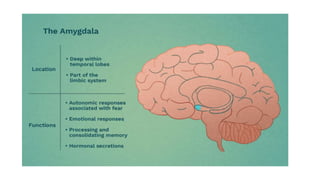
• Data from biochemical and neuroimaging studies indicate that
the modulation of normal and pathologic anxiety states is associated
with multiple regions of the brain and abnormal function in several
neurotransmitter systems, including norepinephrine (NE), γ –
aminobutyric acid (GABA), and serotonin (5-HT). The amygdala plays
important role in anxiety disorders .
Panic disorder
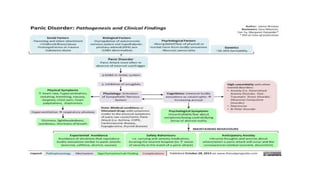
• Panic attacks are sudden, unreasonable feelings of fear and anxiety that
cause physical symptoms like a racing heart, fast breathing and sweating.
Some people become so fearful of these attacks that they develop panic
disorder, a type of anxiety disorder.
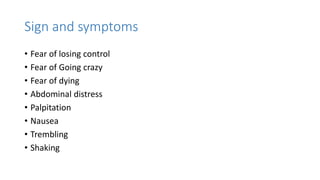
Sign and symptoms
• Fear of losing control
• Fear of Going crazy
• Fear of dying
• Abdominal distress
• Palpitation
• Nausea
• Trembling
• Shaking
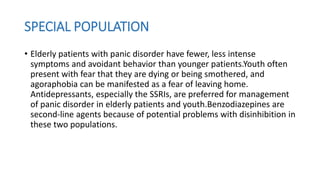
SPECIAL POPULATION
• Elderly patients with panic disorder have fewer, less intense
symptoms and avoidant behavior than younger patients.Youth often
present with fear that they are dying or being smothered, and
agoraphobia can be manifested as a fear of leaving home.
Antidepressants, especially the SSRIs, are preferred for management
of panic disorder in elderly patients and youth.Benzodiazepines are
second-line agents because of potential problems with disinhibition in
these two populations.

Anxiety disorder (panic disorder)

  • 1.
    Anxiety disorder Presented bykrishna M 5th pharm D
  • 3.
    Introduction • Anxiety isa normal reaction to stress and can be beneficial in some situations. It can alert us to dangers and help us prepare and pay attention. Anxiety disorders differ from normal feelings of nervousness or anxiousness, and involve excessive fear or anxiety. Anxiety disorders are the most common of mental disorders and affect nearly 30% of adults at some point in their lives. But anxiety disorders are treatable and a number of effective treatments are available. Treatment helps most people lead normal productive lives.
  • 4.
    Definition • A chroniccondition characterized by an excessive and persistent sense of apprehension, with physical symptoms such as sweating, palpitations, and feelings of stress.
  • 5.
    Etiology • Family historyof mental health conditions • Some people who experience anxiety conditions may have a genetic predisposition towards anxiety and these conditions can sometimes run in a family. However, having a parent or close relative experience anxiety or other mental health condition doesn't mean you'll automatically develop anxiety. • Personality factors • Research suggests that people with certain personality traits are more likely to have anxiety. For example, children who are perfectionists, easily flustered, timid, inhibited, lack self-esteem or want to control everything, sometimes develop anxiety during childhood, adolescence or as adults.
  • 6.
    PSYCHIATRIC DISEASES ASSOCIATEDWITH ANXIETY • Anxiety can be a presenting feature of several major psychiatric illnesses. Anxiety symptoms are extremely common in patients with mood disorders, schizophrenia, delirium, dementia, and substance use disorders. Most psychiatric patients will have two or more concurrent psychiatric disorders (comorbidity) within their lifetime.6 It is important to diagnose and treat all comorbid psychiatric conditions in patients with anxiety disorders.
  • 7.
    Drug induced anxiety •Anticonvulsants: carbamazepinn • Antidepressants: selective serotonin reuptake inhibitors, tricyclic • antidepressants • Antihypertensives: felodipine • Antibiotics: quinolones, isoniazid • Bronchodilators: albuterol, theophylline • Corticosteroids: prednisone • Dopa agonists: levodopa • Herbals: ginseng, ephedra
  • 8.
    • Nonsteroidal anti-inflammatorydrugs: ibuprofen • Stimulants: amphetamines, methylphenidate, caffeine, cocaine • Sympathomimetics: pseudoephedrine • Thyroid hormones: levothyroxine • Toxicity: anticholinergics, antihistamines, digoxin • Withdrawal: alcohol, sedatives
  • 9.
    • Ongoing stressfulevents • Anxiety conditions may develop because of one or more stressful life events. Common triggers include: work stress or job change • change in living arrangements • pregnancy and giving birth • family and relationship problems • major emotional shock following a stressful or traumatic event • verbal, sexual, physical or emotional abuse or trauma • death or loss of a loved one.
  • 10.
    Physical health problems •Chronic physical illness can also contribute to anxiety conditions or impact on the treatment of either the anxiety or the physical illness itself. Common chronic conditions associated with anxiety conditions include: • diabetes • asthma • hypertension and heart disease • Some physical conditions can mimic anxiety conditions, like an overactive thyroid. It can be useful to see a doctor and be assessed to determine whether there may be a medical cause for your feelings of anxiety.
  • 11.
    • Other mentalhealth conditions • While some people may experience an anxiety condition on its own, others may experience multiple anxiety conditions, or other mental health conditions. Depression and anxiety conditions often occur together. It's important to check for and get assistance for all these conditions at the same time.
  • 12.
    Types • Panic disorder •Social anxiety disorder • Obsessive–compulsive disorder • Post-traumatic stress disorder • Specific phobia
  • 13.
    PATHOPHYSIOLOGY • Data frombiochemical and neuroimaging studies indicate that the modulation of normal and pathologic anxiety states is associated with multiple regions of the brain and abnormal function in several neurotransmitter systems, including norepinephrine (NE), γ – aminobutyric acid (GABA), and serotonin (5-HT). The amygdala plays important role in anxiety disorders .
  • 15.
    Panic disorder • Panicattacks are sudden, unreasonable feelings of fear and anxiety that cause physical symptoms like a racing heart, fast breathing and sweating. Some people become so fearful of these attacks that they develop panic disorder, a type of anxiety disorder.
  • 18.
    Sign and symptoms •Fear of losing control • Fear of Going crazy • Fear of dying • Abdominal distress • Palpitation • Nausea • Trembling • Shaking
  • 21.
    SPECIAL POPULATION • Elderlypatients with panic disorder have fewer, less intense symptoms and avoidant behavior than younger patients.Youth often present with fear that they are dying or being smothered, and agoraphobia can be manifested as a fear of leaving home. Antidepressants, especially the SSRIs, are preferred for management of panic disorder in elderly patients and youth.Benzodiazepines are second-line agents because of potential problems with disinhibition in these two populations.