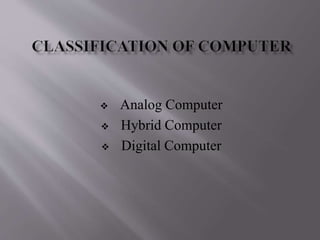
 Analog Computer 
 Hybrid Computer 
 Digital Computer
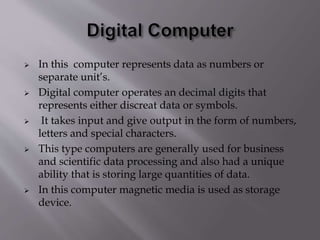
 In this computer represents data as numbers or 
separate unit’s. 
 Digital computer operates an decimal digits that 
represents either discreat data or symbols. 
 It takes input and give output in the form of numbers, 
letters and special characters. 
 This type computers are generally used for business 
and scientific data processing and also had a unique 
ability that is storing large quantities of data. 
 In this computer magnetic media is used as storage 
device.
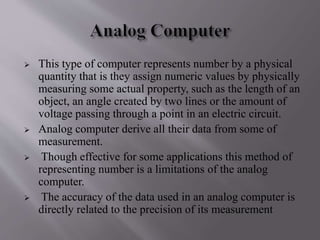
 This type of computer represents number by a physical 
quantity that is they assign numeric values by physically 
measuring some actual property, such as the length of an 
object, an angle created by two lines or the amount of 
voltage passing through a point in an electric circuit. 
 Analog computer derive all their data from some of 
measurement. 
 Though effective for some applications this method of 
representing number is a limitations of the analog 
computer. 
 The accuracy of the data used in an analog computer is 
directly related to the precision of its measurement
 Hybrid computer combine the most desirable feature 
of both analog and digital computer. 
 They have the speed of Analog Computer and the 
accuracy of Digital Computer. 
 They usually used the special problems in which 
input data derived from measurements is converted 
in to digits and processed by computers.
 Main frame Computer 
 Mini Computer 
 Micro Computer 
 Super Computer
 Faster than Mini Computer and have larger memory 
used in CPU intensive or I/O intensive job,like 
 In scientific and business applications and to 
process high volume of data in large business 
applications.. 
Example-IBM-370 and IBM-S/390, 
DEC VAX-8800, 
CPC-7600, UNIVAC-1110
 Relatively faster and low cost compared to mainframes, 
higher than PCs. 
 Design for real time dedicated multi user applications. 
Example-IBM-17, 
HP-3000 
DECPDP-11
 Slow, cheap significant computing power. 
 Use of INTEL chips. Single processor system 
which can supports the simple tasks like 
WP,ESS,DBMS etc 
Example-PS 386, 486 
PENTIUM (P-1, 2 ,3, 4)
 Large in size and large memory compared to all other 
computers. 
 Ideal for high end computing applications involving 
large volume of data and intensive computing use- 
INTEL chips. 
 These computers are design for ultra high performance 
tasks such as encryption, cracking, creation of 
animation and for designing all knowledge based 
systems. 
Example- IBMs Deep Blue, 
CDC cyber family and 
CRAY X-mp/26
 Internet 
 IT Books of SMU
CLASSIFICATION OF COMPUTERS

CLASSIFICATION OF COMPUTERS

  • 2.
     Analog Computer  Hybrid Computer  Digital Computer
  • 3.
     In thiscomputer represents data as numbers or separate unit’s.  Digital computer operates an decimal digits that represents either discreat data or symbols.  It takes input and give output in the form of numbers, letters and special characters.  This type computers are generally used for business and scientific data processing and also had a unique ability that is storing large quantities of data.  In this computer magnetic media is used as storage device.
  • 4.
     This typeof computer represents number by a physical quantity that is they assign numeric values by physically measuring some actual property, such as the length of an object, an angle created by two lines or the amount of voltage passing through a point in an electric circuit.  Analog computer derive all their data from some of measurement.  Though effective for some applications this method of representing number is a limitations of the analog computer.  The accuracy of the data used in an analog computer is directly related to the precision of its measurement
  • 5.
     Hybrid computercombine the most desirable feature of both analog and digital computer.  They have the speed of Analog Computer and the accuracy of Digital Computer.  They usually used the special problems in which input data derived from measurements is converted in to digits and processed by computers.
  • 6.
     Main frameComputer  Mini Computer  Micro Computer  Super Computer
  • 7.
     Faster thanMini Computer and have larger memory used in CPU intensive or I/O intensive job,like  In scientific and business applications and to process high volume of data in large business applications.. Example-IBM-370 and IBM-S/390, DEC VAX-8800, CPC-7600, UNIVAC-1110
  • 8.
     Relatively fasterand low cost compared to mainframes, higher than PCs.  Design for real time dedicated multi user applications. Example-IBM-17, HP-3000 DECPDP-11
  • 9.
     Slow, cheapsignificant computing power.  Use of INTEL chips. Single processor system which can supports the simple tasks like WP,ESS,DBMS etc Example-PS 386, 486 PENTIUM (P-1, 2 ,3, 4)
  • 10.
     Large insize and large memory compared to all other computers.  Ideal for high end computing applications involving large volume of data and intensive computing use- INTEL chips.  These computers are design for ultra high performance tasks such as encryption, cracking, creation of animation and for designing all knowledge based systems. Example- IBMs Deep Blue, CDC cyber family and CRAY X-mp/26
  • 11.
     Internet IT Books of SMU