SUMREEN KOUR
MVSc Scholar
Vety Medicine
 Agents used to relieve or
suppress coughing.
 Benificial in suppressing cough &
in decreasing morbidity in
respiratory disease.
 Indicated when cough is
painful,unproductive,distressing,
exhausting/exacebrate lung
damage.
PATHOPHYSIOLOGY
OF COUGH
Cough stimulus:pharynx
Larynx
Tracheobronchial tree
Cough centre located in medulla oblongata
Impulse(afferent
nerves): vagus
Glossopharyngeal
nerve
Effernet pathway
supplies nerve : abdomen
thoracic muscles
diaphragmic muscles
Forceful expulsion of air from lungs
COUGH
Duration
Acute
Chronic
Subacute
Dry/Produtive
Dry Productive
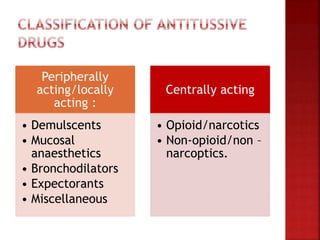
Peripherally
acting/locally
acting :
• Demulscents
• Mucosal
anaesthetics
• Bronchodilators
• Expectorants
• Miscellaneous
Centrally acting
• Opioid/narcotics
• Non-opioid/non –
narcoptics.
 Includes: honey
syrup
glycerine
liquorice
 They coat,protect & soothe throat directly &
promote salivation
reduce afferent
Impulse.
 Provide symptomatic relief in dry cough.
 BENZONATATE:
 Long chain polyglycol derivative local
anaesthetic.
 Related to procaine & tetracaine.
 Reduce coughing –
bronchitis,emphysema,influenza,pneumonia.
 Half life:3-8hrs.
 Act as local
anaesthetic.
 sensitivity to stretch
receptors in lower
airways & lungs
 Reduces drive to
cough.
 Drowsiness.
 Numbness of mouth & throat.
 Dysphagia.
 Allergic reactions.
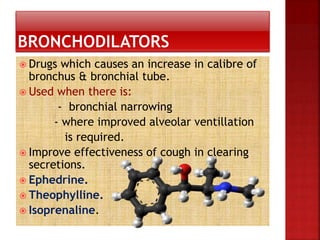
 Drugs which causes an increase in calibre of
bronchus & bronchial tube.
 Used when there is:
- bronchial narrowing
- where improved alveolar ventillation
is required.
 Improve effectiveness of cough in clearing
secretions.
 Ephedrine.
 Theophylline.
 Isoprenaline.
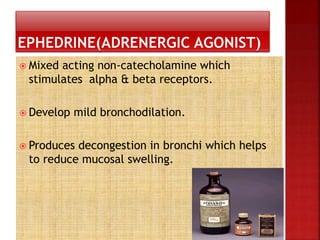
 Mixed acting non-catecholamine which
stimulates alpha & beta receptors.
 Develop mild bronchodilation.
 Produces decongestion in bronchi which helps
to reduce mucosal swelling.
 No selective beta1 & beta2 adrenoceptor
agonist.
 Can be used parentrally.
 Marked brochodilation: 1-2hrs.
 Expectorants are agents which increase
volume or fluidity of secretion in respiratory
tract & fascilitate their removal by ciliary
action.
 Bromohexine
 Water aerosols
 Synthetic derivative of alkaloid vasicine
(adhatoda vasica).
 Useful if mucus plug present.
 Administered both oral & parentral routes.
 Used:
 Bronchitis
 Bronchopneumonia
 Chronic cough
 Mucus clearance.
 Fascilitate expectoration
 Allow animal to breathe freely.
Depolymerises mucopolysacchrides directly & liberate
lysosomal enzyme causing breakdown of network of fibres of
tenacious sputum
Increases Ig level in airways secretions enhancing membrane
permeability.
Active metabolite –stimulates & releases surfactant by type 2
pneumocytes –act as anti glue factor
 Used ocassionally to liquefy hyperviscous
mucus in repiratory tract.
 Aerosol/mist therapy only delivers few mm
of water to smaller pulmonary airways &
lungs.
 Dropizine
 Levodropropizine
 Opioid antitussive:
 Codeine
 Hydrocodone
 Butorphanol
 Hydromorphone.
 Non opioid antitussive:
 Dextromethorphan
 Noscapine
 phoicodine
 Potent inhibitors of medullary cough centre
at sub-analgesic dose -antitussive.
 Assoiated with:
 Sedation
 Constipation
 Depression of respiratory centre
 Opiate alkaloid
 Available both as base &
 phosphate & sulphate salts.
 ACTION:
 Causes direct suppression cough centre in
medulla.
 Action can be blocked by naloxane.
 Onset of action after oral-30min.
 Conversion of codiene to morphine occurs
inn liver & is catalysed by cytochrome
P450enzyme CYP2D6.
 Binds to M opioid receptors & exert effect.
 SIDE EFFECT:
 Anorexia
 Vomition
 Constipation
 Biliary & pancreatic duct spasm.
 Depression.
 Use with CNS depressants may increase CNS
/respiratory depressant action.
 Anticholinergic drug used with codiene may
increase chances of constipation.
 DOSE:
 Dogs:0,5-2 mg/kg PO
 Is synthetic opioid partial agonist
 Is potent analgesic and antitussive agent
 After oral administration it is completely
absorbed but undergoes a significant first
pass metabolism after oral administration
 DOSE –
DOG – 0.1-0.25 mg/kg bwt.
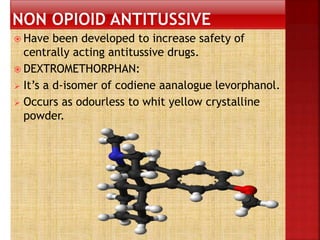
 Have been developed to increase safety of
centrally acting antitussive drugs.
 DEXTROMETHORPHAN:
 It’s a d-isomer of codiene aanalogue levorphanol.
 Occurs as odourless to whit yellow crystalline
powder.
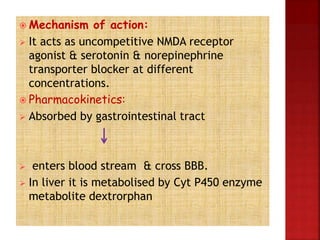
 Mechanism of action:
 It acts as uncompetitive NMDA receptor
agonist & serotonin & norepinephrine
transporter blocker at different
concentrations.
 Pharmacokinetics:
 Absorbed by gastrointestinal tract
 enters blood stream & cross BBB.
 In liver it is metabolised by Cyt P450 enzyme
metabolite dextrorphan
 not used in allergic reactions
DRUG INTERACTIONS
Should not be administered along with MAOI or serotonin uptake
inhibitor due to potential for serotonin syndrome – life threatening
DOSE – 1-2 mg/kg bwt
THANK YOU

Antitussive drugs

  • 1.
  • 2.
     Agents usedto relieve or suppress coughing.  Benificial in suppressing cough & in decreasing morbidity in respiratory disease.  Indicated when cough is painful,unproductive,distressing, exhausting/exacebrate lung damage.
  • 3.
  • 4.
    Cough stimulus:pharynx Larynx Tracheobronchial tree Coughcentre located in medulla oblongata Impulse(afferent nerves): vagus Glossopharyngeal nerve Effernet pathway supplies nerve : abdomen thoracic muscles diaphragmic muscles Forceful expulsion of air from lungs
  • 5.
  • 6.
    Peripherally acting/locally acting : • Demulscents •Mucosal anaesthetics • Bronchodilators • Expectorants • Miscellaneous Centrally acting • Opioid/narcotics • Non-opioid/non – narcoptics.
  • 7.
     Includes: honey syrup glycerine liquorice They coat,protect & soothe throat directly & promote salivation reduce afferent Impulse.  Provide symptomatic relief in dry cough.
  • 8.
     BENZONATATE:  Longchain polyglycol derivative local anaesthetic.  Related to procaine & tetracaine.  Reduce coughing – bronchitis,emphysema,influenza,pneumonia.  Half life:3-8hrs.
  • 9.
     Act aslocal anaesthetic.  sensitivity to stretch receptors in lower airways & lungs  Reduces drive to cough.
  • 10.
     Drowsiness.  Numbnessof mouth & throat.  Dysphagia.  Allergic reactions.
  • 11.
     Drugs whichcauses an increase in calibre of bronchus & bronchial tube.  Used when there is: - bronchial narrowing - where improved alveolar ventillation is required.  Improve effectiveness of cough in clearing secretions.  Ephedrine.  Theophylline.  Isoprenaline.
  • 12.
     Mixed actingnon-catecholamine which stimulates alpha & beta receptors.  Develop mild bronchodilation.  Produces decongestion in bronchi which helps to reduce mucosal swelling.
  • 13.
     No selectivebeta1 & beta2 adrenoceptor agonist.  Can be used parentrally.  Marked brochodilation: 1-2hrs.
  • 14.
     Expectorants areagents which increase volume or fluidity of secretion in respiratory tract & fascilitate their removal by ciliary action.  Bromohexine  Water aerosols
  • 15.
     Synthetic derivativeof alkaloid vasicine (adhatoda vasica).  Useful if mucus plug present.  Administered both oral & parentral routes.  Used:  Bronchitis  Bronchopneumonia  Chronic cough
  • 16.
     Mucus clearance. Fascilitate expectoration  Allow animal to breathe freely. Depolymerises mucopolysacchrides directly & liberate lysosomal enzyme causing breakdown of network of fibres of tenacious sputum Increases Ig level in airways secretions enhancing membrane permeability. Active metabolite –stimulates & releases surfactant by type 2 pneumocytes –act as anti glue factor
  • 17.
     Used ocassionallyto liquefy hyperviscous mucus in repiratory tract.  Aerosol/mist therapy only delivers few mm of water to smaller pulmonary airways & lungs.
  • 18.
  • 19.
     Opioid antitussive: Codeine  Hydrocodone  Butorphanol  Hydromorphone.  Non opioid antitussive:  Dextromethorphan  Noscapine  phoicodine
  • 20.
     Potent inhibitorsof medullary cough centre at sub-analgesic dose -antitussive.  Assoiated with:  Sedation  Constipation  Depression of respiratory centre
  • 21.
     Opiate alkaloid Available both as base &  phosphate & sulphate salts.  ACTION:  Causes direct suppression cough centre in medulla.  Action can be blocked by naloxane.  Onset of action after oral-30min.
  • 22.
     Conversion ofcodiene to morphine occurs inn liver & is catalysed by cytochrome P450enzyme CYP2D6.  Binds to M opioid receptors & exert effect.  SIDE EFFECT:  Anorexia  Vomition  Constipation  Biliary & pancreatic duct spasm.  Depression.
  • 23.
     Use withCNS depressants may increase CNS /respiratory depressant action.  Anticholinergic drug used with codiene may increase chances of constipation.  DOSE:  Dogs:0,5-2 mg/kg PO
  • 24.
     Is syntheticopioid partial agonist  Is potent analgesic and antitussive agent  After oral administration it is completely absorbed but undergoes a significant first pass metabolism after oral administration  DOSE – DOG – 0.1-0.25 mg/kg bwt.
  • 25.
     Have beendeveloped to increase safety of centrally acting antitussive drugs.  DEXTROMETHORPHAN:  It’s a d-isomer of codiene aanalogue levorphanol.  Occurs as odourless to whit yellow crystalline powder.
  • 26.
     Mechanism ofaction:  It acts as uncompetitive NMDA receptor agonist & serotonin & norepinephrine transporter blocker at different concentrations.  Pharmacokinetics:  Absorbed by gastrointestinal tract  enters blood stream & cross BBB.  In liver it is metabolised by Cyt P450 enzyme metabolite dextrorphan
  • 27.
     not usedin allergic reactions DRUG INTERACTIONS Should not be administered along with MAOI or serotonin uptake inhibitor due to potential for serotonin syndrome – life threatening DOSE – 1-2 mg/kg bwt
  • 28.