ANTIPHOSPHOLIPID
ANTIBODY
SYNDROME
Presenter : Demitrost Laloo
Introduction
 Antiphospholipid

antibody syndrome (APS) is an
autoimmunity-mediated acquired thrombophilia
characterised by :




 It



arterial or venous thrombosis
and/or pregnancy morbidity
in presence of autoantibodies against
phospholipid(PL)- binding plasma proteins

maybe
Primary : occuring alone
Secondary : in association with other autoimmune
disease
Classification and Nomenclature of Antiphospholipid
Antibodies :
 Antibodies against cardiolipin (aCL)
 Antibodies

against β2 Glycoproptein I (anti-β2GPI)

 Lupus

anticoagulant(LA): heterogeneous group of
antibodies directed also against PL binding proteins,
mainly β2GPI and prothrombin

 Antibodies

against phospholipids/cholesterol
complexes detected as biologic false-positive
serologic test for syphilis (BFP-STS) and Venereal
Disease Research Laboratory Test (VDRL)
Epidemiology
 In



normal blood donors
Low titer, transient aCL : 10%
Moderate-high titer aCL or positive LA : <1%

 Prevalence

females

increases with age, more common in
Epidemiology


Antiphospholipid antibodies (aPL) positivity in






10-40% SLE
approx. 20% Rheumatoid arthritis
10% of 1st stroke patient, more in young(upto
29%)
20% in women with 3 or more consecutive fetal
losses
14% in recurrent venous thromboembolic
disease
Pathogenesis
 Trigger

unknown

 Preceding

 aPL

infection have been proposed

binds to phospholipid-binding plasma
protein ß₂ GP I
Pathogenesis


aPL most likely related to thrombosis through
multiple mechanisms


Activation of the classical complement pathway



Expression of adhesion molecules and tissue factor



Activation of monocytes and PMN: release of
proinflammatory mediators and initiation of
prothrombotic stage



Activation of p38 MAPK and NFkB: intracellular
signaling cascade
Pathogenesis
Pathogenesis
Other possible contributory mechanisms
 inhibition of coagulation cascade
reactions catalyzed by phospholipids
 induction of tissue factor expression on
monocytes
 reduction of fibrinolysis
 interaction with the annexin V
anticoagulant shield in the placenta
Clinical features
Venous thrombosis and related consequences
Deep vein thrombosis
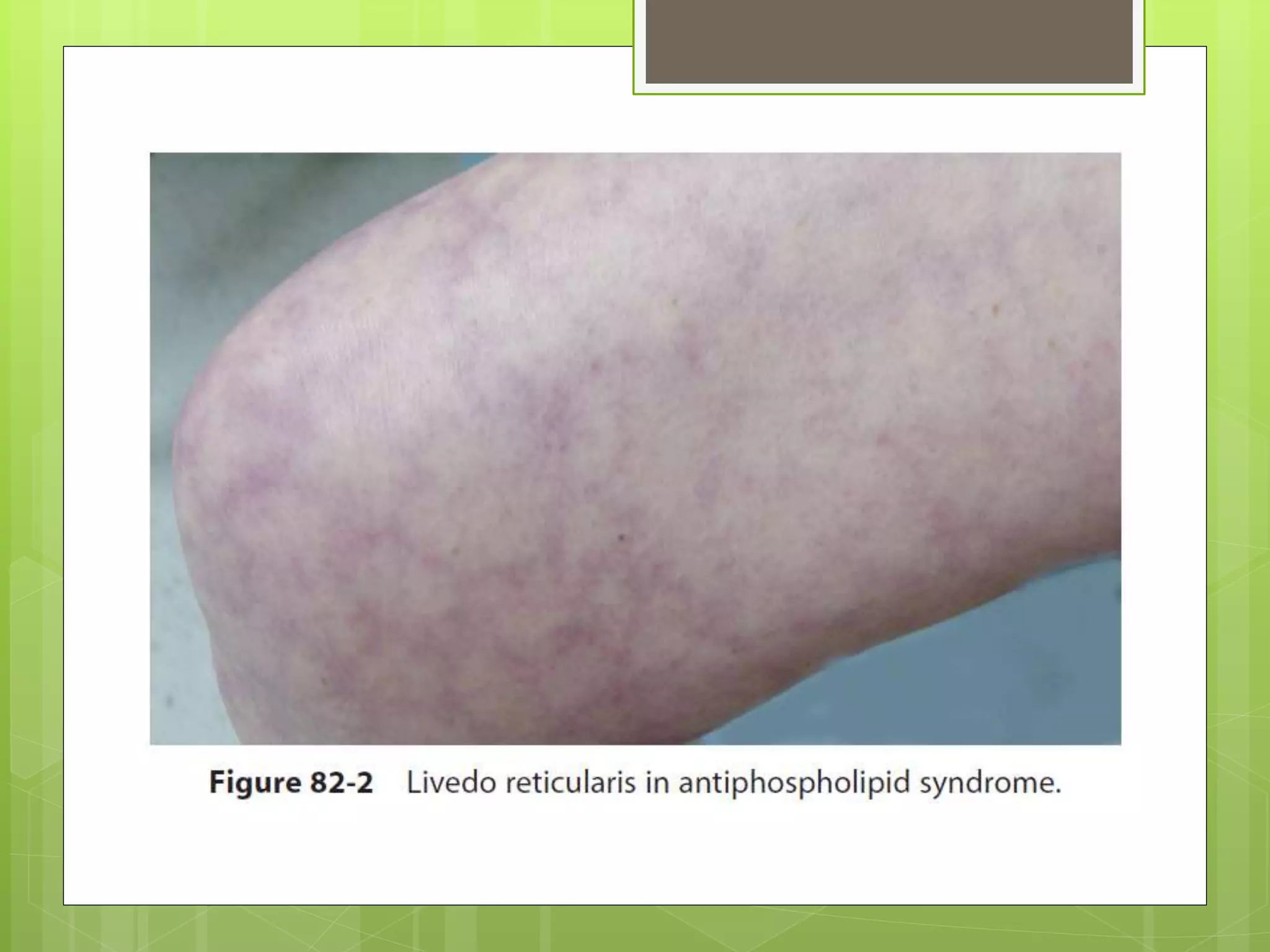
Livedo reticularis
Pulmonary embolism
Superficial thrombophlebitis
Budd-Chiari syndrome
Thrombosis in various other site
Clinical features
Arterial thrombosis and related consequences
Stroke
Cardiac valve thickening/dysfunction and/or Libman-Sacks
vegetation's
TIA
Myocardial ischemia and coronary bypass thrombosis
Leg ulcers and/or digital gangrene
Arterial thrombosis in the extremities
Retinal artery thrombosis/amaurosis fugax
Ischemia of visceral organs or avascular necrosis of bone
Multi-infarct dementia
Clinical features
Pregnancy morbidity
Late Fetal losses >10 weeks
Early fetal losses <10 weeks
Early preeclampsia
HELLP syndrome
Premature birth
Clinical features
Osteoarticular manifestations

Renal manifestations

Arthralgia

Severe hypertension

Arthritis

Renal failure

Hematologic manifestations

Neurologic of uncertain etiology

Thrombocytopenia

Migraine
Epilepsy
Chorea
Cerebellar ataxia
Transverse myelopathy

Autoimmune hemolytic anemia
Clinical features
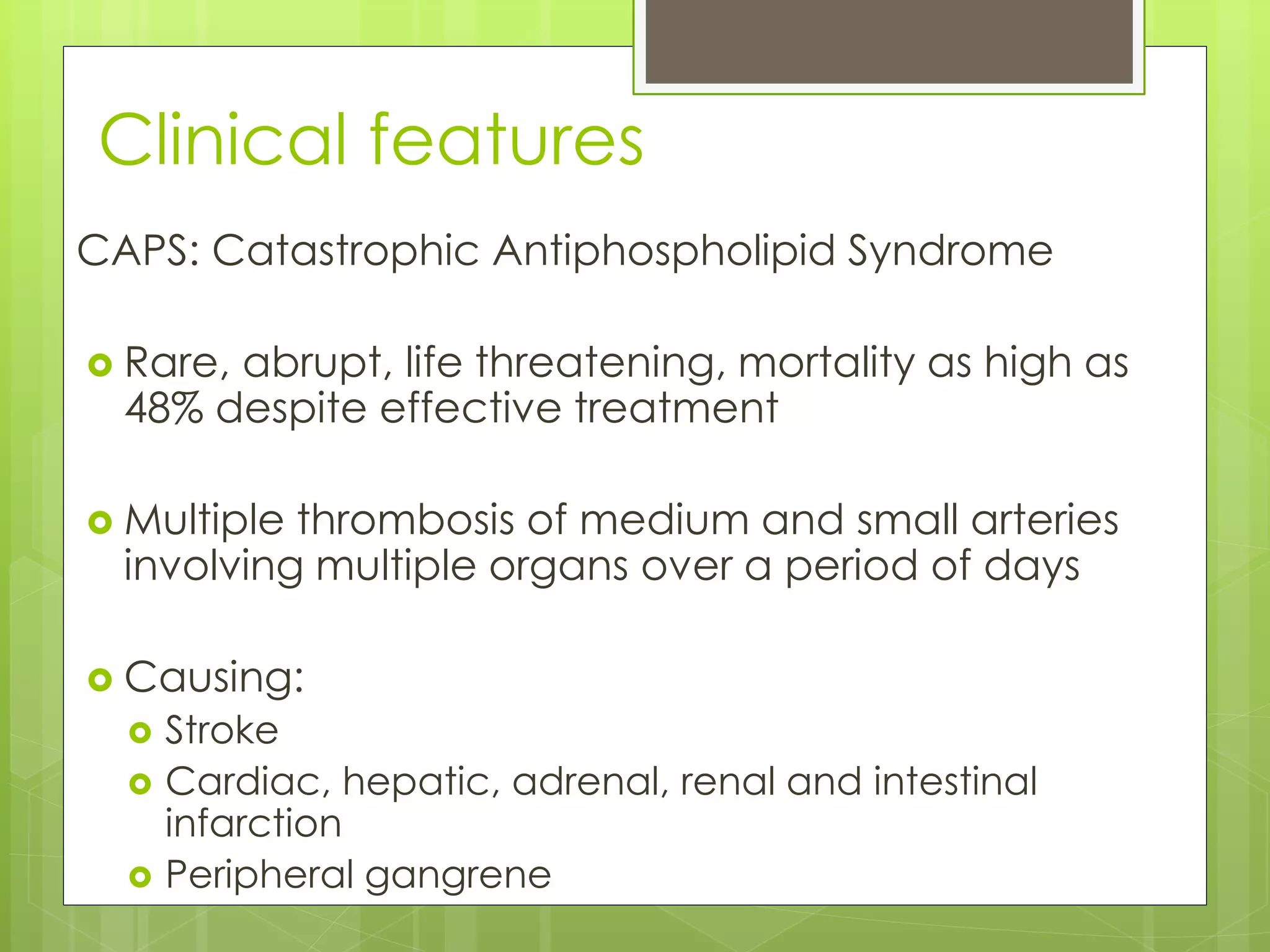
CAPS: Catastrophic Antiphospholipid Syndrome
 Rare,

abrupt, life threatening, mortality as high as
48% despite effective treatment

 Multiple

thrombosis of medium and small arteries
involving multiple organs over a period of days

 Causing:




Stroke
Cardiac, hepatic, adrenal, renal and intestinal
infarction
Peripheral gangrene
Diagnostic criteria: Revised
Sapporo classification
Diagnostic criteria: Revised
Sapporo classification
Diagnostic criteria: Revised
Sapporo classification
 Definite

APS : at least 1 clinical and 1
laboratory criteria

 Classification

avoided if <12 weeks and
>5yrs separate +ve aPL test and clinical
manifestation
Other findings not included in
the criteria but helpful in
diagnosis
CAPS criteria
CAPS criteria
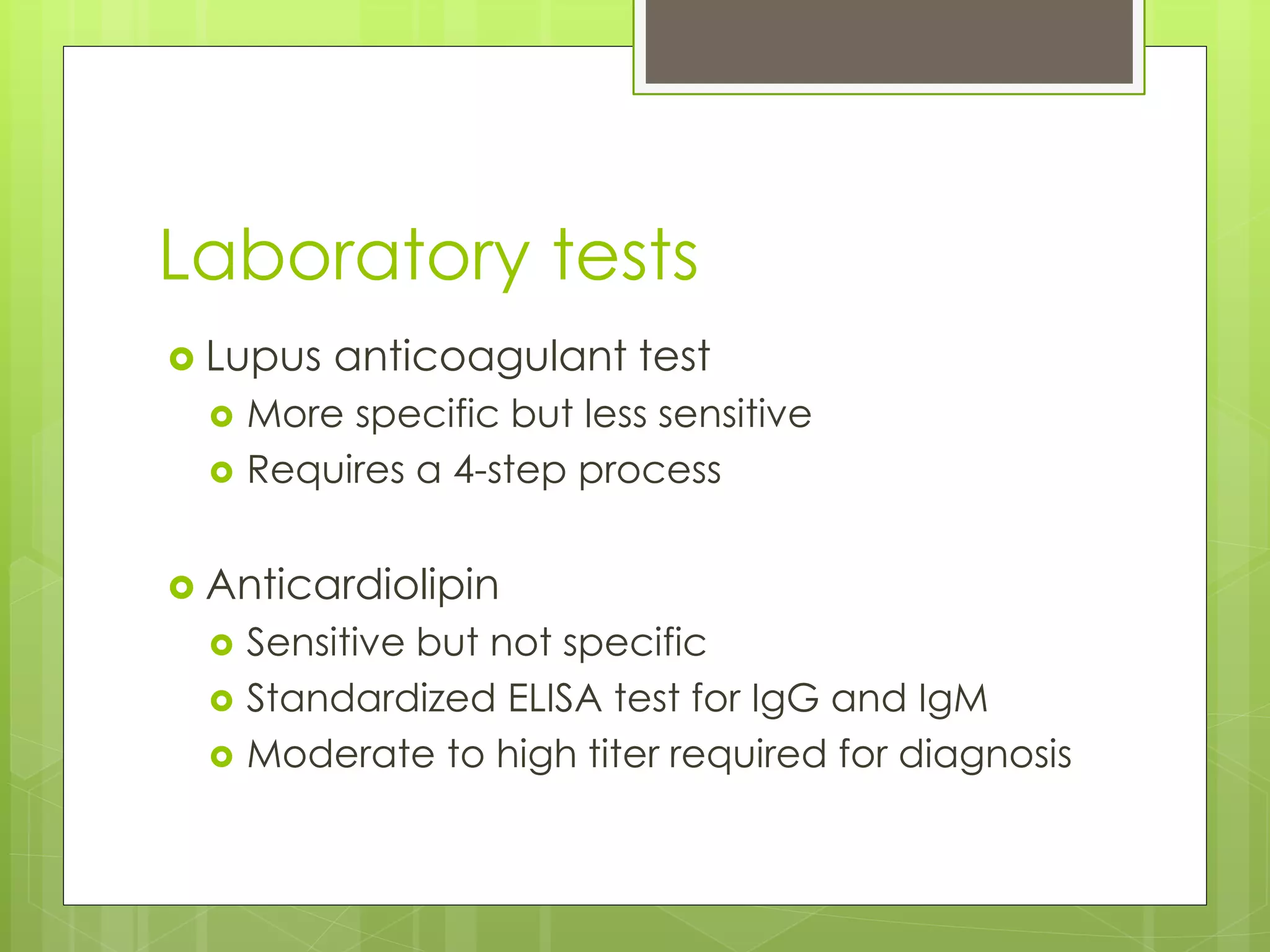
Laboratory tests
 Lupus



anticoagulant test

More specific but less sensitive
Requires a 4-step process

 Anticardiolipin




Sensitive but not specific
Standardized ELISA test for IgG and IgM
Moderate to high titer required for diagnosis
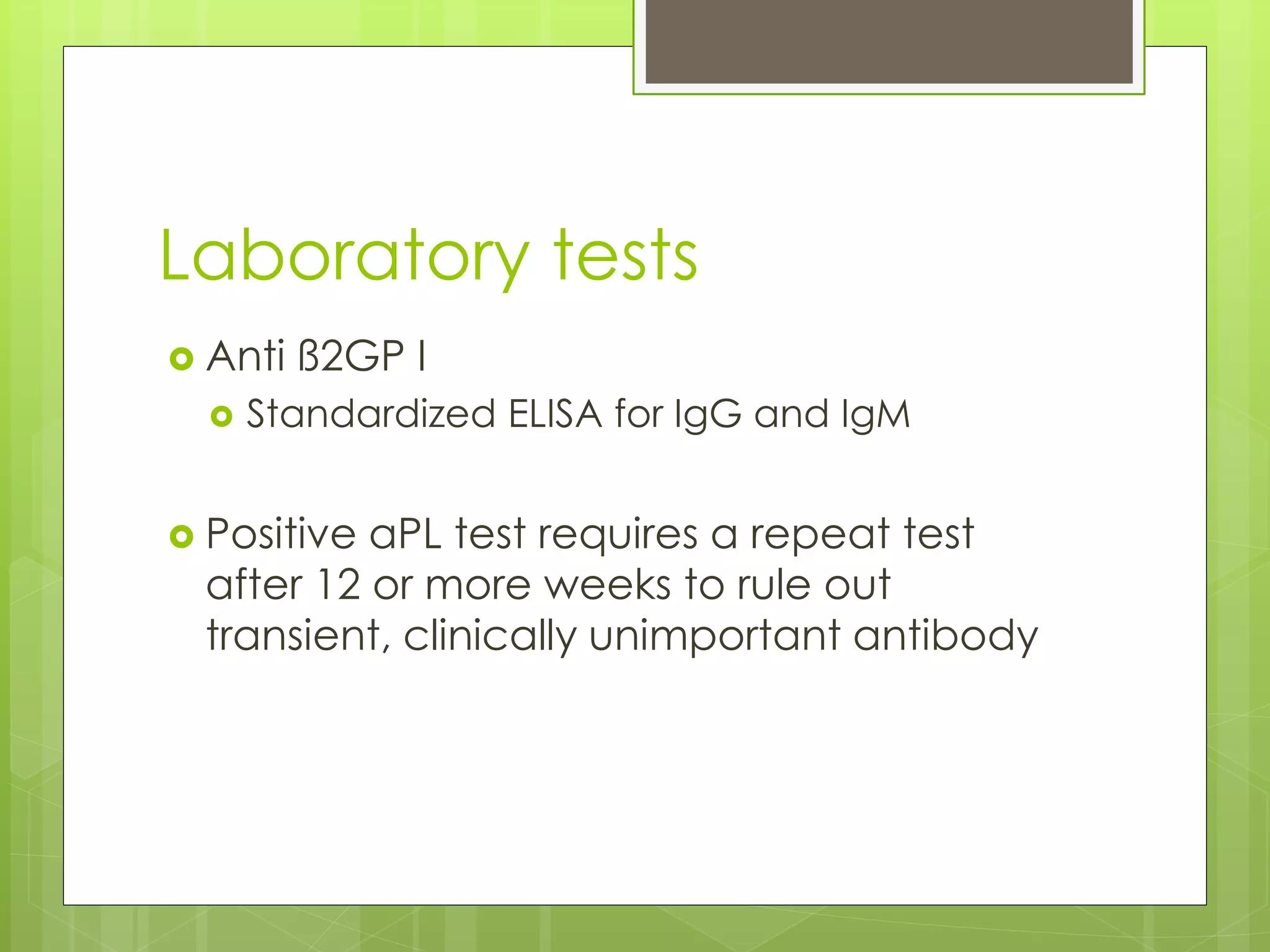
Laboratory tests
 Anti


ß2GP I

Standardized ELISA for IgG and IgM

 Positive

aPL test requires a repeat test
after 12 or more weeks to rule out
transient, clinically unimportant antibody
Laboratory tests
 False



does not fulfill laboratory criteria
Order aPL test

 ANA



positive syphilis test

and Anti-dsDNA

Detected in aprrox. 45% primary APS
Does not mandate additional diagnosis of SLE

 Other



tests:

Complete hemogram
Urine examination
Imaging
 CT

and MRI of brain for stroke

 CT

angio or MR angiography if clinical
findings suggest medium or large vessel
disease

 Doppler

study for DVT

 Echocardiography

or cardiac MRI for
vegetations or intracardiac thrombi
Pathology
 Biopsy




of renal, skin or other tissues

Thrombotic occlusion of all caliber arteries
and veins
Acute and chronic endothelial injury
Recanalisation in late lesions
Differential Dx












Hereditable deficiency of Protein C, Protein S,
antithrombin III
Factor V Leiden and antithrombin mutations
Hyperhomocysteinemia
Thrombocytopenic purpura
Septicemia
Disseminated Intravascular Coagulation
Hemolytic Uremic Syndrome
Polyarteritis nodusa
Myxoma
Sneddon’s syndrome
Treatment
 Asymptomatic

: no treatment

 Venous/arterial

2.5) indefinitely

 Recurrent

thrombosis : warfarin (INR

thrombosis : warfarin (INR 3-4) ±
low dose aspirin
Treatment
Pregnancy
 1st pregnancy : no treatment
 Single pregnancy loss <10 weeks : no treatment
 >1

fetal loss or ≥3 (pre) embryonic loss, no
thrombosis : prophylactic heparin + low dose
aspirin throughout pregnancy, discontinue 6-12
weeks postpartum

 Thrombosis

regardless of pregnancy history:
therapeutic heparin or low dose aspirin throughout
pregnancy, warfarin postpartum
Treatment
 Valve





nodules or deformity

Full anticoagulation if emboli or intracardiac thrombi
demonstrated
Valve replacement

Thrombocytopenia



>50,000/cumm : no treatment
<50,000/cumm : prednisone, IVIG
Treatment
CAPS :
 Anticoagulation + corticosteroids + IVIG or
plasmapheresis
 Cyclophosphamide

desperate situations

and rituximab in
Treatment
 Aspirin
 LMW



: 81-325mg once daily

heparin :

Prophylactic dose : 30-40mg
subcutaneously/day
Therapeutic dose : 1 mg/kg, s/c BD or
1.5mg/kg OD
No controlled studies in APS for
 Clopidogrel
 Pentoxyfylline
 Argatobran
 Hirudin
 And other new anticoagulants
Outcome
 Long


term functional outcome is poor

At 10yrs : 1/3rd developed permanent organ
damage and 1/5th unable to perform everyday
activities

 Pulmonary

hypertension, neurological
involvement, myocardial ischemia, gangrene
of extremities and catastrophic APS
associated with worse prognosis
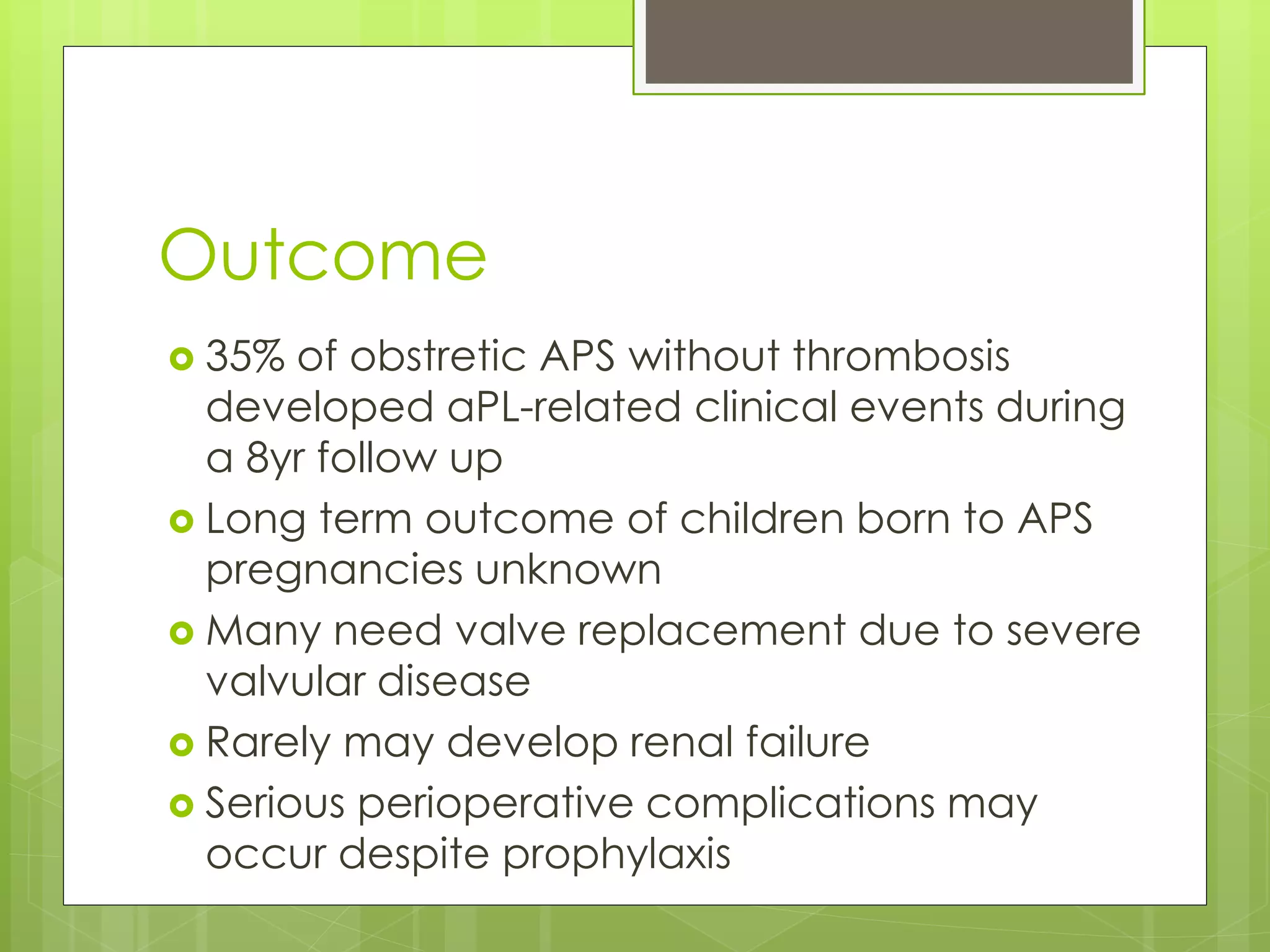
Outcome
 35%

of obstretic APS without thrombosis
developed aPL-related clinical events during
a 8yr follow up
 Long term outcome of children born to APS
pregnancies unknown
 Many need valve replacement due to severe
valvular disease
 Rarely may develop renal failure
 Serious perioperative complications may
occur despite prophylaxis
THANK YOU

Antiphospholipid antibody syndrome

  • 1.
  • 2.
    Introduction  Antiphospholipid antibody syndrome(APS) is an autoimmunity-mediated acquired thrombophilia characterised by :     It   arterial or venous thrombosis and/or pregnancy morbidity in presence of autoantibodies against phospholipid(PL)- binding plasma proteins maybe Primary : occuring alone Secondary : in association with other autoimmune disease
  • 3.
    Classification and Nomenclatureof Antiphospholipid Antibodies :  Antibodies against cardiolipin (aCL)  Antibodies against β2 Glycoproptein I (anti-β2GPI)  Lupus anticoagulant(LA): heterogeneous group of antibodies directed also against PL binding proteins, mainly β2GPI and prothrombin  Antibodies against phospholipids/cholesterol complexes detected as biologic false-positive serologic test for syphilis (BFP-STS) and Venereal Disease Research Laboratory Test (VDRL)
  • 4.
    Epidemiology  In   normal blooddonors Low titer, transient aCL : 10% Moderate-high titer aCL or positive LA : <1%  Prevalence females increases with age, more common in
  • 5.
    Epidemiology  Antiphospholipid antibodies (aPL)positivity in      10-40% SLE approx. 20% Rheumatoid arthritis 10% of 1st stroke patient, more in young(upto 29%) 20% in women with 3 or more consecutive fetal losses 14% in recurrent venous thromboembolic disease
  • 6.
    Pathogenesis  Trigger unknown  Preceding aPL infection have been proposed binds to phospholipid-binding plasma protein ß₂ GP I
  • 7.
    Pathogenesis  aPL most likelyrelated to thrombosis through multiple mechanisms  Activation of the classical complement pathway  Expression of adhesion molecules and tissue factor  Activation of monocytes and PMN: release of proinflammatory mediators and initiation of prothrombotic stage  Activation of p38 MAPK and NFkB: intracellular signaling cascade
  • 8.
  • 9.
    Pathogenesis Other possible contributorymechanisms  inhibition of coagulation cascade reactions catalyzed by phospholipids  induction of tissue factor expression on monocytes  reduction of fibrinolysis  interaction with the annexin V anticoagulant shield in the placenta
  • 10.
    Clinical features Venous thrombosisand related consequences Deep vein thrombosis Livedo reticularis Pulmonary embolism Superficial thrombophlebitis Budd-Chiari syndrome Thrombosis in various other site
  • 12.
    Clinical features Arterial thrombosisand related consequences Stroke Cardiac valve thickening/dysfunction and/or Libman-Sacks vegetation's TIA Myocardial ischemia and coronary bypass thrombosis Leg ulcers and/or digital gangrene Arterial thrombosis in the extremities Retinal artery thrombosis/amaurosis fugax Ischemia of visceral organs or avascular necrosis of bone Multi-infarct dementia
  • 13.
    Clinical features Pregnancy morbidity LateFetal losses >10 weeks Early fetal losses <10 weeks Early preeclampsia HELLP syndrome Premature birth
  • 14.
    Clinical features Osteoarticular manifestations Renalmanifestations Arthralgia Severe hypertension Arthritis Renal failure Hematologic manifestations Neurologic of uncertain etiology Thrombocytopenia Migraine Epilepsy Chorea Cerebellar ataxia Transverse myelopathy Autoimmune hemolytic anemia
  • 15.
    Clinical features CAPS: CatastrophicAntiphospholipid Syndrome  Rare, abrupt, life threatening, mortality as high as 48% despite effective treatment  Multiple thrombosis of medium and small arteries involving multiple organs over a period of days  Causing:    Stroke Cardiac, hepatic, adrenal, renal and intestinal infarction Peripheral gangrene
  • 16.
  • 17.
  • 18.
    Diagnostic criteria: Revised Sapporoclassification  Definite APS : at least 1 clinical and 1 laboratory criteria  Classification avoided if <12 weeks and >5yrs separate +ve aPL test and clinical manifestation
  • 19.
    Other findings notincluded in the criteria but helpful in diagnosis
  • 20.
  • 21.
  • 22.
    Laboratory tests  Lupus   anticoagulanttest More specific but less sensitive Requires a 4-step process  Anticardiolipin    Sensitive but not specific Standardized ELISA test for IgG and IgM Moderate to high titer required for diagnosis
  • 23.
    Laboratory tests  Anti  ß2GPI Standardized ELISA for IgG and IgM  Positive aPL test requires a repeat test after 12 or more weeks to rule out transient, clinically unimportant antibody
  • 24.
    Laboratory tests  False   doesnot fulfill laboratory criteria Order aPL test  ANA   positive syphilis test and Anti-dsDNA Detected in aprrox. 45% primary APS Does not mandate additional diagnosis of SLE  Other   tests: Complete hemogram Urine examination
  • 25.
    Imaging  CT and MRIof brain for stroke  CT angio or MR angiography if clinical findings suggest medium or large vessel disease  Doppler study for DVT  Echocardiography or cardiac MRI for vegetations or intracardiac thrombi
  • 26.
    Pathology  Biopsy    of renal,skin or other tissues Thrombotic occlusion of all caliber arteries and veins Acute and chronic endothelial injury Recanalisation in late lesions
  • 27.
    Differential Dx           Hereditable deficiencyof Protein C, Protein S, antithrombin III Factor V Leiden and antithrombin mutations Hyperhomocysteinemia Thrombocytopenic purpura Septicemia Disseminated Intravascular Coagulation Hemolytic Uremic Syndrome Polyarteritis nodusa Myxoma Sneddon’s syndrome
  • 28.
    Treatment  Asymptomatic : notreatment  Venous/arterial 2.5) indefinitely  Recurrent thrombosis : warfarin (INR thrombosis : warfarin (INR 3-4) ± low dose aspirin
  • 29.
    Treatment Pregnancy  1st pregnancy: no treatment  Single pregnancy loss <10 weeks : no treatment  >1 fetal loss or ≥3 (pre) embryonic loss, no thrombosis : prophylactic heparin + low dose aspirin throughout pregnancy, discontinue 6-12 weeks postpartum  Thrombosis regardless of pregnancy history: therapeutic heparin or low dose aspirin throughout pregnancy, warfarin postpartum
  • 30.
    Treatment  Valve    nodules ordeformity Full anticoagulation if emboli or intracardiac thrombi demonstrated Valve replacement Thrombocytopenia   >50,000/cumm : no treatment <50,000/cumm : prednisone, IVIG
  • 31.
    Treatment CAPS :  Anticoagulation+ corticosteroids + IVIG or plasmapheresis  Cyclophosphamide desperate situations and rituximab in
  • 32.
    Treatment  Aspirin  LMW   :81-325mg once daily heparin : Prophylactic dose : 30-40mg subcutaneously/day Therapeutic dose : 1 mg/kg, s/c BD or 1.5mg/kg OD
  • 33.
    No controlled studiesin APS for  Clopidogrel  Pentoxyfylline  Argatobran  Hirudin  And other new anticoagulants
  • 34.
    Outcome  Long  term functionaloutcome is poor At 10yrs : 1/3rd developed permanent organ damage and 1/5th unable to perform everyday activities  Pulmonary hypertension, neurological involvement, myocardial ischemia, gangrene of extremities and catastrophic APS associated with worse prognosis
  • 35.
    Outcome  35% of obstreticAPS without thrombosis developed aPL-related clinical events during a 8yr follow up  Long term outcome of children born to APS pregnancies unknown  Many need valve replacement due to severe valvular disease  Rarely may develop renal failure  Serious perioperative complications may occur despite prophylaxis
  • 36.