Antarctica Unit 2
Questions - write the questions & answers in your exercise books
Google Docs -
• Antarctica is
– The north pole
– The south pole
• Antarctica is
– Sea surrounded by land
– Land surrounded by sea
• Antarctica is the worlds coldest continent, it is also the worlds
– Furthest away continent
– Windiest continent
– Foggiest continent
• Antarctica is owned by
– Australia
– New Zealand
– U.S.A.
– No one country
Questions - write the questions & answers in your exercise books
• Antarctica is
– Nearly all exposed land with some glaciers
– About half ice and half exposed land
– Mainly ice with a few areas of exposed land
• Antarctica is
– The 4th largest continent
– The 5th largest continent
– The 6th largest continent
• Antarctica’s size increases during
– Winter
– Summer
• Antarctica reflects what % of incoming solar radiation back into
space by ice and snow
• 60%
• 70%
• 80%
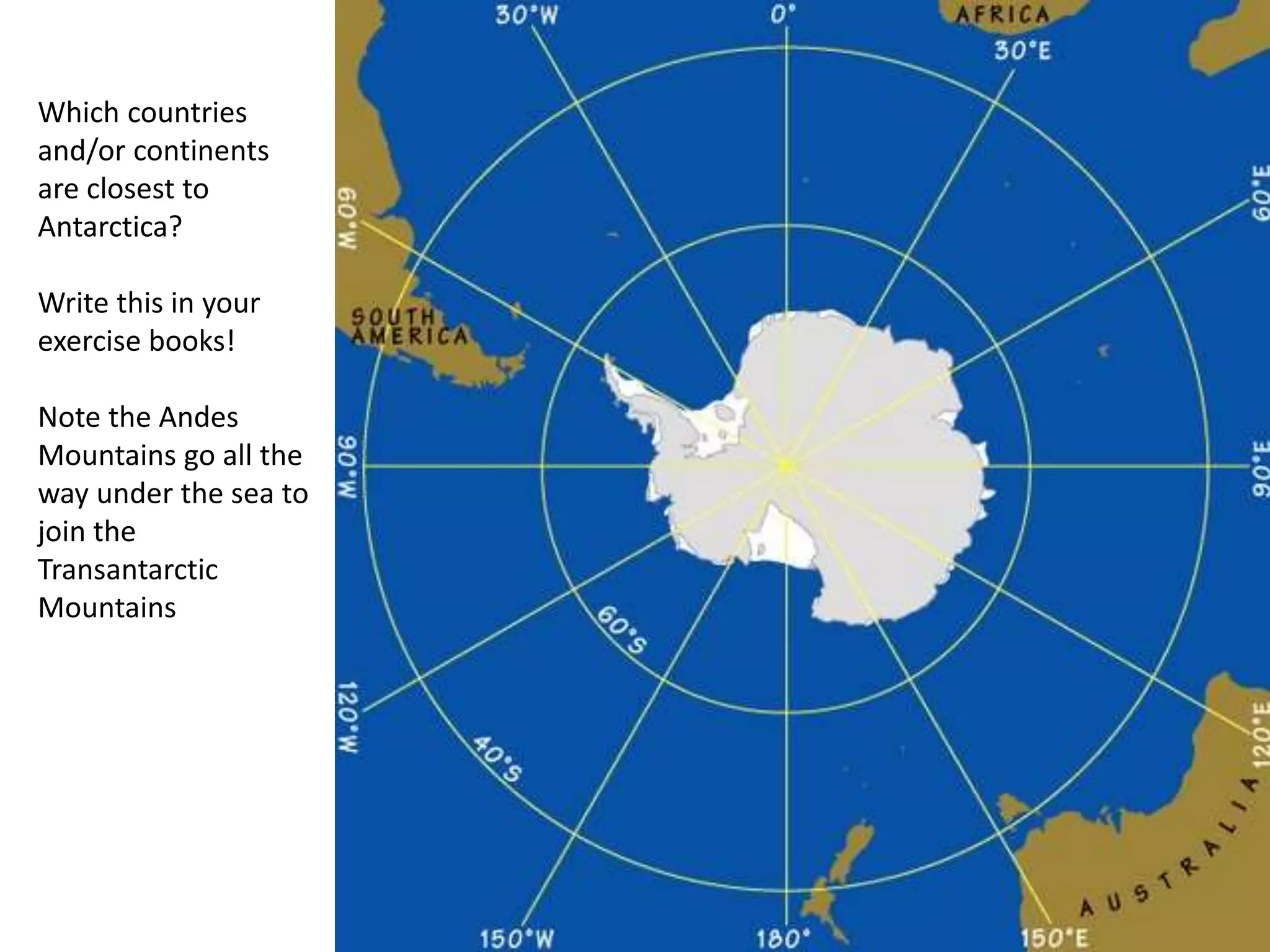
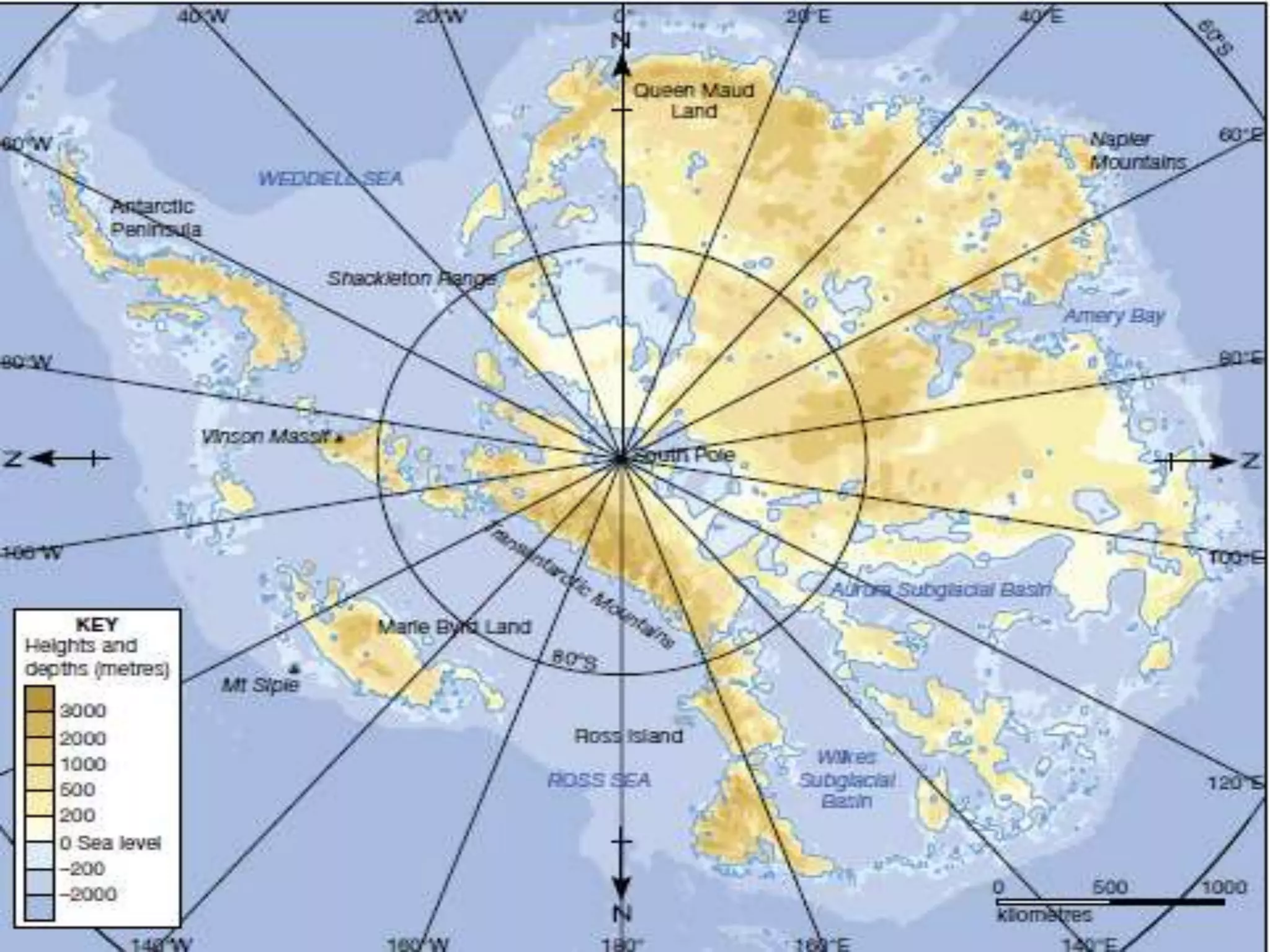
Which countries
and/or continents
are closest to
Antarctica?
Write this in your
exercise books!
Note the Andes
Mountains go all the
way under the sea to
join the
Transantarctic
Mountains
Transantarctic Mountains
• Separating East and West Antarctica is a large, imposing
mountain range: the Transantarctic Mountains.
• The result of an active fault system, the mountains poke
through the ice cap to form an impressive barrier across the
continent. They can be thought of as a giant dam holding back
the ice sheet.
• Where there are gaps in the mountain chain the ice behind the
dam spills into West Antarctica in a series of glaciers.
• The Transantarctic Mountains are home to Antarctica’s highest
mountain, Vinson Massif, and an active volcano, Mount Erebus.
• These mountains were a major barrier to explorers who
attempted to reach the South Pole from the large ice shelves in
West Antarctica.
Height
• The thickness of the ice of the polar plateau
makes Antarctica the highest continent in the
world on average.
• Antarctica’s average height is 2300 metres
above sea level,
• Australia’s 340 metres making it the world’s
lowest continent.
Questions - write the questions & answers in your exercise books
• Is Antarctica
– The lowest continent
– The highest continent
• What caused the Transantarctic Mountains
– A volcano
– An active fault line
• The Transantarctic Mountains are like a giant dam that hold
back an ice sheet. Ice that spills through are called
– Ice Shelves
– Glaciers
– Crevasses
Who owns it and why
• There are no cities or states in the Antarctic.
• The only places where people live are bases or
stations, usually operated by national
governments.
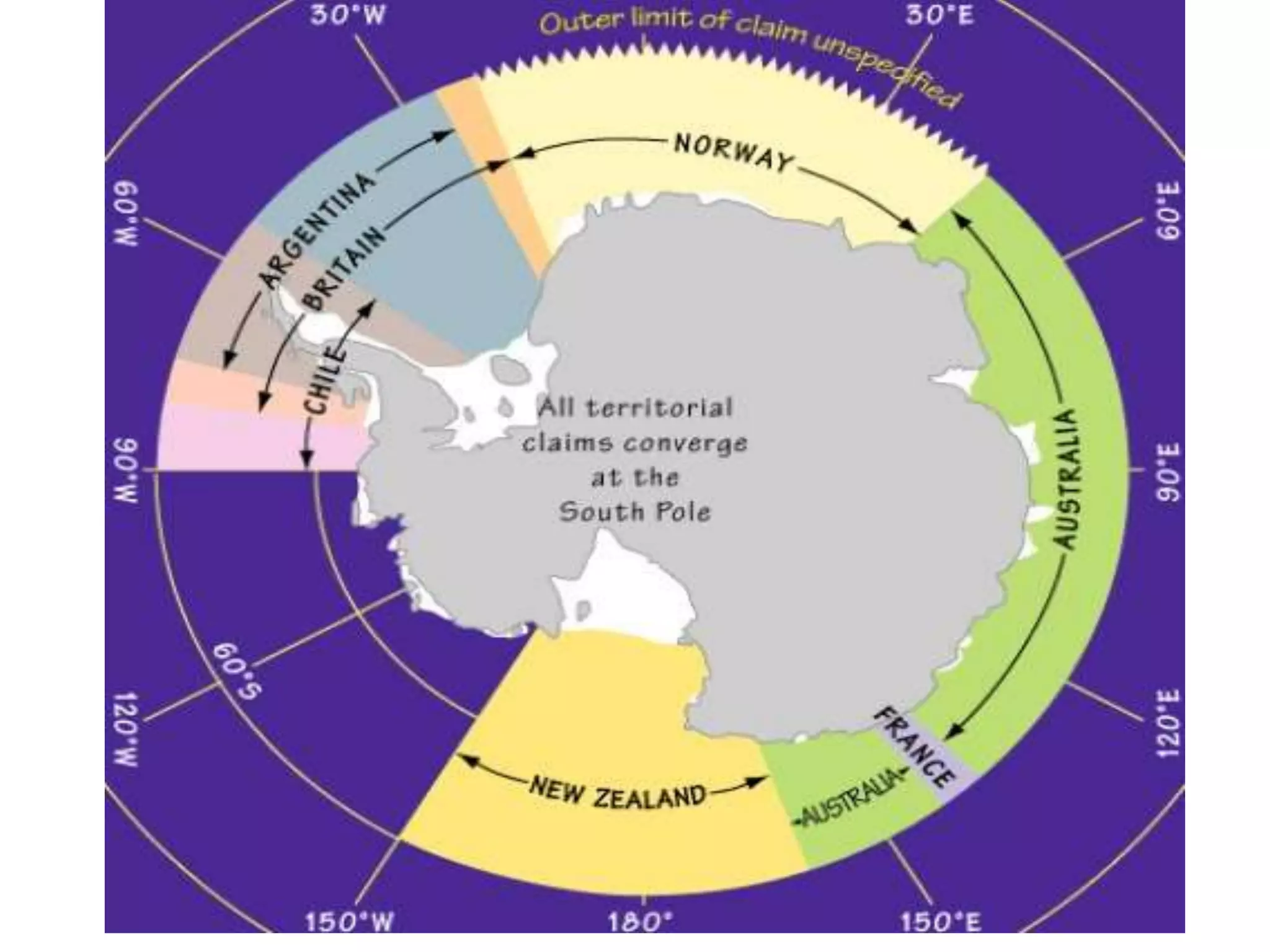
• Seven countries, including Australia, claim
territory in Antarctica, but all of these countries
have agreed to put their claims to one side and
cooperate with other countries in studying and
conserving Antarctica for the benefit of the
world.
The Treaty
• The governments of Argentina, Australia, Belgium, Chile, the
French Republic, Japan, New Zealand, Norway, the Union of
South Africa, Russia, the United Kingdom and Northern
Ireland, and the United States of America agreed:
• Antarctica shall be used for peaceful purposes only
• Facilitation of scientific research in Antarctica
• Preservation and conservation of living resources in
Antarctica.
Animal Life
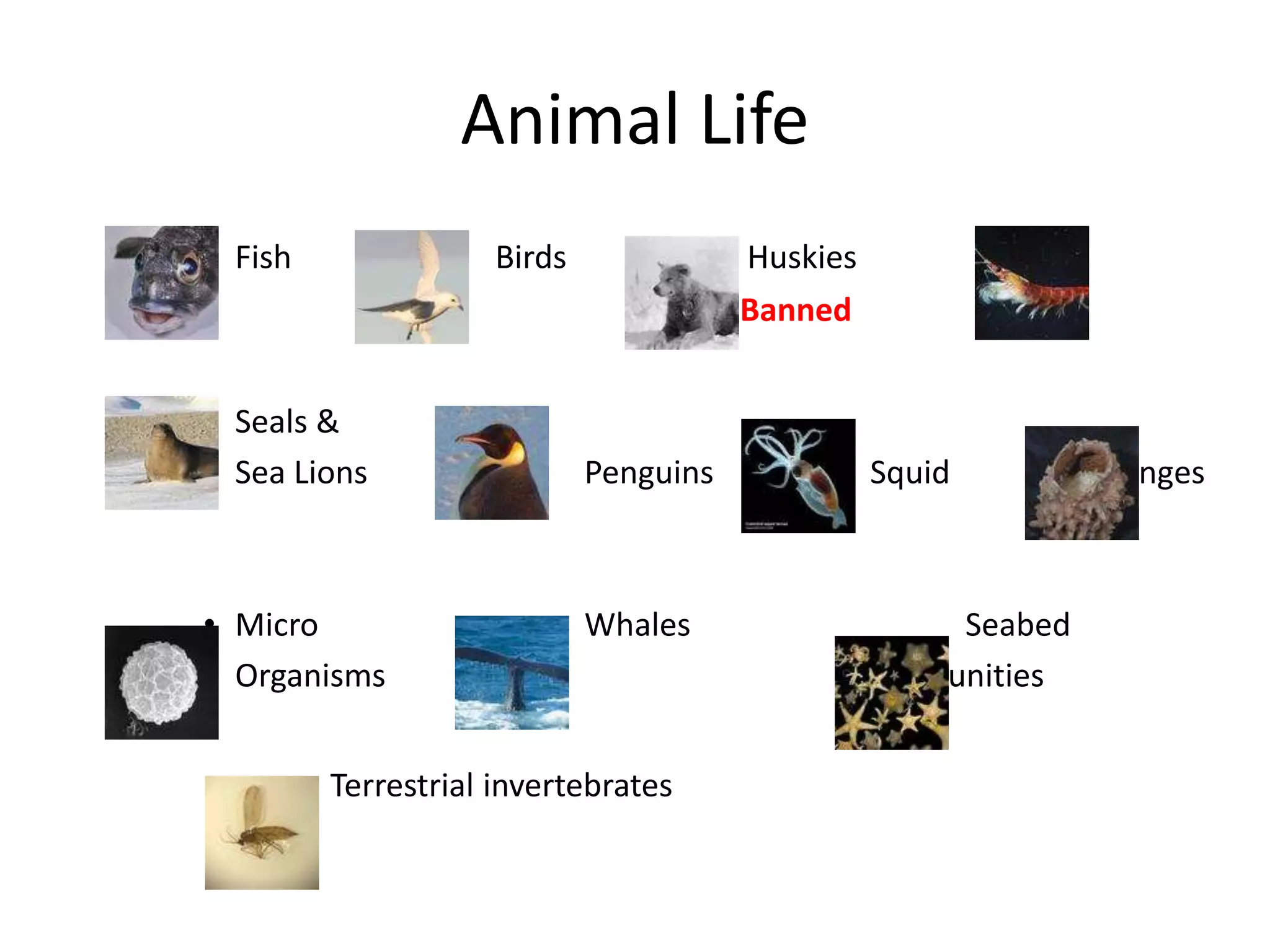
• Fish Birds Huskies Krill
Now Banned
• Seals &
• Sea Lions Penguins Squid Sponges
• Micro Whales Seabed
• Organisms Communities
Terrestrial invertebrates
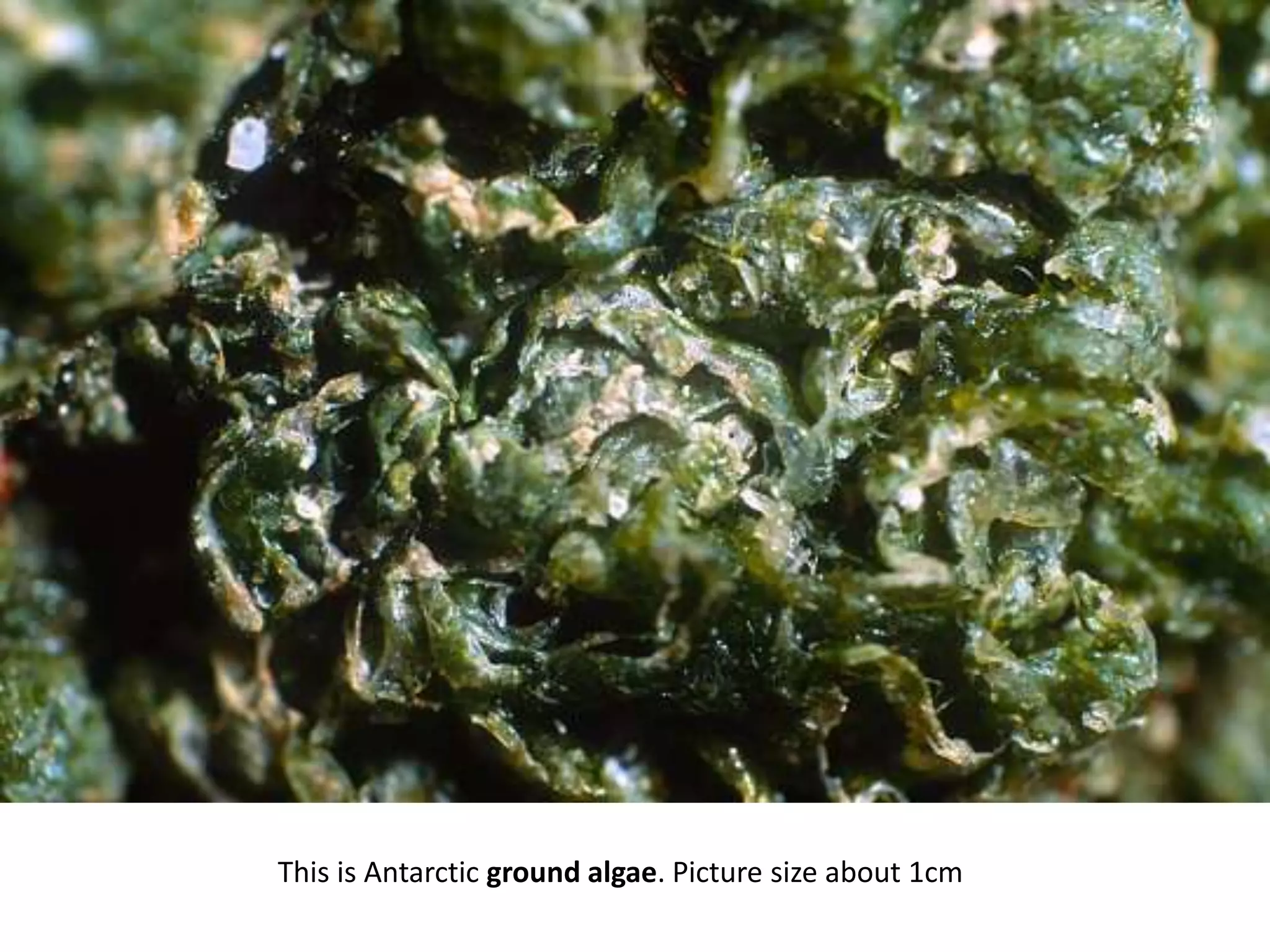
This is Antarctic ground algae. Picture size about 1cm
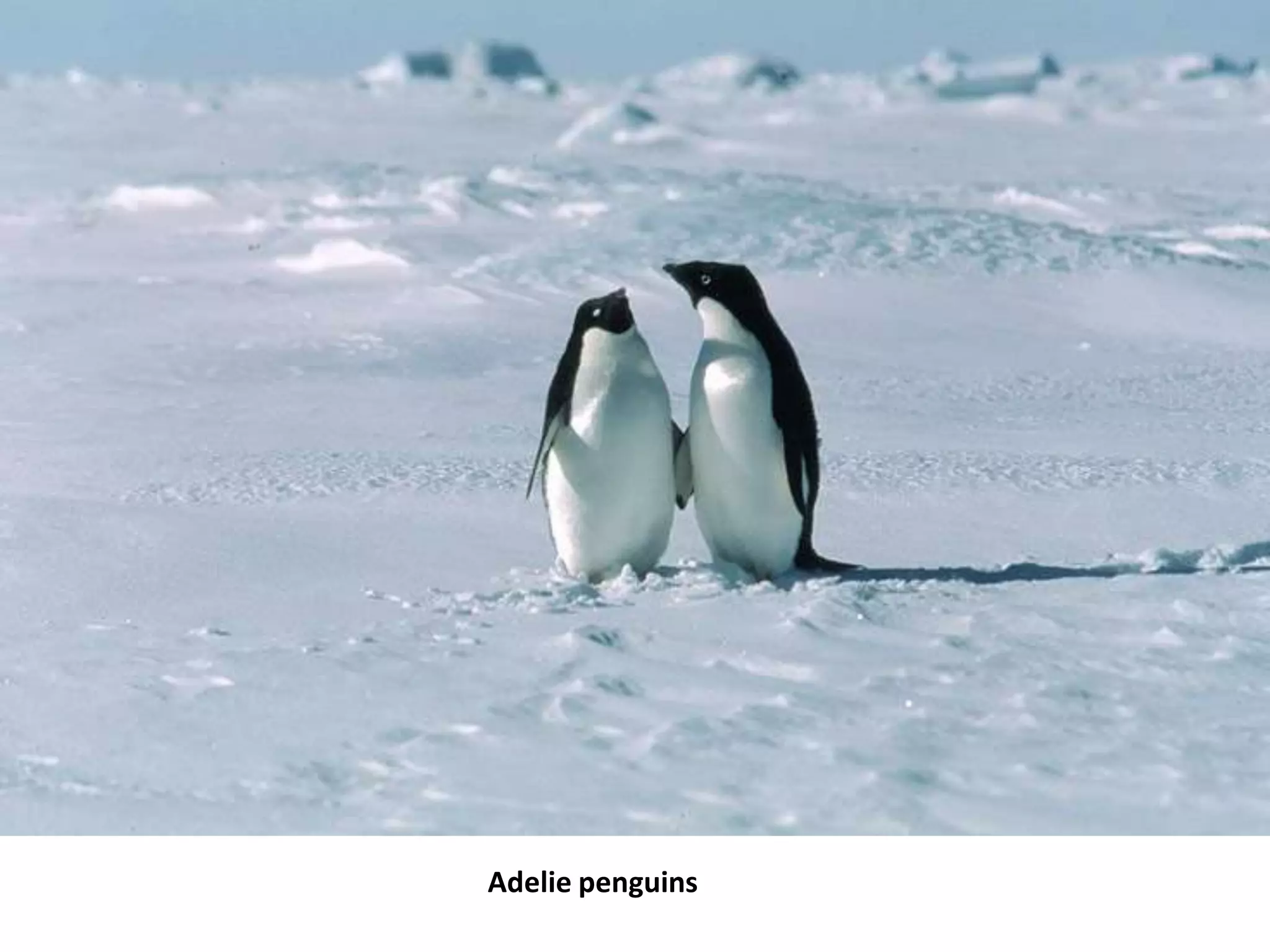
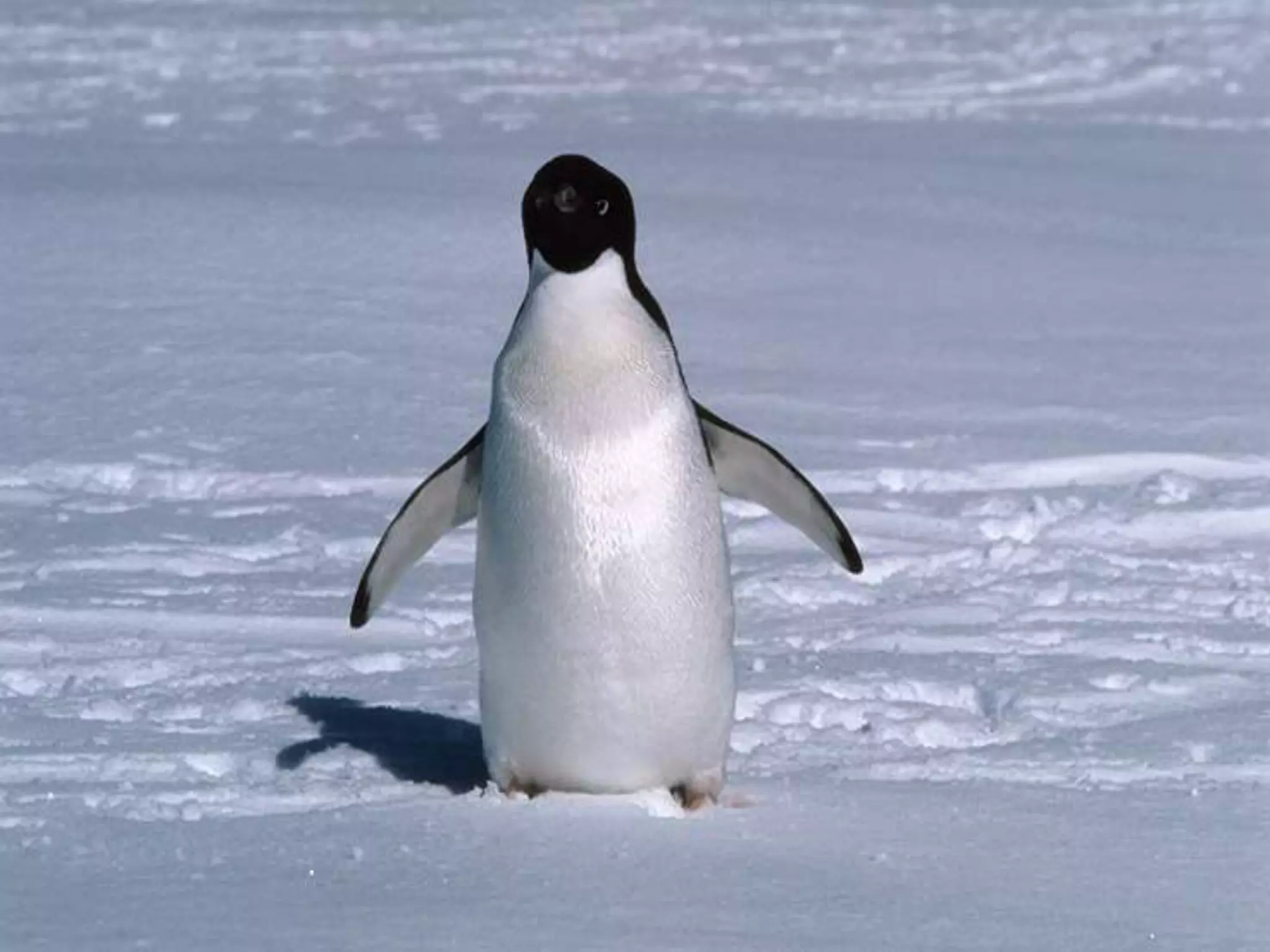
Adelie penguins
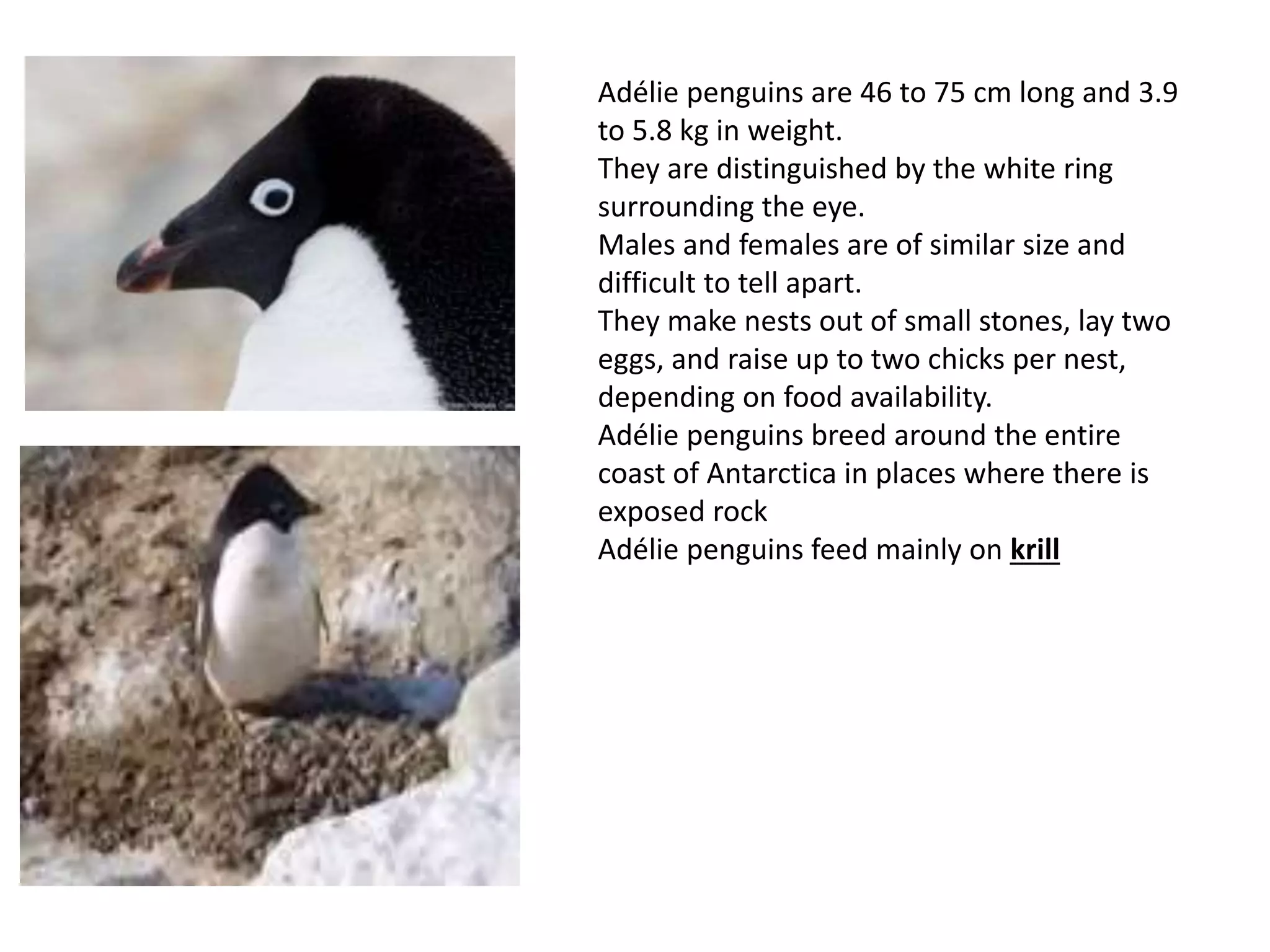
Adélie penguins are 46 to 75 cm long and 3.9
to 5.8 kg in weight.
They are distinguished by the white ring
surrounding the eye.
Males and females are of similar size and
difficult to tell apart.
They make nests out of small stones, lay two
eggs, and raise up to two chicks per nest,
depending on food availability.
Adélie penguins breed around the entire
coast of Antarctica in places where there is
exposed rock
Adélie penguins feed mainly on krill
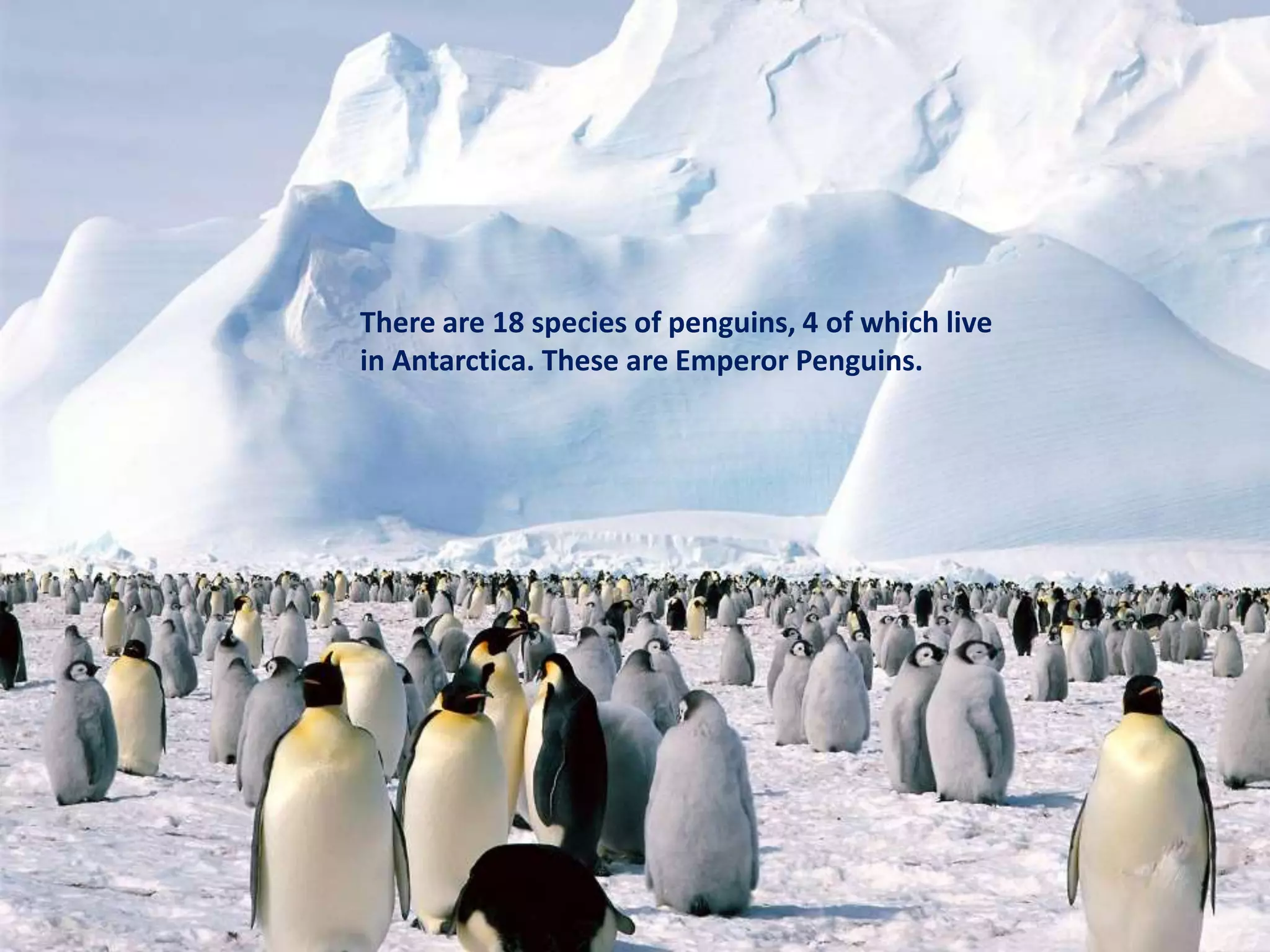
There are 18 species of penguins, 4 of which live
in Antarctica. These are Emperor Penguins.
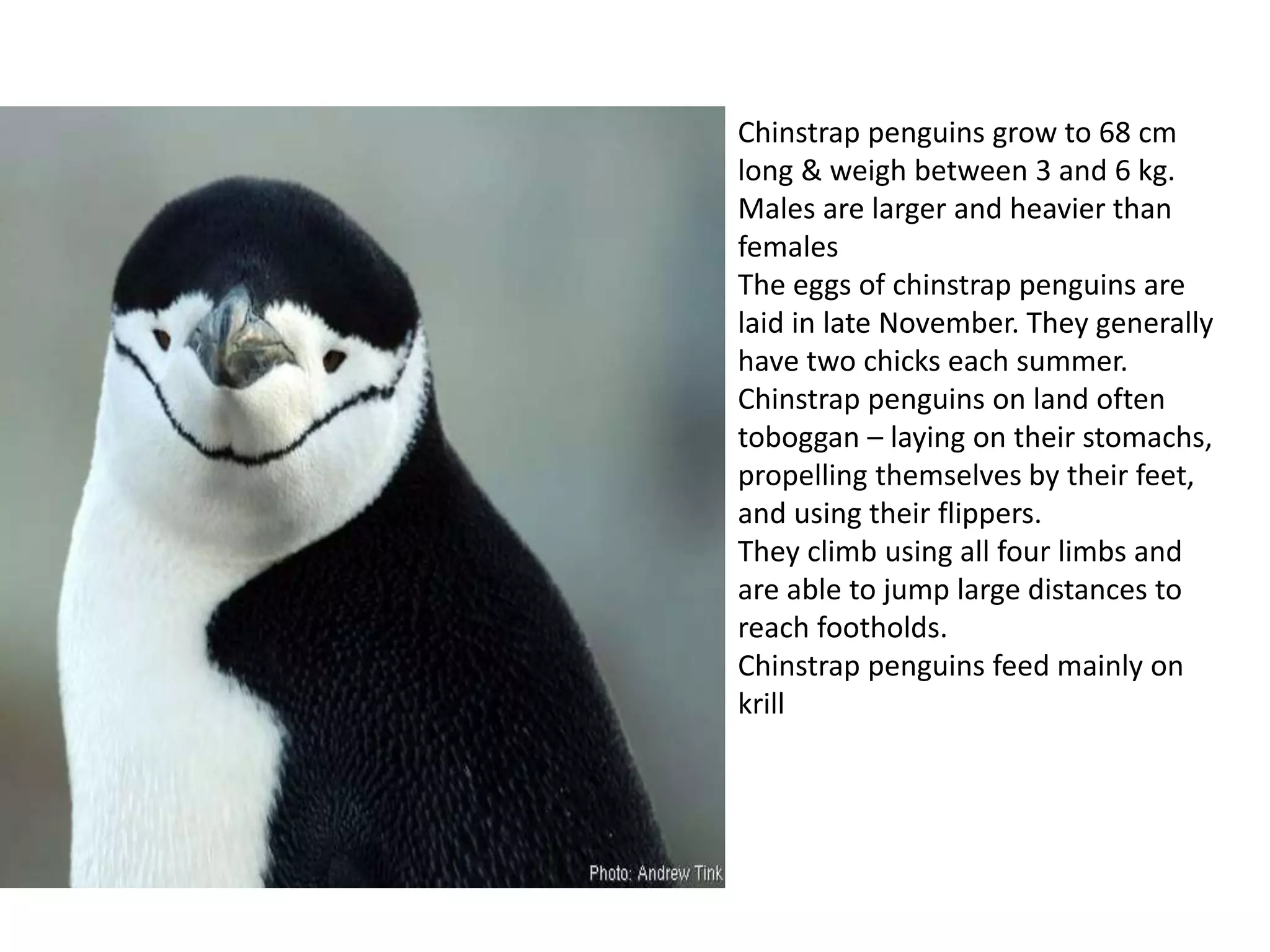
Chinstrap penguins grow to 68 cm
long & weigh between 3 and 6 kg.
Males are larger and heavier than
females
The eggs of chinstrap penguins are
laid in late November. They generally
have two chicks each summer.
Chinstrap penguins on land often
toboggan – laying on their stomachs,
propelling themselves by their feet,
and using their flippers.
They climb using all four limbs and
are able to jump large distances to
reach footholds.
Chinstrap penguins feed mainly on
krill
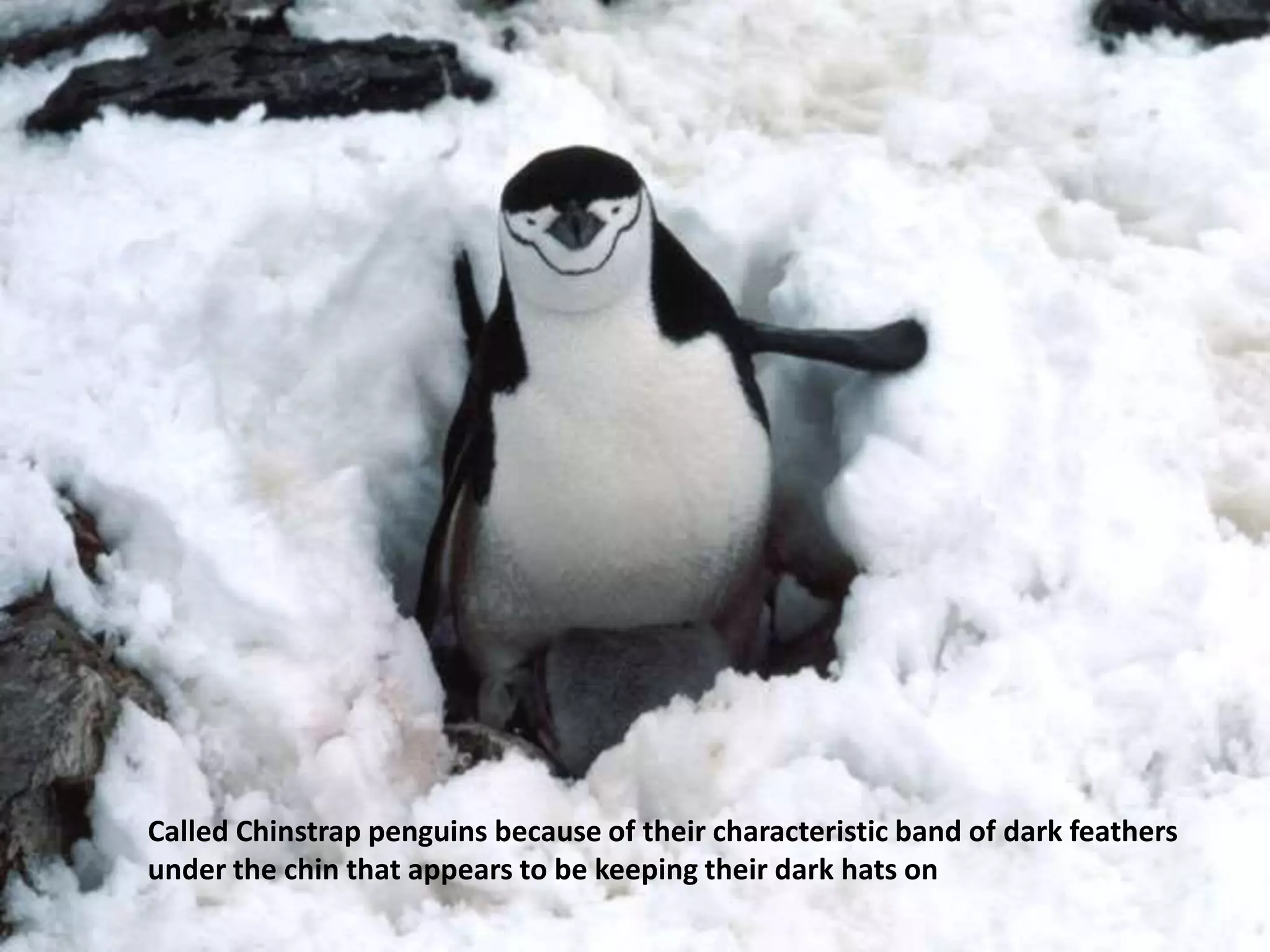
Called Chinstrap penguins because of their characteristic band of dark feathers
under the chin that appears to be keeping their dark hats on
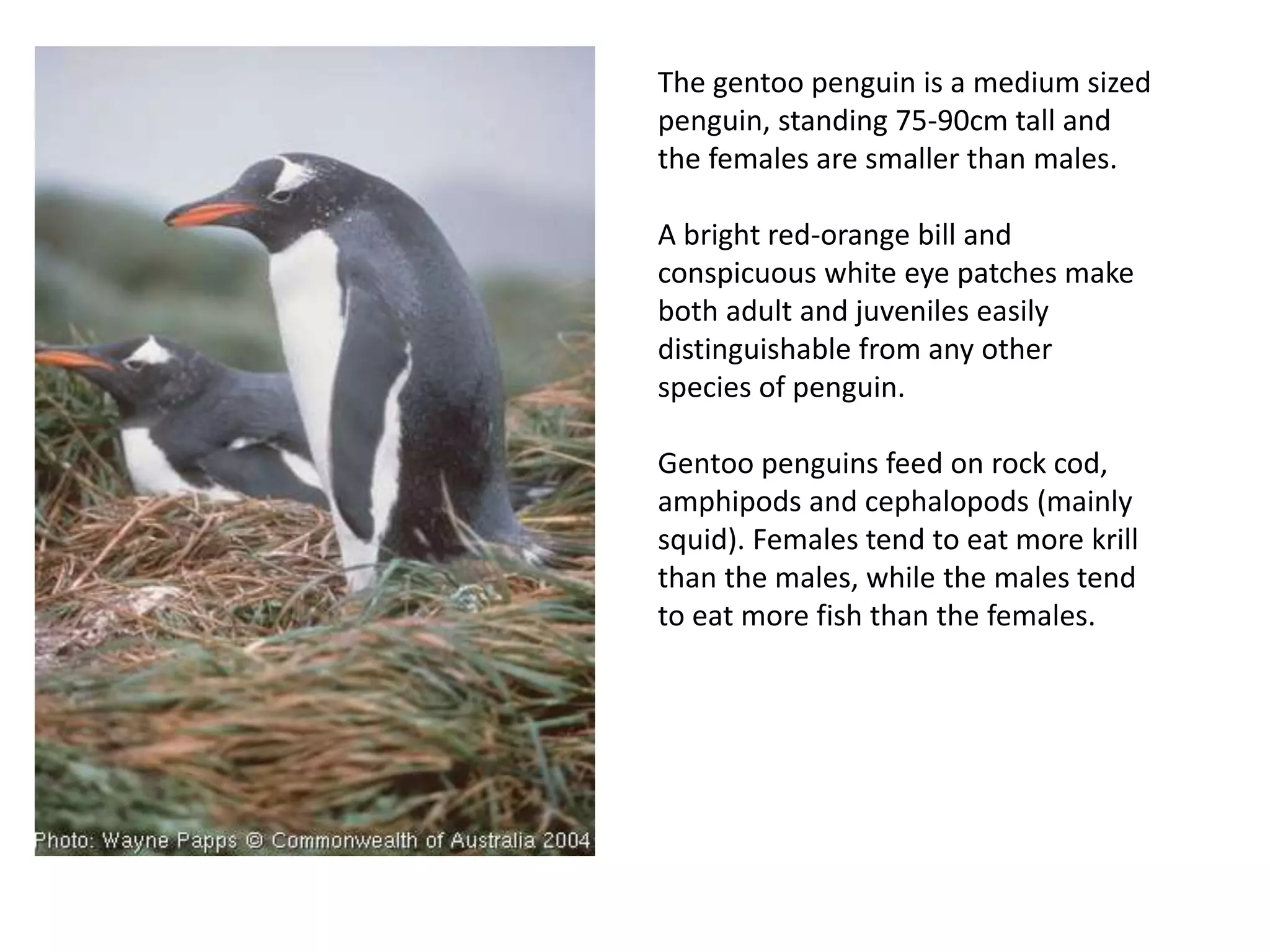
The gentoo penguin is a medium sized
penguin, standing 75-90cm tall and
the females are smaller than males.
A bright red-orange bill and
conspicuous white eye patches make
both adult and juveniles easily
distinguishable from any other
species of penguin.
Gentoo penguins feed on rock cod,
amphipods and cephalopods (mainly
squid). Females tend to eat more krill
than the males, while the males tend
to eat more fish than the females.
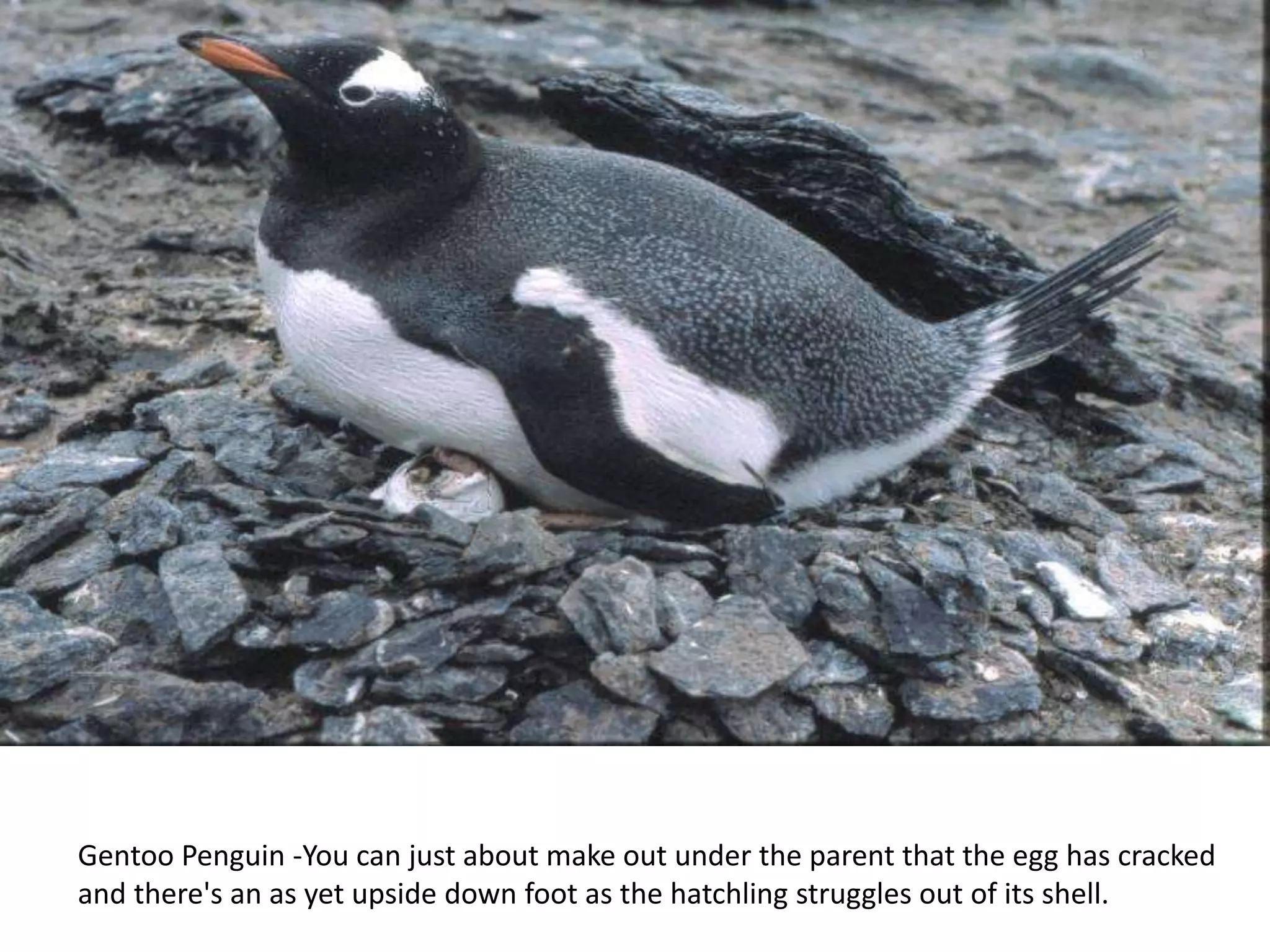
Gentoo Penguin -You can just about make out under the parent that the egg has cracked
and there's an as yet upside down foot as the hatchling struggles out of its shell.
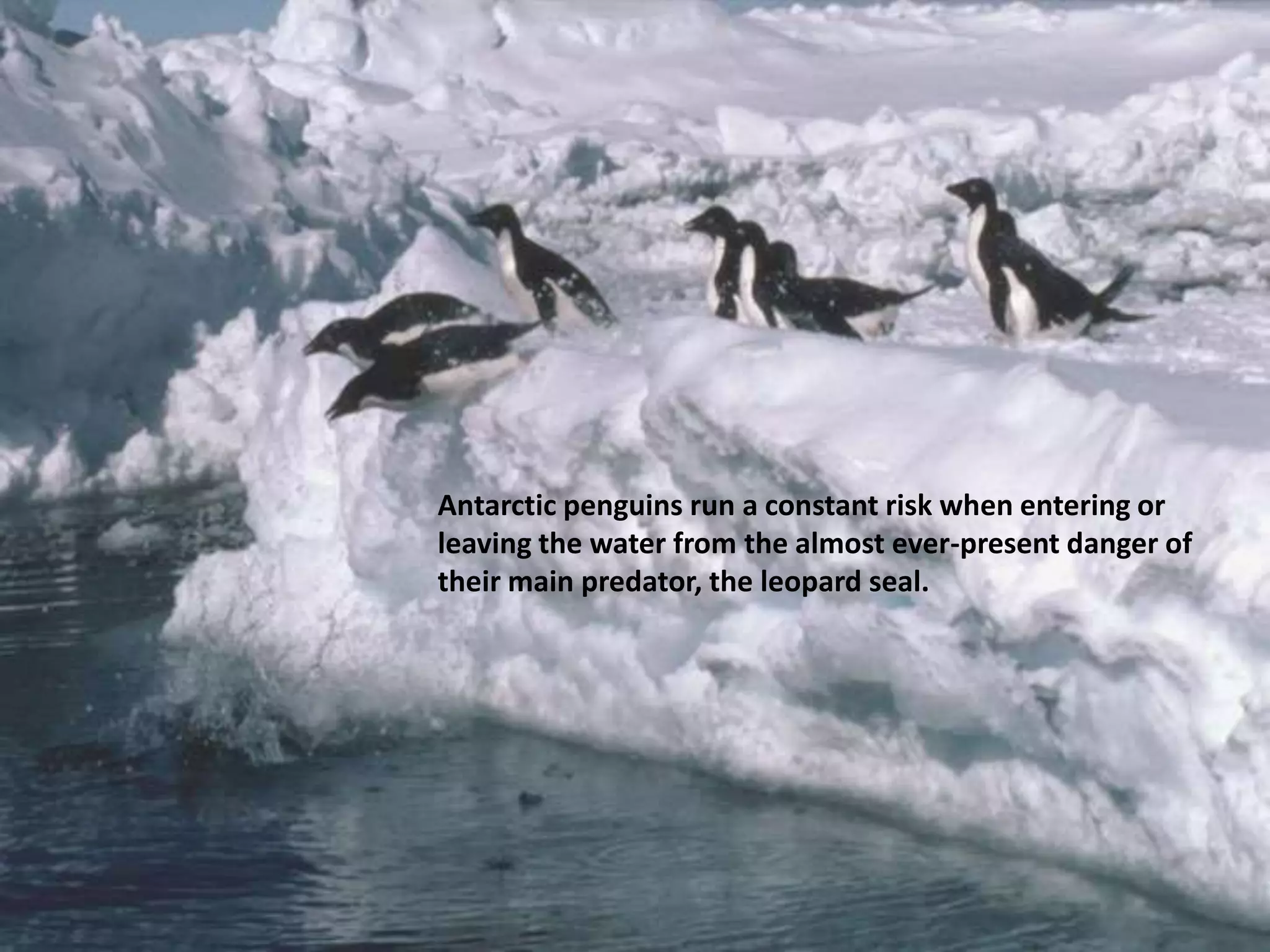
Antarctic penguins run a constant risk when entering or
leaving the water from the almost ever-present danger of
their main predator, the leopard seal.
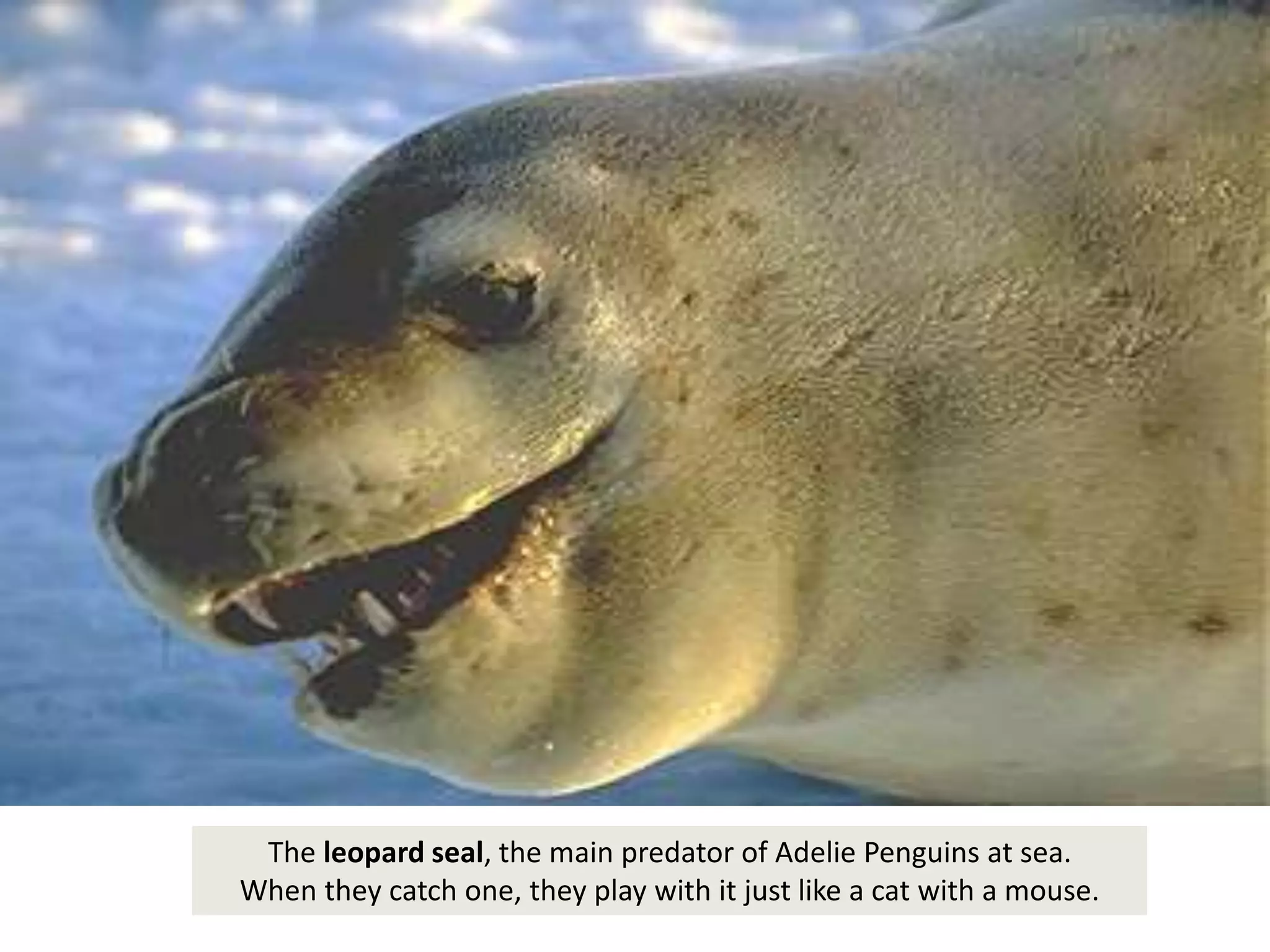
The leopard seal, the main predator of Adelie Penguins at sea.
When they catch one, they play with it just like a cat with a mouse.
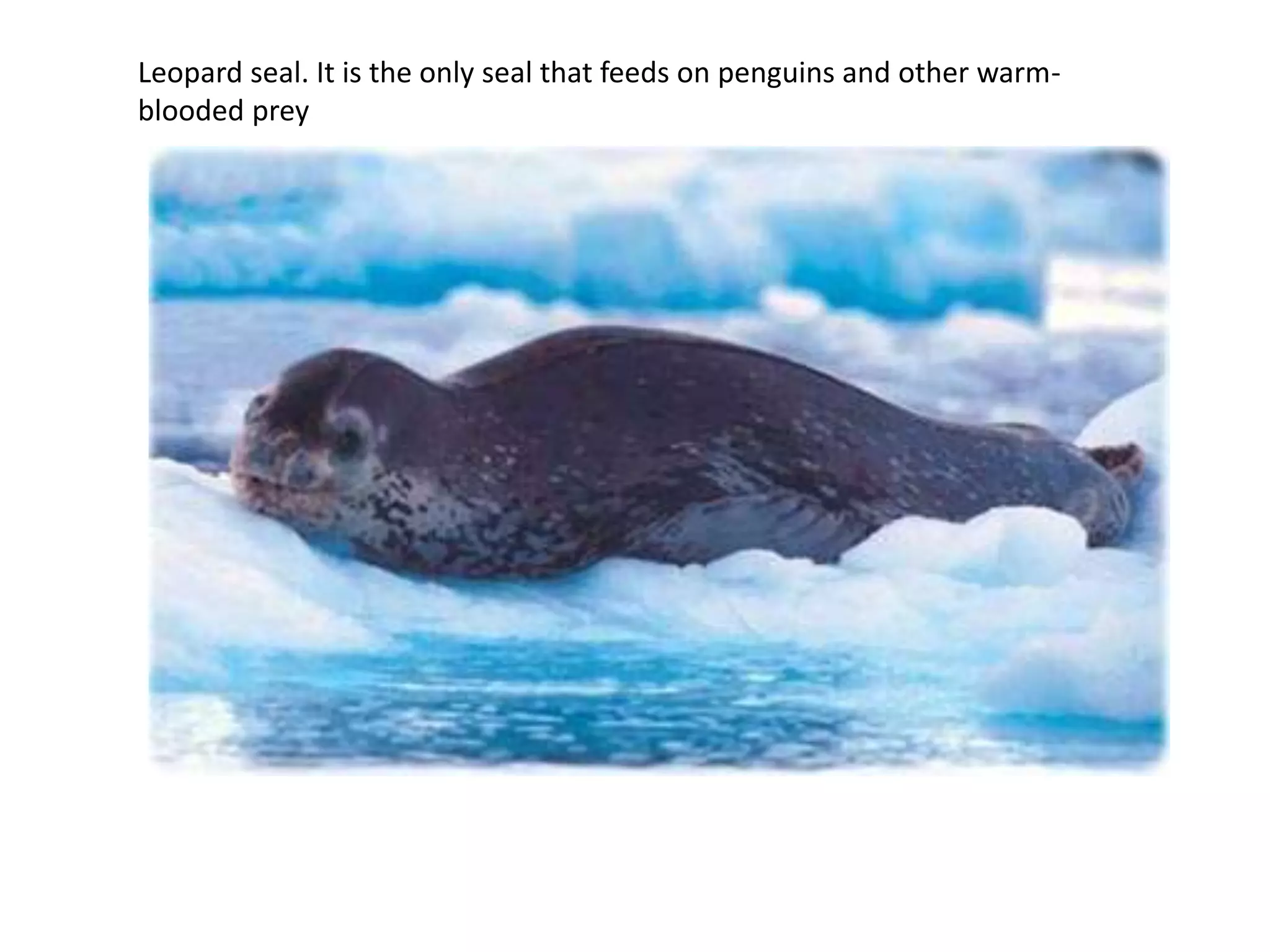
Leopard seal. It is the only seal that feeds on penguins and other warm-
blooded prey
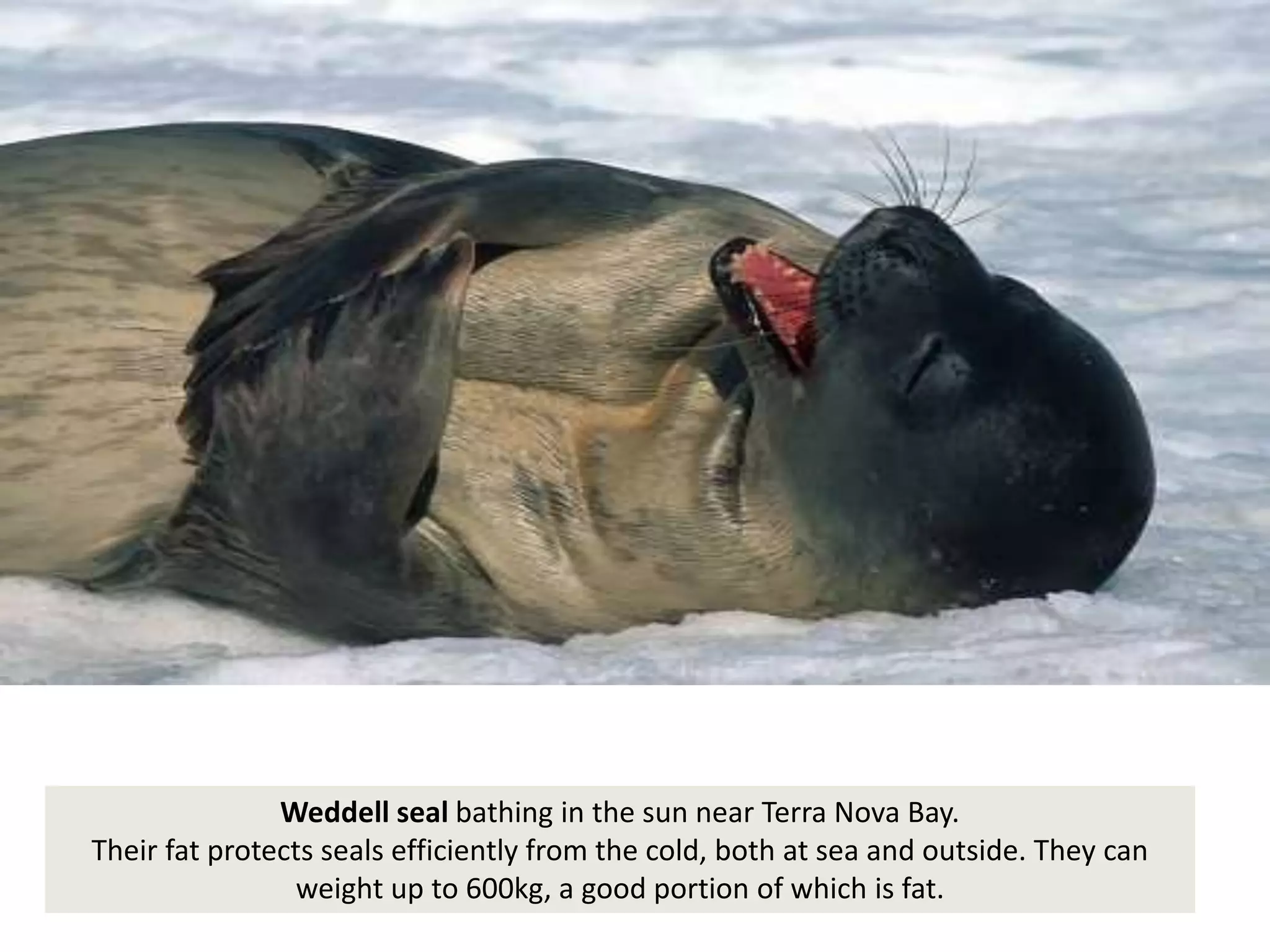
Weddell seal bathing in the sun near Terra Nova Bay.
Their fat protects seals efficiently from the cold, both at sea and outside. They can
weight up to 600kg, a good portion of which is fat.
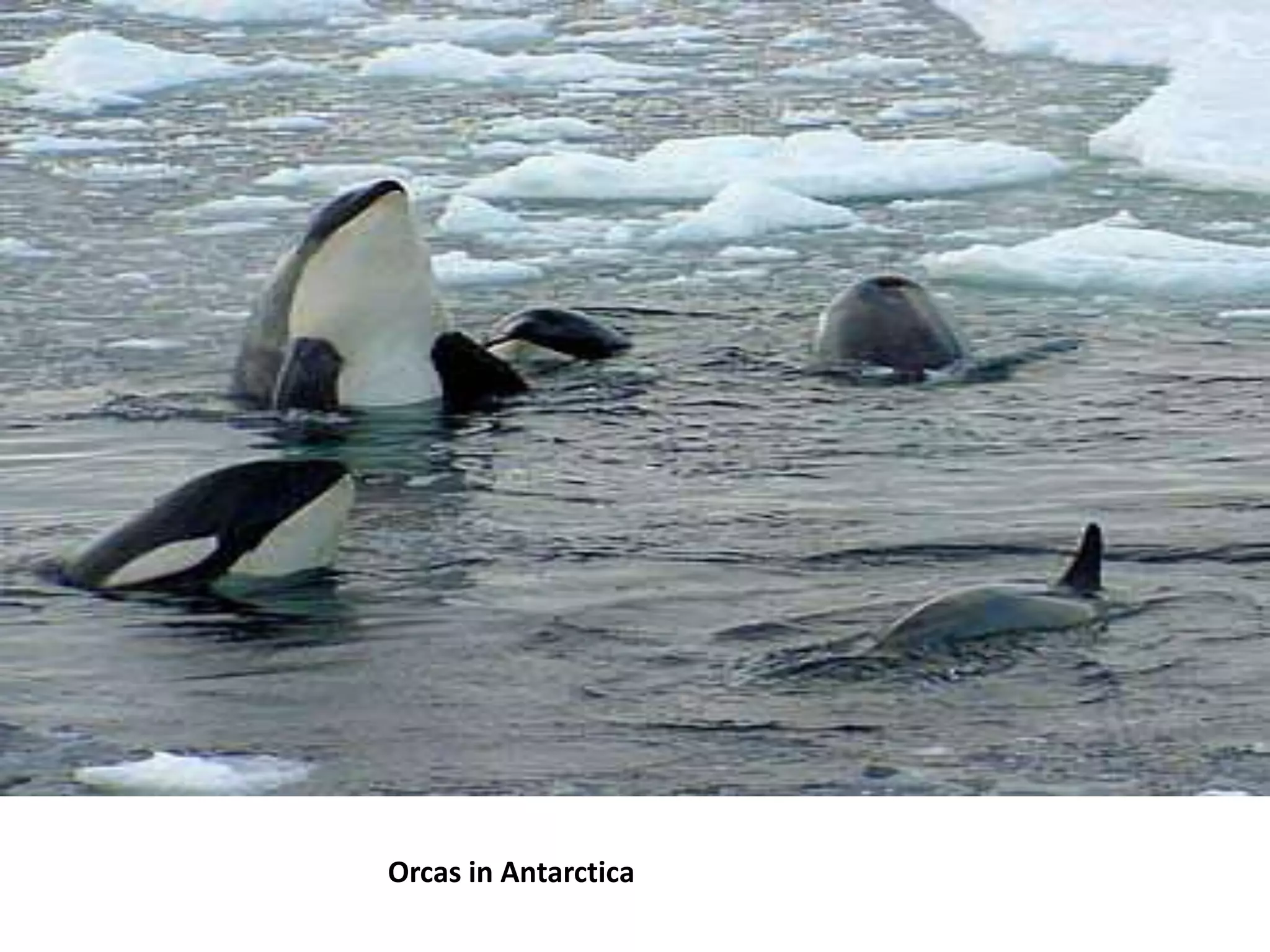
Orcas in Antarctica
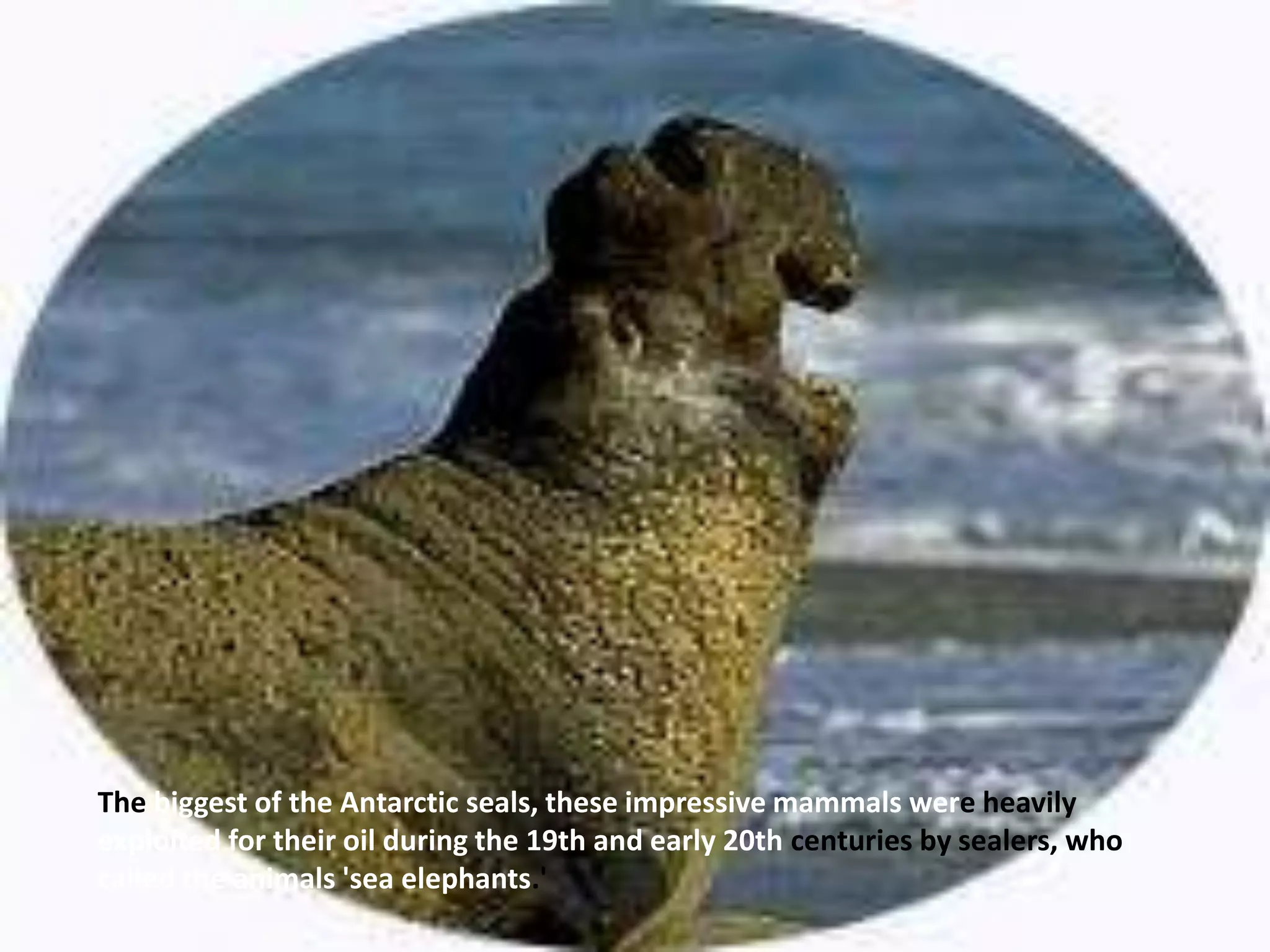
The biggest of the Antarctic seals, these impressive mammals were heavily
exploited for their oil during the 19th and early 20th centuries by sealers, who
called the animals 'sea elephants.'
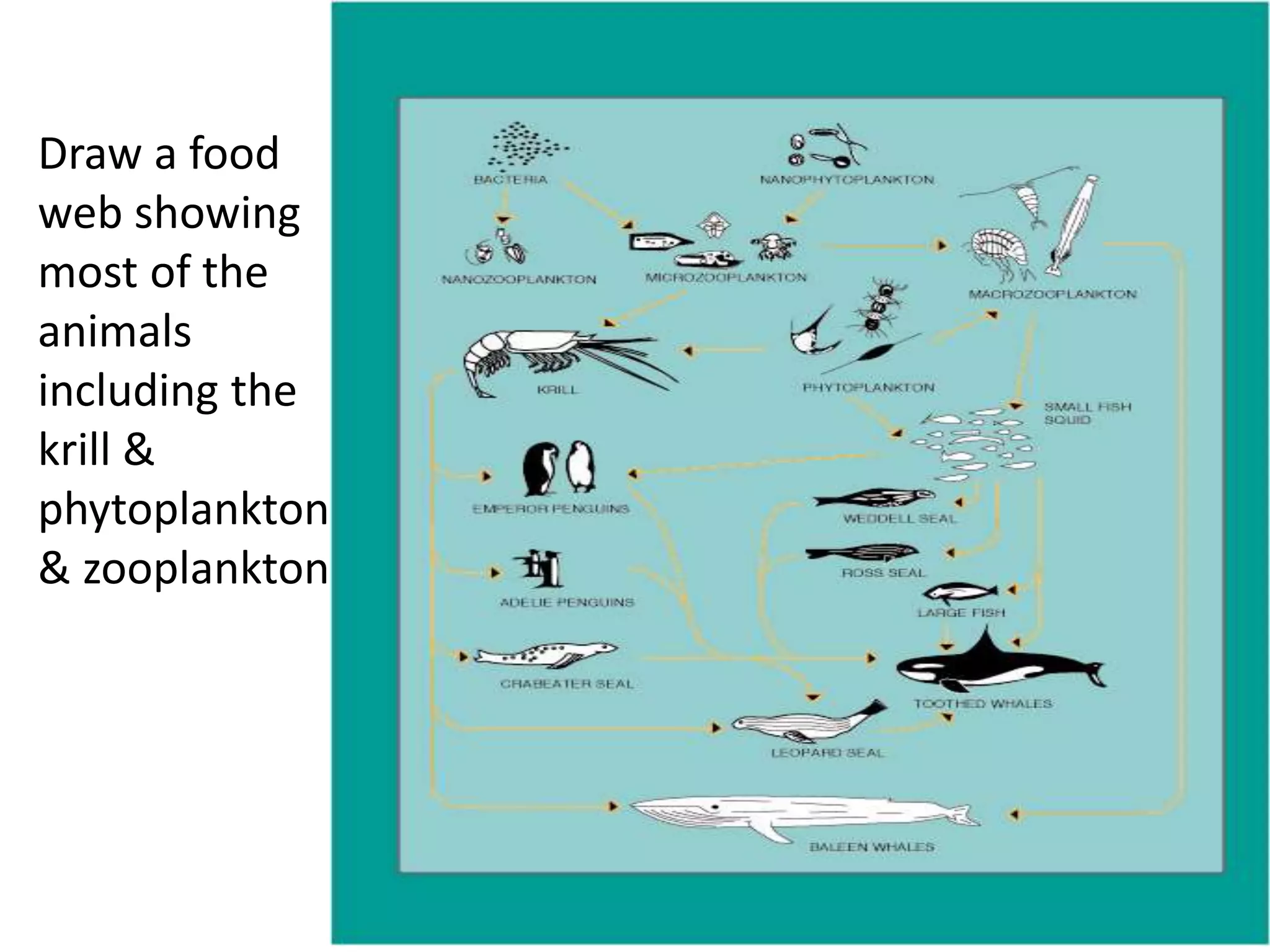
Draw a food
web showing
most of the
animals
including the
krill &
phytoplankton
& zooplankton
Krill & Phytoplankton
• While there is no grass, trees or shrubs in Antarctica,
there are plants.
• Called phytoplankton, they live near the surface of
the sea where they are able to photosynthesise and
turn the sunlight into food for tiny animals called
zooplankton.
• The most important of these zooplankton are krill,
which look like tiny shrimp about 6 cm long
Whales
• Baleen Whales - whale with plates of whalebone
along the upper jaw for filtering plankton from
the water.
• The sperm whale and the killer whale are the two
types of tooth whales, while the baleen whales
are blue whales, humpback whales, and
occasionally minke whales.
• Whaling was conducted in Antarctica but has now
been banned (Except for scientific purposes)
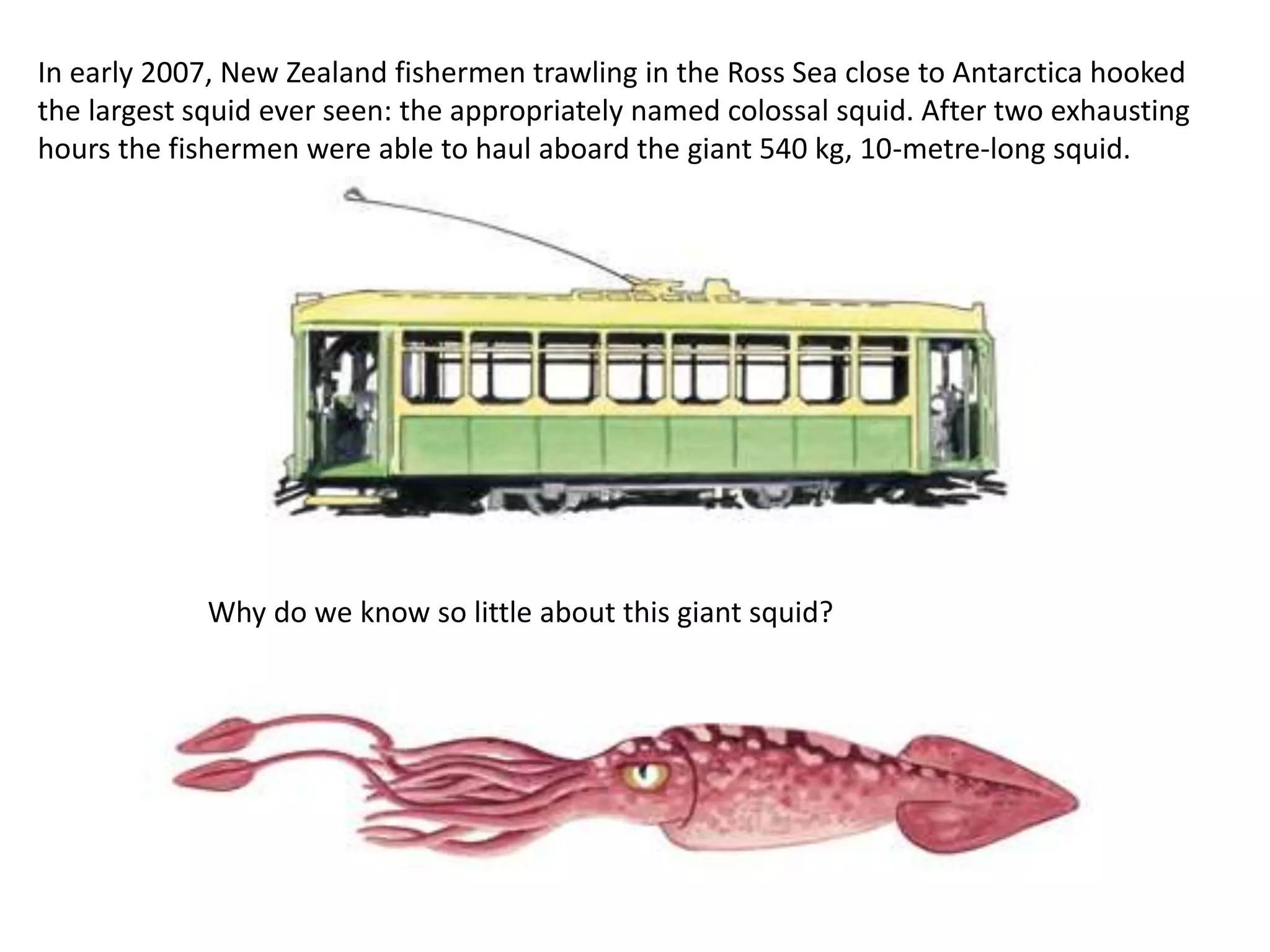
In early 2007, New Zealand fishermen trawling in the Ross Sea close to Antarctica hooked
the largest squid ever seen: the appropriately named colossal squid. After two exhausting
hours the fishermen were able to haul aboard the giant 540 kg, 10-metre-long squid.
Why do we know so little about this giant squid?

Antartctica unit 2

  • 1.
  • 2.
    Questions - writethe questions & answers in your exercise books Google Docs - • Antarctica is – The north pole – The south pole • Antarctica is – Sea surrounded by land – Land surrounded by sea • Antarctica is the worlds coldest continent, it is also the worlds – Furthest away continent – Windiest continent – Foggiest continent • Antarctica is owned by – Australia – New Zealand – U.S.A. – No one country
  • 3.
    Questions - writethe questions & answers in your exercise books • Antarctica is – Nearly all exposed land with some glaciers – About half ice and half exposed land – Mainly ice with a few areas of exposed land • Antarctica is – The 4th largest continent – The 5th largest continent – The 6th largest continent • Antarctica’s size increases during – Winter – Summer • Antarctica reflects what % of incoming solar radiation back into space by ice and snow • 60% • 70% • 80%
  • 4.
    Which countries and/or continents areclosest to Antarctica? Write this in your exercise books! Note the Andes Mountains go all the way under the sea to join the Transantarctic Mountains
  • 5.
    Transantarctic Mountains • SeparatingEast and West Antarctica is a large, imposing mountain range: the Transantarctic Mountains. • The result of an active fault system, the mountains poke through the ice cap to form an impressive barrier across the continent. They can be thought of as a giant dam holding back the ice sheet. • Where there are gaps in the mountain chain the ice behind the dam spills into West Antarctica in a series of glaciers. • The Transantarctic Mountains are home to Antarctica’s highest mountain, Vinson Massif, and an active volcano, Mount Erebus. • These mountains were a major barrier to explorers who attempted to reach the South Pole from the large ice shelves in West Antarctica.
  • 7.
    Height • The thicknessof the ice of the polar plateau makes Antarctica the highest continent in the world on average. • Antarctica’s average height is 2300 metres above sea level, • Australia’s 340 metres making it the world’s lowest continent.
  • 8.
    Questions - writethe questions & answers in your exercise books • Is Antarctica – The lowest continent – The highest continent • What caused the Transantarctic Mountains – A volcano – An active fault line • The Transantarctic Mountains are like a giant dam that hold back an ice sheet. Ice that spills through are called – Ice Shelves – Glaciers – Crevasses
  • 9.
    Who owns itand why • There are no cities or states in the Antarctic. • The only places where people live are bases or stations, usually operated by national governments. • Seven countries, including Australia, claim territory in Antarctica, but all of these countries have agreed to put their claims to one side and cooperate with other countries in studying and conserving Antarctica for the benefit of the world.
  • 11.
    The Treaty • Thegovernments of Argentina, Australia, Belgium, Chile, the French Republic, Japan, New Zealand, Norway, the Union of South Africa, Russia, the United Kingdom and Northern Ireland, and the United States of America agreed: • Antarctica shall be used for peaceful purposes only • Facilitation of scientific research in Antarctica • Preservation and conservation of living resources in Antarctica.
  • 12.
    Animal Life • FishBirds Huskies Krill Now Banned • Seals & • Sea Lions Penguins Squid Sponges • Micro Whales Seabed • Organisms Communities Terrestrial invertebrates
  • 13.
    This is Antarcticground algae. Picture size about 1cm
  • 14.
  • 15.
    Adélie penguins are46 to 75 cm long and 3.9 to 5.8 kg in weight. They are distinguished by the white ring surrounding the eye. Males and females are of similar size and difficult to tell apart. They make nests out of small stones, lay two eggs, and raise up to two chicks per nest, depending on food availability. Adélie penguins breed around the entire coast of Antarctica in places where there is exposed rock Adélie penguins feed mainly on krill
  • 17.
    There are 18species of penguins, 4 of which live in Antarctica. These are Emperor Penguins.
  • 19.
    Chinstrap penguins growto 68 cm long & weigh between 3 and 6 kg. Males are larger and heavier than females The eggs of chinstrap penguins are laid in late November. They generally have two chicks each summer. Chinstrap penguins on land often toboggan – laying on their stomachs, propelling themselves by their feet, and using their flippers. They climb using all four limbs and are able to jump large distances to reach footholds. Chinstrap penguins feed mainly on krill
  • 20.
    Called Chinstrap penguinsbecause of their characteristic band of dark feathers under the chin that appears to be keeping their dark hats on
  • 21.
    The gentoo penguinis a medium sized penguin, standing 75-90cm tall and the females are smaller than males. A bright red-orange bill and conspicuous white eye patches make both adult and juveniles easily distinguishable from any other species of penguin. Gentoo penguins feed on rock cod, amphipods and cephalopods (mainly squid). Females tend to eat more krill than the males, while the males tend to eat more fish than the females.
  • 22.
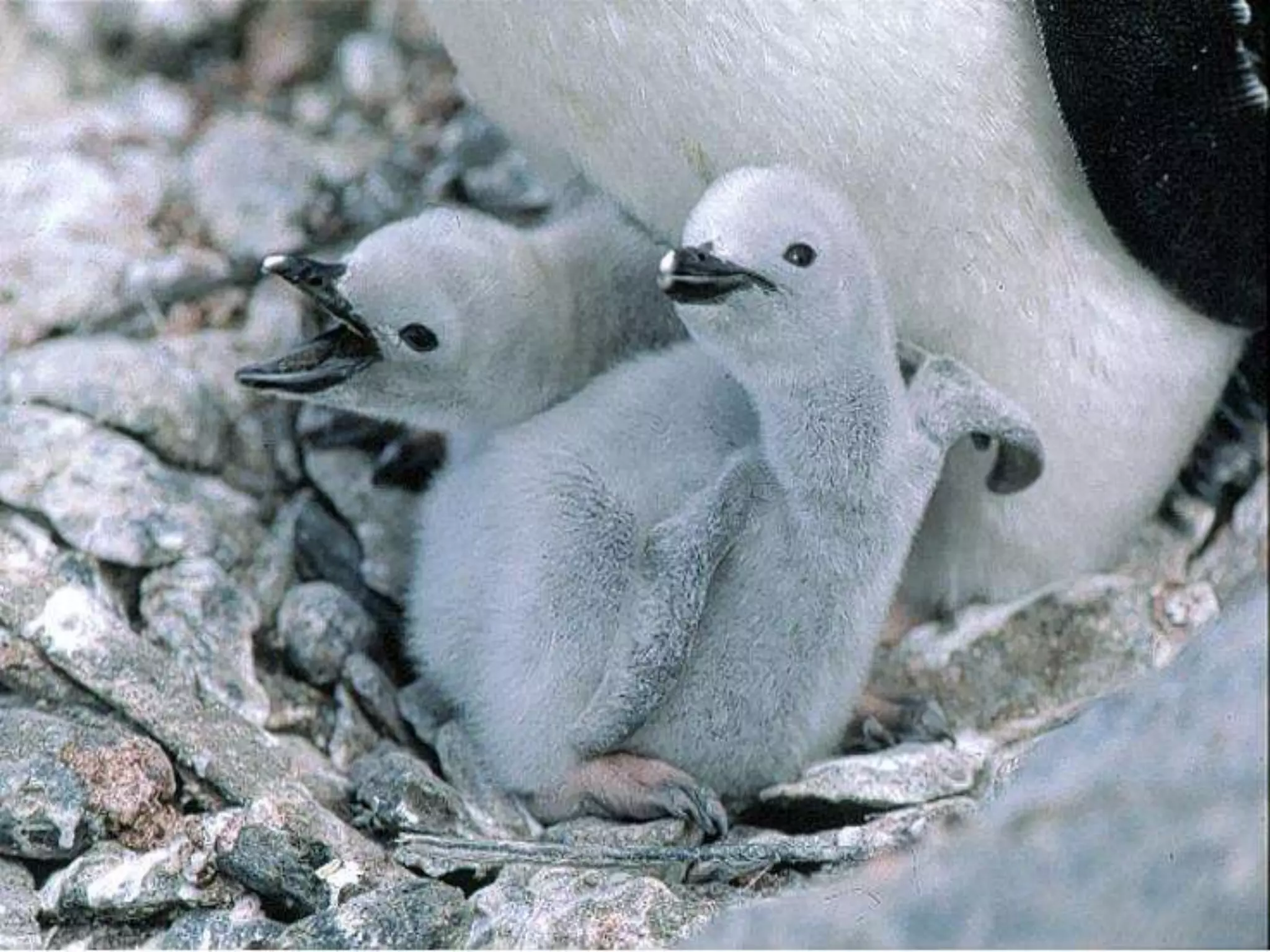
    Gentoo Penguin -Youcan just about make out under the parent that the egg has cracked and there's an as yet upside down foot as the hatchling struggles out of its shell.
  • 23.
    Antarctic penguins runa constant risk when entering or leaving the water from the almost ever-present danger of their main predator, the leopard seal.
  • 24.
    The leopard seal,the main predator of Adelie Penguins at sea. When they catch one, they play with it just like a cat with a mouse.
  • 25.
    Leopard seal. Itis the only seal that feeds on penguins and other warm- blooded prey
  • 28.
    Weddell seal bathingin the sun near Terra Nova Bay. Their fat protects seals efficiently from the cold, both at sea and outside. They can weight up to 600kg, a good portion of which is fat.
  • 29.
  • 30.
    The biggest ofthe Antarctic seals, these impressive mammals were heavily exploited for their oil during the 19th and early 20th centuries by sealers, who called the animals 'sea elephants.'
  • 31.
    Draw a food webshowing most of the animals including the krill & phytoplankton & zooplankton
  • 32.
    Krill & Phytoplankton •While there is no grass, trees or shrubs in Antarctica, there are plants. • Called phytoplankton, they live near the surface of the sea where they are able to photosynthesise and turn the sunlight into food for tiny animals called zooplankton. • The most important of these zooplankton are krill, which look like tiny shrimp about 6 cm long
  • 33.
    Whales • Baleen Whales- whale with plates of whalebone along the upper jaw for filtering plankton from the water. • The sperm whale and the killer whale are the two types of tooth whales, while the baleen whales are blue whales, humpback whales, and occasionally minke whales. • Whaling was conducted in Antarctica but has now been banned (Except for scientific purposes)
  • 34.
    In early 2007,New Zealand fishermen trawling in the Ross Sea close to Antarctica hooked the largest squid ever seen: the appropriately named colossal squid. After two exhausting hours the fishermen were able to haul aboard the giant 540 kg, 10-metre-long squid. Why do we know so little about this giant squid?