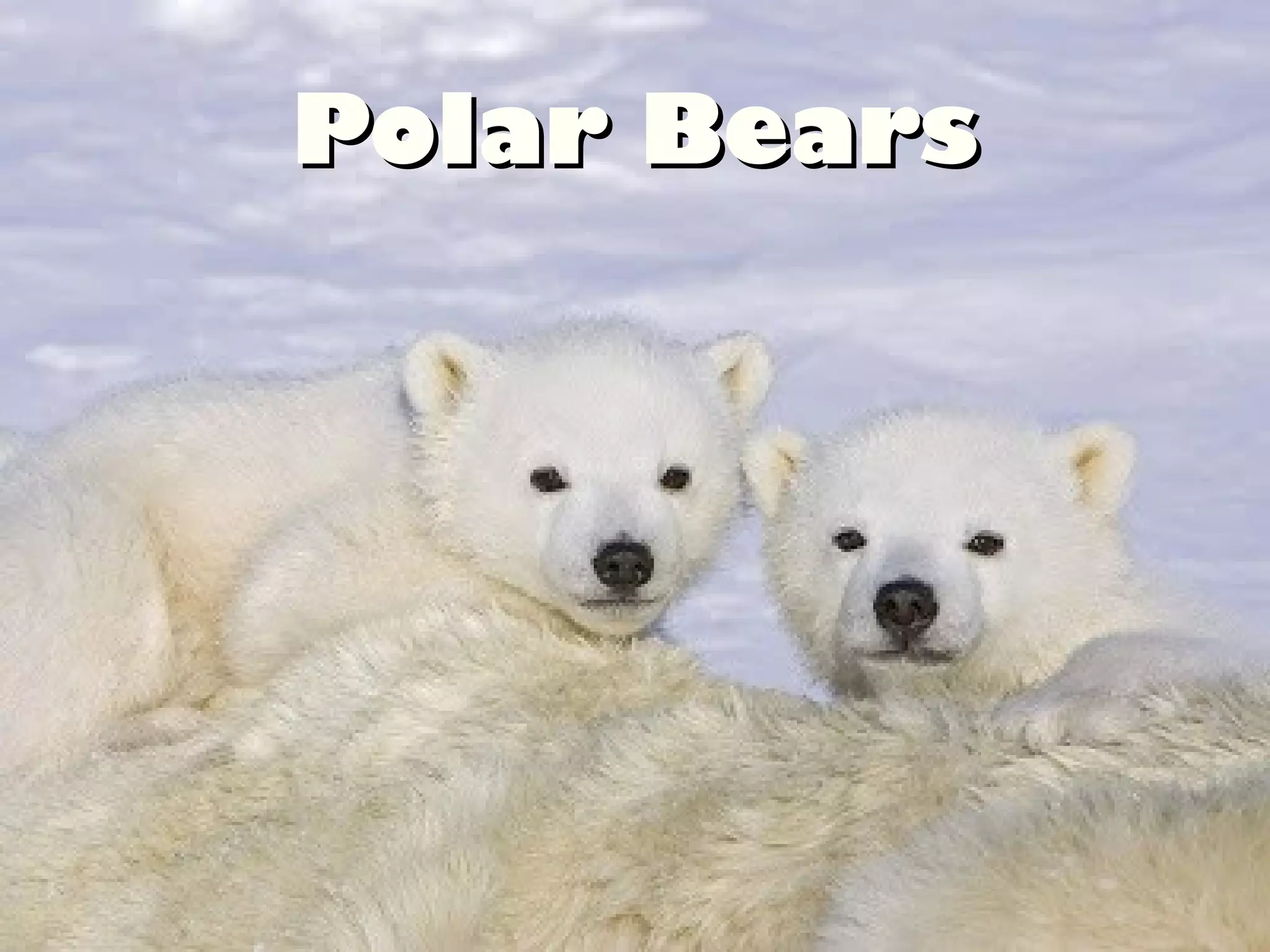
Polar BearsPolar Bears
Characteristics of
Polar Bears
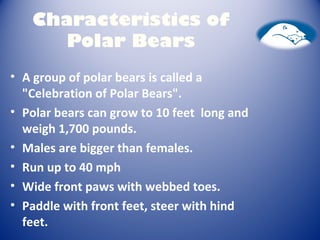
• A group of polar bears is called a
"Celebration of Polar Bears".
• Polar bears can grow to 10 feet long and
weigh 1,700 pounds.
• Males are bigger than females.
• Run up to 40 mph
• Wide front paws with webbed toes.
• Paddle with front feet, steer with hind
feet.
Polar Bears Have
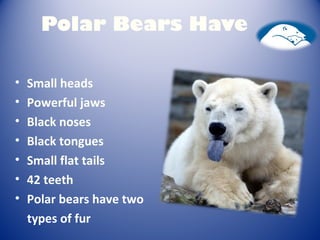
• Small heads
• Powerful jaws
• Black noses
• Black tongues
• Small flat tails
• 42 teeth
• Polar bears have two
types of fur
Where Can We Find
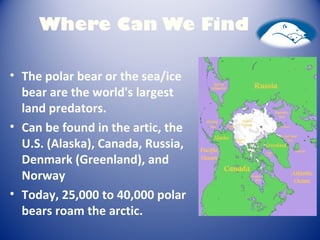
• The polar bear or the sea/ice
bear are the world's largest
land predators.
• Can be found in the artic, the
U.S. (Alaska), Canada, Russia,
Denmark (Greenland), and
Norway
• Today, 25,000 to 40,000 polar
bears roam the arctic.
Their Families
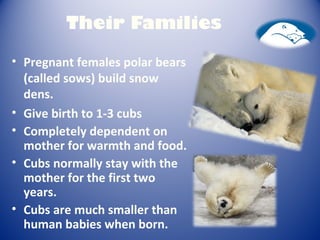
• Pregnant females polar bears
(called sows) build snow
dens.
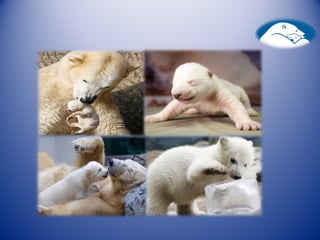
• Give birth to 1-3 cubs
• Completely dependent on
mother for warmth and food.
• Cubs normally stay with the
mother for the first two
years.
• Cubs are much smaller than
human babies when born.
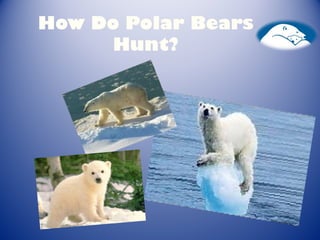
How Do Polar Bears
Hunt?
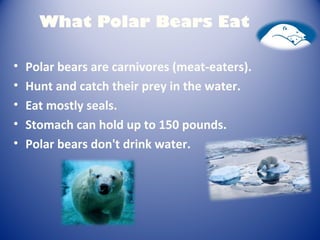
What Polar Bears Eat
• Polar bears are carnivores (meat-eaters).
• Hunt and catch their prey in the water.
• Eat mostly seals.
• Stomach can hold up to 150 pounds.
• Polar bears don't drink water.
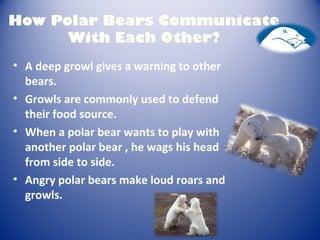
How Polar Bears Communicate
With Each Other?
• A deep growl gives a warning to other
bears.
• Growls are commonly used to defend
their food source.
• When a polar bear wants to play with
another polar bear , he wags his head
from side to side.
• Angry polar bears make loud roars and
growls.
Thank You !

Polar bears

  • 1.
  • 2.
    Characteristics of Polar Bears •A group of polar bears is called a "Celebration of Polar Bears". • Polar bears can grow to 10 feet long and weigh 1,700 pounds. • Males are bigger than females. • Run up to 40 mph • Wide front paws with webbed toes. • Paddle with front feet, steer with hind feet.
  • 3.
    Polar Bears Have •Small heads • Powerful jaws • Black noses • Black tongues • Small flat tails • 42 teeth • Polar bears have two types of fur
  • 4.
    Where Can WeFind • The polar bear or the sea/ice bear are the world's largest land predators. • Can be found in the artic, the U.S. (Alaska), Canada, Russia, Denmark (Greenland), and Norway • Today, 25,000 to 40,000 polar bears roam the arctic.
  • 5.
    Their Families • Pregnantfemales polar bears (called sows) build snow dens. • Give birth to 1-3 cubs • Completely dependent on mother for warmth and food. • Cubs normally stay with the mother for the first two years. • Cubs are much smaller than human babies when born.
  • 7.
    How Do PolarBears Hunt?
  • 8.
    What Polar BearsEat • Polar bears are carnivores (meat-eaters). • Hunt and catch their prey in the water. • Eat mostly seals. • Stomach can hold up to 150 pounds. • Polar bears don't drink water.
  • 9.
    How Polar BearsCommunicate With Each Other? • A deep growl gives a warning to other bears. • Growls are commonly used to defend their food source. • When a polar bear wants to play with another polar bear , he wags his head from side to side. • Angry polar bears make loud roars and growls.
  • 10.

Editor's Notes

  • #2 For additional information please contact: www.polarbearsinternational.org [email_address]