Animation
Animation
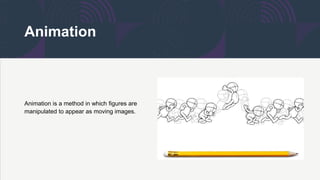
Animation is a method in which figures are
manipulated to appear as moving images.
Animation
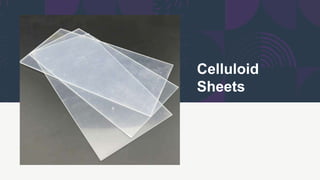
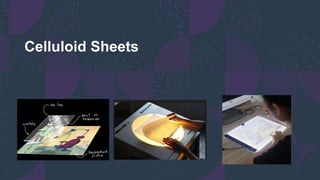
In traditional animation, images are drawn or painted by hand on
transparent celluloid sheets to be photographed and exhibited on film.
Today, most animations are made with computer-generated imagery
(CGI). Computer animation can be very detailed 3D animation, while
2D computer animation (which may have the look of traditional
animation) can be used for stylistic reasons, low bandwidth, or faster
real-time renderings. Other common animation methods apply a stop
motion technique to two- and three-dimensional objects like paper
cutouts, puppets, or clay figures.
Celluloid
Sheets
Celluloid Sheets
Anime
is hand-drawn and computer-generated animation originating
from Japan. Outside of Japan and in English, anime refers
specifically to animation produced in Japan. However, in Japan
and in Japanese, anime (a term derived from a shortening of the
English word animation) describes all animated works,
regardless of style or origin. Animation produced outside of
Japan with similar style to Japanese animation is commonly
referred to as anime-influenced animation.
Anime
Use of Hand Tools and Equipment
Two Types of Animation
• Traditional Animation
• Computer-Generated Animation
Traditional
Animation
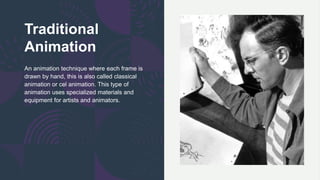
An animation technique where each frame is
drawn by hand, this is also called classical
animation or cel animation. This type of
animation uses specialized materials and
equipment for artists and animators.
Computer-Generated
Animation
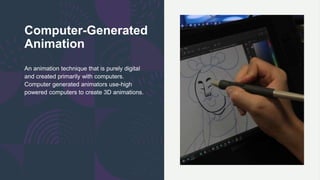
An animation technique that is purely digital
and created primarily with computers.
Computer generated animators use-high
powered computers to create 3D animations.
Tools and Equipment
Animation
Lightbox
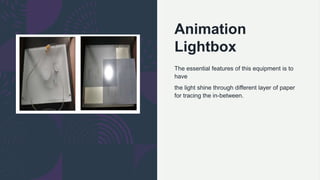
The essential features of this equipment is to
have
the light shine through different layer of paper
for tracing the in-between.
Peg bar
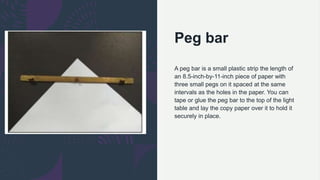
A peg bar is a small plastic strip the length of
an 8.5-inch-by-11-inch piece of paper with
three small pegs on it spaced at the same
intervals as the holes in the paper. You can
tape or glue the peg bar to the top of the light
table and lay the copy paper over it to hold it
securely in place.
Paper and Cel /
Transparencies
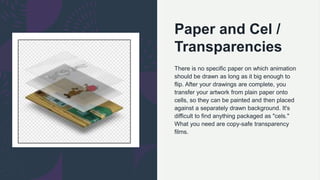
There is no specific paper on which animation
should be drawn as long as it big enough to
flip. After your drawings are complete, you
transfer your artwork from plain paper onto
cells, so they can be painted and then placed
against a separately drawn background. It's
difficult to find anything packaged as "cels."
What you need are copy-safe transparency
films.
Paper and Cel
Punch
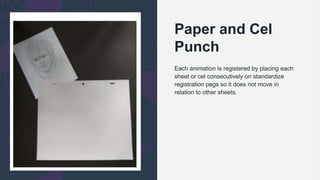
Each animation is registered by placing each
sheet or cel consecutively on standardize
registration pegs so it does not move in
relation to other sheets.
Graticule or 12”
field Chart
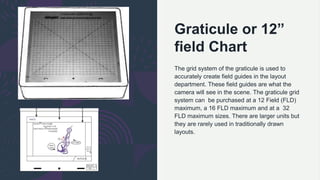
The grid system of the graticule is used to
accurately create field guides in the layout
department. These field guides are what the
camera will see in the scene. The graticule grid
system can be purchased at a 12 Field (FLD)
maximum, a 16 FLD maximum and at a 32
FLD maximum sizes. There are larger units but
they are rarely used in traditionally drawn
layouts.
Exposure Sheet, Bar Sheet and
Dope Sheet.
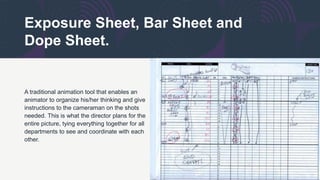
A traditional animation tool that enables an
animator to organize his/her thinking and give
instructions to the cameraman on the shots
needed. This is what the director plans for the
entire picture, tying everything together for all
departments to see and coordinate with each
other.
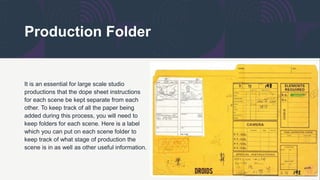
Production Folder
It is an essential for large scale studio
productions that the dope sheet instructions
for each scene be kept separate from each
other. To keep track of all the paper being
added during this process, you will need to
keep folders for each scene. Here is a label
which you can put on each scene folder to
keep track of what stage of production the
scene is in as well as other useful information.
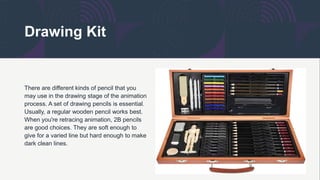
Drawing Kit
There are different kinds of pencil that you
may use in the drawing stage of the animation
process. A set of drawing pencils is essential.
Usually, a regular wooden pencil works best.
When you're retracing animation, 2B pencils
are good choices. They are soft enough to
give for a varied line but hard enough to make
dark clean lines.
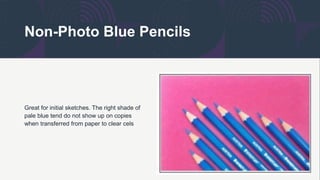
Non-Photo Blue Pencils
Great for initial sketches. The right shade of
pale blue tend do not show up on copies
when transferred from paper to clear cels
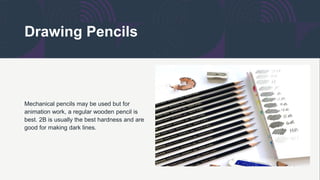
Drawing Pencils
Mechanical pencils may be used but for
animation work, a regular wooden pencil is
best. 2B is usually the best hardness and are
good for making dark lines.
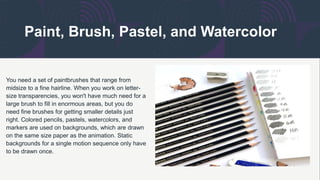
Paint, Brush, Pastel, and Watercolor
You need a set of paintbrushes that range from
midsize to a fine hairline. When you work on letter-
size transparencies, you won't have much need for a
large brush to fill in enormous areas, but you do
need fine brushes for getting smaller details just
right. Colored pencils, pastels, watercolors, and
markers are used on backgrounds, which are drawn
on the same size paper as the animation. Static
backgrounds for a single motion sequence only have
to be drawn once.
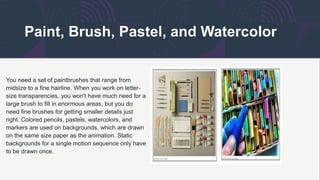
Paint, Brush, Pastel, and Watercolor
You need a set of paintbrushes that range from
midsize to a fine hairline. When you work on letter-
size transparencies, you won't have much need for a
large brush to fill in enormous areas, but you do
need fine brushes for getting smaller details just
right. Colored pencils, pastels, watercolors, and
markers are used on backgrounds, which are drawn
on the same size paper as the animation. Static
backgrounds for a single motion sequence only have
to be drawn once.
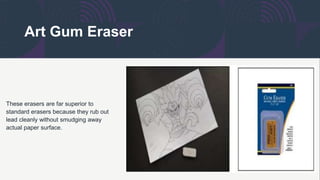
Art Gum Eraser
These erasers are far superior to
standard erasers because they rub out
lead cleanly without smudging away
actual paper surface.
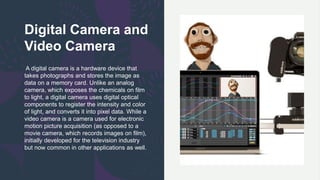
Digital Camera and
Video Camera
A digital camera is a hardware device that
takes photographs and stores the image as
data on a memory card. Unlike an analog
camera, which exposes the chemicals on film
to light, a digital camera uses digital optical
components to register the intensity and color
of light, and converts it into pixel data. While a
video camera is a camera used for electronic
motion picture acquisition (as opposed to a
movie camera, which records images on film),
initially developed for the television industry
but now common in other applications as well.
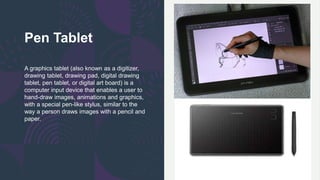
Pen Tablet
A graphics tablet (also known as a digitizer,
drawing tablet, drawing pad, digital drawing
tablet, pen tablet, or digital art board) is a
computer input device that enables a user to
hand-draw images, animations and graphics,
with a special pen-like stylus, similar to the
way a person draws images with a pencil and
paper.

Animation introduction and Materials use in Animation

  • 1.
  • 2.
    Animation Animation is amethod in which figures are manipulated to appear as moving images.
  • 3.
    Animation In traditional animation,images are drawn or painted by hand on transparent celluloid sheets to be photographed and exhibited on film. Today, most animations are made with computer-generated imagery (CGI). Computer animation can be very detailed 3D animation, while 2D computer animation (which may have the look of traditional animation) can be used for stylistic reasons, low bandwidth, or faster real-time renderings. Other common animation methods apply a stop motion technique to two- and three-dimensional objects like paper cutouts, puppets, or clay figures.
  • 4.
  • 5.
  • 6.
    Anime is hand-drawn andcomputer-generated animation originating from Japan. Outside of Japan and in English, anime refers specifically to animation produced in Japan. However, in Japan and in Japanese, anime (a term derived from a shortening of the English word animation) describes all animated works, regardless of style or origin. Animation produced outside of Japan with similar style to Japanese animation is commonly referred to as anime-influenced animation.
  • 7.
  • 8.
    Use of HandTools and Equipment Two Types of Animation • Traditional Animation • Computer-Generated Animation
  • 9.
    Traditional Animation An animation techniquewhere each frame is drawn by hand, this is also called classical animation or cel animation. This type of animation uses specialized materials and equipment for artists and animators.
  • 10.
    Computer-Generated Animation An animation techniquethat is purely digital and created primarily with computers. Computer generated animators use-high powered computers to create 3D animations.
  • 11.
  • 12.
    Animation Lightbox The essential featuresof this equipment is to have the light shine through different layer of paper for tracing the in-between.
  • 13.
    Peg bar A pegbar is a small plastic strip the length of an 8.5-inch-by-11-inch piece of paper with three small pegs on it spaced at the same intervals as the holes in the paper. You can tape or glue the peg bar to the top of the light table and lay the copy paper over it to hold it securely in place.
  • 14.
    Paper and Cel/ Transparencies There is no specific paper on which animation should be drawn as long as it big enough to flip. After your drawings are complete, you transfer your artwork from plain paper onto cells, so they can be painted and then placed against a separately drawn background. It's difficult to find anything packaged as "cels." What you need are copy-safe transparency films.
  • 15.
    Paper and Cel Punch Eachanimation is registered by placing each sheet or cel consecutively on standardize registration pegs so it does not move in relation to other sheets.
  • 16.
    Graticule or 12” fieldChart The grid system of the graticule is used to accurately create field guides in the layout department. These field guides are what the camera will see in the scene. The graticule grid system can be purchased at a 12 Field (FLD) maximum, a 16 FLD maximum and at a 32 FLD maximum sizes. There are larger units but they are rarely used in traditionally drawn layouts.
  • 17.
    Exposure Sheet, BarSheet and Dope Sheet. A traditional animation tool that enables an animator to organize his/her thinking and give instructions to the cameraman on the shots needed. This is what the director plans for the entire picture, tying everything together for all departments to see and coordinate with each other.
  • 18.
    Production Folder It isan essential for large scale studio productions that the dope sheet instructions for each scene be kept separate from each other. To keep track of all the paper being added during this process, you will need to keep folders for each scene. Here is a label which you can put on each scene folder to keep track of what stage of production the scene is in as well as other useful information.
  • 19.
    Drawing Kit There aredifferent kinds of pencil that you may use in the drawing stage of the animation process. A set of drawing pencils is essential. Usually, a regular wooden pencil works best. When you're retracing animation, 2B pencils are good choices. They are soft enough to give for a varied line but hard enough to make dark clean lines.
  • 20.
    Non-Photo Blue Pencils Greatfor initial sketches. The right shade of pale blue tend do not show up on copies when transferred from paper to clear cels
  • 21.
    Drawing Pencils Mechanical pencilsmay be used but for animation work, a regular wooden pencil is best. 2B is usually the best hardness and are good for making dark lines.
  • 22.
    Paint, Brush, Pastel,and Watercolor You need a set of paintbrushes that range from midsize to a fine hairline. When you work on letter- size transparencies, you won't have much need for a large brush to fill in enormous areas, but you do need fine brushes for getting smaller details just right. Colored pencils, pastels, watercolors, and markers are used on backgrounds, which are drawn on the same size paper as the animation. Static backgrounds for a single motion sequence only have to be drawn once.
  • 23.
    Paint, Brush, Pastel,and Watercolor You need a set of paintbrushes that range from midsize to a fine hairline. When you work on letter- size transparencies, you won't have much need for a large brush to fill in enormous areas, but you do need fine brushes for getting smaller details just right. Colored pencils, pastels, watercolors, and markers are used on backgrounds, which are drawn on the same size paper as the animation. Static backgrounds for a single motion sequence only have to be drawn once.
  • 24.
    Art Gum Eraser Theseerasers are far superior to standard erasers because they rub out lead cleanly without smudging away actual paper surface.
  • 25.
    Digital Camera and VideoCamera A digital camera is a hardware device that takes photographs and stores the image as data on a memory card. Unlike an analog camera, which exposes the chemicals on film to light, a digital camera uses digital optical components to register the intensity and color of light, and converts it into pixel data. While a video camera is a camera used for electronic motion picture acquisition (as opposed to a movie camera, which records images on film), initially developed for the television industry but now common in other applications as well.
  • 26.
    Pen Tablet A graphicstablet (also known as a digitizer, drawing tablet, drawing pad, digital drawing tablet, pen tablet, or digital art board) is a computer input device that enables a user to hand-draw images, animations and graphics, with a special pen-like stylus, similar to the way a person draws images with a pencil and paper.