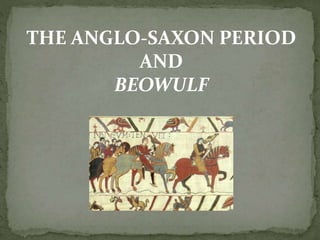
THE ANGLO-SAXON PERIOD
AND
BEOWULF
THE ANGLO-SAXONS
The Anglo-Saxons were a people who
inhabited Great Britain from the 5th century.
They included:
- people from Germanic tribes who migrated
to the island from continental Europe.
- indigenous British groups who adopted
some aspects of Anglo-Saxon culture and
language.
THE ANGLO-SAXON
PERIOD
The Anglo-Saxon period denotes the period of
British history between about 450 (their initial
settlement) and 1066 (the Norman Conquest).
Anglo-Saxon is also known as Old English,
and it is the language which, through the
centuries, has developed into the English
language we know today.
Anglo-Saxon is like a foreign language even to
a native speaker of English
THE ANGLO-SAXON
LANGUAGE
Swa þa drihtguman dreamum lifdon,
eadiglice, oð ðæt an ongan
fyrene fremman feond on helle;
wæs se grimma gæst Grendel haten,
mære mearcstapa, se þe moras heold,
fen ond fæsten; fifelcynnes eard
wonsæli wer weardode hwile,
siþðan him Scyppend forscrifen hæfde
in Caines cynne--- þone cwealm gewræc
ece Drihten, þæs þe he Abel slog;
ne gefeah he þære fæhðe, ac hehine feor forwræc,
Metod for þy mane mancynne fram.
OLD ENGLISH MODERN ENGLISH
So lived the clansmen in cheer and revel
a winsome life, till one began
to fashion evils, that field of hell.
Grendel this monster grim was called,
march-riever[5] mighty, in moorland living,
in fen and fastness; fief of the giants
the hapless wight a while had kept
since the Creator his exile doomed.
On kin of Cain was the killing avenged
by sovran God for slaughtered Abel.
Ill fared his feud,[6] and far was he driven,
for the slaughter's sake, from sight of men.
Can you recognise any modern English words in Old English?
ANGLO-SAXON SAGAS
Anglo-Saxon sagas are stories that mix
references to real events with characters and
events from Anglo-Saxon legends.
They were told to entertain people, particularly
at feasts which involved lots of eating and
drinking late into the night!
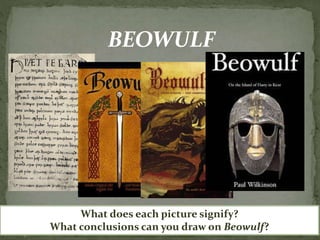
BEOWULF
What does each picture signify?
What conclusions can you draw on Beowulf?

Anglo saxons and beowulf

  • 1.
  • 2.
    THE ANGLO-SAXONS The Anglo-Saxonswere a people who inhabited Great Britain from the 5th century. They included: - people from Germanic tribes who migrated to the island from continental Europe. - indigenous British groups who adopted some aspects of Anglo-Saxon culture and language.
  • 4.
    THE ANGLO-SAXON PERIOD The Anglo-Saxonperiod denotes the period of British history between about 450 (their initial settlement) and 1066 (the Norman Conquest).
  • 5.
    Anglo-Saxon is alsoknown as Old English, and it is the language which, through the centuries, has developed into the English language we know today. Anglo-Saxon is like a foreign language even to a native speaker of English THE ANGLO-SAXON LANGUAGE
  • 6.
    Swa þa drihtgumandreamum lifdon, eadiglice, oð ðæt an ongan fyrene fremman feond on helle; wæs se grimma gæst Grendel haten, mære mearcstapa, se þe moras heold, fen ond fæsten; fifelcynnes eard wonsæli wer weardode hwile, siþðan him Scyppend forscrifen hæfde in Caines cynne--- þone cwealm gewræc ece Drihten, þæs þe he Abel slog; ne gefeah he þære fæhðe, ac hehine feor forwræc, Metod for þy mane mancynne fram. OLD ENGLISH MODERN ENGLISH So lived the clansmen in cheer and revel a winsome life, till one began to fashion evils, that field of hell. Grendel this monster grim was called, march-riever[5] mighty, in moorland living, in fen and fastness; fief of the giants the hapless wight a while had kept since the Creator his exile doomed. On kin of Cain was the killing avenged by sovran God for slaughtered Abel. Ill fared his feud,[6] and far was he driven, for the slaughter's sake, from sight of men. Can you recognise any modern English words in Old English?
  • 7.
    ANGLO-SAXON SAGAS Anglo-Saxon sagasare stories that mix references to real events with characters and events from Anglo-Saxon legends. They were told to entertain people, particularly at feasts which involved lots of eating and drinking late into the night!
  • 8.
    BEOWULF What does eachpicture signify? What conclusions can you draw on Beowulf?