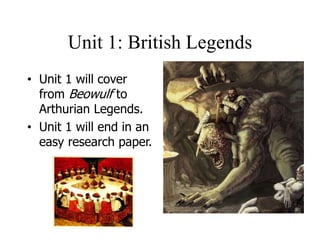
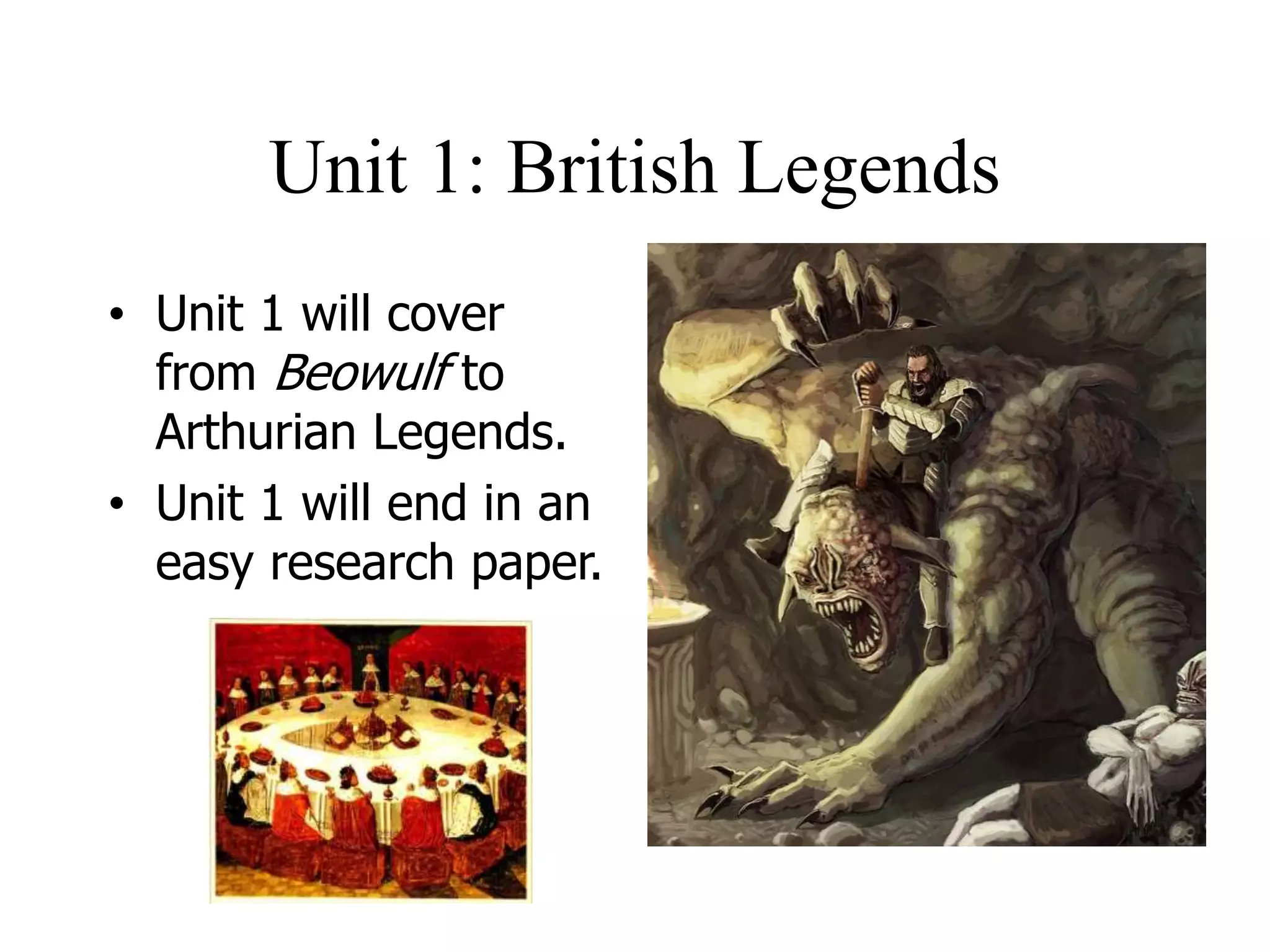
Unit 1: British Legends
• Unit 1 will cover
from Beowulf to
Arthurian Legends.
• Unit 1 will end in an
easy research paper.
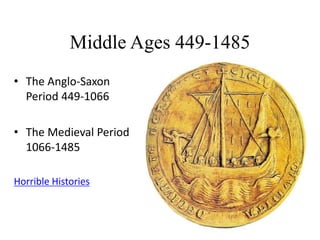
Middle Ages 449-1485
• The Anglo-Saxon
Period 449-1066
• The Medieval Period
1066-1485
Horrible Histories
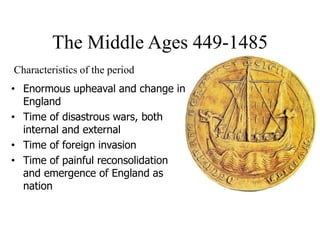
The Middle Ages 449-1485
• Enormous upheaval and change in
England
• Time of disastrous wars, both
internal and external
• Time of foreign invasion
• Time of painful reconsolidation
and emergence of England as
nation
Characteristics of the period
Anglo-Saxon Period
“Anglo-Saxon England was born of warfare,
remained forever a military society, and came to its
end in battle.” - J. R. Lander
In a society dominated by aggression,
what would you expect to be the Anglo-
Saxon attitude toward family life, the
role of women, art, literature, ethics and
work?
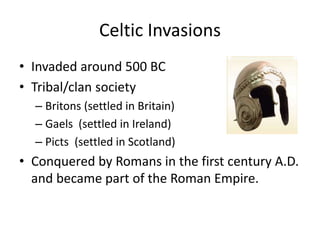
Celtic Invasions
• Invaded around 500 BC
• Tribal/clan society
– Britons (settled in Britain)
– Gaels (settled in Ireland)
– Picts (settled in Scotland)
• Conquered by Romans in the first century A.D.
and became part of the Roman Empire.
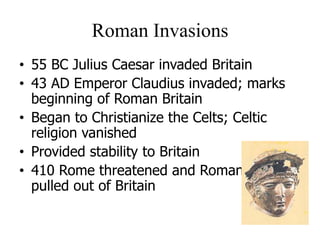
Roman Invasions
• 55 BC Julius Caesar invaded Britain
• 43 AD Emperor Claudius invaded; marks
beginning of Roman Britain
• Began to Christianize the Celts; Celtic
religion vanished
• Provided stability to Britain
• 410 Rome threatened and Romans
pulled out of Britain
Roman Invasions: What legacy did the
Romans leave?
• Created a system of roads/highways
• Created a system of aqueducts, which
moved water from one place to another.
• Provided an organized society which kept
other invaders out for several centuries
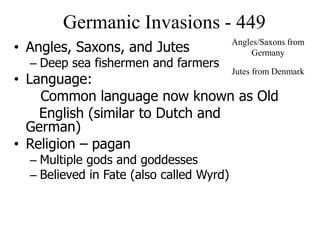
Germanic Invasions - 449
• Angles, Saxons, and Jutes
– Deep sea fishermen and farmers
• Language:
Common language now known as Old
English (similar to Dutch and
German)
• Religion – pagan
– Multiple gods and goddesses
– Believed in Fate (also called Wyrd)
Angles/Saxons from
Germany
Jutes from Denmark
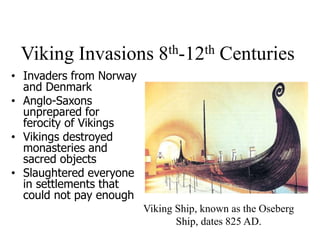
Viking Invasions 8th-12th Centuries
• Invaders from Norway
and Denmark
• Anglo-Saxons
unprepared for
ferocity of Vikings
• Vikings destroyed
monasteries and
sacred objects
• Slaughtered everyone
in settlements that
could not pay enough
Viking Ship, known as the Oseberg
Ship, dates 825 AD.
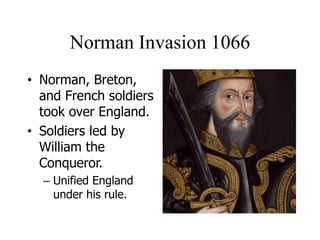
Norman Invasion 1066
• Norman, Breton,
and French soldiers
took over England.
• Soldiers led by
William the
Conqueror.
– Unified England
under his rule.
Anglo-Saxon Literature
• Oral tradition – poems and song committed to
memory and performed by scops, bards,
gleemen, or minstrels
• With coming of Christian Church, written
literature began to evolve
• Two important traditions in literature
heroic tradition – celebrates heroes
elegiac tradition – passing of earlier, better
times
Anglo-Saxon Civilization
• Common language
• Shared a heroic ideal; set of traditional heroes
• Admired men of outstanding courage
• Loyalty to leader and tribe
• Fierce personal valor
Anglo-Saxon Civilization
• Persons of rank received with grave courtesy
• Ruler generous to those who remain loyal
• Everyone aware of shortness of life & passing
of all things in the world
• Impersonal, irresistible fate determined most of
life (Wyrd or Fate)
• Heroic human will & courage allowed
individuals to control their own response to
fate
Anglo-Saxon Literature
• Poem based on early Celtic and Scandinavian
folk legends
• Scenery described is from Northumbria;
assumed that poet was Northumbrian monk
• Only manuscript available dates from the year
1000; discovered in the 18th century
Background Information
• Written sometime around 1000 A.D.
• Author unknown.
• Often referred to as the beginning of English
literature.
• Written in what is now called “Old English”
– Link to Beowulf's Battle with Grendel
• Only one complete original copy remains.
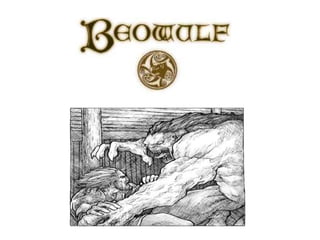
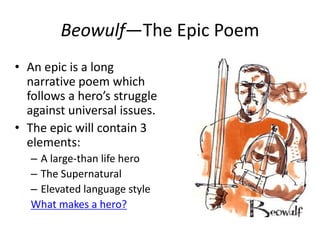
Beowulf—The Epic Poem
• An epic is a long
narrative poem which
follows a hero’s struggle
against universal issues.
• The epic will contain 3
elements:
– A large-than life hero
– The Supernatural
– Elevated language style
What makes a hero?
Elevated Language
Look for:
• Kennings (two-word phrase for a common
word)
– Ex: World-candle for sun or whale-road for ocean
• Caesura: A natural pause or break in the
middle of a line of poetry that is joined by the
use of a repeated vowel or consonant sound
• Symbolism
• High descriptive passages
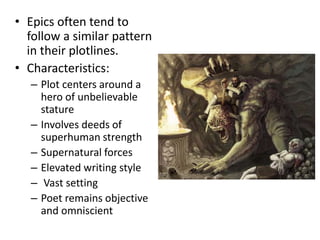
• Epics often tend to
follow a similar pattern
in their plotlines.
• Characteristics:
– Plot centers around a
hero of unbelievable
stature
– Involves deeds of
superhuman strength
– Supernatural forces
– Elevated writing style
– Vast setting
– Poet remains objective
and omniscient
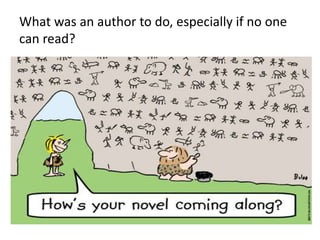
What was an author to do, especially if no one
can read?
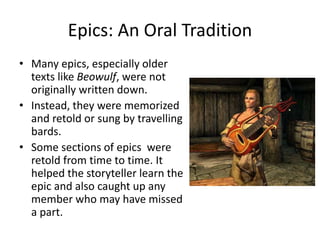
Epics: An Oral Tradition
• Many epics, especially older
texts like Beowulf, were not
originally written down.
• Instead, they were memorized
and retold or sung by travelling
bards.
• Some sections of epics were
retold from time to time. It
helped the storyteller learn the
epic and also caught up any
member who may have missed
a part.
The Bards
• These entertainers also served to bring news
from other areas.
– They travelled everywhere and heard many stories
and news going on in the area.
• They had no cell phones, so bards were the easiest way
to learn news.
– If a heroic deed had occurred in the area, it might
be blended into the stories that the bards told
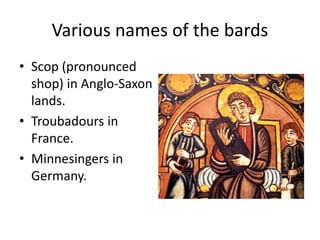
Various names of the bards
• Scop (pronounced
shop) in Anglo-Saxon
lands.
• Troubadours in
France.
• Minnesingers in
Germany.
Changing Stories
• Other influences also played a part in
changing the epics.
• The text of Beowulf shows both Norse pagan
belief and Christianity, often in the same line.
• This may have evolved as the storytellers
encountered villages with different beliefs.
Writing it Down
• When these stories which had been orally passed
on were finally written down, they were also
subject to many changes.
– Mistakes in translations
– Misunderstanding out-of-date slang
• Anglo-Saxon England was being Christianized, so
many texts show a mixture of pagan and Christian
beliefs.
– We often see an invocation of God as the “Almighty
Lord” followed closely by mention of pagan gods and
monsters.
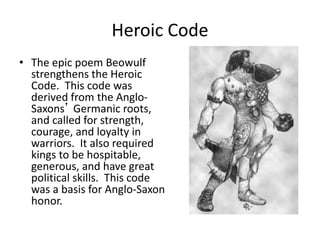
Heroic Code
• The epic poem Beowulf
strengthens the Heroic
Code. This code was
derived from the Anglo-
Saxons’ Germanic roots,
and called for strength,
courage, and loyalty in
warriors. It also required
kings to be hospitable,
generous, and have great
political skills. This code
was a basis for Anglo-Saxon
honor.
The Mead Hall
• Herot Hall—The hall where King Hrothgar and
his men celebrate.
• The mead hall was an important part of Anglo-
Saxon life.
• It was the social, governmental, emotional
center of an Anglo-Saxon village.
– Warriors would gather there to drink, party, and
celebrate their victories in battle.
• Mead is a honey-based wine.
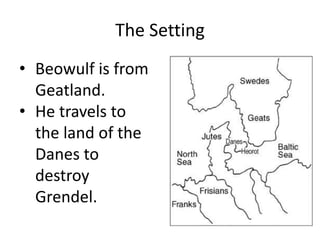
The Setting
• Beowulf is from
Geatland.
• He travels to
the land of the
Danes to
destroy
Grendel.
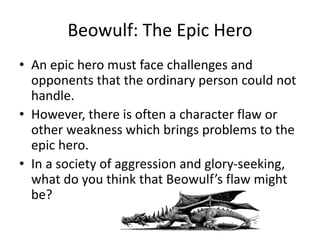
Beowulf: The Epic Hero
• An epic hero must face challenges and
opponents that the ordinary person could not
handle.
• However, there is often a character flaw or
other weakness which brings problems to the
epic hero.
• In a society of aggression and glory-seeking,
what do you think that Beowulf’s flaw might
be?
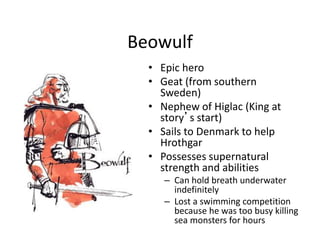
Beowulf
• Epic hero
• Geat (from southern
Sweden)
• Nephew of Higlac (King at
story’s start)
• Sails to Denmark to help
Hrothgar
• Possesses supernatural
strength and abilities
– Can hold breath underwater
indefinitely
– Lost a swimming competition
because he was too busy killing
sea monsters for hours
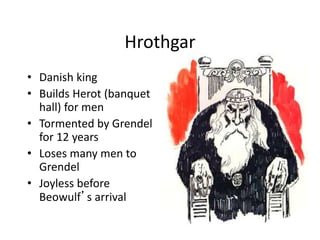
Hrothgar
• Danish king
• Builds Herot (banquet
hall) for men
• Tormented by Grendel
for 12 years
• Loses many men to
Grendel
• Joyless before
Beowulf’s arrival
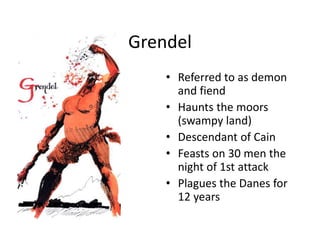
Grendel
• Referred to as demon
and fiend
• Haunts the moors
(swampy land)
• Descendant of Cain
• Feasts on 30 men the
night of 1st attack
• Plagues the Danes for
12 years
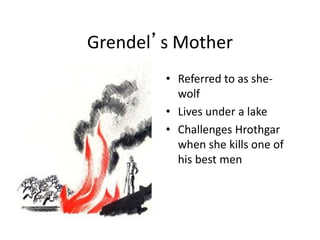
Grendel’s Mother
• Referred to as she-
wolf
• Lives under a lake
• Challenges Hrothgar
when she kills one of
his best men
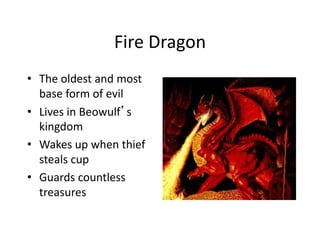
Fire Dragon
• The oldest and most
base form of evil
• Lives in Beowulf’s
kingdom
• Wakes up when thief
steals cup
• Guards countless
treasures
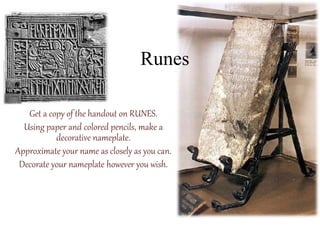
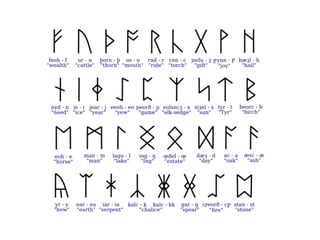
Runes
Get a copy of the handout on RUNES.
Using paper and colored pencils, make a
decorative nameplate.
Approximate your name as closely as you can.
Decorate your nameplate however you wish.
Oral Tradition Activity
• This activity will be done individually.
• You will create a short epic of your own. This does not have
to be extremely long, but it must be at least two pages
(one page front and back).
• You need to have a several characters, a hero with a
supernatural ability of some sort, conflicts, monsters, and a
final resolution.
• Use your imagination! Think about the Anglo-Saxon’s
warrior culture, and create a story about your own epic
hero who fights for good and for glory. You will then
present this story to the class with your group.
– This activity will be graded.
Anglo-Saxons and Beowulf

  • 1.
    Unit 1: BritishLegends • Unit 1 will cover from Beowulf to Arthurian Legends. • Unit 1 will end in an easy research paper.
  • 2.
    Middle Ages 449-1485 •The Anglo-Saxon Period 449-1066 • The Medieval Period 1066-1485 Horrible Histories
  • 3.
    The Middle Ages449-1485 • Enormous upheaval and change in England • Time of disastrous wars, both internal and external • Time of foreign invasion • Time of painful reconsolidation and emergence of England as nation Characteristics of the period
  • 4.
    Anglo-Saxon Period “Anglo-Saxon Englandwas born of warfare, remained forever a military society, and came to its end in battle.” - J. R. Lander In a society dominated by aggression, what would you expect to be the Anglo- Saxon attitude toward family life, the role of women, art, literature, ethics and work?
  • 5.
    Celtic Invasions • Invadedaround 500 BC • Tribal/clan society – Britons (settled in Britain) – Gaels (settled in Ireland) – Picts (settled in Scotland) • Conquered by Romans in the first century A.D. and became part of the Roman Empire.
  • 6.
    Roman Invasions • 55BC Julius Caesar invaded Britain • 43 AD Emperor Claudius invaded; marks beginning of Roman Britain • Began to Christianize the Celts; Celtic religion vanished • Provided stability to Britain • 410 Rome threatened and Romans pulled out of Britain
  • 7.
    Roman Invasions: Whatlegacy did the Romans leave? • Created a system of roads/highways • Created a system of aqueducts, which moved water from one place to another. • Provided an organized society which kept other invaders out for several centuries
  • 8.
    Germanic Invasions -449 • Angles, Saxons, and Jutes – Deep sea fishermen and farmers • Language: Common language now known as Old English (similar to Dutch and German) • Religion – pagan – Multiple gods and goddesses – Believed in Fate (also called Wyrd) Angles/Saxons from Germany Jutes from Denmark
  • 9.
    Viking Invasions 8th-12thCenturies • Invaders from Norway and Denmark • Anglo-Saxons unprepared for ferocity of Vikings • Vikings destroyed monasteries and sacred objects • Slaughtered everyone in settlements that could not pay enough Viking Ship, known as the Oseberg Ship, dates 825 AD.
  • 10.
    Norman Invasion 1066 •Norman, Breton, and French soldiers took over England. • Soldiers led by William the Conqueror. – Unified England under his rule.
  • 11.
    Anglo-Saxon Literature • Oraltradition – poems and song committed to memory and performed by scops, bards, gleemen, or minstrels • With coming of Christian Church, written literature began to evolve • Two important traditions in literature heroic tradition – celebrates heroes elegiac tradition – passing of earlier, better times
  • 12.
    Anglo-Saxon Civilization • Commonlanguage • Shared a heroic ideal; set of traditional heroes • Admired men of outstanding courage • Loyalty to leader and tribe • Fierce personal valor
  • 13.
    Anglo-Saxon Civilization • Personsof rank received with grave courtesy • Ruler generous to those who remain loyal • Everyone aware of shortness of life & passing of all things in the world • Impersonal, irresistible fate determined most of life (Wyrd or Fate) • Heroic human will & courage allowed individuals to control their own response to fate
  • 14.
    Anglo-Saxon Literature • Poembased on early Celtic and Scandinavian folk legends • Scenery described is from Northumbria; assumed that poet was Northumbrian monk • Only manuscript available dates from the year 1000; discovered in the 18th century
  • 16.
    Background Information • Writtensometime around 1000 A.D. • Author unknown. • Often referred to as the beginning of English literature. • Written in what is now called “Old English” – Link to Beowulf's Battle with Grendel • Only one complete original copy remains.
  • 17.
    Beowulf—The Epic Poem •An epic is a long narrative poem which follows a hero’s struggle against universal issues. • The epic will contain 3 elements: – A large-than life hero – The Supernatural – Elevated language style What makes a hero?
  • 18.
    Elevated Language Look for: •Kennings (two-word phrase for a common word) – Ex: World-candle for sun or whale-road for ocean • Caesura: A natural pause or break in the middle of a line of poetry that is joined by the use of a repeated vowel or consonant sound • Symbolism • High descriptive passages
  • 19.
    • Epics oftentend to follow a similar pattern in their plotlines. • Characteristics: – Plot centers around a hero of unbelievable stature – Involves deeds of superhuman strength – Supernatural forces – Elevated writing style – Vast setting – Poet remains objective and omniscient
  • 20.
    What was anauthor to do, especially if no one can read?
  • 21.
    Epics: An OralTradition • Many epics, especially older texts like Beowulf, were not originally written down. • Instead, they were memorized and retold or sung by travelling bards. • Some sections of epics were retold from time to time. It helped the storyteller learn the epic and also caught up any member who may have missed a part.
  • 22.
    The Bards • Theseentertainers also served to bring news from other areas. – They travelled everywhere and heard many stories and news going on in the area. • They had no cell phones, so bards were the easiest way to learn news. – If a heroic deed had occurred in the area, it might be blended into the stories that the bards told
  • 23.
    Various names ofthe bards • Scop (pronounced shop) in Anglo-Saxon lands. • Troubadours in France. • Minnesingers in Germany.
  • 24.
    Changing Stories • Otherinfluences also played a part in changing the epics. • The text of Beowulf shows both Norse pagan belief and Christianity, often in the same line. • This may have evolved as the storytellers encountered villages with different beliefs.
  • 25.
    Writing it Down •When these stories which had been orally passed on were finally written down, they were also subject to many changes. – Mistakes in translations – Misunderstanding out-of-date slang • Anglo-Saxon England was being Christianized, so many texts show a mixture of pagan and Christian beliefs. – We often see an invocation of God as the “Almighty Lord” followed closely by mention of pagan gods and monsters.
  • 26.
    Heroic Code • Theepic poem Beowulf strengthens the Heroic Code. This code was derived from the Anglo- Saxons’ Germanic roots, and called for strength, courage, and loyalty in warriors. It also required kings to be hospitable, generous, and have great political skills. This code was a basis for Anglo-Saxon honor.
  • 27.
    The Mead Hall •Herot Hall—The hall where King Hrothgar and his men celebrate. • The mead hall was an important part of Anglo- Saxon life. • It was the social, governmental, emotional center of an Anglo-Saxon village. – Warriors would gather there to drink, party, and celebrate their victories in battle. • Mead is a honey-based wine.
  • 28.
    The Setting • Beowulfis from Geatland. • He travels to the land of the Danes to destroy Grendel.
  • 29.
    Beowulf: The EpicHero • An epic hero must face challenges and opponents that the ordinary person could not handle. • However, there is often a character flaw or other weakness which brings problems to the epic hero. • In a society of aggression and glory-seeking, what do you think that Beowulf’s flaw might be?
  • 30.
    Beowulf • Epic hero •Geat (from southern Sweden) • Nephew of Higlac (King at story’s start) • Sails to Denmark to help Hrothgar • Possesses supernatural strength and abilities – Can hold breath underwater indefinitely – Lost a swimming competition because he was too busy killing sea monsters for hours
  • 31.
    Hrothgar • Danish king •Builds Herot (banquet hall) for men • Tormented by Grendel for 12 years • Loses many men to Grendel • Joyless before Beowulf’s arrival
  • 32.
    Grendel • Referred toas demon and fiend • Haunts the moors (swampy land) • Descendant of Cain • Feasts on 30 men the night of 1st attack • Plagues the Danes for 12 years
  • 33.
    Grendel’s Mother • Referredto as she- wolf • Lives under a lake • Challenges Hrothgar when she kills one of his best men
  • 34.
    Fire Dragon • Theoldest and most base form of evil • Lives in Beowulf’s kingdom • Wakes up when thief steals cup • Guards countless treasures
  • 35.
    Runes Get a copyof the handout on RUNES. Using paper and colored pencils, make a decorative nameplate. Approximate your name as closely as you can. Decorate your nameplate however you wish.
  • 37.
    Oral Tradition Activity •This activity will be done individually. • You will create a short epic of your own. This does not have to be extremely long, but it must be at least two pages (one page front and back). • You need to have a several characters, a hero with a supernatural ability of some sort, conflicts, monsters, and a final resolution. • Use your imagination! Think about the Anglo-Saxon’s warrior culture, and create a story about your own epic hero who fights for good and for glory. You will then present this story to the class with your group. – This activity will be graded.