THE VICTORIAN AGE
(1837-1901)
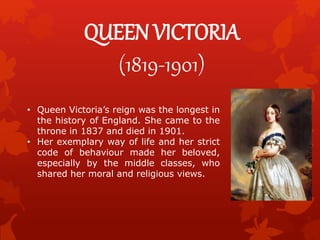
QUEEN VICTORIA
(1819-1901)
• Queen Victoria’s reign was the longest in
the history of England. She came to the
throne in 1837 and died in 1901.
• Her exemplary way of life and her strict
code of behaviour made her beloved,
especially by the middle classes, who
shared her moral and religious views.
VICTORIAN AGE
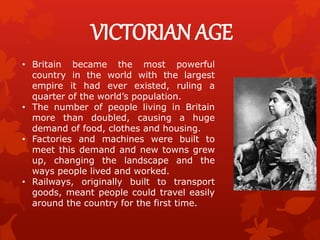
• Britain became the most powerful
country in the world with the largest
empire it had ever existed, ruling a
quarter of the world’s population.
• The number of people living in Britain
more than doubled, causing a huge
demand of food, clothes and housing.
• Factories and machines were built to
meet this demand and new towns grew
up, changing the landscape and the
ways people lived and worked.
• Railways, originally built to transport
goods, meant people could travel easily
around the country for the first time.
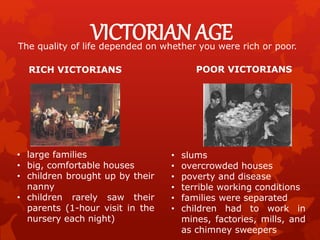
VICTORIAN AGEThe quality of life depended on whether you were rich or poor.
RICH VICTORIANS
• large families
• big, comfortable houses
• children brought up by their
nanny
• children rarely saw their
parents (1-hour visit in the
nursery each night)
POOR VICTORIANS
• slums
• overcrowded houses
• poverty and disease
• terrible working conditions
• families were separated
• children had to work in
mines, factories, mills, and
as chimney sweepers
VICTORIAN AGE
CHILD LABOUR
CHILDREN (as young as 5) WERE
EMPLOYED FOR 3 SIMPLE REASONS:
1. There were lots of them in
orphanages and they could be
easily replaced if accidents
occurred.
2. They were cheaper than adults.
3. They were small enough to
crawl under machinery to tie
up broken threads.
VICTORIAN AGE
THE VICTORIAN NOVEL
• The omniscient narrator provided a comment on the plot and
erected a barrier between right and wrong.
• The setting chosen by most
Victorian novelists was the city,
which was the main symbol of
industrial civilisation and the
expression of anonymous lives and
lost identities.
• The plot was long and often complicated by subplots.
• Retribution and punishment were to be found in the last
chapter, where the whole texture of events, adventures and
incidents had to be explained and justified.
VICTORIAN AGE
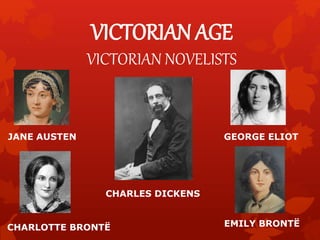
VICTORIAN NOVELISTS
JANE AUSTEN GEORGE ELIOT
EMILY BRONTËCHARLOTTE BRONTË
CHARLES DICKENS

2 the victorian age

  • 1.
  • 2.
    QUEEN VICTORIA (1819-1901) • QueenVictoria’s reign was the longest in the history of England. She came to the throne in 1837 and died in 1901. • Her exemplary way of life and her strict code of behaviour made her beloved, especially by the middle classes, who shared her moral and religious views.
  • 3.
    VICTORIAN AGE • Britainbecame the most powerful country in the world with the largest empire it had ever existed, ruling a quarter of the world’s population. • The number of people living in Britain more than doubled, causing a huge demand of food, clothes and housing. • Factories and machines were built to meet this demand and new towns grew up, changing the landscape and the ways people lived and worked. • Railways, originally built to transport goods, meant people could travel easily around the country for the first time.
  • 4.
    VICTORIAN AGEThe qualityof life depended on whether you were rich or poor. RICH VICTORIANS • large families • big, comfortable houses • children brought up by their nanny • children rarely saw their parents (1-hour visit in the nursery each night) POOR VICTORIANS • slums • overcrowded houses • poverty and disease • terrible working conditions • families were separated • children had to work in mines, factories, mills, and as chimney sweepers
  • 5.
    VICTORIAN AGE CHILD LABOUR CHILDREN(as young as 5) WERE EMPLOYED FOR 3 SIMPLE REASONS: 1. There were lots of them in orphanages and they could be easily replaced if accidents occurred. 2. They were cheaper than adults. 3. They were small enough to crawl under machinery to tie up broken threads.
  • 6.
    VICTORIAN AGE THE VICTORIANNOVEL • The omniscient narrator provided a comment on the plot and erected a barrier between right and wrong. • The setting chosen by most Victorian novelists was the city, which was the main symbol of industrial civilisation and the expression of anonymous lives and lost identities. • The plot was long and often complicated by subplots. • Retribution and punishment were to be found in the last chapter, where the whole texture of events, adventures and incidents had to be explained and justified.
  • 7.
    VICTORIAN AGE VICTORIAN NOVELISTS JANEAUSTEN GEORGE ELIOT EMILY BRONTËCHARLOTTE BRONTË CHARLES DICKENS