3
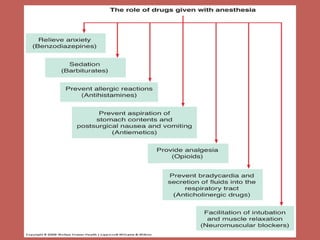
Anesthetics, Analgesics &
Narcotics
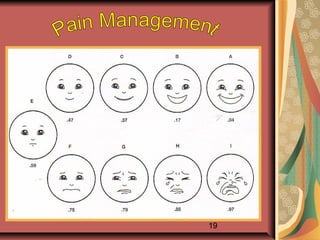
Pain Management
Opioids (Narcotics)
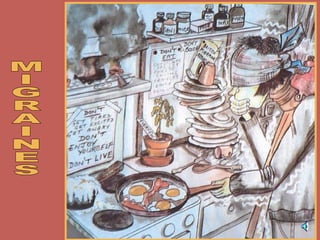
Management of Migraine
4
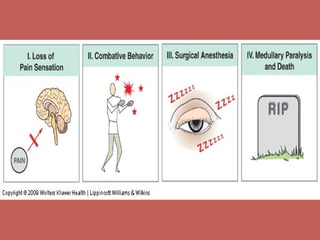
General Anesthesia
Reversible unconsciousness
Absence of a response to painful
stimuli
Characteristics
Unawareness
Analgesia
Skeletal & muscle relaxation
Amnesia on recovery
6
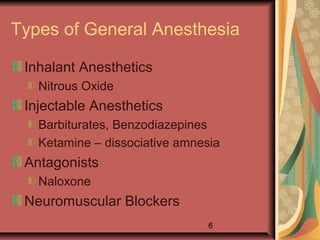
Types of General Anesthesia
Inhalant Anesthetics
Nitrous Oxide
Injectable Anesthetics
Barbiturates, Benzodiazepines
Ketamine – dissociative amnesia
Antagonists
Naloxone
Neuromuscular Blockers
7
8
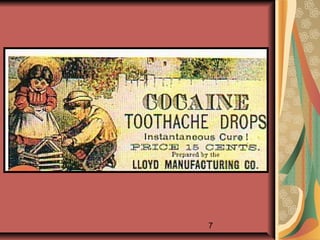
Local Anesthetics
Transient, reversible loss of sensation
in a specific body area
No change in alertness or mental
functioning
Indications
Sunburn, bites, cuts, dental work,
hemorrhoids
Chemical Agents
Benzocaine, lidocaine, cocaine
10
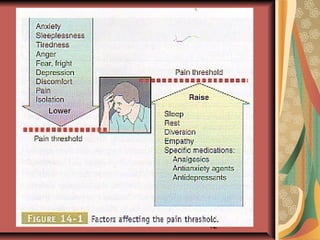
What is Pain?
An unpleasant sensory or emotional
experience which we primarily associate
with tissue damage.
Pathway  damages the nerve  pain impulse
to brain 
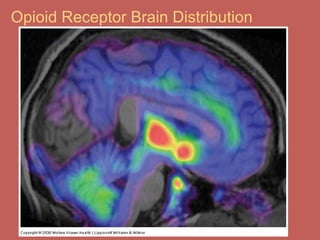
Opioid Receptor Brain Distribution
12
13
16
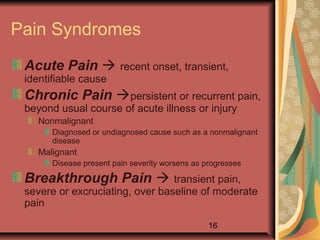
Pain Syndromes
Acute Pain  recent onset, transient,
identifiable cause
Chronic Pain persistent or recurrent pain,
beyond usual course of acute illness or injury
Nonmalignant
Diagnosed or undiagnosed cause such as a nonmalignant
disease
Malignant
Disease present pain severity worsens as progresses
Breakthrough Pain  transient pain,
severe or excruciating, over baseline of moderate
pain
18
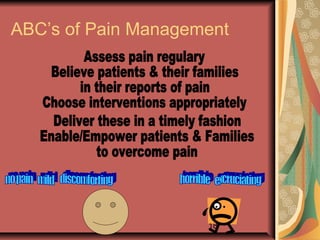
ABC’s of Pain Management
19
20
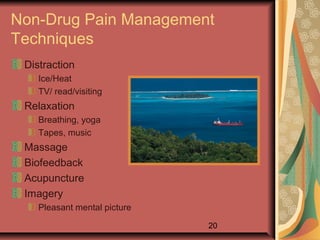
Non-Drug Pain Management
Techniques
Distraction
Ice/Heat
TV/ read/visiting
Relaxation
Breathing, yoga
Tapes, music
Massage
Biofeedback
Acupuncture
Imagery
Pleasant mental picture
21
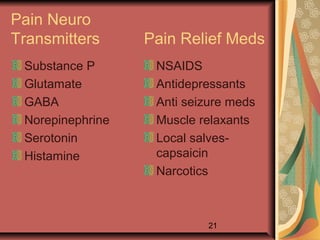
Pain Neuro
Transmitters Pain Relief Meds
Substance P
Glutamate
GABA
Norepinephrine
Serotonin
Histamine
NSAIDS
Antidepressants
Anti seizure meds
Muscle relaxants
Local salves-
capsaicin
Narcotics
22
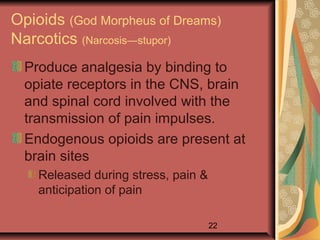
Opioids (God Morpheus of Dreams)
Narcotics (Narcosis—stupor)
Produce analgesia by binding to
opiate receptors in the CNS, brain
and spinal cord involved with the
transmission of pain impulses.
Endogenous opioids are present at
brain sites
Released during stress, pain &
anticipation of pain
23
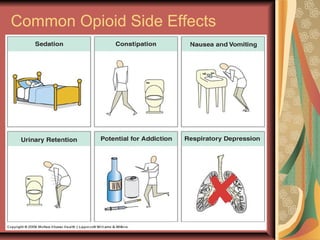
Common Opioid Side Effects
24
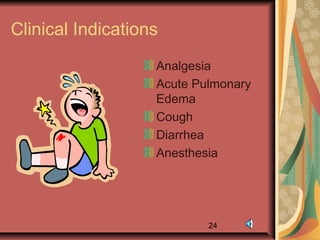
Clinical Indications
Analgesia
Acute Pulmonary
Edema
Cough
Diarrhea
Anesthesia
25
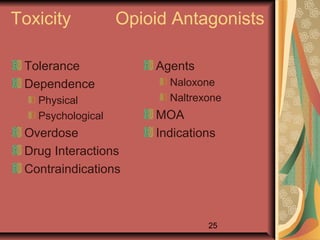
Toxicity Opioid Antagonists
Tolerance
Dependence
Physical
Psychological
Overdose
Drug Interactions
Contraindications
Agents
Naloxone
Naltrexone
MOA
Indications
26
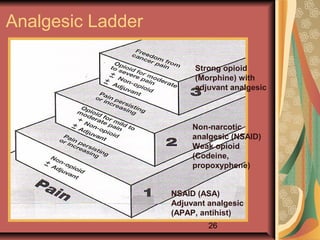
Analgesic Ladder
NSAID (ASA)
Adjuvant analgesic
(APAP, antihist)
Non-narcotic
analgesic (NSAID)
Weak opioid
(Codeine,
propoxyphene)
Strong opioid
(Morphine) with
adjuvant analgesic
27
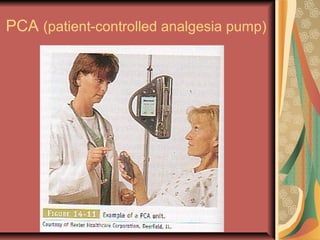
PCA (patient-controlled analgesia pump)
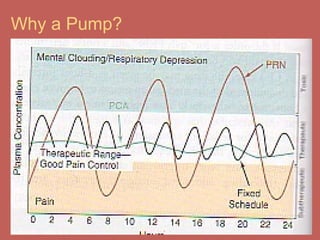
Why a Pump?
29
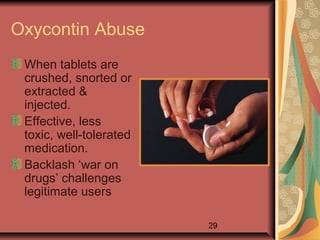
Oxycontin Abuse
When tablets are
crushed, snorted or
extracted &
injected.
Effective, less
toxic, well-tolerated
medication.
Backlash ‘war on
drugs’ challenges
legitimate users
30
Non-Opioid Agents
Non-Steroidal Anti-Inflammatory Drugs (NSAIDS)
Aspirin (prototype)
Indications
Anti-inflammatory
Analgesic
Anti-pyretic
Anti-platelet
Dosage
Toxicity
Reye’s Syndrome
brain pressure
COX-2 Inhibitors
Celebrex
Mobic
MOA
Toxicity
32
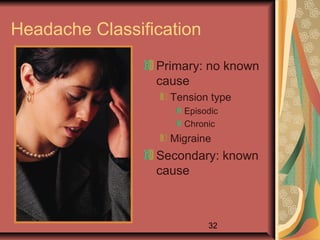
Headache Classification
Primary: no known
cause
Tension type
Episodic
Chronic
Migraine
Secondary: known
cause
33
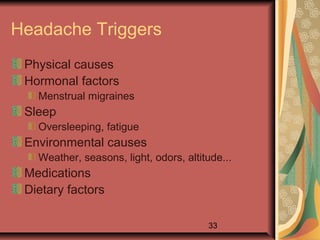
Headache Triggers
Physical causes
Hormonal factors
Menstrual migraines
Sleep
Oversleeping, fatigue
Environmental causes
Weather, seasons, light, odors, altitude...
Medications
Dietary factors
34
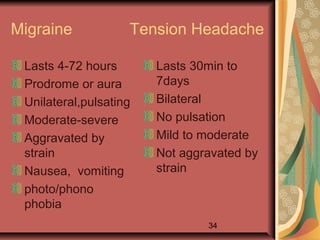
Migraine Tension Headache
Lasts 4-72 hours
Prodrome or aura
Unilateral,pulsating
Moderate-severe
Aggravated by
strain
Nausea, vomiting
photo/phono
phobia
Lasts 30min to
7days
Bilateral
No pulsation
Mild to moderate
Not aggravated by
strain
35
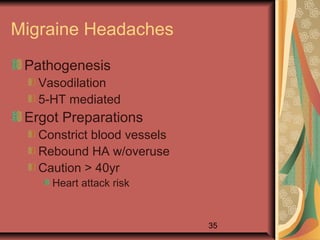
Migraine Headaches
Pathogenesis
Vasodilation
5-HT mediated
Ergot Preparations
Constrict blood vessels
Rebound HA w/overuse
Caution > 40yr
Heart attack risk
36
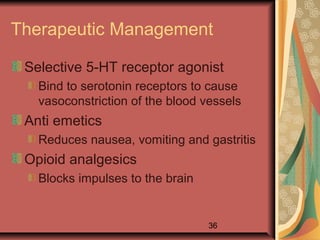
Therapeutic Management
Selective 5-HT receptor agonist
Bind to serotonin receptors to cause
vasoconstriction of the blood vessels
Anti emetics
Reduces nausea, vomiting and gastritis
Opioid analgesics
Blocks impulses to the brain
37
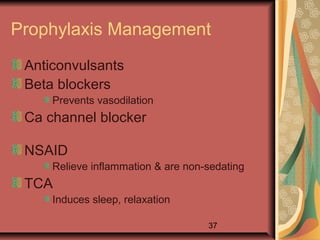
Prophylaxis Management
Anticonvulsants
Beta blockers
Prevents vasodilation
Ca channel blocker
NSAID
Relieve inflammation & are non-sedating
TCA
Induces sleep, relaxation
38
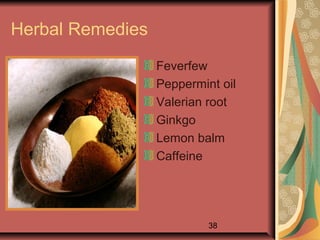
Herbal Remedies
Feverfew
Peppermint oil
Valerian root
Ginkgo
Lemon balm
Caffeine
39
Nondrug Treatments
Physical Therapy
Acupuncture
Acupressure
Massage
Aroma therapy
40
Summary Slide
General Anesthesia
ABC’s of Pain Management (drug &
nondrug)
Narcotics/Opiates Organ Effects
Common Opioid Side Effects
Analgesic Ladder
Non-Steroidal Anti-Inflammatory
Drugs (NSAIDS)
41
Summary Slide (cont.)
Headache Classification
Therapeutic Agents

Anesthetics, Analgesics & Narcotics