


After effects of bacterial
meningitis and septicaemia:
How and why?
Dr Andrew Riordan
Meningococcal disease
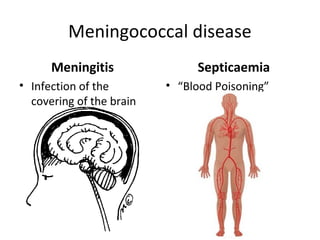
Meningitis
• Infection of the
covering of the brain
Septicaemia
• “Blood Poisoning”
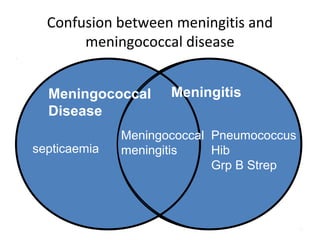
Confusion between meningitis and
meningococcal disease
Meningococcal
Disease
Meningitis
Meningococcal
meningitissepticaemia
Pneumococcus
Hib
Grp B Strep
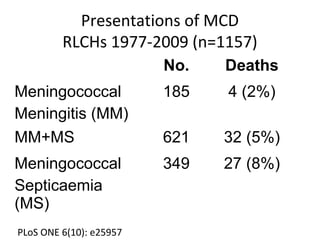
Presentations of MCD
RLCHs 1977-2009 (n=1157)
No. Deaths
Meningococcal
Meningitis (MM)
185 4 (2%)
MM+MS 621 32 (5%)
Meningococcal
Septicaemia
(MS)
349 27 (8%)
PLoS ONE 6(10): e25957
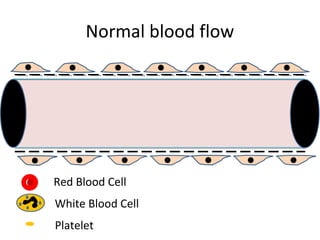
Normal blood flow
Red Blood Cell
White Blood Cell
Platelet
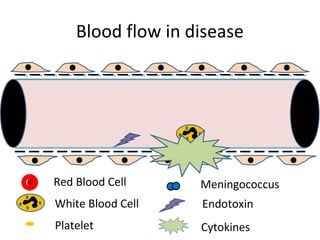
Blood flow in disease
Red Blood Cell
White Blood Cell
Platelet
Meningococcus
Endotoxin
Cytokines
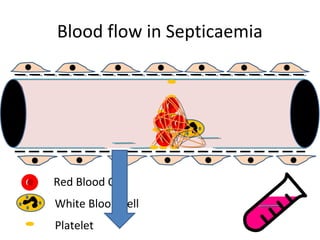
Blood flow in Septicaemia
Red Blood Cell
White Blood Cell
Platelet
Consequences of Septicaemia
• Blood that doesn’t clot in a test tube (DIC)
• Fluid leaking out of blood vessels (shock)
• Clots happening in blood vessels (thrombosis)
• Not enough oxygen getting to tissues
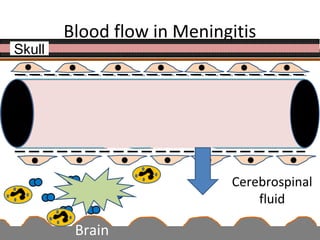
Blood flow in Meningitis
Brain
Cerebrospinal
fluid
Skull
Consequences of Meningitis
• White blood cells and bacteria in the
cerebrospinal fluid (CSF)
• Fluid leaking out of blood vessels (brain
swelling)
• Decreased blood flow to brain
• Not enough oxygen getting to brain
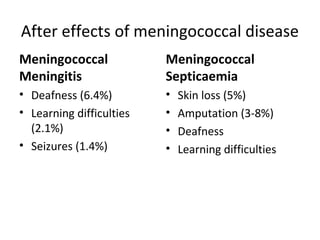
After effects of meningococcal disease
Meningococcal
Meningitis
• Deafness (6.4%)
• Learning difficulties
(2.1%)
• Seizures (1.4%)
Meningococcal
Septicaemia
• Skin loss (5%)
• Amputation (3-8%)
• Deafness
• Learning difficulties
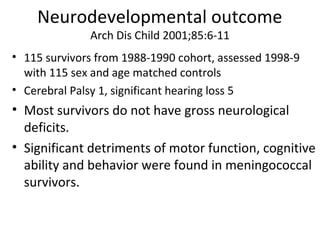
Neurodevelopmental outcome
Arch Dis Child 2001;85:6-11
• 115 survivors from 1988-1990 cohort, assessed 1998-9
with 115 sex and age matched controls
• Cerebral Palsy 1, significant hearing loss 5
• Most survivors do not have gross neurological
deficits.
• Significant detriments of motor function, cognitive
ability and behavior were found in meningococcal
survivors.
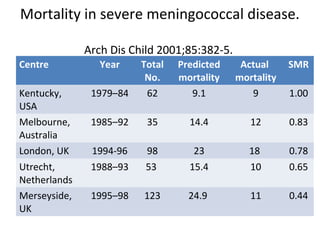
Mortality in severe meningococcal disease.
Arch Dis Child 2001;85:382-5.
Centre Year Total
No.
Predicted
mortality
Actual
mortality
SMR
Kentucky,
USA
1979–84 62 9.1 9 1.00
Melbourne,
Australia
1985–92 35 14.4 12 0.83
London, UK 1994-96 98 23 18 0.78
Utrecht,
Netherlands
1988–93 53 15.4 10 0.65
Merseyside,
UK
1995–98 123 24.9 11 0.44
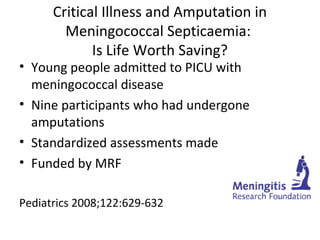
Critical Illness and Amputation in
Meningococcal Septicaemia:
Is Life Worth Saving?
• Young people admitted to PICU with
meningococcal disease
• Nine participants who had undergone
amputations
• Standardized assessments made
• Funded by MRF
Pediatrics 2008;122:629-632
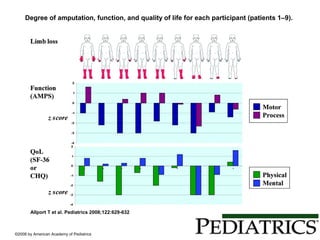
Degree of amputation, function, and quality of life for each participant (patients 1–9).
Allport T et al. Pediatrics 2008;122:629-632
©2008 by American Academy of Pediatrics
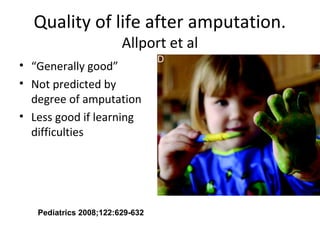
Quality of life after amputation.
Allport et al
• “Generally good”
• Not predicted by
degree of amputation
• Less good if learning
difficulties
Pediatrics 2008;122:629-632
After effects of meningococcal disease
Meningococcal
Meningitis
Infection of the covering
of the brain can lead to;
•Deafness
•Learning difficulties
•Seizures
Meningococcal
Septicaemia
Infection in the
bloodstream can lead to;
•Skin loss
•Amputation
•Deafness
•Learning difficulties
Any
questions?

Andrew Riordan @ MRF Childhood Amputee Day - Pushing the Boundaries

  • 1.
    After effects ofbacterial meningitis and septicaemia: How and why? Dr Andrew Riordan
  • 2.
    Meningococcal disease Meningitis • Infectionof the covering of the brain Septicaemia • “Blood Poisoning”
  • 3.
    Confusion between meningitisand meningococcal disease Meningococcal Disease Meningitis Meningococcal meningitissepticaemia Pneumococcus Hib Grp B Strep
  • 4.
    Presentations of MCD RLCHs1977-2009 (n=1157) No. Deaths Meningococcal Meningitis (MM) 185 4 (2%) MM+MS 621 32 (5%) Meningococcal Septicaemia (MS) 349 27 (8%) PLoS ONE 6(10): e25957
  • 5.
    Normal blood flow RedBlood Cell White Blood Cell Platelet
  • 6.
    Blood flow indisease Red Blood Cell White Blood Cell Platelet Meningococcus Endotoxin Cytokines
  • 7.
    Blood flow inSepticaemia Red Blood Cell White Blood Cell Platelet
  • 8.
    Consequences of Septicaemia •Blood that doesn’t clot in a test tube (DIC) • Fluid leaking out of blood vessels (shock) • Clots happening in blood vessels (thrombosis) • Not enough oxygen getting to tissues
  • 9.
    Blood flow inMeningitis Brain Cerebrospinal fluid Skull
  • 10.
    Consequences of Meningitis •White blood cells and bacteria in the cerebrospinal fluid (CSF) • Fluid leaking out of blood vessels (brain swelling) • Decreased blood flow to brain • Not enough oxygen getting to brain
  • 11.
    After effects ofmeningococcal disease Meningococcal Meningitis • Deafness (6.4%) • Learning difficulties (2.1%) • Seizures (1.4%) Meningococcal Septicaemia • Skin loss (5%) • Amputation (3-8%) • Deafness • Learning difficulties
  • 12.
    Neurodevelopmental outcome Arch DisChild 2001;85:6-11 • 115 survivors from 1988-1990 cohort, assessed 1998-9 with 115 sex and age matched controls • Cerebral Palsy 1, significant hearing loss 5 • Most survivors do not have gross neurological deficits. • Significant detriments of motor function, cognitive ability and behavior were found in meningococcal survivors.
  • 13.
    Mortality in severemeningococcal disease. Arch Dis Child 2001;85:382-5. Centre Year Total No. Predicted mortality Actual mortality SMR Kentucky, USA 1979–84 62 9.1 9 1.00 Melbourne, Australia 1985–92 35 14.4 12 0.83 London, UK 1994-96 98 23 18 0.78 Utrecht, Netherlands 1988–93 53 15.4 10 0.65 Merseyside, UK 1995–98 123 24.9 11 0.44
  • 14.
    Critical Illness andAmputation in Meningococcal Septicaemia: Is Life Worth Saving? • Young people admitted to PICU with meningococcal disease • Nine participants who had undergone amputations • Standardized assessments made • Funded by MRF Pediatrics 2008;122:629-632
  • 15.
    Degree of amputation,function, and quality of life for each participant (patients 1–9). Allport T et al. Pediatrics 2008;122:629-632 ©2008 by American Academy of Pediatrics
  • 16.
    Quality of lifeafter amputation. Allport et al • “Generally good” • Not predicted by degree of amputation • Less good if learning difficulties Pediatrics 2008;122:629-632
  • 17.
    After effects ofmeningococcal disease Meningococcal Meningitis Infection of the covering of the brain can lead to; •Deafness •Learning difficulties •Seizures Meningococcal Septicaemia Infection in the bloodstream can lead to; •Skin loss •Amputation •Deafness •Learning difficulties
  • 18.

Editor's Notes

  • #16 Degree of amputation, function, and quality of life for each participant (patients 1–9). Participants' results are ordered according limb loss degree (body maps). Functional ability was measured with the AMPS.6 The AMPS assesses the quality of performance of activities of daily living. Participants choose and perform 2 everyday tasks; results are adjusted for the difficulty of the task. Blue bars show motor scores (participants' ability to move themselves and the task objects). Purple bars show process or cognitive scores (how participants organize, sequence, and adapt to problems during the tasks). Quality of life was measured with Short Form-36 (>16 years of age) or the Child Health Questionnaire.7 Green bars show physical scores and blue bars mental/psychosocial summary scores. AMPS and Short Form-36/Child Health Questionnaire results are presented as z scores (number of SDs from the mean for age and gender).