Health Analytics
February 2019
Analytics in Action
http://DSign4.education
• Why do healthcare establishments need to develop
in-house data science expertise, or become
increasingly reliant on external consultants and
software editors.
• How do the authors explain the lack of specialists
in this field?
• How do they support their contention that the
industry's senior leadership would rather rely on
their own instincts rather the data?
• What is the nature of the build vs buy dilema?
Using It or Losing It?
Introduction
Martin Heusch and Timothy Mauser, «Using It or
Losing It? The Case for Data Scientists Inside
Health Care"
Introduction
©2016 L. SCHLENKER
Agenda
Introduction
Definitions
Infrastructure
Use Scenarios
Limits
• The use of data, analysis, and predictive
modeling to improve teaching and
learning
• Analytics models aggregate data in new
ways
• Help students and institutions
understand past, present and future
academic performance
• Impact on personalized learning,
pedagogical practices, curriculum
development, institutional planning, and
research
Health Analytics
Technology
Inputs
Prediction
Evaluation
Actions
Outcomes
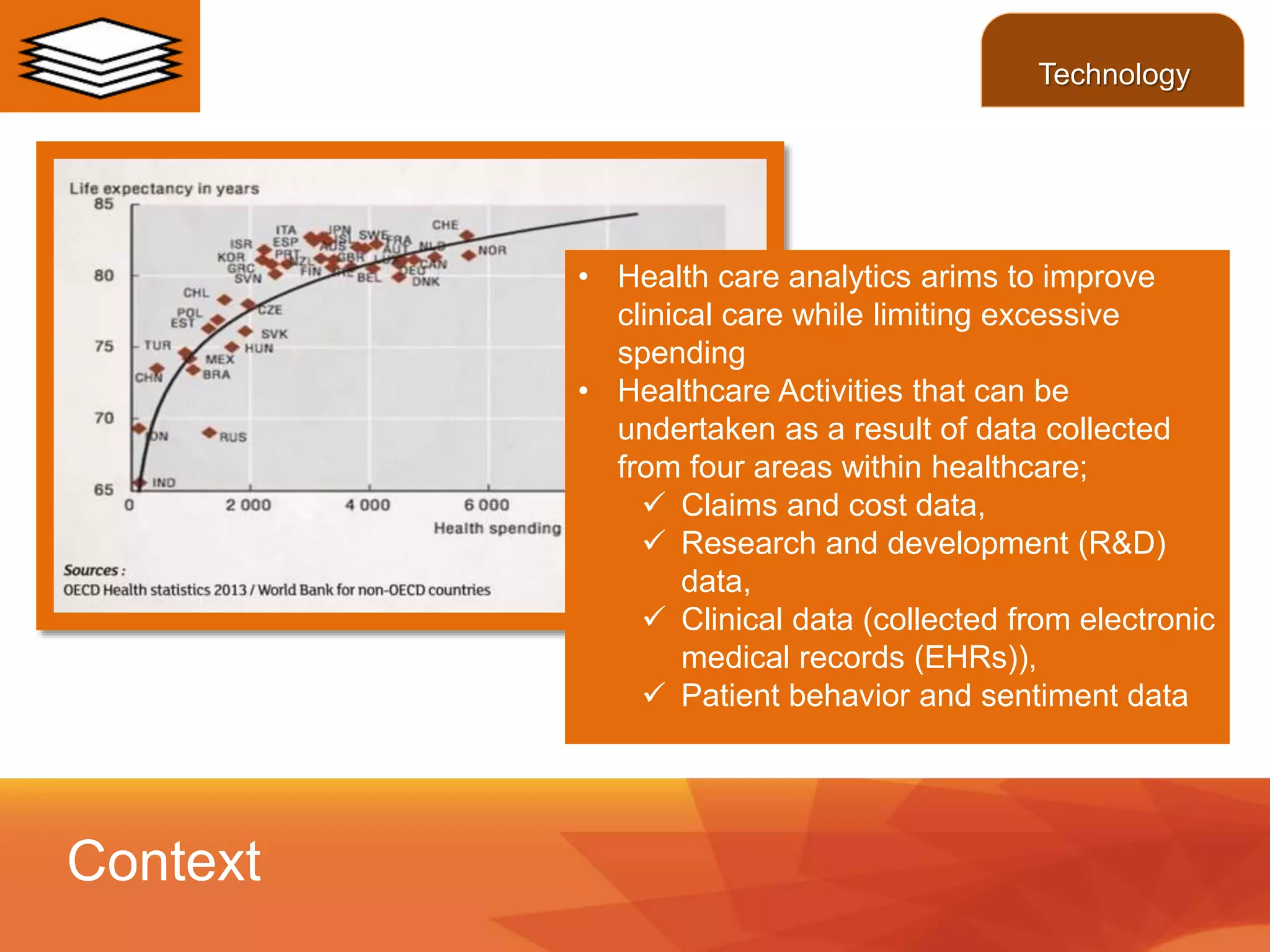
• Health care analytics arims to improve
clinical care while limiting excessive
spending
• Healthcare Activities that can be
undertaken as a result of data collected
from four areas within healthcare;
 Claims and cost data,
 Research and development (R&D)
data,
 Clinical data (collected from electronic
medical records (EHRs)),
 Patient behavior and sentiment data
Context
Technology
• The journey from fee-for-service to value-
based contracts
• Understanding the wants and needs of health
care consumers
• Defining the role of patient experience in
marketing
• Embracing transparency
• Creating patient loyalty in health care
organizations
Market Challenges
Technology
NRC Health
• The Assistance Publique-Hôpitaux de Paris has
been using data to predict daily and hourly patient
admissions
• Propeller Health, which has started to use inhalers
with GPS-enabled trackers in order to identify
asthma trends help clients identify novel trade
patterns
• Flatiron Health has developed a service called the
OncologyCloud, based on the idea that 96% of
potentially available data on patients with cancer is
not yet analyzed
• Optum Labs has collected EHRs of over 30 million
patients to create a database for predictive analytics
to improve healthcare delivery
Whose doing it?
Technology
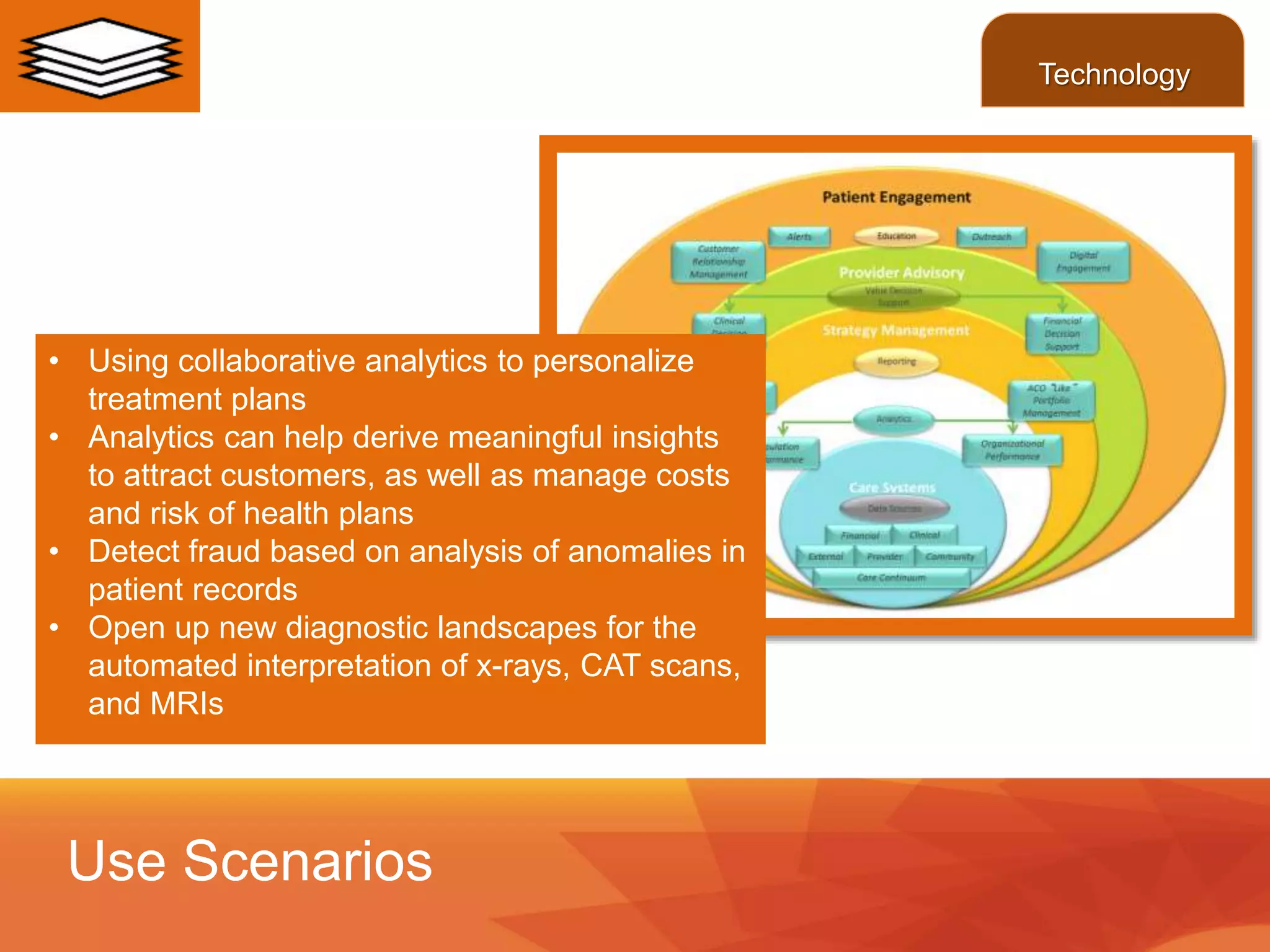
• Using collaborative analytics to personalize
treatment plans
• Analytics can help derive meaningful insights
to attract customers, as well as manage costs
and risk of health plans
• Detect fraud based on analysis of anomalies in
patient records
• Open up new diagnostic landscapes for the
automated interpretation of x-rays, CAT scans,
and MRIs
Use Scenarios
Technology
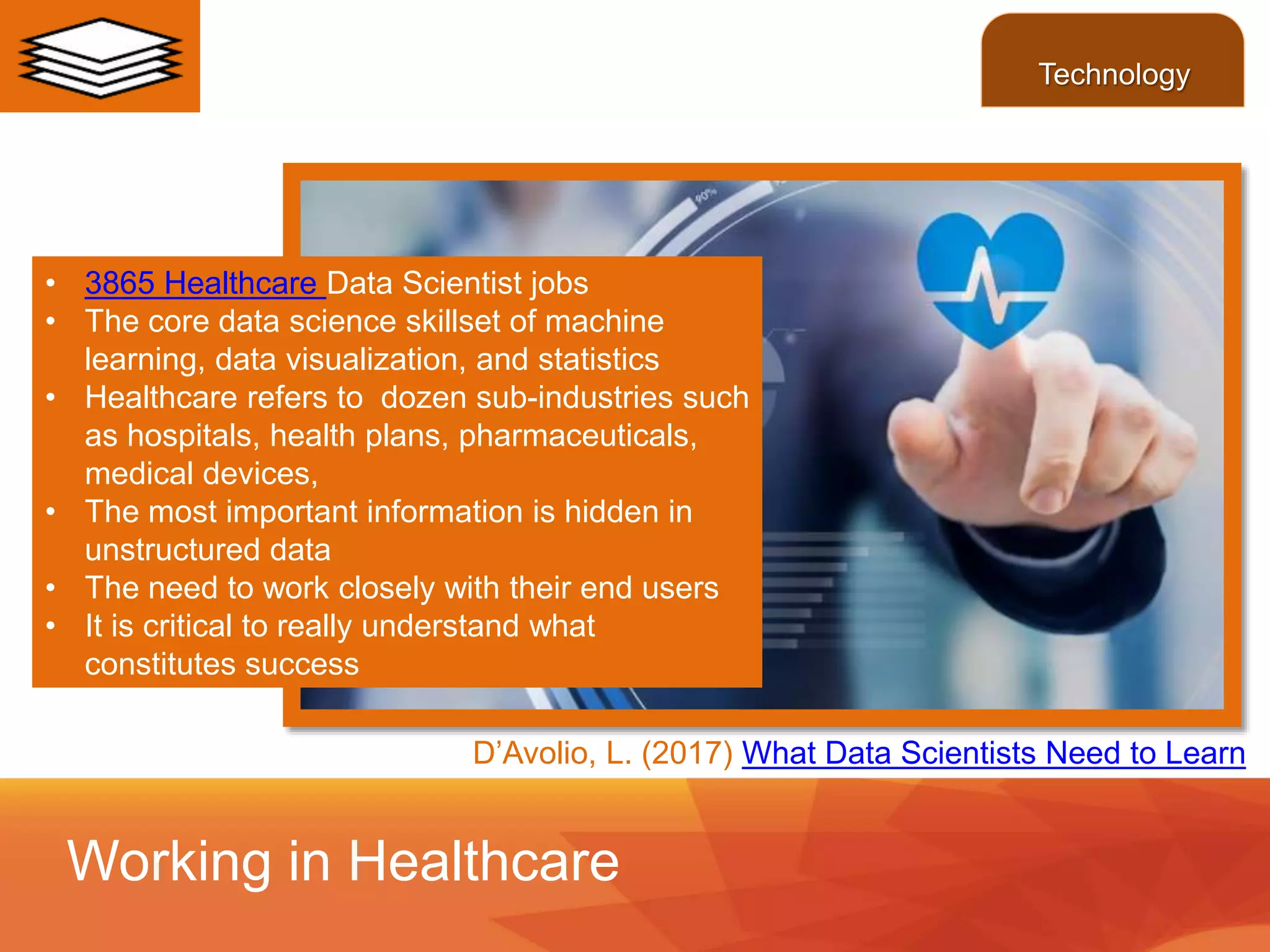
• 3865 Healthcare Data Scientist jobs
• The core data science skillset of machine
learning, data visualization, and statistics
• Healthcare refers to dozen sub-industries such
as hospitals, health plans, pharmaceuticals,
medical devices,
• The most important information is hidden in
unstructured data
• The need to work closely with their end users
• It is critical to really understand what
constitutes success
Working in Healthcare
Technology
D’Avolio, L. (2017) What Data Scientists Need to Learn
 Cutting down administrative costs
 Clinical decision support
 Reducing fraud and abuse
 Better care coordination
 Improving patient wellbeing
Value Levers
Technology
HealthFore Technologies
• The industry is far behind other sectors in
terms of adopting the latest technology and
analytics
• For privacy reasons, it can often be difficult to
obtain access to data
• There are very different costs to false-
negatives and false-positives
• Establishing common technical standards
• Increasing confidence in safety and safe use of
health IT
• Developing an international communications
structure
• Stakeholder collaboration
What are the risks?
Technology
• A boon in wearable devices that track activity
and biometric data
• The evolution of electronic medical record
systems
• The creation an interoperability roadmap
• Increasing privacy and security
Future trends
Technology
• Bianchard, T., (2017), Data Science and Predictive
Analytics in Healthcare
• Huffington Post, How Big Data Could Transform The
Health Care Industry, (video)
• Heusch, M., (2017), Using It or Losing It? The Case
for Data Scientists Inside Health Care
• Lebied, M., (2017), 9 Examples of Big Data Analytics
in Healthcare That Can Save People
• Montgomery, M., (2016), The Future Of Health Care Is
In Data Analytics
• Rao, V., (2015), Healthcare Data Analytics
• Raghupathi, W. (2014), An Overview of Health
Analytics
Bibliography
Next Steps
• What is the organization’s business
model?
• Why does the organization focus on
data?
• How is the Data Science team
organized?
• Which data science techniques does
the organization favor ?
• What is the link between data science
and decision making?
• How does the organization use Data
Science to propel growth
Case Study Questions
Technology

Analytics in Action - Health

  • 1.
    Health Analytics February 2019 Analyticsin Action http://DSign4.education
  • 2.
    • Why dohealthcare establishments need to develop in-house data science expertise, or become increasingly reliant on external consultants and software editors. • How do the authors explain the lack of specialists in this field? • How do they support their contention that the industry's senior leadership would rather rely on their own instincts rather the data? • What is the nature of the build vs buy dilema? Using It or Losing It? Introduction Martin Heusch and Timothy Mauser, «Using It or Losing It? The Case for Data Scientists Inside Health Care"
  • 3.
  • 4.
    • The useof data, analysis, and predictive modeling to improve teaching and learning • Analytics models aggregate data in new ways • Help students and institutions understand past, present and future academic performance • Impact on personalized learning, pedagogical practices, curriculum development, institutional planning, and research Health Analytics Technology
  • 5.
  • 6.
    • Health careanalytics arims to improve clinical care while limiting excessive spending • Healthcare Activities that can be undertaken as a result of data collected from four areas within healthcare;  Claims and cost data,  Research and development (R&D) data,  Clinical data (collected from electronic medical records (EHRs)),  Patient behavior and sentiment data Context Technology
  • 7.
    • The journeyfrom fee-for-service to value- based contracts • Understanding the wants and needs of health care consumers • Defining the role of patient experience in marketing • Embracing transparency • Creating patient loyalty in health care organizations Market Challenges Technology NRC Health
  • 8.
    • The AssistancePublique-Hôpitaux de Paris has been using data to predict daily and hourly patient admissions • Propeller Health, which has started to use inhalers with GPS-enabled trackers in order to identify asthma trends help clients identify novel trade patterns • Flatiron Health has developed a service called the OncologyCloud, based on the idea that 96% of potentially available data on patients with cancer is not yet analyzed • Optum Labs has collected EHRs of over 30 million patients to create a database for predictive analytics to improve healthcare delivery Whose doing it? Technology
  • 9.
    • Using collaborativeanalytics to personalize treatment plans • Analytics can help derive meaningful insights to attract customers, as well as manage costs and risk of health plans • Detect fraud based on analysis of anomalies in patient records • Open up new diagnostic landscapes for the automated interpretation of x-rays, CAT scans, and MRIs Use Scenarios Technology
  • 10.
    • 3865 HealthcareData Scientist jobs • The core data science skillset of machine learning, data visualization, and statistics • Healthcare refers to dozen sub-industries such as hospitals, health plans, pharmaceuticals, medical devices, • The most important information is hidden in unstructured data • The need to work closely with their end users • It is critical to really understand what constitutes success Working in Healthcare Technology D’Avolio, L. (2017) What Data Scientists Need to Learn
  • 11.
     Cutting downadministrative costs  Clinical decision support  Reducing fraud and abuse  Better care coordination  Improving patient wellbeing Value Levers Technology HealthFore Technologies
  • 12.
    • The industryis far behind other sectors in terms of adopting the latest technology and analytics • For privacy reasons, it can often be difficult to obtain access to data • There are very different costs to false- negatives and false-positives • Establishing common technical standards • Increasing confidence in safety and safe use of health IT • Developing an international communications structure • Stakeholder collaboration What are the risks? Technology
  • 13.
    • A boonin wearable devices that track activity and biometric data • The evolution of electronic medical record systems • The creation an interoperability roadmap • Increasing privacy and security Future trends Technology
  • 14.
    • Bianchard, T.,(2017), Data Science and Predictive Analytics in Healthcare • Huffington Post, How Big Data Could Transform The Health Care Industry, (video) • Heusch, M., (2017), Using It or Losing It? The Case for Data Scientists Inside Health Care • Lebied, M., (2017), 9 Examples of Big Data Analytics in Healthcare That Can Save People • Montgomery, M., (2016), The Future Of Health Care Is In Data Analytics • Rao, V., (2015), Healthcare Data Analytics • Raghupathi, W. (2014), An Overview of Health Analytics Bibliography Next Steps
  • 15.
    • What isthe organization’s business model? • Why does the organization focus on data? • How is the Data Science team organized? • Which data science techniques does the organization favor ? • What is the link between data science and decision making? • How does the organization use Data Science to propel growth Case Study Questions Technology