Embedding Technology Enhanced
Learning

Dr Neil Ringan
Learning & Research Technologies
Institutional Support for TEL
• Located within Learning & Research Technologies (LRT)
• Provides, develops, supports and embeds adoption of
applications and systems to facilitate learning, teaching &
assessment and student & curriculum management
• Part of LRIS - Learning & Research Information Services
–
–
–
–

IT Services
Library
Learning & Research Technologies
Business Improvement Team
What do LRT do ?
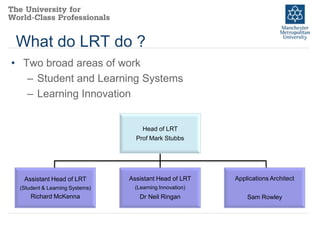
• Two broad areas of work
– Student and Learning Systems
– Learning Innovation

Head of LRT
Prof Mark Stubbs

Assistant Head of LRT

Assistant Head of LRT

(Student & Learning Systems)

(Learning Innovation)

Richard McKenna

Dr Neil Ringan

Applications Architect
Sam Rowley
Student & Learning Systems
• LRT supports a range of systems which are operated by
other areas of the University, usually Student & Academic
Services (SAS) :
•
•
•
•
•

University Student Records System
Business Intelligence & Reporting Systems
Online Enrolment and Options Selection Database
Unit Specification Database
Coursework Receipting System
Student & Learning Systems
• A number of staff and student-facing systems are entirely
supported and operated by LRT :

•
•
•
•

Moodle Virtual Learning Environment
MMUTube Video Streaming Service
myMMU Student Portal
myMMU smartphone app
Learning Innovation Team
• Responsible for supporting staff in
– Effective utilisation of online technologies to support all aspects of
learning, teaching and assessment
• VLE | video streaming | repository | academic integrity | e-marking | efeedback | e-submission | mobile apps | e-portfolio

– Effective embedding of classroom technologies to support face-toface teaching
• voting | feedback | audio & video | session capture | mobile devices |
classroom interactivity |

– Designing the curriculum to maximise benefits of technology in faceto-face, blended or distance learning, teaching and assessment
– Developing resources, case studies and activities to support
lecturers in effective integration of technology within the curriculum
Team Integration
• Enables us to develop systems and process in response to
identified staff and student need
• Integration between VLE and other corporate systems
• Responsive to emerging demands
– Electronic Management of Assessment
– Automated logging of online submissions alongside paper-based
– Automated feed of marks between Moodle and SRS

• Provide all information via the VLE and myMMU app
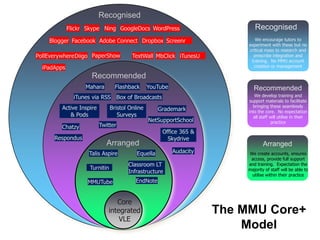
Recognised
Flickr Skype Ning GoogleDocs WordPress
Blogger Facebook Adobe Connect Dropbox Screenr
PollEverywhere Diigo PaperShow

TextWall MbClick iTunesU

iPadApps

Recognised
We encourage tutors to
experiment with these but no
critical mass to research and
prescribe integration and
training. No MMU account
creation or management

Recommended
Mahara

Flashback

YouTube

Recommended

iTunes via RSS Box of Broadcasts
Active Inspire
& Pods
Chatzy
Respondus

Bristol Online
Surveys
Twitter

Grademark
NetSupportSchool

Arranged
Talis Aspire

Office 365 &
Skydrive

Equella

Turnitin

Classroom LT
Infrastructure

MMUTube

EndNote

Core
integrated
VLE

Audacity

We develop training and
support materials to facilitate
bringing these seamlessly
into the core. No expectation
all staff will utilise in their
practice

Arranged
We create accounts, ensures
access, provide full support
and training. Expectation the
majority of staff will be able to
utilise within their practice

The MMU Core+
Model
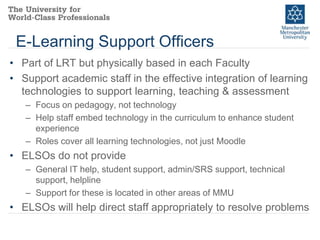
E-Learning Support Officers
• Part of LRT but physically based in each Faculty
• Support academic staff in the effective integration of learning
technologies to support learning, teaching & assessment
– Focus on pedagogy, not technology
– Help staff embed technology in the curriculum to enhance student
experience
– Roles cover all learning technologies, not just Moodle

• ELSOs do not provide
– General IT help, student support, admin/SRS support, technical
support, helpline
– Support for these is located in other areas of MMU

• ELSOs will help direct staff appropriately to resolve problems
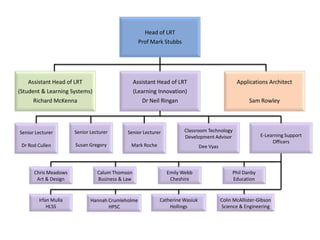
Head of LRT
Prof Mark Stubbs

Assistant Head of LRT
(Student & Learning Systems)
Richard McKenna

Assistant Head of LRT
(Learning Innovation)
Dr Neil Ringan

Applications Architect
Sam Rowley

Senior Lecturer

Senior Lecturer

Senior Lecturer

Classroom Technology
Development Advisor

Dr Rod Cullen

Susan Gregory

Mark Roche

Dee Vyas

E-Learning Support
Officers

Chris Meadows
Art & Design

Calum Thomson
Business & Law

Emily Webb
Cheshire

Phil Danby
Education

Irfan Mulla
HLSS

Hannah Crumleholme
HPSC

Catherine Wasiuk
Hollings

Colin McAllister-Gibson
Science & Engineering
What we offer
• Staff Resource Area on Moodle
• Wide range of support guides for Moodle and other learning
technologies
• Faculty and central staff development sessions
• Departmental drop-in events
• Webinar events
• Short courses : face-to-face and online
• Accredited units as part of PGCert & Masters in Academic
Practice
• Learning Innovation website to launch this term
Some Headlines
• Over 40 self-paced training guides in core learning technologies
– Supported by screencasts where appropriate

• Range of resources to support students and student induction events
• In 2013 so far :
–
–
–
–
–

130 workshops illustrating pedagogic use of learning technologies
20 institutional showcase events illustrating how staff embed TEL
25 course review / curriculum design workshops
150+ hours of local drop-in sessions
350+ hours of one-to-one support in faculties/departments
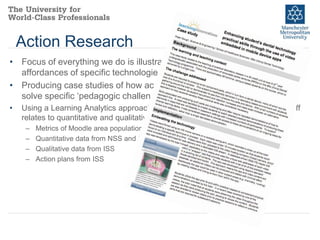
Action Research
• Focus of everything we do is illustrating the pedagogic benefits or
affordances of specific technologies
• Producing case studies of how academics are using various tools to
solve specific ‘pedagogic challenges’
•

Using a Learning Analytics approach to explore how our engagement with staff
relates to quantitative and qualitative data :
–
–
–
–

Metrics of Moodle area population
Quantitative data from NSS and ISS data
Qualitative data from ISS
Action plans from ISS
Working With Staff
• We work with staff to :
• Collaborate in action research to evaluate the effectiveness of different
learning technologies within the curriculum
• Ensure effective integration of online and F2F activities, irrespective of
the technologies being utilised
• Participate in curriculum design and development to ensure the use of
technology is designed in ‘from the ground up’ to enhance learning,
teaching and assessment, and the overall student experience
• Explore ways in which mobile devices can be used within and outside
the classroom to enhance student learning
• Develop teaching and learning spaces so they have appropriate
technologies, and staff can effectively embed these in their practice

ALTNWESIG Embedding Technology Enhanced Learning by Dr Neil Ringan

  • 1.
    Embedding Technology Enhanced Learning DrNeil Ringan Learning & Research Technologies
  • 2.
    Institutional Support forTEL • Located within Learning & Research Technologies (LRT) • Provides, develops, supports and embeds adoption of applications and systems to facilitate learning, teaching & assessment and student & curriculum management • Part of LRIS - Learning & Research Information Services – – – – IT Services Library Learning & Research Technologies Business Improvement Team
  • 3.
    What do LRTdo ? • Two broad areas of work – Student and Learning Systems – Learning Innovation Head of LRT Prof Mark Stubbs Assistant Head of LRT Assistant Head of LRT (Student & Learning Systems) (Learning Innovation) Richard McKenna Dr Neil Ringan Applications Architect Sam Rowley
  • 4.
    Student & LearningSystems • LRT supports a range of systems which are operated by other areas of the University, usually Student & Academic Services (SAS) : • • • • • University Student Records System Business Intelligence & Reporting Systems Online Enrolment and Options Selection Database Unit Specification Database Coursework Receipting System
  • 5.
    Student & LearningSystems • A number of staff and student-facing systems are entirely supported and operated by LRT : • • • • Moodle Virtual Learning Environment MMUTube Video Streaming Service myMMU Student Portal myMMU smartphone app
  • 6.
    Learning Innovation Team •Responsible for supporting staff in – Effective utilisation of online technologies to support all aspects of learning, teaching and assessment • VLE | video streaming | repository | academic integrity | e-marking | efeedback | e-submission | mobile apps | e-portfolio – Effective embedding of classroom technologies to support face-toface teaching • voting | feedback | audio & video | session capture | mobile devices | classroom interactivity | – Designing the curriculum to maximise benefits of technology in faceto-face, blended or distance learning, teaching and assessment – Developing resources, case studies and activities to support lecturers in effective integration of technology within the curriculum
  • 7.
    Team Integration • Enablesus to develop systems and process in response to identified staff and student need • Integration between VLE and other corporate systems • Responsive to emerging demands – Electronic Management of Assessment – Automated logging of online submissions alongside paper-based – Automated feed of marks between Moodle and SRS • Provide all information via the VLE and myMMU app
  • 9.
    Recognised Flickr Skype NingGoogleDocs WordPress Blogger Facebook Adobe Connect Dropbox Screenr PollEverywhere Diigo PaperShow TextWall MbClick iTunesU iPadApps Recognised We encourage tutors to experiment with these but no critical mass to research and prescribe integration and training. No MMU account creation or management Recommended Mahara Flashback YouTube Recommended iTunes via RSS Box of Broadcasts Active Inspire & Pods Chatzy Respondus Bristol Online Surveys Twitter Grademark NetSupportSchool Arranged Talis Aspire Office 365 & Skydrive Equella Turnitin Classroom LT Infrastructure MMUTube EndNote Core integrated VLE Audacity We develop training and support materials to facilitate bringing these seamlessly into the core. No expectation all staff will utilise in their practice Arranged We create accounts, ensures access, provide full support and training. Expectation the majority of staff will be able to utilise within their practice The MMU Core+ Model
  • 10.
    E-Learning Support Officers •Part of LRT but physically based in each Faculty • Support academic staff in the effective integration of learning technologies to support learning, teaching & assessment – Focus on pedagogy, not technology – Help staff embed technology in the curriculum to enhance student experience – Roles cover all learning technologies, not just Moodle • ELSOs do not provide – General IT help, student support, admin/SRS support, technical support, helpline – Support for these is located in other areas of MMU • ELSOs will help direct staff appropriately to resolve problems
  • 11.
    Head of LRT ProfMark Stubbs Assistant Head of LRT (Student & Learning Systems) Richard McKenna Assistant Head of LRT (Learning Innovation) Dr Neil Ringan Applications Architect Sam Rowley Senior Lecturer Senior Lecturer Senior Lecturer Classroom Technology Development Advisor Dr Rod Cullen Susan Gregory Mark Roche Dee Vyas E-Learning Support Officers Chris Meadows Art & Design Calum Thomson Business & Law Emily Webb Cheshire Phil Danby Education Irfan Mulla HLSS Hannah Crumleholme HPSC Catherine Wasiuk Hollings Colin McAllister-Gibson Science & Engineering
  • 12.
    What we offer •Staff Resource Area on Moodle • Wide range of support guides for Moodle and other learning technologies • Faculty and central staff development sessions • Departmental drop-in events • Webinar events • Short courses : face-to-face and online • Accredited units as part of PGCert & Masters in Academic Practice • Learning Innovation website to launch this term
  • 13.
    Some Headlines • Over40 self-paced training guides in core learning technologies – Supported by screencasts where appropriate • Range of resources to support students and student induction events • In 2013 so far : – – – – – 130 workshops illustrating pedagogic use of learning technologies 20 institutional showcase events illustrating how staff embed TEL 25 course review / curriculum design workshops 150+ hours of local drop-in sessions 350+ hours of one-to-one support in faculties/departments
  • 14.
    Action Research • Focusof everything we do is illustrating the pedagogic benefits or affordances of specific technologies • Producing case studies of how academics are using various tools to solve specific ‘pedagogic challenges’ • Using a Learning Analytics approach to explore how our engagement with staff relates to quantitative and qualitative data : – – – – Metrics of Moodle area population Quantitative data from NSS and ISS data Qualitative data from ISS Action plans from ISS
  • 15.
    Working With Staff •We work with staff to : • Collaborate in action research to evaluate the effectiveness of different learning technologies within the curriculum • Ensure effective integration of online and F2F activities, irrespective of the technologies being utilised • Participate in curriculum design and development to ensure the use of technology is designed in ‘from the ground up’ to enhance learning, teaching and assessment, and the overall student experience • Explore ways in which mobile devices can be used within and outside the classroom to enhance student learning • Develop teaching and learning spaces so they have appropriate technologies, and staff can effectively embed these in their practice