


12/11/2013

Kiran Sharma, Assistant Professor

1
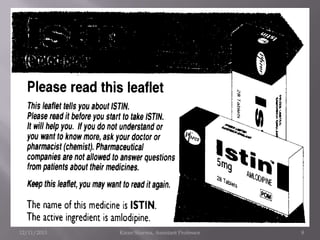
Patient information leaflets (PILs) are
leaflets containing specific information about
medical conditions, doses, side effects that
packed with medicines to give the user
information about the product.
PIL is the European version of the Package insert.
The PIL is written by the manufacturing
pharmaceutical company
All licensed medicines need to carry such a leaflet.
But to minimize the cost, manufacturers avoid
inserting a PIL.
12/11/2013

Kiran Sharma, Assistant Professor

2
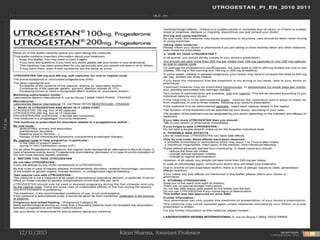
IDENTIFICATION OF THE MEDICINE

The name, the active substance(s), the pharmaceutical form,
strength of the product should be stated.
THERAPEUTIC INDICATIONS

The conditions for which the medicine is authorised must be
listed.

This section should include any benefit information considered
appropriate
INFORMATION NECESSARY BEFORE TAKING THE MEDICINE

Situations where the medicine should not be used, any
precautions, warnings, interactions with other medicines or foods,
information for special groups of patients (pregnant or nursing
mothers), and any effects the medicine may have on the patient’s
ability to drive.
12/11/2013

Kiran Sharma, Assistant Professor

3
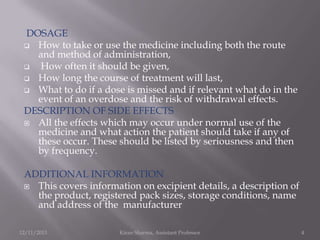
DOSAGE
 How to take or use the medicine including both the route
and method of administration,

How often it should be given,
 How long the course of treatment will last,
 What to do if a dose is missed and if relevant what do in the
event of an overdose and the risk of withdrawal effects.
DESCRIPTION OF SIDE EFFECTS
 All the effects which may occur under normal use of the
medicine and what action the patient should take if any of
these occur. These should be listed by seriousness and then
by frequency.
ADDITIONAL INFORMATION
 This covers information on excipient details, a description of
the product, registered pack sizes, storage conditions, name
and address of the manufacturer
12/11/2013

Kiran Sharma, Assistant Professor

4









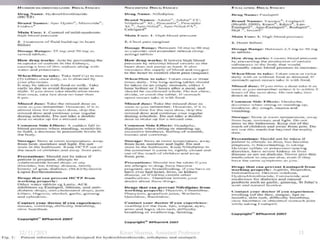
Complex language and medical terms cause difficulty
in understanding by patients
Translate all the information into lay language
Make sure you use colloquial words
Use short sentences and/or bullet points
Many of the phrases in the PIL template can confuse so
consider more colloquial terms
Do not use the system organ class arrangement for side
effects as patients are unable to follow this logic.
Side effects should be grouped by seriousness to enable
patients to understand when to take action and what
that action should be

12/11/2013

Kiran Sharma, Assistant Professor

5


Make sure risks are communicated clearly to
patients. Guidance has already been published
in “Always Read the Leaflet” and examples of best
practice in this area are available. Explanations
(including frequency with respect to the side effects)
are known to be helpful to readers and can put the
risk in context.

12/11/2013

Kiran Sharma, Assistant Professor

6
12/11/2013

Kiran Sharma, Assistant Professor

7
12/11/2013

Kiran Sharma, Assistant Professor

8
12/11/2013

Kiran Sharma, Assistant Professor

9
12/11/2013

Kiran Sharma, Assistant Professor

10
12/11/2013

Kiran Sharma, Assistant Professor

11
12/11/2013

Kiran Sharma, Assistant Professor

12

Patient information leaflets

  • 1.
  • 2.
    Patient information leaflets(PILs) are leaflets containing specific information about medical conditions, doses, side effects that packed with medicines to give the user information about the product. PIL is the European version of the Package insert. The PIL is written by the manufacturing pharmaceutical company All licensed medicines need to carry such a leaflet. But to minimize the cost, manufacturers avoid inserting a PIL. 12/11/2013 Kiran Sharma, Assistant Professor 2
  • 3.
    IDENTIFICATION OF THEMEDICINE  The name, the active substance(s), the pharmaceutical form, strength of the product should be stated. THERAPEUTIC INDICATIONS  The conditions for which the medicine is authorised must be listed.  This section should include any benefit information considered appropriate INFORMATION NECESSARY BEFORE TAKING THE MEDICINE  Situations where the medicine should not be used, any precautions, warnings, interactions with other medicines or foods, information for special groups of patients (pregnant or nursing mothers), and any effects the medicine may have on the patient’s ability to drive. 12/11/2013 Kiran Sharma, Assistant Professor 3
  • 4.
    DOSAGE  How totake or use the medicine including both the route and method of administration,  How often it should be given,  How long the course of treatment will last,  What to do if a dose is missed and if relevant what do in the event of an overdose and the risk of withdrawal effects. DESCRIPTION OF SIDE EFFECTS  All the effects which may occur under normal use of the medicine and what action the patient should take if any of these occur. These should be listed by seriousness and then by frequency. ADDITIONAL INFORMATION  This covers information on excipient details, a description of the product, registered pack sizes, storage conditions, name and address of the manufacturer 12/11/2013 Kiran Sharma, Assistant Professor 4
  • 5.
           Complex language andmedical terms cause difficulty in understanding by patients Translate all the information into lay language Make sure you use colloquial words Use short sentences and/or bullet points Many of the phrases in the PIL template can confuse so consider more colloquial terms Do not use the system organ class arrangement for side effects as patients are unable to follow this logic. Side effects should be grouped by seriousness to enable patients to understand when to take action and what that action should be 12/11/2013 Kiran Sharma, Assistant Professor 5
  • 6.
     Make sure risksare communicated clearly to patients. Guidance has already been published in “Always Read the Leaflet” and examples of best practice in this area are available. Explanations (including frequency with respect to the side effects) are known to be helpful to readers and can put the risk in context. 12/11/2013 Kiran Sharma, Assistant Professor 6
  • 7.
  • 8.
  • 9.
  • 10.
  • 11.
  • 12.