Copyright
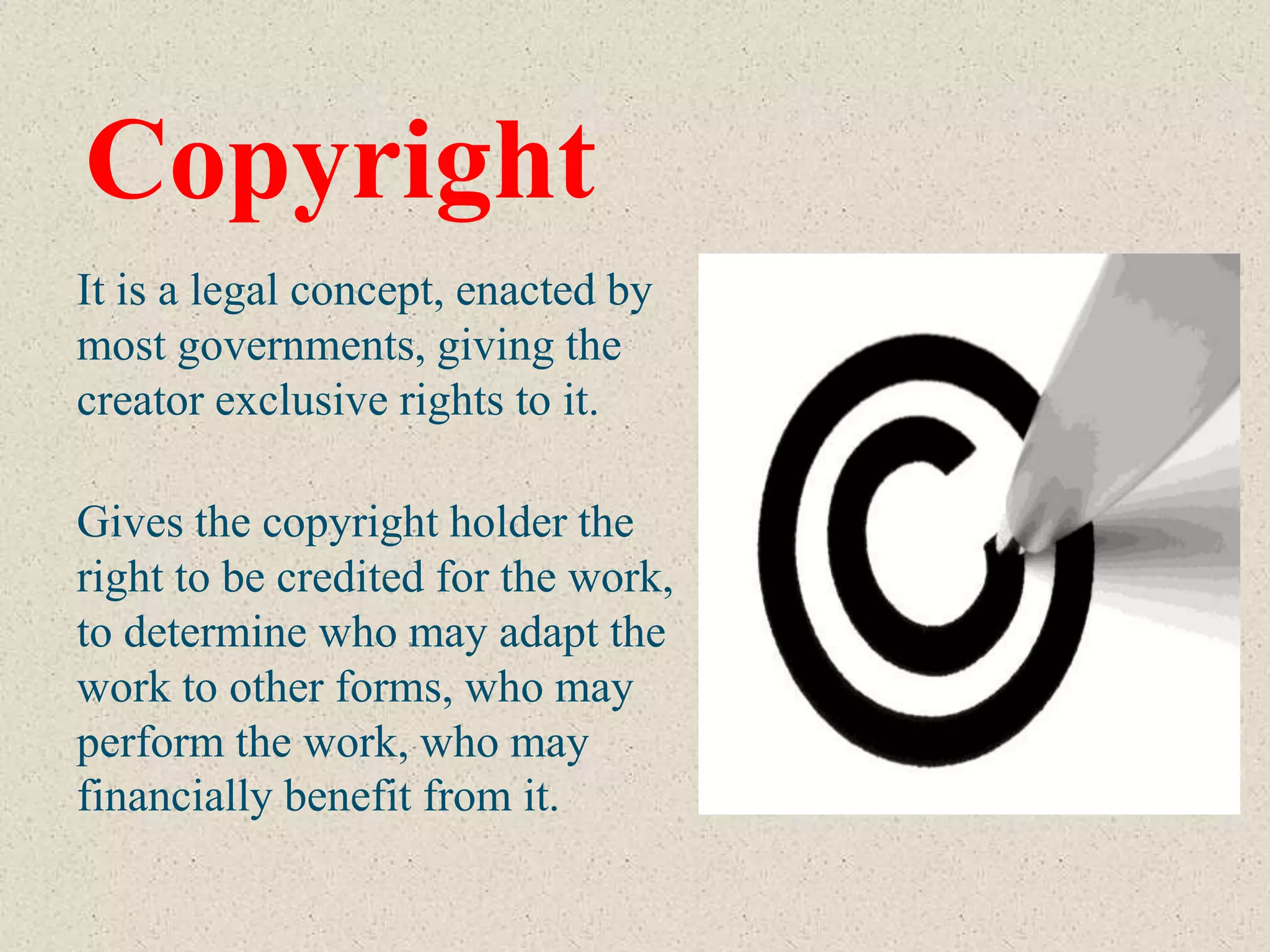
Copyright
It is a legal concept, enacted by
most governments, giving the
creator exclusive rights to it.

Gives the copyright holder the
right to be credited for the work,
to determine who may adapt the
work to other forms, who may
perform the work, who may
financially benefit from it.
Your rights as a copyright owner

 Right to make copies
 Prepare derivative works
 Publicly distribute
 Display and perform the
  work
 In the case of digital
  sound recordings, to
  perform the works over a
  digital network.
What you need to know about
copyright protection…

     Many people assume that everything posted
 on the Internet is public domain, probably
 because our law used to protect published works
 only if they displayed the proper copyright
 notice upon publication. The law, however, has
 changed: neither publication nor a notice of any
 kind is required to protect works today.
The facts
Simply putting the pen to the
paper or in the electronic medium,
putting the fingers to the save key
creates a copyrighted work. Once
expression is committed to a
tangible medium (and computer
media is considered tangible),
copyright protection is automatic.
So, postings of all kinds are
protected the same as published
printed works.
Liability for posting infringing works

 The proliferation of RIAA lawsuits against individuals for
 peer-to-peer file-sharing make clear that individuals can be
 liable for their own actions when they copy and distribute
 others' copyrighted works without permission.
What to do now?
Implied and express licenses to use
Internet materials
       You can easily give your works an express
 license by attaching a Creative Commons license to
 the materials you post on your Website, or upload
 to other sites.
 It's easy and it sends the message that you want
 your materials to be part of the flow of creativity.
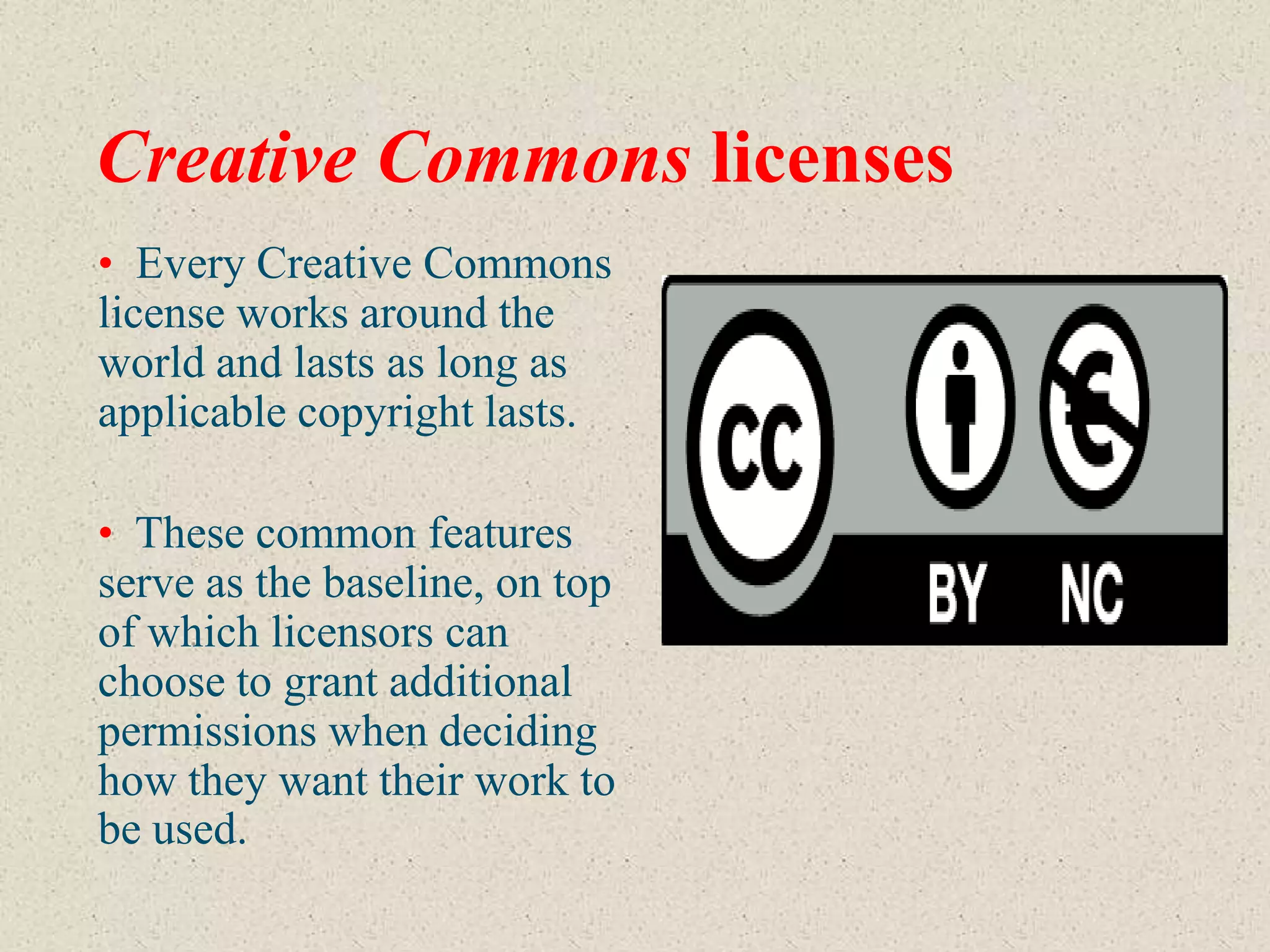
Creative Commons licenses
• Every Creative Commons
license works around the
world and lasts as long as
applicable copyright lasts.

• These common features
serve as the baseline, on top
of which licensors can
choose to grant additional
permissions when deciding
how they want their work to
be used.
Fair use
    Fair use is the right, in some
circumstances, to quote copyrighted
material without asking permission or
paying for it.
Getting permission
 Assuming the work you wish to use is protected, the work
 has not been licensed for your use online, and your use is
 not a fair use or otherwise exempt from liability for
 infringement, you need permission.

 Check the Copyright Clearance Center("CCC") first.
 If the work you want to use is registered with the CCC,
 you can get permission instantly for most materials. If
 your institution subscribes to the academic license and
 your work is covered, you don't have to do anything --
 your use is covered.
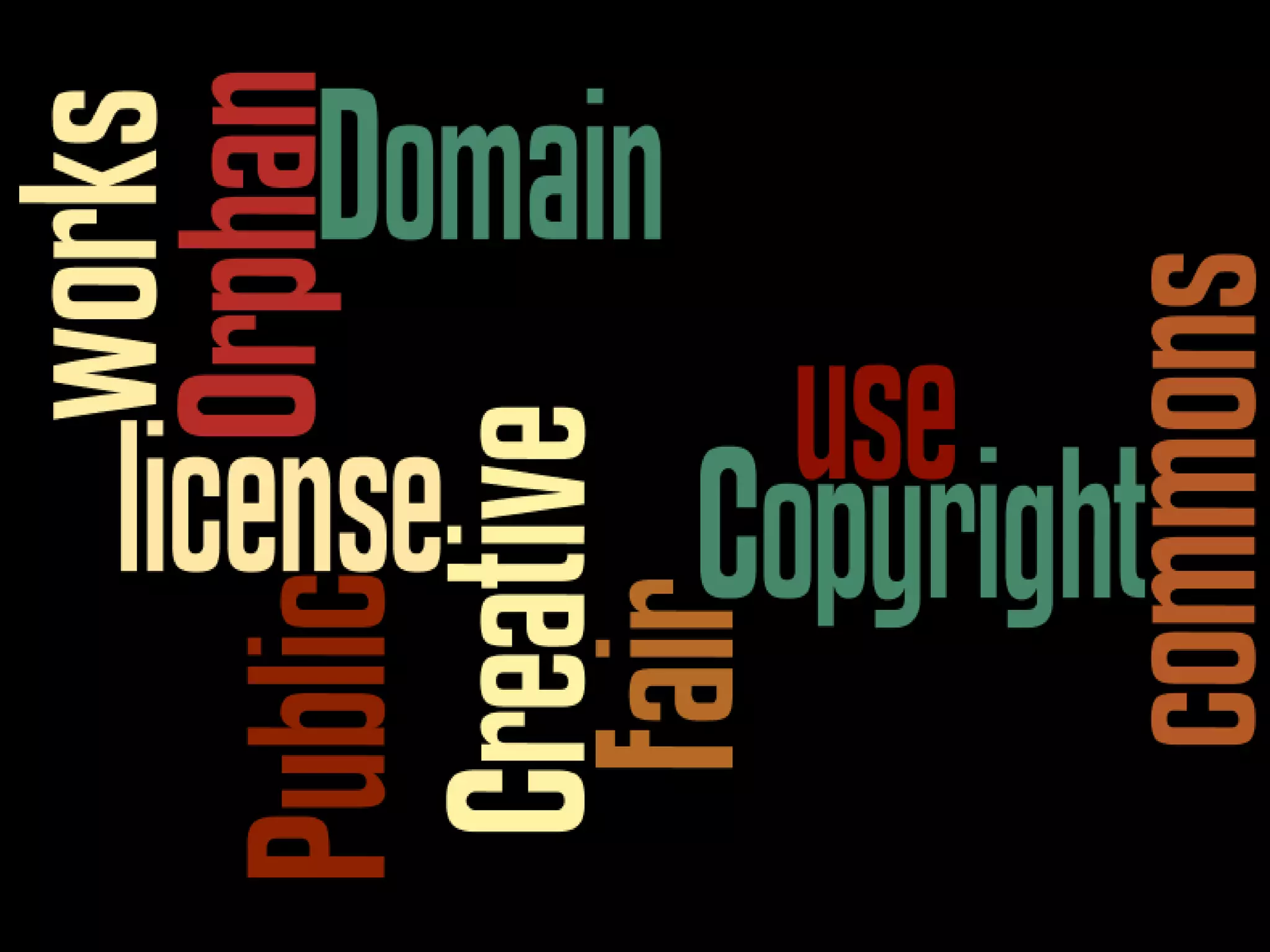
Orphan Works and Public Domain
Orphan Works                       Public Domain
 books, records, images,           if a work is published without
  compositions, manuscripts,          proper notice (name of publisher
  movies, screenplays, painting       and date) during certain time
  and drawings, in short, any work    frames (1923-1989), it becomes
  protected by copyright whose        part of the public domain. If it is
  owner cannot be determined or       not published, or if it is
  located or who does not respond     published after 1989 without
  when contacted.                     indication of the author is, its
                                      protection is automatic and lasts
                                      for the life of the author plus
                                      (and longer in some countries).
Conclusion
      When you use others’ creative expressions,
 set time aside to understand copyrights and
 licenses rules that are linked to their original
 creation.
End notes
The Copyright Crash Course © 2001, 2007 Georgia K. Harper
Copyright definition – http://en.wikipedia.org/wiki/copyright
http://incompetech.com/
Http://www.wordle.net
Http://www.creativecommons.com
Http://fsymbols.com/computer/copyright
Http://www.clker.com/clipart-24923.html
Http://www.fotosearch.com/ilustration/knowledge.html
Http://pictogram-free.com/47emotion/201-emotion.html
Http://www. Webdesign-guru.co.uk/icon/web-browser-clipart/
Http://www.webdesign.lovetoknow/freeanimated_clipart
http://cloudappreciationsociety.org/cloud-tags/cloudalikes/#p=1&t=cloud87&i=20
Http://desktopdecorating.com/Download_free_Lion_Animal_wallpapers_Best_Impressiv
   e_Full_HD_Wallpaper_Free_HD_Wallpapers_Best_Quality_Wallpapers_Download_
   For_your_Desktop_Free-1480.html
Alfredo Alvarado ppt_EDTC6340 by Alfredo Alvarado is licensed
under a Creative Commons Attribution 3.0 Unported License.

Alfredo alvarado ppt edtc6340 modified_week6

  • 1.
  • 2.
    Copyright It is alegal concept, enacted by most governments, giving the creator exclusive rights to it. Gives the copyright holder the right to be credited for the work, to determine who may adapt the work to other forms, who may perform the work, who may financially benefit from it.
  • 3.
    Your rights asa copyright owner  Right to make copies  Prepare derivative works  Publicly distribute  Display and perform the work  In the case of digital sound recordings, to perform the works over a digital network.
  • 4.
    What you needto know about copyright protection… Many people assume that everything posted on the Internet is public domain, probably because our law used to protect published works only if they displayed the proper copyright notice upon publication. The law, however, has changed: neither publication nor a notice of any kind is required to protect works today.
  • 5.
    The facts Simply puttingthe pen to the paper or in the electronic medium, putting the fingers to the save key creates a copyrighted work. Once expression is committed to a tangible medium (and computer media is considered tangible), copyright protection is automatic. So, postings of all kinds are protected the same as published printed works.
  • 6.
    Liability for postinginfringing works The proliferation of RIAA lawsuits against individuals for peer-to-peer file-sharing make clear that individuals can be liable for their own actions when they copy and distribute others' copyrighted works without permission.
  • 7.
  • 8.
    Implied and expresslicenses to use Internet materials You can easily give your works an express license by attaching a Creative Commons license to the materials you post on your Website, or upload to other sites. It's easy and it sends the message that you want your materials to be part of the flow of creativity.
  • 9.
    Creative Commons licenses •Every Creative Commons license works around the world and lasts as long as applicable copyright lasts. • These common features serve as the baseline, on top of which licensors can choose to grant additional permissions when deciding how they want their work to be used.
  • 10.
    Fair use Fair use is the right, in some circumstances, to quote copyrighted material without asking permission or paying for it.
  • 11.
    Getting permission Assumingthe work you wish to use is protected, the work has not been licensed for your use online, and your use is not a fair use or otherwise exempt from liability for infringement, you need permission. Check the Copyright Clearance Center("CCC") first. If the work you want to use is registered with the CCC, you can get permission instantly for most materials. If your institution subscribes to the academic license and your work is covered, you don't have to do anything -- your use is covered.
  • 12.
    Orphan Works andPublic Domain Orphan Works Public Domain  books, records, images,  if a work is published without compositions, manuscripts, proper notice (name of publisher movies, screenplays, painting and date) during certain time and drawings, in short, any work frames (1923-1989), it becomes protected by copyright whose part of the public domain. If it is owner cannot be determined or not published, or if it is located or who does not respond published after 1989 without when contacted. indication of the author is, its protection is automatic and lasts for the life of the author plus (and longer in some countries).
  • 14.
    Conclusion When you use others’ creative expressions, set time aside to understand copyrights and licenses rules that are linked to their original creation.
  • 15.
    End notes The CopyrightCrash Course © 2001, 2007 Georgia K. Harper Copyright definition – http://en.wikipedia.org/wiki/copyright http://incompetech.com/ Http://www.wordle.net Http://www.creativecommons.com Http://fsymbols.com/computer/copyright Http://www.clker.com/clipart-24923.html Http://www.fotosearch.com/ilustration/knowledge.html Http://pictogram-free.com/47emotion/201-emotion.html Http://www. Webdesign-guru.co.uk/icon/web-browser-clipart/ Http://www.webdesign.lovetoknow/freeanimated_clipart http://cloudappreciationsociety.org/cloud-tags/cloudalikes/#p=1&t=cloud87&i=20 Http://desktopdecorating.com/Download_free_Lion_Animal_wallpapers_Best_Impressiv e_Full_HD_Wallpaper_Free_HD_Wallpapers_Best_Quality_Wallpapers_Download_ For_your_Desktop_Free-1480.html
  • 16.
    Alfredo Alvarado ppt_EDTC6340by Alfredo Alvarado is licensed under a Creative Commons Attribution 3.0 Unported License.

Editor's Notes

  • #7 The Recording Industry Association of America (RIAA)
  • #9 Whenever an author posts anything on the Internet, he or she should reasonably expect that it will be read, downloaded, printed out, forwarded, and even used as the basis for other works to some degree. So, just by posting, an author impliedly grants a limited license to use her work in this manner.
  • #12 Copyright Clearance Center - http://www.copyright.com/