Is simulation-based training an
effective method for the
acquisition of clinical reasoning
in neonatology ?
Thomas Pennaforte
CHU Sainte-Justine, Montreal, Canada
IMSH 2014: San Francisco, CA / USA

International Network for Simulation-based Pediatric Innovation, Research and Education
Background 1
• Simulation in neonatology : Neonatal Resuscitation Program
 cognitive, technical & behavioral skills

• Complex situations in NICU
No guidelines, context of uncertainty
 clinical reasoning

International Network for Simulation-based Pediatric Innovation, Research and Education
Background 2
ASSESSMENT TOOLS

Factual knowledge

Data identification

Reasoning
Process

MCQ

Script Concordance Tests

Data interpretation

Clinical Reasoning
Hypothesis generation

Clinical Reasoning Problem
Key Feature Problem

Decision making

International Network for Simulation-based Pediatric Innovation, Research and Education
The PICO question
• Population

Pediatric residents and neonatology fellows

• Intervention

Simulation-based training

• Comparison

Traditional classroom training

• Outcome

Clinical reasoning peformance

International Network for Simulation-based Pediatric Innovation, Research and Education
Design
Pre-Test
MCQ, SCT, CDM, CRP

Randomization
TRAD group

SIM group

n=25

n=25

Post-Test
MCQ, SCT, CDM, CRP

Retesting
International Network for Simulation-based Pediatric Innovation, Research and Education
Timeline
• Jan. and Feb 2014 : test’s construction
• March 2014 : evaluation of test’s interest by students from
others universities
• May 2014 : Pilot study with French participants
• Mid 2014 : Final study with Canadian participants

• Data analysis, article redaction and submission

International Network for Simulation-based Pediatric Innovation, Research and Education
Need INSPIRE help !
• Is a Pre-Test necessary ?
• How many topics should be covered?
– One topic = 60 min PPT vs 2 topics = 120 min !

• Simulation training ?
– One scenario (1 hr) vs. two short (30 min) scenarios ?

– If 2 scenarios: repeat scenario or 2 different scenarios

• Should scientific resources be given to participants ? Both
groups? At what time?

International Network for Simulation-based Pediatric Innovation, Research and Education
Contact Information
Thomas PENNAFORTE
CHU Sainte-Justine
Montreal, Canada

thomas@pennaforte.net

International Network for Simulation-based Pediatric Innovation, Research and Education
Script Concordance Tests
1. Short clinical scenario
Always incorporate uncertainty. Several options are relevant to solve
the diagnostic or management problem posed by the situation.
2. Questions in three parts
1. "if you were thinking of" contains a relevant diagnostic or
management option
2. "and then you were to find" presents a new clinical finding, such
as a physical sign, a pre-existing condition, an imaging study or
a laboratory test result.
3. "this option would become" is a five-point Likert scale that
captures examinees' decisions.

Data interpretation
International Network for Simulation-based Pediatric Innovation, Research and Education
Clinical Reasoning Problems
1. Short clinical scenario
Patient presentation, history and physical examination
2. Questions
1. What do you think is the most likely diagnosis in this patient?
2. List the features of the case which you consider support your
diagnosis and also those which oppose it, giving an appropriate sign
[positive (+) or negative (-)] and weighting to each.
3. If this diagnosis proved incorrect, what would your next choice
be?
4. List the features of the case which you consider support your
diagnosis and also those which oppose it, giving an appropriate sign
[positive (+) or negative (-)] and weighting to each.
Data identification

Data interpretation

Hypothesis generation

International Network for Simulation-based Pediatric Innovation, Research and Education
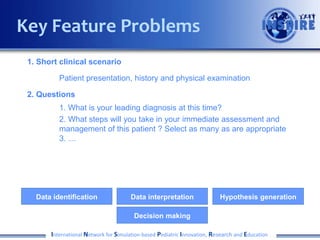
Key Feature Problems
1. Short clinical scenario
Patient presentation, history and physical examination
2. Questions
1. What is your leading diagnosis at this time?
2. What steps will you take in your immediate assessment and
management of this patient ? Select as many as are appropriate
3. …

Data identification

Data interpretation

Hypothesis generation

Decision making
International Network for Simulation-based Pediatric Innovation, Research and Education

Alert 2014-new-pennaforte

  • 1.
    Is simulation-based trainingan effective method for the acquisition of clinical reasoning in neonatology ? Thomas Pennaforte CHU Sainte-Justine, Montreal, Canada IMSH 2014: San Francisco, CA / USA International Network for Simulation-based Pediatric Innovation, Research and Education
  • 2.
    Background 1 • Simulationin neonatology : Neonatal Resuscitation Program  cognitive, technical & behavioral skills • Complex situations in NICU No guidelines, context of uncertainty  clinical reasoning International Network for Simulation-based Pediatric Innovation, Research and Education
  • 3.
    Background 2 ASSESSMENT TOOLS Factualknowledge Data identification Reasoning Process MCQ Script Concordance Tests Data interpretation Clinical Reasoning Hypothesis generation Clinical Reasoning Problem Key Feature Problem Decision making International Network for Simulation-based Pediatric Innovation, Research and Education
  • 4.
    The PICO question •Population Pediatric residents and neonatology fellows • Intervention Simulation-based training • Comparison Traditional classroom training • Outcome Clinical reasoning peformance International Network for Simulation-based Pediatric Innovation, Research and Education
  • 5.
    Design Pre-Test MCQ, SCT, CDM,CRP Randomization TRAD group SIM group n=25 n=25 Post-Test MCQ, SCT, CDM, CRP Retesting International Network for Simulation-based Pediatric Innovation, Research and Education
  • 6.
    Timeline • Jan. andFeb 2014 : test’s construction • March 2014 : evaluation of test’s interest by students from others universities • May 2014 : Pilot study with French participants • Mid 2014 : Final study with Canadian participants • Data analysis, article redaction and submission International Network for Simulation-based Pediatric Innovation, Research and Education
  • 7.
    Need INSPIRE help! • Is a Pre-Test necessary ? • How many topics should be covered? – One topic = 60 min PPT vs 2 topics = 120 min ! • Simulation training ? – One scenario (1 hr) vs. two short (30 min) scenarios ? – If 2 scenarios: repeat scenario or 2 different scenarios • Should scientific resources be given to participants ? Both groups? At what time? International Network for Simulation-based Pediatric Innovation, Research and Education
  • 8.
    Contact Information Thomas PENNAFORTE CHUSainte-Justine Montreal, Canada thomas@pennaforte.net International Network for Simulation-based Pediatric Innovation, Research and Education
  • 9.
    Script Concordance Tests 1.Short clinical scenario Always incorporate uncertainty. Several options are relevant to solve the diagnostic or management problem posed by the situation. 2. Questions in three parts 1. "if you were thinking of" contains a relevant diagnostic or management option 2. "and then you were to find" presents a new clinical finding, such as a physical sign, a pre-existing condition, an imaging study or a laboratory test result. 3. "this option would become" is a five-point Likert scale that captures examinees' decisions. Data interpretation International Network for Simulation-based Pediatric Innovation, Research and Education
  • 10.
    Clinical Reasoning Problems 1.Short clinical scenario Patient presentation, history and physical examination 2. Questions 1. What do you think is the most likely diagnosis in this patient? 2. List the features of the case which you consider support your diagnosis and also those which oppose it, giving an appropriate sign [positive (+) or negative (-)] and weighting to each. 3. If this diagnosis proved incorrect, what would your next choice be? 4. List the features of the case which you consider support your diagnosis and also those which oppose it, giving an appropriate sign [positive (+) or negative (-)] and weighting to each. Data identification Data interpretation Hypothesis generation International Network for Simulation-based Pediatric Innovation, Research and Education
  • 11.
    Key Feature Problems 1.Short clinical scenario Patient presentation, history and physical examination 2. Questions 1. What is your leading diagnosis at this time? 2. What steps will you take in your immediate assessment and management of this patient ? Select as many as are appropriate 3. … Data identification Data interpretation Hypothesis generation Decision making International Network for Simulation-based Pediatric Innovation, Research and Education