 The Rajputs of Mewar ,however, refused to submit . Having

lost Chittor their capital city they rallied around Rana Pratap
the valiant son of Udai Singh . After his escape to the hills ,
Udai Singh had built a new capital called Udaipur . After his
death Rana Pratap carried on the struggle against the
Mughals .With great deal and difficulty he organized an
army and clashed with the the Mughal forces in the battle of
Haldighati in 1576 ce . The Rajputs were outnumbered and
defeated by the Mughal army . Rana pratap took shelter in a
mountain fortress . He recovered some parts of his territories
but not Chittor before his death.
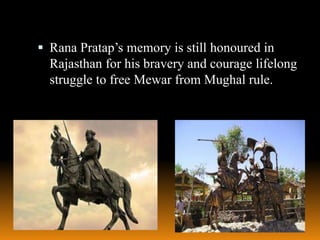
 Rana Pratap’s memory is still honoured in

Rajasthan for his bravery and courage lifelong
struggle to free Mewar from Mughal rule.
 In 1572 ce Akbar himself led an expedition

against the ruler of Gujarat and conquered the
rich province with it’s rich cotton fields ,
flourishing seaorts and lucrative trade with the
European merchants .
 Bengal was a rich and the most fertile

provinces in India which had prosperous trad
relationships with south-east Asia and China .
This conquest bought rich revenues to the
Mughal treasury .
 In a series of campaigns in the North-west

Akbar conquered Kashmir , Kandahar , lower
Sind and eastern Baluchistan . Besides adding
important territories to his empire.
 After consolidating his position in northern and
central India Akbar turned his attention towards

the Deccan . By 1601 ce he annexed Berrar ,
Khandesh and a part of Ahmadnagar.
 In 40 years Akbar carved out an empire from
Hindu Kush mountains in the west to
Barhmaputra in the east and Himalayas in the
north to Godavari in the south .
 To join all provinces in the vast empire into a small unit a

central government was set up . The emperor was
extremely powerful his decision on all mattered the most
for eg- military , politics etc . His word was law and he
was the commander in chief of the armed forces.
 He was assisted by a team of ministers and officials .
The promotion or dismissal of any member was the sole
right of the emperor . The success of this system was
depended largely on the personality and his wisdom to
choose the correct person for the correct job .
 His council of ministers was composed of wazir or diwan ,

head of the revenue department ; the mir bhakshi , head of
the militay departmentand the paymasters of all
mansabdars ; the qazi , chief judge and the chief sadr , the
supervisor of the royal household . The vakil or prime
minister did not exercise any effective authority.
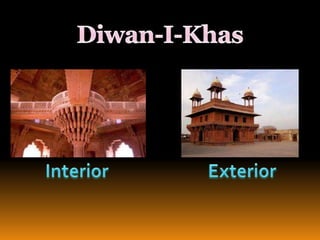
 Akbar held regular meetings with his senior officers in the
Diwan-i-khas . He considered himself as the guardian of
his subjects . He would meet them in the Diwan-I- Aam
where he would receive petitions , listen to their problems
and solve many cases on the spot.
 The vast empire was divided into 15 provinces or subas . A

governor or subedar was placed in charge of each province
who was the leader of both military and civil affairs . The
diwan kept the records of the land revenues . The diwan and
the subedar kept a close watch on each other .
 The provinces were further subdivide into districts or sarkars
which were further subdivided into small units of
administration called parghana. Each of these units had a
team of government officials managing their affairs and
reporting to to the corresponding officials at the level
immediately above them. The villages were looked after by
panchayats.
 The term means holding a particular rank in the administration.the

Mughal administration was essential a military one . Under this
system .
 Every official was given a rank according to the nature of the job. The

the lowest rank was that of an officer in charge of 10 horsemen and
the highest rank was that of an officer in charge of 7000 horsemen .
 The mansabdars were appointed , promoted and dismissed by the

emperor.
 They were given salary in accordance to their jobs . They were later

paid in form of jagirs .
 A mansab or rank was not hereditary . After the death the jagirs

reverted to the king who granted it to someone else.
 The mansabdars did not have the authority of administering the jagirs
 The system of branding horses and maintaining a
descriptive roll of soldiers was adopted by Akbar .
 Akbar also maintained a standing army . The
cavalry was the most importat branch of the
Mughal troops .
 The troops were mainly supplied by the
mansabdars .The emperor also maintained a

batallion of royal and trusted soldiers .
 He also maintained a corp of royal bodyguard
and a large number of war elephants and a well
organised artillery.
 Akbar adopted the basic structure of Sher shah’s revenue






system. With the help of Todar mal he introduced some
important reforms .
Land was measured with a bamboo jarib joined together with
iron rings instead of the hemp rope used before.
The average produce and the average price over 10 years was
calculated.one third of the produce was the kings share .it could
be paid in cash or kind though cash was preferred.
The revenue officers were instructed to treat the peasants well.
If the crops failed due to drought or flood , the state of
remission of revenue .
Loans could be paid back in easy installments were advanced
to the peasants to buy seeds , cattle and implements .
 Trade was another source of revenue though

much less in compared to land . The main
components of export were spices , indigo
,textiles and saltpetre . India traded with China
,central Asia and Europe . The Portuguese
established trade centers on the western coast
during Akbar’s reign.
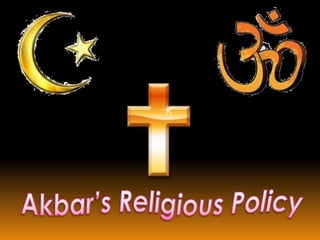
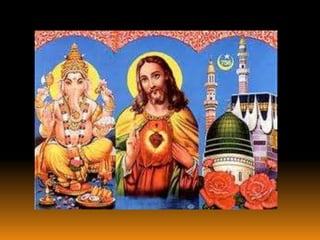
Akbar had a great desire to unite the
diverse races in India into one nation
where everyone would have equal status.
He adopted certain policies to alter the
Islamic State into a secular one.
Throughout his rule, Akbar followed the
policy of religious tolerance and one the
respect, affection and support of his Hindu
subjects in general and the Rajputs in
particular.
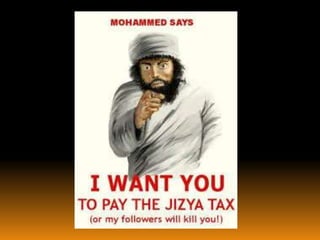
1. Akbar abolished the jaziya or poll tax and the

pilgrim tax.
This had been imposed by earlier Muslim rulers
on all the Non-Muslim subjects, and it was
greatly disliked by the Hindus.
The pilgrim tax was put on Hindus visiting
places of pilgrimage.
2. Hindus were given the freedom of building

temples, celebrating festivals and
worshipping freely.
He allowed his Rajput wives to celebrate
festivals like Holi and Diwali, and took part
in them himself.
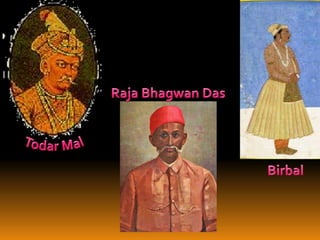
3. He gave high posts to talented and proficient
Hindus like Todar Mal, Birbal and Raja
Bhagwan Das. Birbal was his constant
companion and trusted friend.
4. He married Rajput princesses and allowed
them freedom of worship.
5. He gave land grants to all persons irrespective
of their religious faith.
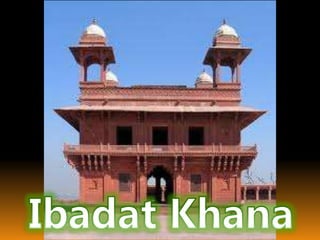
 In 1575CE , Akbar built the Ibadat Khana or the hall of

prayer at his new capital, Fatehpur Sikhri.
 Its purpose was for discussions on religious matters. He
invited scholars, philosophers, priests, missionaries and
religious leaders to hold discussions on religion.
 Muslim clerics, Hindu scholars, Buddhist and Jain
monks, Parsi priests, Christian missionaries etc.
assembled in the Ibadat Khana and explained the
principles and teachings of their respective religions.
 In 1579CE, Akbar issued a declaration called

Mazhar, which gave him the power to choose
between different interpretations of the Islamic
Law. This helped him to consolidate his power
with respect to multiple interpreters of law in
his kingdom.
 Akbar was impressed by the patriotism and

chivalry of the Rajputs. He realized that the
support of the Rajputs was necessary to build
and maintain a large and stable empire.

1. Akbar treated the Rajputs with honour and equality
and won their respect and loyalty.
2. He strengthened his ties with the Rajputs through
matrimonial alliances. He married the daughter of the
Raja of Amber, the mother of Jahangir, Akbar’s
successor to the Mughal throne. He married several
other Rajput princesses. He also married Prince
Salim to the daughter of Raja Bhagwan Das.
3. He won their friendship, loyalty and
cooperation by appointing them to important posts of
trusts and responsibility. Raja Man Singh was made a
military commander and a viceroy of a large province.
4. The jaziya and pilgrim tax were abolished.
5. Akbar did not annex the kingdoms of the Rajput rulers
after defeating them in war.
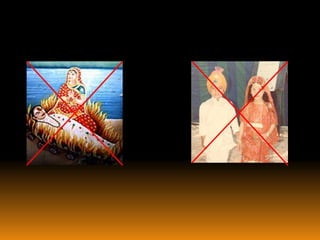
 Prohibited sati and legalized remarriage of

widows.
 Discouraged child marriage and made ages to

marry for girls 14 and boys 16.
 Akbar laid emphasis on secular subjects such as

mathematics, agriculture, logic, history and
astronomy.
 He got the Vedas, The Mahabharata, The Bhagwad
Gita, The Bible and other famous works translated
to Persian so that the middle and upper-middle
classes could have access to common literature and
an insight into other various cultures.
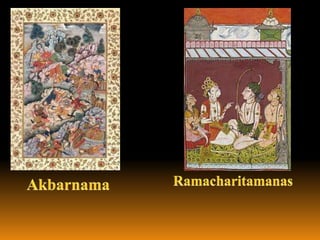
 Faizi, was Akbar’s poet-laureate and wrote the famous

biography of Akbar, the Akbarnama.
 Raja Birbal was made the Hindi Kavi Raj.
 Tulsidas had written the Ramacharitamanas.
 Akbar was illiterate but had an unquenchable hunger
for knowledge, hence his library had 24000 books.
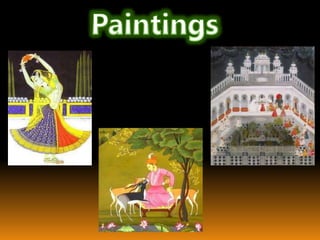
 Mughals were a great contributor to

Indian art.
 Artists would spend a large amount of

time illustrating manuscripts, out of
which most were miniature paintings.
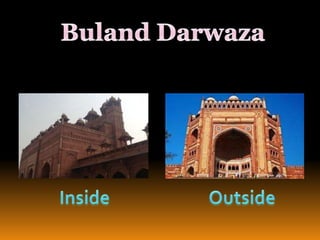
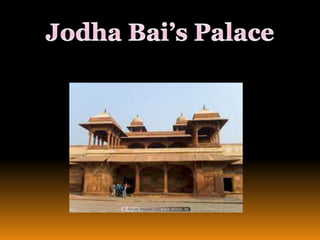
 Architecture was initially Persian, but Akbar’s style

became more Indian, inspired by the buildings of
Hindu Rajas.
 Some examples are given on the slides ahead:-
 There were 36 ranking musicians in Akbar’s

court.
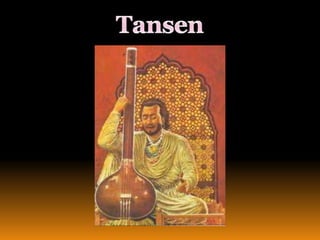
 The most famous musician was Tansen. He
composed many ragas and developed new
music by merging Indian and Persian styles.
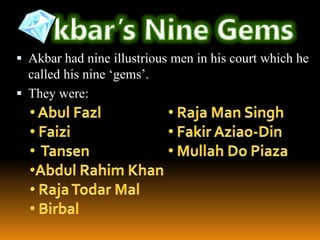
 Akbar had nine illustrious men in his court which he

called his nine ‘gems’.
 They were:
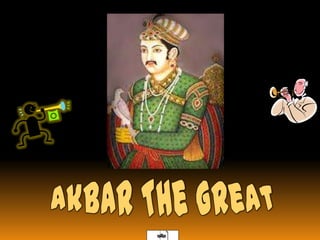
Akbar The Great

Akbar The Great

  • 2.
     The Rajputsof Mewar ,however, refused to submit . Having lost Chittor their capital city they rallied around Rana Pratap the valiant son of Udai Singh . After his escape to the hills , Udai Singh had built a new capital called Udaipur . After his death Rana Pratap carried on the struggle against the Mughals .With great deal and difficulty he organized an army and clashed with the the Mughal forces in the battle of Haldighati in 1576 ce . The Rajputs were outnumbered and defeated by the Mughal army . Rana pratap took shelter in a mountain fortress . He recovered some parts of his territories but not Chittor before his death.
  • 3.
     Rana Pratap’smemory is still honoured in Rajasthan for his bravery and courage lifelong struggle to free Mewar from Mughal rule.
  • 4.
     In 1572ce Akbar himself led an expedition against the ruler of Gujarat and conquered the rich province with it’s rich cotton fields , flourishing seaorts and lucrative trade with the European merchants .
  • 5.
     Bengal wasa rich and the most fertile provinces in India which had prosperous trad relationships with south-east Asia and China . This conquest bought rich revenues to the Mughal treasury .
  • 6.
     In aseries of campaigns in the North-west Akbar conquered Kashmir , Kandahar , lower Sind and eastern Baluchistan . Besides adding important territories to his empire.
  • 7.
     After consolidatinghis position in northern and central India Akbar turned his attention towards the Deccan . By 1601 ce he annexed Berrar , Khandesh and a part of Ahmadnagar.  In 40 years Akbar carved out an empire from Hindu Kush mountains in the west to Barhmaputra in the east and Himalayas in the north to Godavari in the south .
  • 8.
     To joinall provinces in the vast empire into a small unit a central government was set up . The emperor was extremely powerful his decision on all mattered the most for eg- military , politics etc . His word was law and he was the commander in chief of the armed forces.  He was assisted by a team of ministers and officials . The promotion or dismissal of any member was the sole right of the emperor . The success of this system was depended largely on the personality and his wisdom to choose the correct person for the correct job .
  • 9.
     His councilof ministers was composed of wazir or diwan , head of the revenue department ; the mir bhakshi , head of the militay departmentand the paymasters of all mansabdars ; the qazi , chief judge and the chief sadr , the supervisor of the royal household . The vakil or prime minister did not exercise any effective authority.  Akbar held regular meetings with his senior officers in the Diwan-i-khas . He considered himself as the guardian of his subjects . He would meet them in the Diwan-I- Aam where he would receive petitions , listen to their problems and solve many cases on the spot.
  • 10.
     The vastempire was divided into 15 provinces or subas . A governor or subedar was placed in charge of each province who was the leader of both military and civil affairs . The diwan kept the records of the land revenues . The diwan and the subedar kept a close watch on each other .  The provinces were further subdivide into districts or sarkars which were further subdivided into small units of administration called parghana. Each of these units had a team of government officials managing their affairs and reporting to to the corresponding officials at the level immediately above them. The villages were looked after by panchayats.
  • 11.
     The termmeans holding a particular rank in the administration.the Mughal administration was essential a military one . Under this system .  Every official was given a rank according to the nature of the job. The the lowest rank was that of an officer in charge of 10 horsemen and the highest rank was that of an officer in charge of 7000 horsemen .  The mansabdars were appointed , promoted and dismissed by the emperor.  They were given salary in accordance to their jobs . They were later paid in form of jagirs .  A mansab or rank was not hereditary . After the death the jagirs reverted to the king who granted it to someone else.  The mansabdars did not have the authority of administering the jagirs
  • 12.
     The systemof branding horses and maintaining a descriptive roll of soldiers was adopted by Akbar .  Akbar also maintained a standing army . The cavalry was the most importat branch of the Mughal troops .  The troops were mainly supplied by the mansabdars .The emperor also maintained a batallion of royal and trusted soldiers .  He also maintained a corp of royal bodyguard and a large number of war elephants and a well organised artillery.
  • 13.
     Akbar adoptedthe basic structure of Sher shah’s revenue      system. With the help of Todar mal he introduced some important reforms . Land was measured with a bamboo jarib joined together with iron rings instead of the hemp rope used before. The average produce and the average price over 10 years was calculated.one third of the produce was the kings share .it could be paid in cash or kind though cash was preferred. The revenue officers were instructed to treat the peasants well. If the crops failed due to drought or flood , the state of remission of revenue . Loans could be paid back in easy installments were advanced to the peasants to buy seeds , cattle and implements .
  • 14.
     Trade wasanother source of revenue though much less in compared to land . The main components of export were spices , indigo ,textiles and saltpetre . India traded with China ,central Asia and Europe . The Portuguese established trade centers on the western coast during Akbar’s reign.
  • 16.
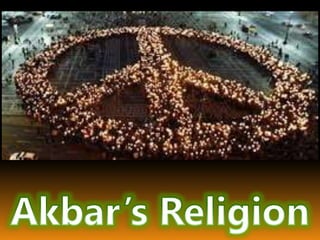
    Akbar had agreat desire to unite the diverse races in India into one nation where everyone would have equal status. He adopted certain policies to alter the Islamic State into a secular one. Throughout his rule, Akbar followed the policy of religious tolerance and one the respect, affection and support of his Hindu subjects in general and the Rajputs in particular.
  • 18.
    1. Akbar abolishedthe jaziya or poll tax and the pilgrim tax. This had been imposed by earlier Muslim rulers on all the Non-Muslim subjects, and it was greatly disliked by the Hindus. The pilgrim tax was put on Hindus visiting places of pilgrimage.
  • 20.
    2. Hindus weregiven the freedom of building temples, celebrating festivals and worshipping freely. He allowed his Rajput wives to celebrate festivals like Holi and Diwali, and took part in them himself.
  • 21.
    3. He gavehigh posts to talented and proficient Hindus like Todar Mal, Birbal and Raja Bhagwan Das. Birbal was his constant companion and trusted friend.
  • 23.
    4. He marriedRajput princesses and allowed them freedom of worship.
  • 24.
    5. He gaveland grants to all persons irrespective of their religious faith.
  • 26.
     In 1575CE, Akbar built the Ibadat Khana or the hall of prayer at his new capital, Fatehpur Sikhri.  Its purpose was for discussions on religious matters. He invited scholars, philosophers, priests, missionaries and religious leaders to hold discussions on religion.  Muslim clerics, Hindu scholars, Buddhist and Jain monks, Parsi priests, Christian missionaries etc. assembled in the Ibadat Khana and explained the principles and teachings of their respective religions.
  • 27.
     In 1579CE,Akbar issued a declaration called Mazhar, which gave him the power to choose between different interpretations of the Islamic Law. This helped him to consolidate his power with respect to multiple interpreters of law in his kingdom.
  • 37.
     Akbar wasimpressed by the patriotism and chivalry of the Rajputs. He realized that the support of the Rajputs was necessary to build and maintain a large and stable empire.

  • 38.
    1. Akbar treatedthe Rajputs with honour and equality and won their respect and loyalty. 2. He strengthened his ties with the Rajputs through matrimonial alliances. He married the daughter of the Raja of Amber, the mother of Jahangir, Akbar’s successor to the Mughal throne. He married several other Rajput princesses. He also married Prince Salim to the daughter of Raja Bhagwan Das.
  • 39.
    3. He wontheir friendship, loyalty and cooperation by appointing them to important posts of trusts and responsibility. Raja Man Singh was made a military commander and a viceroy of a large province. 4. The jaziya and pilgrim tax were abolished. 5. Akbar did not annex the kingdoms of the Rajput rulers after defeating them in war.
  • 41.
     Prohibited satiand legalized remarriage of widows.  Discouraged child marriage and made ages to marry for girls 14 and boys 16.
  • 43.
     Akbar laidemphasis on secular subjects such as mathematics, agriculture, logic, history and astronomy.  He got the Vedas, The Mahabharata, The Bhagwad Gita, The Bible and other famous works translated to Persian so that the middle and upper-middle classes could have access to common literature and an insight into other various cultures.
  • 44.
     Faizi, wasAkbar’s poet-laureate and wrote the famous biography of Akbar, the Akbarnama.  Raja Birbal was made the Hindi Kavi Raj.  Tulsidas had written the Ramacharitamanas.  Akbar was illiterate but had an unquenchable hunger for knowledge, hence his library had 24000 books.
  • 46.
     Mughals werea great contributor to Indian art.  Artists would spend a large amount of time illustrating manuscripts, out of which most were miniature paintings.
  • 48.
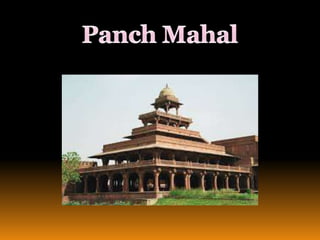
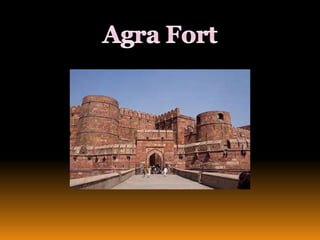
     Architecture wasinitially Persian, but Akbar’s style became more Indian, inspired by the buildings of Hindu Rajas.  Some examples are given on the slides ahead:-
  • 54.
     There were36 ranking musicians in Akbar’s court.  The most famous musician was Tansen. He composed many ragas and developed new music by merging Indian and Persian styles.
  • 56.
     Akbar hadnine illustrious men in his court which he called his nine ‘gems’.  They were: