R e f u e l i n g A n d D e f u e l i n g
TABLE OF CONTENTS
• Types of Aviation fuel
• The specifications and Characteristics
• Fuel identification
• Refueling
• Refueling procedure
• Defueling
• Safety precautions
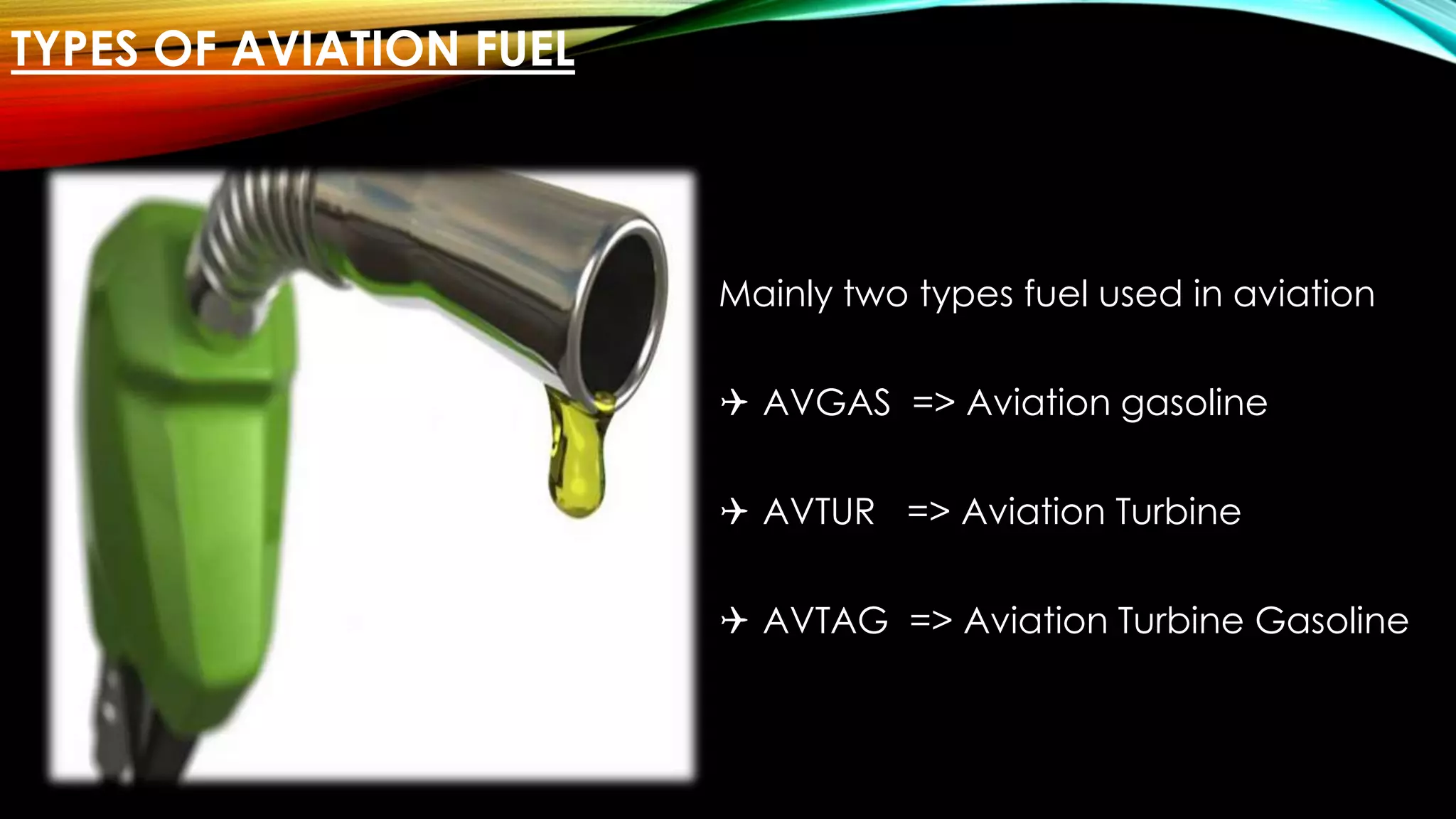
TYPES OF AVIATION FUEL
Mainly two types fuel used in aviation
 AVGAS => Aviation gasoline
 AVTUR => Aviation Turbine
 AVTAG => Aviation Turbine Gasoline
• The specification of an ideal fuel for either a gas turbine
engine or a piston engine would include the following main
requirements :
Ease of flow under all operating conditions.
Complete combustion under all conditions.
High calorific.
Purity
Non-corrosive.
No damage to the engine from combustion by-products.
Low fire hazard.
Ease of engine starting lubricity.
THE SPECIFICATIONS AND CHARACTERISTICS
CHARACTERISTICS
o Volatility (describe changes from liquid into a vapor)
o Vapor Lock (is a condition in which AVGAS vaporizes
in the fuel line or other components between the fuel
tank and the carburetor)
 Gasoline Vapor Pressure : 5.5  7 PSI at 100F
 Jet A Vapor Pressure 0.1 PSI at 100F
 Jet B Vapor Pressure 2  3 PSI at 100F
Detonation : is the rapid, uncontrolled explosion of fuel due to
high pressure and temperature in the combustion chamber.
Aviation fuels are refined and blended to avoid detonation …
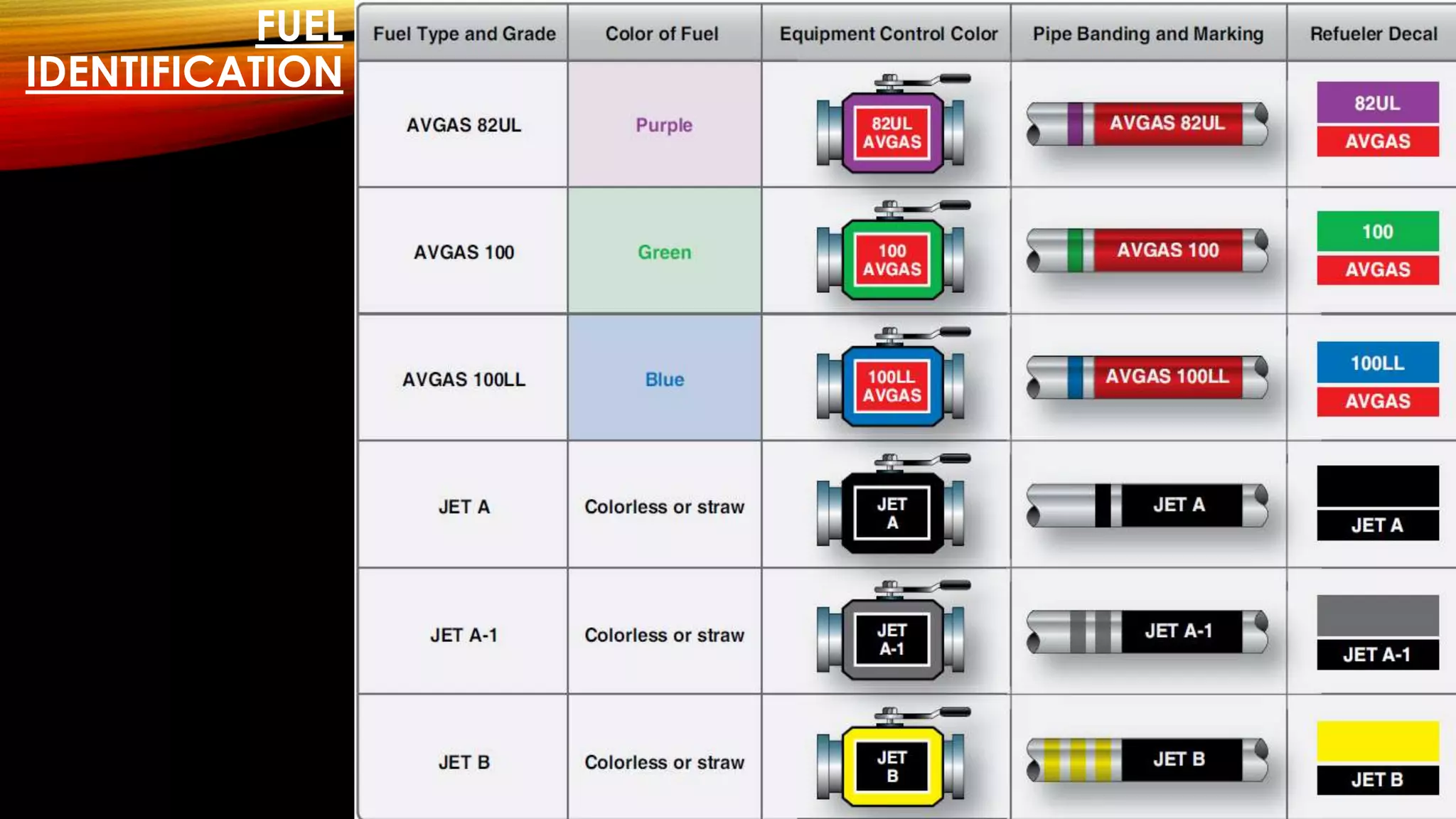
FUEL
IDENTIFICATION
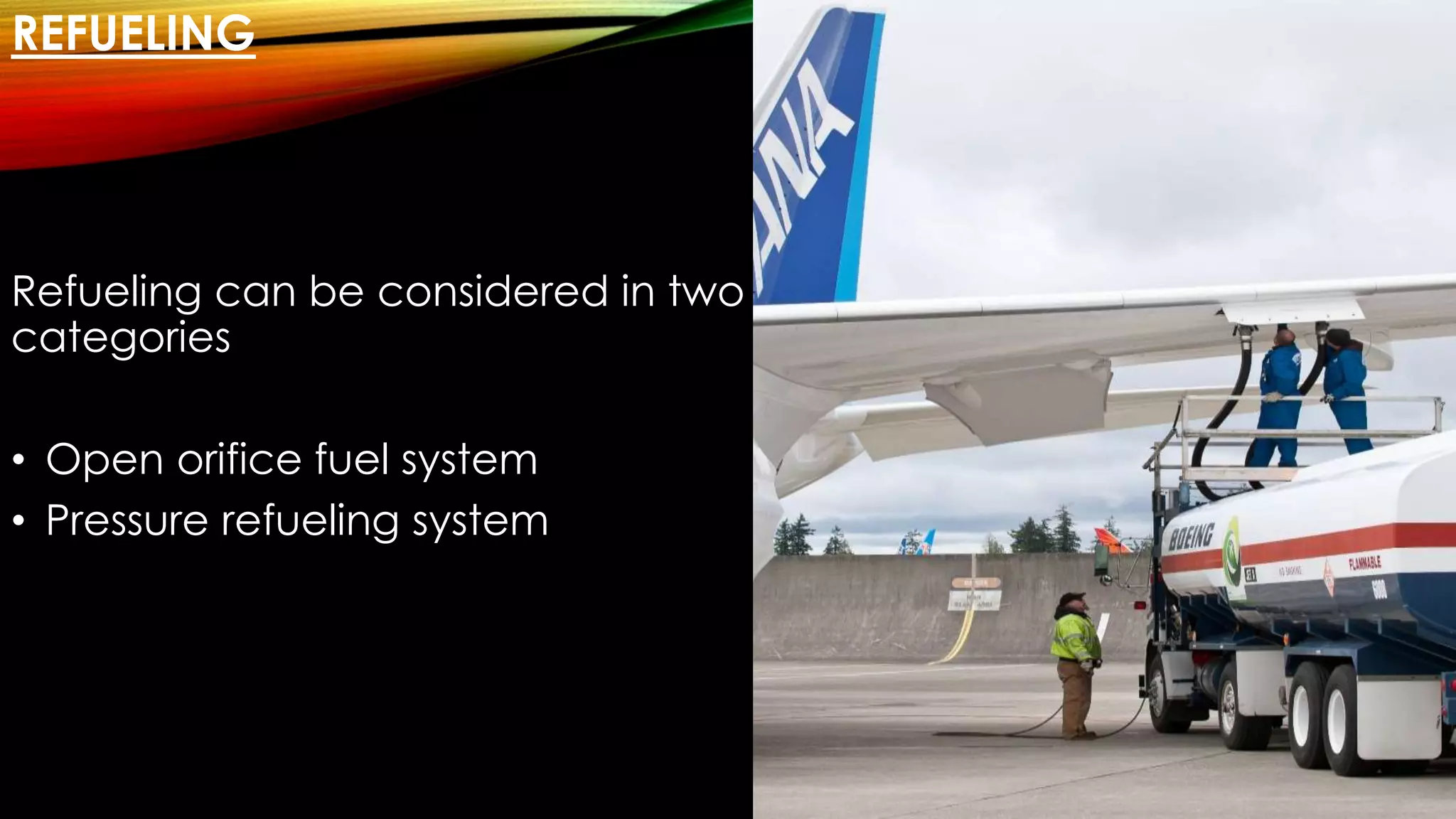
REFUELING
Refueling can be considered in two
categories
• Open orifice fuel system
• Pressure refueling system
REFUELING
PROCEDURE
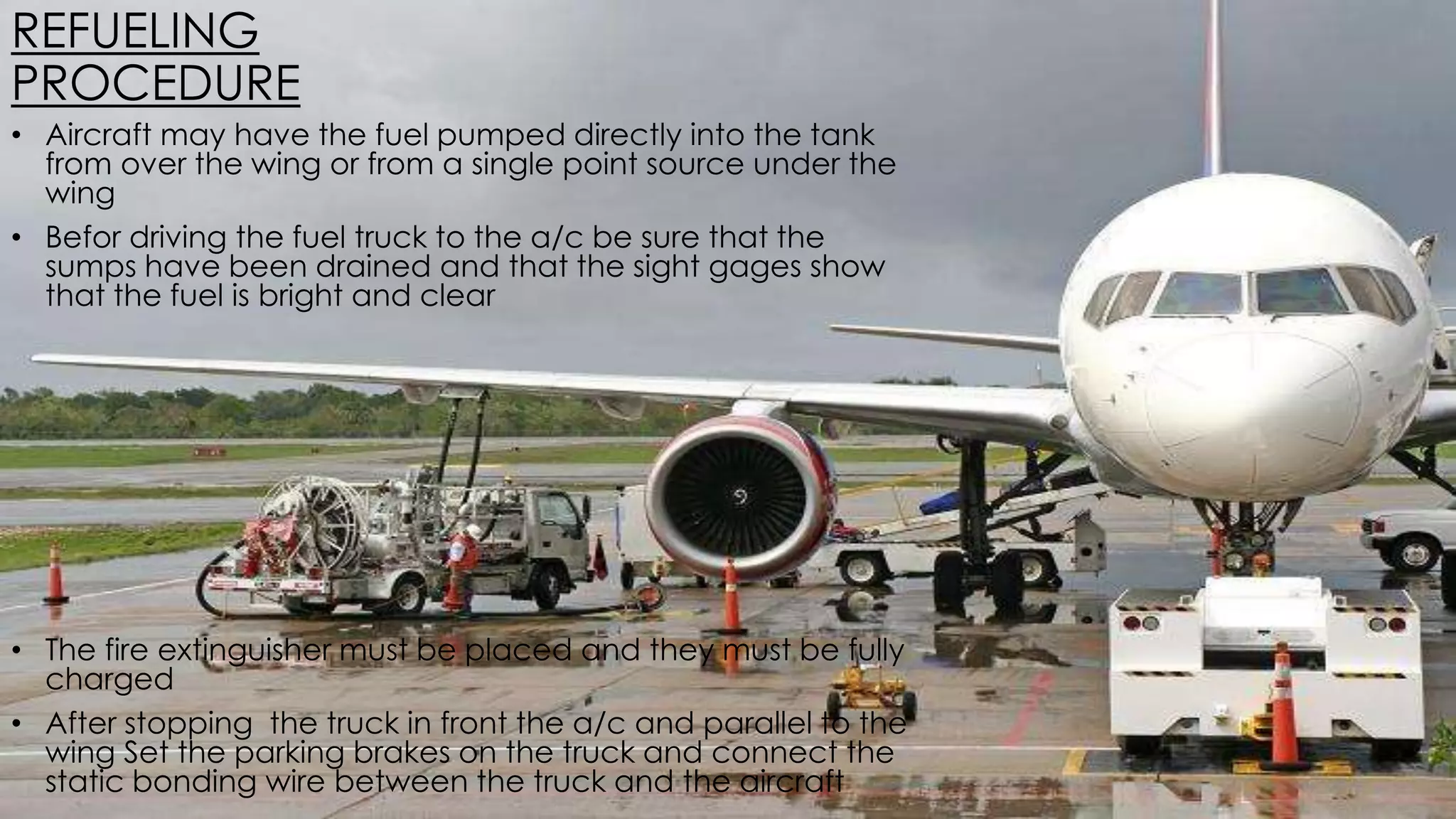
• Aircraft may have the fuel pumped directly into the tank
from over the wing or from a single point source under the
wing
• Befor driving the fuel truck to the a/c be sure that the
sumps have been drained and that the sight gages show
that the fuel is bright and clear
• The fire extinguisher must be placed and they must be fully
charged
• After stopping the truck in front the a/c and parallel to the
wing Set the parking brakes on the truck and connect the
static bonding wire between the truck and the aircraft
• Put the mat over the wing so the fuel hozel will not scratch
the finish.
• Connect the static bonding wire between the nozzele and
the a/c
• Then remobe the fuel tank cover –Remove the dust cap
from the nozzle and when inserting the nozzle into the tank
be sure that the end of the nozzle does not contact the
bottom of the tank
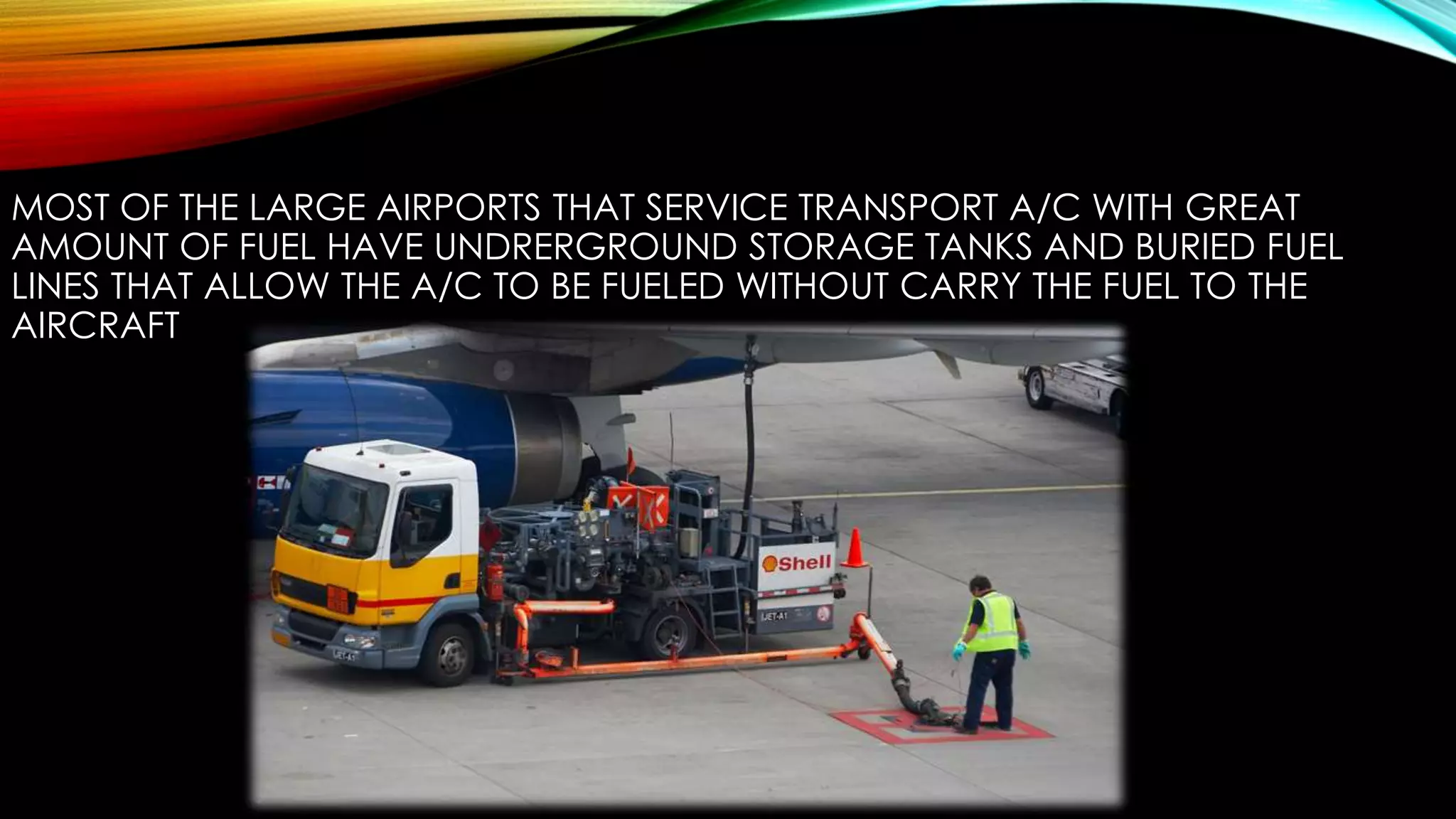
MOST OF THE LARGE AIRPORTS THAT SERVICE TRANSPORT A/C WITH GREAT
AMOUNT OF FUEL HAVE UNDRERGROUND STORAGE TANKS AND BURIED FUEL
LINES THAT ALLOW THE A/C TO BE FUELED WITHOUT CARRY THE FUEL TO THE
AIRCRAFT
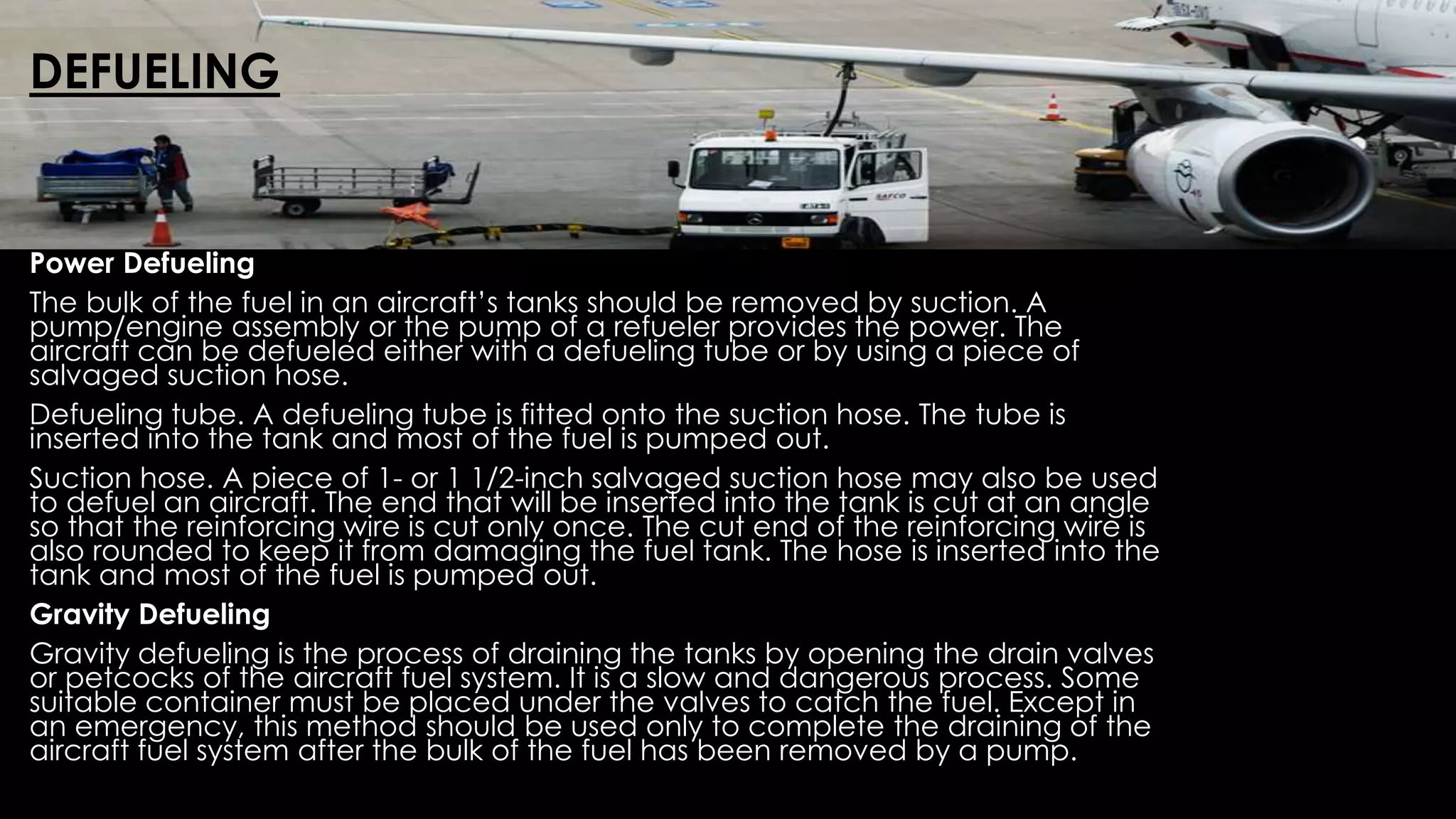
DEFUELING
Power Defueling
The bulk of the fuel in an aircraft’s tanks should be removed by suction. A
pump/engine assembly or the pump of a refueler provides the power. The
aircraft can be defueled either with a defueling tube or by using a piece of
salvaged suction hose.
Defueling tube. A defueling tube is fitted onto the suction hose. The tube is
inserted into the tank and most of the fuel is pumped out.
Suction hose. A piece of 1- or 1 1/2-inch salvaged suction hose may also be used
to defuel an aircraft. The end that will be inserted into the tank is cut at an angle
so that the reinforcing wire is cut only once. The cut end of the reinforcing wire is
also rounded to keep it from damaging the fuel tank. The hose is inserted into the
tank and most of the fuel is pumped out.
Gravity Defueling
Gravity defueling is the process of draining the tanks by opening the drain valves
or petcocks of the aircraft fuel system. It is a slow and dangerous process. Some
suitable container must be placed under the valves to catch the fuel. Except in
an emergency, this method should be used only to complete the draining of the
aircraft fuel system after the bulk of the fuel has been removed by a pump.
SAFETY PRECAUTIONS
• Allowed to handle fuel: Only personnel trained in Safe operation of equipment and fuels they
use Operation of emergency controls Procedures to be followed in an emergency.
• Fire Extinguisher Placement Required on aircraft fuel servicing vehicles or carts Each aircraft
fuel servicing tank vehicle must have two listed fire extinguishers - ABC multipurpose dry
chemical fire extinguishers (ammonium phosphate).
• Put the correct grade of fuel .
• Be sure that the fuel truck is bounded to the a/c.
• Be sure that the fuel nozzle is properly bounded to the structure .
• Wipe up spilled fuel or flood it with water , do not sweep spilled fuel with a dry broom.
• Be sure there are no open fires in the vicinity of the fueling or defueling operation.
• Be sure that the radio or radar are not used during fueling or defueling and that no electrical
equipements is turned on or off exept equipements needed for the operation
• Ensure pressure delivery rate followed as manufacturer specification
Aircraft fuel system

Aircraft fuel system

  • 1.
    R e fu e l i n g A n d D e f u e l i n g
  • 2.
    TABLE OF CONTENTS •Types of Aviation fuel • The specifications and Characteristics • Fuel identification • Refueling • Refueling procedure • Defueling • Safety precautions
  • 3.
    TYPES OF AVIATIONFUEL Mainly two types fuel used in aviation  AVGAS => Aviation gasoline  AVTUR => Aviation Turbine  AVTAG => Aviation Turbine Gasoline
  • 4.
    • The specificationof an ideal fuel for either a gas turbine engine or a piston engine would include the following main requirements : Ease of flow under all operating conditions. Complete combustion under all conditions. High calorific. Purity Non-corrosive. No damage to the engine from combustion by-products. Low fire hazard. Ease of engine starting lubricity. THE SPECIFICATIONS AND CHARACTERISTICS
  • 5.
    CHARACTERISTICS o Volatility (describechanges from liquid into a vapor) o Vapor Lock (is a condition in which AVGAS vaporizes in the fuel line or other components between the fuel tank and the carburetor)  Gasoline Vapor Pressure : 5.5  7 PSI at 100F  Jet A Vapor Pressure 0.1 PSI at 100F  Jet B Vapor Pressure 2  3 PSI at 100F
  • 6.
    Detonation : isthe rapid, uncontrolled explosion of fuel due to high pressure and temperature in the combustion chamber. Aviation fuels are refined and blended to avoid detonation …
  • 7.
  • 9.
    REFUELING Refueling can beconsidered in two categories • Open orifice fuel system • Pressure refueling system
  • 10.
    REFUELING PROCEDURE • Aircraft mayhave the fuel pumped directly into the tank from over the wing or from a single point source under the wing • Befor driving the fuel truck to the a/c be sure that the sumps have been drained and that the sight gages show that the fuel is bright and clear • The fire extinguisher must be placed and they must be fully charged • After stopping the truck in front the a/c and parallel to the wing Set the parking brakes on the truck and connect the static bonding wire between the truck and the aircraft
  • 11.
    • Put themat over the wing so the fuel hozel will not scratch the finish. • Connect the static bonding wire between the nozzele and the a/c • Then remobe the fuel tank cover –Remove the dust cap from the nozzle and when inserting the nozzle into the tank be sure that the end of the nozzle does not contact the bottom of the tank
  • 12.
    MOST OF THELARGE AIRPORTS THAT SERVICE TRANSPORT A/C WITH GREAT AMOUNT OF FUEL HAVE UNDRERGROUND STORAGE TANKS AND BURIED FUEL LINES THAT ALLOW THE A/C TO BE FUELED WITHOUT CARRY THE FUEL TO THE AIRCRAFT
  • 13.
    DEFUELING Power Defueling The bulkof the fuel in an aircraft’s tanks should be removed by suction. A pump/engine assembly or the pump of a refueler provides the power. The aircraft can be defueled either with a defueling tube or by using a piece of salvaged suction hose. Defueling tube. A defueling tube is fitted onto the suction hose. The tube is inserted into the tank and most of the fuel is pumped out. Suction hose. A piece of 1- or 1 1/2-inch salvaged suction hose may also be used to defuel an aircraft. The end that will be inserted into the tank is cut at an angle so that the reinforcing wire is cut only once. The cut end of the reinforcing wire is also rounded to keep it from damaging the fuel tank. The hose is inserted into the tank and most of the fuel is pumped out. Gravity Defueling Gravity defueling is the process of draining the tanks by opening the drain valves or petcocks of the aircraft fuel system. It is a slow and dangerous process. Some suitable container must be placed under the valves to catch the fuel. Except in an emergency, this method should be used only to complete the draining of the aircraft fuel system after the bulk of the fuel has been removed by a pump.
  • 14.
    SAFETY PRECAUTIONS • Allowedto handle fuel: Only personnel trained in Safe operation of equipment and fuels they use Operation of emergency controls Procedures to be followed in an emergency. • Fire Extinguisher Placement Required on aircraft fuel servicing vehicles or carts Each aircraft fuel servicing tank vehicle must have two listed fire extinguishers - ABC multipurpose dry chemical fire extinguishers (ammonium phosphate). • Put the correct grade of fuel . • Be sure that the fuel truck is bounded to the a/c. • Be sure that the fuel nozzle is properly bounded to the structure . • Wipe up spilled fuel or flood it with water , do not sweep spilled fuel with a dry broom. • Be sure there are no open fires in the vicinity of the fueling or defueling operation. • Be sure that the radio or radar are not used during fueling or defueling and that no electrical equipements is turned on or off exept equipements needed for the operation • Ensure pressure delivery rate followed as manufacturer specification

Editor's Notes

  • #4 AVGAS => Aviation gasoline……… Reciprocating-engine fuel AVTUR => Aviation Turbine……… Jet fuel kerosene used in turbine engine AVTAG => Aviation Turbine Gasoline……. Mixed type fuel gasoline and kerosene
  • #6 Fuel has some characteristics and one of the most important are : _Volatility : is a measure of liquid for its ability to change from a liquid to vapor _The vapor lock : the air pressure required above a liquid to prevent evaporation at particular temperature. Pressure and temperature affected by altitude/weather /engine…. Thus will affect the volatility.
  • #7 _(Fuel burn before the right time )
  • #8 Fuel identification concern not only the fuel but fuel pumps and trucks are also marked with color-coded fuel identification decals on each side of the tank. As well as the equipment control / cabs / pipes / Fillers / .. So that all items related to a/c fueling Avgas 80 dyed red but is no longer available UL = Ultra lead . LL = Low Lead JET A ( kerosene ) used in civil aviation and switable for high altitude ( freezing point -40°c ) Low vapor pressure, color less JET A-1 Same as Jet A (freezing point -47°c ) JET B : blended fuel that contain both gasoline and kerosene fraction, its vapor pressure is higher than that of jet A and low freezing point -50°c
  • #10 _Refueling is to supply fuel to an a/c fuel tank or tanks to enable the a/c to fulfil its function _ Open orifice system called also open vent or overwing method = the refueling is accomplished after removing filler caps mounted on the upper portion of the wing or fuselage => disadvantages is that to slow _pressure refueling =sometimes referred to as single point or underwing fueling= pumping the fuel under pressure through a special connector from a fuel tanker… normally is delivered up to a pressure of 50 PSI The main advantages of pressure refueling are !! Fast operation --- less spillage---- reduces the possibility of contamination --- reduces fire risks
  • #14 It is sometimes nessassery to remove fuel from an a/c either for maintenance reasons or because of change in flight plan Defueling ana aircraft is carried out same manner as refueling, with the same safety precautions being taken