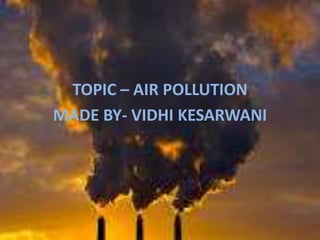
TOPIC – AIR POLLUTION
MADE BY- VIDHI KESARWANI
Air Pollution
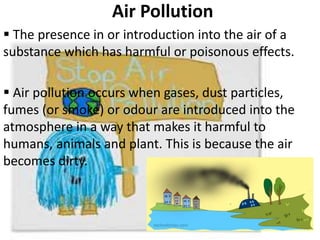
 The presence in or introduction into the air of a
substance which has harmful or poisonous effects.
 Air pollution occurs when gases, dust particles,
fumes (or smoke) or odour are introduced into the
atmosphere in a way that makes it harmful to
humans, animals and plant. This is because the air
becomes dirty.
Types of Air Pollution
There are two types of pollutants:
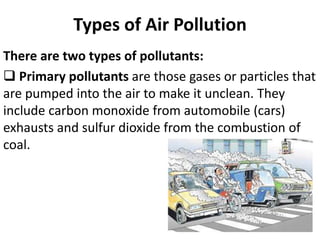
 Primary pollutants are those gases or particles that
are pumped into the air to make it unclean. They
include carbon monoxide from automobile (cars)
exhausts and sulfur dioxide from the combustion of
coal.
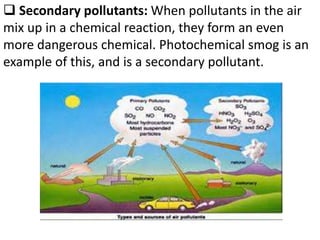
 Secondary pollutants: When pollutants in the air
mix up in a chemical reaction, they form an even
more dangerous chemical. Photochemical smog is an
example of this, and is a secondary pollutant.
Causes of Air Pollution
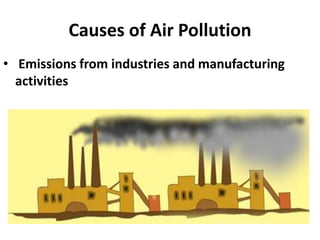
• Emissions from industries and manufacturing
activities
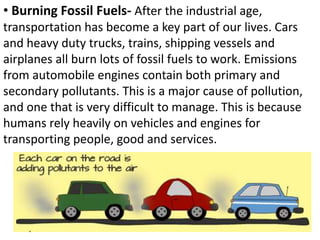
• Burning Fossil Fuels- After the industrial age,
transportation has become a key part of our lives. Cars
and heavy duty trucks, trains, shipping vessels and
airplanes all burn lots of fossil fuels to work. Emissions
from automobile engines contain both primary and
secondary pollutants. This is a major cause of pollution,
and one that is very difficult to manage. This is because
humans rely heavily on vehicles and engines for
transporting people, good and services.
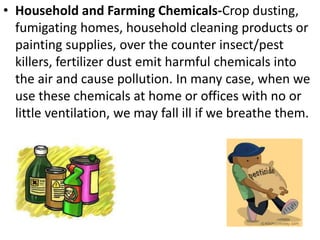
• Household and Farming Chemicals-Crop dusting,
fumigating homes, household cleaning products or
painting supplies, over the counter insect/pest
killers, fertilizer dust emit harmful chemicals into
the air and cause pollution. In many case, when we
use these chemicals at home or offices with no or
little ventilation, we may fall ill if we breathe them.
Effects of Air Pollution
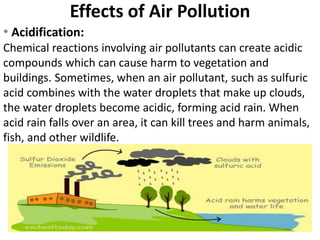
• Acidification:
Chemical reactions involving air pollutants can create acidic
compounds which can cause harm to vegetation and
buildings. Sometimes, when an air pollutant, such as sulfuric
acid combines with the water droplets that make up clouds,
the water droplets become acidic, forming acid rain. When
acid rain falls over an area, it can kill trees and harm animals,
fish, and other wildlife.
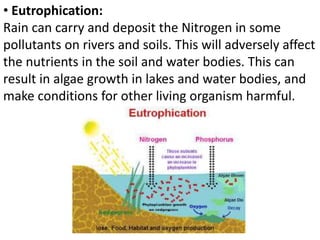
• Eutrophication:
Rain can carry and deposit the Nitrogen in some
pollutants on rivers and soils. This will adversely affect
the nutrients in the soil and water bodies. This can
result in algae growth in lakes and water bodies, and
make conditions for other living organism harmful.
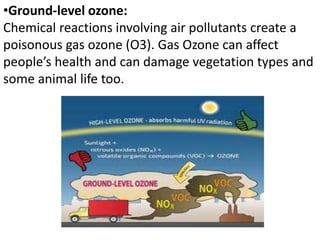
•Ground-level ozone:
Chemical reactions involving air pollutants create a
poisonous gas ozone (O3). Gas Ozone can affect
people’s health and can damage vegetation types and
some animal life too.
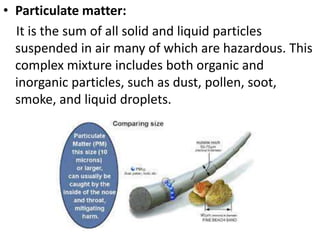
• Particulate matter:
It is the sum of all solid and liquid particles
suspended in air many of which are hazardous. This
complex mixture includes both organic and
inorganic particles, such as dust, pollen, soot,
smoke, and liquid droplets.
Control Measures of Air Pollution
 Planting trees.
 Reducing vehicle exhausts.
 Using less pollution fuels.
 Using mass transport.
 Industrial area should be cited far away from
residential area.
 Use of tall chimneys reduces- concentration of air
pollutants at ground level.
air pollution

air pollution

  • 1.
    TOPIC – AIRPOLLUTION MADE BY- VIDHI KESARWANI
  • 2.
    Air Pollution  Thepresence in or introduction into the air of a substance which has harmful or poisonous effects.  Air pollution occurs when gases, dust particles, fumes (or smoke) or odour are introduced into the atmosphere in a way that makes it harmful to humans, animals and plant. This is because the air becomes dirty.
  • 3.
    Types of AirPollution There are two types of pollutants:  Primary pollutants are those gases or particles that are pumped into the air to make it unclean. They include carbon monoxide from automobile (cars) exhausts and sulfur dioxide from the combustion of coal.
  • 4.
     Secondary pollutants:When pollutants in the air mix up in a chemical reaction, they form an even more dangerous chemical. Photochemical smog is an example of this, and is a secondary pollutant.
  • 5.
    Causes of AirPollution • Emissions from industries and manufacturing activities
  • 6.
    • Burning FossilFuels- After the industrial age, transportation has become a key part of our lives. Cars and heavy duty trucks, trains, shipping vessels and airplanes all burn lots of fossil fuels to work. Emissions from automobile engines contain both primary and secondary pollutants. This is a major cause of pollution, and one that is very difficult to manage. This is because humans rely heavily on vehicles and engines for transporting people, good and services.
  • 7.
    • Household andFarming Chemicals-Crop dusting, fumigating homes, household cleaning products or painting supplies, over the counter insect/pest killers, fertilizer dust emit harmful chemicals into the air and cause pollution. In many case, when we use these chemicals at home or offices with no or little ventilation, we may fall ill if we breathe them.
  • 8.
    Effects of AirPollution • Acidification: Chemical reactions involving air pollutants can create acidic compounds which can cause harm to vegetation and buildings. Sometimes, when an air pollutant, such as sulfuric acid combines with the water droplets that make up clouds, the water droplets become acidic, forming acid rain. When acid rain falls over an area, it can kill trees and harm animals, fish, and other wildlife.
  • 9.
    • Eutrophication: Rain cancarry and deposit the Nitrogen in some pollutants on rivers and soils. This will adversely affect the nutrients in the soil and water bodies. This can result in algae growth in lakes and water bodies, and make conditions for other living organism harmful.
  • 10.
    •Ground-level ozone: Chemical reactionsinvolving air pollutants create a poisonous gas ozone (O3). Gas Ozone can affect people’s health and can damage vegetation types and some animal life too.
  • 11.
    • Particulate matter: Itis the sum of all solid and liquid particles suspended in air many of which are hazardous. This complex mixture includes both organic and inorganic particles, such as dust, pollen, soot, smoke, and liquid droplets.
  • 12.
    Control Measures ofAir Pollution  Planting trees.  Reducing vehicle exhausts.  Using less pollution fuels.  Using mass transport.  Industrial area should be cited far away from residential area.  Use of tall chimneys reduces- concentration of air pollutants at ground level.