PROJECT
GROUP - 1 PRESENTS
. AKASH RAJ .AMAL RAJ.K .DON JOSEPH .JOSE CLEMENT .RENJITH M.C .SABIN MON FRANCIS AIR POLLUTION SUBMITTED BY
POLLUTION Pollution is an undesirable change in physical,chemical or biological characterstics of air,land or water that harmfully affected the life or create potential health hazard of living organism. Any substance causes pollution is called  pollutant.
DIFFERENT TYPES OF POLLUTION Air pollution Water pollution Soil pollution Noise pollution Radioactive pollution
AIR POLLUTION
Air pollution is the degradation of air quality and natural atmospheric conditions .
RESULTS OF AIR POLLUTION Air pollutants cause injury to all living organisms. They reduce growth and yield of crops. It cause premature death of plants Affects respiratory system of human and of animals.
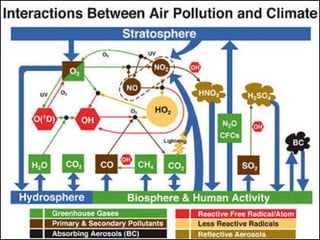
PRIMARY AIR POLLUTANTS Particulate matter Carbon monoxide (CO) Carbondioxide(CO2) Volatile Organic Carbon (VOC) or Hydrocarbon (HC) Sulphur dioxide(SO2) Nitrogen oxide (NO2) Fluorides
1.Particulate matter It comprises of solid particles or liquid droplets small enough to remain suspended in air. Eg :  smokes,dust,pesticides,pollen, fungal spores ,fibres,some metal like copper, iron etc. EFFECTS -Injurious to health -asthma,tuberculosis,bronchitis etc .
2.Carbon monoxide (CO) This poisonous gas is formed from partial combustion of fuels, steel industry, oil refiners,cigarettesmoke etc. CO is very harmful to living organism especially to animals. It inhibits cellular respiration in plants.


3.Carbondixide (CO2) Due to the combustion of fuels, respiration process of plants and animals etc. The main reason for increasing global warming is due to the present of high amount of CO2.
4. Volatile Organic Carbon (VOC) or Hydrocarbon (HC) These are compounds of hydrogen and carbon. Hydrocarbons are formed naturally during decomposition of organic matter and certain types of trees such as pine trees. The chief source are the motor vehicle,burning of fuels,decay of garbage etc.


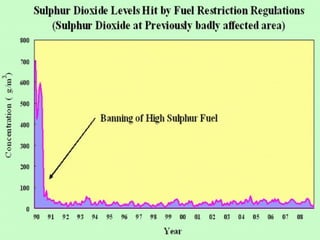
5. Sulphur dioxide (SO2) SO2 is released from the combustion of sulphur containing coal, petroleum refining, automobiles, ore smelters etc. High amount of sulphur dioxide destroys the vegetation. It disappearance of chlorophyll and break down of cells.
 
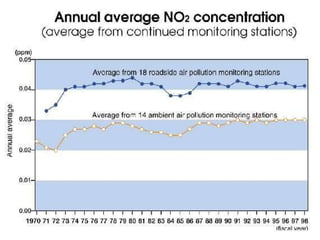
6.Nitrogen oxide (NO2) It form during combustion of fossil fuels as high temperatures in automobile engines. It also released from power plants. It may cause heart or lung problems and may be carcinogenic.
 
 
7. Fluorides Hydrogen fluoride gas is an extremely phytotoxic gas released by the heating of fluoride rocks, soils etc.
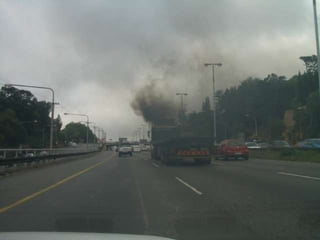
8. Lead Lead is emitted by automobile exhaust and it causes long-term environmental pollution. Continuous inhaling of air borne lead pollution caused lead poisoning. It reduces the oxygen carrying capacity of haemoglobin in the blood.
SECONDARY POLLUTANTS Photochemical smog Acid rain
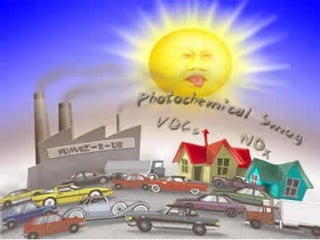
1.Photochemical smog It is formed in traffic congested metropolitan cities where warm conditions and intense solar radiations are present. It caused by combination of smoke and fog. It cause series of health hazards. Damage plant as well as animal life .
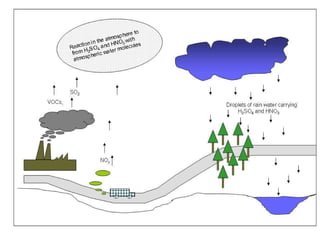
2.Acid rain   As a result of burning of fossil fuels, and petroleum, large quantities of sulphur oxide and nitrogen oxides reach the atmosphere  These gases oxidise into sulphuric acid and nitric acid. It deposits on the surface of earth either through rain. It changes the pH of the soil


Don’t kill me
CONTROL OF AIR POLLUTION
1.Control of particulate matters Scrubbers or arresters can be used to remove particulate matters from contaminated air. Cyclonic separator ,which   consists of a   special chamber   where a gas stream containing particulate matter is circulated through spiral. Particles are centrifuged outward and collected. Scrubbers are used to clear air for both dusts and gases by passing it through a dry or wet packing material.
2.Control of gaseous pollutants Gaseous pollutants can be controlled by combustion ,absorption and adsorption techniques. In combustion process, oxidisable gaseous pollutants are completely burnt at high temperature.  In absorption technique, gaseous pollutants are absorbed in suitable absorbent materials. In adsorption technique, toxic air pollutants are adsorbed on large solid surfaces.
3.Control of automobile exhaust Reduce the amount of uncombusted carbon and vehicles should be fitted with exhaust emission control.
Electrostatic precipitator It is most widely accepted method to remove 99% particulate matter present in the  exhaust from a thermal power plant.
Working of electrostatic  precipitator It has electrode wires posses several 1000 volt They produce a corona that releases electrons Electrons then attach to dust particles giving a’-’ ve charge Collecting plate attach the charged particles. Velocity of air between plates are low fallen the dust  A scrubber remove SO2 Air is passed through scrubber with water or lime.
Central pollution control board (CPCB) Particulate of size 2.5 micrometres or less in diameter are responsible for causing great harm to human health. They inhale deep into lungs and cause breathing &respiratory symptoms, irritation , inflammation and damage to lands.
1981: air (prevention &control of pollution) ace. 1987:It amend noise as a pollutant. 1986:Environment protection act.
Dear friends, The Earth in your hands. Please save her from pollutions.
THANK YOU

air pollution

  • 1.
  • 2.
    GROUP - 1PRESENTS
  • 3.
    . AKASH RAJ.AMAL RAJ.K .DON JOSEPH .JOSE CLEMENT .RENJITH M.C .SABIN MON FRANCIS AIR POLLUTION SUBMITTED BY
  • 4.
    POLLUTION Pollution isan undesirable change in physical,chemical or biological characterstics of air,land or water that harmfully affected the life or create potential health hazard of living organism. Any substance causes pollution is called pollutant.
  • 5.
    DIFFERENT TYPES OFPOLLUTION Air pollution Water pollution Soil pollution Noise pollution Radioactive pollution
  • 6.
  • 7.
    Air pollution isthe degradation of air quality and natural atmospheric conditions .
  • 8.
    RESULTS OF AIRPOLLUTION Air pollutants cause injury to all living organisms. They reduce growth and yield of crops. It cause premature death of plants Affects respiratory system of human and of animals.
  • 9.
    PRIMARY AIR POLLUTANTSParticulate matter Carbon monoxide (CO) Carbondioxide(CO2) Volatile Organic Carbon (VOC) or Hydrocarbon (HC) Sulphur dioxide(SO2) Nitrogen oxide (NO2) Fluorides
  • 10.
    1.Particulate matter Itcomprises of solid particles or liquid droplets small enough to remain suspended in air. Eg : smokes,dust,pesticides,pollen, fungal spores ,fibres,some metal like copper, iron etc. EFFECTS -Injurious to health -asthma,tuberculosis,bronchitis etc .
  • 11.
    2.Carbon monoxide (CO)This poisonous gas is formed from partial combustion of fuels, steel industry, oil refiners,cigarettesmoke etc. CO is very harmful to living organism especially to animals. It inhibits cellular respiration in plants.
  • 12.
  • 13.
  • 14.
  • 15.
  • 16.
    3.Carbondixide (CO2) Dueto the combustion of fuels, respiration process of plants and animals etc. The main reason for increasing global warming is due to the present of high amount of CO2.
  • 17.
    4. Volatile OrganicCarbon (VOC) or Hydrocarbon (HC) These are compounds of hydrogen and carbon. Hydrocarbons are formed naturally during decomposition of organic matter and certain types of trees such as pine trees. The chief source are the motor vehicle,burning of fuels,decay of garbage etc.
  • 18.
  • 19.
  • 20.
  • 21.
  • 22.
  • 23.
    5. Sulphur dioxide(SO2) SO2 is released from the combustion of sulphur containing coal, petroleum refining, automobiles, ore smelters etc. High amount of sulphur dioxide destroys the vegetation. It disappearance of chlorophyll and break down of cells.
  • 24.
  • 25.
    6.Nitrogen oxide (NO2)It form during combustion of fossil fuels as high temperatures in automobile engines. It also released from power plants. It may cause heart or lung problems and may be carcinogenic.
  • 26.
  • 27.
  • 28.
    7. Fluorides Hydrogenfluoride gas is an extremely phytotoxic gas released by the heating of fluoride rocks, soils etc.
  • 29.
    8. Lead Leadis emitted by automobile exhaust and it causes long-term environmental pollution. Continuous inhaling of air borne lead pollution caused lead poisoning. It reduces the oxygen carrying capacity of haemoglobin in the blood.
  • 30.
  • 31.
    1.Photochemical smog Itis formed in traffic congested metropolitan cities where warm conditions and intense solar radiations are present. It caused by combination of smoke and fog. It cause series of health hazards. Damage plant as well as animal life .
  • 32.
    2.Acid rain As a result of burning of fossil fuels, and petroleum, large quantities of sulphur oxide and nitrogen oxides reach the atmosphere These gases oxidise into sulphuric acid and nitric acid. It deposits on the surface of earth either through rain. It changes the pH of the soil
  • 33.
  • 34.
  • 35.
  • 36.
  • 37.
  • 38.
  • 39.
  • 40.
  • 41.
    CONTROL OF AIRPOLLUTION
  • 42.
    1.Control of particulatematters Scrubbers or arresters can be used to remove particulate matters from contaminated air. Cyclonic separator ,which consists of a special chamber where a gas stream containing particulate matter is circulated through spiral. Particles are centrifuged outward and collected. Scrubbers are used to clear air for both dusts and gases by passing it through a dry or wet packing material.
  • 43.
    2.Control of gaseouspollutants Gaseous pollutants can be controlled by combustion ,absorption and adsorption techniques. In combustion process, oxidisable gaseous pollutants are completely burnt at high temperature. In absorption technique, gaseous pollutants are absorbed in suitable absorbent materials. In adsorption technique, toxic air pollutants are adsorbed on large solid surfaces.
  • 44.
    3.Control of automobileexhaust Reduce the amount of uncombusted carbon and vehicles should be fitted with exhaust emission control.
  • 45.
    Electrostatic precipitator Itis most widely accepted method to remove 99% particulate matter present in the exhaust from a thermal power plant.
  • 46.
    Working of electrostatic precipitator It has electrode wires posses several 1000 volt They produce a corona that releases electrons Electrons then attach to dust particles giving a’-’ ve charge Collecting plate attach the charged particles. Velocity of air between plates are low fallen the dust A scrubber remove SO2 Air is passed through scrubber with water or lime.
  • 47.
    Central pollution controlboard (CPCB) Particulate of size 2.5 micrometres or less in diameter are responsible for causing great harm to human health. They inhale deep into lungs and cause breathing &respiratory symptoms, irritation , inflammation and damage to lands.
  • 48.
    1981: air (prevention&control of pollution) ace. 1987:It amend noise as a pollutant. 1986:Environment protection act.
  • 49.
    Dear friends, TheEarth in your hands. Please save her from pollutions.
  • 50.