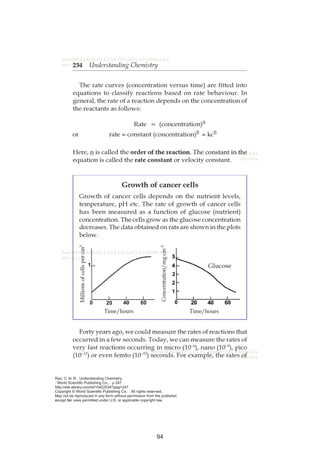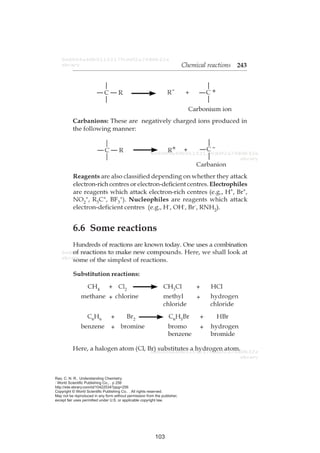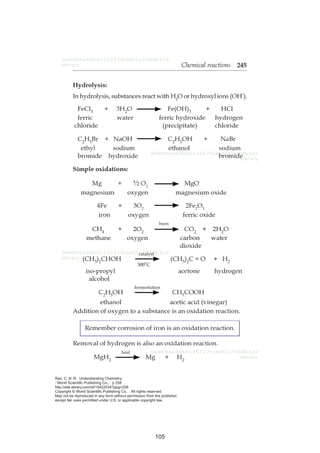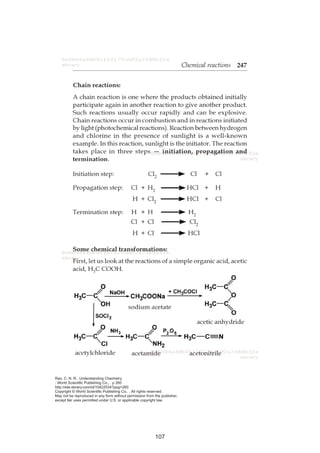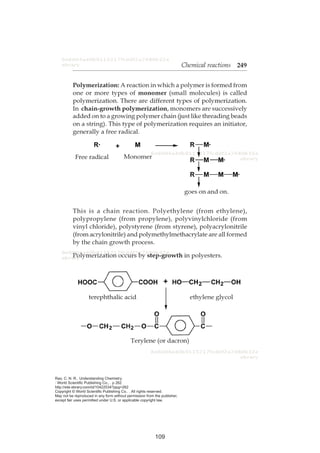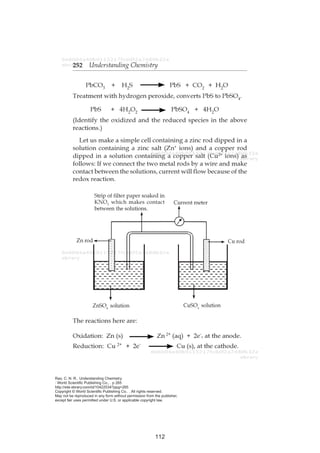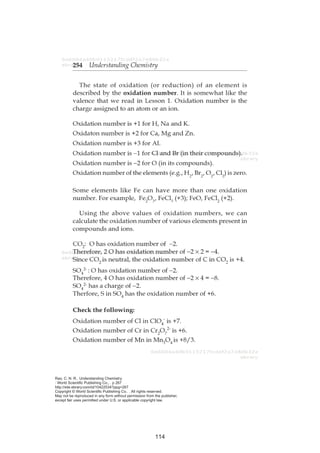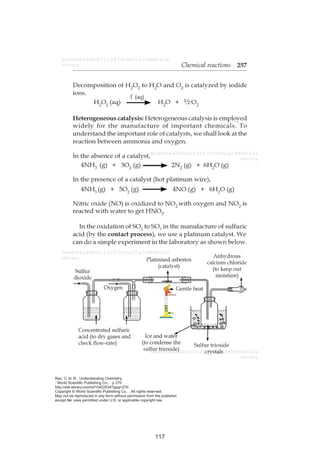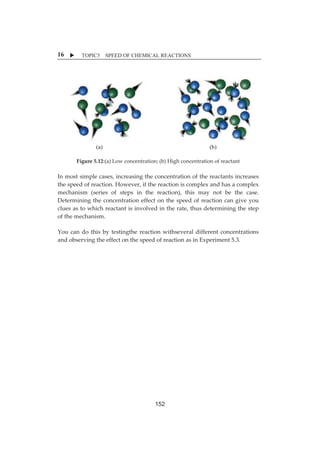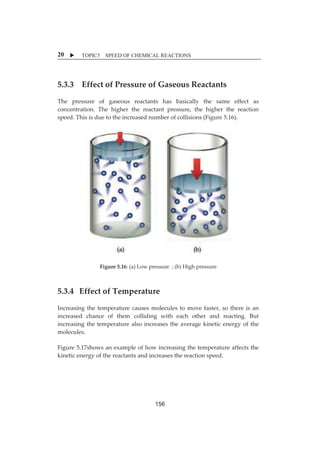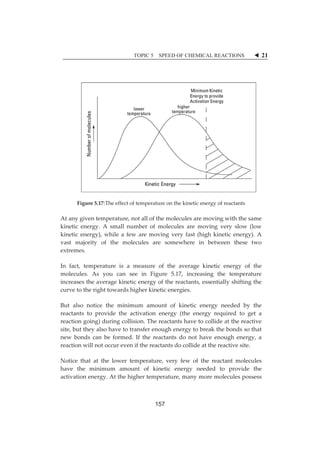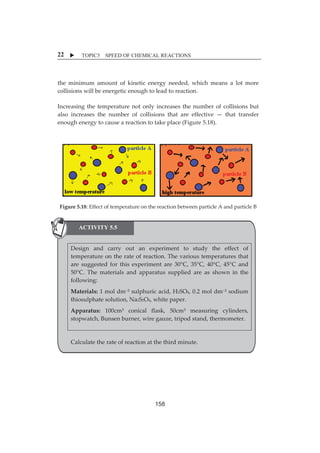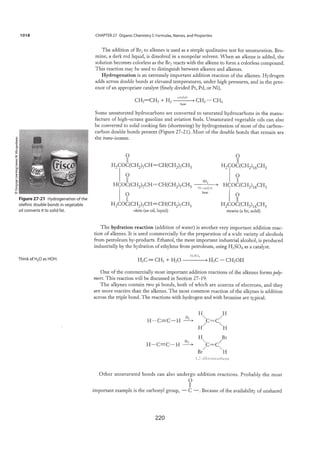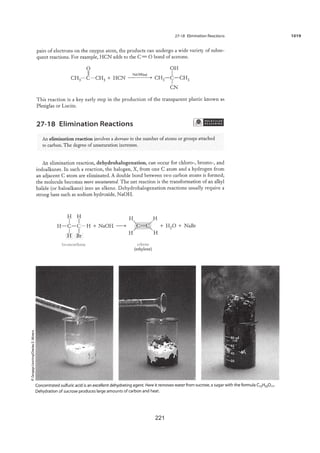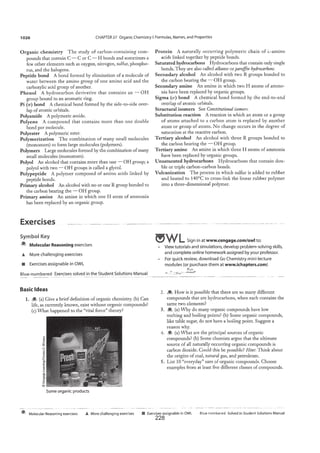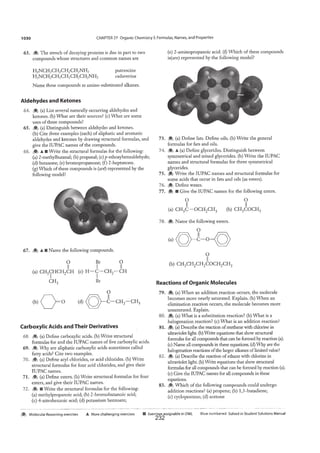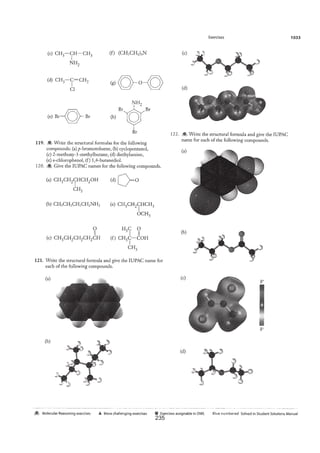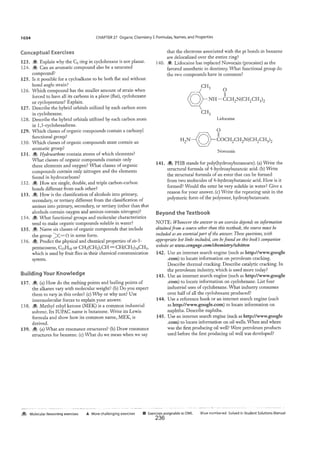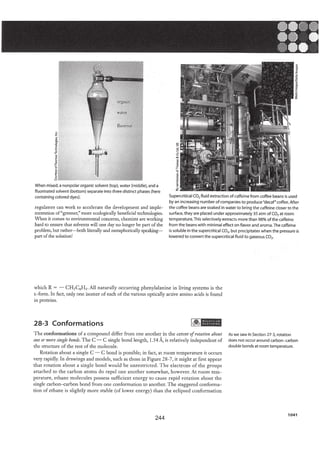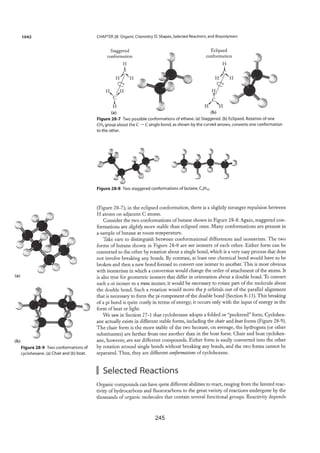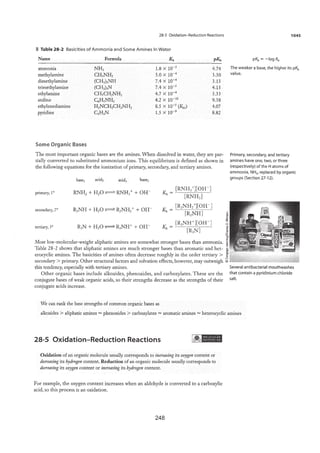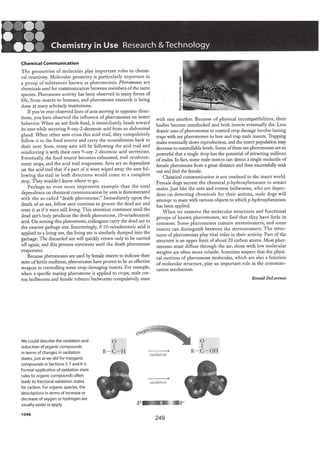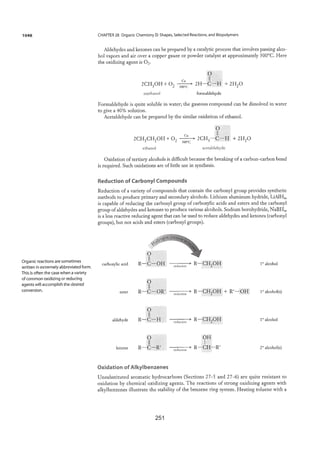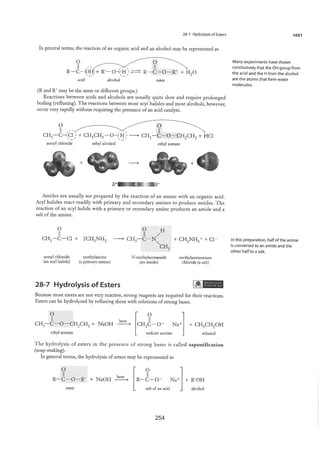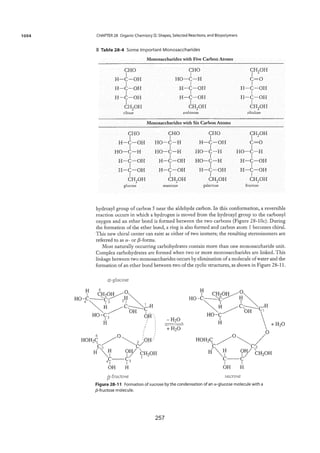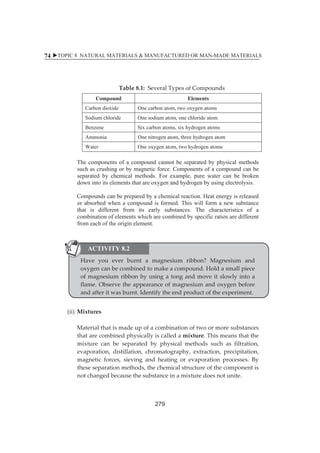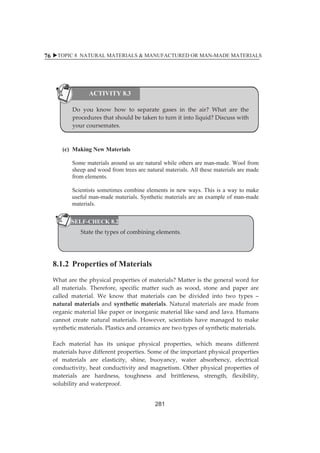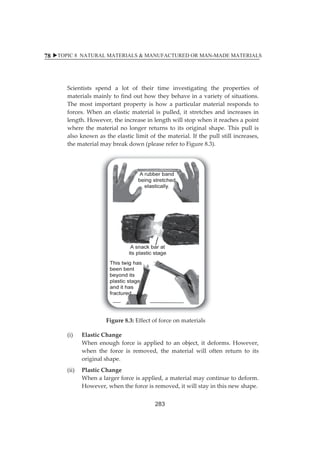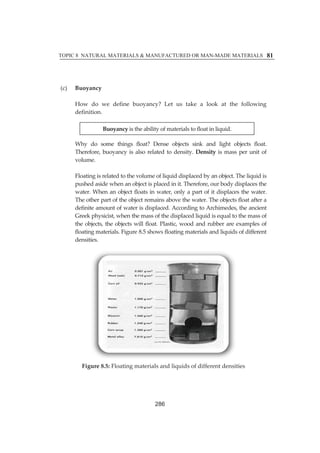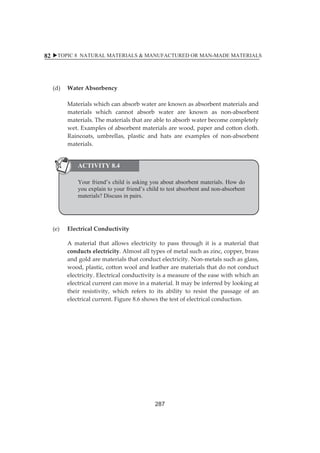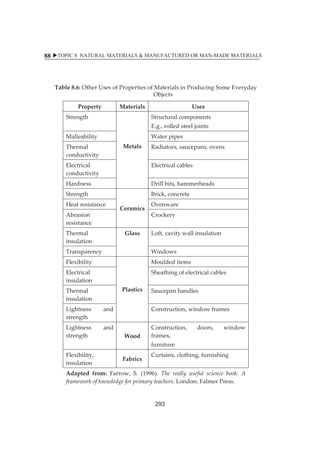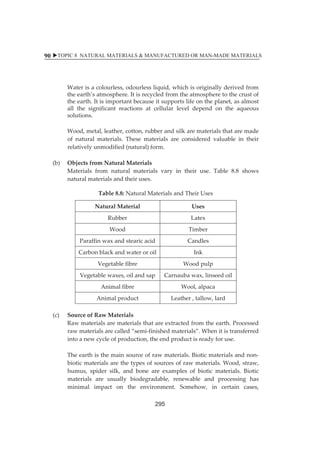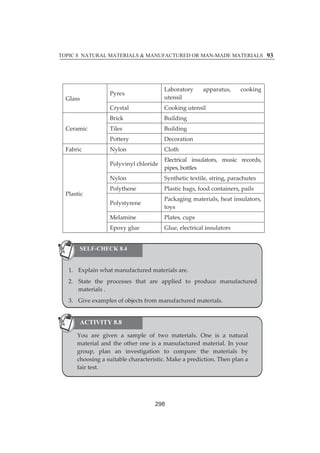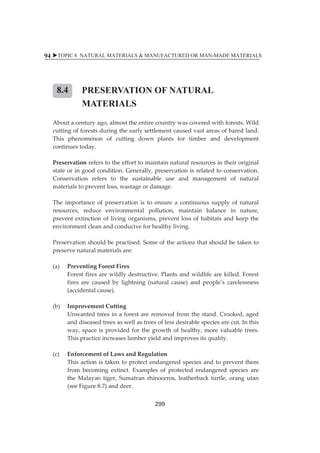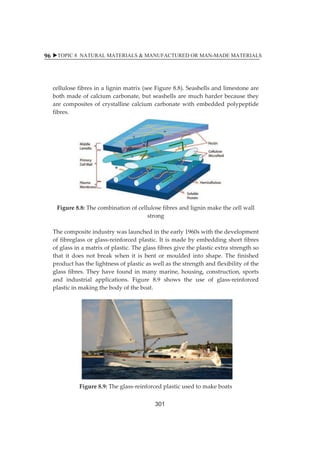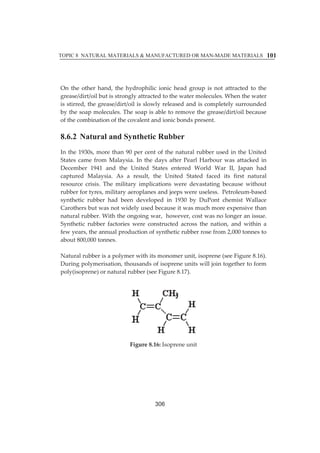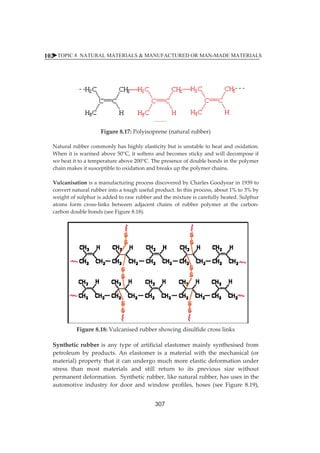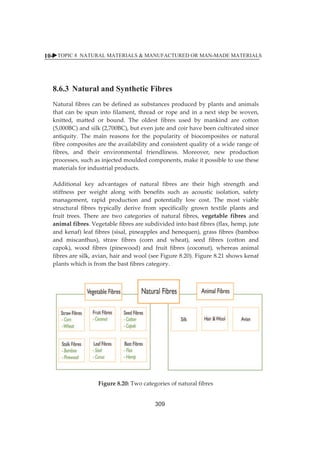
Table of Content 
Reading List …………………………………………………………………… i 
TOPIC 1 : THE AIR AND RESOURCES AROUND US ………………… 1 
TOPIC 2 : METALS …............................................................................ 41 
TOPIC 3 : ELECTROLYSIS…………………………..………….………… 66 
TOPIC 4 : OXIDATION AND REDUCTION ……………………………… 85 
Appendix 1 
Appendix 2 
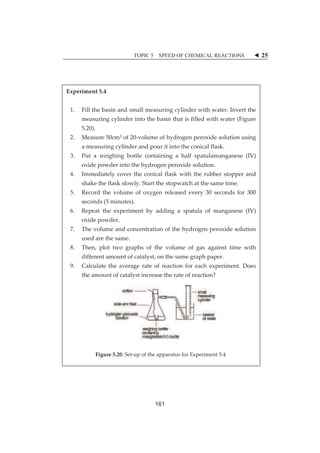
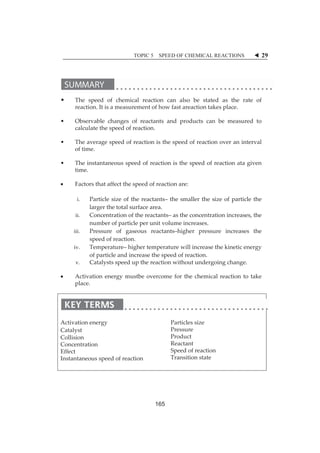
TOPIC 5 : SPEED OF CHEMICAL REACTIONS ………….…………… 137 
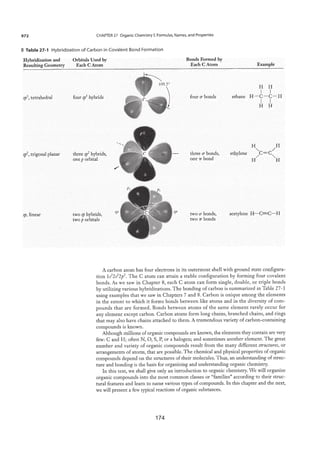
TOPIC 6 : HYDROCARBON COMPOUNDS I …………………………. 172 
TOPIC 7 : HYDROCARBON COMPOUNDS II ………………………… 238 
Appendix 3 
Appendix 4 
TOPIC 8 : NATURAL MATERIALS AND MANUFACTURED OR 
MAN–MADE MATERIALS …………………………………… 275
Topiicȱ1X TheȱAirȱandȱ 
Resourcesȱ 
AroundȱUsȱ 
LEARNING OUTCOMES 
By the end of this topic, you should be able to: 
1. Describe the composition of air; 
2. Explain the percentage of nitrogen, oxygen and carbon dioxide in the air; 
3. Examine the properties of oxygen and carbon dioxide using water and 
sodium hydroxide; 
4. Discuss the importance of oxygen in respiration and combustion; 
5. Describe air pollution, its sources, effects, and steps to control and prevent 
air pollution; 
6. Examine the different resources on earth and their importance; and 
7. Describe the agencies involved in environmental protection and their 
approach.ȱ 
1
X TOPIC 1 THE AIR AND RESOURCES AROUND US 
2 
INTRODUCTION 
Do you know this song? If you are not familiar with it, this lovely song was sung by Jordin 
Sparks, the 2007 American Idol winner. The lyrics describe how important it is to have 
someone that you care around you, as important as it is to have air around you. 
Air is all around us, wherever we are. We know that even though we cannot see it. In fact, 
there is a huge layer of air surrounding the earth. We call this the atmosphere. We use the air 
in the atmosphere for a lot of things. Breathing is one of them. Can you name other uses? 
Have you ever flown a kite or seen anyone doing so? How does the kite manage to sway in 
the sky? The reason is there is air which maintains the kite’s position. The moving air makes 
it possible to fly a kite. We will discuss the air further as we study the composition of air and 
the properties of oxygen and carbon dioxide. 
ȱȱȱȱȱȱȱ 
ȱ 
ȱ 
ȱ 
ACTIVITY 1.1 
Tilt the mouth of an empty bottle in a basin of water. 
Answer the following: 
(a) Do you see bubbles coming out of the bottle? 
(b) Do you hear any bubble sound? 
(c) Can you guess what is in the bottle?ȱ 
2
TOPIC 1 THE AIR AND RESOURCES AROUND US W 3 
COMPOSITION OF AIR 
Before we learn about the composition of air, let us do this activity. Put out your hand in front 
of your face and breathe in deeply. Then, gently blow outward towards your fingers. What do 
you feel? Do your fingers feel cool and tingly? I am sure you felt something blowing past 
your fingertips. This is commonly referred to as the air. 
Our earth is surrounded by a thick layer of air which we call atmosphere. The air is held 
around the earth by the force of gravity. This gravity pulls the gas particles towards the earth. 
Do you know the composition of the air that we breathe in? In ancient times, people thought 
that air was only one substance. Now, we know that the air is actually a mixture of gases. 
These gases are nitrogen, oxygen, carbon dioxide and inert gases. The inert gases in the air 
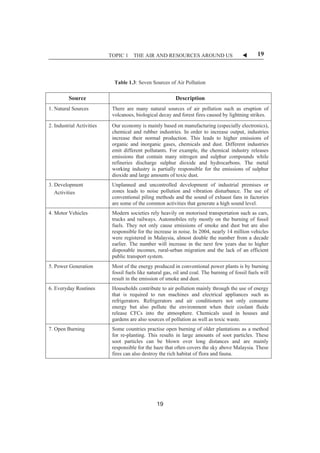
include argon, neon, helium, krypton, xenon and methane. Let us look at Table 1.1, which 
illustrates the composition of air. 
Table 1.1: Composition of Air 
Name Symbol Per Cent by Volume 
Nitrogen N2 78.084% 
Oxygen O2 20.9476% 
Argon Ar 0.934% 
Carbon Dioxide CO2 0.0351% 
Neon Ne 0.001818% 
Helium He 0.000524% 
Methane CH4 0.0002% 
Krypton Kr 0.000114% 
Hydrogen H2 0.00005% 
Xenon Xe 0.0000087% 
Source: CRC Handbook of Chemistry and Physics 
1.1 
3
X TOPIC 1 THE AIR AND RESOURCES AROUND US 
4 
ȱ 
ȱ 
ȱ 
ȱ 
ȱ 
PERCENTAGE OF GASES IN THE AIR 
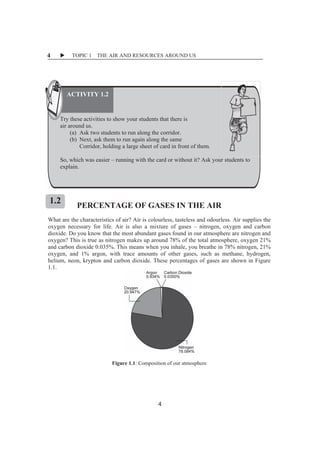
What are the characteristics of air? Air is colourless, tasteless and odourless. Air supplies the 
oxygen necessary for life. Air is also a mixture of gases – nitrogen, oxygen and carbon 
dioxide. Do you know that the most abundant gases found in our atmosphere are nitrogen and 
oxygen? This is true as nitrogen makes up around 78% of the total atmosphere, oxygen 21% 
and carbon dioxide 0.035%. This means when you inhale, you breathe in 78% nitrogen, 21% 
oxygen, and 1% argon, with trace amounts of other gases, such as methane, hydrogen, 
helium, neon, krypton and carbon dioxide. These percentages of gases are shown in Figure 
1.1. 
Figure 1.1: Composition of our atmosphere 
ACTIVITY 1.2 
Try these activities to show your students that there is 
air around us. 
(a) Ask two students to run along the corridor. 
(b) Next, ask them to run again along the same 
Corridor, holding a large sheet of card in front of them. 
So, which was easier – running with the card or without it? Ask your students to 
explain. 
1.2 
4
TOPIC 1 THE AIR AND RESOURCES AROUND US W 5 
However, this does not mean nitrogen will keep on increasing in the atmosphere. It is 
constantly being removed or cleansed from the atmosphere. A small amount of nitrogen is 
removed by living organisms. Rain and snow also wash nitrogen out of the atmosphere. 
As we learnt before, plants consume carbon dioxide. Plants use carbon dioxide in the air for 
photosynthesis and release oxygen during the process. This oxygen is later removed from the 
air by animals and other life forms. Oxygen is the most important gas in our atmosphere due 
to its strong relation with human and animal life. Without it, each of us, and most of the 
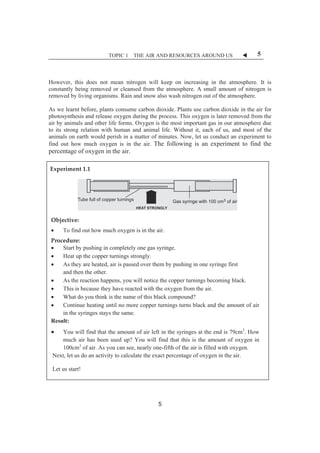
animals on earth would perish in a matter of minutes. Now, let us conduct an experiment to 
find out how much oxygen is in the air. The following is an experiment to find the 
percentage of oxygen in the air. 
ȱExperimentȱ1.1ȱ 
ȱ 
ȱ 
ȱ 
ȱ 
Objective:ȱ 
x To find out how much oxygen is in the air.ȱ 
Procedure:ȱ 
x Start by pushing in completely one gas syringe. 
x Heat up the copper turnings strongly. 
x As they are heated, air is passed over them by pushing in one syringe first 
and then the other. 
x As the reaction happens, you will notice the copper turnings becoming black. 
x This is because they have reacted with the oxygen from the air. 
x What do you think is the name of this black compound? 
x Continue heating until no more copper turnings turns black and the amount of air 
in the syringes stays the same. 
Result: 
x You will find that the amount of air left in the syringes at the end is 79cm3. How 
much air has been used up? You will find that this is the amount of oxygen in 
100cm3 of air. As you can see, nearly one-fifth of the air is filled with oxygen. 
Next, let us do an activity to calculate the exact percentage of oxygen in the air. 
Let us start! 
ȱ 
5
X TOPIC 1 THE AIR AND RESOURCES AROUND US 
6 
ȱ 
ȱ 
ȱ 
ȱ 
ȱ 
ȱ 
ȱ 
ȱ 
ȱ 
ȱ 
ȱ 
ȱ 
ȱ 
ȱ 
ȱ 
ȱ 
ȱ 
ȱ 
ȱ 
ACTIVITY 1.3 
SELF-CHECK 1.1 
1. Air is a mixture of gases. State two reasons to support this statement. 
2. State the percentage of nitrogen, oxygen and carbon dioxide in the air. 
6
TOPIC 1 THE AIR AND RESOURCES AROUND US W 7 
PROPERTIES OF OXYGEN AND CARBON DIOXIDE 
We know that oxygen and carbon dioxide are two of the most important gases in the air. The 
amount of carbon dioxide is very small, about three parts in ten thousand. However, oxygen 
comprises 20.94% of the air. We are now going to look into the properties of oxygen and 
carbon dioxide. We will look into three matters: 
(a) Their solubility in water; 
(b) Their reactions with sodium hydroxide; and 
(c) The tests for oxygen and carbon dioxide. 
Before we discuss further, let us look at the general properties of oxygen and carbon dioxide 
first (Table 1.2). 
Table 1.2: Seven General Properties of Oxygen and Carbon Dioxide 
Properties Carbon Dioxide Oxygen 
Features Colourless and odourless Colourless and odourless 
Solubility in water More soluble than oxygen Slightly soluble 
Solubility in sodium 
hydroxide solution 
Very soluble Not soluble 
Solubility in alkaline 
pyrogallol solution 
Not soluble Soluble 
Lime water reaction 
Turns cloudy No effect 
Combustion Does not support and does not 
burn 
Supports but does not burn 
pH Acidic Neutral 
1.3 
7
X TOPIC 1 THE AIR AND RESOURCES AROUND US 
8 
1.3.1 Solublity in Water 
We have just learnt the properties of oxygen and carbon dioxide in Table 1.2. Now, let us 
look at the difference of solubility of these gases by doing Experiment 1.2. 
ȱȱ 
Experiment 1.2 
Objective: 
x To show the solubility of oxygen and carbon dioxide in water. 
Procedure: 
x Invert two test tubes containing oxygen and carbon dioxide in a beaker of water. 
x Watch the rise in the water level. What can you conclude about this experiment? 
Result: 
x You will notice that in the test tube containing oxygen, a little water enters the test 
tube (Figure a). This shows that oxygen dissolves slightly in water. 
x However, in the test tube containing carbon dioxide, more water enters the test 
tube (Figure b). This shows that carbon dioxide is more soluble in water than 
oxygen. 
x ȱ 
(a) (b)ȱ 
8
TOPIC 1 THE AIR AND RESOURCES AROUND US W 9 
1.3.2 Reaction with Sodium Hydroxide 
What are the reactions of oxygen and carbon dioxide with sodium hydroxide? 
Let us find out by doing Experiment 1.3. 
Experiment 1.3 
Objective: 
x To show the reactions of oxygen and carbon dioxide to sodium hydroxide. 
Procedure:ȱ 
x Invertȱ aȱ testȱ tubeȱ ofȱ oxygenȱ intoȱ aȱȱbeakerȱ ofȱ sodiumȱ hydroxideȱ solutionȱ 
(Figureȱa).ȱ 
x Removeȱtheȱstopperȱandȱshakeȱtheȱtestȱtubeȱgently.ȱ 
x Observeȱtheȱflowȱofȱsodiumȱhydroxideȱsolutionȱintoȱtheȱtestȱtube.ȱ 
x Repeatȱtheȱexperimentȱusingȱaȱtestȱtubeȱcontainingȱcarbonȱdioxideȱ(Figureȱb).ȱ 
ȱȱȱȱȱȱ 
(a) ȱȱȱȱȱȱȱȱȱȱȱȱȱȱȱȱȱȱȱȱȱȱȱȱȱȱȱȱȱȱȱȱȱȱȱȱȱȱȱȱȱȱȱ(b)ȱ 
ȱ 
Result: 
x Sodium hydroxide solution does not rise in the test tube containing oxygen. This 
shows that oxygen is not soluble in sodium hydroxide solution. 
x Sodium hydroxide solution rises rapidly in the test tube containing carbon dioxide. 
This indicates that carbon dioxide is very soluble in sodium hydroxide solution. 
ȱȱ9
X TOPIC 1 THE AIR AND RESOURCES AROUND US 
10 
1.3.3 Tests for Oxygen and Carbon Dioxide 
We can test the presence of oxygen by testing it with a burning splinter. As for carbon 
dioxide, we will test it with lime water. Look at Experiments 1.4 and 1.5 on how to conduct 
these tests. 
ȱȱ 
Experiment 1.4 
Objective: 
x To test the presence of oxygen. 
Procedure: 
x Light up a burning splinter. 
x Insert the burning splinter into a test tube containing oxygen (Figure a). 
What can you see? 
Result 
x You will see that the burning splinter will light up (Figure b). The 
splinter glows because oxygen supports combustion. 
ȱȱȱȱȱȱȱȱȱȱȱȱȱȱȱ 
(a) 
(b) 
Burning splinter 
10
TOPIC 1 THE AIR AND RESOURCES AROUND US W 11 
ȱ 
Experiment 1.5 
Objective: 
x To test the presence of carbon dioxide. 
Procedure: 
x Put lime water into a test tube that has been filled with carbon dioxide gas. 
x Close the test tube with a cork. Shake the test tube for a while. What can you see 
after that? 
Result: 
x The lime water will turn cloudy in the presence of carbon dioxide. Carbon 
dioxide reacts with lime water to form calcium carbonate, which is insoluble in 
water. 
ȱ 
ACTIVITY 1.1 
Look at the diagram. 
1. Which candle in the diagram takes a longer time to extinguish? 
2. What conclusion can you arrive at from this observation? 
ȱȱȱ 
SELF- CHECK 1.2 
11
X TOPIC 1 THE AIR AND RESOURCES AROUND US 
12 
IMPORTANCE OF OXYGEN 
As mentioned earlier, oxygen is a basic element in life. How about its features? It is 
colourless, highly reactive and is said to come from water vapour. It turns into a bluish liquid 
at a temperature of -183°C. 
We are aware that oxygen plays an important role in our lives. Can you name some of its 
uses? It is used for breathing, decomposition of organic wastes, the support of aquatic life in 
the form of oxygen dissolved by water and creation of energy in living cells. 
1.4.1 Respiration 
Why do you think oxygen is needed in respiration? Let us find out! 
All organisms require energy to carry out all living processes such as growth, reproduction, 
response, movement, breathing, digestion and excretion. Energy is stored in the form of 
chemical energy in organic substances such as carbohydrates, lipids and proteins. It needs to 
be converted into a form of energy which can be readily used by cells. This calls for 
respiration as respiration is the chemical breakdown of food to release the energy which is 
essential for all living things. 
Do you know that respiration is divided into two stages? Let us look at what these two stages 
are as shown in Figure 1.2. 
ȱȱ 
Figure 1.2: Two stages of respiration 
1.4 
12
TOPIC 1 THE AIR AND RESOURCES AROUND US W 13 
Now, let us look at the definition of external respiration. 
External respiration is a mechanical process of 
inhalation and exhalation of air through the 
respiratory system. 
Can you imagine how this process works? Look at Figure 1.3. During breathing or external 
respiration, oxygen is inhaled and carbon dioxide is released 
Figure 1.3: Breathing or external respiration 
ȱ 
How about internal respiration? Internal respiration occurs inside the cells and tissues of the 
body. Thus, it is often called cell respiration, or tissue respiration. To respire, we need a 
constant supply of oxygen. When this oxygen reaches the cells, it combines with glucose (a 
sugar which comes from food that has been converted). Energy is then released, together with 
waste products of carbon dioxide and water. Respiration, which uses oxygen, is called 
aerobic respiration. However, under certain circumstances, energy can be released from food 
without oxygen. This process is called anaerobic respiration. 
13
X TOPIC 1 THE AIR AND RESOURCES AROUND US 
14 
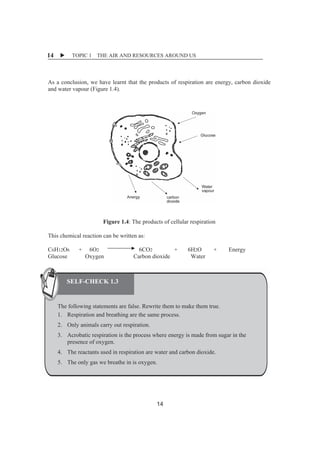
As a conclusion, we have learnt that the products of respiration are energy, carbon dioxide 
and water vapour (Figure 1.4). 
ȱȱȱȱȱȱȱȱȱȱȱȱȱ 
Figure 1.4: The products of cellular respiration 
This chemical reaction can be written as: 
C6H12O6 + 6O2 6CO2 + 6H2O + Energy 
Glucose Oxygen Carbon dioxide Water 
SELF-CHECK 6.1 
SELF-CHECK 1.3 
The following statements are false. Rewrite them to make them true. 
1. Respiration and breathing are the same process. 
2. Only animals carry out respiration. 
3. Acrobatic respiration is the process where energy is made from sugar in the 
presence of oxygen. 
4. The reactants used in respiration are water and carbon dioxide. 
5. The only gas we breathe in is oxygen. 
14
TOPIC 1 THE AIR AND RESOURCES AROUND US W 15 
1.4.2 Combustion 
What is combustion? Let us look at what combustion stands for. 
ȱ 
Combustion is the process of burning. 
ȱ 
ȱ 
Here is a simple principle behind combustion. For combustion to occur, fuel, oxygen (air) and 
heat must be present together. In other words, combustion takes place when chemicals mix 
together and give off heat and light in the form of fire. For example, the charcoal in a 
barbecue grill burns because it mixes with oxygen in the air. In Figure 1.5, the fire goes out if 
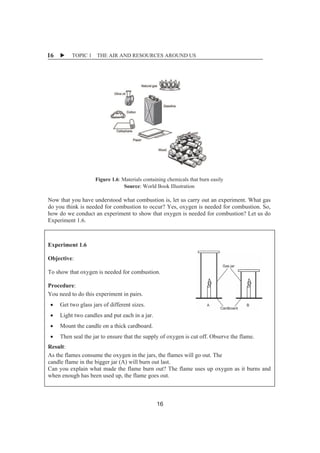
the grill is closed because air cannot reach the coals. Figure 1.6 shows us materials containing 
chemicals that burn easily when heated 
ȱȱȱȱȱȱȱȱȱ 
Figure 1.5: Charcoal burning in a barbecue grill 
Source: World Book Illustration 
15
X TOPIC 1 THE AIR AND RESOURCES AROUND US 
16 
Figure 1.6: Materials containing chemicals that burn easily 
Source: World Book Illustrationȱ 
ȱ 
Now that you have understood what combustion is, let us carry out an experiment. What gas 
do you think is needed for combustion to occur? Yes, oxygen is needed for combustion. So, 
how do we conduct an experiment to show that oxygen is needed for combustion? Let us do 
Experiment 1.6. 
ȱ ȱ ȱ 
Experiment 1.6 
Objective: 
To show that oxygen is needed for combustion. 
Procedure: 
You need to do this experiment in pairs. 
x Get two glass jars of different sizes. 
x Light two candles and put each in a jar. 
x Mount the candle on a thick cardboard. 
x Then seal the jar to ensure that the supply of oxygen is cut off. Observe the flame. 
Result: 
As the flames consume the oxygen in the jars, the flames will go out. The 
candle flame in the bigger jar (A) will burn out last.ȱ 
Can you explain what made the flame burn out? The flame uses up oxygen as it burns and 
when enough has been used up, the flame goes out. 
16
TOPIC 1 THE AIR AND RESOURCES AROUND US W 17 
SELF-CHECK 1.4 
1. Define combustion. 
2. List three conditions necessary for combustion to occur. 
AIR POLLUTION 
1.5 
Let us look at Figures 1.7 and 1.8. What do both pictures have in common? 
Figure 1.7: Burning forest Figure 1.8: Burning building 
ȱ 
The trees and buildings are on fire. We call this process combustion. Can you name the 
products of combustion? In the pictures, you can see smoke, dirt and damage to trees and 
buildings. In fact, smoke and dust cause pollution to the environment. 
When we talk about air pollution, the images conjured in our minds would be those of smog, 
acid rain, chlorofluorocarbons (CFCs) and other forms of outdoor air pollution. However, 
pollution also happens inside our homes and other buildings. Every year, the health of many 
people is affected by chemical substances found in the air within buildings. 
Let us learn more about air pollution. In this subtopic, we will discuss the definition of air 
pollution, its sources and effects. We will then discuss the importance of clean air and how to 
keep the air clean in order to control and prevent further air pollution. Let us start the topic 
with Activity 1.4. 
17
X TOPIC 1 THE AIR AND RESOURCES AROUND US 
18 
Let us find out how dirty or clean the air in your classroom is. You will need three sheets 
of white paper or cardboard and petroleum jelly. This is how you do it: 
x Smear one side of two sheets of paper with petroleum jelly. 
x Put the sheets next to each other, with the smeared side up, on a windowsill and 
clamp the sheets in place with the closed window. 
Take in one of the sheets at the end of one week and see how dirty it looks (compare 
it to a clean sheet of paper). 
x What can you conclude about this? 
ȱ 
What is air pollution? Do you know that our earth is the only planet we know that has air and 
water? That is why (as far as we know) only earth can cater to living creatures. Without air 
and water, the earth would be unable to sustain life. We have a diverse community of plants 
and animals and they have thrived on this planet for millions of years, sustained by the sun 
and supported by the soil, water and air. 
We breathe in air which supplies us with oxygen. Oxygen is essential for our body systems to 
function. Air consists of 99.9% nitrogen, oxygen, water vapour and inert gases. Our activities 
can release substances into the air. Some of these substances can cause problems for humans, 
plants and animals. One of the problems is air pollution. How does it occur? 
1.5.1 Sources of Air Pollution 
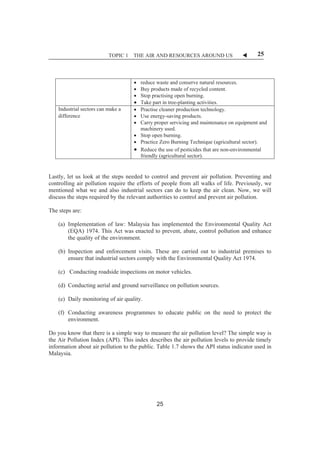
Now, let us find out what the sources of air pollution are. As we learnt before, air pollution 
occurs when the air contains pollutants. Air pollutants are substances that are released into the 
environment. These substances are harmful to us and other living things. There are seven 
sources of air pollution as described in Table 1.3. 
ȱ 
ȱ 
ȱ 
ȱ 
ȱ 
ACTIVITY 1.4 
18
TOPIC 1 THE AIR AND RESOURCES AROUND US W 19 
Table 1.3: Seven Sources of Air Pollution 
Source Description 
1. Natural Sources There are many natural sources of air pollution such as eruption of 
volcanoes, biological decay and forest fires caused by lightning strikes. 
2. Industrial Activities Our economy is mainly based on manufacturing (especially electronics), 
chemical and rubber industries. In order to increase output, industries 
increase their normal production. This leads to higher emissions of 
organic and inorganic gases, chemicals and dust. Different industries 
emit different pollutants. For example, the chemical industry releases 
emissions that contain many nitrogen and sulphur compounds while 
refineries discharge sulphur dioxide and hydrocarbons. The metal 
working industry is partially responsible for the emissions of sulphur 
dioxide and large amounts of toxic dust. 
3. Development 
Activities 
Unplanned and uncontrolled development of industrial premises or 
zones leads to noise pollution and vibration disturbance. The use of 
conventional piling methods and the sound of exhaust fans in factories 
are some of the common activities that generate a high sound level. 
4. Motor Vehicles Modern societies rely heavily on motorised transportation such as cars, 
trucks and railways. Automobiles rely mostly on the burning of fossil 
fuels. They not only cause emissions of smoke and dust but are also 
responsible for the increase in noise. In 2004, nearly 14 million vehicles 
were registered in Malaysia, almost double the number from a decade 
earlier. The number will increase in the next few years due to higher 
disposable incomes, rural-urban migration and the lack of an efficient 
public transport system. 
5. Power Generation Most of the energy produced in conventional power plants is by burning 
fossil fuels like natural gas, oil and coal. The burning of fossil fuels will 
result in the emission of smoke and dust. 
6. Everyday Routines Households contribute to air pollution mainly through the use of energy 
that is required to run machines and electrical appliances such as 
refrigerators. Refrigerators and air conditioners not only consume 
energy but also pollute the environment when their coolant fluids 
release CFCs into the atmosphere. Chemicals used in houses and 
gardens are also sources of pollution as well as toxic waste. 
7. Open Burning Some countries practise open burning of older plantations as a method 
for re-planting. This results in large amounts of soot particles. These 
soot particles can be blown over long distances and are mainly 
responsible for the haze that often covers the sky above Malaysia. These 
fires can also destroy the rich habitat of flora and fauna. 
ȱ 
19
X TOPIC 1 THE AIR AND RESOURCES AROUND US 
20 
Do you realise that even our homes contribute to air pollutants? Find out the causes of air 
pollution from our homes (Figure 1.9) and the outdoors (Figure 1.10). 
Figure 1.9: Air pollutants inside and outside a house 
Figure 1.10: Outdoor air pollutants 
20
TOPIC 1 THE AIR AND RESOURCES AROUND US W 21 
1.5.2 Effects of Air Pollution 
There are thousands of air pollutants. However, we are going to focus only on a few 
pollutants, including their sources and effects on our health. Let us refer to Table 1.4. 
Table 1.4: Pollutants, Their Sources and Effects on Human Health 
Pollutant Source Human Health Effect 
Particles - Air Particle 
Index (API)ȱ 
x Internal combustion 
engines (e.g. cars and 
trucks) 
x Industry (e.g. factories) 
x Burning wood 
x Cigarette smoke 
x Bush fires 
Long-term exposure is 
linked to health problems 
such as 
x Lung cancer 
x Heart disease 
x Lung disease 
x Asthma attacksȱ 
Nitrogen Dioxide (NO2) x Motor vehicles are the 
biggest contributors 
x Other combustion 
processesȱ 
Exposure to high levels of 
NO2 may lead to: 
x Lung damage 
x Respiratory disease 
x Asthma and respiratory 
problems 
x Increased mortalityȱ 
Sulphur Dioxide Burning of coal and 
petroleum in factories and 
power-generating stationsȱ 
x Breathing 
difficulties 
x Bronchitis 
x Acid rain occurs when 
sulphur dioxide 
dissolves in rainwaterȱ 
Carbon Monoxide (CO) x Burning of hydrocarbon 
x Exhaust gases from 
motor vehicles 
x Cigarette smoke 
x Dizziness and headache 
x Can cause death if a 
large amount is inhaled 
Lead (Pb)ȱ x Vehicle exhaust fumes 
x Other atmospheric 
sources of lead include 
waste incineration and 
renovation of old 
houses (from leaded 
paint)ȱ 
x Affects children’s learning and 
development of their 
nervous system 
x Affects almost every 
organ in the body, 
whether it is inhaled or 
ingested. Young 
children are particularly 
susceptible 
Smoke Soot Dust x Burning of waste and 
fuels by factories 
x Forest fires 
x Cigarette smoke 
x Smoke from vehicles’ 
exhaust 
x Pollutes the environment 
x Slows down 
photosynthesis 
x Damages respiratory 
system 
x Can cause cancer 
21
X TOPIC 1 THE AIR AND RESOURCES AROUND US 
22 
Carbon Dioxideȱ x Burning of rubbish and 
fuelsȱ 
x Causes greenhouse 
effect (increase in 
temperature on earth) 
Chlorofluorocarbon (CFC)ȱ x Aerosol cans, 
refrigerators, air 
conditionersȱ 
x Depletion of the ozone layer 
x Diseases related to 
ozone layer depletion 
(e.g. cataract, skin cancer)ȱ 
ȱȱȱȱ 
Ask your students to explain the effects of the following pollutants on our health: 
x Transportation 
x Factories 
x Agricultural activities 
Present the findings in class. 
ȱȱȱ 
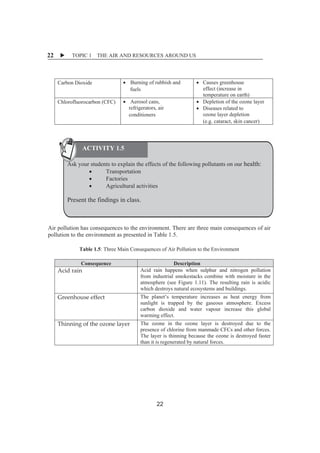
Air pollution has consequences to the environment. There are three main consequences of air 
pollution to the environment as presented in Table 1.5. 
Table 1.5: Three Main Consequences of Air Pollution to the Environment 
Consequence ȱ Description 
Acidȱrainȱ Acid rain happens when sulphur and nitrogen pollution 
from industrial smokestacks combine with moisture in the 
atmosphere (see Figure 1.11). The resulting rain is acidic 
which destroys natural ecosystems and buildings. 
Greenhouseȱeffect The planet’s temperature increases as heat energy from 
sunlight is trapped by the gaseous atmosphere. Excess 
carbon dioxide and water vapour increase this global 
warming effect. 
Thinningȱofȱtheȱozoneȱlayer The ozone in the ozone layer is destroyed due to the 
presence of chlorine from manmade CFCs and other forces. 
The layer is thinning because the ozone is destroyed faster 
than it is regenerated by natural forces. 
ȱ 
ACTIVITY 1.5 
22
TOPIC 1 THE AIR AND RESOURCES AROUND US W 23 
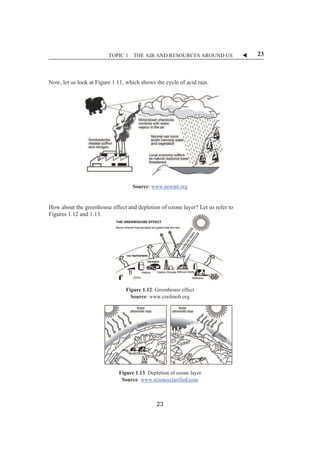
Now, let us look at Figure 1.11, which shows the cycle of acid rain. 
ȱȱȱȱȱȱȱȱȱȱȱ 
Figure 1.11: Acid rain cycle 
Source: www.newint.org 
ȱ 
ȱ 
How about the greenhouse effect and depletion of ozone layer? Let us refer to 
Figures 1.12 and 1.13.ȱ 
ȱȱ 
ȱ 
ȱȱȱȱȱȱȱ 
Figure 1.12: Greenhouse effect 
Source: www.coolmob.orgȱ 
ȱȱ 
ȱȱȱȱȱȱȱȱ 
Figure 1.13: Depletion of ozone layer 
Source: www.scienceclarified.com 
ȱ 
23
X TOPIC 1 THE AIR AND RESOURCES AROUND US 
24 
What causes the thinning of the ozone layer? What effects does it have on us? 
List five things we use in our everyday life which contribute to the thinning of the 
ozone layer. 
ȱȱ 
1.5.3 Step to Prevent Air Pollution 
In order to prevent or control air pollution, we have to keep the air clean. Let us look at the 
steps to keep the air clean. 
ȱ 
After discussing how important the air is to us and learning the effects of air pollution, let us 
think of the ways to keep the air clean. Remember, everybody has the power to make a 
difference to the quality of the air and environment. All of us, whether we realise it or not, 
contribute to air pollution in one way or another. In order to improve the quality of the air we 
breathe in, we must be aware of the activities that can contribute to pollution and take action 
against it. We can take action personally, at home or at school, or by doing something with 
others in the community. 
Now, what actions can we take to keep the air clean? Let us refer to Table 1.6. 
Table 1.6: Ways to Keep the Air Cleanȱ 
Way Suggestion 
Make a difference on the roadȱ x Walk or ride your bike instead of getting a lift in a car. 
x Where possible, use public transport instead of riding in 
your parents’ car. 
x When running errands, combine trips so that you do not use 
your car for single purpose trips. 
x Drive wisely and do not idle. Save petrol by switching off 
the engine even when you are stationary for a while. 
x Use non-ozone depleting refrigerant for your car’s air 
conditioning system. 
x Use unleaded petrol to reduce the amount of lead particles in 
the air. 
Make a difference at homeȱ x Use household and garden chemicals wisely. Avoid using 
CFC-based products. 
x Be sure to read labels for proper use and disposal of 
products. 
x If you purchase a new air conditioning system or heat pump, 
purchase one that uses a non-ozone depleting refrigerant. 
x Practise wise waste management. Recycle aluminium cans, 
glass bottles, plastics, cardboards and newspapers. This will 
SELF-CHECK 1.5 
24
TOPIC 1 THE AIR AND RESOURCES AROUND US W 25 
x reduce waste and conserve natural resources. 
x Buy products made of recycled content. 
x Stop practising open burning. 
x Take part in tree-planting activities. 
Industrial sectors can make a 
differenceȱ 
x Practise cleaner production technology. 
x Use energy-saving products. 
x Carry proper servicing and maintenance on equipment and 
machinery used. 
x Stop open burning. 
x Practice Zero Burning Technique (agricultural sector). 
x Reduce the use of pesticides that are non-environmental 
friendly (agricultural sector). 
ȱ 
ȱ 
Lastly, let us look at the steps needed to control and prevent air pollution. Preventing and 
controlling air pollution require the efforts of people from all walks of life. Previously, we 
mentioned what we and also industrial sectors can do to keep the air clean. Now, we will 
discuss the steps required by the relevant authorities to control and prevent air pollution. 
The steps are: 
(a) Implementation of law: Malaysia has implemented the Environmental Quality Act 
(EQA) 1974. This Act was enacted to prevent, abate, control pollution and enhance 
the quality of the environment. 
(b) Inspection and enforcement visits. These are carried out to industrial premises to 
ensure that industrial sectors comply with the Environmental Quality Act 1974. 
(c) Conducting roadside inspections on motor vehicles. 
(d) Conducting aerial and ground surveillance on pollution sources. 
(e) Daily monitoring of air quality. 
(f) Conducting awareness programmes to educate public on the need to protect the 
environment. 
Do you know that there is a simple way to measure the air pollution level? The simple way is 
the Air Pollution Index (API). This index describes the air pollution levels to provide timely 
information about air pollution to the public. Table 1.7 shows the API status indicator used in 
Malaysia. 
ȱ 
25
X TOPIC 1 THE AIR AND RESOURCES AROUND US 
26 
Table 1.7: Malaysian API Status Indicator 
APIȱ Statusȱ 
0Ȭ50ȱ Good 
51Ȭ100ȱ Moderateȱ 
101Ȭ200ȱ Unhealthyȱ 
201Ȭ300ȱ Veryȱunhealthyȱ 
301Ȭ500ȱ Hazardousȱ 
Aboveȱ500ȱ Emergencyȱ 
ȱ 
You can get more on the daily readings of the API by visiting 
http://www.doe.gov.my/index.php?option=com_content&task=view&id=188& 
Itemid=370&lang=en 
1. What is air pollution? Name five air pollutants. 
2. List the pollutants which affect the environment. Describe one pollutant 
and what it does to the environment. 
3. Name three pollutants from a factor which affects a person’s health. 
4. Why must we keep our air clean? How do we know the air is clean? 
5. Name two substances which can cause acid rain. State the effects of acid 
rain to our health. 
ȱ 
Let us conduct an activity to reduce air pollution in your school. 
Hold a class discussion on air pollution. Discuss the main sources of air 
pollution in the school area. Suggest possible ways and activities to 
reduce air pollution in your school. Carry out the activities suggested. 
ȱȱȱȱȱȱȱȱȱȱȱȱȱȱȱȱȱ 
ACTIVITY 1.6 
SELF-CHECK 1.6 
26
TOPIC 1 THE AIR AND RESOURCES AROUND US W 27 
VARIETY OF RESOURCES ON EARTH 
1.6 
ȱ 
The Carson Fall in Mount Kinabalu, Malaysia is an 
example of undisturbed natural earth’s resource. 
Waterfalls provide spring water for humans, animals 
and plants for survival and also a habitat for hydro 
organisms. The water current can be used to turn 
turbines for hydroelectric generation. 
ȱȱȱȱȱȱȱȱȱȱȱ 
ȱȱȱȱ 
ȱȱȱȱȱȱFigure 1.14: The Carson Fall in Mount Kinabalu 
Source: http:/ www. Google.wikipedia.comȱ 
1.6.1 Different Resources on Earth 
Who need resources? Why do we need resouces? What types of resources do we have? 
Human beings, animals and plants need food, water, air and shelter in order to survive. The 
earth has the resources needed to sustain life. The resources are air, water, soil, minerals, 
fossil fuels and living things. 
1.6.2 Important of Earth’s Resources 
The earth is rich in natural resources that we use daily. These resources are any valuable 
material of geologic origin that can be extracted from the earth. It is nearly impossible to 
cease consuming natural or geologic resources altogether. Here are just a few examples of 
things you commonly use, but probably do not think about: 
x A pencil uses zinc and copper (to make the brass), petroleum for the eraser, iron (in 
the machinery to make the pencil), pigments, clay and graphite. The only renewable 
resource in your pencil is the wood! 
x Your jeans, although they may be almost all cotton, are usually blended with 
petroleum-based synthetic fibres to cut down on shrinking. 
x Eye glasses and windows are made of quartz sand and petroleum. 
x Dental fillings are made of mercury and silver. 
x Videotapes are made of vinyl, iron and chromium. 
27
X TOPIC 1 THE AIR AND RESOURCES AROUND US 
28 
Please refer to Table 1.8 to learn more about the impotance of earth’s resources. 
Table 1.8: The Importance of Earth’s Resources 
Types of 
Earth 
Resources 
The Importance of Earth’s Resources 
Airȱ x Air is needed by all living things to survive. 
x The atmosphere is a layer of air that envelops the earth. 
x Air is a mixture of gases. Air contains gases such as oxygen, nitrogen and 
carbon dioxide. 
x Oxygen and carbon dioxide are two very important gases that support life 
on earth. 
a. Oxygen 
i. Used for respiration by living things 
ii. Used in combustion of materials 
iii. Used in industries 
iv. Released during photosynthesis. 
b. Carbon dioxide 
i. Used by green plants to carry out photosynthesis 
ii. Used in fire extinguishers 
iii. Released during respiration and combustionȱ 
Waterȱ x Water covers a total of about three quarters of the earth. 
x The sources of water are oceans, seas, rivers, lakes, rainfall and ground 
water. 
x Importance of water 
a. To animals/humans 
i. It provides a medium for chemical process and body 
metabolism; 
ii. It is the main component of the blood; 
iii. It transports nutrients to all cells in the body; 
iv. It carries excretory products to the kidneys for excretion; and 
v. It helps to control the body temperature. 
b. To plants 
i. It helps to maintain the turgidity of plant cells; 
ii. It is used in photosynthesis; 
iii. Need for the germination of seeds; 
iv. Dissolves minerals slats in the ground for absorption by the roots of 
plants; 
v. Helps to support aquatic plants; and 
vi. Cools down the plants (transpiration). 
28
TOPIC 1 THE AIR AND RESOURCES AROUND US W 29 
Soilȱ x Soil refers to the outer layer of the earth. 
x Soil contains mineral matter, organic matter, air and water. 
x The soil organic matter includes: 
· Organic litter such as fallen leaves, twigs, fruit, animal dropping, etc. 
· Humus formed from the composition of organic litter. 
· Microorganisms living in the soil. 
x Air and water are found in pore spaces between the soil particles. 
x The presence of air and water in the soil makes it a natural habitat for 
various types of plants and animals. 
x Importance of soil: 
· Source of minerals and fossil fuels; 
· Source of clay for making pottery; 
· Source of sand for making glass and cement; 
· Base for agricultural activities; and 
· Foundation for construction of houses, buildings, roads and other 
structures.ȱ 
Livingȱ 
Thingsȱ 
i. Flora and fauna (plants and animals) are also natural resources that 
sustain life. 
ii. Plants and animals are resources needed by human beings. 
iii. We can obtain food, fuel, materials for making clothes and building 
materials from plants and animals. 
iv. Green plants can make their own food by carrying out photosynthesis. 
v. Animals are not able to make their own food. 
vi. Some animals such as giraffes and elephants feed on plants. 
vii. Some animals such as tigers and snakes feed on other animals. 
viii. Aquatic plants and animals are also important resources for sustaining 
life.ȱ 
Mineralȱ i. Minerals are inorganic substances found naturally on land and in seas 
or oceans. 
ii. Examples of minerals are feldspar, quartz, iron, zinc, aluminium, tin, 
silver and gold. 
iii. Some minerals such as aluminium and iron are mined because they 
can be used as raw materials in various industries. 
There are two types of earth’s resources – renewable and non-renewable resources. 
Earth’s resources that can be replaced and reused by nature are termed renewable. Natural 
resources that cannot be replaced are termed non-renewable. Renewable resources are 
replaced through natural processes at a rate that is equal to or greater than the rate at which 
they are used, and depletion is usually not a worry. 
Some common examples include: 
x Air (wind); 
x Fresh water; 
x Soil; 
29
X TOPIC 1 THE AIR AND RESOURCES AROUND US 
30 
x Living organisms (trees); and 
x Sunlight. 
Non-renewable resources are exhaustible and are extracted faster than the rate at which they 
formed. Some common examples are: 
x Fossil fuels (coal, oil, natural gas); 
x Diamonds and other precious gems and minerals; and 
x Types of metals and ores. 
1.6.3 Preservation and Conservation of Earth’s Resources 
With the increased use of virtually all natural earth’s resources, there is concern that 
resources will be exhausted and that others will not be able to use them in the future. Can you 
imagine a world without clean water, clean air, sustainable land or living oceans? 
Our natural resources exist in a delicate balance and are vulnerable to environmental changes. 
That is why it is important that we all do our part to conserve, preserve and care for the 
earth’s resources and protect the environment that sustains us with food, fuel, shelter and 
medicine. 
Because of the severe impact that we impose on the land, air, and water, preservation and 
conservation has become increasingly important. Let us check the meaning of preservation 
and conservation. 
Preservation is to keep and maintain what you have 
Conservation is to spend or use sparingly 
30
TOPIC 1 THE AIR AND RESOURCES AROUND US W 31 
ACTIVITY 1.7 
1.6.4 Recycling of Materials 
ȱ 
“Reduce, Reuse, Recycle” 
Figure 1.15: Reduce, Reuse and Recycle 
The symbol and the phrase above are very common. Do you know its meaning? 
Reduce : Do not use a resource if there is an alternative (walking versus driving). 
Reuse : Use a resource again without changing it or reprocessing it; use glassware 
as opposed to paper plates and Styrofoam. 
Recycle : Reprocess a resource so that the materials can be used in another item. 
People can recycle just about anything from cardboard to old shoes! 
ȱȱȱȱȱȱ 
Discuss in a group of four to find out the meaning of preservation and 
conservation in terms of natural earth’s resources. Please visit the following 
websites to get more information. 
http://www.ecoca.ro/meteo/tutorial/Sustainability/Older/Conservation_and_Pre 
servation.html 
http://feelfriendly.com/information-preservation-conservation.html 
31
X TOPIC 1 THE AIR AND RESOURCES AROUND US 
32 
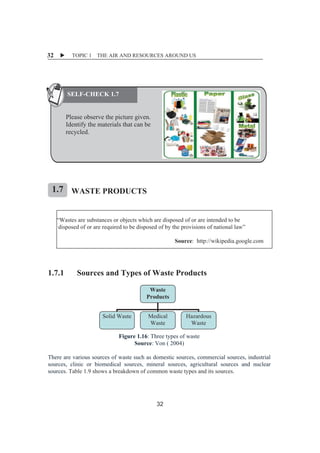
SELF-CHECK 1.7 
Please observe the picture given. 
Identify the materials that can be 
recycled. 
Waste 
Products 
Solid Waste Medical 
Waste 
Hazardous 
Waste 
ȱȱ 
ȱ 
ȱȱȱȱȱȱȱȱȱȱȱȱ 
WASTE PRODUCTS 
ȱ 
1.7 
“Wastes are substances or objects which are disposed of or are intended to be 
disposed of or are required to be disposed of by the provisions of national law” 
Source: http://wikipedia.google.com 
1.7.1 Sources and Types of Waste Products 
Figure 1.16: Three types of waste 
Source: Von ( 2004) 
There are various sources of waste such as domestic sources, commercial sources, industrial 
sources, clinic or biomedical sources, mineral sources, agricultural sources and nuclear 
sources. Table 1.9 shows a breakdown of common waste types and its sources. 
32
TOPIC 1 THE AIR AND RESOURCES AROUND US W 33 
Table 1.9: Common Sources and Types of Waste Products 
Source Typical Waste Generators Types of Solid Wastes 
Residential Single and multi-family 
dwellings 
Food wastes, paper, cardboard, plastics, 
textiles, leather, yard wastes, wood, 
glass, metals, ashes, special wastes (e.g. 
bulky items, consumer electronics, white 
goods, batteries, oil, tyres), and 
household hazardous wastes 
Industrial Light and heavy 
manufacturing fabrication, 
construction sites, power and 
chemical plants 
Housekeeping wastes, packaging, food 
wastes, construction and demolition 
materials, hazardous wastes, ashes, 
special wastes 
Commercial Stores, hotels, restaurants, 
markets, office buildings, etc 
Paper, cardboard, plastics, wood, food 
wastes, glass, metals, special wastes, 
hazardous wastes 
Institutional Schools, hospitals, prisons, 
government centres 
Paper, cardboard, plastics, wood, food 
wastes, glass, metals, special wastes, 
hazardous wastes 
Construction 
and 
Demolition 
New construction sites, road 
repair, renovation sites, 
demolition of buildings 
Wood, steel, concrete, dirt, etc 
Municipal 
Services 
Street cleaning, landscaping, 
parks, beaches , other 
recreational areas, water 
and wastewater treatment 
plants 
Street sweepings, landscape and tree 
trimmings, general wastes from parks, 
beaches, and other recreational areas, 
sludge 
Process Heavy and light 
manufacturing, refineries, 
chemical plants, power 
plants, mineral extraction 
and processing 
Industrial process wastes, scrap 
materials, off specification products, 
slag, tailings 
Agriculture Crops, orchards, vineyards, 
dairies, feedlots, farms 
Spoiled food wastes, agricultural wastes, 
hazardous wastes (e.g. pesticides) 
33
X TOPIC 1 THE AIR AND RESOURCES AROUND US 
34 
1.7.2 Pollution Caused by Waste Products 
ȱȱȱȱȱȱȱȱȱȱȱ 
ȱȱȱȱȱȱȱȱ 
ȱȱȱȱȱȱȱȱȱȱȱȱȱȱȱȱȱFigureȱ1.17:ȱȱDeadȱfishȱcausedȱbyȱwaterȱpollutionȱ 
Source: Image Google.com 
Many things can cause water pollution but most water pollution is caused by waste products 
from humans. Types of waste products that can pollute our water are sewage drainage into 
our water cycle, oil from vehicles, oil spills, fertilisers from crops. Rubbish dumps also can 
run into our water system when it rains. 
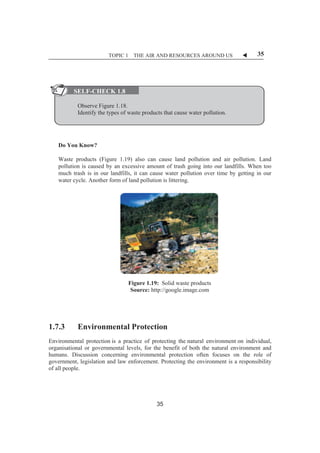
ȱȱȱȱȱȱȱȱȱȱȱȱȱȱȱ 
Figure 1.18: Water Pollution 
Source: http://google.image.com 
ȱȱȱȱȱ 
Do you think why all the 
fish in Figure 1.17 were 
dead? 
34
TOPIC 1 THE AIR AND RESOURCES AROUND US W 35 
ȱȱȱ 
ȱȱ 
SELF-CHECK 1.8 
Observe Figure 1.18. 
Identify the types of waste products that cause water pollution. 
Do You Know? 
Waste products (Figure 1.19) also can cause land pollution and air pollution. Land 
pollution is caused by an excessive amount of trash going into our landfills. When too 
much trash is in our landfills, it can cause water pollution over time by getting in our 
water cycle. Another form of land pollution is littering. 
Figure 1.19: Solid waste products 
Source: http://google.image.com 
1.7.3 Environmental Protection 
Environmental protection is a practice of protecting the natural environment on individual, 
organisational or governmental levels, for the benefit of both the natural environment and 
humans. Discussion concerning environmental protection often focuses on the role of 
government, legislation and law enforcement. Protecting the environment is a responsibility 
of all people. 
35
X TOPIC 1 THE AIR AND RESOURCES AROUND US 
36 
(a) Government Organisations’ Involvement 
i. Environmental Quality Act, 1974 (Act 127) 
An Act relating to the prevention, abatement, control of pollution and enhancement 
of the environment: 
x Part IV – Prohibition and control of pollution 
x Section 22: Restrictions on pollution of the atmosphere 
x Section 23: Restrictions on noise pollution 
x Section 24: Restrictions on pollution of the soil 
x Section 25: Restrictions on pollution of inland waters 
x Section 27: Prohibition of discharge of oil into Malaysian waters 
x Section 29: Prohibition of discharge of wastes into Malaysian waters 
x Section 34: Report on impact on environment resulting from prescribed 
activities 
ii. Incorporate Department of Environment (DOE) within the Ministry of Science, 
Technology and Environment (MOSTE) 
x In charge with environmental administration 
iii. Incorporate an environmental policy aimed at integrating environmental concerns 
into development planning. For example: 
x The Seventh Malaysian Plan (1996-2000) states that the objectives of 
Malaysia’s national environmental policies are to achieve a clean, safe and 
healthy living environment for current and future generation and to promote 
lifestyles and modes of production and consumption consistent with the 
principles of sustainable development. 
(b) Non-governmental Organisation’s Involvement 
x Dissemination of environmental information through the Environmental 
Management and Research Association of Malaysia (ENSEARCH) 
(c) Environmental Education in the School Syllabus 
Environmental education will make our citizens aware of the environmental 
problems and equip us with knowledge to overcome the problems. 
SELF-CHECK 1.9 
Find out the involvement of international agencies in 
Malaysia’s environmental protection. 
36
TOPIC 1 THE AIR AND RESOURCES AROUND US W 37 
x The air is actually a mixture of gases. These gases are nitrogen, oxygen, carbon 
dioxide and inert gases. The inert gases in the air include argon, neon, helium, 
krypton, xenon, methane and xenon. 
x Under properties of oxygen and carbon dioxide, we look into three matters, namely, 
the solubility in water, reactions with sodium hydroxide and the tests for oxygen and 
carbon dioxide. 
x Oxygen plays an important role in our lives. We use oxygen for breathing, 
decomposition of organic wastes, supporting aquatic life in the form of oxygen 
dissolved by water and creation of energy in living cells. 
x Airȱ pollutionȱ affectsȱ ourȱ healthȱ andȱ theȱ environment.ȱAirȱ pollutionȱ occursȱ 
whenȱtheȱairȱcontainsȱgases,ȱdust,ȱfumesȱorȱodourȱinȱharmfulȱamounts.ȱ 
x Our natural resources include air, water, soil, minerals, fossil fuels, plants and 
animals. Each of these resources is important to us in their own ways. 
x Conservation is the sustainable use of our natural resources. Preservation is keeping 
natural resources in their current state, untouched by humans. 
x Recycleȱ isȱ theȱ processȱ ofȱ reprocessȱ aȱ resourceȱ soȱ thatȱ theȱmaterialsȱ canȱ beȱ 
usedȱinȱanotherȱitem.ȱȱȱ 
ȱ 
x Wasteȱareȱsubstancesȱorȱobjects,ȱwhichȱareȱdisposedȱofȱorȱareȱintendedȱtoȱbeȱ 
disposedȱofȱorȱ areȱ requiredȱ toȱbeȱdisposedȱofȱbyȱ theȱprovisionsȱofȱnationalȱ 
law.ȱItȱcanȱbeȱdividedȱintoȱthree,ȱsolidȱwaste,ȱmedicalȱwasteȱandȱhazardousȱ 
waste.ȱ 
ȱȱȱȱȱȱȱȱ 
x Environmentalȱprotectionȱcanȱbeȱdoneȱbyȱtheȱgovernment,ȱnonȬgovernmentalȱ 
organisations,ȱ internationalȱ agenciesȱ andȱ nationalȱ citizensȱ throughȱ 
introducingȱenvironmentalȱeducationȱinȱtheȱschoolȱsyllabus.ȱ 
ȱȱȱȱȱȱȱ37
X TOPIC 1 THE AIR AND RESOURCES AROUND US 
38 
ȱ 
Air 
Air Pollution Index (API) 
Carbon dioxide 
Chlorofluorocarbon (CFC) 
Combustion 
Conservation 
Environment 
External respiration 
Global warming 
Greenhouse effect 
Internal respiration 
Land pollution 
Natural resources 
Oxygen 
Preservation 
Products 
Recycle 
Respiration 
Waste product 
Water pollution 
ȱ 
ȱ 
ȱ 
Conoley, C., & Hills, P. (2002). Collins advance science chemistry (2nd ed.). UK: Collins 
Educational. 
Environmental Quality Act 127. (1974). Retrieved from 
https://www.elaw.org/system/files/MalaysiaEQA1974_0.pdf 
Gallagher, R. M. (1997). Complete chemistry. UK: Oxford University Press. 
Milner, B., Martin, J., & Mills, J. (2002). Core chemistry. UK: Cambridge University Press. 
Nivaldo, J. T. (2000). Chemistry in focus (2nd ed.). USA: Thomson. 
South Carolina Geological Survey. (2005). Earth’s natural resources and human impacts. 
Retrieved from ftp://ftpdata.dnr.sc.gov/geology/Education 
Von, L. L. (2004). Case study on the management of waste materials in Malaysia. Forum 
Geoökol, 15(2), 7. 
Zumdahl, S. S. (2004). Introductory chemistry: A foundation (5th ed.). New York: Houghton 
Mifflin. 
38
Topiicȱȱ2XMetals 
LEARNING OUTCOMES 
Byȱtheȱendȱofȱthisȱtopic,ȱyouȱshouldȱbeȱableȱto: 
1. Describeȱtheȱphysicalȱpropertiesȱofȱmetals;ȱ 
2. ȱDifferentiateȱtheȱstructuresȱofȱmetalsȱandȱalloys;ȱ 
3. ȱDescribeȱtheȱchemicalȱreactionsȱofȱmetals;ȱ 
4. ȱIdentifyȱtheȱorderȱofȱreactivityȱofȱmetals;ȱ 
5. ȱDescribeȱtheȱmethodȱofȱextractionȱofȱironȱandȱaluminium;ȱandȱ 
6. ȱDiscussȱtheȱusesȱofȱmetals.ȱ 
X INTRODUCTION 
Figure 2.1: Gold and copper coins 
Source: editmentor.wordpress.com 
41
X TOPIC 2 METALS 
2 
Have you ever seen coins such as the ones in Figure 2.1? Gold and copper were the 
first metals discovered in the earth, since 6,000BC. Gold and copper coins have been 
used since ancient civilisation. Gold articles were found extensively in antiquity 
mainly as jewellery such as bracelets and rings. The symbol for gold is Au from the 
latin aurum meaning “shining dawn”. The use of copper in antiquity was of more 
significance than gold as the first tools, implements and weapons were made from 
copper. The symbol for copper is Cu and comes from the latin cuprum meaning “from 
the island of Cyprus”. 
Currently, there are 86 known metals. Scientists have categorised metals into three 
groups – alkali metals, alkali earth metals and transition elements. You can explore the 
names and symbols of all known metals in the Periodic Table of the Elements. 
2.1 
SELF-CHECK 2.1 
1. Name three metals in a group of alkali metals. 
2. Name two metals in a group of alkali earth metals. 
3. Name two common metals in transition elements. 
PHYSICAL PROPERTIES OF METALS 
Metals consist of positive ions embedded in moving clouds of electrons (Figure 2.2). 
The negatively charged electrons attract all the positive metal ions and bond them 
together with strong electrostatic forces of attraction as a single unit called metallic 
bond. 
ȱ 
Figure 2.2: Metals consist of positive ions surrounded by a cloud of electrons 
42
TOPIC 2 METALS W 3 
2.1.1 Structures of Metals and Alloys 
Pure metals have the following properties; 
x They usually have high melting and boiling points. This is due to the strong 
attraction between the positive metal ions and the mobile clouds of electrons. 
x They conduct electricity due to the mobile electrons (electrons cloud) within 
the metal structure. When a metal is connected in a circuit, the electrons move 
towards the positive terminal. 
x They are malleable and ductile. If a force is applied to a metal, rows of ions 
can slide over one another. They reposition themselves and the strong bonds 
re-form as shown in Figure 2.3. 
Figure 2.3: The positions of the positive ions in a metal before and after a 
force has been applied 
[Source:ȱhttp://www.chemȬisȬ 
try.org/materi_kimia/struktur_atom_dan_ikatan/jenis_struktur_atom/s 
truktur_logam/] 
x They have high densities, as the atoms are arranged in order and closely 
packed together as can be seen in Figure 2.4. 
Figure 2.4: Arrangement of ions in a metal 
[Source: http://martinmm.wiki.manheimcentral.org/84] 
43
X TOPIC 2 METALS 
4 
Different metals show different types of packing and in doing so they produce the 
arrangement of atoms shown in Figure 2.5. 
ȱȱȱȱȱ 
ȱ 
ȱȱȱȱȱȱ 
ȱ 
ȱ 
Figure 2.5: Relating different structures to the density of metal 
[Source: 
http://www.substech.com/dokuwiki/doku.php?id=metals_crystal_structure] 
Alloys are a mixture of; 
x Two or more metals (for example, brass is an alloy of zinc and copper); or 
x A metal and non-metal (for example, steel is an alloy of iron and carbon). 
Figure 2.6 shows the alloy structure. The blue circles represent atoms of metal A and 
the white circles are atoms of metal B which is added to make the alloy. These 
different atoms give the alloy different physical properties from that of the pure metal. 
ȱȱȱȱȱȱȱȱȱȱ 
Figureȱ2.6:ȱStructureȱofȱanȱalloyȱ 
[Source:ȱhttp://www.chem.qmul.ac.uk/surfaces/scc/scat6_4.htm]ȱ 
ȱ 
Atom of metal A 
Atom of metal B 
44
TOPIC 2 METALS W 5 
Alloys are formed by mixing the molten substances thoroughly. But why make alloys? 
The reasons why alloys are made are: 
(a) To increase the strength and hardness of a pure metal. The presence of the 
2.2 
atoms of other elements disrupts the orderly arrangement of the pure metal. 
The layers of metal atoms are prevented from sliding over one another easily. 
This makes alloys stronger and harder than pure metals. 
(b) To increase the resistance to corrosion of a pure metal. Alloying can prevent 
metals from corrosion. This is because alloying helps to prevent the formation 
of oxide layer on the surface of the metal (We will discuss the reaction of 
metals in subtopic 2.2).ȱ 
(c) To improve the appearance of a pure metal. Alloying helps to keep the metal 
maintain the glossy nature of the surface as it prevents the formation of the 
metal oxide. 
Table 2.1 shows some of the more common alloys with their composition. 
ȱ 
Table 2.1: Composition of common alloys 
[Source: Ryan (2001)] 
Alloy Composition 
Brass 65% copper, 35% zinc 
Bronze 90% copper, 10% tin 
Cupro-nickel 30% copper, 70% nickel 
Duralumin 95% aluminium, 4% copper,1% magnesium, manganese and 
iron 
Magnalium 70% aluminium, 30% magnesium 
Pewter 30% lead, 70% tin, a small amount of antimony 
Solder 70% lead, 30% tin 
CHEMICAL PROPERTIES OF METALS 
The metals in ores are chemically bonded to other elements. So how can we extract 
the metals? To answer this, we must understand the Reactivity Series of metals. In 
the Reactivity Series, the most reactive metals are at the top. The less reactive ones are 
at the bottom. We can start putting the metals in order by looking at their actions with 
heat, water and dilute hydrochloric acid. 
45
X TOPIC 2 METALS 
6 
2.2.1 Chemical Reaction of Metals with Heat 
Conduct Experiments 2.1 and 2.2 to judge the reactivity by putting the metals into 
competition with each other. In these two experiments, the metals will “fight” each 
other to “win their prize” which is oxygen. The more reactive metal will win the 
fight. 
ȱ 
Experiment 2.1 
1. Mix a spatula of iron fillings and copper oxide 
in a test tube. Heat the mixture strongly 
x Is there a reaction? Look for a red glow 
spreading through the mixture. 
2. When the tube has cooled, empty it into a dish. 
x Can you see any brown copper metal left? 
[Source: Ryan (2001)] 
Copper starts off with the oxygen in copper oxide. However, iron is more reactive, so 
it takes the oxygen away from copper. We say that iron has displaced (“kicked out”) 
the copper. 
Copper oxide + iron Æ iron oxide + copper 
CuO(s) + Fe(s) Æ CuO(s) + Cu(s) 
This is a displacement reaction. It shows us that iron is more reactive than copper. 
ȱ 
SELF CHECK 2.2 
In Experiment 2.1, what do you expect will happen if we change: 
x copper oxide with iron; and 
x iron with copper? 
Will there be any reaction? Why? 
There actually will not be a reaction between iron oxide and copper because copper is 
less reactive than iron. 
46
TOPIC 2 METALS W 7 
You can now try some other displacement reactions as in Experiment 2.2. 
ȱȱ 
ȱ 
ȱȱ 
ȱ 
ȱȱȱȱ 
Experiment 2.2 
x Try heating the mixtures of metals and oxide 
shown in the table: 
x Look for any signs of reaction. Tick (—) in the 
“Reaction Table” if there is a reaction. 
(Be careful when looking for signs of reaction. 
Zinc oxide turns yellow when you heat it by 
itself. It turns white again when it cools down). 
x Write word equations for the reactions you 
have ticked) 
Metal/ 
Metal 
oxide 
Zinc 
oxide 
Zinc 
Iron 
Copper 
Magnesium 
Reaction Table 
2.2.2 Chemical Reaction of Metals with Water 
Iron 
oxide 
Copper 
oxide 
You have already seen how the action of heat with metals in the displacement 
reaction. Now, you can arrange the order of the reactivity of metals iron, zinc, copper 
and magnesium: 
i. Magnesium 
ii. Zinc 
iii. Iron 
iv. Copper 
We can also judge reactivity by observing the metal’s reaction with water. Let us look 
at the reaction of lithium, sodium and potassium with water. 
Experiment 2.3 
1. Put water in three different glass basins. 
2. Drop small pieces of 
x Lithium in basin 1 
x Sodium in basin 2 
x Potassium in basin 3 
3. Collect the gas given off as shown; 
x Test the gas with a lighted splint 
4. Test the solution formed with red litmus 
paper. 
x Is the solution left acidic or alkaline? 
[Source: Ryan (2001)] 
From Experiment 2.3, you can observe that lithium moves slowly on the surface of the 
water, while sodium melts to become a small sphere, move rapidly and randomly on 
47
X TOPIC 2 METALS 
8 
the water surface with a hissing sound as it reacts. Potassium gets so hot that it lights 
the hydrogen gas that water gives off. It burns with a lilac flame, move very rapidly 
and randomly on the water surface with a hissing and popping sound. The colourless 
solution formed turns red litmus paper to blue. 
When red litmus paper turns to blue, 
the solution formed is an alkaline! 
The chemical equation for the reaction of lithium with water is as follows: 
Lithium + Water Æ Lithium hydroxide + Hydrogen 
2Li(s) + 2H2O (l) Æ 2LiOH (aq) + H2 (g) 
SELF-CHECK 2.3 
Write the word and symbol equations for sodium and potassium 
reacting to water. 
In the case of magnesium, this metal normally reacts slowly with water. But we 
can speed up the reaction by heating up the water to make steam as in Experiment 
2.4. 
Experiment 2.4 
1. Heat the magnesium strongly. 
Every now and again, switch the 
flame briefly to the ceramic wool 
to make a steam. 
2. As the reaction starts, the gas 
given off can be lit at the end of 
the tube. 
x Can you name the gas? 
[Source: Ryan (2001)] 
The magnesium reacts strongly with the steam. It leaves white magnesium oxide in 
the test tube. Hydrogen gas is given off. 
48
TOPIC 2 METALS W 9 
Magnesium + Steam Æ Magnesium oxide + Hydrogen 
Mg (s) + H2O (g) Æ MgO(s) + H2 (g) 
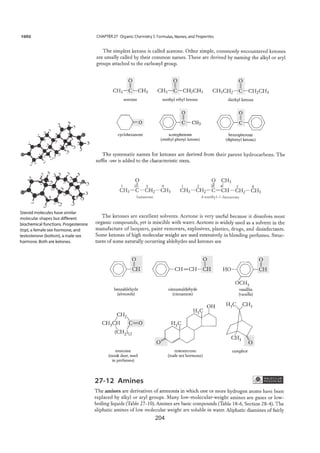
The oxygen atom in H2O has “swapped partner”! It start off with hydrogen, but ends 
up with magnesium. 
Table 2.2 gives the different observations when metals react with water and steam. 
Table 2.2: Reaction of metals with water and steam 
T 
a 
b 
l 
e 
2 
. 
2 
Metals Reaction with Water Reaction with Steam 
Potassium 
Sodium 
Lithium 
Calcium 
Fizz, giving off hydrogen gas and 
leaving an alkaline (hydroxide) 
solution. 
Explode 
Magnesium 
Aluminium 
Zinc 
Iron 
Very slow reaction. 
(Aluminium is protected by a layer 
of aluminium oxide on its surface). 
React, giving off hydrogen gas and 
forming the metal oxide. 
2.2.3 Chemical Reaction of Metals with Diluted 
Hydrochloric Acid 
Another simple way to judge the reactivity of metals is to compare the reaction with 
diluted acid. Metals will react quicker with diluted acid compared to water especially 
the metals below calcium in Table 2.2. 
Conduct Experiment 2.5 to compare the reactivity of metals when react with dilute 
hydrochloric acid. 
Experiment 2.5 
1. Clean the metals with sand-paper. 
2. Set up the boiling tube as shown: 
x Can you see bubbles? 
(If you see no bubbles, you can warm the 
tube gently in a beaker of hot water) 
3. Record your results in a table. 
(Do your results agree with the order in 
Table 2.3 ?) 
[Source: Ryan (2001)] 
Notice that copper does not react with hydrochloric acid. However, the other metals 
tested do react. For example, magnesium: 
49
X TOPIC 2 METALS 
10 
Magnesium + Hydrochloric acid Æ Magnesium chloride + Hydrogen 
Mg (s) + 2HCl (aq) Æ MgCl2 (aq) + H2 (g) 
Table 2.3: Reaction of metals with dilute hydrochloric acid 
Metals Reaction with Dilute Hydrochloric Acid 
x Calcium 
x Magnesium 
x Aluminium 
x Zinc 
x Iron 
Fizz, giving off hydrogen gas. 
(Aluminium is protected by a tough layer of oxide on 
its surface) 
x Tin 
x Lead 
Gives off hydrogen very slowly . 
(The acid needs to be warmed up) 
x Copper 
No reaction. 
SELF CHECK 2.4 
Write word equations for the reactions of calcium, aluminium, zinc, 
iron, tin and lead with dilute hydrochloric acid. 
ACTIVITY 2.1 
Discuss why we never add potassium, sodium or lithium to acid. 
2.2.1 Order of Reactivity of Metals 
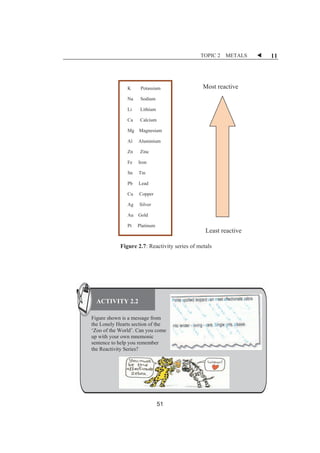
Now, we can form the Reactivity Series of metals according to the reactivity of metals 
based on the metals’ reaction to heat, reaction to water and reaction to diluted 
hydrochloric acid (Figure 2.7). 
50
TOPIC 2 METALS W 11 
ȱȱȱȱȱȱȱ 
ȱ 
ȱ 
ȱ 
ȱ 
ȱ 
ȱ 
Figure 2.7: Reactivity series of metals 
ȱ 
ȱ 
ȱ 
ȱ 
ȱ 
ȱ 
ȱ 
ȱ 
ȱ 
ȱ 
ȱ 
ȱ 
ȱ 
K Potassium 
Na Sodium 
Li Lithium 
Ca Calcium 
Mg Magnesium 
Al Aluminium 
Zn Zinc 
Fe Iron 
Sn Tin 
Pb Lead 
Cu Copper 
Ag Silver 
Au Gold 
Pt Platinum 
Most reactive 
Least reactive 
ACTIVITY 2.2 
Figure shown is a message from 
the Lonely Hearts section of the 
‘Zoo of the World’. Can you come 
up with your own mnemonic 
sentence to help you remember 
the Reactivity Series? 
51
X TOPIC 2 METALS 
12 
2.3 
EXTRACTION OF IRON AND ALUMINIUM 
ȱ 
In the earlier sub-topic, we learned about the Reactivity Series. We will now look at 
how to get metals from their ores. This includes iron, which is the most widely used of 
all metals. Figures 2.8 and 2.9 show iron ore and the mining of iron ore. 
2.3.1 Extraction of Iron 
Figure 2.8: Iron ore, haematite 
[Source: http://www.e-rocks.com/Products.aspx?action=showproduct&id=107003] 
Figure 2.9: Mining of iron ore in Karnataka 
[Source: http://khanija.kar.ncode.in/SitePages/EAuctionData.aspx] 
52
TOPIC 2 METALS W 13 
Carbon is important in the extraction of iron. Carbon is a non-metal, but we can put it 
into our Reactivity Series of metals. It is placed in between aluminium and zinc. This 
means that carbon can displace any metal below aluminium in the Reactivity Series 
(Figure 2.10). 
ȱ 
ȱ 
ȱ 
ȱ 
ȱ 
ȱ 
ȱ 
ȱ 
ȱ 
ȱ 
ȱ 
ȱ 
ȱ 
K Potassium 
Na Sodium 
Li Lithium 
Ca Calcium 
Mg Magnesium 
Al Aluminium 
CARBON 
Zn Zinc 
Fe Iron 
ȱ 
Sn Tin 
ȱ 
Pb Lead 
ȱ 
ȱ 
Cu Copper 
ȱ 
Ag Silver 
ȱ 
Au Gold 
ȱ 
ȱ 
Pt Platinum 
ȱ 
ȱȱȱȱȱȱȱȱȱȱȱȱȱFigureȱ2.10:ȱTheȱpositionȱofȱcarbonȱinȱtheȱReactivityȱSeriesȱ 
ȱ 
We get carbon from coal. Coal is cheap and there is plenty of it at present. We use 
coke (a cheap form of carbon which is made from coal) as one of the raw materials 
besides iron ore (mainly haematite- iron(III) oxide) and limestone (to get rid of sandy 
waste) in the process of extracting iron. We use blast furnace to get the iron from its 
ore. Figure 2.11 shows the diagram of blast furnace used to extract iron. 
Reactions in the blast furnace 
x The coke (carbon) reacts with oxygen in the hot air to make carbon oxide. 
C(s) + O2(g) Æ CO2 (g) 
x This carbon dioxide reacts with more hot coke to produce carbon monoxide 
gas. 
CO2 (g) + C(s) Æ 2CO(g) 
Carbon cannot be used to 
extract the more reactive 
metals 
These metals can be 
extracted using carbon 
53
X TOPIC 2 METALS 
14 
x The carbon monoxide then reacts with iron oxide to get iron. 
Fe2O3(s) + 3CO(g) Æ 2 Fe(l) (s) + 3CO2 (g) 
At the high temperature (up to 1900°C) in the furnace, the iron is in molten form 
(liquid). So, it sinks to the bottom of the furnace. The iron then will run off into 
mould. The molten slag floats to the top of the iron. The slag is tapped off, cooled and 
used for making roads. 
Figure 2.11: The blast furnace 
[Source: http://images.yourdictionary.com/blastȬfurnace] 
2.3.2 Extraction of Aluminium 
Figure 2.12: Aluminium ore, bauxite 
[Source: http://www.greenerȬ 
industry.org.uk/pages/aluminium/aluminium_4PMsummary.htm] 
54
TOPIC 2 METALS W 15 
As shown in the Reactivity Series (refer Figure 2.10), the position of aluminium is 
before carbon. This means aluminium is more reactive than carbon, so carbon cannot 
be used to extract aluminium. So, how do we extract aluminium from its ore, bauxite, 
which contains aluminium oxide, Al2O3? 
Reactive metals can only be extracted from 
their ores by electrolysis! 
ȱ 
ȱ 
2.3.3 Extraction of Aluminium – Electrolysis of Aluminium 
Oxide 
ȱ 
Figure 2.13 shows the electrolytic cell used for the extraction of aluminium. 
Figure 2.13: Extraction of aluminium 
[Source: http://www.meritnation.com/askȬanswer/question/explainȬtheȬ 
processȬofȬextractionȬofȬaluminiun/metalsȬandȬnonȬmetals/2230314] 
x Aluminiumȱ oxideȱ isȱmixedȱwithȱ cryolite,ȱNa3AlF6,ȱ toȱ lowerȱ theȱmeltingȱ 
pointȱofȱaluminiumȱoxideȱ(2045°C)ȱtoȱaboutȱ900°C.ȱ 
x Blocksȱofȱcarbonȱactȱasȱtheȱanodeȱwhileȱtheȱcarbonȱliningȱofȱtheȱcellȱactsȱasȱ 
theȱcathode.ȱ 
x Atȱ theȱ cathode,ȱ theȱ aluminiumȱ ionsȱ areȱ dischargedȱ toȱ formȱ aluminiumȱ 
metal.ȱ 
Al3+(l)ȱȱȱ+ȱȱȱ3eȱȱȱȱȱÆȱȱȱȱAl(l)ȱ 
x Liquidȱaluminiumȱ isȱdenserȱ thanȱ theȱ electrolyteȱandȱwillȱbeȱ collectedȱatȱ 
theȱbottomȱofȱtheȱcell.ȱ 
x Atȱtheȱanode,ȱtheȱoxideȱionsȱareȱdischargedȱtoȱformȱoxygenȱgas.ȱ 
2O2Ȭ(l)ȱȱȱÆȱȱO2(g)ȱȱȱ+ȱȱȱȱ4eȱ 
55
X TOPIC 2 METALS 
16 
x Theȱoverallȱchemicalȱreactionȱis:ȱ 
2.4 
2Al2O3(l)ȱȱȱȱÆȱȱȱ4Al(l)ȱȱȱȱ+ȱȱȱ3O2(g)ȱ 
x Theȱoxygenȱliberatedȱatȱtheȱanodeȱwillȱreactȱwithȱtheȱcarbonȱelectrodeȱ 
toȱproduceȱcarbonȱdioxideȱgas.ȱ 
C(s)ȱȱȱ+ȱȱȱȱO2(g)ȱȱȱÆȱȱȱCO2(g)ȱ 
x Consequently,ȱ theȱ anodeȱ isȱ corrodedȱ slowlyȱ andȱ mustȱ beȱ replacedȱ 
fromȱtimeȱtoȱtime.ȱ 
ȱ 
THE USES OF METALS 
ȱ 
Steel is used more than any other metal. It is important in the building industry. It is 
used for girders and for the rods inside reinforced concrete. Steel tubes, called scaffold, 
are used when buildings are made or repaired. 
Steel is made mainly from iron. It has a small amount of carbon in it. The amount of 
carbon affects its properties as can be seen in Table 2.4 
Table 2.4: Types of Steel 
Type of Steel Amount of Carbon Hardness Uses 
Mild steel 0.2% Can be easily shaped Car bodies, wires, 
pipe, bicycles 
Medium steel 0.3% to 0.6% Hard Girders, springs 
High-carbon 
steel 
0.6% to 1.5 % Very hard Drills, hammers, 
other tools 
Unfortunately, iron and steel rust. Is there a way to prevent this? You have learned about 
alloy. How to make steel alloy? 
ȱȱȱȱȱȱȱ 
If chromium and nickel are added to steel, you will 
get stainless steel, a steel which does not rust! 
However,ȱstainlessȱsteelȱisȱexpensive.ȱItȱhasȱmainlyȱbeenȱusedȱforȱmakingȱsmallȱ 
items,ȱsuchȱasȱknivesȱandȱspoons.ȱ 
ȱȱȱ 
ȱ 
ACTIVITY 2.3 
ȱȱȱȱȱȱȱȱȱȱȱȱȱȱȱNameȱ20ȱitemsȱthatȱareȱmadeȱofȱstainlessȱsteel.ȱ 
56
TOPIC 2 METALS W 17 
Another metal that has many useful properties is aluminium. It conducts heat and 
electricity well. It has low density for a metal. It does not corrode. 
Platinum is used in catalytic converters, fitted to car exhausts. It cuts down the 
amount of pollution from cars. 
A radioactive isotope of cobalt is used to treat patients with cancer. 
Figure 2.14 shows some uses of common metals around the home. 
Figure 2.14: Some uses of metals at home 
[Source: Ryan (2001)] 
ȱȱȱȱ 
ACTIVITY 2.4 
Look at the compund of your school. Name the metals and 
the uses of metals at your school. 
ȱ 
ȱȱȱȱȱ 
ȱ ȱ 
57
X TOPIC 2 METALS 
18 
ȱ 
•ȱ Metalȱ consistsȱ ofȱ atomsȱwhichȱ areȱ arrangedȱ veryȱ closelyȱ packedȱ inȱ anȱ 
orderlyȱmanner.ȱ 
•ȱ Theȱ atomsȱ inȱmetalȱbondȱwithȱ strongȱ electrostaticȱ forceȱ calledȱmetallicȱ 
bond.ȱ 
•ȱ Metalsȱ areȱ goodȱ conductorsȱ ofȱ heatȱ andȱ electricity.ȱ Theyȱ areȱ shiny,ȱ 
malleableȱ(canȱbeȱhammeredȱintoȱshapes)ȱandȱductileȱ(canȱbeȱdrawnȱoutȱ 
intoȱwires).ȱMostȱmetalsȱareȱhard,ȱdenseȱandȱhaveȱhighȱmeltingȱpoints.ȱ 
• Theȱpropertiesȱofȱmetalsȱcanȱbeȱimprovedȱwithȱalloying.ȱ 
x AlloyȱisȱaȱmixtureȱofȱtwoȱorȱmoreȱmetalsȱorȱaȱmetalȱandȱaȱnonȬmetal.ȱ 
x Generally,ȱalloyingȱproducesȱaȱmetallicȱsubstanceȱwhichȱhasȱmoreȱusefulȱ 
propertiesȱthanȱtheȱoriginalȱpureȱmetalȱitȱwasȱmadeȱfrom.ȱ 
x TheȱReactivityȱSeriesȱlistsȱmetalsȱinȱorderȱofȱreactivity.ȱ 
x WeȱcanȱuseȱtheȱReactivityȱSeriesȱtoȱmakeȱpredictionsȱaboutȱreactions.ȱ 
x Aȱ moreȱ reactiveȱ metalȱ canȱ displaceȱ aȱ lessȱ reactiveȱ metalȱ fromȱ itsȱ 
compound.ȱ 
x CarbonȱisȱplacedȱbetweenȱaluminiumȱandȱzincȱinȱtheȱReactivityȱSeries.ȱ 
x Extractionȱ ofȱmetalȱ fromȱ itsȱ oreȱ dependsȱ onȱ itsȱ placeȱ inȱ theȱReactivityȱ 
Series.ȱTheȱmoreȱreactiveȱaȱmetal,ȱtheȱharderȱitȱisȱtoȱextract.ȱ 
x TheȱmetalsȱplacedȱaboveȱcarbonȱinȱtheȱReactivityȱSeriesȱcanȱbeȱextractedȱ 
byȱ electrolysisȱ (potassium,ȱ sodium,ȱ lithium,ȱ calcium,ȱ magnesiumȱ andȱ 
aluminium).ȱ 
x TheȱmetalsȱplacedȱbelowȱcarbonȱinȱtheȱReactivityȱSeriesȱcanȱbeȱextractedȱ 
byȱusingȱcarbonȱasȱanȱoxidisingȱagentȱ(zinc,ȱiron,ȱtinȱandȱlead).ȱ 
x Metalsȱhaveȱaȱwideȱrangeȱofȱuses.ȱMetalsȱareȱusedȱinȱbuildingȱindustries,ȱ 
householdȱproducts,ȱmedicine,ȱagriculture,ȱetc.ȱȱȱ 
ȱ 
ȱ 
ȱ 
Blastȱfurnaceȱ 
Carbonȱ 
Dilutedȱhydrochloricȱacidȱ 
Displacementȱreactionȱ 
Electrolysisȱ 
Heatȱȱ 
ȱ 
Metalȱ 
Metallicȱbondȱ 
Reactivityȱseriesȱ 
Stainlessȱsteelȱ 
Steelȱ 
Waterȱ 
ȱ 
58
TOPIC 2 METALS W 19 
ȱ 
ȱ 
Earl,ȱ B.,ȱ &ȱ Wilford,ȱ D.ȱ (2009).ȱ ȱ IGCSEȱ chemistry.ȱ Unitedȱ Kingdom:ȱ Hodderȱ 
Education.ȱȱ 
ȱ 
Eng,ȱ N.ȱ H.,ȱ &ȱ Lim,ȱ Y.ȱ C.ȱ (2007).ȱ Focusȱ Superȱ Chemistry.ȱ Bangi:ȱ Penerbitanȱ 
Pelangi.ȱ 
ȱ 
Farndon,ȱJ.ȱ(2003).ȱTheȱelements:ȱAluminium.ȱMalaysia:ȱFederalȱPublications.ȱ 
ȱ 
Ryan,ȱL.ȱ(2001).ȱChemistryȱforȱyou.ȱUnitedȱKingdom:ȱStanleyȱThornes.ȱ 
ȱ 
Sparrow,ȱG.ȱ(2003).ȱTheȱelements:ȱIron.ȱMalaysia:ȱFederalȱPublications.ȱ 
ȱ ȱ 
ȱ 
59
TOPIC3 : MATERIAL WORLD 
TOPIC 4: OXIDATION AND REDUCTION 
Readings 
Rose Marie Gallgher (1997). Complete Chemistry, Oxford Universiti Press, UK. 
Ralph A. Burns (2003). Fundamentals of Chemistry, Prentice Hall, Ney Jersey 
Bryan Milner, Jean Martin, John Mills (2002). Core Chemistry, Cambridge Universiti Press 
J. G. R. Briggs (2003). Chemistry Insight, Pearson Education Asia Pte. Ltd. Singapore 
J.G. R. Briggs (2003). Science in Focus Chemistryfor GCE ‘O’ Level, Pearson Education Asia 
Pte.Ltd. Singapore. 
Bahagian Pendidikan Guru, KementerianPendidikan Malaysia. (1995) BukuSumber Pengajaran 
Pembelajaran Sains Sekolah Rendah, Jilid 3:Strategi Pengajaran dan Pembelajaran Sains. 
Projek PIER Bahagian Pendidikan Guru serta dan Bahagian Perancangan dan 
Penyelidikan Dasar Pendidikan, Kuala Lumpur. 
Whitten, K.W., Davis, R.E.,Peck,M.L and Stanley, GG. (2008). Chemistry (Ninth Edition).2010 
Brooks/Cole. 
Keywords 
- oxidation 
- reduction 
- oxygen 
- ozone 
- nonmetal oxides 
- metal oxides 
Learning Outcomes 
At the end of this Topic, the learner will be able to; 
1. Define oxidation and reduction. 
2. Explain the meaning of redox and giving examples. 
63
3. Demonstrate the ability to write balanced formula and the ability to identify oxidizing 
agents and reducing from given oxidation-reduction reactions. 
4. Ability to differentiate oxygen and ozone. 
5. Demonstrate the ability to compare and contrite the properties of oxygen and 
hydrogen. 
6. Describing with examples the reactions Group 1A and Group 2A with oxygen. 
7. Describing what happens to the oxides of Group 1A and Group 2A when it dissolve in 
water. 
8. Ability to summarize the reactions of O2 with nonmetals ,reactions of nonmetal oxides 
with water and the reactions of metal oxides with nonmetal oxides. 
Study Questions 
Task 1 : Read the definition of oxidation and reduction on Page 225 (highlighted in yellow). In 
your own words, describe oxidation and reduction. 
Task 2 : It is said that oxidation and reduction occur simultaneously and are referred to as 
oxidation-reduction reactions or redox. Read 6-5 Oxidation-Reduction Reactions : 
Introduction (pg 225). In your own words explain what redox mean and give examples 
in your explanation. 
Task 3 : Read Example 6-4 Redox Reactions. After going through and understanding the 
section, do the following 
(a) write balanced formula unit equations for the following redox reactions: 
(i) nitrogen reacts with hydrogen to form ammonia 
(ii) aluminum reacts with sulfuric acid to produce aluminum sulfate and hydrogen 
(iii) zinc sulfide reacts with oxygen to form zinc oxide and sulfur dioxide 
(iv) carbon reacts with nitric acid to produce nitrogen dioxide, carbon dioxide and 
water 
64
(b) identify the oxidizing agents and reducing agents in the above oxidation-reduction reactions. 
Task 4 : Read 5-9 Oxygen and the oxides (pg 198).Can you differentiate between oxygen and 
ozone? 
Task 5 : Read 5-8 Hydrogen and hydrides (pg 194) and 5-9 Oxygen and oxides (pg 198). In 
your own words, compare and contrast the properties of oxygen with those of 
hydrogen. 
Task 6 : Read Reactions of O2 with metals on page 198-199. Describe in your own words and 
with examples, what happens when Group 1A and Group 2A react with oxygen. 
Task 7 : Refer to Page 200, Reactions of Metal Oxides with water. Describe what happens to 
the oxides of Group 1A and Group 2A when it dissolve in water. 
Task 8 : With reference to page 201-203, write a summary of the following reactions: 
(v) Reactions of O2 with nonmetals 
(vi) Reactions of nonmetal oxides with water 
(vii) Reactions of metal oxides with nonmetal oxides. 
65
Topiic 
3 
X Material 
LEARNING 
By the end of this topic, you should be able to: 
1. Explain to students the classes of food and its importance; 
2. Conduct a suitable experiment to identify the area of the tongue for different 
tastes; 
3. Debate about rusty objects; and 
4. Conduct suitable experiment to determine the conditions for iron to become 
rusty. 
X INTRODUCTION 
World III 
This topic is to teach students about food. As an introduction, you should explain the 
importance of food to us. Food is very important to all living beings: humans, animals 
and plants. They need food for energy. The energy will be used for growth, development, 
repair damaged cells and tissues, reproduction, and maintain general health. In humans 
and animals, energy is also used for movement and activity for their everyday life. For 
instance, the body cells that are destroyed need to be repaired. 
The process of which living organisms obtains food for growing and repairing body cells 
is called nutrition. Nutrition is obtained from food. Food provide nutrients. Nutrients 
are chemical substances needed in order for us to live and stay healthy. Hence, the energy 
is obtained from nutrition in foods utilised to carry out our everyday activities. 
66
X TOPIC 3 MATERIAL 34 WORLD III 
CHEMICAL PROPERTIES OF MATERIALS 
3.1 
3.1.1 Classes of Food 
To teach the classes of food, you can use the explanation strategy. Firstly, the teacher 
should explain the seven classes of food. The basic nutrients we get from foods are 
categorised into seven major classes or categories based on their properties. They are: 
x Carbohydrates 
x Proteins 
x Fats 
x Vitamins 
x Minerals 
x Fibres 
x Water 
Then the teacher can continue the explanation with the functions for every classes of 
food. Human and animal bodies need all types of foods to carry out different functions. 
The correct proportions of food we consume contain all sources of food. This is called 
diet. Diet is the kinds of food we consume and drink regularly. 
ACTIVITY 3.1 
Testing for the presence of carbohydrate. 
The presence of carbohydrate in our food can be tested in the lab. Using tapioca 
flour, potato, rice, bread and other samples of food requested by the science 
teacher, students may conduct the experiment using iodine solution. Divide your 
classroom into several groups for this experiment. Discuss your results. 
As mentioned earlier, good diet means we eat food and water at the correct proportions. A 
balanced diet should contain about 60% carbohydrates, 20% proteins and 20% fats 
coming from food groups. The food will supply nutrients, energy necessary to sustain the 
body, for growth and repair and maintain health. The functions of these food are: 
(a) Carbohydrates are to supply energy. 
(b) Proteins are to provide materials for body growth and repair. 
(c) Fats are to supply energy and store excess food. 
67
TOPIC 3 MATERIAL WORLD III W 35 
(d) Vitamins are to provide maintenance and healthy body. 
(e) Mineral salts are for healthy teeth, bones, muscles and other parts of the body. 
(f) Fibres are to help intestines to function properly. 
(g) Water is to process all chemicals in the body and transport substances in the blood. 
Lastly, you should explain the importance of the right proportion of the food consumed 
everyday. We should eat the right types and amount of food daily to get all the energy 
needed. This is called a balanced diet. In order to do this, the relative amounts of different 
kinds of food eaten by a person has to be considered. The type of foods consumed can be 
illustrated in the form of a Food Pyramid as shown in Figure 3.1. 
Figure 3.1: Food Pyramid 
Source: www.lifeclinic.com/foods/nutrition/foodpyramid.asp 
68
X TOPIC 3 MATERIAL 36 WORLD III 
ACTIVITY 3.2 
Balanced diet 
Balanced diets provide all essential nutrients in the correct amount and 
proportion of food. It should contain all the seven classes of food. Adults, 
adolescents and children need diet with different proportion. Divide your 
classroom into seven groups to represent each class of food. In your assigned 
group, discuss the factors that determine a person’s balanced diet. List all 
factors and present the findings to the class. 
3.1.2 Taste of Foods 
To teach this lesson, you can use the experiment strategy. Before we do the experiment, 
the teacher should explain about the taste of foods. We eat all kinds of food. Food have 
different tastes. Food can be categorised into different tastes: sweet, sour, bitter and salty. 
Other kinds of tastes are the combinations of these four major tastes. The taste of food 
can be detected only by a sensory organ in our mouth called the tongue. The tongue is the 
sensory organ that has sensitive cells on the surface. These cells are called taste buds 
which contain many taste receptors. These receptors detect the different type of tastes of 
our foods. However, the taste of foods can only be detected at different areas on the 
tongue (Figure 3.2) 
Figure 3.2: Area of the tongue responding to different tastes 
Source: http://library.thinkquest.org/3750/taste/taste.html 
After explaining the different areas on the tongue that can detect different tastes, you can 
use the following experiment to give your students the experience of different types of 
taste. 
69
TOPIC 3 MATERIAL WORLD III W 37 
3.1.3 Acids and Alkalis 
Food are grouped based on their tastes. They are sweet, sour, bitter and salty. Foods that 
are sour belong to the acid group. The word “acid” is from the Latin word “acidus” which 
means sour. Many sour fruits, especially those which are not ripe, contain acid. All acids 
are not of the same strength; some are strong and some are weak. Other food or fruits that 
are bitter fall in the alkali group. There are also strong and weak alkalis (see Figure 3.3). 
ȱ 
ACTIVITY 3.3 
Taste areas of the tongue 
This is a lab activity. Work in pairs of two. Blindfold your partner. Pour little 
amount of solutions of different tastes: salty (salt solution); sweet (sugar 
solution); sour (lime juice); and bitter (coffee). Ask your partner to rinse his 
tongue with distilled water. Using a straw, place a drop of salt solution onto the 
tip of his tongue. Ask him to identify the taste without pulling his/her tongue. 
Record your results using a table whether your partner is right (/) or wrong (x). 
Repeat the steps on four other areas (tastes) of his tongue but make sure that he 
rinses the tongue using the distilled water before each solution is repeated. 
70
X TOPIC 3 MATERIAL 38 WORLD III 
ȱ 
Figure 3.3: Acidic and alkaline foods and fruits 
Source: http://buywaterfilter.my 
Using a specific procedure in the lab, you can use a litmus or pH paper to test the 
presence of acid or alkali in the substances you select. Most of the time, materials 
containing acid will turn the blue litmus or pH paper to red colour. On the other hand, 
alkali will turn the red litmus or pH paper to blue. (Figure 3.4). Can you list at least two 
substances in your everyday life in both groups of acid and alkali? 
Figure 3.4: pH scale ranges from 1 to 14 to indicate the strength of an acid or alkali 
Source: dtc.prima.edu/~biology/.../lesson2d.htm 
71
TOPIC 3 MATERIAL WORLD III W 39 
ACTIVITY 3.4 
Identification of substances: acidic or alkaline 
You can ask your students to bring anything from home like fruit (lemon, lime, 
mango, guava, papaya, banana, etc.) carbonated drink, toothpaste, detergent, 
soap, shampoo, hair conditioner, milk, vinegar, distilled water or others by your 
science teacher. In the laboratory, you will be conducting an experiment to 
identify those substances whether they are acid or alkali. Use the litmus or pH 
paper to indicate the presence of acid and alkali. 
Source: dtc.prima.edu/~biology/.../lesson2d.htm 
3.1.4 Household Products 
You can also explain further the use of acid and alkali for cleaning purposes. Different 
objects in the house will require different types of cleaning products; hence, we need to 
use the products that have specific functions. The household products can be categorised 
into two groups: acidic or alkaline. Most of the household products like alkaline are 
sodium hydroxide (for making soap and detergent); ammonia (household cleaner, 
drainage opener, sink opener), lime (to raise the pH value of acidic soil for healthy 
growth of plants); magnesium hydroxide (used in antacid to ease stomachache due to 
excessive acid); toothpaste; baking soda solution; bleach; and many more. 
The other group of household products like nitric acid (to make fertiliser and dye); citric 
acid and tartaric acid (to make fruit salt); acetic acid (to make synthetic fibre); boric acid 
(an eyewash); benzoic acid (to preserve food); carbonic acid (in carbonated drinks); 
lemon juice (for drinks); vinegar; and sulfuric acid (liquid from car battery); are some 
example of uses of acids. I believe, you can find and name more of the household 
products surrounding you from the departmental store during your shopping, as compared 
to browsing through the Internet! Then you can use this example to explain or discuss 
with your students. 
72
X TOPIC 3 MATERIAL 40 WORLD III 
ACTIVITY 3.5 
Browse through the Internet. Find out on how to make: 
1. Soap (using alkali) 
2. Salt (using alkali and acid) 
Write your report and present them to the class according to groups. 
RUSTING 
3.2 
3.2.1 Investigate Material that can Rust Up 
Start this lesson by asking student these questions; when you walk at the children 
playground, can you trace which objects can become rusty and which ones cannot? Can 
you differentiate the properties of the objects that can rust and which one cannot? (Figure 
3.5) 
Figure 3.5: Playground 
Source: http://boston.about.com/od/walkingtours/ss/bcWalkingTour_6.htm 
Objects that are made from iron and steel can become rusty. These objects have a 
reddish-brown stuff formed on their surface when rusty. The mass of the objects will 
increase when the rust formed on the surface. This process of rust formation is known as 
rusting. However, not all objects can become rusty. Objects made from clay, wood, fibre, 
73
TOPIC 3 MATERIAL WORLD III W 41 
plastic and glass are the few examples of non-rusty objects. Find and list more examples 
about rusty and non-rusty objects. To make the teaching process more interesting, you 
can ask students to do the activity below: 
ACTIVITY 3.6 
Should we replace all rusty objects with non-rusty objects? Form your own 
group and make your stand whether you are for or against this motion. 
3.2.2 Why do Objects Rust? 
Before this, we have learned that objects made of iron and steel can become rusty. For 
example, a nail, can become rusty. When you compare a nail in your house and the nail 
outside the house, why is the nail outside the house often rusty? Can you explain this 
phenomenon? Is it possible for us to infer why that one nail has become rusty, but others 
still look gray and shiny? Why do objects like nails rust? To understand this behaviour, 
we need to learn some chemical reactions which underlies the process of rusting. Perhaps 
you have never heard of oxidation reactions. Yet, this type of reaction has many 
important applications in our everyday life. When you see a rusty nail, you are actually 
observing a process of oxidation. 
Historically, the term oxidation was used for reactions of the elements with oxygen to 
form oxides. All metals exhibit a tendency to be oxidised, some more easily than others. 
Metals used in building materials, such as iron, eventually oxidise, which causes 
deterioration of the metal. Known as corrosion, this process results in rust and other 
corrosion on cars, bridges, ships and underground pipes. 
74
X TOPIC 3 MATERIAL 42 WORLD III 
Figure 3.6: An abandoned rusty car 
Source: http://www.nsls.bnl.gov/about/everyday/corrosion.html 
3.2.3 Factors Needed for Iron to Rust 
Now we know that iron can become rusty through the process of oxidation. What is the 
meaning of oxidation? To understand this, we should identify the determining factors 
needed for iron to rust. Then ask your students to do the experiment below: 
75
TOPIC 3 MATERIAL WORLD III W 43 
ACTIVITY 3.7 
Experiment 1: Rusting 
Students will conduct experiment to determine what conditions are necessary 
for iron to change into the iron oxide compound. 
Materials: 
x Test tubes (4) 
x Stopper 
x Test tube rack 
x 100ml graduated cylinder 
x 250ml cylinder 
x Few pieces of nails 
x Salt 
x Pencil 
Procedure: 
1. Students work in groups of four. 
2. Students hypothesise which nail will rust. 
3. Students will be given data table. 
4. Label the test tubes W, X, Y, and Z. 
5. Measure 50ml of vegetable oil and pour into a 100ml beaker. 
6. Measure 50ml of water and pour into a second 100ml beaker. 
7. Measure 50ml of water and pour into third 100ml beaker. Add salt until 
no more salt will dissolve. 
8. Place one piece of nail into each of the three 100ml beakers. Drop the 
fourth nail into the test tube W. Put a stopper on the test tube and place 
in the test tube rack. 
9. Use forceps to remove the nail from the oil and place into the bottom of 
test tube X. Place in the rack. 
10. Repeat the process for the nail from both water and salt solutions and 
place into test tubes Y and Z. 
11. Students work in groups of four. 
76
X TOPIC 3 MATERIAL 44 WORLD III 
12. Students hypothesise which nail will rust. 
13. Students will be given data table. 
14. Label the test tubes W, X, Y, and Z. 
15. Measure 50ml of vegetable oil and pour into a 100ml beaker. 
16. Measure 50ml of water and pour into a second 100 ml beaker. 
17. Measure 50ml of water and pour into third 100ml beaker. Add salt until 
no more salt will dissolve. 
18. Place one piece of nail into each of the three 100ml beakers. Drop the 
fourth nail into the test tube W. Put a stopper on the test tube and place 
in the test tube rack. 
19. Use forceps to remove the nail from the oil and place into the bottom 
of test tube X. Place in the rack. 
20. Repeat the process for the nail from both water and salt solutions and 
place into test tubes Y and Z. 
21. Measure 100ml of water into the 250ml beaker. Tape the four test tubes 
together and invert them into the beaker and support them. 
22. Record your observations in the data table everyday for three days. 
Data and observation 
Test tube Day one Day two Day three 
W The nail still looks 
gray and shiny 
The nail still looks 
gray and shiny 
The nail still looks 
gray and shiny 
X The nail still looks 
gray and shiny 
The nail still looks 
gray and shiny 
The nail still looks 
gray and shiny 
Y A reddish-brown stuff 
appears on the surface 
of the nail 
A reddish-brown 
stuff appears on the 
surface of the nail 
A reddish-brown 
stuff appears on the 
surface of the nail 
Z More reddish-brown 
stuff appears on the 
surface of the nail 
compared to Y 
More reddish-brown 
stuff appears on the 
surface of the nail 
compared to Y 
More reddish-brown 
stuff appears on the 
surface of the nail 
compared to Y 
77
TOPIC 3 MATERIAL WORLD III W 45 
Questions: 
1. In which test tubes did the nail change into the compound iron oxide? 
2. Why didn't the nails rust in the other test tubes? 
3. What factor increased the rate of the reaction? Why? 
4. What was the purpose of test tube W? 
5. What is necessary for the formation of the compound iron oxide? 
Answers: 
1. In test tubes Y and Z 
2. Either oxygen or water was not in contact with the nail. In test tube W, 
the lack of water prevented the iron from oxidising. In test tube X, the 
vegetable oil protected the nail from rusting 
3. Salt increased the rate of chemical change. The salt solution cleaned the 
surface of the nail 
4. Control 
5. Iron, oxygen and water 
Here are some tips that you can give to your students when they are doing a science 
project or experiment. 
Tips 
To do science project systematically, you may follow the following steps. First, you 
must realise the purpose of doing this science project (Are you testing different 
substance that are able to prevent rust from forming? Or, to determine which rust 
remover was more efficient in removing rust from iron?). 
Secondly, you should determine the hypothesis of this experiment. You can create your 
hypothesis creatively, but I suggest you to consider substance that you believe to be the 
most effective in preventing the act of rust. 
78
X TOPIC 3 MATERIAL 46 WORLD III 
Thirdly, you should design your experiment in order to test your hypothesis. You 
should recognise which variable is constant, how you can manipulate certain variable 
and observe or measure the effect of this manipulated variable on certain independent 
variable. You may discuss with your friends about the variable which is to be held 
constant for this experiment However, it is suggested that different kind of rust 
inhibitor as the manipulated variable. Rust inhibitor is defined as a substance to prevent 
the act of rust from occurring. Paints are used on cars, bridges and many other items 
that are usually exposed to damp air. In car radiators, anti-freeze is used since is has a 
high boiling point, allowing the car to run at a high temperature without boiling away 
the coolant and contains chemicals that can inhibit water’s tendency to rust. Tinplate is 
used for manufacturing cans and protects the steel from rusting and corrosion. Waxes 
are used in manufacturing as rust preventatives. Well, now we have already determined 
which element act as manipulated variable. How about the dependent or responding 
variable? Can you find any material around your house to be used as the responding 
variable? Maybe you can use a nail, since it is cheap and easy to obtain. 
After you have collected all the relevant materials, the fourth step you should do is to 
conduct the experiment. The rust inhibitors which act as manipulated variable in this 
experiment are the paint, the paraffin wax and the car polish. Therefore, we can decide 
that there are three experimental groups in this study and one control group. Following 
are the detail of each group. 
Group Characteristic 
Experiment 1 A nail coated with paraffin wax 
Experiment 2 A nail coated with paint 
Experiment 3 A nail coated with car polish 
Control Does not have any rust inhibitor applied on it 
Let all the nails dry overnight. After you have let the nails dry, sprinkle them with tap 
water on the morning, afternoon and evening. Do this for a week. After a week, can 
you discover which nail has a lot of rust and which nail doesn’t? After you have the 
result, what can you conclude? 
At the end of this lesson, you can ask students to make conclusion. What can they 
conclude from this experiment? Let us read more to relate with the findings. Three things 
are required for iron to turn into iron oxide. These things are water, oxygen and iron 
itself. When a drop of water strikes an iron object, two things begin to occur almost 
instantaneously. First, the water, a good electrolyte, combines with carbon dioxide in the 
air to form a weak carbonic acid, an even better electrolyte. As the acid is formed and the 
iron dissolved, some of the water will begin to break down into its component, that is 
hydrogen and oxygen. The free oxygen and dissolved iron bond into iron oxide, in the 
79
TOPIC 3 MATERIAL WORLD III W 47 
process of freeing the electrons. The electrons liberated from the anode portion of the iron 
flow to the cathode, which may be a piece of a metal less electrically reactive than iron, 
or another point on the piece of iron itself. 
The chemical compounds found in liquids like acid rain and seawater, make them better 
electrolytes than pure water. This allows their presence to speed up the process of rusting 
on iron and other forms of corrosion on other metals. The type of metal also plays a big 
role in the rate at which corrosion occurs. For example, chromium corrodes much slower 
than iron. Other valuable metals like sterling silver, platinum and gold are hardly 
corroded at all. The environment also plays a role in corrosion. Metals corrode faster in 
hot humid climates and slower in cold dry ones. 
Another way to understand how the process of rusting happens is through several 
chemical equations. The process of rusting requires an anode and cathode in different 
places on the surface of a piece of iron. In one area of the iron (Fe) surface, called the 
anode region, the oxidation half reaction takes places. 
Anode (oxidation): Fe(s) Æ Fe2+(aq) + 2e- 
or 2Fe(s) Æ 2Fe2+(aq) + 4e- 
The electrons move through the iron metal from anode to an area called the cathode 
region where oxygen (O2) dissolved in water is reduced to water (H2O). 
Cathode (reduction): O2(g) + 4H+(aq) + 4e- Æ 2H2O(l) 
By combining the half reactions that occur in the anode and cathode regions, we can write 
the overall oxidation-reduction process. 
2Fe(s) + O2(g) + 4H+(aq) Æ 2Fe2+(aq) + 2H2O(l) 
The formation of rust occurs as Fe2+ ions move out of the anode region and come in 
contract with dissolved oxygen (O2). The Fe2+ oxidises to give Fe3+, which reacts with 
oxygen to form of rust. 
4Fe2+(aq) + O2(g) + 4H2O(l) Æ 2Fe2O3 + 8H+(aq) 
We can write the formation of rust starting with solid Fe reacting with O2 as follows. 
There is no H+ in the overall equation because H+ is produced in equal quantities. 
Corrosion of iron 
4Fe(s) + 3O2(g) Æ 2Fe2O3 
Rust 
80
X TOPIC 3 MATERIAL 48 WORLD III 
3.2.4 Protection Against Rust 
Rusty objects look unattractive and old. They become brittle and corrode slowly. 
Basically, we can prevent rusting by preventing the iron objects from coming into contact 
with air and water. This can be done by coating the objects with non-rusting material like 
paint, oil, grease or any non-rusting materials. Iron objects also can be galvanised to 
prevent the iron from rusting. 
Other than that, we can also remove rust by using electrolysis (see Figure 3.7). In doing 
this, you need a plastic bucket, battery charger, baking soda and electrode. It can be done 
by providing a flow of electrical current and the rust will move with the electrical current. 
To get the current flow, fill your plastic bucket with water. Add about a tablespoon of 
baking soda per gallon to the water. Once the current is started, adding more soda will not 
make the process go faster. Put the object into the water with the NEGATIVE lead on it. 
Now, put in your electrode which could be a nail, screw, or any piece of metal. Stainless 
steel works the best. Then, attach the POSITIVE lead to the “electrode”. Now switch 
ON the battery charger and observe the rust going away. 
Figure 3.7: The process of electrolysis 
Source: http://www.thepontiactransampage.com/rust.html 
3.2.5 The Benefits of Protection against Rust 
The problem associated with rusting can be associated with utilities, transportation and 
infrastructure. Therefore, it is important to prevent metals around us, especially iron, from 
rusting. An old iron object need not be replaced if we can prevent it from rusting. 
Therefore, it will save cost. Iron objects which are not rusty look shiny and new 
compared to iron objects which have become rusty. Look at Figure 3.8. It shows a 
photograph of a badly corroded truck after many years of marine atmospheric exposure. 
81
TOPIC 3 MATERIAL WORLD III W 49 
Figure 3.8: A badly corroded truck after many years of marine atmospheric exposure 
Source: http://www.electrochem.org/dl/interface/spr/spr06/spr06_p24-26.pdf 
The teacher also can give students a group work assignment and science project as 
activity below so that they can understand better. 
ACTIVITY 3.8 
There are so many mega structures in Malaysia. Yet, our country has a climate 
that is humid and hot. Based on this circumstance, it is possible that rusting is 
one of the problems which are faced by us in Malaysia when maintaining those 
mega structures. Can you find information to show an example about how to 
maintain one of the mega structures in Malaysia which is associated with 
rusting? Do some presentation in front of the class to report about your work. 
ACTIVITY 3.9 
Conduct a science project to investigate the most effective way to protect iron 
object against rust. Do some demonstrations to compare several methods which 
are used to prevent materials from rusting. 
82
X TOPIC 3 MATERIAL 50 WORLD III 
x Food can be categorised into seven classes: carbohydrates, proteins, vitamins, fats, 
minerals, fibres and water. 
x Food have different tastes. They are sour, sweet, bitter and salty. 
x Food are also classified into two groups. They are acid and alkali. 
x Acid changes the blue litmus paper to red. While, alkali turns the red litmus paper to 
blue. 
x Household products are also divided by the characteristics of being acidic and 
alkaline. 
x Materials can be divided into rusty and non-rusty objects. 
x Rusting process is due to the presence of water, oxygen and iron. This process is 
called oxidation. 
x Rust can be prevented by certain methods like painting, galvanising and electrolysis 
of the metals. 
x There are benefits through the prevention against rust. Some metals can stay longer 
and have a good looking appearence because of the prevention from rusting. 
Acid 
Alkali 
Bitter 
Corrosion 
Iron 
Oxidation 
Oxygen 
Rust 
Salty 
Sour 
Sweet 
Water 
83
TOPIC 3 MATERIAL WORLD III W 51 
Burns, R. A. (1992). Fundamentals of chemistry (2nd ed.). Englewood Cliffs, NJ: 
Prentice Hall. 
Hazen, R. M. , & Trefil, J. (1997). The physical sciences: an integrated approach. New 
York, NY: John Wiley & Son, Inc. 
Kotz, J. C., Treichel, P. M. & Weaver, G.C. (2006) Chemistry and chemical reactivity 
(6th ed.). Belmont, CA: Thomson Brooks/Cole. 
Milner, B., Martin, J., & Mills, J. (2002). Core chemistry. Cambridge: Cambridge 
University Press. 
Timberlake, K. C. (2005). Basic chemistry. San Francisco, CA: Pearson 
Education Co. 
Abandoned rusty car (n.d). http://www.nsls.bnl.gov/about/everyday/ corrosion.html 
Retrieved July 6, 2007. 
Area of tongue (n.d). http://greenfield.fortunecity.com/rattler/46/upali2.htm Retrieved 
July 7, 2007. 
Badly corroded truck. (n.d). http://www.electrochem.org/dl/interface/spr/ 
spr06/spr06_p24-26.pdf Retrieved July 6, 2007. 
Food Pyramid. (n.d). www.lifeclinic.com/foods/nutrition/foodpyramid.asp Retrieved July 
7, 2007. 
Household products. (n.d). http://images.search.yahoo.com/search/images/ 
householdproducts Retrieved July 7, 2007. 
pH scale. (n.d). dtc.prima.edu/~biology/.../lesson2d.htm Retrieved July 7, 2007 
The process of electrolysis (n.d). http://www.thepontiactransampage. com/rust.html 
Retrieved July 6, 2007. 
84
Rao, C. N. R.. Understanding Chemistry. 
: World Scientific Publishing Co., . p 238 
http://site.ebrary.com/id/10422534?ppg=238 
Copyright © World Scientific Publishing Co.. . All rights reserved. 
May not be reproduced in any form without permission from the publisher, 
except fair uses permitted under U.S. or applicable copyright law. 
85
Rao, C. N. R.. Understanding Chemistry. 
: World Scientific Publishing Co., . p 239 
http://site.ebrary.com/id/10422534?ppg=239 
Copyright © World Scientific Publishing Co.. . All rights reserved. 
May not be reproduced in any form without permission from the publisher, 
except fair uses permitted under U.S. or applicable copyright law. 
86
Rao, C. N. R.. Understanding Chemistry. 
: World Scientific Publishing Co., . p 240 
http://site.ebrary.com/id/10422534?ppg=240 
Copyright © World Scientific Publishing Co.. . All rights reserved. 
May not be reproduced in any form without permission from the publisher, 
except fair uses permitted under U.S. or applicable copyright law. 
87
Rao, C. N. R.. Understanding Chemistry. 
: World Scientific Publishing Co., . p 241 
http://site.ebrary.com/id/10422534?ppg=241 
Copyright © World Scientific Publishing Co.. . All rights reserved. 
May not be reproduced in any form without permission from the publisher, 
except fair uses permitted under U.S. or applicable copyright law. 
88
Rao, C. N. R.. Understanding Chemistry. 
: World Scientific Publishing Co., . p 242 
http://site.ebrary.com/id/10422534?ppg=242 
Copyright © World Scientific Publishing Co.. . All rights reserved. 
May not be reproduced in any form without permission from the publisher, 
except fair uses permitted under U.S. or applicable copyright law. 
89
Rao, C. N. R.. Understanding Chemistry. 
: World Scientific Publishing Co., . p 243 
http://site.ebrary.com/id/10422534?ppg=243 
Copyright © World Scientific Publishing Co.. . All rights reserved. 
May not be reproduced in any form without permission from the publisher, 
except fair uses permitted under U.S. or applicable copyright law. 
90
Rao, C. N. R.. Understanding Chemistry. 
: World Scientific Publishing Co., . p 244 
http://site.ebrary.com/id/10422534?ppg=244 
Copyright © World Scientific Publishing Co.. . All rights reserved. 
May not be reproduced in any form without permission from the publisher, 
except fair uses permitted under U.S. or applicable copyright law. 
91
Rao, C. N. R.. Understanding Chemistry. 
: World Scientific Publishing Co., . p 245 
http://site.ebrary.com/id/10422534?ppg=245 
Copyright © World Scientific Publishing Co.. . All rights reserved. 
May not be reproduced in any form without permission from the publisher, 
except fair uses permitted under U.S. or applicable copyright law. 
92
Rao, C. N. R.. Understanding Chemistry. 
: World Scientific Publishing Co., . p 246 
http://site.ebrary.com/id/10422534?ppg=246 
Copyright © World Scientific Publishing Co.. . All rights reserved. 
May not be reproduced in any form without permission from the publisher, 
except fair uses permitted under U.S. or applicable copyright law. 
93
Rao, C. N. R.. Understanding Chemistry. 
: World Scientific Publishing Co., . p 247 
http://site.ebrary.com/id/10422534?ppg=247 
Copyright © World Scientific Publishing Co.. . All rights reserved. 
May not be reproduced in any form without permission from the publisher, 
except fair uses permitted under U.S. or applicable copyright law. 
94
Rao, C. N. R.. Understanding Chemistry. 
: World Scientific Publishing Co., . p 248 
http://site.ebrary.com/id/10422534?ppg=248 
Copyright © World Scientific Publishing Co.. . All rights reserved. 
May not be reproduced in any form without permission from the publisher, 
except fair uses permitted under U.S. or applicable copyright law. 
95
Rao, C. N. R.. Understanding Chemistry. 
: World Scientific Publishing Co., . p 249 
http://site.ebrary.com/id/10422534?ppg=249 
Copyright © World Scientific Publishing Co.. . All rights reserved. 
May not be reproduced in any form without permission from the publisher, 
except fair uses permitted under U.S. or applicable copyright law. 
96
Rao, C. N. R.. Understanding Chemistry. 
: World Scientific Publishing Co., . p 250 
http://site.ebrary.com/id/10422534?ppg=250 
Copyright © World Scientific Publishing Co.. . All rights reserved. 
May not be reproduced in any form without permission from the publisher, 
except fair uses permitted under U.S. or applicable copyright law. 
97
Rao, C. N. R.. Understanding Chemistry. 
: World Scientific Publishing Co., . p 251 
http://site.ebrary.com/id/10422534?ppg=251 
Copyright © World Scientific Publishing Co.. . All rights reserved. 
May not be reproduced in any form without permission from the publisher, 
except fair uses permitted under U.S. or applicable copyright law. 
98
Rao, C. N. R.. Understanding Chemistry. 
: World Scientific Publishing Co., . p 252 
http://site.ebrary.com/id/10422534?ppg=252 
Copyright © World Scientific Publishing Co.. . All rights reserved. 
May not be reproduced in any form without permission from the publisher, 
except fair uses permitted under U.S. or applicable copyright law. 
99
Rao, C. N. R.. Understanding Chemistry. 
: World Scientific Publishing Co., . p 253 
http://site.ebrary.com/id/10422534?ppg=253 
Copyright © World Scientific Publishing Co.. . All rights reserved. 
May not be reproduced in any form without permission from the publisher, 
except fair uses permitted under U.S. or applicable copyright law. 
100
Rao, C. N. R.. Understanding Chemistry. 
: World Scientific Publishing Co., . p 254 
http://site.ebrary.com/id/10422534?ppg=254 
Copyright © World Scientific Publishing Co.. . All rights reserved. 
May not be reproduced in any form without permission from the publisher, 
except fair uses permitted under U.S. or applicable copyright law. 
101
Rao, C. N. R.. Understanding Chemistry. 
: World Scientific Publishing Co., . p 255 
http://site.ebrary.com/id/10422534?ppg=255 
Copyright © World Scientific Publishing Co.. . All rights reserved. 
May not be reproduced in any form without permission from the publisher, 
except fair uses permitted under U.S. or applicable copyright law. 
102
Rao, C. N. R.. Understanding Chemistry. 
: World Scientific Publishing Co., . p 256 
http://site.ebrary.com/id/10422534?ppg=256 
Copyright © World Scientific Publishing Co.. . All rights reserved. 
May not be reproduced in any form without permission from the publisher, 
except fair uses permitted under U.S. or applicable copyright law. 
103
Rao, C. N. R.. Understanding Chemistry. 
: World Scientific Publishing Co., . p 257 
http://site.ebrary.com/id/10422534?ppg=257 
Copyright © World Scientific Publishing Co.. . All rights reserved. 
May not be reproduced in any form without permission from the publisher, 
except fair uses permitted under U.S. or applicable copyright law. 
104
Rao, C. N. R.. Understanding Chemistry. 
: World Scientific Publishing Co., . p 258 
http://site.ebrary.com/id/10422534?ppg=258 
Copyright © World Scientific Publishing Co.. . All rights reserved. 
May not be reproduced in any form without permission from the publisher, 
except fair uses permitted under U.S. or applicable copyright law. 
105
Rao, C. N. R.. Understanding Chemistry. 
: World Scientific Publishing Co., . p 259 
http://site.ebrary.com/id/10422534?ppg=259 
Copyright © World Scientific Publishing Co.. . All rights reserved. 
May not be reproduced in any form without permission from the publisher, 
except fair uses permitted under U.S. or applicable copyright law. 
106
Rao, C. N. R.. Understanding Chemistry. 
: World Scientific Publishing Co., . p 260 
http://site.ebrary.com/id/10422534?ppg=260 
Copyright © World Scientific Publishing Co.. . All rights reserved. 
May not be reproduced in any form without permission from the publisher, 
except fair uses permitted under U.S. or applicable copyright law. 
107
Rao, C. N. R.. Understanding Chemistry. 
: World Scientific Publishing Co., . p 261 
http://site.ebrary.com/id/10422534?ppg=261 
Copyright © World Scientific Publishing Co.. . All rights reserved. 
May not be reproduced in any form without permission from the publisher, 
except fair uses permitted under U.S. or applicable copyright law. 
108
Rao, C. N. R.. Understanding Chemistry. 
: World Scientific Publishing Co., . p 262 
http://site.ebrary.com/id/10422534?ppg=262 
Copyright © World Scientific Publishing Co.. . All rights reserved. 
May not be reproduced in any form without permission from the publisher, 
except fair uses permitted under U.S. or applicable copyright law. 
109
Rao, C. N. R.. Understanding Chemistry. 
: World Scientific Publishing Co., . p 263 
http://site.ebrary.com/id/10422534?ppg=263 
Copyright © World Scientific Publishing Co.. . All rights reserved. 
May not be reproduced in any form without permission from the publisher, 
except fair uses permitted under U.S. or applicable copyright law. 
110
Rao, C. N. R.. Understanding Chemistry. 
: World Scientific Publishing Co., . p 264 
http://site.ebrary.com/id/10422534?ppg=264 
Copyright © World Scientific Publishing Co.. . All rights reserved. 
May not be reproduced in any form without permission from the publisher, 
except fair uses permitted under U.S. or applicable copyright law. 
111
Rao, C. N. R.. Understanding Chemistry. 
: World Scientific Publishing Co., . p 265 
http://site.ebrary.com/id/10422534?ppg=265 
Copyright © World Scientific Publishing Co.. . All rights reserved. 
May not be reproduced in any form without permission from the publisher, 
except fair uses permitted under U.S. or applicable copyright law. 
112
Rao, C. N. R.. Understanding Chemistry. 
: World Scientific Publishing Co., . p 266 
http://site.ebrary.com/id/10422534?ppg=266 
Copyright © World Scientific Publishing Co.. . All rights reserved. 
May not be reproduced in any form without permission from the publisher, 
except fair uses permitted under U.S. or applicable copyright law. 
113
Rao, C. N. R.. Understanding Chemistry. 
: World Scientific Publishing Co., . p 267 
http://site.ebrary.com/id/10422534?ppg=267 
Copyright © World Scientific Publishing Co.. . All rights reserved. 
May not be reproduced in any form without permission from the publisher, 
except fair uses permitted under U.S. or applicable copyright law. 
114
Rao, C. N. R.. Understanding Chemistry. 
: World Scientific Publishing Co., . p 268 
http://site.ebrary.com/id/10422534?ppg=268 
Copyright © World Scientific Publishing Co.. . All rights reserved. 
May not be reproduced in any form without permission from the publisher, 
except fair uses permitted under U.S. or applicable copyright law. 
115
Rao, C. N. R.. Understanding Chemistry. 
: World Scientific Publishing Co., . p 269 
http://site.ebrary.com/id/10422534?ppg=269 
Copyright © World Scientific Publishing Co.. . All rights reserved. 
May not be reproduced in any form without permission from the publisher, 
except fair uses permitted under U.S. or applicable copyright law. 
116
Rao, C. N. R.. Understanding Chemistry. 
: World Scientific Publishing Co., . p 270 
http://site.ebrary.com/id/10422534?ppg=270 
Copyright © World Scientific Publishing Co.. . All rights reserved. 
May not be reproduced in any form without permission from the publisher, 
except fair uses permitted under U.S. or applicable copyright law. 
117
Rao, C. N. R.. Understanding Chemistry. 
: World Scientific Publishing Co., . p 271 
http://site.ebrary.com/id/10422534?ppg=271 
Copyright © World Scientific Publishing Co.. . All rights reserved. 
May not be reproduced in any form without permission from the publisher, 
except fair uses permitted under U.S. or applicable copyright law. 
118
Rao, C. N. R.. Understanding Chemistry. 
: World Scientific Publishing Co., . p 272 
http://site.ebrary.com/id/10422534?ppg=272 
Copyright © World Scientific Publishing Co.. . All rights reserved. 
May not be reproduced in any form without permission from the publisher, 
except fair uses permitted under U.S. or applicable copyright law. 
119
Rao, C. N. R.. Understanding Chemistry. 
: World Scientific Publishing Co., . p 273 
http://site.ebrary.com/id/10422534?ppg=273 
Copyright © World Scientific Publishing Co.. . All rights reserved. 
May not be reproduced in any form without permission from the publisher, 
except fair uses permitted under U.S. or applicable copyright law. 
120
Rao, C. N. R.. Understanding Chemistry. 
: World Scientific Publishing Co., . p 274 
http://site.ebrary.com/id/10422534?ppg=274 
Copyright © World Scientific Publishing Co.. . All rights reserved. 
May not be reproduced in any form without permission from the publisher, 
except fair uses permitted under U.S. or applicable copyright law. 
121
Rao, C. N. R.. Understanding Chemistry. 
: World Scientific Publishing Co., . p 275 
http://site.ebrary.com/id/10422534?ppg=275 
Copyright © World Scientific Publishing Co.. . All rights reserved. 
May not be reproduced in any form without permission from the publisher, 
except fair uses permitted under U.S. or applicable copyright law. 
122
Rao, C. N. R.. Understanding Chemistry. 
: World Scientific Publishing Co., . p 276 
http://site.ebrary.com/id/10422534?ppg=276 
Copyright © World Scientific Publishing Co.. . All rights reserved. 
May not be reproduced in any form without permission from the publisher, 
except fair uses permitted under U.S. or applicable copyright law. 
123
Rao, C. N. R.. Understanding Chemistry. 
: World Scientific Publishing Co., . p 277 
http://site.ebrary.com/id/10422534?ppg=277 
Copyright © World Scientific Publishing Co.. . All rights reserved. 
May not be reproduced in any form without permission from the publisher, 
except fair uses permitted under U.S. or applicable copyright law. 
124
Rao, C. N. R.. Understanding Chemistry. 
: World Scientific Publishing Co., . p 278 
http://site.ebrary.com/id/10422534?ppg=278 
Copyright © World Scientific Publishing Co.. . All rights reserved. 
May not be reproduced in any form without permission from the publisher, 
except fair uses permitted under U.S. or applicable copyright law. 
125
Rao, C. N. R.. Understanding Chemistry. 
: World Scientific Publishing Co., . p 279 
http://site.ebrary.com/id/10422534?ppg=279 
Copyright © World Scientific Publishing Co.. . All rights reserved. 
May not be reproduced in any form without permission from the publisher, 
except fair uses permitted under U.S. or applicable copyright law. 
126
Rao, C. N. R.. Understanding Chemistry. 
: World Scientific Publishing Co., . p 280 
http://site.ebrary.com/id/10422534?ppg=280 
Copyright © World Scientific Publishing Co.. . All rights reserved. 
May not be reproduced in any form without permission from the publisher, 
except fair uses permitted under U.S. or applicable copyright law. 
127
Rao, C. N. R.. Understanding Chemistry. 
: World Scientific Publishing Co., . p 281 
http://site.ebrary.com/id/10422534?ppg=281 
Copyright © World Scientific Publishing Co.. . All rights reserved. 
May not be reproduced in any form without permission from the publisher, 
except fair uses permitted under U.S. or applicable copyright law. 
128
Rao, C. N. R.. Understanding Chemistry. 
: World Scientific Publishing Co., . p 282 
http://site.ebrary.com/id/10422534?ppg=282 
Copyright © World Scientific Publishing Co.. . All rights reserved. 
May not be reproduced in any form without permission from the publisher, 
except fair uses permitted under U.S. or applicable copyright law. 
129
Rao, C. N. R.. Understanding Chemistry. 
: World Scientific Publishing Co., . p 283 
http://site.ebrary.com/id/10422534?ppg=283 
Copyright © World Scientific Publishing Co.. . All rights reserved. 
May not be reproduced in any form without permission from the publisher, 
except fair uses permitted under U.S. or applicable copyright law. 
130
Rao, C. N. R.. Understanding Chemistry. 
: World Scientific Publishing Co., . p 284 
http://site.ebrary.com/id/10422534?ppg=284 
Copyright © World Scientific Publishing Co.. . All rights reserved. 
May not be reproduced in any form without permission from the publisher, 
except fair uses permitted under U.S. or applicable copyright law. 
131
Rao, C. N. R.. Understanding Chemistry. 
: World Scientific Publishing Co., . p 285 
http://site.ebrary.com/id/10422534?ppg=285 
Copyright © World Scientific Publishing Co.. . All rights reserved. 
May not be reproduced in any form without permission from the publisher, 
except fair uses permitted under U.S. or applicable copyright law. 
132
Rao, C. N. R.. Understanding Chemistry. 
: World Scientific Publishing Co., . p 286 
http://site.ebrary.com/id/10422534?ppg=286 
Copyright © World Scientific Publishing Co.. . All rights reserved. 
May not be reproduced in any form without permission from the publisher, 
except fair uses permitted under U.S. or applicable copyright law. 
133
Rao, C. N. R.. Understanding Chemistry. 
: World Scientific Publishing Co., . p 287 
http://site.ebrary.com/id/10422534?ppg=287 
Copyright © World Scientific Publishing Co.. . All rights reserved. 
May not be reproduced in any form without permission from the publisher, 
except fair uses permitted under U.S. or applicable copyright law. 
134
Topiic 5 X SpeedȱOfȱ 
ȱ ȱ ȱ 
ȱ 
ȱ 
ȱ 
ȱ 
ȱ 
ȱ 
ȱ 
ȱ 
ȱ 
ȱ 
ȱ 
ȱ 
ȱ 
ȱ 
ȱ 
ȱ 
ȱ 
X INTRODUCTIONȱ 
Chemicalȱ 
Reactionsȱ 
LEARNING OUTCOMES 
By the end of this topic, you should be able to: 
1. Define the speed of chemical reaction; 
2. Calculate the speed of a chemical reaction; 
3. Distinguish the effects of particle size, concentration, pressure, 
temperature and catalysts on the speed of chemical reaction; and 
4. Evaluate the effect of activation energy on the speed of a reaction.ȱ 
Ifȱ thereȱ isȱ aȱ runningȱ competitionȱ betweenȱ aȱ rabbitȱ andȱ aȱ tortoise,ȱ whichȱ 
animalȱwillȱwin?ȱSurelyȱtheȱanswerȱwillȱbeȱtheȱrabbitȱ(ifȱtheȱrabbitȱdoesȱnotȱ 
fallȱasleepȱduringȱtheȱcompetition,ȱthatȱis).ȱRabbitsȱrunȱfasterȱthanȱtortoises.ȱ 
Theȱ tortoiseȱ willȱ getȱ toȱ thefinishȱ lineȱ eventually,ȱ butȱ willȱ probablyȱ reachȱ 
thereȱmuchlater.Thisȱmeansȱ thatȱ theȱ rabbitȱ runsȱataȱgreaterȱ speedȱ thanȱ theȱ 
tortoise.ȱ 
ȱ 
Inȱ everydayȱ life,ȱ ifȱ youȱ putȱ granulatedȱ sugarȱ andȱ fineȱ sugarȱ inȱ differentȱ 
glassesȱofȱwaterȱwithȱ theȱ sameȱvolumeȱandȱ temperature,ȱwhichȱ sugarȱwillȱ 
dissolveȱfirst?ȱ 
ȱ 
ȱ 
Yes! fine sugar will dissolvefirst. It is because fine sugar 
ȱ 
has a larger surface area that comes in contact with water. 
ȱ 
ȱ 
ȱ 
137
X T 
2 
TOPIC5 SPEE 
Whenȱcoo 
ordinaryȱ 
refrigerato 
everydayȱ 
ȱȱȱ 
ȱ 
ȱ 
ȱ 
ȱ 
ȱ 
ȱ 
ȱ 
ȱ 
ȱ 
ED OF CHEMIC 
okingȱmeat,ȱit 
pot.ȱEverȱwo 
orȱ takeȱ longe 
occurrencesȱ 
A 
CAL REACTIO 
tȱisȱbetterȱtoȱu 
onderedȱwhy? 
erȱ toȱ goȱ rott 
areȱactuallyȱth 
ACTIVITY 5.1 
Wh 
Put 
exp 
An 
x 
x 
x 
1 
hich metal disso 
t magnesium p 
periment by repl 
nswer the follow 
ȱ ȱȱȱ 
5.1 
NS 
useȱaȱpressure 
?ȱWhyȱdoȱve 
ten?ȱ Doȱ youȱ 
heȱresultȱofȱch 
olves faster in an 
powder in a te 
lacing the magn 
wing questions: 
of magnesium (t 
any bubble relea 
e what type of g 
Which form o 
Did you see a 
Can you state 
eȱcookerȱrathe 
getablesȱthatȱ 
realiseȱ thatȱ 
hemicalȱreact 
n acid? Find out 
st tube contain 
esium powder w 
erȱthanȱusingȱ 
areȱkeptȱinȱt 
theseȱ commo 
tions?ȱȱ 
through this acti 
ning hydrochlor 
with a magnesium 
the powder or th 
ased? 
as was released? 
ITIONȱO 
DEFINI 
Theȱ speed 
changeȱin 
productsȱ 
rateȱatȱwh 
dȱ ofȱ reaction 
nȱconcentratio 
perȱunitȱ time 
hichȱtheȱreacta 
5.1.1ȱC 
anȱ 
theȱ 
on,ȱ 
ivity! 
ric acid. Repea 
m strip. 
solve faster? 
he strip) will dis 
?ȱ 
OFȱSPEED 
nȱ forȱ aȱ givenȱ 
onȱofȱtheȱreact 
eȱ (Odufalu,ȱC 
antsȱofȱaȱchem 
ChemicalȱR 
Whatȱ are 
physicalȱc 
matter.ȱFo 
orȱ becom 
substance 
substance 
ȱ 
Whatȱ hap 
powder?ȱ 
ȱ 
DȱOFȱRE 
chemicalȱ rea 
tantsȱorȱtheȱch 
Chacha,ȱMud 
micalȱreaction 
Reactionȱ 
eȱ chemicalȱ re 
changes.ȱPhy 
orȱexample,ȱw 
mesȱ gassesȱ if 
eȱ isȱ formed.ȱ 
esȱformed.ȱ 
eactions?ȱ Inȱ 
ysicalȱchanges 
waterȱturnsȱin 
fȱ theȱ tempe 
However,ȱ in 
ppensȱ whenȱ 
youȱ putȱ ma 
ȱ 
at the 
Nȱ 
EACTION 
actionȱ isȱ theȱ 
hangeȱinȱconc 
dda,ȱ Iskandar 
nȱformȱtheȱpro 
measureȱ ofȱ t 
centrationȱofȱt 
r,ȱn.d.).ȱ Itȱ isȱ t 
oducts.ȱ 
pics,ȱ weȱ hav 
toȱtheȱchange 
theȱtemperatu 
gherȱ thanȱ 1 
changes,ȱ ther 
previousȱ top 
sȱareȱrelatedȱt 
ntoȱiceȱwhenȱ 
ratureȱ isȱ hig 
nȱ chemicalȱ c 
agnetȱ toȱ aȱ m 
theȱ 
theȱ 
theȱ 
veȱ learntȱ abo 
eȱofȱtheȱstate 
ureȱreachesȱ0 
00°C.ȱ Noȱ ne 
reȱ willȱ beȱ ne 
mixtureȱ ofȱ sul 
outȱ 
ȱofȱ 
0°Cȱ 
ewȱ 
ewȱ 
lphurȱ andȱ ir 
ronȱ 
138
[Source 
ȱ 
Ironȱ pow 
powderȱ 
youȱheat 
ȱ 
ȱȱȱȱȱȱȱȱȱȱȱ 
ȱ 
ACTIVITY 5 
.2 
Mix sulphur a 
mixture. Put th 
the mixture is 
Theȱchem 
ȱ 
Ironȱ(s)ȱȱ 
ȱ 
ȱ 
ȱ 
ȱȱ 
A 
ȱ 
ȱ 
Figur 
e:ȱhttp://halya 
wderȱwillȱ beȱ 
fromȱtheȱsulp 
tȱtheȱmixture? 
5 SPEED OF 
and iron powde 
he magnet nea 
heated. What 
The mixture is 
a chemical reac 
have now becom 
er. Then, heat t 
r the substance 
will happen? 
not attracted to th 
ction has occured 
me iron sulphide. 
micalȱequation 
+ȱȱSulphurȱ(s) 
TOPIC 
reȱ5.2:ȱMixture 
angyuhao.blo 
field 
attractedȱ toȱ 
phur.ȱBut,ȱdo 
?ȱȱ 
he 
e after 
he magnet anymo 
d in which iron an 
nȱforȱthisȱreac 
)ȱȱȱÆȱȱIronȱsul 
ȱ 
ȱofȱsulphurȱand 
ogspot.com/p/ 
dȬand.html] 
theȱmagnet,ȱ 
oȱyouȱthinkȱt 
ctionȱis:,ȱ 
lphideȱ(s)ȱ 
CHEMICAL R 
ȱ 
dȱironȱpowder 
/termȬ2ȬlabȬex 
soȱweȱ canȱ s 
theȱsameȱthin 
re because 
nd sulphur 
REACTIONS 
rȱ 
xperimentsȬla 
separateȱ theȱ i 
ngȱwillȱhappe 
W 3 
abȬ 
ironȱ 
enȱifȱ 
139
X TOPIC5 SPEED OF CHEMICAL REACTIONS 
4 
5.1.2ȱ NatureȱofȱChemicalȱReactantsȱ 
Inȱ orderȱ forȱ aȱ reactionȱ toȱ occur,ȱ thereȱ mustȱ beȱ aȱ collisionȱ betweenȱ theȱ 
reactantsȱatȱtheȱreactiveȱsiteȱofȱtheȱmoleculeȱwithȱcorrectȱorientationȱandȱitȱ 
hasȱ toȱ achieveȱ activationȱ energy.ȱ Thisȱ willȱ leadȱ toȱ effectiveȱ collisionȱ andȱ 
chemicalȱreactionȱwillȱoccur.ȱ 
ȱ 
Figureȱ5.3:ȱParticlesȱshowingȱtheȱeffectiveȱandȱineffectiveȱcollisionȱ 
[Source:ȱhttp://2012books.lardbucket.org/books/principlesȬofȬgeneralȬ 
chemistryȬv1.0m/s18Ȭ07ȬtheȬcollisionȬmodelȬofȬchemica.html]ȱ 
ȱ 
Particlesȱmightȱ beȱ atoms,ȱmoleculesȱ orȱ ions.ȱBeforeȱweȱ canȱ getȱ aȱ chemicalȱ 
reaction,ȱparticlesȱmustȱcrashȱtogether.ȱTheyȱmustȱcollide.ȱThisȱisȱcalledȱtheȱ 
collisionȱtheory.ȱ 
ȱȱȱȱȱȱȱȱȱȱȱȱ 
Figureȱ5.4:Collisionbetweenȱparticlesȱ 
[Source:ȱhttp://minhaji.net/classes/ȱ3107]ȱ 
ȱ 
140
TOPIC 5 SPEED OF CHEMICAL REACTIONS W 5 
5.1.3ȱ SpeedȱofȱChemicalȱReactionȱ 
Theȱareaȱofȱchemistryȱconcernedȱwithȱtheȱspeedȱorȱratesȱatȱwhichȱaȱchemicalȱ 
reactionȱ occursȱ isȱ calledȱ chemicalȱ kinetics.ȱ Theȱ wordȱ “kinetic”ȱ suggestsȱ 
motion.ȱHere,ȱkineticsȱrefersȱtoȱtheȱspeedȱofȱaȱreaction,ȱorȱtheȱreactionȱspeed,ȱ 
whichȱisȱtheȱchangeȱofȱtheȱconcentrationȱofȱreactantȱorȱproductȱwithȱtime.ȱȱ 
ȱ 
ȱ 
Speed of chemical reaction is the speed at which reactants 
ȱ 
are converted into the products in a chemical reaction. 
ȱ 
ȱ 
ȱ 
Letȱusȱlookȱatȱtheȱgeneralȱequation:ȱ 
ȱ 
ReactantsȱȱȱȱȱȱȱȱȱȱȱȱȱȱȱȱȱȱȱȱȱȱȱProductsȱ 
ȱ 
Thisȱ equationȱ tellsȱ usȱ that,ȱ duringȱ theȱ courseȱ ofȱ aȱ reaction,ȱ reactantȱ 
moleculesȱareȱconsumedȱwhileȱproductȱmoleculesȱareȱformed.ȱTwoȱobviousȱ 
changesȱwillȱoccur,ȱnamely:ȱ 
i. Theȱdecreaseȱinȱtheȱquantityȱofȱaȱreactantȱwithȱtime;ȱandȱȱ 
ii. Theȱincreaseȱinȱtheȱquantityȱofȱaȱproductȱwithȱtime.ȱȱȱ 
Asȱaȱresult,ȱweȱcanȱfollowȱtheȱprogressȱofȱaȱreactionȱbyȱmonitoring:ȱ 
i. Eitherȱ theȱ decreaseȱ inȱ concentrationȱ ofȱ theȱ reactantsȱ orȱ theȱ 
increaseȱinȱconcentrationȱofȱtheȱproducts;ȱ 
ii. Decreaseȱ inȱ theȱ massȱ ofȱ reactantȱ orȱ increaseȱ inȱ theȱ massȱ ofȱ 
product;ȱ 
iii. Increaseȱinȱtheȱvolumeȱofȱgasȱreleased;ȱ 
iv. Formationȱofȱprecipitateȱasȱaȱproduct;ȱorȱ 
v. ChangeȱinȱpH,ȱtemperatureȱorȱelectricalȱconductivity.ȱȱ 
Forȱreactionsȱthatȱoccurȱrapidly,ȱtheȱspeedȱofȱreactionȱisȱhigh.ȱConversely,forȱ 
aȱreactionȱthatȱoccursȱslowly,theȱspeedȱofȱreactionȱisȱlow.ȱTheȱtimeȱtakenȱforȱ 
aȱfastȱreactionȱisȱshort,ȱwhereasȱtheȱtimeȱtakenȱforȱaȱslowȱreactionȱisȱlong.ȱ 
ȱ 
Howȱdoȱwemeasureȱtheȱspeedȱofȱchemicalȱreaction?ȱ 
141
X T 
6 
ȱ 
5.2 
TOPIC5 SPEE 
Toȱseeȱho 
aȱlookȱatȱt 
ȱ 
ȱ 
ȱ 
ȱ 
ȱ 
ȱ 
ȱ 
ȱ 
ȱ 
ȱ 
ȱ 
ȱ 
ȱ 
ȱ 
ȱ 
ȱ 
ȱ 
ȱ 
ȱ 
ȱ 
ȱ 
ȱ 
ȱ 
ȱ 
ȱ 
ȱ 
ȱ 
ȱ 
ȱ 
ȱ 
ȱ 
ȱ 
ȱ 
ED OF CHEMIC 
CAL REACTIO 
GȱTHEȱSP 
REACTIO 
SURING 
MICALȱR 
ofȱaȱchemical 
ȱexample:ȱȱ 
entȱ5.1ȱ(TheȱRe 
Experime 
ȱ 
1. Fillȱthe 
lȱreactionȱisȱac 
eactionȱbetwee 
eȱbasinȱandȱbu 
eniscusȱatȱ50cm 
htȱ6gȱofȱmedium 
theȱme 
2. Weigh 
flask.ȱ 
enȱMarbleȱChip 
retteȱwithȱwat 
m³ȱ(Figureȱ5.4). 
mȱmarbleȱchips 
ureȱ50cm³ȱofȱ0.1 
ourȱitȱintoȱtheȱc 
diately,ȱcoverȱt 
heȱstopwatchȱa 
dȱ theȱ volumeȱ 
ds.ȱ 
heȱ graphȱ ofȱ th 
axisȱasȱinȱExper 
lateȱtheȱaverag 
teȱofȱreactionȱin 
3. Measu 
andȱpo 
4. Immed 
Startȱth 
5. Record 
second 
6. Plotȱ th 
sameȱa 
7. Calcul 
theȱrat 
S 
Des 
liber 
MEAS 
CHEM 
wȱtheȱspeedȱo 
theȱfollowing 
Fȱ 
ured,ȱletȱusȱta 
psȱandȱHydroc 
er.ȱInvertȱtheȱb 
chloricȱAcid)ȱ 
buretteȱintoȱthe 
sȱ(inȱexcess)ȱan 
1ȱmolȱdmƉ³ȱhy 
conicalȱflask.ȱ 
theȱconicalȱflas 
atȱtheȱsameȱtim 
ofȱ gasȱ collect 
eȱbasinȱandȱma 
ndȱputȱtheȱchip 
drochloricȱacid 
psȱintoȱtheȱconic 
dȱusingȱtheȱme 
skȱwithȱaȱrubb 
me.ȱ 
tedȱ inȱ theȱ bur 
heȱ volumeȱ ofȱ c 
rimentȱ5.1ȱ 
geȱrateȱofȱreact 
nȱtheȱsecondȱm 
Figure 5.5: W 
easuringȱcylind 
erȱstopperȱand 
dȱshakeȱtheȱflas 
retteȱ everyȱ 30ȱ 
carbonȱ dioxide 
eȱ releasedȱ aga 
tion,ȱtheȱrateȱo 
minutesȱforȱthisȱ 
Water displaceme 
SELF-CHECK 
cribeȱ oneȱ oth 
ratedȱfromȱEx 
ainstȱ timeȱ onȱ t 
ofȱreactionȱatȱ5 
experiment.ȱ 
ent method to co 
IVITY5.3ȱ 
CTI 
K 5.1 
herȱ methodȱ 
xperimentȱ5.1 
50ȱsecondsandȱ 
oxide gasȱ 
ollect carbon dio 
thatȱ canȱ beȱ 
1 
NS 
PEEDȱOF 
ONȱ 
ctuallyȱmeasu 
secondsȱ forȱ 3 
usedȱ toȱ colle 
ectȱ theȱ gasȱ 
akeȱ 
arkȱ 
calȱ 
derȱ 
sk.ȱ 
360ȱ 
theȱ 
inȱ 
142
TOPIC 5 SPEED OF CHEMICAL REACTIONS W 7 
Theȱ chemicalȱ equationȱ forȱ theȱ reactionȱ betweenȱ marbleȱ chipȱ (calciumȱ 
carbonate,ȱCaCO3)ȱandȱhydrochloricȱacidȱis:ȱ 
CaCO3(s)ȱ+ȱHCl(aq)ȱȱȱȱȱȱȱȱȱȱȱȱȱȱȱȱȱȱȱȱȱȱȱȱCaCl2(aq)ȱ+ȱCO2(g)ȱȱ+ȱH2O(l)ȱ 
ȱ 
Figureȱ 5.6ȱ showsȱ theȱ volumeȱ ofȱ carbonȱ dioxideȱ gasȱ releasedȱmeasuredȱ atȱ 
certainȱintervalsȱplottedȱagainstȱtime.ȱ 
ȱ 
ȱ 
ȱ 
VolumeȱofȱCO2ȱgas/ȱcm3ȱ 
ȱ 
ȱ 
ȱ 
ȱ 
ȱ 
ȱ 
ȱ 
ȱ 
ȱ 
ȱ 
ȱ 
ȱ 
Time/minȱ 
ȱ 
Figureȱ5.6:Theȱvolumeȱofȱcarbonȱdioxideȱgasȱliberatedȱagainstȱtimeȱȱ 
ȱ 
Howȱfastȱareactionȱprogressesȱoverȱanȱintervalȱofȱtimeȱisȱtheȱaverageȱspeedȱ 
ofȱreaction.ȱItȱisȱcalculatedȱasȱfollows:ȱ 
ȱ 
Averageȱspeed=ȱTheȱchangeȱinȱtheȱamountȱofȱreactantȱorȱproductȱ 
ȱ ȱ Theȱtimeȱtakenȱforȱtheȱchangeȱtoȱhappenȱ 
ȱ 
FromȱtheȱgraphȱinȱFigureȱ5.6,ȱweȱcanȱcalculateȱtheȱaverageȱspeedȱofȱchemicalȱ 
reactionȱbetweenȱmarbleȱchipȱandȱhydrochloricȱacid.ȱ 
ȱ 
ȱ 
ȱ 
ȱ 
ȱ 
143
X TOPIC5 SPEED OF CHEMICAL REACTIONS 
8 
Averageȱspeedȱofȱreactionȱ=ȱTheȱtotalȱvolumeȱofȱcarbonȱdioxideȱgasȱreleasedȱ 
ȱ ȱȱȱTimeȱtakenȱforȱtheȱtotalȱcarbonȱdioxideȱgasȱreleaseȱ 
ȱ 
ȱ =ȱȱ94.00cm3ȱ 
ȱ ȱȱȱȱȱ4.5ȱminȱ 
ȱ =ȱ20.90cm3minȬ1ȱ 
ȱ 
Canȱyouȱcalculateȱtheȱspeedȱofȱreactionȱatȱanyȱgivenȱtime?ȱ 
ȱ 
ȱ 
ȱ 
ȱ 
ȱ 
ȱ 
Letȱusȱtakeȱaȱlookȱatȱtheȱnextȱexample:ȱ 
ȱ 
Basedȱonȱtheȱgraphȱofȱvolumeȱofȱcarbonȱdioxideȱgasȱliberatedȱagainstȱtimeȱ 
(Figureȱ5.6),ȱyouȱcanȱalso:ȱ 
ȱ 
a. Calculateȱtheȱaverageȱrateȱofȱreactionȱinȱtheȱfirstȱoneȱminute;ȱȱ 
ȱ 
ȱ 
ȱ 
ȱ 
ȱ 
ȱ 
ȱ 
ȱ ȱ 
ȱ 
ȱ 
ȱ 
ȱ 
ȱ 
ȱ 
ȱ 
ȱ ȱ 
Figureȱ5.7:ȱTheȱaverageȱrateȱofȱreactionȱinȱtheȱfirstȱoneȱminuteȱȱ 
ȱ 
ȱ 
Theȱexactȱspeedȱofȱreactionȱatȱanyȱgivenȱtimeȱisȱȱ 
calledȱtheȱinstantaneousȱspeedȱofȱreaction.ȱ 
Volume of CO2 gas/ cm3 
Time/min 
144
TOPIC 5 SPEED OF CHEMICAL REACTIONS W 9 
Theȱaverageȱrateȱofȱreactionȱinȱtheȱfirstȱoneȱminuteȱ 
ȱ =ȱTotalȱvolumeȱofȱCO2ȱcollectedȱinȱtheȱfirstȱ1ȱminuteȱ 
ȱ ȱ ȱ Timeȱtakenȱ 
ȱ =ȱ54.00cm3ȱ 
ȱ ȱȱȱȱ1ȱminȱ 
ȱ =ȱ54.00cm3minȬ1ȱ 
ȱ 
b. Calculateȱtheȱaverageȱrateȱofȱreactionȱfromȱ1ȱminuteȱtoȱ2ȱminutes;ȱandȱ 
ȱ 
ȱ 
ȱ 
ȱ 
ȱ 
ȱ 
ȱ 
ȱ 
ȱ 
ȱ 
ȱ 
ȱ 
ȱ 
ȱ 
ȱ 
Volume of CO2 gas/ cm3 
Figureȱ5.8:Theȱaverageȱrateȱofȱreactionȱfromȱ1ȱminuteȱtoȱ2ȱminuteȱ 
ȱ 
ȱ 
Theȱaverageȱrateȱofȱreactionȱfromȱ1ȱminuteȱtoȱ2ȱminutesȱ 
ȱȱȱȱȱȱȱȱȱȱ=ȱTotalȱvolumeȱofȱCO2ȱcollectedȱfromȱ1ȱminuteȱtoȱ2ȱminutesȱ 
ȱ ȱȱȱȱȱȱȱȱȱTimeȱtakenȱ 
ȱȱȱȱȱȱȱȱȱȱ=ȱ(77.00–ȱ54.00)cm3ȱ 
ȱȱȱȱȱȱȱȱȱȱȱȱȱ(2Ȭȱ1)ȱminȱ 
ȱȱȱȱȱȱȱȱȱȱ=ȱȱ23.00cm3ȱ ȱ 
ȱ ȱȱȱ1ȱminȱ 
ȱȱȱȱȱȱȱȱȱȱȱ=ȱ23.00cm3minȬ1ȱ 
ȱ 
ȱ 
ȱ 
ȱ 
Time/min 
145
X TOPIC5 SPEED OF CHEMICAL REACTIONS 
10 
ȱ 
ȱ 
ȱ 
ȱ 
ȱ 
ȱ 
ȱ 
ȱ 
c. Calculateȱ theȱ averageȱ speedȱ ofȱ reactionȱ attheȱ 2ȱ minutespointȱ byȱ 
drawingaȱtangentȱatȱtheȱcurveȱpoint.ȱ 
ȱ 
ȱ 
Volume of CO2 gas/ cm3 
ȱ 
ȱ 
ȱ 
ȱ 
ȱ 
ȱ 
ȱ 
ȱ 
ȱ 
ȱ 
ȱ 
ȱ 
ȱ 
ȱ 
Figureȱ5.9:Theȱaverageȱspeedȱofȱreactionȱcalculatedbyȱdrawingȱaȱtangentȱlineȱ 
atȱtheȱcurveȱpointȱ 
ȱ 
Theȱspeedȱofȱreactionȱatȱtheȱ2ndȱminuteȱ=ȱTheȱgradientȱofȱtheȱtangentȱofȱtheȱ 
ȱ ȱ ȱ ȱ ȱ graphȱatȱtheȱsecondȱminuteȱ 
ȱ 
Theȱspeedȱofȱreactionȱatȱtheȱ2ndȱminuteȱ =ȱ100.00ȱ–ȱ50.00cm3ȱ 
ȱ ȱ 3.3ȱ–ȱ0.4ȱminȱ 
ȱ =ȱȱ50.00cm3ȱ 
ȱ ȱ 2.9ȱminȱ 
ȱ =ȱ17.24cmȬ3minȬ1ȱ 
ȱ 
ȱ 
Time/min 
ACTIVITY 5.3 
From the graph in Figure 5.8, calculate: 
x The average speed of reaction in 3 minutes. 
x The average speed of reaction from 3 minutes to 4 minutes. 
x The average speed of reaction from 2 minutes to 4.5 minutes.ȱ 
Tangentline 
146
ȱ 
ȱ 
A 
ȱ 
ȱ 
ȱ 
ȱ 
ȱ 
ȱ 
ȱ 
ȱ 
ȱ 
ȱ 
ȱ 
ȱ 
ȱ 
ȱ 
ȱ 
Anotherȱ 
reactionȱ 
formicȱac 
ȱ 
Afterȱwe 
weȱwillȱn 
ȱ 
Inȱ aque 
(HCOOH 
ȱ 
ACTIVITY 5. 
4 
omȱtheȱgraphȱ 
x Theȱinstan 
x Theȱinstan 
x Theȱinstan 
whichȱtimeȱis 
Fro 
Atȱ 
ȱ 
S 
5 SPEED OF 
inȱFigureȱ5.9, 
ntaneousȱspee 
ntaneousȱspee 
ntaneousȱspee 
sȱtheȱreactianȱ 
SELF-CHECK 
K 5.2 
henȱmagnesiu 
reaseȱofȱvolum 
.Whichȱ obser 
eȱofȱreaction?ȱ 
Wh 
incr 
Mg 
rate 
,ȱcalculate; 
dȱofȱreactionȱ 
dȱofȱreactionȱ 
dȱofȱreactionȱ 
theȱfastest?ȱA 
umȱ (Mg)ȱ react 
meȱinhydrog 
rvableȱ change 
ȱExplainȱwhy 
exampleȱweȱ 
isȱ actuallyȱ m 
cid.ȱ 
eȱhaveȱseenȱho 
nowȱlearnȱtoȱw 
ousȱ solution 
H)ȱasȱfollows: 
Molecula 
progress 
monitore 
withȱaȱsp 
theȱreact 
ȱ 
Theȱaver 
concentr 
Brƀȱ(aq)ȱ+ȱH 
arȱ bromineȱ 
ses,ȱ theȱ conce 
edȱ easilyȱ byȱ 
pectrometer.ȱ 
tants.ȱ 
rageȱrateȱofȱth 
rationȱoverȱaȱc 
TOPIC 
REACTIONS 
atȱ1ȱminute, 
atȱ3ȱminutes, 
atȱ4ȱminutes. 
Atȱ1,ȱ2,ȱ3ȱorȱ4ȱm 
tsȱwithȱdilute 
enȱgasȱ(H2)ȱa 
eȱwouldȱ you 
y.ȱ 
canȱlookȱatȱto 
measuredȱ isȱ 
ȱȱ 
minutes?ȱ 
edȱacid,ȱweȱ c 
andȱtheȱdecre 
uȱmeasureȱ toȱ 
oȱunderstand 
theȱ reaction 
owȱthespeedȱ 
writeȱspeedȱe 
ofȱreactionisȱ 
expressionsȱus 
ns,ȱ molecular 
:ȱ 
rȱ bromineȱ (B 
HCOOHȱ(aq)ȱȱȱ 
ȱȱȱȱȱȱȱ2BrȬȱ(aq)ȱ 
hasȱ aȱ distin 
entrationȱofȱB 
measuringȱ t 
Noteȱthatȱtim 
heȱreactionȱca 
certainȱtimeȱin 
ȱ 
nctiveredȱ bro 
Brƀȱ steadilyȱd 
theȱmolecular 
meȱzeroȱisȱthe 
anȱbeȱdefined 
nterval.ȱThatȱ 
CHEMICAL R 
canȱobserveȱa 
easeȱinȱmassȱ 
determineȱ th 
dȱhowȱtheȱspe 
nȱ ofȱ molecula 
anȱ 
ofȱ 
heȱ 
eedȱofȱaȱchem 
arȱ bromineȱ w 
measuredȱvia 
singȱtheȱexpe 
aȱExperimentȱ 
rimentalȱdata 
Br2)ȱ reactsȱ w 
withȱ formicȱ a 
+ȱ2H+ȱ(aq)ȱ+ȱC 
COƀȱ(g)ȱ 
ownȱ colour.ȱ 
decreases.ȱThi 
rȱ fadingȱ ofȱ b 
eȱtimeȱjustȱaft 
Asȱ theȱ react 
isȱ changeȱ can 
bromine’sȱ col 
terȱtheȱmixing 
dȱasȱtheȱchang 
is,ȱ 
geȱinȱtheȱreac 
W 11 
micalȱ 
withȱ 
5.1,ȱ 
a.ȱ 
acidȱ 
tionȱ 
nȱbeȱ 
lourȱ 
gȱofȱ 
tantȱ 
147
X T 
12 
TOPIC5 SPEE 
Whereȱ NJȱ 
concentra 
quantity.ȱ 
isȱneeded 
ȱ 
ȱ 
ȱ 
ȱ 
ȱ 
ȱ 
ȱ 
ȱ 
ȱ 
ȱ 
SEL 
ED OF CHEMIC 
CAL REACTIO 
Averageȱrateȱ= 
LF-CHECK 5. 
Theȱv 
asȱfo 
ȱ 
Time 
Volu 
ȱ 
i. D 
ii. C 
.3 
volumeȱofȱO2ȱg 
llows:ȱ 
NS 
Brƀ]ȱinitialȱ 
nitialȱ 
nitialȱ andȱ NJtȱ 
ingȱtheȱtimeȱi 
ionȱisȱaȱpositi 
oȱmakeȱtheȱra 
gasȱproducedȱd 
eȱ(min)ȱ 0 
umeȱ(cm3)ȱ 0 
Drawȱaȱgraphȱo 
Calculateȱtheȱa 
minute.m 
ȱ 
5.3 
Someȱche 
toȱspeedȱu 
Thereȱareȱ 
(a) Part 
(b) Con 
(c) Pres 
(d) Tem 
(e) Cata 
A 
[Brƀ]ȱ =ȱ [Brƀ 
ationȱofȱBrƀȱde 
Butȱtheȱspeed 
ȱinȱtheȱspeedȱ 
ȱ 2ȱ 
ȱ 60ȱ 
ȱ[Brƀ]ȱfinalȱ–ȱ[B 
ȱȱȱȱȱȱȱȱtfinalȱ–ȱtȱin 
ȬȱNJȱ[Brƀ]ȱ 
NJtȱ 
ȱ 
=ȱ tfinalȱ –ȱ tiniti 
interval,ȱNJȱ[Br 
iveȱquantity,ȱs 
teȱpositive.ȱ 
dueȱtoȱtheȱdeco 
ofȱtheȱvolumeȱo 
averageȱrateȱofȱ 
FACTO 
AȱREA 
emicalȱreactio 
upȱtheȱslowȱo 
severalȱfacto 
ticleȱsizeȱofȱth 
ncentrationȱof 
ssureȱofȱgaseo 
mperature;ȱan 
alysts.ȱ 
ȱȱȱȱȱȱȱȱȱȱȱȱȱȱȱȱȱ 
= ȱ 
]finalȱ –ȱ [Brƀ]in 
ecreasesȱduri 
dȱofȱthereacti 
expressionȱto 
ORSȱAFF 
ACTION 
ial.ȱ Becauseȱ t 
rƀ]ȱisȱaȱnegati 
soȱaȱminusȱsi 
ompositionȱofȱH 
theȱ 
iveȱ 
ignȱ 
H2O2isȱrecorded 
6ȱ 8 
82ȱ 84 
4ȱ 84ȱ 
gainstȱtime.ȱ 
theȱrateȱofȱreac 
FECTING 
nsȱareȱfast;ȱo 
onesȱandȱslow 
thersȱareȱslow 
wȱdownȱtheȱfas 
orsȱthatȱaffectȱ 
theȱspeedȱofȱa 
heȱreactants;ȱ 
fȱtheȱreactants 
ousȱreactants; 
dȱ 
s;ȱ 
;ȱ 
4ȱ 
78ȱ 
ofȱtheȱO2ȱgasȱa 
reactionȱandȱt 
dȱ 
ctionȱatȱtheȱthir 
GȱTHEȱS 
10ȱ 
rdȱ 
SPEEDȱO 
w.ȱSometimes 
stȱones.ȱ 
ȱreaction:ȱ 
OFȱ 
sȱchemistsȱwa 
antȱ 
148
TOPIC 5 SPEED OF CHEMICAL REACTIONS W 13 
Ifȱyouȱwantȱtoȱproduceȱasȱmuchȱofȱaȱproductȱasȱpossibleȱwithȱtheȱshortestȱ 
amountȱofȱtimeviaaȱchemicalȱreaction,ȱyouȱmustȱconsiderȱtheȱkineticsȱofȱtheȱ 
reaction.ȱ 
5.3.1ȱ ȱEffectȱofȱParticleȱSizeȱofȱChemicalȱReactantsȱ 
Reactionȱdependsȱ onȱ collisions.ȱTheȱmoreȱ surfaceȱ areaȱ onȱwhichȱ collisionsȱ 
canȱoccur,ȱtheȱfasterȱtheȱreaction.ȱȱ 
Youȱ canȱ holdȱ aȱ burningȱmatchȱ toȱ aȱ largeȱ chunkȱ ofȱ coalȱ andȱ nothingȱwillȱ 
happen.ȱButȱifȱyouȱtakeȱthatȱsameȱpieceȱofȱcoal,ȱgrindȱitȱupȱvery,ȱveryȱfine,ȱ 
throwȱitȱupȱintoȱtheȱair,ȱandȱstrikeȱaȱmatch,ȱyou’llȱgetȱanȱexplosionȱbecauseȱ 
ofȱtheȱincreasedȱsurfaceȱareaȱofȱtheȱcoal.ȱȱȱ 
Weȱ findȱ thatȱ smallȱ piecesȱ ofȱ solids,ȱ especiallyȱ powders,ȱ reactȱ fasterȱ thanȱ 
largerȱpieces.ȱItȱisȱlikeȱfryingȱtwoȱpansȱofȱchips!ȱOneȱhasȱtheȱpotatoȱcutȱintoȱ 
small,ȱthinȱchips.ȱTheȱotherȱpanȱhasȱbigger,ȱthickerȱchipsȱ(Figureȱ5.10).Whichȱ 
chipsȱdoȱyouȱthinkȱwillȱbeȱcookedȱfirst?Whichȱchipsȱhaveȱtheȱlargerȱsurfaceȱ 
area?ȱ 
ȱ 
Surfaceȱareaȱisȱaȱmeasureȱofȱhowȱmuchȱsurfaceȱisȱexposed.ȱSoȱforȱtheȱsameȱ 
massofȱpotato,ȱsmallȱchipsȱhaveȱaȱlargerȱsurfaceȱareaȱthanȱbigȱchips.ȱ 
ȱ 
ȱ 
ȱ 
Figureȱ5.10:ȱSmallȱchipsȱwithȱlargerȱsurfaceȱareaȱ 
ȱ 
ȱȱȱȱȱȱȱȱȱ 
149
X TOPIC5 SPEED OF CHEMICAL REACTIONS 
14 
LetȱusȱcarryȱoutȱExperimentȱ5.2ȱtoȱseeȱhowȱparticleȱsizeȱcanȱaffectȱtheȱspeedȱ 
ofȱchemicalȱreaction.ȱ 
ȱ 
Experimentȱ5.2ȱ 
ȱ 
ȱ 
ȱ 
1. Repeatȱ Experimentȱ 5.1ȱ butȱ replaceȱ mediumȱ marbleȱ chipsȱ withȱ 
smallȱmarbleȱchips.ȱ 
ȱ 
2. Theȱmassȱofȱsmallȱmarbleȱchips,ȱtheȱvolumeȱandȱconcentrationȱofȱ 
hydrochloricȱacidȱusedȱareȱtheȱsame.ȱ 
ȱ 
3. Plotȱ theȱgraphȱofȱ theȱvolumeȱofȱ carbonȱdioxideȱ releasedȱagainstȱ 
ȱ 
timeȱonȱtheȱgraphȱpaperȱasȱinȱExperimentȱ5.1.ȱ 
4. Calculateȱtheȱaverageȱspeedȱofȱreactionȱandȱinȱtheȱrateȱofȱreactionȱ 
ȱ 
inȱtheȱsecondȱminuteȱforȱthisȱexperiment.ȱ 
5. Repeatȱ Experimentȱ 5.1ȱ onceȱ againȱ butȱ atȱ thisȱ timeȱ replaceȱ 
ȱ 
mediumȱmarbleȱchipsȱwithȱlargeȱmarbleȱchips.ȱ 
ȱ 
ȱ 
ȱ SELF-CHECK ȱ 
5.4 
ȱ 
From the figure given, 
x Which size of marble 
chips has the largest 
ȱ 
surface area? 
x What would the graph 
ȱ 
look like if we use the 
same mass of powdered 
ȱ 
calcium carbonate? 
x Explain why. 
ȱ 
Now,ȱcanȱyouȱexplainȱhowȱtheȱparticleȱsizeȱofȱchemicalȱreactantsȱcanȱaffectȱ 
theȱ speedȱ ofȱ reaction?Observeȱ Figureȱ 5.11ȱ toȱ helpȱ youȱ withȱ yourȱ 
explanation.ȱ 
150
TOPIC 5 SPEED OF CHEMICAL REACTIONS W 15 
ȱ 
ȱȱ 
(a) (b) 
Figureȱ5.11:ȱ(a)ȱBiggerȱsizedȱreactant;ȱ(b)ȱSmallerȱsizedreactantȱ 
Theȱsmallerȱtheȱsizeȱofȱreactant,ȱtheȱlargerȱisȱtheȱsurfaceȱareaȱexposed.ȱThisȱ 
translatesȱtoȱanȱincreaseȱtoȱtheȱspeedȱofȱchemicalȱreaction.ȱ 
ȱ 
ACTIVITY 5.4 
ȱ 
Pourȱ800mlȱofȱwaterȱinȱtwoȱdifferentȱpots.Putȱ1kgȱofȱwholeȱchickenȱ 
withoutȱcuttingȱitȱintoȱtheȱfirstȱpotȱandȱinȱanotherȱpotȱputȱanotherȱ 
ȱ 
1kgȱofȱchikenȱthatȱhadȱbeenȱcutȱinȱeight.Whichȱpotȱofȱchickenȱwillȱ 
beȱdoneȱfirst?ȱExplainȱwhy.ȱ 
ȱ 
5.3.2ȱȱȱEffectȱofȱConcentrationȱofȱChemicalȱReactantsȱ 
Increasingȱtheȱnumberȱofȱcollisionsȱwillȱspeedȱupȱtheȱreactionȱrate.ȱTheȱmoreȱ 
reactantȱmoleculesȱthereȱareȱcolliding,ȱtheȱfasterȱtheȱreactionȱwillȱbe.ȱAsȱtheȱ 
concentrationȱbecomesȱhigher,ȱtheȱnumberofȱmoleculesȱperunitȱvolumeȱalsoȱ 
increasesȱ(Figureȱ5.12).ȱForȱexample,ȱaȱwoodȱsplintȱburnsȱmoderatelyȱinȱtheȱ 
airȱ(20ȱpercentȱoxygen),ȱbutȱitȱburnsȱmuchȱfasterȱinȱpureȱoxygen.ȱ 
151
X TOPIC5 SPEED OF CHEMICAL REACTIONS 
16 
ȱ 
(a) (b) 
ȱ 
Figureȱ5.12:(a)ȱLowȱconcentration;ȱ(b)ȱHighȱconcentrationȱofȱreactantȱ 
Inȱmostȱsimpleȱcases,ȱincreasingȱtheȱconcentrationȱofȱtheȱreactantsȱincreasesȱ 
theȱspeedȱofȱreaction.ȱHowever,ȱifȱtheȱreactionȱisȱcomplexȱandȱhasȱaȱcomplexȱ 
mechanismȱ (seriesȱ ofȱ stepsȱ inȱ theȱ reaction),ȱ thisȱ mayȱ notȱ beȱ theȱ case.ȱ 
Determiningȱtheȱconcentrationȱeffectȱonȱtheȱspeedȱofȱreactionȱcanȱgiveȱyouȱ 
cluesȱasȱtoȱwhichȱreactantȱisȱinvolvedȱinȱtheȱrate,ȱthusȱdeterminingȱtheȱstepȱ 
ofȱtheȱmechanism.ȱ 
Youȱ canȱdoȱ thisȱbyȱ testingtheȱ reactionȱwithseveralȱdifferentȱ concentrationsȱ 
andȱobservingȱtheȱeffectȱonȱtheȱspeedȱofȱreactionȱasȱinȱExperimentȱ5.3.ȱ 
ȱ 
ȱ 
ȱ 
ȱ 
ȱ 
ȱ 
ȱ 
ȱ 
ȱ 
152
TOPIC 5 SPEED OF CHEMICAL REACTIONS W 17 
ȱ 
ȱ 
ȱ 
ȱ 
ȱ 
ȱ 
ȱ 
ȱ 
ȱ 
ȱ 
ȱ 
ȱ 
ȱ 
ȱ 
ȱ 
ȱ 
ȱ 
ȱ 
ȱ 
ȱ 
Experimentȱ5.3ȱ 
ȱ 
1. Usingȱaȱpencil,ȱmarkȱanȱ“X”ȱonȱaȱpieceȱofȱwhiteȱpaper,ȱasȱfollows:ȱ 
ȱ 
ȱ 
ȱ 
2. Usingȱtheȱ50cm³ȱmeasuringȱcylinder,ȱmeasureȱ50cm³ȱofȱ0.2ȱmolȱdmƉ³ȱ 
sodiumȱthiosulphateȱsolutionȱandȱpourȱitȱintoȱaȱconicalȱflask.ȱPlaceȱ 
theȱflaskȱonȱtheȱ“X”ȱmarkȱonȱtheȱwhiteȱpaper.ȱ 
3. Measureȱ5cm³ȱofȱ1ȱmolȱdmƉ³ȱsulphuricȱacidȱwithȱaȱ10cm³ȱmeasuringȱ 
cylinder.ȱ 
4. Immediately,ȱ pourȱ theȱ sulphuricȱ acidȱ intoȱ theȱ conicalȱ flaskȱ 
containingȱ 50cm³ȱ ofȱ sodiumȱ thiosulphateȱ solutionȱ andȱ shakeȱ theȱ 
flask.ȱAtȱtheȱsameȱtime,ȱstartȱtheȱstopwatch.ȱ 
5. Observeȱ theȱ yellowȱ precipitateȱ ofȱ sulphurȱ atȱ theȱ topȱ partȱ ofȱ theȱ 
conicalȱ flask.ȱ Recordȱ theȱ timeȱ whenȱ theȱ “X”ȱ markȱ onȱ theȱ whiteȱ 
paperȱisȱnoȱlongerȱvisible.ȱ 
6. Repeatȱ theȱ experimentȱ usingȱ 50cm³ȱ ofȱ theȱ 0.4ȱ molȱ dmƉ³,ȱ ȱ 0.6molȱ 
dmƉ³,ȱ 0.8ȱ molȱ dmƉ³ȱ andȱ 1.0ȱ molȱ dmƉ³sodiumȱ thiosulphateȱ 
solution.Theȱ volumeȱ andȱ concentrationȱ ofȱ theȱ sulphuricȱ acidȱ usedȱ 
areȱtheȱsame.ȱȱ 
7. Plotȱtwoȱgraphs:ȱ 
a)ȱȱ Graphȱofȱconcentrationȱofȱsodiumȱthiosulphateȱsolutionȱagainstȱ 
time.ȱ 
b)ȱȱ Graphȱ ofȱ theȱ concentrationȱ ofȱ sodiumȱ thiosulphateȱ solutionȱ 
againstȱ1ȱTimeȱ 
8. Calculateȱtheȱaverageȱspeedȱofȱreactionȱforȱallȱtheȱexperiment.ȱWhatȱ 
canȱbeȱrepresentedȱbyȱ1ȱTime?ȱ 
153
X T 
18 
TOPIC5 SPEE 
Sodiumȱth 
speedȱtoȱf 
equationȱf 
ED OF CHEMIC 
hiosulphateȱs 
formȱaȱyellow 
forȱtheȱreactio 
CAL REACTIO 
olutionȱreacts 
wȱprecipitateȱo 
onȱis:ȱ 
sȱwithȱdiluteȱ 
ofȱsulphur,Sȱ( 
SO4(aq)ȱȱÆȱȱN 
2O3(aq)ȱȱ+ȱȱH2 
Na2S2 
http://ww 
Theȱgraph 
a) Gr 
ȱ 
ȱ 
ȱ 
ȱ 
ȱ 
Figureȱ5.1 
timeȱ 
ȱ 
ȱ 
Na2SO4(aq)ȱȱ+ȱ 
reȱ5.13:ȱTheȱyel 
Figur 
ww.sciencequi 
hȱobtainedȱfro 
raphȱofȱconce 
Concentration 
of sodium 
thiosulphate 
solution 
(mol/dm3) 
14:ȱGraphȱofȱc 
llowȱprecipitat 
[ 
Source:ȱ 
mistry/rates/m 
iz.net/lcchem 
omȱExperimen 
ntȱ5.3ȱshouldȱ 
entrationȱofȱso 
odiumȱthiosul 
Time until 
l cross can no long 
ger be seen (s) 
nȱofȱsodiumȱth 
concentration 
NS 
sulphuricȱaci 
Figureȱ5.8).ȱT 
dȱatȱaȱveryȱlo 
Theȱchemicalȱ 
ȱS(s)ȱȱ+ȱȱSO2(g 
ȱ 
eȱofȱsulphurȱȱ 
g)ȱȱ+ȱȱH2O(l)ȱ 
matching/conc/ 
owȱ 
m]ȱ 
/rate_conc.htm 
beȱshownȱasȱ 
follows:ȱ 
lphateȱsolutio 
onȱagainstȱtim 
ȱ 
hiosulphateȱso 
meȱ 
olutionȱagain 
stȱ 
154
TOPIC 5 SPEED OF CHEMICAL REACTIONS W 19 
b)ȱ Graphȱofȱconcentrationȱofȱsodiumȱthiosulphateȱsolutionȱagainstȱtimeȱ 
ȱ 
ȱ 
ȱ 
ȱ 
ȱ 
Concentration 
of sodium 
thiosulphate 
solution 
(mol/dm3) 
1 
Time (s-1) 
Figureȱ5.15:ȱGraphȱofȱconcentrationȱofȱsodiumȱthiosulphateȱsolutionȱagainstȱ 
timeȱ 
FromȱExperimentȱ5.3,ȱtheȱtimeȱtakenȱforȱtheȱformationȱofȱaȱfixedȱquantityȱofȱ 
sulphurȱtoȱcoverȱtheȱmarkȱ“X”ȱuntilȱitȱdisappearsȱfromȱsightȱcanȱbeȱusedȱtoȱ 
measureȱtheȱspeedȱofȱreaction.ȱ 
Speedȱofȱreactionȱisȱdirectlyȱproportionalȱto:ȱȱȱȱȱȱȱȱȱȱȱȱȱȱȱȱȱȱȱȱȱȱȱȱȱȱȱȱȱȱȱȱȱȱȱȱȱȱȱȱȱȱȱȱȱȱȱȱȱȱȱ 
ȱ 
1ȱ ȱ ȱ ȱ 
ȱȱȱȱȱȱȱȱȱȱȱȱȱȱȱȱȱȱȱȱȱȱȱȱȱtimeȱtakenȱforȱtheȱmarkȱ“X”ȱtoȱdisappearȱfromȱsightȱ 
ȱ 
ȱ 
ȱ 
ȱ 
ȱ 
ȱ 
ȱ 
155
X TOPIC5 SPEED OF CHEMICAL REACTIONS 
20 
5.3.3ȱ EffectȱofȱPressureȱofȱGaseousȱReactantsȱ 
Theȱ pressureȱ ofȱ gaseousȱ reactantsȱ hasȱ basicallyȱ theȱ sameȱ effectȱ asȱ 
concentration.ȱ Theȱ higherȱ theȱ reactantȱ pressure,ȱ theȱ higherȱ theȱ reactionȱ 
speed.ȱThisȱisȱdueȱtoȱtheȱincreasedȱnumberȱofȱcollisionsȱ(Figureȱ5.16).ȱȱ 
ȱ 
ȱ 
ȱ 
ȱȱȱȱȱȱȱȱȱ 
ȱ ȱ 
ȱȱ 
ȱ 
Figureȱ5.16:ȱ(a)ȱLowȱpressureȱȱ;ȱ(b)ȱHighȱpressureȱ 
ȱ 
ȱ ȱ 
5.3.4ȱ EffectȱofȱTemperatureȱȱ 
Increasingȱ theȱ temperatureȱ causesȱmoleculesȱ toȱmoveȱ faster,ȱ soȱ thereȱ isȱ anȱ 
increasedȱ chanceȱ ofȱ themȱ collidingȱ withȱ eachȱ otherȱ andȱ reacting.ȱ Butȱ 
increasingȱ theȱ temperatureȱalsoȱ increasesȱ theȱaverageȱkineticȱ energyȱofȱ theȱ 
molecules.ȱ 
Figureȱ5.17showsȱanȱexampleȱofȱhowȱincreasingȱtheȱtemperatureȱaffectsȱtheȱ 
kineticȱenergyȱofȱtheȱreactantsȱandȱincreasesȱtheȱreactionȱspeed.ȱ 
ȱ 
ȱ 
156
TOPIC 5 SPEED OF CHEMICAL REACTIONS W 21 
ȱ 
ȱ 
ȱ 
ȱ 
ȱ 
ȱ 
ȱ 
ȱ 
ȱ 
ȱ 
ȱ 
ȱ 
ȱȱ 
Figureȱ5.17:Theȱeffectȱofȱtemperatureȱonȱtheȱkineticȱenergyȱofȱreactantsȱ 
Atȱanyȱgivenȱtemperature,ȱnotȱallȱofȱtheȱmoleculesȱareȱmovingȱwithȱtheȱsameȱ 
kineticȱ energy.ȱAȱ smallȱ numberȱ ofȱmoleculesȱ areȱmovingȱ veryȱ slowȱ (lowȱ 
kineticȱ energy),ȱwhileȱ aȱ fewȱ areȱmovingȱ veryȱ fastȱ (highȱ kineticȱ energy).ȱAȱ 
vastȱ majorityȱ ofȱ theȱ moleculesȱ areȱ somewhereȱ inȱ betweenȱ theseȱ twoȱ 
extremes.ȱ 
Inȱ fact,ȱ temperatureȱ isȱ aȱ measureȱ ofȱ theȱ averageȱ kineticȱ energyȱ ofȱ theȱ 
molecules.ȱ Asȱ youȱ canȱ seeȱ inȱ Figureȱ 5.17,ȱ increasingȱ theȱ temperatureȱ 
increasesȱtheȱaverageȱkineticȱenergyȱofȱtheȱreactants,ȱessentiallyȱshiftingȱtheȱ 
curveȱtoȱtheȱrightȱtowardsȱhigherȱkineticȱenergies.ȱ 
Butȱ alsoȱ noticeȱ theȱ minimumȱ amountȱ ofȱ kineticȱ energyȱ neededȱ byȱ theȱ 
reactantsȱ toȱ provideȱ theȱ activationȱ energyȱ (theȱ energyȱ requiredȱ toȱ getȱ aȱ 
reactionȱgoing)ȱduringȱcollision.ȱTheȱreactantsȱhaveȱtoȱcollideȱatȱtheȱreactiveȱ 
site,ȱbutȱtheyȱalsoȱhaveȱtoȱtransferȱenoughȱenergyȱtoȱbreakȱtheȱbondsȱsoȱthatȱ 
newȱ bondsȱ canȱ beȱ formed.ȱ Ifȱ theȱ reactantsȱ doȱ notȱ haveȱ enoughȱ energy,ȱ aȱ 
reactionȱwillȱnotȱoccurȱevenȱifȱtheȱreactantsȱdoȱcollideȱatȱtheȱreactiveȱsite.ȱ 
Noticeȱ thatȱ atȱ theȱ lowerȱ temperature,ȱ veryȱ fewȱ ofȱ theȱ reactantȱmoleculesȱ 
haveȱ theȱ minimumȱ amountȱ ofȱ kineticȱ energyȱ neededȱ toȱ provideȱ theȱ 
activationȱenergy.ȱAtȱtheȱhigherȱtemperature,ȱmanyȱmoreȱmoleculesȱpossessȱ 
157
X TOPIC5 SPEED OF CHEMICAL REACTIONS 
22 
theȱminimumȱ amountȱ ofȱ kineticȱ energyȱ needed,ȱwhichȱmeansȱ aȱ lotȱmoreȱ 
collisionsȱwillȱbeȱenergeticȱenoughȱtoȱleadȱtoȱreaction.ȱ 
Increasingȱ theȱ temperatureȱnotȱonlyȱ increasesȱ theȱnumberȱofȱ collisionsȱbutȱ 
alsoȱ increasesȱ theȱ numberȱ ofȱ collisionsȱ thatȱ areȱ effectiveȱ—ȱ thatȱ transferȱ 
enoughȱenergyȱtoȱcauseȱaȱreactionȱtoȱtakeȱplaceȱ(Figureȱ5.18).ȱ 
ȱ 
ȱ 
ȱ 
ȱ 
ȱ 
Figureȱ5.18:ȱEffectȱofȱtemperatureȱonȱtheȱreactionȱbetweenȱparticleȱAȱandȱparticleȱBȱ 
ȱ 
ACTIVITY 5.5 
ȱ 
Designȱ andȱ carryȱ outȱ anȱ experimentȱ toȱ studyȱ theȱ effectȱ ofȱ 
ȱ 
temperatureȱonȱtheȱrateȱofȱreaction.ȱTheȱvariousȱtemperaturesȱthatȱ 
areȱ suggestedȱ forȱ thisȱ experimentȱ areȱ 30°C,ȱ 35°C,ȱ 40°C,ȱ 45°Cȱ andȱ 
ȱ 
50°C.ȱ Theȱmaterialsȱ andȱ apparatusȱ suppliedȱ areȱ asȱ shownȱ inȱ theȱ 
following:ȱ 
ȱ 
Materials:ȱ1ȱmolȱdmƉ³ȱsulphuricȱacid,ȱH2SO4,ȱ0.2ȱmolȱdmƉ³ȱsodiumȱ 
ȱ 
thiosulphateȱsolution,ȱNa2S2O4,ȱwhiteȱpaper.ȱ 
Apparatus:ȱ 100cm³ȱ conicalȱ flask,ȱ 50cm³ȱ measuringȱ cylinders,ȱ 
ȱ 
stopwatch,ȱBunsenȱburner,ȱwireȱgauze,ȱtripodȱstand,ȱthermometer.ȱ 
ȱ 
ȱ 
ȱ 
Calculateȱtheȱrateȱofȱreactionȱatȱtheȱthirdȱminute.ȱ 
ȱ 
ȱ 
ȱ 
158
5.3.5ȱ ȱȱ 
Effectȱofȱ 
sȱ areȱ substan 
dȱ atȱ theȱ endȱ o 
yȱloweringȱthe 
Catalysts 
changed 
speedȱby 
Figureȱ 5 
provideȱ 
thatmore 
reactionȱ 
5.19ȱ represent 
theȱ activatio 
eȱmoleculesȱw 
willȱbeȱfaster 
sȱlowerȱtheȱac 
Catalysts 
Providingȱaȱsu 
Providingȱanȱ 
oȱgoȱthrough) 
i. P 
ii. P 
Figureȱ5.19:ȱE 
to 
Weȱ obse 
reactionȱ 
doesȱnot 
actsȱasȱaȱ 
ȱ 
ȱ 
ervedinȱ study 
speedȱdepen 
tȱ appearȱ inȱ th 
catalystȱforȱth 
A 
a 
catalyst is a sub 
chemical reactio 
TOPIC 
sȱȱ 
Catalysts 
5 SPEED OF 
ncesȱ thatȱ inc 
ofȱ theȱ reactio 
eȱactivationȱe 
creaseȱ theȱ re 
onȱ themselve 
nergyȱforȱthe 
tsȱ theȱminim 
onȱ energyȱ fo 
willȱ thenȱ hav 
r.ȱ 
mumȱ amountȱ 
orȱ theȱ reactio 
veȱ theȱminim 
Energyȱprofileȱd 
diagramȱshow 
ctivationȱener 
urfaceȱandȱori 
alternativeȱm 
)ȱwithȱaȱlower 
yingȱ theȱdeco 
ndsȱonȱtheȱco 
heȱoverallȱ eq 
hatȱreaction.ȱ 
bstance that increa 
on without being c 
ȱ 
rgyȱofȱaȱreacti 
ientation;ȱand 
mechanismȱ (se 
rȱactivationȱe 
ompositionȱ of 
ncentrationȱo 
quation.ȱWeȱn 
ases the speed of 
consumed. 
CHEMICAL R 
REACTIONS 
eactionȱ speed 
s.ȱ Theyȱ incre 
eȱreaction.ȱ 
dȱ withoutȱ be 
easeȱ theȱ react 
ofȱ kineticȱ en 
onȱ withȱ catal 
mumȱ energyȱ n 
eingȱ 
tionȱ 
nergyȱ needed 
lyst.ȱ Thisȱ me 
needed,ȱ thusȱ 
sȱtheȱactivation 
ionȱinȱtwoȱwa 
dȱ 
eriesȱofȱ steps 
nergy.ȱ 
fȱhydrogenȱp 
ofȱiodineȱions 
notedȱ thereȱ th 
ȱ 
nȱenergyȱ 
ays:ȱ 
dȱ toȱ 
eansȱ 
theȱ 
sȱforȱtheȱ react 
W 23 
tionȱ 
theȱ 
ghȱitȱ 
n,ȱ IȬȱ 
peroxideȱ thatȱ 
s,IȬ,eventhoug 
hatȱ iodineȱ ion 
159
X TOPIC5 SPEED OF CHEMICAL REACTIONS 
24 
Theȱ catalystȱmayȱ reactȱ toȱ formȱ anȱ intermediate,ȱ butȱ itȱ isȱ regeneratedȱ inȱ aȱ 
subsequentȱ stepȱofȱtheȱreaction.ȱInȱtheȱlaboratoryȱpreparationȱofȱmolecularȱ 
oxygen,ȱaȱsampleȱofȱpotassiumȱchlorateȱisȱheated,ȱasȱshownȱinȱFigureȱ5.19,ȱ 
andtheȱreactionȱisȱnotedȱasȱfollows:ȱ 
2KCIOƁȱ(s)ȱȱȱȱȱȱȱȱȱȱȱNJȱȱȱȱȱȱȱȱȱȱȱȱȱ2KCIȱ(s)ȱ+ȱ3Oƀȱ(g)ȱ 
However,ȱthisȱthermalȱdecompositionȱwillȱoccurveryȱslowlyȱinȱtheȱabsenceȱ 
ofȱ aȱ catalyst.ȱ Theȱ rateȱ ofȱ decompositionȱ canȱ beȱ increasedȱ dramaticallyȱ byȱ 
addingȱaȱsmallȱamountȱofȱtheȱcatalystȱmanganeseȱ(MnOƀ),ȱaȱpowderyȱblackȱ 
substance.AllȱofȱtheȱMnOƀȱcanȱbeȱrecoveredȱatȱtheȱendȱofȱtheȱreaction,ȱjustȱasȱ 
allȱofȱtheȱiodineȱions,IȬ,remainȱfollowingȱHƀOƀȱdecomposition.ȱ 
Regardlessȱofȱitsȱnature,ȱaȱcatalystȱspeedsȱupȱaȱreactionȱbyȱprovidingȱaȱsetȱofȱ 
elementaryȱstepsȱwithȱaȱmoreȱfavourableȱkineticsȱthanȱthoseȱthatȱexistȱinȱitsȱ 
absence.ȱTheȱsmallerȱtheȱactivationȱenergy,ȱEೈ,ȱtheȱgreaterȱtheȱrate.ȱInȱmanyȱ 
cases,ȱaȱcatalystȱincreasesȱtheȱrateȱbyȱloweringȱtheȱactivationȱenergyȱforȱtheȱ 
reaction.ȱ 
ȱ 
LetȱusȱcarryȱoutȱExperimentȱ5.4ȱtoȱstudyȱtheȱeffectȱofȱcatalystȱonȱtheȱspeedȱofȱ 
reaction.ȱ 
ȱ 
ȱ 
ȱ 
ȱ 
ȱ 
ȱ 
ȱ 
ȱ 
ȱ 
ȱ 
ȱ 
ȱ 
ȱ 
ȱ 
ȱ 
ȱ 
ȱ 
160
TOPIC 5 SPEED OF CHEMICAL REACTIONS W 25 
ȱ 
ȱ 
ȱ 
ȱ 
ȱ 
ȱ 
ȱ 
ȱ 
ȱ 
ȱ 
ȱ 
ȱ 
ȱ 
ȱ 
ȱ 
ȱ 
ȱ 
ȱ 
ȱ 
ȱ 
ȱ 
ȱ 
ȱ 
ȱ 
ȱ 
ȱ 
ȱ 
ȱ 
ȱ 
ȱ 
ȱ 
ȱ 
ȱ 
ȱ 
ȱ 
Experimentȱ5.4ȱ 
ȱ 
1. Fillȱtheȱbasinȱandȱsmallȱmeasuringȱcylinderȱwithȱwater.ȱInvertȱtheȱ 
measuringȱcylinderȱintoȱtheȱbasinȱthatȱisȱfilledȱwithȱwaterȱ(Figureȱ 
5.20).ȱ 
2. Measureȱ50cm³ȱofȱ20Ȭvolumeȱofȱhydrogenȱperoxideȱsolutionȱusingȱ 
aȱmeasuringȱcylinderȱandȱpourȱitȱintoȱtheȱconicalȱflask.ȱ 
3. Putȱ aȱ weighingȱ bottleȱ containingȱ aȱ halfȱ spatulamanganeseȱ (IV)ȱ 
oxideȱpowderȱintoȱtheȱhydrogenȱperoxideȱsolution.ȱ 
4. Immediatelyȱ coverȱ theȱ conicalȱ flaskȱwithȱ theȱ rubberȱ stopperȱandȱ 
shakeȱtheȱflaskȱslowly.ȱStartȱtheȱstopwatchȱatȱtheȱsameȱtime.ȱ 
5. Recordȱ theȱ volumeȱ ofȱ oxygenȱ releasedȱ everyȱ 30ȱ secondsȱ forȱ 300ȱ 
secondsȱ(5ȱminutes).ȱ 
6. Repeatȱ theȱ experimentȱ byȱ addingȱ aȱ spatulaȱ ofȱ manganeseȱ (IV)ȱ 
oxideȱpowder.ȱ 
7. Theȱvolumeȱandȱconcentrationȱofȱtheȱhydrogenȱperoxideȱsolutionȱ 
usedȱareȱtheȱsame.ȱ 
8. Then,ȱ plotȱ twoȱ graphsȱ ofȱ theȱ volumeȱ ofȱ gasȱ againstȱ timeȱ withȱ 
differentȱamountȱofȱcatalyst,ȱonȱtheȱsameȱgraphȱpaper.ȱ 
9. Calculateȱ theȱ averageȱ rateȱ ofȱ reactionȱ forȱ eachȱ experiment.ȱDoesȱ 
theȱamountȱofȱcatalystȱincreaseȱtheȱrateȱofȱreaction?ȱ 
ȱ 
Figureȱ5.20:ȱSetȬupȱofȱtheȱapparatusȱforȱExperimentȱ5.4ȱ 
161
X TOPIC5 SPEED OF CHEMICAL REACTIONS 
26 
Theȱ graphȱ obtainedȱ fromȱ Experimentȱ 5.4ȱ shouldȱ beȱ asȱ shownȱ inȱ theȱ 
following:ȱ 
ȱ 
ȱ 
Figureȱ5.21:ȱTheȱeffectȱofȱcatalystȱonȱtheȱspeedȱofȱreactionȱofȱhydrogenȱperoxideȱ 
solutionȱ 
ȱ 
ȱ 
ȱ 
ȱ 
ȱ 
ȱ 
ȱ 
ȱ 
ȱ 
ȱ 
ȱ 
ȱ 
ȱ 
ȱ 
ȱ 
ȱ 
ȱ 
ȱ 
ȱ 
ȱ 
ȱ 
SELF-CHECK 5.5 
Europeanȱ regulationsȱ stateȱ thatȱ allȱ newȱ 
carsȱ haveȱ toȱ beȱ fittedȱ withȱ catalyticȱ 
convertersȱasȱpartȱofȱtheirȱexhaustȱsystem.ȱ 
ȱ 
UsingȱtheȱInternetȱand/orȱotherȱresources,ȱ 
explainȱhowȱ catalyticȱ convertersȱwork.Inȱ 
yourȱ explanation,ȱ stateȱ theȱ nameȱ ofȱ 
catalystȱused.ȱ 
ACTIVITY 5.6 
Theȱfollowingȱtwoȱsetsȱofȱexperimentsȱareȱcarriedȱout:ȱ 
Setȱ Iȱ –ȱ 1gȱ ofȱ granulatedȱ zincȱ isȱ addedȱ toȱ 30cm3ȱ ofȱ 0.5ȱ mol/dm3ȱ 
hydrochloricȱacidȱ 
Setȱ IIȱ Ȭȱ 1gȱ ofȱ granulatedȱ zincȱ isȱ addedȱ toȱ 30cm3ȱ ofȱ 0.5ȱ mol/dm3ȱ 
hydrochloricȱacidȱandȱ2cm3ȱofȱ1ȱmol/dm3ȱcopper(II)ȱsulphateȱ 
solution.ȱ 
ExplainȱwhyȱtheȱinitialȱrateȱofȱsetȱIIȱisȱhigherȱthanȱthatȱofȱsetȱIȱusingȱ 
theȱcollisionȱtheory. 
162
TOPIC 5 SPEED OF CHEMICAL REACTIONS W 27 
THEȱEFFECTȱOFȱACTIVATIONȱ 
ENERGYȱONȱTHEȱSPEEDȱOFȱAȱ 
REACTIONȱ 
5.4 
Allȱmoleculesȱpossessȱaȱcertainȱminimumȱamountȱofȱenergy.ȱTheȱenergyȱcanȱ 
beȱ inȱ theȱ formȱ ofȱ kineticȱ energyȱ and/orȱpotentialȱ energy.ȱWhenȱmoleculesȱ 
collide,ȱtheȱkineticȱenergyȱofȱtheȱmoleculesȱcanȱbeȱusedȱtoȱstretch,ȱbendȱandȱ 
ultimatelyȱbreakȱtheȱbonds,ȱleadingȱtoȱchemicalȱreactions.ȱȱ 
Ifȱmoleculesȱ areȱ movingȱ tooȱ slowlyȱwithȱ littleȱ kineticȱ energy,ȱ orȱ collidedȱ 
withȱanȱimproperȱorientation,ȱtheyȱwillȱnotȱreactȱandȱsimplyȱbounceȱoffȱeachȱ 
other.ȱHowever,ȱifȱtheȱmoleculesȱareȱmovingȱatȱaȱfastȱenoughȱvelocityȱwithȱaȱ 
properȱ collisionȱ orientation,ȱ suchȱ asȱ theȱ kineticȱ energyȱ uponȱ collisionȱ isȱ 
greaterȱ thanȱ theȱminimumȱ energyȱ barrier,ȱ thenȱ aȱ reactionȱwillȱ occur.ȱ Theȱ 
minimumȱenergyȱbarrierȱthatȱmustȱbeȱmetȱforȱaȱchemicalȱreactionȱtoȱhappenȱ 
isȱcalledȱtheȱactivationȱenergy,ȱEa.ȱItȱcanȱbeȱrepresentedȱbyȱtryingȱtoȱpushȱaȱ 
stoneȱtoȱtheȱotherȱsideȱasȱshownȱinȱFigureȱ5.22.ȱ 
ȱ 
ȱ 
ȱ 
ȱ 
ȱ 
ȱ 
Figureȱ5.23:ȱTheȱmanȱisȱtryingȱtoȱpushȱtheȱstoneȱfromȱpointȱAȱtoȱpointȱBȱ 
[Source:ȱhttp://sites.tenafly.k12.nj.us/~shilfstein/demo_notes.htm]ȱ 
Theȱ reactionȱ pathwayȱ canȱ beȱ observedȱ inȱ Figureȱ 5.23.ȱ Inȱ orderȱ toȱ getȱ theȱ 
productȱ toȱ react,ȱ theȱ reactantȱ hasȱ toȱ overcomeȱ theȱ activationȱ energy,ȱ orȱ aȱ 
newȱ productȱ cannotȱ beȱ achievedȱ ifȱ itȱ doesȱ notȱ haveȱ theȱ sameȱ amountȱ ofȱ 
energy.ȱ 
163
X T 
28 
a 
Ea 
ED OF CHEMIC 
ithȱhigherȱactiv 
ationȱenergy,ȱE 
ercomeȱbyȱtheȱ 
atȱtheȱreactionȱc 
NS 
E 
Ea 
vationȱenergyȱ( 
Ea,ȱisȱtheȱenergy 
collidingȱparti 
canȱoccur!ȱ 
ationȱenergy, 
alȱreaction,ȱth 
stem.ȱ Ifȱ theȱm 
ndȱ thisȱ energ 
willȱhappenȱan 
1. 
2. 
ȱ 
ȱ 
TOPIC5 SPEE 
Figureȱ5.2 
ȱ 
ȱ 
ȱ 
24:ȱReactionȱwi 
Theȱactiva 
aȱchemica 
ofȱ theȱsys 
energyȱ an 
reactionȱw 
Inȱ otherȱ 
reactionȱ t 
reaction,ȱt 
state.ȱ The 
reaction.ȱ 
ȱȱȱȱ 
ȱ 
ȱ 
ȱ 
Activa 
beȱove 
soȱtha 
b 
a)ȱandȱlowerȱa 
yȱbarrierȱthatȱm 
iclesȱofȱtheȱreac 
ȱEaȱisȱalsoȱkn 
heȱtransitionȱs 
moleculesȱ inȱ t 
gyȱ isȱhigherȱ t 
ndȱproductsȱw 
words,ȱ theȱ h 
toȱ occurȱ and 
theȱactivation 
eȱ lowerȱ theȱ 
mustȱȱ 
ctantsȱȱ 
nownȱasȱaȱtran 
tateȱisȱdefine 
theȱ reactantsȱ 
thanȱ theȱ trans 
willȱform.ȱȱ 
higherȱ theȱ a 
dȱ viceȱ versa.ȱ 
nȱenergyȱisȱlo 
activationȱ en 
SELF-CHEC 
CK 5.5 
activationȱenerg 
nsitionȱstateȱ( 
dȱasȱtheȱhigh 
collideȱwithȱ 
sitionȱ stateȱ e 
activationȱ ene 
However,ȱ if 
oweredȱbecau 
nergy,ȱ theȱ hig 
nȱenergyȱcanȱb 
oȱȱovercomeȱt 
heȱtransitionȱs 
Activation 
weȱneedȱto 
Whatȱisȱth 
CAL REACTIO 
ȱ 
ȱ 
ȱ 
(b)ȱ 
ȱ 
gyȱ 
Figureȱ5.24).ȱ 
estȬenergyȱsta 
enoughȱkine 
nergy,ȱ thenȱ t 
ergy,ȱ theȱ har 
fȱ aȱ catalystȱ i 
useȱofȱtheȱlow 
gherȱ theȱ spe 
beȱdecreased 
theȱactivation 
state?ȱ 
Inȱ 
ateȱ 
eticȱ 
theȱ 
rderȱ itȱ isȱ for 
sȱ addedȱ toȱ t 
weredȱtransiti 
eedȱ ofȱ chemi 
byȱaddingȱaȱ 
nȱenergy?ȱ 
rȱ aȱ 
theȱ 
ionȱ 
calȱ 
catalyst.ȱWhy 
yȱdoȱ 
164
•ȱ The 
rea 
ȱ 
•ȱ Ob 
cal 
ȱ 
•ȱ The 
ofȱt 
ȱ 
•ȱ The 
tim 
ȱ 
x Fac 
i. 
ii. 
iii. 
iv. 
v.ȱȱ 
x Act 
pla 
ȱ 
ȱ 
Activatio 
Catalystȱ 
Collision 
Concentr 
Effectȱ 
Instantan 
ȱȱȱ 
eȱ speedȱ ofȱ c 
action.ȱItȱisȱaȱm 
bservableȱ cha 
culateȱtheȱspe 
eȱaverageȱspe 
time.ȱ 
eȱinstantaneo 
me.ȱ 
ctorsȱthatȱaffe 
Particleȱ siz 
largerȱtheȱ 
Concentra 
numberȱof 
Pressureȱ 
speedȱofȱre 
Temperatu 
ofȱparticleȱ 
Catalystsȱs 
tivationȱ ener 
ace.ȱ 
onȱenergyȱ 
nȱ 
rationȱ 
neousȱspeedȱo 
TOPIC 
chemicalȱ rea 
measurement 
angesȱ ofȱ reac 
eedȱofȱreactio 
eedȱofȱreactio 
ousȱspeedȱofȱ 
ectȱtheȱspeedȱo 
zeȱofȱ theȱ reac 
totalȱsurfaceȱa 
ationȱofȱtheȱre 
fȱparticleȱperȱu 
ofȱ gaseousȱ 
eaction.ȱ 
ure–ȱhigherȱte 
andȱincrease 
speedȱupȱtheȱ 
gyȱmustbeȱov 
ofȱreactionȱ 
5 SPEED OF 
CHEMICAL R 
actionȱ canȱ al 
tȱofȱhowȱfastȱa 
lsoȱ beȱ stated 
areactionȱtake 
ctantsȱ andȱ pr 
n.ȱ 
roductsȱ canȱ 
onȱisȱtheȱspee 
edȱofȱreactionȱ 
reactionȱisȱth 
heȱspeedȱofȱre 
ofȱreactionȱar 
e:ȱ 
ctants–ȱ theȱ sm 
area.ȱ 
actants–ȱasȱth 
unitȱvolumeȱi 
reactants–hig 
mallerȱ theȱ siz 
heȱconcentrati 
increases.ȱȱ 
gherȱ pressur 
emperatureȱw 
ȱtheȱspeedȱofȱ 
reactionȱwith 
willȱincreaseȱth 
reaction.ȱ 
houtȱundergoi 
vercomeȱ forȱ 
theȱ chemical 
clesȱsizeȱ 
sureȱ 
uctȱ 
tantȱ 
dȱofȱreaction 
sitionȱstateȱ 
Partic 
Press 
Produ 
React 
Speed 
Trans 
ȱ 
REACTIONS 
dȱ asȱ theȱ rate 
esȱplace.ȱȱ 
beȱ measured 
overȱanȱinter 
eactionȱataȱgi 
zeȱofȱparticleȱ 
ionȱincreases, 
reȱ increasesȱ 
heȱkineticȱene 
ingȱchange.ȱ 
ȱ reactionȱ toȱ t 
W 29 
ȱ 
eȱ ofȱ 
dȱ toȱ 
rvalȱ 
ivenȱ 
theȱ 
,ȱtheȱ 
theȱ 
ergyȱ 
takeȱ 
165
X T 
30 
ȱ 
Atkins,ȱP. 
ȱ 
Chang,ȱR. 
ȱ ȱ 
Earl,ȱB.,ȱ& 
ȱ ȱ ȱ 
Eng,ȱ N.ȱ H 
Pela 
ȱ ȱ ȱ 
Moore,ȱJ.T 
ȱ 
Odufalu,ȱ 
Retrieved 
http://che 
eaction_R 
ȱȱ 
TOPIC5 SPEE 
ED OF CHEMIC 
W.ȱ(1994).ȱPhy 
.ȱ(1989).ȱȱChem 
ȱWilford,ȱD.ȱ 
H.,&ȱ Lim,ȱ Y 
angi.ȱ 
T.Chemistryȱfo 
F.,ȱ Chacha,ȱ 
dȱfromȱ 
emwiki.ucdav 
Rateȱ 
ȱ 
CAL REACTIO 
ysicalȱchemistr 
ry.ȱȱOxford:ȱO 
mistry.ȱNewȱY 
NS 
xfordȱUnivers 
wȬHill.ȱ 
York:ȱMcȱGraw 
(2009).ȱȱIGCS 
Y.ȱ C.ȱ (2007).ȱ 
Eȱchemistry.ȱU 
sityȱPress.ȱ 
Education.ȱ 
UK:ȱHodderȱE 
Focusȱ superȱ 
orȱdummies.Riv 
chemistry.ȱ Ba 
verȱStȱHobok 
P.,ȱ Mudda,ȱ 
vis.edu/Physic 
angi:ȱ Penerbit 
y.ȱ 
ken,ȱNJȱ:ȱWiley 
G.ȱ &ȱ Iskan 
tanȱ 
).ȱ Reactionȱ ra 
darȱ A.ȱ (n.d.) 
cal_Chemistry 
y/Kinetics/Re 
ate.ȱ 
eaction_Rates 
/R 
166
TOPIC 6: HYDROCARBON COMPOUNDS I 
TOPIC 7: HYDROCARBON COMPOUNDS II 
Readings 
Rose Marie Gallgher (1997). Complete Chemistry, Oxford Universiti Press, UK. 
Ralph A. Burns (2003). Fundamentals of Chemistry, Prentice Hall, Ney Jersey 
Bryan Milner, Jean Martin, John Mills (2002). Core Chemistry, Cambridge 
Universiti Press 
J. G. R. Briggs (2003). Chemistry Insight, Pearson Education Asia Pte. Ltd. 
Singapore 
J.G. R. Briggs (2003). Science in Focus Chemistryfor GCE ‘O’ Level, 
Pearson Education Asia Pte.Ltd. Singapore. 
Bahagian Pendidikan Guru, Kementerian Pendidikan Malaysia. (1995) Buku 
Sumber Pengajaran Pembelajaran Sains Sekolah Rendah, Jilid 3: Strategi 
Pengajarandan Pembelajaran Sains. Projek PIER Bahagian Pendidikan Guru 
sertadan Bahagian Perancangan dan Penyelidikan Dasar Pendidikan, Kuala 
Lumpur 
Whitten, K.W., Davis, R.E.,Peck,M.L and Stanley, GG. (2008). Chemistry 
(Ninth Edition).2010 Brooks/Cole. 
Keywords 
. alcohols and phenols 
. primary, secondary and tertiary 
. polymerization 
. polymers 
. condensation reaction 
. condensation polymerizations 
. nylon 
. carboxylic acids 
169
Learning Outcomes 
At the end of this Topic, the learner will be able to; 
1. Ability to differentiate between alcohols and phenols. 
2. Ability to differentiate between primary, secondary and tertiary alcohols. 
Illustrate by writing names and formulas for three alcohols of each type. 
3. Explain the trends in boiling points and solubilities of alcohols in water. 
4. Describe the physical properties of alcohol. 
5. Describe some uses of alcohol. 
6. Describe polymerization, write equations for three polymerization reactions, 
explain two classes of polymers and naming three polymers commonly found 
in the classroom and give their uses or functions. 
7. Give an example of a condensation reaction. Name the essential feature of 
monomers used in the condensation polymerizations. 
8. Define nylon? Describe in your own words how nylon is prepared. 
9. Define carboxylic acids. Write structural formals for five carboxylic acids. 
10. Define esters. Write structural formulas for four esters. 
Study Questions 
Task 1 : Read section 27-9 Alcohols and phenols and answer questions 1 – 3 
(a) What do you understand about alcohols and phenols? 
(b) How do they differ? 
(c ) Why are alcohols and phenols be viewed as derivatives of 
hydrocarbons? 
Task 2 : Can you differentiate between primary, secondary and tertiary alcohols? 
Illustrate by writing names and formulas for three alcohols of each type. 
Task 3 : Refer to Table 27-8. Explain the trends in boiling points and solubilities 
of alcohols in water. 
170
Task 4 : Describe the physical properties of alcohol. Refer to Page 998-999.  
Task 5 : Describe some uses of alcohol. Refer to Page 999 for the information. 
Task 6 : Refer to page 1020-1024 for questions 6 - 8. In your own words, 
(i) describe polymerization. 
(ii) write equations for three polymerization reactions. 
(iii) explain two classes of polymers. 
(iv) Name three polymers commonly found in the classroom and 
give their uses or functions. 
Task 7 : Give an example of a condensation reaction. Name the essential feature 
of monomers used in the condensation polymerizations. 
Task 8 : What is nylon? Describe in your own words how nylon is prepared. 
Task 9 : Refer to section 27-13 Carboxylic acids for questions 9 - 10. Define 
carboxylic acids. Write structural formals for five carboxylic acids. 
Task 10 : Define esters. Write structural formulas for four esters. 
171
172
173
174
175
176
177
178
179
180
181
182
183
184
185
186
187
188
189
190
191
192
193
194
195
196
197
198
199
200
201
202
203
204
205
206
207
208
209
210
211
212
213
214
215
216
217
218
219
220
221
222
223
224
225
226
227
228
229
230
231
232
233
234
235
236
237
238
239
240
241
242
243
244
245
246
247
248
249
250
251
252
253
254
255
256
257
258
259
260
261
262
263
264
265
266
267
268
269
270
271
ȱȱȱ 
ȱ ȱ 
ȱȱȱȱȱȱȱȱȱȱȱȱȱȱȱȱȱȱȱȱȱȱȱȱȱȱȱȱ 
Topiic 
8 
X Natural 
Materials and 
Manufactured 
or Man-made 
Materials 
Byȱtheȱendȱofȱthisȱtopic,ȱyouȱshouldȱbeȱableȱto: 
1. Defineȱmaterial;ȱ 
2. Describeȱeachȱtypeȱofȱmaterials;ȱ 
3. Explainȱtheȱpropertiesȱofȱmaterials;ȱ 
4. Stateȱtheȱimportanceȱofȱmaterials;ȱ 
5. Compareȱnaturalȱmaterialsȱandȱmanufacturedȱmaterials;ȱ 
6. Describeȱhowȱtoȱpreserveȱourȱnaturalȱmaterials;ȱ 
7. Describeȱcompositeȱmaterials;ȱandȱ 
8. Discussȱ theȱmaterialsȱ inȱ industryȱ inȱ theȱ contextȱ ofȱ soap,ȱ naturalȱ and 
syntheticȱrubber,ȱnaturalȱandȱsyntheticȱfibreȱandȱplastics.ȱ 
ȱ 
LEARNING OUTCOMES 
275
TOPIC 8 NATURAL MATERIALS  MANUFACTURED OR MAN-MADE MATERIALS 
71 
X INTRODUCTION 
Materialsȱareȱtheȱthingsȱthatȱyouȱcanȱobserveȱallȱaroundȱyou.ȱFromȱfallingȱrainȱ 
toȱ plantsȱ andȱ humanȱ beings,ȱ fromȱwindowȱ curtainsȱ toȱ floorȱmatsȱ andȱ fromȱ 
computersȱ toȱ printingȱ materials,ȱ theseȱ areȱ allȱ materials.ȱ Theȱ airȱ thatȱ youȱ 
breatheȱinȱandȱoutȱisȱalsoȱaȱmaterial.ȱȱ 
ȱ 
Materialsȱareȱveryȱusefulȱtoȱhumanȱbeingsȱforȱtheirȱsurvival.ȱTheyȱnotȱonlyȱuseȱ 
naturalȱmaterialsȱbutȱalsoȱcreateȱnewȱmaterialsȱinȱorderȱtoȱfulfilȱtheirȱneeds.ȱ 
DEFINITION, PROPERTIES AND 
IMPORTANCE OF MATERIALS 
Aȱcloudȱisȱseenȱasȱaȱbulkȱofȱmovingȱobjectȱinȱtheȱair.ȱWhenȱitȱisȱveryȱheavy,ȱitȱ 
startsȱ toȱ dropȱ tinyȱ dropletsȱ ofȱ water.ȱ Whenȱ theȱ sunȱ shinesȱ onȱ theȱ waterȱ 
droplets,ȱitȱturnsȱtoȱvapour.ȱHaveȱyouȱeverȱthoughtȱofȱtheȱprocessesȱthatȱoccurȱ 
inȱthisȱevent?ȱ 
ȱ 
Thisȱeventȱisȱjustȱoneȱinȱaȱthousandȱofȱeventsȱthatȱinvolveȱmaterials.ȱMaterialsȱ 
areȱtheȱthingsȱallȱaroundȱyou.ȱMaterialsȱhaveȱmassȱandȱoccupyȱspace.ȱGases,ȱ 
woods,ȱplastics,ȱfoods,ȱanimalsȱandȱwaterȱareȱallȱexamplesȱofȱmaterials.ȱ 
ȱȱ 
Accordingȱ toȱ theȱ ancientȱ Greek,ȱ thereȱ shouldȱ beȱ fourȱ thingsȱ toȱmakeȱ upȱ aȱ 
substance.ȱTheseȱfourȱthingsȱareȱearth,ȱfire,ȱairȱandȱwater.ȱTheȱGreeksȱbelievedȱ 
thatȱ theseȱ fourȱ thingsȱmixȱ togetherȱ inȱ differentȱ amountsȱ toȱmakeȱ differentȱ 
materials.ȱ 
8.1.1 Definition of Materials 
Whatȱisȱmaterial?ȱMaterialȱisȱdefinedȱasȱfollows.ȱȱ 
ȱ 
ȱ 
8.1 
Materialȱ isȱ madeȱ upȱ ofȱ thousandsȱ ofȱ smallȱ particles,ȱ notȱ visibleȱ toȱ theȱ 
nakedȱeye,ȱcalledȱatoms.ȱTheȱcompositionȱofȱatomsȱinȱtheȱmaterialȱmakesȱitȱ 
differentȱfromȱoneȱanother.ȱȱ 
276
XTOPIC 8 NATURAL MATERIALS  MANUFACTURED OR MAN-MADE MATERIALS 
72 
Basedȱ onȱ theseȱ compositionsȱ ofȱ atom,ȱ materialȱ canȱ beȱ dividedȱ intoȱ threeȱ 
categories:ȱelement,ȱcompoundȱandȱmixture.ȱ 
(i) Elementȱ 
ȱ 
Anȱelementȱisȱtheȱsimplestȱsubstanceȱofȱaȱmaterial.ȱItȱcannotȱbeȱbrokenȱ 
downȱ orȱ separatedȱ byȱ chemicalȱ orȱ physicalȱmethodsȱ intoȱ anyȱ simplerȱ 
components.ȱAnȱ elementȱ isȱmadeȱ upȱ ofȱ onlyȱ oneȱ typeȱ ofȱ atom.ȱ Someȱ 
elementsȱ haveȱ atomsȱ ofȱ theȱ sameȱ types,ȱwhichȱ areȱ combinedȱ toȱ formȱ 
molecules.ȱThereȱareȱ112ȱtypesȱofȱelements,ȱinȱwhichȱ92ȱofȱtheseȱelementsȱ 
occurȱnaturallyȱinȱtheȱearthȱandȱ20ȱareȱcreatedȱbyȱscientists.ȱȱ 
ȱ 
Elementsȱ canȱbeȱgroupedȱ intoȱmetalsȱ andȱnonȬmetals.ȱGold,ȱ zinc,ȱ iron,ȱ 
aluminium,ȱ oxygen,ȱ carbon,ȱ hydrogenȱ andȱ nitrogenȱ areȱ examplesȱ ofȱ 
elements.ȱ 
ȱ 
Figureȱ 8.1ȱ showsȱ theȱ atomȱofȱ anȱ elementȱwithȱ itsȱnucleusȱ atȱ theȱ centreȱ 
andȱelectronsȱmovingȱaroundȱtheȱnucleus.ȱ 
Figureȱ8.1:ȱTheȱatomȱofȱanȱelementȱ 
ȱ 
ȱ 
ȱ 
ȱ 
277
TOPIC 8 NATURAL MATERIALS  MANUFACTURED OR MAN-MADE MATERIALS 
73 
(b)ȱ CombinedȱElementsȱ 
ȱ 
ȱ Thereȱareȱtwoȱtypesȱofȱcombinedȱelementsȱ–ȱcompoundsȱandȱmixtures.ȱ 
ȱ 
(i) Compoundȱ 
ȱ Twoȱorȱmoreȱelementsȱcanȱbeȱcombinedȱtogetherȱchemicallyȱtoȱformȱ 
aȱ newȱ materialȱ calledȱ aȱ compound.ȱ Aȱ moleculeȱ isȱ theȱ smallestȱ 
particleȱ inȱ aȱ compound.ȱWaterȱ isȱ anȱ exampleȱ ofȱ aȱ compound.ȱ Aȱ 
waterȱmoleculeȱ isȱmadeȱupȱofȱoneȱoxygenȱatomȱandȱ twoȱhydrogenȱ 
atoms,ȱwhichȱareȱcombinedȱchemicallyȱ(seeȱFigureȱ8.2).ȱ 
ȱ 
Oxygen atom 
Figureȱ8.2:ȱWaterȱmoleculeȱ 
Tableȱ8.1ȱshowsȱseveralȱtypesȱofȱcompoundsȱandȱitsȱelements.ȱ 
ȱ 
ȱ 
Hydrogen 
atoms 
ACTIVITY 8.1 
Lookȱoutsideȱyourȱlaboratory.ȱIdentifyȱtheȱobjectsȱandȱlistȱdownȱtheȱ 
objects.ȱTheyȱareȱmadeȱofȱdifferentȱ typesȱofȱmaterials.ȱ ȱMostȱofȱ theȱ 
materialsȱareȱmadeȱfromȱaȱcombinationȱofȱelements.ȱSomeȱareȱmadeȱ 
ofȱonlyȱoneȱtypeȱofȱelement.ȱCanȱyouȱguessȱwhichȱobjectsȱareȱmadeȱ 
ofȱonlyȱoneȱelement?ȱCanȱyouȱnameȱtheȱelementȱinȱeachȱcase?ȱWriteȱ 
downȱyourȱfindings.ȱ ȱ 
278
XTOPIC 8 NATURAL MATERIALS  MANUFACTURED OR MAN-MADE MATERIALS 
74 
ȱ Tableȱ8.1:ȱȱSeveralȱTypesȱofȱCompoundsȱ 
Compound Elements 
Carbon dioxide One carbon atom, two oxygen atoms 
Sodium chloride One sodium atom, one chloride atom 
Benzene Six carbon atoms, six hydrogen atoms 
Ammonia One nitrogen atom, three hydrogen atom 
Water One oxygen atom, two hydrogen atoms 
ACTIVITY 8.2 
ȱȱ 
The components of a compound cannot be separated by physical methods 
such as crushing or by magnetic force. Components of a compound can be 
separated by chemical methods. For example, pure water can be broken 
down into its elements that are oxygen and hydrogen by using electrolysis. 
Compounds can be prepared by a chemical reaction. Heat energy is released 
or absorbed when a compound is formed. This will form a new substance 
that is different from its early substances. The characteristics of a 
combination of elements which are combined by specific ratios are different 
from each of the origin element. ȱ 
(ii) Mixturesȱ 
ȱ 
ȱ Materialȱthatȱisȱmadeȱupȱofȱaȱcombinationȱofȱtwoȱorȱmoreȱsubstancesȱ 
thatȱareȱcombinedȱphysicallyȱisȱcalledȱaȱmixture.ȱThisȱmeansȱthatȱtheȱ 
mixtureȱ canȱ beȱ separatedȱ byȱ physicalȱ methodsȱ suchȱ asȱ filtration,ȱ 
evaporation,ȱ distillation,ȱ chromatography,ȱ extraction,ȱ precipitation,ȱ 
magneticȱ forces,ȱ sievingȱ andȱ heatingȱ orȱ evaporationȱ processes.ȱ Byȱ 
theseȱseparationȱmethods,ȱtheȱchemicalȱstructureȱofȱtheȱcomponentȱisȱ 
notȱchangedȱbecauseȱtheȱsubstanceȱinȱaȱmixtureȱdoesȱnotȱunite.ȱȱ 
ȱ ȱ 
ACTIVITY 8.2 
Haveȱ youȱ everȱ burntȱ aȱ magnesiumȱ ribbon?ȱ Magnesiumȱ and 
oxygenȱcanȱbeȱcombinedȱtoȱmakeȱaȱcompound.ȱHoldȱaȱsmallȱpiece 
ofȱmagnesiumȱ ribbonȱbyȱusingȱaȱ tongȱandȱmoveȱ itȱ slowlyȱ intoȱa 
flame.ȱObserveȱtheȱappearanceȱofȱmagnesiumȱandȱoxygenȱbefore 
andȱafterȱitȱwasȱburnt.ȱIdentifyȱtheȱendȱproductȱofȱtheȱexperiment.ȱ 
279
TOPIC 8 NATURAL MATERIALS  MANUFACTURED OR MAN-MADE MATERIALS 
75 
ȱ Thereȱareȱtwoȱtypesȱofȱmixtureȱ–ȱhomogenousȱandȱheterogeneous.ȱAȱ 
homogenousȱ mixtureȱ isȱ formedȱ whenȱ itsȱ substancesȱ areȱ mixedȱ 
evenlyȱandȱtheȱidentityȱofȱeachȱsubstanceȱcannotȱbeȱidentifiedȱeasily.ȱ 
Aȱ heterogeneousȱ mixtureȱ isȱ formedȱ whenȱ itsȱ substanceȱ canȱ beȱ 
identifiedȱ easily.ȱ Whenȱ sugarȱ isȱ putȱ inȱ aȱ glassȱ ofȱ hotȱ drink,ȱ itȱ 
becomesȱ aȱ homogenousȱ mixture.ȱ Aȱ mixtureȱ ofȱ sulphurȱ withȱ ironȱ 
fillingsȱandȱairȱareȱ examplesȱofȱaȱheterogeneousȱmixtureȱ (seeȱTableȱ 
8.2).ȱ 
ȱ 
Tableȱ8.2:ȱSeveralȱTypesȱofȱMixturesȱ 
Mixtureȱ Componentsȱ 
Airȱ Oxygen,ȱnitrogen,ȱhydrogen,ȱ carbonȱdioxide,ȱ inertȱ 
gases,ȱmicroorganismsȱandȱwaterȱvapourȱ 
Soilȱ Water,ȱclay,ȱloam,ȱsand,ȱhumus,ȱgravelȱ 
Seaȱwaterȱ Sodiumȱ chloride,ȱ water,ȱ magnesium,ȱ plumbum,ȱ 
oxygenȱ 
Chocolateȱ 
cakeȱ 
Flour,ȱwater,ȱoil,ȱegg,ȱchocolateȱpowderȱ 
Bloodȱ Bloodȱ cells,ȱ hormones,ȱ minerals,ȱ water,ȱ plasma,ȱ 
oxygenȱ 
ȱ ȱ 
ȱ Duringȱ theȱ formationȱ ofȱ aȱmixture,ȱ heatȱ energyȱ isȱ notȱ absorbedȱ orȱ 
released.ȱThereȱisȱalsoȱnoȱcombinationȱofȱelementsȱinȱaȱspecificȱratioȱ 
andȱeachȱcomponentȱretainsȱitsȱoriginalȱproperty.ȱTheȱcomponentsȱofȱ 
aȱmixtureȱcanȱbeȱeasilyȱidentified.ȱ 
SELF-CHECK 8.1 
1. Whatȱisȱaȱmaterial?ȱ 
2. Nameȱaȱfewȱexamplesȱofȱmaterials.ȱ 
280
XTOPIC 8 NATURAL MATERIALS  MANUFACTURED OR MAN-MADE MATERIALS 
76 
ACTIVITY 8.3 
Doȱ youȱ knowȱ howȱ toȱ separateȱ gasesȱ inȱ theȱ air?ȱ Whatȱ areȱ the 
proceduresȱthatȱshouldȱbeȱtakenȱtoȱturnȱitȱintoȱliquid?ȱDiscussȱwith 
yourȱcoursemates.ȱ 
(c) Making New Materials 
Some materials around us are natural while others are man-made. Wool from 
sheep and wood from trees are natural materials. All these materials are made 
from elements. 
Scientists sometimes combine elements in new ways. This is a way to make 
useful man-made materials. Synthetic materials are an example of man-made 
materials. 
SELF-CHECK 8.2 
Stateȱtheȱtypesȱofȱcombiningȱelements.ȱ 
8.1.2 Properties of Materials 
Whatȱareȱtheȱphysicalȱpropertiesȱofȱmaterials?ȱMatterȱisȱtheȱgeneralȱwordȱforȱ 
allȱmaterials.ȱ Therefore,ȱ specificȱmatterȱ suchȱ asȱwood,ȱ stoneȱ andȱ paperȱ areȱ 
calledȱ material.ȱ Weȱ knowȱ thatȱ materialsȱ canȱ beȱ dividedȱ intoȱ twoȱ typesȱ –ȱ 
naturalȱmaterialsȱ andȱ syntheticȱmaterials.ȱNaturalȱmaterialsȱ areȱmadeȱ fromȱ 
organicȱmaterialȱlikeȱpaperȱorȱinorganicȱmaterialȱlikeȱsandȱandȱlava.ȱHumansȱ 
cannotȱ createȱ naturalȱmaterials.ȱHowever,ȱ scientistsȱ haveȱmanagedȱ toȱmakeȱ 
syntheticȱmaterials.ȱPlasticsȱandȱceramicsȱareȱtwoȱtypesȱofȱsyntheticȱmaterials.ȱ 
ȱȱȱ 
Eachȱ materialȱ hasȱ itsȱ uniqueȱ physicalȱ properties,ȱ whichȱ meansȱ differentȱ 
materialsȱhaveȱdifferentȱproperties.ȱSomeȱofȱtheȱimportantȱphysicalȱpropertiesȱ 
ofȱ materialsȱ areȱ elasticity,ȱ shine,ȱ buoyancy,ȱ waterȱ absorbency,ȱ electricalȱ 
conductivity,ȱheatȱ conductivityȱandȱmagnetism.ȱOtherȱphysicalȱpropertiesȱofȱ 
materialsȱ areȱ hardness,ȱ toughnessȱ andȱ brittleness,ȱ strength,ȱ flexibility,ȱ 
solubilityȱandȱwaterproof. 
281
TOPIC 8 NATURAL MATERIALS  MANUFACTURED OR MAN-MADE MATERIALS 
77 
Scientistsȱ distinguishȱ materialȱ propertiesȱ accordingȱ toȱ theirȱ interestingȱ 
contextualȱfactors.ȱAmongȱtheseȱpropertiesȱare:ȱȱ 
(a)ȱ Mechanicalȱpropertiesȱlikeȱelasticity;ȱ 
(b)ȱ Thermodynamicȱpropertiesȱlikeȱspecificȱheatȱcapacityȱandȱmeltingȱpoint;ȱȱ 
(c)ȱ Electromagneticȱ propertiesȱ likeȱ specificȱ magneticȱ susceptibilityȱ andȱ 
specificȱelectricȱconductivity;ȱ 
(d)ȱ Chemicalȱpropertiesȱlikeȱtheȱcapacityȱforȱoxidationȱorȱtheȱsolubilityȱinȱaȱ 
certainȱliquid;ȱ 
(e)ȱȱ Biologicalȱorȱbiochemicalȱpropertiesȱ likeȱLD50,ȱantibioticȱorȱanaestheticȱ 
effect;ȱ 
(f)ȱ Ecologicalȱ propertiesȱ likeȱ ozoneȱ depletionȱ potential,ȱ greenhouseȱ effectȱ 
factor;ȱandȱȱ 
(g)ȱ Mixedȱ materialȱ propertiesȱ (twoȱ orȱ moreȱ interestingȱ factorsȱ areȱ 
combined)ȱ likeȱ photoȬchemical,ȱ thermoȬelectrical,ȱ thermoȬelectroȱ 
chemical.ȱȱ 
ȱ 
Letȱusȱnowȱtakeȱaȱlookȱatȱtheȱtypesȱofȱmaterialȱproperties.ȱ 
ȱ 
(a) Elasticityȱ 
ȱ 
ȱ Whatȱisȱelasticity?ȱ 
Elasticityȱisȱtheȱabilityȱofȱaȱmaterialȱtoȱreturnȱtoȱitsȱoriginalȱshapeȱandȱ 
sizeȱafterȱbeingȱbent,ȱtwisted,ȱstretchedȱandȱsqueezed.ȱȱ 
ȱ 
ȱ ȱMaterialsȱ thatȱ areȱ ableȱ toȱ returnȱ toȱ theirȱ oldȱ shapeȱ whenȱ forceȱ isȱ noȱ 
longerȱ appliedȱ areȱ calledȱ elasticȱ materials.ȱ However,ȱ materialsȱ whichȱ 
retainȱtheirȱnewȱshapesȱwhenȱforceȱisȱnoȱlongerȱappliedȱareȱcalledȱplasticȱ 
materialsȱorȱnonȬelasticȱmaterials.ȱSomeȱmaterialsȱsuchȱasȱrubberȱbands,ȱ 
balloonsȱ andȱ glovesȱ areȱ elasticȱ materialsȱ butȱ someȱ materialsȱ suchȱ asȱ 
plastic,ȱwoodȱ andȱbeltȱ areȱnonȬelasticȱmaterials.ȱToȱdetermineȱwhetherȱ 
materialsȱ areȱ elasticȱ orȱ nonȬelastic,ȱ youȱ mayȱ needȱ toȱ carryȱ outȱ someȱ 
activity.ȱȱ 
282
XTOPIC 8 NATURAL MATERIALS  MANUFACTURED OR MAN-MADE MATERIALS 
78 
ȱ Scientistsȱ spendȱ aȱ lotȱ ofȱ theirȱ timeȱ investigatingȱ theȱ propertiesȱ ofȱ 
materialsȱmainlyȱtoȱfindȱoutȱhowȱtheyȱbehaveȱinȱaȱvarietyȱofȱsituations.ȱ 
Theȱmostȱ importantȱ propertyȱ isȱ howȱ aȱ particularȱmaterialȱ respondsȱ toȱ 
forces.ȱWhenȱ anȱ elasticȱmaterialȱ isȱ pulled,ȱ itȱ stretchesȱ andȱ increasesȱ inȱ 
length.ȱHowever,ȱtheȱincreaseȱinȱlengthȱwillȱstopȱwhenȱitȱreachesȱaȱpointȱ 
whereȱ theȱmaterialȱnoȱ longerȱ returnsȱ toȱ itsȱ originalȱ shape.ȱThisȱpullȱ isȱ 
alsoȱknownȱasȱtheȱelasticȱlimitȱofȱtheȱmaterial.ȱIfȱtheȱpullȱstillȱincreases,ȱ 
theȱmaterialȱmayȱbreakȱdownȱ(pleaseȱreferȱtoȱFigureȱ8.3).ȱ 
ȱ ȱ 
ȱ 
Figureȱ8.3:ȱEffectȱofȱforceȱonȱmaterialsȱ 
(i) ElasticȱChangeȱ 
ȱ Whenȱ enoughȱ forceȱ isȱ appliedȱ toȱ anȱ object,ȱ itȱdeforms.ȱHowever,ȱ 
whenȱ theȱ forceȱ isȱ removed,ȱ theȱmaterialȱ willȱ oftenȱ returnȱ toȱ itsȱ 
originalȱshape.ȱ 
(ii) PlasticȱChangeȱ 
ȱ Whenȱaȱlargerȱforceȱisȱapplied,ȱaȱmaterialȱmayȱcontinueȱtoȱdeform.ȱ 
However,ȱwhenȱtheȱforceȱisȱremoved,ȱitȱwillȱstayȱinȱthisȱnewȱshape.ȱ 
283
TOPIC 8 NATURAL MATERIALS  MANUFACTURED OR MAN-MADE MATERIALS 
79 
(iii) Breakȱ 
ȱ Ifȱenoughȱforceȱisȱappliedȱtoȱaȱmaterial,ȱitȱwillȱbecomeȱbrittleȱandȱ 
eventuallyȱbreakȱorȱfracture.ȱ 
Someȱmaterialsȱthatȱexhibitȱelasticȱbehaviourȱare:ȱ 
(i) Rubber:ȱ Largeȱ deformationȱ ifȱ warm,ȱ thenȱ fractureȱ orȱ smallȱ 
deformationȱandȱfractureȱifȱcold;ȱ 
(ii) Metals:ȱSmallȱdeformation,ȱthenȱpermanentlyȱdeform;ȱ 
(iii) Ceramics:ȱSmallȱdeformation,ȱthenȱfracture;ȱ 
(iv) Electronicȱmaterials:ȱSmallȱdeformation,ȱthenȱfractureȱorȱdeform;ȱ 
(v) Glass:ȱSmallȱdeformation,ȱthenȱfracture.ȱ 
(vi) Humanȱskin:ȱLargeȱdeformations.ȱ 
(vii) Polymers:ȱTemperatureȱdependent.ȱ 
(viii) Liquidsȱunderȱuniformȱhydrostaticȱpressure.ȱȱ 
ȱ 
ȱ 
SELF-CHECK 8.3 
1. Stateȱtheȱimportanceȱofȱphysicalȱpropertiesȱofȱmaterials. 
2. Giveȱanȱexampleȱofȱaȱmaterialȱforȱeachȱphysicalȱproperty.ȱ 
(b)ȱ Shinyȱȱ 
ȱ ȱ 
ȱ Whenȱitȱcomesȱtoȱmaterialȱproperties,ȱwhatȱdoesȱshinyȱmean?ȱ 
Someȱ materialsȱ areȱ shinyȱ andȱ someȱ areȱ not.ȱ Shinyȱ materialsȱ canȱ 
reflectȱtheȱlightȱsuchȱasȱsomeȱtypesȱofȱmetalsȱandȱglasses.ȱȱ 
ȱ 
ȱ ȱShineȱisȱimportantȱinȱmakingȱjewelleryȱandȱaccessories.ȱInȱrelationȱtoȱthisȱ 
shinyȱpropertyȱofȱmaterials,ȱsomeȱmaterialsȱallowȱlightȱtoȱpassȱthroughȱ 
themȱbutȱsomeȱdoȱnot.ȱMaterialsȱsuchȱasȱglassȱandȱplasticȱallowȱlightȱtoȱ 
passȱ throughȱ them.ȱ Onȱ theȱ otherȱ hand,ȱ materialsȱ suchȱ asȱ woodȱ andȱ 
metalȱdoȱnotȱallowȱlightȱtoȱpassȱthroughȱthem.ȱAccordingȱtoȱtheȱabilityȱ 
ofȱmaterialsȱ toȱ allowȱ lightȱ toȱpassȱ throughȱ them,ȱmaterialsȱ canȱ alsoȱbeȱ 
284
XTOPIC 8 NATURAL MATERIALS  MANUFACTURED OR MAN-MADE MATERIALS 
80 
dividedȱ intoȱ threeȱ types.ȱ Thereȱ areȱ transparentȱ materials,ȱ translucentȱ 
materialsȱ andȱ opaqueȱ materials.ȱ Figureȱ 8.4ȱ showsȱ objectsȱ madeȱ ofȱ 
transparent,ȱtranslucentȱandȱopaqueȱmaterials.ȱ 
ȱ 
ȱ 
Figureȱ8.4:ȱObjectsȱmadeȱofȱtransparent,ȱtranslucentȱandȱopaqueȱ 
materialsȱ 
ȱ 
•ȱ Transparentȱmaterialsȱ 
ȱ Ifȱ theȱmaterialsȱ allowȱmostȱ ofȱ theȱ lightȱ toȱ passȱ throughȱ them,ȱ itȱ isȱ 
knownȱ asȱ transparentȱ materials.ȱ Examplesȱ ofȱ thisȱ typeȱ areȱ glass,ȱ 
plainȱ plastic,ȱ air,ȱ water,ȱ aquariums,ȱ someȱ doorsȱ andȱ wallsȱ ofȱ 
buildingsȱmadeȱ fromȱ clearȱglass.ȱWeȱ canȱ clearlyȱ seeȱ objectsȱbehindȱ 
theseȱmaterials.ȱȱ 
•ȱ Translucentȱmaterialsȱ 
ȱ Ifȱ theȱmaterialsȱ allowȱ someȱ ofȱ theȱ lightȱ toȱpassȱ throughȱ them,ȱ itȱ isȱ 
knownȱ asȱ translucentȱ materials.ȱ Objectsȱ behindȱ aȱ translucentȱ 
materialȱ cannotȱbeȱ seenȱclearly.ȱ Itȱwillȱappearȱblurred.ȱExamplesȱofȱ 
theseȱ materialsȱ areȱ tissueȱ paper,ȱ wrappingȱ plastic,ȱ someȱ windowȱ 
panes,ȱbulbs,ȱfoodȱcontainersȱandȱsunglasses.ȱ 
•ȱ Opaqueȱmaterialsȱ 
ȱ Opaqueȱmaterialsȱareȱmaterialsȱwhichȱcannotȱallowȱanyȱlightȱtoȱpassȱ 
throughȱ them.ȱ Weȱ cannotȱ seeȱ anythingȱ behindȱ opaqueȱ materials.ȱ 
Metals,ȱ woods,ȱ rubber,ȱ bricks,ȱ roofs,ȱ walls,ȱ bags,ȱ hatsȱ andȱ paperȱ 
boxesȱareȱexamplesȱofȱtheseȱmaterials.ȱ 
ȱ ȱ 
ȱ 
ȱ 
ȱ 
285
TOPIC 8 NATURAL MATERIALS  MANUFACTURED OR MAN-MADE MATERIALS 
81 
(c)ȱ Buoyancyȱ 
ȱ ȱ 
ȱ Howȱ doȱ weȱ defineȱ buoyancy?ȱ Letȱ usȱ takeȱ aȱ lookȱ atȱ theȱ followingȱ 
definition.ȱ 
ȱ ȱ 
ȱ ȱ 
Buoyancyȱisȱtheȱabilityȱofȱmaterialsȱtoȱfloatȱinȱliquid.ȱ 
ȱ 
ȱ Whyȱ doȱ someȱ thingsȱ float?ȱ Denseȱ objectsȱ sinkȱ andȱ lightȱ objectsȱ float.ȱ 
Therefore,ȱbuoyancyȱ isȱ alsoȱ relatedȱ toȱdensity.ȱDensityȱ isȱmassȱperȱunitȱofȱ 
volume.ȱȱ 
ȱ ȱ 
ȱ Floatingȱisȱrelatedȱtoȱtheȱvolumeȱofȱliquidȱdisplacedȱbyȱanȱobject.ȱTheȱliquidȱisȱ 
pushedȱasideȱwhenȱanȱobjectȱisȱplacedȱinȱit.ȱTherefore,ȱourȱbodyȱdisplacesȱtheȱ 
water.ȱWhenȱanȱobjectȱfloatsȱinȱwater,ȱonlyȱaȱpartȱofȱitȱdisplacesȱtheȱwater.ȱ 
Theȱotherȱpartȱofȱtheȱobjectȱremainsȱaboveȱtheȱwater.ȱTheȱobjectsȱfloatȱafterȱaȱ 
definiteȱamountȱofȱwaterȱisȱdisplaced.ȱAccordingȱtoȱArchimedes,ȱtheȱancientȱ 
Greekȱphysicist,ȱwhenȱtheȱmassȱofȱtheȱdisplacedȱliquidȱisȱequalȱtoȱtheȱmassȱofȱ 
theȱobjects,ȱ theȱobjectsȱwillȱ float.ȱPlastic,ȱwoodȱandȱ rubberȱareȱexamplesȱofȱ 
floatingȱmaterials.ȱFigureȱ8.5ȱshowsȱfloatingȱmaterialsȱandȱliquidsȱofȱdifferentȱ 
densities.ȱȱ 
ȱ 
ȱ 
Figureȱ8.5:ȱFloatingȱmaterialsȱandȱliquidsȱofȱdifferentȱdensitiesȱ 
ȱ 
286
XTOPIC 8 NATURAL MATERIALS  MANUFACTURED OR MAN-MADE MATERIALS 
82 
(d)ȱ WaterȱAbsorbencyȱ 
ȱ ȱ 
ȱ Materialsȱwhichȱcanȱabsorbȱwaterȱareȱknownȱasȱabsorbentȱmaterialsȱandȱ 
materialsȱ whichȱ cannotȱ absorbȱ waterȱ areȱ knownȱ asȱ nonȬabsorbentȱ 
materials.ȱTheȱmaterialsȱthatȱareȱableȱtoȱabsorbȱwaterȱbecomeȱcompletelyȱ 
wet.ȱExamplesȱofȱabsorbentȱmaterialsȱareȱwood,ȱpaperȱandȱcottonȱcloth.ȱ 
Raincoats,ȱ umbrellas,ȱ plasticȱ andȱ hatsȱ areȱ examplesȱ ofȱ nonȬabsorbentȱ 
materials.ȱ 
ȱȱȱȱȱȱȱȱȱȱȱ 
ACTIVITY 8.4 
Your friend’s child is asking you about absorbent materials. How do 
you explain to your friend’s child to test absorbent and non-absorbent 
materials? Discuss in pairs. 
(e)ȱ ElectricalȱConductivityȱ 
ȱ Aȱmaterialȱ thatȱ allowsȱ electricityȱ toȱ passȱ throughȱ itȱ isȱ aȱmaterialȱ thatȱ 
conductsȱelectricity.ȱAlmostȱallȱtypesȱofȱmetalȱsuchȱasȱzinc,ȱcopper,ȱbrassȱ 
andȱgoldȱareȱmaterialsȱthatȱconductȱelectricity.ȱNonȬmetalsȱsuchȱasȱglass,ȱ 
wood,ȱplastic,ȱcottonȱwoolȱandȱleatherȱareȱmaterialsȱthatȱdoȱnotȱconductȱ 
electricity.ȱElectricalȱconductivityȱisȱaȱmeasureȱofȱtheȱeaseȱwithȱwhichȱanȱ 
electricalȱcurrentȱcanȱmoveȱinȱaȱmaterial.ȱItȱmayȱbeȱinferredȱbyȱlookingȱatȱ 
theirȱ resistivity,ȱ whichȱ refersȱ toȱ itsȱ abilityȱ toȱ resistȱ theȱ passageȱ ofȱ anȱ 
electricalȱcurrent.ȱFigureȱ8.6ȱshowsȱtheȱtestȱofȱelectricalȱconduction.ȱ 
ȱ 
ȱ 
ȱ 
ACTIVITY 8.4 
287
TOPIC 8 NATURAL MATERIALS  MANUFACTURED OR MAN-MADE MATERIALS 
83 
ȱ 
Figureȱ8.6:ȱTestȱofȱelectricalȱconduction 
ACTIVITY 8.5 
Howȱdoȱyouȱtestȱforȱelectricalȱconduction?ȱArrangeȱequipmentȱtoȱfind 
outȱwhichȱmaterialsȱ areȱ electricalȱ conductorsȱ andȱwhichȱ areȱ electrical 
insulators.ȱ Figureȱ 8.6ȱ willȱ helpȱ youȱ doȱ theȱ test.ȱ Placeȱ theȱ material 
betweenȱtheȱbatteryȱandȱtheȱbulbȱtoȱbeȱtested.ȱSeeȱwhatȱhappensȱtoȱthe 
lightbulb.ȱ Testȱ severalȱ typesȱ ofȱ samplesȱ suchȱ asȱ pencil,ȱ flower,ȱ soil, 
waterȱandȱspoon. 
ȱ 
Tableȱ8.3ȱsummarisesȱtheȱelectricalȱresistivityȱofȱsomeȱcommonȱmaterials.ȱ 
Tableȱ8.3:ȱElectricalȱResistivityȱofȱSomeȱCommonȱMaterialsȱ 
Materialsȱ ElectricalȱResistivityȱ(10Ȭ8ȱohms/m)ȱ 
Copperȱ 1.67ȱ 
Aluminiumȱ 2.65ȱ 
Ironȱ 9.71ȱ 
Steelȱ 12.0ȱ 
Pyrexȱglassȱ 105ȱ 
Concreteȱ 0.1ȱ 
Nylonȱ 1016ȱ 
Rubberȱ —ȱ 
Softwoodȱ —ȱ 
288
XTOPIC 8 NATURAL MATERIALS  MANUFACTURED OR MAN-MADE MATERIALS 
84 
(f)ȱ HeatȱConductivityȱ 
ȱ ȱ 
ȱ Whatȱisȱheatȱconductivity?ȱ 
ȱ 
ȱ ȱMetalsȱ canȱ conductȱ heatȱ whileȱ nonȬmetalsȱ cannotȱ conductȱ heat.ȱ Eachȱ 
materialȱconductsȱheatȱinȱitsȱownȱspecialȱway.ȱAȱgoodȱconductorȱwouldȱ 
beȱusedȱinȱradiatorsȱwhereasȱaȱpoorȱconductorȱwouldȱbeȱusedȱtoȱinsulateȱ 
extremeȱheat.ȱȱ 
ȱ ȱ 
ȱ Scientistsȱ haveȱ aȱ wayȱ ofȱ measuringȱ theȱ valueȱ ofȱ howȱ wellȱ heatȱ isȱ 
conducted.ȱIfȱtheȱvalueȱofȱaȱmaterialȱisȱlarger,ȱitȱisȱaȱbetterȱheatȱconductorȱ 
comparedȱtoȱmaterialsȱwithȱsmallȱvalues.ȱTableȱ8.4ȱshowsȱtheȱvaluesȱofȱ 
heatȱ conductionȱ ofȱ someȱ materials.ȱ Aȱ pieceȱ ofȱ copperȱ withȱ aȱ heatȱ 
conductionȱvalueȱofȱaboutȱ8000ȱ isȱaȱbetterȱheatȱ conductorȱ thanȱ foamedȱ 
plasticȱwithȱ aȱ heatȱ conductionȱ valueȱ ofȱ aboutȱ 1ȱ becauseȱ copperȱ ranksȱ 
higherȱthanȱplastic.ȱ 
ȱ 
Tableȱ8.4:ȱValuesȱofȱHeatȱConductionȱofȱSomeȱMaterialsȱ 
Materialsȱ ValuesȱofȱHeatȱConductionȱ(Relative)ȱ 
Copperȱ 8000 
Aluminiumȱ 4000 
Brassȱ ȱ 2500 
Steelȱ 1100 
Pyrexȱglassȱ 24 
Concreteȱ 2ȱ 
Solidȱplasticȱ ȱ 6ȱ 
Rubberȱ 2ȱ 
FoamedȱPlasticȱ 1ȱ 
ȱ 
Aȱmaterialȱthatȱallowsȱheatȱtoȱpassȱthroughȱitȱeasilyȱisȱaȱmaterialȱthatȱ 
conductsȱheat.ȱȱ 
289
TOPIC 8 NATURAL MATERIALS  MANUFACTURED OR MAN-MADE MATERIALS 
85 
(g)ȱ Magnetismȱ 
ȱ ȱ 
ȱ Magnetismȱisȱtheȱpropertyȱofȱmaterialsȱtoȱattractȱiron,ȱforȱexample,ȱironȱ 
oxide,ȱ cobalt,ȱ nickelȱ andȱ certainȱ typesȱ ofȱ alloy.ȱ Actually,ȱ itȱ isȱ quiteȱ 
difficultȱ toȱ explainȱ theȱ definitionȱ ofȱ magnetism;ȱ however,ȱ itȱ isȱ muchȱ 
easierȱ toȱ explainȱ whatȱ magnetsȱ do.ȱ Someȱ ofȱ theȱ characteristicsȱ ofȱ 
magnetismȱareȱasȱfollows.ȱ 
(i) Magneticȱmaterialsȱcanȱbeȱattractedȱbyȱmagnets;ȱ 
(ii) Attractionȱmayȱhappenȱfromȱaȱdistance;ȱ 
(iii) Everyȱmagnetȱhasȱtwoȱpoles:ȱnorthȱandȱsouthȱpoles;ȱ 
(iv) Differentȱpolesȱwillȱbeȱattractedȱbutȱsimilarȱpolesȱwillȱbeȱrepelled;ȱ 
(v) Theȱregionȱaroundȱaȱmagnetȱisȱknownȱasȱaȱmagneticȱfield;ȱ 
(vi) Bringingȱ ironȱ intoȱ closeȱ contactȱ withȱ aȱ magnetȱ willȱ produceȱ aȱ 
temporaryȱmagnet;ȱ 
(vii) Bringingȱ steelȱ intoȱ closeȱ contactȱ withȱ aȱ magnetȱ willȱ produceȱ aȱ 
permanentȱmagnet;ȱandȱ 
(viii) Magnetismȱisȱreducedȱbyȱheatingȱorȱhammeringȱaȱmagnet.ȱ 
ȱ 
(h)ȱ OtherȱPropertiesȱofȱMaterialsȱ 
ȱ Otherȱ propertiesȱ ofȱmaterialsȱ areȱ hardness,ȱ toughnessȱ andȱ brittleness,ȱ 
strength,ȱ flexibility,ȱ solubilityȱ andȱ waterproof.ȱ Tableȱ 8.5ȱ summarisesȱ 
theseȱproperties.ȱ 
ȱ 
Tableȱ8.5:ȱOtherȱPropertiesȱofȱMaterialsȱ 
Propertiesȱ Explanationȱ 
Hardnessȱ Theȱ shapeȱofȱ aȱhardȱmaterialȱ isȱdifficultȱ toȱ change.ȱ Itȱwillȱ 
dentȱ orȱ scratchȱ aȱ softerȱ material.ȱ Itȱ canȱ alsoȱ withstandȱ 
impactȱwithoutȱchanging.ȱ 
Toughnessȱ 
andȱ 
brittlenessȱ 
Resistanceȱ toȱ breakingȱ byȱ cracking.ȱ Itȱ isȱ theȱ oppositeȱ ofȱ 
brittle.ȱItȱmayȱbeȱdentedȱbyȱtheȱimpactȱbutȱitȱisȱdifficultȱtoȱ 
break.ȱ 
Strengthȱ Theȱ materialȱ isȱ difficultȱ toȱ breakȱ byȱ applyingȱ force.ȱ 
290
XTOPIC 8 NATURAL MATERIALS  MANUFACTURED OR MAN-MADE MATERIALS 
86 
Materialsȱ mayȱ haveȱ tensileȱ strengthȱ andȱ compressiveȱ 
strength.ȱ Tensileȱ strengthȱ meansȱ resistanceȱ toȱ stretchingȱ 
suchȱasȱ squeezingȱandȱpullingȱonȱ theȱ rope.ȱ Itȱdependsȱonȱ 
itsȱ crossȬsectionalȱ area.ȱ Compressiveȱ strengthȱ meansȱ 
resistanceȱ toȱ pressure,ȱ meaningȱ itȱ isȱ hardȱ toȱ breakȱ byȱ 
crushing.ȱ 
Flexibilityȱ Theȱmaterial,ȱwhichȱisȱeasyȱtoȱbendȱwithoutȱbreaking,ȱhasȱ 
bothȱtensileȱstrengthȱandȱcompressiveȱstrength.ȱ 
Solubilityȱ Theȱ solubilityȱ isȱ theȱ concentrationȱofȱ soluteȱ inȱ aȱ saturatedȱ 
solution.ȱItȱisȱstatedȱasȱtheȱmassȱinȱgramsȱofȱtheȱsoluteȱthatȱ 
willȱsaturateȱ100ȱgramsȱofȱsolventȱatȱaȱcertainȱtemperature.ȱ 
Waterproofȱ Resistanceȱtoȱliquids.ȱRepelsȱwater.ȱ 
ȱ ȱ 
ȱȱȱȱȱȱȱȱȱ 
ACTIVITY 8.6 
ȱGoȱ onȱ theȱ Internetȱ andȱ findȱ outȱmoreȱ onȱmaterialsȱ andȱ theirȱ uses 
basedȱ onȱ theirȱ properties.ȱ Discussȱ yourȱ findingsȱ withȱ you 
coursemates.ȱ 
ȱ 
8.1.3 Importance of Materials 
ȱ 
Materialsȱ playȱ aȱ pivotalȱ roleȱ inȱ ourȱ life,ȱ particularlyȱ inȱ theȱ areasȱ ofȱ livingȱ 
environment,ȱhealth,ȱcommunication,ȱconsumerȱgoodsȱandȱtransport.ȱPressingȱ 
environmentalȱconcernsȱforceȱusȱtoȱuseȱmaterialsȱmoreȱefficiently.ȱItȱwillȱhelpȱ 
inȱ theȱ longȱ runȱ ifȱ weȱ developȱ newȱ energyȱ generationȱ technologies,ȱ moreȱ 
energyȱ efficientȱdevices,ȱ andȱ easilyȱ recyclable,ȱ lessȱ toxicȱmaterials.ȱAsȱ farȱ asȱ 
consumerȱ goodsȱ areȱ concerned,ȱ weȱ needȱ toȱ emphasiseȱ notȱ onlyȱ onȱ theȱ 
materialȱ productsȱ butȱ alsoȱ onȱ theȱwayȱ theyȱ areȱ handledȱ suchȱ asȱpackaging,ȱ 
fasterȱproductionȱandȱhigherȱqualityȱgoods.ȱ 
ȱ ȱ 
Inȱ health,ȱmaterialsȱ areȱ importantȱ toȱ helpȱusȱ overcomeȱdiseaseȱ andȱprovideȱ 
worldwideȱ medicalȱ care.ȱ Inȱ transport,ȱ weȱ needȱ durable,ȱ highȬperformanceȱ 
materialsȱ thatȱ makeȱ travellingȱ faster,ȱ saferȱ andȱ moreȱ comfortable.ȱ Inȱ 
291
TOPIC 8 NATURAL MATERIALS  MANUFACTURED OR MAN-MADE MATERIALS 
87 
communication,ȱ theȱ developmentȱ ofȱ newȱ electronicȱ inventionsȱ isȱ veryȱ 
importantȱandȱrequiresȱopticalȱandȱmagneticȱmaterials.ȱWithoutȱdevelopmentȱ 
ofȱmaterialsȱinȱallȱareas,ȱweȱmayȱfaceȱmanyȱdifficulties.ȱ 
(a) ImportanceȱofȱPhysicalȱPropertiesȱofȱMaterialsȱȱ 
Knowledgeȱaboutȱtheȱpropertiesȱofȱmaterialsȱisȱveryȱimportant,ȱespeciallyȱ 
inȱ choosingȱ suitableȱmaterialsȱ toȱmakeȱ variousȱ objects.ȱ Sometimesȱ theseȱ 
objectsȱ needȱmoreȱ thanȱ oneȱ typeȱ ofȱ physicalȱ property.ȱ Forȱ thousandsȱ ofȱ 
years,ȱpeopleȱonlyȱusedȱnaturalȱpropertiesȱofȱnaturalȱmaterials.ȱHowever,ȱ 
scientistsȱ haveȱ nowȱ developedȱ manyȱ newȱ materials,ȱ influencingȱ itsȱ 
propertiesȱinȱtheȱprocess.ȱ 
(b) UseȱofȱPropertiesȱofȱMaterialsȱinȱEverydayȱLifeȱ 
Humansȱhaveȱexploitedȱphysicalȱpropertiesȱofȱmaterialsȱforȱtheirȱownȱuseȱ 
inȱ everydayȱ life.ȱ Weȱ useȱ materialsȱ thatȱ conductȱ electricityȱ toȱ produceȱ 
conductorsȱ andȱ insulators.ȱ Weȱ useȱ materialsȱ thatȱ allowȱ lightȱ toȱ passȱ 
throughȱ themȱ toȱ produceȱ transparent,ȱ translucentȱ andȱ opaqueȱ objects.ȱ 
Tableȱ 8.6ȱ showsȱotherȱusesȱofȱpropertiesȱofȱmaterialsȱ inȱproducingȱ someȱ 
everydayȱobjects.ȱ 
ȱ 
292
XTOPIC 8 NATURAL MATERIALS  MANUFACTURED OR MAN-MADE MATERIALS 
88 
Tableȱ8.6:ȱOtherȱUsesȱofȱPropertiesȱofȱMaterialsȱinȱProducingȱSomeȱEverydayȱ 
Objectsȱ 
Propertyȱ Materialsȱ Usesȱ 
Strengthȱ 
Metalsȱ 
ȱ 
Structuralȱcomponentsȱ 
E.g.,ȱrolledȱsteelȱjointsȱ 
Malleabilityȱ Waterȱpipesȱ 
Thermalȱ 
conductivityȱ 
Radiators,ȱsaucepans,ȱovensȱ 
Electricalȱ 
conductivityȱ 
Electricalȱcablesȱ 
Hardnessȱ Drillȱbits,ȱhammerheadsȱ 
Strengthȱ 
Ceramicsȱ 
Brick,ȱconcreteȱ 
Heatȱresistanceȱ Ovenwareȱ 
Abrasionȱ 
Crockeryȱ 
resistanceȱ 
Thermalȱ 
insulationȱ 
Glassȱ Loft,ȱcavityȱwallȱinsulationȱ 
Transparencyȱ Windowsȱ 
Flexibilityȱ 
Plasticsȱ 
Mouldedȱitemsȱ 
Electricalȱ 
insulationȱ 
Sheathingȱofȱelectricalȱcablesȱ 
Thermalȱ 
insulationȱ 
Saucepanȱhandlesȱ 
Lightnessȱ andȱ 
strengthȱ 
Construction,ȱwindowȱframesȱ 
Lightnessȱ andȱ 
strengthȱ Woodȱ 
Construction,ȱ doors,ȱ windowȱ 
frames,ȱȱ 
furnitureȱȱ ȱ 
Flexibility,ȱ 
insulationȱ Fabricsȱ Curtains,ȱclothing,ȱfurnishingȱ 
Adaptedȱ from:ȱ Farrow,ȱ S.ȱ (1996).ȱ Theȱ reallyȱ usefulȱ scienceȱ book:ȱ Aȱ 
frameworkȱofȱknowledgeȱforȱprimaryȱteachers.ȱLondon:ȱFalmerȱPress.ȱ 
293
TOPIC 8 NATURAL MATERIALS  MANUFACTURED OR MAN-MADE MATERIALS 
89 
8.2 
ȱ NATURAL MATERIALS 
AllȱlivingȱthingsȱandȱnonȬlivingȱthingsȱareȱsourcesȱofȱmaterials.ȱMaterialsȱthatȱ 
areȱoriginatedȱfromȱnatureȱ suchȱ asȱ livingȱorganisms,ȱplantsȱ andȱ animalsȱ areȱ 
classifiedȱasȱbioticȱorȱbiologicalȱderivedȱnaturalȱmaterial.ȱMaterialsȱoriginatedȱ 
fromȱ soil,ȱ petroleumȱ orȱ metalsȱ areȱ classifiedȱ asȱ abioticȱ orȱ nonȬbiologicalȱ 
naturalȱmaterials.ȱWeȱneedȱtheseȱmaterialsȱtoȱsupportȱourȱdailyȱneeds.ȱȱ 
ȱ 
Naturalȱmaterialsȱareȱmadeȱnaturallyȱafterȱaȱlongȱperiodȱofȱtime.ȱForȱexample,ȱ 
aȱ rubberȱ treeȱmayȱ takeȱmanyȱyearsȱ toȱbecomeȱmatureȱ andȱ readyȱ forȱ cuttingȱ 
downȱtoȱmakeȱfurniture,ȱpapersȱandȱinsulators.ȱChemistryȱhasȱenabledȱusȱtoȱ 
synthesiseȱnewȱmaterials,ȱwhichȱhaveȱdesiredȱproperties,ȱ thusȱmakingȱ themȱ 
evenȱbetterȱthanȱnaturalȱmaterialsȱinȱaȱshorterȱperiodȱofȱtime.ȱȱ 
ȱ 
(a)ȱ IdentifyingȱNaturalȱMaterialsȱ 
ȱ Materialsȱ thatȱ areȱ classifiedȱ asȱ naturalȱ materialsȱ originatedȱ fromȱ soil,ȱ 
rocks,ȱwater,ȱplants,ȱanimalsȱorȱminerals.ȱAirȱisȱaȱmixtureȱofȱgases,ȱwhichȱ 
makeȱupȱtheȱearth’sȱatmosphereȱandȱhasȱanȱabundanceȱofȱcomponents.ȱ 
PartsȱofȱtheirȱusesȱcanȱbeȱseenȱinȱTableȱ8.7.ȱ 
ȱ 
Tableȱ8.7:ȱGasesȱandȱTheirȱUsesȱ 
Gasȱ %ȱPresentȱ 
inȱAirȱ 
Usesȱ 
Nitrogenȱ 78.0ȱ Nitratesȱinȱsoil,ȱuseȱinȱammoniaȱproduction.ȱȱ 
Oxygenȱ 21.0ȱ Respiration,ȱoxidation,ȱmedicalȱapplicationȱ 
Carbonȱdioxideȱ 0.04ȱ Photosynthesis,ȱdryȱiceȱ 
Neonȱ Traceȱ Lightingȱ 
Argonȱ Traceȱ Domesticȱlightȱbulbȱ 
Heliumȱ Traceȱ Airshipsȱ 
Kryptonȱ Traceȱ Highȱtemperatureȱlightȱbulbȱ 
Xenonȱ Traceȱ Highȱtemperatureȱlightȱbulbȱ 
ȱ ȱ 
ȱ 
294
XTOPIC 8 NATURAL MATERIALS  MANUFACTURED OR MAN-MADE MATERIALS 
90 
ȱ Waterȱisȱaȱcolourless,ȱodourlessȱliquid,ȱwhichȱisȱoriginallyȱderivedȱfromȱ 
theȱearth’sȱatmosphere.ȱItȱisȱrecycledȱfromȱtheȱatmosphereȱtoȱtheȱcrustȱofȱ 
theȱearth.ȱItȱisȱimportantȱbecauseȱitȱsupportsȱlifeȱonȱtheȱplanet,ȱasȱalmostȱ 
allȱ theȱ significantȱ reactionsȱ atȱ cellularȱ levelȱ dependȱ onȱ theȱ aqueousȱ 
solutions.ȱ 
ȱ ȱ 
ȱ Wood,ȱmetal,ȱleather,ȱcotton,ȱrubberȱandȱsilkȱareȱmaterialsȱthatȱareȱmadeȱ 
ofȱ naturalȱ materials.ȱ Theseȱ materialsȱ areȱ consideredȱ valuableȱ inȱ theirȱ 
relativelyȱunmodifiedȱ(natural)ȱform.ȱȱ 
ȱ ȱ 
(b)ȱ ObjectsȱfromȱNaturalȱMaterialsȱ 
ȱ Materialsȱ fromȱ naturalȱ materialsȱ varyȱ inȱ theirȱ use.ȱ Tableȱ 8.8ȱ showsȱ 
naturalȱmaterialsȱandȱtheirȱuses.ȱ 
Tableȱ8.8:ȱNaturalȱMaterialsȱandȱTheirȱUsesȱ 
NaturalȱMaterialȱ Usesȱ 
Rubberȱ Latexȱ 
Woodȱ Timberȱ 
Paraffinȱwaxȱandȱstearicȱacidȱ Candlesȱ 
Carbonȱblackȱandȱwaterȱorȱoilȱ Inkȱ 
Vegetableȱfibreȱ Woodȱpulpȱ 
Vegetableȱwaxes,ȱoilȱandȱsapȱ Carnaubaȱwax,ȱlinseedȱoilȱ 
Animalȱfibreȱ Wool,ȱalpacaȱ 
Animalȱproductȱ Leatherȱ,ȱtallow,ȱlardȱ 
ȱ ȱ 
(c)ȱ SourceȱofȱRawȱMaterialsȱ 
ȱ Rawȱmaterialsȱareȱmaterialsȱthatȱareȱextractedȱfromȱtheȱearth.ȱProcessedȱ 
rawȱmaterialsȱareȱcalledȱ”semiȬfinishedȱmaterials”.ȱWhenȱitȱisȱtransferredȱ 
intoȱaȱnewȱcycleȱofȱproduction,ȱtheȱendȱproductȱisȱreadyȱforȱuse.ȱ 
ȱ ȱ 
ȱ Theȱearthȱisȱtheȱmainȱsourceȱofȱrawȱmaterials.ȱBioticȱmaterialsȱandȱnonȬ 
bioticȱmaterialsȱareȱtheȱtypesȱofȱsourcesȱofȱrawȱmaterials.ȱWood,ȱstraw,ȱ 
humus,ȱ spiderȱ silk,ȱ andȱ boneȱ areȱ examplesȱ ofȱ bioticȱ materials.ȱ Bioticȱ 
materialsȱ areȱ usuallyȱ biodegradable,ȱ renewableȱ andȱ processingȱ hasȱ 
minimalȱ impactȱ onȱ theȱ environment.ȱ Somehow,ȱ inȱ certainȱ cases,ȱ 
295
TOPIC 8 NATURAL MATERIALS  MANUFACTURED OR MAN-MADE MATERIALS 
91 
processingȱ producesȱ carbonȱ emission.ȱ Polylacticȱ acid,ȱ cornstarchȱ andȱ 
bioplasticȱ areȱ examplesȱ ofȱ nonȬbiodegradableȱ bioticȱ materials.ȱ NonȬ 
bioticȱ materialsȱ areȱ materialsȱ thatȱ doȱ notȱ originateȱ fromȱ plantsȱ andȱ 
animals.ȱ Water,ȱ soil,ȱ coal,ȱ crudeȱ oil,ȱ naturalȱ gas,ȱ rocksȱ andȱ airȱ areȱ 
examplesȱofȱnonȬbioticȱrawȱmaterials.ȱ 
ȱ 
Anotherȱexampleȱisȱcotton.ȱCottonȱisȱproducedȱfromȱaȱmaturedȱflowerȱofȱ 
aȱ cottonȱ tree.ȱ Itȱ isȱ harvestedȱ byȱ pluckingȱ fromȱ aȱmaturedȱ cottonȱ treeȱ 
flower.ȱ Theȱ fluffyȱ whiteȱ materialȱ isȱ thenȱ broughtȱ toȱ theȱ factoryȱ andȱ 
processedȱtoȱproduceȱcottonȱthread.ȱ 
ȱ 
ȱ 
1. Whatȱisȱaȱnaturalȱmaterial?ȱ 
2. Stateȱsomeȱobjectsȱthatȱareȱmadeȱfromȱnaturalȱmaterials.ȱ 
3. Giveȱasȱmanyȱexamplesȱasȱyouȱcanȱofȱrawȱmaterialsȱthatȱcanȱbeȱfound 
ȱ 
SELF-CHECK 8.3 
inȱyourȱsurroundings.ȱ 
MANUFACTURED MATERIALS 
8.3 
Manufacturedȱ materialsȱ areȱ madeȱ fromȱ aȱ mixtureȱ ofȱ naturalȱ materialsȱ 
throughȱ chemicalȱ processes.ȱ Theseȱ materialsȱ areȱ alsoȱ calledȱ manȬmadeȱ 
materials.ȱTheseȱmaterialsȱareȱprocessedȱinȱfactoriesȱwithȱaȱcombinationȱofȱaȱ 
fewȱdifferentȱtypesȱofȱmaterialsȱorȱfromȱoneȱtypeȱofȱnaturalȱmaterial.ȱ 
ȱ 
(a)ȱ IdentifyingȱManufacturedȱMaterialsȱ 
ȱ Basicȱ manufacturingȱ processesȱ frequentlyȱ usedȱ inȱ theȱ productionȱ ofȱ 
manufacturedȱ materialsȱ areȱ relativelyȱ simple,ȱ oftenȱ involvingȱ 
irreversibleȱchemicalȱreactions.ȱTheseȱreactionsȱareȱimportantȱinȱorderȱtoȱ 
provideȱ furtherȱ rawȱ materialsȱ forȱ moreȱ complicatedȱ secondaryȱ 
processes.ȱȱ 
ȱ ȱ 
ȱ Theȱ physicalȱ processȱ ofȱ rawȱ materialsȱ wouldȱ includeȱ theȱ refiningȱ ofȱ 
metalsȱ fromȱ ores,ȱ theȱ firingȱ ofȱ ceramicȱ fromȱ claysȱ andȱ theȱmakingȱ ofȱ 
glassȱfromȱsandȱandȱminerals.ȱ 
296
XTOPIC 8 NATURAL MATERIALS  MANUFACTURED OR MAN-MADE MATERIALS 
92 
ȱȱ Theȱsawingȱofȱtimber,ȱtheȱproductionȱofȱpaperȱfromȱwoodȱpulpȱandȱtheȱ 
productionȱ ofȱ latexȱ fromȱ rubberȱ areȱ examplesȱ ofȱ basicȱmanufacturingȱ 
processesȱ thatȱ involveȱ biologicalȱ rawȱ materials.ȱ Secondaryȱ industriesȱ 
involveȱ theȱ productionȱ ofȱ plasticsȱ (includingȱ syntheticȱ fibresȱ suchȱ asȱ 
nylonȱ andȱ terylene)ȱ fromȱ crudeȱ oilȱ derivatives,ȱ detergents,ȱ paintȱ andȱ 
perfumeȱfromȱcoal,ȱandȱothers.ȱ 
ȱ 
ȱ Manufacturedȱmaterialsȱusuallyȱhaveȱbetterȱpropertiesȱcomparedȱtoȱtheȱ 
naturalȱmaterialsȱfromȱwhichȱtheyȱcomeȱfrom.ȱTheyȱareȱusuallyȱdesignedȱ 
forȱspecificȱneeds,ȱlikeȱtyresȱareȱmadeȱofȱlatexȱandȱsulphur.ȱMetals,ȱglass,ȱ 
ceramics,ȱplasticsȱ(includingȱrubber),ȱpaperȱandȱfabricsȱareȱexamplesȱofȱ 
manufacturedȱmaterials.ȱ 
ACTIVITY 8.7 
Searchȱ theȱ Internetȱ forȱ manufacturedȱ materials.ȱ Findȱ outȱ the 
propertiesȱofȱmanufacturedȱmaterials.ȱ 
ȱȱȱȱȱ ȱ 
ȱ 
(b)ȱ ObjectsȱfromȱManufacturedȱMaterialsȱ 
ȱ 
ȱ Tableȱ 8.9ȱ listsȱ aȱ fewȱ examplesȱ ofȱ objectsȱ fromȱmanufacturedȱmaterialsȱ 
andȱtheirȱuses.ȱYouȱcanȱlistȱyourȱownȱexamplesȱthatȱareȱusedȱinȱourȱdailyȱ 
life.ȱ 
ȱ 
Tableȱ8.9:ȱObjectsȱfromȱManufacturedȱMaterialsȱ 
Manufacturedȱ 
Materialȱ 
Syntheticȱ 
Polymerȱ Usesȱ 
Syntheticȱ 
rubberȱ 
StyreneȬbutadieneȱ 
rubberȱ(SBR)ȱ Tyres,ȱshoeȱsolesȱ 
Neopreneȱrubberȱ Waterȱpipes,ȱhandȱglovesȱ 
Butylȱrubberȱ Tyres,ȱshoeȱsoles,ȱhosesȱ 
Metalsȱ 
Stainlessȱsteelȱ Cookingȱutensil,ȱȱ 
Bronzeȱ Medals,ȱ 
Duraluminȱ Cookingȱutensilȱ 
297
TOPIC 8 NATURAL MATERIALS  MANUFACTURED OR MAN-MADE MATERIALS 
93 
Glassȱ 
Pyrexȱ Laboratoryȱ apparatus,ȱ cookingȱ 
utensilȱ 
Crystalȱ Cookingȱutensilȱ 
Ceramicȱ 
Brickȱ Buildingȱ 
Tilesȱ Buildingȱ 
Potteryȱ Decorationȱ 
Fabricȱ Nylonȱ Clothȱ 
Plasticȱ 
Polyvinylȱchlorideȱ Electricalȱ insulators,ȱ musicȱ records,ȱ 
pipes,ȱbottlesȱ 
Nylonȱ Syntheticȱtextile,ȱstring,ȱparachutesȱ 
Polytheneȱ Plasticȱbags,ȱfoodȱcontainers,ȱpailsȱ 
Polystyreneȱ Packagingȱmaterials,ȱheatȱinsulators,ȱ 
toysȱ 
Melamineȱ Plates,ȱcupsȱ 
Epoxyȱglueȱ Glue,ȱelectricalȱinsulatorsȱ 
ȱ ȱ 
ȱ 
ȱ 
ȱ 
ȱ ȱ 
ȱ 
ȱ 
ȱ 
ȱ 
SELF-CHECK 8.4 
1. Explainȱwhatȱmanufacturedȱmaterialsȱare.ȱ 
2. Stateȱ theȱ processesȱ thatȱ areȱ appliedȱ toȱ produceȱ manufactured 
materialsȱ.ȱȱȱ 
3. Giveȱexamplesȱofȱobjectsȱfromȱmanufacturedȱmaterials. 
ACTIVITY 8.8 
Youȱ areȱ givenȱ aȱ sampleȱ ofȱ twoȱ materials.ȱ Oneȱ isȱ aȱ natural 
materialȱ andȱ theȱotherȱoneȱ isȱ aȱmanufacturedȱmaterial.ȱ Inȱyour 
group,ȱ planȱ anȱ investigationȱ toȱ compareȱ theȱ materialsȱ by 
choosingȱaȱsuitableȱcharacteristic.ȱMakeȱaȱprediction.ȱThenȱplanȱa 
fairȱtest.ȱ 
298
XTOPIC 8 NATURAL MATERIALS  MANUFACTURED OR MAN-MADE MATERIALS 
94 
PRESERVATION OF NATURAL 
MATERIALS 
8.4 
ȱ ȱ 
Aboutȱaȱcenturyȱago,ȱalmostȱtheȱentireȱcountryȱwasȱcoveredȱwithȱforests.ȱWildȱ 
cuttingȱofȱforestsȱduringȱtheȱearlyȱsettlementȱcausedȱvastȱareasȱofȱbaredȱland.ȱ 
Thisȱ phenomenonȱ ofȱ cuttingȱ downȱ plantsȱ forȱ timberȱ andȱ developmentȱ 
continuesȱtoday.ȱ 
ȱ 
Preservationȱrefersȱtoȱtheȱeffortȱtoȱmaintainȱnaturalȱresourcesȱinȱtheirȱoriginalȱ 
stateȱorȱinȱgoodȱcondition.ȱGenerally,ȱpreservationȱisȱrelatedȱtoȱconservation.ȱ 
Conservationȱ refersȱ toȱ theȱ sustainableȱ useȱ andȱ managementȱ ofȱ naturalȱ 
materialsȱtoȱpreventȱloss,ȱwastageȱorȱdamage.ȱ 
ȱ 
Theȱ importanceȱ ofȱ preservationȱ isȱ toȱ ensureȱ aȱ continuousȱ supplyȱ ofȱ naturalȱ 
resources,ȱ reduceȱ environmentalȱ pollution,ȱ maintainȱ balanceȱ inȱ nature,ȱ 
preventȱextinctionȱofȱ livingȱorganisms,ȱpreventȱ lossȱofȱhabitatsȱandȱkeepȱ theȱ 
environmentȱcleanȱandȱconduciveȱforȱhealthyȱliving.ȱȱ 
ȱ 
Preservationȱshouldȱbeȱpractised.ȱSomeȱofȱtheȱactionsȱthatȱshouldȱbeȱtakenȱtoȱ 
preserveȱnaturalȱmaterialsȱare:ȱ 
ȱ 
(a)ȱ PreventingȱForestȱFiresȱ 
ȱ Forestȱfiresȱareȱwildlyȱdestructive.ȱPlantsȱandȱwildlifeȱareȱkilled.ȱForestȱ 
firesȱ areȱ causedȱ byȱ lightningȱ (naturalȱ cause)ȱ andȱ people’sȱ carelessnessȱ 
(accidentalȱcause).ȱ 
ȱ ȱ 
(b)ȱ ImprovementȱCuttingȱ 
ȱ Unwantedȱtreesȱinȱaȱforestȱareȱremovedȱfromȱtheȱstand.ȱCrooked,ȱagedȱ 
andȱdiseasedȱtreesȱasȱwellȱasȱtreesȱofȱlessȱdesirableȱspeciesȱareȱcut.ȱInȱthisȱ 
way,ȱ spaceȱ isȱ providedȱ forȱ theȱgrowthȱofȱhealthy,ȱmoreȱvaluableȱ trees.ȱ 
Thisȱpracticeȱincreasesȱlumberȱyieldȱandȱimprovesȱitsȱquality.ȱ 
ȱ ȱ 
(c)ȱ EnforcementȱofȱLawsȱandȱRegulationȱ 
ȱ Thisȱactionȱisȱtakenȱtoȱprotectȱendangeredȱspeciesȱandȱtoȱpreventȱthemȱ 
fromȱ becomingȱ extinct.ȱ Examplesȱ ofȱ protectedȱ endangeredȱ speciesȱ areȱ 
theȱMalayanȱ tiger,ȱ Sumatranȱ rhinoceros,ȱ leatherbackȱ turtle,ȱ orangȱutanȱ 
(seeȱFigureȱ8.7)ȱandȱdeer.ȱ 
299
TOPIC 8 NATURAL MATERIALS  MANUFACTURED OR MAN-MADE MATERIALS 
95 
ȱ 
ȱ 
Figureȱ8.7:ȱTheȱgovernmentȱtodayȱhasȱenforcedȱlawsȱandȱregulationȱtoȱprotectȱ 
theȱorangȱutanȱandȱtheirȱhabitatȱ 
ȱ 
ȱ 
ȱ 
ȱ 
ȱ 
SELF-CHECK 8.5 
Whatȱactionsȱshouldȱweȱtakeȱtoȱpreserveȱourȱnaturalȱmaterials?ȱ 
ACTIVITY 8.9 
1.ȱ Whatȱnaturalȱresourcesȱareȱdestroyedȱbyȱforestȱfire?ȱ 
2.ȱ Inȱ aȱgroup,ȱdiscussȱwhatȱ actionȱ shouldȱbeȱ takenȱ toȱpreventȱ forest 
fire.ȱ 
COMPOSITE MATERIALS 
8.5 
Compositeȱmaterialsȱ areȱ thoseȱ thatȱ combineȱ theȱ propertiesȱ ofȱ twoȱ orȱmoreȱ 
constituentsȱ inȱ orderȱ toȱ getȱ theȱ exactȱpropertiesȱ neededȱ forȱ aȱparticularȱ job.ȱ 
Theȱ examplesȱ ofȱ materialȱ usuallyȱ usedȱ areȱ metals,ȱ alloys,ȱ glass,ȱ ceramics,ȱ 
plasticsȱandȱpolymers.ȱȱAȱcompositeȱmaterialȱhasȱpropertiesȱthatȱareȱsuperiorȱ 
toȱthoseȱofȱtheȱoriginalȱcomponents.ȱ 
ȱ 
Thereȱareȱmanyȱexamplesȱofȱcompositesȱinȱnature.ȱȱAȱtreeȱcanȱgrowȱtoȱgreatȱ 
heightsȱ andȱ supportȱ heavyȱ branchesȱ becauseȱ itȱ isȱ aȱ compositeȱ ofȱ flexibleȱ 
300
XTOPIC 8 NATURAL MATERIALS  MANUFACTURED OR MAN-MADE MATERIALS 
96 
celluloseȱfibresȱinȱaȱligninȱmatrixȱ(seeȱFigureȱ8.8).ȱSeashellsȱandȱlimestoneȱareȱ 
bothȱmadeȱofȱcalciumȱcarbonate,ȱbutȱseashellsȱareȱmuchȱharderȱbecauseȱtheyȱ 
areȱ compositesȱ ofȱ crystallineȱ calciumȱ carbonateȱwithȱ embeddedȱpolypeptideȱ 
fibres.ȱ 
ȱ 
ȱ 
ȱ 
ȱ 
ȱ 
ȱ 
ȱ 
ȱ 
ȱ 
ȱ 
ȱ 
Figureȱ8.8:ȱTheȱcombinationȱofȱcelluloseȱfibresȱandȱligninȱmakeȱtheȱcellȱwallȱ 
strongȱ 
ȱ 
Theȱcompositeȱindustryȱwasȱlaunchedȱinȱtheȱearlyȱ1960sȱwithȱtheȱdevelopmentȱ 
ofȱfibreglassȱorȱglassȬreinforcedȱplastic.ȱItȱisȱmadeȱbyȱembeddingȱshortȱfibresȱ 
ofȱglassȱinȱaȱmatrixȱofȱplastic.ȱTheȱglassȱfibresȱgiveȱtheȱplasticȱextraȱstrengthȱsoȱ 
thatȱ itȱ doesȱ notȱ breakȱwhenȱ itȱ isȱ bentȱ orȱmouldedȱ intoȱ shape.ȱ Theȱ finishedȱ 
productȱhasȱtheȱlightnessȱofȱplasticȱasȱwellȱasȱtheȱstrengthȱandȱflexibilityȱofȱtheȱ 
glassȱ fibres.ȱTheyȱhaveȱ foundȱ inȱmanyȱmarine,ȱhousing,ȱ construction,ȱ sportsȱ 
andȱ industrialȱ applications.ȱ Figureȱ 8.9ȱ showsȱ theȱ useȱ ofȱ glassȬreinforcedȱ 
plasticȱinȱmakingȱtheȱbodyȱofȱtheȱboat.ȱ 
ȱ 
ȱ 
ȱ 
ȱ 
ȱ 
ȱ 
ȱȱ 
ȱ 
ȱ 
ȱ 
Figureȱ8.9:ȱTheȱglassȬreinforcedȱplasticȱusedȱtoȱmakeȱboatsȱ 
301
TOPIC 8 NATURAL MATERIALS  MANUFACTURED OR MAN-MADE MATERIALS 
97 
Anotherȱcompositeȱmaterialȱwhichȱisȱusuallyȱusedȱforȱtheȱconstructionȱofȱlargeȱ 
structuresȱ likeȱ highȬriseȱ buildings,ȱ bridgesȱ andȱ oilȱ platformsȱ areȱ reinforcedȱ 
concreteȱ(seeȱFigureȱ8.10).ȱConcreteȱisȱaȱcompositeȱmaterialȱthatȱconsistsȱofȱaȱ 
mixtureȱofȱstones,ȱchipsȱandȱsandȱboundȱtogetherȱbyȱcement.ȱItȱisȱstrongȱbutȱ 
brittleȱandȱweakȱinȱtensileȱstrength.ȱToȱovercomeȱthisȱweakness,ȱtheȱconcreteȱ 
canȱbeȱreinforcedȱwithȱsteelȱwireȱnettingȱorȱsteelȱrod,ȱwhichȱresultsȱtoȱaȱveryȱ 
toughȱ materialȱ withȱ highȱ tensileȱ strength.ȱ Reinforcedȱ concreteȱ isȱ relativelyȱ 
cheapȱandȱcanȱbeȱmouldedȱintoȱanyȱshape.ȱ 
ȱ 
ȱ 
ȱ 
ȱ 
ȱ 
ȱ 
ȱ 
ȱ 
ȱ 
ȱ 
ȱ 
ȱ 
ȱ 
ȱ 
ȱ 
ȱ 
Figureȱ8.10:ȱTheȱreinforcedȱconcreteȱwithȱsteelȱwireȱnettingȱandȱsteelȱrodsȱ 
ȱ 
Theȱstrongestȱnewȱcompositeȱareȱtheȱadvancedȱcomposites,ȱinȱwhichȱfibresȱareȱ 
alignedȱorȱinterwovenȱbeforeȱbeingȱsetȱwithinȱtheȱresin.ȱAdvancedȱcompositesȱ 
haveȱ extraordinaryȱ strengthȱ inȱ theȱ directionȱ ofȱ theȱ alignedȱ fibresȱ andȱ areȱ 
relativelyȱweakȱinȱtheȱperpendicularȱdirection.ȱWeaknessȱinȱoneȱdirectionȱcanȱ 
beȱovercomeȱbyȱlaminatingȱlayersȱtogetherȱatȱdifferentȱangles,ȱasȱinȱplywood,ȱ 
aȱfamiliarȱcomposite.ȱStrengthȱinȱallȱdirectionsȱcanȱbeȱachievedȱbyȱweavingȱtheȱ 
fibresȱ intoȱ aȱ threeȬdimensionalȱ network.ȱ Besidesȱ strength,ȱ advancedȱ 
compositesȱareȱalsoȱknownȱforȱtheirȱlightness,ȱwhichȱmakeȱthemȱidealȱforȱcarȱ 
parts,ȱ sportingȱ goodsȱ andȱ artificialȱ limbs.ȱ Advancedȱ compositesȱ tendȱ toȱ beȱ 
expensive,ȱhoweverȱbecauseȱmuchȱofȱ theirȱproductionȱ isȱ stillȱdoneȱbyȱhand.ȱ 
Aeroplaneȱparts,ȱandȱevenȱwholeȱaeroplane,ȱareȱnowȱbeingȱfabricatedȱoutȱofȱ 
lightweightȱadvancedȱcompositesȱinȱorderȱtoȱsaveȱfuel.ȱȱInȱ1986,ȱtheȱfirstȱplaneȱ 
302
XTOPIC 8 NATURAL MATERIALS  MANUFACTURED OR MAN-MADE MATERIALS 
98 
builtȱ withȱ allȱ advancedȱ compositesȱ materialȱ isȱ ”Voyager”,ȱ whichȱ canȱ flyȱ 
aroundȱtheȱworldȱwithoutȱrefuellingȱ(seeȱFigureȱ8.11).ȱȱ 
ȱ 
ȱ 
ȱ 
ȱ 
ȱ 
ȱ 
ȱ 
ȱ 
ȱ 
ȱ 
ȱ 
ȱ 
Figureȱ8.11:ȱTheȱallȬadvancedȱcompositeȱ”Voyager”ȱaeroplaneȱ 
ȱ 
ȱ 
ȱ 
ȱ 
ȱ 
ȱ 
ȱ 
ȱ 
ȱ 
ACTIVITY 8.10 
1. What is a composite and what are some examples found in nature other 
than given in the text? 
2. Where are you most likely to find composites in the marketplace today? 
3. Why are composites an ideal material for aircraft? 
MATERIALS IN INDUSTRY 
8.6 
Letȱusȱnowȱlearnȱonȱtheȱmaterialsȱinȱindustry.ȱ 
8.6.1 Soap 
ȱ 
Millionsȱ ofȱ tonnesȱ ofȱ soapsȱ areȱ manufacturedȱ worldwideȱ everyȱ yearȱ (seeȱ 
Figureȱ 8.12).ȱ Soapȱ isȱmanufacturedȱbyȱheatingȱnaturalȱ fatsȱ andȱoilsȱofȱ eitherȱ 
plantsȱorȱanimalsȱwithȱaȱstrongȱalkali.ȱTheseȱfatsȱandȱoils,ȱcalledȱtriglycerides,ȱ 
areȱ complicatedȱ esterȱ molecules.ȱ Pioneersȱ preparedȱ theirȱ soapȱ byȱ boilingȱ 
animalȱfatȱwithȱanȱalkalineȱsolutionȱobtainedȱfromȱtheȱashesȱofȱhardwood.ȱTheȱ 
resultingȱ“lye”ȱsoapȱcouldȱbeȱ“salted”ȱoutȱbyȱaddingȱsodiumȱchoride,ȱbecauseȱ 
soapȱisȱlessȱsolubleȱinȱaȱsaltȱsolutionȱthanȱinȱwater.ȱ 
303
TOPIC 8 NATURAL MATERIALS  MANUFACTURED OR MAN-MADE MATERIALS 
99 
Figureȱ8.12:ȱSoapȱisȱmanufacturedȱbyȱheatingȱnaturalȱfatsȱandȱoilȱwithȱaȱstrongȱ 
alkaliȱ 
ȱ 
Nowadays,ȱ fatȱ isȱ boiledȱwithȱ aqueousȱ sodiumȱ hydroxideȱ toȱ formȱ soap.ȱTheȱ 
estersȱ areȱ brokenȱ downȱ inȱ theȱ presenceȱ ofȱ waterȬhydrolysed.ȱ Thisȱ typeȱ ofȱ 
reactionȱ isȱ calledȱ saponification.ȱ Theȱ equationȱ givenȱ belowȱ isȱ thatȱ forȱ theȱ 
saponificationȱofȱglycerylȱstearateȱ(aȱfat)ȱ(seeȱFigureȱ8.13).ȱ 
ȱ 
ȱ 
ȱ 
ȱ 
ȱ 
ȱ 
ȱ 
ȱ 
ȱ 
ȱ 
ȱ 
ȱ 
ȱ 
ȱ 
ȱ 
ȱ 
ȱ 
ȱ 
ȱ 
Figureȱ8.13:ȱSaponificationȱreactionȱ 
ȱ 
glyceryl stearate + sodium hydroxide Æ sodium stearate + glycerol 
(soap) 
304
XTOPIC 8 NATURAL MATERIALS  MANUFACTURED OR MAN-MADE MATERIALS 
100 
Theȱ cleaningȱ propertiesȱ ofȱ theȱ soapȱ dependȱ onȱ itsȱ structureȱ andȱ bonding.ȱȱ 
Sodiumȱ stearateȱ consistsȱ ofȱ aȱ longȱhydrocarbonȱ chainȱwhichȱ isȱhydrophobicȱ 
(waterȱhating)ȱattachedȱtoȱanȱionicȱ”head”ȱwhichȱisȱhydrophilicȱ(waterȱloving)ȱ 
(seeȱFigureȱ8.14).ȱ 
ȱ 
ȱ 
ȱ 
ȱ 
ȱ 
ȱ 
ȱ 
ȱ 
Figureȱ8.14:ȱSimplifiedȱdiagramȱofȱaȱsoapȱmoleculeȱ 
ȱ 
Covalentȱ compoundsȱ areȱ generallyȱ insolubleȱ inȱ waterȱ butȱ theyȱ areȱ moreȱ 
solubleȱinȱorganicȱsolvents.ȱȱIonicȱcompoundsȱareȱgenerallyȱwaterȱsolubleȱbutȱ 
tendȱtoȱbeȱinsolubleȱinȱorganicȱsolvents.ȱȱWhenȱsoapȱisȱputȱintoȱwaterȱwhichȱ 
hasȱaȱgreasyȱdishȱ(orȱaȱgreasyȱcloth)ȱinȱit,ȱtheȱhydrophobicȱhydrocarbonȱchainȱ 
onȱeachȱsoapȱmoleculeȱbecomeȱattractedȱtoȱtheȱgreaseȱandȱbecomeȱembeddedȱ 
inȱitȱ(Figureȱ8.15).ȱ 
ȱ 
ȱ 
ȱ 
ȱȱȱȱȱȱȱȱȱȱȱȱȱȱȱȱȱȱȱȱȱȱ 
ȱ 
ȱ 
ȱ 
ȱ 
ȱ 
ȱ 
ȱ 
ȱ 
ȱ 
Figureȱ8.15:ȱHowȱsoapsȱworkȱ 
ȱ 
ȱ 
ȱ 
with 
agitation 
305
TOPIC 8 NATURAL MATERIALS  MANUFACTURED OR MAN-MADE MATERIALS 
101 
Onȱ theȱ otherȱ hand,ȱ theȱ hydrophilicȱ ionicȱ headȱ groupȱ isȱ notȱ attractedȱ toȱ theȱ 
grease/dirt/oilȱbutȱisȱstronglyȱattractedȱtoȱtheȱwaterȱmolecules.ȱWhenȱtheȱwaterȱ 
isȱstirred,ȱtheȱgrease/dirt/oilȱisȱslowlyȱreleasedȱandȱisȱcompletelyȱsurroundedȱ 
byȱtheȱsoapȱmolecules.ȱTheȱsoapȱisȱableȱtoȱremoveȱtheȱgrease/dirt/oilȱbecauseȱ 
ofȱtheȱcombinationȱofȱtheȱcovalentȱandȱionicȱbondsȱpresent.ȱ 
ȱ 
8.6.2 Natural and Synthetic Rubber 
Inȱtheȱ1930s,ȱmoreȱthanȱ90ȱperȱcentȱofȱtheȱnaturalȱrubberȱusedȱinȱtheȱUnitedȱ 
Statesȱ cameȱ fromȱMalaysia.ȱ Inȱ theȱdaysȱ afterȱPearlȱHarbourȱwasȱ attackedȱ inȱ 
Decemberȱ 1941ȱ andȱ theȱ Unitedȱ Statesȱ enteredȱ Worldȱ Warȱ II,ȱ Japanȱ hadȱ 
capturedȱ Malaysia.ȱ Asȱ aȱ result,ȱ theȱ Unitedȱ Statedȱ facedȱ itsȱ firstȱ naturalȱ 
resourceȱ crisis.ȱ Theȱmilitaryȱ implicationsȱwereȱ devastatingȱ becauseȱwithoutȱ 
rubberȱforȱtyres,ȱmilitaryȱaeroplanesȱandȱjeepsȱwereȱuseless.ȱȱPetroleumȬbasedȱ 
syntheticȱ rubberȱ hadȱ beenȱ developedȱ inȱ 1930ȱ byȱ DuPontȱ chemistȱ Wallaceȱ 
Carothersȱbutȱwasȱnotȱwidelyȱusedȱbecauseȱitȱwasȱmuchȱmoreȱexpensiveȱthanȱ 
naturalȱrubber.ȱWithȱtheȱongoingȱwar,ȱȱhowever,ȱcostȱwasȱnoȱlongerȱanȱissue.ȱ 
Syntheticȱ rubberȱ factoriesȱwereȱ constructedȱ acrossȱ theȱ nation,ȱ andȱwithinȱ aȱ 
fewȱyears,ȱtheȱannualȱproductionȱofȱsyntheticȱrubberȱroseȱfromȱ2,000ȱtonnesȱtoȱ 
aboutȱ800,000ȱtonnes.ȱ 
ȱ 
Naturalȱrubberȱisȱaȱpolymerȱwithȱitsȱmonomerȱunit,ȱisopreneȱ(seeȱFigureȱ8.16).ȱ 
Duringȱpolymerisation,ȱthousandsȱofȱisopreneȱunitsȱwillȱjoinȱtogetherȱtoȱformȱ 
poly(isoprene)ȱorȱnaturalȱrubberȱ(seeȱFigureȱ8.17).ȱ 
ȱ 
ȱ 
Figureȱ8.16:ȱIsopreneȱunitȱ 
ȱ 
ȱ 
ȱ 
ȱ 
ȱ 
306
XTOPIC 8 NATURAL MATERIALS  MANUFACTURED OR MAN-MADE MATERIALS 
102 
ȱ 
ȱ 
ȱ 
ȱ 
ȱ 
ȱ 
Figureȱ8.17:ȱPolyisopreneȱ(naturalȱrubber)ȱ 
ȱ 
Naturalȱrubberȱcommonlyȱhasȱhighlyȱelasticityȱbutȱisȱunstableȱtoȱheatȱandȱoxidation.ȱȱ 
Whenȱitȱisȱwarmedȱaboveȱ50°C,ȱitȱsoftensȱandȱbecomesȱstickyȱandȱwillȱdecomposeȱifȱ 
weȱheatȱitȱtoȱaȱtemperatureȱaboveȱ200°C.ȱTheȱpresenceȱofȱdoubleȱbondsȱinȱtheȱpolymerȱ 
chainȱmakesȱitȱsusceptibleȱtoȱoxidationȱandȱbreaksȱupȱtheȱpolymerȱchains.ȱȱ 
ȱ 
VulcanisationȱisȱaȱmanufacturingȱprocessȱdiscoveredȱbyȱCharlesȱGoodyearȱinȱ1939ȱtoȱ 
convertȱnaturalȱrubberȱintoȱaȱtoughȱusefulȱproduct.ȱInȱthisȱprocess,ȱaboutȱ1%ȱtoȱ3%ȱbyȱ 
weightȱofȱsulphurȱisȱaddedȱtoȱrawȱrubberȱandȱtheȱmixtureȱisȱcarefullyȱheated.ȱSulphurȱ 
atomsȱ formȱ crossȬlinksȱ betweenȱ adjacentȱ chainsȱ ofȱ rubberȱ polymerȱ atȱ theȱ carbonȬ 
carbonȱdoubleȱbondsȱ(seeȱFigureȱ8.18).ȱ 
Figureȱ8.18:ȱVulcanisedȱrubberȱshowingȱdisulfideȱcrossȱlinksȱ 
Syntheticȱ rubberȱ isȱ anyȱ typeȱofȱ artificialȱ elastomerȱmainlyȱ synthesisedȱ fromȱ 
petroleumȱ byȱ products.ȱAnȱ elastomerȱ isȱ aȱmaterialȱwithȱ theȱmechanicalȱ (orȱ 
material)ȱpropertyȱthatȱitȱcanȱundergoȱmuchȱmoreȱelasticȱdeformationȱunderȱ 
stressȱ thanȱ mostȱ materialsȱ andȱ stillȱ returnȱ toȱ itsȱ previousȱ sizeȱ withoutȱ 
permanentȱdeformation.ȱȱSyntheticȱrubber,ȱlikeȱnaturalȱrubber,ȱhasȱusesȱinȱtheȱ 
automotiveȱ industryȱ forȱ doorȱ andȱwindowȱ profiles,ȱ hosesȱ (seeȱ Figureȱ 8.19),ȱ 
307
TOPIC 8 NATURAL MATERIALS  MANUFACTURED OR MAN-MADE MATERIALS 
103 
belts,ȱ matting,ȱ flooringȱ andȱ dampenersȱ (antivibrationȱ mounts).ȱ Tableȱ 8.10ȱ 
showsȱtheȱdifferencesȱbetweenȱsyntheticȱrubberȱandȱnaturalȱrubber.ȱ 
ȱ 
Tableȱ8.10:ȱComparisonȱofȱPropertiesȱbetweenȱManufacturedȱMaterialsȱ 
(SyntheticȱRubber)ȱandȱNaturalȱMaterialsȱ(NaturalȱRubber)ȱ 
SyntheticȱRubberȱ Propertiesȱ NaturalȱRubberȱ 
Syntheticȱ Typeȱofȱpolymerȱ Naturalȱ 
Ableȱtoȱwithstandȱ 
highȱtemperatureȱ Highȱtemperatureȱeffectȱ Decomposesȱandȱ 
becomeȱliquidȱ 
Veryȱpermeableȱtoȱ 
gasȱandȱwaterȱ 
Permeabilityȱtoȱgasȱandȱ 
waterȱ 
Notȱpermeableȱtoȱgasȱ 
andȱwaterȱ 
Doesȱnotȱreactȱtoȱ 
acidȱandȱalkaliȱ 
Abilityȱtoȱwithstandȱ 
actionsȱofȱacidȱandȱ 
alkaliȱ 
Reactȱtoȱacidȱandȱ 
alkaliȱ 
Lowȱabilityȱ 
Abilityȱtoȱabsorbȱ 
pressure,ȱvibrationȱandȱ 
soundȱ 
Highȱabilityȱȱ 
Canȱbeȱvulcanisedȱ Vulcanisationȱ Easilyȱvulcanisedȱ 
ȱ 
ȱ 
ȱ 
ȱ 
ȱ 
ȱ 
ȱ 
ȱ 
ȱ 
ȱ 
ȱ 
ȱ 
ȱ 
Figureȱ8.19:ȱProductȱfromȱsyntheticȱrubberȱ 
308
XTOPIC 8 NATURAL MATERIALS  MANUFACTURED OR MAN-MADE MATERIALS 
104 
8.6.3 Natural and Synthetic Fibres 
Naturalȱfibresȱcanȱbeȱdefinedȱasȱsubstancesȱproducedȱbyȱplantsȱandȱanimalsȱ 
thatȱ canȱbeȱ spunȱ intoȱ filament,ȱ threadȱorȱ ropeȱ andȱ inȱ aȱnextȱ stepȱbeȱwoven,ȱ 
knitted,ȱ mattedȱ orȱ bound.ȱ Theȱ oldestȱ fibresȱ usedȱ byȱ mankindȱ areȱ cottonȱ 
(5,000BC)ȱandȱsilkȱ(2,700BC),ȱbutȱevenȱjuteȱandȱcoirȱhaveȱbeenȱcultivatedȱsinceȱ 
antiquity.ȱ Theȱmainȱ reasonsȱ forȱ theȱ popularityȱ ofȱ biocompositesȱ orȱ naturalȱ 
fibreȱcompositesȱareȱtheȱavailabilityȱandȱconsistentȱqualityȱofȱaȱwideȱrangeȱofȱ 
fibres,ȱ andȱ theirȱ environmentalȱ friendliness.ȱ Moreover,ȱ newȱ productionȱ 
processes,ȱsuchȱasȱinjectedȱmouldedȱcomponents,ȱmakeȱitȱpossibleȱtoȱuseȱtheseȱ 
materialsȱforȱindustrialȱproducts.ȱ 
ȱ 
Additionalȱ keyȱ advantagesȱ ofȱ naturalȱ fibresȱ areȱ theirȱ highȱ strengthȱ andȱ 
stiffnessȱ perȱ weightȱ alongȱ withȱ benefitsȱ suchȱ asȱ acousticȱ isolation,ȱ safetyȱ 
management,ȱ rapidȱ productionȱ andȱ potentiallyȱ lowȱ cost.ȱ Theȱ mostȱ viableȱ 
structuralȱ fibresȱ typicallyȱ deriveȱ fromȱ specificallyȱ grownȱ textileȱ plantsȱ andȱ 
fruitȱ trees.ȱ Thereȱ areȱ twoȱ categoriesȱ ofȱ naturalȱ fibres,ȱ vegetableȱ fibresȱ andȱ 
animalȱfibres.ȱVegetableȱfibresȱareȱsubdividedȱintoȱbastȱfibresȱ(flax,ȱhemp,ȱjuteȱ 
andȱkenaf)ȱleafȱfibresȱ(sisal,ȱpineapplesȱandȱhenequen),ȱgrassȱfibresȱ(bambooȱ 
andȱ miscanthus),ȱ strawȱ fibresȱ (cornȱ andȱ wheat),ȱ seedȱ fibresȱ (cottonȱ andȱ 
capok),ȱ woodȱ fibresȱ (pinewood)ȱ andȱ fruitȱ fibresȱ (coconut),ȱ whereasȱ animalȱ 
fibresȱareȱsilk,ȱavian,ȱhairȱandȱwoolȱ(seeȱFigureȱ8.20).ȱFigureȱ8.21ȱshowsȱkenafȱ 
plantsȱwhichȱisȱfromȱtheȱbastȱfibresȱcategory.ȱ 
ȱȱȱ ȱ 
ȱ 
ȱ 
ȱ 
ȱ 
ȱ 
ȱ 
ȱ 
ȱ 
ȱ 
ȱ 
ȱ 
ȱ 
ȱ 
Figureȱ8.20:ȱTwoȱcategoriesȱofȱnaturalȱfibresȱ 
309
TOPIC 8 NATURAL MATERIALS  MANUFACTURED OR MAN-MADE MATERIALS 
105 
ȱ 
ȱ 
ȱ 
ȱ 
ȱ 
ȱ 
ȱ 
ȱ 
ȱ 
ȱ 
ȱ 
ȱ 
ȱ 
Figureȱ8.21:ȱKenafȱplantsȱisȱaȱsourceȱofȱnaturalȱfibreȱ 
ȱ 
Syntheticȱfibresȱareȱmadeȱfromȱsynthesisedȱpolymersȱorȱsmallȱmolecules.ȱTheȱ 
compoundsȱthatȱareȱusedȱtoȱmakeȱtheseȱfibresȱcomeȱfromȱrawȱmaterialsȱsuchȱ 
asȱ petroleumȱ basedȱ chemicalsȱ orȱ petrochemicals.ȱ Theseȱ materialsȱ areȱ 
polymeriseȱintoȱaȱlong,ȱlinearȱchemicalȱthatȱbondȱtwoȱadjacentȱcarbonȱatoms.ȱȱ 
Differentȱ chemicalȱ compoundsȱ willȱ beȱ usedȱ toȱ produceȱ differentȱ typesȱ ofȱ 
fibres.ȱ Althoughȱ thereȱ areȱ severalȱ differentȱ syntheticȱ fibres,ȱ theyȱ generallyȱ 
haveȱtheȱsameȱcommonȱproperties.ȱSyntheticȱfibresȱareȱcommonlyȱveryȱheatȬ 
sensitive,ȱresistantȱtoȱmostȱchemicals,ȱinsect,ȱfungiȱandȱrot.ȱItȱhasȱlowȱmoistureȱ 
absorbency,ȱflameȱresistant,ȱlowȱmeltingȱtemperature.ȱSyntheticȱfibresȱareȱalsoȱ 
veryȱ easyȱ toȱwashȱ andȱmaintainȱ andȱ theȱmainȱ thingȱ isȱ thatȱ itȱ isȱ oftenȱ lessȱ 
expensiveȱthanȱnaturalȱfibres.ȱ 
ȱ 
Theȱfirstȱsyntheticȱfibreȱknownȱasȱnylonȱwasȱdiscoveredȱinȱ1931.ȱItsȱnovelȱuseȱ 
asȱaȱmaterialȱforȱwomen’sȱstockingȱovershadowedȱmoreȱpracticalȱuses,ȱsuchȱasȱ 
aȱ replacementȱ forȱ theȱ silkȱ inȱ parachutesȱ andȱ otherȱ militaryȱ uses.ȱ Otherȱ 
commonȱsyntheticȱfibresȱareȱmodacrylic,ȱolefin,ȱacrylic,ȱpolyesterȱandȱcarbonȱ 
fibre.ȱ Specialtyȱ syntheticȱ fibresȱ includeȱ vinyon,ȱ saran,ȱ spandex,ȱ vinolon,ȱ 
aramids,ȱmodal,ȱ sulfar,ȱ orlon,ȱ zylon,ȱ vecran,ȱ derclonȱ andȱ rayon.ȱ Figureȱ 8.22ȱ 
showsȱtwoȱexamplesȱofȱsyntheticȱfibres.ȱ 
ȱ 
ȱ 
ȱ 
ȱ 
310
XTOPIC 8 NATURAL MATERIALS  MANUFACTURED OR MAN-MADE MATERIALS 
106 
ȱ 
ȱ 
ȱ 
ȱ 
ȱ 
ȱ 
ȱ 
ȱ 
ȱ 
ȱ 
ȱ 
ȱ 
ȱ 
ȱ 
Figureȱ8.22:ȱNylonȱandȱpolyesterȱȱȱ 
ȱ 
ȱ 
ȱ 
ȱ 
ȱ 
ȱ 
ȱ 
ȱ 
ȱ 
ȱ 
ȱ 
ACTIVITY 8.11 
1.ȱ Compareȱandȱcontrastȱnaturalȱfibresȱandȱsyntheticȱfibres.ȱ 
2.ȱ Findȱ outȱ theȱ usesȱ ofȱ allȱ commonȱ naturalȱ andȱ syntheticȱ fibre 
givenȱinȱtheȱtextȱ 
8.6.4 Plastics 
ȱ 
Withȱ aȱ recordȱ ofȱ wartimeȱ successes,ȱ plasticsȱ wereȱ readilyȱ embracedȱ inȱ theȱ 
postȬwarȱyears.ȱȱInȱtheȱ1950s,ȱDacronȱpolyesterȱwasȱintroducedȱasȱaȱsubstituteȱ 
forȱwool.ȱTheȱ1950sȱwasȱalsoȱtheȱdecadeȱduringȱwhichȱtheȱentrepreneurȱEarlȱ 
TupperȱcreatedȱaȱlineȱofȱpolyethyleneȱfoodȱcontainersȱknownȱasȱTupperwareȱ 
(seeȱFigureȱ8.23).ȱ 
ȱ 
ȱ 
ȱ 
ȱ 
311
TOPIC 8 NATURAL MATERIALS  MANUFACTURED OR MAN-MADE MATERIALS 
107 
Figureȱ8.23:ȱTupperware,ȱpolyethyleneȱfoodȱcontainerȱ 
Aȱ plasticȱ materialȱ isȱ anyȱ materialȱ ofȱ aȱ wideȱ rangeȱ ofȱ syntheticȱ orȱ semiȬ 
syntheticȱ organicȱ solidsȱ thatȱ areȱ mouldable.ȱ Plasticsȱ areȱ typicallyȱ organicȱ 
polymersȱ ofȱ highȱ molecularȱ mass,ȱ butȱ theyȱ oftenȱ containȱ otherȱ substancesȱ 
knownȱasȱadditives.ȱTheyȱareȱusuallyȱsynthetic,ȱmostȱcommonlyȱderivedȱfromȱ 
petrochemicals,ȱbutȱmanyȱareȱpartiallyȱnatural.ȱTheȱamountȱofȱadditivesȱrangeȱ 
fromȱzeroȱpercentageȱforȱpolymersȱusedȱtoȱwrapȱfoodsȱtoȱmoreȱthanȱ50%ȱforȱ 
certainȱelectronicȱapplications.ȱExampleȱofȱadditiveȱisȱfillersȱwhichȱfunctionȱtoȱ 
improveȱ performanceȱ and/orȱ reduceȱ productionȱ costs.ȱ Stabilisingȱ additivesȱ 
includeȱfireȱretardantsȱtoȱlowerȱtheȱflammabilityȱofȱtheȱmaterial.ȱȱ 
ȱ 
Plasticsȱ areȱ usuallyȱ classifiedȱ byȱ theirȱ chemicalȱ structureȱ ofȱ theȱ polymer’sȱ 
backboneȱandȱsideȱchains.ȱSomeȱimportantȱgroupsȱofȱtheseȱclassificationsȱareȱ 
theȱ acrylics,ȱ polyesters,ȱ silicones,ȱ polyurethanesȱ andȱ halogenatedȱ plastics.ȱ 
Otherȱ typeȱ ofȱ classificationȱ isȱ basedȱ onȱ theȱ chemicalȱ reactionȱ towardȱ heat.ȱ 
Examplesȱareȱthermoplasticsȱandȱthermosettingȱpolymers.ȱThermoplasticsȱareȱ 
theȱplasticsȱ thatȱdoȱnotȱundergoȱ chemicalȱ changeȱ inȱ theirȱ compositionȱwhenȱ 
heatedȱ andȱ canȱ beȱmouldedȱ againȱ andȱ again.ȱ Thisȱ typeȱ ofȱ plasticsȱ includesȱ 
polyethylene,ȱ polypropylene,ȱ polystyreneȱ andȱ polyvinylchloride.ȱ 
Thermosettingȱ polymersȱ canȱ meltȱ andȱ takeȱ shapeȱ once.ȱ Afterȱ theyȱ haveȱ 
solidified,ȱ theyȱ stayȱ solidȱ becauseȱ inȱ theȱ thermosettingȱ process,ȱ aȱ chemicalȱ 
reactionȱ occursȱ thatȱ isȱ irreversible.ȱ Anȱ exampleȱ isȱ theȱ vulcanisedȱ rubber.ȱȱ 
Otherȱclassificationsȱareȱbasedȱonȱqualitiesȱthatȱareȱrelevantȱforȱmanufacturingȱ 
andȱalsoȱonȱtheȱphysicalȱproperties.ȱ 
ȱ 
312
XTOPIC 8 NATURAL MATERIALS  MANUFACTURED OR MAN-MADE MATERIALS 
108 
Byȱ theȱ 1960s,ȱ aȱdecadeȱ ofȱ environmentalȱ awakening,ȱmanyȱpeopleȱ beganȱ toȱ 
recogniseȱ theȱ negativeȱ attributionȱ ofȱ plastics.ȱ ȱ Beingȱ cheap,ȱ disposable,ȱ andȱ 
nonȬbiodegradable,ȱplasticȱreadilyȱaccumulatedȱasȱlitterȱandȱasȱlandfill.ȱWithȱ 
petroleumȱsoȱreadilyȱavailableȱandȱinexpensive,ȱhowever,ȱandȱwithȱaȱgrowingȱ 
populationȱ ofȱplasticȬdependentȱbabyȱboomers,ȱ littleȱ stoodȱ inȱ theȱwayȱ ofȱ anȱ 
everȬexpandingȱ arrayȱ ofȱ plasticȱ consumerȱ products.ȱ Byȱ 1977,ȱ environmentalȱ 
concernsȱstartedȱtoȱgrow,ȱandȱinȱ1980sȱplasticsȱrecyclingȱprogrammesȱbeganȱtoȱ 
appear.ȱ Researchesȱ toȱ produceȱ biodegradableȱ plasticsȱ haveȱ beenȱ doneȱ 
progressively.ȱAnȱexampleȱisȱtheȱuseȱofȱstarchȱpowderȱmixedȱwithȱplasticsȱasȱaȱ 
fillerȱtoȱallowȱitȱtoȱdegradeȱmoreȱeasily,ȱbutȱitȱstillȱdoesȱnotȱleadȱtoȱcompleteȱ 
breakdownȱ ofȱ theȱ plastic.ȱ Someȱ researchersȱ haveȱ actuallyȱ geneticallyȱ 
engineeredȱbacteriaȱthatȱsynthesiseȱaȱcompletelyȱbiodegradableȱplastic.ȱȱ 
ȱ 
ȱ 
SELF CHECK 8.6 
ȱ ȱ 
ȱ 
ȱ 
ȱ 
ȱ 
ȱ 
ȱ 
ȱ 
Searchȱ fromȱ theȱ Internetȱ orȱ otherȱ resourceȱ onȱ research/productsȱ of 
biodegradableȱplasticsȱthatȱhasȱbeenȱdoneȱinȱMalaysia.ȱ 
x Physicalȱ propertiesȱ ofȱ materialsȱ includeȱ elasticity,ȱ shininess,ȱ buoyancy,ȱ 
waterȱabsorbency,ȱelectricalȱconductivityȱandȱheatȱconductivity.ȱȱȱ 
x Otherȱ physicalȱ propertiesȱ ofȱmaterialsȱ includeȱ hardness,ȱ toughnessȱ andȱ 
brittleness,ȱstrength,ȱflexibilityȱandȱsolubility.ȱ 
x Elasticityȱisȱtheȱabilityȱofȱaȱmaterialȱtoȱreturnȱtoȱitsȱoriginalȱshapeȱandȱsizeȱ 
afterȱbeingȱbent,ȱtwisted,ȱstretchedȱandȱsqueezed.ȱMaterialsȱthatȱareȱableȱtoȱ 
returnȱtoȱtheirȱoldȱshapeȱwhenȱforceȱisȱnoȱlongerȱappliedȱareȱcalledȱelasticȱ 
materials.ȱ 
x Someȱmaterialsȱareȱshinyȱandȱsomeȱareȱnot.ȱ 
x Materialsȱ canȱ alsoȱ beȱ dividedȱ intoȱ threeȱ typesȱ accordingȱ toȱ itsȱ abilityȱ toȱ 
allowȱlightȱtoȱpassȱthroughȱit.ȱTheseȱareȱtransparentȱmaterials,ȱtranslucentȱ 
materialsȱandȱopaqueȱmaterials.ȱ 
x Buoyancyȱisȱtheȱabilityȱofȱmaterialsȱtoȱfloatȱinȱliquid.ȱ 
313
TOPIC 8 NATURAL MATERIALS  MANUFACTURED OR MAN-MADE MATERIALS 
109 
x Materialsȱwhichȱ canȱabsorbȱwaterȱ areȱknownȱasȱabsorbentȱmaterialsȱandȱ 
materialsȱ whichȱ cannotȱ absorbȱ waterȱ areȱ knownȱ asȱ nonȬabsorbentȱ 
materials.ȱ 
x Aȱ materialȱ thatȱ allowsȱ electricityȱ toȱ passȱ throughȱ itȱ isȱ aȱ materialȱ thatȱ 
conductsȱelectricity.ȱ 
x Aȱmaterialȱ thatȱ allowsȱ heatȱ toȱ passȱ throughȱ itȱ easilyȱ isȱ aȱmaterialȱ thatȱ 
conductsȱheat.ȱ 
x Magnetismȱ isȱ theȱpropertyȱ ofȱmaterialsȱ toȱ attractȱ iron,ȱ forȱ example,ȱ ironȱ 
oxide,ȱcobalt,ȱnickelȱandȱcertainȱtypesȱofȱalloy.ȱ 
x Knowledgeȱaboutȱtheȱpropertiesȱofȱmaterialsȱisȱveryȱimportant,ȱespeciallyȱ 
inȱchoosingȱsuitableȱmaterialsȱtoȱmakeȱvariousȱobjects.ȱ 
x Theȱpropertiesȱofȱmaterialsȱhaveȱmanyȱusefulȱapplicationsȱinȱourȱdailyȱlife.ȱ 
x Materialsȱareȱmadeȱofȱthousandsȱofȱsmallȱparticlesȱcalledȱatoms.ȱ 
x Materialsȱ canȱ beȱ dividedȱ intoȱ threeȱ categoriesȱ accordingȱ toȱ theirȱ 
componentsȱofȱatom:ȱelement,ȱcompoundȱandȱmixture.ȱ 
x Materialsȱ canȱbeȱ classifiedȱ intoȱ twoȱ typesȱ accordingȱ toȱ theirȱuse:ȱnaturalȱ 
materialsȱandȱmanȬmadeȱmaterialsȱorȱmanufacturedȱmaterials.ȱȱ 
x Naturalȱ materialsȱ originateȱ fromȱ soil,ȱ rocks,ȱ water,ȱ plant,ȱ animalȱ orȱ 
minerals.ȱȱ 
x Manufacturedȱ materialsȱ areȱ madeȱ fromȱ aȱ mixtureȱ ofȱ naturalȱ materialsȱ 
throughȱchemicalȱprocesses.ȱ 
x Manufacturedȱmaterialsȱareȱdesignedȱaccordingȱtoȱtheȱneedsȱofȱtheȱmarket.ȱ 
x Preservationȱ refersȱ toȱ theȱ effortȱ toȱ maintainȱ naturalȱ resourcesȱ inȱ theirȱ 
originalȱstateȱorȱinȱgoodȱcondition.ȱ 
x Conservationȱ refersȱ toȱ theȱ sustainableȱ useȱ andȱ managementȱ ofȱ naturalȱ 
materialsȱtoȱpreventȱloss,ȱwastageȱorȱdamage.ȱ 
x Compositeȱmaterialsȱ areȱ theȱmaterialsȱ whichȱ combineȱ theȱ propertiesȱ ofȱ 
twoȱsubstancesȱinȱorderȱtoȱgetȱtheȱexactȱpropertiesȱrequiredȱforȱaȱparticularȱ 
job.ȱ 
ȱ 
314
XTOPIC 8 NATURAL MATERIALS  MANUFACTURED OR MAN-MADE MATERIALS 
110 
x Saponificationȱisȱtheȱprocessȱofȱmakingȱsoapȱbyȱheatingȱnaturalȱfatsȱandȱoilȱ 
withȱaȱstrongȱalkali.ȱ 
ȱ 
x Polymerisationȱ isȱ theȱ processȱ ofȱ isopreneȱ unitsȱ joinȱ togetherȱ toȱ formȱ 
poly(isoprene)ȱorȱnaturalȱrubber.ȱ 
x Syntheticȱ rubberȱ isȱ anyȱ typeȱ ofȱ artificialȱ elastomerȱ mainlyȱ synthesisedȱ 
fromȱpetroleumȱbyȱproductsȱwithȱbetterȱqualityȱthanȱnaturalȱrubber.ȱ 
x Naturalȱ fibresȱ isȱ substancesȱproducedȱbyȱplantsȱ andȱ animalsȱ thatȱ canȱbeȱ 
spunȱ intoȱ filament,ȱ threadȱorȱ ropeȱ andȱ inȱ aȱnextȱ stepȱbeȱwoven,ȱknitted,ȱ 
mattedȱ orȱ bound,ȱ whileȱ syntheticȱ fibreȱ areȱ madeȱ fromȱ synthesisedȱ 
polymersȱorȱsmallȱmolecules.ȱ 
x Aȱ plasticȱmaterialȱ isȱ anyȱ ofȱ aȱwideȱ rangeȱ ofȱ syntheticȱ orȱ semiȬsyntheticȱ 
organicȱ solidsȱ thatȱ areȱmouldable.ȱ Allȱ plasticsȱ areȱ polymersȱ butȱ notȱ allȱ 
polymersȱareȱplastics.ȱ 
ȱ 
ȱ 
Abioticȱ 
Bioticȱ 
Componentȱ 
Compositeȱmaterialsȱ 
Conservationȱ 
Elementȱ 
Fibreȱ 
Manufacturedȱmaterialȱ 
Materialȱȱ 
Mixtureȱ 
Naturalȱmaterialȱ 
Plasticsȱ 
Preservationȱ 
Rawȱmaterialȱ 
Rubberȱ 
Soapȱ 
Syntheticȱ 
ȱ 
315
TOPIC 8 NATURAL MATERIALS  MANUFACTURED OR MAN-MADE MATERIALS 
111 
ȱ 
AliasȱAbdullah,ȱFaujanȱAhmad,ȱȱNurȱHudaȱFaujan.ȱ (2007).ȱTotalȱProUPSR:ȱ 
ScienceȱYearȱ4,ȱ5ȱandȱ6.ȱPetalingȱJaya:ȱSasbadi.ȱ ȱ 
Earl,ȱB.,ȱȱWilford,ȱD.ȱ(2009).ȱȱIGCSEȱchemistry.ȱUK:ȱHodderȱEducation.ȱȱ 
ȱ ȱ 
Eng,ȱN.ȱH.,ȱȱLim.,ȱY.ȱC.ȱ(2007).ȱFocusȱsuperȱchemistry.ȱBangi:ȱPenerbitanȱPelangi.ȱ 
ȱ 
Farrow,ȱ S.ȱ (1996).ȱ Theȱ reallyȱ usefulȱ scienceȱ book:ȱ Aȱ frameworkȱ ofȱ knowledgeȱ forȱ 
primaryȱteacher.ȱLondon:ȱFalmerȱPress.ȱ ȱ 
Heimler,ȱ C.ȱ H.,ȱ ȱ Neal,ȱ C.ȱ D.ȱ (1979).ȱ Principlesȱ ofȱ scienceȱ (4thȱ ed.).ȱ Ohio:ȱ 
CharlesȱE.ȱMerrillȱPublishingȱCo.ȱȱ 
Joesten,ȱM.,ȱȱHogg,ȱJ.ȱ(2011).ȱChemȱinȱyourȱworldȱ(Studentȱed.).ȱUSA:ȱBrooksȱ 
ColeȱCengageȱLearningȱ 
Johnson,ȱK.,ȱAdmson,ȱS.,ȱȱWilliams,ȱG.ȱ(2000).ȱSpotlightȱscienceȱ7.ȱCheltenham:ȱ 
NelsonȱThornes.ȱ ȱ 
Knapp,ȱB.ȱ(1996).ȱScienceȱinȱourȱworld:ȱMaterials.ȱLondon:ȱRegencyȱPublishingȱ 
Group.ȱ ȱ 
Ramsden,ȱ E.ȱ (2001).ȱ Keyȱ science:ȱ Chemistryȱ (3rdȱ ed.).ȱ Cheltenham:ȱ Nelsonȱ 
Thornes.ȱ 
Sitiȱ Sarahȱ Shahrel.ȱ (2007).ȱ UPSRȱ bilingualȱ science:ȱ Yearȱ 4.ȱ Shahȱ Alam:ȱ Arahȱ 
Pendidikan.ȱ 
Suchocki,ȱJ.ȱ(2007).ȱConceptualȱchemistryȱ(3rdȱed.).ȱNewȱJersey:ȱPearson. 
316

HBSC 3203

  • 1.
    Table of Content Reading List …………………………………………………………………… i TOPIC 1 : THE AIR AND RESOURCES AROUND US ………………… 1 TOPIC 2 : METALS …............................................................................ 41 TOPIC 3 : ELECTROLYSIS…………………………..………….………… 66 TOPIC 4 : OXIDATION AND REDUCTION ……………………………… 85 Appendix 1 Appendix 2 TOPIC 5 : SPEED OF CHEMICAL REACTIONS ………….…………… 137 TOPIC 6 : HYDROCARBON COMPOUNDS I …………………………. 172 TOPIC 7 : HYDROCARBON COMPOUNDS II ………………………… 238 Appendix 3 Appendix 4 TOPIC 8 : NATURAL MATERIALS AND MANUFACTURED OR MAN–MADE MATERIALS …………………………………… 275
  • 2.
    Topiicȱ1X TheȱAirȱandȱ Resourcesȱ AroundȱUsȱ LEARNING OUTCOMES By the end of this topic, you should be able to: 1. Describe the composition of air; 2. Explain the percentage of nitrogen, oxygen and carbon dioxide in the air; 3. Examine the properties of oxygen and carbon dioxide using water and sodium hydroxide; 4. Discuss the importance of oxygen in respiration and combustion; 5. Describe air pollution, its sources, effects, and steps to control and prevent air pollution; 6. Examine the different resources on earth and their importance; and 7. Describe the agencies involved in environmental protection and their approach.ȱ 1
  • 3.
    X TOPIC 1THE AIR AND RESOURCES AROUND US 2 INTRODUCTION Do you know this song? If you are not familiar with it, this lovely song was sung by Jordin Sparks, the 2007 American Idol winner. The lyrics describe how important it is to have someone that you care around you, as important as it is to have air around you. Air is all around us, wherever we are. We know that even though we cannot see it. In fact, there is a huge layer of air surrounding the earth. We call this the atmosphere. We use the air in the atmosphere for a lot of things. Breathing is one of them. Can you name other uses? Have you ever flown a kite or seen anyone doing so? How does the kite manage to sway in the sky? The reason is there is air which maintains the kite’s position. The moving air makes it possible to fly a kite. We will discuss the air further as we study the composition of air and the properties of oxygen and carbon dioxide. ȱȱȱȱȱȱȱ ȱ ȱ ȱ ACTIVITY 1.1 Tilt the mouth of an empty bottle in a basin of water. Answer the following: (a) Do you see bubbles coming out of the bottle? (b) Do you hear any bubble sound? (c) Can you guess what is in the bottle?ȱ 2
  • 4.
    TOPIC 1 THEAIR AND RESOURCES AROUND US W 3 COMPOSITION OF AIR Before we learn about the composition of air, let us do this activity. Put out your hand in front of your face and breathe in deeply. Then, gently blow outward towards your fingers. What do you feel? Do your fingers feel cool and tingly? I am sure you felt something blowing past your fingertips. This is commonly referred to as the air. Our earth is surrounded by a thick layer of air which we call atmosphere. The air is held around the earth by the force of gravity. This gravity pulls the gas particles towards the earth. Do you know the composition of the air that we breathe in? In ancient times, people thought that air was only one substance. Now, we know that the air is actually a mixture of gases. These gases are nitrogen, oxygen, carbon dioxide and inert gases. The inert gases in the air include argon, neon, helium, krypton, xenon and methane. Let us look at Table 1.1, which illustrates the composition of air. Table 1.1: Composition of Air Name Symbol Per Cent by Volume Nitrogen N2 78.084% Oxygen O2 20.9476% Argon Ar 0.934% Carbon Dioxide CO2 0.0351% Neon Ne 0.001818% Helium He 0.000524% Methane CH4 0.0002% Krypton Kr 0.000114% Hydrogen H2 0.00005% Xenon Xe 0.0000087% Source: CRC Handbook of Chemistry and Physics 1.1 3
  • 5.
    X TOPIC 1THE AIR AND RESOURCES AROUND US 4 ȱ ȱ ȱ ȱ ȱ PERCENTAGE OF GASES IN THE AIR What are the characteristics of air? Air is colourless, tasteless and odourless. Air supplies the oxygen necessary for life. Air is also a mixture of gases – nitrogen, oxygen and carbon dioxide. Do you know that the most abundant gases found in our atmosphere are nitrogen and oxygen? This is true as nitrogen makes up around 78% of the total atmosphere, oxygen 21% and carbon dioxide 0.035%. This means when you inhale, you breathe in 78% nitrogen, 21% oxygen, and 1% argon, with trace amounts of other gases, such as methane, hydrogen, helium, neon, krypton and carbon dioxide. These percentages of gases are shown in Figure 1.1. Figure 1.1: Composition of our atmosphere ACTIVITY 1.2 Try these activities to show your students that there is air around us. (a) Ask two students to run along the corridor. (b) Next, ask them to run again along the same Corridor, holding a large sheet of card in front of them. So, which was easier – running with the card or without it? Ask your students to explain. 1.2 4
  • 6.
    TOPIC 1 THEAIR AND RESOURCES AROUND US W 5 However, this does not mean nitrogen will keep on increasing in the atmosphere. It is constantly being removed or cleansed from the atmosphere. A small amount of nitrogen is removed by living organisms. Rain and snow also wash nitrogen out of the atmosphere. As we learnt before, plants consume carbon dioxide. Plants use carbon dioxide in the air for photosynthesis and release oxygen during the process. This oxygen is later removed from the air by animals and other life forms. Oxygen is the most important gas in our atmosphere due to its strong relation with human and animal life. Without it, each of us, and most of the animals on earth would perish in a matter of minutes. Now, let us conduct an experiment to find out how much oxygen is in the air. The following is an experiment to find the percentage of oxygen in the air. ȱExperimentȱ1.1ȱ ȱ ȱ ȱ ȱ Objective:ȱ x To find out how much oxygen is in the air.ȱ Procedure:ȱ x Start by pushing in completely one gas syringe. x Heat up the copper turnings strongly. x As they are heated, air is passed over them by pushing in one syringe first and then the other. x As the reaction happens, you will notice the copper turnings becoming black. x This is because they have reacted with the oxygen from the air. x What do you think is the name of this black compound? x Continue heating until no more copper turnings turns black and the amount of air in the syringes stays the same. Result: x You will find that the amount of air left in the syringes at the end is 79cm3. How much air has been used up? You will find that this is the amount of oxygen in 100cm3 of air. As you can see, nearly one-fifth of the air is filled with oxygen. Next, let us do an activity to calculate the exact percentage of oxygen in the air. Let us start! ȱ 5
  • 7.
    X TOPIC 1THE AIR AND RESOURCES AROUND US 6 ȱ ȱ ȱ ȱ ȱ ȱ ȱ ȱ ȱ ȱ ȱ ȱ ȱ ȱ ȱ ȱ ȱ ȱ ȱ ACTIVITY 1.3 SELF-CHECK 1.1 1. Air is a mixture of gases. State two reasons to support this statement. 2. State the percentage of nitrogen, oxygen and carbon dioxide in the air. 6
  • 8.
    TOPIC 1 THEAIR AND RESOURCES AROUND US W 7 PROPERTIES OF OXYGEN AND CARBON DIOXIDE We know that oxygen and carbon dioxide are two of the most important gases in the air. The amount of carbon dioxide is very small, about three parts in ten thousand. However, oxygen comprises 20.94% of the air. We are now going to look into the properties of oxygen and carbon dioxide. We will look into three matters: (a) Their solubility in water; (b) Their reactions with sodium hydroxide; and (c) The tests for oxygen and carbon dioxide. Before we discuss further, let us look at the general properties of oxygen and carbon dioxide first (Table 1.2). Table 1.2: Seven General Properties of Oxygen and Carbon Dioxide Properties Carbon Dioxide Oxygen Features Colourless and odourless Colourless and odourless Solubility in water More soluble than oxygen Slightly soluble Solubility in sodium hydroxide solution Very soluble Not soluble Solubility in alkaline pyrogallol solution Not soluble Soluble Lime water reaction Turns cloudy No effect Combustion Does not support and does not burn Supports but does not burn pH Acidic Neutral 1.3 7
  • 9.
    X TOPIC 1THE AIR AND RESOURCES AROUND US 8 1.3.1 Solublity in Water We have just learnt the properties of oxygen and carbon dioxide in Table 1.2. Now, let us look at the difference of solubility of these gases by doing Experiment 1.2. ȱȱ Experiment 1.2 Objective: x To show the solubility of oxygen and carbon dioxide in water. Procedure: x Invert two test tubes containing oxygen and carbon dioxide in a beaker of water. x Watch the rise in the water level. What can you conclude about this experiment? Result: x You will notice that in the test tube containing oxygen, a little water enters the test tube (Figure a). This shows that oxygen dissolves slightly in water. x However, in the test tube containing carbon dioxide, more water enters the test tube (Figure b). This shows that carbon dioxide is more soluble in water than oxygen. x ȱ (a) (b)ȱ 8
  • 10.
    TOPIC 1 THEAIR AND RESOURCES AROUND US W 9 1.3.2 Reaction with Sodium Hydroxide What are the reactions of oxygen and carbon dioxide with sodium hydroxide? Let us find out by doing Experiment 1.3. Experiment 1.3 Objective: x To show the reactions of oxygen and carbon dioxide to sodium hydroxide. Procedure:ȱ x Invertȱ aȱ testȱ tubeȱ ofȱ oxygenȱ intoȱ aȱȱbeakerȱ ofȱ sodiumȱ hydroxideȱ solutionȱ (Figureȱa).ȱ x Removeȱtheȱstopperȱandȱshakeȱtheȱtestȱtubeȱgently.ȱ x Observeȱtheȱflowȱofȱsodiumȱhydroxideȱsolutionȱintoȱtheȱtestȱtube.ȱ x Repeatȱtheȱexperimentȱusingȱaȱtestȱtubeȱcontainingȱcarbonȱdioxideȱ(Figureȱb).ȱ ȱȱȱȱȱȱ (a) ȱȱȱȱȱȱȱȱȱȱȱȱȱȱȱȱȱȱȱȱȱȱȱȱȱȱȱȱȱȱȱȱȱȱȱȱȱȱȱȱȱȱȱ(b)ȱ ȱ Result: x Sodium hydroxide solution does not rise in the test tube containing oxygen. This shows that oxygen is not soluble in sodium hydroxide solution. x Sodium hydroxide solution rises rapidly in the test tube containing carbon dioxide. This indicates that carbon dioxide is very soluble in sodium hydroxide solution. ȱȱ9
  • 11.
    X TOPIC 1THE AIR AND RESOURCES AROUND US 10 1.3.3 Tests for Oxygen and Carbon Dioxide We can test the presence of oxygen by testing it with a burning splinter. As for carbon dioxide, we will test it with lime water. Look at Experiments 1.4 and 1.5 on how to conduct these tests. ȱȱ Experiment 1.4 Objective: x To test the presence of oxygen. Procedure: x Light up a burning splinter. x Insert the burning splinter into a test tube containing oxygen (Figure a). What can you see? Result x You will see that the burning splinter will light up (Figure b). The splinter glows because oxygen supports combustion. ȱȱȱȱȱȱȱȱȱȱȱȱȱȱȱ (a) (b) Burning splinter 10
  • 12.
    TOPIC 1 THEAIR AND RESOURCES AROUND US W 11 ȱ Experiment 1.5 Objective: x To test the presence of carbon dioxide. Procedure: x Put lime water into a test tube that has been filled with carbon dioxide gas. x Close the test tube with a cork. Shake the test tube for a while. What can you see after that? Result: x The lime water will turn cloudy in the presence of carbon dioxide. Carbon dioxide reacts with lime water to form calcium carbonate, which is insoluble in water. ȱ ACTIVITY 1.1 Look at the diagram. 1. Which candle in the diagram takes a longer time to extinguish? 2. What conclusion can you arrive at from this observation? ȱȱȱ SELF- CHECK 1.2 11
  • 13.
    X TOPIC 1THE AIR AND RESOURCES AROUND US 12 IMPORTANCE OF OXYGEN As mentioned earlier, oxygen is a basic element in life. How about its features? It is colourless, highly reactive and is said to come from water vapour. It turns into a bluish liquid at a temperature of -183°C. We are aware that oxygen plays an important role in our lives. Can you name some of its uses? It is used for breathing, decomposition of organic wastes, the support of aquatic life in the form of oxygen dissolved by water and creation of energy in living cells. 1.4.1 Respiration Why do you think oxygen is needed in respiration? Let us find out! All organisms require energy to carry out all living processes such as growth, reproduction, response, movement, breathing, digestion and excretion. Energy is stored in the form of chemical energy in organic substances such as carbohydrates, lipids and proteins. It needs to be converted into a form of energy which can be readily used by cells. This calls for respiration as respiration is the chemical breakdown of food to release the energy which is essential for all living things. Do you know that respiration is divided into two stages? Let us look at what these two stages are as shown in Figure 1.2. ȱȱ Figure 1.2: Two stages of respiration 1.4 12
  • 14.
    TOPIC 1 THEAIR AND RESOURCES AROUND US W 13 Now, let us look at the definition of external respiration. External respiration is a mechanical process of inhalation and exhalation of air through the respiratory system. Can you imagine how this process works? Look at Figure 1.3. During breathing or external respiration, oxygen is inhaled and carbon dioxide is released Figure 1.3: Breathing or external respiration ȱ How about internal respiration? Internal respiration occurs inside the cells and tissues of the body. Thus, it is often called cell respiration, or tissue respiration. To respire, we need a constant supply of oxygen. When this oxygen reaches the cells, it combines with glucose (a sugar which comes from food that has been converted). Energy is then released, together with waste products of carbon dioxide and water. Respiration, which uses oxygen, is called aerobic respiration. However, under certain circumstances, energy can be released from food without oxygen. This process is called anaerobic respiration. 13
  • 15.
    X TOPIC 1THE AIR AND RESOURCES AROUND US 14 As a conclusion, we have learnt that the products of respiration are energy, carbon dioxide and water vapour (Figure 1.4). ȱȱȱȱȱȱȱȱȱȱȱȱȱ Figure 1.4: The products of cellular respiration This chemical reaction can be written as: C6H12O6 + 6O2 6CO2 + 6H2O + Energy Glucose Oxygen Carbon dioxide Water SELF-CHECK 6.1 SELF-CHECK 1.3 The following statements are false. Rewrite them to make them true. 1. Respiration and breathing are the same process. 2. Only animals carry out respiration. 3. Acrobatic respiration is the process where energy is made from sugar in the presence of oxygen. 4. The reactants used in respiration are water and carbon dioxide. 5. The only gas we breathe in is oxygen. 14
  • 16.
    TOPIC 1 THEAIR AND RESOURCES AROUND US W 15 1.4.2 Combustion What is combustion? Let us look at what combustion stands for. ȱ Combustion is the process of burning. ȱ ȱ Here is a simple principle behind combustion. For combustion to occur, fuel, oxygen (air) and heat must be present together. In other words, combustion takes place when chemicals mix together and give off heat and light in the form of fire. For example, the charcoal in a barbecue grill burns because it mixes with oxygen in the air. In Figure 1.5, the fire goes out if the grill is closed because air cannot reach the coals. Figure 1.6 shows us materials containing chemicals that burn easily when heated ȱȱȱȱȱȱȱȱȱ Figure 1.5: Charcoal burning in a barbecue grill Source: World Book Illustration 15
  • 17.
    X TOPIC 1THE AIR AND RESOURCES AROUND US 16 Figure 1.6: Materials containing chemicals that burn easily Source: World Book Illustrationȱ ȱ Now that you have understood what combustion is, let us carry out an experiment. What gas do you think is needed for combustion to occur? Yes, oxygen is needed for combustion. So, how do we conduct an experiment to show that oxygen is needed for combustion? Let us do Experiment 1.6. ȱ ȱ ȱ Experiment 1.6 Objective: To show that oxygen is needed for combustion. Procedure: You need to do this experiment in pairs. x Get two glass jars of different sizes. x Light two candles and put each in a jar. x Mount the candle on a thick cardboard. x Then seal the jar to ensure that the supply of oxygen is cut off. Observe the flame. Result: As the flames consume the oxygen in the jars, the flames will go out. The candle flame in the bigger jar (A) will burn out last.ȱ Can you explain what made the flame burn out? The flame uses up oxygen as it burns and when enough has been used up, the flame goes out. 16
  • 18.
    TOPIC 1 THEAIR AND RESOURCES AROUND US W 17 SELF-CHECK 1.4 1. Define combustion. 2. List three conditions necessary for combustion to occur. AIR POLLUTION 1.5 Let us look at Figures 1.7 and 1.8. What do both pictures have in common? Figure 1.7: Burning forest Figure 1.8: Burning building ȱ The trees and buildings are on fire. We call this process combustion. Can you name the products of combustion? In the pictures, you can see smoke, dirt and damage to trees and buildings. In fact, smoke and dust cause pollution to the environment. When we talk about air pollution, the images conjured in our minds would be those of smog, acid rain, chlorofluorocarbons (CFCs) and other forms of outdoor air pollution. However, pollution also happens inside our homes and other buildings. Every year, the health of many people is affected by chemical substances found in the air within buildings. Let us learn more about air pollution. In this subtopic, we will discuss the definition of air pollution, its sources and effects. We will then discuss the importance of clean air and how to keep the air clean in order to control and prevent further air pollution. Let us start the topic with Activity 1.4. 17
  • 19.
    X TOPIC 1THE AIR AND RESOURCES AROUND US 18 Let us find out how dirty or clean the air in your classroom is. You will need three sheets of white paper or cardboard and petroleum jelly. This is how you do it: x Smear one side of two sheets of paper with petroleum jelly. x Put the sheets next to each other, with the smeared side up, on a windowsill and clamp the sheets in place with the closed window. Take in one of the sheets at the end of one week and see how dirty it looks (compare it to a clean sheet of paper). x What can you conclude about this? ȱ What is air pollution? Do you know that our earth is the only planet we know that has air and water? That is why (as far as we know) only earth can cater to living creatures. Without air and water, the earth would be unable to sustain life. We have a diverse community of plants and animals and they have thrived on this planet for millions of years, sustained by the sun and supported by the soil, water and air. We breathe in air which supplies us with oxygen. Oxygen is essential for our body systems to function. Air consists of 99.9% nitrogen, oxygen, water vapour and inert gases. Our activities can release substances into the air. Some of these substances can cause problems for humans, plants and animals. One of the problems is air pollution. How does it occur? 1.5.1 Sources of Air Pollution Now, let us find out what the sources of air pollution are. As we learnt before, air pollution occurs when the air contains pollutants. Air pollutants are substances that are released into the environment. These substances are harmful to us and other living things. There are seven sources of air pollution as described in Table 1.3. ȱ ȱ ȱ ȱ ȱ ACTIVITY 1.4 18
  • 20.
    TOPIC 1 THEAIR AND RESOURCES AROUND US W 19 Table 1.3: Seven Sources of Air Pollution Source Description 1. Natural Sources There are many natural sources of air pollution such as eruption of volcanoes, biological decay and forest fires caused by lightning strikes. 2. Industrial Activities Our economy is mainly based on manufacturing (especially electronics), chemical and rubber industries. In order to increase output, industries increase their normal production. This leads to higher emissions of organic and inorganic gases, chemicals and dust. Different industries emit different pollutants. For example, the chemical industry releases emissions that contain many nitrogen and sulphur compounds while refineries discharge sulphur dioxide and hydrocarbons. The metal working industry is partially responsible for the emissions of sulphur dioxide and large amounts of toxic dust. 3. Development Activities Unplanned and uncontrolled development of industrial premises or zones leads to noise pollution and vibration disturbance. The use of conventional piling methods and the sound of exhaust fans in factories are some of the common activities that generate a high sound level. 4. Motor Vehicles Modern societies rely heavily on motorised transportation such as cars, trucks and railways. Automobiles rely mostly on the burning of fossil fuels. They not only cause emissions of smoke and dust but are also responsible for the increase in noise. In 2004, nearly 14 million vehicles were registered in Malaysia, almost double the number from a decade earlier. The number will increase in the next few years due to higher disposable incomes, rural-urban migration and the lack of an efficient public transport system. 5. Power Generation Most of the energy produced in conventional power plants is by burning fossil fuels like natural gas, oil and coal. The burning of fossil fuels will result in the emission of smoke and dust. 6. Everyday Routines Households contribute to air pollution mainly through the use of energy that is required to run machines and electrical appliances such as refrigerators. Refrigerators and air conditioners not only consume energy but also pollute the environment when their coolant fluids release CFCs into the atmosphere. Chemicals used in houses and gardens are also sources of pollution as well as toxic waste. 7. Open Burning Some countries practise open burning of older plantations as a method for re-planting. This results in large amounts of soot particles. These soot particles can be blown over long distances and are mainly responsible for the haze that often covers the sky above Malaysia. These fires can also destroy the rich habitat of flora and fauna. ȱ 19
  • 21.
    X TOPIC 1THE AIR AND RESOURCES AROUND US 20 Do you realise that even our homes contribute to air pollutants? Find out the causes of air pollution from our homes (Figure 1.9) and the outdoors (Figure 1.10). Figure 1.9: Air pollutants inside and outside a house Figure 1.10: Outdoor air pollutants 20
  • 22.
    TOPIC 1 THEAIR AND RESOURCES AROUND US W 21 1.5.2 Effects of Air Pollution There are thousands of air pollutants. However, we are going to focus only on a few pollutants, including their sources and effects on our health. Let us refer to Table 1.4. Table 1.4: Pollutants, Their Sources and Effects on Human Health Pollutant Source Human Health Effect Particles - Air Particle Index (API)ȱ x Internal combustion engines (e.g. cars and trucks) x Industry (e.g. factories) x Burning wood x Cigarette smoke x Bush fires Long-term exposure is linked to health problems such as x Lung cancer x Heart disease x Lung disease x Asthma attacksȱ Nitrogen Dioxide (NO2) x Motor vehicles are the biggest contributors x Other combustion processesȱ Exposure to high levels of NO2 may lead to: x Lung damage x Respiratory disease x Asthma and respiratory problems x Increased mortalityȱ Sulphur Dioxide Burning of coal and petroleum in factories and power-generating stationsȱ x Breathing difficulties x Bronchitis x Acid rain occurs when sulphur dioxide dissolves in rainwaterȱ Carbon Monoxide (CO) x Burning of hydrocarbon x Exhaust gases from motor vehicles x Cigarette smoke x Dizziness and headache x Can cause death if a large amount is inhaled Lead (Pb)ȱ x Vehicle exhaust fumes x Other atmospheric sources of lead include waste incineration and renovation of old houses (from leaded paint)ȱ x Affects children’s learning and development of their nervous system x Affects almost every organ in the body, whether it is inhaled or ingested. Young children are particularly susceptible Smoke Soot Dust x Burning of waste and fuels by factories x Forest fires x Cigarette smoke x Smoke from vehicles’ exhaust x Pollutes the environment x Slows down photosynthesis x Damages respiratory system x Can cause cancer 21
  • 23.
    X TOPIC 1THE AIR AND RESOURCES AROUND US 22 Carbon Dioxideȱ x Burning of rubbish and fuelsȱ x Causes greenhouse effect (increase in temperature on earth) Chlorofluorocarbon (CFC)ȱ x Aerosol cans, refrigerators, air conditionersȱ x Depletion of the ozone layer x Diseases related to ozone layer depletion (e.g. cataract, skin cancer)ȱ ȱȱȱȱ Ask your students to explain the effects of the following pollutants on our health: x Transportation x Factories x Agricultural activities Present the findings in class. ȱȱȱ Air pollution has consequences to the environment. There are three main consequences of air pollution to the environment as presented in Table 1.5. Table 1.5: Three Main Consequences of Air Pollution to the Environment Consequence ȱ Description Acidȱrainȱ Acid rain happens when sulphur and nitrogen pollution from industrial smokestacks combine with moisture in the atmosphere (see Figure 1.11). The resulting rain is acidic which destroys natural ecosystems and buildings. Greenhouseȱeffect The planet’s temperature increases as heat energy from sunlight is trapped by the gaseous atmosphere. Excess carbon dioxide and water vapour increase this global warming effect. Thinningȱofȱtheȱozoneȱlayer The ozone in the ozone layer is destroyed due to the presence of chlorine from manmade CFCs and other forces. The layer is thinning because the ozone is destroyed faster than it is regenerated by natural forces. ȱ ACTIVITY 1.5 22
  • 24.
    TOPIC 1 THEAIR AND RESOURCES AROUND US W 23 Now, let us look at Figure 1.11, which shows the cycle of acid rain. ȱȱȱȱȱȱȱȱȱȱȱ Figure 1.11: Acid rain cycle Source: www.newint.org ȱ ȱ How about the greenhouse effect and depletion of ozone layer? Let us refer to Figures 1.12 and 1.13.ȱ ȱȱ ȱ ȱȱȱȱȱȱȱ Figure 1.12: Greenhouse effect Source: www.coolmob.orgȱ ȱȱ ȱȱȱȱȱȱȱȱ Figure 1.13: Depletion of ozone layer Source: www.scienceclarified.com ȱ 23
  • 25.
    X TOPIC 1THE AIR AND RESOURCES AROUND US 24 What causes the thinning of the ozone layer? What effects does it have on us? List five things we use in our everyday life which contribute to the thinning of the ozone layer. ȱȱ 1.5.3 Step to Prevent Air Pollution In order to prevent or control air pollution, we have to keep the air clean. Let us look at the steps to keep the air clean. ȱ After discussing how important the air is to us and learning the effects of air pollution, let us think of the ways to keep the air clean. Remember, everybody has the power to make a difference to the quality of the air and environment. All of us, whether we realise it or not, contribute to air pollution in one way or another. In order to improve the quality of the air we breathe in, we must be aware of the activities that can contribute to pollution and take action against it. We can take action personally, at home or at school, or by doing something with others in the community. Now, what actions can we take to keep the air clean? Let us refer to Table 1.6. Table 1.6: Ways to Keep the Air Cleanȱ Way Suggestion Make a difference on the roadȱ x Walk or ride your bike instead of getting a lift in a car. x Where possible, use public transport instead of riding in your parents’ car. x When running errands, combine trips so that you do not use your car for single purpose trips. x Drive wisely and do not idle. Save petrol by switching off the engine even when you are stationary for a while. x Use non-ozone depleting refrigerant for your car’s air conditioning system. x Use unleaded petrol to reduce the amount of lead particles in the air. Make a difference at homeȱ x Use household and garden chemicals wisely. Avoid using CFC-based products. x Be sure to read labels for proper use and disposal of products. x If you purchase a new air conditioning system or heat pump, purchase one that uses a non-ozone depleting refrigerant. x Practise wise waste management. Recycle aluminium cans, glass bottles, plastics, cardboards and newspapers. This will SELF-CHECK 1.5 24
  • 26.
    TOPIC 1 THEAIR AND RESOURCES AROUND US W 25 x reduce waste and conserve natural resources. x Buy products made of recycled content. x Stop practising open burning. x Take part in tree-planting activities. Industrial sectors can make a differenceȱ x Practise cleaner production technology. x Use energy-saving products. x Carry proper servicing and maintenance on equipment and machinery used. x Stop open burning. x Practice Zero Burning Technique (agricultural sector). x Reduce the use of pesticides that are non-environmental friendly (agricultural sector). ȱ ȱ Lastly, let us look at the steps needed to control and prevent air pollution. Preventing and controlling air pollution require the efforts of people from all walks of life. Previously, we mentioned what we and also industrial sectors can do to keep the air clean. Now, we will discuss the steps required by the relevant authorities to control and prevent air pollution. The steps are: (a) Implementation of law: Malaysia has implemented the Environmental Quality Act (EQA) 1974. This Act was enacted to prevent, abate, control pollution and enhance the quality of the environment. (b) Inspection and enforcement visits. These are carried out to industrial premises to ensure that industrial sectors comply with the Environmental Quality Act 1974. (c) Conducting roadside inspections on motor vehicles. (d) Conducting aerial and ground surveillance on pollution sources. (e) Daily monitoring of air quality. (f) Conducting awareness programmes to educate public on the need to protect the environment. Do you know that there is a simple way to measure the air pollution level? The simple way is the Air Pollution Index (API). This index describes the air pollution levels to provide timely information about air pollution to the public. Table 1.7 shows the API status indicator used in Malaysia. ȱ 25
  • 27.
    X TOPIC 1THE AIR AND RESOURCES AROUND US 26 Table 1.7: Malaysian API Status Indicator APIȱ Statusȱ 0Ȭ50ȱ Good 51Ȭ100ȱ Moderateȱ 101Ȭ200ȱ Unhealthyȱ 201Ȭ300ȱ Veryȱunhealthyȱ 301Ȭ500ȱ Hazardousȱ Aboveȱ500ȱ Emergencyȱ ȱ You can get more on the daily readings of the API by visiting http://www.doe.gov.my/index.php?option=com_content&task=view&id=188& Itemid=370&lang=en 1. What is air pollution? Name five air pollutants. 2. List the pollutants which affect the environment. Describe one pollutant and what it does to the environment. 3. Name three pollutants from a factor which affects a person’s health. 4. Why must we keep our air clean? How do we know the air is clean? 5. Name two substances which can cause acid rain. State the effects of acid rain to our health. ȱ Let us conduct an activity to reduce air pollution in your school. Hold a class discussion on air pollution. Discuss the main sources of air pollution in the school area. Suggest possible ways and activities to reduce air pollution in your school. Carry out the activities suggested. ȱȱȱȱȱȱȱȱȱȱȱȱȱȱȱȱȱ ACTIVITY 1.6 SELF-CHECK 1.6 26
  • 28.
    TOPIC 1 THEAIR AND RESOURCES AROUND US W 27 VARIETY OF RESOURCES ON EARTH 1.6 ȱ The Carson Fall in Mount Kinabalu, Malaysia is an example of undisturbed natural earth’s resource. Waterfalls provide spring water for humans, animals and plants for survival and also a habitat for hydro organisms. The water current can be used to turn turbines for hydroelectric generation. ȱȱȱȱȱȱȱȱȱȱȱ ȱȱȱȱ ȱȱȱȱȱȱFigure 1.14: The Carson Fall in Mount Kinabalu Source: http:/ www. Google.wikipedia.comȱ 1.6.1 Different Resources on Earth Who need resources? Why do we need resouces? What types of resources do we have? Human beings, animals and plants need food, water, air and shelter in order to survive. The earth has the resources needed to sustain life. The resources are air, water, soil, minerals, fossil fuels and living things. 1.6.2 Important of Earth’s Resources The earth is rich in natural resources that we use daily. These resources are any valuable material of geologic origin that can be extracted from the earth. It is nearly impossible to cease consuming natural or geologic resources altogether. Here are just a few examples of things you commonly use, but probably do not think about: x A pencil uses zinc and copper (to make the brass), petroleum for the eraser, iron (in the machinery to make the pencil), pigments, clay and graphite. The only renewable resource in your pencil is the wood! x Your jeans, although they may be almost all cotton, are usually blended with petroleum-based synthetic fibres to cut down on shrinking. x Eye glasses and windows are made of quartz sand and petroleum. x Dental fillings are made of mercury and silver. x Videotapes are made of vinyl, iron and chromium. 27
  • 29.
    X TOPIC 1THE AIR AND RESOURCES AROUND US 28 Please refer to Table 1.8 to learn more about the impotance of earth’s resources. Table 1.8: The Importance of Earth’s Resources Types of Earth Resources The Importance of Earth’s Resources Airȱ x Air is needed by all living things to survive. x The atmosphere is a layer of air that envelops the earth. x Air is a mixture of gases. Air contains gases such as oxygen, nitrogen and carbon dioxide. x Oxygen and carbon dioxide are two very important gases that support life on earth. a. Oxygen i. Used for respiration by living things ii. Used in combustion of materials iii. Used in industries iv. Released during photosynthesis. b. Carbon dioxide i. Used by green plants to carry out photosynthesis ii. Used in fire extinguishers iii. Released during respiration and combustionȱ Waterȱ x Water covers a total of about three quarters of the earth. x The sources of water are oceans, seas, rivers, lakes, rainfall and ground water. x Importance of water a. To animals/humans i. It provides a medium for chemical process and body metabolism; ii. It is the main component of the blood; iii. It transports nutrients to all cells in the body; iv. It carries excretory products to the kidneys for excretion; and v. It helps to control the body temperature. b. To plants i. It helps to maintain the turgidity of plant cells; ii. It is used in photosynthesis; iii. Need for the germination of seeds; iv. Dissolves minerals slats in the ground for absorption by the roots of plants; v. Helps to support aquatic plants; and vi. Cools down the plants (transpiration). 28
  • 30.
    TOPIC 1 THEAIR AND RESOURCES AROUND US W 29 Soilȱ x Soil refers to the outer layer of the earth. x Soil contains mineral matter, organic matter, air and water. x The soil organic matter includes: · Organic litter such as fallen leaves, twigs, fruit, animal dropping, etc. · Humus formed from the composition of organic litter. · Microorganisms living in the soil. x Air and water are found in pore spaces between the soil particles. x The presence of air and water in the soil makes it a natural habitat for various types of plants and animals. x Importance of soil: · Source of minerals and fossil fuels; · Source of clay for making pottery; · Source of sand for making glass and cement; · Base for agricultural activities; and · Foundation for construction of houses, buildings, roads and other structures.ȱ Livingȱ Thingsȱ i. Flora and fauna (plants and animals) are also natural resources that sustain life. ii. Plants and animals are resources needed by human beings. iii. We can obtain food, fuel, materials for making clothes and building materials from plants and animals. iv. Green plants can make their own food by carrying out photosynthesis. v. Animals are not able to make their own food. vi. Some animals such as giraffes and elephants feed on plants. vii. Some animals such as tigers and snakes feed on other animals. viii. Aquatic plants and animals are also important resources for sustaining life.ȱ Mineralȱ i. Minerals are inorganic substances found naturally on land and in seas or oceans. ii. Examples of minerals are feldspar, quartz, iron, zinc, aluminium, tin, silver and gold. iii. Some minerals such as aluminium and iron are mined because they can be used as raw materials in various industries. There are two types of earth’s resources – renewable and non-renewable resources. Earth’s resources that can be replaced and reused by nature are termed renewable. Natural resources that cannot be replaced are termed non-renewable. Renewable resources are replaced through natural processes at a rate that is equal to or greater than the rate at which they are used, and depletion is usually not a worry. Some common examples include: x Air (wind); x Fresh water; x Soil; 29
  • 31.
    X TOPIC 1THE AIR AND RESOURCES AROUND US 30 x Living organisms (trees); and x Sunlight. Non-renewable resources are exhaustible and are extracted faster than the rate at which they formed. Some common examples are: x Fossil fuels (coal, oil, natural gas); x Diamonds and other precious gems and minerals; and x Types of metals and ores. 1.6.3 Preservation and Conservation of Earth’s Resources With the increased use of virtually all natural earth’s resources, there is concern that resources will be exhausted and that others will not be able to use them in the future. Can you imagine a world without clean water, clean air, sustainable land or living oceans? Our natural resources exist in a delicate balance and are vulnerable to environmental changes. That is why it is important that we all do our part to conserve, preserve and care for the earth’s resources and protect the environment that sustains us with food, fuel, shelter and medicine. Because of the severe impact that we impose on the land, air, and water, preservation and conservation has become increasingly important. Let us check the meaning of preservation and conservation. Preservation is to keep and maintain what you have Conservation is to spend or use sparingly 30
  • 32.
    TOPIC 1 THEAIR AND RESOURCES AROUND US W 31 ACTIVITY 1.7 1.6.4 Recycling of Materials ȱ “Reduce, Reuse, Recycle” Figure 1.15: Reduce, Reuse and Recycle The symbol and the phrase above are very common. Do you know its meaning? Reduce : Do not use a resource if there is an alternative (walking versus driving). Reuse : Use a resource again without changing it or reprocessing it; use glassware as opposed to paper plates and Styrofoam. Recycle : Reprocess a resource so that the materials can be used in another item. People can recycle just about anything from cardboard to old shoes! ȱȱȱȱȱȱ Discuss in a group of four to find out the meaning of preservation and conservation in terms of natural earth’s resources. Please visit the following websites to get more information. http://www.ecoca.ro/meteo/tutorial/Sustainability/Older/Conservation_and_Pre servation.html http://feelfriendly.com/information-preservation-conservation.html 31
  • 33.
    X TOPIC 1THE AIR AND RESOURCES AROUND US 32 SELF-CHECK 1.7 Please observe the picture given. Identify the materials that can be recycled. Waste Products Solid Waste Medical Waste Hazardous Waste ȱȱ ȱ ȱȱȱȱȱȱȱȱȱȱȱȱ WASTE PRODUCTS ȱ 1.7 “Wastes are substances or objects which are disposed of or are intended to be disposed of or are required to be disposed of by the provisions of national law” Source: http://wikipedia.google.com 1.7.1 Sources and Types of Waste Products Figure 1.16: Three types of waste Source: Von ( 2004) There are various sources of waste such as domestic sources, commercial sources, industrial sources, clinic or biomedical sources, mineral sources, agricultural sources and nuclear sources. Table 1.9 shows a breakdown of common waste types and its sources. 32
  • 34.
    TOPIC 1 THEAIR AND RESOURCES AROUND US W 33 Table 1.9: Common Sources and Types of Waste Products Source Typical Waste Generators Types of Solid Wastes Residential Single and multi-family dwellings Food wastes, paper, cardboard, plastics, textiles, leather, yard wastes, wood, glass, metals, ashes, special wastes (e.g. bulky items, consumer electronics, white goods, batteries, oil, tyres), and household hazardous wastes Industrial Light and heavy manufacturing fabrication, construction sites, power and chemical plants Housekeeping wastes, packaging, food wastes, construction and demolition materials, hazardous wastes, ashes, special wastes Commercial Stores, hotels, restaurants, markets, office buildings, etc Paper, cardboard, plastics, wood, food wastes, glass, metals, special wastes, hazardous wastes Institutional Schools, hospitals, prisons, government centres Paper, cardboard, plastics, wood, food wastes, glass, metals, special wastes, hazardous wastes Construction and Demolition New construction sites, road repair, renovation sites, demolition of buildings Wood, steel, concrete, dirt, etc Municipal Services Street cleaning, landscaping, parks, beaches , other recreational areas, water and wastewater treatment plants Street sweepings, landscape and tree trimmings, general wastes from parks, beaches, and other recreational areas, sludge Process Heavy and light manufacturing, refineries, chemical plants, power plants, mineral extraction and processing Industrial process wastes, scrap materials, off specification products, slag, tailings Agriculture Crops, orchards, vineyards, dairies, feedlots, farms Spoiled food wastes, agricultural wastes, hazardous wastes (e.g. pesticides) 33
  • 35.
    X TOPIC 1THE AIR AND RESOURCES AROUND US 34 1.7.2 Pollution Caused by Waste Products ȱȱȱȱȱȱȱȱȱȱȱ ȱȱȱȱȱȱȱȱ ȱȱȱȱȱȱȱȱȱȱȱȱȱȱȱȱȱFigureȱ1.17:ȱȱDeadȱfishȱcausedȱbyȱwaterȱpollutionȱ Source: Image Google.com Many things can cause water pollution but most water pollution is caused by waste products from humans. Types of waste products that can pollute our water are sewage drainage into our water cycle, oil from vehicles, oil spills, fertilisers from crops. Rubbish dumps also can run into our water system when it rains. ȱȱȱȱȱȱȱȱȱȱȱȱȱȱȱ Figure 1.18: Water Pollution Source: http://google.image.com ȱȱȱȱȱ Do you think why all the fish in Figure 1.17 were dead? 34
  • 36.
    TOPIC 1 THEAIR AND RESOURCES AROUND US W 35 ȱȱȱ ȱȱ SELF-CHECK 1.8 Observe Figure 1.18. Identify the types of waste products that cause water pollution. Do You Know? Waste products (Figure 1.19) also can cause land pollution and air pollution. Land pollution is caused by an excessive amount of trash going into our landfills. When too much trash is in our landfills, it can cause water pollution over time by getting in our water cycle. Another form of land pollution is littering. Figure 1.19: Solid waste products Source: http://google.image.com 1.7.3 Environmental Protection Environmental protection is a practice of protecting the natural environment on individual, organisational or governmental levels, for the benefit of both the natural environment and humans. Discussion concerning environmental protection often focuses on the role of government, legislation and law enforcement. Protecting the environment is a responsibility of all people. 35
  • 37.
    X TOPIC 1THE AIR AND RESOURCES AROUND US 36 (a) Government Organisations’ Involvement i. Environmental Quality Act, 1974 (Act 127) An Act relating to the prevention, abatement, control of pollution and enhancement of the environment: x Part IV – Prohibition and control of pollution x Section 22: Restrictions on pollution of the atmosphere x Section 23: Restrictions on noise pollution x Section 24: Restrictions on pollution of the soil x Section 25: Restrictions on pollution of inland waters x Section 27: Prohibition of discharge of oil into Malaysian waters x Section 29: Prohibition of discharge of wastes into Malaysian waters x Section 34: Report on impact on environment resulting from prescribed activities ii. Incorporate Department of Environment (DOE) within the Ministry of Science, Technology and Environment (MOSTE) x In charge with environmental administration iii. Incorporate an environmental policy aimed at integrating environmental concerns into development planning. For example: x The Seventh Malaysian Plan (1996-2000) states that the objectives of Malaysia’s national environmental policies are to achieve a clean, safe and healthy living environment for current and future generation and to promote lifestyles and modes of production and consumption consistent with the principles of sustainable development. (b) Non-governmental Organisation’s Involvement x Dissemination of environmental information through the Environmental Management and Research Association of Malaysia (ENSEARCH) (c) Environmental Education in the School Syllabus Environmental education will make our citizens aware of the environmental problems and equip us with knowledge to overcome the problems. SELF-CHECK 1.9 Find out the involvement of international agencies in Malaysia’s environmental protection. 36
  • 38.
    TOPIC 1 THEAIR AND RESOURCES AROUND US W 37 x The air is actually a mixture of gases. These gases are nitrogen, oxygen, carbon dioxide and inert gases. The inert gases in the air include argon, neon, helium, krypton, xenon, methane and xenon. x Under properties of oxygen and carbon dioxide, we look into three matters, namely, the solubility in water, reactions with sodium hydroxide and the tests for oxygen and carbon dioxide. x Oxygen plays an important role in our lives. We use oxygen for breathing, decomposition of organic wastes, supporting aquatic life in the form of oxygen dissolved by water and creation of energy in living cells. x Airȱ pollutionȱ affectsȱ ourȱ healthȱ andȱ theȱ environment.ȱAirȱ pollutionȱ occursȱ whenȱtheȱairȱcontainsȱgases,ȱdust,ȱfumesȱorȱodourȱinȱharmfulȱamounts.ȱ x Our natural resources include air, water, soil, minerals, fossil fuels, plants and animals. Each of these resources is important to us in their own ways. x Conservation is the sustainable use of our natural resources. Preservation is keeping natural resources in their current state, untouched by humans. x Recycleȱ isȱ theȱ processȱ ofȱ reprocessȱ aȱ resourceȱ soȱ thatȱ theȱmaterialsȱ canȱ beȱ usedȱinȱanotherȱitem.ȱȱȱ ȱ x Wasteȱareȱsubstancesȱorȱobjects,ȱwhichȱareȱdisposedȱofȱorȱareȱintendedȱtoȱbeȱ disposedȱofȱorȱ areȱ requiredȱ toȱbeȱdisposedȱofȱbyȱ theȱprovisionsȱofȱnationalȱ law.ȱItȱcanȱbeȱdividedȱintoȱthree,ȱsolidȱwaste,ȱmedicalȱwasteȱandȱhazardousȱ waste.ȱ ȱȱȱȱȱȱȱȱ x Environmentalȱprotectionȱcanȱbeȱdoneȱbyȱtheȱgovernment,ȱnonȬgovernmentalȱ organisations,ȱ internationalȱ agenciesȱ andȱ nationalȱ citizensȱ throughȱ introducingȱenvironmentalȱeducationȱinȱtheȱschoolȱsyllabus.ȱ ȱȱȱȱȱȱȱ37
  • 39.
    X TOPIC 1THE AIR AND RESOURCES AROUND US 38 ȱ Air Air Pollution Index (API) Carbon dioxide Chlorofluorocarbon (CFC) Combustion Conservation Environment External respiration Global warming Greenhouse effect Internal respiration Land pollution Natural resources Oxygen Preservation Products Recycle Respiration Waste product Water pollution ȱ ȱ ȱ Conoley, C., & Hills, P. (2002). Collins advance science chemistry (2nd ed.). UK: Collins Educational. Environmental Quality Act 127. (1974). Retrieved from https://www.elaw.org/system/files/MalaysiaEQA1974_0.pdf Gallagher, R. M. (1997). Complete chemistry. UK: Oxford University Press. Milner, B., Martin, J., & Mills, J. (2002). Core chemistry. UK: Cambridge University Press. Nivaldo, J. T. (2000). Chemistry in focus (2nd ed.). USA: Thomson. South Carolina Geological Survey. (2005). Earth’s natural resources and human impacts. Retrieved from ftp://ftpdata.dnr.sc.gov/geology/Education Von, L. L. (2004). Case study on the management of waste materials in Malaysia. Forum Geoökol, 15(2), 7. Zumdahl, S. S. (2004). Introductory chemistry: A foundation (5th ed.). New York: Houghton Mifflin. 38
  • 40.
    Topiicȱȱ2XMetals LEARNING OUTCOMES Byȱtheȱendȱofȱthisȱtopic,ȱyouȱshouldȱbeȱableȱto: 1. Describeȱtheȱphysicalȱpropertiesȱofȱmetals;ȱ 2. ȱDifferentiateȱtheȱstructuresȱofȱmetalsȱandȱalloys;ȱ 3. ȱDescribeȱtheȱchemicalȱreactionsȱofȱmetals;ȱ 4. ȱIdentifyȱtheȱorderȱofȱreactivityȱofȱmetals;ȱ 5. ȱDescribeȱtheȱmethodȱofȱextractionȱofȱironȱandȱaluminium;ȱandȱ 6. ȱDiscussȱtheȱusesȱofȱmetals.ȱ X INTRODUCTION Figure 2.1: Gold and copper coins Source: editmentor.wordpress.com 41
  • 41.
    X TOPIC 2METALS 2 Have you ever seen coins such as the ones in Figure 2.1? Gold and copper were the first metals discovered in the earth, since 6,000BC. Gold and copper coins have been used since ancient civilisation. Gold articles were found extensively in antiquity mainly as jewellery such as bracelets and rings. The symbol for gold is Au from the latin aurum meaning “shining dawn”. The use of copper in antiquity was of more significance than gold as the first tools, implements and weapons were made from copper. The symbol for copper is Cu and comes from the latin cuprum meaning “from the island of Cyprus”. Currently, there are 86 known metals. Scientists have categorised metals into three groups – alkali metals, alkali earth metals and transition elements. You can explore the names and symbols of all known metals in the Periodic Table of the Elements. 2.1 SELF-CHECK 2.1 1. Name three metals in a group of alkali metals. 2. Name two metals in a group of alkali earth metals. 3. Name two common metals in transition elements. PHYSICAL PROPERTIES OF METALS Metals consist of positive ions embedded in moving clouds of electrons (Figure 2.2). The negatively charged electrons attract all the positive metal ions and bond them together with strong electrostatic forces of attraction as a single unit called metallic bond. ȱ Figure 2.2: Metals consist of positive ions surrounded by a cloud of electrons 42
  • 42.
    TOPIC 2 METALSW 3 2.1.1 Structures of Metals and Alloys Pure metals have the following properties; x They usually have high melting and boiling points. This is due to the strong attraction between the positive metal ions and the mobile clouds of electrons. x They conduct electricity due to the mobile electrons (electrons cloud) within the metal structure. When a metal is connected in a circuit, the electrons move towards the positive terminal. x They are malleable and ductile. If a force is applied to a metal, rows of ions can slide over one another. They reposition themselves and the strong bonds re-form as shown in Figure 2.3. Figure 2.3: The positions of the positive ions in a metal before and after a force has been applied [Source:ȱhttp://www.chemȬisȬ try.org/materi_kimia/struktur_atom_dan_ikatan/jenis_struktur_atom/s truktur_logam/] x They have high densities, as the atoms are arranged in order and closely packed together as can be seen in Figure 2.4. Figure 2.4: Arrangement of ions in a metal [Source: http://martinmm.wiki.manheimcentral.org/84] 43
  • 43.
    X TOPIC 2METALS 4 Different metals show different types of packing and in doing so they produce the arrangement of atoms shown in Figure 2.5. ȱȱȱȱȱ ȱ ȱȱȱȱȱȱ ȱ ȱ Figure 2.5: Relating different structures to the density of metal [Source: http://www.substech.com/dokuwiki/doku.php?id=metals_crystal_structure] Alloys are a mixture of; x Two or more metals (for example, brass is an alloy of zinc and copper); or x A metal and non-metal (for example, steel is an alloy of iron and carbon). Figure 2.6 shows the alloy structure. The blue circles represent atoms of metal A and the white circles are atoms of metal B which is added to make the alloy. These different atoms give the alloy different physical properties from that of the pure metal. ȱȱȱȱȱȱȱȱȱȱ Figureȱ2.6:ȱStructureȱofȱanȱalloyȱ [Source:ȱhttp://www.chem.qmul.ac.uk/surfaces/scc/scat6_4.htm]ȱ ȱ Atom of metal A Atom of metal B 44
  • 44.
    TOPIC 2 METALSW 5 Alloys are formed by mixing the molten substances thoroughly. But why make alloys? The reasons why alloys are made are: (a) To increase the strength and hardness of a pure metal. The presence of the 2.2 atoms of other elements disrupts the orderly arrangement of the pure metal. The layers of metal atoms are prevented from sliding over one another easily. This makes alloys stronger and harder than pure metals. (b) To increase the resistance to corrosion of a pure metal. Alloying can prevent metals from corrosion. This is because alloying helps to prevent the formation of oxide layer on the surface of the metal (We will discuss the reaction of metals in subtopic 2.2).ȱ (c) To improve the appearance of a pure metal. Alloying helps to keep the metal maintain the glossy nature of the surface as it prevents the formation of the metal oxide. Table 2.1 shows some of the more common alloys with their composition. ȱ Table 2.1: Composition of common alloys [Source: Ryan (2001)] Alloy Composition Brass 65% copper, 35% zinc Bronze 90% copper, 10% tin Cupro-nickel 30% copper, 70% nickel Duralumin 95% aluminium, 4% copper,1% magnesium, manganese and iron Magnalium 70% aluminium, 30% magnesium Pewter 30% lead, 70% tin, a small amount of antimony Solder 70% lead, 30% tin CHEMICAL PROPERTIES OF METALS The metals in ores are chemically bonded to other elements. So how can we extract the metals? To answer this, we must understand the Reactivity Series of metals. In the Reactivity Series, the most reactive metals are at the top. The less reactive ones are at the bottom. We can start putting the metals in order by looking at their actions with heat, water and dilute hydrochloric acid. 45
  • 45.
    X TOPIC 2METALS 6 2.2.1 Chemical Reaction of Metals with Heat Conduct Experiments 2.1 and 2.2 to judge the reactivity by putting the metals into competition with each other. In these two experiments, the metals will “fight” each other to “win their prize” which is oxygen. The more reactive metal will win the fight. ȱ Experiment 2.1 1. Mix a spatula of iron fillings and copper oxide in a test tube. Heat the mixture strongly x Is there a reaction? Look for a red glow spreading through the mixture. 2. When the tube has cooled, empty it into a dish. x Can you see any brown copper metal left? [Source: Ryan (2001)] Copper starts off with the oxygen in copper oxide. However, iron is more reactive, so it takes the oxygen away from copper. We say that iron has displaced (“kicked out”) the copper. Copper oxide + iron Æ iron oxide + copper CuO(s) + Fe(s) Æ CuO(s) + Cu(s) This is a displacement reaction. It shows us that iron is more reactive than copper. ȱ SELF CHECK 2.2 In Experiment 2.1, what do you expect will happen if we change: x copper oxide with iron; and x iron with copper? Will there be any reaction? Why? There actually will not be a reaction between iron oxide and copper because copper is less reactive than iron. 46
  • 46.
    TOPIC 2 METALSW 7 You can now try some other displacement reactions as in Experiment 2.2. ȱȱ ȱ ȱȱ ȱ ȱȱȱȱ Experiment 2.2 x Try heating the mixtures of metals and oxide shown in the table: x Look for any signs of reaction. Tick (—) in the “Reaction Table” if there is a reaction. (Be careful when looking for signs of reaction. Zinc oxide turns yellow when you heat it by itself. It turns white again when it cools down). x Write word equations for the reactions you have ticked) Metal/ Metal oxide Zinc oxide Zinc Iron Copper Magnesium Reaction Table 2.2.2 Chemical Reaction of Metals with Water Iron oxide Copper oxide You have already seen how the action of heat with metals in the displacement reaction. Now, you can arrange the order of the reactivity of metals iron, zinc, copper and magnesium: i. Magnesium ii. Zinc iii. Iron iv. Copper We can also judge reactivity by observing the metal’s reaction with water. Let us look at the reaction of lithium, sodium and potassium with water. Experiment 2.3 1. Put water in three different glass basins. 2. Drop small pieces of x Lithium in basin 1 x Sodium in basin 2 x Potassium in basin 3 3. Collect the gas given off as shown; x Test the gas with a lighted splint 4. Test the solution formed with red litmus paper. x Is the solution left acidic or alkaline? [Source: Ryan (2001)] From Experiment 2.3, you can observe that lithium moves slowly on the surface of the water, while sodium melts to become a small sphere, move rapidly and randomly on 47
  • 47.
    X TOPIC 2METALS 8 the water surface with a hissing sound as it reacts. Potassium gets so hot that it lights the hydrogen gas that water gives off. It burns with a lilac flame, move very rapidly and randomly on the water surface with a hissing and popping sound. The colourless solution formed turns red litmus paper to blue. When red litmus paper turns to blue, the solution formed is an alkaline! The chemical equation for the reaction of lithium with water is as follows: Lithium + Water Æ Lithium hydroxide + Hydrogen 2Li(s) + 2H2O (l) Æ 2LiOH (aq) + H2 (g) SELF-CHECK 2.3 Write the word and symbol equations for sodium and potassium reacting to water. In the case of magnesium, this metal normally reacts slowly with water. But we can speed up the reaction by heating up the water to make steam as in Experiment 2.4. Experiment 2.4 1. Heat the magnesium strongly. Every now and again, switch the flame briefly to the ceramic wool to make a steam. 2. As the reaction starts, the gas given off can be lit at the end of the tube. x Can you name the gas? [Source: Ryan (2001)] The magnesium reacts strongly with the steam. It leaves white magnesium oxide in the test tube. Hydrogen gas is given off. 48
  • 48.
    TOPIC 2 METALSW 9 Magnesium + Steam Æ Magnesium oxide + Hydrogen Mg (s) + H2O (g) Æ MgO(s) + H2 (g) The oxygen atom in H2O has “swapped partner”! It start off with hydrogen, but ends up with magnesium. Table 2.2 gives the different observations when metals react with water and steam. Table 2.2: Reaction of metals with water and steam T a b l e 2 . 2 Metals Reaction with Water Reaction with Steam Potassium Sodium Lithium Calcium Fizz, giving off hydrogen gas and leaving an alkaline (hydroxide) solution. Explode Magnesium Aluminium Zinc Iron Very slow reaction. (Aluminium is protected by a layer of aluminium oxide on its surface). React, giving off hydrogen gas and forming the metal oxide. 2.2.3 Chemical Reaction of Metals with Diluted Hydrochloric Acid Another simple way to judge the reactivity of metals is to compare the reaction with diluted acid. Metals will react quicker with diluted acid compared to water especially the metals below calcium in Table 2.2. Conduct Experiment 2.5 to compare the reactivity of metals when react with dilute hydrochloric acid. Experiment 2.5 1. Clean the metals with sand-paper. 2. Set up the boiling tube as shown: x Can you see bubbles? (If you see no bubbles, you can warm the tube gently in a beaker of hot water) 3. Record your results in a table. (Do your results agree with the order in Table 2.3 ?) [Source: Ryan (2001)] Notice that copper does not react with hydrochloric acid. However, the other metals tested do react. For example, magnesium: 49
  • 49.
    X TOPIC 2METALS 10 Magnesium + Hydrochloric acid Æ Magnesium chloride + Hydrogen Mg (s) + 2HCl (aq) Æ MgCl2 (aq) + H2 (g) Table 2.3: Reaction of metals with dilute hydrochloric acid Metals Reaction with Dilute Hydrochloric Acid x Calcium x Magnesium x Aluminium x Zinc x Iron Fizz, giving off hydrogen gas. (Aluminium is protected by a tough layer of oxide on its surface) x Tin x Lead Gives off hydrogen very slowly . (The acid needs to be warmed up) x Copper No reaction. SELF CHECK 2.4 Write word equations for the reactions of calcium, aluminium, zinc, iron, tin and lead with dilute hydrochloric acid. ACTIVITY 2.1 Discuss why we never add potassium, sodium or lithium to acid. 2.2.1 Order of Reactivity of Metals Now, we can form the Reactivity Series of metals according to the reactivity of metals based on the metals’ reaction to heat, reaction to water and reaction to diluted hydrochloric acid (Figure 2.7). 50
  • 50.
    TOPIC 2 METALSW 11 ȱȱȱȱȱȱȱ ȱ ȱ ȱ ȱ ȱ ȱ Figure 2.7: Reactivity series of metals ȱ ȱ ȱ ȱ ȱ ȱ ȱ ȱ ȱ ȱ ȱ ȱ ȱ K Potassium Na Sodium Li Lithium Ca Calcium Mg Magnesium Al Aluminium Zn Zinc Fe Iron Sn Tin Pb Lead Cu Copper Ag Silver Au Gold Pt Platinum Most reactive Least reactive ACTIVITY 2.2 Figure shown is a message from the Lonely Hearts section of the ‘Zoo of the World’. Can you come up with your own mnemonic sentence to help you remember the Reactivity Series? 51
  • 51.
    X TOPIC 2METALS 12 2.3 EXTRACTION OF IRON AND ALUMINIUM ȱ In the earlier sub-topic, we learned about the Reactivity Series. We will now look at how to get metals from their ores. This includes iron, which is the most widely used of all metals. Figures 2.8 and 2.9 show iron ore and the mining of iron ore. 2.3.1 Extraction of Iron Figure 2.8: Iron ore, haematite [Source: http://www.e-rocks.com/Products.aspx?action=showproduct&id=107003] Figure 2.9: Mining of iron ore in Karnataka [Source: http://khanija.kar.ncode.in/SitePages/EAuctionData.aspx] 52
  • 52.
    TOPIC 2 METALSW 13 Carbon is important in the extraction of iron. Carbon is a non-metal, but we can put it into our Reactivity Series of metals. It is placed in between aluminium and zinc. This means that carbon can displace any metal below aluminium in the Reactivity Series (Figure 2.10). ȱ ȱ ȱ ȱ ȱ ȱ ȱ ȱ ȱ ȱ ȱ ȱ ȱ K Potassium Na Sodium Li Lithium Ca Calcium Mg Magnesium Al Aluminium CARBON Zn Zinc Fe Iron ȱ Sn Tin ȱ Pb Lead ȱ ȱ Cu Copper ȱ Ag Silver ȱ Au Gold ȱ ȱ Pt Platinum ȱ ȱȱȱȱȱȱȱȱȱȱȱȱȱFigureȱ2.10:ȱTheȱpositionȱofȱcarbonȱinȱtheȱReactivityȱSeriesȱ ȱ We get carbon from coal. Coal is cheap and there is plenty of it at present. We use coke (a cheap form of carbon which is made from coal) as one of the raw materials besides iron ore (mainly haematite- iron(III) oxide) and limestone (to get rid of sandy waste) in the process of extracting iron. We use blast furnace to get the iron from its ore. Figure 2.11 shows the diagram of blast furnace used to extract iron. Reactions in the blast furnace x The coke (carbon) reacts with oxygen in the hot air to make carbon oxide. C(s) + O2(g) Æ CO2 (g) x This carbon dioxide reacts with more hot coke to produce carbon monoxide gas. CO2 (g) + C(s) Æ 2CO(g) Carbon cannot be used to extract the more reactive metals These metals can be extracted using carbon 53
  • 53.
    X TOPIC 2METALS 14 x The carbon monoxide then reacts with iron oxide to get iron. Fe2O3(s) + 3CO(g) Æ 2 Fe(l) (s) + 3CO2 (g) At the high temperature (up to 1900°C) in the furnace, the iron is in molten form (liquid). So, it sinks to the bottom of the furnace. The iron then will run off into mould. The molten slag floats to the top of the iron. The slag is tapped off, cooled and used for making roads. Figure 2.11: The blast furnace [Source: http://images.yourdictionary.com/blastȬfurnace] 2.3.2 Extraction of Aluminium Figure 2.12: Aluminium ore, bauxite [Source: http://www.greenerȬ industry.org.uk/pages/aluminium/aluminium_4PMsummary.htm] 54
  • 54.
    TOPIC 2 METALSW 15 As shown in the Reactivity Series (refer Figure 2.10), the position of aluminium is before carbon. This means aluminium is more reactive than carbon, so carbon cannot be used to extract aluminium. So, how do we extract aluminium from its ore, bauxite, which contains aluminium oxide, Al2O3? Reactive metals can only be extracted from their ores by electrolysis! ȱ ȱ 2.3.3 Extraction of Aluminium – Electrolysis of Aluminium Oxide ȱ Figure 2.13 shows the electrolytic cell used for the extraction of aluminium. Figure 2.13: Extraction of aluminium [Source: http://www.meritnation.com/askȬanswer/question/explainȬtheȬ processȬofȬextractionȬofȬaluminiun/metalsȬandȬnonȬmetals/2230314] x Aluminiumȱ oxideȱ isȱmixedȱwithȱ cryolite,ȱNa3AlF6,ȱ toȱ lowerȱ theȱmeltingȱ pointȱofȱaluminiumȱoxideȱ(2045°C)ȱtoȱaboutȱ900°C.ȱ x Blocksȱofȱcarbonȱactȱasȱtheȱanodeȱwhileȱtheȱcarbonȱliningȱofȱtheȱcellȱactsȱasȱ theȱcathode.ȱ x Atȱ theȱ cathode,ȱ theȱ aluminiumȱ ionsȱ areȱ dischargedȱ toȱ formȱ aluminiumȱ metal.ȱ Al3+(l)ȱȱȱ+ȱȱȱ3eȱȱȱȱȱÆȱȱȱȱAl(l)ȱ x Liquidȱaluminiumȱ isȱdenserȱ thanȱ theȱ electrolyteȱandȱwillȱbeȱ collectedȱatȱ theȱbottomȱofȱtheȱcell.ȱ x Atȱtheȱanode,ȱtheȱoxideȱionsȱareȱdischargedȱtoȱformȱoxygenȱgas.ȱ 2O2Ȭ(l)ȱȱȱÆȱȱO2(g)ȱȱȱ+ȱȱȱȱ4eȱ 55
  • 55.
    X TOPIC 2METALS 16 x Theȱoverallȱchemicalȱreactionȱis:ȱ 2.4 2Al2O3(l)ȱȱȱȱÆȱȱȱ4Al(l)ȱȱȱȱ+ȱȱȱ3O2(g)ȱ x Theȱoxygenȱliberatedȱatȱtheȱanodeȱwillȱreactȱwithȱtheȱcarbonȱelectrodeȱ toȱproduceȱcarbonȱdioxideȱgas.ȱ C(s)ȱȱȱ+ȱȱȱȱO2(g)ȱȱȱÆȱȱȱCO2(g)ȱ x Consequently,ȱ theȱ anodeȱ isȱ corrodedȱ slowlyȱ andȱ mustȱ beȱ replacedȱ fromȱtimeȱtoȱtime.ȱ ȱ THE USES OF METALS ȱ Steel is used more than any other metal. It is important in the building industry. It is used for girders and for the rods inside reinforced concrete. Steel tubes, called scaffold, are used when buildings are made or repaired. Steel is made mainly from iron. It has a small amount of carbon in it. The amount of carbon affects its properties as can be seen in Table 2.4 Table 2.4: Types of Steel Type of Steel Amount of Carbon Hardness Uses Mild steel 0.2% Can be easily shaped Car bodies, wires, pipe, bicycles Medium steel 0.3% to 0.6% Hard Girders, springs High-carbon steel 0.6% to 1.5 % Very hard Drills, hammers, other tools Unfortunately, iron and steel rust. Is there a way to prevent this? You have learned about alloy. How to make steel alloy? ȱȱȱȱȱȱȱ If chromium and nickel are added to steel, you will get stainless steel, a steel which does not rust! However,ȱstainlessȱsteelȱisȱexpensive.ȱItȱhasȱmainlyȱbeenȱusedȱforȱmakingȱsmallȱ items,ȱsuchȱasȱknivesȱandȱspoons.ȱ ȱȱȱ ȱ ACTIVITY 2.3 ȱȱȱȱȱȱȱȱȱȱȱȱȱȱȱNameȱ20ȱitemsȱthatȱareȱmadeȱofȱstainlessȱsteel.ȱ 56
  • 56.
    TOPIC 2 METALSW 17 Another metal that has many useful properties is aluminium. It conducts heat and electricity well. It has low density for a metal. It does not corrode. Platinum is used in catalytic converters, fitted to car exhausts. It cuts down the amount of pollution from cars. A radioactive isotope of cobalt is used to treat patients with cancer. Figure 2.14 shows some uses of common metals around the home. Figure 2.14: Some uses of metals at home [Source: Ryan (2001)] ȱȱȱȱ ACTIVITY 2.4 Look at the compund of your school. Name the metals and the uses of metals at your school. ȱ ȱȱȱȱȱ ȱ ȱ 57
  • 57.
    X TOPIC 2METALS 18 ȱ •ȱ Metalȱ consistsȱ ofȱ atomsȱwhichȱ areȱ arrangedȱ veryȱ closelyȱ packedȱ inȱ anȱ orderlyȱmanner.ȱ •ȱ Theȱ atomsȱ inȱmetalȱbondȱwithȱ strongȱ electrostaticȱ forceȱ calledȱmetallicȱ bond.ȱ •ȱ Metalsȱ areȱ goodȱ conductorsȱ ofȱ heatȱ andȱ electricity.ȱ Theyȱ areȱ shiny,ȱ malleableȱ(canȱbeȱhammeredȱintoȱshapes)ȱandȱductileȱ(canȱbeȱdrawnȱoutȱ intoȱwires).ȱMostȱmetalsȱareȱhard,ȱdenseȱandȱhaveȱhighȱmeltingȱpoints.ȱ • Theȱpropertiesȱofȱmetalsȱcanȱbeȱimprovedȱwithȱalloying.ȱ x AlloyȱisȱaȱmixtureȱofȱtwoȱorȱmoreȱmetalsȱorȱaȱmetalȱandȱaȱnonȬmetal.ȱ x Generally,ȱalloyingȱproducesȱaȱmetallicȱsubstanceȱwhichȱhasȱmoreȱusefulȱ propertiesȱthanȱtheȱoriginalȱpureȱmetalȱitȱwasȱmadeȱfrom.ȱ x TheȱReactivityȱSeriesȱlistsȱmetalsȱinȱorderȱofȱreactivity.ȱ x WeȱcanȱuseȱtheȱReactivityȱSeriesȱtoȱmakeȱpredictionsȱaboutȱreactions.ȱ x Aȱ moreȱ reactiveȱ metalȱ canȱ displaceȱ aȱ lessȱ reactiveȱ metalȱ fromȱ itsȱ compound.ȱ x CarbonȱisȱplacedȱbetweenȱaluminiumȱandȱzincȱinȱtheȱReactivityȱSeries.ȱ x Extractionȱ ofȱmetalȱ fromȱ itsȱ oreȱ dependsȱ onȱ itsȱ placeȱ inȱ theȱReactivityȱ Series.ȱTheȱmoreȱreactiveȱaȱmetal,ȱtheȱharderȱitȱisȱtoȱextract.ȱ x TheȱmetalsȱplacedȱaboveȱcarbonȱinȱtheȱReactivityȱSeriesȱcanȱbeȱextractedȱ byȱ electrolysisȱ (potassium,ȱ sodium,ȱ lithium,ȱ calcium,ȱ magnesiumȱ andȱ aluminium).ȱ x TheȱmetalsȱplacedȱbelowȱcarbonȱinȱtheȱReactivityȱSeriesȱcanȱbeȱextractedȱ byȱusingȱcarbonȱasȱanȱoxidisingȱagentȱ(zinc,ȱiron,ȱtinȱandȱlead).ȱ x Metalsȱhaveȱaȱwideȱrangeȱofȱuses.ȱMetalsȱareȱusedȱinȱbuildingȱindustries,ȱ householdȱproducts,ȱmedicine,ȱagriculture,ȱetc.ȱȱȱ ȱ ȱ ȱ Blastȱfurnaceȱ Carbonȱ Dilutedȱhydrochloricȱacidȱ Displacementȱreactionȱ Electrolysisȱ Heatȱȱ ȱ Metalȱ Metallicȱbondȱ Reactivityȱseriesȱ Stainlessȱsteelȱ Steelȱ Waterȱ ȱ 58
  • 58.
    TOPIC 2 METALSW 19 ȱ ȱ Earl,ȱ B.,ȱ &ȱ Wilford,ȱ D.ȱ (2009).ȱ ȱ IGCSEȱ chemistry.ȱ Unitedȱ Kingdom:ȱ Hodderȱ Education.ȱȱ ȱ Eng,ȱ N.ȱ H.,ȱ &ȱ Lim,ȱ Y.ȱ C.ȱ (2007).ȱ Focusȱ Superȱ Chemistry.ȱ Bangi:ȱ Penerbitanȱ Pelangi.ȱ ȱ Farndon,ȱJ.ȱ(2003).ȱTheȱelements:ȱAluminium.ȱMalaysia:ȱFederalȱPublications.ȱ ȱ Ryan,ȱL.ȱ(2001).ȱChemistryȱforȱyou.ȱUnitedȱKingdom:ȱStanleyȱThornes.ȱ ȱ Sparrow,ȱG.ȱ(2003).ȱTheȱelements:ȱIron.ȱMalaysia:ȱFederalȱPublications.ȱ ȱ ȱ ȱ 59
  • 59.
    TOPIC3 : MATERIALWORLD TOPIC 4: OXIDATION AND REDUCTION Readings Rose Marie Gallgher (1997). Complete Chemistry, Oxford Universiti Press, UK. Ralph A. Burns (2003). Fundamentals of Chemistry, Prentice Hall, Ney Jersey Bryan Milner, Jean Martin, John Mills (2002). Core Chemistry, Cambridge Universiti Press J. G. R. Briggs (2003). Chemistry Insight, Pearson Education Asia Pte. Ltd. Singapore J.G. R. Briggs (2003). Science in Focus Chemistryfor GCE ‘O’ Level, Pearson Education Asia Pte.Ltd. Singapore. Bahagian Pendidikan Guru, KementerianPendidikan Malaysia. (1995) BukuSumber Pengajaran Pembelajaran Sains Sekolah Rendah, Jilid 3:Strategi Pengajaran dan Pembelajaran Sains. Projek PIER Bahagian Pendidikan Guru serta dan Bahagian Perancangan dan Penyelidikan Dasar Pendidikan, Kuala Lumpur. Whitten, K.W., Davis, R.E.,Peck,M.L and Stanley, GG. (2008). Chemistry (Ninth Edition).2010 Brooks/Cole. Keywords - oxidation - reduction - oxygen - ozone - nonmetal oxides - metal oxides Learning Outcomes At the end of this Topic, the learner will be able to; 1. Define oxidation and reduction. 2. Explain the meaning of redox and giving examples. 63
  • 60.
    3. Demonstrate theability to write balanced formula and the ability to identify oxidizing agents and reducing from given oxidation-reduction reactions. 4. Ability to differentiate oxygen and ozone. 5. Demonstrate the ability to compare and contrite the properties of oxygen and hydrogen. 6. Describing with examples the reactions Group 1A and Group 2A with oxygen. 7. Describing what happens to the oxides of Group 1A and Group 2A when it dissolve in water. 8. Ability to summarize the reactions of O2 with nonmetals ,reactions of nonmetal oxides with water and the reactions of metal oxides with nonmetal oxides. Study Questions Task 1 : Read the definition of oxidation and reduction on Page 225 (highlighted in yellow). In your own words, describe oxidation and reduction. Task 2 : It is said that oxidation and reduction occur simultaneously and are referred to as oxidation-reduction reactions or redox. Read 6-5 Oxidation-Reduction Reactions : Introduction (pg 225). In your own words explain what redox mean and give examples in your explanation. Task 3 : Read Example 6-4 Redox Reactions. After going through and understanding the section, do the following (a) write balanced formula unit equations for the following redox reactions: (i) nitrogen reacts with hydrogen to form ammonia (ii) aluminum reacts with sulfuric acid to produce aluminum sulfate and hydrogen (iii) zinc sulfide reacts with oxygen to form zinc oxide and sulfur dioxide (iv) carbon reacts with nitric acid to produce nitrogen dioxide, carbon dioxide and water 64
  • 61.
    (b) identify theoxidizing agents and reducing agents in the above oxidation-reduction reactions. Task 4 : Read 5-9 Oxygen and the oxides (pg 198).Can you differentiate between oxygen and ozone? Task 5 : Read 5-8 Hydrogen and hydrides (pg 194) and 5-9 Oxygen and oxides (pg 198). In your own words, compare and contrast the properties of oxygen with those of hydrogen. Task 6 : Read Reactions of O2 with metals on page 198-199. Describe in your own words and with examples, what happens when Group 1A and Group 2A react with oxygen. Task 7 : Refer to Page 200, Reactions of Metal Oxides with water. Describe what happens to the oxides of Group 1A and Group 2A when it dissolve in water. Task 8 : With reference to page 201-203, write a summary of the following reactions: (v) Reactions of O2 with nonmetals (vi) Reactions of nonmetal oxides with water (vii) Reactions of metal oxides with nonmetal oxides. 65
  • 62.
    Topiic 3 XMaterial LEARNING By the end of this topic, you should be able to: 1. Explain to students the classes of food and its importance; 2. Conduct a suitable experiment to identify the area of the tongue for different tastes; 3. Debate about rusty objects; and 4. Conduct suitable experiment to determine the conditions for iron to become rusty. X INTRODUCTION World III This topic is to teach students about food. As an introduction, you should explain the importance of food to us. Food is very important to all living beings: humans, animals and plants. They need food for energy. The energy will be used for growth, development, repair damaged cells and tissues, reproduction, and maintain general health. In humans and animals, energy is also used for movement and activity for their everyday life. For instance, the body cells that are destroyed need to be repaired. The process of which living organisms obtains food for growing and repairing body cells is called nutrition. Nutrition is obtained from food. Food provide nutrients. Nutrients are chemical substances needed in order for us to live and stay healthy. Hence, the energy is obtained from nutrition in foods utilised to carry out our everyday activities. 66
  • 63.
    X TOPIC 3MATERIAL 34 WORLD III CHEMICAL PROPERTIES OF MATERIALS 3.1 3.1.1 Classes of Food To teach the classes of food, you can use the explanation strategy. Firstly, the teacher should explain the seven classes of food. The basic nutrients we get from foods are categorised into seven major classes or categories based on their properties. They are: x Carbohydrates x Proteins x Fats x Vitamins x Minerals x Fibres x Water Then the teacher can continue the explanation with the functions for every classes of food. Human and animal bodies need all types of foods to carry out different functions. The correct proportions of food we consume contain all sources of food. This is called diet. Diet is the kinds of food we consume and drink regularly. ACTIVITY 3.1 Testing for the presence of carbohydrate. The presence of carbohydrate in our food can be tested in the lab. Using tapioca flour, potato, rice, bread and other samples of food requested by the science teacher, students may conduct the experiment using iodine solution. Divide your classroom into several groups for this experiment. Discuss your results. As mentioned earlier, good diet means we eat food and water at the correct proportions. A balanced diet should contain about 60% carbohydrates, 20% proteins and 20% fats coming from food groups. The food will supply nutrients, energy necessary to sustain the body, for growth and repair and maintain health. The functions of these food are: (a) Carbohydrates are to supply energy. (b) Proteins are to provide materials for body growth and repair. (c) Fats are to supply energy and store excess food. 67
  • 64.
    TOPIC 3 MATERIALWORLD III W 35 (d) Vitamins are to provide maintenance and healthy body. (e) Mineral salts are for healthy teeth, bones, muscles and other parts of the body. (f) Fibres are to help intestines to function properly. (g) Water is to process all chemicals in the body and transport substances in the blood. Lastly, you should explain the importance of the right proportion of the food consumed everyday. We should eat the right types and amount of food daily to get all the energy needed. This is called a balanced diet. In order to do this, the relative amounts of different kinds of food eaten by a person has to be considered. The type of foods consumed can be illustrated in the form of a Food Pyramid as shown in Figure 3.1. Figure 3.1: Food Pyramid Source: www.lifeclinic.com/foods/nutrition/foodpyramid.asp 68
  • 65.
    X TOPIC 3MATERIAL 36 WORLD III ACTIVITY 3.2 Balanced diet Balanced diets provide all essential nutrients in the correct amount and proportion of food. It should contain all the seven classes of food. Adults, adolescents and children need diet with different proportion. Divide your classroom into seven groups to represent each class of food. In your assigned group, discuss the factors that determine a person’s balanced diet. List all factors and present the findings to the class. 3.1.2 Taste of Foods To teach this lesson, you can use the experiment strategy. Before we do the experiment, the teacher should explain about the taste of foods. We eat all kinds of food. Food have different tastes. Food can be categorised into different tastes: sweet, sour, bitter and salty. Other kinds of tastes are the combinations of these four major tastes. The taste of food can be detected only by a sensory organ in our mouth called the tongue. The tongue is the sensory organ that has sensitive cells on the surface. These cells are called taste buds which contain many taste receptors. These receptors detect the different type of tastes of our foods. However, the taste of foods can only be detected at different areas on the tongue (Figure 3.2) Figure 3.2: Area of the tongue responding to different tastes Source: http://library.thinkquest.org/3750/taste/taste.html After explaining the different areas on the tongue that can detect different tastes, you can use the following experiment to give your students the experience of different types of taste. 69
  • 66.
    TOPIC 3 MATERIALWORLD III W 37 3.1.3 Acids and Alkalis Food are grouped based on their tastes. They are sweet, sour, bitter and salty. Foods that are sour belong to the acid group. The word “acid” is from the Latin word “acidus” which means sour. Many sour fruits, especially those which are not ripe, contain acid. All acids are not of the same strength; some are strong and some are weak. Other food or fruits that are bitter fall in the alkali group. There are also strong and weak alkalis (see Figure 3.3). ȱ ACTIVITY 3.3 Taste areas of the tongue This is a lab activity. Work in pairs of two. Blindfold your partner. Pour little amount of solutions of different tastes: salty (salt solution); sweet (sugar solution); sour (lime juice); and bitter (coffee). Ask your partner to rinse his tongue with distilled water. Using a straw, place a drop of salt solution onto the tip of his tongue. Ask him to identify the taste without pulling his/her tongue. Record your results using a table whether your partner is right (/) or wrong (x). Repeat the steps on four other areas (tastes) of his tongue but make sure that he rinses the tongue using the distilled water before each solution is repeated. 70
  • 67.
    X TOPIC 3MATERIAL 38 WORLD III ȱ Figure 3.3: Acidic and alkaline foods and fruits Source: http://buywaterfilter.my Using a specific procedure in the lab, you can use a litmus or pH paper to test the presence of acid or alkali in the substances you select. Most of the time, materials containing acid will turn the blue litmus or pH paper to red colour. On the other hand, alkali will turn the red litmus or pH paper to blue. (Figure 3.4). Can you list at least two substances in your everyday life in both groups of acid and alkali? Figure 3.4: pH scale ranges from 1 to 14 to indicate the strength of an acid or alkali Source: dtc.prima.edu/~biology/.../lesson2d.htm 71
  • 68.
    TOPIC 3 MATERIALWORLD III W 39 ACTIVITY 3.4 Identification of substances: acidic or alkaline You can ask your students to bring anything from home like fruit (lemon, lime, mango, guava, papaya, banana, etc.) carbonated drink, toothpaste, detergent, soap, shampoo, hair conditioner, milk, vinegar, distilled water or others by your science teacher. In the laboratory, you will be conducting an experiment to identify those substances whether they are acid or alkali. Use the litmus or pH paper to indicate the presence of acid and alkali. Source: dtc.prima.edu/~biology/.../lesson2d.htm 3.1.4 Household Products You can also explain further the use of acid and alkali for cleaning purposes. Different objects in the house will require different types of cleaning products; hence, we need to use the products that have specific functions. The household products can be categorised into two groups: acidic or alkaline. Most of the household products like alkaline are sodium hydroxide (for making soap and detergent); ammonia (household cleaner, drainage opener, sink opener), lime (to raise the pH value of acidic soil for healthy growth of plants); magnesium hydroxide (used in antacid to ease stomachache due to excessive acid); toothpaste; baking soda solution; bleach; and many more. The other group of household products like nitric acid (to make fertiliser and dye); citric acid and tartaric acid (to make fruit salt); acetic acid (to make synthetic fibre); boric acid (an eyewash); benzoic acid (to preserve food); carbonic acid (in carbonated drinks); lemon juice (for drinks); vinegar; and sulfuric acid (liquid from car battery); are some example of uses of acids. I believe, you can find and name more of the household products surrounding you from the departmental store during your shopping, as compared to browsing through the Internet! Then you can use this example to explain or discuss with your students. 72
  • 69.
    X TOPIC 3MATERIAL 40 WORLD III ACTIVITY 3.5 Browse through the Internet. Find out on how to make: 1. Soap (using alkali) 2. Salt (using alkali and acid) Write your report and present them to the class according to groups. RUSTING 3.2 3.2.1 Investigate Material that can Rust Up Start this lesson by asking student these questions; when you walk at the children playground, can you trace which objects can become rusty and which ones cannot? Can you differentiate the properties of the objects that can rust and which one cannot? (Figure 3.5) Figure 3.5: Playground Source: http://boston.about.com/od/walkingtours/ss/bcWalkingTour_6.htm Objects that are made from iron and steel can become rusty. These objects have a reddish-brown stuff formed on their surface when rusty. The mass of the objects will increase when the rust formed on the surface. This process of rust formation is known as rusting. However, not all objects can become rusty. Objects made from clay, wood, fibre, 73
  • 70.
    TOPIC 3 MATERIALWORLD III W 41 plastic and glass are the few examples of non-rusty objects. Find and list more examples about rusty and non-rusty objects. To make the teaching process more interesting, you can ask students to do the activity below: ACTIVITY 3.6 Should we replace all rusty objects with non-rusty objects? Form your own group and make your stand whether you are for or against this motion. 3.2.2 Why do Objects Rust? Before this, we have learned that objects made of iron and steel can become rusty. For example, a nail, can become rusty. When you compare a nail in your house and the nail outside the house, why is the nail outside the house often rusty? Can you explain this phenomenon? Is it possible for us to infer why that one nail has become rusty, but others still look gray and shiny? Why do objects like nails rust? To understand this behaviour, we need to learn some chemical reactions which underlies the process of rusting. Perhaps you have never heard of oxidation reactions. Yet, this type of reaction has many important applications in our everyday life. When you see a rusty nail, you are actually observing a process of oxidation. Historically, the term oxidation was used for reactions of the elements with oxygen to form oxides. All metals exhibit a tendency to be oxidised, some more easily than others. Metals used in building materials, such as iron, eventually oxidise, which causes deterioration of the metal. Known as corrosion, this process results in rust and other corrosion on cars, bridges, ships and underground pipes. 74
  • 71.
    X TOPIC 3MATERIAL 42 WORLD III Figure 3.6: An abandoned rusty car Source: http://www.nsls.bnl.gov/about/everyday/corrosion.html 3.2.3 Factors Needed for Iron to Rust Now we know that iron can become rusty through the process of oxidation. What is the meaning of oxidation? To understand this, we should identify the determining factors needed for iron to rust. Then ask your students to do the experiment below: 75
  • 72.
    TOPIC 3 MATERIALWORLD III W 43 ACTIVITY 3.7 Experiment 1: Rusting Students will conduct experiment to determine what conditions are necessary for iron to change into the iron oxide compound. Materials: x Test tubes (4) x Stopper x Test tube rack x 100ml graduated cylinder x 250ml cylinder x Few pieces of nails x Salt x Pencil Procedure: 1. Students work in groups of four. 2. Students hypothesise which nail will rust. 3. Students will be given data table. 4. Label the test tubes W, X, Y, and Z. 5. Measure 50ml of vegetable oil and pour into a 100ml beaker. 6. Measure 50ml of water and pour into a second 100ml beaker. 7. Measure 50ml of water and pour into third 100ml beaker. Add salt until no more salt will dissolve. 8. Place one piece of nail into each of the three 100ml beakers. Drop the fourth nail into the test tube W. Put a stopper on the test tube and place in the test tube rack. 9. Use forceps to remove the nail from the oil and place into the bottom of test tube X. Place in the rack. 10. Repeat the process for the nail from both water and salt solutions and place into test tubes Y and Z. 11. Students work in groups of four. 76
  • 73.
    X TOPIC 3MATERIAL 44 WORLD III 12. Students hypothesise which nail will rust. 13. Students will be given data table. 14. Label the test tubes W, X, Y, and Z. 15. Measure 50ml of vegetable oil and pour into a 100ml beaker. 16. Measure 50ml of water and pour into a second 100 ml beaker. 17. Measure 50ml of water and pour into third 100ml beaker. Add salt until no more salt will dissolve. 18. Place one piece of nail into each of the three 100ml beakers. Drop the fourth nail into the test tube W. Put a stopper on the test tube and place in the test tube rack. 19. Use forceps to remove the nail from the oil and place into the bottom of test tube X. Place in the rack. 20. Repeat the process for the nail from both water and salt solutions and place into test tubes Y and Z. 21. Measure 100ml of water into the 250ml beaker. Tape the four test tubes together and invert them into the beaker and support them. 22. Record your observations in the data table everyday for three days. Data and observation Test tube Day one Day two Day three W The nail still looks gray and shiny The nail still looks gray and shiny The nail still looks gray and shiny X The nail still looks gray and shiny The nail still looks gray and shiny The nail still looks gray and shiny Y A reddish-brown stuff appears on the surface of the nail A reddish-brown stuff appears on the surface of the nail A reddish-brown stuff appears on the surface of the nail Z More reddish-brown stuff appears on the surface of the nail compared to Y More reddish-brown stuff appears on the surface of the nail compared to Y More reddish-brown stuff appears on the surface of the nail compared to Y 77
  • 74.
    TOPIC 3 MATERIALWORLD III W 45 Questions: 1. In which test tubes did the nail change into the compound iron oxide? 2. Why didn't the nails rust in the other test tubes? 3. What factor increased the rate of the reaction? Why? 4. What was the purpose of test tube W? 5. What is necessary for the formation of the compound iron oxide? Answers: 1. In test tubes Y and Z 2. Either oxygen or water was not in contact with the nail. In test tube W, the lack of water prevented the iron from oxidising. In test tube X, the vegetable oil protected the nail from rusting 3. Salt increased the rate of chemical change. The salt solution cleaned the surface of the nail 4. Control 5. Iron, oxygen and water Here are some tips that you can give to your students when they are doing a science project or experiment. Tips To do science project systematically, you may follow the following steps. First, you must realise the purpose of doing this science project (Are you testing different substance that are able to prevent rust from forming? Or, to determine which rust remover was more efficient in removing rust from iron?). Secondly, you should determine the hypothesis of this experiment. You can create your hypothesis creatively, but I suggest you to consider substance that you believe to be the most effective in preventing the act of rust. 78
  • 75.
    X TOPIC 3MATERIAL 46 WORLD III Thirdly, you should design your experiment in order to test your hypothesis. You should recognise which variable is constant, how you can manipulate certain variable and observe or measure the effect of this manipulated variable on certain independent variable. You may discuss with your friends about the variable which is to be held constant for this experiment However, it is suggested that different kind of rust inhibitor as the manipulated variable. Rust inhibitor is defined as a substance to prevent the act of rust from occurring. Paints are used on cars, bridges and many other items that are usually exposed to damp air. In car radiators, anti-freeze is used since is has a high boiling point, allowing the car to run at a high temperature without boiling away the coolant and contains chemicals that can inhibit water’s tendency to rust. Tinplate is used for manufacturing cans and protects the steel from rusting and corrosion. Waxes are used in manufacturing as rust preventatives. Well, now we have already determined which element act as manipulated variable. How about the dependent or responding variable? Can you find any material around your house to be used as the responding variable? Maybe you can use a nail, since it is cheap and easy to obtain. After you have collected all the relevant materials, the fourth step you should do is to conduct the experiment. The rust inhibitors which act as manipulated variable in this experiment are the paint, the paraffin wax and the car polish. Therefore, we can decide that there are three experimental groups in this study and one control group. Following are the detail of each group. Group Characteristic Experiment 1 A nail coated with paraffin wax Experiment 2 A nail coated with paint Experiment 3 A nail coated with car polish Control Does not have any rust inhibitor applied on it Let all the nails dry overnight. After you have let the nails dry, sprinkle them with tap water on the morning, afternoon and evening. Do this for a week. After a week, can you discover which nail has a lot of rust and which nail doesn’t? After you have the result, what can you conclude? At the end of this lesson, you can ask students to make conclusion. What can they conclude from this experiment? Let us read more to relate with the findings. Three things are required for iron to turn into iron oxide. These things are water, oxygen and iron itself. When a drop of water strikes an iron object, two things begin to occur almost instantaneously. First, the water, a good electrolyte, combines with carbon dioxide in the air to form a weak carbonic acid, an even better electrolyte. As the acid is formed and the iron dissolved, some of the water will begin to break down into its component, that is hydrogen and oxygen. The free oxygen and dissolved iron bond into iron oxide, in the 79
  • 76.
    TOPIC 3 MATERIALWORLD III W 47 process of freeing the electrons. The electrons liberated from the anode portion of the iron flow to the cathode, which may be a piece of a metal less electrically reactive than iron, or another point on the piece of iron itself. The chemical compounds found in liquids like acid rain and seawater, make them better electrolytes than pure water. This allows their presence to speed up the process of rusting on iron and other forms of corrosion on other metals. The type of metal also plays a big role in the rate at which corrosion occurs. For example, chromium corrodes much slower than iron. Other valuable metals like sterling silver, platinum and gold are hardly corroded at all. The environment also plays a role in corrosion. Metals corrode faster in hot humid climates and slower in cold dry ones. Another way to understand how the process of rusting happens is through several chemical equations. The process of rusting requires an anode and cathode in different places on the surface of a piece of iron. In one area of the iron (Fe) surface, called the anode region, the oxidation half reaction takes places. Anode (oxidation): Fe(s) Æ Fe2+(aq) + 2e- or 2Fe(s) Æ 2Fe2+(aq) + 4e- The electrons move through the iron metal from anode to an area called the cathode region where oxygen (O2) dissolved in water is reduced to water (H2O). Cathode (reduction): O2(g) + 4H+(aq) + 4e- Æ 2H2O(l) By combining the half reactions that occur in the anode and cathode regions, we can write the overall oxidation-reduction process. 2Fe(s) + O2(g) + 4H+(aq) Æ 2Fe2+(aq) + 2H2O(l) The formation of rust occurs as Fe2+ ions move out of the anode region and come in contract with dissolved oxygen (O2). The Fe2+ oxidises to give Fe3+, which reacts with oxygen to form of rust. 4Fe2+(aq) + O2(g) + 4H2O(l) Æ 2Fe2O3 + 8H+(aq) We can write the formation of rust starting with solid Fe reacting with O2 as follows. There is no H+ in the overall equation because H+ is produced in equal quantities. Corrosion of iron 4Fe(s) + 3O2(g) Æ 2Fe2O3 Rust 80
  • 77.
    X TOPIC 3MATERIAL 48 WORLD III 3.2.4 Protection Against Rust Rusty objects look unattractive and old. They become brittle and corrode slowly. Basically, we can prevent rusting by preventing the iron objects from coming into contact with air and water. This can be done by coating the objects with non-rusting material like paint, oil, grease or any non-rusting materials. Iron objects also can be galvanised to prevent the iron from rusting. Other than that, we can also remove rust by using electrolysis (see Figure 3.7). In doing this, you need a plastic bucket, battery charger, baking soda and electrode. It can be done by providing a flow of electrical current and the rust will move with the electrical current. To get the current flow, fill your plastic bucket with water. Add about a tablespoon of baking soda per gallon to the water. Once the current is started, adding more soda will not make the process go faster. Put the object into the water with the NEGATIVE lead on it. Now, put in your electrode which could be a nail, screw, or any piece of metal. Stainless steel works the best. Then, attach the POSITIVE lead to the “electrode”. Now switch ON the battery charger and observe the rust going away. Figure 3.7: The process of electrolysis Source: http://www.thepontiactransampage.com/rust.html 3.2.5 The Benefits of Protection against Rust The problem associated with rusting can be associated with utilities, transportation and infrastructure. Therefore, it is important to prevent metals around us, especially iron, from rusting. An old iron object need not be replaced if we can prevent it from rusting. Therefore, it will save cost. Iron objects which are not rusty look shiny and new compared to iron objects which have become rusty. Look at Figure 3.8. It shows a photograph of a badly corroded truck after many years of marine atmospheric exposure. 81
  • 78.
    TOPIC 3 MATERIALWORLD III W 49 Figure 3.8: A badly corroded truck after many years of marine atmospheric exposure Source: http://www.electrochem.org/dl/interface/spr/spr06/spr06_p24-26.pdf The teacher also can give students a group work assignment and science project as activity below so that they can understand better. ACTIVITY 3.8 There are so many mega structures in Malaysia. Yet, our country has a climate that is humid and hot. Based on this circumstance, it is possible that rusting is one of the problems which are faced by us in Malaysia when maintaining those mega structures. Can you find information to show an example about how to maintain one of the mega structures in Malaysia which is associated with rusting? Do some presentation in front of the class to report about your work. ACTIVITY 3.9 Conduct a science project to investigate the most effective way to protect iron object against rust. Do some demonstrations to compare several methods which are used to prevent materials from rusting. 82
  • 79.
    X TOPIC 3MATERIAL 50 WORLD III x Food can be categorised into seven classes: carbohydrates, proteins, vitamins, fats, minerals, fibres and water. x Food have different tastes. They are sour, sweet, bitter and salty. x Food are also classified into two groups. They are acid and alkali. x Acid changes the blue litmus paper to red. While, alkali turns the red litmus paper to blue. x Household products are also divided by the characteristics of being acidic and alkaline. x Materials can be divided into rusty and non-rusty objects. x Rusting process is due to the presence of water, oxygen and iron. This process is called oxidation. x Rust can be prevented by certain methods like painting, galvanising and electrolysis of the metals. x There are benefits through the prevention against rust. Some metals can stay longer and have a good looking appearence because of the prevention from rusting. Acid Alkali Bitter Corrosion Iron Oxidation Oxygen Rust Salty Sour Sweet Water 83
  • 80.
    TOPIC 3 MATERIALWORLD III W 51 Burns, R. A. (1992). Fundamentals of chemistry (2nd ed.). Englewood Cliffs, NJ: Prentice Hall. Hazen, R. M. , & Trefil, J. (1997). The physical sciences: an integrated approach. New York, NY: John Wiley & Son, Inc. Kotz, J. C., Treichel, P. M. & Weaver, G.C. (2006) Chemistry and chemical reactivity (6th ed.). Belmont, CA: Thomson Brooks/Cole. Milner, B., Martin, J., & Mills, J. (2002). Core chemistry. Cambridge: Cambridge University Press. Timberlake, K. C. (2005). Basic chemistry. San Francisco, CA: Pearson Education Co. Abandoned rusty car (n.d). http://www.nsls.bnl.gov/about/everyday/ corrosion.html Retrieved July 6, 2007. Area of tongue (n.d). http://greenfield.fortunecity.com/rattler/46/upali2.htm Retrieved July 7, 2007. Badly corroded truck. (n.d). http://www.electrochem.org/dl/interface/spr/ spr06/spr06_p24-26.pdf Retrieved July 6, 2007. Food Pyramid. (n.d). www.lifeclinic.com/foods/nutrition/foodpyramid.asp Retrieved July 7, 2007. Household products. (n.d). http://images.search.yahoo.com/search/images/ householdproducts Retrieved July 7, 2007. pH scale. (n.d). dtc.prima.edu/~biology/.../lesson2d.htm Retrieved July 7, 2007 The process of electrolysis (n.d). http://www.thepontiactransampage. com/rust.html Retrieved July 6, 2007. 84
  • 81.
    Rao, C. N.R.. Understanding Chemistry. : World Scientific Publishing Co., . p 238 http://site.ebrary.com/id/10422534?ppg=238 Copyright © World Scientific Publishing Co.. . All rights reserved. May not be reproduced in any form without permission from the publisher, except fair uses permitted under U.S. or applicable copyright law. 85
  • 82.
    Rao, C. N.R.. Understanding Chemistry. : World Scientific Publishing Co., . p 239 http://site.ebrary.com/id/10422534?ppg=239 Copyright © World Scientific Publishing Co.. . All rights reserved. May not be reproduced in any form without permission from the publisher, except fair uses permitted under U.S. or applicable copyright law. 86
  • 83.
    Rao, C. N.R.. Understanding Chemistry. : World Scientific Publishing Co., . p 240 http://site.ebrary.com/id/10422534?ppg=240 Copyright © World Scientific Publishing Co.. . All rights reserved. May not be reproduced in any form without permission from the publisher, except fair uses permitted under U.S. or applicable copyright law. 87
  • 84.
    Rao, C. N.R.. Understanding Chemistry. : World Scientific Publishing Co., . p 241 http://site.ebrary.com/id/10422534?ppg=241 Copyright © World Scientific Publishing Co.. . All rights reserved. May not be reproduced in any form without permission from the publisher, except fair uses permitted under U.S. or applicable copyright law. 88
  • 85.
    Rao, C. N.R.. Understanding Chemistry. : World Scientific Publishing Co., . p 242 http://site.ebrary.com/id/10422534?ppg=242 Copyright © World Scientific Publishing Co.. . All rights reserved. May not be reproduced in any form without permission from the publisher, except fair uses permitted under U.S. or applicable copyright law. 89
  • 86.
    Rao, C. N.R.. Understanding Chemistry. : World Scientific Publishing Co., . p 243 http://site.ebrary.com/id/10422534?ppg=243 Copyright © World Scientific Publishing Co.. . All rights reserved. May not be reproduced in any form without permission from the publisher, except fair uses permitted under U.S. or applicable copyright law. 90
  • 87.
    Rao, C. N.R.. Understanding Chemistry. : World Scientific Publishing Co., . p 244 http://site.ebrary.com/id/10422534?ppg=244 Copyright © World Scientific Publishing Co.. . All rights reserved. May not be reproduced in any form without permission from the publisher, except fair uses permitted under U.S. or applicable copyright law. 91
  • 88.
    Rao, C. N.R.. Understanding Chemistry. : World Scientific Publishing Co., . p 245 http://site.ebrary.com/id/10422534?ppg=245 Copyright © World Scientific Publishing Co.. . All rights reserved. May not be reproduced in any form without permission from the publisher, except fair uses permitted under U.S. or applicable copyright law. 92
  • 89.
    Rao, C. N.R.. Understanding Chemistry. : World Scientific Publishing Co., . p 246 http://site.ebrary.com/id/10422534?ppg=246 Copyright © World Scientific Publishing Co.. . All rights reserved. May not be reproduced in any form without permission from the publisher, except fair uses permitted under U.S. or applicable copyright law. 93
  • 90.
    Rao, C. N.R.. Understanding Chemistry. : World Scientific Publishing Co., . p 247 http://site.ebrary.com/id/10422534?ppg=247 Copyright © World Scientific Publishing Co.. . All rights reserved. May not be reproduced in any form without permission from the publisher, except fair uses permitted under U.S. or applicable copyright law. 94
  • 91.
    Rao, C. N.R.. Understanding Chemistry. : World Scientific Publishing Co., . p 248 http://site.ebrary.com/id/10422534?ppg=248 Copyright © World Scientific Publishing Co.. . All rights reserved. May not be reproduced in any form without permission from the publisher, except fair uses permitted under U.S. or applicable copyright law. 95
  • 92.
    Rao, C. N.R.. Understanding Chemistry. : World Scientific Publishing Co., . p 249 http://site.ebrary.com/id/10422534?ppg=249 Copyright © World Scientific Publishing Co.. . All rights reserved. May not be reproduced in any form without permission from the publisher, except fair uses permitted under U.S. or applicable copyright law. 96
  • 93.
    Rao, C. N.R.. Understanding Chemistry. : World Scientific Publishing Co., . p 250 http://site.ebrary.com/id/10422534?ppg=250 Copyright © World Scientific Publishing Co.. . All rights reserved. May not be reproduced in any form without permission from the publisher, except fair uses permitted under U.S. or applicable copyright law. 97
  • 94.
    Rao, C. N.R.. Understanding Chemistry. : World Scientific Publishing Co., . p 251 http://site.ebrary.com/id/10422534?ppg=251 Copyright © World Scientific Publishing Co.. . All rights reserved. May not be reproduced in any form without permission from the publisher, except fair uses permitted under U.S. or applicable copyright law. 98
  • 95.
    Rao, C. N.R.. Understanding Chemistry. : World Scientific Publishing Co., . p 252 http://site.ebrary.com/id/10422534?ppg=252 Copyright © World Scientific Publishing Co.. . All rights reserved. May not be reproduced in any form without permission from the publisher, except fair uses permitted under U.S. or applicable copyright law. 99
  • 96.
    Rao, C. N.R.. Understanding Chemistry. : World Scientific Publishing Co., . p 253 http://site.ebrary.com/id/10422534?ppg=253 Copyright © World Scientific Publishing Co.. . All rights reserved. May not be reproduced in any form without permission from the publisher, except fair uses permitted under U.S. or applicable copyright law. 100
  • 97.
    Rao, C. N.R.. Understanding Chemistry. : World Scientific Publishing Co., . p 254 http://site.ebrary.com/id/10422534?ppg=254 Copyright © World Scientific Publishing Co.. . All rights reserved. May not be reproduced in any form without permission from the publisher, except fair uses permitted under U.S. or applicable copyright law. 101
  • 98.
    Rao, C. N.R.. Understanding Chemistry. : World Scientific Publishing Co., . p 255 http://site.ebrary.com/id/10422534?ppg=255 Copyright © World Scientific Publishing Co.. . All rights reserved. May not be reproduced in any form without permission from the publisher, except fair uses permitted under U.S. or applicable copyright law. 102
  • 99.
    Rao, C. N.R.. Understanding Chemistry. : World Scientific Publishing Co., . p 256 http://site.ebrary.com/id/10422534?ppg=256 Copyright © World Scientific Publishing Co.. . All rights reserved. May not be reproduced in any form without permission from the publisher, except fair uses permitted under U.S. or applicable copyright law. 103
  • 100.
    Rao, C. N.R.. Understanding Chemistry. : World Scientific Publishing Co., . p 257 http://site.ebrary.com/id/10422534?ppg=257 Copyright © World Scientific Publishing Co.. . All rights reserved. May not be reproduced in any form without permission from the publisher, except fair uses permitted under U.S. or applicable copyright law. 104
  • 101.
    Rao, C. N.R.. Understanding Chemistry. : World Scientific Publishing Co., . p 258 http://site.ebrary.com/id/10422534?ppg=258 Copyright © World Scientific Publishing Co.. . All rights reserved. May not be reproduced in any form without permission from the publisher, except fair uses permitted under U.S. or applicable copyright law. 105
  • 102.
    Rao, C. N.R.. Understanding Chemistry. : World Scientific Publishing Co., . p 259 http://site.ebrary.com/id/10422534?ppg=259 Copyright © World Scientific Publishing Co.. . All rights reserved. May not be reproduced in any form without permission from the publisher, except fair uses permitted under U.S. or applicable copyright law. 106
  • 103.
    Rao, C. N.R.. Understanding Chemistry. : World Scientific Publishing Co., . p 260 http://site.ebrary.com/id/10422534?ppg=260 Copyright © World Scientific Publishing Co.. . All rights reserved. May not be reproduced in any form without permission from the publisher, except fair uses permitted under U.S. or applicable copyright law. 107
  • 104.
    Rao, C. N.R.. Understanding Chemistry. : World Scientific Publishing Co., . p 261 http://site.ebrary.com/id/10422534?ppg=261 Copyright © World Scientific Publishing Co.. . All rights reserved. May not be reproduced in any form without permission from the publisher, except fair uses permitted under U.S. or applicable copyright law. 108
  • 105.
    Rao, C. N.R.. Understanding Chemistry. : World Scientific Publishing Co., . p 262 http://site.ebrary.com/id/10422534?ppg=262 Copyright © World Scientific Publishing Co.. . All rights reserved. May not be reproduced in any form without permission from the publisher, except fair uses permitted under U.S. or applicable copyright law. 109
  • 106.
    Rao, C. N.R.. Understanding Chemistry. : World Scientific Publishing Co., . p 263 http://site.ebrary.com/id/10422534?ppg=263 Copyright © World Scientific Publishing Co.. . All rights reserved. May not be reproduced in any form without permission from the publisher, except fair uses permitted under U.S. or applicable copyright law. 110
  • 107.
    Rao, C. N.R.. Understanding Chemistry. : World Scientific Publishing Co., . p 264 http://site.ebrary.com/id/10422534?ppg=264 Copyright © World Scientific Publishing Co.. . All rights reserved. May not be reproduced in any form without permission from the publisher, except fair uses permitted under U.S. or applicable copyright law. 111
  • 108.
    Rao, C. N.R.. Understanding Chemistry. : World Scientific Publishing Co., . p 265 http://site.ebrary.com/id/10422534?ppg=265 Copyright © World Scientific Publishing Co.. . All rights reserved. May not be reproduced in any form without permission from the publisher, except fair uses permitted under U.S. or applicable copyright law. 112
  • 109.
    Rao, C. N.R.. Understanding Chemistry. : World Scientific Publishing Co., . p 266 http://site.ebrary.com/id/10422534?ppg=266 Copyright © World Scientific Publishing Co.. . All rights reserved. May not be reproduced in any form without permission from the publisher, except fair uses permitted under U.S. or applicable copyright law. 113
  • 110.
    Rao, C. N.R.. Understanding Chemistry. : World Scientific Publishing Co., . p 267 http://site.ebrary.com/id/10422534?ppg=267 Copyright © World Scientific Publishing Co.. . All rights reserved. May not be reproduced in any form without permission from the publisher, except fair uses permitted under U.S. or applicable copyright law. 114
  • 111.
    Rao, C. N.R.. Understanding Chemistry. : World Scientific Publishing Co., . p 268 http://site.ebrary.com/id/10422534?ppg=268 Copyright © World Scientific Publishing Co.. . All rights reserved. May not be reproduced in any form without permission from the publisher, except fair uses permitted under U.S. or applicable copyright law. 115
  • 112.
    Rao, C. N.R.. Understanding Chemistry. : World Scientific Publishing Co., . p 269 http://site.ebrary.com/id/10422534?ppg=269 Copyright © World Scientific Publishing Co.. . All rights reserved. May not be reproduced in any form without permission from the publisher, except fair uses permitted under U.S. or applicable copyright law. 116
  • 113.
    Rao, C. N.R.. Understanding Chemistry. : World Scientific Publishing Co., . p 270 http://site.ebrary.com/id/10422534?ppg=270 Copyright © World Scientific Publishing Co.. . All rights reserved. May not be reproduced in any form without permission from the publisher, except fair uses permitted under U.S. or applicable copyright law. 117
  • 114.
    Rao, C. N.R.. Understanding Chemistry. : World Scientific Publishing Co., . p 271 http://site.ebrary.com/id/10422534?ppg=271 Copyright © World Scientific Publishing Co.. . All rights reserved. May not be reproduced in any form without permission from the publisher, except fair uses permitted under U.S. or applicable copyright law. 118
  • 115.
    Rao, C. N.R.. Understanding Chemistry. : World Scientific Publishing Co., . p 272 http://site.ebrary.com/id/10422534?ppg=272 Copyright © World Scientific Publishing Co.. . All rights reserved. May not be reproduced in any form without permission from the publisher, except fair uses permitted under U.S. or applicable copyright law. 119
  • 116.
    Rao, C. N.R.. Understanding Chemistry. : World Scientific Publishing Co., . p 273 http://site.ebrary.com/id/10422534?ppg=273 Copyright © World Scientific Publishing Co.. . All rights reserved. May not be reproduced in any form without permission from the publisher, except fair uses permitted under U.S. or applicable copyright law. 120
  • 117.
    Rao, C. N.R.. Understanding Chemistry. : World Scientific Publishing Co., . p 274 http://site.ebrary.com/id/10422534?ppg=274 Copyright © World Scientific Publishing Co.. . All rights reserved. May not be reproduced in any form without permission from the publisher, except fair uses permitted under U.S. or applicable copyright law. 121
  • 118.
    Rao, C. N.R.. Understanding Chemistry. : World Scientific Publishing Co., . p 275 http://site.ebrary.com/id/10422534?ppg=275 Copyright © World Scientific Publishing Co.. . All rights reserved. May not be reproduced in any form without permission from the publisher, except fair uses permitted under U.S. or applicable copyright law. 122
  • 119.
    Rao, C. N.R.. Understanding Chemistry. : World Scientific Publishing Co., . p 276 http://site.ebrary.com/id/10422534?ppg=276 Copyright © World Scientific Publishing Co.. . All rights reserved. May not be reproduced in any form without permission from the publisher, except fair uses permitted under U.S. or applicable copyright law. 123
  • 120.
    Rao, C. N.R.. Understanding Chemistry. : World Scientific Publishing Co., . p 277 http://site.ebrary.com/id/10422534?ppg=277 Copyright © World Scientific Publishing Co.. . All rights reserved. May not be reproduced in any form without permission from the publisher, except fair uses permitted under U.S. or applicable copyright law. 124
  • 121.
    Rao, C. N.R.. Understanding Chemistry. : World Scientific Publishing Co., . p 278 http://site.ebrary.com/id/10422534?ppg=278 Copyright © World Scientific Publishing Co.. . All rights reserved. May not be reproduced in any form without permission from the publisher, except fair uses permitted under U.S. or applicable copyright law. 125
  • 122.
    Rao, C. N.R.. Understanding Chemistry. : World Scientific Publishing Co., . p 279 http://site.ebrary.com/id/10422534?ppg=279 Copyright © World Scientific Publishing Co.. . All rights reserved. May not be reproduced in any form without permission from the publisher, except fair uses permitted under U.S. or applicable copyright law. 126
  • 123.
    Rao, C. N.R.. Understanding Chemistry. : World Scientific Publishing Co., . p 280 http://site.ebrary.com/id/10422534?ppg=280 Copyright © World Scientific Publishing Co.. . All rights reserved. May not be reproduced in any form without permission from the publisher, except fair uses permitted under U.S. or applicable copyright law. 127
  • 124.
    Rao, C. N.R.. Understanding Chemistry. : World Scientific Publishing Co., . p 281 http://site.ebrary.com/id/10422534?ppg=281 Copyright © World Scientific Publishing Co.. . All rights reserved. May not be reproduced in any form without permission from the publisher, except fair uses permitted under U.S. or applicable copyright law. 128
  • 125.
    Rao, C. N.R.. Understanding Chemistry. : World Scientific Publishing Co., . p 282 http://site.ebrary.com/id/10422534?ppg=282 Copyright © World Scientific Publishing Co.. . All rights reserved. May not be reproduced in any form without permission from the publisher, except fair uses permitted under U.S. or applicable copyright law. 129
  • 126.
    Rao, C. N.R.. Understanding Chemistry. : World Scientific Publishing Co., . p 283 http://site.ebrary.com/id/10422534?ppg=283 Copyright © World Scientific Publishing Co.. . All rights reserved. May not be reproduced in any form without permission from the publisher, except fair uses permitted under U.S. or applicable copyright law. 130
  • 127.
    Rao, C. N.R.. Understanding Chemistry. : World Scientific Publishing Co., . p 284 http://site.ebrary.com/id/10422534?ppg=284 Copyright © World Scientific Publishing Co.. . All rights reserved. May not be reproduced in any form without permission from the publisher, except fair uses permitted under U.S. or applicable copyright law. 131
  • 128.
    Rao, C. N.R.. Understanding Chemistry. : World Scientific Publishing Co., . p 285 http://site.ebrary.com/id/10422534?ppg=285 Copyright © World Scientific Publishing Co.. . All rights reserved. May not be reproduced in any form without permission from the publisher, except fair uses permitted under U.S. or applicable copyright law. 132
  • 129.
    Rao, C. N.R.. Understanding Chemistry. : World Scientific Publishing Co., . p 286 http://site.ebrary.com/id/10422534?ppg=286 Copyright © World Scientific Publishing Co.. . All rights reserved. May not be reproduced in any form without permission from the publisher, except fair uses permitted under U.S. or applicable copyright law. 133
  • 130.
    Rao, C. N.R.. Understanding Chemistry. : World Scientific Publishing Co., . p 287 http://site.ebrary.com/id/10422534?ppg=287 Copyright © World Scientific Publishing Co.. . All rights reserved. May not be reproduced in any form without permission from the publisher, except fair uses permitted under U.S. or applicable copyright law. 134
  • 131.
    Topiic 5 XSpeedȱOfȱ ȱ ȱ ȱ ȱ ȱ ȱ ȱ ȱ ȱ ȱ ȱ ȱ ȱ ȱ ȱ ȱ ȱ ȱ ȱ ȱ X INTRODUCTIONȱ Chemicalȱ Reactionsȱ LEARNING OUTCOMES By the end of this topic, you should be able to: 1. Define the speed of chemical reaction; 2. Calculate the speed of a chemical reaction; 3. Distinguish the effects of particle size, concentration, pressure, temperature and catalysts on the speed of chemical reaction; and 4. Evaluate the effect of activation energy on the speed of a reaction.ȱ Ifȱ thereȱ isȱ aȱ runningȱ competitionȱ betweenȱ aȱ rabbitȱ andȱ aȱ tortoise,ȱ whichȱ animalȱwillȱwin?ȱSurelyȱtheȱanswerȱwillȱbeȱtheȱrabbitȱ(ifȱtheȱrabbitȱdoesȱnotȱ fallȱasleepȱduringȱtheȱcompetition,ȱthatȱis).ȱRabbitsȱrunȱfasterȱthanȱtortoises.ȱ Theȱ tortoiseȱ willȱ getȱ toȱ thefinishȱ lineȱ eventually,ȱ butȱ willȱ probablyȱ reachȱ thereȱmuchlater.Thisȱmeansȱ thatȱ theȱ rabbitȱ runsȱataȱgreaterȱ speedȱ thanȱ theȱ tortoise.ȱ ȱ Inȱ everydayȱ life,ȱ ifȱ youȱ putȱ granulatedȱ sugarȱ andȱ fineȱ sugarȱ inȱ differentȱ glassesȱofȱwaterȱwithȱ theȱ sameȱvolumeȱandȱ temperature,ȱwhichȱ sugarȱwillȱ dissolveȱfirst?ȱ ȱ ȱ Yes! fine sugar will dissolvefirst. It is because fine sugar ȱ has a larger surface area that comes in contact with water. ȱ ȱ ȱ 137
  • 132.
    X T 2 TOPIC5 SPEE Whenȱcoo ordinaryȱ refrigerato everydayȱ ȱȱȱ ȱ ȱ ȱ ȱ ȱ ȱ ȱ ȱ ȱ ED OF CHEMIC okingȱmeat,ȱit pot.ȱEverȱwo orȱ takeȱ longe occurrencesȱ A CAL REACTIO tȱisȱbetterȱtoȱu onderedȱwhy? erȱ toȱ goȱ rott areȱactuallyȱth ACTIVITY 5.1 Wh Put exp An x x x 1 hich metal disso t magnesium p periment by repl nswer the follow ȱ ȱȱȱ 5.1 NS useȱaȱpressure ?ȱWhyȱdoȱve ten?ȱ Doȱ youȱ heȱresultȱofȱch olves faster in an powder in a te lacing the magn wing questions: of magnesium (t any bubble relea e what type of g Which form o Did you see a Can you state eȱcookerȱrathe getablesȱthatȱ realiseȱ thatȱ hemicalȱreact n acid? Find out st tube contain esium powder w erȱthanȱusingȱ areȱkeptȱinȱt theseȱ commo tions?ȱȱ through this acti ning hydrochlor with a magnesium the powder or th ased? as was released? ITIONȱO DEFINI Theȱ speed changeȱin productsȱ rateȱatȱwh dȱ ofȱ reaction nȱconcentratio perȱunitȱ time hichȱtheȱreacta 5.1.1ȱC anȱ theȱ on,ȱ ivity! ric acid. Repea m strip. solve faster? he strip) will dis ?ȱ OFȱSPEED nȱ forȱ aȱ givenȱ onȱofȱtheȱreact eȱ (Odufalu,ȱC antsȱofȱaȱchem ChemicalȱR Whatȱ are physicalȱc matter.ȱFo orȱ becom substance substance ȱ Whatȱ hap powder?ȱ ȱ DȱOFȱRE chemicalȱ rea tantsȱorȱtheȱch Chacha,ȱMud micalȱreaction Reactionȱ eȱ chemicalȱ re changes.ȱPhy orȱexample,ȱw mesȱ gassesȱ if eȱ isȱ formed.ȱ esȱformed.ȱ eactions?ȱ Inȱ ysicalȱchanges waterȱturnsȱin fȱ theȱ tempe However,ȱ in ppensȱ whenȱ youȱ putȱ ma ȱ at the Nȱ EACTION actionȱ isȱ theȱ hangeȱinȱconc dda,ȱ Iskandar nȱformȱtheȱpro measureȱ ofȱ t centrationȱofȱt r,ȱn.d.).ȱ Itȱ isȱ t oducts.ȱ pics,ȱ weȱ hav toȱtheȱchange theȱtemperatu gherȱ thanȱ 1 changes,ȱ ther previousȱ top sȱareȱrelatedȱt ntoȱiceȱwhenȱ ratureȱ isȱ hig nȱ chemicalȱ c agnetȱ toȱ aȱ m theȱ theȱ theȱ veȱ learntȱ abo eȱofȱtheȱstate ureȱreachesȱ0 00°C.ȱ Noȱ ne reȱ willȱ beȱ ne mixtureȱ ofȱ sul outȱ ȱofȱ 0°Cȱ ewȱ ewȱ lphurȱ andȱ ir ronȱ 138
  • 133.
    [Source ȱ Ironȱpow powderȱ youȱheat ȱ ȱȱȱȱȱȱȱȱȱȱȱ ȱ ACTIVITY 5 .2 Mix sulphur a mixture. Put th the mixture is Theȱchem ȱ Ironȱ(s)ȱȱ ȱ ȱ ȱ ȱȱ A ȱ ȱ Figur e:ȱhttp://halya wderȱwillȱ beȱ fromȱtheȱsulp tȱtheȱmixture? 5 SPEED OF and iron powde he magnet nea heated. What The mixture is a chemical reac have now becom er. Then, heat t r the substance will happen? not attracted to th ction has occured me iron sulphide. micalȱequation +ȱȱSulphurȱ(s) TOPIC reȱ5.2:ȱMixture angyuhao.blo field attractedȱ toȱ phur.ȱBut,ȱdo ?ȱȱ he e after he magnet anymo d in which iron an nȱforȱthisȱreac )ȱȱȱÆȱȱIronȱsul ȱ ȱofȱsulphurȱand ogspot.com/p/ dȬand.html] theȱmagnet,ȱ oȱyouȱthinkȱt ctionȱis:,ȱ lphideȱ(s)ȱ CHEMICAL R ȱ dȱironȱpowder /termȬ2ȬlabȬex soȱweȱ canȱ s theȱsameȱthin re because nd sulphur REACTIONS rȱ xperimentsȬla separateȱ theȱ i ngȱwillȱhappe W 3 abȬ ironȱ enȱifȱ 139
  • 134.
    X TOPIC5 SPEEDOF CHEMICAL REACTIONS 4 5.1.2ȱ NatureȱofȱChemicalȱReactantsȱ Inȱ orderȱ forȱ aȱ reactionȱ toȱ occur,ȱ thereȱ mustȱ beȱ aȱ collisionȱ betweenȱ theȱ reactantsȱatȱtheȱreactiveȱsiteȱofȱtheȱmoleculeȱwithȱcorrectȱorientationȱandȱitȱ hasȱ toȱ achieveȱ activationȱ energy.ȱ Thisȱ willȱ leadȱ toȱ effectiveȱ collisionȱ andȱ chemicalȱreactionȱwillȱoccur.ȱ ȱ Figureȱ5.3:ȱParticlesȱshowingȱtheȱeffectiveȱandȱineffectiveȱcollisionȱ [Source:ȱhttp://2012books.lardbucket.org/books/principlesȬofȬgeneralȬ chemistryȬv1.0m/s18Ȭ07ȬtheȬcollisionȬmodelȬofȬchemica.html]ȱ ȱ Particlesȱmightȱ beȱ atoms,ȱmoleculesȱ orȱ ions.ȱBeforeȱweȱ canȱ getȱ aȱ chemicalȱ reaction,ȱparticlesȱmustȱcrashȱtogether.ȱTheyȱmustȱcollide.ȱThisȱisȱcalledȱtheȱ collisionȱtheory.ȱ ȱȱȱȱȱȱȱȱȱȱȱȱ Figureȱ5.4:Collisionbetweenȱparticlesȱ [Source:ȱhttp://minhaji.net/classes/ȱ3107]ȱ ȱ 140
  • 135.
    TOPIC 5 SPEEDOF CHEMICAL REACTIONS W 5 5.1.3ȱ SpeedȱofȱChemicalȱReactionȱ Theȱareaȱofȱchemistryȱconcernedȱwithȱtheȱspeedȱorȱratesȱatȱwhichȱaȱchemicalȱ reactionȱ occursȱ isȱ calledȱ chemicalȱ kinetics.ȱ Theȱ wordȱ “kinetic”ȱ suggestsȱ motion.ȱHere,ȱkineticsȱrefersȱtoȱtheȱspeedȱofȱaȱreaction,ȱorȱtheȱreactionȱspeed,ȱ whichȱisȱtheȱchangeȱofȱtheȱconcentrationȱofȱreactantȱorȱproductȱwithȱtime.ȱȱ ȱ ȱ Speed of chemical reaction is the speed at which reactants ȱ are converted into the products in a chemical reaction. ȱ ȱ ȱ Letȱusȱlookȱatȱtheȱgeneralȱequation:ȱ ȱ ReactantsȱȱȱȱȱȱȱȱȱȱȱȱȱȱȱȱȱȱȱȱȱȱȱProductsȱ ȱ Thisȱ equationȱ tellsȱ usȱ that,ȱ duringȱ theȱ courseȱ ofȱ aȱ reaction,ȱ reactantȱ moleculesȱareȱconsumedȱwhileȱproductȱmoleculesȱareȱformed.ȱTwoȱobviousȱ changesȱwillȱoccur,ȱnamely:ȱ i. Theȱdecreaseȱinȱtheȱquantityȱofȱaȱreactantȱwithȱtime;ȱandȱȱ ii. Theȱincreaseȱinȱtheȱquantityȱofȱaȱproductȱwithȱtime.ȱȱȱ Asȱaȱresult,ȱweȱcanȱfollowȱtheȱprogressȱofȱaȱreactionȱbyȱmonitoring:ȱ i. Eitherȱ theȱ decreaseȱ inȱ concentrationȱ ofȱ theȱ reactantsȱ orȱ theȱ increaseȱinȱconcentrationȱofȱtheȱproducts;ȱ ii. Decreaseȱ inȱ theȱ massȱ ofȱ reactantȱ orȱ increaseȱ inȱ theȱ massȱ ofȱ product;ȱ iii. Increaseȱinȱtheȱvolumeȱofȱgasȱreleased;ȱ iv. Formationȱofȱprecipitateȱasȱaȱproduct;ȱorȱ v. ChangeȱinȱpH,ȱtemperatureȱorȱelectricalȱconductivity.ȱȱ Forȱreactionsȱthatȱoccurȱrapidly,ȱtheȱspeedȱofȱreactionȱisȱhigh.ȱConversely,forȱ aȱreactionȱthatȱoccursȱslowly,theȱspeedȱofȱreactionȱisȱlow.ȱTheȱtimeȱtakenȱforȱ aȱfastȱreactionȱisȱshort,ȱwhereasȱtheȱtimeȱtakenȱforȱaȱslowȱreactionȱisȱlong.ȱ ȱ Howȱdoȱwemeasureȱtheȱspeedȱofȱchemicalȱreaction?ȱ 141
  • 136.
    X T 6 ȱ 5.2 TOPIC5 SPEE Toȱseeȱho aȱlookȱatȱt ȱ ȱ ȱ ȱ ȱ ȱ ȱ ȱ ȱ ȱ ȱ ȱ ȱ ȱ ȱ ȱ ȱ ȱ ȱ ȱ ȱ ȱ ȱ ȱ ȱ ȱ ȱ ȱ ȱ ȱ ȱ ȱ ȱ ED OF CHEMIC CAL REACTIO GȱTHEȱSP REACTIO SURING MICALȱR ofȱaȱchemical ȱexample:ȱȱ entȱ5.1ȱ(TheȱRe Experime ȱ 1. Fillȱthe lȱreactionȱisȱac eactionȱbetwee eȱbasinȱandȱbu eniscusȱatȱ50cm htȱ6gȱofȱmedium theȱme 2. Weigh flask.ȱ enȱMarbleȱChip retteȱwithȱwat m³ȱ(Figureȱ5.4). mȱmarbleȱchips ureȱ50cm³ȱofȱ0.1 ourȱitȱintoȱtheȱc diately,ȱcoverȱt heȱstopwatchȱa dȱ theȱ volumeȱ ds.ȱ heȱ graphȱ ofȱ th axisȱasȱinȱExper lateȱtheȱaverag teȱofȱreactionȱin 3. Measu andȱpo 4. Immed Startȱth 5. Record second 6. Plotȱ th sameȱa 7. Calcul theȱrat S Des liber MEAS CHEM wȱtheȱspeedȱo theȱfollowing Fȱ ured,ȱletȱusȱta psȱandȱHydroc er.ȱInvertȱtheȱb chloricȱAcid)ȱ buretteȱintoȱthe sȱ(inȱexcess)ȱan 1ȱmolȱdmƉ³ȱhy conicalȱflask.ȱ theȱconicalȱflas atȱtheȱsameȱtim ofȱ gasȱ collect eȱbasinȱandȱma ndȱputȱtheȱchip drochloricȱacid psȱintoȱtheȱconic dȱusingȱtheȱme skȱwithȱaȱrubb me.ȱ tedȱ inȱ theȱ bur heȱ volumeȱ ofȱ c rimentȱ5.1ȱ geȱrateȱofȱreact nȱtheȱsecondȱm Figure 5.5: W easuringȱcylind erȱstopperȱand dȱshakeȱtheȱflas retteȱ everyȱ 30ȱ carbonȱ dioxide eȱ releasedȱ aga tion,ȱtheȱrateȱo minutesȱforȱthisȱ Water displaceme SELF-CHECK cribeȱ oneȱ oth ratedȱfromȱEx ainstȱ timeȱ onȱ t ofȱreactionȱatȱ5 experiment.ȱ ent method to co IVITY5.3ȱ CTI K 5.1 herȱ methodȱ xperimentȱ5.1 50ȱsecondsandȱ oxide gasȱ ollect carbon dio thatȱ canȱ beȱ 1 NS PEEDȱOF ONȱ ctuallyȱmeasu secondsȱ forȱ 3 usedȱ toȱ colle ectȱ theȱ gasȱ akeȱ arkȱ calȱ derȱ sk.ȱ 360ȱ theȱ inȱ 142
  • 137.
    TOPIC 5 SPEEDOF CHEMICAL REACTIONS W 7 Theȱ chemicalȱ equationȱ forȱ theȱ reactionȱ betweenȱ marbleȱ chipȱ (calciumȱ carbonate,ȱCaCO3)ȱandȱhydrochloricȱacidȱis:ȱ CaCO3(s)ȱ+ȱHCl(aq)ȱȱȱȱȱȱȱȱȱȱȱȱȱȱȱȱȱȱȱȱȱȱȱȱCaCl2(aq)ȱ+ȱCO2(g)ȱȱ+ȱH2O(l)ȱ ȱ Figureȱ 5.6ȱ showsȱ theȱ volumeȱ ofȱ carbonȱ dioxideȱ gasȱ releasedȱmeasuredȱ atȱ certainȱintervalsȱplottedȱagainstȱtime.ȱ ȱ ȱ ȱ VolumeȱofȱCO2ȱgas/ȱcm3ȱ ȱ ȱ ȱ ȱ ȱ ȱ ȱ ȱ ȱ ȱ ȱ ȱ Time/minȱ ȱ Figureȱ5.6:Theȱvolumeȱofȱcarbonȱdioxideȱgasȱliberatedȱagainstȱtimeȱȱ ȱ Howȱfastȱareactionȱprogressesȱoverȱanȱintervalȱofȱtimeȱisȱtheȱaverageȱspeedȱ ofȱreaction.ȱItȱisȱcalculatedȱasȱfollows:ȱ ȱ Averageȱspeed=ȱTheȱchangeȱinȱtheȱamountȱofȱreactantȱorȱproductȱ ȱ ȱ Theȱtimeȱtakenȱforȱtheȱchangeȱtoȱhappenȱ ȱ FromȱtheȱgraphȱinȱFigureȱ5.6,ȱweȱcanȱcalculateȱtheȱaverageȱspeedȱofȱchemicalȱ reactionȱbetweenȱmarbleȱchipȱandȱhydrochloricȱacid.ȱ ȱ ȱ ȱ ȱ ȱ 143
  • 138.
    X TOPIC5 SPEEDOF CHEMICAL REACTIONS 8 Averageȱspeedȱofȱreactionȱ=ȱTheȱtotalȱvolumeȱofȱcarbonȱdioxideȱgasȱreleasedȱ ȱ ȱȱȱTimeȱtakenȱforȱtheȱtotalȱcarbonȱdioxideȱgasȱreleaseȱ ȱ ȱ =ȱȱ94.00cm3ȱ ȱ ȱȱȱȱȱ4.5ȱminȱ ȱ =ȱ20.90cm3minȬ1ȱ ȱ Canȱyouȱcalculateȱtheȱspeedȱofȱreactionȱatȱanyȱgivenȱtime?ȱ ȱ ȱ ȱ ȱ ȱ ȱ Letȱusȱtakeȱaȱlookȱatȱtheȱnextȱexample:ȱ ȱ Basedȱonȱtheȱgraphȱofȱvolumeȱofȱcarbonȱdioxideȱgasȱliberatedȱagainstȱtimeȱ (Figureȱ5.6),ȱyouȱcanȱalso:ȱ ȱ a. Calculateȱtheȱaverageȱrateȱofȱreactionȱinȱtheȱfirstȱoneȱminute;ȱȱ ȱ ȱ ȱ ȱ ȱ ȱ ȱ ȱ ȱ ȱ ȱ ȱ ȱ ȱ ȱ ȱ ȱ ȱ Figureȱ5.7:ȱTheȱaverageȱrateȱofȱreactionȱinȱtheȱfirstȱoneȱminuteȱȱ ȱ ȱ Theȱexactȱspeedȱofȱreactionȱatȱanyȱgivenȱtimeȱisȱȱ calledȱtheȱinstantaneousȱspeedȱofȱreaction.ȱ Volume of CO2 gas/ cm3 Time/min 144
  • 139.
    TOPIC 5 SPEEDOF CHEMICAL REACTIONS W 9 Theȱaverageȱrateȱofȱreactionȱinȱtheȱfirstȱoneȱminuteȱ ȱ =ȱTotalȱvolumeȱofȱCO2ȱcollectedȱinȱtheȱfirstȱ1ȱminuteȱ ȱ ȱ ȱ Timeȱtakenȱ ȱ =ȱ54.00cm3ȱ ȱ ȱȱȱȱ1ȱminȱ ȱ =ȱ54.00cm3minȬ1ȱ ȱ b. Calculateȱtheȱaverageȱrateȱofȱreactionȱfromȱ1ȱminuteȱtoȱ2ȱminutes;ȱandȱ ȱ ȱ ȱ ȱ ȱ ȱ ȱ ȱ ȱ ȱ ȱ ȱ ȱ ȱ ȱ Volume of CO2 gas/ cm3 Figureȱ5.8:Theȱaverageȱrateȱofȱreactionȱfromȱ1ȱminuteȱtoȱ2ȱminuteȱ ȱ ȱ Theȱaverageȱrateȱofȱreactionȱfromȱ1ȱminuteȱtoȱ2ȱminutesȱ ȱȱȱȱȱȱȱȱȱȱ=ȱTotalȱvolumeȱofȱCO2ȱcollectedȱfromȱ1ȱminuteȱtoȱ2ȱminutesȱ ȱ ȱȱȱȱȱȱȱȱȱTimeȱtakenȱ ȱȱȱȱȱȱȱȱȱȱ=ȱ(77.00–ȱ54.00)cm3ȱ ȱȱȱȱȱȱȱȱȱȱȱȱȱ(2Ȭȱ1)ȱminȱ ȱȱȱȱȱȱȱȱȱȱ=ȱȱ23.00cm3ȱ ȱ ȱ ȱȱȱ1ȱminȱ ȱȱȱȱȱȱȱȱȱȱȱ=ȱ23.00cm3minȬ1ȱ ȱ ȱ ȱ ȱ Time/min 145
  • 140.
    X TOPIC5 SPEEDOF CHEMICAL REACTIONS 10 ȱ ȱ ȱ ȱ ȱ ȱ ȱ ȱ c. Calculateȱ theȱ averageȱ speedȱ ofȱ reactionȱ attheȱ 2ȱ minutespointȱ byȱ drawingaȱtangentȱatȱtheȱcurveȱpoint.ȱ ȱ ȱ Volume of CO2 gas/ cm3 ȱ ȱ ȱ ȱ ȱ ȱ ȱ ȱ ȱ ȱ ȱ ȱ ȱ ȱ Figureȱ5.9:Theȱaverageȱspeedȱofȱreactionȱcalculatedbyȱdrawingȱaȱtangentȱlineȱ atȱtheȱcurveȱpointȱ ȱ Theȱspeedȱofȱreactionȱatȱtheȱ2ndȱminuteȱ=ȱTheȱgradientȱofȱtheȱtangentȱofȱtheȱ ȱ ȱ ȱ ȱ ȱ graphȱatȱtheȱsecondȱminuteȱ ȱ Theȱspeedȱofȱreactionȱatȱtheȱ2ndȱminuteȱ =ȱ100.00ȱ–ȱ50.00cm3ȱ ȱ ȱ 3.3ȱ–ȱ0.4ȱminȱ ȱ =ȱȱ50.00cm3ȱ ȱ ȱ 2.9ȱminȱ ȱ =ȱ17.24cmȬ3minȬ1ȱ ȱ ȱ Time/min ACTIVITY 5.3 From the graph in Figure 5.8, calculate: x The average speed of reaction in 3 minutes. x The average speed of reaction from 3 minutes to 4 minutes. x The average speed of reaction from 2 minutes to 4.5 minutes.ȱ Tangentline 146
  • 141.
    ȱ ȱ A ȱ ȱ ȱ ȱ ȱ ȱ ȱ ȱ ȱ ȱ ȱ ȱ ȱ ȱ ȱ Anotherȱ reactionȱ formicȱac ȱ Afterȱwe weȱwillȱn ȱ Inȱ aque (HCOOH ȱ ACTIVITY 5. 4 omȱtheȱgraphȱ x Theȱinstan x Theȱinstan x Theȱinstan whichȱtimeȱis Fro Atȱ ȱ S 5 SPEED OF inȱFigureȱ5.9, ntaneousȱspee ntaneousȱspee ntaneousȱspee sȱtheȱreactianȱ SELF-CHECK K 5.2 henȱmagnesiu reaseȱofȱvolum .Whichȱ obser eȱofȱreaction?ȱ Wh incr Mg rate ,ȱcalculate; dȱofȱreactionȱ dȱofȱreactionȱ dȱofȱreactionȱ theȱfastest?ȱA umȱ (Mg)ȱ react meȱinhydrog rvableȱ change ȱExplainȱwhy exampleȱweȱ isȱ actuallyȱ m cid.ȱ eȱhaveȱseenȱho nowȱlearnȱtoȱw ousȱ solution H)ȱasȱfollows: Molecula progress monitore withȱaȱsp theȱreact ȱ Theȱaver concentr Brƀȱ(aq)ȱ+ȱH arȱ bromineȱ ses,ȱ theȱ conce edȱ easilyȱ byȱ pectrometer.ȱ tants.ȱ rageȱrateȱofȱth rationȱoverȱaȱc TOPIC REACTIONS atȱ1ȱminute, atȱ3ȱminutes, atȱ4ȱminutes. Atȱ1,ȱ2,ȱ3ȱorȱ4ȱm tsȱwithȱdilute enȱgasȱ(H2)ȱa eȱwouldȱ you y.ȱ canȱlookȱatȱto measuredȱ isȱ ȱȱ minutes?ȱ edȱacid,ȱweȱ c andȱtheȱdecre uȱmeasureȱ toȱ oȱunderstand theȱ reaction owȱthespeedȱ writeȱspeedȱe ofȱreactionisȱ expressionsȱus ns,ȱ molecular :ȱ rȱ bromineȱ (B HCOOHȱ(aq)ȱȱȱ ȱȱȱȱȱȱȱ2BrȬȱ(aq)ȱ hasȱ aȱ distin entrationȱofȱB measuringȱ t Noteȱthatȱtim heȱreactionȱca certainȱtimeȱin ȱ nctiveredȱ bro Brƀȱ steadilyȱd theȱmolecular meȱzeroȱisȱthe anȱbeȱdefined nterval.ȱThatȱ CHEMICAL R canȱobserveȱa easeȱinȱmassȱ determineȱ th dȱhowȱtheȱspe nȱ ofȱ molecula anȱ ofȱ heȱ eedȱofȱaȱchem arȱ bromineȱ w measuredȱvia singȱtheȱexpe aȱExperimentȱ rimentalȱdata Br2)ȱ reactsȱ w withȱ formicȱ a +ȱ2H+ȱ(aq)ȱ+ȱC COƀȱ(g)ȱ ownȱ colour.ȱ decreases.ȱThi rȱ fadingȱ ofȱ b eȱtimeȱjustȱaft Asȱ theȱ react isȱ changeȱ can bromine’sȱ col terȱtheȱmixing dȱasȱtheȱchang is,ȱ geȱinȱtheȱreac W 11 micalȱ withȱ 5.1,ȱ a.ȱ acidȱ tionȱ nȱbeȱ lourȱ gȱofȱ tantȱ 147
  • 142.
    X T 12 TOPIC5 SPEE Whereȱ NJȱ concentra quantity.ȱ isȱneeded ȱ ȱ ȱ ȱ ȱ ȱ ȱ ȱ ȱ ȱ SEL ED OF CHEMIC CAL REACTIO Averageȱrateȱ= LF-CHECK 5. Theȱv asȱfo ȱ Time Volu ȱ i. D ii. C .3 volumeȱofȱO2ȱg llows:ȱ NS Brƀ]ȱinitialȱ nitialȱ nitialȱ andȱ NJtȱ ingȱtheȱtimeȱi ionȱisȱaȱpositi oȱmakeȱtheȱra gasȱproducedȱd eȱ(min)ȱ 0 umeȱ(cm3)ȱ 0 Drawȱaȱgraphȱo Calculateȱtheȱa minute.m ȱ 5.3 Someȱche toȱspeedȱu Thereȱareȱ (a) Part (b) Con (c) Pres (d) Tem (e) Cata A [Brƀ]ȱ =ȱ [Brƀ ationȱofȱBrƀȱde Butȱtheȱspeed ȱinȱtheȱspeedȱ ȱ 2ȱ ȱ 60ȱ ȱ[Brƀ]ȱfinalȱ–ȱ[B ȱȱȱȱȱȱȱȱtfinalȱ–ȱtȱin ȬȱNJȱ[Brƀ]ȱ NJtȱ ȱ =ȱ tfinalȱ –ȱ tiniti interval,ȱNJȱ[Br iveȱquantity,ȱs teȱpositive.ȱ dueȱtoȱtheȱdeco ofȱtheȱvolumeȱo averageȱrateȱofȱ FACTO AȱREA emicalȱreactio upȱtheȱslowȱo severalȱfacto ticleȱsizeȱofȱth ncentrationȱof ssureȱofȱgaseo mperature;ȱan alysts.ȱ ȱȱȱȱȱȱȱȱȱȱȱȱȱȱȱȱȱ = ȱ ]finalȱ –ȱ [Brƀ]in ecreasesȱduri dȱofȱthereacti expressionȱto ORSȱAFF ACTION ial.ȱ Becauseȱ t rƀ]ȱisȱaȱnegati soȱaȱminusȱsi ompositionȱofȱH theȱ iveȱ ignȱ H2O2isȱrecorded 6ȱ 8 82ȱ 84 4ȱ 84ȱ gainstȱtime.ȱ theȱrateȱofȱreac FECTING nsȱareȱfast;ȱo onesȱandȱslow thersȱareȱslow wȱdownȱtheȱfas orsȱthatȱaffectȱ theȱspeedȱofȱa heȱreactants;ȱ fȱtheȱreactants ousȱreactants; dȱ s;ȱ ;ȱ 4ȱ 78ȱ ofȱtheȱO2ȱgasȱa reactionȱandȱt dȱ ctionȱatȱtheȱthir GȱTHEȱS 10ȱ rdȱ SPEEDȱO w.ȱSometimes stȱones.ȱ ȱreaction:ȱ OFȱ sȱchemistsȱwa antȱ 148
  • 143.
    TOPIC 5 SPEEDOF CHEMICAL REACTIONS W 13 Ifȱyouȱwantȱtoȱproduceȱasȱmuchȱofȱaȱproductȱasȱpossibleȱwithȱtheȱshortestȱ amountȱofȱtimeviaaȱchemicalȱreaction,ȱyouȱmustȱconsiderȱtheȱkineticsȱofȱtheȱ reaction.ȱ 5.3.1ȱ ȱEffectȱofȱParticleȱSizeȱofȱChemicalȱReactantsȱ Reactionȱdependsȱ onȱ collisions.ȱTheȱmoreȱ surfaceȱ areaȱ onȱwhichȱ collisionsȱ canȱoccur,ȱtheȱfasterȱtheȱreaction.ȱȱ Youȱ canȱ holdȱ aȱ burningȱmatchȱ toȱ aȱ largeȱ chunkȱ ofȱ coalȱ andȱ nothingȱwillȱ happen.ȱButȱifȱyouȱtakeȱthatȱsameȱpieceȱofȱcoal,ȱgrindȱitȱupȱvery,ȱveryȱfine,ȱ throwȱitȱupȱintoȱtheȱair,ȱandȱstrikeȱaȱmatch,ȱyou’llȱgetȱanȱexplosionȱbecauseȱ ofȱtheȱincreasedȱsurfaceȱareaȱofȱtheȱcoal.ȱȱȱ Weȱ findȱ thatȱ smallȱ piecesȱ ofȱ solids,ȱ especiallyȱ powders,ȱ reactȱ fasterȱ thanȱ largerȱpieces.ȱItȱisȱlikeȱfryingȱtwoȱpansȱofȱchips!ȱOneȱhasȱtheȱpotatoȱcutȱintoȱ small,ȱthinȱchips.ȱTheȱotherȱpanȱhasȱbigger,ȱthickerȱchipsȱ(Figureȱ5.10).Whichȱ chipsȱdoȱyouȱthinkȱwillȱbeȱcookedȱfirst?Whichȱchipsȱhaveȱtheȱlargerȱsurfaceȱ area?ȱ ȱ Surfaceȱareaȱisȱaȱmeasureȱofȱhowȱmuchȱsurfaceȱisȱexposed.ȱSoȱforȱtheȱsameȱ massofȱpotato,ȱsmallȱchipsȱhaveȱaȱlargerȱsurfaceȱareaȱthanȱbigȱchips.ȱ ȱ ȱ ȱ Figureȱ5.10:ȱSmallȱchipsȱwithȱlargerȱsurfaceȱareaȱ ȱ ȱȱȱȱȱȱȱȱȱ 149
  • 144.
    X TOPIC5 SPEEDOF CHEMICAL REACTIONS 14 LetȱusȱcarryȱoutȱExperimentȱ5.2ȱtoȱseeȱhowȱparticleȱsizeȱcanȱaffectȱtheȱspeedȱ ofȱchemicalȱreaction.ȱ ȱ Experimentȱ5.2ȱ ȱ ȱ ȱ 1. Repeatȱ Experimentȱ 5.1ȱ butȱ replaceȱ mediumȱ marbleȱ chipsȱ withȱ smallȱmarbleȱchips.ȱ ȱ 2. Theȱmassȱofȱsmallȱmarbleȱchips,ȱtheȱvolumeȱandȱconcentrationȱofȱ hydrochloricȱacidȱusedȱareȱtheȱsame.ȱ ȱ 3. Plotȱ theȱgraphȱofȱ theȱvolumeȱofȱ carbonȱdioxideȱ releasedȱagainstȱ ȱ timeȱonȱtheȱgraphȱpaperȱasȱinȱExperimentȱ5.1.ȱ 4. Calculateȱtheȱaverageȱspeedȱofȱreactionȱandȱinȱtheȱrateȱofȱreactionȱ ȱ inȱtheȱsecondȱminuteȱforȱthisȱexperiment.ȱ 5. Repeatȱ Experimentȱ 5.1ȱ onceȱ againȱ butȱ atȱ thisȱ timeȱ replaceȱ ȱ mediumȱmarbleȱchipsȱwithȱlargeȱmarbleȱchips.ȱ ȱ ȱ ȱ SELF-CHECK ȱ 5.4 ȱ From the figure given, x Which size of marble chips has the largest ȱ surface area? x What would the graph ȱ look like if we use the same mass of powdered ȱ calcium carbonate? x Explain why. ȱ Now,ȱcanȱyouȱexplainȱhowȱtheȱparticleȱsizeȱofȱchemicalȱreactantsȱcanȱaffectȱ theȱ speedȱ ofȱ reaction?Observeȱ Figureȱ 5.11ȱ toȱ helpȱ youȱ withȱ yourȱ explanation.ȱ 150
  • 145.
    TOPIC 5 SPEEDOF CHEMICAL REACTIONS W 15 ȱ ȱȱ (a) (b) Figureȱ5.11:ȱ(a)ȱBiggerȱsizedȱreactant;ȱ(b)ȱSmallerȱsizedreactantȱ Theȱsmallerȱtheȱsizeȱofȱreactant,ȱtheȱlargerȱisȱtheȱsurfaceȱareaȱexposed.ȱThisȱ translatesȱtoȱanȱincreaseȱtoȱtheȱspeedȱofȱchemicalȱreaction.ȱ ȱ ACTIVITY 5.4 ȱ Pourȱ800mlȱofȱwaterȱinȱtwoȱdifferentȱpots.Putȱ1kgȱofȱwholeȱchickenȱ withoutȱcuttingȱitȱintoȱtheȱfirstȱpotȱandȱinȱanotherȱpotȱputȱanotherȱ ȱ 1kgȱofȱchikenȱthatȱhadȱbeenȱcutȱinȱeight.Whichȱpotȱofȱchickenȱwillȱ beȱdoneȱfirst?ȱExplainȱwhy.ȱ ȱ 5.3.2ȱȱȱEffectȱofȱConcentrationȱofȱChemicalȱReactantsȱ Increasingȱtheȱnumberȱofȱcollisionsȱwillȱspeedȱupȱtheȱreactionȱrate.ȱTheȱmoreȱ reactantȱmoleculesȱthereȱareȱcolliding,ȱtheȱfasterȱtheȱreactionȱwillȱbe.ȱAsȱtheȱ concentrationȱbecomesȱhigher,ȱtheȱnumberofȱmoleculesȱperunitȱvolumeȱalsoȱ increasesȱ(Figureȱ5.12).ȱForȱexample,ȱaȱwoodȱsplintȱburnsȱmoderatelyȱinȱtheȱ airȱ(20ȱpercentȱoxygen),ȱbutȱitȱburnsȱmuchȱfasterȱinȱpureȱoxygen.ȱ 151
  • 146.
    X TOPIC5 SPEEDOF CHEMICAL REACTIONS 16 ȱ (a) (b) ȱ Figureȱ5.12:(a)ȱLowȱconcentration;ȱ(b)ȱHighȱconcentrationȱofȱreactantȱ Inȱmostȱsimpleȱcases,ȱincreasingȱtheȱconcentrationȱofȱtheȱreactantsȱincreasesȱ theȱspeedȱofȱreaction.ȱHowever,ȱifȱtheȱreactionȱisȱcomplexȱandȱhasȱaȱcomplexȱ mechanismȱ (seriesȱ ofȱ stepsȱ inȱ theȱ reaction),ȱ thisȱ mayȱ notȱ beȱ theȱ case.ȱ Determiningȱtheȱconcentrationȱeffectȱonȱtheȱspeedȱofȱreactionȱcanȱgiveȱyouȱ cluesȱasȱtoȱwhichȱreactantȱisȱinvolvedȱinȱtheȱrate,ȱthusȱdeterminingȱtheȱstepȱ ofȱtheȱmechanism.ȱ Youȱ canȱdoȱ thisȱbyȱ testingtheȱ reactionȱwithseveralȱdifferentȱ concentrationsȱ andȱobservingȱtheȱeffectȱonȱtheȱspeedȱofȱreactionȱasȱinȱExperimentȱ5.3.ȱ ȱ ȱ ȱ ȱ ȱ ȱ ȱ ȱ ȱ 152
  • 147.
    TOPIC 5 SPEEDOF CHEMICAL REACTIONS W 17 ȱ ȱ ȱ ȱ ȱ ȱ ȱ ȱ ȱ ȱ ȱ ȱ ȱ ȱ ȱ ȱ ȱ ȱ ȱ ȱ Experimentȱ5.3ȱ ȱ 1. Usingȱaȱpencil,ȱmarkȱanȱ“X”ȱonȱaȱpieceȱofȱwhiteȱpaper,ȱasȱfollows:ȱ ȱ ȱ ȱ 2. Usingȱtheȱ50cm³ȱmeasuringȱcylinder,ȱmeasureȱ50cm³ȱofȱ0.2ȱmolȱdmƉ³ȱ sodiumȱthiosulphateȱsolutionȱandȱpourȱitȱintoȱaȱconicalȱflask.ȱPlaceȱ theȱflaskȱonȱtheȱ“X”ȱmarkȱonȱtheȱwhiteȱpaper.ȱ 3. Measureȱ5cm³ȱofȱ1ȱmolȱdmƉ³ȱsulphuricȱacidȱwithȱaȱ10cm³ȱmeasuringȱ cylinder.ȱ 4. Immediately,ȱ pourȱ theȱ sulphuricȱ acidȱ intoȱ theȱ conicalȱ flaskȱ containingȱ 50cm³ȱ ofȱ sodiumȱ thiosulphateȱ solutionȱ andȱ shakeȱ theȱ flask.ȱAtȱtheȱsameȱtime,ȱstartȱtheȱstopwatch.ȱ 5. Observeȱ theȱ yellowȱ precipitateȱ ofȱ sulphurȱ atȱ theȱ topȱ partȱ ofȱ theȱ conicalȱ flask.ȱ Recordȱ theȱ timeȱ whenȱ theȱ “X”ȱ markȱ onȱ theȱ whiteȱ paperȱisȱnoȱlongerȱvisible.ȱ 6. Repeatȱ theȱ experimentȱ usingȱ 50cm³ȱ ofȱ theȱ 0.4ȱ molȱ dmƉ³,ȱ ȱ 0.6molȱ dmƉ³,ȱ 0.8ȱ molȱ dmƉ³ȱ andȱ 1.0ȱ molȱ dmƉ³sodiumȱ thiosulphateȱ solution.Theȱ volumeȱ andȱ concentrationȱ ofȱ theȱ sulphuricȱ acidȱ usedȱ areȱtheȱsame.ȱȱ 7. Plotȱtwoȱgraphs:ȱ a)ȱȱ Graphȱofȱconcentrationȱofȱsodiumȱthiosulphateȱsolutionȱagainstȱ time.ȱ b)ȱȱ Graphȱ ofȱ theȱ concentrationȱ ofȱ sodiumȱ thiosulphateȱ solutionȱ againstȱ1ȱTimeȱ 8. Calculateȱtheȱaverageȱspeedȱofȱreactionȱforȱallȱtheȱexperiment.ȱWhatȱ canȱbeȱrepresentedȱbyȱ1ȱTime?ȱ 153
  • 148.
    X T 18 TOPIC5 SPEE Sodiumȱth speedȱtoȱf equationȱf ED OF CHEMIC hiosulphateȱs formȱaȱyellow forȱtheȱreactio CAL REACTIO olutionȱreacts wȱprecipitateȱo onȱis:ȱ sȱwithȱdiluteȱ ofȱsulphur,Sȱ( SO4(aq)ȱȱÆȱȱN 2O3(aq)ȱȱ+ȱȱH2 Na2S2 http://ww Theȱgraph a) Gr ȱ ȱ ȱ ȱ ȱ Figureȱ5.1 timeȱ ȱ ȱ Na2SO4(aq)ȱȱ+ȱ reȱ5.13:ȱTheȱyel Figur ww.sciencequi hȱobtainedȱfro raphȱofȱconce Concentration of sodium thiosulphate solution (mol/dm3) 14:ȱGraphȱofȱc llowȱprecipitat [ Source:ȱ mistry/rates/m iz.net/lcchem omȱExperimen ntȱ5.3ȱshouldȱ entrationȱofȱso odiumȱthiosul Time until l cross can no long ger be seen (s) nȱofȱsodiumȱth concentration NS sulphuricȱaci Figureȱ5.8).ȱT dȱatȱaȱveryȱlo Theȱchemicalȱ ȱS(s)ȱȱ+ȱȱSO2(g ȱ eȱofȱsulphurȱȱ g)ȱȱ+ȱȱH2O(l)ȱ matching/conc/ owȱ m]ȱ /rate_conc.htm beȱshownȱasȱ follows:ȱ lphateȱsolutio onȱagainstȱtim ȱ hiosulphateȱso meȱ olutionȱagain stȱ 154
  • 149.
    TOPIC 5 SPEEDOF CHEMICAL REACTIONS W 19 b)ȱ Graphȱofȱconcentrationȱofȱsodiumȱthiosulphateȱsolutionȱagainstȱtimeȱ ȱ ȱ ȱ ȱ ȱ Concentration of sodium thiosulphate solution (mol/dm3) 1 Time (s-1) Figureȱ5.15:ȱGraphȱofȱconcentrationȱofȱsodiumȱthiosulphateȱsolutionȱagainstȱ timeȱ FromȱExperimentȱ5.3,ȱtheȱtimeȱtakenȱforȱtheȱformationȱofȱaȱfixedȱquantityȱofȱ sulphurȱtoȱcoverȱtheȱmarkȱ“X”ȱuntilȱitȱdisappearsȱfromȱsightȱcanȱbeȱusedȱtoȱ measureȱtheȱspeedȱofȱreaction.ȱ Speedȱofȱreactionȱisȱdirectlyȱproportionalȱto:ȱȱȱȱȱȱȱȱȱȱȱȱȱȱȱȱȱȱȱȱȱȱȱȱȱȱȱȱȱȱȱȱȱȱȱȱȱȱȱȱȱȱȱȱȱȱȱȱȱȱȱ ȱ 1ȱ ȱ ȱ ȱ ȱȱȱȱȱȱȱȱȱȱȱȱȱȱȱȱȱȱȱȱȱȱȱȱȱtimeȱtakenȱforȱtheȱmarkȱ“X”ȱtoȱdisappearȱfromȱsightȱ ȱ ȱ ȱ ȱ ȱ ȱ ȱ 155
  • 150.
    X TOPIC5 SPEEDOF CHEMICAL REACTIONS 20 5.3.3ȱ EffectȱofȱPressureȱofȱGaseousȱReactantsȱ Theȱ pressureȱ ofȱ gaseousȱ reactantsȱ hasȱ basicallyȱ theȱ sameȱ effectȱ asȱ concentration.ȱ Theȱ higherȱ theȱ reactantȱ pressure,ȱ theȱ higherȱ theȱ reactionȱ speed.ȱThisȱisȱdueȱtoȱtheȱincreasedȱnumberȱofȱcollisionsȱ(Figureȱ5.16).ȱȱ ȱ ȱ ȱ ȱȱȱȱȱȱȱȱȱ ȱ ȱ ȱȱ ȱ Figureȱ5.16:ȱ(a)ȱLowȱpressureȱȱ;ȱ(b)ȱHighȱpressureȱ ȱ ȱ ȱ 5.3.4ȱ EffectȱofȱTemperatureȱȱ Increasingȱ theȱ temperatureȱ causesȱmoleculesȱ toȱmoveȱ faster,ȱ soȱ thereȱ isȱ anȱ increasedȱ chanceȱ ofȱ themȱ collidingȱ withȱ eachȱ otherȱ andȱ reacting.ȱ Butȱ increasingȱ theȱ temperatureȱalsoȱ increasesȱ theȱaverageȱkineticȱ energyȱofȱ theȱ molecules.ȱ Figureȱ5.17showsȱanȱexampleȱofȱhowȱincreasingȱtheȱtemperatureȱaffectsȱtheȱ kineticȱenergyȱofȱtheȱreactantsȱandȱincreasesȱtheȱreactionȱspeed.ȱ ȱ ȱ 156
  • 151.
    TOPIC 5 SPEEDOF CHEMICAL REACTIONS W 21 ȱ ȱ ȱ ȱ ȱ ȱ ȱ ȱ ȱ ȱ ȱ ȱ ȱȱ Figureȱ5.17:Theȱeffectȱofȱtemperatureȱonȱtheȱkineticȱenergyȱofȱreactantsȱ Atȱanyȱgivenȱtemperature,ȱnotȱallȱofȱtheȱmoleculesȱareȱmovingȱwithȱtheȱsameȱ kineticȱ energy.ȱAȱ smallȱ numberȱ ofȱmoleculesȱ areȱmovingȱ veryȱ slowȱ (lowȱ kineticȱ energy),ȱwhileȱ aȱ fewȱ areȱmovingȱ veryȱ fastȱ (highȱ kineticȱ energy).ȱAȱ vastȱ majorityȱ ofȱ theȱ moleculesȱ areȱ somewhereȱ inȱ betweenȱ theseȱ twoȱ extremes.ȱ Inȱ fact,ȱ temperatureȱ isȱ aȱ measureȱ ofȱ theȱ averageȱ kineticȱ energyȱ ofȱ theȱ molecules.ȱ Asȱ youȱ canȱ seeȱ inȱ Figureȱ 5.17,ȱ increasingȱ theȱ temperatureȱ increasesȱtheȱaverageȱkineticȱenergyȱofȱtheȱreactants,ȱessentiallyȱshiftingȱtheȱ curveȱtoȱtheȱrightȱtowardsȱhigherȱkineticȱenergies.ȱ Butȱ alsoȱ noticeȱ theȱ minimumȱ amountȱ ofȱ kineticȱ energyȱ neededȱ byȱ theȱ reactantsȱ toȱ provideȱ theȱ activationȱ energyȱ (theȱ energyȱ requiredȱ toȱ getȱ aȱ reactionȱgoing)ȱduringȱcollision.ȱTheȱreactantsȱhaveȱtoȱcollideȱatȱtheȱreactiveȱ site,ȱbutȱtheyȱalsoȱhaveȱtoȱtransferȱenoughȱenergyȱtoȱbreakȱtheȱbondsȱsoȱthatȱ newȱ bondsȱ canȱ beȱ formed.ȱ Ifȱ theȱ reactantsȱ doȱ notȱ haveȱ enoughȱ energy,ȱ aȱ reactionȱwillȱnotȱoccurȱevenȱifȱtheȱreactantsȱdoȱcollideȱatȱtheȱreactiveȱsite.ȱ Noticeȱ thatȱ atȱ theȱ lowerȱ temperature,ȱ veryȱ fewȱ ofȱ theȱ reactantȱmoleculesȱ haveȱ theȱ minimumȱ amountȱ ofȱ kineticȱ energyȱ neededȱ toȱ provideȱ theȱ activationȱenergy.ȱAtȱtheȱhigherȱtemperature,ȱmanyȱmoreȱmoleculesȱpossessȱ 157
  • 152.
    X TOPIC5 SPEEDOF CHEMICAL REACTIONS 22 theȱminimumȱ amountȱ ofȱ kineticȱ energyȱ needed,ȱwhichȱmeansȱ aȱ lotȱmoreȱ collisionsȱwillȱbeȱenergeticȱenoughȱtoȱleadȱtoȱreaction.ȱ Increasingȱ theȱ temperatureȱnotȱonlyȱ increasesȱ theȱnumberȱofȱ collisionsȱbutȱ alsoȱ increasesȱ theȱ numberȱ ofȱ collisionsȱ thatȱ areȱ effectiveȱ—ȱ thatȱ transferȱ enoughȱenergyȱtoȱcauseȱaȱreactionȱtoȱtakeȱplaceȱ(Figureȱ5.18).ȱ ȱ ȱ ȱ ȱ ȱ Figureȱ5.18:ȱEffectȱofȱtemperatureȱonȱtheȱreactionȱbetweenȱparticleȱAȱandȱparticleȱBȱ ȱ ACTIVITY 5.5 ȱ Designȱ andȱ carryȱ outȱ anȱ experimentȱ toȱ studyȱ theȱ effectȱ ofȱ ȱ temperatureȱonȱtheȱrateȱofȱreaction.ȱTheȱvariousȱtemperaturesȱthatȱ areȱ suggestedȱ forȱ thisȱ experimentȱ areȱ 30°C,ȱ 35°C,ȱ 40°C,ȱ 45°Cȱ andȱ ȱ 50°C.ȱ Theȱmaterialsȱ andȱ apparatusȱ suppliedȱ areȱ asȱ shownȱ inȱ theȱ following:ȱ ȱ Materials:ȱ1ȱmolȱdmƉ³ȱsulphuricȱacid,ȱH2SO4,ȱ0.2ȱmolȱdmƉ³ȱsodiumȱ ȱ thiosulphateȱsolution,ȱNa2S2O4,ȱwhiteȱpaper.ȱ Apparatus:ȱ 100cm³ȱ conicalȱ flask,ȱ 50cm³ȱ measuringȱ cylinders,ȱ ȱ stopwatch,ȱBunsenȱburner,ȱwireȱgauze,ȱtripodȱstand,ȱthermometer.ȱ ȱ ȱ ȱ Calculateȱtheȱrateȱofȱreactionȱatȱtheȱthirdȱminute.ȱ ȱ ȱ ȱ 158
  • 153.
    5.3.5ȱ ȱȱ Effectȱofȱ sȱ areȱ substan dȱ atȱ theȱ endȱ o yȱloweringȱthe Catalysts changed speedȱby Figureȱ 5 provideȱ thatmore reactionȱ 5.19ȱ represent theȱ activatio eȱmoleculesȱw willȱbeȱfaster sȱlowerȱtheȱac Catalysts Providingȱaȱsu Providingȱanȱ oȱgoȱthrough) i. P ii. P Figureȱ5.19:ȱE to Weȱ obse reactionȱ doesȱnot actsȱasȱaȱ ȱ ȱ ervedinȱ study speedȱdepen tȱ appearȱ inȱ th catalystȱforȱth A a catalyst is a sub chemical reactio TOPIC sȱȱ Catalysts 5 SPEED OF ncesȱ thatȱ inc ofȱ theȱ reactio eȱactivationȱe creaseȱ theȱ re onȱ themselve nergyȱforȱthe tsȱ theȱminim onȱ energyȱ fo willȱ thenȱ hav r.ȱ mumȱ amountȱ orȱ theȱ reactio veȱ theȱminim Energyȱprofileȱd diagramȱshow ctivationȱener urfaceȱandȱori alternativeȱm )ȱwithȱaȱlower yingȱ theȱdeco ndsȱonȱtheȱco heȱoverallȱ eq hatȱreaction.ȱ bstance that increa on without being c ȱ rgyȱofȱaȱreacti ientation;ȱand mechanismȱ (se rȱactivationȱe ompositionȱ of ncentrationȱo quation.ȱWeȱn ases the speed of consumed. CHEMICAL R REACTIONS eactionȱ speed s.ȱ Theyȱ incre eȱreaction.ȱ dȱ withoutȱ be easeȱ theȱ react ofȱ kineticȱ en onȱ withȱ catal mumȱ energyȱ n eingȱ tionȱ nergyȱ needed lyst.ȱ Thisȱ me needed,ȱ thusȱ sȱtheȱactivation ionȱinȱtwoȱwa dȱ eriesȱofȱ steps nergy.ȱ fȱhydrogenȱp ofȱiodineȱions notedȱ thereȱ th ȱ nȱenergyȱ ays:ȱ dȱ toȱ eansȱ theȱ sȱforȱtheȱ react W 23 tionȱ theȱ ghȱitȱ n,ȱ IȬȱ peroxideȱ thatȱ s,IȬ,eventhoug hatȱ iodineȱ ion 159
  • 154.
    X TOPIC5 SPEEDOF CHEMICAL REACTIONS 24 Theȱ catalystȱmayȱ reactȱ toȱ formȱ anȱ intermediate,ȱ butȱ itȱ isȱ regeneratedȱ inȱ aȱ subsequentȱ stepȱofȱtheȱreaction.ȱInȱtheȱlaboratoryȱpreparationȱofȱmolecularȱ oxygen,ȱaȱsampleȱofȱpotassiumȱchlorateȱisȱheated,ȱasȱshownȱinȱFigureȱ5.19,ȱ andtheȱreactionȱisȱnotedȱasȱfollows:ȱ 2KCIOƁȱ(s)ȱȱȱȱȱȱȱȱȱȱȱNJȱȱȱȱȱȱȱȱȱȱȱȱȱ2KCIȱ(s)ȱ+ȱ3Oƀȱ(g)ȱ However,ȱthisȱthermalȱdecompositionȱwillȱoccurveryȱslowlyȱinȱtheȱabsenceȱ ofȱ aȱ catalyst.ȱ Theȱ rateȱ ofȱ decompositionȱ canȱ beȱ increasedȱ dramaticallyȱ byȱ addingȱaȱsmallȱamountȱofȱtheȱcatalystȱmanganeseȱ(MnOƀ),ȱaȱpowderyȱblackȱ substance.AllȱofȱtheȱMnOƀȱcanȱbeȱrecoveredȱatȱtheȱendȱofȱtheȱreaction,ȱjustȱasȱ allȱofȱtheȱiodineȱions,IȬ,remainȱfollowingȱHƀOƀȱdecomposition.ȱ Regardlessȱofȱitsȱnature,ȱaȱcatalystȱspeedsȱupȱaȱreactionȱbyȱprovidingȱaȱsetȱofȱ elementaryȱstepsȱwithȱaȱmoreȱfavourableȱkineticsȱthanȱthoseȱthatȱexistȱinȱitsȱ absence.ȱTheȱsmallerȱtheȱactivationȱenergy,ȱEೈ,ȱtheȱgreaterȱtheȱrate.ȱInȱmanyȱ cases,ȱaȱcatalystȱincreasesȱtheȱrateȱbyȱloweringȱtheȱactivationȱenergyȱforȱtheȱ reaction.ȱ ȱ LetȱusȱcarryȱoutȱExperimentȱ5.4ȱtoȱstudyȱtheȱeffectȱofȱcatalystȱonȱtheȱspeedȱofȱ reaction.ȱ ȱ ȱ ȱ ȱ ȱ ȱ ȱ ȱ ȱ ȱ ȱ ȱ ȱ ȱ ȱ ȱ ȱ 160
  • 155.
    TOPIC 5 SPEEDOF CHEMICAL REACTIONS W 25 ȱ ȱ ȱ ȱ ȱ ȱ ȱ ȱ ȱ ȱ ȱ ȱ ȱ ȱ ȱ ȱ ȱ ȱ ȱ ȱ ȱ ȱ ȱ ȱ ȱ ȱ ȱ ȱ ȱ ȱ ȱ ȱ ȱ ȱ ȱ Experimentȱ5.4ȱ ȱ 1. Fillȱtheȱbasinȱandȱsmallȱmeasuringȱcylinderȱwithȱwater.ȱInvertȱtheȱ measuringȱcylinderȱintoȱtheȱbasinȱthatȱisȱfilledȱwithȱwaterȱ(Figureȱ 5.20).ȱ 2. Measureȱ50cm³ȱofȱ20Ȭvolumeȱofȱhydrogenȱperoxideȱsolutionȱusingȱ aȱmeasuringȱcylinderȱandȱpourȱitȱintoȱtheȱconicalȱflask.ȱ 3. Putȱ aȱ weighingȱ bottleȱ containingȱ aȱ halfȱ spatulamanganeseȱ (IV)ȱ oxideȱpowderȱintoȱtheȱhydrogenȱperoxideȱsolution.ȱ 4. Immediatelyȱ coverȱ theȱ conicalȱ flaskȱwithȱ theȱ rubberȱ stopperȱandȱ shakeȱtheȱflaskȱslowly.ȱStartȱtheȱstopwatchȱatȱtheȱsameȱtime.ȱ 5. Recordȱ theȱ volumeȱ ofȱ oxygenȱ releasedȱ everyȱ 30ȱ secondsȱ forȱ 300ȱ secondsȱ(5ȱminutes).ȱ 6. Repeatȱ theȱ experimentȱ byȱ addingȱ aȱ spatulaȱ ofȱ manganeseȱ (IV)ȱ oxideȱpowder.ȱ 7. Theȱvolumeȱandȱconcentrationȱofȱtheȱhydrogenȱperoxideȱsolutionȱ usedȱareȱtheȱsame.ȱ 8. Then,ȱ plotȱ twoȱ graphsȱ ofȱ theȱ volumeȱ ofȱ gasȱ againstȱ timeȱ withȱ differentȱamountȱofȱcatalyst,ȱonȱtheȱsameȱgraphȱpaper.ȱ 9. Calculateȱ theȱ averageȱ rateȱ ofȱ reactionȱ forȱ eachȱ experiment.ȱDoesȱ theȱamountȱofȱcatalystȱincreaseȱtheȱrateȱofȱreaction?ȱ ȱ Figureȱ5.20:ȱSetȬupȱofȱtheȱapparatusȱforȱExperimentȱ5.4ȱ 161
  • 156.
    X TOPIC5 SPEEDOF CHEMICAL REACTIONS 26 Theȱ graphȱ obtainedȱ fromȱ Experimentȱ 5.4ȱ shouldȱ beȱ asȱ shownȱ inȱ theȱ following:ȱ ȱ ȱ Figureȱ5.21:ȱTheȱeffectȱofȱcatalystȱonȱtheȱspeedȱofȱreactionȱofȱhydrogenȱperoxideȱ solutionȱ ȱ ȱ ȱ ȱ ȱ ȱ ȱ ȱ ȱ ȱ ȱ ȱ ȱ ȱ ȱ ȱ ȱ ȱ ȱ ȱ ȱ SELF-CHECK 5.5 Europeanȱ regulationsȱ stateȱ thatȱ allȱ newȱ carsȱ haveȱ toȱ beȱ fittedȱ withȱ catalyticȱ convertersȱasȱpartȱofȱtheirȱexhaustȱsystem.ȱ ȱ UsingȱtheȱInternetȱand/orȱotherȱresources,ȱ explainȱhowȱ catalyticȱ convertersȱwork.Inȱ yourȱ explanation,ȱ stateȱ theȱ nameȱ ofȱ catalystȱused.ȱ ACTIVITY 5.6 Theȱfollowingȱtwoȱsetsȱofȱexperimentsȱareȱcarriedȱout:ȱ Setȱ Iȱ –ȱ 1gȱ ofȱ granulatedȱ zincȱ isȱ addedȱ toȱ 30cm3ȱ ofȱ 0.5ȱ mol/dm3ȱ hydrochloricȱacidȱ Setȱ IIȱ Ȭȱ 1gȱ ofȱ granulatedȱ zincȱ isȱ addedȱ toȱ 30cm3ȱ ofȱ 0.5ȱ mol/dm3ȱ hydrochloricȱacidȱandȱ2cm3ȱofȱ1ȱmol/dm3ȱcopper(II)ȱsulphateȱ solution.ȱ ExplainȱwhyȱtheȱinitialȱrateȱofȱsetȱIIȱisȱhigherȱthanȱthatȱofȱsetȱIȱusingȱ theȱcollisionȱtheory. 162
  • 157.
    TOPIC 5 SPEEDOF CHEMICAL REACTIONS W 27 THEȱEFFECTȱOFȱACTIVATIONȱ ENERGYȱONȱTHEȱSPEEDȱOFȱAȱ REACTIONȱ 5.4 Allȱmoleculesȱpossessȱaȱcertainȱminimumȱamountȱofȱenergy.ȱTheȱenergyȱcanȱ beȱ inȱ theȱ formȱ ofȱ kineticȱ energyȱ and/orȱpotentialȱ energy.ȱWhenȱmoleculesȱ collide,ȱtheȱkineticȱenergyȱofȱtheȱmoleculesȱcanȱbeȱusedȱtoȱstretch,ȱbendȱandȱ ultimatelyȱbreakȱtheȱbonds,ȱleadingȱtoȱchemicalȱreactions.ȱȱ Ifȱmoleculesȱ areȱ movingȱ tooȱ slowlyȱwithȱ littleȱ kineticȱ energy,ȱ orȱ collidedȱ withȱanȱimproperȱorientation,ȱtheyȱwillȱnotȱreactȱandȱsimplyȱbounceȱoffȱeachȱ other.ȱHowever,ȱifȱtheȱmoleculesȱareȱmovingȱatȱaȱfastȱenoughȱvelocityȱwithȱaȱ properȱ collisionȱ orientation,ȱ suchȱ asȱ theȱ kineticȱ energyȱ uponȱ collisionȱ isȱ greaterȱ thanȱ theȱminimumȱ energyȱ barrier,ȱ thenȱ aȱ reactionȱwillȱ occur.ȱ Theȱ minimumȱenergyȱbarrierȱthatȱmustȱbeȱmetȱforȱaȱchemicalȱreactionȱtoȱhappenȱ isȱcalledȱtheȱactivationȱenergy,ȱEa.ȱItȱcanȱbeȱrepresentedȱbyȱtryingȱtoȱpushȱaȱ stoneȱtoȱtheȱotherȱsideȱasȱshownȱinȱFigureȱ5.22.ȱ ȱ ȱ ȱ ȱ ȱ ȱ Figureȱ5.23:ȱTheȱmanȱisȱtryingȱtoȱpushȱtheȱstoneȱfromȱpointȱAȱtoȱpointȱBȱ [Source:ȱhttp://sites.tenafly.k12.nj.us/~shilfstein/demo_notes.htm]ȱ Theȱ reactionȱ pathwayȱ canȱ beȱ observedȱ inȱ Figureȱ 5.23.ȱ Inȱ orderȱ toȱ getȱ theȱ productȱ toȱ react,ȱ theȱ reactantȱ hasȱ toȱ overcomeȱ theȱ activationȱ energy,ȱ orȱ aȱ newȱ productȱ cannotȱ beȱ achievedȱ ifȱ itȱ doesȱ notȱ haveȱ theȱ sameȱ amountȱ ofȱ energy.ȱ 163
  • 158.
    X T 28 a Ea ED OF CHEMIC ithȱhigherȱactiv ationȱenergy,ȱE ercomeȱbyȱtheȱ atȱtheȱreactionȱc NS E Ea vationȱenergyȱ( Ea,ȱisȱtheȱenergy collidingȱparti canȱoccur!ȱ ationȱenergy, alȱreaction,ȱth stem.ȱ Ifȱ theȱm ndȱ thisȱ energ willȱhappenȱan 1. 2. ȱ ȱ TOPIC5 SPEE Figureȱ5.2 ȱ ȱ ȱ 24:ȱReactionȱwi Theȱactiva aȱchemica ofȱ theȱsys energyȱ an reactionȱw Inȱ otherȱ reactionȱ t reaction,ȱt state.ȱ The reaction.ȱ ȱȱȱȱ ȱ ȱ ȱ Activa beȱove soȱtha b a)ȱandȱlowerȱa yȱbarrierȱthatȱm iclesȱofȱtheȱreac ȱEaȱisȱalsoȱkn heȱtransitionȱs moleculesȱ inȱ t gyȱ isȱhigherȱ t ndȱproductsȱw words,ȱ theȱ h toȱ occurȱ and theȱactivation eȱ lowerȱ theȱ mustȱȱ ctantsȱȱ nownȱasȱaȱtran tateȱisȱdefine theȱ reactantsȱ thanȱ theȱ trans willȱform.ȱȱ higherȱ theȱ a dȱ viceȱ versa.ȱ nȱenergyȱisȱlo activationȱ en SELF-CHEC CK 5.5 activationȱenerg nsitionȱstateȱ( dȱasȱtheȱhigh collideȱwithȱ sitionȱ stateȱ e activationȱ ene However,ȱ if oweredȱbecau nergy,ȱ theȱ hig nȱenergyȱcanȱb oȱȱovercomeȱt heȱtransitionȱs Activation weȱneedȱto Whatȱisȱth CAL REACTIO ȱ ȱ ȱ (b)ȱ ȱ gyȱ Figureȱ5.24).ȱ estȬenergyȱsta enoughȱkine nergy,ȱ thenȱ t ergy,ȱ theȱ har fȱ aȱ catalystȱ i useȱofȱtheȱlow gherȱ theȱ spe beȱdecreased theȱactivation state?ȱ Inȱ ateȱ eticȱ theȱ rderȱ itȱ isȱ for sȱ addedȱ toȱ t weredȱtransiti eedȱ ofȱ chemi byȱaddingȱaȱ nȱenergy?ȱ rȱ aȱ theȱ ionȱ calȱ catalyst.ȱWhy yȱdoȱ 164
  • 159.
    •ȱ The rea ȱ •ȱ Ob cal ȱ •ȱ The ofȱt ȱ •ȱ The tim ȱ x Fac i. ii. iii. iv. v.ȱȱ x Act pla ȱ ȱ Activatio Catalystȱ Collision Concentr Effectȱ Instantan ȱȱȱ eȱ speedȱ ofȱ c action.ȱItȱisȱaȱm bservableȱ cha culateȱtheȱspe eȱaverageȱspe time.ȱ eȱinstantaneo me.ȱ ctorsȱthatȱaffe Particleȱ siz largerȱtheȱ Concentra numberȱof Pressureȱ speedȱofȱre Temperatu ofȱparticleȱ Catalystsȱs tivationȱ ener ace.ȱ onȱenergyȱ nȱ rationȱ neousȱspeedȱo TOPIC chemicalȱ rea measurement angesȱ ofȱ reac eedȱofȱreactio eedȱofȱreactio ousȱspeedȱofȱ ectȱtheȱspeedȱo zeȱofȱ theȱ reac totalȱsurfaceȱa ationȱofȱtheȱre fȱparticleȱperȱu ofȱ gaseousȱ eaction.ȱ ure–ȱhigherȱte andȱincrease speedȱupȱtheȱ gyȱmustbeȱov ofȱreactionȱ 5 SPEED OF CHEMICAL R actionȱ canȱ al tȱofȱhowȱfastȱa lsoȱ beȱ stated areactionȱtake ctantsȱ andȱ pr n.ȱ roductsȱ canȱ onȱisȱtheȱspee edȱofȱreactionȱ reactionȱisȱth heȱspeedȱofȱre ofȱreactionȱar e:ȱ ctants–ȱ theȱ sm area.ȱ actants–ȱasȱth unitȱvolumeȱi reactants–hig mallerȱ theȱ siz heȱconcentrati increases.ȱȱ gherȱ pressur emperatureȱw ȱtheȱspeedȱofȱ reactionȱwith willȱincreaseȱth reaction.ȱ houtȱundergoi vercomeȱ forȱ theȱ chemical clesȱsizeȱ sureȱ uctȱ tantȱ dȱofȱreaction sitionȱstateȱ Partic Press Produ React Speed Trans ȱ REACTIONS dȱ asȱ theȱ rate esȱplace.ȱȱ beȱ measured overȱanȱinter eactionȱataȱgi zeȱofȱparticleȱ ionȱincreases, reȱ increasesȱ heȱkineticȱene ingȱchange.ȱ ȱ reactionȱ toȱ t W 29 ȱ eȱ ofȱ dȱ toȱ rvalȱ ivenȱ theȱ ,ȱtheȱ theȱ ergyȱ takeȱ 165
  • 160.
    X T 30 ȱ Atkins,ȱP. ȱ Chang,ȱR. ȱ ȱ Earl,ȱB.,ȱ& ȱ ȱ ȱ Eng,ȱ N.ȱ H Pela ȱ ȱ ȱ Moore,ȱJ.T ȱ Odufalu,ȱ Retrieved http://che eaction_R ȱȱ TOPIC5 SPEE ED OF CHEMIC W.ȱ(1994).ȱPhy .ȱ(1989).ȱȱChem ȱWilford,ȱD.ȱ H.,&ȱ Lim,ȱ Y angi.ȱ T.Chemistryȱfo F.,ȱ Chacha,ȱ dȱfromȱ emwiki.ucdav Rateȱ ȱ CAL REACTIO ysicalȱchemistr ry.ȱȱOxford:ȱO mistry.ȱNewȱY NS xfordȱUnivers wȬHill.ȱ York:ȱMcȱGraw (2009).ȱȱIGCS Y.ȱ C.ȱ (2007).ȱ Eȱchemistry.ȱU sityȱPress.ȱ Education.ȱ UK:ȱHodderȱE Focusȱ superȱ orȱdummies.Riv chemistry.ȱ Ba verȱStȱHobok P.,ȱ Mudda,ȱ vis.edu/Physic angi:ȱ Penerbit y.ȱ ken,ȱNJȱ:ȱWiley G.ȱ &ȱ Iskan tanȱ ).ȱ Reactionȱ ra darȱ A.ȱ (n.d.) cal_Chemistry y/Kinetics/Re ate.ȱ eaction_Rates /R 166
  • 161.
    TOPIC 6: HYDROCARBONCOMPOUNDS I TOPIC 7: HYDROCARBON COMPOUNDS II Readings Rose Marie Gallgher (1997). Complete Chemistry, Oxford Universiti Press, UK. Ralph A. Burns (2003). Fundamentals of Chemistry, Prentice Hall, Ney Jersey Bryan Milner, Jean Martin, John Mills (2002). Core Chemistry, Cambridge Universiti Press J. G. R. Briggs (2003). Chemistry Insight, Pearson Education Asia Pte. Ltd. Singapore J.G. R. Briggs (2003). Science in Focus Chemistryfor GCE ‘O’ Level, Pearson Education Asia Pte.Ltd. Singapore. Bahagian Pendidikan Guru, Kementerian Pendidikan Malaysia. (1995) Buku Sumber Pengajaran Pembelajaran Sains Sekolah Rendah, Jilid 3: Strategi Pengajarandan Pembelajaran Sains. Projek PIER Bahagian Pendidikan Guru sertadan Bahagian Perancangan dan Penyelidikan Dasar Pendidikan, Kuala Lumpur Whitten, K.W., Davis, R.E.,Peck,M.L and Stanley, GG. (2008). Chemistry (Ninth Edition).2010 Brooks/Cole. Keywords . alcohols and phenols . primary, secondary and tertiary . polymerization . polymers . condensation reaction . condensation polymerizations . nylon . carboxylic acids 169
  • 162.
    Learning Outcomes Atthe end of this Topic, the learner will be able to; 1. Ability to differentiate between alcohols and phenols. 2. Ability to differentiate between primary, secondary and tertiary alcohols. Illustrate by writing names and formulas for three alcohols of each type. 3. Explain the trends in boiling points and solubilities of alcohols in water. 4. Describe the physical properties of alcohol. 5. Describe some uses of alcohol. 6. Describe polymerization, write equations for three polymerization reactions, explain two classes of polymers and naming three polymers commonly found in the classroom and give their uses or functions. 7. Give an example of a condensation reaction. Name the essential feature of monomers used in the condensation polymerizations. 8. Define nylon? Describe in your own words how nylon is prepared. 9. Define carboxylic acids. Write structural formals for five carboxylic acids. 10. Define esters. Write structural formulas for four esters. Study Questions Task 1 : Read section 27-9 Alcohols and phenols and answer questions 1 – 3 (a) What do you understand about alcohols and phenols? (b) How do they differ? (c ) Why are alcohols and phenols be viewed as derivatives of hydrocarbons? Task 2 : Can you differentiate between primary, secondary and tertiary alcohols? Illustrate by writing names and formulas for three alcohols of each type. Task 3 : Refer to Table 27-8. Explain the trends in boiling points and solubilities of alcohols in water. 170
  • 163.
    Task 4 :Describe the physical properties of alcohol. Refer to Page 998-999. Task 5 : Describe some uses of alcohol. Refer to Page 999 for the information. Task 6 : Refer to page 1020-1024 for questions 6 - 8. In your own words, (i) describe polymerization. (ii) write equations for three polymerization reactions. (iii) explain two classes of polymers. (iv) Name three polymers commonly found in the classroom and give their uses or functions. Task 7 : Give an example of a condensation reaction. Name the essential feature of monomers used in the condensation polymerizations. Task 8 : What is nylon? Describe in your own words how nylon is prepared. Task 9 : Refer to section 27-13 Carboxylic acids for questions 9 - 10. Define carboxylic acids. Write structural formals for five carboxylic acids. Task 10 : Define esters. Write structural formulas for four esters. 171
  • 164.
  • 165.
  • 166.
  • 167.
  • 168.
  • 169.
  • 170.
  • 171.
  • 172.
  • 173.
  • 174.
  • 175.
  • 176.
  • 177.
  • 178.
  • 179.
  • 180.
  • 181.
  • 182.
  • 183.
  • 184.
  • 185.
  • 186.
  • 187.
  • 188.
  • 189.
  • 190.
  • 191.
  • 192.
  • 193.
  • 194.
  • 195.
  • 196.
  • 197.
  • 198.
  • 199.
  • 200.
  • 201.
  • 202.
  • 203.
  • 204.
  • 205.
  • 206.
  • 207.
  • 208.
  • 209.
  • 210.
  • 211.
  • 212.
  • 213.
  • 214.
  • 215.
  • 216.
  • 217.
  • 218.
  • 219.
  • 220.
  • 221.
  • 222.
  • 223.
  • 224.
  • 225.
  • 226.
  • 227.
  • 228.
  • 229.
  • 230.
  • 231.
  • 232.
  • 233.
  • 234.
  • 235.
  • 236.
  • 237.
  • 238.
  • 239.
  • 240.
  • 241.
  • 242.
  • 243.
  • 244.
  • 245.
  • 246.
  • 247.
  • 248.
  • 249.
  • 250.
  • 251.
  • 252.
  • 253.
  • 254.
  • 255.
  • 256.
  • 257.
  • 258.
  • 259.
  • 260.
  • 261.
  • 262.
  • 263.
  • 264.
    ȱȱȱ ȱ ȱ ȱȱȱȱȱȱȱȱȱȱȱȱȱȱȱȱȱȱȱȱȱȱȱȱȱȱȱȱ Topiic 8 X Natural Materials and Manufactured or Man-made Materials Byȱtheȱendȱofȱthisȱtopic,ȱyouȱshouldȱbeȱableȱto: 1. Defineȱmaterial;ȱ 2. Describeȱeachȱtypeȱofȱmaterials;ȱ 3. Explainȱtheȱpropertiesȱofȱmaterials;ȱ 4. Stateȱtheȱimportanceȱofȱmaterials;ȱ 5. Compareȱnaturalȱmaterialsȱandȱmanufacturedȱmaterials;ȱ 6. Describeȱhowȱtoȱpreserveȱourȱnaturalȱmaterials;ȱ 7. Describeȱcompositeȱmaterials;ȱandȱ 8. Discussȱ theȱmaterialsȱ inȱ industryȱ inȱ theȱ contextȱ ofȱ soap,ȱ naturalȱ and syntheticȱrubber,ȱnaturalȱandȱsyntheticȱfibreȱandȱplastics.ȱ ȱ LEARNING OUTCOMES 275
  • 265.
    TOPIC 8 NATURALMATERIALS MANUFACTURED OR MAN-MADE MATERIALS 71 X INTRODUCTION Materialsȱareȱtheȱthingsȱthatȱyouȱcanȱobserveȱallȱaroundȱyou.ȱFromȱfallingȱrainȱ toȱ plantsȱ andȱ humanȱ beings,ȱ fromȱwindowȱ curtainsȱ toȱ floorȱmatsȱ andȱ fromȱ computersȱ toȱ printingȱ materials,ȱ theseȱ areȱ allȱ materials.ȱ Theȱ airȱ thatȱ youȱ breatheȱinȱandȱoutȱisȱalsoȱaȱmaterial.ȱȱ ȱ Materialsȱareȱveryȱusefulȱtoȱhumanȱbeingsȱforȱtheirȱsurvival.ȱTheyȱnotȱonlyȱuseȱ naturalȱmaterialsȱbutȱalsoȱcreateȱnewȱmaterialsȱinȱorderȱtoȱfulfilȱtheirȱneeds.ȱ DEFINITION, PROPERTIES AND IMPORTANCE OF MATERIALS Aȱcloudȱisȱseenȱasȱaȱbulkȱofȱmovingȱobjectȱinȱtheȱair.ȱWhenȱitȱisȱveryȱheavy,ȱitȱ startsȱ toȱ dropȱ tinyȱ dropletsȱ ofȱ water.ȱ Whenȱ theȱ sunȱ shinesȱ onȱ theȱ waterȱ droplets,ȱitȱturnsȱtoȱvapour.ȱHaveȱyouȱeverȱthoughtȱofȱtheȱprocessesȱthatȱoccurȱ inȱthisȱevent?ȱ ȱ Thisȱeventȱisȱjustȱoneȱinȱaȱthousandȱofȱeventsȱthatȱinvolveȱmaterials.ȱMaterialsȱ areȱtheȱthingsȱallȱaroundȱyou.ȱMaterialsȱhaveȱmassȱandȱoccupyȱspace.ȱGases,ȱ woods,ȱplastics,ȱfoods,ȱanimalsȱandȱwaterȱareȱallȱexamplesȱofȱmaterials.ȱ ȱȱ Accordingȱ toȱ theȱ ancientȱ Greek,ȱ thereȱ shouldȱ beȱ fourȱ thingsȱ toȱmakeȱ upȱ aȱ substance.ȱTheseȱfourȱthingsȱareȱearth,ȱfire,ȱairȱandȱwater.ȱTheȱGreeksȱbelievedȱ thatȱ theseȱ fourȱ thingsȱmixȱ togetherȱ inȱ differentȱ amountsȱ toȱmakeȱ differentȱ materials.ȱ 8.1.1 Definition of Materials Whatȱisȱmaterial?ȱMaterialȱisȱdefinedȱasȱfollows.ȱȱ ȱ ȱ 8.1 Materialȱ isȱ madeȱ upȱ ofȱ thousandsȱ ofȱ smallȱ particles,ȱ notȱ visibleȱ toȱ theȱ nakedȱeye,ȱcalledȱatoms.ȱTheȱcompositionȱofȱatomsȱinȱtheȱmaterialȱmakesȱitȱ differentȱfromȱoneȱanother.ȱȱ 276
  • 266.
    XTOPIC 8 NATURALMATERIALS MANUFACTURED OR MAN-MADE MATERIALS 72 Basedȱ onȱ theseȱ compositionsȱ ofȱ atom,ȱ materialȱ canȱ beȱ dividedȱ intoȱ threeȱ categories:ȱelement,ȱcompoundȱandȱmixture.ȱ (i) Elementȱ ȱ Anȱelementȱisȱtheȱsimplestȱsubstanceȱofȱaȱmaterial.ȱItȱcannotȱbeȱbrokenȱ downȱ orȱ separatedȱ byȱ chemicalȱ orȱ physicalȱmethodsȱ intoȱ anyȱ simplerȱ components.ȱAnȱ elementȱ isȱmadeȱ upȱ ofȱ onlyȱ oneȱ typeȱ ofȱ atom.ȱ Someȱ elementsȱ haveȱ atomsȱ ofȱ theȱ sameȱ types,ȱwhichȱ areȱ combinedȱ toȱ formȱ molecules.ȱThereȱareȱ112ȱtypesȱofȱelements,ȱinȱwhichȱ92ȱofȱtheseȱelementsȱ occurȱnaturallyȱinȱtheȱearthȱandȱ20ȱareȱcreatedȱbyȱscientists.ȱȱ ȱ Elementsȱ canȱbeȱgroupedȱ intoȱmetalsȱ andȱnonȬmetals.ȱGold,ȱ zinc,ȱ iron,ȱ aluminium,ȱ oxygen,ȱ carbon,ȱ hydrogenȱ andȱ nitrogenȱ areȱ examplesȱ ofȱ elements.ȱ ȱ Figureȱ 8.1ȱ showsȱ theȱ atomȱofȱ anȱ elementȱwithȱ itsȱnucleusȱ atȱ theȱ centreȱ andȱelectronsȱmovingȱaroundȱtheȱnucleus.ȱ Figureȱ8.1:ȱTheȱatomȱofȱanȱelementȱ ȱ ȱ ȱ ȱ 277
  • 267.
    TOPIC 8 NATURALMATERIALS MANUFACTURED OR MAN-MADE MATERIALS 73 (b)ȱ CombinedȱElementsȱ ȱ ȱ Thereȱareȱtwoȱtypesȱofȱcombinedȱelementsȱ–ȱcompoundsȱandȱmixtures.ȱ ȱ (i) Compoundȱ ȱ Twoȱorȱmoreȱelementsȱcanȱbeȱcombinedȱtogetherȱchemicallyȱtoȱformȱ aȱ newȱ materialȱ calledȱ aȱ compound.ȱ Aȱ moleculeȱ isȱ theȱ smallestȱ particleȱ inȱ aȱ compound.ȱWaterȱ isȱ anȱ exampleȱ ofȱ aȱ compound.ȱ Aȱ waterȱmoleculeȱ isȱmadeȱupȱofȱoneȱoxygenȱatomȱandȱ twoȱhydrogenȱ atoms,ȱwhichȱareȱcombinedȱchemicallyȱ(seeȱFigureȱ8.2).ȱ ȱ Oxygen atom Figureȱ8.2:ȱWaterȱmoleculeȱ Tableȱ8.1ȱshowsȱseveralȱtypesȱofȱcompoundsȱandȱitsȱelements.ȱ ȱ ȱ Hydrogen atoms ACTIVITY 8.1 Lookȱoutsideȱyourȱlaboratory.ȱIdentifyȱtheȱobjectsȱandȱlistȱdownȱtheȱ objects.ȱTheyȱareȱmadeȱofȱdifferentȱ typesȱofȱmaterials.ȱ ȱMostȱofȱ theȱ materialsȱareȱmadeȱfromȱaȱcombinationȱofȱelements.ȱSomeȱareȱmadeȱ ofȱonlyȱoneȱtypeȱofȱelement.ȱCanȱyouȱguessȱwhichȱobjectsȱareȱmadeȱ ofȱonlyȱoneȱelement?ȱCanȱyouȱnameȱtheȱelementȱinȱeachȱcase?ȱWriteȱ downȱyourȱfindings.ȱ ȱ 278
  • 268.
    XTOPIC 8 NATURALMATERIALS MANUFACTURED OR MAN-MADE MATERIALS 74 ȱ Tableȱ8.1:ȱȱSeveralȱTypesȱofȱCompoundsȱ Compound Elements Carbon dioxide One carbon atom, two oxygen atoms Sodium chloride One sodium atom, one chloride atom Benzene Six carbon atoms, six hydrogen atoms Ammonia One nitrogen atom, three hydrogen atom Water One oxygen atom, two hydrogen atoms ACTIVITY 8.2 ȱȱ The components of a compound cannot be separated by physical methods such as crushing or by magnetic force. Components of a compound can be separated by chemical methods. For example, pure water can be broken down into its elements that are oxygen and hydrogen by using electrolysis. Compounds can be prepared by a chemical reaction. Heat energy is released or absorbed when a compound is formed. This will form a new substance that is different from its early substances. The characteristics of a combination of elements which are combined by specific ratios are different from each of the origin element. ȱ (ii) Mixturesȱ ȱ ȱ Materialȱthatȱisȱmadeȱupȱofȱaȱcombinationȱofȱtwoȱorȱmoreȱsubstancesȱ thatȱareȱcombinedȱphysicallyȱisȱcalledȱaȱmixture.ȱThisȱmeansȱthatȱtheȱ mixtureȱ canȱ beȱ separatedȱ byȱ physicalȱ methodsȱ suchȱ asȱ filtration,ȱ evaporation,ȱ distillation,ȱ chromatography,ȱ extraction,ȱ precipitation,ȱ magneticȱ forces,ȱ sievingȱ andȱ heatingȱ orȱ evaporationȱ processes.ȱ Byȱ theseȱseparationȱmethods,ȱtheȱchemicalȱstructureȱofȱtheȱcomponentȱisȱ notȱchangedȱbecauseȱtheȱsubstanceȱinȱaȱmixtureȱdoesȱnotȱunite.ȱȱ ȱ ȱ ACTIVITY 8.2 Haveȱ youȱ everȱ burntȱ aȱ magnesiumȱ ribbon?ȱ Magnesiumȱ and oxygenȱcanȱbeȱcombinedȱtoȱmakeȱaȱcompound.ȱHoldȱaȱsmallȱpiece ofȱmagnesiumȱ ribbonȱbyȱusingȱaȱ tongȱandȱmoveȱ itȱ slowlyȱ intoȱa flame.ȱObserveȱtheȱappearanceȱofȱmagnesiumȱandȱoxygenȱbefore andȱafterȱitȱwasȱburnt.ȱIdentifyȱtheȱendȱproductȱofȱtheȱexperiment.ȱ 279
  • 269.
    TOPIC 8 NATURALMATERIALS MANUFACTURED OR MAN-MADE MATERIALS 75 ȱ Thereȱareȱtwoȱtypesȱofȱmixtureȱ–ȱhomogenousȱandȱheterogeneous.ȱAȱ homogenousȱ mixtureȱ isȱ formedȱ whenȱ itsȱ substancesȱ areȱ mixedȱ evenlyȱandȱtheȱidentityȱofȱeachȱsubstanceȱcannotȱbeȱidentifiedȱeasily.ȱ Aȱ heterogeneousȱ mixtureȱ isȱ formedȱ whenȱ itsȱ substanceȱ canȱ beȱ identifiedȱ easily.ȱ Whenȱ sugarȱ isȱ putȱ inȱ aȱ glassȱ ofȱ hotȱ drink,ȱ itȱ becomesȱ aȱ homogenousȱ mixture.ȱ Aȱ mixtureȱ ofȱ sulphurȱ withȱ ironȱ fillingsȱandȱairȱareȱ examplesȱofȱaȱheterogeneousȱmixtureȱ (seeȱTableȱ 8.2).ȱ ȱ Tableȱ8.2:ȱSeveralȱTypesȱofȱMixturesȱ Mixtureȱ Componentsȱ Airȱ Oxygen,ȱnitrogen,ȱhydrogen,ȱ carbonȱdioxide,ȱ inertȱ gases,ȱmicroorganismsȱandȱwaterȱvapourȱ Soilȱ Water,ȱclay,ȱloam,ȱsand,ȱhumus,ȱgravelȱ Seaȱwaterȱ Sodiumȱ chloride,ȱ water,ȱ magnesium,ȱ plumbum,ȱ oxygenȱ Chocolateȱ cakeȱ Flour,ȱwater,ȱoil,ȱegg,ȱchocolateȱpowderȱ Bloodȱ Bloodȱ cells,ȱ hormones,ȱ minerals,ȱ water,ȱ plasma,ȱ oxygenȱ ȱ ȱ ȱ Duringȱ theȱ formationȱ ofȱ aȱmixture,ȱ heatȱ energyȱ isȱ notȱ absorbedȱ orȱ released.ȱThereȱisȱalsoȱnoȱcombinationȱofȱelementsȱinȱaȱspecificȱratioȱ andȱeachȱcomponentȱretainsȱitsȱoriginalȱproperty.ȱTheȱcomponentsȱofȱ aȱmixtureȱcanȱbeȱeasilyȱidentified.ȱ SELF-CHECK 8.1 1. Whatȱisȱaȱmaterial?ȱ 2. Nameȱaȱfewȱexamplesȱofȱmaterials.ȱ 280
  • 270.
    XTOPIC 8 NATURALMATERIALS MANUFACTURED OR MAN-MADE MATERIALS 76 ACTIVITY 8.3 Doȱ youȱ knowȱ howȱ toȱ separateȱ gasesȱ inȱ theȱ air?ȱ Whatȱ areȱ the proceduresȱthatȱshouldȱbeȱtakenȱtoȱturnȱitȱintoȱliquid?ȱDiscussȱwith yourȱcoursemates.ȱ (c) Making New Materials Some materials around us are natural while others are man-made. Wool from sheep and wood from trees are natural materials. All these materials are made from elements. Scientists sometimes combine elements in new ways. This is a way to make useful man-made materials. Synthetic materials are an example of man-made materials. SELF-CHECK 8.2 Stateȱtheȱtypesȱofȱcombiningȱelements.ȱ 8.1.2 Properties of Materials Whatȱareȱtheȱphysicalȱpropertiesȱofȱmaterials?ȱMatterȱisȱtheȱgeneralȱwordȱforȱ allȱmaterials.ȱ Therefore,ȱ specificȱmatterȱ suchȱ asȱwood,ȱ stoneȱ andȱ paperȱ areȱ calledȱ material.ȱ Weȱ knowȱ thatȱ materialsȱ canȱ beȱ dividedȱ intoȱ twoȱ typesȱ –ȱ naturalȱmaterialsȱ andȱ syntheticȱmaterials.ȱNaturalȱmaterialsȱ areȱmadeȱ fromȱ organicȱmaterialȱlikeȱpaperȱorȱinorganicȱmaterialȱlikeȱsandȱandȱlava.ȱHumansȱ cannotȱ createȱ naturalȱmaterials.ȱHowever,ȱ scientistsȱ haveȱmanagedȱ toȱmakeȱ syntheticȱmaterials.ȱPlasticsȱandȱceramicsȱareȱtwoȱtypesȱofȱsyntheticȱmaterials.ȱ ȱȱȱ Eachȱ materialȱ hasȱ itsȱ uniqueȱ physicalȱ properties,ȱ whichȱ meansȱ differentȱ materialsȱhaveȱdifferentȱproperties.ȱSomeȱofȱtheȱimportantȱphysicalȱpropertiesȱ ofȱ materialsȱ areȱ elasticity,ȱ shine,ȱ buoyancy,ȱ waterȱ absorbency,ȱ electricalȱ conductivity,ȱheatȱ conductivityȱandȱmagnetism.ȱOtherȱphysicalȱpropertiesȱofȱ materialsȱ areȱ hardness,ȱ toughnessȱ andȱ brittleness,ȱ strength,ȱ flexibility,ȱ solubilityȱandȱwaterproof. 281
  • 271.
    TOPIC 8 NATURALMATERIALS MANUFACTURED OR MAN-MADE MATERIALS 77 Scientistsȱ distinguishȱ materialȱ propertiesȱ accordingȱ toȱ theirȱ interestingȱ contextualȱfactors.ȱAmongȱtheseȱpropertiesȱare:ȱȱ (a)ȱ Mechanicalȱpropertiesȱlikeȱelasticity;ȱ (b)ȱ Thermodynamicȱpropertiesȱlikeȱspecificȱheatȱcapacityȱandȱmeltingȱpoint;ȱȱ (c)ȱ Electromagneticȱ propertiesȱ likeȱ specificȱ magneticȱ susceptibilityȱ andȱ specificȱelectricȱconductivity;ȱ (d)ȱ Chemicalȱpropertiesȱlikeȱtheȱcapacityȱforȱoxidationȱorȱtheȱsolubilityȱinȱaȱ certainȱliquid;ȱ (e)ȱȱ Biologicalȱorȱbiochemicalȱpropertiesȱ likeȱLD50,ȱantibioticȱorȱanaestheticȱ effect;ȱ (f)ȱ Ecologicalȱ propertiesȱ likeȱ ozoneȱ depletionȱ potential,ȱ greenhouseȱ effectȱ factor;ȱandȱȱ (g)ȱ Mixedȱ materialȱ propertiesȱ (twoȱ orȱ moreȱ interestingȱ factorsȱ areȱ combined)ȱ likeȱ photoȬchemical,ȱ thermoȬelectrical,ȱ thermoȬelectroȱ chemical.ȱȱ ȱ Letȱusȱnowȱtakeȱaȱlookȱatȱtheȱtypesȱofȱmaterialȱproperties.ȱ ȱ (a) Elasticityȱ ȱ ȱ Whatȱisȱelasticity?ȱ Elasticityȱisȱtheȱabilityȱofȱaȱmaterialȱtoȱreturnȱtoȱitsȱoriginalȱshapeȱandȱ sizeȱafterȱbeingȱbent,ȱtwisted,ȱstretchedȱandȱsqueezed.ȱȱ ȱ ȱ ȱMaterialsȱ thatȱ areȱ ableȱ toȱ returnȱ toȱ theirȱ oldȱ shapeȱ whenȱ forceȱ isȱ noȱ longerȱ appliedȱ areȱ calledȱ elasticȱ materials.ȱ However,ȱ materialsȱ whichȱ retainȱtheirȱnewȱshapesȱwhenȱforceȱisȱnoȱlongerȱappliedȱareȱcalledȱplasticȱ materialsȱorȱnonȬelasticȱmaterials.ȱSomeȱmaterialsȱsuchȱasȱrubberȱbands,ȱ balloonsȱ andȱ glovesȱ areȱ elasticȱ materialsȱ butȱ someȱ materialsȱ suchȱ asȱ plastic,ȱwoodȱ andȱbeltȱ areȱnonȬelasticȱmaterials.ȱToȱdetermineȱwhetherȱ materialsȱ areȱ elasticȱ orȱ nonȬelastic,ȱ youȱ mayȱ needȱ toȱ carryȱ outȱ someȱ activity.ȱȱ 282
  • 272.
    XTOPIC 8 NATURALMATERIALS MANUFACTURED OR MAN-MADE MATERIALS 78 ȱ Scientistsȱ spendȱ aȱ lotȱ ofȱ theirȱ timeȱ investigatingȱ theȱ propertiesȱ ofȱ materialsȱmainlyȱtoȱfindȱoutȱhowȱtheyȱbehaveȱinȱaȱvarietyȱofȱsituations.ȱ Theȱmostȱ importantȱ propertyȱ isȱ howȱ aȱ particularȱmaterialȱ respondsȱ toȱ forces.ȱWhenȱ anȱ elasticȱmaterialȱ isȱ pulled,ȱ itȱ stretchesȱ andȱ increasesȱ inȱ length.ȱHowever,ȱtheȱincreaseȱinȱlengthȱwillȱstopȱwhenȱitȱreachesȱaȱpointȱ whereȱ theȱmaterialȱnoȱ longerȱ returnsȱ toȱ itsȱ originalȱ shape.ȱThisȱpullȱ isȱ alsoȱknownȱasȱtheȱelasticȱlimitȱofȱtheȱmaterial.ȱIfȱtheȱpullȱstillȱincreases,ȱ theȱmaterialȱmayȱbreakȱdownȱ(pleaseȱreferȱtoȱFigureȱ8.3).ȱ ȱ ȱ ȱ Figureȱ8.3:ȱEffectȱofȱforceȱonȱmaterialsȱ (i) ElasticȱChangeȱ ȱ Whenȱ enoughȱ forceȱ isȱ appliedȱ toȱ anȱ object,ȱ itȱdeforms.ȱHowever,ȱ whenȱ theȱ forceȱ isȱ removed,ȱ theȱmaterialȱ willȱ oftenȱ returnȱ toȱ itsȱ originalȱshape.ȱ (ii) PlasticȱChangeȱ ȱ Whenȱaȱlargerȱforceȱisȱapplied,ȱaȱmaterialȱmayȱcontinueȱtoȱdeform.ȱ However,ȱwhenȱtheȱforceȱisȱremoved,ȱitȱwillȱstayȱinȱthisȱnewȱshape.ȱ 283
  • 273.
    TOPIC 8 NATURALMATERIALS MANUFACTURED OR MAN-MADE MATERIALS 79 (iii) Breakȱ ȱ Ifȱenoughȱforceȱisȱappliedȱtoȱaȱmaterial,ȱitȱwillȱbecomeȱbrittleȱandȱ eventuallyȱbreakȱorȱfracture.ȱ Someȱmaterialsȱthatȱexhibitȱelasticȱbehaviourȱare:ȱ (i) Rubber:ȱ Largeȱ deformationȱ ifȱ warm,ȱ thenȱ fractureȱ orȱ smallȱ deformationȱandȱfractureȱifȱcold;ȱ (ii) Metals:ȱSmallȱdeformation,ȱthenȱpermanentlyȱdeform;ȱ (iii) Ceramics:ȱSmallȱdeformation,ȱthenȱfracture;ȱ (iv) Electronicȱmaterials:ȱSmallȱdeformation,ȱthenȱfractureȱorȱdeform;ȱ (v) Glass:ȱSmallȱdeformation,ȱthenȱfracture.ȱ (vi) Humanȱskin:ȱLargeȱdeformations.ȱ (vii) Polymers:ȱTemperatureȱdependent.ȱ (viii) Liquidsȱunderȱuniformȱhydrostaticȱpressure.ȱȱ ȱ ȱ SELF-CHECK 8.3 1. Stateȱtheȱimportanceȱofȱphysicalȱpropertiesȱofȱmaterials. 2. Giveȱanȱexampleȱofȱaȱmaterialȱforȱeachȱphysicalȱproperty.ȱ (b)ȱ Shinyȱȱ ȱ ȱ ȱ Whenȱitȱcomesȱtoȱmaterialȱproperties,ȱwhatȱdoesȱshinyȱmean?ȱ Someȱ materialsȱ areȱ shinyȱ andȱ someȱ areȱ not.ȱ Shinyȱ materialsȱ canȱ reflectȱtheȱlightȱsuchȱasȱsomeȱtypesȱofȱmetalsȱandȱglasses.ȱȱ ȱ ȱ ȱShineȱisȱimportantȱinȱmakingȱjewelleryȱandȱaccessories.ȱInȱrelationȱtoȱthisȱ shinyȱpropertyȱofȱmaterials,ȱsomeȱmaterialsȱallowȱlightȱtoȱpassȱthroughȱ themȱbutȱsomeȱdoȱnot.ȱMaterialsȱsuchȱasȱglassȱandȱplasticȱallowȱlightȱtoȱ passȱ throughȱ them.ȱ Onȱ theȱ otherȱ hand,ȱ materialsȱ suchȱ asȱ woodȱ andȱ metalȱdoȱnotȱallowȱlightȱtoȱpassȱthroughȱthem.ȱAccordingȱtoȱtheȱabilityȱ ofȱmaterialsȱ toȱ allowȱ lightȱ toȱpassȱ throughȱ them,ȱmaterialsȱ canȱ alsoȱbeȱ 284
  • 274.
    XTOPIC 8 NATURALMATERIALS MANUFACTURED OR MAN-MADE MATERIALS 80 dividedȱ intoȱ threeȱ types.ȱ Thereȱ areȱ transparentȱ materials,ȱ translucentȱ materialsȱ andȱ opaqueȱ materials.ȱ Figureȱ 8.4ȱ showsȱ objectsȱ madeȱ ofȱ transparent,ȱtranslucentȱandȱopaqueȱmaterials.ȱ ȱ ȱ Figureȱ8.4:ȱObjectsȱmadeȱofȱtransparent,ȱtranslucentȱandȱopaqueȱ materialsȱ ȱ •ȱ Transparentȱmaterialsȱ ȱ Ifȱ theȱmaterialsȱ allowȱmostȱ ofȱ theȱ lightȱ toȱ passȱ throughȱ them,ȱ itȱ isȱ knownȱ asȱ transparentȱ materials.ȱ Examplesȱ ofȱ thisȱ typeȱ areȱ glass,ȱ plainȱ plastic,ȱ air,ȱ water,ȱ aquariums,ȱ someȱ doorsȱ andȱ wallsȱ ofȱ buildingsȱmadeȱ fromȱ clearȱglass.ȱWeȱ canȱ clearlyȱ seeȱ objectsȱbehindȱ theseȱmaterials.ȱȱ •ȱ Translucentȱmaterialsȱ ȱ Ifȱ theȱmaterialsȱ allowȱ someȱ ofȱ theȱ lightȱ toȱpassȱ throughȱ them,ȱ itȱ isȱ knownȱ asȱ translucentȱ materials.ȱ Objectsȱ behindȱ aȱ translucentȱ materialȱ cannotȱbeȱ seenȱclearly.ȱ Itȱwillȱappearȱblurred.ȱExamplesȱofȱ theseȱ materialsȱ areȱ tissueȱ paper,ȱ wrappingȱ plastic,ȱ someȱ windowȱ panes,ȱbulbs,ȱfoodȱcontainersȱandȱsunglasses.ȱ •ȱ Opaqueȱmaterialsȱ ȱ Opaqueȱmaterialsȱareȱmaterialsȱwhichȱcannotȱallowȱanyȱlightȱtoȱpassȱ throughȱ them.ȱ Weȱ cannotȱ seeȱ anythingȱ behindȱ opaqueȱ materials.ȱ Metals,ȱ woods,ȱ rubber,ȱ bricks,ȱ roofs,ȱ walls,ȱ bags,ȱ hatsȱ andȱ paperȱ boxesȱareȱexamplesȱofȱtheseȱmaterials.ȱ ȱ ȱ ȱ ȱ ȱ 285
  • 275.
    TOPIC 8 NATURALMATERIALS MANUFACTURED OR MAN-MADE MATERIALS 81 (c)ȱ Buoyancyȱ ȱ ȱ ȱ Howȱ doȱ weȱ defineȱ buoyancy?ȱ Letȱ usȱ takeȱ aȱ lookȱ atȱ theȱ followingȱ definition.ȱ ȱ ȱ ȱ ȱ Buoyancyȱisȱtheȱabilityȱofȱmaterialsȱtoȱfloatȱinȱliquid.ȱ ȱ ȱ Whyȱ doȱ someȱ thingsȱ float?ȱ Denseȱ objectsȱ sinkȱ andȱ lightȱ objectsȱ float.ȱ Therefore,ȱbuoyancyȱ isȱ alsoȱ relatedȱ toȱdensity.ȱDensityȱ isȱmassȱperȱunitȱofȱ volume.ȱȱ ȱ ȱ ȱ Floatingȱisȱrelatedȱtoȱtheȱvolumeȱofȱliquidȱdisplacedȱbyȱanȱobject.ȱTheȱliquidȱisȱ pushedȱasideȱwhenȱanȱobjectȱisȱplacedȱinȱit.ȱTherefore,ȱourȱbodyȱdisplacesȱtheȱ water.ȱWhenȱanȱobjectȱfloatsȱinȱwater,ȱonlyȱaȱpartȱofȱitȱdisplacesȱtheȱwater.ȱ Theȱotherȱpartȱofȱtheȱobjectȱremainsȱaboveȱtheȱwater.ȱTheȱobjectsȱfloatȱafterȱaȱ definiteȱamountȱofȱwaterȱisȱdisplaced.ȱAccordingȱtoȱArchimedes,ȱtheȱancientȱ Greekȱphysicist,ȱwhenȱtheȱmassȱofȱtheȱdisplacedȱliquidȱisȱequalȱtoȱtheȱmassȱofȱ theȱobjects,ȱ theȱobjectsȱwillȱ float.ȱPlastic,ȱwoodȱandȱ rubberȱareȱexamplesȱofȱ floatingȱmaterials.ȱFigureȱ8.5ȱshowsȱfloatingȱmaterialsȱandȱliquidsȱofȱdifferentȱ densities.ȱȱ ȱ ȱ Figureȱ8.5:ȱFloatingȱmaterialsȱandȱliquidsȱofȱdifferentȱdensitiesȱ ȱ 286
  • 276.
    XTOPIC 8 NATURALMATERIALS MANUFACTURED OR MAN-MADE MATERIALS 82 (d)ȱ WaterȱAbsorbencyȱ ȱ ȱ ȱ Materialsȱwhichȱcanȱabsorbȱwaterȱareȱknownȱasȱabsorbentȱmaterialsȱandȱ materialsȱ whichȱ cannotȱ absorbȱ waterȱ areȱ knownȱ asȱ nonȬabsorbentȱ materials.ȱTheȱmaterialsȱthatȱareȱableȱtoȱabsorbȱwaterȱbecomeȱcompletelyȱ wet.ȱExamplesȱofȱabsorbentȱmaterialsȱareȱwood,ȱpaperȱandȱcottonȱcloth.ȱ Raincoats,ȱ umbrellas,ȱ plasticȱ andȱ hatsȱ areȱ examplesȱ ofȱ nonȬabsorbentȱ materials.ȱ ȱȱȱȱȱȱȱȱȱȱȱ ACTIVITY 8.4 Your friend’s child is asking you about absorbent materials. How do you explain to your friend’s child to test absorbent and non-absorbent materials? Discuss in pairs. (e)ȱ ElectricalȱConductivityȱ ȱ Aȱmaterialȱ thatȱ allowsȱ electricityȱ toȱ passȱ throughȱ itȱ isȱ aȱmaterialȱ thatȱ conductsȱelectricity.ȱAlmostȱallȱtypesȱofȱmetalȱsuchȱasȱzinc,ȱcopper,ȱbrassȱ andȱgoldȱareȱmaterialsȱthatȱconductȱelectricity.ȱNonȬmetalsȱsuchȱasȱglass,ȱ wood,ȱplastic,ȱcottonȱwoolȱandȱleatherȱareȱmaterialsȱthatȱdoȱnotȱconductȱ electricity.ȱElectricalȱconductivityȱisȱaȱmeasureȱofȱtheȱeaseȱwithȱwhichȱanȱ electricalȱcurrentȱcanȱmoveȱinȱaȱmaterial.ȱItȱmayȱbeȱinferredȱbyȱlookingȱatȱ theirȱ resistivity,ȱ whichȱ refersȱ toȱ itsȱ abilityȱ toȱ resistȱ theȱ passageȱ ofȱ anȱ electricalȱcurrent.ȱFigureȱ8.6ȱshowsȱtheȱtestȱofȱelectricalȱconduction.ȱ ȱ ȱ ȱ ACTIVITY 8.4 287
  • 277.
    TOPIC 8 NATURALMATERIALS MANUFACTURED OR MAN-MADE MATERIALS 83 ȱ Figureȱ8.6:ȱTestȱofȱelectricalȱconduction ACTIVITY 8.5 Howȱdoȱyouȱtestȱforȱelectricalȱconduction?ȱArrangeȱequipmentȱtoȱfind outȱwhichȱmaterialsȱ areȱ electricalȱ conductorsȱ andȱwhichȱ areȱ electrical insulators.ȱ Figureȱ 8.6ȱ willȱ helpȱ youȱ doȱ theȱ test.ȱ Placeȱ theȱ material betweenȱtheȱbatteryȱandȱtheȱbulbȱtoȱbeȱtested.ȱSeeȱwhatȱhappensȱtoȱthe lightbulb.ȱ Testȱ severalȱ typesȱ ofȱ samplesȱ suchȱ asȱ pencil,ȱ flower,ȱ soil, waterȱandȱspoon. ȱ Tableȱ8.3ȱsummarisesȱtheȱelectricalȱresistivityȱofȱsomeȱcommonȱmaterials.ȱ Tableȱ8.3:ȱElectricalȱResistivityȱofȱSomeȱCommonȱMaterialsȱ Materialsȱ ElectricalȱResistivityȱ(10Ȭ8ȱohms/m)ȱ Copperȱ 1.67ȱ Aluminiumȱ 2.65ȱ Ironȱ 9.71ȱ Steelȱ 12.0ȱ Pyrexȱglassȱ 105ȱ Concreteȱ 0.1ȱ Nylonȱ 1016ȱ Rubberȱ —ȱ Softwoodȱ —ȱ 288
  • 278.
    XTOPIC 8 NATURALMATERIALS MANUFACTURED OR MAN-MADE MATERIALS 84 (f)ȱ HeatȱConductivityȱ ȱ ȱ ȱ Whatȱisȱheatȱconductivity?ȱ ȱ ȱ ȱMetalsȱ canȱ conductȱ heatȱ whileȱ nonȬmetalsȱ cannotȱ conductȱ heat.ȱ Eachȱ materialȱconductsȱheatȱinȱitsȱownȱspecialȱway.ȱAȱgoodȱconductorȱwouldȱ beȱusedȱinȱradiatorsȱwhereasȱaȱpoorȱconductorȱwouldȱbeȱusedȱtoȱinsulateȱ extremeȱheat.ȱȱ ȱ ȱ ȱ Scientistsȱ haveȱ aȱ wayȱ ofȱ measuringȱ theȱ valueȱ ofȱ howȱ wellȱ heatȱ isȱ conducted.ȱIfȱtheȱvalueȱofȱaȱmaterialȱisȱlarger,ȱitȱisȱaȱbetterȱheatȱconductorȱ comparedȱtoȱmaterialsȱwithȱsmallȱvalues.ȱTableȱ8.4ȱshowsȱtheȱvaluesȱofȱ heatȱ conductionȱ ofȱ someȱ materials.ȱ Aȱ pieceȱ ofȱ copperȱ withȱ aȱ heatȱ conductionȱvalueȱofȱaboutȱ8000ȱ isȱaȱbetterȱheatȱ conductorȱ thanȱ foamedȱ plasticȱwithȱ aȱ heatȱ conductionȱ valueȱ ofȱ aboutȱ 1ȱ becauseȱ copperȱ ranksȱ higherȱthanȱplastic.ȱ ȱ Tableȱ8.4:ȱValuesȱofȱHeatȱConductionȱofȱSomeȱMaterialsȱ Materialsȱ ValuesȱofȱHeatȱConductionȱ(Relative)ȱ Copperȱ 8000 Aluminiumȱ 4000 Brassȱ ȱ 2500 Steelȱ 1100 Pyrexȱglassȱ 24 Concreteȱ 2ȱ Solidȱplasticȱ ȱ 6ȱ Rubberȱ 2ȱ FoamedȱPlasticȱ 1ȱ ȱ Aȱmaterialȱthatȱallowsȱheatȱtoȱpassȱthroughȱitȱeasilyȱisȱaȱmaterialȱthatȱ conductsȱheat.ȱȱ 289
  • 279.
    TOPIC 8 NATURALMATERIALS MANUFACTURED OR MAN-MADE MATERIALS 85 (g)ȱ Magnetismȱ ȱ ȱ ȱ Magnetismȱisȱtheȱpropertyȱofȱmaterialsȱtoȱattractȱiron,ȱforȱexample,ȱironȱ oxide,ȱ cobalt,ȱ nickelȱ andȱ certainȱ typesȱ ofȱ alloy.ȱ Actually,ȱ itȱ isȱ quiteȱ difficultȱ toȱ explainȱ theȱ definitionȱ ofȱ magnetism;ȱ however,ȱ itȱ isȱ muchȱ easierȱ toȱ explainȱ whatȱ magnetsȱ do.ȱ Someȱ ofȱ theȱ characteristicsȱ ofȱ magnetismȱareȱasȱfollows.ȱ (i) Magneticȱmaterialsȱcanȱbeȱattractedȱbyȱmagnets;ȱ (ii) Attractionȱmayȱhappenȱfromȱaȱdistance;ȱ (iii) Everyȱmagnetȱhasȱtwoȱpoles:ȱnorthȱandȱsouthȱpoles;ȱ (iv) Differentȱpolesȱwillȱbeȱattractedȱbutȱsimilarȱpolesȱwillȱbeȱrepelled;ȱ (v) Theȱregionȱaroundȱaȱmagnetȱisȱknownȱasȱaȱmagneticȱfield;ȱ (vi) Bringingȱ ironȱ intoȱ closeȱ contactȱ withȱ aȱ magnetȱ willȱ produceȱ aȱ temporaryȱmagnet;ȱ (vii) Bringingȱ steelȱ intoȱ closeȱ contactȱ withȱ aȱ magnetȱ willȱ produceȱ aȱ permanentȱmagnet;ȱandȱ (viii) Magnetismȱisȱreducedȱbyȱheatingȱorȱhammeringȱaȱmagnet.ȱ ȱ (h)ȱ OtherȱPropertiesȱofȱMaterialsȱ ȱ Otherȱ propertiesȱ ofȱmaterialsȱ areȱ hardness,ȱ toughnessȱ andȱ brittleness,ȱ strength,ȱ flexibility,ȱ solubilityȱ andȱ waterproof.ȱ Tableȱ 8.5ȱ summarisesȱ theseȱproperties.ȱ ȱ Tableȱ8.5:ȱOtherȱPropertiesȱofȱMaterialsȱ Propertiesȱ Explanationȱ Hardnessȱ Theȱ shapeȱofȱ aȱhardȱmaterialȱ isȱdifficultȱ toȱ change.ȱ Itȱwillȱ dentȱ orȱ scratchȱ aȱ softerȱ material.ȱ Itȱ canȱ alsoȱ withstandȱ impactȱwithoutȱchanging.ȱ Toughnessȱ andȱ brittlenessȱ Resistanceȱ toȱ breakingȱ byȱ cracking.ȱ Itȱ isȱ theȱ oppositeȱ ofȱ brittle.ȱItȱmayȱbeȱdentedȱbyȱtheȱimpactȱbutȱitȱisȱdifficultȱtoȱ break.ȱ Strengthȱ Theȱ materialȱ isȱ difficultȱ toȱ breakȱ byȱ applyingȱ force.ȱ 290
  • 280.
    XTOPIC 8 NATURALMATERIALS MANUFACTURED OR MAN-MADE MATERIALS 86 Materialsȱ mayȱ haveȱ tensileȱ strengthȱ andȱ compressiveȱ strength.ȱ Tensileȱ strengthȱ meansȱ resistanceȱ toȱ stretchingȱ suchȱasȱ squeezingȱandȱpullingȱonȱ theȱ rope.ȱ Itȱdependsȱonȱ itsȱ crossȬsectionalȱ area.ȱ Compressiveȱ strengthȱ meansȱ resistanceȱ toȱ pressure,ȱ meaningȱ itȱ isȱ hardȱ toȱ breakȱ byȱ crushing.ȱ Flexibilityȱ Theȱmaterial,ȱwhichȱisȱeasyȱtoȱbendȱwithoutȱbreaking,ȱhasȱ bothȱtensileȱstrengthȱandȱcompressiveȱstrength.ȱ Solubilityȱ Theȱ solubilityȱ isȱ theȱ concentrationȱofȱ soluteȱ inȱ aȱ saturatedȱ solution.ȱItȱisȱstatedȱasȱtheȱmassȱinȱgramsȱofȱtheȱsoluteȱthatȱ willȱsaturateȱ100ȱgramsȱofȱsolventȱatȱaȱcertainȱtemperature.ȱ Waterproofȱ Resistanceȱtoȱliquids.ȱRepelsȱwater.ȱ ȱ ȱ ȱȱȱȱȱȱȱȱȱ ACTIVITY 8.6 ȱGoȱ onȱ theȱ Internetȱ andȱ findȱ outȱmoreȱ onȱmaterialsȱ andȱ theirȱ uses basedȱ onȱ theirȱ properties.ȱ Discussȱ yourȱ findingsȱ withȱ you coursemates.ȱ ȱ 8.1.3 Importance of Materials ȱ Materialsȱ playȱ aȱ pivotalȱ roleȱ inȱ ourȱ life,ȱ particularlyȱ inȱ theȱ areasȱ ofȱ livingȱ environment,ȱhealth,ȱcommunication,ȱconsumerȱgoodsȱandȱtransport.ȱPressingȱ environmentalȱconcernsȱforceȱusȱtoȱuseȱmaterialsȱmoreȱefficiently.ȱItȱwillȱhelpȱ inȱ theȱ longȱ runȱ ifȱ weȱ developȱ newȱ energyȱ generationȱ technologies,ȱ moreȱ energyȱ efficientȱdevices,ȱ andȱ easilyȱ recyclable,ȱ lessȱ toxicȱmaterials.ȱAsȱ farȱ asȱ consumerȱ goodsȱ areȱ concerned,ȱ weȱ needȱ toȱ emphasiseȱ notȱ onlyȱ onȱ theȱ materialȱ productsȱ butȱ alsoȱ onȱ theȱwayȱ theyȱ areȱ handledȱ suchȱ asȱpackaging,ȱ fasterȱproductionȱandȱhigherȱqualityȱgoods.ȱ ȱ ȱ Inȱ health,ȱmaterialsȱ areȱ importantȱ toȱ helpȱusȱ overcomeȱdiseaseȱ andȱprovideȱ worldwideȱ medicalȱ care.ȱ Inȱ transport,ȱ weȱ needȱ durable,ȱ highȬperformanceȱ materialsȱ thatȱ makeȱ travellingȱ faster,ȱ saferȱ andȱ moreȱ comfortable.ȱ Inȱ 291
  • 281.
    TOPIC 8 NATURALMATERIALS MANUFACTURED OR MAN-MADE MATERIALS 87 communication,ȱ theȱ developmentȱ ofȱ newȱ electronicȱ inventionsȱ isȱ veryȱ importantȱandȱrequiresȱopticalȱandȱmagneticȱmaterials.ȱWithoutȱdevelopmentȱ ofȱmaterialsȱinȱallȱareas,ȱweȱmayȱfaceȱmanyȱdifficulties.ȱ (a) ImportanceȱofȱPhysicalȱPropertiesȱofȱMaterialsȱȱ Knowledgeȱaboutȱtheȱpropertiesȱofȱmaterialsȱisȱveryȱimportant,ȱespeciallyȱ inȱ choosingȱ suitableȱmaterialsȱ toȱmakeȱ variousȱ objects.ȱ Sometimesȱ theseȱ objectsȱ needȱmoreȱ thanȱ oneȱ typeȱ ofȱ physicalȱ property.ȱ Forȱ thousandsȱ ofȱ years,ȱpeopleȱonlyȱusedȱnaturalȱpropertiesȱofȱnaturalȱmaterials.ȱHowever,ȱ scientistsȱ haveȱ nowȱ developedȱ manyȱ newȱ materials,ȱ influencingȱ itsȱ propertiesȱinȱtheȱprocess.ȱ (b) UseȱofȱPropertiesȱofȱMaterialsȱinȱEverydayȱLifeȱ Humansȱhaveȱexploitedȱphysicalȱpropertiesȱofȱmaterialsȱforȱtheirȱownȱuseȱ inȱ everydayȱ life.ȱ Weȱ useȱ materialsȱ thatȱ conductȱ electricityȱ toȱ produceȱ conductorsȱ andȱ insulators.ȱ Weȱ useȱ materialsȱ thatȱ allowȱ lightȱ toȱ passȱ throughȱ themȱ toȱ produceȱ transparent,ȱ translucentȱ andȱ opaqueȱ objects.ȱ Tableȱ 8.6ȱ showsȱotherȱusesȱofȱpropertiesȱofȱmaterialsȱ inȱproducingȱ someȱ everydayȱobjects.ȱ ȱ 292
  • 282.
    XTOPIC 8 NATURALMATERIALS MANUFACTURED OR MAN-MADE MATERIALS 88 Tableȱ8.6:ȱOtherȱUsesȱofȱPropertiesȱofȱMaterialsȱinȱProducingȱSomeȱEverydayȱ Objectsȱ Propertyȱ Materialsȱ Usesȱ Strengthȱ Metalsȱ ȱ Structuralȱcomponentsȱ E.g.,ȱrolledȱsteelȱjointsȱ Malleabilityȱ Waterȱpipesȱ Thermalȱ conductivityȱ Radiators,ȱsaucepans,ȱovensȱ Electricalȱ conductivityȱ Electricalȱcablesȱ Hardnessȱ Drillȱbits,ȱhammerheadsȱ Strengthȱ Ceramicsȱ Brick,ȱconcreteȱ Heatȱresistanceȱ Ovenwareȱ Abrasionȱ Crockeryȱ resistanceȱ Thermalȱ insulationȱ Glassȱ Loft,ȱcavityȱwallȱinsulationȱ Transparencyȱ Windowsȱ Flexibilityȱ Plasticsȱ Mouldedȱitemsȱ Electricalȱ insulationȱ Sheathingȱofȱelectricalȱcablesȱ Thermalȱ insulationȱ Saucepanȱhandlesȱ Lightnessȱ andȱ strengthȱ Construction,ȱwindowȱframesȱ Lightnessȱ andȱ strengthȱ Woodȱ Construction,ȱ doors,ȱ windowȱ frames,ȱȱ furnitureȱȱ ȱ Flexibility,ȱ insulationȱ Fabricsȱ Curtains,ȱclothing,ȱfurnishingȱ Adaptedȱ from:ȱ Farrow,ȱ S.ȱ (1996).ȱ Theȱ reallyȱ usefulȱ scienceȱ book:ȱ Aȱ frameworkȱofȱknowledgeȱforȱprimaryȱteachers.ȱLondon:ȱFalmerȱPress.ȱ 293
  • 283.
    TOPIC 8 NATURALMATERIALS MANUFACTURED OR MAN-MADE MATERIALS 89 8.2 ȱ NATURAL MATERIALS AllȱlivingȱthingsȱandȱnonȬlivingȱthingsȱareȱsourcesȱofȱmaterials.ȱMaterialsȱthatȱ areȱoriginatedȱfromȱnatureȱ suchȱ asȱ livingȱorganisms,ȱplantsȱ andȱ animalsȱ areȱ classifiedȱasȱbioticȱorȱbiologicalȱderivedȱnaturalȱmaterial.ȱMaterialsȱoriginatedȱ fromȱ soil,ȱ petroleumȱ orȱ metalsȱ areȱ classifiedȱ asȱ abioticȱ orȱ nonȬbiologicalȱ naturalȱmaterials.ȱWeȱneedȱtheseȱmaterialsȱtoȱsupportȱourȱdailyȱneeds.ȱȱ ȱ Naturalȱmaterialsȱareȱmadeȱnaturallyȱafterȱaȱlongȱperiodȱofȱtime.ȱForȱexample,ȱ aȱ rubberȱ treeȱmayȱ takeȱmanyȱyearsȱ toȱbecomeȱmatureȱ andȱ readyȱ forȱ cuttingȱ downȱtoȱmakeȱfurniture,ȱpapersȱandȱinsulators.ȱChemistryȱhasȱenabledȱusȱtoȱ synthesiseȱnewȱmaterials,ȱwhichȱhaveȱdesiredȱproperties,ȱ thusȱmakingȱ themȱ evenȱbetterȱthanȱnaturalȱmaterialsȱinȱaȱshorterȱperiodȱofȱtime.ȱȱ ȱ (a)ȱ IdentifyingȱNaturalȱMaterialsȱ ȱ Materialsȱ thatȱ areȱ classifiedȱ asȱ naturalȱ materialsȱ originatedȱ fromȱ soil,ȱ rocks,ȱwater,ȱplants,ȱanimalsȱorȱminerals.ȱAirȱisȱaȱmixtureȱofȱgases,ȱwhichȱ makeȱupȱtheȱearth’sȱatmosphereȱandȱhasȱanȱabundanceȱofȱcomponents.ȱ PartsȱofȱtheirȱusesȱcanȱbeȱseenȱinȱTableȱ8.7.ȱ ȱ Tableȱ8.7:ȱGasesȱandȱTheirȱUsesȱ Gasȱ %ȱPresentȱ inȱAirȱ Usesȱ Nitrogenȱ 78.0ȱ Nitratesȱinȱsoil,ȱuseȱinȱammoniaȱproduction.ȱȱ Oxygenȱ 21.0ȱ Respiration,ȱoxidation,ȱmedicalȱapplicationȱ Carbonȱdioxideȱ 0.04ȱ Photosynthesis,ȱdryȱiceȱ Neonȱ Traceȱ Lightingȱ Argonȱ Traceȱ Domesticȱlightȱbulbȱ Heliumȱ Traceȱ Airshipsȱ Kryptonȱ Traceȱ Highȱtemperatureȱlightȱbulbȱ Xenonȱ Traceȱ Highȱtemperatureȱlightȱbulbȱ ȱ ȱ ȱ 294
  • 284.
    XTOPIC 8 NATURALMATERIALS MANUFACTURED OR MAN-MADE MATERIALS 90 ȱ Waterȱisȱaȱcolourless,ȱodourlessȱliquid,ȱwhichȱisȱoriginallyȱderivedȱfromȱ theȱearth’sȱatmosphere.ȱItȱisȱrecycledȱfromȱtheȱatmosphereȱtoȱtheȱcrustȱofȱ theȱearth.ȱItȱisȱimportantȱbecauseȱitȱsupportsȱlifeȱonȱtheȱplanet,ȱasȱalmostȱ allȱ theȱ significantȱ reactionsȱ atȱ cellularȱ levelȱ dependȱ onȱ theȱ aqueousȱ solutions.ȱ ȱ ȱ ȱ Wood,ȱmetal,ȱleather,ȱcotton,ȱrubberȱandȱsilkȱareȱmaterialsȱthatȱareȱmadeȱ ofȱ naturalȱ materials.ȱ Theseȱ materialsȱ areȱ consideredȱ valuableȱ inȱ theirȱ relativelyȱunmodifiedȱ(natural)ȱform.ȱȱ ȱ ȱ (b)ȱ ObjectsȱfromȱNaturalȱMaterialsȱ ȱ Materialsȱ fromȱ naturalȱ materialsȱ varyȱ inȱ theirȱ use.ȱ Tableȱ 8.8ȱ showsȱ naturalȱmaterialsȱandȱtheirȱuses.ȱ Tableȱ8.8:ȱNaturalȱMaterialsȱandȱTheirȱUsesȱ NaturalȱMaterialȱ Usesȱ Rubberȱ Latexȱ Woodȱ Timberȱ Paraffinȱwaxȱandȱstearicȱacidȱ Candlesȱ Carbonȱblackȱandȱwaterȱorȱoilȱ Inkȱ Vegetableȱfibreȱ Woodȱpulpȱ Vegetableȱwaxes,ȱoilȱandȱsapȱ Carnaubaȱwax,ȱlinseedȱoilȱ Animalȱfibreȱ Wool,ȱalpacaȱ Animalȱproductȱ Leatherȱ,ȱtallow,ȱlardȱ ȱ ȱ (c)ȱ SourceȱofȱRawȱMaterialsȱ ȱ Rawȱmaterialsȱareȱmaterialsȱthatȱareȱextractedȱfromȱtheȱearth.ȱProcessedȱ rawȱmaterialsȱareȱcalledȱ”semiȬfinishedȱmaterials”.ȱWhenȱitȱisȱtransferredȱ intoȱaȱnewȱcycleȱofȱproduction,ȱtheȱendȱproductȱisȱreadyȱforȱuse.ȱ ȱ ȱ ȱ Theȱearthȱisȱtheȱmainȱsourceȱofȱrawȱmaterials.ȱBioticȱmaterialsȱandȱnonȬ bioticȱmaterialsȱareȱtheȱtypesȱofȱsourcesȱofȱrawȱmaterials.ȱWood,ȱstraw,ȱ humus,ȱ spiderȱ silk,ȱ andȱ boneȱ areȱ examplesȱ ofȱ bioticȱ materials.ȱ Bioticȱ materialsȱ areȱ usuallyȱ biodegradable,ȱ renewableȱ andȱ processingȱ hasȱ minimalȱ impactȱ onȱ theȱ environment.ȱ Somehow,ȱ inȱ certainȱ cases,ȱ 295
  • 285.
    TOPIC 8 NATURALMATERIALS MANUFACTURED OR MAN-MADE MATERIALS 91 processingȱ producesȱ carbonȱ emission.ȱ Polylacticȱ acid,ȱ cornstarchȱ andȱ bioplasticȱ areȱ examplesȱ ofȱ nonȬbiodegradableȱ bioticȱ materials.ȱ NonȬ bioticȱ materialsȱ areȱ materialsȱ thatȱ doȱ notȱ originateȱ fromȱ plantsȱ andȱ animals.ȱ Water,ȱ soil,ȱ coal,ȱ crudeȱ oil,ȱ naturalȱ gas,ȱ rocksȱ andȱ airȱ areȱ examplesȱofȱnonȬbioticȱrawȱmaterials.ȱ ȱ Anotherȱexampleȱisȱcotton.ȱCottonȱisȱproducedȱfromȱaȱmaturedȱflowerȱofȱ aȱ cottonȱ tree.ȱ Itȱ isȱ harvestedȱ byȱ pluckingȱ fromȱ aȱmaturedȱ cottonȱ treeȱ flower.ȱ Theȱ fluffyȱ whiteȱ materialȱ isȱ thenȱ broughtȱ toȱ theȱ factoryȱ andȱ processedȱtoȱproduceȱcottonȱthread.ȱ ȱ ȱ 1. Whatȱisȱaȱnaturalȱmaterial?ȱ 2. Stateȱsomeȱobjectsȱthatȱareȱmadeȱfromȱnaturalȱmaterials.ȱ 3. Giveȱasȱmanyȱexamplesȱasȱyouȱcanȱofȱrawȱmaterialsȱthatȱcanȱbeȱfound ȱ SELF-CHECK 8.3 inȱyourȱsurroundings.ȱ MANUFACTURED MATERIALS 8.3 Manufacturedȱ materialsȱ areȱ madeȱ fromȱ aȱ mixtureȱ ofȱ naturalȱ materialsȱ throughȱ chemicalȱ processes.ȱ Theseȱ materialsȱ areȱ alsoȱ calledȱ manȬmadeȱ materials.ȱTheseȱmaterialsȱareȱprocessedȱinȱfactoriesȱwithȱaȱcombinationȱofȱaȱ fewȱdifferentȱtypesȱofȱmaterialsȱorȱfromȱoneȱtypeȱofȱnaturalȱmaterial.ȱ ȱ (a)ȱ IdentifyingȱManufacturedȱMaterialsȱ ȱ Basicȱ manufacturingȱ processesȱ frequentlyȱ usedȱ inȱ theȱ productionȱ ofȱ manufacturedȱ materialsȱ areȱ relativelyȱ simple,ȱ oftenȱ involvingȱ irreversibleȱchemicalȱreactions.ȱTheseȱreactionsȱareȱimportantȱinȱorderȱtoȱ provideȱ furtherȱ rawȱ materialsȱ forȱ moreȱ complicatedȱ secondaryȱ processes.ȱȱ ȱ ȱ ȱ Theȱ physicalȱ processȱ ofȱ rawȱ materialsȱ wouldȱ includeȱ theȱ refiningȱ ofȱ metalsȱ fromȱ ores,ȱ theȱ firingȱ ofȱ ceramicȱ fromȱ claysȱ andȱ theȱmakingȱ ofȱ glassȱfromȱsandȱandȱminerals.ȱ 296
  • 286.
    XTOPIC 8 NATURALMATERIALS MANUFACTURED OR MAN-MADE MATERIALS 92 ȱȱ Theȱsawingȱofȱtimber,ȱtheȱproductionȱofȱpaperȱfromȱwoodȱpulpȱandȱtheȱ productionȱ ofȱ latexȱ fromȱ rubberȱ areȱ examplesȱ ofȱ basicȱmanufacturingȱ processesȱ thatȱ involveȱ biologicalȱ rawȱ materials.ȱ Secondaryȱ industriesȱ involveȱ theȱ productionȱ ofȱ plasticsȱ (includingȱ syntheticȱ fibresȱ suchȱ asȱ nylonȱ andȱ terylene)ȱ fromȱ crudeȱ oilȱ derivatives,ȱ detergents,ȱ paintȱ andȱ perfumeȱfromȱcoal,ȱandȱothers.ȱ ȱ ȱ Manufacturedȱmaterialsȱusuallyȱhaveȱbetterȱpropertiesȱcomparedȱtoȱtheȱ naturalȱmaterialsȱfromȱwhichȱtheyȱcomeȱfrom.ȱTheyȱareȱusuallyȱdesignedȱ forȱspecificȱneeds,ȱlikeȱtyresȱareȱmadeȱofȱlatexȱandȱsulphur.ȱMetals,ȱglass,ȱ ceramics,ȱplasticsȱ(includingȱrubber),ȱpaperȱandȱfabricsȱareȱexamplesȱofȱ manufacturedȱmaterials.ȱ ACTIVITY 8.7 Searchȱ theȱ Internetȱ forȱ manufacturedȱ materials.ȱ Findȱ outȱ the propertiesȱofȱmanufacturedȱmaterials.ȱ ȱȱȱȱȱ ȱ ȱ (b)ȱ ObjectsȱfromȱManufacturedȱMaterialsȱ ȱ ȱ Tableȱ 8.9ȱ listsȱ aȱ fewȱ examplesȱ ofȱ objectsȱ fromȱmanufacturedȱmaterialsȱ andȱtheirȱuses.ȱYouȱcanȱlistȱyourȱownȱexamplesȱthatȱareȱusedȱinȱourȱdailyȱ life.ȱ ȱ Tableȱ8.9:ȱObjectsȱfromȱManufacturedȱMaterialsȱ Manufacturedȱ Materialȱ Syntheticȱ Polymerȱ Usesȱ Syntheticȱ rubberȱ StyreneȬbutadieneȱ rubberȱ(SBR)ȱ Tyres,ȱshoeȱsolesȱ Neopreneȱrubberȱ Waterȱpipes,ȱhandȱglovesȱ Butylȱrubberȱ Tyres,ȱshoeȱsoles,ȱhosesȱ Metalsȱ Stainlessȱsteelȱ Cookingȱutensil,ȱȱ Bronzeȱ Medals,ȱ Duraluminȱ Cookingȱutensilȱ 297
  • 287.
    TOPIC 8 NATURALMATERIALS MANUFACTURED OR MAN-MADE MATERIALS 93 Glassȱ Pyrexȱ Laboratoryȱ apparatus,ȱ cookingȱ utensilȱ Crystalȱ Cookingȱutensilȱ Ceramicȱ Brickȱ Buildingȱ Tilesȱ Buildingȱ Potteryȱ Decorationȱ Fabricȱ Nylonȱ Clothȱ Plasticȱ Polyvinylȱchlorideȱ Electricalȱ insulators,ȱ musicȱ records,ȱ pipes,ȱbottlesȱ Nylonȱ Syntheticȱtextile,ȱstring,ȱparachutesȱ Polytheneȱ Plasticȱbags,ȱfoodȱcontainers,ȱpailsȱ Polystyreneȱ Packagingȱmaterials,ȱheatȱinsulators,ȱ toysȱ Melamineȱ Plates,ȱcupsȱ Epoxyȱglueȱ Glue,ȱelectricalȱinsulatorsȱ ȱ ȱ ȱ ȱ ȱ ȱ ȱ ȱ ȱ ȱ ȱ SELF-CHECK 8.4 1. Explainȱwhatȱmanufacturedȱmaterialsȱare.ȱ 2. Stateȱ theȱ processesȱ thatȱ areȱ appliedȱ toȱ produceȱ manufactured materialsȱ.ȱȱȱ 3. Giveȱexamplesȱofȱobjectsȱfromȱmanufacturedȱmaterials. ACTIVITY 8.8 Youȱ areȱ givenȱ aȱ sampleȱ ofȱ twoȱ materials.ȱ Oneȱ isȱ aȱ natural materialȱ andȱ theȱotherȱoneȱ isȱ aȱmanufacturedȱmaterial.ȱ Inȱyour group,ȱ planȱ anȱ investigationȱ toȱ compareȱ theȱ materialsȱ by choosingȱaȱsuitableȱcharacteristic.ȱMakeȱaȱprediction.ȱThenȱplanȱa fairȱtest.ȱ 298
  • 288.
    XTOPIC 8 NATURALMATERIALS MANUFACTURED OR MAN-MADE MATERIALS 94 PRESERVATION OF NATURAL MATERIALS 8.4 ȱ ȱ Aboutȱaȱcenturyȱago,ȱalmostȱtheȱentireȱcountryȱwasȱcoveredȱwithȱforests.ȱWildȱ cuttingȱofȱforestsȱduringȱtheȱearlyȱsettlementȱcausedȱvastȱareasȱofȱbaredȱland.ȱ Thisȱ phenomenonȱ ofȱ cuttingȱ downȱ plantsȱ forȱ timberȱ andȱ developmentȱ continuesȱtoday.ȱ ȱ Preservationȱrefersȱtoȱtheȱeffortȱtoȱmaintainȱnaturalȱresourcesȱinȱtheirȱoriginalȱ stateȱorȱinȱgoodȱcondition.ȱGenerally,ȱpreservationȱisȱrelatedȱtoȱconservation.ȱ Conservationȱ refersȱ toȱ theȱ sustainableȱ useȱ andȱ managementȱ ofȱ naturalȱ materialsȱtoȱpreventȱloss,ȱwastageȱorȱdamage.ȱ ȱ Theȱ importanceȱ ofȱ preservationȱ isȱ toȱ ensureȱ aȱ continuousȱ supplyȱ ofȱ naturalȱ resources,ȱ reduceȱ environmentalȱ pollution,ȱ maintainȱ balanceȱ inȱ nature,ȱ preventȱextinctionȱofȱ livingȱorganisms,ȱpreventȱ lossȱofȱhabitatsȱandȱkeepȱ theȱ environmentȱcleanȱandȱconduciveȱforȱhealthyȱliving.ȱȱ ȱ Preservationȱshouldȱbeȱpractised.ȱSomeȱofȱtheȱactionsȱthatȱshouldȱbeȱtakenȱtoȱ preserveȱnaturalȱmaterialsȱare:ȱ ȱ (a)ȱ PreventingȱForestȱFiresȱ ȱ Forestȱfiresȱareȱwildlyȱdestructive.ȱPlantsȱandȱwildlifeȱareȱkilled.ȱForestȱ firesȱ areȱ causedȱ byȱ lightningȱ (naturalȱ cause)ȱ andȱ people’sȱ carelessnessȱ (accidentalȱcause).ȱ ȱ ȱ (b)ȱ ImprovementȱCuttingȱ ȱ Unwantedȱtreesȱinȱaȱforestȱareȱremovedȱfromȱtheȱstand.ȱCrooked,ȱagedȱ andȱdiseasedȱtreesȱasȱwellȱasȱtreesȱofȱlessȱdesirableȱspeciesȱareȱcut.ȱInȱthisȱ way,ȱ spaceȱ isȱ providedȱ forȱ theȱgrowthȱofȱhealthy,ȱmoreȱvaluableȱ trees.ȱ Thisȱpracticeȱincreasesȱlumberȱyieldȱandȱimprovesȱitsȱquality.ȱ ȱ ȱ (c)ȱ EnforcementȱofȱLawsȱandȱRegulationȱ ȱ Thisȱactionȱisȱtakenȱtoȱprotectȱendangeredȱspeciesȱandȱtoȱpreventȱthemȱ fromȱ becomingȱ extinct.ȱ Examplesȱ ofȱ protectedȱ endangeredȱ speciesȱ areȱ theȱMalayanȱ tiger,ȱ Sumatranȱ rhinoceros,ȱ leatherbackȱ turtle,ȱ orangȱutanȱ (seeȱFigureȱ8.7)ȱandȱdeer.ȱ 299
  • 289.
    TOPIC 8 NATURALMATERIALS MANUFACTURED OR MAN-MADE MATERIALS 95 ȱ ȱ Figureȱ8.7:ȱTheȱgovernmentȱtodayȱhasȱenforcedȱlawsȱandȱregulationȱtoȱprotectȱ theȱorangȱutanȱandȱtheirȱhabitatȱ ȱ ȱ ȱ ȱ ȱ SELF-CHECK 8.5 Whatȱactionsȱshouldȱweȱtakeȱtoȱpreserveȱourȱnaturalȱmaterials?ȱ ACTIVITY 8.9 1.ȱ Whatȱnaturalȱresourcesȱareȱdestroyedȱbyȱforestȱfire?ȱ 2.ȱ Inȱ aȱgroup,ȱdiscussȱwhatȱ actionȱ shouldȱbeȱ takenȱ toȱpreventȱ forest fire.ȱ COMPOSITE MATERIALS 8.5 Compositeȱmaterialsȱ areȱ thoseȱ thatȱ combineȱ theȱ propertiesȱ ofȱ twoȱ orȱmoreȱ constituentsȱ inȱ orderȱ toȱ getȱ theȱ exactȱpropertiesȱ neededȱ forȱ aȱparticularȱ job.ȱ Theȱ examplesȱ ofȱ materialȱ usuallyȱ usedȱ areȱ metals,ȱ alloys,ȱ glass,ȱ ceramics,ȱ plasticsȱandȱpolymers.ȱȱAȱcompositeȱmaterialȱhasȱpropertiesȱthatȱareȱsuperiorȱ toȱthoseȱofȱtheȱoriginalȱcomponents.ȱ ȱ Thereȱareȱmanyȱexamplesȱofȱcompositesȱinȱnature.ȱȱAȱtreeȱcanȱgrowȱtoȱgreatȱ heightsȱ andȱ supportȱ heavyȱ branchesȱ becauseȱ itȱ isȱ aȱ compositeȱ ofȱ flexibleȱ 300
  • 290.
    XTOPIC 8 NATURALMATERIALS MANUFACTURED OR MAN-MADE MATERIALS 96 celluloseȱfibresȱinȱaȱligninȱmatrixȱ(seeȱFigureȱ8.8).ȱSeashellsȱandȱlimestoneȱareȱ bothȱmadeȱofȱcalciumȱcarbonate,ȱbutȱseashellsȱareȱmuchȱharderȱbecauseȱtheyȱ areȱ compositesȱ ofȱ crystallineȱ calciumȱ carbonateȱwithȱ embeddedȱpolypeptideȱ fibres.ȱ ȱ ȱ ȱ ȱ ȱ ȱ ȱ ȱ ȱ ȱ ȱ Figureȱ8.8:ȱTheȱcombinationȱofȱcelluloseȱfibresȱandȱligninȱmakeȱtheȱcellȱwallȱ strongȱ ȱ Theȱcompositeȱindustryȱwasȱlaunchedȱinȱtheȱearlyȱ1960sȱwithȱtheȱdevelopmentȱ ofȱfibreglassȱorȱglassȬreinforcedȱplastic.ȱItȱisȱmadeȱbyȱembeddingȱshortȱfibresȱ ofȱglassȱinȱaȱmatrixȱofȱplastic.ȱTheȱglassȱfibresȱgiveȱtheȱplasticȱextraȱstrengthȱsoȱ thatȱ itȱ doesȱ notȱ breakȱwhenȱ itȱ isȱ bentȱ orȱmouldedȱ intoȱ shape.ȱ Theȱ finishedȱ productȱhasȱtheȱlightnessȱofȱplasticȱasȱwellȱasȱtheȱstrengthȱandȱflexibilityȱofȱtheȱ glassȱ fibres.ȱTheyȱhaveȱ foundȱ inȱmanyȱmarine,ȱhousing,ȱ construction,ȱ sportsȱ andȱ industrialȱ applications.ȱ Figureȱ 8.9ȱ showsȱ theȱ useȱ ofȱ glassȬreinforcedȱ plasticȱinȱmakingȱtheȱbodyȱofȱtheȱboat.ȱ ȱ ȱ ȱ ȱ ȱ ȱ ȱȱ ȱ ȱ ȱ Figureȱ8.9:ȱTheȱglassȬreinforcedȱplasticȱusedȱtoȱmakeȱboatsȱ 301
  • 291.
    TOPIC 8 NATURALMATERIALS MANUFACTURED OR MAN-MADE MATERIALS 97 Anotherȱcompositeȱmaterialȱwhichȱisȱusuallyȱusedȱforȱtheȱconstructionȱofȱlargeȱ structuresȱ likeȱ highȬriseȱ buildings,ȱ bridgesȱ andȱ oilȱ platformsȱ areȱ reinforcedȱ concreteȱ(seeȱFigureȱ8.10).ȱConcreteȱisȱaȱcompositeȱmaterialȱthatȱconsistsȱofȱaȱ mixtureȱofȱstones,ȱchipsȱandȱsandȱboundȱtogetherȱbyȱcement.ȱItȱisȱstrongȱbutȱ brittleȱandȱweakȱinȱtensileȱstrength.ȱToȱovercomeȱthisȱweakness,ȱtheȱconcreteȱ canȱbeȱreinforcedȱwithȱsteelȱwireȱnettingȱorȱsteelȱrod,ȱwhichȱresultsȱtoȱaȱveryȱ toughȱ materialȱ withȱ highȱ tensileȱ strength.ȱ Reinforcedȱ concreteȱ isȱ relativelyȱ cheapȱandȱcanȱbeȱmouldedȱintoȱanyȱshape.ȱ ȱ ȱ ȱ ȱ ȱ ȱ ȱ ȱ ȱ ȱ ȱ ȱ ȱ ȱ ȱ ȱ Figureȱ8.10:ȱTheȱreinforcedȱconcreteȱwithȱsteelȱwireȱnettingȱandȱsteelȱrodsȱ ȱ Theȱstrongestȱnewȱcompositeȱareȱtheȱadvancedȱcomposites,ȱinȱwhichȱfibresȱareȱ alignedȱorȱinterwovenȱbeforeȱbeingȱsetȱwithinȱtheȱresin.ȱAdvancedȱcompositesȱ haveȱ extraordinaryȱ strengthȱ inȱ theȱ directionȱ ofȱ theȱ alignedȱ fibresȱ andȱ areȱ relativelyȱweakȱinȱtheȱperpendicularȱdirection.ȱWeaknessȱinȱoneȱdirectionȱcanȱ beȱovercomeȱbyȱlaminatingȱlayersȱtogetherȱatȱdifferentȱangles,ȱasȱinȱplywood,ȱ aȱfamiliarȱcomposite.ȱStrengthȱinȱallȱdirectionsȱcanȱbeȱachievedȱbyȱweavingȱtheȱ fibresȱ intoȱ aȱ threeȬdimensionalȱ network.ȱ Besidesȱ strength,ȱ advancedȱ compositesȱareȱalsoȱknownȱforȱtheirȱlightness,ȱwhichȱmakeȱthemȱidealȱforȱcarȱ parts,ȱ sportingȱ goodsȱ andȱ artificialȱ limbs.ȱ Advancedȱ compositesȱ tendȱ toȱ beȱ expensive,ȱhoweverȱbecauseȱmuchȱofȱ theirȱproductionȱ isȱ stillȱdoneȱbyȱhand.ȱ Aeroplaneȱparts,ȱandȱevenȱwholeȱaeroplane,ȱareȱnowȱbeingȱfabricatedȱoutȱofȱ lightweightȱadvancedȱcompositesȱinȱorderȱtoȱsaveȱfuel.ȱȱInȱ1986,ȱtheȱfirstȱplaneȱ 302
  • 292.
    XTOPIC 8 NATURALMATERIALS MANUFACTURED OR MAN-MADE MATERIALS 98 builtȱ withȱ allȱ advancedȱ compositesȱ materialȱ isȱ ”Voyager”,ȱ whichȱ canȱ flyȱ aroundȱtheȱworldȱwithoutȱrefuellingȱ(seeȱFigureȱ8.11).ȱȱ ȱ ȱ ȱ ȱ ȱ ȱ ȱ ȱ ȱ ȱ ȱ ȱ Figureȱ8.11:ȱTheȱallȬadvancedȱcompositeȱ”Voyager”ȱaeroplaneȱ ȱ ȱ ȱ ȱ ȱ ȱ ȱ ȱ ȱ ACTIVITY 8.10 1. What is a composite and what are some examples found in nature other than given in the text? 2. Where are you most likely to find composites in the marketplace today? 3. Why are composites an ideal material for aircraft? MATERIALS IN INDUSTRY 8.6 Letȱusȱnowȱlearnȱonȱtheȱmaterialsȱinȱindustry.ȱ 8.6.1 Soap ȱ Millionsȱ ofȱ tonnesȱ ofȱ soapsȱ areȱ manufacturedȱ worldwideȱ everyȱ yearȱ (seeȱ Figureȱ 8.12).ȱ Soapȱ isȱmanufacturedȱbyȱheatingȱnaturalȱ fatsȱ andȱoilsȱofȱ eitherȱ plantsȱorȱanimalsȱwithȱaȱstrongȱalkali.ȱTheseȱfatsȱandȱoils,ȱcalledȱtriglycerides,ȱ areȱ complicatedȱ esterȱ molecules.ȱ Pioneersȱ preparedȱ theirȱ soapȱ byȱ boilingȱ animalȱfatȱwithȱanȱalkalineȱsolutionȱobtainedȱfromȱtheȱashesȱofȱhardwood.ȱTheȱ resultingȱ“lye”ȱsoapȱcouldȱbeȱ“salted”ȱoutȱbyȱaddingȱsodiumȱchoride,ȱbecauseȱ soapȱisȱlessȱsolubleȱinȱaȱsaltȱsolutionȱthanȱinȱwater.ȱ 303
  • 293.
    TOPIC 8 NATURALMATERIALS MANUFACTURED OR MAN-MADE MATERIALS 99 Figureȱ8.12:ȱSoapȱisȱmanufacturedȱbyȱheatingȱnaturalȱfatsȱandȱoilȱwithȱaȱstrongȱ alkaliȱ ȱ Nowadays,ȱ fatȱ isȱ boiledȱwithȱ aqueousȱ sodiumȱ hydroxideȱ toȱ formȱ soap.ȱTheȱ estersȱ areȱ brokenȱ downȱ inȱ theȱ presenceȱ ofȱ waterȬhydrolysed.ȱ Thisȱ typeȱ ofȱ reactionȱ isȱ calledȱ saponification.ȱ Theȱ equationȱ givenȱ belowȱ isȱ thatȱ forȱ theȱ saponificationȱofȱglycerylȱstearateȱ(aȱfat)ȱ(seeȱFigureȱ8.13).ȱ ȱ ȱ ȱ ȱ ȱ ȱ ȱ ȱ ȱ ȱ ȱ ȱ ȱ ȱ ȱ ȱ ȱ ȱ ȱ Figureȱ8.13:ȱSaponificationȱreactionȱ ȱ glyceryl stearate + sodium hydroxide Æ sodium stearate + glycerol (soap) 304
  • 294.
    XTOPIC 8 NATURALMATERIALS MANUFACTURED OR MAN-MADE MATERIALS 100 Theȱ cleaningȱ propertiesȱ ofȱ theȱ soapȱ dependȱ onȱ itsȱ structureȱ andȱ bonding.ȱȱ Sodiumȱ stearateȱ consistsȱ ofȱ aȱ longȱhydrocarbonȱ chainȱwhichȱ isȱhydrophobicȱ (waterȱhating)ȱattachedȱtoȱanȱionicȱ”head”ȱwhichȱisȱhydrophilicȱ(waterȱloving)ȱ (seeȱFigureȱ8.14).ȱ ȱ ȱ ȱ ȱ ȱ ȱ ȱ ȱ Figureȱ8.14:ȱSimplifiedȱdiagramȱofȱaȱsoapȱmoleculeȱ ȱ Covalentȱ compoundsȱ areȱ generallyȱ insolubleȱ inȱ waterȱ butȱ theyȱ areȱ moreȱ solubleȱinȱorganicȱsolvents.ȱȱIonicȱcompoundsȱareȱgenerallyȱwaterȱsolubleȱbutȱ tendȱtoȱbeȱinsolubleȱinȱorganicȱsolvents.ȱȱWhenȱsoapȱisȱputȱintoȱwaterȱwhichȱ hasȱaȱgreasyȱdishȱ(orȱaȱgreasyȱcloth)ȱinȱit,ȱtheȱhydrophobicȱhydrocarbonȱchainȱ onȱeachȱsoapȱmoleculeȱbecomeȱattractedȱtoȱtheȱgreaseȱandȱbecomeȱembeddedȱ inȱitȱ(Figureȱ8.15).ȱ ȱ ȱ ȱ ȱȱȱȱȱȱȱȱȱȱȱȱȱȱȱȱȱȱȱȱȱȱ ȱ ȱ ȱ ȱ ȱ ȱ ȱ ȱ ȱ Figureȱ8.15:ȱHowȱsoapsȱworkȱ ȱ ȱ ȱ with agitation 305
  • 295.
    TOPIC 8 NATURALMATERIALS MANUFACTURED OR MAN-MADE MATERIALS 101 Onȱ theȱ otherȱ hand,ȱ theȱ hydrophilicȱ ionicȱ headȱ groupȱ isȱ notȱ attractedȱ toȱ theȱ grease/dirt/oilȱbutȱisȱstronglyȱattractedȱtoȱtheȱwaterȱmolecules.ȱWhenȱtheȱwaterȱ isȱstirred,ȱtheȱgrease/dirt/oilȱisȱslowlyȱreleasedȱandȱisȱcompletelyȱsurroundedȱ byȱtheȱsoapȱmolecules.ȱTheȱsoapȱisȱableȱtoȱremoveȱtheȱgrease/dirt/oilȱbecauseȱ ofȱtheȱcombinationȱofȱtheȱcovalentȱandȱionicȱbondsȱpresent.ȱ ȱ 8.6.2 Natural and Synthetic Rubber Inȱtheȱ1930s,ȱmoreȱthanȱ90ȱperȱcentȱofȱtheȱnaturalȱrubberȱusedȱinȱtheȱUnitedȱ Statesȱ cameȱ fromȱMalaysia.ȱ Inȱ theȱdaysȱ afterȱPearlȱHarbourȱwasȱ attackedȱ inȱ Decemberȱ 1941ȱ andȱ theȱ Unitedȱ Statesȱ enteredȱ Worldȱ Warȱ II,ȱ Japanȱ hadȱ capturedȱ Malaysia.ȱ Asȱ aȱ result,ȱ theȱ Unitedȱ Statedȱ facedȱ itsȱ firstȱ naturalȱ resourceȱ crisis.ȱ Theȱmilitaryȱ implicationsȱwereȱ devastatingȱ becauseȱwithoutȱ rubberȱforȱtyres,ȱmilitaryȱaeroplanesȱandȱjeepsȱwereȱuseless.ȱȱPetroleumȬbasedȱ syntheticȱ rubberȱ hadȱ beenȱ developedȱ inȱ 1930ȱ byȱ DuPontȱ chemistȱ Wallaceȱ Carothersȱbutȱwasȱnotȱwidelyȱusedȱbecauseȱitȱwasȱmuchȱmoreȱexpensiveȱthanȱ naturalȱrubber.ȱWithȱtheȱongoingȱwar,ȱȱhowever,ȱcostȱwasȱnoȱlongerȱanȱissue.ȱ Syntheticȱ rubberȱ factoriesȱwereȱ constructedȱ acrossȱ theȱ nation,ȱ andȱwithinȱ aȱ fewȱyears,ȱtheȱannualȱproductionȱofȱsyntheticȱrubberȱroseȱfromȱ2,000ȱtonnesȱtoȱ aboutȱ800,000ȱtonnes.ȱ ȱ Naturalȱrubberȱisȱaȱpolymerȱwithȱitsȱmonomerȱunit,ȱisopreneȱ(seeȱFigureȱ8.16).ȱ Duringȱpolymerisation,ȱthousandsȱofȱisopreneȱunitsȱwillȱjoinȱtogetherȱtoȱformȱ poly(isoprene)ȱorȱnaturalȱrubberȱ(seeȱFigureȱ8.17).ȱ ȱ ȱ Figureȱ8.16:ȱIsopreneȱunitȱ ȱ ȱ ȱ ȱ ȱ 306
  • 296.
    XTOPIC 8 NATURALMATERIALS MANUFACTURED OR MAN-MADE MATERIALS 102 ȱ ȱ ȱ ȱ ȱ ȱ Figureȱ8.17:ȱPolyisopreneȱ(naturalȱrubber)ȱ ȱ Naturalȱrubberȱcommonlyȱhasȱhighlyȱelasticityȱbutȱisȱunstableȱtoȱheatȱandȱoxidation.ȱȱ Whenȱitȱisȱwarmedȱaboveȱ50°C,ȱitȱsoftensȱandȱbecomesȱstickyȱandȱwillȱdecomposeȱifȱ weȱheatȱitȱtoȱaȱtemperatureȱaboveȱ200°C.ȱTheȱpresenceȱofȱdoubleȱbondsȱinȱtheȱpolymerȱ chainȱmakesȱitȱsusceptibleȱtoȱoxidationȱandȱbreaksȱupȱtheȱpolymerȱchains.ȱȱ ȱ VulcanisationȱisȱaȱmanufacturingȱprocessȱdiscoveredȱbyȱCharlesȱGoodyearȱinȱ1939ȱtoȱ convertȱnaturalȱrubberȱintoȱaȱtoughȱusefulȱproduct.ȱInȱthisȱprocess,ȱaboutȱ1%ȱtoȱ3%ȱbyȱ weightȱofȱsulphurȱisȱaddedȱtoȱrawȱrubberȱandȱtheȱmixtureȱisȱcarefullyȱheated.ȱSulphurȱ atomsȱ formȱ crossȬlinksȱ betweenȱ adjacentȱ chainsȱ ofȱ rubberȱ polymerȱ atȱ theȱ carbonȬ carbonȱdoubleȱbondsȱ(seeȱFigureȱ8.18).ȱ Figureȱ8.18:ȱVulcanisedȱrubberȱshowingȱdisulfideȱcrossȱlinksȱ Syntheticȱ rubberȱ isȱ anyȱ typeȱofȱ artificialȱ elastomerȱmainlyȱ synthesisedȱ fromȱ petroleumȱ byȱ products.ȱAnȱ elastomerȱ isȱ aȱmaterialȱwithȱ theȱmechanicalȱ (orȱ material)ȱpropertyȱthatȱitȱcanȱundergoȱmuchȱmoreȱelasticȱdeformationȱunderȱ stressȱ thanȱ mostȱ materialsȱ andȱ stillȱ returnȱ toȱ itsȱ previousȱ sizeȱ withoutȱ permanentȱdeformation.ȱȱSyntheticȱrubber,ȱlikeȱnaturalȱrubber,ȱhasȱusesȱinȱtheȱ automotiveȱ industryȱ forȱ doorȱ andȱwindowȱ profiles,ȱ hosesȱ (seeȱ Figureȱ 8.19),ȱ 307
  • 297.
    TOPIC 8 NATURALMATERIALS MANUFACTURED OR MAN-MADE MATERIALS 103 belts,ȱ matting,ȱ flooringȱ andȱ dampenersȱ (antivibrationȱ mounts).ȱ Tableȱ 8.10ȱ showsȱtheȱdifferencesȱbetweenȱsyntheticȱrubberȱandȱnaturalȱrubber.ȱ ȱ Tableȱ8.10:ȱComparisonȱofȱPropertiesȱbetweenȱManufacturedȱMaterialsȱ (SyntheticȱRubber)ȱandȱNaturalȱMaterialsȱ(NaturalȱRubber)ȱ SyntheticȱRubberȱ Propertiesȱ NaturalȱRubberȱ Syntheticȱ Typeȱofȱpolymerȱ Naturalȱ Ableȱtoȱwithstandȱ highȱtemperatureȱ Highȱtemperatureȱeffectȱ Decomposesȱandȱ becomeȱliquidȱ Veryȱpermeableȱtoȱ gasȱandȱwaterȱ Permeabilityȱtoȱgasȱandȱ waterȱ Notȱpermeableȱtoȱgasȱ andȱwaterȱ Doesȱnotȱreactȱtoȱ acidȱandȱalkaliȱ Abilityȱtoȱwithstandȱ actionsȱofȱacidȱandȱ alkaliȱ Reactȱtoȱacidȱandȱ alkaliȱ Lowȱabilityȱ Abilityȱtoȱabsorbȱ pressure,ȱvibrationȱandȱ soundȱ Highȱabilityȱȱ Canȱbeȱvulcanisedȱ Vulcanisationȱ Easilyȱvulcanisedȱ ȱ ȱ ȱ ȱ ȱ ȱ ȱ ȱ ȱ ȱ ȱ ȱ ȱ Figureȱ8.19:ȱProductȱfromȱsyntheticȱrubberȱ 308
  • 298.
    XTOPIC 8 NATURALMATERIALS MANUFACTURED OR MAN-MADE MATERIALS 104 8.6.3 Natural and Synthetic Fibres Naturalȱfibresȱcanȱbeȱdefinedȱasȱsubstancesȱproducedȱbyȱplantsȱandȱanimalsȱ thatȱ canȱbeȱ spunȱ intoȱ filament,ȱ threadȱorȱ ropeȱ andȱ inȱ aȱnextȱ stepȱbeȱwoven,ȱ knitted,ȱ mattedȱ orȱ bound.ȱ Theȱ oldestȱ fibresȱ usedȱ byȱ mankindȱ areȱ cottonȱ (5,000BC)ȱandȱsilkȱ(2,700BC),ȱbutȱevenȱjuteȱandȱcoirȱhaveȱbeenȱcultivatedȱsinceȱ antiquity.ȱ Theȱmainȱ reasonsȱ forȱ theȱ popularityȱ ofȱ biocompositesȱ orȱ naturalȱ fibreȱcompositesȱareȱtheȱavailabilityȱandȱconsistentȱqualityȱofȱaȱwideȱrangeȱofȱ fibres,ȱ andȱ theirȱ environmentalȱ friendliness.ȱ Moreover,ȱ newȱ productionȱ processes,ȱsuchȱasȱinjectedȱmouldedȱcomponents,ȱmakeȱitȱpossibleȱtoȱuseȱtheseȱ materialsȱforȱindustrialȱproducts.ȱ ȱ Additionalȱ keyȱ advantagesȱ ofȱ naturalȱ fibresȱ areȱ theirȱ highȱ strengthȱ andȱ stiffnessȱ perȱ weightȱ alongȱ withȱ benefitsȱ suchȱ asȱ acousticȱ isolation,ȱ safetyȱ management,ȱ rapidȱ productionȱ andȱ potentiallyȱ lowȱ cost.ȱ Theȱ mostȱ viableȱ structuralȱ fibresȱ typicallyȱ deriveȱ fromȱ specificallyȱ grownȱ textileȱ plantsȱ andȱ fruitȱ trees.ȱ Thereȱ areȱ twoȱ categoriesȱ ofȱ naturalȱ fibres,ȱ vegetableȱ fibresȱ andȱ animalȱfibres.ȱVegetableȱfibresȱareȱsubdividedȱintoȱbastȱfibresȱ(flax,ȱhemp,ȱjuteȱ andȱkenaf)ȱleafȱfibresȱ(sisal,ȱpineapplesȱandȱhenequen),ȱgrassȱfibresȱ(bambooȱ andȱ miscanthus),ȱ strawȱ fibresȱ (cornȱ andȱ wheat),ȱ seedȱ fibresȱ (cottonȱ andȱ capok),ȱ woodȱ fibresȱ (pinewood)ȱ andȱ fruitȱ fibresȱ (coconut),ȱ whereasȱ animalȱ fibresȱareȱsilk,ȱavian,ȱhairȱandȱwoolȱ(seeȱFigureȱ8.20).ȱFigureȱ8.21ȱshowsȱkenafȱ plantsȱwhichȱisȱfromȱtheȱbastȱfibresȱcategory.ȱ ȱȱȱ ȱ ȱ ȱ ȱ ȱ ȱ ȱ ȱ ȱ ȱ ȱ ȱ ȱ ȱ Figureȱ8.20:ȱTwoȱcategoriesȱofȱnaturalȱfibresȱ 309
  • 299.
    TOPIC 8 NATURALMATERIALS MANUFACTURED OR MAN-MADE MATERIALS 105 ȱ ȱ ȱ ȱ ȱ ȱ ȱ ȱ ȱ ȱ ȱ ȱ ȱ Figureȱ8.21:ȱKenafȱplantsȱisȱaȱsourceȱofȱnaturalȱfibreȱ ȱ Syntheticȱfibresȱareȱmadeȱfromȱsynthesisedȱpolymersȱorȱsmallȱmolecules.ȱTheȱ compoundsȱthatȱareȱusedȱtoȱmakeȱtheseȱfibresȱcomeȱfromȱrawȱmaterialsȱsuchȱ asȱ petroleumȱ basedȱ chemicalsȱ orȱ petrochemicals.ȱ Theseȱ materialsȱ areȱ polymeriseȱintoȱaȱlong,ȱlinearȱchemicalȱthatȱbondȱtwoȱadjacentȱcarbonȱatoms.ȱȱ Differentȱ chemicalȱ compoundsȱ willȱ beȱ usedȱ toȱ produceȱ differentȱ typesȱ ofȱ fibres.ȱ Althoughȱ thereȱ areȱ severalȱ differentȱ syntheticȱ fibres,ȱ theyȱ generallyȱ haveȱtheȱsameȱcommonȱproperties.ȱSyntheticȱfibresȱareȱcommonlyȱveryȱheatȬ sensitive,ȱresistantȱtoȱmostȱchemicals,ȱinsect,ȱfungiȱandȱrot.ȱItȱhasȱlowȱmoistureȱ absorbency,ȱflameȱresistant,ȱlowȱmeltingȱtemperature.ȱSyntheticȱfibresȱareȱalsoȱ veryȱ easyȱ toȱwashȱ andȱmaintainȱ andȱ theȱmainȱ thingȱ isȱ thatȱ itȱ isȱ oftenȱ lessȱ expensiveȱthanȱnaturalȱfibres.ȱ ȱ Theȱfirstȱsyntheticȱfibreȱknownȱasȱnylonȱwasȱdiscoveredȱinȱ1931.ȱItsȱnovelȱuseȱ asȱaȱmaterialȱforȱwomen’sȱstockingȱovershadowedȱmoreȱpracticalȱuses,ȱsuchȱasȱ aȱ replacementȱ forȱ theȱ silkȱ inȱ parachutesȱ andȱ otherȱ militaryȱ uses.ȱ Otherȱ commonȱsyntheticȱfibresȱareȱmodacrylic,ȱolefin,ȱacrylic,ȱpolyesterȱandȱcarbonȱ fibre.ȱ Specialtyȱ syntheticȱ fibresȱ includeȱ vinyon,ȱ saran,ȱ spandex,ȱ vinolon,ȱ aramids,ȱmodal,ȱ sulfar,ȱ orlon,ȱ zylon,ȱ vecran,ȱ derclonȱ andȱ rayon.ȱ Figureȱ 8.22ȱ showsȱtwoȱexamplesȱofȱsyntheticȱfibres.ȱ ȱ ȱ ȱ ȱ 310
  • 300.
    XTOPIC 8 NATURALMATERIALS MANUFACTURED OR MAN-MADE MATERIALS 106 ȱ ȱ ȱ ȱ ȱ ȱ ȱ ȱ ȱ ȱ ȱ ȱ ȱ ȱ Figureȱ8.22:ȱNylonȱandȱpolyesterȱȱȱ ȱ ȱ ȱ ȱ ȱ ȱ ȱ ȱ ȱ ȱ ȱ ACTIVITY 8.11 1.ȱ Compareȱandȱcontrastȱnaturalȱfibresȱandȱsyntheticȱfibres.ȱ 2.ȱ Findȱ outȱ theȱ usesȱ ofȱ allȱ commonȱ naturalȱ andȱ syntheticȱ fibre givenȱinȱtheȱtextȱ 8.6.4 Plastics ȱ Withȱ aȱ recordȱ ofȱ wartimeȱ successes,ȱ plasticsȱ wereȱ readilyȱ embracedȱ inȱ theȱ postȬwarȱyears.ȱȱInȱtheȱ1950s,ȱDacronȱpolyesterȱwasȱintroducedȱasȱaȱsubstituteȱ forȱwool.ȱTheȱ1950sȱwasȱalsoȱtheȱdecadeȱduringȱwhichȱtheȱentrepreneurȱEarlȱ TupperȱcreatedȱaȱlineȱofȱpolyethyleneȱfoodȱcontainersȱknownȱasȱTupperwareȱ (seeȱFigureȱ8.23).ȱ ȱ ȱ ȱ ȱ 311
  • 301.
    TOPIC 8 NATURALMATERIALS MANUFACTURED OR MAN-MADE MATERIALS 107 Figureȱ8.23:ȱTupperware,ȱpolyethyleneȱfoodȱcontainerȱ Aȱ plasticȱ materialȱ isȱ anyȱ materialȱ ofȱ aȱ wideȱ rangeȱ ofȱ syntheticȱ orȱ semiȬ syntheticȱ organicȱ solidsȱ thatȱ areȱ mouldable.ȱ Plasticsȱ areȱ typicallyȱ organicȱ polymersȱ ofȱ highȱ molecularȱ mass,ȱ butȱ theyȱ oftenȱ containȱ otherȱ substancesȱ knownȱasȱadditives.ȱTheyȱareȱusuallyȱsynthetic,ȱmostȱcommonlyȱderivedȱfromȱ petrochemicals,ȱbutȱmanyȱareȱpartiallyȱnatural.ȱTheȱamountȱofȱadditivesȱrangeȱ fromȱzeroȱpercentageȱforȱpolymersȱusedȱtoȱwrapȱfoodsȱtoȱmoreȱthanȱ50%ȱforȱ certainȱelectronicȱapplications.ȱExampleȱofȱadditiveȱisȱfillersȱwhichȱfunctionȱtoȱ improveȱ performanceȱ and/orȱ reduceȱ productionȱ costs.ȱ Stabilisingȱ additivesȱ includeȱfireȱretardantsȱtoȱlowerȱtheȱflammabilityȱofȱtheȱmaterial.ȱȱ ȱ Plasticsȱ areȱ usuallyȱ classifiedȱ byȱ theirȱ chemicalȱ structureȱ ofȱ theȱ polymer’sȱ backboneȱandȱsideȱchains.ȱSomeȱimportantȱgroupsȱofȱtheseȱclassificationsȱareȱ theȱ acrylics,ȱ polyesters,ȱ silicones,ȱ polyurethanesȱ andȱ halogenatedȱ plastics.ȱ Otherȱ typeȱ ofȱ classificationȱ isȱ basedȱ onȱ theȱ chemicalȱ reactionȱ towardȱ heat.ȱ Examplesȱareȱthermoplasticsȱandȱthermosettingȱpolymers.ȱThermoplasticsȱareȱ theȱplasticsȱ thatȱdoȱnotȱundergoȱ chemicalȱ changeȱ inȱ theirȱ compositionȱwhenȱ heatedȱ andȱ canȱ beȱmouldedȱ againȱ andȱ again.ȱ Thisȱ typeȱ ofȱ plasticsȱ includesȱ polyethylene,ȱ polypropylene,ȱ polystyreneȱ andȱ polyvinylchloride.ȱ Thermosettingȱ polymersȱ canȱ meltȱ andȱ takeȱ shapeȱ once.ȱ Afterȱ theyȱ haveȱ solidified,ȱ theyȱ stayȱ solidȱ becauseȱ inȱ theȱ thermosettingȱ process,ȱ aȱ chemicalȱ reactionȱ occursȱ thatȱ isȱ irreversible.ȱ Anȱ exampleȱ isȱ theȱ vulcanisedȱ rubber.ȱȱ Otherȱclassificationsȱareȱbasedȱonȱqualitiesȱthatȱareȱrelevantȱforȱmanufacturingȱ andȱalsoȱonȱtheȱphysicalȱproperties.ȱ ȱ 312
  • 302.
    XTOPIC 8 NATURALMATERIALS MANUFACTURED OR MAN-MADE MATERIALS 108 Byȱ theȱ 1960s,ȱ aȱdecadeȱ ofȱ environmentalȱ awakening,ȱmanyȱpeopleȱ beganȱ toȱ recogniseȱ theȱ negativeȱ attributionȱ ofȱ plastics.ȱ ȱ Beingȱ cheap,ȱ disposable,ȱ andȱ nonȬbiodegradable,ȱplasticȱreadilyȱaccumulatedȱasȱlitterȱandȱasȱlandfill.ȱWithȱ petroleumȱsoȱreadilyȱavailableȱandȱinexpensive,ȱhowever,ȱandȱwithȱaȱgrowingȱ populationȱ ofȱplasticȬdependentȱbabyȱboomers,ȱ littleȱ stoodȱ inȱ theȱwayȱ ofȱ anȱ everȬexpandingȱ arrayȱ ofȱ plasticȱ consumerȱ products.ȱ Byȱ 1977,ȱ environmentalȱ concernsȱstartedȱtoȱgrow,ȱandȱinȱ1980sȱplasticsȱrecyclingȱprogrammesȱbeganȱtoȱ appear.ȱ Researchesȱ toȱ produceȱ biodegradableȱ plasticsȱ haveȱ beenȱ doneȱ progressively.ȱAnȱexampleȱisȱtheȱuseȱofȱstarchȱpowderȱmixedȱwithȱplasticsȱasȱaȱ fillerȱtoȱallowȱitȱtoȱdegradeȱmoreȱeasily,ȱbutȱitȱstillȱdoesȱnotȱleadȱtoȱcompleteȱ breakdownȱ ofȱ theȱ plastic.ȱ Someȱ researchersȱ haveȱ actuallyȱ geneticallyȱ engineeredȱbacteriaȱthatȱsynthesiseȱaȱcompletelyȱbiodegradableȱplastic.ȱȱ ȱ ȱ SELF CHECK 8.6 ȱ ȱ ȱ ȱ ȱ ȱ ȱ ȱ ȱ Searchȱ fromȱ theȱ Internetȱ orȱ otherȱ resourceȱ onȱ research/productsȱ of biodegradableȱplasticsȱthatȱhasȱbeenȱdoneȱinȱMalaysia.ȱ x Physicalȱ propertiesȱ ofȱ materialsȱ includeȱ elasticity,ȱ shininess,ȱ buoyancy,ȱ waterȱabsorbency,ȱelectricalȱconductivityȱandȱheatȱconductivity.ȱȱȱ x Otherȱ physicalȱ propertiesȱ ofȱmaterialsȱ includeȱ hardness,ȱ toughnessȱ andȱ brittleness,ȱstrength,ȱflexibilityȱandȱsolubility.ȱ x Elasticityȱisȱtheȱabilityȱofȱaȱmaterialȱtoȱreturnȱtoȱitsȱoriginalȱshapeȱandȱsizeȱ afterȱbeingȱbent,ȱtwisted,ȱstretchedȱandȱsqueezed.ȱMaterialsȱthatȱareȱableȱtoȱ returnȱtoȱtheirȱoldȱshapeȱwhenȱforceȱisȱnoȱlongerȱappliedȱareȱcalledȱelasticȱ materials.ȱ x Someȱmaterialsȱareȱshinyȱandȱsomeȱareȱnot.ȱ x Materialsȱ canȱ alsoȱ beȱ dividedȱ intoȱ threeȱ typesȱ accordingȱ toȱ itsȱ abilityȱ toȱ allowȱlightȱtoȱpassȱthroughȱit.ȱTheseȱareȱtransparentȱmaterials,ȱtranslucentȱ materialsȱandȱopaqueȱmaterials.ȱ x Buoyancyȱisȱtheȱabilityȱofȱmaterialsȱtoȱfloatȱinȱliquid.ȱ 313
  • 303.
    TOPIC 8 NATURALMATERIALS MANUFACTURED OR MAN-MADE MATERIALS 109 x Materialsȱwhichȱ canȱabsorbȱwaterȱ areȱknownȱasȱabsorbentȱmaterialsȱandȱ materialsȱ whichȱ cannotȱ absorbȱ waterȱ areȱ knownȱ asȱ nonȬabsorbentȱ materials.ȱ x Aȱ materialȱ thatȱ allowsȱ electricityȱ toȱ passȱ throughȱ itȱ isȱ aȱ materialȱ thatȱ conductsȱelectricity.ȱ x Aȱmaterialȱ thatȱ allowsȱ heatȱ toȱ passȱ throughȱ itȱ easilyȱ isȱ aȱmaterialȱ thatȱ conductsȱheat.ȱ x Magnetismȱ isȱ theȱpropertyȱ ofȱmaterialsȱ toȱ attractȱ iron,ȱ forȱ example,ȱ ironȱ oxide,ȱcobalt,ȱnickelȱandȱcertainȱtypesȱofȱalloy.ȱ x Knowledgeȱaboutȱtheȱpropertiesȱofȱmaterialsȱisȱveryȱimportant,ȱespeciallyȱ inȱchoosingȱsuitableȱmaterialsȱtoȱmakeȱvariousȱobjects.ȱ x Theȱpropertiesȱofȱmaterialsȱhaveȱmanyȱusefulȱapplicationsȱinȱourȱdailyȱlife.ȱ x Materialsȱareȱmadeȱofȱthousandsȱofȱsmallȱparticlesȱcalledȱatoms.ȱ x Materialsȱ canȱ beȱ dividedȱ intoȱ threeȱ categoriesȱ accordingȱ toȱ theirȱ componentsȱofȱatom:ȱelement,ȱcompoundȱandȱmixture.ȱ x Materialsȱ canȱbeȱ classifiedȱ intoȱ twoȱ typesȱ accordingȱ toȱ theirȱuse:ȱnaturalȱ materialsȱandȱmanȬmadeȱmaterialsȱorȱmanufacturedȱmaterials.ȱȱ x Naturalȱ materialsȱ originateȱ fromȱ soil,ȱ rocks,ȱ water,ȱ plant,ȱ animalȱ orȱ minerals.ȱȱ x Manufacturedȱ materialsȱ areȱ madeȱ fromȱ aȱ mixtureȱ ofȱ naturalȱ materialsȱ throughȱchemicalȱprocesses.ȱ x Manufacturedȱmaterialsȱareȱdesignedȱaccordingȱtoȱtheȱneedsȱofȱtheȱmarket.ȱ x Preservationȱ refersȱ toȱ theȱ effortȱ toȱ maintainȱ naturalȱ resourcesȱ inȱ theirȱ originalȱstateȱorȱinȱgoodȱcondition.ȱ x Conservationȱ refersȱ toȱ theȱ sustainableȱ useȱ andȱ managementȱ ofȱ naturalȱ materialsȱtoȱpreventȱloss,ȱwastageȱorȱdamage.ȱ x Compositeȱmaterialsȱ areȱ theȱmaterialsȱ whichȱ combineȱ theȱ propertiesȱ ofȱ twoȱsubstancesȱinȱorderȱtoȱgetȱtheȱexactȱpropertiesȱrequiredȱforȱaȱparticularȱ job.ȱ ȱ 314
  • 304.
    XTOPIC 8 NATURALMATERIALS MANUFACTURED OR MAN-MADE MATERIALS 110 x Saponificationȱisȱtheȱprocessȱofȱmakingȱsoapȱbyȱheatingȱnaturalȱfatsȱandȱoilȱ withȱaȱstrongȱalkali.ȱ ȱ x Polymerisationȱ isȱ theȱ processȱ ofȱ isopreneȱ unitsȱ joinȱ togetherȱ toȱ formȱ poly(isoprene)ȱorȱnaturalȱrubber.ȱ x Syntheticȱ rubberȱ isȱ anyȱ typeȱ ofȱ artificialȱ elastomerȱ mainlyȱ synthesisedȱ fromȱpetroleumȱbyȱproductsȱwithȱbetterȱqualityȱthanȱnaturalȱrubber.ȱ x Naturalȱ fibresȱ isȱ substancesȱproducedȱbyȱplantsȱ andȱ animalsȱ thatȱ canȱbeȱ spunȱ intoȱ filament,ȱ threadȱorȱ ropeȱ andȱ inȱ aȱnextȱ stepȱbeȱwoven,ȱknitted,ȱ mattedȱ orȱ bound,ȱ whileȱ syntheticȱ fibreȱ areȱ madeȱ fromȱ synthesisedȱ polymersȱorȱsmallȱmolecules.ȱ x Aȱ plasticȱmaterialȱ isȱ anyȱ ofȱ aȱwideȱ rangeȱ ofȱ syntheticȱ orȱ semiȬsyntheticȱ organicȱ solidsȱ thatȱ areȱmouldable.ȱ Allȱ plasticsȱ areȱ polymersȱ butȱ notȱ allȱ polymersȱareȱplastics.ȱ ȱ ȱ Abioticȱ Bioticȱ Componentȱ Compositeȱmaterialsȱ Conservationȱ Elementȱ Fibreȱ Manufacturedȱmaterialȱ Materialȱȱ Mixtureȱ Naturalȱmaterialȱ Plasticsȱ Preservationȱ Rawȱmaterialȱ Rubberȱ Soapȱ Syntheticȱ ȱ 315
  • 305.
    TOPIC 8 NATURALMATERIALS MANUFACTURED OR MAN-MADE MATERIALS 111 ȱ AliasȱAbdullah,ȱFaujanȱAhmad,ȱȱNurȱHudaȱFaujan.ȱ (2007).ȱTotalȱProUPSR:ȱ ScienceȱYearȱ4,ȱ5ȱandȱ6.ȱPetalingȱJaya:ȱSasbadi.ȱ ȱ Earl,ȱB.,ȱȱWilford,ȱD.ȱ(2009).ȱȱIGCSEȱchemistry.ȱUK:ȱHodderȱEducation.ȱȱ ȱ ȱ Eng,ȱN.ȱH.,ȱȱLim.,ȱY.ȱC.ȱ(2007).ȱFocusȱsuperȱchemistry.ȱBangi:ȱPenerbitanȱPelangi.ȱ ȱ Farrow,ȱ S.ȱ (1996).ȱ Theȱ reallyȱ usefulȱ scienceȱ book:ȱ Aȱ frameworkȱ ofȱ knowledgeȱ forȱ primaryȱteacher.ȱLondon:ȱFalmerȱPress.ȱ ȱ Heimler,ȱ C.ȱ H.,ȱ ȱ Neal,ȱ C.ȱ D.ȱ (1979).ȱ Principlesȱ ofȱ scienceȱ (4thȱ ed.).ȱ Ohio:ȱ CharlesȱE.ȱMerrillȱPublishingȱCo.ȱȱ Joesten,ȱM.,ȱȱHogg,ȱJ.ȱ(2011).ȱChemȱinȱyourȱworldȱ(Studentȱed.).ȱUSA:ȱBrooksȱ ColeȱCengageȱLearningȱ Johnson,ȱK.,ȱAdmson,ȱS.,ȱȱWilliams,ȱG.ȱ(2000).ȱSpotlightȱscienceȱ7.ȱCheltenham:ȱ NelsonȱThornes.ȱ ȱ Knapp,ȱB.ȱ(1996).ȱScienceȱinȱourȱworld:ȱMaterials.ȱLondon:ȱRegencyȱPublishingȱ Group.ȱ ȱ Ramsden,ȱ E.ȱ (2001).ȱ Keyȱ science:ȱ Chemistryȱ (3rdȱ ed.).ȱ Cheltenham:ȱ Nelsonȱ Thornes.ȱ Sitiȱ Sarahȱ Shahrel.ȱ (2007).ȱ UPSRȱ bilingualȱ science:ȱ Yearȱ 4.ȱ Shahȱ Alam:ȱ Arahȱ Pendidikan.ȱ Suchocki,ȱJ.ȱ(2007).ȱConceptualȱchemistryȱ(3rdȱed.).ȱNewȱJersey:ȱPearson. 316