1
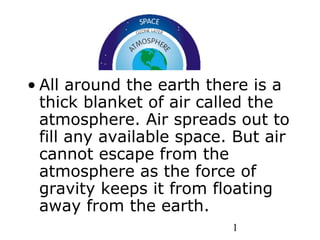
• All around the earth there is a
thick blanket of air called the
atmosphere. Air spreads out to
fill any available space. But air
cannot escape from the
atmosphere as the force of
gravity keeps it from floating
away from the earth.
2
What is air made up of?
•nitrogen
•oxygen
• tiny amounts of other gases
like carbon dioxide, hydrogen
and helium.
• Most of the gas in our air is nitrogen
3
Air and Air Pollution
• The importance of air
• Earth is the only planet known to have
air and water. Other planets have sunlight.
We would not be able to live on this planet
without air, water and the complex ecosystem
that has been developed on Earth in millions of
years.
• Air is what we breathe in and out of our
lungs every moment. Air helps all living
beings in various other ways. E.g. birds to fly,
trees to grow etc. Polluted air is poison for all
things.
4
What is air pollution?
Air Pollution is a broad term applied to all
physical (particulate matter), chemical, and
biological agents that modify the natural
characteristics of the atmosphere.
• Some definitions also consider physical
perturbations such as noise pollution, heat,
radiation or light pollution as air pollution.
Definitions commonly include the term harmful as
a requisite to consider a change to the atmosphere
as pollution.
5
Major Air Pollutants
The major types of air pollutants are:
•Gaseous pollutants: The
most common gaseous pollutants are
carbon dioxide, carbon monoxide,
hydrocarbons, nitrogen oxides, sulfur
oxides and ozone. Man made cause is
burning of fossil fuels, other materials.
• Particulate matter
6
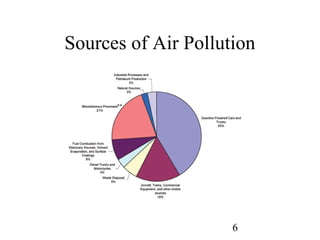
Sources of Air Pollution
7
Anthropogenic Sources
• Anthropogenic Sources related to
burning different kinds of fuel
• Combustion-fired power plants.
• Vehicles with internal combustion
engines.
• Devices powered by two-stroke cycle
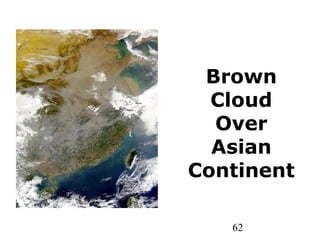
engines.
• Stoves and incinerators, especially coal
ones.
• Wood fires, which usually burn
inefficiently.
• Farmers burning their crop waste.
8
Anthropogenic sources (Cont.)
• Other Anthropogenic Sources
• Aerosol sprays and refrigeration, which
once depended on Freon and other
chlorofluorocarbons.
• Arsenic and chlorine found in drinking
water and inhaled in bathroom showers.
• Dust and chemicals from farming,
especially of erodible land.
• Fumes from paint, varnish, and other
solvents.
9
Other Anthropogenic
Sources(Cont.)
• Industrial activity in general.
• Military actions, including the
use and testing of nuclear
bombs, poison gases, and
germ warfare.
• Oil refining.
10
Anthropogenic Sources
(Cont.)
• Rocketry, which produces many
tons of exotic emissions quickly
and which deposits some of them
directly into the tenuous upper
atmosphere.
• Waste deposition in landfills, which
generate methane.
11
What are the types of air
pollutants?
• Primary :emitted directly to the air from
a source.
• E.g.Carbon monoxide produced as a
byproduct of combustion.
• Secondary: formed in the atmosphere
through chemical reactions involving
primary air pollutants.
e.g. ozone in photo chemical smog.
12
Natural Sources
• Dust from natural sources, usually
large areas of land with little or no
vegetation.
• Methane, emitted by the digestion
of animals, usually cattle.
• Pine trees, which emit volatile
organic compounds (VOCs) and
oxygen.
13
Natural Sources (Cont.)
• Radon gas from earth
minerals.
• Smoke and carbon monoxide
from wildfires.
• Volcanic activity, which
produce sulfur, chlorine, and
ash particulates.
14
Dust particles.
• Dust particles form a complex of
organic compounds and minerals.
These can derive from natural
sources, such as volcanoes, or
human activities, such as industrial
combustion processes or traffic.
Particles are categorized according
to particle size.
15
Dust Particles(Cont.)
• The smallest particles have the ability to
transport toxic compounds into the
respiratory tract. Some of these
compounds are carcinogenic. The upper
respiratory tract stops the larger dust
particles. When they are released into
the environment, dust particles can
cause acidification and winter smog.
16
Smog
• What we typically call smog is primarily
made up of ground-level ozone.
• ground-level ozone is the main harmful
ingredient in smog.
• Ground-level ozone is produced by the
combination of pollutants from many
sources, including smokestacks, cars,
paints and solvents. When a car burns
gasoline, releasing exhaust fumes, or a
painter paints a house, smog-forming
pollutants rise into the sky.
17
Contaminants
• particulates and gases.
• Particulates are small, solid particles,
classified by their sizes. Atmospheric
particles are usually measured as TSP,
PM10 or PM2.5. TSP stands for Total
Suspended Particulates. The PM10
fraction consists of particles with an
aerodynamic diameter of less than 10
micrometers.
18
Contaminants ( Cont.)
• These PM10 contaminants are
more dangerous to humans than
TSP, because they can be breathed
deep into the respiratory tract and
reach the lungs.
19
Contaminants(Cont.)
• PM2.5 particles are even more
dangerous because they can pass
through the upper airway filtering
and into the alveoli, where they
can cross the lung/blood stream
barrier and transport into the
blood.
20
Nano-contaminants
• Increasing attention is now
focusing on the health impacts of
even smaller particles- the so-
called 'nanoparticles'. Smaller
particles tend to be more toxic
than larger particles and can stay
airborne as an 'aerosol' for longer
than larger particles, which settle
out more quickly.
21
Pollutant Gases
• Carbon Monoxide, which is primarily
emitted from combustion process,
particularly from petrol vehicle exhausts
due to incomplete combustion; the
highest concentrations are generally
found at roadside locations. Inhalation
of high levels of carbon monoxide can
cause headaches, fatigue and
respiratory problems.
22
Pollutant Gases ( Cont.)
• According to the European Patent
Office (EPA) (as presented in the
2002 World Almanac), 97,441
thousand tons of carbon monoxide
were released in the United States
during the year 1999. 75,151 of
those caused by transportation
related exhaust.
23
Pollutant Gases ( Cont.)
Chlorofluorocarbons, which
destroy the stratospheric ozone
layer.
Hydrocarbons.
Lead and heavy Metals
24
Pollutant Gases (Cont.)
Nitrogen Oxides, or
NOx. Emissions are
primarily in the form of
NO, which is oxidised by
ozone (O3) from nitric
oxide to NO2.
25
Nitrogen oxides (NOx
).
• These contaminants are
emitted by traffic, combustion
installations such as power
plants, and the industries.
Nitrogen oxides are also
released from farmland in the
agricultural sector.
26
Nitrogen Oxides (Cont.)
• Nitrogen oxides are gases that react
with other air pollutants when they are
present in air. For example, nitrogen
oxides play an important role in the
formation of ozone in the lower
atmosphere, and in acidification and
eutrophication (water Pollution)
processes. They can deeply penetrate
the lungs and damage human lung
functions.
27
Nitrogen dioxide (NO2) is the
primary concern for effects on
health, and is the species for
which WHO health-based
standards are expressed. The
various oxides of nitrogen can
also react with hydrocarbons in
the atmosphere to contribute to
photochemical smog.
Nitrogen Dioxide
28
Nitrogen Oxides
• NOx can also affect ecologically
sensitive sites through
deposition, causing
acidification and
eutrophication. In The U.S.,
25,393 tons of Nitrogen Oxide
were released during 1999.
29
Sulfur Dioxide
• Sulfur dioxide (SO2
).
This contaminant is mainly
emitted during the combustion of
sulfur-containing fossil fuels, such
as crude oil and coal.
30
Sulfur Dioxide (Cont.)
• Sulfur dioxide is a stinging gas
and as a result it can cause
breathing problems with humans.
In moist environments, sulfur
dioxide may be transferred to
sulfuric acid. This acid causes
acidification and winter smog.
31
- Ozone in the lower part of the atmosphere.
-Ozone (O3) is a secondary pollutant, formed
through photochemical reactions involving
NOx and hydrocarbons;
-it is an irritant gas.
-In the stratosphere it helps to reduce the
amount of ultraviolet radiation from the sun
that reaches earth.
TROPOZONIC OZONE
32
Organic Compounds
• Volatile organic compounds:
gasoline, solvents, cleaning solutions
• VOC can be a range of different
contaminants, such as carbohydrates,
organic compounds and solvents. These
compounds usually derive from petrol and
gasoline reservoirs, industrial processes
and fuel combustion, paint and cleanser
use, or agricultural activities. VOC play an
important role in ozone shaping in the
lower atmospheric layer, the main cause
of smog.
33
Volatile Organic
Compounds
• VOC can cause various health
effects, depending on the kind
of compounds that are present
and their concentrations.
Effects can vary from smell
nuisance to decreases in lung
capacity, and even cancer.
34
Carbon monoxide (CO).
• This gas consists during incomplete
combustion of fuels. When we let a car
engine run in a closed room, carbon
monoxide concentrations in the air will
rise extensively. Carbon monoxide
contributes to the greenhouse effect,
smog and acidification. The gas can
bind to hemoglobin in blood, preventing
oxygen transport through the body.
This results in oxygen depletion of the
heart, brains and blood vessels,
eventually causing death.
35
Lead (Pb).
• Comes from Combustion of fossil
fuels and leaded gasoline; paint;
smelters (metal refineries); battery
manufacturing.
• It causes brain and nervous system
damage (esp. children), digestive and
other problems. Some lead-containing
chemicals cause cancer in animals
36
How does air pollution
affect me?
• Many studies have shown links between
pollution and health effects. Increases
in air pollution have been linked to
decreases in lung function and increases
in heart attacks. High levels of air
pollution directly affect people with
asthma and other types of lung or heart
disease. The elderly and children are
especially vulnerable to the effects of air
pollution.
37
Level of Risk
• The level of risk depends on several
factors:
• the amount of pollution in the air,
• the amount of air we breathe in a
given time
• our overall health.
38
Other, less direct ways
people are exposed to air
pollutants
• Eating food products contaminated
by air toxins that have been
deposited where they grow,
• Drinking water contaminated by
air pollutants,
• Ingesting contaminated soil, and
• Touching contaminated soil, dust
or water.
39
Effects of Air Pollution
• Deaths
• three million each year worldwide.
• 2.8 million due to indoor air
pollution.
• 90% of the 3 million in developing
nations.
• 70,000 die each year in the U.S.
40
Situation is grave!
• Deaths from air pollution are compared to
deaths from second hand smoke and
chemical weapons.
• In the U.S, more people die from air
pollution than from car accidents. They die
specifically from agitated asthma,
bronchitis, emphysema, lung and heart
diseases, and other respiratory allergies.
41
Catalyst for diseases
Air pollution
-accelerates atherosclerosis
(Artherosclerosis is a general term for the
thickening and hardening of arteries.)
- promotes cardiovascular
disease
42
Air pollution affects unborn
babies, new study says
• Babies' DNA (Dioxy Ribonucleac
Acid) can be damaged even before
they are born if their mothers
breathe polluted air, according to a
study published
43
Heart Attacks
•Air pollution increases heart
attacks and strokes by thickening
the blood, according to new
research
•Air pollution, and especially
particulate matter, thickens the
blood and boosts inflammation,
finds experimental research in
Occupational and Environmental
Medicine.
44
Cardiac Problems
•Air pollution, second hand smoke
and other factors may increase
risk of myocardial infarction.
•Exposure to air pollutants
increases the risk of fatal
myocardial infarction (MI),
particularly pollutants caused by
motor traffic. Air pollution
accelerates atherosclerosis,
promotes cardiovascular disease
45
Strokes by blood clot
•Boston researcher finds link
between air pollution and strokes
•Increases in particles polluting
the air are associated with an
increase in the number of strokes
caused by a blood clot in the
brain- but not the type caused by
an artery rupture in the brain --
new research shows.
46
Affects cells of blood vessels
• Researchers, led by Dr Newby,
have found that exposure to diesel
engine emissions affects the cells
that line blood vessels
( 'endothelial cells' ).
47
Air Pollution &Increase in Ventricular
Tachyarrhythmias
The most common
preimplantation diagnosis was
coronary artery disease (70%)
followed by cardiomyopathy
(36%).
48
Ventricular
Tachyarrhythmias
• The ventricular tachyarrhythmias are
fast heart rhythms that arise entirely
within the lower chambers of the heart
(the ventricles). They are faster than
100 beats per minute by definition.
49
Cardiomayopathy
• Cardiomyopathy is a type of heart
disease in which the heart becomes
abnormally enlarged (enlarged heart),
thickened and/or stiffened. As a result,
the heart muscle’s ability to pump
and/or receive blood is usually
weakened. This condition is generally
progressive and may lead to heart
failure.
50
How Air Pollution affect
us all?
Air pollution affects us all on large scale as
• Acid Rain
• Damage to ozone layer
• Climatic effects
• Affecting Oceans
• Global warming
• Brown Cloud over Asia
51
Acid Rain
• Forms when moisture in the air
interacts with nitrogen oxide and
sulfur dioxide released by
factories, power plants, and motor
vehicles that burn coal or oil
• They fall as dew, drizzle, fog, snow
or rain.
52
Damage to the ozone
• Ozone is a form of oxygen found in the
earth's upper atmosphere. The thin
layer of ozone molecules in the
atmosphere absorb some of the sun's
ultraviolet (UV) rays before it reaches
the earth's surface, making life on earth
possible. The depletion of ozone is
causing higher levels of UV radiation on
earth, endangering both plants and
animals. primarily caused by the use of
chloroflurocarbons (CFCs)
53
Climatic effects:
• Normally pollutants rise or flow
away from their sources without
building up to unsafe levels.
• Weather patterns that can trap air
pollution in valleys or move it
across the globe may be able to
damage pristine environments far
from the original sources.
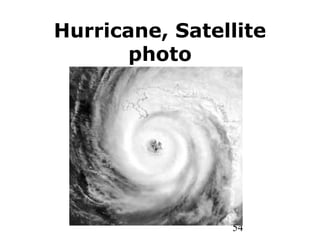
54
Hurricane, Satellite
photo
55
Air pollution affecting
oceans
Burning of fossil fuels is
polluting oceans with
carbon dioxide, says
research
56
Global Warming
• The Greenhouse effect-prevents
the sun's heat from rising out of the
atmosphere and flowing back into
space. Fossil fuel burning and other
gases like chlorofluorocarbons
(CFC), methane, nitrous oxides, and
ozone contribute to the problem.
57
GEOPHYSICAL FLUID DYNAMICS LAB
STUDY CONCLUDES HURRICANE
DESTRUCTION WILL INCREASE WITH
GLOBAL WARMING
In the 1980s NASA research into the
ecology of enclosed environments
focused on using nature’s
biotechnology as remediation
methods in buildings.
Global Warming (Cont.)
58
Global Warming (Cont.)
• NASA found that, common tropical
plants of the decorative types that
grace our homes and offices, (when
used properly)are effective air cleaners,
capable of reducing indoor air pollution,
taking some of the burden carried by
HVAC systems which have very limited
practicality for comprehensive air
cleaning, particularly in residential
settings.
59
Global Warming (Cont.)
• Green plants have cleaned and
purified air and water on earth
since the beginning of time. Used
in buildings, they provide other
health and business benefits as
well.
60
Global Warming ( Cont.)
In a report dated August 2005, National
Oceanic and Atmospheric Administration’s
(NOAA) Geophysical Fluid Dynamics
Laboratory states, “The strongest
hurricanes in the present climate may be
upstaged by even more intense hurricanes
over the next century as the earth’s climate
is warmed by increasing levels of
greenhouse gases in the atmosphere”.
61
Global warming is happening
now -- at huge costs
Warmer Waters Brew Fiercer
Hurricanes
Loss of Arctic Sea Ice Spells
Trouble
Warmer Oceans Damage Reefs
and Other Systems
The Trouble with a Warmer
World
62
Brown
Cloud
Over
Asian
Continent
63
Asian Brown Cloud
( Cont.)
• The Asian Brown Cloud, as the
scientists call it, is "damaging
agriculture, modifying rainfall
patterns including those of the
mighty monsoon and putting
hundreds of thousands of people
at risk," says the report released in
London Monday, August 12.(UN
sponsored research findings)
64
Asian Brown
Cloud(Cont.)
• The findings arise from a 40-
million dollar study conducted
between 1995 and 1999 by about
200 scientists working on the
Indian Ocean Experiment
(INDOEX). The scientists collected
data using aircraft, ships and
satellites.
65
Indoor Air Pollution
Indoor air pollution is a problem
without end. Every person inhabiting
a house or office building emits
carbon dioxide and other greenhouse
gases from their bodies. The EPA tells
us there is an increasing number of
other pollutant sources as well. A
soup of hundreds of toxins
permeates the air inside the house.
66
Indoor air pollution
(Cont.)
• The lack of ventilation indoors
concentrates air pollution where
people are most exposed to them.
Background pollution comes from
such mundane sources as shower
water mist containing arsenic or
manganese, both of which are
damaging to inhale.
67
Indoor Air Pollution
(Cont.)
• The arsenic can be trapped with a
shower nozzle filter. Radon gas, a
carcinogen, is exuded from the
earth and trapped inside houses.
Researchers have found that radon
gas is responsible for over 1,800
deaths annually in the United
Kingdom.
68
Indoor Air Pollution
( Cont.)
• These natural radon emissions can be
blocked by a layer of aluminum foil
under the carpet (according to the U.S.
Department of Air Quality
Management). Building materials
including carpeting and plywood emit
formaldehyde gas. Paint and solvents
give off volatile organic compounds
(VOCs) as they dry. Lead paint can
degenerate into dust and be inhaled.
69
Indoor Air
Pollution(Cont.)
• Asbestos insulation was commonly used
in many application and can be
carcinogenic in the lungs. Intentional air
pollution is introduced with the use of
air fresheners, incense, and other
scented items. Controlled wood fires in
stoves and fireplaces can add significant
amounts of smoke particulates into the
air, inside and out.
70
Indoor Air
Pollution(Cont.)
• Clothing emits
perchloroethylene for days
after drycleaning.
• Fine cotton fiber from cloth
• Fungus and Bacteria that live
in clothing material, especially
wool.
71
Identifying IAQ issues in
the home
Inspect the home room by room. Most
homes have more than one source that
contributes to indoor air pollution:
• Combustible items, such as oil, gas,
kerosene, wood, and tobacco
• Building materials and furnishings,
such as particle board, flaking
asbestos insulation, damp carpet, and
upholstery
72
Identifying IAQ
Issues(Cont.)
• Central heating and cooling
systems, and humidifiers
• Pesticides and outdoor air
pollution from automobiles and
factories
• Household cleaners, paints and
solvents, personal care products
73
Indication of poor air
quality
2.Some health problems may indicate
poor indoor air quality, especially if
those problems appear after someone
moves to a new residence, remodels or
refurnishes a home, or treats a home
with pesticides.
74
Look for ventilation
problems
• Condensation on windows or walls,
misty or stuffy air, dirty central heating
and air conditioning systems, and mold
or dampness problems on items in the
home may be signs of poor ventilation.
75
Measure Indoor Air Quality
If you suspect an IAQ problem,
• IAQ monitor measures the most
common IAQ factors: temperature,
humidity, carbon monoxide,
carbon dioxide, particulates, and
volatile organic compounds
(VOCs). Then you can make
recommendations based on real
measurements.
76
Indoor Air
Pollution(Cont.)
• Deaths are often caused by
using pesticides and other
chemical sprays indoors
without proper ventilation, and
many homes have been
destroyed by accidental
pesticide explosions.
77
Indoor Air
Pollution(Cont.)
• Second-hand tobacco smoke is now
recognized as an indoor air pollutant
which accounts for an estimated 3,000
lung cancer deaths annually in the US.
Carbon monoxide poisoning is a quick
and silent killer, often caused by faulty
vents and chimneys, or by the burning
charcol indoors. 56,000 Americans died
from CO in the period 1979-1988.
78
Smoke Inhalation
• Smoke inhalation is a common
cause of death in victims of house
fires. Traps are built into all
domestic plumbing to keep deadly
sewer gas, hydrogen sulphide, out
of interiors.
79
Biological Sources
•Biological sources of air
pollution can also be found
indoors, and include gases,
particulates, allergens, and
microbes.
80
Pets Inside the House
• Pets produce dander, bed
mites deposit shells and
microscopic droppings,
inhabitants emit methane,
mold can form in walls and
generate spores, air
conditioning systems can
incubate Legionnaires disease.
81
Toilets
• Toilets can emit feces-tainted
mists, and houseplants and
surrounding gardens can
produce pollen, dust, and mold
spores.
82
Control Devices
• Scrubber
• Electrostatic Precipitator
• Fabric Filter
• Cyclone ( Industry)
• Condenser
• Selective Catalytic reduction
• Catalytic Converter
• Flue gas desulfurization
• Exhaust gas recirculation
• Gas Flare
83
Scrubber
• A scrubber is an industrial pollution
control device.
• Usually installed on the exhaust chimneys
of large furnaces
• It is used to remove harmful substances
from exhaust.
84
Electrostatic Precipitator
• An electrostatic precipitator (ESP), or
electrostatic air cleaner is a particulate collection
device that removes particles from a flowing gas
(such as air) using the force of an induced
electrostatic charge.
• Electrostatic precipitators are highly efficient
filtration devices that minimally impede the flow
of gases through the device, and can easily remove
fine particulate matter such as dust and smoke
from the air stream.
85
Fabric Filter
• Fiber material is commonly used to make
web formations used for air filtration.
Polyester has a high temperature rating
(abut 250 F)and is widely used in
commercial, industrial or residential
applications. Tiny synthetic fibers knows as
micro-fibers are used in many types of
HEPA (High Efficiency Particulate Air
Filter) filters.
86
Cyclone (industry)
• In industry, a cyclone may refer to any of a
number of different types of vortex
separators. These devices use rotational
effects and gravity to separate mixtures of
solids and fluids. Because of different
densities the heavier material is flung to the
outside edge of the vortex while the lighter
material is concentrated in the centre of the
vortex.
87
Condenser
• In systems involving heat transfer, a
condenser is a heat exchanger which
condenses a substance from its gaseous to
its liquid state. Condensers are used in air
conditioning, industrial chemical processes,
and other heat-exchange systems.
88
Selective Catalytic
Reduction
• Selective Catalytic Reduction (SCR), a
process where a gaseous or liquid reductant
(most commonly ammonia or urea) is added
to the flue gas stream and is absorbed onto a
catalyst. The reductant reacts with NOx in
the flue gas to form H2
O and N2
.
89
Catalytic Converter
• A catalytic converter is a device used to
reduce the emissions from an internal
combustion engine.
• Most commonly used in an automobile’s
exhaust system.
90
Flue gas desulfurization
• Flue gas desulfurization (FGD) is the
current state-of-the art technology used for
removing sulfur dioxide (SO2
) from the
exhaust flue gases in power plants that burn
coal or oil to generate the steam for the
steam turbines that drive their electricity
generators.
91
Exhaust gas
Recirculation
• Exhaust gas recirculation (EGR) is an Nox
(nitrogen oxide and nitrogen dioxide) reduction
technique used in most gasoline and diesel
engines.
• EGR works by recirculating a portion of an
engine's exhaust gas back to the engine cylinders.
Intermixing the incoming air with recirculated
exhaust gas dilutes the mix with inert gas,
lowering the peak combustion temperatures and
(in diesel engines) reducing the amount of excess
oxygen.
92
Flare Stack
• A gas flare or flare stack is
an elevated vertical stack or
chimney found on oil wells,
and in refineries, chemical
plants and landfills.
93
What Can I do?
• Plant trees -Efficacy of tree
species towards gaseous pollutants
and its significance in air pollution
control by plantations of pollution
resistant trees
• Keep surroundings clean and
orderly
94
What Can I do?(Cont.)
• Use less polluting items
• Avoid smoking
• Smokers do not smoke inside the house
• Use vacuum cleaners to clean dusty
areas
• Dispose old items and reduce
materials
• Do whatever you can instead of
blaming others
95
Humanity cannot live
without nature, but
nature can live without
humanity.
Do Your Best for your
own existence!
Use Renewables!

Air

  • 1.
    1 • All aroundthe earth there is a thick blanket of air called the atmosphere. Air spreads out to fill any available space. But air cannot escape from the atmosphere as the force of gravity keeps it from floating away from the earth.
  • 2.
    2 What is airmade up of? •nitrogen •oxygen • tiny amounts of other gases like carbon dioxide, hydrogen and helium. • Most of the gas in our air is nitrogen
  • 3.
    3 Air and AirPollution • The importance of air • Earth is the only planet known to have air and water. Other planets have sunlight. We would not be able to live on this planet without air, water and the complex ecosystem that has been developed on Earth in millions of years. • Air is what we breathe in and out of our lungs every moment. Air helps all living beings in various other ways. E.g. birds to fly, trees to grow etc. Polluted air is poison for all things.
  • 4.
    4 What is airpollution? Air Pollution is a broad term applied to all physical (particulate matter), chemical, and biological agents that modify the natural characteristics of the atmosphere. • Some definitions also consider physical perturbations such as noise pollution, heat, radiation or light pollution as air pollution. Definitions commonly include the term harmful as a requisite to consider a change to the atmosphere as pollution.
  • 5.
    5 Major Air Pollutants Themajor types of air pollutants are: •Gaseous pollutants: The most common gaseous pollutants are carbon dioxide, carbon monoxide, hydrocarbons, nitrogen oxides, sulfur oxides and ozone. Man made cause is burning of fossil fuels, other materials. • Particulate matter
  • 6.
  • 7.
    7 Anthropogenic Sources • AnthropogenicSources related to burning different kinds of fuel • Combustion-fired power plants. • Vehicles with internal combustion engines. • Devices powered by two-stroke cycle engines. • Stoves and incinerators, especially coal ones. • Wood fires, which usually burn inefficiently. • Farmers burning their crop waste.
  • 8.
    8 Anthropogenic sources (Cont.) •Other Anthropogenic Sources • Aerosol sprays and refrigeration, which once depended on Freon and other chlorofluorocarbons. • Arsenic and chlorine found in drinking water and inhaled in bathroom showers. • Dust and chemicals from farming, especially of erodible land. • Fumes from paint, varnish, and other solvents.
  • 9.
    9 Other Anthropogenic Sources(Cont.) • Industrialactivity in general. • Military actions, including the use and testing of nuclear bombs, poison gases, and germ warfare. • Oil refining.
  • 10.
    10 Anthropogenic Sources (Cont.) • Rocketry,which produces many tons of exotic emissions quickly and which deposits some of them directly into the tenuous upper atmosphere. • Waste deposition in landfills, which generate methane.
  • 11.
    11 What are thetypes of air pollutants? • Primary :emitted directly to the air from a source. • E.g.Carbon monoxide produced as a byproduct of combustion. • Secondary: formed in the atmosphere through chemical reactions involving primary air pollutants. e.g. ozone in photo chemical smog.
  • 12.
    12 Natural Sources • Dustfrom natural sources, usually large areas of land with little or no vegetation. • Methane, emitted by the digestion of animals, usually cattle. • Pine trees, which emit volatile organic compounds (VOCs) and oxygen.
  • 13.
    13 Natural Sources (Cont.) •Radon gas from earth minerals. • Smoke and carbon monoxide from wildfires. • Volcanic activity, which produce sulfur, chlorine, and ash particulates.
  • 14.
    14 Dust particles. • Dustparticles form a complex of organic compounds and minerals. These can derive from natural sources, such as volcanoes, or human activities, such as industrial combustion processes or traffic. Particles are categorized according to particle size.
  • 15.
    15 Dust Particles(Cont.) • Thesmallest particles have the ability to transport toxic compounds into the respiratory tract. Some of these compounds are carcinogenic. The upper respiratory tract stops the larger dust particles. When they are released into the environment, dust particles can cause acidification and winter smog.
  • 16.
    16 Smog • What wetypically call smog is primarily made up of ground-level ozone. • ground-level ozone is the main harmful ingredient in smog. • Ground-level ozone is produced by the combination of pollutants from many sources, including smokestacks, cars, paints and solvents. When a car burns gasoline, releasing exhaust fumes, or a painter paints a house, smog-forming pollutants rise into the sky.
  • 17.
    17 Contaminants • particulates andgases. • Particulates are small, solid particles, classified by their sizes. Atmospheric particles are usually measured as TSP, PM10 or PM2.5. TSP stands for Total Suspended Particulates. The PM10 fraction consists of particles with an aerodynamic diameter of less than 10 micrometers.
  • 18.
    18 Contaminants ( Cont.) •These PM10 contaminants are more dangerous to humans than TSP, because they can be breathed deep into the respiratory tract and reach the lungs.
  • 19.
    19 Contaminants(Cont.) • PM2.5 particlesare even more dangerous because they can pass through the upper airway filtering and into the alveoli, where they can cross the lung/blood stream barrier and transport into the blood.
  • 20.
    20 Nano-contaminants • Increasing attentionis now focusing on the health impacts of even smaller particles- the so- called 'nanoparticles'. Smaller particles tend to be more toxic than larger particles and can stay airborne as an 'aerosol' for longer than larger particles, which settle out more quickly.
  • 21.
    21 Pollutant Gases • CarbonMonoxide, which is primarily emitted from combustion process, particularly from petrol vehicle exhausts due to incomplete combustion; the highest concentrations are generally found at roadside locations. Inhalation of high levels of carbon monoxide can cause headaches, fatigue and respiratory problems.
  • 22.
    22 Pollutant Gases (Cont.) • According to the European Patent Office (EPA) (as presented in the 2002 World Almanac), 97,441 thousand tons of carbon monoxide were released in the United States during the year 1999. 75,151 of those caused by transportation related exhaust.
  • 23.
    23 Pollutant Gases (Cont.) Chlorofluorocarbons, which destroy the stratospheric ozone layer. Hydrocarbons. Lead and heavy Metals
  • 24.
    24 Pollutant Gases (Cont.) NitrogenOxides, or NOx. Emissions are primarily in the form of NO, which is oxidised by ozone (O3) from nitric oxide to NO2.
  • 25.
    25 Nitrogen oxides (NOx ). •These contaminants are emitted by traffic, combustion installations such as power plants, and the industries. Nitrogen oxides are also released from farmland in the agricultural sector.
  • 26.
    26 Nitrogen Oxides (Cont.) •Nitrogen oxides are gases that react with other air pollutants when they are present in air. For example, nitrogen oxides play an important role in the formation of ozone in the lower atmosphere, and in acidification and eutrophication (water Pollution) processes. They can deeply penetrate the lungs and damage human lung functions.
  • 27.
    27 Nitrogen dioxide (NO2)is the primary concern for effects on health, and is the species for which WHO health-based standards are expressed. The various oxides of nitrogen can also react with hydrocarbons in the atmosphere to contribute to photochemical smog. Nitrogen Dioxide
  • 28.
    28 Nitrogen Oxides • NOxcan also affect ecologically sensitive sites through deposition, causing acidification and eutrophication. In The U.S., 25,393 tons of Nitrogen Oxide were released during 1999.
  • 29.
    29 Sulfur Dioxide • Sulfurdioxide (SO2 ). This contaminant is mainly emitted during the combustion of sulfur-containing fossil fuels, such as crude oil and coal.
  • 30.
    30 Sulfur Dioxide (Cont.) •Sulfur dioxide is a stinging gas and as a result it can cause breathing problems with humans. In moist environments, sulfur dioxide may be transferred to sulfuric acid. This acid causes acidification and winter smog.
  • 31.
    31 - Ozone inthe lower part of the atmosphere. -Ozone (O3) is a secondary pollutant, formed through photochemical reactions involving NOx and hydrocarbons; -it is an irritant gas. -In the stratosphere it helps to reduce the amount of ultraviolet radiation from the sun that reaches earth. TROPOZONIC OZONE
  • 32.
    32 Organic Compounds • Volatileorganic compounds: gasoline, solvents, cleaning solutions • VOC can be a range of different contaminants, such as carbohydrates, organic compounds and solvents. These compounds usually derive from petrol and gasoline reservoirs, industrial processes and fuel combustion, paint and cleanser use, or agricultural activities. VOC play an important role in ozone shaping in the lower atmospheric layer, the main cause of smog.
  • 33.
    33 Volatile Organic Compounds • VOCcan cause various health effects, depending on the kind of compounds that are present and their concentrations. Effects can vary from smell nuisance to decreases in lung capacity, and even cancer.
  • 34.
    34 Carbon monoxide (CO). •This gas consists during incomplete combustion of fuels. When we let a car engine run in a closed room, carbon monoxide concentrations in the air will rise extensively. Carbon monoxide contributes to the greenhouse effect, smog and acidification. The gas can bind to hemoglobin in blood, preventing oxygen transport through the body. This results in oxygen depletion of the heart, brains and blood vessels, eventually causing death.
  • 35.
    35 Lead (Pb). • Comesfrom Combustion of fossil fuels and leaded gasoline; paint; smelters (metal refineries); battery manufacturing. • It causes brain and nervous system damage (esp. children), digestive and other problems. Some lead-containing chemicals cause cancer in animals
  • 36.
    36 How does airpollution affect me? • Many studies have shown links between pollution and health effects. Increases in air pollution have been linked to decreases in lung function and increases in heart attacks. High levels of air pollution directly affect people with asthma and other types of lung or heart disease. The elderly and children are especially vulnerable to the effects of air pollution.
  • 37.
    37 Level of Risk •The level of risk depends on several factors: • the amount of pollution in the air, • the amount of air we breathe in a given time • our overall health.
  • 38.
    38 Other, less directways people are exposed to air pollutants • Eating food products contaminated by air toxins that have been deposited where they grow, • Drinking water contaminated by air pollutants, • Ingesting contaminated soil, and • Touching contaminated soil, dust or water.
  • 39.
    39 Effects of AirPollution • Deaths • three million each year worldwide. • 2.8 million due to indoor air pollution. • 90% of the 3 million in developing nations. • 70,000 die each year in the U.S.
  • 40.
    40 Situation is grave! •Deaths from air pollution are compared to deaths from second hand smoke and chemical weapons. • In the U.S, more people die from air pollution than from car accidents. They die specifically from agitated asthma, bronchitis, emphysema, lung and heart diseases, and other respiratory allergies.
  • 41.
    41 Catalyst for diseases Airpollution -accelerates atherosclerosis (Artherosclerosis is a general term for the thickening and hardening of arteries.) - promotes cardiovascular disease
  • 42.
    42 Air pollution affectsunborn babies, new study says • Babies' DNA (Dioxy Ribonucleac Acid) can be damaged even before they are born if their mothers breathe polluted air, according to a study published
  • 43.
    43 Heart Attacks •Air pollutionincreases heart attacks and strokes by thickening the blood, according to new research •Air pollution, and especially particulate matter, thickens the blood and boosts inflammation, finds experimental research in Occupational and Environmental Medicine.
  • 44.
    44 Cardiac Problems •Air pollution,second hand smoke and other factors may increase risk of myocardial infarction. •Exposure to air pollutants increases the risk of fatal myocardial infarction (MI), particularly pollutants caused by motor traffic. Air pollution accelerates atherosclerosis, promotes cardiovascular disease
  • 45.
    45 Strokes by bloodclot •Boston researcher finds link between air pollution and strokes •Increases in particles polluting the air are associated with an increase in the number of strokes caused by a blood clot in the brain- but not the type caused by an artery rupture in the brain -- new research shows.
  • 46.
    46 Affects cells ofblood vessels • Researchers, led by Dr Newby, have found that exposure to diesel engine emissions affects the cells that line blood vessels ( 'endothelial cells' ).
  • 47.
    47 Air Pollution &Increasein Ventricular Tachyarrhythmias The most common preimplantation diagnosis was coronary artery disease (70%) followed by cardiomyopathy (36%).
  • 48.
    48 Ventricular Tachyarrhythmias • The ventriculartachyarrhythmias are fast heart rhythms that arise entirely within the lower chambers of the heart (the ventricles). They are faster than 100 beats per minute by definition.
  • 49.
    49 Cardiomayopathy • Cardiomyopathy isa type of heart disease in which the heart becomes abnormally enlarged (enlarged heart), thickened and/or stiffened. As a result, the heart muscle’s ability to pump and/or receive blood is usually weakened. This condition is generally progressive and may lead to heart failure.
  • 50.
    50 How Air Pollutionaffect us all? Air pollution affects us all on large scale as • Acid Rain • Damage to ozone layer • Climatic effects • Affecting Oceans • Global warming • Brown Cloud over Asia
  • 51.
    51 Acid Rain • Formswhen moisture in the air interacts with nitrogen oxide and sulfur dioxide released by factories, power plants, and motor vehicles that burn coal or oil • They fall as dew, drizzle, fog, snow or rain.
  • 52.
    52 Damage to theozone • Ozone is a form of oxygen found in the earth's upper atmosphere. The thin layer of ozone molecules in the atmosphere absorb some of the sun's ultraviolet (UV) rays before it reaches the earth's surface, making life on earth possible. The depletion of ozone is causing higher levels of UV radiation on earth, endangering both plants and animals. primarily caused by the use of chloroflurocarbons (CFCs)
  • 53.
    53 Climatic effects: • Normallypollutants rise or flow away from their sources without building up to unsafe levels. • Weather patterns that can trap air pollution in valleys or move it across the globe may be able to damage pristine environments far from the original sources.
  • 54.
  • 55.
    55 Air pollution affecting oceans Burningof fossil fuels is polluting oceans with carbon dioxide, says research
  • 56.
    56 Global Warming • TheGreenhouse effect-prevents the sun's heat from rising out of the atmosphere and flowing back into space. Fossil fuel burning and other gases like chlorofluorocarbons (CFC), methane, nitrous oxides, and ozone contribute to the problem.
  • 57.
    57 GEOPHYSICAL FLUID DYNAMICSLAB STUDY CONCLUDES HURRICANE DESTRUCTION WILL INCREASE WITH GLOBAL WARMING In the 1980s NASA research into the ecology of enclosed environments focused on using nature’s biotechnology as remediation methods in buildings. Global Warming (Cont.)
  • 58.
    58 Global Warming (Cont.) •NASA found that, common tropical plants of the decorative types that grace our homes and offices, (when used properly)are effective air cleaners, capable of reducing indoor air pollution, taking some of the burden carried by HVAC systems which have very limited practicality for comprehensive air cleaning, particularly in residential settings.
  • 59.
    59 Global Warming (Cont.) •Green plants have cleaned and purified air and water on earth since the beginning of time. Used in buildings, they provide other health and business benefits as well.
  • 60.
    60 Global Warming (Cont.) In a report dated August 2005, National Oceanic and Atmospheric Administration’s (NOAA) Geophysical Fluid Dynamics Laboratory states, “The strongest hurricanes in the present climate may be upstaged by even more intense hurricanes over the next century as the earth’s climate is warmed by increasing levels of greenhouse gases in the atmosphere”.
  • 61.
    61 Global warming ishappening now -- at huge costs Warmer Waters Brew Fiercer Hurricanes Loss of Arctic Sea Ice Spells Trouble Warmer Oceans Damage Reefs and Other Systems The Trouble with a Warmer World
  • 62.
  • 63.
    63 Asian Brown Cloud (Cont.) • The Asian Brown Cloud, as the scientists call it, is "damaging agriculture, modifying rainfall patterns including those of the mighty monsoon and putting hundreds of thousands of people at risk," says the report released in London Monday, August 12.(UN sponsored research findings)
  • 64.
    64 Asian Brown Cloud(Cont.) • Thefindings arise from a 40- million dollar study conducted between 1995 and 1999 by about 200 scientists working on the Indian Ocean Experiment (INDOEX). The scientists collected data using aircraft, ships and satellites.
  • 65.
    65 Indoor Air Pollution Indoorair pollution is a problem without end. Every person inhabiting a house or office building emits carbon dioxide and other greenhouse gases from their bodies. The EPA tells us there is an increasing number of other pollutant sources as well. A soup of hundreds of toxins permeates the air inside the house.
  • 66.
    66 Indoor air pollution (Cont.) •The lack of ventilation indoors concentrates air pollution where people are most exposed to them. Background pollution comes from such mundane sources as shower water mist containing arsenic or manganese, both of which are damaging to inhale.
  • 67.
    67 Indoor Air Pollution (Cont.) •The arsenic can be trapped with a shower nozzle filter. Radon gas, a carcinogen, is exuded from the earth and trapped inside houses. Researchers have found that radon gas is responsible for over 1,800 deaths annually in the United Kingdom.
  • 68.
    68 Indoor Air Pollution (Cont.) • These natural radon emissions can be blocked by a layer of aluminum foil under the carpet (according to the U.S. Department of Air Quality Management). Building materials including carpeting and plywood emit formaldehyde gas. Paint and solvents give off volatile organic compounds (VOCs) as they dry. Lead paint can degenerate into dust and be inhaled.
  • 69.
    69 Indoor Air Pollution(Cont.) • Asbestosinsulation was commonly used in many application and can be carcinogenic in the lungs. Intentional air pollution is introduced with the use of air fresheners, incense, and other scented items. Controlled wood fires in stoves and fireplaces can add significant amounts of smoke particulates into the air, inside and out.
  • 70.
    70 Indoor Air Pollution(Cont.) • Clothingemits perchloroethylene for days after drycleaning. • Fine cotton fiber from cloth • Fungus and Bacteria that live in clothing material, especially wool.
  • 71.
    71 Identifying IAQ issuesin the home Inspect the home room by room. Most homes have more than one source that contributes to indoor air pollution: • Combustible items, such as oil, gas, kerosene, wood, and tobacco • Building materials and furnishings, such as particle board, flaking asbestos insulation, damp carpet, and upholstery
  • 72.
    72 Identifying IAQ Issues(Cont.) • Centralheating and cooling systems, and humidifiers • Pesticides and outdoor air pollution from automobiles and factories • Household cleaners, paints and solvents, personal care products
  • 73.
    73 Indication of poorair quality 2.Some health problems may indicate poor indoor air quality, especially if those problems appear after someone moves to a new residence, remodels or refurnishes a home, or treats a home with pesticides.
  • 74.
    74 Look for ventilation problems •Condensation on windows or walls, misty or stuffy air, dirty central heating and air conditioning systems, and mold or dampness problems on items in the home may be signs of poor ventilation.
  • 75.
    75 Measure Indoor AirQuality If you suspect an IAQ problem, • IAQ monitor measures the most common IAQ factors: temperature, humidity, carbon monoxide, carbon dioxide, particulates, and volatile organic compounds (VOCs). Then you can make recommendations based on real measurements.
  • 76.
    76 Indoor Air Pollution(Cont.) • Deathsare often caused by using pesticides and other chemical sprays indoors without proper ventilation, and many homes have been destroyed by accidental pesticide explosions.
  • 77.
    77 Indoor Air Pollution(Cont.) • Second-handtobacco smoke is now recognized as an indoor air pollutant which accounts for an estimated 3,000 lung cancer deaths annually in the US. Carbon monoxide poisoning is a quick and silent killer, often caused by faulty vents and chimneys, or by the burning charcol indoors. 56,000 Americans died from CO in the period 1979-1988.
  • 78.
    78 Smoke Inhalation • Smokeinhalation is a common cause of death in victims of house fires. Traps are built into all domestic plumbing to keep deadly sewer gas, hydrogen sulphide, out of interiors.
  • 79.
    79 Biological Sources •Biological sourcesof air pollution can also be found indoors, and include gases, particulates, allergens, and microbes.
  • 80.
    80 Pets Inside theHouse • Pets produce dander, bed mites deposit shells and microscopic droppings, inhabitants emit methane, mold can form in walls and generate spores, air conditioning systems can incubate Legionnaires disease.
  • 81.
    81 Toilets • Toilets canemit feces-tainted mists, and houseplants and surrounding gardens can produce pollen, dust, and mold spores.
  • 82.
    82 Control Devices • Scrubber •Electrostatic Precipitator • Fabric Filter • Cyclone ( Industry) • Condenser • Selective Catalytic reduction • Catalytic Converter • Flue gas desulfurization • Exhaust gas recirculation • Gas Flare
  • 83.
    83 Scrubber • A scrubberis an industrial pollution control device. • Usually installed on the exhaust chimneys of large furnaces • It is used to remove harmful substances from exhaust.
  • 84.
    84 Electrostatic Precipitator • Anelectrostatic precipitator (ESP), or electrostatic air cleaner is a particulate collection device that removes particles from a flowing gas (such as air) using the force of an induced electrostatic charge. • Electrostatic precipitators are highly efficient filtration devices that minimally impede the flow of gases through the device, and can easily remove fine particulate matter such as dust and smoke from the air stream.
  • 85.
    85 Fabric Filter • Fibermaterial is commonly used to make web formations used for air filtration. Polyester has a high temperature rating (abut 250 F)and is widely used in commercial, industrial or residential applications. Tiny synthetic fibers knows as micro-fibers are used in many types of HEPA (High Efficiency Particulate Air Filter) filters.
  • 86.
    86 Cyclone (industry) • Inindustry, a cyclone may refer to any of a number of different types of vortex separators. These devices use rotational effects and gravity to separate mixtures of solids and fluids. Because of different densities the heavier material is flung to the outside edge of the vortex while the lighter material is concentrated in the centre of the vortex.
  • 87.
    87 Condenser • In systemsinvolving heat transfer, a condenser is a heat exchanger which condenses a substance from its gaseous to its liquid state. Condensers are used in air conditioning, industrial chemical processes, and other heat-exchange systems.
  • 88.
    88 Selective Catalytic Reduction • SelectiveCatalytic Reduction (SCR), a process where a gaseous or liquid reductant (most commonly ammonia or urea) is added to the flue gas stream and is absorbed onto a catalyst. The reductant reacts with NOx in the flue gas to form H2 O and N2 .
  • 89.
    89 Catalytic Converter • Acatalytic converter is a device used to reduce the emissions from an internal combustion engine. • Most commonly used in an automobile’s exhaust system.
  • 90.
    90 Flue gas desulfurization •Flue gas desulfurization (FGD) is the current state-of-the art technology used for removing sulfur dioxide (SO2 ) from the exhaust flue gases in power plants that burn coal or oil to generate the steam for the steam turbines that drive their electricity generators.
  • 91.
    91 Exhaust gas Recirculation • Exhaustgas recirculation (EGR) is an Nox (nitrogen oxide and nitrogen dioxide) reduction technique used in most gasoline and diesel engines. • EGR works by recirculating a portion of an engine's exhaust gas back to the engine cylinders. Intermixing the incoming air with recirculated exhaust gas dilutes the mix with inert gas, lowering the peak combustion temperatures and (in diesel engines) reducing the amount of excess oxygen.
  • 92.
    92 Flare Stack • Agas flare or flare stack is an elevated vertical stack or chimney found on oil wells, and in refineries, chemical plants and landfills.
  • 93.
    93 What Can Ido? • Plant trees -Efficacy of tree species towards gaseous pollutants and its significance in air pollution control by plantations of pollution resistant trees • Keep surroundings clean and orderly
  • 94.
    94 What Can Ido?(Cont.) • Use less polluting items • Avoid smoking • Smokers do not smoke inside the house • Use vacuum cleaners to clean dusty areas • Dispose old items and reduce materials • Do whatever you can instead of blaming others
  • 95.
    95 Humanity cannot live withoutnature, but nature can live without humanity. Do Your Best for your own existence! Use Renewables!

Editor's Notes

  • #2 Atmosphere 0-15 kms, Ozone layer, Thin layer, Space Stratosphere, 15-50 km, Mesosphere 50-80 kms, Thermosphere above 80 kms.
  • #5 Wikiepedia ( Air Pollution)
  • #42 <number>
  • #45 Myocardial infarction is most commonly known as a heart attack. Myocardial is defined as heart muscle, and infarction is defined as death.
  • #48 The ventricular tachyarrhythmias are fast heart rhythms that arise entirely within the lower chambers of the heart (the ventricles). They are faster than 100 beats per minute by definition.
  • #61 (Global Warming and Hurricanes; NOAA/OAR/GFDL; Princeton Univ., Princeton, NJ; August 19, 2005).