COMPONENT
S OF THE
CURRICULU
M
CURRICULU
M AIMS,
GOALS AND
OBJECTIVES
Three
Educational
Level
• PRIMARY
• SECONDARY
• TERTIARY
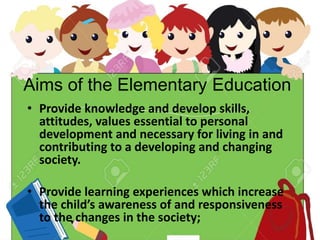
Aims of the Elementary Education
• Provide knowledge and develop skills,
attitudes, values essential to personal
development and necessary for living in and
contributing to a developing and changing
society.
• Provide learning experiences which increase
the child’s awareness of and responsiveness
to the changes in the society;
Aims of the Elementary Education
• Promote and intensify knowledge,
identification with and love for the nation and
the people to which he belongs; and
• Promote work experiences which develop
orientation to the world of work and prepare
the learner to honest and gainful work.
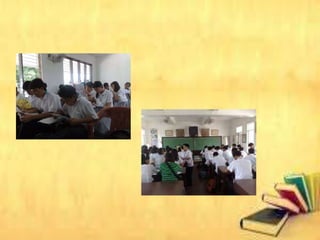
Aims of Secondary Education
• Continue to promote the objectives of
elementary education and
• Discover and enhance the different
aptitudes and interests of students in
order to equip them with skills for
productive endeavor and or to prepare
them for tertiary schooling.
Aims of Tertiary Education
• Provide general education programs which
will promote national identity, cultural
consciousness, moral integrity and spiritual
vigor;
• Train the nation’s manpower in the skills
required for national development;
• Develop the professions that will provide
leadership for the nation; and
• Advance knowledge through research and
apply new knowledge for improving the
quality of human life and respond effectively
to changing society.
VISION
Clearing the paths while laying new
foundations to transform the Polytechnic
University of the Philippines into
An epistemic community.
MISSION
Reflective of the great emphasis being given by the country's leadership
aimed at providing appropriate attention to the alleviation of the plight of the
poor, the development of the citizens, and of the national economy to
become globally competitive, the University shall commit its academic resources
and
manpower to achieve its goals through:
• Provision of undergraduate and graduate education which meet international
standards of quality and excellence;
• Generation and transmission of knowledge in the broad range of disciplines
relevant and responsive to the dynamically changing domestic and
international environment;
• Provision of more equitable access to higher education opportunities to
deserving and qualified Filipinos; and
• Optimization, through efficiency and effectiveness, of social, institutional, and
individual returns and benefits derived from the utilization of higher
education resources.
DOMAINS
• Cognitive – knowledge,
comprehension, application, analysis,
synthesis, evaluation
• Affective – receiving, responding,
valuing, organization, characterization
• Psychomotor – perception, set, guided
response, mechanism, complex overt
response, adaptation, origination.

Aimsgoalsandobjectives

  • 1.
  • 2.
  • 3.
  • 5.
    Aims of theElementary Education • Provide knowledge and develop skills, attitudes, values essential to personal development and necessary for living in and contributing to a developing and changing society. • Provide learning experiences which increase the child’s awareness of and responsiveness to the changes in the society;
  • 6.
    Aims of theElementary Education • Promote and intensify knowledge, identification with and love for the nation and the people to which he belongs; and • Promote work experiences which develop orientation to the world of work and prepare the learner to honest and gainful work.
  • 8.
    Aims of SecondaryEducation • Continue to promote the objectives of elementary education and • Discover and enhance the different aptitudes and interests of students in order to equip them with skills for productive endeavor and or to prepare them for tertiary schooling.
  • 10.
    Aims of TertiaryEducation • Provide general education programs which will promote national identity, cultural consciousness, moral integrity and spiritual vigor; • Train the nation’s manpower in the skills required for national development; • Develop the professions that will provide leadership for the nation; and • Advance knowledge through research and apply new knowledge for improving the quality of human life and respond effectively to changing society.
  • 11.
    VISION Clearing the pathswhile laying new foundations to transform the Polytechnic University of the Philippines into An epistemic community.
  • 12.
    MISSION Reflective of thegreat emphasis being given by the country's leadership aimed at providing appropriate attention to the alleviation of the plight of the poor, the development of the citizens, and of the national economy to become globally competitive, the University shall commit its academic resources and manpower to achieve its goals through: • Provision of undergraduate and graduate education which meet international standards of quality and excellence; • Generation and transmission of knowledge in the broad range of disciplines relevant and responsive to the dynamically changing domestic and international environment; • Provision of more equitable access to higher education opportunities to deserving and qualified Filipinos; and • Optimization, through efficiency and effectiveness, of social, institutional, and individual returns and benefits derived from the utilization of higher education resources.
  • 13.
    DOMAINS • Cognitive –knowledge, comprehension, application, analysis, synthesis, evaluation • Affective – receiving, responding, valuing, organization, characterization • Psychomotor – perception, set, guided response, mechanism, complex overt response, adaptation, origination.