BATAS PAMBANSA
Blg. 232
An Act Providing for the Establishment and Maintenance
of an Integrated System of Education
Promulgated: September 11, 1982
What is batas pambansa blg. 232 all about?
• the right to form, establish, join
and participate in organization and
societies recognized by the school
to foster their intellectual, cultural,
intellectual and physical growth
and development, or to form,
establish, join and maintain
organizations and societies and for
purposes not contrary to law.
I. GENERAL
PROVISIONS
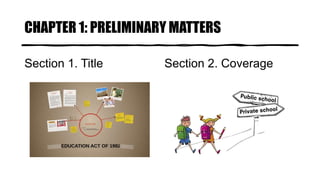
CHAPTER 1: PRELIMINARY MATTERS
Section 1. Title Section 2. Coverage
CHAPTER 2:
DECLARATION OF BASIC
STATE
POLICY AND
OBJECTIVES
Section 3. Declaration of
Basic Policy
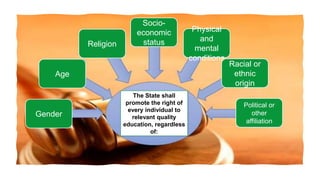
Religion
Age
Gender
Socio-
economic
status
Physical
and
mental
conditions
Racial or
ethnic
origin
Political or
other
affiliation
The State shall
promote the right of
every individual to
relevant quality
education, regardless
of:
National
Development Goals
1. To achieve and maintain an accelerating rate
of
economic development and social progress;
2. To assure the maximum participation of all the
people in the attainment and enjoyment of the
benefits of such growth; and
3. To achieve and strengthen
national unity
and consciousness and
preserve, develop and
promote desirable cultural,
moral and spiritual values in
a changing world.
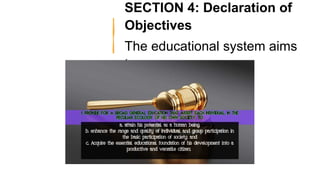
SECTION 4: Declaration of
Objectives
The educational system aims
to:
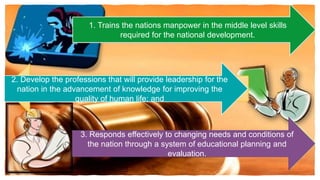
1. Trains the nations manpower in the middle level skills
required for the national development.
3. Responds effectively to changing needs and conditions of
the nation through a system of educational planning and
evaluation.
2. Develop the professions that will provide leadership for the
nation in the advancement of knowledge for improving the
quality of human life; and
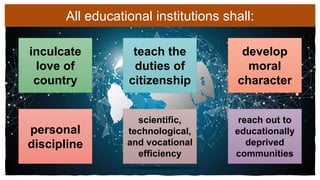
inculcate
love of
country
All educational institutions shall:
teach the
duties of
citizenship
develop
moral
character
personal
discipline
scientific,
technological,
and vocational
efficiency
reach out to
educationally
deprived
communities
II. THE
EDUCATIONAL
COMMUNITY
CHAPTER I:
PRELIMINARY
PROVISIONS
SECTION 5: Declaration of
Policy and Objectives
is likewise declared government
policy to foster, at all times, a
spirit of shared purposes and
cooperation among the
members and elements of the
community, and between the
community and other sectors of
the society.
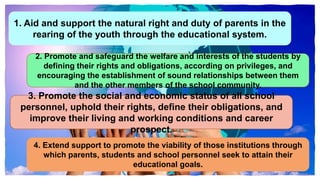
3. Promote the social and economic status of all school
personnel, uphold their rights, define their obligations, and
improve their living and working conditions and career
prospect.
4. Extend support to promote the viability of those institutions through
which parents, students and school personnel seek to attain their
educational goals.
2. Promote and safeguard the welfare and interests of the students by
defining their rights and obligations, according on privileges, and
encouraging the establishment of sound relationships between them
and the other members of the school community.
1. Aid and support the natural right and duty of parents in the
rearing of the youth through the educational system.
SECTION 6
Definition and Coverage
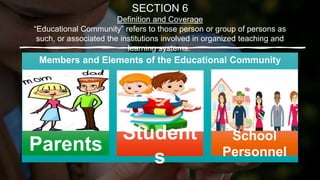
“Educational Community” refers to those person or group of persons as
such, or associated the institutions involved in organized teaching and
learning systems.
Members and Elements of the Educational Community
Parents
School
Personnel
Student
s
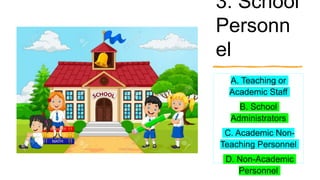
3. School
Personn
el
A. Teaching or
Academic Staff
B. School
Administrators
C. Academic Non-
Teaching Personnel
D. Non-Academic
Personnel
4.
SCHOOL
S
SECTI
ON 7
Community
Participation
Every educational
institution shall provide
for the establishment of
appropriate bodies
through which the
members of the
educational community
Thank you for
listening. God
bless!
Prepared by: Donna Villa D. Regodon

Batas pambansa blg. 232

  • 1.
    BATAS PAMBANSA Blg. 232 AnAct Providing for the Establishment and Maintenance of an Integrated System of Education Promulgated: September 11, 1982
  • 2.
    What is bataspambansa blg. 232 all about? • the right to form, establish, join and participate in organization and societies recognized by the school to foster their intellectual, cultural, intellectual and physical growth and development, or to form, establish, join and maintain organizations and societies and for purposes not contrary to law.
  • 3.
  • 4.
    CHAPTER 1: PRELIMINARYMATTERS Section 1. Title Section 2. Coverage
  • 5.
    CHAPTER 2: DECLARATION OFBASIC STATE POLICY AND OBJECTIVES Section 3. Declaration of Basic Policy
  • 6.
    Religion Age Gender Socio- economic status Physical and mental conditions Racial or ethnic origin Political or other affiliation TheState shall promote the right of every individual to relevant quality education, regardless of:
  • 7.
  • 8.
    1. To achieveand maintain an accelerating rate of economic development and social progress;
  • 9.
    2. To assurethe maximum participation of all the people in the attainment and enjoyment of the benefits of such growth; and
  • 10.
    3. To achieveand strengthen national unity and consciousness and preserve, develop and promote desirable cultural, moral and spiritual values in a changing world.
  • 11.
    SECTION 4: Declarationof Objectives The educational system aims to:
  • 12.
    1. Trains thenations manpower in the middle level skills required for the national development. 3. Responds effectively to changing needs and conditions of the nation through a system of educational planning and evaluation. 2. Develop the professions that will provide leadership for the nation in the advancement of knowledge for improving the quality of human life; and
  • 13.
    inculcate love of country All educationalinstitutions shall: teach the duties of citizenship develop moral character personal discipline scientific, technological, and vocational efficiency reach out to educationally deprived communities
  • 14.
  • 15.
    CHAPTER I: PRELIMINARY PROVISIONS SECTION 5:Declaration of Policy and Objectives is likewise declared government policy to foster, at all times, a spirit of shared purposes and cooperation among the members and elements of the community, and between the community and other sectors of the society.
  • 16.
    3. Promote thesocial and economic status of all school personnel, uphold their rights, define their obligations, and improve their living and working conditions and career prospect. 4. Extend support to promote the viability of those institutions through which parents, students and school personnel seek to attain their educational goals. 2. Promote and safeguard the welfare and interests of the students by defining their rights and obligations, according on privileges, and encouraging the establishment of sound relationships between them and the other members of the school community. 1. Aid and support the natural right and duty of parents in the rearing of the youth through the educational system.
  • 17.
    SECTION 6 Definition andCoverage “Educational Community” refers to those person or group of persons as such, or associated the institutions involved in organized teaching and learning systems. Members and Elements of the Educational Community Parents School Personnel Student s
  • 18.
    3. School Personn el A. Teachingor Academic Staff B. School Administrators C. Academic Non- Teaching Personnel D. Non-Academic Personnel
  • 19.
  • 20.
    SECTI ON 7 Community Participation Every educational institutionshall provide for the establishment of appropriate bodies through which the members of the educational community
  • 21.
    Thank you for listening.God bless! Prepared by: Donna Villa D. Regodon

Editor's Notes

  • #5 Section 1. Title - this act shall be known as the “Education Act of 1982”. • Section 2. Coverage - this act shall apply to and govern both formal and non-formal systems in public and private schools in all levels of the entire educational system.
  • #6 It's a policy of the state to establish and maintain a complete, adequate and integral system of education relevant to the goals of national development.