The UC San Diego AntiViral Research Center sponsors weekly
presentations by infectious disease clinicians, physicians and
researchers. The goal of these presentations is to provide the most
current research, clinical practices and trends in HIV, HBV, HCV, TB
and other infectious diseases of global significance.
The slides from the AIDS Clinical Rounds presentation that you are
about to view are intended for the educational purposes of our
audience. They may not be used for other purposes without the
presenter’s express permission.
AIDS CLINICAL ROUNDS
FAMILY HEALTH CENTERS OF SAN DIEGO
The HCV Treatment Revolution:
A view from the Community Health Center
Christian B. Ramers, MD, MPH (ramers@uw.edu)
Assistant Medical Director, Director of Graduate Medical Education – Family Health Centers of San Diego
HIV/HCV Distance Education Specialist – NW AETC, University of Washington School of Medicine
PAETC – University of California, San Diego School of Medicine
UCSD AIDS Clinical Rounds
San Diego, CA – March 14, 2014
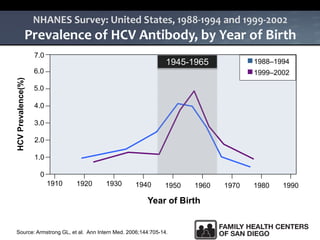
Disclosures
 Speaker’s Bureau: Janssen Therapeutics (HIV),
Gilead Sciences (HIV, HCV), AbbVie (HCV)
 Scientific Advisor: Gilead Sciences (HIV, HIV/HCV)
 Grant/Research Support: CDC/HRSA, Northwest
AETC, Pacific AETC
 **Mention will be made of therapeutic
combinations not fully evaluated/approved by the
FDA (HCV pipeline, ‘off-label’ combinations)**
Learning Objectives
• Review HCV epidemiology and screening
recommendations
• Highlight unique aspects of Community Health
Center/FQHC environment
• Describe HepCareConnect HCV testing and linkage
to care efforts to date
• Contrast HCV with HIV: focus on ‘When to Start?’
• Explore realities of implementing broad-based HCV
treatment
The unmet need of HCV screening
HEPATITIS C EPIDEMIOLOGY
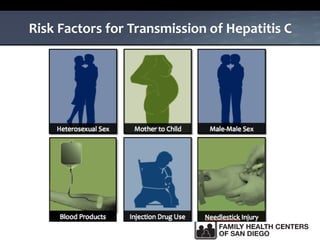
Risk Factors for Transmission of Hepatitis C
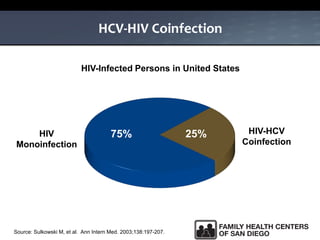
HCV-HIV Coinfection
Source: Sulkowski M, et al. Ann Intern Med. 2003;138:197-207.
75% 25%HIV
Monoinfection
HIV-HCV
Coinfection
HIV-Infected Persons in United States
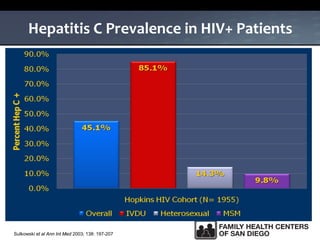
Hepatitis C Prevalence in HIV+ Patients
Sulkowski et al Ann Int Med 2003; 138: 197-207
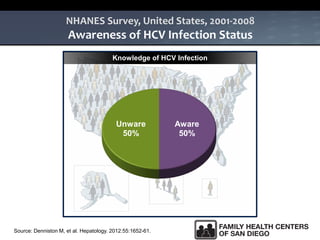
Source: Denniston M, et al. Hepatology. 2012:55:1652-61.
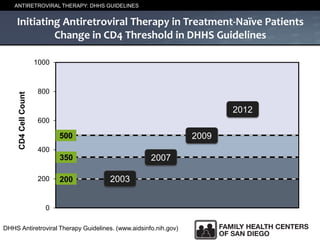
NHANES Survey, United States, 2001-2008
Awareness of HCV Infection Status
Unaware of
HIV infection
21%
Knowledge of HCV Infection
Aware
50%
Unware
50%
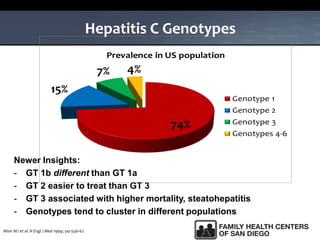
Hepatitis C Genotypes
Newer Insights:
- GT 1b different than GT 1a
- GT 2 easier to treat than GT 3
- GT 3 associated with higher mortality, steatohepatitis
- Genotypes tend to cluster in different populations
74%
15%
7% 4%
Prevalence in US population
Genotype 1
Genotype 2
Genotype 3
Genotypes 4-6
Alter MJ et al. N Engl J Med 1999; 341:556-62
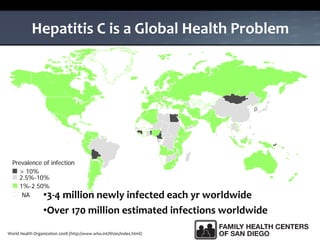
Hepatitis C is a Global Health Problem
•3-4 million newly infected each yr worldwide
•Over 170 million estimated infections worldwide
World Health Organization 2008 (http://www.who.int/ith/es/index.html)
> 10%
2.5%-10%
1%-2.50%
Prevalence of infection
NA
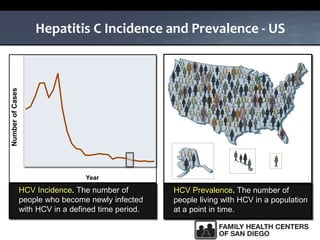
Hepatitis C Incidence and Prevalence - US
HCV Incidence. The number of
people who become newly infected
with HCV in a defined time period.
HCV Prevalence. The number of
people living with HCV in a population
at a point in time.
NumberofCases
Year
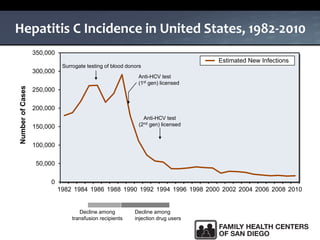
Hepatitis C Incidence in United States, 1982-2010
0
50,000
100,000
150,000
200,000
250,000
300,000
350,000
1982 1984 1986 1988 1990 1992 1994 1996 1998 2000 2002 2004 2006 2008 2010
NumberofCases
Estimated New Infections
Decline among
transfusion recipients
Decline among
injection drug users
Surrogate testing of blood donors
Anti-HCV test
(2nd gen) licensed
Anti-HCV test
(1st gen) licensed
HCV Prevalence in the United States?
What is the best estimate for chronic HCV (Ab
and RNA +) prevalence in the United States?
A. 1.2 million
B. 2.7 million
C. 3.2 million
D. 7.1 million
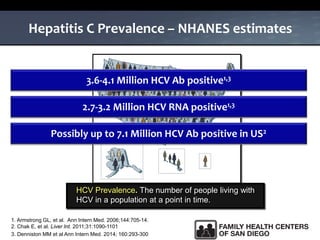
Hepatitis C Prevalence – NHANES estimates
HCV Prevalence. The number of people living with
HCV in a population at a point in time.
1. Armstrong GL, et al. Ann Intern Med. 2006;144:705-14.
2. Chak E, et al. Liver Int. 2011;31:1090-1101
3. Denniston MM et al Ann Intern Med. 2014; 160:293-300
3.6-4.1 Million HCV Ab positive1,3
Possibly up to 7.1 Million HCV Ab positive in US2
2.7-3.2 Million HCV RNA positive1,3
National Health and Nutrition Examination Survey
• Stratified probability sampling of demographic,
nutritional, behavioral, and serologic info 5,000
Americans/yr
• Includes: non-institutionalized civilians
• Excludes: active duty military, inpatient, prisoners,
homeless +/- veterans
• HCV Ab testing included since 1980’s, RNA added
since NHANES III
• N = 30,074 for latest analysis from 2003-2010
1. Armstrong GL, et al. Ann Intern Med. 2006;144:705-14.
2. Denniston MM et al Ann Intern Med. 2014; 160:293-300
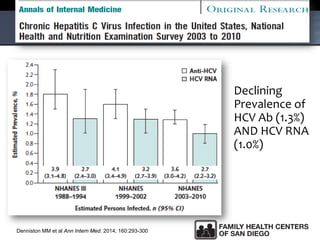
• Declining
Prevalence of
HCV Ab (1.3%)
AND HCV RNA
(1.0%)
Denniston MM et al Ann Intern Med. 2014; 160:293-300
What does the declining HCV Ab+ and RNA+
prevalence indicate?
A. Better HCV prevention through syringe
exchange programs
B. Much higher rates of Sustained Virologic
Response (SVR) with newer treatments
C. Expected pattern of high prevalence, low
incidence with relatively constant treatment
D. Deaths in Baby Boomers due to liver-related
disease
“Our analysis suggests decreases in prevalence
that probably reflect increasing mortality from
HCV-related conditions. That these deaths largely
occur in the age group born between 1945 and
1965 underscores the urgency of addressing this
underappreciated national epidemic”
Denniston MM et al Ann Intern Med. 2014; 160:293-300
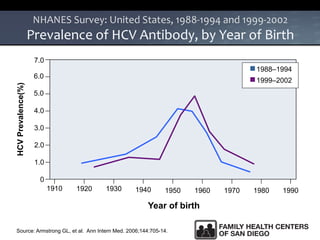
NHANES Survey: United States, 1988-1994 and 1999-2002
Prevalence of HCV Antibody, by Year of Birth
Source: Armstrong GL, et al. Ann Intern Med. 2006;144:705-14.
Year of Birth
HCVPrevalence(%)
1910
1988–1994
1999–2002
7.0
6.0
5.0
4.0
3.0
2.0
1.0
0
1920 1930 1940 1950 1960 1970 1980 1990
1945-1965
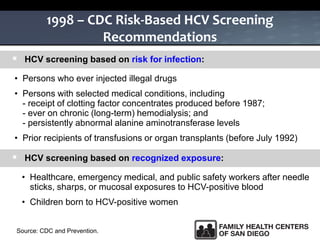
1998 – CDC Risk-Based HCV Screening
Recommendations
• Persons who ever injected illegal drugs
• Persons with selected medical conditions, including
- receipt of clotting factor concentrates produced before 1987;
- ever on chronic (long-term) hemodialysis; and
- persistently abnormal alanine aminotransferase levels
• Prior recipients of transfusions or organ transplants (before July 1992)
Source: CDC and Prevention.
 HCV screening based on risk for infection:
• Healthcare, emergency medical, and public safety workers after needle
sticks, sharps, or mucosal exposures to HCV-positive blood
• Children born to HCV-positive women
 HCV screening based on recognized exposure:
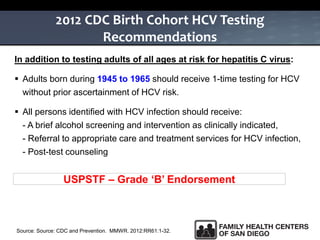
2012 CDC Birth Cohort HCV Testing
Recommendations
In addition to testing adults of all ages at risk for hepatitis C virus:
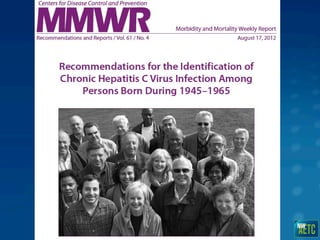
 Adults born during 1945 to 1965 should receive 1-time testing for HCV
without prior ascertainment of HCV risk.
 All persons identified with HCV infection should receive:
- A brief alcohol screening and intervention as clinically indicated,
- Referral to appropriate care and treatment services for HCV infection,
- Post-test counseling
Source: Source: CDC and Prevention. MMWR. 2012:RR61:1-32.
USPSTF – Grade ‘B’ Endorsement
NHANES Survey: United States, 1988-1994 and 1999-2002
Prevalence of HCV Antibody, by Year of Birth
Source: Armstrong GL, et al. Ann Intern Med. 2006;144:705-14.
Year of birth
HCVPrevalence(%)
1910
7.0
6.0
5.0
4.0
3.0
2.0
1.0
0
1920 1930 1940 1950 1960 1970 1980 1990
1988–1994
1999–2002
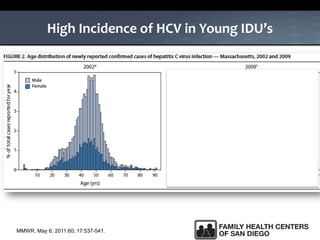
High Incidence of HCV in Young IDU’s
MMWR. May 6, 2011:60; 17:537-541.
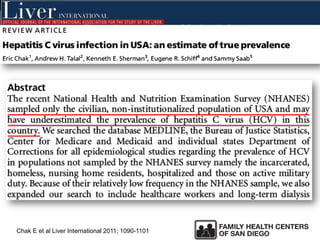
Supplementary Materials
Chak E et al Liver International 2011; 1090-1101
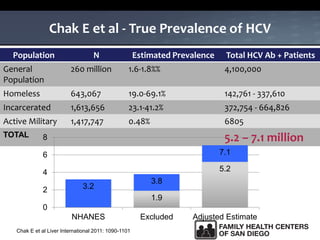
Chak E et al - True Prevalence of HCV
Population N Estimated Prevalence Total HCV Ab + Patients
General
Population
260 million 1.6-1.8%% 4,100,000
Homeless 643,067 19.0-69.1% 142,761 - 337,610
Incarcerated 1,613,656 23.1-41.2% 372,754 - 664,826
Active Military 1,417,747 0.48% 6805
TOTAL 5.2 – 7.1 million
Chak E et al Liver International 2011: 1090-1101
1.9
5.2
3.2
3.8
7.1
0
2
4
6
8
NHANES Excluded Adjusted Estimate
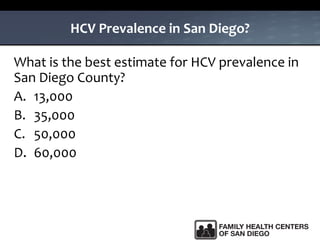
HCV Prevalence in San Diego?
What is the best estimate for HCV prevalence in
San Diego County?
A. 13,000
B. 35,000
C. 50,000
D. 60,000
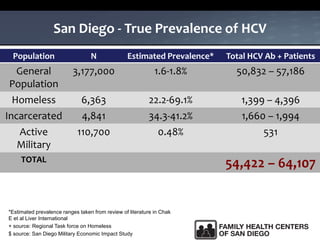
San Diego - True Prevalence of HCV
Population N Estimated Prevalence* Total HCV Ab + Patients
General
Population
3,177,000 1.6-1.8% 50,832 – 57,186
Homeless 6,363 22.2-69.1% 1,399 – 4,396
Incarcerated 4,841 34.3-41.2% 1,660 – 1,994
Active
Military
110,700 0.48% 531
TOTAL
54,422 – 64,107
*Estimated prevalence ranges taken from review of literature in Chak
E et al Liver International
+ source: Regional Task force on Homeless
$ source: San Diego Military Economic Impact Study
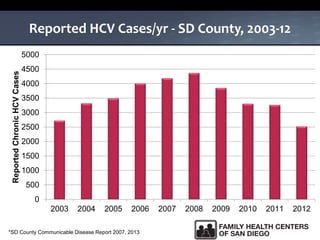
Reported HCV Cases/yr - SD County, 2003-12
0
500
1000
1500
2000
2500
3000
3500
4000
4500
5000
2003 2004 2005 2006 2007 2008 2009 2010 2011 2012
ReportedChronicHCVCases
*SD County Communicable Disease Report 2007, 2013
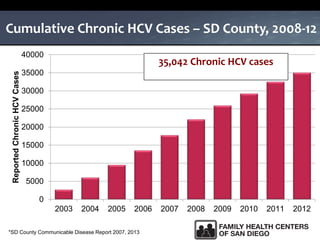
Cumulative Chronic HCV Cases – SD County, 2008-12
0
5000
10000
15000
20000
25000
30000
35000
40000
2003 2004 2005 2006 2007 2008 2009 2010 2011 2012
ReportedChronicHCVCases
35,042 Chronic HCV cases
*SD County Communicable Disease Report 2007, 2013
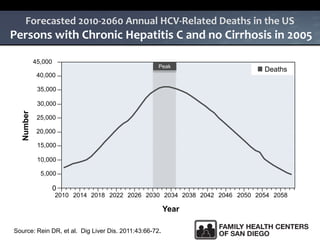
Source: Rein DR, et al. Dig Liver Dis. 2011:43:66-72.
Forecasted 2010-2060 Annual HCV-Related Deaths in the US
Persons with Chronic Hepatitis C and no Cirrhosis in 2005
Number
Year
2010
Deaths
2014 2018 2022 2026 2030 2034 2038 2042 2046 2050 2054 2058
40,000
35,000
30,000
25,000
20,000
15,000
10,000
5,000
0
45,000
Peak
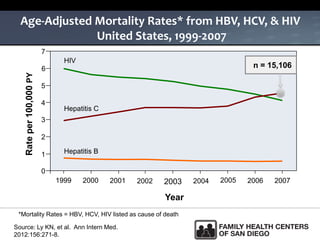
Source: Ly KN, et al. Ann Intern Med.
2012:156:271-8.
Age-Adjusted Mortality Rates* from HBV, HCV, & HIV
United States, 1999-2007
*Mortality Rates = HBV, HCV, HIV listed as cause of death
Rateper100,000PY
Year
HIV
1999 2000 2001 2002 2003 2004 2006 20072005
5
4
3
2
1
0
7
6
Hepatitis C
Hepatitis B
n = 15,106
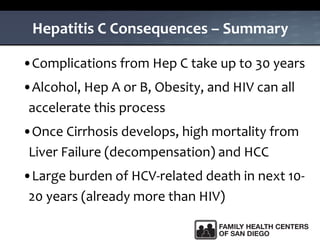
Hepatitis C Consequences – Summary
•Complications from Hep C take up to 30 years
•Alcohol, Hep A or B, Obesity, and HIV can all
accelerate this process
•Once Cirrhosis develops, high mortality from
Liver Failure (decompensation) and HCC
•Large burden of HCV-related death in next 10-
20 years (already more than HIV)
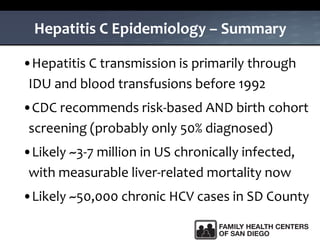
Hepatitis C Epidemiology – Summary
•Hepatitis C transmission is primarily through
IDU and blood transfusions before 1992
•CDC recommends risk-based AND birth cohort
screening (probably only 50% diagnosed)
•Likely ~3-7 million in US chronically infected,
with measurable liver-related mortality now
•Likely ~50,000 chronic HCV cases in SD County
Specialty Care in the Medical Home
THE VIEW FROM THE CHC/FQHC
Family Health Centers of San Diego - Overview
Mission
FHCSD is dedicated to providing caring,
affordable, high quality healthcare and
supportive services to everyone, with a
special commitment to the uninsured, low-
income and medically underserved persons
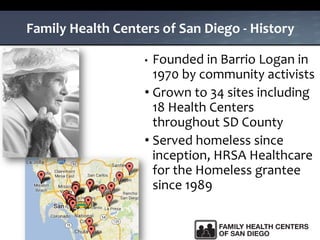
Family Health Centers of San Diego - History
• Founded in Barrio Logan in
1970 by community activists
• Grown to 34 sites including
18 Health Centers
throughout SD County
• Served homeless since
inception, HRSA Healthcare
for the Homeless grantee
since 1989
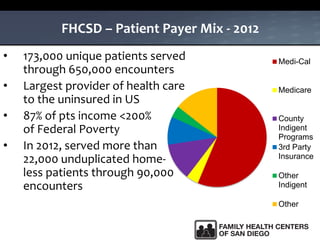
FHCSD – Patient Payer Mix - 2012
Medi-Cal
Medicare
County
Indigent
Programs
3rd Party
Insurance
Other
Indigent
Other
• 173,000 unique patients served
through 650,000 encounters
• Largest provider of health care
to the uninsured in US
• 87% of pts income <200%
of Federal Poverty
• In 2012, served more than
22,000 unduplicated home-
less patients through 90,000
encounters
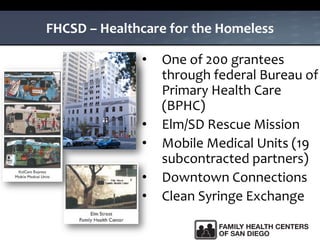
FHCSD – Healthcare for the Homeless
• One of 200 grantees
through federal Bureau of
Primary Health Care
(BPHC)
• Elm/SD Rescue Mission
• Mobile Medical Units (19
subcontracted partners)
• Downtown Connections
• Clean Syringe Exchange
An Academic-Community Partnership
HEPCARECONNECT – HCV TESTING & LINKAGE
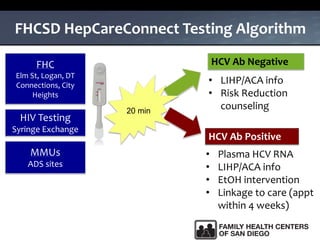
FHCSD HepCareConnect Testing Algorithm
FHC
Elm St, Logan, DT
Connections, City
Heights
MMUs
ADS sites
HIV Testing
Syringe Exchange
HCV Ab Negative
HCV Ab Positive
• Plasma HCV RNA
• LIHP/ACA info
• EtOH intervention
• Linkage to care (appt
within 4 weeks)
• LIHP/ACA info
• Risk Reduction
counseling20 min
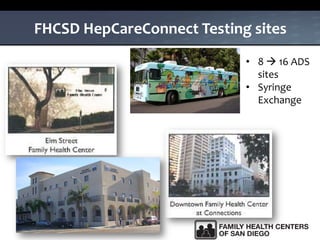
FHCSD HepCareConnect Testing sites
• 8  16 ADS
sites
• Syringe
Exchange
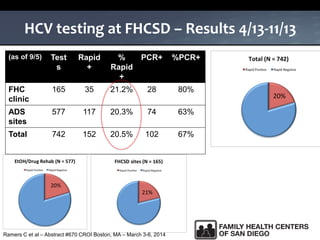
(as of 9/5) Test
s
Rapid
+
%
Rapid
+
PCR+ %PCR+
FHC
clinic
165 35 21.2% 28 80%
ADS
sites
577 117 20.3% 74 63%
Total 742 152 20.5% 102 67%
HCV testing at FHCSD – Results 4/13-11/13
Ramers C et al – Abstract #670 CROI Boston, MA – March 3-6, 2014
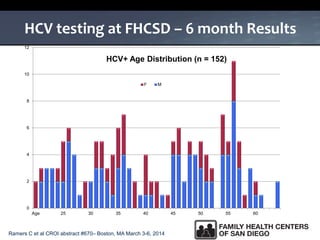
Ramers C et al CROI abstract #670– Boston, MA March 3-6, 2014
HCV testing at FHCSD – 6 month Results
0
2
4
6
8
10
12
Age 25 30 35 40 45 50 55 60
HCV+ Age Distribution (n = 152)
F M
Ramers C et al CROI abstract #670– Boston, MA March 3-6, 2014
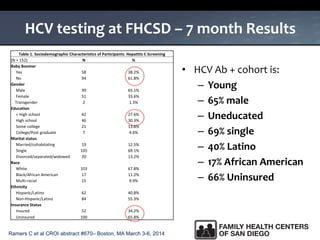
HCV testing at FHCSD – 7 month Results
Table 1. Sociodemographic Characteristics of Participants: Hepatitis C Screening
(N = 152) N %
Baby Boomer
Yes 58 38.2%
No 94 61.8%
Gender
Male 99 65.1%
Female 51 33.6%
Transgender 2 1.3%
Education
< High school 42 27.6%
High school 46 30.3%
Some college 21 13.8%
College/Post graduate 7 4.6%
Marital status
Married/cohabitating 19 12.5%
Single 105 69.1%
Divorced/separated/widowed 20 13.2%
Race
White 103 67.8%
Black/African American 17 11.2%
Multi-racial 15 9.9%
Ethnicity
Hispanic/Latino 62 40.8%
Non-Hispanic/Latino 84 55.3%
Insurance Status
Insured 52 34.2%
Uninsured 100 65.8%
• HCV Ab + cohort is:
– Young
– 65% male
– Uneducated
– 69% single
– 40% Latino
– 17% African American
– 66% Uninsured
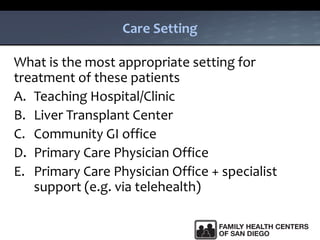
Care Setting
What is the most appropriate setting for
treatment of these patients
A. Teaching Hospital/Clinic
B. Liver Transplant Center
C. Community GI office
D. Primary Care Physician Office
E. Primary Care Physician Office + specialist
support (e.g. via telehealth)
Treating Provider
Who should be managing treatment decisions
A. Gastroenterologist
B. Hepatologist
C. Infectious Disease
D. Primary Care Provider (IM, FP, NP, PA)
Contrasting the HIV & HCV Epidemics
WHEN TO START?
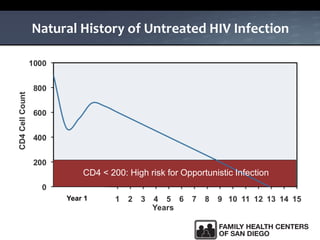
Natural History of Untreated HIV Infection
Year 1
CD4 < 200: High risk for Opportunistic Infection
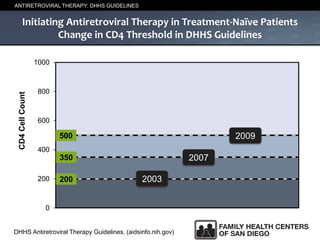
Initiating Antiretroviral Therapy in Treatment-Naïve Patients
Change in CD4 Threshold in DHHS Guidelines
ANTIRETROVIRAL THERAPY: DHHS GUIDELINES
DHHS Antiretroviral Therapy Guidelines. (aidsinfo.nih.gov)
0
200
400
600
800
1000
CD4CellCount
500
350
200
2009
2007
2003
DHHS Antiretroviral Therapy Guidelines. (www.aidsinfo.nih.gov)
Initiating Antiretroviral Therapy in Treatment-Naïve Patients
Change in CD4 Threshold in DHHS Guidelines
ANTIRETROVIRAL THERAPY: DHHS GUIDELINES
0
200
400
600
800
1000
CD4CellCount
500
350
200
2009
2007
2003
2012
1,178,350
941,950
725,302
480,395
426,590
328,475
0
200,000
400,000
600,000
800,000
1,000,000
1,200,000
1,400,000
NumberofIndividuals
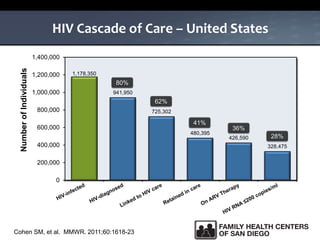
HIV Cascade of Care – United States
Cohen SM, et al. MMWR. 2011;60:1618-23
80%
62%
41%
36%
28%
3,200,000
1,600,000
1,000,000
630,000
380,000
220,000 170,000
0
500,000
1,000,000
1,500,000
2,000,000
2,500,000
3,000,000
3,500,000
NumberofIndividuals
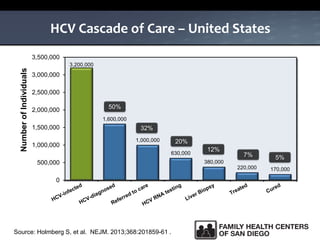
HCV Cascade of Care – United States
Source: Holmberg S, et al. NEJM. 2013;368:201859-61 .
50%
32%
20%
12%
5%7%
Natural History of Hepatitis C
Exposure
(Acute Hepatitis)
Resolution
Persistence
(chronic)
Cirrhosis
ESLD
Transplant
Death
15%
20-30%
85%
3%/yr 4%/yr
HCC
Time (yrs): 10 20 30
Accelerated by Hep B, EtOH, HIV
Mandell: Principles & Practice of Infectious Disease, 7th Ed;
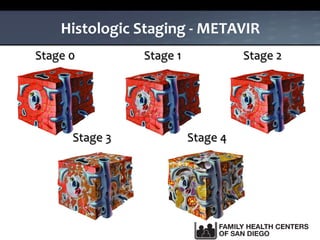
Histologic Staging - METAVIR
No Fibrosis Portal Fibrosis Few septa
Stage 0 Stage 1 Stage 2
Numerous septa
Stage 3
Cirrhosis
Stage 4
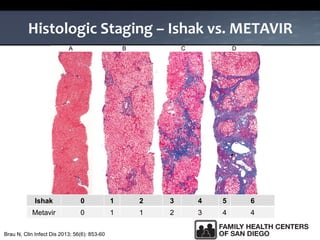
Histologic Staging – Ishak vs. METAVIR
Ishak 0 1 2 3 4 5 6
Metavir 0 1 1 2 3 4 4
Brau N, Clin Infect Dis 2013; 56(6): 853-60
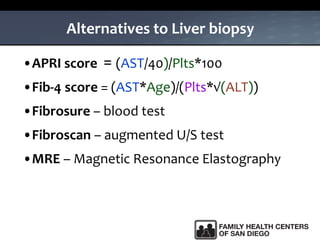
Alternatives to Liver biopsy
•APRI score = (AST/40)/Plts*100
•Fib-4 score = (AST*Age)/(Plts*√(ALT))
•Fibrosure – blood test
•Fibroscan – augmented U/S test
•MRE – Magnetic Resonance Elastography
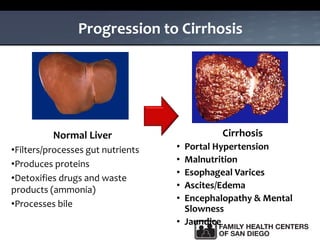
Progression to Cirrhosis
Normal Liver
•Filters/processes gut nutrients
•Produces proteins
•Detoxifies drugs and waste
products (ammonia)
•Processes bile
Cirrhosis
• Portal Hypertension
• Malnutrition
• Esophageal Varices
• Ascites/Edema
• Encephalopathy & Mental
Slowness
• Jaundice
Source: WHO Hepatitis C Fact Sheet
http://www.who.int/immunization/topics/hepati
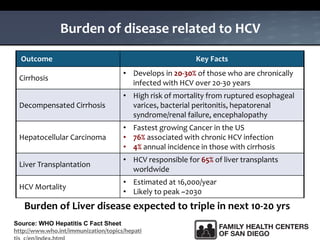
Burden of disease related to HCV
Outcome Key Facts
Cirrhosis
• Develops in 20-30% of those who are chronically
infected with HCV over 20-30 years
Decompensated Cirrhosis
• High risk of mortality from ruptured esophageal
varices, bacterial peritonitis, hepatorenal
syndrome/renal failure, encephalopathy
Hepatocellular Carcinoma
• Fastest growing Cancer in the US
• 76% associated with chronic HCV infection
• 4% annual incidence in those with cirrhosis
Liver Transplantation
• HCV responsible for 65% of liver transplants
worldwide
HCV Mortality
• Estimated at 16,000/year
• Likely to peak ~2030
Burden of Liver disease expected to triple in next 10-20 yrs
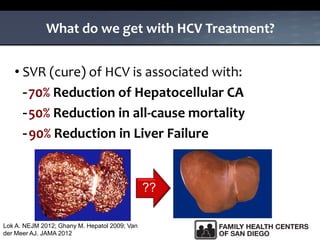
What do we get with HCV Treatment?
• SVR (cure) of HCV is associated with:
-70% Reduction of Hepatocellular CA
-50% Reduction in all-cause mortality
-90% Reduction in Liver Failure
Lok A. NEJM 2012; Ghany M. Hepatol 2009; Van
der Meer AJ. JAMA 2012
??
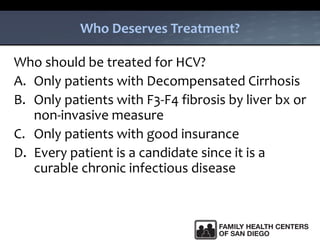
Who Deserves Treatment?
Who should be treated for HCV?
A. Only patients with Decompensated Cirrhosis
B. Only patients with F3-F4 fibrosis by liver bx or
non-invasive measure
C. Only patients with good insurance
D. Every patient is a candidate since it is a
curable chronic infectious disease
An Equity-based view
THE HCV TREATMENT REVOLUTION
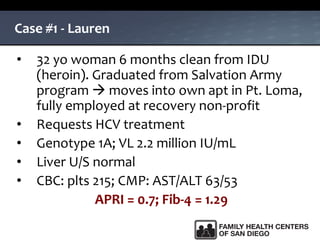
Case #1 - Lauren
• 32 yo woman 6 months clean from IDU
(heroin). Graduated from Salvation Army
program  moves into own apt in Pt. Loma,
fully employed at recovery non-profit
• Requests HCV treatment
• Genotype 1A; VL 2.2 million IU/mL
• Liver U/S normal
• CBC: plts 215; CMP: AST/ALT 63/53
APRI = 0.7; Fib-4 = 1.29
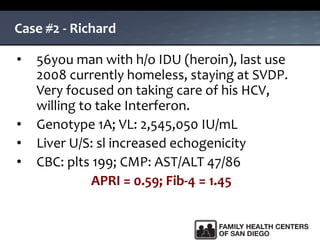
Case #2 - Richard
• 56you man with h/o IDU (heroin), last use
2008 currently homeless, staying at SVDP.
Very focused on taking care of his HCV,
willing to take Interferon.
• Genotype 1A; VL: 2,545,050 IU/mL
• Liver U/S: sl increased echogenicity
• CBC: plts 199; CMP: AST/ALT 47/86
APRI = 0.59; Fib-4 = 1.45
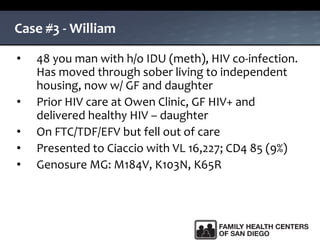
Case #3 - William
• 48 you man with h/o IDU (meth), HIV co-infection.
Has moved through sober living to independent
housing, now w/ GF and daughter
• Prior HIV care at Owen Clinic, GF HIV+ and
delivered healthy HIV – daughter
• On FTC/TDF/EFV but fell out of care
• Presented to Ciaccio with VL 16,227; CD4 85 (9%)
• Genosure MG: M184V, K103N, K65R
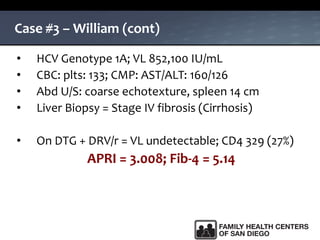
Case #3 – William (cont)
• HCV Genotype 1A; VL 852,100 IU/mL
• CBC: plts: 133; CMP: AST/ALT: 160/126
• Abd U/S: coarse echotexture, spleen 14 cm
• Liver Biopsy = Stage IV fibrosis (Cirrhosis)
• On DTG + DRV/r = VL undetectable; CD4 329 (27%)
APRI = 3.008; Fib-4 = 5.14
Who should be first in line?
• Lauren
• Richard
• William
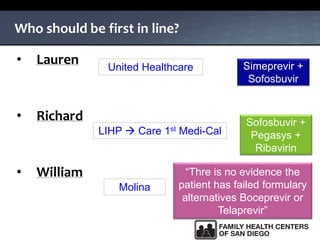
Who should be first in line?
• Lauren
• Richard
• William
Sofosbuvir +
Pegasys +
Ribavirin
Simeprevir +
Sofosbuvir
United Healthcare
LIHP  Care 1st Medi-Cal
Molina
“Thre is no evidence the
patient has failed formulary
alternatives Boceprevir or
Telaprevir”
Supplementary Materials
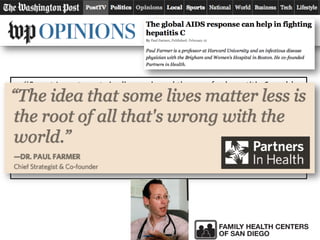
“Smart Investments in diagnosis and therapy for hepatitis C could
save millions of lives, radically cut transmission and pave the way
toward eradication of the virus. Or we could choose to ignore the
lessons of the AIDS response and stand by as outcomes improve
solely among the fortunate few who enjoy ready access to the fruits
of modern medicine. Divergence of outcomes occurs within nations
and across them; they grow whenever innovation is not coupled with
implementation among the most vulnerable.”
Final Thoughts
• The Hepatitis C Epidemic is upon us:
- 3-5 million chronically infected
- Rapidly rising liver-related mortality
• Testing and linkage to care are needed
- Still only 50% estimated diagnosed
• Rational triage must occur
- Look for non-invasive measures of fibrosis
• HCV treatments are improving rapidly
- Costs may be prohibitive to allow equitable access
Questions?

The HCV Treatment Revolution: A View from the Community Health Center

  • 1.
    The UC SanDiego AntiViral Research Center sponsors weekly presentations by infectious disease clinicians, physicians and researchers. The goal of these presentations is to provide the most current research, clinical practices and trends in HIV, HBV, HCV, TB and other infectious diseases of global significance. The slides from the AIDS Clinical Rounds presentation that you are about to view are intended for the educational purposes of our audience. They may not be used for other purposes without the presenter’s express permission. AIDS CLINICAL ROUNDS
  • 2.
    FAMILY HEALTH CENTERSOF SAN DIEGO The HCV Treatment Revolution: A view from the Community Health Center Christian B. Ramers, MD, MPH (ramers@uw.edu) Assistant Medical Director, Director of Graduate Medical Education – Family Health Centers of San Diego HIV/HCV Distance Education Specialist – NW AETC, University of Washington School of Medicine PAETC – University of California, San Diego School of Medicine UCSD AIDS Clinical Rounds San Diego, CA – March 14, 2014
  • 3.
    Disclosures  Speaker’s Bureau:Janssen Therapeutics (HIV), Gilead Sciences (HIV, HCV), AbbVie (HCV)  Scientific Advisor: Gilead Sciences (HIV, HIV/HCV)  Grant/Research Support: CDC/HRSA, Northwest AETC, Pacific AETC  **Mention will be made of therapeutic combinations not fully evaluated/approved by the FDA (HCV pipeline, ‘off-label’ combinations)**
  • 4.
    Learning Objectives • ReviewHCV epidemiology and screening recommendations • Highlight unique aspects of Community Health Center/FQHC environment • Describe HepCareConnect HCV testing and linkage to care efforts to date • Contrast HCV with HIV: focus on ‘When to Start?’ • Explore realities of implementing broad-based HCV treatment
  • 5.
    The unmet needof HCV screening HEPATITIS C EPIDEMIOLOGY
  • 6.
    Risk Factors forTransmission of Hepatitis C
  • 7.
    HCV-HIV Coinfection Source: SulkowskiM, et al. Ann Intern Med. 2003;138:197-207. 75% 25%HIV Monoinfection HIV-HCV Coinfection HIV-Infected Persons in United States
  • 8.
    Hepatitis C Prevalencein HIV+ Patients Sulkowski et al Ann Int Med 2003; 138: 197-207
  • 9.
    Source: Denniston M,et al. Hepatology. 2012:55:1652-61. NHANES Survey, United States, 2001-2008 Awareness of HCV Infection Status Unaware of HIV infection 21% Knowledge of HCV Infection Aware 50% Unware 50%
  • 10.
    Hepatitis C Genotypes NewerInsights: - GT 1b different than GT 1a - GT 2 easier to treat than GT 3 - GT 3 associated with higher mortality, steatohepatitis - Genotypes tend to cluster in different populations 74% 15% 7% 4% Prevalence in US population Genotype 1 Genotype 2 Genotype 3 Genotypes 4-6 Alter MJ et al. N Engl J Med 1999; 341:556-62
  • 11.
    Hepatitis C isa Global Health Problem •3-4 million newly infected each yr worldwide •Over 170 million estimated infections worldwide World Health Organization 2008 (http://www.who.int/ith/es/index.html) > 10% 2.5%-10% 1%-2.50% Prevalence of infection NA
  • 12.
    Hepatitis C Incidenceand Prevalence - US HCV Incidence. The number of people who become newly infected with HCV in a defined time period. HCV Prevalence. The number of people living with HCV in a population at a point in time. NumberofCases Year
  • 13.
    Hepatitis C Incidencein United States, 1982-2010 0 50,000 100,000 150,000 200,000 250,000 300,000 350,000 1982 1984 1986 1988 1990 1992 1994 1996 1998 2000 2002 2004 2006 2008 2010 NumberofCases Estimated New Infections Decline among transfusion recipients Decline among injection drug users Surrogate testing of blood donors Anti-HCV test (2nd gen) licensed Anti-HCV test (1st gen) licensed
  • 14.
    HCV Prevalence inthe United States? What is the best estimate for chronic HCV (Ab and RNA +) prevalence in the United States? A. 1.2 million B. 2.7 million C. 3.2 million D. 7.1 million
  • 15.
    Hepatitis C Prevalence– NHANES estimates HCV Prevalence. The number of people living with HCV in a population at a point in time. 1. Armstrong GL, et al. Ann Intern Med. 2006;144:705-14. 2. Chak E, et al. Liver Int. 2011;31:1090-1101 3. Denniston MM et al Ann Intern Med. 2014; 160:293-300 3.6-4.1 Million HCV Ab positive1,3 Possibly up to 7.1 Million HCV Ab positive in US2 2.7-3.2 Million HCV RNA positive1,3
  • 16.
    National Health andNutrition Examination Survey • Stratified probability sampling of demographic, nutritional, behavioral, and serologic info 5,000 Americans/yr • Includes: non-institutionalized civilians • Excludes: active duty military, inpatient, prisoners, homeless +/- veterans • HCV Ab testing included since 1980’s, RNA added since NHANES III • N = 30,074 for latest analysis from 2003-2010 1. Armstrong GL, et al. Ann Intern Med. 2006;144:705-14. 2. Denniston MM et al Ann Intern Med. 2014; 160:293-300
  • 17.
    • Declining Prevalence of HCVAb (1.3%) AND HCV RNA (1.0%) Denniston MM et al Ann Intern Med. 2014; 160:293-300
  • 18.
    What does thedeclining HCV Ab+ and RNA+ prevalence indicate? A. Better HCV prevention through syringe exchange programs B. Much higher rates of Sustained Virologic Response (SVR) with newer treatments C. Expected pattern of high prevalence, low incidence with relatively constant treatment D. Deaths in Baby Boomers due to liver-related disease
  • 19.
    “Our analysis suggestsdecreases in prevalence that probably reflect increasing mortality from HCV-related conditions. That these deaths largely occur in the age group born between 1945 and 1965 underscores the urgency of addressing this underappreciated national epidemic” Denniston MM et al Ann Intern Med. 2014; 160:293-300
  • 20.
    NHANES Survey: UnitedStates, 1988-1994 and 1999-2002 Prevalence of HCV Antibody, by Year of Birth Source: Armstrong GL, et al. Ann Intern Med. 2006;144:705-14. Year of Birth HCVPrevalence(%) 1910 1988–1994 1999–2002 7.0 6.0 5.0 4.0 3.0 2.0 1.0 0 1920 1930 1940 1950 1960 1970 1980 1990 1945-1965
  • 22.
    1998 – CDCRisk-Based HCV Screening Recommendations • Persons who ever injected illegal drugs • Persons with selected medical conditions, including - receipt of clotting factor concentrates produced before 1987; - ever on chronic (long-term) hemodialysis; and - persistently abnormal alanine aminotransferase levels • Prior recipients of transfusions or organ transplants (before July 1992) Source: CDC and Prevention.  HCV screening based on risk for infection: • Healthcare, emergency medical, and public safety workers after needle sticks, sharps, or mucosal exposures to HCV-positive blood • Children born to HCV-positive women  HCV screening based on recognized exposure:
  • 23.
    2012 CDC BirthCohort HCV Testing Recommendations In addition to testing adults of all ages at risk for hepatitis C virus:  Adults born during 1945 to 1965 should receive 1-time testing for HCV without prior ascertainment of HCV risk.  All persons identified with HCV infection should receive: - A brief alcohol screening and intervention as clinically indicated, - Referral to appropriate care and treatment services for HCV infection, - Post-test counseling Source: Source: CDC and Prevention. MMWR. 2012:RR61:1-32. USPSTF – Grade ‘B’ Endorsement
  • 24.
    NHANES Survey: UnitedStates, 1988-1994 and 1999-2002 Prevalence of HCV Antibody, by Year of Birth Source: Armstrong GL, et al. Ann Intern Med. 2006;144:705-14. Year of birth HCVPrevalence(%) 1910 7.0 6.0 5.0 4.0 3.0 2.0 1.0 0 1920 1930 1940 1950 1960 1970 1980 1990 1988–1994 1999–2002
  • 25.
    High Incidence ofHCV in Young IDU’s MMWR. May 6, 2011:60; 17:537-541.
  • 26.
    Supplementary Materials Chak Eet al Liver International 2011; 1090-1101
  • 27.
    Chak E etal - True Prevalence of HCV Population N Estimated Prevalence Total HCV Ab + Patients General Population 260 million 1.6-1.8%% 4,100,000 Homeless 643,067 19.0-69.1% 142,761 - 337,610 Incarcerated 1,613,656 23.1-41.2% 372,754 - 664,826 Active Military 1,417,747 0.48% 6805 TOTAL 5.2 – 7.1 million Chak E et al Liver International 2011: 1090-1101 1.9 5.2 3.2 3.8 7.1 0 2 4 6 8 NHANES Excluded Adjusted Estimate
  • 28.
    HCV Prevalence inSan Diego? What is the best estimate for HCV prevalence in San Diego County? A. 13,000 B. 35,000 C. 50,000 D. 60,000
  • 29.
    San Diego -True Prevalence of HCV Population N Estimated Prevalence* Total HCV Ab + Patients General Population 3,177,000 1.6-1.8% 50,832 – 57,186 Homeless 6,363 22.2-69.1% 1,399 – 4,396 Incarcerated 4,841 34.3-41.2% 1,660 – 1,994 Active Military 110,700 0.48% 531 TOTAL 54,422 – 64,107 *Estimated prevalence ranges taken from review of literature in Chak E et al Liver International + source: Regional Task force on Homeless $ source: San Diego Military Economic Impact Study
  • 30.
    Reported HCV Cases/yr- SD County, 2003-12 0 500 1000 1500 2000 2500 3000 3500 4000 4500 5000 2003 2004 2005 2006 2007 2008 2009 2010 2011 2012 ReportedChronicHCVCases *SD County Communicable Disease Report 2007, 2013
  • 31.
    Cumulative Chronic HCVCases – SD County, 2008-12 0 5000 10000 15000 20000 25000 30000 35000 40000 2003 2004 2005 2006 2007 2008 2009 2010 2011 2012 ReportedChronicHCVCases 35,042 Chronic HCV cases *SD County Communicable Disease Report 2007, 2013
  • 32.
    Source: Rein DR,et al. Dig Liver Dis. 2011:43:66-72. Forecasted 2010-2060 Annual HCV-Related Deaths in the US Persons with Chronic Hepatitis C and no Cirrhosis in 2005 Number Year 2010 Deaths 2014 2018 2022 2026 2030 2034 2038 2042 2046 2050 2054 2058 40,000 35,000 30,000 25,000 20,000 15,000 10,000 5,000 0 45,000 Peak
  • 33.
    Source: Ly KN,et al. Ann Intern Med. 2012:156:271-8. Age-Adjusted Mortality Rates* from HBV, HCV, & HIV United States, 1999-2007 *Mortality Rates = HBV, HCV, HIV listed as cause of death Rateper100,000PY Year HIV 1999 2000 2001 2002 2003 2004 2006 20072005 5 4 3 2 1 0 7 6 Hepatitis C Hepatitis B n = 15,106
  • 34.
    Hepatitis C Consequences– Summary •Complications from Hep C take up to 30 years •Alcohol, Hep A or B, Obesity, and HIV can all accelerate this process •Once Cirrhosis develops, high mortality from Liver Failure (decompensation) and HCC •Large burden of HCV-related death in next 10- 20 years (already more than HIV)
  • 35.
    Hepatitis C Epidemiology– Summary •Hepatitis C transmission is primarily through IDU and blood transfusions before 1992 •CDC recommends risk-based AND birth cohort screening (probably only 50% diagnosed) •Likely ~3-7 million in US chronically infected, with measurable liver-related mortality now •Likely ~50,000 chronic HCV cases in SD County
  • 36.
    Specialty Care inthe Medical Home THE VIEW FROM THE CHC/FQHC
  • 37.
    Family Health Centersof San Diego - Overview Mission FHCSD is dedicated to providing caring, affordable, high quality healthcare and supportive services to everyone, with a special commitment to the uninsured, low- income and medically underserved persons
  • 38.
    Family Health Centersof San Diego - History • Founded in Barrio Logan in 1970 by community activists • Grown to 34 sites including 18 Health Centers throughout SD County • Served homeless since inception, HRSA Healthcare for the Homeless grantee since 1989
  • 39.
    FHCSD – PatientPayer Mix - 2012 Medi-Cal Medicare County Indigent Programs 3rd Party Insurance Other Indigent Other • 173,000 unique patients served through 650,000 encounters • Largest provider of health care to the uninsured in US • 87% of pts income <200% of Federal Poverty • In 2012, served more than 22,000 unduplicated home- less patients through 90,000 encounters
  • 40.
    FHCSD – Healthcarefor the Homeless • One of 200 grantees through federal Bureau of Primary Health Care (BPHC) • Elm/SD Rescue Mission • Mobile Medical Units (19 subcontracted partners) • Downtown Connections • Clean Syringe Exchange
  • 41.
  • 42.
    FHCSD HepCareConnect TestingAlgorithm FHC Elm St, Logan, DT Connections, City Heights MMUs ADS sites HIV Testing Syringe Exchange HCV Ab Negative HCV Ab Positive • Plasma HCV RNA • LIHP/ACA info • EtOH intervention • Linkage to care (appt within 4 weeks) • LIHP/ACA info • Risk Reduction counseling20 min
  • 43.
    FHCSD HepCareConnect Testingsites • 8  16 ADS sites • Syringe Exchange
  • 44.
    (as of 9/5)Test s Rapid + % Rapid + PCR+ %PCR+ FHC clinic 165 35 21.2% 28 80% ADS sites 577 117 20.3% 74 63% Total 742 152 20.5% 102 67% HCV testing at FHCSD – Results 4/13-11/13 Ramers C et al – Abstract #670 CROI Boston, MA – March 3-6, 2014
  • 45.
    Ramers C etal CROI abstract #670– Boston, MA March 3-6, 2014 HCV testing at FHCSD – 6 month Results 0 2 4 6 8 10 12 Age 25 30 35 40 45 50 55 60 HCV+ Age Distribution (n = 152) F M
  • 46.
    Ramers C etal CROI abstract #670– Boston, MA March 3-6, 2014 HCV testing at FHCSD – 7 month Results Table 1. Sociodemographic Characteristics of Participants: Hepatitis C Screening (N = 152) N % Baby Boomer Yes 58 38.2% No 94 61.8% Gender Male 99 65.1% Female 51 33.6% Transgender 2 1.3% Education < High school 42 27.6% High school 46 30.3% Some college 21 13.8% College/Post graduate 7 4.6% Marital status Married/cohabitating 19 12.5% Single 105 69.1% Divorced/separated/widowed 20 13.2% Race White 103 67.8% Black/African American 17 11.2% Multi-racial 15 9.9% Ethnicity Hispanic/Latino 62 40.8% Non-Hispanic/Latino 84 55.3% Insurance Status Insured 52 34.2% Uninsured 100 65.8% • HCV Ab + cohort is: – Young – 65% male – Uneducated – 69% single – 40% Latino – 17% African American – 66% Uninsured
  • 47.
    Care Setting What isthe most appropriate setting for treatment of these patients A. Teaching Hospital/Clinic B. Liver Transplant Center C. Community GI office D. Primary Care Physician Office E. Primary Care Physician Office + specialist support (e.g. via telehealth)
  • 48.
    Treating Provider Who shouldbe managing treatment decisions A. Gastroenterologist B. Hepatologist C. Infectious Disease D. Primary Care Provider (IM, FP, NP, PA)
  • 49.
    Contrasting the HIV& HCV Epidemics WHEN TO START?
  • 50.
    Natural History ofUntreated HIV Infection Year 1 CD4 < 200: High risk for Opportunistic Infection
  • 51.
    Initiating Antiretroviral Therapyin Treatment-Naïve Patients Change in CD4 Threshold in DHHS Guidelines ANTIRETROVIRAL THERAPY: DHHS GUIDELINES DHHS Antiretroviral Therapy Guidelines. (aidsinfo.nih.gov) 0 200 400 600 800 1000 CD4CellCount 500 350 200 2009 2007 2003
  • 52.
    DHHS Antiretroviral TherapyGuidelines. (www.aidsinfo.nih.gov) Initiating Antiretroviral Therapy in Treatment-Naïve Patients Change in CD4 Threshold in DHHS Guidelines ANTIRETROVIRAL THERAPY: DHHS GUIDELINES 0 200 400 600 800 1000 CD4CellCount 500 350 200 2009 2007 2003 2012
  • 53.
  • 54.
  • 55.
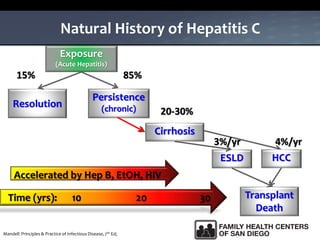
    Natural History ofHepatitis C Exposure (Acute Hepatitis) Resolution Persistence (chronic) Cirrhosis ESLD Transplant Death 15% 20-30% 85% 3%/yr 4%/yr HCC Time (yrs): 10 20 30 Accelerated by Hep B, EtOH, HIV Mandell: Principles & Practice of Infectious Disease, 7th Ed;
  • 56.
    Histologic Staging -METAVIR No Fibrosis Portal Fibrosis Few septa Stage 0 Stage 1 Stage 2 Numerous septa Stage 3 Cirrhosis Stage 4
  • 57.
    Histologic Staging –Ishak vs. METAVIR Ishak 0 1 2 3 4 5 6 Metavir 0 1 1 2 3 4 4 Brau N, Clin Infect Dis 2013; 56(6): 853-60
  • 58.
    Alternatives to Liverbiopsy •APRI score = (AST/40)/Plts*100 •Fib-4 score = (AST*Age)/(Plts*√(ALT)) •Fibrosure – blood test •Fibroscan – augmented U/S test •MRE – Magnetic Resonance Elastography
  • 59.
    Progression to Cirrhosis NormalLiver •Filters/processes gut nutrients •Produces proteins •Detoxifies drugs and waste products (ammonia) •Processes bile Cirrhosis • Portal Hypertension • Malnutrition • Esophageal Varices • Ascites/Edema • Encephalopathy & Mental Slowness • Jaundice
  • 60.
    Source: WHO HepatitisC Fact Sheet http://www.who.int/immunization/topics/hepati Burden of disease related to HCV Outcome Key Facts Cirrhosis • Develops in 20-30% of those who are chronically infected with HCV over 20-30 years Decompensated Cirrhosis • High risk of mortality from ruptured esophageal varices, bacterial peritonitis, hepatorenal syndrome/renal failure, encephalopathy Hepatocellular Carcinoma • Fastest growing Cancer in the US • 76% associated with chronic HCV infection • 4% annual incidence in those with cirrhosis Liver Transplantation • HCV responsible for 65% of liver transplants worldwide HCV Mortality • Estimated at 16,000/year • Likely to peak ~2030 Burden of Liver disease expected to triple in next 10-20 yrs
  • 61.
    What do weget with HCV Treatment? • SVR (cure) of HCV is associated with: -70% Reduction of Hepatocellular CA -50% Reduction in all-cause mortality -90% Reduction in Liver Failure Lok A. NEJM 2012; Ghany M. Hepatol 2009; Van der Meer AJ. JAMA 2012 ??
  • 62.
    Who Deserves Treatment? Whoshould be treated for HCV? A. Only patients with Decompensated Cirrhosis B. Only patients with F3-F4 fibrosis by liver bx or non-invasive measure C. Only patients with good insurance D. Every patient is a candidate since it is a curable chronic infectious disease
  • 63.
    An Equity-based view THEHCV TREATMENT REVOLUTION
  • 64.
    Case #1 -Lauren • 32 yo woman 6 months clean from IDU (heroin). Graduated from Salvation Army program  moves into own apt in Pt. Loma, fully employed at recovery non-profit • Requests HCV treatment • Genotype 1A; VL 2.2 million IU/mL • Liver U/S normal • CBC: plts 215; CMP: AST/ALT 63/53 APRI = 0.7; Fib-4 = 1.29
  • 65.
    Case #2 -Richard • 56you man with h/o IDU (heroin), last use 2008 currently homeless, staying at SVDP. Very focused on taking care of his HCV, willing to take Interferon. • Genotype 1A; VL: 2,545,050 IU/mL • Liver U/S: sl increased echogenicity • CBC: plts 199; CMP: AST/ALT 47/86 APRI = 0.59; Fib-4 = 1.45
  • 66.
    Case #3 -William • 48 you man with h/o IDU (meth), HIV co-infection. Has moved through sober living to independent housing, now w/ GF and daughter • Prior HIV care at Owen Clinic, GF HIV+ and delivered healthy HIV – daughter • On FTC/TDF/EFV but fell out of care • Presented to Ciaccio with VL 16,227; CD4 85 (9%) • Genosure MG: M184V, K103N, K65R
  • 67.
    Case #3 –William (cont) • HCV Genotype 1A; VL 852,100 IU/mL • CBC: plts: 133; CMP: AST/ALT: 160/126 • Abd U/S: coarse echotexture, spleen 14 cm • Liver Biopsy = Stage IV fibrosis (Cirrhosis) • On DTG + DRV/r = VL undetectable; CD4 329 (27%) APRI = 3.008; Fib-4 = 5.14
  • 68.
    Who should befirst in line? • Lauren • Richard • William
  • 69.
    Who should befirst in line? • Lauren • Richard • William Sofosbuvir + Pegasys + Ribavirin Simeprevir + Sofosbuvir United Healthcare LIHP  Care 1st Medi-Cal Molina “Thre is no evidence the patient has failed formulary alternatives Boceprevir or Telaprevir”
  • 70.
    Supplementary Materials “Smart Investmentsin diagnosis and therapy for hepatitis C could save millions of lives, radically cut transmission and pave the way toward eradication of the virus. Or we could choose to ignore the lessons of the AIDS response and stand by as outcomes improve solely among the fortunate few who enjoy ready access to the fruits of modern medicine. Divergence of outcomes occurs within nations and across them; they grow whenever innovation is not coupled with implementation among the most vulnerable.”
  • 71.
    Final Thoughts • TheHepatitis C Epidemic is upon us: - 3-5 million chronically infected - Rapidly rising liver-related mortality • Testing and linkage to care are needed - Still only 50% estimated diagnosed • Rational triage must occur - Look for non-invasive measures of fibrosis • HCV treatments are improving rapidly - Costs may be prohibitive to allow equitable access
  • 72.