
HIV & Global Health Rounds
The UC San Diego AntiViral Research Center sponsors weekly
presentations by infectious disease and global public health clinicians,
physicians, and researchers. The goal of these presentations is to
provide the most current research, clinical practices, and trends in HIV,
HBV, HCV, TB, and other infectious diseases of global significance.
The slides from the HIV & Global Health Rounds presentation that you
are about to view are intended for the educational purposes of our
audience. They may not be used for other purposes without the
presenter’s express permission.
ENTERING A NEW ERA OF HIV CARE:
LONG ACTING INJECTABLES FOR HIV
Maile Young Karris, MD
Associate Professor of Medicine
Divisions of Infectious Diseases and Global Public Health & Geriatrics and Gerontology
University of California San Diego
THE EVOLUTION OF HIV CARE
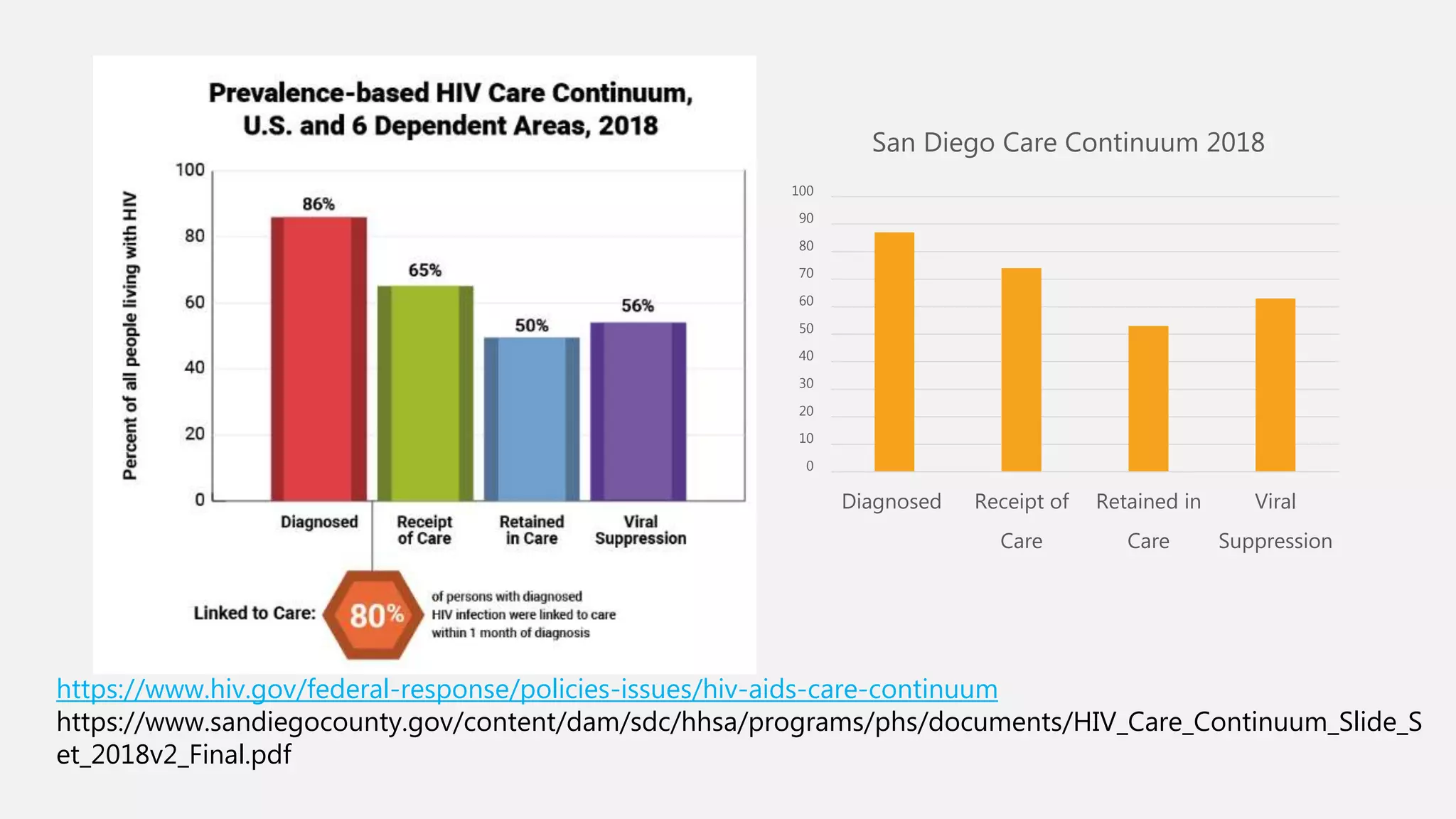
https://www.hiv.gov/federal-response/policies-issues/hiv-aids-care-continuum
https://www.sandiegocounty.gov/content/dam/sdc/hhsa/programs/phs/documents/HIV_Care_Continuum_Slide_S
et_2018v2_Final.pdf
0
10
20
30
40
50
60
70
80
90
100
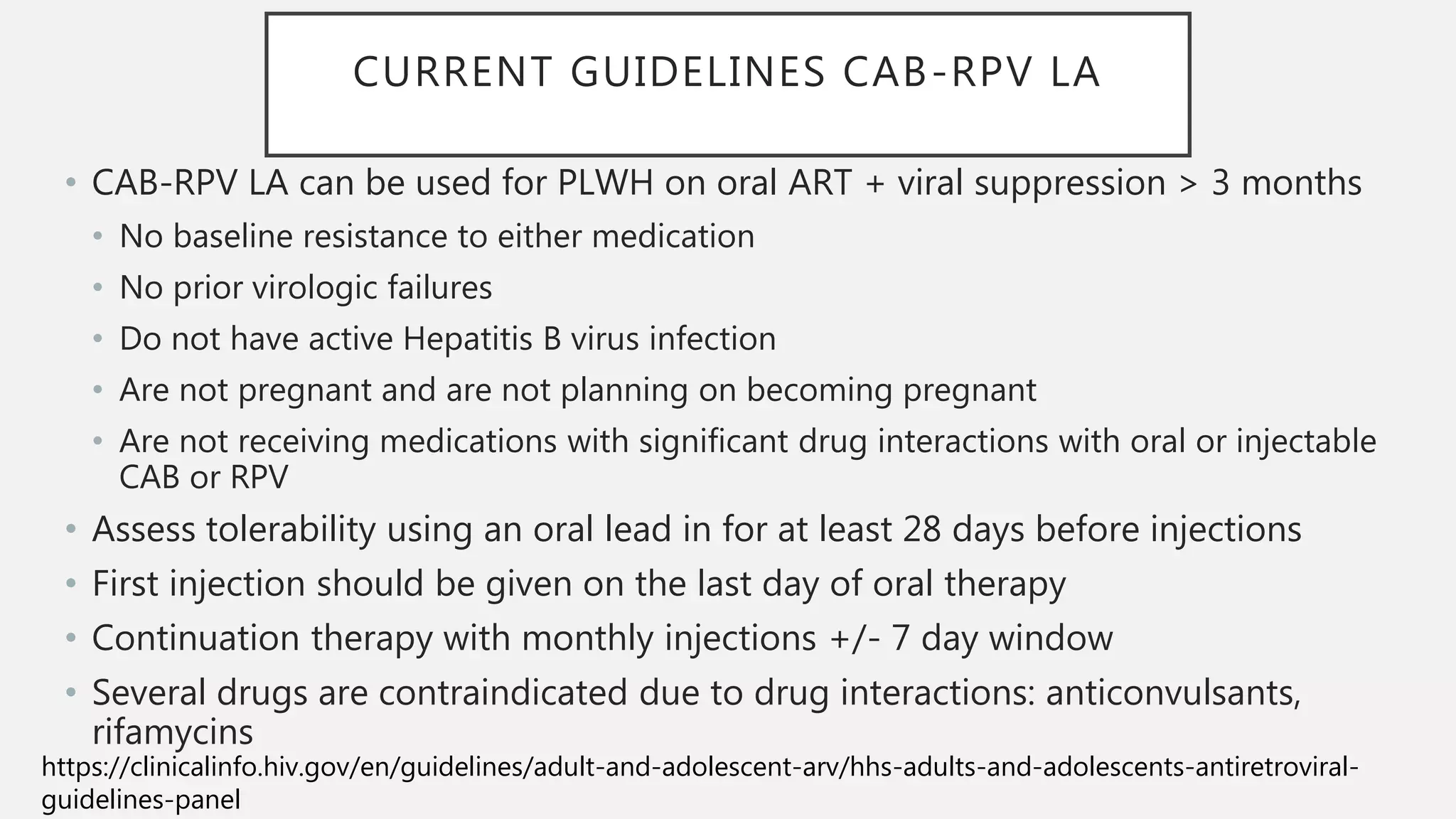
Diagnosed Receipt of
Care
Retained in
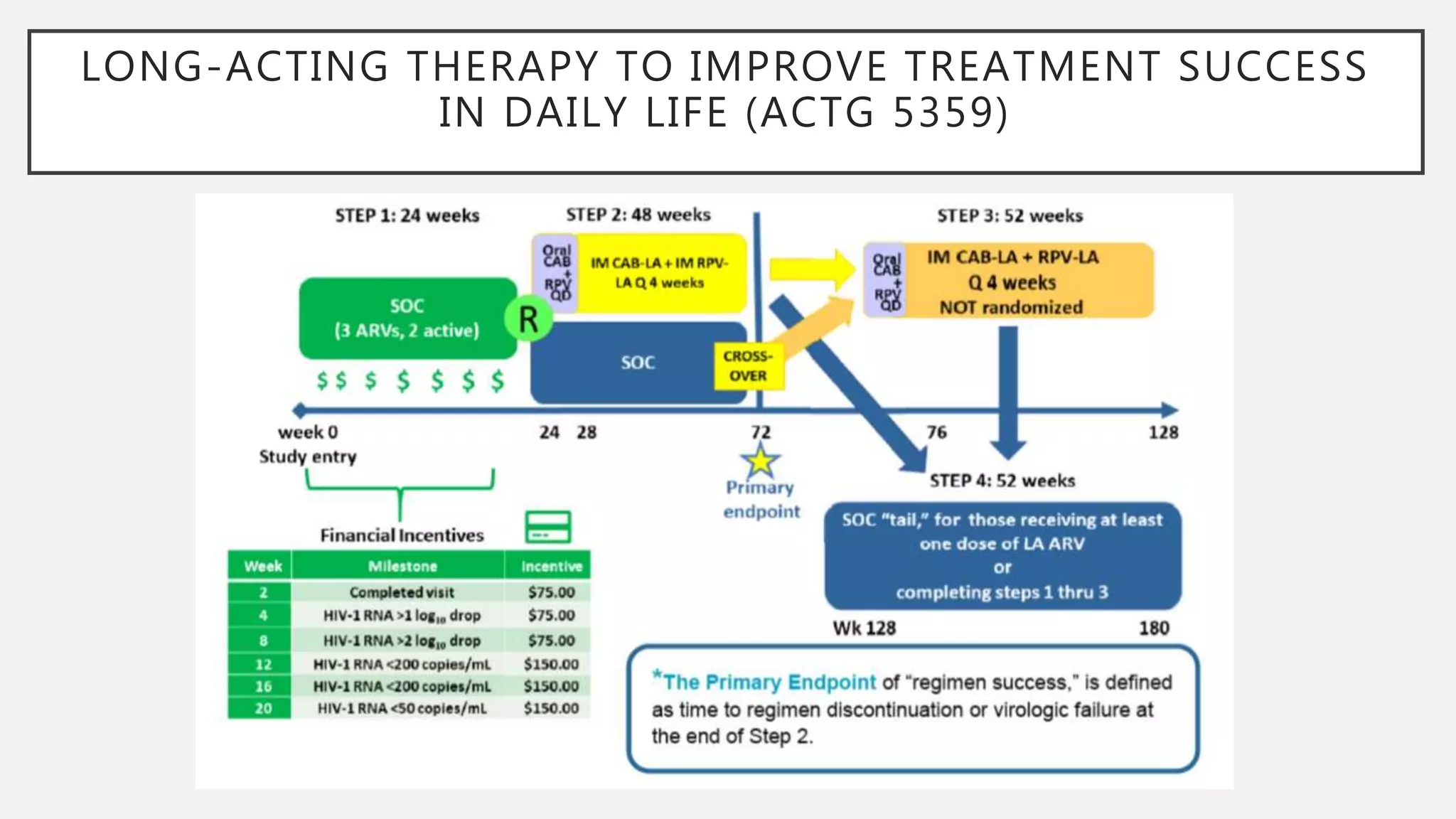
Care
Viral
Suppression
San Diego Care Continuum 2018
O
N
G
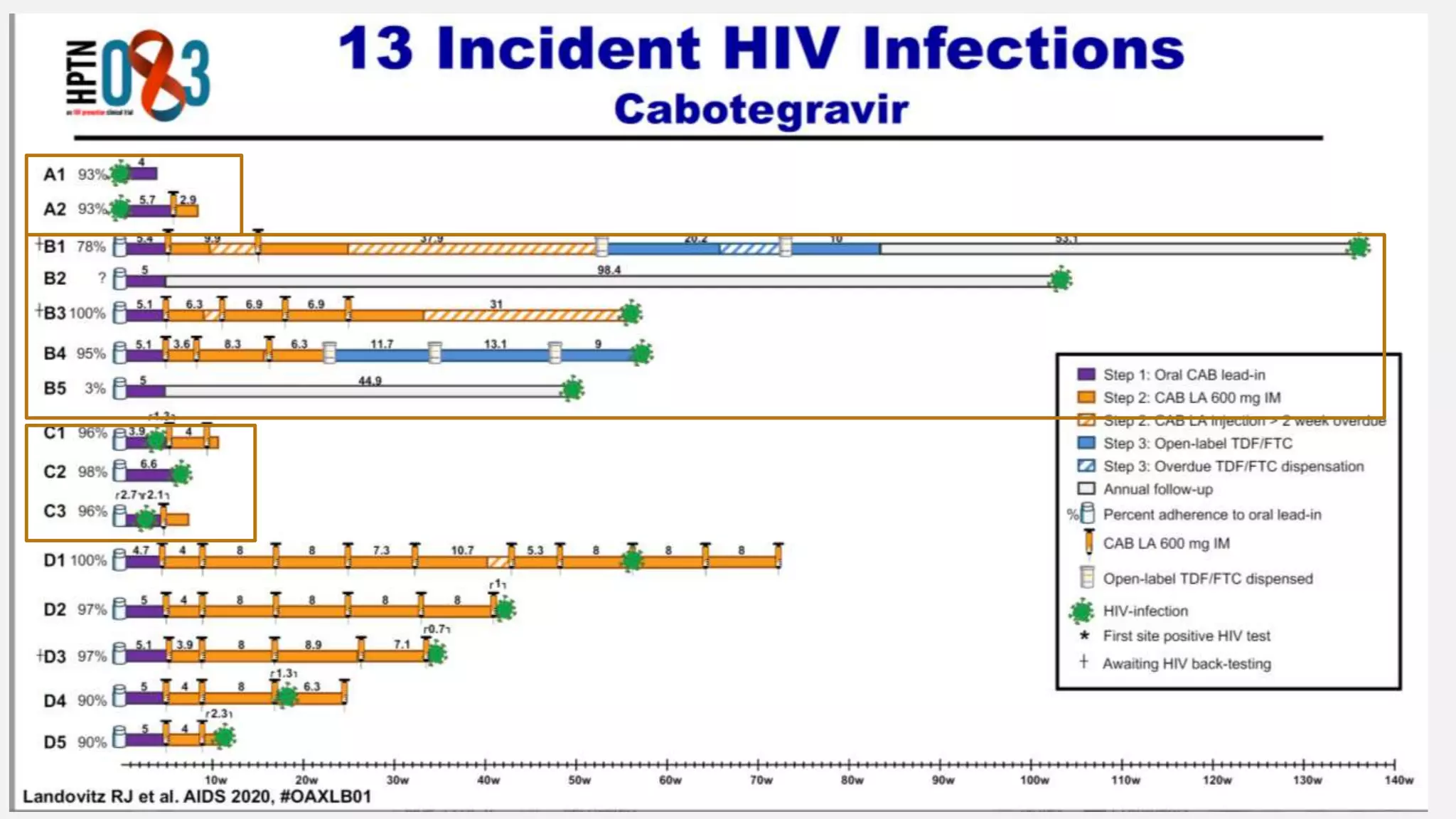
O
I
N
G
C
H
A
L
L
E
N
G
E
S
Dombrowsk
i AIDS
Patient Care
and STDs
2015
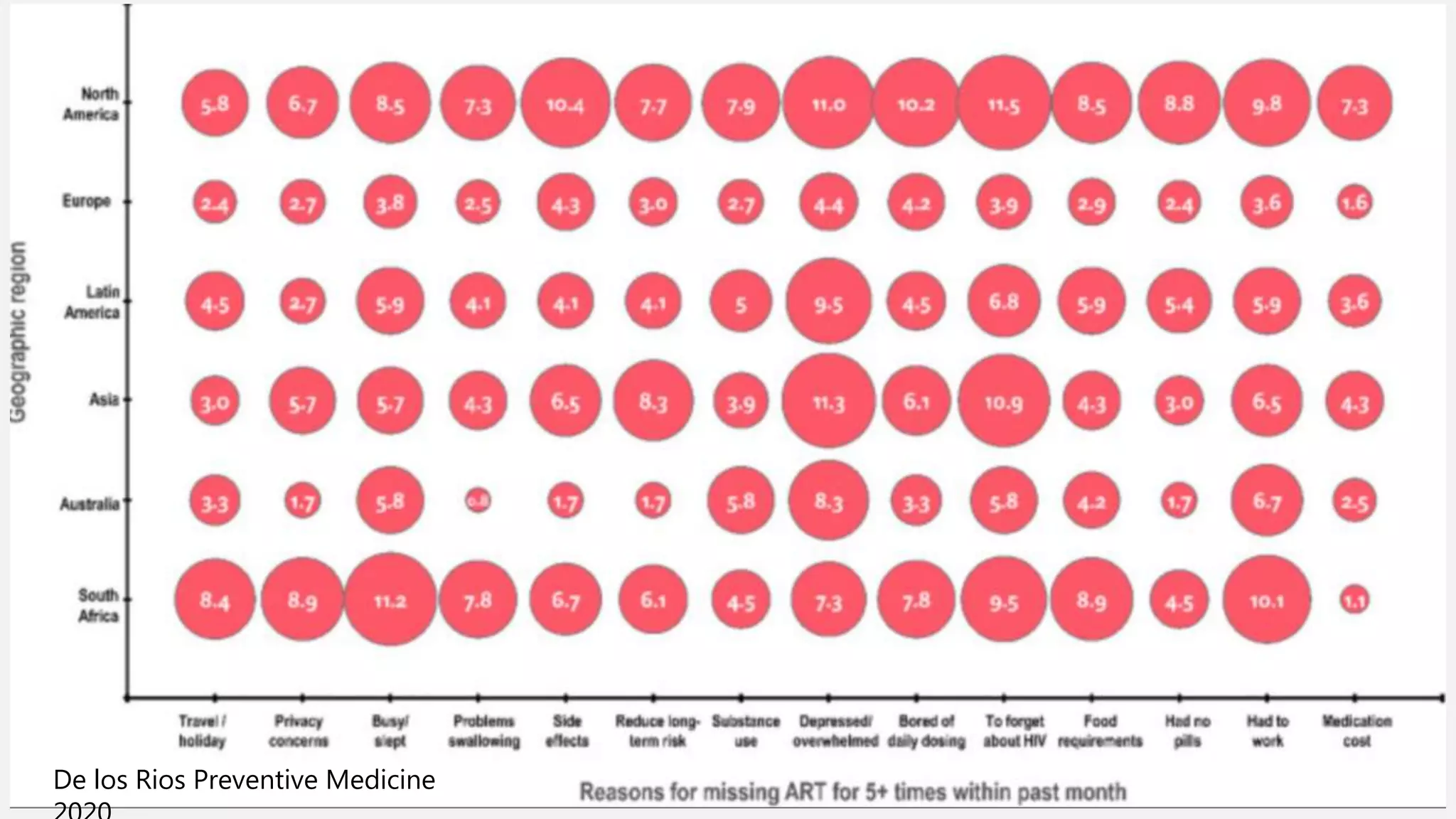
De los Rios Preventive Medicine
POTENTIAL BENEFITS OF LONG ACTING INJECTABLES
• Decreases the need to remember to take your medications daily
• Crazy work schedules
• Polypharmacy
• Frequent travel
• Competing interests (kids, work, housing, food, relationships other)
• Addresses pill anxiety
• Potential to preserve anonymity of HIV status
• Avoid physical daily reminder that one is living with HIV
• May increase the proportion of PLWH with 100% adherence
DOES 100% ADHERENCE MATTER?
• Persons in SMART and START study who reported suboptimal vs 100%
adherence were more likely to have higher plasma concentrations of IL-6
and D-dimer
Castillo-Mancilla OFID 2017; Castillo-Mancilla JAIDS 2019; de los Rios Preventive Medicine 2020
IBALIZUMAB
• Anti-CD4 monoclonal antibody - blocks HIV-1 entry into CD4 T cells
• Provided as an IV infusion (2 g loading dose) followed by 800 mg every 14
days after
• FDA approved for use with other optimized background with at least one fully
active agent in heavily treatment experienced adults that have multidrug
resistant HIV infection
• Most persons experience significant decrease in HIV RNA one week after
ibalizumab is added
• 43% achieve viral suppression after 24 weeks
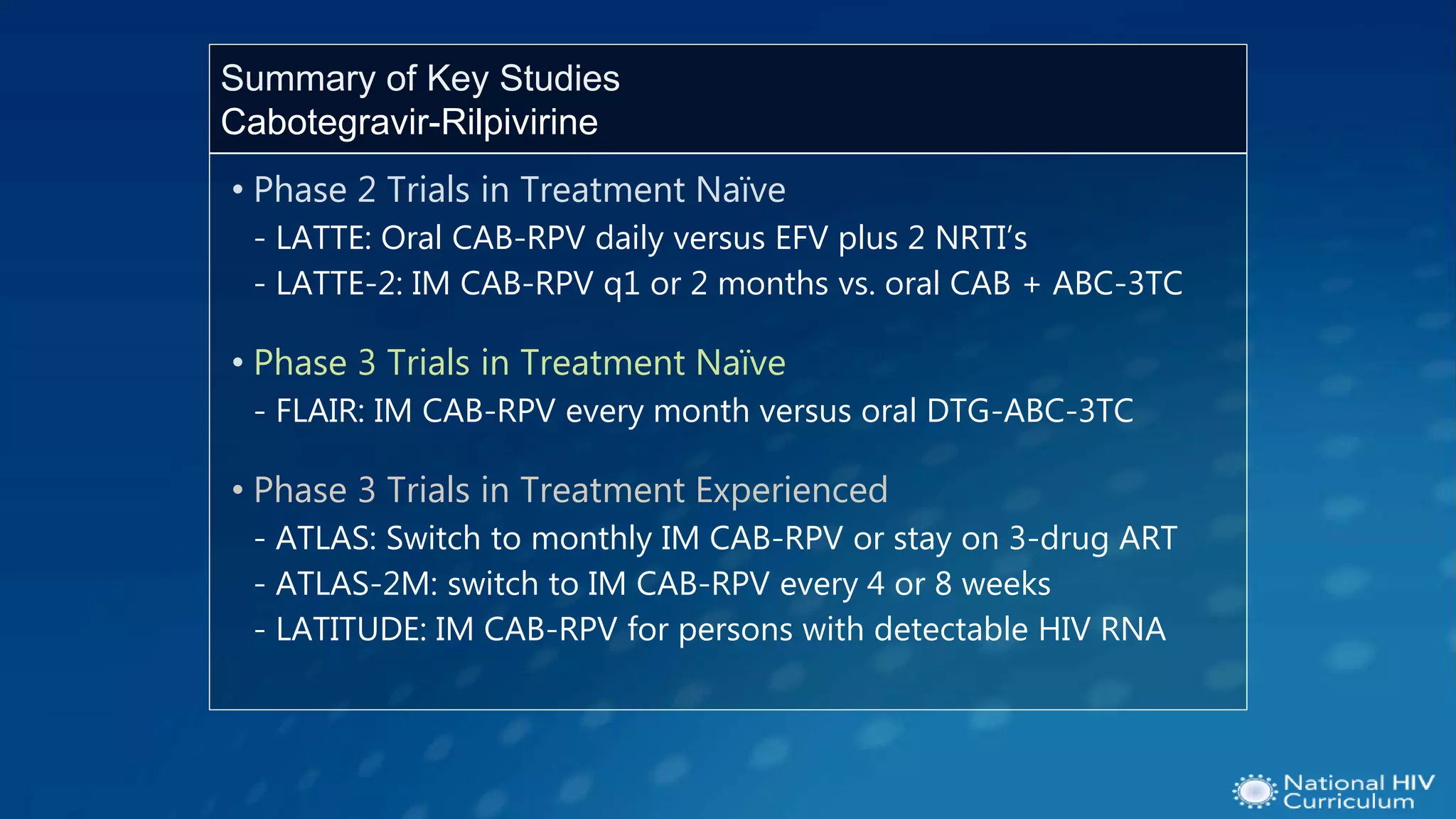
• Phase 2 Trials in Treatment Naïve
- LATTE: Oral CAB-RPV daily versus EFV plus 2 NRTI’s
- LATTE-2: IM CAB-RPV q1 or 2 months vs. oral CAB + ABC-3TC
• Phase 3 Trials in Treatment Naïve
- FLAIR: IM CAB-RPV every month versus oral DTG-ABC-3TC
• Phase 3 Trials in Treatment Experienced
- ATLAS: Switch to monthly IM CAB-RPV or stay on 3-drug ART
- ATLAS-2M: switch to IM CAB-RPV every 4 or 8 weeks
- LATITUDE: IM CAB-RPV for persons with detectable HIV RNA
Summary of Key Studies
Cabotegravir-Rilpivirine
ORAL CABOTEGRAVIR + RILPIVIRINE VERSUS
EFAVIRENZ + 2 NRTI’S LATTE STUDY: RESULTS
Source: Margolis DA, et al. Lancet Infect Dis. 2015;15:1145-55.
0
20
40
60
80
100
0 12 24 36 48 60 72 84 96
HIV
RNA
<40
copies/mL
Treatment Week
Cabotegravir 10 mg + Rilpivirine
Cabotegravir 30 mg + Rilpivirine
Cabotegravir 60 mg + Rilpivirine
Efavirenz 600 mg + 2NRTIs
Induction* Maintenance
*During induction phase cabotegravir administered with investigator chosen 2NRTIs
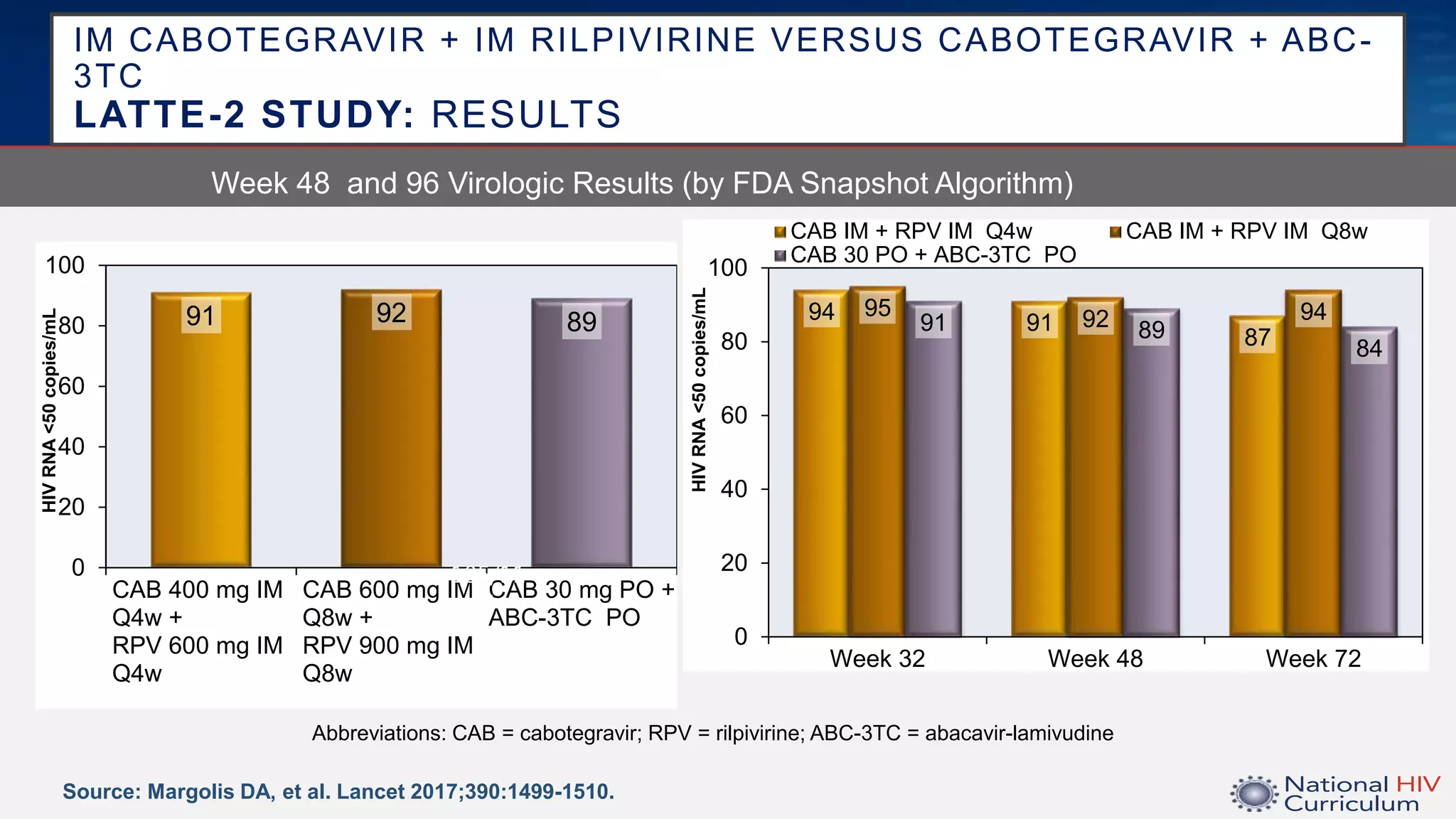
IM CABOTEGRAVIR + IM RILPIVIRINE VERSUS CABOTEGRAVIR + ABC-
3TC
LATTE-2 STUDY: RESULTS
Week 48 and 96 Virologic Results (by FDA Snapshot Algorithm)
Source: Margolis DA, et al. Lancet 2017;390:1499-1510.
91 92 89
0
20
40
60
80
100
CAB 400 mg IM
Q4w +
RPV 600 mg IM
Q4w
CAB 600 mg IM
Q8w +
RPV 900 mg IM
Q8w
CAB 30 mg PO +
ABC-3TC PO
HIV
RNA
<50
copies/mL
105/11
5
106/11
5
50/56
Abbreviations: CAB = cabotegravir; RPV = rilpivirine; ABC-3TC = abacavir-lamivudine
94 91
87
95 92 94
91 89
84
0
20
40
60
80
100
Week 32 Week 48 Week 72
HIV
RNA
<50
copies/mL
CAB IM + RPV IM Q4w CAB IM + RPV IM Q8w
CAB 30 PO + ABC-3TC PO
IM CABOTEGRAVIR + IM RILPIVIRINE VERSUS CABOTEGRAVIR + ABC-
3TC
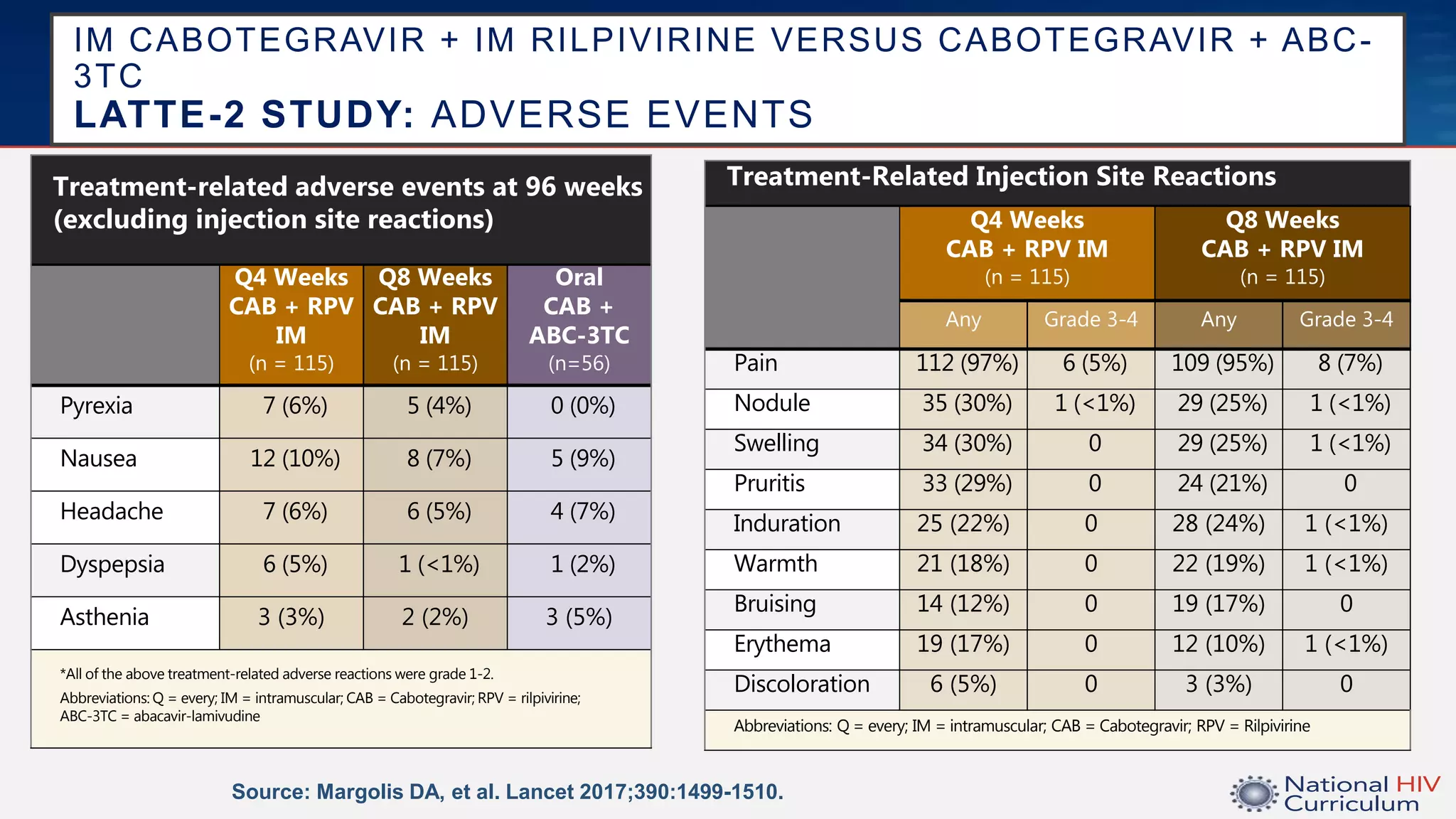
LATTE-2 STUDY: ADVERSE EVENTS
Source: Margolis DA, et al. Lancet 2017;390:1499-1510.
Treatment-related adverse events at 96 weeks
(excluding injection site reactions)
Q4 Weeks
CAB + RPV
IM
(n = 115)
Q8 Weeks
CAB + RPV
IM
(n = 115)
Oral
CAB +
ABC-3TC
(n=56)
Pyrexia 7 (6%) 5 (4%) 0 (0%)
Nausea 12 (10%) 8 (7%) 5 (9%)
Headache 7 (6%) 6 (5%) 4 (7%)
Dyspepsia 6 (5%) 1 (<1%) 1 (2%)
Asthenia 3 (3%) 2 (2%) 3 (5%)
*All of the above treatment-related adverse reactions were grade 1-2.
Abbreviations: Q = every; IM = intramuscular; CAB = Cabotegravir; RPV = rilpivirine;
ABC-3TC = abacavir-lamivudine
Treatment-Related Injection Site Reactions
Q4 Weeks
CAB + RPV IM
(n = 115)
Q8 Weeks
CAB + RPV IM
(n = 115)
Any Grade 3-4 Any Grade 3-4
Pain 112 (97%) 6 (5%) 109 (95%) 8 (7%)
Nodule 35 (30%) 1 (<1%) 29 (25%) 1 (<1%)
Swelling 34 (30%) 0 29 (25%) 1 (<1%)
Pruritis 33 (29%) 0 24 (21%) 0
Induration 25 (22%) 0 28 (24%) 1 (<1%)
Warmth 21 (18%) 0 22 (19%) 1 (<1%)
Bruising 14 (12%) 0 19 (17%) 0
Erythema 19 (17%) 0 12 (10%) 1 (<1%)
Discoloration 6 (5%) 0 3 (3%) 0
Abbreviations: Q = every; IM = intramuscular; CAB = Cabotegravir; RPV = Rilpivirine
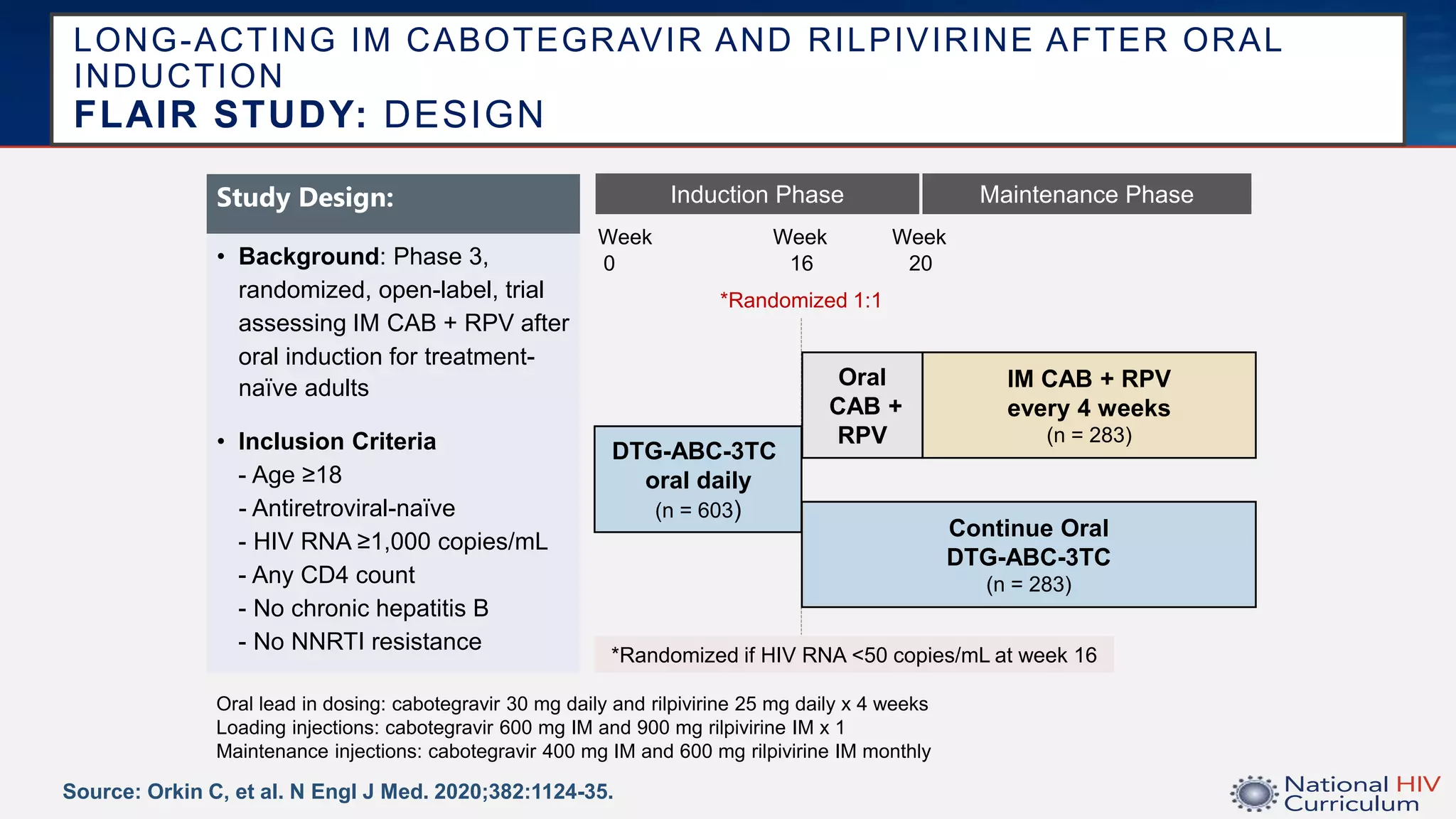
LONG-ACTING IM CABOTEGRAVIR AND RILPIVIRINE AFTER ORAL
INDUCTION
FLAIR STUDY: DESIGN
Source: Orkin C, et al. N Engl J Med. 2020;382:1124-35.
DTG-ABC-3TC
oral daily
(n = 603)
IM CAB + RPV
every 4 weeks
(n = 283)
Continue Oral
DTG-ABC-3TC
(n = 283)
*Randomized if HIV RNA <50 copies/mL at week 16
Induction Phase Maintenance Phase
Study Design:
• Background: Phase 3,
randomized, open-label, trial
assessing IM CAB + RPV after
oral induction for treatment-
naïve adults
• Inclusion Criteria
- Age ≥18
- Antiretroviral-naïve
- HIV RNA ≥1,000 copies/mL
- Any CD4 count
- No chronic hepatitis B
- No NNRTI resistance
20
Week
Oral
CAB +
RPV
*Randomized 1:1
16
Week
Oral lead in dosing: cabotegravir 30 mg daily and rilpivirine 25 mg daily x 4 weeks
Loading injections: cabotegravir 600 mg IM and 900 mg rilpivirine IM x 1
Maintenance injections: cabotegravir 400 mg IM and 600 mg rilpivirine IM monthly
0
Week
LONG-ACTING IM CABOTEGRAVIR AND RILPIVIRINE AFTER ORAL
INDUCTION
FLAIR STUDY: BASELINE CHARACTERISTICS
Source: Orkin C, et al. N Engl J Med. 2020;382:1124-35.
ATLAS: Baseline Characteristics
Characteristic
IM CAB + RPV
(n = 283)
DTG-ABC-3TC
(n = 283)
Overall
(n = 566)
Age, years, median 34 34 34
Female, n, % 63 (22) 64 (23) 127 (22)
White, n, % 216 (76) 201 (71) 417 (74)
Black, n, % 47 (17) 56 (20) 103 (18)
Median body-mass index 24 24 24
CD4 count <200 cells/mm3, n, % 16 (6) 23 (8) 39 (7)
CD4 count ≥500 cells/mm3, n, % 108 (38) 108 (38) 216 (38)
HIV RNA ≥200k copies/mL, n, % 26 (9) 23 (8) 39 (7)
HIV RNA 10k-50k copies/mL, n, % 95 (34) 113 (40) 208 (37)
LONG-ACTING IM CABOTEGRAVIR AND RILPIVIRINE AFTER ORAL
INDUCTION
FLAIR STUDY: RESULTS
Weeks 48: Virologic Response by FDA Snapshot Analysis
Source: Orkin C, et al. N Engl J Med. 2020;382:1124-35.
93.6 93.3
0
20
40
60
80
100
48 weeks
HIV
RNA
<50
copies/mL
(%)
IM CAB + RPV Oral DTG-ABC-3TC
30/33
*HIV RNA ≥50 copies/mL at 48 weeks: 2.1 % CAB-RPV, 2.5% DTG-ABC-3TC
265/28
3
264/28
3
LONG-ACTING CABOTEGRAVIR AND RILPIVIRINE AFTER ORAL
INDUCTION
FLAIR STUDY: RESULTS
Source: Orkin C, et al. N Engl J Med. 2020;382:1124-35.
Participants in the IM CAB-RPV arm with Viral Rebound Meeting Protocol-
Defined Criteria for Genotype Resistance Testing
Country;
HIV-1 Subtype
At Baseline At Virologic Failure
HIV RNA INSTI RAMs HIV RNA INSTI RAMs
Russia; A1 54,000 copies/mL L74I 456 copies/mL L74I, Q148R
Russia; A1 23,000 copies/mL L74I 299 copies/mL L74I, G140R
Russia; A1 20,000 copies/mL L74I 440 copies/mL L74I, Q148R
There were no baseline NNRTI RAMs
There were also 3 virologic failures in the DTG-ABC/3TC arm; no new RAM’s detected
Abbreviations: F = female; M = male; RAMs = resistance associated mutations
LONG-ACTING IM CABOTEGRAVIR AND RILPIVIRINE AFTER ORAL
INDUCTION
FLAIR STUDY: ADVERSE EVENTS
Source: Orkin C, et al. N Engl J Med. 2020;382:1124-35.
Drug-Related Adverse Events and Injection Site Reactions (ISR)
Adverse Event (AE)
IM CAB + RPV
(n = 283)
DTG-ABC-3TC
(n = 283)
Any AE 236 28 (10)
Any AE, excluding ISR 79 (28) 28 (10)
Grade 3 or 4 AE 14 (5) 0
Grade 3 or 4 AE, excluding ISR 4 (1) 0
Any injection site pain 227 (80) NA
Grade 3 or 4 injection site pain 11 (4) NA
LONG-ACTING IM CABOTEGRAVIR AND RILPIVIRINE FOR HIV
MAINTENANCE
ATLAS STUDY: DESIGN
Source: Swindells S, et al. N Engl J Med. 2020;382:1112-23.
Study Design:
• Background: Phase 3, randomized,
open-label trial assessing IM
cabotegravir plus IM rilpivirine after
oral induction for adults taking a 3-
drug oral antiretroviral therapy
regimen
• Inclusion Criteria
- Age ≥18 years
- Taking 2NRTI + INSTI, NNRTI, or PI
- Stable ARV regimen ≥6 months
- HIV RNA <50 copies/mL ≥6 months
- No history of virologic failure
- No INSTI or NNRTI resistance
(K103N allowed)
- No chronic hepatitis B
IM CAB + RPV every 4 weeks
(n = 308)
Continue 3-drug Oral Antiretroviral Therapy
(n = 308)
Lead-In Maintenance
4
Week
48
Week
Oral CAB +
RPV
Abbreviations: CAB = cabotegravir; RPV = rilpivirine
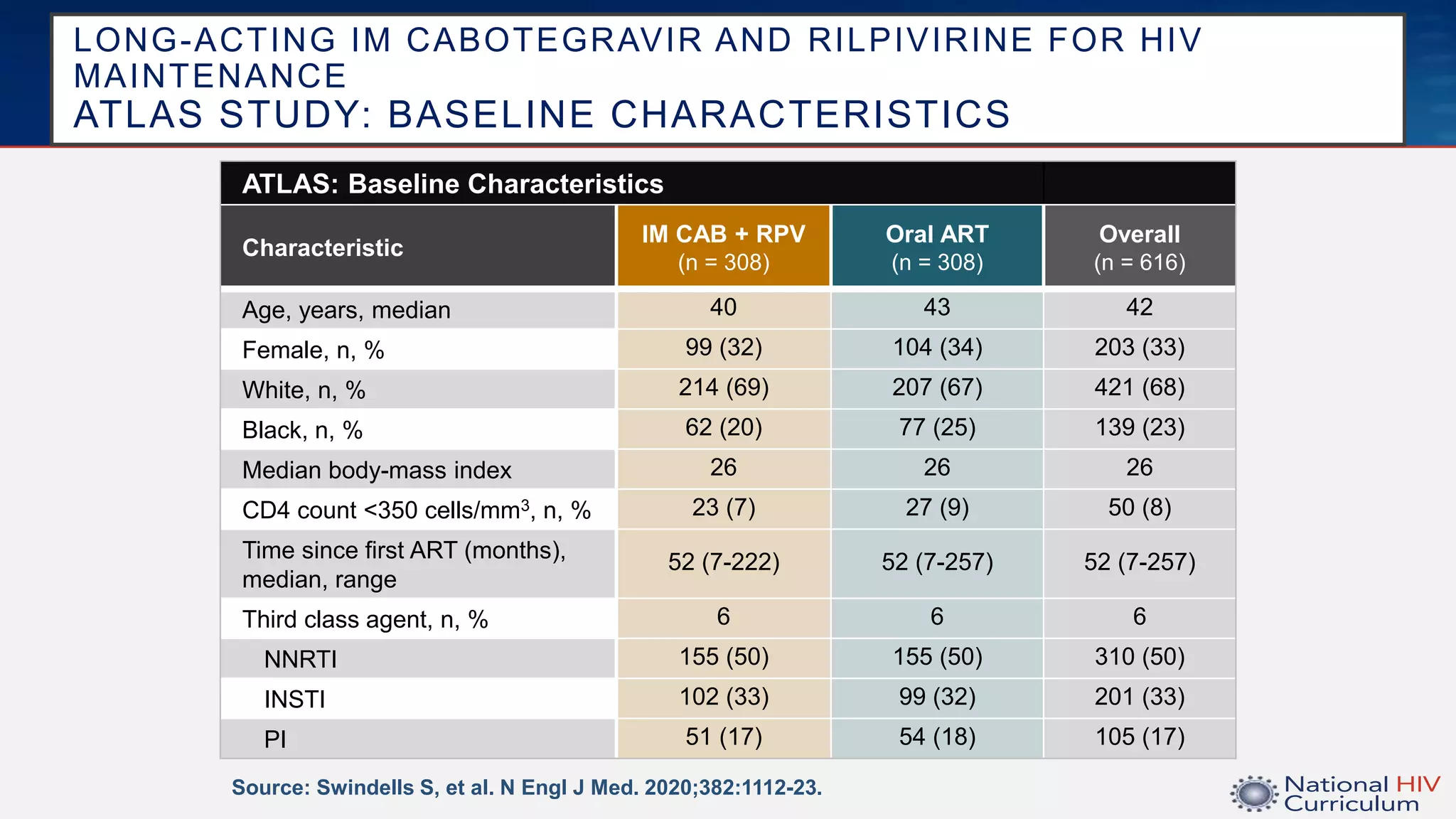
LONG-ACTING IM CABOTEGRAVIR AND RILPIVIRINE FOR HIV
MAINTENANCE
ATLAS STUDY: BASELINE CHARACTERISTICS
Source: Swindells S, et al. N Engl J Med. 2020;382:1112-23.
ATLAS: Baseline Characteristics
Characteristic
IM CAB + RPV
(n = 308)
Oral ART
(n = 308)
Overall
(n = 616)
Age, years, median 40 43 42
Female, n, % 99 (32) 104 (34) 203 (33)
White, n, % 214 (69) 207 (67) 421 (68)
Black, n, % 62 (20) 77 (25) 139 (23)
Median body-mass index 26 26 26
CD4 count <350 cells/mm3, n, % 23 (7) 27 (9) 50 (8)
Time since first ART (months),
median, range
52 (7-222) 52 (7-257) 52 (7-257)
Third class agent, n, % 6 6 6
NNRTI 155 (50) 155 (50) 310 (50)
INSTI 102 (33) 99 (32) 201 (33)
PI 51 (17) 54 (18) 105 (17)
LONG-ACTING IM CABOTEGRAVIR AND RILPIVIRINE FOR HIV
MAINTENANCE
ATLAS STUDY: RESULTS
Weeks 48: Virologic Response by FDA Snapshot Analysis
Source: Swindells S, et al. N Engl J Med. 2020;382:1112-23.
92.5 95.5
0
20
40
60
80
100
48 Weeks
HIV
RNA
<
50
copies/mL
(%)
IM Cabotegravir + Rilpivirine 3-Drug Oral ART
30/33
HIV RNA ≥50 copies/mL at 48 weeks: 1.6 % CAB + RPV, 1.0% 3-drug oral ART
LONG-ACTING IM CABOTEGRAVIR AND RILPIVIRINE FOR HIV
MAINTENANCE
ATLAS STUDY: RESULTS
Source: Swindells S, et al. N Engl J Med. 2020;382:1112-23..
Participants in the IM CAB-RPV arm with Viral Rebound Meeting Protocol-
Defined Criteria for Genotype Resistance Testing
Country, HIV-1
Subtype
At Baseline At Virologic Failure
INSTI RAMs NNRTI RAMs HIV RNA INSTI RAMs
Russia, A/A1 L74I E138E/A 25,745 copies/mL L74I
F, France, AG None V108V/I, E138K 258 copies/mL None
M, Russia, A/A1 L74I None 1841 copies/mL N155H, L74I
There were also 4 virologic failures in the oral ART arm; new RAMs detected included one instance of G190S,
one M184I, and one M230M/I.
Abbreviations: RAMs = resistance associated mutations
LONG-ACTING IM CABOTEGRAVIR AND RILPIVIRINE FOR HIV
MAINTENANCE
ATLAS STUDY: ADVERSE EVENTS
Source: Swindells S, et al. N Engl J Med. 2020;382:1112-23.
Injection Site Reactions (ISRs)
Type of Reactions Participants (%) with Reaction
Participants who received injections, n 303
Any reaction, n (%) 250 (81)
Pain, n (%) 231 (75)
Grade 3 pain, n, (%) 10 (3)
Pain leading to withdrawal 4 (1)
Nodule, n (%) 37 (12)
Induration, n (%) 30 (10)
Swelling, n (%) 23 (7)
Median duration of reaction, days 3
The majority of ISRs (99%) were grade 1-2; 88% resolved within 7 days.
CABOTEGRAVIR AND RILPIVIRINE EVERY 2 MONTHS FOR HIV
MAINTENANCE
ATLAS-2M STUDY: DESIGN
Source: Overton ET, et al. Lancet. 2020:396:1994-2005.
Study Design:
• Background: Phase 3, randomized,
open-label trial assessing IM CAB-
RPV maintenance ART administered
every 8 weeks versus every 4 weeks
• Inclusion Criteria*
- Age ≥18 years
- Taking an uninterrupted first or
second oral standard of care ART
regimen for ≥6 months
- HIV RNA <50 copies/mL ≥6 months
at screening and >2x in prior year
- No history of virologic failure
- No INSTI or NNRTI resistance
(K103N allowed)
IM CAB 600 mg + RPV 900 mg
(two separate 3 mL injections)
Every 8 weeks
(n = 522)
Lead-In Maintenance
4
Week
48
Week
Oral CAB +
RPV
IM CAB 400 mg + RPV 600 mg
(two separate 2 mL injections)
Every 4 weeks
(n = 523)
Oral CAB +
RPV
*Some individuals enrolled after participating in the
ATLAS trial; individuals already receiving IM CAB + RPV
through ATLAS did not require oral lead-in for ATLAS-
2M
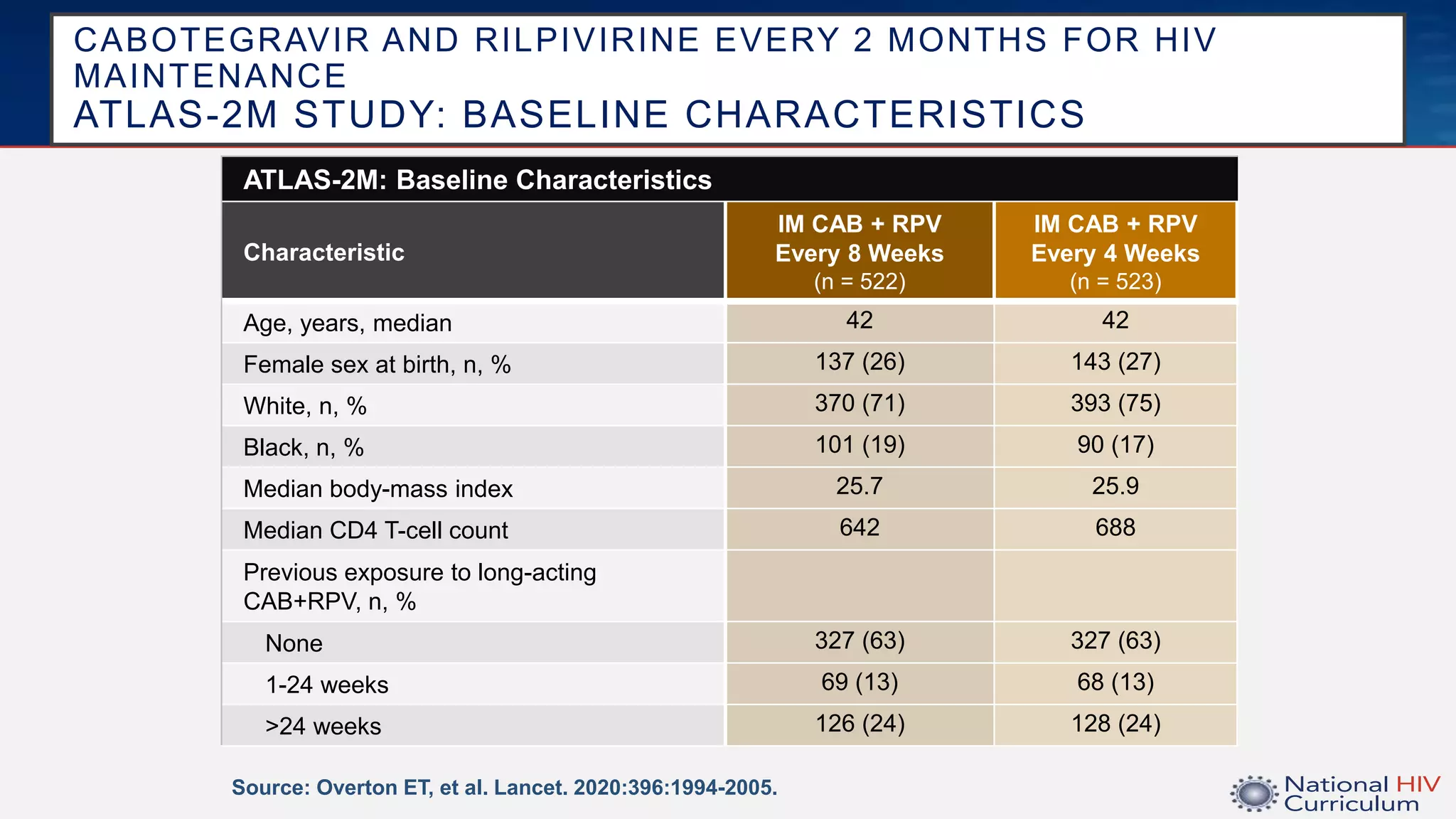
CABOTEGRAVIR AND RILPIVIRINE EVERY 2 MONTHS FOR HIV
MAINTENANCE
ATLAS-2M STUDY: BASELINE CHARACTERISTICS
Source: Overton ET, et al. Lancet. 2020:396:1994-2005.
ATLAS-2M: Baseline Characteristics
Characteristic
IM CAB + RPV
Every 8 Weeks
(n = 522)
IM CAB + RPV
Every 4 Weeks
(n = 523)
Age, years, median 42 42
Female sex at birth, n, % 137 (26) 143 (27)
White, n, % 370 (71) 393 (75)
Black, n, % 101 (19) 90 (17)
Median body-mass index 25.7 25.9
Median CD4 T-cell count 642 688
Previous exposure to long-acting
CAB+RPV, n, %
None 327 (63) 327 (63)
1-24 weeks 69 (13) 68 (13)
>24 weeks 126 (24) 128 (24)
CABOTEGRAVIR AND RILPIVIRINE EVERY 2 MONTHS FOR HIV
MAINTENANCE
ATLAS-2M STUDY: RESULTS
Weeks 48: Virologic Response by FDA Snapshot Analysis
Source: Overton ET, et al. Lancet. 2020:396:1994-2005.
94 93
0
20
40
60
80
100
IM CAB + IM RPV every 8 weeks IM CAB + IM RPV every 4 weeks
HIV
RNA
<50
copies/mL
(%)
484/514
HIV RNA ≥50 copies/mL at 48 weeks: 9/522 (2%) in q8-week arm, 5/523 (1%) in q4-week arm
491/516
CABOTEGRAVIR AND RILPIVIRINE EVERY 2 MONTHS FOR HIV
MAINTENANCE
ATLAS-2M STUDY: RESULTS
Source: Overton ET, et al. Lancet. 2020:396:1994-2005.
Participants with Viral Rebound Meeting Protocol-Defined Criteria for
Genotype Resistance Testing
Total
Number of
Participants
Archived
(Baseline)
RPV RAMs*
Archived
(Baseline)
INSTI RAMs*
RPV RAMs
Detected at
Time of VF
INSTI RAMs
Detected at
Time of VF
Q8 Weeks 8 5/8 1/8 6/8 5/8
Q4 Weeks 2 0/2 0/2 1/2** 2/2
*Detected by archive (DNA) genotype
**One participant had RPV RAMs; the other an NNRTI polymorphism that reduced RPV activity >100-fold
Abbreviations: RAMs = resistance associated mutations; VF = virologic failure
CABOTEGRAVIR AND RILPIVIRINE EVERY 2 MONTHS FOR HIV
MAINTENANCE
ATLAS-2M STUDY: RESULTS
Source: Overton ET, et al. Lancet. 2020:396:1994-2005.
Injection Site Reactions (ISRs)*
Types of Reactions
IM CAB + RPV
Every 8 Weeks, n (%)
IM CAB + RPV
Every 4 Weeks, n, %
Participants who received
injections, n
516 517
Any reaction, n (%) 392 (76) 390 (75)
Serious reaction, n (%) 1 (<10) 0 (0)
Reaction leading to
discontinuation, n (%)
6 (1) 11 (2)
Pain, n (%) 371 (72) 363 (70)
Nodule, n (%) 54 (10) 89 (17)
Induration, n (%) 41 (8) 39 (8)
Swelling, n (%) 32 (6) 27 (5)
*The majority of ISRs (98%) were grade 1-2.
IN SUMMARY CAB LA AND RPV LA
• In persons living with HIV who are starting treatment:
• CAB - RPV LA was noninferior to oral therapy with dolutegravir-abacavir-lamivudine in
maintaining HIV-1 suppression
• Injections site reactions were common
• In persons living with HIV who desire to switch treatment:
• Monthly injections of CAB – RPV LA were noninferior to oral therapy for maintaining
HIV-1 suppression
• Injection related AE were common but infrequently led to medication withdrawal
• The efficacy and safety profiles of dosing every 8 weeks and 4 weeks were similar
WHAT ELSE DO WE KNOW?
• Participants maintained high levels of long term adherence to
CAB - RPV LA dosed every 4 or 8 weeks through 2-5 years of
follow up with 97% of injections given within the +/- 7 day
window
• Few participants used oral therapy to cover a planned missed
visit – most used oral CAB – RPV LA to cover a single injection
interval
• For ATLAS-2M: rate of confirmed viral failure is overall low
(11/1045, 1%) only one participant met criterion in second year
of therapy
FLAIR and LATTE-2
open label studies
@ ID week 2020
ATLAS-2M
extension phase @
CROI 2021
CURRENT GUIDELINES CAB-RPV LA
• CAB-RPV LA can be used for PLWH on oral ART + viral suppression > 3 months
• No baseline resistance to either medication
• No prior virologic failures
• Do not have active Hepatitis B virus infection
• Are not pregnant and are not planning on becoming pregnant
• Are not receiving medications with significant drug interactions with oral or injectable
CAB or RPV
• Assess tolerability using an oral lead in for at least 28 days before injections
• First injection should be given on the last day of oral therapy
• Continuation therapy with monthly injections +/- 7 day window
• Several drugs are contraindicated due to drug interactions: anticonvulsants,
rifamycins
https://clinicalinfo.hiv.gov/en/guidelines/adult-and-adolescent-arv/hhs-adults-and-adolescents-antiretroviral-
guidelines-panel
RECOMMENDATION FOR RESUMPTION OF INJECTIONS
(AFTER MISSED INJECTIONS)
Source: Canadian Product Monograph for Vocabria and Cabeneuva
Injection Dosing Recommendations after Missed Injections*
Time Since Last Injection Recommendation
Less than or equal to 2 months
• Resume with (400 mg (2-mL) cabotegravir and 2mL
(600 mg (2-mL) rilpivirine intramuscular monthly
injections as soon as possible.
Greater than 2 months
• Reinitiate with 3 mL 600 mg (3-mL) cabotegravir and
3 mL (900 mg (3-mL) rilpivirine intramuscular
injections, then continue to follow the monthly 400
mg (2-mL) cabotegravir and 600 mg (2-mL) rilpivirine
intramuscular monthly injection dosing schedule.
Refer to oral dosing recommendations if a patient plans to miss a scheduled injection visit.
ORAL THERAPY FOR MISSED INJECTIONS
Source: Cabenuva Prescribing Information
Oral Bridge Therapy for Planned and Unplanned Missed Injections
Time Since Last Injection Recommendation for Oral Bridging
Planned Missed Injection
• Time from last injections is greater
than 1 month + 7 days
• Take daily oral therapy to replace up to 2
consecutive monthly injection visits.
• Start oral therapy* approximately 1 month after
the last injection doses.
• Continue oral therapy until the day injection
dosing is restarted.
Unplanned Missed Injection
• Time from last injections is greater
than 1 month + 7 days
• If oral therapy has not been taken, reassess
patients clinically to ensure resumption of
injections remains appropriate.
*Oral therapy = cabotegravir 50 mg plus rilpivirine 25 mg, both taken once daily with food
LONG-ACTING THERAPY TO IMPROVE TREATMENT SUCCESS
IN DAILY LIFE (ACTG 5359)
DO ONE OR TWO DRUGS MAKE A NEW ERA?
BUT WAIT THERE’S MORE
COMING REAL SOON!
• CAB for PrEP
NEXT 5 YEARS
• Lenacapavir
• Islatravir
• MK-8507
• Novel delivery of ART
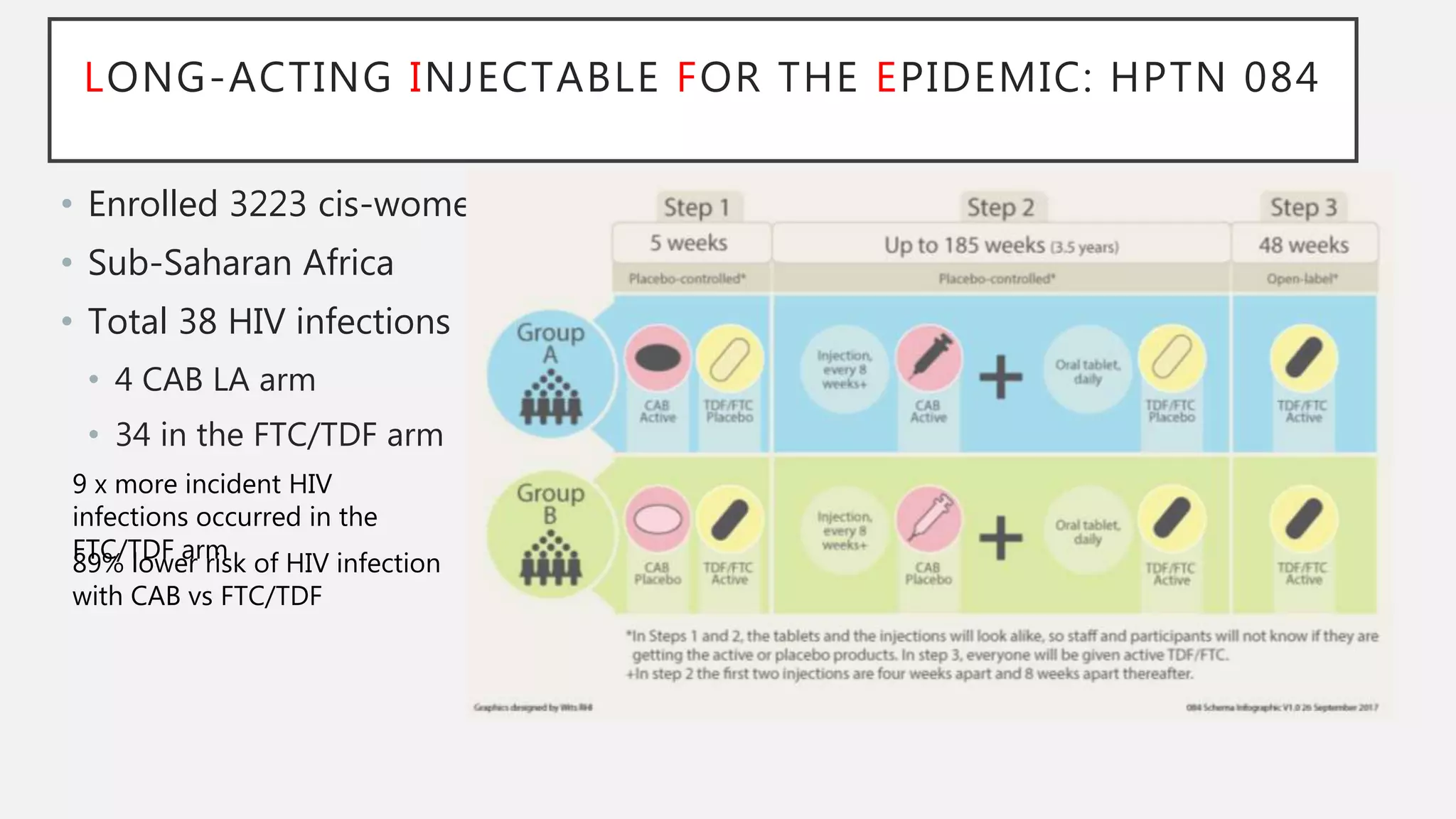
LONG-ACTING INJECTABLE FOR THE EPIDEMIC: HPTN 084
• Enrolled 3223 cis-women
• Sub-Saharan Africa
• Total 38 HIV infections
• 4 CAB LA arm
• 34 in the FTC/TDF arm
9 x more incident HIV
infections occurred in the
FTC/TDF arm
89% lower risk of HIV infection
with CAB vs FTC/TDF
LENACAPRAVIR
Segal-Maurer CROI 2021
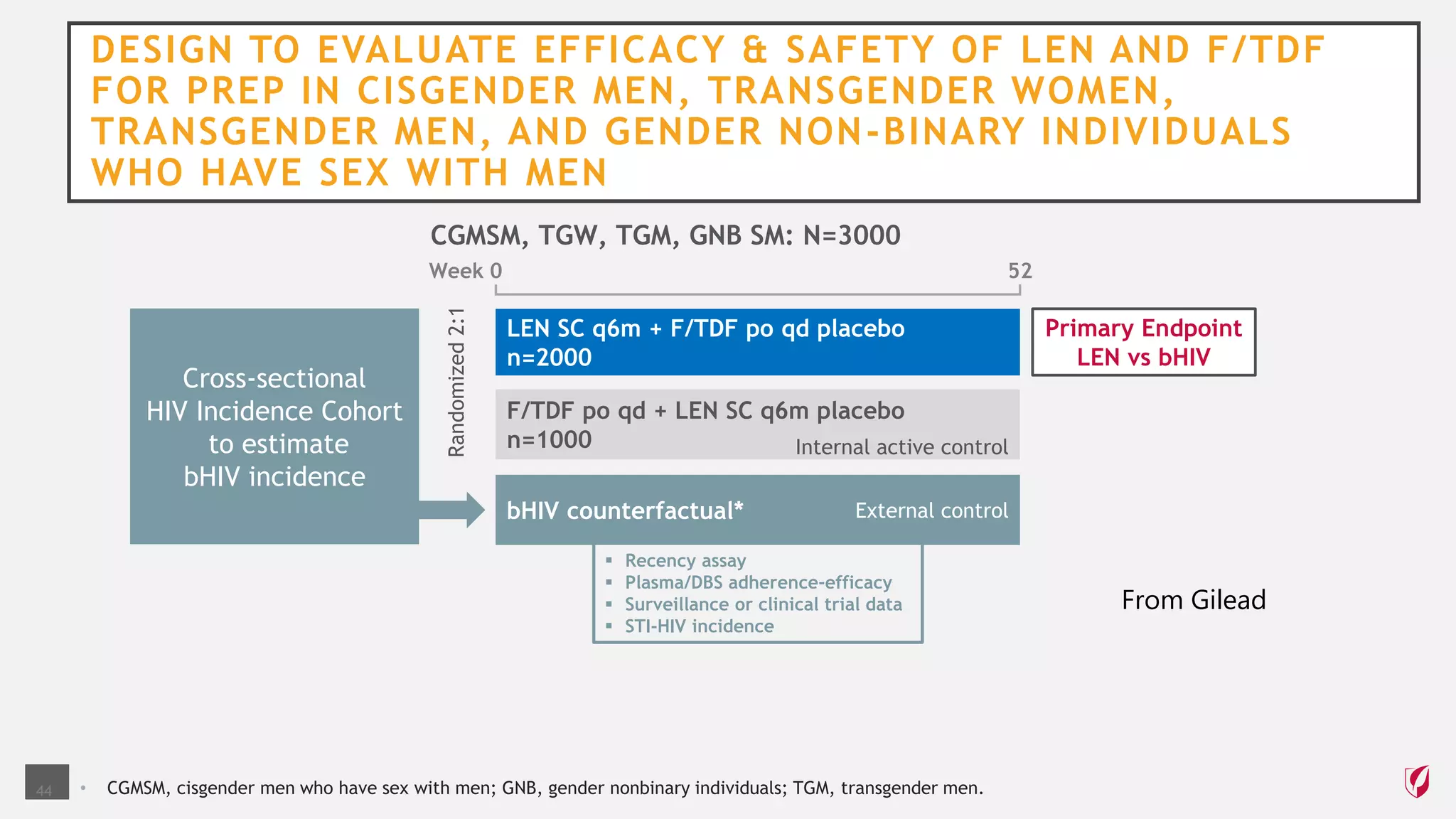
CGMSM, TGW, TGM, GNB SM: N=3000
DESIGN TO EVALUATE EFFICACY & SAFETY OF LEN AND F/TDF
FOR PREP IN CISGENDER MEN, TRANSGENDER WOMEN,
TRANSGENDER MEN, AND GENDER NON-BINARY INDIVIDUALS
WHO HAVE SEX WITH MEN
44
Week 0
Primary Endpoint
LEN vs bHIV
F/TDF po qd + LEN SC q6m placebo
n=1000
LEN SC q6m + F/TDF po qd placebo
n=2000
52
bHIV counterfactual*
Internal active control
External control
Cross-sectional
HIV Incidence Cohort
to estimate
bHIV incidence
Randomized
2:1
 Recency assay
 Plasma/DBS adherence-efficacy
 Surveillance or clinical trial data
 STI-HIV incidence
• CGMSM, cisgender men who have sex with men; GNB, gender nonbinary individuals; TGM, transgender men.
From Gilead
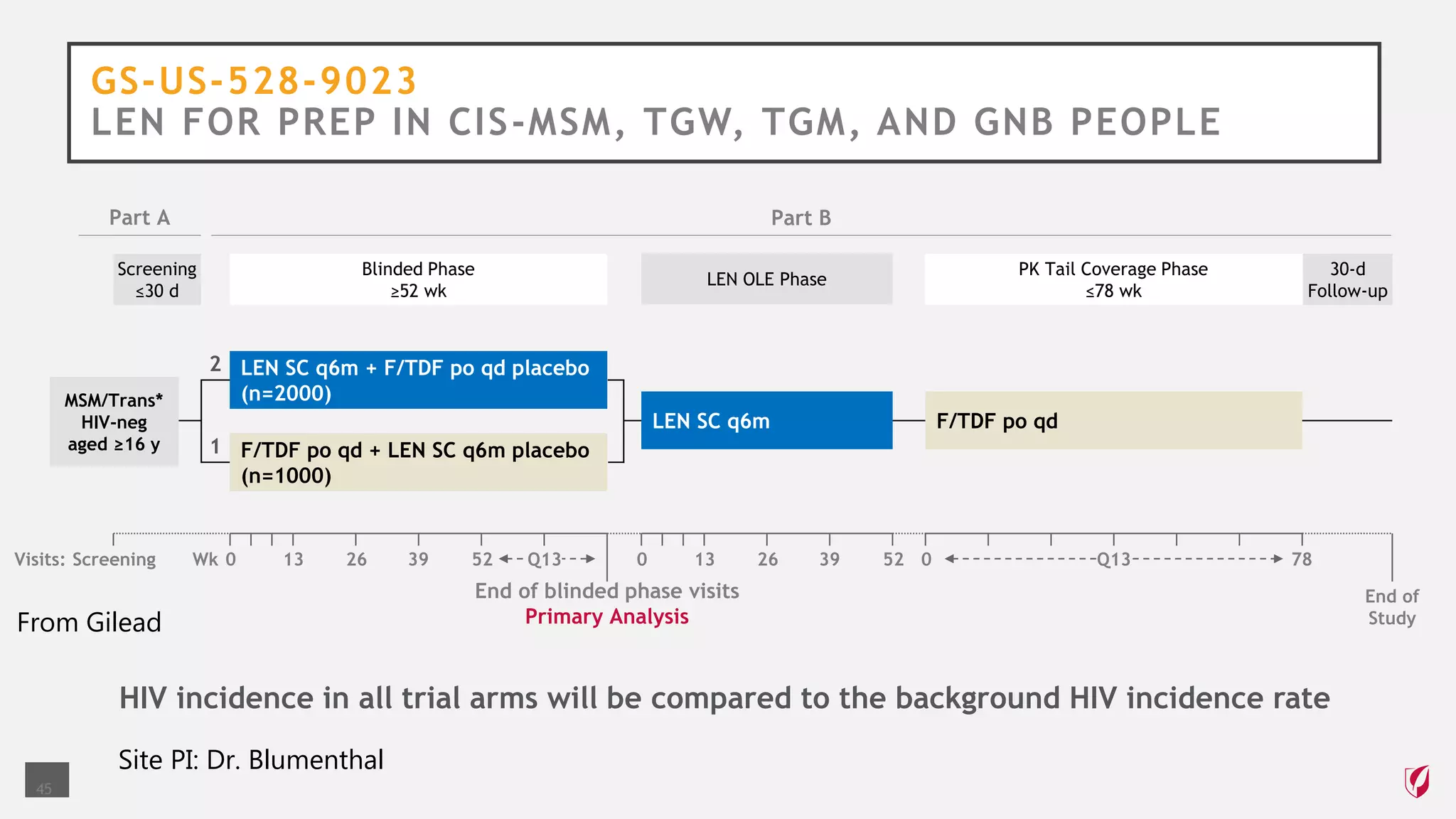
GS-US-528-9023
LEN FOR PREP IN CIS-MSM, TGW, TGM, AND GNB PEOPLE
45
HIV incidence in all trial arms will be compared to the background HIV incidence rate
Part A Part B
2
1
Screening
≤30 d
Blinded Phase
≥52 wk
LEN OLE Phase
PK Tail Coverage Phase
≤78 wk
30-d
Follow-up
F/TDF po qd + LEN SC q6m placebo
(n=1000)
LEN SC q6m + F/TDF po qd placebo
(n=2000)
F/TDF po qd
LEN SC q6m
0 52
26
13 39
0
Screening 52
End of blinded phase visits
Primary Analysis
0 78
End of
Study
26
Visits: 13 39
Wk Q13
MSM/Trans*
HIV-neg
aged ≥16 y
Q13
From Gilead
Site PI: Dr. Blumenthal
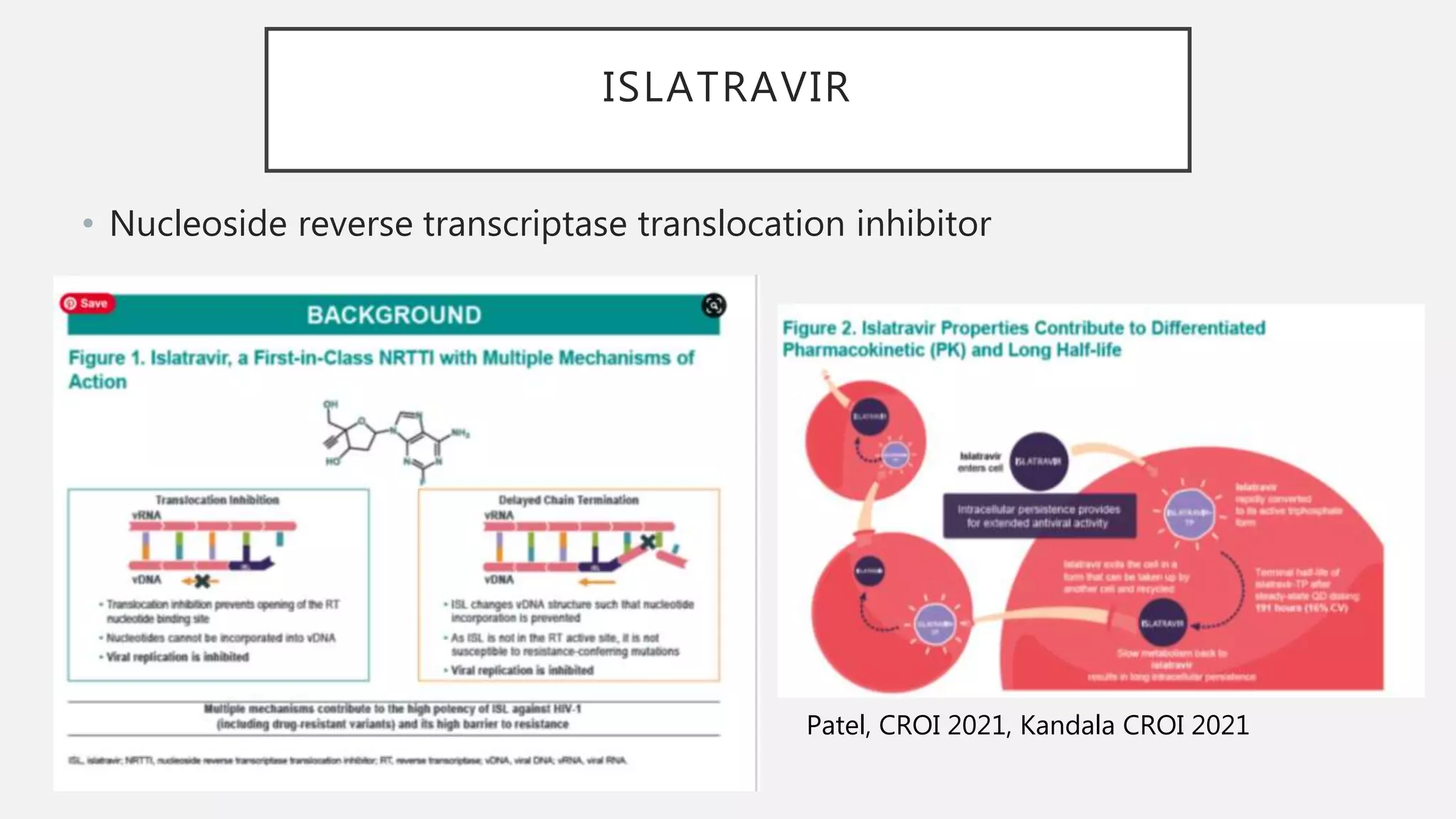
ISLATRAVIR
• Nucleoside reverse transcriptase translocation inhibitor
Patel, CROI 2021, Kandala CROI 2021
ISLATRAVIR FOR PREP
Randolph CROI 2021
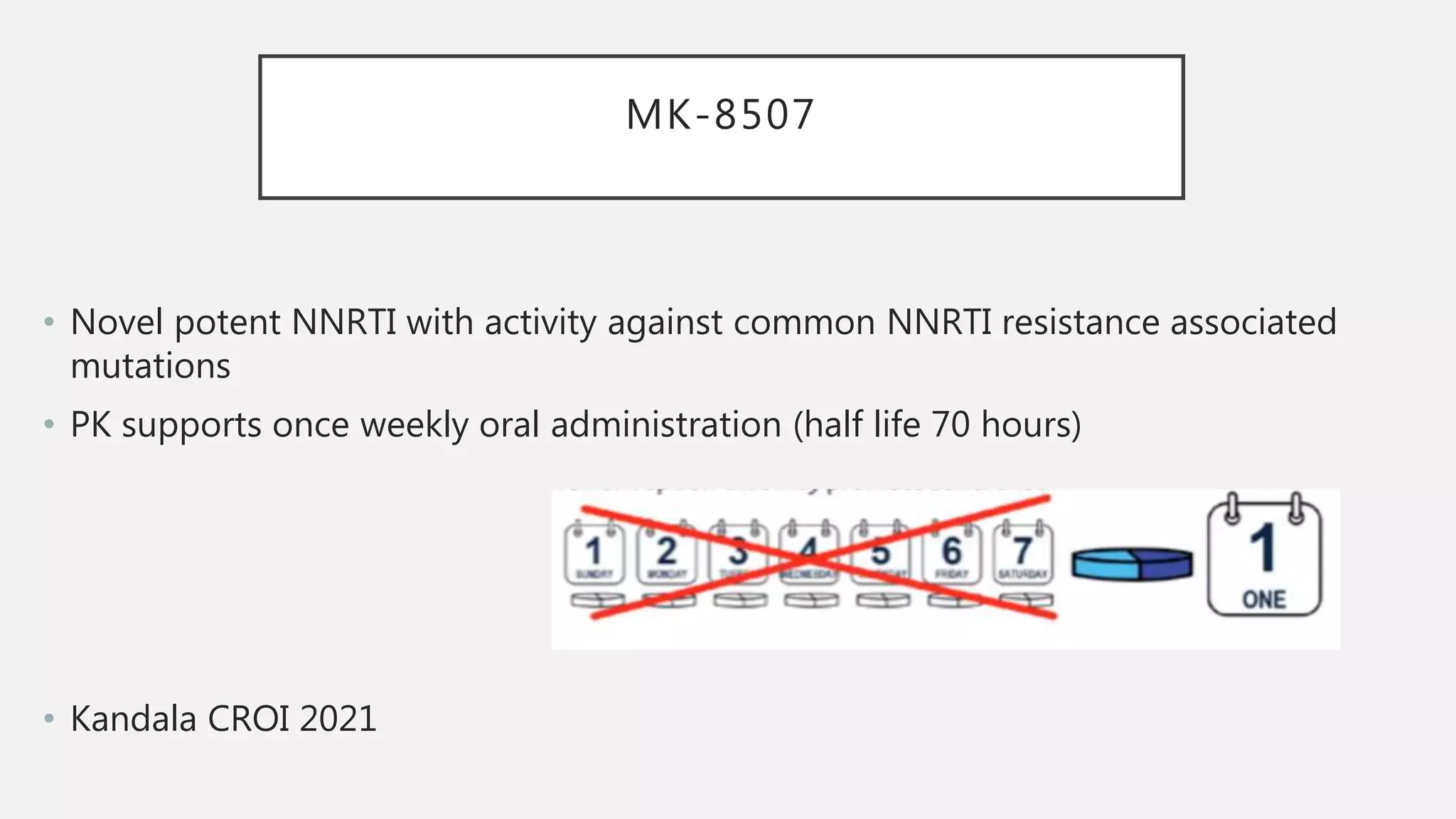
MK-8507
• Novel potent NNRTI with activity against common NNRTI resistance associated
mutations
• PK supports once weekly oral administration (half life 70 hours)
• Kandala CROI 2021
WHAT COULD BE POSSIBLE IN THE LA ERA
• Shift our focus from HIV primacy = allows more investment in non HIV
concerns
• Improve management of non-HIV comorbidities
• Enhanced efforts to address health inequity
• Address novel issues related to to aging with HIV
• May positively impact HIV stigma
• May enhance quality of life for PLWH
• End the Epidemic
CABOTEGRAVIR AND RILPIVIRINE (CABENUVA)
EXTENDED RELEASE INJECTABLE SUSPENSION
Source: Cabenuva Prescribing Information
• Indication
- Replace antiretroviral regimen in persons with HIV RNA <50 copies/mL
- On stable antiretroviral regimen
- No history of treatment failure
- No known or suspected resistance to cabotegravir or rilpivirine
• Cabotegravir & Rilpivirine Extended-Release Injectable Suspension
- Cabotegravir: 200 mg/mL
- Rilpivirine LA: 300 mg/mL
- Administered as intramuscular gluteal injections
- Injections given on opposite gluteal sites (or ≥2 cm apart on same site)
• Oral Cabotegravir and Oral Rilpivirine
- Cabotegravir: 30 mg
- Rilpivirine: 25 mg
CLINICAL CONSIDERATIONS
• Eligibile persons will need to be virally suppressed on a stable regimen with no
known or suspected resistance to either CAB or RPV
• Oral lead in dosing with cabotegravir 30 mg and rilpivirine 25 mg for 28 days to
assess tolerability (with food)
• Loading dose with cabotegravir 600 mg and LA-RPV 900 mg ( 2 - 3 ml
injections)
• Maintenance dosing (monthly) 2- 2mL injections
• 14 day window (7 early or 7 late)
• If 2 months have passed – reinitiate with maintenance dosing
• If > 2 months have passed reinitiate with loading dose
DELIVERY SYSTEM CONSIDERATIONS
• Refrigeration and thaw (thawed for > 15 min but not more than 6 hours)
• Must be discarded if not used within 6 hours
• Can remain in syringes for up to 2 hours
• Approved for gluteal intramuscular use only and should be given at separate
sites
• Must be given in private space (clinics)
• Healthcare coverage may be a barrier to some
PROCUREMENT AND PURCHASING
• Unlikely to be available through retail pharmacies
• Buy and bill – clinic purchases the product and bills third party payer
• Clinics assume liability for the cost of the drug
• White bagging – provider submits prescription to specialty pharmacy that then
ships product to the provider
• AHF, Accredo, CVS Specialty, Optum, Humana Specialty, Kroger Specialty, Walgreens
Prime, Longs,
• The initial oral medication regimen is being provided free of charge by ViiV. •
The wholesale acquisition1 cost of the initial (or loading dose) injections is
$5,940 per month. • The wholesale acquisition cost of the monthly (maintenance)
injections is $3,960 per month.
COST-SHARING AND PATIENT ASSISTANCE
• Cabenuva is available at no cost to U.S. residents with household incomes of 500% of the
federal poverty level or less, and either do not have prescription drug coverage or meet
other insurance coverage-based criteria.
• ViiVConnect Patient Assistance Program (PAP) eligibility and enrollment details can be
found here.
• For individuals with commercial insurance prescription drug coverage, ViiV is offering
assistance of up to $13,000 per year (including up to $100 on cost-sharing assistance with
Cabenuva administration fees) to help cover the out-of-pocket prescription drug costs
associated with Cabenuva through ViiVConnect’s Patient Savings Program.
• Access to the patient savings program is only available for patient enrolled through
ViiVConnect.
• Assistance with out-of-pocket costs for Medicare beneficiaries is not available through
ViiVConnect’s Patient Savings Programs due to federal rules but may be available
through state ADAPs.
• Details on patient and provider support services are available through ViiVConnect or by
calling 1-844- 588-3288 (toll free) Monday to Friday from 8am to 11 pm ET).
ACCESSING CAB + LA-RPV
AVAILABLE NOW COMING SOON
UCSD – OWEN CLINIC VA
AHF SYH
KAISER
FHC-SD

04.16.21 | Entering a New Era of HIV Care: Long-Acting Injectables for HIV

  • 1.
    HIV & GlobalHealth Rounds The UC San Diego AntiViral Research Center sponsors weekly presentations by infectious disease and global public health clinicians, physicians, and researchers. The goal of these presentations is to provide the most current research, clinical practices, and trends in HIV, HBV, HCV, TB, and other infectious diseases of global significance. The slides from the HIV & Global Health Rounds presentation that you are about to view are intended for the educational purposes of our audience. They may not be used for other purposes without the presenter’s express permission.
  • 2.
    ENTERING A NEWERA OF HIV CARE: LONG ACTING INJECTABLES FOR HIV Maile Young Karris, MD Associate Professor of Medicine Divisions of Infectious Diseases and Global Public Health & Geriatrics and Gerontology University of California San Diego
  • 3.
  • 4.
  • 5.
  • 6.
    De los RiosPreventive Medicine
  • 7.
    POTENTIAL BENEFITS OFLONG ACTING INJECTABLES • Decreases the need to remember to take your medications daily • Crazy work schedules • Polypharmacy • Frequent travel • Competing interests (kids, work, housing, food, relationships other) • Addresses pill anxiety • Potential to preserve anonymity of HIV status • Avoid physical daily reminder that one is living with HIV • May increase the proportion of PLWH with 100% adherence
  • 8.
    DOES 100% ADHERENCEMATTER? • Persons in SMART and START study who reported suboptimal vs 100% adherence were more likely to have higher plasma concentrations of IL-6 and D-dimer Castillo-Mancilla OFID 2017; Castillo-Mancilla JAIDS 2019; de los Rios Preventive Medicine 2020
  • 9.
    IBALIZUMAB • Anti-CD4 monoclonalantibody - blocks HIV-1 entry into CD4 T cells • Provided as an IV infusion (2 g loading dose) followed by 800 mg every 14 days after • FDA approved for use with other optimized background with at least one fully active agent in heavily treatment experienced adults that have multidrug resistant HIV infection • Most persons experience significant decrease in HIV RNA one week after ibalizumab is added • 43% achieve viral suppression after 24 weeks
  • 10.
    • Phase 2Trials in Treatment Naïve - LATTE: Oral CAB-RPV daily versus EFV plus 2 NRTI’s - LATTE-2: IM CAB-RPV q1 or 2 months vs. oral CAB + ABC-3TC • Phase 3 Trials in Treatment Naïve - FLAIR: IM CAB-RPV every month versus oral DTG-ABC-3TC • Phase 3 Trials in Treatment Experienced - ATLAS: Switch to monthly IM CAB-RPV or stay on 3-drug ART - ATLAS-2M: switch to IM CAB-RPV every 4 or 8 weeks - LATITUDE: IM CAB-RPV for persons with detectable HIV RNA Summary of Key Studies Cabotegravir-Rilpivirine
  • 11.
    ORAL CABOTEGRAVIR +RILPIVIRINE VERSUS EFAVIRENZ + 2 NRTI’S LATTE STUDY: RESULTS Source: Margolis DA, et al. Lancet Infect Dis. 2015;15:1145-55. 0 20 40 60 80 100 0 12 24 36 48 60 72 84 96 HIV RNA <40 copies/mL Treatment Week Cabotegravir 10 mg + Rilpivirine Cabotegravir 30 mg + Rilpivirine Cabotegravir 60 mg + Rilpivirine Efavirenz 600 mg + 2NRTIs Induction* Maintenance *During induction phase cabotegravir administered with investigator chosen 2NRTIs
  • 12.
    IM CABOTEGRAVIR +IM RILPIVIRINE VERSUS CABOTEGRAVIR + ABC- 3TC LATTE-2 STUDY: RESULTS Week 48 and 96 Virologic Results (by FDA Snapshot Algorithm) Source: Margolis DA, et al. Lancet 2017;390:1499-1510. 91 92 89 0 20 40 60 80 100 CAB 400 mg IM Q4w + RPV 600 mg IM Q4w CAB 600 mg IM Q8w + RPV 900 mg IM Q8w CAB 30 mg PO + ABC-3TC PO HIV RNA <50 copies/mL 105/11 5 106/11 5 50/56 Abbreviations: CAB = cabotegravir; RPV = rilpivirine; ABC-3TC = abacavir-lamivudine 94 91 87 95 92 94 91 89 84 0 20 40 60 80 100 Week 32 Week 48 Week 72 HIV RNA <50 copies/mL CAB IM + RPV IM Q4w CAB IM + RPV IM Q8w CAB 30 PO + ABC-3TC PO
  • 13.
    IM CABOTEGRAVIR +IM RILPIVIRINE VERSUS CABOTEGRAVIR + ABC- 3TC LATTE-2 STUDY: ADVERSE EVENTS Source: Margolis DA, et al. Lancet 2017;390:1499-1510. Treatment-related adverse events at 96 weeks (excluding injection site reactions) Q4 Weeks CAB + RPV IM (n = 115) Q8 Weeks CAB + RPV IM (n = 115) Oral CAB + ABC-3TC (n=56) Pyrexia 7 (6%) 5 (4%) 0 (0%) Nausea 12 (10%) 8 (7%) 5 (9%) Headache 7 (6%) 6 (5%) 4 (7%) Dyspepsia 6 (5%) 1 (<1%) 1 (2%) Asthenia 3 (3%) 2 (2%) 3 (5%) *All of the above treatment-related adverse reactions were grade 1-2. Abbreviations: Q = every; IM = intramuscular; CAB = Cabotegravir; RPV = rilpivirine; ABC-3TC = abacavir-lamivudine Treatment-Related Injection Site Reactions Q4 Weeks CAB + RPV IM (n = 115) Q8 Weeks CAB + RPV IM (n = 115) Any Grade 3-4 Any Grade 3-4 Pain 112 (97%) 6 (5%) 109 (95%) 8 (7%) Nodule 35 (30%) 1 (<1%) 29 (25%) 1 (<1%) Swelling 34 (30%) 0 29 (25%) 1 (<1%) Pruritis 33 (29%) 0 24 (21%) 0 Induration 25 (22%) 0 28 (24%) 1 (<1%) Warmth 21 (18%) 0 22 (19%) 1 (<1%) Bruising 14 (12%) 0 19 (17%) 0 Erythema 19 (17%) 0 12 (10%) 1 (<1%) Discoloration 6 (5%) 0 3 (3%) 0 Abbreviations: Q = every; IM = intramuscular; CAB = Cabotegravir; RPV = Rilpivirine
  • 14.
    LONG-ACTING IM CABOTEGRAVIRAND RILPIVIRINE AFTER ORAL INDUCTION FLAIR STUDY: DESIGN Source: Orkin C, et al. N Engl J Med. 2020;382:1124-35. DTG-ABC-3TC oral daily (n = 603) IM CAB + RPV every 4 weeks (n = 283) Continue Oral DTG-ABC-3TC (n = 283) *Randomized if HIV RNA <50 copies/mL at week 16 Induction Phase Maintenance Phase Study Design: • Background: Phase 3, randomized, open-label, trial assessing IM CAB + RPV after oral induction for treatment- naïve adults • Inclusion Criteria - Age ≥18 - Antiretroviral-naïve - HIV RNA ≥1,000 copies/mL - Any CD4 count - No chronic hepatitis B - No NNRTI resistance 20 Week Oral CAB + RPV *Randomized 1:1 16 Week Oral lead in dosing: cabotegravir 30 mg daily and rilpivirine 25 mg daily x 4 weeks Loading injections: cabotegravir 600 mg IM and 900 mg rilpivirine IM x 1 Maintenance injections: cabotegravir 400 mg IM and 600 mg rilpivirine IM monthly 0 Week
  • 15.
    LONG-ACTING IM CABOTEGRAVIRAND RILPIVIRINE AFTER ORAL INDUCTION FLAIR STUDY: BASELINE CHARACTERISTICS Source: Orkin C, et al. N Engl J Med. 2020;382:1124-35. ATLAS: Baseline Characteristics Characteristic IM CAB + RPV (n = 283) DTG-ABC-3TC (n = 283) Overall (n = 566) Age, years, median 34 34 34 Female, n, % 63 (22) 64 (23) 127 (22) White, n, % 216 (76) 201 (71) 417 (74) Black, n, % 47 (17) 56 (20) 103 (18) Median body-mass index 24 24 24 CD4 count <200 cells/mm3, n, % 16 (6) 23 (8) 39 (7) CD4 count ≥500 cells/mm3, n, % 108 (38) 108 (38) 216 (38) HIV RNA ≥200k copies/mL, n, % 26 (9) 23 (8) 39 (7) HIV RNA 10k-50k copies/mL, n, % 95 (34) 113 (40) 208 (37)
  • 16.
    LONG-ACTING IM CABOTEGRAVIRAND RILPIVIRINE AFTER ORAL INDUCTION FLAIR STUDY: RESULTS Weeks 48: Virologic Response by FDA Snapshot Analysis Source: Orkin C, et al. N Engl J Med. 2020;382:1124-35. 93.6 93.3 0 20 40 60 80 100 48 weeks HIV RNA <50 copies/mL (%) IM CAB + RPV Oral DTG-ABC-3TC 30/33 *HIV RNA ≥50 copies/mL at 48 weeks: 2.1 % CAB-RPV, 2.5% DTG-ABC-3TC 265/28 3 264/28 3
  • 17.
    LONG-ACTING CABOTEGRAVIR ANDRILPIVIRINE AFTER ORAL INDUCTION FLAIR STUDY: RESULTS Source: Orkin C, et al. N Engl J Med. 2020;382:1124-35. Participants in the IM CAB-RPV arm with Viral Rebound Meeting Protocol- Defined Criteria for Genotype Resistance Testing Country; HIV-1 Subtype At Baseline At Virologic Failure HIV RNA INSTI RAMs HIV RNA INSTI RAMs Russia; A1 54,000 copies/mL L74I 456 copies/mL L74I, Q148R Russia; A1 23,000 copies/mL L74I 299 copies/mL L74I, G140R Russia; A1 20,000 copies/mL L74I 440 copies/mL L74I, Q148R There were no baseline NNRTI RAMs There were also 3 virologic failures in the DTG-ABC/3TC arm; no new RAM’s detected Abbreviations: F = female; M = male; RAMs = resistance associated mutations
  • 18.
    LONG-ACTING IM CABOTEGRAVIRAND RILPIVIRINE AFTER ORAL INDUCTION FLAIR STUDY: ADVERSE EVENTS Source: Orkin C, et al. N Engl J Med. 2020;382:1124-35. Drug-Related Adverse Events and Injection Site Reactions (ISR) Adverse Event (AE) IM CAB + RPV (n = 283) DTG-ABC-3TC (n = 283) Any AE 236 28 (10) Any AE, excluding ISR 79 (28) 28 (10) Grade 3 or 4 AE 14 (5) 0 Grade 3 or 4 AE, excluding ISR 4 (1) 0 Any injection site pain 227 (80) NA Grade 3 or 4 injection site pain 11 (4) NA
  • 19.
    LONG-ACTING IM CABOTEGRAVIRAND RILPIVIRINE FOR HIV MAINTENANCE ATLAS STUDY: DESIGN Source: Swindells S, et al. N Engl J Med. 2020;382:1112-23. Study Design: • Background: Phase 3, randomized, open-label trial assessing IM cabotegravir plus IM rilpivirine after oral induction for adults taking a 3- drug oral antiretroviral therapy regimen • Inclusion Criteria - Age ≥18 years - Taking 2NRTI + INSTI, NNRTI, or PI - Stable ARV regimen ≥6 months - HIV RNA <50 copies/mL ≥6 months - No history of virologic failure - No INSTI or NNRTI resistance (K103N allowed) - No chronic hepatitis B IM CAB + RPV every 4 weeks (n = 308) Continue 3-drug Oral Antiretroviral Therapy (n = 308) Lead-In Maintenance 4 Week 48 Week Oral CAB + RPV Abbreviations: CAB = cabotegravir; RPV = rilpivirine
  • 20.
    LONG-ACTING IM CABOTEGRAVIRAND RILPIVIRINE FOR HIV MAINTENANCE ATLAS STUDY: BASELINE CHARACTERISTICS Source: Swindells S, et al. N Engl J Med. 2020;382:1112-23. ATLAS: Baseline Characteristics Characteristic IM CAB + RPV (n = 308) Oral ART (n = 308) Overall (n = 616) Age, years, median 40 43 42 Female, n, % 99 (32) 104 (34) 203 (33) White, n, % 214 (69) 207 (67) 421 (68) Black, n, % 62 (20) 77 (25) 139 (23) Median body-mass index 26 26 26 CD4 count <350 cells/mm3, n, % 23 (7) 27 (9) 50 (8) Time since first ART (months), median, range 52 (7-222) 52 (7-257) 52 (7-257) Third class agent, n, % 6 6 6 NNRTI 155 (50) 155 (50) 310 (50) INSTI 102 (33) 99 (32) 201 (33) PI 51 (17) 54 (18) 105 (17)
  • 21.
    LONG-ACTING IM CABOTEGRAVIRAND RILPIVIRINE FOR HIV MAINTENANCE ATLAS STUDY: RESULTS Weeks 48: Virologic Response by FDA Snapshot Analysis Source: Swindells S, et al. N Engl J Med. 2020;382:1112-23. 92.5 95.5 0 20 40 60 80 100 48 Weeks HIV RNA < 50 copies/mL (%) IM Cabotegravir + Rilpivirine 3-Drug Oral ART 30/33 HIV RNA ≥50 copies/mL at 48 weeks: 1.6 % CAB + RPV, 1.0% 3-drug oral ART
  • 22.
    LONG-ACTING IM CABOTEGRAVIRAND RILPIVIRINE FOR HIV MAINTENANCE ATLAS STUDY: RESULTS Source: Swindells S, et al. N Engl J Med. 2020;382:1112-23.. Participants in the IM CAB-RPV arm with Viral Rebound Meeting Protocol- Defined Criteria for Genotype Resistance Testing Country, HIV-1 Subtype At Baseline At Virologic Failure INSTI RAMs NNRTI RAMs HIV RNA INSTI RAMs Russia, A/A1 L74I E138E/A 25,745 copies/mL L74I F, France, AG None V108V/I, E138K 258 copies/mL None M, Russia, A/A1 L74I None 1841 copies/mL N155H, L74I There were also 4 virologic failures in the oral ART arm; new RAMs detected included one instance of G190S, one M184I, and one M230M/I. Abbreviations: RAMs = resistance associated mutations
  • 23.
    LONG-ACTING IM CABOTEGRAVIRAND RILPIVIRINE FOR HIV MAINTENANCE ATLAS STUDY: ADVERSE EVENTS Source: Swindells S, et al. N Engl J Med. 2020;382:1112-23. Injection Site Reactions (ISRs) Type of Reactions Participants (%) with Reaction Participants who received injections, n 303 Any reaction, n (%) 250 (81) Pain, n (%) 231 (75) Grade 3 pain, n, (%) 10 (3) Pain leading to withdrawal 4 (1) Nodule, n (%) 37 (12) Induration, n (%) 30 (10) Swelling, n (%) 23 (7) Median duration of reaction, days 3 The majority of ISRs (99%) were grade 1-2; 88% resolved within 7 days.
  • 24.
    CABOTEGRAVIR AND RILPIVIRINEEVERY 2 MONTHS FOR HIV MAINTENANCE ATLAS-2M STUDY: DESIGN Source: Overton ET, et al. Lancet. 2020:396:1994-2005. Study Design: • Background: Phase 3, randomized, open-label trial assessing IM CAB- RPV maintenance ART administered every 8 weeks versus every 4 weeks • Inclusion Criteria* - Age ≥18 years - Taking an uninterrupted first or second oral standard of care ART regimen for ≥6 months - HIV RNA <50 copies/mL ≥6 months at screening and >2x in prior year - No history of virologic failure - No INSTI or NNRTI resistance (K103N allowed) IM CAB 600 mg + RPV 900 mg (two separate 3 mL injections) Every 8 weeks (n = 522) Lead-In Maintenance 4 Week 48 Week Oral CAB + RPV IM CAB 400 mg + RPV 600 mg (two separate 2 mL injections) Every 4 weeks (n = 523) Oral CAB + RPV *Some individuals enrolled after participating in the ATLAS trial; individuals already receiving IM CAB + RPV through ATLAS did not require oral lead-in for ATLAS- 2M
  • 25.
    CABOTEGRAVIR AND RILPIVIRINEEVERY 2 MONTHS FOR HIV MAINTENANCE ATLAS-2M STUDY: BASELINE CHARACTERISTICS Source: Overton ET, et al. Lancet. 2020:396:1994-2005. ATLAS-2M: Baseline Characteristics Characteristic IM CAB + RPV Every 8 Weeks (n = 522) IM CAB + RPV Every 4 Weeks (n = 523) Age, years, median 42 42 Female sex at birth, n, % 137 (26) 143 (27) White, n, % 370 (71) 393 (75) Black, n, % 101 (19) 90 (17) Median body-mass index 25.7 25.9 Median CD4 T-cell count 642 688 Previous exposure to long-acting CAB+RPV, n, % None 327 (63) 327 (63) 1-24 weeks 69 (13) 68 (13) >24 weeks 126 (24) 128 (24)
  • 26.
    CABOTEGRAVIR AND RILPIVIRINEEVERY 2 MONTHS FOR HIV MAINTENANCE ATLAS-2M STUDY: RESULTS Weeks 48: Virologic Response by FDA Snapshot Analysis Source: Overton ET, et al. Lancet. 2020:396:1994-2005. 94 93 0 20 40 60 80 100 IM CAB + IM RPV every 8 weeks IM CAB + IM RPV every 4 weeks HIV RNA <50 copies/mL (%) 484/514 HIV RNA ≥50 copies/mL at 48 weeks: 9/522 (2%) in q8-week arm, 5/523 (1%) in q4-week arm 491/516
  • 27.
    CABOTEGRAVIR AND RILPIVIRINEEVERY 2 MONTHS FOR HIV MAINTENANCE ATLAS-2M STUDY: RESULTS Source: Overton ET, et al. Lancet. 2020:396:1994-2005. Participants with Viral Rebound Meeting Protocol-Defined Criteria for Genotype Resistance Testing Total Number of Participants Archived (Baseline) RPV RAMs* Archived (Baseline) INSTI RAMs* RPV RAMs Detected at Time of VF INSTI RAMs Detected at Time of VF Q8 Weeks 8 5/8 1/8 6/8 5/8 Q4 Weeks 2 0/2 0/2 1/2** 2/2 *Detected by archive (DNA) genotype **One participant had RPV RAMs; the other an NNRTI polymorphism that reduced RPV activity >100-fold Abbreviations: RAMs = resistance associated mutations; VF = virologic failure
  • 28.
    CABOTEGRAVIR AND RILPIVIRINEEVERY 2 MONTHS FOR HIV MAINTENANCE ATLAS-2M STUDY: RESULTS Source: Overton ET, et al. Lancet. 2020:396:1994-2005. Injection Site Reactions (ISRs)* Types of Reactions IM CAB + RPV Every 8 Weeks, n (%) IM CAB + RPV Every 4 Weeks, n, % Participants who received injections, n 516 517 Any reaction, n (%) 392 (76) 390 (75) Serious reaction, n (%) 1 (<10) 0 (0) Reaction leading to discontinuation, n (%) 6 (1) 11 (2) Pain, n (%) 371 (72) 363 (70) Nodule, n (%) 54 (10) 89 (17) Induration, n (%) 41 (8) 39 (8) Swelling, n (%) 32 (6) 27 (5) *The majority of ISRs (98%) were grade 1-2.
  • 29.
    IN SUMMARY CABLA AND RPV LA • In persons living with HIV who are starting treatment: • CAB - RPV LA was noninferior to oral therapy with dolutegravir-abacavir-lamivudine in maintaining HIV-1 suppression • Injections site reactions were common • In persons living with HIV who desire to switch treatment: • Monthly injections of CAB – RPV LA were noninferior to oral therapy for maintaining HIV-1 suppression • Injection related AE were common but infrequently led to medication withdrawal • The efficacy and safety profiles of dosing every 8 weeks and 4 weeks were similar
  • 30.
    WHAT ELSE DOWE KNOW? • Participants maintained high levels of long term adherence to CAB - RPV LA dosed every 4 or 8 weeks through 2-5 years of follow up with 97% of injections given within the +/- 7 day window • Few participants used oral therapy to cover a planned missed visit – most used oral CAB – RPV LA to cover a single injection interval • For ATLAS-2M: rate of confirmed viral failure is overall low (11/1045, 1%) only one participant met criterion in second year of therapy FLAIR and LATTE-2 open label studies @ ID week 2020 ATLAS-2M extension phase @ CROI 2021
  • 31.
    CURRENT GUIDELINES CAB-RPVLA • CAB-RPV LA can be used for PLWH on oral ART + viral suppression > 3 months • No baseline resistance to either medication • No prior virologic failures • Do not have active Hepatitis B virus infection • Are not pregnant and are not planning on becoming pregnant • Are not receiving medications with significant drug interactions with oral or injectable CAB or RPV • Assess tolerability using an oral lead in for at least 28 days before injections • First injection should be given on the last day of oral therapy • Continuation therapy with monthly injections +/- 7 day window • Several drugs are contraindicated due to drug interactions: anticonvulsants, rifamycins https://clinicalinfo.hiv.gov/en/guidelines/adult-and-adolescent-arv/hhs-adults-and-adolescents-antiretroviral- guidelines-panel
  • 32.
    RECOMMENDATION FOR RESUMPTIONOF INJECTIONS (AFTER MISSED INJECTIONS) Source: Canadian Product Monograph for Vocabria and Cabeneuva Injection Dosing Recommendations after Missed Injections* Time Since Last Injection Recommendation Less than or equal to 2 months • Resume with (400 mg (2-mL) cabotegravir and 2mL (600 mg (2-mL) rilpivirine intramuscular monthly injections as soon as possible. Greater than 2 months • Reinitiate with 3 mL 600 mg (3-mL) cabotegravir and 3 mL (900 mg (3-mL) rilpivirine intramuscular injections, then continue to follow the monthly 400 mg (2-mL) cabotegravir and 600 mg (2-mL) rilpivirine intramuscular monthly injection dosing schedule. Refer to oral dosing recommendations if a patient plans to miss a scheduled injection visit.
  • 33.
    ORAL THERAPY FORMISSED INJECTIONS Source: Cabenuva Prescribing Information Oral Bridge Therapy for Planned and Unplanned Missed Injections Time Since Last Injection Recommendation for Oral Bridging Planned Missed Injection • Time from last injections is greater than 1 month + 7 days • Take daily oral therapy to replace up to 2 consecutive monthly injection visits. • Start oral therapy* approximately 1 month after the last injection doses. • Continue oral therapy until the day injection dosing is restarted. Unplanned Missed Injection • Time from last injections is greater than 1 month + 7 days • If oral therapy has not been taken, reassess patients clinically to ensure resumption of injections remains appropriate. *Oral therapy = cabotegravir 50 mg plus rilpivirine 25 mg, both taken once daily with food
  • 34.
    LONG-ACTING THERAPY TOIMPROVE TREATMENT SUCCESS IN DAILY LIFE (ACTG 5359)
  • 35.
    DO ONE ORTWO DRUGS MAKE A NEW ERA?
  • 36.
    BUT WAIT THERE’SMORE COMING REAL SOON! • CAB for PrEP NEXT 5 YEARS • Lenacapavir • Islatravir • MK-8507 • Novel delivery of ART
  • 41.
    LONG-ACTING INJECTABLE FORTHE EPIDEMIC: HPTN 084 • Enrolled 3223 cis-women • Sub-Saharan Africa • Total 38 HIV infections • 4 CAB LA arm • 34 in the FTC/TDF arm 9 x more incident HIV infections occurred in the FTC/TDF arm 89% lower risk of HIV infection with CAB vs FTC/TDF
  • 42.
  • 43.
  • 44.
    CGMSM, TGW, TGM,GNB SM: N=3000 DESIGN TO EVALUATE EFFICACY & SAFETY OF LEN AND F/TDF FOR PREP IN CISGENDER MEN, TRANSGENDER WOMEN, TRANSGENDER MEN, AND GENDER NON-BINARY INDIVIDUALS WHO HAVE SEX WITH MEN 44 Week 0 Primary Endpoint LEN vs bHIV F/TDF po qd + LEN SC q6m placebo n=1000 LEN SC q6m + F/TDF po qd placebo n=2000 52 bHIV counterfactual* Internal active control External control Cross-sectional HIV Incidence Cohort to estimate bHIV incidence Randomized 2:1  Recency assay  Plasma/DBS adherence-efficacy  Surveillance or clinical trial data  STI-HIV incidence • CGMSM, cisgender men who have sex with men; GNB, gender nonbinary individuals; TGM, transgender men. From Gilead
  • 45.
    GS-US-528-9023 LEN FOR PREPIN CIS-MSM, TGW, TGM, AND GNB PEOPLE 45 HIV incidence in all trial arms will be compared to the background HIV incidence rate Part A Part B 2 1 Screening ≤30 d Blinded Phase ≥52 wk LEN OLE Phase PK Tail Coverage Phase ≤78 wk 30-d Follow-up F/TDF po qd + LEN SC q6m placebo (n=1000) LEN SC q6m + F/TDF po qd placebo (n=2000) F/TDF po qd LEN SC q6m 0 52 26 13 39 0 Screening 52 End of blinded phase visits Primary Analysis 0 78 End of Study 26 Visits: 13 39 Wk Q13 MSM/Trans* HIV-neg aged ≥16 y Q13 From Gilead Site PI: Dr. Blumenthal
  • 46.
    ISLATRAVIR • Nucleoside reversetranscriptase translocation inhibitor Patel, CROI 2021, Kandala CROI 2021
  • 47.
  • 48.
    MK-8507 • Novel potentNNRTI with activity against common NNRTI resistance associated mutations • PK supports once weekly oral administration (half life 70 hours) • Kandala CROI 2021
  • 50.
    WHAT COULD BEPOSSIBLE IN THE LA ERA • Shift our focus from HIV primacy = allows more investment in non HIV concerns • Improve management of non-HIV comorbidities • Enhanced efforts to address health inequity • Address novel issues related to to aging with HIV • May positively impact HIV stigma • May enhance quality of life for PLWH • End the Epidemic
  • 51.
    CABOTEGRAVIR AND RILPIVIRINE(CABENUVA) EXTENDED RELEASE INJECTABLE SUSPENSION Source: Cabenuva Prescribing Information • Indication - Replace antiretroviral regimen in persons with HIV RNA <50 copies/mL - On stable antiretroviral regimen - No history of treatment failure - No known or suspected resistance to cabotegravir or rilpivirine • Cabotegravir & Rilpivirine Extended-Release Injectable Suspension - Cabotegravir: 200 mg/mL - Rilpivirine LA: 300 mg/mL - Administered as intramuscular gluteal injections - Injections given on opposite gluteal sites (or ≥2 cm apart on same site) • Oral Cabotegravir and Oral Rilpivirine - Cabotegravir: 30 mg - Rilpivirine: 25 mg
  • 52.
    CLINICAL CONSIDERATIONS • Eligibilepersons will need to be virally suppressed on a stable regimen with no known or suspected resistance to either CAB or RPV • Oral lead in dosing with cabotegravir 30 mg and rilpivirine 25 mg for 28 days to assess tolerability (with food) • Loading dose with cabotegravir 600 mg and LA-RPV 900 mg ( 2 - 3 ml injections) • Maintenance dosing (monthly) 2- 2mL injections • 14 day window (7 early or 7 late) • If 2 months have passed – reinitiate with maintenance dosing • If > 2 months have passed reinitiate with loading dose
  • 53.
    DELIVERY SYSTEM CONSIDERATIONS •Refrigeration and thaw (thawed for > 15 min but not more than 6 hours) • Must be discarded if not used within 6 hours • Can remain in syringes for up to 2 hours • Approved for gluteal intramuscular use only and should be given at separate sites • Must be given in private space (clinics) • Healthcare coverage may be a barrier to some
  • 54.
    PROCUREMENT AND PURCHASING •Unlikely to be available through retail pharmacies • Buy and bill – clinic purchases the product and bills third party payer • Clinics assume liability for the cost of the drug • White bagging – provider submits prescription to specialty pharmacy that then ships product to the provider • AHF, Accredo, CVS Specialty, Optum, Humana Specialty, Kroger Specialty, Walgreens Prime, Longs, • The initial oral medication regimen is being provided free of charge by ViiV. • The wholesale acquisition1 cost of the initial (or loading dose) injections is $5,940 per month. • The wholesale acquisition cost of the monthly (maintenance) injections is $3,960 per month.
  • 55.
    COST-SHARING AND PATIENTASSISTANCE • Cabenuva is available at no cost to U.S. residents with household incomes of 500% of the federal poverty level or less, and either do not have prescription drug coverage or meet other insurance coverage-based criteria. • ViiVConnect Patient Assistance Program (PAP) eligibility and enrollment details can be found here. • For individuals with commercial insurance prescription drug coverage, ViiV is offering assistance of up to $13,000 per year (including up to $100 on cost-sharing assistance with Cabenuva administration fees) to help cover the out-of-pocket prescription drug costs associated with Cabenuva through ViiVConnect’s Patient Savings Program. • Access to the patient savings program is only available for patient enrolled through ViiVConnect. • Assistance with out-of-pocket costs for Medicare beneficiaries is not available through ViiVConnect’s Patient Savings Programs due to federal rules but may be available through state ADAPs. • Details on patient and provider support services are available through ViiVConnect or by calling 1-844- 588-3288 (toll free) Monday to Friday from 8am to 11 pm ET).
  • 56.
    ACCESSING CAB +LA-RPV AVAILABLE NOW COMING SOON UCSD – OWEN CLINIC VA AHF SYH KAISER FHC-SD

Editor's Notes

  • #4 Therese Frare
  • #5 Receipt of medical care > 1 test in the last 12 mo Receipt of care > 1 test in last 12 mo Retained in care 2 test > 3 months apart in last 12 mo Viral suppression < 200 copies/mL on the most recent test Linkage to care > 1 cd4 of viral laod within 30 days of diagnosis Of diagnosed persons 87% are linked to care
  • #9 Suboptimal health status self rated as very poor, poor, neither good nor poor Mortality self prognosis defined as responses of agree or strongly agree to the following senitments “HIV will reduce my life span, or because of my HIV I do not plan for my old age Self reported virologic suppression
  • #10 AE include diarrhea, dizziness, nausea
  • #12 Phase 2b randomized partially blinded study Age< 18 years ART naitve HIV VL > 1,000 copies/mL CD4 > 200 copies/ml CrCl > 50 No hep B No transaminitis Week lead in phase evaluating 3 different doses of CAB (10, 30, 60) +2NRTIs followed by injectable CAB + RPV Interpretation: “Cabotegravir plus dual NRTI therapy had potent antiviral activity during the induction phase. As a two drug maintenance therapy, cabotegravir plus rilpivirine provided antiviral activity similar to efavirenz plus dual NRTIs until the end of week 96. Combined efficacy and safety results lend support to our selection of oral cabotegravir 30 mg once a day for further assessment. LATTE precedes studies of the assessment of long-acting injectable formulations of both drugs as a two-drug regimen for the treatment of HIV-1 infection.”
  • #13 Background: Phase 2b, randomized, open-label trial assessing dual therapy with long-acting, injectable agents for maintenance Inclusion Criteria - Age ≥18 years - Antiretroviral-naïve - HIV RNA >1,000 copies/mL - CD4 count >200 cells/mm3 - CrCl >50 mL/min Exclusions: - Major resistance mutations - Pregnancy - Significant hepatic impairment - AIDS-defining condition Lead in phase CAB + ABC-3tc for 20 weeks … at week 16 rilpivirine added Then transitioned to maintenance with different dosages and dosing schedules
  • #14 Interpretation: “The two-drug combination of all-injectable, long-acting cabotegravir plus rilpivirine every 4 weeks or every 8 weeks was as effective as daily three-drug oral therapy at maintaining HIV-1 viral suppression through 96 weeks and was well accepted and tolerated.”
  • #19 Conclusions: “Therapy with long-acting cabotegravir plus rilpivirine was noninferior to oral therapy with dolutegravir–abacavir–lamivudine with regard to maintaining HIV-1 suppression. Injection-site reactions were common.”
  • #24 Conclusions: “Monthly injections of long-acting cabotegravir and rilpivirine were noninferior to standard oral therapy for maintaining HIV-1 suppression. Injection-related adverse events were common but only infrequently led to medication withdrawal.”
  • #25 Interpretation: “The efficacy and safety profiles of dosing every 8 weeks and dosing every 4 weeks were similar. These results support the use of cabotegravir plus rilpivirine long-acting administered every 2 months as a therapeutic option for people living with HIV-1.”
  • #26 The efficacy and safety profiles of dosing every 8 weeks and dosing every 4 weeks were similar. These results support the use of cabotegravir plus rilpivirine long-acting administered every 2 months as a therapeutic option for people living with HIV-1.”
  • #30 Greater than 90% of participants preferred monthly IM therapy over daily therapy Hypersensitivity reactions, post injection reactions, hepatotoxicity and depressive disorders have also bene reported.
  • #31 CVF two consecutive plasma HIV RNA > 200 copies/mL 10/11 CVFs resuppressed on alternative regimens (one was non-adherent on PI based ART)
  • #32 To date ARV experienced participants enrolled in trials for CAB and RPV were selected base on their history of good adherence and engagement in care, as documented by sustained viral suppression at baseline. These therapies are currently recommended for participants who are similarly engaged in care. A study of this regimen in populations with a history of non adherence to oral art is underway
  • #35 To compare the regimen success of LA ART to SOC in PLWH with barriers for adherence by 48 weeks of follow up after an incentivized oral induction period. 18 years, prescribed art for 6 mo with HIV RN > 200 copies/mL Evidence of non adherence to HIV meds (poor virologic response within the last 18 months in plwh who have bene prescribed ART for at least 6 consecutive months Lost to clinical follow up within the last 18 months with art non adherence for > 6 consecutive months. Induction 24 weeks: SOC treatment with at least 3 HIV meds. Milestone driven financial incentives is part of comprehensive adherence support ot improve short term virologic success. Randomization
  • #37 CROI 2021 is highlighted by these new developments in HIV treatment & PrEP; with several new classes of HIV drugs highlighted, and long-acting treatment & PrEP receiving quite lot of attention. The new HIV treatment 2-drug combination of doravirine+islatravir is now in phase 3. Cabotegravir+rilpivirine for treatment every 2 months study results were presented at this CROI & FDA review for approval is expected in the near future. The every 6-months oral Lanacapavir study results were reported at CROI in heavily ART-experienced PWH; and a study in PrEP using Lanacapavir in macaque monkeys was reported. New study results were reported on oral monthly islatravir for PrEP. Oral once weekly Islatravir+a new NNRTI MK-8507 phase 2b study results were reported at CROI. A once yearly implant with islatravir for PrEP study results were reported at CROI. The new maturation inhibitor GSK3640254 study results were reported. A study on fostemsavir and resistance was reported at CROI2021. There was a study at CROI on every 3 months dapivirine vaginal ring.  Jules Levin
  • #40 The Prep regimen containing cab la was superior to a daily oral regimen of tdf/ftc in hptn 083 with 66% reduction in risk of HIV infection in persons on CAB compared to TDF/FTC CAB LA was well tolerated despite injection site reactions Few AE that were significantly increased in CAB arm – blood glucose (no different in weight gain) increased, fever, No difference in EAE/SAES or participant deaths
  • #41 Compared to 39 Infections before prep Infection after prolonged hiatus from cab Infection during oral lead in Infection despite continuous ontime cab Marzinke croi 2021 Five of 16 infections in the CAB arm had integrase resistance associated mutations Q148R/K, R263K 1 of these had NNRTI RAM 1 case had NNRTI RAMS only 1 had NNRTI and NRTI RAMS
  • #42 Incidence rate 0.21%) Incidence rate 1.79% Hazard ratio 0.11 (95% CI 0.04-0.32) CAB LA is superior to oral FTC/tDF for HIV prevention 50 pregnancies, 29 in CAB, 21 in TF/FTC
  • #43 First in class capsid inhibitor So preexisting resistance A single subcutaneous dose maintained target concentrations for 26 weeks supporting use once very 6 months.
  • #44 Phase 2/3 Highly treatment experienced persons - 88% of participants receiving lenacapavir experienced at least a 0.5 log reduction in HIV viral load by the end of 14 days of functional monotherapy compared to 17% of persons receiving placebo
  • #45 Chris
  • #47 CROI also hinted to Oral monthly prep High antiviral potency and active against common NRTI and NNRTI RAMS Long half life ~190 hours
  • #48 Islatravir implant uses nexplanoon applicator. 12 weeks of placement – well tolerated 61% reported at least 1 implant site AE - All were mild or moderate
  • #50 ISL 20 mg qweeks provides concentrations above 0.75 mg qday out to 14 days post dose providing a full dosign interval of forgiveness
  • #52 Oral Lead in Cabotegravir 30 mg daily + Rilpivirine 25 mg daily for ≈1 month (≥28 days) Given to assess tolerability to cabotegravir and rilpivirine Take with food Initiation Injections Cabotegravir (600 mg): 3 mL IM x 1+ Rilpivirine (900 mg): 3 mL IM x 1 Administered as intramuscular gluteal injections Injections given on opposite gluteal sites (or ≥2 cm apart on same site) Continuation Injections Cabotegravir (400 mg): 2 mL IM x 1+ Rilpivirine (600 mg): 2 mL IM x 1 Administered as intramuscular gluteal injections Injections given on opposite gluteal sites (or ≥2 cm apart on same site)
  • #53 Ca48-week data from the Phase III ATLAS study and FLAIR study, demonstrating Cabenuva’s safety and efficacy as maintenance therapy with intramuscular dosing every four weeks, have been published in the New England Journal of Medicine. • Patients will need to be virally suppressed on a stable oral regimen, with no known or suspected resistance to either cabotegravir or rilpivirine, prior to initiation. • Prior to initiating treatment with Cabenuva, oral lead-in dosing with Vocabria (30 mg cabotegravir) and Edurant (25 mg rilpivirine) should be used for approximately one month to assess the tolerability of cabotegravir and rilpivirine. Vocabria and Edurant should be taken once daily with food (two tablets once daily). Thirty-day supplies of Vocabria and Edurant will be provided, without cost to patients, providers, or payers, by ViiV Healthcare. Vocabria will not be available from pharmacies. • The Cabenuva loading dose requires two 3 mL IM injections (600 mg cabotegravir plus 900 mg rilpivirine). • Maintenance dosing, involving two 2 mL IM injections (400 mg cabotegravir plus 600 mg rilpivirine), will be required monthly. There is a 14-day window for receiving injections – either 7 days early or 7 days late. • Maintenance dosing administration every two months, involving two 3 mL IM injections, is being evaluated in the ATLAS-2M clinical trial, with 48-week data published in The Lancet. A supplemental New Drug Application was filed with the FDA in February 2021; approval may be granted in late 2021. • If monthly injections are missed or delayed by more than seven days, according to the recommendations approved by the FDA, the oral daily bridging regimen is one Vocabria tablet plus one Edurant tablet. If two months or less have passed since the last injection, 400 mg cabotegravir and 600 mg rilpivirine monthly injections should be resumed as soon as possible. If more than two months have passed since the last injection, reinitiating injections with 600 mg cabotegravir and 900 mg rilpivirine is 2 recommended, followed by a return to 400 mg cabotegravir and 600 mg rilpivirine monthly injection schedule.
  • #54 Cold-chain supply and storage (2°C to 8°C; 36°F to 46°F) will be required. Cabenuva will need to be brought to room temperature (removed from refrigerator for >15 minutes) for up to six hours. If not used within six hours, the medication must be discarded. Cabotegravir and rilpivirine can remain in syringes for up to two hours before injecting. • Each Cabenuva package contains one vial each of cabotegravir and rilpivirine plus vial adaptors, syringes, and 23-gauge needles. The packages measure 6.2 inches W x 5.6 inches D x 1.7 inches H. It is estimated that a 4.5 cu ft mini fridge holds 24 boxes. • Cabenuva is approved for gluteal intramuscular use only. Cabotegravir and rilpivirine Injections at separate ventrogluteal or dorsogluteal sites (on opposite sides or at least 2 cm apart) using the Z-track method is recommended and generally will require administration in a private space in a clinic or possibly a pharmacy. • Clinics will need to assess available clinic space and develop staffing plans to accommodate more frequent office visits for patients receiving Cabenuva. • State regulations or a clinic or institution’s internal policies may determine who can administer the injection. Nurses or other staff able to administer the injection may require training. • More intensive patient reminder systems will likely be needed to ensure patients do not miss a monthly injection. The ViiVConnect hub can assist with these reminders (see sidebar).
  • #55 MDrugs administered by a clinician, particularly those with cold-chain requirements, are generally not available through retail pharmacies. They are typically procured through one of the options below. o Buy-and-bill: Provider or clinic purchases the drug/biologic product from a wholesaler or specialty distributor and bills the primary third-party payer. Provider or clinics assume liability for the cost of the drug under this model. Buy-and-bill is typical of drugs or biologics covered as a medical benefit. o White bagging: Provider submits prescription to a specialty pharmacy within ViiV’s specialty pharmacy network (see below); specialty pharmacy processes the claim and ships product to the provider for administration. White bagging is typical of drugs or biologics covered as a pharmacy benefit. • Temperature-controlled storage will be needed for Cabenuva. • Separate buy-and-bill and white-bag inventories will need to be maintained. • Cabenuva is currently available via buy-and-bill and white-bag mechanisms from the following specialty pharmacies and distributors: Accredo Health Group, Inc, AHF Pharmacy, ASD Healthcare, Besse Medical, Cardinal Health Specialty, Coordinated Care Network, Curant Health, CuraScript Specialty Distribution, CVS Specialty, Diplomat (Optum), Fairview Specialty, Humana Specialty Pharmacy, Kroger Specialty Pharmacy, Optum/Avella, AllianceRx Walgreens Prime, Longs/Avita Specialty, Mail-Meds Clinical Pharmacy, McKesson Plasma and Biologics, McKesson Specialty Health, and Meijer Specialty. • The following wholesaler network for Cabenuva has also been established: AmerisourceBergen Corporation, Anda, Cardinal Health, DMS Pharmaceutical Group, McKesson Corporation, Morris & Dickson Co., and Smith Drug Company. • The procurement mechanism will primarily depend on the providers’ preference and/or clients’ insurance coverage (i.e., whether Cabenuva is covered as a medical benefit or pharmacy benefit, or where AIDS Drug Assistance Programs are the primary payer of medications for Ryan White HIV/AIDS Program clients living with HIV).
  • #56 Cabenuva is available at no cost to U.S. residents with household incomes of 500% of the federal poverty level or less, and either do not have prescription drug coverage or meet other insurance coverage-based criteria. ViiVConnect Patient Assistance Program (PAP) eligibility and enrollment details can be found here. • For individuals with commercial insurance prescription drug coverage, ViiV is offering assistance of up to $13,000 per year (including up to $100 on cost-sharing assistance with Cabenuva administration fees) to help cover the out-of-pocket prescription drug costs associated with Cabenuva through ViiVConnect’s Patient Savings Program. Access to the patient savings program is only available for patient enrolled through ViiVConnect. • Assistance with out-of-pocket costs for Medicare beneficiaries is not available through ViiVConnect’s Patient Savings Programs due to federal rules but may be available through state ADAPs. • Details on patient and provider support services are available through ViiVConnect or by calling 1-844- 588-3288 (toll free) Monday to Friday from 8am to 11 pm ET).