1
‫الرحيم‬ ‫الرحمن‬ ‫هللا‬ ‫بسم‬
Emerging Diseases
Epidemiology of
Hepatitis C
Shahid Beheshti University of
medical sciences, 2004
By: Hatami H. MD. MPH
2
Definition
and
Importance
3
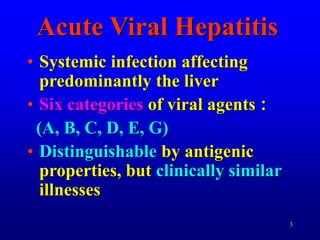
Acute Viral Hepatitis
• Systemic infection affecting
predominantly the liver
• Six categories of viral agents :
(A, B, C, D, E, G)
• Distinguishable by antigenic
properties, but clinically similar
illnesses
4
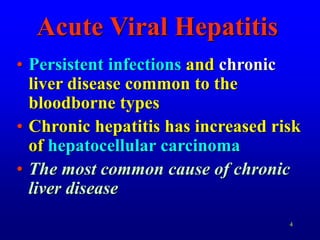
Acute Viral Hepatitis
• Persistent infections and chronic
liver disease common to the
bloodborne types
• Chronic hepatitis has increased risk
of hepatocellular carcinoma
• The most common cause of chronic
liver disease
5
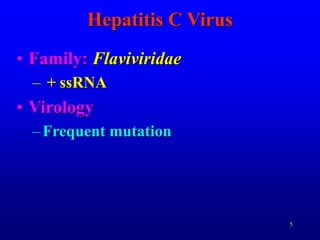
• Family: Flaviviridae
– + ssRNA
• Virology
–Frequent mutation
Hepatitis C Virus
6
HCV Genetic Heterogeneity
• Six major genotypes
– Iran population (Genotype 1,2, 4, 5?)
– Predict treatment outcome
• Multiple quasispecies within a
single person
7
Descriptive
epidemiology
&
Occurrence
8
1 -Incubation Period
•Average 6-7 weeks
•Range 2-26 weeks
9
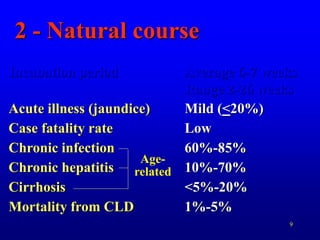
2 - Natural course
Incubation period Average 6-7 weeks
Range 2-26 weeks
Acute illness (jaundice) Mild (<20%)
Case fatality rate Low
Chronic infection 60%-85%
Chronic hepatitis 10%-70%
Cirrhosis <5%-20%
Mortality from CLD 1%-5%
Age-
related
10
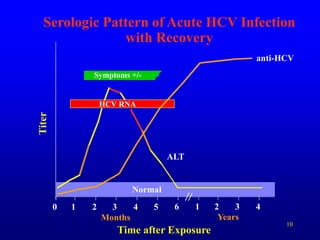
Serologic Pattern of Acute HCV Infection
with Recovery
Symptoms +/-
Time after Exposure
Titer
anti-HCV
ALT
Normal
0 1 2 3 4 5 6 1 2 3 4
Years
Months
HCV RNA
11
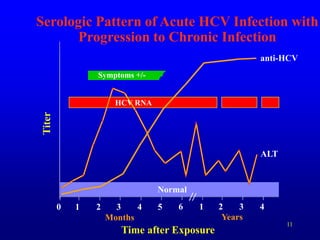
Serologic Pattern of Acute HCV Infection with
Progression to Chronic Infection
Symptoms +/-
Time after Exposure
Titer
anti-HCV
ALT
Normal
0 1 2 3 4 5 6 1 2 3 4
Years
Months
HCV RNA
12
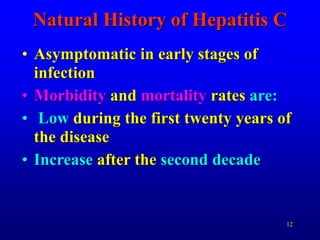
Natural History of Hepatitis C
• Asymptomatic in early stages of
infection
• Morbidity and mortality rates are:
• Low during the first twenty years of
the disease
• Increase after the second decade
13
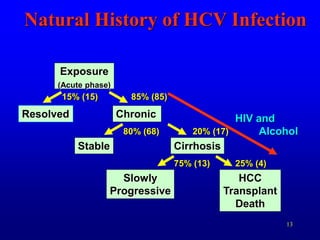
Natural History of HCV Infection
Exposure
(Acute phase)
Resolved Chronic
Cirrhosis
Stable
Slowly
Progressive
HCC
Transplant
Death
20% (17)
15% (15) 85% (85)
25% (4)
80% (68)
75% (13)
HIV and
Alcohol
14
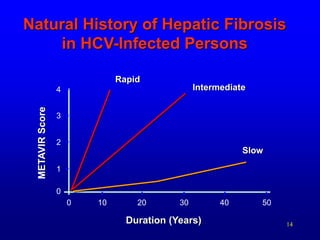
0
1
2
3
4
10 30
20 40 50
Duration (Years)
METAVIR
Score
Natural History of Hepatic Fibrosis
in HCV-Infected Persons
Rapid
Intermediate
Slow
0
15
Hepatitis C
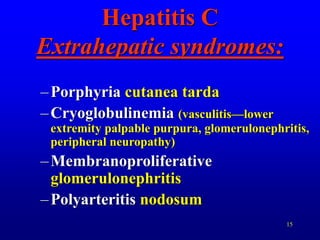
Extrahepatic syndromes:
–Porphyria cutanea tarda
–Cryoglobulinemia (vasculitis—lower
extremity palpable purpura, glomerulonephritis,
peripheral neuropathy)
–Membranoproliferative
glomerulonephritis
–Polyarteritis nodosum
16
US
3-4 M
Americas
12-15 M
Africa
30-40 M
South East Asia
30-35 M
Australia
0.2 M
World Health Organization, 1999.
Western
Europe
5 M
170-200 Million Carriers Worldwide
Eastern
Europe
10 M
Far East Asia
60 M
3 – Geographical distribution
17
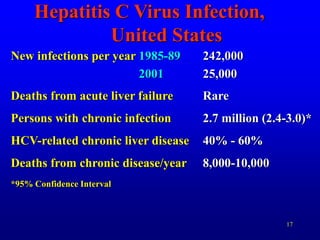
Hepatitis C Virus Infection,
United States
New infections per year 1985-89 242,000
2001 25,000
Deaths from acute liver failure Rare
Persons with chronic infection 2.7 million (2.4-3.0)*
HCV-related chronic liver disease 40% - 60%
Deaths from chronic disease/year 8,000-10,000
*95% Confidence Interval
18
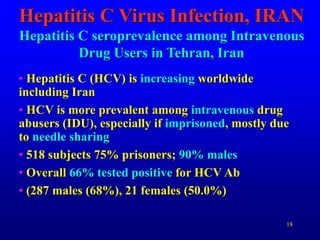
Hepatitis C Virus Infection, IRAN
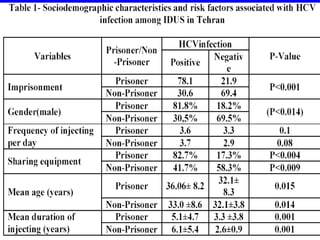
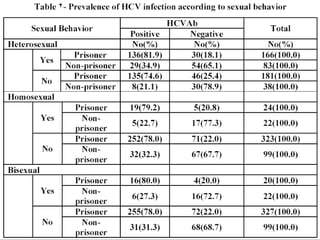
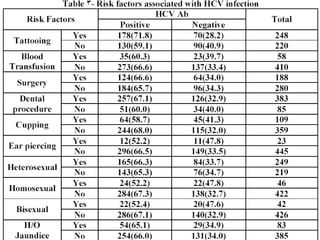
Hepatitis C seroprevalence among Intravenous
Drug Users in Tehran, Iran
• Hepatitis C (HCV) is increasing worldwide
including Iran
• HCV is more prevalent among intravenous drug
abusers (IDU), especially if imprisoned, mostly due
to needle sharing
• 518 subjects 75% prisoners; 90% males
• Overall 66% tested positive for HCV Ab
• (287 males (68%), 21 females (50.0%)
19
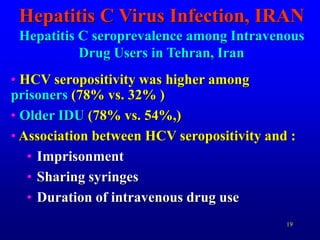
Hepatitis C Virus Infection, IRAN
Hepatitis C seroprevalence among Intravenous
Drug Users in Tehran, Iran
• HCV seropositivity was higher among
prisoners (78% vs. 32% )
• Older IDU (78% vs. 54%,)
• Association between HCV seropositivity and :
• Imprisonment
• Sharing syringes
• Duration of intravenous drug use
20
21
22
23
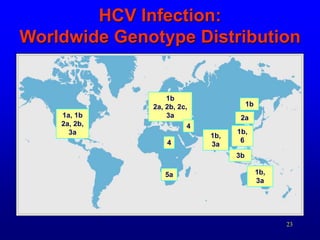
1a, 1b
2a, 2b,
3a
1b
2a, 2b, 2c,
3a
4
5a
1b
1b,
6
1b,
3a
1b,
3a
3b
2a
4
HCV Infection:
Worldwide Genotype Distribution
24
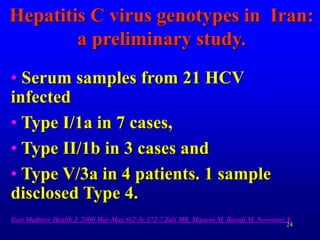
Hepatitis C virus genotypes in Iran:
a preliminary study.
• Serum samples from 21 HCV
infected
• Type I/1a in 7 cases,
• Type II/1b in 3 cases and
• Type V/3a in 4 patients. 1 sample
disclosed Type 4.
East Mediterr Health J. 2000 Mar-May;6(2-3):372-7.Zali MR, Mayumi M, Raoufi M, Nowroozi A.
25
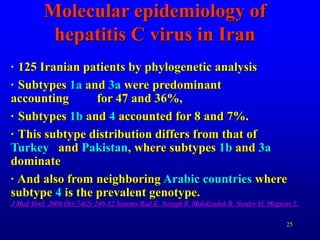
Molecular epidemiology of
hepatitis C virus in Iran
· 125 Iranian patients by phylogenetic analysis
· Subtypes 1a and 3a were predominant
accounting for 47 and 36%,
· Subtypes 1b and 4 accounted for 8 and 7%.
· This subtype distribution differs from that of
Turkey and Pakistan, where subtypes 1b and 3a
dominate
· And also from neighboring Arabic countries where
subtype 4 is the prevalent genotype.
J Med Virol. 2004 Oct;74(2):246-52.Samimi-Rad K, Nategh R, Malekzadeh R, Norder H, Magnius L.
26
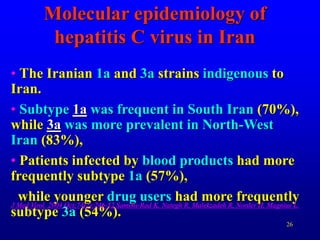
Molecular epidemiology of
hepatitis C virus in Iran
• The Iranian 1a and 3a strains indigenous to
Iran.
• Subtype 1a was frequent in South Iran (70%),
while 3a was more prevalent in North-West
Iran (83%),
• Patients infected by blood products had more
frequently subtype 1a (57%),
while younger drug users had more frequently
subtype 3a (54%).
J Med Virol. 2004 Oct;74(2):246-52.Samimi-Rad K, Nategh R, Malekzadeh R, Norder H, Magnius L.
27
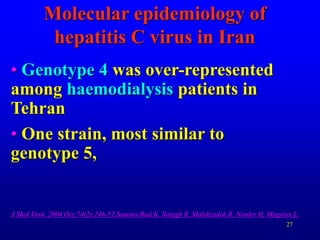
Molecular epidemiology of
hepatitis C virus in Iran
• Genotype 4 was over-represented
among haemodialysis patients in
Tehran
• One strain, most similar to
genotype 5,
J Med Virol. 2004 Oct;74(2):246-52.Samimi-Rad K, Nategh R, Malekzadeh R, Norder H, Magnius L.
28
4 - Timeline trend
• Pandemics
• Epidemics
• Outbreaks
• Seasonality
29
5 – Age,
Gender,
Occupation,
Social situation
30
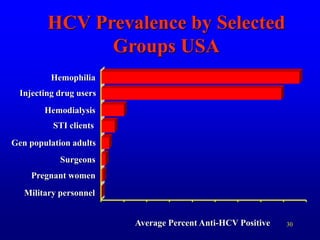
HCV Prevalence by Selected
Groups USA
Hemophilia
Injecting drug users
Surgeons
Hemodialysis
Average Percent Anti-HCV Positive
Gen population adults
Military personnel
STI clients
Pregnant women
31
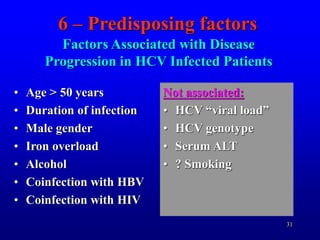
Factors Associated with Disease
Progression in HCV Infected Patients
• Age > 50 years
• Duration of infection
• Male gender
• Iron overload
• Alcohol
• Coinfection with HBV
• Coinfection with HIV
Not associated:
• HCV “viral load”
• HCV genotype
• Serum ALT
• ? Smoking
6 – Predisposing factors
32
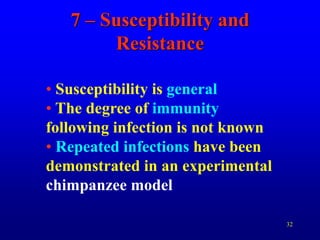
7 – Susceptibility and
Resistance
• Susceptibility is general
• The degree of immunity
following infection is not known
• Repeated infections have been
demonstrated in an experimental
chimpanzee model
33
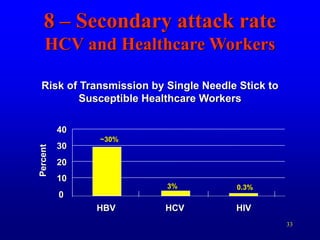
8 – Secondary attack rate
HCV and Healthcare Workers
Risk of Transmission by Single Needle Stick to
Susceptible Healthcare Workers
0
10
20
30
40
HBV HCV HIV
Percent
~30%
3% 0.3%
34
9 - Transmission
• Injecting drug use
• Transfusion, transplant from infected donor
• Occupational exposure to blood
– Mostly needle sticks
• Iatrogenic (unsafe injections)
• Birth to HCV-infected mother
• Sex with infected partner
– Multiple sex partners
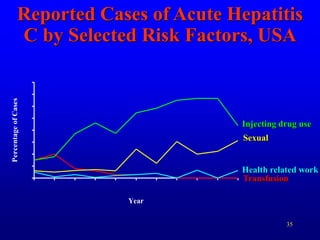
35
Reported Cases of Acute Hepatitis
C by Selected Risk Factors, USA
Year
Percentage
of
Cases
Injecting drug use
Sexual
Health related work
Transfusion
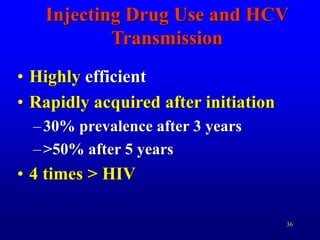
36
Injecting Drug Use and HCV
Transmission
• Highly efficient
• Rapidly acquired after initiation
–30% prevalence after 3 years
–>50% after 5 years
• 4 times > HIV
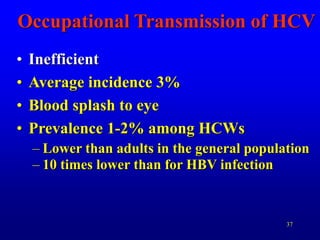
37
Occupational Transmission of HCV
• Inefficient
• Average incidence 3%
• Blood splash to eye
• Prevalence 1-2% among HCWs
– Lower than adults in the general population
– 10 times lower than for HBV infection
38
Perinatal Transmission of HCV
• From women HCV-RNA positive at
delivery
– Average rate of infection 6%
– Higher (17%) if woman co-infected with
HIV
• No association with :
– Delivery method
– Breastfeeding
39
Household Transmission of HCV
• Rare but not absent
• Could occur through
percutaneous/mucosal exposures to blood
– Theoretically through sharing of
contaminated personal articles (razors,
toothbrushes)
40
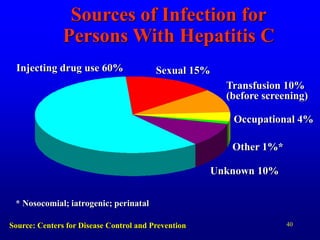
Sources of Infection for
Persons With Hepatitis C
Sexual 15%
Other 1%*
Unknown 10%
Injecting drug use 60%
Transfusion 10%
(before screening)
* Nosocomial; iatrogenic; perinatal
Source: Centers for Disease Control and Prevention
Occupational 4%
41
Prevention
and
Control
42
Prevention and Control
• Primary Prevention:
• Prevention of disease in “well” individuals
• Secondary Prevention:
• Identification and intervention in early
stages of disease
• Tertiary Prevention:
• Prevention of further deterioration,
reduction in complications
43
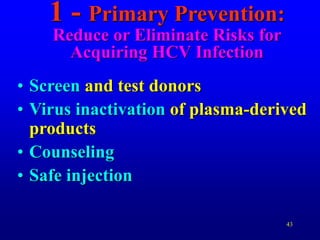
1 - Primary Prevention:
Reduce or Eliminate Risks for
Acquiring HCV Infection
• Screen and test donors
• Virus inactivation of plasma-derived
products
• Counseling
• Safe injection
44
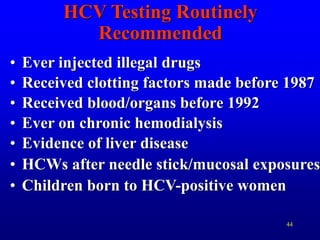
HCV Testing Routinely
Recommended
• Ever injected illegal drugs
• Received clotting factors made before 1987
• Received blood/organs before 1992
• Ever on chronic hemodialysis
• Evidence of liver disease
• HCWs after needle stick/mucosal exposures
• Children born to HCV-positive women
45
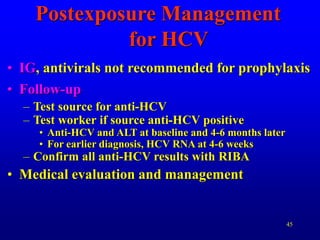
Postexposure Management
for HCV
• IG, antivirals not recommended for prophylaxis
• Follow-up
– Test source for anti-HCV
– Test worker if source anti-HCV positive
• Anti-HCV and ALT at baseline and 4-6 months later
• For earlier diagnosis, HCV RNA at 4-6 weeks
– Confirm all anti-HCV results with RIBA
• Medical evaluation and management
46
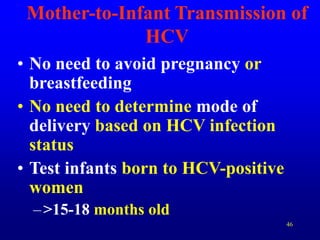
Mother-to-Infant Transmission of
HCV
• No need to avoid pregnancy or
breastfeeding
• No need to determine mode of
delivery based on HCV infection
status
• Test infants born to HCV-positive
women
–>15-18 months old
47
2 - Secondary Prevention:
48
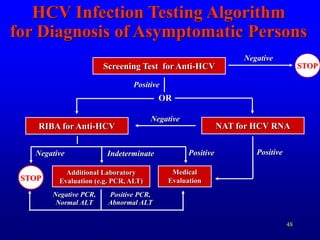
HCV Infection Testing Algorithm
for Diagnosis of Asymptomatic Persons
Screening Test for Anti-HCV
Negative
STOP
Positive
OR
RIBA for Anti-HCV NAT for HCV RNA
Negative
STOP
Additional Laboratory
Evaluation (e.g. PCR, ALT)
Negative Positive
Indeterminate
Medical
Evaluation
Positive
Negative PCR,
Normal ALT
Positive PCR,
Abnormal ALT
49
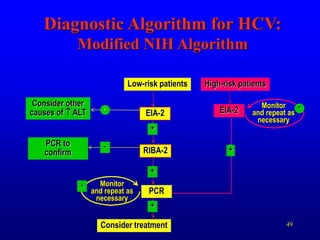
Diagnostic Algorithm for HCV:
Modified NIH Algorithm
Monitor
and repeat as
necessary
-
+
-
Consider other
causes of  ALT
PCR to
confirm
Low-risk patients High-risk patients
RIBA-2
EIA-2
PCR
Consider treatment
EIA-2
Monitor
and repeat as
necessary
-
-
+
+
+
50
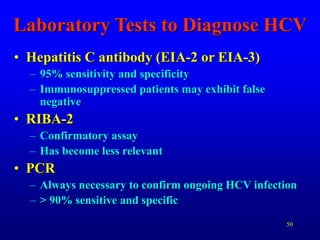
Laboratory Tests to Diagnose HCV
• Hepatitis C antibody (EIA-2 or EIA-3)
– 95% sensitivity and specificity
– Immunosuppressed patients may exhibit false
negative
• RIBA-2
– Confirmatory assay
– Has become less relevant
• PCR
– Always necessary to confirm ongoing HCV infection
– > 90% sensitive and specific
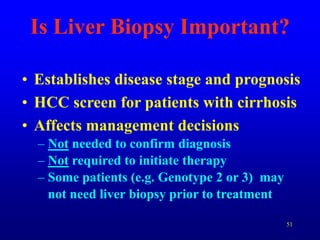
51
Is Liver Biopsy Important?
• Establishes disease stage and prognosis
• HCC screen for patients with cirrhosis
• Affects management decisions
– Not needed to confirm diagnosis
– Not required to initiate therapy
– Some patients (e.g. Genotype 2 or 3) may
not need liver biopsy prior to treatment
52
Does ALT Still Matter?
Not as much as it used to, but it still does
• Some correlation with degree of activity
• Normal ALT patients have milder histology, but
not always
• Degree of inflammatory activity correlates with
risk of progressive fibrosis
• Still useful to monitor during therapy
53
Evaluating the Hepatitis Patient
• HCV EIA for diagnosis and HCV RNA testing
to confirm chronic infection
– ALT and HCV load are not reliable indicators of
disease severity
• Liver biopsy to stage liver disease
– Predicts prognosis and influences treatment
decisions
– Not “required” to treat HCV infection
• Hepatitis A and B screening and vaccine
54
Hepatitis C Treatment:
Objectives
• Viral eradication
– Persistent undetectable plasma HCV-RNA 24
weeks post treatment
• Histologic and clinical outcomes
– Delay fibrosis and progression to cirrhosis
– Prevent hepatic decompensation and
hepatocellular carcinoma
55
3 - Tertiary Prevention:
56
Medical Evaluation and Management
for Chronic HCV Infection
• Assess for biochemical evidence of CLD
• Assess for severity of disease and possible
treatment, according to current practice
guidelines
– 40-50% sustained response to antiviral
combination therapy (peg interferon, ribavirin)
– Vaccinate against hepatitis A
• Counsel to reduce further harm to liver
– Limit or abstain from alcohol
57
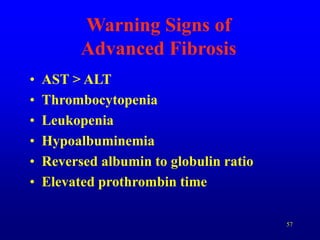
Warning Signs of
Advanced Fibrosis
• AST > ALT
• Thrombocytopenia
• Leukopenia
• Hypoalbuminemia
• Reversed albumin to globulin ratio
• Elevated prothrombin time
58
Hepatitis C Treatment:
Objectives
• Viral eradication
– Persistent undetectable plasma HCV-RNA 24 weeks
post treatment
• Histologic and clinical outcomes
– Delay fibrosis and progression to cirrhosis
– Prevent hepatic decompensation and hepatocellular
carcinoma
59
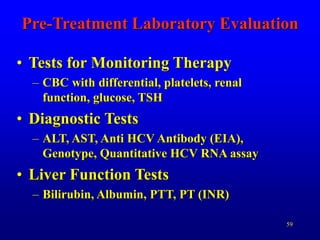
Pre-Treatment Laboratory Evaluation
• Tests for Monitoring Therapy
– CBC with differential, platelets, renal
function, glucose, TSH
• Diagnostic Tests
– ALT, AST, Anti HCV Antibody (EIA),
Genotype, Quantitative HCV RNA assay
• Liver Function Tests
– Bilirubin, Albumin, PTT, PT (INR)
60
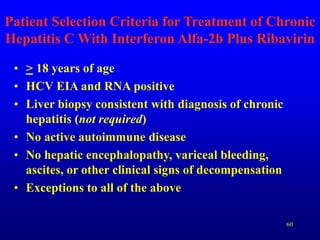
Patient Selection Criteria for Treatment of Chronic
Hepatitis C With Interferon Alfa-2b Plus Ribavirin
• > 18 years of age
• HCV EIA and RNA positive
• Liver biopsy consistent with diagnosis of chronic
hepatitis (not required)
• No active autoimmune disease
• No hepatic encephalopathy, variceal bleeding,
ascites, or other clinical signs of decompensation
• Exceptions to all of the above
61
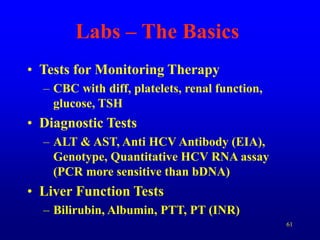
Labs – The Basics
• Tests for Monitoring Therapy
– CBC with diff, platelets, renal function,
glucose, TSH
• Diagnostic Tests
– ALT & AST, Anti HCV Antibody (EIA),
Genotype, Quantitative HCV RNA assay
(PCR more sensitive than bDNA)
• Liver Function Tests
– Bilirubin, Albumin, PTT, PT (INR)
62
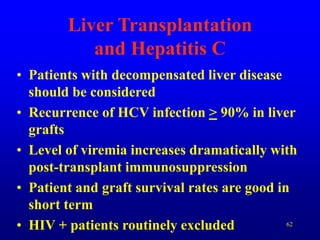
Liver Transplantation
and Hepatitis C
• Patients with decompensated liver disease
should be considered
• Recurrence of HCV infection > 90% in liver
grafts
• Level of viremia increases dramatically with
post-transplant immunosuppression
• Patient and graft survival rates are good in
short term
• HIV + patients routinely excluded
63
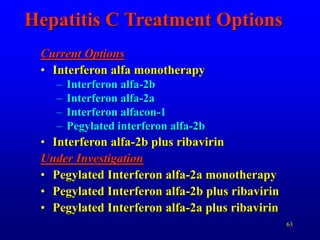
Hepatitis C Treatment Options
Current Options
• Interferon alfa monotherapy
– Interferon alfa-2b
– Interferon alfa-2a
– Interferon alfacon-1
– Pegylated interferon alfa-2b
• Interferon alfa-2b plus ribavirin
Under Investigation
• Pegylated Interferon alfa-2a monotherapy
• Pegylated Interferon alfa-2b plus ribavirin
• Pegylated Interferon alfa-2a plus ribavirin
64
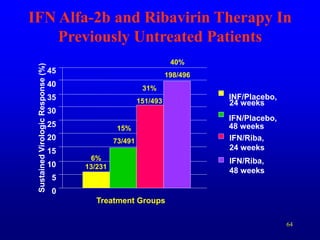
IFN Alfa-2b and Ribavirin Therapy In
Previously Untreated Patients
0
5
10
15
20
25
30
35
40
45
Sustained
Virologic
Response
(%)
INF/Placebo,
24 weeks
IFN/Placebo,
48 weeks
IFN/Riba,
24 weeks
IFN/Riba,
48 weeks
40%
198/496
31%
151/493
15%
73/491
6%
13/231
Treatment Groups
65
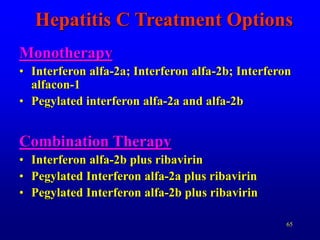
Hepatitis C Treatment Options
Monotherapy
• Interferon alfa-2a; Interferon alfa-2b; Interferon
alfacon-1
• Pegylated interferon alfa-2a and alfa-2b
Combination Therapy
• Interferon alfa-2b plus ribavirin
• Pegylated Interferon alfa-2a plus ribavirin
• Pegylated Interferon alfa-2b plus ribavirin
66
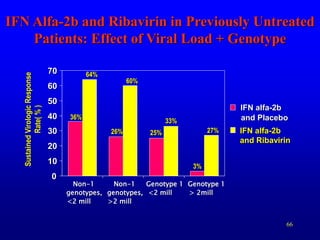
IFN Alfa-2b and Ribavirin in Previously Untreated
Patients: Effect of Viral Load + Genotype
0
10
20
30
40
50
60
70
Non-1
genotypes,
<2 mill
Non-1
genotypes,
>2 mill
Genotype 1
<2 mill
Genotype 1
> 2mill
IFN alfa-2b
and Placebo
36%
64%
26%
60%
25%
33%
27%
3%
Sustained
Virologic
Response
Rate(
%
)
IFN alfa-2b
and Ribavirin
67
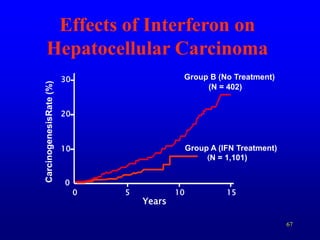
Effects of Interferon on
Hepatocellular Carcinoma
30
20
10
0
0 5 10 15
CarcinogenesisRate
(%)
Years
Group B (No Treatment)
(N = 402)
Group A (IFN Treatment)
(N = 1,101)
68
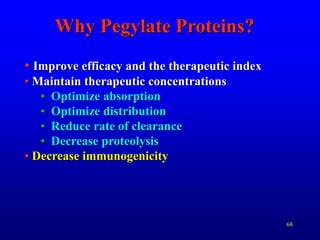
Why Pegylate Proteins?
• Improve efficacy and the therapeutic index
• Maintain therapeutic concentrations
• Optimize absorption
• Optimize distribution
• Reduce rate of clearance
• Decrease proteolysis
• Decrease immunogenicity
69
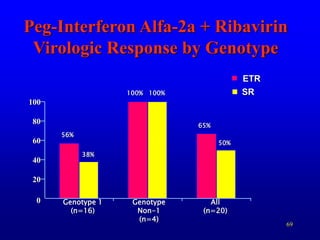
Peg-Interferon Alfa-2a + Ribavirin
Virologic Response by Genotype
Genotype 1
(n=16)
Genotype
Non-1
(n=4)
All
(n=20)
56%
38%
100% 100%
65%
50%
ETR
SR
0
20
40
60
80
100
70
0
5
10
15
20
25
30
35
40
45
50
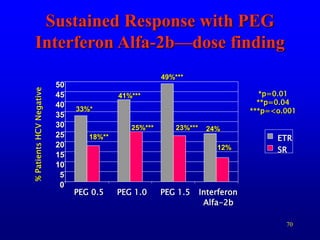
PEG 0.5 PEG 1.0 PEG 1.5 Interferon
Alfa-2b
ETR
SR
Sustained Response with PEG
Interferon Alfa-2b—dose finding
33%*
18%**
41%***
25%***
49%***
23%*** 24%
12%
*p=0.01
**p=0.04
***p=<o.001
71
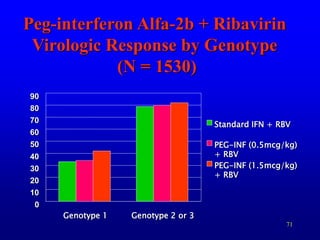
Peg-interferon Alfa-2b + Ribavirin
Virologic Response by Genotype
(N = 1530)
0
10
20
30
40
50
60
70
80
90
Genotype 1 Genotype 2 or 3
Standard IFN + RBV
PEG-INF (0.5mcg/kg)
+ RBV
PEG-INF (1.5mcg/kg)
+ RBV
72
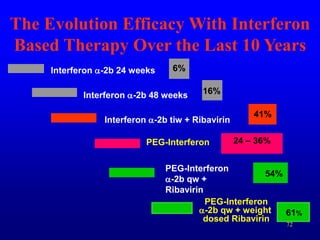
The Evolution Efficacy With Interferon
Based Therapy Over the Last 10 Years
Interferon -2b 48 weeks
Interferon -2b tiw + Ribavirin
Interferon -2b 24 weeks
PEG-Interferon
-2b qw +
Ribavirin
54%
24 – 36%
41%
16%
6%
PEG-Interferon
PEG-Interferon
-2b qw + weight
dosed Ribavirin
61%
73
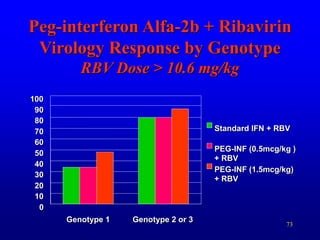
Peg-interferon Alfa-2b + Ribavirin
Virology Response by Genotype
RBV Dose > 10.6 mg/kg
Standard IFN + RBV
PEG-INF (0.5mcg/kg )
+ RBV
0
10
20
30
40
50
60
70
80
90
100
Genotype 1 Genotype 2 or 3
PEG-INF (1.5mcg/kg)
+ RBV
74
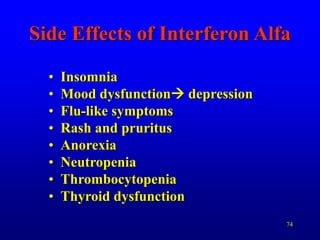
Side Effects of Interferon Alfa
• Insomnia
• Mood dysfunction depression
• Flu-like symptoms
• Rash and pruritus
• Anorexia
• Neutropenia
• Thrombocytopenia
• Thyroid dysfunction
75
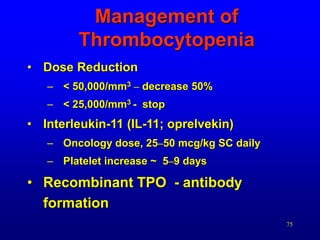
Management of
Thrombocytopenia
• Dose Reduction
– < 50,000/mm3 – decrease 50%
– < 25,000/mm3 - stop
• Interleukin-11 (IL-11; oprelvekin)
– Oncology dose, 25–50 mcg/kg SC daily
– Platelet increase ~ 5–9 days
• Recombinant TPO - antibody
formation
76
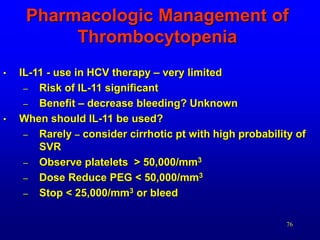
Pharmacologic Management of
Thrombocytopenia
• IL-11 - use in HCV therapy – very limited
– Risk of IL-11 significant
– Benefit – decrease bleeding? Unknown
• When should IL-11 be used?
– Rarely – consider cirrhotic pt with high probability of
SVR
– Observe platelets > 50,000/mm3
– Dose Reduce PEG < 50,000/mm3
– Stop < 25,000/mm3 or bleed
77
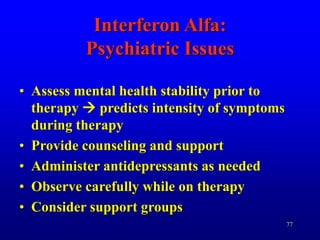
Interferon Alfa:
Psychiatric Issues
• Assess mental health stability prior to
therapy  predicts intensity of symptoms
during therapy
• Provide counseling and support
• Administer antidepressants as needed
• Observe carefully while on therapy
• Consider support groups
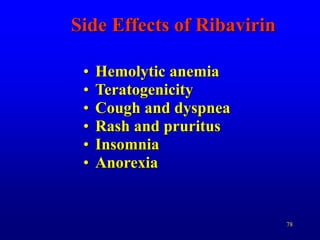
78
Side Effects of Ribavirin
• Hemolytic anemia
• Teratogenicity
• Cough and dyspnea
• Rash and pruritus
• Insomnia
• Anorexia
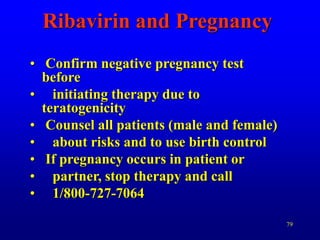
79
Ribavirin and Pregnancy
• Confirm negative pregnancy test
before
• initiating therapy due to
teratogenicity
• Counsel all patients (male and female)
• about risks and to use birth control
• If pregnancy occurs in patient or
• partner, stop therapy and call
• 1/800-727-7064
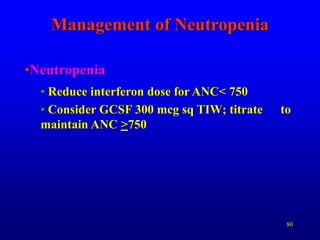
80
•Neutropenia
• Reduce interferon dose for ANC< 750
• Consider GCSF 300 mcg sq TIW; titrate to
maintain ANC >750
Management of Neutropenia
81
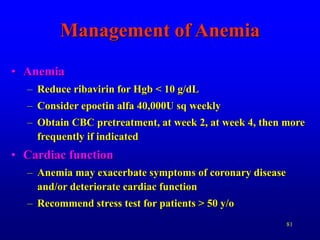
Management of Anemia
• Anemia
– Reduce ribavirin for Hgb < 10 g/dL
– Consider epoetin alfa 40,000U sq weekly
– Obtain CBC pretreatment, at week 2, at week 4, then more
frequently if indicated
• Cardiac function
– Anemia may exacerbate symptoms of coronary disease
and/or deteriorate cardiac function
– Recommend stress test for patients > 50 y/o
82
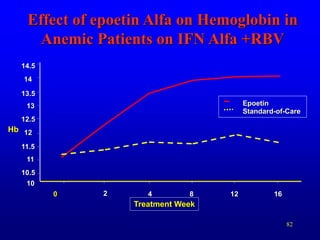
Effect of epoetin Alfa on Hemoglobin in
Anemic Patients on IFN Alfa +RBV
Hb
10
10.5
11
11.5
12
12.5
13
13.5
14
14.5
0 2 4 8 12 16
Epoetin
Standard-of-Care
Treatment Week
83
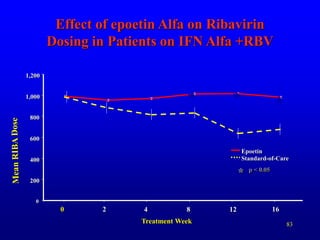
Effect of epoetin Alfa on Ribavirin
Dosing in Patients on IFN Alfa +RBV
0
200
400
600
800
1,000
1,200
0 2 4 8 12 16
Epoetin
Standard-of-Care
* *
*
* p < 0.05
Treatment Week
84
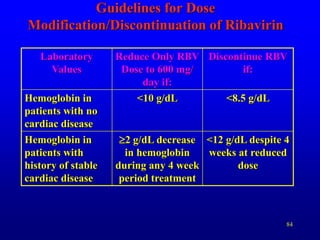
Guidelines for Dose
Modification/Discontinuation of Ribavirin
Laboratory
Values
Reduce Only RBV
Dose to 600 mg/
day if:
Discontinue RBV
if:
Hemoglobin in
patients with no
cardiac disease
<10 g/dL <8.5 g/dL
Hemoglobin in
patients with
history of stable
cardiac disease
2 g/dL decrease
in hemoglobin
during any 4 week
period treatment
<12 g/dL despite 4
weeks at reduced
dose
85
HCV Counseling
• Prevent transmission to others
– Direct exposure to blood
– Perinatal exposure
– Sexual exposure
• Refer to support group
86
Sources :
1) East Mediterr Health J. 2000 Mar-May;6(2-3):372-
7.Zali MR, Mayumi M, Raoufi M, Nowroozi A.
2) J Med Virol. 2004 Oct;74(2):246-52.Samimi-Rad K,
Nategh R, Malekzadeh R, Norder H, Magnius L.
3) CDC Internet site, 2004
4) WHO Internet site, 2004
5) Hepatitis resource network
6) Hatami H. Malekzadeh R. Emerging Hepatitis C, In :
Emerging and reemerging infectious diseases and
employee health, 1th ed. 2004.

Emergencies Diseases 134287607-Hepatitis-c.ppt

  • 1.
    1 ‫الرحيم‬ ‫الرحمن‬ ‫هللا‬‫بسم‬ Emerging Diseases Epidemiology of Hepatitis C Shahid Beheshti University of medical sciences, 2004 By: Hatami H. MD. MPH
  • 2.
  • 3.
    3 Acute Viral Hepatitis •Systemic infection affecting predominantly the liver • Six categories of viral agents : (A, B, C, D, E, G) • Distinguishable by antigenic properties, but clinically similar illnesses
  • 4.
    4 Acute Viral Hepatitis •Persistent infections and chronic liver disease common to the bloodborne types • Chronic hepatitis has increased risk of hepatocellular carcinoma • The most common cause of chronic liver disease
  • 5.
    5 • Family: Flaviviridae –+ ssRNA • Virology –Frequent mutation Hepatitis C Virus
  • 6.
    6 HCV Genetic Heterogeneity •Six major genotypes – Iran population (Genotype 1,2, 4, 5?) – Predict treatment outcome • Multiple quasispecies within a single person
  • 7.
  • 8.
    8 1 -Incubation Period •Average6-7 weeks •Range 2-26 weeks
  • 9.
    9 2 - Naturalcourse Incubation period Average 6-7 weeks Range 2-26 weeks Acute illness (jaundice) Mild (<20%) Case fatality rate Low Chronic infection 60%-85% Chronic hepatitis 10%-70% Cirrhosis <5%-20% Mortality from CLD 1%-5% Age- related
  • 10.
    10 Serologic Pattern ofAcute HCV Infection with Recovery Symptoms +/- Time after Exposure Titer anti-HCV ALT Normal 0 1 2 3 4 5 6 1 2 3 4 Years Months HCV RNA
  • 11.
    11 Serologic Pattern ofAcute HCV Infection with Progression to Chronic Infection Symptoms +/- Time after Exposure Titer anti-HCV ALT Normal 0 1 2 3 4 5 6 1 2 3 4 Years Months HCV RNA
  • 12.
    12 Natural History ofHepatitis C • Asymptomatic in early stages of infection • Morbidity and mortality rates are: • Low during the first twenty years of the disease • Increase after the second decade
  • 13.
    13 Natural History ofHCV Infection Exposure (Acute phase) Resolved Chronic Cirrhosis Stable Slowly Progressive HCC Transplant Death 20% (17) 15% (15) 85% (85) 25% (4) 80% (68) 75% (13) HIV and Alcohol
  • 14.
    14 0 1 2 3 4 10 30 20 4050 Duration (Years) METAVIR Score Natural History of Hepatic Fibrosis in HCV-Infected Persons Rapid Intermediate Slow 0
  • 15.
    15 Hepatitis C Extrahepatic syndromes: –Porphyriacutanea tarda –Cryoglobulinemia (vasculitis—lower extremity palpable purpura, glomerulonephritis, peripheral neuropathy) –Membranoproliferative glomerulonephritis –Polyarteritis nodosum
  • 16.
    16 US 3-4 M Americas 12-15 M Africa 30-40M South East Asia 30-35 M Australia 0.2 M World Health Organization, 1999. Western Europe 5 M 170-200 Million Carriers Worldwide Eastern Europe 10 M Far East Asia 60 M 3 – Geographical distribution
  • 17.
    17 Hepatitis C VirusInfection, United States New infections per year 1985-89 242,000 2001 25,000 Deaths from acute liver failure Rare Persons with chronic infection 2.7 million (2.4-3.0)* HCV-related chronic liver disease 40% - 60% Deaths from chronic disease/year 8,000-10,000 *95% Confidence Interval
  • 18.
    18 Hepatitis C VirusInfection, IRAN Hepatitis C seroprevalence among Intravenous Drug Users in Tehran, Iran • Hepatitis C (HCV) is increasing worldwide including Iran • HCV is more prevalent among intravenous drug abusers (IDU), especially if imprisoned, mostly due to needle sharing • 518 subjects 75% prisoners; 90% males • Overall 66% tested positive for HCV Ab • (287 males (68%), 21 females (50.0%)
  • 19.
    19 Hepatitis C VirusInfection, IRAN Hepatitis C seroprevalence among Intravenous Drug Users in Tehran, Iran • HCV seropositivity was higher among prisoners (78% vs. 32% ) • Older IDU (78% vs. 54%,) • Association between HCV seropositivity and : • Imprisonment • Sharing syringes • Duration of intravenous drug use
  • 20.
  • 21.
  • 22.
  • 23.
    23 1a, 1b 2a, 2b, 3a 1b 2a,2b, 2c, 3a 4 5a 1b 1b, 6 1b, 3a 1b, 3a 3b 2a 4 HCV Infection: Worldwide Genotype Distribution
  • 24.
    24 Hepatitis C virusgenotypes in Iran: a preliminary study. • Serum samples from 21 HCV infected • Type I/1a in 7 cases, • Type II/1b in 3 cases and • Type V/3a in 4 patients. 1 sample disclosed Type 4. East Mediterr Health J. 2000 Mar-May;6(2-3):372-7.Zali MR, Mayumi M, Raoufi M, Nowroozi A.
  • 25.
    25 Molecular epidemiology of hepatitisC virus in Iran · 125 Iranian patients by phylogenetic analysis · Subtypes 1a and 3a were predominant accounting for 47 and 36%, · Subtypes 1b and 4 accounted for 8 and 7%. · This subtype distribution differs from that of Turkey and Pakistan, where subtypes 1b and 3a dominate · And also from neighboring Arabic countries where subtype 4 is the prevalent genotype. J Med Virol. 2004 Oct;74(2):246-52.Samimi-Rad K, Nategh R, Malekzadeh R, Norder H, Magnius L.
  • 26.
    26 Molecular epidemiology of hepatitisC virus in Iran • The Iranian 1a and 3a strains indigenous to Iran. • Subtype 1a was frequent in South Iran (70%), while 3a was more prevalent in North-West Iran (83%), • Patients infected by blood products had more frequently subtype 1a (57%), while younger drug users had more frequently subtype 3a (54%). J Med Virol. 2004 Oct;74(2):246-52.Samimi-Rad K, Nategh R, Malekzadeh R, Norder H, Magnius L.
  • 27.
    27 Molecular epidemiology of hepatitisC virus in Iran • Genotype 4 was over-represented among haemodialysis patients in Tehran • One strain, most similar to genotype 5, J Med Virol. 2004 Oct;74(2):246-52.Samimi-Rad K, Nategh R, Malekzadeh R, Norder H, Magnius L.
  • 28.
    28 4 - Timelinetrend • Pandemics • Epidemics • Outbreaks • Seasonality
  • 29.
  • 30.
    30 HCV Prevalence bySelected Groups USA Hemophilia Injecting drug users Surgeons Hemodialysis Average Percent Anti-HCV Positive Gen population adults Military personnel STI clients Pregnant women
  • 31.
    31 Factors Associated withDisease Progression in HCV Infected Patients • Age > 50 years • Duration of infection • Male gender • Iron overload • Alcohol • Coinfection with HBV • Coinfection with HIV Not associated: • HCV “viral load” • HCV genotype • Serum ALT • ? Smoking 6 – Predisposing factors
  • 32.
    32 7 – Susceptibilityand Resistance • Susceptibility is general • The degree of immunity following infection is not known • Repeated infections have been demonstrated in an experimental chimpanzee model
  • 33.
    33 8 – Secondaryattack rate HCV and Healthcare Workers Risk of Transmission by Single Needle Stick to Susceptible Healthcare Workers 0 10 20 30 40 HBV HCV HIV Percent ~30% 3% 0.3%
  • 34.
    34 9 - Transmission •Injecting drug use • Transfusion, transplant from infected donor • Occupational exposure to blood – Mostly needle sticks • Iatrogenic (unsafe injections) • Birth to HCV-infected mother • Sex with infected partner – Multiple sex partners
  • 35.
    35 Reported Cases ofAcute Hepatitis C by Selected Risk Factors, USA Year Percentage of Cases Injecting drug use Sexual Health related work Transfusion
  • 36.
    36 Injecting Drug Useand HCV Transmission • Highly efficient • Rapidly acquired after initiation –30% prevalence after 3 years –>50% after 5 years • 4 times > HIV
  • 37.
    37 Occupational Transmission ofHCV • Inefficient • Average incidence 3% • Blood splash to eye • Prevalence 1-2% among HCWs – Lower than adults in the general population – 10 times lower than for HBV infection
  • 38.
    38 Perinatal Transmission ofHCV • From women HCV-RNA positive at delivery – Average rate of infection 6% – Higher (17%) if woman co-infected with HIV • No association with : – Delivery method – Breastfeeding
  • 39.
    39 Household Transmission ofHCV • Rare but not absent • Could occur through percutaneous/mucosal exposures to blood – Theoretically through sharing of contaminated personal articles (razors, toothbrushes)
  • 40.
    40 Sources of Infectionfor Persons With Hepatitis C Sexual 15% Other 1%* Unknown 10% Injecting drug use 60% Transfusion 10% (before screening) * Nosocomial; iatrogenic; perinatal Source: Centers for Disease Control and Prevention Occupational 4%
  • 41.
  • 42.
    42 Prevention and Control •Primary Prevention: • Prevention of disease in “well” individuals • Secondary Prevention: • Identification and intervention in early stages of disease • Tertiary Prevention: • Prevention of further deterioration, reduction in complications
  • 43.
    43 1 - PrimaryPrevention: Reduce or Eliminate Risks for Acquiring HCV Infection • Screen and test donors • Virus inactivation of plasma-derived products • Counseling • Safe injection
  • 44.
    44 HCV Testing Routinely Recommended •Ever injected illegal drugs • Received clotting factors made before 1987 • Received blood/organs before 1992 • Ever on chronic hemodialysis • Evidence of liver disease • HCWs after needle stick/mucosal exposures • Children born to HCV-positive women
  • 45.
    45 Postexposure Management for HCV •IG, antivirals not recommended for prophylaxis • Follow-up – Test source for anti-HCV – Test worker if source anti-HCV positive • Anti-HCV and ALT at baseline and 4-6 months later • For earlier diagnosis, HCV RNA at 4-6 weeks – Confirm all anti-HCV results with RIBA • Medical evaluation and management
  • 46.
    46 Mother-to-Infant Transmission of HCV •No need to avoid pregnancy or breastfeeding • No need to determine mode of delivery based on HCV infection status • Test infants born to HCV-positive women –>15-18 months old
  • 47.
    47 2 - SecondaryPrevention:
  • 48.
    48 HCV Infection TestingAlgorithm for Diagnosis of Asymptomatic Persons Screening Test for Anti-HCV Negative STOP Positive OR RIBA for Anti-HCV NAT for HCV RNA Negative STOP Additional Laboratory Evaluation (e.g. PCR, ALT) Negative Positive Indeterminate Medical Evaluation Positive Negative PCR, Normal ALT Positive PCR, Abnormal ALT
  • 49.
    49 Diagnostic Algorithm forHCV: Modified NIH Algorithm Monitor and repeat as necessary - + - Consider other causes of  ALT PCR to confirm Low-risk patients High-risk patients RIBA-2 EIA-2 PCR Consider treatment EIA-2 Monitor and repeat as necessary - - + + +
  • 50.
    50 Laboratory Tests toDiagnose HCV • Hepatitis C antibody (EIA-2 or EIA-3) – 95% sensitivity and specificity – Immunosuppressed patients may exhibit false negative • RIBA-2 – Confirmatory assay – Has become less relevant • PCR – Always necessary to confirm ongoing HCV infection – > 90% sensitive and specific
  • 51.
    51 Is Liver BiopsyImportant? • Establishes disease stage and prognosis • HCC screen for patients with cirrhosis • Affects management decisions – Not needed to confirm diagnosis – Not required to initiate therapy – Some patients (e.g. Genotype 2 or 3) may not need liver biopsy prior to treatment
  • 52.
    52 Does ALT StillMatter? Not as much as it used to, but it still does • Some correlation with degree of activity • Normal ALT patients have milder histology, but not always • Degree of inflammatory activity correlates with risk of progressive fibrosis • Still useful to monitor during therapy
  • 53.
    53 Evaluating the HepatitisPatient • HCV EIA for diagnosis and HCV RNA testing to confirm chronic infection – ALT and HCV load are not reliable indicators of disease severity • Liver biopsy to stage liver disease – Predicts prognosis and influences treatment decisions – Not “required” to treat HCV infection • Hepatitis A and B screening and vaccine
  • 54.
    54 Hepatitis C Treatment: Objectives •Viral eradication – Persistent undetectable plasma HCV-RNA 24 weeks post treatment • Histologic and clinical outcomes – Delay fibrosis and progression to cirrhosis – Prevent hepatic decompensation and hepatocellular carcinoma
  • 55.
    55 3 - TertiaryPrevention:
  • 56.
    56 Medical Evaluation andManagement for Chronic HCV Infection • Assess for biochemical evidence of CLD • Assess for severity of disease and possible treatment, according to current practice guidelines – 40-50% sustained response to antiviral combination therapy (peg interferon, ribavirin) – Vaccinate against hepatitis A • Counsel to reduce further harm to liver – Limit or abstain from alcohol
  • 57.
    57 Warning Signs of AdvancedFibrosis • AST > ALT • Thrombocytopenia • Leukopenia • Hypoalbuminemia • Reversed albumin to globulin ratio • Elevated prothrombin time
  • 58.
    58 Hepatitis C Treatment: Objectives •Viral eradication – Persistent undetectable plasma HCV-RNA 24 weeks post treatment • Histologic and clinical outcomes – Delay fibrosis and progression to cirrhosis – Prevent hepatic decompensation and hepatocellular carcinoma
  • 59.
    59 Pre-Treatment Laboratory Evaluation •Tests for Monitoring Therapy – CBC with differential, platelets, renal function, glucose, TSH • Diagnostic Tests – ALT, AST, Anti HCV Antibody (EIA), Genotype, Quantitative HCV RNA assay • Liver Function Tests – Bilirubin, Albumin, PTT, PT (INR)
  • 60.
    60 Patient Selection Criteriafor Treatment of Chronic Hepatitis C With Interferon Alfa-2b Plus Ribavirin • > 18 years of age • HCV EIA and RNA positive • Liver biopsy consistent with diagnosis of chronic hepatitis (not required) • No active autoimmune disease • No hepatic encephalopathy, variceal bleeding, ascites, or other clinical signs of decompensation • Exceptions to all of the above
  • 61.
    61 Labs – TheBasics • Tests for Monitoring Therapy – CBC with diff, platelets, renal function, glucose, TSH • Diagnostic Tests – ALT & AST, Anti HCV Antibody (EIA), Genotype, Quantitative HCV RNA assay (PCR more sensitive than bDNA) • Liver Function Tests – Bilirubin, Albumin, PTT, PT (INR)
  • 62.
    62 Liver Transplantation and HepatitisC • Patients with decompensated liver disease should be considered • Recurrence of HCV infection > 90% in liver grafts • Level of viremia increases dramatically with post-transplant immunosuppression • Patient and graft survival rates are good in short term • HIV + patients routinely excluded
  • 63.
    63 Hepatitis C TreatmentOptions Current Options • Interferon alfa monotherapy – Interferon alfa-2b – Interferon alfa-2a – Interferon alfacon-1 – Pegylated interferon alfa-2b • Interferon alfa-2b plus ribavirin Under Investigation • Pegylated Interferon alfa-2a monotherapy • Pegylated Interferon alfa-2b plus ribavirin • Pegylated Interferon alfa-2a plus ribavirin
  • 64.
    64 IFN Alfa-2b andRibavirin Therapy In Previously Untreated Patients 0 5 10 15 20 25 30 35 40 45 Sustained Virologic Response (%) INF/Placebo, 24 weeks IFN/Placebo, 48 weeks IFN/Riba, 24 weeks IFN/Riba, 48 weeks 40% 198/496 31% 151/493 15% 73/491 6% 13/231 Treatment Groups
  • 65.
    65 Hepatitis C TreatmentOptions Monotherapy • Interferon alfa-2a; Interferon alfa-2b; Interferon alfacon-1 • Pegylated interferon alfa-2a and alfa-2b Combination Therapy • Interferon alfa-2b plus ribavirin • Pegylated Interferon alfa-2a plus ribavirin • Pegylated Interferon alfa-2b plus ribavirin
  • 66.
    66 IFN Alfa-2b andRibavirin in Previously Untreated Patients: Effect of Viral Load + Genotype 0 10 20 30 40 50 60 70 Non-1 genotypes, <2 mill Non-1 genotypes, >2 mill Genotype 1 <2 mill Genotype 1 > 2mill IFN alfa-2b and Placebo 36% 64% 26% 60% 25% 33% 27% 3% Sustained Virologic Response Rate( % ) IFN alfa-2b and Ribavirin
  • 67.
    67 Effects of Interferonon Hepatocellular Carcinoma 30 20 10 0 0 5 10 15 CarcinogenesisRate (%) Years Group B (No Treatment) (N = 402) Group A (IFN Treatment) (N = 1,101)
  • 68.
    68 Why Pegylate Proteins? •Improve efficacy and the therapeutic index • Maintain therapeutic concentrations • Optimize absorption • Optimize distribution • Reduce rate of clearance • Decrease proteolysis • Decrease immunogenicity
  • 69.
    69 Peg-Interferon Alfa-2a +Ribavirin Virologic Response by Genotype Genotype 1 (n=16) Genotype Non-1 (n=4) All (n=20) 56% 38% 100% 100% 65% 50% ETR SR 0 20 40 60 80 100
  • 70.
    70 0 5 10 15 20 25 30 35 40 45 50 PEG 0.5 PEG1.0 PEG 1.5 Interferon Alfa-2b ETR SR Sustained Response with PEG Interferon Alfa-2b—dose finding 33%* 18%** 41%*** 25%*** 49%*** 23%*** 24% 12% *p=0.01 **p=0.04 ***p=<o.001
  • 71.
    71 Peg-interferon Alfa-2b +Ribavirin Virologic Response by Genotype (N = 1530) 0 10 20 30 40 50 60 70 80 90 Genotype 1 Genotype 2 or 3 Standard IFN + RBV PEG-INF (0.5mcg/kg) + RBV PEG-INF (1.5mcg/kg) + RBV
  • 72.
    72 The Evolution EfficacyWith Interferon Based Therapy Over the Last 10 Years Interferon -2b 48 weeks Interferon -2b tiw + Ribavirin Interferon -2b 24 weeks PEG-Interferon -2b qw + Ribavirin 54% 24 – 36% 41% 16% 6% PEG-Interferon PEG-Interferon -2b qw + weight dosed Ribavirin 61%
  • 73.
    73 Peg-interferon Alfa-2b +Ribavirin Virology Response by Genotype RBV Dose > 10.6 mg/kg Standard IFN + RBV PEG-INF (0.5mcg/kg ) + RBV 0 10 20 30 40 50 60 70 80 90 100 Genotype 1 Genotype 2 or 3 PEG-INF (1.5mcg/kg) + RBV
  • 74.
    74 Side Effects ofInterferon Alfa • Insomnia • Mood dysfunction depression • Flu-like symptoms • Rash and pruritus • Anorexia • Neutropenia • Thrombocytopenia • Thyroid dysfunction
  • 75.
    75 Management of Thrombocytopenia • DoseReduction – < 50,000/mm3 – decrease 50% – < 25,000/mm3 - stop • Interleukin-11 (IL-11; oprelvekin) – Oncology dose, 25–50 mcg/kg SC daily – Platelet increase ~ 5–9 days • Recombinant TPO - antibody formation
  • 76.
    76 Pharmacologic Management of Thrombocytopenia •IL-11 - use in HCV therapy – very limited – Risk of IL-11 significant – Benefit – decrease bleeding? Unknown • When should IL-11 be used? – Rarely – consider cirrhotic pt with high probability of SVR – Observe platelets > 50,000/mm3 – Dose Reduce PEG < 50,000/mm3 – Stop < 25,000/mm3 or bleed
  • 77.
    77 Interferon Alfa: Psychiatric Issues •Assess mental health stability prior to therapy  predicts intensity of symptoms during therapy • Provide counseling and support • Administer antidepressants as needed • Observe carefully while on therapy • Consider support groups
  • 78.
    78 Side Effects ofRibavirin • Hemolytic anemia • Teratogenicity • Cough and dyspnea • Rash and pruritus • Insomnia • Anorexia
  • 79.
    79 Ribavirin and Pregnancy •Confirm negative pregnancy test before • initiating therapy due to teratogenicity • Counsel all patients (male and female) • about risks and to use birth control • If pregnancy occurs in patient or • partner, stop therapy and call • 1/800-727-7064
  • 80.
    80 •Neutropenia • Reduce interferondose for ANC< 750 • Consider GCSF 300 mcg sq TIW; titrate to maintain ANC >750 Management of Neutropenia
  • 81.
    81 Management of Anemia •Anemia – Reduce ribavirin for Hgb < 10 g/dL – Consider epoetin alfa 40,000U sq weekly – Obtain CBC pretreatment, at week 2, at week 4, then more frequently if indicated • Cardiac function – Anemia may exacerbate symptoms of coronary disease and/or deteriorate cardiac function – Recommend stress test for patients > 50 y/o
  • 82.
    82 Effect of epoetinAlfa on Hemoglobin in Anemic Patients on IFN Alfa +RBV Hb 10 10.5 11 11.5 12 12.5 13 13.5 14 14.5 0 2 4 8 12 16 Epoetin Standard-of-Care Treatment Week
  • 83.
    83 Effect of epoetinAlfa on Ribavirin Dosing in Patients on IFN Alfa +RBV 0 200 400 600 800 1,000 1,200 0 2 4 8 12 16 Epoetin Standard-of-Care * * * * p < 0.05 Treatment Week
  • 84.
    84 Guidelines for Dose Modification/Discontinuationof Ribavirin Laboratory Values Reduce Only RBV Dose to 600 mg/ day if: Discontinue RBV if: Hemoglobin in patients with no cardiac disease <10 g/dL <8.5 g/dL Hemoglobin in patients with history of stable cardiac disease 2 g/dL decrease in hemoglobin during any 4 week period treatment <12 g/dL despite 4 weeks at reduced dose
  • 85.
    85 HCV Counseling • Preventtransmission to others – Direct exposure to blood – Perinatal exposure – Sexual exposure • Refer to support group
  • 86.
    86 Sources : 1) EastMediterr Health J. 2000 Mar-May;6(2-3):372- 7.Zali MR, Mayumi M, Raoufi M, Nowroozi A. 2) J Med Virol. 2004 Oct;74(2):246-52.Samimi-Rad K, Nategh R, Malekzadeh R, Norder H, Magnius L. 3) CDC Internet site, 2004 4) WHO Internet site, 2004 5) Hepatitis resource network 6) Hatami H. Malekzadeh R. Emerging Hepatitis C, In : Emerging and reemerging infectious diseases and employee health, 1th ed. 2004.