BY
D S SRIMATHI
DEPARTMENT OF MICROBIOLOGY
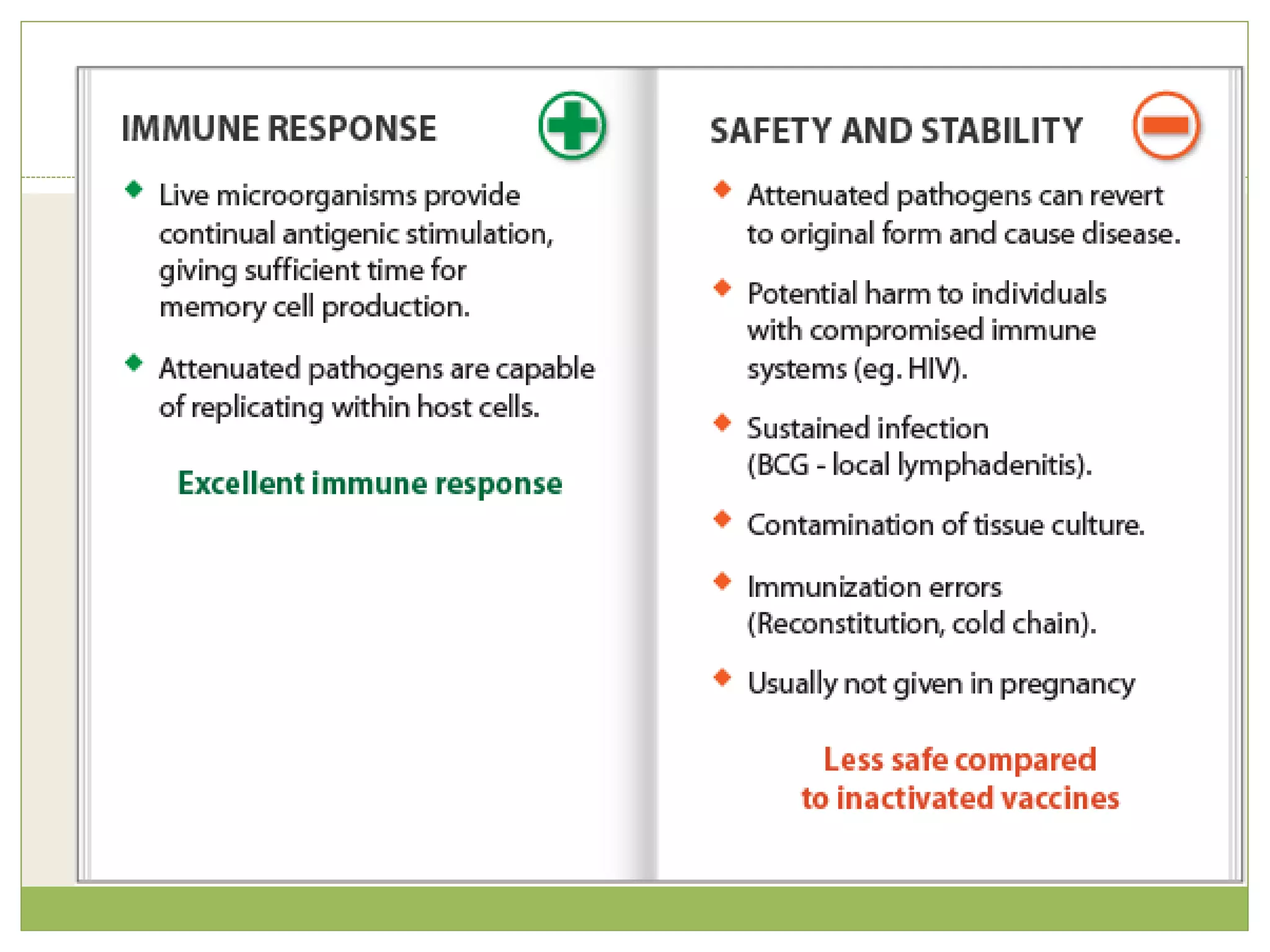
LIVE ATTENUATED VACCINE
LIVE ATTENUATED VACCINES (LAV)
 Attenuation (bacterial or viral) represents the process of elimination or greatly
reducing the virulence of a pathogen
 Achieved by
1. Growing a pathogenic bacterium or virus for prolonged periods under
abnormal culture conditions.
2. Chemical Treatment or heat
 This selects mutants that are better suited for growth in the abnormal culture
conditions than in the natural host.
 For example, an attenuated strain of Mycobacterium bovis
 Bacillus Calmette-Guerin (BCG) was developed by growing medium
containing increasing concentrations of bile.
 After 13 years, this strain had adapted to growth in strong bile and had
become sufficiently attenuated that it was suitable as a vaccine for
tuberculosis.
LIVE ATTENUATED VACCINE
BCG VACCINE
 Bacillus Calmette Guerin
 Live attenuated vaccine against
Tuberculosis
 Induces Cell mediated immunity
 Available as lyophilised (freeze dried)
powder ,Reconstituted with sterile
normal saline
 Dose – 0.05ml (neonates) , 0.1ml
(infants and children)
 Route of administration – intradermal
Papule at site of injection (2-3weeks)
Permanent tiny round scar 4-8mm
diameter
ORAL POLIO VACCINE
 Poliovirus family of Picornaviridae.
 The virus invades the nervous system and can cause permanent paralysis
 Types of Oral Polio Vaccines
Trivalent OPV, Bivalent OPV, Monovalent OPV
 Sabin vaccine - growth in monkey kidney epithelial cells.
 Route of administration – Oral.
 Vaccine
 The first dose- 2 months
 second dose -4 months
 Third dose- 6 through 18 months
 The fourth dose- 4 through 6 years
MMRV VACCINE
Measles Mumps Rubella Chickenpox
Rubeola parotitis (german measles) Varicella
family
Paramyxoviridae
family
Paramyxoviridae
family
Togaviridae;
family
Orthopoxvirus
highly contagious
skin
disease
contagious disease contagious disease
that occurs
primarily in
children
five to nine years
of age
acute, contagious,
and sometimes
fatal disease
The skin rash
normally lasts about
5 to 10 days. Lesions
of the oral cavity
include the
diagnostically useful
bright-red Koplik’s
spots
Mumps affects the
parotid
glands,swelling
salivary glands below
and in front of the
ears
A rash of small red
spots
A red, itchy skin rash
with blisters
Fever
Feeling tired
Not feeling hungry
Headache
 first dose 12 - 15 months
 second dose 4 - 6 years
 Children ages 1 - 12 years can get the
MMRV vaccine, which is a combination
vaccine that also protects against
measles, mumps, rubella, and
chickenpox.
Vaccine :
CHICKENPOX
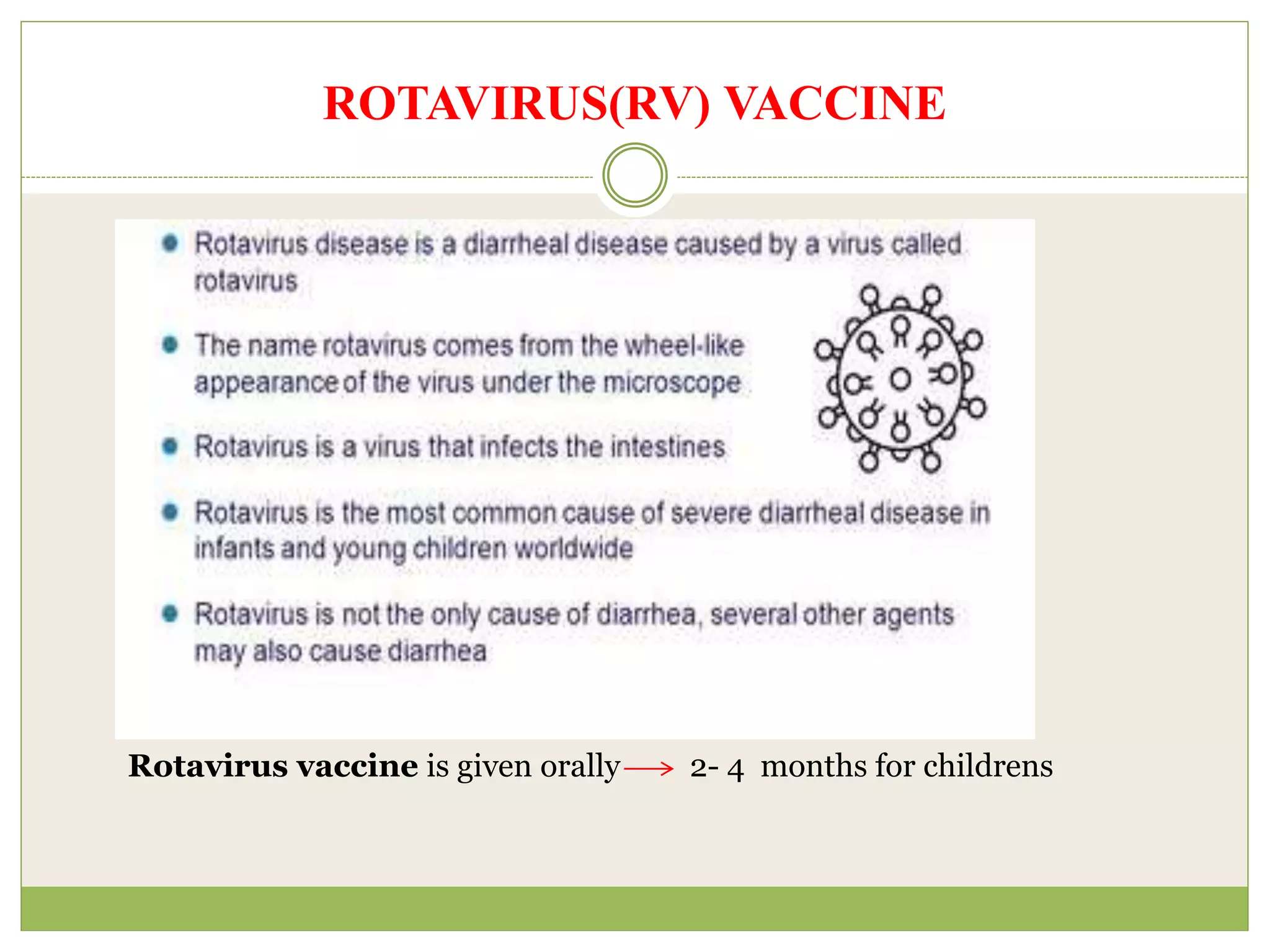
ROTAVIRUS(RV) VACCINE
Rotavirus vaccine is given orally 2- 4 months for childrens
YELLOW FEVER
 acute viral haemorrhagic disease
 Family Flaviviridae
 "yellow" in the name refers to the jaundice
 caused by a virus that is spread through mosquito bites
THANK YOU

LIVE ATTENUATED VACCINE

  • 1.
    BY D S SRIMATHI DEPARTMENTOF MICROBIOLOGY LIVE ATTENUATED VACCINE
  • 2.
    LIVE ATTENUATED VACCINES(LAV)  Attenuation (bacterial or viral) represents the process of elimination or greatly reducing the virulence of a pathogen  Achieved by 1. Growing a pathogenic bacterium or virus for prolonged periods under abnormal culture conditions. 2. Chemical Treatment or heat  This selects mutants that are better suited for growth in the abnormal culture conditions than in the natural host.  For example, an attenuated strain of Mycobacterium bovis  Bacillus Calmette-Guerin (BCG) was developed by growing medium containing increasing concentrations of bile.  After 13 years, this strain had adapted to growth in strong bile and had become sufficiently attenuated that it was suitable as a vaccine for tuberculosis.
  • 3.
  • 4.
    BCG VACCINE  BacillusCalmette Guerin  Live attenuated vaccine against Tuberculosis  Induces Cell mediated immunity  Available as lyophilised (freeze dried) powder ,Reconstituted with sterile normal saline  Dose – 0.05ml (neonates) , 0.1ml (infants and children)  Route of administration – intradermal Papule at site of injection (2-3weeks) Permanent tiny round scar 4-8mm diameter
  • 5.
    ORAL POLIO VACCINE Poliovirus family of Picornaviridae.  The virus invades the nervous system and can cause permanent paralysis  Types of Oral Polio Vaccines Trivalent OPV, Bivalent OPV, Monovalent OPV  Sabin vaccine - growth in monkey kidney epithelial cells.  Route of administration – Oral.  Vaccine  The first dose- 2 months  second dose -4 months  Third dose- 6 through 18 months  The fourth dose- 4 through 6 years
  • 6.
    MMRV VACCINE Measles MumpsRubella Chickenpox Rubeola parotitis (german measles) Varicella family Paramyxoviridae family Paramyxoviridae family Togaviridae; family Orthopoxvirus highly contagious skin disease contagious disease contagious disease that occurs primarily in children five to nine years of age acute, contagious, and sometimes fatal disease The skin rash normally lasts about 5 to 10 days. Lesions of the oral cavity include the diagnostically useful bright-red Koplik’s spots Mumps affects the parotid glands,swelling salivary glands below and in front of the ears A rash of small red spots A red, itchy skin rash with blisters Fever Feeling tired Not feeling hungry Headache
  • 7.
     first dose12 - 15 months  second dose 4 - 6 years  Children ages 1 - 12 years can get the MMRV vaccine, which is a combination vaccine that also protects against measles, mumps, rubella, and chickenpox. Vaccine : CHICKENPOX
  • 8.
    ROTAVIRUS(RV) VACCINE Rotavirus vaccineis given orally 2- 4 months for childrens
  • 9.
    YELLOW FEVER  acuteviral haemorrhagic disease  Family Flaviviridae  "yellow" in the name refers to the jaundice  caused by a virus that is spread through mosquito bites
  • 12.