AGRICULTURE
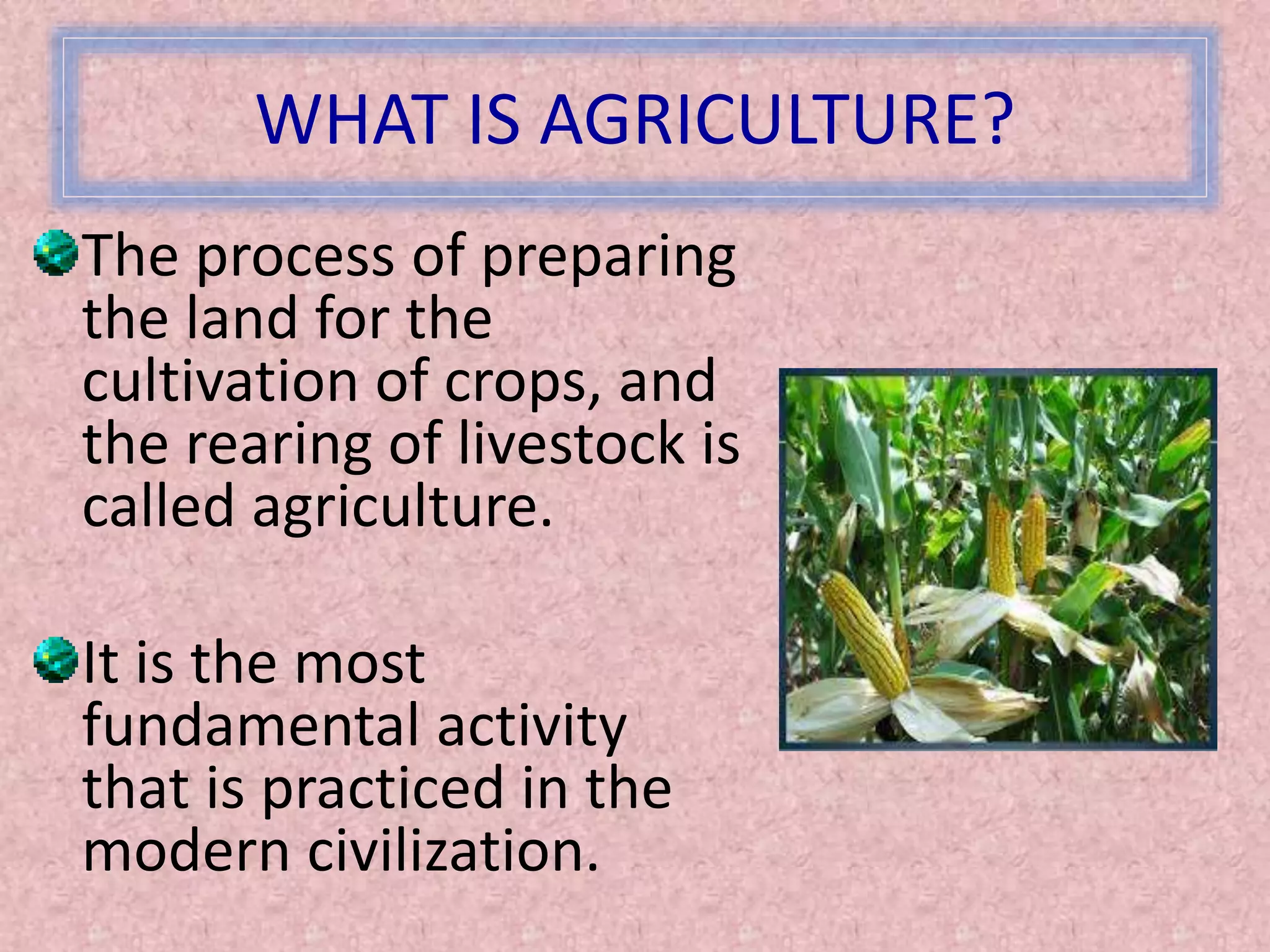
WHAT IS AGRICULTURE?
The process of preparing
the land for the
cultivation of crops, and
the rearing of livestock is
called agriculture.
It is the most
fundamental activity
that is practiced in the
modern civilization.
On the basis of the aim of the
cultivation, there are two main
types of agriculture:-
1. subsistence
2. commercial
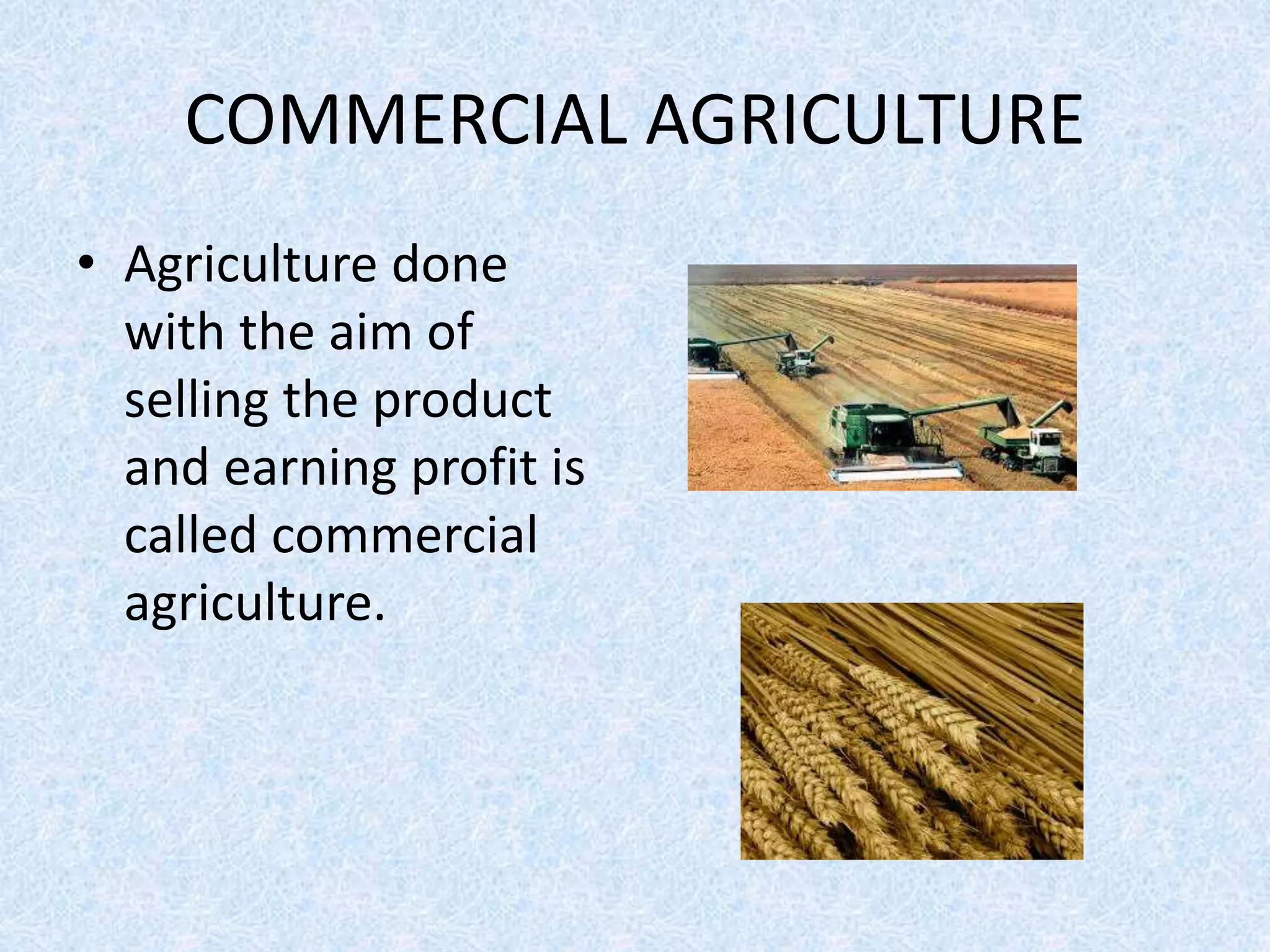
COMMERCIAL AGRICULTURE
• Agriculture done
with the aim of
selling the product
and earning profit is
called commercial
agriculture.
EXTENSIVE AGRICULTURE
WHAT IS EXTENSIVE FARMING?
Extensive farming is a form of farming that will
make use of relatively low inputs of capital and
labor in relation to the land that is being used for
farming (it usually has a large farm). It does not
make use of external factors like machinery and
fertilizers, but will depend on the availability of
water and the elements of nature to produce the
yield. While it is ideal for rearing animals, it can
also be used for growing crops which do not
require very fertile soil.
ADVANTAGES
• As the plants are planted with a distance
between them, they get
• a) A lot of space to grow
• b) Root and shoot system grow properly
• c) As fertilizer is not used in large quantities the
soil is not infested with chemicals and hence the
growth of the plant is organic.
• d) Fully mechanized farming
• e) Lesser use of labourers
DISADVANTAGES
a) This technique of agriculture cannot be used in the
densely populated places
b) Very few human labourers are required so it cannot be
used in places where there is lack of employment
c) It is fully mechanized, so a lot of electricity is
consumed
d) Total production from the farm is very large but per
hectare production is low.
e) Large land requirements limit the habitat of different
species of fauna (in some cases, even very low
stocking rates can be dangerous, as is the case
with intensive farming).
TYPES OF CROPS
Wheat is the most important crop.
Other crops are corn, barley, oats, rye, and cotton.
BARLEY
CORN
WHEAT
OATS RYE
COTTON
AREAS
• EXTENSIVE AGRICULTURE IS COMMON IN
REGIONS WHERE THERE IS ABUNDANT LAND
BUT VERY SPARSE POPULATION.
• PARTICULARLY IN THE MID LATITUDE
GRASSLANDS- PRAIRIES OF N.AMERICA,
PAMPAS OF ARGENTINA, STEPPES OF EUROPE,
AND THE DOWNS OF AUSTRALIA.
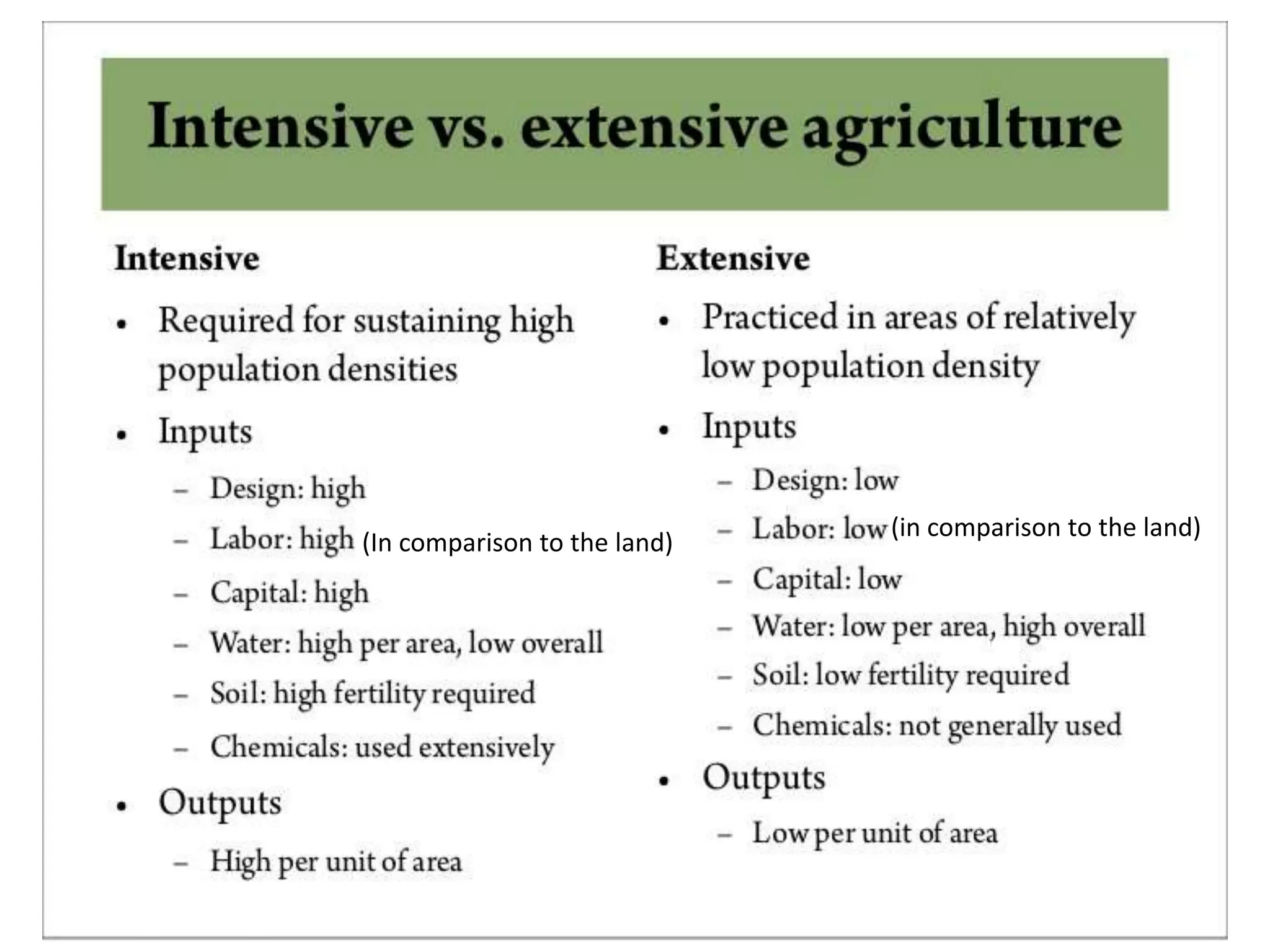
(in comparison to the land)
(In comparison to the land)
By-
Subhanjali Saraswati (39)
Poorvi Sahoo (37)
Ishita Saraf (38)
Agriculture--Extensive farming

Agriculture--Extensive farming

  • 1.
  • 2.
    WHAT IS AGRICULTURE? Theprocess of preparing the land for the cultivation of crops, and the rearing of livestock is called agriculture. It is the most fundamental activity that is practiced in the modern civilization.
  • 3.
    On the basisof the aim of the cultivation, there are two main types of agriculture:- 1. subsistence 2. commercial
  • 4.
    COMMERCIAL AGRICULTURE • Agriculturedone with the aim of selling the product and earning profit is called commercial agriculture.
  • 5.
  • 6.
    WHAT IS EXTENSIVEFARMING? Extensive farming is a form of farming that will make use of relatively low inputs of capital and labor in relation to the land that is being used for farming (it usually has a large farm). It does not make use of external factors like machinery and fertilizers, but will depend on the availability of water and the elements of nature to produce the yield. While it is ideal for rearing animals, it can also be used for growing crops which do not require very fertile soil.
  • 7.
    ADVANTAGES • As theplants are planted with a distance between them, they get • a) A lot of space to grow • b) Root and shoot system grow properly • c) As fertilizer is not used in large quantities the soil is not infested with chemicals and hence the growth of the plant is organic. • d) Fully mechanized farming • e) Lesser use of labourers
  • 8.
    DISADVANTAGES a) This techniqueof agriculture cannot be used in the densely populated places b) Very few human labourers are required so it cannot be used in places where there is lack of employment c) It is fully mechanized, so a lot of electricity is consumed d) Total production from the farm is very large but per hectare production is low. e) Large land requirements limit the habitat of different species of fauna (in some cases, even very low stocking rates can be dangerous, as is the case with intensive farming).
  • 9.
    TYPES OF CROPS Wheatis the most important crop. Other crops are corn, barley, oats, rye, and cotton. BARLEY CORN WHEAT OATS RYE COTTON
  • 10.
    AREAS • EXTENSIVE AGRICULTUREIS COMMON IN REGIONS WHERE THERE IS ABUNDANT LAND BUT VERY SPARSE POPULATION. • PARTICULARLY IN THE MID LATITUDE GRASSLANDS- PRAIRIES OF N.AMERICA, PAMPAS OF ARGENTINA, STEPPES OF EUROPE, AND THE DOWNS OF AUSTRALIA.
  • 11.
    (in comparison tothe land) (In comparison to the land)
  • 12.
    By- Subhanjali Saraswati (39) PoorviSahoo (37) Ishita Saraf (38)