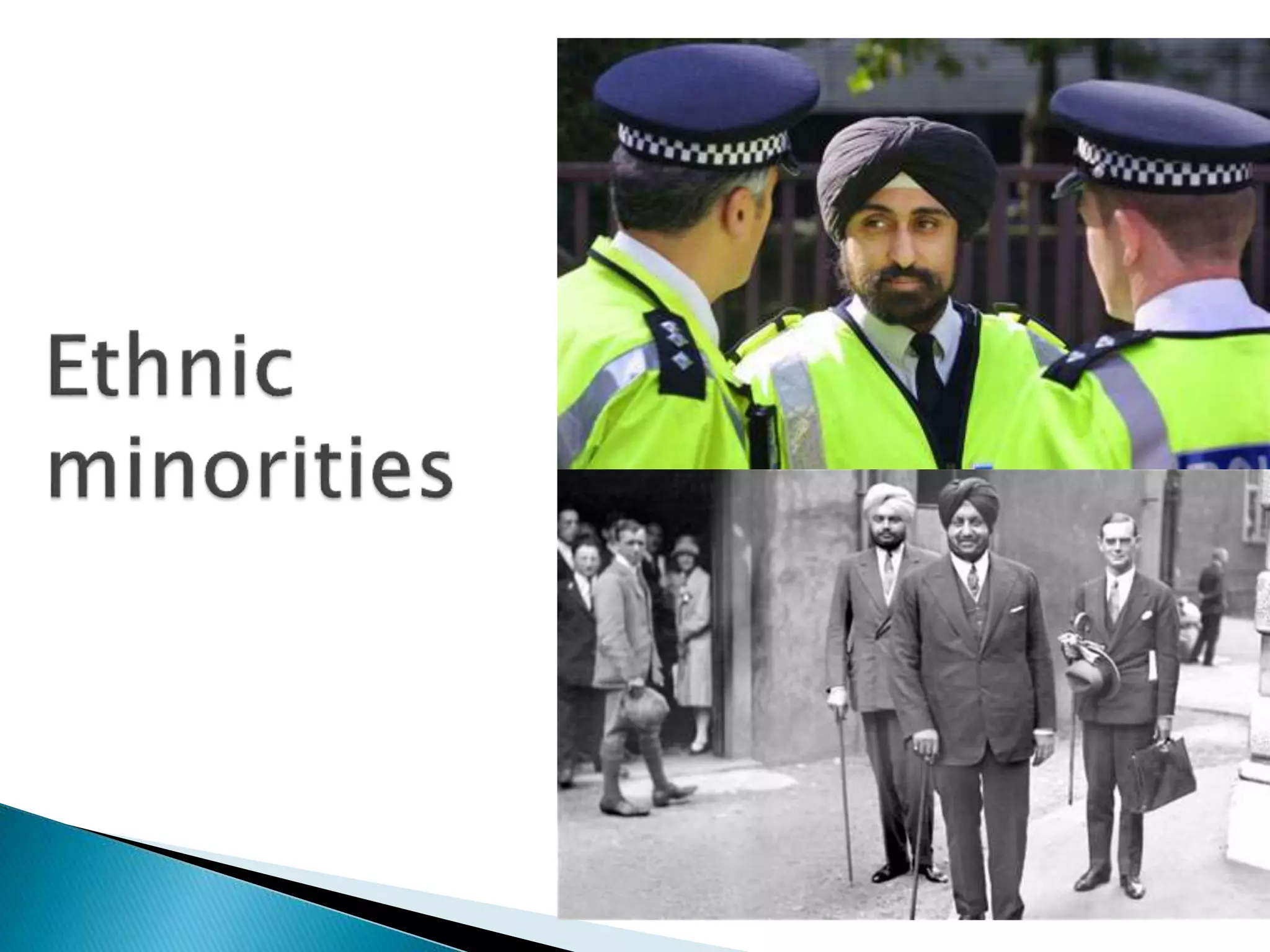
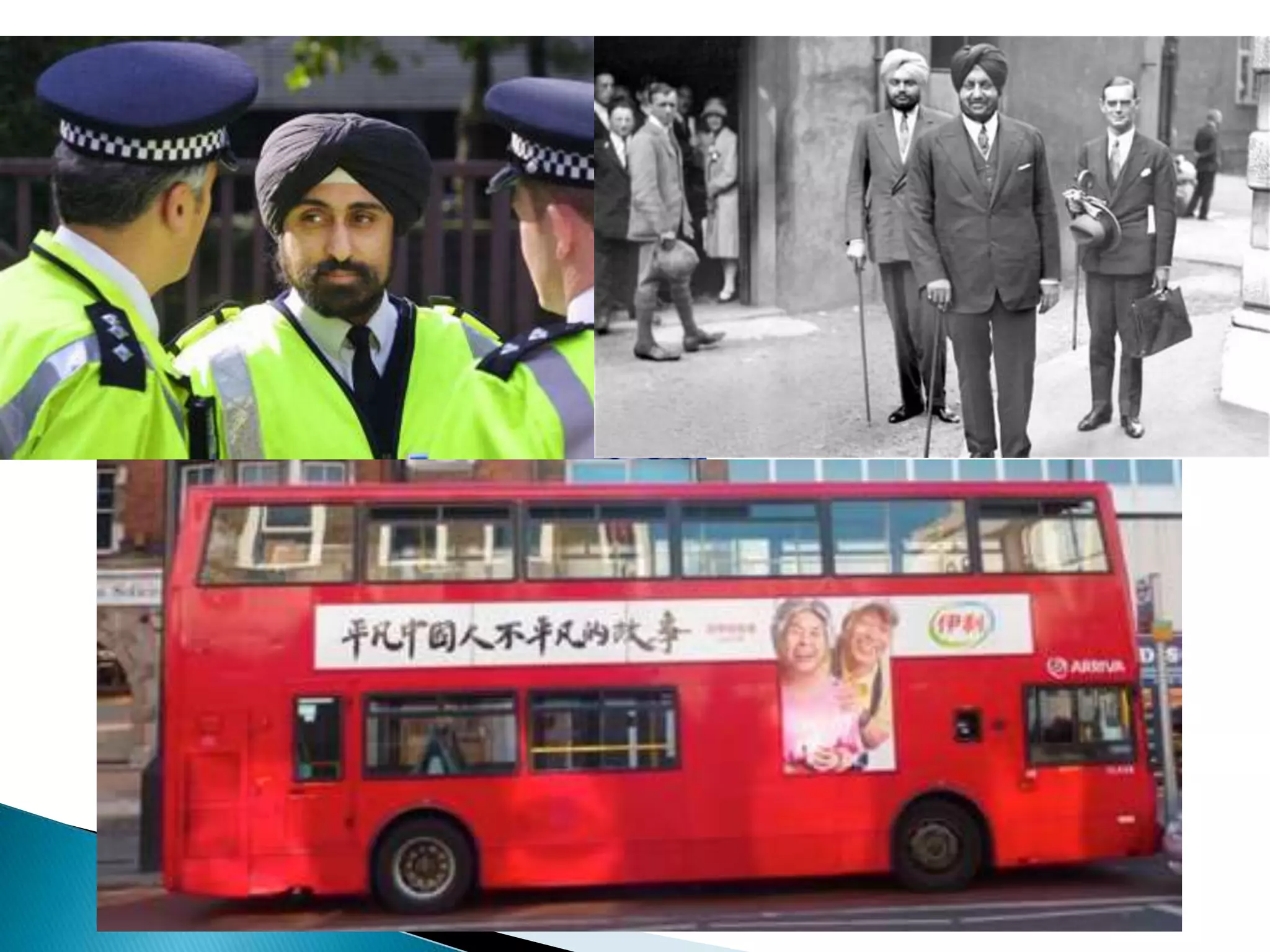
 Minority
 Race
 Racism
 Ethnicity/Ethnic Group
Minority: less than half the whole
Race: common origin & genetic characteristics
Racism: belief that members of 1 race are
inferior or superior to another race,
and hostility to other races.
Ethnicity: Common consciousness of shared
origins and traditions.
Differences are cultural and not biological.
Ethnic identity linked to national, linguistic
and religious identity.
 Segregation
 Discrimiination
 Assimilation
 Segregation: Groups live apart, either by
minority choice or majority imposition.
 Discrimination: the practice of treating
people unfairly & differently from other
people.
 Assimilation: Disappearance of
distinctions, + movement and marriage
between ethnic groups
 Coexistence of different groups with
different values with no complete
assimilation.
 Multiculturalism: diversity of groups
which remain culturally distinct.
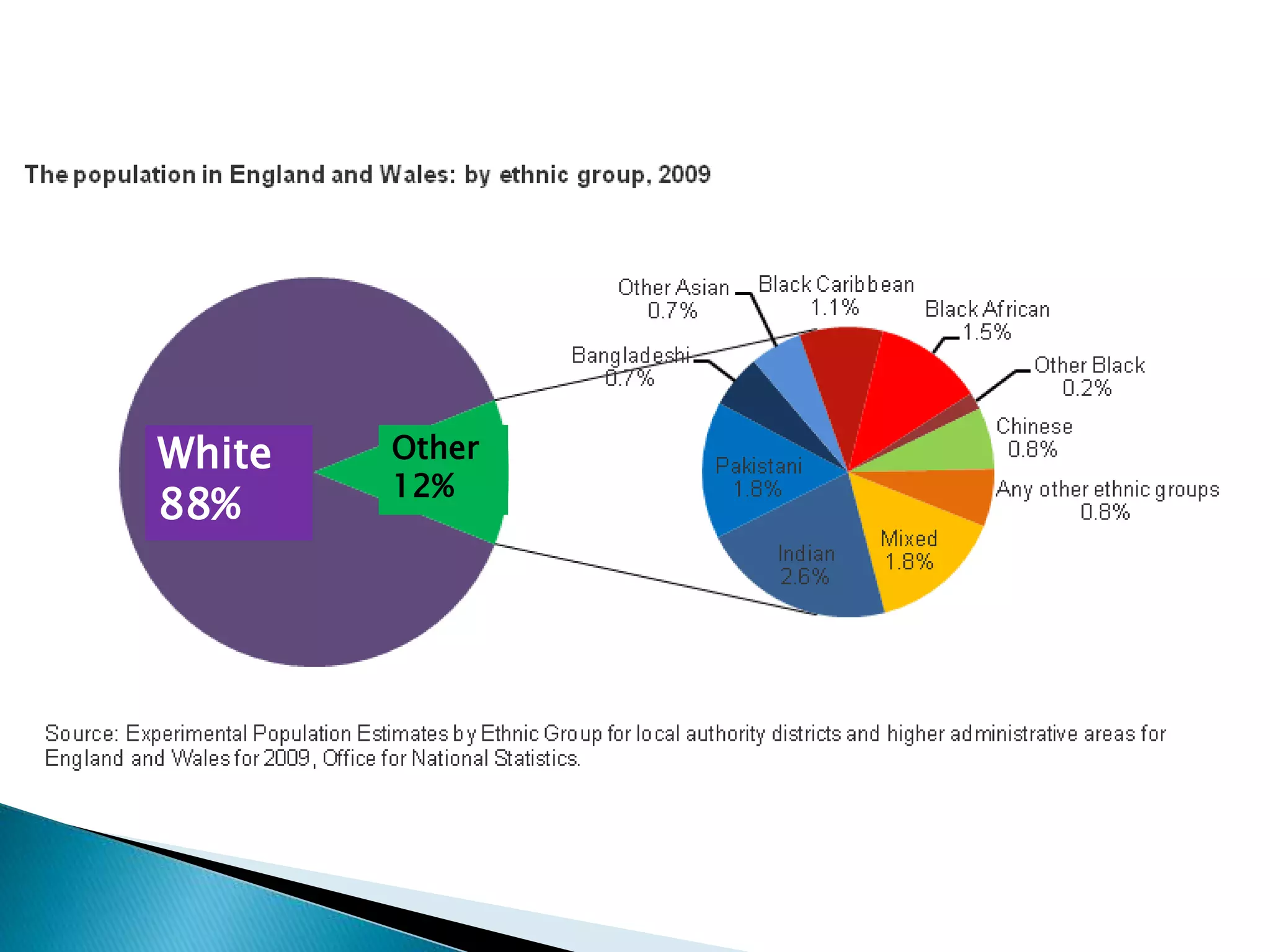
White
88%
Other
12%
1914-1918
WWI Men from across the Empire
fought for Britain
India: 1.3 M Soldiers
Government feared the impact
of black faces in white Britain
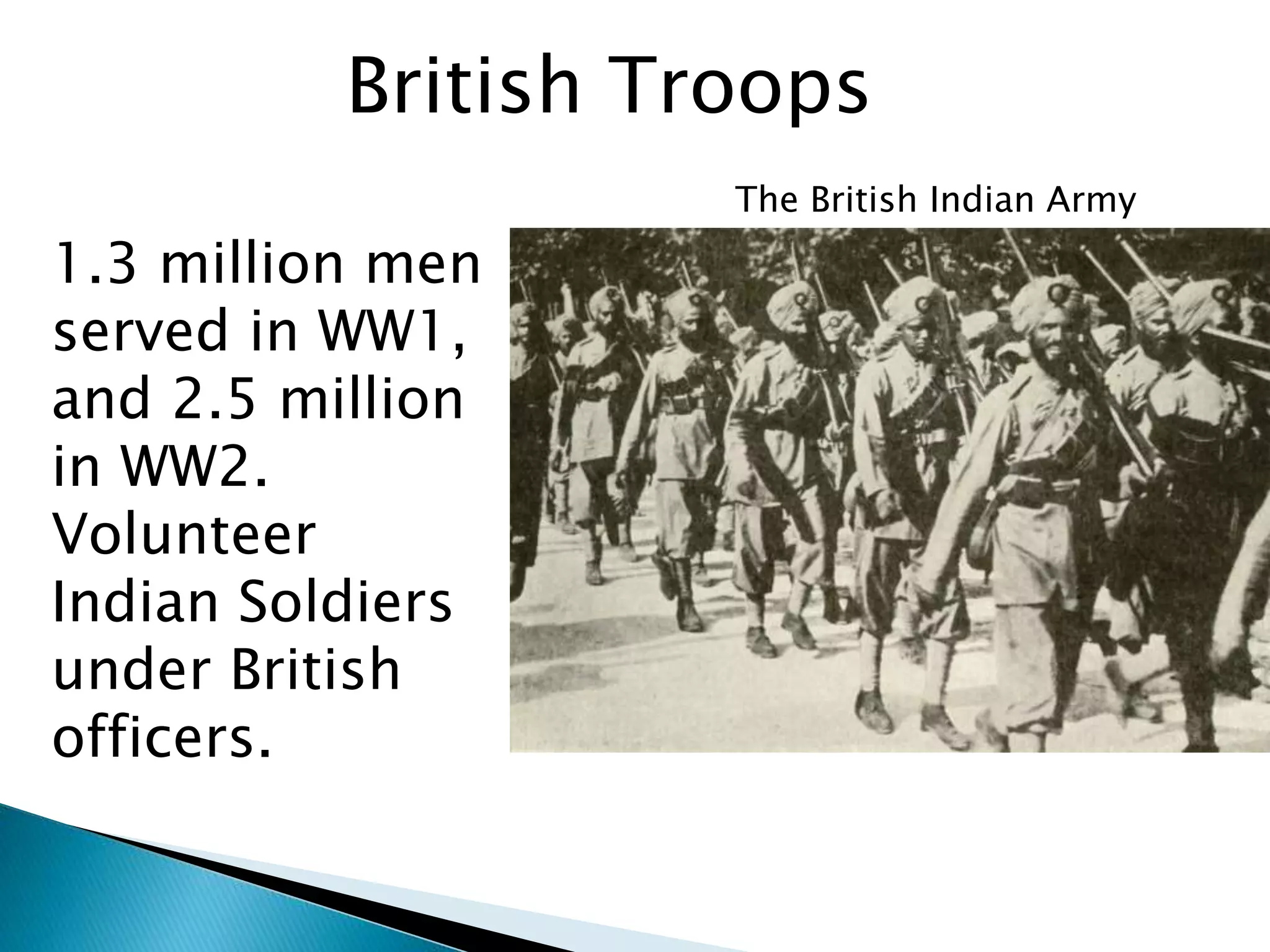
British Troops
The British Indian Army
1.3 million men
served in WW1,
and 2.5 million
in WW2.
Volunteer
Indian Soldiers
under British
officers.
 Before the Second World War, most
immigrants to Britain came from the
largely white Old Commonwealth
countries of Canada, Australia and New
Zealand, and from South Africa.
 All Commonwealth citizens were allowed
free access and were not treated as
aliens.
1946-1948
Labour shortages in Britain. The
government began looking for
immigrants.
157,000 Poles settled in the UK (joined by
Italians)
Reluctance to allow immigration from the
empire, but not enough workers from
Europe.
Visuals
 At the invitation of government agencies
immigrants came to fill the vacant manual
and lower-paid jobs of an expanding
economy
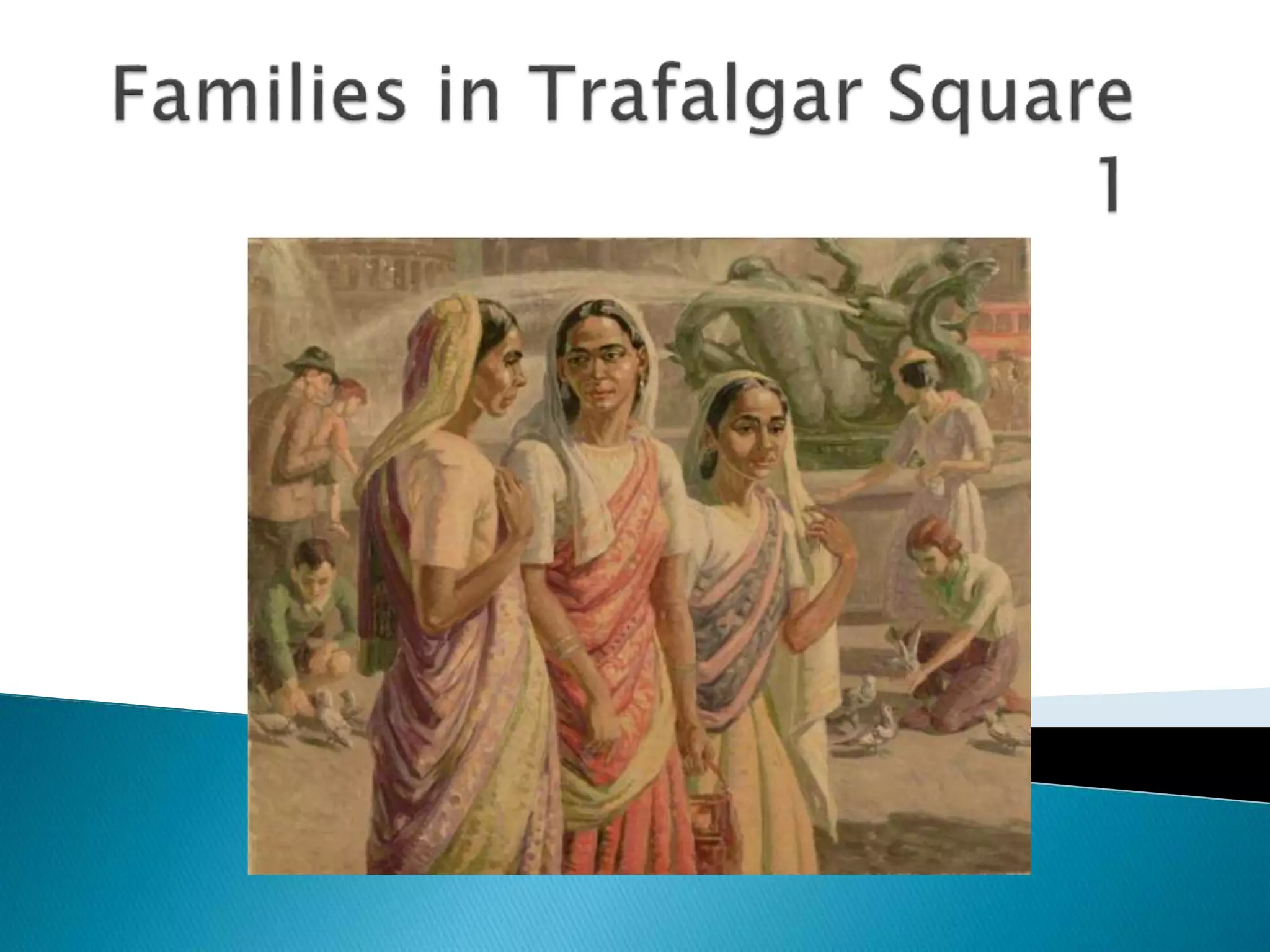
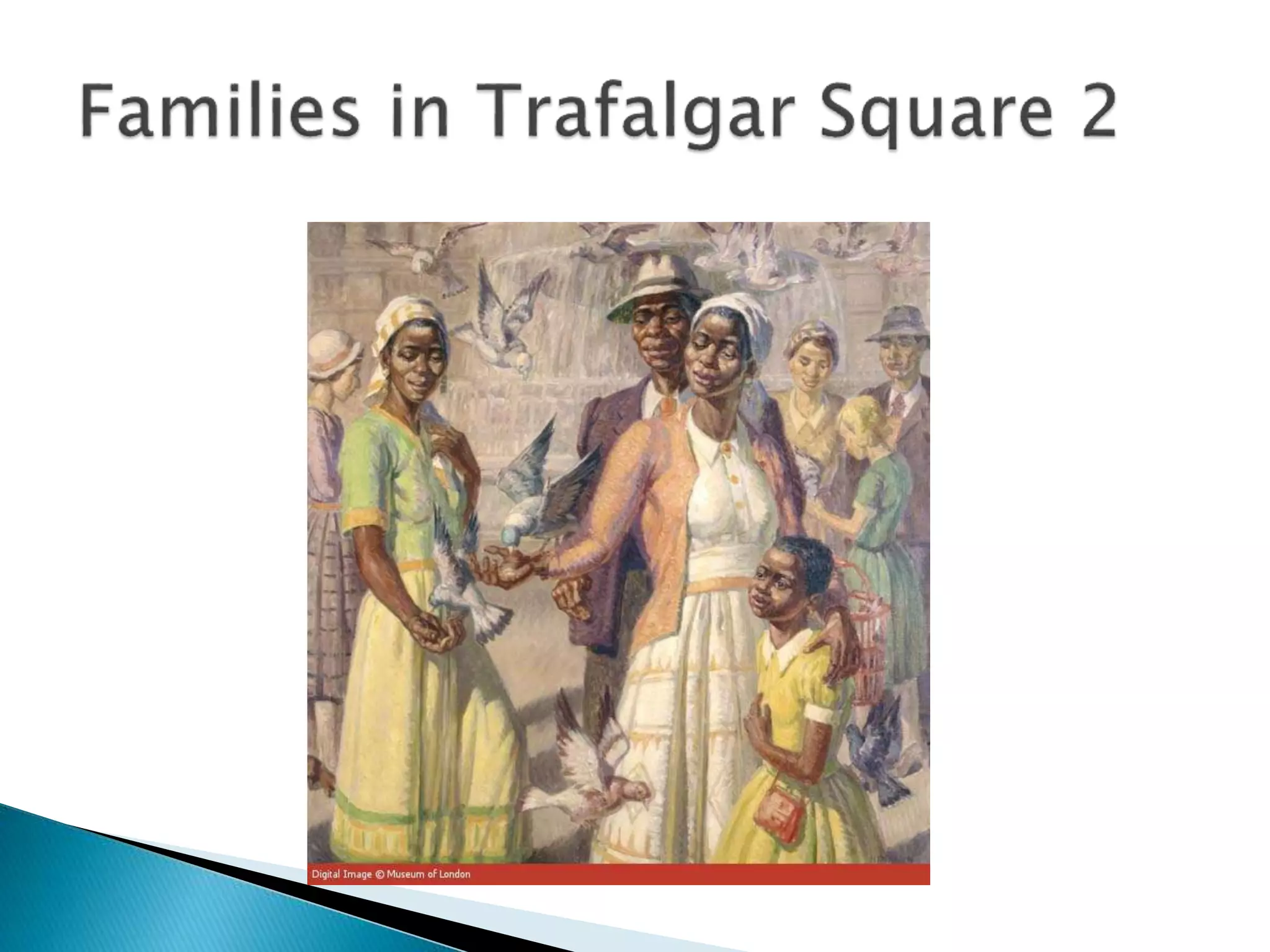
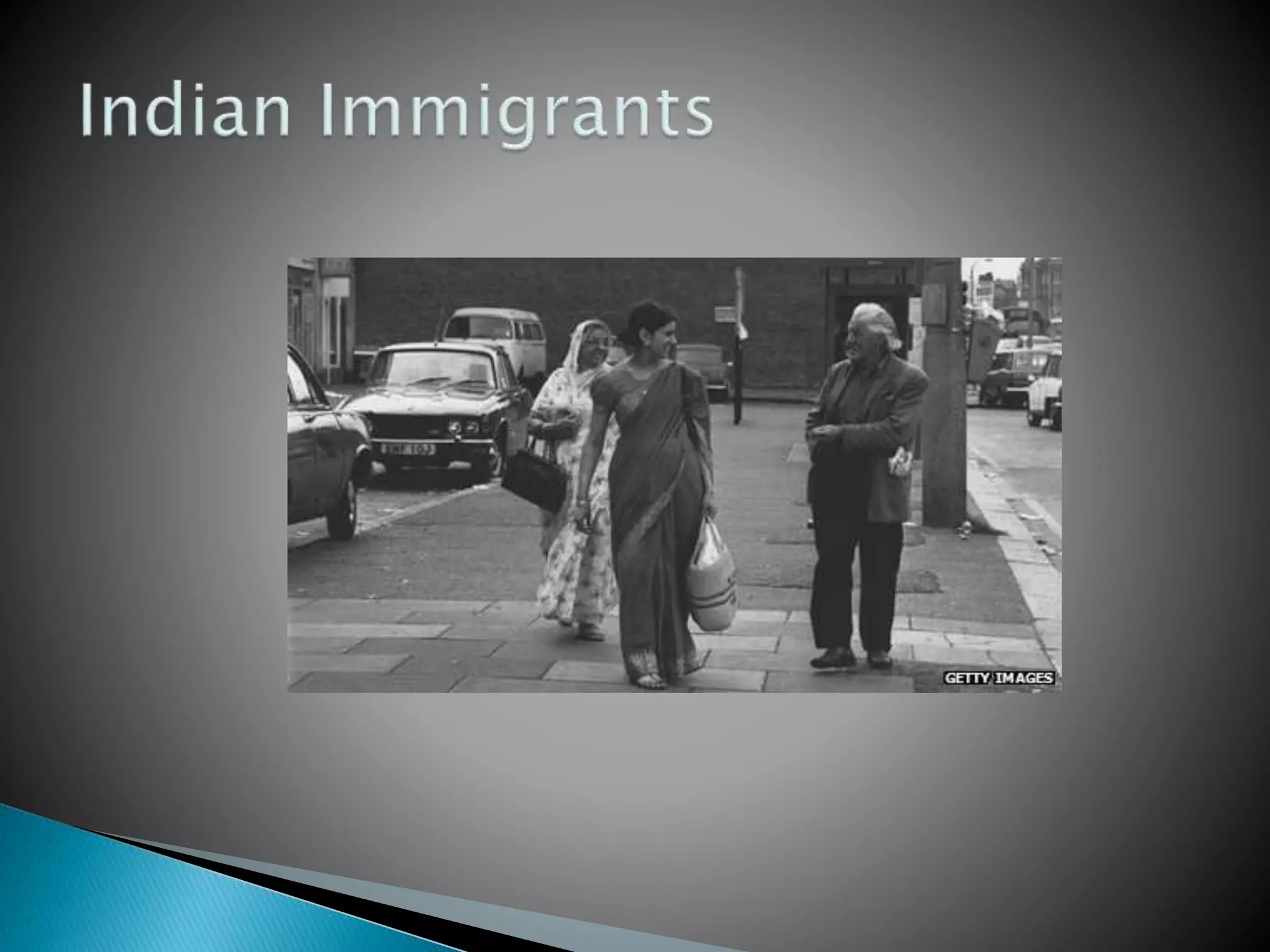
 People from non-white New Commonwealth
nations of India, Pakistan and the West Indies
came to Britain
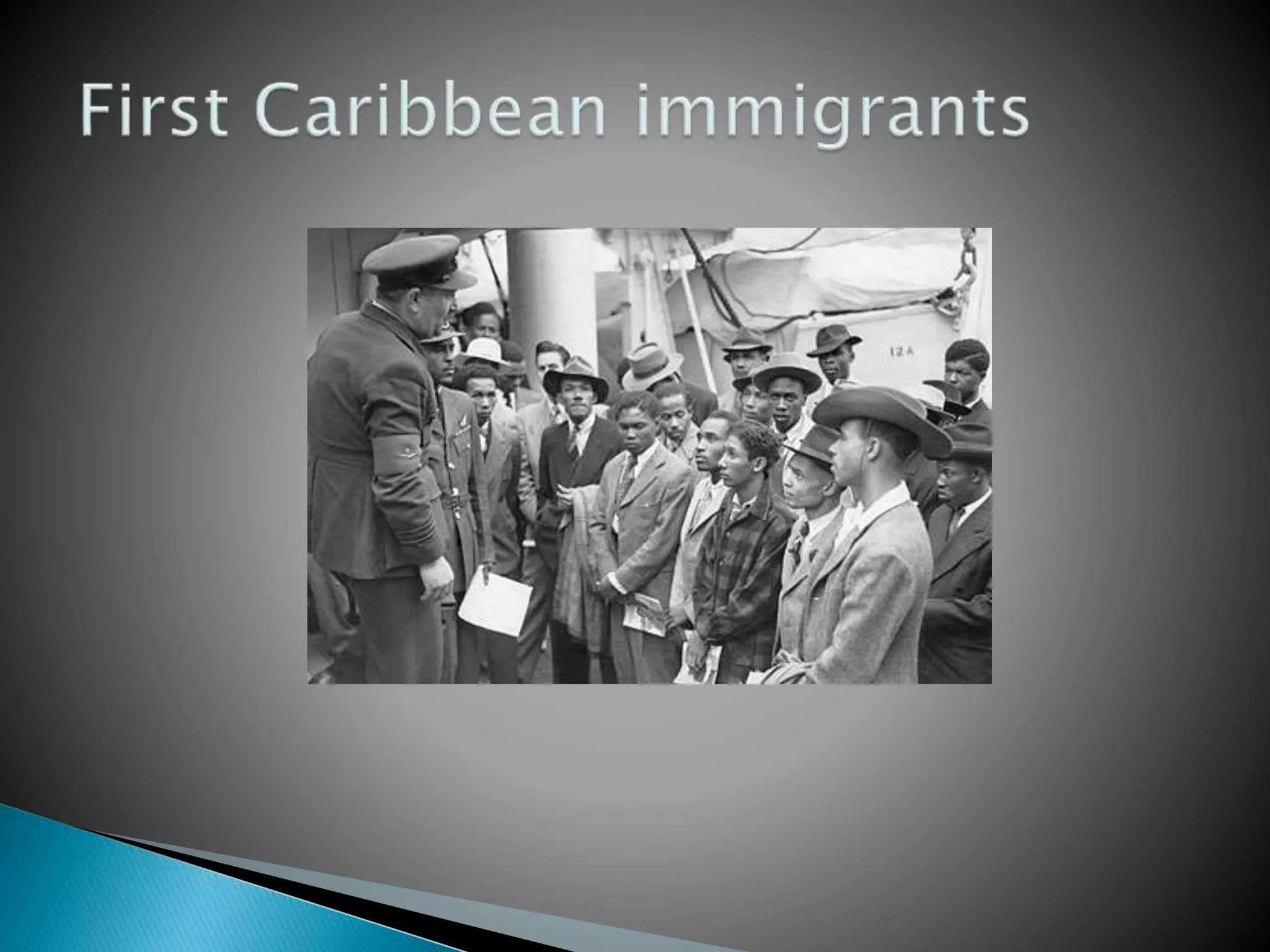
 On 22 June 1948, hundreds of men from the
West Indies were brought to London.
 Ends discrimination on the grounds of race,
ethnic or national origins
 Outlaws discrimination in public places
legislation considered weak by labour
backbenchers and anti-racist groups
Extended in1968 to cover employment &
housing
 Better definition of direct and indirect
discrimination
 outlawed racial discrimination in the work
place and at school, in provision of goods
and services,
 created CRE (Commission for Racial Equality)
to investigate unlawful discrimination.
 But tightened immigration standards
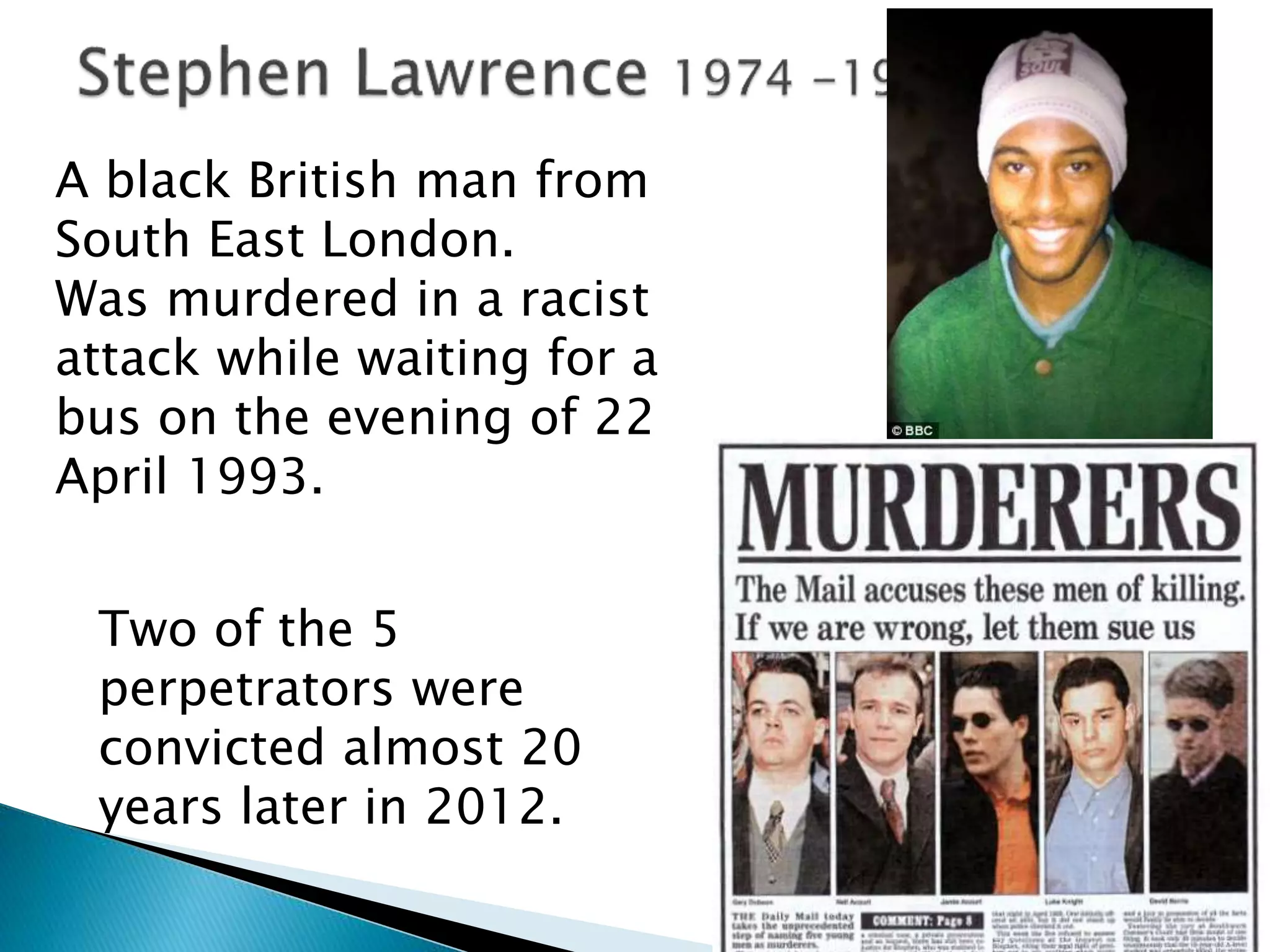
A black British man from
South East London.
Was murdered in a racist
attack while waiting for a
bus on the evening of 22
April 1993.
Two of the 5
perpetrators were
convicted almost 20
years later in 2012.
 A public enquiry was ordered into the death
of Stephen Lawrence conducted by
Macpherson
 Following Macpherson's report, the 1976 Act
was amended in 2000 to include the police
for the first time.
 Public bodies must promote race equality &
prevent race discrimination.
 Efforts to increase minority ethnic staff.
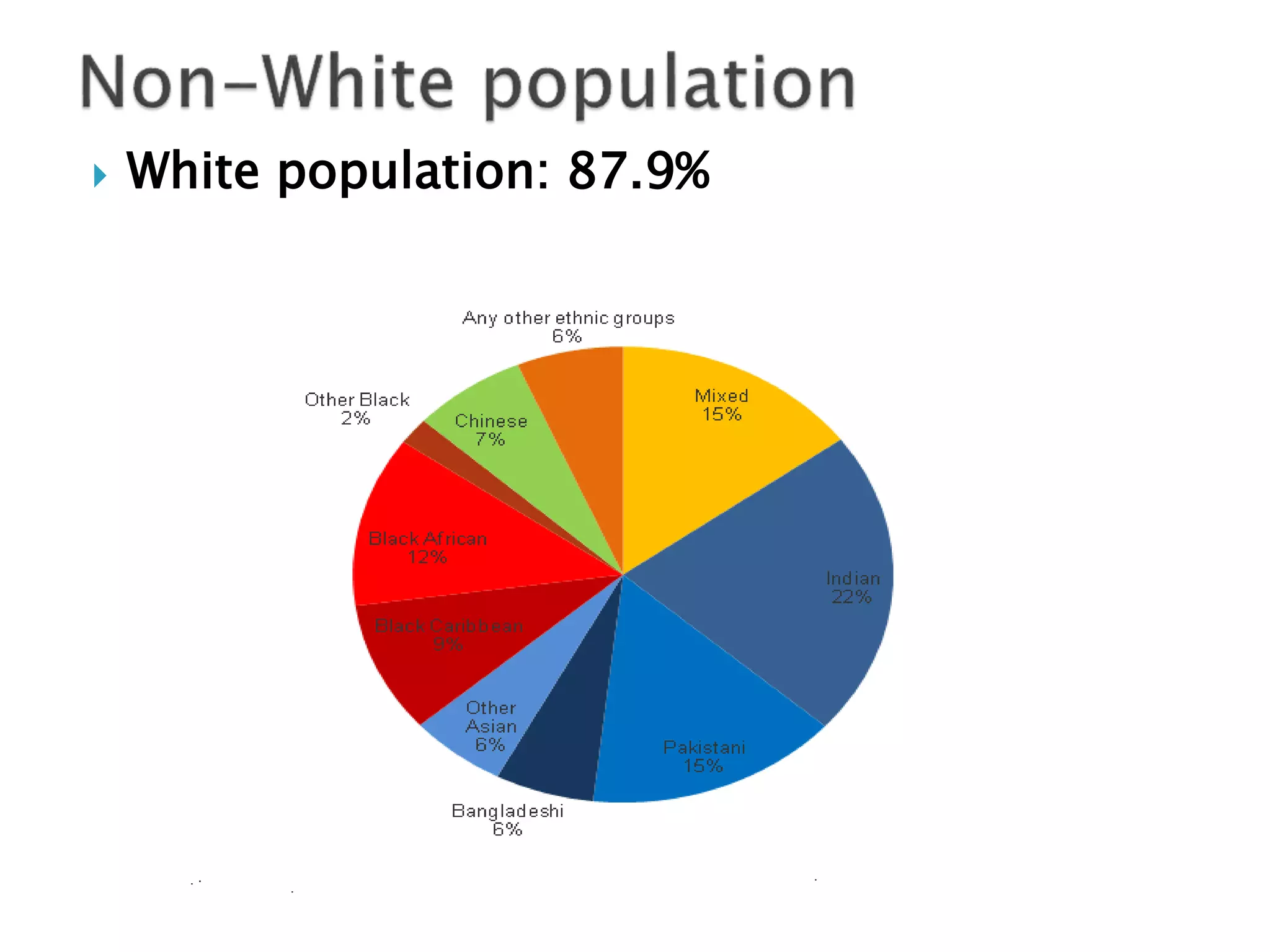
 White population: 87.9%
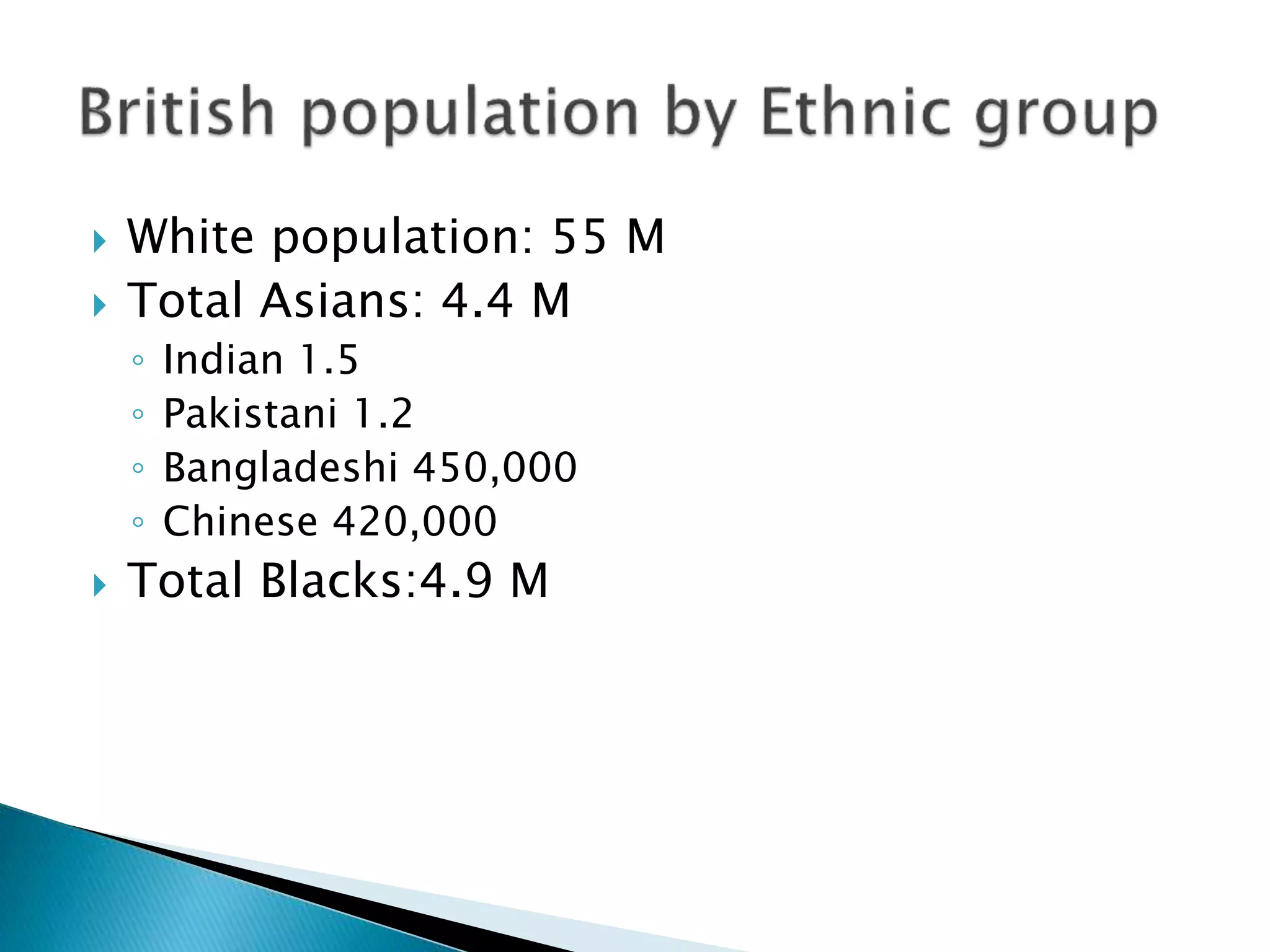
 White population: 55 M
 Total Asians: 4.4 M
◦ Indian 1.5
◦ Pakistani 1.2
◦ Bangladeshi 450,000
◦ Chinese 420,000
 Total Blacks:4.9 M
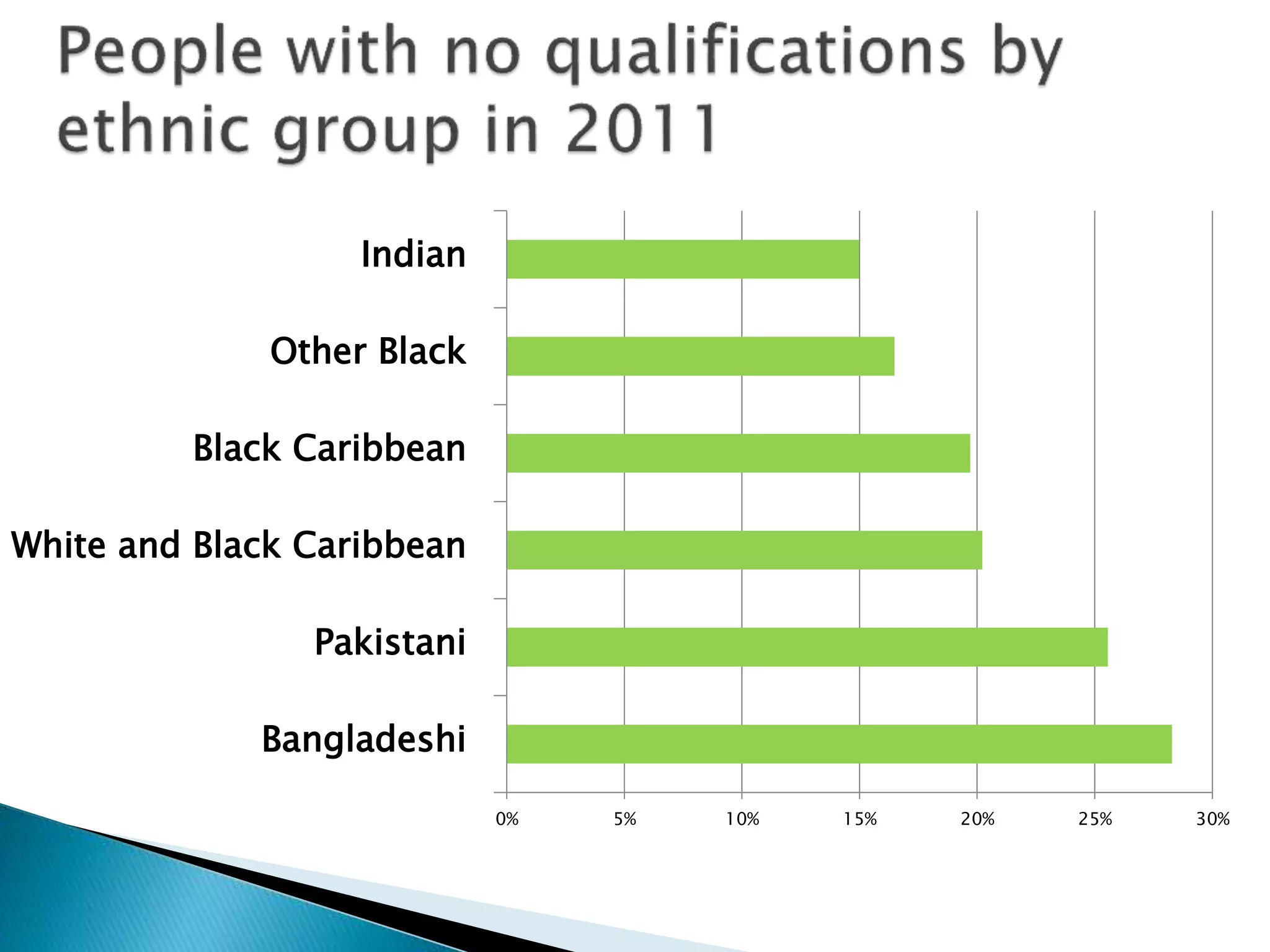
0% 5% 10% 15% 20% 25% 30%
Bangladeshi
Pakistani
White and Black Caribbean
Black Caribbean
Other Black
Indian
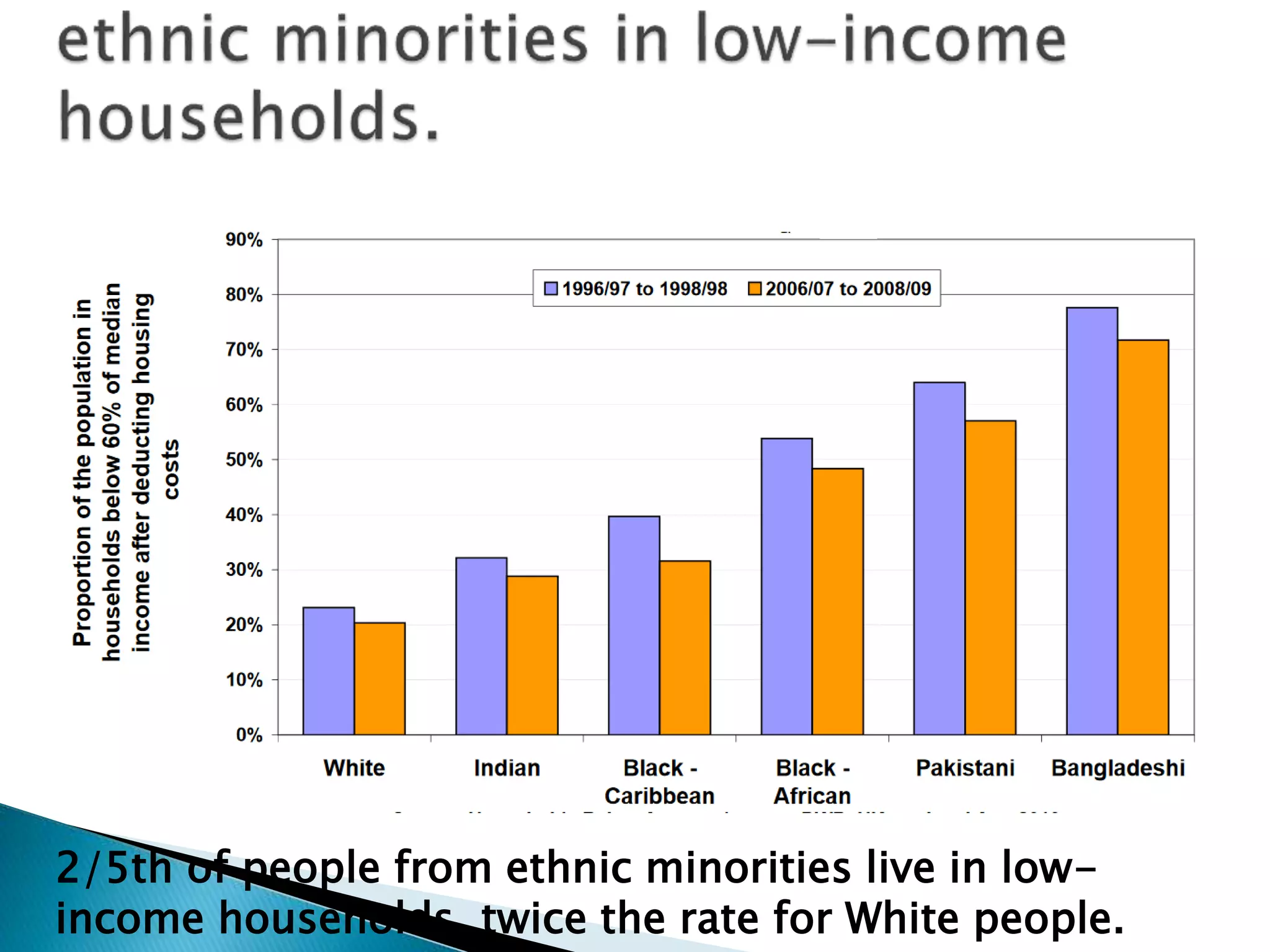
2/5th of people from ethnic minorities live in low-
income households, twice the rate for White people.
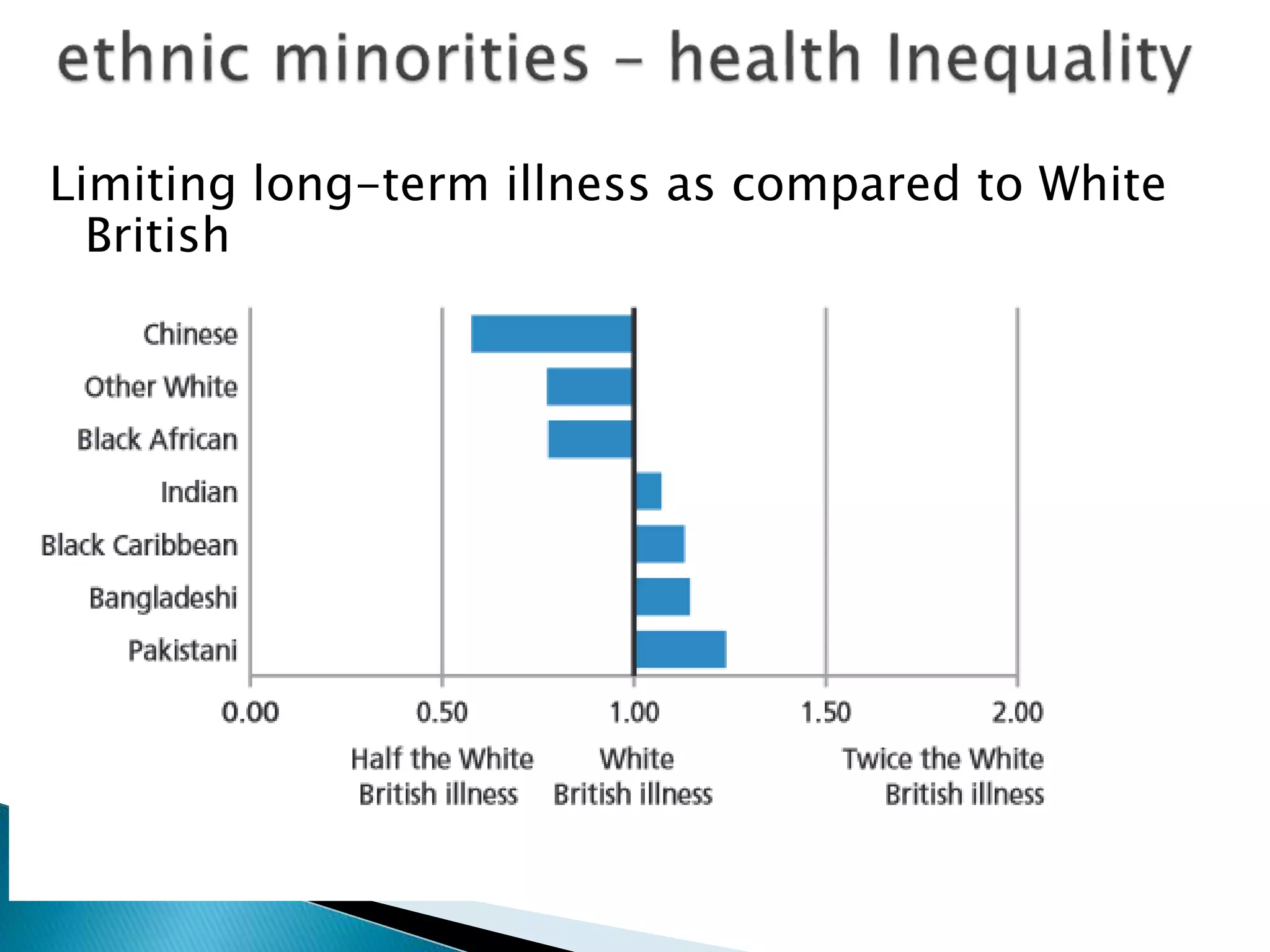
Limiting long-term illness as compared to White
British
 Minorities have their own newspapers:
Caribbean Time, Asian Time and Amar Deep
Hindi
 They have their own political organizations:
The Standing Conference of Afro-
Caribbean
The Asian Councilors
The Black Against State Harassment
and Repression Groups
The Muslim Parliament
 Household size: largest for Bangladeshi and
Pakistani
 Employment: Indians were least
disadvantaged & Bangladeshis most
disadvantaged.
 Home ownership: Indians &Pakistanis higher
/ Caribbean and Bangladeshi rented houses
 Cars: Highest for Indians lowest for
Bangladeshi
 Ability to speak and read English: greatest
among Indians and least among Bangladeshis
 Patterns of religious affiliation:
- All Pakistanis and Bangladeshis Muslims
- Indians split: Hindus, Sikhs and Muslims.
- Caribbeans mainly Protestant or Catholic
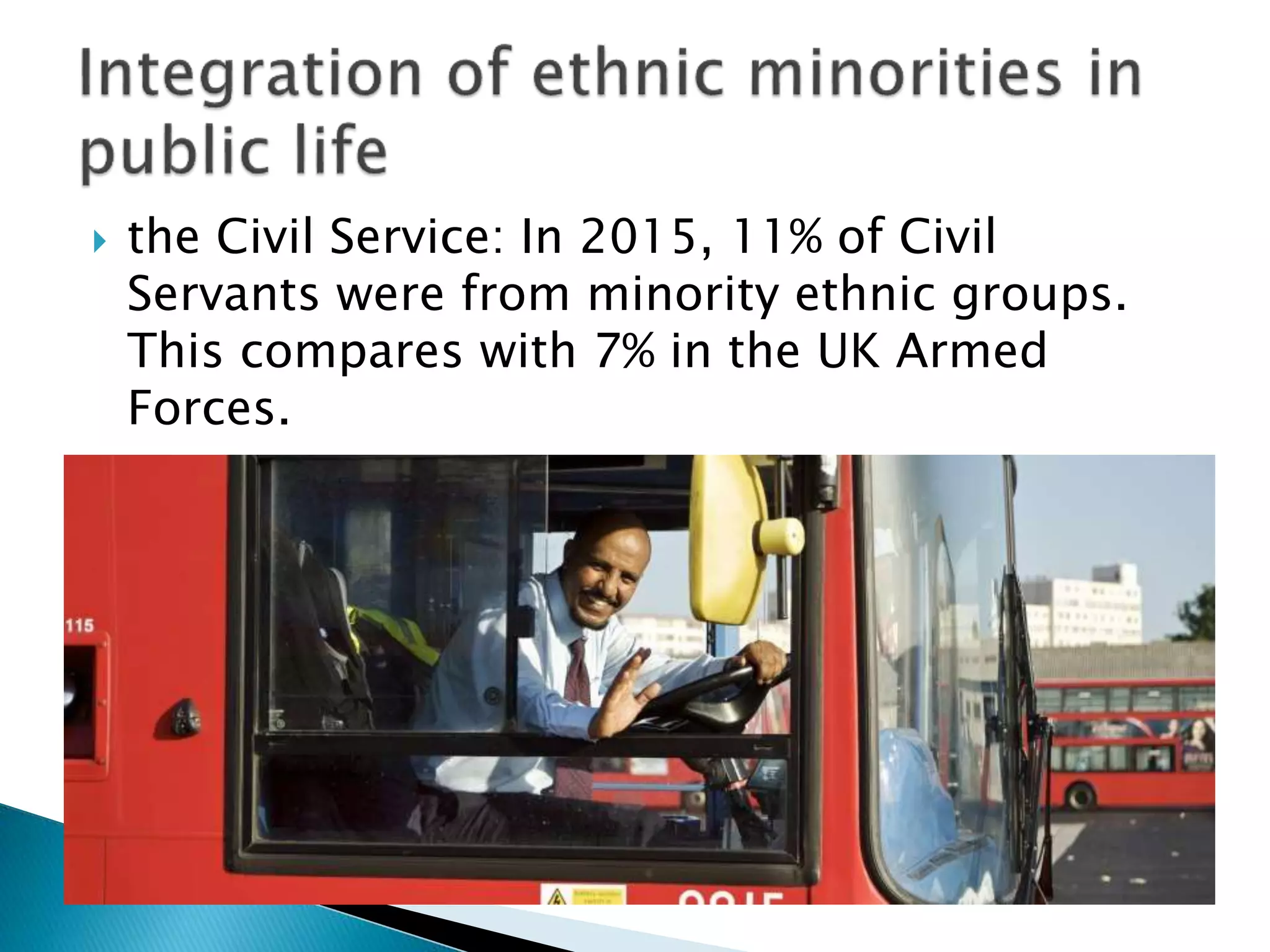
 the Civil Service: In 2015, 11% of Civil
Servants were from minority ethnic groups.
This compares with 7% in the UK Armed
Forces.
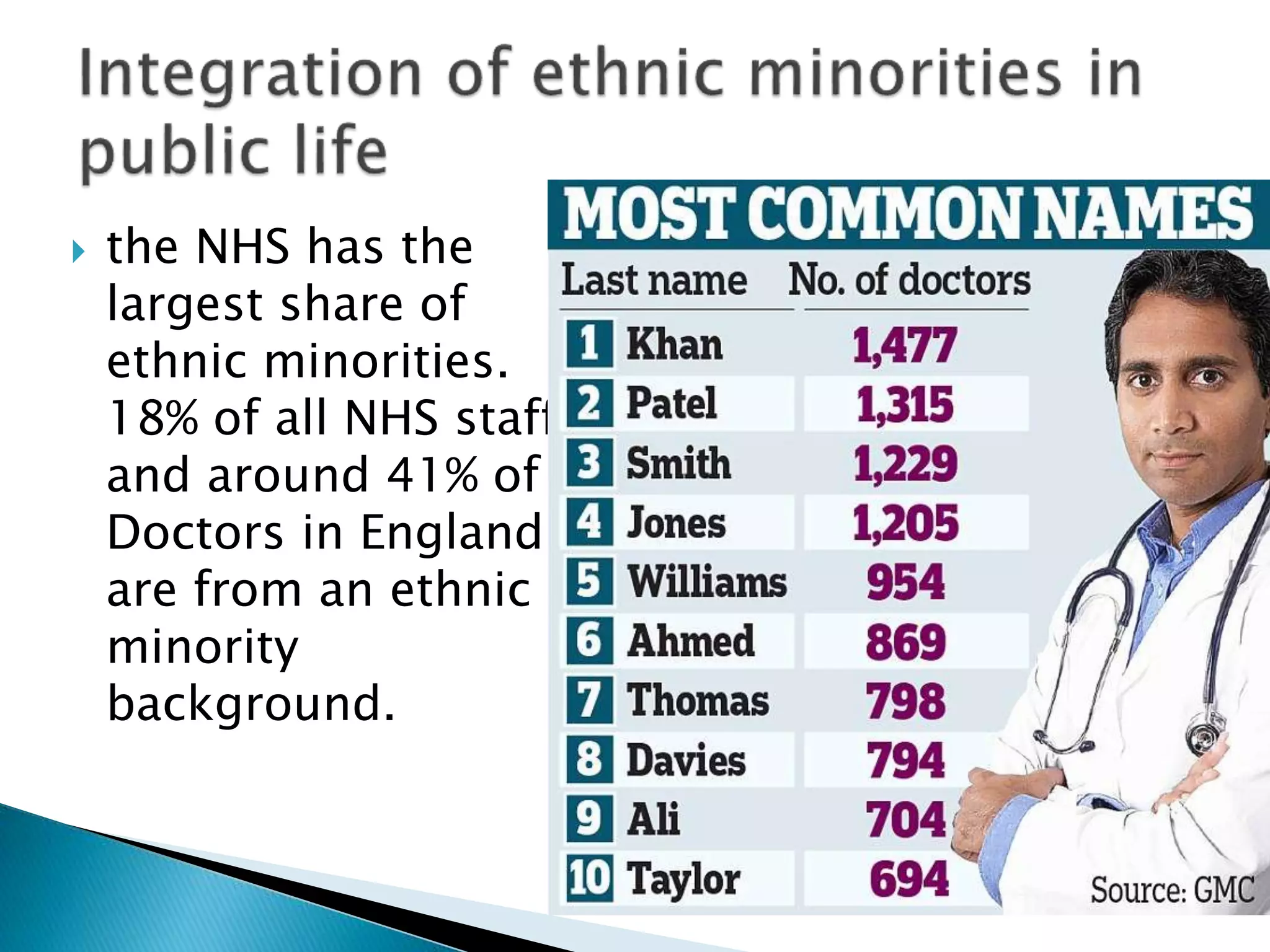
 the NHS has the
largest share of
ethnic minorities.
18% of all NHS staff
and around 41% of
Doctors in England
are from an ethnic
minority
background.
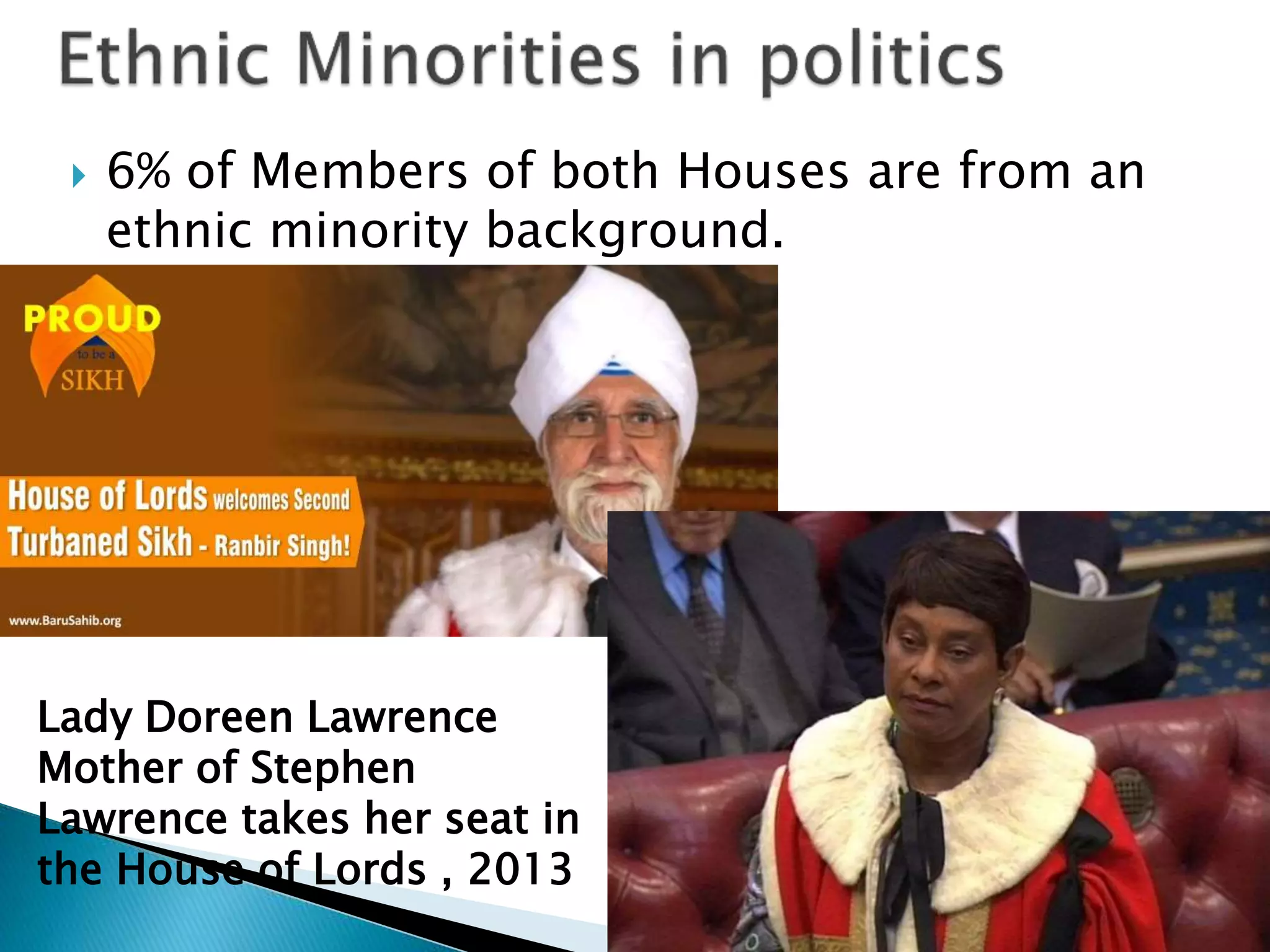
 6% of Members of both Houses are from an
ethnic minority background.
Lady Doreen Lawrence
Mother of Stephen
Lawrence takes her seat in
the House of Lords , 2013
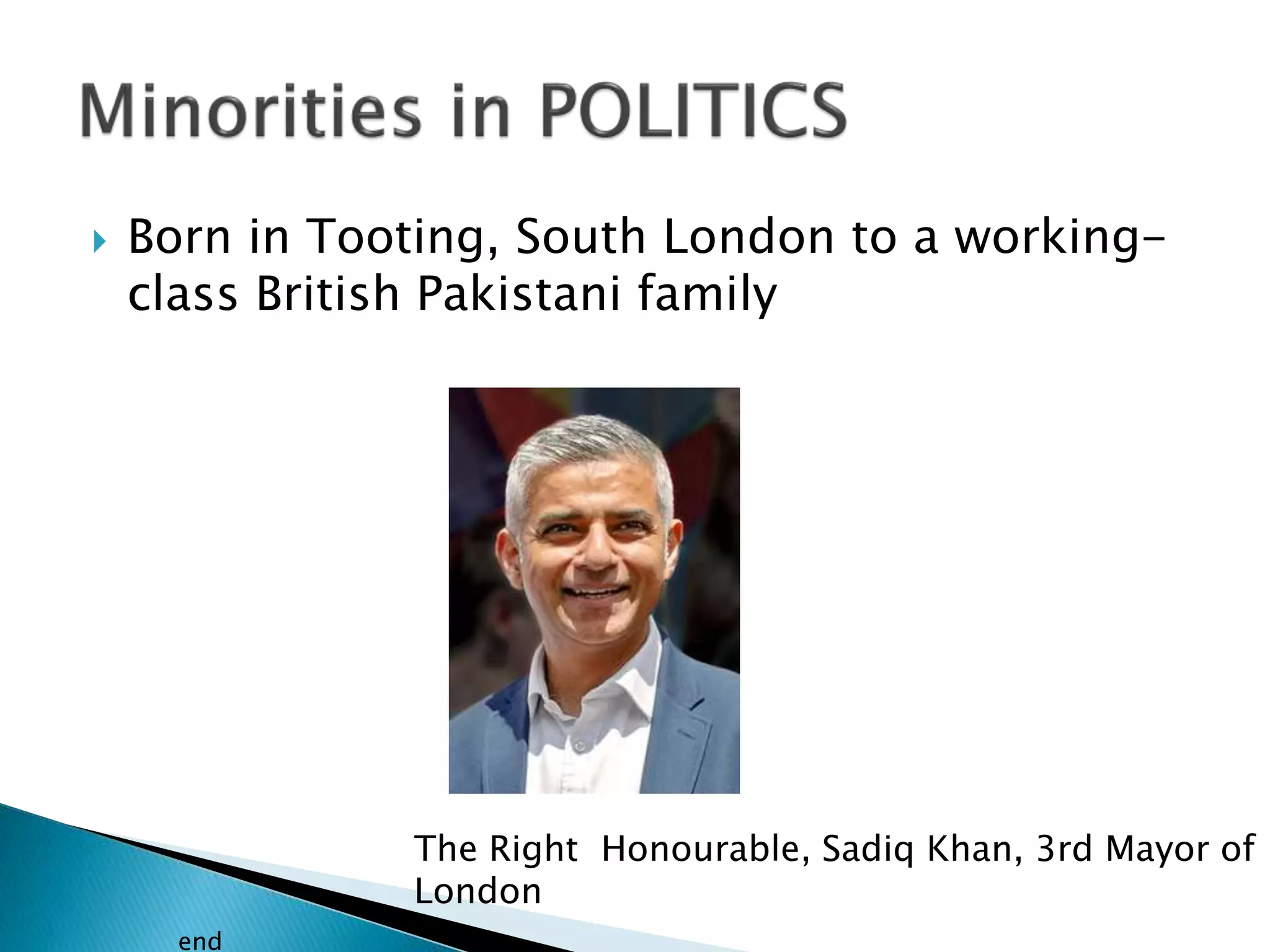
 Born in Tooting, South London to a working-
class British Pakistani family
The Right Honourable, Sadiq Khan, 3rd Mayor of
London
end
1st year lecture 4 ethnicities, minorities and immigragion 2017 full lecture

1st year lecture 4 ethnicities, minorities and immigragion 2017 full lecture

  • 2.
     Minority  Race Racism  Ethnicity/Ethnic Group
  • 3.
    Minority: less thanhalf the whole Race: common origin & genetic characteristics Racism: belief that members of 1 race are inferior or superior to another race, and hostility to other races. Ethnicity: Common consciousness of shared origins and traditions. Differences are cultural and not biological. Ethnic identity linked to national, linguistic and religious identity.
  • 4.
  • 5.
     Segregation: Groupslive apart, either by minority choice or majority imposition.  Discrimination: the practice of treating people unfairly & differently from other people.  Assimilation: Disappearance of distinctions, + movement and marriage between ethnic groups  Coexistence of different groups with different values with no complete assimilation.  Multiculturalism: diversity of groups which remain culturally distinct.
  • 6.
  • 7.
    1914-1918 WWI Men fromacross the Empire fought for Britain India: 1.3 M Soldiers Government feared the impact of black faces in white Britain
  • 8.
    British Troops The BritishIndian Army 1.3 million men served in WW1, and 2.5 million in WW2. Volunteer Indian Soldiers under British officers.
  • 9.
     Before theSecond World War, most immigrants to Britain came from the largely white Old Commonwealth countries of Canada, Australia and New Zealand, and from South Africa.  All Commonwealth citizens were allowed free access and were not treated as aliens.
  • 10.
    1946-1948 Labour shortages inBritain. The government began looking for immigrants. 157,000 Poles settled in the UK (joined by Italians) Reluctance to allow immigration from the empire, but not enough workers from Europe. Visuals
  • 11.
     At theinvitation of government agencies immigrants came to fill the vacant manual and lower-paid jobs of an expanding economy  People from non-white New Commonwealth nations of India, Pakistan and the West Indies came to Britain  On 22 June 1948, hundreds of men from the West Indies were brought to London.
  • 16.
     Ends discriminationon the grounds of race, ethnic or national origins  Outlaws discrimination in public places legislation considered weak by labour backbenchers and anti-racist groups Extended in1968 to cover employment & housing
  • 17.
     Better definitionof direct and indirect discrimination  outlawed racial discrimination in the work place and at school, in provision of goods and services,  created CRE (Commission for Racial Equality) to investigate unlawful discrimination.  But tightened immigration standards
  • 18.
    A black Britishman from South East London. Was murdered in a racist attack while waiting for a bus on the evening of 22 April 1993. Two of the 5 perpetrators were convicted almost 20 years later in 2012.
  • 19.
     A publicenquiry was ordered into the death of Stephen Lawrence conducted by Macpherson  Following Macpherson's report, the 1976 Act was amended in 2000 to include the police for the first time.  Public bodies must promote race equality & prevent race discrimination.  Efforts to increase minority ethnic staff.
  • 20.
  • 21.
     White population:55 M  Total Asians: 4.4 M ◦ Indian 1.5 ◦ Pakistani 1.2 ◦ Bangladeshi 450,000 ◦ Chinese 420,000  Total Blacks:4.9 M
  • 22.
    0% 5% 10%15% 20% 25% 30% Bangladeshi Pakistani White and Black Caribbean Black Caribbean Other Black Indian
  • 23.
    2/5th of peoplefrom ethnic minorities live in low- income households, twice the rate for White people.
  • 24.
    Limiting long-term illnessas compared to White British
  • 25.
     Minorities havetheir own newspapers: Caribbean Time, Asian Time and Amar Deep Hindi  They have their own political organizations: The Standing Conference of Afro- Caribbean The Asian Councilors The Black Against State Harassment and Repression Groups The Muslim Parliament
  • 26.
     Household size:largest for Bangladeshi and Pakistani  Employment: Indians were least disadvantaged & Bangladeshis most disadvantaged.  Home ownership: Indians &Pakistanis higher / Caribbean and Bangladeshi rented houses  Cars: Highest for Indians lowest for Bangladeshi
  • 27.
     Ability tospeak and read English: greatest among Indians and least among Bangladeshis  Patterns of religious affiliation: - All Pakistanis and Bangladeshis Muslims - Indians split: Hindus, Sikhs and Muslims. - Caribbeans mainly Protestant or Catholic
  • 28.
     the CivilService: In 2015, 11% of Civil Servants were from minority ethnic groups. This compares with 7% in the UK Armed Forces.
  • 29.
     the NHShas the largest share of ethnic minorities. 18% of all NHS staff and around 41% of Doctors in England are from an ethnic minority background.
  • 31.
     6% ofMembers of both Houses are from an ethnic minority background. Lady Doreen Lawrence Mother of Stephen Lawrence takes her seat in the House of Lords , 2013
  • 32.
     Born inTooting, South London to a working- class British Pakistani family The Right Honourable, Sadiq Khan, 3rd Mayor of London end