1
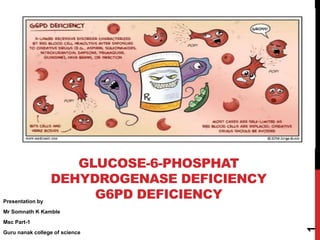
GLUCOSE-6-PHOSPHAT
DEHYDROGENASE DEFICIENCY
G6PD DEFICIENCYPresentation by
Mr Somnath K Kamble
Msc Part-1
Guru nanak college of science
1. Introduction
2. Defination
3. G6PD ENZYME
4. Biochemical basis of G6PD
5. Causing factor’s
6. Different classes
7. Diagnosis of G6PD
8. Treatment & prevention
9. Global distrubution
2
CONTENTS
WHAT IS THE G6PD
DEFICIENCY?
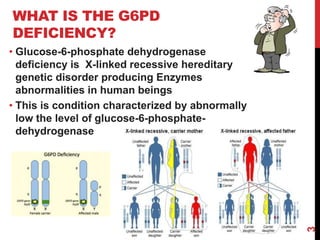
• Glucose-6-phosphate dehydrogenase
deficiency is X-linked recessive hereditary
genetic disorder producing Enzymes
abnormalities in human beings
• This is condition characterized by abnormally
low the level of glucose-6-phosphate-
dehydrogenase
3
G6PD(GLUCOSE-6-PHOSPHATE-
DEHYDROGENASE)
• This is condition characterized by abnormally low the level
of glucose-6-phosphate-dehydrogenase
• Glucose-6-phosphate dehydrogenase (G6PD) is an enzyme found
in the cytoplasm of all cells in the body
• It is a housekeeping enzyme that plays a vital role in the
prevention of cellular damage from reactive oxygen species
(ROS).
• It does this by providing substrates to prevent oxidative damage.
• This condition mainly affects red blood cells, which carry
oxygen from the lungs to tissues throughout the body.
4
• The most common
medical problem
associated
with glucose-6-
phosphate
dehydrogenase
deficiency is
hemolytic anemia
• This type
of anemialeads to
5
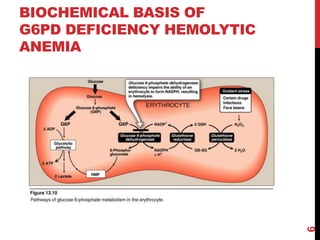
BIOCHEMICAL BASIS OF
G6PD DEFICIENCY HEMOLYTIC
ANEMIA
6
CAUSING FACTORS
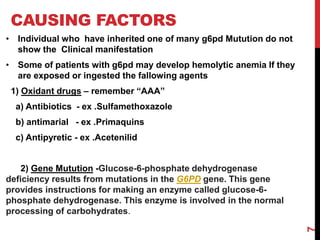
• Individual who have inherited one of many g6pd Mutution do not
show the Clinical manifestation
• Some of patients with g6pd may develop hemolytic anemia If they
are exposed or ingested the fallowing agents
1) Oxidant drugs – remember “AAA”
a) Antibiotics - ex .Sulfamethoxazole
b) antimarial - ex .Primaquins
c) Antipyretic - ex .Acetenilid
2) Gene Mutution -Glucose-6-phosphate dehydrogenase
deficiency results from mutations in the G6PD gene. This gene
provides instructions for making an enzyme called glucose-6-
phosphate dehydrogenase. This enzyme is involved in the normal
processing of carbohydrates.
7
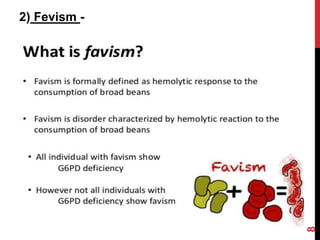
2) Fevism -
8
DIFFERENT CLASSES OF
G6PD DEFICIENCY HEMOLYTIC
ANEMIA
9
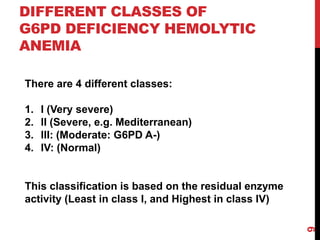
There are 4 different classes:
1. I (Very severe)
2. II (Severe, e.g. Mediterranean)
3. III: (Moderate: G6PD A-)
4. IV: (Normal)
This classification is based on the residual enzyme
activity (Least in class I, and Highest in class IV)
DIAGNOSIS OF
G6PD DEFICIENCY
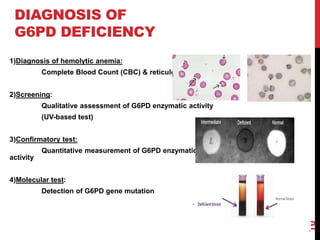
1)Diagnosis of hemolytic anemia:
Complete Blood Count (CBC) & reticulocytic count
2)Screening:
Qualitative assessment of G6PD enzymatic activity
(UV-based test)
3)Confirmatory test:
Quantitative measurement of G6PD enzymatic
activity
4)Molecular test:
Detection of G6PD gene mutation
10
TREATMENT
Most individuals with glucose-6-phosphate dehydrogenase
(G6PD) deficiency do not need treatment.
Anemia should be treated with appropriate measures,
recognizing that hemolysis is self-limited and often resolves
in 8 to 14 days
Transfusions are rarely indicated.
Patients with chronic hemolysis or non-spherocytic anemia
should be placed on daily folic acid supplements.
11
PREVENTION -
Patients with G6PD deficiency should avoid the following:
1)Oxidant drugs, such as the antimalarial drugs primaquine,
chloroquine, pamaquine, and pentaquine
3)Sulfonamides, such as sulfanilamide, sulfamethoxypyridazine,
sulfacetamide, sulfadimidine, sulfapyridine, sulfamerazine, and
sulfamethoxazole
3) Nonsteroidal anti-inflammatory drugs (NSAIDs), nitrofurantoin, and
phenazopyridine
3)Isobutyl nitrite, naphthalene (moth balls), phenylhydrazine, and
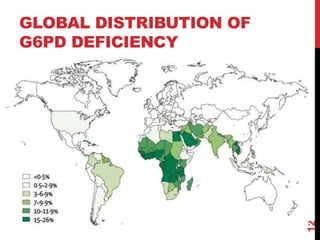
GLOBAL DISTRIBUTION OF
G6PD DEFICIENCY
12
THANK YOU !
13
References –
• Biochemistry 2nd Ed 2002 by U
Satyanarayan ,book and allied
public.
• https://ghr.nlm.nih.gov Genetic
home reference .NIH( National
library of medicine)

G6PD glucose 6 phosphate dehydrogens deficiency

  • 1.
    1 GLUCOSE-6-PHOSPHAT DEHYDROGENASE DEFICIENCY G6PD DEFICIENCYPresentationby Mr Somnath K Kamble Msc Part-1 Guru nanak college of science
  • 2.
    1. Introduction 2. Defination 3.G6PD ENZYME 4. Biochemical basis of G6PD 5. Causing factor’s 6. Different classes 7. Diagnosis of G6PD 8. Treatment & prevention 9. Global distrubution 2 CONTENTS
  • 3.
    WHAT IS THEG6PD DEFICIENCY? • Glucose-6-phosphate dehydrogenase deficiency is X-linked recessive hereditary genetic disorder producing Enzymes abnormalities in human beings • This is condition characterized by abnormally low the level of glucose-6-phosphate- dehydrogenase 3
  • 4.
    G6PD(GLUCOSE-6-PHOSPHATE- DEHYDROGENASE) • This iscondition characterized by abnormally low the level of glucose-6-phosphate-dehydrogenase • Glucose-6-phosphate dehydrogenase (G6PD) is an enzyme found in the cytoplasm of all cells in the body • It is a housekeeping enzyme that plays a vital role in the prevention of cellular damage from reactive oxygen species (ROS). • It does this by providing substrates to prevent oxidative damage. • This condition mainly affects red blood cells, which carry oxygen from the lungs to tissues throughout the body. 4
  • 5.
    • The mostcommon medical problem associated with glucose-6- phosphate dehydrogenase deficiency is hemolytic anemia • This type of anemialeads to 5
  • 6.
    BIOCHEMICAL BASIS OF G6PDDEFICIENCY HEMOLYTIC ANEMIA 6
  • 7.
    CAUSING FACTORS • Individualwho have inherited one of many g6pd Mutution do not show the Clinical manifestation • Some of patients with g6pd may develop hemolytic anemia If they are exposed or ingested the fallowing agents 1) Oxidant drugs – remember “AAA” a) Antibiotics - ex .Sulfamethoxazole b) antimarial - ex .Primaquins c) Antipyretic - ex .Acetenilid 2) Gene Mutution -Glucose-6-phosphate dehydrogenase deficiency results from mutations in the G6PD gene. This gene provides instructions for making an enzyme called glucose-6- phosphate dehydrogenase. This enzyme is involved in the normal processing of carbohydrates. 7
  • 8.
  • 9.
    DIFFERENT CLASSES OF G6PDDEFICIENCY HEMOLYTIC ANEMIA 9 There are 4 different classes: 1. I (Very severe) 2. II (Severe, e.g. Mediterranean) 3. III: (Moderate: G6PD A-) 4. IV: (Normal) This classification is based on the residual enzyme activity (Least in class I, and Highest in class IV)
  • 10.
    DIAGNOSIS OF G6PD DEFICIENCY 1)Diagnosisof hemolytic anemia: Complete Blood Count (CBC) & reticulocytic count 2)Screening: Qualitative assessment of G6PD enzymatic activity (UV-based test) 3)Confirmatory test: Quantitative measurement of G6PD enzymatic activity 4)Molecular test: Detection of G6PD gene mutation 10
  • 11.
    TREATMENT Most individuals withglucose-6-phosphate dehydrogenase (G6PD) deficiency do not need treatment. Anemia should be treated with appropriate measures, recognizing that hemolysis is self-limited and often resolves in 8 to 14 days Transfusions are rarely indicated. Patients with chronic hemolysis or non-spherocytic anemia should be placed on daily folic acid supplements. 11 PREVENTION - Patients with G6PD deficiency should avoid the following: 1)Oxidant drugs, such as the antimalarial drugs primaquine, chloroquine, pamaquine, and pentaquine 3)Sulfonamides, such as sulfanilamide, sulfamethoxypyridazine, sulfacetamide, sulfadimidine, sulfapyridine, sulfamerazine, and sulfamethoxazole 3) Nonsteroidal anti-inflammatory drugs (NSAIDs), nitrofurantoin, and phenazopyridine 3)Isobutyl nitrite, naphthalene (moth balls), phenylhydrazine, and
  • 12.
  • 13.
    THANK YOU ! 13 References– • Biochemistry 2nd Ed 2002 by U Satyanarayan ,book and allied public. • https://ghr.nlm.nih.gov Genetic home reference .NIH( National library of medicine)