Waterfall, Agile & Scaling Agile
Dvir Zohar – Simple CEO
Dvir@SimpleDO.co.il
Think Simple, Run Faster
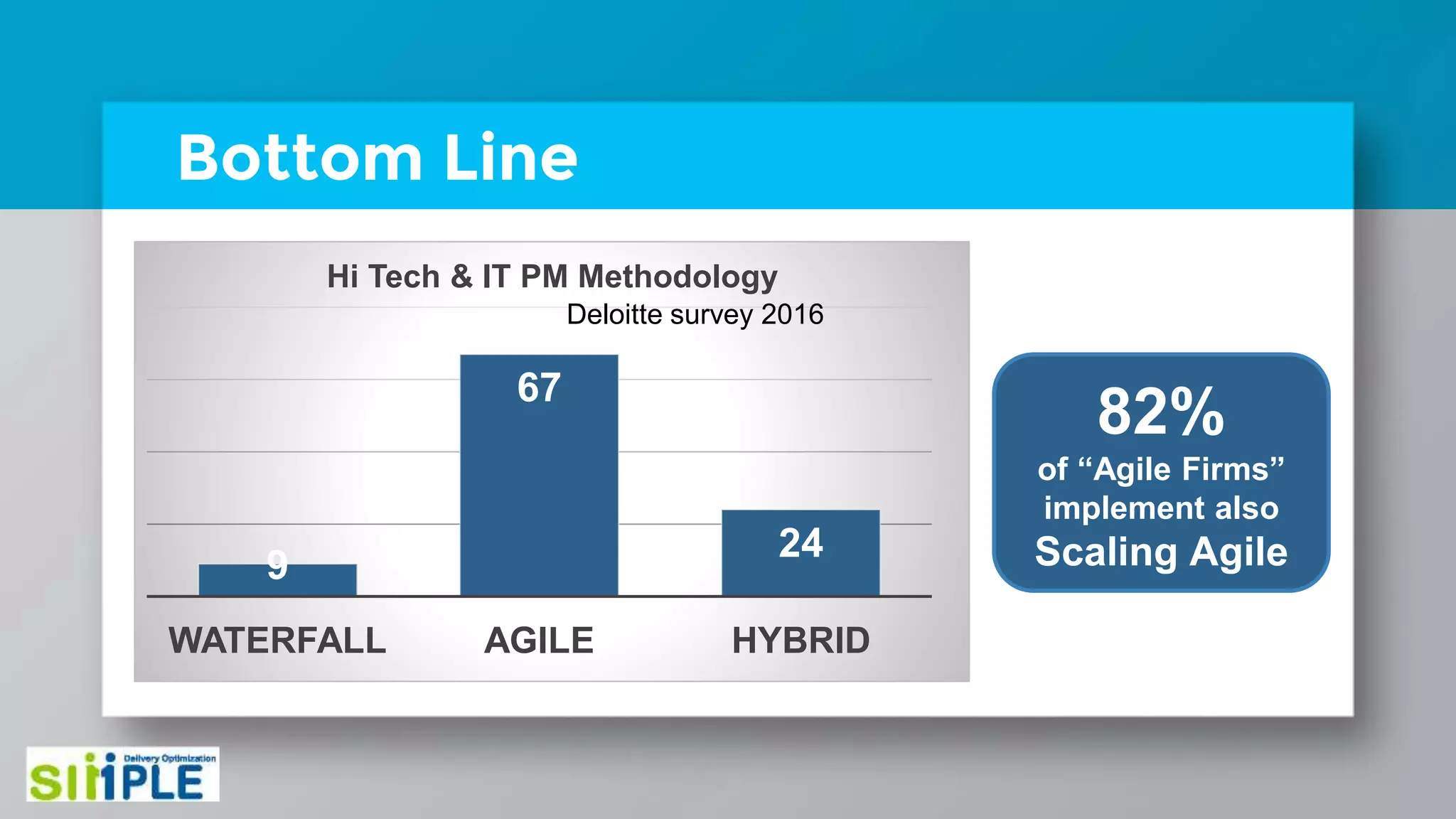
Bottom Line
9
67
24
WATERFALL AGILE HYBRID
Hi Tech & IT PM Methodology
Deloitte survey 2016
82%
of “Agile Firms”
implement also
Scaling Agile
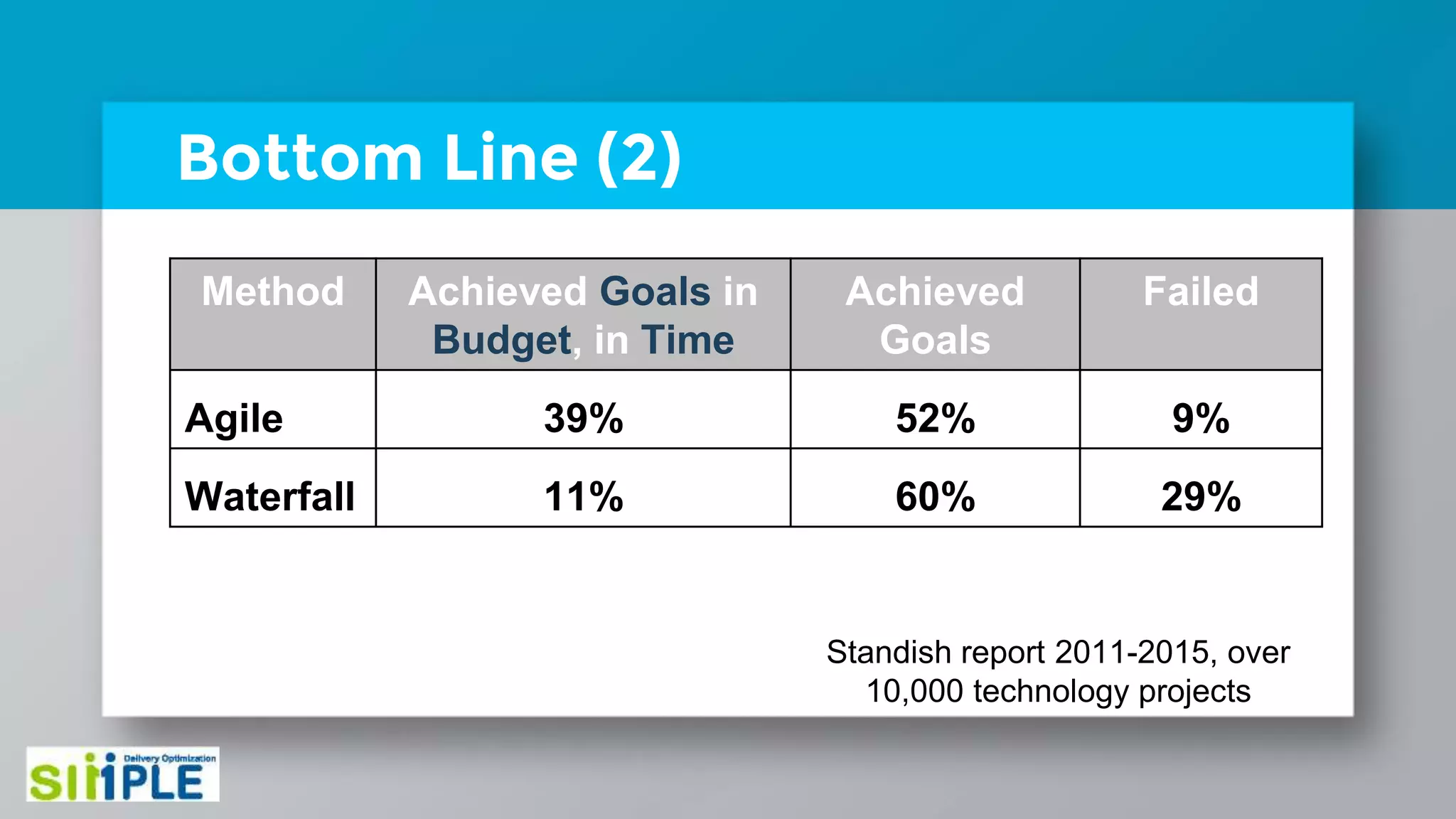
Bottom Line (2)
Standish report 2011-2015, over
10,000 technology projects
Method Achieved Goals in
Budget, in Time
Achieved
Goals
Failed
Agile 39% 52% 9%
Waterfall 11% 60% 29%
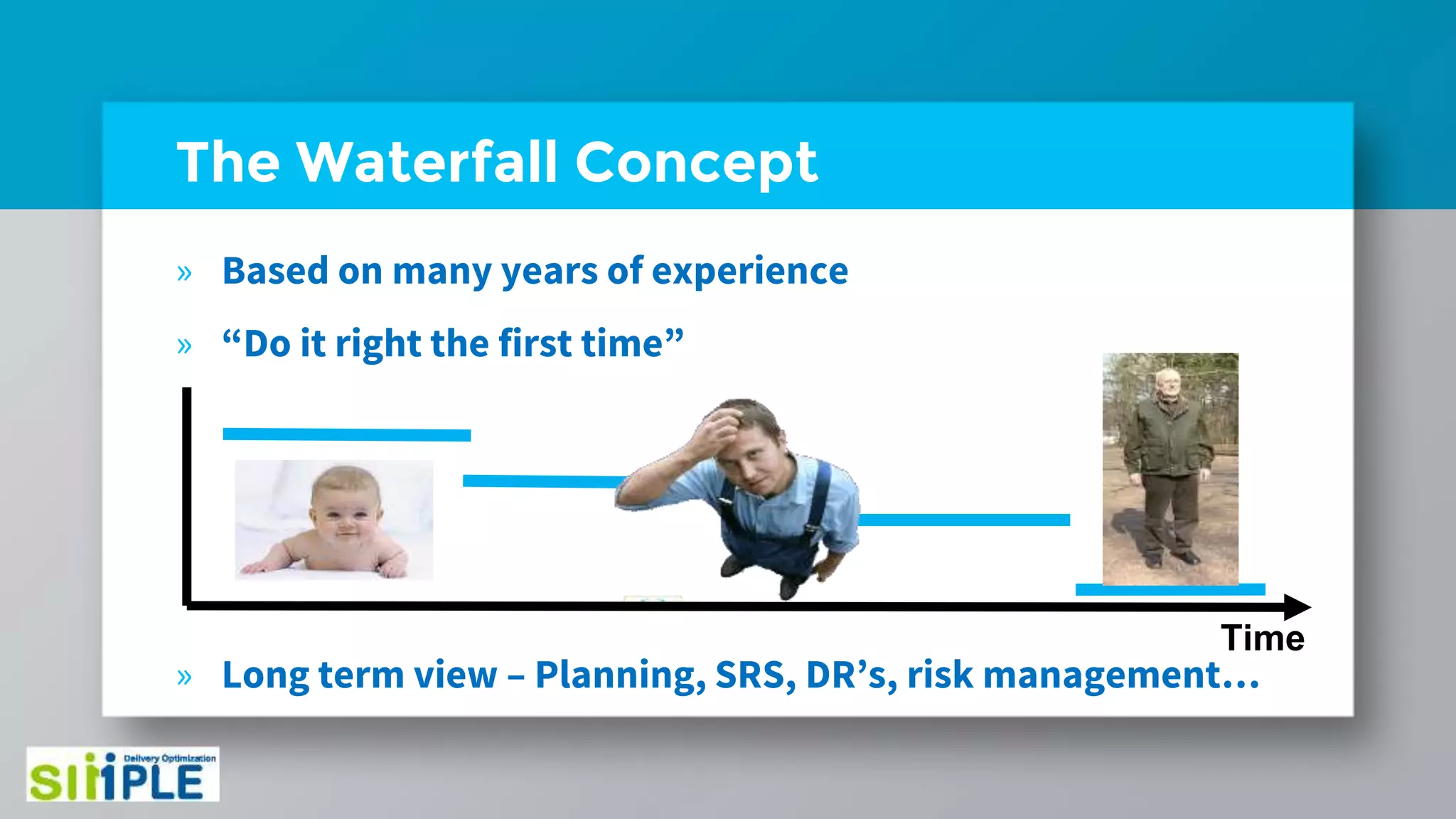
The Waterfall Concept
» Based on many years of experience
» “Do it right the first time”
» Long term view – Planning, SRS, DR’s, risk management…
Time
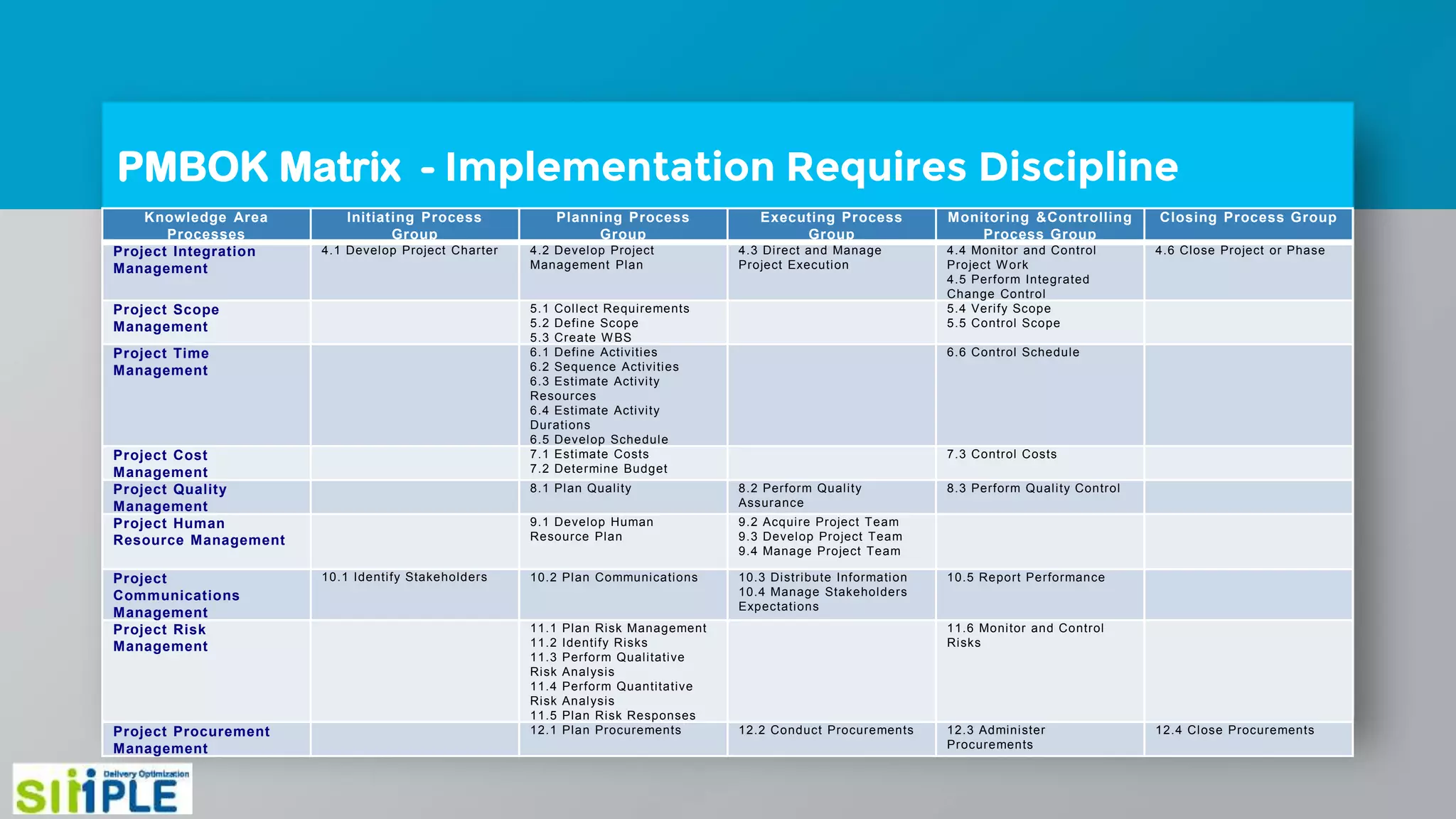
PMBOK Matrix - Implementation Requires Discipline
Knowledge Area
Processes
Initiating Process
Group
Planning Process
Group
Executing Process
Group
Monitoring &Controlling
Process Group
Closing Process Group
Project Integration
Management
4.1 Develop Project Charter 4.2 Develop Project
Management Plan
4.3 Direct and Manage
Project Execution
4.4 Monitor and Control
Project Work
4.5 Perform Integrated
Change Control
4.6 Close Project or Phase
Project Scope
Management
5.1 Collect Requirements
5.2 Define Scope
5.3 Create WBS
5.4 Verify Scope
5.5 Control Scope
Project Time
Management
6.1 Define Activities
6.2 Sequence Activities
6.3 Estimate Activity
Resources
6.4 Estimate Activity
Durations
6.5 Develop Schedule
6.6 Control Schedule
Project Cost
Management
7.1 Estimate Costs
7.2 Determine Budget
7.3 Control Costs
Project Quality
Management
8.1 Plan Quality 8.2 Perform Quality
Assurance
8.3 Perform Quality Control
Project Human
Resource Management
9.1 Develop Human
Resource Plan
9.2 Acquire Project Team
9.3 Develop Project Team
9.4 Manage Project Team
Project
Communications
Management
10.1 Identify Stakeholders 10.2 Plan Communications 10.3 Distribute Information
10.4 Manage Stakeholders
Expectations
10.5 Report Performance
Project Risk
Management
11.1 Plan Risk Management
11.2 Identify Risks
11.3 Perform Qualitative
Risk Analysis
11.4 Perform Quantitative
Risk Analysis
11.5 Plan Risk Responses
11.6 Monitor and Control
Risks
Project Procurement
Management
12.1 Plan Procurements 12.2 Conduct Procurements 12.3 Administer
Procurements
12.4 Close Procurements
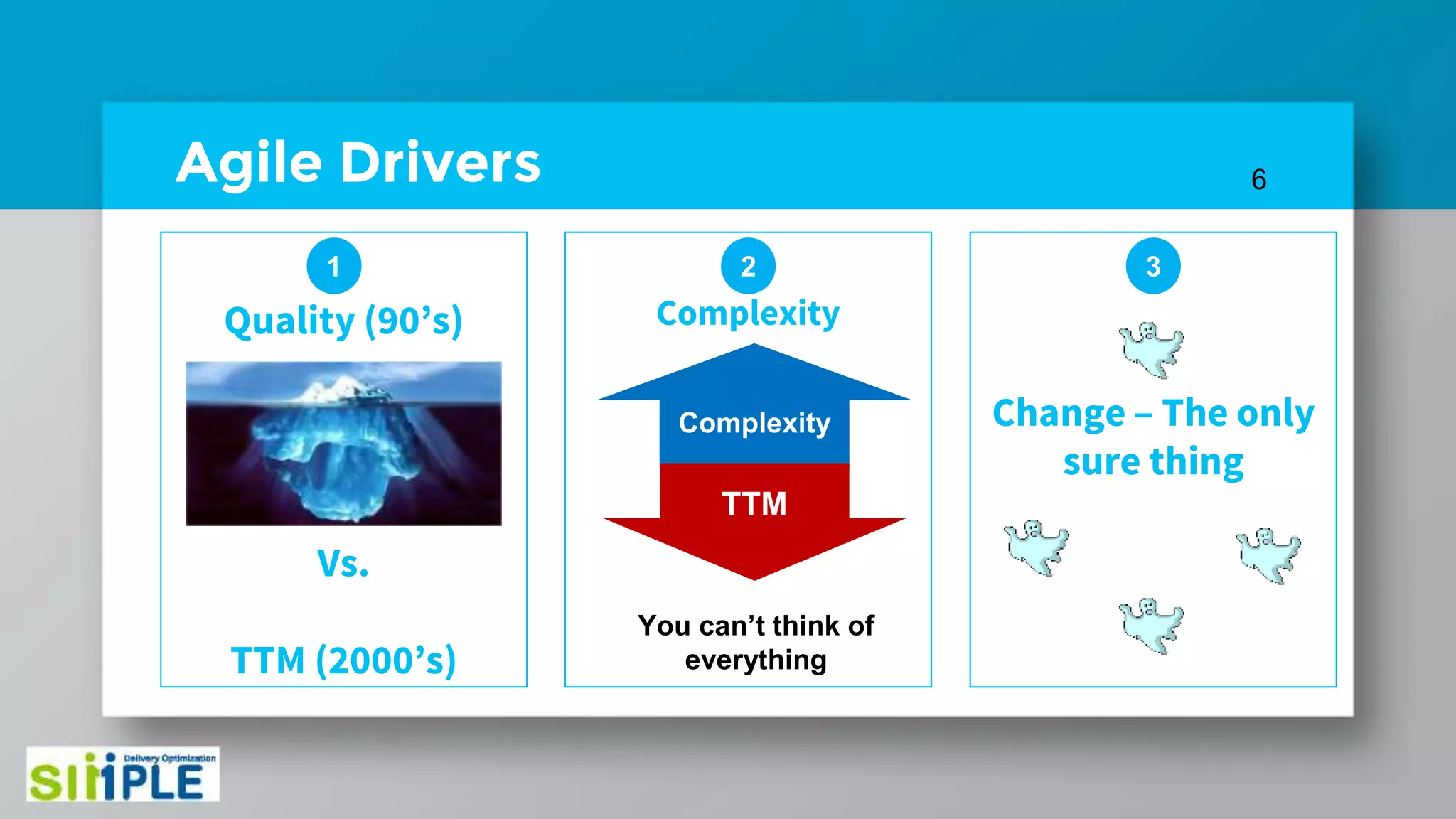
Agile Drivers
Quality (90’s)
Vs.
TTM (2000’s)
Change – The only
sure thing
Complexity
6
1 32
Complexity
TTM
You can’t think of
everything
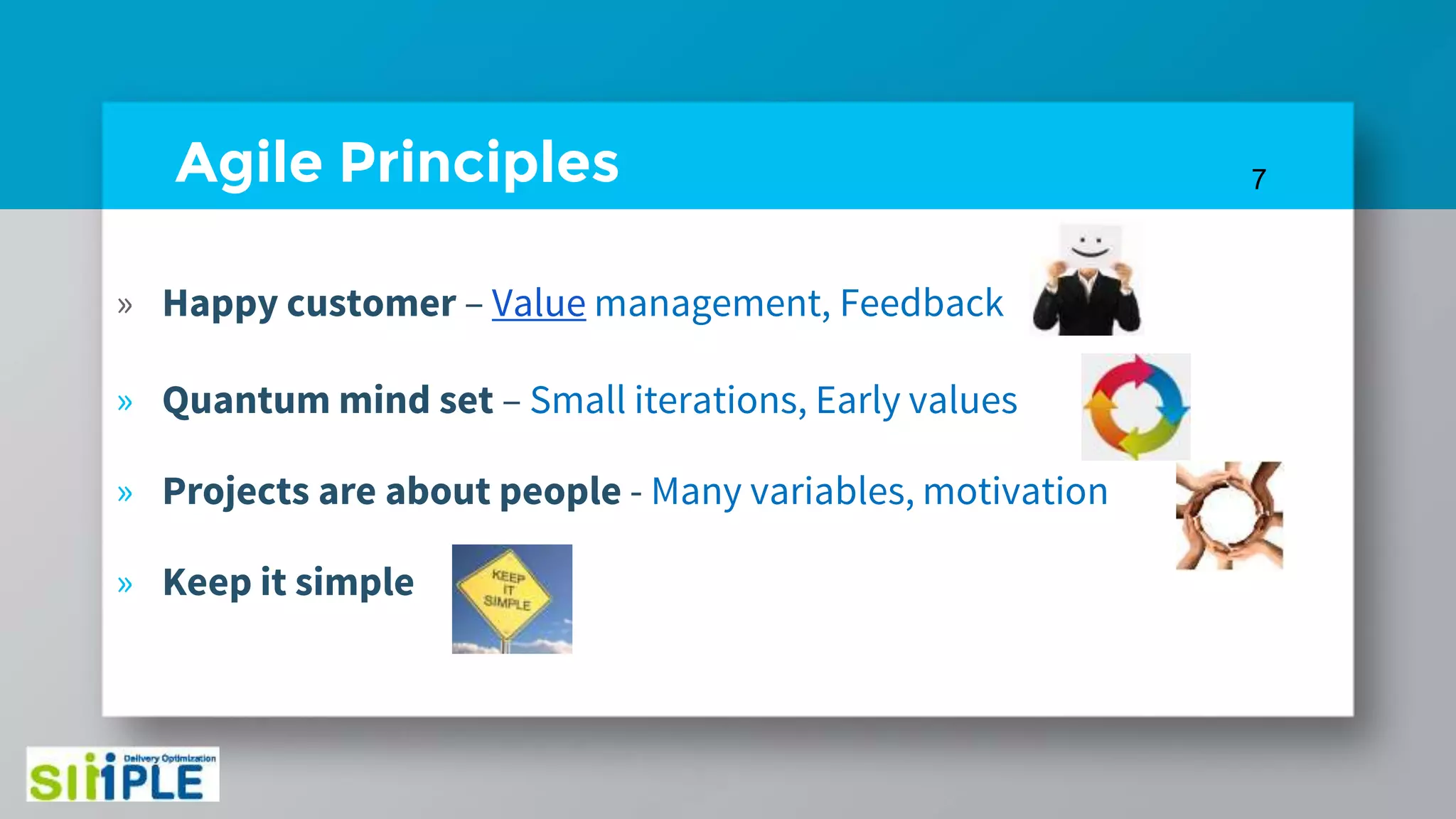
Agile Principles
» Happy customer – Value management, Feedback
» Quantum mind set – Small iterations, Early values
» Projects are about people - Many variables, motivation
» Keep it simple
7
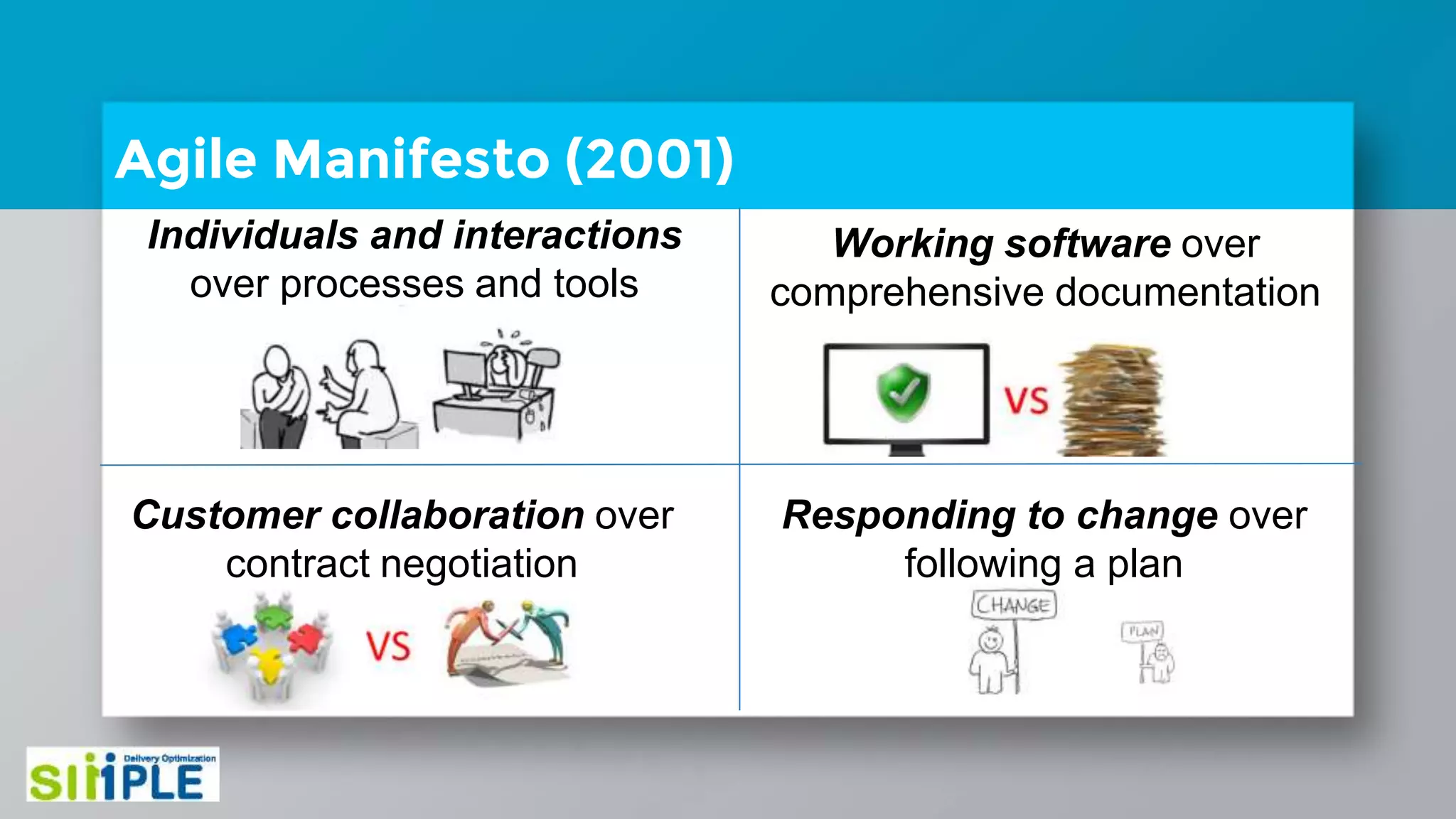
Agile Manifesto (2001)
Individuals and interactions
over processes and tools
Working software over
comprehensive documentation
Customer collaboration over
contract negotiation
Responding to change over
following a plan
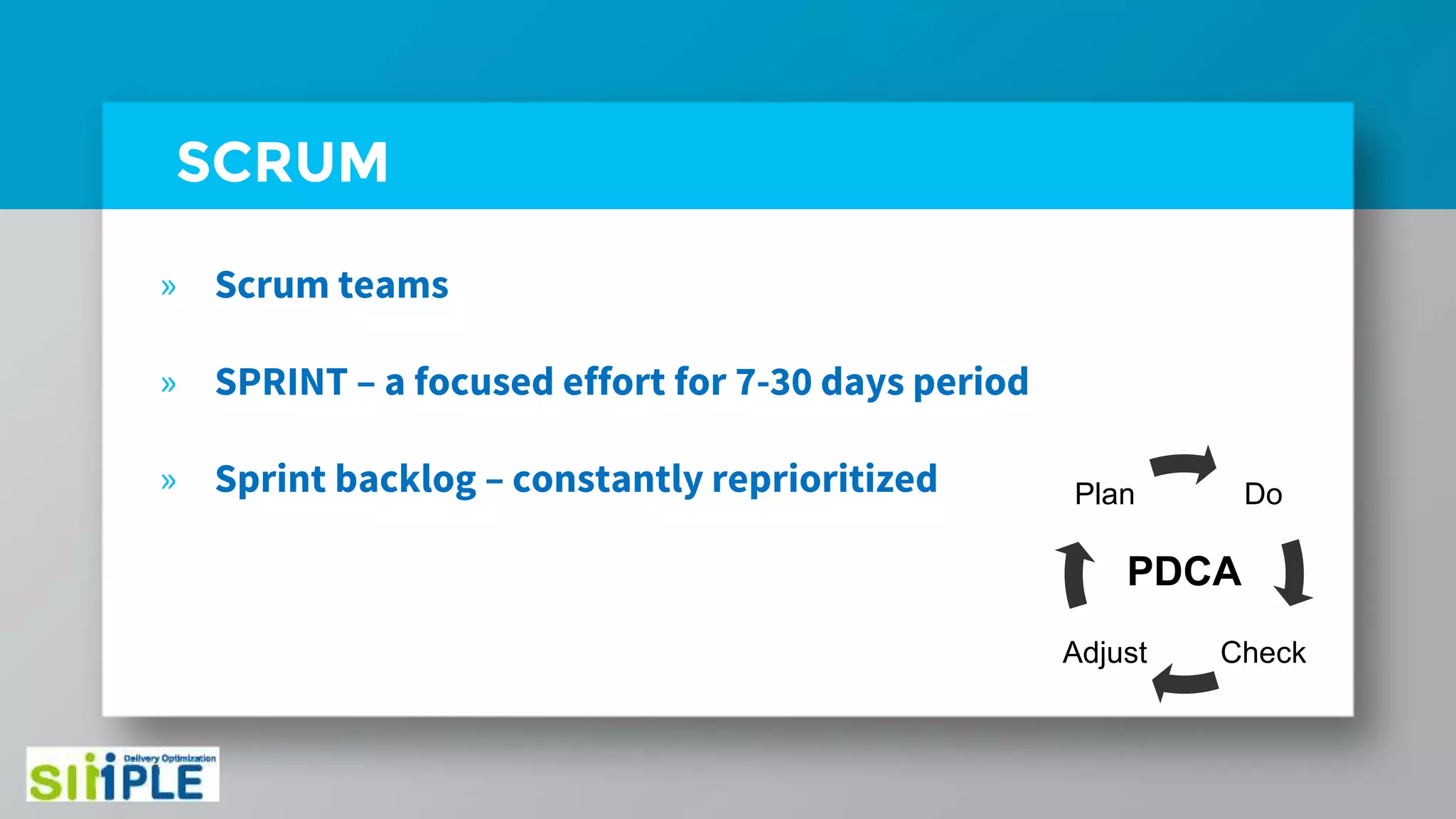
SCRUM
» Scrum teams
» SPRINT – a focused effort for 7-30 days period
» Sprint backlog – constantly reprioritized Do
CheckAdjust
Plan
PDCA
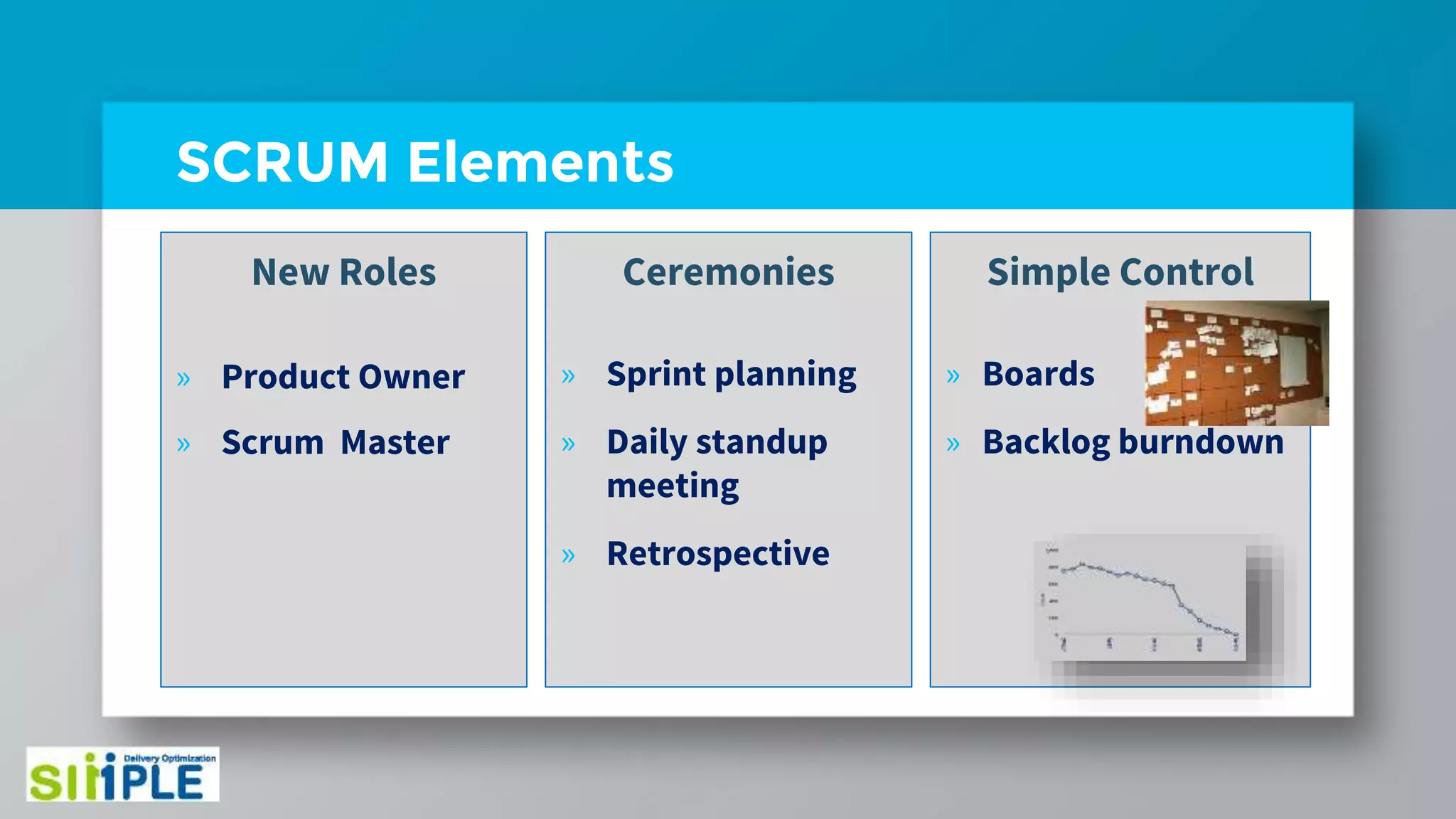
SCRUM Elements
New Roles
» Product Owner
» Scrum Master
Ceremonies
» Sprint planning
» Daily standup
meeting
» Retrospective
Simple Control
» Boards
» Backlog burndown
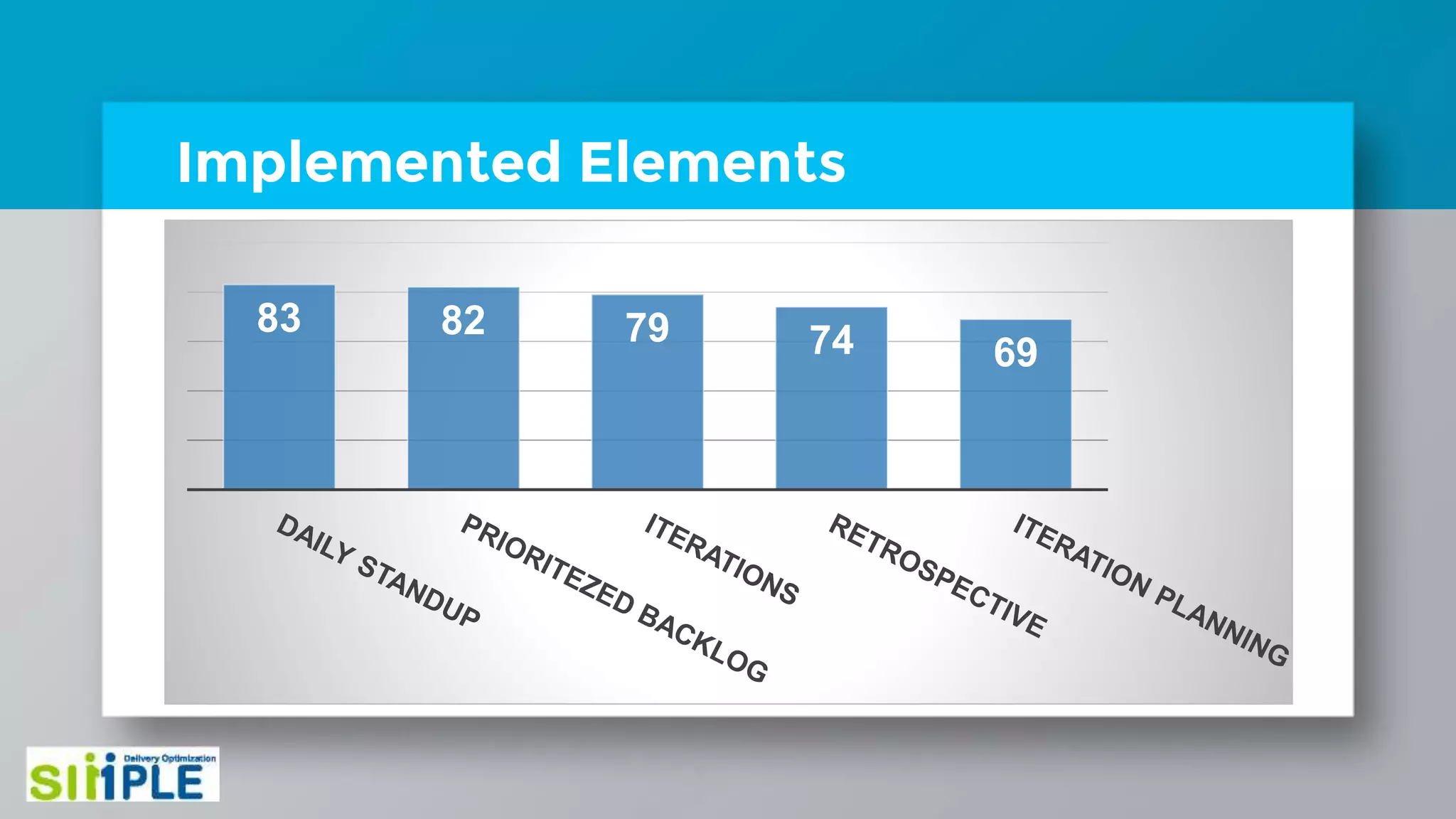
Implemented Elements
83 82 79 74 69
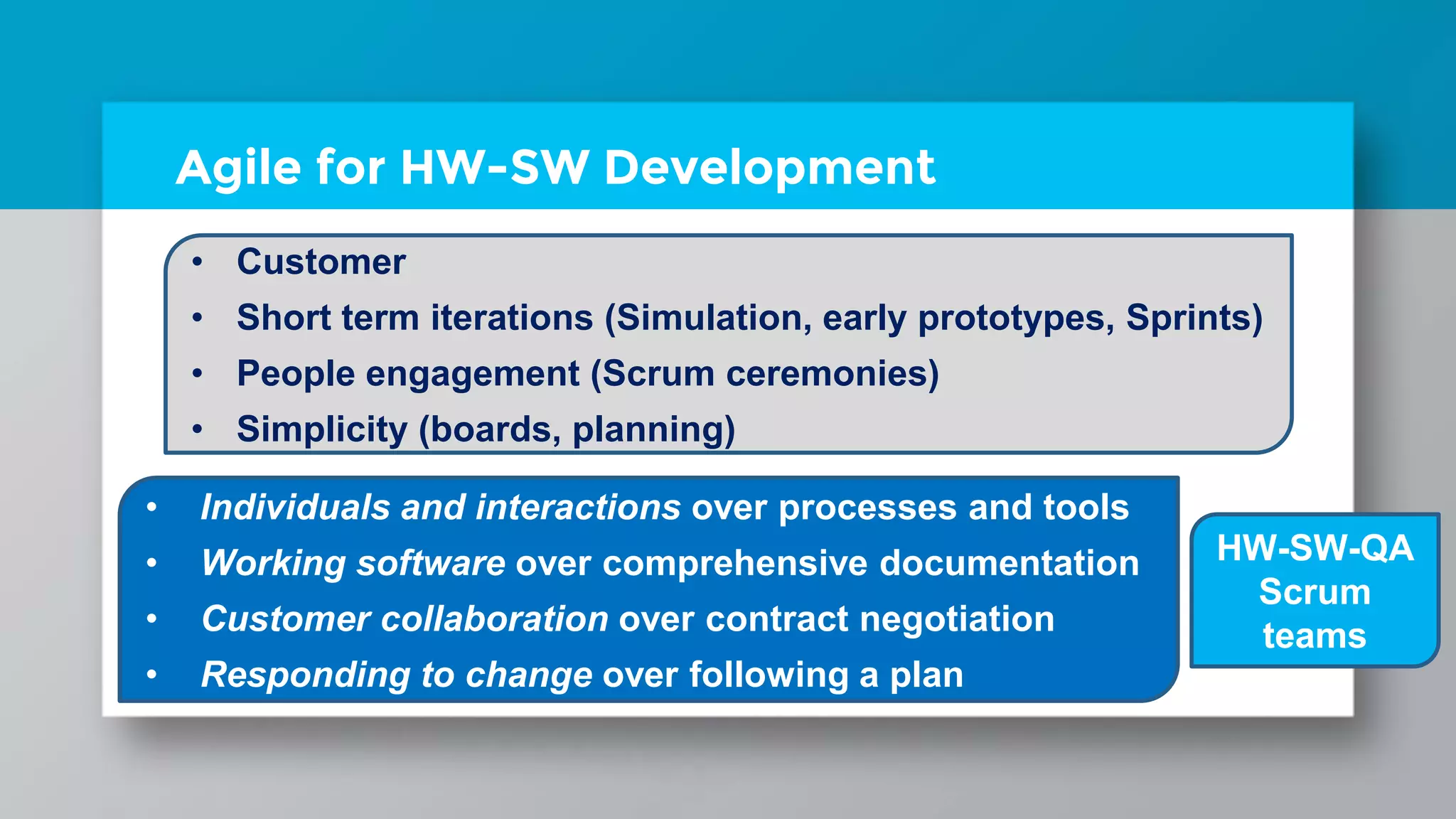
Agile for HW-SW Development
• Customer
• Short term iterations (Simulation, early prototypes, Sprints)
• People engagement (Scrum ceremonies)
• Simplicity (boards, planning)
• Individuals and interactions over processes and tools
• Working software over comprehensive documentation
• Customer collaboration over contract negotiation
• Responding to change over following a plan
HW-SW-QA
Scrum
teams
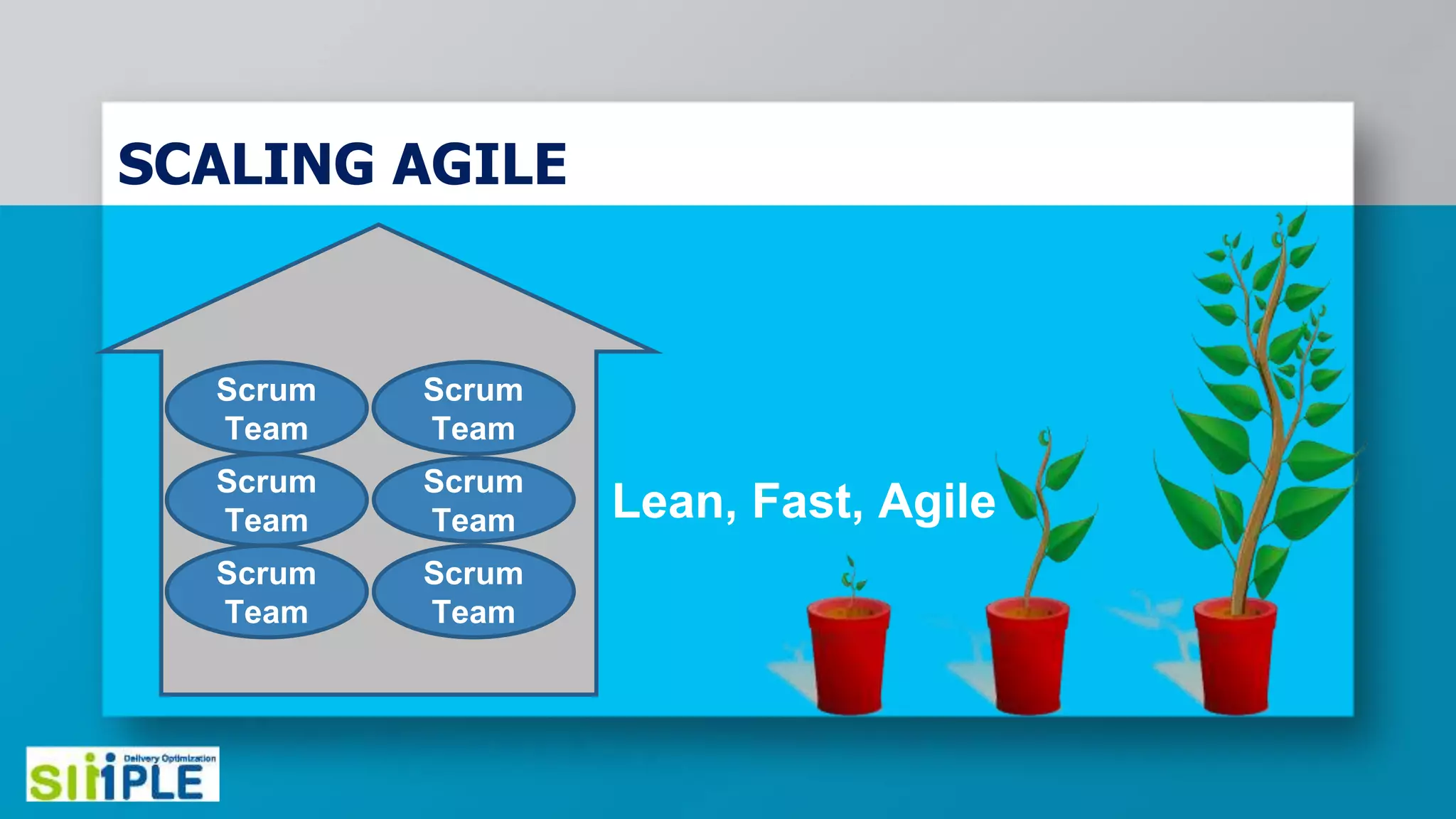
SCALING AGILE
Scrum
Team
Scrum
Team
Scrum
Team
Scrum
Team
Scrum
Team
Scrum
Team
Lean, Fast, Agile
Scaling Agile Main Topics
• Realistic commitment
• Visibility for management
• Large programs
• Changes in portfolio
• Resource load & Bottle necks
• Sub contractors
• Knowledge transfer
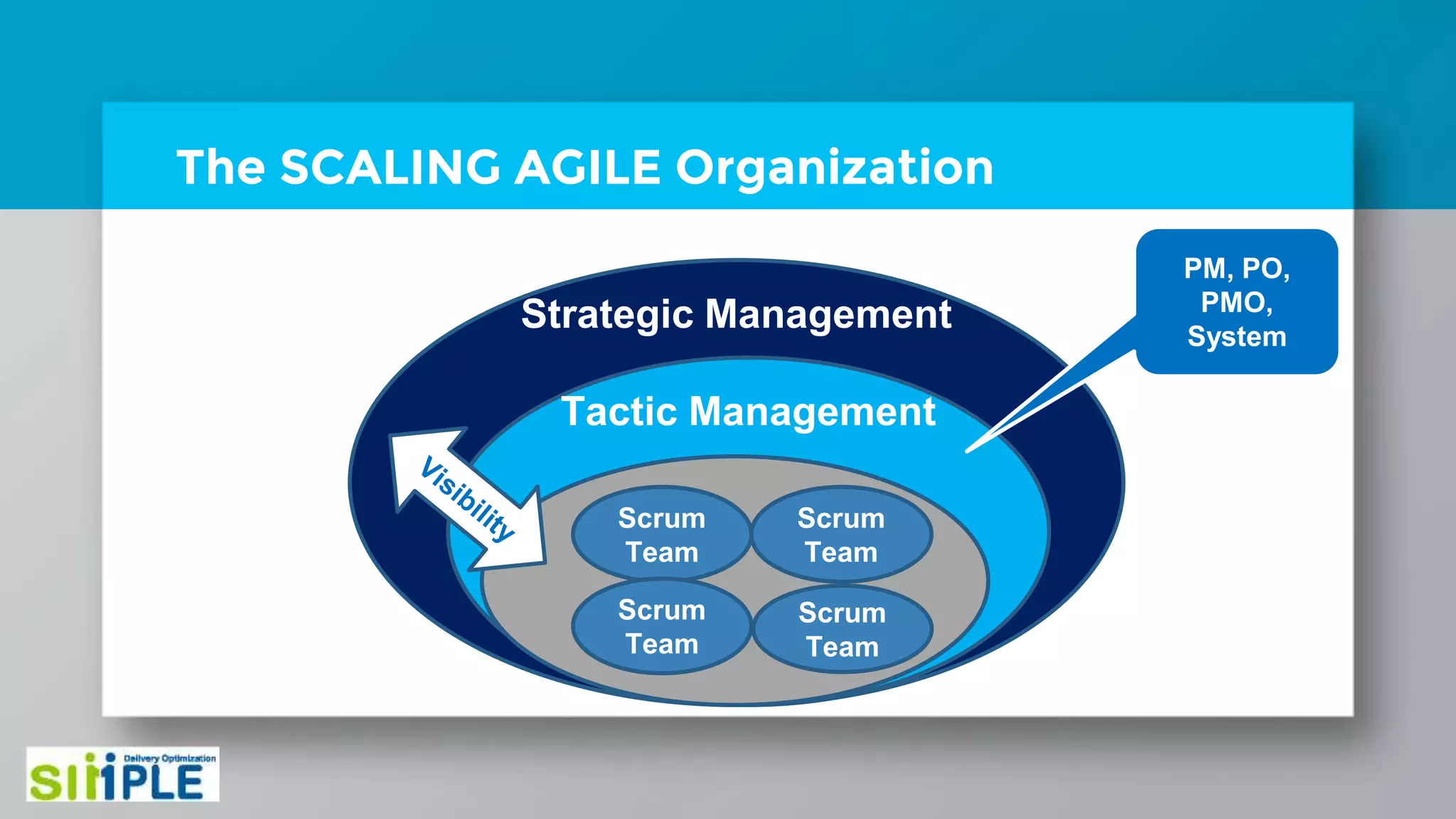
Strategic Management
Tactic Management
The SCALING AGILE Organization
Scrum
Team
Scrum
Team
Scrum
Team
Scrum
Team
PM, PO,
PMO,
System
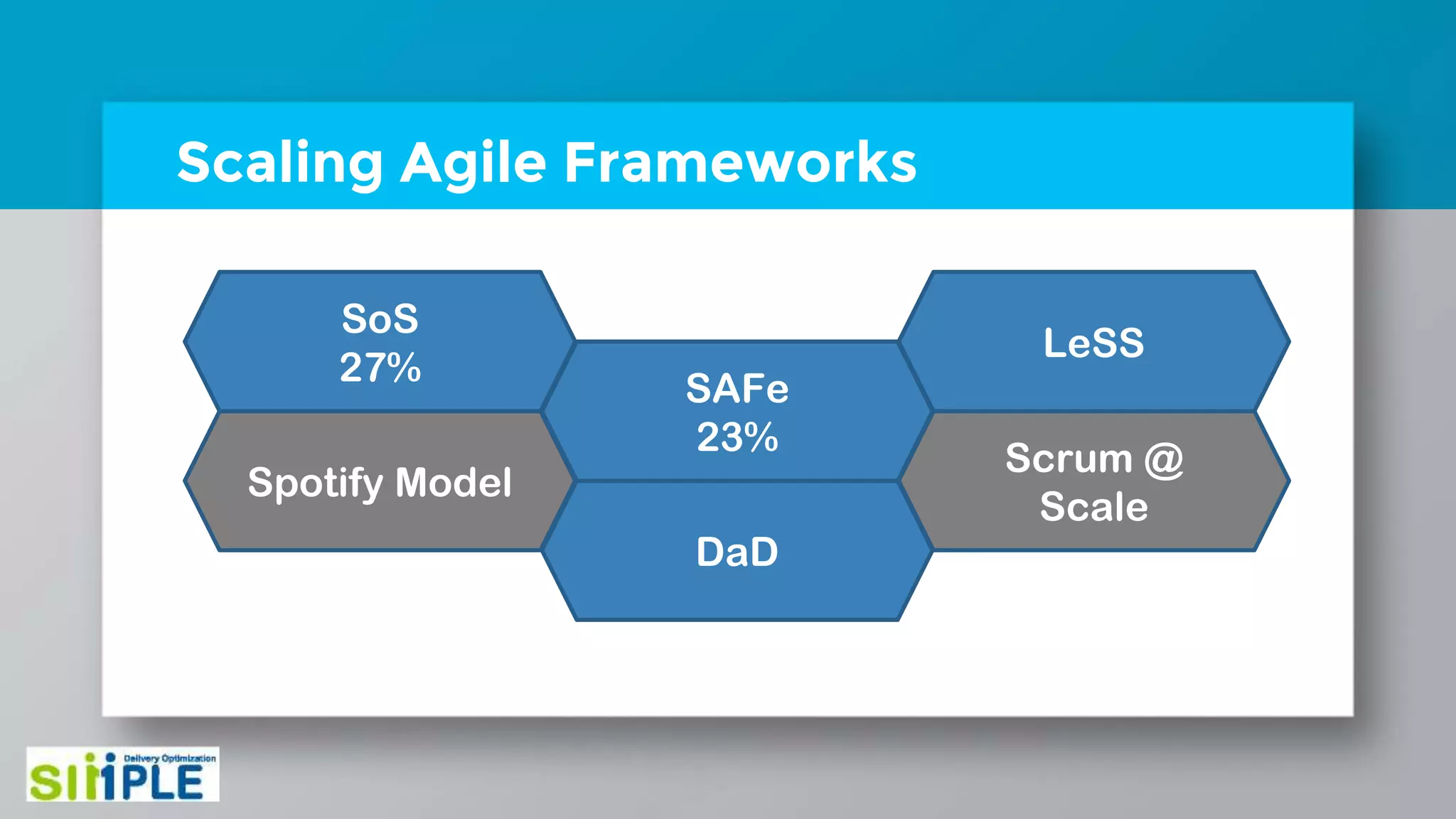
Scaling Agile Frameworks
SoS
27%
SAFe
23%
LeSS
Spotify Model
Scrum @
Scale
DaD
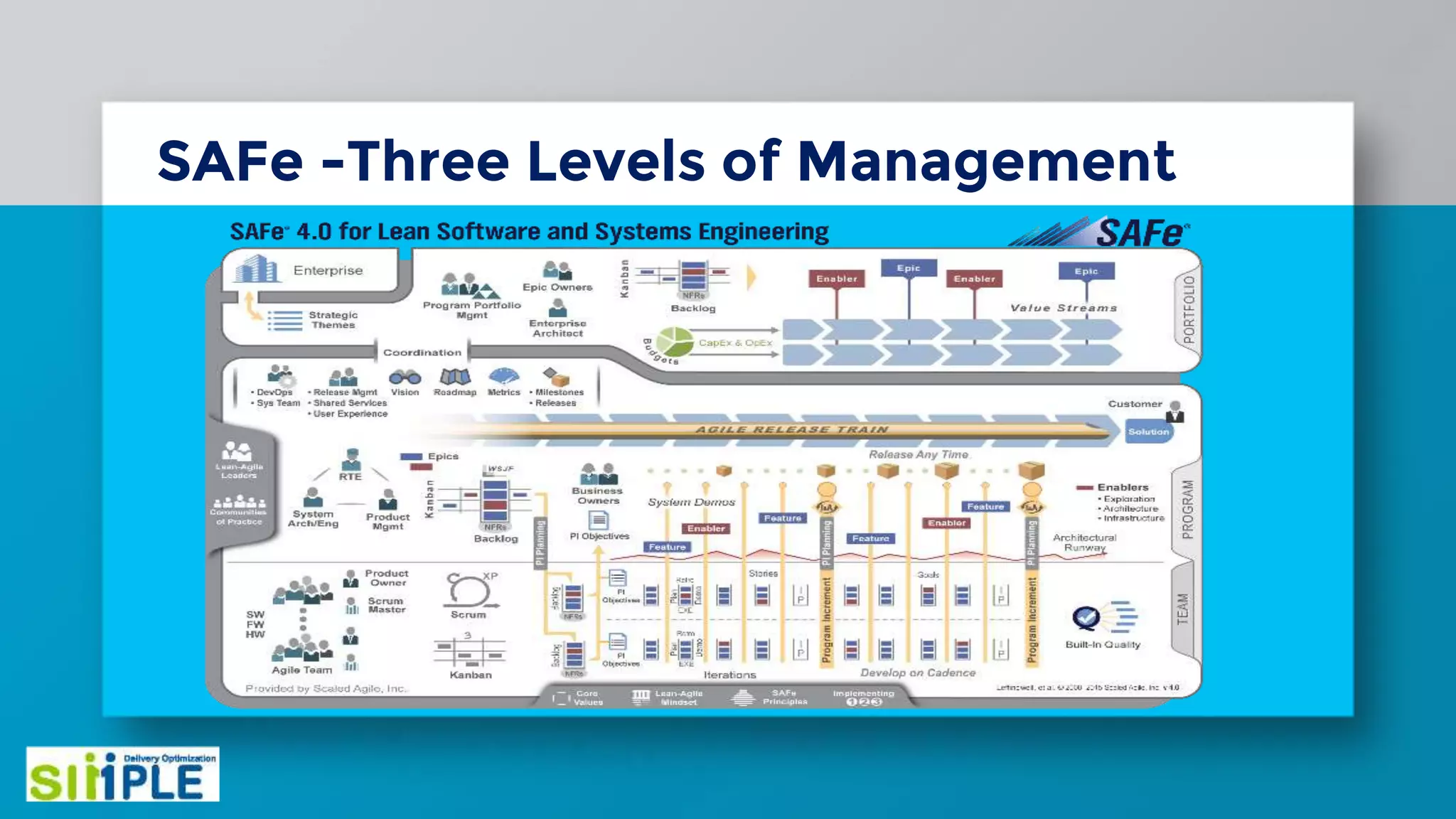
SAFe -Three Levels of Management
Expand
one
level
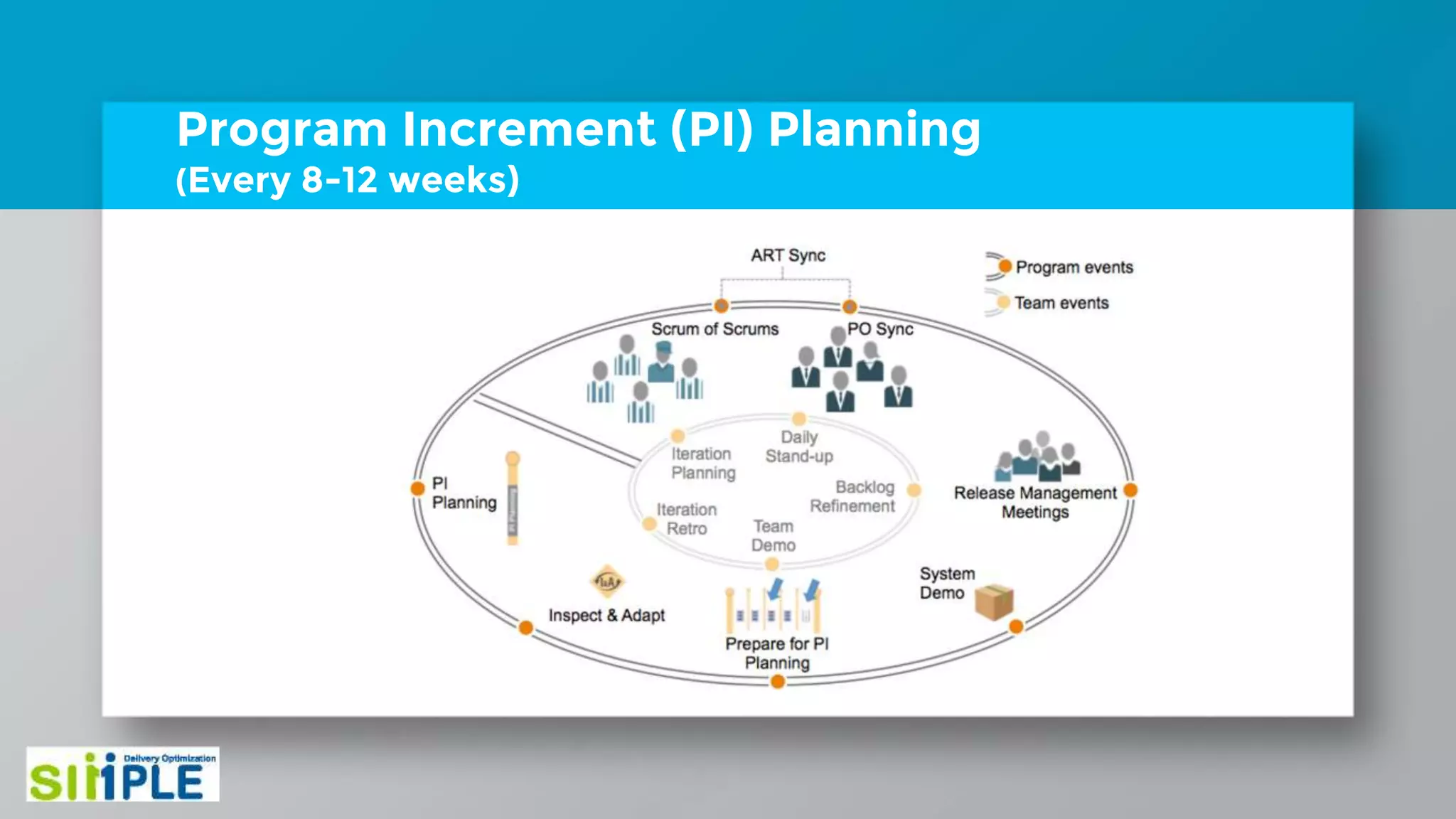
Program Increment (PI) Planning
(Every 8-12 weeks)
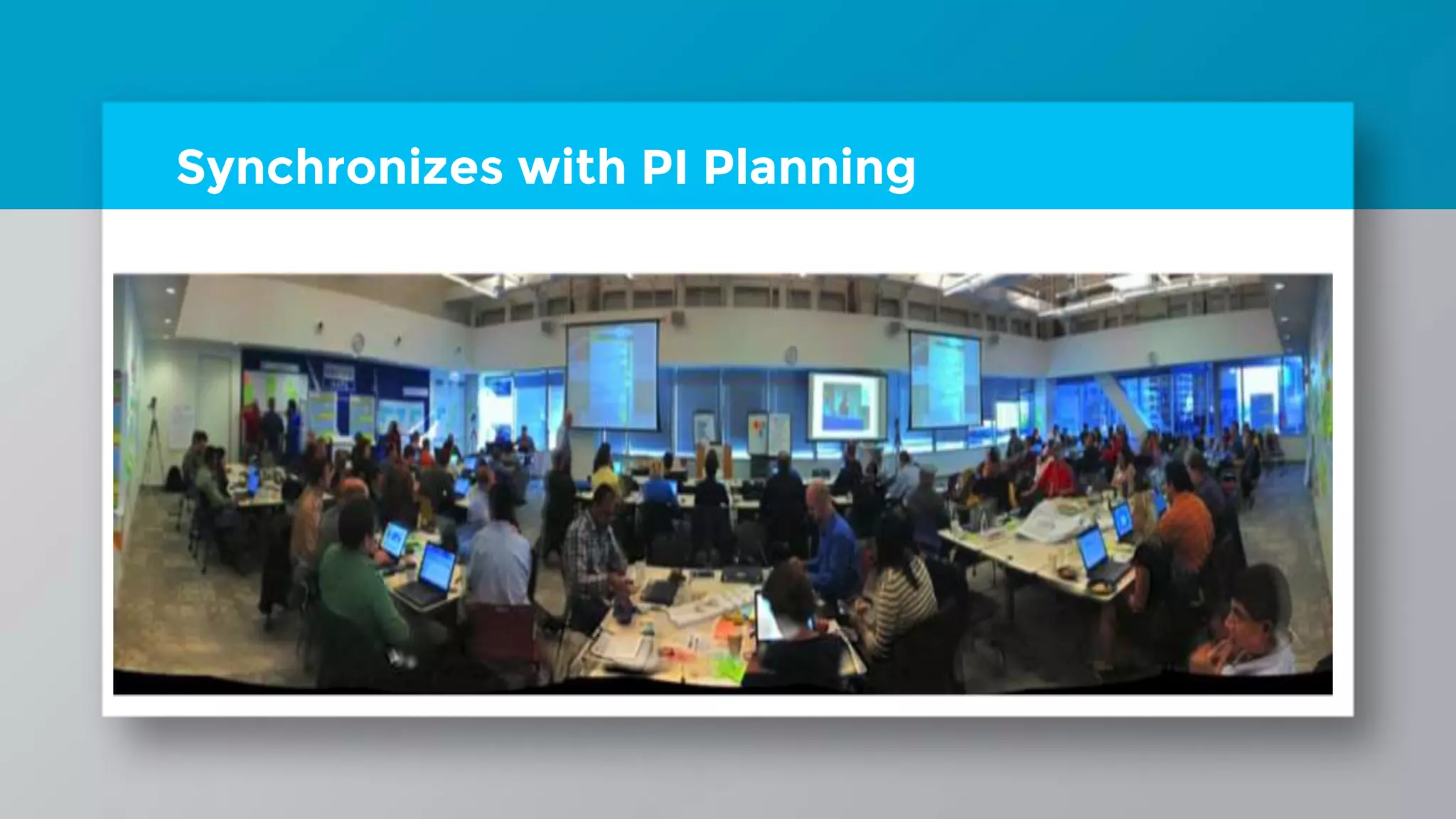
Synchronizes with PI Planning
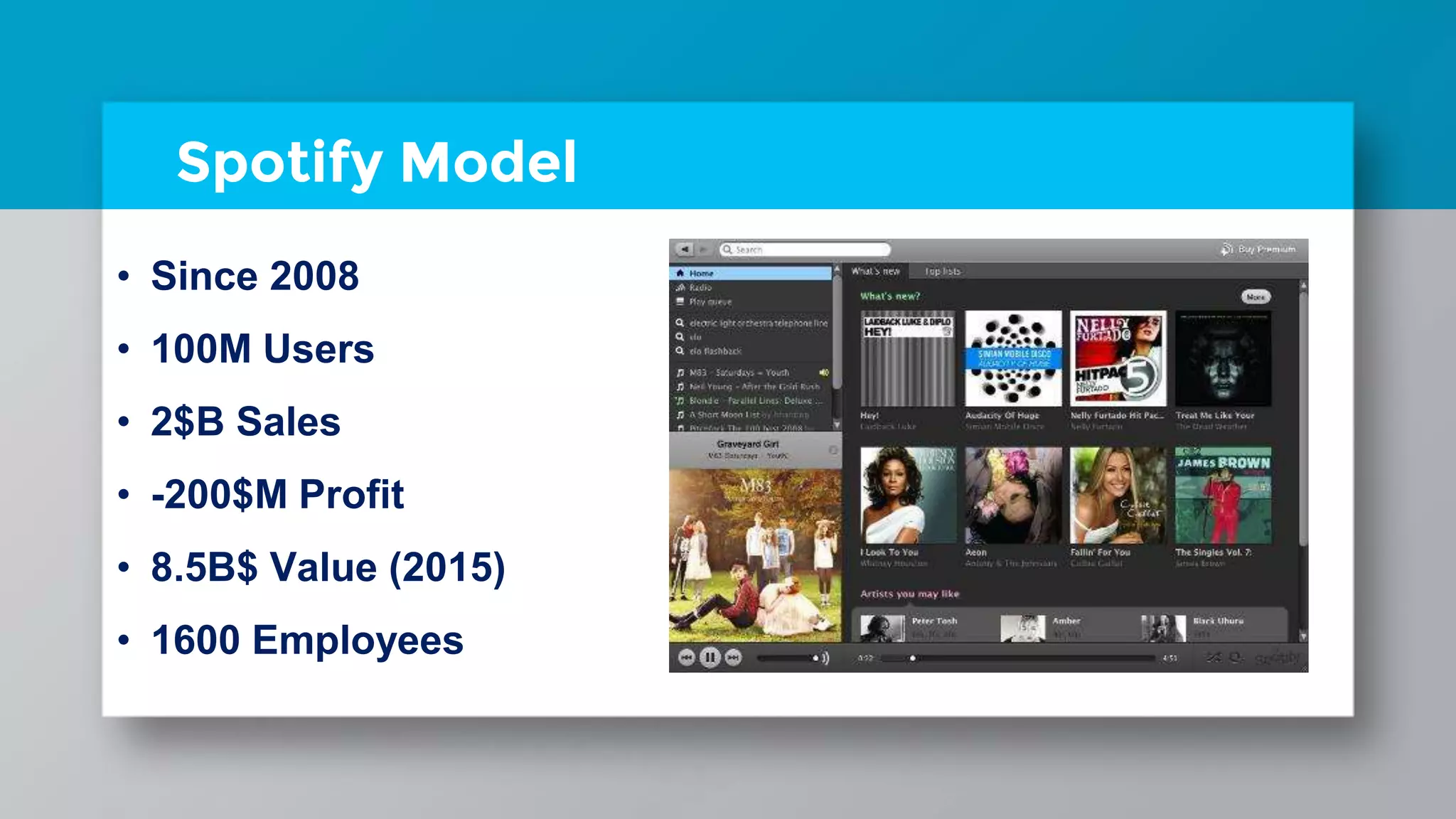
Spotify Model
• Since 2008
• 100M Users
• $2 B Sales
• - $200 M Profit
• 8.5B$ Value (2015)
• 1600 Employees
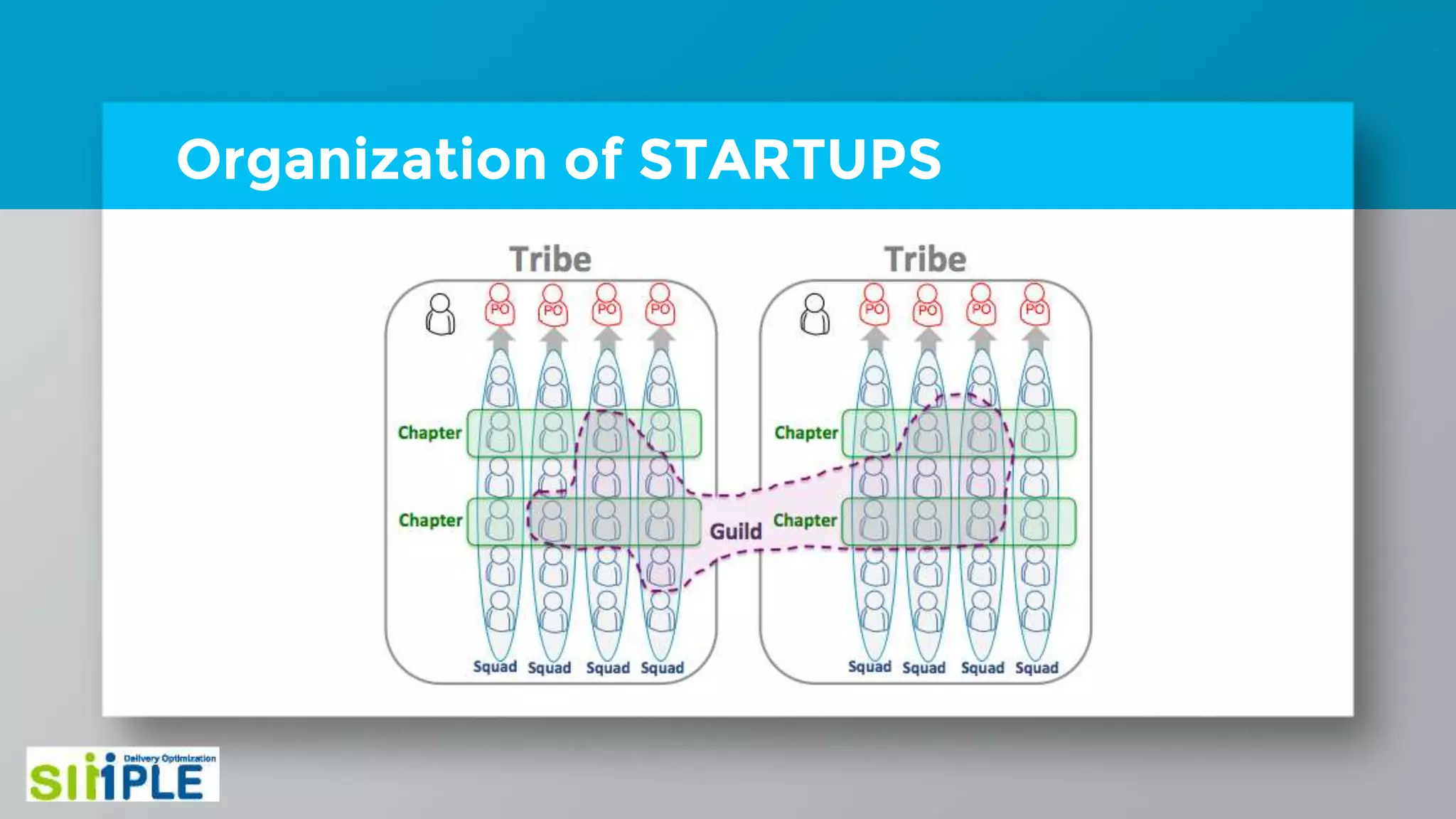
Organization of STARTUPS
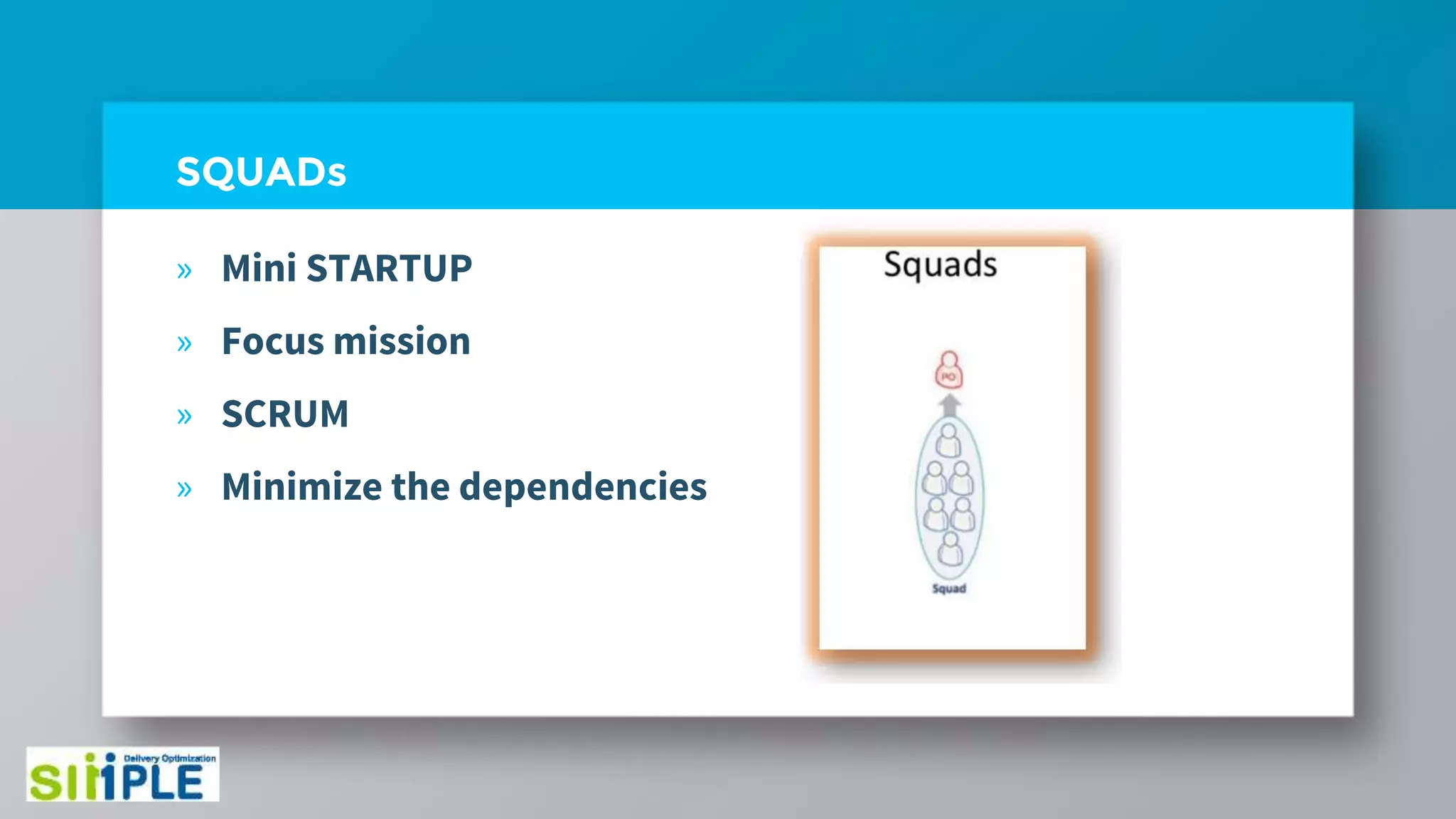
SQUADs
» Mini STARTUP
» Focus mission
» SCRUM
» Minimize the dependencies
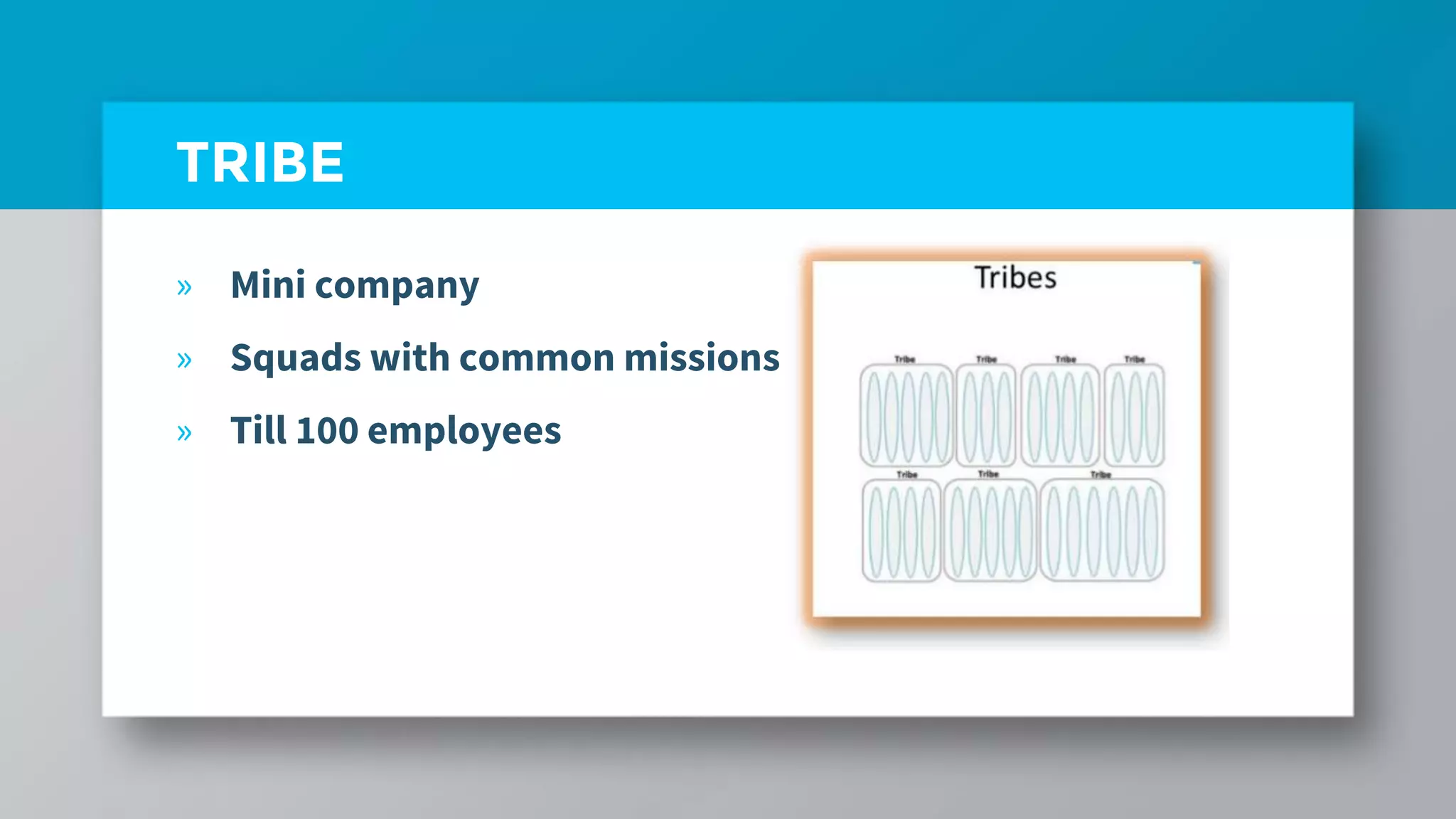
TRIBE
» Mini company
» Squads with common missions
» Till 100 employees
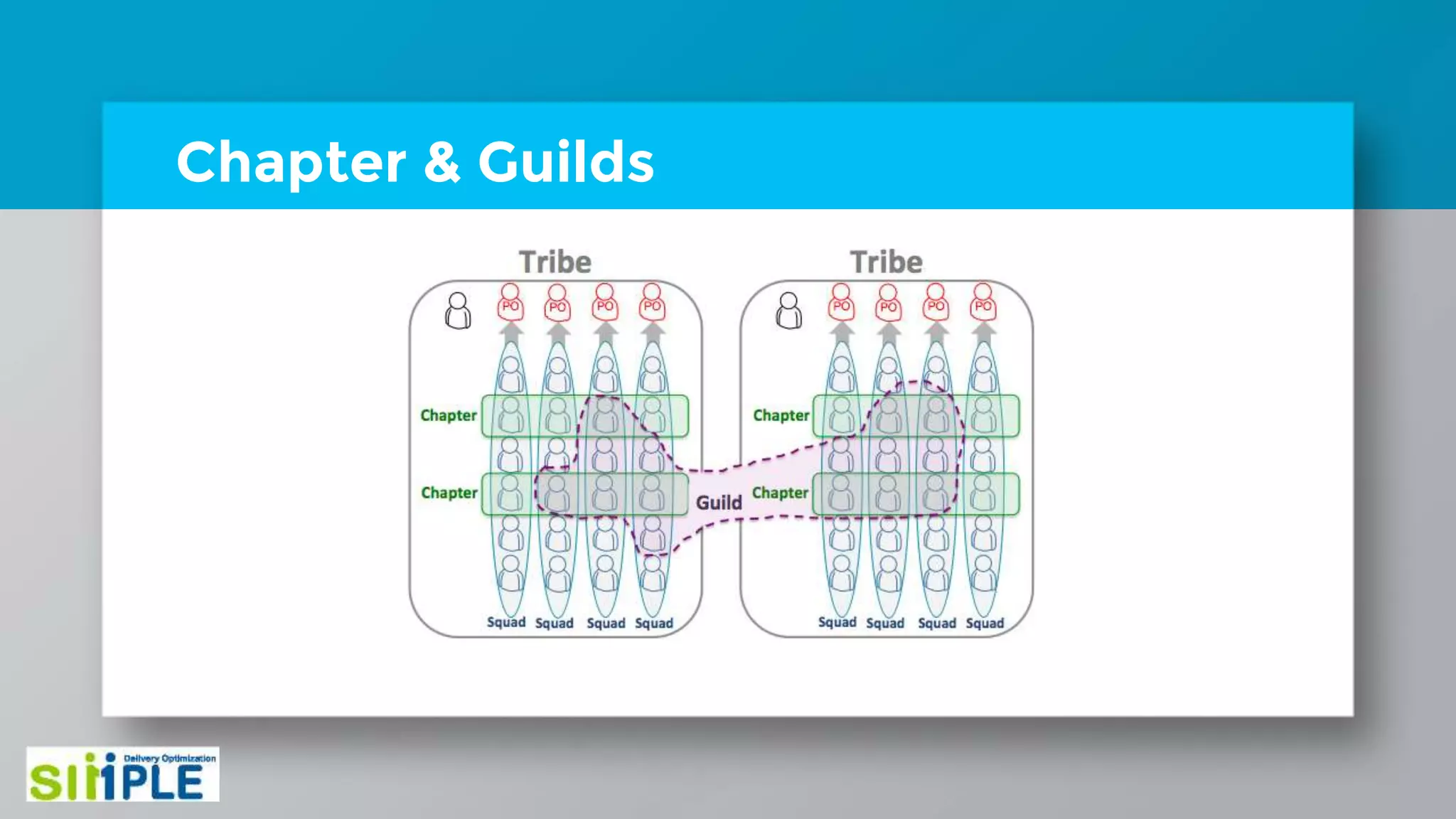
Chapter & Guilds
31
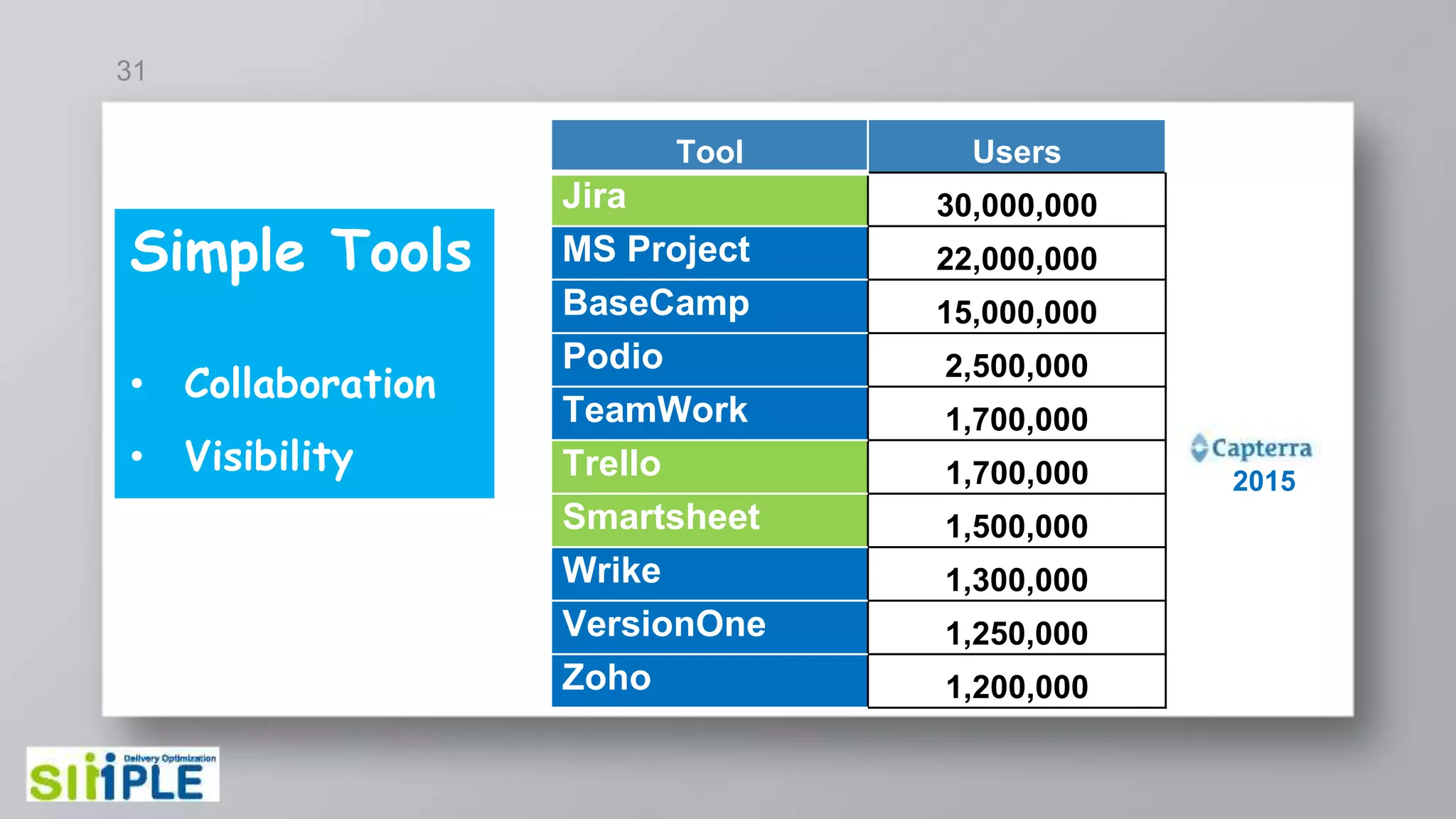
Simple Tools UsersTool
30,000,000Jira
22,000,000MS Project
15,000,000BaseCamp
2,500,000Podio
1,700,000TeamWork
1,700,000Trello
1,500,000Smartsheet
1,300,000Wrike
1,250,000VersionOne
1,200,000Zoho
2015
Simple Tools
• Collaboration
• Visibility
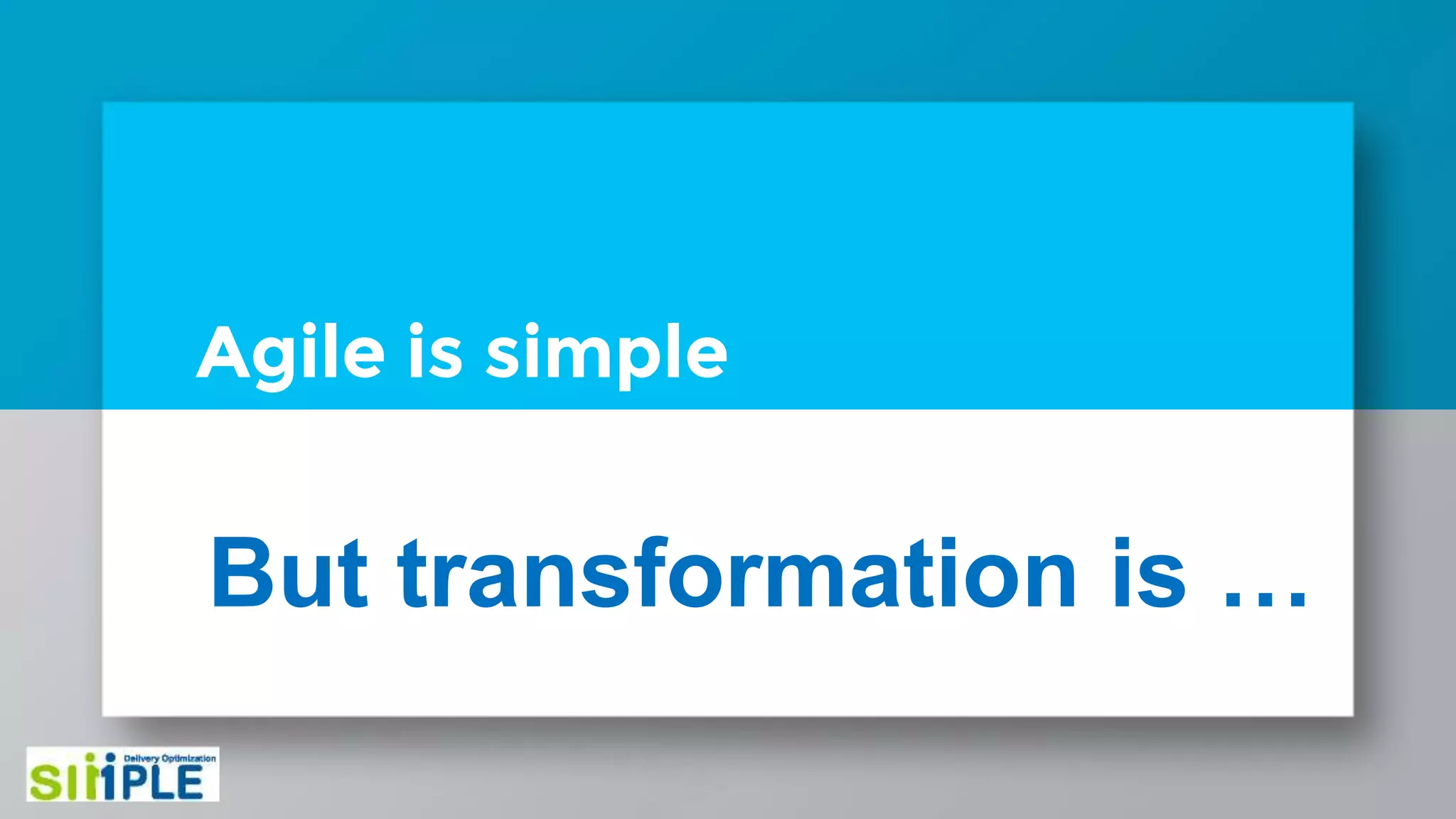
Agile is simple
But transformation is …
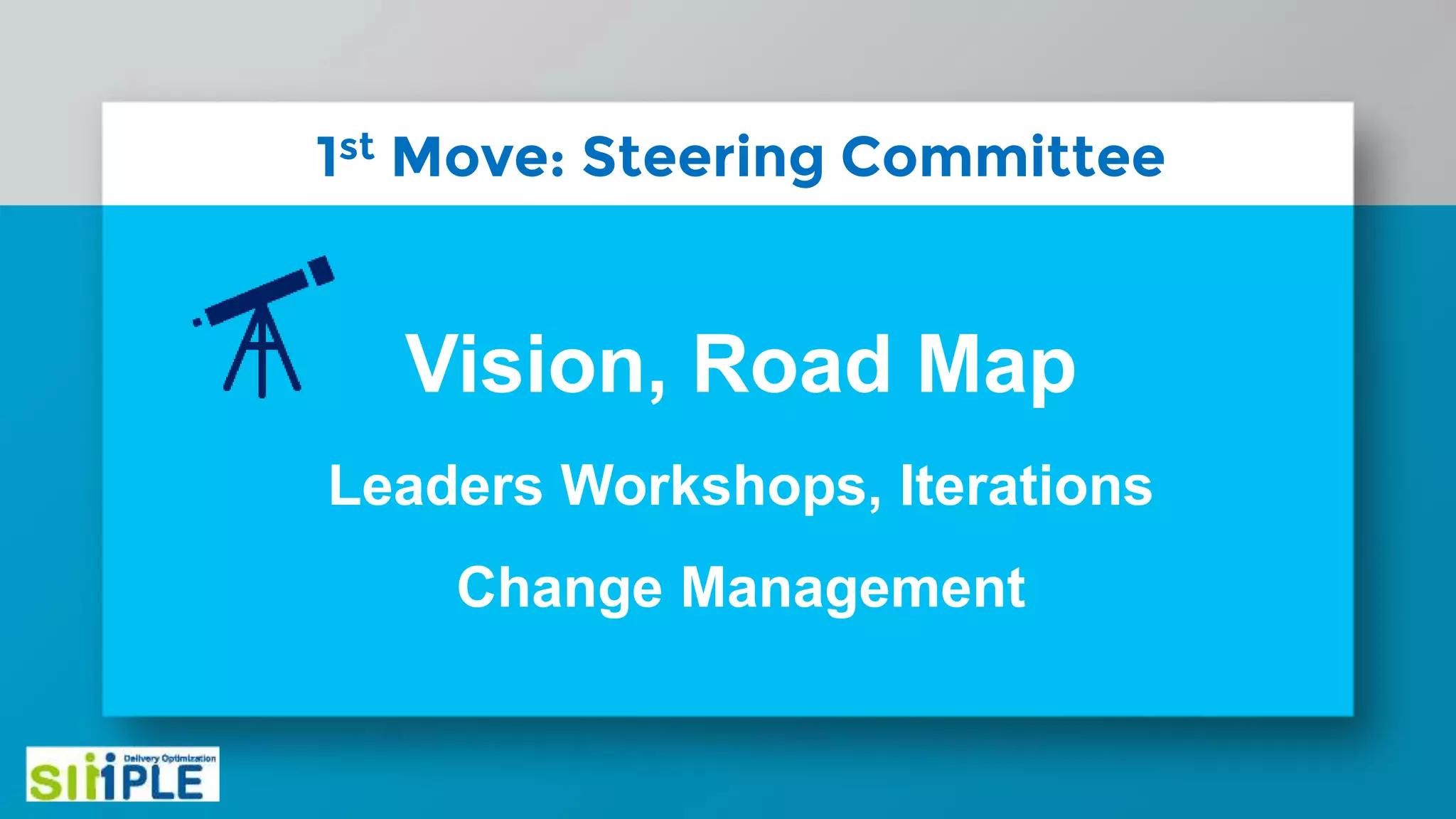
1st Move: Steering Committee
Vision, Road Map
Leaders Workshops, Iterations
Change Management
Fast, Agile, Lean
Most companies decided (had) to
implement AGILE
you should start
Thanks !

Agile vs. waterfall simple 2017

  • 1.
    Waterfall, Agile &Scaling Agile Dvir Zohar – Simple CEO Dvir@SimpleDO.co.il Think Simple, Run Faster
  • 2.
    Bottom Line 9 67 24 WATERFALL AGILEHYBRID Hi Tech & IT PM Methodology Deloitte survey 2016 82% of “Agile Firms” implement also Scaling Agile
  • 3.
    Bottom Line (2) Standishreport 2011-2015, over 10,000 technology projects Method Achieved Goals in Budget, in Time Achieved Goals Failed Agile 39% 52% 9% Waterfall 11% 60% 29%
  • 4.
    The Waterfall Concept »Based on many years of experience » “Do it right the first time” » Long term view – Planning, SRS, DR’s, risk management… Time
  • 5.
    PMBOK Matrix -Implementation Requires Discipline Knowledge Area Processes Initiating Process Group Planning Process Group Executing Process Group Monitoring &Controlling Process Group Closing Process Group Project Integration Management 4.1 Develop Project Charter 4.2 Develop Project Management Plan 4.3 Direct and Manage Project Execution 4.4 Monitor and Control Project Work 4.5 Perform Integrated Change Control 4.6 Close Project or Phase Project Scope Management 5.1 Collect Requirements 5.2 Define Scope 5.3 Create WBS 5.4 Verify Scope 5.5 Control Scope Project Time Management 6.1 Define Activities 6.2 Sequence Activities 6.3 Estimate Activity Resources 6.4 Estimate Activity Durations 6.5 Develop Schedule 6.6 Control Schedule Project Cost Management 7.1 Estimate Costs 7.2 Determine Budget 7.3 Control Costs Project Quality Management 8.1 Plan Quality 8.2 Perform Quality Assurance 8.3 Perform Quality Control Project Human Resource Management 9.1 Develop Human Resource Plan 9.2 Acquire Project Team 9.3 Develop Project Team 9.4 Manage Project Team Project Communications Management 10.1 Identify Stakeholders 10.2 Plan Communications 10.3 Distribute Information 10.4 Manage Stakeholders Expectations 10.5 Report Performance Project Risk Management 11.1 Plan Risk Management 11.2 Identify Risks 11.3 Perform Qualitative Risk Analysis 11.4 Perform Quantitative Risk Analysis 11.5 Plan Risk Responses 11.6 Monitor and Control Risks Project Procurement Management 12.1 Plan Procurements 12.2 Conduct Procurements 12.3 Administer Procurements 12.4 Close Procurements
  • 6.
    Agile Drivers Quality (90’s) Vs. TTM(2000’s) Change – The only sure thing Complexity 6 1 32 Complexity TTM You can’t think of everything
  • 7.
    Agile Principles » Happycustomer – Value management, Feedback » Quantum mind set – Small iterations, Early values » Projects are about people - Many variables, motivation » Keep it simple 7
  • 8.
    Agile Manifesto (2001) Individualsand interactions over processes and tools Working software over comprehensive documentation Customer collaboration over contract negotiation Responding to change over following a plan
  • 9.
    SCRUM » Scrum teams »SPRINT – a focused effort for 7-30 days period » Sprint backlog – constantly reprioritized Do CheckAdjust Plan PDCA
  • 10.
    SCRUM Elements New Roles »Product Owner » Scrum Master Ceremonies » Sprint planning » Daily standup meeting » Retrospective Simple Control » Boards » Backlog burndown
  • 11.
  • 12.
    Agile for HW-SWDevelopment • Customer • Short term iterations (Simulation, early prototypes, Sprints) • People engagement (Scrum ceremonies) • Simplicity (boards, planning) • Individuals and interactions over processes and tools • Working software over comprehensive documentation • Customer collaboration over contract negotiation • Responding to change over following a plan HW-SW-QA Scrum teams
  • 13.
  • 14.
    Scaling Agile MainTopics • Realistic commitment • Visibility for management • Large programs • Changes in portfolio • Resource load & Bottle necks • Sub contractors • Knowledge transfer
  • 15.
    Strategic Management Tactic Management TheSCALING AGILE Organization Scrum Team Scrum Team Scrum Team Scrum Team PM, PO, PMO, System
  • 16.
  • 17.
    SAFe -Three Levelsof Management Expand one level
  • 18.
    Program Increment (PI)Planning (Every 8-12 weeks)
  • 19.
  • 20.
    Spotify Model • Since2008 • 100M Users • $2 B Sales • - $200 M Profit • 8.5B$ Value (2015) • 1600 Employees
  • 21.
  • 22.
    SQUADs » Mini STARTUP »Focus mission » SCRUM » Minimize the dependencies
  • 23.
    TRIBE » Mini company »Squads with common missions » Till 100 employees
  • 24.
  • 25.
    31 Simple Tools UsersTool 30,000,000Jira 22,000,000MSProject 15,000,000BaseCamp 2,500,000Podio 1,700,000TeamWork 1,700,000Trello 1,500,000Smartsheet 1,300,000Wrike 1,250,000VersionOne 1,200,000Zoho 2015 Simple Tools • Collaboration • Visibility
  • 26.
    Agile is simple Buttransformation is …
  • 27.
    1st Move: SteeringCommittee Vision, Road Map Leaders Workshops, Iterations Change Management
  • 28.
    Fast, Agile, Lean Mostcompanies decided (had) to implement AGILE you should start
  • 29.

Editor's Notes

  • #10 9-22
  • #11 10-22
  • #19 So let's discuss the Lean-Agile principles that underlie SAFe. [Read through each of the principles on the slide] We don't have time in presentation to drill into each of these, but if you head down the SAFe journey, it will be important to learn why these principles are so critical to a successful implementation of SAFe. They are so important because principles trump practices. So if we're struggling with a practice, we're going to return to these basic principles to make sure that we're trying to build a system and an implementation that is as Lean and Agile as possible.
  • #20 You can see that it's organized around teams—teams are the fundamental construct. Teams are the goose that lay our Agile golden egg, and we want to create teams and help them be and stay incented to do their best work. The Program Level, where a group of Agile Teams work together to deliver a larger solution, is indicated here. And of course the Customer is part of our Solution. This larger structure in the middle is the Agile Release Train, which I'll come back to in a second. The Agile Release Train is the organizational construct—typically virtual—that delivers solutions. ------ [Note: It is helpful to point out where each of the bolded items above are located on the slide when speaking to them.]
  • #23 The ART truly takes a systems view. It brings together the people we need to deliver larger amounts of value. That includes our business owners, our representatives from the customers, product management, architecture, systems engineering, hardware, software, testing, people involved in manufacturing or deployment of our solution…. We create this virtual program. And the virtual program now has the skills they need. So the ART is cross-functional as well. And it typically contains about 50 to 125 people.
  • #35 34-22